Postal Address: PO Box 474, Dargaville Physical Address: 107 River Road, Dargaville
Editor: Andy Bryenton
Journalists: Denise Gunn | Andy Bryenton | Amy Fifita
Advertising: Monique McKenzie 027 525 9172
Production: Gavin Bainbridge | Marnie Fuller | Daniel Foster | Liz Clark
Accounts: accounts@rml.nz
Distribution: Laurie Willetts Printed by: NZME
Website: farminglifestyles.co.nz
Opinions
10,608 copies DELIVERED FREE to every rural delivery address in Manawatu.
Election issues manifest
by Andy Bryenton
With the goal of doubling export revenue in mind, and following a year of successes around the trade negotiations table and in fiscal returns, the government seems well placed to tick all the boxes in Horticulture New Zealand’s recently released election priorities report.
Every time the nation goes to the polls, the HortNZ manifesto focusses on what’s of vital importance to this big sector of the rural economy, and this year is no different. The top points on the list include matters of growth, resilience and the massive part the horticultural sector plays in local food security. Added to that is the sheer fiscal power of horticultural exports, and the potential for even more global recognition.
“The horticulture sector is essential to the health of New Zealanders and contributes significantly to our economy,” said HortNZ chief executive Kate Scott, as the manifesto went out for public discussion, and the inevitable scrutiny of parliamentarians.
pull start assemblies, air filters, cylinders, pistons, rings, fuel tanks, chipper blades and much more. We also have a selection of 2 to
and
“The Ministry for Primary Industries’ latest Situation and Outlook for Primary Industries (SOPI) report forecasts horticulture export revenue will rise five per cent to $9.2 billion in the year to 30 June 2026. Together with government, industry, Māori and science partners, the sector aims to double the farmgate value of horticulture production by 2035.”
It’s a lofty goal, but one which is in sight, and the sector’s leadership have a plan to achieve. What’s needed, says Ms Scott, is a commitment by lawmakers to facilitate efficiency amid Kiwi orchards, groves and fields.
“To achieve this, we need practical policy settings including strengthening biosecurity and crop protection access, cutting red tape, ensuring sustainable water security, building a skilled workforce, supporting fair grocery markets and investing in critical infrastructure,” Scott said.
That means strengthening biosecurity, for swift and effective responses as recently seen with the prompt eradication
of invasive fruit fly in Papatoetoe, Auckland. It means cutting red tape and bureaucratic duplication, with an emphasis made on water security; two factors tied inextricably with the replacement to the Resource Management Act. There’s also a strong emphasis in the manifesto for fair and competitive grocery markets. Something highlighted as problematic during the Ardern administration and still a sore point with many producers and consumers.
“A future-focussed horticulture sector underpins New Zealand’s longterm economic goals, from increasing productivity and diversifying exports to building a low-emissions economy with strong international competitiveness,” says Ms Scott.
“With consistent policy, fair markets, secure water and workforce settings, and access to modern tools, horticulture can remain one of New Zealand’s standout sectors.”
It’s now up to parliamentary hopefuls, in what is shaping up to be an election defined by the cost of living, to decide if the horticultural export powerhouse deserves their full attention.
Cow & Horse Processing in Levin
No Moore Hassell Pet Food is an MPI approved and recognised primary meat processor. Based in Levin we offer local farmers a free and highly professional pick-up service for unwanted healthy cows and horses in the Manawatu-Wanganui region. If you would prefer to transport your animal yourself or have your horse or cow put down on the farm then we can arrange this with a No Hassell guarantee.
About Us
Our in-house processing plant enables us to guarantee the consistent quality and reliability of the process from the picking-up to the putting-down of the animal. As a recognised specialist you can rest assured that our years of expertise and close connection to the farming industry makes our service as convenient, respectful and professional as it can be.
Two of more than seven million avocados, which bolster a growing export market in horticulture each year
by Denise Gunn
preparing to strut their stuff
Poultry and pigeons of all shapes, sizes and breeds will be showcased at the Central Districts Poultry and Pigeon Club’s annual show next month.
Organised by the Central Districts Poultry and Pigeon Club, the show is expected to draw competitors from around New Zealand. The competition classes are open to anyone.
“People from all over will bring their birds and eggs to be shown and judged,” said club spokesperson Hannah Pedley.
“With the amount of roosters that show up, it can be a bit noisy, but they do look impressive on display. There are usually a lot of birds from cute to funky looking bantams, impressive large chickens, ducks of all shapes, sizes and colours, and the elegant pigeons as well.”
Raising awareness to preserve heritage poultry and pigeon breeds for future generations is one of the club’s passions.
Hannah said club members usually have a couple of different breeds and colours of birds. Each member is trying to improve the breed and grow the number of good-quality birds.
“Some of our club members have been doing it for years and have a wealth of knowledge. Some, like me, are brand new to it and are enjoying the process of learning from others.” The Central Districts Poultry and Pigeon Club holds
regular meetings and mini shows. Over the past couple of years, mini shows have been held at both the Manawatū and Horowhenua A&P Shows. The club also holds a young bird show at the Oroua Downs Hall.
“As a club we really try to keep the showing serious, but also want to have lots of fun as well. There are a lot of club members who are really trying to promote the juniors and grow that side of the club, which is really great.” Hannah said all three of her children show their birds and eggs, and are looking forward to the annual show.
“The egg classes are a bit of a novelty as well. Anyone can enter, even if you don’t have purebred show birds.
“I am hoping to promote this through the local schools closer to the time, as I thought kids might like to enter their eggs. There are classes for quality, novelty/ staged and decorated.”
Recently, club members completed a successful fundraising effort to buy new cages for the upcoming annual show. The additional cages will ensure there are plenty for the competitors to show their birds. Local businesses are encouraged
to have stalls at the two-day show, too.
“To get the public interested, we also run a few competitions such as Guess the Weight of the Rooster. There will also be chick-petting as well, which the kids love,” said Hannah.
The show, which will be held in Manfeild Stadium in Feilding, opens to the public between 1–5pm on Saturday, May 9, and 9am to noon on Sunday, May 10. Entry
costs $10 a family, $5 for an adult and $2 each child. Further information is available at centraldistrictpoulty.com, or by contacting Sofianna at club.cdppc@ outlook.com or 021 103 0105.
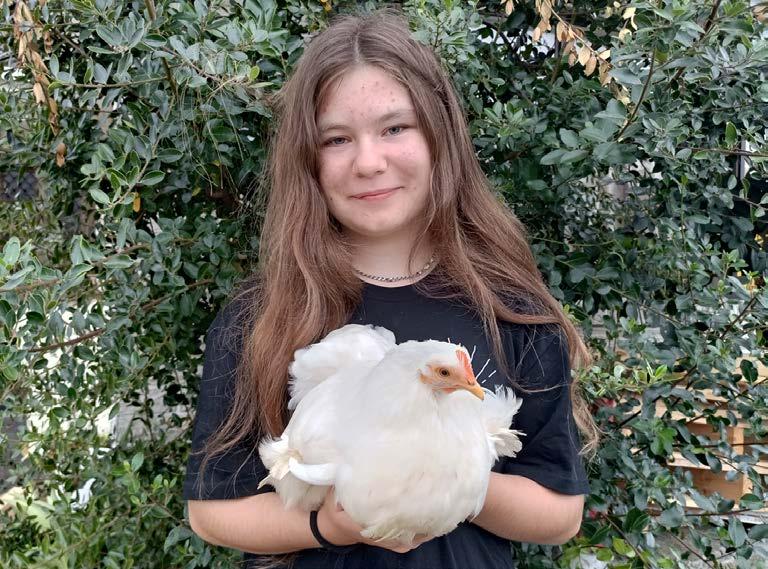
Sophie-lee McClennan is looking forward exhibiting her Pekin bantam named Winter
From farm to the front line
by Denise Gunn
Among the many Manawatū men who volunteered to serve in New Zealand’s armed forces overseas during the second world war was Kenneth Minifie Pearce, the son of Sanson farmers.
Born in November 1909, Kenneth (Ken) was the eldest of five children, raised on the family farm owned by his parents Willoughby and Nellie. He completed three years of secondary schooling at Wanganui Technical College, during which time he was a member of the school cadet unit. On leaving school, Ken returned to the family’s Sanson property to work as a farmhand for his father.
Ken also earned extra income through shearing around the district. His nephew
Desly Pearce was told that Ken was a very good shearer who rarely shore with anyone that was as fast as he was.
“Consequently, he used to shear against the clock to keep his speed up.”
Community involvement saw Ken serve on the Mount Stewart Centenary Committee, and the Sanson School Old Boys’ Committee.
After enlisting with the New Zealand Army in April 1941, Ken trained with the Seventh Reinforcements at the Central Districts Military Camp in Trentham.
His leadership qualities were evident throughout training as he was promoted twice within two months, rising to the rank of corporal.
Five months after enlisting, Ken left New Zealand’s shores on a troopship, disembarking at Port Tewfik in Egypt. On moving to Maadi Camp, on the outskirts of Cairo, he commenced further military training at the Infantry Depot.
Following several training courses at the School of Instruction, Ken was attached to the 32nd Battalion. Reinforcements were
held in this training battalion while waiting for a call to a front line battalion. In July 1942, the call came and Ken was posted to C Company in the 25th Battalion.
Desert conditions were tough for the soldiers. Temperatures were extremely hot during the day, often exceeding 40C and sometimes reaching 50C. Shade was scarce, sandstorms were a regular occurrence, flies were plentiful, and nights were cold.
Water was in short supply with each soldier receiving an allocation of just one
Ken’s nephew Desly Pearce at the Sanson war memorial
Ken’s name is inscribed on the Sanson war memorial
and a half pints a day. Sickness rates were very high as conditions caused diarrhoea, desert sores and jaundice.
While stationed in the Western Desert, Ken contracted infectious hepatitis and was hospitalised for several weeks. He returned to the 25th Battalion in December 1942.
Ken regularly corresponded with family and friends back home in Sanson and Kōpane. Letters received provided an essential lifeline for soldiers, often tucked away safely to be reread many times.
In one letter, Ken wrote how hearing news from home helped him.
“A spot of news of what is happening on the ranch and how things are going makes me feel as though I am not so far away.”
As his thoughts while writing turned to the family farm and seasonal tasks, Ken
enquired how the threshing was going, if the tractor had arrived and made a difference, and plans for the Romneys.
Ken also asked how the team work was going to get the crops in, and he was pleased to hear hoggets sold for a good price. The Rongotea saleyards were mentioned in his letter dated February 1943.
“Rongotea has come into its own again as a stock centre, so expect the village folk will have a boom.”
He wrote about stock and sowing crops, too.
“I hope you can procure an iron horse before you have to start the season’s ploughing, which will be early if you are going to put some wheat in, and then you should be able to get along a bit better. Under the circumstances and weather, the lambs must have done fairly well this
year, and as far as buying in lambs to fatten goes, as long as you buy something reasonably good you won’t go far wrong, even if you seem to have to pay a bit too much for them.”
Ken never returned to his family, fiancée Phyllis Lyon, and the farm he loved in New Zealand. In March 1943, he was killed in action.
The 34-year-old was buried in Sfax War Cemetery, Tunisia.
During his service, Ken was awarded the 1939–1945 Star, the Africa Star, the War Medal 1939–45, the New Zealand War Service Medal, and the Eighth Army Clasp. Ken’s name is inscribed on the Sanson war memorial, located in the Sanson School grounds.
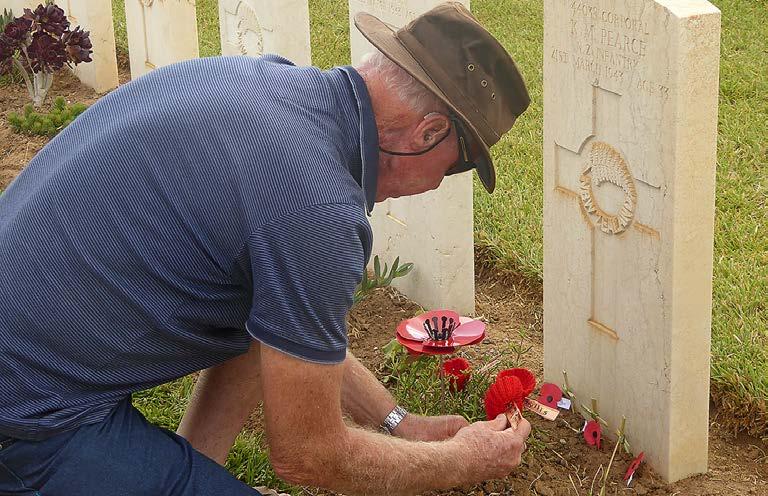
In 2015, Desly and his wife Wendy visited Ken’s grave in Tunisia, placing poppies in front of his headstone.
11am–2pm)
Poppies in front of Ken Pearce’s headstone at Sfax War Cemetery in Tunisia
Desly Pearce places poppies on his uncle’s grave at Sfax War Cemetery in Tunisia
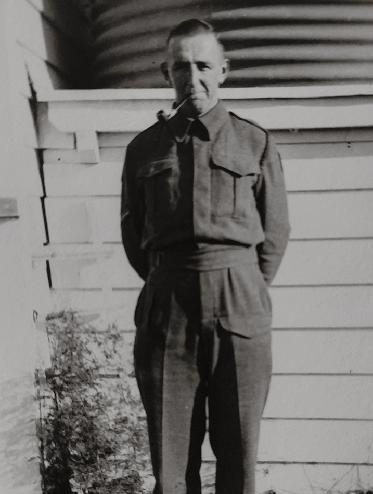
Sanson farmer Ken Pearce served in New Zealand’s armed forces in the Western Desert during the second world war
Assuring a perfect fit
by Denise Gunn
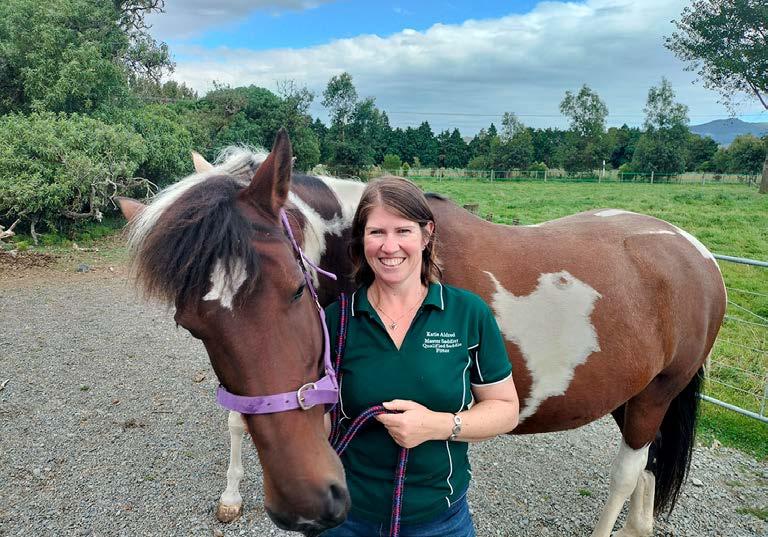
Qualified master saddler Katie Aldred has clocked up 25 years in the business, with her main focus
and equine bodywork.
Katie’s equestrian journey began when she was four, riding ponies and exploring the countryside around her home in Lancashire in the United Kingdom.
“I was a happy hacker and had some super ponies. Just that joy of being out with your pony and loving it,” said Katie.
While studying towards an equine science degree in Hartbury in 2000, a
one-hour lecture from a master saddler sparked Katie’s interest.
“It struck a chord. I always enjoyed making things, so phoned him up. During my final year, I ended up working a few hours each week with him, doing repairs.”
Katie then completed a Cordwainers diploma in saddle, bridle and harness making, and worked towards becoming a qualified master saddler.
“To become a qualified saddle maker, it’s four years and to become a master saddler, it’s seven years. You can be a saddle fitter without being a saddle maker.
“I enjoy making things, finished up in an apprenticeship and did my saddle fitting qualifications.”
Katie earned the title of qualified master saddler with the Society of Master Saddlers.
Since then, she has travelled to Queensland, Australia to qualify as a Masterson Method practitioner, and regularly travels to clients in the lower North Island. Katie fits appointments in around her husband’s work and their sixyear-old daughter.
The Masterson Method applies levels of pressure through touch to a horse’s body, while looking for reactions or changes in its behaviour which indicate discomfort. Through these reactions, the practitioner is able to pinpoint which area of a horse may be tense.
Seeing a horse and rider more comfortable is a rewarding part of Katie’s work
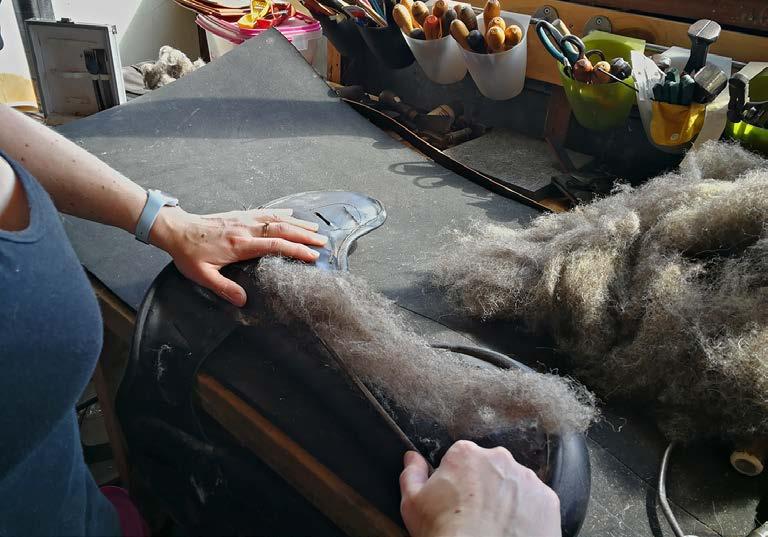
Corrections are made to saddles with flocking and external padding
“Applying light, subtle movements engages the horse’s parasympathetic nervous system, allowing it to release the tension without causing the horse the brace against it.”
Katie’s work as a saddle fitter often goes hand-in-hand with her Masterson Method knowledge and experience. Through her business Bramble & Burr Master Saddlers and Bodywork, Katie works with horses involved in all equestrian disciplines and riders who do a bit of everything.
“With my saddle fitting work, I assess horse and rider. You can see how the rider moves their body, level of hip and crookedness. Then I’m checking existing saddles for symmetry, safety of girth straps, soreness and lumps on the horse.
I also check the saddle tree shape for the horse is correct.”
Corrections are made with external padding, flocking, giving advice to the rider, and also checking if the horse is sound and tracking up accurately.
“As I don’t want to be putting a saddle on a horse that’s sore, I’ll give them a Masterson Method treatment within the allotted time. I like building relationships and seeing clients work their way up the ranks.”
Katie no longer makes saddles, but still takes on a lot of leather repair work, fixing saddles, bridles and harness at her lifestyle block near Dannevirke.
“I bring leather in from the UK. There are different types of leather on the
saddle. The girth and straps are one type of leather. Panels and kneepads are different.”
“I love it and my day-to-day work as a saddle fitter,” she said.
“It’s rewarding from the moment when you rebalance the saddle and the horse breathes and strides off. It’s very satisfying to know the horse and rider are comfortable. Helping the horse is what I love, and giving confidence back to the horse.”
Future plans may include sharing her knowledge through holding saddle fitting courses for horse owners. Katie said this will help horse owners to learn whether it’s the saddle causing issues or something else.
“They will then know when to call a saddle fitter.
“I want to continue to increase my knowledge and help people more through offering sound advice and sound education.
“I plan to keep going and help as many horses and people as possible.”
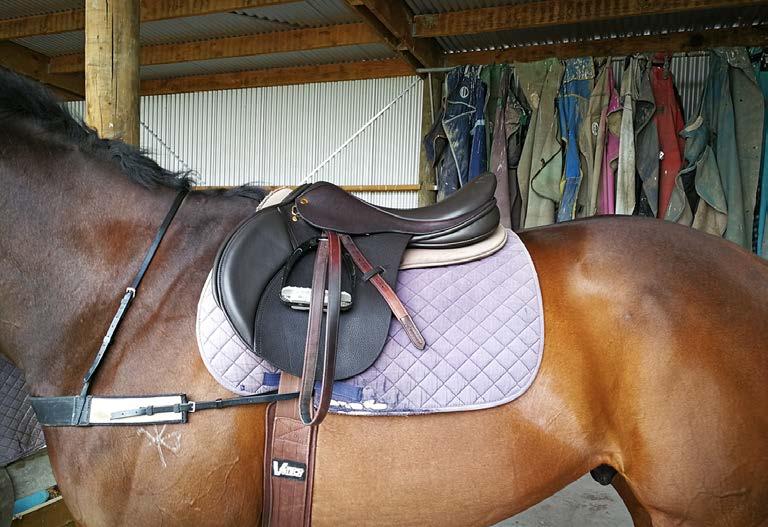
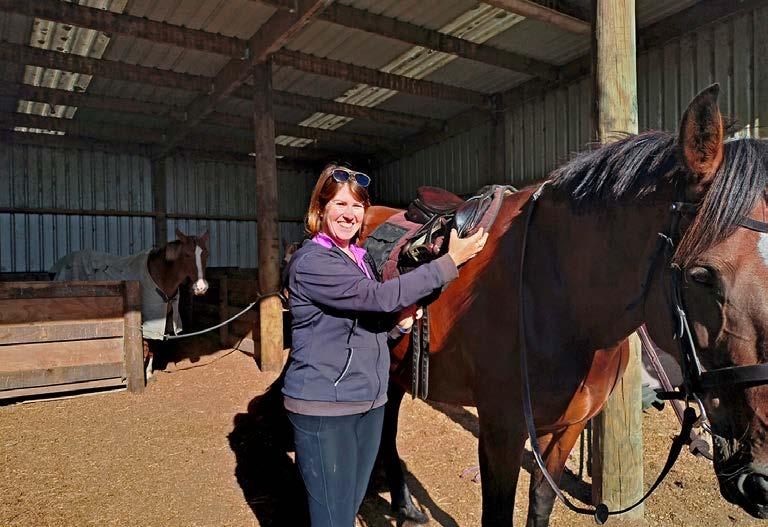
A correctly fitted saddle
Horse and rider are assessed to ensure a saddle fits correctly
Flower farm creates new beginnings
by Denise Gunn
Growing flowers weaved a journey of healing for Kristy Butterfield, eventually leading her to develop a flower farm.
Horticulture was Kristy’s favourite subject through secondary school, and she always thought a career as a landscape designer would follow.
“I spent some time at Lincoln University and have worked in plant nurseries throughout my life,” said Kristy. Initially, she began growing flowers during an extremely difficult season in her life.
“I needed something steady to focus on and something I could nurture when everything else felt so heavy.
“When the Covid lockdowns happened, it gave me the space to pour my energy into what had started as a small backyard project.
“What began as a coping strategy, became a way to rebuild myself. The more time I spent with flowers, the more it grounded me. As my days got brighter, so did the blooms.”
Kristy, her husband Anthony, and Kristy’s two daughters were living on a quarter-acre section in Levin at that time. Flowers soon covered the majority of the
property, leaving Kristy without enough space to grow more.
“We even reached out to our neighbour who had unused overgrown land at the back of her property. She let us grow sunflowers there.”
In July 2024, Anthony found a larger property at Koputaroa listed for sale on Trade Me. The couple bought it and the family moved in October that year.
“It was a rundown sheep farm. Overgrown paddocks with weeds, ivy, metal and rubbish,” said Kristy.
Creating flower beds to plant dahlia tubers was the main priority and the first step towards establishing Kristy’s flower farm.
“We prefer organic gardening, so didn’t take the easy spray and walk away route.
“We lawn mowed, dug and rotary hoed the overgrown paddocks, hired a digger and made enough flower beds for the dahlias so they could be planted as soon as possible. It was done before our boxes had been unpacked.”
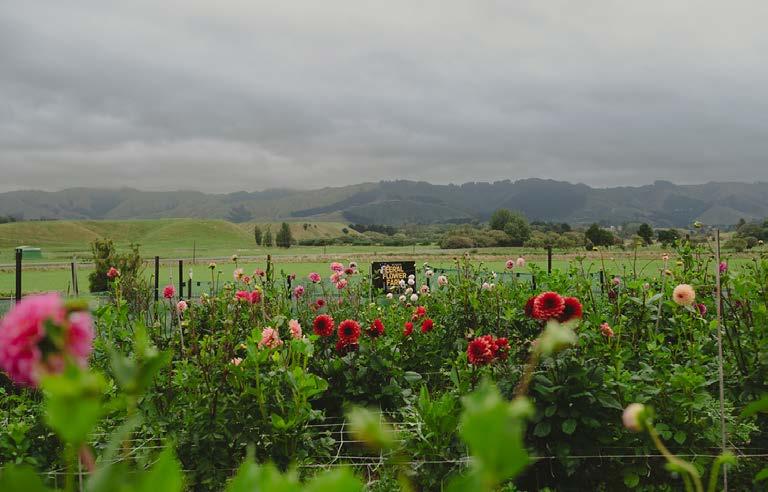
Picking dahlias on Feral Flower Farm
The Feral Flower Farm is located at Koputaroa near Levin
Kristy found dahlias thriving and flowering in no time. The family also discovered a lot of floral treats on their new property.
“It turned out the ex-wife of the former owner loved floristry, and would make bouquets and hold little workshops here many years ago.”
Naming Kristy’s new business Feral Flower Farm captured the state of the property when the family first moved in.
“We had a bath but no shower; only one of those things you put on the taps. We were working from 6am to 10pm trying to organise the house and garden. I got to the stage when I didn’t even know what day it was or when I last had a shower. Our internet got connected and I jokingly called it Feral Flower Farm.”
The more Kristy looked at the business name, the more she loved it.
“Looking around at the craziness, overgrown gardens and our ridiculous shower, (which was upgraded), I decided that the name was very fitting. It also reflects my personal journey and finally coming home.”
Since 2024, Feral Flower Farm has doubled in size and flower production with plans for further expansion next season.
In addition to dahlias, Kristy grows speciality gerberas and of the four varieties grown on her flower farm, only three of those are available in New Zealand.
There are also roses, sunflowers, protea, leucospermum, leucodendron, peony, other annuals, filler flowers and an abundance of zinnia.
“I try to grow things that aren’t your norm. I like flowers with personality and an almost rebellious side. The speciality gerbera are true feral blooms with their crazy form and texture. I also breed dahlia and they seem to have gotten the feral memo. This year’s seedlings are definitely in the unique and quirky category”
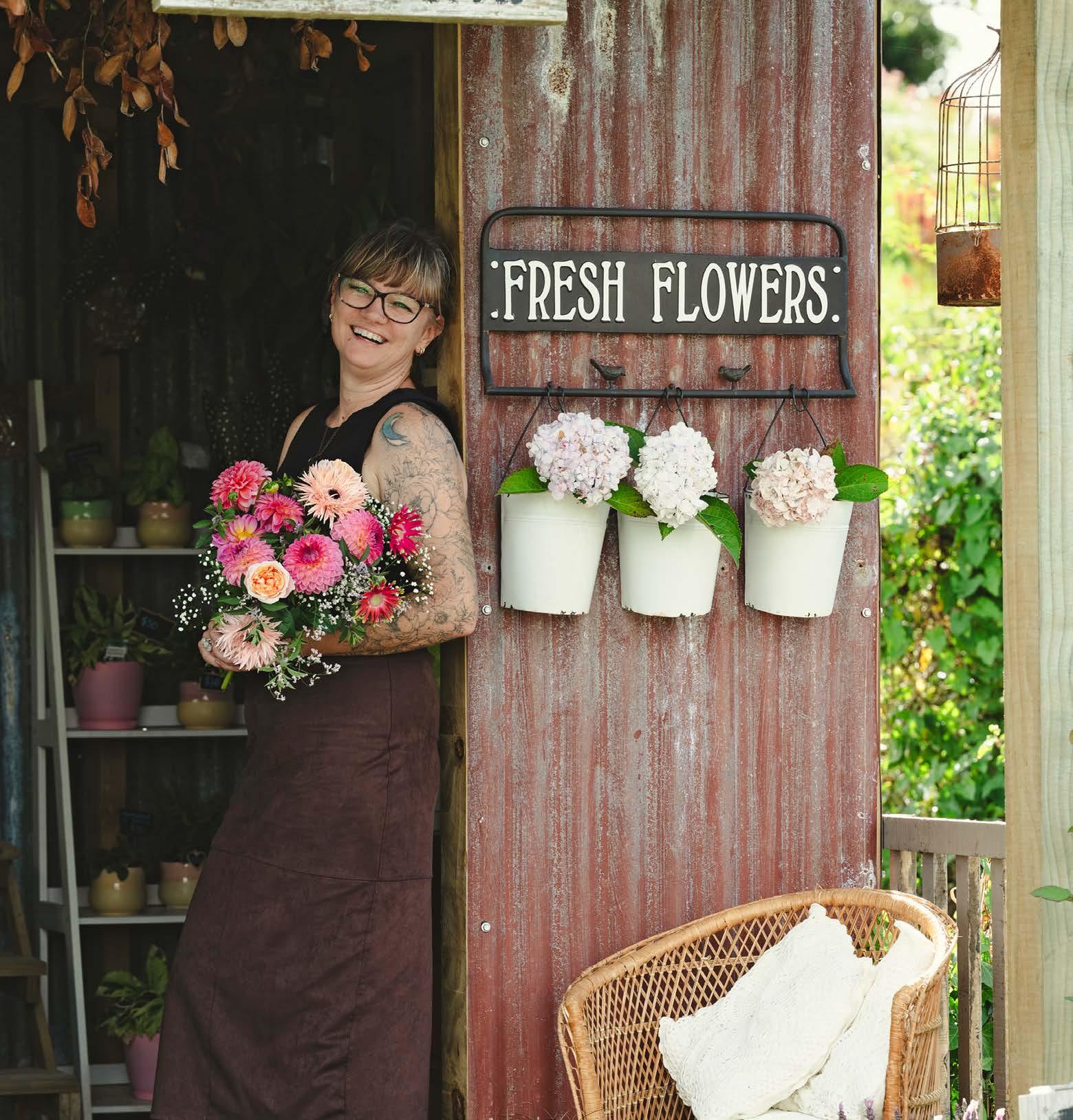
Anthony built a farm shop at the end of their driveway where Kristy sells bouquets of flowers. She also grows flowers for weddings and events.
She said the focus is on local, seasonal and personal rather than large wholesale.
“I had initially planned on doing more wholesale, but the popularity of the shop has been mind-blowing, so I rarely have spare blooms for wholesale or markets.”
Read part two in next month’s Manawatu Farming Lifestyles.
76% of New Zealanders are concerned about “fake news” and its implications
Kristy’s husband Anthony built a farm shop on their property where she sells bouquets of flowers
Flowers with personality are among Kristy’s favourites
Solutions in the big wet
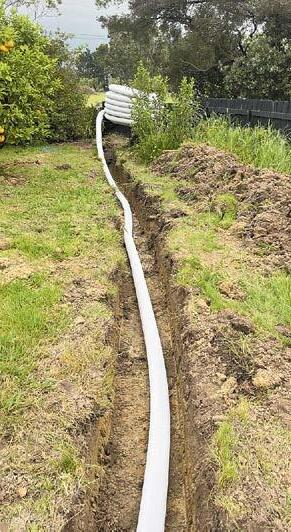
With winter just around the corner, we can start looking forward to everything it brings as well as the rain setting in — your property starts revealing all its secrets.
The spots that seemed fine over summer suddenly aren’t so fine. That slightly damp patch? Now a puddle. That puddle? Now considering a name and permanent residency.
Winter has a way of showing you exactly how your drainage is performing, or not. The good news? This is actually a great time to do something about it.
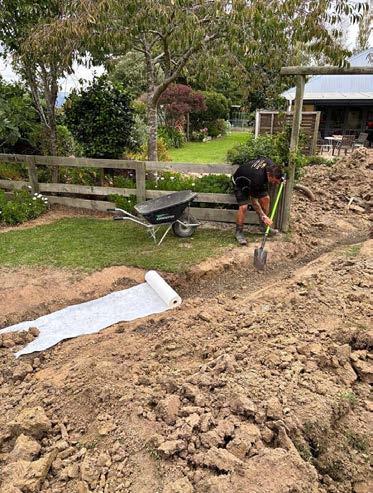
We work right through winter, which means we’re not waiting around for perfect weather (because let’s be honest, that could be a while). Instead, we tackle drainage issues when they’re at their most obvious. When the rain is falling and the ground is saturated, it’s much easier to see where water is going, and more importantly, where it’s not going.
Whether it’s installing new drainage, clearing out blocked systems, adding soak pits, or reshaping ground levels, we’ve got the equipment and experience to get it sorted. Even when conditions are less than ideal — gumboots are part of the uniform this time of year.
For homeowners, it means dealing with problems before they turn into bigger, more expensive ones. For farms and businesses, it keeps accessways usable, reduces mud, and avoids those ‘should we risk driving through that?’ moments.
There’s a real advantage to getting it done now. While others wait for things to dry out,
you’re getting ahead, so when summer rolls around, your drainage is already working as it should, and you’re not stuck in the seasonal rush.
Ignoring drainage issues over winter is a bit like ignoring a leaking roof; it doesn’t get better with time — it just gets wetter.
So if your property is starting to look like it could support a small population of ducks, it might be time. We’ll get in, get it sorted, and keep things flowing properly — no matter what winter throws at us.
Long-term benefits of chondroitin
by John Arts
Research shows that chondroitin supports cartilage health and inhibits enzymes that break down cartilage delaying joint degeneration.
I have the privilege of speaking with clients who have taken chondroitin combined with glucosamine and curcumin (from turmeric) for years.
These report three stages of improvement. There are the initial improvements noticed over 2–6 months. This is important as it is usually the first relief they have had without pain medication. Over 6–12 months the rate of improvement usually slows but there are still noticeable improvements. The rate of improvement slows further but is still noticeable for years.
Today I had a phone review with a client who had been taking my high-chondroitin supplements. After just two months she said that her hips and ankle were much more comfortable. I have no doubt she will continue to improve.
I have one such client who contacted me over five years ago with moderate knee osteoarthritis. He noticed significant short-
term improvements. He noticed definite improvements as the years passed and after five years, he stated he had effectively no knee discomfort.
This is confirmed by a six-year study into the benefits of using chondroitin with glucosamine for those with knee osteoarthritis. It showed that those who used this for six years had maintained cartilage and slowed cartilage loss.
The outcome was these long-term participants had much better results than would have been expected. The study showed that those who took chondroitin with glucosamine long term had less joint space narrowing than expected.
A study, however, does not guarantee that you will get the same results. This is why I am much more interested in how individuals respond. It is one thing to read a study; it is another for you to be more comfortable living with osteoarthritis.
What is Bettaflex?
• Bettaflex is a joint support formula to promote healthy joint cartilage function.
• Bettaflex has 400mg (per capsule) of high-grade avian chondroitin, 400mg of glucosamine and 100mg of BioSolve® bioavailable Curcumin (from turmeric).
• Try Bettaflex for 3 months and see for yourself.
How can Bettaflex help?
• Chondroitin and glucosamine are building blocks of cartilage.
• Supplementation with correct levels can support healthy cartilage function and cartilage repair processes.
• New BioSolve® bioavailable curcumin helps joint function while gentle on the stomach.
• Research indicates that chondroitin is highly effective at 800mg daily.
John Arts comments:
“My latest Bettaflex formula includes BioSolve® bioavailable curcumin for
by Andy Bryenton
The first diesel mechanic
Diesel technicians and mechanics keep the rural sector running: as we’ve seen in recent weeks with fuel price scares and supply worries, it’s this form of fuel keeping the tractors and trucks, harvesters and telehandlers working.
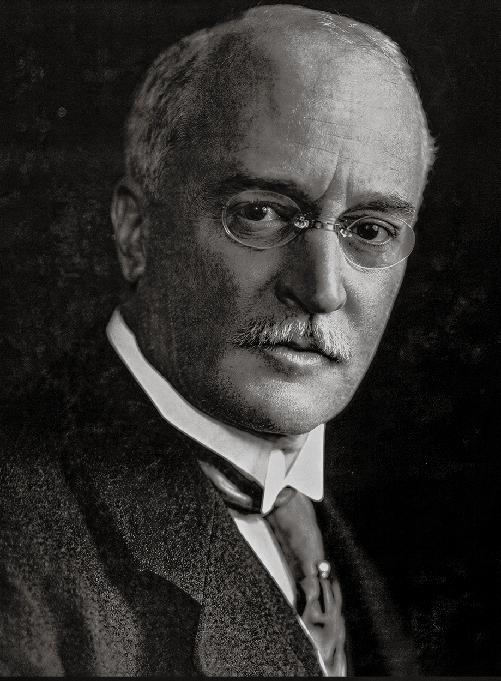
While it’s a hard-working fleet of diesel specialists who ensure the machines of the present day are ready to roll each day, once upon a time there was only a single diesel mechanic in the world. Aptly, Rudolf Diesel was his name.
Most people know that he developed the first compression-combustion engine in 1897, but few are aware that Rudolf was born in France, educated in Britain and he helped invent air conditioning before he turned his colossal mind to building motors.
Born in Paris in 1938, Rudolf was forced to go to work early, despite being the third most-accomplished student in France. Pushing a heavy barrow of his father’s leather goods through the streets, Diesel reasoned that something had to replace horses and barrow-lads like himself.
He later continued his education in London, and ended up in Germany, where he studied under the tutelage of Carl von Linde, the inventor of refrigeration. Another inspiration came to Diesel. The big steam engines used to power industrial freezers were horribly inefficient, and a smaller, more potent motor would allow refrigeration for the home, food and cooling the air in hot climates.
Diesel’s first idea was to make a steam engine, which ran on ammonia vapour, but the prototype exploded, nearly killing him. This, and the fact that steam engines could only achieve 10 per cent efficiency in turning their fuel to power, led to young Rudolf ripping up his plans and starting afresh. He had time to think and design; the explosion had put him in hospital. By 1893, he had a theory, and then a patent. However, it would not be until
1897 Diesel unleashed a 25-horsepower four-stroke, compression-ignition motor, which boasted a 75 per cent improvement of fuelto-power ratio over steam. The world was waiting for just such an engine. Industries worldwide could now switch out steam for diesel in their excavators, mining machines, transport solutions, ships and, more chillingly, military applications.
Rudolf Diesel did not get to enjoy the fruits of his genius or his labours for long. On September 29 1913, as Europe stood on the brink of the first world war, Diesel boarded a ship to London to talk to investors there. He never made it. Following his disappearance, it was revealed that he’d cleared out his bank accounts and taken plans with him for next-generation engines.
In early October 1913, he was confirmed dead by drowning, but speculation was rife that he had been
assassinated, to prevent Germany’s enemies from gaining his knowledge to use in two new inventions — the submarine and the tank.
Rudolf Diesel: so respected by his peers that Japanese engine builder Magokichi Yamaoka, founder of Yanmar, travelled to Germany in the 1950s to build a monument to his legacy
by Paul Campbell
Science key to farming future
Outside of New Zealand, agriculture is often imagined as mixed farming or cropping-heavy, but here it is overwhelmingly animal-based.
“Production animals, from pigs and poultry to sheep and dairy cows, drive our primary output and underpin much of our national prosperity and animal production science helps keeps the system thriving,” says Professor Paul Kenyon from Massey University.
“Most of our farmland is grazing land; our landscapes and climate aren’t suited to large-scale grain crops. That means decisions about animal nutrition, genetics, reproduction, health and welfare are not peripheral considerations for us.
“They are fundamental to how most farms operate and succeed. Understanding the animal is essential to understanding the farm.”
Dr Kenyon says animal production science has been one of the most powerful drivers of productivity in modern agriculture. Research into genetics, nutrition, growth, reproduction, meat science and health has enabled farmers to produce more food with fewer resources.
“Productivity for each animal and a hectare has increased in all our ruminant systems and our understanding and management of animal health has improved dramatically. These gains are the result of decades of sustained investment in applied animal production science, grounded in real farming systems.
“You cannot reduce emissions without understanding animal nutrition. You
cannot improve welfare without evidencebased insights into behaviour and health. You cannot design resilient farming systems without integrating the animal, the pasture and the environment.
“Animal production science needs to work alongside the disciplines of pastoral science, agronomy, soil science and farm management if we are to manage our ruminant production systems and environments effectively.”
From reducing greenhouse gas emissions and nutrient losses to improving productivity, animal welfare and climate resilience animal production science underpins many of New Zealand agriculture’s biggest challenges.
“Encouragingly, the next generation is recognising this, with strong demand for agricultural and animal science programmes. We’ve seen a significant increase in students enrolling in these subjects at Massey University this year.
“Postgraduate demand is particularly strong, with over 290 students pursuing diverse research projects that reflect the complexity of modern farming systems and a strong appetite for practical, onthe-ground solutions.
“More students are choosing flexible, distance-based study options, providing a cost-effective way into higher education while continuing to work in the regions and industries they want to be part of. They
FREE
don’t have to step away from agriculture to study it; they are studying while living it.
“We have also designed professional development courses for secondary school teachers, recognising that agricultural capability must be built
not only on farms and in universities, but throughout the education system. Providing teachers with the tools to foster interest and passion for agriculture early will help develop the next generation of agricultural leaders and problem-solvers.”
Professor Paul Kenyon, Massey University
Keeping rural hearts at home
by Nicky Pearce, Founder of Home SWEET Home Care
Tucked away on a dairy farm in Fordell, Nicky understands first-hand the deep connection rural people
For many of us, it’s more than just home — it’s our history, our pride and the heart of our identity. Home SWEET Home Care not only cares for those living in the
cities/towns of Whanganui, Rangitīkei, Horowhenua, Manawatū and Wairarapa, but importantly we also offer choice to those based rurally.
Home SWEET Home Care is an awardwinning private, and locally-owned service that provides professional and compassionate in-home care, from just two hours a visit to overnight care and 24-hour, round-the-clock support that is tailor-made to suit your needs. We specialise in helping people recovering from illness, surgery or hospitalisation, supporting those living with dementia, providing respite for families, and offering the honour of end-of-life care — all in the comfort of their own home.
One of our most rewarding journeys has been providing 24-hour care for a client who stayed on their rural property for 17 months until their final days. They didn’t want to leave the farm — and they didn’t have to. With a team of dedicated carers, we were able to make that wish a reality.
Nicky is a registered nurse and employs additional registered nurses
who complete the needs assessment and oversee our clients’ care, and support for our care team. Our staff are police-vetted, 100% reliable, and are regularly upskilled to ensure they’re providing the highest level of care. More importantly, they’re handpicked for their empathy, life skills and genuine passion for making a difference.
Our goal is to help our clients live with dignity, maintain their independence, and feel safe and supported — offering an alternative to relocating to an aged care facility.
Rural families are often overlooked when it comes to accessible support services, but we’re here to change that. Whether you or a loved one needs short or long-term care, Home SWEET Home Care offers a flexible and trustworthy solution that meets your needs, right where you are — at home.
No one should have to give up the land they love before they’re ready. If you’d like to learn more about our services, you can
nicky@homesweethomecare.co.nz
www.homesweethomecare.co.nz
Health & Wellbeing
Expert menopause care — at your place
Menopause Wellbeing is a private online clinic operated by Sexual Wellbeing Aotearoa: you might know us as Family Planning. We’re experts in sexual and reproductive health.
Through our private menopause clinic, we offer dedicated, expert and tailored menopause treatment — all without you having to leave home.
With longer appointments, we can investigate your symptoms in more detail and provide tailored treatment plans and advice, including hormone therapy and other medications. Time is precious. That’s why we’re offering virtual appointments, held in the late morning, afternoon, and evening, to fit in with your busy life.
Our services
Hormone therapy, sometimes called menopause hormone therapy (MHT) or hormone replacement therapy (HRT) is the most-effective treatment we have for relieving many symptoms of perimenopause and menopause. It’s not for everyone though, and there is a range of other medications that have been found to help menopausal symptoms.
Our appointments
All our appointments are online. Your first appointment will be 45 minutes long. You’ll see the doctor or nurse practitioner you booked with. They’ll discuss your physical symptoms and other relevant medical conditions, as well as your psychological wellbeing and any concerns you may have, and come up with a treatment plan tailored to you. Followup appointments and prescription repeat appointments are also available. Booking options
You can book using our online booking system. Check out our website for more details at menopause.sexualwellbeing.
org.nz, or you can call us on 07 810 6823. Doing good, while doing you good By coming to us for menopause treatment, you’re also supporting our valuable work across New Zealand. All proceeds from this clinic are reinvested in Sexual Wellbeing Aotearoa, enabling us to continue to promote health, advance education and benefit the community.
PS Menopause Wellbeing and Sexual will be in the Health Hub at the 2026 Fieldays — stop by and say hello.
Menopause care - from our place to yours.
If your midlife is making you miserable, make an appointment for an online menopause consultation. At Menopause Wellbeing we offer dedicated, expert and tailored menopause treatment.
visit www.menopause.sexualwellbeing.org.nz to book or you can call us on 07 810 6823.
Dr Suzie Evason: “I’m interested in health and wellbeing at menopause, and I look forward to treating and working with women at a time when they can often feel alone and unsupported.”
Nurse practitioner Rachell Webb: “Having worked in sexual and reproductive health for over 12 years, I understand the impact perimenopause and menopause can have on a woman’s life, particularly when not recognised or given the appropriate care.”
Nurse practitioner Katie McCullough: “There’s a significant gap in accessible, evidencebased support for people navigating menopause, and I’m eager to draw on my clinical background to contribute to improving menopause care across Aotearoa.”
LEST WE FORGET ANZAC Day 25th April
A wartime escape saga
by Paul Campbell
In November 1940, Royal Airforce 211 Squadron equipped with Blenheim bombers moved from Egypt to Greece and flew from the base of Mt Olympus to raid Albania across the Adriatic Sea. My late father Robert Douglas ‘Bob’ Campbell, a Kiwi RAF pilot, was a veteran of 25 raids when his luck ran out.
I have this first-hand account of an unsung and amazing wartime adventure from RAF archives in this (edited for length) 1944 debriefing.
“I was shot down during a daylight raid on Valona port by a G-50 fighter, which forced me to crash land into the sea. I broke my leg when we hit the water and had to swim about a mile and a half to the shore. I crawled four thousand feet and finally collapsed on the top of a ridge.
“I was found by Albanians and, during the night, captured by Italian Alpini troops. I was tied to a donkey and after an allnight ride I arrived at a first-aid post and my leg was set. At a naval hospital, Valona, I was interrogated. They offered me wine and bread, which was then taken from me in an effort to break down my spirit. After fainting during this questioning a doctor put me to bed and I was given food.
“A day later, I was shifted to a military hospital at Tirana where I spent a month
and a half. I was shifted to a concentration camp at Fieri in southern Albania. Although it might have been possible to escape, I was unable to attempt it because of my leg. The Greeks were treated as dogs at this place.
“After ten days, I was moved to Italy via Valona and Brindisi by boat and was finally taken to Sulmona in Abruzzi. In February 1942, in a very weak condition from lack of food, I was moved to Poppi near Florence. I pretended to contract TB, and with the help of two British doctors got myself admitted to a civil hospital at Arezzo.
“I managed to get out via a lavatory window on the roof and could find no place to tie my sheets. After two hours, I went back the way I came out. I was then
moved to Modena in north Italy. The Allies landed in southern Italy and the camp was occupied by Germans. Three other officers and I escaped by climbing the wall at the rear of the camp and crawling through the barbed wire.
“A German sentry shot at several officers who followed us, and I know three
The Blenheim bomber was an RAF workhorse in Greece
LEST WE FORGET ANZAC Day 25th April
were wounded [9 September 1943]. We ran for about two miles and were hidden in a patch of corn by three Italian girls. We decided to attempt to walk to the south of Italy and connect with the 8th Army, a distance of about 400 miles. We walked for four days dressed as Italian farm workers.
“We went to a small station and, during the night, scrambled on to a train going south. I managed to hang on to the bumpers between trucks and the other three clung on wherever they could. We stayed there for eighteen hours and finally arrived at Pescara where a large British bombing had just taken place.
“This enabled us to pass through the station where we counted seven trains destroyed. The Italians were looting these German supply trains and complete havoc was the order of the day. When Germans
passed near us we tried to look cheerful and smiling and said ‘buon giorno’. They usually looked at us with scorn and walked on.
“German control of bridges, road junctions, stations, etc was becoming tighter, so we decided to abandon the rail and take to the hills and found a small coal shed in a vineyard.
“We stayed there, closely surrounded by Germans who were building fortifications, and were fed by friendly Italians.
“The Germans put a price of thirty pounds on our heads and brought pressure to bear on the Italians, making it extremely dangerous to stay longer. We left one night at midnight and walked for sixteen hours.
“We discarded everything, except bare necessities in the way of food and clothing, and set off to cross the
Bifferno River about forty miles away. We walked solidly by night and carried out reconnaissance by day. On the fourth night we reached a point in the hills overlooking the Bifferno river and watched the artillery duels between the Allies and the Germans. From this point we established the exact position of our troops and decided we could reach them in one night.
“We crossed the river while the Germans in the immediate vicinity were otherwise engaged. We stripped off and our white skins blended with the rocks of the riverbed. Once across, we were safe.”
My father was flown via Gibraltar to London and returned to New Zealand and RNZAF service, as fears were at that time focussed on a possible Japanese attack.
Wartime photo of Bob Campbell (centre) at Poppi POW camp
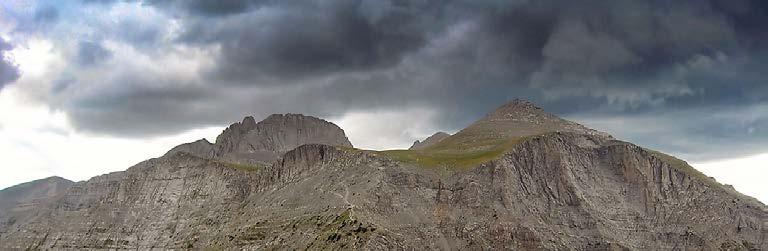
Mt Olympus in Greece guarded an RAF wartime forward base
Duck numbers suggest solid season ahead
The wet spring and early summer, combined with frequent flood events, across the
Fish & Game region meant there’s been a lot of standing water around, even in
go dry.
This abundance of water provided plenty of good habitat for ducks, and flooded margins, which draw out invertebrates from the soil, triggered a flush of aquatic insect life. This surge in protein has been a huge benefit for growing ducks.
While anecdotal reports of high brood numbers were encouraging, the success of the season relies on these ducks reaching maturity. The great news is that our recently completed mallard counts suggest that has been the case across most of the lower North Island.
Numbers across the Wellington Fish & Game region are up around 15 per cent on last season, with ducks well distributed throughout Wairarapa, northeastern Manawatū and the central high country.
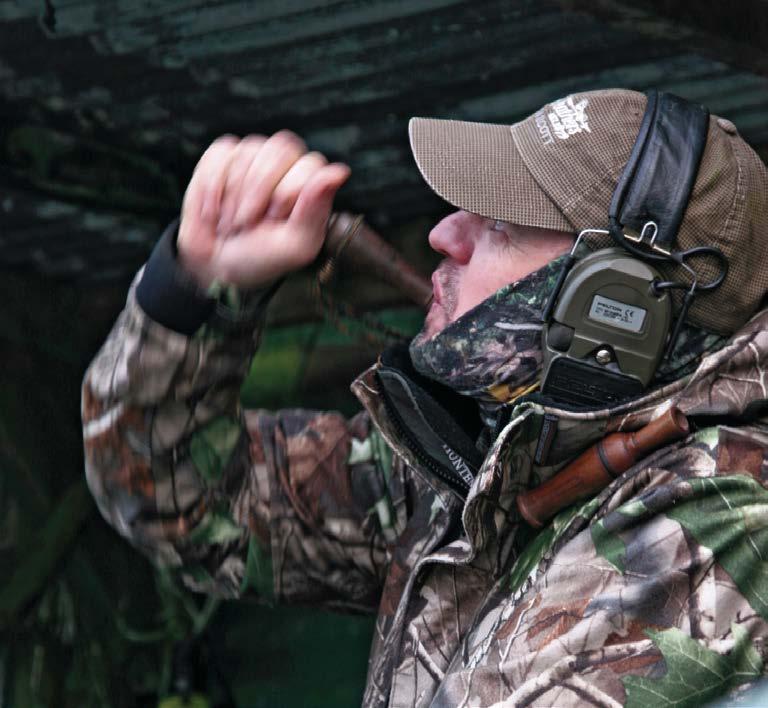
A drier autumn in some parts of the lower North Island has recently seen ducks congregating on rivers, streams, lakes and ponds with permanent water. It will be worthwhile scouting out the location of duck camps prior to opening weekend, particularly around the Manawatū Plains.
While the wet summer has been a bane for cropping farmers in both regions, it could be a windfall for duck hunters. Much of the maize harvest has been late and is only ramping up a few weeks out from the start of the season. This is providing plenty of feeding opportunities for opportunistic mallards and parries. As well as ensuring the birds stay close, it also means they should be in great condition come opening weekend.
As always, the final game bird harvest will be dictated by weather patterns leading into the start of the season.
With populations looking good, though, the lower North Island is well placed heading into opening — hunters should be excited for the action to come. Fish & Game rangers will be active in the Manawatū from opening
A happy hunter on opening day last season day, May 2. So hunters are advised to check they’re familiar with the season’s regulations, aren’t in possession of lead shot when shooting within 200m of water, and are carrying their 2026 game bird licence.
FISHING, HUNTING & OUTDOORS
by Paul Campbell
Outdoor adventures on offer
If New Zealand offers world-class outdoor pursuits, Manawatū is surely a jewel in the crown with fresh and saltwater fishing a magnet for anglers, while the countryside offers a rich hunting ground and other excellent activities.
If it’s brown or rainbow trout that spins your reel then you’ll find 15 fishable rivers, with the mighty Manawatū River running from the Ruahine Range to the Tasman Sea with 170km of productive water. Access is easy from a number of roads over most of its length, with the most popular spots between Dannevirke and Palmerston North. Brown trout are predominant with rainbows and perch also targeted.
Sea fishing for a variety of table and sport fish is available in the Tasman off the west coast, and if the briny attracts, then contacting the Wanganui Manawatū Sea Fishing Club is a good way to learn all the local lore you may need, and membership might be a good option.
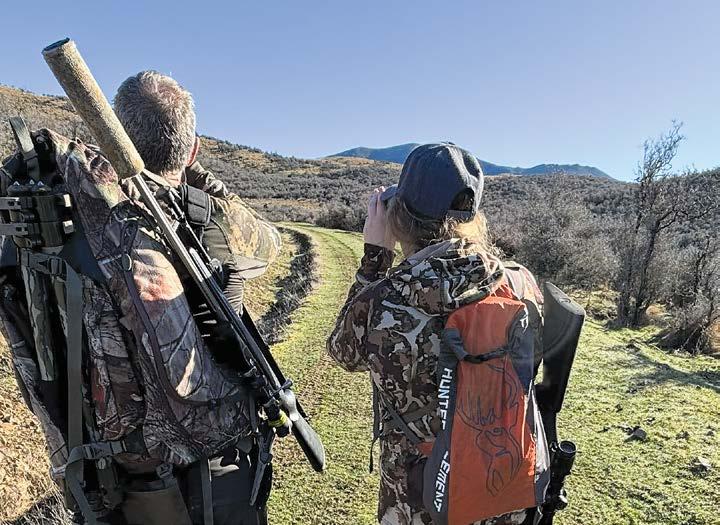
Fishing aside, Manawatū also offers hunting with rugged terrain, mixed forests, wetlands and rivers in the region’s conservation areas and scenic reserves. Red deer are sought after, and in moderate numbers throughout the Ruahine Ranges. Sambar deer can be hunted on private land with
the landowner’s consent. Hunting permits for small game, such as hares, rabbits or possums, may be issued caseby-case.
Of course, the duck hunting season is upon us very soon, and some of the best quality waterfowl hunting in the Wellington Fish and Game region that covers
Manawatū can be found in the public hunting areas. Any game bird licence holder who obtains Fish and Game’s game bird hunting access permit, may hunt designated wetlands after opening weekend for the remainder of the game season, but first check the permitted dates in the permit booklet.
If fishing or hunting has no attraction there’s plenty on offer for an action-packed stay in the region with outdoor pursuits from rafting down the Rangitīkei River, to cycling and hiking, take to the ranges on horseback for equine adventure.
At a more relaxed pace tee off the country’s oldest golf course, the Manawatū Golf Club leads courses from rural country grounds to inner city greens, find your favourite amongst the numerous clubs dotted throughout the region that offer a variety of courses for all tastes and talents.
The Ruahine and Tararua Ranges offer walks, hikes and multi-day tramps for all abilities with a range of hut or lodge overnights. On-road adventures to family-friendly tracks mean there’s something for all abilities with beautiful backdrops.
From a 4WD safari, horseback trekking through the ranges, to harnessing the elements land-yachting on the coast, fast downhill mountain bike rides, hunting and fishing the Manawatū has it all.
Manawatū ready for duck hunting season
WINTER FOCUS
Five top tips for a warmer winter
With autumn well and truly here, it’s time to think about making the home or farm ready for winter. Be like Santa: make a list, check it twice, and your winter will be hot chocolate in front of the fire rather than cold drips and sleepless nights.
Tanks and gutters
It seems like a no-brainer, but you would be surprised at the number of people who do not clean out their gutters or their water tanks in anticipation of torrential winter rains. Any nasties flushed down the guttering and pipes may end up in your tank, so it’s time to talk about cleaning, filtration and repairs before the heavens open. Call the professionals for peace of mind and a clean, healthy water tank and water collection system, from your roof to your taps.
Fires and chimneys
Did you know that you must sweep your chimney on a regular basis to satisfy the conditions of most insurance policies for the home? It’s also a chance to check the state of the firebox and fittings. If you do need a new fire, now is the time to act. It can take a short period to get permissions from the authorities, and of course, time to install. While dwelling on fireplaces, now is also the time to lay in a big store of firewood. You’ll need a qualified fireplace installer and chimney sweep for part one,
and your local firewood delivery service for the second.
Trees and shrubs
Right now they’re picturesque, but your undergrowth and overgrowth can turn nasty when whipped up by the strong winds of winter. Take care of any problem trees now, and get a second bonus — free firewood. You’ll need a garden maintenance company or arborist OR a visit to your local mower and chainsaw specialist to tune up those saws and pruners and invest in safety gear.
Leaks and drips
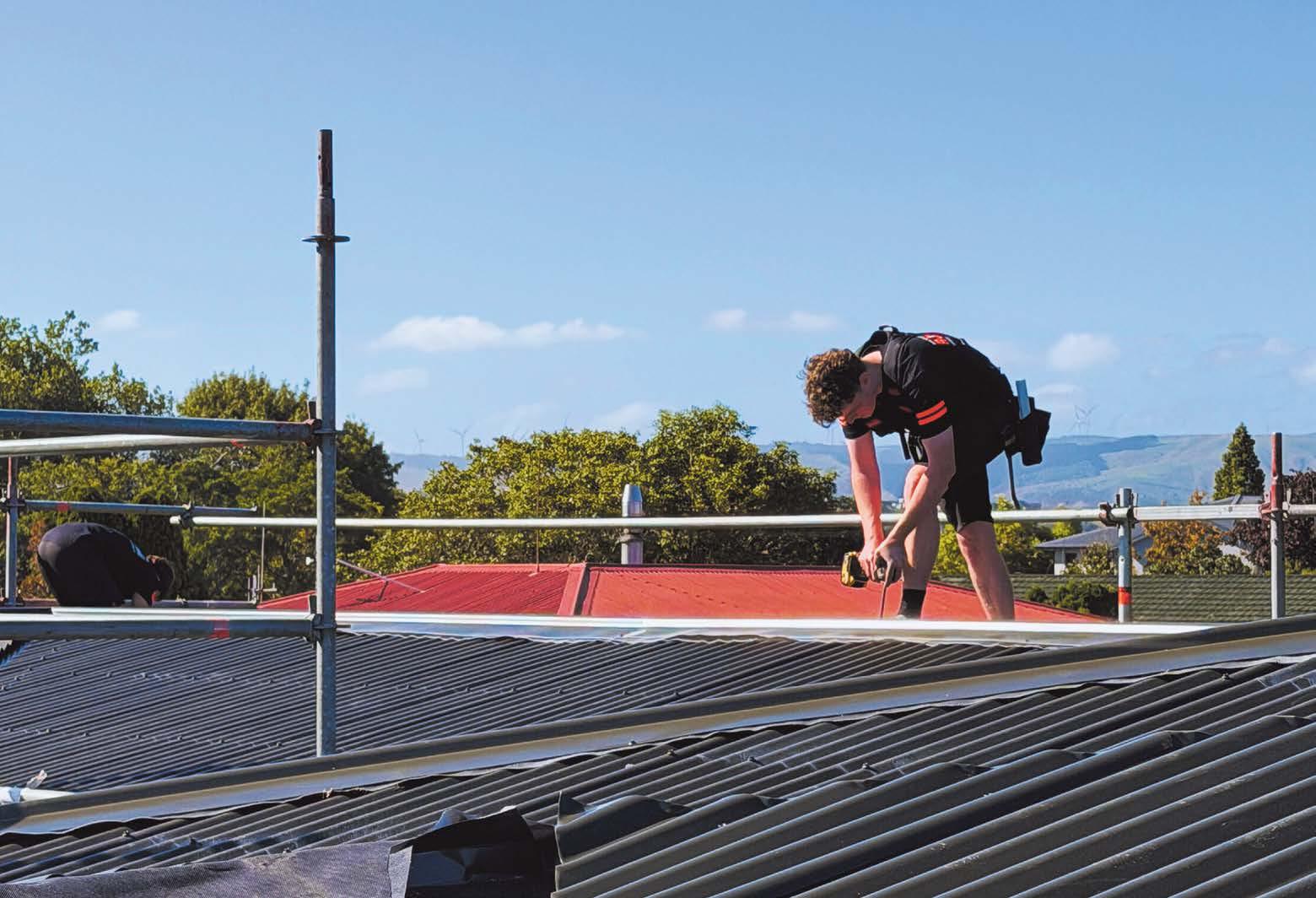
You may know exactly where they will appear. You said you’d fix them during the summer. Now the rain is coming, and those leaks and drips will be back. Call in a qualified roofer, or for more serious and structural weather-tightness issues, a licensed building practitioner to get to the root of the problem.
is lost from some homes —
with cracked glass or ill-fitting frames. Moreover, it’s not just obvious conduits for cold and damp. Check the putty around your window panes. Loose or crumbling fitment will not stand up to a gale. Call in a professional glazier to see you right.
YOU LOOKING TO BUY A HEAT PUMP?
us today for a FREE CONSULTATION
discover why a heat pump is the smart choice for your home!
WINTER FOCUS
The heat is on
by Andy Bryenton
By taking ambient heat from the air and then transferring it where it needs to go with a heat exchanger, heat pumps can generate five kilowatts of warmth for every kilowatt of electricity they consume.
That’s great for heating your home, and the long slimline box shapes of heat pumps have become ubiquitous in Kiwi living rooms and bedrooms. As an added bonus, home heat pumps can work in reverse, too, cooling the home in summer. However, there’s more to this technology than just a pleasant environment, as clever minds have been scheming on other ways to use heat pump technology around the house.
Foremost for big savings on electricity bills is the use of heat pumps as water heaters. The old-fashioned hot water cylinder uses a big coil like one inside a kettle to heat hundreds of litres. It’s the equivalent of the old three-bar electric fire compared to a modern heat pump, and equally wasteful.
Hot water heat pumps can slash the cost of heating water by up to 70 per cent, they take less time to get the water up to temperature, and are usually situated outdoors, meaning that valuable storage space can be unlocked indoors. Another area of the home where heat
is needed but power bills need to be driven down is in the laundry. Heat pump technology has been widely adopted by the manufacturers of tumble dryers, and early high prices to invest in one of these power-saving devices have come down dramatically as whole factories switch to the new standard.
Drying clothes indoors used to be a grim necessity in winter, with power bills to match. Now, heat pump dryers offer not only more affordable convenience, but are also easier on fabrics.
Heat pump efficiency has even made one of the most luxurious options for a modern home a little bit more affordable to maintain.
While there’s an initial investment cost, heat pump spa pools take away one of the most daunting aspects of owning a hot tub; the ongoing cost of keeping the water warm.
Spa pool manufacturers say that a standard spa pool upgraded to a heat pump water heater repays the cost in two to three years.
Sparky
Small scale, with a big heart
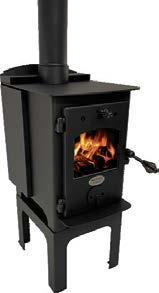
The Wagener Sparky is New Zealand’s ultimate compact multi-fuel solution, handcrafted for tiny homes, cabins and even boats. Despite its small footprint, the Sparky delivers an impressive 7–10kW output, featuring a heavy-duty 5mm steel chassis and a brick-lined firebox for maximum heat retention.
This multi-fuel versatile performer isn’t just a heater; it features a dedicated top surface for cooking and an optional “Lion” wetback to provide independent hot water. Available in Clean Air and Rural models with customisable base and colour options, the Sparky offers robust, long-lasting warmth wherever space is at a premium.
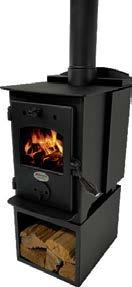
The Legend of Warmth, Built to Work Hard
The Wagener Leon is the “big brother” to the Sparky, designed for those who love compact styling but need massive 16–18kW heating power. Named after the family business founder, this handcrafted powerhouse features a deep firebox and a large glass window for a stunning view of the flames. Built from 5mm NZ steel, the Leon includes a built-in log box for convenience and a dedicated cooking surface for self-sufficiency. With an optional 3kW wetback capable of heating a full household’s water, the Leon is a hardworking, enduring heart for any medium-to-large home.
WINTER FOCUS
by Andy Bryenton
Getting into hot water
Public bath houses were common in Greece and Rome, where even emperors were happy to take their ablutions along with others; social values about nudity were very different for a lot of ancient civilisations.
One royal from ancient times, who loved his privacy, was a legend who famously went to great lengths to protect his personal space. King Minos of Crete may not have really kept a bull-headed monster in a maze to guard his palace, but he did own the first known bathtub, dating back to 1700 BCE. Lead pipes brought water to this massive pottery tub, located in the fortress of Knossos. People may think that the Middle Ages were a terrible time for baths and showers, but this was the era when soap was first introduced to Europe.
People bathed in wooden tubs, usually in their kitchens, and only once each week, to save precious firewood. Edward
the Third was the first British king to have his own bathroom, and that wasn’t until the 1300s. Records from the Dark Ages complained that Norse and Danish settlers on the coast of Britain were far too attractive to the local women, as they bathed every day and thus smelled better.
Henry the Eighth banned bath houses and feared bathing, thinking that it was water that carried the black plague. He was dead wrong, of course, but his superstition kicked off a terrible time for hygiene, which lasted until the enlightenment. In the late 1700s running water became available to London homes, and William Feetham invented the shower. Initially only available with cold
BY PROFESSIONALS IN YOUR COMMUNITY NOT “EXPERTS” ONLINE
water, the addition of a coalfired boiler soon made getting clean a pleasant relief after a day on the stinky streets of old London town.
Soon, a hot bath and shower became a novel addition to the stately homes of the nobility. It was high-class hotels, copying this trend, which brought the idea of a modern bathroom to the average person. The Tremont House in Boston, US, added full bathroom facilities in 1829, and enjoying a hot shower or bath while on holiday reinforced the desire to build something similar at home.
HUGHES GLASS
Seeing the trend, John Michael Kohler, a steel factory owner, put four ornamental lion’s paw feet on an enamel horse trough and sold it as an indoor bath. The public could not get enough. Bathrooms were renovated into many existing homes by making kitchens smaller, as that’s where the plumbing was. Front parlours, once only small rooms designed for greeting guests, became
lounge rooms, John Kohler, inventor of the modern bathtub: his name is still synonymous with good plumbing today as people stopped congregating in the now-diminished kitchen. The desire to have a private hot bath, like old King Minos, had changed how houses were designed forever.
by Andy Bryenton
A pair of eights wins for John Deere
Thirty years from the inception of the John Deere 8 Series of tractors, the big green machines have evolved into consummate platforms for seeding, tilling and planting, as evidenced by the release of the new generation alongside some serious new farming tools.
The new 8R and 8RX tractors from Deere offer 440, 490 and 540 horsepower options, making them capable of utilising some of the biggest and most efficient implements for crop and pasture management tasks.
All have at their heart the new JD14 engine, which delivers its peak power at low rpm, and can max out at a big 634 horses at just 1,700 revolutions.
That’s in line with customer demand for more potent PTO power on tap, as well as electrical offboarding, a growing need in the modern farming environment.
The hydraulic systems of the 8 Series have also been beefed up, with more capacity, and separate steering and braking pumps to ensure smooth operation.
“Whether you are seeding, tilling or planting, these tractors have the power, technology and functionality to increase productivity and efficiency,” said John
and precision agriculture, Royce Bell, when the new 8 Series broke cover in Australia last month.
“Similar to the impact of the HHP 9RX, the HHP 8R and 8RX are expected to increase productivity and efficiency in customer operations while providing the versatility of a rigid chassis tractor. Horsepower, ballasting, lift capacity, size and functionality all increase with these models.”
That high horsepower and high capacity has been matched up with a push for more manoeuvrability.
Features like reactive command steering to bring the wheels back to centre automatically during pasture operations are coupled with smart chassis design to deliver a turning radius that’s got to be seen to be believed.
With the option of a front hitch and PTO, and equipped with a rear hitch that boasts a capacity close to 11 tonnes, this
FERTILIZER INVESTMENT
to work with some large and efficient tools, leveraging maximum economies of scale.
That’s no mistake and no coincidence.
At the same time as the big green and yellow brand launched the newest 8 Series generation, they also debuted their modelfor parallel fertiliser application, digital connectivity and accuracy of placement.
A new air cart, the C1100, boosts the capacity of grain growers who want to tackle more pasture during tight seeding windows, while the 2027 sprayer range was also unveiled, once again focussed
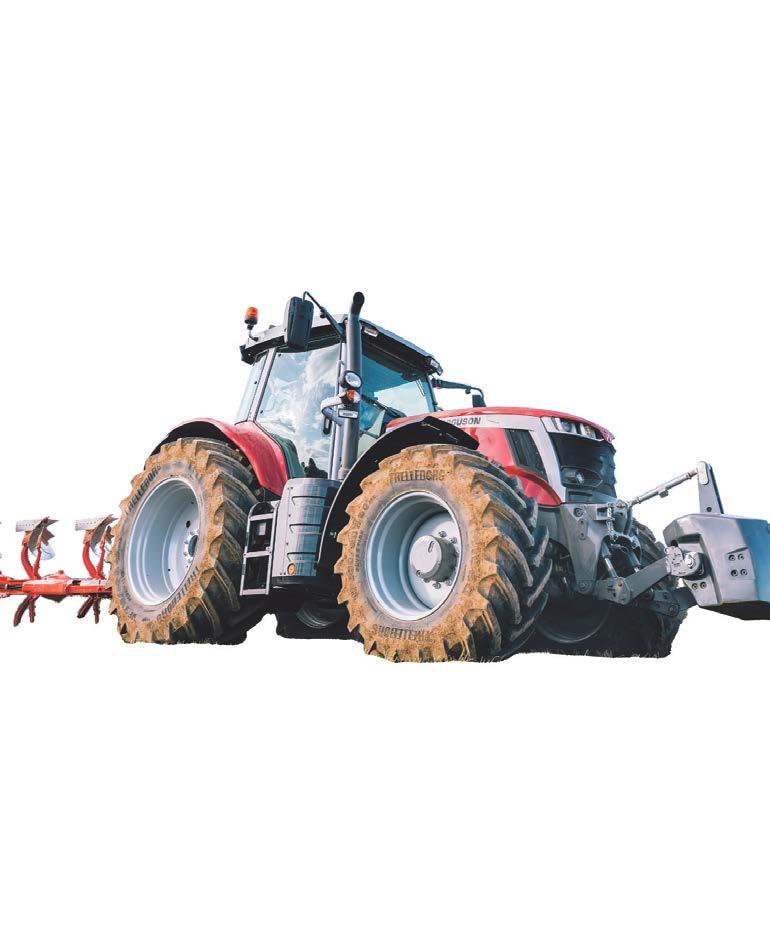
The John Deere 8R series has enjoyed a long period of popularity due to successive generations of innovation and power