Face to Face
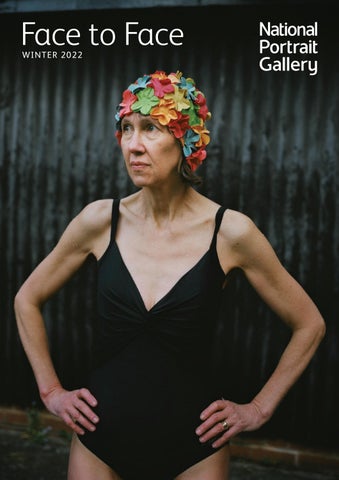
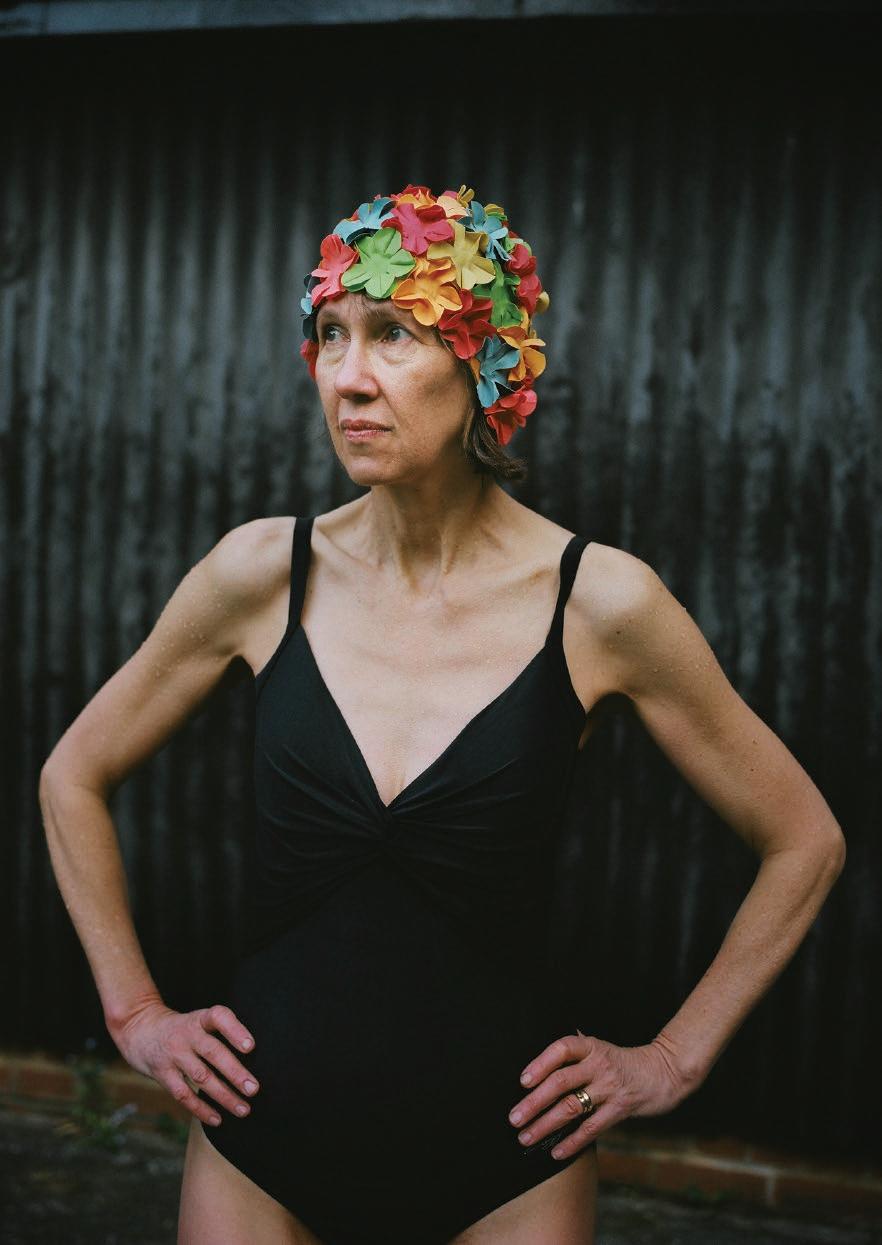
cover detail ( and below )
Kornelia by
Fiona Bailey, April 2022
From the series Coming Home © Fiona Bailey
Face to Face Issue 70
Director of Development
Sarah Hilliam
Manager
Daniel Hausherr
Copy Editor
Elisabeth Ingles
Designer
Annabel Dalziel
All images
National Portrait Gallery, London and © National Portrait Gallery, London unless stated
npg.org.uk
Gallery Switchboard 020 7306 0055
The Gallery is committed to reducing our environmental impact and this magazine is printed on paper certified by the Forestry Stewardship Council and is fully recyclable.
Dr Nicholas Cullinan
in early september we marked a significant milestone in the Inspiring People project as our construction partner, Gilbert Ash, handed over a number of sections of the building back to the Gallery. This means that the construction work in the Duveen Wing is now complete and it is wonderful to see the major transformation of these spaces as we continue to prepare for our re-opening next year.
I am pleased to share that we have now started to hang the first portraits following this milestone. In this edition of Face to Face, Catharine McLeod, Senior Curator, Seventeenth-century Portraits, tells us about a room in the redeveloped Gallery that will have a special focus on portrait miniatures.
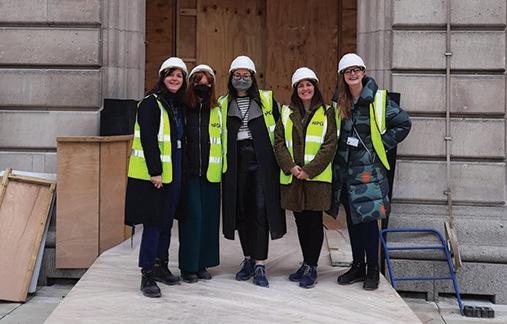
Earlier this year we were able to invite a number of our Patrons and Members to view the construction work on site through a series of the exclusive hard hat tours. Darrell Barnes, a Member since 2005, took up the offer of a visit and shares his reflections with us.
The transformation of the Gallery stretches far beyond the physical changes taking place on site. Our Director of Communications and Digital, Denise Vogelsang, is in conversation with Martin Carr of Boardroom Consulting, to give you an insight into a key project to refresh our vision and values, and the launch of our new brand in 2023.
The Taylor Wessing Photographic Portrait Prize returns for its 15th year. Once again, the exhibition will be on display at Cromwell Place in South Kensington, opening on 27 October 2022. Our curator, Eva Eicker, tells us about this year’s show and shares some of the powerful and beautiful work on display.
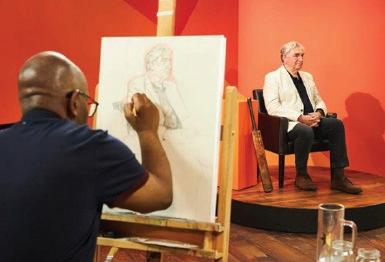
This month, we are also looking forward to Sky Arts’ Portrait Artist of the Year and were pleased to play a role in this year’s competition. I am also happy to share that the winning portrait will join our Collection and that this work will be proudly on display when we open.
Finally, we were delighted to welcome the author and historian Simon Sebag Montefiore to our Board of Trustees earlier this year. Simon tell us about his favourite portrait in the Collection.
At this important moment in the Gallery’s history, we thank you for your continued support and greatly look forward to sharing the new National Portrait Gallery with you next year.

Dr Nicholas Cullinan director
MY FAVOURITE PORTRAIT
by Simon Sebag Montefiore Author and Trustee
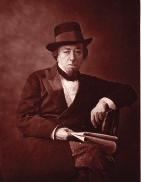
i have many favourite pieces in the Collection but this iconic photograph of Disraeli is one of them.
These photographs were taken at the height of his successful second term as PM in 1878 after he intervened to stop an aggressive Russian advance on Istanbul. The city would have fallen if Disraeli, a longstanding enemy of Russian imperial expansion and autocracy, had not sent the Royal Navy to threaten intervention. He joined diplomatic forces with the chancellor of the newly united Germany, Bismarck, who invited the Great Powers to Berlin for a peace conference. Bismarck dominated the summit but he admitted the real star was the old, frail Benjamin Disraeli, Earl of Beaconsfield: ‘Der alte Jude, das ist der Mann!’ (‘The old Jew – that is the man!’). The big struggles in Europe were settled for two decades; and the two titans also condemned the rising antisemitism in eastern Europe.
On his return, Queen Victoria offered him a dukedom. This was extraordinary because Disraeli was Britain’s first leader from an ethnic minority and first self-made outsider to be PM. Just as significantly, he was Jewish, and though the family had converted (anti-Jewish laws then restricted Jews from sitting in the House of Commons) he always regarded himself as Jewish or, as he put it, ‘the blank page between the Old and New Testaments’. He was certainly the wittiest PM we have ever had: it was he who talked about ‘lies, damned lies and statistics’.
left Benjamin Disraeli, Earl of Beaconsfield (detail) by (Cornelius) Jabez Hughes, 22 July 1878 (NPG x665) below
Sebag Montefiore
His early life was extremely rackety and scandalous, in terms of money and sex; then he started to write a successful series of political novels – he was our most literary PM; and became leader of the new Conservative Party. He commissioned the sewers that rescued London from disease; he brought in the wider voting rights for most men in the 1867 Reform Act that enfranchised the urban working class for the first time and was a big step towards full democracy – and much else. He was an enthusiastic imperialist, buying the Suez Canal in Egypt and granting the title Empress of India to Victoria, with whom he built a great rapport. In 1878 he sat for these photos, which catch the Bohemian, artistic, and languid nature of this dandy, adventurer and great leader and dynamic reformer. More than anything, he resembles the singer Bob Dylan – or maybe Bob Dylan was just channelling Dizzy...

Simon Sebag Montefiore is an internationally bestselling author with books published in 48 languages. Catherine the Great & Potemkin was shortlisted for the Samuel Johnson Prize, Stalin: the Court of the Red Tsar won the BBA History Book of the Year Prize; Young Stalin won the Costa Biography Award, the LA Times Book Prize for Biography and the Grand Prix de la Biographie Politique; Jerusalem: The Biography won the JBC Book of the Year Prize and the Wenjin Book Prize in China; The Romanovs 1613–1918 won the Lupicaia del Terriccio Book Prize. He is the author of the Moscow Trilogy of novels: Sashenka, Red Sky at Noon and One Night in Winter, which won the Political Fiction Book of the Year Award. Simon is the Historian Trustee of the National Portrait Gallery.
Simon
Photo © Natalie Dawkins
TAYLOR WESSING PHOTOGRAPHIC PORTRAIT PRIZE 2022
by Eva Eicker
Curator of Taylor
Prize 2022
Wessing Photographic Portrait
in its 15 th year , the Taylor Wessing Photographic Portrait Prize is annually exhibited at the National Portrait Gallery and forms one of the most prestigious photography prizes.
Bringing together the best of contemporary photographic portraiture from around the world, this year’s prize offers a collective representation of the current challenging times. Presenting various personal perspectives on cultural, environmental and immigration issues, the exhibition features over 51 works by 36 photographers. Such a variety of themes and approaches provides an honest and distinctive insight into people’s lives.
Supported by Taylor Wessing since 2008, the Taylor Wessing Photographic Portrait Prize continues the prize’s history since its establishment in 1993, showcasing both established and up-and-coming new photographers. For the second year, the exhibition will take place at the arts hub Cromwell Place, SW7, from 27 October to 18 December 2022 and we are excited to welcome everyone at the venue again this year.
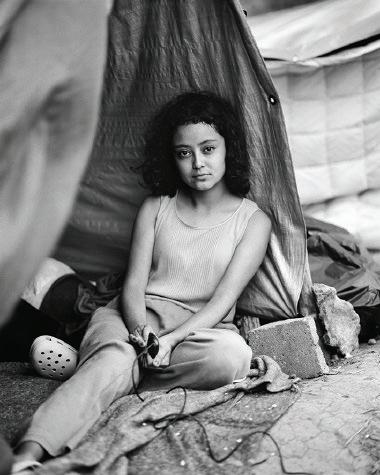
Stephanie Solano Reynosa, 2021 by Adam Ferguson, May 2022
From the series Migrantes
© Adam Ferguson
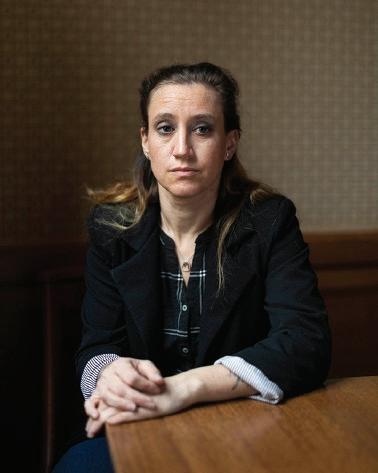
This self-portrait features Stephanie Solano, a 17-yearold migrant from Zacapa in Guatemala, at an informal migrant camp in Reynosa, Tamaulipas, Mexico, on 3 May 2021.
Growing up in Guatemala City, Stephanie Solano studied computer science. She and her mother decided to travel to the USA to find work, leaving her sick father behind.
The self-portrait was taken by Stephanie Solano and photographer Adam Ferguson during his journalistic assignment for the New York Times. During the collaborative project Ferguson mounted a medium-format camera on to a tripod with a cable release, allowing the migrants to choose the moment to press the button and take their own picture.
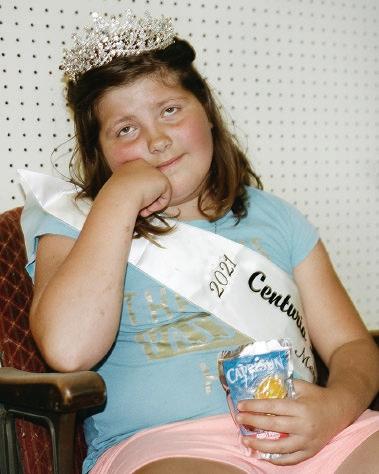
The Capri Sun Princess by Erinn Springer, August 2021
© Erinn Springer
The girl in the photograph was the local royalty elected in 2021 representing the village of Centuria, Wisconsin. ‘Her expression and manner were subconsciously reminiscent of a Norman Rockwell painting: fantastical yet everyday,’ the American photographer Erinn Springer reflects.
For this series Springer was documenting rural fairs and met the girl at a pre-coronation gathering at the Polk County fair. Ordinarily based in New York City, during the 2020 Covid lockdown and when the Midwest became a critical region for the 2020 US election, Springer returned to her native rural Wisconsin. In her work she explores the character of rural life, the cycles of the land, and the reflective relationship between people and their environments.
below
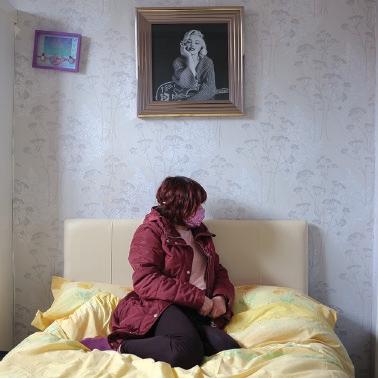
Name withheld by Margaret Mitchell, March 2022
From the series An Ordinary Eden
© Margaret Mitchell
In her long-time project An Ordinary Eden on homelessness, Margaret Mitchell photographs people facing the emotional and practical burden of living without a permanent home in Scotland.
In this photograph Mitchell portrays the woman on the bed in her new home after three years of living in both hostels for the homeless and inadequate housing. After losing her home through domestic abuse she faced both personal and material loss while surviving the trauma of the emotional and practical effects of homelessness. The sitter, whose identity is protected, states: ‘It’s tiring – this is your life, I’m safe now but it’s all limited, I don’t exist anymore.’
below
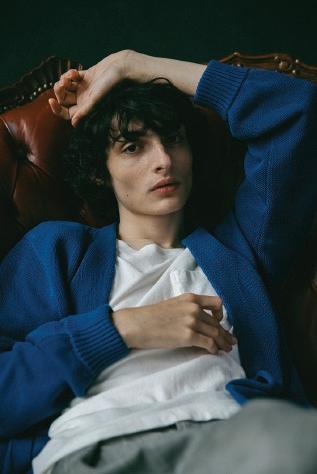
Portrait of Finn Wolfhard
by Celeste Sloman, October 2021
© Celeste Sloman
below right
Valérie Bacot
by Ed Alock, May 2021
© Ed Alock
This portrait is part of an editorial assignment for The Washington Post featuring an interview with actor and musician Finn Wolfhard. Famously starring in the American series Stranger Things (2016) from a young age of 10 years, he transformed into a teenager and established actor in the limelight of publicity. In this photograph Celeste Sloman captures him in a moment of boyish confidence and relaxation.
Sloman considers it her obligation to make the people in front of her camera feel comfortable and safe: ‘Having your portrait taken is a hugely vulnerable experience,’ she explains. ‘I make sure to tell my subjects that I’m watching out for them.’
Taylor Wessing Photographic Portrait Prize 2022
From 27 October until 18 December 2022
Cromwell Place, London
Tickets from £8 (Concessions from £4)
Free for Gallery Supporters
www.npg.org.uk/photoprize
This portrait was made as a commission for Elle Magazine days before Valérie Bacot’s sentencing for murder at the Court of Chalons-sur-Saône, France. The 40-year-old Bacot was only 12 when her then stepfather, Daniel Polette, first abused her. Later he became her husband, and Bacot shot and killed him on 13 March 2016. At that time she had survived a total of 24 years of physical and psychological violence, rape and forced prostitution by Polette. She was sentenced on 25 June 2021 to four years in prison, with three years suspended. As she had already spent one year in pre-trial detention she was a free woman from that day onwards.
VISION AND VALUES PROJECT
by Denise Vogelsang Director of Communications & Digital and Martin Carr Partner, Boardroom Consulting
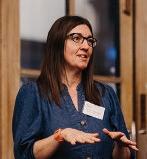
Denise Vogelsang and Martin Carr discuss the Gallery’s recent project to look at organisational vision and values.
Denise: The opportunity to review your vision and values comes along ‘once in a generation’. We felt our closure period, followed by the re-opening of the transformed Gallery, provided a unique chance to reflect on what we stand for and what we want to achieve. Building on our established principles and the strong foundations of the past, our aim was to define and articulate a new vision so that we and our audiences have a shared view of what the National Portrait Gallery is and the role we play.
Our vision – Lives inspired and society enriched through deeper connections with the nation’s stories
We appointed Boardroom Consulting following a comprehensive open procurement procedure. Their submission demonstrated clearly how well they understood us as an organisation, as well as our audiences and stakeholders, and how they could help us develop a new definition of what they call ‘the fundamentals of organisational identity’.
One area where Boardroom’s thinking and ours particularly overlapped was on the importance of actively engaging the Gallery team and wider stakeholders. They created a number of ways for visitors, staff, supporters, Members and Trustees to participate
in research and workshops – as well as bringing in experience and views from other organisations both inside and outside the cultural sector, and sense-checking ideas with representatives of our external audiences.
Martin: Looking at the Gallery’s future goals as well as at the perceptions and needs of its audiences, current and new, we felt that in addition to refreshing the vision and defining new values of the National Portrait Gallery, it could benefit significantly from a new and crystal-clear clarity on its role; on what can be uniquely expected from it, by everyone. We encouraged the leadership team to see a new role as a ‘North Star’ for the future, by which the team can agree priorities and make decisions both when planning for the longer term and every day.
Our role – We bring to life the human stories that have shaped and are shaping our ever-changing history
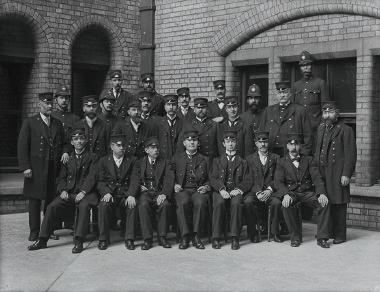
Denise Vogelsang
Portrait Gallery by Sir Emery Walker, c.1901 (NPG x199297)
Our values – Pull together, Build trust, Ask, listen and act, Look beyond the obvious
We also recognised the importance of truly co-developing with the Gallery’s team a new articulation of their organisational values and behaviours, so that these could be used to underpin how everyone delivers their work, helping to create a positive culture that will enable the Gallery to deliver in fulfilment of its ambitions.
We identified that for the Gallery to achieve the impacts it was looking for, we needed to generate more reach, more relevance, enabling it to be more responsive and therefore more recognisable. To help achieve these ‘4 Rs’, the new vision allows everyone to understand what impact the Gallery seeks to make: the new definition of the National Portrait Gallery’s role will sit at the heart of what it feels like to engage with and experience the organisation. The new values drive behaviours and will help build a positive culture for the Gallery’s team.
And, finally, we created a ‘shared idea’ –‘A living portrait of Britain’ – which is an ambitious and inspiring positioning tool, a ‘short cut’ for everyone to associate the Gallery with.
Denise: The process has been so useful in helping us to understand our existing and potential audiences and also what they would like to see from us in the future. Our new vision spells out the difference we aspire to make, supported by a galvanising definition of what we can do every day to achieve this. The Gallery team are hugely excited about next year’s re-opening and the opportunity to embed this work into our thinking as we work towards that key moment and beyond. We are already building our long-term strategy on these foundations and they have been at the heart of our new brand identity, which we will reveal in early 2023.
After 15 years leading one of the UK’s most awarded brand consultancies, Martin Carr co-founded Boardroom Consulting with partner Claire Rigby in 2019. Boardroom helps organisations become and remain sustainably relevant, by creating answers to the fundamental questions of how an organisation defines and thinks of itself: ‘Why are we here, what uniquely do we do, why that matters to those who matter most to us.’
Martin has worked with the Royal Collection Trust, Natural History Museum, National Gallery of Ireland, National Football Museum, Wellcome Collection and the National Lottery Heritage Fund.
Until late 2021 he was co-chair of the People’s History Museum and is now a board member of ‘Britain’s most adventurous orchestra’, the Manchester Camerata.
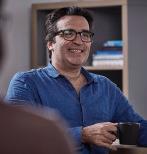
Martin Carr
by Darrell Barnes
i have always regarded the National Portrait Gallery in much the same way as I might think of a maiden aunt: discreet in her appearance (with a nod to the twentieth century in her Orange Street frontage); modest in her outlook (it would not be comme il faut to leer towards louche Soho from her front door); quiet in her demeanour (not for her the imperium of her cousin in Trafalgar Square).
But even maiden aunts surprise. Who would have thought that at the age of 164 she would decide to take on a new lease of life, kick up her heels, and to be – dare I say it? –daring? Naturally, such a change in behaviour and character cannot be achieved without some fundamental reconstruction.
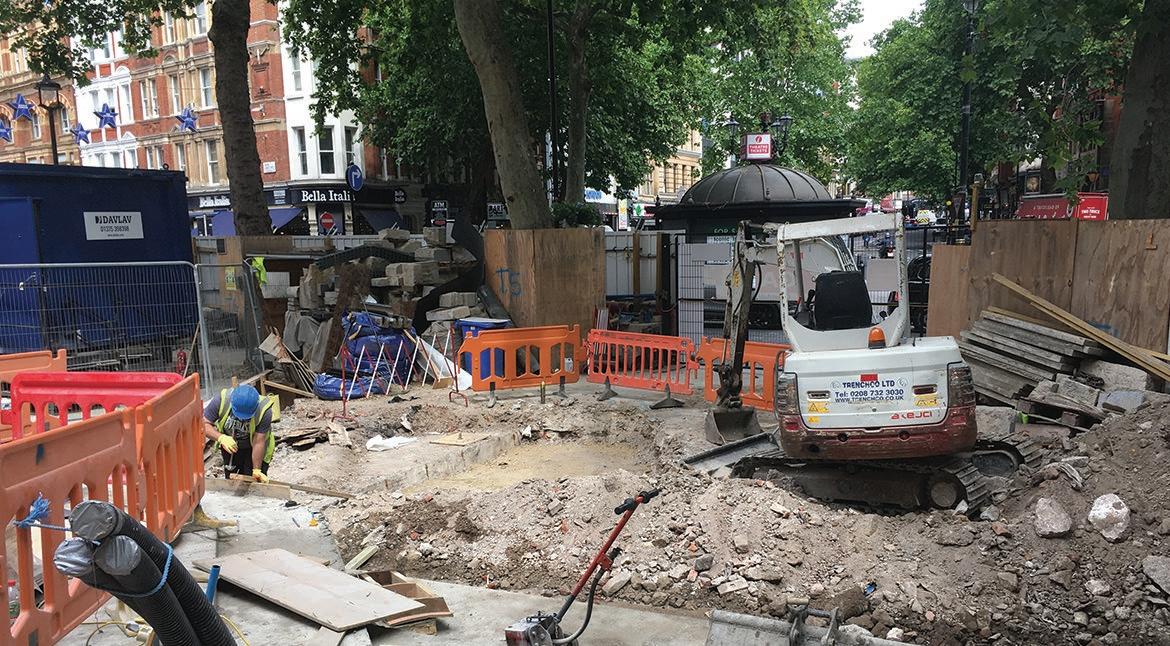
And so it was that in July I was invited, with a number of other devotees, to visit her as she underwent treatment at the hands of skilled specialists: electricians, carpenters, masons, plumbers, restorers and a host of others working under the direction of those renowned structural surgeons, Jamie Fobert Architects.
Frankly, I was shocked. Where once I had seen a brick wall, now I faced a long vista; a floor had been lowered several feet; that sandwich I had dropped in the Portrait Café had been swept away in a breathtaking new expanse; unexpected light streamed through newly uncovered glass; previously unnoticed handsome wooden doors were revealed by
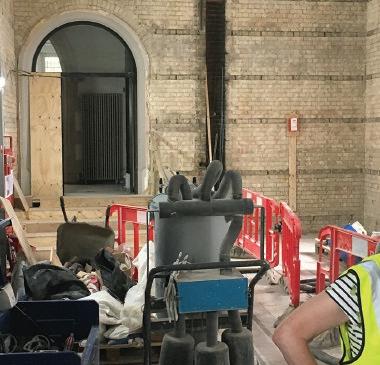
the old entrance; striking coloured fabric adorned the gallery walls; crudely gouged channels in terrazzo flooring were invisibly mended; the mezzanine bookshop – sorry, mate: gone. My dear aunt was certainly going to step out in style!
This Hard Hat Tour, organised by Rebecca Redclift, Campaign Manager, and led by Jack Brill, Interim Head of Visitor Experience, was like visiting a friend in intensive care. Before I entered the ward I had hoped against hope that things would not be too bad and that she would manage to pull through; as I watched the tender ministrations of those surrounding her, I grew entirely confident that her vital signs were strong and that all would be well.
Such care does not come cheap, so I was delighted to be able to contribute by
sponsoring a step: visitors coming to the National Portrait Gallery will see my name for many years.
How do I sum up my feelings after this fascinating tour? In a few lines of terza rima, perhaps? Life is all too often lived in leaden prose – except when I visit my dear maiden aunt.
Where once I walked the portrait corridors, saw an exhibition, bought a book, is now a no-man’s land behind closed doors.
Architects have planned another look, transforming my old friend’s familiar face, disclosing light, terrazzo floors, a nook, unboarded windows, putting into place a grand design. I felt I might intrude, as if I were to see a hopeless case, drugged and hitched to tubes, denied all food, despairing of survival. What relief to hear the doctors say that all is good!
My friend will grow back stronger; my belief in golden times ahead is justified; colour will return (the night was brief);
portraits once again will hang inside this gallery I love, now London’s pride. darrell barnes , july 2022
If you would like to support the Inspiring People campaign, please contact makehistory@npg.org.uk
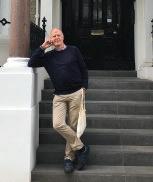
Darrell Barnes Photo © Darrell Barnes
SKY ARTS’ PORTRAIT ARTIST OF THE YEAR
by Stuart Prebble Storyvault Films
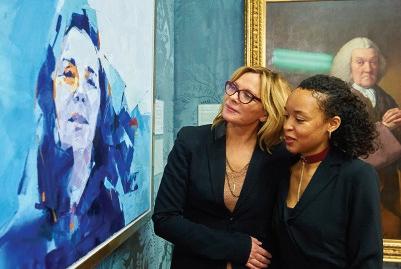
sky arts ’ ‘Portrait Artist of the Year’ series has played a part in demystifying portraiture for a mass audience. Stuart Prebble, from producers Storyvault Films, tells how it all happened.
‘So your idea is to entertain people by asking them to watch paint dry?’
I’ll resist the temptation to name the person whose first reaction this was to the original proposal for the Portrait Artist of the Year series. But who could blame them? A group of unknown artists, chosen not for their sparkling personalities or their back-story, but entirely on the basis of their artistic talent? Taking just four hours to produce a portrait? What, no nice judge/nasty judge double act? No humiliating week-by-week elimination? And no Schadenfreude as disappointed and downcast contestants are expelled from the household? How could that be worth watching?
Fortunately for us, the commissioning team at Sky Arts did not share the widespread appetite for cynical competition shows. The Portrait Artist of the Year series, presented by Dame Joan Bakewell and Stephen Mangan, is now in production for its tenth run, and is by far the most popular show on their channel. More than a million viewers tune in to every episode, and a typical reaction from the twitterati is, ‘My favourite time of the week; feet up, phone off, a glass of wine, and I know that nothing nasty is going to happen in the next hour.’
But that’s not the best thing about being lucky producers of the Portrait Artist of the Year series. The best thing is that over nine years of making the show alongside Landscape Artist of the Year, we’ve been able to showcase the work of well over 1,000 talented artists: amateurs and professionals, young and old, from all over Britain and Ireland – and many of them tell us that after years of struggling to get their art seen, they’ve never stopped working since they appeared on the show. That’s what we call job satisfaction.
Storyvault
Stuart Prebble is an award-winning TV producer and author. His TV credits range from World In Action to Grumpy Old Men, and from The Book Show to Three Men in a Boat. He has written eleven books, and is the founder of a website designed to encourage inter-generational dialogue at www.storyvault.com
Of course we’re acutely aware that TV producers may sometimes be given to hyperbole, but when we describe the competition prize as ‘life-changing’ we don’t think we’re exaggerating. It’s a £10,000 commission to paint a portrait of a well-known person, to be exhibited in a national gallery or institution. In the lifetime of the series we’ve commissioned portraits of Hilary Mantel, Alan Cumming, Kim Cattrall, Carlos Acosta, Nicola Benedetti, Sir Tom Jones, Graham Norton and Nile Rodgers, and all have been exhibited and joined collections in prestigious galleries and public buildings in Dublin, Edinburgh, Liverpool, Cardiff and London.
It hardly needs saying that the zenith of our ambitions has been to commission a portrait for the National Portrait Gallery, but for a long while the closure for refurbishment put that out of reach. But when we spotted the re-opening appearing over the horizon, we jumped at the opportunity. The collective excitement and anticipation about the National Portrait Gallery’s re-opening are already gripping, and so the possibility of sharing in, and even contributing in some small way to the occasion, was irresistible. You can imagine our delight when the idea was received not only with warm enthusiasm by the brilliant team at the National Portrait Gallery, but with positively open arms.
Some 2,000 artists entered this year’s Portrait Artist of the Year competition, and 72 were chosen to appear in the heats. Eight went
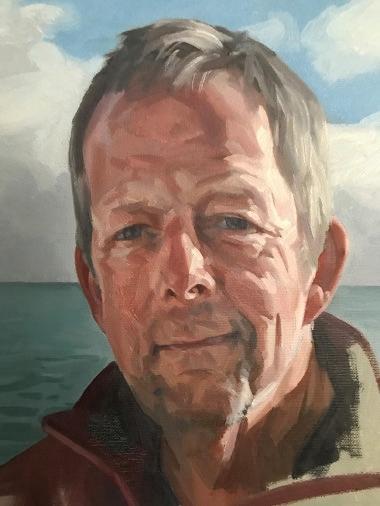
through to the semi-final. Three got to the final, and the eventual winner will paint a portrait that will join the Collection of the most prestigious portrait gallery in the world.
You can catch the new series of Portrait Artist of the Year which began airing on 5 October on Sky Arts, on catch-up and NOW TV. And, excitingly, the winner’s commission will be exhibited for the first time at the National Portrait Gallery when it re-opens next year.
Yes, for the successful artist, we think we’re entitled to describe that as life-changing.
Stuart Prebble by Tai Shan Schierenberg, November 2020 © Tai Shan Schierenberg
A NEW LOOK AT MEMBERSHIP
by Lisa McGann Membership and Gift Aid Manager
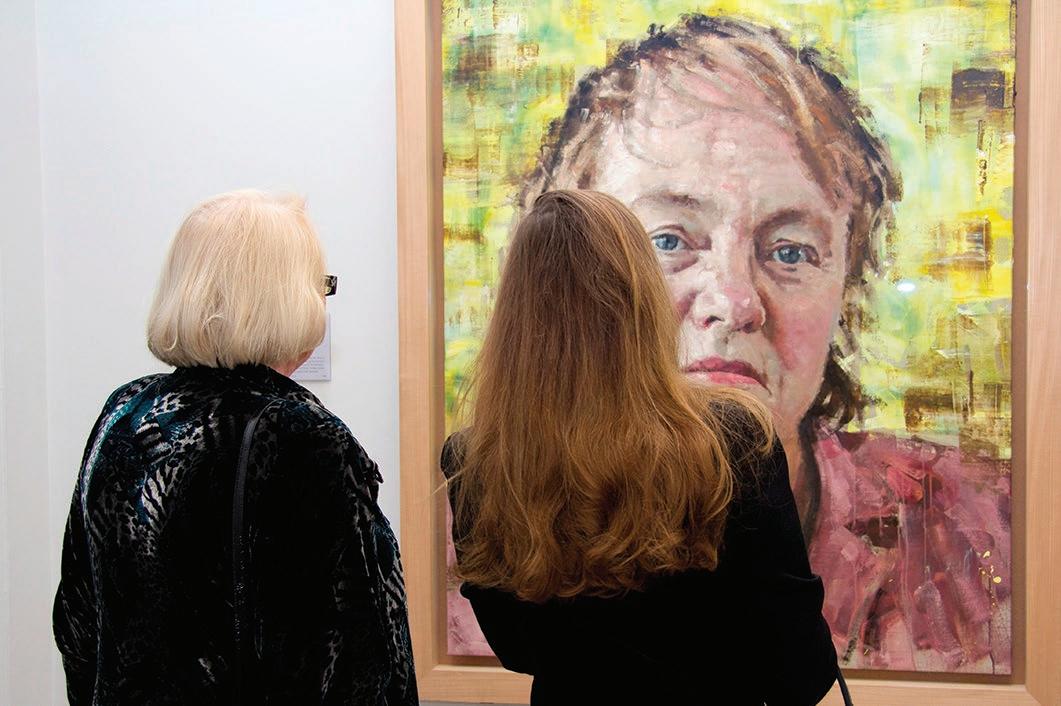
as we move ever closer to the re-opening of the Gallery next year, we are delighted to share an exciting update on our Membership offer. At the beginning of the Inspiring People project, our aim was to revitalise our Membership scheme, thinking about how we can take full advantage of all that the new Gallery has to offer our audiences.
Our starting point was you, our Members. We set out on an extensive research project, to help us gain a much better understanding of your values and how we can strengthen your
engagement with the National Portrait Gallery Collection. We had a fantastic response to our research surveys, and also held a number of in-person focus groups, from which we gained valuable insights on what the National Portrait Gallery means to you and how we can improve the Membership offer in future.
One key element that stood out to me from our research findings is that we should aim to expand our events offer, building opportunities for you to explore themes and see our Collection in new and innovative ways.
Our Programmes and Learning team are planning an exciting new offer of talks, tours and creative workshops. We are looking to include bespoke elements for Members, which will be designed to enrich your knowledge and enhance your enjoyment of our exhibitions and permanent collection. A new learning centre, with three studios, will host a wide range of classes, providing opportunities for people of all ages to participate in active learning and engage with portraiture. Just for Members, we will be looking to introduce more out-of-hours access to our exhibition programme, with the opportunity to book for early morning curator tours and exhibition private views. Additionally, there will be tours of the new building, guiding you through some incredible architectural discoveries and the redisplay of the Collection.
We are also reviewing how we can offer improved access to your benefits, so that you can enjoy all the Gallery has to offer at home. Throughout the closure, the Membership Team have produced a variety of online events, ranging from curator talks on touring exhibitions to behind-the-scenes updates from our Library and Archive. We are thrilled to tell you that we are working on a new digital archive of content, so that you can access recordings of past Members’ events online, as well as copies of Face to Face magazine.
The redevelopment project is set to make the Gallery an even more inviting and inspiring place – the extension of our catering offer and
upgraded facilities will make for much more enjoyable visits. We know how much Members enjoy browsing our unique ranges of products in the shop and pausing for a moment of reflection over a cup of coffee, and you will enjoy uniquely discounted rates, special offers and events across our newly designed commercial facilities.
We can’t wait to welcome our Members back in 2023, and we would particularly like to acknowledge the generosity of our supporters, all of whom play a vital role in helping us to flourish. As a thank you to our supporters and current Members, we will be holding a special preview ahead of the Gallery re-opening to the public, so keep an eye out in your monthly newsletter for further updates.
SMALL WONDERS
by Catharine MacLeod Senior Curator, Seventeenth-century Portraits
below
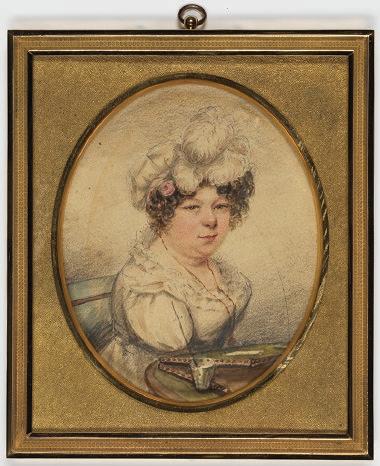
Sarah Biffin, presumed self-portrait, c. 1820 (NPG 7110)
among the exciting new displays in Inspiring People will be a series of galleries that explore the making of portraits in various media, including, on the second floor, a room devoted to portrait miniatures. Here, low-level ambient lighting will allow these brilliant, fragile objects to be spot-lit and to glow like jewels from specially designed wall-cases around the room. Miniatures will be shown in four broadly chronological small groups, representing the Tudor and Jacobean periods; the seventeenth century; the eighteenth century and the Regency period. Two films will supplement the displays: one about making miniatures and a second comprising a series of large-scale digital details.
The watercolour medium in which miniatures are painted is highly sensitive to light, so the displays will change every year. This provides an opportunity over time to show more miniatures than ever before. It will be the first time that miniatures have had a dedicated space in the Gallery, and, while the miniature collection is outstanding, planning has revealed some gaps. With the help of the Portrait Fund and generous donors, we have been able to fill some of these gaps with exciting acquisitions over the past few years.
A highlight among recent acquisitions is the portrait of Sarah Biffin (1784–1850), a truly remarkable woman born without arms or legs who became a successful miniature painter. Biffin was born into a cobbler’s family, taught herself to write, paint and sew using
her mouth, and was contracted to work for a travelling showman at the age of about 13. Her skill brought national fame and, under the patronage of the Earl of Morton, she had some professional instruction in miniature painting. She eventually made an independent living as a miniaturist, painting members of the royal family and many others. The small portrait we have acquired, believed to be a self-portrait, shows her in the process of painting, dipping a brush attached to the sleeve of her gown into a pot of water.
Another talented woman whose miniature portrait has been added to the collection could not have come from a more different
below Lucy Harington, Countess of Bedford by Isaac Oliver, c. 1610–15 (NPG 7125)
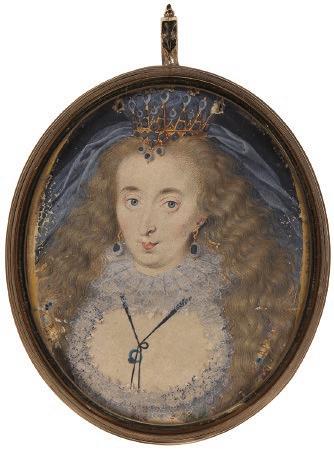
background than Biffin’s. Lucy Harington (c.1581–1627) was born into a wealthy, aristocratic family. Well-educated and speaking four languages, she became one of the most important female patrons of literature and art at the Jacobean court.With the support of Sir Harry Djanogly CBE, we have acquired an exquisite miniature of Harington by Isaac Oliver, one of the most skilled and admired of all early British miniaturists.
A third acquisition, which greatly enhances the eighteenth-century part of the collection, is a beautiful miniature by Ozias Humphry of Asaf-ud-Daula, Nawab of Oudh (Awadh). It records a fascinating encounter between Indian and British culture at a time of increasing British power and intervention on the Indian sub-continent. Asaf was the ruler
below Asaf-ud-Daula, Nawab Wazir of Oudh by Ozias Humphry, 1786 (NPG 7126)
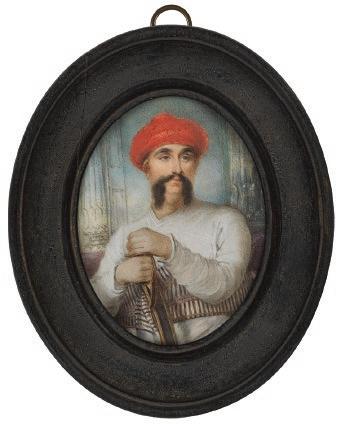
of the region of Oudh, in the modern state of Uttar Pradesh. His rise to power and his retention of it were very much dependent on the military support of the British East India Company. Asaf’s court at Lucknow became the cultural capital of northern India, home to a culturally complex Indian and British élite. This miniature was ‘painted from Nature’, as the artist wrote on the back, when Humphry travelled to Asaf’s court in 1786.
These miniatures will enable us to tell new, richer stories from British history, and to celebrate the astonishing power and immediacy of these tiny objects. We are immensely grateful to Sir Harry Djanogly CBE for his support for the new miniatures gallery, which will be named The Lady Carol Djanogly Gallery.
FACES OF FAME:
G.F. WATTS X SIMON FREDERICK
by Dr Emily Burns Curator, Watts Gallery Artists’ Village
who would you choose to include in a national hall of fame today? Who is worthy of the accolade of joining this country’s pantheon of greats? And how might your selection differ from what has come before, or indeed others’ opinions today? These are some of the questions posed by Watts Gallery – Artists’ Village’s new exhibition, Faces of Fame: G.F. Watts X Simon Frederick (open until 26 March 2023).
Featuring loans from the National Portrait Gallery Collection as part of the National
below left
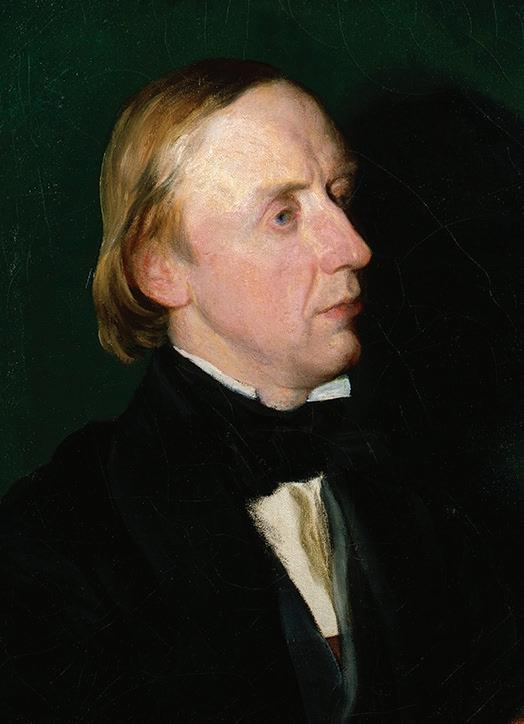
Sir Charles Hallé (né Carl Halle) (detail) by George Frederic Watts, c.1870 (NPG 1004)
opposite page , below right
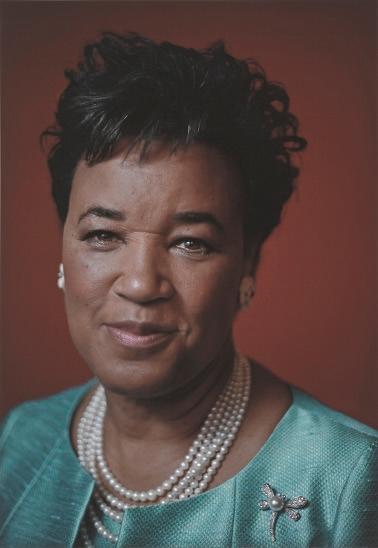
Patricia Janet Scotland, Baroness Scotland of Asthal by Simon Frederick, 2016 (NPG P2049)
© Simon Frederick
Skills Sharing Partnership, this six-month display at the heart of Watts Gallery’s historic galleries brings together selected works from two celebrated portrait series of influential Britons that compare and contrast historic and contemporary notions of ‘greatness’. Painted portraits of famous Victorians from George Frederic Watts’s Hall of Fame series sit alongside photographic portraits of prominent Black Britons from Simon Frederick’s groundbreaking Black is the New Black project.
From the late 1840s, G.F. Watts (1817–1904) began to select eminent contemporaries, to feature in a portrait series that became known as the ‘Hall of Fame’. For Watts, the Hall of Fame was a way to record ‘the men who make England – the prominent men who may hereafter be found to have made or marred their country’. The portraits were meant to be more than just a record of appearance, reflecting ‘the mental as well as the physical likeness’ of his subjects. By the time the project ended in 1901, there were over 40 portraits in the series.
Over 100 years later, motivated by the same desire to create portraits of figures the artist deemed deserving of recognition, Simon Frederick (1965–) created Black is the New Black (2016). Acknowledging the contribution of Black individuals to British culture, the series brings together 37 leading figures from the world of politics, business, culture, religion and science to celebrate Black British achievement and identity today.
Faces of Fame: G.F. Watts X Simon Frederick
Watts Gallery – Artists’ Village
Until 26 March 2023
Tickets from £13.50 / Concessions £6.75 (includes entry to Limnerslease, Historic Galleries, and the De Morgan Collection) Free for Watts Gallery Members and Under 18s www.wattsgallery.org
Watts began gifting his Hall of Fame portraits to the National Portrait Gallery from 1883, and in 2017 Frederick offered his Black is the New Black series as a gift to the Gallery, which became the largest acquisition of AfricanCaribbean sitters into the Collection. The curated display at Watts Gallery, featuring six Hall of Fame paintings and 12 Black is the New Black photographs, is the first time that portraits from both series have been shown together. Visitors are invited to consider the themes of achievement, identity and
JOIN THE CONVERSATION! Who would you include in a ‘Hall of Fame’ today? Check out all responses on: https://bit.ly/WattsHallofFame

representation that arise from both artists’ bodies of work.
The display presents striking portraits of historic and contemporary artists such as Walter Crane (1845–1915) and Yinka Shonibare (1962–), writers including Algernon Charles Swinburne (1837–1909) and Malorie Blackman (1962–), and social campaigners such as Charles Booth (1840–1916) and Baron Morris of Handsworth (1938–). Politicians and statespeople include Sir Charles Wentworth Dilke (1843–1911) and Baroness Scotland of Asthal (1955–), and performers include the musician Sir Charles Hallé (1819–1895) and ballet dancer Shevelle Dynott (1985–).
Watts Gallery Trust is committed to acknowledging and discussing omissions and uncomfortable truths arising in works of art. Examples from both series highlight the tensions that can sometimes occur between a person’s accomplishments and their human fallibility. They show the constant shift in perceptions of greatness and how reputations can change over time. As the varying reputations of the Victorian sitters indicate, and as the ever-fluctuating celebrity landscape of today reveals, fame is a shifting state and each individual’s actions and achievements speak for themselves.
Watts Gallery – Artists’ Village is located in the village of Compton near Guildford, Surrey. The address is Down Lane, Compton, Guildford, GU3 1DQ. To help plan your visit by bus, train or car, go to the ‘How to Find Us’ page on www.wattsgallery.org.
Winter offer for Gallery Supporters
CELEBRATING CHRISTMAS IN THIS HISTORIC YEAR
This season we reflect on the life of our longest-serving monarch. Taking inspiration from the historic royal events of 2022, our new Christmas range is full of regal splendour. Reds, golds and warm tones dominate the selection of decorations, lighting and homeware, which has been created with sustainability at its heart. In addition, we have curated handy new guides allowing you to browse our extensive collection of gifts – making it easy to find the perfect present by interest or recipient. All of the above is complemented by our brand-new gift-wrapping service, and the introduction of our first ever e-gift card, making the National Portrait Gallery your one-stop-shop for Christmas this year.
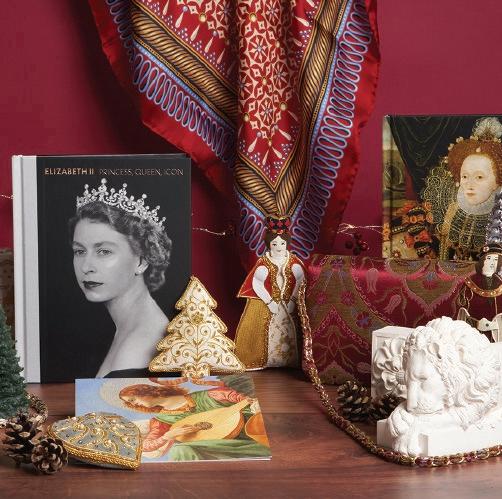
To shop our Christmas range please visit npgshop.org.uk/collections/allchristmas and don’t forget to enter code MEMBER2020 at checkout to receive your exclusive 20% discount for Gallery Supporters.
This offer is open to National Portrait Gallery Members and Patrons only.