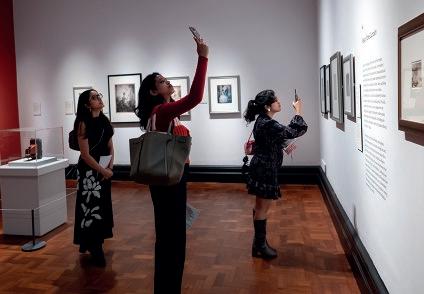
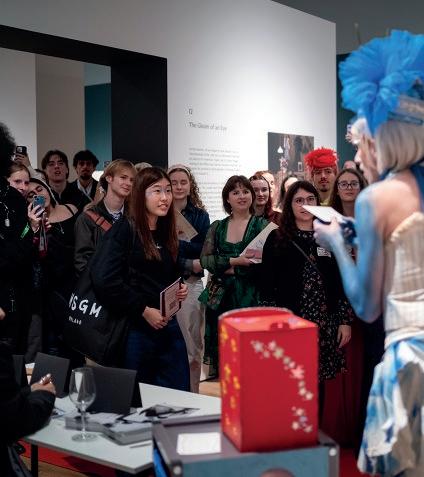
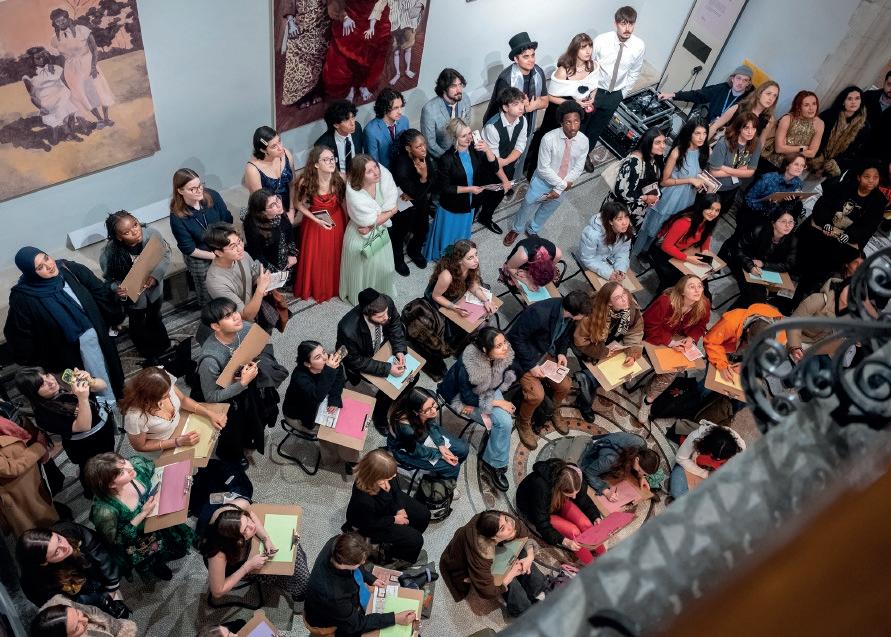
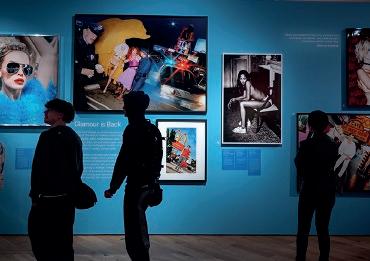
Summer is officially here, with the promise not only of warm days, sunshine and gelato but with a fantastic new season’s programme at the National Portrait Gallery.
Would you like to be part of an ever-changing portrait? Visit Room 33 to join in the new collective experience A National Portrait for the NPG by the artist Es Devlin. For this new work, the artist invites everyone ‘to participate in an ever-evolving collective portrait, as each face that appears calls for acknowledgment, responsibility, and presence’. I’m especially excited to see my own portrait join the growing sequence, which will be a powerful tapestry of faces.
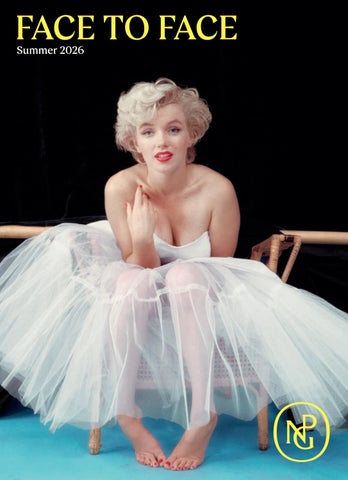
I am also equally thrilled about our summer special exhibitions: Marilyn Monroe: A Portrait and the Herbert Smith Freehills Kramer Portrait Award 2026.
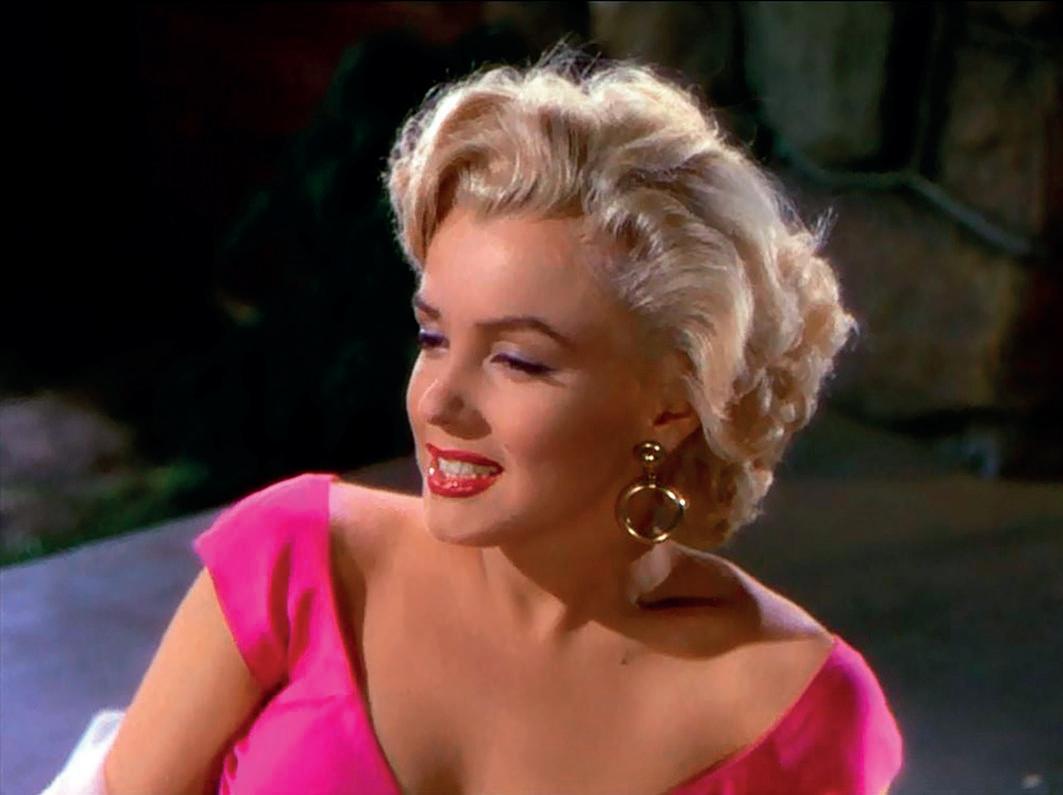
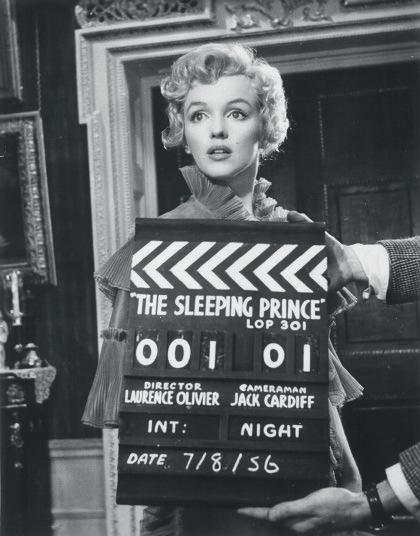
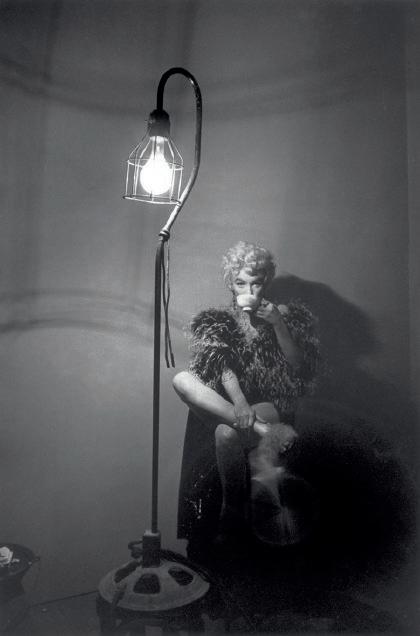
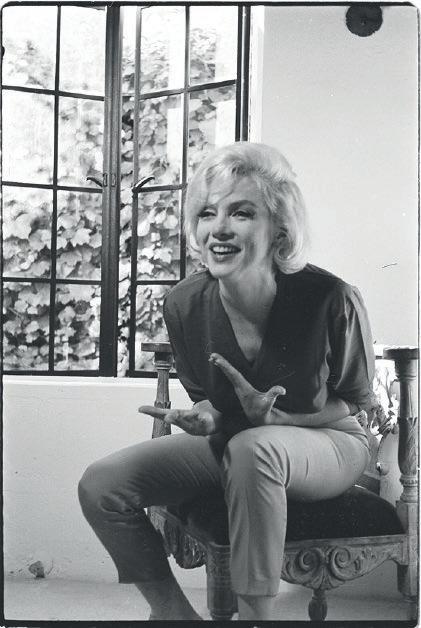
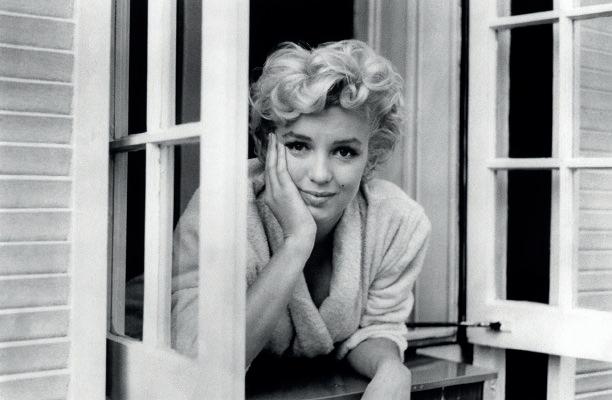
Celebrating 100 years since the birth of Marilyn Monroe, the Hollywood film star and icon, this extraordinary exhibition narrates her story through the lens of portraiture and honours her legacy through photographs made during her lifetime and in the decades since. The show also explores her enduring influence and unparalleled importance in popular culture, which continues to captivate audiences around the world. Monroe’s impact remains unmatched; she inspired countless people in her time and still shapes popular culture today.
The Herbert Smith Freehills Kramer Portrait Award returns to the Gallery again this summer, with 52 works showcasing a wide range of remarkable contemporary portraiture, selected from an impressive 1,474 entries from 63 countries. The diversity of styles, subjects and scales makes this year’s exhibition particularly dynamic and unforgettable. Don’t miss the reflections of competition judge Amy Emmerson Martin, featured on page 22.
The Gallery hang is always evolving; head to Room 11 to discover a fresh rotation of prints newly displayed from storage – works that will remain on the walls for the next three years, offering visitors a rare opportunity to encounter pieces not seen in some time.
This summer we are also launching Club NPG, a platform specially created for young people aged 16 to 25. It’s an open invitation to engage our younger audience with our youth offers, programme and exhibitions, and an opportunity to step behind the scenes, by making the Gallery feel more relevant than ever, and a true creative home away from home.
And finally – last but certainly not least –remember to check What’s On online for our full programme of talks, workshops and special events. Be sure to visit our shops as well; we have created some exciting new products via a unique collaboration with artist Grayson Perry. Enjoy the summer and see you at the Gallery. Ivi x
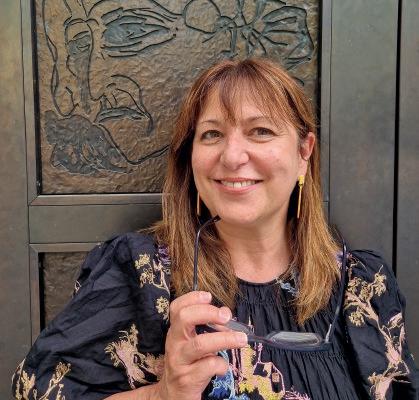
Photo: Ivi Varda
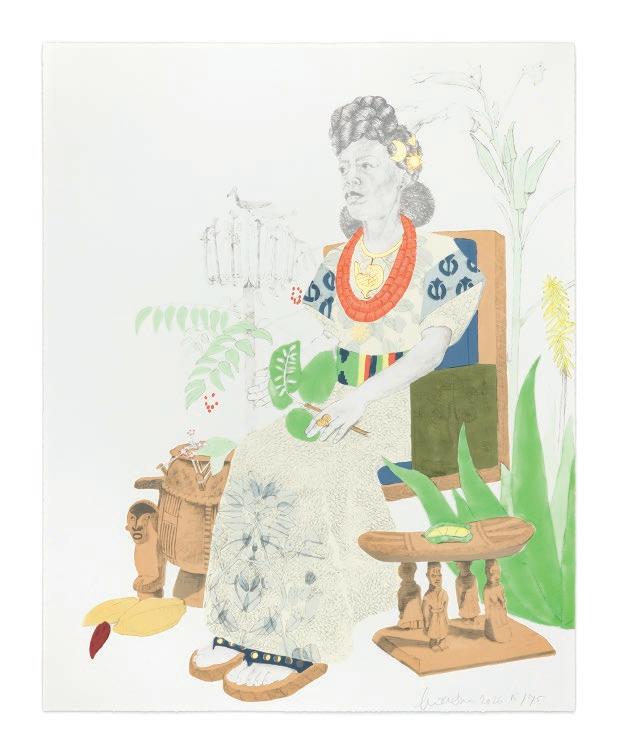
Limited Edition: To reimagine an African Queen
by Charmaine Watkiss
We are delighted to collaborate on a new limited-edition print with Charmaine Watkiss and Counter Editions. This stunning edition of 75 is made by layering 15 colour screen-prints over a lithograph, finished with 24-carat gold leaf and coloured pencil embellishments. Each edition is signed, numbered and dated by the artist.
The edition is based on To reimagine an African Queen, on display in the Gallery as part of the Artists First: Contemporary Perspectives on Portraiture display. For this commission, Watkiss drew inspiration from her research into Hans Sloane’s botanical collections, his travels to Jamaica, and his account of being treated by an African woman, who, he noted, had been a queen in her own country.
Charmaine Watkiss (born 1964) is a British artist of Jamaican heritage known for her works exploring the botanical legacy of the Caribbean and tracing the lineage to Africa.
For more information, visit npgshop.org.uk
Contributors
Rosie Broadley
Joint-Head of Curatorial & Senior Curator of 20th-Century Collections
Rebecca Burton Curator and Archivist, Harewood House Trust
Paul Cox Curator, Reference Collection
Sophie Lorenz Head of Hospitality and Special Projects Lead
Amy Emmerson Martin Judge on the Herbert Smith Freehills Kramer Portrait Award 2026
Bryony Smith Programme Manager, National Partnerships
Idris Emen / @IdrisEmen
Christina McAnea
Christina has recently been appointed to the Gallery’s Board of Trustees. She has been a national negotiator and labour relations leader for over 30 years. She was General Secretary of UNISON, the UK’s largest trade union, with over 1.3 million members, and was the first woman to hold this post. She has extensive experience and has worked with governments on issues relating to employment rights and legislation, public sector pay and funding, and a wide range of equalities issues.
Her interest in art began early through visits to the world-class collection held in the Kelvingrove Art Gallery in her home town of Glasgow and she is passionate about ensuring that access to art and culture is available to everyone, regardless of their background.
She is also currently a member of the UK’s Independent Commission on Community and Cohesion and sits on the board of the Advisory, Conciliation and Arbitration Service.
Kimberley Sheehan
Kimberley Sheehan is Lead Programmer for BFI Southbank, and Season Programmer of Marilyn Monroe: SelfMade Star, playing throughout June and July at BFI Southbank. She has previously curated film seasons David Lynch: The Dreamer, Maggie Cheung: Films of Romance, Melancholy & Magic, and Discomfort Movies.
‘Mary would have felt the need to ensure she maintained a ‘respectable’ reputation and could justify her ability to both have a profession and be a mother.’
When I was 27, I moved to London from Glasgow. It was then that I discovered the National Portrait Gallery and it quickly became one of my favourite places to go to in the city.
I’d studied history at university and the portraits brought to life so many of the individuals and events I’d read about.
It’s hard to choose a favourite. I’ve always been drawn to the Tudor and Stuart paintings, particularly the portrait of Mary, Queen of Scots. I’d been brought up on stories about her life in many a tale told to us by my mother, but I wanted to choose a less regal subject.
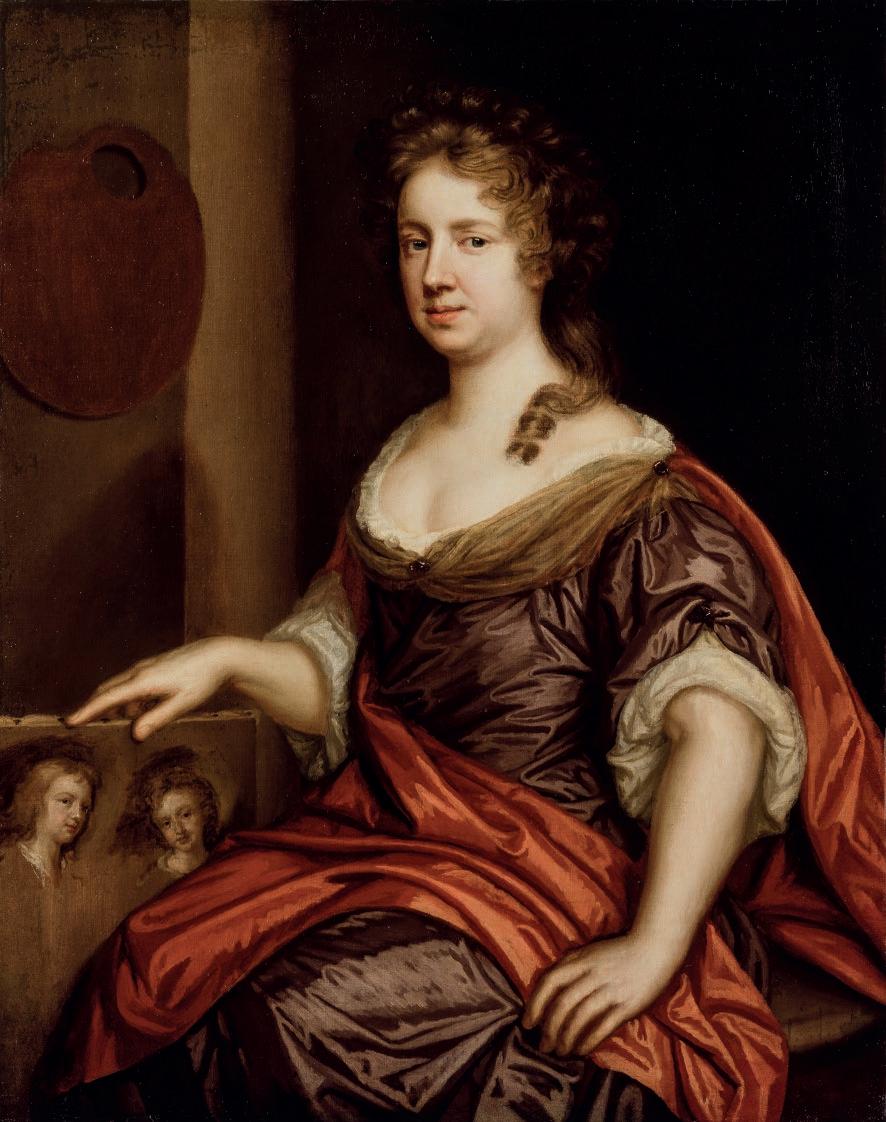
I often wonder when I see Mary Beale’s self-portrait why she decided to portray herself holding a painting of her two sons. Of course, some self-portraits by male artists also include their families – but they are usually part of the composition.
Mary included her family in other selfportraits, but this painting feels different. As one of the very few professional women portrait artists, Mary would have felt the need to ensure she maintained a ‘respectable’ reputation and could justify her ability to both have a profession and be a mother: a dilemma many women still experience today.
The book The Mirror and the Palette by Jennifer Higgie provides some really useful detail about Mary’s life. She was born in Suffolk in 1633 and received a humanist education from her father, John Craddock, a Puritan rector as well as an amateur painter. She married Charles Beale, who was also an artist, and a paint merchant. Charles recognised Mary’s superior talent and began working as her full-time assistant in her studio, while she became the family’s main breadwinner.
This was unusual enough in itself but then, in 1667, Mary published A Discourse on Friendship, advocating the benefits of greater equality in marriage.
Mary took her craft seriously. She was the first woman known to have a work published on the technical aspect of painting, namely on how to paint an apricot, called Observations by MB. Her husband kept many notebooks containing information on her work and life as an artist, as well as an account of how he mixed and produced colours for her.
She became very successful, painting many of the great and the good of society at that time. She was friends with the Dutch-born artist Peter Lely and seems to have been influenced by his style of painting, with some speculating that she may have been taught or mentored by him.
This painting shows Mary as an accomplished and confident artist. The dimple on her exposed elbow, the elaborate folds in her gown, the roundness of her cheek and chin are beautiful. I have always admired the sheer skill of the artist who is able to paint so that the viewer can tell if a coat or gown is made of velvet or satin, delicate lace or gauze.
I grew up in a council estate in Glasgow and was exposed to the wonderful art collection in that city from a young age. I feel privileged to be a trustee of the National Portrait Gallery and I want children and young people from all backgrounds to feel that this amazing Collection is both relevant to them and, more importantly, belongs to them.
Right – Self-portrait by Mary Beale, c.1666 (NPG 1687) On display in Room 9 (Floor 3).
COLLECTION NEWS
Changing Impressions: Rotating the Print Display in Room 11
by Paul Cox, Curator, Reference Collection
I vividly remember the excitement of first installing prints in Room 11 in early 2023, prior to reopening the Gallery after our three-year closure. Well, time flies, and three years on it is now time for an almost complete change. Works on paper cannot be exposed to light without some deterioration but, in the low-light conditions in Room 11, most prints can remain on show for three years before they need to go back into store. Over the past 12 months I have been working on a new selection. Of course, choosing the prints is just the first step. Label texts have to be written and the prints may need conservation, in addition to mounting and framing. Finally, labels are designed and printed and all is installed with the help of our arthandling technicians; it is a real team effort.
Dominated by the Byron Screen – which remains in place – Room 11 is a room of two halves. The showcases and the prints hung above them look closely at the printmaking techniques of engraving and mezzotint, etching and aquatint. Only one print has changed in each showcase, but it is all change on the walls above. Among the swaps are the replacement of two bewigged 18th-century lord chancellors with a charming 19th-century mezzotint of Lady Jersey as a child. Additionally, Van Dyck’s etched self-portrait has gone and is replaced by a portrait of his mistress Margaret Lemon, this time by Bohemian etcher Wenceslaus Hollar.
The walls on the other side of the room feature thematic displays, which look at different types of printed portrait. The section on George Vertue’s antiquarian prints, which relates to portraits in the Gallery’s Primary Collection, seemed too effective to lose so quickly. Thankfully, the Reference Collection contains duplicates of both prints, so this display remains in situ, albeit with two fresh prints.
A small display of images of street traders replaces the original group of notorious criminals. These sets of prints, often known as ‘Cries’, were popular from the 17th to the 19th century. They varied from fanciful images to painfully authentic representations of life on the street, both of which are represented on the wall.
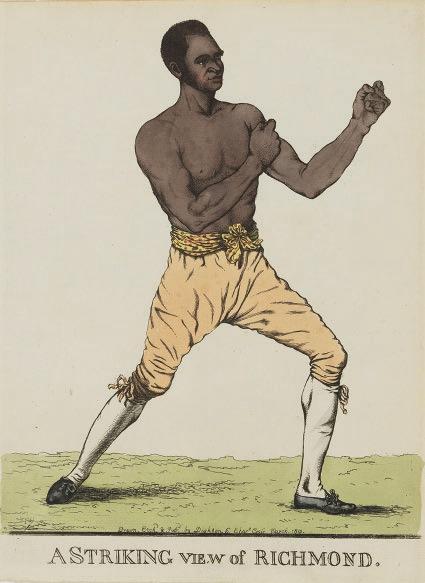
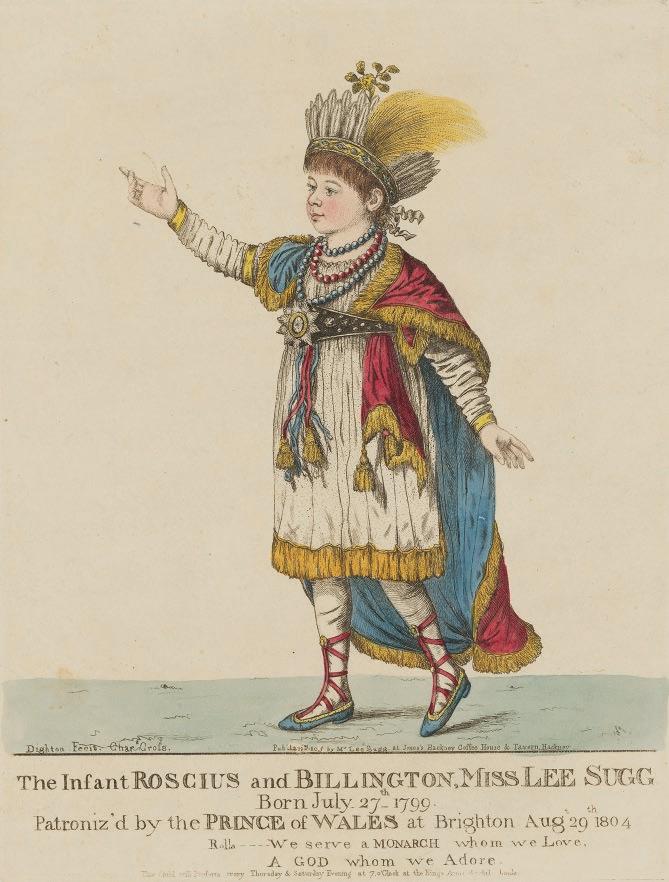
On the longer north wall I have assembled a selection of hand-coloured etchings by Robert Dighton, a particular favourite of mine. These include prints of both major and
minor celebrities. The centrepiece is a print of a child performer – Catherine Lee Sugg – which served as advertising material for her shows in addition to its function as a portrait. The display also includes prints of boxers George Richmond and Tom Molineaux, both of whom are also represented on the Byron Screen. I am
particularly pleased to have been able to position these so that they are visible to left and right of the screen’s showcase. Here they echo the boxing prints on the screen and will hopefully draw visitors’ attention to the new display behind. There is plenty of time to visit the new display, as most of the prints will remain in situ for three years. However, I have now disrupted the standard three-year pattern, as the hand-coloured Dighton prints, which are more vulnerable to light exposure, need to be removed after two. Needless to say, I am already making plans for their replacements.
Left – Bill Richmond, ‘A Striking View of Richmond’, hand-coloured etching by Robert Dighton, published 1810 (NPG D10726)
Above – Catherine Lee Sugg, ‘The Infant Roscius and Billington’, hand-coloured etching by Robert Dighton, published c.1804–05 (NPG D47120). Both on display in Room 11 (Floor 3)
Be a part of Es Devlin’s collective portrait
by Constantia Nicolaides Assistant Curator, Cross-Collections
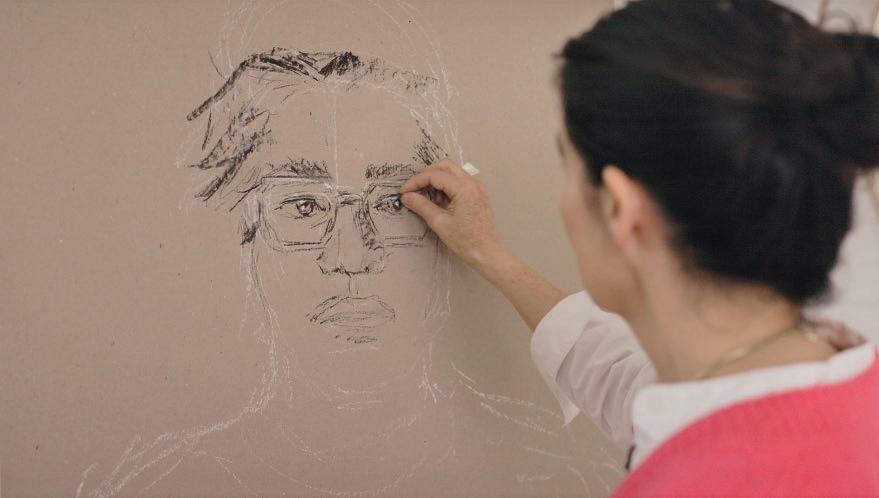
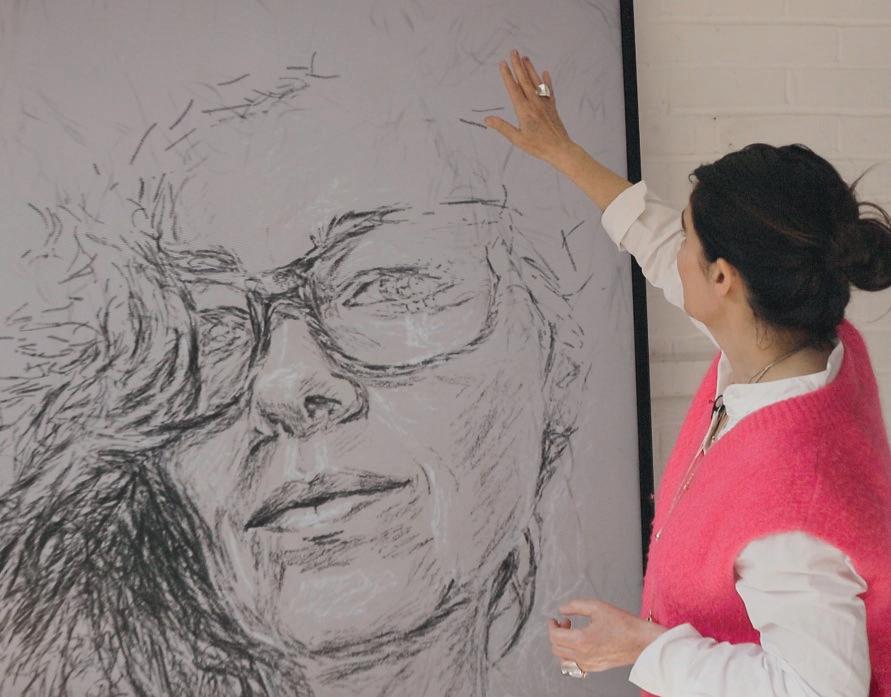
Over the last three decades, the award-winning artist and designer Es Devlin has become renowned for her large-scale participatory artworks as well as her kinetic stage sculptures. Among her striking art installations are the luminous revolving libraries, Library of Light (2025) at the Pinacoteca di Brera in Milan and Library of Us (2025) on Faena Beach, Miami, as well as the Singing Tree (2017) at the Victoria & Albert Museum, which used machine learning to create an audio-visual Christmas carol from words submitted by the public. For Congregation (2024) at London’s St Mary le Strand church, 50 portrait drawings by Devlin of Londoners who had experienced displacement from their homelands took prominence, with each subject becoming a ‘co-author’ in the piece that also featured sound and projection.
While at the forefront of experimenting with new technologies, Devlin’s simultaneous emphasis on audience involvement, the communal experience and the ongoing relevance of the physical drawing process underpin several of her works, and they are seen to combine in A National Portrait for the National Portrait Gallery (2026). For this new artwork, currently displayed in Room 33 on the ground floor, Devlin invites every adult in the United Kingdom, ‘whether citizen, resident or visitor’, to become a ‘co-author’ of an evolving portrait of the nation, offering ‘a counterpoint to today’s often fractious discourse on “Britishness” … shaped by participation, visibility, and mutual recognition’.
Members of the public aged over 18 are invited to take and submit a photograph of themselves on a dedicated website, accessed via a link on the National Portrait Gallery’s website (npg.org.uk) or using a QR code on the wall caption beside the artwork. Within moments, the photograph will be transformed by Google Gemini’s image model into a head and shoulders, digital portrait based stylistically on Devlin’s previous charcoal and chalk drawings. Once happy with the resulting image, participants can immediately download a unique digital edition and opt for it to join the collective portrait. Contributors will be able to see their
likeness appear in the artwork displayed at the Gallery where the animated digital sketch marks resemble a portrait constantly redrawing itself. The marks repeatedly resolve into one face, followed by another and another, in an expanding sequence of the faces of all who take part.
This project is the most recent collaboration between Devlin and the Google Arts & Culture Lab, experimenting with the potential of AI to realise compelling interactive works that
October 2026 in Room 33 (Floor
invite mass public participation, and explore the intersection of human creativity and the digital world. Devlin, however, acknowledges that the technology enabling this collective portrait is made possible by her own ‘hours of tender human observation’ and that AI can echo ‘our presence at scale, only because we continue to be present to one another, and to leave traces in pencil, paint, chalk and charcoal of our encounters’ as portrait artists have always done. This reflection is underlined by the special series of live drawing events with Devlin teaching at some, offered at the Gallery as part of the project. For those who cannot attend, the website features a step-by-step drawing class that Devlin sees as ‘a lesson in being present to another’, encouraging us all not only to take part in this shared endeavour, but to continue being engaged and attentive in our interactions with one another.
Left – Es Devlin working on a charcoal and chalk portrait during a drawing lesson.
Above – Devlin in her studio considering the markings in a digital portrait created during the testing stage
A National Portrait for the National Portrait Gallery by Es Devlin in collaboration with Google Arts & Culture Lab will be on display until 27
0).
You are invited to the Club
by Ivi Varda, Head of Membership
Big ideas usually start with a simple question: how do we get the next generation not just through the doors – but engaged in our story?
The Gallery has been creating opportunities for young people for many years through its dedicated Youth Programme, NPG Youth, alongside discounted tickets for under 25s at the weekend. But now? We’re bringing it all together.
Say hello to Club NPG
Club NPG is an open invitation for 16–25-year-olds to step behind the scenes and figure out what portraiture actually means to them…. If you belong to this age group, this is for you.
Club NPG is your backstage pass to curate your own experience, to make the Gallery feel like your creative home away from home.
Club NPG gives young people like you a meaningful and affordable way to connect more deeply with everything the Gallery does. Think cultural access, creative opportunities, exclusive events – all wrapped into one easy pass. Because this isn’t only about access. It’s about belonging.
Turn a first visit into a lasting connection. Turn curiosity into genuine excitement. Make exhibitions affordable, accessible, and genuinely worth popping in for – any day of the week.
So: what do you have to do to join the Club?
Signing up is super-easy. Head to the website, fill out the Club NPG form, and you’re in. It’s completely free and comes with a digital membership card – quick, simple, no faff. With your unique membership number, you can book exhibition tickets for £5, seven days a week. Flexible. Affordable. Sorted.
But it doesn’t stop there….
You will get invited to youth-focused events like Youth Lates and other Youth activities –designed to spark creativity, build community, and get you more involved in what’s happening in front of and behind the scenes.
Looking for something longer-term?
There are opportunities linked to creative and professional pathways too – through the Youth Programme, and volunteering roles. It’s a chance to build skills, meet people, and gain real experience in the cultural world.
And yes, there are even more perks:
• Free online access to Face-to-Face magazine
• Early access to retail special-edition launches
• Exclusive shopping events
Club NPG isn’t just an inexpensive ticket scheme; it’s about building a community of art- and culture-loving young people. It’s about making the Gallery feel relevant, welcoming, and in step by building strong foundations and honest conversations with young people like you.
In short? It’s your space, now. Welcome!
Club NPG has been made possible thanks to generous private donor support.
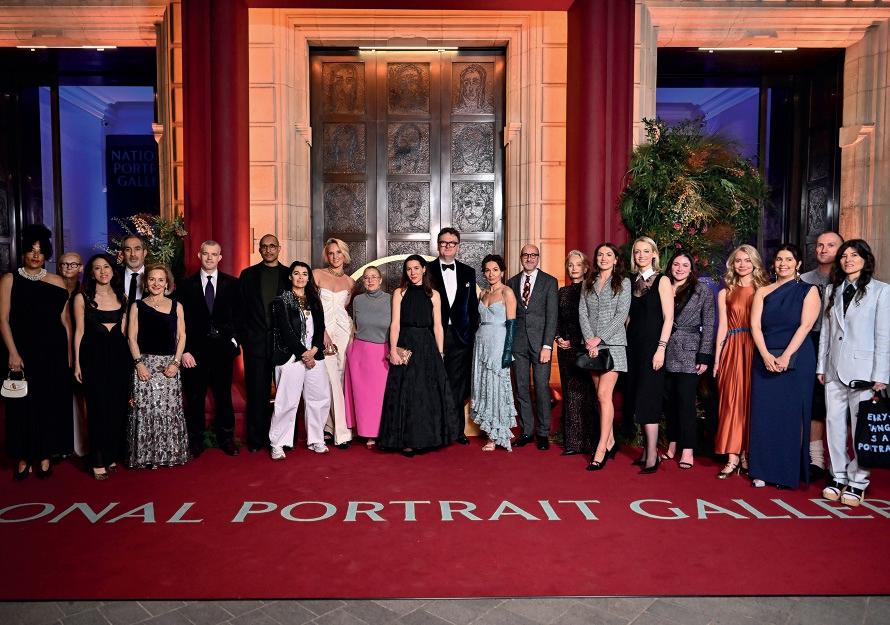
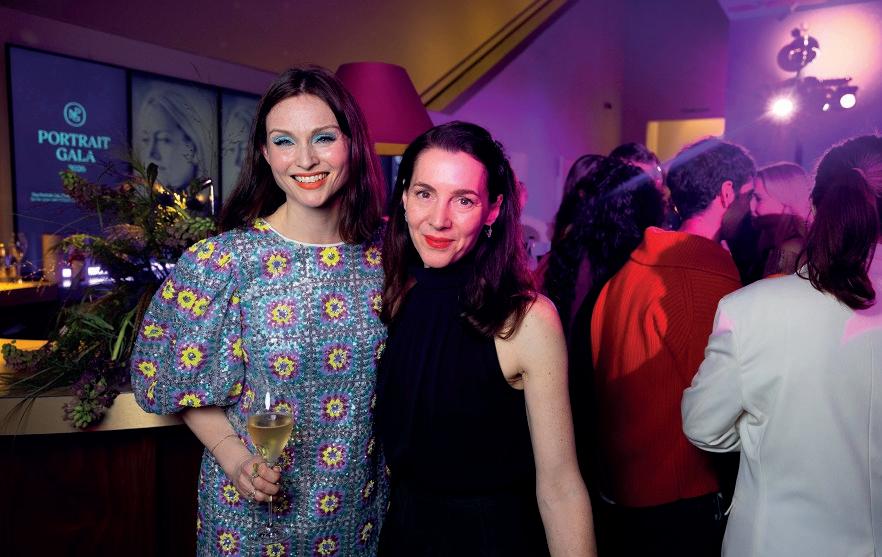
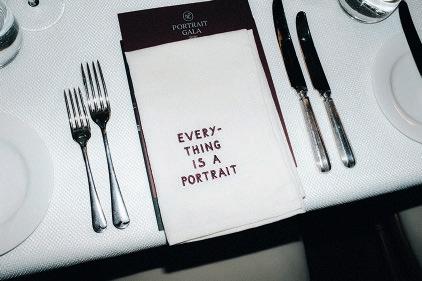
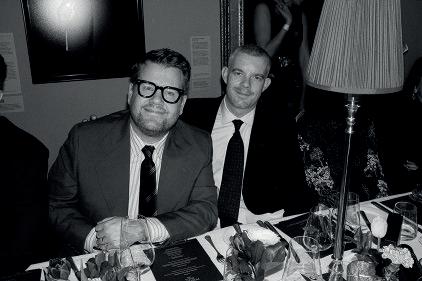
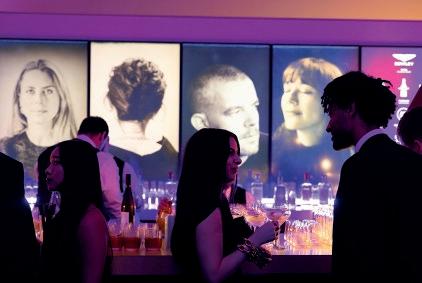
The Portrait Gala 2026 will be remembered as a remarkable celebration of art, community and shared purpose. Bringing together supporters, artists and friends of the Gallery, the evening captured the very spirit of the NPG with extraordinary auction lots, including portrait sittings with Catherine Opie and Es Devlin, an energetic evening performance from Sophie Ellis-Bextor and a pop-up tintype photography studio with Rachel Louise Brown.
Thanks to the extraordinary generosity of our guests and supporters we raised an incredible £1 million in support of the Gallery’s work.
This achievement reflects not only the enthusiasm of those in attendance, but also the dedication of the Gala Committee. Their
advocacy, vision and commitment were instrumental in shaping an event of such scale and success. We are deeply grateful for the time, energy and passion they brought to every stage of the journey. Co-Chairs Bella Freud, Lady Ina Sarikhani Weston, Jenny Saville and Zadie Smith all wrote moving introductions for our programme and walked the red carpet in aid of fundraising for the NPG.
Equally, this milestone would not have been possible without the collective efforts behind the scenes. From meticulous planning to flawless delivery on the night, the collaboration across Gallery teams ensured an experience that was both seamless and inspiring.
Most importantly, the funds raised will have a lasting impact: supporting the care of the Collection, enabling learning programmes and expanding access to new audiences.
The success of this year’s Gala is a powerful reminder of what can be achieved together.
Planning is now under way for the Portrait Gala 2027, and we hope to see some of you there!
By Rosie Broadley, Joint-Head of Curatorial & Senior Curator of 20th Century Collections
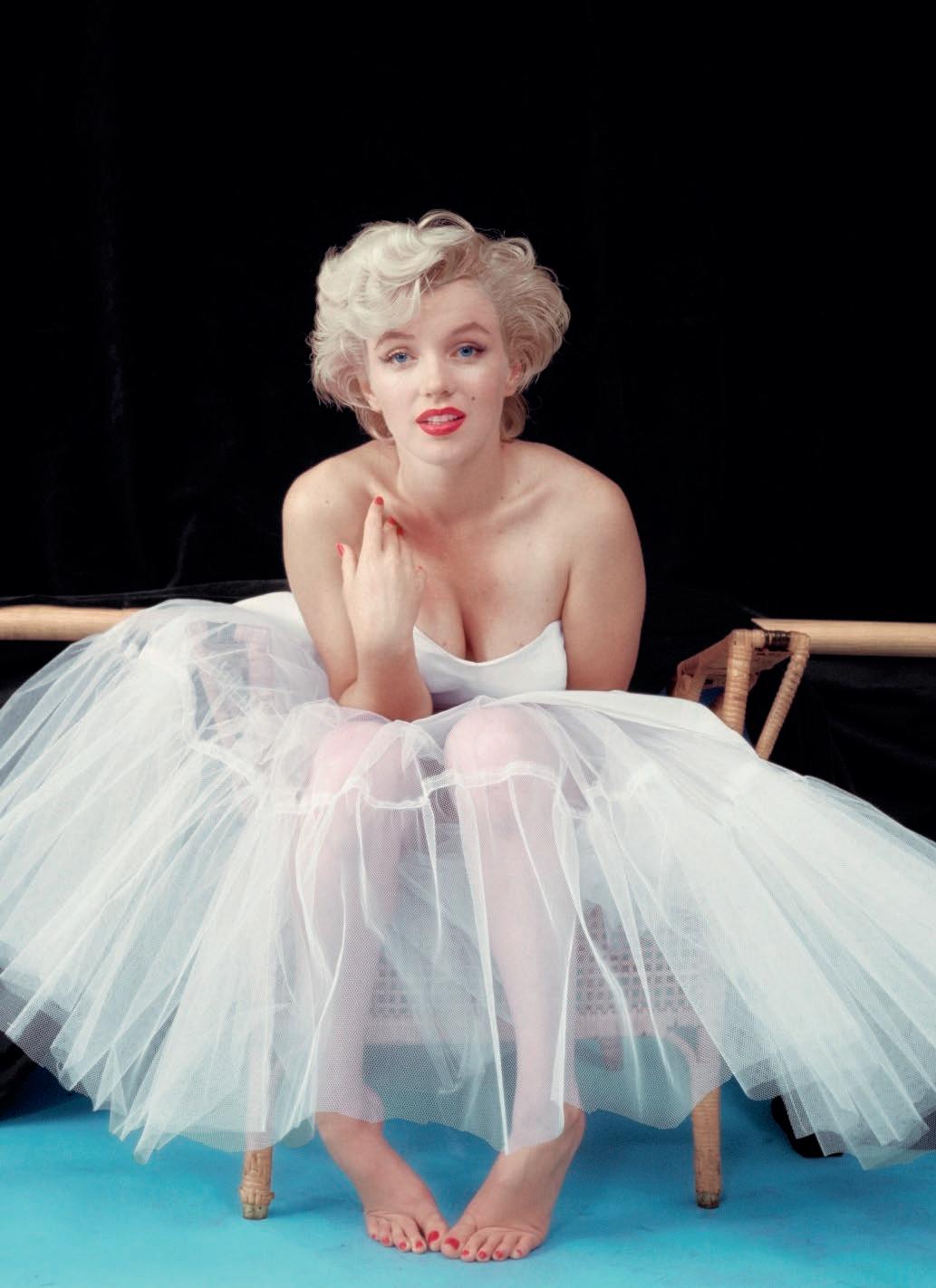
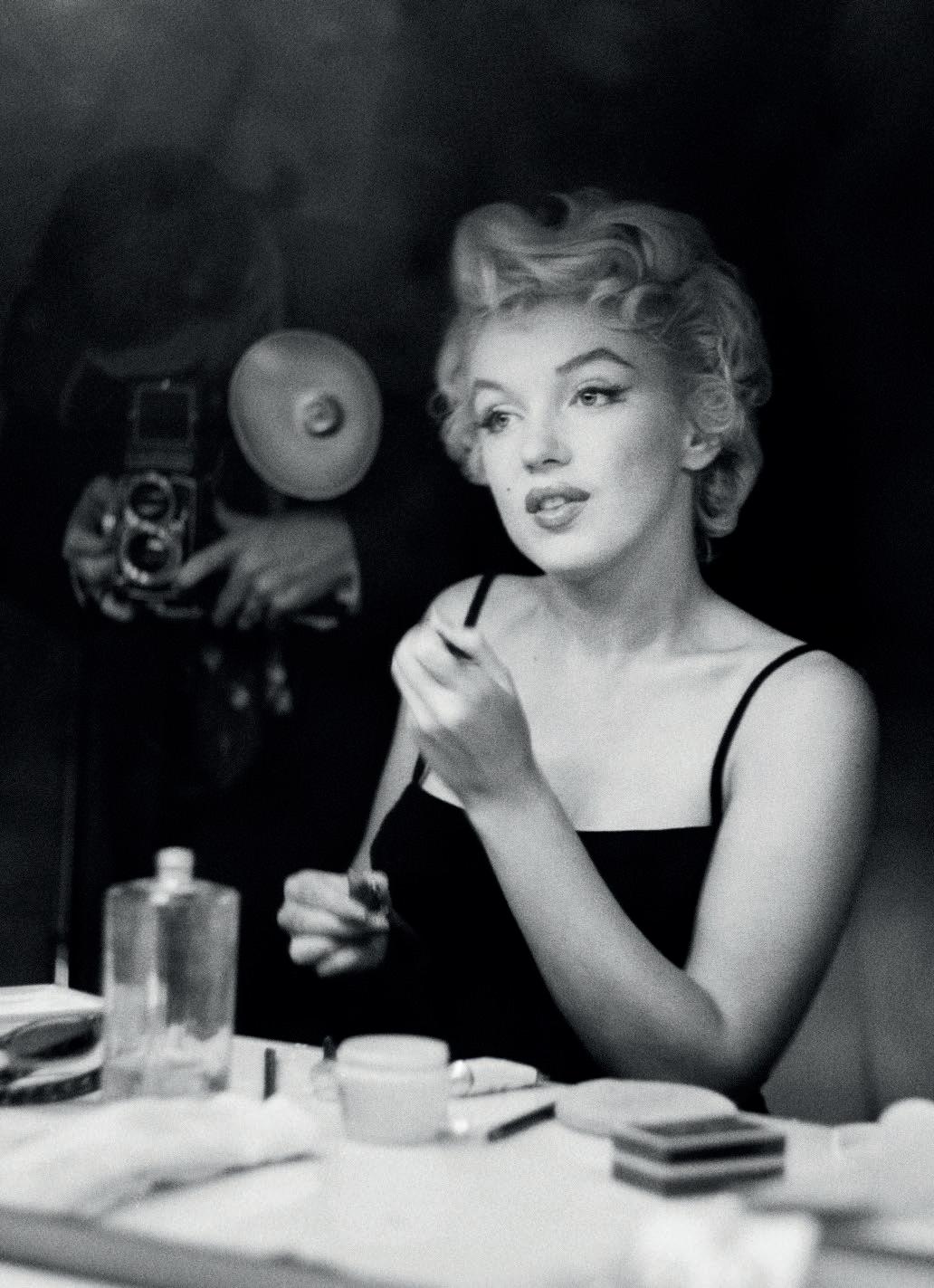
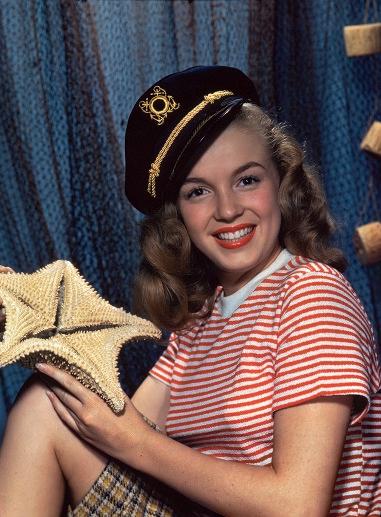
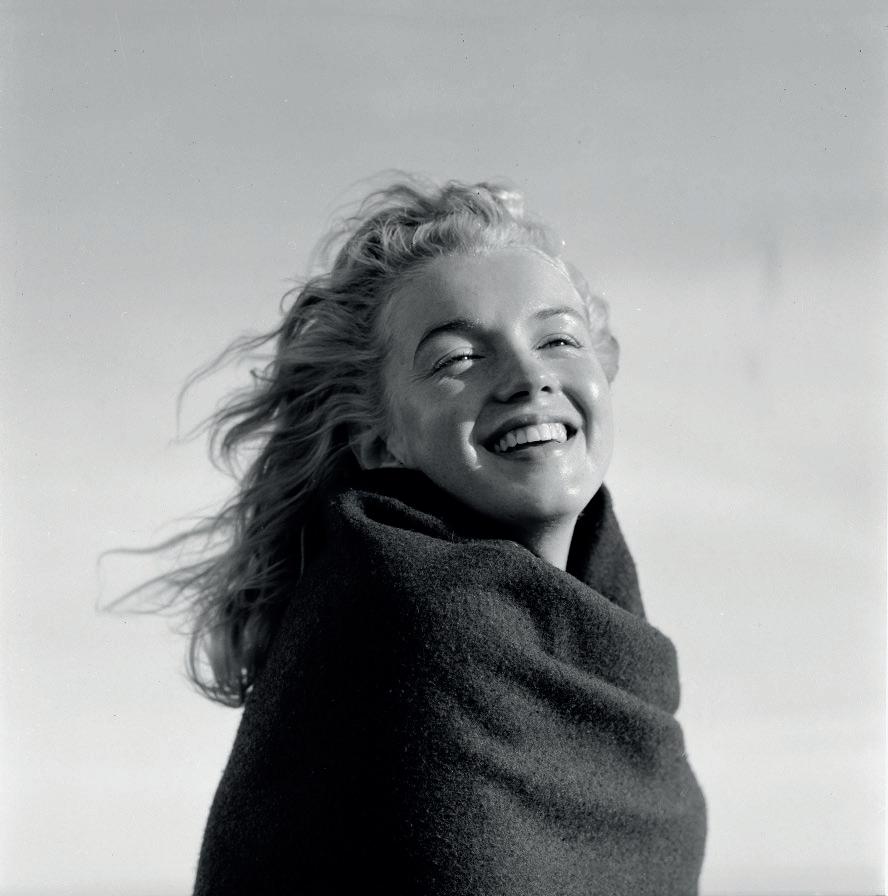
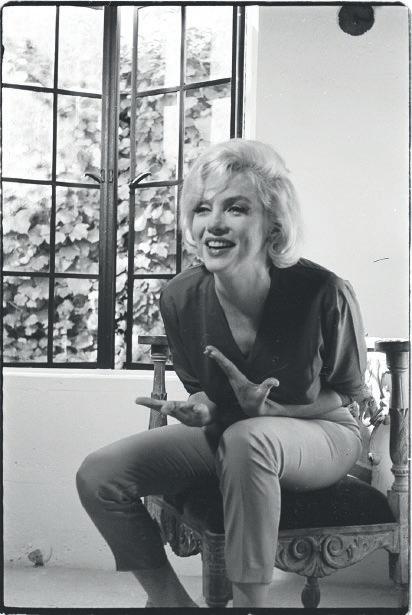
This centenary exhibition celebrates the extraordinary life and legacy of the Hollywood film star Marilyn Monroe through portraits made during her lifetime and in the decades since. Monroe holds an unparalleled position in popular culture; her image has proven to be indelible, repeated across book covers, T-shirts, posters, trinkets and referenced by celebrities today. The photographer Bert Stern, who pictured Monroe in the last month of her life, presciently observed, ‘she is gone but she is everywhere’.
Monroe’s legacy in portraiture is twofold: not only was she one of the most photographed people of the 20th century, but her image has also proven to be a tenacious motif for generations of visual artists. This exhibition explores the qualities that made her such a compelling subject for portraits and her agency in creating unforgettable images. Photographers credited her with an understanding of the camera
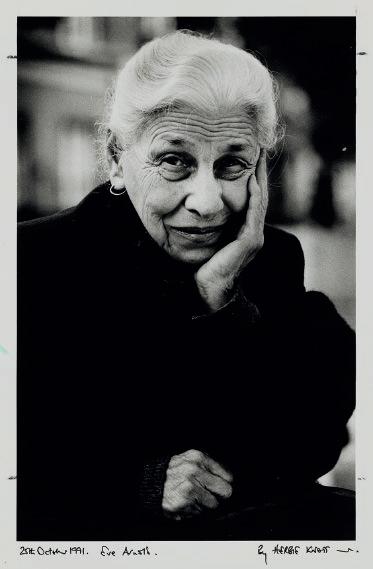
that set her apart from other subjects. Bruno Bernard, known as Bernard of Hollywood, whose portraits of Monroe as a young model helped her secure her first film contract, recalled that he had ‘never seen a model – beginner or old pro –who was so at ease in front of the camera’. Eve Arnold, one of the only women to photograph Monroe, and with whom she enjoyed a particularly symbiotic relationship, remembered her subject as ‘a natural to the camera … she had a sure knowledge of how to use that affinity.’
Richard Avedon remarked that she was always searching for what she called an ‘honest’ picture.
In making this exhibition, we worked closely with photographers and their estates, some of which are managed by family members who remember Monroe from their childhoods, to select portraits that are representative of these fruitful collaborations. We were allowed access to archives and previously unseen original
images and learned stories of friendship and support that impacted the trajectory of Monroe’s career and bring the portraits to life today.
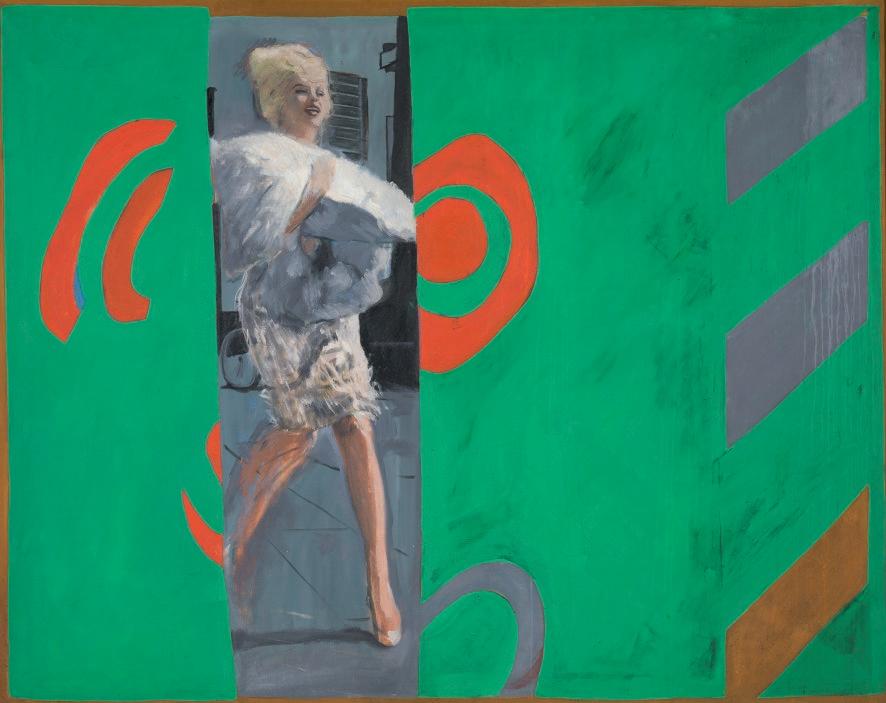
Monroe’s potent presence on screen and in the photographs that were published widely in popular magazines in the 1950s drew the attention of artists including Abstract Expressionist Willem de Kooning, who portrayed her in 1954. Her stardom also coincided with the nascent Pop Art movement, and pioneering artists such as Ray Johnson and Rosalyn Drexler acknowledged Monroe’s pre-eminent status as a celebrity in portraits made at the height of her stardom.
The profound shock of Monroe’s suicide in 1962, aged just 36, was a catalyst for further portraits and tributes by artists working on both
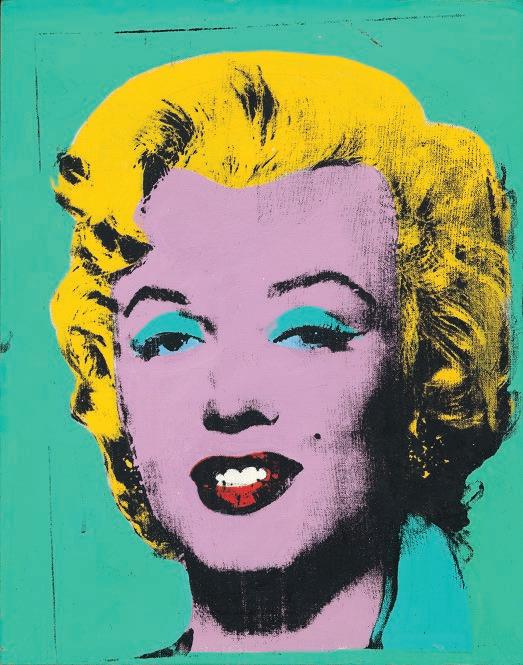
Left
Marilyn
Andy Warhol, 1962
Warhol Foundation for the Visual Arts, Inc. / Licensed by DACS, London. Marilyn Monroe™; Rights of Publicity and Persona Rights are used with permission of The Estate of Marilyn Monroe LLC.
sides of the Atlantic, the most famous of which are Andy Warhol’s multiple series of ‘Marilyns’, based on the same glossy promotional portrait. These works of art secured Monroe’s place in the highest echelons of the art world and have contributed in no small part to her iconic status. An avid movie fan, Warhol collected innumerable photographs of Monroe throughout his life, including rare press prints, several of which are included in the exhibition. For Pauline Boty, the young British Pop artist, Monroe was inimitable and irreplaceable, reflected in the title of her 1962 painting of her idol, The Only Blonde in the World. Monroe had always dreamed of being a movie star, and her entire life was defined by the movie business: Hollywood was her hometown and her mother Gladys had worked as a ‘cutter’, one of
the most menial jobs in the film industry, usually reserved for women involving cutting out edited scenes from reels of film. Gladys was unmarried when her baby daughter, whom she named Norma Jeane, was born. To obscure her illegitimacy, Monroe grew up with the surname Baker, that of her mother’s first husband. Gladys suffered from severe mental illness and could not care for her daughter, who lived in numerous foster homes and an orphanage. Monroe married at 16 to avoid another orphanage but her life changed when a photographer spotted her at work in an aircraft factory during World War Two and recommended that she try modelling. Her subsequent work as a model paved the way for a legendary film career. When she stood on a subway grating with her white dress billowing up – a scene from the film
The Seven Year Itch – she created the definitive image of Hollywood’s Golden Age, a moment showcased in the exhibition. Monroe’s beauty and sex appeal brought her fame, qualities evident in early pin-up photographs taken by Tom Kelley and Bruno Bernard, and while she embraced her ‘sex symbol’ status, she was aware of its limitations, observing: ‘If you are born with what is called sex appeal, you can either let it wreck you, or you can use it to your advantage in the tough show business struggle, and it isn’t always easy to pick the right route.’ She often played up to the stereotype to hilarious effect in roles such as Lorelei Lee in Gentlemen Prefer Blondes, but she could also be incredibly moving in dramatic roles, such as that of Roslyn in The Misfits, and she earned a far more diverse fanbase than the studio had anticipated. For the painter Audrey Flack, a near-contemporary who went on to depict the actress in photorealist paintings in the 1970s, Monroe’s impact ran deep, she exposed: ‘a humanness with which we all identified…. Both men and women loved her –she affected both equally.’
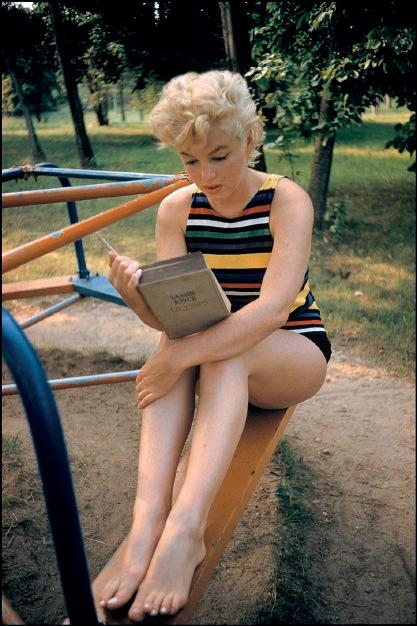
Monroe consistently confounded the expectations of her contemporaries – not least those of the executives at her studio who saw her as nothing but a ‘flash in the pan’. She was the ‘dumb blonde’ who read James Joyce’s Ulysses and political history, facing derision for her ambition to learn and improve. She played several gold-diggers but famously commented that she wasn’t interested in money, she ‘only wanted to be wonderful’. At a time of racial tension in America, she represented an ideal of white womanhood but openly supported Civil Rights and when homosexuality was illegal she was a queer ally.
She was a ‘sex bomb’ who called out predatory behaviour and sexual exploitation and was a peace campaigner who joined an anti-nuclear organisation. Frequently described as ‘vulnerable’ or ‘fragile’, she was incredibly resilient: overcoming childhood deprivation to achieve her dream of becoming a movie star.
Monroe’s rags-to-riches rise to fame made her the embodiment of the American Dream until her early death from suicide starkly exposed its fragility, and this tension – between image and reality – is a contributing factor in the enduring fascination with the star, amplified by the obsession with the circumstances of her death. Interest in her life-story has never diminished, and so many retellings promise ‘the truth’ or the ‘woman behind the myth’. Monroe’s change of name – from Norma Jeane to Marilyn – is often presented as evidence of a fractured identity, one authentic and one manufactured, an idea explored in the work of the artists Robert Indiana and Peter Blake, whose works both incorporate the name Norma Jeane. In the 1970s, Monroe’s life and career were reappraised as part of the feminist movement, and while her struggles were unique, many people identified with the challenges she faced throughout her life.
Left – Marilyn Monroe, Mount Sinai, Long Island by Eve Arnold, 1955
The exhibition does not attempt to offer a definitive account of Monroe’s life and career but tells her story through the lens of portraiture. The portraits that Monroe made in collaboration with photographers are displayed in dialogue with the works of art that these images inspired, and which together have contributed to her enduring legacy. We are fortunate to be able to include in the show Monroe’s personal documents, clothes and shoes, which give a sense of presence and of the woman in the portraits. Minded that she should
have the last word, the audio guide is narrated by Monroe herself, reflecting on her life, career and the concept of fame, in audio drawn from her interview for Life magazine captured in June 1962, including previously unreleased excerpts.
Marilyn Monroe: A Portrait will be on display from 4 June until 6 September 2026, Exhibition Gallery (Floor 0).
Lead Supporter: The Bern Schwartz Family Foundation. Also generously supported by: The Blavatnik Family Foundation.
Marilyn Monroe: Self-Made Star
by Kimberley Sheehan, Lead Programmer at BFI Southbank
The cultural phenomenon of Marilyn Monroe has endured for generations, though she is often reduced to a sex symbol frozen in time, or a tragic figure with a focus on the troubles that punctuated her personal life. Yet Monroe’s achievements, legacy and contribution to cinema stretch far beyond this reductive view. She was an ambitious creative who revolutionised press appearances, challenged the studio system and became the first woman since the silent era to set up her own production company. Above all, she was a truly dynamic and intuitive performer, who knew how to use her body, her voice, her style and her carefully crafted image as expressive instruments.
In an unsung, early career performance in Clash by Night, Monroe plays Peggy, a young blue-collar worker, who frequently finds herself navigating the volatile temperaments of the men around her. In one scene, Peggy is sitting alone with Earl, an older, attractive man who carries a misogynistic bitterness with him. Peggy is both attracted to Earl and fearful of his power, but also enjoys the complex overlap of these feelings. This emotional complexity subtly sweeps back and forth across Monroe’s face in this scene, accompanied by a nervous charge with which she holds her body. It is a wonderfully nuanced but deep performance, which reveals that Monroe understood these emotions and dynamics all too well.
In Niagara, a fun, noir thriller where Monroe plays a young wife up to no good, there’s a famous sequence in which she walks away across a cobbled street. The camera is static as Monroe teeters along in heels, weight shifting left and right, hips swinging, while a gentle lightness appears to lift her from the shoulders. Much commentary has been made about Monroe’s sexy walk, which is impressive, yet the walk also communicates her character and state of mind. We can’t see her face, yet through that walk we know what she is thinking. She is confident and free, or so she thinks.
In the opening of Gentlemen Prefer Blondes, Monroe glides down a grand set of stairs in tandem with Jane Russell, their red outfits glittering as they playfully sing Two Little Girls from Little Rock. The camera begins with them both in frame, head to toe, but it gradually cuts and moves in until eventually it’s just Monroe’s head and shoulders filling the screen. It’s a move that seems inevitable; her warm and cartoonish facial expressions and breathy vocals beckon us in. Her eyelids operate as seductive shutters –half-closed until thrilling us when they pop open with surprise.
Monroe was dedicated to improving as an actor and famously studied method acting under Lee Strasberg. Yet viewing many of her films, especially alongside work from her influences Jean Harlow and Claudette Colbert, reveals a continuous dialogue in Monroe’s study of performance and her understanding of how to harness power on screen. A hundred years since the birth of Norma Jeane, we invite you to look more deeply into the cinematic work of Monroe and appreciate her craft. There’s nothing like experiencing the dazzling musicals, comedic turns and thrilling drama of Marilyn Monroe on the big screen.
Marilyn Monroe: Self-Made Star film season runs at BFI Southbank, June–July.
Herbert Smith Freehills Kramer Portrait Award 2026
by Amy Emmerson Martin, Judge on the Herbert Smith Freehills Kramer Portrait Award 2026
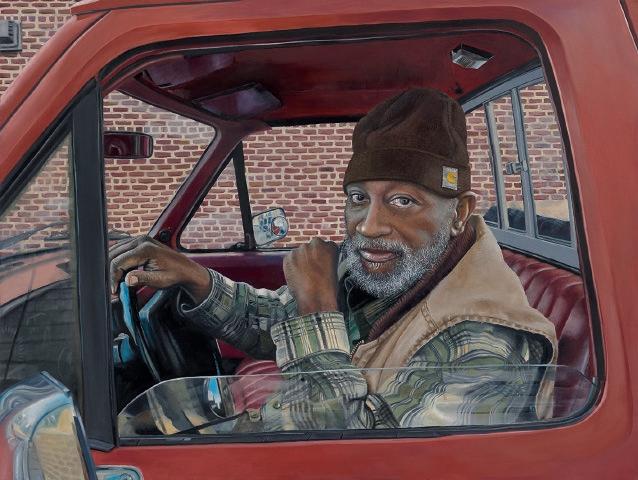
The Herbert Smith Freehills Kramer Portrait Award returns to the National Portrait Gallery this summer, with 52 works showcasing a wide range of diverse and compelling contemporary portraiture. Varying in scale and subject matter, these paintings range from abstract to realist in style, selected from 1,474 entries from 63 countries. Their dazzling array of colours and inspiring sitters make this year’s submissions truly unique.
It was a such an honour to be invited to judge this year’s Herbert Smith Freehills Kramer Portrait Award. The level of technique and skills on show, from artists from across the world, was truly inspiring to see. Discussing the entries carefully with my fellow judges allowed us to explore each composition and portrait in its full complexity. Portraits spark conversations and the works in this exhibition tell a diverse breadth of stories which I hope visitors will feel connected to. Every work demonstrates the relationship between artist and sitter and celebrates the wide range of human intricacies. Each artist employs different techniques to convey varying sitters and subjects, often addressing their own personal and cultural connections through the portrait. The Herbert Smith Freehills Kramer Portrait Award attracts a broad range of painters from varying artistic backgrounds, from students and self-taught artists to more established artists. Open to entries worldwide, this year’s submissions include paintings from Japan, America and Europe. The winning artist receives £35,000, with three further prizes awarded to second and third place and a young artist. The exhibition continues to be free to enter for all visitors, thanks to the continued generous sponsorship of Herbert Smith Freehills Kramer.
Each year the judging panel changes to allow for fresh perspectives, with the works judged on a completely anonymous basis. This year’s judges included Melissa Blanchflower, Senior Curator at Turner Contemporary, artist and Slade Director Mary Evans, artist Es Devlin and myself, all chaired by the NPG’s Director, Victoria Siddall. After the initial digital judging process, just under 200 artists were invited to send in their works for the in-person judging. Insights from the panel were crucial in selecting the final paintings and it was a collaborative effort to choose which works would be selected.
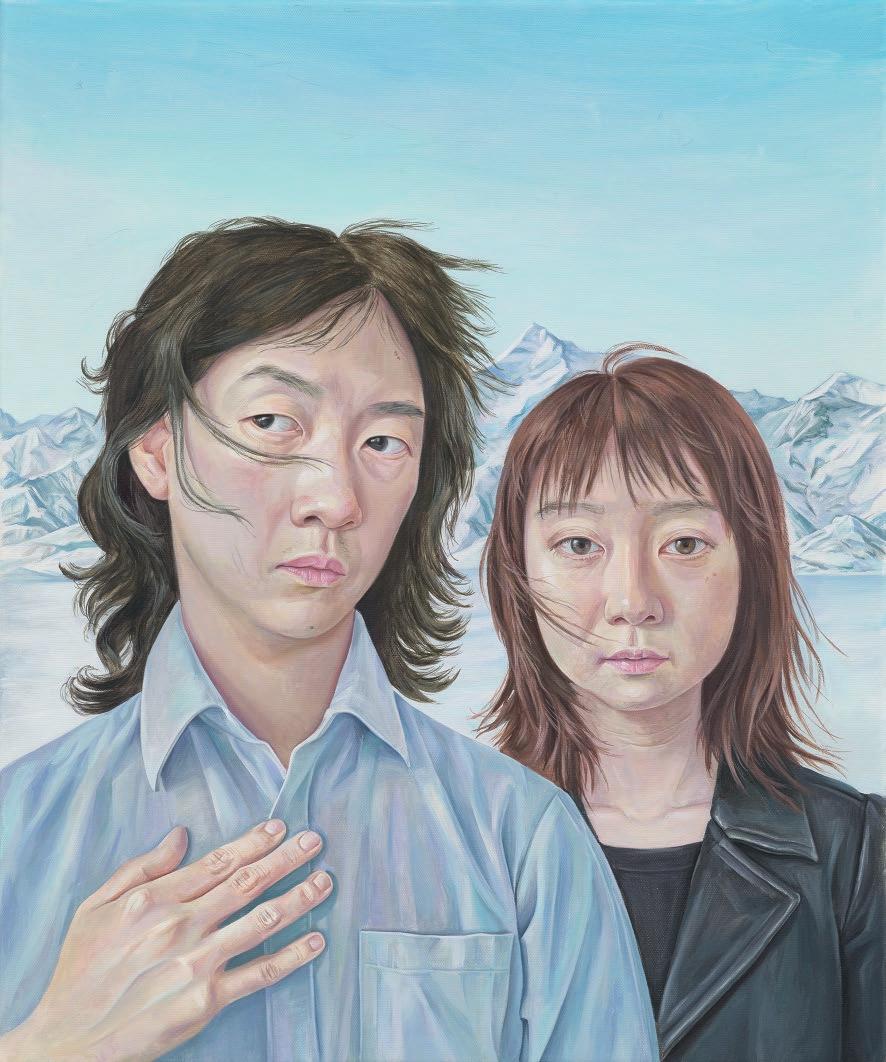
Usually depictions of close family and friends, the paintings in this exhibition often convey deeply personal and emotive stories, which capture everyday connections. In Ran You’s work North Wind, we see the artist with their partner, a wistful double portrait, set against a snowy, mountainous backdrop. Strongly influenced by Northern Renaissance paintings, the artist wanted to capture the psychological conditions that he and his partner, who is a classical music composer, face as Asian artists, living in Europe. ‘Set against a turbulent global political climate, the painting conveys a shared sense of pessimism, as if winter were approaching.’
Throughout the paintings on display, visitors will find familiar references in artists’ works.
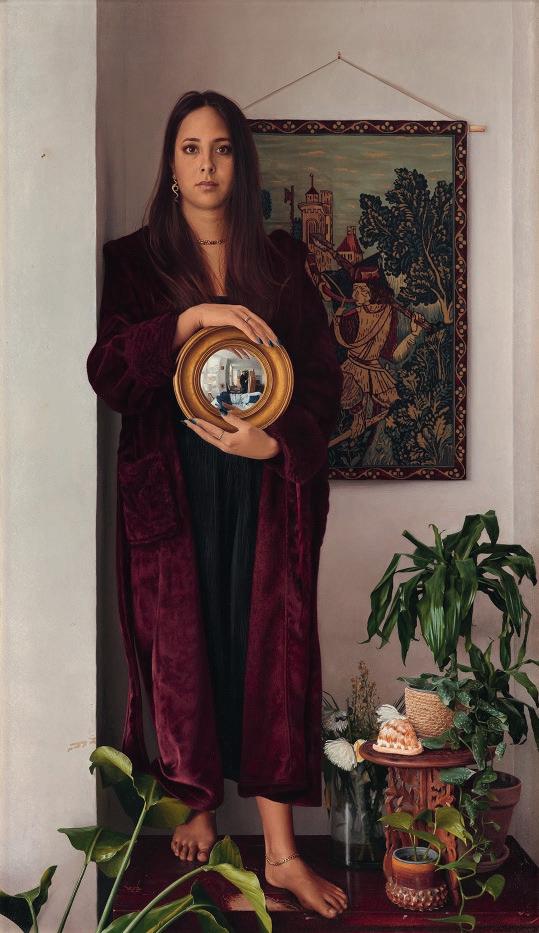
In Jack Freeman’s painting, entitled Double Portrait with Mirror, we see the artist’s portrait of their partner and themselves, through the concave mirror the sitter is holding. Inspired by trips to the National Gallery and looking at the Arnolfini Portrait by Jan van Eyck, Freeman has created a highly detailed portrait which he explained was ‘to make something which felt in some way both timeless and representative of our shared present, and which challenged me technically in new ways’.
‘The works included in this exhibition aim to open up the dialogue with visitors about what it means to create contemporary portraits today, as well as telling the poignant stories of the sitters.’
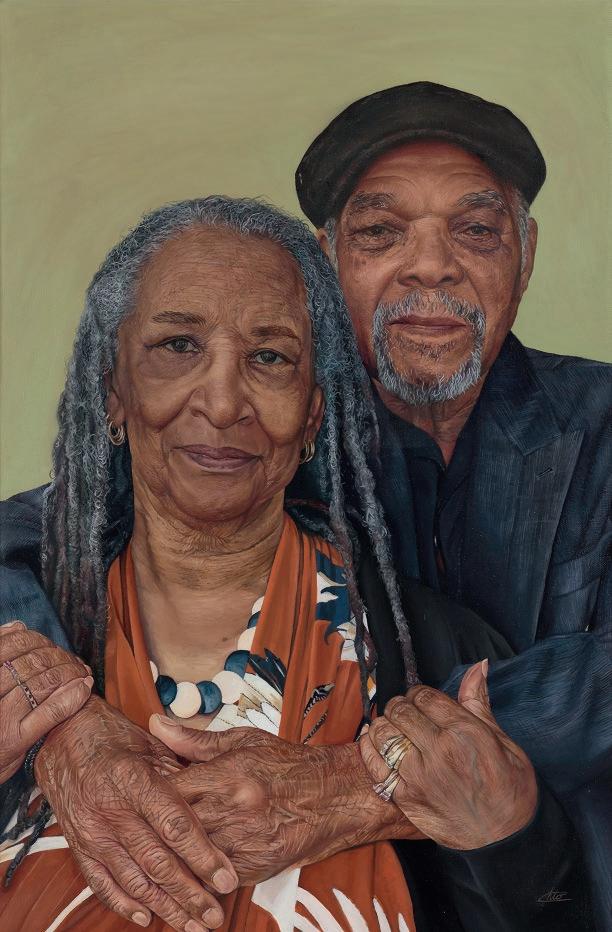
The works included in this exhibition aim to open up the dialogue with visitors about what it means to create contemporary portraits today, as well as telling the poignant stories of the sitters. What’s Mine is Yours by Chloe Cox depicts a couple who have fostered over 200 children. Their smiles and warm embrace demonstrate their strength and compassion for others. Cox noted that it was important ‘to shine a light on two ordinary people who achieved something extraordinary’.
Through the Gallery’s Visitors’ Choice competition, audiences will also be able to vote for their favourite painting included in the exhibition. Open during the summer months, the Herbert Smith Freehills Kramer Portrait Award is a great opportunity to visit the NPG and explore the diverse world of portrait painting.
Herbert Smith Freehills Kramer Portrait Award 2026 will be on display from 25 June until 7 October 2026, Exhibition Gallery (Floor 2).
Sponsored by: Herbert Smith Freehills Kramer.
Cecil Beaton: Staging Icons
by Bryony
Smith, Programme Manager, National Partnerships, and Rebecca Burton, Curator and Archivist, Harewood House Trust
This summer, Harewood House in Yorkshire will set the stage for a new exhibition about Cecil Beaton’s theatrical life. Created in partnership with the National Portrait Gallery, the exhibition features 62 original vintage prints from the national collection, several of which are going on public display for the first time.
Furnished by Thomas Chippendale and with interiors designed by Robert Adam, Harewood House is surrounded by a breathtaking Capability Brown landscape. Now cared for by the Harewood House Trust, it has been the
home to the Lascelles family from the 18th century to the present day, and its state-rooms, adorned with exceptional portraits by Reynolds, Gainsborough and Thomas Lawrence, are open to the public.
George, 7th Earl of Harewood, as well as being first cousin to Queen Elizabeth II, was a champion of the performing arts in Britain. He served as a director of the Royal Opera House, English National Opera and Opera North, and as a Governor of the BBC and President of the British Board of Film Classification.
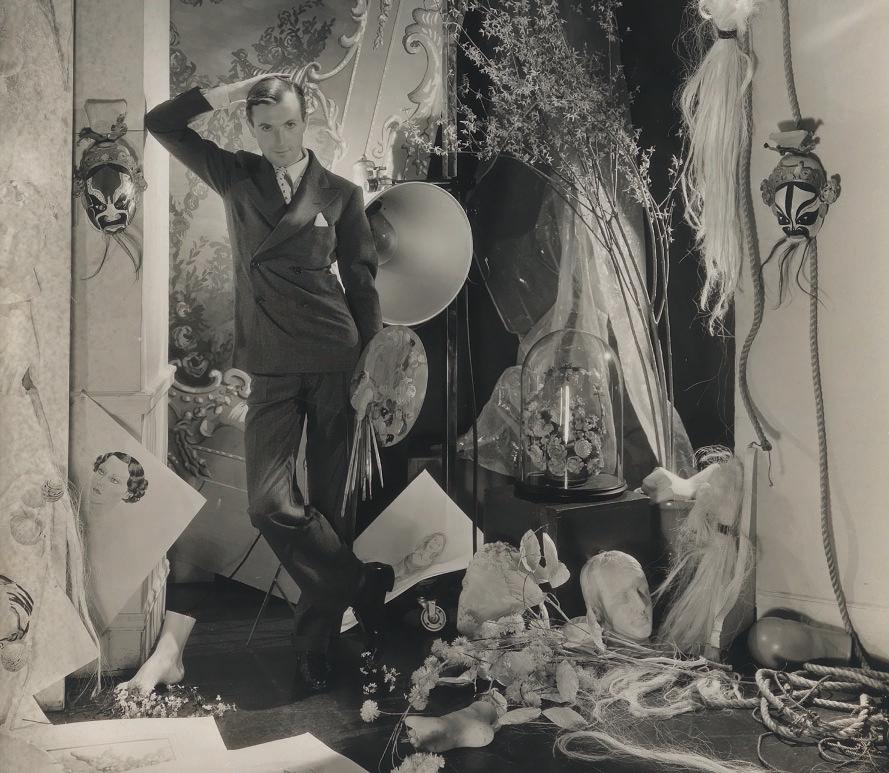
Left – Self-portrait (detail) by Cecil Beaton, 1934 (NPG x40418).
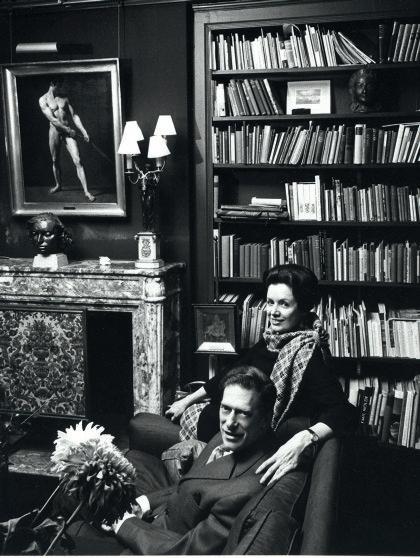
Below – George Lascelles, 7th Earl of Harewood; Patricia Elizabeth (née Tuckwell), Countess of Harewood (detail) by Cecil Beaton, late 1960s (NPG x14098).
Moving in many of the same theatrical circles, Beaton knew George Harewood and his wife, Patricia, personally and visited their homes in Yorkshire and London on several occasions.
Objects documenting Beaton’s time with the family have been gathered from the Harewood Collection for this exhibition, including Beaton’s photographs of the couple, a hand-written note, and a Christmas card decorated with a costume design for My Fair Lady.
These treasures will sit alongside photographs spanning Beaton’s career, which chart a lifelong passion for the theatrical. His first love was the stage, and his childhood trips to the theatre with his father inspired his ground-breaking photographic style, characterised by elaborate backdrops, eclectic props and outlandish costumes. His resulting creations blurred the line between reality and artifice, enabling Beaton to shape a new kind of celebrity image. He used
this technique to capture the most iconic portraits of the 20th century, immortalising the images of Marilyn Monroe, Audrey Hepburn, Elizabeth Taylor and others. He also turned his radical lens on the British Royal Family and dramatically redefined their perception in the public imagination.
The exhibition closes with a reflection on Beaton’s legacy. Though Beaton’s contribution to British culture is undeniable, photographers today are challenging the ideals of beauty and status that his work perpetuated. Harewood House is itself working to redress the lack of diversity in its historic portrait collection through its ongoing Missing Portraits series. A commissioned portrait of the British actor and writer David Harewood OBE, whose ancestors were enslaved by the Lascelles family in the early 19th century, considers the ongoing impact of portraiture on perceptions of British identity and culture.
Cecil Beaton: Staging Icons will be on display at Harewood House near Leeds from Saturday 13 June until Sunday 4 October 2026.
A National Portrait Gallery touring exhibition organised in partnership with Harewood House Trust.
Marilyn Monroe: A Portrait Booking recommended / Free
Wednesday 24 June 14.00–17.00
Herbert Smith Freehills Kramer Portrait Award 2026
Booking recommended / Free
Wednesday 8 October 14.00–17.00
Tim Walker’s Fairyland: Love and Legends Booking opens 28 August / Free
Wednesday 29 October 14.00–17.00
Taylor Wessing Photo Portrait Prize 2026 Booking opens 18 September / Free
Members’ Tours
Friday 19 June
18.00–19.30
National Portrait Gallery Stories: Rogues and Rebels Booking required / £25
Join this exclusive Members’ tour with Senior Storyteller, Daniel Hausherr, and discover the tales of some of the Collection’s more villainous sitters.
Friday 24 June
18.30–19.30
Marilyn Monroe: A Portrait with actress Genevieve Gaunt Booking required / £25
Members’ Late Monday 13 July 18.30–20.30
Marilyn Monroe: A Portrait and Herbert Smith Freehills Kramer Portrait Award 2026
Booking opens 29 May / Free
Curator-led Tour
Friday 17 July 18.30–19.30
Herbert Smith Freehills Kramer Portrait Award 2026
Booking required / £25
See Marilyn Monroe through the eyes of the actress who portrayed her in The Marilyn Conspiracy at London’s Park Theatre. As Genevieve Gaunt guides you around the exhibition, hear how the images, films and ephemera inspired her transformation while playing Marilyn Monroe.
Join the National Portrait Gallery’s Curatorial Assistant, Nitasha Giran, for this exclusive Members’ only curator led tour of the 2026 display of our annual competition.
Members’ Early Morning View
Monday 10 August 9.00–10.30
Marylin Monroe: A Portrait and Herbert Smith Freehills Kramer Portrait Award 2026 Booking opens 26 June / Free
Free Gallery Event
Friday 29 May 18.30–21.00
Catherine Opie: To Be Seen Late
Join a Gallery-wide celebration of Queer joy, expression and creativity in all its forms. From workshops to performances, DJs, talks and film screenings there will be something for everyone to enjoy. The evening will include a play-for-fun Lesbian Poker Night in Room 18.
Lunchtime Lectures
Thursday 4 June 13.00–14.00
Gwen John: Strange Beauties
Booking required / Members £8
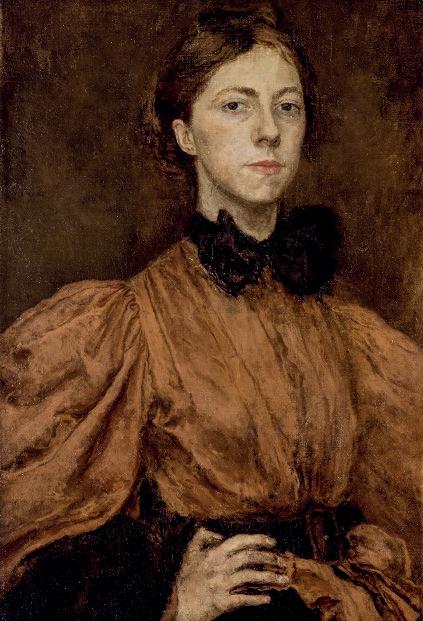
In this lecture, Lucy Wood draws on a new exhibition, Gwen John: Strange Beauties at the National Museum Cardiff that she has curated to mark the 150th Anniversary of Gwen John’s birth in 2026. Wood illuminates the underexamined scope of her ambition, revealing lesser-known aspects of her practice – a vibrant use of colour, plein air sketching and an interplay between figuration and abstraction.
Thursday 18 June 13.00–14.00
I Wanna Be Loved By You: Andrew Wilson on Marilyn Monroe
Booking required / Members £8
Delve into the glamorous world of old Hollywood with award-winning biographer Andrew Wilson as he explores the highs and lows of Marilyn’s life. Andrew’s talk brings to life his newest book, I Wanna Be Loved By You, a revealing and nuanced portrait of the life, death and afterlife of an icon who still fascinates us today.
Thursday 2 July 13.00–14.00
This Little World: A New History of Tudor and Stuart England Booking required / Members £8
Join historian Nandini Das for a lecture that explores the complex reality beneath the familiar narrative of England as Shakespeare’s ‘scepter’d isle’, a nation proud and apart, defined by royal spectacle and myth.
Performance
Friday 5 June 19.00–20.00
You’ve known me longer than anybody: Marilyn and Bruno Bernard
Booking required / Members £12
Evening Lecture
Friday 19 June 19.00–20.00
Marilyn Monroe: Told and Retold Booking required / Members £12
Curator’s Introduction
Friday 26 June 19.00–20.00
Marilyn Monroe: A Portrait Booking required / Members £12
Don’t forget Members receive a special 15% discount in the Gallery shops during Members’ private views.
Join us for a special performance centred on the special and enduring relationship between Marilyn and photographer Bruno Bernard, one of the few photographers whose camera witnessed the metamorphosis of Norma Jeane into Marilyn Monroe.
Join professor and author Sarah Churchwell to delve deeper into the story of ‘The Only Blonde in the World’. For many, before Marilyn is a person, she is already an image: platinum hair, parted lips, beauty mark, half-closed eyes, symbolising 20th-century femininity. But what story is she telling?
Join Rosie Broadley, Senior Curator of 20th Century Collections and curator of Marilyn Monroe: A Portrait, for an insider’s guide to the exhibition, the work displayed and how it came to be, from the earliest ‘cheesecake’ pin-ups of Norma-Jeane to the most poignant final photographs of Marilyn in 1962.
To coincide with the London Festival of Architecture 2026, join architectural historian Benedict O’Looney for a special tour of the Gallery to explore the fascinating story of the Gallery’s founding and its beautiful 1896 Italianate design by Victorian architect Ewan Christian.
In Conversation
Friday 3 July
19.00–20.00
Marilyn Monroe was an act: Bonnie Greer and Colin McFarlane
Booking required / Members £12
Join playwright Bonnie Greer and actor and director Colin McFarlane to delve into Marilyn Monroe’s time at The Actors’ Studio in New York in the 1950’s. During the conversation, hear about Marilyn’s relationship with Ella Fitzgerald, from listening to her records to improve her diction, to lobbying the owner of the Mocambo nightclub in Hollywood to book Fitzgerald to perform.
Friday 10 July
19.00–20.00
Griselda Pollock and Michael Arnold
Booking required / Members £12
Professor, feminist and art historian Griselda Pollock is joined by Michael Arnold, grandson of photographer Eve Arnold, to discuss Eve Arnold’s thoughtful, charismatic and spirited images of Marilyn Monroe throughout her career.
Walking Tour
Saturday 18 July 10.30–12.00
David Bowie Walking Tour: The Birth of Ziggy Stardust
Booking required / Members £20
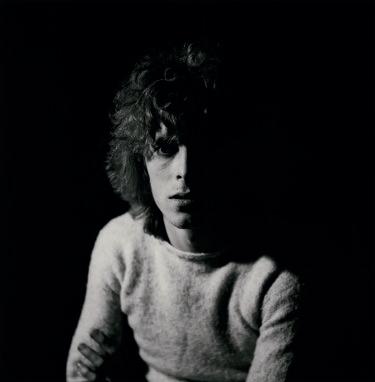
Marking 10 years since the death of one of Britain’s most iconic musicians, join our expert tour guide Manus on this Westminster walking tour celebrating the life, work and legacy of David Bowie. Visit the places that played a pivotal role in Bowie’s early career and propelled him into the superstar stratosphere.
Weekend Workshop
Saturday 18 July 11.00–17.00
Bombshell: Portraits with star quality
Booking required / Members £100
Join photographer Marysa Dowling for a masterclass in creating your own photographic portraits with gravitas. Inspired by the star power of Marilyn’s image, visit the exhibition with the group to gather inspiration, then move into the studio to create portraits that exude the look and feel of the 1950s movie star. Supported with one-on-one tutoring from Marysa, work with a model to create your images, all of which you’ll take home digitally at the end of the workshop.
Marilyn Monroe: stardom, glamour and the spirit of Hollywood Booking required / Members £12
The original ‘blonde bombshell’, Marilyn Monroe has long been considered a careful construction of self; layering fashion, beauty and sex appeal to create her iconic image, which endures and inspires to this day. More than a tragic icon, this panel will explore Monroe as the multi-faceted performer she was, and why her unique personality and image have endured to inspire generation after generation.
The Art of Champagne Masterclass and Tour
Monday 3 August 18.00–20.00
British Stars Booking required / Members £75.56
Discover a great pairing of British portraits and English sparkling wines at this special Bank Holiday event. The experience starts with an exclusive out-of-hours guided tour with Senior Storyteller Daniel Hausherr, exploring the lives of some of Britain’s national treasures. The evening continues in The Portrait Restaurant with a tasting of English sparkling wines led by expert Martin Dibben.
Upcoming Exhibitions
Marilyn Monroe: A Portrait 4 June to 6 September 2026
Herbert Smith Freehills Kramer Portrait Award 2026 25 June to 7 October 2026
Tim Walker’s Fairyland: Love and Legends Opens 8 October 2026
Taylor Wessing Photo Portrait Prize 2026 Opens 5 November 2026
npg.org.uk/whats on
Booking is recommended as numbers are limited for some events. To book your event visit my.npg.org.uk or RSVP with your name and Membership number to mevents@npg.org.uk.
Members’ Benefits
• Unlimited free entry to our wide range of world-class exhibitions
• See exhibitions before the public and during dedicated Members-only viewing hours
• Special ticketed events programme, made just for Members
• Priority booking and discounts on Gallery talks and events
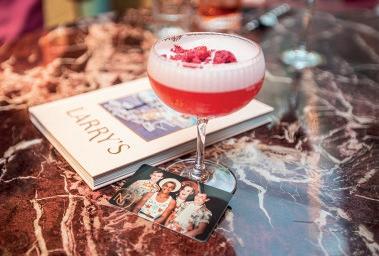
• 10% discounts at our Audrey Green café, Larry’s Bar and The Portrait Restaurant
• Exclusive pop-up Members’ Lounge at Larry’s Bar, open 11.00 to 17.00 daily
• 10% discounts in our shops plus priority access to special collaborations and limited editions
• Free subscription to Face to Face magazine and access to exclusive digital content
New Publications
Marilyn Monroe: A Portrait Hardback £40
Marilyn Monroe: A Portrait Paperback £29.95 (NPG exclusive)
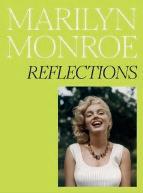
Marilyn Monroe: Reflections Small hardback £14.95
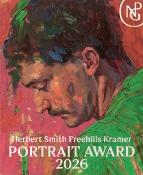
Herbert Smith
Freehills Kramer
Portrait Award 2026
Paperback £18.95
Don’t forget that as Gallery Supporters you can enjoy 10% off every time you shop! Just show your Membership card in-store or enter your exclusive Members’ code online.
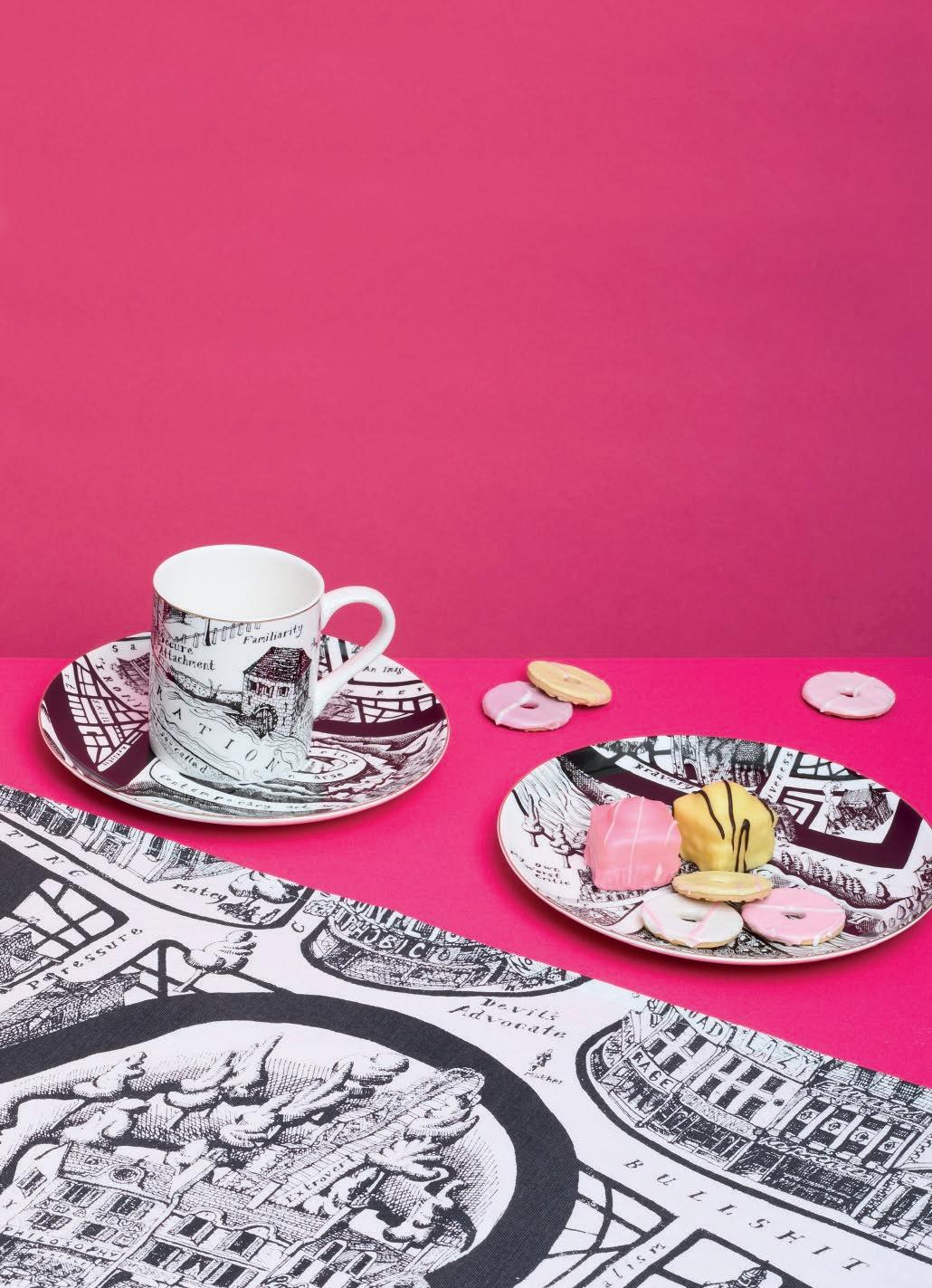
We are delighted to launch our unique collaboration with renowned artist and broadcaster Grayson Perry. The exclusive table range explores details of his selfportrait A Map of Days. Across ceramics and textiles, this range will make an inspirational addition to your home.