





DESIREE.RORKE@DESIREE.CO.ZA
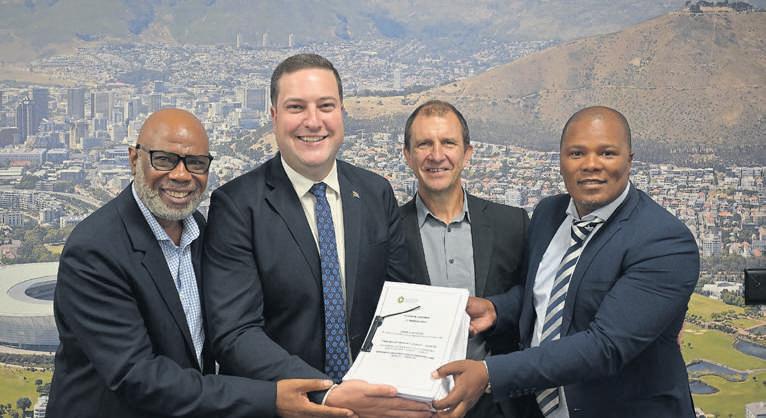
Presenting CapeTown’s draftbudgetofthe current administration on Wednesday,Mayor Geordin Hill-Lewis championed what he termed a“City of Hope” blueprint, promising thatapproximately 60% of households would experience stableorreduced rates bills despite rising property values, whilst delivering record infrastructure investment through strategic rate reductions.
Yetopposition councillors denounced theproposals as asophisticated “debt trap”,arguing that beneath the headline rate cutslies an elaborate system of fixed charges thatconstitutes apunitive “stealth tax” on property ownership. Hill-Lewis says the City will cut the rate-in-the-rand formula —used to calculate property rates —by10,2% andkeep the first R500 000 of property value rates-free, extended to homesworthuptoR8million. Other measures include aproposed raising of indigentrelief thresholds. This includes a 100% rebate forwater andsanitation, as well as city-wide cleaning,uptoR620 000 property value (both up from R500 000), and a100% rebate for refuse collection up to R580 000 (up from R450 000).
Regarding the consumptive portion of thetariffs,“waterand sanitation tariffs will rise by 4,5%, refuse and cleaning charges by about3,75%, and electricity by an average of 6,67%”. In terms of the controversial fixed charges, currently beingchallenged in court, property value bands havebeen changedtomitigatethe property value increases as the GV2025 comesintoeffect on 1July
Accordingtobudget documents, revenue will fund the proposed 2026-’27 budget of R87,7billion, with R74,7 billion allocated to theoperatingbudget and R13billion to thecapital budget, which reflectsa4,4% increase overlastyear’s record-breaking R84,1 billion budget.
Major components for the 2026-’27 operational budget include employeerelatedcosts at R22,1billion, which equates to 29,6% of the total operating expenditure; remunerationofcouncillors at R207 million; andbulk purchases of electricity at R18,9billion.
Infrastructure investment highlights over thethree-year budget framework, says Hill-Lewis, will include aR16,7 billionwater andsanitation investment; R6 billioninelectrical grid upgrades and maintenance to prepare for adecentralised energy future with less Eskom reliance; R3,7billion in road maintenance, pothole repairs, upgrades to roads and stormwater, and R653 million in congestion relief projects.
Afurther R3,3billion goes towards the major MyCiTi Cape Flatsexpansion, and R3,3billion for informal settlement upgradingand state-subsidised housing. The budget further includes aR6,8 billion safety and security proposal for 2026-’27.
According to Hill-Lewis, this draft budget achieves severalthingsatonce that simply wouldn’t be possible in other cities: an SA recordinfrastructure investment that outpacesall Gauteng metros combined; the mostcomprehensive relief for struggling households andpensioners; and the lowest property rates and totalmonthly bills of any metro
However, notall are equally optimistic aboutthe budget.
GOOD Party councillor Sandra Dickson said: “While the City masks itsfiscal policy with a10,2% cuttothe property rate-in-the-rand, atechnical analysis reveals abudget designed to extract record revenues througha financial sleight of hand. TheCity claims that it is a6,67% average electricity increase, but for the actualratepayer, this is not so. The fine print in thebudget confirms that the
“Wearelivinginatime wherethe costoflivingisnotjustrising;itis exploding”-PieterJansen vanVuuren
regulated tariff —the actual price paidat the meter —will climb by auniform 8,55% across almost every energy block and service charge. The Electricity Home User Fixed Charge is set to increase by this same 8,55%, bringing the new monthly mandatory cost to R424,29 (incl. 15% VAT). This is amonthly penalty for simply being connected to the grid, regardless of how much power ahousehold saves.”
She added that in adjusting the property value bands for fixed charges, the City acknowledges the volatility of itsown 2025 General Valuation Roll.
“By shifting thesebands, the City is merely fine-tuning itsmachinerytoensure it can still extract maximum revenue from the middle class without triggering atotal collapse in payment ability.”
‘STEALTHTAX’
Dickson has consistently challenged the City’s legally questionable linking of fixed service charges to property value.
“These charges —covering water, sanitation, and ‘city-wide cleaning’—are effectively asecond property tax that ignores actual consumption. Under this model, afamily in amodest R3 million home is now forced to pay acombined monthly total of approximately R1135,50 (incl. 15% VAT) in fixed service charges for water, sanitation, and cleaning before they have even opened atap or put out a single bin,” she says. “This is a‘stealth tax’ on property ownership that penalises the asset-rich but cash-poor middle class.”
“While the Mayor touts arecord R40 billion three-year infrastructure plan, much of thisisarecycling of old announcements. More critically, the City continues to struggle with implementation; in the lastfinancial year, R1,6 billion in capital funds went unused. The City is asking residentstopay more for projects it has proven it cannot deliver on time.”
Freedom Front Pluscouncillor Pieter Jansen van Vuuren said: “We areliving in atime and in aCitywhere the cost of living is not just rising; it is exploding. Ourresidents are being squeezed from every side —byskyrocketing fuel prices, national inflation, and most significantly, by the City’s own aggressive tariff structures. The citizens of Cape Town are not just unhappy; they are pushed to the brink. Oneneed only look at the High Court case brought by SAPOA and supported by various ratepayer associations against thisvery City. This legal battle over the 2025-’26 budget and its unfair tariff models is aclear indictment of thisadministration’s failure to pay attention to thosewho literally keep the lights.”.
. Thebudget willbeopenfor public comment until30April.
Submit commentsto:
. Email: Budget.Comments@capetown.gov.za . Online:www.capetown.gov.za/collaborate ; or www.capetown.gov.za/HaveYourSay . VisitSubcounciloffices; . or phone:0800212 176.

KAILINDANIELS
KAILIN.DANIELS@NOVUSMEDIA.CO.ZA
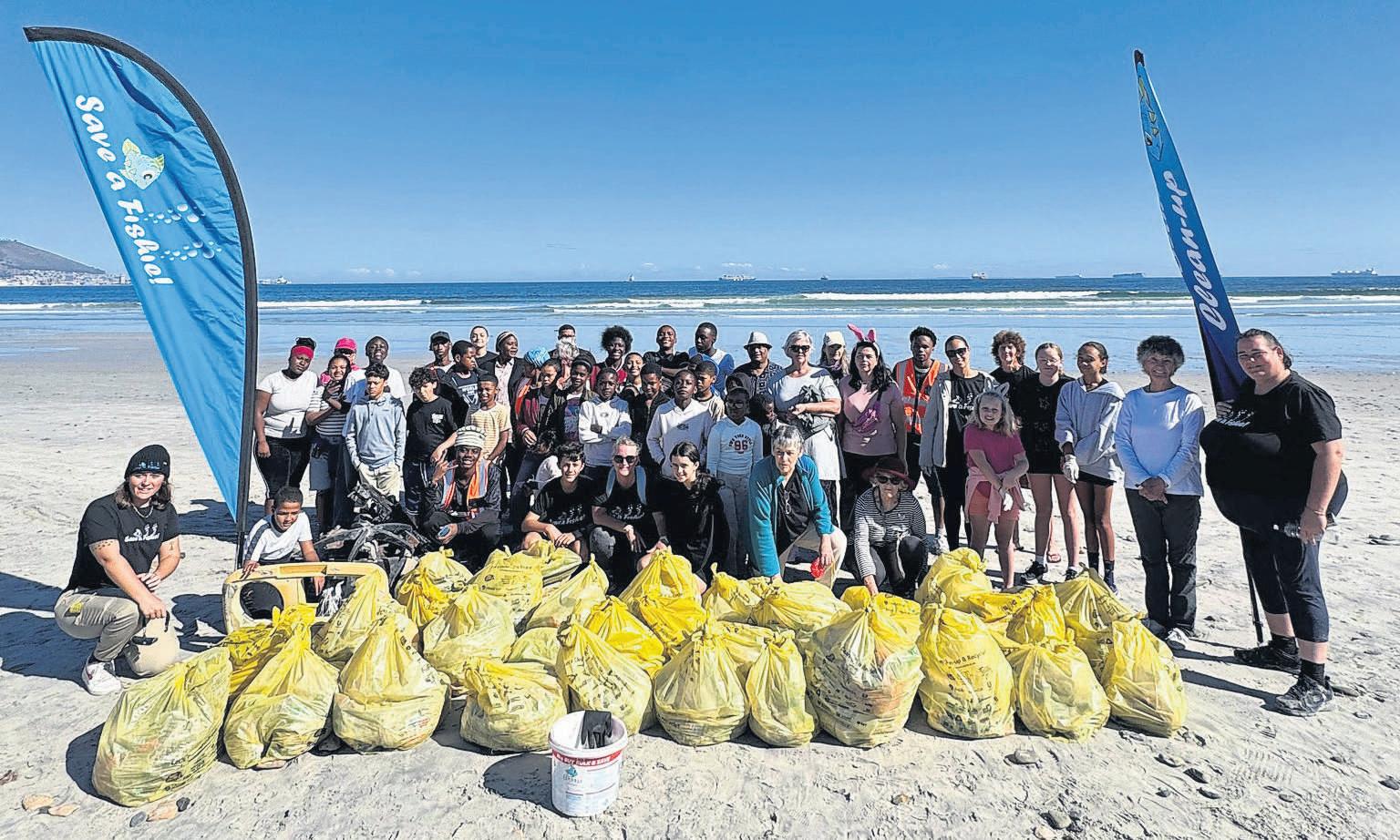
Volunteers joined forces at Lagoon Beach in Milnerton for amuch-needed beach clean-up and Easter egg hunt, collecting an astonishing 528 kilogrammes of litter including over 200 nappies. The event also served as a reminder of the vulnerability of local marine life, after asealwas founddead on the beach earlier that morning.

ZoëPrinsloo,founder of Save aFishie, weighs the 528kgoflittercollected during the Easter clean-up
FROMPAGE1
Any suspicious activity is immediately reported to the City’s Marine Unitfor investigation.
MELKBOSSTRANDREMAINSCALM AFTERINCIDENT

ing by recent rains,volunteers from MyStudentHouse,the Anglican Church, and regular beach cleanup participants workedtirelessly torid the beach of waste.Plastic packets, straws, chip packets, clothing,and over 200 discarded nappies wereamongthe debris collected.
Plastics SA provided bright yellowcollectionbags, oneof which weighed an impressive 25 kilogrammes at the endofthe morning
After the clean-up, children were treated toaspecial Easter egg hunt, with colourfulstones hidden across asection of the beach. Kids ofall agesenjoyed thehunt, exchanging stones for chocolate eggs, while adults got in onthe fun aswell.
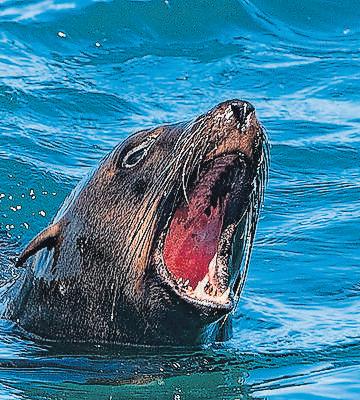
TygerBurger previously reported thatMelkbosstrand Beach remains open and calm, despite reports of asealattack on Friday evening. Journalists on site on Saturday observed normalconditions, with lifeguards monitoring thearea andclear warning signage in place. Authoritiesconfirmed that only oneman wasbitten in the incident. Emergency services responded swiftly, andthe victim received immediatemedical care No further incidents were reported, andthe situationwas stable by the following day.
Local ward councillor Paul Swart noted thatsome reports circulating online referred to older incidents anddid not reflect the current situation.
Despitethe beach remaining accessible, authorities urge beachgoerstoremain vigilant when entering the water.
AHISTORYOFSEAL-RELATED
pre pollution.
Save aFishie invites locals to join upcoming clean-ups anddo theirpart to keepthe coastclean.
funmeets environmental
forcolourfulstones,trading them in forchocolateeggs.
Melkbosstrand andnearby Big Bay have experienced several seal-related incidents in recent years
In November2025, local surfer Hjalmar Larsen sustained multiple bite woundswhile surfing at Big Bayand required anti-rabiestreatment. He describedthe encounter as suddenand unprovoked. Asimilar, though less severe, incident occurred in October 2024 during an open-water swim event,where aparticipant sufferedaminor bite and was advised to seek medical evaluation.
RABIESRISKANDPUBLICHEALTH GUIDANCE
The National Institute for Communicable Diseases (NICD) has warned of potential rabies risks alongthe Western Cape coastline. Rabiesisa serious viraldisease that can be fatal if
not treatedpromptly. Transmission can occur throughbites, scratches, or contact with saliva from infected animals -including seals. Anyone bitten is urged to seek immediate medical attention. Treatment, known as postexposure prophylaxis (PEP), may include arabies vaccine and immunoglobulin, depending on theseverityofthe exposure.
AUTHORITIESADVISETHE FOLLOWINGPRECAUTIONS:
. Washany bite or scratch thoroughly with soap and water immediately.
. Seek urgent medical care at a hospital or clinic.
. Avoid approaching or interacting with seals.
. Keep pets under control and ensurevaccinations are up to date
. Report unusualoraggressive animal behaviour to theState VeterinaryOffice
Curious about Buddhism and meditation? Thepublic is invited to aBuddhist Lecture on Meditation at Milnerton Library, 81 Pienaar Road on Wednesday 15 April at 18:30. Theevening will include atalk on meditation from aBuddhist perspective, followed by aguided session to help participants experience mindfulness firsthand.
EXPLOREMINDFULNESSINA
SUPPORTIVEENVIRONMENT
Thesession is expected to lasttwo to three hours, and newcomers are warmly welcomed. Those attending can also benefit from practical guidance on incorporating meditation intodaily life, with an emphasis on mental clarity, calmness, and inner focus. This event offers an accessible introduction to Buddhist meditation, perfect for anyone looking to slow down, reflect and explore mindfulness in a supportive environment . Thelecture is open to all, with asuggested donation of R70, and visitor parking is available at the library. Forenquiries or to register, contact capetown@buddhismsouthafrica.orgor067 3768336.
TheCityofCape Town hasadvised residentsthat there-opening of the KillarneyCommunityRecycling Centre hasbeen delayed. Thefacilityisnow expectedtoresume operations in May. City officialshavenoted that the extent of therequired rehabilitation is greaterthan initially understood, necessitating additionalwork to ensure thefacilitymeetsoperationaland safety standards.
“Every effort is being made to completethe work as efficientlyaspossible.” In themeantime residentsare reminded not to leavewaste outside theclosed facility, as illegaldumping createshealth andenvironmental risksand diverts resourcesfromessential servicedelivery. Residentsare encouraged to usethe nearest alternative drop-off sites: . Tygerdal; . Welgelegen; . Vissershok (noe-waste).

KAILINDANIELS
KAILIN.DANIELS@NOVUSMEDIA.CO.ZA
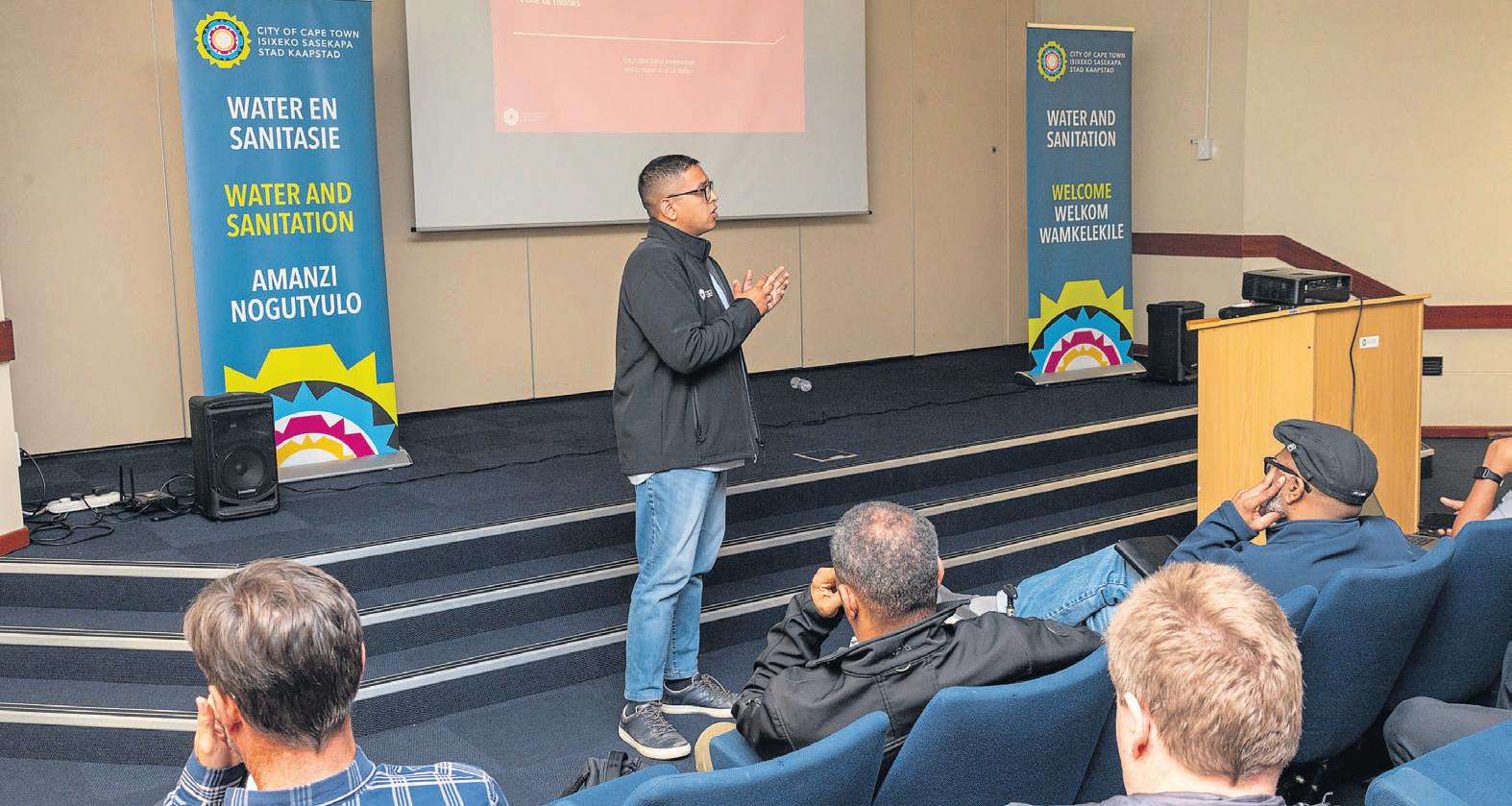
The City of Cape Town is intensifyingefforts to restorethe health of theMilnerton Lagoon, with dredging andinfrastructure upgradesnow underway.
The programme targets improved water quality, system performance, and longterm resilience across the lagoon andthe wider Diep River catchment.
TygerBurger has published numerous articles over the yearshighlighting the pollutionchallenges in the lagoon.
At apublic meeting on 25 March, City officials updated residents on progress to date and outlined upcoming integrated solutions designed to reducepollution and enhanceenvironmental conditions.

. Lagoon dredging and flow improvements:Tender evaluationisunderway, with work startinginJune this year. Plans includereshaping sandbanks, constructingaberm,and managing the
Salin Sta ng Sept this year, 80–100 l/sofsaline water will be introducedfrom Milnerton Beach well points to improve flows and reduce odours
. PotsdamWastewater Treatment Works upgrade: Sectionslikeultrafiltration and dewateringare operational or in trials, with membranebioreactor commissioning expected in November.
. Air qualityimprovements: Monitoring shows hydrogensulphide (H2S) nuisance
Gardens, Milnerton, and Century City. Badroodien said: “As major interventions move intoimplementation, we are entering acritical phase that will further improve the health of the Milnerton Lagoon and the surrounding catchment.”

KOMMENTAAR OP DIESTADKAAPSTAD SE KONSEPBEGROTINGVIR
2026/27,DIE HERSIENING VANDIE GEÏNTEGREERDE ONTWIKKELINGSPLAN (GOP), EN VOORGESTELDE WYSIGINGS AAN DIE GOP 2022-2027 (WYSIGINGS VIR 2026/27), WATVERANDERINGE AAN DIE KORPORATIEWE EN MUNISIPALE ENTITEITESE TELKAARTE EN DIE TELKAART INGEVOLGEOMSENDSKRYWE 88 (C88) INSLUIT
Kennisgeskied hiermee ingevolge die WetopPlaaslikeRegering: Munisipale Stelsels, Wet32van 2000; die WetopPlaaslike Regering: Munisipale Finansiële Bestuur,Wet 56 van2003; en die WetopPlaaslike Regering: Munisipale Eiendomsbelasting, Wet 6van 2004,dat die Stad kommentaar inwag op diehersiening vansygeïntegreerde ontwikkelingsplan(GOP), voorgestelde wysigings aan dieGOP 2022-2027 (wysigings vir 2026/27),waaronder veranderinge aan diekorporatieweenmunisipaleentiteite se telkaarte én die telkaart ingevolge C88, wat toepaslikekernprestasieaanwysersen prestasiemikpunte vir die munisipaliteit bepaal en hersien, en diekonsepbegrotingvir 2026/27 (wat begrotingsverwante beleide insluit).Die konsepbegrotingvir 2026/27 kanvan 31 Maart tot en met 30 April 2026,endie voorgesteldewysigings aan dieGOP 2022-2027 van31Maarttot en met 20 April 2026,bydie munisipaliteitsehoofkantoor, munisipale biblioteke, alle subraadskantore (sienlys hier onder) en aanlynbywww capetown.gov.za/haveyoursay of www.capetown.gov.za/collaborate bestudeer word. Afskrifte vandie dokumente sal ookby diebogenoemde lokale beskikbaar wees. As deelvan die Stad Kaapstad se openbaredeelnameproses, sal diekonsepbegroting vir 2026/27 by subraadsgebaseerde vergaderings voorgelê word. Kontakasseblief jou subraadskantoorvir verdereinligting oorhierdie vergaderings.
Die dokumente sal ook vanaf 31 Maart 2026 bywww.capetown.gov za/budget beskikbaar wees.
Rig skriftelikekorrespondensie aan:
Die Stadsbestuurder,GOP/begroting2026/27,5de verdieping,Podiumblok, Burgersentrum, Kaapstad 8001; of Privaat Sak X9181,Kaapstad8000; of e-pos Budget.Comments@capetown.gov.za.

1.20 Watbetrefresidensiële eiendomseienaarswat op pensioene staatmaak, moetdie aansoeker tenminste 60 jaar oud wees, of indiendie eienaar gedurende diejaar 60 word, sal diekortingop’npro rata-grondslag toegestaan word vanaf diedatum waarop die aansoeker 60 word 1.21 DieStadhet ’n verlaging van R485 000,00 (vierhonderd-vyf-en-tagtigduisend rand) vasgestel wat van toepassing sal weesopeienaars van residensiële eiendomme wat as ’n primêrewoonplek gebruikworden’nmarkwaarde van minder as R8 000 001,00 (agtmiljoen-en-een rand) het
2. VERBRUIKSTARIEWEEN-HEFFINGS
Water, sanitasie, elektrisiteit en stedelikeafvalbestuur word teen 15% BTW belas. 2.1 WATERENSANITASIE
Vyftariefvlakkewordvir dieboekjaar 2026/27 aanbeveel.Die voorgesteldetariewe strook metdie geskatteverbruiksvlakke.’nVoorgestelde4,5%styging in dietariewe op die(onbeperkte)waterslimvlak (wat dievaste basiese heffing insluit) word vir inwerkingtreding vanaf 1Julie 2026 aanbeveel.Die voorgesteldestyging in tarieweop vlak 1, 2, 3endie noodvlak is ook 4,5%
Water- en sanitasietariewesal in 2026/27 meer stabiel wees na diestrukturele veranderinge wat in dieboekjaar 2025/26 aangebring is. Dieenigstebywerkingvir 2026/27 is dieaanpassing van dieeiendomswaardekategorieë om metdie algemene waardasie 2025 te strook en sodoende sekertemaak dat diegetal eiendomme in elke eiendomswaardekategoriegrotendeelskonstant bly. Eiendomswaardetoenames bo of onder diegemiddelde aanpassingsindie waardekategorieë kankliënteegter na hoër of laer kategorieë laat oorskuif.
Tariefstygings hou hoofsaaklik verband metdie versekering van volhoubare en veerkragtigewatervoorsiening; begrotingsvoorsiening virdie nuwe waterplan (waaronderinisiatiewe virverdere investering in ondergrondse onttrekking uitwaterdraers,eninhergebruikskemas); opknappings en uitbreidings van afvalwatersuiweringsaanlegte; deurlopende investering in bate-opknapping en baterehabilitasie om aan voorgeskrewe standaarde te voldoen;deurlopende investering in batevervangingsprogramme om behoorlikebatebestuur te verseker, met ’n bepaalde klemopriool-enwaternetwerkvervanging en dieopknapping van rioolpompstasies; watervraagbestuursinisiatiewe om diegebruikvan waterhulpbronne te optimaliseer; diehandhawing en versterking van instandhoudingsprogramme; en water-ensanitasievoorsiening op gepaste voldoenings-, vermoë-, vaardigheids-, dienslewerings-enresponsiwiteitsvlakke. Daar moet ook voorsiening gemaak wordvir dieuitstrykingvan tariefverhogings sodra diebykomende bedryfskostevir groot nuwe hulpbronprojekte in werking tree. Dievoorgesteldewatertarieweopdie (onbeperkte) waterslimvlak vir2026/27, watop 1Julie 2026 in werking tree, verskynhieronder: 2026/27
VERBRUIKSTARIEWE

Notas:
*Trosontwikkelingseiendomme wat in die naam van ’n SHRA-geakkrediteerde instelling vir maatskaplikebehuising geregistreer is en vir maatskaplikebehuising gebruik word, betaal R0,00 op trap 1.
** Nie-huishoudelike gebruikerkategorieë: Raadpleeg hoofstuk 2, afdeling2van die tariefbeleid vir‘nomvattendeverduideliking vangebruikerkategorieë.
*** ’n Vaste basiese tarief wordnie virdie volgende tariefkategorieë gehef nie: huisvesting virkwesbare persone, d.w.s. skuilings virhaweloses, tehuise virbejaardes/ liefdadigheidsorganisasies/organisasies sonder winsoogmerk/godsdienstige instellings/gebruikers van fonteinwater/gebruikers vanbehandelde uitvloeiwater/ brandaansluitings.
**** Ooreenkomstig die aanvaardingvan die beleidoor stedelikelandbouis’ngratis toekenningvan 10 kℓ per maand uitsluitlik vantoepassingopbestaansboerdery deur bepaalde kwesbaregroepe.
Die voorgestelde sanitasietarieweopdie (onbeperkte) waterslimvlakvir 2026/27, wat op 1Julie 2026 in werking tree, verskyn hier onder:

Enigeen met kommentaarkan dit skriftelik indienbydie bogenoemde adresse,aanlyn óf by hulleplaaslikesubraadskantoor.Kommentaar opdie konsepbegrotingmoet ingedienwordteen 16:30 op Donderdag 30 April 2026,enkommentaar op dieGOP 2022-2027 (wysigings vir 2026/27) teen 16:30opMaandag 20April 2026. Persone wat nie kanskryf nie, kanenige van die kantorehier ondergedurende kantoorure besoek, waar ’n personeellid hulle sal bystaan om hulle kommentaar neer te skryf. Vir mondelingekommentaar,skakel0800 21 2176. Die volgendetabel bevat die plekkewaar dieGOP en konsepbegrotingter insae sal lê: Subraadskantore Klikop: web1.capetown.gov.za/web1/councilhubonline/subcouncilmanagers Alle bibliotekeKlik op www.capetown.gov.za/libraries Kaapstad Wandelvlak, Burgersentrum, Hertzog-boulevard,Kaapstad Suid-SkiereilandMunisipale kantore, h.v.Hoof-enVictoriaweg, Plumstead
LW: Inligting wathier voorsienword, is ’n uittreksel uit die konsepboek van tariewe, fooie en vir die volledige weergawe,raadpleeg bylae6 by diekonsepbegrotingvir 2026/27. Die tariewe vir die MTREF 2026/27wordmet 15% BTWbereken
1. EIENDOMSBELASTING(weergegeeaskoers in die rand): Die koersindie rand word metdie munisipale waardasie van dieeiendom vermenigvuldigomdie jaarliksebelastingaanslagtebereken,onderworpe aan die vrystellings,verlagings en kortingswaarvoor diebeleidoor eiendomsbelasting voorsiening maak,enhet ’n nulbelastingkoers vir BTW
EIENDOMSKATEGORIEË KOERSIN DIERAND
1.1Residensiële eiendomme 0,006428
1.2Sake- en kommersiële eiendomme
1.3Industriële eiendomme
1.4Mynbou-eiendomme
1.5 Eiendomme watdeur ’n staatsinstelling besitenvir openbaredienste gebruikword
1.6Diverse eiendomme
1.7Onbeboude grond
1.9 Openbarediensinfrastruktuureiendomme (Die Stad sal geen belastinghef op dieeerste30% van diemarkwaardesoosopdie waardasielys nie.)
1.10 Eiendomme watdeur ’n openbarevoordeelorganisasie besit en vir aangeweseopenbarevoordeelaktiwiteite gebruikword
1.11 Eiendomme in ’n organisasie se besit–sonder winsoogmerkengebruik virspesifiekeaktiwiteite
1.12 Eiendomme in besit van ’n instellingvir maatskaplikebehuisingof’n ander leweringsagent watbydie reguleringsowerheidvir maatskaplike behuising (SHRA) geakkrediteer is,enwat virmaatskaplikebehuising gebruikword
1.13 Eiendomme watdeur ’n godsdienstige gemeenskapbesit en vir aangewesegodsdienstigedoeleindes gebruik word
0,015106
0,012856
1.8Landbou-eiendomme 0,001286
0.001607
1.14Eiendomme watvir veelvuldige doeleindes gebruik word Per toekenning
1.15 Begraafplaseenkrematoriums
1.16 Eiendomme in ’n organisasie se besit–sonder winsoogmerkengebruik virdiereskuilings
1.17 Eiendomme in ’n organisasie se besit –sonder winsoogmerkengebruik as ’n plaaslikegemeenskapsmuseum
1.18 Natuurbewaringsgrond
RESIDENSIËLE VOLUMETRIESE TARIEWEvantoepassingopvolledig huishoudelik sowel as huishoudelikegroep DEERNIS/AGTERPLAAS NIE-DEERNIS
Trap 1(0 ≤6kℓ)* Perkℓ
Trap 2(>6 ≤10,5kℓ)
Trap 3(>10,5 ≤35 kℓ) Perkℓ
Trap 4(>35kℓ)
0.000.0022,10 25,42

Kommersieel/industrieel/ departementeel/divers/ skole/opvoedkundige instellings/sportliggame/ godsdienstige instellings**
Huisvesting vir kwesbare persone/skuilings vir haweloses/tehuise vir bejaardes****
0,000000
1.19 Diebruto maandelikse huishoudelikeinkomstekategorieëenkortingsvir die boekjaar2026/27 tenopsigte van eienaarswat virhulle bestaan op pensioen-of maatskapliketoelaesstaatmaak, is soos in die volgende tabel:

Liefdadigheidsorganisasies/ openbarevoordeelorganisasies/ organisasies sonder winsoogmerk

Liefdadigheidsorganisasies/ openbarevoordeelorganisasies/ organisasies sonderwinsoogmerk

Notas: *Trosontwikkelingseiendomme wat in die naam van ’n SHRA-geakkrediteerde instelling vir maatskaplikebehuising geregistreer is en vir maatskaplikebehuising gebruik word, betaal R0,00 op trap 1.
** Nie-huishoudelike gebruikerkategorieë: Raadpleeg hoofstuk 2, afdeling3van die tariefbeleid vir‘nomvattendeverduideliking vangebruikerkategorieë en die toepaslike persentasie waterverbruik wat virkosteheffinggebruik word.
virkwesbarepersone, d.w.s. skuilings vir haweloses, tehuise vir bejaardes/ liefdadigheidsorganisasies/organisasiessonderwinsoogmerk/godsdienstige instellings/ gebruikers van fonteinwater en behandeldeuitvloeiwater/brandaansluitings
LET WEL: Die direkteur: kommersieel (direktoraatwater en sanitasie)kan diepersentasies na gelang van die verbruiker aanpas. Dít geld egternie virdie kategorievolledig huishoudelik nie.
Hooftrekkevan wysigings vir water en sanitasie
•Aanpassing vandie eiendomswaardekategorieëommet die algemene waardasie 2025testrookensodoende sekertemaak dat diegetal eiendomme in elke eiendomswaardekategorie grotendeelskonstant bly. Eiendomswaardetoenamesboof onderdie gemiddelde aanpassing in diewaardekategorieë kankliënte egternahoëroflaer kategorieë laat oorskuif.
Diverse tariewe:
•Regstelling vantariefonderitem9.7 2.13met betrekkingtot dieinstalleringvan ’n verbindingspyp, watverkeerdelik dieselfde was as dietariefonder item 9.7.2.15.Hierdie foutisnou reggestelmet dieoog op 2026/27.
Ander:
tariefbeleid.
2.2 ELEKTRISITEIT
Dietariewe hier onder berus op ’n gemiddeldestyging van6,67%,wat op1 Julie 2026in werkingtree.
Die afkorting“GEREG.”verwysnadie gereguleerdegedeeltevan dietarief(wat deur die Raad en die nasionale energiereguleerdervan Suid-Afrika(NERSA) goedgekeur word), en ONGEREG.” na die ongereguleerde gedeelte (wat slegs deur dieRaad goedgekeur word). Dietariefindie totaalkolomme is wat op diekliëntserekening salverskyn.
Deurvoervir kliënte met ’n energietekort (alle spannings)
Energie
Deurvoerstelselgebruik, medium spanning
Energie
–buite
10,090,00 10,0911,60
2519 88 0,00 2519 88 2897,86
742,64 41,10783 74 901,30
Deurvoerstelselgebruik, hoëspanning
c/kWh 195,96 41 10 237,06 272,62
148,43 41,10 189,53 217,96 Vraag R/kVA 254,76 0,0 254,76 292,97
Deurvoervir kliënte met’n energiesurplus Energie
c/kWh 718,68 41,10759 78 873,75
Hoog –standaard c/kWh 201,16 41,10 242,26 278,60 Hoog –buite spits c/kWh 143,64 41,10 184,74 212,45
Laag –spits

SSEG-invoer (uitsluitlik vir voorsiening)
VERLIGTINGSTARIEWE

Straat- en verkeersligte
Hooftrekkevan wysigings
•Residensiëlekliënte met ’n koopkragmeter en ’n munisipale eiendomswaardasievan R500 000 of minder kominaanmerking virdie hulptarief.
•Residensiëlekliënte met’nkoopkragmeteren’nmunisipale eiendomswaardasie van meer as R500 000, maar minder as R1 miljoen, kominaanmerking virdie huishoudeliketarief.
•Alle ander residensiëlekliënte sal dietuisgebruikertarief betaal, tensy hulle voldoen aan diebykomende kriteriaingevolgedie tariefbeleid om diehulptariefteontvang,
word,moet’ngevorderde (AMI-) kragmeter op hulle eieonkoste laat installeer indien hulle nie reedseen het nie.
•Daar is geen verandering in dietoekenning van gratis basiese elektrisiteit nie buitenvir kliënte wat ditsal verbeurwanneer hulle na diehuishoudelikeof tuisgebruikertariefoorskuif.
•’nAansporingsbetaling word by alle SSEG-invoertariewe ingesluit en sal virdié tydperk op alle SSEG-kliënte van toepassing wees
29,65 c/kWh as ’n bydrae toteiendomsbelasting,soos toepaslik ondersteuningstelselsgereed en suksesvolgetoets is. Letdaarop dat slegs kliënte wat aanmerking kom.
•Die Stad beplan om kontrakte metSSEG- en deurvoer-elektrisiteitskliënte aan te verpligtingevir dieStad meebring wat langer sal duur as diedrie (3) boekjare waarvoor dieMTREF 2026/27 voorsiening maak.Die Stad Kaapstad se ooreenkoms vir surpluselektrisiteit wat metdie voorgestelde kliënte aangegaan sal word,sal in ’n laterestadium geadverteer word •NERSA sal ’n proses van openbaredeelnameonderneem as deel van hulle tariefgoedkeuringsproses. Kliënte kandeur hetsy dieStad of NERSA se proses
Gewaardeer op R2 580001 totR2840 000Randper maand76,2687,70
Gewaardeer op R2 840001 totR3200 000Randper maand83,8396,40
Gewaardeer op R3 200001 totR3500 000Randper maand100,61115,70
Gewaardeer op R3 500001 totR3800 000Randper maand125,74144,60
Gewaardeer op R3 800001 totR4100 000Randper maand150,96173,60
Gewaardeer op R4 100001 totR4800 000Randper maand188,61216,90
Gewaardeer op R4 800001 totR5400 000Randper maand235,74271,10
Gewaardeer op R5 400001 totR6100 000Randper maand282,96325,40
Gewaardeer op R6 100001 totR6700 000Randper maand373,48429,50
Gewaardeer op R6 700001 totR7500 000Randper maand448,17515,40
Gewaardeer op R7 500001 totR7900 000Randper maand470,61541,20
Gewaardeer op R7 900001 totR8500 000Randper maand494,09568,20
Gewaardeer op R8 500001 totR9200 000Randper maand503,91579,50
Gewaardeer op R9 200001 totR9800 000Randper maand574,52660,70
Gewaardeer

Die Suidoosterfees se Talentsoektog bied vanjaar weer die geleentheidaan amateurkunstenaarsomhul talent aan die wêreld bekend te stel. Diégewilde kompetisieword moontlik gemaak deur dotsure. co.za
DRYFVEER
Allison Hendricksvan dieKaapse dansskool in Athlone,Dancefor All,

is diedryfveeragter dieprojek. Diekompetisie is oopvir deelnemersvan 5tot 35 jaar oudwat in dieWes-Kaapwoon. Hullekan deelneem in vier kategorieë:dans, sang,komedie en instrumentale musiek. Gekeurde finaliste krydie geleentheidomdeelteneem aan mentorskapprogramme en professionele werksessies, watdeur bedryfskenners geleiword. Deelnemerswat na dieeindronde deurdring, gaan by vanjaarse ad optree, ewys sal dvoor rdevolle selfvertroue nstenaars soekersen
Daar is opwindende pryseop diespel. Diewenner ontvangR10 000, dienaaswenner R3 000endie kandidaatwat derde eindig, R1 500.
GELEENTHEIDOMTESKITTER
Diealgehele wenner sal ook genooi word om in ’n Suidoosterfees-produksiein2027 op te tree,terwyl ’n belowende danser moontlik ’n voltydse beurs by Dancefor Allkan ontvang. Hendricks, uitvoerende hoof en artistieke direkteurvan Dance forAll, sê: “Die Dancefor Allopleidingsprogram sluit ’n beurster waarde vanR12 000per jaar in vir studente watvoltydswil studeer, of ’n hernubare deeltydse plek, onderhewigaan voorwaardes
Dieprogram bied hoëgehaltedansopleiding en holistiese
lewensvaardigheidsopleiding.Op diémanierversterkons studente se selfvertroue,ontwikkelhul danstalentenstelons hulle bloot aanloopbaangeleenthede.”
OPWINDENDEPRYSE
Mensewat wil inskryf moet suidoosterfees.combesoekendie aanlyn aansoekvorm voltooi, of hierdieskakelgebruik.Aansoeke moetindie vorm van’nvideo van maksimum drieminuteingedien word
Diekompetisieisoop vir deelnemersindie Wes-Kaap,en hulle is self verantwoordelik vir vervoer na werksessiesenoptredes
Deelnemersmoetook kennis neem vandie volgende belangrike datums:Aansoekesluit op 10 April,finaliste word op 13 April
aangekondig, en dieeerste werksessie metfinalistevind op 18 April van10:00 tot16:00 by Dance forAll plaas.Die Talentsoektog se eindronde word op 3Mei om 17:00 by dieSuidoosterfeesinKaapstad aangebied
DieTalentsoektog word moontlik gemaak deurdotsure.co.za en word aangebied in vennootskap met Dancefor All, People’s Post,City Vision en TygerBurger Diehoofborge vandie Suidoosterfeesisdie Wes-Kaapse regering en dieprovinsie se departementvan kultuursakeen dport, Stad Kaapstad Netwerk24 Die Burger, NATi, kykNET,die ATKV en Kunstekaap . Kontak AllisonHendricks by allison@danceforall.co.za of 073192 2763 metnavraeoor diekompetisie.

KAILINDANIELS
KAILIN.DANIELS@NOVUSMEDIA.CO.ZA
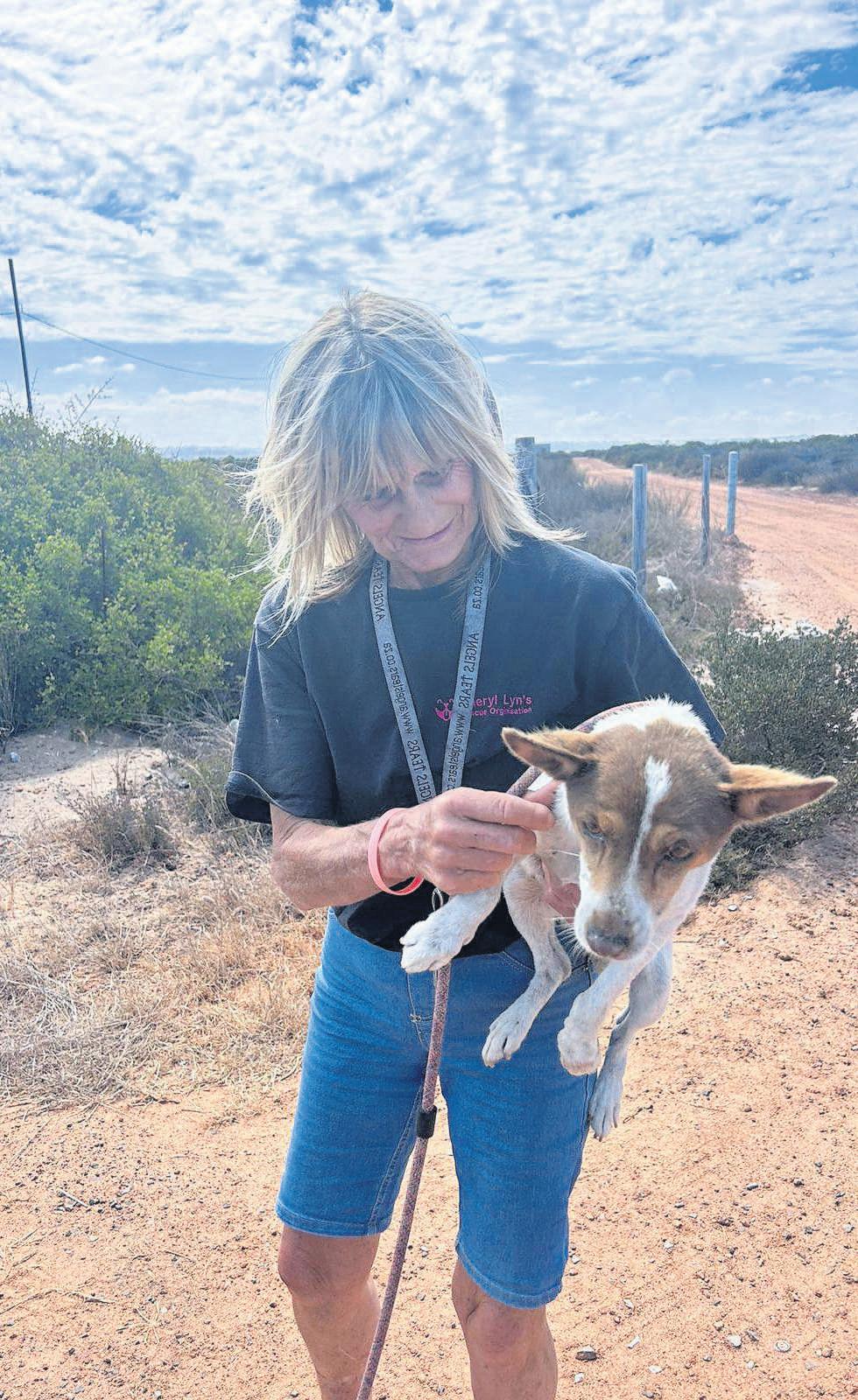
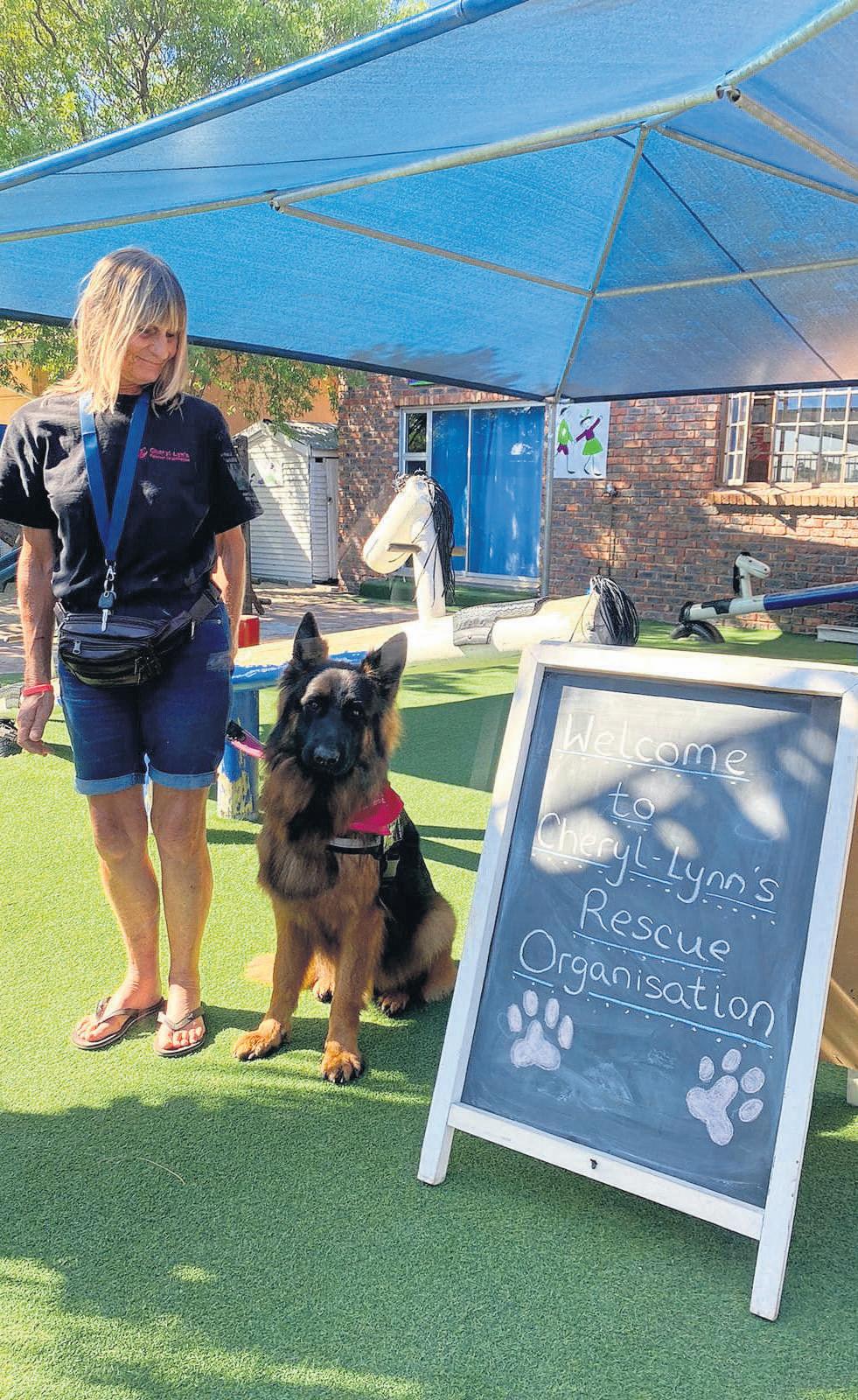
After years of rescuinganimals in need, Cheryl-Lyn’s Rescue Organisation (CRO) now faceslosing its sanctuaryasthe landitoccupiesisset to be sold CRO, founded by Cheryl-Lyn Potgieter, has been operating since 2015, rescuing, rehabilitating and rehoming abused, neglected and abandoned animals across areasincluding Melkbosstrand, Table View, Milnerton and surrounding communities.
Now, with the Cape Farmsproperty it occupies going on themarket, the organisationisurgently appealing for public support to help secure the land and prevent displacement. Currently,the organisation has 160 furry friends in its care
Over the years, CRO has grown from asmall rescue effort into afull-scale sanctuary, providing asafe haven for animals in recovery, those awaiting adoption, and permanent residents who have nowhere else to go. Thefarmhas become centraltoits operations —a place of safety foranimals that have often come from traumatic backgrounds
But with the property’s future uncertain, the organisation has been forced to make a difficultdecision. “With aheavy heart, we havetoclose our doors to newintakes for now,” said Potgieter.“Insidethese fences are already so many lives depending on us —and right now,they need us more than
‘THIS IS NOTGOODBYE FOR EVER ...IT’SJUSTAPAUSE’
ever.”
The rescue currently cares for an overwhelming number of animals,going throughnearly 70kg of dog food everyday. Despitethe emotional andfinancial strain, theteamremains committed to giving eachanimal thebest possible care.
“There’sa phonethatnever stops ringing. Each callisalife that needs saving,” Potgieter said. “We’ve always said yes —even when it was hard, evenwhen we didn’t knowwhere the next bag of food would comefrom. But nowwehave to pauseand focusonthe animals already in ourcare.”
In abid tosecuretheir future, CRO haslaunched an urgent crowdfunding campaign to raise funds to purchasethe farm and continue their work. “Thisis notgoodbye forever… it’s just apause,” Potgieter added. “A pause while we fight fortheir future. Apause while we hope fora miracle —a new piece of land, anew beginning, aplacewhere they will always be safe.”
. Theorganisationiscalling on thepublic to support theirefforts, whether through donations,adoptions,orspreading awareness. Visithttps://www.backabuddy.co.za/ campaign/help-raise-funds-for-the-purchaseof-farmland to donate.
Humansand four-legged friends are invited to struttheir stuff at the eighth annual Pawsonthe Promenade —a dog walk fundraiser by the Mdzananda Animal Clinic and Shelter, Khayelitsha, in partnership with Vondi’s Holistic Pet Nutrition
The dog walk is taking place on Sunday 12 April at 09:00. Starting at the Mouille Point lighthouse, the 5kmroute will extend to theSea Point swimmingpool and back. Shorter turnaroundpoints for old, tired and injuredpets (orhumans) will also be available.
“Our 2025 Pawsonthe Promenade was agreat successwith an attendance of 295 dogs,” says Marcelle du Plessis, spokespersonand event organiser.
URGENTFUNDINGNEEDED
The Mdzananda Animal Clinic and Shelter is an NPO animal clinic in Khayelitshaservinganaverage of 22 000 animals per year through consultations, hospitalisation, general and orthopaedic surgeries, continuous sterilisations, mobile clinics, an animal ambulance and homeless pet shelter. “Sadly we recently received the news that our main funderwill not be renewing any grants in South Africa next year. This means a loss of R250 000 per month. We need to findreplacement funding and encourage everyonetojoin Paws on the Promenade to help with this,” says Du Plessis.
Expect to see dogs of all shapes and sizes. “People get very creative, dressing themselvesand their dogs up in costumes,” says Du Plessis. There will be dalmatians in tutus, dachshunds in hot dog outfits and pomeranians with bow ties.
All pet owners are encouraged to dress up in adog outfit or to wear something
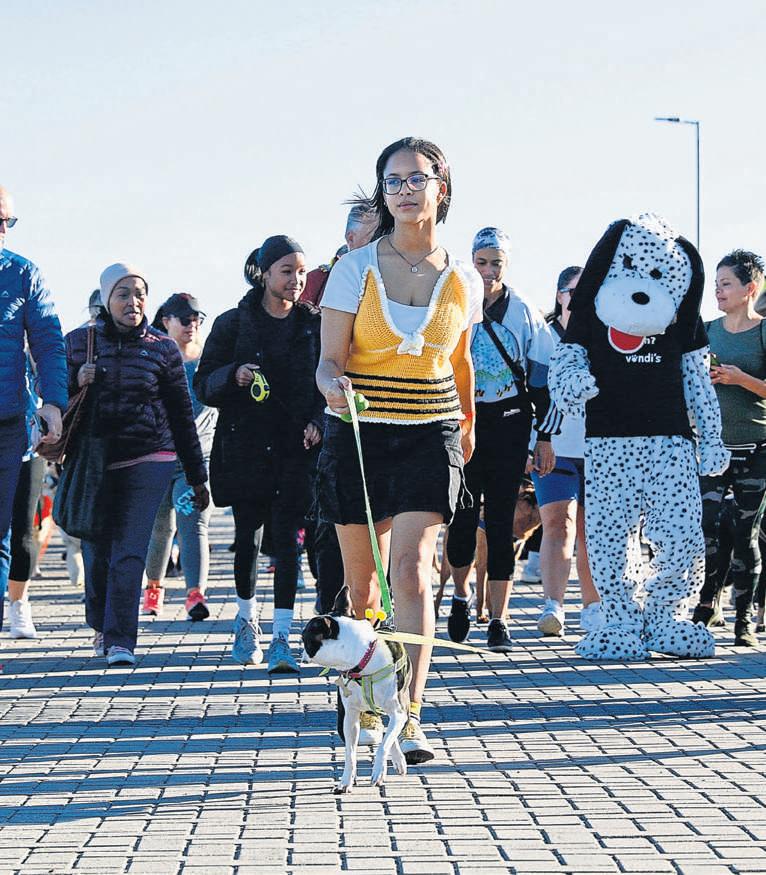
orange, the Mdzananda Animal Clinic brand colour.
“For the pastseven years Vondi’s has partnered with Mdzananda in making this event possible. It is one of our highlights of the year,” says Cindy Jacobson, manager of Vondi’s Holistic PetNutrition.
Everyone is invited —humans without four-legged friends are welcome too. Tickets cost R50per person, R50per dog and R25for children under 12. These are available from Quicket or on the day from 08:30. Raffle prizes, product sales, delicious coffee, food and crafts will entertainyou on the day. Thefirst 100 dogs to arrive will also receive afree goodie bag. Asmall number of homeless dogs will be available to “rent for awalk on the day. . Contact marcelle@mdzananda.co.zatobook adog.For more informationvisit www.mdzananda.co.za.

Easter Sunday usually promises apeaceful morning, chocolatey treats, and perhaps a few family traditions. This year, Idecided to take aleisurely walk along the beach with my three-year-old, expecting to enjoy the cool weather and maybe spotsome earlysigns of spring.What Ididn’t expect was thelittered landscapethat greeted us. Chocolate wrappers, foil fromEaster treats,and colourful plasticpackaging were scatteredacross the sand, remnants of Easter celebrations gone awry. My little one, blissfully unaware of the environmental implications, sawa treasure troveofshiny wrappers and declared it an Easter egg hunt ofhis own. With joy and curiosity, he picked up wrapper after wrapper, giggling at the colourful “finds” along the shoreline. I, on the other hand, was confronted with the stark reality: what should havebeen abeautiful walk along aclean beach had turned into amini clean-up mission. Theirony is striking. Easter chocolates and treats are far from cheapthesedays, yetpeople seem to treat their packaging as disposable. Foil, plastic, and paper wrappers—materials thatcould be recycled or at least disposedofresponsibly —end up scattered across public spaces.

Verwysendna"Brandstof netgemors by verkeersligte" op verlede week se brieweblad.
Ekmoet saamstemmet Anti Robot,want jare gelede toeeknog ‘n jongman was, is pypies by verkeersligte onderdie padgelê, watdie verkeersvloei gemonitor het
Indien ek as ‘n bestuurder by ‘n verkeerslig sou
Theimpact of holiday waste goes beyond aesthetic displeasure —plasticpackaging, smallwrappers, and colourful trinkets can pose real dangerstowildlife. Birds, fish, and marine mammals may mistake small piecesoffoil or plastic for food, resulting in injury, illness, or even death
Butall is not lost. The mini clean-up I conducted with my three-year-old turned out to be an unexpected teaching moment.
As we picked up the wrappers, Iexplained the importance of “putting things in the bin”
It was asmall but tangible reminder that responsible habitscan be taught at any age —and that even tiny handscan make abig difference.
So, how can we all celebrate Easter —or any holiday —more responsibly? First, plan ahead. Make sure there’s awaste disposalplan for any treats or packaging you bring along. Second, consider reusable or eco-friendly alternatives: chocolate eggs in cardboard boxes, compostable wrappers, or even DIY treats in paper bags that won’t linger in the environment. Third, set an example. Children learn best by watching. If they see adultspicking up afterthemselves, they’re farmorelikely to adoptthese habits themselves.
It’s also worth encouraginglocal businesses andevent organisers to promote responsible wastepractices.From providing recycling bins at public events to using sustainable packaging, collective effort can significantly reduce the amount of litter left behind afterfestivities
As Iwatched my little one carefully collect shiny wrappers, Icouldn’thelp but think: if every family took even a few minutes to be mindful about their waste, our public spaces would reflect the joy of the holiday, not the carelessness of leftover packaging. Easter is meant to be acelebration, not an environmental burden. And if we model responsible behaviour for the next generation, perhaps future walks along the beach will be filled withchocolate treatsinour hands, not scattered foilatour feet
Next year, Iplan to bring along asmall bagand gloves, ready for any “Easter treasure” that finds its way to the sand And maybe, just maybe, more peoplewill start thinkingtwice before letting their holiday celebrations contribute to litter. After all,enjoying chocolate shouldn’t come at the cost of our beaches, wildlife, or community spaces.
–KAILIN DANIELS
komendaar wasgeen ander voertuie nie,het die lig outomaties oorgeskakel dat onskon ry.Deesdae is daar nie meer vanhierdie pypies by nuwekruisings te sien nie.Hier in Eversdalwegstaan onslangtye en wag, en eers ná vyfminutekan ons weer ry.Wat ‘n mors vantyd!
MICHIEL LAUBSCHER,Stellenberg
Iamwriting to express my deep frustration at the trafficchaos that unfolded acrossthe city overthe recent Easter weekend. Whilethe holidayperiod is always busy, this year’s gridlock wasnothingshort of alarming.
From theN1 and R300 to smaller arterial roads, drivers facedhours of unnecessarydelays, confusion,and in some cases, dangerous conditions.
It is clearthat the combination of increasedholiday travel,wet weather,and impatientdrivers created aperfect storm. Yet, much of this couldhavebeen mitigated withbetterplanning andcoordination from trafficauthorities. Road users were left stranded in long queues, with emergencyvehicles struggling to navigate congested routes.Instancesofreckless overtaking, speeding, andlane-hoppingadded to the anxiety, putting everyone at risk.
Iwitnessedfirsthandthe sheer frustration of familiestrying to reach their destinations. Parents with young children, elderlypassengers, andeventhose on publictransportwereforcedtoendure long, stressful
delays. It wasparticularlyconcerning to seedrivers ignoringbasic road rules,asthoughtheir personal schedulesjustified putting others in danger
WhileIappreciatethe efforts of ourtrafficofficers androadsafetyteams, it is evident that more proactivemeasuresare needed. Bettertrafficflow management,clearer signage,and timelypublic announcements couldprevent such gridlockinthe future. Furthermore, public education campaigns on safe driving during peak holidayperiods arecrucial
Ialsourgelocal authorities to consider temporary measures formajor holidayweekends, such as designated lanesfor long-distance travelers, improved trafficlightcoordination, andactivemonitoring of accident hotspots. Thesesteps coulddramatically reduce congestion andprevent accidents.
As residents, we allhavearoletoplayinresponsibledriving, but theauthorities must take the lead in makingour roads saferand moremanageableduring peak periods
FRUSTRATED,E-mail
As the rainyseasonsetsin, so toodoes what many residents have come to dread—potholeseason. Across our neighbourhoods, roads that were already under strain arenow rapidlydeteriorating, posing risksnot onlytovehicles but to the safety of all. Potholes aremorethanjust an inconvenience. They damage tyres, rims,and suspensions, placing an added financialburden on motorists who arealready grappling with rising living costs. Forcyclists andmotorcyclists, theypresent an even greaterdanger, increasing the likelihood of accidents andinjuries.
Pedestrians arenot spared either,often forced to navigatefloodedorcrumbling pathways Whileweather conditions certainly play arole, the recurrenceand worsening of potholes point to deeper issues around road maintenanceand timelyintervention.
It is crucialthatauthoritiesprioritiseproactive maintenancerather than reactiverepairs.Regular inspections, durablematerials, andswift responses to reported damage cangoalongway in preventing smallissues from becomingmajor hazards. Residents, too, have aroletoplaybyreporting potholes anddriving cautiously, especially during wet conditions when thesehazards areharder to spot. If we aretonavigatethis season safely,a collectiveeffort is needed to ensureour roads remainreliable, resilient, andsafefor everyone
GREGORYHILL, E-mail
Iamaregular customer at various shopsin Northumberland Street,Bellville.ThismorningIwent on arun to buy stock forour Easter weekendgetaway
Ientered afew shopsatthe entrance of this iconic bargainstreetand washit with ahorriblesmellof death and rotten meat
Ienquired at afew shopsregarding this smellasit washeavilyhanging in theair.I wasinformed thatit wasdiscarded meat from awarehouse.
Iwas shocked. Icannotthink that this is legalor that theyare disposing of this wasteina proper man-
ner. Itoldthemtheyshouldlog acomplaintwith the City of Cape Town andthe health department.They replied that theyhavedonethismultipletimes and nothing happened.
It wasevenmoreshockingthat practices like this areevenallowed. Iwonder what other sicknesses, pests andpollution arehappening with the City's unwillingness to act
Letmejustinform youthatthe business surroundingthemare taxpayers, customers visiting thesestores aretaxpayers andabove all, keep this in mind at the
approaching election, we arevoters. If the CityofCape Town is notinterested in the health andsafetyofit's citizens, voters andtaxpayers please letusknow. Or is it acasethatsomeonehas to become very illorworse before action gets taken?
Iamsorryifthis letter comesacrossasharsh but it shouldbe, it is your responsibilitytoallow people of the CityofCape Town to breathe cleanair,besafe when shopping andnot at riskofpollution anddisease that cancome from this.
JACQUES, Bellville
plahom meer om politici met graaf op foto’s te sien,as‘nskoolhoof
Metverwysingnadie briefvan “LESER” op 1April pladit my nie soveel dat 'n skoolhoof op sportfoto's verskynsonder dathybetrokkeisbydie afrigtingnie Ditpla my meer dat die burgemeester en ook sommigeburgemeesterskomiteelede met 'n graaf of 'n verfkwasindie hand op 'n foto verskyn,terwyl die werkersvir homstaan en kyk. Hul funksie is veel eerder om toetesiendat die werkers die werk reg, betydsen bevredigend voltooi.
Hy salbaie meer waarde toevoegdeur inspeksies te doen vandie gehaltevan werk, waar die Stad van‘n kontrakteur gebruik maak vir die herstel vanbv. plaveisel, maar geen vorigeondervinding vanplaveiwerkhet nie.
Daar word geroem op die hoeveelheid “werksgeleenthede”wat geskep word,maar in die praktyklyk dit soos “rondstaangeleenthede”. ‘n Mens sien dikwels hoedaar totagt mense,insluitend die bestuurder van die voertuig, opdaagomeen stopteken op te rig. Ek het dit al persoonlikervaar waar hulle twee stoptekens moesplant en nadat die eersteeen geplantis, hulle wouoppak om môreterug te komvir die tweede een. Onskyk uit vir ‘n foto vandie burgemeester waar hy die belastingbetalersinlig dat die kontrakteur die werk op eie kostemoetoordoen. NOG ‘N LESER,E-pos
LAURENO’CONNOR-MAY LAUREN.OCONNOR-MAY@NOVUSMEDIA.CO.ZA
“The sun is your petrol?” These are thewords of astunned Botswanan man as he gaped open-mouthed at asolar-powered electric bike.
“You don’t need oil, you don’tneed petrol,” he sayswhen asked if he would like the bike to be available in hiscountry. “Make aplan, Sir Stephan,” he pleads in episode six of an online documentary series titled Recharging Hope.
“Hopefully, we will,” replies Dr Stephan Lacock, aresearcher specialising in electric mobility at Stellenbosch University. Lacock was one ofa team of researchers who drovea groundbreaking 6 200-kilometre journey from Kenya to South Africa, using only solar power, creating an online documentaryseriesand breaking an unofficial world record along the way. The Kenyan-manufacturedRoamAir motorcyclesmadethe entire trip withouta single breakdown or grid charge.
Long beforethe heftypetrol price increase was on all South African’s minds, Lacock’s journey started when he and Prof Marthinus Booysen, director ofthe ElectricMobility Lab at Stellenbosch University had afunny idea.
“I’m specialisinginelectricmobility for the public transportation system ofsubSaharan Africa. We were doing research on taxisand Ipresented my work in Kenya. Imet acompany called Roam. They arethe largest electricmotorcycle manufacturer on theAfricancontinent. AndIwas absolutely blown away with whatthey’re doing and thought to myself, ‘why aren’t we doing this in South Africa?’” Lacock said. “I came back and we started formingaresearch agreement with Roam.”
Roam donated two Roam Air bikes,to the university for its research but the team hit asnag trying to getthem to South Africa.
“It got down to apoint wherewejust couldn’t ship the bikes to South Africa
It wasvery difficult,” Lacock said. “We were sitting in awimpy in Pretoria one day, he (Booysen)said, ‘there hastobea way’ andItold him,‘Well, there is this onecrazy ideaand it’stodrive down the motorcycles. He juststarted laughing and Istarted laughing andina month’s time we basically organised the entire trip.”
Once underway the projecttook on new proportions.
Booysensaid: “While we were doingthis, we realised that the project is giving us an opportunity to demonstrate something thatwe’ve been talking aboutfor avery long time. It gave us the opportunityto show thatmicromobilityinAfrica can be electric, it can be local anditcan be green.”
He adds that there are still toomany barriers to South Africa embracing greener transport.
“Ithink we havesomanybarriers and it’s mostlybecauseoflack of political will. We have leaders who are notreally pushing hard enoughfor us to transform ourtransport sector.
“Asyou can seenow with the price of petrol, we are completely dependent on the importsof fuel.”
The designer of thebike, Masa Kituyi, who also wentalong for the ride, agrees.
“It’s easier to buyaGerman car and bring it to South Africa than it is to buy aKenyan-made motorcycle,” said Kituyi, who is the Micro Mobility Product Owner at Roam.
“That kindofpolicy needs to change,”he saysin the documentary.
Booysenadded: “Wehave leaders who arenot really pushing hard enough for us to transform ourtransport sector.”
He pointed outthat while more countries aremoving onto greener fuels, South Africa hasn’t followedsuit.
“We only produce petrol anddiesel vehicles andweexport all of those,most of thosemarkets are goingtodry up. That is approximately 450 000 jobs that are at risk,” he said. “Wedesperately need to convert to electric very soon to protect

During their South African leg,the team brokeanunofficial worldrecordbycovering 1009,6 kilometres in a single dayonanelectric motorcycle.

thosejobs.”
He cited an electric vehicle project 20 years ago thatwas killed by political interferenceand red tape andcalled for greater African collaboration to overcome sharedchallenges, criticising borders “drawn by European hands”that separate countries with common problems and solutions
“Electric mobility in East Africa is actually exploding,” Lacock adds. “They are by far aheadofSouth Africa. For instance,Roam alone hasover 5000 motorcyclesonthe road of Nairobi.”
DOCUMENTARY
Duringtheir South African leg, the team broke an unofficial world record by covering 1009,6kilometres in asingle day on an electric motorcycle
They capturedthe journey on camera and stitcheditinto aseven-part documentary to highlight southern Africa’s electric mobilitydifficulties and
the solutions that can exist.
“Through doing this, we also realised that we could inspire young children and future engineers in our region to think bigger and to think towards really providing aclean and sustainable mode of transport to communities.
“It completely morphed intothisbig thing where we did something special and we were fortunate enough to capture the whole thing and to make anice documentary out of it.”
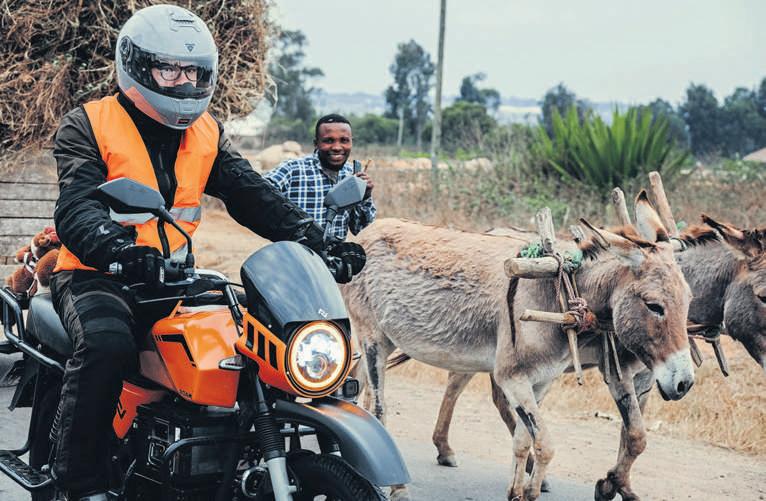
They capturedthe journeyoncameraand stitched it intoaseven-partdocumentarytohighlight southern Africa’selectric mobilitydifficultiesand the solutions that canexist.


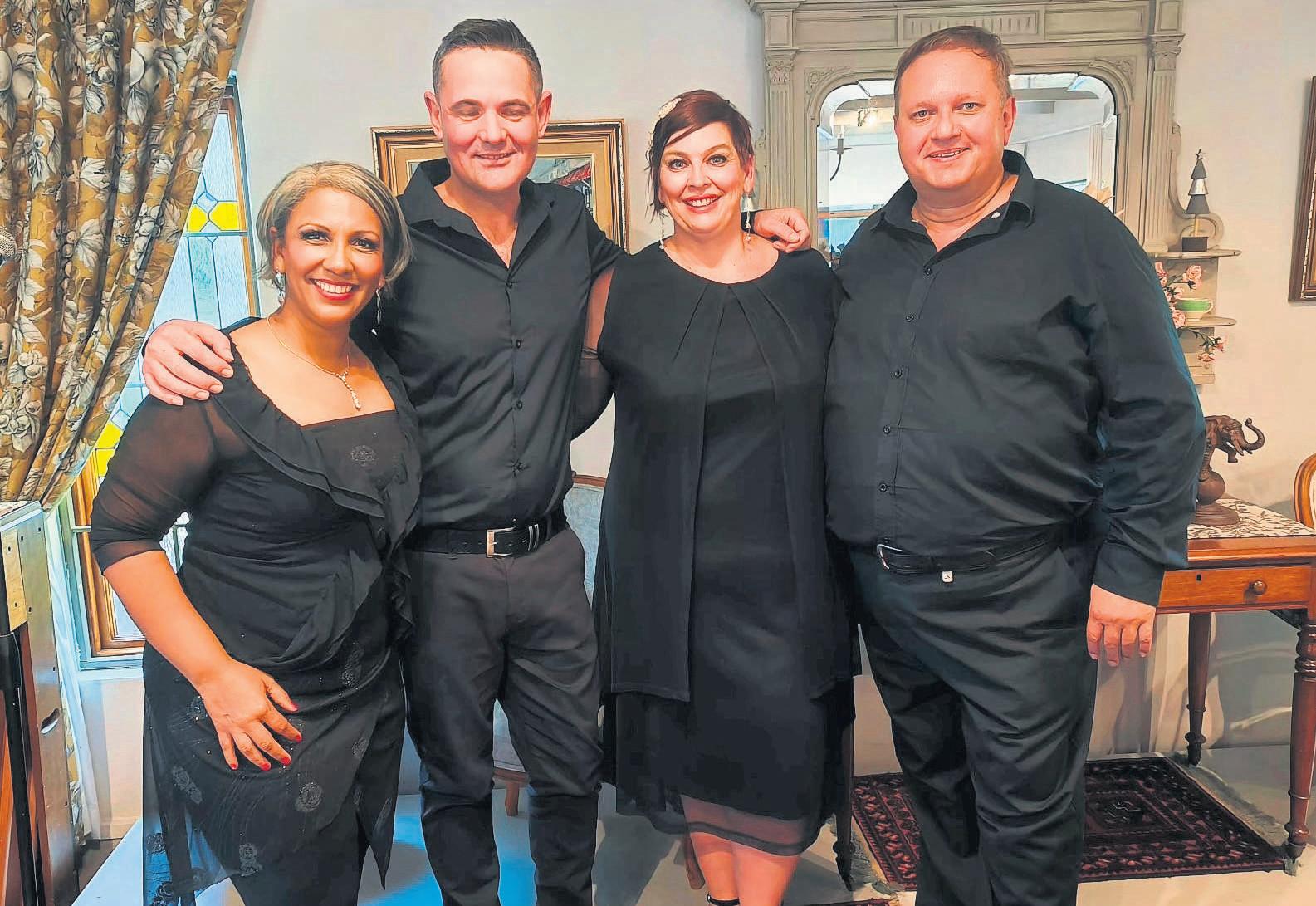
The ever-popular musical groupSome Friends willonceagain enchantaudiences whenthey return to VillaPascalGuesthouse at 28 Van der Westhuizen Avenue in Durbanville on Sunday 19 Aprilwithanother unforgettableafternoonof sentimental and nostalgic songsfromthe World WarIIera
One of the area’s most popular musicalacts, Some Friends, bringsa unique blendoftalentand passion that captivates audiences of allages. This performancewillhighlightthe timeless melodies and heartfelt lyrics whilecreating awarm andwelcoming atmosphere.
Featuring“As Time Goes By”and manyother jazz andswing songs, SomeFriends is amust see. TicketscostR250per person. Thedoorsopen at 15:00 andthe concertstartspromptlyat16:00 VillaPascaldoes not sell alcohol andguests arewelcome to bring theirown. Picnic hampersor basketsare not allowed. Coffee or teaand cake will be available. Seating is limitedand advancebooking is recommended.
. Contact Eugene on 082569 4147 or villapascalguesthouse@gmail.comtobook.







Young jazz musiciansacrossthe Western Cape can nowapply to showcase theirtalents at this year’s YouthJazzSeries,set to take placeinJune at Artscape TheatreinCape Town.
Thetwo-dayevent willfeatureaspiringjazzsoloists performingonFriday12June, followedbyschool jazz bands taking thestage on Saturday 13 June
Originally launched in 2003 as theYouth Jazz Festival, theprogramme hasexpandedsignificantlyoverthe yearstomeetgrowing interest and accommodatethe exceptional talent of young local musicians. Nowknown as theYouth Jazz Series,the project combines performance opportunities with valuablemasterclass programmes ledbyindustry professionals.
“Participants become hubs of sustainablelearningastheyare givena platform to voicetheir own creativity to acaptive audiencewhiletheyalsoget an opportunitytobroadentheir horisons by experiencing themagic of live stage, lights, sound andan audience,”organiserssaid.
Aspiring musicians and instrumentalists must
submit audition videosbyFriday17April. Applicants must be 27 yearsold or younger in theyearofparticipation andreside in theWestern Cape
Theprogramme encourages bothschool learners andinformal music studentstoaudition. Music literacy is not essential, with candidates who play by earwelcome to apply.
Each applicantmust submit amaximum of two audition videos, each lasting3-4 minutes, featuring twojazzsongsorstandards.
Selected candidates maybecontactedfor live auditions with theauditionpanel,withamaximum of 15 minutes allocatedper candidate.
Successful applicants must be availablefor masterclasses andall required rehearsals between May andJune.Thesesessions willbearrangedbetween candidates andmentors following theaudition process.
. Contact slu@artscape.co.zafor an entry form,thensubmit your auditionvideo along withthe entryform(which must include full name andsurname).

. Pretty Woman:The Musical is nowonatArtscape Theatreuntil 19 April.Terrific Tuesdays and Bring your Bestieoffersalsoavailable.Book ticketsat Ticketmaster.Contactsales@showtime.co.za for groupbookings.
. Thecultmusical TheRockyHorror Show is at Theatreonthe BayinCamps Bayfrom7 April until31 May. Theproduction is ratedPG16. Ticketsstart from R200. BookatWebticketsorthe theatre’s boxoffice on 021438 3300
. FatmantreeopWoensdag8April om 20:30by Heroes Brackenfellop. Diedeuremaak18:00 oop. Kaartjieskos R140 totR180 by www.heroeslive.net
. AlbertFrost en Gerald ClarktreeopDonderdag 9April om 20:30byDie Boer-teaterrestaurant op Kaartjieskos R230. Bespreekbywww.dieboer.com of by 021979 1911.
. Autumn Symphonies at the CityHallwithBritish conductor Nicholas ChalmersisonThursday9April at 19:30. TicketsfromR190atWebtickets.
about family,abandonment and the difficultroad to forgiveness. Theplayexploresself-worth,broken bondsand whether some wounds ever trulyheal, even when love returns. TicketsatWebtickets.
. mAnJE!MaNJe (anepic) runs at TheBaxter Flipside from 17 to 25 April. Astrikingand imaginative production thatdraws on the storyofDaedalustoreflect on thehuman conditioninthe ageofthe machine, bigdataand climate catastrophe.R120early-bird special forperformances from 17 to 21 April. Ticketsat Webtickets.
. ConSpirito PhilharmoniccelebratesMozart’s270th birthanniversarywithanAll-Mozart Concert on Saturday18April at 19:30 at the DutchReformed Church Uitsig, Ridgeworth. TicketscostR220atWebtickets.
. Cape WelshChoir presents Whywesing —Generationsinharmony, aconcert collaborationwithlearners from CurroCenturyCity, DF Academy, Milnerton High School and St Cyprian’sonSunday 19 April at 15:00 in the Hugo Lambrechts Auditorium in Parow. TicketscostR160 at Quicket

. Krismisvan Map Jacobs is van9 tot24April in die Kunstekaap-teater te sien. Die dramaspeel af ná die gedwongeverskuiwingsuit Kaapstad na dieKaapse Vlakte.Kaartjies kosR80 by Webtickets.

. Jaykom tree op Vrydag 10 April om 20:00 by KapstadtBrauhaus Durbanvilleop. Diedeure maak 18:00 oop. KaartjiesisbeskikbaarbyQuicket
. UK electronicpioneersBasement Jaxx will headline the Kiss Kiss festivaltaking placeatthe Castleof Good Hope on Saturday 11 April from 12:00. Ticketsat Webtickets.
. Passion ChoralFest,featuring fivechoirs is on Sunday12April at 16:00 at the Hugo Lambrechts Auditorium in Parow. Ticketsavailable at www. choirfest.co.za
. In Harmony withthe Tygerberg Children’sChoir is on Sunday12April at 15:00 at the Cape Town City Hall.Withseveral guestschool choirs. Ticketsfrom R120 to R140 at Webtickets.
. YouShouldGoIn is at TheBaxter’sMasambe Theatrefrom16to25April.A moving newdrama
. Hatched Ensemble is at TheBaxter’s PamGolding TheatreonWednesday29and Thursday30April. This choreographic piecefeatures 10 ballet-trained dancers from different ethnic backgrounds and interrogatestradition, identityand gender norms. Tickets at Webtickets.
. Die Suidoosterfees word van29April tot3Mei by dieKunstekaap-teater,Media24-gebou en die Kaapstad-burgersentrumaangebied. Besoek www. suidoosterfees.comvir meer inligting. Krykaartjies by Webtickets.
. TheHuman League and Blancmangeare live at the Grand Arena,GrandWest on Tuesday12May at 19:00 TicketsatWebtickets.
. Cape Town OperapresentsGeorges Bizet’s Carmen, astory of passion, freedom and jealousyatArtscape from 19 to 31 May. TicketsfromR180 at Webtickets. . Boyz II Men LiveinSouthAfricaTour is at the Grand Arena,GrandWest on Wednesday27May at 18:00 TicketsfromR750atWebtickets.









AANDAG ALMAL kontantvir enige huis-houdelike goed klere, skoene, beddegoed, gordyne, speelgoed, oudhede, juweliersware -goud, breekgoed, potte, elektroniese ware MEUBELS yskaste, beddens, Sitkamerstelle, tv's. (en baie meer) Johan074 474 4275
Ek koop kombuisware, linne, ornamente, speelgoed,juweliersware, ou tydse goed. Anita0829638877
Ek koop kombuisware, linne, ornamente, speelgoed,juweliersware, ou tydse goed Anita0829638877
Secondhand furniture and appliances working or not wanted.Cash offer 084 440 8140
AANDAG ALMAL Werner soek dringend al julle 2de handse meubels. Betaal kontant. ALLE AREAS 083565 1685 078 1501702
STEVE'SSATELLITE SERVICES DSTV &antennae installation (HDPVR), extra points, home theatre&CCTV systems. CONTACT: 073161 0655 stevesatservices@gmail.com
ALLAPPLIANCES REPAIREDONSITE We repair appliances Fridges,stoves, washing machines with guaranteeand regas fromR180. Cathy/Francois 079 838 1851 Allareas

Afsny,snoeivanbome skoonmaak vantuine Herman 0833681655 FOR
EK langspeelplate.


L&HMaintenance Vir alle verfwerk, kleinbou projekte,daklekke, lê van houtvloere, loodgieters-werk, opsit van droëmuur konstruksies & knottypineplafonne.Opsit van JOJO tenkeen installeer van gryswater stelsel. Gratiskwotasie 072125 1288





Alle plaveisel vanaf R250
S OPPORTUNITIES 2415
EKSTRAGELD!












University of the Western Cape (UWC) student Joshua Jantjieshas madehis mark after winning the 66 kg junior division at theSouthAfrican Powerlifting National Championships in March, setting multiple junior nationalrecords in the process.
The 19-year-old first-year Nursing Science student lifted a202,5 kg squat and a142,5 kg bench press, achieving atotal of 565kgtosecure gold. Hisperformance also earned him qualification forthe Junior World Championships in SunCity Thevictory was built on momentum from aprevious competition,where Jantjies delivered astrong performance thatsignalled his rapid rise inthe sport. That experiencelaid thefoundationfor his record-breakingshowing at nationals.
“Why be good, if you could be the best?” Jantjiessaid.
He began his sporting journey in rugby before turning to powerlifting, thanks to

sibling rivalry.
“My brotheractually started powerlifting and, as youwill findwith brothers,one always tries to be stronger than the other. So Ijoined as well. That’s howthe journey began.”
After relocating from Gqeberha to Cape Town Jantjies began formal training under coachRebecca Engelbrecht, which he described as aturning point in his development.
“Joshua had recently movedand mentioned he was looking for acoach,” Engelbrecht said. “I invited him to train withme. Most people at his level havehad

years of professional coaching. Joshua hadn’tevenfollowedaproper programme before that. Once we started everything just took off.”
Shesaid his disciplined mindset set him
apart.
“He is incredibly driven; if he keeps going like thishecan go really far. He has the potential to be one of the best powerlifters SouthAfrica has ever seen.
Behind the scenes his father, Shawn Jantjies, has played akey role in supporting his student son’sjourney.
“(My father) covers all my expenses, accompanies me to most tournaments and even cooks for me throughout my training blocks,” Jantjies said.
Balancing the demands of nursingdegree study with elite-level training, he continues to show dedication both academically and athletically.
With anational title, record-breaking lifts and qualification for the Junior World Championships he now prepares to represent SouthAfrica on the international stage from 29 August to 7 September 2026 and continued recordbreaking strong performances.