

Tuesday, 2June2026

Tuesday, 2June2026

KAYLYNNEBANTOM KAYLYNNE.BANTOM@NOVUSMEDIA.CO.ZA
Far toomanychildreninSouth Africa continue to be exposedtoabuse, crimeand violence,saysPatricSolomons,directorofchild-rightsorganisation Molo Songololo.
HiscommentscomeasNationalChild Protection week concludesonFriday5 June.The week is observed annually to shinea spotlighton children’s rights andthe urgent need to protect everychild from abuse, neglectand exploitation,asenshrined in SouthAfrica’sConstitution andthe Children’s Act.
This year’s themeis“Workingtogetherin ending violence againstchildren”
Thecampaignisspearheaded by theNational Department of Social Developmentinpartnership with keygovernmentdepartments andcivil societyorganisations providingchild protection services
Solomons tells People’s Post:“We need everyone to invest in childsafetyand protection becausethatinvestmentcan help theirsurvival. Andcan increase theirfutureprospects.We need to take care of children andprotect them.” He says that whileattempts have been made to strengthen childprotectioninterventions at national level, theturnaroundtimefor addressingcases at localcommunity levelremains unclearfor many children
Solomons says Molo Songololocontinues to work with keyrole-playersand is constantly exploringwaystoimprove itsimpactand better secure thesafetyofchildren.
Children-rightsactivistLucinda Evansimplores communities,parents andgovernmentto do more to guardchildren.
Thefounder of PhilisaYoung MindsAcademy, an early-childhood development(ECD) centre






Thousands of Western Cape parentswho appliedfor GradeR,1 and 8placementsfor next year have untilMonday15Juneto confirm aschool
TheWestern Cape Department of Education(WCED)releasedthe outcomes of theon-time admissionsapplications on Thursday 28 May. Thedepartmenturged families nottopanic if they do not receiveanimmediate offer
DavidMaynier,Ministerfor Educationinthe WesternCape, said schoolsdetermine theoutcome of admissionsbased on theiradmissionspolicies.
“Atthe pointwhenoutcomesare firstreleased, asubstantial number of learners will have received multiple offers. Forexample,last year more than 40 000 learners hadmultiplesuccessful outcomes at variousschoolsand were ‘double parked’onthe system.”
Mayniersaidwiththousands of learners holdingmultipleoffersat once theadmissionsprocess was expected to shiftsignificantly in theweeksahead as spaces beginto open up across schools.
“Itisimportant to note that more than 46 000 learners received two or more offers, andastheir parents confirm theirchoiceofschool more than 64 000 places will stillopen up to be offered to otherparents.”
WHATTHISMEANSFORPARENTS
Maynierstressedthatthe admissionsprocess continues well beyond theinitial releaseof results, with significant movement in placements expected in thedays andweeks that follow.
He said many learners whoare notplacedimmediatelywillbe accommodatedlater as spaces become available, with schools contacting parentsdirectlywhen newopeningsoccur.
Parentswho received multiple offers areurged to accept oneschool immediately. This helpsfree-up places forother learners
Parentswhose children have notyet been placed areadvised to constantly engage with theschools they appliedtoand ensure their contactdetails arecorrect
Accordingtothe department,the admission processisstill active, many placements will stillbe finalised. Maynierurged parentsto remain patient, saying thedepartment closelymonitored placements andremainedcommittedtoensuringevery learnerisaccommodated.
He said further communication andsupport wouldbeprovidedto families throughthe remainderof theadmissionsprocess.
On social mediatimelines andinstreetconversations,a phrase hasbecomeshorthand forSouth Africa’s current tension:“Abahambe?Abahlale?”
Should they leave, or should they stay?Itisa question that has gained momentum alongsidethe “March andMarch”protestsin recent weeksinGauteng andnow in Cape Town thepastweekend, wheredemonstrators have called forstricterimmigrationenforcement,tighter border controland, in some cases, theremoval of undocumented migrants.Atthe same time,itsitsuncomfortably against Africa Day, marked on 25 May, whichwas meanttoaffirm unity, solidarity andsharedbelonging across thecontinent.The contradictionisdifficult to ignore
Translated from Zulu “Abahambe?” means“Should they leave?” and“Abahlale?” means“Should they stay?” On thesurface,itisa binary question.Inreality,itreflects amorelayered struggleover belonging, legality,economicpressure andidentityina countrystill shaped by inequality andhistorical displacement
This year’s Africa Daytheme, focusedonwater security and sustainablesanitationunder the AfricanUnion’s Agenda 2063, speaks to along-term vision of shared infrastructure andcollective survival across borders. Howeveronlineand offline, the dominant mood is oftenshaped less by continentalunity andmore by scarcity,frustration andfear.
The“Marchand March” protests have been framed by organisers andsupportersasa response to unemployment,strainedpublic services andcompetition forlimit-
ed opportunities. In communities wherejobsare scarce andservice delivery inconsistent,frustration hasfound avisible target.Migrants,particularlythose without documentation, areoften placed at thecentreofthatanger.Yet even within that anger, distinctions are frequently lost Concerns aboutimmigration policy arenot automatically the same as hostilitytowardforeign nationals. Butinthe speed and heat of public discourse, those linesblureasily. That is where “Abahambeorabahlale” becomes more than aphrase. It becomesa filter throughwhich people sort others into categories of belonging or exclusion.
SouthAfrica’sunemployment crisis,inequalityand uneven access to housingand healthcare arereal pressures. They shapehow people interpretevery additional strain on public systems. However, Idonot thinkmigration is theroot cause of thesestructuralproblems. It is onevisible expression of awider regional realityshapedbydisparity, conflictand uneven development across thecontinent.A recent conversation with my father on Africa Daybrought this into sharper focus. He wished me a“Happy Africa Day, ntombam,”beforeunpackingits meaning. He reminded me that this dayemerged from the liberation era, when Africanstates supported oneanother in struggles againstcolonialism andapartheid That historyisnot symbolic alone; it shaped theideathatAfrican futures areinterconnected,not isolated Former presidentThabo Mbeki hasrepeatedlywarnedthatpoverty across thecontinent remainsdeeply entrenched,a reminder that the promiseofAfrican unitystill exists alongsidepersistenteconomic hardship.His reflection echoes the gapbetween Africa Day’sideals andthe livedrealities that continue
to define much of thecontinent
That conversation made clearthat present-dayrealities nowsit alongside that legacy in uncomfortable ways In SouthAfrica, thegovernment is oftenexperienced notas astabilising forcebut as asource of frustration. Servicedelivery protests,risinglivingcosts and persistent unemployment shape howcommunities respondto anything perceivedasadditional pressure.Migration becomesone of thosepressure points becauseit is visible, immediateand politicallycharged.The question,then, is notonlywho belongs, butwhat belongingmeans in asociety where many alreadyfeel excluded from economic participation. If my observationsserve me right“Abahambeorabahlale” captures that tensionina wayofficial language oftencannot. It is raw, direct and emotionally loaded.But it is also reductive. It flattens acomplex mix of documented migrants,undocumented migrants,refugees,longterm residentsand citizens into a single forced choice
It also raises adeeper question aboutgovernancewhether enforcement alonecan addresswhatis fundamentally an economic and structural challenge. Border controlmay respondto legality,but it does notcreatejobs. Deportationmay signal political action,but it does notresolve failingservicesoreconomicstagnation.Atthe same time,dismissing public frustrationwould miss the point. Theseconcernsare rooted in livedexperience. Theriskliesnot in recognisingthatfrustration,but in howeasilyitcan be redirected into exclusionary narrativesthat harden over time
Thereisanother layertothisconversationthatlives almost entirely online.Morethanjustcreating content, as aMillennial Igoonto social mediatoengage. That is a
worldonits own; aworld fullof voices,opinions, threads, clips, counterarguments andoutrage cycles that move faster than my reflections.
In that space, youare constantly pulledintopositions.You areexpected to declarewhere youstand, to pick asideand respondquickly andvisibly.But if youdonot know whoyou are, andifyou do not standyourground, youcan easily getlostinthe discourseitself. It is notjustabout beinginformed. It is aboutbeing anchored.Without that grounding, everytrend becomespersuasive, everyargument feelsurgentand everycomment sectionstartstofeel like truthrather than noise. Thedangerisnot only misinformation,but fragmentation,the loss of personal clarity in asea of competingcertainty That dynamicmatters here because“Abahambe or abahlale” is notonlya street-level question It is also adigital one. It circulates, sharpens andpolarises in real time.Socialmedia does notmerely reflectpublicopinion;itintensifies it,often stripping away nuance in theprocess.
Africa Day, in contrast,asksfor somethingslower. It asks formemory, contextand an awarenessof shared historiesthatare notalways visibleina scrolling feed SouthAfricanow sits between thesetwo worlds:the immediate pressure of economic hardship andthe longer arcofcontinental connection. Theprotestsrepresent urgency. Africa Dayrepresents intention. Social mediaamplifies both,often withoutdistinction Andinthe middlesitsthe question Abahambe or abahlale?There are no simple answers. Butthere is awarning embedded in howthe question is asked. When societyreduces complexrealities into binaries,itmay feel like clarity.But it oftencomes at thecostof understanding.
KAYLYNNEBANTOM
Abidbya topretailertosecurea new liquor licenceinMaitlandhas been metwithstrongopposition from residentsand safety structures in the area,who arguethatthe community is alreadygrapplingwiththe social harms linked to alcoholabuse andan“oversaturationofliquoroutlets”.
Theapplication, made by Shoprite Liquor,was submittedtothe WesternCapeLiquorAuthority earlylastmonth
AccordingtoCheslyn Steenberg,Ward56 councillor, theapplicationwas rejected at a recent Sub-council15meeting.
Steenberg said theobjection wasbased on concerns over theimpactofalcohol abuseinthe area
“Wehaveenoughliquoroutlets in ourcommunity.I don’tbelieve we need to saturate our community with more liquor outlets.”
He said theapplicationhas intensified growingcalls forthe entire ward to become liquor-free.
“PlaceslikeShopriteshouldremaina place wheregroceries arebeing purchasedand notalcohol. Thepurchasingofalcohol from anyshop contributestothe breakdownofany society.”
TheMaitlandCommunity Policing Forum (CPF)has opposedthe application, saying in a statementthatthere arealready at leastthree liquor-licensedpremiseswithina 100m radius of theretailer’slocation.
“A recent visibility walk by theMaitlandCPF, localneighbourhood watchand metropolice revealed widespread misconceptions around public drinking,withmanypeopleunaware it is illegaland some believingthe park wasmeant foralcohol consumption,”readthe statement.
Graham Daniels, safety andsecuritymember forthe Maitland Ratepayers andResidents Association(MRRA), said theareaisalready “significantly saturated” with liquor outlets.
TheCityofCapeTownhas reacheda significant milestoneinits long-termrestoration of Zeekoevlei,withdredgingworkinthe Storm Baysection nowcompleteafter 10 months of operations
Theproject,which beganinJunelastyear, marked the firstdredgingofthe vlei in 42 years. A floating suctiondredger anda team of 15 personnel startedworkatStorm Bayinthe False BayNatureReserve to remove sediment that hasaccumulatedoverdecades
Sinceoperationsbegan,approximately207 000 cubicmetresofsedimenthavebeen dredgedfromStorm Bay.
Earlierthismonth,the dredgerwas relocated to Home Bay, wherea further 157000 cubic metres of sediment will be removedaspartof thenextphase of theproject
Accordingtothe City,the overalldredging operationisexpectedtobecompleted in early 2027 if allgoesaccordingtoplan.
TheCity’sDeputyMayor andmayco member forspatial planning andenvironment,Eddie Andrews, said theproject formspartofthe City’s commitmenttorestoring andprotecting localvleis
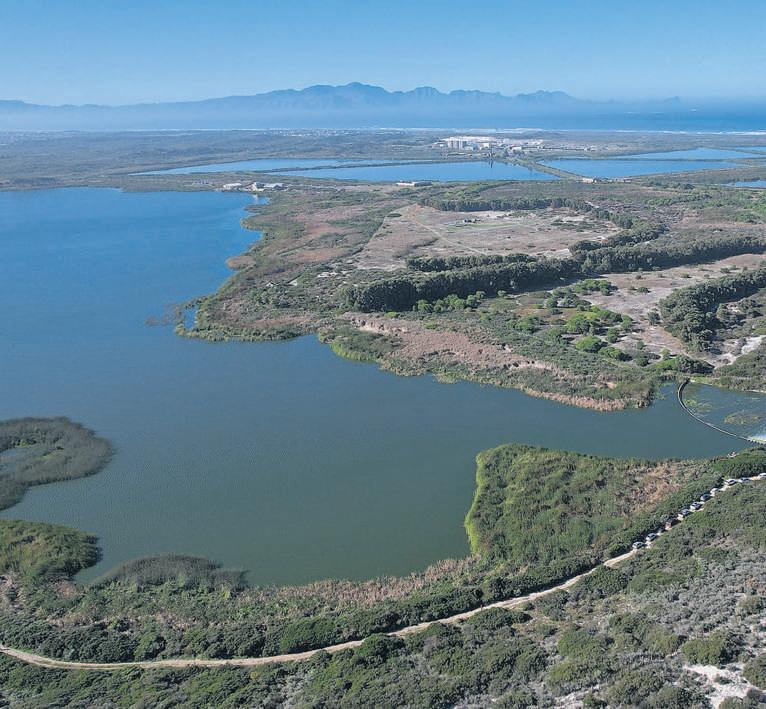
sinceoperations started PHOTO:SUPPLIED


AsCapeTown’sicy winter nights begintobitethose living on thestreetsface some of theharshestconditions. Buta new60-bedSafeSleeping Zone in theCBD aims to offer warmth,dignity andprotection to thecity’smostvulnerable residents.
Theinitiative, acollaboration by Cape Town CentralCityImprovement District (CCID) andthe Haven NightShelter,islaunching in District Sixtoday (2 June).
Tara Gerardy-Bissolati, CCIDSocial Developmentmanager,saysthe Safe SleepingZoneisa four-month pilot projectforming part of theCCID’s Winter ReadinessProgramme that will providetemporary shelterand support forchronically homeless people,who areoften excluded from existing facilities duetoeligibility criteria
“Winterisveryharsh forpeoplelivingonthe streetsastheyare exposed to freezingtemperatures, wetand unsafe conditions
“Theyoften have limitedaccess to suitable shelter. Ouraim with this projectistoimprove qualityoflife andfostera more inclusiveCBD.”
ShaddieValayadum,chief executive officerofthe HavenNight Shelter, says theorganisationhopes to create a“meaningful impact”.
“The shelterhas been designed as low-thresholdsleepingspace or overnightemergency accommodation rather than long-termhousing, providingvulnerableindividuals with protection during winter.”
SIGNIFICANTRELIEFDURINGWINTER
Accordingtothe Haven, thereare an estimated14000 people living on thestreets in thecity, butonlyaround 3800 shelterbedsare available.
At itsDistrictSix facility theorganisation has90bedsavailable.“Winter places significant strain on shelters as demand forwarmbedsand basiccare increases,”saysValayadum,“particularly during storms andperiods of severe weather.
“Bymid-June, whichisonlythe beginning of winter,weoften see
ourcapacityalready exceeding80%
TheSafeSleepingZonewillprovide significant andmuch-needed relief by helpingtoeasecapacityconstraints.”
Tasso Evangelinos, CCIDchief executiveofficer, says theproject has strong potentialfor growth
“While it is atargetedresponseto immediatewinterneeds, ourhopeis that itssuccess will pave theway for expansionintoother partsofthe CBD andbeyond.”
Evangelinossayswhile CCIDSocial Developmentsponsors43bedsat shelters throughout theyear, during winter it increasesthisby45more beds,helping to meet theheightened demand forsafeovernight shelter.
Theemergency shelterwillincrease thetotal bedspace sponsoredbythe CCIDduringwinterto148
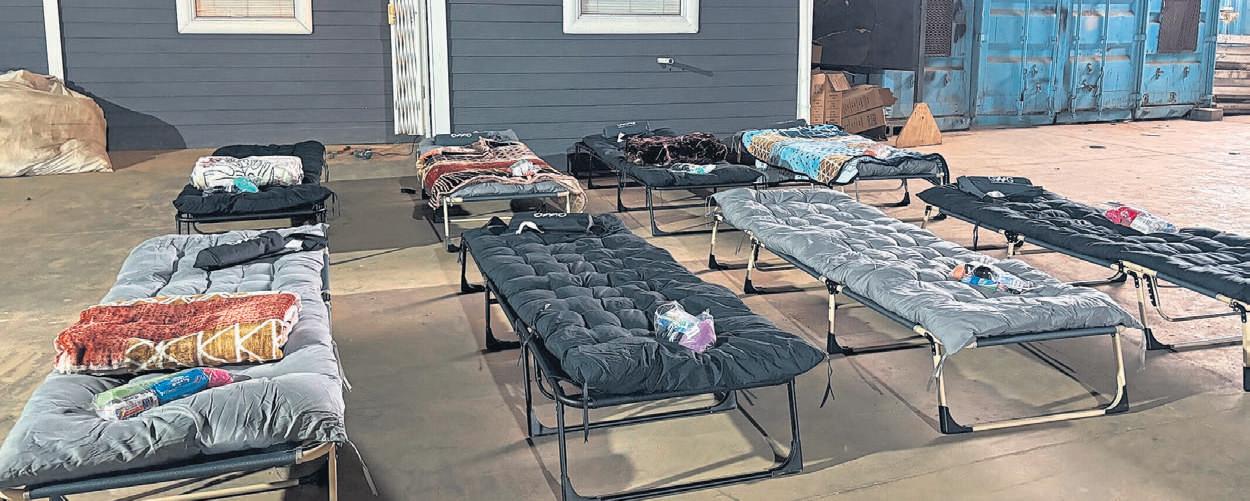
Evangelinossaysaccess to thesite will be managedthrough acontrolled referraland ticket-based system,with people referreddirectlybythe CCID from within its1,6 km²footprint.
Theshelter will open at 19:00at night, with finalentry at 21:30, and residentsexiting thesiteat06:30 the following morning.
AccordingtoEvangelinos,the facilitywillbeequippedwitha maximum of 60 fold-upstretchers, emergency blankets andpillows.Basic nourish-
ment,including ahot drink, will be provide. He says residentswillalso receiveoff-sitemealtokensfor The ServiceDiningRooms, an organisation feedinghomelesspeople. Theshelter will offer secure on-site facilities,including ablutions, storage, CCTVmonitoringand dedicated security personnel.
Evangelinossayscouples will also be accommodated, whiletrained CCIDpeer fieldworkers will provide support services focusedonsafety, mental health andharmreduction


Disney On Icereturns to South Africa this winter school holidaywith Mickey’s Search Party,bringing world-classskating,acrobaticsand Disney magictoCapeTown, Pretoria andDurban.
Join Mickey,Minnieand friends on aspectacular adventurethrough belovedDisneystories,fromFrozen to Moana, Coco andmore.
TheshowskatesintoGrandWest on Friday 10 untilSunday19July, before moving to Durban’s International Convention Centre ArenafromFriday 24 to Sunday 26 July
Disney On Ice’s Mickey’s Search Party features world-classskating, acrobatics andstunts, poweredby amassive touringproductionof15 trucks anda 35 mby18m icerink.
Thereare around 173costumes
Families cannow exploreone of SouthAfrica’smostpowerful historical landmarksfor less, as Robben Island Museum launches itsnew NextGenHeritageFreePass.
Theinitiative, whichwillallow SouthAfrican children underthe ageof15tovisit themuseumfree of charge when accompaniedbya paying adult, will rununtil Friday 30 October.
ASouth Africanadult ticket costs R400, whilethe free entryappliesto onechild perpayingadult.Additional children will paythe standard child rate of R210 each Themuseumsaidthe campaign is aimedatmakingheritageexploration more accessibletofamilieswhile encouragingyoung SouthAfricansto
used during theshow, with costume changesoflessthan30seconds required in some instances.
Tony Feldman, Director of Showtime Management,saidthe largest prop weighs 450kgand theset’s highestpoint towers 11 mupinthe air. Feldmansaidthatthe lighting design uses 221 fixtures,185 of them moveable,and 12 powerful projectors create immersive, magicalworlds. Sound-wise,100 groups of speakers delivera massive 200000 watts of power.
Patronsare askedtonotethatowing to safety regulationseachperson, irrespective of age(includingbabies in arms andchildrenunder 2years old) must have aboughtticket. . Fans areencouraged to book only through ticketmaster.co.za.
engage with thecountry’s historyand democratic journey.
Visitors to theislandcan take part in immersiveguidedtours ledbyformerpolitical prisoners, offering firsthand insightintoone of thecountry’s most significant heritage sites. Accordingtothe museum,the initiativeforms part of itsbroader objective to educatechildrenand promote intergenerationalengagementwith SouthAfrica’slivingheritage. TheNextGen Heritage Free Pass is validfor dailytourslots at 09:00, 11:00 and13:00.
Bookings canbemadethrough RobbenIslandMuseum’sofficial website or directly at theNelsonMandela GatewaytoRobbenIslandatthe V&A Waterfront

























Atotalof13talentedbasketball playerswho representedWestern Province (WP) andSouth African (SA) in variousBasketballcompetitions in thepastwillbeinactionasSAElite from Friday 12 to Sunday 14 June at the Soweto Uprising Basketball Tournament in Gauteng.
Lead by thededicated coachShafiek Allie, who hasmorethan30years experience in basketball, theteamislookingforward to show the otherteams what Capetoniansare made of Thegroup previously represented WP in 2023 in u-15 andin2024inu-17atthe same venuein Gauteng, andatthe SA Championship in Cape Town last year
Alliewitnessed first-hand theprofoundimpact basketball canhaveonyoung livesand he establishedthe SA EliteBasketballTeamatthe American InternationalSchool in Constantia He spentmorethana decade coaching kids andiscurrently theheadcoach of theWPu-17 team
TheSAElite team is oneoftwo teamsfrom Cape Town,the otherteambeing HotShots Basketball team.“Basketball hasbeena lifelong passion forme. Growingup, Ifaced my own challenges,but thegameprovidedmewith opportunitiesI neverthought possible. It taught me discipline,teamworkand resilience,values Istrivetoinstilinmyplayers everyday.This personal journeyfuelledmydesiretocreatea positive spacefor youngathletes, leadingtothe founding of SA Elite,”hesays.
At SA Elitetheir mission is clearand heartfelt. Keep kids off thestreetsand engagedinsports, providingthemwitha constructive outlet.They support theeducation of theathletes, ensuring they achievethe grades necessaryfor university admission.Theyalso mold thebasketball playersintoremarkableyoung menwho can