Nottinghamshire Wild Life
Notes from the Chief Executive
In 2026 we will mark several anniversaries, not least the 60th anniversary of the opening of Attenborough Nature Reserve by Sir David Attenborough who will celebrate his 100th birthday this year too!
In addition to reflecting upon the issues leading up to key dates and the roles people played, we must consider events and contributions in the context of our shared success to date, current challenges and future opportunities. The opening of Attenborough Nature Reserve followed years of campaigning to save the site from being filled with ash from Ratcliffe on Soar Power Station. The small group of passionate wildlife enthusiasts from the local community who won this campaign went on, with others, to form the Trust so their legacy continues to have impact today. We now manage sites across the county that we fought tooth and nail to save and continue to stand up for nature across the county. Early partnerships with local authorities, University of Nottingham, local species groups and bodies responsible for our rivers and and wider environment remain vital today.
In 2026, pressure from development is greater than ever and hard-won nature protections have been weakened by recent legislative changes pushed through by the Government. However, our local authorities have recently committed to the county’s ambitious Local Nature Recovery Strategy (LNRS), and we are working more closely with a range of partners who share our desire for a wilder Nottinghamshire for all.
Our nature reserves are a tangible manifestation of the Trust’s enduring commitment to protecting and restoring nature in our great county – but arguably the most farreaching legacy of our early members is a shared belief that nature is vital to us all and our willingness to take-action when nature is under threat.
2026 will mark the 40th anniversaries of both Farndon Willow Holt and Rainworth Heath and 30th anniversaries of both Aldercarr Flash and Ploughman Wood nature reserves. It’s also 40 years since we launched Nottingham Urban Wildlife Scheme – a mark of our commitment to urban nature which, four decades on, was the trigger for
our campaign to secure natural greenspace on the site of Nottingham’s former Broadmarsh shopping centre – now home to the Green Heart
We will also celebrate 10 years of our Keeping it Wild (KIW) youth programme. Our focus on enabling young people to have a stronger voice and to influence, not simply take part in, our work has been transformative. Whether in terms of young people being part of our campaigning, programmes such as Young Rangers or the appointment of Youth Trustees for the first time – the impact of our investment in youth engagement reaches into all parts of the Trust and beyond. Impact also continues beyond the point when formal involvement with KIW ends as members reach 25 years old. Many serve as mentors and ambassadors; advocate for nature in their communities or work in the nature sector. Take Tom Aplin, our youngest ever Vice President. Tom was an early KIW Member who then became a group leader. Tom now works for Trent Rivers Trust and plays a key role in a range of community initiatives such as the Broxtowe Climate Forum. The positive ripples of impact through KIW members past and present are clear across the county and country - and this work is only possible thanks to the support of members like you.
A living Legacy
Just as those early members who saved Attenborough and other reserves such as Treswell Wood have left a living legacy that we all benefit from today, members who choose to leave gifts in wills are able to help support and shape our work for decades to come. In recognition of the contribution that gifts in wills can make to our efforts to create a wilder Nottinghamshire for all we’ll be launching a new programme later in the Spring – so keep an eye on our website and member emails for updates.

Paul Wilkinson Chief Executive
How you can get involved
Volunteer
See what role could suit you on our website. nottinghamshirewildlife.org/ volunteering-opportunities
Donate
We can’t do it without your support! Donate via our website donation form. nottinghamshirewildlife.org/donate
Include a gift in your will
This will help future generations to enjoy nature in Nottinghamshire as you have done. nottinghamshirewildlife.org/gifts-wills
Visit a reserve
Explore a new site or revisit a favourite one! nottinghamshirewildlife.org/nature-reserves
Online shopping
Get your bird food delivered straight to your door, as well as other wildlife products and homeware. nottinghamshirewildlife.org/shop
Dedication leaves
Commemorate a celebration with a dedication leaf. nottinghamshirewildlife.org/dedications
Campaign
Play your part in raising awareness for a Wilder Future, Wilder Nottinghamshire. nottinghamshirewildlife.org/campaigns
Join in our events
Keep an eye on our website for updates about our events. nottinghamshirewildlife.org/events
Social media
Keep informed and join in with the regular wildlife updates online via Facebook, Bluesky or Instagram and LinkedIn
E-newsletter
For more regular updates about Nottinghamshire wildlife make sure the Membership team has your email consent. Email membership@nottswt.co.uk
3 Your wild spring
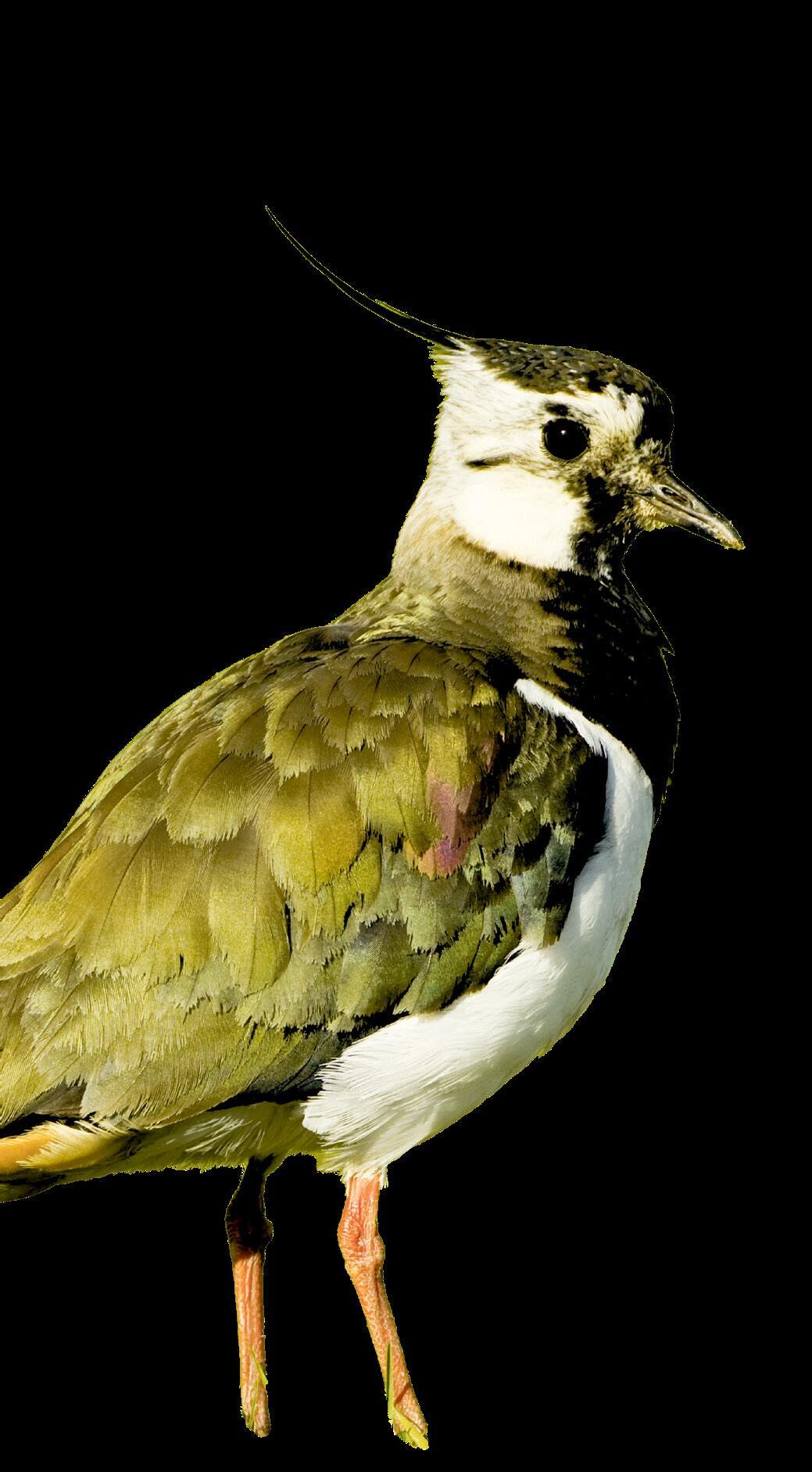
Wilder Connections Officer at Derbyshire Wildlife Trust, Mark Newton, encourages us to rise with the lark.
4 Spring cleaning for nature
Be inspired to litter pick in your local patch.
6 Local news
Read how four of our Business Partners are collaborating to make a Wilder Nottinghamshire.
7 UK news
Find out about what's happening across the UK including wildlife highlights.
8 Wild reserves
Check up on what's been happening across our nature reserves in Nottinghamshire this year.
10 Resilient by nature
Eleanor Johnston, Climate Change Manager at The Wildlife Trusts, introduces a new era of nature conservation, defined by extremes.
12 Taking action
Find out how you could get invovled and take action by making small changes or larger actions to help create a Wilder Nottinghamshire.
14 The language of lovebirds
Jenny Shelton, Senior Media Officer at The Wildlife Trusts, shares her lifelong passion and fully-fledged fascination for birds.
15 Spot the difference
Top tips to tell your Azure damselfly from your Common blue!
Contributions
Editorial enquiries and contributions to: Rachel Rutherford communications@nottswt.co.uk
Copy deadline: Monday 13th April 2026 Nottinghamshire Wildlife Trust, The Old Ragged School, Brook Street, Nottingham NG1 1EA Tel: 0115 958 8242
Email: info@nottswt.co.uk
Web: nottinghamshirewildlife.org
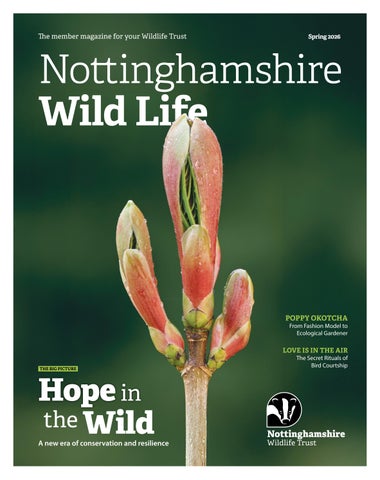
Front Cover: Sycamore bud © Guy Edwardes/2020VISION
Consultant Editor: Joanna Foat
Consultant Designer: Ben Cook
The views expressed in this publication are not necessarily those of the Wildlife Trust or its Council
Published by: Nottinghamshire Wildlife Trust
Editor in Chief: Erin McDaid
Editor: Rachel Rutherford
A Company Limited by Guarantee
Registered in England No. 748865
Reg. Charity No. 224168
Designed & Produced by Optima Graphic Design Consultants Limited optimadesign.co.uk
YOUR WILD SPRING: How I start spring mornings

As a self-confessed and proud bird nerd, spring has to be my favourite season. Here’s my field guide to getting the most out of your dawn chorus experience.
First, I’d check the weather and choose a dry, still day, preferably the kind that comes with those high pressure electric blue skies. Birdsong carries further in the cool, still air, so you’ll hear more voices joining the chorus.
I love the early morning, so I’m up like a lark to tune in. Settle down around 5am, as most songbirds begin before sunrise. The European robin, song thrush and common blackbird are typically the first, fluting their liquid melodies at least an hour before daybreak.
If you’re listening outdoors, it can be chilly, so wrap up warm and treat yourself to a flask of something hot. Enjoy the bright staccato calls of wrens or the cheerful trills of a goldfinch. Next, listen out for the high-pitched, repetitive chirps of blue and great tits, who join the chorus once it’s light enough to see. By 7am, most of the party will be over, as the birds begin to go about their day in search of meals, mates or nesting materials.
Whether you head to the park at sunrise, sip your morning coffee in the garden, or simply lie in bed with the window open, the dawn chorus is a sublimely sensory way to connect with your local birds.
Early bird
Find out more about International Dawn Chorus Day on 3rd May at wtru.st/dawn-chorus-day
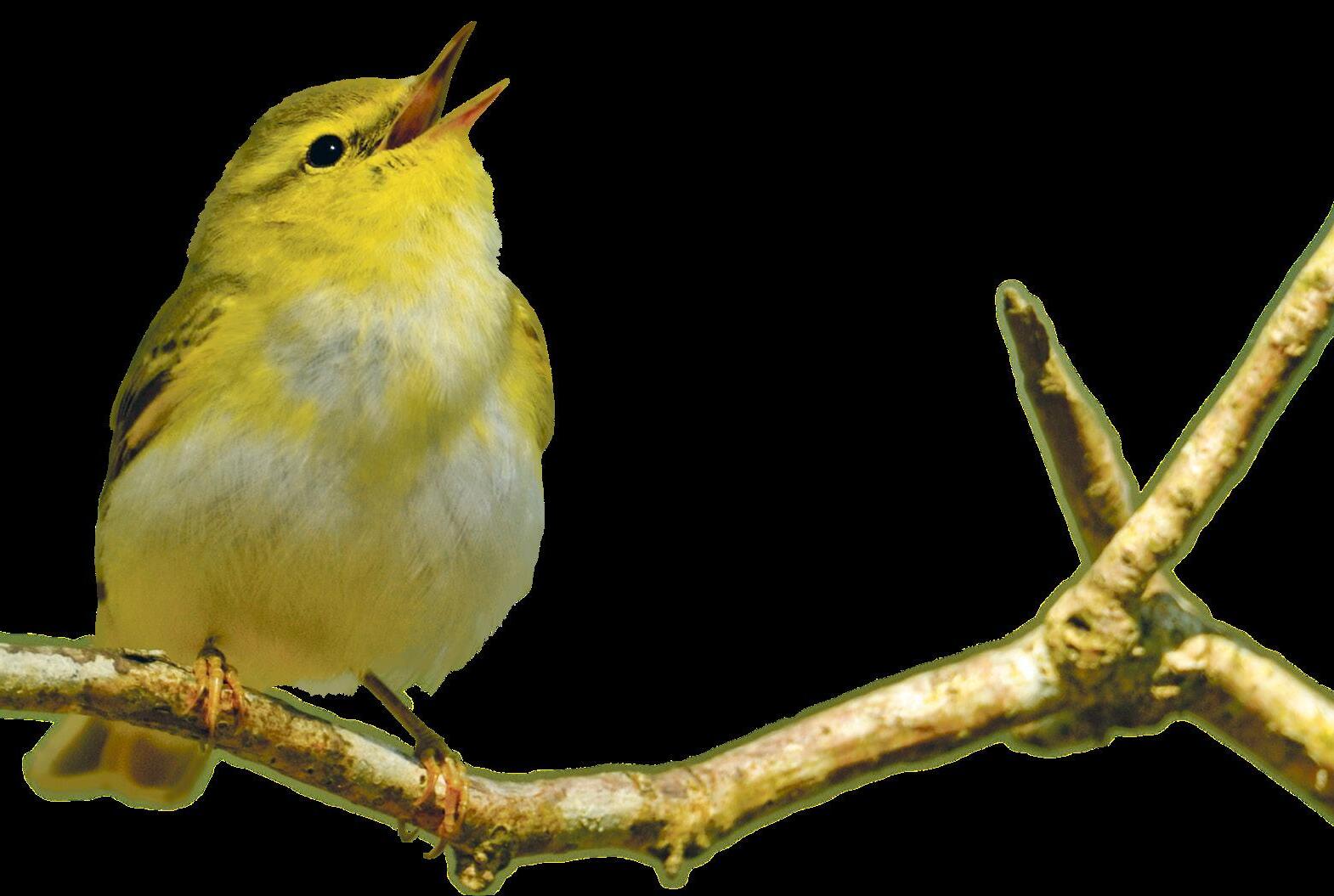
Wilder Connections Officer at Derbyshire Wildlife Trust, Mark Newton, encourages us to rise with the lark.
Spring cleaning for nature
1
Get equipped
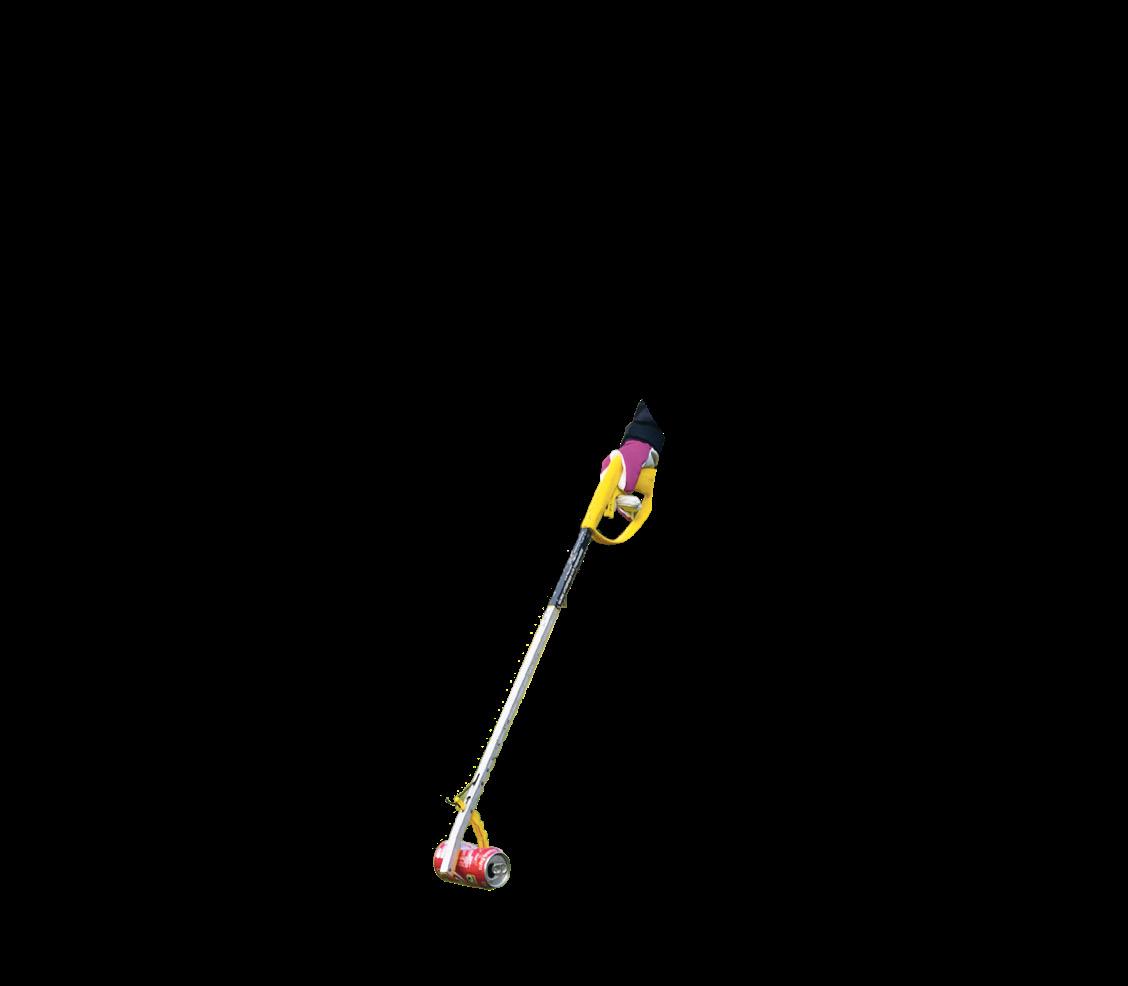
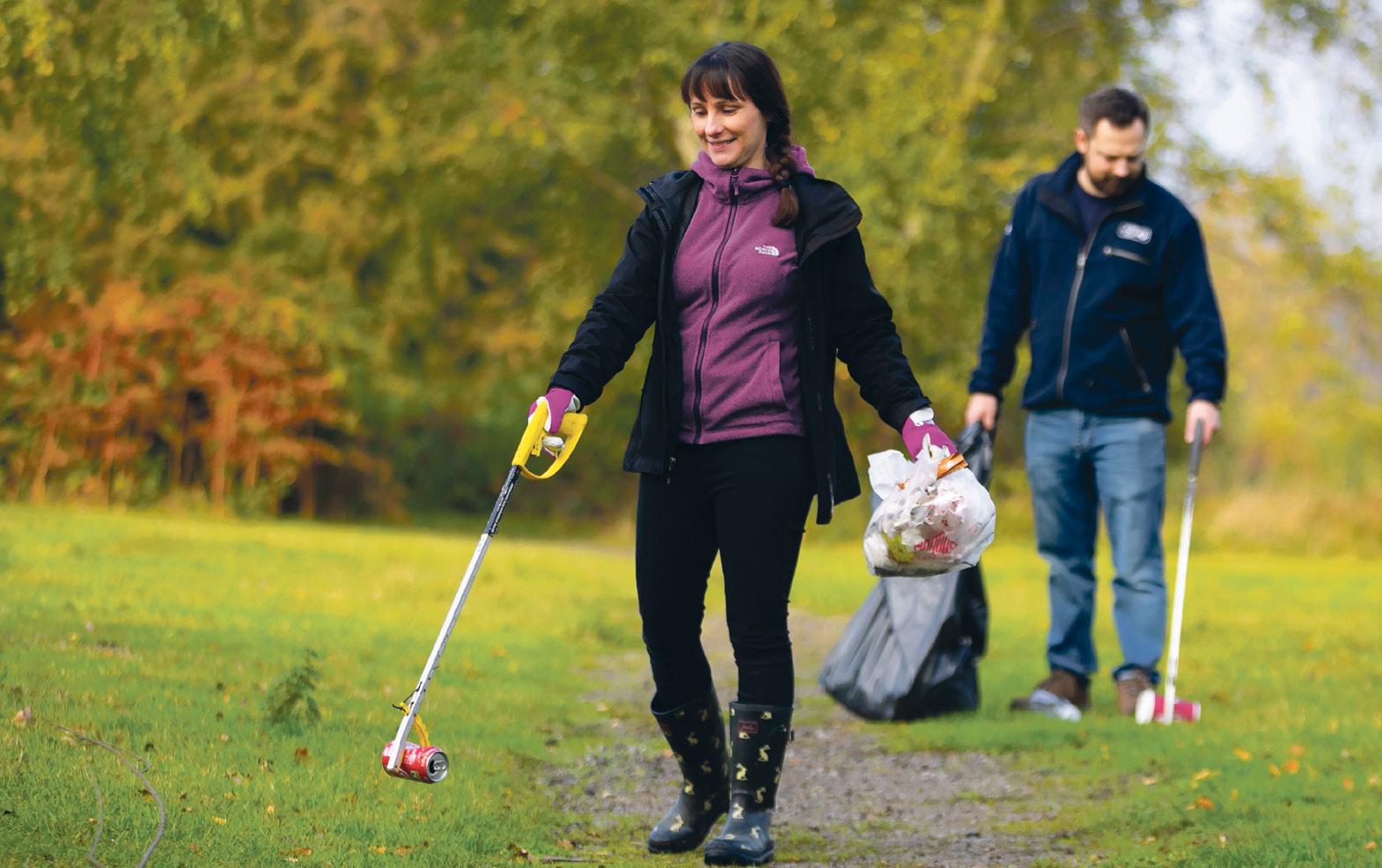
Welcome spring pickers! You’ll need heavy-duty gloves, appropriate footwear, a litter picker (to protect hands and backs) and two bags: one for general waste and one for recycling. Check with your local council or library for free litter pickers and bags.
4
Look out for wildlife
Enjoy spotting wildlife and taking action for nature at the same time. Joyful birdsong, erupting golden daffodils and brimstone butterflies on the wing are just some of spring’s delights.
Spring cleaning
Find out how you can get involved with your local Wildlife Trust and help take care of a wild patch near you at wtru.st/litter-pick-or-beach-clean
2
Pick the right spot
Although you might notice rubbish on roadsides or in waterways, it’s important to stay safe and avoid these areas. Keep to well-lit areas with accessible paths. Think carefully about your litter pick and plan your route beforehand.
5
A team effort
Invite family and friends, join an organised litter pick, beach clean or set up a spring pickers challenge in your local community. If you’re going solo, make sure you let someone know where you’re going.
3
Safety first
Bottles, bags, food wrappers, toys and clothing are common finds. But some things are best to avoid, including sharp metal and glass. Report hazardous materials, like needles and syringes, to your local council instead.
6
A clean sweep
When you have finished litter picking, give yourself a pat on the back with those wellwashed hands. Welcome spring with hundreds or even thousands of fewer pieces of litter!
Litter pick with It's in Nottingham
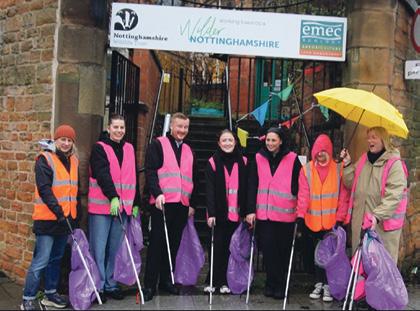
Earlier this year we teamed up with our business partners, It's in Nottingham, to support one of their regular litter picks. Despite the drizzle we collected lots of bags of litter in the areas close to our city centre offices – and it was great to be part of community efforts to improve our local patch.
Action for water voles
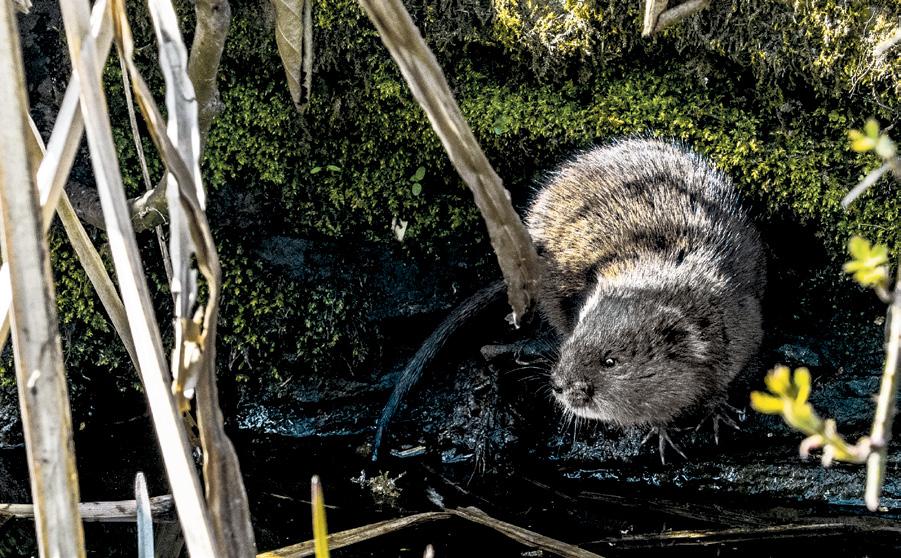
With more than 300 mink removed from rivers and canals across Nottinghamshire, there’s anecdotal evidence that numbers of wetland bird such as lapwings and coots are already recovering. The recovery of the water vole, the UK mammal that suffered the greatest decline of the 20th Century, will take time - but the vital mink control, new wetland habitat creation and release of captive bred voles at Idle Valley Nature Reserve give them the best chance in decades.
The Compleat Food Group NEW Business Partnership
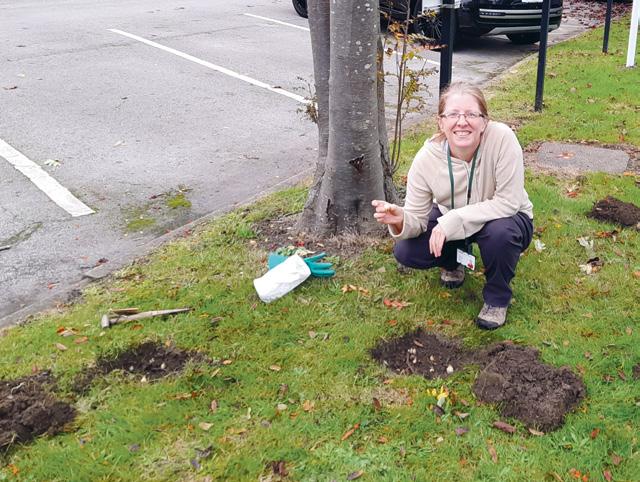
We're excited to welcome The Compleat Food Group as a 'Gold Investor in Nature' supporting our work to create a Wilder Nottinghamshire. They are active participants in 30 Days Wild and their nature champions have been busy ‘wilding’ their site in Nottingham, including planting hundreds of bulbs next to their offices. As part of this new partnership, we have already visited their sites to provide advice on further opportunities to enhance existing and new habitat for wildlife. Payroll Officer Sarah Helms recently updated us stating, “We can happily report that we have lots of crocus and snowdrops appearing in the grassed area at the front of Tottle’s main office building!
Employees have already made positive comments that it is nice to see the colourful early flowers when it has been so grey and gloomy, but more importantly, hopefully we are helping some early pollinators with some much-needed nectar after their hibernation!”

Wilder Business Network
Following the success of the Wilder Nottinghamshire Network we’re keen to encourage businesses to join the growing number of community groups that are part of the network. The network is a great platform to promote green actions, share best practice, celebrate success, and to find inspiration for ways your business can act for nature locally.

Wilder Business Awards 2025
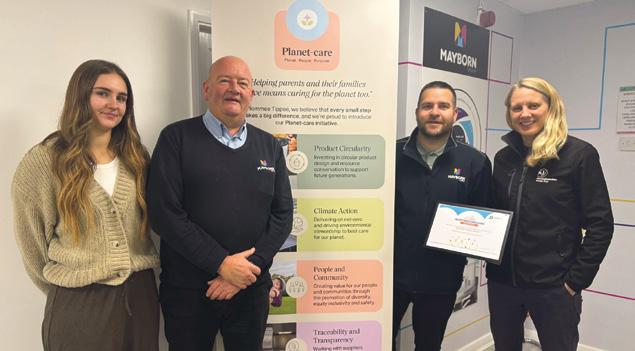
Well done to Mayborn and Nottingham College for everything they are doing to create more space for nature on their sites and winning our Wilder Business Award (sponsored by It’s in Nottingham).


Centrum Pile Renewed Partnership

A BIG thank you to Centrum Pile who have renewed their Business Partnership with us for a further year. We were thrilled with their employees fundraising efforts last year to further support the Trust and look forward to continuing to engage with them on ways they can take action for nature and support to create a Wilder Nottinghamshire.

Natural Flood Management
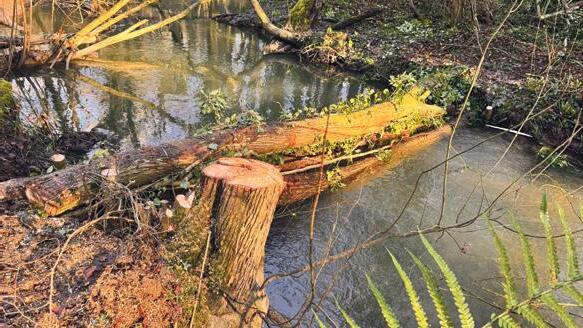
Work to create natural features such as leaky dams in the higher reaches of the Ryton Catchment, including along stretches of the Anston Brook, is now well underway. Following yet another winter of major floods, we’re delighted to be able to pilot Natural Flood Management techniques at scale to help mitigate flood risk for communities in both Shirebrook and Worksop.

Centrum Pile Newark © McFade
Water vole © Mallory Mercer
Man made leaky dam to help slow water flow © Rachel Rutherford
Mayborn Team receiving their Wilder Business Award
Compleat
Q&A
Marine Views

Reaching Rothbury
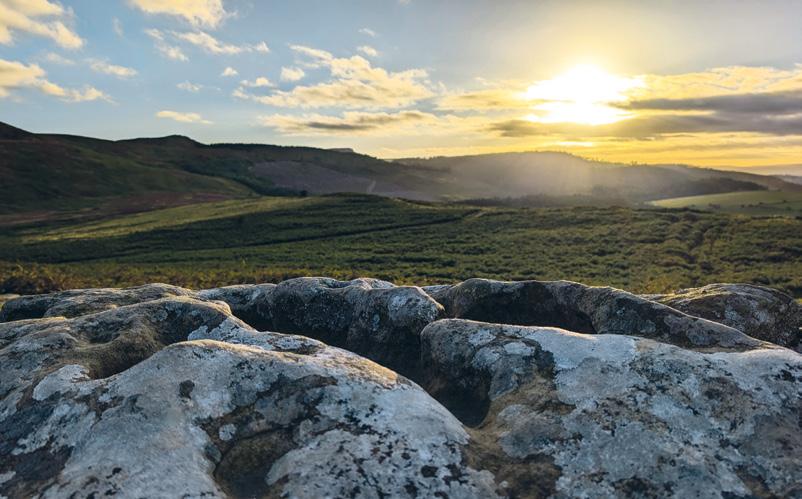
Sir David Attenborough, now in his hundredth year, has stepped forward at a critical time to champion the Rothbury Estate Fundraising Appeal, with just one year left to raise the £30 million needed to complete the purchase. Over £10 million has already been raised from individual donations ranging from £5 to £5 million.
This vast upland of over 3,800 hectares, the size of central London, is the largest area of land to be put on sale in England in decades.
Sir David Attenborough says: “time is running out to save the historic Rothbury Estate. This huge, heart-shaped expanse of moorland, rivers, forest and upland in Northumberland needs your help. People know and love the Simonside Hills that rise here. They walk the ridges and listen for the calls of the curlew. They watch for red squirrels and admire the views as they scramble among the crags. They walk along its remote paths and marvel at the astonishing rock carvings left by our distant ancestors, who once lived here.
A focus on farming
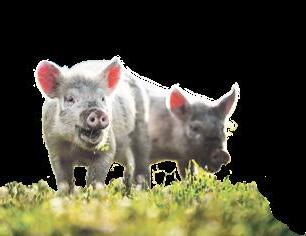
A new Wildlife Trusts report reveals the UK pig and poultry sector’s vast pollution impact, with intensive farms creating waste equivalent to 4,160 Olympic-sized swimming pools and driving pesticide-heavy grain production that harms rivers, wildlife and countryside. wtru.st/ppreport
“The Wildlife Trusts have launched an appeal to buy this very special place. They will work with local farmers to care for the area and breathe new life into its precious wildlife habitats".
The size of the Rothbury Estate gives it great potential to contribute to nature restoration targets in the UK. Restoring its habitats for wildlife such as curlew, pine marten, beaver and golden eagle will have real significance for a greater area beyond its boundaries because the Estate lies at the heart of a 40-mile nature corridor, stretching from the north-east coast of England to the central Scottish border.
The Wildlife Trusts, in partnership with Northumberland Wildlife Trust, have ambitious plans to integrate nature recovery with farming, recreation, education and tourism on the Estate.
Find more
Discover the ways to support our purchase of the Rothbury Estate at wtru.st/rothbury-appeal
Space for Everyone
Ruth Williams, Head of Marine Conservation at The Wildlife Trusts, gives us the deep dive into the 2025 Marine Review.
WHAT DID YOU discover in this year’s Marine Review?
We had a great year for puffins on Skomer in Wales and Muck in Northern Ireland! But also had to deal with a couple of serious incidents, including a bio-bead spill in Sussex and oil tanker collision in the North Sea. Our Wildlife Trust staff and volunteers were brilliant at providing a rapid response.
Were there any surprising or rare species sightings?
We love getting reports of leatherback turtles, which are rarely seen but are resident in UK seas, feeding on jellyfish. The spread of non-native slipper limpet is not such good news. We also saw huge blooms of octopus —an indication our seas are warming.
What’s the latest on banning bottom trawling in Marine Protected Areas?
Following Sir David Attenborough’s film, Ocean, we had an incredible swell of public support for our campaign to ban bottom trawling collecting 18,435 responses to the UK Government's consultation. Now we need to keep the pressure on to ensure these seabed protections are implemented swiftly and strongly.
Why do we need to protect seabeds in the fight against climate change? In the UK our muddy seabeds store 240 million tonnes of carbon. But bottom

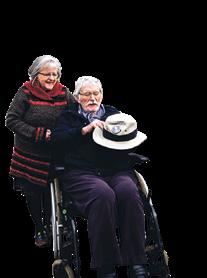
, a new guide for land managers funded by People’s Postcode Lottery, gives practical tips on making nature reserves, walking trails, lakes and rivers more accessible, inclusive and welcoming for all visitors. wtru.st/everyone
5,000
© CN HARDING
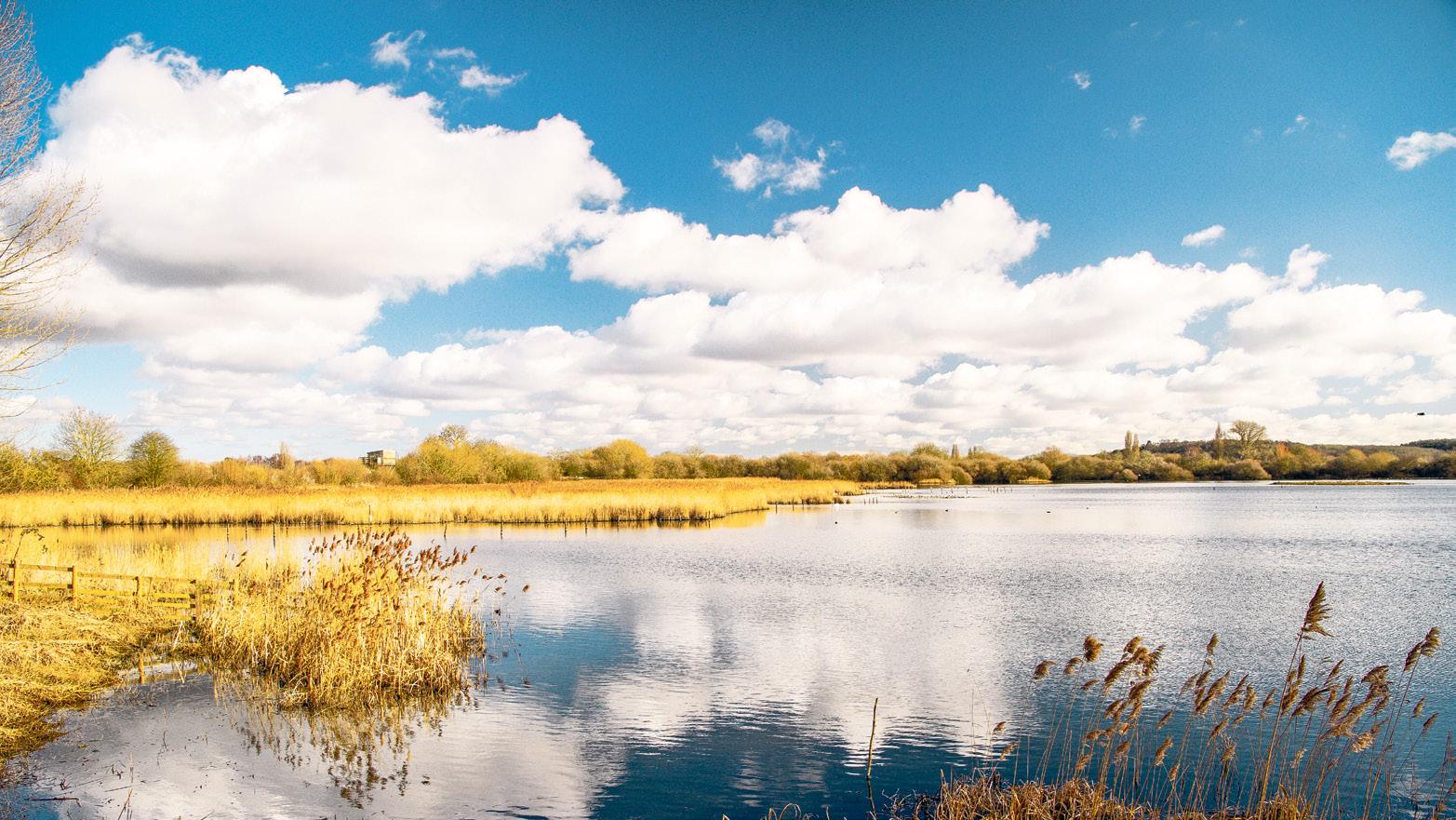
Our wild reserves
Taking action for nature and people on our reserves through the seasons
Our Head of Communications, Erin McDaid, outlines why we can’t simply let our nature reserves go ‘wild’ and why your support as members help us ensure that our wonderful sites remain havens for both wildlife and people. With talk of rewilding increasingly common and with encouragement for people to allow their gardens to go a little ‘wilder’ we do occasionally get challenged as to why we actually need to manage our nature reserves. Surely, nature can look after itself? Wouldn’t we be best leaving nature to do its own thing? Wildlife did just fine before people got involved. This type of challenge has become more frequent, especially in relation to tree felling and scrub clearance on our reserves, as society has become more attuned to the role of trees in absorbing carbon emissions and mitigating the impacts of climate change. So strong is the narrative highlighting the value of trees that it can now be difficult to convince people that in some circumstances trees still need cutting down and that trees and woodland are not always the best habit for wildlife.
If our entire landscape were given over to nature, there would be natural variation in habitat caused by events such as wildfires and floods. In times past, the grazing action of long-lost large ruminants such as aurochs - the ancestors of domesticated cattle would also create diversity. But, as humans have been shaping the landscape for so long, and we have so little of habitats such as wildflower meadows and heathland left – we have a duty to care for them.
If left, most UK habitats, from wildflower meadows to heathland and even reedbeds would quickly evolve into types of woodland, threatening the species that rely upon these special habitats and depriving us all the chance to enjoy their diversity.
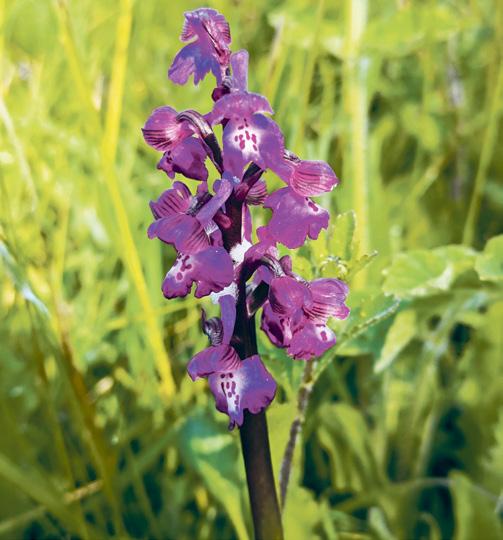
Orchid at Ashton's Meadow © Rachel Rutherford
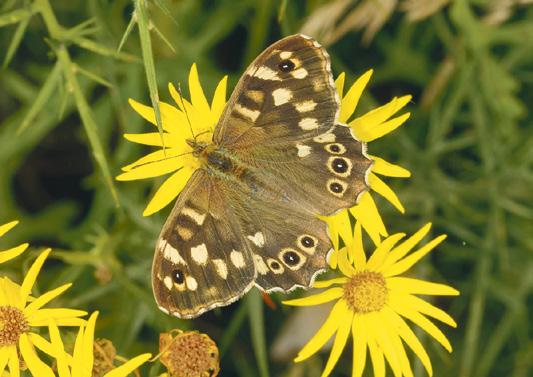
Speckled Wood butterfly © John Bridges
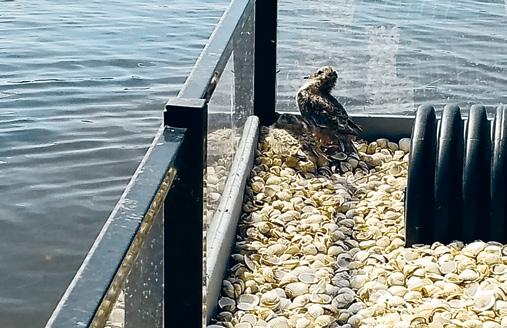
Tern chicks on the newly installed Tern platform
WILD RESERVES
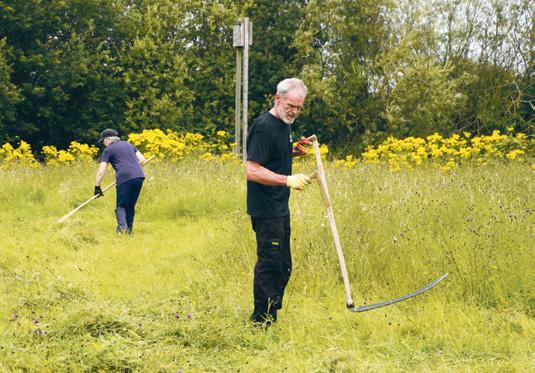
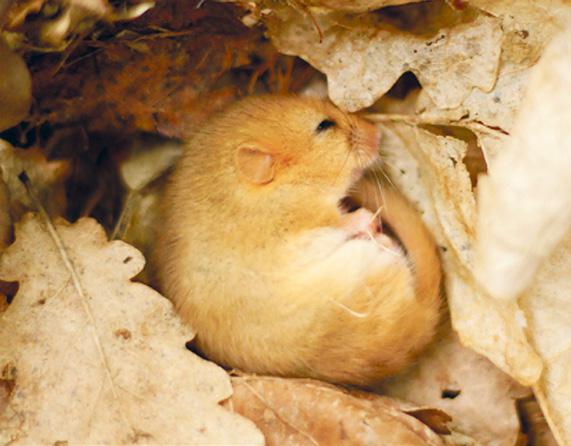
Ancient practices such as harvesting hay as winter feed for livestock and management of woodlands to provide a variety of timber, mimic natural processes and have inadvertently preserved wonderfully diverse fragments of habitat. At 1 Ashton’s Meadow near Retford, maintaining this traditional cycle protects the populations of cowslips and green-winged orchids. At 2 Treswell Wood, nearby, coppice management promotes a diverse age structure which supports spring woodland flowers such as bluebells, butterflies like speckled wood, varied nesting opportunities for songbirds including blackcap and plenty of hazelnuts for the dormice.
As part of our commitment to keeping our nature reserves open for people to connect with nature, our teams also monitor the health of trees growing close to paths and rides; where necessary, cutting back or felling any that pose a danger. When significant areas of woodland are felled, new trees will be planted in winter to ensure they are well established before stresses such as summer droughts.
As winter segues into spring and plants burst into life and birds begin to nest, the team must pause work likely to cause significant disturbance to wildlife and the focus shifts to tasks such as maintenance of facilities such as footpaths or fences required to keep our livestock where they should be.
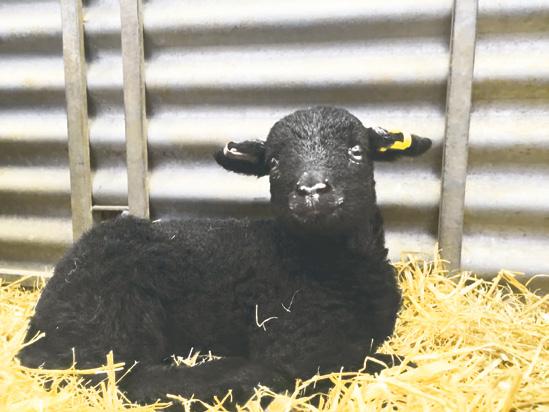
Other springtime tasks include ensuring tern rafts are in good order and in the right locations on our wetlands such as 3 Besthorpe Nature Reserve before the birds return from their winter haunts in Africa. Spring is also a busy time for our grazing team with lambing at 4 Idle Valley Nature Reserve before the new recruits are transported to reserves across the county to work their magic.
As summer progresses, invasive non-native Himalayan balsam, which shades out native flowers, will need pulling up at sites including 5 Attenborough and 6 Farndon Willow Holt Nature Reserves. Late summer sees the team busy harvesting hay - maintaining the ancient cycle of management that created our meadow habitats.
Alongside the seasonal pattern of work, year-round tasks include health and welfare checks on our sheep and cattle, safety inspections, monitoring visits to review the impact of past management, management planning and working with the fundraising team to identify larger tasks and projects needing support.
This programme of vital management not only ensures that our reserves remain alive with birdsong and bursting with wildflowers, but also that we all have opportunities to see, hear and connect with nature on our doorstep. This wouldn’t be possible without your support.
Key figures remembered
Founder
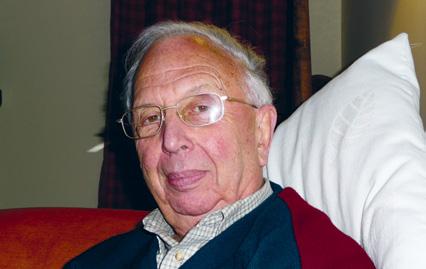
MemberDr Peter Bottomley
We are sad to report the passing of Dr Peter Bottomley, our last surviving Founder Member. A Fellow of the Institute of Fisheries Management, Peter served on Council from our formation in 1963 until 1973, including nine years as Vice Chair. He also played a key role in our ‘Special Task Force - set up in 1972 to encourage more people to take a more hands-on role in our work.
Norman Lewis Memorial
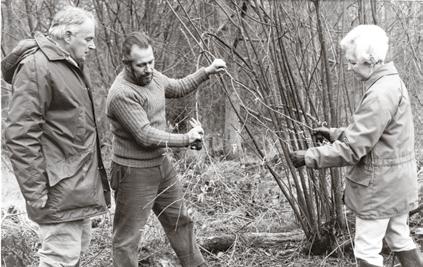
In January, our Chief Executive and other senior representatives joined Trust members and volunteers to celebrate the life of our first ever employee, Norman Lewis, alongside over 100 members of his family, friends, neighbours, former colleagues and members of numerous groups he'd been part of over many decades. Norman played a key role in the development of Attenborough Nature Reserve and we are currently considering how best to permanently mark his outstanding contribution.
Skylarks hay cut © Meg McKay
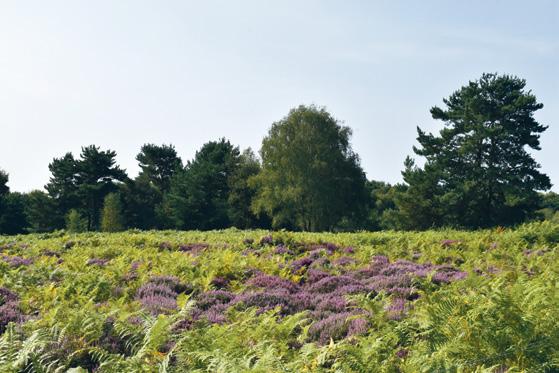
Rainworth Heath in Sherwood Forest
Dormouse
Newly born lamb © Rachel Rutherford
RESILIENT BY

Eleanor Johnston Climate Change Manager at The Wildlife Trusts, introduces a new era of nature conservation, defined by extremes.
FROM RECORD-BREAKING heatwaves to devastating floods, the impacts of climate change are no longer distant threats but everyday realities reshaping our landscapes and our lives.
Across the UK, The Wildlife Trusts are already helping nature adapt. We’re working on a national scale to build resilience, restore habitats and show the huge benefits of putting nature at the heart of climate adaptation, not just for wildlife, but for people too.
Take the Pevensey Levels in Sussex: a vast, low-lying area of grassland that has become increasingly dry due to climate change and water extraction. Sussex Wildlife Trust is revitalising this important wetland to hold more water again, helping to bring back the wading birds and waterfowl that would have once been in abundance.
Home on the wing
"To hear the iconic R2-D2 calls of lapwing sealed it all for me; to know they'd found somewhere to call home and raise their family in the landscape, a little bluegreen paradise for these wonderful birds."
Charlotte
Pestell
When the Project Officer, Charlotte Pestell, visited the site in May last year during an exceptionally dry spring she “knew things had gone well when it was still a complete necessity to wear wellies.” She described the “delight to walk onto the reserve, splashing along and marvelling at the big skies reflected in the new pools.”
At The Wildlife Trusts we regularly review progress and consider what we must do differently to prepare for the extreme and unpredictable weather that has become the norm. Our latest progress report, Resilient Nature, celebrates climate adaptation work and collaborations across the UK. For many years, our work has been guided by the Lawton Principles –creating more, bigger, better and joined up natural habitats. Now, we are building on these principles through more flexibility, more diversity and the ability to bounce back. We’re applying this to a wide range of habitats, helping wildlife and people adapt to the changing climate.
Coastal
Sometimes, adapting to climate change means accepting that nature will have to change too. In 2013, a powerful tidal surge flooded Suffolk Wildlife Trust’s Hazel Wood Marshes Nature Reserve with saltwater. This meant that freshwater habitats and species were lost, but now the reserve has been transformed. New saltmarsh is developing and with it new flora and fauna is flourishing.
Peatlands
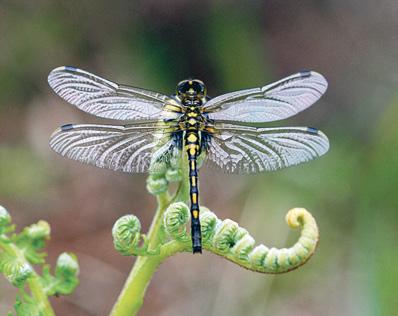
Across The Wildlife Trusts we’re restoring peatlands—when healthy, they absorb rainfall and release it slowly, helping to reduce flooding downstream. This work also supports rare wildlife too, including the white-faced darter dragonfly. Thanks to Cumbria Wildlife Trust‘s extensive restoration of peatbogs at Drumburgh Moss, this dragonfly is on the rise.
Woodlands and wetlands
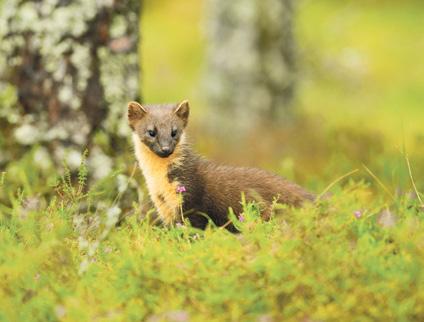
Derbyshire Wildlife Trust’s Derwent Living Forest project is creating wooded habitats and wetlands to connect the National Forest with the soon-to-be established Northern Forest. This living corridor will allow species to move more freely, adapt and survive as climate conditions shift.
Bringing adaptation home
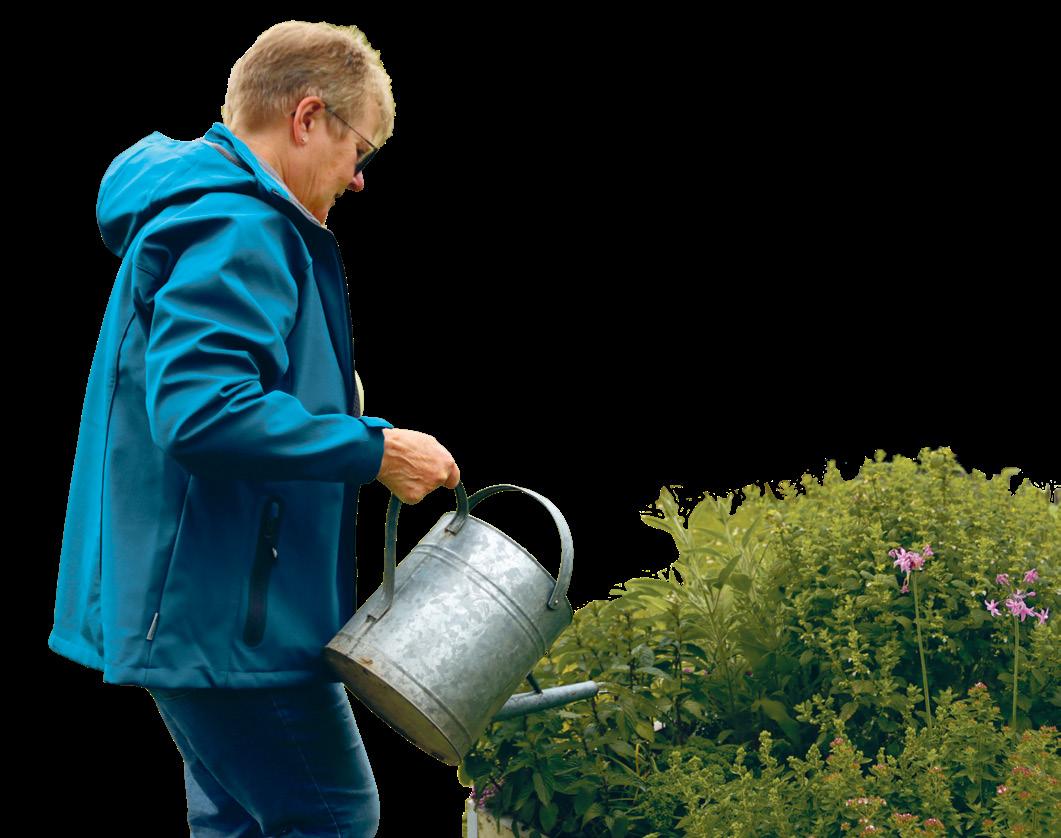
Climate adaptation isn’t just about vast landscapes—it can begin in towns and our own gardens too. Every patch of green space can help wildlife move between a mosaic of habitats, provide water, food, shelter and shade, and make our homes more resilient to extreme weather.
If you build it
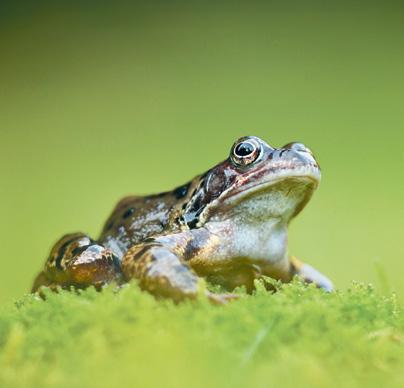
"It’s May 2024, we’re digging a pond in the back garden. But the work is called off when heavy rain turns the soil to mud. A frog appears, enjoying the now rain-filled hole—a glimpse of what is to come. By autumn, our previously waterlogged lawn drains more easily, and the new pond and shrubs welcome the heavy downpours.
"During the spring drought and summer heatwaves, the pond becomes a vital refuge for wildlife, and a cool and shady spot for me. Goldfinches flit through the splashes as a blackbird bathes in the shallows. Tadpoles wriggle, then transform into tiny frogs—living proof that small changes can make a big difference.
"Creating these nature-friendly spaces can help us as well as wildlife. Plants soak up water, reduce flooding and cool the air. Replacing concrete, artificial turf and paving with planted borders and lawns can significantly lower flood risk and prevent overheating in our homes."
Let’s advocate for adaptation
Face off
The white-faced darter has declined due to peatbog loss caused by climate change and human activities. Cumbria Wildlife Trust is helping this small dragonfly spread to new areas, alongside the British Dragonfly Society, RSPB and Natural England, creating the right conditions for this striking insect to thrive.
Pine fresh
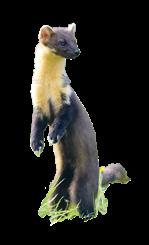
The Derwent Living Forest hopes to welcome the return of animals such as pine martens—nocturnal acrobatic climbers that rely on woodlands for foraging and safety. Ponds and wetlands will slow the flow of water and reduce flood risk, while also storing water to ease the impacts of drought.
New saltmarsh
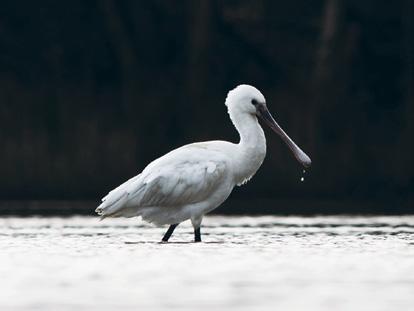
At Hazel Wood Marshes Nature Reserve long-legged spoonbills are now spotted in winter, sweeping their spoon-shaped bills through the shallows in search of food. Redshank, lapwing and avocet nest here too, while salt-tolerant marsh plants like samphire are popping up in the mud.
Climate-friendly gardening tips
Our weather is swinging between extremes—but we all have the power to help nature adapt. Whether it’s by supporting your local Wildlife Trust, creating a pond, or simply letting your garden grow a little wilder, every action counts.
Let’s challenge the idea of tidy, manicured gardens and instead embrace spaces full of life—messy, diverse and resilient. These are the places that will withstand drought, heavy rain and heatwaves, while providing sanctuary for beetles, butterflies, birds and us too.
But beyond our own gardens, we must call for climate adaptation on a national scale—with nature at its heart. As extreme weather events become more frequent, it’s vital that our governments plan ahead to prioritise resilience. You can make a difference by writing to your MP, AS or MSP: share your experiences, highlight local climate challenges and urge them to support action that helps both nature and communities thrive.
When we give nature the space and time to adapt — whether in a vast forest, sprawling peatland, a saltmarsh or a small garden pond — nature has extraordinary resilience, can restore balance and protect us in return.
With
an estimated 24 million gardens in the UK, our gardens are a vast living landscape and can help us adapt to climate change.

Common frog © Guy Edwardes/2020vision
Taking action for a wilder Nottinghamshire takes many forms
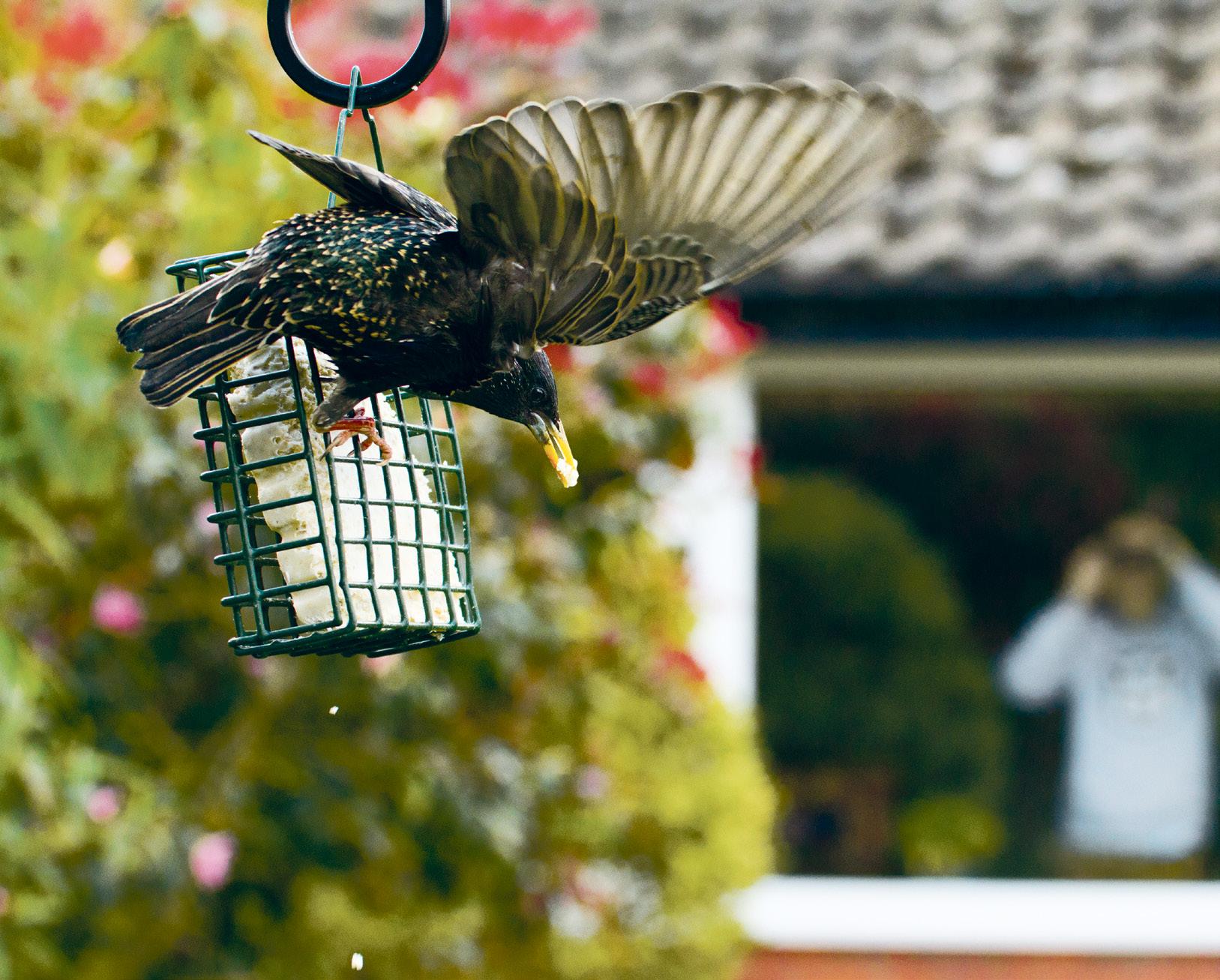
A key focus of our Wilder Nottinghamshire 2030 strategy is to encourage more people than ever to act for nature and as members of Nottinghamshire Wildlife Trust you are already doing your bit. In addition to your support as members, hundreds of you also support the Trust as volunteers and I’m sure most of you take action at home - perhaps feeding the birds or growing pollinators for beneficial insects.
As we kick off a year of celebrations to mark the 60th Anniversary of Attenborough Nature Reserve it is worth taking inspiration from those early activists, campaigners and volunteers whose efforts led to the creation of the reserve and precipitated the formation of the Trust. On a very simple level, perhaps the most important thing those early pioneers did for nature, was to care enough to not be willing to standby and allow what they cared about be destroyed.
By standing up for nature they proved that it is possible to win out in the face of pressure from development or what some might purport to be progress and the battle to prevent the lagoons being filled with ash from the power station is definitely in ‘David and Goliath’ territory. I’m sure detractors expected our forebears to roll-over, but they didn’t. Today, we not only have the much-loved nature reserve as a legacy of their efforts – Nottinghamshire Wildlife Trust is still here fighting wildlife’s corner with your support 60 years on.
With increasing pressure for development there is a definite need for more people to be willing to follow in the footsteps of our early pioneers – whether by joining local campaigns, writing to your local Councillor or MP to let them know how much nature means to you or taking the plunge and sharing your view on your district or borough Local Plan.
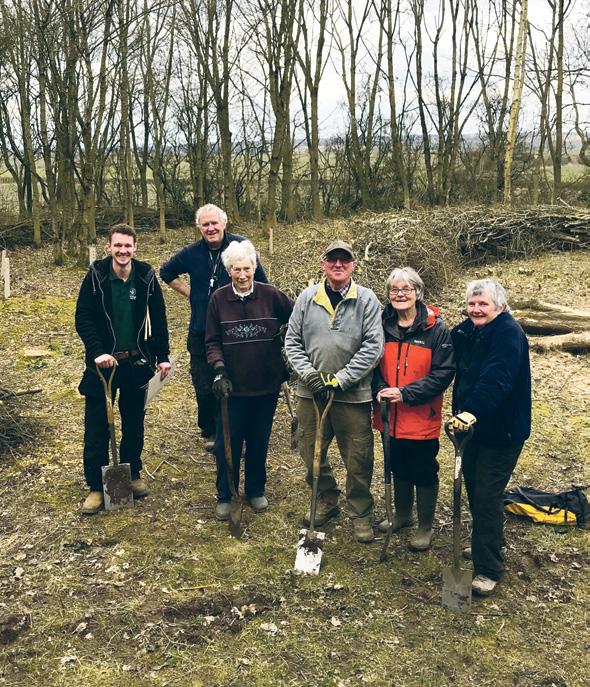
If campaigning isn’t your thing, you can get involved with local habitat management – either with the Trust or with a local ‘Friends of’ group. If your days wielding a spade or bowsaw are behind you, groups often need help with admin, finance, fundraising and publicity. Equally, we have a range of volunteer roles within the Trust and our Local Members’ Groups that are either office based or can be done from home - such as help with admin tasks or promoting our events. Details of current roles can be found on our website and in the months ahead we plan to develop more flexible ‘micro-volunteering’ opportunities such as promoting our work via social media or distributing posters for events in your local community.

You can make a difference
With so much negativity in relation to the state of nature and the wider environment, it can be easy to feel that your efforts won't make a difference, but they will. Doing something positive is also a great tonic for eco-anxiety and will help ward off any sense of being powerless.
By acting together as Nottinghamshire Wildlife Trust, we are helping to bring nature back and right across the county there are thousands of individuals making a difference in their local communities.
One of the drivers behind the launch of the Wilder Nottinghamshire Network was to showcase the amazing work already taking place as a springboard to inspire yet more action. We’ve been blown away by the number of groups that have joined the network so far to connect with others, share knowledge, ideas and expertise and to support those just starting out on their journey to make Nottinghamshire that little bit wilder.
If you’re keen to do more locally or simply want to learn more about the positive action taking place on your patch, take a look at the Wilder Nottinghamshire Network page on our website. If you are not part of a group but want to be part of the movement making a difference you can add your individual actions for nature to our map.
If you want more information, you can also join the Wilder Nottinghamshire group on Facebook.

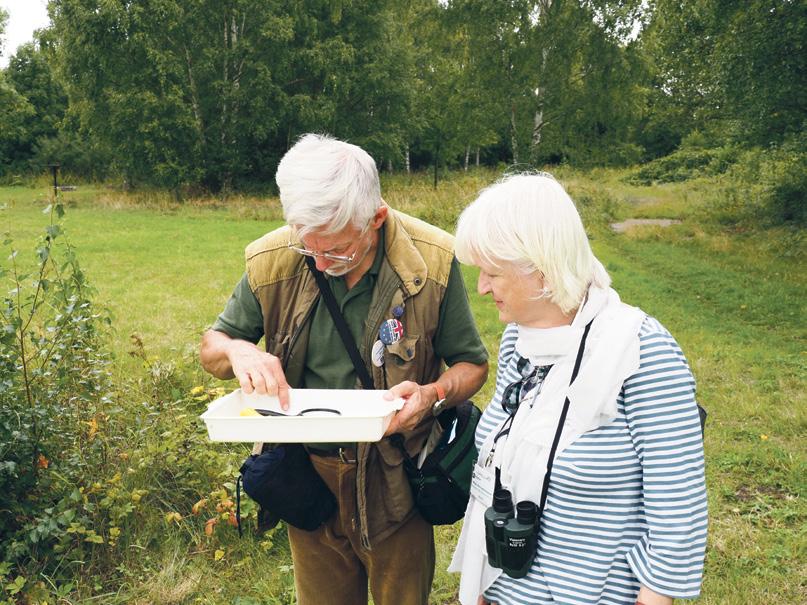
Attenborough Open Day bug hunt © Quinton Quayle
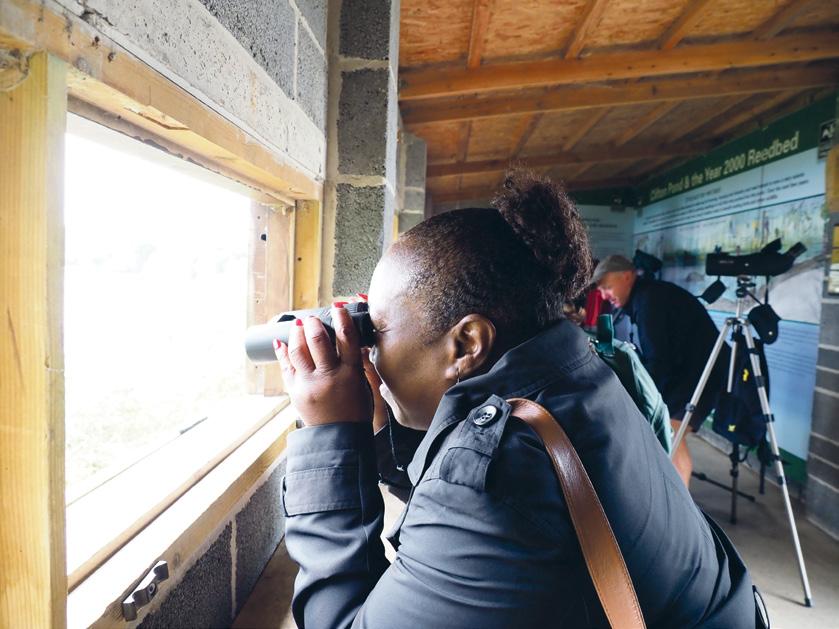
Attenborough Open Day birdwatcher in hide © Quinton Quayle
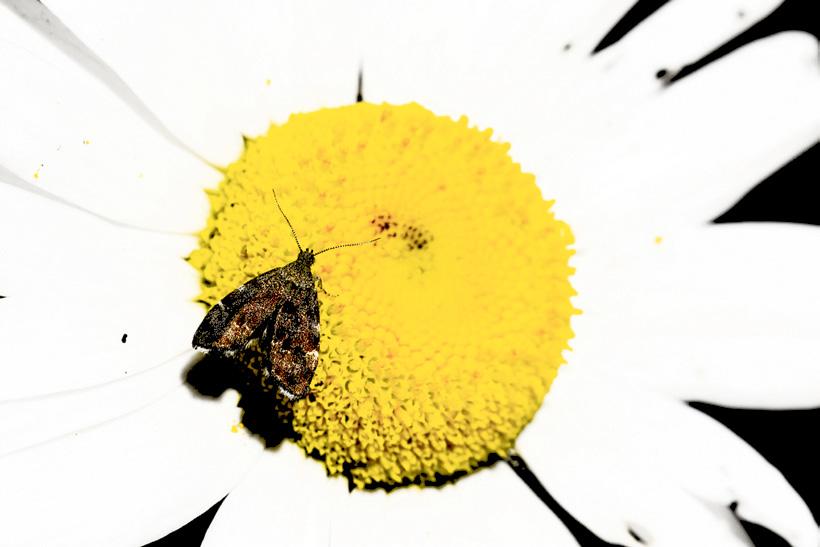
Nettle-tap (Anthophila fabriciana) © Vaughn Matthews
Volunteers planting whips at Ploughman Wood
SEE 3to
Loch of the Lowes
Scottish Wildlife Trust
Visit Loch of the Lowes in autumn to watch the breathtaking osprey, a stunning fish-eating bird of prey, soaring and fishing above tranquil waters. Don’t forget your binoculars!
Location: Dunkeld, PH8 0HH
Fingringhoe Wick
Essex Wildlife Trust
Experience the magical nightingale chorus on a guided walk at Fingringhoe Wick in spring, where up to 40 males fill the evening air with their unforgettable, melodic song.
Location: Fingringhoe, CO5 7DN
Tring Reservoirs
Hertfordshire Wildlife Trust
Tring reservoirs are known as one of the best bird-watching spots in the south of England. Witness the passion of the great-crested grebe courtship dance here in spring.
Location: Tring, HP23 4PA
Idle Valley Nature Reserve
Nottinghamshire Wildlife Trust
Our largest nature reserve is a mix of wetland, woodland and meadow habitats with spectacular views across various lakes of spring wildfowl in all of its glorious plumage and mating rituals. Belmoor Lake can be seen from indoors sat in the cafe too!
Location: Retford, DN22 8RQ
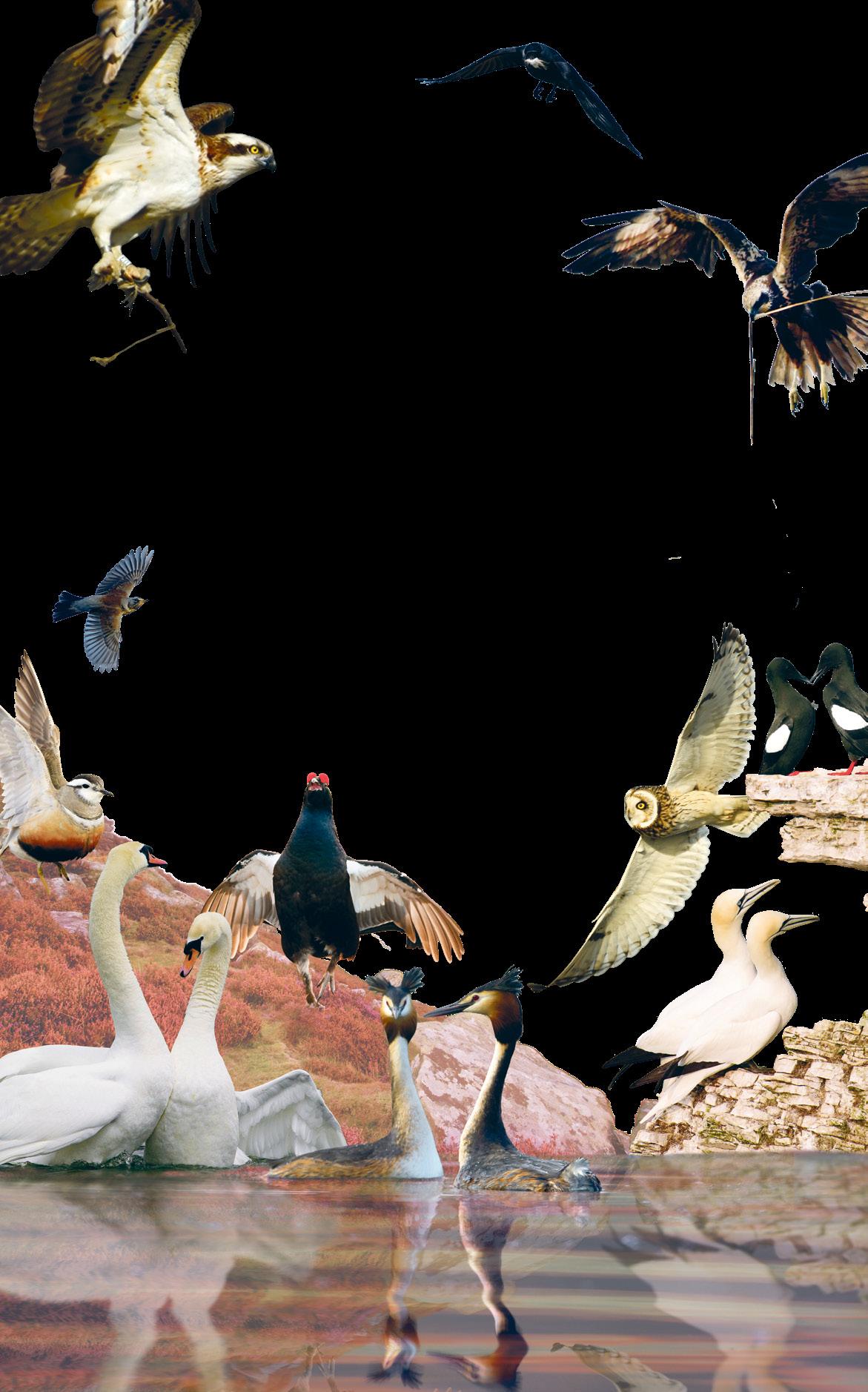
An ode to lovebirds across the British Isles and their rituals of courtship

Jenny Shelton, Senior Media Officer at The Wildlife Trusts, shares her lifelong passion and fully-fledged fascination for birds.
JANE AUSTEN, one, of our great English writers and an authority on matters of the heart, once observed that, in courtship, ‘the man has the advantage of choice, woman only the power of refusal’.
The same can be said of the bird kingdom. In spring, birds—from mighty ospreys to garden robins—turn their sights to the business of breeding. Much like in Jane Austen’s time, the rules of romance are strictly observed. A female might find herself courted in a number of ways: a serenade, a dance, or the giving of a gift, like the kingfisher’s delicate presentation of a fish. Then, once the male has declared his intentions, it’s up to her to accept or refuse.
I once watched a male osprey return to a nest in southern England, where these birds had once vanished from the landscape. He had flown ahead of his mate from West Africa to claim their territory and awaited her arrival. When she appeared, he wooed her with gifts of sticks and shiny fish until she seemed satisfied with his devotion.
Courting birds often use visual cues, with
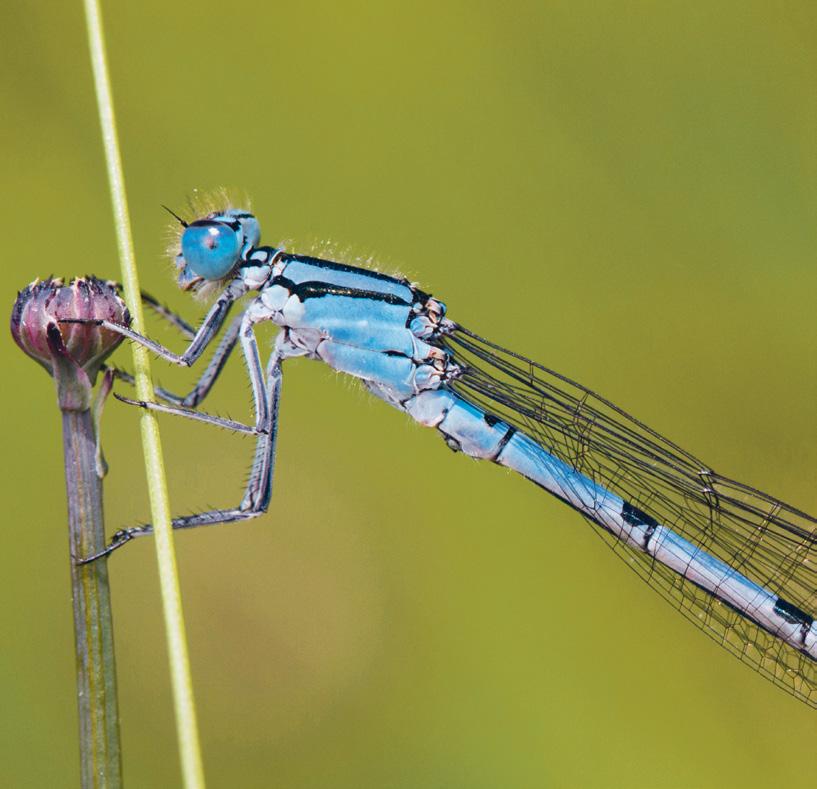
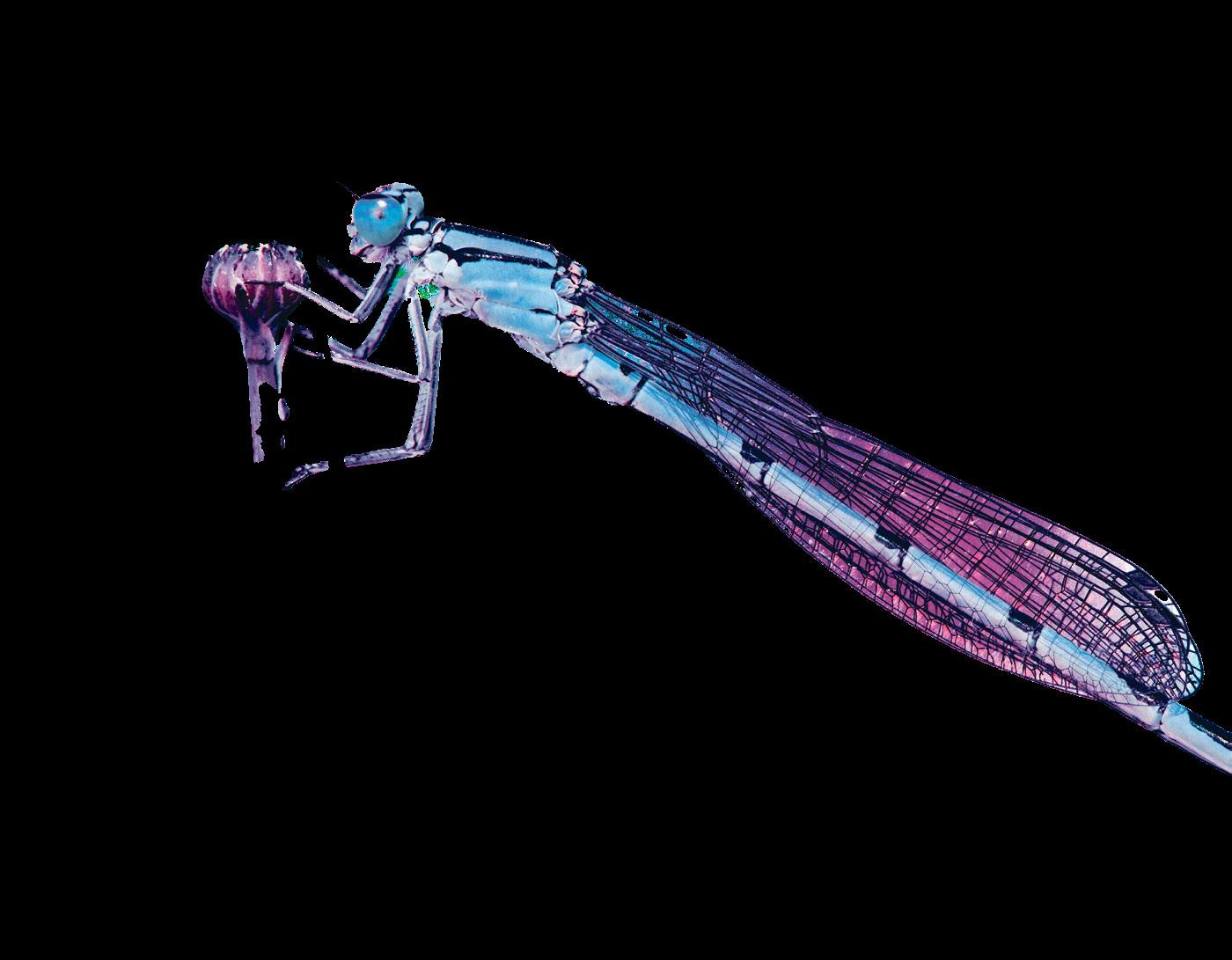
Azure damselfly Coenagrion puella
When April to September
Where Prefers smaller, sheltered ponds and streams. Stays near the edges of larger lakes.
Females Green (occasionally blue) and black. No spine beneath segment eight of the abdomen.
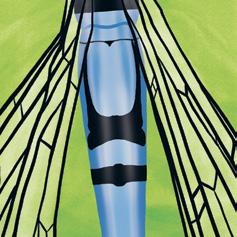
have a
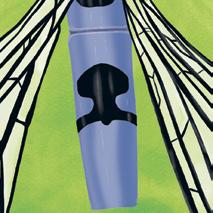
marking below the base of the wings.
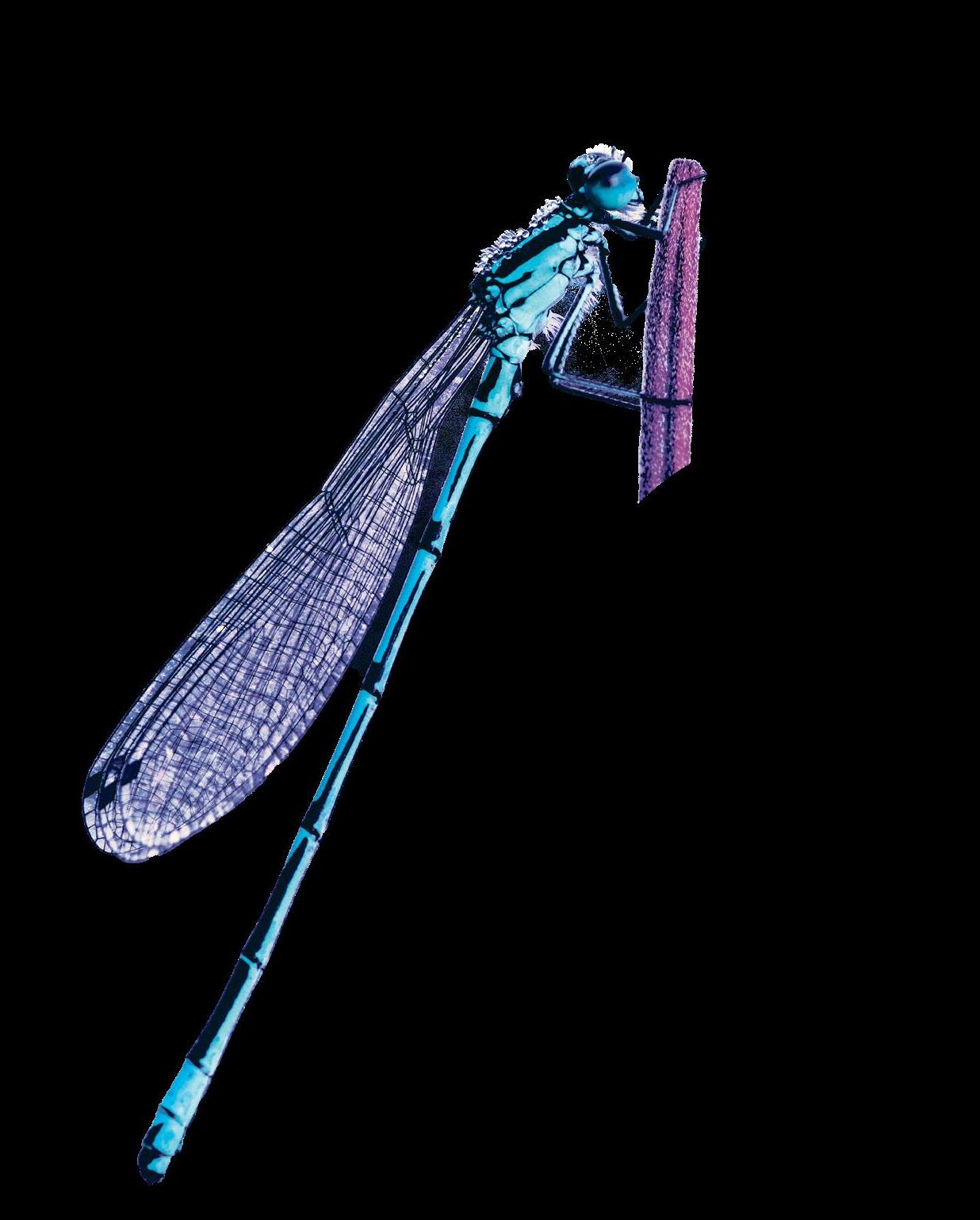
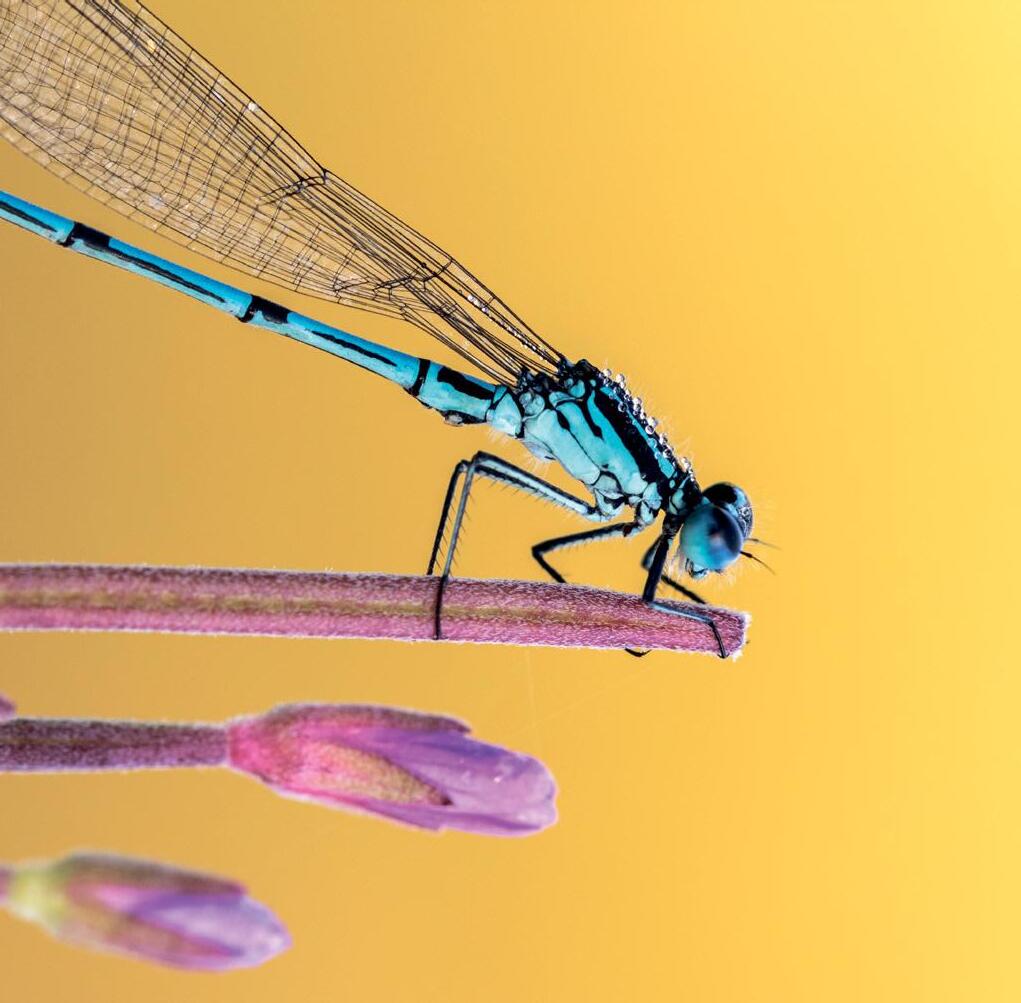
Common blue damselfly Enallagma cyathigerum
When April to October Where Most waterbodies. Visits open water more than other blue damselflies.
Females Blue/dull green and black. Have a spine beneath segment eight (near the end of the body).
Black mark Males
mushroom-shaped
Thorax Broad blue or pale stripes on the top.
Thorax No black spur on the side.
Black mark Males have a U-shaped marking, detached from the black ring below.
Thorax Black spur on the side of the thorax.
Thorax Narrow blue or pale stripes on the top of the thorax.
DISCOVER BRITAIN’S INSECTS
Explore • Identify • Protect