
Everything
Know You About

DR NICK CRUMPTON and GAVIN SCOTT
For S. P. (for everything) N. C. For everyone at St John’s First School in Frome
G. S.
First published 2021 by Nosy Crow Ltd
The Crow’s Nest, 14 Baden Place, Crosby Row London, SE1 1YW www.nosycrow.com
ISBN 978 1 78800 810 5
Nosy Crow and associated logos are trademarks and/or registered trademarks of Nosy Crow Ltd.
Text © Nick Crumpton 2021 Illustrations © Gavin Scott 2021
With thanks to Susie Maidment at the Natural History Museum, Elsa Panciroli, Mike Taylor, Phil Mannion, Thomas Halliday, James Neenan and all the dinosaur palaeontologists included who prove dinosaurs aren’t just for boys.
Very special thanks to my colleague and friend Jon Tennant – N. C.
The right of Nick Crumpton to be identified as the author and Gavin Scott to be identified as the illustrator of this work has been asserted.
All rights reserved.
This book is sold subject to the condition that it shall not, by way of trade or otherwise, be lent, hired out or otherwise circulated in any form of binding or cover other than that in which it is published. No part of this publication may be reproduced, stored in a retrieval system, or transmitted in any form or by any means (electronic, mechanical, photocopying, recording or otherwise) without the prior written permission of Nosy Crow Ltd.
A CIP catalogue record for this book is available from the British Library.
Printed in China.
Papers used by Nosy Crow are made from wood grown in sustainable forests.
1 3 5 7 9 8 6 4 2
Contents
Introduction
All the dinosaurs lived at the same time
All dinosaurs became fossils
Dinosaurs are only dug up in deserts
Dinosaurs are extinct
Dinosaurs ruled the Earth
All dinosaur names are hard to say
Dinosaurs were either ‘lizard − hipped’ or ‘bird − hipped’
All dinosaurs were enormous
Dinosaurs were green and scaly
Dinosaurs weren’t very smart
Dinosaurs could roar
Dinosaurs were mean
Long − necked dinosaurs all looked the same
Tyrannosaurus rex was the biggest predator
Tyrannosaurus rex could outrun you
Dinosaurs were cold − blooded
Dinosaurs only lived on land
Baby dinosaurs looked like their parents
Dinosaurs snapped their jaws like crocodiles
Theropods only ate meat
Raptors slashed their prey
Dinosaurs could be brought back to life
We’ve always known what dinosaurs looked like
We’ve found all the dinosaurs
There’s no such thing as a Brontosaurus
Palaeontologists spend their days digging
Dinosaurs are just for boys
Now we know it all
Glossary
Introduction
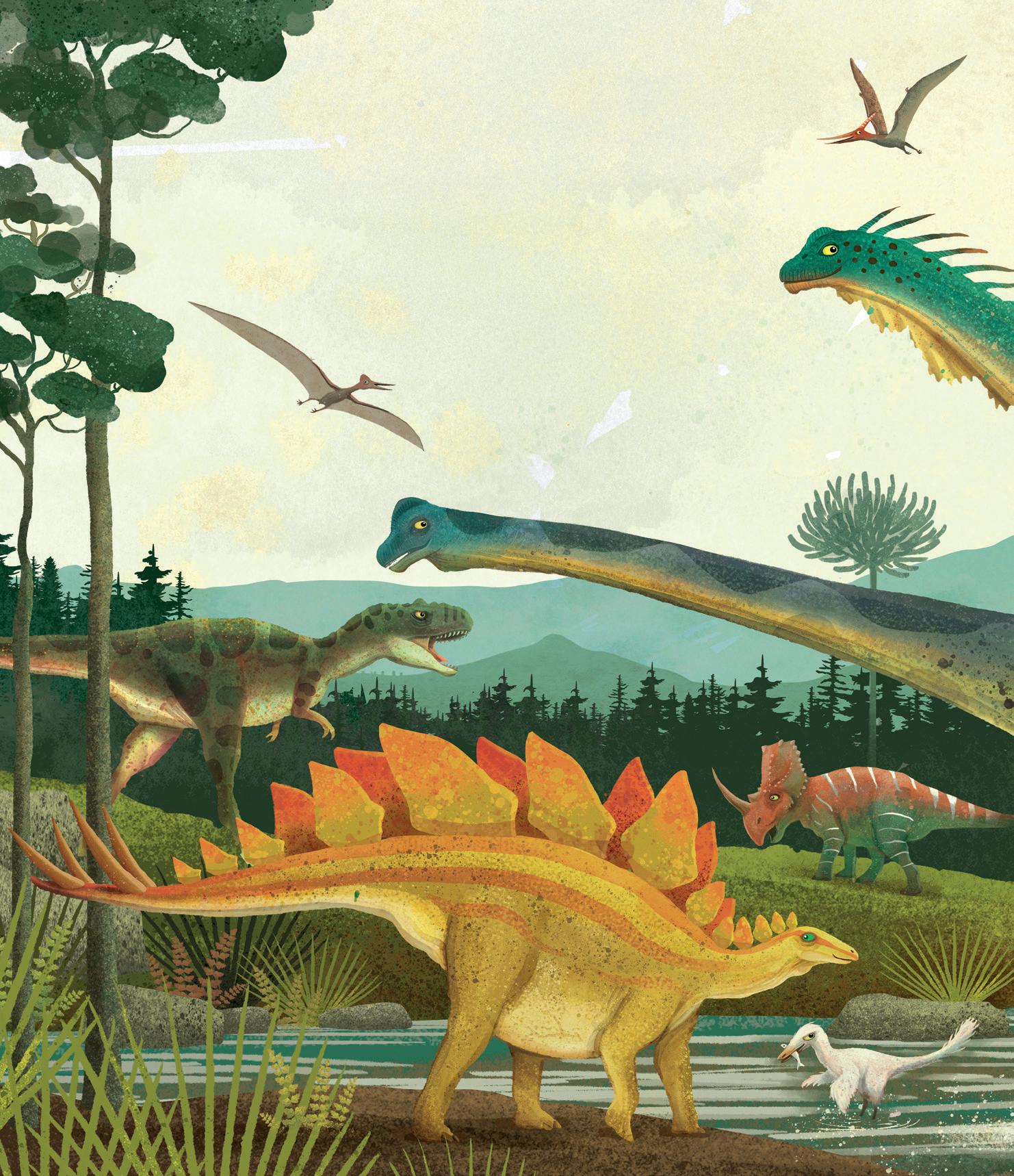
The dinosaurs we re animals that ruled the Earth for millions of years, during a time called the Mesozoic era, until they were all wiped out in a mass extinction 66 million years ago. Everyone knows that!
Now why on earth are you holding A NO T HE R book about dinosaurs? Don’t you know everything about TYRANNOSAURUS, TRIC ERATOPS and DIPLODOCUS already?
Well, this book is here to show you that, actually . . . everything you know about dinosaurs is WRONG!
Don’t worry though – it’s not your fault. It’s because most of the facts you have learnt about dinosaurs have been told to you by grown-ups. But the thing about grown-ups is that they are all old . . . and the facts they know are old too!
And the funny thing about facts – especially old ones – is that, sometimes, they can be proved wrong when new discoveries are made.
In fact, the whole way science works is based on the idea that things can always be proved wrong if there’s enough new evidence to show that they’re not true. WHY is all this important?
Because over the last few years, scientists who study animals from the past, called palaeontologists, have discovered so many amazing, awesome, tiny, huge, weird, scary and cute new fossils of dinosaurs – now we KNOW that lots of things we THOUGHT we KNEW about dinosaurs are WRONG! So, fancy showing everyone how wrong they are? Get ready to UN-learn about dinosaurs!
All the dinosaurs lived at the same time
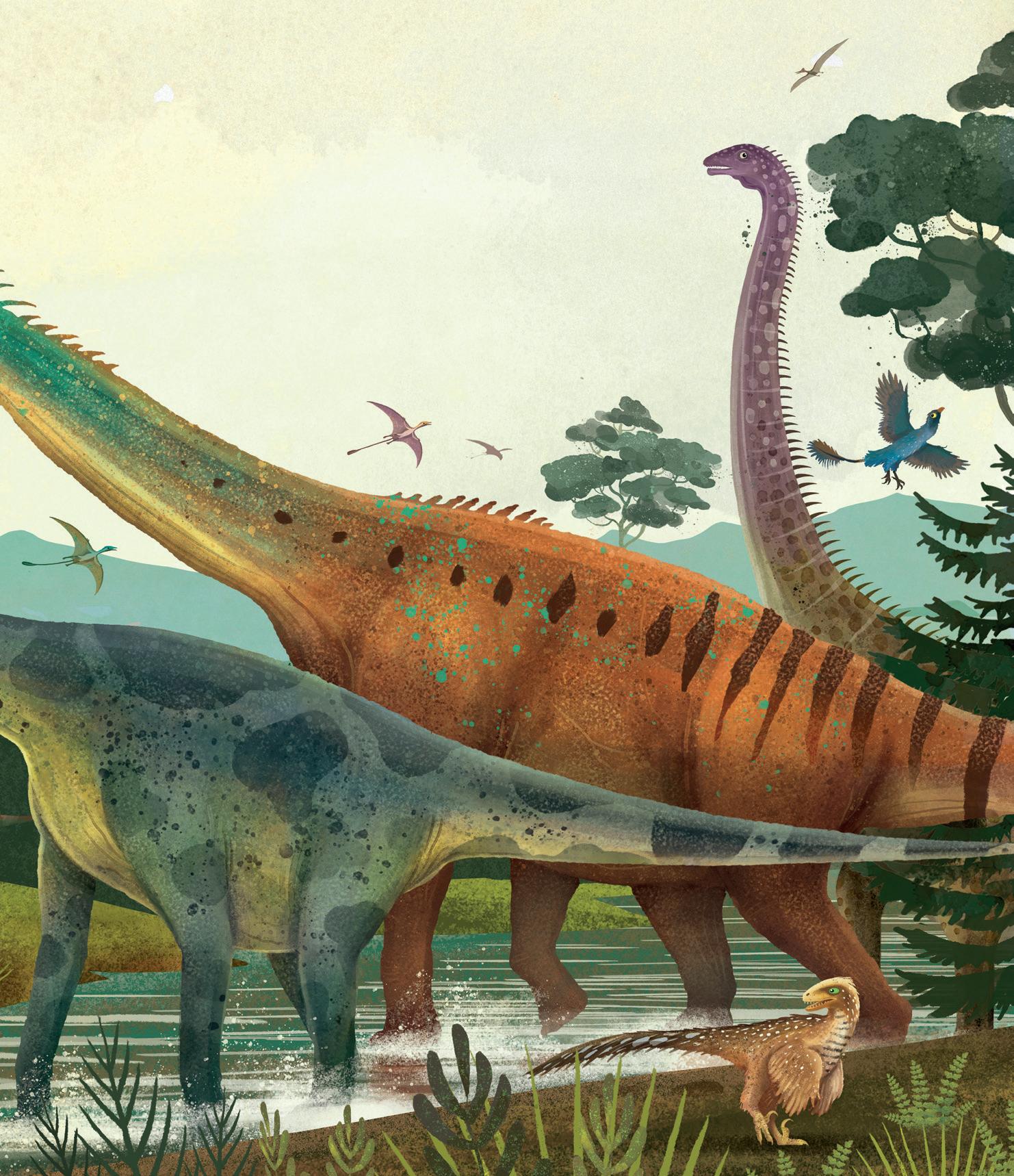
A lot of people think that all the dinosaurs lived at the same time: that dinosaurs like STEGOSAURUS, TYRANNOSAURUS and PLATEOSAURUS roamed the Earth together throughout the ages. In fact, different types of dinosaurs only lasted for two or three million years each, and only a few of the more famous dinosaurs ever lived together.
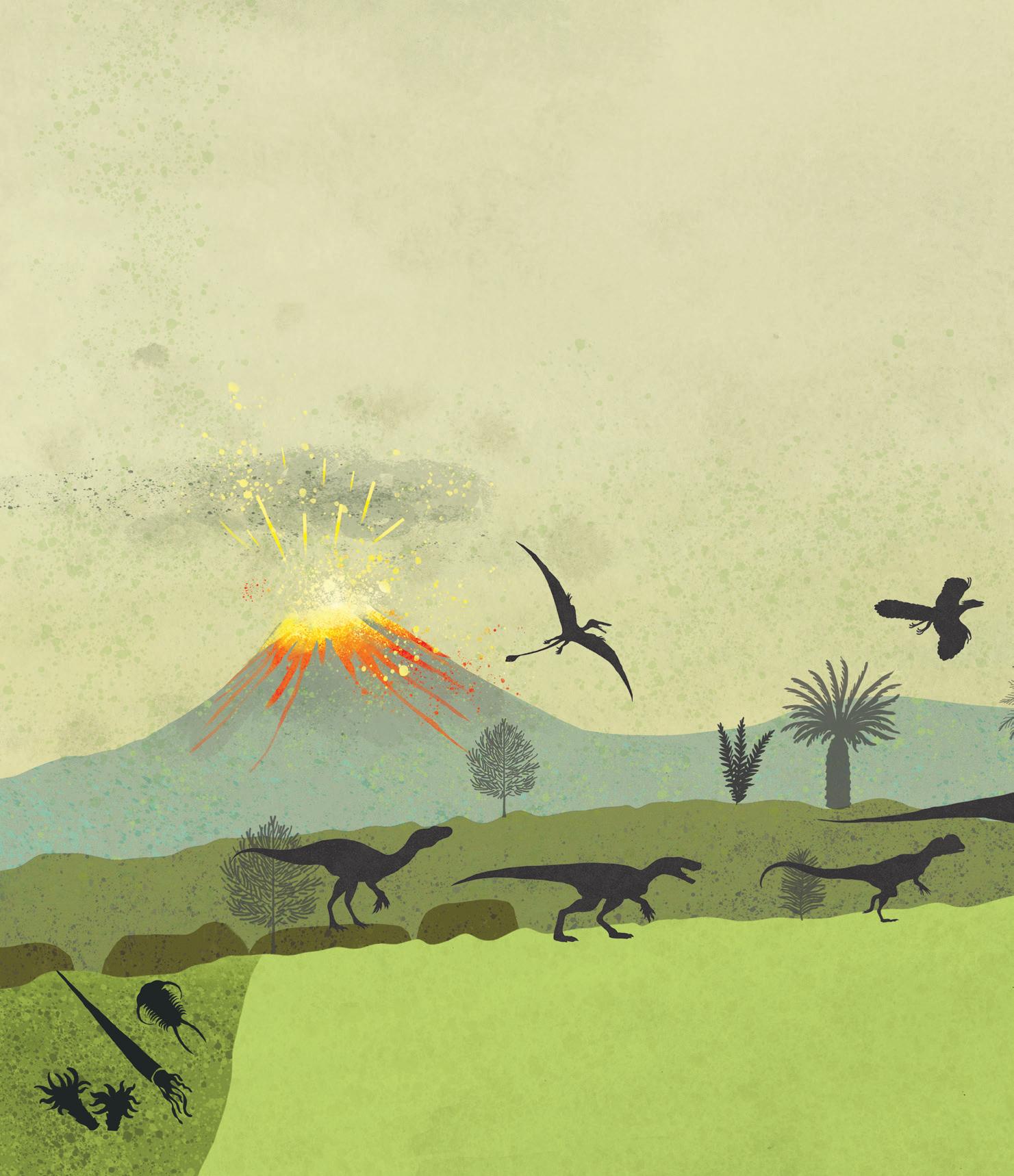
The dinosaurs lived during the TRIASSIC, JURASSIC and C RETAC EOUS periods huge blocks of time that stretched over the dizzyingly long ‘ MESOZOIC ERA’. It’s sometimes very hard to get your head around just how long this era and the dinosaurs themselves lasted.
palAeozoic era
The geological era before the Mesozoic, lasting from 541 to 252 million years ago.
Mesozoic era M AS S E XT I NC T IO N
The time between about 252 to 66 million years ago, also known as ‘ The Age of Dinosaurs ’
Triassic PERIOD
One of the very earliest dinosaurs we know about was NYASASAURUS from 243 million years ago. It was small and speedy, but we only know about it from a few bones. In fact, some palaeontologists aren’t even sure if it was a true dinosaur, as it lived over 10 million years before other animals we know definitely were dinosaurs, like EODROMAEUS and GNATHOVORAX. The earliest dinosaurs we’re sure were actually dinosaurs lived in the Late Triassic and it was during this time that we can find the ancestors of other, more famous dinosaurs.
Jurassic PERIOD
During the Jurassic, the Earth was a wetter world than during the Triassic, and it was the period when the dinosaurs became very successful. It lasted a very long time – the distance in time between DILOPHOSAURUS and BRAC HIOSAURUS was 40 million years!
I n fact, dinosaurs like TYRANNOSAURUS , which appeared in the Cretaceous period, lived so long after the Jurassic dinosaurs like STEGOSAURUS that TYRANNOSAURUS lived closer in time to YOU than it did to them!
Dinosaurs from the beginning of the Mesozoic era and those at the end were separated by all this time, but palaeontologists, looking at lots of fossils together, love to track how dinosaurs evolved through time: how dinosaurs and their descendants changed shape. For example, STEGOSAURUS and its relative ADRATIKLIT looked quite similar, but parts of their skeleton as well as their spikes and plates, looked very different. They lived about 12 million years apart! To realise how long that is, 12 million years before today, giant ground sloths, three-toed horses and sabre-toothed tigers still walked the Earth!
Different dinosaurs lived at different times, and the length of time from the first to the last dinosaurs is almost impossible to understand. Palaeontologists only ever find fossils from tiny portions of time. Understanding the Mesozoic era is like trying to understand a whole story from just a few torn out pages of a book. The more fossils palaeontologists find, the more pages of the story they discover!
The current and most recent geological era, spanning 66 million years ago to the present day.
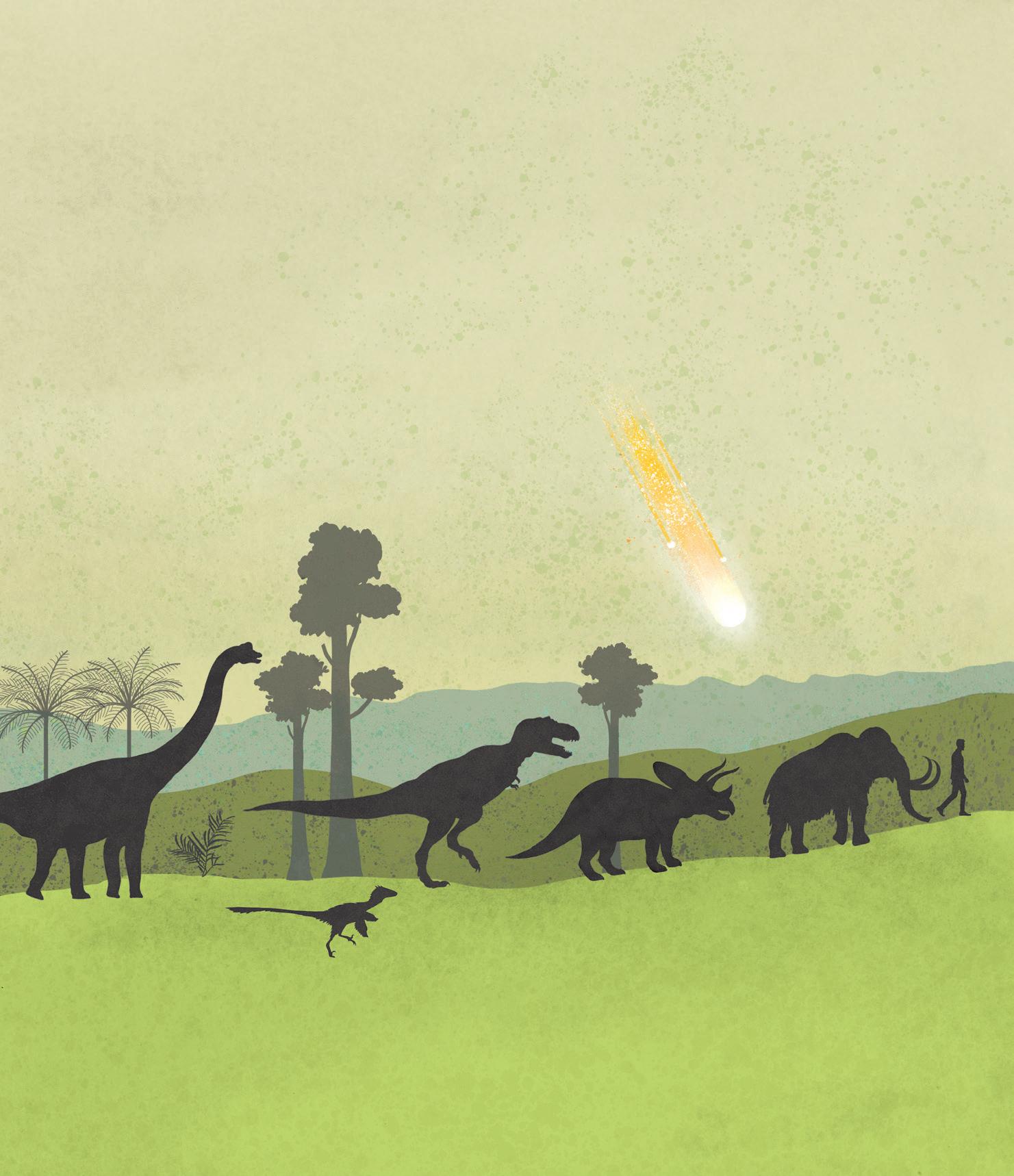
The Cretaceous was the time when the Earth began to look more like one we would recognise. More flowers evolved and the continents looked similar to how we see them today. By the start of this period, the dinosaurs had been on Earth for 100 million years – over 100 times longer than modern humans have existed for!
Cretaceous PERIOD
cenozoic era
All dinosaurs became fossils
Everything we know about dinosaurs comes from fossils, so we depend a lot on finding them. But there’s a problem . . . a bone becoming a fossil hardly E VE R happens. It is an incredibly rare event and the chances of one single bone being fossilised is about one in a billion!
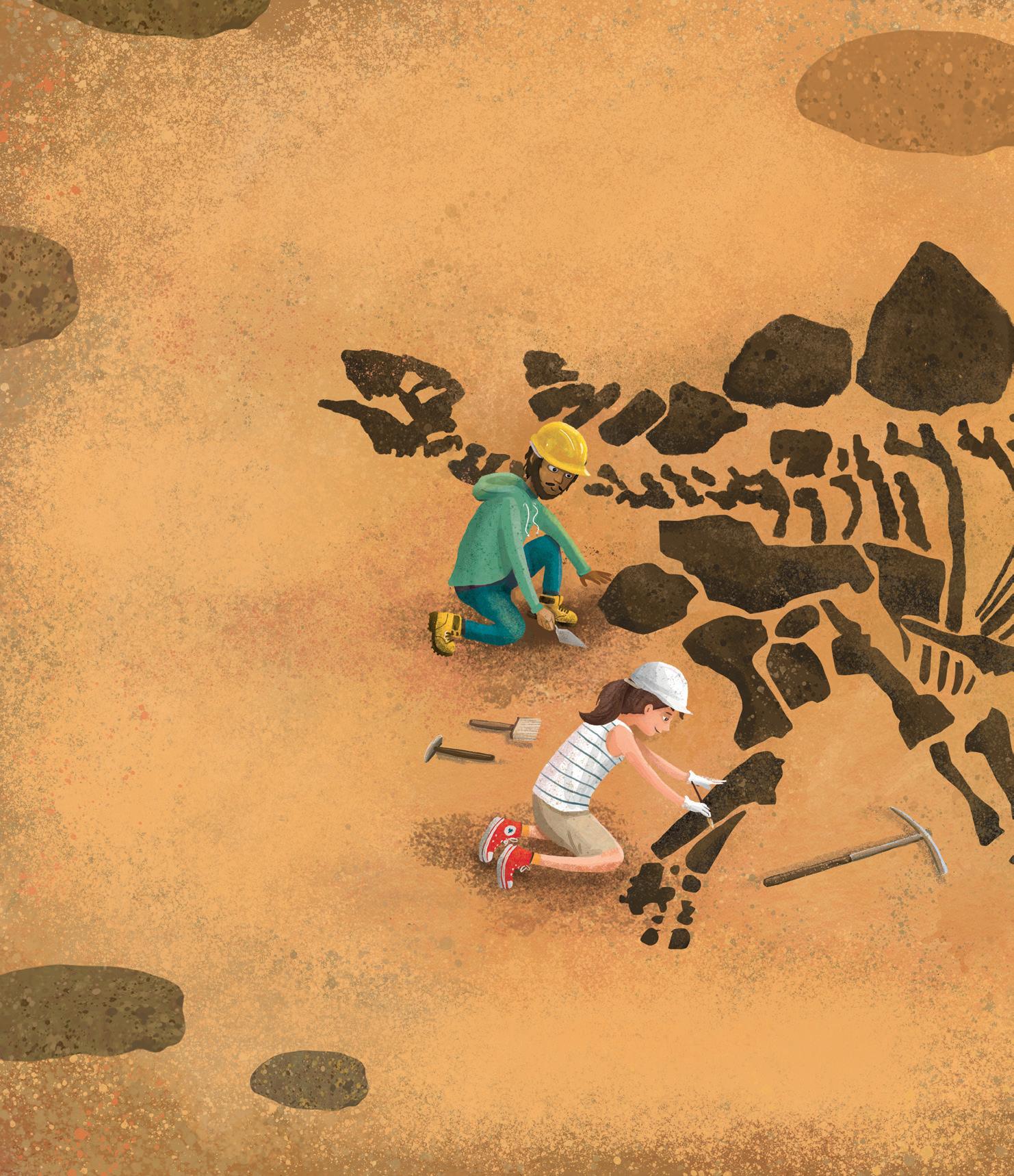
It’s almost impossible for a bone to be fossilised if an animal lived in a dry place like up a mountain, or in a damp, moist place like a rainforest, where animals rot very quickly.
But at any one time during the Mesozoic era, perhaps millions of dinosaurs might have been alive all over the world.
And dinosaurs existed for millions of years! We’ve only been hunting for their fossils for just over 150 years so there must be hundreds of thousands of fossils still in the earth just waiting to be discovered!
AND every year the wind strips away more soil from the surface of the Earth, and the sea bashes away more rocks from the world’s cliffs, which means we’ve still only seen the very top layer of fossils held within the ground.
Most fossils are found in very fine stones which were once layers of squishy, soft mud.
The best fossil sites in the world were once floodplains – areas of soggy land next to lakes or rivers. Like Auca Mahuevo in Argentina (where SALTASAURUS was discovered), or the Dinosaur National Monument in North America (where STEGOSAURUS was excavated).
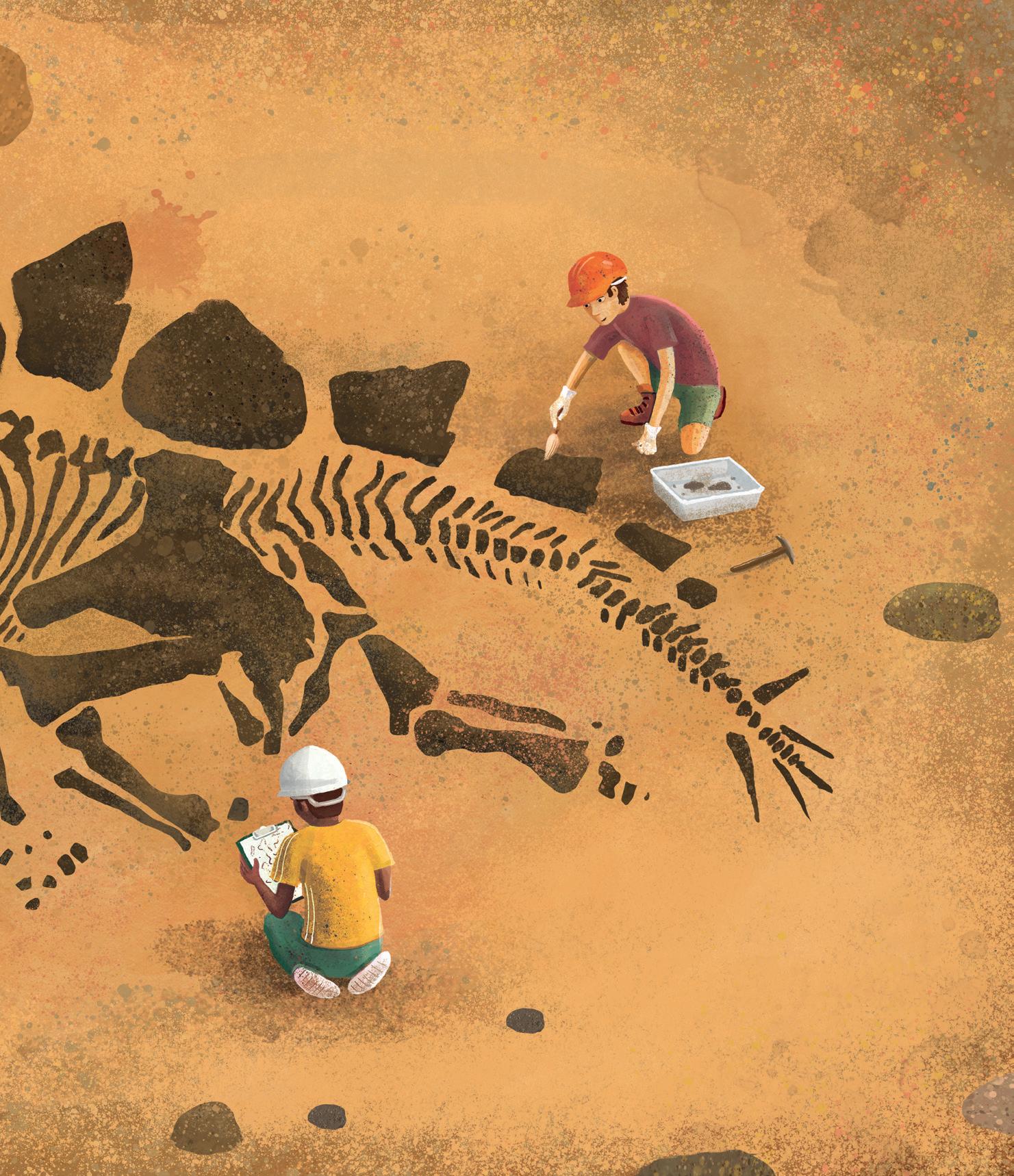
A lot of these places are now very dry. The rock gets worn away quite quickly by the wind, exposing the glorious fossils they have been hidden for millions of years.
Because dinosaurs were more likely to be fossilised near to rivers, those that liked to drink and relax around these areas – and the clumsy ones who would fall into the water – are the ones we know about today.
All this means that pretty much every dinosaur that E VE R lived disappeared without a trace! Who knows what fascinating dinosaurs might have lived in dry woodlands, arid deserts, and rocky mountains?
Dinosaurs are only dug up in deserts
It’s true that dinosaurs are often found on the surface of the Earth where plants don’t cover the ground and soil has been removed – in places just like rocky deserts. Here, palaeontologists can get straight down to the ground to examine very old rock that sticks up above younger rock. But there are other places to find dinosaurs . . .
The exposed wall of a cliff is an excellent place to look back in time by looking closely at the ground. As waves crashed into the cliffs at Lavernock Point near Cardiff in Wales, they started slowly breaking down the stone to reveal the fossilised bones of the Triassic DRAC ORAPTOR!
But you don’t need a crashing ocean to wear away the ground. The remains of the small ceratopsian
LEPTOC ERATOPS were discovered after floods wore away the banks of Red Deer River in Alberta, Canada.
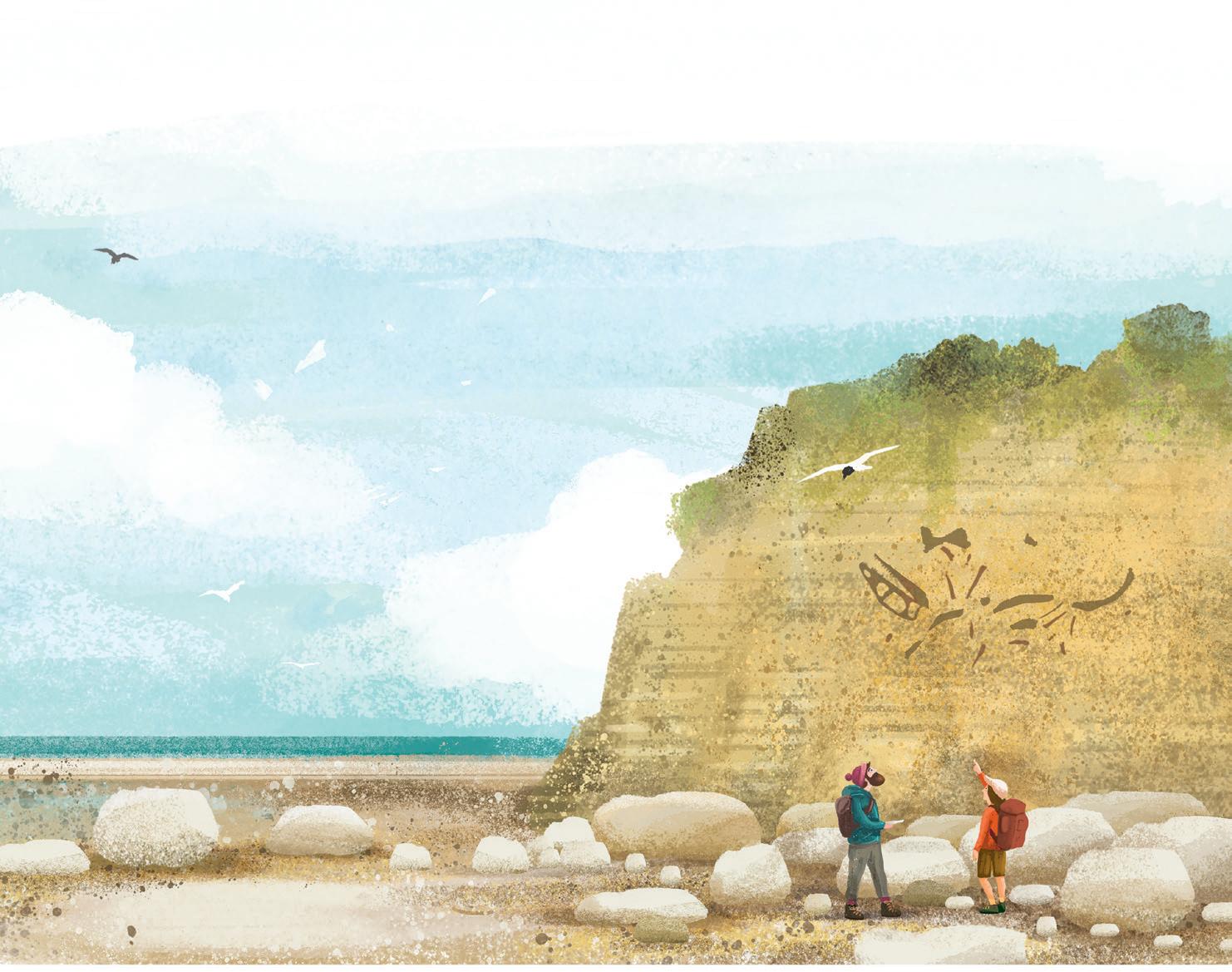
*It’s very, very dangerous to search for fossils near cliffs – so please leave this to the professionals!*
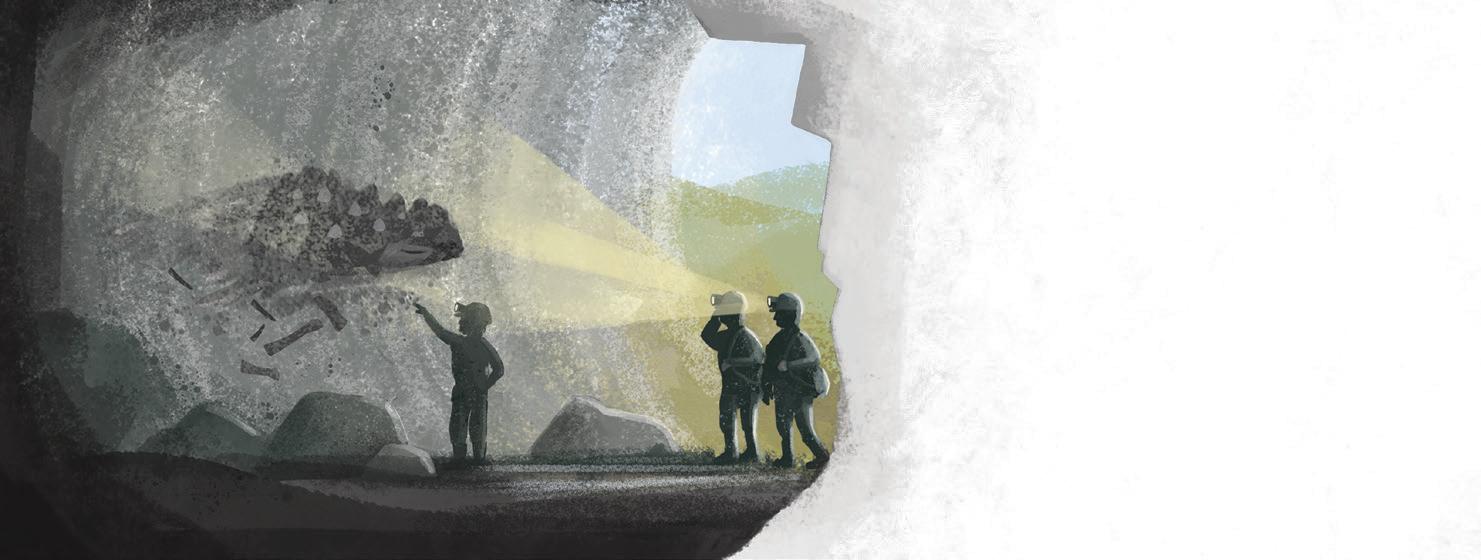
Digging into the ground is a sure-fire way to discover fossils. When miners were digging into the rocks of Canada looking for a type of oil, they discovered instead the fossilised remains of BOREALOPELTA complete with its skin, armour, snout and even fossilised lips!
Other mines are dug to search for different materials. FULGUROTHERIUM and MUTTABURRASAURUS from modern-day Australia were discovered by miners trying to find opal – a rare, blue stone some people like to wear as jewellery. Some of the dinosaurs’ bones actually fossilised into this precious stone, which means they are very pretty . . . and worth a LOT of money.
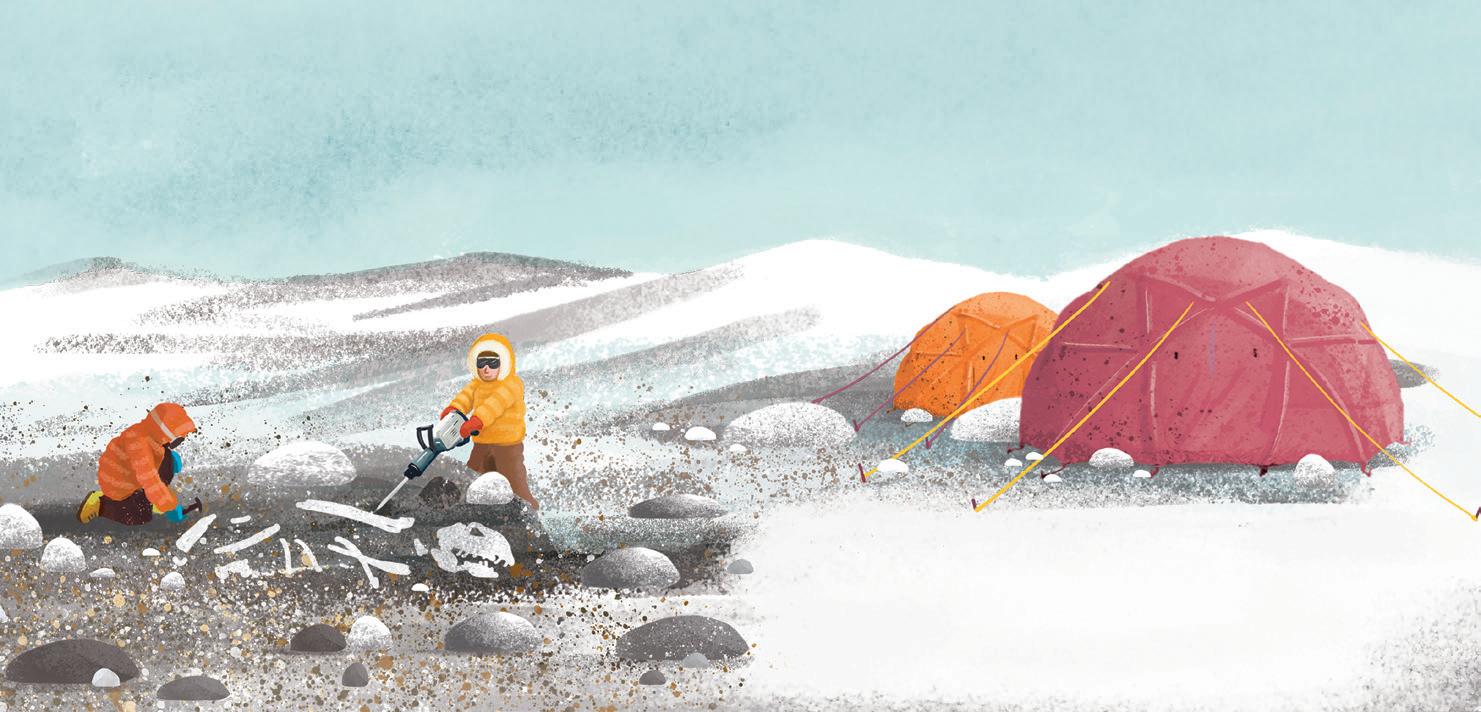
Some places where palaeontologists find fossils are very hard to get to and haven’t been visited by many people before.
On the slippy side of Mount Kirkpatrick near the Beardmore Glacier in Antarctica, palaeontologists needed to use a powerful jackhammer to discover C RYOLOPHOSAURUS in the thick polar rock.
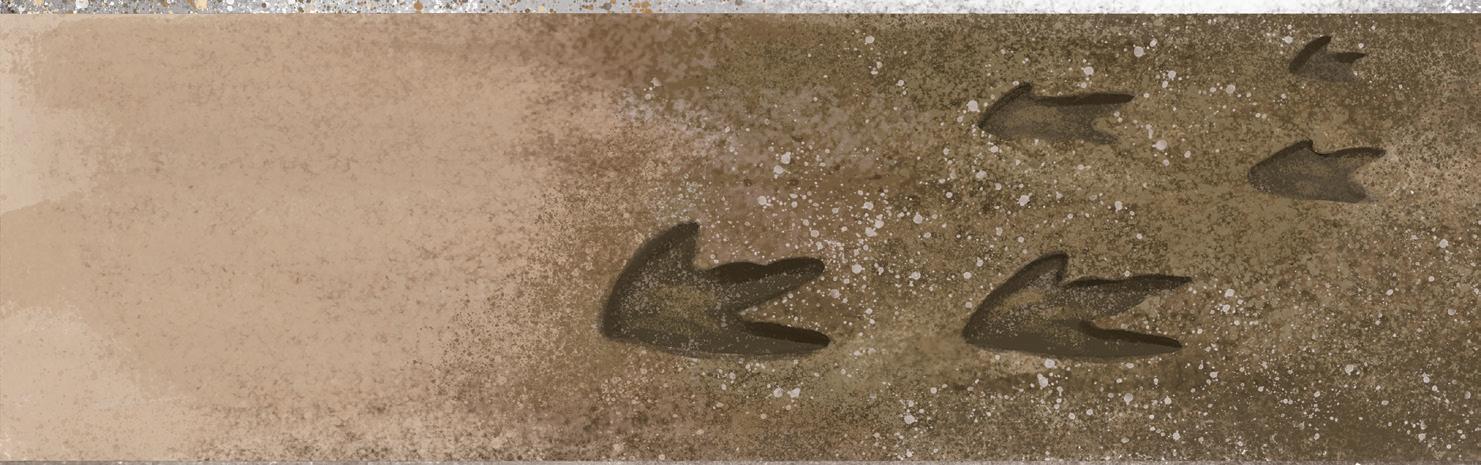
Traces of dinosaurs have been found on the Isle of Skye in the Inner Hebrides, off the coast of Scotland. A large collection of footprints were discovered on the tilted, rocky shore and palaeontologists clamber over miles of slippery, seaweed-covered rocks to study them. The coastline can be very blustery and cold in the winter, and swarming with midges in the summer!
It is very hard to work in Antarctica because of the frozen ground and terrible cold. ANTARC TOPELTA took almost IO years to take out of the ground on James Ross Island, off the Antarctic Peninsula. Its name means ‘Antarctic shield’ because of its heavy armour and where it was discovered.
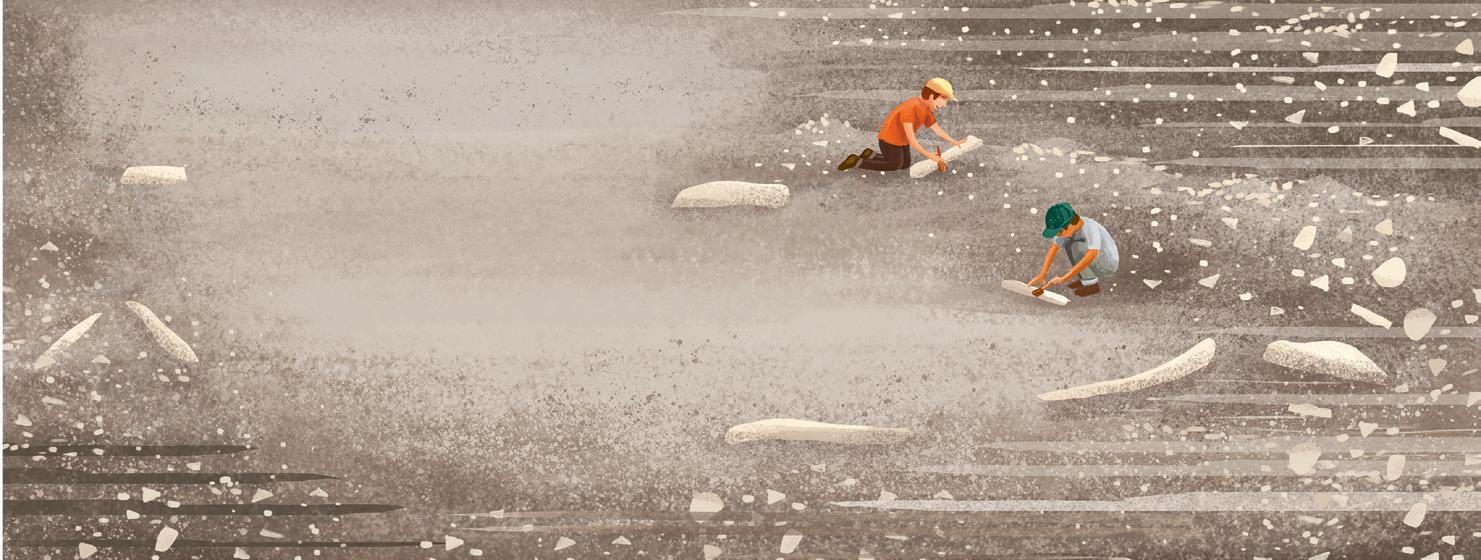
Some places are much easier to find fossils in though. In Liaoning Province, Northeast China, a lot of beautiful fossils are found on hillsides by farmers, who discover delicate dinosaurs on thin slabs of rock on their land.
Opal mines, polar islands and slippery cliffs . . . so it’s not just deserts after all!