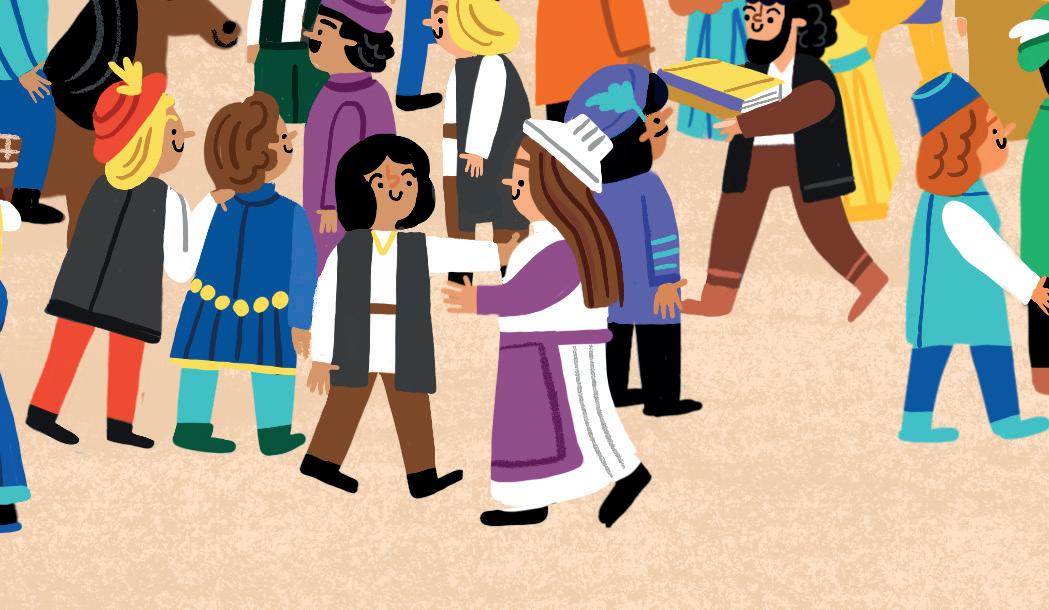





































Michelangelo was born in 1475 and spent much of his life as an artist in Florence, Italy. Michelangelo lived in Florence during a time known as the Renaissance, a period of time over 500 years ago when people believed in bringing new ideas to art, business and politics, as well as continuing existing religious beliefs. Florence was a rich city that celebrated artists, so it was a perfect place for Michelangelo to grow up. As well as being known for its art, the people of Florence loved throwing sporting events, festivals and parties, including grand balls! Some of the places that Tom visits in this book may not have existed together at the same time, but they were all part of Renaissance Florence's culture and history.




























First published 2022
Nosy Crow Ltd
The Crow's Nest, 14 Baden Place, Crosby Row, London, SE1 1YW, UK
Nosy Crow Eireann Ltd
44 Orchard Grove, Kenmare, Co Kerry, V93 FY22, Ireland
www.nosycrow.com
ISBN 978 1 83994 215 0 (HB)
ISBN 978 1 83994 216 7 (PB)


Nosy Crow and associated logos are trademarks and/or registered trademarks of Nosy Crow Ltd.
Published in collaboration with the British Museum.
Text © Nosy Crow 2022
Illustrations © Fatti Burke 2022








The right of Nosy Crow to be identified as the author and Fatti Burke to be identified as the illustrator of this work has been asserted. All rights reserved.

This book is sold subject to the condition that it shall not, by way of trade or otherwise, be lent, hired out or otherwise circulated in any form of binding or cover other than that in which it is published. No part of this publication may be reproduced, stored in a retrieval system,or transmitted in any form or by any means (electronic, mechanical, photocopying, recording or otherwise) without the prior written permission of Nosy Crow Ltd.

A CIP catalogue record for this book is available from the British Library.
Printed in China. Papers used by Nosy Crow are made from wood grown in sustainable forests.













Page 4 - 5
Page 6 -7
Page 8 - 9
Page 10 - 11




















Page 12- 13
Page 14 - 15
Page 16 - 17
Page 18 - 19
Page 20 - 21
Page 22- 23


Page 24 - 25
Page 26 - 27
Page 28 - 29
Page 30 - 31
Page 32- 33




Tom was an ordinary boy, most of the time. He was clever and brave, and he loved adventure.




Tom’s grandmother, Bea, was an ordinary grandmother, most of the time. She was clever and brave, and a little bit mischievous, and she loved adventure, too. Which was just as well, since her job was digging in the dust and the dirt to discover how people used to live. Granny Bea was an .





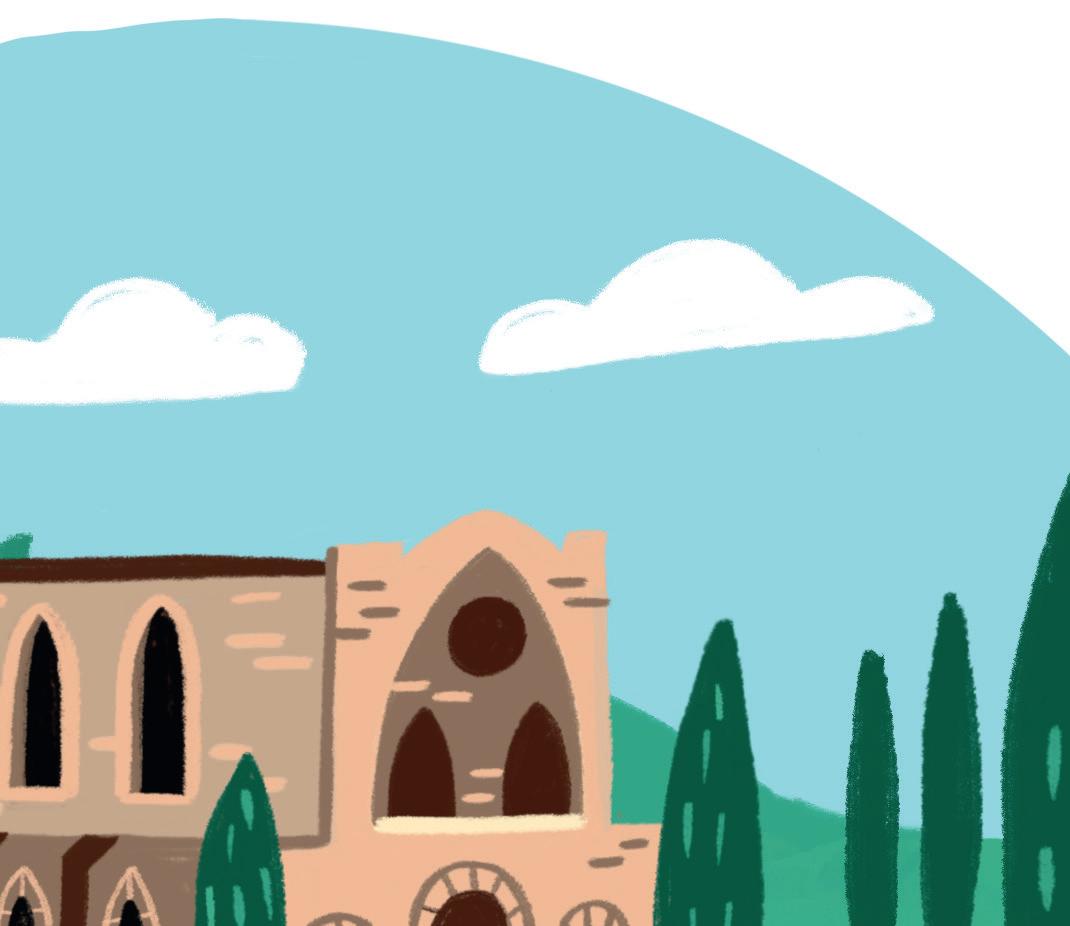
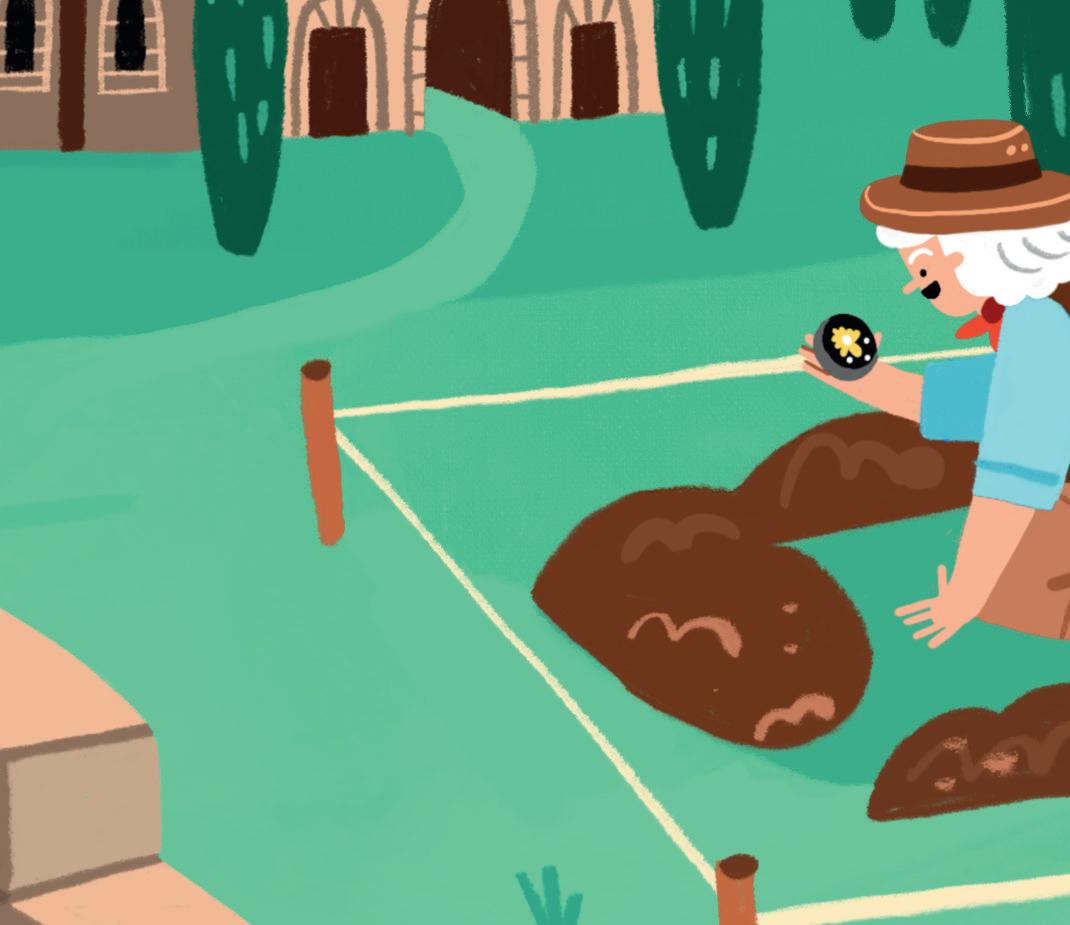




Granny Bea’s cat, Digby, did not like digging in the dust and the dirt. Or getting wet. Or missing his meals. In fact, Digby did not like adventure at all. Especially after what happened the last time Tom came to stay . . . but that’s another story.
One warm, sunny day Granny Bea called Tom up to her study. Digby was sitting on her lap while she inspected something carefully in the sunlight.
“What’s that?” asked Tom, staring at something glinting in her hand.
Granny Bea grinned, holding out her palm. “It’s a hat badge from the time of Michelangelo. He was a famous Italian artist who lived more than 500 years ago, during a time called the Renaissance. In Florence, where he grew up, the people wore beautiful clothing and jewellery.”

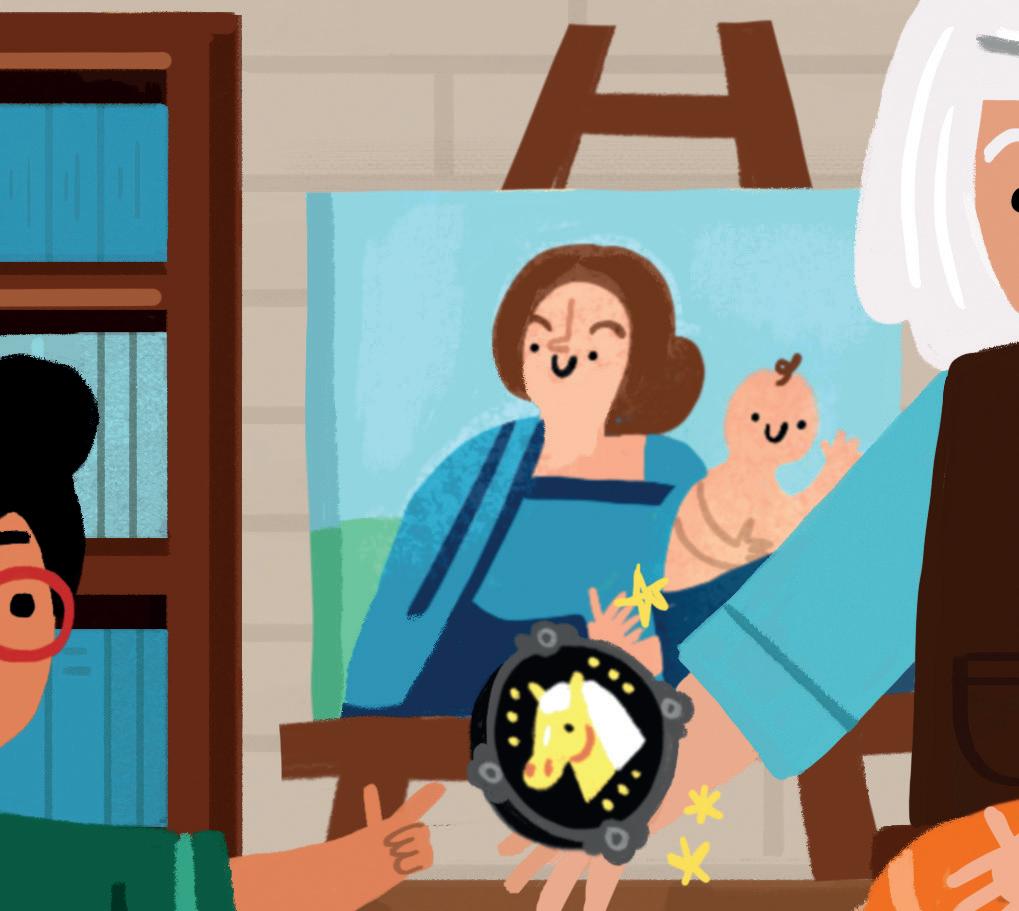
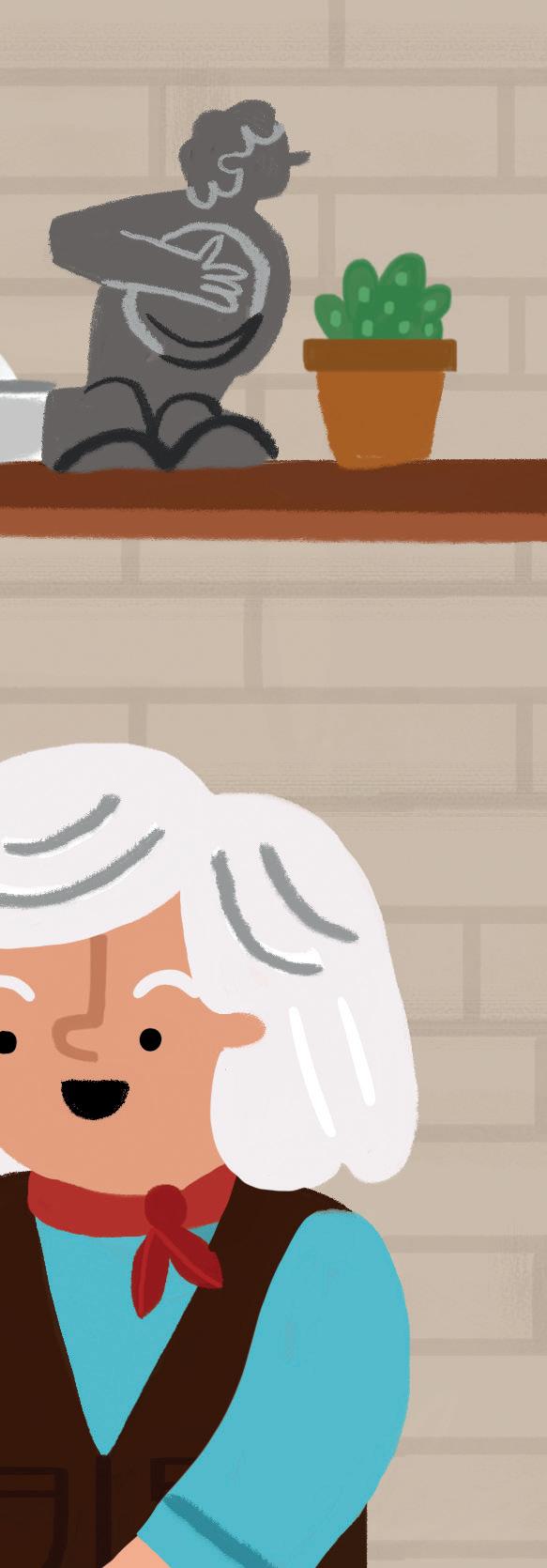
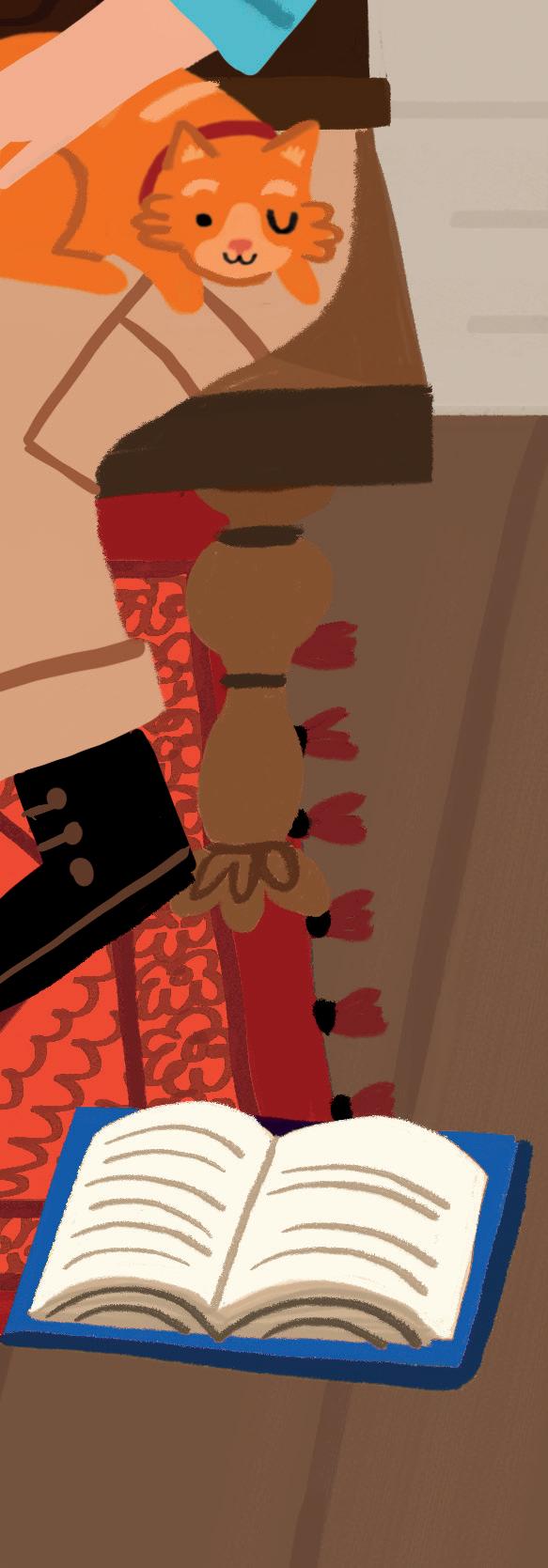
Tom reached out slowly to touch the hat badge and . . .







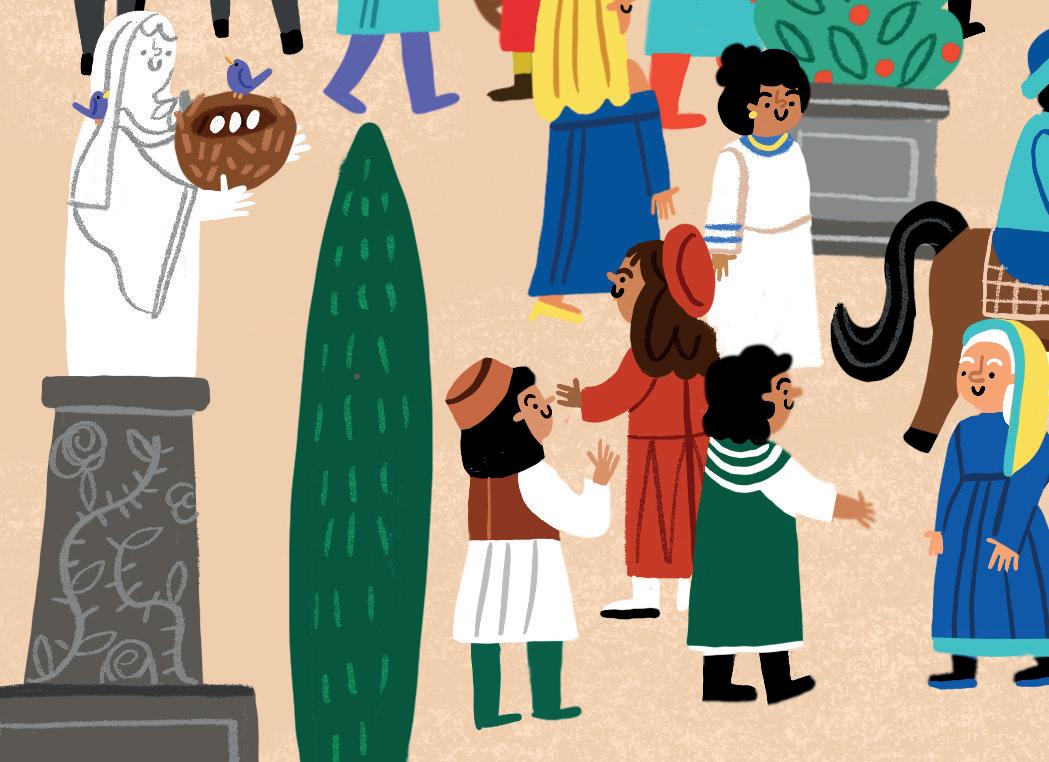
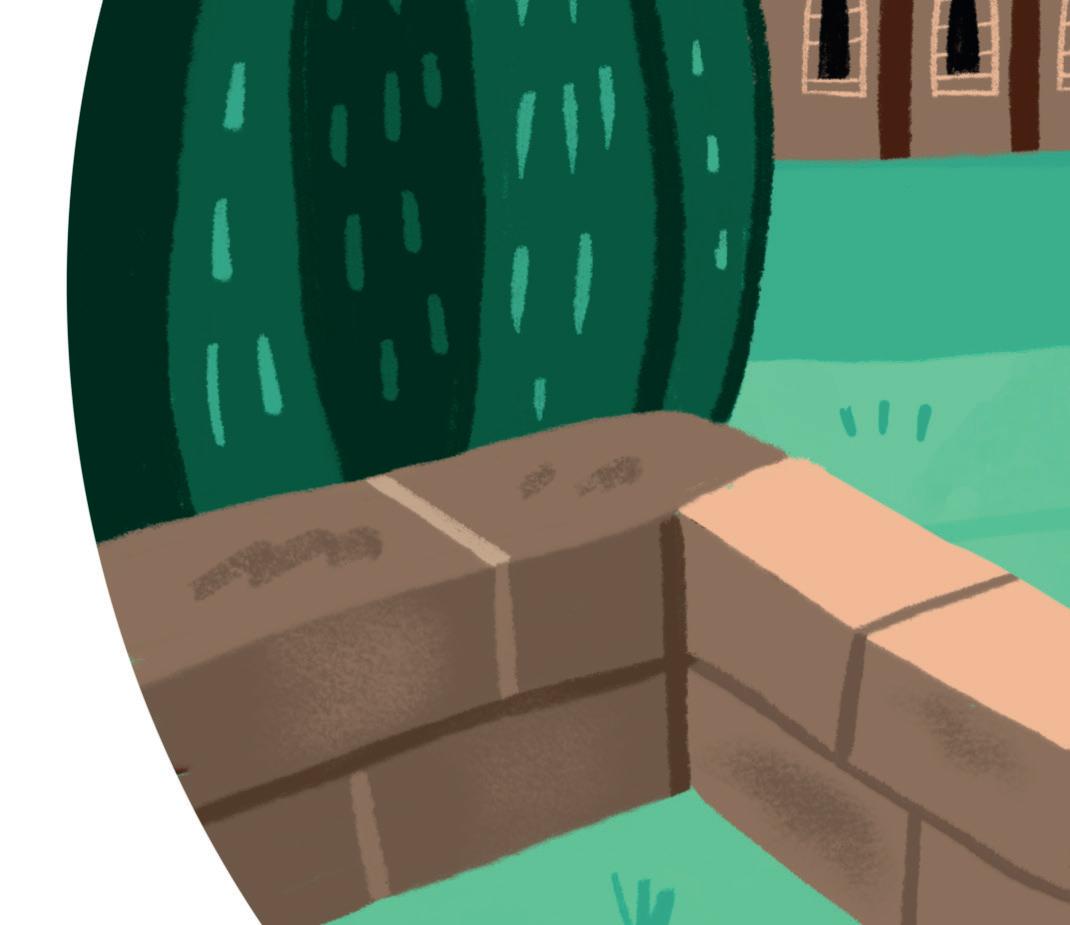
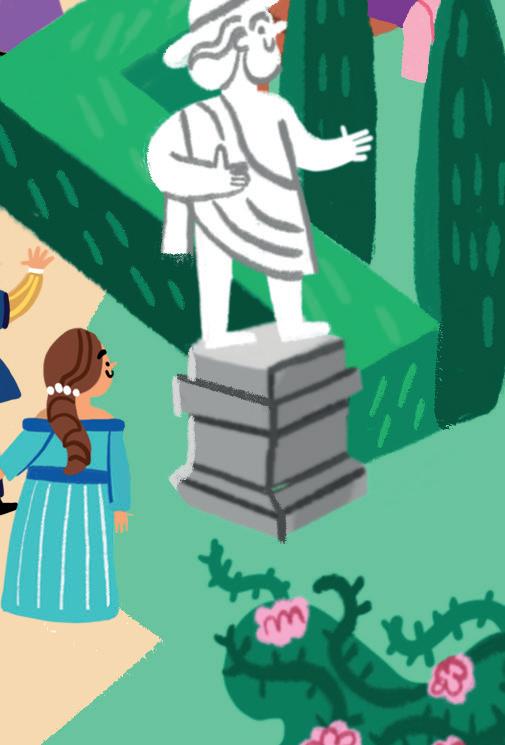
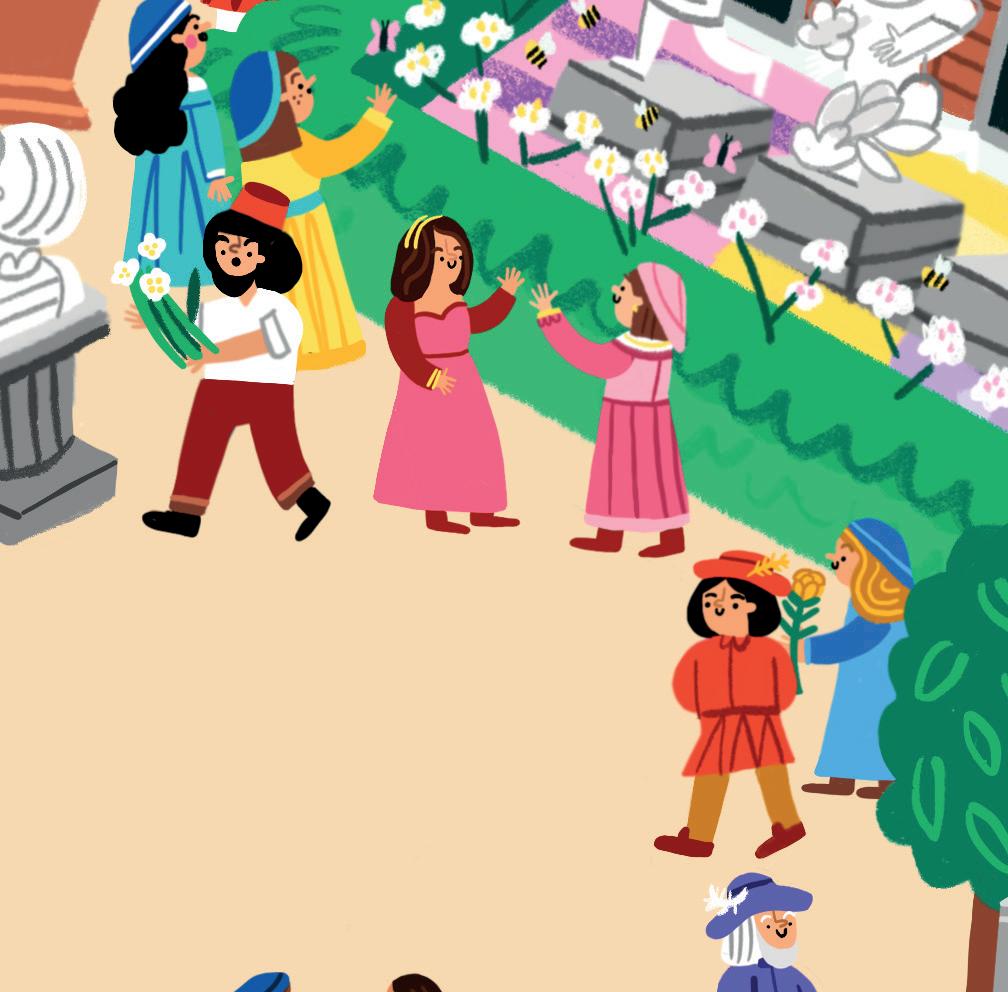
Tom was in Renaissance Florence. This was incredible! He was in some sort of garden, filled with green hedges, flowers and many sculptures.
The garden belonged to the rich family, and was originally designed to display their large collection of Roman sculpture. People during the Renaissance tried to learn from how the ancient Romans taught, wrote, created art and thought about the world. They thought that everyone should have knowledge of as wide a range of topics as possible.
All around, people were reading, enjoying the plants or studying the art. But where was Granny Bea? Suddenly, Tom saw a flash of orange move towards the street. Digby!
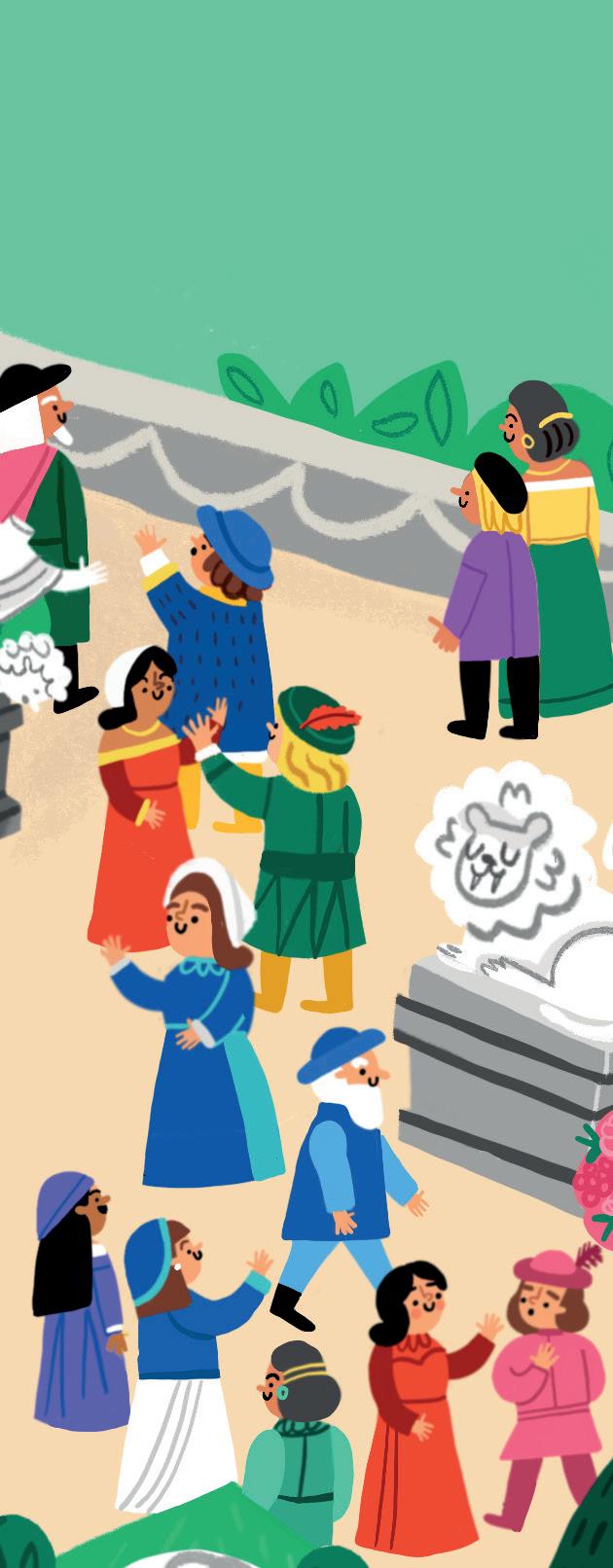
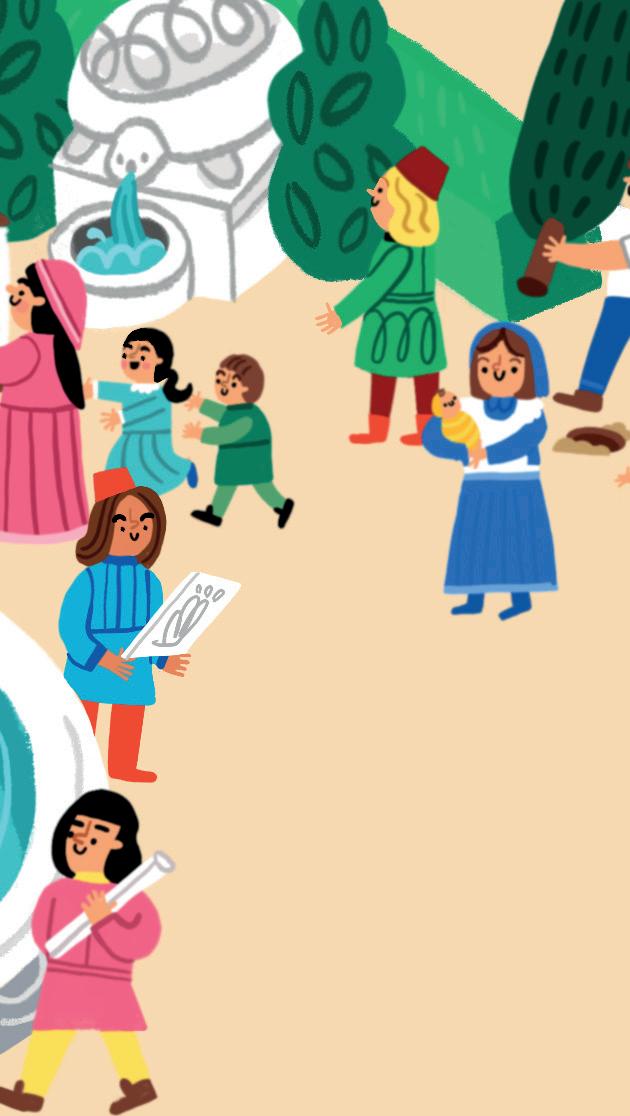
The people of Florence believed that creating architecture and art brought them closer to God. Artists became very important in Renaissance society because they could make the city more beautiful.
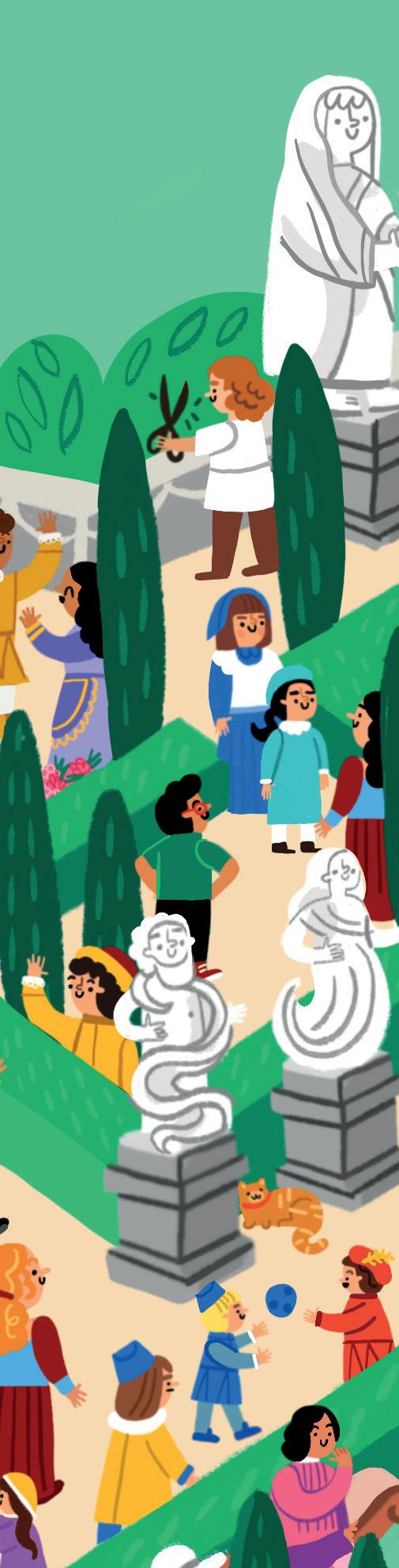




• Tom

• A group of artists sketching a sculpture
• A gardener carrying a tree
• Digby the cat
• Children playing a game of chess
• A statue that has lost its head
• A stonemason moving some marble
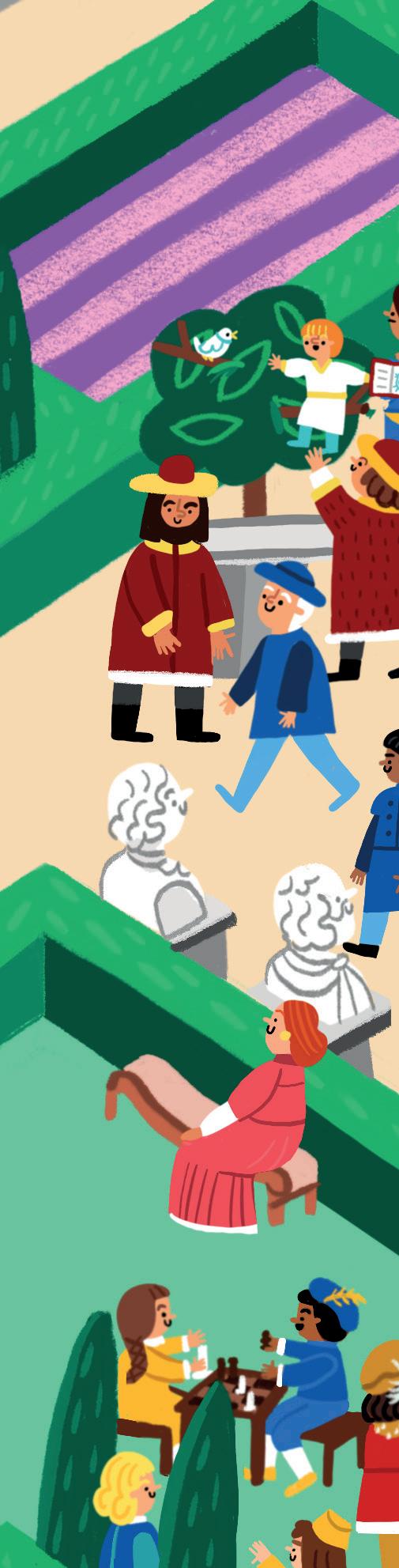

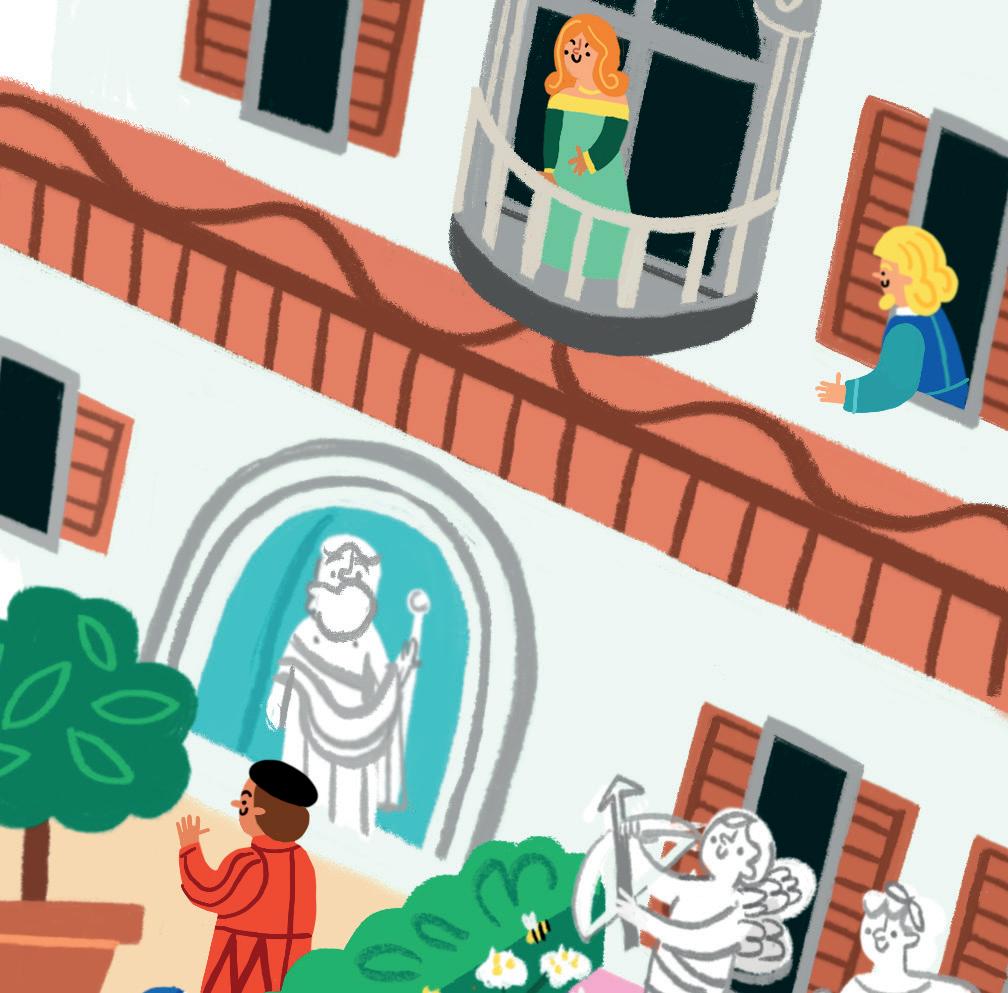
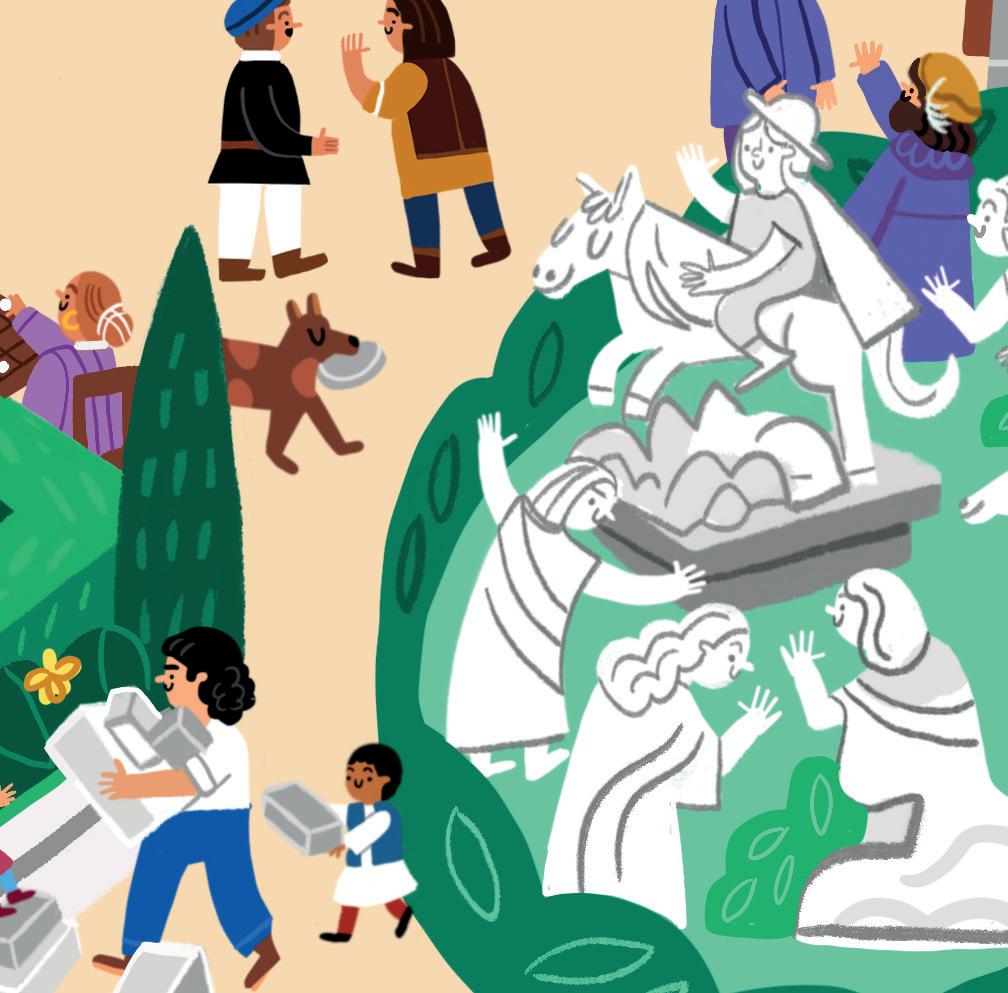
The sculpture garden was a place where artists could come to study and sketch, and there was even a nearby villa where the Medici family allowed some artists to stay while they worked. Solid marble and stone from the garden were also moved and then worked on by in other parts of the city, including in the home of Lorenzo de' Medici, the head of the Medici family.
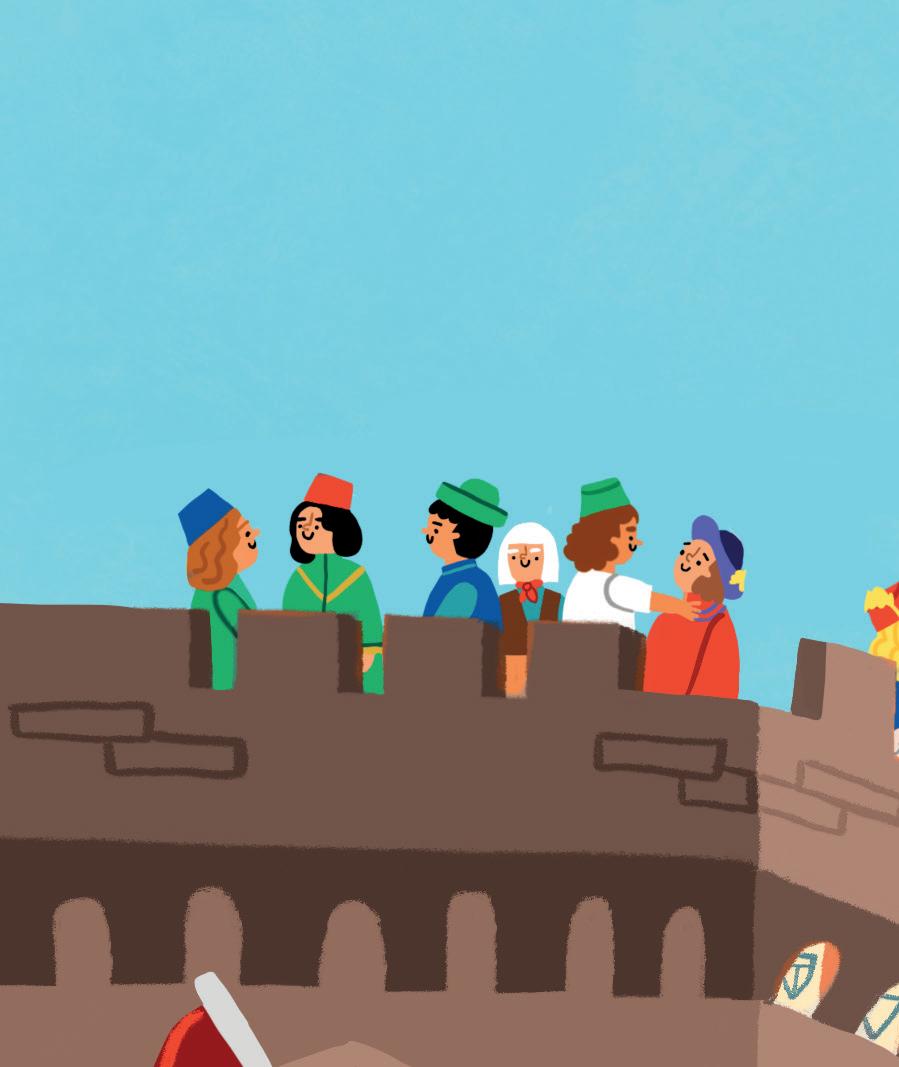


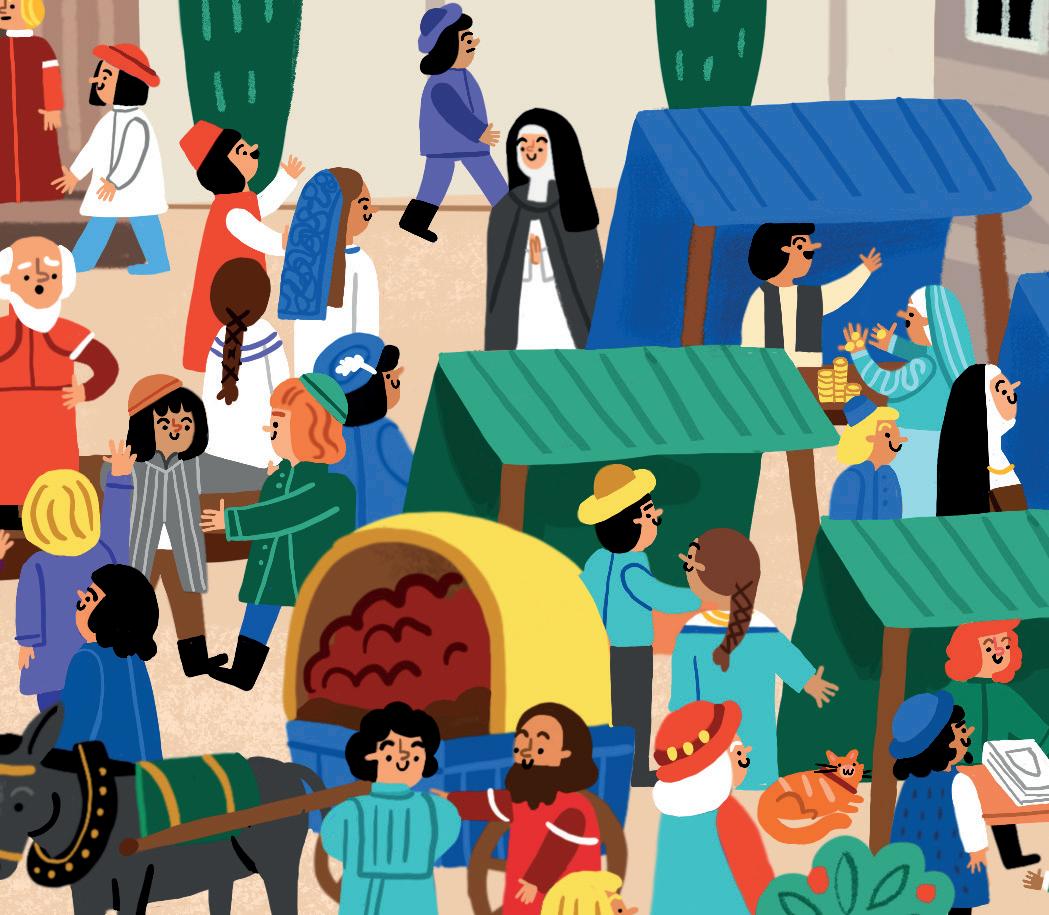
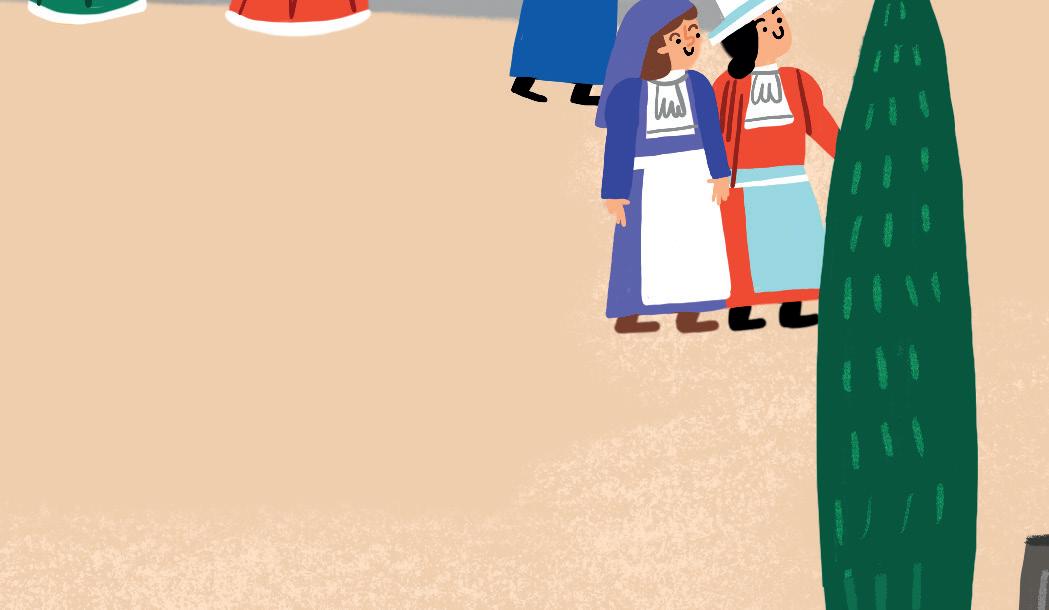
Tom raced out of the garden and down narrow streets until he reached a busy square. All of the people there were wearing tunics or dresses.
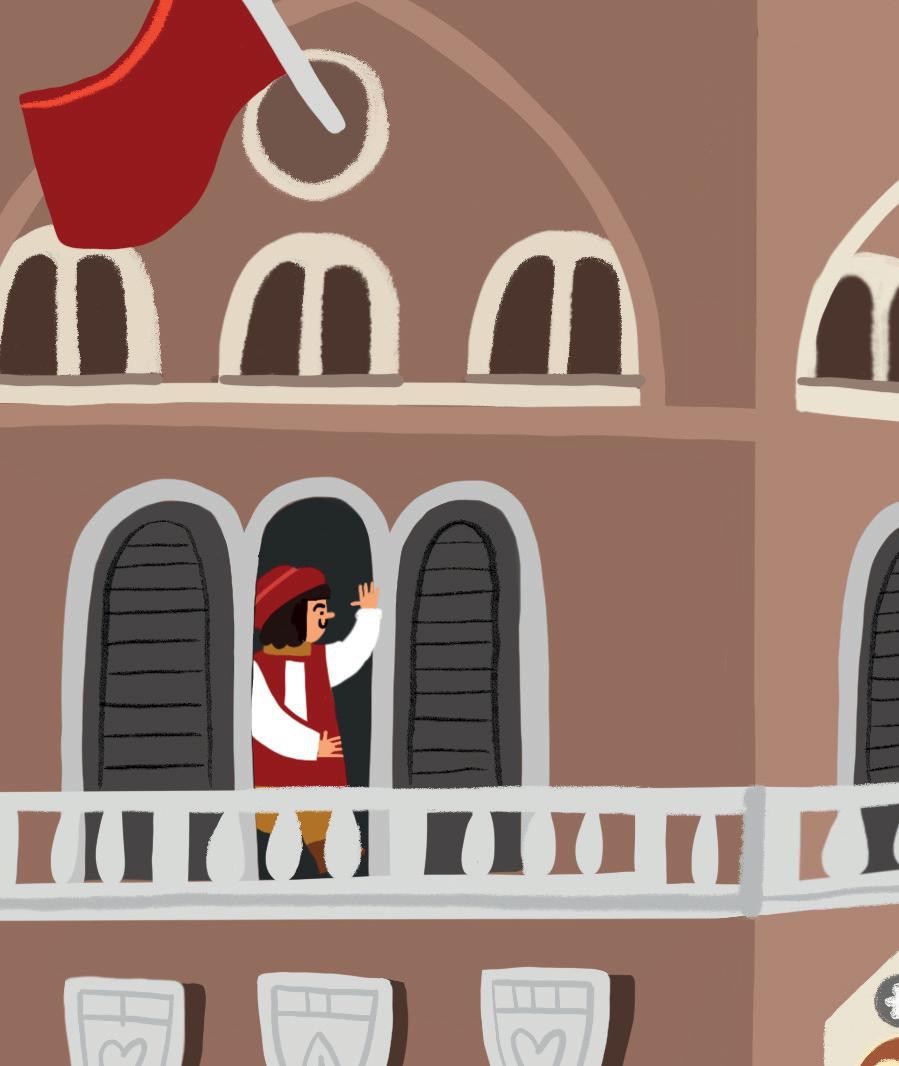
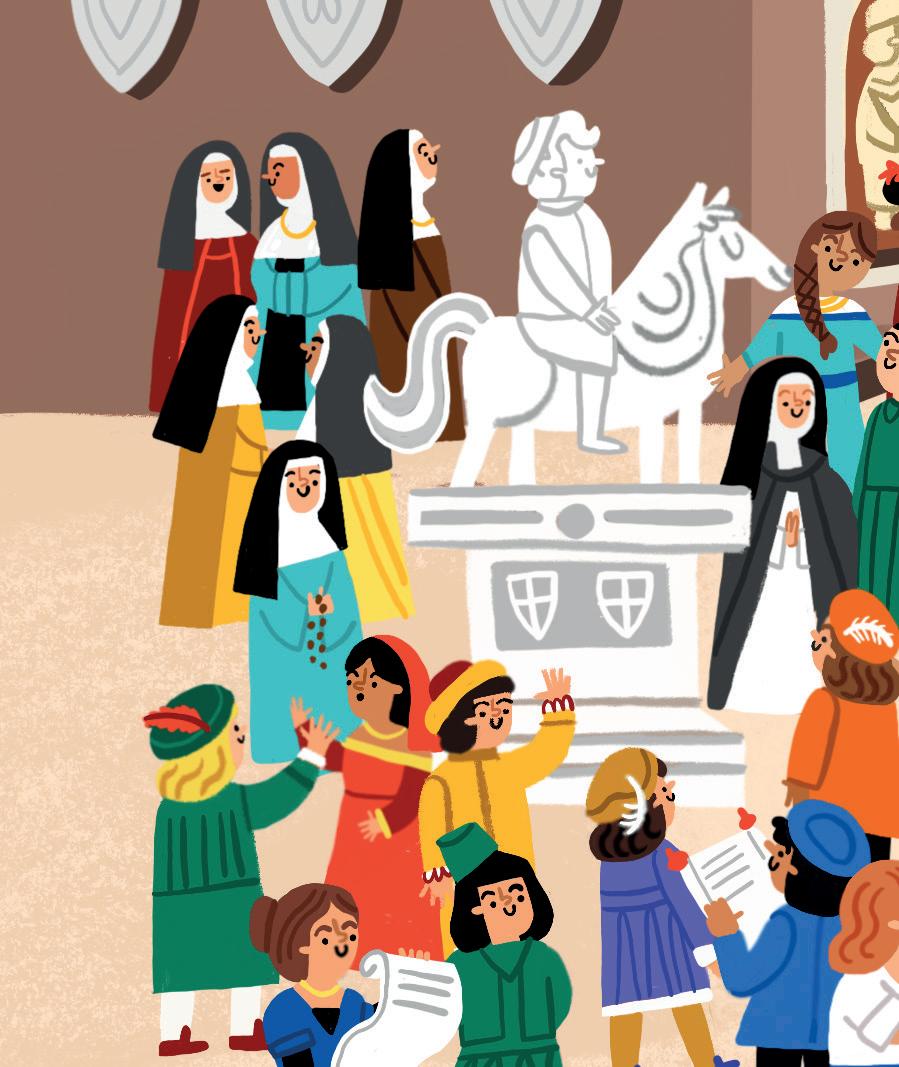

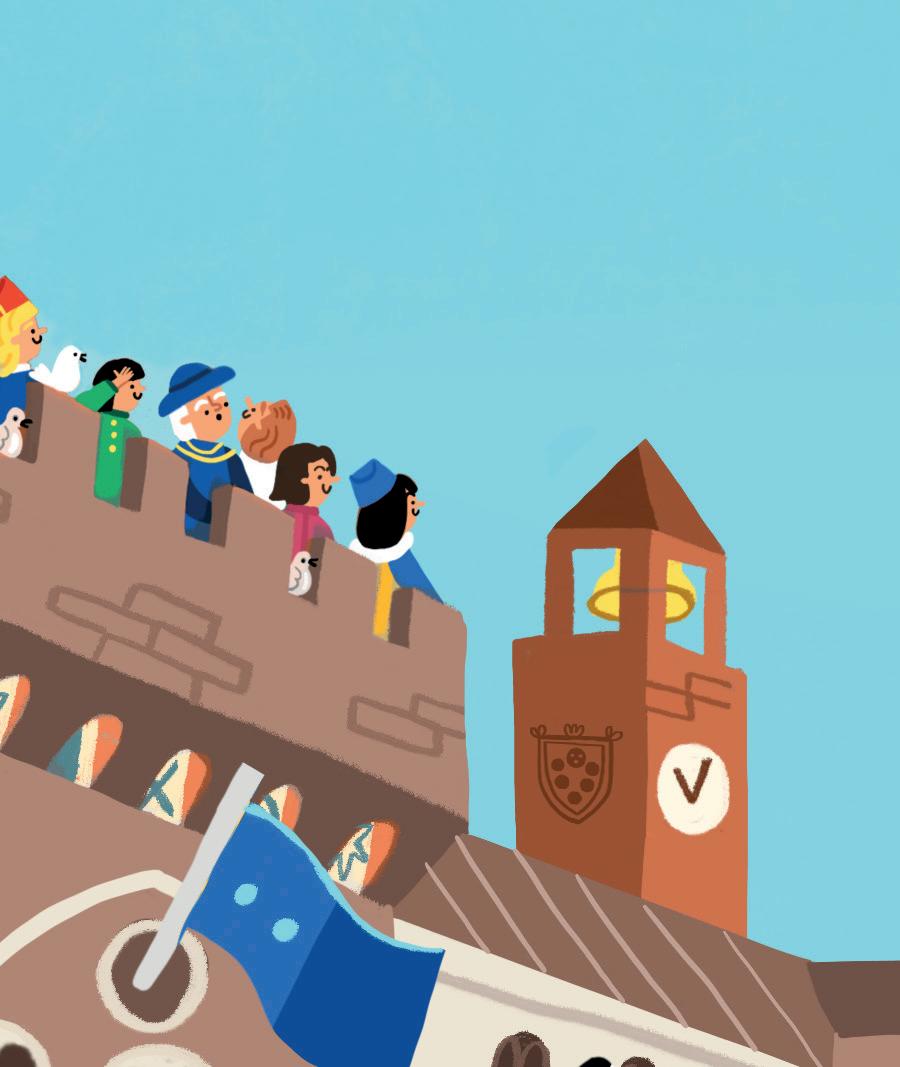
Turning around, he realised that a child behind him was offering him a tunic of his own! Thanking the child, Tom pulled it on over his clothes and made his way through the square, searching for Digby as he went.
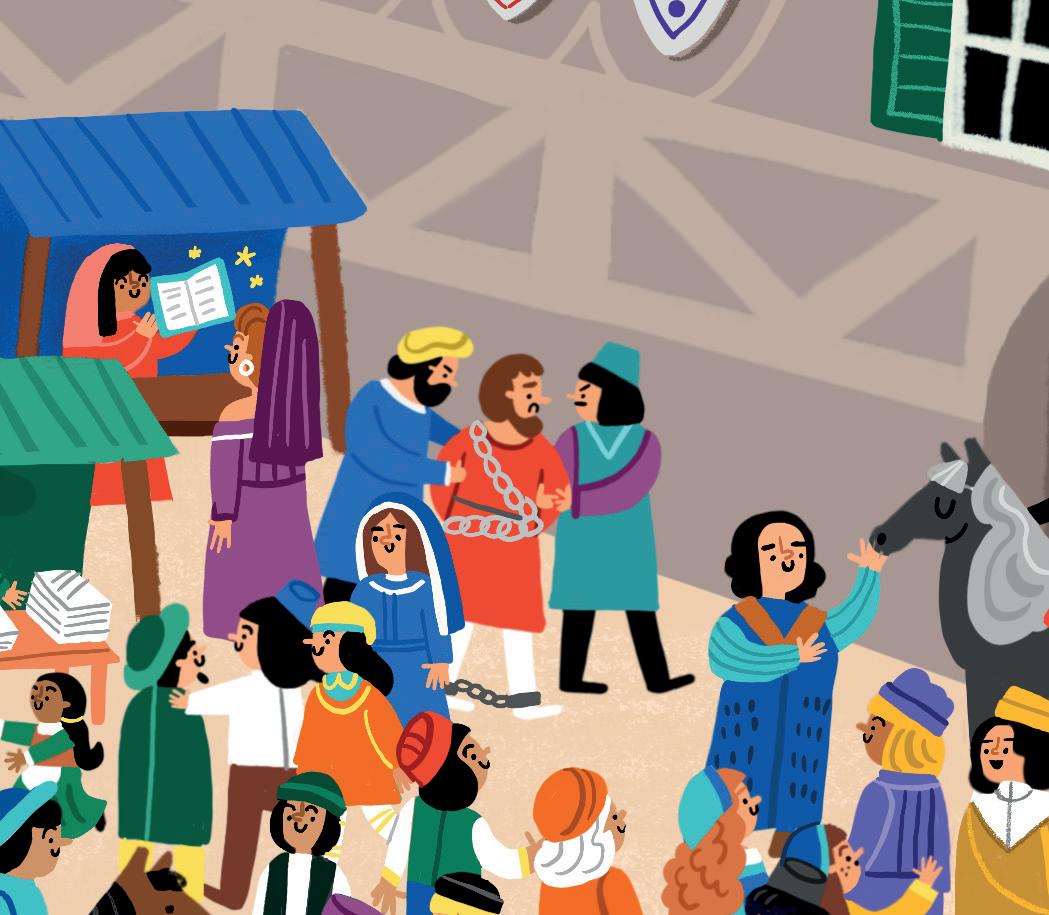
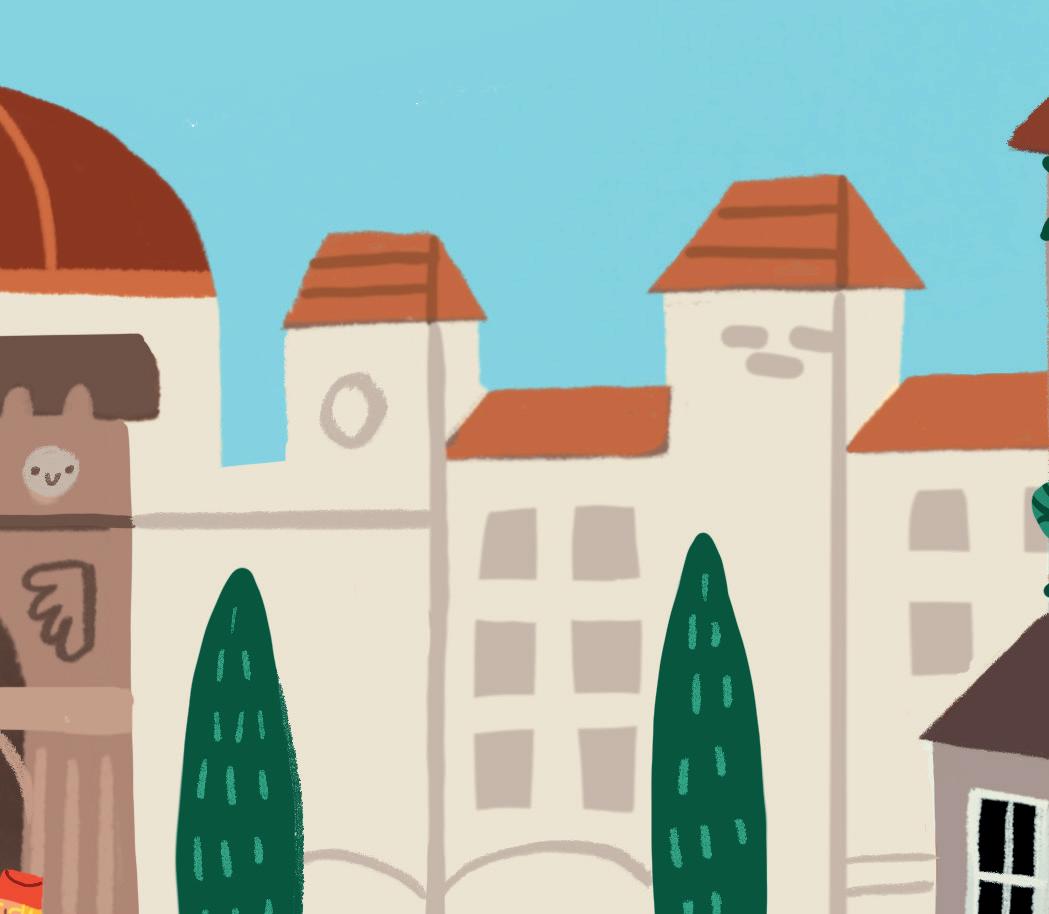
The ‘Piazza della Signoria’ was the square where the government, or , met. As it was where decisions were made, the square itself became the main place for people to meet and swap gossip or to make secret political plans.
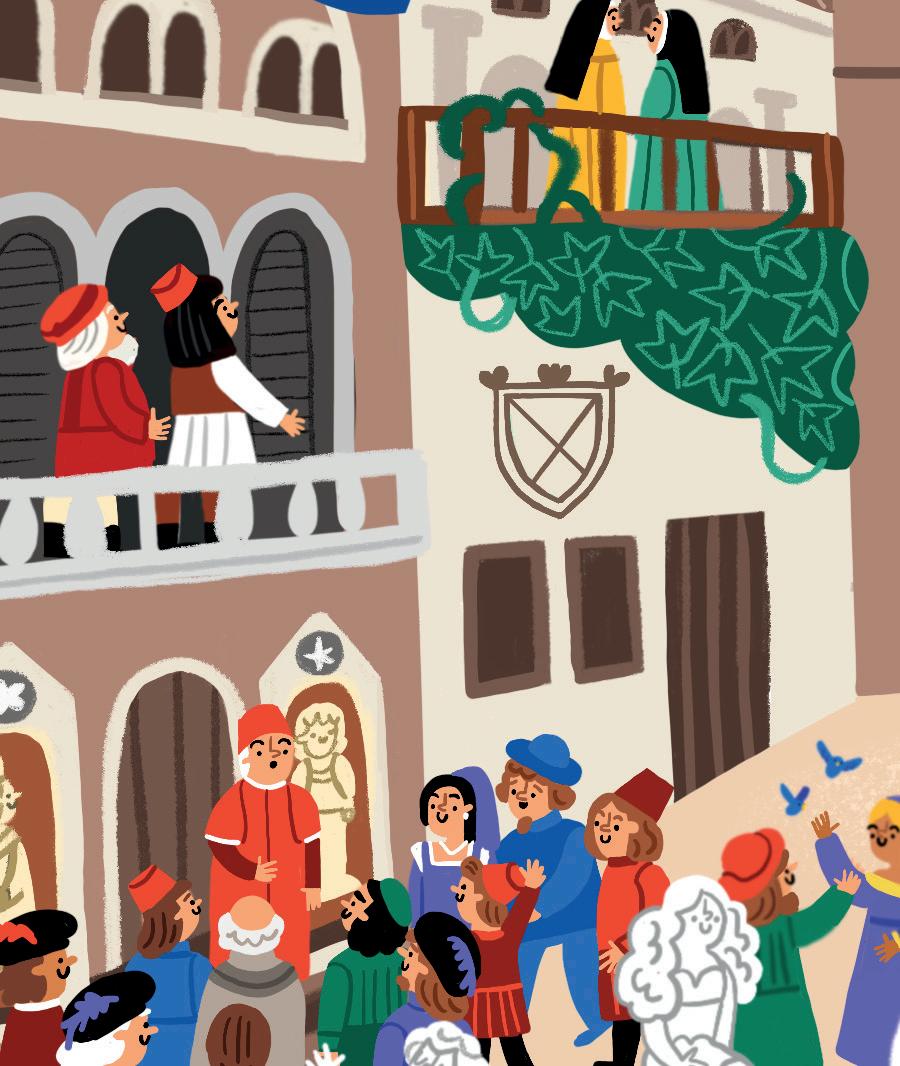
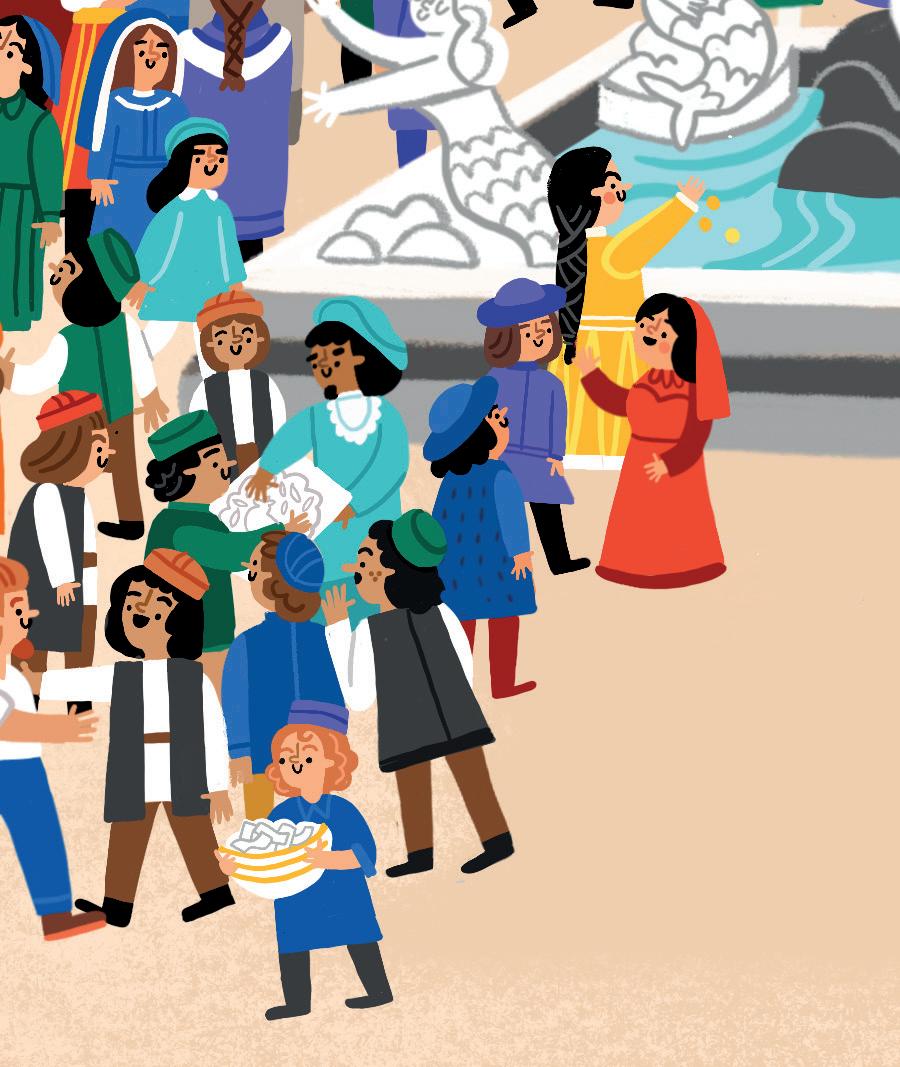

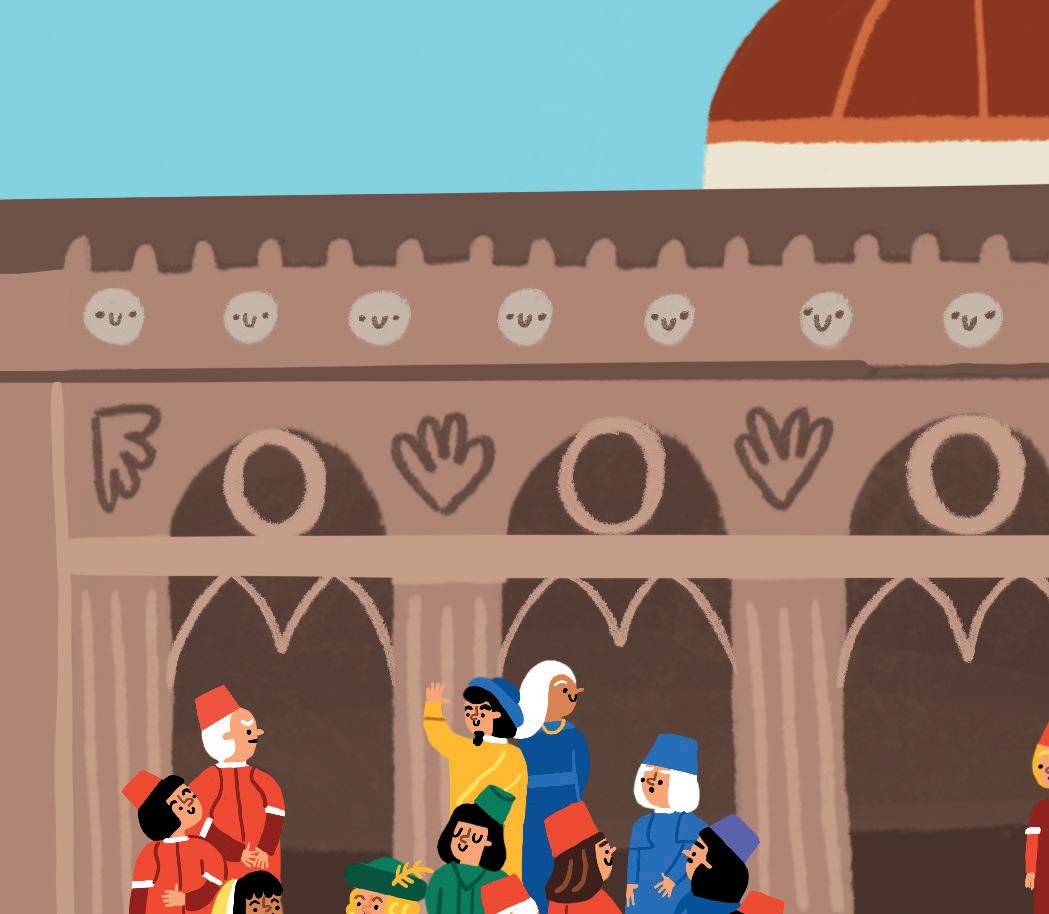
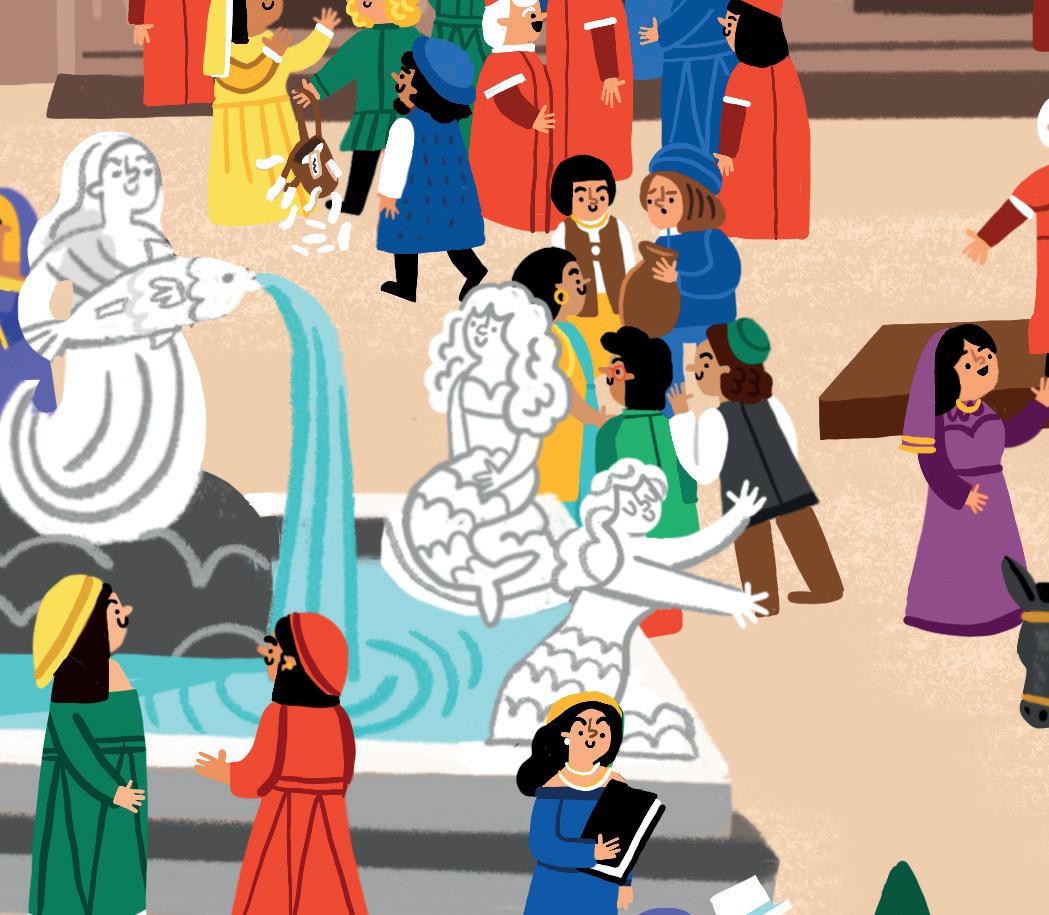
The people were afraid of one group or family becoming too powerful, so they created a system where everyone in the government would be swapped out for someone new every two months. Names would be picked out of bags to choose new officials.






• Someone tossing coins into the fountain
• Someone who is dropping important slips of paper from a bag
• A donkey and cart carrying supplies
• Money being exchanged
• A prisoner being taken through the square
• Tom
• Digby the cat

Only those who belonged to groups called were able to have their names entered into the bags. Each guild contained employers from a type of profession and the major guilds liked to compete with each other for power.
However, because it was very easy to meddle with this system and delay decisions, powerful families such as the Medici were able to become unofficial rulers of Florence.