
THE EXECUTIVE CONNECTION OF
How healthcare leaders are integrating AI, informatics, and diagnostics to strengthen care quality, workforce resilience, and system performance
BOARD OF
DIRECTORS THE EXECUTIVE CONNECTION
OF NORTH TEXAS
EDITORS
Amanda Brummit, FACHE
Holly Hrabik
Elizabeth Reitman
Sarah Sentmore
Kean Villarta
Bert Witherspoon, FACHE
CONTRIBUTING WRITERS
Mike Belkin, FACHE
Amanda Brummit, FACHE
Holly Hrabik
Sarah Sentmore
Bert Witherspoon, FACHE
ADVERTISING / SUBSCRIPTIONS
info@achentx.org
QUESTIONS AND COMMENTS:
ACHE of North Texas
Editorial Office, c/o Executive Connection PO Box 224732, Dallas, TX 75222-4732
p: 972.413.8144
e: info@achentx.org
w: achentx.org
OFFICERS
President - Kris Sanders FACHE
SVP/Northern Market Growth & Development
Children’s Health
President-Elect - Tim Bowen, FACHE
President, Baylor Scott White - McKinney
Immediate Past President (Foundation Liaison)Ajith Pai, FACHE
President, Texas Health Harris Methodist Hospital Southwest Fort Worth
Treasurer - Michael Talley, RRT, FACHE (Sponsorship Liaison)
VP of Clinical Operations & Virtual Care, CHRISTUS Health
Community Culture & Inclusion Officer (CCI Liaison)
Cassandra Self, FACHE
Professional Services & Finance Officer, Texas Health Resources, Azle
Secretary - Jared Lange, FACHE (Communications Liaison) Vice President, Parkland Health
The ACHE of North Texas e-magazine, The Executive Connection, is published triannually and includes information on the latest regulatory and legislative developments, as well as the quality improvement and leadership trends that are shaping and influencing the healthcare industry. Readers get indepth reporting on the issues and challenges facing hospital and health system leaders today. We make it our job to tell you about the great things the organization and Chapter are doing every day to ensure the health of our community. If you have any news and updates that you want to share with other members, please e-mail your items to info@northtexas.ache.org. Microsoft Word or compatible format is preferable. If you have a graphic or picture that you'd like to include, please send it as a separate file. The following are the types of information that our members shared in past ACHE of North Texas magazines, Advocacy Issues, Legislative Issues, Educational Opportunities, Awards / Achievements, Promotions (Members On the Move), Committee Updates, journal submissions, conference submissions, and workshop participations, sharing
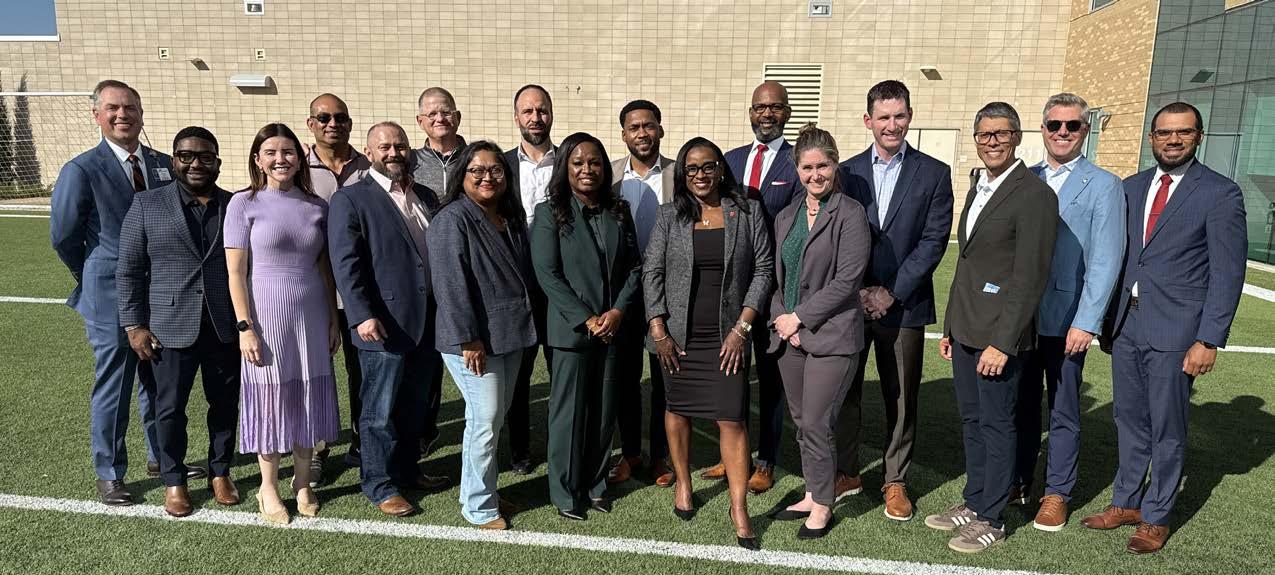
BOARD OF DIRECTORS
Dr. Jim Allard, DNP, RN, NEA-BC, FACHE (until 3/2026)
ACHE Regent-at-Large, District 4
Vice President & Chief Nursing Officer Advocate Christ Medical Center
Lee Ann Benson, FACHE Advancement Liaison & Chair
Senior Vice President, Maternal Child Program Children’s Health
Crystal Brown, WHEN Liaison & Co-Chair
Vice President Operations/COO Methodist Mansfield Medical Center
John Carter, FACHE Communications Liaison
Brand Ambassador, Pinnacle Healthcare Consulting
Chad Collins, FACHE Sponsorship Liaison
COO / VP Operations, Texas Health Resources
Felixia A. Colón, FACHE (as of 3/2026)
ACHE Regent-at-Large, District 4
Senior Vice President, SCP Health
Phillip P. DeBruzzi, Jr., FACHE Sponsorship Chair & Liaison
Principal, Forvis Mazar
Barton Gill Student Council Liaison
Chair, Dept of Health Administration & Health Policy, UNT Health Science Center
Brandon Goertz, PhD, FACHE Education Liaison
President, Texas Health HEB
Nick Kagal, FACHE Advancement Liaison
HX Client Success Manager, Press Ganey
Christina Mathis, MHA Membership Liaison
Chief Executive Officer, Medical City Frisco
Angela Vincent Michael, FACHE CCI Liaison
Director, Performance Improvement & Project Deployment Office, Methodist Health System
Laura Parsons-Yanez Mentorship Liaison
Senior Manager, Quality & Patient Safety, Walmart Health
Jared Shelton, FACHE
ACHE Texas – North Regent President, Texas Health Harris Methodist Hospital Fort Worth
Timothy Wilson Networking Liaison
SVP, Population Health Management, Parkland Health
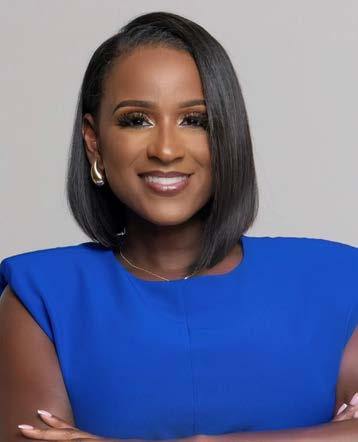
PRESIDENT
Kris Sanders, FACHE
To my ACHE of North Texas Members,
As we step into a new year together, I’m filled with gratitude and excitement to serve as your North Texas President. It’s an honor to follow the strong leaders who have helped shape our chapter, and I’m energized by the opportunity to build on that foundation while bringing a fresh and energetic perspective to the year ahead.
Like many of you, I’m starting this year with a mix of optimism, ambition, and a realistic understanding of the challenges we face in healthcare. Our industry continues to evolve at a rapid pace, and that makes the role of ACHE—and this chapter in particular—more important than ever. North Texas is home to an incredible community of healthcare leaders, and our collective experience, curiosity, and commitment to excellence are what make this chapter thrive. We will use all that we have as a chapter to elevate this industry and care for our community.
This year, our board and mighty team of volunteers are focused on creating meaningful opportunities for connection, integration, professional growth, and leadership development. Whether you are early in your career, preparing for fellowship, or a seasoned executive, we want our programs and events to meet you where you are and help you take the next step forward. Just as importantly, we want ACHE of North Texas to remain a place where relationships are built, ideas are shared, and leaders support one another. This is my vision for this year.
ACHE Congress in Houston was an energizing reminder of the strength and purpose of our profession. It was inspiring to see leaders from North Texas represented across sessions, sharing insights and engaging in conversations about the future of healthcare leadership. The week reinforced the importance of reflection, collaboration, and learning from one another as we navigate an increasingly complex healthcare landscape. Most of all, Congress highlighted the value of community and the impact we can have when we come together as leaders committed to advancing healthcare.
As we embark on 2026, I encourage you to stay engaged, attend events, and consider ways to get involved. Your voice and participation truly make a difference. If you see me out and about, please say hello as I welcome the opportunity to connect. I’m excited about what we will accomplish together this year and grateful to be on this journey with such a passionate and dedicated group of professionals.
Here’s to a strong first quarter and a year full of growth, connection, and impact.
Warmest regards,
Kris Sanders, FACHE President, ACHE of North Texas Chapter
Unleash your power
You can achieve anything you put your mind to. The power to crush any goal is in all of us. Let’s set it free.


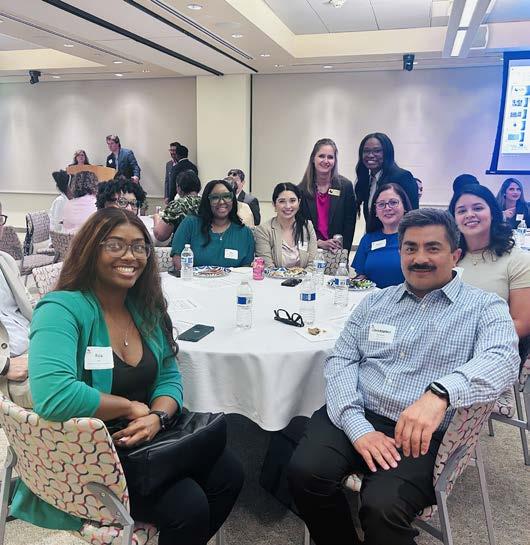

Make This the Year You Get Involved
ADVANCEMENT COMMITTEE
The Advancement Committee supports ACHE of North Texas (ACHENTX) members pursuing advancement to Fellow by providing education, resources, and guidance throughout the process. The committee helps members strengthen professional portfolios, understand requirements, and confidently progress in their leadership journey.
EDUCATION COMMITTEE
The Education Committee plans and delivers high-quality educational programming that supports professional development across all career stages. The committee ensures offerings align with ACHE competencies and address timely topics impacting healthcare leaders.
MENTORSHIP COMMITTEE
The Mentorship Committee oversees the chapter’s executive mentorship program, connecting emerging leaders with experienced healthcare executives. The committee supports meaningful mentor–mentee relationships that promote career development and leadership growth.
Interested in learning more or joining a committee? Committee service is a great way to build leadership skills, expand your network, and make an impact within ACHENTX.
Email Info@achentx.org to get started.
“Serving on a committee with ACHE of North Texas is more than volunteering; it is a meaningful investment in professional growth and the healthcare community you serve. Committee work provides hands-on leadership experience in strategy, collaboration, execution, and governance, strengthening business acumen and building skills that translate directly to future leadership roles and work projects for professionals at every career stage. Through this service, members help advance education, inclusion, and leadership, creating lasting value for both ACHENTX and the broader healthcare community.”
Felixia Colón, FACHE



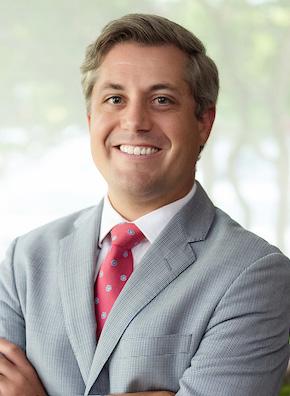
ACHE TEXAS - NORTH REGENT
Jared C. Shelton, FACHE
As the days grow longer and the world prepares to awaken with the colors of spring, there’s a spirit of renewal in the air. This season reminds us of the power of fresh starts and the importance of nurturing our own professional and personal growth. At ACHE of North Texas, we invite you to make the most of this season by renewing your commitment to leadership, lifelong learning, and connection within our vibrant healthcare community.
Renewal isn’t just about change—it’s about reinvesting in what matters most: your career, your network, and your impact on the communities we serve. Take this season as an opportunity to set new goals, embrace growth, and inspire others through your leadership.
Many of our North Texas members recently gathered with colleagues from across the country at ACHE Congress in Houston. The week served as a powerful reminder of the importance of reflection, collaboration, and learning from one another as we navigate an increasingly complex healthcare landscape. It was inspiring to see the strong presence of North Texas leaders contributing to conversations that will shape the future of healthcare leadership.
Our calendar is blooming with upcoming educational programs designed to keep you informed, challenged, and inspired. Whether you’re interested in the latest industry trends or leadership best practices, there’s something for every stage of your journey. We encourage you to explore these opportunities and join your peers in learning and growing together. Your participation not only enhances your expertise—it strengthens our entire North Texas healthcare community.
Spring is the perfect time to expand your connections and build relationships that foster collaboration and support. Our networking events create spaces where you can engage with fellow leaders, exchange ideas, and discover new perspectives. Take full advantage of these opportunities to connect—you never know where a new connection might lead!
As we welcome spring, let’s commit together to making this a season of growth, connection, and renewed passion for our work. Thank you for all that you do to advance healthcare in North Texas. We’re grateful to have such dedicated leaders in our community, and we look forward to seeing you at upcoming events and celebrating your achievements.
Sincerely,
Jared Shelton, FACHE Regent, District 4 – Texas Northern




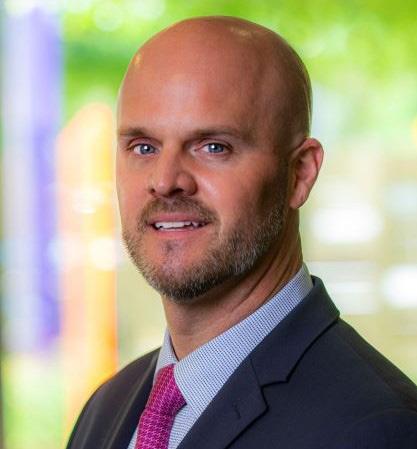
MESSAGE FROM OUR
ACHE REGENT-AT-LARGE
Jim Allard, DNP, RN, NEA-BC, FACHE
As we welcome the renewal and energy that spring always brings, I want to take a moment to reflect on the past four years and to express my deepest gratitude to each of you—our ACHE of North Texas members, Regents, chapter leaders, and volunteers—who make this community such an extraordinary place to learn, grow, and serve.
It has truly been one of the greatest honors of my professional career to serve as your District 4 Regent-at-Large. Throughout these last four years, I have had the privilege of witnessing firsthand the strength, passion, and resilience of our healthcare leadership community. Whether navigating unprecedented challenges or finding new and innovative ways to advance our field, you have demonstrated a level of commitment that inspires me daily.
What has stood out the most is the distinct sense of purpose that defines ACHE members. I’ve seen it in the way you support your teams, champion excellence in patient care, and invest in one another’s growth. I’ve seen it in our chapter programming, where community-building sits side by side with leadership development. And I’ve seen it in your steadfast dedication to advancing our profession with integrity, humility, and vision.
Serving in this role has allowed me to collaborate closely with talented Regents, chapter officers, and dedicated volunteers across our district. Together, we have strengthened educational offerings, expanded opportunities for engagement, and created spaces for members at all stages of their careers to learn from one another. I am grateful for every partnership, every conversation, and every shared effort to elevate our collective impact.
To our early-careerists, your energy and creativity fuel the future of our profession. To our seasoned leaders, your guidance and mentorship continue to shape the next generation. And to all members across the district, thank you for the privilege of representing you and for trusting me to support your work, your development, and your commitment to advancing healthcare leadership.
As my term concludes, I do so with a full heart and tremendous appreciation for the opportunity to serve. The relationships and experiences built over these past four years will remain among the most meaningful of my ACHE journey.
With that same sense of enthusiasm, I am delighted to welcome Felixia Colón, MBA, FACHE as the incoming District 4 Regent-at-Large. Felixia brings exceptional leadership, deep commitment
to service, and a passion for supporting our members. I have every confidence she will carry this work forward with integrity, vision, and dedication, and I know she will serve our district with distinction.
Thank you again for the honor of representing you. I look forward to continuing to support our members and chapters in new ways, and to witnessing the great work that lies ahead for District 4 under Felixia’s leadership.
Wishing you all a season of renewal, growth, and continued success.
Best,
Jim Allard, DNP, RN, NEA-BC, FACHE Regent – At – Large District 4



















ACHENTX MEMBER
SPOTLIGHT
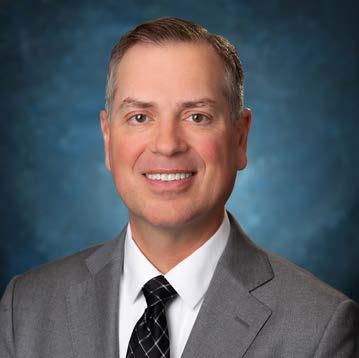
Brandon Goertz, PhD, FACHE
President, Texas Health Harris Methodist Hospital, Hurst-Euless-Bedford
Brandon Goertz, PhD, FACHE serves as the President of Texas Health Harris Methodist Hospital HurstEuless-Bedford. In this role, Brandon is responsible for the strategic direction, operational management, and overall performance of the 322-bed acute care hospital. He ensures the delivery of high-quality, patient-centered care while maintaining financial health and regulatory compliance. Brandon serves on the ACHENTX Board and is the liaison to the Advancement Committee. He is also a board member for the HEB Chamber of Commerce, the HEB ISD Education Foundation, and serves on the Healthy Tarrant County Collaboration.
Why did you go into health care?
I have a unique entry into a career in healthcare. I grew up in San Antonio and went to the University of Texas at San Antonio. I obtained my undergraduate degree in Biology and was so interested in the field that I began working on my Ph.D. focused on neurobiological research. I was finishing up my research work while my wife and I were expecting our first child. She began having complications, and our son was born two months premature. Our experience in the NICU gave us firsthand insight into the compassion, expertise, and teamwork that define excellent, patient-centered healthcare. While this time was filled with anxiety, it also ignited an interest in a potential career in healthcare as I witnessed how physicians, nurses, staff, and administration work together to care not only for the patient but for the entire family. Luckily, I am married to an amazingly patient wife who supported my decision to go back to school (again) and obtain my master’s degree in healthcare administration from Trinity University.
Why do you stay?
I thoroughly enjoy working in the hospital setting. Texas Health HEB is mid-size at 322 beds, but feels like a small, community hospital when you walk the halls because of the friendly people inside. Our staff’s camaraderie and the welcoming atmosphere we foster help build trusted relationships, creating an environment where every patient and colleague feels valued and supported. I live 12 miles from this hospital. This is where I would bring my loved ones if anything ever happened to them, giving even further motivation to help drive this hospital to provide outstanding care and a superb patient experience, while working to improve the health of this community. I believe we thrive together—by listening to and supporting each other, embracing feedback, and continually seeking ways to serve our community better.
How long have you been a member of ACHE?
I have been a member of ACHE since 2013 and joined the North Texas Chapter in 2019. From 2022 to 2024, I served on the advancement committee. In January 2025, I started my term on the ACHENTX Board.
What have you gotten out of, or do you get from your membership in ACHE?
The invaluable networking opportunities. Throughout my career, I have benefited from the guidance of exceptional mentors whose insights have significantly influenced my professional development. ACHE provides numerous avenues to foster meaningful relationships through its various functions. With a diverse group of professionals involved in ACHE, I encourage all members to participate in inperson events and engage with new colleagues to expand their professional networks.
What advice would you give early careerists or those considering membership?
Embrace a mindset of perpetual growth and education. This is one of the most powerful investments you can make in yourself. The healthcare landscape is constantly evolving, and those who commit to being lifelong learners are best equipped to adapt, innovate, and lead. The American College of Healthcare Executives champions this ethos, encouraging members to continually seek new knowledge, skills, and perspectives. By actively pursuing learning opportunities, whether through formal education, professional development, or simply staying curious, you not only enhance your own capabilities but also contribute more meaningfully to your organization and community.
Tell us one thing that people don’t know about you.
My wife and I love spending time on the ocean. Each year, we charter a sailboat in the Caribbean and sail to different islands. Our goal is to one day circumnavigate the globe via sailboat, chasing new horizons and collecting unforgettable stories along the way.
ACHENTX MEMBER
SPOTLIGHT
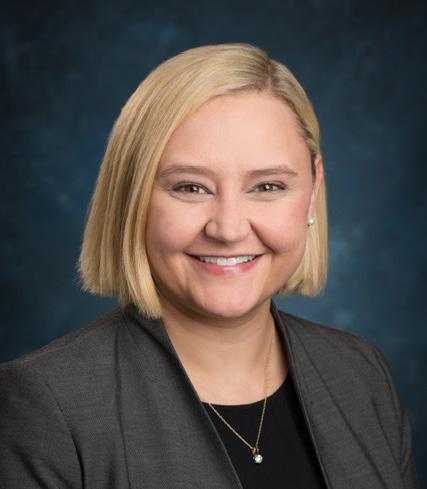
Emily Allen Delgado, MHA Administrator, Integrated Health Campuses, Texas Health Burleson, Texas Health Willow Park
Emily Delgado is the administrator for both Texas Health Neighborhood Care & Wellness Burleson and Willow Park, subsidiaries of Texas Health Harris Methodist Hospital Fort Worth.
Emily has 15 years of operations, strategy, and leadership experience and has been with Texas Health Resources since she joined the organization in 2012 as an analyst on the Strategy and Planning team. In 2018, Emily transitioned as Manager of Procedural Operations at Texas Health HEB and was quickly promoted to Director of Procedural Operations and Outpatient Clinics. In this role, she directed and oversaw the non-clinical operations of all procedural units, outpatient wound care, hyperbaric clinic, and mission control. In addition to her work at Texas Health HEB, Emily has been instrumental in several system-based projects focused on Hospital Channel OR Governance and Sterile Processing.
Emily graduated from Texas A&M Health Science Center with a Master in Healthcare Administration. She also holds a BBA in Finance from Texas A&M University. In 2025, she was recognized as a Tarrant County American Heart Association Woman of Impact. She was recognized by the American College of Healthcare Executives of North Texas as the 2023 Early Careerist of the Year. She has been an active member of the Texas Health HEB Culture and Connections committee.
Emily lives in Fort Worth with her husband, Bryan, their son, Tad, and springer spaniel, Rosie. In her spare time, she enjoys volunteering in the community, attending sporting events, reading, and spending quality time with her family.
Why did you go into health care? Why do you stay?
I got into healthcare because I wanted to help people, and I wanted to do something that impacted people in a meaningful way. I love working in healthcare because I love the people; everyone who works in healthcare is a special person who cares for others.
How long have you been a member of ACHE?
I’ve been a member of ACHE since I was a graduate student at Texas A&M University.
Your advice to others on how to get involved in ACHE?
I encourage you to come to as many events as you can, get to know people, and volunteer your time. It is so easy to join a committee and jump in. You will get out of ACHE what you put into it.
What advice would you give early careerists or those considering membership?
ACHE is a great way to learn more about how integrated healthcare is and to expand your horizons. There are so many opportunities to learn and grow professionally within the organization. Be a sponge and soak up the information that’s available to you. ACHE is a wealth of resources.
Tell us one thing that people don’t know about you.
I’m a huge fan of figure skating; I started following the sport year-round after the 2018 Olympics. I have traveled to several international competitions and keep track of all the potential Olympic hopefuls. Looking forward to watching the competition in Milano Cortina 2026 in February!







Thinking About Getting More Involved?
COMMUNITY, CULTURE, AND INCLUSION COMMITTEE (CCI)
The Community, Culture, and Inclusion (CCI) Committee fosters an inclusive, welcoming professional community that supports leadership development, engagement, and belonging across ACHE of North Texas. CCI creates opportunities for connection, education, and collaboration while elevating diverse perspectives within healthcare leadership.
CCI includes several communities that offer targeted spaces for engagement, including WHEN (Women’s Healthcare Executives Network), P.R.I.D.E. (Professionals for Representation, Inclusion, Diversity, and Equity Community), AHLC (Asian Healthcare Leaders Community), and Veterans.
MEMBERSHIP COMMITTEE
The Membership Committee focuses on recruitment, retention, and engagement of ACHE of North Texas members. The committee works to enhance the member experience and ensure the chapter continues to meet the evolving needs of healthcare leaders.
STUDENT COUNCIL
The Student Council supports students pursuing careers in healthcare management by providing education, networking, and leadership development opportunities. The council helps bridge the transition from academic training to professional practice.
Committee work is one of the best ways to connect, lead, and grow within ACHENTX. Whether you’re early-career or seasoned, there’s a place for you.
Reach out at Info@achentx.org to learn more.
“Getting involved with the CCI Committee has allowed me to build authentic connections, grow as a leader, and contribute to a professional community that values inclusion and collaboration. Serving on a committee and community has been both personally fulfilling and professionally enriching, offering opportunities to learn from others while helping shape programming that supports healthcare leaders at every stage.” Lilly Chavez, OTR

MEMBER UPDATES
To submit your update, milestone, award or accomplishment, CLICK HERE.
FELIXIA COLÓN is now the Senior VP, Market Development at SCP Health. She is responsible for SCP's national strategic market development plan.
MEGAN GRAICHEN-PEARSON transitioned into a new role as a Clinical Process Improvement Specialist at her organization. She also graduated from the TCU EBP Fellowship.
MAHOGANY LAUR graduated from TWU in August with an MBA in Healthcare Administration.
KELECHI MOLOMO recently graduated with a Doctorate in Healthcare Administration.
HOLLY HRABIK was promoted to Vice President Operations at Centered Care, a senior health tech-enabled company empowering compassionate, whole-person care within senior living communities. She was also officially placed at this year’s ACHE Congress as ACHE-Regent-At-Large District 4.
CHRISTINA MATHIS, ACHE of North Texas board member and CEO of Medical City Las Colinas, was named the 2025 Young Healthcare Executive of the Year by the Dallas-Fort Worth Hospital Council.

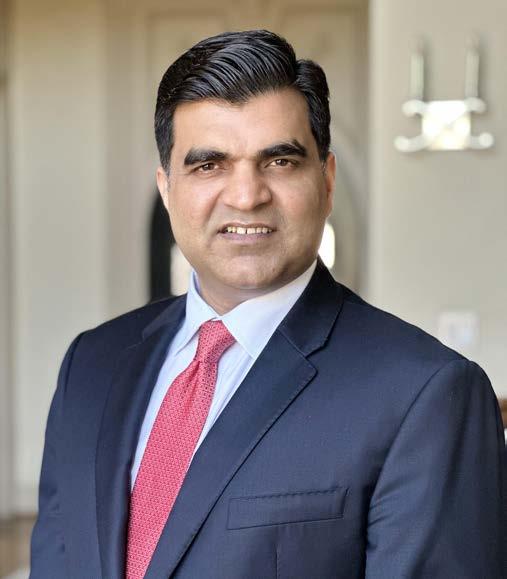
Humanity, Insight, and Innovation:
Digital Transformation with Dr. Ahmad Sharif
Amanda Brummitt, FACHE
In every era of healthcare, a few leaders stand out for their rare ability to bridge worlds, clinical and digital, human and technological, present needs and future possibilities.
Ahmad Sharif, MD, MPH, SCPM, Chief Health Informatics Officer for CHRISTUS Health, is one of those leaders. His journey from clinician to technologist to system-level strategist reflects not just a career path, but a deep conviction: technology is at its best when it elevates human care and experience.
Sharif’s story begins where many in medicine find their purpose. “Healthcare is my passion,” he says simply, and it is not rhetoric. From the outset, he was driven by a curiosity about the human body and a calling to help others heal. Yet his path shifted in an unexpected moment, one that would define the arc of his professional life.
While completing his Master’s in Public Health, Sharif encountered electronic health records at a pivotal moment early in modern health IT. What he found was not just the potential for transformation, but the very real risks of misalignment between technology and clinical reality. A set of surgical documentation templates stopped him cold. They were wellintended, but clinically illogical. “That was an eye-opener,” he recalls. “Poorly designed technology can compromise efficiency and quality of care.”
In that moment, his clinical instincts and lifelong interest in technology converged. Since childhood, he had built and experimented with tech, always curious, always tinkering. Now, he saw the urgent need for clinicians who could guide the digital evolution with clarity, empathy, and real-world understanding. “Technology should enable clinicians to focus on care delivery and surface the right information at the point of decision-making,” he says. “Done right, it improves patient and provider experience while reducing costs.”
The path ahead became clear: he would bridge these worlds.
Sharif is quick to credit those who helped shape his leadership approach. “I’ve worked with some of the luminaries in healthcare IT,” he says. “And I continue to learn from my teams every day.” His leadership philosophy centers not only on expertise, but humility and stewardship. Working alongside clinicians, technologists, and operators across diverse environments has reinforced a core belief: collaboration is essential to building systems that support care rather than complicate it.
And as technology evolves, so does his sense of responsibility. Sharif points to a recent case where artificial intelligence flagged a missed
imaging finding, a discovery that ultimately saved a patient’s life. “Human eyes and minds are overloaded,” he explains. “Technology can act as a safety net.” That balance, placing clinicians at the center while leveraging technology to magnify their capabilities, is the thread running through Sharif’s approach.
Aligning Digital Transformation with Mission
At CHRISTUS Health, digital transformation is not just a strategy, it is a mission in action. The health system’s mission, to extend the healing ministry of Jesus Christ, shapes every initiative, including those led by the Clinical Excellence Division. For Sharif, the alignment is natural. “Technology amplifies compassion and equity when it is designed to serve people,” he says.
This perspective guides CHRISTUS Health’s approach to analytics, informatics, artificial intelligence, and system modernization. It is not innovation for innovation’s sake. It is innovation grounded in stewardship, responsibility, and human dignity.
Sharif’s blend of clinical experience, public health training, and informatics expertise gives him a multidimensional lens on healthcare delivery. “My clinical experience grounds me in the realities of patient care, the urgency, complexity, and human connection that define every encounter,” he explains. Public health adds a population-level perspective that ensures systems work not just for individuals, but communities. Informatics brings those worlds together by transforming data into insights. At CHRISTUS Health, this approach ensures that every digital initiative centers on improving care safely and compassionately.
Actionable Insight at the Point of Care
Sharif is clear: digital systems must deliver more than stored data. He emphasizes that contextual relevance, simplicity, clarity, and evidence-based
transparency are essential for clinical decisionsupport. Insights must appear at the right moment in the workflow and be tailored to the patient’s context, because irrelevant alerts erode trust. Technology should reduce cognitive load, not add to it, and clinicians must be able to understand why a recommendation is being made. These principles ensure that technology supports real clinical decision-making, not distract from it.
Choosing the Right Pathways for Automation and Decision Support
Scalability is not about digitizing everything, it is about prioritizing the right things.
Sharif describes three criteria CHRISTUS Health uses when identifying clinical pathways or specialties suited for automation or real-time decision support:
High variation areas: Pathways where practice variation affects outcomes, such as sepsis or chronic disease management.
Data-rich environments: Specialties with structured data and strong evidence bases that lend themselves to automation.
Workflow readiness: Areas where clinicians are engaged and operational maturity supports adoption.
Leading Change with Co-Design, Clarity, and Trust
Large-scale digital initiatives in healthcare often run into resistance, not because clinicians oppose change, but because they fear disruption to care. For Sharif, the key is co-design. Frontline clinicians must be co-creators, not end-users. When caregivers shape the tools, adoption accelerates.
He believes in starting small, learning from iterative rollouts, and scaling gradually. Clear value propositions help demonstrate how new
tools improve care and reduce friction, not just how they support regulatory compliance. Transparent communication ensures that clinicians understand both the methodology and the rationale for changes. At CHRISTUS Health, these strategies ensure digital tools support clinicians rather than complicate their work.
User-centered design is one of Sharif’s core specialties, and he is candid about the common missteps across the industry. Technology is often designed for ideal workflows that do not reflect the realities of clinical environments. Alert fatigue can undermine safety when clinicians are overloaded with non-critical notifications. The emergence of black-box algorithms can erode trust if clinicians do not understand the rationale behind recommendations.
His guidance is clear: invest in human factors testing, real-world simulation, and continuous feedback loops. At CHRISTUS Health, usability testing is integrated throughout development, and clinician feedback is considered a core measure of success because intuitive design is essential for adoption and safety.
Keeping Systems Agile in a Rapidly Evolving Landscape Medicine does not stand still, and neither can clinical information systems. Sharif emphasizes agility through modular design, dynamic governance, and data-driven triggers for updates. Pathways are built as configurable components rather than rigid protocols. Multidisciplinary committees regularly review evidence to keep systems aligned with clinical practice, and analytic signals highlight deviations that warrant review. This approach ensures CHRISTUS Health’s systems evolve with medicine, enabling clinicians to deliver care that is both current and compassionate.
Artificial intelligence (AI) is reshaping healthcare, and Sharif approaches it with both optimism and caution. He believes humans must remain at the center of every decision, and this philosophy guides CHRISTUS Health’s AI strategy.
The organization uses rigorous due diligence when selecting partners and tools, involving multidisciplinary teams to assess clinical safety, mission alignment, and usability. Pilots are conducted in controlled, real-world environments before solutions are scaled. Every AI model undergoes validation and rigorous testing to safeguard against unintended consequences. Interoperability is designed from the outset using open standards, and regulatory considerations are built into every stage.
For Sharif, responsible innovation is the only path forward, one that advances capabilities without compromising safety, trust, or compassion.
The Leadership Skills Required for the Next Decade
Sharif believes tomorrow’s healthcare executives must cultivate a new skill set to lead effectively in a digitally transformed environment. Digital fluency is essential, not in the sense of coding, but in understanding data governance, interoperability, and the strategic potential of AI and analytics.
Leaders must be adept at cultural transformation, building trust with clinicians, and guiding organizations through change with empathy. Ethical grounding is critical as digital tools raise new questions about privacy, equity, and bias. Preparation begins with crossdisciplinary learning, mentorship in technology domains, and building teams that integrate clinical, technical, and operational strengths.
At CHRISTUS, Sharif sees leadership in digital health as an act of stewardship, using technology responsibly to advance care quality, safety, and human dignity.
A Future Where Innovation Amplifies Humanity
Sharif’s story is one of convergence, medicine, public health, informatics, mission, mentorship, and a lifelong fascination with technology. Across his work runs a common thread: technology must serve people. Whether designing decisionsupport tools, deploying AI, modernizing workflows, or shaping system-wide digital strategy, his goal remains unchanged: support clinicians, empower patients, and extend compassion through every digital touchpoint.
“Technology can amplify our ability to deliver equitable, safe, and compassionate care,” he says. “It is our responsibility to design and deploy it in service of that mission.”

The Shrinking Space for Independent Medicine
Inside the mounting challenges facing private practice in Texas and why employers may hold the key to saving it
Mike Belkin, JD, MSHA, FACHE, CMPE
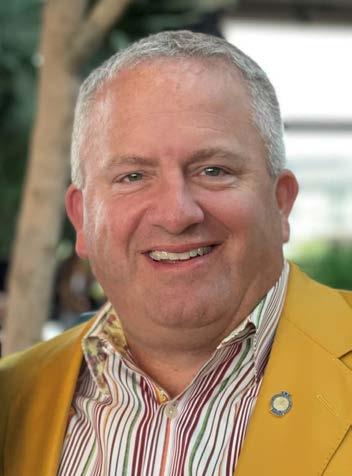
Scott Hurst
A System Under Strain
Independent medical practices in Texas — once the backbone of community healthcare — are facing a convergence of economic, regulatory, and competitive pressures that threaten their very survival.
“The single biggest challenge facing independent medicine,” says Scott Hurst, CEO of Patient Physician Network, “is the inability to secure appropriate rates for the work they do. The work is the same, the care is the same,” Hurst says. “But independent doctors simply don’t have the leverage.”
The Leverage Problem
That lack of leverage traces back decades. In the 1990s, independent practice associations (IPAs) emerged as a way for doctors to collectively negotiate with insurers, especially during the rise of HMOs. But when managed care failed to take root in Texas’ open-access market, the IPAs’ influence eroded.
Later, value-based care was touted as a solution — rewarding physicians for cost control and quality outcomes. But, as Hurst notes, the promise didn’t match the reality.
“We were told that if we improved quality and lowered costs, we’d share in the savings,” he recalls. “What really happened was the payers realized tremendous gains — and didn’t share.”
PPN dove into value-based arrangements in 2017, initially earning strong results. Then in 2020, the COVID pandemic changed the trajectory. The pandemic reshaped healthcare utilization, costs spiked and the economics turned. “We ended up paying Blue Cross $750,000 over two years for the right to do value-based care,” Hurst says. “Independent doctors just aren’t paid enough to absorb those kinds of hits.”
Regulations and Fragmentation
Even if independent doctors wanted to unify for greater bargaining power, federal antitrust laws stand in the way. “We can’t act as a single negotiating unit under FTC guidance,” Hurst explains.
When his organization rejects a payer contract, PPN cannot instruct member physicians to do the same. “All I can do is say, ‘We don’t think this is a good deal, but you decide for your own practice,’” he says. “And then half of them go sign it anyway.”
That fragmentation undermines any effort to negotiate collectively — a structural weakness payers know and exploit.
Rising Costs, Shrinking Margins
While reimbursement stagnates, costs keep climbing. Labor, supplies, technology, and compliance have all become more expensive.
“Medical assistants used to be paid $12 an hour,” Hurst says. “Now it’s $20 to $25 — and that’s if you can find them.”
Many independent practices can’t match hospital systems’ benefits and salaries, leaving them at a disadvantage in recruiting and retaining staff. As a result, some physicians see 40 to 50 patients a day just to stay solvent. Others are selling their practices to health systems for stability.
“I’ve had more than 100 doctors leave for employment in the past 18 months,” Hurst says. “They’re not necessarily making more money, but at least they’re not the ones having to tell staff they can’t stay.” Private practice physicians cannot afford to continue paying their staff.
Hospital employment provides a safe space for at least a short period of time for all staff members.
A Narrow Path Forward
Hurst believes there is still a way forward — but it requires a new model of financial integration among independent groups.
“You’d have to bring everyone under a single tax ID, like the health systems have,” he explains. “Then you can go directly to major employers — State Farm, Toyota, Liberty Mutual — and offer them professional services at, say, 150% of Medicare. Everyone wins.”
That rate would represent a 40% reduction in employer costs while allowing independent physicians to thrive. But alignment and capital remain major obstacles. And without leadership or policy incentives, such large-scale unification remains more vision than reality.
Employers: The Final Catalyst
Ultimately, Hurst believes the solution won’t come from doctors or hospitals — but from employers and employees demanding change.
“This doesn’t get fixed by doctors. It doesn’t get fixed by health systems or brokers,” he says. “It has to get fixed by the employers, because they’re the ones paying the bill.”
According to a local benefits broker he works with, the average renewal increase in employer health costs across five recent contracts was 48.5%. “That’s not sustainable,” Hurst warns.
“If it happens again in two years, there will be a massive shake-up in what employers can afford to offer.”
The Choice Ahead
Independent physicians remain among the most committed and community-oriented clinicians in Texas, but goodwill alone can’t sustain them. Without meaningful structural reform, many will continue to close, consolidate, or sell.
“There are still incredibly high-quality independent doctors out there,” Hurst says. “But it’s not going to matter if they can’t pay the bills.”
Diagnostics as a Strategic Imperative:
How Quest Diagnostics Is Helping Reshape Care Delivery
Holly Hrabik, MHA, MBA
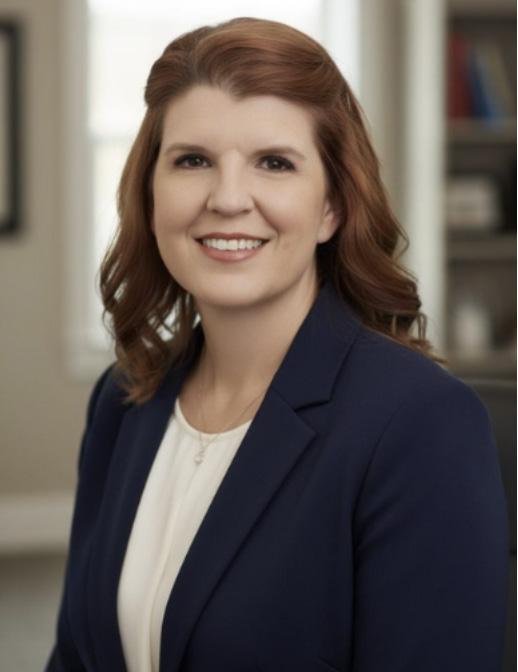
In today’s healthcare environment, diagnostic and laboratory services are no longer operating quietly in the background. As one of the nation’s largest providers of diagnostic information services, Quest Diagnostics plays an increasingly visible role in shaping how laboratory medicine supports clinical decision-making, population health, and valuebased care. As health systems face mounting pressure to improve outcomes, manage costs, and navigate persistent workforce shortages, laboratory medicine is undergoing a critical evolution, driven by data, artificial intelligence (AI), and innovation in testing modalities.
Dr. Clare McCormick-Baw hails from New Orleans but went to undergraduate school at Texas A&M University and is a proud Aggie. She obtained her master’s degree in Microbiology from Louisiana State University Health Sciences Center

(LSUHSC) in New Orleans, followed by her PhD in Microbiology from the University of Mississippi Medical Center. She returned to LSUHSC to obtain her medical degree, followed by an Anatomic and Clinical Pathology residency at Baylor Scott & White Medical Center in Temple, Texas. She also completed a Medical Microbiology fellowship at UT Southwestern Medical Center, where she subsequently joined the faculty. Following her tenure at UT Southwestern, she joined Quest as Medical Director of the Southwest Region in May 2024. Dr. McCormick-Baw is a passionate advocate for the laboratory and for collaborative consultation to identify opportunities to improve patient care through education and process improvement. She seeks to serve as a resource for providers to augment patient care as an expert in laboratory medicine, acknowledging that ever-expanding information in each field makes keeping up-to-date on laboratory diagnostics challenging.
Key Trends Reshaping Diagnostic and Laboratory Services
Several healthcare trends are converging to significantly impact the role of diagnostics today, but few are as transformative as AI. Quest Diagnostics continues to invest in and evaluate AI-driven tools that enhance clinical insight while maintaining the rigor, quality, and trust that laboratory medicine demands. “AI is
emerging as a potential critical tool and is being evaluated under FDA oversight over applicable federal law where it may be used as a clinical tool for the future of clinical diagnosis and laboratory medicine, enhancing both operational performance and efficiency across the care continuum.”
Importantly, digital tools or algorithm-based support are not new to clinical laboratories. For years, laboratories have relied on FDA-approved and FDA-cleared algorithms to assist with clinical interpretation. Digital pathology tools used in cervical cancer screening (Pap smears) and long-established algorithms for cell morphology in hematology are just two examples of how automation and computational analysis have already improved accuracy and consistency.
Dr. Clare McCormick-Baw is clear, “Meaningful use of AI is important. In the laboratory world, there are numerous forms to be completed for regulatory needs and potential gaps in the forms could exist. AI could be utilized to review these electronically and flag the gaps. It can also be used to help prioritize work and all the irons most of us have in the fire. It is leveraged to support and analyze but not replace the actual end quality product that we produce.”
The future of AI adoption holds even greater potential promise. Possible points of intervention
could go beyond clinical interpretation support to include improvements in operational accuracy, such as greater billing precision or could be leveraged to monitor quality indicators in real time. Dr. McCormick-Baw is optimistic that well developed, closed machine learning systems could have the potential to identify emerging trends or deviations earlier than traditional human review alone. “Always with patient safety at the center of what we do, thoughtfully implemented, thoroughly tested future AI solutions could improve the reliability, efficiency, and scalability of laboratory medicine.”
Navigating the Laboratory Workforce Shortage
Dr. McCormick-Baw recognizes that “The workforce struggles are real for everyone everywhere. In every healthcare system, hospital staff put in orders and then the results appear at some later point; however, what happens behind the scenes, in terms of the sample’s journey from patient to electronic result is much more complex. These complexities are ever increasing, but our workforce expertise is not increasing at the same speed.”
At the same time, laboratories across the country are facing a significant and growing workforce challenge. Quest Diagnostics experiences these pressures firsthand and is actively working to address them. Healthcare facilities of all sizes are feeling the strain of limited laboratory expertise, driven largely by an aging medical laboratory scientist workforce and a shrinking pipeline of new professionals entering the field.
As experienced medical laboratory scientists (MLS) retire, fewer academic programs are producing adequate replacements. This shortage places increasing pressure on health systems to make hard choices including whether to centralize services, consolidate expertise, or invest in efficiency-enhancing technologies. For many organizations, these strategies are not
simply cost-saving measures; they are essential to maintaining access to critical diagnostic services for patients.
Without strategic action, workforce constraints risk leading to service reductions, delayed results, and increased strain on already overburdened clinical teams. Addressing this challenge requires openness to innovation, collaboration, and new models of delivering laboratory expertise.
Diagnostics as a Strategic Partner in Value-Based Care
As healthcare continues its shift toward valuebased care and population health management, diagnostics are playing a more prominent role in clinical decision-making. Laboratory data, when presented clearly and contextually, can empower both providers and patients to make informed decisions.
One clear example of Quest’s role as a strategic diagnostic partner is HIV screening and diagnosis. The algorithm recommended by the Centers for Disease Control and Prevention (CDC) is clinically robust but can be complex to interpret and can require up to three separate tests using different methodologies to render a diagnosis. To address this complexity, Quest Diagnostics recently implemented a cohesive diagnostic report that not only details test results but also provides an integrated interpretation. This approach equips providers with clarity and supports more meaningful, informed conversations with patients about their care.
This evolution reflects a broader shift in diagnostics, from a transactional service to a strategic clinical partner. When laboratory results are designed to support understanding and action, they directly contribute to improved care coordination, patient engagement, and outcomes.
Leveraging Data and Diagnostics to Improve Outcomes
Healthcare leaders have a significant opportunity to better leverage diagnostic data to drive consistency, efficiency, and quality across care models. Quest Diagnostics supports this effort by helping health systems translate laboratory data into actionable clinical insight. Central to this effort is laboratory stewardship. “The complexities of medical knowledge continue to increase as clinical research data grows and depending on the application, this can require tremendous computational power. Technologyenabled care is essential to partner together to achieve the best patient outcomes” Dr. McCormick-Baw states.
Overutilization of tests with limited clinical value can increase costs without improving outcomes, while underutilization of high-value diagnostics can delay diagnosis or treatment. By analyzing utilization data and embedding decisionsupport tools within electronic medical records, organizations can identify opportunities to reduce low-value testing and prioritize tests that meaningfully inform care.
These insights enable the development of evidence-based protocols, reduce unwarranted variation in care, and help ensure that diagnostic resources are aligned with patient needs. When stewardship efforts are paired with clinician education and data transparency, they become a powerful lever for improving outcomes at scale.
Innovations Shaping the Future of Testing
Looking ahead, continued innovation in noninvasive and minimally invasive testing, such as advances in cancer screening and MRD evaluation, is poised to have a significant impact on healthcare delivery, and Quest Diagnostics remains focused on advancing and scaling these capabilities responsibly. Advances in cancer
screening, minimal residual disease evaluation, and other areas are expanding the ability to detect disease earlier and monitor treatment response more precisely.
These innovations not only improve the patient experience by reducing the need for invasive procedures, but they also enhance the clinical utility of diagnostics—supporting earlier intervention, personalized treatment strategies, and better long-term outcomes.
As testing technologies evolve, the role of laboratories will continue to expand beyond diagnosis into ongoing disease management and prevention. “The future success of laboratory medicine and healthcare in general relies on the thoughtful integration of human innovation and technology. It is a balance of data integration, digital tools, standardization of work practices that can streamline and simplify, and partnering with innovators that can potentially disrupt the current status quo while improving care quality.”
Overcoming Barriers to Data Integration
Despite the promise of data-driven diagnostics, many health systems still face challenges fully integrating laboratory insights into care models. Barriers may include fragmented data systems, limited interoperability, clinician workflow constraints, and uncertainty about how to operationalize insights at the point of care. Caution must also be taken when considering future technology, including AI. Reports of hallucinations in AI-generated content for radiographic and nuclear imaging may create inaccurate anatomical or other inaccurate information that could be used for diagnostic purposes. That same flaw could also arise in diagnostic pathology used by AI systems and is a concern of the FDA. Dr. McCormick-Baw agrees.
Overcoming these challenges requires intentional investment in technology, collaboration across
clinical and operational teams, and a clear strategy for how diagnostic data supports organizational goals. Successful integration is not solely a technical exercise, it is a change management effort that must align people, processes, and platforms.
Preparing for the Next Phase of Diagnostic Evolution
To prepare for what comes next, healthcare executives should prioritize several key strategies. First, leaning into AI, while maintaining a thoughtful and open mindset, is essential. AI has the potential to enhance both clinical quality and operational efficiency, but its implementation requires careful planning, governance, and expertise.
“Automation, in microbiology for example, has led to improvements in efficiency of plate reading, improved turnaround time, and earlier action to clinical intervention. MLSs use their expertise to greatest effect by handling complex cases, parasitology, or mycology where automated solutions are more limited. The clinical system gains efficiency without sacrificing the valuable expertise of those laboratory scientists. It is not about doing more with less; it is how to use what you have to achieve the best outcomes for our patients and testing personnel.”
Second, health systems must explore innovative approaches to maintaining and consolidating laboratory medicine expertise. Centralization, partnerships, and new workforce models can help preserve access to specialized knowledge in the face of ongoing labor shortages.
Finally, increased investment in automation offers a path to sustainable operational efficiency. Automation can reduce manual workload, improve turnaround times, and enhance consistency, but it also introduces new challenges. Engaging experienced colleagues
and stakeholders early in the process is critical to navigating these complexities successfully.
Quest Diagnostics as a Strategic Force in Modern Healthcare
Dr. McCormick-Baw leaves us with, “Quest has a long history of partnering with health innovators. An example is FDA cleared PathAI platform that can support digital pathology across the county. The Haystack MRD initiative to evaluate minimal residual diseases of patients with cancer. Quest has always been committed to patient care and partnership to advance our mission of working together to create a healthier world one life at a time.”
Diagnostics and laboratory services are no longer simply supporting functions within healthcare organizations. They are strategic assets, integral to quality, efficiency, and value-based care. By embracing innovation, investing in workforce and automation strategies, and leveraging data thoughtfully, healthcare leaders can position diagnostics at the center of care delivery, where they can make the greatest impact for patients and providers alike.
Quest Diagnostics
Quest Diagnostics is a Platinum Sponsor of the American College of Healthcare Executives of North Texas (ACHENTX). Quest Diagnostics is a leading provider of diagnostic information services, delivering insights that empower better health decisions. With a national laboratory network and deep clinical expertise, Quest partners with health systems, clinicians, and communities to improve quality, efficiency, and access across the healthcare continuum.


Redefine precision oncology with Haystack MRD™
Discover personalized insights that help guide the patient journey, create treatment efficiencies, and lead to the right treatment at the right time.
Haystack’s ultrasensitive minimal residual disease (MRD) testing delivers novel insights that can help inform treatment decision-making, personalizing guidance for patients and helping healthcare providers make decisions with confidence.
The future of precision oncology starts in your lab.


Discover how you can redefine your precision oncology vision with Haystack MRD.
SEPTEMBER 11, 2025
Executive Exchange
Bert Witherspoon, FACHE
The ACHENTX Executive Exchange was an exclusive, invitation-only gathering hosted by the American College of Healthcare Executives of North Texas. Designed for senior healthcare leaders at the vice president level and above, the event convened executives from across North Texas for focused dialogue on growth, access, and the evolving structure of care in one of the nation’s fastestgrowing markets.
Five-minute executive snapshots replaced long presentations, fostering momentum, candor, and peer-level exchange. The conversation made clear that modern expansion is no longer defined by facilities alone, but by access density, workforce strategy, equity, and stronger alignment with physicians and communities.
While leaders openly acknowledged pressures such as staffing shortages, payer friction, and margin compression, the tone remained collaborative and forward-looking. More than a networking event, the Exchange reinforced the chapter’s role as a senior-level convenor—and underscored a shared commitment to stewarding healthcare growth across North Texas with clarity, trust, and collective purpose.
Texas Hospital Association Leadership Fellows Program
The Texas Hospital Association Leadership Fellows Program is a yearlong professional development program designed to cultivate strategic and forward-thinking healthcare leaders with an in-depth knowledge of the legislative and regulatory process and key policy issues within the state. Through immersive learning, networking, and collaboration with industry experts and policymakers, Fellows gain the skills and insights needed to shape the future of healthcare in the state. ACHE of North Texas is proud to announce that the following members have been accepted into the THA Leadership Fellows Class of 2026.
Lee Ann Benson, FACHE
Tiffany Northern, FACHE
SEPTEMBER 30, 2025
Better Together Event
Holly Hrabik, MHA, MBA
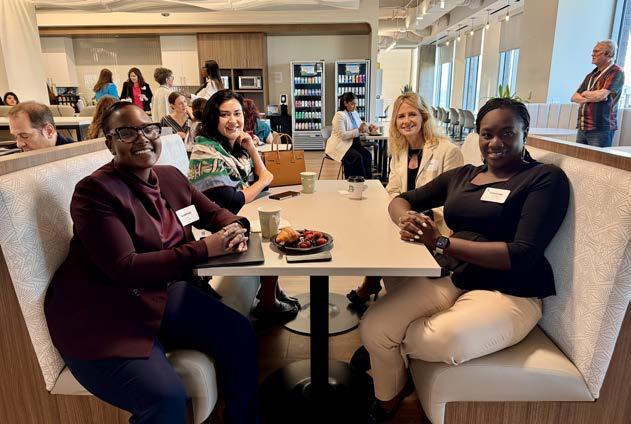
ACHENTX’s Better Together event at CHRISTUS Health was a meaningful gathering of healthcare leaders united by a shared belief: we are better together. In partnership with NTAHQ, AHLC, PRIDE, and WHEN subcommittees, HIMSS DFW, HFMA Lone Star Chapter, NAHLE, NAHSE, and HDA DFW, the event created space for connection, reflection, and courageous conversation across the North Texas healthcare community.
Kris Sanders, President-Elect of ACHENTX and NAHSE, opened the evening with a thoughtprovoking question: What do you want people to say about you if you win the million-dollar Powerball? Drawing from a lifetime of breaking the mold and a career shaped by integrity, resilience, and leadership through COVID, Kris challenged attendees to reflect on legacy; how it is built, how it is lived, and whether we are showing up as our authentic selves. Her message was grounded by powerful reminders to “Be You” and “Be Still,” encouraging presence amid the chaos of leadership and life.
Patrick Hart followed with a deeply personal story of resilience, beginning with being evicted at nine years old in Austin, Texas. Facing hardship alongside his mother and brother, Patrick learned early the strength of being better together. His career journey, from housing through healthcare leadership and entrepreneurship, led him to ask critical questions about representation and belonging in leadership. Through PDPmedia, he now amplifies diverse voices and stories in healthcare.
Together, these stories reinforced a shared call to action: build bridges, expand the table, and lead with courage. Better Together was more than an event; it was a commitment to shared leadership, inclusion, and collective impact.
OCTOBER 3, 2025
WHEN Breakfast: Policy, Power, and Purpose
Holly Hrabik, MHA, MBA
Moderator: Whitney M. Laughlin, Corporate Secretary & Chief Legal Officer, AMN Healthcare
Panelists: Michaela Bennett, VP Government Relations, Children’s Health
Sara González, VP Advocacy, Public Policy & Political Strategy, Texas Hospital Association
Shona Sowell, Director of Community Relations, Texas Health Frisco & City of Frisco Mayoral Candidate
people. Participants were urged to start locally, even with something as simple as advocating for a stop sign in their neighborhood, and grow from there. The importance of being wellinformed through credible research, multiple news sources, and staying active at the local level was also a key theme.
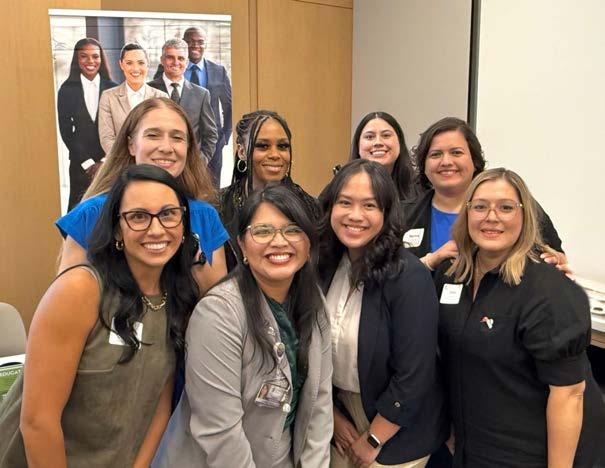
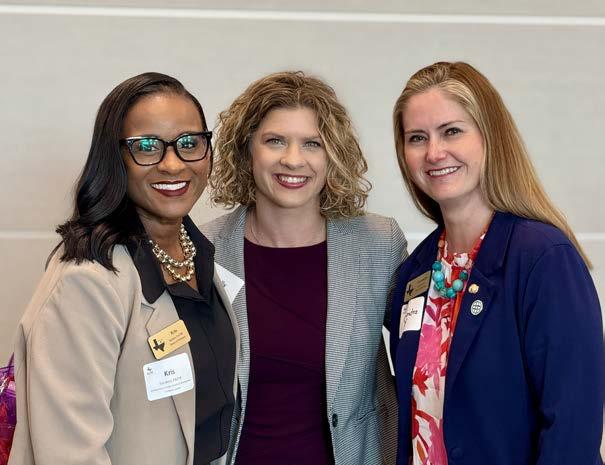
The ACHENTX Women’s Breakfast: Policy, Power, and Purpose – Women Executives
Influencing Healthcare Legislation brought together female healthcare leaders to emphasize that local leadership is a powerful way to engage in public policy and advocacy. The event underscored that influencing policy doesn’t require elected office; serving on committees, subcommittees, and aligning with professional associations all create meaningful opportunities to make an impact.
Speakers encouraged attendees to advocate for causes they are passionate about and reminded them that personal stories, rooted in real community experiences, resonate most with legislators. Authentic narratives often make a greater impact than traditional lobbying, reinforcing that advocacy truly begins with
Panelists also emphasized the value of building relationships with local and state representatives, making one’s voice heard through phone calls and conversations, and engaging with organizations that share aligned values as a way to create collective impact. Attendees were reminded that even when perspectives differ, respectful dialogue and finding common ground can lead to better outcomes for the communities they serve.
A special thanks to AMN Healthcare and Encompass Health for hosting this event.

Bringing better to the bedside.
You want a partner who really understands the local needs of your hospital, and who puts patients and community first. A partner who listens to your unique challenges and comes to the table with solutions. That’s Sound. Our physician-founded and physician-led medical group is all about doing and being better — for our partners, our clinicians, and our patients.
A better partnership in hospital medicine, and in all our specialties.
Mihir Patel, MD, MBA, CPE CEO, Hospital Medicine
OCTOBER 10, 2025
2025 ACHE of North Texas Awards Luncheon
Bert Witherspoon, FACHE
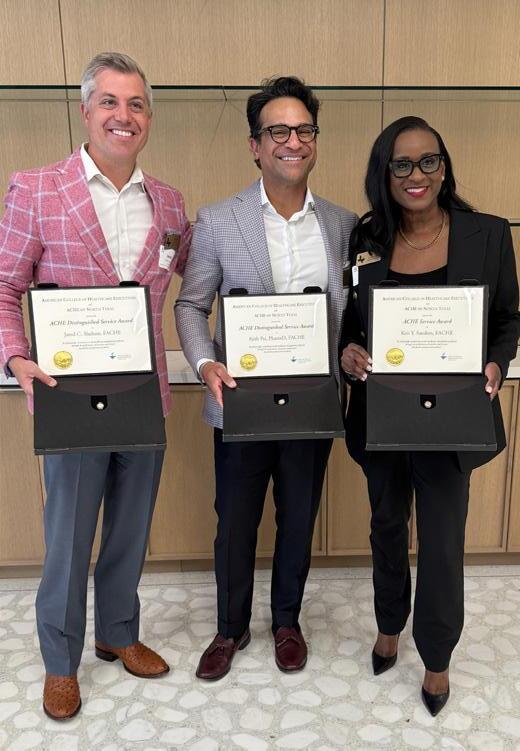
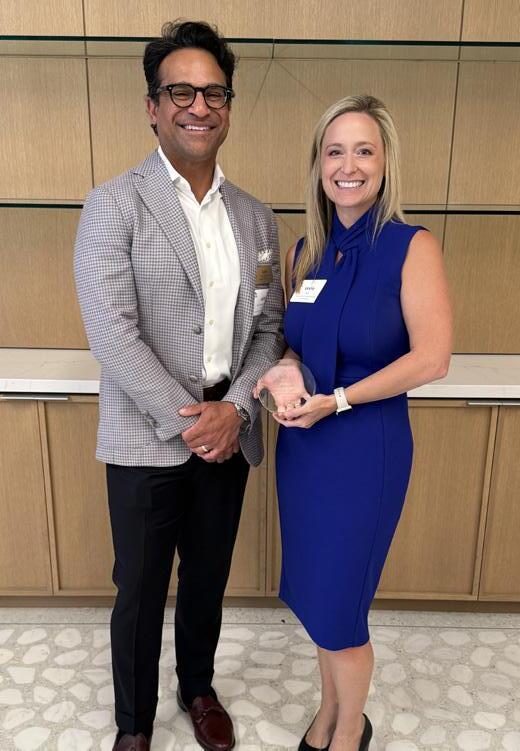
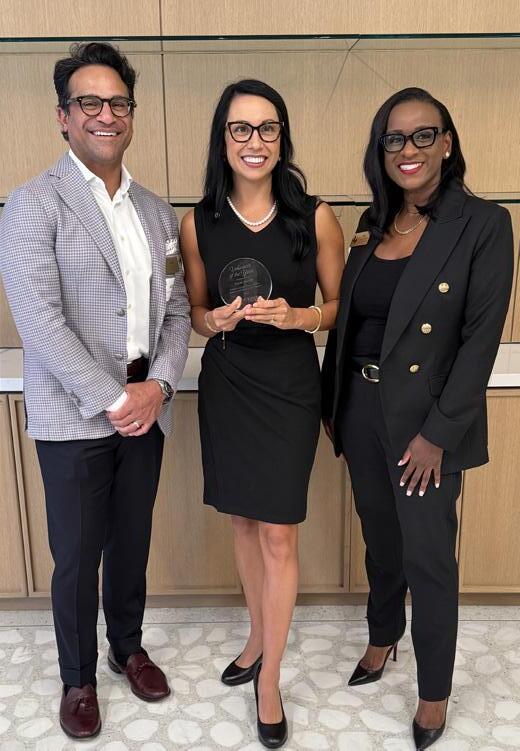
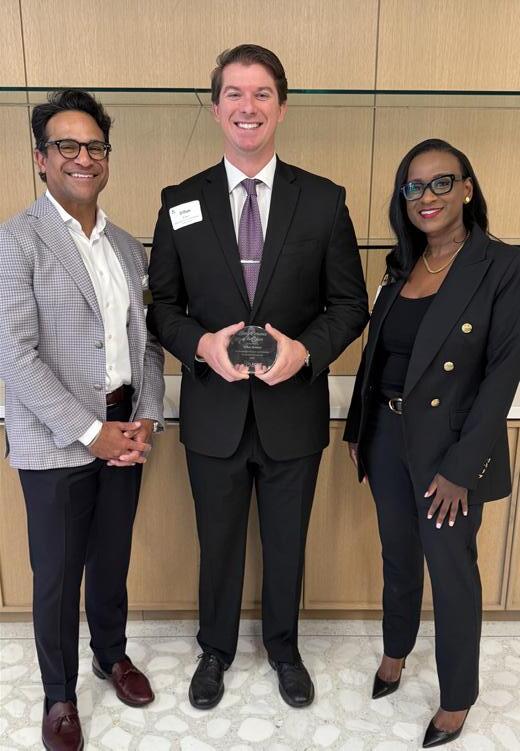
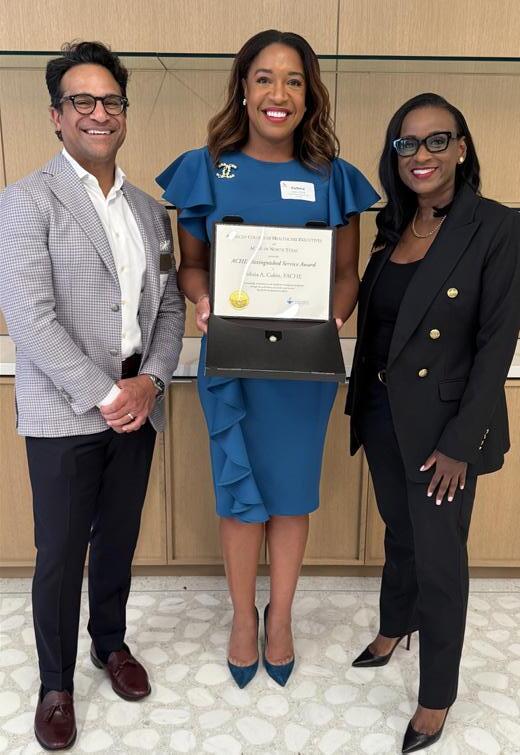
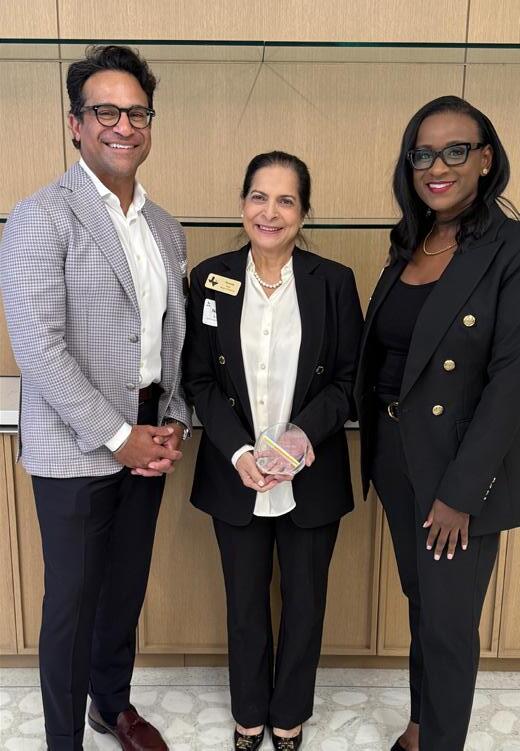
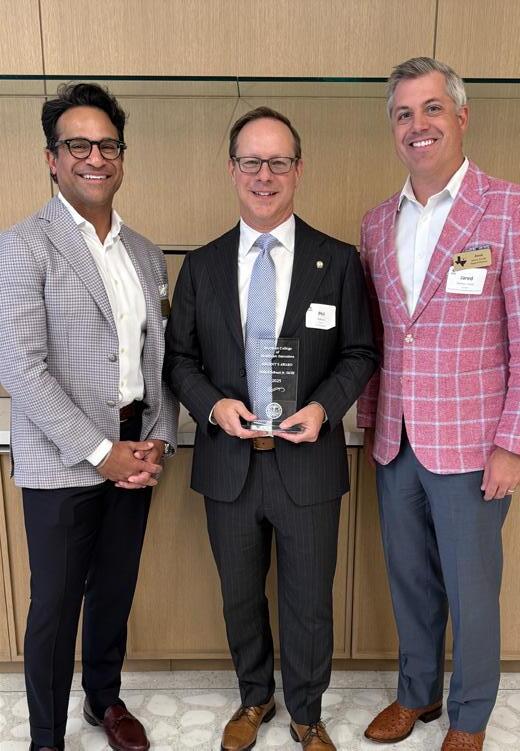
The 2025 ACHENTX Awards Luncheon celebrated excellence, service, and leadership across North Texas healthcare during a standout gathering hosted by CHRISTUS Health. In a setting defined by elegance and hospitality, the focus quickly shifted to an awards program that showcased the depth of talent and commitment within the chapter.
A highlight of the luncheon was the Student Case Study Competition, where finalist teams from University of North Texas Health Science Center and Texas Woman’s University awaited the final announcement, with the UNTHSC team earning top honors.
Presented by 2025 Chapter President Ajith Pai, PharmD, FACHE, the awards underscored the chapter’s mission: advancing healthcare leadership through service, mentorship, and professional excellence. The ACHENTX community remains deeply grateful to these leaders whose contributions continue to shape the future of healthcare in North Texas.
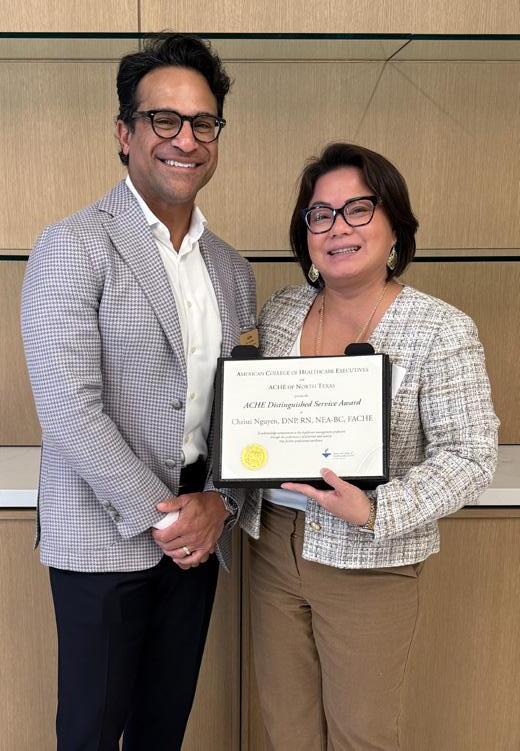
Christi Nguyen, DNP, RN, NEA-BC, FACHE ACHE Distinguished Service Award
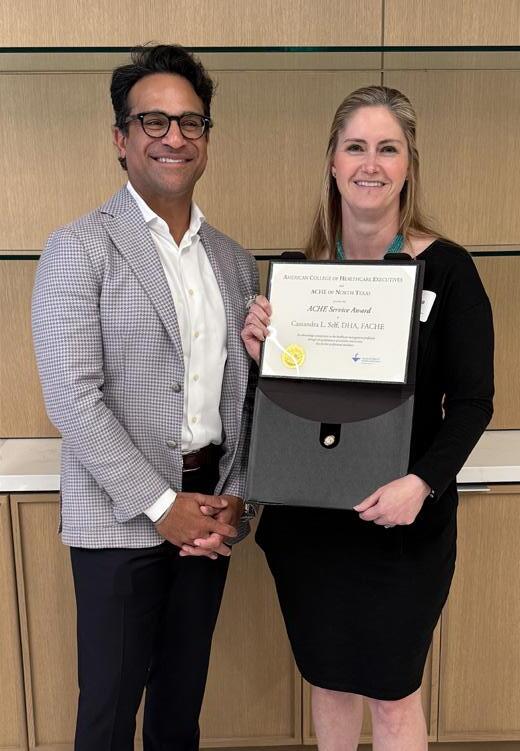
Cassandra Self, FACHE ACHE Service Award
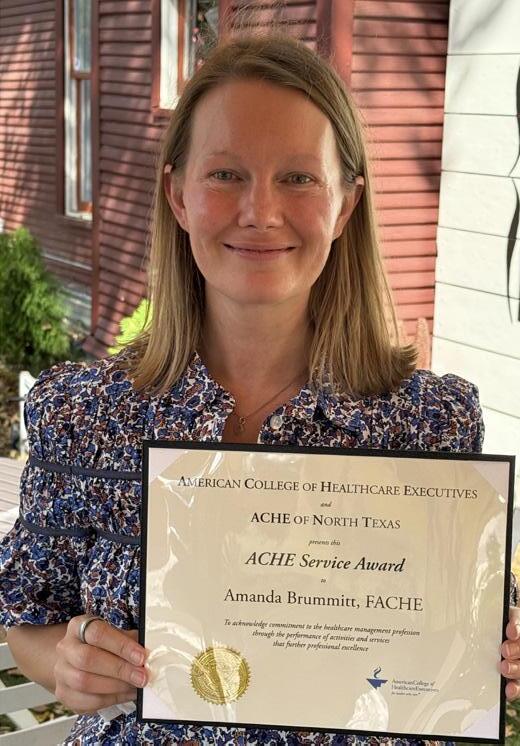
Amanda Brummitt, FACHE ACHE Service Award
Cody Hunter, FACHE ACHE Regent Early Careerist Award
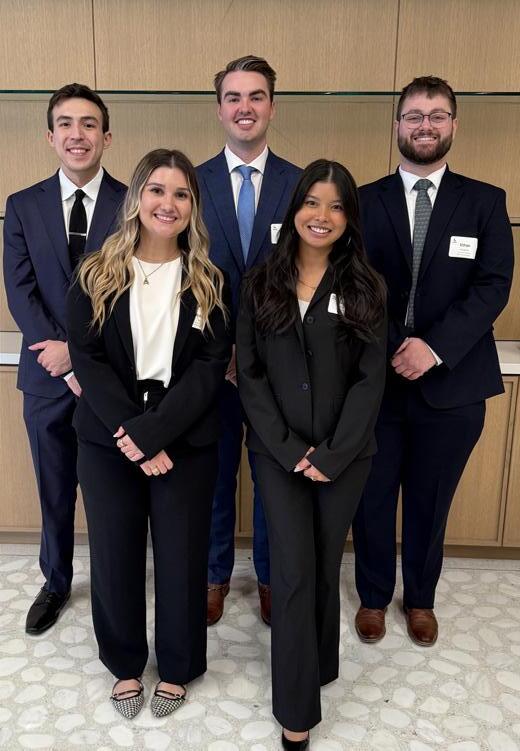
UNTHSC Team 1 ACHENTX Student Case Study Competition Winners
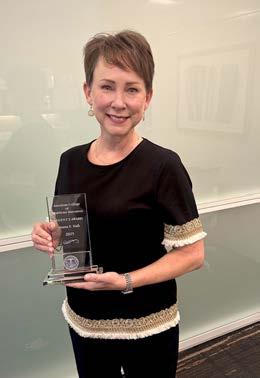
Vanessa Walls ACHE Regent Senior Level Award
Susan Merritt ACHENTX Volunteer of the Year Award
Phillip DeBruzzi, FACHE ACHE Regent Leadership Leverage Award
Noreen Butte, MD Board of Directors Service Award
Leslie Ray ACHENTX Mentor of the Year Award
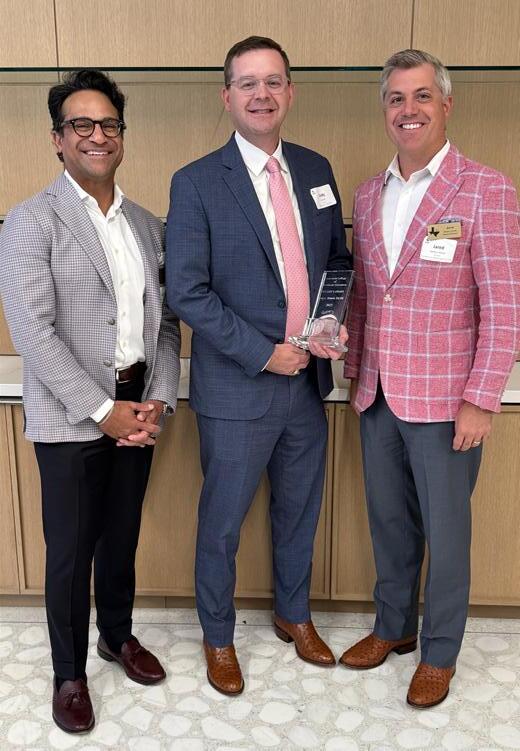
Jared Shelton, FACHE, Ajith Pai, PharmD, FACHE, Kris Sanders, FACHE
Felixia Colon, FACHE ACHE Distinguished Service Award
Dillan Brewer ACHENTX Early Careerist of the Year Award
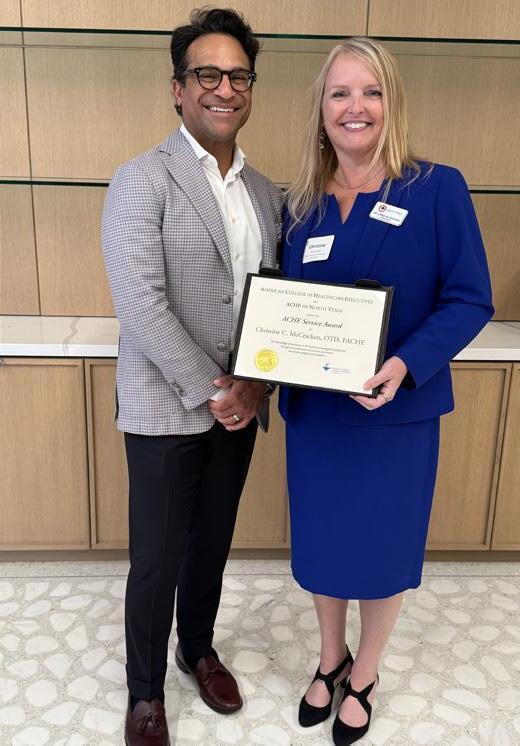
Christine McCracken OTD, FACHE ACHE Service Award
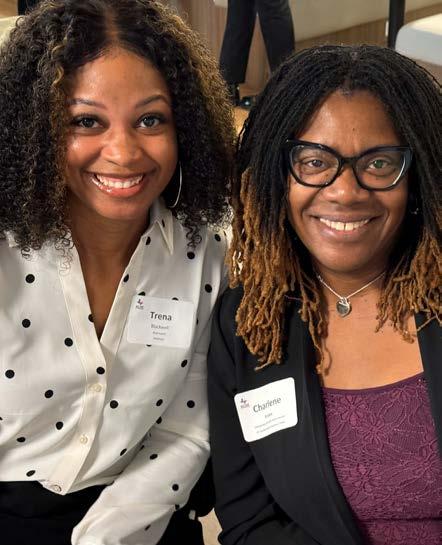

Looking to Invest in Your Leadership Journey?
COMMUNICATIONS COMMITTEE
The Communications Committee promotes engagement and connection across ACHE of North Texas through clear, timely, and strategic messaging. The committee manages chapter communications across digital and social media platforms, helping members stay informed, involved, and connected.
FOUNDATION COMMITTEE
The ACHE of North Texas Foundation Committee advances leadership development, education, and health equity through scholarships, grants, and community investment. The committee plays a key role in supporting future healthcare leaders and expanding access to professional growth opportunities.
SPONSORSHIP COMMITTEE
The Sponsorship Committee builds partnerships that support ACHE of North Texas programming, events, and scholarships. The committee works closely with sponsors to create mutually beneficial relationships that advance the chapter’s mission.
PHYSICIAN ADVISORY COMMITTEE
The Physician Advisory Committee supports the unique needs and perspectives of physician leaders within ACHE of North Texas. Led by physicians, the committee helps shape programming and engagement opportunities relevant to clinical and administrative leadership roles.
Serving on an ACHENTX committee offers hands-on experience, meaningful connections, and opportunities to shape the chapter’s work.
“Being part of a committee has been a meaningful part of my professional growth. Getting involved gave me a natural way to build genuine connections, learn from people I respect, and gain exposure to healthcare topics outside my day-to-day work. Over time, serving on a committee also helped me feel more confident and comfortable in networking spaces.”
Sarah Sentmore, MHA

A
career move you can have faith in.
At CHRISTUS Health, we unite under a shared mission: to extend the healing ministry of Jesus Christ.
Our organizational roots are strong, dating back more than 150 years. We continue to expand into new communities each year, adding more physicians and more services and bringing care closer to more people. Join a purpose-driven team where you can grow, inspire and lead.


NOVEMBER 6, 2025
ACHENTX Foundation’s 2025 Annual Summit
Sarah Sentmore, MHA
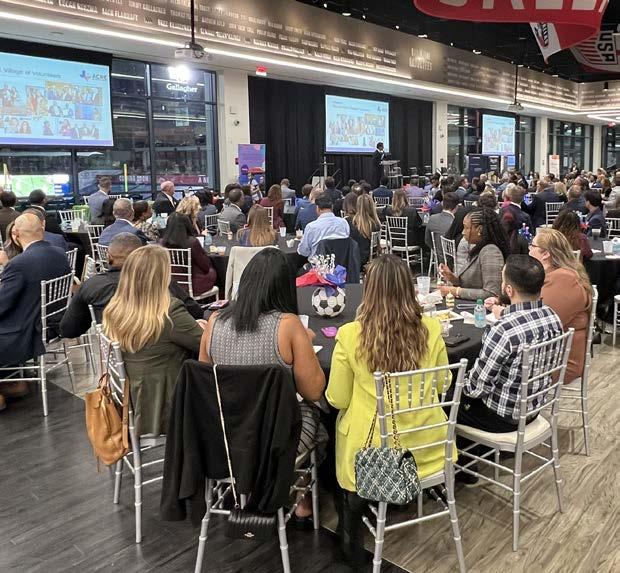
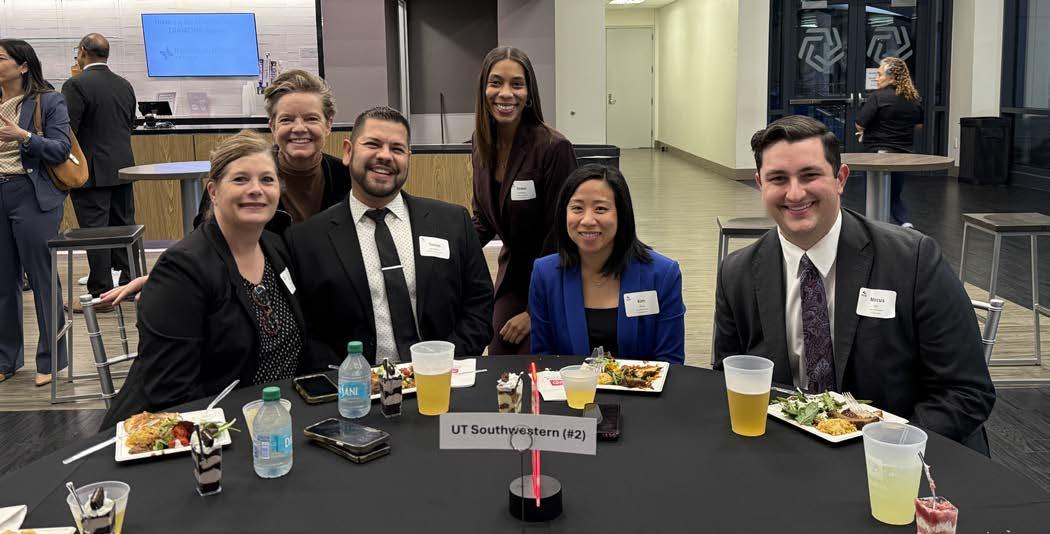
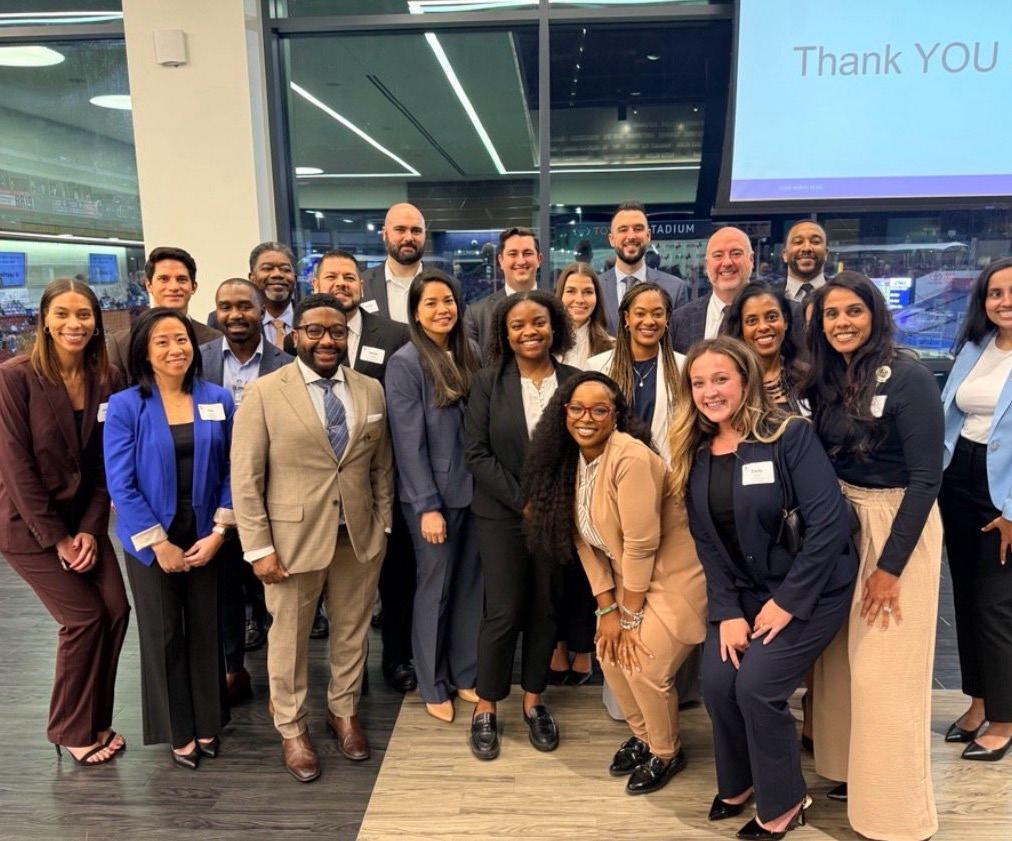
The 2025 ACHE of North Texas Annual Summit, held November 6 at Toyota Stadium in Frisco, was a reflective and celebratory evening of connection, recognition, and honest conversation about what it really means to lead in healthcare today. From the moment we gathered, there was a strong sense of community through reconnecting with familiar faces, meeting new members, and learning alongside leaders who continue to shape healthcare across North Texas.
One of the highlights of the evening was recognizing our award recipients, including the ACHE of North Texas Foundation Grant awardee Meals on Wheels Collin County, the Heart of Service organization winner Center for Transforming Lives, and Senior Leader of the Year Michael Sanborn. Michael’s remarks grounded the room as he spoke about purpose, teams, and growth as essential contributors to long-term leadership success.
The Leadership Burnout panel created space for thoughtful and much-needed dialogue. Speakers addressed the reality that there is no longer a slow season in healthcare and that physician and administrative leaders are often balancing clinical outcomes, operational demands, and personal fatigue at the same time. A key takeaway was reframing work-life balance as life balance, recognizing that work is part of life rather than something separate from it.
There were honest reflections on identity, purpose, and the challenge leaders face in
asking for support when they are trained to diagnose and solve problems. The message was clear that burnout grows in isolation, while recovery comes through self-awareness, emotional intelligence, mentorship, and peer support. As leaders, remaining calm in moments of chaos and modeling grounded leadership truly matters.
The Summit ultimately brought us back to the heart of our work, which is caring for people. When leaders stay connected to their purpose and help their teams remember theirs, the work becomes more meaningful. It was a day that left many of us encouraged, reflective, and recommitted to leading with intention and purpose.

WHO WE ARE
US Acute Care Solutions (USACS) is the nation’s leading physician-owned provider of hospital-based emergency and inpatient medicine. Our national reach and scale allow us to focus on being the best acute care practice in the country.
OUR MISSION & VALUES
Patient-centered care is at the forefront of everything we do. Our mission is simple: to care for patients. It’s where USACS began, and it’s where we begin each day. By living our core values, Servant’s Heart and Owner’s Mind, we’ve helped dozens of hospitals and health systems improve their quality and service.

6,000+ CLINICIANS
2,400,000 VISITS at 68 hospitals
772 PHYSICIANS 351 APP s
USACS IN TEXAS
USACS staffs 68 hospitals in Texas, where we serve more than 2,400,000 patients each year through our emergency, hospital, critical care, and observation medicine services. We partner with several renowned health systems, including Ascension Seton, Baylor Scott & White, CommonSpirit, Emerus, Houston Methodist, Tenet, and Texas Health, to provide exceptional, high-quality, patient-centered care to communities across Texas every single day. We host an emergency medicine residency program and several fellowships at Dell Seton Medical Center at The University of Texas and staff two pediatric emergency departments, providing an array of clinical settings for our clinicians.






NEW ACHENTX MEMBERS
SEPTEMBER
Jennifer Barsalou, MBA, BSN, RN
Michael Burns
James E. Butler, MD, PhD
Essence M. Carter-Griffin
Jean Chirico
Sameeta Chunara, MHA
Eleasha A. Counts
Juwayriyya Dayala
Alexis Lea L. Deguzman
Sarah E. Dixon
Tatiana A. Gardner
Robert Gleason
Lisa Graybill, MBA
Magen K. Hale, MBA
Barry-Lewis Harris, II, MD
Amanda Hibbs
Ashley Hitchcock
Boone Howell, CPA
Enyonam J. KpomblekouAdemawou, MS
Josh Lamers
Matthew K. McVey
Natalie P. Meuche
NaDieya Mitchell
Bryan Morgan
Jessica Nielson
Dhwani Patel
Prachi Patolia
Anthony Penick
Kim Pongsatianwong
Cynthia Powell
Renee Pruitt, DPT, PT
Elizabeth Sibley, MSN, RN, NEA-BC, FACHE
Rosil Sinha
Tiesha Speakes
Leah R. Taylor
Tonya N. Woodward
OCTOBER
Rofiat Abubakar
John Alagood
Alexandra Amigo
Kristen Astolfo, LMSW
Kailye Bachman
Will Baysah, MHA
Joshua Bourgeois, DNP, RN, NE-BC
Nyla Bowen
Jessica Brown, MBA, MHA
Elysia E. Buerger, MHA
Becky Day
Alexis Doss
Nnamdi D. Edeoga
Sherry-Ann C. Ervin, MHA, BSN, RN
Linda Escalante
Leeba M. Farooqi
Katie Fricke
James S. Galloway, MBA
Dominic Gonzalez, MBA, MHA
Kimberly A. Hodgkinson, FACHE
Bertina M. Hooks, MD
Ishani Ishani
Joshua Jenkins
Teneisha Kennard, LMSW
Jadavian King
Anthony LaBarbera
Mahogany Laur
Amanda Leatherman
Dorothea D. Lee
Kassey Lenihan
Veronica Lenti
Kassy M. Lloyd
Maurlie Loftis
Priyanka Manthuruthil
Alejandra Mares
Kathleen O. Martin
Aaron McCalister
Jody McCauley
Mike W. McDermott
Cassie McGuire
Deepak Pahuja, MD, MBA
Siri Potluri
Clara Ramirez
Catherine Riggle, MPH
Vilma Rivera
Jennifer Roady
Alisyn Rogers
Gregory Salazar
Anny Sandoval, MBA, MSN, RN
Safia R. Slimane
Shawn Sutherland
Sandra Toro
Theodore A. Wabler
Shanequa Whitler
Claud W. Whitson
NOVEMBER
Timi Adepoju, MD, MPH
Yewande Adetiloye
Cortney K. Akins
Brian W. Ayers, MBA
Karishma Bhakta
Antonia V. Bonano-Burgos, DBH, MHA
Samiksha Chemukula
EJ Chime
Lora J. Clark
Karen Copeland, MBA
Kenneth V. Coulter, Jr.
Derrick E. Cuenca, FACHE
Sheila Elston
Mia Geist
Hunter Hamilton
Tiera Harris
Richard P. Harvey
Siamack Hozhabri, PT
Haariss Ilyas, MD
Ashley E. Irvine
Ryan Johnson
Jody Joiner, JD
Harleen Kaur
Kristie S. Kiser
Alexis La Mar
Tabitha Lee
Michael N. Nguyen
Gloria Okland
Amador Padilla, MHA, CRA, RT (R)
Daphnie Pilgrim
Prudhvi Reddy
Paula B. Reisdorfer, FACHE
Matthew Riordan
Jonathon S. Rodriguez, MPH
Seth Smartt
Daniel A. Sweeza, FACHE
Rita Tenerelli Matteucci
Imamu Tomlinson, MD
Thanh Tran, FACHE
DECEMBER
Justin Ako
Reyaan Ali, MBA
Carmen E. Avelar Garcia, MD
Kori Ballard
J. K. Crimmings
Marshal Decker
Kajal Desai
Yolunda Dockett, DrOT
Christopher Fowler, PhD, MBA, RN
Luke Goolsby
John Gramlich
Julia E. Hernandez, BS, MHA
Courage Idemudia
Tim Johnsen, FACHE
Teresa King, FACHE
Ryan Kirby, MD
Lt Col Tony Lawrence, FACHE
Zachary Le
Sami Lin
Duane E. Long
Rosa Lozano
Clarence J. Lucas
Lance H. Mendiola
Sabine Monice
Aimee L. O’Rourke, MBA, BA
Neil Patel, MD, MBA
Meghan Patson
Scott M. Pilgrim, MD
Corinthus O. Pittman, OTR/L
Berenice Ruelas Vega
Erin P. Smith
Julienne Sweeney
Melissa Terry
Jennifer Thibault, MS
Stephanie Thompson
Yesenia Vicuna
Danielle Watson
Carissa L. Wind
Virginia Wolber
Sherie Yoon
JANUARY
Michael J. Zeniecki, BS, MHA
Samuel R. Yujuico
Trevor G. Wright, FACHE
Kristyn J. Williams
Rex D. Walk
Amber L. Vargas, MHA
Camille Taylor
Rayyan Sokkarie
Lillian Saterbak
Anita B. Roussel
Anna L. Rojas, MHA,MPH,PMP
Amber Roberson
Preethi Prakash, MD, MBA
Amy Pope
Lauren Plucinski, MBA, BSN, RN
Chad Pierson
Barbara Obot
Lady Ann Nelson
Alexander Nava
CPT Heidi A. Morgan, BSN, RN
Slok Mistry
Faiz Mirza, MD
Aaron G. Martin
Victor L. Manuel, MS
WO1 Justin Lawson
Tiwatope Ibidapo
Jonathan Hoopes, MBA
Patrick W. Hill
Riley Helland
Scott Harris, MBA
Charolette Harfield
Mitchell Gutierrez
Therese Gopaul-Robinson
William Daniel
Jalie Chick
Adam W. Casseri
Tyler B. Bodiford
Miranda Bluitt
Juan Blanco
Forrest Blackmon, MBA
Laytonique Bacon
Andrew Babb
MARY ALLVIN
April Allen
NEW ACHENTX FELLOWS
SEPTEMBER
Andrew C. Furman, MD, MBA, FACHE
OCTOBER
Candice Johnson, FACHE
Claire Hammer, FACHE
Elizabeth Sibley, MSN, RN, NEABC, FACHE
Laura Saleem, FACHE
Lee K. Smith Prater, FACHE
Lisa C. Reed, FACHE
DECEMBER
Patrick P. Makarewich, MBA, FACHE
Tolunimi O. Adedeji, MD, MBA, FACHE
RECERTIFIED FELLOWS
SEPTEMBER
Allen Marsh, FACHE
Andie G. Gardner, FACHE
Angela A. Michael, FACHE
Angela L. Richmond, FACHE
J. Michael DeLeon, FACHE
OCTOBER
Claudia A. Eisenmann, FACHE
Craig E. Sims, FACHE
Felixia A. Colón, FACHE
Jared C. Shelton, FACHE
Kevin J. Smith, FACHE
Paul Generale, FACHE
Richard Lawhead, FACHE
NOVEMBER
Brandy J. Frawley, FACHE
Jaime L. Ricketts, MBA, MHA, FACHE
Kim M. Kimberling, DNP, MHA, RN, FACHE
Kyle Kirkpatrick, FACHE
LTC Jose L. Alejandro-White, PhD, FACHE
Nikoma M. Wolf, FACHE
Paula B. Reisdorfer, FACHE
DECEMBER
Barry G. Howell, MBA, FACHE
Brian T. Asmussen, FACHE
Chad G. Robertson, FACHE
Charles E. Williams, FACHE
Curt M. Junkins, FACHE
Denise B. Elliott, FACHE
Edmundo C. Castaneda, FACHE
George B. French, RN, FACHE
Herron Mitchell, FACHE
Jason D. Jennings, FACHE
Jay N. Powell, FACHE(R)
Jeffrey C. Brooks, FACHE(R)
Joshua A. Floren, FACHE
Kevin F. Womack, FACHE
Madhura Chandak Bajaj, FACHE
Michael Talley, MHA, FACHE
Mohammad Rahman, PharmD, FACHE
Sean T. Dardeau, FACHE
Silvia B. Rose, RN, DNP, FACHE
Steven K. Whitson, FACHE
JANUARY
Jennifer J. Alexander, DHA, FACHE
Blake A. Allison, FACHE
Richard B. Day, FACHE
Jeshahnton V. Essex, FACHE
Nancy Jennings, DBA, FACHE
Donny Kalluvilayil, FACHE
Lenetra King, FACHE
WE APPRECIATE THE SUPPORT OF OUR ACHENTX DIAMOND SPONSOR

WE APPRECIATE THE SUPPORT OF OUR ACHENTX PLATINUM SPONSORS










WE APPRECIATE THE SUPPORT OF OUR ACHENTX GOLD SPONSORS