C HATHAM NEWS & R E C O R D
Tips on bearing the July heat from the Chatham County Public Health Department
Tips To Deal With Heat
The month of July across the world has seen record heat highs.
How can Chatham County residents cope?
By Valeria Cloës Chatham News & Record
Turn on your ACs and head inside.
The month of July has been one of the hottest months ever recorded across the world, according to the Associated
CCCC’s Building Bridges Program helps to give second chances
The community college continues its program for underemployed, unemployed and justice involved individuals, adds OSHA-10 training
By Valeria Cloës Chatham News & Record
SILER CITY — Back in 1996, then-29-yearold Greg Singleton was ready to start his life over. With passion, enthusiasm and a new positive outlook, he took a job at a dry cleaning business.
He was happy and got along with fellow coworkers.
“They loved me,” he said.
After three days, they promoted him from separating dirty clothes to working the front register and drive-through — and gave Singleton a 40-cent raise. They even made him a birthday cake when he turned 30.
His co-workers got curious about why someone with so much enthusiasm was working there. They asked him, and he told the truth: He’d just been released from prison as a rsttime, non-violent o ender, and he was doing what he could to move his life forward.
A few days later, Singleton was red after his boss found out he’d been convicted of a crime.
“And I felt like that was going to be the norm of my life … ,” he said. “That really hurt.”
Now, as dean of workforce & continuing education programs at Central Carolina Community College, Singleton’s personal experience is just one example of the barriers formerly-incarcerated individuals face when trying to reenter society, hurdles which can trap them in vicious cycles of recidivism (repeat o enses).
But thanks to his passion to reduce recidivism and his own experience, Singleton has spearheaded CCCC’s Building Bridges Program, a free week-long program for underemployed, unemployed and those with a criminal record — individuals to gain career readiness skills. CCCC’s program o ers Job Readiness Boot Camp soft skills, forklift training and OSHA-10 certi cation, making its graduates work-ready in a very short time.
“This program provides options — not a handout, but a hand up,” Singleton said. “And there is a di erence.”
Program history
The ve-day program launched in Janu-
Press, and between June 11 to 17, the N.C. Dept. of Health and Human Services (NCDHHS) has recorded 361 heat-related illness emergency department visits.
Since 2020, the number of heat-related illness emergency department visits have steadily increased through the years, according to the N.C. Heat Reports from NCDHHS: Through May 1 to Sept. 30, 2022, NCDHHS recorded 3,739 cases, while in the same time span in 2021, there were 3,201 cases,
and in 2020 there were 3,099.

Because of increased temperatures, Zachary Horner, communications specialist at the Chatham County Public Health Department, provided tips and resources available for community members to get through this hot weather.
“The best things to do in times of high temperatures and extreme heat include drinking more water, spending more time in cool or air-conditioned environments, and reducing outdoor activity levels,” Horner
said. However, he said that since not every household has access to air conditioning, turning on box, ceiling or stand fans can help combat heat. Keeping doors and windows closed, as well as limiting oven and clothes dryer use during the hottest times of the day can help reduce creating more heat in households, he said. Finally, removing extra comforters or thick bedding during the night
See HEAT, page A6
UNC Chapel Hill says students
By Matt Mercer North State Journal
THE U.S. SUPREME COURt ruled on Thursday, June 29, that a rmative action practices within college admissions were unconstitutional in a 6-3 decision. Chief Justice John Roberts wrote the opinion of the court, joined by Justices Clarence Thomas, Samuel Alito, Neil Gorsuch, Brett Kavanaugh and Amy Coney Barrett. A lawsuit spurred by Students for Fair Admission — a nonprofit organization of more than 20,000 members made up of students, parents and supporters — said “racial classi cations and preferences in college admissions are unfair, unnecessary, and unconstitutional” on their website, and sued Harvard and the University of North Carolina at Chapel Hill over their
admissions policies.
“A student’s race and ethnicity should not be factors that either harm or help that student to gain admission to a competitive university,” their website says.
Roberts, writing in part, said, “Eliminating racial discrimination means eliminating all of it. And the Equal Protection Clause, we have accordingly held, applies ‘without regard to any di erences of race, of color, or of nationality’ — it is “universal in [its] application.’”
Colleges and universities as a result must reshape admissions practices, with many committing to nding alternate ways to maintain diversity on college campuses.
University of North Carolina System President Peter Hans issued a statement in response to the case, saying his team was
reviewing the decision but will follow the law.
“Our public universities do extraordinary work every day to serve students of all backgrounds, beliefs, income levels and life experiences,” Hans said.
“
… The most important work of higher education is not in deciding how to allocate limited admissions slots at highly competitive schools, but in reaching and encouraging more students to take advantage of our 16 remarkable public universities.”
In the days following the decision, UNC Chapel Hill Chancellor Kevin Guskiewicz authored a letter about the decision.
The chancellor began by saying that the ruling marked a fundamental change and will a ect thousands of universities.
“We will follow the Supreme
See UNC, page A7
Board of Education approves renaming of Chatham School of Science and Engineering, grants sidewalk easement
By Valeria Cloës Chatham News & Record
PITTSBORO — The Chatham County Schools Board of Education met at 6 p.m. for open session on Tuesday, July 11, agreeing to rename the Chatham School of Science and Engineering, grant a sidewalk easement and accepted multiple other action items.
One of the most important action items is that the board agreed by 4-1 votes to rename Chatham School of Science and Engineering to Chatham Early College (CEC). This will allow CEC to be able to provide more career pathways to Chatham
County students. Dr. Amanda Moran, assistant superintendent for Academic Services and Instructional Support, said this will help position the early college for future expansion as businesses come into the area and the community grows.
Second, the board of education unanimously agreed to “grant the easements and rightof-way for construction and use of a sidewalk on the northern shoulder of Pittsboro School Road between Farrell Street and McClenehan Street to the Town of Pittsboro,” according to the meeting agenda.
“This will help children and
parents who are walking to and from Pittsboro Elementary,” Assistant Superintendent for Operations Chris Blice said.
Third, the board of education also unanimously agreed to declare the Central Services facility at 369 West Street, “minus the 0.736 acres encumbered by the Pittsboro Elementary gravel parking area,” as surplus for around $2.77 million, which is at fair market value. This plot of land will also be o ered to Chatham County. Finally the board of education discussed updates to language pertaining to the 20232023 Student Code of Civility, and its language will continue
to be updated based on questions and requests asked by the commissioners. In addition to the action items, Ilana Dubester, Selina Lopez and other team members and program participants of Orgullo Latinx Pride (OLP) were in attendance to give rst hand accounts explaining how helpful the program has been.
OLP is a free after school youth program through the Hispanic liaison for Jordan Matthews and Seaforth High School Hispanic students, to help them succeed in school, graduate high school and pursue a higher education, according to their website.
“Beginning with the incoming class in 2024, we will expand the University’s long-standing commitment to access and a ordability for North Carolina families.”
Guskiewicz
Six students and parents went up to the podium and said that the program has boosted their con dence, given them a sense of community and helped them reach their goals of going into higher education.
This program will continue into next school year.
The next Chatham County Schools Board of Education meeting will take place at 5:30 p.m. on Monday, Aug. 14, in the Central Services Board Room at 468 Renaissance Drive in Pittsboro.
VOLUME 8 ISSUE 20 | THURSDAY, JULY 13, 2023 CHATHAMNEWSRECORD.COM THE CHATHAM COUNTY EDITION OF THE NORTH STATE JOURNAL
from
to
families making less than $80K
receive free tuition
See BUILDING BRIDGES, page A12
FILE PHOTO
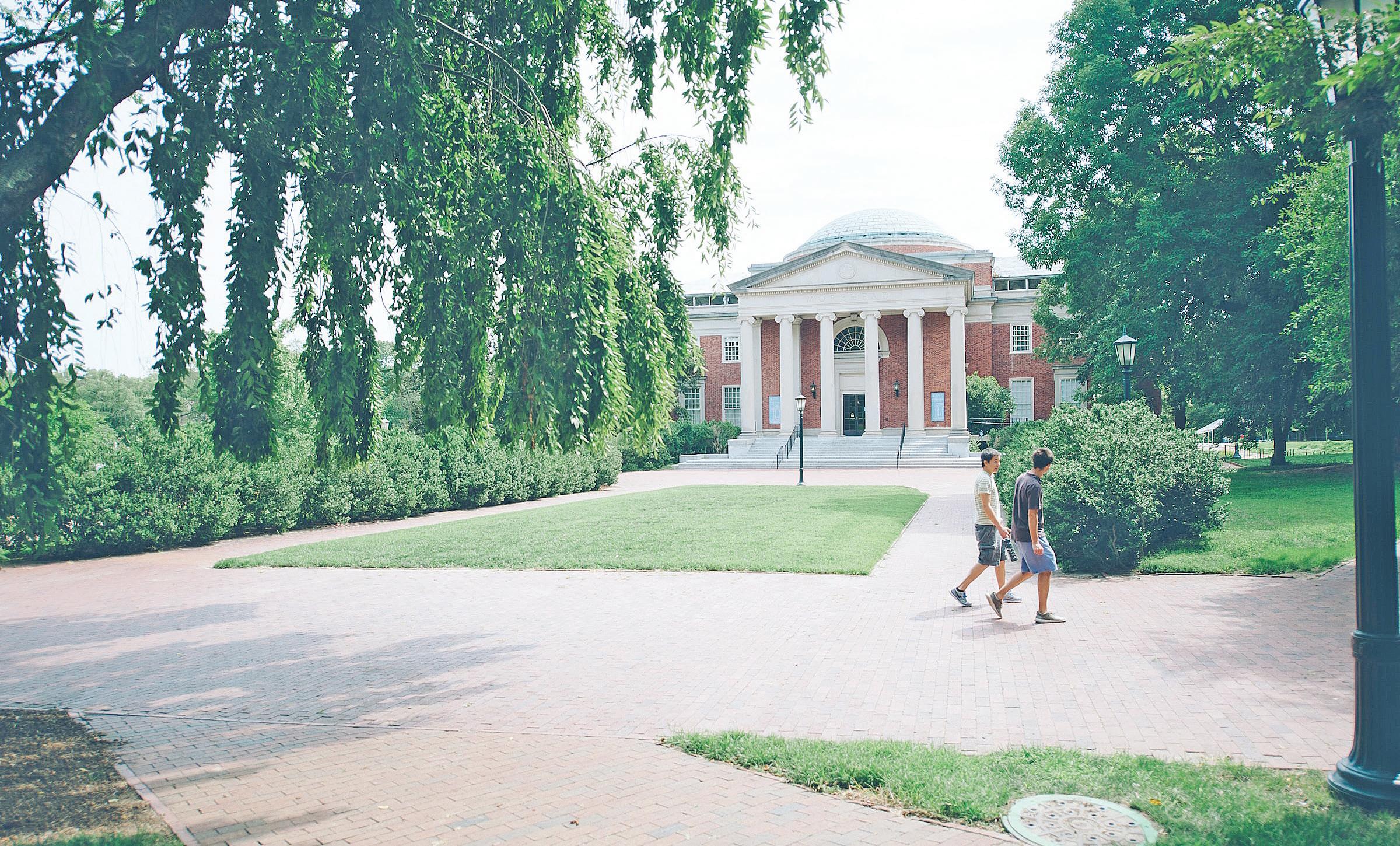
Students walk across the University of North Carolina at Chapel Hill campus.
Keep windows and doors closed Reduce oven and clothes dryer use Drink lots of water Find air conditioned environments Remove extra bedding during sleep Reduce activity levels Increase use of fans
Chatham
Neal Robbins, Publisher publisher@northstatejournal.com 336-552-6800

NEWSROOM
Matt Mercer, Editor in Chief matt@northstatejournal.com
Gri n Daughtry, Local News Editor gri n@northstatejournal.com
Lauren Rose, Design Editor lauren@northstatejournal.com
Cory Lavalette, Statewide Sports Editor cory@northstatejournal.com
Jeremy Vernon, Chatham Sports Editor jeremy@chathamnr.com
Valeria Cloës, Copy Editor valeriacloes@chathamnr.com
ADVERTISING
Jason Justice jjustice@chathamnr.com
Advertising Inquiries advertising@chathamnr.com
OFFICE
Karen Pyrtle karen@chathamnr.com
Doris Beck doris@chathamnr.com
Florence Turner billing@chathamnr.com

ON THE AGENDA
The Town of Pittsboro Board of Commissioners is holding a special meeting at 5:30 p.m. on Thursday, July 13, at the Chatham County Agriculture and Conference Center.
The Town of Siler City Board of Commissioners will meet at 6:30 p.m. on Monday, July 17, in the Courtroom at City Hall at 311 N. Second Ave.
CALENDAR
Community Blood Drive, Saturday, July 22, from 10 a.m. to 3 p.m. at the American Red Cross Blood Mobile, Chatham Community Library (parking lot),197 N.C. 87, Pittsboro. The American Red Cross will hold a blood drive at Chatham Community Library on Saturday, July 22, from 10 a.m. to 3 p.m. in the parking lot in front of the library. To make an appointment to donate, individuals may visit tinyurl.com/BloodDriveCCL, scroll down to the blood drive for July 22 at the Chatham Community Library, then click on “See Times.” There are 22 appointment times available.


Wren Memorial Library will host the 208th Army Band Woodwind Quintet, the Wildcat Winds Performance, will be Saturday, July 22, from 2 to 3 p.m. Families with children of all ages are invited to join us for a musical performance by the 208th Army Band! The Woodwind Quintet, the Wildcat Winds will be presenting familiar tunes like “Mary Had a Little Lamb,” and they will be dressed in their Army Uniforms. The library is located at 500 N. Second Ave., Siler City, N.C. 27344.
The Chatham Historical Museum o ers several short-term exhibits until the end of summer: Name That Artifact, Native people’s stone tools, points and pottery, and Railroads in Chatham County. The museum is open Wednesdays, Thursdays and Fridays from 11 a.m. to 4 p.m. There is no admission fee. The museum is located in the historic Chatham County Courthouse in the Circle, 9 Hillsboro St., Pittsboro. We follow state/local mask and distancing guidelines. More info at chathamhistory.org.
The Siler City Lion’s Club meeting for July at Dry Dock Seafood Restaurant, will be July 25 at 6 p.m. Join the Club, and see that you can make a di erence in the world and your local community. We meet the second and fourth Tuesday of each month. Together we serve!
The Goldston Public Library announces the Goldston Book Club, every 2nd Monday of each month, from 2 to 3 p.m. Individuals who are interested in joining a book club can stop by the Goldston Public Library.
The Chatham County Council on Aging will host a “Grandparents Raising Grandchildren” support group the rst Tuesday of each month at 1 p.m. at the Western Chatham Senior Center, Siler City. This group is geared toward older adults who are primary caregivers and providers for their grandchildren. For more information, contact William Riggsbee at 919-742-3975 ext. 223 or email william.riggsbee@ chathamcountync.gov.
The Chatham County Council on Aging hosts a Caregiver Support Group each Monday. The group meets the rst and third Mondays of the month at 3 p.m. at the Eastern Chatham Senior Center, in Pittsboro, and the second Monday at 3 p.m. at the Western Chatham Senior Center, in Siler City. The fourth Monday of each month is a virtual meeting via the Zoom platform starting at 6 p.m. This group is geared toward family members who are currently providing short- or longterm care to loved ones. For more information or to obtain virtual meeting login information, contact William Riggsbee, family caregiver specialist, at 919-742-3975 ext. 223 or email william.riggsbee@ chathamcountync.gov.

A2 Chatham News & Record for Thursday, July 13, 2023 THURSDAY 7.13.23
the conversation”
“Join
News & Record www.chathamnewsrecord.com North State Media LLC 303 West Raleigh Street, Siler City, North Carolina 27344 Copyright 2023 North State Media LLC
year,
Send
27344 CONTACT US For a vacation hold or to report a delivery problem: 919-663-3232 To place a classi ed or display ad: 919-663-3232; Fax: 919-663-4042 To submit a news tip or correction: 919-663-3232; email: news@ chathamnr.com SUBSCRIPTION RATES Subscription rates begin at $6.58/ month (1 year print & digital, paid annually) or $4.92/month (digital only, paid annually). Pick your plan at www. chathamnewsrecord.com/ subscribe. Auto-renew; cancel anytime Get in touch! @ChathamNR w w w chathamnewsrecord.com @ChathamNR #7 WEEKLY FORECAST
The Chatham News & Record (USPS #101-160) is published weekly, 52 weeks a
by North State Media LLC, 303 West Raleigh Street, Siler City, N.C. 27344. N.C. POSTMASTER
address changes to The Chatham News & Record, PO Box 290, Siler City, N.C.
Guide COMMUNITY 448 River Point Rd (Moncure) 3 Bdrm, 1 Bath $325,000 4377 N Old US 421 (Siler City) 4 Bdrm, 2 Bath $450,000 7 Twin Lake Dr (Pittsboro) 5.2 acres 3 Bdrm, 2 Bath $550,000 1722 Wilkins Dr (Sanford) 6 Bdrm, 5 Baths, 2 Half Baths $775,000 2035 Long Point Trail (Sanford) 5 Bdrm, 2.5 Bath $785,000 94 Sunny Ridge Ln (Pittsboro) 4 Bdrm, 3 Bath $975,000 170 Cherokee Dr (Chapel Hill) 1.150 acres $125,000 188 Cherokee Dr (Chapel Hill) 1.150 acres $125,000 1388 Henry Oldham Rd (Bear Creek) 4.840 acres $150,000 108 Spring St (Apex) 3.670 acres $150,000 454 Maple Springs Rd (Bear Creek) 13.592 acres $165,000 1049 Alton King Rd (Goldston) 11.548 acres $200,000 1223 Alton King Rd (Goldston) 12.701 acres $225,000 1544 Roberts Chapel Rd (Chapel Hill) 17.632 acres $225,000 1710 Roberts Chapel Rd (Goldston) 17.643 acres $225,000 37 E Cotton Rd (Pittsboro) 0.996 acres $300,000 5663 NC 751 Hwy (Apex) 1.771 acres $325,000 893 Alton King Rd (Goldston) 24.938 acres $325,000 0 Hal Clark Rd (Siler City) 29.730 acres $360,000 Tract 3 Thomas Kelly Rd (Sanford) 32.360 acres $400,000 5645 NC 751 Hwy (Apex) 3.584 acres $625,000 0 JB Morgan Rd (Apex) 21.500 acres $825,000 499 Olives Chapel Rd (Apex) 12.619 acres $1,500,000 00 Olives Chapel Rd (Apex) 33.662 acres $3,366,200 0 Olives Chapel Rd (Apex) 75.430 acres $9,051,600 58 Buffalo Lake Rd (Sanford) 6.70 acres $475,000 10681 E US 64 Hwy (Apex) 3.97 acres $1,500,000 00 Thomas Kelly Rd (Sanford) 36.000 acres $350,000 0 Hamlets Chapel Rd (Pittsboro) 42.804 acres $1,200,000 13120 Strickland Rd (Raleigh) 16.250 acres $1,500,000 499 Olives Chapel Rd (Apes) 12.619 acres $1,500,000 NOW HIRING Assist. Property Manager, Assist. Bookkeeper and Receptionist. Send resume to: eric@ericandrewsrealtor.com or drop off in person 73 Hillsboro St. Downtown Pittsboro
“I would like to thank the people of Chatham County, Walmart and Piggly Wiggly for making it a successful fundraiser.
In this picture, Walmart is receiving a plaque for their help.”
WEDNESDAY JULY 12 HI 91° LO 72° PRECIP 5% THURSDAY JULY 13 HI 90° LO 73° PRECIP 24% FRIDAY JULY 14 HI 92° LO 73° PRECIP 24% SATURDAY JULY 15 HI 93° LO 73° PRECIP 24% SUNDAY JULY 16 HI 93° LO 73° PRECIP 24% MONDAY JULY 17 HI 92° LO 73° PRECIP 35% TUESDAY JULY 18 HI 94° LO 73° PRECIP 39%
Herb Handley
PFAS settlement documents still under review by Town of Pittsboro Legal Counsel
By Valeria Cloës Chatham News & Record
PITTSBORO — Since the Town of Pittsboro led a lawsuit against PFAS manufacturers — 3M, DuPont de Nemours (DuPont), Chemours Company, Tyco Fire Products LP, among others — on Jan. 26, many of these companies have reached settlements. The Town of Pittsboro is still in the process of reviewing the settlement documents.
3M reached a $10.3 billion dollar settlement on June 22 which would go to di erent cities across the country that sued them, according to the Associated Press, and Dupont, Chemours and Corteva have settled their lawsuits on June 2 for $1.19 billion, according to Reuters.
Previous reporting by the Chatham News & Record explains the lawsuit was led by Sher Edling LLP with Pittsboro Town Attorney Paul Messick Jr. on the town of Pittsboro’s behalf, upon approval by the town Board of Commissioners on Jan. 23.
The reporting states that legal action was taken because
“We regularly test water entering and exiting our water treatment plant and will continue to treat our drinking water using our Granular Activated Carbon (GAC) advanced ltration system.”
City of Sanford issues Boil Water Advisory
high blood pressure, according to the Agency for Toxic Substances and Disease Registry.
The Town of Pittsboro had a Granular Activated Carbon ltration system at the water treatment plant to combat the water contamination.
“We regularly test water entering and exiting our water treatment plant and will continue to treat our drinking water using our Granular Activated Carbon (GAC) advanced ltration system,” Public Information O cer & Emergency Management Coordinator Colby Sawyer said.
Until further notice, water must be boiled for one minute to be safe, and establishments regulated by the NCDHHS without backup water supply plan must close if cannot ensure that they can boil water before using.
City of Sanford and Lee County Health Department
This advisory remains in effect until further written notication is issued.
Message from the Lee County Health Department for food service establishments
Public Information O cer & Emergency Management Coordinator Colby
Sawyer
of the discharges of these forever chemicals into the Haw River.
“Each company listed in the suit was cited for contributing to the manufacturing, selling and distribution of PFAS, as well as knowing prior to distribution the potential harm PFAS could cause,” part of the report stated. These chemicals take an extremely long time to disintegrate and cause various health e ects, like cancer and risk of
Eight le on rst day for o ce in 2023 elections
Chatham News & Record

Candidate ling for the 2023 municipal elections kicked o at noon on Friday, July 7. Candidates across a total of nearly 90 counties will seek o ce in a variety of o ces within local county government.
“About 475 of the state’s more than 550 cities, towns and villages — also called municipalities — have elections in 2023,” according to a press release from the North Carolina State Board of Elections. “Municipalities are local governments that make decisions about development, policing, water and waste services, local taxation, and other issues that a ect voters’ daily lives.”
Chatham County kicked o the ling period with two mayoral candidates: Kyle Shipp in Pittsboro and Donald Matthews in Siler City.
Two candidates also led for
Pittsboro Town Commissioner, Allen Wilson and John Foley.
In addition, Curtis Brown led for Siler City District 3 Town Commissioner.
The Goldston Gulf Sanitary District Board already has three candidates: Danny Scott, Henry Kitchings and Ricky Beal. Candidates have until noon on Friday, July 21, to le their notice of candidacy.
“Service at the municipal level often has the most direct impact on the communities in which we live. We hope many candidates sign up to run for local o ce this year,” Karen Brinson Bell, executive director of the State Board of Elections, said in a press release. “We also encourage eligible individuals across the state to register and vote in their local elections.”
Election Day in Chatham County is set for Tuesday, Nov. 7.
The Legal Counsel for the Town of Pittsboro and the town have no further comment at this point.
To read previous reporting, visit: https://www.chathamnewsrecord.com/ stories/heres-what-youneed-to-know-about-pittsboros-pfas-lawsuit,15461
https://chathamnewsrecord.com/stories/an-updatedtimeline-of-pittsboros- ghtfor-clean-water,15383
The Chatham News & Record will continue to report on this developing story.
“About 475 of the state’s more than 550 cities, towns and villages — also called municipalities — have elections in 2023. Municipalities are local governments that make decisions about development, policing, water and waste services, local taxation, and other issues that a ect voters’ daily lives.”
Press release from the North Carolina State Board of Elections.
SANFORD — The water consumers of the City of Sanford in Lee County have experienced periods of low pressure and service interruption in the distribution system due to a main line break.

Periods of low or no pressure in the distribution system can increase the potential for back siphonage and the introduction of bacteria into the water system.
Therefore, the City of Sanford advises that when water is restored, consumers boil all water used for human consumption (including drinking, making ice, brushing teeth, washing dishes and food preparation) or use bottled water.
Vigorous boiling for one minute should kill any disease-causing organisms that may be present in the water.
This o ce is strongly urging the water consumers to conserve water whenever possible.
Once repairs are made to the line break, water plant personnel will perform su cient testing of the water to ensure it is safe for human consumption.
Due to the City of Sanford’s water system leak, all establishments regulated and inspected by the Department of Health and Human Services (food establishments, daycares, nursing homes, tattoo artist, etc.) without a backup water supply plan are recommended to close immediately if water cannot be boiled prior to establishment usage.
The City of Sanford has issued a boil water advisory city wide because of low pressure and the water cannot be guaranteed safe to drink. Visit this link for exact guidelines: https://www. cdc.gov/healthywater/emergency/dwa-comm-toolbox/before/ tools/Guidelines-for-Food-Service-508.pdf. If your establishment cannot maintain these requirements, you must close until the boil water advisory has been lifted.
As on now, it is my understanding that the City has found the issue causing the outage, but no timeline has been shared.
Please monitor and follow any guidance from the City of Sanford regarding a timeline on the boil water advisories or any other advisories.
If you have any questions regarding the water leak or timeline, please call City of Sanford Public Works: 919-777-1118.
A3 Chatham News & Record for Thursday, July 13, 2023 Guide
TUESDAY JULY 18 94° 73° 39%
VISUAL VOICES
OPINION
Neal Robbins, publisher | Frank Hill, senior opinion editor


Invitation to act like a wild woman
A car comes over the hill, heading toward the itty-bitty turtle! I begin wildly waving my arms and pointing toward the road.
AH, SPRING AND SUMMER in North Carolina. It’s turtle time! Turtle time?
You bet! Those endearing, house-carrying (their own, that is) creatures listen to their inner mating calls and head out — everywhere. Their species has no exposure to tra c school, so “everywhere” is inclusive of blithely crossing any road that might fall on their migratory routes. “Yep, let’s just cross that asphalt sucker.” No street sense at all.
These brave and brazen turtles do NOT look both ways when starting across a road. They instinctively stop and pull into their respective shells, as a protective measure, in response to those monstrous metal contraptions, with wheels, trundling in their direction. (Protective measure?
Yeah, right.) And thanks are often pro ered to those crazy humans who choose to rescue them by peeing on their caring hands.
And yet, we rescuers keep coming back …
Here’s a turtle sucker’s most recent rescue episode.
Driving home down a busy country road. (That’s an oxymoron, isn’t it? “Busy, country road.” Oh, well.) Catch sight of something small in the road ahead of me — small and moving. Oh no, it’s a small six-inch box turtle. Eeek! Pull over to the side of the road, put my car blinkers on, and begin the long limp toward it. I say “limp” since I’m wearing a bulky exoskeleton brace on my right knee, helping to keep me upright prior to knee surgery.
A car comes over the hill, heading toward the itty-bitty turtle! I begin wildly waving my arms and pointing toward the road. The car avoids the turtle and also parks roadside.
EDITORIAL | BOB WACHS

I hate to admit that my rst thought, seeing the parked car, was “Does the driver think I’m having an emotional breakdown and is coming to save me?” But, no, she grabs a cloth from her car and also heads toward the wayward turtle. A kindred turtle soul! This is North Carolina, after all, where rampant yellow pollen and turtle rescues are harbingers of warm weather.
OMG, now there are multiple cars coming from both directions and, somehow, I nd myself standing on the median yellow line. (Wait, is this safe? Do they see me? Maybe they’re not from N.C. and don’t know about our turtle rescue culture?) Now I’m in full-body gesticulation, pointing toward the not-easy-to-see little shelled adventurer. My kindred turtle soul reaches the determined, crawling, critter and moves it to the opposite side of the road. Ah, well done! Excellent turtle etiquette!
I stop holding my breath (oh, wow, it does feel good to breathe again.) Limping back to roadside safety and to meet up with my fellow turtle rescuer. We thank each other. (Damn, considering all the tra c encountered, we should’ve been jumping up in the air and high- ving. But that particular behavior will need to wait until I have a new knee.) Turned to go back to my car. The other big-hearted rescuer said, “Here, let me walk you safely back.” I suddenly felt de ated. Do I appear that helpless? That decrepit with my knee brace? Decided, however, to perceive her gesture as a kindness, instead. I guess rescues occur in all forms, don’t they? With gratitude for the rescued turtle and for my capacity to accept a small, kind, rescue-of-sorts, as well. Go turtles! Go humans!
Some things that once made sense no longer do
I had a job at Dan McCrimmon’s Drug Store on Main Street in downtown Pittsboro. Dan sold cigarettes, by the pack — 20 cents — and by the carton — $1.85 for a 10-pack carton of Winstons. One of the tasks at the end of the work day was to burn the store’s trash in a re pit out back.
DO YOU EVER PAUSE from time to time to re ect on your past, speci cally things you once did on a regular basis without giving them a second thought?
When — and if — you do that, does it seem comical or even ridiculous, given the bene t of 20/20 hindsight, that you did those things routinely as a normal part of your life.
Take smoking, for instance, at least for me. I started smoking in high school. It was cool and it made me look cool, or so I reasoned in my teen mind.
I had a job at Dan McCrimmon’s Drug Store on Main Street in downtown Pittsboro. Dan sold cigarettes, by the pack — 20 cents — and by the carton — $1.85 for a 10-pack carton of Winstons. One of the tasks at the end of the work day was to burn the store’s trash in a re pit out back.
Rather than simply stand around and wait for the re to die out, I would smoke and practice blowing smoke rings, blowing smoke out of my nose, out of my nose and mouth at the same time and the famous “French Inhale” — blowing smoke out of your mouth and then inhaling it into your nose.
I know, I know, that’s gross but it seemed like a good idea at the time and I was pretty good at it. If that had been an Olympic sport, I would have been captain of the American team.
Obviously, after high school, I took my newly-acquired habit to Chapel Hill, to UNC where I would spend seven years trying to complete a four-year course of study. One of the things I nally learned, as I have mentioned before, was that going to class, paying attention to the teacher and not to the blond in the third row, reading the material and studying had a direct correlation to how well I did in the class, as in the di erence between an “F” and a “B.”
It did not take long for me to learn a great truth, namely that I could be comforted in the learning process in the classroom by smoking therein. Now that wasn’t the case for every building but the older ones that in those days had no A/C, the big 12-ft
tall windows — six in a line — would be raised and if you got a seat next to the window, you could smoke.
And get this: Not only could you smoke in class but most of those old buildings had tile oors like Mama had in her kitchen. So, when you nished your smoke, just drop the stub on the oor at your seat and grind it out. But if you were too lazy to step on your stub, just let it burn itself out. There were some really interesting patterns on those oors from that practice.
Eventually, I grew tired of trying to graduate and turned to trying to impress the blond in the third row by blowing ve smoke rings at a time in her general direction. Later, I learned that her boyfriend was a defensive tackle on the football team named “Bubba” who ate pine trees for a snack so I stopped wasting my talents on her.
There’s no way possible anything like smoking in class would ever happen on a campus today. They’re all anti-tobacco, an especially interesting situation when you consider that Mr. Duke, who made his fortune in tobacco, lavished quite a bit of his pocket change on the institution in Durham that today bears his name.
In time, I quit smoking and gained 74 pounds, but at least I wasn’t marking up any oors. It just seems so out of character, so stupid today, but back in those days, it was part of what made me Joe Cool.
At least for 15 minutes.
I suspect most of us people have things like that in our closets, especially if we have more than a handful of birthdays. We just need to be careful where we drag them out.
Bob Wachs is a native of Chatham County and retired longtime managing editor of the Chatham News/Chatham Record, having written a weekly column for more than 30 years. During most of his time with the newspapers, he was also a bivocational pastor and today serves Bear Creek Baptist Church for the second time as pastor.
A4 Chatham News & Record for Thursday, July 13, 2023
COLUMN | JAN HUTTON
All racism Is evil, Supreme Court rules
THE SUPREME COURT has ruled 6-3 that racial preferences in college admissions violate the U.S. Constitution. At last!
No student with high grades and test scores should be rejected in favor of a lesser applicant who happens to have a certain skin color.
The evidence provided to the court showed that Harvard College and the University of North Carolina at Chapel Hill discriminated against Asian American and white applicants.
A black, Hispanic or Native American student with a combined SAT score above 1,100 might be invited to apply to Harvard, but an Asian girl would need at least 1,350, and an Asian boy at least 1,380.
The real opportunity gap in this nation is not between black and white. It’s between rich and poor.
Contrary to what most Americans assume, affirmative action has never helped poor kids. In fact, Harvard favors wealthy kids. Only 3% of the student body come from low-income families. A staggering 67% come from families in the top fifth of the nation’s earners, per data provided by Harvard researcher Raj Chetty. Nearly three-quarters of Harvard’s black and Hispanic students come from high-earning families.
Justice Clarence Thomas stresses that Harvard offers the same admissions “bump” to “a wealthy black applicant given every advantage in life as to a black applicant from a poor family with seemingly insurmountable barriers to overcome.”
All the while Harvard rejects Asian American applicants with higher grades and test scores, even those from poor families.
College administrators are already trying to weasel around the court’s ruling by waiving standardized tests that make discrimination hard to conceal.
That’s dishonorable.
Instead, they should be scrapping racial preferences and reaching out to economically disadvantaged students with high potential, regardless of race, to promote economic mobility and help keep the American dream alive.
Students from low-income families, impoverished neighborhoods and failing schools score 399 points lower on the math and English SATs than other students, according to a Century Foundation study. Black students overall score 56 points lower.
If anyone needs a “bump” in the admissions process, it’s a poor kid.


During oral arguments, Thomas pressed lawyers for Harvard and UNC on the educational benefits of racial diversity. Wryly, he wrote that “with nearly 50 years to develop their arguments, neither Harvard
LETTER TO EDITOR
Plutocrats at the gate
nor UNC — two of the foremost research institutions in the world” — could explain the supposed link between racial diversity and educational benefit.
Thomas suggests that “two white students, one from rural Appalachia and one from a wealthy San Francisco suburb, may well have more diverse outlooks on this metric than two students from Manhattan’s Upper East Side attending its most elite schools, one of whom is white and other of whom is black.”
The Left and its media allies are bashing the court for discarding what New York Times legal analyst Adam Liptak calls “decades of precedent.”
Wrong. There is no precedent for permanent affirmative action. The court didn’t intend for it to last forever.
In his opinion, Chief Justice John Roberts makes it clear that a major reason UNC and Harvard lost their cases is that they failed to point to an end date.
When the court upheld affirmative action at the University of Michigan Law School in 2003, the justices knew “this is dangerous and it has to have an end point,” explained Justice Amy Coney Barrett.
That is when Justice Sandra Day O’Connor said it should no longer be necessary in 25 years (i.e., five years from now).
Yet, when Barrett pressed UNC’s lawyers and Solicitor General Elizabeth Prelogar for a time when they could see it ending, she got no answer.
The right answer is now.
Affirmative action is a euphemism for an ugly process — reverse discrimination. Another 25 years won’t make it prettier.
The Left insists the court is recklessly departing from precedent to favor its conservative political agenda. Not so. It is the three liberal justices — Sonia Sotomayor, Elena Kagan and Ketanji Brown Jackson — who are actually discarding precedent. They’re inventing a new rationale for affirmative action, claiming it’s justified to correct historic wrongs.
Roberts chastised the three dissenters sharply for it. The court “has long rejected their core thesis,” he wrote.
Thomas warns that if the liberal justices’ viewpoint ever prevails, it will lead “to a world in which everyone is defined by their skin color, demanding ever-increasing entitlements and preferences on that basis.”
Fortunately, the Constitution and this court are standing in the way.
Betsy McCaughey is a former lieutenant governor of New York and chairman of the Committee to Reduce Infection Deaths.
Ecient buildings benefit consumers and the environment
AS A FORMER residential carpenter who is currently trying to retrofit my 100-yearold farmhouse to make it energy efficient, I can assure people that the easiest most cost effective time to add insulation is when it’s being built, not after.
Building codes can ensure that buyers get a building that meets good efficiency standards.
The International Energy Conservation Code would reduce buildings’ energy use by about 16%. That means lower utility bills for homeowners and businesses which is especially important considering Duke’s planned rate
increases. Lower utility bills will more than cover additional building costs.
So why did the legislature just pass House Bill 488, which freezes parts of existing home building rules for the rest of the decade and blocks those energy efficiency upgrades from being added to state building code? House Bill 488 is a move in the wrong direction.
Instead of getting the buildings of tomorrow, North Carolinians will have to settle for the buildings of yesterday (and without an update to the code, N.C. will be less likely to receive millions
of dollars of Flood Mitigation Assistance grants). A better building code means savings to consumers and since buildings, including the electricity they use, account for about 35% of N.C.’s carbon emissions, more efficient buildings help protect the environment from things like intensifying wildfires, more frequent hurricanes and sea level rise.
Hopefully the governor will protect consumers and our N.C. environment by vetoing this bill.
Steve Woolford Silk Hope
EVERY TIME I HEAR President Joe Biden speak, I wonder who in their right mind could support a candidate whose own right mind is hit-and-miss.
During a recent trip to New York, I found out. They live on New York’s Upper East Side and meet for lunch at a neighborhood restaurant to plan fundraisers to reelect our dotard in chief. I know that because my husband and I were sitting at the next table, and when I heard someone say “Republican,” loudly, with a sneer, I tuned in to listen. That someone had mentioned New York Magazine critic Jerry Saltz’s now famous directive for lefties: “If you know anyone who voted Republican — including friends and family — you should shun them.”
Our adjacent diners joked that Saltz did not target them because they had no friends or family who voted Republican — and would make an exception for their doorman Mario (laughter all around).
We soon learned that Southern Republicans are especially irksome because we mouthbreathing rednecks pose the biggest threat to Biden’s reelection. No surprise there because when George Bush was reelected in 2004, New York columnist Kurt Andersen reported that distraught New Yorkers had renamed the South “Dumb----istan” and circulated a chart showing “an inverse correlation between a state’s average IQ and its vote for Bush.”
Five election cycles later, New York’s Upper East Siders sound con dent that ipping Georgia in 2020 means that the red-state South is ripe for reform. We learned that Stacey Abrams will play a key role in our conversion, so we expect Abrams to expand her de nition of Georgia as “Jim Crow redux” to include the whole South. The left’s faith in the Abrams e ect made my husband joke that Biden may have had Abrams in mind when he ended his June 16 speech with “God save the Queen!”
The to s also think that the “Floridiots” will come to their senses in 2024 — not because the NAACP has issued a “travel advisory,” declaring Florida “openly hostile toward African Americans, people of color, and LGBTQ+ individuals.” Rather, our would-be reformers are con dent that Trump will do their work for them savaging “Ron DeSanctimonious” and that Florida’s new six-week ban on abortion will incite even Republican women to vote pro-choice.
When we got up to leave, my husband dared me to turn around and drawl “Y’all come,” but I decided not to invite dialogue with a squad of New York sophisticates. My braver self would have confessed to eavesdropping, asked why so many New Yorkers are moving to the South and mentioned the 14,000 “double dippers” who are registered to vote in both New York and Florida. Better yet, I would have quoted the late Florence King’s hilarious appraisal of the type that “will not be satis ed until every abortion is performed by a gay black doctor under an endangered tree on a reservation for handicapped Indians.”
I do not know the location or date for their fundraiser, but during the subway ride back to Midtown, I pictured a penthouse where a circle of Gucci-clad swells write checks for $25,000 and discuss plans to redeem the redneck South. Writer and former CEO Roger L. Simon has said the type is a icted with “moral narcissism,” but my husband’s analysis is better. Phil thinks that New York’s Upper East Siders just gave the term “deep-fake” a whole new meaning.
The hour we spent sitting next to a table of Biden fundraisers was more instructive than a New York Times editorial or a replay of a Joy Reid rant. I learned that if “Florida is the place where woke goes to die,” New York’s Upper East Side is the place where the plutocrats meet to plot the demise of the redstate South.
A5 Chatham News & Record for Thursday, July 13, 2023 BE IN TOUCH Letters addressed to the editor may be sent to letters@nsjonline.com or 1201 Edwards Mill Rd., Suite 300, Raleigh, NC 27607. Letters must be signed; include the writer’s phone number, city and state; and be no longer than 300 words. Letters may be edited for style, length or clarity when necessary. Ideas for op-eds should be sent to opinion@nsjonline.com.
COLUMN NAN MILLER
COLUMN | BETSY MCCAUGHEY
Chatham County Sheri ’s O ce
THE NORTH CAROLINA Sheri s’ Association recently held an election to select representatives to the North Carolina Sheri s’ Education & Training Standards Commission.
Chatham County Sheri Mike Roberson was elected to serve a three-year term on the Commission. Sheri Roberson will represent the Association’s District 4, which includes 10 Triangle-area counties. This is Sheri Roberson’s second term on the Commission.
“It’s truly an honor to have been elected by my fellow sheri s to serve on the Education and Training Standards Commission,” Sheri Roberson said. “I want to thank them for their con dence in electing me to represent them in carrying out the important work that comes before the Commission.”
In addition, Sheri Shelton White Jr. of Perquimans County and Sheri James A. McVicker of Bladen County were also elected to serve Districts 1 and 7, respectively.
The Commission oversees the certi cation of all justice o cers, including deputy sheri s, detention o cers and telecommunicators who are employed in the 100 Sheri s’ O ces throughout North Carolina. The Commission also certi es telecommunicators employed by police departments, emergency communications centers, 911 centers and state agencies. Its responsibilities also include overseeing establishment, maintenance and enhancement of training courses for law enforcement o cers.
In a letter announcing the results of the recent elections, Orange County Sheri Charles Blackwood, who also serves as president of the North Carolina Sheri s’ Association, noted, “We are con dent that these sheri s will represent the North Carolina Sheri s’ Association and the Commission well and that they will each be a valuable contributing member of the North Carolina Sheri s’ Education and Training Standards Commission.”
Siler City man faces additional sex crimes charges
Chatham County Sheri ’s O ce
From
A Siler City man charged earlier this month with disseminating obscenity is facing additional related charges.
On June 21, 2023, the Chatham County Sheri ’s O ce received a report of inappropriate sexual communication and relations between a suspect and another family member.
The Sheri ’s O ce’s Family Violence investigators launched an investigation and uncovered evidence in the form of two explicit videos that Nicandro Ortega, 55, of 2684 Hamp Stone Road, Siler City, had sent to the family member.
Based on their ndings, investigators charged Ortega with two counts of felony disseminating obscenity. Ortega was taken into custody and jailed under a $100,000 secured bond.
Investigators additionally discovered that Ortega deceived the victim into sexual servitude and additional obscene material was found to have been sent by Ortega to the victim.
Ortega has since been charged additionally with three counts of human tra cking, three counts of sexual servitude, ve counts of indecent liberties with a child, seven additional counts of disseminating obscenity, one count of indecent exposure, seven counts of sexual battery, and ve counts of contributing to the delinquency of a minor.
Ortega was served and his bond was increased to a $1,000,000 secured bond. He is scheduled to appear in Chatham County District Court on July 17, 2023.
Chatham County Sheri ’s O ce deploys Zodiac in atable watercraft during training
Chatham County Sheri ’s O ce
TO PREPARE for ood water emergencies, the Chatham County Sheri ’s O ce conducted a specialized training exercise on Thursday, June 29, 2023, utilizing a Zodiac rigid in atable boat on Jordan Lake.

The training exercise was part of the agency’s e orts to proactively develop strategies to address water emergencies e ciently, with Jordan Lake serving to simulate ood conditions.
Sheri Mike Roberson, who donned swimming gear and a helmet to join his o cers in the Thursday morning session, emphasized that the training is important for his ocers, but he also noted that the Sheri ’s O ce does not aim to compete with other rst responders better equipped and trained for swift water rescue.
“We’re not trying to be a swift water rescue response unit,” Sheri Roberson said. “It’s important for our ocers to be familiar with Zodiac boats and rescue techniques, but we also recognize the vital role of re and other rst responders who specialize in swift water rescue. Our goal isn’t to compete with them, but to complement their e orts. By receiving this training, we’re enhancing our agency’s overall preparedness.”
The training — conducted at Jordan Lake’s Vista Point Boat Ramp — was led by Lt. Eddie Freeman, a water res-


cue expert with the North Chatham Fire Department whose nearly 40 years of experience made him ideal for the role. Lt. Freeman, on one of his days o , volunteered his time.
In the three-hour session, Lt. Freeman covered a lot of ground, beginning with the basics — including starting the Zodiac with a pull cord — and familiarizing o cers with proper in ation of the craft.
He also introduced o cers to the Zodiac’s unique steering capabilities.
“We’re going to start with some lazy S-type turns at moderate speed,” Lt. Freeman said, “so you can get the feel of the boat: which way makes it go right and which way makes it go left, because when you’re in the tiller it just seems the opposite. You push it away from you to go right; you pull it to you to go left.”
Designed to navigate turbulent waters with ease, Zodiac boats o er great stability and maneuverability, enabling access to areas that traditional boats could nd challenging to reach, particularly areas cut o by oodwaters. The Zodiac could prove especially useful to the Sheri ’s O ce in the aftermath of hurricanes, for instance, when some communities may be isolated by rising streams and residents in those areas otherwise unable to obtain food and fuel for generators.
In addition to training in boat handling techniques, including steering and acceler-
ation and safe and accurate navigation, o cers, under Lt. Freeman’s instruction, also practiced rescue procedures, including approaches to safely retrieving and transporting individuals in distress.
Each o cer took a turn plunging into the lake to practice safely returning to the Zodiac, pulling themselves back into the craft. And they practiced victim recovery, pulling each other out of the lake and into the safety of the boat, a task more dicult than it may sound.
“Two hundred pounds feels more like 500 pounds when you’re pulling it up sideways,” observed Lt. Stephen Renn, one of half a dozen o cers who took part in the training.
After covering basic operations of the Zodiac, Lt. Freeman also warned about the surprising power of ood waters, advising o cers to never underestimate the potentially hazardous strength.
“If the water gets above your waist and there’s the least bit of current in it, it can wash you away,” he said. “It can be below your knees and still take your feet out from under you.”
Sheri Roberson was especially grateful for Lt. Freeman sharing his knowledge and skills with the Sheri ’s O ce for the valuable training exercise.
“We really appreciate Lt. Freeman taking his time and expertise to help train us on safety procedures and equipment familiarization,” Sheri Roberson said. “He is de nitely an asset for our community.”
“It’s important for our o cers to be familiar with Zodiac boats and rescue techniques, but we also recognize the vital role of re and other rst responders who specialize in swift water rescue. Our goal isn’t to compete with them, but to complement their e orts. By receiving this training, we’re enhancing our agency’s overall preparedness.”
Sheri Mike Roberson
Hours: Mon.–Fri. 11am–5pm and Saturday 10am–4pm, Closed Sun.
HEAT from page 1
are other solutions, he added.
In addition, Horner said there are multiple resources that can be helpful to the community to help understand the e ects of the high heat on the human body, which can include heat exhaustion, heat stroke and other heat-related illness, according to the Centers for Disease Control and Prevention.
“From a health perspective, all people can be a ected by extreme heat,” Horner said. “But certain populations like older adults, very young children, and those with certain chronic diseases are at higher risk of developing a heat-related illness.”
For more information on recognizing the signs of
heat-related illnesses and how to help treat them, visit https://www.cdc.gov/ disasters/extremeheat/faq. html.
The Chatham County Public Health Department is working to create a “Heat Action Plan” for Chatham County, Horner said.

“While this won’t be completed for this summer, it will delve into additional strategies to reduce the risk of heat-related illness,” he said. “We expect it to be completed later this year.”
For more information on how to help combat heat, Chatham News & Record previous reporting provides additional resources and information still applicable to this year’s heat: https:// chathamnewsrecord.com/ stories/here-are-somecool-tips-for-upcomingsummer-heatwaves,13652
“The best things to do in times of high temperatures and extreme heat include drinking more water, spending more time in cool or air-conditioned environments, and reducing outdoor activity levels.”
Zachary Horner, communications specialist
A6 Chatham News & Record for Thursday, July 13, 2023
PHOTOS COURTESY CHATHAM COUNTY SHERIFF’S OFFICE
Sheri Mike Roberson and Emergency Management Specialist Katie Taggett practice victim recovery procedures, hoisting Lt. Eddie Freeman to the safety of the Zodiac.
PHOTOS COURTESY CHATHAM COUNTY SHERIFF’S OFFICE
Left, Lt. Eddie Freeman (second from left) of the North Chatham Fire Department briefs Sheri Mike Roberson (left) and other Sheri ’s O ce personnel on the basics of operation of the in atable Zodiac watercraft. Right, During the three-hour exercise, o cers received instructions on overall operation of the craft, including proper in ation of the vessel.
Sheri Mike Roberson elected to serve on North Carolina Sheri s’ Education & Training Standards Commission
Exemplary Sheri ’s O ce employees selected for July recognition
Chatham County Sheri ’s O ce
EACH MONTH, Sheri Mike Roberson acknowledges a Sworn and a Detention/Nonsworn employee of the Chatham County Sheri ’s O ce as “exemplary employees of the month.”
Because of her strong leadership skills and consistent aim to provide excellent customer service, Lisa Mason, a shelter assistant at the Chatham County Sheri ’s O ce’s Animal Resource Center (ARC), was selected as the Non-sworn exemplary employee for July.
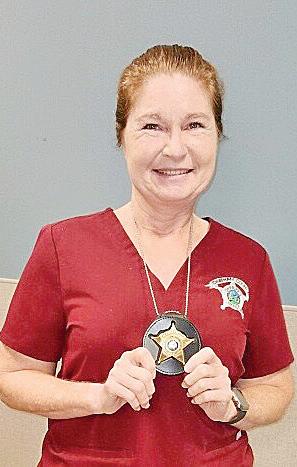
During a recent period when sta ng levels were limited, Mason stepped up to ll the void, providing reliable support to her co-workers. Her commitment to exceptional customer service extends beyond internal interactions. Mason routinely goes the extra mile to ensure visitors to the ARC have a positive experience.
As a member of the ARC team, Mason takes great pride in her work, and her presence and commitment to excellence make her an invaluable asset to the team.
Deputy Jonathan Frazier is July’s Sworn exemplary employee. Since completing his eld training, Frazier has regularly demonstrated an impres-

sive ability to carry out his duties with minimal supervision. He applies a proactive ap-
proach to serving papers, conducting vehicle stops and maintaining a high level of mo-

Teachers, get your applications in for a Bright Ideas education grant!
Teachers, are you looking for new opportunities to fund projects for your classroom? Central Electric is awarding up to $15,000 in Bright Ideas education grants to local educators in K-12 classrooms for the 2023-2024 school year.

e nal deadline for all grant applications is Sept. 15, but don’t wait to apply. Applications submitted prior to the early-bird deadline on Aug. 15 will be entered to win one of ve $100 Visa® gi cards. Scan the QR code or visit NCBrightIdeas.com for more informaiton or to apply!

bility within his designated patrol zone. Frazier exempli es the essence of a team player,
eager to lend a hand to his colleagues in any way possible. He distinguishes himself by readily volunteering for assignments across di erent divisions within the agency.
When interacting with citizens, Frazier demonstrates genuine compassion and takes time to thoroughly explain his actions, the reasons behind them and how he can help. His commitment to personal growth and professional development is evident through his inquisitive nature, constantly seeking knowledge by asking questions and conducting research on laws, policies and procedures. By maintaining a positive demeanor, embracing his duties with enthusiasm, readily helping others and fostering a strong sense of teamwork, Frazier sets a strong example for others to follow.
The exemplary employee commendation is bestowed by Sheri Roberson each month upon individuals who demonstrate exceptional performance, extraordinary dedication and service, team spirit, positive attitude, problem-solving skills and/or outstanding leadership.
In recognition of their achievement, Sheri Roberson presents each honoree with a Gold Exemplary badge to be worn by the employee throughout the month.
Audit nds N.C. Department of Public Instruction tricked by fake bank account
By A.P. Dillon North State Journal
RALEIGH
— An audit report published by the N.C. State Auditor’s O ce says the N.C. Department of Public Instruction had changed certain vendor information without proper documentation that resulted in an improper disbursement of over $165,000 to a fraudulent bank account.
According to the audit report, the disbursement made by N.C. Department of Public Instruction (NCDPI) involved federal Emergency Assistance to Non-Public Schools (EANS) program funds. EANS funds were established by the U.S. Department of Education to deal with the impact of the pandemic as well as educational disruptions. The EANS Program provided $5.5 billion in total funding, of which North Carolina received $167.7 million. NCDPI had received an email in August 2021 from someone pretending to be the head of Liberty Christian Academy that included a request for the agency to change the school’s bank account information. The school had already been approved to receive EANS funds.
The bank information was apparently changed by an
Pittsboro Print Plus • Cambridge Hills Assisted Living Chatham Habitat for Humanity


The Sycamore at Chatham Mills • McDonalds
UNC from page 1
Court’s decision in all respects,” the letter begins. “That means race will not be a factor in admissions decisions at the University. It also means we will comply with the Court’s ruling that an applicant’s lived racial experience cannot be credited as ‘race for race’s sake,’ but instead under some circumstances may illuminate an individual’s character and contributions.”
He said the changes will expand opportunity to people of the state.
“First, Carolina will provide free tuition and required fees for incoming undergraduates from North Carolina whose families make less than $80,000 per year. Beginning
NCDPI o cial without going through the existing process. The fraudulent bank account received a total of $165,431, but the auditor’s o ce also discovered the payment was $16,569 more than requested in the email from the impersonator.
The auditor’s report recommended seeking repayment of the funds that were disbursed in excess of what was requested and that NCDPI should review all other EANS disbursements.
NCDPI’s response letter informed the auditor that the agency “was made aware of the fraudulent bank and email account on September 25, 2021,” and that the agency “took direct action” to recover the funds.
The letter goes on to say NCDPI worked with the FBI and the U.S. Department of Education on the matter and was able to recover $164,317 of the $165,431 of the EANS funds that were disbursed.
Additionally, NCDPI states in its letter that the remaining outstanding amount was paid by NCDPI and it took “immediate action” to require vendor electronic payment forms for any change in bank accounts, as well as adding another layer of protection by requiring veri cation of phone numbers when a bank change occurs.

with the incoming class in 2024, we will expand the University’s long-standing commitment to access and a ordability for North Carolina families,” Guskiewicz wrote, saying it broadens a tradition in line with other programs.
He also said the university will hire additional outreach o cers as part of the admissions team serving in “under-resourced communities” to spread awareness of the affordability e orts and recruit students from across North Carolina.
“We want the best students to know that a UNC Chapel Hill education is a possibility for them,” he added.
In 2023, tuition and fees for full time in-state students was approximately $9,000 per year.
A7 Chatham News & Record for Thursday, July 13, 2023
128 Wilson Rd SANFORD, NC CEMCPower.com 919-774-4900 800-446-7752 — —
PHOTOS COURTESY CHATHAM COUNTY SHERIFF’S OFFICE
Left, Jonathan Frazier is one of two exemplary employees of the month. Right, Lisa Mason is the non-sworn exemplary employee and works as a shelter assistant at the Chatham County Sheri ’s O ce’s Animal Resource Center.
CHERYL ELAINE LAMB
November 28, 1951 ~ June 19, 2023
Cheryl Elaine Lamb, formerly of Siler City passed away at Duke Hospice. She is survived by her mother, Clarice Cotten; her husband, J.C. Justice II; step-children,son, J.C. Justice III, Sarah, Diedre, Melissa Kane; brothers,Billy Cotten, Douglas Cotten, Jimmy Cotten; and one sister Betty Dixon (Lee).
TERRY WESLEY WYATT, JR.
September 21, 1974 ~ June 30, 2023
Terry Wesley Wyatt, Jr., 48, of Robbins died Sunday, July 2, 2023 at his home. He is survived by his parents, Terry Wesley, Sr. and Dianne Shamberger Wyatt; his children, Aleeha Solomon and Alaija Stallings. bpth of Akron, Phio; brothers, Gregory Wyatt of Carlisle, Pa., Phillip Allred of West End; sisters, Cassandra Wyatt of Woodstock, Ga, Meredith Hundley of Charlotte.
The funeral was held Sunday, July 9, 2023 at 2 p.m. at Collins Congregation Church with burial at New Zion Cemetery.
LARRY W. JONES
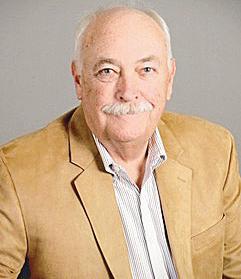
December 3, 1944 ~ June 30, 2023
Larry Wayne Jones, 78, of Broadway, passed away on Friday, June 30, 2023 at Sanford Health and Rehab.
He was the son of the late Bert Graham Jones and Margaret Coley Jones. He was preceded in death by his parents, sisters, Frances, Carolyn, Nettie, and Agnes; brothers, Robert, B.G., Layton, Clayton, and his daughter Lisa Joyce Jones. Larry was a member of Mount Pisgah Presbyterian Church and retired from Kelly Spring eld after many years of service.
He is survived by his wife, Joyce McNeill Jones of the home; son, Michael W. Jones of College Station, Tx. and three grandchildren.
Funeral services were conducted at 11 a.m. Wednesday, July 5, 2023 at Mount Pisgah Presbyterian Church with Rev. Doug Houston o ciating. Burial will follow in the church cemetery.
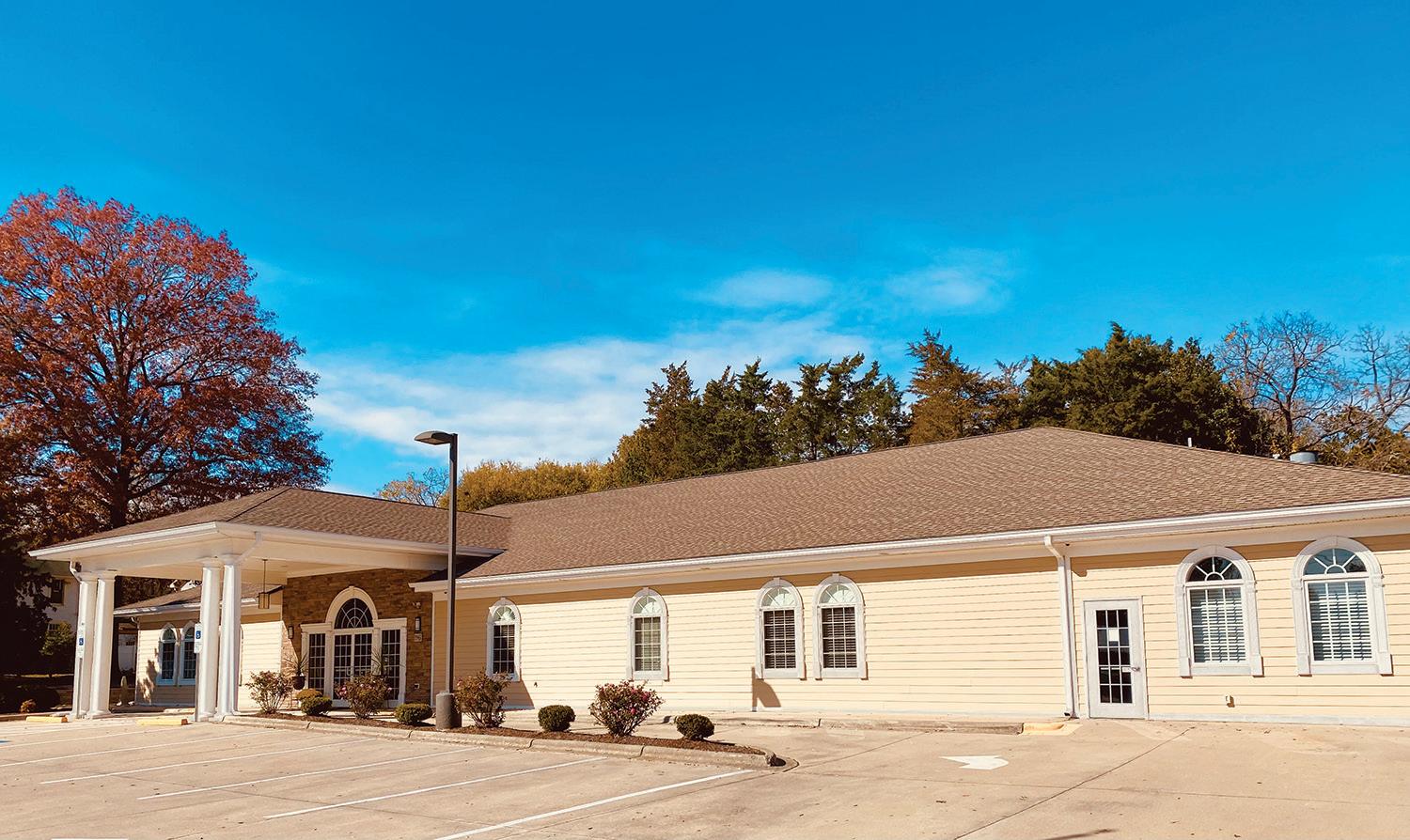
Online condolences can be made at www.smithfuneralhomebroadway. com.
MONROE SMITH
May 5, 1943 ~ July 2, 2023
Monroe Smith, 80 of Sanford, passed away on Sunday, July 2, 2023 at First Health Hospice House in Pinehurst.
Monroe was the son of Jessie James Smith and Flossie Mae Smith, who proceeded him in death along with sons, Daniel Smith, Paul David Smith and siblings, Gene Smith, Trudy Ann English, Floradale Smith, Sam Smith, James Ralph Smith, Everette Smith, and Janie Bonnett.
He is survived by his wife, Kate Smith of the home; daughters, Julie Warner of Richmond, Va., Dee Scott of Laurinburg; and son, Monroe Smith, Jr. of Sanford; sisters, Mary Magdalene Smith Yates of High Point, and Edna Earl McDonald of Hamlet; brother, Charles Lee Smith of Richmond, Va.; fourteen grandchildren and numerous greatgrandchildren.
Funeral services were held Sunday, July 9, 2023 at 3 p.m. at Smith Funeral Home Chapel in Broadway.
Online condolences can be made at www.smithfuneralhomebroadway. com.

JAMES LEE REAVES
December 8, 1956 ~ June 30, 2023
James Lee Reaves, 66, of Sanford, passed away on Friday, June 30, 2023, at his residence.
The funeral service was held Saturday, July 8, 2023 at 12 p.m. at St. Mark’s United Church of God, with burial following in Minter Cemetery.
MILTON LEWIS BAXTER
September 20, 1940 ~ June 26, 2023
Mr. Milton Lewis Baxter, 82, of Sanford, passed away on Monday, June 26, 2023, at his residence.
The funeral service was held Friday, July 7, 2023 at St. Paul AME Zion Church with burial following in Lee Memory Gardens.
Fatima Teague Groce
Fitima Teague Groce of 3595 Silk Hope Road, went to be with the Lord on Thursday, July 6, 2023 after several months of declining health.
She was the daughter of the late Floyd Teague, Sr. and Julia Ann Perry Johnson Teague. She was the youngest of eight children. In addition to her parents, she was preceded in death by her three sisters, Mossie Woody, Estelle Harper, and Doris Collins; four brothers, Edward Johnson, Charles Avon Johnson, C. L. Johnson, and Floyd Teague, Jr.
Fitima is survived by her son, Wayne Groce and daughter-in-law, Donna Groce.
She was a life long member of Sapling Ridge Global Methodist Church. She loved her Silk Hope friends and community. She was truly an entrepreneur, working for many years at Siler City Manufacturing as well as Kaysor Roth. Fatima was a poultry grower and was the owner and operator of Country Side Grill. She also enjoyed working in her yard and ower gardens.
Ms. Groce laid in repose on Saturday, July 8, 2023 from 12:00 until 5:00 p.m. Funeral services were held on Sunday, July 9, 2023 at 3:00 p.m. at Sapling Ridge Global Methodist Church with Rev. Jason Dickerson o ciating. The family will receive friends at the family home.
Donations can be made to Sapling Ridge Global Methodist Cemetery Memorial Fund or the Silk Hope ACTS worship. Online condolences may be made at www.smithbucknerfh. com Smith & Buckner Funeral Home is serving the Groce family.
Joseph Bernard Suprick, III
Joseph Bernard Suprick, III of Pittsboro, N.C. died on Thursday, June 29, 2023 at U.N.C. Hospitals after a short illness. He is survived by his wife of 40 years, Sue (Grupe) Suprick, his daughter Danielle, and his son Joey, IV (both professional engineers). He will be greatly missed.
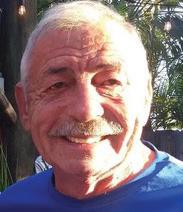
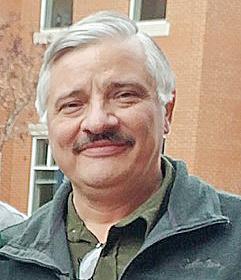
“Joe” was an exceptionally accomplished and innovative engineer who worked for major U.S. and multinational corporations across the country, internationally, and throughout his local community. He was a good provider for his family, and a friend to all. People described him as strong, driven, creative, a problem-solver, and always willing to lend a helping hand. He enjoyed and was devoted to his work. Joe’s engineering and building skills were exceptional and innovative. They included, but were not limited to, electrical, mechanical, and engineering services. “There wasn’t a problem that he believed he could not solve” and he was fond of saying “Provide me with the facts”. On his desk, his last note read – “Beat Cancer 2023!”. Those who knew him know he’s probably still working on it.
Joe’s family wants to express their appreciation to the caring doctors, nurses, and sta of U.N.C. Hospitals. In lieu of owers, donations may be made to The John Hopkins University for Gallbladder and Bile Duct Cancer Research in his memory. A “Celebration of Life” gathering will be held in Joe’s honor on Saturday, July 29th from 12 p.m. to 3 p.m. at The MOD, a local Pittsboro business Joe helped design and build. The family would be honored if others were to share stories or pictures of Joe at the “Celebration of Life”.
Danny Elliot Marley
July 12, 1948 - July 3, 2023
Danny Elliot Marley, 74, of Siler City passed away Monday, July 3, 2023 at his home.
Mr. Marley was born in Chatham County on July 12, 1948, to the late Roy Lee and Perry Craft Marley. Danny was a proud graduate of JordanMatthews High School, class of 1966. He then went on to graduate from the University of North Carolina at Chapel Hill in 1970, receiving his bachelors in economics. During his years at U.N.C., he fell in love with and married the love of his life, Barbara Liles Marley. He often hitchhiked from Chapel Hill to Greensboro and back for their dates.
Almost one year to the date after getting married, Danny and Barbara welcomed their only daughter, Dianne. Danny was a good husband and an even better father. He lived a life dedicated to his family and to service of others. A lifetime member of First United Methodist Church of Siler City, Danny was active on multiple committees and sang in the choir for the many years Barbara was choir director. He loved nothing more than listening to Barbara play the piano or organ and shared her love for music.
Early in his career, Danny worked as Plant Manager with Selig furniture company. He stayed with Selig until they closed and then transitioned to a construction supervisor with a convenience store chain. This is where he learned about the ag and agpole business. He then became an entrepreneur and has worked for the past 30 years as owner/operator of DDB Enterprises.
Throughout the years, Danny was devoted to his community and was active in the Jaycees and Rotary Club. He was an avid tennis player and Danny and Barbara were often a erce doubles team in tournaments at the Siler City Country Club.
Later in life, he was often found sitting outside reading a good book, usually a western. He was often known to pick up his granddaughter Breanna early from school just to have lunch with her. He was a proud “Pepa” to all his grandchildren and great grandchildren.
Joseph “Jody” Kirkman Minor, Jr.
September 8, 1949 - July 10, 2023
Joseph “Jody” Kirkman Minor, Jr., 73, of Bonlee, passed away Monday, July 10, 2023. Jody was born in Guilford County on September 8, 1949, to Joseph Kirkman Minor, Sr. and Ruth Ezell Perry Minor. Mr. Minor was the Executive Director of the Mediation Network of North Carolina. He enjoyed gardening and watching the hummingbirds. He loved to spend time with his family and friends.
Jody is survived by his spouse, Gregory Scott Ford; daughter, Amanda Phillips and husband Chris; granddaughter, Sheridan Phillips Leville; great granddaughter, Haydyn, all of Bonlee; sister, Missy Cherry and husband, Mike of Raleigh; niece, Hannah Askew and husband Jordan of Raleigh; great niece and nephew, Norah and Mack. The family would like to extend a special “Thank You” to the sta of U.N.C. Hospice of Pittsboro.
Smith & Buckner Funeral Home is serving the Minor family.
Pepa left a mark on anyone he met. He will be deeply missed by all who knew him. While saddened we are happy to know that he is nally reunited with the love of his life, Barbara.
Mr. Marley is survived by his daughter, Dianne Marley Armstrong and husband Michael of Siler City, grandchildren Bryce and Breanna Armstrong, both of Siler City, Amy A. Humphrey of Ft. Bragg, and Lisa A. Hawkes of Maine, and six greatgrandchildren.
A memorial service was held for Mr. Marley on Friday, July 7, 2023 at 1:00 p.m. at First United Methodist Church of Siler City with Rev. William Sabiston o ciating. Inurnment followed at Chatham Memorial Park. The family received friends following the service in the church fellowship hall and other times at the family home.
In lieu of owers, memorials may be made to First United Methodist Church, P.O. Box 212, Siler City, N.C. 27344.
Online condolences may be made at www.smithbucknerfh. com
Smith & Buckner Funeral Home is serving the Marley family
A8 Chatham News & Record for Thursday, July 13, 2023 obituaries
Strong Fathers Parenting Program available to Chatham County residents, helps end cycles of violence in households
Chatham County Government
PITTSBORO — Chatham County dads are invited to participate in the Strong Fathers Parenting Program. The weekly virtual sessions resumed on July 11, 2023, after being forced to stop earlier this year when the facilitating agency, Pathways to Change, closed.
Chatham County is pleased to be able to partner with the program’s new local facilitators, Strong Fathers Program Director Deanna Manley and Samuel Clayborn, to bring this service back to residents of Chatham and Orange Counties.
Strong Fathers is for dads who are willing to work on ending the cycle of violence within their families. It is a 20-week program that focuses on parenting skills, understanding domestic violence and the e ects violence
has on children, healthy parenting, self-care, being a good role model, generational impacts, and the developmental stages of children.
Strong Fathers is unique in that it is a combination of parenting education along with information needed to permanently end the cycle of violence not only for themselves and their immediate families, but for their children and future generations as well.
More information can be found on the Strong Fathers website (https://strongfathersprogram.org) and by watching this video: https://strongfathersprogram.org/see-our-new-video.
“Having co-facilitated Strong Fathers for the past 10 years, so many dads have bene ted from the classes and the information shared. In fact, some keep in
Chatham Community Library to host American Red Cross Blood Drive
touch months after completing,” Manley said. “Initially, they come to Strong Fathers with some resistance, but by the time they’ve completed, their gratitude and growth are palpable. The change is real. I’m happy we can continue to o er such a valuable service to our community.”
Group sizes range from eight to 12 men at a time, and there is a rolling admission so participants can join at any time.
Strong Fathers focuses on serving Chatham and Orange Counties primarily but may be able to serve surrounding counties as resources allow. Referrals can come from anyone within the community including the court system and social services, but men can also refer themselves. Questions may be directed to Manley at 984-500-4061 or at deannam@strongfathersprogram.org.
Council on Aging becomes Chatham County Aging Services, department within Chatham County government
Chatham County Government
PITTSBORO — Following a record of nonpro t service to Chatham County’s older adults that spans almost 49 years, the Chatham County Council on Aging became a department within Chatham County government upon start of the 2023-24 scal year on July 1.
The transition completes a year-long process that began with Council on Aging sta becoming Chatham County employees in July 2022 following a vote by the Chatham County Board of Commissioners.
“We have worked diligently for an entire year in preparing for our o cial transition to a Chatham County department,” Aging Services Director Ashlyn Martin said. “Throughout our time as a nonpro t organization, we have appreciated the support of the County in our e orts. As Chatham enjoys explosive growth, the older adult population has also chosen to join us in this place we call home. We are grateful that Chatham County’s leaders have identi ed this time as appropriate to bring an Aging Services department into its fold, and we stand ready to meet the expanding needs of this population now and into the future.”
The day-to-day services that residents have come to expect from the Council on Aging will remain largely unchanged. Aging Services will continue to operate the Eastern Chatham Senior Center in Pittsboro (365 Hwy. 87 N.) and the Western Chatham Senior Center in Siler City (112 Village Lake Road) from 8 a.m. until 5 p.m., Monday through Friday. For medical transportation needs, residents should now contact Chatham Transit directly at 919-542-5136.
As part of the transition, Chatham County Aging Services will no longer carry a 501(c)(3) designation. Therefore, any contributions made on or after July 1 will not be considered tax deductible.
As such, Aging Services sta will no longer be able to accept monetary donations. Individuals may still contribute by check, but it must speci cally be earmarked for “Chatham County Aging Services.”
The department’s website will remain at its current address, www.chathamcouncilonaging. org, and will be maintained and updated while construction takes place on a new site that will be housed on the Chatham County website, www.chathamcountync. gov.
Chatham County Aging Ser-

vices o ers a variety of services to assist the 60-and-over population, including activities and wellness classes, educational offerings, family caregiver services, in-home aide service, health screenings, Meals on Wheels, Minor Home Repair, congregate meals, assistive equipment loans, Chatham County Senior Games and SilverArts, Volunteer Income Tax Assistance (VITA), and the Seniors Health Insurance Information Program (SHIIP).
Both Chatham Senior Centers have been designated as Senior Centers of Excellence by the North Carolina Division of Aging and Adult Services.
Founded on July 8, 1974, by African American community leaders Mattie Paige, Lacy D. Marsh, and Charlie Baldwin, the Chatham County Council on Aging was originally created “to promote the independence and dignity of our older adults and to help them remain healthy, secure and involved in their own homes and community as long as possible.”
For more information on Chatham County Aging Services, individuals may contact the Eastern Chatham Senior Center at 919-542-4512 or the Western Chatham Senior Center at 919-742-3975.
From Chatham County Government
PITTSBORO — Chatham County community members are invited to roll up a sleeve and help save lives. Chatham Community Library will host a blood drive with the American Red Cross 10 a.m. to 3 p.m. on Saturday, July 22, 2023, in the American Red Cross Blood Mobile at Chatham Community Library.
Donors can help the Red Cross recover from a concerning shortfall in blood donations in recent weeks. The Red Cross continues to see a concerning trend — Blood donations are being sent to hospitals faster than they are coming in. The Red Cross has collected about 50,000 fewer blood donations than needed over the last two months.
One in 7 patients entering a hospital will need a blood transfusion. Individuals are encouraged to give now to ensure those living with sickle cell disease, people with cancer, and accident victims have the blood products they need for care.
To make an appointment to donate, individuals may vis-
WHAT: Community Blood Drive
WHEN: 10 a.m. to 3 p.m. on Saturday, July 22, 2023.
WHERE: American Red Cross Blood Mobile at Chatham Community Library (parking lot): 197 N.C. 87, Pittsboro, N.C. 27312
it tinyurl.com/BloodDriveCCL, scroll down to the blood drive for July 22nd at the Chatham Community Library, then click on “See Times.” There are 22 appointment times available. Those who come to donate will receive a free Discovery Channel “Shark Week” T-shirt, while supplies last.

More information about blood donation can be found by downloading the American Red Cross Blood Donor App, visiting redcrossblood.org, or calling 1-800-733-2767.
Residents may visit the libraries’ website www.chathamlibraries.org, or contact the Library at 919-545-8084 for more information on this and other events and programs.
CORA reopens on July 17 as a Choice Pantry
Chatham Outreach Alliance (CORA)
PITTSBORO — Chatham Outreach Alliance (CORA) is thrilled to announce the grand opening of its new warehouse, choice food pantry and administrative o ces at 4 p.m. on July 20 at 40 Camp Drive in Pittsboro, N.C.
In partnership with the Chatham Chamber of Commerce, the event will be a festive occasion featuring a ribbon-cutting ceremony, tours of the new and renovated facilities, and opportunities to engage with dedicated sta and volunteers.
Local community leaders, volunteers, supporters and members of the press are invited to join us in celebrating this signi cant milestone in our mission to end hunger in Chatham County.
CORA’s pantry is set up like a grocery store, and community members choose the food that matches their preferences and needs. Families will have various options when selecting their groceries, from local fresh produce, meats, dairy, bakery items, and shelf-stable staples, to personal hygiene items.
This pantry model will empower individuals by allowing them to choose the food items that best suit their dietary preferences and cultural needs,
fostering a sense of dignity and promoting healthy eating habits.
Through the support of generous donors, community partners and volunteers, CORA will be able to extend its services and reach more individuals and families struggling with food insecurity. CORA envisions a community without hunger. A healthy, strong, and connected community where all people have equitable access to abundant, safe, nutritious and culturally relevant food. Through our work, we will help build a healthy Chatham County, where families thrive, children do well in school, and seniors do not face the stress of choosing between food and other necessities.
“We are delighted to unveil our new and renovated facilities and reintroduce the choice pantry concept to our community,” Melissa Driver Beard, CORA’s executive director, said. “By providing a dignied and inclusive environment where individuals can access nutritious food according to their preferences, we are working towards creating a community without hunger.”
For more information about CORA, its programs, or how to get involved, please visit www. corafoodpantry.org or contact Rebecca Hankins at rebecca@ corafoodpantry.org.
New 2023 Planning Board meeting schedule
Town of Pittsboro PITTSBORO — The Board of Commissioners for the Town of Pittsboro has approved a modi ed schedule for Planning Board meetings in 2023. The location, time and dates for the Planning Board meetings have changed. New meeting details are as follows:
Date: third Monday of every month (unless otherwise advertised) Time: 6 p.m.
Location: Chatham County Agriculture and Conference Center (1192 U.S. Hwy. 64 W. Business, Pittsboro, N.C. 27312)
The full list of meeting dates for 2023 is available on the
Town’s website at https://pittsboronc.gov/DocumentCenter/ View/3032/.
Sta will still stream the Planning Board meetings to the Town’s YouTube channel at https://www.youtube.com/@ townofpittsboronc/streams. However, if you wish to speak at a Planning Board meeting, you will need to attend in person.
Residents may also submit written comments for the Planning Board by the Friday before the meeting. Please submit written comments to Planning sta . Contact information is available online at https://pittsboronc.gov/Directory.aspx?did=16.
Please visit https://pittsboronc.gov/341/Planning-Board or contact the Planning Department at 919-533-5480 for more information.
A9 Chatham News & Record for Thursday, July 13, 2023
TAKE NoTICE
NOTICE TO CREDITORS
NORTH CAROLINA
CHATHAM COUNTY
2023 E 000329
ALL PERSONS, rms and corporations holding claims against BEATRICE HARWARD-PERRY deceased, of Chatham County, NC are noti ed to exhibit same to the undersigned on or before September 22, 2023, or this notice will be pleaded in bar of recovery. Debtors of the decedent are asked to make immediate payment.
This 22nd day of June, 2023.
SHIRLEY H. THOMAS, Executor
1035 GROVE PARK LANE CUMMING, GA 30041 Jn22,Jn29,Jy6,Jy13,4tp
NOTICE TO CREDITORS
NORTH CAROLINA
CHATHAM COUNTY
The undersigned, having quali ed as Executrix of the Estate of MARGARET G. GALLOWAY, Deceased, late of Chatham County, North Carolina, does hereby notify all persons, rms and corporations having claims against the estate to exhibit them to the undersigned at the o ces of Tillman, Whichard & Cagle, PLLC, 501 Eastowne Drive, Suite 130, Chapel Hill, NC 27514, on or before the 29th day of September, 2023, or this notice will be pleaded in bar of their recovery. All persons indebted to the estate will please make immediate payment.
This 29th day of June, 2023.
SUSAN KENARD, EXECUTRIX
ESTATE OF MARGARET G. GALLOWAY
Tillman, Whichard & Cagle, PLLC 501 Eastowne Drive, Suite 130 Chapel Hill, NC 27514 Jn29,Jy6,Jy13,Jy20,4tc
NOTICE TO CREDITORS
NORTH CAROLINA CHATHAM COUNTY
ALL PERSONS, rms and corporations having claims against PHILIP H. LEWIS, deceased, of Chatham County, N.C., are noti ed to exhibit the same to the undersigned on or before September 29, 2023, or this notice will be pleaded in bar of recovery. Debtors of the decedent are asked to make immediate payment.
This 29th day of June, 2023.
Debra H. Lewis, Executor
Estate of Philip H. Lewis c/o Roberson Law Firm 1829 E. Franklin St., Ste. 800C Chapel Hill, NC 27514 Jn29,Jy6,Jy13,Jy20,4tc
NOTICE TO CREDITORS
NORTH CAROLINA
CHATHAM COUNTY
HAVING QUALIFIED as Administrator of the Estate of SANDRA ANITA SHARPE, late of Chatham County, North Carolina, this is to notify all persons, rms and corporations having claims against the estate of said deceased to present them to the undersigned on or before the 5th day of October, 2023, or this notice will be pleaded in bar of their recovery.
This the 27th day of June, 2023.
Lois Smith Branson, Administrator of
The Estate of Sandra Anita Sharpe 648 Poe Road Siler City, North Carolina 27344
MOODY, WILLIAMS, ATWATER & LEE
ATTORNEYS AT LAW
BOX 629 SILER CITY, NORTH CAROLINA 27344 (919) 663-2850
Jy6,Jy13,Jy20,Jy27,4tc
NOTICE TO CREDITORS
NORTH CAROLINA
CHATHAM COUNTY
Having quali ed as the Personal Representative of the Estate of PATRICIA ANN DILLON, late of Chatham County, North Carolina, the undersigned does hereby notify all persons, rms and corporations having claims against the estate of said decedent to exhibit them to the undersigned in care of the attorney for the estate, Kim K. Ste an, Ste an & Associates, P.C., 2411 Old NC 86, Hillsborough, NC 27278, on or before the 4th day of October, 2023, or this notice will be pleaded in bar of their recovery. All persons, rms and corporations indebted to the said estate will please make immediate payment to the undersigned.
David Alfred Dillon,
Personal Representative
Attorney for Estate:
Kim K. Ste an Ste an & Associates, P.C. 2411 Old NC 86 Hillsborough, NC 27278 Jy6,Jy13,Jy20,Jy27,4tc
REQUEST FOR QUALIFICATIONS
For Professional Services for Stormwater Asset
Inventory and Assessment (AIA, July 07, 2023
The Town of Siler City has been awarded grant funding from the Division of Water Infrastructure to assist in the completion of a Stormwater Asset Inventory and Assessment (AIA). The city invites submittal of responses to this Request for Quali cations (RFQ) from rms quali ed in the State of North Carolina to perform engineering services.
Scope of Work: Engineering services shall include, but are not limited to, standard tasks necessary for the implementation of the project:
1. Complete inventory of Stormwater infrastructure system and update system mapping.
• Assess current mapping and system data.
• Design database for GIS data collection and ongoing management.
• Complete a thorough survey and assessment of system components.
• Create GIS mapping and les for entire system.
2. Flow tracking to assess current capacity and to identify major sources of In ow and In ltration (I/I).
• Track ow at strategic locations to identify current conditions and future growth limitations.
• Narrow down primary locations of I/I with ow tracking at agreed upon manholes.
• Develop recommendations and strategies for improving I/I issue.
3. Develop an Asset Management Plan.
• Utilizing assessment data from mapping, create a risk analysis.
• Determine condition of critical system components.
• Create a recommended Capital Improvement Plan priorities/needs list to include anticipated costs for infrastructure and ongoing operations and maintenance.
• Set groundwork for upcoming rate study tied to existing system.
• Examine possibilities for system expansion with general recommendations.
4. Create Final Report for Council Review and Adoption.
• Document e orts, ndings, and methods.
• Compile results of work into nal report.
• Present report to City Council Engineering Firms are to submit three (3) copies of quali cations to Cal Pettiford, Public Works Director, Town of Siler City, 311 N Second St., PO Box 769, Siler City, NC 27344 by 5:00 pm August 02, 2023. Bids will be awarded at the Board of Commissioners meeting on August 07, 2023. The copies shall be in a sealed envelope marked “Statement of Quali cations for Stormwater AIA project.” RFQ questions should be addressed to Cal Pettiford, Public Works Director at 919-742-4733 or cpettiford@silercity.org.
1. Individual or Firm Information: rm’s legal name, address, email, and telephone number, the principal(s) of the rm and their experience and quali cations;
2. Experience: The specialized experience and technical competence of the sta to be assigned to the project with respect to water improvements or related work, description of rm’s prior experience, including any similar projects (in particular those funded by NC State Revolving Fund Program), size of community, location, total construction cost, and names of local ofcials knowledgeable regarding the rm’s performance on related work. Include at least ve references within the past ve years;
3. Firm Capacity and Capability: The capacity and capability of the rm to perform the work in question, including specialized services, within the period of the grant, the past record of performance of the rm with respect to such factors as control of costs, quality of work, and ability to meet schedules; description of rm’s current work activities, capability of carrying out all aspects of NC State Revolving Fund related activities, and rm’s anticipated availability during the term of the project;
4. The proposed work plan and schedule for activities to be performed; and Documentation of compliance with state and federal debarment/eligibility requirement
Jy13,1tc
REQUEST FOR QUALIFICATIONS
For Professional Services for Sewer Asset Inventory and Assessment (AIA), July 07, 2023
The Town of Siler City has been awarded grant funding from the Division of Water Infrastructure to assist in the completion of a Sewer Asset Inventory and Assessment (AIA). The city invites submittal of responses to this Request for Quali cations (RFQ) from rms quali ed in the State of North Carolina to perform engineering services. Scope of Work: Engineering services shall include, but are not limited to, standard tasks necessary for the implementation of the project:
1. Complete inventory of sanitary sewer system and update system mapping.
• Assess current mapping and system data.
• Design database for GIS data collection and ongoing management.
• Complete a thorough survey and assessment of system components.
• Create GIS mapping and les for entire system.
2. Flow tracking to assess current capacity and to identify major sources of In ow and In ltration (I/I).
• Track ow at strategic locations to identify current conditions and future growth limitations.
• Narrow down primary locations of I/I with ow tracking at agreed upon manholes.
• Develop recommendations and strategies for improving I/I issue.
3. Develop an Asset Management Plan.
• Utilizing assessment data from mapping, create a risk analysis.
• Determine condition of critical system components.
• Create a recommended Capital Improvement Plan priorities/needs list to include anticipated costs for infrastructure and ongoing operations and maintenance.
• Set groundwork for upcoming rate study tied to existing system.
• Examine possibilities for system expansion with general recommendations.
4. Create Final Report for Council Review and Adoption.
• Document e orts, ndings, and methods.
• Compile results of work into nal report.
• Present report to City Council Engineering Firms are to submit three (3) copies of quali cations to Cal Pettiford, Public Works Director, Town of Siler City, 311 N Second St., PO Box 769, Siler City, NC 27344 by 5:00 pm August 02, 2023. Bids will be awarded at the Board of Commissioners meeting on August 07, 2023. The copies shall be in a sealed envelope marked “Statement of Quali cations for Sewer AIA project.” RFQ questions should be addressed to Cal Pettiford, Public Works Director at 919-742-4733 or cpettiford@silercity.org.
1. Individual or Firm Information: rm’s legal name, address, email, and telephone number, the principal(s) of the rm and their experience and quali cations;
2. Experience: The specialized experience and technical competence of the sta to be assigned to the project with respect to water improvements or related work, description of rm’s prior experience, including any similar projects (in particular those funded by NC State Revolving Fund Program), size of community, location, total construction cost, and names of local ofcials knowledgeable regarding the rm’s performance on related work. Include at least ve references within the past ve years;
3. Firm Capacity and Capability: The capacity and capability of the rm to perform the work in question, including specialized services, within the period of the grant, the past record of performance of the rm with respect to such factors as control of costs, quality of work, and ability to meet schedules; description of rm’s current work activities, capability of carrying out all aspects of NC State Revolving Fund related activities, and rm’s anticipated availability during the term of the project;
4. The proposed work plan and schedule for activities to be performed; and Documentation of compliance with state and federal debarment/eligibility requirement Jy13,1tc
NOTICE TO CREDITORS
NORTH CAROLINA
CHATHAM COUNTY
The undersigned, having quali ed on the 3rd day of July 2023, as Executrix of the Estate of Dennis Alan Nagy deceased, of Chatham County, North Carolina, does hereby notify all persons, rms and corporations having claims against said Estate to exhibit them to the undersigned on or before the 13th day of October, 2023, or this Notice will be pleaded in bar of their recovery. All persons indebted to said Estate will please make immediate payment to the undersigned.
This 13th day of July 2023
Dori Maria Nagy, Executrix Estate of Dennis Alan Nagy
Gwendolyn C. Brooks, Esquire Kennon Craver, PLLC 4011 University Drive, Suite 300 Durham, North Carolina 27707 Jy13,Jy20,Jy27,Au3,4tc
CREDITORS
NOTICE TO
NORTH CAROLINA
CHATHAM COUNTY
Having quali ed as Executrix of the Estate of Edwin Earl Elmore, deceased, late of Chatham County, North Carolina, this is to notify all persons, rms and corporations, having claims against the said estate to present them to the undersigned at 1153 Hu man Mill Road, Burlington, NC 27215 on or before the 13th day of October, 2023, or this notice will be pleaded in bar of their recovery. All persons, rms and corporations, indebted to the said estate will please make immediate settlement.
This the 10th day of July, 2023.
Vera T. Harris, Executrix
J. Ray Deal, Attorney Deal Law, PLLC 1153 Hu man Mill Road Burlington, NC 27215 Jy13,Jy20,Jy27,Au3,4tc
NOTICE TO CREDITORS
23 E 38
NORTH CAROLINA
CHATHAM COUNTY
Having quali ed as Executrix of the Estate of ELIZABETH ALPERIN MAXWELL-GARNER, of Chatham County, North Carolina, this is to notify all persons having claims against the Estate to present them to the undersigned on or before October 16, 2023, or this notice will be pleaded in bar of their recovery. All persons indebted to said Estate, please make immediate payment.
Leisa Smith, Executrix
Gregory S. Connor, Attorney 5511 Capital Center Drive, Ste. 180 Raleigh, NC 27606 Jy13,Jy20,Jy27,Au3,4tc
NOTICE TO CREDITORS
NORTH CAROLINA
CHATHAM COUNTY
HAVING QUALIFIED as Executor of the Estate of ERNEST LEE PENDERGRAPH late of Chatham County, North Carolina, this is to notify all persons, rms and corporations having claims against the estate of said deceased to present them to the undersigned on or before the 5th day of October, 2023, or this notice will be pleaded in bar of their recovery.
This the 28th day of June, 2023.
David Lee Pendergraph, Executor of The Estate of Ernest Lee Pendergraph
185 Hot Shotes Drive Siler City, North Carolina 27344 MOODY, WILLIAMS, ATWATER & LEE ATTORNEYS AT LAW BOX 629 SILER CITY, NORTH CAROLINA 27344 (919) 663-2850 Jy6,Jy13,Jy20,Jy27,4tc
NOTICE TO CREDITORS
NORTH CAROLINA
CHATHAM COUNTY
HAVING QUALIFIED as Executor of the Estate of ERNEST LEE PENDERGRAPH late of Chatham County, North Carolina, this is to notify all persons, rms and corporations having claims against the estate of said deceased to present them to the undersigned on or before the 5th day of October, 2023, or this notice will be pleaded in bar of their recovery.
This the 28th day of June, 2023.
David Lee Pendergraph, Executor of The Estate of Ernest Lee Pendergraph 185 Hot Shotes Drive Siler City, North Carolina 27344 MOODY, WILLIAMS, ATWATER & LEE ATTORNEYS AT LAW BOX 629 SILER CITY, NORTH CAROLINA 27344 (919) 663-2850 Jy6,Jy13,Jy20,Jy27,4tc
A10 Chatham News & Record for Thursday, July 13, 2023
LEARN ABOUT LAND - Chatham Land Experts, www.learnaboutland.com - 919-362-6999

Jy2,tfnc
OFFICE SPACE FOR LEASE
O ce, Professional space for lease, now available, in downtown Pittsboro. Call 919-612-0596 for details.” Jn15,tfnc
RENTALS, APARTMENTS
SENIOR VAN LADY seeking a small, economical room, apartment, house, or bungalow in Pittsboro/surrounding area. Need homebase near family. References, retired, non-smoker. Could o er house/pet sitting services when not traveling. 970-443-4072. Jy13,20,2tc
POWELL SPRINGS APTS. Evergreen Construction introduces its newest independent living community for adults 55 years or older, 1 and 2 bedroom applications now being accepted.

O ce hours: Tuesday and Thursday, 9 a.m. to 4 p.m. Call 919-533-6319 for more information,


TDD #1-800-735-2962, Equal housing opportunity, Handicapped accessible, A2,tfnc
ACCEPTING APPLICATIONS now for one bedroom apartments, adults 55 years or older. Water included, appliances furnished, on-site laundry, elevator, keyless entry. Section 8 accepted. No security deposit. Application fee $25 per adult. Call Braxton Manor, 919-663-1877. Handicap accessible. Equal Housing Opportunity. Jy14,tfnc
AUTO FOR SALE
liquidation. JHA has been conducting auctions in the state of NC since 1989. Fully licensed Real Estate and Auction Firm. NCAL #8420 Firm #8086 www.JerryHarrisAuction.com, 919-4984077, Jy6,tfnc

‘RICKY ELLINGTON AUCTIONEERS - Equipment, business, liquidation, estates, land, houses, antiques, personal property, coins, furniture, consignments, bene ts, etc., NCAL #7706, 919548-3684, 919-663-3556, rickyellingtonauctions@yahoo.com, Jy6,tfnc



SERVICES
JUNK CARS PICKED UP Free of charge. Due to many months of low steel prices and unstable steel markets, we cannot pay for cars at this time. Cars, trucks, and machinery will be transported and environmentally correctly recycled at no charge. 919-542-2803. A2,tfnc
LETT’S TREE SERVICE - tree removal, stump grinding, lot clearing. Visa & Master Card accepted. Timber. Free estimates. 919-258-3594. N9,tfnc
HELP WANTED
RV FOR SALE
RV for sale, Damen Daybreak 2000, 75,000 miles, runs great, good tires, good air conditioner, good generator. $10,000, Financing available, 919-828-4247. Jn8,tfncx
AUCTIONS
AUCTIONEER SCOTT L. HARRIS at JHA. One Call...We sell it all!!! Real estate, personal property, estate settlement, farms & land, business
CASH PAID, for JUNK CARS and pickups. Call 336-581-3423. Jn22,29,Jy6,13,4tp
RAINBOW WATER FILTERED VACUUMS, Alice Cox, Cox’s Distributing - Rainbow - Cell: 919548-4314, Sales, Services, Supplies. Serving public for 35 years. Rada Cutlery also available. Au26,tfnc



AUTO BROKERS RECYCLERS - Cash paid for Junk/Wrecked vehicles. Call 919-545-0194. My13,tfnc
PINEY GROVE METHODIST CHURCH is seeking a part-time music director. Contact Cli Stickney at (919) 818-7847 for more information. Jn15,22,29,Jy6,13,20,27,7tp
FOOD SERVICES STAFF, Pittsboro Christian Village is accepting applications for Server, Pantry Cook, and Cook. Apply in person 8:30 a.m. to 4 p.m., Monday – Friday, at 1825 East St. in Pittsboro. Jy14,tfnc
Chatham Monument Company has an immediate job opening. This is a full time position and involves placing monuments in the cemetery in Chatham and surrounding counties. Job requirements are: Must have a valid NC drivers license, must be able to lift 75 pounds if necessary. Must have a good attitude, the ability to work well with others and be willing to learn. Also needs reliable transportation to and from work. Pay will be based on the individual and their ability to do the work. Apply in Person to 227 N. 2nd Ave. Siler City, NC 27344
($2,000 SIGNING BONUS)
- Average Hourly Pay: $1 - $

A11 Chatham News & Record for Thursday, July 13, 2023 CLASSIFIED ADS ALL SHIFTS CALL: 919-542-3151 Monday - Friday 8:30 a.m. to 4:00 p.m. for appointment to complete application and interview. Pittsboro Christian Village 1825 East Street, Pittsboro, NC HIRING CNA ’ s Now accepting applications for 2BR, 1.5BA Range, refrigerator, dishwasher are included in the rent. Rent starts at $630 and up. 400 Honeysuckle Dr., Pittsboro, NC 27312 919-542-5410 TDD 1-800-735-2962 Email: pittsborovillage@ECCMGT.com EQUAL HOUSING OPPORTUNITIES APARTMENTS REQUEST A FREE QUOTE! 866-495-1123 Prepare for power outages with a Generac home standby generator FREE 7-Year Extended Warranty* A $695 Value! O er valid February 15 - June 6, 2021 Special Financing Available Subject to Credit Approval *To qualify, consumers must request a quote, purchase, install and activate the generator with a participating dealer. Call for a full list of terms and conditions. Product not available in all states. Includes the Participating Providers and Preventive Benefits Rider. Acceptance guaranteed for one insurance policy/certificate of this type. Contact us for complete details about this insurance solicitation. This specific offer is not available in CO, NY; call 1-888-7994433 or respond for similar offer. Certificate C250A (ID: C250E; PA: C250Q); Insurance Policy P150 (GA: P150GA; NY: P150NY; OK: P150OK; TN: P150TN). Rider kinds B438/B439. 6154-0120 Call today for all the details. 844-903-1784 Get the dental care you deserve with dental insurance from Physicians Mutual Insurance Company. It can help cover the services you’re most likely to use –
information you requested on Dental insurance FIRST-CLASS MAIL Fillings Crowns Dentures X-rays Cleanings Call now to get this FREE Information Kit! dental50plus.com/chatham Preventive care starts right away Helps cover over 350 services Go to any dentist you want – but save more with one in our network No deductible, no annual maximum
Dental Insurance
- - -STD- - - EA -- -Day-Labor Day-REAL ESTATE
ary didn’t initially include the OSHA-10 certi cation, which is now included. The recently-added OSHA element teaches entry-level workers safety through recognition and prevention of workplace hazards and their rights over a 10-hour certi cation process, according to the U.S. Dept. of Labor.
The program has graduated 63 individuals with a high rate of success — more than 65% of program participants have gotten jobs immediately or job interviews during mock interviews with employers like Wolfspeed, Vinfast, 3M and the Food Bank of Central and Eastern North Carolina, Singleton said. Its curriculum starts with Job Readiness Boot Camp soft skills training since over 96% of the students have never taken a community college course and may have fear of failure and anxiety on the rst day, Singleton said.
The forklift certi cation training takes place on the second and third day, and they then go back to soft skills training, and end with OSHA-10 training and mock interviews with employers, he said.
Food Bank of Central and Eastern North Carolina works in partnership with the Building Bridges Program to provide a $200 weekly allowance and a food box, Emily Kraft, director of community outreach & support services at Food Bank of Central and Eastern North Carolina, said.
“The boxes contain canned chicken, pasta, pasta sauce, peas, mixed veggies, canned fruit (in juice), applesauce, pinto beans, black beans, instant oatmeal and shelf-stable milk,” she said.
In addition, all of the forklift equipment was donated: a sit-down forklift was recently donated by the former owners of the Chatham News & Re-
cord and a pallet jack and other equipment by Carolina Handling Inc., Singleton said.
Barriers to reentry
Released convicts face stigma and an extra set of barriers upon their release as they try to reintegrate society, Singleton said.
The National Institutes of Health conducted a study — “The E ect of Stigma on Criminal O enders’ Functioning: A Longtitudinal Mediational Model” — and its “results showed that perceived stigma predicted worse community adjustment through anticipated stigma, and this varied by race,” the study said.
Formerly incarcerated individuals face barriers in employment, housing and education, according to Michigan Justice Advocacy, a nonpro t organi-
zation that advocates for justice involved individuals.
That’s why supporters of the Building Bridges Program believe in it.
In order to combat those barriers in employment and education (and indirectly, housing), the program provides a quick and free alternative to help those whose criminal debts have been paid get on their feet quicker than a trade school, associate or bachelor’s degree can.
“If we get people to stop committing crimes and going back to jail, they become taxpayers.”
Malinda Marsh, human resources development coordinator at CCCC, said. “And that is the lesson to the community. Those tax dollars count.”
Marsh, who visits the students each class, said the program shows individuals that survival is possible without committing
crimes — plus it creates hope, provides for a safer community, helps the children in the community and helps businesses get employees and decreases return on investments. “So there’s all kinds of benets,” she said. “And then we don’t have children with parents that are incarcerated or that are on the system, so there is no repeat generational thing. We want to break that cycle: We want to show our kids that you don’t have to live like this. There’s a better life for you in Chatham County.”
Impact on its students and beyond
Anthony Trapp, who graduated from the program two weeks ago, said it gave him con dence, in addition to new skills.
In addition to learning to
operate a fork lift and taking OSHA-10 training, Trapp also learned soft skills like creating and presenting a résumé and cover letter, as well as selling oneself during an interview.
“I feel more empowered, and I feel stronger, and I feel more relaxed,” he said.
Trapp’s classroom environment was good and calm, he said, and everyone was focused, excited to learn and engaged by asking questions. He’s even set up several job interviews.
“I feel like now I can always go forward and be encouraged about what I’m doing,” he said. “And when I’m talking about how to present myself and how to sell myself, and talking to employees feeling con dent — I feel like this training has helped me a lot”
Trapp said there are a lot of people who have never been encouraged by anyone or had anyone in the community step up for them, which is why this program is particularly helpful.
The next week-long program cohort starts July 17; others are set to begin Aug. 14 and Sept. 18. The program accepts participants until the rst day, but encourages individuals to register early. The public is invited to save the date and watch students maneuver the forklifts from 10 to 11 a.m. on July 19 at CCCC.
In addition, the Community Remembrance Coalition-Chatham (CRC-C) is starting to work with CCCC and Singleton to help recently released individuals return to their life outside prison to reduce recidivism and spread community awareness, W. Robert Pearson, member of CRC-C, said.

“If someone can walk out the door feeling like they are worth something,” Kraft said. “To me, there’s no greater gift you can give somebody.”
To register, contact Marsh at mmarsh@cccc.edu or call her at 919-545-8058.

CNBC names North Carolina top state for business for second consecutive year‘
North State Journal
RALEIGH — Business network CNBC has named North Carolina as their top state for business in 2023. The annual rankings score all 50 states in 10 separate categories.
North Carolina topped its top score from 2022. NC ranked as the top workforce state, the most important category in this year’s study, also boasting the third-best economy with solid growth, stable state nances and a healthy housing market.
“Companies in desperate need of skilled workers are going where the people are, and people are going to North Carolina,” CNBC special corresponded Scott Cohn said. “The state’s well-balanced economy is handling the growth well. Rising political tensions could create issues down the road, but for now, North Carolina seems to have the winning formula—for the second year in a row.”
Gov. Roy Cooper joined CNBC’s Scott Cohn at the Biltmore Estate in Asheville for the announcement.
“When we invest in our people, we invest in the foundation of our success,” said Cooper. “Thanks to our well-trained, dedicated and diverse workforce, North Carolina has been named the top state for business for the second year in a row and it’s important for us to invest in the education and well-being of our people to continue our amazing success.”
The top ve states were North Carolina, Virginia, Tennessee, Georgia and Minnesota.
This is only the second time in the ranking’s history that a state has received the top spot two years in a row. Since 2017, North Carolina has placed in the top ve of state rankings four times.
Senate Leader Phil Berger (R-Eden) also weighed in, citing the Republican legislature’s work to improve the state’s business climate.
“We should all celebrate that North Carolina’s business climate continues to be the best in the nation, notwithstanding the governor’s obstructionism and vetoes of business-friendly legislation. His actions have done nothing to slow our momentum,” Berger said.
Earlier this year, North Carolina also won Site Selection Magazine’s Prosperity Cup for the third year in a row. North Carolina also won Area Development magazine’s 2023 Platinum Shovel Award which recognizes states that went above and beyond the gold standard for investment and job creation and received Business Facilities magazine’s State of the Year award after a historic year of economic development and job growth.
A12 Chatham News & Record for Wednesday, July 13, 2023
BUILDING BRIDGES from page 1
MATT RAMEY | CHATHAM NEWS & RECORD
From left to right, Corliss Pauling, Food Bank of Central and Eastern North Carolina (FB) digital strategy manager, Marica Tedder, FB workforce development program manager, Greg Singleton, CCCC dean of programs, workforce and continuing education, and Emily Kraft, FB director of community outreach & support services, have worked together to create the Building Bridges program.
Chatham American Legion baseball team sees season come to end, B5
Anstrom ready to make Seaforth
XC team a state-title contender
The rising junior won last year’s 2A championship race in a time of 16:15.43
By Jeremy Vernon Chatham News & Record
PITTSBORO — One year after winning the 2A cross country state championship, Seaforth rising junior Jack Anstrom has his sights set even higher this

upcoming season. How so? Simple. While he has already had plenty of individual success, Anstrom wants to help Seaforth win the school’s rst ever team state title. At last year’s state championship meet, the Hawks placed fourth overall as a team, anchored by Anstrom’s rst-place nish and bolstered by solid races from Will Cuicchi (31st), Gabe Rogers (32nd) and Henry McFall (36th).
Bland set to play in East-West game; Adams invited to NCAA camp
By Jeremy Vernon Chatham News
With a solid foundation already built, Anstrom feels like the Hawks are ready to reach that next level.
“I’ve got every bit of condence that I can go and win (a state title) again,” Anstrom said. “But we really want the team title more than anything … We’re really focusing on transitioning to being a bigger team and helping guide more people in the right direction when it comes to being
part of the team and learning what it’s like to go compete for state championships as a team and to go race in major races.”
The Seaforth boys team brings back almost every member of last year’s team, aside from Rogers, who decided to focus on wrestling full time. The rest of the roster has plenty of pedigree, however.
At the 2A indoor track and eld state championships in
February, Cuicchi won a state title in the 1,000-meter race. He followed that up with a fourthplace nish in the 800-meter race at the 2A outdoor championships and helped the Hawks’ 4x800 team earn a podium spot with a third-place nish.
Anstrom and Cuicchi, along with rising senior Drew Parker, were recently named captains for the Seaforth’s boys team for the 2023 season. Parker nished 67th at last year’s 2A championship meet with a time of 18:46.24.
Now heading into their third season as a program, the Hawks have built a strong bond. Ans-
See ANSTROM, page B4
Chatham Central looking for new head coach with season looming
By Jeremy Vernon Chatham News & Record
BEAR CREEK — With less than six weeks left until the start of the regular season, the Chatham Central football team is still in search of a new head coach.
The Bears’ previous coach, Sherman Howze, resigned from his position last month after seven seasons with the team. Howze originally took over for Bob Pegram back in 2016. In Howze’s time with the team, Central amassed an overall record of 1259.
“It’s hard saying goodbye to a school that you truly love …” Howze wrote in a Facebook post back on June 29. “I care about my students so much. It hurts because i will always bleed Chatham Central Red.”
Last season, Chatham Central was the only Chatham County team to make the state playo s despite nishing the regular season with a 2-9 record. The Bears lost in the rst round of the 1A tournament to Rosewood, 44-6.
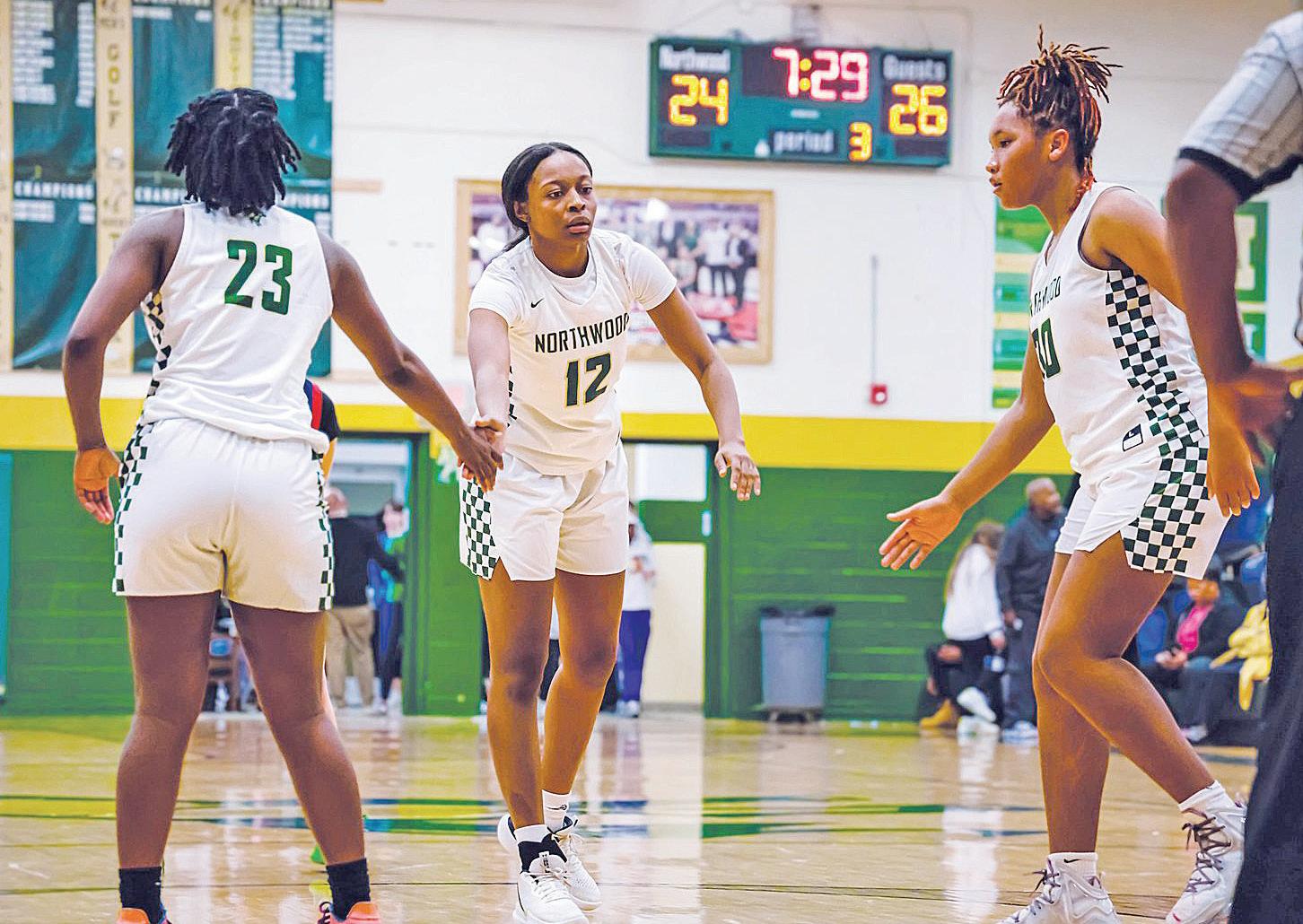
Central struggled with numbers during the 2022 season, rostering a total of 28 players.
This was an issue long before then, though, as the last time the Bears had more than 40 players listed on their roster, according to MaxPreps, was 44. Chatham Central also doesn’t have a JV team.
Things look like they could be di erent this fall, though. On their MaxPreps page for the 2023 season, the Bears list 48 varsity players. That number does include 16 incoming freshmen, but it’s an encouraging sign for a program that has struggled to nd bodies for several seasons.
Among the top players expected to return for Central this upcoming season is rising senior Devonte Johnson, who plays both running back, free safety and kick returner for the Bears. Last fall, Johnson ran for 465
yards and six touchdowns and caught 12 passes for 220 yards and one score. He was also third on the team in total tackles with 44 in 2017.
Central will bring back most its players from a defense that allowed 32.8 points per game to opponents last fall. Two rising seniors expected to contribute in a big way are linebacker Omar Brower (62 tackles, two sacks, three fumble recoveries) and defensive end Conner Kitchens (55 tackles, two sacks).
The Bears open the 2023 season Aug. 18 on the road at North Stokes. Central will play two nonconference opponents before beginning Mid-Carolina Conference play Sept. 1 on the road at Southeast Alamance — a new school playing for the rst time this fall.
Central is in a conference with the other three Chatham County football teams — Jordan-Matthews, Seaforth and Northwood. The Bears have won their past three games against the Jets but have a 3-8 record against them since 2010. Central lost its lone meeting with Seaforth, 30-20, last season, and hasn’t played Northwood since back in 2008.
SIMON BARBRE | CHATHAM NEWS & RECORD
Northwood
senior Te’Keyah Bland (12) shakes hands with teammates between free-throws against C.E. Jordan last Tuesday.
Seaforth
Jack
2A
2023 season is
a
16:44.45.
JAMES KIEFER | CHATHAM NEWS & RECORD
rising junior
Anstrom won last year’s
cross country state championship in a time of 16:15.43. The next closest nisher who returns
to their team for the
Surry Central rising senior Ignacio Morales, who nished in fourth with
time of
The pair combined for 26.1 points per game this past winter
Northwood
See BLAND page B4
for
PITTSBORO
freshman year
Uni-
Northwood
ate Te’Keyah
her high
one nal
Monday
N.C. Coaches
All-Star
Bland is
10
12
& Record
— Ahead of her
at Howard
versity, recent
gradu-
Bland will represent
school
time
night at the 2023
Association East-West
Girls’ Basketball Game in Greensboro.
one of
players on the West team, which is coached by Mountain Heritage’s Susie
The Bears amassed 12 wins and 59 losses in seven seasons under former head coach Sherman Howze, who resigned from his position last month.
3 players to watch at the Women’s World Cup
THE 2023 WOMEN’S WORLD CUP begins July 20 in host nations Australia and New Zealand, and the following month will o er soccer fans the opportunity to watch some of the sport’s best represent their countries at the highest possible level.
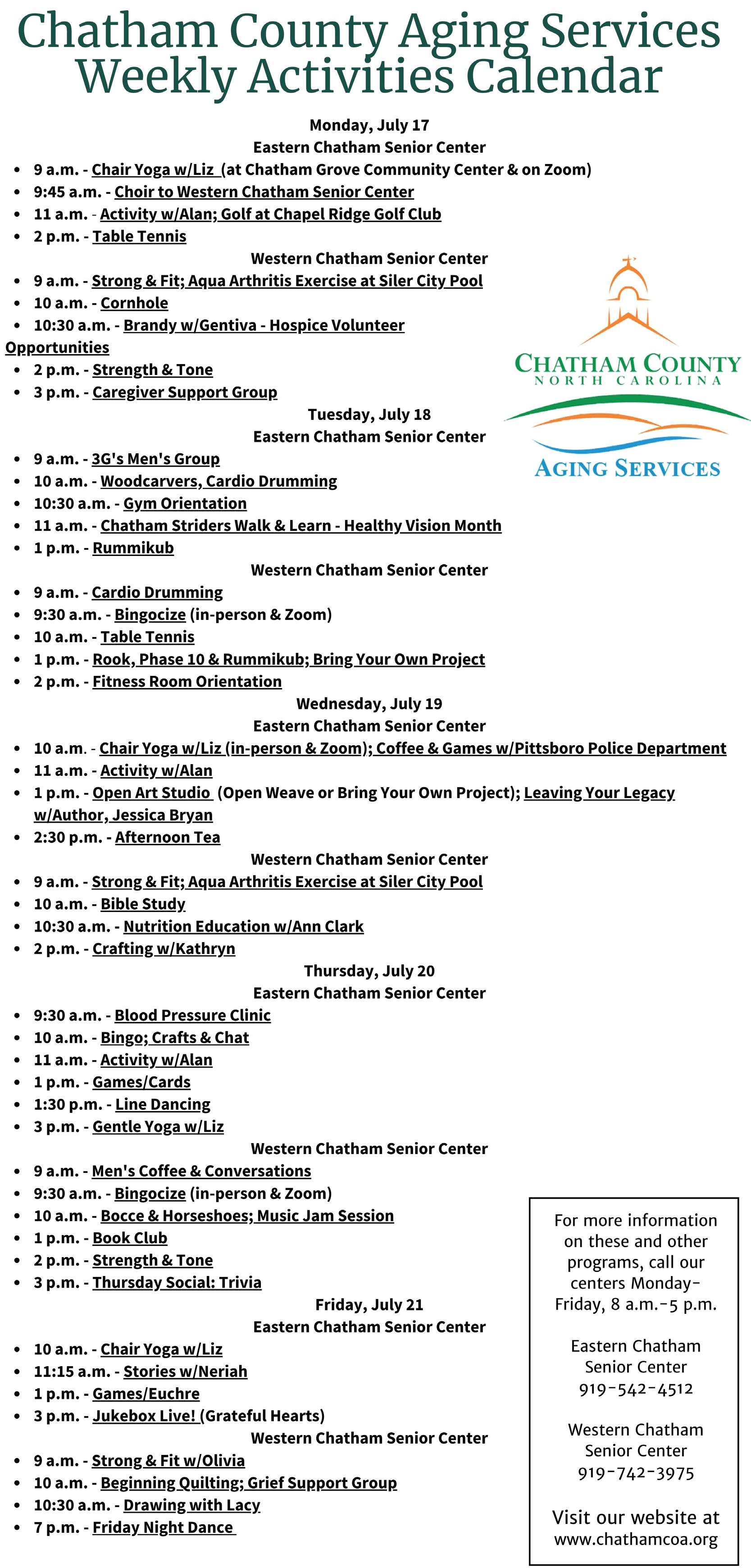








The United States is favorited to win their third tournament in a row, but other nations like England, Spain and Germany are also considered some of the challengers for the crown. If the USWNT can manage to win the World Cup, it will be their fth overall title since the tournament debuted in 1991.
Those who follow soccer casually probably know some of the United States’ players — like Alex Morgan, Megan Rapinoe and Julie Ertz — but there are plenty of other talented players domestically and across the world who deserve your attention over the next month. Here are three in particular you should keep an eye on.


Alyssa Thompson, forward, United States
The defending champions have several players with World Cup experience. Alyssa Thompson is not one of them, but this should be the rst appearance of many for the teenage phenom.
At 18, Thompson is the youngest player on the U.S. women’s national team’s 23-woman roster. Originally a Stanford commit after starring for years at Harvard-Westlake High in Los Angeles, Thompson ultimately backed out of her decision to join the Cardinal and instead decided to go pro. She was then selected as the No. 1 pick in the 2023 NWSL draft by Angel City FC — the rst high school player to go No. 1 overall in league history — and she’s tallied three goals and an assist for her club team in 13 appearances this season.
Thompson had one goal and one assist in three matches at the 2022 U-20 Women’s World Cup, where the U.S. didn’t make it out of the group stage, but she has the talent to become a staple with the senior team starting with this tournament. While she might not start games at rst, don’t be surprised if Thompson makes her mark for the United
States at some point.
Alexia Putellas, mid elder, Spain
Widely considered one of the top players in the world, Spanish mid elder Alexia Putellas is making her return to international tournament competition after missing the better part of the last year with a torn ACL.
Putellas was out for the majority of the club season for Barcelona, but the 2021 Ballon d’Or winner and two-time world player of the year returned to the eld in April and should be a full go for this year’s World Cup. She leads a Spanish team that currently has the third-highest odds to win the tournament.
Competing in her third World Cup with the senior Spanish team, Putellas will pull the strings from the mid eld and try to set up attacking opportunities for forwards like Jennifer Hermoso and Alba Redondo. She’s also not bad in front of net either — she’s totaled 27 goals in more than 100 caps (career appearances) with the national team.
Asisat Oshoala, forward, Nigeria

One of the most proli c goal-scorers in this year’s tournament, Nigeria forward Asisat Oshoala is used to scoring on the biggest stages. She has notched goals in both the 2015 and 2019 World Cups, and at 28 years old she’s now ready to challenge for a golden boot.
Oshoala has been named Africa’s Women’s Footballer of the Year ve times and totaled 21 goals for Spanish-league champion Barcelona during the club season in 2022-23. This was the third league title Oshoala won with Barcelona, on top of winning the Champions League twice.
Despite playing in every World Cup since 1991, Nigeria has never made it past the quarter nal round of the tournament, something Oshoala will hope to change this year. The team is part of a tough group with Australia, Canada and Ireland, but there’s no telling what could happen if Oshoala nds the back of the net a few times.

B2 Chatham News & Record for Thursday, July 6, 2023
COLUMN | JEREMY VERNON
COUNTY SPORTS
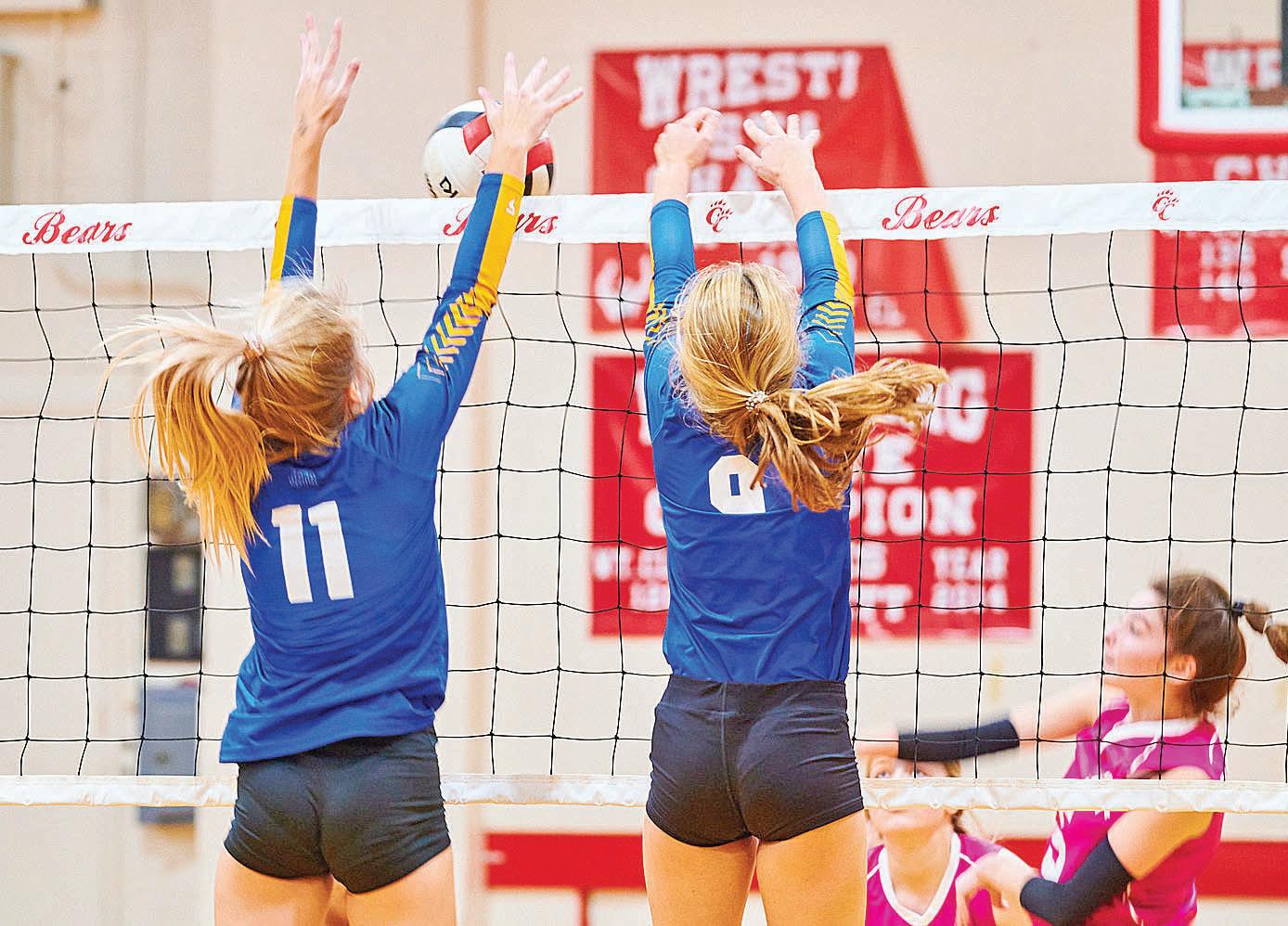


Here are some more of our best photographs showcasing Chatham County sports during the 2022-23 school year. Throughout the summer, we’ll share more shots our photographers captured from three seasons of full of high-level competition from local athletes.

B3 Chatham
Thursday,
6, 2023
News & Record for
July
CHATHAM
NIKKI WITT | CHATHAM NEWS & RECORD
PEYTON SICKLES | CHATHAM NEWS & RECORD 787 points away from reaching 2,000 for his career (1,213 points so far).
JAMES KIEFER | CHATHAM NEWS & RECORD NIKKI WITT | CHATHAM NEWS & RECORD
ANSTROM from page 1
trom highlighted the team’s chemistry as an important factor to their success entering the fall.
“We’ve gotten to know each other a couple years ago, and we’ve all kind of bonded over that collective struggle,” Anstrom said. “I know Will and Henry and Drew, we’re all really looking to push forward and start a winning culture at Seaforth.”
For his part, Anstrom knows he’ll have to defend his title as 2A champion for the Hawks to have a solid chance at winning the team title. And he should be the favorite to win the race after a stellar sophomore season on the course and the track.
Anstrom’s time of 16:15.43 was more than two seconds faster than the second-place nisher in 2A — N.C. Science & Math senior Andrew Parker. Parker and Charles D. Owens senior Elijah Jones were the only two people within 10 seconds of Anstrom, while Surry Central rising senior Ignacio Morales nished in fourth with a time of 16:44.45. He carried that momentum throughout the year and nished
Northwood
rising senior Skylar Adams recently earned an invite to the NCAA Basketball Academy in Memphis, Tenn. The program takes place July 28-31 and o ers players a chance to improve both on and o the court.
This season, Seaforth rising junior Jack Anstrom wants to lift the Hawks to a team state championship. The team nished fourth at last year’s 2A meet, with four runners nishing in the top 36.

his sophomore campaign by placing second in the 1,600-meter race at the 2A outdoor track and eld championships in May.
He also performed well in bigger showcase races, like when he ran the two-mile race at the New
Balance Indoor Championships in 9:16.38 and was the third sophomore to nish the race out of dozens of high school athletes across the country.
Now, Anstrom is spending the summer months working on
his endurance. He says that is the most important part of the summer, while he and the rest of the team will wait until the start of the season to start pushing themselves too seriously from a speed perspective.
“I’ve got every bit of con dence that I can go and win (a state title) again. But we really want the team title more than anything.”
Seaforth rising junior Jack Anstrom
“Summer is all about building the base mileage,” Anstrom said. “It’s never about getting on the track and doing the speed stu . We’re just getting out in the summer to get strong and have fun more so than anything. It’s generally more relaxed and laid back, and then once you get into the season, that’s when you focus on getting fast.”
Seaforth’s rst meet of the 2023 season will be the Ronald Horton XC Classic on Saturday, Aug. 26 at Northwood. On the girls side, the Hawks bring back every member of their 2022 roster. The team’s top nisher at last year’s state championship meet was freshman Caidence Bazemore, who came in 48th place with a time
Inflation Can be ‘Shocking’ In Retirement
When you retire, you hope that you’ll be able to anticipate the events that could cause
there’s another potential risk that can sneak
contribute to increased Social Security
Social Security but haven’t reached your full
BLAND from page 1
Shelton. One of Bland’s notable teammates in the All-Star Game will be recent Salisbury grad Kyla Bryant, who scored 14 points against Seaforth in this year’s 2A state nal and was the MVP of the 2021-22 2A championship game. Bryant will play college basketball at North Carolina Central, an HBCU — like Howard — located in Durham.
Playing in her nal season for the Northwood girls’ basketball team in 2022-23, Bland averaged a team-high 14.4 points, 8.3 rebounds and 2.1 blocks per game while shooting 48.2% from the eld. Across her four seasons with the team, the 6-foot-1 forward scored 1,183 career points and helped the Chargers win the 2021-22 3A state championship game.
Bland is the second Northwood player to compete in the East-West All-Star Game in as many years. Last summer, former Charger Olivia Porter — who recently transferred from Michigan State to Charlotte — played in the game and scored 10 points, nine of which came in the fourth quarter to lift the West team to a win.
Bland was one of three seniors on Northwood’s roster in 2022-23. The Chargers amassed a record of 23-5, winning the Central 3A Conference before losing in the second round of the 3A playo s to Western Alamance.
Adams earns invite to NCAA-run camp
Northwood rising senior Skylar Adams recently announced on Twitter that she accepted an invite to the NCAA’s College Basketball Academy, which will be held from July 28-31 in Memphis,

Tennessee.
According to its website, the College Basketball Academy is the only event NCAA Division I coaches are allowed to attend for evaluation purposes during this period. At the camp, Adams will get the chance to experience a little of the “college basketball experience” while working on their on-court and general life skills.
Adams was one of several players to earn an invite to the College Basketball Academy via the Individual Pathway program. This path to an invitation involves head coaches from every Division I basketball program in the country voting for players in a central nomination portal, while the College Basketball Academies’ Advisory Board also helps make selections.
As part of the College Basketball Academy, Bland will also get the chance to complete an “athletics assessment” to help her identify her strengths as a player and the areas she needs to focus on improving.
She and her parents will also attend courses on NCAA eligibility and compliance, NIL opportunities and the Transfer Portal, among others.
This past season, Adams averaged 11.7 points, 4.4 rebounds and 3.4 assists per game despite playing with a broken nger for part of the season. She’ll be the Chargers’ leading returning scorer when Northwood takes the court for the 2023-23 season.
Outside of Adams, Northwood’s top returning players in 2023-24 in terms of points per game will be rising sophomore Alyia Roberts (6.5), rising junior Natalia Whitaker (6.2) and rising sophomore Neah Henry (5.2).
Actually, you can take considerable a close look at all your discretionary
Pittsboro Chad Virgil, CFP®, ChFC®, CLU® 630 East St Suite 2 919-545-5669
Chapel Hill Eric C Williams, AAMS® 190 Chatham Downs Dr Suite 103 919-960-6119
Siler City Laura Clapp, CFP®, AAMS™ 301 E Raleigh St 919-663-1051
This article was written by Edward Jones for use by your local Edward Jones Financial Advisor.
Governors Club Sharon A Dickens, AAMS® 50101 Governors Dr Suite 118 919-967-9968
Pittsboro Kevin C Maley, AAMS® 984 Thompson St Suite E2 919-444-2961
Pittsboro Lee Shanklin, AAMS® 120 Lowes Drive Suite 107 919-545-0125
Pittsboro Blake Stewart 114 Russet Run Suite 120 919-542-3020
Chapel Hill Jessica L Villagrana, CFP® 180 Providence Rd Suite 1c 984-219-6635
B4 Chatham News & Record for Thursday, July 6, 2023
SIMON BARBRE | CHATHAM NEWS & RECORD
edwardjones.com Member SIPC
PHOTO COURTESY OF SEAFORTH ATHLETICS
Chatham Post 292 ended its 2023 season Monday night with a 13-3 loss to Kannapolis Post 115. Competing in their rst Legion season this summer, Chatham nished the year with an overall record of 6-17.
Post 292 sees inaugural season end with playo loss to Kannapolis
six walks.
for Chatham on Monday, as it fell behind by ve runs, 8-3, after four innings and couldn’t recover.
competing against way more experienced teams, and things should only get easier over time.




to Kannapolis Post






on Monday night, the Chatham American Legion Post 292 baseball team saw its rst season come to an end.
Playing a best-of-three series, Chatham lost its rst game to Kannapolis by a score of 3-0 on Sunday night. Post 292 was held to just one hit by Tanner Kaler, a recent Northwest Cabarrus grad who is committed to play college baseball at Charlotte. Kaler struck out 15 batters in Kannapolis’ win.

Things didn’t go much better
The team’s top batters in Game 2 were recent O’Neal grad T.J. McGraw — who went 1-for-3 with a home run and two RBI — and Chatham Charter rising sophomore Westin Phillips, who drove in the team’s other run via an RBI double.

On the mound, recent Southeast Guilford grad Chanceler
Terry allowed 10 hits and seven earned runs over 3.2 innings while striking out two batters and walking none. For the season, he was second on the team in total innings (29.2), boasting a 6.62 ERA and 16 strikeouts against
The team’s top pitcher this summer was Chatham Central rising senior Anthony Lopossay, who had a 6.37 ERA and 27 strikeouts against 20 walks over 29.2 innings.The only other players who had at least 10 innings pitched this inaugural season were recent Jordan-Matthews grad Conner Martin (16.2) and Chatham Charter rising junior Zach Cartrette (16.1).
At the plate, three Chatham Post 292 players had at least 15 hits on the season. Leading the way was recent J-M grad Jackson Headen (.386 average, 22 hits, two triples and 12 RBI), while McGraw (.328, 19 hits, nine RBI)
and J-M rising senior Ian McMillan (.300, 18 hits, 10 RBI).
Another big contributor at the plate was N.C. State commit and recent Grace Christian grad Brandon Crabtree, who hit .429 with 12 hits and 12 RBI while striking out just twice. Chatham
Central rising junior Matt Murchison was the only other player on the roster to hit over .400, as he ended the year with a .424 average, 14 hits and seven RBI.
Ending its summer season at 6-17 overall, Chatham Post 292 has plenty of room for improvement as it continues to build up its program over the next several years. This summer saw Chatham’s American Legion team

Almost every player on Chatham Post 292’s roster is eligible to return to the roster next summer. American Legion teams can roster high school players as well as athletes who recently completed their freshman year of college.
American Legion baseball has its roots in North Carolina, as the league’s World Series is held every year in Shelby, about 40 miles from Charlotte. The World Series has been part of Legion Baseball since way back in 1926, when a team from Yonkers, N.Y. defeated a team in Pocatello, Idaho, in the inaugural championship game.
Shelby became the permanent home of the American Legion Baseball World Series back in 2011. According to the Shelby Star, about $15 million in economic impact is brought into the area each summer because of the event.
B5 Chatham News & Record for Thursday, July 6, 2023 Call Advertising @ 919-663-3232 ASHEBORO TIE YARDS, INC Mushroom Compost • Shredded Hardwood Mulch Pine Mini Nuggets • Brick Chips • Sand • Top Soil Black, Brown & Red Mulch • White Pea Gravel • Railroad Ties 205 Hanner Town Rd. Bear Creek (2 miles South of Bonlee on Old 421) Hours: Mon.-Thurs. 7 AM - 4 PM, Fri. 7 AM - 12 PM (919) 837-2822 • We Deliver! Locally Owned and Operated by Greg and Donna Kennedy Licensed and Insured D & G Plumbing Problems? Commercial and Residential Installation and Service Located in Siler City Bob Atkinson, GRI, CRS, E-PRO Homes-Land-Investments C: 919-362-6999 Atkinson Properties Group bobatkinson321@gmail.com John Hayes, Jr • 919-548-0474 JHJ Painting & Power Washing “We Specialize in All Your Painting & Power Washing Needs” Deck Washing, Renewal & Repair • Window Washing & Install Carpentry • Door Install • Other Small Repairs AT YOUR LAW OFFICE WADE PASCHAL 119 North Fir Avenue, Siler City, NC Ph: 919-742-6006 • wadepaschal@gmail.com 56 YEARS OF SERVICE TRAFFIC TICKETS • DIVORCE • POWERS OF ATTORNEY WILLS • DEEDS • REAL ESTATE • RESIDENTIAL AND COMMERCIAL CLOSINGS • APPOINTMENTS NIGHTS AND WEEKENDS • ET CETERA LEGAL Stovall’s Remodeling Jaystovall249@yahoo.com 336-628-9612 Jay Stovall Local Service Directory FIND THE HELP YOU’RE LOOKING FOR! Call Advertising @ 919-663-3232 Local Service Directory
News & Record
loss
By Jeremy Vernon Chatham
SILER CITY — With a 13-3
115
PJ WARD-BROWN | NORTH STATE JOURNAL

































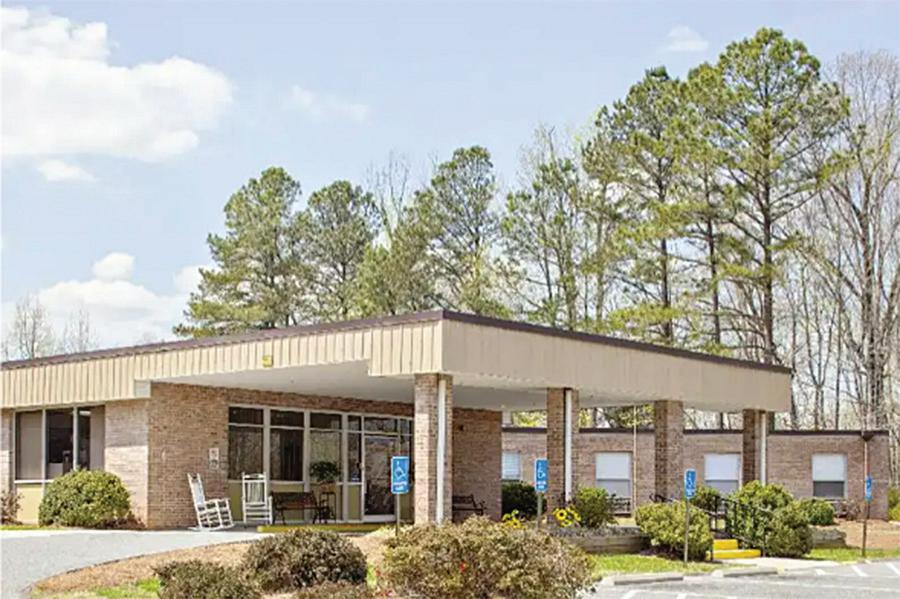




B7 Chatham News & Record for Thursday, July 13, 2023 CALL NC T VEL 919-742-2839 or Email Amy: apugh@northcarolinatravel.net Check out our website: www.nctravel.world 105 N. Chatham Ave, Siler City, NC You’ve found the one, now say “I do” to our honeymoon services! www templeshows org (919)774-4155 2023-2024 SEASON SUBSCRIPTIONS 2023-2024 SEASON SUBSCRIPTIONS AVAILABLE NOW! AVAILABLE NOW!
pen & paper pursuits

B8 Chatham News & Record for Thursday, July 13, 2023 Solution for the puzzle in last week’s edition.
SOLUTIONS
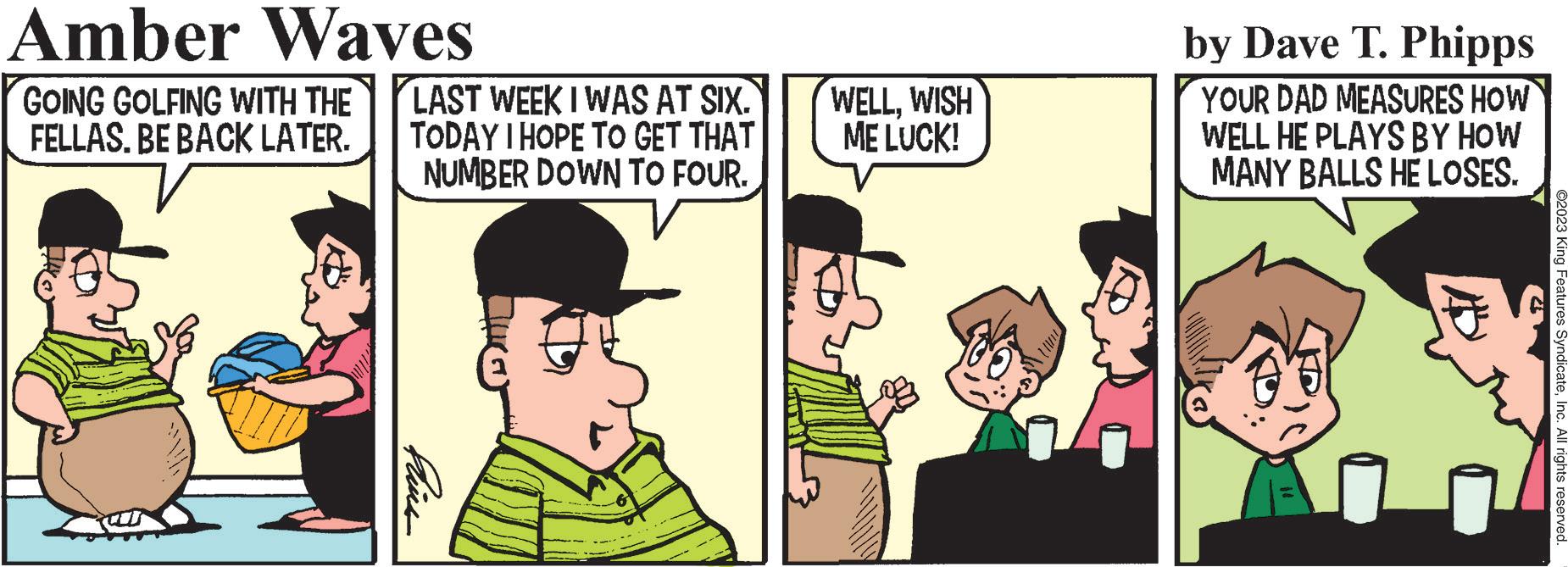

















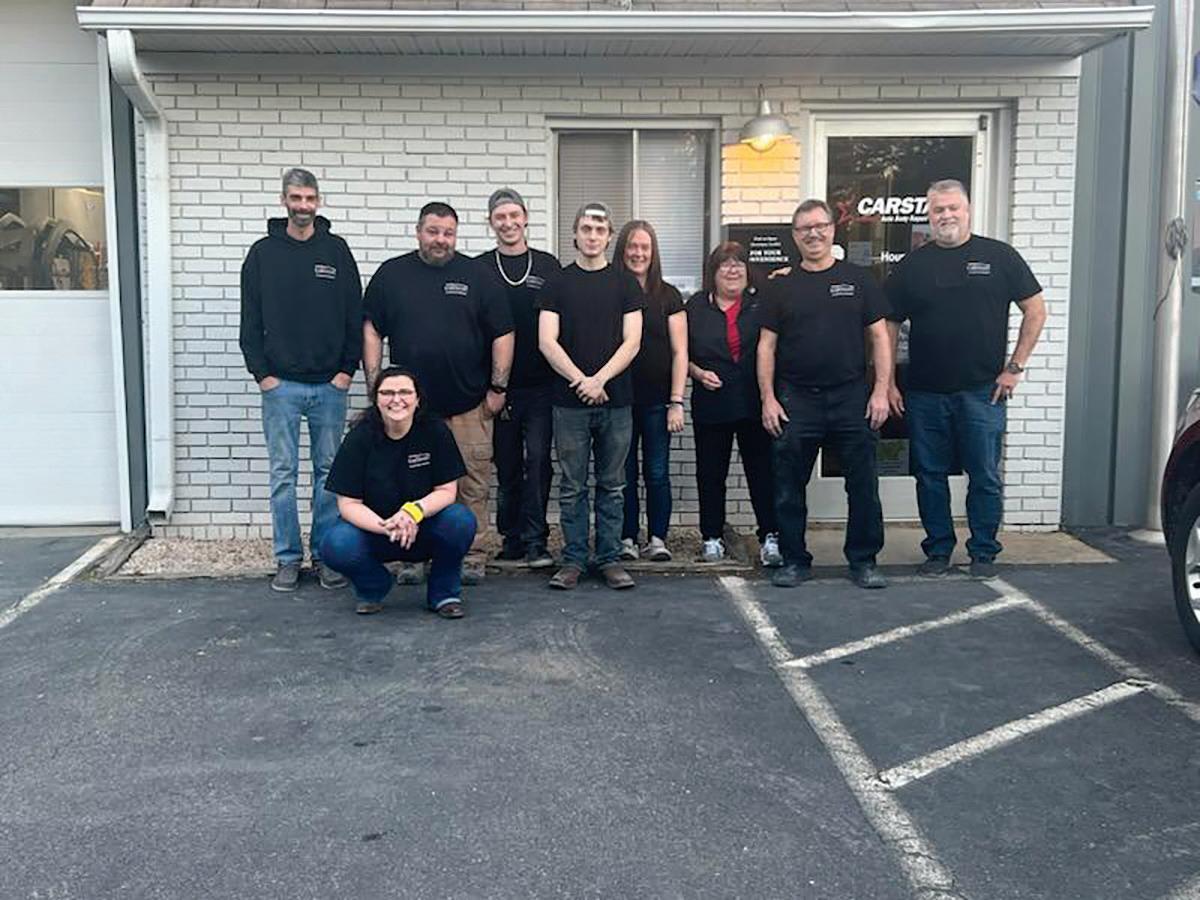
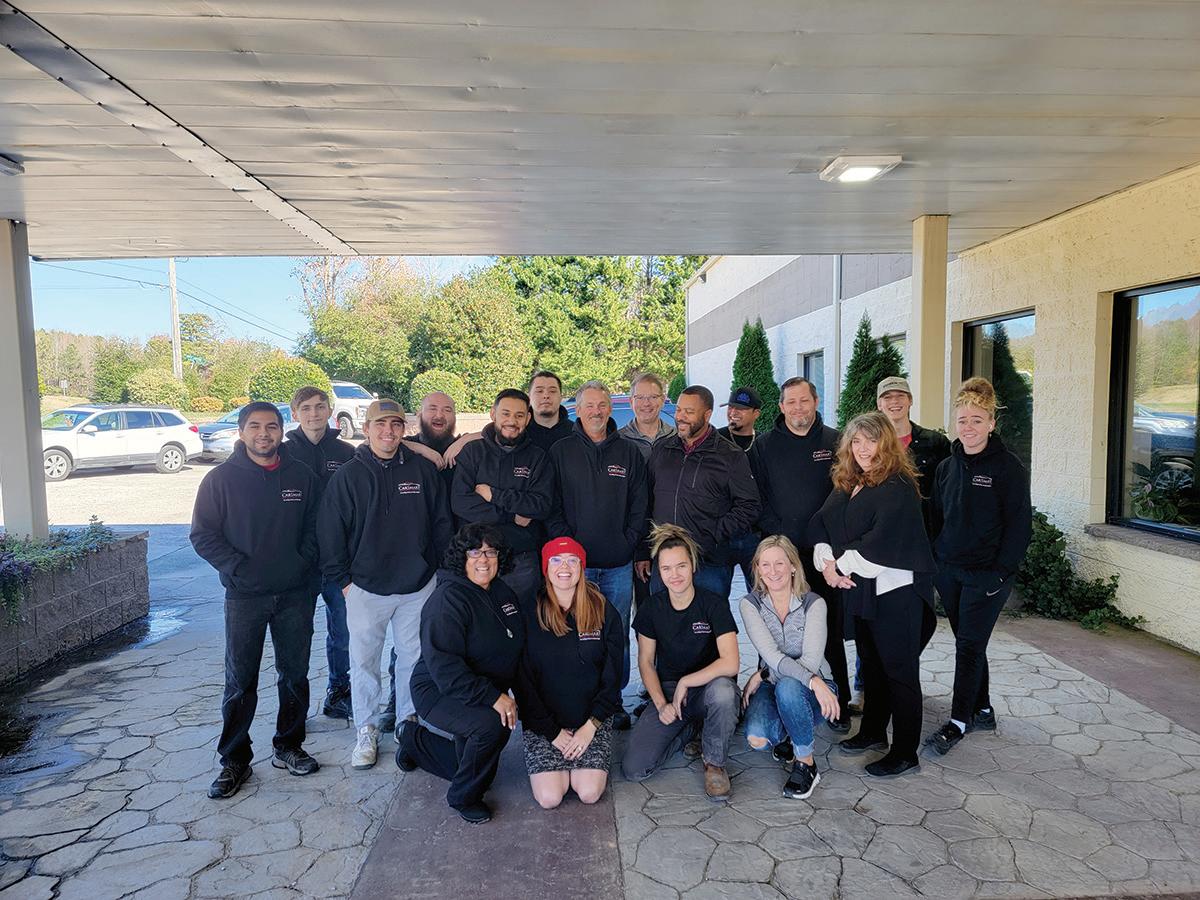
B9 Chatham News & Record for Thursday, July 13, 2023
pursuits
electric SUV charges at a
Plug and Play: Tesla’s charging standard is powering up the auto industry
By Jordan Golson North State Journal

IMAGINE DRIVING your car into any lling station, knowing that the nozzle will t your gas tank and you can swipe a credit card and be back on the road in no time — that’s already a reality for traditional cars.

Not so for electric vehicles. Tesla owners have had easy access to the company’s widespread network of Superchargers, a Tesla owned-and-operated fast charging network. Meanwhile, EV owners from every other automaker have had to contend with a variety of public charging networks like Electrify America and ChargePoint, each requiring their own app and user account. It’s been a far from perfect situation, bringing confusion and frustration to new buyers and renters of EVs.
Tesla CEO Elon Musk, though, envisions bringing the gas-pump scheme to electric cars, making deals with other automakers to spur adoption of the Tesla charging plug, which, to this
point, has only been available on Teslas. The North American Charging Standard (NACS) plug — as the charging port developed by Tesla a decade ago is o cially called — is turning this scenario into reality.
In recent weeks, major automakers, including Ford, General Motors, EV startup Rivian, Volvo, Polestar, and Mercedes-Benz, have been embracing the Tesla plug at a rapid pace, and for a good reason. Newly announced deals will see NACS replace the CCS ports currently seen on vehicles like the Ford F–150 Lightning or, well, nearly every EV sold in America not made by Tesla. These deals will also give buyers of these companies’ EVs access to Tesla’s Supercharger network — the largest in the country, with the highest total number of stations and plugs — starting next year.
In simple terms, the charging port is the physical connection between your EV and the charging station. Much like the VCR wars of Sony’s Betamax and VHS, we’ve had a few di erent com-
peting “standards” — ChaDeMo, CCS, and Tesla — resulting in a fragmented landscape. It has seemed for a few years that there would be the Tesla plug used by Tesla, and CCS used by nearly everyone else, but the sudden and speedy coalescing around the NACS, however, would seem to be putting an end to the battle. It’s simple, easy to use, and is now the de facto industry standard in North America, and every other automaker will, presumably, jump on board soon.
The move towards the Tesla plug isn’t just an upgrade for consumers, it’s also a strategic move for automakers. Adopting the Tesla plug means companies like GM, Rivian, Volvo, Polestar, and Mercedes-Benz can o er their customers access to Tesla’s extensive and growing Supercharger network — and likely avoid the exorbitant cost of building their own branded fast charging networks, which Rivian, GM, and Mercedes had all previously promised to do. It’s a clear nod to the fact that the auto industry believes the Tesla plug and, per-


haps more so, the Supercharger network itself, o er a more customer-friendly charging solution.
The numerous non-Tesla fast charging networks, like Electrify America, Blink, and ChargePoint, have faced challenges (to put it kindly) with reliability and customer experience. And, with the industry rapidly shifting towards the Tesla plug, they’ve pledged to add NACS cables to future charger installations. The survival of these companies could hang in the balance as they grapple with the swift changes in the EV charging landscape — not to mention their main selling point previously was to allow non-Tesla cars to charge, which will soon be a much less compelling proposition.
While the decision to adopt the Tesla plug brings clear bene ts to consumers, it also plays into the competitive dynamics of the EV market. Access to the Supercharger network, branded prominently by Tesla, could pique the curiosity of new EV owners about the broader Tesla ownership experience. Elon Musk, Tesla’s
CEO, has long maintained that any increase in EV ownership is good news for Tesla and the world. And, with the advent of the Tesla plug becoming a standard, this mantra seems to be coming to fruition.
The transition to the Tesla plug is undoubtedly a win for consumers. It simpli es the charging experience and uni es a previously fragmented industry. But perhaps its most signi cant advantage is its contribution to the broader mission of accelerating the world’s transition to a more exible and sustainable energy system. With far easier access to charging, EV ownership becomes more attractive. Tesla can reasonably attribute much of its success to the Supercharger network, and now many of its competitors will get to use it too.
The adoption of the Tesla plug by North American automakers marks a new chapter in the EV story. It’s a clear example of an industry adapting to serve its customers better (which is no small feat for automakers), setting aside competition for the sake of convenience, and nudging the world one step closer to a sustainable future. As the Tesla plug becomes a standard, consumers will nd it signi cantly easier and more convenient to charge their vehicles, accelerating the acceptance and adoption of EVs.”
B10 Chatham News & Record for Thursday, July 13, 2023
PHOTOS BY JORDAN GOLSON | NORTH STATE JOURNAL
A Rivian R1S
Tesla Supercharger equipped with a “magic dock” to allow other EVs to charge.






B11 Chatham News & Record for Thursday, July 13, 2023
We are cooperative, social-minded, curious, inclusive, searching. A niche rm with an environmental ethic. Reach out to Weaver Street Realty when it’s time for a change. WeaverStreetRealty.com 919-929-5658 • info@WeaverStreetRealty.com It’s Time To Stock Your Pond! DELIVERY WILL BE: Saturday, July 15 •Carthage 1:15-2:00 @ Carthage Farm Supply •Sanford 3:00-3:45 @ Carolina Town & Country Wednesday, July 19 •Graham 11:30-12:15 @ Graham Feed •Chapel Hill 3:15-4:00 @ Piedmont Feed Thursday, July 20 •Siler City 9:15-10:00 @ Southern States To Place an Order Call “LIKE” us on Facebook!
Adam Phillips, Miranda Parker, Mary Maloney, Gary Phillips, Jay Parker, Don Basnight, Ken Tunnell, Terri Turner, Crystal Fisher




















M O U N T A I R E J O B S . C O M 1 1 0 0 E T H I R D S T R E E T | S I L E R C I T Y | N C 4 4 1 1 W G A T E C I T Y B L V D . | G R E E N S B O R O | N C 8 A M - 5 P M | M O N D A Y - F R I D A Y ( 9 1 9 ) 6 6 3 - 6 7 1 2
INCLUDE:
GROW YOUR CAREER WITH MOUNTAIRE Hiring on all shifts!
OUR BENEFITS
