

THE ROYAL NEWS
FOR STUDENTS, BY STUDENTS

Co-Editors
NYAH PALMER
MADDEN PIEKARSKI
Writers
ZOE AMBURN
EMILY DOCKRILL
NYAH PALMER
MADDEN PIEKARSKI
SHREYA SHAH
AVA WEATHERBIE
Layout Manager MADI WINER
TABLE OF 5 6-7 8-9 10 11 12-13
EDITOR’S COMMENTS
SENIORITIS, A REAL THING?
SELF ADVOCACY THE KEY TO SUCCESS
SO MUCH SNOW!
CELL PHONE BAN, NOW WHAT?
AI KILLS CREATIVITY
COVER PHOTO: NYAH PALMER INSIDE AND ARTICLE PHOTOS: MADI WINER
THE OPINIONS EXPRESSED IN THIS PUBLICATION ARE THOSE OF THE AUTHORS. THEY DO NOT REFLECT THE OPINIONS OR VIEWS OF THE ROYAL NEWS, ITS ADVISOR OR NORTH ROYALTON HIGH SCHOOL.
PHOTO BY PETON STEPIC
NOTE FROM THE EDITOR

With the new year comes many changes for NRHS students, from a state-mandated phone ban to a record breaking snow day streak. These first few months of the year are a time for resolutions, self improvement, and preparation: for midterms, AP testing, and–for the Class of 2026–all that comes after high school. In this issue, you’ll see how NRHS students are adjusting to these changes, along with advice on self-advocacy and a feature of a talented student artist. Despite the extended time off from school, our talented team of writers still found the time to put together a captivating collection of articles. I hope you’ll find something within these pages that speaks to your experience or even teaches you something new!
Thanks, as always, for reading, Nyah Palmer, Royal News Co-Editor
SENIORITIS: THE STRUGGLE IS REAL BY AVA WEATHERBIE
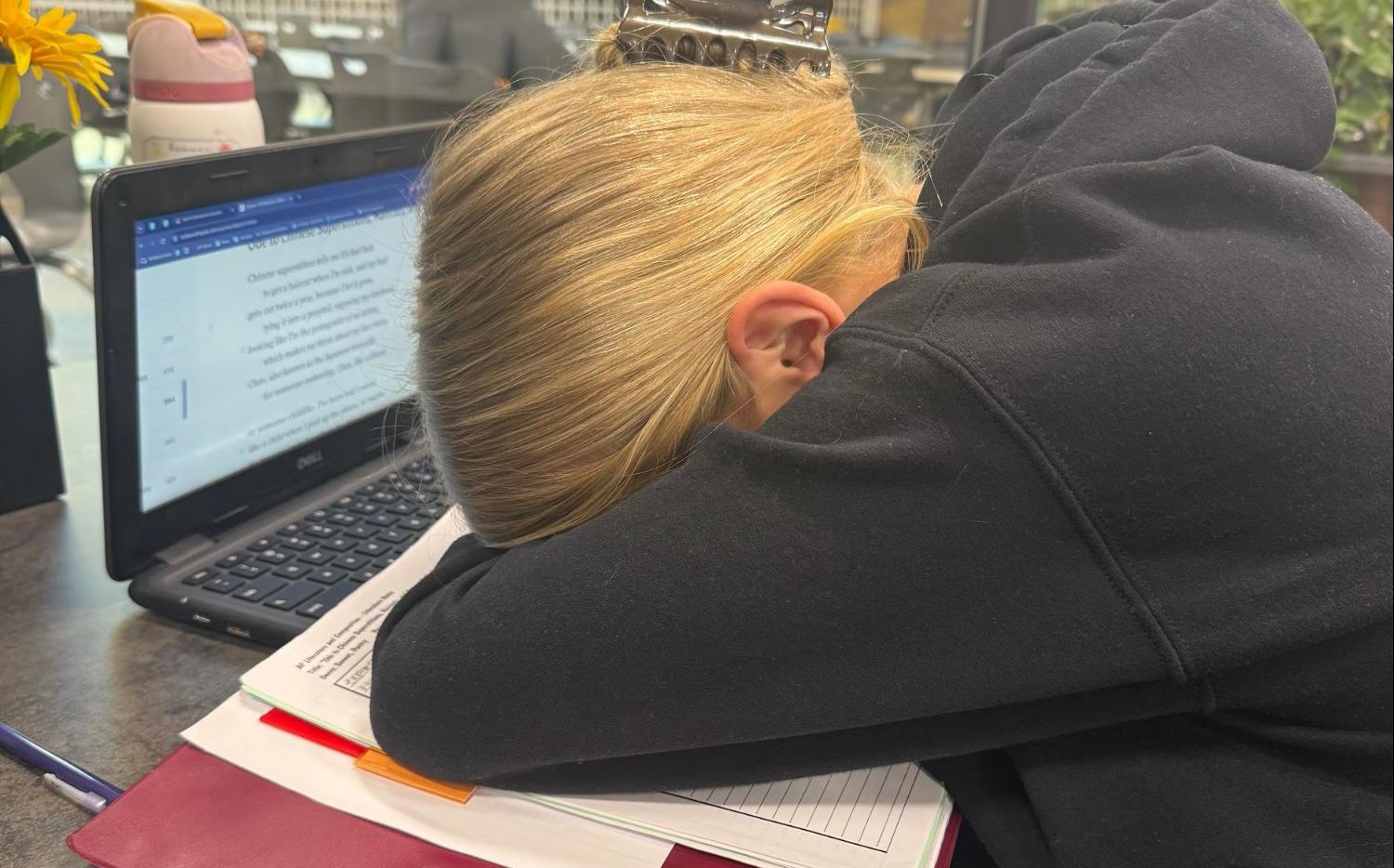
Senioritis is an affliction that doesn’t cause any physical pain, yet it is just as serious and draining as one that does. Being a high schooler means having heard of or even having experienced senioritis throughout one’s career as a student. Despite the name, many juniors and sophomores even claim to suffer from this. But, seniors themselves are the biggest victims, especially now that almost all of them have submitted their applications to college, and most have been accepted into the universities that they want to go to. It causes them to experience a severe drop in motivation, as the culmination of their academic, athletic, and social lives has come to a climax and is quickly reaching its resolution. However, while it can be frustrating for both teachers and parents with this sudden lack of initiative, laziness isn’t the main cause of senioritis, instead it is because of both psychological and neurological reasons. Dopamine is crashing, cognitive fatigue is increasing, burnout is getting worse, and just overall exhaustion from
years of academic pressure building to a fever point is what’s causing senioritis to be at an all-time high.

Typically, seniors submit their college applications or have jobs lined up for them post-graduation by December. They cannot help but feel done, even though they have only completed half of the year. This sense of security that they have obtained for themselves allows for a wave of relief to wash over them, but with that comes a feeling of reluctance to keep pushing forward with the same energy that once motivated them as an incoming freshman. They have proven themselves for the last twelve years, so it can feel overwhelming to keep proving oneself, even if it's just for a couple of more months. This can cause seniors to start handing in subpar work, have an increase in missing assignments, and even start skipping classes altogether, desperately trying to claw themselves out of the hole they’ve made as they try to manage the burnout they are feeling.
Senioritis is starting earlier and earlier each year, which makes sense, as more and more colleges are requiring supplemental essays, social media is a pool of constant comparison between seniors, and students are taking more AP and CCP classes than ever before. Having more of these classes is a very beneficial op-
tion for students, however, it can also cause them to feel pressured into taking as many as they can in order to be the most appealing candidate for potential colleges. This leads to students feeling overwhelmed by the work required from these courses.
Senior Naisha Chopra echoed this idea by saying that “it was especially difficult to stay motivated and not get stressed when I was juggling many difficult classes and college applications at the same time. But now that most of my college applications are submitted, it feels like I'm already ready to move on to next year, making it harder to focus on my classes and assignments now.” This sudden relief from the stress of college applications leaves a tired senior eager to move on from high school, which conflicts with their very strenuous schedule. This all cumulates into very significant burnout because their wants do not align with what is expected of them. These challenging classes, mixed with a senior who has already applied and been accepted to a handful of colleges, is not always the best way to motivate students to have the same level of determination they once had.
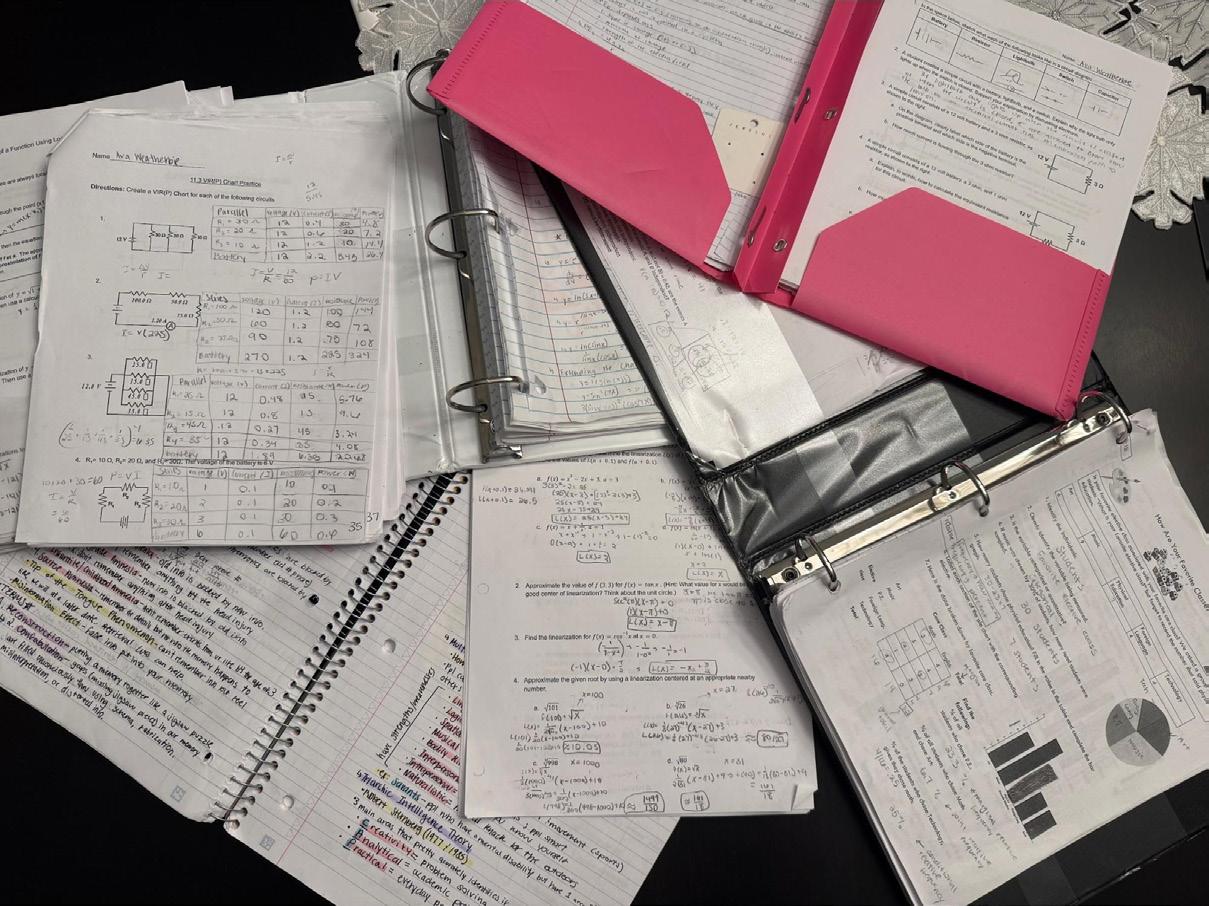
come with senioritis. But, it needs to be acknowledged that it can be difficult to do so because, as grades become less important and there is less of a reward for seniors, whether they receive an A or a B, there is a significant decline in dopamine levels, as dopamine is a way for the brain to reinforce positive behavior. So, when students stop caring as much about their grades because they have already submitted all of their applications, they start receiving less dopamine every time they accomplish something exceptional. It has become less about levels of motivation and instead about actual neurological deficiencies in certain neurotransmitters.
Furthermore, the uncertainty of one’s future is a feeling that hangs over the heads of many seniors, wondering how this transition into adulthood will change them, as well as causing them to question if they are even ready for that change. This notion is compounded with feelings of exhaustion and builds up in a way that makes it hard for seniors to go above and beyond as they've done before. However, this procrastination could be robbing them from having an amazing final year of high school, as well as being a red flag to colleges.
A lot of people tend to assume that senioritis does not hit until the spring for seniors, as this is when their graduation is only a couple of weeks away, and the weather is finally above sixty degrees. But, that could not be further from the truth as senioritis really hits when they have that first feeling of accomplishment from getting their college applications done. In fact, they even get a small little pop of confetti on their screens as they submit their entire academic career up for evaluation! Yet, they still have to keep working hard, as scholarships are due and their classes continue to ramp up in pace. It causes them to question why all this work is necessary if they have already done what they needed to do.
Despite this belief, it is insanely important for seniors to fight back against the plaguing thoughts that
A lot of universities continuously look at seniors’ grades, even into the second semester. This can be a huge factor in their decision to admit them, especially if they have been waitlisted or the college is very selective. In fact, senior Nyah Palmer says, “A lot of the colleges I am applying to require a mid-year report to be sent, which means that I have to keep up my grades and maintain my involvement level in my clubs.” So, instead of letting senioritis hold seniors back from performing like usual, it is important for them to make sure that they are getting ahead on their school work, staying active in both clubs and sports, and helping out the underclassmen! Honestly, making memories from one’s final year of high school will make the time fly by much faster than only thinking about how badly one wants it to end.
SELF ADVOCACY: TIME TO SPEAK
BY EMILY DOCKRILL
Areport from a recent Gale Self-Advocacy article stated that "people hoping to improve their self advocacy skills must practice several related concepts: being assertive, being self-confident, and utilizing support networks.” This concept directly applies to high school students today. However, Mrs. Gaydos, one of the school counselors, explains that many people fear that they may be disrespecting a person of higher-authority when speaking up, so they don’t build the

or distracted, and also what makes you feel happy and successful, then you can look at goals more realistically. You might realize you need to study a particular way, be seated in a different spot in class, or that you need to meet with a teacher for clarification on an assignment.” It does not mean that you have to solve the problem yourself.
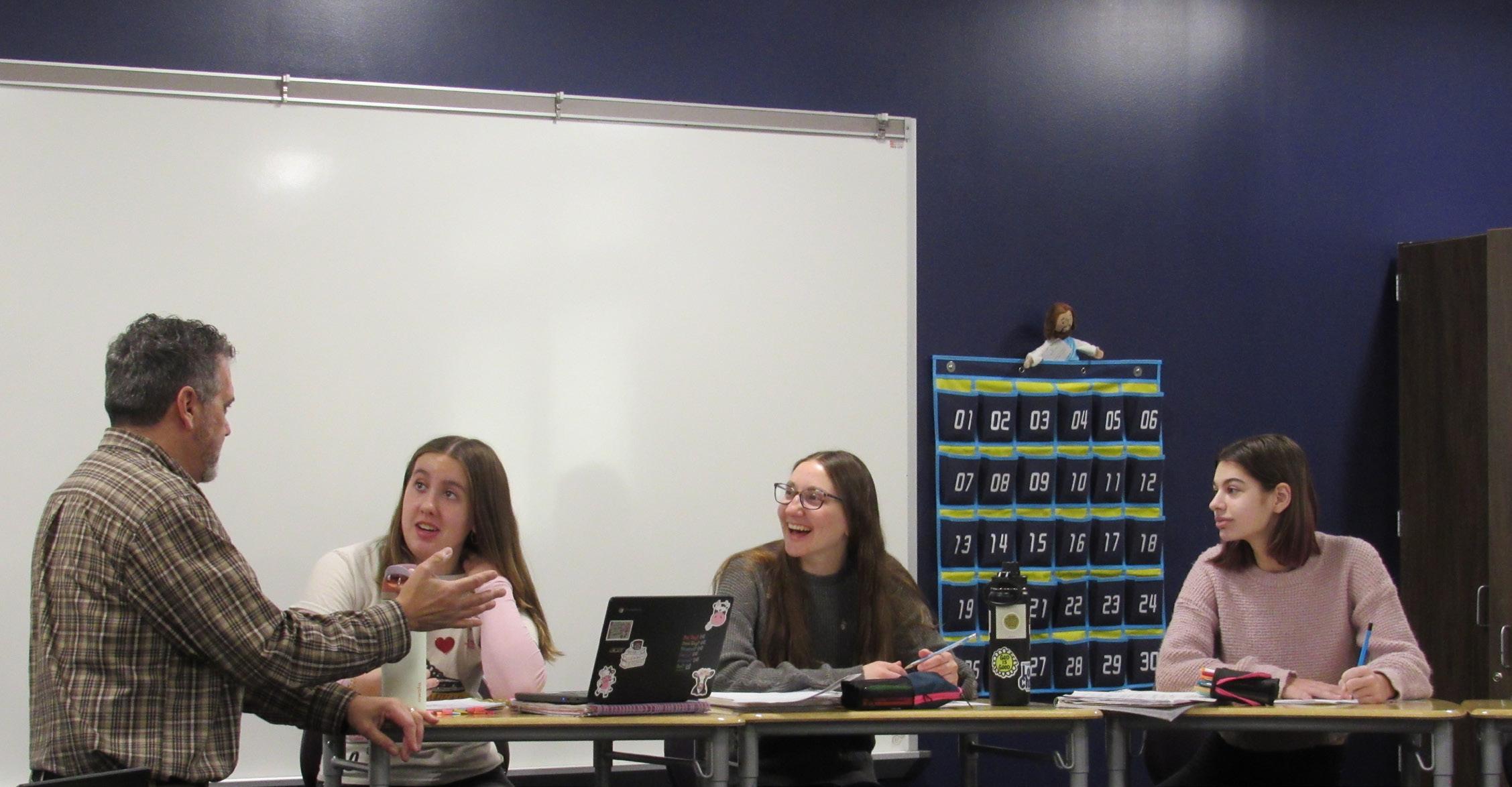
confidence that will enable them to make a change. These factors affect a student's ability to be successful in the classroom and out in the workforce.
Many students think that they have to figure it out on their own, but that’s not entirely true. When counselors, teachers, or any other adult speaks of making yourself independent, they want you to self-advocate your needs so that they can work to meet them. This means that you need to understand what your needs are, what helps you when you're struggling, and what way(s) you learn best. Mrs. Leatherman, a teacher in the NRHS English department, explained, “Once you're aware of how you operate–what motivates you, what makes you anxious
Many students struggle in school because they lack the confidence to ask or answer a question during class. We’ve all been in a classroom where the teacher asks a question, and everyone turns into tumbleweeds, and then you have to wait until someone speaks up. If someone answered and got the question wrong, would you have even realized? Would you have made fun of them? If you wouldn’t do that to someone, why would they do that to you? Yes, we are all different people, but we all have the same illusion that everyone is paying attention to what you are doing and saying. This results in self-doubt, which is reflected in how we act around others. Self-doubt and a lack
of confidence makes us believe that no one can help, and that this is just how it’s supposed to be. This can be a symptom of depression.
Mrs. Hubble, the high school principal, stated: “When you stay quiet, it can start to feel lonely. A student might think they are the only one who doesn't understand, the only one who needs this help.’”
And if students lack the confidence to answer a question, they are likely not going to ask one. More times than not, teachers and other adults don’t realize what a student needs, or if they are even struggling. It may show through test scores, but if students don’t communicate their needs, they will never know how they can do better. To build that confidence, students need to see that everyone around them is their equal. Mrs. Leatheman said, “If a student isn't willing to ask for [help], they risk falling behind in their classes, and that starts a cycle of frustration and helplessness. Luckily, that's a pattern that's easily broken if students realize that everyone needs help and they just have to ask for it. Confidence helps kids feel comfortable in school and with friends, too. People will know your boundaries and respect your decisions and needs.” By establishing that everyone has something going on in their personal lives, students can create connections not divided by race, age, or gender. Learning to self advocate can help students' mental health and academics.
of their ability. Mrs. Hubble encourages teachers and students to know their students' needs and accommodations. She explained that “when one teacher does something unique that helps you,” in another class you may be struggling in, share that strategy with the other teacher. This is an example of how to self advocate.
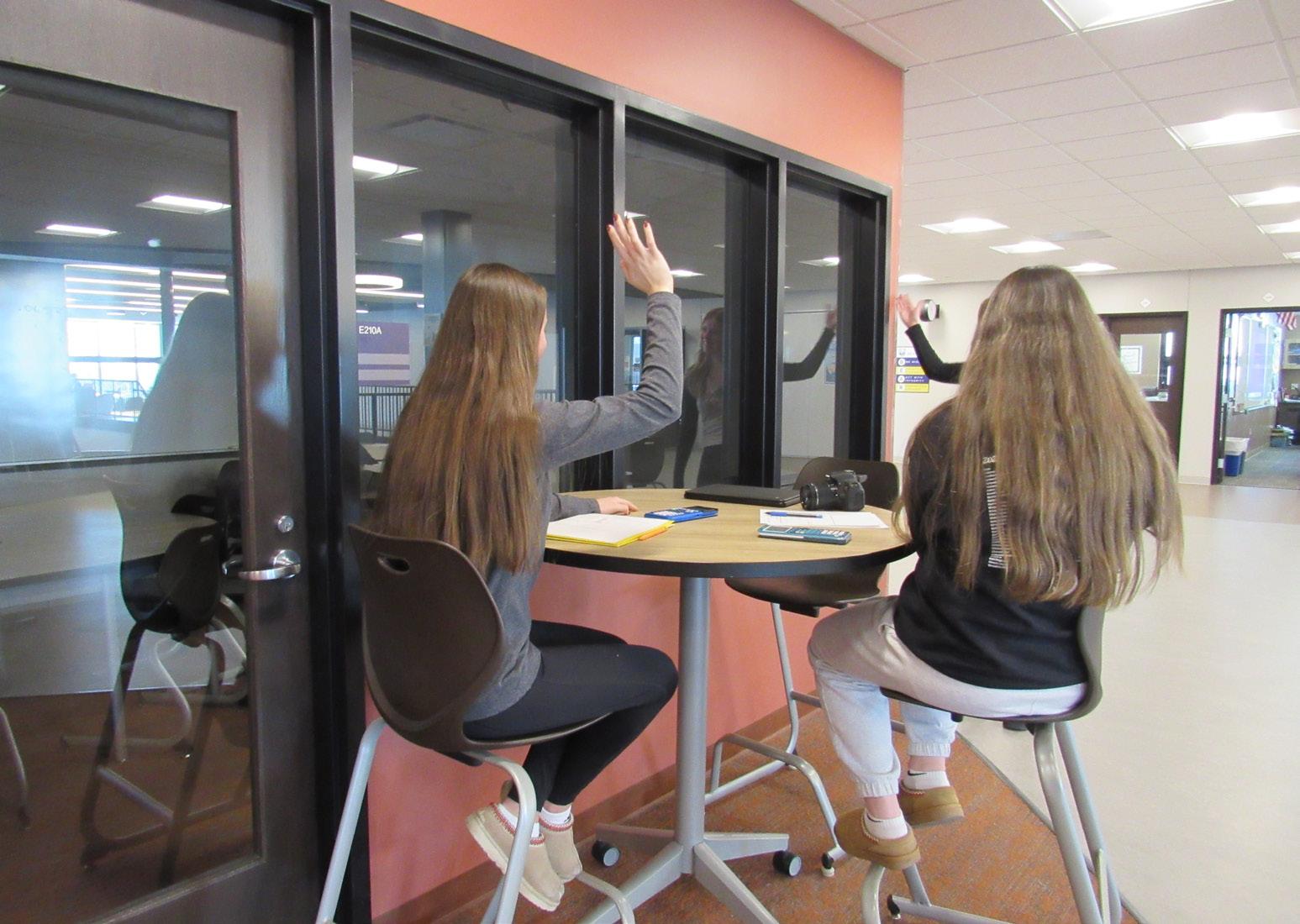
There are many forms of self-advocating, whether it's through email or face-to-face. Mrs. Hubble makes a point in saying that when a student advocates for themselves rather than a parent or friend, it shows maturity and growth on their part. It also helps to foster relationships with your teachers by showing them that you can do it and that you will do it. It shows them that you have respect and care about your schoolwork and classmates. This translates to the real world, where in college you have to advocate for your own accommodations. Your parents can’t have those conversations by law. In the work force,
you will need to talk to your boss about deadlines for projects, priority tasks, taking days off, etc. Mrs. Leatherman galvanized that: “The most important things are that you remind yourself that you are important, and you have to take responsibility for making your needs known. Sitting in the back of the classroom hoping for the storm to pass doesn't work. Feeling confident about social interactions takes practice, and the more you do it, the easier it gets. And self-advocacy will benefit you for your entire life!”
Mrs. Leatherman said that teachers appreciate when students speak up for themselves: "Definitely 150,000,000%!” Never forget that teachers want to help you succeed; they want you to advocate for your needs so that they can do their job to the best
As Mrs. Hubble said, “High school is a safe place…we have adults that are here to support you…we have counselors where that's their whole job…if you learn those skills now, you will have them out in the real world!”

A JANUARY TO REMEMBER
BY SHREYA SHAH
For most of January, the most used apps on my phone were the Weather App, Instagram for Mr. Ciha’s daily “To Bacon or No Bacon” update, and Mr. Laub’s Twitter page. Safe to say, I was not disappointed. The January 7, 2026, snow squall, arriving just as the snow day decision hung in the balance, ultimately ended the familiar “he hasn’t tweeted yet” panic. This year, North Royalton has received a total of seven snow days due to the cold weather conditions, heavy snow, and the low salt stockpile—one of the many perks of living in Cleveland weather.

After a stressful midterm week, this snow day streak, the four days plus the weekend, elongated our Winter Break into a Winter Month. Despite the joy of being home, some students had to eventually leave for other obligations. Junior Sydney Fulmer said, “It felt like I was playing a video game, trying to avoid the snow and getting stuck wherever I left my house.”
Many students claim the numerous responses left under Mr. Laub’s Twitter page were a key factor in his snow day decisions; some even going as far as to upload the weather forecast and AI versions of him onto the Twitter page. Deepfakes included Mr. Laub edited

onto Lebron James’s body and even religious figures, and there was the common plea for him to “call the whole week off.” In his historic final year as superintendent, it is clear that Mr. Laub is highly regarded by the students, as they felt comfortable having harmless fun with the snow day possibilities.
Similarly, teachers appeared just as elated by the extended stretch of winter weather. By no means was anybody upset by the gametime decisions made by our superintendent, but these snow days do leave many students and teachers wondering how their schedules will look in the next few weeks.
AP students, in particular, have been reminded of the permanent test date in May that unfortunately cannot get snowed out.
Ben Swab, a junior in four AP classes said, “If these seven days translate into months of catch-up work, then honestly it wasn’t worth it.” Although this break was well earned by teachers and students, we cannot help but hope this does not morph into heavy, jam-packed weeks. As students return to school, the hope is that the rest and reset provided by these snow days translates into sustained momentum–and perhaps, if Cleveland weather allows, a heat day later this year.
NO MORE PHONES: IS IT WORKING?
BY: MADDEN PIEKARSKI
As of the new year, the semester has changed, and many people are getting comfortable in their new classes. Along with this change in classes, there was also a change in the phone policy as of 2026. This policy is a complete ban on phones inside and outside of the classroom as long as students are in the school, from 7:05 am to 2:20 pm. There are some exceptions to this ban, as MacBooks and iPads have still been allowed in the school as long as they are being used for educational purposes. The purpose of the phone ban was to encourage students to get off their devices and discourage the use of AI and cheating.
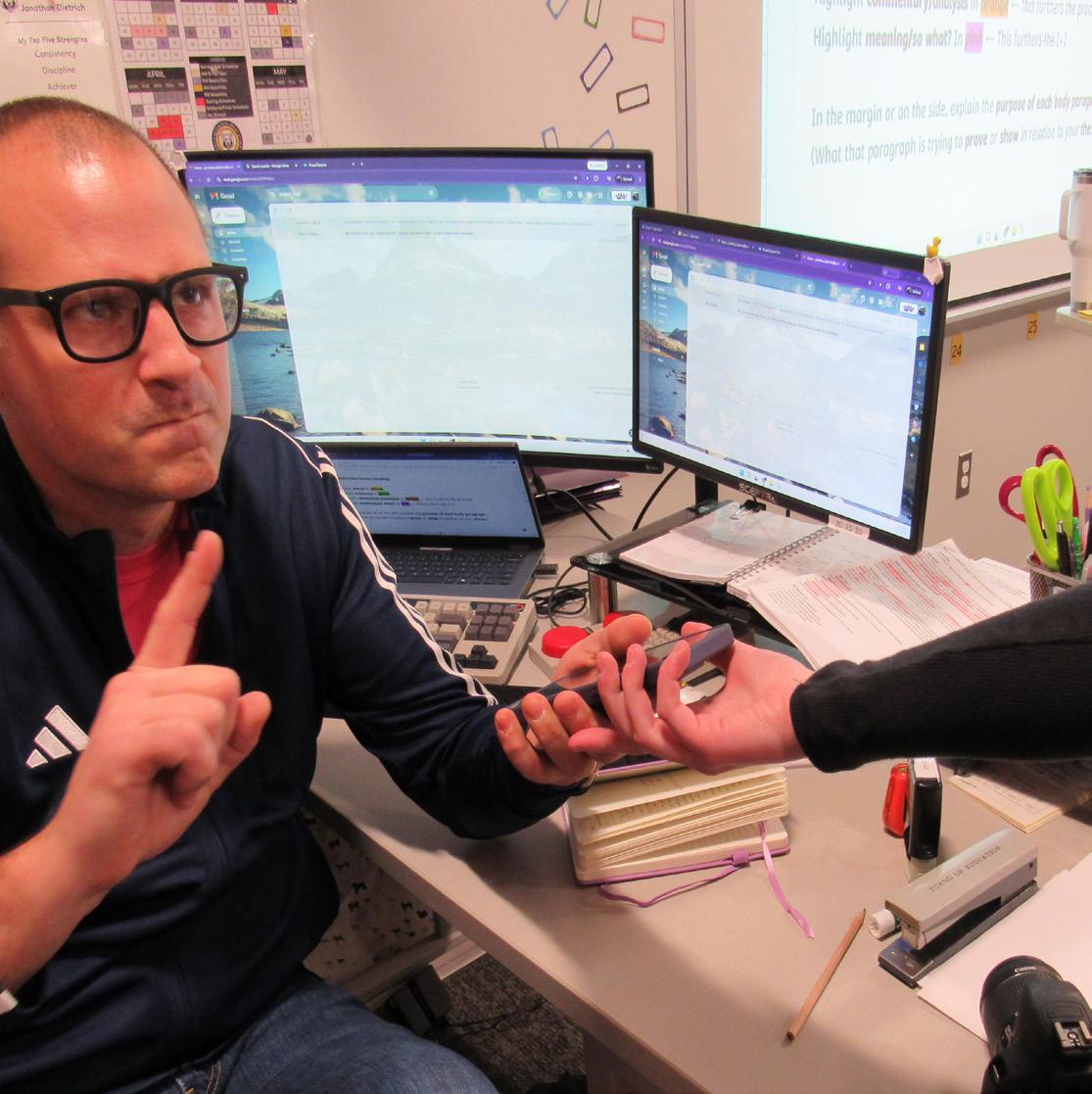
To start, the phone ban’s most prevalent objective for students was to elicit more communication within the student body. Sophomore Madi Winer said she hasn’t witnessed much of a difference. She said, “I believe that even though I was always active in conversation, I haven’t seen an incline in conversation.” Macie Reynolds agreed, stating, “The phone ban doesn’t really affect how much I talk with people, so it’s more of an annoyance because I can’t talk with some of the people I don’t see in my classes.” Students believe that their time is being taken up by working in class, so there was no time to socialize during the day regardless.
Aside from texting friends, students also miss sending those short notes to parents. Junior Mia Pokotska said she “can’t update them during school when things come up.” Although they miss those moments, students said none of them have opted to use the office phone to make those calls, and the talk was never an emergency.
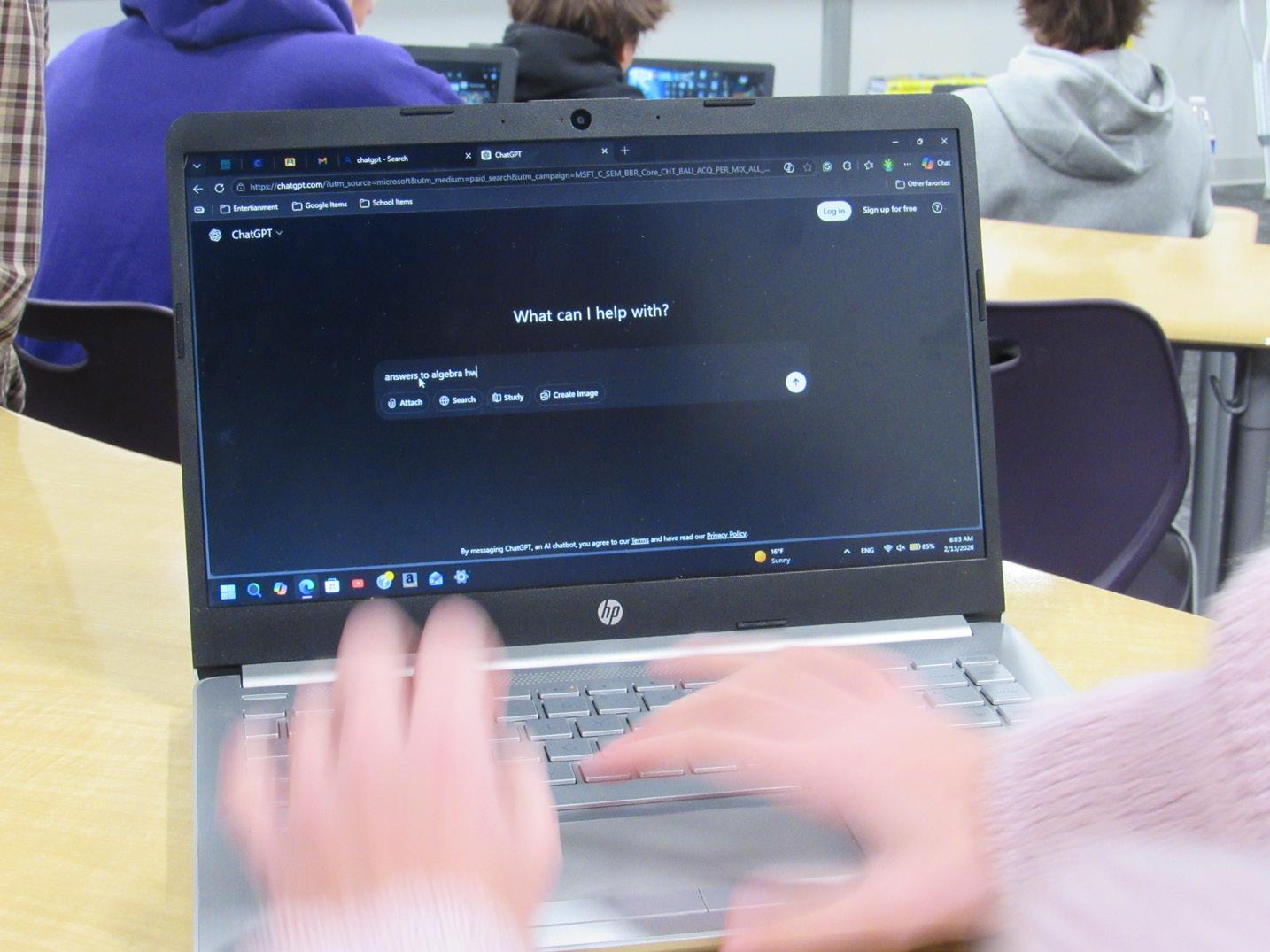
While the ban is now a state law, most of the students still had input regarding the policy. Senior Linden Hopper commented, “I believed that the phone pockets and blocked websites were our best option before the phone ban took place. I don’t think cheating would be as frequent as it is now if Macs and iPads weren’t brought into the school system as an alternative because that gives students the opening to use other platforms and explore different loopholes.” The use of technology in the classroom is the main reason cheating occurs, and it doesn’t have to only do with phones. There is quite literally an AI system within the Chromebooks now, as Google shows an AI overview instead of immediately listing websites when looking up information. Another senior, Abi Midgley, also expressed, “I have seen more people using AI and Chat GPT since the phone ban has gone into effect.” The use of AI to complete school work has always been a temptation, but it seems that the phone ban has increased the use of AI instead of lowering it. Coming back to changes on the ban, most people, such as freshman Andrew Kacki, believe the phones should be banned “only in the classroom, but not in hallways and lunchrooms.” It seems that the student body feels that the previous phone policy of pockets was efficient as long as it was enforced properly by teachers.
Overall, the phone ban has produced many changes within the school as the student body adapts and becomes more familiar with the policy and its difficulties. This policy hasn’t directly achieved the immediate goals it has been working towards, but with effort and some changes, it could be efficient in what it set out to do.
AI: NOT THE ANSWER
BY NYAH PALMER
There are few new technologies in human history that have taken over quite as quickly or as completely as artificial intelligence has. We’ve grown accustomed to seeing it on every search engine and social media app, advertised during Super Bowl commercials, and listening in on doctor’s appointments. At the beginning of this school year, NRHS students even saw it hanging on the walls of the school.

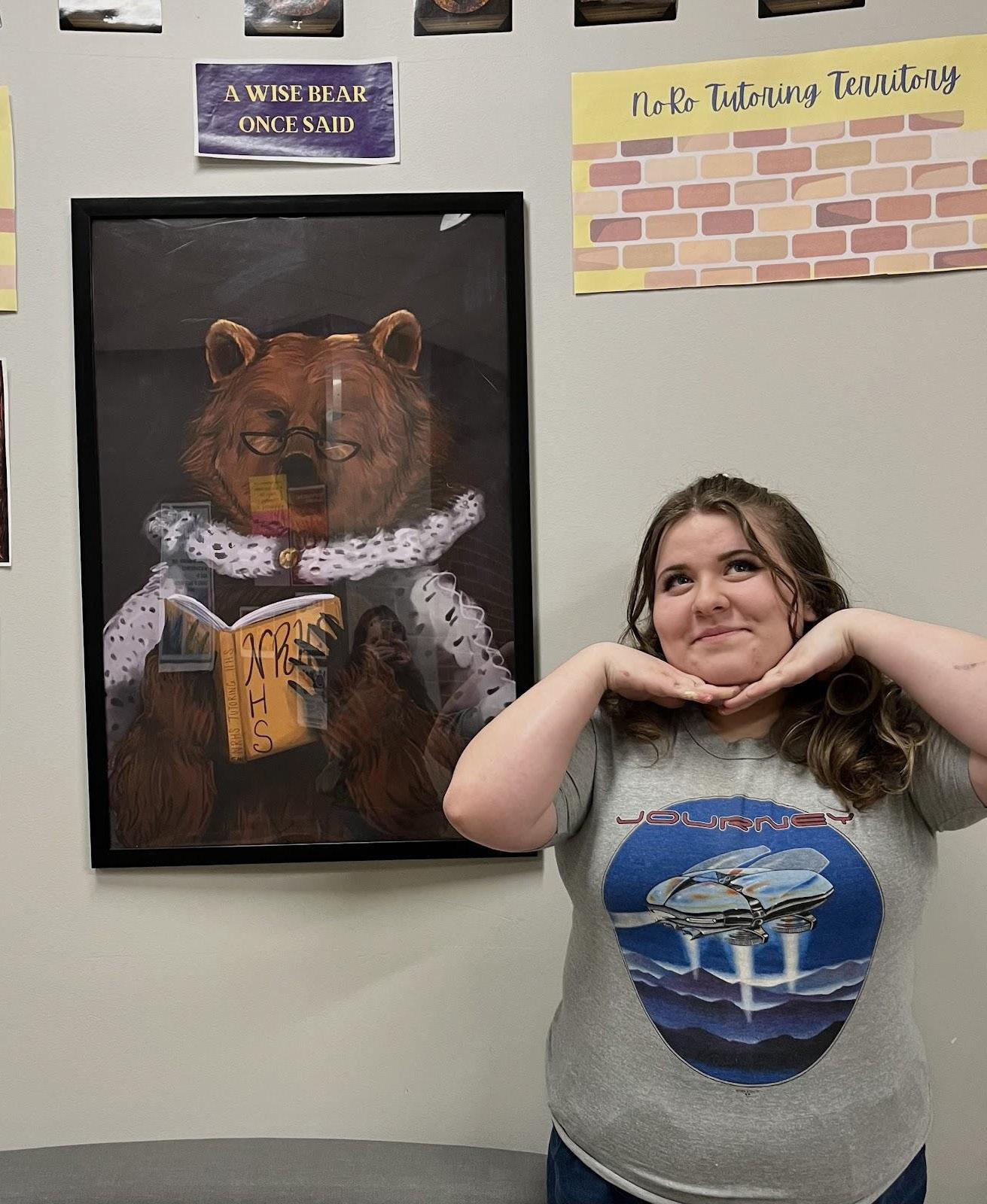
artwork of another student is much more comforting and inspiring for other students—especially those who, like Murguey, “pretty much live in the art hall.”
One of the new decorations put up in the hallway outside the counseling office was a large, framed image of an AI generated bear. To the students who walk down this hallway the most—the art kids—this was frustrating and offensive. One such student, senior Sofia Murguey, said that “since AI is just taking so many jobs away from artists, I feel like putting that outside of the art hall was just a smack in the face.”
She wasn’t the only one who felt this way, but she was the only one to take action. At first, this meant covering the image with sticky notes. “I got caught,” she laughed. “The counselors asked me why I did that.” Murguey was able to have a conversation with the counselors about generative AI, explaining why she would “like to see human-made artwork rather than something generated by a robot.” The counselors were happy to feature student artwork instead, so Murguey offered to create a new piece. Her digital Wise Bear painting is now proudly displayed on the wall, an uplifting representation of human creativity. Getting to see the
Many North Royalton art students have strong opinions on AI because artists are among those most affected by the current overwhelm of AI. As Murguey explained, “What happens when you put in a generative AI prompt is that it doesn't make something new, but it takes from other people.” AI generated ‘art’ couldn’t exist without the abundance of true artwork archived online, being added to every day. But these artists didn’t give their consent to have their work fed into a machine. AI isn’t only stealing the illustrations of artists, either; it’s also snatching up their jobs. Many businesses and companies have already begun to use generative AI for everything from posters to logos to commercials broadcast on TV—including, even, the opening sequence of this year’s Winter Olympics. These are all jobs that used to be done by true artists who put extensive time, thought, and heart into their work.
As NRHS students begin to enter the workforce in a few year’s time, those pursuing art (such as Murguey, who plans to study animation) have to contend with the fear that the job market awaiting them will be rapidly collapsing.
“Art has been around since the dawn of time,” Murguey says, referring to the human handprints marking cave walls at the very beginning of our
history. Art has always been, and will always be, an essential expression of humanity. In the words of author Joanna Maciejewska, “I want AI to do my laundry and dishes so that I can do art and writing, not for AI to do my art and writing so that I can do my laundry and dishes.”
The negative impacts of AI extend beyond the art world as well. Because they draw from a variety of sources, many of which are unreliable or noncredible, AIs such as ChatGPT or Google’s Gemini often provide biased or incorrect information. AI has also been known to have ‘hallucinations,’ where it draws from sources that don’t actually exist. Additionally, as AI continues to become more advanced, it becomes more and more difficult for people to tell real photos from AI generated ones. This can make it much easier for online accounts, public figures, and even news stations to spread misinformation or accuse real evidence of being fake. And, as our sense of reality begins to distort, heavy reliance on artificial intelligence can also erode critical thinking abilities. A recent study through MIT’s Media Lab showed that frequent AI users had lower brain engagements and underperformed at neural, linguistic, and behavioral levels.
keep data processing computers cool, AI will consume more than 4 times as much water as the entirety of Denmark by 2027.
It may seem near impossible to avoid AI these days, when it’s automatically built into a majority of online platforms. However, AI only appears inevitable because those who have invested heavily in AI want us to believe that it is. They need to coerce us into using AI because there isn’t enough demand otherwise to keep up with the costs of sustaining these data centers.
If that doesn’t convince you to reduce your AI usage, then consider the environmental impacts. On average, one question answered by ChatGPT consumes seven to ten times more energy than an ordinary web search. This energy is being drawn right from power grids near data centers, increasing the electricity bills of locals and putting them at a higher risk for outages. AI also sucks up huge amounts of fresh water: UCLA’s symposium on Human Rights and Artificial Intelligence predicted that, in order to
But there are alternatives: for any random question you may have, websites like Quora or Reddit have a wealth of responses from real people. For a more ethical search engine, try Ecosia—it still has an AI search feature, but it’s a non-profit that plants trees and utilizes renewable energy. And if you’re looking to bring a vision to life through art or writing, try commissioning actual writers and artists. These artists typically post samples of their work on social media sites such as Instagram or Twitter (X) along with pricing, which is usually very affordable for ordinary people in need of a logo design, book cover, illustration, or other graphic design project. And, of course, there’s always the option of learning art or writing skills yourself—which may take time and effort, but will ultimately prove much more fulfilling than simply typing a prompt into a computer.
There are many avid AI users that simply don’t understand the consequences of artificial intelligence. But it’s important to educate yourself rather than remaining ignorant simply because it’s more convenient. In the words of Sofia Murguey, “If you don't know the effects of what you're using, don't use it.”
PHOTO BY MADI WINER