


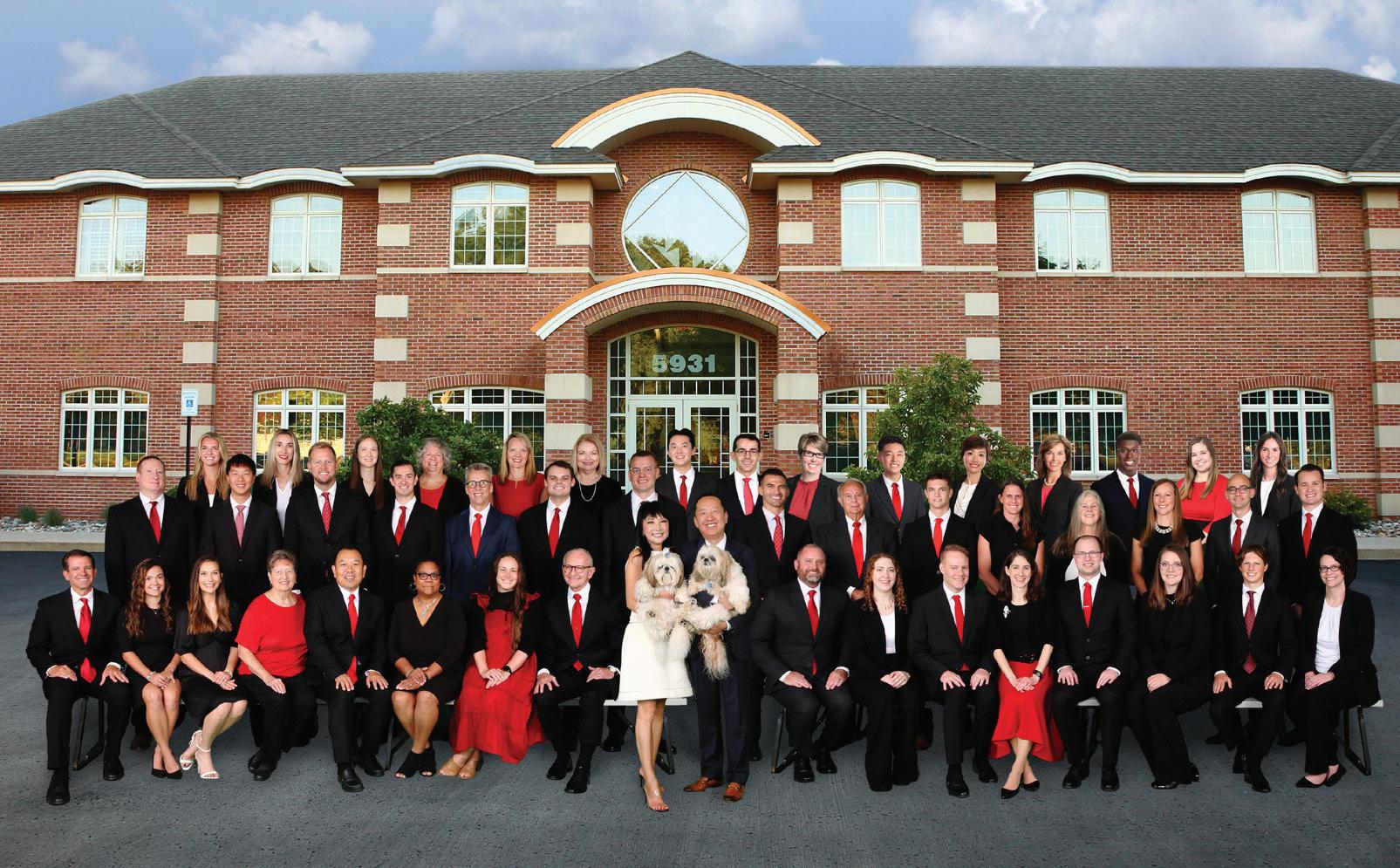
• We uphold a Fiduciary Standard and work with clients on a fee-only basis.
• We do not receive commissions, kick-backs, or soft dollars from product sales, eliminating inherent conflicts of
• Our team of professionals holds designations and degrees such as CFP®, CFA, CPA, MBA, JD, and PhD.
• Charles received his MBA from the Kellogg School of Management - Northwestern University, his MA in Economics from WMU, and Executive Education from Harvard Business School and Columbia University.
#1 on Barron’s List of 2025 Top 100 Independent Advisors
Released September 15, 2025, covering the 12-month period ending June 30, 2025. Zhang Financial does not pay a fee to be considered for or included on Barron’s rankings. Zhang Financial pays a licensing fee to use the ranking in marketing materials. See zhangfinancial.com/disclosure for full ranking criteria and methodology.

Elite Physical Therapy Sports Performance in Chums Corner is expanding to Williamsburg. The new clinic is located at 5782 U.S. 31 North. Elite physical therapist Andrew Patton, DPT, OCS, CSCS, will be leading the new Williamsburg location 2–3 days per week to start. Scheduling will continue to run through the Chums Corner front office; (231) 421-5805.
Northwest Michigan Works!, in partnership with Walstrom Marine in Traverse City, has launched the region’s first-ever U.S. Department of Labor registered marine services technician apprenticeship. This program will provide apprentices with a comprehensive, handson learning experience designed to meet industry needs and strengthen the skilled trades pipeline in the region.
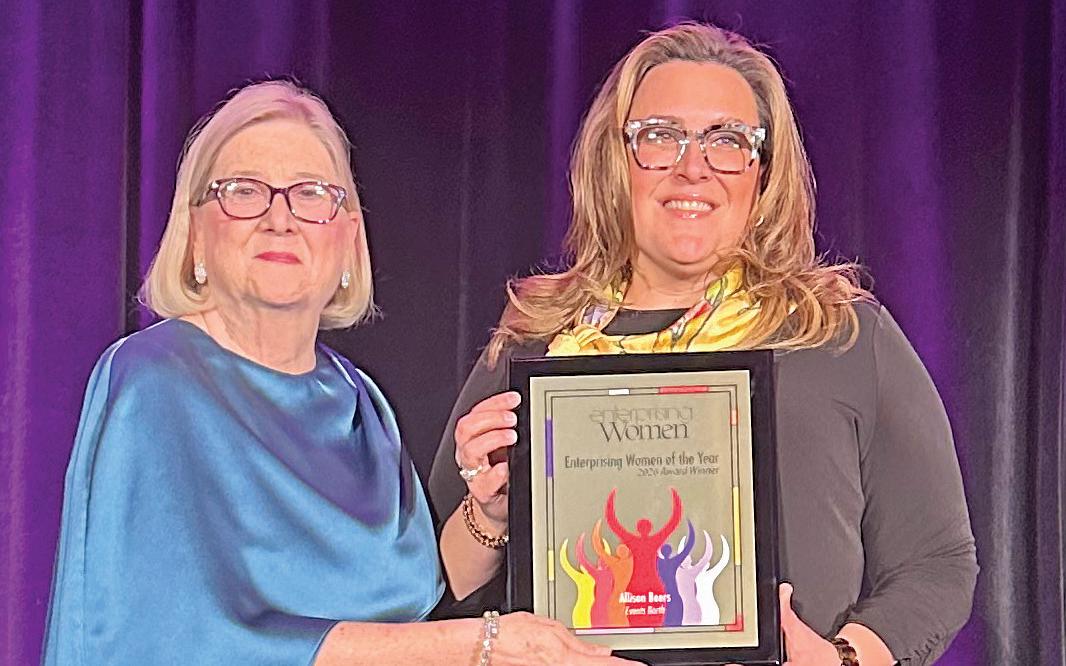
Allison Beers, founder & CEO of Events North in Traverse City, is a recipient of a 2026 Enterprising Women of the Year award, an annual tribute to the world’s top women entrepreneurs. Beers was recognized for her leadership in the category of businesses with $5 to $10 million in annual revenues. “Allison Beers is an accomplished business owner and leader in her field. We are so proud to recognize her contribution to her company, her community and as a role model and mentor to other women and girls,” said Monica Smiley, CEO and publisher of Enterprising Women, host of the annual awards.
Carpet Galleria recently announced the addition of rug cleaning and repair services by Hagopian to its Traverse City showroom. Hagopian is a Michigan based family-owned company that brings 87 years of experience to the Traverse City area. Through this partnership, customers can now drop off their area rugs at Carpet Galleria for specialized care.
NEAT Method, a top name in luxury home organizing, is now serving Traverse City and the surrounding counties. The new location is owned and operated by
Isabella Scalise. “What sets NEAT Method apart is that we design systems around how people really live,” said Scalise. “It’s not about perfection. It’s about creating spaces that make daily life easier and calmer.” In addition to personalized services, NEAT Method Traverse City offers the company’s exclusive product line. Learn more at neatmethod.com/locations/mi/traverse-city.

The Traverse Connect Distinguished Service Award Luncheon honoring recipient Ray Minervini, Sr., president of The Minervini Group, will be held Wednesday, May 13 at the Park Place Hotel. Also during the event, the Business & Community Achievement awards will be chosen via live voting. Registration for the luncheon closes May 4. Visit traverseconnect.com for details.
Russ and Leslie Knopp, owners of Comfort Keepers in Traverse City, were recently honored as part of the Comfort Keepers®’ Diamond Club at the company’s annual conference. The Diamond Club award is presented to the top 25 of more than 600 Comfort Keepers franchisees who have generated the highest revenue in the previous year within a single territory. For more than 20 years, the Knopps have been serving northwest Michigan, delivering in-home care to seniors throughout the region. With offices in Traverse City and Petoskey, they employ over 200 caregivers, administrative, and executive team members.
Nominations are now open for the 2026 Hagerty/TCBN 40Under40 . Individuals in Grand Traverse, Leelanau, Benzie and Kalkaska counties are eligible for nomination. (Nominees must be under the age of 40 until at least Sept. 1). To nominate a young mover and shaker, go to tcbusinessnews.com. We need a job title, contact info and a few achievements and compelling reasons why this person should make the list. Nominations are due by June 1, 2026, at 5 p.m. Winners will be notified ahead of the September announcement and featured in that month’s issue of the TCBN.

















Over the past decade, I’ve often found myself helping friends think through real estate decisions here in northern Michigan. For years, those conversations usually ended the same way: I would refer them to one of several trusted agents I knew locally. But after doing that long enough – and realizing how much I genuinely enjoyed the process – I decided to make it official, get my license and build this into my next full-time chapter. In some ways, I picked an interesting time to enter the field. The market around Traverse City has cooled compared to the frenzied pace of the past few years. Inventory is still relatively tight, but it has started to increase from the extreme lows we saw not long ago, and activity has become more measured. For a brand-new agent, that might sound like a tough environment to start in. But there’s another way to look at it. Slower markets can be excellent teachers. They force you to pay attention, learn the fundamentals and focus on relationships rather than momentum.
Starting something new – whether it’s real estate, a business, or an entirely different career – always raises the same question: Do you jump in completely, or transition gradually while maintaining what you already have? I’ve experienced both approaches at different points in my life.
When I was 24, during the 2009 re-
cession, I started my fitness studio. I went all in. There was no safety net. If I didn’t have clients scheduled, I would sit outside a coffee shop and start conversations with people. The pressure was real, but so was the urgency. It forced me to learn quickly and build relationships quickly, and every small win mattered.
That “all-in” approach can work very well and, for me, it was necessary at that stage. It creates focus and accelerates the learning curve. But it also comes with
you make meaningful progress when your time and energy are split?
I think of this as the “bridge” approach. Rather than abandoning the old path immediately, you build the new one while maintaining your foundation. For many people, especially later in their careers, this approach makes more sense. It reduces financial stress and allows for steady growth without everything depending on immediate results. Also, given my other endeavors, there is a lot of carry over that
to what already pays the bills. But if you want something new to grow, it can’t always get what’s left over. Protecting a few high-focus windows each week makes a significant difference. I’m still working on this myself, and it takes more intentional effort than you’d expect.
Blocking and tackling
A mentor of mine often says success in this business comes down to “blocking and tackling” the fundamentals that never go out of style. Meeting people. Learning the market. Having real conversations. Following up. Showing up consistently. Saying no to what doesn’t move the needle.
significant pressure. For people with families, mortgages or other responsibilities, that kind of leap isn’t always practical.
Entering real estate today looks different. I still spend time each week managing other businesses, which provides stability as I transition. But real estate isn’t a side project – it’s where I’m intentionally building long-term focus and momentum. That creates a different challenge: How do
makes me a better Realtor.
But the bridge approach has its own risks: Without structure, the new path can always take a back seat.
One solution is setting clear boundaries. I remember hearing about a colleague who started real estate while working as a police officer. His strategy was simple: weekdays for his primary job, weekends for real estate. Since most buyers prefer weekend showings, the schedule aligned naturally.
Energy management matters just as much. It’s easy to give your best hours
EDITORIAL & BUSINESS OFFICE
P.O. Box 4020 Traverse City, MI 49685 231-947-8787
ON THE WEB tcbusinessnews.com
PUBLISHER
Luke W. Haase lhaase@tcbusinessnews.com
CONTRIBUTING EDITOR
Gayle Neu gneu@tcbusinessnews.com
HEAD WRITER
Craig Manning
STAFF WRITER
Art Bukowski
COPY EDITOR Becky Kalajian
CREATIVE DIRECTOR Kyra Cross Poehlman
CONTRIBUTING WRITERS
Ross Boissoneau
Kierstin Gunsberg
Rick Haglund
Todd VanSickle
WEB PRODUCTION: Byte Productions
MAILING/FULFILLMENT
Village Press
DISTRIBUTION Marc Morris
SERVING
Grand Traverse, Kalkaska, Leelanau and Benzie counties
AD SALES
Lisa Gillespie lisa@northernexpress.com
Kim Murray kmurray@tcbusinessnews.com
Kaitlyn Nance knance@northernexpress.com
Abby Walton Porter aporter@northernexpress.com
Michele Young myoung@tcbusinessnews.com
None of that is glamorous. In a world of social media and automation, it can even feel outdated. But the people who build lasting careers – whether in real estate or any field – are the ones who commit to these habits long after the initial excitement fades. In the end, success is less about finding the perfect strategy and more about consistently doing the simple things most people eventually stop doing.
Sebastian Garbsch is a real estate agent with CENTURY 21 Northland in Traverse City. He is also the owner of Blue Goat Wine & Provisions and is currently serving as president of the Traverse City Philharmonic. He can be reached at (231) 883-4493.
The Traverse City Business News Published monthly by Eyes Only Media, LLC P.O. Box 4020 Traverse City, MI 49685 231-947-8787
Periodical postage qualification pending at Traverse City, MI.
POSTMASTER: Send address changes to The Traverse City Business News, PO Box 1810, Traverse City, MI 49685-1810.
The Traverse City Business News is not responsible for unsolicited contributions.
Content ©2026 Eyes Only Media, LLC. All rights reserved.
EYES ONLY MEDIA, LLC

• Nursing, Associate Degree (ADN)
• Nursing, Practical (PN)
• LPN to ADN completion option
• ADN to BSN in partnership with Davenport University nmc.edu/nursing
NMC offers an Associate Degree in Nursing (ADN), Practical Nursing (PN), LPN to ADN completion, and options for ADN to BSN.
nmc.edu/nursingEmpower Your Growth.
By Art Bukowski
Tim Norman is in his second stint as general manager of the Grand Traverse Resort and Spa. He served in that capacity from 2012-2018 and returned in 2022 to one of northern Michigan’s signature destinations, where he oversees a vast operation with more than 600 employees in the peak season. We thank Tim for showing us around his desk! If you have an idea for a From The Desk Of feature, please email Art at abukowski@tcbusinessnews.com

1. I just got back from ISPA, which is the largest spa conference in the United States. We were out there looking at all of the new products, the direction things are going; things like red light and cryotherapies. We’re always looking five to 10 years down the road. And there are so many products. These are a sample of some really nice, American-made head covers that go on the massage table.
2. This is a book called “The 5 Languages of Appreciation in the Workplace.” My big push is leadership. In today’s world, supervisors and managers are more day-to-day operators than leaders. So I’ve asked the entire executive team to read this book. It will give them things to think about as they develop their leadership skills.
3. This booklet on gratitude came from a speaker at the Pure Michigan conference here at the resort. And there’s a lot of different pieces to gratitude: Being thankful, being appreciative, making that eye contact and that connectivity. The biggest problem today for many employees is they don’t feel they’re being heard or even seen, and we want to make sure that’s not the case here.
4. I always use three colors of pens. I take many notes, and while you can put a star by something or underline it, when it’s all the same color it just doesn’t stand out as much. So I intentionally use different colors to keep track of all the different things going on.
5. Most of these are mementos from various team building activities with the staff, or trainings or conferences we’ve gone to together. It’s important to our team, and it’s really fun to have all of the memories.
6. These are rocks that go in several areas on the top floor above Aerie Lounge, and we’re waiting on a shipment. This just reminds me to make sure we got the right product. There’s a dozen different projects going on right now, and I’m always trying to stay on top of them. This one is a reminder that that particular project is hot and heavy now, so we have to get it done.
7. We’re trying to decide if it’s possible to add a whole new golf course. And where we are right now with that decision is do we do a true par three course or a glorified,
professional-style putt-putt course? My big thing is always dream big. You may not be able to do it, but if you don’t dream it, you can’t figure it out. So you go as big as you can and then you back up to what might be possible, instead of the other way around.
8. I’m super proud to be a Virginia Tech Hokie. I’m a diehard fan, win or lose. I graduated with a degree in hospitality management, and my brother has the same degree, so we have even a tighter bond because of that.
9. Here’s a picture of me with two of my four children. I live life with the premise that there’s nothing more important than God, family and work. In my opinion, there’s nothing greater than being called dad. And work is like my second family.
10. This is my reminder that we’re owned by the Grand Traverse Band of Ottawa & Chippewa Indians. They have a very deep culture that’s all about belief in taking care of nature and the land. So in a lot of ways that’s a reminder that we’re bigger than just a business.
Following is our list of the region’s top 25 single-family and vacant land sellers and top 10 commercial sellers in the five-county area.
The ranking is based on the official MLS data provided by Realtors to their regional association. Figures represent buyer-represented sales only and exclude agents’ own listings . TCBN did not receive any MLS database access nor any information directly from Aspire North Realtors or Northern Great Lakes Realtors MLS for these rankings.
Data is published as provided with no changes or manipulations. Those with an asterisk under residential sellers are those who worked as a “team,” where properties sold by two or more individuals are listed under one person’s name. For commercial-only sales, see the separate list on page 11.




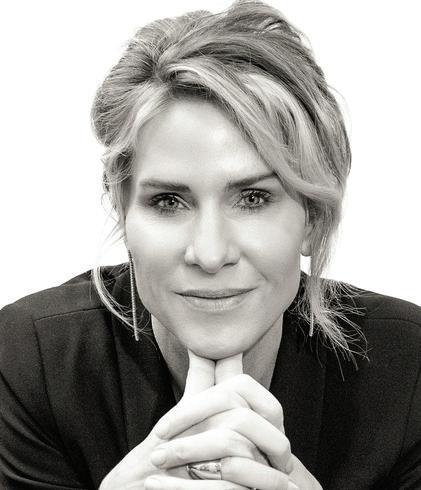











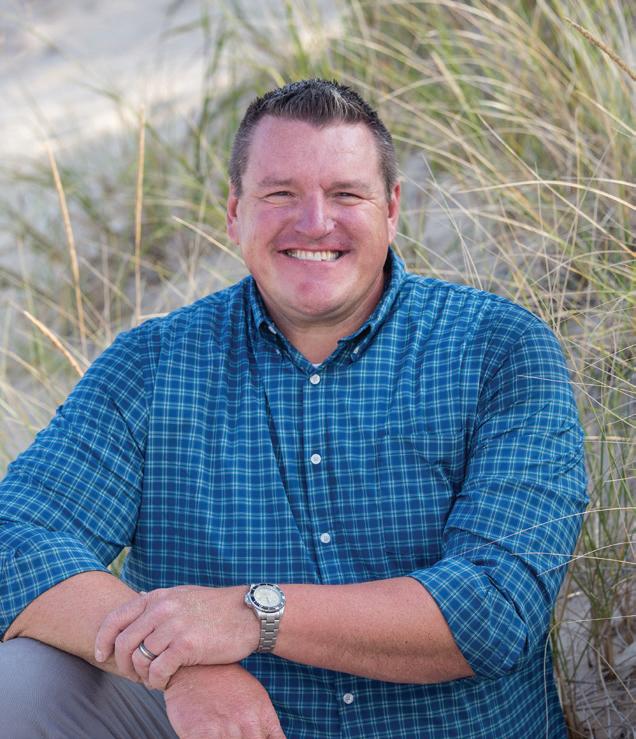








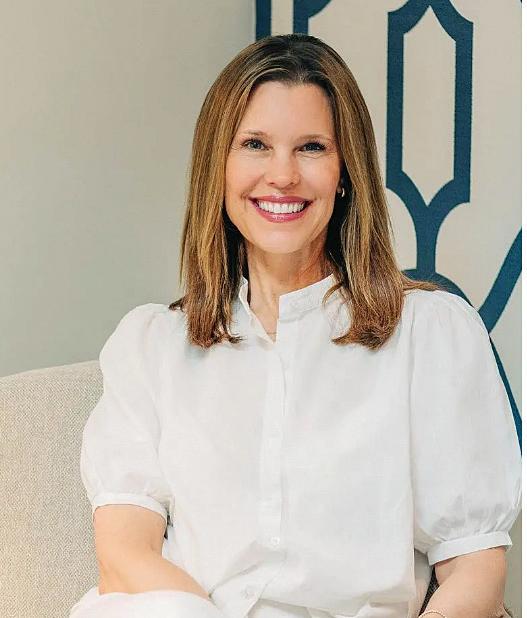




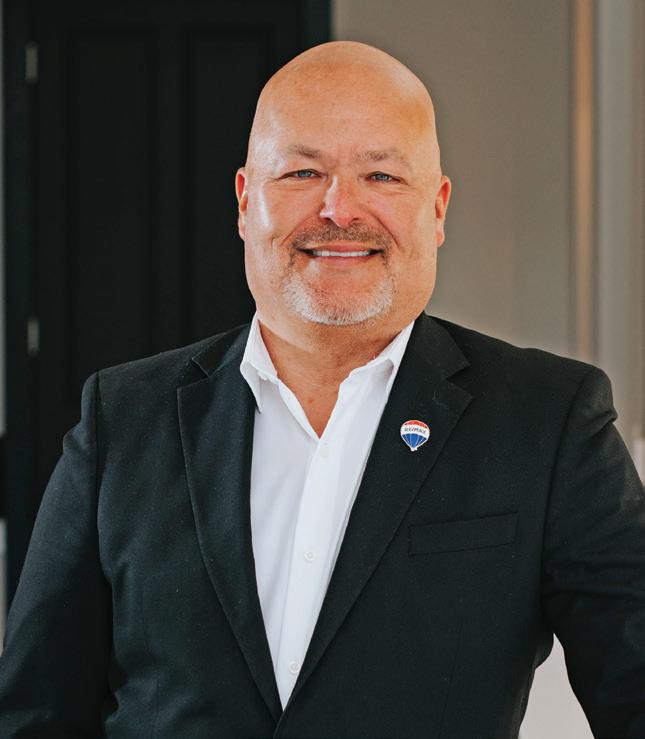





When it’s time to make a move, start with #1.


By Art Bukowski
The Grand Traverse region has no shortage of real estate agents and brokers.
More than a thousand are out there buying and selling little slices of northern Michigan paradise one closing at a time, and each has a different story about how they got there and what drives their passion for the industry.
The TCBN connected with four agents with a story to tell.
In the late summer of 2001, Drew Reynolds had completed his U.S. Army service and was working for the U.S. State Department as part of the protection detail for then-Secretary of State Colin Powell.
“(On 9/11) I was on the roof of the State Department, which as the crow flies is probably a half mile from the Pentagon, and when the plane hit, it shook the building I was on. I turned and looked in that direction and saw the smoke cloud rise,” he said. “That day kind of changed everything in my life.”
Driven by a desire to combat such heinous acts, Reynolds signed on with the FBI and spent 17 years in counter-terrorism through his work as an intelligence officer.
“The Army taught me how to handle a crisis, but the bureau taught me how to investigate and get ahead of one,” he said. “Serving in that capacity allowed me to contribute to national security in a way that felt more surgical – it was less about the show of force and more about the persistence of the work.”
While he lived and worked in Washington, his mom and later sister moved full time to the Grand Traverse region (the family is from Vassar, near Frankenmuth). Reynolds made many trips to visit them and he grew enamored with the area.
“I fell in love with coming up here to visit, and then I met a woman who is now my wife,” he said. “We were doing the long-distance thing back and forth … but we knew this is where we wanted to be at some point.”
They made the move a few years back, and Reynolds began his real estate career in 2022. As an outsider, he’s had to work tirelessly to get his name out there.
“The hardest part is not being from here. Being a realtor in your hometown, everybody knows you and it’s easy to build a client base. I didn’t have that. I don’t have that still,” he said. “So getting to know people and getting my name out there is kind of hard, especially in the market up here where there’s a lot of other realtors.”
But he’s finding success, and it’s in no small part due to his performance for his clients. There’s plenty from his past life that directly bolsters his professional performance in real estate, particularly an extreme devotion to detail.
“With national security … there’s no margin for error. Everything has to be exact when you’re working on an investigation. If it goes to trial and you screwed something up, it could all fall through,” he said. “And that’s the same here. I’ve got to make sure everything’s going right in that transaction to make sure that there’s no surprise when we’re at the closing table.”
He also feels his background serves him with high-net-worth individuals.
“Up here you’ve got the luxury market where people really want their privacy, and I’m uniquely qualified to handle sensitive, high profile transactions,” he said.
Finally, he believes his prior career makes him a great asset when it comes to ironing out a deal.
“When I’m talking with the other

agent and trying to negotiate on my client’s behalf, I’m able to read that person,” he said. “I had to do that for years. Being able to read somebody’s
The Fed Drew Reynolds, Century 21 Northland
body language or their face to really figure out what that buyer or seller on the other side of the table is really looking for is a big help.”
Amy Couturier spent the first chapter of her career serving children.
Couturier is from California and met her husband while in medical school at Michigan State University. They eventually moved to California, where she worked as a pediatrician and he as a radiologist, but they sought a different place to live after they started having kids.
So in 2020 they came to Traverse City, where her husband signed on with a local radiology group and she started a direct primary care pediatric office called Up North Pediatrics. She ran the practice for four years, but decided to close down last year.
“It was really hard to be solo without a partner, so that was a big lesson learned,” she said. “And in pediatrics, the highest demand is after school, and that really started to get hard with my personal life with three kids. So I was getting burned out and it was hard to grow that business.”
After some time at home with the kids and helping with her husband’s new med
cant of which is that both are constantly looking out for the best interests of their clients/patients. Being a strong advocate is key in both roles.
But she’s also excited about representing medical professionals in real estate transactions. Not that they’ll be her only clients, but she feels especially qualified to work with them.
“I just felt that this is a group of people that I could really serve well. My colleagues (in medicine) are people that could use that fierce advocacy that maybe we don’t get in real estate,” she said. “I know the healthcare community and the needs of doctors, healthcare providers, nurse practitioners, everybody on the spectrum.”
Aside from the more straightforward matter of finding places to live, she hopes to help these clients invest in real estate to support their healthcare careers.
“These are people who really need that great equity in their investments because


Mackinaw Trail Winery
Utilize design/build to construct a world-class custom winery from the roots up, maximizing property and budget parameters.
We had big dreams for our new winery. Burdco applied their experience and knowledge to take those ideas to the next level. Working with Burdco has been one of the key factors of our success. They’re not just a hired hand, but a true partner.
& Laurie Stabile Mackinaw Trail Winery, Petoskey



Tim Wharton did about $11 million in business last year, enough to rank in the top 25 by himself (his numbers are included with that of his brokerage, the No. 1 ranked RE/MAX Bayshore) and be named a Rising Star for Michigan by RE/MAX.
Not bad at all for someone who less than two years ago dove into real estate after a career path that focused on hospitality and sales. It’s both good and bad though, because now he’s got pressure to keep it up.
“It’s a blessing and a curse,” he said. “It’s great, but it really sets the bar high.”
Wharton grew up here and worked at several restaurants before getting into car sales and then working for a company that sold sustainable chemicals. He was there for 17 years before the process of selling his new house – and urging from his friends, B.J. Brick and Tommy Corbett – led him to launching his real estate career.
He credits those same friends, now his coworkers, for creating a culture that facilitated his great success in his first full year.
“This is the most collaborative job I’ve ever had in my life. It’s unbelievable,” he said. “There’s great camaraderie, and it’s just so rad. We’ve developed a culture where everyone is comfortable with asking questions and asking for help. ‘Can you show this house while I’m at the doctor?’ ‘I’m away and I got this lead, can you help?’ ‘Do you need me to do a showing for you this weekend?’”
Still, how did Wharton break $10 million as a brand-new agent? He credits the many relationships he cultivated over the years as key to opening the doors to new business as he stepped into this role.
“When people found out what I was doing, they were like ‘Hey, my friend’s looking (for something),’” he said.
He loves that this job gives him the ability to help others, something he realized a while back is key to his own well-being.
“What has really elevated my sense of light, happiness and purpose in life is really truly being in service of others,” he said. “I like talking to people who are nervous about this process, and taking really good care of them to the end of the process and beyond, and to watch their shoulders drop (with relief) through the process.”
And what better thing to assist with than a real estate transaction?
“This is the most personal thing ever, and it’s the biggest transaction 99% of the population will ever make,” he said. “I don’t find it to be daunting – I find it to be inspiring. And if I can be a part of that, I’m so happy to do so.”




Gini Pelton has used a hashtag for quite some time: #JustAskGini. And people take advantage of it, even if it doesn’t involve real estate.
“I probably had 20 calls this week on every sort of thing you could imagine,” she said. “Where do you board a dog? Who cleans carpet? Who should do my lawn. Sometimes I’m Googling the stuff while they’re asking me.”
Pelton, who is based in Manistee and does deals in Manistee and Benzie counties, doesn’t mind one bit. It’s all part of her natural tendency toward community service, which manifests itself in her past and present volunteerism for dozens of nonprofits or community groups. You’d be hard pressed to find a Manistee community organization she hasn’t served at some point.
She also coached T-ball, baseball, soccer and football over almost 20 years with the Manistee Recreation Association and co-chaired the development of Manistee’s popular Lighthouse Park.
“Giving back is just part of my being. I grew up as the oldest of 10, and my parents were really big volunteers and were always involved in their community,” she said. “I feel like no matter what you do, you should be giving back to the community, whether it’s money, time or talent. If every adult in a community just picked one thing to commit to, it would solve everyone’s problems.”
Pelton spent much of her career working as a housing specialist for the state government, though she also worked as an accountant for a law firm, managed an H&R Block tax office and owned a retail store. Her claim to fame? She was
the first female car saleswoman in the state in the 1980s.
“That’s what they told me at the time, and I’m sticking to it,” she said.
She began her real estate career in 2012 and has been both deeply involved with and awarded within the industry. She’s earned Century 21 top agent honors every year and has served as president and vice president of the Mason Oceana Manistee Board of Realtors. Her background makes her a natural for this business, she said.
“I have the history of my father being a real estate agent and then myself working as a state inspector and agent in housing for so many years,” she said. “So I am very knowledgeable on (building) structure.”
Though she has a soft spot for several places in our region, particularly Beulah and Frankfort, she feels Manistee is one of the best places in the state to buy and sell real estate.
“The other fun thing is I live in a historic town, so it’s really cool to go into some of these homes, whether they were railroad homes or lumber baron mansions,” she said.
Last but certainly not least, she also deeply enjoys building relationships with her clients.
“My husband always gives me a hard time. He’s like, ‘Do you have to adopt every single one of your clients?’ And I’m like, ‘Yeah, I do,’” she said. “They all have to be my friends. I would not be happy if I didn’t walk away knowing that all my clients were my friends.”


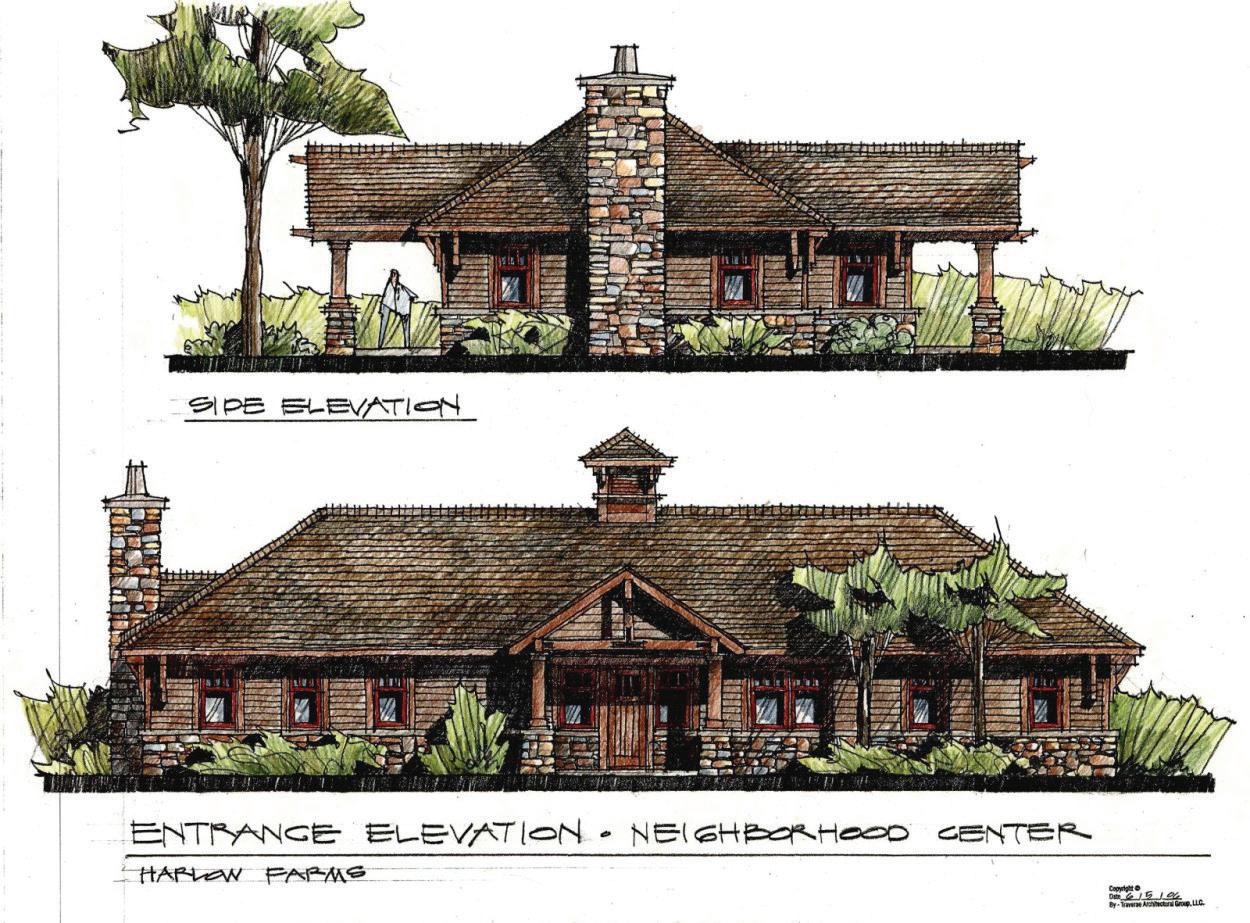




Our annual look at
‘cool’
properties around the region
By Art Bukowski
Northwest Michigan’s diverse landscapes and communities offer up a wide variety of available properties every year. Here’s a look at some fun listings from the area as of the time this story was written. We can’t guarantee they weren’t snapped up by the time this issue went to press!
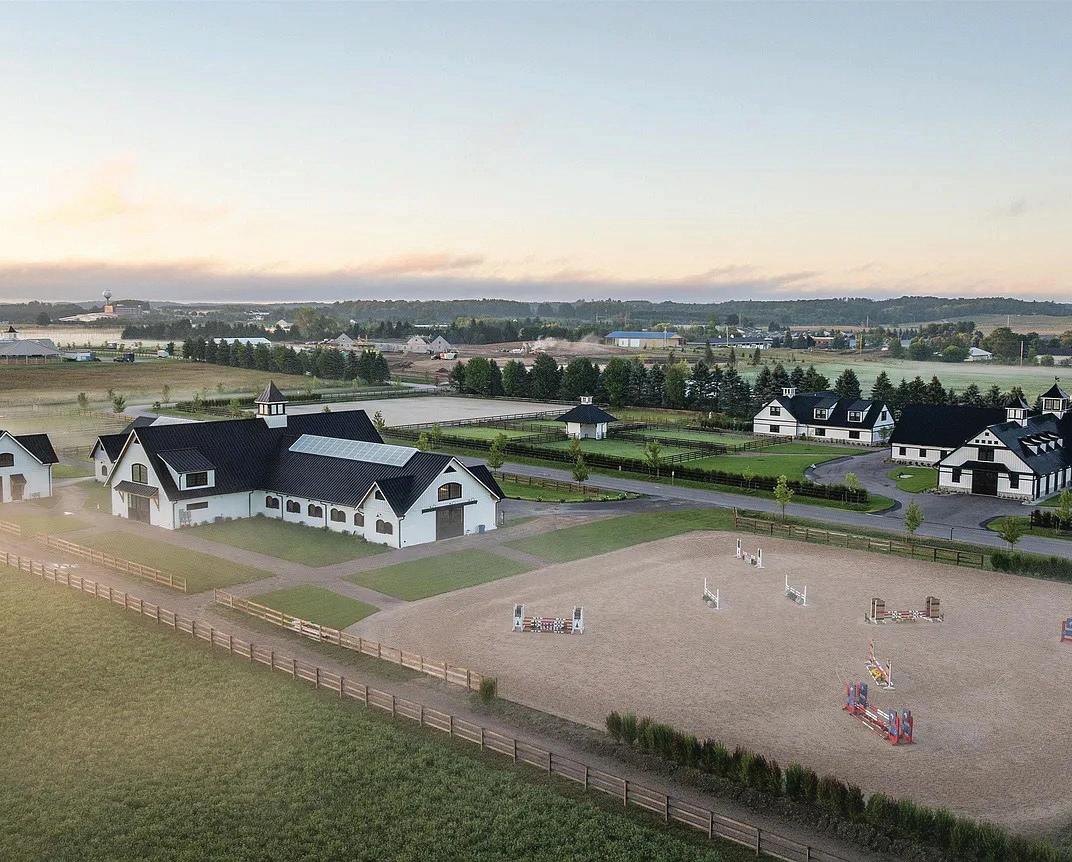
What would the regional market be without a fully loaded equestrian estate?
$9.95 million
MLS#: 1942258
Located adjacent to the bustling Flintfields Horse Park (home of immensely popular Traverse City Horse Shows), this listing features an 11,000 square-foot, 22-stall custom barn and a separate three-car garage with a well-appointed four-bedroom, two-bathroom apartment above. The centerpiece of the grounds is a large riding arena and four fenced paddocks. All of this is within a gated setting and connected to the horse park via a private bridle path.
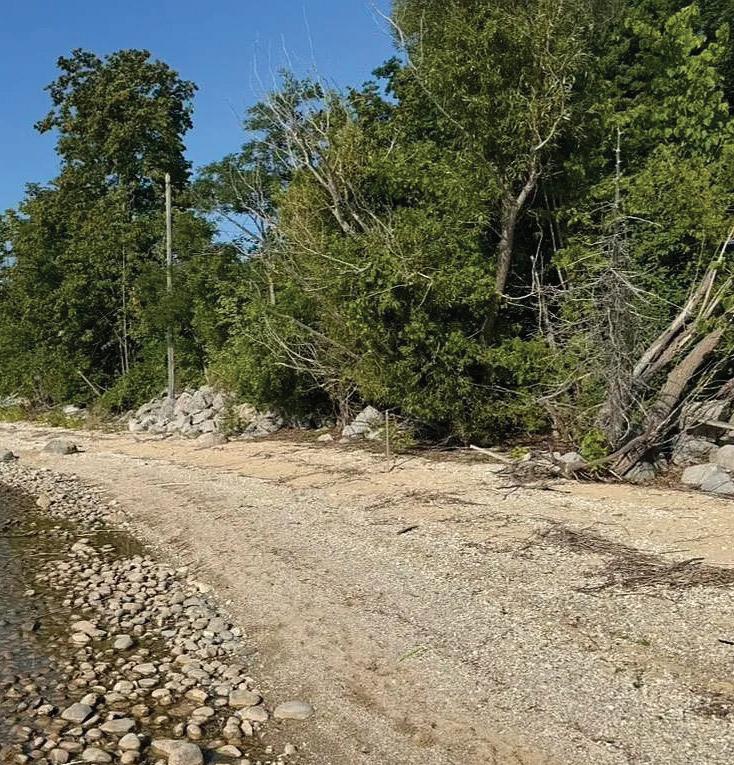
Just how hot is that waterfront market, you ask? Have a look at this listing, which offers three quarters of an acre for a cool million – and that’s just for the land. As one of the last remaining undeveloped parcels on Peninsula Drive so close to town, this property is touted as the perfect place to build your dream home on a sloping, wooded lot with 100 feet of private beachfront on West Grand Traverse Bay.

2721 Nelson Rd.,
Described in the listing as Old Mission Peninsula’s most photographed home, this is a “one-of-a-kind sustainable estate with 360-degree development-protected views of Grand Traverse Bay, vineyards and orchards.” The 7,000 square-foot, five-bed, six-bath home sits on more than eight acres not far from the Center Road scenic overlook just south of Chateau Grand Traverse. Designed by world-renowned green architect William McDonough, the home’s many features include an indoor lap pool with panoramic windows, underground wine cellar and radiant floor heating.
$4.2 million
MLS#: 1934261
Make the most of your time in Traverse City with exclusive on-water ride & drive events from Action Water Sports. Designed for those considering a new boat, whether you’re ready now or simply starting to think about it for the years ahead. These limited sessions give you the opportunity to get behind the wheel, compare models, and experience the difference on the water with our team.
We’ll host select events this season at Riverwalk Grill and Leelanau Cellars.

Scan the QR code to reserve your spot and explore upcoming events.



PAGE SPREAD
116 W. Front St., Traverse City
$5.5 million
MLS#: 1942138
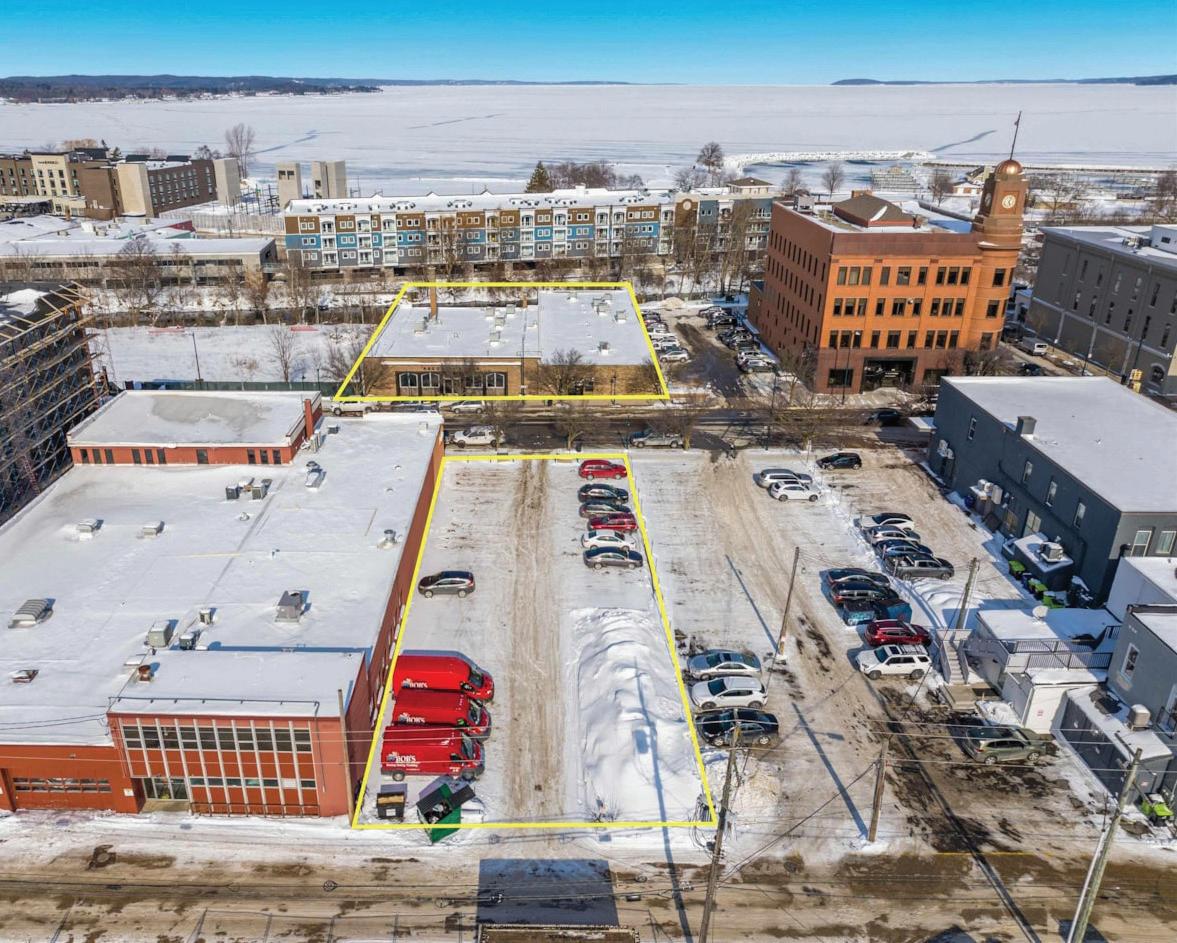
The longtime home of The Record-Eagle is one of the most prominent current listings in downtown Traverse City, offering almost 15,000 square feet across two floors sandwiched between Front Street and the Boardman River. While the building itself could be used for a variety of purposes, perhaps the icing on the cake is a large, dedicated parking lot directly across the street and additional parking along the river.
1010 E. Front St., Traverse City
$2.3 million
MLS#: 1942072
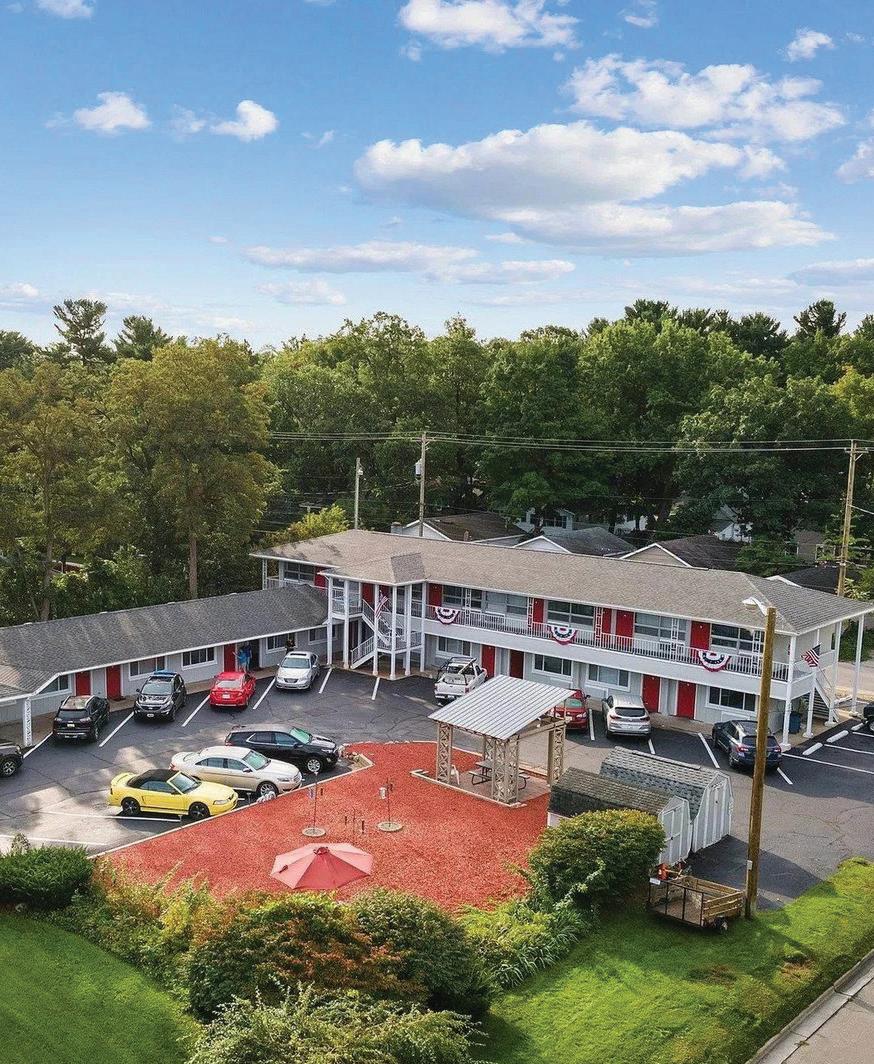
The Grand Traverse Motel is a highly visible motel, sitting on a corner lot on Front Street less than one mile east of downtown Traverse City. This motel was built in 1955 and most recently updated in 2018, giving historic flair with modern amenities and features. It has 17 guest rooms plus a dedicated manager’s suite within about 8,000 square feet. About 130 feet of frontage on Front Street offers “exceptional exposure and easy parking.”
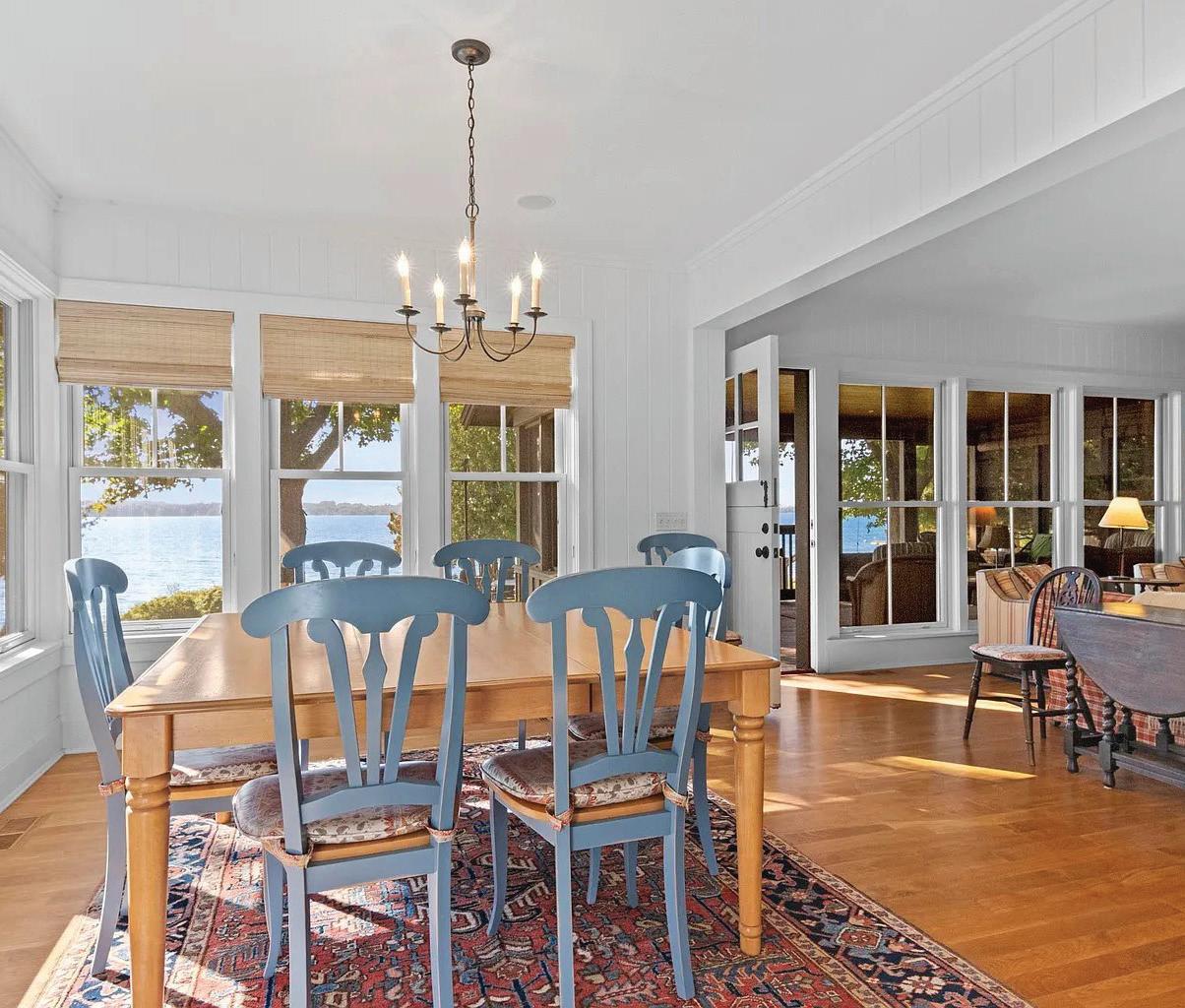
A cozy, stone fireplace, covered sunroom, rich wood floors, main-floor primary suite and many rooms with expansive views of Elk Lake are among the features touted in this listing. The 3,300 square-foot home has five beds and five baths and sits on more than five acres along the lake. It has about 100 feet of private frontage on the lake with a well-manicured beachside patio and additional outdoor entertaining patios along the home itself.

4173 Dornoch Ct., Williamsburg
$3 million
MLS#: 1942145
Located in the exclusive gated community of Lochenheath, this expansive, 10,388 square-foot home is described as the pinnacle of luxury living. Highlights include an open concept design with a grand stone fireplace, chef’s kitchen with top-of-the-line appliances and three-season sunroom with sweeping views of both the golf course and East Grand Traverse Bay. Bonus features include an in-law apartment with its own kitchen, bedroom, bath and two-car private garage and a crow’s nest at the top of the home that overlooks the surrounding area.
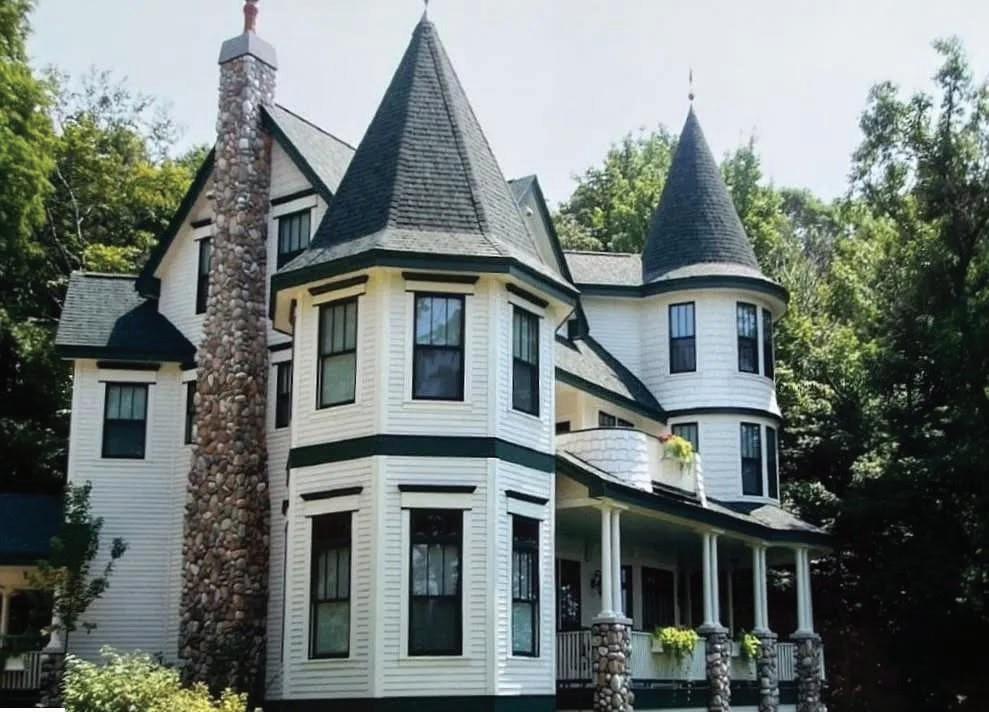
Want the historic charm without the headaches of a building that’s more than a century old? Look no further than this 5,000 square-foot Victorian-style home built in 2004. No expense was spared crafting the interiors of the home, according to the listing. It sits in a wooded setting on a bluff about two miles north of Frankfort in close proximity to Crystal Downs Country Club and the Crystal Lake Yacht Club.
2370 Lake Rd.,
$1.9 million
MLS#: 1937459

By Todd VanSickle
There is always a possibility that Jason LaVanture could encounter an armed homeowner or be attacked by a bird while at work.
“We’ve had guns pulled on us for sure,” said LaVanture, who owns BlueLaVaMedia and is a licensed drone pilot. “We have been doing this long enough and when you show up, there are some people who don’t want you there. We had an incident out in Leelanau County where we put the drone in the air and a guy came out with a shotgun in his hands.”
Fortunately, the real estate agent showed up at the same time and diffused the situation after explaining that his neighbor was selling his home and needed aerial images for the listing.
“It was awkward,” LaVanture said.
Real estate sales and drones
Nowadays, the company’s drone operators wear lanyards that display the pilot’s license and identification, while donned in company apparel and driving vehicles emblazoned with logos.
“We let people know that we are there on a certified (Federal Aviation Administration) approved flight,” LaVanture said. “Any obstruction of that is an obstruction
of an FAA flight.”
As more drones take flight, the public’s perception is improving and so is the demand in the real estate industry, adds LaVanture.
“I think people are more understanding that it’s really being used a lot for real estate,” he said.
Drones are now the third most used
portion of it, you know, flying from the water over the dock to the home’s deck. It just helps provide viewers with context. Every home has a story.”
Local roots
LaVanture founded RealTourVision (RTV) in 1999 as a virtual tour software
“I would say that sellers want drone photography because their neighbors got it, and nobody wants to be left out. They want everybody to see their views from the peninsula too.”
– Jason LaVanture, Owner, BlueLaVaMedia
technology by real estate agents, according to a 2025 National Association of Realtors survey. eSignature and social media ranked second and third, respectively.
According to the Multiple Listing Service, homes advertised with aerial photos are 68% more likely to sell.
“It definitely helps with context,” said BlueLaVaMedia Operations Administrator Cade Musich. “There are a lot of realtors now that like narrative storytelling. So you can get kind of creative with the video
company, and in 2005 expanded into national and international photography and media services.
“I launched BlueLaVa in 2007 here in Traverse City as a real-world testing ground for the RTV platform,” said LaVanture.
Today, RTV provides a platform for real estate photographers and drone pilots. It coordinates aerial and photography projects across the United States and Canada by dispatching assignments to its nation-
wide network of vetted photographers and drone operators.
“It’s pretty much everything from media delivery and payments to booking, marketing tools, virtual tours, property websites and more,” LaVanture said. Currently, there are 855,860 drones registered with the FAA in the Unites States.
LaVanture works with Northern Michigan College’s Unmanned Aerial Systems Program Coordinator Tony Sauerbrey to recruit drone pilots.
“He sends us a lot of candidates,” LaVanture said. “A lot of these guys move on to go down to Detroit and become actual pilots. Three of our guys from the past now work for Delta and American Airlines.”
LaVanture started operating drones when a pilot’s license was required to fly drones commercially.
“Now, it’s just a driver’s license,” said LaVanture. “On the drone side specifically, we’ve been involved since the very early days.”
Today, BlueLaVa photographs about 1,400 homes a year. More than 30% request aerial drone services and the demand is growing, he says.
“We haven’t had one year where we didn’t do more than the previous year,” LaVanture said. “We’re doing about 450 drone operations a year up here, which I think is a lot. It is such a short season.”
During the past five years there has been an influx of drone photography businesses in the region. LaVanture estimates that there are about 16 drone companies operating in the Traverse City area.
“There are more coming up every single year,” he said.
Cobe Lund says he is a one-man show at his business, Leelanau Life Media, which specializes in drone photography and offers a wide range of media services, photos, videos, floor plans, 3D models and 3D tours.
Lund got into real estate drone photography after working as a licensed realtor.
“It was just something that I am good at,” Lund said. “I had been doing cameras my whole life, and I figured, why not?”
Although he still has his realtor’s license, he now works full time with his
media company. He acknowledged being a realtor has made him a better drone pilot, which has given him a new perspective on what potential buyers and sellers are looking for.
“Most of the people I work with, they definitely want it,” said Lund. “When I started real estate about five years ago, I knew I wanted drone images for my listings, it shows all around, and all that good stuff. To me, it just seems essential.”
Water views in demand
Water is the top selling feature when it comes to real estate. Lund says drones showcase homes that are not only on the water, but also nearby. He says most of his clients have a view of Grand Traverse Bay one way or another.
“You look up states with the most inland lakes; it is like Alaska, Michigan, Minnesota. Lakes are super important to people that live up here – lake life,” Lund said. “You go up with a drone, you can show what’s around, instead of now having to guess, or look at a map. It’s cool to show that visually. You know, whether it be real

estate photos or not, you can just capture such a unique angle. It’s pretty sweet.”
Technology expands the field, birds threaten it
Drone technology continues to advance significantly, with improved camera quality and battery life. AI already assists with placing virtual property lines in the digital images. LaVanture predicts more AI features are to be expected, including voice-activated AI-driven drones for automated property mapping and virtual walkthroughs.
In the early days of drone photography, LaVanture recalls building a device in his garage that he coined “The Skywalker,” which allowed him to navigate a drone through a home without actually flying it.
“It was just the drone strapped on to a bar,” he said. “But people around town started talking about BlueLaVaMedia taking drones through the houses, and how we got this Skywalker thing.”
One the biggest threats drone operators face is birds of prey.
LaVanture says his company has lost
about seven drones over the years, mostly to bird strikes. The company requires its drone operators to have at least two drones available at all times.
“It’s really the bird strikes. The guys watch out for them, because they get really aggressive if you’re close to a nest, especially eagles and hawks,” said LaVanture. “Sometimes when you’re editing the footage, you’ll see a bird flying right next to the drone and it is just looking at it.”
This spring, real estate experts predict a healthy market in northern Michigan compared to flat national home sales. However, prices will continue to increase, and waterfront property sales are expected to surge.
According to Hiredronepilot.uk, 82% of luxury real estate listed for more than $1 million has drone photography.
“I would say that sellers want drone photography because their neighbors got it, and nobody wants to be left out,” LaVanture said. “They want everybody to see their views from the peninsula too.”



By Kierstin Gunsberg
Along one of Traverse City’s busiest corridors at 420 S. Division St. sits a sprawling Victorian home that’s no doubt caught the eye of thousands of daily commuters – especially during the wintertime when candy-hued lights outline its gables.
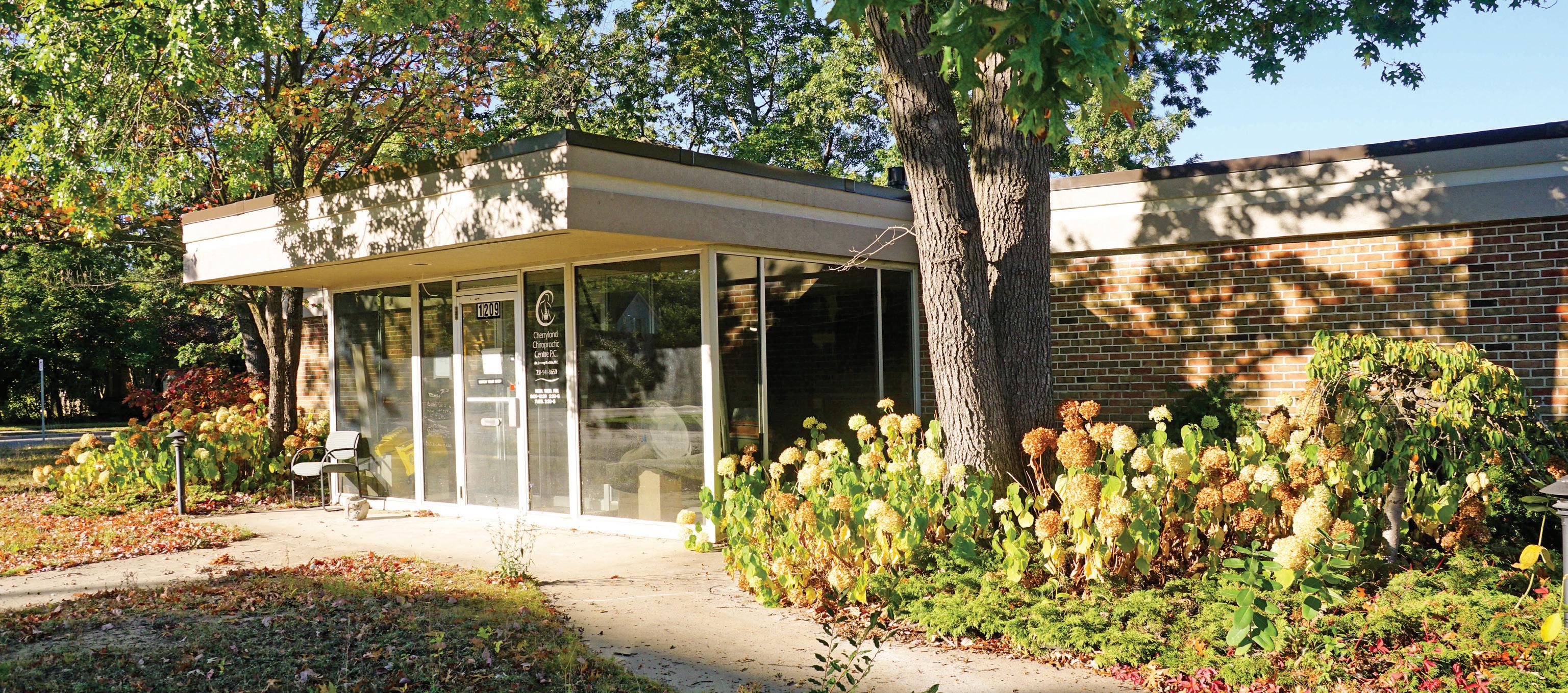
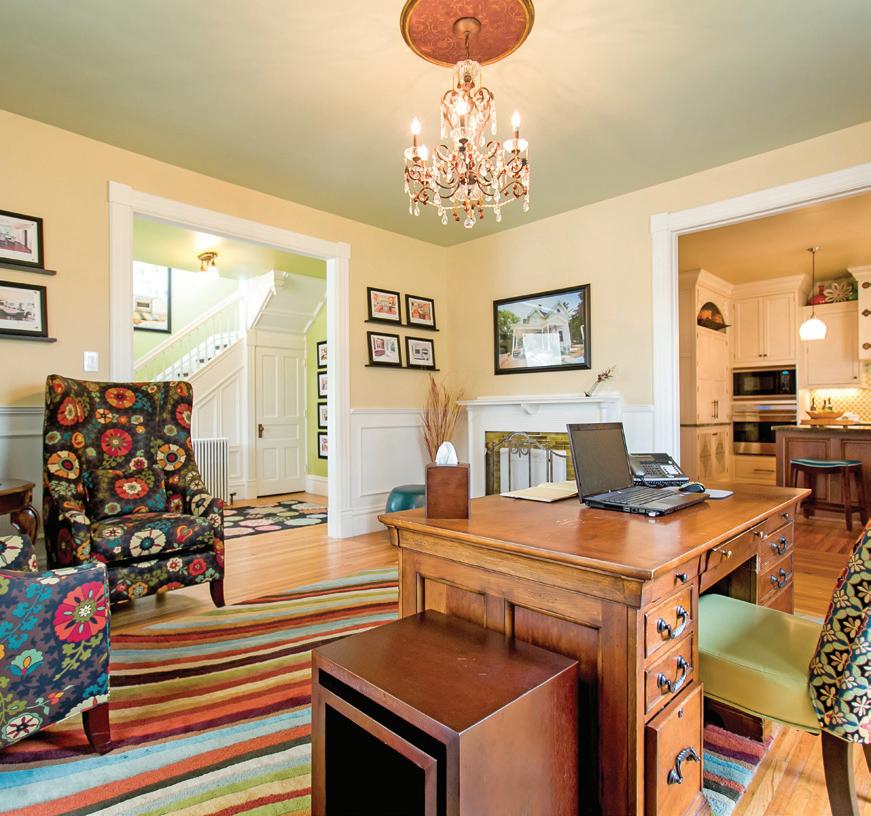
Originally constructed in 1896 to house the CFO of the Traverse City State Hospital, it’s served the last 14 years as headquarters to interior design firm Kitchen Choreography, where owners Angela and Mike Goodall are carving out their share of the global interior design market (projected to hit more than $175 billion by 2030) right here in northern Michigan. With 1,000-plus projects under their belt, the Goodalls recently wrapped up one of their most important projects to date — moving Kitchen Choreography out of Building 79 and into a showroom at 1209 E. Eighth St. which they purchased in the summer of 2024.
Getting up and running in the Eighth Street spot has been, as Angela puts it, “a slow process,” especially because in the midst of it, Kitchen Choreography closed out 2025 with sales up 20% from the year before, making it their busiest year on record.
Now settled into their new location – a 2,500-square-foot former office building built in 1963 – Angela is reflecting on her long stint in Building 79, why she moved her crew out, and what’s ahead for the historic home.
Before landing on Division, Kitchen Choreography got its start in 2003 in the much-less-storied box shops on South Garfield where the current lineup includes a variety of storefronts, from the UPS Store to Great Lakes Chocolate & Dessert Co. But in the early 2000s the Goodalls were surrounded by businesses in a similar vein to their own, like a now-closed Ethan Allen custom furniture store. Funnily enough, a large driver of their early traffic came from the Heavenly Ham (now Honey Baked Ham) right next door.
“We actually got quite a few projects from people just going to grab a sandwich,” Angela recalled.
Though they’d gained a following with the lunch-break crowd, it wasn’t enough to stay put following the 2008 housing crash, when construction and real estate came to a near standstill, taking those nearby businesses down with it and leaving Kitchen Choreography something of an island on Garfield.
“We realized we needed more retail exposure,” Angela said.
That’s when she and Mike realized Building 79, a property they’d had their eye on – and which had recently popped up as a bank-owned auction – might be the sweet spot they were looking for.
And, thanks to a post-recession market, the Goodalls were able to snag the 3,500 square foot fixer upper in 2011 for $156,000 – just under $45 per square foot, carriage house and all, which they quickly got to work renovating.
“We were actually impressed with the state of the building,” Angela said.
Over the next nine months, the home underwent a revamp, adding on a new staircase, removing a porch, and installing air conditioning, a process in which the Goodalls were mindful to restore the oneacre Victorian property while keeping its aesthetic in line with its former glory instead of decking it out in modern accents.
“Because I live in a similar property downtown, I have mastered this idea of eclectically classic design,” Angela explained. “Layered textures and colors that are fun, but honoring the architectural elements of the structure itself.”
In July 2012 Building 79 became the official Kitchen Choreography headquarters. It’s where the Goodalls and their team have showcased their interior design (which isn’t

relegated to just kitchens) for the majority of the firm’s run. In 2013, their work on the historic home earned them recognition with the History Center Awards Committee.
Moving out, but not moving on
So why leave it behind?
Actually, The Goodall’s won’t be leaving it at all. From the outdoor kitchen to a hidden door in the den and a three seasons room that they put in after buying it, “I really love the whole property,” Angela said, and she fully plans to hang onto it.

For now, it will be used as a rental, with the carriage house converted into extra living space while Angela hopes to create a more communal venue down the road – pop up al fresco dinners and live music on the lawn when the weather’s nice.
As a day-to-day business hub though, the limitations of the property have become harder to work around. The move to the Commons certainly boosted visibility but with Division growing busier
each year since they moved there, it left Kitchen Choreography’s crew and clients gridlocked for 10 minutes or more trying to pull out of the driveway (and that’s just to turn right, Angela notes).
It’s also been tough to reflect current, in-demand trends, since updating the lighting and integrating the technology that Angela says is “so critical to a design business in today’s construction environment” would require a total overhaul of
the 130-year-old home’s systems, potentially at the risk of the original character she worked so hard to preserve.
Even though their new location at 1209 E. Eighth St. is smaller, boxier and what Angela describes as “flat,” it provides the kind of blank canvas Kitchen Choreography needs to bring the 1960s space into modern aesthetics.
“I used much more monochromatic elements throughout,” Angela said of design-

ing the showroom over the last year and half, adding on-trend mid-century pops like aged brass knobs, flamingo wallpaper and leather details, a departure from the more antique style she’d pursued at Building 79. In a way, the move is a full-circle moment for her.
“Funny enough,” Angela recalled, “my first place of employment when I got into the kitchen and bath industry was on Eighth Street.”





Reviving

As she prepares Building 79 for its next iteration, Angela looks back on her favorite Kitchen Choreography moments there.
The Division location’s creamy, slightly yellow exterior makes it feel like a dollhouse come-to-life for passers-by. It also proved to be serendipitous during renovations.
“I had selected this (color) very early on,” she explained. “When we removed the side porch to put in the stairwell, the original color of the house was almost exactly the color I chose.”
Despite lore around The Commons as one of northern Michigan’s most haunted spots, Angela can’t recall one paranormal encounter in her 60- to 70hour work weeks at Building 79.
“I know for sure the building is not haunted,” she said (though she’s never been able to wash away a reappearing handprint on an upstairs window.)
“No one wants red oak floors,” Angela said, describing how many of Building 79’s original features felt stylistically out of date when she first moved into the space.
Instead of replacing the planks with the 2010s’ go-to laminate vinyl flooring, she kept them original.
“The fireplaces are original and the green tile inspired the (showroom’s) kitchen backsplash,” she said.
Going all in with those original elements over the past 15 years and inviting clients to do the same has influenced microtrends across northern Michigan. Case in point: the den’s dark wood motif, once decidedly unpopular, wound up becoming popular with clients who wanted to recreate the look in their own homes after visiting the Building 79 showroom.

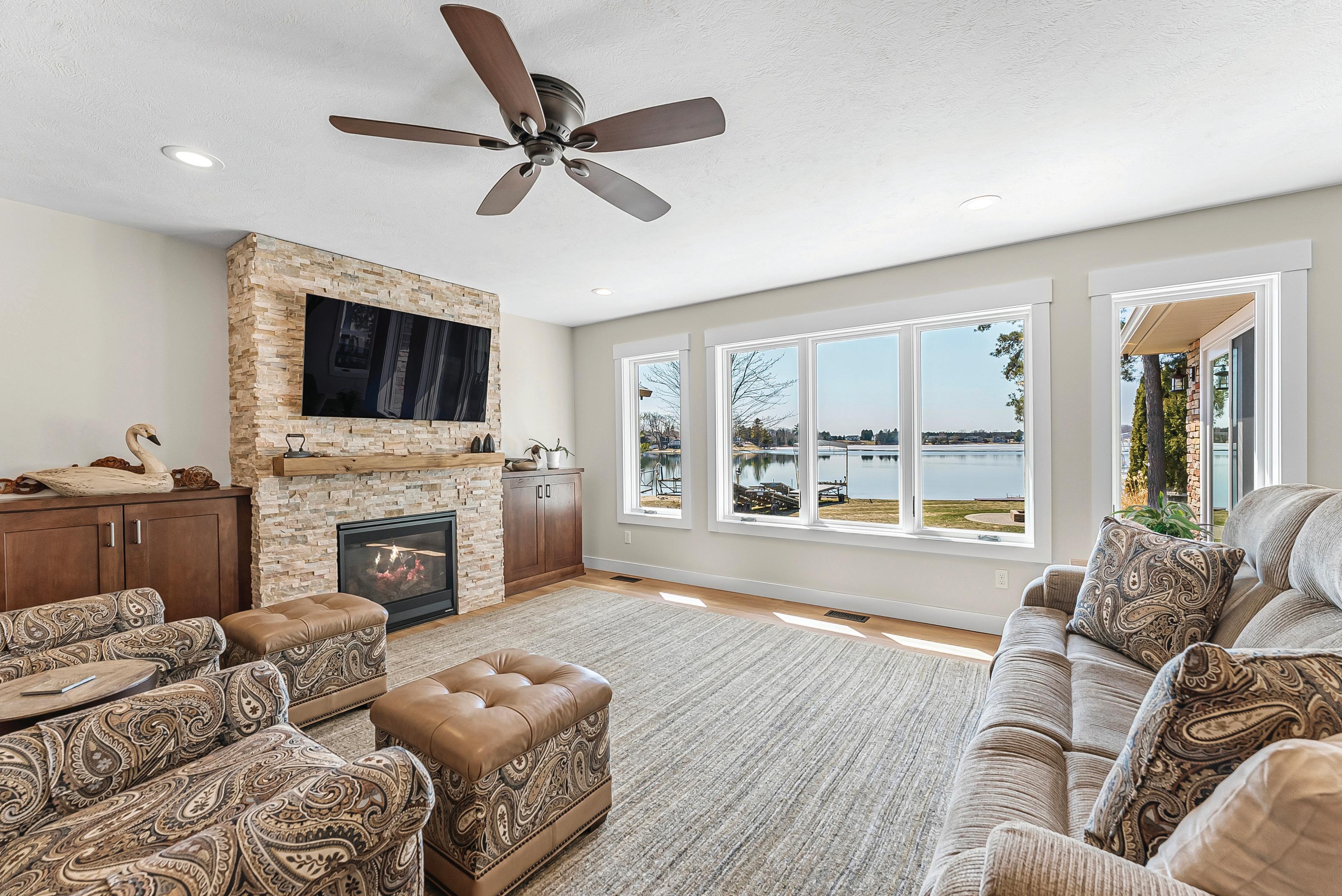
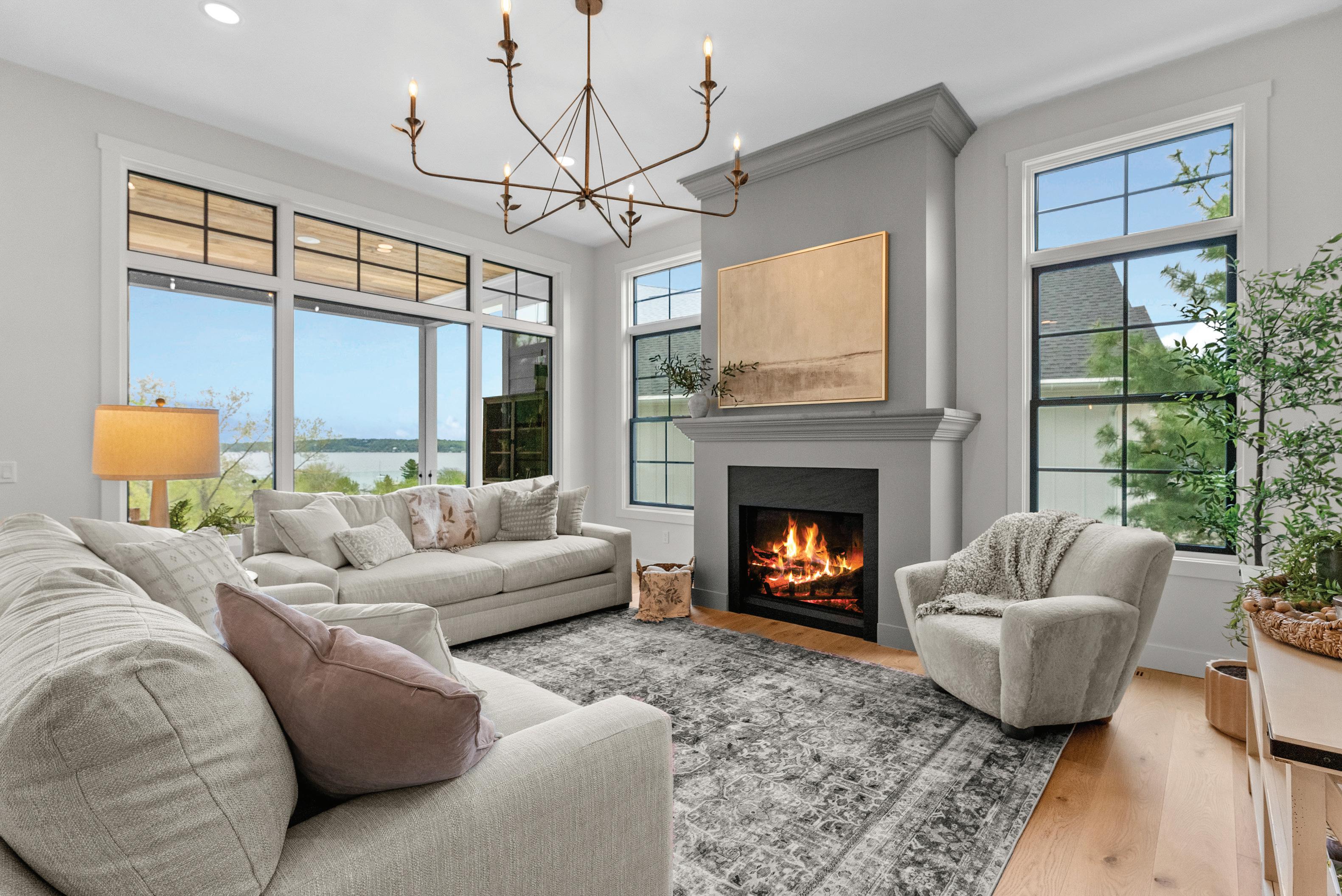
A TC native with over 22 years in the tile and surface industry, Lynndsay Carlson is a trusted name within the local building community. Known for sharp instincts, attention to detail, and making the process less overwhelming, she’s also a self-proclaimed “tile detective” with a knack for tracking down exactly what clients need. We sat down to learn more about her approach at Bay View:
“Flooring sets the tone for the entire space—it’s the foundation of everything. I feel lucky to work alongside incredibly talented designers, builders, and architects who push every project further. No two projects are the same, and seeing it all come together never gets old.”
“Tile is my go-to—it’s where I started and still where I feel most creative. Flooring should tell a complete story, not feel pieced together. I love using engineered wood on main levels for warmth and character, paired with coordinating LVP in high-traffic areas like lower levels or lake entries. It’s cohesive, intentional, and built for real life—because your home should fit how you live.”
“I’ve been working on a mix of remodels and new builds, turning basic spaces into custom creations. Full-height tile, clean layouts, and thoughtful details make all the difference. I love designing across styles—from modern and contemporary to coastal classic—while keeping everything cohesive. When everything comes together with intention, that’s the goal.”
“I’m loving some of the newer Canopy and IFC collections. They feel fresh, elevated, and easy to design around. The tones are warm and layered, creating that custom look without overcomplicating things— it’s the perfect balance of style and livability.”
“Going into 2026, I’m excited to keep creating spaces that feel custom but livable. Clients are leaning into more personality while still wanting something timeless. I’m also loving how AI is starting to play a role; I can take an idea and turn it into a visual within minutes to spark the conversation. It’s changing how we design in the best way.”
“Bring in everything you can—countertops, cabinets, paint colors, inspiration. It makes the process smoother and the end result stronger. And trust your flooring professional— when everything is considered together, the space always turns out better.”


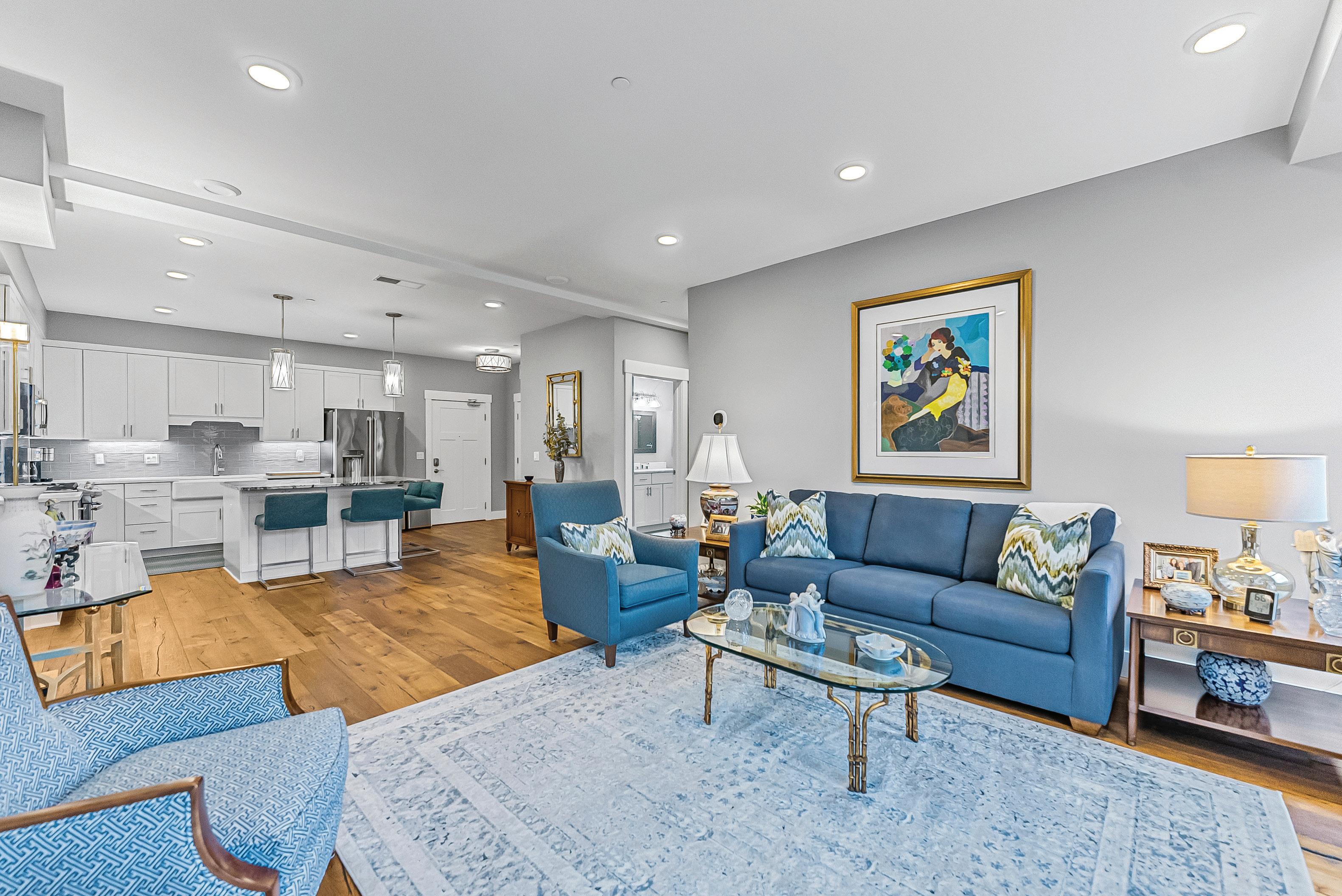



By Art Bukowski
You see your doctor regularly. You check in with the dentist at least once a year. But what about a therapist?
As with many other professional services, Traverse City serves as a mental health hub for the northwest Michigan region. Hundreds of clinicians here handle thousands of patients from across the region, providing critical support that is increasingly recognized as essential to long-term health and well-being.
And while issues like anxiety and depression have been around forever, the landscape of the industry itself is rapidly changing in the post-COVID world. The TCBN sat down with leaders at several local practices to see what’s new and what’s next within the mental health sphere.
Local mental health professionals unanimously agree that the COVID pandemic was a major game changer in many (mostly good) ways.
There was a dramatic spike in people seeking therapists during and shortly after the pandemic, they say, and the number of people seeking therapy remains much higher even as 2020 fades into the rearview mirror.
“I think the need was really highlighted with COVID. I mean, it kind of smacked everyone in the face,” said Kristine Wilm-
oth, who manages the nonprofit Pine Rest Christian Mental Health Services clinic in Traverse City. “And we haven’t necessarily seen that go down since COVID, but we have seen it stabilize.”
Nicole Ball said the phones don’t stop ringing at Mental Wellness Counseling, her four-location, 39-clinician practice headquartered in Traverse City. They’re getting way more calls in the time since the pandemic, she says, though it’s not necessarily because more people are struggling.
“We’re seeing an increase across the board over the last handful of years,” she said. “But I don’t think it’s because there’s more mental health issues, it’s just because there’s more acceptance to seeking mental health services.”
The conversation around mental healthcare “exploded” during and shortly after COVID, Ball said, which led to increased normalization of seeking these services.
“The stigma is still there, don’t get me wrong, but I’m having teenagers come in to see us who say things like, ‘My two best friends go to therapy, so I thought I would try it.’ And you never saw that before. Or men coming in to talk about depression or anxiety, which we never saw before unless their wife was pushing them in the door,” she said. “So I think there’s more conversations about it and I think overall we’ve just normalized it a little bit more.”
People also seem to be talking more
about their own positive experiences with therapy, which helps reduce the stigma.
“It’s great to find these people who are ambassadors of mental health who will tell people that they’re seeking services and there’s nothing wrong with it,” said Jill Kimball, co-owner of Lakeview Counseling in Traverse City.
A lot of those spreading positive vibes are doing so through social media or other digital channels. Consequently, it’s not uncommon for young people to show up at places like Lakeview having already diagnosed themselves through TikTok videos, Kimball says.
“With TikTok and YouTube and podcasts, a lot of people are getting mental health support digitally, which is good and bad. It’s great if it’s convenient and it leads to more access, but unfortunately, people don’t always know the quality of the material they’re accessing,” Kimball said. “Still, (it can be a positive because) people are developing more insights into themselves.”
Pine Rest, which has 23 local clinicians and serves thousands of patients in its Traverse City clinic, is along with other clinics experiencing another major shift after COVID: telehealth.
Only about 5% of Pine Rest’s preCOVID appointments were virtual. It rose to 100% for the duration of the pandemic
and remains at about 50% now.
“And I think now we’re waiting to see what the end state is going to be. Is it going to stay 50-50?” said Scott Halstead, Pine Rest’s vice president of outpatient and recovery services. “Culturally, are people going to want to get back to more in-person care?”
Kimball believes more telehealth is a net positive, as it increases access to care for many people who would otherwise not receive it due to mobility, distance or other issues.
“Telehealth is awesome because it puts providers with patients in ways that maybe wouldn’t happen otherwise,” she said. “But it’s harder to most effectively monitor the nonverbal cues of their mental health. So I can’t tell their hygiene, for instance. I can tell if their hair’s messed up, but not if they’re bathing or wearing clean clothes.”
There’s been a huge, post-COVID boost in nationwide, purely telehealth outfits like BetterHelp, which has a network of more than 30,000 therapists that provide services virtually. Local professionals are leery about these types of services.
“With a lot of those websites, the way it works for the clinician is they’re getting paid $30 to $40 an hour, and so who do you get that’s willing to take that?” said Joe Sanok, a therapist who also runs a therapy consulting business. “It’s new grads that are just establishing themselves, people that for one reason or another
“We’re seeing an increase across the board over the last handful of years. But I don’t think it’s because there’s more mental health issues, it’s just because there’s more acceptance to seeking mental health services.”
– Nicole Ball, Owner, Mental Wellness Counseling
can’t fill up their practice, or people whose heart really isn’t in it.”
Pine Rest’s Halstead agrees, calling it “therapy light.”
“They have I don’t know how many

“These big companies have billions of dollars to market and to get people to their services,” Ball said. “So we have people who are local to Traverse City who are typing in counseling in Traverse City,

low margin service up front.”
This is especially hard for a place like Pine Rest that accepts Medicare and Medicaid, which many private groups don’t accept because of notoriously low
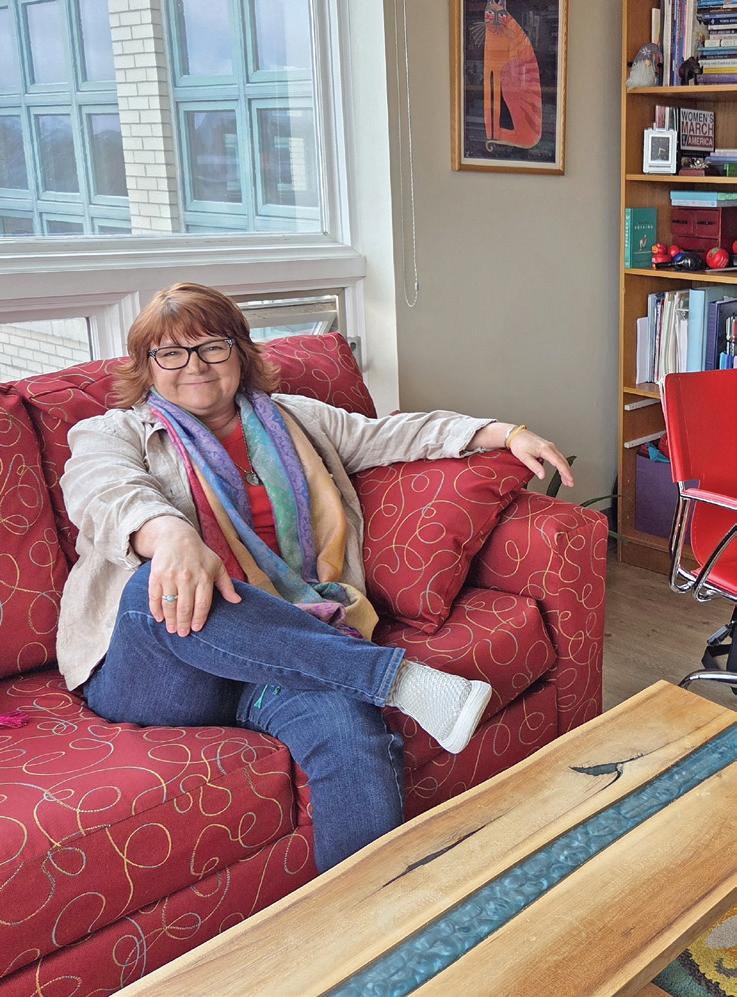
illegal,” she said. “Or they do an audit or a claw back for $8,000 because this patient didn’t have (coverage), but they kept paying anyway. Being at the mercy of insurance companies is why so many





ment that’s a nightmare,” Wilmoth said.
In terms of clinicians in particular, local practices are also hurting from a reduction in local programs that produce them, Wilmoth and Sanok say.
“There used to be all these satellite programs – Ferris, Grand Valley, Western – and all of those programs have really downsized or left,” Sanok said. “So we used to have 40 to 50 clinicians every year graduating here from the (Northwestern Michigan College) University Center, and with that shift, we don’t see as many mental health clinicians here.”
Then there’s the matter of simply running a functioning business, which can be difficult.
“As clinical social workers, our education doesn’t prepare us to be business owners,” Kimball said. “We’re (just) here to help people relieve their hurt.”
Sanok has spent years in this sphere, with his company (Practice of the Practice)
but access hasn’t caught up.”
Ball believes there might indeed be enough therapists in northern Michigan, but that doesn’t mean the need is being met. This is true in large part because many offices are increasingly steering clear of accepting public or lower quality private insurance programs for reasons described above.
Call
“The people who can afford private pay or have good commercial insurance usually don’t have a hard time finding a therapist. The area itself is saturated with people who are ready to provide services,” she said. “Unfortunately, it’s the Medicare and Medicaid patients who are on wait list after wait list.”
Even some practices that accept Medicare and Medicaid have wait lists of varying lengths.
“We can only see so many people,” Lakeview’s Kimball said. “We get several referrals a week, so we have people

seven visits, then that’s what we want to pay for.”
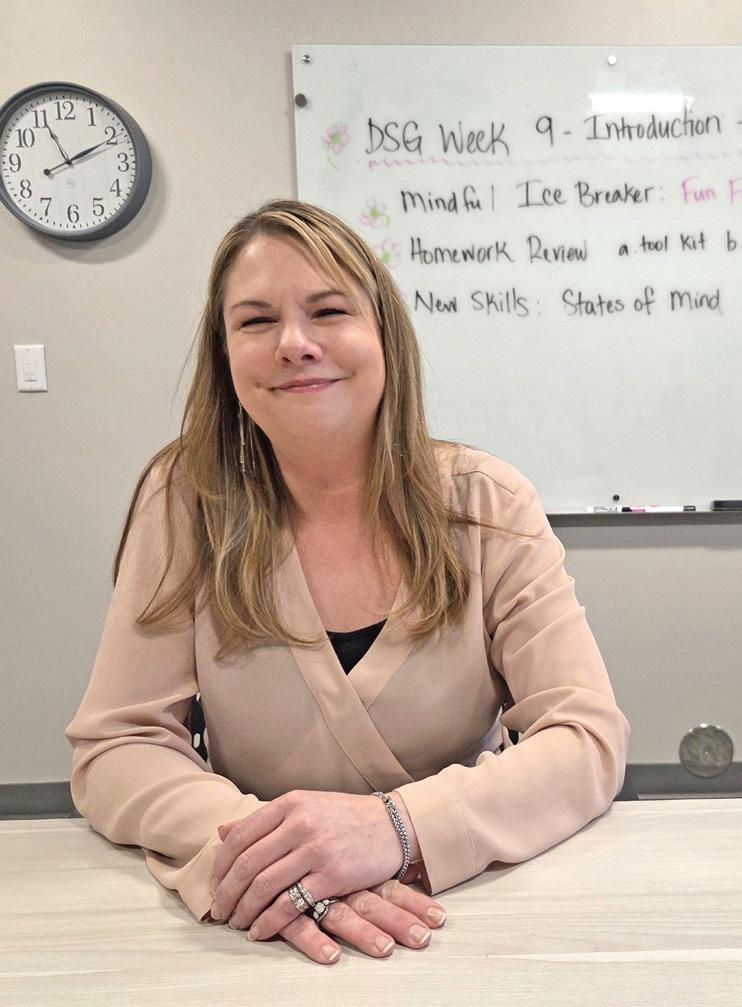
much-appreciated help with marketing and other matters, and many therapists





Every year, employers face a predictable financial squeeze: health insurance premiums that consistently outpace nearly every other line item on the balance sheet. These hikes aren’t driven by a single anomaly, but by a volatile mix of aggressive hospital pricing and catastrophic claims.
Yet, while those costs are eventually dragged into the light, one sector has remained shielded from the same scrutiny: prescription drug pricing.
For decades, pharmacy benefits have functioned as the “black box” of the healthcare ecosystem, the most opaque and convoluted corner of modern insurance.
This opacity didn’t happen by accident; it was born from rapid, unmanaged growth. In the wake of the Affordable Care Act, drug utilization surged as coverage expanded and prescription benefits became mandatory via the Essential Health Benefits (EHB) provision.
As the market swelled to nearly five billion annual prescriptions, the system’s complexity scaled in lockstep.
Pharmacy benefits morphed into a deeply layered framework where the “price” an employer pays is no longer a simple transaction, but the byproduct of a convoluted web of:
• Manufacturer list pricing and “spread” tactics.
• Restrictive formulary designs that prioritize high-rebate drugs over lower-cost alternatives.
• Hidden administrative fees and rebate aggregation revenue.
This fragmented structure is why renewals often feel like a mathematical impossibility. Employers are left to foot the bill without a clear map of how the final figure was actually calculated.
At the epicenter of this maze sits the pharmacy benefit manager (PBM). These entities neither manufacture medicine nor provide clinical care; instead, they function as the architects.
The power in this sector is remarkably top-heavy. Three giants – CVS Caremark,

OptumRx, and Express Scripts – control roughly 80% of the U.S. market. This dominance over an $800 billion industry has historically meant that employers had little choice and even less visibility.
The Consolidated Appropriations Act of 2026 has fundamentally rewritten the rules. By formally classifying PBMs as covered service providers under ERISA, the law has shifted the burden of proof. For plan sponsors, the conversation is no longer just about negotiating a better rate, it is now about mandatory fiduciary oversight.
While the CAA does not place a ceiling on prescription costs, it provides the transparency necessary for employers to actively control those expenses.
• 100% rebate pass-through: PBMs are now legally required to remit all manufacturer rebates and remuneration directly back to the health plan.
• Strict compensation disclosure: Intermediaries must disclose all compensation, both direct and indirect, stripping away “hidden” revenue streams. Failure to do so can trigger civil penalties of $10,000 per day.
• Standardized data: Pharmacy reporting must now be semiannual and machine-readable, preventing vendors from using “proprietary” formats to mask performance.
• Enforceable audits: Employers now have the explicit right to audit financial flows, ensuring contract compliance and integrity.
What large employers should expect
For large, self-funded organizations, the
shift is immediate. With the veil of secrecy lifted, fiduciaries can finally evaluate the actual net cost of their spend. This allows for a direct assessment of:
• Clinical alignment: Is the formulary designed for member health or rebate maximization?
• Vendor integrity: Is the PBM’s compensation aligned with the employer’s savings?
• Strategic control: Does the plan design actually produce the financial results promised during the RFP?
The Consolidated Appropriations Act of 2026 has fundamentally rewritten the rules. By formally classifying PBMs as covered service providers under ERISA, the law has shifted the burden of proof.
Pharmacy is no longer a “set and forget” contract. Because drug spend is so concentrated, even minor clinical optimizations can yield significant bottom-line results.
What
For small employers in fully insured plans, the transition will be more gradual but inevitable. Pharmacy costs will remain “bundled” within the total premium, making it harder to isolate specific savings.
• Carrier-led change: Transparency will flow through the insurance carrier. Expect carriers to adopt more aggressive specialty management and restrictive networks to comply with new federal standards.
• Strategic crossroads: As data becomes more visible, many small employers will likely move toward level-funded or association models to gain the direct control and rebate access that was previously reserved for large corporations.
While the final operational deadlines for the CAA stretch toward 2029, the industry’s gravitational center has already shifted. These transparency mandates are no longer “coming soon” – they are transforming renewal conversations today.
The most effective leaders aren’t waiting for the 2029 finish line; they are auditing contracts and vetting their partners in real-time.
This legislation doesn’t magically lower the price of a pill, but it fundamentally resets the power balance. For the first time, you are no longer a bystander to your pharmacy spend – you are the primary guardian of your plan’s data and a fiduciary of its future.
The vault of hidden math has been unlocked. With the shadows gone, you finally have the clarity needed to take the wheel and drive your organization’s healthcare strategy with total confidence.
Andi Dolan is the owner of Traverse Benefits, an independent insurance and employee benefits agency serving employers, individuals, and Medicare beneficiaries across northern Michigan.



By Ross Boissoneau
The more things stay the same, the more they change. That twist on the old saying applies to the field of orthodontia and its embrace of new technologies.
“Although the basic tenets of orthodontics haven’t changed ... the modes of delivery have evolved,” noted Dr. Dan Sarya.
The head of Sarya Orthodontics says the biology and physics of the field are still the same and the goal is unchanged – straightening patients’ teeth to provide them their best health and best smile. But the ways to get there have improved, both in terms of comfort and efficiency.
In other words, technology has come to orthodontics. The goop is gone, replaced by imaging, 3D printing and artificial intelligence.
“The changes have been massive,” said Dr. Spencer Crouch of Up North Orthodontics.
Start
“It’s intended to get rid of the mold and all the ooey-gooey. We’ve been goopfree for seven years,” said Crouch.
“Impressions can now be done with
digital imaging so there is greater patient comfort,” Sarya said.
One of the reasons for visiting an orthodontist is as obvious as the smile on your face. But not only will using braces or retainers make for a straighter and prettier smile, but they will also help maintain dental hygiene. Crooked or crowded teeth can be hard to clean, causing inflamed and infected gums
sonalized care and priorities of aesthetics.
That includes the use of products and procedures unheard of two decades ago, such as Cone Beam Computed Tomography.
CBCT is an advanced, noninvasive imaging technique providing 3D, high-resolution views.
“Scanning is a big advancement,” said Dr. Maddy Stumpos, owner of Traverse
“We see all ages. Some in their 80s are getting some sort of treatment.”
– Dr. Maddy Stumpos, Owner, Traverse City Orthodontics
and other forms of dental disease. Wearing braces now can help maintain healthy teeth and gums down the road.
According to the medical instrument manufacturer Alger Instruments, orthodontics has evolved into a dynamic field shaped by technological innovation, per-
City Orthodontics.
CBCT is faster and more detailed than traditional 2D X-rays, she says.
“You can isolate one tooth, see the root, the eruption path, impacted teeth,” she said.
Scans take only 10 to 40 seconds, so there is less patient exposure to radiation.
“Radiography is now providing 3D images with ultra-low dose technology, so
it is safer and gives us better information to make a diagnosis,” said Sarya.
The emergence of Invisalign and other clear retainers is another more recent technological advancement. It is responsible at least in part for more adults turning to orthodontic care. Clear aligners remove the stigma of traditional metal braces, and the American Association of Orthodontists says that today one in three orthodontic patients today are adults – an all-time high.
“We see all ages,” said Stumpos. “Some in their 80s are getting some sort of treatment.”
At the other end of the age spectrum, she begins seeing youngsters around age seven for an initial visit.
“They don’t always need treatment at that time,” she noted, but that allows her to determine where future problems may develop, with teeth that will come in sideways or too close to other teeth.
Even though they market directly to consumers, Invisalign and similar products are still meant to be used by licensed orthodontists or dentists.
Stumpos says Smile Direct Club, which
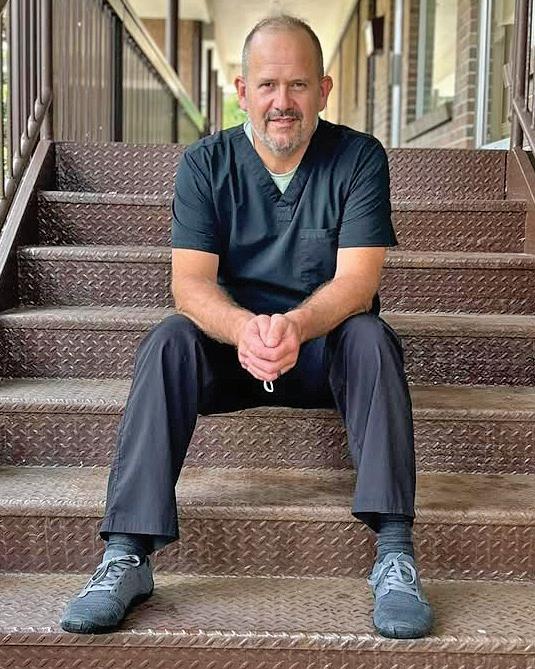
not only marketed but sold directly to consumers, went out of business in part because of legal challenges regarding patient safety, such as causing gum disease and misdiagnoses.
But clear retainers such as Invisalign are today a valuable part of their practices.
“We do a ton of Invisalign,” said Crouch.
“I have Invisalign but use other brands as well,” agreed Stumpos.
But the technology goes even further.
“We can fabricate our own version of

clear retainers,” noted Crouch, whose practice uses 3D printers. “We have a fleet of three, soon to be four.”
Apps and AI
Orthodontists also tout the use of smartphones for taking photos. That’s right, selfies of your teeth can provide a quick reference without visiting the office. There’s even an app for that, with names like DentalMonitoring, OrthoPhoto and Grin.
Predictably, AI is also being utilized

in orthodontia. Crouch says AI and scanning can speed up the process for creating retainers.
“It’s pretty crazy,” he said, though he was quick to note AI comes with its own challenges.
“Colleagues at (University of Michigan) are hesitant about companies they bring in,” he said. “New companies can’t provide the certification (for HIPPA laws). That’s a sticking point with technology, the confidentiality.”
And there is more technology on the horizon.
“There are lots of different tools, lots of different types of braces,” said Stumpos. The use of CBCT, clear aligners, AI and more can even speed up the process and make it easier for the patients, even reducing the reliance on rubber bands and sometimes eliminating them altogether.
Ultimately, orthodontists said the increasing use of technology benefits the consumer.
“Patient satisfaction and comfort are better,” said Stumpos.

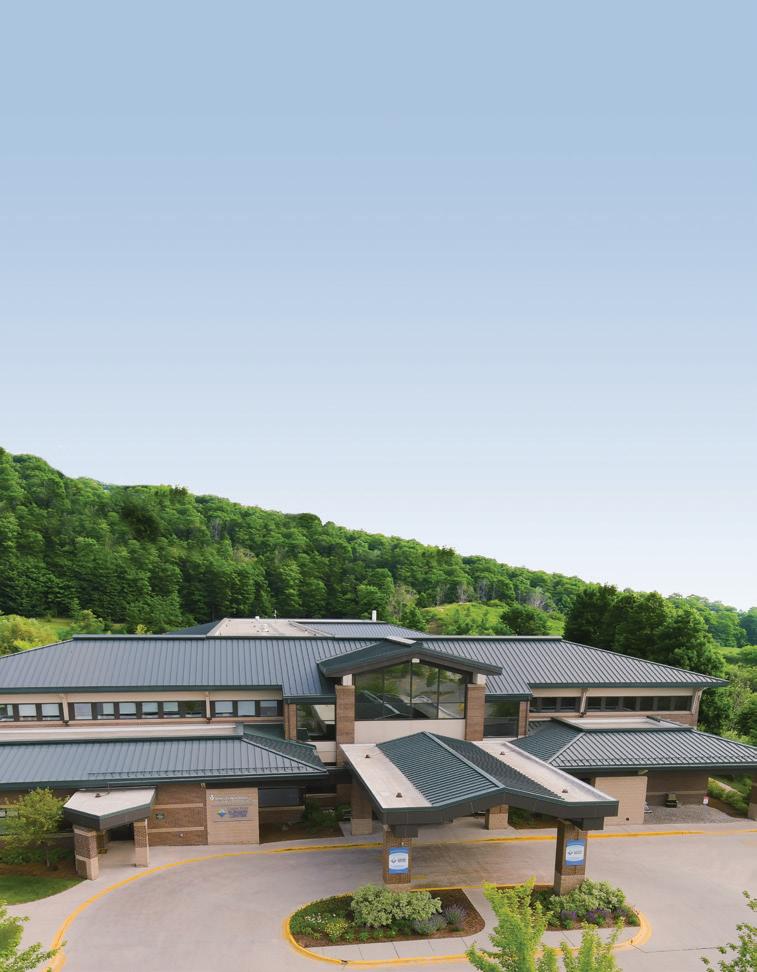







Wellevity, Paper Birch and the uphill battle of establishing a wellness hub in Traverse
By Craig Manning
According to a fall 2025 report from the Global Wellness Institute (GWI), the global wellness economy is worth a whopping $6.8 billion – more than major industries like sports, tourism, the green economy and the pharmaceutical sector. No wonder, then, that two of the business ideas to make the most waves in Traverse City in recent years were wellness ventures.
Defined by the GWI as “industries that enable consumers to incorporate wellness activities and lifestyles into their daily lives,” the wellness economy is a big tent, including sub-sectors like physical activity, personal care and beauty, nutrition and weight loss, traditional medicine, mental wellness, spas and wellness tourism. Traverse City has its fair share of businesses that fit into these and other categories, from massage therapists to chiropractors to boutique spas to yoga studios.
But two of the biggest would-be players in the TC wellness game are, as of now, stalled. One, a sprawling wellness resort proposed for 100 acres at the top of Timberlee Hill in Leelanau County, drew massive pushback from local residents in 2023 and never completed its permitting process with Elmwood Township.
The other, a “wellness-based sanctuary” with soaking and sauna culture at its heart, was recently proposed as a potential use for the Bijou by the Bay building, but currently hangs in limbo thanks to indecision among City of Traverse City
leaders about how to utilize that cityowned facility.
What do these two business concepts –and their public reception – say about the wellness industry in northern Michigan?
The TCBN takes a closer look.
It was December 2022 when the Elmwood Township planning commission held the first public hearing for Wellevity, a project seeking to bring lodging, a
retail, and more.
“You no longer need to go to a gym, a special grocery store, and a spa to achieve balance,” read one section of the SUP application. “(Wellevity) is a place of learning, support, relaxation, connection with nature, movement and tranquility. Our goal is to create a place where the community can gather with friends and family and make healthy decisions together.”
Though the initial public hearing was sparsely attended, opposition to Wellevity began to build after the Leelanau Ticker, a
“While Wellevity was positioned as a destination resort in a more secluded setting, Paper Birch is intended to be an inclusive, everyday gathering space where people can connect, engage and prioritize wellness as part of their daily lives.”
– Kyle Norman, Co-owner, Nossa Norman Design Studio
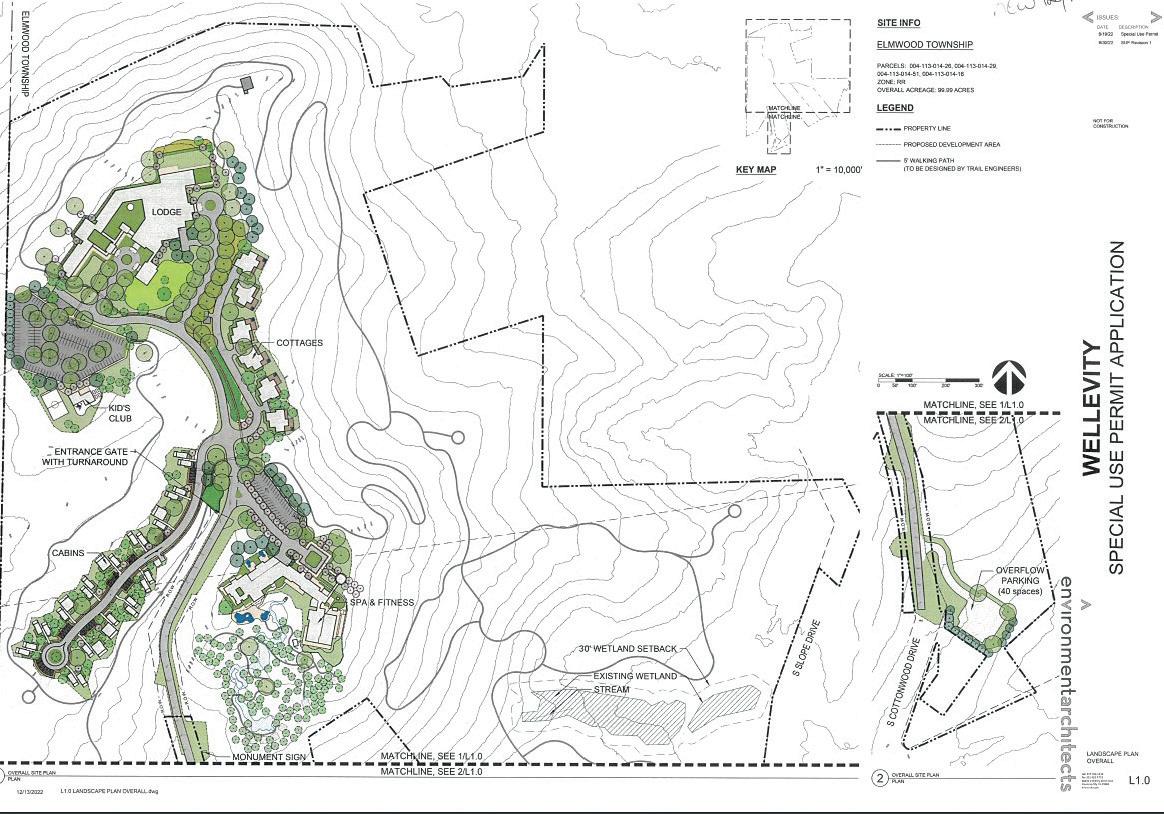
spa and fitness center, a retail market, a restaurant and bar, a “meditation dome,” an event venue, and other features to 100 acres of vacant land at the top of the former Timberlee Resort property. Developers for the project, who were seeking a special use permit from the township to proceed with construction, described Wellevity as “a full-service wellness resort” that would offer “all facets of holistic wellness in one place,” including fitness classes, spa services, guided meditation, yoga, wellness
TCBN sister publication, published an article about the planned resort in January 2023. Among other criticisms, members of the public fretted the development would bring excessive light, noise and traffic to nearby residential neighborhoods. The traffic concerns were particularly pronounced, given that Wellevity’s design plan called for using two residential roads – Timberwoods and Cottonwoods drives – as the public access route to reach the facility.
Everything came to a head at a May
2023 meeting, where developers asked the Elmwood planning commission to table the SUP application indefinitely. Marc S. McKellar, attorney for the developers, wrote in a letter that his clients had been “listening to the individuals in the surrounding neighborhoods” and wished “to propose a major amendment to the current application.” McKellar estimated at the time that his side would likely have a new application ready “within six months.” It wasn’t until November 2024 that Wellevity, LLC, the Ohio-based company behind the project, submitted a “Version 1.2” application to the township. That application, reviewed by the Leelanau Ticker for a December 20, 2024 article, included a traffic study downplaying the likely impacts on nearby neighborhood roadways; and a report from Grand Traverse County drain commissioner, addressing worries that Wellevity would cause a “drawdown” on nearby groundwater resources. While the project concept remained the same, Wellevity also pledged to monitor roadway conditions and enter into a joint maintenance agreement with homeowners on Timberwoods and Cottonwoods drives to share the costs of future road repairs. Despite similarities to the initial plan, Wellevity’s new application would have required the developer to restart the SUP approval process over from the beginning. Sarah Clarren, Elmwood Township’s planner and zoning administrator, told the Leelanau Ticker at the time that the township had not “settled on a date yet”
for when the Version 1.2 application would appear on a planning commission agenda.
Another year and a half later, Version 1.2 has yet to receive a public hearing, and all has been quiet on the Wellevity front in the interim. According to Clarren, the application is still “incomplete,” which means it “cannot move forward to the commission” at this time.
“To my knowledge there has been no movement on the application this year,” Clarren added.
Per Clarren, the “incomplete” nature of the Version 1.2 application stems from a residential component of the Wellevity plan. Developers have submitted a “supplemental” application, alongside Version 1.2, which calls for the inclusion of a
series of single-family homes, called “The Cottages.”
“‘The Cottages’ offer an envelope of land for purchase and to be used as single-family home sites,” the proposal reads. “Each home will be part of the resort as a single ownership or long-term rental through Wellevity. Envelope owners, as a part of the resort, will be offered amenities at Wellevity for their use. Parking for each single-family home will be located at the home site.”
“As the application has been submitted, those proposed lots don’t meet a few requirements of the zoning ordinance,” Clarren said of the Cottages concept.
“There has been discussion of a condominium, but ultimately, the matter has


not been resolved. Until it is clarified and resolved with a supplemented application which is determined to be complete, we are unable to move an application before the planning commission.”
McKellar did not respond to multiple requests for comment for this article, and the TCBN was unable to reach the owners of Wellevity, LLC to determine whether this particular wellness project is still alive.
Paper Birch enters the chat
Wellness was back in the local headlines this spring when a new business called Paper Birch Properties became one of two applicants to respond to the City of Traverse City’s request-for-proposals
(RFP) for the Bijou by the Bay building in Clinch Park. Operated as a satellite movie theater by the Traverse City Film Festival since July 2013, the Bijou has been dark since May 2024. Now, the city – which owns the building – is looking for a new tenant to take over the space.
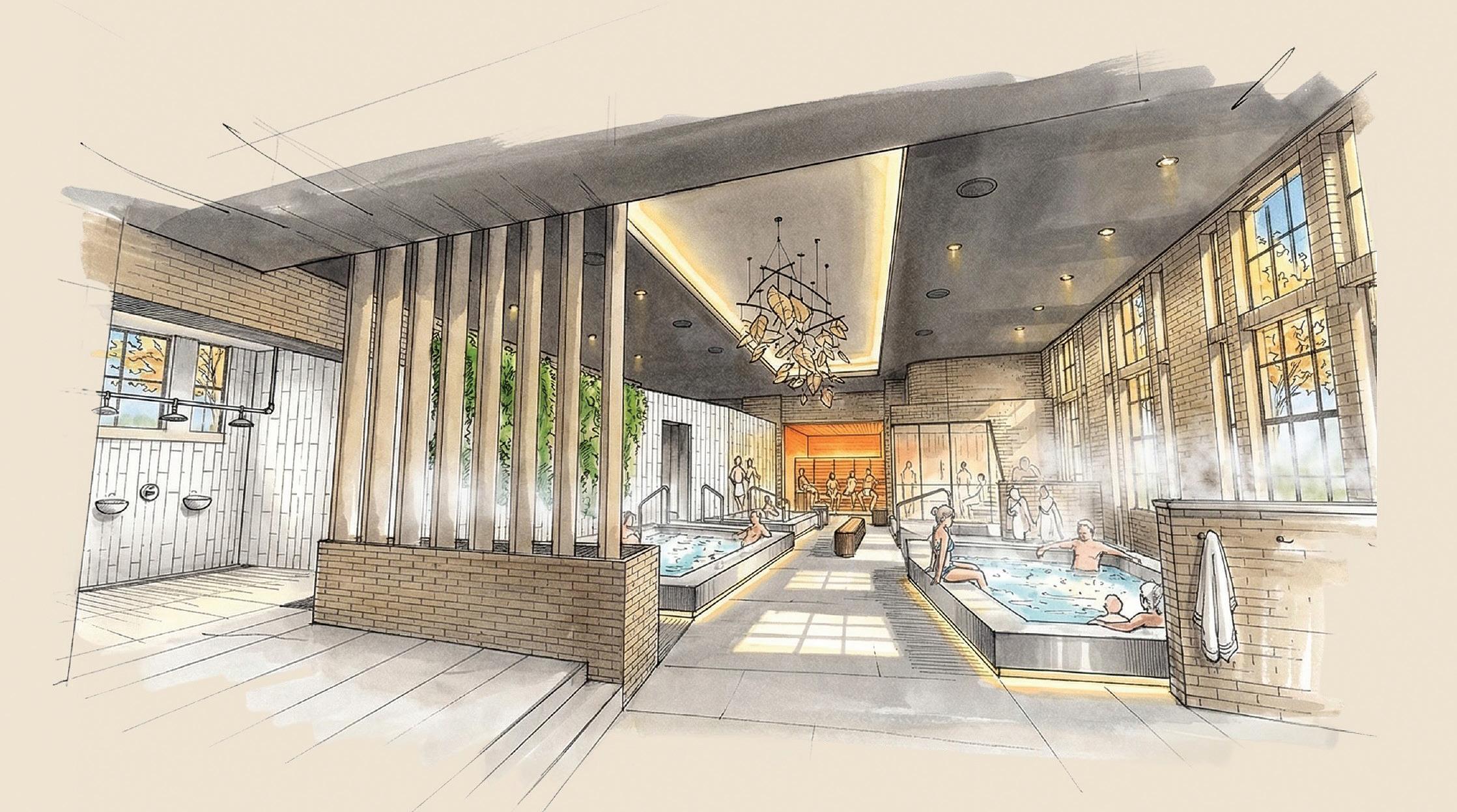
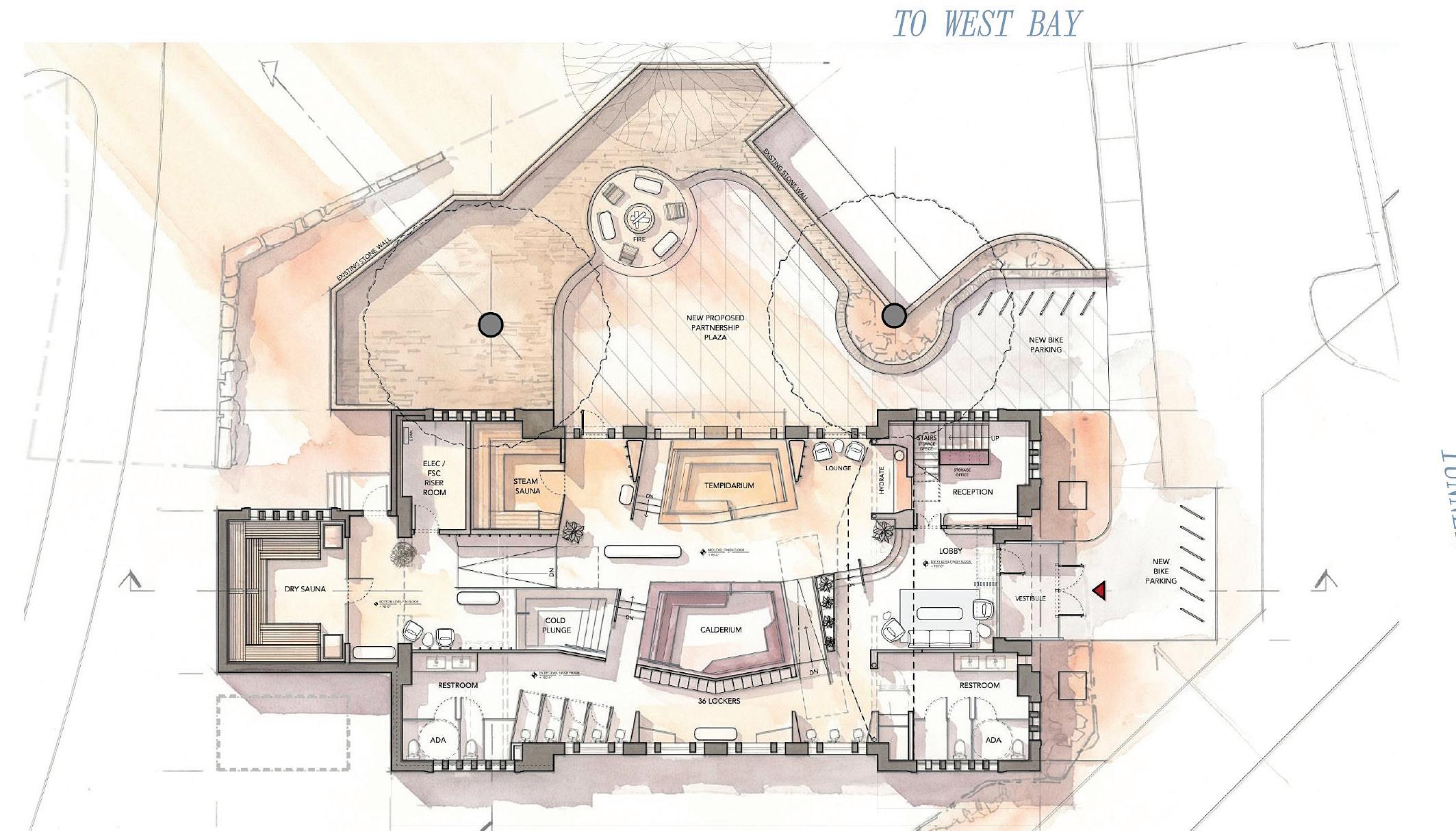
Unlike their competitor in the bid process – Studio Anatomy LLC, which is seeking to convert the Bijou into a live music venue – Paper Birch is proposing to pivot away from the arts and culture history of the building. (The Bijou building was previously home to the Con Foster Historical Museum.) Instead, Paper Birch’s proposal touts a “modern spin on ancient communal bathing traditions,” featuring a series of soaking pool, sauna,

steam room and cold plunge experiences.
Sean O’Brien, the designer for the project, felt this kind of community wellness center would be a good fit for Traverse City based on the rise of a Minnesota-based company called Cedar and Stone Sauna. That business touts itself as “a leader in the design and manufacturing of saunas and bathhouses,” and is “on a mission to build more resilient lives and host one million people for sauna by 2033.”
“I spent a lot of time in Minnesota, and have seen the rise of Cedar and Stone and a handful of other similar investments over the last 10 years,” O’Brien explained. “I was impressed by how quickly that that part of the country ballooned into a sort of epicenter of sauna culture. Cedar and Stone spun off a series of spots, including some in the Upper Peninsula of Michigan, which they’re now coining as ‘the Superior sauna trail.’ And meanwhile, there weren’t really any similar major destination environments happening in the northern part of the Lower Peninsula. Instead, there were a series of pop-up experiences here, like MI Sauna or Hearth Sauna, or things like Sleeping Bear Saunas, which does sauna tent rentals. I could see there was a base of interest here, but there hasn’t been a major investment in a landmark community center where people can come together and engage in a larger experience together.”
Emboldened by the launch of Michigan Sauna Fest in Traverse City last year, O’Brien approached Kyle and Angelique Norman of Traverse City’s Nossa Norman Design Studio to see if they’d be interested in helping northern Michigan’s first sauna culture community center. The trio,
with the help of attorney Josh Traeger of the True North Legal Group, took the plunge by responding to the Bijou RFP.
“That building just stood out to me as an iconic structure that’s in the heart of the community, right on the bay and had never reopened as a theater,” O’Brien continued. “When Kyle and Angelique and I were having lunch one day, I just said, ‘What about a Bijou bathhouse?’”
So far, it’s been a bumpy road. In March, news broke that the city planned on rejecting the Bijou proposals from both Studio Anatomy and Paper Birch. Because the Bijou sits on city parkland, the proposals were reviewed first by the city’s parks and recreation commission, which largely dismissed their contents. In a memo, Parks Director Michelle Hunt wrote that both submissions “were incomplete and/or did not align with the business model criteria established by the city for this partnership. As a result, the city will not advance either proposal for city commission consideration.”
Nevertheless, the Paper Birch team has some lingering optimism. Paper Birch ended up presenting their concept to the parks and recreation commission at an April 7 meeting, and Kyle Norman says he’s continued to have communications with Hunt about the proposal process.
“She had a question about some potential operating agreement terms, and then she followed up and said the city manager wanted to let us know that the proposals would be on the agenda for the May 4 city commission meeting,” Norman said of his mid-April talks with Hunt. “So, we’re not totally giving up on this building just yet.

We still think it has a lot of hope. But, with that said, we’re also doing our due diligence to inspire ourselves with other places around town that might also be good opportunities.”
As the process rolls along, Angelique says she’s been heartened by the (mostly) positive response to the Paper Birch bathhouse proposal after the news broke that the proposal was getting rejected.
“We had a lot of folks reach out to us after, saying, ‘What can we do? How can we help? We need something like this in our community,’” Angelique said.
Not all the reception has been positive, though. Angelique says some of the backlash around Wellevity seems to have stuck to the local wellness economy, creating assumptions about what Paper Birch is trying to accomplish.
“Wellevity, as proposed, that’s a very different type of place,” Angelique said. “That’s more of a spa. It’s a place where maybe you’d go with your girlfriends to have a luxury retreat. I think a lot of people are assuming that (Paper Birch) is that kind of place – that it’s for elites –and we don’t want to do that, at all.”
“At a high level, we are seeing a real and growing demand for wellness-oriented and alcohol-free spaces in Traverse City, especially those that are community-centered and accessible,” Kyle added. “That is one of the key differences between Paper Birch and projects like Wellevity. While Wellevity was positioned as a destination resort in a more secluded setting, Paper Birch is intended to be an inclusive, everyday gathering space where people can connect, engage and prioritize wellness as part of their daily lives.”

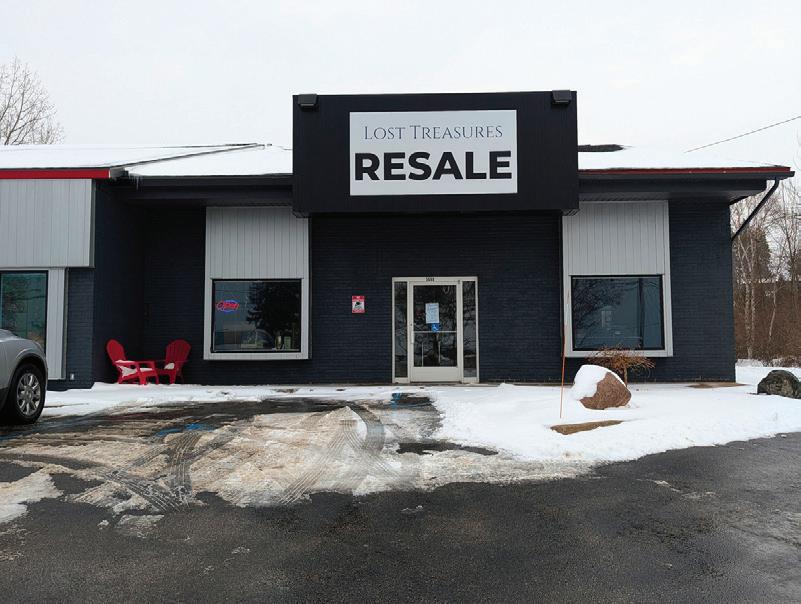











By Alex Zelinski, columnist
May is the perfect time to brush off any dust and cobwebs from your bike and get outside and enjoy a ride through our community. In our region, we are extremely fortunate to have access to many beautiful trail systems and bicycle-friendly streets and paths.
There is truly something for everyone – whether you are looking for a relaxing ride on one of the TART trails or a more challenging adventure off-road on a mountain bike (special thank you to the Northern Michigan Mountain Bike Association!) Many folks enjoy exploring both off-road trails and paved trails, depending on the time of year, group size and weather conditions.
At Norte Youth Cycling, we like to make every month feel like it is bicycle month, but May is officially bicycle month and we couldn’t be more excited. We have been in schools offering Balance Bike programs for the last three months and are thrilled to soon be launching outdoor programs such as Mountain Bike Club, Adventure Bike Club, Race Team, Pedal Power and more. Our youth bike programs are at the heart of what we do. Our Bike Library of nearly 1,000 bikes ensures every child can experience the joys of cycling. By providing hands-on education and opportunities, we empower children to develop lifelong habits that promote health, independence and confidence. Our community initiatives such as Slow Rolls, Tune-Ups, Bikes for All, mechanic classes and more ensure our impact and reach are accessible to all riders. Since 2021, we have provided more than $42,000 in scholarships to ensure all children have access to our programs.
Cycling has been around in some capacity for over 150 years. Its popularity increased dramatically about six years ago during the pandemic and has stabilized a bit the last few years. There are many reasons folks get involved with cycling –
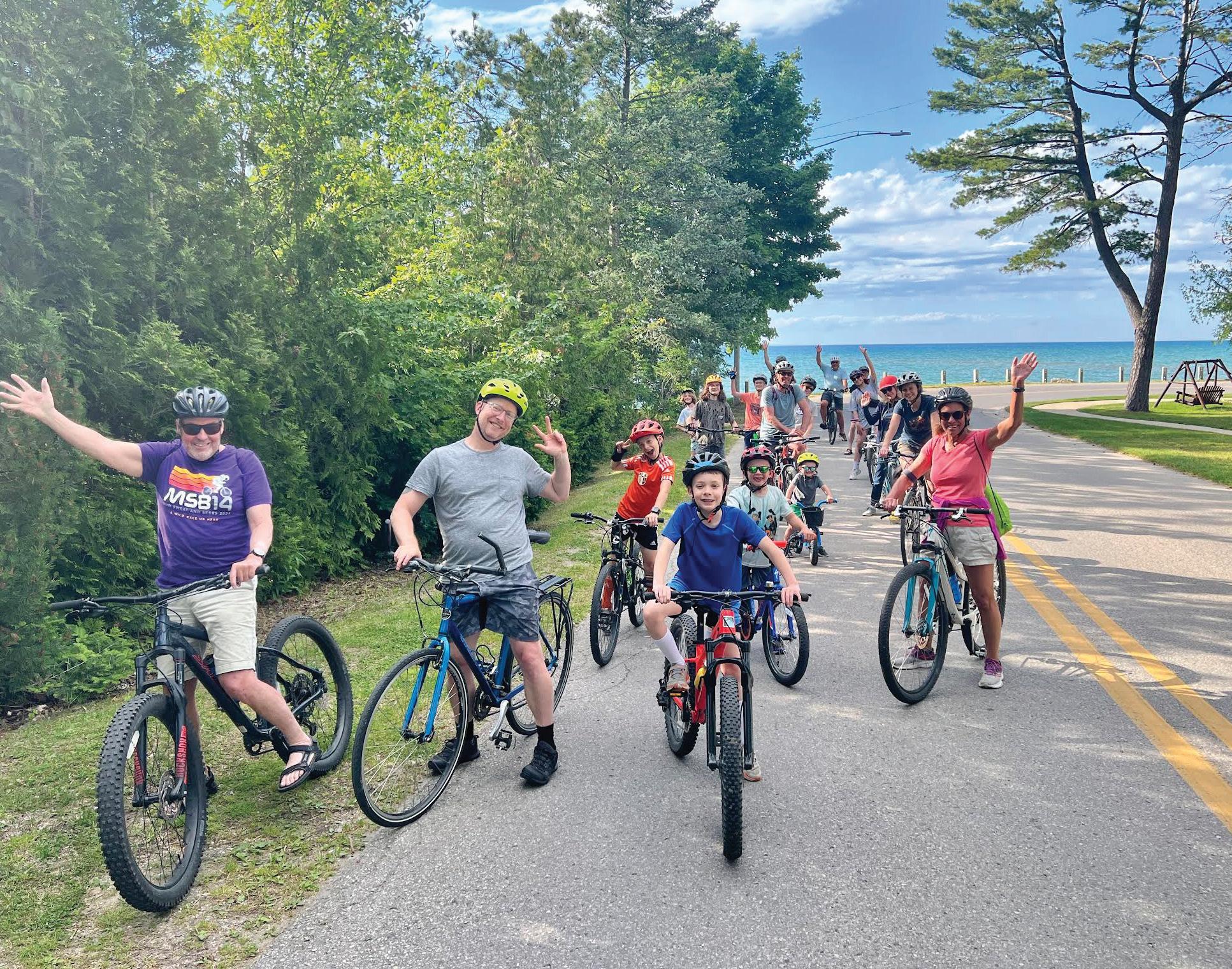
exercise, competition, recreation, connection, camaraderie and commuting. It offers many benefits and can improve one’s overall health and happiness. Riding a bike promotes and encourages folks to get physically and mentally active. If you are not confident riding, have never learned to ride or simply need a refresher, Norte offers Learn to Ride lessons. These individual or group lessons are offered in a safe environment with a caring and non-judgmental instructor. We believe every individual should have the opportunity to ride a bike, and Norte is here to help everyone who is curious and excited.
Our impact in the region is powered by the generosity of local businesses, individuals, foundations and partner organizations. Business owners can and should support employee bicycling. It is a
smart and fun option for commuting especially during the busier months in our region when parking spaces are limited and there are more vehicles on the roads – not to mention it can save employees money they would otherwise be spending on gas! It is also a great opportunity for employees to strengthen relationships and build camaraderie.
For employees who have kids, Norte Youth Cycling offers after school and summer programs, giving kids the opportunity to make friends, exercise and be a part of a team – all while exploring our community.
Cycling safety and etiquette is paramount. Before you hop on your bike, make sure it’s ready to roll and that you have a helmet. Always pay attention to the weather and be mindful of the time you are cycling. Dress appropriately, including wearing reflectors and bright gear if you
cycle in the morning or at dusk.
At Norte, we focus on the ABCs of cycling: Air pressure (tires), brakes, chain. This simple reminder is a practical checklist that can help set the tone for safer cycling.
Norte’s Community Bike Shop, known as The Wheelhouse, is a place for Traverse City cyclists to share tools, workspace and knowledge. We offer seasonal classes, private bike mechanic lessons and bike repair services designed to support active kids on bikes – and keep adults moving, too!
We are gearing up for another fun season of cycling, joyful connections, and empowerment. We hope you are able to experience bike month to the fullest and we look forward to seeing you out there!
Alex Zelinski is the director of operations and community partnerships at Norte. Contact him at (231) 642-9425 or alex@ norteyouthcycling.org.


by Linda Royal, VP
If you’ve been thinking about buying a home in Traverse City, you’re probably asking the same question as everyone else: Is now actually a good time to buy?
By Lori VanAntwerp, VP/Commercial Lending
around 6.5%, higher than the historic lows of recent years, but slightly improved from recent peaks.


Construction is essential and increasingly complex. Strong housing demand continues to support development opportunities, yet the process of delivering new supply requires thoughtful planning, creative financing, and a good understanding of local market conditions.
Between interest rates, rising home prices and limited inventory, it’s easy to feel unsure. The reality is, today’s market isn’t as chaotic as the past few years but it’s also not “easy.” Instead, it’s something in between: more balanced, more predictable and full of opportunity for the right buyer.
What’s happening in the local market?
Regional nonprofit Housing North estimates that approximately 31,000 additional housing units will be needed across northwest Michigan by 2027. Meeting this demand requires a wide range of housing types – from attainable starter homes to multi-family rentals, and thoughtfully designed mixed-use projects. As a result, construction activity across the region is gradually evolving to better serve a diverse and growing population.
The Traverse City housing market in 2026 is showing signs of stability after several years of rapid change. Home values are still rising, but at a much slower and sustainable pace.
Building in northern Michigan presents distinct challenges, including shorter construction season, skilled labor shortages, and limited contractor availability, which can extend project timelines and increase costs. These realities require careful planning and lenders to take a long-term view when evaluating construction opportunities.
Developers are responding with creativity and commitment
Inventory, one of the biggest challenges in recent years, is improving slightly. Experts expect available homes to increase by about 5% to 10% this year, giving buyers more options without flooding the market. However, supply is still relatively tight, with fewer than three months of inventory in many parts of northern Michigan, well below what’s considered a fully balanced market.
What does that mean in plain terms?
Regional developers are adapting in different ways to help expand housing supply.
Homes are still in demand, but buyers are starting to regain a bit of negotiating power. You’re more likely to see price adjustments, seller concessions and less frantic bidding wars than in previous years.
Understanding seasonality in northern Michigan
Real estate in Traverse City is highly seasonal, and timing can influence your experience as a buyer.
In the downtown market, recent projects have focused on renovating and revitalizing historic properties. This has created attractive residential living spaces while modernizing retail and office environments. Importantly, they have also preserved the architectural character and longterm vibrancy of the community. As a lifelong resident, I am especially grateful for the care they have taken to improve and preserve these assets. Preserving historical elements of a project costs far more than tearing down and starting from scratch. THANK YOU to developers that have chosen preservation over profits.
Spring and summer are typically the busiest times of year. More homes hit the market, which means more choices but also more competition. Families often want to move before the next school year, and second home buyers start looking ahead to summer.
Elsewhere, some builders are pursuing a neighborhood-based strategy, constructing multiple speculative homes simultaneously within new and established subdivisions. This approach allows for improved coordination with subcontractors, efficient material purchasing, and better overall project scheduling. These efficiencies can help moderate construction costs and improve affordability.
Fall and winter, on the other hand, tend to slow down. There are fewer listings, but also fewer buyers. That can create opportunities for better negotiations, especially if a home has been sitting on the market for longer than the sellers intended.
One developer I work with recently shared, after years of success in the local real estate industry: “I’ve made a lot of money in Traverse City – now I want to give back.” That commitment to reinvesting in the community plays an important role in addressing regional housing needs.
In a place like Traverse City where vacation homes and waterfront properties play a big role, seasonality matters even more. The “right time” to buy isn’t just about the market, it’s also about when the type of home you want is most available.
Mortgage interest rates
Interest rates are one of the most important factors influencing home affordability. In 2026, mortgage rates have hovered
We’re currently reviewing a project designed to breathe new life into the area surrounding the Boardman Lake Loop. Developers are committed to creating a vibrant hub of housing, retail, and gathering spaces that invite our community to enjoy the natural beauty of the region. They understand that success depends on a collaborative relationship with the city and township to ensure the project aligns with the long-term vision for
the Loop. It’s this level of passion and intentionality that will continue to set our community apart.
Layered capital structures are increasingly common
Mortgage rates are determined by several factors, including your credit score, down payment amount and loan size. Buyers can choose from a variety of loan types and may also have options to buy down their interest rate.
Often, to make a project viable, developers will utilize funding from many sources. The capital stack may include:
• Senior construction loans from community and regional banks
• Public incentives from the MEDC – such as the Revitalization and Placemaking grants (RAP)
One key point many buyers overlook is that interest rates typically move gradually, not overnight. Additionally, you may be able to refinance if rates decrease in the future, but you cannot go back and purchase a home at today’s prices if they continue to rise.
• MSHDA funding
Why buying now might make sense
• Brownfield Tax Increment Financing (TIF)
• Mezzanine debt or preferred equity
There are several reasons why buyers are stepping back into the market this year.
• Partnerships with nonprofit organizations utilizing Low-Income Housing Tax Credit programs (LIHTC)
• Alternative funding sources such as Venture North, Northern Initiatives and Illinois Facilities Fund (IFF)
First, the market is more balanced. You’re less likely to face extreme competition and more likely to have time to make thoughtful decisions.
Second, inventory is improving. While still limited, you have more choices than you did a year or two ago.
What community banks focus on in construction lending
Third, prices are still expected to rise modestly; around two to four percent this year. Waiting could mean paying more later, even if rates improve slightly.
From a lender’s perspective, several factors can significantly strengthen a construction project:
• Maintaining appropriate contingency reserves – this will provide a cushion during pricing spikes, construction delays and unforeseen project challenges
And finally, buying now allows you to start building equity sooner. Real estate in northern Michigan has remained resilient, driven by strong demand, lifestyle appeal and second-home interest.
• Preserving a strong liquidity position – this includes easy access to capital, like cash, stocks, bonds, etc. Lenders are often told by borrowers ‘If I had the cash, I wouldn’t need a bank.’ That can be true to an extent. But when we are talking about construction, you need a Plan A, B & C
The bottom line
• Including financially capable guarantors who can support projects through completion. A guarantor with financial strength independent of the specific construction project further enhances the viability of financing
So, is now a good time to buy a home in Traverse City?
For many buyers, the answer is yes but not because the market is “perfect.” It’s because the market is normalizing.
• Using realistic assumptions regarding absorption, pricing, and interest rate sensitivity. Is the sales price/sq ft supported by the market?
You have more options, more negotiating power and more predictability than in recent years. At the same time, demand remains strong, prices are still rising gradually and waiting carries its own risks.
I’d be doing clients a disservice moving forward with projects that lack sufficient liquidity and guarantor strength. If a major hiccup occurs and the borrower doesn’t have the funds to finish the project, no one wins.
Responsible development helps preserve the character and quality of life that make this region attractive to residents and visitors alike. Community banks play an important role in balancing these priorities by supporting projects that align with market demand and long-term community goals.
Ultimately, the right time to buy isn’t about trying to time the market perfectly. It’s about making a smart decision based on your goals, your finances and your long-term plans. If those pieces are in place, today’s market may offer exactly what many buyers have been waiting for.

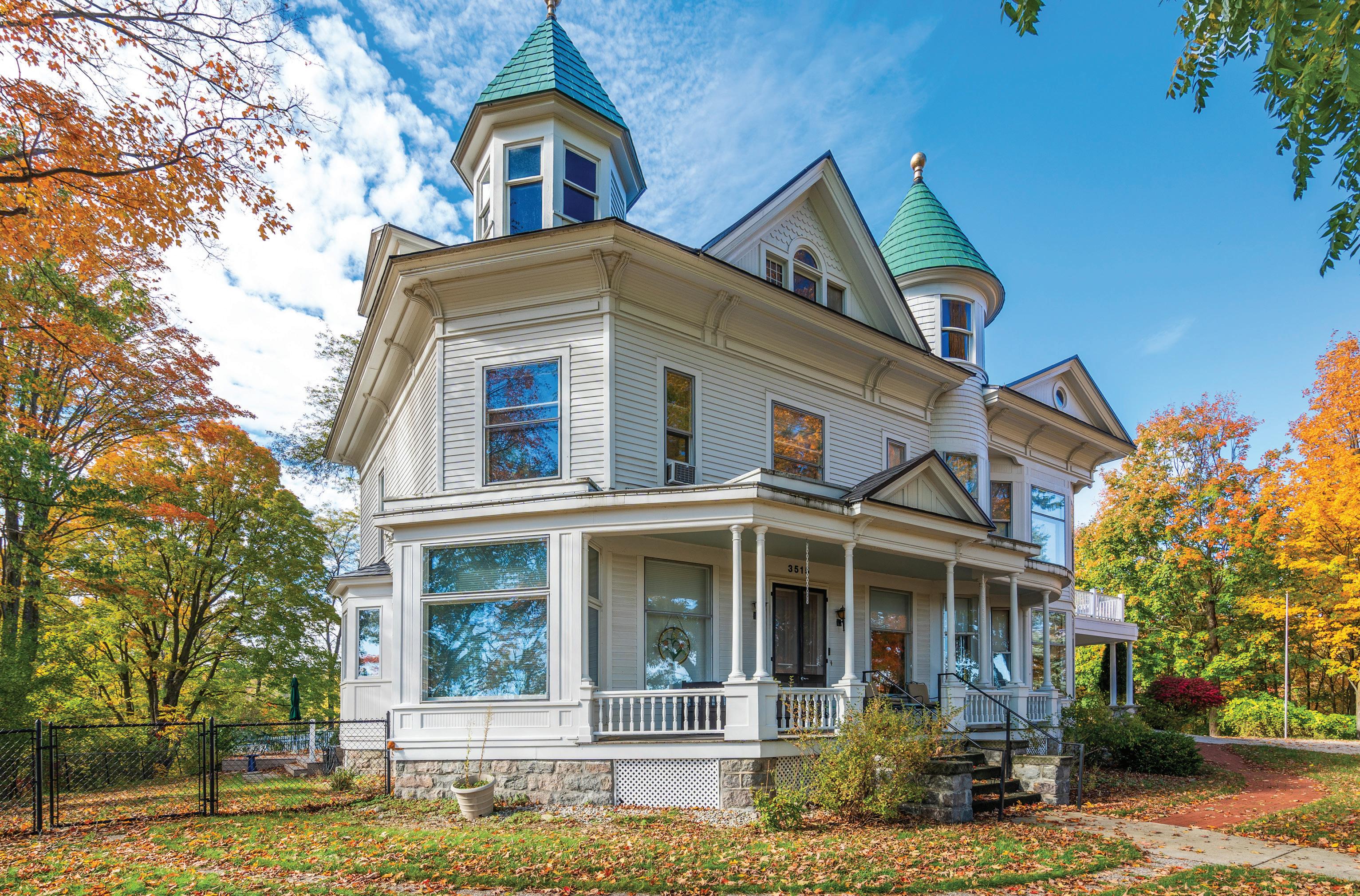
Set high atop Jefferson Hill, with sweeping views across Grand Traverse Bay, Hillcrest is among Northern Michigan’s most distinguished historic residences.
Built in Slabtown in 1880 for prominent attorney Edwin S. Pratt, the home has long been admired for its light-filled interiors, elevated setting, and unmistakable presence overlooking the city.
Properties of this caliber are seldom available. Hillcrest stands apartfor its beauty, its setting, and the legacy it carries.




By Art Bukowski
Maybe you’re a busy executive who’s looking to get in shape but needs to get the most out of your already limited free time.
Maybe you’re a worker bee (or stay-athome mom, or anyone, really) who for one reason or another needs the same thing: A plan that will maximize results in relatively small windows of time.
While no local trainers or fitness professionals exclusively specialize in executive or leadership fitness, plenty of them work with people in both categories and have learned to provide services and programs that fit those needs.
More with less
Several years ago, Sebastian Garbsch was at a gym he belonged to at the time when he overheard a pointed request.
“I remember one day this woman came in. She was the president of a company in town and she’d been working with one of the owners,” he said. “And she goes ‘I got 30 minutes, give me whatever you got.’”
That idea stuck with him when he started Formative Fitness, a gym on State Street in Traverse City. While Formative didn’t exclusively offer condensed, time-efficient
workouts, they became quite popular.
“We ended up really resonating with people who liked the efficiency of it because they were busy and they have a lot going on,” Garbsch said. “They had families, they had careers they were focused on, and they loved the efficiency of it.”
Garbsch is the first to admit that there’s only so much a person can do in short or infrequent training sessions, but he really dedicated himself to figuring out the most he could give them in those tight windows.
“We can all talk about what we should be doing in a perfect world, but realistically, if it’s between someone doing nothing and doing something, how can you find a way to give them 80% of the benefits and 20% of the time, or at least the highest percentage of benefits with the least amount of sacrifice?”
Garbsch still works at Formative Fitness as he transitions to a real estate career. It’s now owned by his friend Brenden Booth, who has maintained a lot of the founding ethos. Booth says another great thing is that clients often take what starts at Formative Fitness and use it as a springboard for more activity throughout the week.
“As we talk with our clients, that routine and that plan really grows and evolves,” Booth said.
“We ended up really resonating with people who liked the efficiency of it because they were busy and they have a lot going on.”
- Sebastian Garbsch, founder, Formative Fitness
It’s not all about lifting weights or hitting the treadmill. Some busy folks gravitate to yoga, spinning, pilates or other disciplines. At Pure Pilates, owner and instructor Jenn Cutler says she works with a lot of business leaders who appreciate how much they can get out of their classes there.
“You’re getting balance, you’re getting strength, you’re getting stretch and length, you’re getting that mind-body connection,” she said. “You’re getting [a lot] of wellness in a small amount of time.”
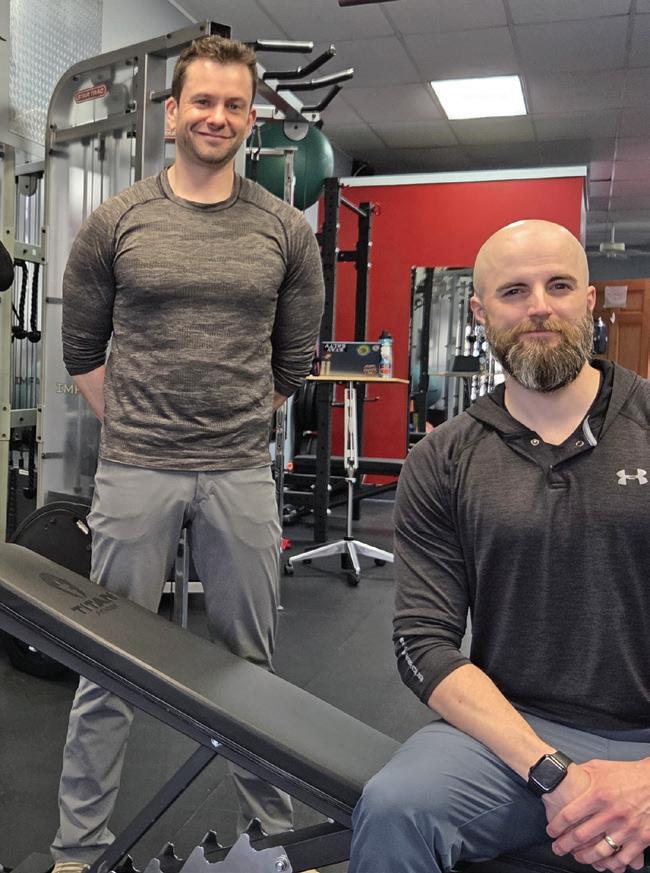
For busy, somewhat stressed people, their time at pilates has them feeling looser, Culter said – mentally and physically.
“Some of these people come in, and I’d swear they leave three inches taller.”
One of Culter’s clients is Kate Greene, who owns and runs a human resources company in town. She’s been running her own business for more than 25 years, and has regularly done pilates for 17. She appreciates that her time there touches on so many aspects of her wellbeing, and it’s also a really nice mental break.
“In my job, I think for a lot of exec-
utives, we are creating the work, we’re directing the work, and so we’re always kind of ‘on’ in that way,” she said. “So it’s nice to come in and still have to focus, but not have to lead and focus.”
An extreme example of the “more with less” phenomenon is the Fit20 gym on Cass Street in Traverse City, where co-owner and physical therapist Roger Karsten promises results with 20 minutes per week.
Karsten, a PT of nearly 30 years who still runs a separate PT practice on Front Street, wasn’t sold on the idea when he first encountered it in Europe.
“I saw it first there, and I was really skeptical,” he said. “I know you can get a good training in 20 minutes, but is once a week really enough to move the needle?”
But data from more than 150 locations in more than a dozen countries shows that a year of Fit20 can result in strength gains of 40-50 percent, Karsten says, which is particularly important for people who are already experiencing natural reductions in strength.
“We don’t get fit young people. That’s not the idea. Most of our clientele is in their forties, fifties, and older, and they’re not looking to get buffed,” Karsten said. “What they’re looking for is to be able to keep doing what they’re doing with their grandchildren.”
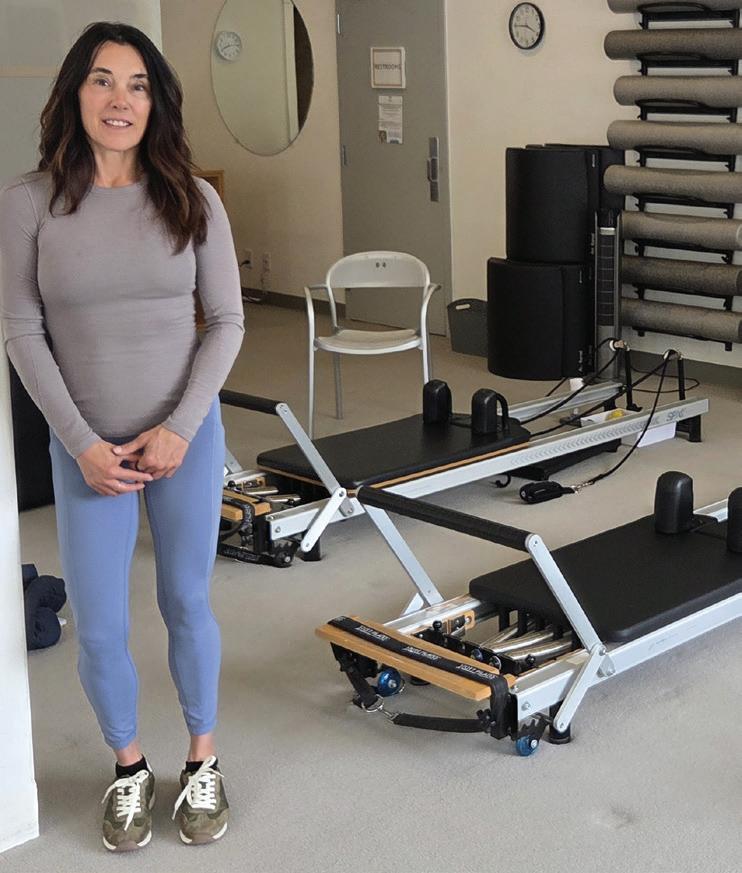
Karsten has about 130 clients who work on a very slow, very high intensity workout each week in which they push their muscles quite literally as hard as they can. Karsten uses compound exercises to target several muscle groups.
“[You want to] train the largest volume of muscle tissue in order to improve overall strength and overall health,” he said.
“We’re hitting 80 to 90 percent of your muscles in six exercises.”
Ultimately, Fit20 is about maintaining vitality and ability into old age.
“For a fit person, this translates into being a little more fit. But if you’ve seen some decline, this may be the difference
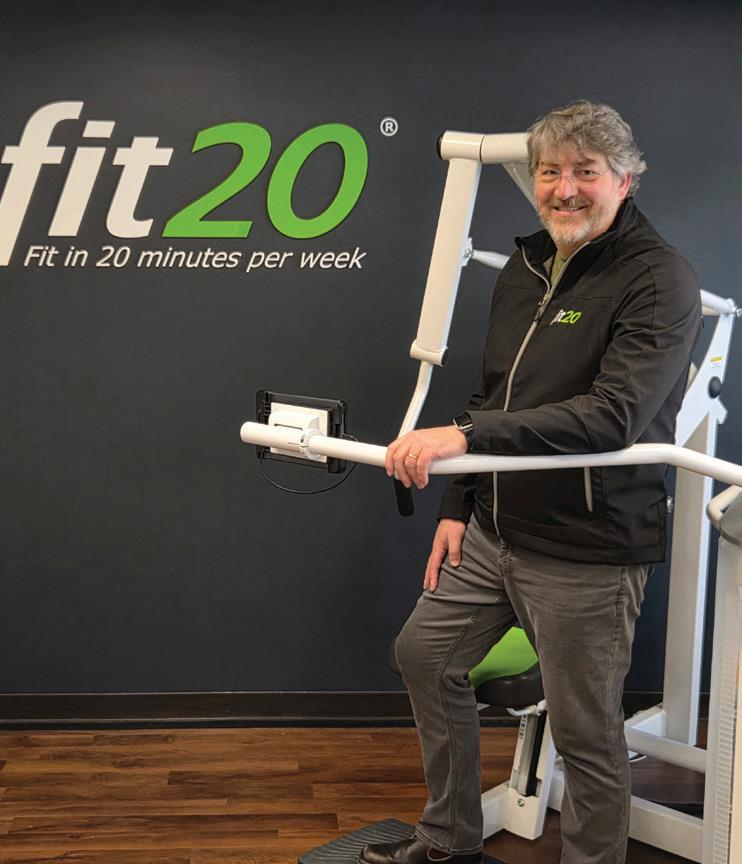
between you walking up the stairs and feeling fine and walking up the stairs and being totally winded.”
Doug Petersen has been a personal trainer for almost 30 years, and he’s a familiar face in northern Michigan circles. He also tries to make the most of his workouts for his clients, but adds that almost all of his most successful clients treat their time with him as part of a larger regimen of activities for their well-being.
“All we can do in an hour or two is be a catalyst for change,” he said. “If people
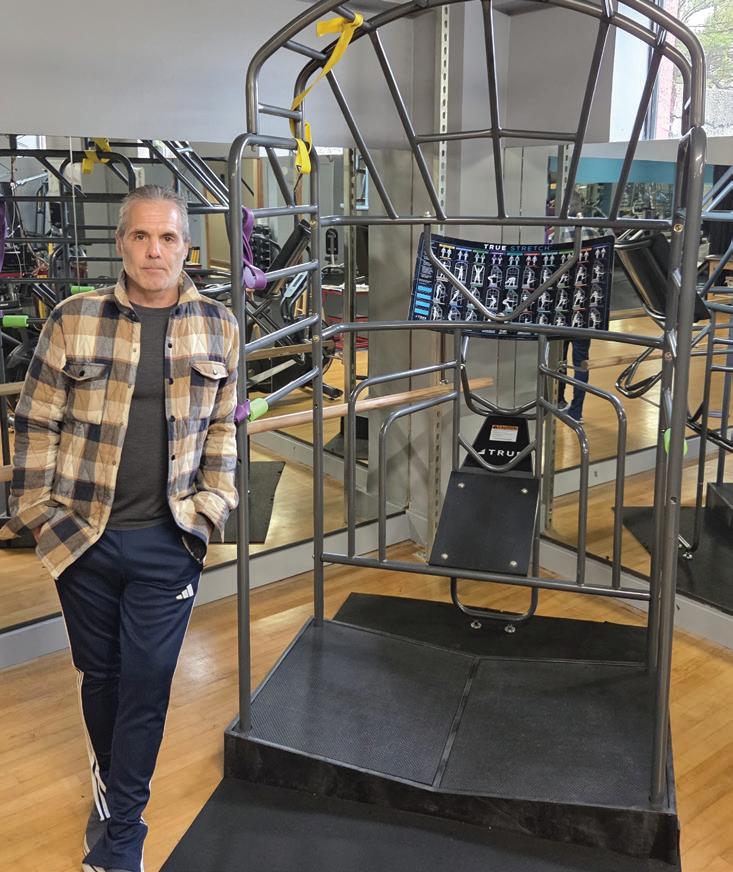
aren’t doing anything else besides what I have them doing here, they’re not going to have any success. There’s a pattern where successful people are doing a lot of other things, and I’m just one part of what they’re doing. I always say it takes a village.”
It’s not an easy mindset for many trainers, Petersen said.
“There’s a lot of ego in this business, and there’s a lot of trainers that want to force everyone into the way they do things, and they think they can do everything for these people,” he said. “But you’ve got to drop your ego and be very humble about who you are. You’re just a tiny piece of someone’s success.”
























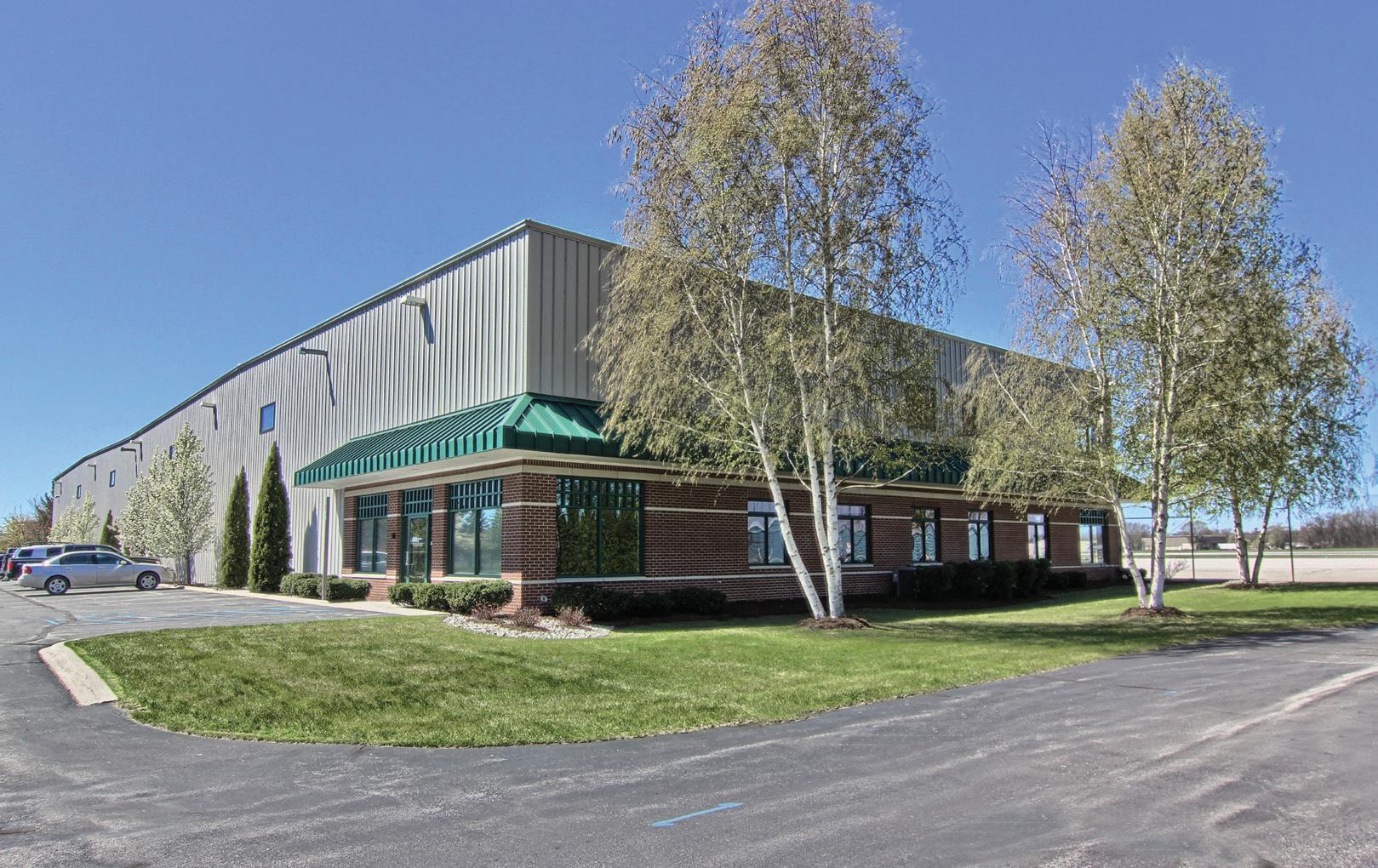

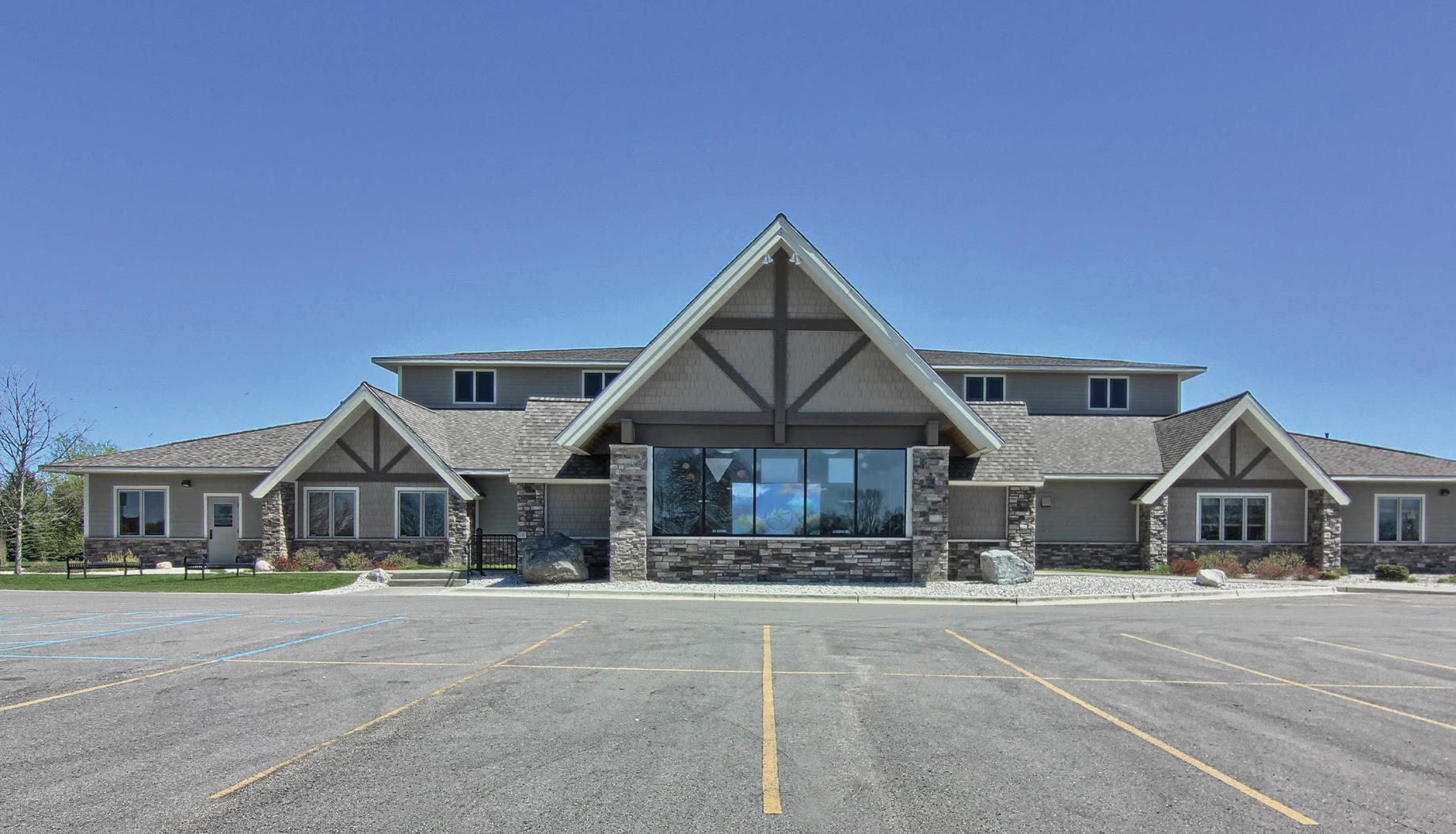
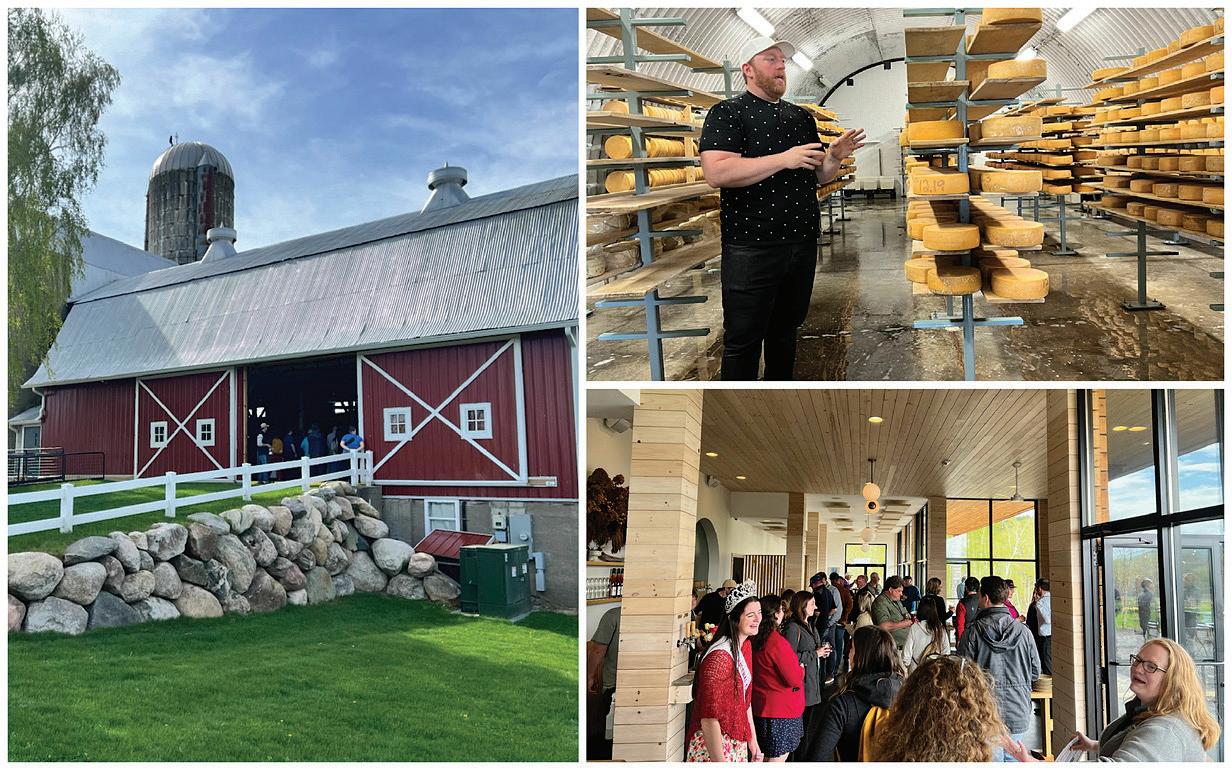
By Todd VanSickle
The Michigan State University Extension’s Agritourism Summit will be held in Traverse City this month, bringing together growers, entrepreneurs, elected officials, and stakeholders to share ideas and best practices for a fast-growing industry.
And Michigan growers need more than just crops popping up on their farms these days. More visitors to the region are seeking unique farm experiences and locally grown food and products while on vacation.
All told, 836 Michigan farms reported agritourism activities in 2022 – an 11-percent jump from 2017, according to the Agriculture Census released in 2024. Michigan ranks fourth in the nation for agritourism, with experiences like farm tours, u-pick fruit, corn mazes, and overnight stays contributing more than $56 million to the state’s economy.
As agritourism grows, however, farmers are facing a new set of challenges as they look to capitalize on the trend.
For the second year, the MSU Extension is hosting the summit to help address those challenges and support growers looking to diversify and generate additional revenue.
Planning committee chair Jennifer Berkey says the event was created in response to community demand after growers and stakeholders approached MSU Extension about starting conversations around planning, zoning, and agritourism.
“It’s not enough for [farmers], unfortunately, to just grow their products and go out and sell directly,” says Berkey.
“The trends are really showing that
limited transportation. The behind-thescenes tour includes six sites, with tastings and hands-on learning opportunities.
“I would say the biggest success story last year were the individuals that had those aha moments on the farm tour,” Berkey says. “‘This is how they made that work – maybe that’s an opportunity for me,’ or ‘How do I get more aligned with planning and zoning officials?’”
The summit itself takes place May 14 at the Grand Traverse Resort and Spa, with more than 200 attendees expected.
consumers want events on and around farms. They want to learn more about where their food is coming from, what farming is like, and what local food is like. We created this event to bring best practices in agritourism to our local area so that folks can learn more about what they can do.”
This year’s theme is Cultivating Opportunities Through Collaboration, Innovation and Policy. The two-day event begins May 13 with a farm tour in Antrim County, capped at 52 attendees due to
Stops on the tour include King Orchards Home Farm, Cellar 1914, Ethanology Distillery & Spirit House, Providence Organic Farm Market & Café, and the Elk Rapids Pull Barn.
Day one wraps with a soirée and networking event at Flintfields Horse Park in Williamsburg, where James Beard award-winning chef Jimmy Schmidt will serve locally sourced food during a horse jumping demonstration.
The summit itself takes place May 14 at the Grand Traverse Resort and Spa, with
more than 200 attendees expected. Michigan Department of Agriculture and Rural Development Director Dr. Tim Boring will deliver keynote remarks, and sessions will cover topics including marketing, finance, farm stays, zoning strategy, Right to Farm Act basics, and real-world agritourism scenarios.
Last year’s event was held in Leelanau County, and organizers say future summits will likely rotate to other parts of the state.
“It was our committee’s recommendation that we do one more year up north, just given the synergy,” Berkey says. “We’re proud of our local agriculture entrepreneurs, but there aren’t huge changes in planning and zoning every year, so we didn’t feel there was enough new to share annually.”
In 2024, Governor Gretchen Whitmer proclaimed October as Michigan Agritourism Month.
“If we did some polling, everyone in our community would say we want our agriculture to thrive,” Berkey says. “We live here because of the natural beauty and the ability to go just a few miles and buy locally grown food. The question is: How do we maintain that and help farmers stay sustainable so they can keep doing the work we all enjoy?”


By Jennifer Ewing, columnist
It is easy to assume artificial intelligence is for certain industries or roles, or that it is not something your employees are using yet, but the reality is that most, if not all, of your employees are already interacting with AI in some form.
Whether we recognize it or not, AI is now built into many tools used for internet searches, writing documents or emails, completing texts and communication in general. Because these systems are already part of routine work, businesses are starting to look at AI differently, not just as a tool to improve efficiency, but as something that requires clearer expectations around how it is used within the workplace.
As it becomes more integrated into decision-making and day-to-day responsibilities, there is more attention being placed on ethics, bias and responsible use, as employers recognize that knowing how to use these tools is only part of the equation.
One of the first areas that companies need to pay attention to is bias in decision-making. While technology is often viewed as neutral, it is still built on data that reflects human behavior, decision making and judgement. That data can include past patterns and biases, which may reflect outcomes that were not always fair or consistent, and those same issues can carry forward into AI outputs. This becomes especially important in areas like hiring or performance management, where decisions directly impact people’s opportunities. Employees need to be comfortable questioning what they are seeing rather than assuming the output is correct. For example, if a company is using a system to screen applicants or support hiring decisions, it may rank candidates or suggest next employment steps based on the data it was trained on. Those results reflect patterns in past data, which may include biased or inconsistent decisions, rather than an objective measure of a candidate’s potential. For that reason, those recommendations should be treated as one piece of information rather than the final answer. Relying on them without review can reinforce the same gaps or preferences

that existed in earlier decisions, even when those patterns are not visible in the output.
Another area companies need to pay attention to is data privacy. Employees are often using these tools without fully thinking through what happens to the information they enter or where that information may end up. Uploading a document or entering a prompt can feel routine, but it can create exposure if the system shares, retains or learns from that content in ways that were not intended.
As a result, organizations are starting to put clearer guidelines in place around what can and cannot be shared or uploaded. These are not always obvious decisions for employees to make on their own, so training helps increase awareness and ensures that convenience does not outweigh judgment, especially in situations where once information is shared, there is little control over what happens next.
For example, employees may not always stop to think through the type of information they are entering into these tools, whether it is employee names, Social Security numbers, account numbers, client details or internal financial information. Simple tasks such as summarizing a report or drafting communication can quickly turn into sharing sensitive data. Once submitted, there is often little visibility into where that data goes or how it may be used. Providing clear guidance on what
should and should not be included in these tools helps employees make better decisions in the moment and reduce the risk of sensitive information being used beyond its intended purpose.
Training should also move beyond general awareness and include practical guidance, such as how to review outputs for accuracy, how to recognize biased results, and how to handle sensitive information.
Transparency is also becoming part of expectations, particularly when technology is influencing decisions. Employees, customers and leadership want to understand how a decision was made rather than simply accept the outcome. If someone cannot explain how a result was reached, it can create hesitation, even if the decision itself appears reasonable. Employees should be able to walk through the thought process behind a de-
cision, not just point to the tool that was used. This does not require deep technical knowledge, but it does require awareness of what is driving the result. That ability to explain decisions helps maintain trust, especially when technology is involved.
As AI continues to become part of everyday work, many organizations are starting to put more structure in place through AI policies. A basic AI policy often includes which tools are approved for use, what types of data are restricted, when employees should disclose AI use and where human review is required before decisions are finalized. Training should also move beyond general awareness and include practical guidance, such as how to review outputs for accuracy, how to recognize biased results, and how to handle sensitive information. These steps give employees clearer direction rather than leaving them to make judgment calls on their own.
As AI continues to become part of every day work, structure matters. Clear expectations, supported by both training and policy, help guide how these tools are used so that employees can apply them responsibly while still understanding their role in the final decision.
Jennifer Ewing is part of Human Resource Partners in Traverse City, serving as a fractional CHRO to help employers align people strategies with business goals.

After landing $7.3M in grants in 2023, here’s what’s next for TC’s business incubator
By Craig Manning
What is the best way to nourish the entrepreneurial spirit of an entire region?
It’s a question local startup incubator 20Fathoms has been trying to answer for years, particularly since it netted $7.3 million in state and federal grant funds in the fall of 2023. The funds, which arrived shortly after the fifth anniversary of the organization’s 2018 founding, served as rocket fuel, allowing 20Fathoms to expand its geographic reach, introduce grant programs for early-stage companies, and significantly grow its educational programming.
Two and a half years later, with those grants on track to be spent by the end of the year, the TCBN checks in with 20Fathoms for a progress report on its growth –and a glimpse at what comes after the big money from 2023 is gone.
In November 2023, TCBN sister publication the Traverse City Ticker broke the news that 20Fathoms had landed two major grants.
The first, worth $3.3 million, came from Michigan’s Small Business Support Hubs (SBSH) program, which was in the process of distributing $75 million in funds from the COVID-era American
Rescue Plan Act (ARPA). 20Fathoms was one of 27 organizations “selected to serve as entrepreneurial hubs across the state of Michigan,” charged with “providing comprehensive resources and support to the state’s small businesses.”
At the same time, 20Fathoms also received a grant from the Build to Scale program, a federal effort administered annually by the U.S. Department of Commerce. Grants from that program “aim to accelerate technology entrepreneurship by increasing inclusive access to entrepreneurial assistance and startup capital.” 20Fathoms received $2 million from the
new three-year strategic growth plan. Priorities included reaching new geographic areas, launching an “early-stage investment fund” to help new startups, and rolling out new programs to fill in gaps the organization wasn’t already serving.
The grants also paved the way for major hires – particularly Erin Srebinski, director of entrepreneurship for 20Fathoms, who was brought aboard in July 2024 with the directive of taking the organization’s programming “to the next level.” A key
“It was an all-hands-on-deck situation, of trying to figure out how we could spend this grant money in a way that was really cognizant of the fact that there are entrepreneurs throughout this whole 10-county region that need support.”
– Erin Srebinski, Director of Entrepreneurship,
federal government, plus $2 million in local matching funds to build “faster, more broad-based, and diverse technology commercialization” in northern Michigan.
Speaking to The Ticker at the time, Eric Roberts – then the executive director of 20Fathoms – said the infusion of cash would prompt the implementation of a
20Fathoms
part of her mission? Making 20Fathoms an incubator not just for the Traverse City business scene, but for northwest Lower Michigan as a whole.
“It was an all-hands-on-deck situation of trying to figure out how we could spend this grant money in a way that was really cognizant of the fact that there are entre-
preneurs throughout this whole 10-county region that need support,” Srebinski said. “I moved here from Chicago in 2021, so was used to that startup scene. Things are different here: It’s so much more rural, and entrepreneurs are just so much more disparate in terms of location. So the question became: How do we break down the traditional business accelerator model to make it accessible to people here?”
That thought process led to the launch of one of 20Fathoms’ flagship educational programs called Breakfast Lab.
“We wanted it to be something where you’re not sitting through 12 weeks of programming that isn’t relevant to you,” Srebinski said of the Breakfast Lab concept. “Instead, you’re sitting through 60 to 90 minutes of programming that is very relevant to you, at the time that you need it.”
As originally conceived, Breakfast Lab was a six-week program of weekly Thursday morning workshops. Each session focused on a different topic important for entrepreneurs to learn.
“So, for instance, marketing, finances, things like that,” Srebinski said.
While the program immediately drew an audience, though, it also quickly evolved into something different.
“(Breakfast Lab) was originally launched with a format of six topics for six weeks,







and then we would repeat it,” Srebinski explained. “But we noticed a lot of the people coming back for the repeat, and it wasn’t necessarily because they needed the information again. Instead, it was because they had gotten used to consistently showing up on Thursday mornings, and they knew that, at 9 a.m., they could come in, have breakfast, have a place to focus on something, and network with other entrepreneurs. So, after the initial two rounds, we decided Breakfast Lab didn’t need to be the same six topics over and over again.”
Now, Breakfast Lab runs every week –Srebinski got rid of the two-week break between sessions – and every session invites a different guest to present on a topic relevant to entrepreneurs and business owners. The flexibility, Srebinski says, has allowed the program to cover way more information than it ever did in its fixed format.
tailored assistance with business challenges. These sessions, too, have been offered in multiple geographic areas throughout the northern Michigan region.
These types of programs – all of which are grant-funded and available to entrepreneurs free of charge – are finding their audiences. Between 2024 and 2025, 230 unique local entrepreneurs participated in at least one group training through 20Fathoms, with 79 joining for multiple sessions. Sixty-nine entrepreneurs, meanwhile, went through at least one one-onone coaching session.





“We’re not following any education structure, per se, but we are still touching on all the things people need – finances, customer discovery, marketing – but just in different ways,” she said. “I’ll have someone deep-dive into marketing analytics one week, and then the next week it will be someone explaining how to raise angel investments. The topics are really niche things that maybe aren’t for everybody, but that could serve a certain entrepreneur really well.”
Breakfast Lab is just one of several “group training” programs 20Fathoms now offers to support budding business proprietors. A more structured offering, CO.STARTERS Core, “is a program specifically created for rural communities,” Srebinski said, with a 10-week curriculum designed to help entrepreneurs get their businesses “unstuck and off the ground.”
Business bootcamps, meanwhile, offer on-the-ground trainings for entrepreneurs in outlying areas like Manistee, Cadillac, Petoskey and Benzonia.
Also available are drop-in hours for one-on-one business coaching sessions, which allow startup founders to get face-to-face time with local mentors for
“We have tried really hard to ensure that the money is spent on things that help the community, help founders, help economic development,” Srebinski concluded. “We’re really coming at this entrepreneurship lens from all angles. We know that not everyone needs programming, not everyone needs coaching. But some people might need a small influx of capital. Some people might need access to a mentor. Some people might need help doing some legal stuff. We’ve been spreading the money in a way where it’s not focused in one area, but in multiple areas, so we can serve entrepreneurs at every level.”
So, what comes next?
This month marks two and a half years since the announcement of the 2023 grants, which means 20Fathoms is nearing the end of its aforementioned threeyear strategic growth plan. According to Gretchen Swanson, director of strategic partnerships and talent, that timeline dovetails with the spending requirements for the grants themselves.
“The SBSH grant, because those particular grants are ARPA dollars, they have a firm funds-out-the-door date of September 30 of this year. We are on track to get to that spend-down on time,” Swanson said. “The Build to Scale grant runs through October 31 of this year – though there is potential to do an extension on that, which Per as part ports is making reports, grant those nesses, 50 by individuals Those business 20Fathoms to the been business farms (The Traveling ducers (New Other Swanson investment businesses January the ventures pitch Indigipitch “audience totaling For reports good – as for more in the in the a new Swanson ity”
“By state, ours Swanson starting to be and seems

challengoffered throughout whichtheir 230 participated multiple meanone-onSrebinski WeBut of been it’s multiple years nearing to strategic requirements partica September to said. which we’re contemplating.”

Per Swanson, 20Fathoms is required as part of the grants to prepare impact reports each year, detailing how the money is making a difference. According to those reports, in the first two years of the SBSH grant (2024 and 2025), 20Fathoms used those dollars to serve 625 unique businesses, including 273 owned by women, 50 by minorities, 28 by veterans and 30 by individuals with disabilities.
Those numbers don’t just reflect business owners who have participated in 20Fathoms educational programs. Thanks to the grants, the organization has also been able to give $300,000 in direct small business grants, including funds for local farms (Lakeview Hill Farm), manufacturers (The Bohning Company), retailers (Tiny Traveling Boutique), craft beverage producers (Earthen Ales), wellness businesses (New Moon Yoga), and dozens more.
Other highlights of the impact reports, Swanson says, include the amount of investment capital that 20Fathoms-served businesses have been able to raise since January 1, 2024 (nearly $6.5 million) and the number of 20Fathoms-supported ventures that have gone on to place in pitch competitions like TCNewTech and Indigipitch (26 top-three finishes and/or “audience choice” wins, with prize money totaling $68,500).
For her part, Swanson sees the impact reports as proof 20Fathoms has been a good steward of state and federal funds – as well as the best-possible argument for more funding coming down the pike in the future. Right now, 20Fathoms is in the process of applying for SBSH 2.0, a new version of the state grant program Swanson says could bring strong “continuity” to the work 20Fathoms is doing.
“By establishing these hubs around the state, SBSH 1.0 allowed organizations like ours to serve a lot of early-stage businesses,” Swanson said. “With 2.0, which will be starting October 1, the grants are really going to be focused on helping businesses scale and hit key milestones and growth targets. It seems like a natural progression for the work
we’ve already done. So, we’ll be submitting that application by the end of May. We won’t know if we got the grant until August, but we’re feeling pretty positive.”
Russell Schindler, a local entrepreneur who has been involved with 20Fathoms since the beginning, says he’s benefited from the organization’s expanded offerings in unexpected ways.
The founder of both a local startup (software developer SampleServe Inc.) and the TCNewTech pitch night, Schindler was involved in some of the early talks that led to 20Fathoms, and was also an early tenant of the incubator’s office/coworking space. More recently, he’s leaned on the organization’s expanded mentorship programs to guide his business in new directions.
“20Fathoms is literally the reason we spun off a separate side of our business,” Schindler said, referring to SampleCSI, a sister venture that takes SampleServe’s data reporting and chain-of-custody software – typically used for environmental testing – and gears it toward crime scene investigation. 20Fathoms connected Schindler with Kenneth Harman, owner of Lucid Truth Technologies, a locally based “digital private investigation agency and forensic consulting firm,” and Hartman not only gave Schindler advice, but also loved the business concept so much that he joined the SampleCSI board.
“We’ve also gotten a couple of grants from 20Fathoms, which have been helpful,” Schindler added. “One was to pay for attorney fees to spin off SampleCSI. The other was for helping us put together a better marketing program for the environmental side of things. A little bit of money goes a long way on that kind of stuff.”
Our practice is growing, and we’re happily welcoming new patients into our care family.
Join us in welcoming Dr. Hughes! We can’t wait for you to meet her and experience the thoughtful, compassionate care she’s known for!
Elizabeth Hughes, DO

Our team is committed to building lasting relationships and supporting your health through preventive care and ongoing management. We want the very best for you and your family.

Join us in welcoming Dr. Kohler! Her practice focuses on preventive care, women’s health, sports medicine, OMT and more! We’re excited for you to meet her.
Janine Kohler, DO





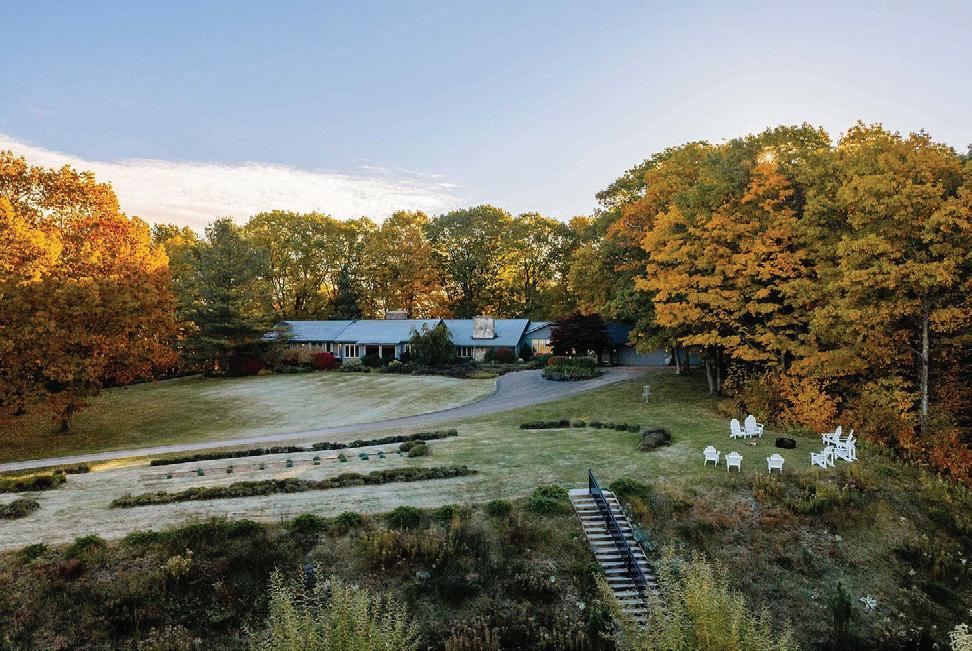




Presenting a once-in-alifetime Leelanau County estate with unmatched water views and unique shortterm rental/B&B potential. Perched atop nearly 19 acres of rolling, private land, this extraordinary 6-bedroom, 5-bathroom ranch estate offers panoramic views that are simply unparalleled.
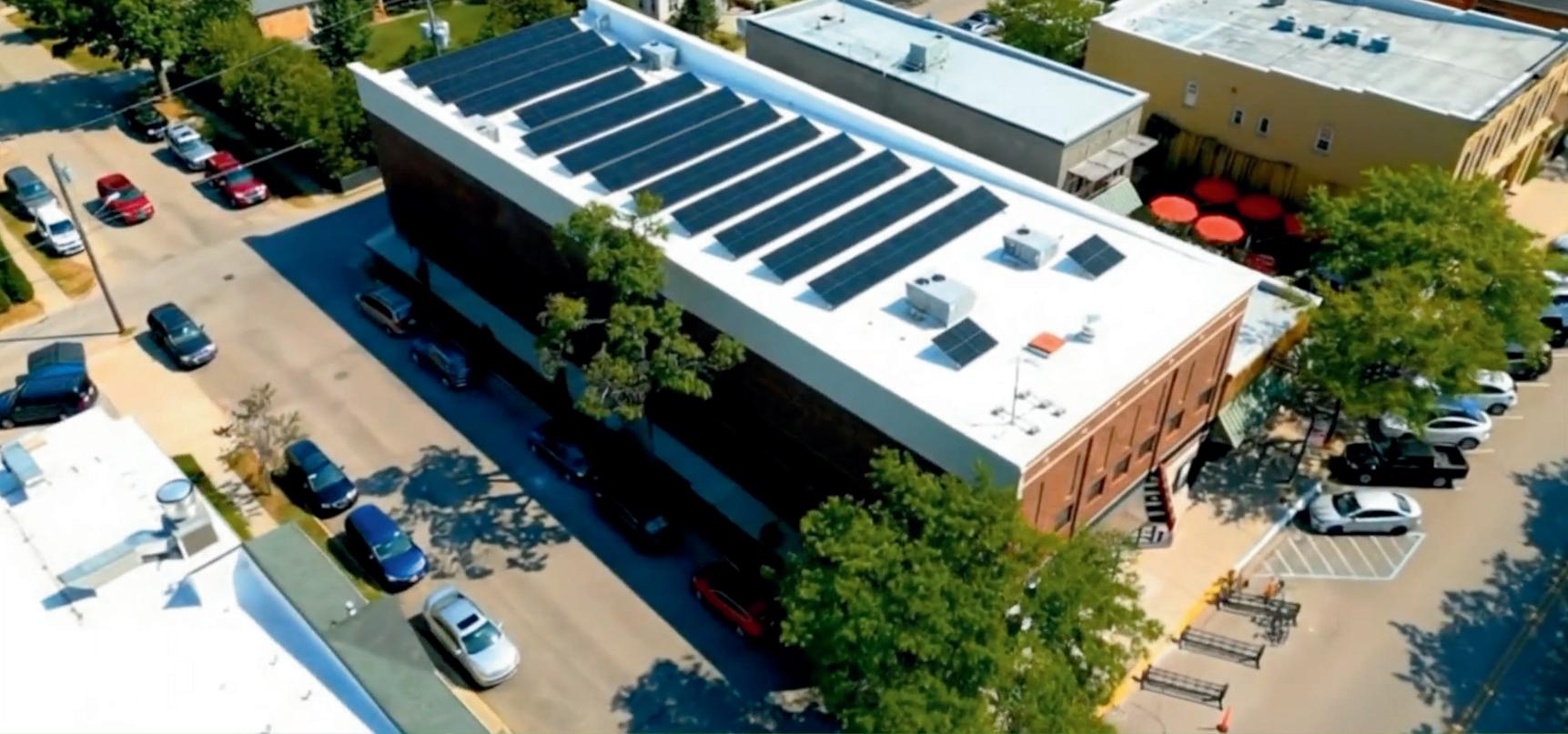




No clear-cut path in a state that ‘needs everything,’ employers say
By Rick Haglund
Are high school students financially better off starting a career in the skilled trades or pursuing a four-year degree after receiving their diplomas?
There’s been a huge push in recent years by employers and state and federal governments to steer young people into skilled trades jobs that supporters say pay well without the burden of racking up tens of thousands of dollars in student loan debt for a four-year degree.
And at a time when artificial intelligence is eliminating entry-level white collar jobs, local officials say there’s a critical need for plumbers, electricians, carpenters and other jobs in the building trades.
“The truth of the matter is we are in a major crisis in skilled trades and skilled workers,” said Lauren Tucker, chief executive officer of the Home Builders Association of Northwest Michigan.
“The shortage of workers is the worst we’ve seen.”
But the head of a statewide organization that has a goal of increasing the percentage of Michigan residents with postsecondary certificates or degrees to 60% by 2030 says we’re having the wrong argument about which career path is best.
“We reject the question when asked that,” said Traverse City native Ryan Fewins-Bliss, executive director of the Michigan College Access Network. “Employers are telling us, ‘We need everything.’”
Michigan’s aging population and a shrinking pool of K-12 students are resulting in long-term shortages in occupations ranging from engineers and registered nurses that require four-year degrees to plumbers and auto mechanics.
Fewins-Bliss and other experts agree that those with at least a four-year degree generally out-earn those with less education over a 40-year career.
“A lot of kids need a different path than college. Trades can have a much stronger financial return, at least in the start of their careers. They start with no debt. But there’s a place for college, for sure.”
– Lisa Radtke, Executive Director, Builders Exchange of Northwest Michigan
The median weekly wage of a U.S. worker with a bachelor’s degree was $1,754 at the end of March, according to the Bureau of Labor Statistics. That’s

60% above the $1,096 earned by a worker with some college or an associate degree and a whopping 84% above the $953 a week earned by those with only a high school diploma.
Bachelor’s degree holders will earn,


KEY FEATURES OF VP’S FULFILLMENT SERVICES
• Dry Goods Sampling Capabilities
Whether you’re distributing promotional items or need to ship non-perishable samples, we’ve got the facilities and expertise to manage it all. Your products will be handled with care, ensuring they arrive in pristine condition and ready for consumption.
• Customizable Point-of-Sale Kit Collection
VPDCS provides fully customizable point-of-sale kits tailored to meet the specific needs of your marketing campaigns. Whether you’re launching a new product, running a promotion, or distributing materials for a trade show, our kits can be designed to reflect your branding and the exact needs of the campaign.
• Collection Team
Keeping track of promotional materials and assets is a challenge in itself. Our dedicated Collection Team works to ensure that your items are properly accounted for and collected, ready to be used for the next event. We help you stay organized by handling the logistics of returning and repurposing your assets efficiently
WHY CHOOSE VP DEMAND CREATION SERVICES?
VPDCS is more than just a fulfillment provider—we’re your trusted partner in managing your promotional and marketing assets. Our Fulfillment Services are designed to offer you peace of mind, knowing that your materials are being carefully managed, stored, and delivered according to your exact specifications. With our help, you can keep your brand moving forward without the stress of complex logistics.
on average, $4.1 million over their lifetimes, according to the Georgetown University Center on Education and the Workforce. That compares to $2.9 million for those with an associate degree and $2.7 million for workers with some college.
The wage advantage of four-year degrees over those with less education more than covers the average $37,000 student loan debt Michigan college grads carried in 2024, according to the Federal
It might seem like forgoing college for a debt-free career in the skilled trades is a financial no-brainer. But the calculation isn’t so clear.
Landing a good-paying, middle-class job in the building trades typically requires a certificate or associate degree and years of on-the-job training before achieving journeyman’s status. Many employers pay for at least some, if not all,
“It has never
been more affordable in Michigan to go to school. There is more financial aid than ever before.”
– Ryan Fewins-Bliss, Executive Director,



OVERVIEW
KEEN recently energized this iconic train -station-turnedbrewpub by delivering clean, renewable energy.
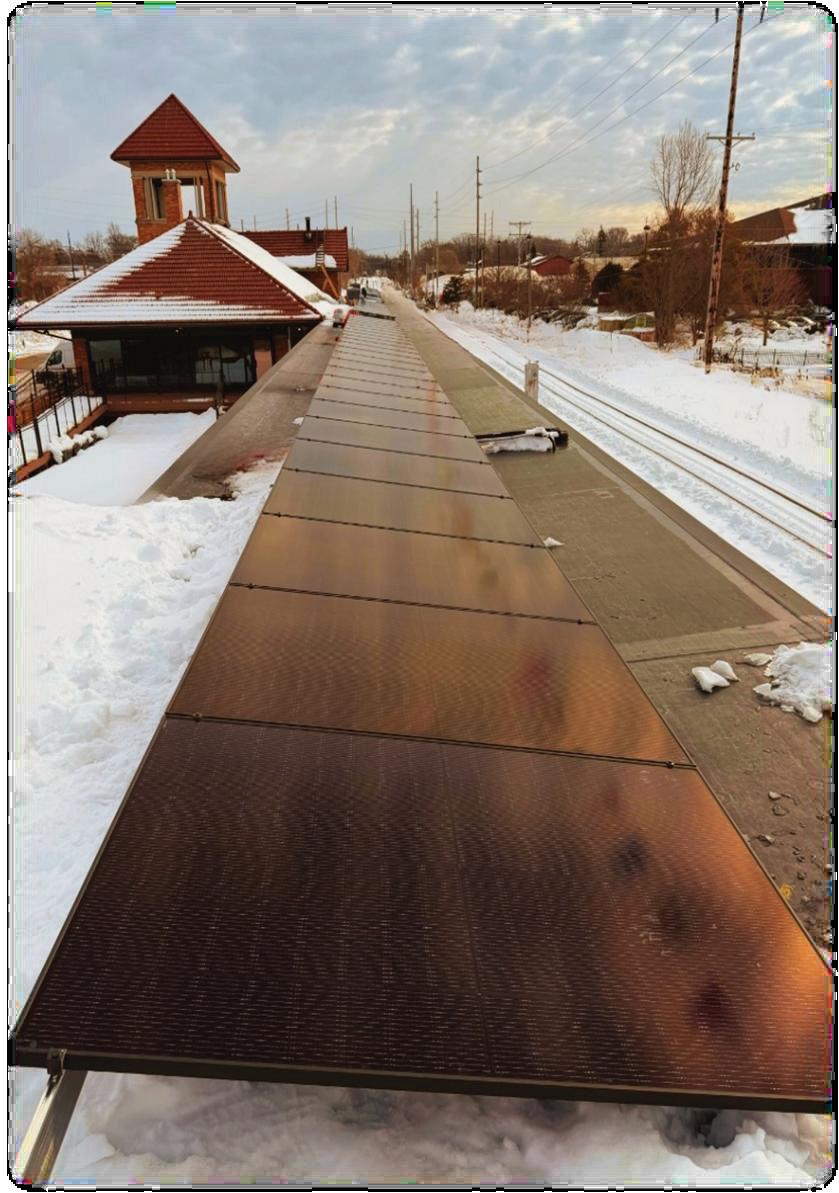




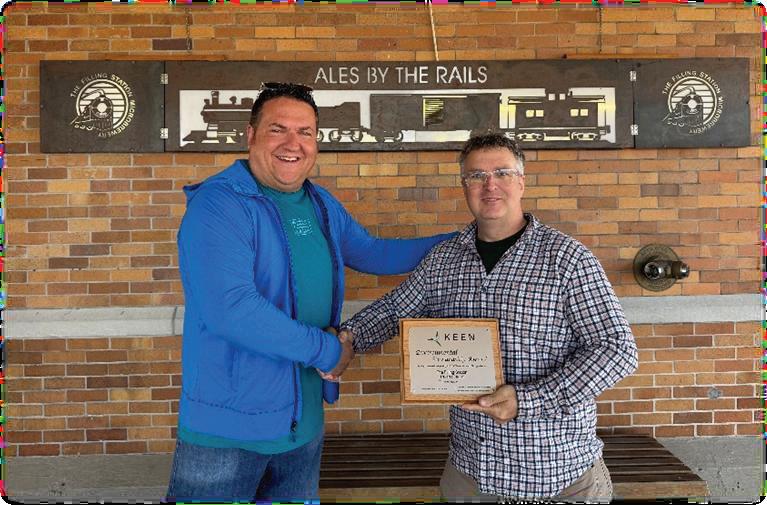
As a business that believes in the importance of making a positive impact on our community, environmental stewardship has always been important to the Filling Station family. Creating a solar array that could power our entire operation seemed like a great way to advance that stewardship. Keen did a fantastic job from design to installation! We are extremely grateful to the team at Keen for helping us navigate this process and making this dream become a reality!

Todd Klepper, owner and general manager of The Filling Station





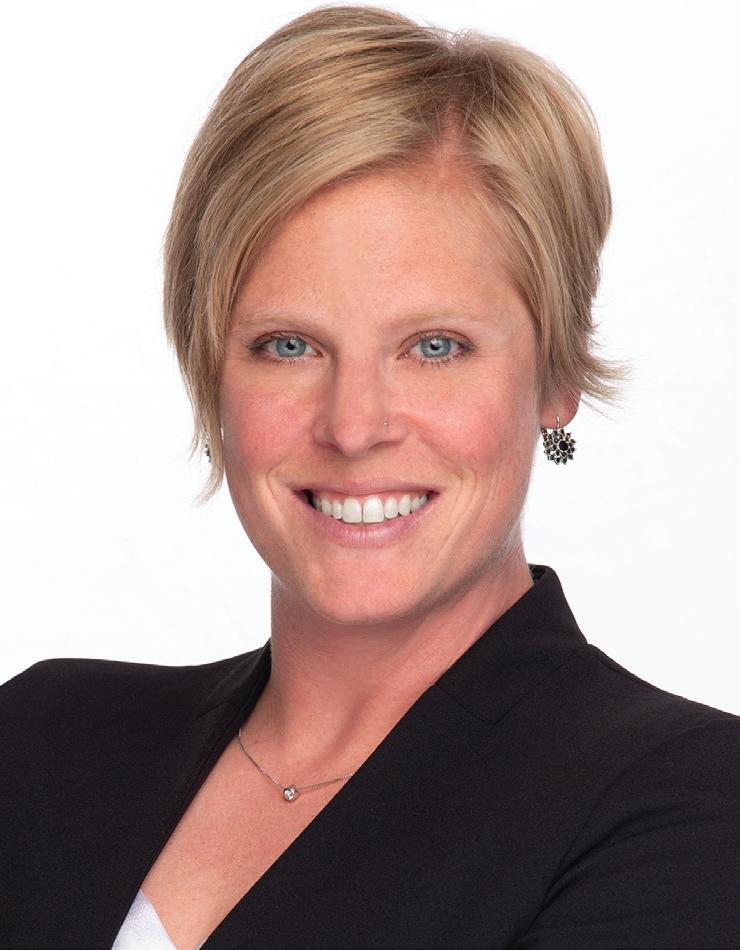
of low-income families. The University of Michigan’s Go Blue Guarantee, for example, offers free tuition to students with at least a 3.5 grade point average and whose families have incomes of less than $125,000.
“It has never been more affordable in Michigan to go to school,” Fewins-Bliss said. “There is more financial aid than ever before.”
Young people pursuing a career in the skilled trades must also consider that the physical demands of these jobs might prevent them from working as long as those in white-collar careers and accumulating wealth.
Fewins-Bliss says skilled trades workers should think about eventually running their own businesses or pursuing a four-year degree while working in their current jobs.
Lisa Radtke, executive director of the Builders Exchange of Northwest Michigan, did both. She started her career laying cable for computer networks. She later opened her own business in the same industry, but an injury prevented her from continuing the strenuous work.
“I blew out my knee and was looking for something to do,” said Radtke, whose organization represents the commercial building industry. “I went back to school and got my first degree at age 50.”
And then she got another at age 56. Radtke has a bachelor’s degree in organizational leadership and a master’s in community engagement and government affairs.
“I’m an advocate for both” college and skilled trades, she said. “A lot of kids need a different path than college. Trades can have a much stronger financial return, at least in the start of their careers. They start with no debt. But there’s a place for college, for sure.”
If high school students contemplating their future are confused by all the data and advice given to them by parents, guidance counselors and other trusted individuals, it’s no wonder.
Exaggerated wage claims about skilled trade jobs (no, you’re not likely to make $100,000 as welder right out of high school) and the seemingly unending debate over the value of a four-year degree could cause more anxiety than final exams.
The latest controversy is over which type of jobs are the safest in the rapid adoption of artificial intelligence. Some experts say electricians and plumbers are among skilled trades jobs that will continue in high demand because robots can’t wire a new house or fix a leaky faucet – at least not yet.
Other experts say predictions of widespread white-collar job losses are overblown, and that AI could create millions of new jobs that have yet to be conceived.
Fewins-Bliss says that all Michigan students should be exposed to skilled trade careers. About 80% of them get skilled trades training in their schools, he says, despite the perception that schools have abandoned shop classes and other offerings in what was once known as vocational education. (It’s now called career and technical education.)
“Students should pick what works best for them,” Fewins-Bliss said.
Sampling of high-demand and high-wage jobs in Northwest Michigan through 2032 requiring associate degrees, certificates and apprenticeship:
Carpenters – Projected annual openings: 90. Wage range: $22-$30 an hour.
Electricians – Projected annual openings: 85. Wage range: $21-$35 an hour.
HVAC and refrigeration mechanics and installers – Projected annual openings: 35. Wage range: $22-$30 an hour.
Plumbers, pipefitters and steamfitters – Projected annual openings: 40. Wage range: $22-36 an hour.
Sampling of high-demand and high-wage jobs in Northwest Michigan through 2032 requiring a bachelor’s degree or above:
Accountants and auditors – Projected annual openings: 80. Wage range: $27-$40 an hour.
Construction managers – Projected annual openings: 30. Wage range: $32-$58 an hour.
General and operations managers –Projected annual openings: 265. Wage range: $28-$60 an hour.
Registered nurses – Projected annual openings: 185. Wage range: $36-$49 an hour.
Source: Michigan Center for Data and Analytics. Wages figures are from 2024.








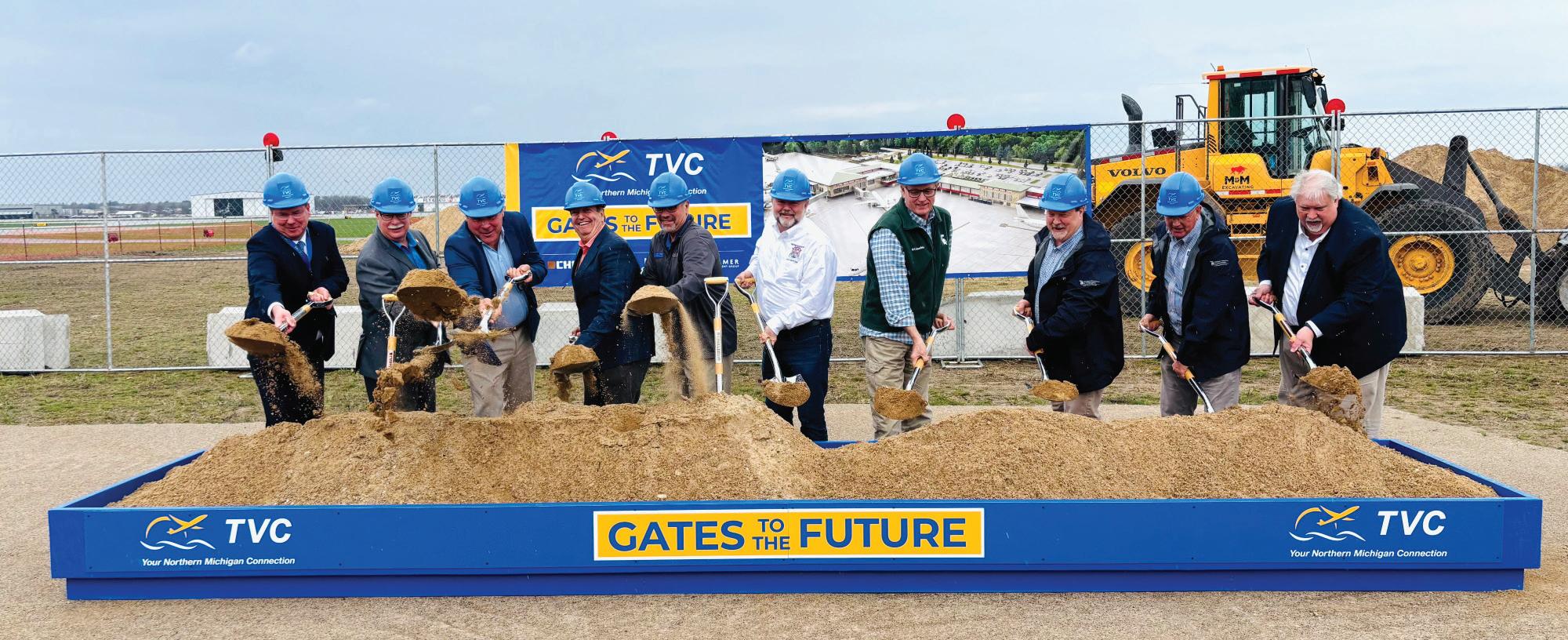
By Craig Manning
“The most substantial economic development growth project for northern Michigan in a couple of decades.”
That’s how Paul Beachnau, board chair for the Northwest Regional Airport Authority, frames Gates to the Future, the ambitious expansion project that will add four new gates, an expanded security checkpoint area, and other upgrades and amenities to the terminal at Traverse City’s Cherry Capital Airport (TVC). Friday April 24 marked the official groundbreaking for the project, which is slated for a spring 2028 completion.
Built in 2004, TVC’s existing terminal was designed to accommodate the 350,000 annual passengers the airport was serving at the time. Fast-forward to 2026, and the terminal is drastically undersized compared to TVC’s growing demand. In 2025, the passenger number was up to 935,816 passengers – an all-time record, and one that has TVC eyeing what could be its first million-passenger year in 2026.
“That’s unheard of in the United States,” TVC CEO Kevin Klein said at the groundbreaking event. “I don’t know one other airport that is growing that fast.”
According to Klein, the growth has pushed the airport to the limit – to the point where the undersized terminal is now actively constraining TVC’s ability to meet demand.
“[The terminal] limits us on bringing the additional seats into the market that we really need,” Klein told The Ticker. “It was designed for smaller regional jets, but today we’re seeing all mainline aircraft. A
regional jet typically carries 50 passengers. We’re seeing jets carrying 160, 172, and 190 passengers. We’re going to make sure we have enough space to handle both sides – the departures and the arrivals. This expansion is going to provide the comfort and the space that the new airlines need to operate, whereas they’re a little cramped and confined right now.”
The project carries a price tag of $120 million. Half of that will be covered by a mix of airport revenue, state grants, and federal funding. For the other half, the airport has “the full faith and credit backing of Grand Traverse County” to issue up to $71 million in bonds. $60 million
and efficiency, add a new concessions area, and more.
Klein sees the project as a green light for TVC to go after more air service opportunities, including new carriers and additional flights from existing carriers, with a special emphasis on nonstop travel. In 2004, TVC was served by four different airlines and had just five nonstop routes available. In 2016, the airport has six carriers and 19 nonstop routes. Klein wants to see both numbers grow, and says those conversations are already happening with carriers, in anticipation of the expanded terminal’s Memorial Day 2028 completion target.
“A lot of the groups that we meet with, they want to have their executives be able to get a nonstop flight. They don’t want to connect once or twice; they just want to be able to get here.”
– Trevor Tkach, president and CEO of Traverse City Tourism
of that money will help fund construction, with the other $11 million covering financing costs. This formula, the airport noted in materials provided to attendees at the groundbreaking, “ensures the project will be completed without relying on local tax dollars.”
In addition to expanding TVC’s number of gates from five to nine, Gates to the Future will add space and amenities to passenger holdrooms, implement an apron expansion to accommodate additional aircraft, upgrade its security checkpoint to enhance screening capacity
“Talks are ongoing with the current carriers, on retaining service and growing service; and they are ongoing with future carriers, about the potential to come in as a new carrier servicing northern Michigan,” Klein says.
Beachnau sees direct flights as a powerful growth driver for Traverse City – hence his claim about the economic development significance of the Gates to the Future project.
“This project is just making us more globally accessible, and that’s so important because of all it translates into,”
Beachnau said. “At the Pure Michigan conference this year – which was held here in Traverse this year – the phrase being passed around about this place is that ‘It starts with a visit.’ I grew up here, but a lot of people come up here for a trip and discover that this is where they want to be. This expansion allows for more of that to happen.”
“There’s no downside,” concurs Trevor Tkach, president and CEO of Traverse City Tourism, citing everything from quicker passage through airport security for locals to expanded availability of direct flight destinations. He also sees big economic impact potential in a tourism category not often discussed: meetings, conferences, and other group bookings at local hotels.
“A lot of the groups that we meet with, they want to have their executives be able to get a non-stop flight. They don’t want to connect once or twice; they just want to be able to get here,” Tkach said. “So, the more direct flights we have, it just opens up more opportunities for places like Grand Traverse Resort and the Delamar, from a meeting standpoint. We don’t talk as much about meetings, but it’s a really critical piece of the tourism puzzle. It fills mid-week, and it fills the shoulder season, and it’s very important to the sustainability discussion, just in terms of year-round business and year-round jobs in northern Michigan.”

TVC’s new gate area, dubbed Concourse B, will be located to the east of the existing terminal, with a “connector building” linking the two together.







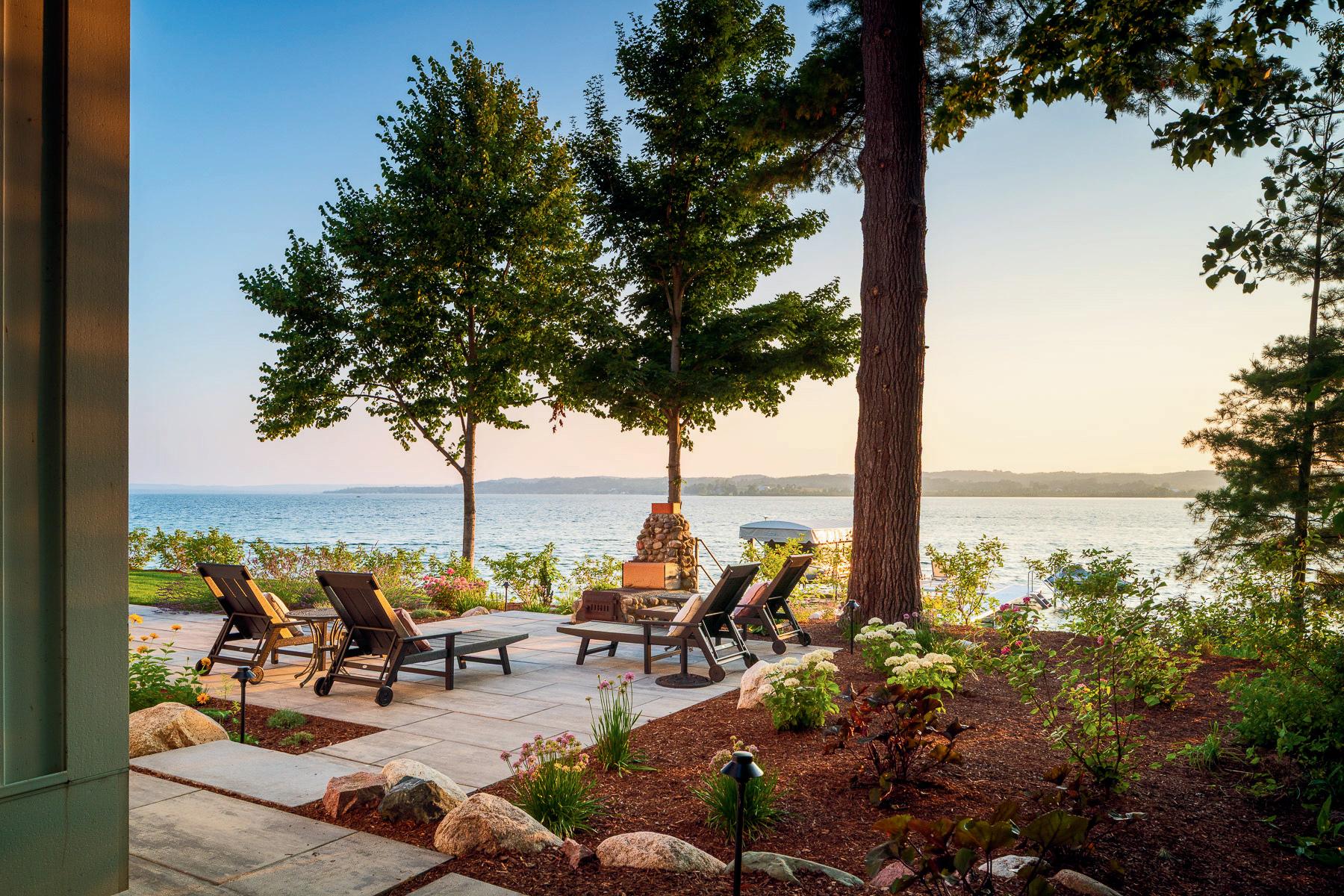







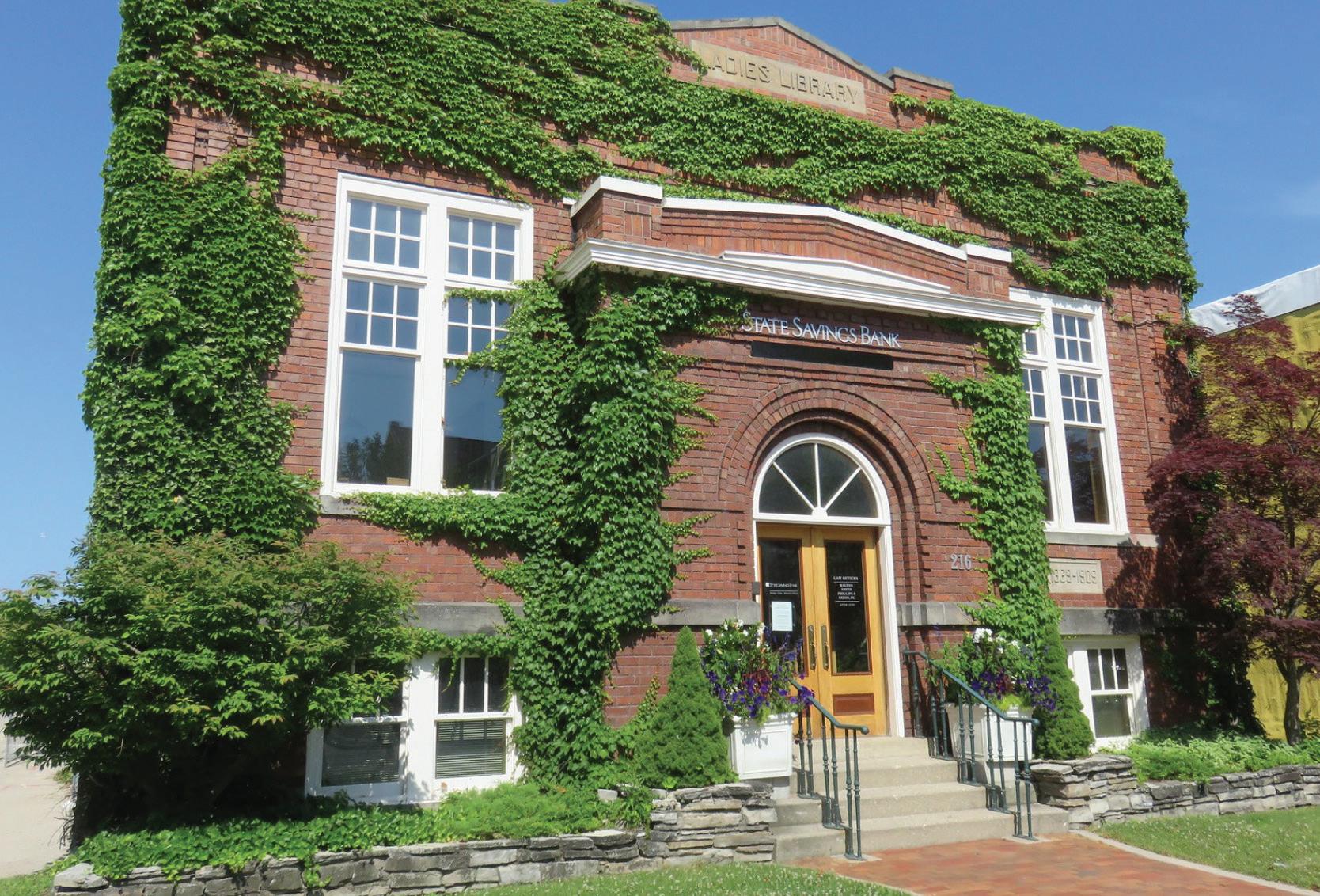









































By Chris Wendel
At first glance, “Reset” by Dan Heath seems to follow a familiar formula as a book that walks the line between selfhelp and entrepreneurship. Add a catchy title, a concept that’s easy to grasp and back-cover endorsements from a tightknit circle of like-minded authors, and you have a recipe for market buzz.
Heath’s previous titles, including “Upstream,” “The Power of Moments,” “Switch,” and “Made to Stick” reinforce that impression.
Looking beyond my first “judging a book by its cover” reaction, “Reset” delivers practical steps to stop, reassess and refocus. Known for his practical, research-driven approach to business challenges, the strategies in “Reset” stress breaking free from stagnant systems, without sweeping overhauls.
Finding the time and energy to fix what’s not working in an organization can feel like an uphill climb, especially for small business owners and managers already stretched thin. Add in the complexity of old habits and processes, and it’s easy to see why many companies follow routine patterns rather than step back and make meaningful changes.
Heath introduces the concept of “leverage points”: the idea that meaningful progress often comes from identifying one critical area where a small change can create significant results. Rather than trying to fix everything at once, he encourages leaders to focus their efforts where they matter most. It’s a simple shift in thinking, but one that can fundamentally change how organizations approach problem-solving.
Heath also explains the role of progress as a motivator. He makes the case that employees are most engaged when they can see steady, meaningful progress in their work. This resonates, particularly in environments where long-term goals can feel distant. By breaking work into noticeable, achievable steps, leaders can create momentum that fuels both morale and productivity. Heath also uses what he calls the “miracle question”: If success were achieved overnight, what would you notice? This technique challenges teams to clearly define what success actually looks like, cutting through vague objectives and focusing attention on actual outcomes.
“Reset” also uses relatable examples to illustrate its points. A motivator for Heath writing the book was his experience at a Chick-fil-A where long car line leverage points were addressed to improve the flow of its drive-thru. He profiles a senior care business that solved its turnover churn by carefully interviewing applicants, having an existing employee shadow hires with a new client, while the new hire establishes a solid client rapport. Through what Heath terms “Mapping the System,” two school administrators discovered when

By Dan Heath
and where college graduates were able to get over hurdles with postgraduate job interviews and significantly improve their odds of securing meaningful positions.
Throughout the book, Heath pushes back on traditional thinking, particularly the idea that change must begin with widespread buy-in. Instead, he argues that action often precedes agreement. By demonstrating progress early, leaders can build the momentum needed to bring others along.
“Reset” is structured with short, focused chapters that make it easy to digest, each ending with summaries and practical takeaways. The inclusion of a “Reset Toolkit” reinforces the book’s hands-on approach, giving readers clear ways to apply the concepts immediately. Real-world examples, from improving operational bottlenecks to launching new initiatives, help reinforce the ideas in everyday business challenges.
At times, Heath’s direct approach may feel a bit repetitive for readers of his previ ous work, but his ability to translate complex organizational issues into clear, actionable steps remains a strength. The writing is relatable and the concepts are presented in a way that makes them easy to implement. The idea of focusing on one key leverage point, rather than spreading efforts too thin, is a practical takeaway that can be applied immediately in most business settings.
“Reset” serves as a useful guide for leaders, managers, and teams looking to regain momentum. It doesn’t promise overnight transformation, but it does offer a realistic and effective path forward for those ready to rethink what’s not working and take the first steps toward fixing it.
Chris Wendel works for Northern Initiatives, a community-based lending organization headquartered in Marquette, Michigan. He lives and works in Traverse City.







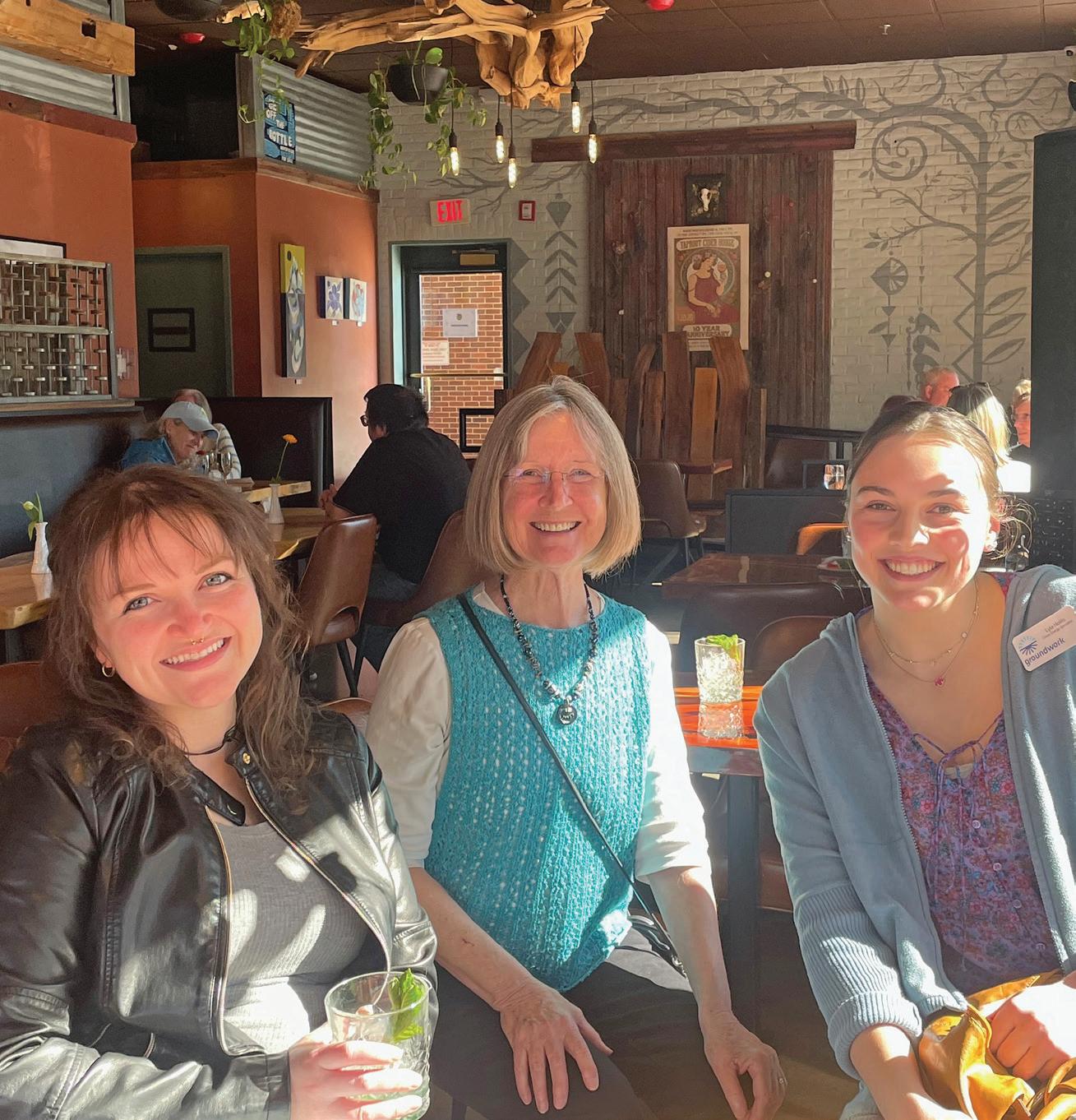
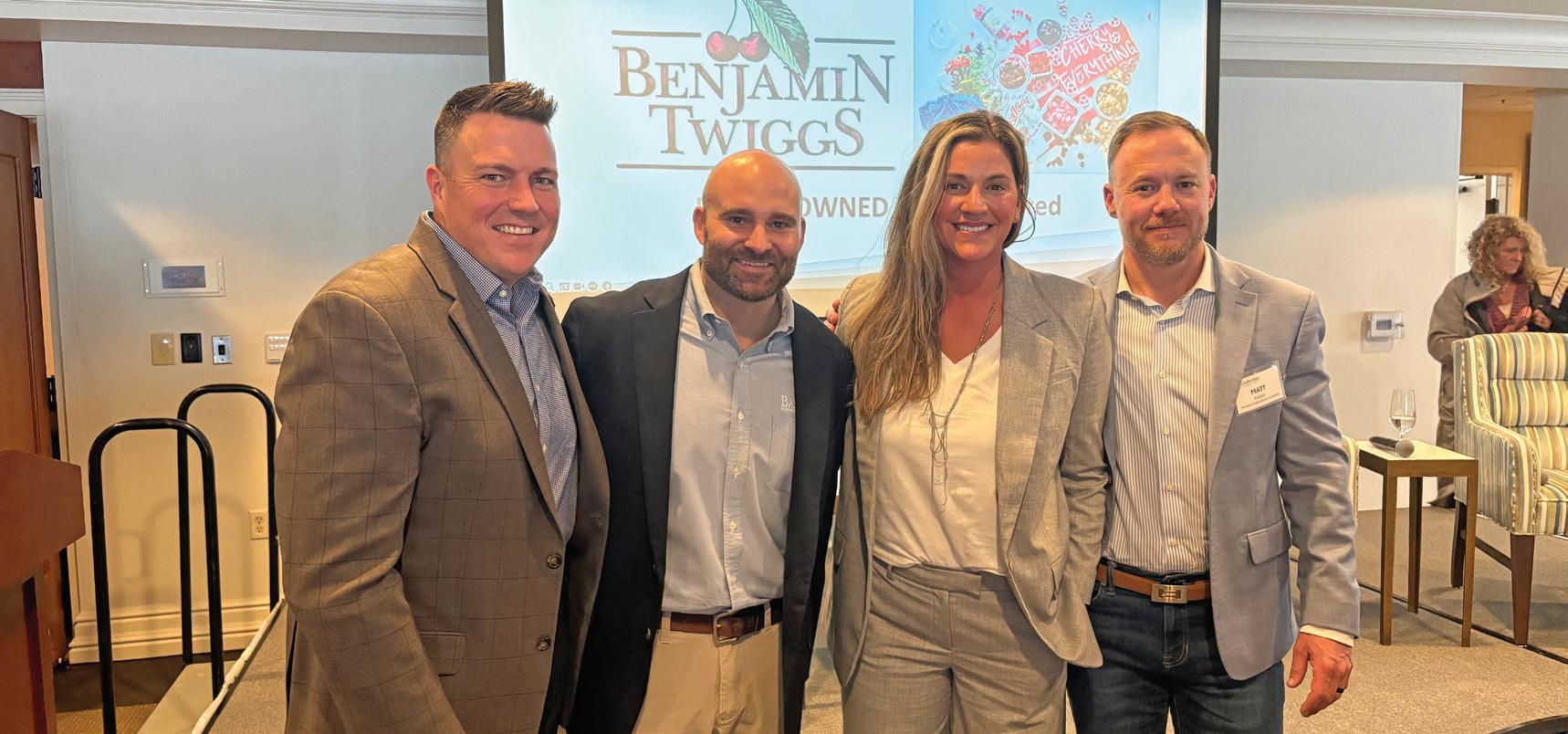
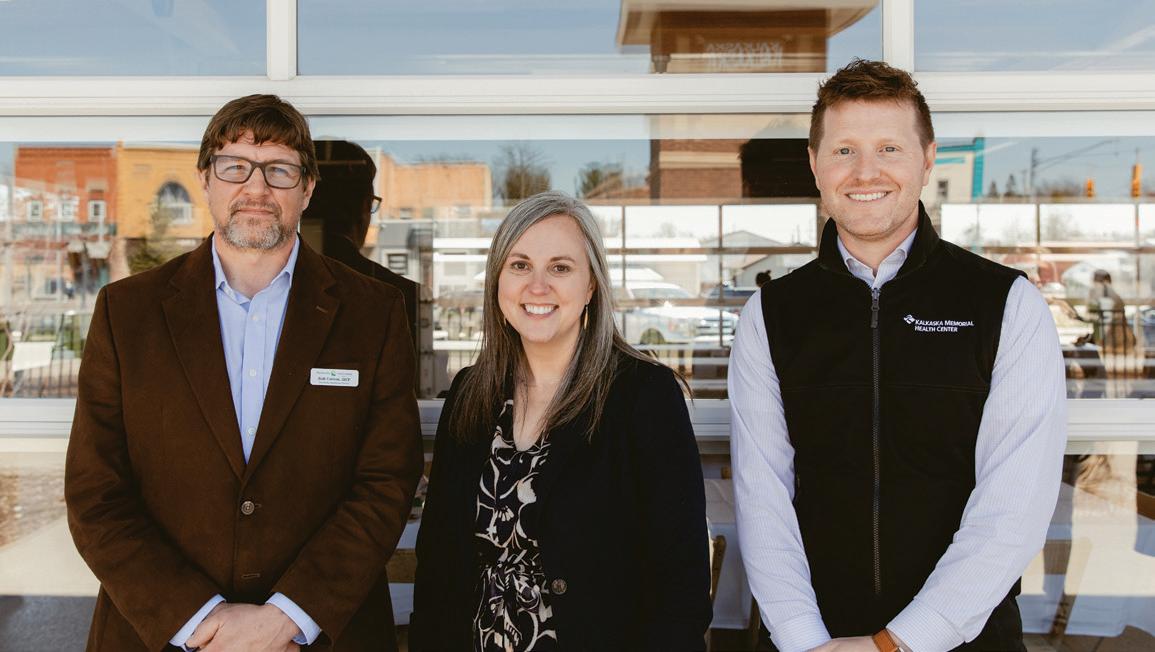


The TCNewTech Bluetech Innovation Challenge pitch competition and afterparty was just one event during Northern Michigan Startup Week, hosted by 20Fathoms. Started in 2013, the week spotlights the ventures, technologies, and creative talent shaping northern Michigan’s future.

Ashley Ochoa, coordinator of coding operations for the Oncology Service Line at the Cowell Family Cancer Center, has been awarded the Michigan Department of Health and Human Services Hometown Health Hero Award. She was nominated for her development of Fuel for Recovery, a program she created after witnessing firsthand the burdens patients with cancer face during long infusion therapies.

Tom Rockne and Autumn MacClaren were one of many guests, dignitaries and board members at Cherry Capital Airport’s “Gates To The Future” terminal groundbreaking April 24.
Please send Exposures by the 10th of the month to news@tcbusinessnews.com (labeled Exposures).
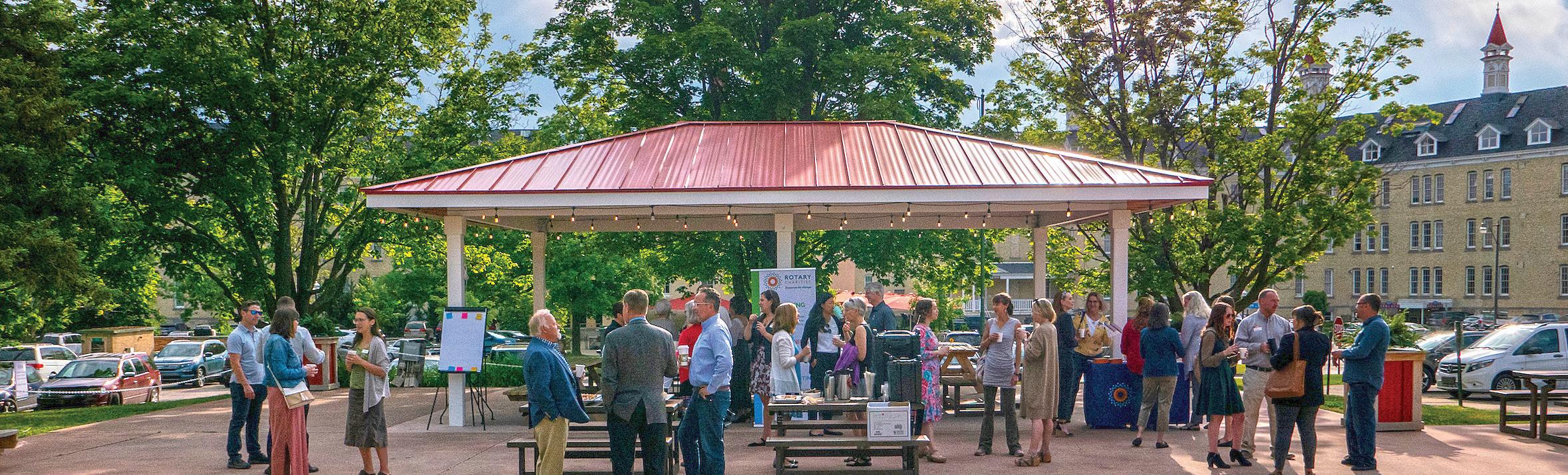






1 - Lauren Bramer has joined West Shore Bank in Traverse City as a relationship manager associate.
2 - Chris Dickens is the new chief credit officer at TBA Credit Union in Traverse City, overseeing the credit and risk strategy of the credit union’s commercial lending portfolio. Dickens brings more than 30 years of financial services leadership experience to the organization.
3 - David Peterson has joined State Savings Bank as retail manager at the Traverse City Front Street office. Peterson brings more than 30 years of experience to his new position overseeing day-to-day operations of the office. >>
4 - Desiree Rajala recently joined Golden Swan Management in Traverse City as its first REALTOR, supporting the company’s expansion into real estate services.








5 - Bob and Tia Rieck have joined @properties REMI Christie’s International Real Estate in Traverse City. The husband-and-wife real estate team bring more than 50 years of combined experience to the company.
6 - Ashlee Erickson-Trainer , REALTOR, has joined @properties REMI Christie’s International Real Estate in Traverse City.
7 - Matt Walter has joined CENTURY 21 Northland’s Traverse City office.
>> OTHER
8 - Helena Beckett is the new president and CEO of Cherry Central Cooperative in Traverse City. She replaces Melanie LaPerriere, who recently retired after leading the farmer-owned cooperative since 2019. Beckett brings more than two decades of experience in the fresh produce and retail industries. Most recently, she served as director of retail sales for BrightFresh® Microgreens.
9 - Ken “Butch” Hogarth , owner of Hogarth’s Pest
Control & Wildlife Removal in Traverse City, has been named Professional of the Year by the National Wildlife Control Operators Association. The award recognizes individuals who demonstrate outstanding leadership, technical expertise, integrity, and service to the public within the wildlife control industry. Hogarth has more than 30 years of experience serving residential and commercial customers throughout the region.
10 - Sara O’Hara has joined the Great Start to Quality Northwest Resource Center as the new quality improvement coach. O’Hara provides individualized coaching, consultation, and technical assistance to early care and learning providers seeking to strengthen program quality and long - term stability. Her work supports providers in the greater Grand Traverse area.
11 - Erin Shea Slomers has joined Flight Path Creative in Traverse City as office administrator. She brings a background in public relations to her new role.
12 - Claudia Dempsey recently joined Flight Path Creative in Traverse City as a graphic
Please send Newsmakers by the 10th of the month to news@tcbusinessnews.com
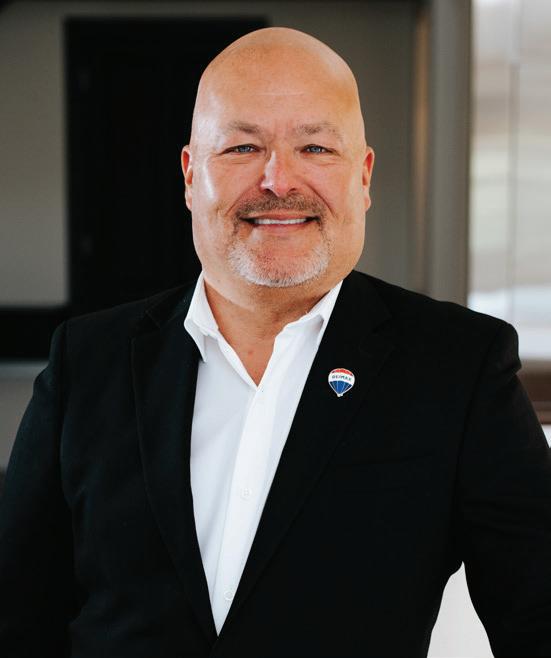


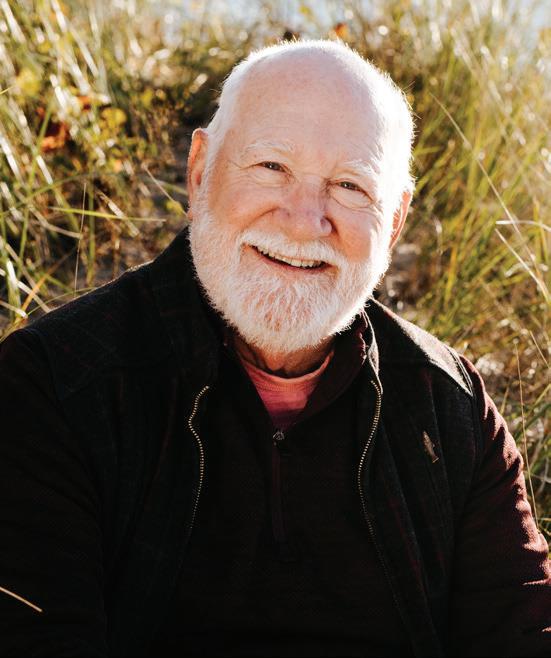

The following testimonials come directly from our 2025 Customer Satisfaction Survey.
“Very good partnership!”
-12 year client
“Michigan Planners brings creative ideas and solutions to us They are also really great about researching ideas we have and providing information and options They are a great advisor to our HR and leadership teams ” -3 year client
“The excellent customer service and overall employee experience makes Michigan Planners a standout in a very competitive market for insurance brokers I wouldn't dream of moving our business.” -17 year client
“The friendliness of staff is second to none.”
-9 year client
“Your commitment to customer service is 2nd to none!”
-5 year client
“I'm thankful every day for our MI Planners Team They always go above and beyond!”
-22 year client

“Your expertise and advocacy have been invaluable in ensuring the best outcomes for our organization, employees, and retirees. We greatly appreciate the flexibility of employee meetings to discuss plans ”
-1 year client

“Great service to our employees - best ever!!!!!” -12 year client
“Really love the personalized one-on-one assistance with helping employees choose the right plan for them ” -1 year client
“Michigan Planners has spoiled me!” -5 year client
“You serve with compassion and integrity...don't ever change!” -18 year client
“Each member of the MPI team is a joy to work with and makes my job so much easier There is a great depth of experience and knowledge that inspires confidence ”
-8 year client
“Responsiveness to urgent matters is great.” -5 year client

When you open your account at MSUFCU, you’ll gain access to exclusive benefits and a supportive community committed to helping you and achieve your financial goals.
From everyday banking to life’s biggest milestones, we’re here with the tools, guidance, and flexibility you need to move forward with confidence. As a member, you’ll have access to:
• A full suite of accounts to support every stage of life
• Superior service from a team that puts members first
• Convenient access to your money wherever you are
Pillur supports entrepreneurs and business owners with tailored solutions to turn ideas into impact.
Learn how we can support your next chapter at pillur.org.
Wherever you are in your financial journey, MSUFCU is here to help you build what’s next.