NO WALKING AWAY
Jeff Schmitz built Hotel Indigo through major setbacks. Now he’s back with The Syndicate.


Questions about investment and trust services? Let’s talk.



Jeff Schmitz built Hotel Indigo through major setbacks. Now he’s back with The Syndicate.
Questions about investment and trust services? Let’s talk.
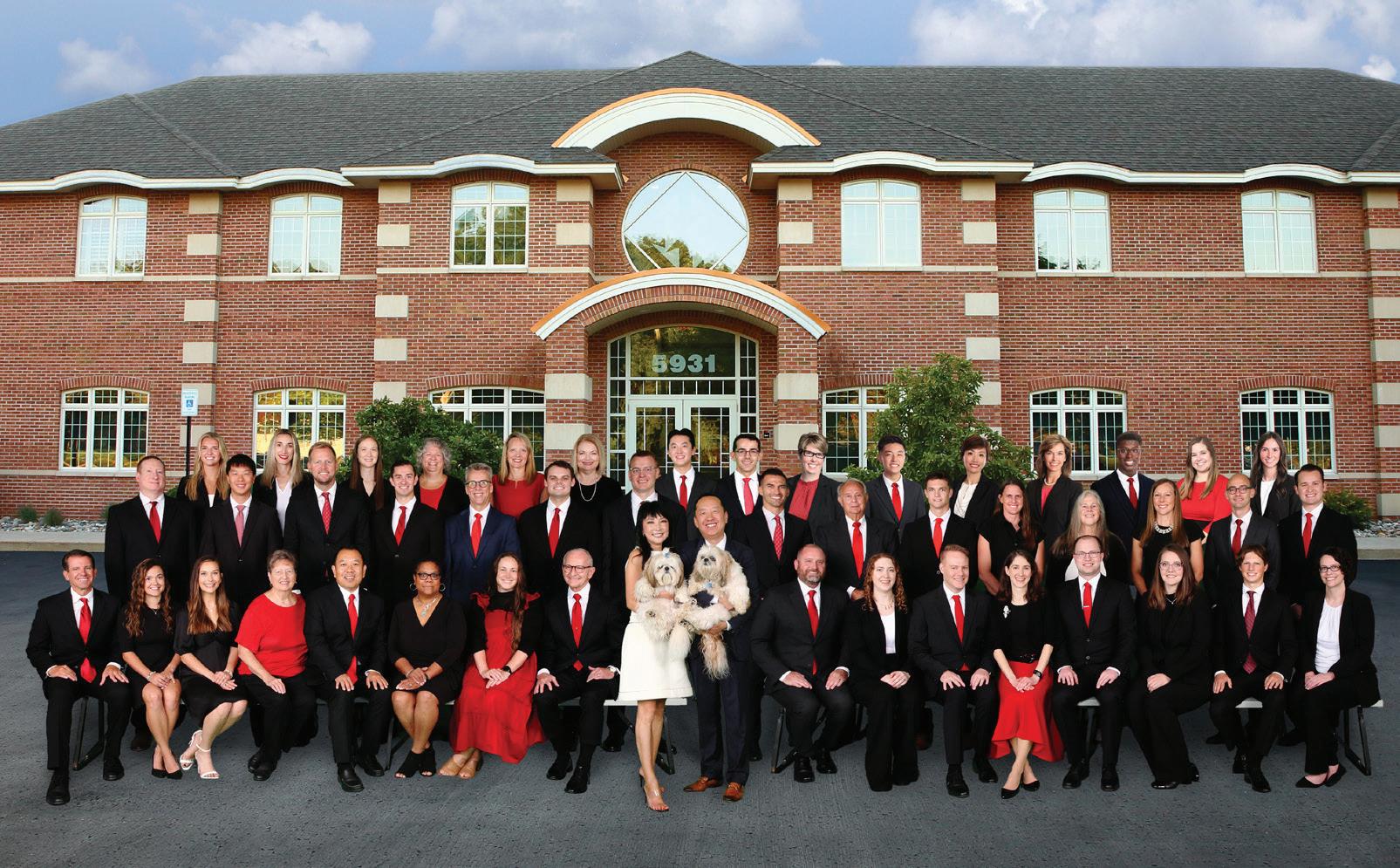
• We uphold a Fiduciary Standard and work with clients on a fee-only basis.
• We do not receive commissions, kick-backs, or soft dollars from product sales, eliminating inherent conflicts of interest.
• Our team of professionals holds designations and degrees such as CFP®, CFA, CPA, MBA, JD, and PhD.
• Charles received his MBA from the Kellogg School of Management - Northwestern University, his MA in Economics from WMU, and Executive Education from Harvard Business School and Columbia University.
Released September 15, 2025, covering the 12-month period ending June 30, 2025. Zhang Financial does not pay a fee to be considered for or included on Barron’s rankings. Zhang Financial pays a licensing fee to use the ranking in marketing materials. See zhangfinancial.com/disclosure for full ranking criteria and methodology. Ranked #1 on Barron’s List of 2025 Top 100 Independent Advisors Charles Zhang, CFP®, MBA, MSFS, ChFC

PACE North, which has served older adults in Traverse City and surrounding communities since 2019, has announced it is affiliating with One Senior Care, supporting both the continued growth of the PACE program in northern Michigan and the creation of an independent foundation dedicated to serving older adults in the region. One Senior Care currently serves more than 1,200 participants across Pennsylvania, Ohio and Kentucky, with a focus on rural and medically underserved communities. Through this affiliation, PACE North will gain access to additional clinical, operational and administrative resources to support its team and enhance care. The local PACE North team will remain in place.
Energize Wellness & Physical Therapy has opened at 117 S. Union St., Suite B in downtown Traverse City. Founded by licensed physical therapist Cassidy Klein, the studio offers concierge-level physical therapy and specialty fitness classes in one space. For more information, visit energizetc.com.

Brick & Corbett, part of
Bayshore in Traverse City, recently announced its expansion into the Torch Lake market. “Torch Lake homes aren’t just properties, they’re legacies passed down from generation to generation,” said BJ Brick, partner at Brick & Corbett. “The homes here carry decades of memories. When a family decides it’s time to sell, they deserve a team that understands that weight and presents their home accordingly.”
Events North in Traverse City has been recognized as a 2026 Woman-Owned Small Business of the Year, presented by Michigan Celebrates Small Business. “For 18 years, our clients have trusted us with their most important assets: their employees, their customers and their reputation,” said founder and CEO Allison Beers. “I am so honored to be recognized as a 2026 Woman-Owned Small Business of the Year. I love the employees who helped us get to this company milestone!”
The Northern Lakes Economic Alliance (NLEA) has released a new talent
attraction and retention video, a regional marketing initiative designed to help local employers recruit and retain talent by showcasing northern Michigan as a great place to live and build long-term careers. The video is available (on YouTube) for businesses, community organizations and regional partners to share across websites, social media platforms, hiring campaigns and recruitment materials. According to the NLEA’s Spring 2026 Economic Pulse Report, businesses across the NLEA region indicated they could hire 321 employees in the next two years if a more robust talent pool existed.

Northland Self-Storage/Mobile To You in Kingsley was recently recognized with the 2026 Portable Storage Company of the Year from the National Portable Storage Association. In operation for more than 35 years in northern Michigan, the company has grown from a local self-storage provider into a regional company serving homeowners and businesses. Its mobile division offers portable storage containers to homes, cottages, businesses and job sites as well as portable job-site offices. Northland also recently opened its new Kingsley hub along the M-37 corridor to better serve the growing demand in Traverse City and the surrounding markets.
The City of Traverse City’s Human Rights Commission recently announced the recipients of the 2026 Humanitarian Business/Organization Award: HelpLink (formerly Spark in the Dark) in Traverse City and the Neurodiversity Support Center (NSC) at Northwestern Michigan College. HelpLink is a tech-enabled nonprofit that connects businesses, nonprofits and communities in one space to deliver fast, dignified and discreet help in times of need. The NSC supports neurodiverse students in making a smooth transition from high school to college while developing skills needed in the workplace. The Human Rights Commission also recognized Marcello Betti with the 2026 Sara Hardy Humanitarian Award. Betti is the legal director of Immigration Law & Justice Michigan (formerly Justice For Our Neighbors) in Traverse City, a nonprofit organization that provides pro- and low-bono immigration
to
individuals.














Designed for Northern Michigan waters, Tidewater boats are perfect for days on Grand Traverse Bay, Lake Michigan, and beyond. Whether fishing, cruising, or relaxing at the sandbar, every ride delivers smooth performance and lasting comfort.



June 18
July 16
August 6


There are few seasons in life that feel as full of possibility as graduation season. This year, that feeling is especially close to home. In May, my daughter graduated from Loyola Chicago, and my son walked the stage at St. Francis High School. Like many parents across our region, we are celebrating their achievements and preparing for what comes next.
For our students, graduation marks the beginning of careers, communities, and lifelong economic participation. For those of us focused on regional growth, it’s a critical inflection point: Do these graduates see a future for themselves here in Michigan, and more specifically, here in northern Michigan? Right now, the answer is mixed.
Michigan continues to face real challenges in education and economic competitiveness. A recent Detroit Regional Chamber analysis highlighted a growing disconnect between perception and reality: Many residents believe the state is performing near the national average, but the numbers tell a different story. Michigan ranks 33rd nationally in degree attainment, 44th in student reading performance and 40th in per capita income. When it comes to attracting high-tech jobs, we fall to 45th.
At the same time, the state has set ambitious targets to reach 60% post-secondary attainment by 2030 and expand high-skill jobs across scientific, technical and professional fields. There are also encouraging demographic signals. Since 2020, Michigan has gained more than 87,000 residents in the 25 to 44 age bracket; a meaningful reversal after years of decline. Two of the primary drivers of that migration at the state level are manufacturing jobs and strong recreation
EDITORIAL & BUSINESS OFFICE
P.O. Box 4020
Traverse City, MI 49685
231-947-8787
ON THE WEB
tcbusinessnews.com
PUBLISHER
Luke W. Haase lhaase@tcbusinessnews.com
CONTRIBUTING EDITOR
Gayle Neu gneu@tcbusinessnews.com
HEAD WRITER
Craig Manning
STAFF WRITER
Art Bukowski
Why northern Michigan’s future depends on bridging the gap from college to career
industries. Sound familiar?
But growth without retention won’t get us where we need to go. Statewide, Michigan performs relatively well in retaining college graduates, ranking seventh nationally. But that success isn’t evenly distributed. Rural regions retain closer to 50% of their young talent, compared to 70 to 75% in metro areas. Graduates leave due to a perceived lack of economic opportunity. More than a third of young people say they would leave Michigan due to limited career options in their field. That is our challenge and our opportunity.
Northwestern Michigan College plays a vital role in our regional talent ecosystem by providing accessible programs, workforce development initiatives and connections to employers that serve thousands of students across our region. But without a four-year university between Big Rapids and Sault Ste. Marie, we lack the consistent, large-scale pipeline that metro regions benefit from. Many students attending Michigan’s universities elsewhere simply are not exposed to the breadth of career opportunities available here, or they lack the structured pathways to find them.
We need students to see northern Michigan not as a place they visit, but as a place where they can build a career, a community and a future.
If we want graduates to build their lives here, we have to bridge the gap between education and employment more effectively. That’s where internships and experiential learning can play an important role. Internships don’t just help students build resumes; data shows they fundamentally change outcomes. They double the likelihood that a graduate secures a strong first job and significantly increase long-term career engagement. Last year, 8.2 million college students sought an internship; only 3.6 million got one. That 4.6 million shortfall represents careers and economic potential left unrealized. For employers, the math is a no-brainer; the internship-to-hire ratio is roughly 144 times better than the traditional job-posting-to-hire ratio.
COPY EDITOR Becky Kalajian
CREATIVE DIRECTOR
Kyra Cross Poehlman
CONTRIBUTING WRITERS
Ross Boissoneau
Kierstin Gunsberg
Rick Haglund
WEB PRODUCTION:
Byte Productions
MAILING/FULFILLMENT
Village Press
DISTRIBUTION
Marc Morris
COVER PHOTO
Megan Renae Studios
That disconnect has real consequences for our workforce pipeline, and it is a gap we all need to address together. Across the region, organizations including NMC, Michigan’s Creative Coast, Traverse Connect and the Traverse Area Human Resource Association are working to build a more connected system that links students to opportunity earlier and more effectively.
Initiatives like the Traverse City Summer Spark Intern Event are designed to help interns make connections and network within the region. When students can see themselves living here, they are far more likely to stay or return. A new regional internship job board, paired with a resume distribution platform, will make it easier for local businesses to find
SERVING
Grand Traverse, Kalkaska, Leelanau and Benzie counties
AD SALES
Lisa Gillespie
lisa@northernexpress.com
Kim Murray
kmurray@tcbusinessnews.com
Kaitlyn Nance knance@northernexpress.com
Abby Walton Porter
aporter@northernexpress.com
Michele Young myoung@tcbusinessnews.com
emerging talent and for students to discover opportunities they might otherwise miss entirely.
We are also supporting employers who want to launch or strengthen their intern programs. Upcoming workshops will cover both the return on investment and the practical steps to build a meaningful internship experience. And we’re taking our message on the road through coordinated presence at university career fairs, where we can tell a more complete story that is not just about career opportunities, but the quality of life that makes this region distinctive. Increasingly, graduates make decisions based on both professional and lifestyle factors. Northern Michigan has a compelling case on both fronts.
Talent attraction and retention don’t happen by accident. We need to build a stronger pipeline connecting Michigan’s colleges and universities to the industries growing here, including advanced manufacturing, healthcare, education, BlueTech, uncrewed systems and many others. We need students to see northern Michigan not as a place they visit, but as a place where they can build a career, a community and a future.
Personally, as I watch my own kids step into their next chapters, I hope I’ve done a good job of helping them prepare. But for our region, the question isn’t whether these graduates are ready for what comes next. The question is whether we are ready for them! If we can connect the dots between education and employment, graduation season can better serve as an invitation to career success for our grads and economic opportunity for our region.
Warren Call is president and CEO of Traverse Connect.
The Traverse City Business News
Published monthly by Eyes Only Media, LLC P.O. Box 4020 Traverse City, MI 49685 231-947-8787
Periodical postage qualification pending at Traverse City, MI.
POSTMASTER: Send address changes to The Traverse City Business News, PO Box 1810, Traverse City, MI 49685-1810.
The Traverse City Business News is not responsible for unsolicited contributions.
Content ©2026 Eyes Only Media, LLC. All rights reserved.
EYES ONLY MEDIA, LLC
By Art Bukowski
Andrew Kohlmann and his wife Amy bought what was then known as Signs Now in 2008 after working there for several years prior. The shop now known as Image360 has churned out thousands of custom signs and other displays for scores of different customers over the years. Andrew was nice enough to show us around his desk at his home, where he works four days a week to better care for Amy, who has multiple sclerosis. If you have an idea for a From the Desk of Feature, email Art at abukowski@ tcbusinessnews.com
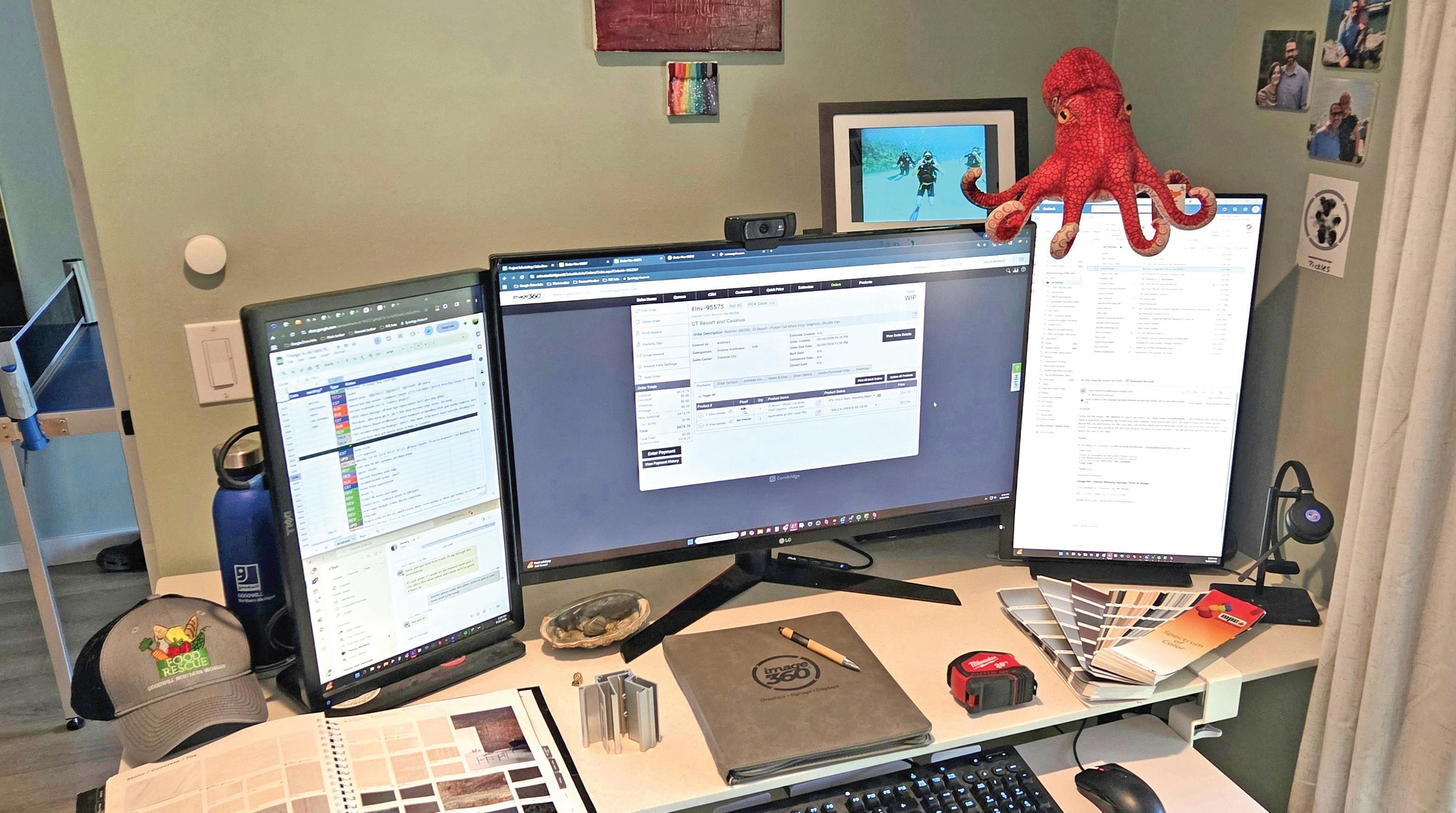

1. I’m big into scuba diving and anything underwater, and the octopus is my favorite animal. They are very smart. We went to the Tampa Aquarium and they had a display of the giant Pacific octopus, and so I sat there with him and really made a connection. And then when I went to the gift shop, I’m like, ‘Oh my gosh, I have to have that.’
2. I love having multiple monitors. Part of it is I would consider myself a bit of a technology nerd, but we’re also basically paperless at the office, so that necessitates many different applications being open at once. And there’s efficiency. I can be working on one thing on one screen and doing another thing on the other one.
3. I’ve been a Rotarian for 10 years now. It’s been so great being involved in that organization and experiencing the impact that it has in our region. There are so many ways to get involved and support the community, and I’ve really loved my time in the club.
4. I have two girls who are 16 and 17. Family is everything to me, and it’s why I do what I do. And man, it flies by just like everyone tells you when you have little kids. And it doesn’t seem like that long ago they were very small, and
right now they’re not far off from flying the coop and they’re both driving. It’s wild.
5. There are hundreds if not thousands of material options when you’re making signs, and everything we do is custom made. So there are definitely materials that we choose to use more often, but if we’re doing interior signs, that really opens up material options.
6. Since I’ve transitioned to working at home four days a week, I’m on the phone a lot. And this is way more comfortable than a phone. I’m also involved in a lot of boards and committees and have lots of meetings, so it’s very helpful.
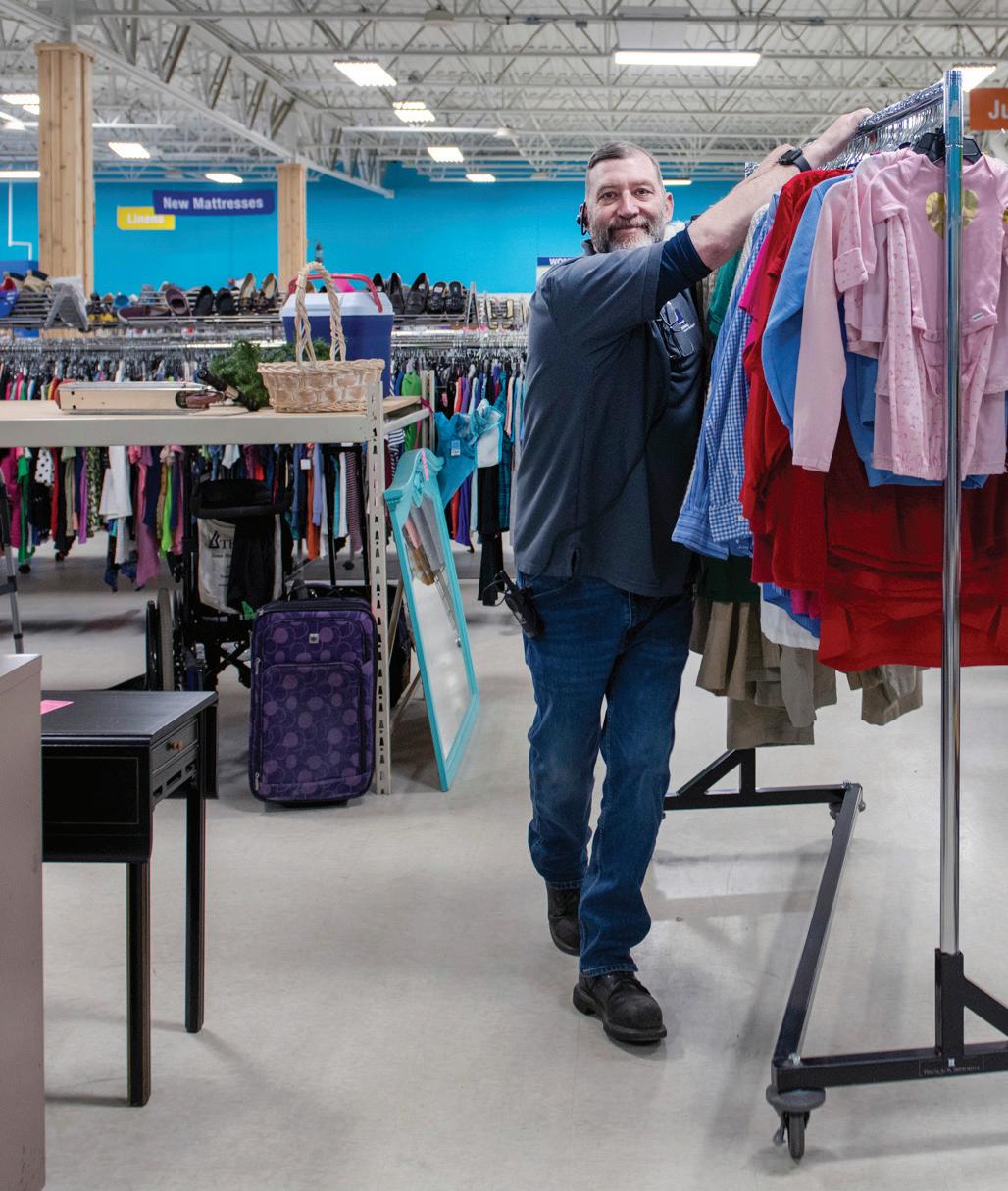
7. That’s a hat from Goodwill Food Rescue and a Goodwill water bottle. I serve on the Goodwill board and on the committee for Food Rescue. I’m very passionate about everything that is Goodwill.
8. Amy and I got certified to dive together before we got married, and our first saltwater dive was in Barbados. I loved everything about it, and eventually we had to have a tank. It’s so peaceful. We sit here at night and watch the fish swim around.
By Art Bukowski
Jeff Schmitz isn’t going to rest on his laurels.
There’s a better chance he burns the laurels and scatters the ashes into the wind, maybe at the Arctic Circle (more on that later).
Even if a development project is a hit by all accounts – even if it looks good, turns a profit and earns rave reviews – he’s more interested in what went wrong than what went right.
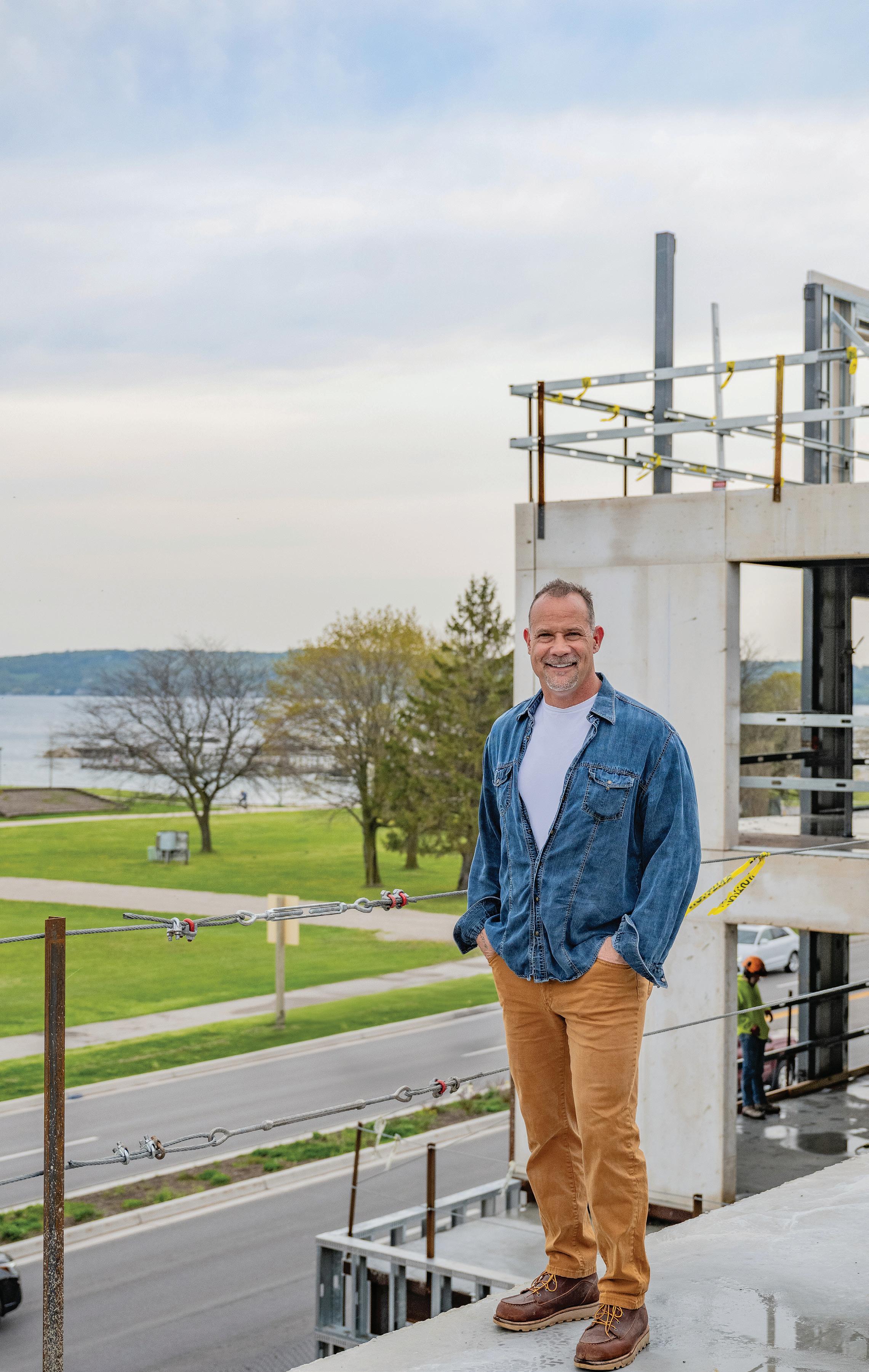
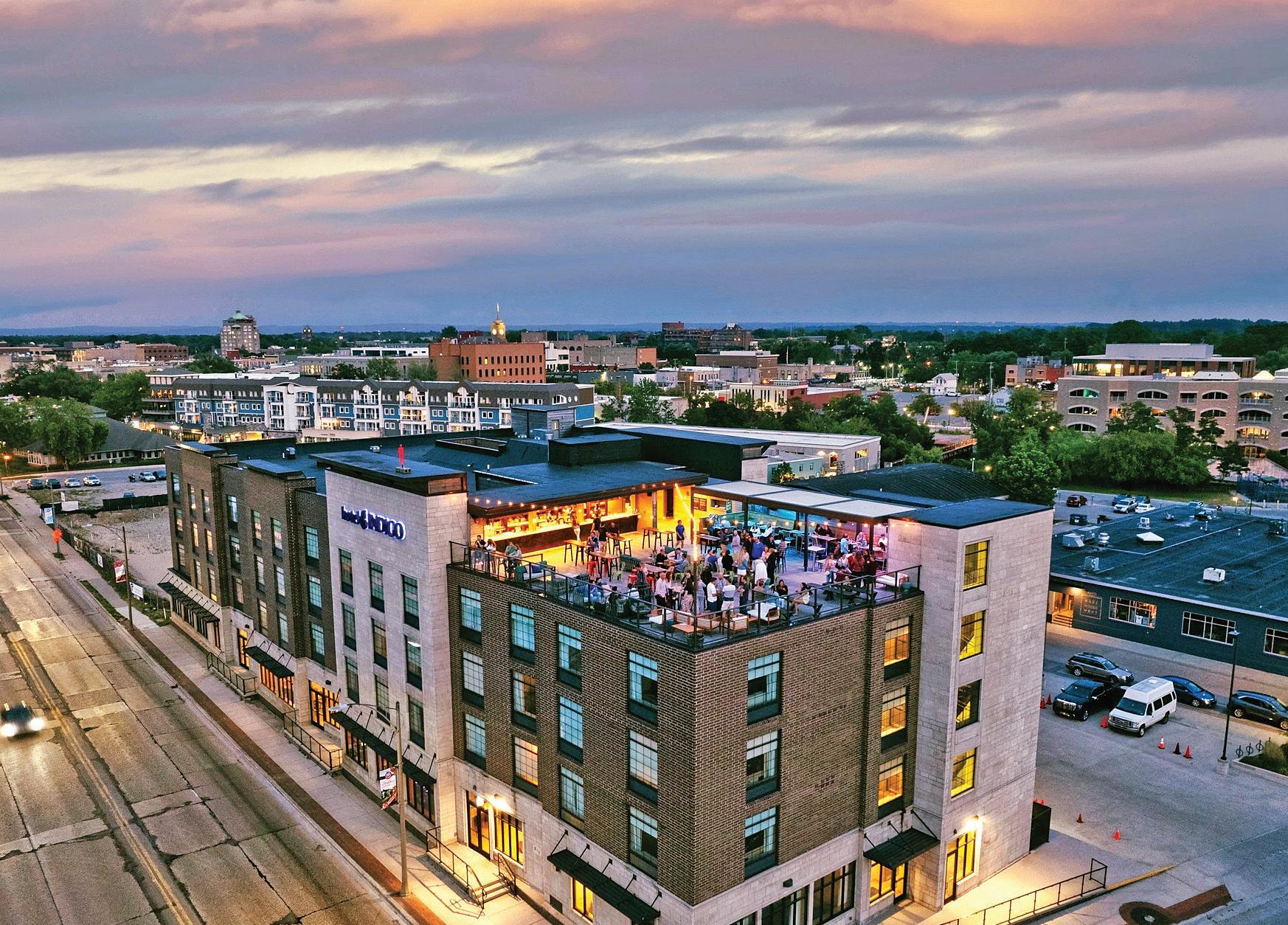
Schmitz has been watching as his latest local hotel project, the ambitious Syndicate, rises along Grandview Parkway across from the Open Space and next to Hotel Indigo (his first Traverse City project). When it’s completed sometime in 2027, he’ll be there taking notes.
“We’re going to build this hotel, and the day it opens, I’m going to criticize every single part of that asset … I’ll be bitching about everything,” he said. “I’m going to say, ‘Well, I can do it better next time.’ All you think about is, how do we get better tomorrow?”
This mindset has been key as Schmitz and his Rochester-based J.S. Capitol group have developed more than four million square feet across more than 100 projects around the country over the past 20 years. The TCBN connected with Schmitz to learn more about what makes him tick – and what he thinks of the northern Michigan market.
Schmitz grew up in the Detroit area and “barely graduated” from Rochester Adams High School before attending and playing college football at Ferris State University, where he remains a major donor.
“I started off in construction management, but I realized that it wasn’t the path because construction management courses and football practice didn’t align,” he said. “So I switched my major to small business administration and graduated.”
He spent some time in construction before quickly opening up his own company, working basic builds as a general contractor. Hard work led to connections, and connections allowed for growth. He landed a big job remodeling the Pontiac Silverdome, and at only 25 landed his first contract to build a hotel – this one a Holiday Inn Express in Canton.
“When they interviewed me for the job, I told them I was 32,” he recalled, laughing. After the 2008 economic downturn, he made use of millions of dollars of so-called GO Zone bonds (Gulf Opportunity bonds; tax-exempt federal bonds authorized by Congress to rebuild after Hurricane Katrina) for a variety of projects in Mississippi and Alabama.
It was through these projects that he ended up owning his first hotel (he built a hotel for a person who couldn’t pay him, so he took it over). This was the start of his

transition from contracting to development and ownership.
“My vision was to eliminate working for anyone ever again other than myself … so I started developing my own assets in Mississippi and then in Dallas,” he said. “I figured f--- it, if these other guys can do it, I can do it just as good or better, and if you own a hotel or another asset, you’re making money while you’re sleeping.”
He found that developing got his juices flowing. It still does – big-time.
“Being a real estate developer is one of
the few things you can do where you can wake up in the middle of the night and have this idea of something, go look for a piece of dirt and then create something out of your mind,” he said. “You employ a bunch of people, and then when it’s done, you can touch it, feel it. And it’s a tangible thing, right? You take your own vision and then actually dial in and get it done. It’s really a fantastic thing.”
He now has about 600 people working in developments he built and still owns, ranging from a network of daycare centers

(Premier Academy) and car washes to cannabis facilities, restaurants, apartments, hotels and senior living facilities.
“We’re in a lot of different spaces right now,” he said. “(And) I challenge my asset managers and my president: What are we doing to be better than we were last year, not from purely an economic standpoint? How are we managing our people and our processes better than we did last year? We have to keep pushing.”
Schmitz learned that he deeply enjoys owning and running operations after he’s
built them, even though it means he’s on the hook for their financial performance.
“A lot of developers … put it all together and turn it over. They deal with the architects, the engineers, they hand it all over and get paid a fee. That’s just not very exciting for me. It’s nothing tangible. I’m just working for a paycheck at that point,” he said. “But when you own them, you do take on all of the risk.”
He doesn’t own and operate everything he builds forever, though, and he figures he’s sold about half of his properties over

the years.
“I’m not a fan of selling assets, but in the real estate world, you can either raise cash, bring in a whole bunch of partners in certain different developments, or you can get liquid and sell a few assets,” he said. “Everything is for sale, so don’t fall in love with that asset.”
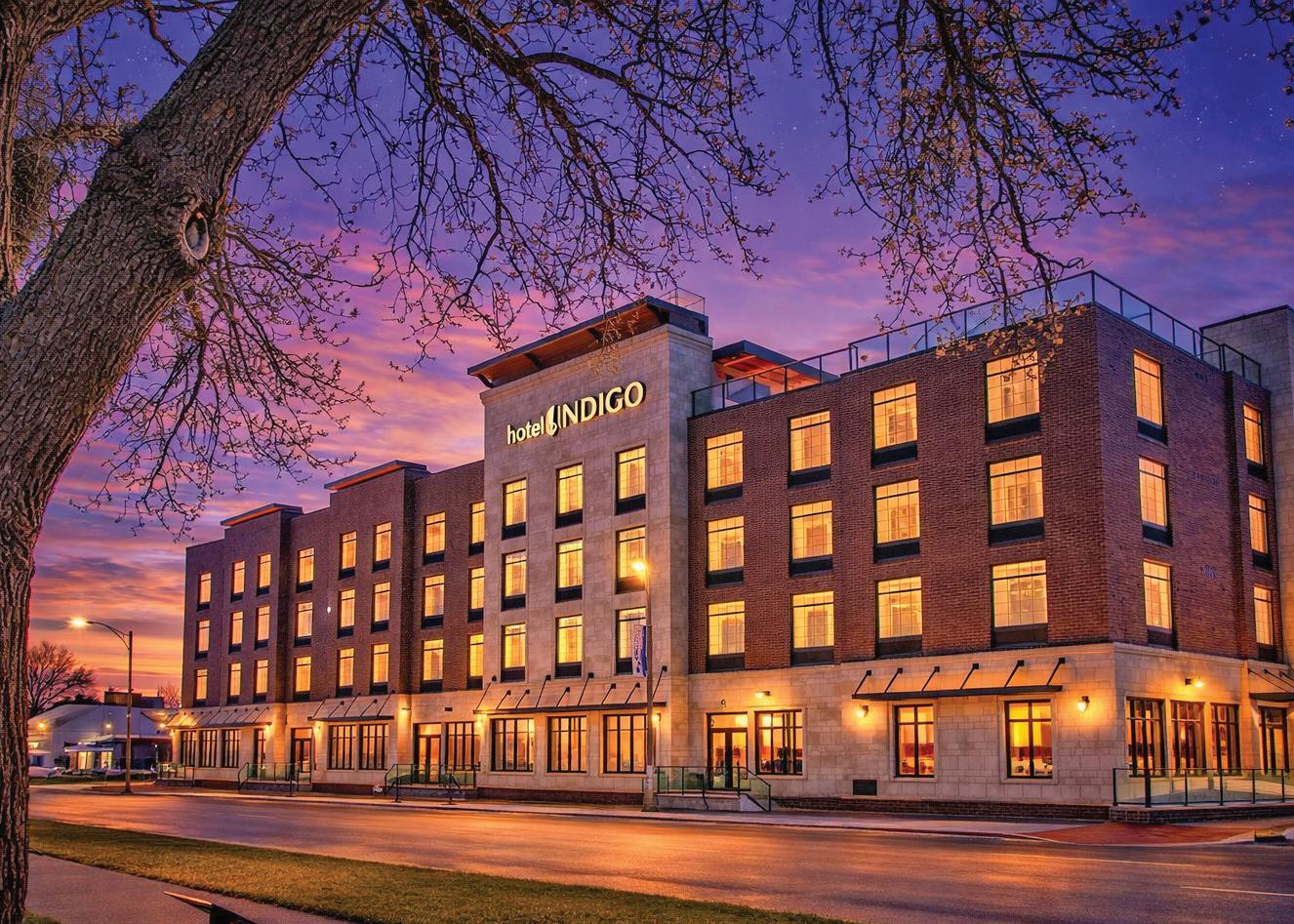
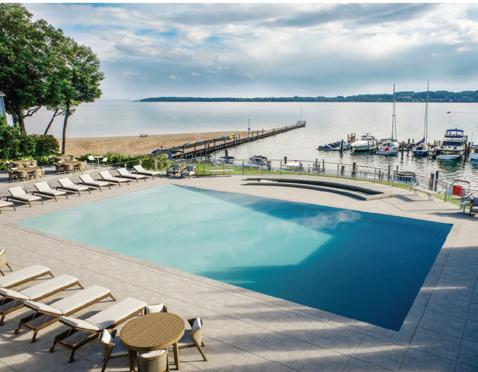
One of those sales was the Hotel Indigo, which he built for around $17 million and sold it less than three years later for about $26 million.
“At the time, (I’m told) it was the highest price per-key sale (in Michigan history),” Schmitz said. “And we netted a little over $2 million a year for the twoand-a-half years we owned it.”
Perseverance and smart people
About Hotel Indigo: That project leveraged another key to Schmitz’ success – one of the biggest, he figures.
“It is 100% without a doubt all about



perseverance,” he said. “You’re going to get the f--- knocked out of you so many times if you’re an entrepreneur, but you’ve just got to keep rolling, man. You’ve got to push through.”
Indigo was an absolute slog for a variety of reasons, ranging from unexpectedly high groundwater contamination to water table issues, financing troubles, very rough weather and more.
“You just look at all of the disasters I dealt with at Indigo, and I can’t tell you

how many developers came up to me and said ‘I can’t believe you didn’t walk away from that deal,’” he said. “Again, it’s 100% about perseverance in anything you do.”
A few years ago, he decided he wanted a dose of physical and mental perseverance, so he spent six and a half weeks in a tent in Grise Fiord, Nunavut – one of the northernmost settlements in the world.
“I lost 40 pounds. You’re so f------ cold every day that your body’s just burning


calories. The warmest it ever got was minus 45. (But) you have to push yourself as a human being to be comfortable being uncomfortable.”
It just made him miss work more, he says.
“The thing that I think I learned the most is I couldn’t wait to get back to the f------ grind,” he said. “My kids thought – everybody thought – that after I came back I was going to retire. But it was totally the opposite. It made me want to go, go, go.”
Schmitz is detail-oriented, particularly when it comes to the look and feel of his projects. It’s the little things, he says, that can elevate a property.
“I get involved in every stitch, in every detail,” he said. “There’s not a pen that goes in those rooms that I don’t approve.”
But this doesn’t mean he micromanages. In many facets of his operations he knows when to step aside and delegate to people who are more capable than him. This is a trait that can be fleeting in leadership and one he believes has played a massive role in his fortunes over the years.
The project has been largely smooth sailing thus far, especially compared to the Indigo, though this past winter gave him serious flashbacks to the polar vortex winters of 2014-15 when the Indigo was getting started.
“Between December 10 and just a few weeks ago, we probably only got 40 working days on that project. And we tried everything. We tented that first floor to try and make something happen, but those winds were just howling and it was so cold,” he said. “I bet you I’ve spent over 100 grand just in propane (trying to heat the space).”
“We’re going to build this hotel, and the day it opens, I’m going to criticize every single part of that asset … I’ll be bitching about everything. I’m going to say, ‘Well, I can do it better next time.’ All you think about is, how do we get better tomorrow?”
– Jeff Schmitz, Owner, J.S. Capitol Group
“A key to my success has always been that I hire people who are way smarter than me. And that’s 100% real,” he said. “My stepfather …was a nice guy, brilliant guy. Chief operating officer for Caterpillar. One day he said to me, ‘Jeff, if I had my brains with your balls, I’d be a billionaire.’”
Schmitz has certainly grown wealthy in this business, but it’s not what drives him.
“The happiness comes from the journey,” he said. “It’s not about how much money you’ve made. Money is just a tool in my business. It’s just like if the carpenter forgets his hammer at home, he can’t go to work. If we don’t have any money, we can’t go to work.”
Schmitz was initially attracted to the Traverse City market when the landowners of what is now Hotel Indigo grew frustrated by talks of a hotel on the site going nowhere. One of them contacted Schmitz, he says, because they heard he has a reputation for getting things done.
“And so I went up there. I loved the site, I loved the growth that was happening. And back then, they really didn’t have a marquee hotel property. (So) I said, ‘We got to do this deal,’” he said.
Now he’s working on the Syndicate, a four-story, 110-room hotel that will be a Marriott Bonvoy franchise. It will feature a ground floor restaurant, spa and fitness center, banquet room and three board rooms. Like the neighboring Indigo, it will have a rooftop bar space.


Traverse City has been a welcoming place to work, Schmitz says.
“The people in Traverse City have been extremely wonderful. The general population, the other business owners, I think they’ve been fantastic. You can’t ask for better hospitality from a town like Traverse City anywhere in the country,” he said. “I’ve had a great relationship with the city. The planning commission has been wonderful, the DDA has been wonderful. It’s been a real treat to work with these people.”
That said, he’s still chapped about certain facets of the municipal experience.
“I’ve never seen property taxes in a city like that anywhere in the world,” he said. “I ended up with a million dollars in interim property taxes during construction (of Hotel Indigo).”
And there are, of course, other downsides to this market. For one, land costs and competition are higher than ever before.
“The cost of entry is just huge – it’s really hard to get a deal done without using private equity or credit up there,” he said. “And there’s a lot of private equity money. The big players are really entrenched in Traverse City. And I don’t play in that world. I don’t want to play in that world. But you’re seeing a ton of money being dumped into that town.”
It’s also hard to find reliable and reputable construction workers up here, he says, and he’s getting a bit tired of that northern Michigan markup.
“Cost of entry becomes your biggest problem, and your second biggest problem is … your labor market is just awful. And then there’s construction costs,” he said. “For example, drywall is a dollar more per square foot up there than it is down here.”
Then, like everyone else, once Schmitz has built and is running a business, he can’t find employees. Housing is perhaps the biggest reason for that, so he’s taking matters into his own hands.
“We’re buying a couple of duplex homes up there, and we’re going to house our own people in the summer months,” he said.


OVERVIEW
Keen is proud to energize the Annika Place II Apartment Complex with a brand-new renewable energy solution.
SOLUTION
Solar Panel Installation – 13 kWh Solar PV
Woda Cooper Companies designed the Annika Place II building with the help of Keen Technical Solutions to be ‘solar ready’ in deference to Traverse City’s goal to be carbon neutral. We promised the city commission we would place solar panels on the building if funding became available. Fortunately, we found a funding source years later after the building was days before C of O and Keen was on site immediately after contract execution fighting the snowy elements which pleased our investor and owners.






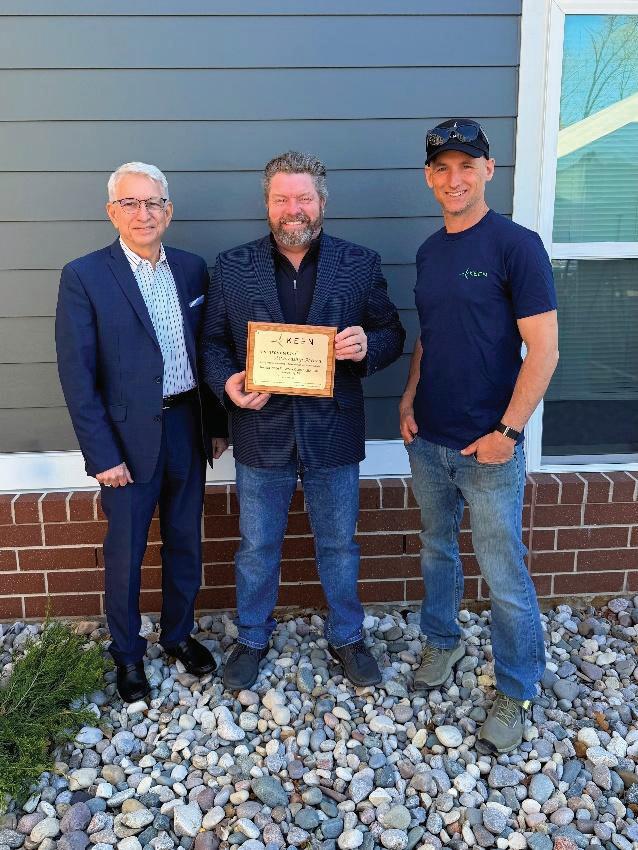
~ Craig Patterson Senior Vice President – Development Woda Cooper Companies, Inc.






By Craig Manning
It’s not every year the United States celebrates its “semiquincentennial” – the word for a 250th anniversary. It’s also not every year that your town’s marquee festival (and biggest tourism draw) marks its own centennial.
For Traverse City, both of those major milestones are happening in the very same summer – and on the very same weekend. Trevor Tkach, president and CEO of Traverse City Tourism (TVC), says that convergence is enough to set up the summer 2026 as one for the record books.
He’s got good reason to feel bullish: In January, Cherry Capital Airport (TVC) announced its third consecutive year of record-breaking traffic. 2025 brought a whopping 935,816 passengers through TVC, up 19% from 2024’s total of 787,114 passengers. A similar growth pattern in 2026 would bring TVC over the million-passenger barrier for the first time ever, putting northern Michigan in even more rarified air as a national and global destination.
Despite Tkach’s optimism, not everything is rosy in the world of tourism. Between climbing inflation, staggering fuel costs, an ongoing shutdown of the Transportation Security Administration, and a general sense of global upheaval, travel in 2026 is more difficult and more expensive than it’s been in years. Add a series of more localized issues – from a
shuttered campground to Traverse City’s recent streak of negative headlines – and there is plenty of reason to wonder whether this summer could actually be a down period for TC’s tourism economy.
Will the summer’s momentous milestones carry the day for local tourism? Or will the many headwinds send would-be visitors running for cover? The TCBN dissects five burning questions about the summer 2026 tourism season, in search of a clear answer.
1. Will America’s quarter-century celebration move the needle for Traverse City?
The United States of America is celebrating a big birthday this year, and an extra-festive Fourth of July is in the cards for communities across the country. The question is: Will America’s 250th anniversary bring any measurable uptick in tourism for the Grand Traverse region?
“I think we’re going to see more patriotic marketing and more patriotic behavior, just nationally, and that gives people an excuse to go see things,” Tkach said. “(The semiquincentennial) encourages people who live in the United States to go explore, and it encourages people from outside the United States to come and celebrate with us.”
While big cities will be the seat of many major celebrations – in New York City, Times Square will host a New Year’s Eve-
like countdown to July 4 – Tkach expects small towns like Traverse City will be just as well-positioned to capitalize on Independence Day enthusiasm.
“It’s nostalgia,” he explained. “You’re looking for something that reminds you of your childhood. You’re looking for things to remind you of the last time you had a great Fourth of July celebration you had. A lot of folks have that in northern Michigan.”
Add in the Cherry Festival’s 100th anniversary and the proximity of the Sleeping Bear Dunes National Lakeshore – “I think people are really going to be seeking out those national park opportunities this summer,” Tkach said – and early July could be a perfect storm of tourism for Traverse City.
“I think those extra things will separate us this year, as people are looking at options of where they want to spend this monumental anniversary,” Tkach concluded. “I can just imagine someone looking at Traverse City and saying, ‘Wow, this destination has a lot to offer, and is really checking a lot of the boxes for what I’m trying to experience in the summer of 2026.’”
If there’s a thorn in the side of the semiquincentennial, it’s that America is approaching this celebration of national unity during one of its least united times.
“Will Politics Derail America’s 250th Birthday Bash?” The New York Times asked
in a July 4, 2025 article, citing the then-recent “military parade commemorating the 250th anniversary of the founding of the Army.” That event spurred national backlash, epitomized by hundreds of anti-Donald Trump “No Kings” protests held across the country on the same day. Historians told the Times that “growing political polarization had left many people with a deep uncertainty over what exactly the semiquincentennial is celebrating.”
2. Will the National Cherry Festival be a bigger draw than usual?
Because July 4 falls on a Saturday this year, it aligns with opening day of the 100th National Cherry Festival. Tkach, who previously served as executive director of the Cherry Festival, sees the dovetailing of those significant dates as a good omen for local tourism this summer.
“Because it’s starting on the Fourth of July, I think that’s just going to be a shot in the arm for the festival right off the bat,” Tkach said. “To have that type of energy and anticipation day one – and then to have that energy carry through the week – I just think it’s going to be a great, great festival this year.”
While Cherry Festival Executive Director Kat Paye is plenty bullish about this year’s festival, she admits the semiquincentennial has made planning significantly more difficult than normal.

“We’ve been planning this festival for a number of years, because our parades, our air shows, things like that, really do have to be planned multiple years in advance,” Paye explained. “We knew coming in that it was America’s 250th birthday, along with the festival’s 100th, all opening on the Fourth of July. So, we knew there were going to be some challenges with scheduling when it came to air show performers, parade marshals, musical performers, things like that. We had best-laid plans, but a few things have changed that were completely out of our control.”
One of those big changes was the air show. Typically, the Cherry Festival books the U.S. Navy Blue Angels every other year. Since that beloved flight squadron last brought its death-defying aerobatics
to Traverse City in the summer of 2024, the Cherry Festival team initially hoped to have the Blue Angels back to headline the 100th anniversary in 2026. Instead, the festival announced last December that the Blue Angels won’t return until 2027.
“We did not anticipate that an air show that is traditionally on Memorial Day weekend was going to shift to the Fourth of July,” Paye told the TCBN, referring to the famous FourLeaf Air Show held each year at Jones Beach State Park in Wantagh, New York. FourLeaf is typically headlined by either the Blue Angels or the U.S. Air Force Thunderbirds, but has never taken place in July until this year.
“When we were looking at this date three, four, five years ago, the plan was for sure to have the Blue Angels,” Paye said.


FourLeaf’s booking of the Blue Angels left the Cherry Festival scrambling to find an alternative option for its own air show.
“We were hopeful the Thunderbirds would be able to make an appearance this year, but we found out in December that was not an option,” Paye said.
Instead, this year’s air show will be headlined by the Air Combat Command F-16 Viper Demo Team, a U.S. Air Force aerial team based at Shaw Air Force Base in South Carolina. The show will also feature the C-17 West Coast Demo Team, the U.S. Navy F/A-18 Rhino Demo Team, and a search-and-rescue demo team from the U.S. Coast Guard’s local air station.
While Paye knows Cherry Festival regulars will be disappointed not to see the Blue Angels there for the 100th anniver-

sary, she hopes this year’s festival will do justice to the milestone. Festival organizers are bringing back a few retired events (including the milk carton boat regatta and the downtown bed race) and introducing new ones (such as the premiere of a documentary showcasing 100 years of the cherry industry and the Cherry Festival, and how it all ties together; and the festival’s first-ever nighttime air show, featuring a drone display choreographed to the Fourth of July fireworks).
“We have 150 events in eight days, so there’s plenty going on, but it’s definitely been challenging to deliver what I think the community is hoping for,” Paye said. “I think expectation and reality has been really interesting so far. As we’ve been announcing things, we’ve had a lot of people saying, ‘Oh,





we expected more,’ and I always say, ‘Tell me more about what you expected.’ Our budgets haven’t changed a lot, but we need to produce the festival we always do, and then some. So, it’s definitely been a unique process, but we’re still excited, and we know that, in the end, it’s going to be an amazing celebration of cherries.”
3. Could rising costs and traveling challenges keep would-be visitors away?
According to AAA, the national average gas price as of mid-May was more than $4.50 a gallon, compared to $3.13 a year ago. Overall, personal consumption expenditures in the U.S. were up 3.5% year-over-year in March, according to the
U.S. Bureau of Economic Analysis. The increase was driven mostly by gasoline and energy costs, but also propelled by significant upticks in health care costs (21.3%), motor vehicles and parts (17.5%), insurance and other financial services (14.6%) and food and beverages (6.9%).
Asked whether these economic factors could depress American travel trends this summer, Tkach is optimistic.
“I’ve been here long enough to know that when the economy is good, we do good, and when the economy is bad, we still do good,” he said. “Yes, gas prices are high. We’re going to have to deal with that all summer. But I suspect that if the choice is between flying your family of

five across the country to go experience a cool destination, or putting all your family into one car for four or five hours, clearly, the gas tank is still far less expensive than the airline ticket. I think that’s where we win. We’ve got a market of 20 million people within a stone’s throw of Traverse City, and I think a lot of those folks are going to say, ‘Forget it to the plane ticket,’ and they’re going to drive up to see us.”
Paye, meanwhile, is a more on the fence.
“We are hopeful we will still have the same visitor growth we’ve had in years past, but I would say seeing gas prices at $4.99 per gallon is definitely a concern,” she said. “I think people are

being very intentional with their dollars right now. We’re definitely seeing that downward trend in a variety of events – for our race registrations, for concert ticket sales, etc.”
Paye is also concerned with how rising costs could hit the festival’s own bank account.
“Gas prices being higher affects us, too,” she said. “I mean, think about how many generators we run, how many trucks we run, and how those costs are going to affect the bottom line of the festival. We’re a nonprofit organization, so our goal is always to be as accessible financially to as many people as we can. Ninety percent of our events are free to the public, and that will still be the case.”
Located in the heart of Traverse City, Delamar is perfectly placed to accommodate your group and provide access to the region’s best entertainment and attractions. With our multiple flexible event spaces, attentive services and experienced catering team, we strive to make your event a resounding success.
Start the conversation: dtc-sales@thedelamar.com | 231-421-2122










4. Will construction projects and closures pose a challenge?
The good news: For the first summer since 2024, Grandview Parkway will be free of closures. Having that corridor open should mean a significantly less gridlocked summer in and around Traverse City’s downtown core.
But this summer could still be a challenging one from a traffic perspective – especially for anyone heading to Chums Corner or Interlochen.
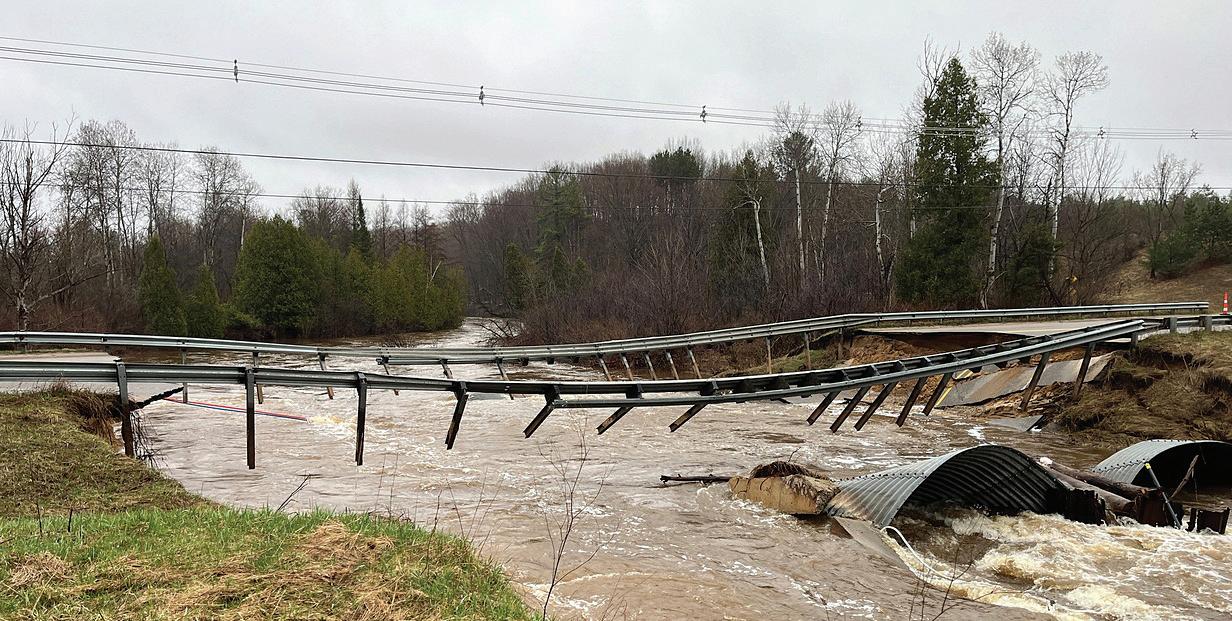
That area was already going to be tied up with closures and traffic delays this summer, thanks to the construction of a new roundabout at the “Interlochen Corners” intersection of J. Maddy Parkway and South Long Lake Road. The collapse of the Beitner Road bridge over the Boardman River, caused by excessive rainfall and flooding in midApril, has thrown an extra wrench into things.
Dan Watkins, manager of the Grand Traverse County Road Commission, estimated in April that the bridge would likely take at least six months to rebuild, meaning there is no chance Beitner will reopen for any part of the summer season. The road closure has already led to significant disruptions this spring, backing up detour routes like Hartman Road. This summer is expected to be even worse, thanks to additional traffic headed south for things like the summer concert series at Interlochen Center for the Arts.
Tkach says he was watching the flooding reports with bated breath in April, especially when it appeared the Boardman River crossings on South Airport Road – near Logan’s Landing – might suffer a similar fate to Beitner Road. Losing that particular crossing, he admits, would have been catastrophic for local traffic, let alone the summer tourism season. Fortunately, the South Airport crossings held, keeping Tkach hopeful summer traffic won’t be much worse than normal in most areas.
Still, Tkach admits Traverse City’s springtime flooding could prove problematic for more than just road traffic.
“A number of our properties are still getting cancelations because people believe we’re flooded,” Tkach said. “The TCT board is made up of both hoteliers and property managers, and at a recent meeting, when one person raised those concerns, everybody’s head started to nod. That caught me by surprise, because I thought we were over it. But everybody loves bad news, and these visuals of washed-out bridges and flooded landscapes have, I think, proven to be very popular on social media.”
Tkach is also concerned with the closure of the campground at Keith J. Charters Traverse City State Park.
The campground shut down after Cherry Festival last summer, making way for a multi-year improvement project at the park. This year, the campground is closed all summer long, with the new-and-improved version not getting its debut open until spring 2027. With 348 campsites at the State Park, and approximately 133,000 campers tallied there during the 2024 season, Tkach says Traverse City will surely face some level of economic blow from the closure.
“We have campers calling (TCT) all the time, clearly looking for alternatives,” Tkach said. “There’s a very significant segment of the traveling population that wants to camp out, so what the closure has done is it’s compressed the demand to some of the other surrounding campgrounds. It’s also probably transitioned some travelers to a substitute, like an Airbnb or a hotel. And we do have more hotel inventory than we’ve ever had before here in the Grand Traverse County, so there’s still plenty of opportunity for folks. But I’m sure the economic impact won’t go unnoticed by our local businesses. That’s a pretty significant campground – one of the most popular in the state –so to have it offline, it definitely shakes things up.”
5. How much will Traverse City’s recent run of negative national headlines factor in?
Traverse City is no stranger to national attention. In recent years, the Grand Traverse region has landed glowing endorsements from The New York Times, Wall Street Journal, Eater, Forbes, Midwest Living, and many others, earning praise for everything from its beaches to its culinary scene. The notices have become so commonplace that many locals now roll their eyes at every new write-up, decrying the extra exposures and the additional tourist traffic they will surely send our way.
But what happens when Traverse City’s negative headlines are suddenly as loud as its positive ones?
In 2025, the two most-read stories on the Traverse City Ticker – the TCBN’s sister publication – concerned violent crimes. The first, a mass stabbing attack at Walmart last July, ended with 11 victims in the hospital, six in critical condition. The second, a shooting at a city parking deck in November, left one city employee dead; the case is now going to trial, with five young men facing charges. Both stories broke local containment, garnering coverage from the likes of CNN, NBC News, Associated Press, MLive, and The Detroit News.
Those cases, along with additional alarming news already in 2026 – a terrorism threat at Munson Medical Center in January, or a road rage incident in April that escalated into an ax attack – raise the question of whether Traverse City’s image as a safe, idyllic vacation destination is still intact.
“I haven’t seen a tipping point where our long-term reputation has taken any significant damage due to these issues,” Tkach said. “I think, in the moment, those issues are real and can be scary, and it probably does deter travel in that immediate time frame. But long-term, I’m optimistic we can get past some of those things, solve some of those issues locally, and maintain the level of quality experience people have come to expect when they visit.”




BANKING

By Rick Haglund
Although they’re years away from retirement, Tyler and Jen Cerny wanted to ensure their company would remain locally owned long after they left. They decided an employee stock ownership plan, or ESOP, was the way to go.
“I’m a big advocate of it,” said Tyler Cerny, 53, president of Strata Design in Traverse City. “I have acquaintances who sold their businesses to larger companies. It changed their whole businesses and how they operate.”
Strata Design, a 45-employee architectural millwork and custom fixtures manufacturer serving healthcare, education and hospitality businesses, became 100% employee-owned last year. It joins at least nine other local ESOP companies with more than 300 employee-owners, according to the Michigan Center for Employee Ownership. Several of those companies agreed to be interviewed for this story.
The largest ESOP in the Traverse City area likely is Team Elmer’s, a 520-employee construction firm. Founded by Elmer Schaub in 1956, Team Elmer’s converted to an ESOP in 2023 in a sale by then-owner Russell “Butch” Broad.
“We are still relatively new,” said Tonya Wildfong, Team Elmer’s spokeswoman. “Employee-owners are excited to be able to see the success of the company directly benefit their shares over time.”
Businesses implement ESOPs for a variety of reasons, including ownership succession and the significant tax advantages and benefits they offer a company and its employees. An ESOP is considered a qualified retirement plan for workers.
An ESOP allows employee stock holdings to grow while taxes are deferred, similar to 401(k) retirement savings plans. Cerny says there are also various ways for a business owner to defer or reduce taxes in a sale to an ESOP.
“I think more and more folks are taking ESOPs seriously and see them as a viable business succession strategy,” said Tom Olive, a Grand Valley State University finance instructor and an ESOP expert. “Some business owners don’t want to sell to a competitor or private equity. They want to give the company back to their employees.”
Although there are various complexities, an ESOP basically works like this: the business owner sells stock, up to 100%, to a trustee that arranges financing of the sale and distributes the shares, free of charge, to the employees. When employees retire or leave, the company buys back their shares at fair market value. ESOP companies, typically S corporations, pay no federal or state income tax.
“The most magical part of an ESOP is that everyone who is a participant be-
comes a beneficial owner. You never have to invest a dime up front,” said Olive. Olive is a retired business executive who was formerly the president and CEO of Crystal Flash, a large, 100% employee-owned fuel distributor with an office in Traverse City.
Tax advantages and motivation
MCEO promotes ESOPs primarily as a tax-advantaged way for business owners to cash out and retire while allowing their companies to remain independent.
More than 83,000 businesses in Michigan have owners who are 55 and over, many of whom do not have a succession plan. That puts these companies at risk of being sold and moving out of state or closing their doors.
Fifty-four percent of businesses in Grand Traverse County are owned by people 55 years and older, according to the MCEO.
In Benzie County, 55% of business owners are 55-plus, while the percentages of 55plus owners in Kalkaska and Leelanau are 40% and 47%, respectively.
Thompson Retractor (formerly called Thompson Surgical Instruments) in Traverse City, founded 61 years ago, took a typical path to employee ownership. Then-owner Dan Farley created the company’s ESOP in 2014 and has since retired.
“We think it’s been great,” said Megan Madion, Thompson’s chief operations
“We have an annual evaluation of the stock. When the employees see the value increasing, it’s exciting.”
– Megan Madion, Chief Operations Officer, Thompson Retractor
officer. “Employee ownership directly affects how the business is doing. We have an annual evaluation of the stock. When the employees see the value increasing, it’s exciting.”
Leaders of ESOP companies say employees having skin in the game prompts them to be more diligent in their jobs, which can lead to better financial performance.
“It motivates people to think of the company as their own and about the money we’re spending,” said Shelley Steele, president of Corbin Design, a Traverse City signage and wayfinding design employee-owned company. “It makes them understand that anything we’ve saved goes back to them.”
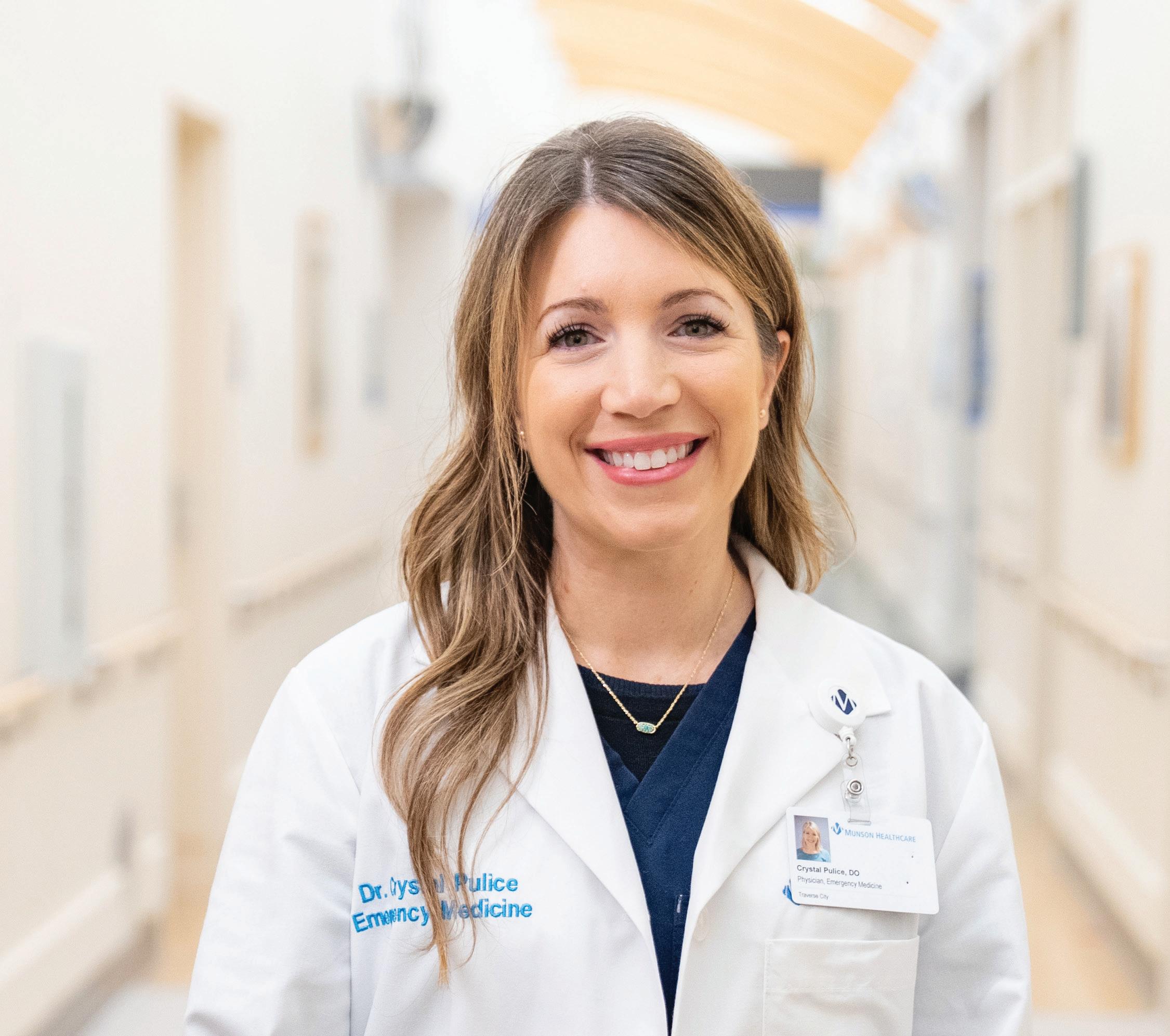

An ESOP also serves as a forced retirement savings plan for workers who either can’t afford to or won’t save for their retirements, Cerny says. Strata also offers a 401(k) with a company match that some workers choose not to take advantage of.
The ESOP “is a great vehicle for employees to earn a benefit for retirement, which could be pretty significant,” he said.
A 2023 study by the National Center for Employee Ownership found that employee-owners of ESOP companies had a median retirement savings account balance of $80,500, more than double the $30,000 median balance in non-ESOP companies.
Whether it’s firing up the mower, dusting off your bike, or combing for beach treasures, we know there are moments you live for—and we’re here to help you reach them. From routine visits to unexpected needs, you can count on the kind of care that brings comfort, confidence, and brighter days ahead.
Executives at local ESOPs say they’re generally pleased with how they’re working but acknowledge that there are more regulatory hurdles to navigate than other types of ownership structures.
Consultants must be hired to conduct annual valuations of company stock. And ESOPs must pass various Department of Labor and Internal Revenue tests to maintain their tax-free status. Much of an ESOP’s tax savings can be eaten up by compliance and reporting costs, and repayment of loans taken out by an ESOP to buy the company from an owner.
“It’s just a different structure,” said Chris McAlpine, Thompson Retractor’s controller. “There are more hoops and regulations, a little more than in a typical type of ownership.”
Saginaw-based Spence Brothers, a commercial construction company that has had an office in Traverse City for the past 25 years, converted to an ESOP in 2022 as numerous family members who worked for the company were wanting to retire or move on as the company was growing. Spence Brothers employs about 100 people.
“We were looking for a way to align leadership to ownership, which is one of our core values,” said CEO Bob Spence, who lives in Traverse City.
“We were looking for a way to align leadership to ownership, which is one of our core values.”
– Bob Spence, CEO, Spence Brothers
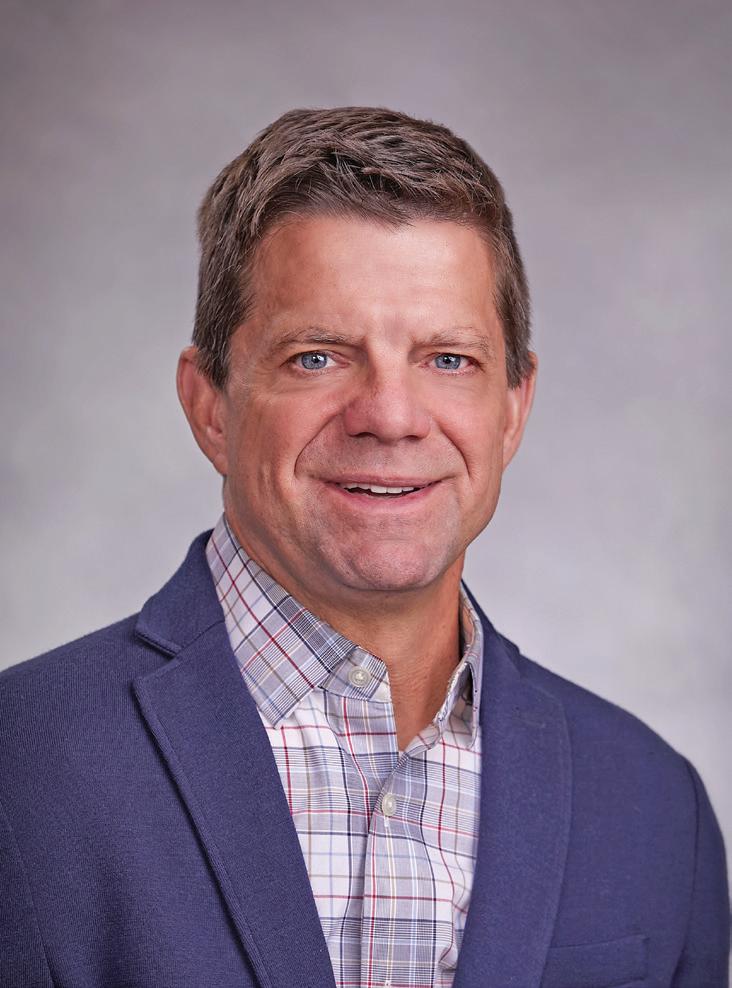
The ESOP has worked well, he says, but there have been some hiccups along the way.
The costs of creating the ESOP were higher than anticipated and the annual stock evaluation process can be “arduous but we’ve managed it pretty well,” Spence said.
Olive says ESOPs tend to work best at “steady cash generation businesses. There is going to be borrowing that has to be repaid,” he said. “Companies need to have a solid history of generating cash flows and repayments.”

ESOPs often aren’t suited for fast-growing companies, he said, because the ownership structure makes it difficult to raise enough new capital to finance growth.
Cerny has become somewhat of an evangelist for ESOPs, which he believes could benefit many more businesses in the Grand Traverse region where owners are looking for a way to eventually cash out of their companies while maintaining local ownership.
“It’s a great option for them to transition their businesses to their employees,” he said.
Local ESOPs identified by the Michigan Center for Employee Ownership and TCBN:
• Team Elmer’s - 520 employees
• Spence Brothers - 100 employees
• Thompson Retractor - 100 employees
• Easling Construction Company - 70 employees
• Kalkaska Screw Products - 59 employees
• Great Lakes Environmental Center - 50 employees
• Strata Design - 45 employees
• Jacklin Steel Supply - 36 employees
• Frontier Computer Corp. - 21 employees
• Corbin Design - 10 employees












payments, where they pay interest-only payments in the offseason, along with interest and principal when the cash is coming in.
“[I like this setup because] that’s going to be an instant cashflow relief and you’re not technically adding debt to their balance sheet,” he said.
Whatever the situation or tool is, planning ahead is critical.
“I always try to preach to people that we should be having these conversations before your back’s up against the wall,” Chestnut said. “Let’s have that safety net in place instead of: ‘I’ve got payroll coming and I need this by Friday.’”
A great many businesses prefer not involving a bank at all if they can manage. This means squirreling away enough cash in the busy season to carry through the leaner times. This takes a great deal of discipline and planning, Chestnut said.
“Owners that don’t like debt will always figure out a way to buckle down, and they

of
mark stuff down and get it out the door if necessary.
“When you see something not moving, get rid of it. Move on. There’s always a


clients are on a credit relationship, and we have a period of time where we collect money from them. And if we ramp sales up and I need to go out and buy more in


By Steve Strasko, columnist
Picture this: You’re in the startup or growth stages of a business you genuinely believe could light the world on fire. All you need to realize your vision is a bit of cash.
What do you do?
For many business founders, this scenario brings about their first experience with commercial lending. While there are certainly other ways to fund a business –bootstrapping it with your own savings, leaning on friends and family for contributions, applying for grants, pitching to deep-pocket investors – national statistics show most small business owners will need to apply for a loan at some point.
As someone with 14 years as a commercial lender, I often get asked what small business owners should know about navigating the loan application process. Here are a few tips I like to share.
Know what leads to a “no”
One of the tough parts of my job is knowing that I can’t give a loan to everyone who needs one, and that includes entrepreneurs with solid business ideas. With that in mind, I think it’s extremely important for small business owners to know where their commercial lending applications are most likely to hit a roadblock.
The three most common reasons a commercial loan gets denied are profitability, collateral and time in business. If you just started your business three months ago, you probably don’t have the track record, money in the bank or assets necessary to secure a loan. Many banks, especially the bigger ones, will automatically deny any business loan application from a venture that has less than two years under its belt.
Consider applying with a community bank
So, what should you do if you figure your business won’t qualify for a business loan? Apply anyway, ideally with a smaller community bank.
At major banks, it’s not always

Turning
‘No’ to a ‘Yes’:
Navigating the commercial loan application process
easy to get face time with seasoned commercial lenders – especially if you don’t meet some of those benchmarks discussed above.
I go into multiple meetings with business owners knowing that I can’t offer them a loan, but I probably spend more time with those people than the folks we approve. Why? Because we see it as our responsibility to help support Traverse City’s vibrant business community however we can. Sometimes, we do that by giving loans to small businesses and helping them grow and succeed. Other times, it’s advising founders on how they can get their businesses to the point where they can get approved.
Surround yourself with people to help you get where you need to go
One of my favorite pieces of advice to give business owners is they should seek more advice and surround themselves with centers of influence. A commercial lender is one of many resources that can help steer business owners in the right direction. Other centers of influence are an insurance agent, accountant, financial advisor, business attorney and a Realtor, to name a few. Getting a lot of smart, experienced, specialized people in your corner early on will make navigating the lending process so much easier – whether that process takes two more months or two more years.
Take a critical look at your business’s financials
In situations where a loan isn’t going to work out, I’ll sit down with an applicant and go through their financials. If I can’t give them a loan today, I want them to know exactly why – and to have an idea of what they need to change so that I can give them a loan next time.
Maybe they’re paying too much of a
Not every startup or business is going to land a commercial loan on their first application, but I do believe that most businesses can grow into good loan prospects with time and discipline.
specific expense item, such as repairs and maintenance. Maybe their cost of goods is too high. Maybe what they’re upcharging their customers on materials is way below the industry standard. These are all things I can tell by digging into
the financials, and they can all provide real, actionable steps to resolve the kinds of profitability concerns that often derail a business loan application.
Consider alternatives
Not every startup or business is going to land a commercial loan on their first application, but I do believe that most businesses can grow into good loan prospects with time and discipline. That’s why, when I have to deny a loan application, I point my clients toward other options. And fortunately, for those of us who call the Grand Traverse region home, there are a lot of alternatives to explore.
SCORE Traverse City is great for business plans, strategic growth guidance, and other mentorship and resources. 20Fathoms offers training programs and grant opportunities for startups and small businesses. Venture North provides low-cost loans and no-cost consulting to small business owners, with a special focus on businesses that might not qualify for loans from traditional banks. All these support systems are there for you – and may be just what you need to turn a “no” into a “yes” when you apply for a commercial loan.
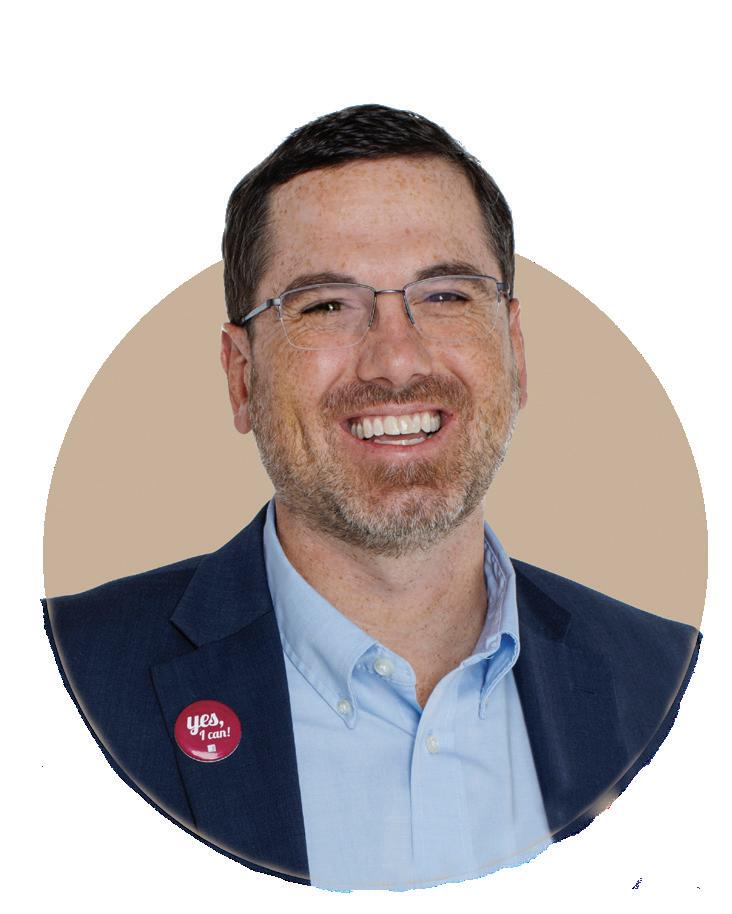
Steve Strasko is a commercial lender with State Savings Bank in Traverse City. He has 14 years of experience working with small- to medium-sized businesses, the last 12 years at State Savings Bank.






By Sid Van Slyke, senior vice president and market leader for West Shore Bank
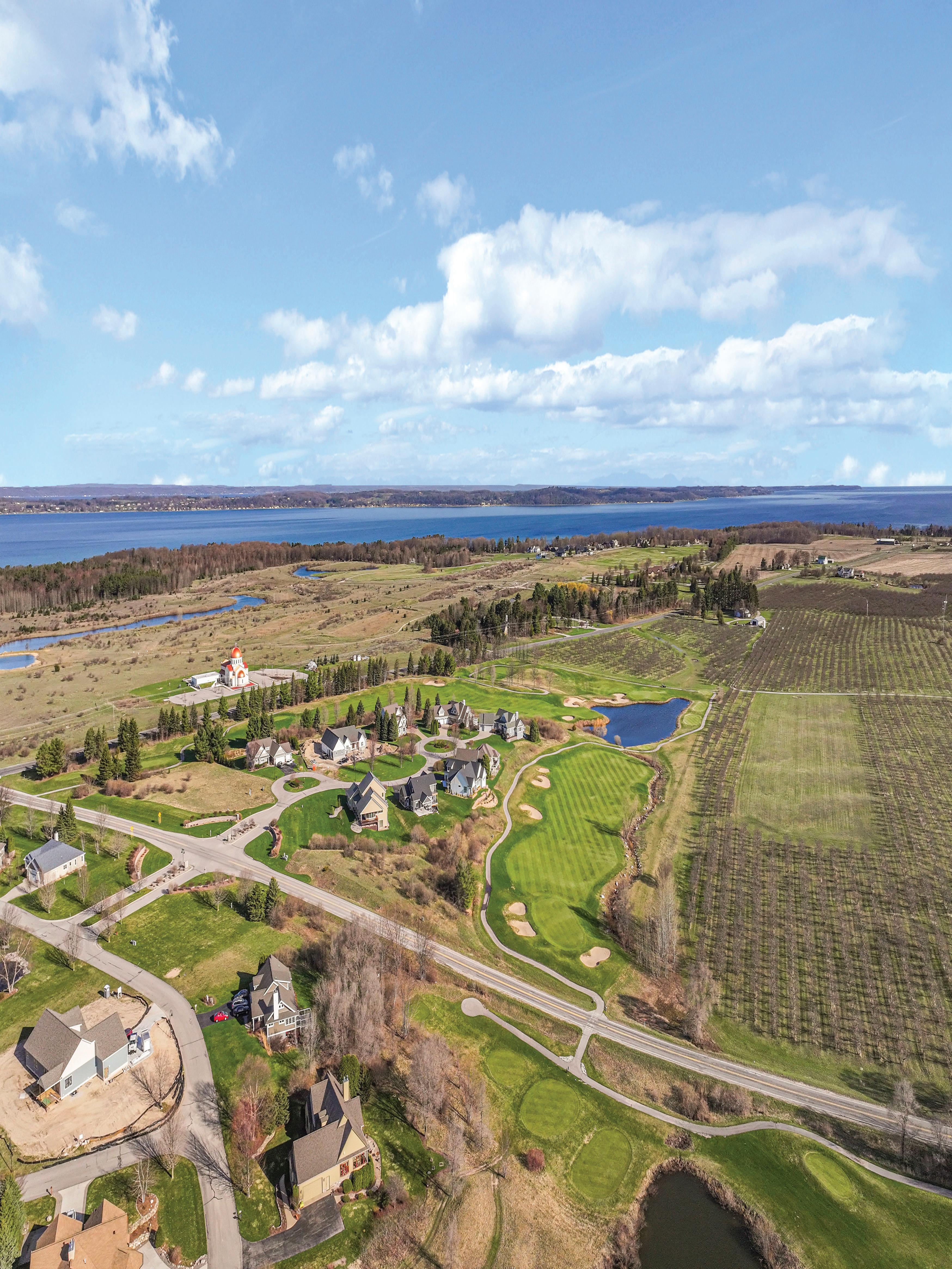
In early 2020, West Shore Bank finalized the purchase of our property at 400 E. Eighth St. in Traverse City. We were energized and optimistic, ready to put down lasting roots in Traverse City. Plans were complete, designs finalized and we even celebrated a groundbreaking ceremony.

By Lori VanAntwerp, VP/Commercial Lending in Traverse City at West Shore Bank
Construction is essential and increasingly complex. Strong housing demand continues to support development opportunities, yet the process of delivering new supply requires thoughtful planning, creative financing, and a good understanding of local market conditions.
Then, everything changed.
Almost overnight, we pivoted to “flattening the curve” and sending employees home. Like many organizations, we found ourselves reevaluating everything. What were we building – and why – if the future of work might be entirely remote? Would employees return to the office? Should we scale back or rethink the project altogether?
offices if needed – but, for now, could serve a more immediate and meaningful purpose?
That’s when the idea came into focus: a space not just for the bank, but for the community.
the Loop. It’s this level of passion and intentionality that will continue to set our community apart.
Layered capital structures are increasingly common
Often, to make a project viable, developers will utilize funding from many sources. The capital stack may include:
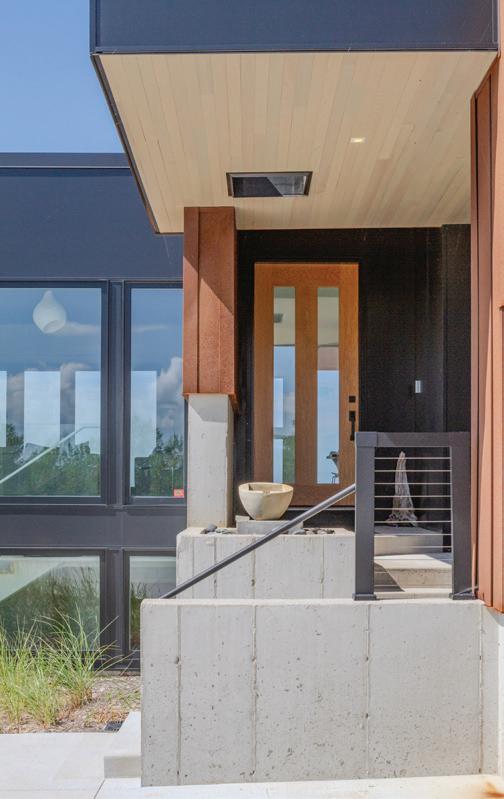
Regional nonprofit Housing North estimates that approximately 31,000 additional housing units will be needed across northwest Michigan by 2027. Meeting this demand requires a wide range of housing types – from attainable starter homes to multi-family rentals, and thoughtfully designed mixed-use projects. As a result, construction activity across the region is gradually evolving to better serve a diverse and growing population.
These were not theoretical questions. They were urgent and real.
Building in northern Michigan presents distinct challenges, including shorter construction season, skilled labor shortages, and limited contractor availability, which can extend project timelines and increase costs. These realities require careful planning and lenders to take a long-term view when evaluating construction opportunities.
Developers are responding with creativity and commitment
Regional developers are adapting in different ways to help expand housing supply.
I made several trips to Ludington to meet with our senior leadership team and board of directors. Together, we wrestled with uncertainty – balancing risk, practicality and long-term vision. After many thoughtful discussions, one sentiment ultimately guided our decision: Either the world is ending and we have little to worry about, or this too shall pass – and people will once again value connection, place, and community.
So, we moved forward.
In the downtown market, recent projects have focused on renovating and revitalizing historic properties. This has created attractive residential living spaces while modernizing retail and office environments. Importantly, they have also preserved the architectural character and longterm vibrancy of the community. As a lifelong resident, I am especially grateful for the care they have taken to improve and preserve these assets. Preserving historical elements of a project costs far more than tearing down and starting from scratch. THANK YOU to developers that have chosen preservation over profits.
One significant change, however, was the decision not to fully build out the third floor. Originally designed to accommodate seven or eight private offices along with collaborative workspace, that floor was intended to support our future growth. But in a world suddenly redefined by remote work, that need felt less certain. We had sufficient space on existing floors, and the third level became a question mark.
I’ll admit, I was disappointed. I had envisioned the third floor as one of the most dynamic and inspiring areas of the building.
But that disappointment sparked something better.
Elsewhere, some builders are pursuing a neighborhood-based strategy, constructing multiple speculative homes simultaneously within new and established subdivisions. This approach allows for improved coordination with subcontractors, efficient material purchasing, and better overall project scheduling. These efficiencies can help moderate construction costs and improve affordability.
I’ve long believed in what I call “medium-sized, meaningful meetings,” gatherings of five to 10 team members alongside 25 to 50 clients, partners or community members. These are the conversations where real connection happens – large enough for diverse perspectives, yet small enough for meaningful dialogue.
One developer I work with recently shared, after years of success in the local real estate industry: “I’ve made a lot of money in Traverse City – now I want to give back.” That commitment to reinvesting in the community plays an important role in addressing regional housing needs.
The challenge is that spaces for this type of gathering are surprisingly scarce. You can easily host a small dinner for six or a formal event for 200 at area venues. But in between? Those options are limited, often costly, and difficult to coordinate.
So, I began reimagining the third floor. What if we designed a flexible space, one that could eventually convert into
We’re currently reviewing a project designed to breathe new life into the area surrounding the Boardman Lake Loop. Developers are committed to creating a vibrant hub of housing, retail, and gathering spaces that invite our community to enjoy the natural beauty of the region. They understand that success depends on a collaborative relationship with the city and township to ensure the project aligns with the long-term vision for
Having served on several nonprofit boards, I was intimately familiar with one recurring challenge: finding space. Whether for board meetings, strategic planning sessions, staff gatherings or small fundraising events, organizations were constantly searching for accessible, welcoming venues.
• Senior construction loans from community and regional banks
What if we could help solve that?
• Public incentives from the MEDC – such as the Revitalization and Placemaking grants (RAP)
From that question, the Community Engagement Room was born.
• MSHDA funding
• Brownfield Tax Increment Financing (TIF)
• Mezzanine debt or preferred equity
• Partnerships with nonprofit organizations utilizing Low-Income Housing Tax Credit programs (LIHTC)
Our board of directors, deeply committed to strengthening the communities we serve, fully embraced the vision. We completed the space and officially opened it in June 2022.
I set a personal goal of hosting five events before the end of that year.
• Alternative funding sources such as Venture North, Northern Initiatives and Illinois Facilities Fund (IFF)
We hosted 38.
What community banks focus on in construction lending
From a lender’s perspective, several factors can significantly strengthen a construction project:
In 2023, we hosted 88 events. In 2024, that number grew to 114. More than 1,500 unique guests utilized the space in 2024 alone.
The numbers are meaningful, but the impact is what truly matters.
• Maintaining appropriate contingency reserves – this will provide a cushion during pricing spikes, construction delays and unforeseen project challenges
• Preserving a strong liquidity position – this includes easy access to capital, like cash, stocks, bonds, etc. Lenders are often told by borrowers ‘If I had the cash, I wouldn’t need a bank.’ That can be true to an extent. But when we are talking about construction, you need a Plan A, B & C
It’s inspiring to walk upstairs and see 30 to 50 of Traverse City’s most passionate leaders gathered to tackle complex challenges like homelessness and food insecurity. To see organizations like TART Trails collaborating on strategies to expand and improve our region’s trail system. To witness ideas forming, partnerships growing and solutions taking shape.
• Including financially capable guarantors who can support projects through completion. A guarantor with financial strength independent of the specific construction project further enhances the viability of financing
What began as an uncertain decision during a global crisis became something far greater than we envisioned.
• Using realistic assumptions regarding absorption, pricing, and interest rate sensitivity. Is the sales price/sq ft supported by the market?
Today, the Community Engagement Room at West Shore Bank is more than just a space. It is a hub for collaboration, progress and shared purpose. It reflects our belief that banking is not just about financial services, but about investing in the strength and vitality of the communities we call home.

I’d be doing clients a disservice moving forward with projects that lack sufficient liquidity and guarantor strength. If a major hiccup occurs and the borrower doesn’t have the funds to finish the project, no one wins.
Responsible development helps preserve the character and quality of life that make this region attractive to residents and visitors alike. Community banks play an important role in balancing these priorities by supporting projects that align with market demand and long-term community goals.
In the end, what COVID disrupted also created: an opportunity to build not just a building, but something lasting for our community.


By Jody Lundquist, columnist
At some point, I became the person who says “back in my day.”
A nine-year-old recently pointed this out while I was explaining VHS rentals and the phrase “Be Kind – Rewind.” There was a ritual to it. You went to the video store, wandered the aisles, hoped your first choice wasn’t already gone, and felt lucky if you were allowed to pick something off the higher-priced new release wall.
Fast forward, and we can watch a movie at home almost immediately after it leaves theaters, if we’re willing to pay $24.99 for the convenience.
And many of us are.
That is inflation in a form most of us understand. Prices rise. We notice. We complain. Then we decide what’s still worth paying for.
Businesses make the same calculation every day, but with higher stakes. They decide whether margins can take the hit, whether hiring still makes sense, whether a project still pencils.
Inflation is what a business feels when payroll, rent, insurance and materials all cost more. But another price has changed too: the price of money itself.
Cost of capital is what a business feels when the money needed to expand, build or hire also becomes more expensive.
One raises the cost of operating. The other raises the cost of opportunity.
For a small business, that can mean a line of credit costs more than expected or the expansion to a second location waits another year. For a developer, a project that worked under one interest rate and one set of return assumptions may not survive when debt costs more and materials don’t cooperate. East Bay Flats, Goodwill Northern Michigan’s affordable housing project on Munson Avenue, is a local example. Getting it across the finish line required assembling a complex stack of public incentives, construction loans and city bridge funding. Tax incentives still matter, but in this environment they don’t stretch as far as they once did.
As a board member, I watched the leadership team navigate the gap between what the

Rising capital costs should make founders more disciplined, not less ambitious
project required and what the environment would provide. The question was never whether the mission was worth it. It was whether the organization could absorb the risk of getting there while working to fill the financing gap.
For startups, the shift can feel more personal. Founders still need capital to hire, build products and reach customers. What has changed is the standard for earning it. I saw this firsthand judging the PitchMI regional competition here last year, focused on cleantech and outdoor innovation. In that room, it was immediately clear which founders had built a PowerPoint deck for the event and which had built a business.
In a low-rate environment, investors were more willing to fund future growth on market size and vision alone. Today, investors look harder at revenue, margins, unit economics and cash runway. Lower rates allow the founder’s value story to conclude in later chapters; higher rates require an acceleration of the plot.
That doesn’t mean founders should stop thinking big. It means they need to understand the environment in which they’re raising. When safer investments offer better returns than they once did, riskier investments have to justify themselves more clearly. Higher rates don’t eliminate opportunity, they reprice it.
This is where frustration tends to enter the conversation. Founders may look at terms being offered in Michigan and see unnecessary conservatism. Investors may look at founder expectations and see valuations that belong to a different market or a different moment. Both perspectives are grounded in real experience. Founders are trying to build companies that scale in a state that still needs more early-stage capital. Investors are trying to support
them without accepting terms that make it hard to justify the initial check, participate in a follow-on round, or see a meaningful return.
Everyone’s seeing part of the truth.
Michigan has taken real steps to close the gap. The Michigan Innovation Fund, a research and development tax credit for small businesses, and a new statewide Innovation Alliance reflect genuine momentum. A recent Business Leaders for Michigan scorecard puts the challenge in relief: Michigan ranks ninth nationally in R&D activity but 32nd in early- and growth-stage funding. Strong inputs. Not enough follow-through on converting them to growing companies.
capital gets deployed matter
Grants and investments are not the same thing, and the difference matters.
A grant transfers resources with the expectation of impact. An investment transfers resources with the expectation of return, and that return is what funds the next check, keeps evergreen funds healthy, and gives future investors a reason to participate. If public capital is invested at valuations or on terms that can’t support future rounds, it may unintentionally set founders up for a hard landing, quietly transforming taxpayer-backed economic development into something that functions like a grant while still being called an investment.
That’s not a reason to be timid. It’s a reason to be precise. Invested capital should give a company room to grow, keep the next investor at the table, and give evergreen funds a realistic shot at recycling gains into the next generation of founders. Otherwise, we’re not building a sustainable ecosystem. We’re temporarily filling a gap while creating unrealistic expectations for what comes next.
We sit in a region that attracts talent and offers real testing grounds for freshwater, mobility, clean technology, and outdoor innovation. But our deeper advantage is relational. Leaders across business, philanthropy, education and public institutions are working together here on problems that most places never coordinate at all. That kind of institutional trust is hard to manufacture and easy to underestimate.
The question is whether we can pair it with enough capital, and enough discipline, to turn ideas into durable businesses and plans into actual buildings.
East Bay Flats didn’t get built because this community valued affordable housing. This region has valued affordable housing for years without solving the problem. It got built because vision met capital, structure, and execution, and because enough institutions were willing to do the unglamorous work of assembling what the market couldn’t assemble on its own. That’s the model our innovation economy needs: not just ambition, and not just money, but the discipline to connect them in a way that holds up over time.
The rising cost of capital should make us more disciplined, not less ambitious. It should push founders to know their numbers, keep investors at the table, and push policymakers to design tools that reduce friction without ignoring market realities.
The price of money has changed. Our ambition should not.
Jody Lundquist is chief financial officer of Boomerang Catapult LLC. She is also owner of Taste the Local Difference and executive director of Northern Michigan Angels, an angel investment organization.














By Heidi Cartwright, columnist
Women today are increasingly stepping into the driver’s seat of their financial lives – not just by choice, but often through life transitions like inheritance, career changes, divorce, loss, or shifting health needs. Whatever the path, taking ownership of your finances is a powerful move. But let’s be honest – it can also feel overwhelming, especially if you’re navigating unfamiliar territory.
That’s exactly why financial education matters. Building confidence with money doesn’t happen overnight; it grows through learning, asking questions, and surrounding yourself with the right support. A trusted financial advisor can be a valuable partner in that journey, but the most impactful relationships are built when you feel informed enough to engage, question, and truly understand your options.
The internet offers endless resources on financial terms, strategies and trends. But more information doesn’t always mean more clarity. Not all sources are reliable, and not every learning style thrives in a digital-only environment. If you’ve ever wondered whether what you’re reading is accurate or found yourself wishing you could just ask someone directly, you’re not alone. That’s where in-person learning and community-based education can make a meaningful difference.

new lesson is added each week) and MindEdge Financial Courses (can be completed anytime within the access window).
Many employer-sponsored retirement plans include access to investment advice – an often-underutilized benefit that can help you better understand allocation strategies and decision-making. If you don’t have access to a workplace plan, there are still plenty of opportunities to grow your knowledge.
Many local organizations offer courses and resources on financial basics. You can contact your personal financial institutions as they often host workshops, seminars, or educational events.
Northwestern Michigan College offers courses on financial literacy through their extended education program. Two examples, according to Shannah Vergote of NMC Extended Education & Training, include Accounting & Bookkeeping courses for Non-Financial Managers (courses open up June 1, learners can complete the lesson anytime of day and a
SCORE offers free or low cost in-person and online options led by SCORE mentors and experts, such as Advanced QuickBooks Training, Finance 101, Growing Your Business & Profit Exponentially and Funding for Small Businesses (score. org/mi/business-education/).
Prout Financial Design hosts Lunch and Learn sessions, complimentary events open to the public and, yes, lunch is included! We cover everything from foundational retirement planning principles to more advanced market strategies. Over time, we’ve expanded the program to partner with Ford Insurance Agency, DAR Law, Social Security Administration and other local experts, creating a space where attendees can ask questions, gain clarity, and feel empowered in their decisions. We’ve also added sessions that explore broader life topics, because financial well-being is deeply connected to overall well-being.
We also offer a program specifically designed for our women clients called Flourish, where women can learn openly,
ask questions freely, and build confidence together. Each year we host sessions covering topics from retirement accounts and Roth IRAs to income strategies and best practices. It’s not just about education; it’s about empowerment, connection, and
Invest in your financial education in a way that works for you. Whether that’s online research, in-person classes, community workshops, or conversations with a trusted advisor, every step you take builds your confidence and strengthens your ability to make informed decisions.
creating a supportive environment where no question is too small or too silly. Beyond in-person events, other platforms can also support your learning journey. There are a myriad of podcasts
that cover specific financial topics and can offer insight into the economy, current events and retirement concerns.
The takeaway? Be your own advocate. Invest in your financial education in a way that works for you. Whether that’s online research, in-person classes, community workshops, or conversations with a trusted advisor, every step you take builds your confidence and strengthens your ability to make informed decisions.
Ask questions. Stay curious. Seek out resources that resonate with you. When you understand your finances, you don’t just manage money, you take control of your future.
Heidi Cartwright, RICP®, has served in the financial retirement industry for more than 15 years and specializes in issues unique to women in retirement. Securities offered through LPL Financial, member FINRA/SIPC. Cartwright is a registered representative of LPL Financial. Investment advice offered through Integrated Partners, doing business as Prout Financial Design, a registered investment advisor and separate entity from LPL Financial. Intended for educational purposes only and not as investment advice.
Medical Office Building For Sale! - 11,486
Medical Office Building For Sale! - 11,486
sessments,
Activities! Current tenant (month to month) is utilizing the lower level (some lab space), and approx. 2/3's of the main floor. The owner is using approx. 1/3 of the main floor & shared common areas. Owner leaseback is negotiable or buyer could use the entire building if needed. Many individual offices of various sizes. Close to Munson Hospital surrounded by a variety of Medical Practices. Virtual tour Online –MLS# 1919691 - $1,499,000.
Sq/Ft. Main Level is 6,187 Sq/Ft. Walkout Lower Level is 5,299 Sq/Ft and Features a Large Open Area w/Picture Windows providing lots of natural light. Excellent for Physical Therapy, Patient Assessments, Gym Related Activities! Current tenant (month to month) is utilizing the lower level (some lab space), and approx. 2/3's of the main floor. The owner is using approx. 1/3 of the main floor & shared common areas. Owner leaseback is negotiable or buyer could use the entire building if needed. Many individual offices of various sizes. Close to Munson Hospital surrounded by a variety of Medical Practices. Virtual tour Online –MLS# 1919691 - $1,499,000.

Sq/Ft. Main Level is 6,187 Sq/Ft. Walkout Lower Level is 5,299 Sq/Ft and Features a Large Open Area w/Picture Windows providing lots of natural light. Excellent for Physical Therapy, Patient Assessments, Gym Related Activities! Current tenant (month to month) is utilizing the lower level (some lab space), and approx. 2/3's of the main floor. The owner is using approx. 1/3 of the main floor & shared common areas. Owner leaseback is negotiable or buyer could use the entire building if needed. Many individual offices of various sizes. Close to Munson Hospital surrounded by a variety of Medical Practices. Virtual tour Online –MLS# 1919691 - $1,499,000.
and Features a Large Open Area w/Picture Windows providing lots of natural light. Excellent for Physical Therapy, Patient Assessments, Gym Related Activities! Current tenant (month to month) is utilizing the lower level (some lab space), and approx. 2/3's of the main floor. The owner is using approx. 1/3 of the main floor & shared common areas. Owner leaseback is negotiable or buyer could use the entire building if needed. Many individual offices of various sizes. Close to Munson Hospital surrounded by a variety of Medical Practices. Virtual tour Online –MLS# 1919691 - $1,499,000.
HIGH PROFILE CORNER FOR SALE – MLS# 1931618 – $589,900 MIXED USE COMMERCIAL - Great Opportunity - One Building a Large (40x44) Insulated Warehouse -15 ft Sidewalls -14x20 Sliding Doors for Large StorageSecond Building has a Reception - Office - Restroom Area and a Unique Building Attached with 11 ft Sidewalls -
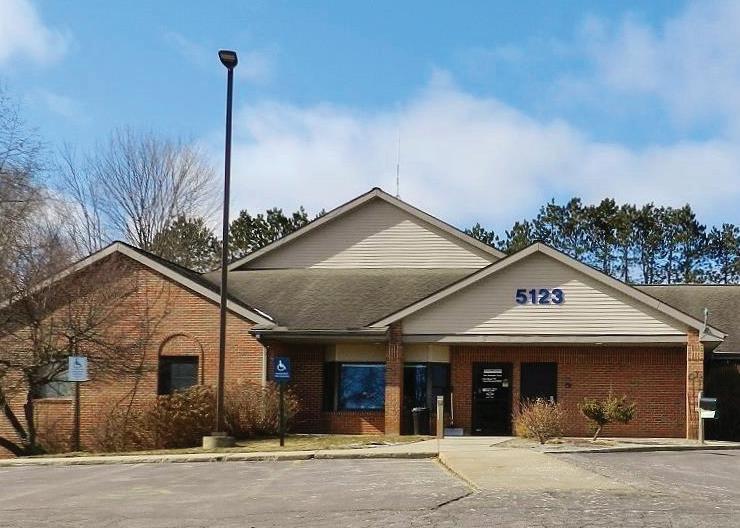
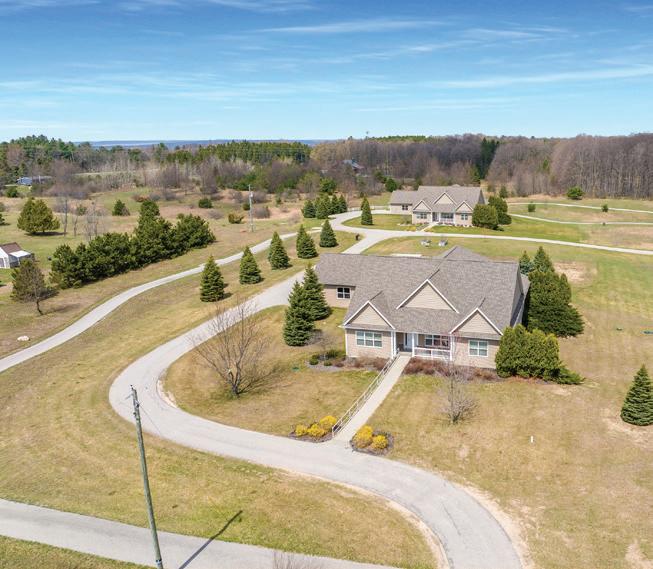
MIXED USE COMMERCIAL - Great Opportunity - One Building a Large (40x44) Insulated Warehouse -15 ft Sidewalls -14x20 Sliding Doors for Large StorageSecond Building has a Reception - Office - Restroom Area and a Unique Building Attached with 11 ft Sidewalls - Epoxy Floors - Steel Ceilings - 3 Sink Stainless - Double Doors for Deliveries in Main Workspace w/4 Individual Work Rooms. Could be Opened up for One Large Space. Light Manufacturing could be a great Contractor or Woodworking Workshop! Rental or Cleaning Business, etc. etc. US-31 Highway Frontage & Exposure for Signage on Building. Improvements include 3 phase electric in both buildings - Paved & Plumbed w/ New Drainfield, & Security System. MLS# 1922900 $459,900.
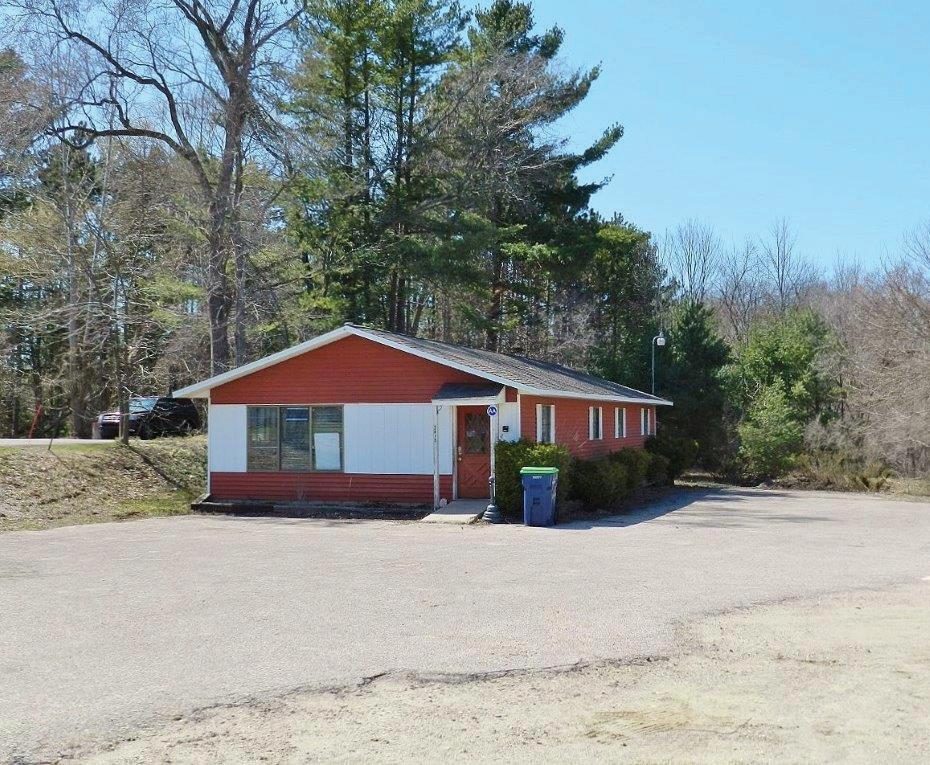
By Holly Gallagher, columnist

etc. US-31 Highway Frontage & Exposure for Signage on Building. Improvements include 3 phase electric in both buildings - Paved & Plumbed w/ New Drainfield, & Security System. MLS# 1922900 $459,900.
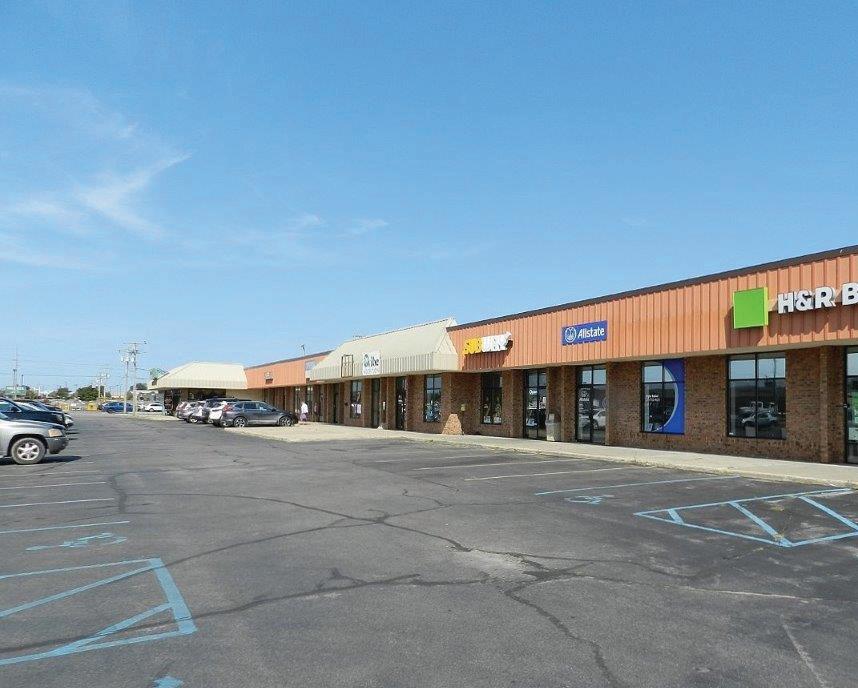
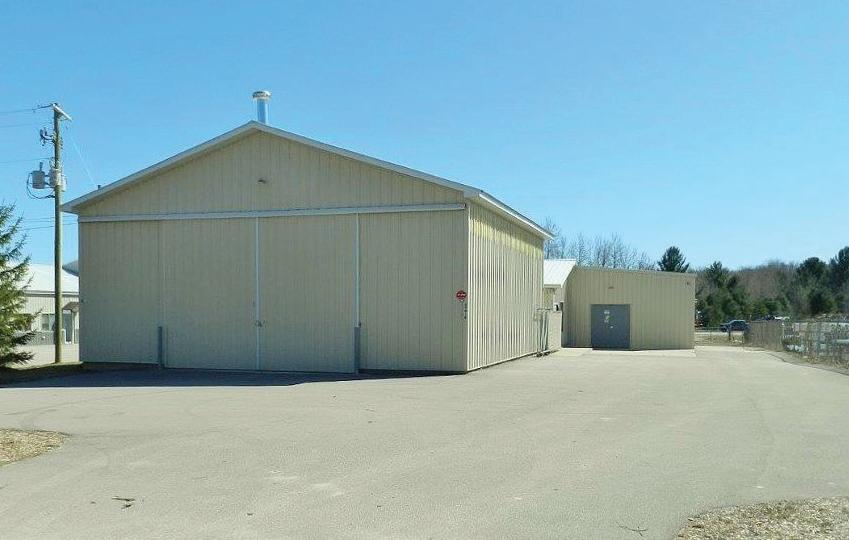
Most people like to believe they make rational financial decisions. We assume money choices are driven by logic, spreadsheets and objective facts. However, financial decisions are often driven by emotion first and logic second. This concept is what makes behavioral finance so intriguing; combining psychology and finance for potentially better long-term outcomes.
Here are some of the most common shortcuts we humans use:
COMMERCIAL CORNER & BUILDING FOR SALE –VIRTUAL TOUR ONLINE – MLS#193186 – $389,900
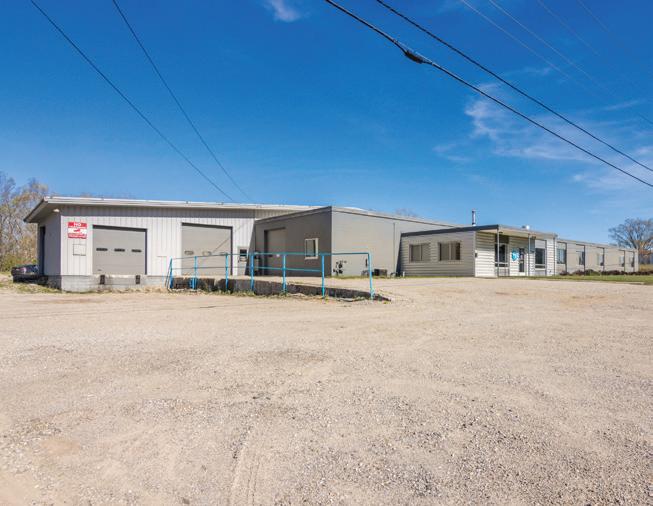
RETAIL/OFFICE FOR LEASE. Blair Plaza Offers Great Visibility - Great Parking - Great Space for Retail Businessor Service Oriented Office. Big Windows & Interior Improvements. Service Door to Back Lot for Deliveries & Employee Parking. Chums Corner Area has Exploded with Growth. Many National & Regional Companies Open In & Around Blair Plaza. Tenant Pays Rent - Utilities (+W&S approx $47 monthly) - Share of Snow Removal (approx $300 annually) - Liability Ins. Check it out! MLS# 1926773 - $1,695 Montly
FOR
One Building a Large (40x44) Insulated Warehouse -15 ft Sidewalls -14x20 Sliding Doors for Large StorageSecond Building has a Reception - Office - Restroom Area and a Unique Building Attached with 11 ft Side walls - Epoxy Floors - Steel Ceilings - 3 Sink Stainless - Double Doors for Deliveries in Main Workspace w/4 Individual Work Rooms. Could be Opened up for One Large Space. Light Manufacturing could be a great Contractor or Woodworking Workshop! Rental or Cleaning Business, etc. etc. US-31 Highway Frontage & Exposure for Signage on Building. Improvements include 3 phase electric in both buildings - Paved & Plumbed w/ New Drainfield, & Security System. MLS# 1922900 $459,900.
Blair Plaza
RETAIL/OFFICE FOR LEASE. Blair Plaza Offers Great Visibility - Great Parking - Great Space for Retail Businessor Service Oriented Office. Big Windows & Interior Improvements. Service Door to Back Lot for Deliveries & Employee Parking. Chums Corner Area has Exploded with Growth. Many National & Regional Companies Open In & Around Blair Plaza. Tenant Pays Rent - Utilities (+W&S approx $47 monthly) - Share of Snow Removal (approx $300 annually) - Liability Ins. Check it out! MLS# 1926773 - $1,695 Montly
RETAIL OFFICE FOR LEASE. Blair plaza. – VIRTUAL TOUR ONLINE – MLS#1933154 – $1,695 Monthly.
The psychology of money explores how people think, feel and behave around money. It helps explain why two individuals with similar incomes can make dramatically different financial choices, why investors panic during market downturns and why financial success often depends less on intelligence and more on emotional discipline. Behavioral finance builds on this idea by combining psychology and economics to better understand how people actually make financial decisions, not how traditional financial theories assume they should.
Visibility - Great Parking - Great Space for Retail Businessor Service Oriented Office. Big Windows & Interior Improvements. Service Door to Back Lot for Deliveries & Employee Parking. Chums Corner Area has Exploded with Growth. Many National & Regional Companies Open In & Around Blair Plaza. Tenant Pays Rent - Utilities (+W&S approx $47 monthly) - Share of Snow Removal (approx $300 annually) - Liability Ins. Check it out! MLS# 1926773 - $1,695 Montly
RETAIL/OFFICE FOR LEASE. Blair Plaza Offers Great Visibility - Great Parking - Great Space for Retail Businessor Service Oriented Office. Big Windows & Interior Improvements. Service Door to Back Lot for Deliveries & Employee Parking. Chums Corner Area has Exploded with Growth. Many National & Regional Companies Open In & Around Blair Plaza. Tenant Pays Rent - Utilities (+W&S approx $47 monthly) - Share of Snow Removal (approx $300 annually) - Liability Ins. Check it out! MLS# 1926773 - $1,695 Montly
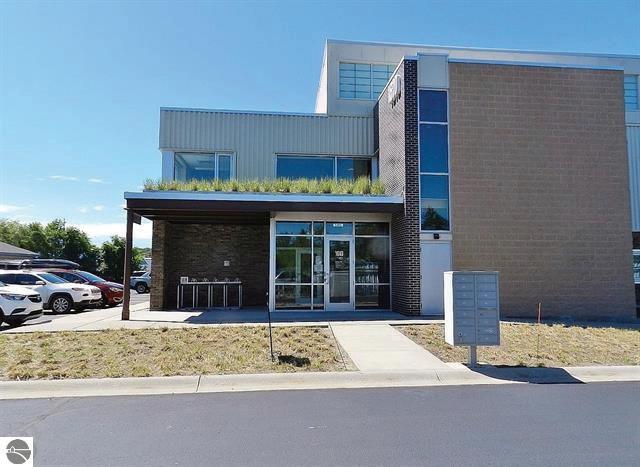
Past experiences often shape how people think about money. Someone who grew up during the Great Depression may become extremely cautious with spending and investing, even after achieving financial stability. Another person who grew up in an environment of abundance may feel more comfortable taking financial risks. These emotional influences can affect saving habits, investment decisions, debt management and long-term financial planning. Behavioral finance recognizes that people do not experience money objectively – they experience it psychologically.
How we behave matters more than we know: One of the most important contributions of behavioral finance is the identification of common cognitive biases that affect our decision-making. These biases are predictable mental shortcuts that influence how people process information and how we are hard-wired to react emotionally.
Loss aversion. Research has shown that people tend to feel the pain of losses more strongly than the pleasure of gains. Losing $10,000 generally feels far worse than gaining $10,000 feels good. This emotional imbalance helps explain why investors often panic during market downturns. Instead of viewing temporary declines as a normal part of investing or a buying opportunity, fear pushes many people to sell investments at the worst possible time. Anchoring. Anchoring bias affects financial decisions. People tend to fixate on a specific reference point when making decisions, even when that reference point may no longer be relevant. For example, an investor may refuse to sell a declining stock because they remain emotionally attached to the original purchase price. Instead of evaluating the investment based on current conditions, they anchor their decision to past information. Anchoring is frequently used in the retail industry. For example, a store sells a pair of shoes for $199 and not many customers buy them. So, they change the sign showing the shoes originally worth $500 at half off, or $199 per pair, and they sell more shoes. Herd mentality. This is a powerful behavioral force. People look to others for reassurance, especially during uncertain times. In financial markets, this often leads investors to follow the herd, even if they may be following them over the proverbial cliff! During market declines, widespread fear can trigger panic selling. During periods of rapid market growth, fear of missing out (FOMO) can lead to risky investment behavior with severe long-term consequences. That is exactly what happened during the tech bubble in March 2000, and it took NASDAQ 15 years to recover.
Overconfidence bias. Many investors believe they can consistently predict market movements, identify winning investments or outperform professional managers. Overconfidence can lead to excessive trading, poor diversification and emotional decision-making. Ironically, the more confident investors become in their ability to control outcomes, the more vulnerable they may become to mistakes. One example is when an investor’s employer has publicly traded stock. Remember 2001 and Enron’s collapse? At that time, it was the largest bankruptcy in U.S. history. The stock price was $90 in the summer of 2000 and worth less than $1 per share in late 2001. Your paycheck and your retirement savings disappeared overnight.
Financial success depends less on knowledge and more on consistent behavior. Most people understand the basic principles of good financial management: Save regularly, avoid unnecessary debt, diversify investments and maintain a longterm perspective. The difficulty is maintaining those behaviors during stressful or uncertain situations.
Behind every investment choice, spending habit and financial goal is a complex combination of emotion, experience, belief and behavior. Understanding money is not simply about understanding markets or mathematics – it is also about understanding ourselves. In the long run, financial success often depends less on what people earn or know, and more on how they behave.
Holly Gallagher, CFP®, wealth advisor, is the president of Horizon Financial, an independent firm serving northern Michigan for more than 33 years. Advisory services offered through Commonwealth Financial Network®, a registered investment adviser.



By Craig Manning
No matter where you travel in the world, the pilot on your next flight could very well be a graduate of Northwestern Michigan College.
Despite its status as a community college tucked into the woods of a small town in northern Michigan, NMC boasts an increasingly global aviation program, regularly drawing aspiring pilots from all over the world. Ahead of the program’s 60th anniversary next year, the TCBN sat down with six NMC aviation alumni to get their stories – from a flight instructor based right here in Traverse City, to a British Airways first officer, to a United Airlines pilot who uses her experience with brutal northern Michigan winters to thrive as part of a competitive inter-airline ski circuit.


Roots: “I have the cliché pilot story,” Shivley said. “I was the little kid who loved airplanes and I never really lost that passion.” By high school, Shivley was researching aviation colleges and planning campus visits around the Midwest. While he grew up in Kalamazoo, home to its own esteemed flight school at Western Michigan University, Shivley ultimately decided to enroll at NMC. “When I visited, they took me up for a flight, and I immediately fell in love with flying around Traverse City and northern Michigan,” he laughed. “After that, I was pretty much sold.”
Wings: Shivley initially envisioned himself becoming an airline pilot, and even pursued that path after finishing up his time at NMC. “I was a flight instructor here for a couple of years, but then I flew for a company called Cape Air, which is based in Massachusetts and involved flying these small twin-engine propeller planes around Martha’s Vineyard, Nantucket and Boston,” he said. From there, Shivley moved to a Delta Airlines subsidiary called Endeavor Air, and then to a freight company where he flew 747s all over the world. “That was during the COVID pandemic, so I was flying a lot of COVID relief missions,” he said of the latter job.
Landing Place: After a knee injury sidelined him from flying for about a year, Shivley fell back into the orbit of NMC. “I was recovering from the injury and living in Traverse City, and I stopped by NMC one day and told them my situation,” he said. “And they just said, ‘Well, we’d love to bring you on (as an instructor).” While he was unable to fly for the moment, Shivley could still help out with things like ground instruction and simulator training. He found that he loved working with the students and being back at NMC. When the college’s full-time faculty instructor retired in 2024, NMC offer Shivley the job. “I couldn’t turn it down,” he said. “Getting to share my experience and my knowledge with the future generations that NMC is training, it’s been amazing. Honestly, this is the best job I’ve ever had.”

Roots: Smeltzer grew up in Bear Lake and spent her college years working as a ski instructor at Crystal Mountain. She knew early on she wanted to work in the travel industry. “I’d always enjoy dropping people off at the airport, and just the excitement of going to the airport and traveling to new places,” she said. “At first, I though I might want to be a civil engineer and design airports. But eventually, I realized the things that pilots do are things that I enjoy most: travel, meeting new people, the procedure of flying, the decision-making, the excitement.” Straight out of high school, Smeltzer enrolled in NMC’s aviation program.
Wings: After finishing her associate’s degree with NMC Aviation, Smeltzer stayed in Traverse City, doing double duty as a flight instructor for NMC and a college student. Her dream, she says, was to fly for a major airline, and she’d been told she’d need a bachelor’s degree to be a strong job candidate. “So, in the evening, I would take classes through Davenport University at the NMC University Center, and in the morning and afternoon, I’d earn my flight hours toward my next career step, which would be going to the airlines,” she explained. That hard work led to a job with Envoy Air, a subsidiary of American Airlines, where Smeltzer flew from 2017 to 2022.
Landing Place: Flying as a captain for Envoy, Smeltzer also became a “check airman” – defined by Flying Magazine as “a pilot approved by the airline and the FAA who has the knowledge, training, experience, and demonstrated ability to evaluate and certify the knowledge and skills of other pilots.” Armed with that qualification, Smeltzer says “all the doors swung open,” leading to a dream-come-true job offer from United Airlines. She currently flies for United as a first officer based out of Chicago, co-piloting smaller Airbus aircraft.
Smeltzer is also a member of the United Airlines Ski Club, harnessing her roots as “a big ski bum” at Crystal Mountain in competitions put on by the North American Airlines Ski Federation. “Each airline, if they choose, has a ski club, and within the ski club, you can choose to be on the race team,” Smeltzer explained. “Then you race against your colleagues and/or the people at Delta or American or other airlines. Most meets are domestic, but there’s one international meet each year, where we get to race with other international airlines from all over the world.”

Roots: Growing up with a dad who traveled regularly for work, Hoarau spent a lot of time at the airport. “My mom would take me to the airport to pick him up, and we would watch the planes land and takeoff while we were waiting,” Hoarau said. Occasionally, his dad would even bring home model airplanes he’d bought at airports during his travels. The spark of wonder around aviation never faded, and by the time Hoarau was a teenager, he was flying with the British Airforce Air Training Corps, a cadet program for the British Airforce. “We flew in training aircraft with retired Airforce pilots, and I loved the thrill of flying with them,” he said.
Wings: While pursuing an aerospace engineering degree at the University of the West of England in Bristol, Hoarau discovered NMC, which has an articulation agreement with that United Kingdom-based school for aviation. And so, starting in 2012, Hoarau spent his college summers in Traverse City, learning how to fly through NMC’s summertime Private Pilot License (PPL) program. In 2014, he relocated to the U.S. to earn his full aviation associate’s degree at NMC, graduating in 2016. Then, in January 2017, he officially started his airline career with Piedmont Airlines, a regional subsidiary of American Airlines based in Maryland.
Landing Place: After flying at Piedmont for five years, Hoarau took a job with United Airlines beginning in March 2022. He started as a pilot on Boeing 757 and 767 aircraft, long-haul commercial jets that took him on regular overnight flights across the Atlantic. Ultimately, though, Hoarau says the red-eye lifestyle wasn’t for him, and he’s since transitioned to a Boeing 737 captain seat based in Chicago that he likes much more. “Even after two years in that role, I am still discovering new cities and types of flying,” he said. “This fleet has flying across the U.S. into Central America and the Caribbean, and even out to Hawaii, so the range of flying is diverse. I think I will be flying on the 737 for many years before I think about switching fleets again.”


Roots: “My interest in aviation started with my grandfather, who had a small aircraft on our farm in England,” Stothard told the TCBN. “I remember flying with him from a young age, although at the time I saw aviation more as a hobby than a career.” He pursued aerospace engineering at the university level, but flight soon beckoned again. “During a module focused on aircraft performance, we conducted flight tests on a Jetstream aircraft,” Stothard explained. “I found myself far more interested in what the pilots were doing on the flight deck than the data we were meant to be collecting. That was the moment I realized aviation could be more than just a hobby.”
Wings: Like Hoarau, Stothard was drawn to NMC by the aviation department’s summer PPL program, which he attended in 2016. “I enjoyed both the flying and life in Traverse City so much that I returned in 2018 full-time to complete my FAA commercial and instructor licenses, after graduating from university in the U.K.,” he said. Stothard also stuck around after completing the program to work as an instructor. He may have stayed longer, but Stothard’s flight instructor stint happened to dovetail with the COVID-19 pandemic, and in March 2021, he “had to leave the United States due to work permit limitations and a lack of renewal options at the time.”
Job: After a few years abroad – including a stint as a flight instructor in Saudi Arabia – Stothard returned to the U.K. in 2023 and joined British Airways Cityflyer, a regional subsidiary of the broader British Airways airline. “In March of this year, I transitioned to British Airways mainline and now fly the Airbus A320 as a first officer based at London Heathrow,” he said. “I currently operate short-haul flights across Europe, ranging from single-day return trips to multi-day rotations.”


Roots: Born and raised in Traverse City – Walters is a 2018 graduate of West Senior High, where he played linebacker as part of the Titans football team – Walters found his way into aviation thanks to a bit of motherly wisdom. “I was touring schools, and on one tour, my mom randomly scheduled a tour of an aviation program at one of them,” Walters laughed. “I thought to myself, ‘I could really see myself doing this.’ I remembered NMC had an aviation department, so I scheduled a discovery flight and fell in love.”
Wings: After graduating from NMC, Walters went to work as a flight instructor for the college’s aviation department, sticking around for three years. “I learned a lot about myself as a teacher and a pilot through that work,” he said. According to NMC Communications Director Cari Noga, “the ‘flight instructor to commercial pilot’ route is common for a lot of our students as it enables them to earn their flight hours while instructing.”
Landing Place: Walters now flies for Everts Air Alaska, an air carrier based in Fairbanks, Alaska. “We are an essential air service for 13 villages of interior of Alaska,” he said, with tasks that include “transporting people and goods to and from the villages.” Walters moved from Traverse City to Fairbanks last April to take the job, after spending more than a year looking for the right opportunity in the industry. He currently pilots both the Cessna Grand Caravan and the Cessna Sky Courier, both small prop planes.


Roots: Mohammed grew up in Abuja, Nigeria – approximately 5,900 miles away from Traverse City. Nevertheless, Mohammed’s early love for air travel put her on a path that eventually led to the Cherry Capital. “I was nine years old the first time I got on an aircraft; I was traveling to India with my parents, and I remember feeling very excited as we were about to take off,” she recalled. “I remember telling my dad then that I wanted to be a pilot.” Mohammed went on to study aerospace engineering at the University of West England in Bristol. “They have a program there that lets you add pilot studies to your degree, if you’re able to get 20 hours of flight time,” she said. “The school had a partnership with NMC to come here during the summer to get your PPL, so I came to Traverse City in 2018, during the summer after my second year of university to do that.”
Wings: Mohammed’s summer in TC proved such a formative experience that she ended up returning to Michigan after completing her studies at the University of West England. While she admits there was a culture shock aspect to her time spent here – “I was a Muslim African black girl, so I stood out a lot,” she laughed – her love of the NMC program, the region, and especially Traverse City’s culinary scene made the area magnetic for her. In 2021, she completed her associate’s degree through the NMC Aviation program, then stayed on as a flight instructor until early 2023.
Landing Place: After leaving NMC, Mohammed took a detour to Kissimmee, Fla. to obtain a “type rating,” an extra certification added to a pilot’s license that indicates training and proficiency on a certain type of aircraft – typically larger and more complex jets. She was able to get a type rating on a Boeing 737; the training prepared her for her current role as a first officer for Arik Air, a regional airline in Nigeria. In the long run, though, she says she’d love to return to America to work for a major U.S. airline.









By Art Bukowski
Flying private has certain connotations. White glove service. A bottle of bubbly. Perhaps a red carpet on the runway.
But those in the business say the bulk of people who book private air charters are more or less regular people who are actually chasing the one thing money can’t buy.
“My business partner and I (say all the time) that these are not airplanes, they’re time machines,” said Michael Terfehr, president of 45 North Aviation in Traverse City.
The time saved by flying instead of driving – or even flying private instead of with a commercial airline – is one of the biggest drivers of business for private charter companies. Whether for work or play, getting there sooner matters to a lot of people.
“As soon as they hear the word charter, a lot of people think we’re all about champagne and jet setting and all that. No one does that,” said Mark Currier, a pilot and director of business for North Country
Aviation in Gaylord. “Everyone is using our service to get from A to B in the most efficient way they can.”
The TCBN connected with local charter companies to learn more about how they operate and what’s trending in the world of private flight.
45 North, founded in 2013 and based at Cherry Capital Airport, has about 35
case of these privately owned aircraft. In some cases, 45 North completely maintains the aircraft and supplies a crew for the owner or owners, who have exclusive use of their aircraft.
“We take care of it tip to tail,” Terfehr said.
Other owners take advantage of fulltime maintenance and service but also let 45 North use their plane to fly other people around.
“There’s an option that we can do
“My business partner and I (say all the time) that these are not airplanes, they’re time machines.”
– Michael Terfehr, President, 45 North Aviation
full-time employees and a fleet of about 15 aircraft of various sizes. They own just three, with the remainder owned by others and managed by 45 North. Every arrangement is different in the
commercial charters with the airplane, in which case we take a percentage and (the aircraft owner) gets the rest,” Terfehr said. “And we have some gentlemen who are pilots, so they’ll fly the plane them-
selves when they want to use it, and when they’re not using it we’ll charter it out and make some revenue for them.”
45 North has a host of other services. They are an authorized service provider for several aircraft manufacturers, handle buying and selling of planes, offer luxury helicopter tours of the region and even contract with utility companies who send employees up to monitor infrastructure.
“Consumers Energy and ITC are some of my biggest clients,” Terfehr said. “We’ll fly 5,000 miles of pipeline every month, and we’ll probably do 20,000 miles of electrical line.”
The different segments of business are important for 45 North.
“We’ve had to be very diversified, and that’s been our success story,” Terfehr said. “If I had to rely on charter or maintenance or helicopter patrols solely, it’d be very challenging. But because we’re diversified, it seems like if one segment of the business stumbles, the other carries it through.”
Though 45 North has planes capable of flying to Europe, the bulk of its flights are in the Midwest.
“We’re just trying to get our name out there and let people know ‘Hey, we’re here, we’re available, and we’re right in your backyard.’”
– Mark Currier, Director of Business, North Country Aviation


North Country Aviation, based at Gaylord Regional Airport, has been around since 1982. They have three planes (that they fully own) that can fly people far and wide, but like 45 North, most of their flights are in the Midwest.
“With 99% of our clientele, we depart from Gaylord, pick them up, drop them off, and then come back to Gaylord,” Currier said.
North Country does a ton of work at small to very small airports. Its prop-driven planes, which can functionally “speed brake” by going into reverse
upon landing, are especially suited for these shorter runways.
“We can get into a lot of runways that corporate jets just cannot get into,” Currier said. “There’s a significant amount of clientele that’s out of Harbor Springs in Bay Harbor. You just can’t get a jet in there. The runway is too small. So we specialize in that.”
North Country has done solid and well-respected business for years, but they’re currently making a big marketing push to make themselves more known in the Traverse City area.
In a tight timeframe, renovate and expand into neighboring space to accommodate growing staff and allow for future growth
We’ve worked with Burdco for more than a decade now and have never had an experience where they didn’t meet a commitment. Mike and his team will do whatever it takes to ensure a project is done on time and of the highest quality.
“We’re really trying to increase our footprint in the northwest Michigan area. We’ve had a lot of the same clientele for a very long time, and most of our advertising was just word of mouth,” Currier said. “So we’re just trying to get our name out there and let people know “Hey, we’re here, we’re available, and we’re right in your backyard.”
Who and how much
Currier and Terfehr both say the bulk of their business is recreational travelers, and that’s especially true in the summertime.
People who want to get to that seasonal home or outing a heck of a lot more quickly (and more directly) than would be possible with driving or flying commercial.
“In June, July, and August, we are flying every single day, two to three times a day,” Currier said. “That’s over 200 flights just in the summer.”
Like North Country, 45 North usually gets a lot of business by referral.
“It’s word of mouth. I’d say most of our clients know each other. So if you do a good job for them, they come back,” Terfehr said. “And we’re the only operator based in
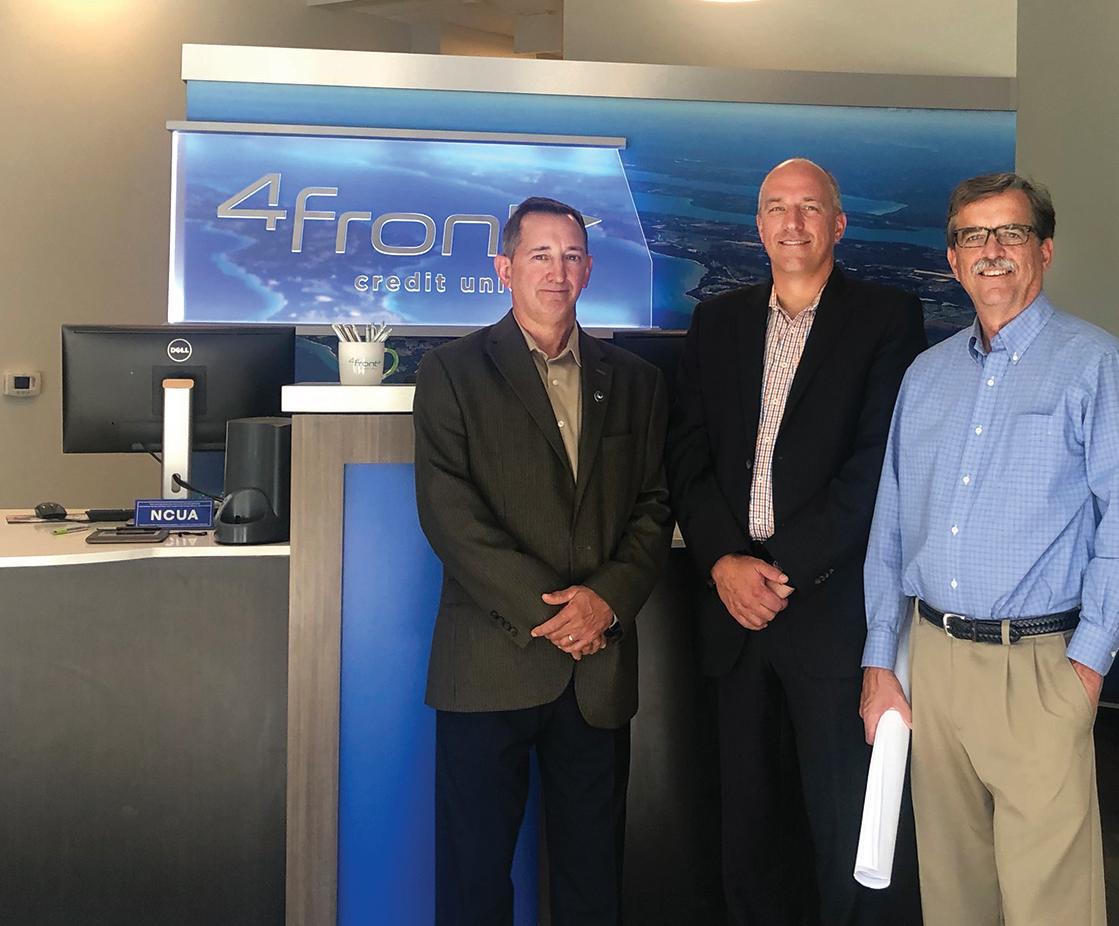
Traverse City, so that makes it easier.”
Some of 45 North’s customers are familiar faces that book direct, others come through an online air charter sourcing platform named Avinode (which 45 North pays a “very expensive” fee to be a part of).
Both 45 North and North Country are extremely responsive and can get people airborne in short order.
“Twenty-four/seven, call us,” Terfehr said. “If we’ve got a plane and a pilot available, we can launch in 20 minutes.”
Flying private is not cheap, but Terfehr and Currier said it’s also not as outlandish as it might seem at first blush.
“If you want to take our King Air for instance and go on a golf outing, or maybe go to a Michigan game, you might be five or six thousand bucks,” Terfehr said. “And you can split that up, no problem ... everybody chips in a grand and you go.”
“If you take the King Air 200, you get nine seats,” Currier added. “So you can have one person, or you can fill it up with nine people, so when you start thinking about it, you’re like, well, it’s really not as crazy as I thought it was.”
Trends and challenges
Near-record fuel prices are not ideal. These get passed along in some (but not all) instances, leading to at least a slight dip in demand.
“We’ll add a fuel surcharge, and char-

ters are a little slower right now because the prices are higher,” Terfehr said. “And my utility contracts are a flat rate, so (fuel costs) just eat right into my margin. Hopefully those prices will come back, because it reduces our profitability.”
Tariffs and other factors are also substantially boosting the cost of owning and maintaining aircraft.
“One of the biggest trends are prices going up on airplane parts, especially foreign aircraft, with tariffs. Engine prices
are going up,” Terfehr said. “The cost of owning them is not hanging with inflation. It’s much more.”
Having parts (and skilled mechanics) ready to go can be a pressure point.
“Aircraft maintenance because if the aircraft isn’t working, we can’t fly, and we don’t budge for safety whatsoever, at all,” Currier said. “So if something is broke, if it’s questionable, we stop all operations and fix it, or try to use another plane as backup. When you’re stacking two, three



flights a day in the summer, that can really add up quickly.”
Despite some challenges, Terfehr and Currier see smooth skies ahead. Demand isn’t going away anytime soon, they say.
“There are people out there with money, and obviously airline travel is very challenging. Now with Spirit gone, it may get worse,” Terfehr said. “I don’t know how many times we get a call to go pick someone up in Chicago or Detroit because their flight got canceled.”



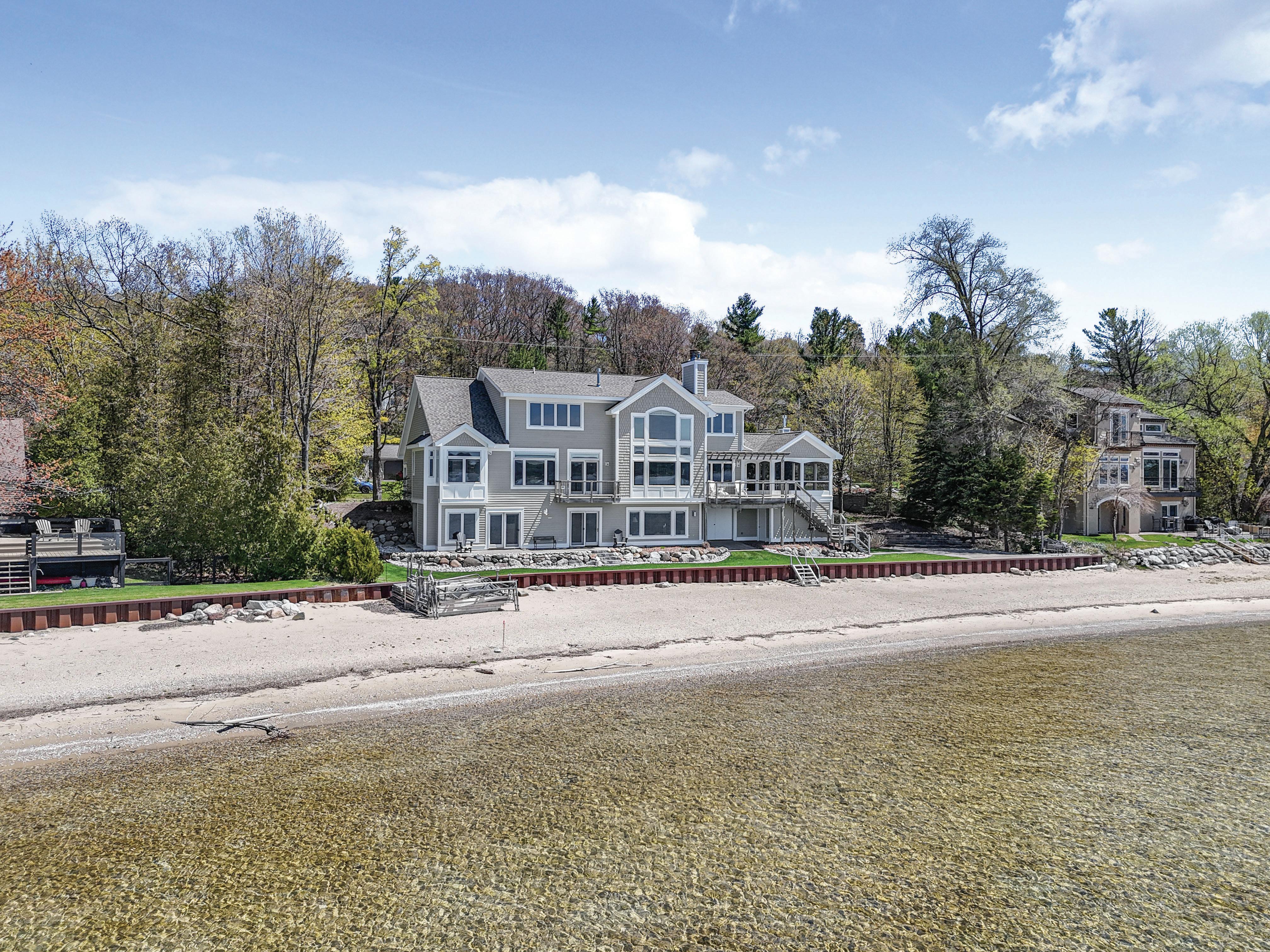



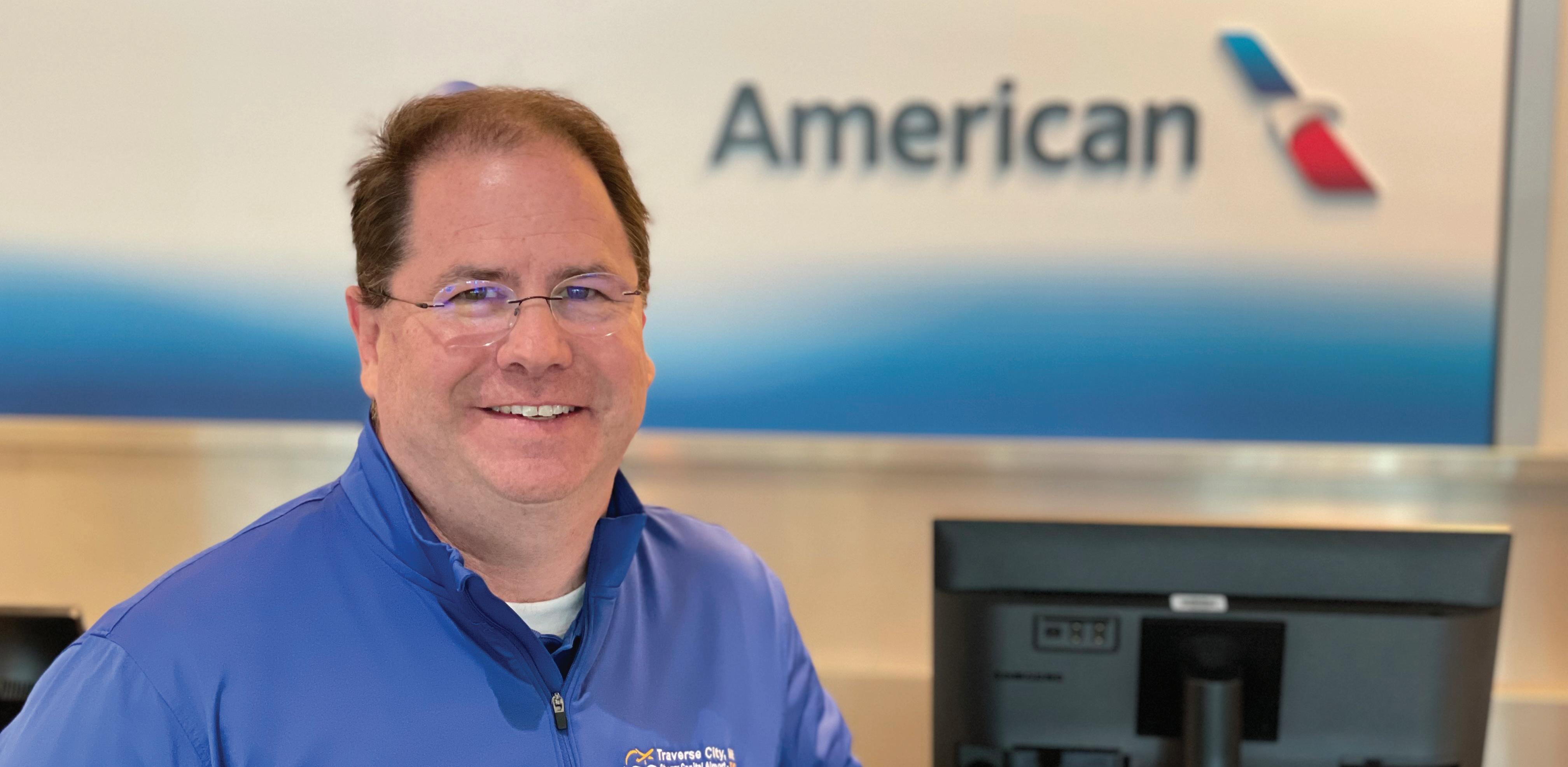
Capital Airport Director Kevin Klein sat down in mid-May with the TCBN to share the latest updates on the airport’s big expansion, another possible summer record, and what direct destinations are on his wish list.
TCBN: We attended your new terminal groundbreaking in May and it was a great turnout and event!
Klein: It was just a great event. Seeing the community support and all the people coming out for it was beyond belief. With an event like that you never know how many will attend, but it really shows the belief in this project, even with weather. I was very grateful. And this expansion will impact the entire community for the next 50 years. So it’s one that’s needed and I think is going to make a major economic impact on the region.
TCBN: Curious how much of your time you spend on this project these days versus maybe a year or two ago.
Klein: It’s a big part of my day, but also a great part of the day. A year ago we were working on design and having your typical meetings on financing and bonds and that entire path. But now today, those are in place, so we’re really focusing on the constructibility, and meeting with contractors every day to make sure the execution happens. And it’s fun because you’re seeing something tangible. It’s such a great team with our project lead Bob Nelson, who’s our airport engineer; he lives and breathes it 24 hours a day. And we have great consultants and contractors, including M&M Excavating and The Christman Company. It’s a lot of coordination right now because when you have grant financing, you build per the description because that’s how the money flows. So right now it’s the civil work and site readiness for terminal. Then Christman will be working
on the demolition of the tie-ins to our current building and then working out to the site shortly with foundations being set in June.
TCBN: So how much of your time is dedicated to expansion right now?
Klein: It’s probably about 50% of my day right now, and it will be less and less over time, when it will be shifting more to working with the airlines and air service development.
TCBN: You must at this point have a very accurate picture of how summer 2026 will be?
Klein: I just received this morning the latest report, and it shows 240,000 seats in the next 90 days for our peak season. That would be a record, so it’s feeling very strong, even with the FAA changes required of United and American in Chicago.
TCBN: What were those?
Klein: On May 17 they had to reduce their flight schedules out of Chicago due to safety and air traffic control, so that cut about 3,500 seats from our market immediately. But what’s great is that both airlines switched aircraft sizes with larger seats to recover a lot of those lost seats and we really fared well. Meanwhile United had announced they were expanding into 10 cities, but some of those were cut way back and some had to be eliminated all together.
TCBN: Our market is strong even with all the consumer headwinds?
Klein: Our market is strong and very resilient. Some airfares are certainly higher; the longer stage routes are running maybe $600-$700. But even now in markets with heavy competition like Boston, routes from here are still $180-$220, so still some really good fares. Florida fares
remain really inexpensive, and I still see Chicago fares at $234.
TCBN: So are fares up overall around 15% with the fuel costs and all?
Klein: Yes, in that ballpark. But instead of increasing just the base fare, most airlines are putting some of those increases on bag fees and other ancillary charges.
TCBN: How is business travel doing these days?
Klein: I think it remains strong. I was listening to a local group talking about the number of trips they have to take this summer for training purposes and I was surprised. Business travel remains strong right now. We’ll see as things shake out with the crisis in the world that might slow things down, but I go back to other challenges like in 2022 coming out of COVID, or even the 2008 downtown. Business travel here tailed off a bit but remained consistent. For this year so far we are down 2%, but mostly due to March weather, so we have not seen a slowdown. April was up 5.6%, and we will probably beat last year’s totals.
TCBN: I keep going back to how people here just don’t appreciate that being in a winning airport market is so rare.
Klein: It’s very true, and it takes some effort on our part to explain that. But we’ve always been very underserved (for air service) for the population we have. There’s obviously a dramatic difference between January and July traffic. We’ve been able to get airlines to right-size their equipment and get the right city pairs at the right time, but it took years of going to airlines and helping them trust our information. Other markets say they also need the big airlines, but then they can’t support them. We’ve proven ourselves here.
TCBN: But there are lots of other tourism markets that also have seasonal swings. Klein: That’s also true, and some ski markets have really struggled. But again we’ve been successful because we don’t put something out there unless we know it’s going to be successful.
TCBN: What are some next direct destinations you’d love to add to the roster here?
Klein: There are a couple. First we’d like to extend Denver to year-round, which went to December 1 last year. It’s our hottest market when it comes to revenue for the airlines; most people think it’s Chicago, but Denver in the summer outpaces Chicago revenue-wise. That’s our two- to three-year goal. And Dallas is the next one. It’s very strong for American, and they keep extending it on each side of the summer peak, so that’s another one. Those two cities are priorities. From a wish list, it would be Los Angeles and San Francisco. Those two are the best West Coast hubs and can connect anywhere on the West Coast. We also have a lot of people from here who go to Hawaii.
TCBN: Are you all set for parking?
Klein: Yes, the parking is in place. The economy lot is doing very well and has offset some of the stress, especially through spring break. What I’ll call the immediate long-term goal is to expand the economy lot, and then even longer-term we’re looking at a parking deck. We will need one sooner or later.
TCBN: Everything set for the Cherry Festival this year?
Klein: Yes, the Cherry Festival is great. Our agreement is in place for the daytime (air) show and also the agreement for the nighttime show. I’m really looking forward to that!
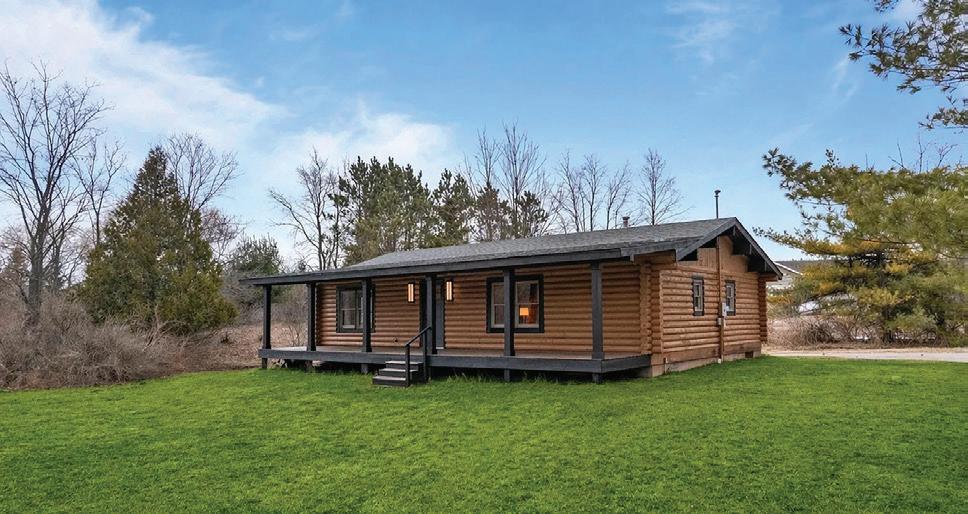


















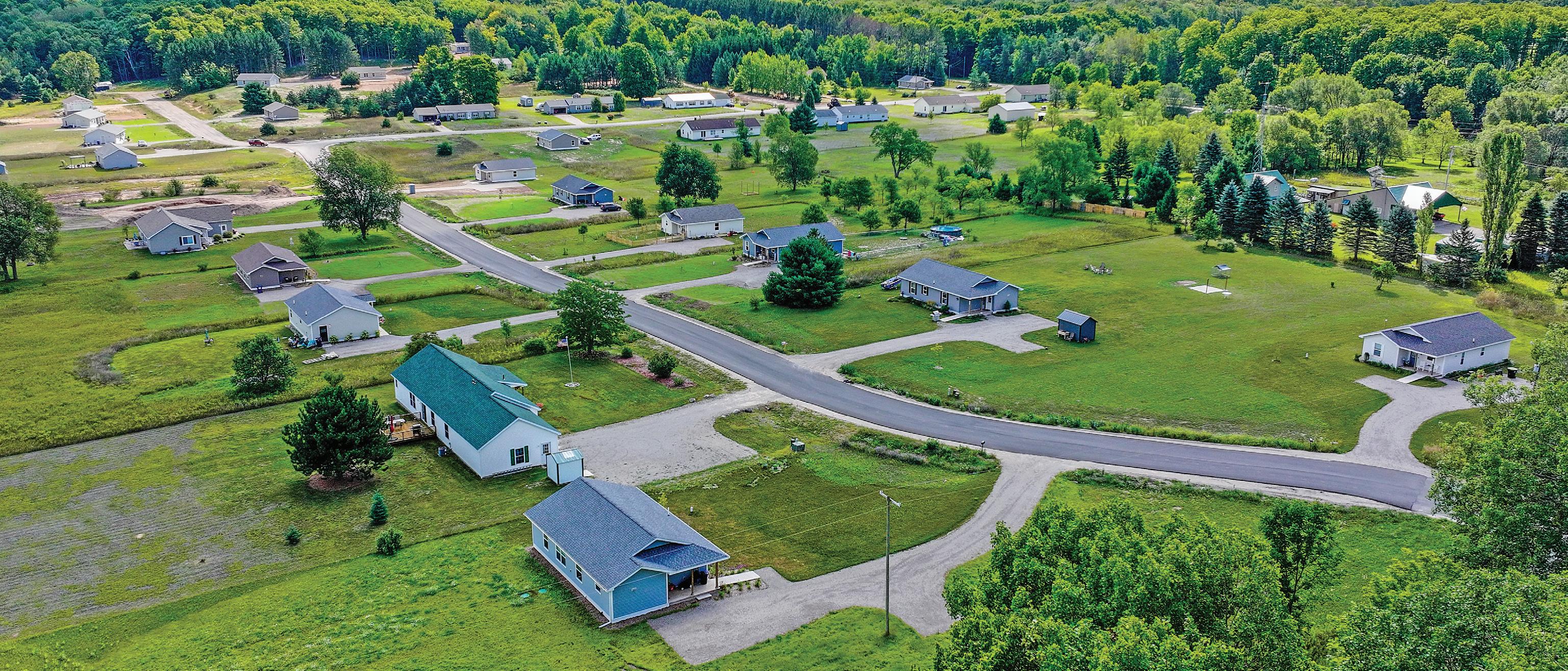
‘WE’RE
By Ross Boissoneau
With nearly 500 housing units coming online from 2023 to the end of this year, it might seem as if there is no longer a housing crisis in Emmet County. That is not the case, according to Nikki DeVitt, executive director of the Petoskey Area Chamber of Commerce.
“It’s leading people to think we’ve solved it. Emmet County is 3,000 units short,” DeVitt said. “We are not addressing the future. We are trying to catch up.”
Petoskey was named to the Realtor. com March 2026 Pure Luxury List, where more than half of all active listings are priced at $1 million or above, and the median listing price starts above $1 million. Those won’t serve the needs of the people who work in retail, hospitality, law enforcement, education or any of the myriad other roles that make up a town. So finding ways to offer more housing, specifically more affordable housing, is not just a challenge, but a necessity.
Planning among division
Not that they didn’t see this coming. The process of addressing the shortage began a decade ago.
“Development takes a long time,” said Jane MacKenzie, executive director at Northern Homes Community Development Corporation. “There was a lot of division.” DeVitt concurs. She notes that some people worry that multi-unit or low- to
middle-income development near them would diminish their home value or change the feel of their neighborhood.
But it is an issue the business community sees as crucial.
“Housing is economic development. It’s the flow that needs to happen. If a business can’t hire, it will be constrained or fail,” she said. “It is an everyone problem in every community.”
The post-COVID boom exacerbated the shortage of homes for those in lower and middle income, pushing prices higher and tightening the inventory of homes for sale. So the availability of housing is a welcome
represents the development, says it has already filled all its available apartments.
“We’re not taking any more (on the) waitlist,” MacKenzie said.
She says the project is geared toward a diversity of residents.
“A lot are trying to start a household. Others are a young couple starting a new life. Some are coming to Petoskey for a job,” she said.
Heidi Shearer represents Pine Pond Homes, a private housing development
“It’s leading people to think we’ve solved it. Emmet County is 3,000 units short.”
– Nikki DeVitt, Executive Director, Petoskey Area Chamber of Commerce
sign, though, as DeVitt notes, it is only the very beginning of meeting the need.
So, what is on the way or already completed? Start with the Lofts at Lumber Square, a 60-unit apartment complex in the city of Petoskey, within walking distance of the downtown. It is targeted toward residents at 80% to 120% of the area’s median income. MacKenzie, who
of manufactured homes on the north side of Petoskey. Developed by an affiliate of Manthei Construction and Manthei Veneer, it too is based on addressing the need in the so-called “missing middle.”
It includes 128 homes, built on a former quarry owned by Manthei. The lowest priced home is $225,900, while those on the water – a spring-fed pond –cost $372,000. While the homes are being sold, the land remains property of Pine Pond Development, with a lease fee simi-
lar to an HOA. They are so-called “elevated” manufactured homes, with upgrades like drywall, upgraded cement panels and insulated skirting, garages, porches and higher roof pitches, with modern open floor plans and large kitchens.
“We’re one-quarter done,” said Shearer. “We started the end of August 2024, sold five in 2024, 19 last year and are on track to close 21 this year.”
Victories Square is a mixed-use development off U.S. 131 on the south side of Petoskey. It is led by the Economic Development Arm of the Little Traverse Bay Band of Odawa Indians on tribal land. It is the culmination of an eightyear effort to bring together the LTBB and Odawa Economic Development Management Inc. at the former Victories Casino property.
Victories Square is geared to include a 50-unit Michigan Low Income Housing Tax Credit Apartment project, as well as potential offerings by Marriott Courtyard Inn Hotel, Starbucks Coffee, Boston’s Restaurant and additional retailers.
The Meadowlands is a project by Northwest Michigan Habitat for Humanity, located just south of Alanson, about a 20-minute drive from downtown Petoskey. It features modular homes, where the parts
are manufactured in a facility offsite, then assembled onsite. While the process does not provide for the volunteer labor that is a hallmark of Habitat for Humanity, Director of Development Kyle Ulrich says the process enables them to be built much faster.
“We sold 19 last year,” he said, compared with one or two per year when built from the ground up onsite.
The neighborhood features 32 mixed-income homes built on donated land. They are sold and titled as stick-built, according to Ulrich. The organization serves Charlevoix, Emmet and Cheboygan counties. While it is building another eight homes this year at the Meadowlands, it is also working on two in Indian River, another in Alanson and four in Mackinaw City.
The Block is a 12-acre historic industrial site at 1420 Standish Ave. The longtime home of the Michigan Maple Block Company, the plant officially closed in 2020, following layoffs attributed to the COVID-19 pandemic. When completed, the Block will include 204 units: 18 studio apartments, 72 one-bedroom units and 114 two-bedroom units. The Block was the first such project in the state to receive MSHDA’s Housing Tax Increment Financing, approved in April 2024.
The issue is not simply finding enough money or people to build homes.

“Housing is not one thing,” DeVitt said.
It includes not only building, but financial resources, zoning, infrastructure such as roads, sewers, water and broadband.
“There are land-use decisions. In rural northwest Michigan we have to look at zoning,” she said.
Zoning issues in different cities and townships focus largely on what is or is not allowed, include the differences in single- versus multi-family units, as well as mandatory sizes, along with a reluctance to engage in options unlike what has been built previously.
DeVitt says tiny homes and ADUs with a footprint of 800 square feet or less might be perfect for some people. Rather than looking at everything through the lens of “wouldn’t live in that,“ she says it is important to adapt the mindset of “it

might be attractive to others” whether it’s a duplex, ADU or tiny home, she says.
A new nonprofit
The obvious need for housing caught the eye of many, including Derek Shiels. He and other local investors pooled their resources to form InvestMitt Cooperative, a 501(c)3 nonprofit investment group. Its investment focus is housing.
“Housing issues brought all of us together,” said Shiels.
The organization is thus far confined to Charlevoix and Emmet counties. It has a goal of attracting $5 million in investments, an amount Shiels admits is ambitious but believes is doable. He says anyone in the community is welcome as an investor, with a minimum investment
of $500.
While the organization formed with a soft launch in January, Shiels says its public launch was to take place last month. The organization has already identified its first project, a local apartment complex with 24 units.
With so many different projects coming to fruition around the same time, it is clear that the efforts are paying off. It is just as obvious there is still much to be done, in this area and elsewhere.
“We still have business owners with employees having difficulty finding housing,” DeVitt said.
Still, she is buoyed by the fact that Petoskey is moving in the right direction.
“A lot of communities are not ready to address it,” she said. “The truth is it’s better late than never.”
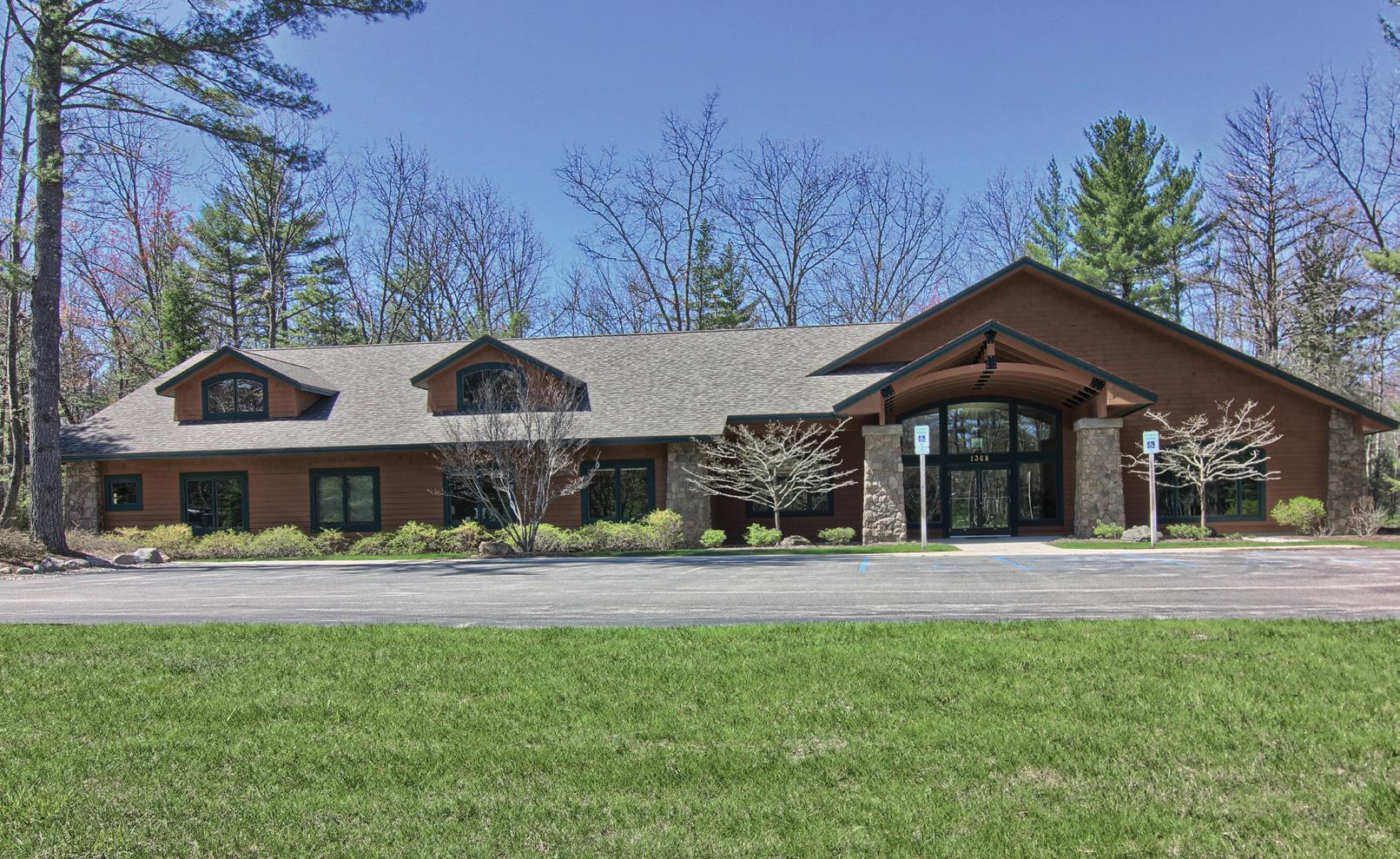

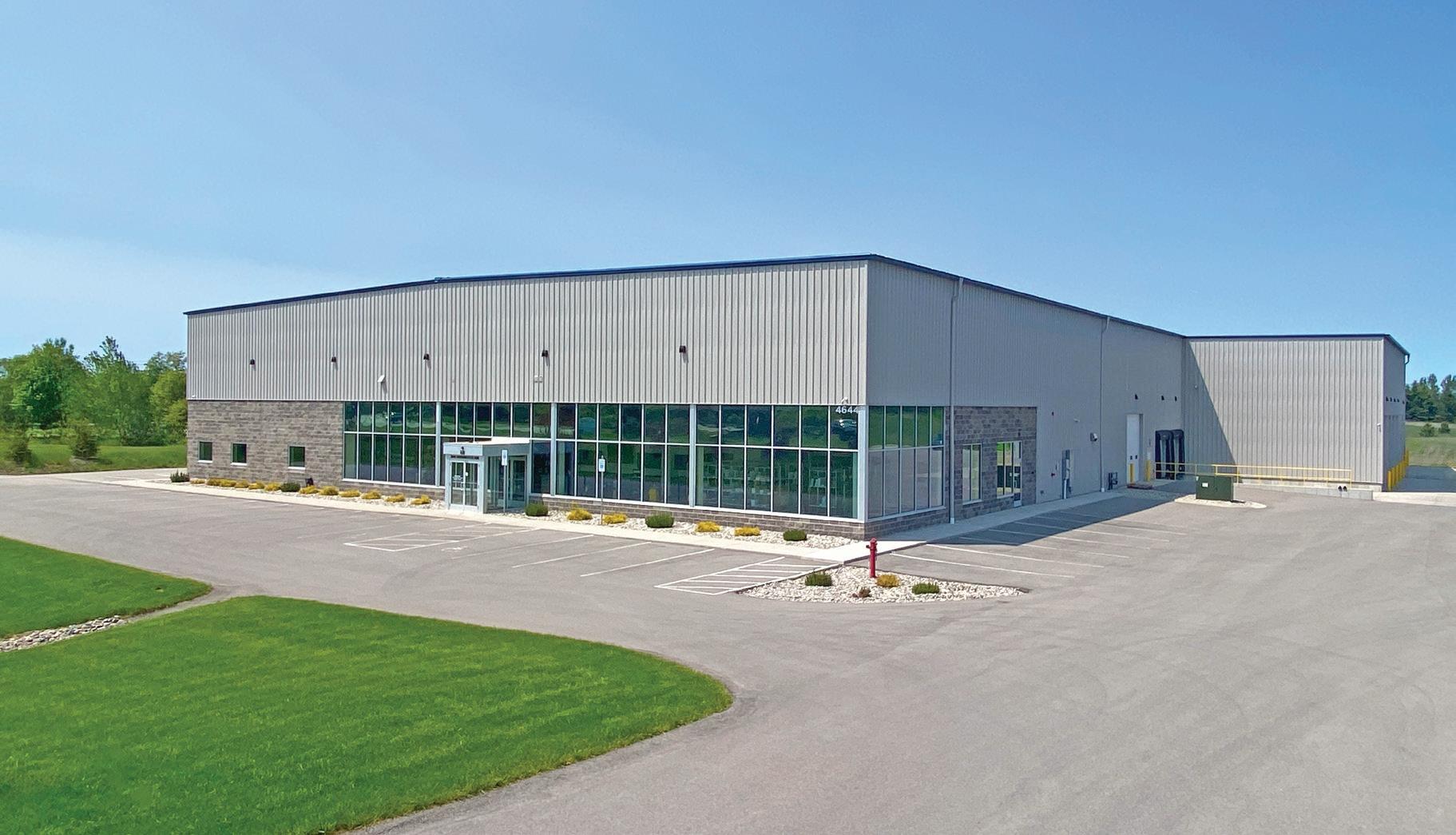
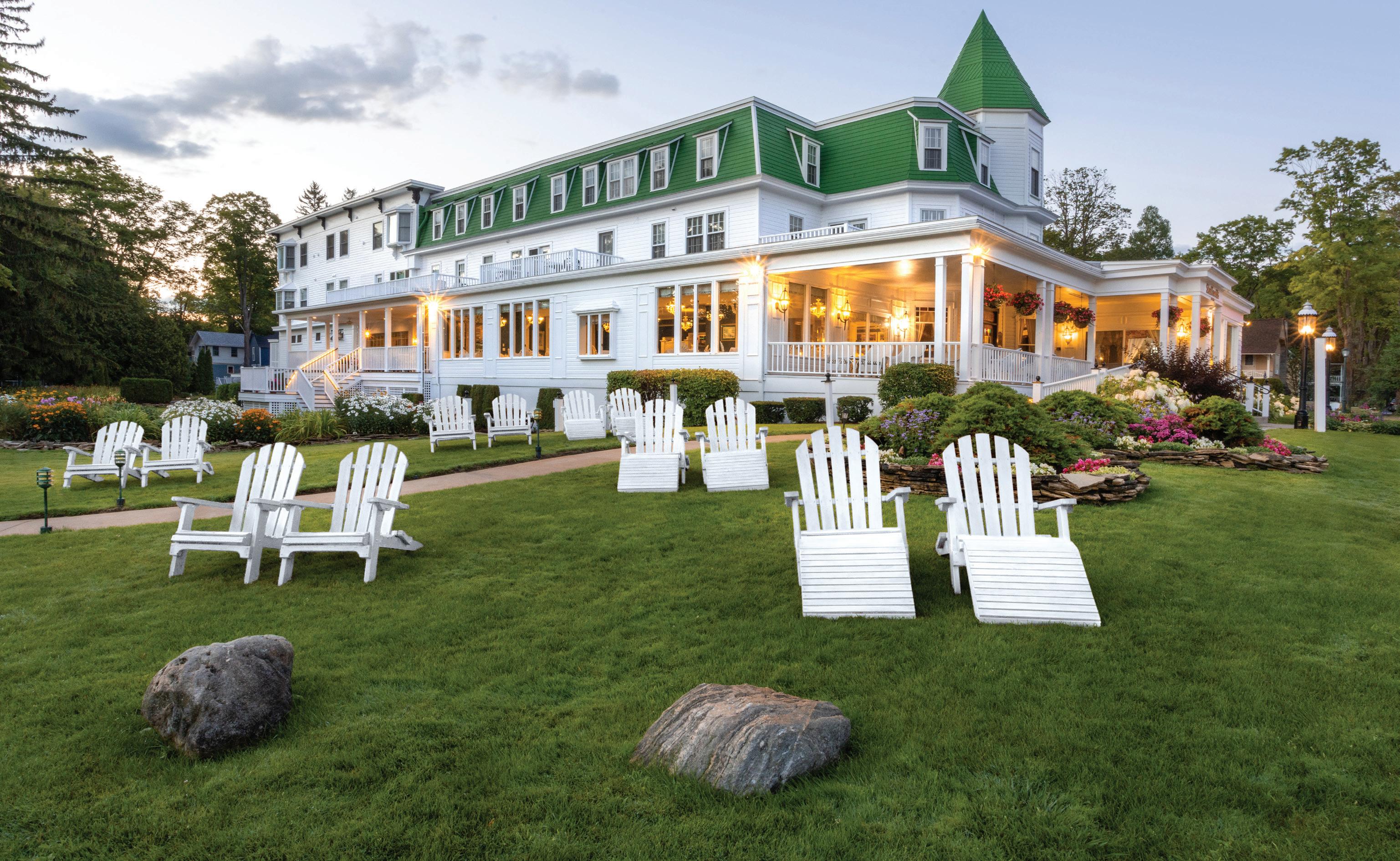
By Art Bukowski
It’s been more than two years since a collection of iconic northern Michigan hotels and restaurants were purchased by a downstate couple.
In early 2024, Stafford Smith sold his collection of beloved “Stafford’s” operations – the Perry Hotel, Noggin Room Pub and Bay View Inn in Petoskey, Crooked River Lodge in Alanson, The Pier in Harbor Springs and the Weathervane in Charlevoix – to Jon and Lauren Cotton of Grosse Pointe.
The Cottons had purchased the famed Hotel Iroquois on Mackinac Island in 2020 and later the Harbour View Inn on Mackinac. All of these properties together are now branded as the Cotton Collection, which promises a heightened level of service and elegance across multiple legendary locations in northern Michigan.
The TCBN met with leadership at Hotel Investment Services (HIS) – the Troy-based group that manages these properties on behalf of the Cottons – to discuss what’s happened so far and what the future holds for these properties.
Stafford’s beginnings
Stafford Smith was born in Petoskey while his folks were vacationing at the
family cottage, and he regularly returned for summer vacations. As a young man he took a summer job at the famed Bay View Inn, which sits on Little Traverse Bay near the picturesque Bay View Methodist community.
Smith worked his way up the ladder and eventually purchased the Bay View Inn in 1961. Through very hard work and some luck, he and his wife Janice eventually added all of the other Stafford’s properties to their portfolio over the next several decades.
All of them – particularly the restaurants – became staples for locals, tourists and seasonal residents. Two of those seasonal residents were the Cottons, who have a place on Walloon Lake and enjoyed their regular visits to Stafford’s restaurants and hotels. Jon is the former president and COO of Meridian Health Plan Michigan who later founded his own healthcare company.
After purchasing the Hotel Iroquois in 2020, the Cottons set their sights on acquiring more properties. But not just any properties.
“Our target for all of the Cotton Collection is … truly iconic properties with irreplaceable real estate that have rich history, are part of the community and are part of the local culture,” said Sam
“Our target for all of the Cotton Collection is … truly iconic properties with irreplaceable real estate that have rich history, are part of the community and are part of the local culture. That really is our model.”
– Sam Barnwell, Chief Development Officer, Hotel Investment Services
Barnwell, chief development officer for HIS. “That really is our model.”
Barnwell has been on both sides of the table. His family owned the Hotel Iroquois (where he served as president), later joining HIS after the Cottons bought that property. He also grew up in Harbor Springs and has known the Stafford family for many years. He worked for them as a young man and remained in contact in the years after.
Barnwell’s family was impressed with the Cottons’ goals, visions and commitments, he says, and they liked that the
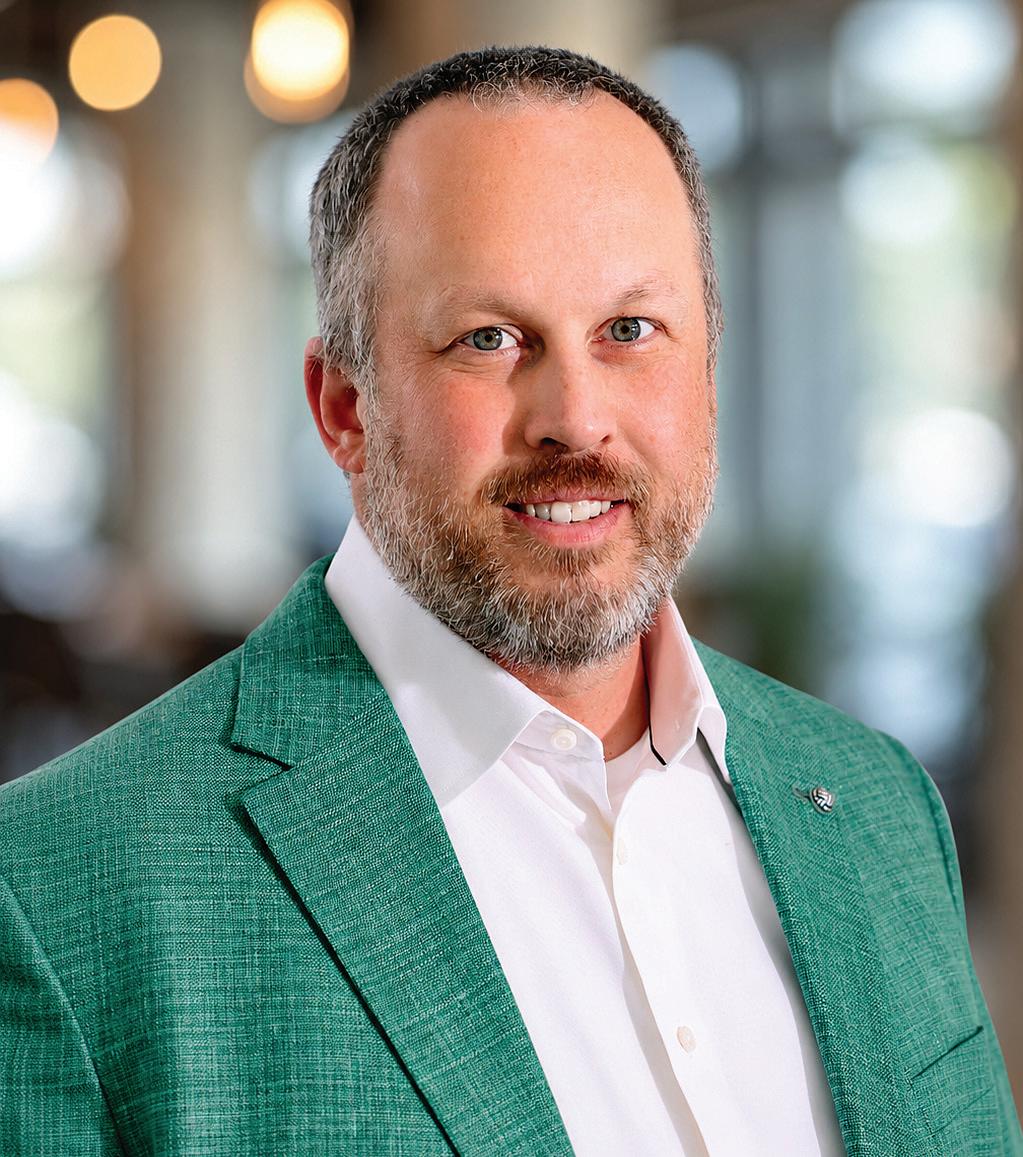
Cottons were independent and local to Michigan.
“I think across the country, we almost have whiplash from private equity. It’s starting to come into northern Michigan and it’s freaking people out,” Barnwell said. “But there’s a huge difference between private equity and family offices like Jon and Lauren have … ownership is personally important to them.”
The Hotel Iroquois sale indirectly paved the way for the huge Stafford’s acquisition a few years later.
“Really the only thing that got dia-

logue started (with the Stafford family) was that Sam’s family felt very good about their sale and how that process went,” said Tawnya Johnson, chief marketing officer for HIS. “So it made things a little more comfortable for Stafford Smith and his family to go down that path. They were ready in many ways, but they were just nervous.”
Ultimately, with these properties ranging up to 140 years old, Barnwell views the Cotton ownership and HIS management as merely the latest chapter in a very long story that will continue after everyone there now is long gone.
“We can only just hope that we’re the best stewards of these buildings when we
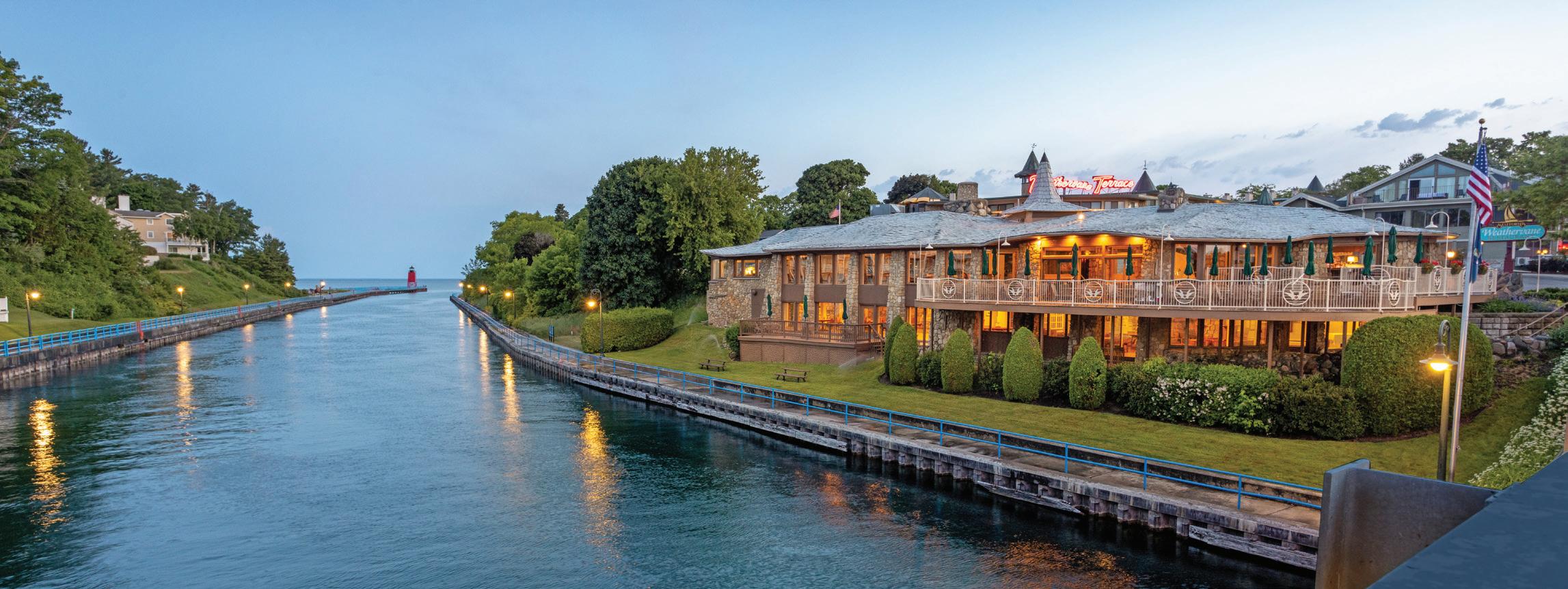
have the opportunity to influence them and enjoy them,” he said.
The goal was never to make major changes to the former Stafford’s properties. But these are old buildings, often with a lot of deferred maintenance and dated interior and exterior designs. The HIS team is in the middle of a multiyear plan to pump what will amount to millions of dollars into these buildings (and the operations within).
This past year, for example, they completely updated the Weathervane in Charlevoix with refreshed interiors and




structural improvements that will set the restaurant up for more and better business in the future.
“The decks were in really bad disrepair, the lower half of the building was like nine different shades of brown and it wasn’t utilized; it was kind of an afterthought,” Barnwell said. “Charlevoix has a lot of weddings that need places to go eat, and here we had basically unused space.”
After some time and money, the Weathervane has a much-needed refresh that preserves its historic essence while boosting the good vibes.
“We came in and rebuilt the decks, got new porch furniture, but also
revamped the whole interior to make it brighter, make it more summer, more northern Michigan, added some different artwork,” Barnwell said. “I think everybody will find that it’s a much more usable space and a much safer space and nicer space.”
“It’s bright, it’s happy, it’s nautical,” Johnson added. “Bright colors and airy feelings … it’s amazing.”
The team is starting the design process on the Hotel Perry, by far the largest building in the portfolio, with major improvements to begin within the next 18 months.
“We are looking at making changes, but the key with these historic buildings

Top Wealth Advisors Best-In-State 2025, 2026 Gain guidance to help you identify, prioritize and plan for your unique needs and goals.

250 E Front St., Traverse City, MI 49684 231.929.7629 jason.c.piedmonte@jpmorgan.com Connect
Forbes/SHOOK Top Wealth Advisors Best-In-State (04/07/26, data as of 06/30/25) ; (04/08/25, data as of 06/30/24).Ratings may not guarantee future success or results. Fee paid to rating provider for advertisement materials








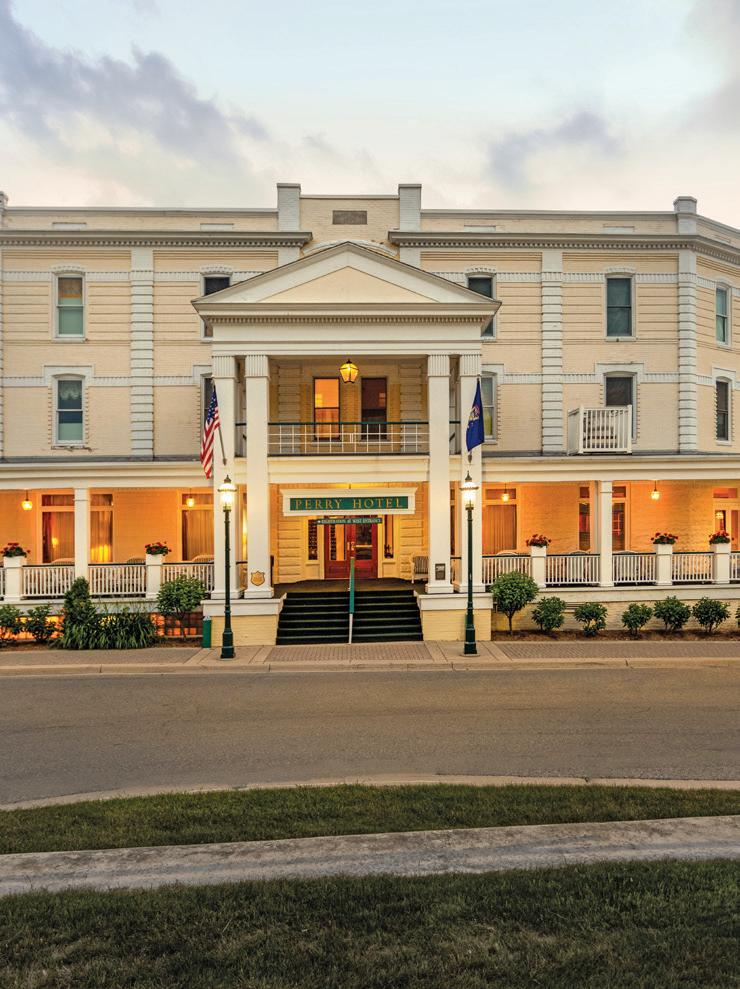
and long-held family buildings is that you don’t come in thinking you know everything, because you don’t,” Barnwell said. “What’s right for Mackinac is not right for Petoskey. What’s right for Petoskey is not right for Traverse City. We want to really take the time to understand (the community) as we make these investments.”


It’s not easy dealing with these historic structures. There are unwelcome surprises on an almost daily basis, Barnwell says, along with a nagging responsibility to deal with them.
“Every time you open up a wall or a floor or anything, you end up coming across something that somebody didn’t do well, or was okay back then, or got buried up so they didn’t have to see it or deal with it ever again,” Barnwell said. “The key is that you take that opportunity then to fix it. We’re stewarding these buildings for the next hundred years. So if you see something that’s not right today, it’s definitely not right 10 years from now, and it’s really not right 50 years from now.”
It’s not just structural changes. The HIS team – at the Cottons’ direction – is working to improve the guest experience.
Gone are the days when most hotel guests are people who drove “up north” from downstate for a low-key weekend.
“As northern Michigan continues to grow in popularity, not just regionally, but even further out across the country, what once was okay and acceptable for your northern Michigan vacation service is maybe not as acceptable now,” Johnson said. “So we need to elevate some of those guest touch points and we need to elevate the service that we’re providing. Lauren is really big on unexpected luxury and unexpected touches for guests that make it really special.”
It helps to have local, non-chain ownership that make independent decisions about what makes sense at each property, regardless of cost.
“There’s no Hilton flag or Marriott flag telling us, ‘You have to do this,’” Barnwell said.
Staffing (surprise, surprise) continues to be a big challenge for the former Stafford’s properties. They’re looking to expand on summertime staff to handle the load, but it’s an uphill battle.
The bulk of the summertime peak of 375 employees are domestic, with some visa workers for support. It’s getting harder to get them through the door, especially if they don’t already live in the area. Summertime housing has gone from slim to none, particularly with the growing popularity of vacation rentals.
“If you need a spot for two months in the winter, you can find it, but if you need it for the four months of the summer, it just doesn’t exist in these markets,” Barnwell said.
Like other large employers, HIS is actively purchasing more housing facilities (including the former Charleboyne Motel in Charlevoix) to directly deal with this problem.
Adding to these challenges is more employers siphoning from an already limited employee pool.
“There’s more and more businesses moving into all of these northern Michigan communities,” Barnwell said. “Petoskey has a pipeline of stuff that’s come on board. Traverse City has a pipeline. And we’re all then competing for the same employees as we add more and more employers to the mix.”
There is an effort to balance things out a bit in terms of seasonality, which could boost business and reduce staffing strain.
“(We’ve) been doing a lot of building out activations of wine dinners, of bourbon dinners and of specialty events to bring people into these beautiful places in some of those shoulder times as well as the summer,” Barnwell said.
The team is also looking to acquire hotel properties in Florida, Arizona or other areas that have a reverse seasonal cycle.
“So instead of going to work for somebody else for six months to come back to work with us, we end up with them working for us in Arizona and then us in northern Michigan,” Barnwell said.


One perfumer’s take on the ‘quiet luxury’ trend in northern Michigan

By Kierstin Gunsberg
In the branding realm, “quiet” might not be the first word to hit the pitch deck. Then again, if we’re talking “quiet luxury,” an aspirational consumer lifestyle, the word is a harbinger to one of the largest and most profitable market shifts following the mid-2000’s fall of the conspicuous “logomania” era, when emblazoned designer goods from Gucci and Louis Vuitton reigned and to which quiet luxury acts as an understated antithesis.
Research firm Polaris estimates that the market for quiet luxury, which transcends income levels and has been popularized across the social feeds of Millennials and Gen Zs, will nearly double over the next decade. From clothing and skincare to home decor and even oat milk, quiet luxury products are defined by their high quality, and their high price point.
However, instead of giving up on non-essential purchases altogether, consumers are considering each one an investment, contemplating how long a product will last, how big the benefit will be, and the cumulative impact of their choices.
Buyers are ultimately “becoming more selective and thoughtful with their purchases,” explained Constance Hicks, owner of Harbor Springs’ Great Lakes Olfactory – or GLO. Hicks, a perfumer who launched her online-only fragrance brand in early 2024, is finding that only two years into business, luxury goods like GLO’s signature organic, handcrafted perfumes, which retail for around $70 per ounce, appeal to those careful shoppers who are turning away from cheaper, synthetic drugstore versions to prioritize where and how the ingredients in their body care items are sourced, opting to open their wallets only for the best of the best, even when that means scaling back on how much they can buy.
“With fragrance specifically, I think there’s growing awareness around ingredients and transparency. Customers want to know what they’re putting on their skin,” she said.
They’re also bending toward more niche brands that feel like an extension of their personal identity.
“People may buy fewer products overall,” Hicks said. “But they’re often looking for products that feel more meaningful, higher quality and more aligned with their values.”
If quiet luxury is about signaling a certain echelon or virtue without spectacle, GLO’s clean fragrances – made up of 15 scents across three EDP lines (Springtime, Beachside and Twilight), plant-based creams, mango and shea butter soaps, and organic grain-alcohol room sprays – fit neatly into that, with its elegant snow white packaging and metallic, cerulean blue accents.
“All of it reflects how this area feels to me,” said Hicks.
And while many wish they could bottle the serenity of taking a deep, earthy inhale along Little Traverse Bay, of slowing down enough to stop and smell the roses (which are found in
her Springtime: Ontario fragrance) Hicks is literally doing just that, with her brand centered around representing and sharing the region on a sensory level.
“Living here, you become incredibly aware of how scent changes with the seasons,” she noted.
GLO’s entire collection is inspired by and named after each of the five Great Lakes, incorporating notes of apple blossom, trillium and lavender into the Beachside: Michigan label and channeling nearby groves and gardens for the floral scent profile of her current bestseller, Springtime: Michigan.
Despite the hyperlocal branding, these aren’t the typical one-note kitschy bottles of cherry-scented sprays crowding gift shop shelves across the northern half of the lower peninsula.
In true quiet luxury form, Hicks has spent “thousands” of hours on the chemistry of each fragrance, testing and reformulating, aging the ingredients so they’ll harmonize well in the final product, and analyzing how it diffuses on the skin, sometimes just to start all over again from square one when something goes awry.
“There have been fragrances where I thought I had it finished, only to revisit it weeks later and realize it needed one tiny adjustment … sometimes it’s literally a drop that changes everything,” she said. Because it behaves with so much variation compared to its stable, synthet-

ic counterparts, “natural perfumery is incredibly nuanced,” said Hicks.
It’s also unpredictable, especially on the supply chain front. The production of key ingredients like lavender, which makes up over 18% of the total essential oil market, has experienced a demand boom (thanks in part to the quiet luxury trend) and is especially susceptible to weather.
But the toughest challenge for Hicks, who’s a one-woman show, has been visibility – getting noticed by apps and the people scrolling through them.
“Social media has become such a huge part of discovery, and algorithms change constantly,” she noted. “You can spend

hours creating something beautiful and have it reach almost no one.”
As a sensory, if not visceral product, GLO’s done especially well at local in-person pop-ups where people can engage with it, while its wholesale and website sales channels are also mostly from Michigan.
Over time though, GLO has garnered a small, loyal repeat following of customers across the country who need a whiff of lakeside woods from afar or, as Hicks describes one of her favorite Up North scents, “this very specific smell of cold freshwater air coming off Lake Michigan that’s impossible to fully describe but

instantly calming.”
That feeling, she added, “has inspired so much of GLO.”
With her forthcoming final collection, Windswept, wrapping up formulation, Hicks is eyeing the possibility of an immersive, brick-and-mortar storefront. And, evidenced by the success of once-small quiet luxury perfumers like Diptyque and Le Labo, that could soon be a reality.
For now, Hicks is taking a cue from her brand ethos and staying in the present.
“I’m still in a growth phase, so I tend to focus less on massive volume and more on building a loyal customer base and strong brand identity first,” she said.
Cars & Caffeine at Hagerty Summer Fridays 7–9am Come for the coffee, stay for the cars























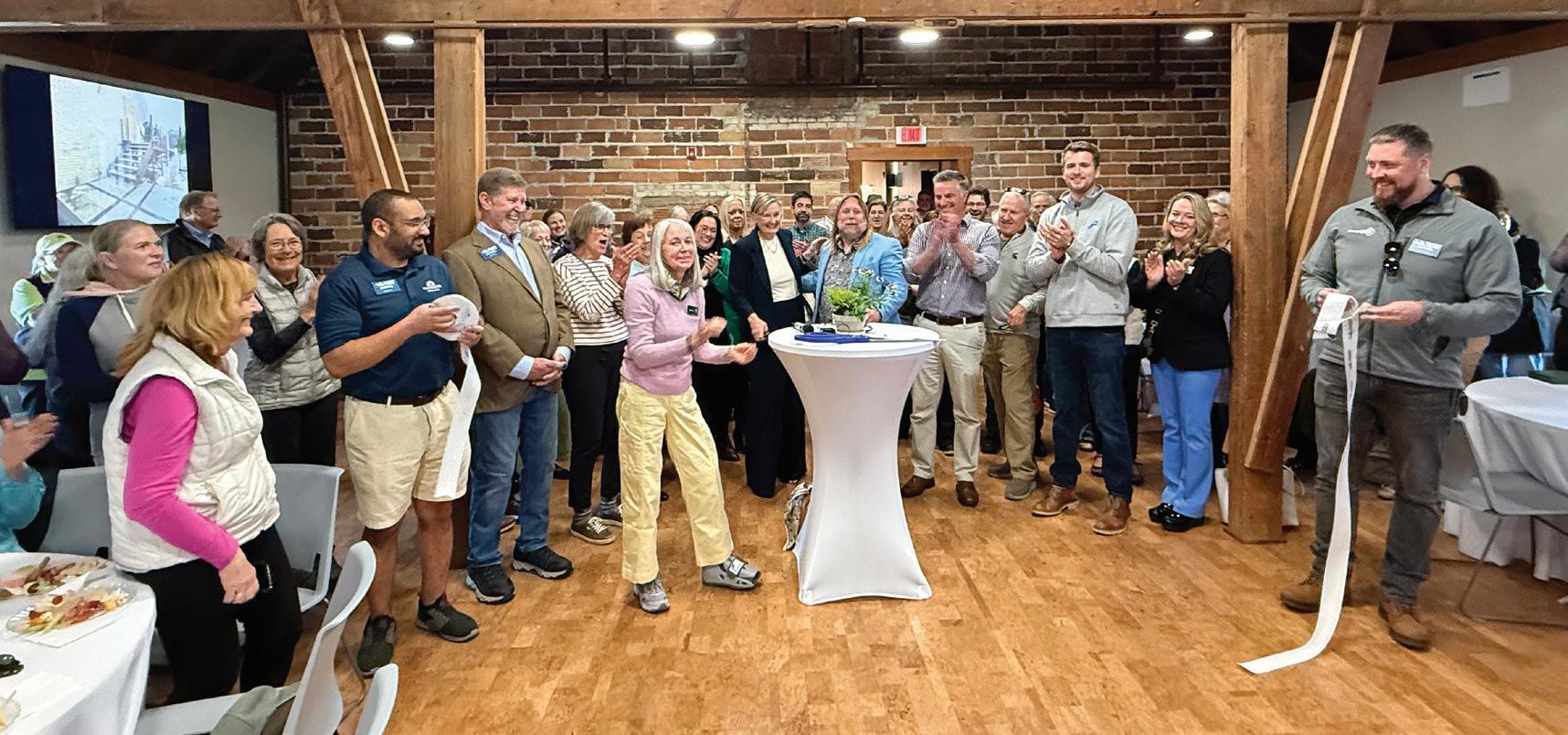
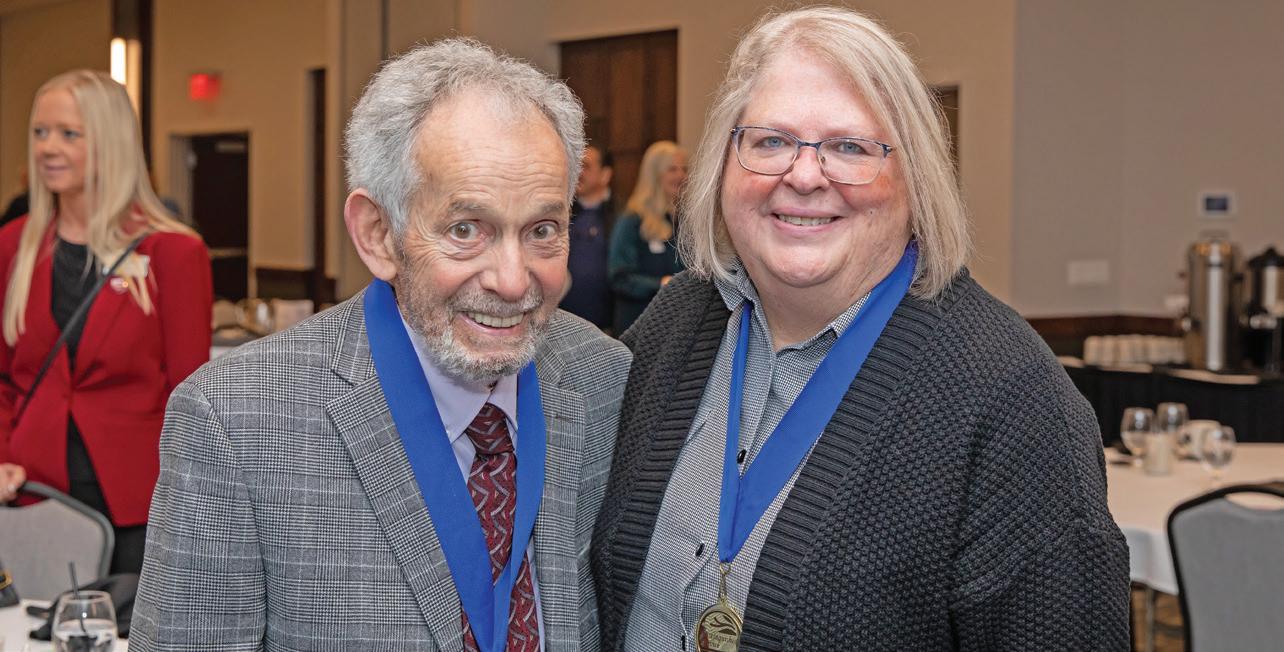


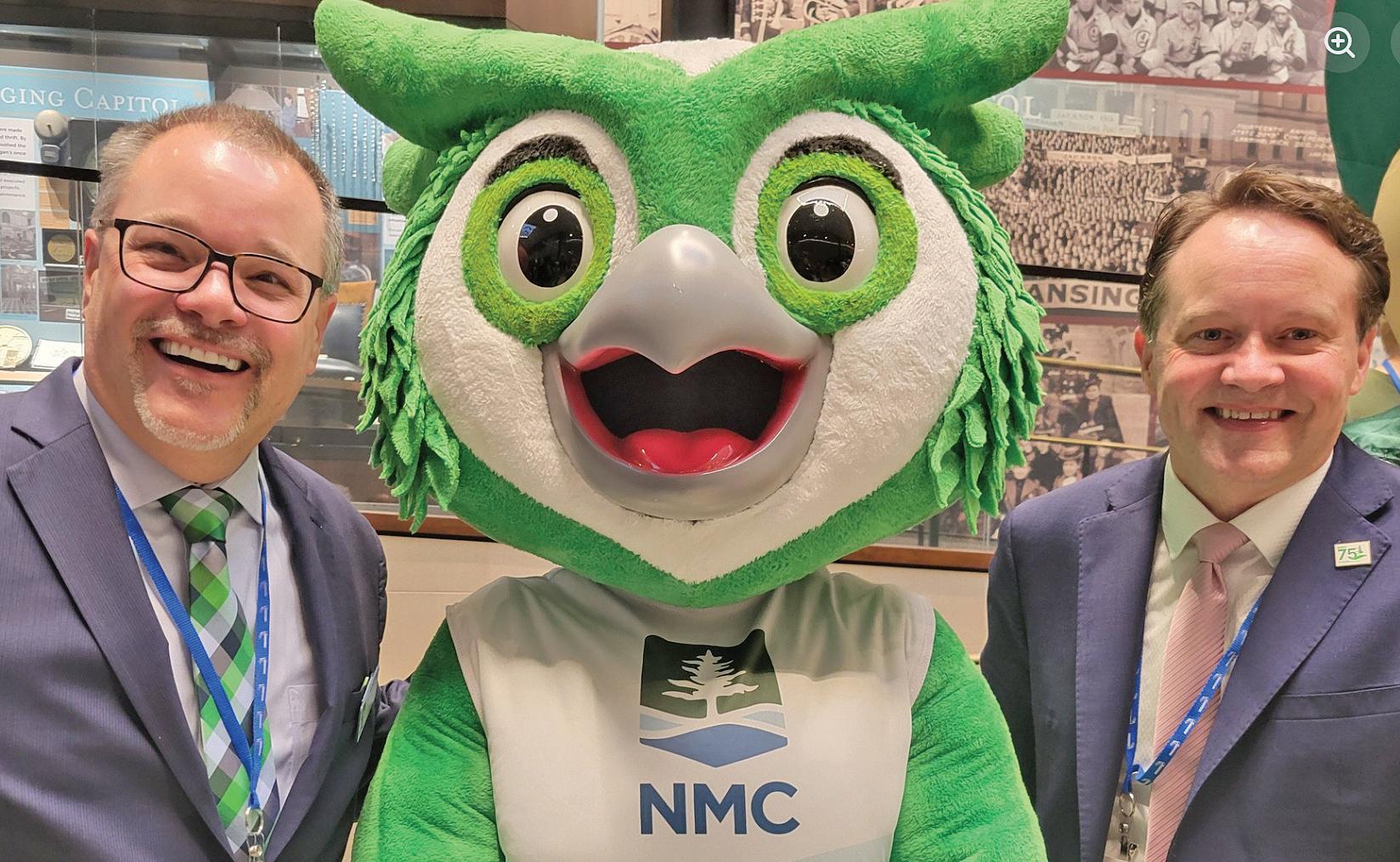
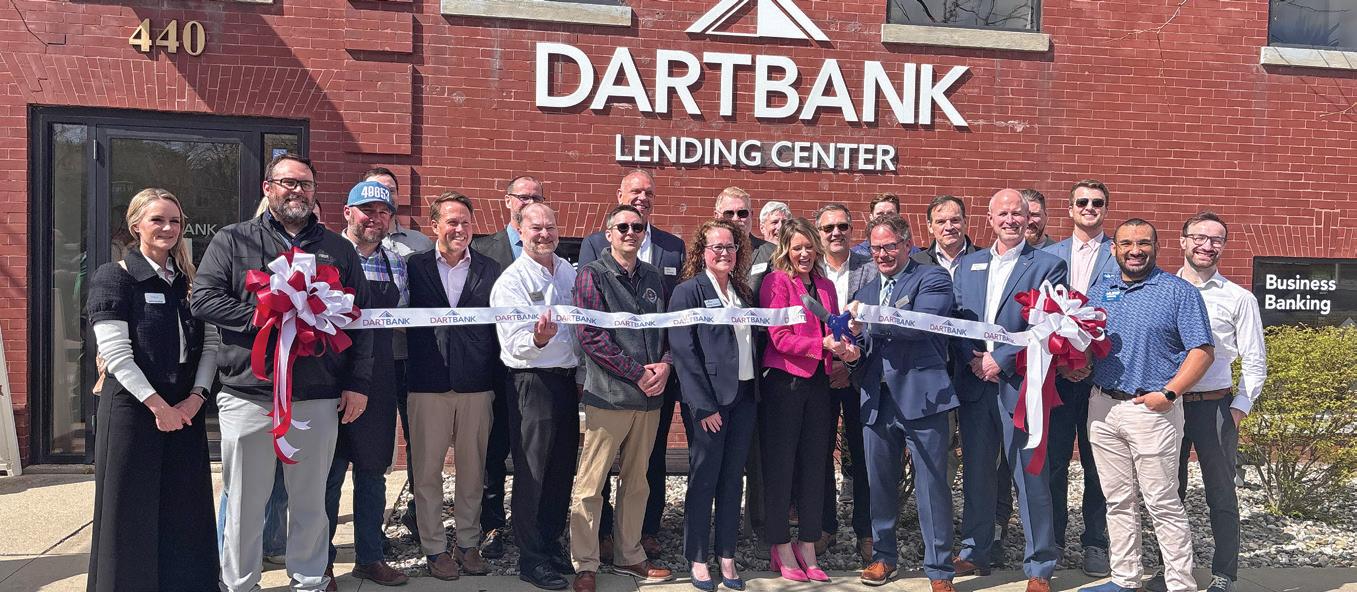


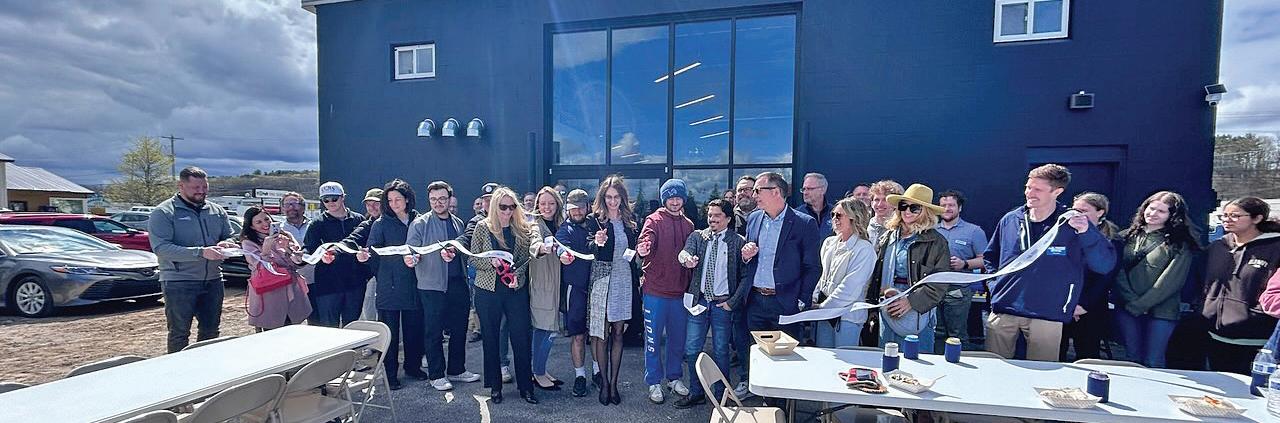
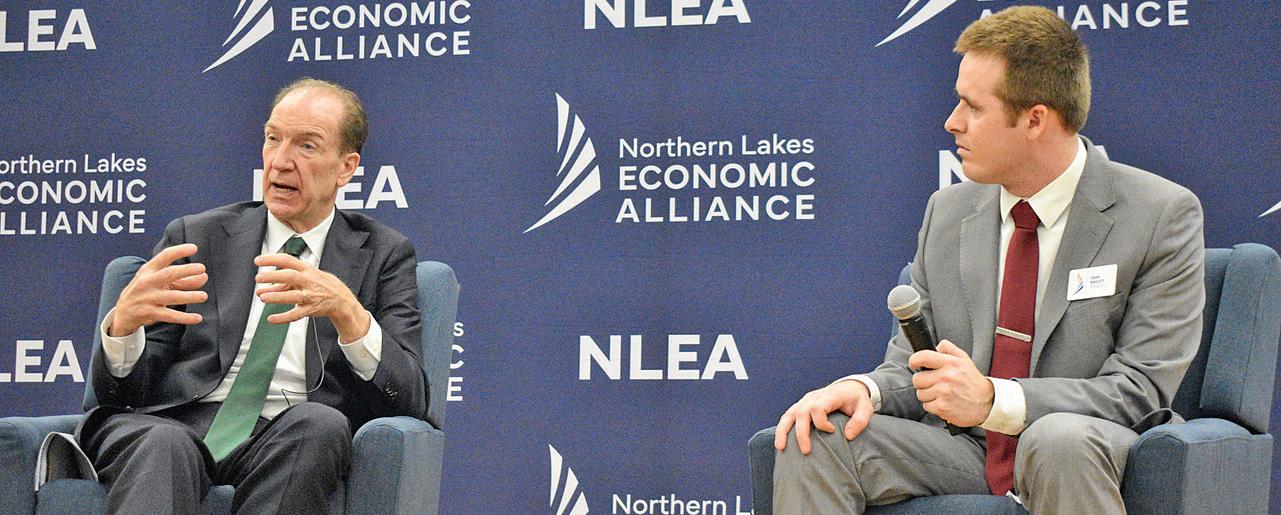
Please send Exposures by the 10th of the month to news@tcbusinessnews.com (labeled Exposures).

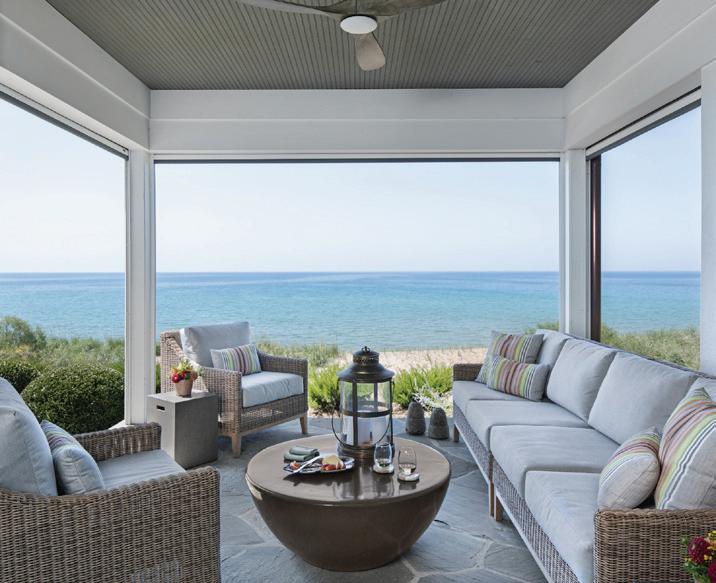






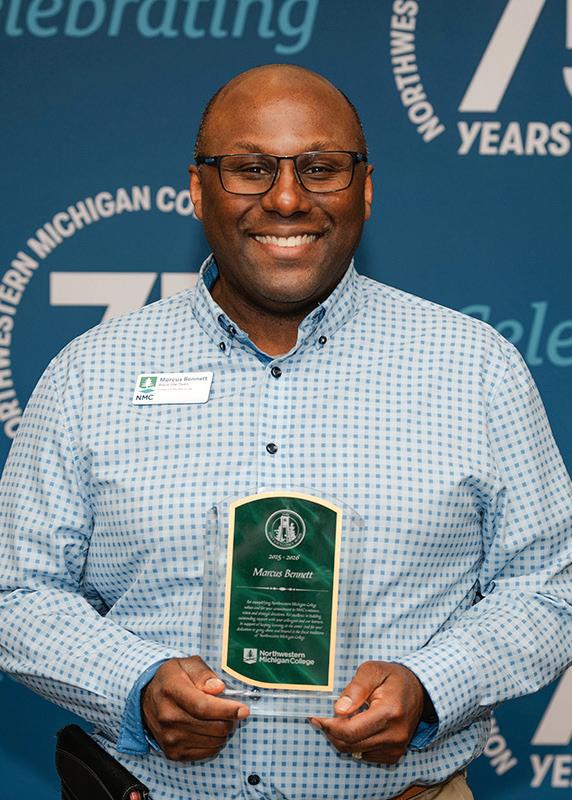


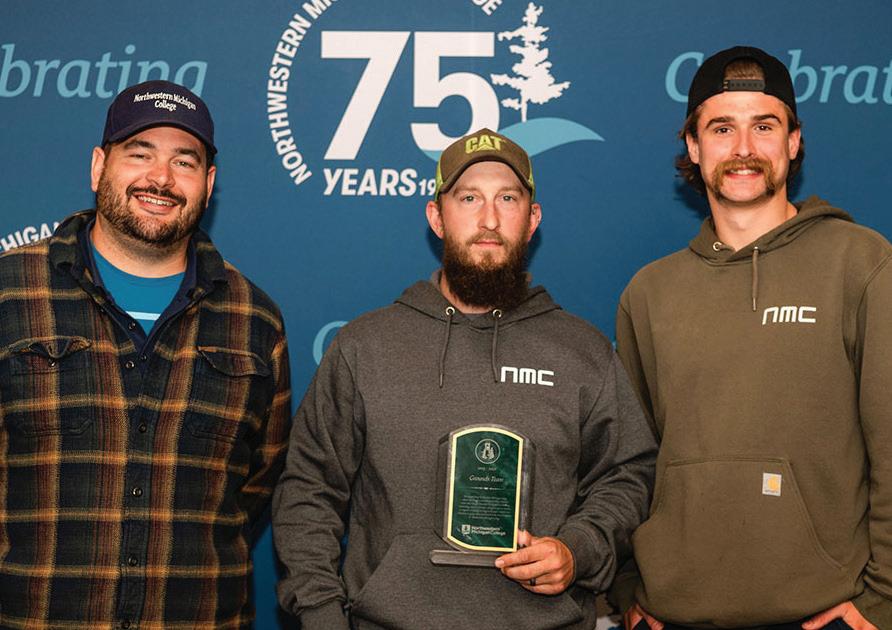
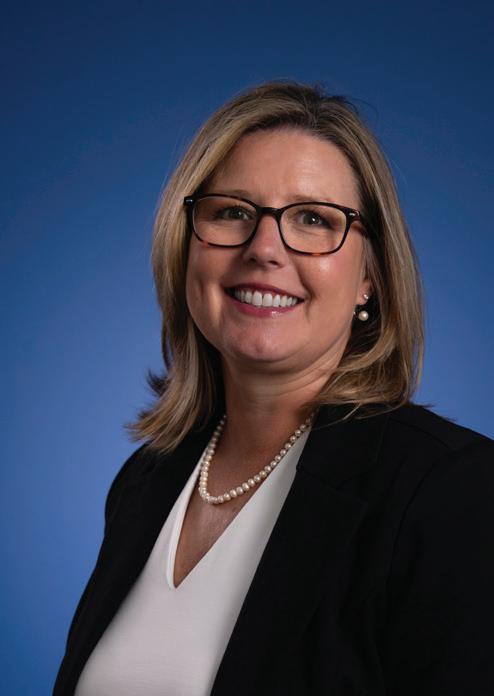






Northwestern Michigan College has recognized several employees for excellence in the 2025–26 academic year:
1 - Marcus Bennett, associate dean of campus life, is the recipient of the Staff Excellence Award. Bennett joined the college in 2011.
2 - Daniel Grim is the recipient of the Adjunct Faculty Excellence Award. Grim has taught in the communications department for two years.
3 - Krist en Salathiel is the recipient of the Imogene Wise Faculty Excellence Award. Salathiel began teaching in the communications department as an adjunct instructor in 2002 and moved to full-time faculty in 2009.
4 - Dan Hoseit, Max McColl and Jeremy Maloney –members of the grounds team – are the recipients of the Team Excellence Award.
5 - Claudia Rodriguez, certified financial planner, has joined Falcon Wealth Planning in Traverse City.
Grand Traverse State Bank in Traverse City announces the following:
6 - Melissa Kreger has been named assistant branch manager, bringing more than 20 years of banking and financial services experience to her new role. Kreger supports branch operations as well as compliance and reporting functions.
7 - Wayne Mueller has joined the team as market development officer. Mueller brings more than 33 years of experience developing and maintaining client relationships. In addition to a banking background, he also served for 21 years as development director for Grand Traverse Area Catholic Schools.
8 - Kolton Drogowski has joined CENTURY 21 Northland’s Traverse City office, specializing in residential sales.
9 - Brian Kluzak has joined Traverse Real Estate in Traverse City as a Realtor.
10 - Meghan Powers has joined Titleocity’s Traverse City location as an agent advocate, bringing years of real estate experience to the team and supporting the northern Michigan area with title and escrow services.
11 - Mary Macey has joined the board of directors of Better Together Northern Michigan. Macey is a Traverse City-based leader with decades of experience building global systems and leading teams and culture integration efforts.
Please send Newsmakers by the 10th of the month to news@tcbusinessnews.com












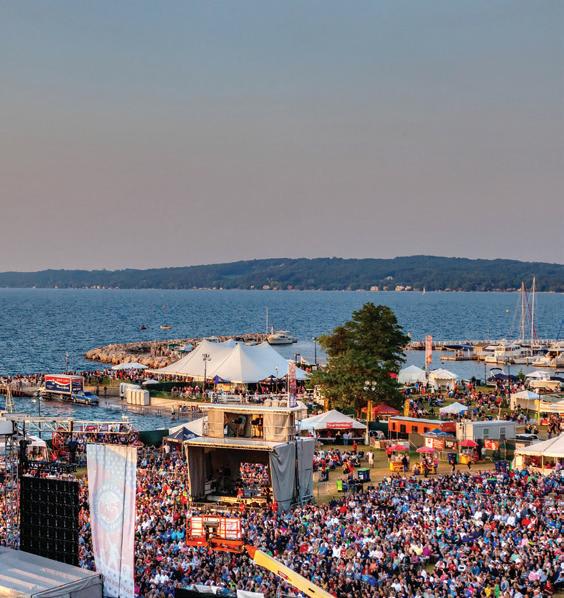


































When you open your account at MSUFCU, you’ll gain access to exclusive benefits and a supportive community committed to helping you and achieve your financial goals.
• A full suite of accounts to support every stage of life
• Superior service from a team that puts members first
• Convenient access to your money wherever you are
• Youth accounts from 0-17 with financial education, games, and events
Pillur supports entrepreneurs and business owners with tailored solutions to turn ideas into impact.
Learn how we can support your next chapter at pillur.org.
Wherever you are in your financial journey, MSUFCU is here to help you build what’s next.




We stock the finest rugs from around the world! Sizes range from 2’ x3 ’ to 9’ x12’. Indoor and outdoor options. Countless colors and patterns. Crafted of cotton, wool and other fine fibers.

Rug Sale & Clearance
20% off most recent sale prices
50% off or more on clearance rugs through 7/31/26



Rug Cleaning & Repair Services provided by HAGOP IAN , most trusted name since 1939. Drop off your rugs with us and we ’ ll ensure expert care through our trusted partner.