
From manufacturers to food brands, northern Michigan businesses are selling to investors
Questions about investment and trust services? Let’s talk.



From manufacturers to food brands, northern Michigan businesses are selling to investors
Questions about investment and trust services? Let’s talk.

• We uphold a Fiduciary Standard and work with clients on a fee-only basis.
• We do not receive commissions, kick-backs, or soft dollars from product sales, eliminating inherent conflicts of interest.
• Our team of professionals holds designations and degrees such as CFP®, CFA, CPA, MBA, JD, and PhD.
• Charles received his MBA from the Kellogg School of Management - Northwestern University, his MA in Economics from WMU, and Executive Education from Harvard Business School and Columbia University.
Zhang, CFP®, MBA, MSFS, ChFC
Released September 15, 2025, covering the 12-month period ending June 30, 2025. Zhang Financial does not pay a fee to be considered for or included on Barron’s rankings. Zhang Financial pays a licensing fee to use the ranking in marketing materials. See zhangfinancial.com/disclosure for full ranking criteria and methodology. Ranked #1 on Barron’s List of 2025 Top 100 Independent Advisors

HEALTH INSURER HEADS NORTH
Health Alliance Plan by Henry Ford Health has opened a new office in Traverse City at 509 E. Front St., a major milestone in its continued statewide expansion. “Opening our new office in Traverse City is a tangible reflection of our deep, long-term commitment to this community and our ongoing investment in its future,” said Margaret Anderson, president of Health Alliance Plan. “We’ve taken a thoughtful, deliberate approach to growing our provider network in this region, most recently with the 2025 addition of Wexford PHO, which includes Munson Healthcare and Munson Medical Center.” The expansion adds eight northern Michigan hospitals, more than 700 physicians and ancillary services to the Health Alliance Plan network.
EXPANSION FOR DAVE’S GARAGE
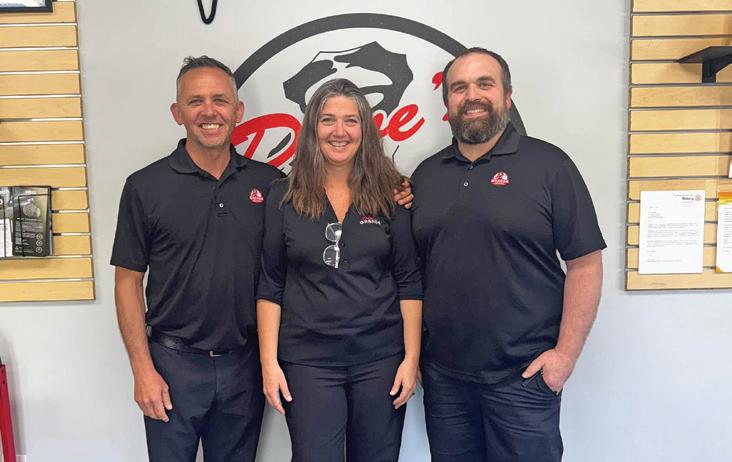
Elk Rapids Tire and Alignment at 10868 US-31 in Elk Rapids was recently acquired by Dave’s Garage Traverse City The ownership group includes Jamie Laferriere, Heather Smith and Dylan Helferich. Dave’s Garage Elk Rapids intends to maintain the current service offerings of brakes, tires, and suspension repair, and eventually add more full-service options. Dave’s Garage Elk Rapids becomes the third location of the Traverse City-based company that also operates in Gaylord. The Elk Rapids location can be reached at (231) 264-9233 and online at davesgarageer.com.
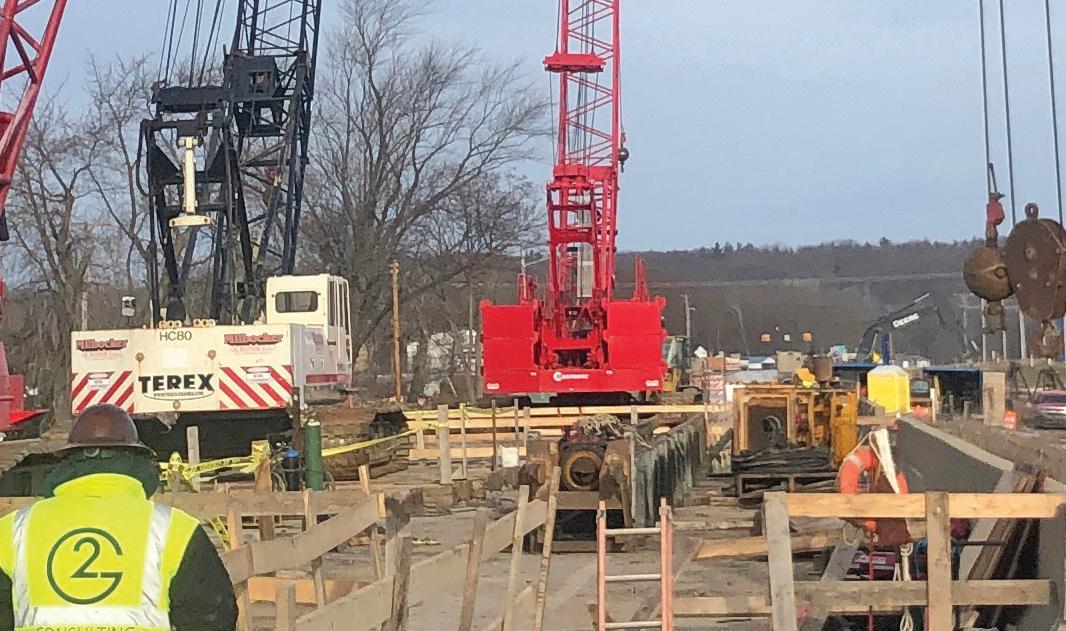
G2 Consulting Group, a geotechnical, environmental and construction engineering services firm headquartered in Troy, recently expanded to Traverse City with a new office at 3660 Rennie School Rd., Suite A. G2 has completed numerous projects across northern Michigan, including wastewater facilities, public school districts, MDOT projects, renewable energy developments and telecommunications infrastructure. “Demand for environmental and geotechnical services continues to grow across northern Michigan,” said
Jason Stoops, managing principal of G2’s Ann Arbor office. “Establishing a local presence demonstrates our long-term commitment to the communities and clients we serve throughout the region.”
Citywide Home Mortgage has opened a new office in Traverse City at 4020 Copper View, Suite 225. The new Copper Ridge location establishes a centralized home base for Citywide’s team of local mortgage lenders. The Traverse City team specializes in a comprehensive suite of loan products, including conventional mortgages, FHA, VA, USDA rural development loans and construction financing.
State Savings Bank in Traverse City recently announced it has partnered with Clearstead, a Midwest-based independent advisory firm, to provide customers with access to investment and trust services, including investment management, estate planning, tax preparation, and retirement and education planning.
The NeedlePoints North has moved from a downtown pop-up location in Traverse City to a permanent retail space at 739 Woodmere Ave. Founded earlier this year by Becki Barnwell and Susie Wipperman, NPN offers an extensive inventory of canvases, threads, tools and accessories, as well as a dedicated area for classes.
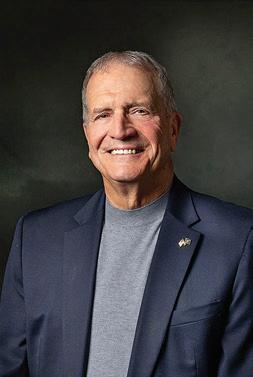

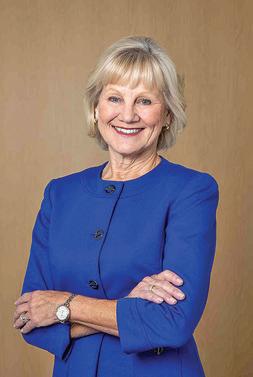
Northwestern Michigan College recently announced the newest recipients of its highest honor, the NMC Fellow award: former trustee Doug Bishop, longtime supporters Jim Huckle and the late Diana Huckle; and alumna, supporter and volunteer Peg Jonkhoff. Bishop was first appointed to NMC’s Board of Trustees in 2006 to fill a term vacancy and subsequently was elected to three successive six-year terms. Bishop has practiced law in Traverse City since 1977. Jim Huckle and the late Diana Huckle have been financial supporters of the college since 1991, with recent gifts to the Experiential Learning Institute and freshwater initiatives. Jonkhoff, a 1976 graduate of NMC, serves on the NMC Foundation Board and is a member of the 75th anniversary steering committee. She is vice president at Reynolds-Jonkhoff Funeral Home in Traverse City.
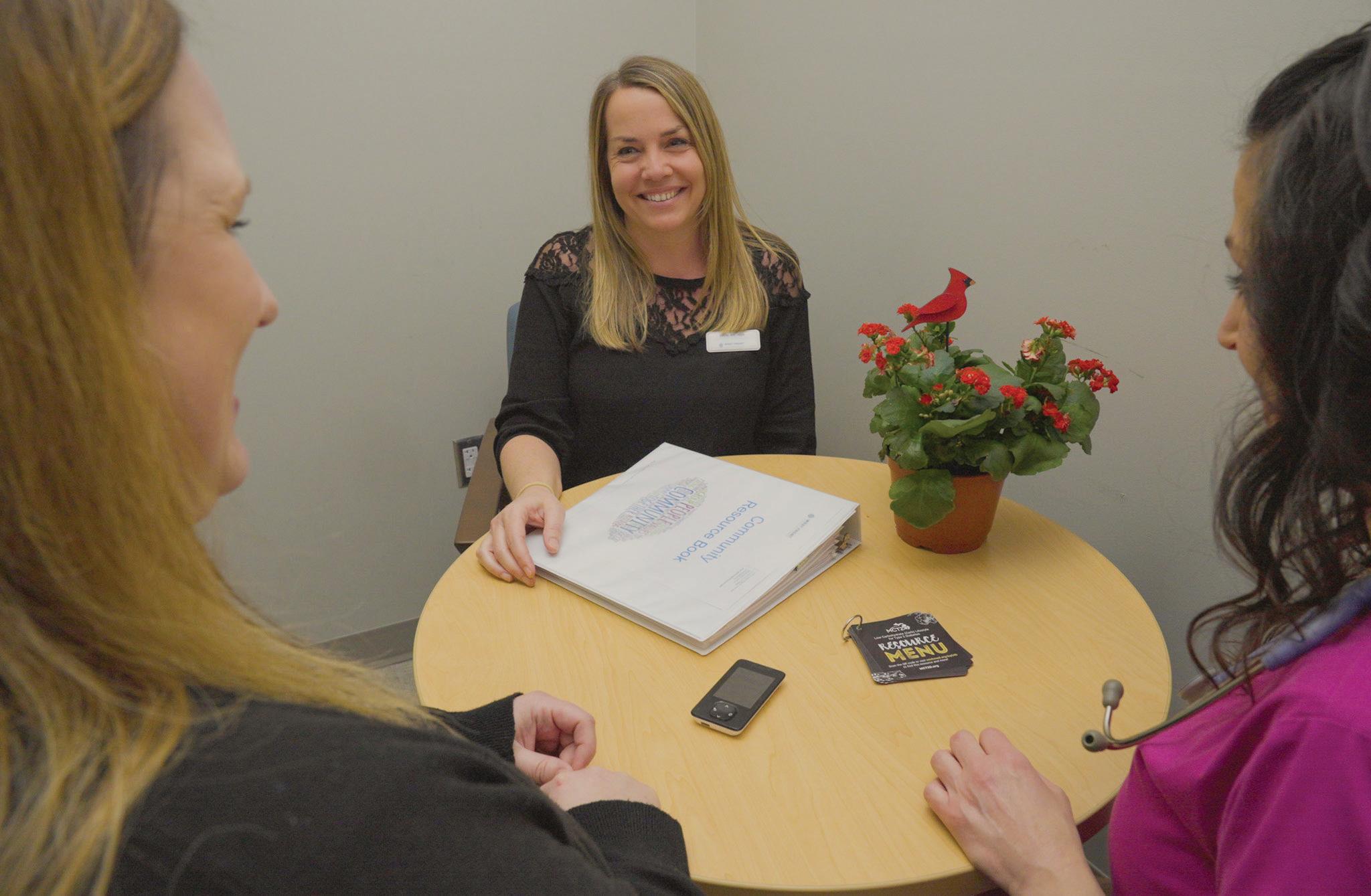

Our team is committed to building lasting relationships and supporting your health through preventive care and ongoing management. We want the very best for you and your family.



The following testimonials come directly from our 2025 Customer Satisfaction Survey.
“Very good partnership!” -12 year client
“Michigan Planners brings creative ideas and solutions to us They are also really great about researching ideas we have and providing information and options They are a great advisor to our HR and leadership teams ” -3 year client
“The excellent customer service and overall employee experience makes Michigan Planners a standout in a very competitive market for insurance brokers I wouldn't dream of moving our business.” -17 year client
“The friendliness of staff is second to none ”
-9 year client
“Your commitment to customer service is 2nd to none!”
-5 year client
“I'm thankful every day for our MI Planners Team They always go above and beyond!” -22 year client

“Your expertise and advocacy have been invaluable in ensuring the best outcomes for our organization, employees, and retirees We greatly appreciate the flexibility of employee meetings to discuss plans ”
-1 year client

“Great service to our employees - best ever!!!!!” -12 year client
“Really love the personalized one-on-one assistance with helping employees choose the right plan for them ” -1 year client
“Michigan Planners has spoiled me!” -5 year client
“You serve with compassion and integrity don't ever change!” -18 year client
“Each member of the MPI team is a joy to work with and makes my job so much easier There is a great depth of experience and knowledge that inspires confidence ”
-8 year client
“Responsiveness to urgent matters is great.” -5 year client

Grand Traverse Pie Co. turns 30 this year, but it’s a miracle it ever opened at all. Our main obstacles were that we had never made pie, never owned a business, never lived in Traverse City and had very little money. But we had a plan.
We also had the support of Liz Smothers – owner and founder of the Julian Pie company in Julian, California – who helped us learn how to make pie. Dan Druskovich at the former Empire Bank gave us a Small Business Association loan when others declined to do so. We also had the support of Ken Zacks and Don Cruse, who agreed to rent us the space for our shop at 525 West Front St. Without the faith and support of these folks, our dream never would have come to life.
We are so grateful to share in this pie journey with folks who apply their incredible efforts every day to uphold and advance our brand. Many members of our “pie family” have been part of our team for 15-plus years. Our partner Tim Rice was our first wholesale customer as a director of Prevo’s Family Markets. This relationship started two months after we opened. He partnered with us in 2001 to grow beyond Traverse City and we are still partners today. Jerry Running started doing our financial work in 1998 and he is still doing this today.
Denise’s passion for children in need has led us to support several children’s advocacy centers across Michigan, as well as several other entities providing critical support to disadvantaged youth.
Our first pie team consisted of our children Kellee (11) and Bobby (6); my mom Barbara and four employees who somehow had faith that this new business was going to make it – at least for a brief time. We now have six company-owned pie shops and five franchise locations, along with our central production/distribution center, and are in more than 800 supermarkets throughout the Midwest and beyond.
EDITORIAL & BUSINESS OFFICE
P.O. Box 4020 Traverse City, MI 49685 231-947-8787
ON THE WEB
tcbusinessnews.com
PUBLISHER
Luke W. Haase
lhaase@tcbusinessnews.com
CONTRIBUTING EDITOR
Gayle Neu
gneu@tcbusinessnews.com
HEAD WRITER
Craig Manning
STAFF WRITER
Art Bukowski

When we opened, Smeltzer’s Orchard Company delivered our fruit from Frankfort in the back of a Ford F-150. They are still our primary fruit supplier, delivered through Lipari Foods. Susan Olson has been carrying the storytelling torch for us for 25 years. We also have several pie shop general managers and franchisees who have been with us for more than 15 years.
The most satisfying part of this journey is being on it with people who believe in us and our company. We call our mission the Power of Pie, powered by respect. We try to lead with respect for our pie family,
COPY EDITOR Becky Kalajian
CREATIVE DIRECTOR Kyra Cross Poehlman
CONTRIBUTING WRITERS
Ross Boissoneau
Kierstin Gunsberg Rick Haglund
WEB PRODUCTION: Byte Productions
MAILING/FULFILLMENT
Village Press
DISTRIBUTION Marc Morris
our guests, our suppliers and for our communities. We strive to be a warm and welcoming place serving pies and comfort foods in an authentic way – no kiosk or drive-through, just people serving people. If we can do this every day with a positive, productive and good-hearted attitude, we should garner loyalty from our team, guests and communities. Loyalty leads to growth, growth fuels giving and giving leads to respect.
Denise has been leading the giving element of our brand for many years. Her passion for children in need has led us to support several children’s advocacy centers across Michigan, as well as several other entities dedicated to providing
SERVING
Grand Traverse, Kalkaska, Leelanau and Benzie counties
AD SALES
Lisa Gillespie lisa@northernexpress.com
Kim Murray kmurray@tcbusinessnews.com
Kaitlyn Nance knance@northernexpress.com
Abby Walton Porter aporter@northernexpress.com
Michele Young myoung@tcbusinessnews.com
critical support to disadvantaged youth. Her willingness to learn about the more sobering and uncomfortable situations that many face in all regions, in all demographics, has inspired us to help in making a positive impact on this population. We feel it is our duty as a business to be a voice and a financial contributor to those doing the work every day. Children are our future, so let’s give them the tools needed to succeed.
We are three decades into this journey and are still loving working and learning with our team and our communities.
Mike Busley is the co-founder of Grand Traverse Pie Co.
The Traverse City Business News Published monthly by Eyes Only Media, LLC P.O. Box 4020 Traverse City, MI 49685 231-947-8787
Periodical postage qualification pending at Traverse City, MI.
POSTMASTER: Send address changes to The Traverse City Business News, PO Box 1810, Traverse City, MI 49685-1810.
The Traverse City Business News is not responsible for unsolicited contributions. Content ©2026 Eyes Only Media, LLC. All rights reserved.
EYES ONLY MEDIA, LLC








































































































































































































































































































President
By Art Bukowski
Mark Newhouse offers a variety of insurance products through Newhouse Insurance Agency, the State Farm-affiliated outfit he opened in Traverse City in 1997. He enjoys “fulfilling the promise of insurance” by helping his customers secure the best coverage and being there for them in their time of need, if necessary. We thank him for showing us around his desk! If you have an idea for a From the Desk Of feature, please email Art at abukowski@tcbusinessnews.com
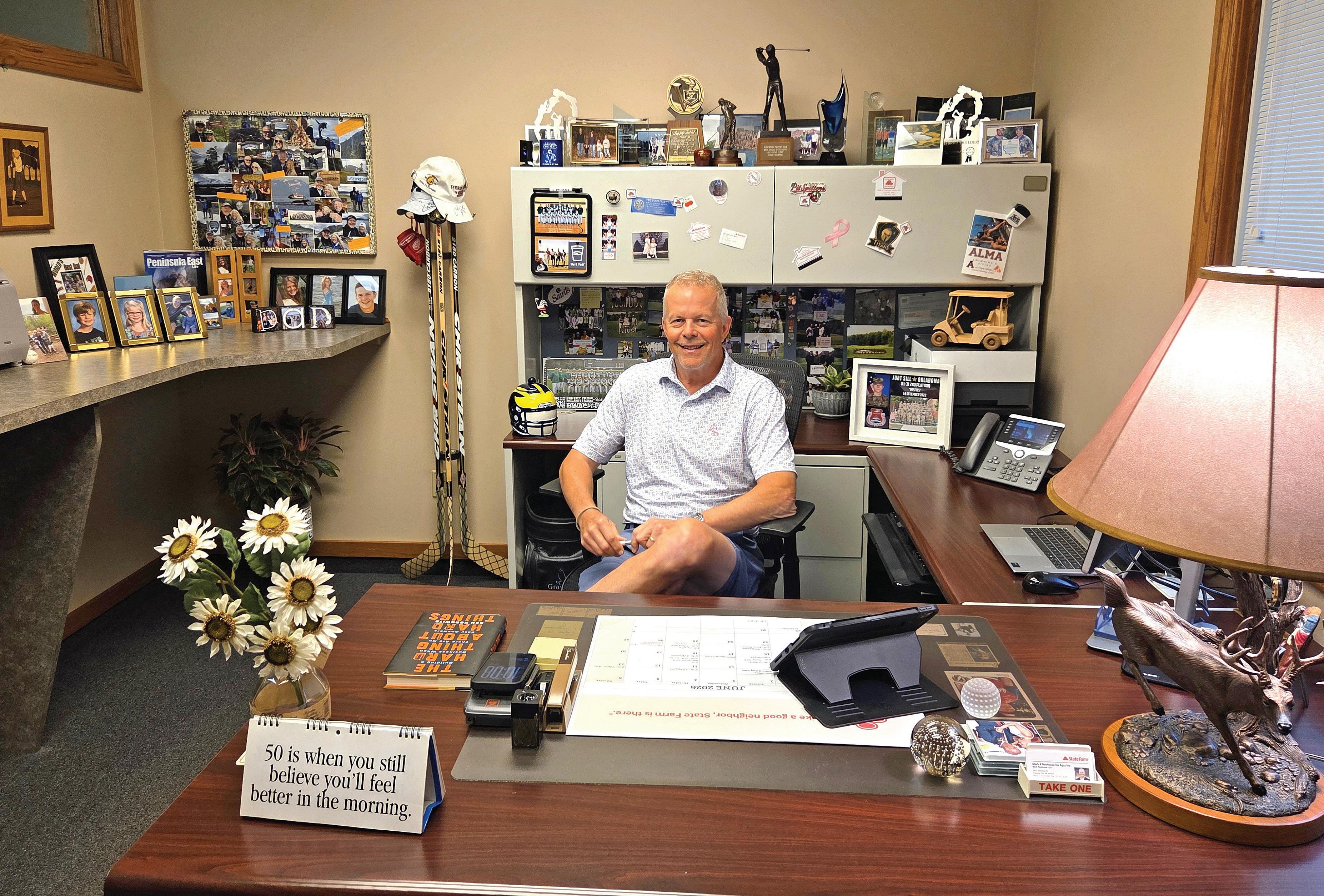
1. I have three kids and three grandkids. The reason I do what I do is my family. It’s the ultimate importance in my life. We’re lucky our grandkids are local, so we get to see them all the time.
2. I went to Ferris State University and graduated with a degree in finance, and I’m a lifetime fan of Bulldog hockey. My wife and I even endowed a scholarship at Ferris. I won this hockey stick coat rack at a golf outing.
3. This has treats in it for our office dog, Epi. (Author’s note: Epi would simply not sit for a photo, despite bribes and multiple attempts). Dogs are such a good reader of people. Probably 99% of the people who come in here love interacting with a dog. With the 1% who don’t, I question doing business with them.
4. I was assistant varsity baseball coach at Traverse City West for eight years. I got into coaching prior to my son getting in the program, and then he ended up playing four years on the team. Being involved in those young athletes’ lives was an amazing gift.
5. I started playing golf in college. I was an athlete with too many injuries, so I needed some kind of athletic outlet. It’s been a huge, huge part of my life, and I’ve been involved in a number of golf organizations and initiatives.
6. This book is called “The Hard Thing About Hard Things” by Ben Horowitz. I try to read a couple of books a year, and generally one of them is on business. This one should be good.
7. That’s my tablet. Every day I do my little senior citizen crossword puzzle on it, or check personal emails, or read the paper – all things that keep me fresh. My work computer is owned by State Farm, so I don’t do anything personal on it.
8. My son is in the Army at Fort Carson in Colorado Springs. I’m very proud of his dedication and his commitment to the country.
9. My dad introduced hunting to me when I was 12 years old. That was a connection I had with my dad and father-in-law, and I’ve continued it with my son and grandson. Now it’s not about the deer; it’s really about the connection with family.

By Craig Manning
In 2025, private equity deals in the United States totaled a whopping $1.2 trillion in value, according to the financial data platform PitchBook. It was the second biggest year on record for private equity, trailing behind only the post-pandemic boom of 2021.
The rise in private equity activity nationwide, combined with Traverse City’s growth as a business hub and entrepreneurial ecosystem, means one thing: Private equity firms are eyeing the northern Michigan market like never before – and acquiring businesses here in virtually every industry sector.
Is this new type of attention good news or bad news for Traverse City? And how could it impact the status quo of a business scene that has long been characterized by mom-and-pop shops, family businesses, and local ownership?
The TCBN posed those questions and others to a pair of subject matter experts: Lowell Gruman, managing partner at the Traverse City-based venture capital firm Boomerang Catapult; and Andrew Nussbaum, managing director of Traverse City’s Golden Circle Investment Banking. While Gruman doesn’t deal directly with private equity – “We are enablers and seed funders,” he said of Boomerang Catapult, versus the later-in-the-business-arc investments brought to bear by private equity –he’s well aware of its power and reach.
The Corporate Finance Institute defines private equity as “investment firms raising capital from institutional investors to acquire stakes in private companies or take public companies private.” From there, private equity firms will typically seek to achieve new operational efficiencies and improved performance metrics that translate to higher profitability. The goal is to grow the value of the business, often so that it can be sold again later at a profit.
According to Gruman, private equity is attractive for some investors because it offers more active participation and control than simply buying or selling the stocks of a publicly traded company. Almost all private equity firms, Gruman says, will execute their deals in such a way that they acquire majority or controlling stakes of the companies they are buying.
“They invest to control,” Gruman explained. “They often have provisions in the deal where they get to choose the CEO, so they can fire the current CEO if they want – who’s often the founder –and put their own person in charge. The idea is that, if they have control over the CEO, and if they control the board, they can instruct the company to do this or do

that. They can bring new money in and ask the company to go in this direction rather than that one. With that level of control, private equity funds are in a position to take big swings, and what they’re looking for, always, is a big return.”
From 2017 to 2020, private equity deals in the U.S. ranged from $591 billion to $690 billion per year, per PitchBook. Coming out of the pandemic, though, that sector of the market got super-
charged. A record-setting $1.268 trillion in private equity acquisitions occurred in 2021. Deal numbers fell back below $1 trillion – but stayed significantly higher than pre-pandemic levels – in 2022, 2023 and 2024. Then, they pushed back to 13-figure heights again last year.
Gruman says the stratospheric numbers are a result of market conditions elsewhere.
“We’re in a position at this moment in the American economy where there’s a lot of money looking for a better return than it’s getting elsewhere,” Gruman said. “We’re coming out of the low-interest
rate environment. Things are nudging upward. But private equity is not looking for 7%, 10%, 12% return on investment; private equity is looking for the big bang. Investors are thinking, ‘My foundational money, I can put it in bonds and leave it there.’ But the speculative money is growing. It needs a home. And when you’ve got business confidence ticking upward, a lot of people will look at their investable resources and allocate more to the risky swaths of investing. That’s where private equity lives.”
While private equity investors are often portrayed as one-percenters, Gruman says the money fueling into these funds is far more diverse than most people realize.
“I was on the board for Interlochen Center for the Arts for nine years, and in managing our endowment fund, we would allocate 6% or 7% to private equity,”

has meant more private equity firms, which has in turn equated to more private equity deals. It’s also led to a diversification in the private equity market, Gru-
“Private equity funds are in a position to take big swings, and what they’re looking for, always, is a big return.”
– Lowell Gruman, Managing Partner, Boomerang Catapult
Gruman noted. “Most foundations will do something similar.”
More investor interest in private equity
man says. Investors aren’t just eyeing big metropolitan hubs anymore; they’re also looking seriously at smaller, lesser-known
localities – and Traverse City has proven ripe for the harvest.
“There’s a lot of private equity speculation in the traditional centers in California and New York,” Gruman said, describing a riskier type of investing where private equity firms are buying up less proven companies in hopes they’ll land, say, the next tech giant. “But private equity in the Midwest is different. The private equity funds looking in this area, they want a proven track record, regular earnings – that kind of thing.”
“There are a lot of really small private equity funds popping up left and right every day, and these are not from the New Yorks and Chicagos of the world,” Nuss-

baum concurred. “What that ultimately means is there are a lot of people who see value in these small or well-run companies we have in Traverse City, and who know it’s a growing area.”
So, which northern Michigan businesses have sold to private equity? Examples from recent years abound, touching everything from manufacturing to automotive repair to food. Here are just a few:
• December 2019: The Troy, Michigan-based private equity firm Covington Capital announced the acquisition of Grand Traverse Plastics, a local manufacturer.
• March 2020: The Charter Growth Capital Fund, a “premier investment banking firm headquartered in Grand Rapids,” announced an investment in another northern Michigan manufacturer, Traverse City Products. Birmingham, Michigan-based private equity firm Colfax Creek Capital was identified as the lead investor.
• June 2021: News broke that Hillcrest Investment Partners, LLC, a private equity investment group based in Ann Arbor, had acquired Traverse City manufacturing giant Century, LLC. In a press release announcing the news, former Century owner and chairman Bill Janis touted the potential of Hillcrest “to leverage industry
“There are a lot of people who see value in these small or well-run companies we have in Traverse City, and who know it’s a growing area.”
– Andrew Nussbaum, Managing Director, Golden Circle Investment Banking
experience and continued investment in capabilities and technology” as a way of helping “accelerate Century’s growth trajectory and result in even better service for our customers.”
• September 2021: US LBM – a building materials distributor jointly owned by a pair of private equity firms, Bain Capital and Platinum Equity – announced the acquisition of Northern Building Supply, a northern Michigan construction materials company with a history dating back to 1904.
• March 2023: Petoskey-founded sweets chain Kilwins was acquired by Levine Leichtman Capital Partners (LLCP), a Los Angeles-based firm that
Design and build a functional, inviting space that supports growth and enhances the patient and staff experience.
Burdco transformed our space into a beautiful and functional facility that exceeded our expectations. They worked closely with our committee, incorporating feedback from all sides to find solutions that worked for everyone. Their positivity, budget-conscious approach and commitment to delivering on promises made the process seamless and we’re thrilled with the results.

Nussbaum

describes itself as “an established middle market private equity firm with nearly four decades of successful U.S. and European Structured Private Equity investing.”
The LLCP portfolio of business holdings includes numerous food companies with similar franchise-type business models as Kilwins, such as Tropical Smoothie Cafe, CiCi’s Pizza, Bertucci’s Italian Restaurant, Wetzel’s Pretzels, Mountain Mike’s Pizza and Nothing Bundt Cakes.
• March 2023: The Girrbach family –which founded Great Lakes Potato Chips in 2009 – announced it was selling a majority ownership stake of the business to a pair of Chicago private equity firms:
told
sister publication The Ticker at the time that there was “only so much debt (our family) can bring on personally,” and that “it was always the plan to get the company to a level where we could bring on a strategic partner that could really help us continue to grow, help us keep rewarding the staff and just help us do all the things that businesses do.”
• April 2023: Precision Plumbing & Heating teamed up with The SEER Group, a private-equity-backed company based in Texas that purports to “invest in and partner with local HVAC, plumb-


ing, and electrical companies” throughout the country.
• February 2024: US LBM – the same private equity-owned business that acquired Northern Building Supply in 2021 – came back to northern Michigan to buy Old Mission Windows.
• July 2024: Local law firm Kuhn Rogers shared the news that it had represented Traverse City manufacturer R.M. Young Company in the sale of the company’s equity to Benford Capital Partners, a Chicago-based private equity investment firm.
• July 2025: TC-based HVAC, electrical, and plumbing service provider Team Bob’s joined Precision Plumbing as a SEER Group partner.
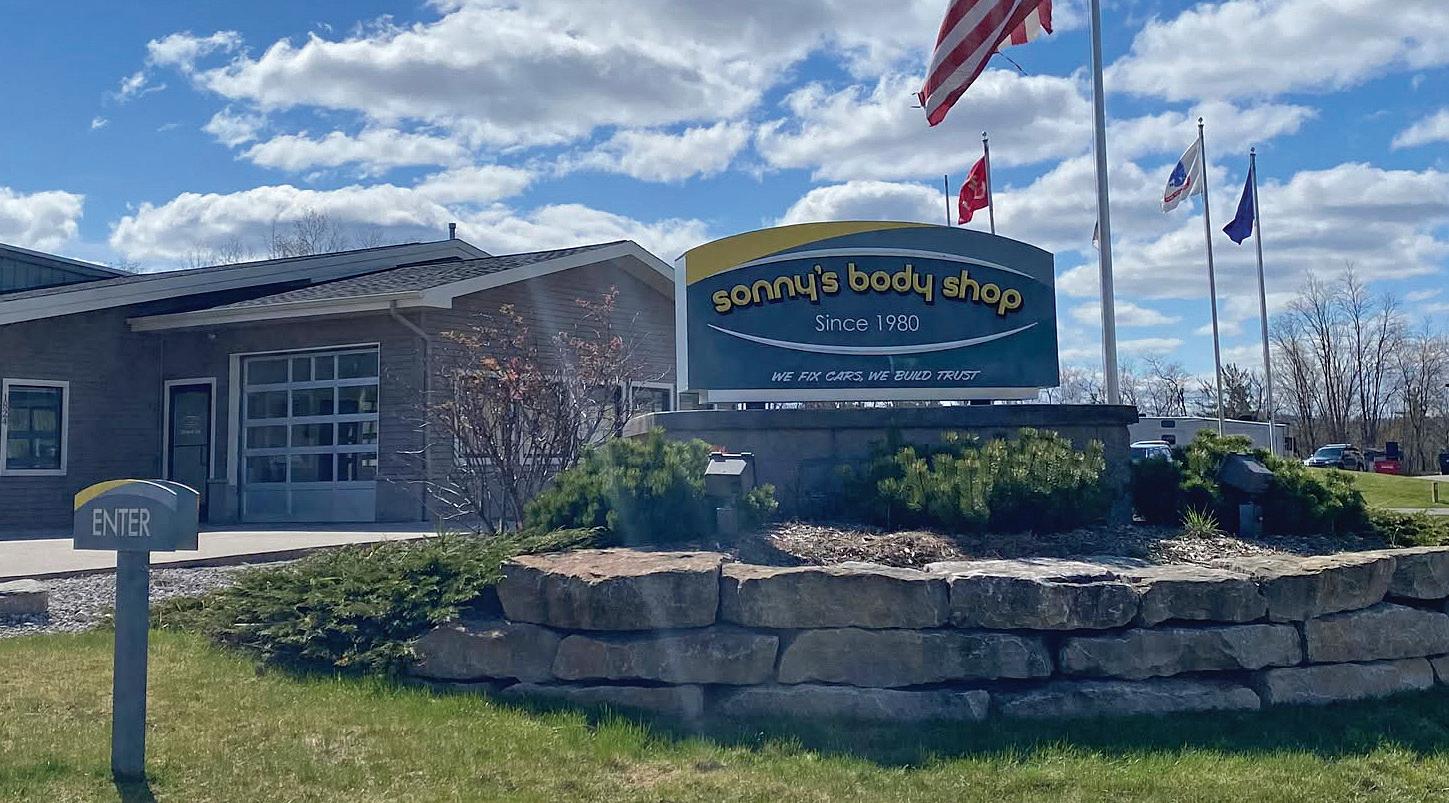
• November 2025: CollisionRight – a Columbus, Ohio company powered by private equity money, announced the purchase of two Traverse City auto businesses: Sonny’s Body Shop and Traverse Body and Paint. CollisionRight has acquired more than 125 auto body collision repair shops around the U.S. since its formation in 2020.
“Anything that’s doing $1 million in earnings and above is getting attention from private equity right now, but some sectors are more attractive than others,” Nussbaum said. “Landscaping, roofing, HVAC – really any type of residential home services business – those things are red hot, and those companies are getting a lot of attention from private equity up and down the size range. Wealth management companies are getting a lot of attention. Aerospace and defense companies are getting a lot of attention. Manufacturers are getting a lot of attention, depending on what sub sectors they’re in. The reality is, almost every industry has private equity behind it.”
Despite its scope and reach, private equity investing has a reputation for upending local economies.
The accusations against private equity are innumerable: that it downsizes vibrant companies, eliminates jobs, dilutes the quality of products or services, and enriches the wealthy at the expense of America’s middle class. Private equity skeptics have also blamed it for driving dozens of once-prominent American businesses into bankruptcy – a list that includes (but is not limited to) Toys R Us, Kmart, Big Lots, Jo-Ann Stores, Hooters, Sears, Payless, Red Lobster and RadioShack.
Both Gruman and Nussbaum admit private equity has a bad reputation for a reason, but insist the stigma often blots out a more nuanced perspective.
“Private equity would look at it a different way,” Gruman said. “They would say ‘We’re optimizing and removing unnecessary costs.’ Often, that means they’re coming in and saying, ‘Your overhead is ridiculously high, and we think Aunt Matilda doesn’t need to be on the payroll anymore.’ So, they do come in and strip things away; that reputation is well-deserved. But again, one man’s ‘trashing the local nature of the business’ is anoth-
In March 2023, Kilwins was acquired by LA-based

er man’s ‘making the company more efficient.’ In some cases, private equity will kill (the business), because the magic of the company drifts away with its local origins. But in other cases, private equity really can be a vehicle for growth.”
For his part, Nussbaum sees private equity as one possible answer to an increasingly common quandary in northern Michigan: How can a local company remain competitive in a rapidly changing and increasingly crowded business landscape?
“In Traverse City, you have a lot of business owners who have built their companies for 50 years,” Nussbaum explained. “They took all the risk, they put up all the capital to run the company, and their people have done a great job building that company with them. But then you get to a point where other folks are putting more capital into those industries and are trying to compete with Traverse City-based businesses. And the owner realizes, ‘Oh my goodness, I need a capital partner to go above and beyond for my people and keep this thing a going concern.’”
As an example, Nussbaum says Golden Circle recently represented “a distributor in the area,” which ended up seeking out private equity investment after realizing “their competitors were getting bought off left and right, with big capital partners behind them.”
“We went out and found them a private equity partner that took a majority stake in the business, but kept all the people in place and created an environ-


ment where those people could actually benefit from ownership stakes in the company. And that really allowed the business to continue to thrive,” Nussbaum said. “So, a lot of these owners, instead of closing their doors or putting the company in a situation where it’s continually cash-strapped, they will go the private equity route. And private equity companies, if you pick the right one, they can be a force multiplier on growth for the business, but also for the employees’ growth. We’ve seen that quite a few times with the companies that we’ve represented in northern Michigan and around the country.”
More than just allowing local businesses to remain competitive, Gruman sees private equity and its interest in Traverse City as a sign that the northern Michigan business community is now well and truly on the map.
“Most of these transactions wouldn’t have existed 10 years ago when we started Boomerang Catapult,” Gruman said. “Our thought at the time was that we needed to move the conversation away from the seasonal economy so that we could grow our community and have jobs here that allow folks to raise a family, send their kids to school, buy a house. Private equity showing interest in Traverse City is a really positive signal that we’re now being seen as a place where that kind of economic growth is possible. If we were hostile to business – and some communities are – these funds wouldn’t be looking at us. But they are looking at us.”







By Jeff Dennis, columnist
I’ve had the pleasure of working with several business owners throughout my career, and I’ve seen firsthand the hard work and devotion it takes to “make it” as a small business.
In many ways, it’s a lot like raising a child: You’ve got no clue what you’re doing for the first few years, you’ll wonder if you’re doing the “right” thing constantly, you’re constantly re-learning things you thought you knew, and it’s somehow both the hardest and most rewarding thing you never thought you could do.
And just like parenting, most of us get so caught up in the daily demands that we don’t often take a step back and think about what comes next.
Children eventually leave the nest, and so too comes the day when you begin thinking about stepping away from your business and enjoying the fruits of your labor.
The first challenge: stepping away
Regardless of circumstances, all business owners will eventually face the same decision: How do I step away from my business? Do you plan to hand it off to the next generation? Sell to business partners? Transition to employee ownership? Sell to a third party?
Out of an estimated 36 million small businesses in the U.S. today, only about 30% of business owners have crafted a formal exit strategy. Yet, for many, this will be one of the single biggest financial decisions of their lives – one that warrants a deliberate, thoughtful approach to ensure that value is preserved and the transition goes smoothly.
This becomes even more important when the goal is to keep the business in the family. Less than half of small businesses make it to the second generation, and only about 13% survive to the third.
The second challenge: value
After determining the “how,” the next question often becomes: How much? Depending on the nature of the business, owners may or may not have an accurate understanding of its true market value. This is often the stickiest point of conten-

tion during a transition.
Business owners tend to overvalue their businesses – often by a meaningful margin. This can stem from limited market comparisons, overvaluing intangible assets and, most significantly, emotional investment.
After all, if your business is your baby, how could you not value it at a premium?
No one else shares the same emotional attachment. But establishing an accurate valuation is a crucial first step. It underpins many of the other decisions you’ll face, regardless of the path you choose.
If you’re planning to hand the business over to your children, consider:
• Are they already familiar with the business?
• How long will the handoff take?
• Will this be structured as a gift, a sale or a financing arrangement?
Without careful planning, this type of transfer can create unintended financial and tax consequences for both parties, which can be particularly painful when family is involved.
Similar considerations apply when selling to a key employee or business partner:
• Is there a buy-sell agreement in place?
• Are you carrying key person insurance?
• Do the buyers have the resources to fund the purchase?
• If pursuing an ESOP, how will it be
financed and administered?
• Do all parties agree on valuation? (Possibly the strongest case for professional appraisal.)
Then there are sales to third parties or, even in rare cases, an IPO, recently exemplified by Traverse City-based Hagerty.
These options often offer greater liquidity and higher valuations, but they come with tradeoffs: loss of control, changes to the business identity and added complexity.
Ask yourself:
• Can my leadership team run the business without me?
• Do I have qualified buyers or interest in the market?
• Does my current business structure align with my desired exit strategy?
• Do I need to tune up operations ahead of a sale?
Finally, the last factor that applies to every successful transition plan is simply time. These plans are not built overnight. A thoughtful transition can take three to five years – or more in some situations. Giving yourself enough runway is key to maximizing value and minimizing pain. You need to choose the method of transition, decide on the right timing, make any operational or structural changes, determine valuation and start preparing employees for any impending changes.
You’ll want to assemble a team of professionals to support you, including legal counsel to prepare and review documents, a third-party business appraiser, investment bankers or business brokers (if applicable) and a CPA or tax professional. It’s equally important to plan for after the transition. For many owners, the business is their single largest asset, and a sale can represent a significant change in their financial picture, impacting taxes, estate plans and long-term investment strategy.
Fortunately, you don’t have to navigate these things alone. Connecting with your financial advisor is a great place to start. They can help you:
• Clarify your long-term vision
• Build a realistic timeline
• Identify key people and key decisions
• Assemble the right team
With the right planning and support, you can approach your business transition with the same care and intention you used to build it in the first place.
Jeff Dennis is a wealth advisor with 4Front Credit Union. He can be reached at jeff. dennis@4front-lpl.com or (231) 943-2652. Securities and advisory services are offered through LPL Financial, a registered investment advisor and broker/dealer (member FINRA/SIPC).
By Ross Boissoneau
Passing down a family business from one generation to another is a time-honored tradition. But that doesn’t mean it’s easy.
“You’d be surprised how many people don’t like their kids,” said Bob Boesiger. A partner and managing director at the accounting, consulting and advisory firm UHY Advisors, he wasn’t speaking entirely in jest.
He has worked with numerous business owners over the years, from those with the next generation in the business and readying to run the firm when it’s their time, to those who show up simply to please their parent, as well as families where succeeding generations simply aren’t interested in the family business or aren’t viewed as competent caretakers by the current generation.
He said the ramifications of not planning ahead can have a deleterious impact on
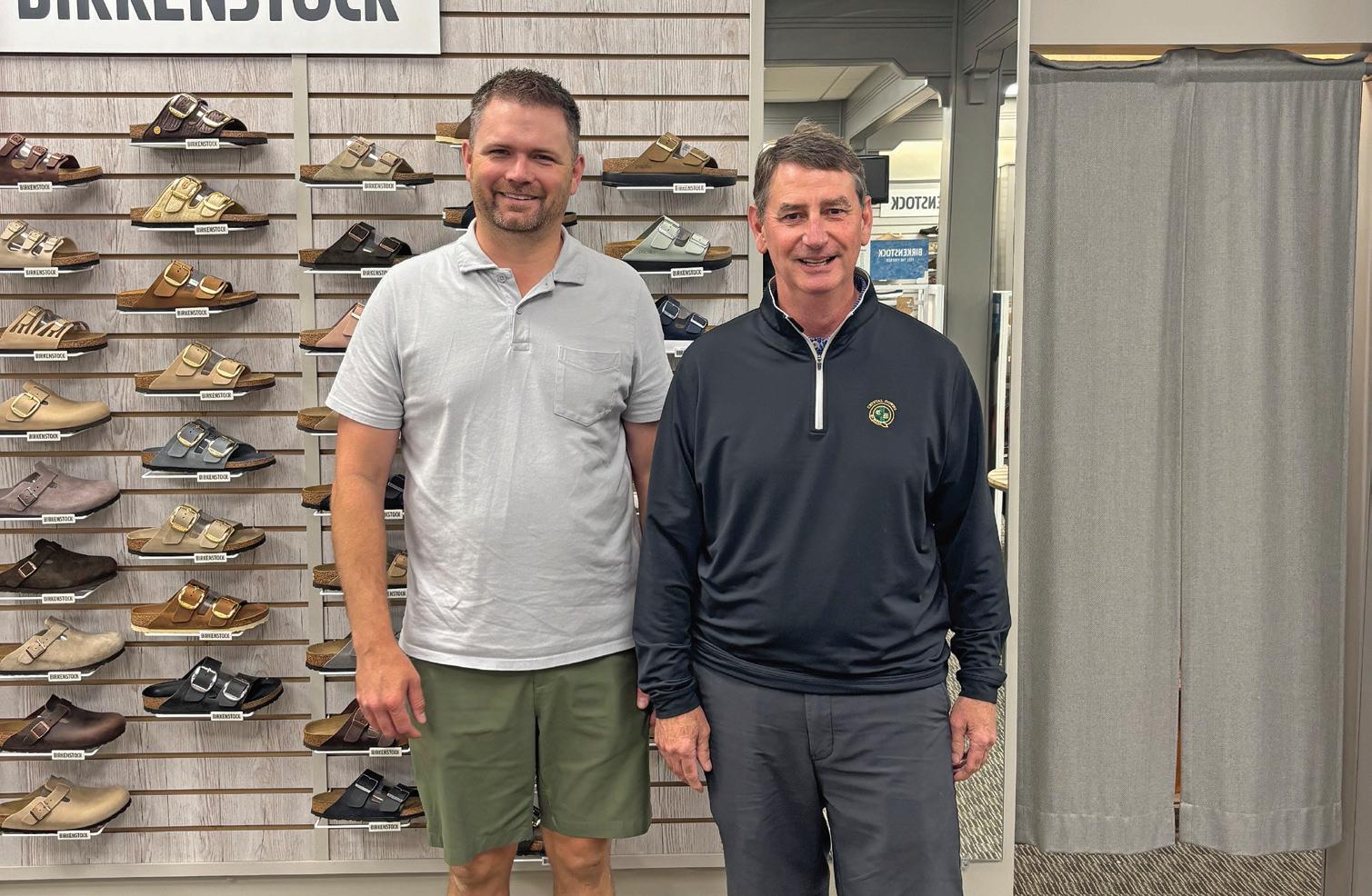
Golden Shoes actually started as a two-generation business when father and son Nathaniel and Willard Golden purchased the downtown Traverse City shoe store in 1954. After Nathaniel died in 1969, Willard took full ownership, running the store with the help of his eldest children and employees. That same year, his son Craig became a partner, working alongside his father until Willard retired in 1972.
Current co-owner Bill Golden, Willard’s son and Craig’s brother, joined the business just a few years later. Another brother, Jocko, also worked at the store for a time.
“It was what I wanted to do,” Bill said simply.
When Willard died in 2012, Craig and Bill became co-owners. In July 2023, a fourth generation arrived in the person of Nate Cook, who married Craig and Bill’s niece. He bought out Craig, who retired after 54 years of working at Golden Shoes. Today, Nate and Bill co-own Golden Shoes.
“It’s very important to our family, and to downtown Traverse City,” said Bill Golden, referring to the store’s longevity in the middle of downtown.
While it may seem like a logical progression, that doesn’t mean it was easy. But setting up agreements ahead of time helps keep things from bogging down in any untoward family squabbles.
“We have an agreement. Neither of us can sell to someone else that isn’t agreed upon,” said Bill. “There’s a right way to do it.”
the business.
“I have an 80-year-old billionaire with four kids in the business who went to the office to see dad,” he said.
They would simply show up 15 minutes before he arrived and leave 15 minutes after, without much interest or input into the company. When their father became incapacitated without a plan in place, they were left scrambling to try to sell the business so they could pay the inheritance tax.
The inheritance tax is a particular area that Boesiger says can cause problems without proper planning.
“I’m not a fan,” he said tersely.
That’s why having children purchase into the business ahead of a sudden need can be a lifesaver.
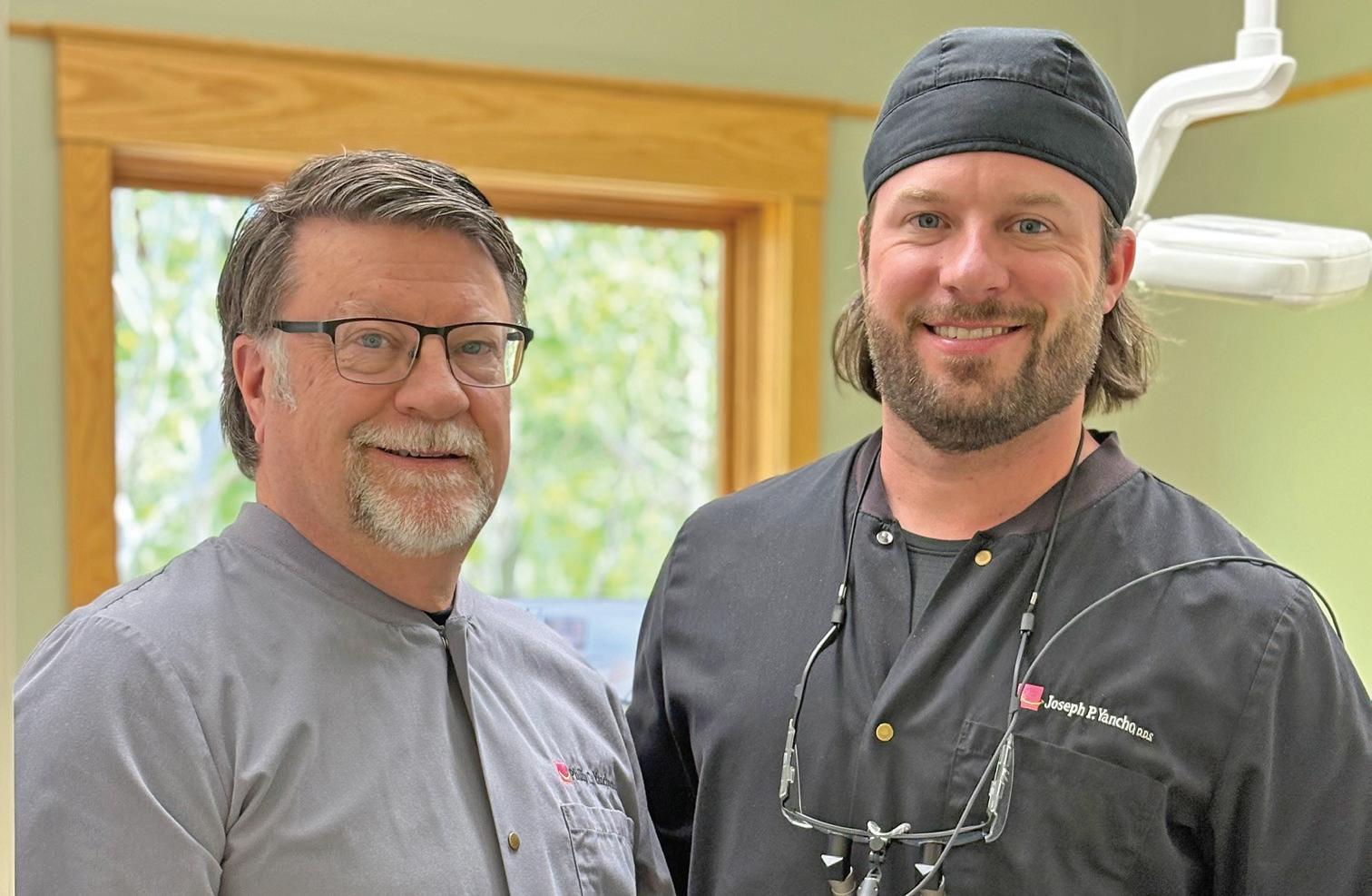
Yancho Family Dentistry is another example of a generational family business. Dr. Phillip Yancho started the business in 1987. Today his son Joe is a partner, and the hope is daughter Hannah joins them.
“As soon as he said he wanted to go to dental school, I hoped he would return,” said Phil.
The younger Yancho said growing up in the business and seeing how people responded to his father’s work – and how much his dad enjoyed it – prompted him to consider dentistry from an early age.
“I saw how happy and fulfilled he was,” said Joe.
The younger Yancho went to dental school on a Navy scholarship, and after his time in the service returned home to join the family business.
“Joe hired in as an associate first with the idea he would buy in to the practice,” said Phil.
Hannah is currently practicing dentistry in Madison, Wisconsin. Phil says he hopes when she returns – which is the plan – the three can work together before he retires.
“I hope both are back in Traverse City, and that’s the intent,” he said.

Ryan Critchfield offers another path to continuing involvement in a family business. He and his wife Andrea are the majority owners of The Concrete Service, started by his wife’s family nearly 100 years ago.
“In 1932, my wife’s grandfather started a block company,” said Critchfield.
Founder Ralph Samue cid:f_mqqx66kb0 lson soon began designing and selling his own original block plants, while also creating blocks which helped build places like the Park Place and the Bijou.
“Their handprint is all over the city,” Critchfield said.
He sold to his sons Bob and Don Samuelson, who had grown up in the business and earned construction business degrees from Michigan State University, says Critchfield, who got his own start in the business in 1994 – though it wasn’t his first choice.
A lifelong musician, his intent was to make it big in Music City.
“My plan was to move to Nashville. My wife wanted to stay rooted here. They offered me a job to keep us here. It worked,” he said with a laugh.
With the team in place and a mentor in long-time employee Tim Butler, Critchfield learned the ropes of running the business – but not the equipment, he’s quick to say.
“I can’t run a block machine. It would be a train wreck,” he said.
They are already planning ahead for the next generation. In 2023, The Concrete Service purchased Blue Star Landscape Supply. Now Ryan and Andrea’s son Sam is running that company.
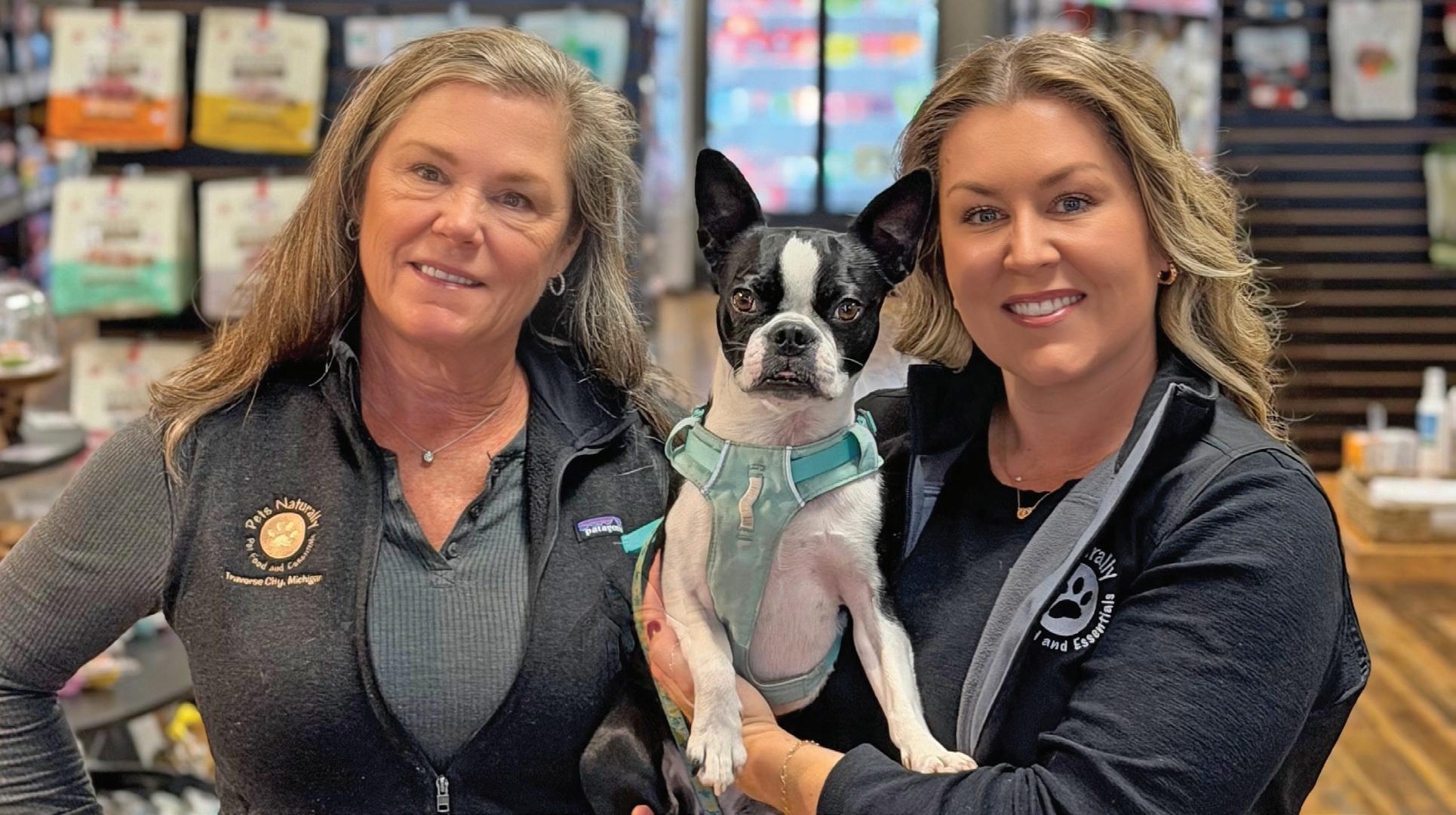
For Jessica Follett, the path to ownership of Pets Naturally came – well, naturally. Her mother Kathy had started the business when she couldn’t find the healthful food she wanted for her Boston terrier Lucy. Fast forward and Jessica had tired of corporate life and was looking for a business in her hometown of Traverse City.
“Mom wasn’t looking to sell, but we talked, and decided this was the time,” Jessica said.
Jessica was comfortable living in New York City and working in corporate sales and marketing, including a lengthy stint in advertising sales for Yelp. So why Pets Naturally?
“I wanted to find something I was passionate about,” Jessica said. “I have a dog and love cats.”
Her dog is also a Boston terrier, and was already named Lucy when she adopted it.
Those in the business of working with families on such transitions say it’s important to do the work ahead of time, in terms of the business’s value and philosophy to make sure everyone understands the process before moving forward.
“It’s not a one size fits all,” added Andrew Nussbaum of Golden Circle Advisors.
“It’s one of the biggest decisions of your life. You need an advisor to help you think it through. One of the primary things an advisor can help you do is think through the options for an exit,” he said.
In other words, making sure that the value is understood by everyone and that the owner is assured of the best – or at least adequate – return on the sale. While there may be a family discount in place, without knowing the true value of the company, a sale within the family can cause strife later on.
By Jennifer Ewing, columnist
It’s hard to believe we are already more than a year into Michigan’s Earned Sick Time Act (ESTA) as amended in February 2025.
For those of us in human resources, leadership or payroll roles, the lead-up to implementation felt chaotic. Many of us spent months preparing for one version of the law, only to have the state legislature make significant changes at the last minute. Policies had already been drafted, webinars had already been attended and teams were trying to sort through legal alerts while answering employee questions in real time.
In my work as a fractional HR professional, I am not surprised when I visit employers and hear continued confusion around ESTA-related practices. Given how implementation unfolded, some lingering misunderstanding makes sense. Most employers were genuinely trying to do the right thing during implementation, but once the dust settled, some never went back to revisit the systems and policies they put in place. As a result, I continue to see organizations creating processes that are more complicated, more expensive or more administratively burdensome than they intended.
I am going to share a few examples of approaches I have seen employers implement, along with some areas where decisions made during implementation may be worth revisiting. But before we do, I should note that I am approaching this from the perspective of an HR practitioner, not as an attorney. This article is intended as general informational commentary, not legal advice, so organization-specific questions should be directed to legal counsel.
As a starting point, it is worth remembering that ESTA generally applies based on work performed in Michigan rather than automatically covering every

employee of a Michigan employer. For organizations with remote teams, multi-state operations or employees who work across state lines, those determinations can be more fact-specific and may warrant closer review. But coverage questions are only one area where early implementation assumptions continue to shape employer practices.
I have seen some employers in high-turnover or seasonal environments rethink how onboarding and paid leave fit together, especially now that part-time and seasonal employees are part of the leave conversation in ways they may not have been historically. An accrual-based model can create some flexibility because even though time begins accruing from day one, depending on how the policy is written, employees do not necessarily have to be allowed to use that time immediately. Access can be delayed for up to 120 calendar days, which for some workplaces has been a practical way to balance operational realities with leave design. That flexibility tends to disappear with front-loaded models, where the time is available upfront instead.
During early ESTA implementation, I saw some employers take the cautious route by adding a separate 72-hour sick leave bank on top of an existing PTO program, particularly when there was still uncertainty around whether their current leave policies would satisfy the requirements. That might have made sense in the moment but, in some organizations, that temporary response seems to have become the permanent structure, even when the
existing PTO program may already meet the ESTA leave criteria without requiring that additional layer. For some employers, maintaining the extra time off is an intentional decision tied to culture, retention, or employee experience. For others, it may simply be a policy choice that was made during a confusing rollout and never revisited.
I have also seen organizations run into issues with part-time employees, especially where older PTO practices were built around full-time eligibility. In some workplaces, ESTA processes were updat-
Michigan’s ESTA rollout created understandable confusion, and many employers were making decisions quickly while the requirements were still shifting.
ed thoughtfully for full-time employees, but part-time staff were unintentionally left out because no one went back and questioned those long-standing assumptions. The law changed, but the underlying systems and eligibility rules did not always change with it, which can create gaps that are easy to miss if no one is looking closely.
Some employers updated the amount
of paid time off available during implementation but never went back and revisited the rules around how that time can be requested and used. I still encounter policies that require two weeks’ advance notice for PTO requests, which may be perfectly appropriate for planned vacation time, but can create issues when that same PTO policy is also being used to satisfy ESTA requirements. The amended law created clearer expectations around notice, allowing up to seven days for foreseeable leave, while unexpected absences shift to as soon as practicable. When sick leave is folded into a broader PTO policy rather than handled separately, those notice rules need to be considered.
One of the simplest compliance requirements is also one of the easiest to overlook: the required poster. Some organizations assumed updating the policy was enough, but the posting requirement still exists. It is a simple step, but one worth confirming.
Michigan’s ESTA rollout created understandable confusion, and many employers were making decisions quickly while the requirements were still shifting. A year later, we have a much clearer understanding of how this law works in practice. Now may be a good time to revisit your policies with your HR and legal advisors to make sure your approach is both workable and aligned with current requirements.
Jennifer Ewing is part of Human Resource Partners in Traverse City, serving as a fractional CHRO to help employers align people strategies with business goals.






Childcare ‘microcenter’ model might boost region

By Art Bukowski
Business leaders hope a childcare model piloted in Leelanau County could provide massive relief in the region’s ongoing childcare crisis.
In short, the childcare “microcenter” model allows the state regulations for home-based childcare operations to apply to operations based someplace outside of the home, like a room at a church or township hall.
If approved statewide, these could fill a substantial gap between home-based childcare and traditionally licensed, standalone daycare centers, which are considerably more difficult to open and operate from a regulatory and business standpoint.
Three of these operate in Leelanau County right now, but they are not (as of yet) legal anywhere else. Local business leaders are pushing legislation to make them legal statewide, with hopes that could happen as soon as next year.
“The team in Leelanau County has not just piloted this, but they have demonstrated that it’s successful,” Traverse Connect President and CEO Warren Call said. “This is not a concept – this is something that is working already.”
Childcare availability and affordability have long been significant issues across the state. A recent Michigan State University study found a lack of access to childcare costs the state’s economy $2.9 billion in lost productivity as working parents struggle to find good care for their kids.
this region.”
Networks Northwest, a 10-county public agency that focuses on workforce development, business support and regional planning, recently determined that there’s a need for full-time care for about 2,600 children up to age four, and that that need is largely going unmet, with surveys showing 70% of people in the region
“It’s always been a problem for people on the lower end of the income spectrum, but it has now broadened in crisis proportions to way, way more income levels.”
– Janie McNabb, CEO, Networks Northwest and Northwest Michigan WORKS!
Perhaps no region faces more of a crisis than northwest Michigan, where business growth is increasingly hampered by a lack of childcare.
“This impacts workforce availability on a major scale. When there’s not affordable, accessible childcare, it’s hard to get to work … and you’re less likely to be able to recruit people into this region for work,” Call said. “This is a top three barrier to our economic goals and prosperity in
struggled to find childcare.
What’s more, this problem is climbing up the social ladder.
“It’s always been a problem for people on the lower end of the income spectrum, but it has now broadened in crisis proportions to way, way more income levels,” said Janie McNabb, CEO of Networks Northwest and Northwest Michigan Works!
Lack of good childcare, of course, has
impacts far beyond those to businesses.
“When you don’t have a licensed, quality place to put your child, you end up in desperate situations,” McNabb said. “We see it at Michigan Works where people are forced to leave their children with people they don’t necessarily know and trust. And the safety factor there is at the very least questionable.”
A northern Michigan solution
In 2022, a group in Leelanau County came together to discuss improving and expanding childcare options there. Many home-based centers had closed and weren’t being replaced, and they decided to figure out why.
After getting a grant to fund more inhome programs by covering startup costs, they discovered that a big hangup was that while people were willing to run daycare centers, many weren’t overly excited about doing it in their homes.
“We found two, but we couldn’t get anyone else to step forward even though we were paying for the startup in total,” said Patricia Soutas-Little, chair of the Leelanau Early Childhood Development Commission. “People just didn’t want to do it in their homes for a whole variety of good reasons.”
The problem is that the cost and regulatory barriers to open a traditional, outside-of-the-home daycare center are simply too high for the average person who’s looking to run a small, in-home operation.
So the Leelanau team pitched a happy medium to state regulators: Allow inhome regulations to be applied at off-site locations. This means more manageable staff-to-child ratios (1:6 instead of 1:3 for the youngest kids), but it also means far less regulations on facilities, equipment, training and more.
Under this “microcenter” model, at least one individual (microcenters allow up to 12 kids supervised by at least two people) strikes a partnership with someone who owns a space. They rent that space for a dollar and run a daycare there, with the landlord responsible for all building matters and the tenant left to handle all matters of the daycare business itself.
This was the only way around the obvious downsides of moving a program out of the home.
“When you take it out of a home, now you’re looking at having to pay rent, having to pay money to plow your parking lot, pay your utilities, etc.,” Soutas-Little said. “So how can we get around that? Well, we created a situation where it’s a partnership.”
State regulators approved this for Leelanau only, and in that county, three
“It’s always been a problem for people on the lower end of the income spectrum, but it has now broadened in crisis proportions to way, way more income levels.”
– Warren Call, President and CEO, Traverse Connect
programs have been run for more than a year in a church in Glen Lake, a school in Suttons Bay and a village-owned facility in Northport. These communities have rallied around these centers, Soutas-Little says.
“Each of these communities feel that this microcenter is theirs and they are willing to donate their time and energy, and it’s really been a beautiful thing to watch that materialize,” she said. “They’re invested in them.”
Soutas-Little says a recent parent and provider survey shows the model and the
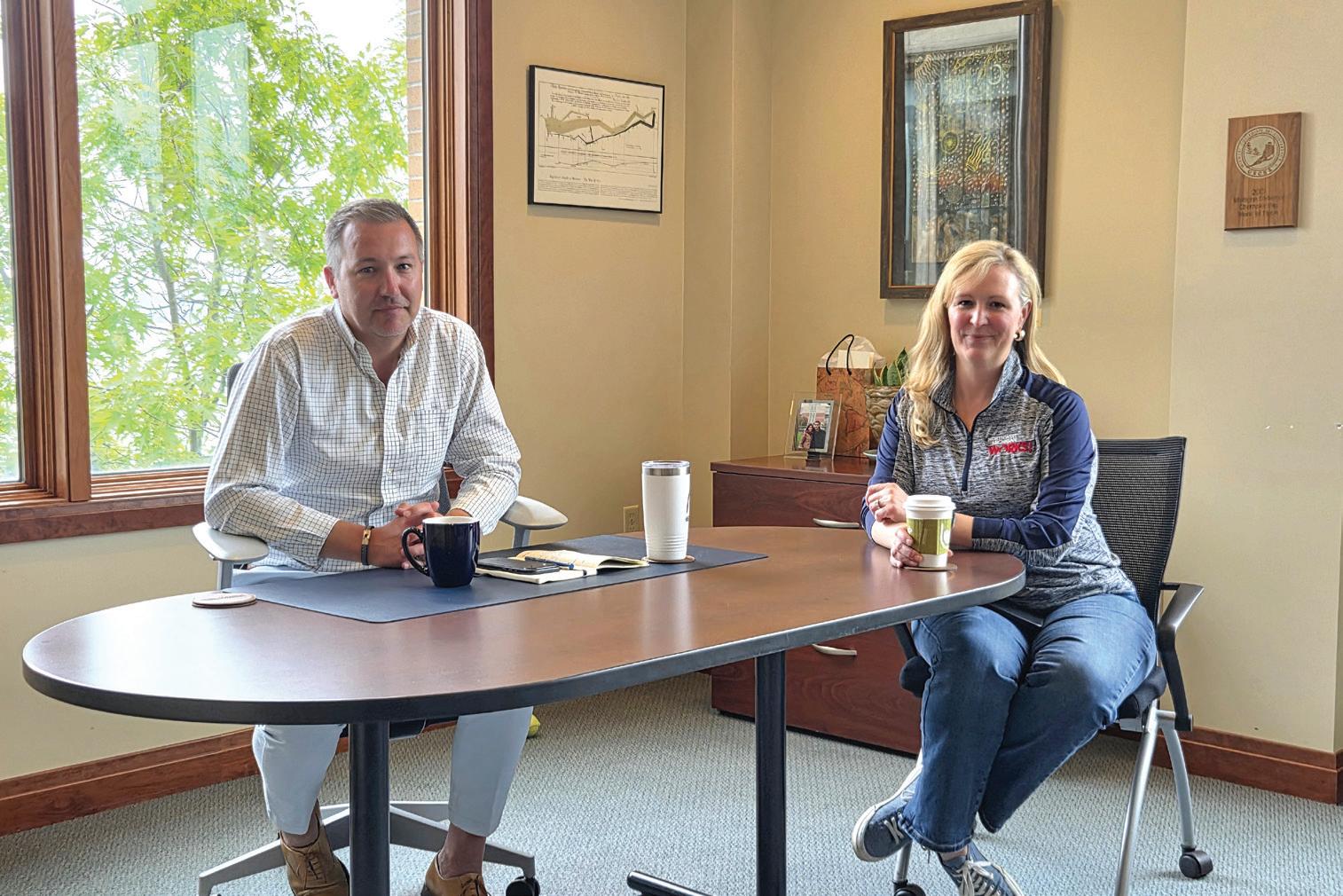
microcenters themselves have been “enormously successful.”
“We were blown away by the results. The families love these programs, they love the providers,” she said. “Many of them have been able to go back to work where they weren’t able to before because they have the care, this kind of thing.”
McNabb and Call testified before the state Senate earlier this year in an effort to support expanding microcenters outside
of Leelanau County.
“Childcare microcenters offer a scalable, cost-effective solution to Michigan’s rural childcare crisis. These small, owner-operated facilities blend the intimacy of home-based care with the structure of licensed centers,” Call said to the Senate. “They promote community partnerships, reduce staffing burdens and expand access where traditional models fall short.”
McNabb says the cost and regulatory savings presented by microcenters are likely to encourage far more people to wade into the childcare game (especially those





“Each of these communities feel that this microcenter is theirs and they are willing to donate their time and energy, and it’s really been a beautiful thing to watch that materialize. They’re invested in them.”
– Patricia Soutas-Little, Chair, Leelanau Early Childhood Development Commission
who were already inclined, but not excited about offering up their own homes). This would not only help alleviate the childcare crisis, but also provide more high-quality, highly valued jobs.
“Even if it’s a one-person provider, they are a small business. They are paying their taxes and abiding by regulations,” she said. “What a great chance to open up this business opportunity to more people.”
They also expect the microcenter model to spread out the physical locations of childcare, something that will be greatly beneficial in rural areas like most of northern Michigan.
“Right now we have people driving extensive distances just because that’s the only place they can find care,” McNabb said. “So this is going to make it possible to spread out where those centers are located.”
So, what are the next steps in getting this legalized across the state? The proposed Michigan State Senate Bill 733 would allow for it. But as of right now, it

doesn’t appear to be going anywhere fast.
“As with so many things in Lansing, it’s an imminently logical and practical idea, and partly for that reason, it hasn’t moved as fast as we would have hoped,” Call joked.
Call says the current political environment is simply not favorable for expedient approval. The state house and senate are not moving each other’s bills, and there are more pressing issues to tend to.
“Ideally, because this is something that’s pretty practical, it could go through both chambers and get the governor’s signature. That’s what we’re hoping for. But it may take a little bit of time,” he said.
“The state budget is the big thing right now, and then as soon as that’s over, the focus is going to go toward the election. So we may have to wait until after the election to see movement on some of these things, this bill and many others.”
Still, he hopes for approval within the next year.
Munson Healthcare broke ground on a $1.5 million expansion for its inhouse childcare program.
The expansion, located at the Foster Family Community Health Center in East Bay Township, will create space for 137 additional children and is expected to be open by the end of 2026.
Munson already provides care for 500 employee children across three locations in the Traverse City area. Megan Brown, Munson’s chief marketing and communications officer, said the wait list for the program has hovered around 100 children for several years, though it has risen as high as 200.
“Currently our wait list is at just over 100 children, and our goal with this expansion is to eliminate that wait list,” she said.
Munson employs almost 70 people for childcare and has been providing it since 1991. Brown says Munson is glad to further expand the program, which operates at a loss for the system but provides a vital and necessary service.
“This expansion really does embody our commitment to care for the people that care for our patients every day,” she said. “This is about building a strong culture…and ensuring peace of mind for Munson employees.”
But there are also very strong business reasons to continually invest in childcare. Offering childcare is “critical” for employee recruitment and retention, Brown said.



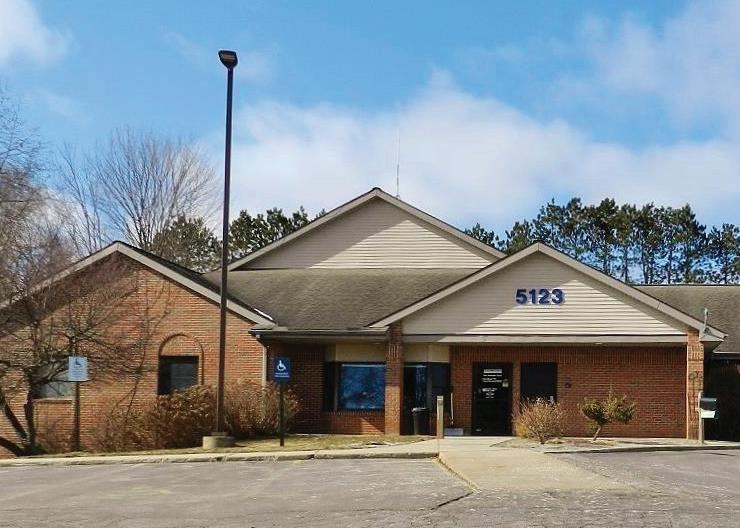
Medical Office Building For Sale! - 11,486
Medical Office Building For Sale! - 11,486
Area w/Picture Windows providing lots of natural light. Excellent for Physical

Owner leaseback is negotiable or buyer could use the entire building if needed. Many individual offices of various sizes. Close to Munson Hospital surrounded by a variety of Medical Practices. Virtual tour Online –MLS# 1919691 - $1,499,000.
to month) is utilizing the lower level (some lab space), and approx. 2/3's of the main floor. The owner is using approx. 1/3 of the main floor & shared common areas. Owner leaseback is negotiable or buyer could use the entire building if needed. Many individual offices of various sizes. Close to Munson Hospital surrounded by a variety of Medical Practices. Virtual tour Online –MLS# 1919691 - $1,499,000.
Sq/Ft. Main Level is 6,187 Sq/Ft. Walkout Lower Level is 5,299 Sq/Ft and Features a Large Open Area w/Picture Windows providing lots of natural light. Excellent for Physical Therapy, Patient Assessments, Gym Related Activities! Current tenant (month to month) is utilizing the lower level (some lab space), and approx. 2/3's of the main floor. The owner is using approx. 1/3 of the main floor & shared common areas. Owner leaseback is negotiable or buyer could use the entire building if needed. Many individual offices of various sizes. Close to Munson Hospital surrounded by a variety of Medical Practices. Virtual tour Online –MLS# 1919691 - $1,499,000.

-
a
HR, REMOTE WORK & RELOCATING

USE COMMERCIAL - Great Opportunity - One Building a Large (40x44) Insulated Warehouse -15 ft Sidewalls -14x20 Sliding Doors for Large StorageSecond Building has a Reception - Office - Restroom Area and a Unique Building Attached with 11 ft Sidewalls - Epoxy Floors - Steel Ceilings - 3 Sink Stainless - Double Doors for Deliveries in Main Workspace w/4 Individual Work Rooms. Could be Opened up for One Large Space. Light Manufacturing could be a great Contractor or Woodworking Workshop! Rental or Cleaning Business, etc. etc. US-31 Highway Frontage & Exposure for Signage on Building. Improvements include 3 phase electric in both buildings - Paved & Plumbed w/ New Drainfield, & Security System. MLS# 1922900 $459,900.
Opportunity - One

Security System. MLS# 1922900 $459,900.
(40x44) Insulated Warehouse -15 ft Sidewalls -14x20 Sliding Doors for Large StorageSecond Building has a Reception - Office - Restroom Area and a Unique Building Attached with 11 ft Sidewalls - Epoxy Floors - Steel Ceilings - 3 Sink Stainless - Double Doors for Deliveries in Main Workspace w/4 Individual Work Rooms. Could be Opened up for One Large Space. Light Manufacturing could be a great Contractor or Woodworking Workshop! Rental or Cleaning Business, etc. etc. US-31 Highway Frontage & Exposure for Signage on Building. Improvements include 3 phase electric in both buildings - Paved & Plumbed w/ New Drainfield, & Security System. MLS# 1922900 $459,900.
Sq/Ft. Main Level is 6,187 Sq/Ft. Walkout Lower Level is 5,299 Sq/Ft and Features a Large Open Area w/Picture Windows providing lots of natural light. Excellent for Physical Therapy, Patient Assessments, Gym Related Activities! Current tenant (month to month) is utilizing the lower level (some lab space), and approx. 2/3's of the main floor. The owner is using approx. 1/3 of the main floor & shared common areas. Owner leaseback is negotiable or buyer could use the entire building if needed. Many individual offices of various sizes. Close to Munson Hospital surrounded by a variety of Medical Practices. Virtual tour Online –MLS# 1919691 - $1,499,000. RETAIL/OFFICE FOR LEASE. Blair Plaza Offers Great Visibility - Great Parking - Great Space for Retail Businessor Service Oriented Office. Big Windows & Interior Improvements. Service Door to Back Lot for Deliveries & Employee Parking. Chums Corner Area has Exploded with Growth. Many National & Regional Companies Open In & Around Blair Plaza. Tenant Pays Rent - Utilities (+W&S approx $47 monthly) - Share of Snow Removal (approx
By Marivi Bryant, columnist
My family and I moved to Traverse City for personal reasons based on community and in the life we wanted to build here. The career question was genuinely secondary to that. Building HOME Agency as a nationally distributed marketing agency from northern Michigan turned out to teach me something I did not expect to learn: The work of holding a team together has very little to do with where everyone sits, and almost everything to do with how deliberately you show up for the people on it.
COMMERCIAL CORNER & BUILDING FOR SALE –VIRTUAL TOUR ONLINE – MLS#1946786 $349,900


CORNER & BUILDING FOR SALE –VIRTUAL
– $389,900

When
&

for Deliveries &
Parking. Chums Corner Area has Exploded with Growth. Many National & Regional Companies Open In & Around Blair Plaza. Tenant Pays Rent - Utilities (+W&S approx $47 monthly) - Share of Snow Removal (approx $300 annually) - Liability Ins. Check it out! MLS# 1926773 - $1,695 Montly
RETAIL/OFFICE FOR LEASE. Blair Plaza Offers Great Visibility - Great Parking - Great Space for Retail Businessor
has Exploded with
MIXED USE COMMERCIAL - Great Opportunity - One Building a Large (40x44) Insulated Warehouse -15 ft Sidewalls -14x20 Sliding Doors for Large StorageSecond Building has a Reception - Office - Restroom Area and a Unique Building Attached with 11 ft Side walls - Epoxy Floors - Steel Ceilings - 3 Sink Stainless - Double Doors for Deliveries in Main Workspace w/4 Individual Work Rooms. Could be Opened up for One Large Space. Light Manufacturing could be a great Contractor or Woodworking Workshop! Rental or Cleaning Business, etc. etc. US-31 Highway Frontage & Exposure for Signage on Building. Improvements include 3 phase electric in both buildings - Paved & Plumbed w/ New Drainfield, & Security System. MLS#
RETAIL OFFICE FOR LEASE. Blair plaza. – VIRTUAL TOUR ONLINE – MLS#1933154 – $1,695
Many
& Regional Companies Open In & Around Blair Plaza. Tenant Pays Rent - Utilities (+W&S approx $47 monthly) - Share of Snow Removal (approx $300 annually) - Liability Ins. Check it out! MLS# 1926773 - $1,695 Montly
RETAIL/OFFICE FOR LEASE. Blair Plaza Offers Great Visibility - Great Parking - Great Space for Retail Businessor Service Oriented Office. Big Windows & Interior Improvements. Service Door to Back Lot for Deliveries & Employee Parking. Chums Corner Area has Exploded with Growth. Many National & Regional Companies Open In & Around Blair Plaza. Tenant Pays Rent - Utilities (+W&S approx $47 monthly) - Share of Snow Removal (approx $300 annually) - Liability Ins. Check it out! MLS# 1926773 - $1,695 Montly

The conversation around remote work tends to focus on what is lost when people are not in the same building. And something is lost, genuinely. When you lead a remote team, you do not have the luxury of the water cooler, the pop-in, the quick hallway question that gets resolved in 30 seconds without anyone having to schedule a meeting for it. That casual infrastructure has real value, and it disappears when the office does. What I have come to understand, though, is that leaders who rely on it were never building culture on purpose. They were borrowing it from the building. The moment that building is gone, you discover which parts of your team’s connection were intentional and which parts were simply convenient, and the gap between those two things is where the real work of leadership lives.
For our team, replacing that casual infrastructure means being more intentional about the rhythms of the day. It means shorter, more frequent touchpoints built into the schedule, not because anyone needs to be monitored, but because the five-minute conversation that used to happen in a doorway now has to happen somewhere. It means understanding how each person on the team works, what they need to do their best thinking, and where they are in both their professional and personal lives. It means creating space for the kind of knowing that proximity used to generate almost by accident, and choosing to generate it on purpose instead. None of that is complicated, but all of it requires genuine, consistent attention to the people doing the work.
It also means being together in person, because nothing replaces that, and we do not pretend otherwise. Some of our most meaningful time as a team happens through client events, productions, conferences, and
launches, where the work itself creates a natural opportunity to be in the same place. We also simply make time to gather, because the relationships that hold a distributed team together need real moments, not just screens, to stay strong. What matters is that the in-person time carries genuine intention, and that the people sharing it walk away feeling more connected to each other and to the work they are doing together.
What I have found is that this kind of intentional approach actually produces something more durable than proximity alone ever did. People who feel genuinely known, who have clear expectations and real autonomy, who trust that the people around them are invested in shared outcomes, do not need to be in the same building to function as a team. What they need is deliberate, sustained investment in the conditions that make trust and collaboration possible, and that is work no building can do for you.
Remote work has also quietly changed what is possible for companies operating from smaller markets. The talent pool is no longer bounded by commute distance. We have found extraordinary people in places we never would have thought to look, and that reach extends in both directions.
Communities like Traverse City are drawing people who spent years building careers in
major markets and chose to put down roots here, and that brings a kind of energy and experience that benefits everyone. The nature of where talent lives and how it moves is shifting, and smaller markets are part of that story in a way they were not before.
But the deeper opportunity is something I think about more than the logistics. It is the possibility of building something genuinely national while staying genuinely rooted. Those things used to feel like a trade-off. You built your career where the work was, or you lived where you wanted to live and accepted the ceiling that came with it. Remote work, done well, dissolves that choice. Not because distance does not matter, but because the leadership practices that make distributed teams work are the same ones that make any team work. Clarity, trust, accountability, and the consistent effort to know your people as people.
The leaders who figure that out do not just build better remote teams. They build better teams, period.
Marivi Bryant is the founder and president of HOME Agency, a national creative agency based in Traverse City. She writes and speaks on marketing, brand strategy, audience engagement and the role trust plays in building stronger organizations and communities.


By Craig Manning
Three million: As of June 2026, that’s how many vehicles Hagerty has insured.
The Traverse City company has come a long way from its 1984 roots, growing from a basement-run specialty insurance provider into a publicly-traded company with 1,930 employees worldwide.
What enabled this family business to become one of northern Michigan’s most impressive scalability stories? In a lot of ways, the credit goes to a department that virtually every business has but rarely occupies the spotlight: human resources.
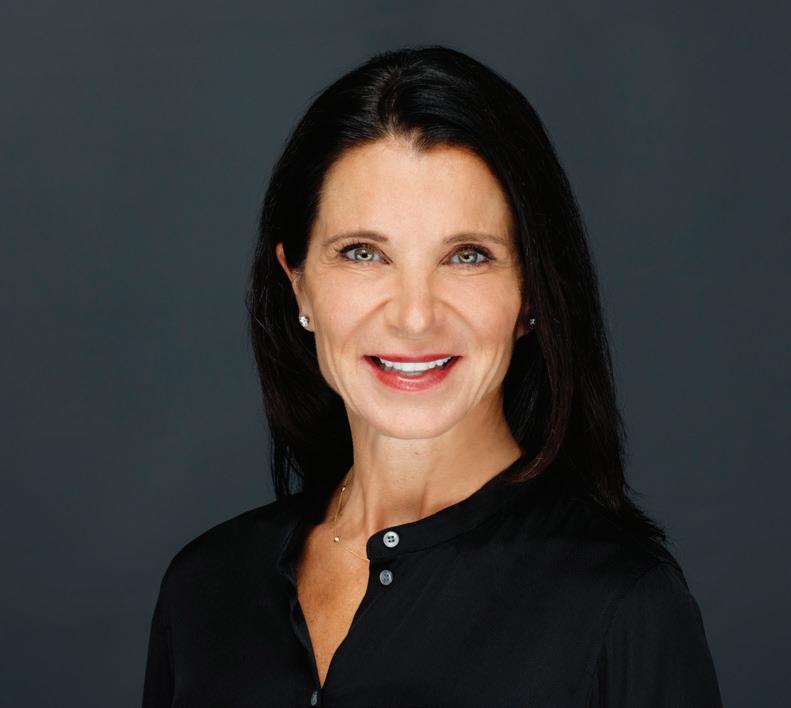
Just ask Collette “Coco” Champagne, who came aboard 27 years ago to lead Hagerty’s inbound call center. Fast-forward to now, and Champagne is both chief human resources officer and chief administrative officer, and a key player in virtually every major milestone the company has hit since the turn of the millennium.
In Champagne’s view, Hagerty couldn’t have evolved from a small, niche insurance business to the global auto-centric lifestyle brand it is today without utilizing HR as a function that envisions and propels growth rather than just reacting to it.
“I don’t think of myself as a human resources leader, and I really have led this team to not think of themselves as human resource leaders,” Champagne explained. “Instead, we really all think of ourselves as business leaders here at Hagerty; we just happen to be focused on the work that impacts our employees. We’ve been fortunate to be included from a very strategic perspective in addressing what this business needs.”
This month, the Traverse City Business News sat down with Champagne and two core members of her team – Dempsey
Van Timmeren, Hagerty’s senior director of leadership development; and Annie Czubak, senior director of talent – to learn how HR drove five key chapters of Hagerty’s history.
Between 2001 and the start of the pandemic, growth was the name of the game for Hagerty.
In 2008, the company had 280 employees, up from just 60 a decade before. By 2013, that number had jumped to 570. By the end of the decade, Hagerty had more than 1,100 employees and a million insured members. Along the way, the company opened multiple satellite offices, including in Ann Arbor, Golden, Colorado, and even in the United Kingdom.
“As a growth organization, you have to stay ahead of [those types of milestones] and start anticipating where the growth is going to come from,” Champagne said.
The most pivotal milestone in those years, she noted, came in 2013 when Hagerty struck a carrier partnership with Markel, a global specialty insurance provider that became the underwriter for its insurance policies.
“Their belief in us, and that strong partnership in general, gave us the ability to widen the funnel of what we would accept in our collector car book of business,” Champagne said of Markel. “It also allowed us to create some very meaningful partnerships. We had our first real strong partnership with Allstate, where we were the exclusive carrier for their collector car business, and the success with that program then started other carriers that
“We will likely be opening another location where we have another employee base.”
- Coco Champagne, Chief HR Officer/Chief Administrative Officer, Hagerty
we were able to build similar relationships with nationwide, including Progressive and State Farm. Those types of relationships transformed us.”
The partnerships, Champagne says, not only “helped us keep a competitor out of the collector car space,” but also created widespread name-brand recognition for Hagerty, making it a well-known commodity in the world of car collectors and enthusiasts. The addition of “media capabilities” (Hagerty’s in-house magazines) and car shows (by 2019, Hagerty had more than 2,500 events to its name) created a situation where “people looked at us more as an automotive brand and less as an insurance company.”
Crucial to the shift, according to Champagne, was making a passion for cars as much a part of the workplace culture at Hagerty as it was part of the company’s outward-facing mission. That approach, of injecting car culture and community into the day-to-day rhythms of the workplace, became an ace up the sleeve when it came to attracting and retaining talent.
“One of the best things that we did is we made sure our employees experienced
the hobby,” Champagne said. “We wanted to make sure that everybody got their hands behind the wheel. We wanted to make sure that, if you didn’t know how to drive a stick shift, we were going to teach you how to do it. We wanted to make sure that you got educated on all things cars, so that you can be able to speak with credibility to the people we insure. And then, as we positioned ourselves as experts in this niche, I think that allowed us to move into other spaces with authenticity.”
Chapter 2: COVID-19 and the pivot to remote work
Even before the COVID-19 pandemic struck and took millions of Americans into remote work situations, Hagerty was experimenting with the concept.
“We had made a move to have a very strong telephony system – which is what powers our inbound call center – so we could track quality, call center analytics, and productivity,” Champagne said. “Learning how to do that allowed us to scale an opportunity for people to work from home.”
Champagne estimates around 30 percent of Hagerty’s workforce was working remotely prior to COVID-19. Then, when March 2020 rolled around, nearly everyone at the company was working from home.
Even as fears around viral transmission began to abate in 2021 and 2022, Hagerty retained its remote work arrangement, in part because of how it had dramatically expanded the talent pool.
“The COVID era opened that door for us, to be able to recruit from all over,” said Czubak. Today, while around 500 Hagerty employees live within driving distance of Traverse City, Hagerty’s nearly-2,000-person workforce remains widely disbursed.
In August 2021, Hagerty announced plans to become a publicly traded company, by way of a merger with Aldel Financial.
Getting to that point, Champagne says, was an “incremental” process, with HR working in the wings to make it a reality.
“You start in 2010, with establishing a board of directors that has a governance structure which describes how decisions are going to be made,” she said. “From
the key role of “helping our leaders and our team get ready to have the responsibilities of a quarterly reporting structure.”
“We needed to build that muscle, of understanding what it’s like to have those cadences as a business,” she said.
Rather than derail the plan to go public, COVID-19 helped illuminate the path, with Hagerty’s newfound remote work capabilities making it easier to find, recruit, and hire the talent necessary to get things over the finish line.
“When we started needing to hire more people [after the pandemic], it was not only because of our growth, but also in anticipation of going public,” Champagne explained. “We realized there was a whole new capability that we needed to build. We had to find people who already knew how to do this, and in many cases, our team was having to look for people that weren’t necessarily in the same market where we had previously been recruiting.”
In particular, Champagne says Hagerty’s financial and legal departments “had to change” because of the stringent Securities and Exchange Commission requirements that come with being a publicly-traded enterprise.


“The system gives us a deeper look into the skills our team members have, and at what proficiency level. It also shows us what gaps that we have.”
- Annie Czubak, Senior Director of Talent, Hagerty
bell at the New York Stock Exchange on Dec. 6 to mark the occasion.
Thinking back on that moment and its aftermath, Champagne says the hardest part was realizing Hagerty’s earlier growth hadn’t been as strategic as company leaders had hoped. In December 2022, TCBN sister publication The Ticker learned the company was laying off 6% of its 1,800-person global workforce.
“That was a very difficult decision, and a very difficult time for us,” Champagne admitted. “But we also knew that, to run a strong company, we had to be able to show the right level of profitability and the right level of revenue growth. I think we were growing so quickly between 2001 and 2018 that we didn’t think about how to scale as effectively as we could.”


The Ticker also broke the news, last November, that Hagerty was finally calling its employees back to the office. The plan, internally dubbed “WorkForward,” required employees within close proximity of Hagerty’s Traverse City headquarters to adopt hybrid schedules, with three days per week in the office.
Champagne says company leaders simply saw a need for more in-person interaction among the workforce. For the three years leading up to WorkForward, Hagerty had been “gathering our teams together four times a year…for regional rallies.” The “onthe-spot collaboration” made possible by those gatherings, she notes, “was something that we wanted to try to activate more of.”







While the decision proved controversial among Hagerty’s workforce, Champagne believes the company and its HR team minimized disruption by “giving everybody enough notice to make these kinds of changes,” thinking about the “readiness” of the office spaces and the technology therein, and sketching out a balance between in-person work and remote work.
The biggest challenge? Acknowledging that the majority of Hagerty’s employees wouldn’t have to abide by this new shift, simply because they live nowhere near Traverse City.
“We have a lot of key employees that are not here, and we did not want to have a perception that there is a different set of rules [for people who live elsewhere],” Champagne said.
That desire to treat all employees equally has Hagerty thinking about opening a new office for the first time in years. While the business still has a few outposts in other parts of the world – including in Ann Arbor, Detroit, Los Angeles, Richmond Hill, Canada, and Bicester, England – several others have been phased out, including in Dublin, Ohio and Golden, Colorado.
“We will likely be opening another location where we have another employee base,” Champagne revealed to the TCBN. “One of the challenges with Traverse City is trying to get a flight into Cherry Capital Airport in July; it’s so busy that it becomes like trying to fly into Nantucket! So, it’s not easy to get here. It’s not easy to get a hotel. It’s not easy to coordinate. If we have 200 people here, where are we going to take those 200 people out for a meal on July 20? We want to be able to do something else, where our diverse-located employees can gather and have access to an airport that allows them to get there pretty readily.”
So far, Champagne says Hagerty has been “looking in a few other markets” for its potential second hub. “But we haven’t made a commitment to anything yet.”
As Hagerty writes its next chapter, the HR team is already working to lay the groundwork – and relying heavily on technology to do it.
“We want to create an environment where employees can clearly see what growth looks like for them,” Czubak said. “A career is really a unique journey for everyone, and we want to help support that and truly empower employees to drive things like internal mobility, skills development, and career conversations with their leaders.”
Hagerty uses Workday tools for that type of HR management, and for years, Czubak has been working on a new system within Workday that will bring Hagerty’s talent strategy into the era of artificial intelligence. On Wednesday, June 22, she finally launched that tool, called the “career journey and career hub.”
“[The hub] is really an interactive guide to explore skills and pathways in our career framework,” Czubak said.

Hagerty built that “career framework” two years ago, inputting every job at the company into the system and assigning each position 10-15 “mandatory skills.” Employees can also add their own skills to their career profiles. Together, those attributes then provide a company-wide map of the skills Hagerty has within its worker ecosystem.
“The system gives us a deeper look into the skills our team members have, and at what proficiency level,” Czubak said. “It’s great for us to lean into whenever we’re trying to fill open roles internally, because we now have this information for all of our employees. It also shows us what gaps that we have. So, if there are certain skills we’re looking for and we can’t find them in our own employee inventory, then it gives us the opportunity to explore skills development, or to see what kind of external talent we might have to look for.”
The new career journey and career hub tool allows employees to map out pathways for “ongoing career development planning,” making it easy for team members to see how and where they can grow into higher-level roles.
“It has this really cool AI-driven development recommendation feature to it, so it’s very uniquely positioned for every employee, every leader, every team member,” Czubak said.
Much of that development then falls to Van Timmeren, who describes her leadership development role as “looking at what capabilities our leaders need in order to face new growth and new complexity three years, five years, 10 years from now.”
“Every year, we update our 10-year long range plan,” Champagne noted. “That helps us understand what our revenue targets are. We translate revenue targets into head count to understand what we’re going to need, and then Dempsey works through the question of ‘What does that mean from a people leadership perspective?’”
As for recruiting new people, Czubak says Hagerty’s new data-centric approach helps on that front, too.
“LinkedIn really helps us to use data-driven reporting to find these applicants,” Czubak said. “They have a network of over one billion members, so we can run some really specific reports to find the exact talent that we’re looking for. And they’ve got some really great tools leveraging AI that we can lean into now, too, just for efficiencies and reaching more people faster.”



ATS bets on ‘One Campus’ to consolidate services by 2030
By Kierstin Gunsberg
A property owned by Addiction Treatment Services (ATS), a center that provides full-continuum care for people with substance use disorders, is among the more than 100 homes for sale in the prime two-mile radius between Traverse City’s Division Street and South Garfield Road.
Listed at $469,000, the 1,557-squarefoot home at 611 E. Eighth St. is the first of seven former recovery homes — where inpatient clients temporarily live with and support each other through their treatment process — slated to hit the market over the next few years.
Pausing the Recovery Homes program in order to sell the properties is part of a restructuring initiative for the organization called “One Campus,” which will consolidate all of ATS’s services into one single, state-of-the-art facility by 2030.
ATS CEO Paula Lipinski says the restructuring is “the only way we can build a sustainable program for the next
In the interim, her team is working with community transitional housing partners to place some of its 3,000-plus annual clients who span Antrim, Grand Traverse, Leelanau, Manistee and Wexford counties.
available, the organization reported $6.5 million in operating revenue, with $4.7 million of that coming from Medicaid.
Lipinski, who first joined the organization in 2019, says that logistics and its financial model are becoming increasingly difficult to sustain. The organization
“Our team support, morale and collaboration is constantly taking a hit while everyone is spread out and separated.”
– Paula Lipinski, CEO, Addiction Treatment Services
The Recovery Homes programming pause and the consolidation – both announced in 2025 – were ultimately spurred by recent massive cuts to Medicaid, a program that accounted for nearly 80% of ATS’s operating budget. According to the 2024 mid-year audit, the latest
offers the full gamut of care for SUD, such as withdrawal management, residential treatment and outpatient services like virtual care, therapy and peer recovery coaching. In the last five decades of expanding alongside northern Michigan’s booming population and treatment needs, its footprint has grown to 11 different facilities all over town.
While it might seem advantageous to cover that much ground, the scattered locations have made it harder to provide cohesive treatment since each location serves a different stage of care, with clients having to switch to a new site and therapist as they graduate through their program. Participation, Lipinski notes, declines during those transitions.
Bringing everything (and everyone) under one roof, she hopes, will give clients a better chance of following through in their treatment plans. It would also lighten the load for ATS’s 68 medical providers, therapists, program managers and support staff, who are dealing with what Lipinski calls a “communication desert” under the current model.
“Our team support, morale and collaboration is constantly taking a hit while everyone is spread out and separated,” she said.
The benefits of One Campus are twofold: Reducing the ATS staff burnout rate and providing dedicated onsite childcare, which could stabilize participation.
According to the National Institutes of
Health, roughly 19 million U.S. children — about one in four — live in a household with a parent or caregiver who has a substance use disorder. Surveys of parents entering treatment programs show that nearly 73% of them have children under 18.
“Lack of childcare is a huge barrier to care for getting someone in our services, especially mothers,” explained Lipinski, adding that the organization is planning at least 65 beds, including 16 to 20 withdrawal management beds at the new central campus.
The campus’s location is still up in the air. A capital campaign is set to launch this fall, but with the project expected to total up to $10 million on top of the projected $5 million that the seven recovery homes will garner, much of ATS’s future hinges on the sale of those properties.
Lipinski says the organization would ideally build out their current headquarters at 1000 S. Garfield Ave., but time will tell. Either way, keeping services in town is a nonstarter since most clients are commuting by way of bike, BATA bus and foot.
Offloading the recovery homes will be a win/win for ATS’s budget, not only bringing in much needed cash but eliminating maintenance on the historic properties which have needed countless pricey fixes like new windows and roofs
over the years.
“Our biggest cost pressure is the aging houses,” said Lipinski.
Last year alone, more than $30,000 from grants went toward repairs. Meanwhile, the 2024 mid-year audit recorded $340,855 in facilities maintenance, equipment, and utilities.
“Every house fix,” said Lipinski, “is less funding for our programs.”
While reducing expenses through the consolidation (which included discontinuing its Mobile Services Unit in summer of 2025), ATS is also diversifying its



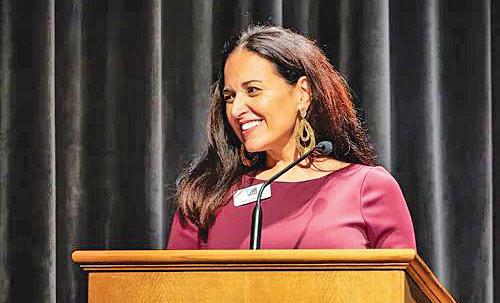
funding streams to lean less on Medicaid, increasing the types of insurance it can accept and pushing for greater community engagement. Compared to the prior year, fundraising and donation dollars were up in fiscal year 2024, yet still accounted for less than 2% of ATS’s total annual operating revenue.
A source that could soon bolster that line item are opioid settlement dollars from Grand Traverse County. Almost $2 billion in payments from the national opioid settlements began flowing to Michigan in 2023, with defendants like Walgreens, Walmart, CVS and other companies found liable for their roles in
the opioid crisis.
Even though 75% of ATS clients seek treatment for alcohol addiction, the organization’s opioid use disorder services make it eligible to apply for some of the $1.9 million that Grand Traverse County received. Now Lipinski is just waiting for the county to open their requests for proposals to hopefully secure a share of that funding for programs she says is essential to northern Michigan’s treatment network.
“We are the only local organization who can provide the entire continuum of care for SUD, not just a few parts of it,” said Lipinski.

PRESENTED BY KEEN
OVERVIEW
KEEN has energized Performance Engineers with a new 20-kWh solar array, delivering reliable, renewable power.
The one thing that comes to mind for me is "Turnkey". Working with Keen has been seamless and was a turnkey path to our introduction to solar.
Brad W. Muma, P.E. Performance Engineers, Inc.
YEARLY KILOWATT HOURS AVOIDED: 23,740 kWh
SAVINGS EQUIVALENT TO:
2.1 Homes’ energy use for one year 16 Acres of U.S. Forests Preserved





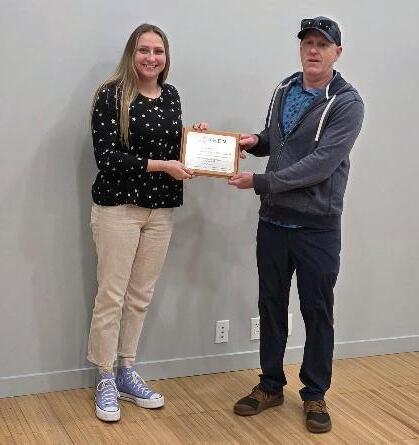
POWERED BY






By Chris Archangeli, columnist
Whether you manage a project, a team, your own business, or a household, stress is a common thread through each. Managing that stress is as critical to success (and the fulfillment it can bring) as carrying out your daily responsibilities and tasks. To start, it’s important to understand what exactly it is that we’re trying to manage.
Psychological stress is an ambiguous term. It is a feeling that is experienced –most often defined as emotional strain, pressure or discomfort. However, some research considers that stress can be experienced as good or bad, as well as too much or too little. This framework is helpful to remind us that stress serves a purpose, and in the right type and amount can enhance performance and motivation.
Recognizing stress
How you deal with stress is going to be unique. Take a moment and think of one or two recent times that stress got the better of you. It can be easy to remember the big moments like missing a deadline or having a project fall apart at the last minute. Think about the moments leading up to that stress and note how you behaved in reaction to it. Did you cope with eating, shopping or alcohol? Do you isolate? Are you short-tempered with your kids? Try to understand your patterns and find the earliest warning signs that tell you, “I’m experiencing stress.”
Don’t skip self-care
There are three very common things that people skip when feeling stressed. When pressed for time, it can feel tempting to cut activities that are often the most important to our physical and mental health. Don’t give in to the temptation and make sure you get the following:
1. Sleep: This is common and hard, because you can’t fall asleep when you’re stressed. Quick tips: Wake up at the same time every morning. Avoid napping. Don’t get into bed earlier and earlier (it will backfire) and do relaxing activities leading to bedtime.

2. Exercise: Your workout might seem unimportant compared to everything else on your task list but it’s not. Moving your body is essential to meeting the challenges before you.
3. Social connection: While it’s perfectly fine to cut out social activities that feel superficial, what is important is that you don’t cut out the activities that actually build connection. Don’t skip the walk with your partner, coffee with a friend or time with your family.
Try not to let stress turn into worry
Ask yourself: Am I seeing the situation realistically? Pay close attention to your selftalk. Are you saying things like, “This is it. I’m going to screw it up. Everyone will know I’m a fraud. I’ll probably be fired and ruin everything.” Would you say that to a colleague or close friend in a similar situation?
Thoughts that end up in those dark places are part of “the downward spiral.” Recognizing the downward spiral can help you stop it. A healthier but still honest
interpretation might be, “This project is important. It makes sense that I’m nervous and it will take a lot of work, but I’ve made it through challenges before.”
We’ve all been stressed about something that in the end turned out just fine. Being disingenuously positive doesn’t work but reflecting on a previous problem you overcame can provide a context in which things will work out again.
Notice when you are thinking a lot about a specific stressor, and ask yourself if there is anything you can do about it?
If so, do it now. If not, write it down and address it later. Close any open thought loops that you can and get as much as you can written down and out of your head.
I’m not going to tell you what activities you should do to de-stress - yoga, mindful meditation, dance class, church, hiking, hunting, fishing, crocheting. You know what works best for you and it’s best to stick with those things. It might not be
the right time to try yoga or learn to knit but what’s most important is to do something that helps you feel present in your body, your mind, your people and your world. Try to prioritize them.
Exercises like progressive muscle relaxation, slow diaphragmatic breathing or other “grounding” techniques are helpful in moments when you need to slow your body and mind down. They can also be done just about anywhere at any time. Search any of those terms on YouTube and they will give you a starting place to explore.
Remember, stress is a normal part of life. Feeling stressed and overwhelmed doesn’t mean you’re failing – it means you’re human. If you need more help, that’s normal, too. A helpful first step for most people is to meet with a psychotherapist.
Chris Archangeli, MD, is the medical director for Munson Healthcare Behavioral Health. Resources can be found at munsonhealthcare.org/behavioralhealth, northernlakescmh.org or by contacting the Grand Traverse Mental Health Crisis and Access Center 24/7 at (231) 213-1050.
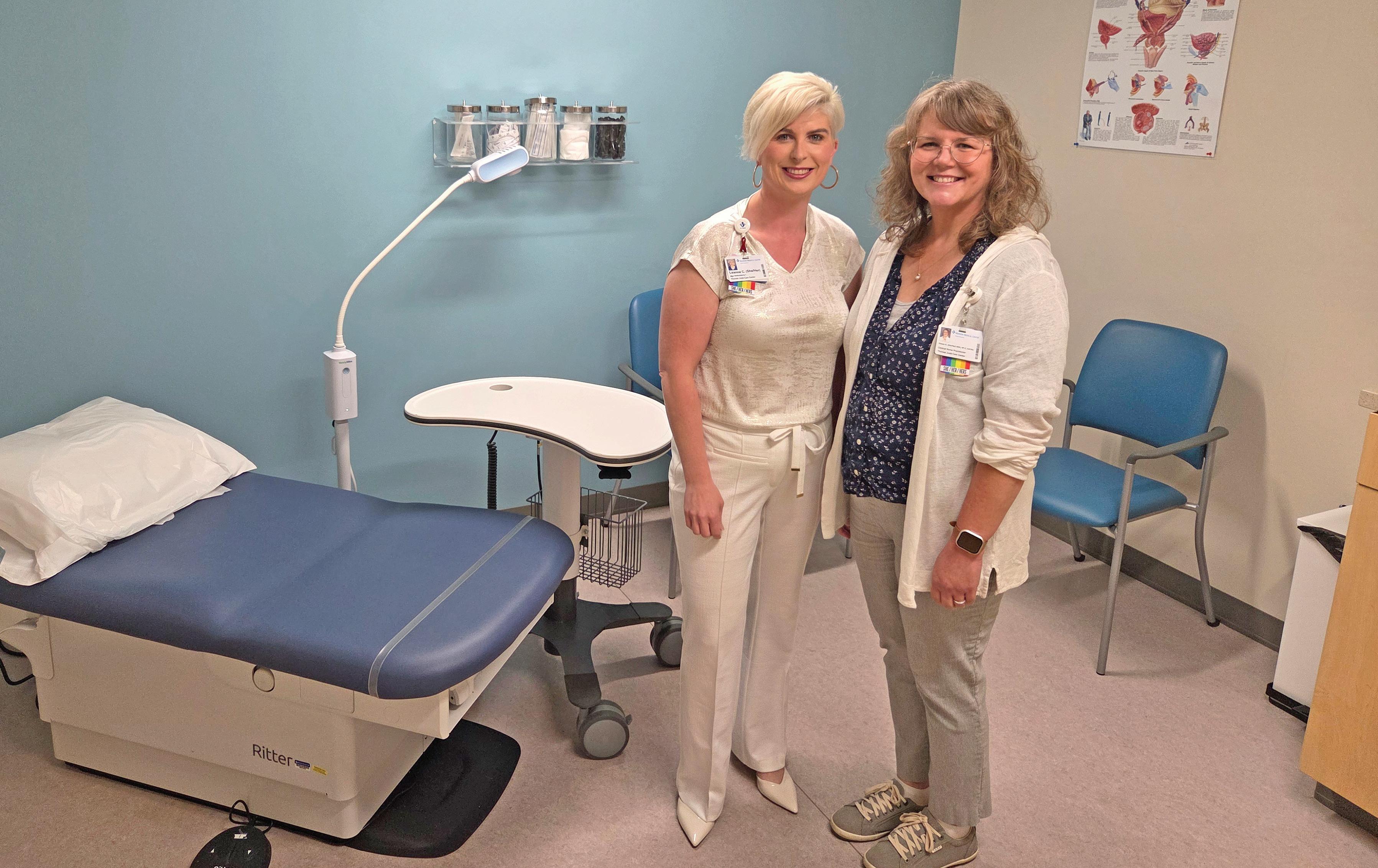
By Art Bukowski
Northern Michigan’s leading care provider for people with (and at risk of contracting) HIV is steaming ahead after its move to a new, expanded location.
The Thomas Judd Care Center was founded in 1994 and remains the region’s only comprehensive HIV program. The Munson Healthcare-run operation recently moved to the Foster Family Community Health Center, where it provides a variety of services to people in the 30-county northern Michigan region.
The TCBN connected with TJCC leadership to learn about their operations and the ongoing fight against HIV, which continues to evolve.
The program was named in honor of Thomas Judd, a Bellaire native who returned to northern Michigan after being diagnosed with HIV and became a passionate advocate for HIV education and awareness.
It was established to continue Judd’s mission of education, compassion and support for individuals affected by HIV. Though the disease was and still isn’t nearly as common in northern Michigan
as in major metropolitan areas, the need for such a center was evident early on as there were enough people with HIV to merit specialized care in the region.
In those early days, treatments were limited and survival rates were typically short. As such, TJCC was more than
Today, TJCC serves 183 people with HIV and another 125 people enrolled in prevention services, either because they engage in high-risk activities or are closely connected with one or more HIV-positive people.
“We’re very fortunate that we’re in the state of Michigan. Michigan is doing an amazing job at supporting people living with HIV. They’ve not made any really significant cuts. Other states are really suffering and losing a lot of funding.”
– Leanne Chouinard, Program Director, Thomas Judd Care Center
anything else a place that provided more comfort and understanding than treatment.
“People with HIV were facing a lot of barriers to care, and they weren’t living long,” said Shawn Kintigh, a clinical nurse practitioner at TJCC. “So it was basically like a hospice program when it first started – just provide everyone everything they needed until they passed.”
Over time, the center evolved into much more as the disease was far better understood and treated.
The center has a multidisciplinary team that includes an HIV specialty provider, registered nurse, medical and non-medical case managers, prevention specialists, outreach staff and transportation and support staff.
Beyond direct medical care, TJCC helps individuals navigate insurance, transportation and mental health needs, housing-related barriers and other challenges.
“In rural northern Michigan, transportation is a ginormous barrier,” said Leanne Chouinard, TJCC practice manager. “We have a staff member who a large part
of her job is just to drive people to and from their medical appointments, and that’s across all 30 counties.”
The vast majority of TJCC’s funding comes from dedicated state and federal sources, including the federal Ryan White HIV/AIDS Program, which provides millions to support primary health care, support services and medications for those living with HIV. Additional support comes from Munson, insurance reimbursements and program revenue.
These days, with regular medication, it’s possible for HIV-positive people to have their viral load so suppressed that they can’t even transmit the disease. It’s also possible for high-risk individuals to take medications that can prevent them from contracting the disease entirely.
What this means is that the work done at TJCC – and thousands of other medical care facilities – could entirely halt the disease.
“Worldwide, we have all the tools to end the HIV epidemic,” Chouinard said. “We can stop HIV in its tracks.”
This of course depends on people seeking and adhering to treatment, which is a big part of TJCC’s mission and efforts. Ryan White funding in particular is
designed in part to help people who need extra help on this front, Chouinard says.
“These are people who may be more at risk of not staying engaged in their healthcare,” she said. “They need that extra support to make sure they’re attending their medical appointments, they’re taking their medications, they’re staying virally suppressed. That’s ultimately keeping them healthier, but it’s also preventing transmission of HIV.”
Proving that TJCC is keeping people healthy is key to continued funding, Chouinard says.
“We have measurements to meet our grant requirements, and I think it’s either 89% or 90% of our people need to be virally suppressed,” she said. “And as long as I’ve been here, we’ve always exceeded that benchmark.”
Outreach is also a huge component of TJCC’s efforts. They want to encourage testing, treatment and prevention to anyone who will listen.
“We go to a lot of health fairs, community events, farmers markets,” Kintigh said. “Since we cover 30 counties, we try to find events all over northern Michigan.”
Northern Michigan is not always the easiest place for this outreach work, unfortunately.
“If you look at different areas of northern Michigan, there are different viewpoints, morals, thought processes, and different areas are more open-minded to
having these conversations,” Chouinard said. “So outreach and education look (can look different) in different areas; you have to kind of tailor that approach.”
In the decades since HIV/AIDS first came on the scene, the stigma has reduced somewhat, but it’s still very real.
“I feel like for the younger crowd, the stigma is not quite as impactful,” Chouinard said. “But the older people, which is what our typical new diagnosis is, they remember a time when this was a death sentence. They don’t really know how far the science has advanced.”
All these years later, there’s also still a “blame game” with HIV.
“If somebody gets a cancer diagnosis, they’re all of a sudden diabetic, they have eczema, nobody’s questioning you,” Chouinard said. “If you have an HIV diagnosis, the first question is, well, what did you do? Or how did you get it?”
While HIV diagnoses have declined in many areas nationally, northern Michigan (albeit with a very small sample size) has seen an increase. A recent review of 10 northern Michigan counties found a 214% increase in new HIV diagnoses, with 44 new diagnoses identified between 2019 and 2023 compared to 14 diagnoses during the previous five-year period.
“The population of people that are be-
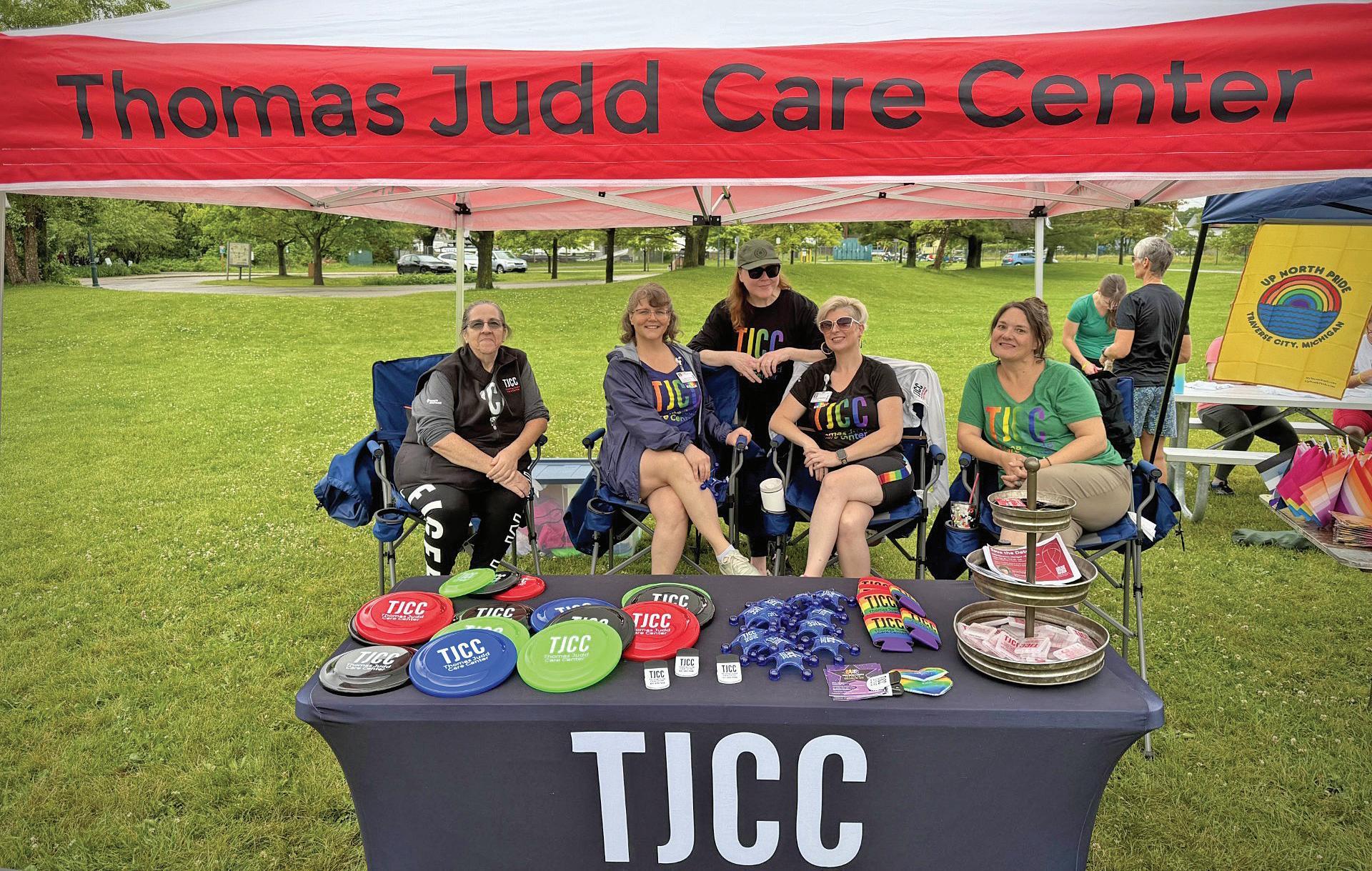
ing newly diagnosed don’t fit your typical stereotype (of) people of color or younger demographic, maybe lower income, or part of the LGBT community,” Chouinard said. “But a lot of our newer diagnoses are mid-40s to mid-60s, hetero-presenting and monogamous presenting.”
Chouinard is not particularly worried about funding going forward, though it’s always in the back of her mind.
“Whenever you are a grant-funded program, there’s always risks and concerns,” she said. “You have to be alert of what’s going on in the world, which is why we do look for other avenues for sustainability
like billing insurance for our medical care.”
As it turns out, Michigan is about the best place TJCC could be.
“We’re very fortunate that we’re in the state of Michigan,” Chouinard said. “Michigan is doing an amazing job at supporting people living with HIV. They’ve not made any really significant cuts. Other states are really suffering and losing a lot of funding.”
The state’s funding situation is so good that people with HIV from other states are moving to Michigan to access better care, Chouinard says, something that’s good for now but that could strain the state’s resources in the future.





By Art Bukowski
Michigan native Joe du Lac was announced in May as the new president of Munson Medical Center. Du Lac comes to Munson from Kalamazoo-based Bronson Healthcare group, where he served as a senior vice president. Prior to that, he held executive leadership positions at Trinity Health of New England and the Detroit Medical Center, among other roles.
The TCBN sat down with du Lac on his second day on the job (June 23) to learn more about his experience and vision.
What attracted you to this position?
One of the things that really drew me to Munson is the culture. The culture is very similar to the culture at Bronson. Very positive culture, very committed to the hospital and very committed to the community.
Bronson and Munson are both independent hospitals. What does that mean to you?
I worked for the Detroit Medical Center, which was a part of Tenet Healthcare, and at the time we had 80-something
hospitals across the nation. Then I went to Trinity, and they had over 100 hospitals across the nation. And it was very difficult to get things done and make decisions because decisions had to go all the way up to the top. When I went to Bronson, we could make decisions very quickly and do the right thing quickly. It wasn’t a shared decision about what was happening across the nation, it was about what was important for that community. And at Munson, it’s very much the same thing. Quick and targeted decisions.
What will you bring to this role from your previous experience?
I actually started in the automotive industry. I was an engineer designing robots that put cars together. I worked my way up into leadership, and this is right when the automotive industry was just about ready to collapse. And then we started learning from Toyota things like lean manufacturing, Six Sigma and Kaizen [a Japanese concept of continuous, incremental improvement]. I thought this was a way to save our organization, and we learned it together and the business really took off. It was amazing.
After some consulting, I eventually took a job at the Detroit Medical Center and thought it would be interesting to bring what I know about this to healthcare. We did that there and turned all eight hospitals into lean hospitals, and then I followed the president out to Trinity and we did the same thing there. At Bronson, I got there to the tune of about a $20 million loss [per year], and when I left were running in five or six percent margins. I want to bring that management system here and strengthen what we’re already doing.
Describe your leadership style.
My style is being a coach, a mentor and a servant leader. My job really is to make sure that my team has what they need to get the job done and a clear vision as to where we’re going.
What are your top priorities for the first few months? The first year?
That’s a tough question [since I just started]. What I’m going to do is just really learn what’s going on here, learn the hospital, learn the people, learn what’s
important to them, where they may have shortcomings, where they may see the hotspots are that need immediate attention. And more importantly, I want to learn what’s going on in the community.
What is Munson already doing well?
I think most obviously is the quality metrics are just outstanding. They provide high quality care and complex care. It’s a big hospital providing high level services.
What does Munson need to improve upon?
I don’t know. Again, I’m in the learning phase. So looking at all of the metrics, looking at the financials and trying to understand what’s going on, what the situation is today. I really can’t answer where I’m going to focus.
What are the biggest opportunities going forward?
Wherever I have gone, I focus on quality and patient experience. You can solve many, many problems with those two drivers. Those are things I work on.
What about opportunities in technology or other areas?
Artificial intelligence is changing the world. It’s the next internet. Back at Bronson, we were experimenting with AI in a bunch of different areas. It’s really about understanding where we can use it and where we can apply that to support what we’re already doing.
What are the biggest challenges going forward?
There’s really only one thing that keeps me up at night, and that’s the One Big Beautiful Bill and the cost pressures we’re going to be facing in the future. It’s going to put a ton of pressure on rural hospitals like ours, and we’re going to have to run very, very efficiently to make it through those upcoming cost pressures. Medicaid and Medicare reimbursements are going to drop.
(Megan Brown, Munson’s chief marketing and communications officer, added more context: About 70 percent of our revenue comes from government payments, and about 30 percent is private pay. We expect that between 10 to 15 percent of our patients are going to lose their insurance. Then what happens is that these people don’t get preventative care, and by the time they do come to us, they’re very sick without insurance. And

we have to treat them regardless. It could really drive up costs. This all goes into effect January of 2027. By 2032, we expect to lose at least $50 million a year.)
What about costs and staffing?
Costs are constantly increasing and staffing is constantly going in the wrong direction. There are fewer and fewer nurses, so we’re struggling in those areas. To combat that, we need to become more efficient as a health system and as a healthcare industry. I think perhaps one of the reasons that Munson chose me over other candidates is my ability to drive

Partner with a J.P. Morgan Private Client Advisor
Gain guidance to help you identify, prioritize and plan for your unique needs and goals.

Jason C. Piedmonte Managing Director Private Client Advisor
250 E Front St., Traverse City, MI 49684 231.929.7629 jason.c.piedmonte@jpmorgan.com
Forbes/SHOOK Top Wealth Advisors Best-In-State 2025, 2026
Connect with us jpmorgan.com/jasonpiedmonte
Forbes/SHOOK Top Wealth Advisors Best-In-State (04/07/26, data as of 06/30/25) ; (04/08/25, data as of 06/30/24).Ratings may not guarantee future success or results. Fee paid to rating provider for advertisement materials after rating announced. Methodology here: jpmorgan.com/award-disclosures
J.P. Morgan Wealth Management is a business of JPMorgan Chase & Co., which offers investment products and services through J.P. Morgan Securities LLC (JPMS), a registered broker-dealer and investment adviser, member FINRA and SIPC.
INVESTMENT PRODUCTS:
• NOT A DEPOSIT • NOT FDIC INSURED • NO BANK GUARANTEE • MAY LOSE VALUE ©2026 JPMorgan Chase & Co. All rights reserved.
the cost down and improve those efficiencies to maintain our competitive nature, to be able to recruit and combat those escalating costs.
If you could accomplish one goal during your tenure here, what would it be?
At Bronson, we wanted to become a national award-winning hospital that reflects or represents the pride of our community. And I want to do the same thing here. If you’re a national award winner, that means you’re providing high quality care at the lowest possible cost. You’re doing


the right thing for the patient, and you also want the community to say: that’s my hospital and I’m proud that that’s my hospital. If I can do that here, that would be a success for me.
How was your first day?
My first day was just great. I actually texted my wife and said how great it was. The people are really who I thought they were. Down to earth, salt of the earth people. This hospital is in great shape. It’s a wonderful medical center. There’s no burning platform or anything. It’s going very well.












By Carrie Smith, Vice President, Human Resources Officer
For employers across industries, the conversation around work has fundamentally changed. Remote work, employee relocation, and mental health are no longer fringe considerations—they are central to how organizations attract, retain, and support talent. In financial services, where trust, continuity, and expertise matter deeply, these shifts require thoughtful leadership rather than rigid tradition.
By Lori VanAntwerp, VP/Commercial
Construction is essential and increasingly complex. Strong housing demand continues to support development opportunities, yet the process of delivering new supply requires thoughtful planning, creative financing, and a good understanding of local market conditions.
At West Shore Bank, we’ve learned that flexibility is not about lowering standards or weakening culture. Instead, it’s about adapting roles and expectations to retain high performing employees while continuing to meet business and customer needs.
Regional nonprofit Housing North estimates that approximately 31,000 additional housing units will be needed across northwest Michigan by 2027. Meeting this demand requires a wide range of housing types – from attainable starter homes to multi-family rentals, and thoughtfully designed mixed-use projects. As a result, construction activity across the region is gradually evolving to better serve a diverse and growing population.

For employees balancing work with relocation, caregiving, or mental health challenges, knowing that support is readily available and confidential reduces friction, increases engagement, and reinforces loyalty.

Like many organizations, we’ve encountered situations where strong employees experienced major life changes—relocation due to a spouse’s career, caregiving responsibilities, or evolving personal and mental health needs. Historically, those changes might have resulted in unwanted turnover.
Rather than defaulting to replacement, we challenged ourselves to ask: Can the role be restructured without sacrificing effectiveness?
Building in northern Michigan presents distinct challenges, including shorter construction season, skilled labor shortages, and limited contractor availability, which can extend project timelines and increase costs. These realities require careful planning and lenders to take a long-term view when evaluating construction opportunities.
Developers are responding with creativity and commitment
Regional developers are adapting in different ways to help expand housing supply.
In several non branch based functions, the answer was yes. By reassessing job scope, clarifying outcomes, and leveraging digital collaboration tools, we transitioned certain positions to remote or hybrid models. This allowed us to retain institutional knowledge, preserve employee engagement, and demonstrate trust—an increasingly important currency in today’s workforce.
Remote capable roles have also expanded our reach, enabling us to compete for talent beyond traditional geographic constraints while still maintaining a strong community bank identity.
Workplace flexibility and mental health are closely connected. Long commutes, inflexible schedules, and limited autonomy can exacerbate stress and burnout—particularly for employees navigating major personal transitions.
In the downtown market, recent projects have focused on renovating and revitalizing historic properties. This has created attractive residential living spaces while modernizing retail and office environments. Importantly, they have also preserved the architectural character and longterm vibrancy of the community. As a lifelong resident, I am especially grateful for the care they have taken to improve and preserve these assets. Preserving historical elements of a project costs far more than tearing down and starting from scratch. THANK YOU to developers that have chosen preservation over profits.
Flexibility alone, however, is not enough. Sustainable retention requires employers to pair adaptable work models with accessible mental health resources that support employees beyond the workplace.
Elsewhere, some builders are pursuing a neighborhood-based strategy, constructing multiple speculative homes simultaneously within new and established subdivisions. This approach allows for improved coordination with subcontractors, efficient material purchasing, and better overall project scheduling. These efficiencies can help moderate construction costs and improve affordability.
One developer I work with recently shared, after years of success in the local real estate industry: “I’ve made a lot of money in Traverse City – now I want to give back.” That commitment to reinvesting in the community plays an important role in addressing regional housing needs.
As part of our broader benefits strategy, West Shore Bank provides employees with access to a comprehensive Employee Assistance Program (EAP) through Ulliance’s Life Advisor services. These offerings are designed to support employees wherever they work; on site, hybrid, or remote—through confidential, easily accessible care.
Services include short term counseling for stress, grief, relationship challenges, substance use, and major life transitions, along with professional coaching for career development, financial wellbeing, and personal growth. Employees also have access to 24/7 crisis support and a robust digital wellbeing portal featuring educational resources, webinars, and work life tools.
We’re currently reviewing a project designed to breathe new life into the area surrounding the Boardman Lake Loop. Developers are committed to creating a vibrant hub of housing, retail, and gathering spaces that invite our community to enjoy the natural beauty of the region. They understand that success depends on a collaborative relationship with the city and township to ensure the project aligns with the long-term vision for
The Business Case for Leading with Empathy
the Loop. It’s this level of passion and intentionality that will continue to set our community apart.
Layered capital structures are increasingly common
Often, to make a project viable, developers will utilize funding from many sources. The capital stack may include:
• Senior construction loans from community and regional banks
• Public incentives from the MEDC – such as the Revitalization and Placemaking grants (RAP)
• MSHDA funding
• Brownfield Tax Increment Financing (TIF)
• Mezzanine debt or preferred equity
From a business standpoint, flexible work options and mental health benefits drive measurable outcomes. Retention improves when employees feel trusted and supported. Engagement increases when organizations prioritize wellbeing alongside performance. Productivity benefits when employees are enabled—rather than constrained—by workplace policies. Most critically, organizations that adapt now are better positioned for ongoing change. Workforce expectations will continue to evolve, and employers willing to adjust structures and benefits thoughtfully will maintain a competitive edge.
• Partnerships with nonprofit organizations utilizing Low-Income Housing Tax Credit programs (LIHTC)
• Alternative funding sources such as Venture North, Northern Initiatives and Illinois Facilities Fund (IFF)
What community banks focus on in construction lending
A Modern Advantage Rooted in Values Community banks have always emphasized people-first values—serving customers, supporting local communities, and building lasting relationships. Applying those same principles internally is both logical and necessary.
From a lender’s perspective, several factors can significantly strengthen a construction project:
• Maintaining appropriate contingency reserves – this will provide a cushion during pricing spikes, construction delays and unforeseen project challenges
By redesigning roles where appropriate, embracing flexibility, and investing in mental health resources, West Shore Bank continues to strengthen its workforce and reinforce its long term resilience. In today’s labor market, flexibility is no longer a perk— it’s a strategic imperative.
About West Shore Bank
• Preserving a strong liquidity position – this includes easy access to capital, like cash, stocks, bonds, etc. Lenders are often told by borrowers ‘If I had the cash, I wouldn’t need a bank.’ That can be true to an extent. But when we are talking about construction, you need a Plan A, B & C
• Including financially capable guarantors who can support projects through completion. A guarantor with financial strength independent of the specific construction project further enhances the viability of financing
West Shore Bank is a Michigan based community bank serving individuals, families, and businesses. With a long standing commitment to putting people first, the bank focuses on relationship driven service, community reinvestment, and creating a workplace culture that supports both professional growth and personal wellbeing.
• Using realistic assumptions regarding absorption, pricing, and interest rate sensitivity. Is the sales price/sq ft supported by the market?
As an employer, West Shore Bank has evolved its workforce model to meet changing talent and business needs—offering flexible and remote work opportunities for select roles, investing in modern benefits, and prioritizing employee wellness as a core component of its long term strategy.
By the numbers
I’d be doing clients a disservice moving forward with projects that lack sufficient liquidity and guarantor strength. If a major hiccup occurs and the borrower doesn’t have the funds to finish the project, no one wins.
• Employees: 137
• Years in operation: 128
• Footprint: Serving communities along the lakeshore, from Muskegon to Traverse City and beyond
Responsible development helps preserve the character and quality of life that make this region attractive to residents and visitors alike. Community banks play an important role in balancing these priorities by supporting projects that align with market demand and long-term community goals.
By Andi Dolan, columnist
Employee mental fatigue is a critical threat to organizational performance. While executives focus on sales pipelines, they frequently overlook the foundational variable driving growth: the cognitive capacity of their personnel.
The pressures facing northern Michigan’s workforce are unique. Local businesses operate within a seasonal economy between intense tourism demand and slower shoulder seasons. Regional employees navigate heavy workloads, skyrocketing local housing costs and severe shortages of available childcare.
Rather than causing dramatic breakdowns, these pressures manifest as “quiet burnout” where employees meet deadlines while silently battling chronic stress and a gradual erosion of engagement.
The financial consequences hit balance sheets fast. Driven by a surge in behavioral health claims, employer medical premiums are projected to spike 10% this year. The American Psychological Association reports 92% of workers consider it essential to work for an organization that actively supports psychological well-being. Conversely, the World Health Organization notes that anxiety and depression cost the global economy $1 trillion annually, primarily via absenteeism and presenteeism.
Losing an employee extends far beyond recruitment. When productivity, onboarding and institutional knowledge are factored in, replacement costs can reach twice an individual’s annual salary. Yet many employers treat mental exhaustion with surface-level software that fails to address underlying workplace stressors. Protecting regional talent requires a strategic approach combining workload management, leadership training and comprehensive employee support.
A patchwork of disjointed wellness portals results in low adoption. This issue is compounded in rural northern Michigan, where finding an available in-network local clinician can take months.
A study by the Society for Human Resource Management (SHRM) reveals a stark operational disconnect: while 31% of employees report experiencing chronic job-related stress, only 17% of HR professionals state

their enterprises systematically audit the efficacy of their mental health resources.
Tactical action: Centralize offerings into a single, HIPAA-compliant gateway. Make it easy for your employees to find resources. The McKinsey Health Institute analyzed 115 workplace wellness initiatives and concluded that sustainable value comes from an integrated ecosystem targeting multiple health dimensions. Equally so, track internal program utilization! SHRM reports that 85% of organizations that actively audit their benefits achieve a positive return on investment (ROI).
Implement “shoulder season resets” and workday recovery
No wellness initiative can compensate for structural overwork. In northern Michigan, businesses run at 150% capacity during peak summer or winter tourism months, leaving staff utterly depleted. Tactical action: Address cyclical burnout by introducing a “shoulder season reset.” Schedule mandatory consecutive days off or temporary operational slowdowns during late October or April when regional commerce naturally cools. Simultaneously, build recovery blocks into the workday. Establish daily 30-minute “fresh air breaks,” encouraging teams to step away from screens and utilize nearby state trails, parks or lake shorelines to achieve authentic mental recovery.
Arm managers with boundary playbooks
Direct supervisors heavily impact employee psychological safety. Workers who feel supported by their immediate leaders are significantly more likely to stay with the
company. Unfortunately, few managers receive actionable guidance on how to identify stress or handle sensitive conversations.
Tactical action: Equip your leadership team with a standardized operational playbook. Managers should never act as unlicensed therapists as this may create compliance liabilities. Instead, train them to recognize early indicators of shifting behavioral baselines and provide a direct script routing struggling personnel toward corporate resources. Additionally, enforce strict guardrails, such as a firm ban on internal messaging after 6pm to protect employee downtime. When executive leadership models these exact behaviors, the workforce feels comfortable disconnecting.
Mental fatigue rarely begins and ends at work; personal challenges heavily bleed into professional focus. In Up North communities, unique structural stressors like childcare deserts and severe housing shortages force working parents to carry immense domestic burdens directly into their professional shifts. Data from a landmark study published by Harvard Business Review reveals that 73% of employees balance their jobs with caregiving responsibilities. These obligations frequently compete with work demands, creating chronic stress that contributes to turnover.
Tactical action: Conduct a workforce demographic assessment to identify the specific life challenges affecting your employees, then redirect resources from underutilized wellness benefits toward targeted support programs. A SHRM Foundation case study found that when
Hilton partnered with a caregiving concierge service, team members collectively saved more than 24,000 hours of administrative time, with 80% reporting reduced stress. Local business owners can replicate this high-impact approach by pooling resources with regional chambers to secure corporate block-rates on shared childcare cooperatives or offering flexible, asynchronous scheduling options to directly accommodate domestic logistics.
Neglecting workforce exhaustion leaves northern Michigan enterprises highly vulnerable to losing their top performers to downstate competitors and out-of-state remote employers. The economic incentives for transformation are massive: McKinsey estimates that investing strategically in workplace health could unlock up to $11.7 trillion in global economic value annually, driven entirely by restored productivity.
Traverse City and its surrounding coastal communities are absolute gems, and our workforce should be treated no differently. A gem is only as brilliant as the people who polish it. The goal should not be to launch another flashy wellness app, but to design a sustainable workplace where elite local talent can perform at a high level without sacrificing psychological health. Companies that construct this balance protect their bottom line and keep our region’s human capital thriving.
Andi Dolan is the owner of Traverse Benefits, an independent insurance and employee benefits agency serving employers, individuals, and Medicare beneficiaries across Northern Michigan.

By Art Bukowski
There’s plenty of nuts and bolts that Brianna Henderson learned from Practice of the Practice, a Traverse City-based consulting business that has helped thousands of therapists across the country grow their counseling practices.
Yes, the Frisco, Texas-based therapist learned about the various nuances of running your own business, from billing and marketing to schedule management and much more. But just as helpful, she says, was relentless encouragement.
This was particularly useful when she went from being a sole practitioner to opening a group practice, a scary leap for someone who almost two years before was merely an employee at a larger practice.
“I got so much knowledge on how to do things, and what to do, all of that … and while I had the knowledge, it doesn’t mean it still wasn’t terrifying,” she said.
“So then probably equal to the knowledge (about how to run the business) was the support and faith in me that really encouraged me to have faith in myself.”
Henderson is about to hire her fifth clinician, light years ahead of where she assumed she’d be by now.
“I imagined going group in 10 years, 20 years,” she said. “I thought I’d need to be much older or have much more experience.”
Practice of the Practice (PotP), founded by therapist and Traverse City native Joe Sanok, 47, has assisted more than 5,000 counseling practices – from solo practitioners up to much larger outfits – grow their businesses since 2012.
“In grad school, therapists aren’t trained to run a business,” Sanok said.
“We’re filling that gap so amazing therapists can have thriving businesses.”
The TCBN sat down with Sanok to learn about his operation.
It started with a podcast
Sanok started his own counseling practice part-time in 2009 after returning to Traverse City. He quickly realized that while he loved helping people through therapy, he was woefully underprepared for running a functioning counseling business.
“I’d post stuff online. Anyone know how to make a website? Anyone know SEO? What even is SEO?” he said. “I never had a single business class, and I realized there was just so much I didn’t know.”
He started listening to a bunch of business podcasts and eventually started his own (with an accompanying blog) specifically to help other therapists.
“There were no podcasts about the business of counseling, the business of private practice … so I could enter a market where no one else is,” he said. “So from day one we were the number one podcast for counselors in private practice, even
when we had five listeners.”
He brought in regular guests to talk about a variety of business aspects – marketing, accounting and much more – and watched as his listenership grew.
Now, that podcast – which is just one component of PotP programming – has up to 100,000 listeners a month and is one of the top ranked therapy podcasts.
“We have over 1,400 episodes. We’re doing it three days a week. We have sponsors for every episode. And it’s really something that focuses on counseling, but that definitely applies to most general businesspeople,” Sanok said. “We’ve had massage therapists, life coaches, physical therapists, doctors, dentists, all sorts of helping professionals enjoy the podcast.”
PotP now employs 20 full-time, parttime and contracted staffers across the
globe and provides a suite of services to therapists.
The Practice Academy is a monthly, membership-based program that provides “step-by-step roadmaps, a supportive community and expert-led resources to help therapists confidently launch, scale, and manage a private practice.”
“It’s meant to be a community that really helps people at every phase of their practice,” Sanok said. “So we’ve got sustainable solo practice, group practice launch and sustainable group practice.”
The Practice Academy is made up of regular virtual meetings with PotP staffers and outside experts alongside tons of supporting materials.
PotP gives one free year of Practice Academy membership to newly graduated clinicians and also gives fee breaks to clinicians working in underserved areas or with underserved populations.
“To us, it’s more important to have more therapists that know how to do this right and have successful businesses,” Sanok said. “Later on, maybe they’ll come back if they need consulting because we helped them at the beginning.”
PotP also provides direct, one-on-one consulting and hosts a variety of conferences across the continent. It just hosted one in Traverse City, with about 200 people from across the country descending on Milliken Auditorium for a group practice conference.
“In grad school, therapists aren’t trained to run a business. We’re filling that gap so amazing therapists can have thriving businesses.”
– Joe Sanok, Founder, Practice of the Practice
Part of PotP’s work is getting therapists comfortable with the fact that it’s OK to want to make money, a mindset that Sanok said can be taboo in the altruistic field of therapy.
“Sometimes people come up to me and say ‘I never thought I could do this. I now have 10 employees, we put a pool in our house, I’m able to buy my parents a house in their retirement,’ or whatever,” Sanok said. “We help people so that they aren’t stuck in the narrative that as a therapist, you have to be a martyr.”
This was helpful for Henderson to hear, she says.
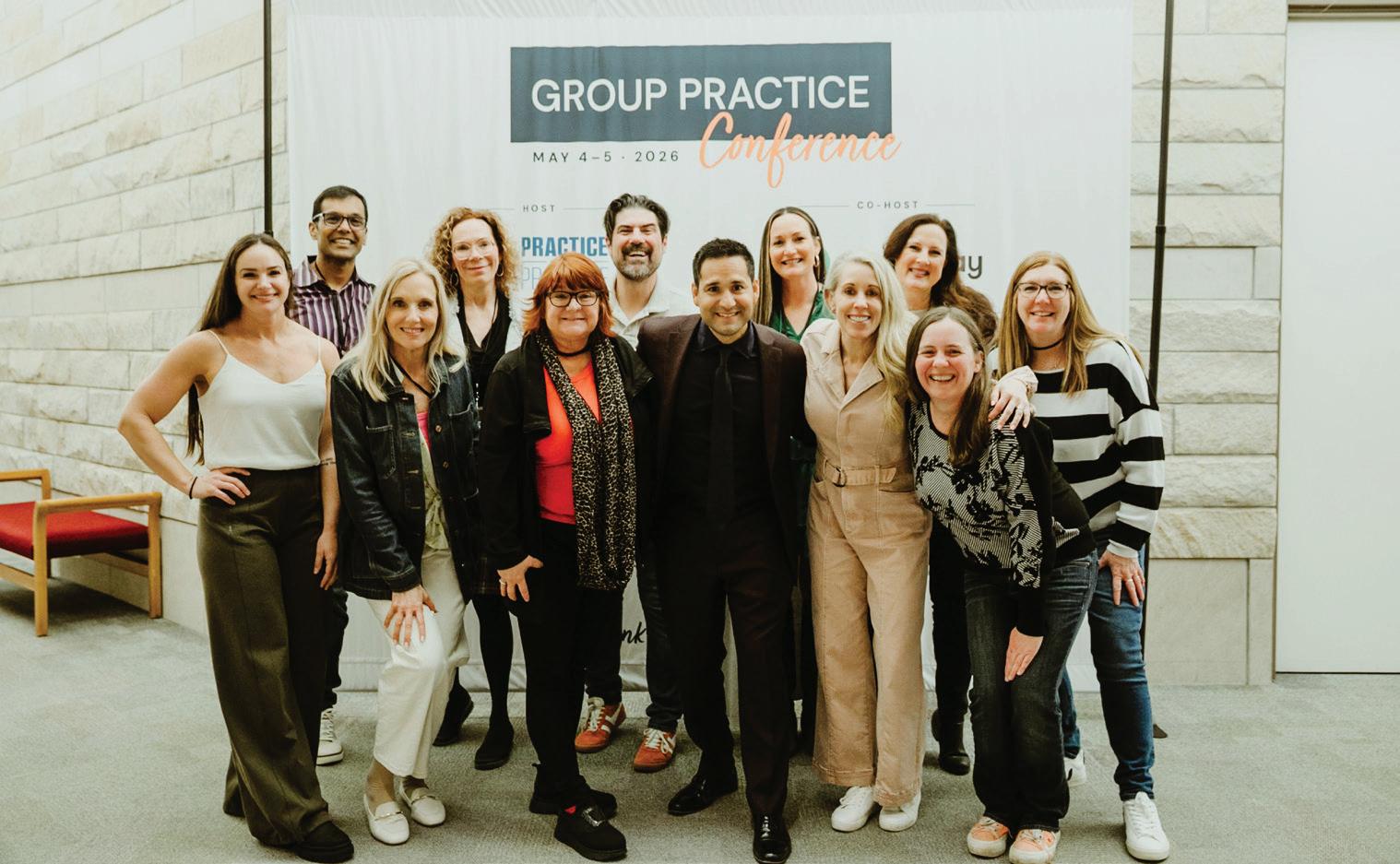
“(We) clinicians are at a disadvantage because we just want to help people, and that makes it really hard to make business decisions and look at it from the mindset of growing revenue and money and all of these things,” she said. “So a big piece of this was learning that just because you’re trying to make money doesn’t mean you’re selfish or greedy.”
While PotP offers plenty of direct instructions and lessons, Sanok is also quick to point out that PotP is just as valuable for its role in connecting therapists with each other. His clients appreciate this deeply.
“He really is a connector, and he hires people who are connectors,” said Elizabeth Carr, a Washington D.C.-based therapist who has worked with PotP for years. “Every time you talk to other people, you share your ideas, they share your ideas and you just layer them. Over the years, these things exponentially help you grow.”
Sanok is proud to do this work, with each successful counseling business able to help that many more people in an increasingly turbulent world.
“We want to help good therapists do more good therapy,” he said.




By Chris Wendel
The word “ genius ” has connotations of someone with supreme natural ability that is unique to a select few people. Are “ geniuses ” born with innately superior skills? Author Nelson Dellis believes that most of us can hone these same skills.
Dellis is a six-time “Memory Champion” who has won the USA Memory Championship multiple times. He has built a career around teaching people how to improve memory performance. His YouTube channel features videos focused on memory techniques, brain training and personal development.
At first glance, Dellis’ book “Everyday Genius” sounds like another self-help book promising to unlock hidden potential. This genre is full of books claiming to reveal shortcuts to success, productivity and intelligence. Fortunately, Dellis takes a different approach. Rather than arguing that some people are naturally gifted while others are not, he suggests that many of the skills we associate with intelligence can be strengthened through training and practice.
Memory is at the core of the book. Dellis explains that the impressive feats performed by memory competitors are not the result of photographic memories or rare talents. Instead, they rely on techniques that can be learned by anyone. Throughout the book he demonstrates methods such as visualization, association and the “memory palace,” where information is attached to familiar locations in the mind to make recall easier.
More than a grab bag of parlor tricks and ways to impress others, Dellis uses memory as a gateway to broader discussions about focus, learning, creativity and problem-solving. His premise is that strengthening memory also improves the way we process information and interact with others.
One of the book’s strengths is that Dellis keeps the material accessible. He avoids overly technical language and relies heavily on personal stories from memory competitions, travel adventures and his own experiences developing these skills. These anecdotes help illustrate his techniques without making the book feel like a textbook. Dellis provides examples that can be applied immediately, whether it is remembering names, retaining information from books or keeping track of everyday tasks. Like physical fitness, his message is that consistency matters more than natural ability.
An underlying theme throughout “Everyday Genius” is the idea that intelligence is more flexible than many people believe. Dellis points to the brain’s ability to adapt and improve through training. While he stops short of claiming that everyone can become a genius, he makes a convincing case that most people underestimate their capacity for

Hacks to Boost Your Memory, Focus, Problem-Solving, and Much More
By Nelson Dellis
cognitive improvement.
This approach is likely what makes the book appeal to a broad audience. The techniques are easy to understand, and Dellis’ overall tone remains encouraging throughout. He is careful to present improvement as an ongoing process rather than a quick fix. There is no promise of overnight transformation; only the suggestion that small habits and techniques can produce meaningful results over time.
One of the more interesting takeaways is how often memory affects daily life in ways we do not recognize. Remembering names, learning new skills, retaining information and staying mentally organized all influence personal and professional success. Dellis argues that memory is not about recalling facts but about building stronger connections with the information we encounter every day.
Placed throughout the book are “Genius Profiles” of people who excelled for their hard works and ingenuity. Later chapters delve into divergent skills in the areas of problem-solving, strategic thinking and social skills.
In the end, Dellis offers a refreshing perspective on intelligence for a broad audience. Rather than treating genius as something people are born with, he frames it as a collection of skills that can be developed over time. Not everyone will become a memory champion, but most readers will come away with useful strategies and a greater appreciation for what the brain can achieve.
Chris Wendel works for Venture North, a mission-based lending organization based in Traverse City that provides funding to businesses throughout Northwest Lower Michigan. Wendel lives and works in Traverse City.
















By Luke Haase
The number of locally approved SBA loans in 2025 remained steady, from 45 in fiscal year 2024 to 43 last year, according to data provided by the SBA’s Michigan District Office.
The dollar value of those loans, however, fell sharply – from $28.2 million to $13.5 million, a drop of 52 percent. The decline was largely due to a few unusually large real estate and manufacturing loans that outsized the 2024 totals.
The average local SBA loan declined from approximately $627,000 in fiscal year 2024 to $314,000 in 2025.
The comparison covers federal fiscal years, which run from October 1 through September 30.
Huntington leads in number of loans
Huntington was Grand Traverse County’s most active SBA lender by number of loans for the second consecutive year.
Huntington approved nine loans totaling $775,300 in 2025. Huntington was also named Michigan’s statewide SBA Lender of the Year and Rural Lender of the Year.
4Front Credit Union ranked second locally by number of loans, approving eight
loans totaling just over $1 million. Independent Bank approved seven loans totaling $2.42 million in 2025. That placed it third by number of loans and second by dollar volume.
Other institutions approving more than one Grand Traverse County SBA loan in 2025 included Michigan Certified Development Corporation, BayFirst National Bank, Great Lakes Commercial Finance, Honor Bank, TBA Credit Union and Team One Credit Union.
The decline in local dollar volume is mostly due to several large local loans in 2024.
Old National Bank approved four Grand Traverse County loans totaling nearly $6.9 million that year. Colony Bank approved a single $5 million loan, while West Shore Bank approved three loans totaling $4.43 million and Team One Credit Union approved two totaling $3.56 million.
Together, those four lenders accounted for approximately $19.9 million – or more than 70 percent – of Grand Traverse County’s fiscal year 2024 SBA financing.
None recorded a similarly large total in the 2025 data. Old National, Colony Bank and West Shore Bank did not ap-
“We are witnessing a profound shift up north, where resilient entrepreneurs are driving year-round economic growth. While the tourism, hospitality and retail sectors have been their main stays, the most exciting trend we’re seeing is the rise of rural micro-entrepreneurship.”
- Laketa Henderson, SBA Michigan District Director
pear on the 2025 list.
The largest loan total by any one lender in 2025 was MCDC’s $3.675 million.
The mix of businesses receiving SBAbacked financing also changed significantly.
Accommodation and food service businesses received seven loans totaling $5.9 million in fiscal year 2025, up from

four loans totaling $1 million in 2024. The sector accounted for 44 percent of all Grand Traverse County SBA dollars in 2025, making it the county’s largest sector by volume.
Manufacturers received eight loans totaling $1.95 million, an increase from three loans the previous year, but total manufacturing dollars declined from $8.54 million in 2024. Retail businesses continued to receive
the highest number of loans, with 10 deals totaling $1.77 million. That compared with 11 loans totaling $6.32 million in fiscal year 2024.
Construction businesses received four loans totaling $1.17 million, up from two loans totaling just $60,000 the previous year. The local decline in total 2025 loan dollars came as SBA activity actually increased significantly across the state. During fiscal year 2025, the SBA supported $1.3 billion in financing through 2,867 Michigan loans, according to the SBA Michigan District Office.
Still, northern Michigan and its small
business-driven economy continue to need to leverage SBA resources, according to SBA Michigan District Director Laketa Henderson.
“Northern Michigan is no longer just a seasonal destination; it is a critical powerhouse for the state’s small business economy,” she said. “We are witnessing a profound shift up north, where resilient entrepreneurs are driving year-round economic growth. While the tourism, hospitality, and retail sectors have been their main stays, the most exciting trend we’re seeing is the rise of rural micro-entrepreneurship.”










































One year and a few months in, Jim has become a familiar and valued part of the Bay View Flooring & Design Center team. A Traverse City native with decades in local distribution, he brings steady perspective, quick wit, and genuine kindness to his work. A lifelong drummer, Jim understands timing— when to listen, when to lead, and how to keep things moving. We sat down with Jim to learn more about his new life at Bay View:
“Working within the local flooring industry lets me be my creative self in helping others piece together their project. Whether it's a new build or a remodel, a laundry room or your great room, I love being creative. I enjoy being out on the job site, working side by side with you, the client.”
“I really enjoy what the luxury vinyl plank and luxury vinyl tile market offers these days. Being 100% waterproof, the range of LVP/LVT plank width, length, style, and color allows clients to explore a large palette of options for their space.”
“Eight months in the making, and alongside Chad Fisher Construction, the Hershey family recently finalized selections for their new Lake Leelanau home—including COREtec Grande Vista Oak LVP, Shaw broadloom carpet, and ceramic tile from Happy Floors and Virginia Tile. Designed with a light, airy feel and a true Northern Michigan waterfront vibe, the home blends beachy style with thoughtful detail. I’m incredibly proud of this project and excited for the final walkthrough.”
NEW + NOTEWORTHY
“I'm am very attracted to the new additions from International Flooring Company. Their Canopy Comfort series offers outstanding LVP visuals and color options. Their new 100% waterproof matching trim and stair tread options are a no-brainer and look outstanding.”
“This year, I’m excited for clients to experience our newly refreshed showroom. As Northern Michigan’s largest showroom, it features the best brands in the business, along with intentional, open workspaces designed to get the creative juices flowing and make the design process even more inspiring for your project.”
“Stay openminded, and get excited about the vision for your project. It can be overwhelming at times, but we are here to expertly guide you through the entire process—inspo to install.”
jim@bayviewflooring.com


As we settle into our new home in downtown Traverse City, we’re taking a moment to reflect on what matters most: neighbors helping neighbors. For generations, Ford Insurance Agency has been built on family, hard work, and caring for our community. Those values continue to guide us today, and we look forward to serving you with heart from our new downtown home.












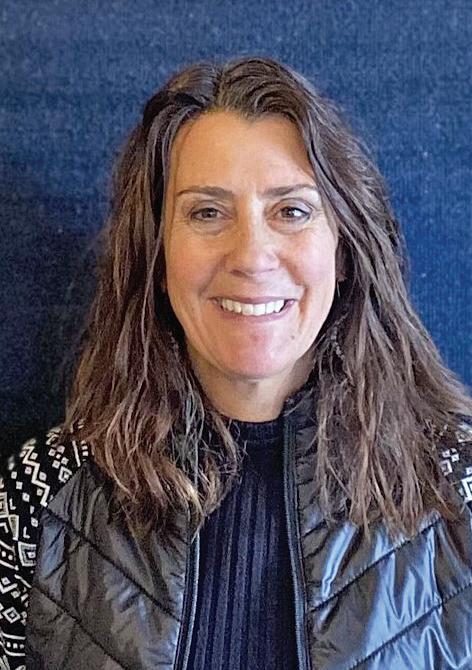
1 - Chris Wendel has joined Venture North Funding and Development in Traverse City as small business lender and coach. Wendel brings 13 years of experience working for Northern Initiatives, a community development financial institution based in Marquette. Prior to that, he served as regional director for the Michigan Small Business Development Center.
TBA Credit Union in Traverse City announces the following personnel news:
2 - Jill McDonnell is a new branch leader, leading operations and supporting members.
3 - Jonathan Wilson is the new IT support manager, overseeing IT support and helping ensure reliable digital services.
4 - Kris Wood is a new branch leader, leading operations and supporting members.
5 - Joe Du Lac has been appointed president of Munson Medical Center in Traverse City. Du Lac brings

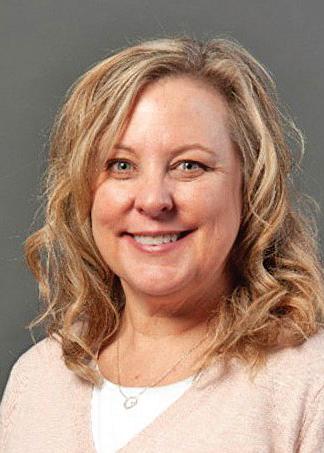

more than two decades of leadership experience across complex healthcare systems. Most recently, he served as system senior vice president and COO at Bronson Healthcare Group and Bronson Battle Creek Hospital.
6 - Jen Anderson is the new activity director of Better Together of Northern Michigan in Traverse City. Anderson has more than a decade of experience in education, nonprofit administration, and volunteer management.
7 - Deb Blashill is the new CFO for the Women’s Resource Center in Traverse City. Blashill replaces Merry MacGirr, who recently retired. She brings extensive background in financial leadership and analytics as the previous CFO and CEO for iNDIGO Health Partners, also in Traverse City.
8 - Carolyn Fairman is the new executive director for Housing North in Traverse City. Fairman is a nonprofit executive and strategic advisor with more than 25 years of leadership experience. Most recently, she served as COO of CIERTO, an international nonprofit focused on workforce sustainability and ethical labor systems.
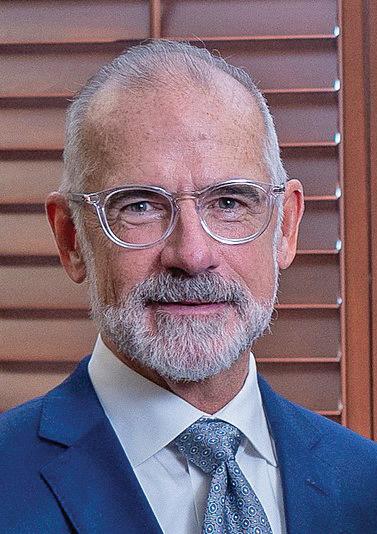
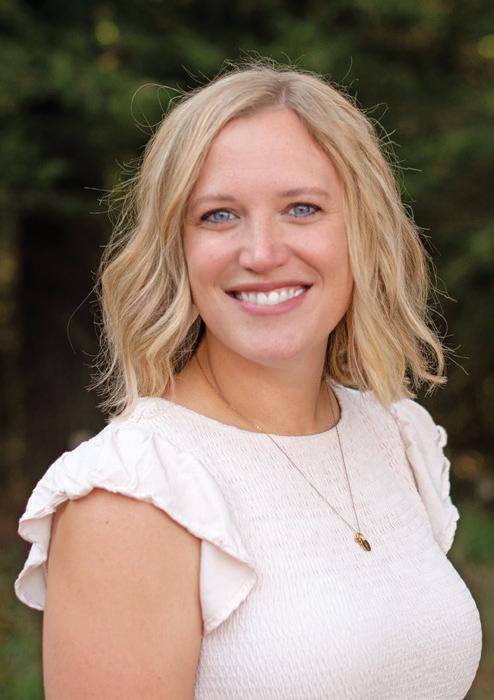

9 - Missy Winter has joined the Grand Traverse Regional Community Foundation as administrative associate.
The National Writers Series in Traverse City announces the following:
10 - Erin Bernhard has joined the organization as education administration assistant.
11 - Samantha Safin has joined the team as operations and events manager.
>> REAL ESTATE
@properties REMI Christie’s International Real Estate in Traverse City announces the following:
12 - Autumn Haag has joined the company as a Realtor, specializing in luxury waterfront, investment properties, and short-term rentals.
13 - Amanda Theodoran has joined the company as a Realtor. Theodoran has five years of experience and has a certified luxury home marketing designation.



















Crystal Mountain in Thompsonville announces the following personnel news:
14 - Jules B. Yates has joined the company as an associate broker, specializing in luxury and waterfront properties throughout northern Michigan.
15 - Jesse Campbell has joined CBS Solar in Copemish as the solar permit processing specialist.
16 - Dana Carnevale, lift operations manager, was recently elected as chair of the Michigan Ski Area Safety Board. The board currently oversees the operation, including licensing and regulation, of 56 ski areas. Carnevale is also a member of PSIA (Professional Ski Instructors of America) and the National Ski Patrol.
17 - Molly Kreykes has been promoted to senior sales manager. Kreykes first joined the resort in 2021 and most
recently served as group sales manager for the association market. In her new role, she will continue to focus on the association market while taking on responsibilities in leadership, mentorship, and team development.
18 - Kathy Morin is now the special events manager. Morin is responsible for planning and growing new and existing events at Crystal Mountain, as well as managing event sponsorship opportunities. Previously, Morin served as the executive director of the Cadillac Area Visitors Bureau.
Please send Newsmakers by the 10th of the month to news@tcbusinessnews.com

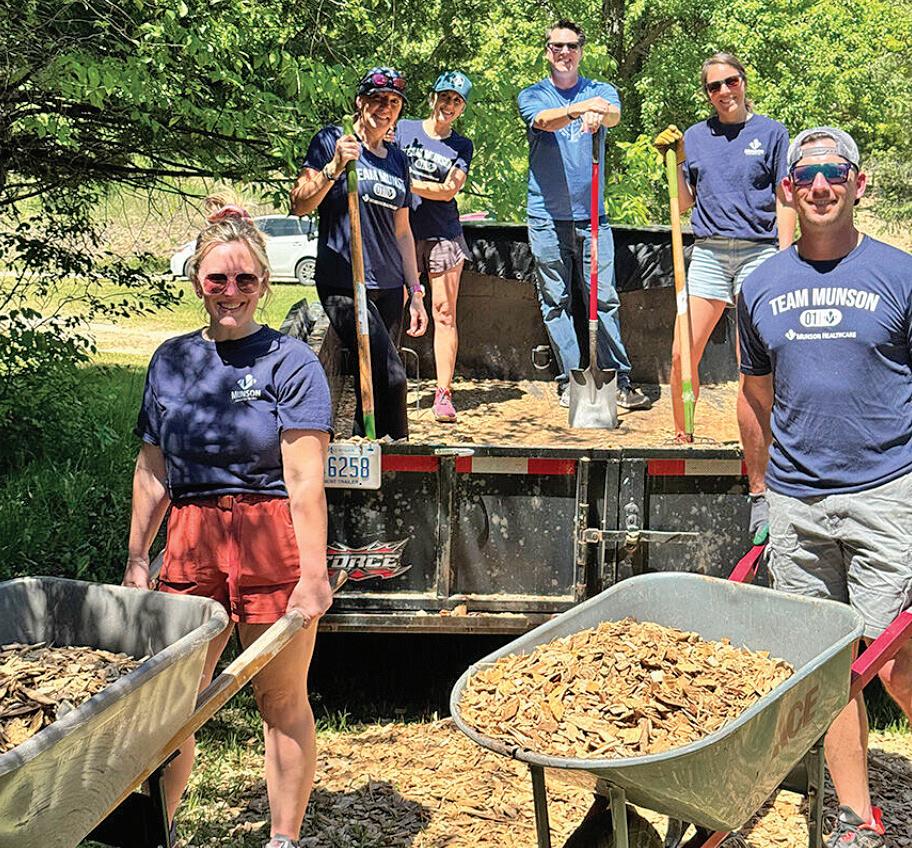
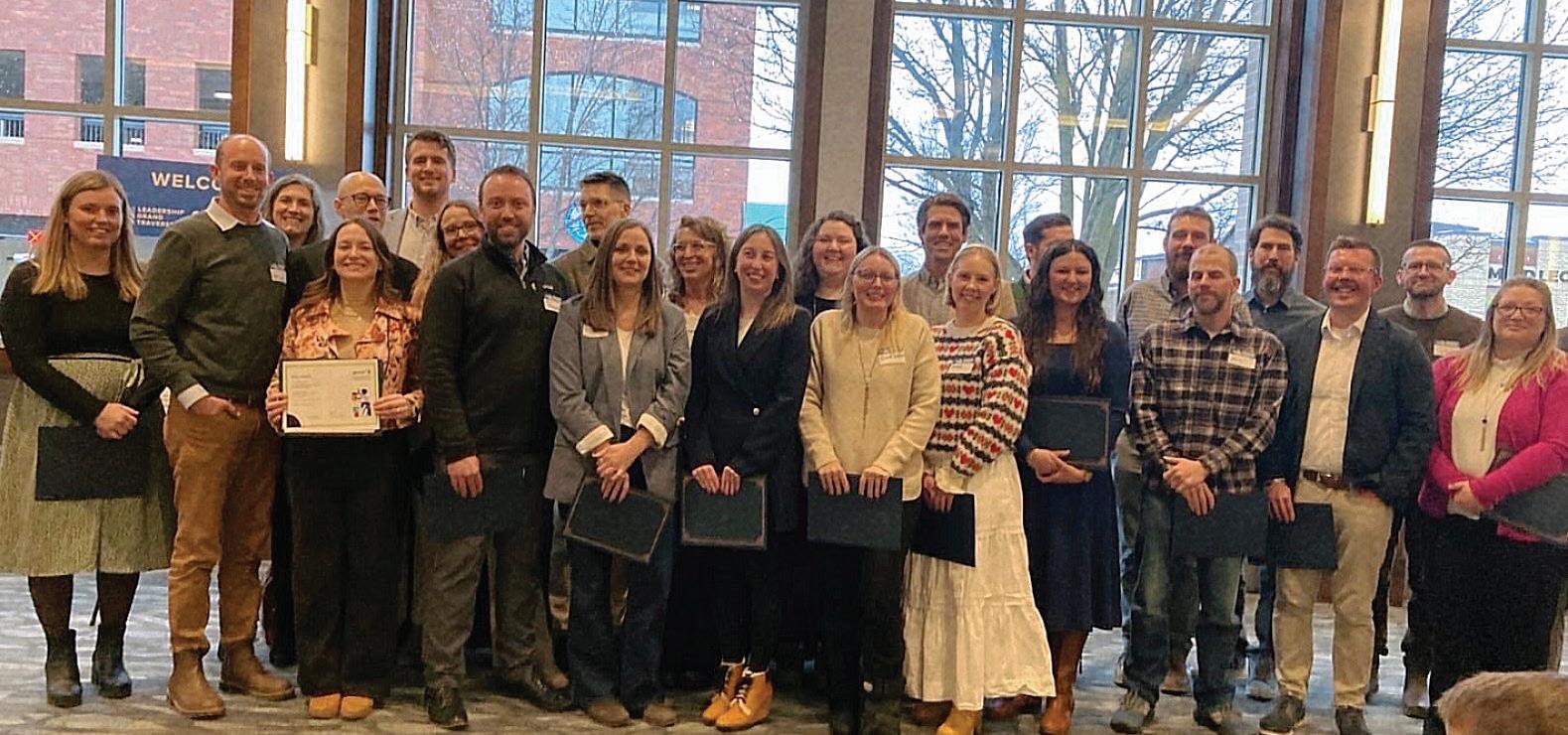
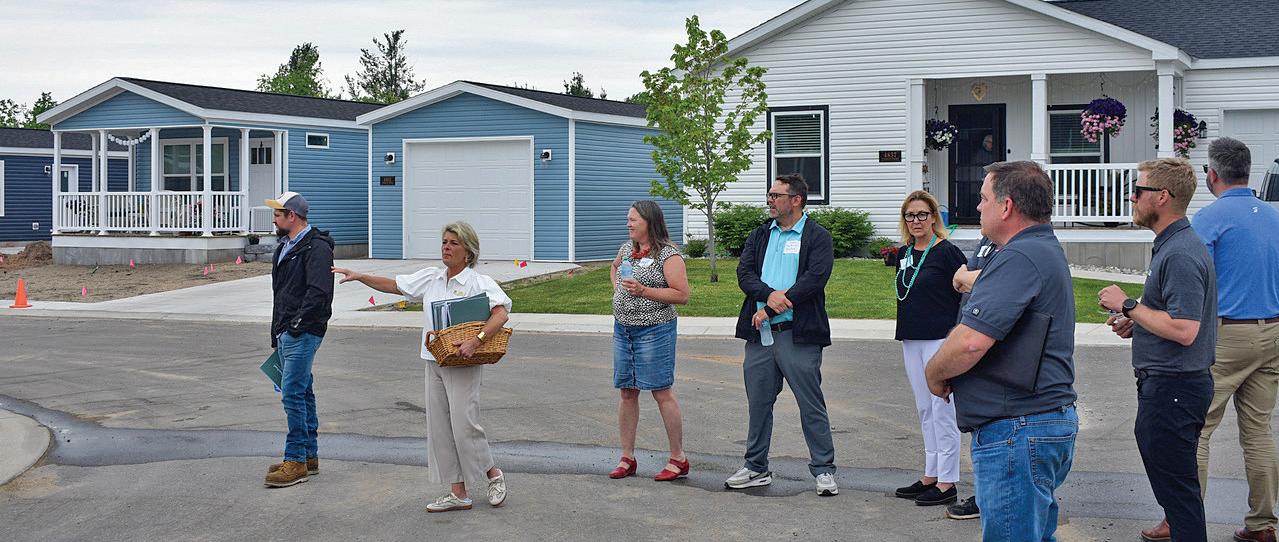

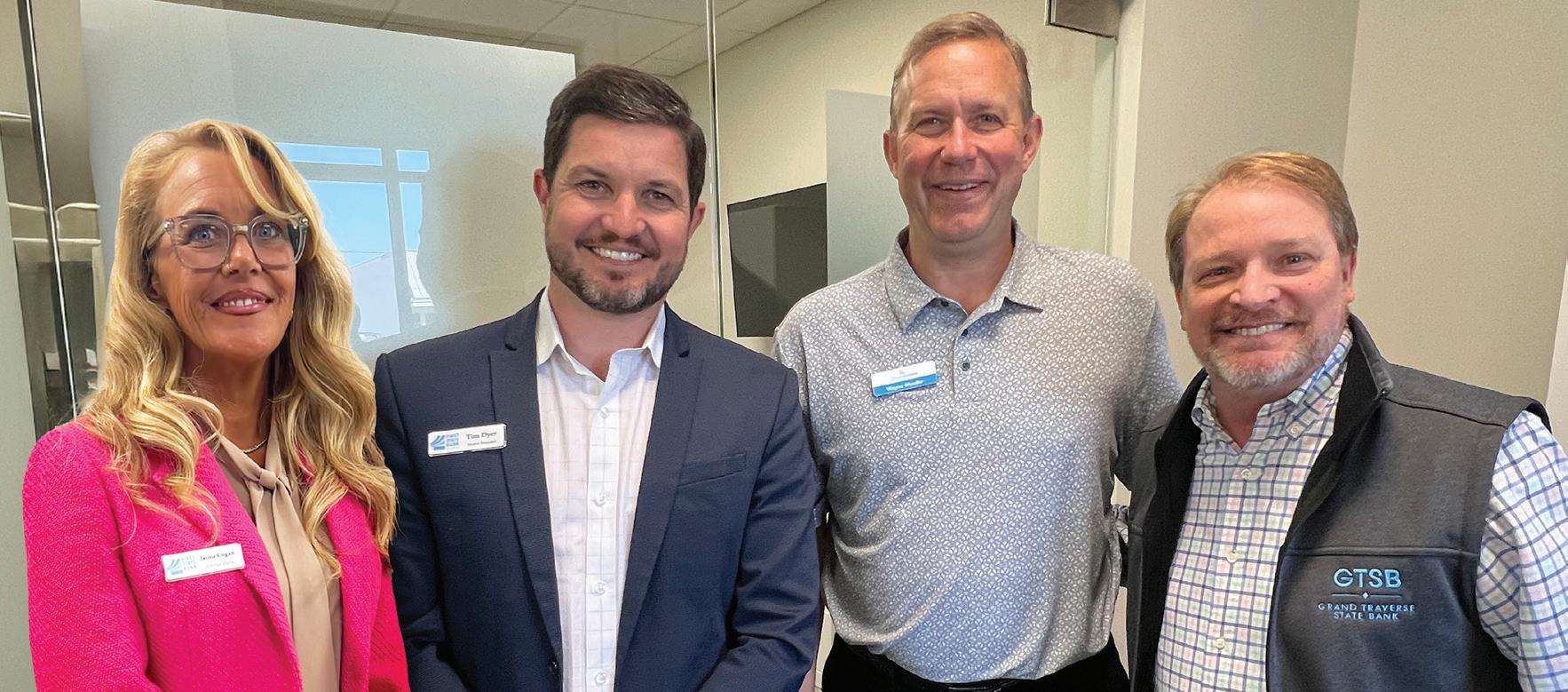
Developers, community leaders, investors and economic development stakeholders gathered in Petoskey for Development Spotlight: Petoskey, a day-long event hosted by the Northern Lakes Economic Alliance that highlighted current and future development opportunities across the community, including a walking tour of development sites.