








TRAVERSE CITY BUSINESS NEWS JULY 2023 1 PRSRT STD U.S. POSTAGE PAID TRAVERSE CITY, MI PERMIT NO. 7 $3 JULY 2023 • VOLUME 27 • NUMBER 12 WILLIAMS &BAY 231.228.7499 wbluxuryrestrooms.com SPECIAL FACILITIES FOR YOUR luxury restroom trailers THE MIRACLE COMPANY YOU’VE NEVER HEARD OF Grand Traverse Industries stays strategic after 50 years of changing lives The TCBN showcases inclusion, sustainability, and responsible investing
A Fee-Only Wealth Management Group
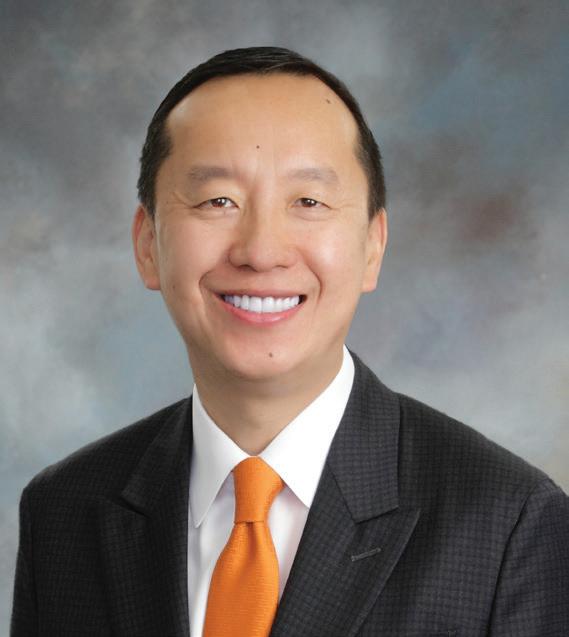
Charles Zhang - Michigan’s #1 Financial Advisor by both Barron’s* and Forbes**
Serving
Our Zhang Financial Team
Traverse City Office
236 1/2 E. Front Street, #26 Traverse City, MI 49684 231-943-6988
Main Office 5931 Oakland Drive
Portage, MI 49024 269-385-5888 or 888-777-0216
www.zhangfinancial.com
Fee-Only Unbiased Investment Advice
• We uphold a Fiduciary Standard and work with clients on a fee-only basis.
• We do not receive commissions, kick-backs, or soft dollars from product sales, eliminating inherent conflicts of interest.
Credibility & Professionalism
• Our team of professionals holds designations and degrees such as CFP®, CFA, CPA, MBA, and PhD.

• Charles received his MBA from the Kellogg School of Management - Northwestern University, his MA in Economics from WMU, and Executive Education from Harvard Business School and Columbia University.
Charles Zhang, CFP®, MBA, MSFS, ChFC
• Ranked #1 on Barron’s list of America’s TOP Independent Advisors and is the highest ranked NAPFA-Registered Fee-Only Advisor on the list.*
• Ranked #4 in the nation on Forbes’ list of TOP Wealth Advisors and is the ONLY Independent Advisor in the top 10.**
Minimum investment: $1,000,000 in Michigan/$2,000,000 outside of Michigan. Assets under custody of LPL Financial, TD Ameritrade, and Charles Schwab.
Founder and President
*As reported in Barron’s March 11, 2023 and September 17, 2021. Based on assets under management, revenue produced for the firm, regulatory record, quality of practices, and other factors. For fee-only status see NAPFA.org.
**As reported in Forbes April 4, 2023. The Forbes rankings, developed by SHOOK Research, are based on an algorithm of qualitative criteria, mostly gained through telephone and in-person due diligence interviews, and quantitative data. Those advisors that are considered have a minimum of seven years experience, and the algorithm weighs factors like revenue trends, assets under management, compliance records, industry experience and those that encompass best practices in their practices and approach to working with clients. See zhangfinancial.com/disclosure for full ranking criteria.
2 JULY 2023 TRAVERSE CITY BUSINESS NEWS
the Entire Traverse City Area
TEAM ELMER’S NOW EMPLOYEE-OWNED




Team Elmer’s in Traverse City is a 100% employee-owned company, after being acquired on June 1. “After careful consideration, our family decided to make a transition for the future,” said President Troy Broad. “A transition that would convey our commitment to our employees and ensure the continuation of the same high level of services to our valued customers.”
Team Elmer’s continues operating under the same leadership in conjunction with the employee stock ownership plan (ESOP) employees – from office staff to field crew. Team Elmer’s is also now an independent sister company to Rieth-Riley Construction Co., Inc. Since 1956, Team Elmer’s has been a family-owned business providing asphalt, excavation, concrete, and crane and rigging services in northern Michigan.
FORMER MOTEL PROPERTY REDEVELOPED
Mitten Property Management in Traverse City recently celebrated the grand opening of its Peninsula One short-term rental property. Located at 121 Munson Avenue - the former home of Shadowland Motel - the property offers 24 units, with seven set aside for workforce housing. Information about the units is available at mittenpropertymanagement.com.
BORIDE CELEBRATES
NO ‘LOST TIME’


SEVEN HILLS OPENS ON OMP



Old Mission Distilling, Mission Proper (cafe and mercantile) and Kindred Mission Beauty Salon are among the new businesses at the revamped Seven Hills center on Old Mission Peninsula. The center, which opened in early June, is located on Seven Hills Road just north of Devil’s Dive Road. Plans have been underway since 2020 to redevelop the complex, which was formerly used for manufacturing, industrial, and commercial/office. Long-time tenant Tinker Studio also remains on-site. The redevelopment project is led by Jay Milliken, Troy Daily, and Jordan Valdmanis, all with long-time ties to the Old Mission Peninsula.
BORIDE Engineered Abrasives in Traverse City recently celebrated five years without a lost time accident (preventing an employee from being able to work). Safety Manager Mark Klug said the local manufacturer has “worked hard over its existence as a local manufacturer to provide a safe working environment for all employees.”
NEW: AI TOOL FOR REAL ESTATE
Real Tour Vision (RTV, Inc), a Traverse City software and international photography service, has launched “DeScribe AI” - a generative AI tool designed to instantly create unique and captivating real estate property descriptions. “When we began exploring generative AI earlier this year, it became evident that our industry was the perfect fit for this technological advancement,” said Jason LaVanture, who founded RTV in 1999. “We discovered that most real estate professionals struggle to generate unique and captivating property descriptions in a timely fashion.”

NEW WELLNESS PRACTICE OPENS





Authentic Health has opened at 415 East Front St. in Traverse City. The clinic, led by Dr. Jill Balla, D.C., promotes healing through functional nutrition via personalized plans, chiropractic care for all ages, and cold laser therapy for pain management, tissue repair and more. Info at authentichealthllc.com.
HOUSING FOR THE NORTH
Housing North in Traverse City has been named by the Michigan State Housing Development Authority to lead the


TRAVERSE CITY BUSINESS NEWS JULY 2023 3
BRIEFLY State Farm Bloomington, IL 2001290 Right coverage. Right price. Right here in town. Here’s the deal. The right insurance should help you feel confident and comfortable. I’m the right good neighbor for that. Call me today. Like a good neighbor, State Farm is there.® Todd Hart Insurance Agency Inc Todd Hart CPCU ChFC CLU, Agent agent@toddhart.net www.toddhart.net Bus: 231-946-8790 Fax: 231-946-0822 SPECIAL FACILITIES FOR YOUR WILLIAMS &BAY 231.228.7499 wbluxuryrestrooms.com luxury restroom trailers • a2 and 4 station • a/c & Heat • quartz countertops • stainless faucets • push pedal flush


4 JULY 2023 TRAVERSE CITY BUSINESS NEWS
HEAVY-DUTY
OPPORTUNITY ® No matter how big or small your business is, MEDC is here to help. Get access to capital and resources, find the best talent, and connect with the right partners. We’re your personal concierge for whatever your business needs to succeed. Seize your opportunity at MICHIGANBUSINESS.ORG T:10.25" T:12.875"
MICHIGAN
SUPPORT FOR MICHIGAN BUSINESSES. PURE
Regional Housing Partnership (RHP) for Region D (Northwest Michigan). Housing North, selected by peers within the region, will partner with local governments, developers, nonprofits, businesses, local health departments, grassroots organizations, philanthropic organizations, and other partners to address specific housing needs and implement strategies from the Statewide Housing Plan. MSHDA will send $175,000 in grant funding to Housing North to coordinate a regional action plan, identify its goals and name its objectives. The regional action plan will be shared with MSHDA this fall.
BATA ANNOUNCES NEW TECH, SERVICES
The Bay Area Transportation Authority (BATA) recently announced new and expanded services, including real-time bus tracking, a new City Loop route (making connections between Meijer on U-31 to Garfield Avenue), expanded on-demand rides, a new smartphone app and increased hours and frequency on existing routes. Via batabustracker.com, riders can track all fixed-route buses by route or by arrival time at stops. The Transit app and Google Maps will also be updated with real-time tracking information. The BATA Link app allows riders to schedule on-demand rides and see alternate options for quicker or cheaper rides, and pay using the app. Link service is also being expanded.
UWNWMI MERGER ANNOUNCED
United Way of Northwest Michigan in Traverse City recently announced a merger with United Way of Wexford-Missaukee Counties. The merger recognizes the potential for increased efficiency, effectiveness and impact in serving the communities of northwest Michigan. Funds raised in Wexford and Missaukee counties will continue to stay within those communities and a local office with local leadership will be maintained in the region.
TCLP EARNS SAFETY EXCELLENCE
Traverse City Light & Power has earned the American Public Power Association’s Safety Award of Excellence for safe operating practices in 2022. The utility earned the first place award in the category for utilities with 60,000 to 109,999 worker hours of annual worker exposure.
ECON CLUB TO HOST CARHARTT PRESIDENT

The Economic Club of Traverse City will host Carhartt, Inc. President and COO Linda Hubbard at its monthly lunch meeting on Fri., July 21, at the Traverse City Golf and Country Club Hubbard is the first non-family member to head up the manufacturer of premium workwear, outdoor apparel and footwear founded in Detroit in 1889. She
joined the company in 2002 and has served as CFO and COO and also serves on the board of directors. Under Hubbard’s leadership, Carhartt launched a women’s apparel line, and expanded into direct-to-consumer channels. Last December, Carhartt announced it would invest $4.65 million to expand its headquarters in Dearborn and create 125 new jobs. Economic Club programs are open to members and guests. Guests can register in advance for the 11:30 a.m. luncheon at tceconclub.com.


HBA ANNOUNCES PARADE OF HOMES WINNERS

The Home Builders Association of the Grand Traverse Area recently announced its 2023 Parade of Homes winners. New builders Royal Stag Construction and Waldecker Homes received plaques for Best Exterior and Best Kitchen while veteran builder Scott Norris Construction cleaned up all other categories including the coveted Judges’ Choice. The Parade of Homes featured six local homes and one virtual home located in Gaylord. Categories included Judges’ Choice, Best Exterior, Best Interior, Best Kitchen, Best Master Suite, and Craftmanship.

NMC OUTSTANDING ALUMNI NAMED
Northwestern Michigan College recently announced the 2023 recipients of the college’s Outstanding Alumni award: Jerry Dobek (Mathematics & General Arts & Sciences 1998, faculty/staff 1989-present) and Tiffany Smith McQueer (General Studies 2012, Practical Nursing 2013). Dobek has played a key role in the operations of NMC’s Rogers Observatory and his teaching at NMC extends into numerous school-based, community and national programs. He has also written more than 50 dark sky ordinances for Michigan cities, is a founding member of the International Dark Sky Association and regularly consults on exterior lighting projects. McQueer and her husband Jason McQueer have owned J&S Hamburg South in Traverse City since 2014. With the onset of COVID-19, Tiffany saw a need to support families beyond the pick-up meals provided to students through schools during the week. That effort has since turned into Project Feed the Kids - a nonprofit organization with three locations providing food – as well as drives for holiday gifts, winter wear and back-to-school support.

TRAVERSE CITY BUSINESS NEWS JULY 2023 5 Buying or selling? I can help! 600 E. Front • $995,000 • MLS #1910925 Shannon Beia 231.883.9930 | shannonbeia.com 522 E. Front St Traverse City, MI 49686 Experience Makes The Difference Real Estate • Business • Civil Litigation Municipal • Probate • Estate Planning Elder Law • Appeals • Franchise • Healthcare 1212 Veterans Drive, Suite 208 Traverse City 810-227-3103 - www.crlaw.biz
BRIEFLY
Dobek McQueer


6 JULY 2023 TRAVERSE CITY BUSINESS NEWS 866-929-9044 ComfortKeepersTC.com Elevating the Human Spirit™ Let our caregivers help when it matters most with a unique care plan adapted to your needs. We help families build summer memories. Lean on us. THANKS TO A DONATED TEA KETTLE MY LIFE IS FULL STEAM AHEAD. Your donations bring food to neighbors and help people find home in Northern Michigan. Where your things start new lives. learn more THE VERONA SLIM LEG CHINO Timeless, Flattering & Carefully Tailored.
COMMENTARY BY CHRIS MACINNES
THE GRAND BARGAIN: A compromise that’s returned $1.3 billion to Michigan’s people
As a recently appointed member to the Michigan Natural Resources Trust Fund (MNRTF) Board, I wanted to better understand the story behind it.
How did it come to be? How does it work? And why is it important?
It began 47 years ago with passage of the Kammer Recreational Land Trust Fund Act of 1976 (P.A. 204), the result of a grand bargain – a compromise crafted by people dedicated to serving the common good, and, in this case, resolving a raging controversy.
It was a novel idea that funneled royalties from the sale and lease of non-renewable underground minerals (gas and oil, which are owned by the people of Michigan) into a fund restricted to buying another non-renewable resource – land.
With this money, local communities and the state could purchase land and develop outdoor recreational amenities for public use in perpetuity.
This bi-partisan proposal was signed into law by Gov. William Milliken. It also established a five-person board to recommend projects to the state legislature for final approval.
A leader in crafting this legislation was Bill Rustem, the then-environment advisor to Gov. Milliken.
Of its creation, Rustem said, “There was a huge controversy over the idea of permitting oil and gas development in the Pigeon River area – resources owned by the people of Michigan.”
Rustem, in collaboration with Department of Natural Resources (DNR) staff, the Michigan United Conservation Clubs and members of the Legislature, sought a solution that would enable gas and oil
EDITORIAL & BUSINESS OFFICE
P.O. Box 4020
Traverse City, MI 49685 231-947-8787
ON THE WEB tcbusinessnews.com
PUBLISHER
Luke W. Haase lhaase@tcbusinessnews.com
CONTRIBUTING EDITOR
Gayle Neu gneu@tcbusinessnews.com
HEAD WRITER
Craig Manning
COPY EDITOR
Becky Kalajian
development while doing something for future generations.
Don Inman, the DNR deputy director at the time, asked, “Could this controversy be reduced if we give back public lands to the public as a result of this development?”
Bob Garner (a legislative aide to Senator Kammer) who served on the drafting team and eventually was the host of the TV programs “Michigan Out-of-Doors” & “Destination Michigan,” described creation of the Trust Fund as “a great idea that comes about maybe every generation or two…enabling development to occur and, at the same time, doing something for future generations.”
Almost 50 years later, the results of the Grand Bargain – borne out of controversy and built on collaboration – has survived the test of time.
Since its inception, all 83 counties and most cities in Michigan have benefited from more than $1.3 billion dollars invested in 2,878 Trust Fund-assisted projects, acquiring local and state recreation land and developing places for outdoor recreation.
Annually, more than 100 grant applications are received and scored by the DNR. The top scoring 30-50 applications, depending on fund availability, are sent to the legislature for final approval.
These grants, often leveraged with public and private funds, can be a catalyst for communities to change their destinies. A stunning example is the transformation of Detroit’s riverfront district from a place of blight to one now recognized as the number one river walk in the U.S.!
Another example close to my home
CREATIVE DIRECTOR
Kyra Poehlman
CONTRIBUTING WRITERS
Ross Boissoneau
Kierstin Gunsberg
Rick Haglund
Megan Kelto
Clark Miller
WEB PRODUCTION
Byte Productions
MAILING/FULFILLMENT
Village Press
DISTRIBUTION
Gerald Morris
SERVING: Grand Traverse, Kalkaska, Leelanau and Benzie counties
(and heart) is Railroad Point Natural Area in Benzie County, which has been preserved as a 220-acre park on the shores of Crystal Lake and adjacent to the Betsie Valley Trail.
Michigan residents have overwhelmingly supported the MNRTF. Since 1984 voters have passed multiple constitutional amendments to ensure that mineral lease and royalty payments are directed only to the Fund and prohibited from diversion.
They also voted that funds could be used for payments-in-lieu-of-taxes to local governments; increased the maximum that could be accumulated in the Fund to $500 million, and established the State Park Endowment Fund (SPEF) to help support Michigan’s State Parks.
In 2011, when the Trust Fund balance reached $500 million, grant-making and program operations could be funded entirely by the interest and earnings of the invested funds, with new revenues from mineral royalties directed to the SPEF.
How has our region benefited from this Grand Bargain?
“Big time … and it didn’t cost taxpayers a nickel,” said Keith J. Charters, the Trust Fund board’s longest-serving member and after whom Traverse City State Park is named.
“Our five-county region has received more than $60 million in grants including 30 in Benzie, 23 in Leelanau, 68 in Grand Traverse, 16 in Kalkaska and 22 in Manistee,” he said.
Glen Chown, executive director of the Grand Traverse Regional Land Conservancy, reports that since 1991, the Trust Fund has supported 58 critical Conservancy acquisition projects across Grand
AD SALES
Caroline Bloemer cbloemer@tcbusinessnews.com
Lisa Gillespie lisa@northernexpress.com
Abby Walton Porter aporter@northernexpress.com
Kaitlyn Nance knance@northernexpress.com
Todd Norris tnorris@tcbusinessnews.com
Michele Young myoung@tcbusinessnews.com
Traverse, Benzie, Manistee, Antrim and Kalkaska counties, protecting 11,000 acres in perpetuity.
For example, a recent Trust Fund grant supported a partnership between the Conservancy, Traverse City and Garfield Township to acquire the 76-acre Hickory Forest property. This enables the protection of forest lands in an urban setting and expands public access to nearby trails and natural areas.
Another lens for considering the value of accessible natural areas and outdoor recreation is its impact on our physical and mental health and quality of life.
A recent Youth Wellness Study of 530 students from 20 northern Michigan high schools, supported by a grant from the Michigan Health Endowment Fund to the Grand Traverse Regional Community Foundation, provides strong evidence.
It found that that 40% of the students are experiencing moderate or severe anxiety and 24% are experiencing moderate or severe depression. When the students were asked: “What make you feel less stressed?” their most frequent response, at 55%, was “being outside in nature;” while 46% said, “being with my friends.”
The Grand Bargain, crafted 47 years ago to help conserve and preserve our natural world and develop outdoor recreation assets, is a precious gift to Michigan people that contributes to our wellness and quality of life, now and in perpetuity.
Chris MacInnes is president of Crystal Mountain. In 1985, she and her husband Jim moved from California to join the business and together have led its evolution. She is also active in state, local and industry organizations.

The Traverse City Business News
Published monthly by Eyes Only Media, LLC P.O. Box 4020 Traverse City, MI 49685 231-947-8787
Periodical postage qualification pending at Traverse City, MI.
POSTMASTER: Send address changes to The Traverse
TRAVERSE CITY BUSINESS NEWS JULY 2023 7
theTCBN
City Business News, PO Box 1810, Traverse City, MI 49685-1810. The Traverse City Business News is not responsible for unsolicited contributions. Content ©2022 Eyes Only Media, LLC. All rights reserved. EYES ONLY MEDIA, LLC
BONNIE ALFONSO President and CEO
TH e 60 s
Eleven leaders on what they’ve learned in their 60-plus years
By Ross Boissoneau and Craig Manning
For several area business leaders, the 60s are not about the summer of love and the age of Aquarius, but their age – though they may indeed remember “In A Gadda Da Vida” and the world champion Detroit Tigers baseball team (31-6 may ring a bell). The TCBN asked several of them to look back at where they are and how they got there, and look ahead and share their accumulated wisdom.
Check It Out: I have been involved in the energy business since the early 1980s and am a proud partner with the Heritage Sustainable Energy Company in developing renewable wind and solar energy throughout the state. I am also actively engaged in the commercial and residential real estate business, both in ownership and management. My companies control over 300 moderate and lower-income residential units in Northern Michigan. I hold a bachelor’s in business administration from Ferris State University and an associate of applied science in petroleum engineering technology from Northwestern Michigan College (NMC), which honored me with an outstanding alumnus award in 2019.
TERRY BEIA Partner Heritage Sustainable Energy Co. and developer

Check It Out: After graduating from Michigan State (Go Green!) I moved to Chicago, working in various social services positions. I also taught aerobics and eventually became a manager and district manager for a women’s health club chain and thought, ‘There may be something to this business thing.’ Tragically, in 1988 my sister Mary committed suicide. I realized everyone I truly cared about and loved was in Traverse City. My brother Mike had recently returned from visiting an uncle in Florida who was in the logo gear business and pitched the idea of us starting one. With the support and encouragement of my family, I moved back home and have been president and CEO of Alfie Logo Gear since 1990.
Righteous: Founding board member of Impact 100 Traverse City; former board member and past chair of Traverse City Area Chamber of Commerce; former board member and past chair of the Small Business Association of Michigan; emeritus board member of the Northwestern Michigan College Foundation. Currently serving on the Traverse Connect Government Relations committee, the SBAM Legislative Action Committee, the SBAM Political Action Committee and the SBAM Board Development Committee.
The Dough: Alfie Logo Gear is celebrating our 33rd year in business. The fact we survived my growing pains as a small business owner and leader and continue to learn and thrive is quite an accomplishment. I am proud that we have been able to help create a sense of belonging and community through the relationships we build and the gear we produce for our clients. I am grateful that our success has allowed us to employ 24 world-class team members that can build a career in our community.
Groovy: As a freshly-minted 60-year-old, I find that I invest more time listening, being curious and asking better questions. Realizing that there are more days behind me than in my future quickly clarifies how I choose to spend my time, resources and energy.
Far Out: Be curious. Don’t fill in the blanks with what you assume or think you know. Ask better questions. Give people the benefit of the doubt, most are doing the best they can with who they are and what they know. Stay physically and mentally active and engaged in your community. Build multi-generational friendships. When faced with a choice, go with the one that brings you joy or peace.
Righteous: I served eight years as a board member for the Traverse City Downtown Development Authority, and in 2018 received the Lyle DeYoung award from the Downtown Traverse City Association for my contributions to downtown TC. I was also a founding board member of Traverse City State Bank (TCSB) and continue to serve on the Independent Bank board after their acquisition of TCSB. Additionally, I have actively supported Munson Medical Center, the NMC Foundation, Old Town Playhouse, the Father Fred Foundation, and the Traverse City Film Festival.
The Dough: I think my biggest professional accomplishment has been collaborating over the years with the many dedicated and committed individuals who help make downtown Traverse City the crown jewel of the north. Traverse City is a better place to live, work, and play because of those people and the work they do.
Groovy: Most of my peers are winding down their careers and planning their retirements. I’m happy for them, but that’s not for me. Not yet! There’s no mandatory retirement age for what I do. My companies are responsible for approximately 400 commercial and residential tenants, and I am proud of that impact. I’m blessed with a very capable and hardworking team that makes my job easier.

Our focus right now is on the Village of Kingsley. We control about half of the commercial properties in the downtown area, and we are working closely with the political powers-that-be in enhancing the Kingsley experience one building at a time. In the last 18 months, we have attracted a brewpub, reopened the Kingsley Inn, and leased three of our shuttered properties to a well-known diner. The growth potential in Kingsley is significant, which makes it a very exciting time to be a Kingsley Stag!
Far Out: I was 26 years old when I started my first oil and gas venture. I had two pretty simple goals. One, I wanted to make a lot of money. Two, I wanted to have a lot of fun. And just in case I didn’t make a lot of money, I made sure I had a lot of fun! So, my advice to young professionals – or anyone at any age, for that matter – is that you should be having fun. If you’re not enjoying what you’re doing, MAKE A CHANGE! Get uncomfortable. Make mistakes and learn from them. Setbacks aren’t always a bad thing. Really, what are you waiting for? Be happy!
8 JULY 2023 TRAVERSE CITY BUSINESS NEWS
THE 60S
Alfie Logo Gear
Check It Out: I am the founding executive director of the Grand Traverse Regional Land Conservancy (GTRLC). In this position, I oversee the conservancy’s efforts to protect scenic, natural, and farm lands in Antrim, Benzie, Grand Traverse, Kalkaska, and Manistee Counties. Since the conservancy’s founding in 1991 by Rotary Charities, nearly 47,000 acres of land and 154 miles of shoreline along the region’s scenic rivers, lakes, and streams have been forever protected.

Righteous: I am proud that GTRLC has created a very robust community conservation program to meet and serve the needs of a region that places a high priority on protecting our natural resources, providing public access, and enhancing our outstanding recreational assets. Over our history, we have assisted our governmental partners with securing 58 land acquisition grants totaling $64 million dollars from the Michigan Natural Resources Trust Fund, which permanently protects more than 11,000 acres in parks and publicly owned natural areas. Today and for generations to come, these places provide outstanding nearby recreation areas, which is something young professionals and old-timers like me crave. Just think about the importance of protected, accessible outdoor spaces to our commu-
nity’s mental and physical health. These coveted parks and natural areas are also vital to the region’s talent attraction efforts and contribute significantly to a thriving economy.

The Dough: In hindsight, completing the Coastal Campaign some 20 years ago was probably the biggest. At the time, we were a very small and scrappy organization, and having to raise some $35 million in a short amount of time to save more than 6,000 acres on our dune coast in Benzie and Manistee counties was truly a David and Goliath situation. Against all odds, we dared to throw everything we had into a monumental project that challenged the entire organization to leave no stone unturned. Thankfully, the community put us up on their shoulders and responded with unbelievable and unprecedented generosity. This campaign taught us what we could do if we dared to dream big, and it laid the groundwork for the hugely successful and recently completed Campaign for Generations, which has had an even bigger impact on the entire region, including the creation of the conservancy’s permanent home here at the Conservation Center.
Groovy: Truthfully, I come to work each and every day with a spring in my step. I have never been more satisfied with my professional career or inspired

to do more. I am incredibly fortunate to be part of advancing a mission that will outlast me and be a legacy for future generations, and there is no better place on the planet to do this than in northwest lower Michigan in the heart of the Great Lakes basin.
Far Out: Strive to work on something you’re passionate about, and if you can help make the world a better place –either in your vocation or avocation –that’s even better. Be grateful: I urge my young staff all the time to be grateful for the gifts we at the conservancy receive
every single day, and to never take life for granted even for one moment. This is an amazingly generous community, and I am so thankful for the thousands of supporters who truly put their money where their hearts are and enable us to do great things in leaving a lasting legacy for future generations. Finally, listen intently with the goal of learning from everyone you meet. I was not the greatest listener in the early stages of my career. Even today, it’s something I continue to work on. Talk less, listen more, and you will be amazed at the outcomes.
TRAVERSE CITY BUSINESS NEWS JULY 2023 9 Get It All Done or Get Nothing Done, then Cut & Run. 155 GARLAND ST, DOWNTOWN, TC • CUTANDRUN.CO Coffee. Cocktails. Coast. THE 60S:
GLEN CHOWN Executive Director Grand Traverse Regional Land Conservancy
Check It Out: I have been the developer and managing member of Copper Ridge since its inception in 2000. I am also the co-owner and co-developer of Lakemore Resort, which includes seven luxury rental homes on 850 feet of sandy water frontage on Arbutus Lake. Earlier in my career, I worked in banking, serving as CEO of Traverse City State Bank from September 2009 to April 2018, when TCSB was purchased by Independent Bank.

Righteous: I serve as a board member for numerous organizations, including the Oleson Foundation, the American Liver Foundation, The Dream Team Northern MI, and Grand Traverse Area Catholic Schools. I have recently retired from Munson Healthcare, where I served as a board member and past audit committee chairman for more than 10 years. I’m also a finance council member for St. Patrick’s Church, a priest’s retirement trust board member for the Diocese of Gaylord, and a fundraising task force member helping raise money for phase two of the YMCA’s campus on Silver Lake Road. In 2015, I received the regional ATHENA leadership award, which celebrates ‘strong, successful leaders that have forged a path for women in leadership.’
The Dough : My biggest professional accomplishment was taking TCSB from the second worst-performing bank in Michigan in 2010 to the 14th best performing bank in Michigan as of December 2017. Our team saved almost 100 jobs in our community by resurrecting this bank from near-failure. My most satisfying personal accomplishment was a team effort which successfully fund-raised and built Immaculate Conception Elementary school. It was a $16 million

project that took approximately seven years from inception to completion. My most meaningful project was developing and building Lakemore Resort on Arbutus Lake, where families share new experiences, strengthen family bonds, and make lifetime memories. Finally, my largest project was developing and building out Copper Ridge on Silver Lake Road – the largest mixed-use development in Grand Traverse County at the time of its inception.
Groovy: Age doesn’t seem to impact a leader’s willingness to step up, ask tough questions, encourage creativity, delegate, and reward performance. In contrast, however, age does seem to affect a leader’s openness to change. As leaders grow older, they become less willing to make changes and are less interested in innovation. Work hard not to be that person. Accept change and encourage innovation. Develop your skills to bring out the best in others. And if your creative juices are no longer flowing, team up with those who think out of the box.
Far Out: Leaders who are generous with their time, energy, and resources, with sharing credit and giving meaningful feedback, are the ones who earn respect and admiration from their teams. Every day ask yourself, ‘How can I make my teams’ lives better or easier?’ Then do it! ‘What can I do to help them do their jobs successfully?’ Then do it! How can I be an advocate for their ideas or support their initiatives?’ Figure it out! ‘How can I showcase what they do right and have their back when things go wrong?’ Mean it and do it! Believe it or not, it’s not all about you. Make it about your team and you will all shine.
Also remember that while business and community
accomplishments are very important, the most important priority is your family. I am very proud of my two sons, who recently graduated with honors from Marquette University. They are fine young men and both have excellent jobs in Chicago. Raising our sons without their dad, who unexpectedly passed away six years ago, was my hardest and greatest achievement.
10 JULY 2023 TRAVERSE CITY BUSINESS NEWS
BCBSM_MiBusiness_Print_TC_Bus_News_7-23-23_Ins_F1.indd 1 THE 60S:
Our business is caring for yours.
THE 60S:
CONNIE DENEWETH Managing Member Copper Ridge
BILL GOLDEN Owner Golden Shoes
Check It Out: (Editor’s note: When she took the helm as CEO of the DDA in 2018, Jean brought extensive experience in public administration, planning, community building and working with public/private partnerships.) I value teamwork, collaboration, and connecting with people. I am committed to implementing the vision for downtown and responding to today’s fast-moving and often uncertain times. I greatly enjoy solving problems on behalf of those in our community, particularly those in our downtown district.
Righteous: I am a member of the Traverse City Noon Rotary Club and the Economic Club of Traverse City. My role as CEO also means I am deeply involved in numerous economic and civic initiatives throughout the region.

The Dough: Working with our amazing downtown business community to continually address the (often daily) impacts of the pandemic and positioning downtown to emerge from the pandemic even more successful. Together, we are securing the property for the new Rotary Square, a project nearly 30-years in the making. We are also identifying a vision and creating a plan for the entire 1.6-mile stretch of the Lower Boardman/Ottaway River that traverses through downtown. Last, we are in the process of completing the Moving Downtown Forward plan, a new strategic plan for the DDA that positions downtown Traverse City for the next 30 years.
Groovy: I never really thought of my age as it relates to leadership until I started to hear more and more questions about when I was planning to retire! For the record, I have no plans to do so – I didn’t start my current position of CEO until I was 55, and I still have much to give and accomplish. My age allows me to utilize my experience and lessons learned to creatively lead a dynamic organization that faces multiple challenges on any given day. My age also provides me great perspective and the ability to think of new ways of doing things. My curiosity never stops. I love life and I am still learning and growing.
Far Out: Invest in yourself. Invest in developing your skills and improving yourself. Be resourceful. Be open to new opportunities – you can be happy and content while looking toward new horizons. Be resilient. There will be ups and downs in your career and some things are just beyond your control. But never give up and continue to move forward. Understand that you can handle anything life throws at you. Whatever circumstance comes your way, always be ready to face it head on.
TRAVERSE CITY BUSINESS NEWS JULY 2023 11 Blue Cross
of Michigan and Blue Care Network are nonprofit corporations and independent licensees of the Blue Cross and Blue Shield Association. For
we’re
to help. bcbsm.com/employers
Blue Shield
the coverage employees want and businesses can trust,
ready
6/16/23 9:01 AM THE 60S:
To attract better talent, you need better benefits. Blue Cross is ready to help your business stand out with affordable whole health coverage and convenient care for everything from behavioral health and virtual care to maternity and menopause. Plus, with one of the largest networks of doctors and hospitals in Michigan, you’ve got the coverage you need wherever you go.
JEAN DERENZY CEO
Traverse City Downtown Development Authority
Check It Out: I started in the shoe business when I was 14 years old, and other than a short stint bagging groceries at Kroger when I was 16, I’ve been in the shoe business ever since. Golden Shoes started out as Frederick Shoes in 1883, but my father and grandfather bought the business in 1954. My brother Craig and I are the third generation of the Golden family to lead the business, and he just retired on June 1. I started here working on the floor and selling shoes, and then as the years went on, I took on other responsibilities – buying shoes, going to shows, things like that. I’ve been managing the day-to-day operations of the store for the last 30 years.
Righteous: I served on the board of directors for the Traverse City Area Chamber of Commerce before it became Traverse Connect and was on the board for the DDA for pretty close to 10 years, including three years as chair. I am also currently the chair of the Michigan Retailers Association. During the pandemic, I served as a member of the DDA’s ‘Recovery Team,’ which downtown business owners navigate eligibility for PPP loans and other things they could do to stay in business.

The Dough: I think my biggest accomplishment is seeing the team that I have working for me and how they have grown. I have a gal who came in five years ago; she didn’t have a job and she said, ‘I just need a job for right now.’ Now, she’s a woman’s buyer and does a fantastic job. Another employee, Kyle, has been here probably eight years and does all my technical stuff. And then we have a few staffers who have been here 15 years or longer. Seeing that longevity of our employees feels like a huge accomplishment to
me, because it’s hard enough to get new employees and it’s even harder to keep the employees you have for a long time. Keeping employees is especially important in retail because customers build relationships with those people. They walk in and recognize our employees and know their names.
Groovy: I think it’s very important in your 60s to help the people who are starting out right now. Help them along, and try to teach them what you’ve been through and what you’ve learned. I just had a conversation with a friend of mine who serves on a board for the National Shoe Retailers Association and is 75 years old. He said, ‘I don’t need to serve on this board anymore,’ then added, ‘I want to keep serving, because I want to help people in the business that are younger.’ And that’s exactly the reason I stay on the Michigan Retailers Association board. I still like to help people starting out because it’s hard out there. Unless you ever had to make payroll or do payroll taxes, you don’t totally know what it’s like to be in business. So, if I can help anybody with questions that they have about running a business, I’m always here to talk to them.
Far Out: I’ve been thinking about retirement a lot lately because my brother just retired on June 1 and my niece’s husband is buying him out. He’s 35 years old and I’m going to teach him the business. I’m not getting out yet because it’s going to take a few years before he’s ready to take over the business. He’s going to start on the floor working with customers, just like I did, and he’s going to learn what customers want and build those relationships with them... I’m really excited to teach him the ropes.


12 JULY 2023 TRAVERSE CITY BUSINESS NEWS Your Project. Our Purpose. 231.946.9191 1280 Business Park Drive, Traverse City, MI 49686 WWW.GOSLINGCZUBAK.COM gosling-czubak-engineering-sciences-inc goslingczubak Engineering Environmental Surveying Construction Materials Testing Gosling Czubak_Momentum_10.25x6.375_April 2023_v1.indd 1 4/25/23 10:52 AM THE 60S:
THE 60S:
BILL GOLDEN Owner Golden Shoes
BILL GOLDEN Owner Golden Shoes
Comfort Keepers of Northwest Michigan


Check It Out: Comfort Keepers provides in-home care services to help seniors and other adults maintain an independent lifestyle. Our employees, dubbed Comfort Keepers, tailor their services to fit the needs of each client and family from as few as two hours a week to full-time, 24/7 senior care. Comfort Keepers of Northwest Michigan is a state and national award-winner that has grown from a start-up company to an industry leader during 16 years of operation.
Righteous: Knopp was elected chair in 2018 of the newly-formed Michigan chapter of Home Care Association of America, whose mission is to educate and advocate for high standards in private duty home care. He is currently chair of the 25-member Michigan Cooperative of Comfort Keepers offices; chair of the Greater Michigan Chapter board of directors of Alzheimer’s Association; chair of the Executive Committee of the board of directors at Traverse Connect; and past director on the board of the Grand Traverse Pavilions Foundation.


The Dough: The culture we’ve built in the business of caring, kindness and responsibility – we all take a lot of pride in that. Comfort Keepers of Northwest Michigan currently employs 200-plus employees throughout the region, from Manistee to Petoskey. Leslie and I are both passionate about kids, and work with Big Brothers Big Sisters.
Groovy: Being able to make a difference. Tapping into my experience, which brings some knowledge over time. Advocating for seniors gets me motivated.
Far Out: Get involved as early as you can and do the things that you’re passionate about. People that are leaders put themselves out there – they don’t wait for someone to tap them on the shoulder.
Check It Out: I’ve had the pleasure of serving as the president and CEO of the Grand Traverse Regional Community Foundation since 2018. Before that I spent 17 years as senior vice president of governmental, regulatory, and public affairs for Consumers Energy, as well as president of the Consumers Energy Foundation. I have a bachelor’s from MSU, a law degree from the Western Michigan University Thomas M. Cooley Law School, and an MBA from the Ross School of Business at the University of Michigan.


Righteous: I’m proud to serve in volunteer roles with Traverse Connect, the Council of Michigan Foundations, and Munson Healthcare. In these roles, I have the privilege of working with a wide range of state and local leaders – and our very capable foundation team – to advance a host of issues important to our region, including youth mental health, attainable housing, early childhood education and quality childcare, talent recruitment and retention, and college and skilled worker education. We also work to build the capacity of nonprofits and local governments to access federal and state resources, and help to ensure that public policies at the federal, state, and local levels are equitable and reflect the unique interests and priorities of northwest lower Michigan.
The Dough: My role at the Community Foundation for the last five years is really career number two. Prior to joining the foundation, I spent 27 years as an executive at Consumers Energy. So, it’s difficult to point to a specific accomplishment during those more than three decades of professional work. What comes to mind most are the people I’ve hired, worked with and helped develop. It really is true that people are an organization’s most valuable asset. Through collaboration and interdependence, we achieve our goals and make a difference.
Groovy: Being a leader in my 60s has some real advantages. Specifically, I’m able to rely a lot on my prior work experience, professional development, and education. As a result, problems I may have struggled with earlier in my career tend to be much more manageable and less stressful. I’d also say that I’m more confident in my decision-making and have a stronger sense of self, which means I don’t take criticism or disagreements as personally. As they say in yoga, I’m learning to ‘let it go.’
Far Out: We spend a lot of our lives at work, so pursue a career you’re passionate about and don’t be afraid to make a change. Consider going back to school mid-career as I did; it can be a real accelerant. We’re bombarded with issues demanding our attention, so the sooner you figure out how to prioritize and focus your time and energy on those issues that have the greatest impact, the more successful you’ll be. Also, if you’re intent on working into your 60s and maybe beyond, start a nutrition and exercise program in your 30s and 40s. Trust me, it will help you have the energy and stamina for the work in your later years.

TRAVERSE CITY BUSINESS NEWS JULY 2023 13 THE 60S:
RUSS KNOPP
Owner and operator (with his wife Leslie)
DAVE MENGEBIER President/CEO, Grand Traverse Regional Community Foundation
BEHAVIORAL HEALTH CARE FOR ALL AGES


Check It Out: I graduated from MSU with a degree in microbiology and spent 15 years in medical sales. Mike (my husband and co-founder of GT Pie) was a civil engineer. We were in Los Angeles and Mike was in business management for Lockheed Martin. We wanted to move back to Michigan and raise kids. A visit to Julian Pie Company was a game-changer.
Righteous: I’m invested and passionate about protecting children. I’m hopeful and prayerful about it. I have been involved with the Traverse Bay Children’s Advocacy Center and helped start several child abuse awareness campaigns. There are a lot of accolades Mike and I have received because of child sexual abuse prevention. (Busley has been recognized with numerous awards, including the Community Philanthropy Leadership award from the National Children’s Alliance in Washington D.C. She was part of the Governor’s Task Force for Aaron’s Law.)
The Dough: There are now 15 Grand Traverse Pie locations. Pies are sold at numerous other retailers throughout the state, including Family Fare, Meijer and Kroger stores.
Groovy: Time goes by fast. Try to always make decisions about the greater good. Pie has been a lovely vehicle to talk about the things people don’t want to talk about.
Far Out: Achieve balance in your life, take care of yourself. What feeds you is nature. Every answer to every question in your life can be found outdoors.
SERVICES & SUPPORT FOR EVERYONE
Crisis Intervention Services
• 24/7 Crisis Line 1-833-295-0616
• 24/7 Crisis Welcoming Center at 105 Hall Street, Traverse City
• Mobile Crisis Teams for Adults and Children
• North Hope Crisis Home – Six new adult crisis residential beds opening in Traverse City in June with support from NLCMHA
Integrated Health Services - Northern Lakes Integrated Health Clinic
• Primary health care clinic for anyone in the community, all ages, all/no insurance. Accepting new patients. Call for appointment: 231-935-3062.
Kandu Island Drop-In Center – a safe place to be, for all, on S. Garfield.
CMH SERVICES FOR ELIGIBLE PEOPLE
• Psychiatry
• Therapy
• Counseling
• Case Management
• Autism Applied Behavioral Analysis
• Specialized Residential Services
• Long-term Services and Support
• Traverse House & Club Cadillac Clubhouses
• See full list at northernlakescmh.org/services
WHEN IN DOUBT, CALL US!
24/7 Crisis Line: 833-295-0616
Access to Service: 800-492-5742
Customer Service: 800-337-8598
Check It Out: Nance calls himself an unintentional grocer. He attended Northwestern Michigan College for auto repair then found he was better with people than repairing autos. He worked for General Motors and his family returned to Traverse City after working elsewhere across the country. They’d become involved in organic and vegetarian foods, so his wife Robin served on the Oryana Board. He followed suit. When the previous GM retired, he was asked to take on that role and accepted.

Righteous: As Oryana General Manager, he’s collaborated with many of the organizations serving the community, including Groundwork Center for Resilient Communities, SEEDs, TART, and On the Ground. The role includes supporting and collaborating with the agricultural community, especially through food resiliency work, becoming a part of the Foodshed Alliance, Food to Farm Network, and Food Hub project. He’s also a member of the DDA Board of Directors and Arts Commission.
The Dough: Purchasing and opening a second store, after curtailing plans to do just that. Plans were in place for a location in Acme, to the point the curtains were picked out. I was brave enough to go back to the owners and board and say it was too much risk at the wrong time. We knew there was competition coming in Aldi, Costco and Lucky’s. Opening a second store during a pandemic was not on the list of things to do, but we ended up teaming with (stores) in Cleveland, Colorado, and Missouri, and got it (the closing Lucky’s grocery store in Traverse City) for the cost of inventory.
Groovy: The biggest accomplishment is where I’ve gained wisdom. I made a decision of the heart (taking the job of general manager). I decided to use my evil business powers for good. They knew they had a change agent. In business, things are so much more complicated, but at the end of the day you’re working with people. Oryana sales doubled to $33 million in 2022 and are forecast at $34 million for 2023.
Far Out: Whatever your career path, it behooves you to step back once in a while and ask, is this what you want to do? I went from car repair to business. A friend went from aviation to anesthesiologist. In your 30s and 40s you may feel you’re in too deep. It’s always great to explore other things. Step into something different; it frees space in the brain. We see the value of developing people for a career in retail, and so we have launched Oryana University.
Note: Nance is retiring at the end of 2023, which he says “has me slightly freaked out.”
Glen
factory Leelanau Conservation
organizations and tourism, housing my them and The Cherry try
leaders
that average Groovy: did more leaders: technology go through Teams
al
we
soared
14 JULY 2023 TRAVERSE CITY BUSINESS NEWS THE 60S:
Check ed in
of a
Righteous:
ny
A good
er,
more care
and anything creates of Michigan. money ple BOB Founder Cherry
STEVE NANCE General Manager, Oryana
ty,
time
structure, equipment talk
Far
DENISE BUSLEY Co-owner/co-founder Grand Traverse Pie Co.
For Traverse City area news and events, visit TraverseTicker.com For Traverse City area news and events, visit TraverseTicker.com
NANCE Oryana
BOB SUTHERLAND Founder Cherry Republic

Forbes Top Wealth Management Teams

beproject. too Costco things Missouri, inventory. deci-so Orywhile too frees so out.”
Check It Out: I’m the founder and president of Cherry Republic, which I started in 1989 by distributing my own original t-shirt designs from the attic of the Glen Lake Yacht Club. Cherry Republic currently hires 600 staff over the course of a year. We have a campus headquarters in Glen Arbor; warehouse, shipping and factory operations in Empire; and six stores across Michigan. In addition, I was a past Leelanau County commissioner, currently sit on the board of the Michigan League of Conservation Voters, and am co-chair of the Great Lakes Business Network.

Righteous: At Cherry Republic, our philanthropy connects us deeply to the key organizations in the north. We work around the state on the priority areas of climate and housing, and also speak and work to inspire others on northern agriculture, tourism, and business. We are continually working to expand seasonal and workforce housing opportunities in our region and have several projects progressing. Personally, my boys are teenagers, so I have this quiet hobby of humbly running out in front of them in the community and creating as many opportunities as possible for them –and then letting them choose which adventures they want to take.

The Dough: My biggest accomplishment is the hiring of good people to work at Cherry Republic. Someone gave me some advice long ago: ‘Don’t hire any employees; try to run your company as long as you can by yourself.’ Ugh, not for me! My company soared when I started hiring, and my best accomplishment is exactly that: hiring. A good leader is first and foremost a follower, and how I ever got all these wonderful leaders to follow simple ol’ me is beyond reasoning. But it happened! And so, together, we built this company that gives nearly 2% of our revenue back to our community, that mentors other companies and organizations, and that has a staff with a 4.3 average on a work/life happiness scale (out of 5).
Groovy: Honestly, I am second-guessing my leadership more in my 60s than I ever did in my 40s or 50s. I don’t know if it’s a post-pandemic issue, or just me being more aware of what I don’t know. The pandemic has really been tough on all of us leaders: We don’t see our staff enough as they choose to work from home. And while technology is supposed to help connect us, being 61 and not having the patience to go through the 999th software tutorial I’ve done in my life – this time for Microsoft Teams –it’s a limiter for me. That said, for the first time ever, I have been taking the time to build our company foundation – with a leadership structure, an organizational structure, investment in technology, and with the advanced bagging and jarring equipment that keeps Cherry Republic competitive and super high quality. I also talk more about legacy and building things to last, listen more than I ever have, show more restraint and patience, know more about my staff and their personal lives, and care more about their spouses and children and their futures.
Far Out: Belief is a muscle. Strengthen it. Cut out the mental chatter in your brain and all the noise in this world. And believe! Believe that you can do anything, that anything is possible. Believe that you can have rewarding and fulfilling work that creates wealth. Believe in Leelanau, Traverse City, Petoskey. Believe in the great state of Michigan. Believe in a world where money grows on trees, not in a world where money is only in a few rusty chests that everyone fights over. Finally, find those people that you can believe in every bit as much as you believe in yourself, and hire them.
The Forbes Top Wealth Management Teams rating algorithm is based on the previous year’s industry experience, interviews, compliance records, assets under management, revenue and other criteria by SHOOK Research, LLC, which does not receive compensation from the advisors or their firms in exchange for placement on a rating. Investment performance is not a criterion. Self-completed survey was used for rating. This rating is not related to the quality of the investment advice and based solely on the disclosed criteria.
TRAVERSE CITY BUSINESS NEWS JULY 2023 15 60S:
THE 60S:
Leadership of and Pie Co-owner/co-founder Co.
Wells Fargo Advisors is a trade name used by Wells Fargo Clearing Services, LLC, Member SIPC, a registered broker-dealer and non-bank affiliate of Wells Fargo & Company. CAR 0123-04256 10850 E. Traverse Hwy., Suite 5575 • Traverse City, MI 49684 231-922-4213 • 800-782-0228 • www.JBWMG.com
We’re pleased to announce our team has been recognized on the 2023 Forbes “Best-in-State Wealth Management Teams” list. Investment and Insurance Products: Not FDIC-Insured No Bank Guarantee May Lose Value JULIAN | BLACK Wealth Management Group of Wells Fargo Advisors James R. Julian Senior Vice President – Investment Officer Ryan M. Black, CFP® Vice President – Investment Officer Renae A. Brown Senior Registered Client Associate Rachelle Flees Senior Registered Client Associate Rediscover Downtown! We invite you to... Your favorite dish. That store with the gift that's always just right Those friendly faces that always seem to make you feel right at home. Find it all again in #DowntownTC downtowntc com
Grand Traverse Industries Celebrates 50 Years Of Making A Difference
By Kierstin Gunsberg
Grand Traverse Industries (GTI), a local nonprofit dedicated to serving people with disabilities, is on the cusp of marking its 50th anniversary with growth-centered goals and a renewed vision for its five-year strategic plan.
GTI, which recently appointed Cindy Evans as its new executive director, also brought on Sue Brown in a new director of operations role.
Center for the Arts.
Instead, GTI provides training, employment support, and even on-the-job coaches to their clients/staffing, who are referred to them through GTI’s partnerships with regional Community Mental Health agencies.
their workforce needs,” said Evans, who has been with GTI for more than 20 years.
In 2001, after looking around for a job with flexible hours that would count toward her bachelor’s in graphic design and advertising, Evans said she landed a job at GTI and never looked back.
and their hundreds of clients.
“We have all been through the highs and lows together,” she said.
The legacy of Ken Schmidt
This change in leadership signals a new era for the nonprofit, as it continues its mission of empowering and supporting its community by creating employment opportunities for disabled people in northern Michigan through staffing partnerships with local businesses and organizations.
Unlike traditional staffing agencies, these business staffing partnerships come at no cost to the business, which include places like Grand Traverse Pie Co., Traverse City Record Eagle, and Interlochen
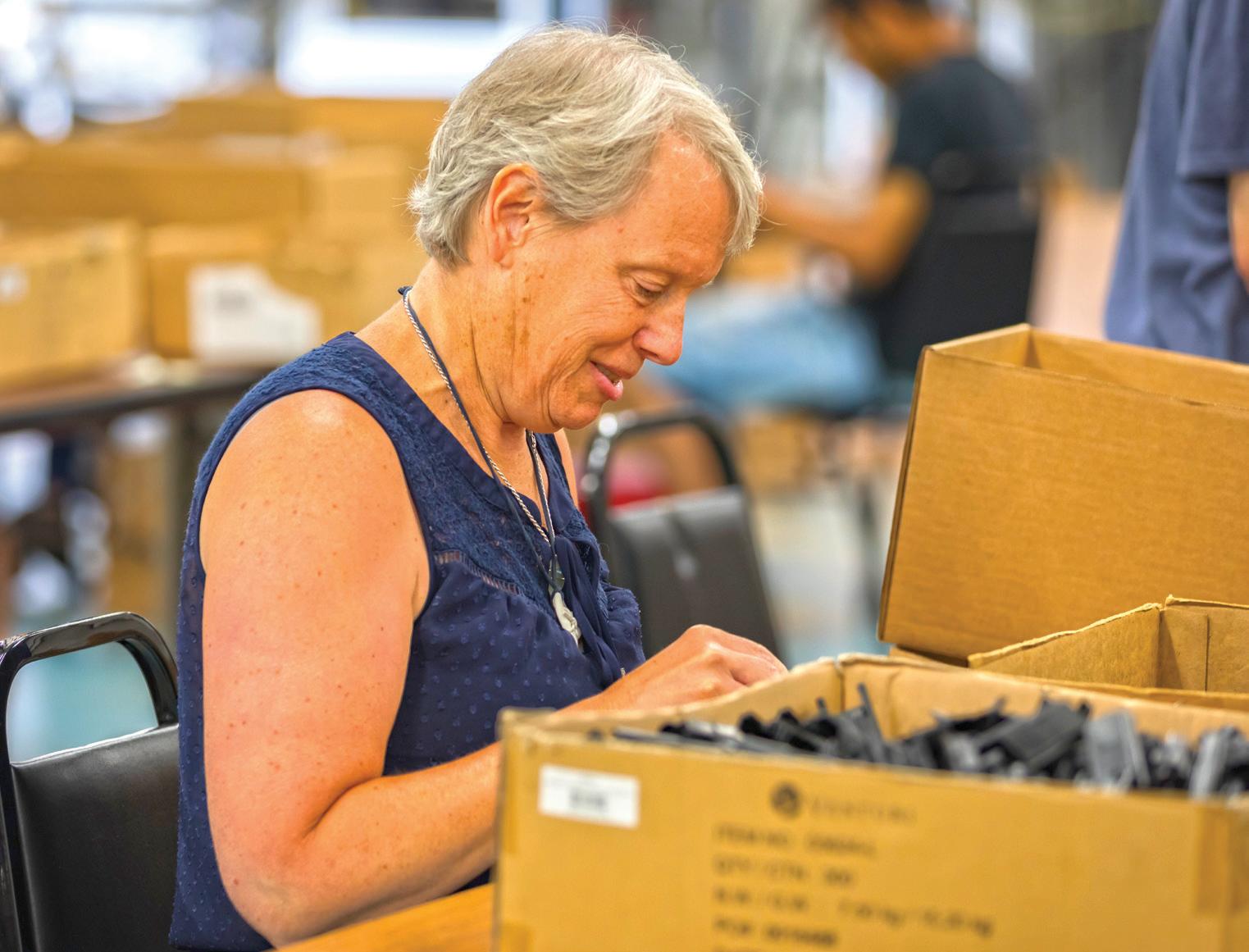
Throughout the process of filling staffing needs at these businesses, the organization is making sure that their staff feels totally prepped for roles in packaging, housekeeping, and assembly, to name a few.

Yet Evans says there is an awareness disconnect with the local community.
“So many times we hear people say, we didn’t even know you existed,” she said.
A rebranding with new logo and website is expected to inform businesses, along with updating GTI’s image.
“We decided we wanted to make sure the community knew we were here and that area businesses thought about us for
“The second week on the job they gave me the paychecks to hand out...that was when I realized how much this company and opportunity meant to our clients to earn a paycheck,” she said.
Over the years, Evans worked her way up through the organization – which also provides their clients with life enrichment programs and everyday resources for navigating adulthood – before taking over in 2021 for GTI’s director for 40plus years, Steve Perdue.
It was an upward move that she says she doesn’t take for granted, now that she is leading both the employees at GTI that she’s worked alongside for decades,
Some of those lows have included the loss of long-time clients, creating socially distanced programming through the height of the pandemic, and reassessing financial goals.
“We’ve had to make (tough) decisions in the past. We’ve had to let go of some business lines that we had because we were losing money,” she said.
One of the most challenging parts in her new role is making difficult decisions.
“You don’t want anything that pulls away from the program if that makes sense,” she said. “So you have to make the hard decisions sometimes.”
In the fall of 2022, Evans brought on Sue Brown as director of operations. With 25 years in the nonprofit sector under Interlochen Center for the Arts, Habitat for Humanity, and Arts for All,
16 JULY 2023 TRAVERSE CITY BUSINESS NEWS THE ETHICS OF BUSINESS
Brown came in with the experience needed to help Evans tackle a list of goals based on GTI’s strategic plan.
At the top is prioritizing grant funding to diversify GTI’s revenue streams which rely on Medicaid and their business contracts.
With less than a year in the books, Brown’s extensive knowledge of grant writing has already secured close to $425,000 for the organization in the last fiscal year; almost 10 times last year’s numbers.
And, while she’s utilizing her connections to increase community business partners, she’s simultaneously seeking out more contracts to grow GTI’s plastic bag production business, a venture that employs many of their clients and earns $2 million a year.
Fundraising is also part of the strategic plan. Recently, they incorporated a QR code for seamless donations at their community open house. Monthly newsletters and an upcoming digital campaign will
and even volunteering.
Evans also adds that GTI provides interpreting services to the deaf community through its Local Interpreter Services Network (LIS’N) program.
Led by Director Tom Hoxsie, LIS’N is unique in its services and offerings and how it minimizes barriers to employment.
In addition, GTI has a brand-new building at its Traverse City campus which Brown says provides 49,000 square feet of space for clients and staff.
The space, which gives clients a fresh setting for programming and training, is open and bright with nature-facing windows, something Evans is especially glad to see after social distancing through the height of the pandemic.
“It brought us all together and creates better opportunities for all of our programs to collaborate,” she said.
WINERY DREAMS

COME TRUE


But their vision for the campus won’t be fully realized until they finish raising money for their “Field of Dreams” – an VISION
Utilize design/build to construct a world-class custom winery from the roots up, maximizing property and budget parameters.
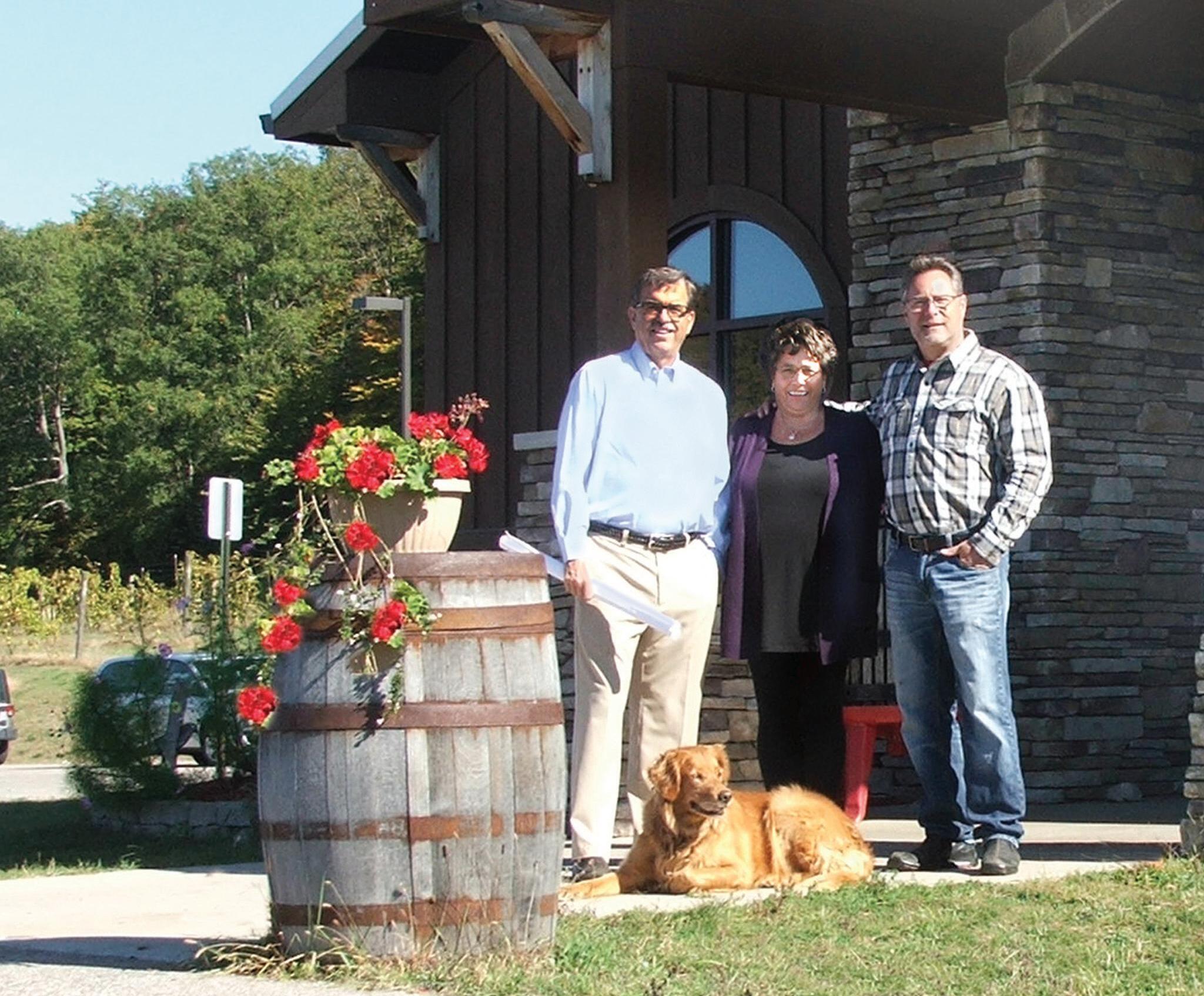
We had big dreams for our new winery. Burdco applied their experience and knowledge to take those ideas to the next level. Working with Burdco has been one of the key factors of our success. They’re not just a hired hand, but a true partner.
TRAVERSE CITY BUSINESS NEWS JULY 2023 17
THE ETHICS OF BUSINESS: INCLUSION, SUSTAINABILITY, AND RESPONSIBLE INVESTING
TRAVERSE CITY • GAYLORD • PETOSKEY
• 231.941.9074 “ ” –Ralph
BURDCO.COM
& Laurie Stabile Mackinaw Trail Winery, Petoskey
Mackinaw Trail Winery
Mike Brown Owner, Burdco
DESIGN/BUILD MEDICAL OFFICES COMMERCIAL ASSISTED LIVING INDUSTRIAL
Laurie & Ralph Stabile Owners, Mackinaw Trail Winery
‘ABOVE AND BEYOND’
Automotive, construction, restaurants and medical industries green up
By Ross Boissoneau
It’s a dirty job, but local businesses are working to clean up their act.
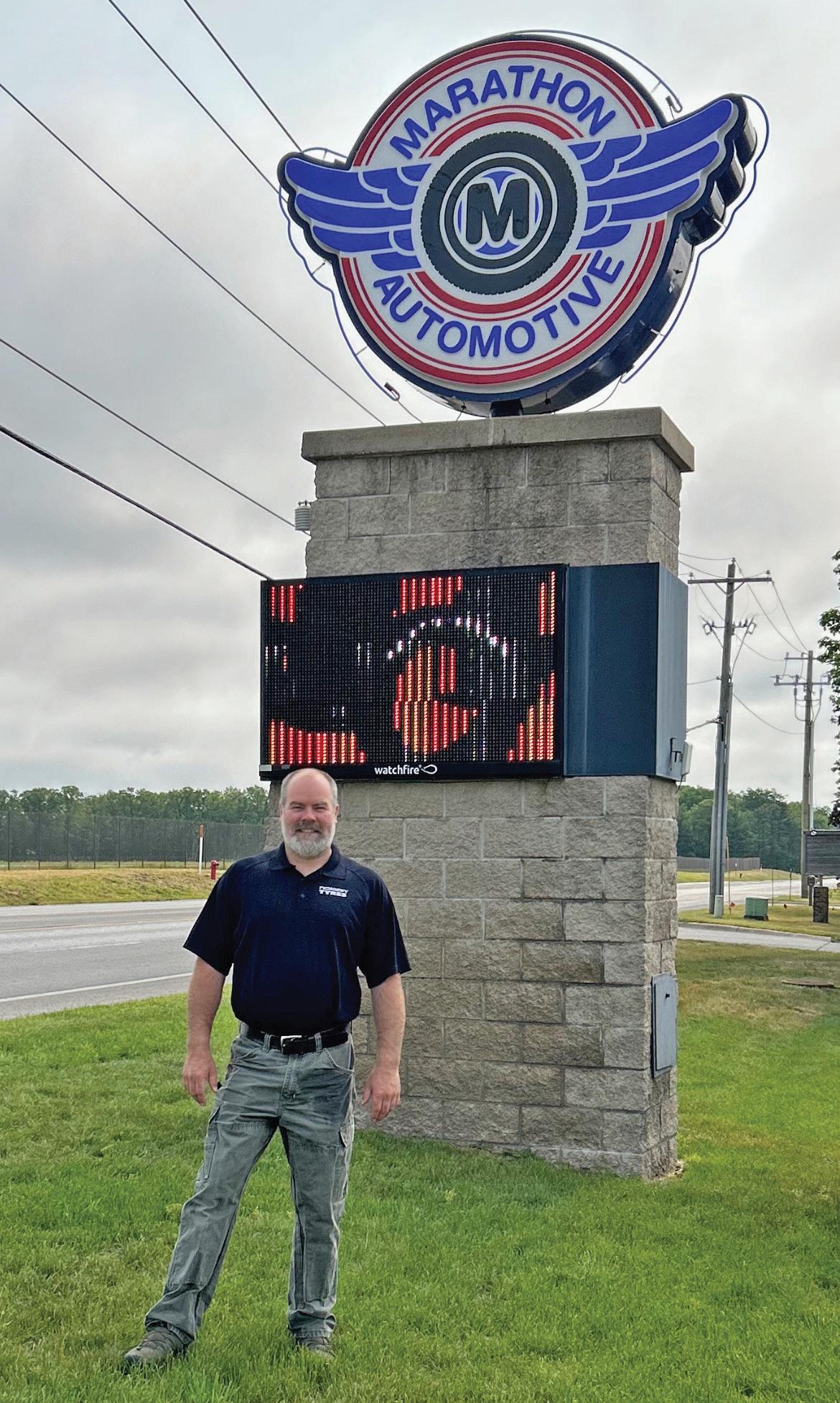
Marathon Automotive on South Airport Road faces a number of ways in which it could pose a hazard to the environment: oil changes, old tires, and automotive waste from repairs.
Oil changes throw off an estimated 1.3 billion gallons of waste oil annually. Most repair shops are hamstrung by legalities in moving the oil off-site, says Marathon General Manager Rob Michels.
“You can’t move waste oil to another location without a hazardous materials license,” he said.
Rather, Marathon filters the oil and then uses it as fuel to heat the building. They don’t stop there: Tires are taken
to a tire recycler. Scrap metal, fluids and catalytic converters are likewise taken to another recycler.
Michels says that in spite of the regulations for environmental waste disposal, there could be more.
recycling and reusing materials helps the bottom line. The furnace which burns waste oil costs $15,000, but with a previous natural gas bill of $1,000 per month, it paid for itself in just over a year.
Marathon also replaced all its lighting
The construction industry is another that deals with significant waste and has plenty of potential for pollutants. Cunningham Limp’s Doug Luciani, vice president for strategy and community impact, readily acknowledges the possibilities for negative impact, as well as the options to diminish them.

“Construction has a reputation for being a dirty business,” he said.
Luciani cites three major concerns: land use, energy use, and waste generation, adding that Cunningham Limp has gone “above and beyond” addressing these concerns.
“We’re doing things as a company and industry that are good,” he said.
“It’s not regulated heavily enough. You hear stories,” he said.
In spite of the stories, Michels argues
with LEDs and installed banks of solar panels on the roof to decrease the use of fossil fuels.
Luciani points to innovations such as panelization, where walls and other components are built offsite; new mass tim-
18 JULY 2023 TRAVERSE CITY BUSINESS NEWS THE ETHICS OF BUSINESS
“There’s a lot of innovation. Restaurants are a changing industry.”
- Dave Denison, owner, Amical
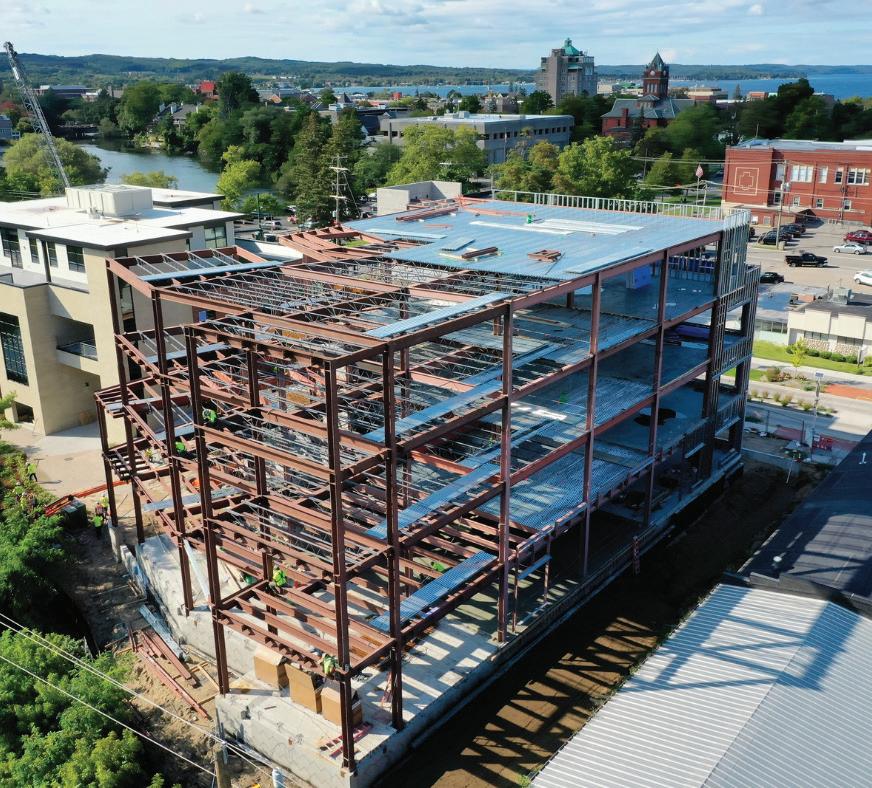
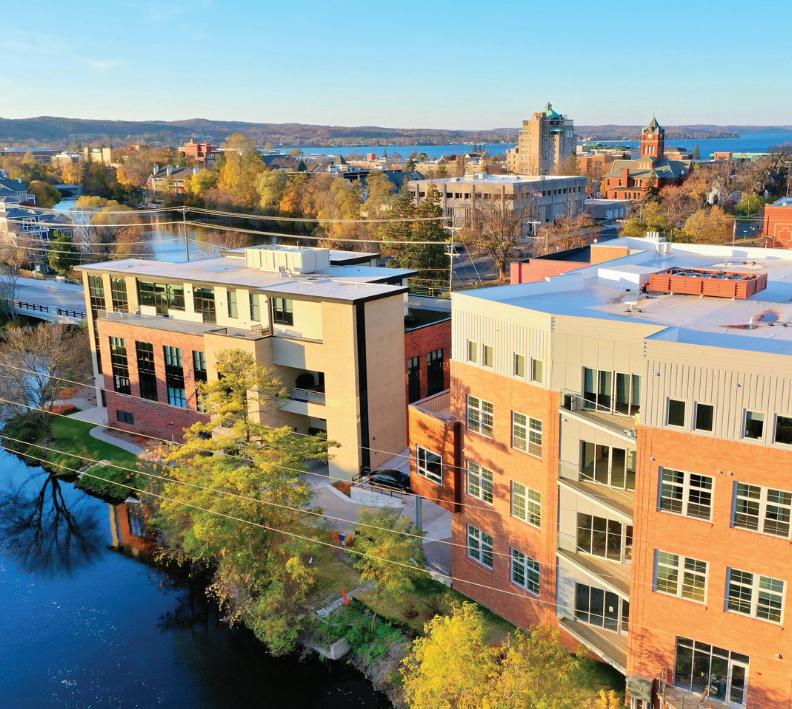
Commongrounds building along the Boardman River (photo by Joe Sarafa).
West Shore Bank/Commongrounds (photo by Joe Sarafa).
The new headquarters for Japan Solderless Terminals (JST), a Farmington Hills-based manufacturer (courtesy Cunningham Limp).
ber construction methods; GPS-guided excavating; and the use of LED lighting as examples.

As with automotive, there are reasons beyond regulations that make it wise to be environmentally responsible.
“Dirty sites are dangerous,” said Luciani.
Cunningham Limp faced some particular environmental challenges regarding the site of the Commongrounds and West Shore Bank buildings on Eighth Street, built adjacent to the Boardman River.
To prevent erosion, the LEED-certified project supervisor recommended using two silt barriers.
It didn’t stop there: Standing groundwater was pumped and tranported to a treatment plant.
“In the past it would go into the river,” Luciani said, “but it was all collected and taken to a groundwater treatment plant.”
Savannah Pace, marketing and communications manager at Cunningham Limp, notes that the majority of the company’s leadership team and superintendents are LEED-certified.
She says that comes in handy, especially when clients embrace environmental responsibility.
“We’re currently in progress on arguably the most holistically sustainable project in Michigan,” she said about their latest project, the new headquarters of Japan Solderless Terminals in Farmington Hills.
The project sits on a 10-acre site, but only four acres of the land is being disturbed, she says.
“The entire project is based on preserv-
ing the site’s forest, including the biodiversity within,” Pace said.
Numerous workarounds for wetlands have been deployed so as not to disturb their natural habitat.
In addition, there will be no drywall, paint, structured steel, catch basins, storm pipes, carpet, or other synthetic products used.
A detailed study of migration patterns of species native to the area was undertaken prior to the beginning of construction, which will accommodate the study’s findings.
“Above all, and contrary to the perception of a ‘dirty job,’ Cunningham Limp is committed to making a positive impact through our work,” said Pace.
One might not immediately equate the restaurant industry with the above in terms of possible negative impact on the environment. But restaurants can contribute to deforestation, greenhouse gas emissions directly and indirectly, and often generate significant food and other waste.
Dave Denison says his staff at his restaurant Amical in downtown Traverse City has been recycling paper, cardboard and glass for 20-25 years.
“We don’t compost yet,” he said of food waste, though he’s researching the kind of space and requirements needed.
In the meantime, some staff do take food waste home to use in composting or for their own livestock.
Denison said different methods of heating and cooking food promise less waste and use of fossil fuels, like natural gas.
“There’s been a lot of chatter about banning natural gas. We use more electricity to transfer heat,” he said.
Currently, only two appliances utilize gas: the range and the oven.
“Everything else is either sous vide or the Alto Shaam,” he said, referring respectively to a method of cooking vacuum-sealed food in a precisely regulated water bath, and an appliance that uses gentle radiant heat.
Denison is also investigating induction cooking, which uses electromagnetic energy that’s only activated by the iron in the specialized cookware.
“There’s a lot of innovation,” he said. “Restaurants are a changing industry.”
Denison said the restaurant industry is highly regulated, second only to hospitals.
Rob Richardson, vice president of support services for Munson Healthcare, would agree with that statement.
“There’s significant state and federal oversight,” Richardson said. “Medical-related waste is a highly regulated waste stream.”
Munson recycles 25 tons of materials monthly, which it breaks down into metal, wood, batteries, paper and plastic. Richardson said about 70% of its non-medical waste is further broken down and recycled by GFL.
It’s all part of Munson’s efforts to be responsible stewards of the environment.
“Part of caring (for the community) is caring for the environment. We’ve been a leader in environmental stewardship. It’s a commitment of our senior leadership and a cultural ethos,” Richardson said.
He points to several examples where
Munson has been recognized for its efforts.
“The Cowell Cancer Center is silver LEED-certified,” he said. “It was a collaborative effort of a lot of folks.”
He said Munson took positive lessons from the project it has since applied to other construction efforts.
He said the rehabilitation of the Kids Creek Watershed continues to thrive.
“We demolished two acres of impervious surface. Now there’s seven-plus acres of wetland and a park with indigenous plants,” he said.
Not only does it serve as a haven for fish, waterfowl and other wildlife, Richardson said it is a flood control measure, and is a great place for patients, staff and others to de-stress.
One new measure is a co-generation project, which is due to be completed mid-month.
It will use hot water to spin the generator and create steam, which will be siphoned off to heat the building and to sterilize equipment. It will also produce electricity, enough to decrease its carbon footprint by 28%.
“That’s equivalent to taking 1,500 cars off the road,” he said.
As with the others who are taking care of the environment, it will also offer financial savings.
“We‘ll save $700,000 in traditional utility usage,” said Richardson. “Because we’re a non-profit, we’ll invest it in healthcare.
“We’re cognizant of the care we take of our patients, our team and the environment. Everything’s connected.”
TRAVERSE CITY BUSINESS NEWS JULY 2023 19 THE ETHICS OF BUSINESS: INCLUSION, SUSTAINABILITY & RESPONSIBLE INVESTING
Marathon GM Rob Michels
A bridge was installed on Sixth Street so the revived Kids Creek could flow under it.
DO GOOD – AND DO WELL?
investing
By Rick Haglund
Investors who want to do good while doing well with their money have long been able do so on a somewhat limited basis. But a relatively new type of fund has taken socially responsible investing to a higher level.
It’s called environmental, social and governance, or more commonly ESG. This form of investing has exploded over the past decade or so with ESG-oriented assets under management in the United States expected to grow to $10.5 trillion by 2026, up from $4.5 trillion in 2021, according to PwC, an accounting and consulting firm.
ESG allows investors to put their money in clean energy companies; businesses that are committed to diversity, equity and inclusion in their workforces and corporate boards; and companies that produce safe, high-quality products.
“You can express your personal values in your portfolio,” said Mark Lundmark, executive director of wealth management and alternative investments in the Traverse City office of Morgan Stanley. “I’ve been in the business for 37 years and it’s amazing how much easier it is to do this” because of ESG.


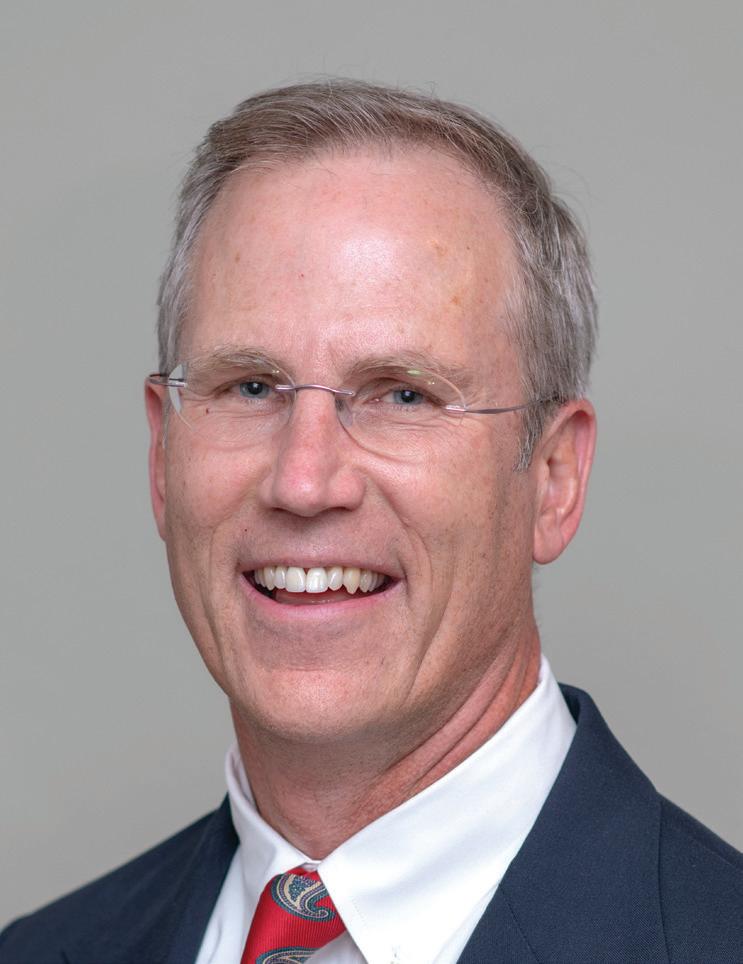
Lundmark said there’s interest in ESG investing locally in an area blessed with natural resources. Many want their investment portfolios to reflect a concern for preserving the environment.
ESG is about 10% of his office’s business, but Lundmark said he sees that growing “substantially” in the future.
“People are so attracted to this area because of its natural beauty,” he said. “There’s a whole new subset of young people who have moved here. A lot of people are very conscious of the environment.”
Other investment advisers say they have seen limited interest by clients in ESG investing but can create ESG portfolios for those who want them.
Many investors are primarily concerned with maximizing investment income to meet significant future expenses, some advisers say.
“We’ve found that most people are more concerned with outliving their money, paying for their kids’ college or how to care for their elderly parents,” said Autumn Soltysiak, a partner at hemming& Wealth Management in Traverse City.
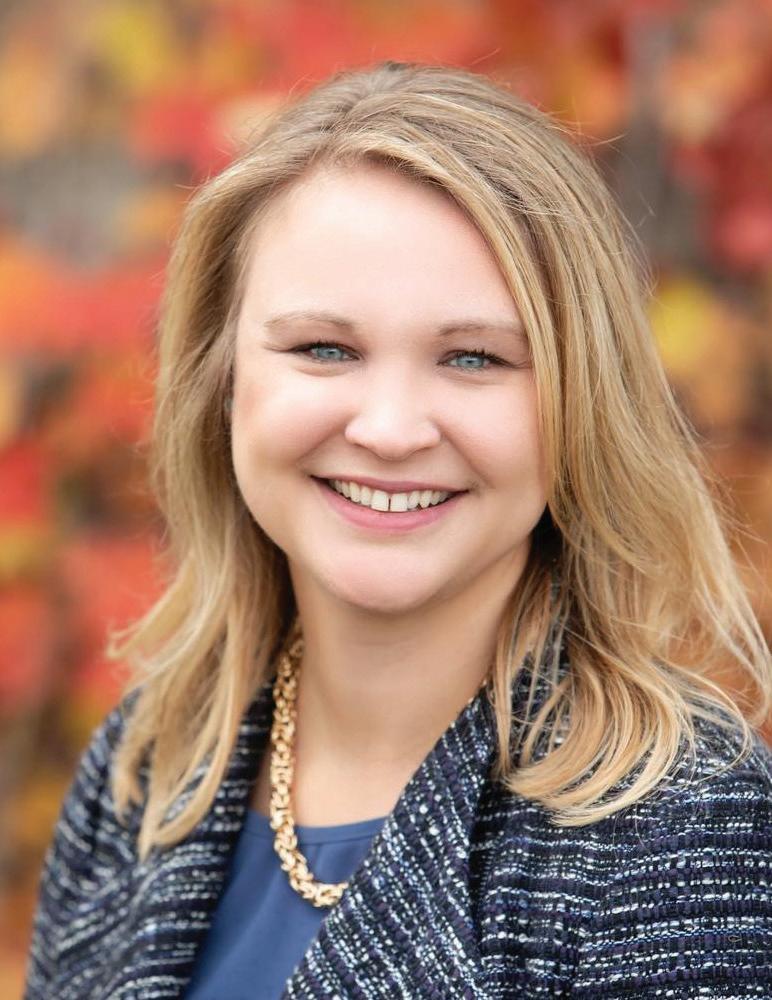
After years of skyrocketing growth, ESG investing experienced a significant slowdown last year mainly because investors and asset managers put more money into funds heavy with oil and gas stocks as prices for those commodities jumped in an inflationary economy.
Assets in ESG funds fell 20% last year in the United States, according to Investopedia, but experts say they expect them to bounce back.
“You still need automakers, oil companies and other traditional industries that don’t make the ESG cut,” said Jay Berger, a partner at Independent Wealth Management in Traverse City. “You can’t build an economy without them.”
There also is a growing political backlash against ESG funds by critics who call
20 JULY 2023 TRAVERSE CITY BUSINESS NEWS THE ETHICS OF BUSINESS
The two sides of environmental, social and governance
Soltysiak
Berger Picard Lundmark
such investments “woke capitalism” that threaten to destroy the free-market system.
Eighteen Republican-controlled states, prompted by Florida Gov. Ron DeSantis, recently prohibited state officials from considering ESG factors in state pension fund and other investments.
A joint statement released in March read in part, “The proliferation of ESG throughout America is a direct threat to the American economy, individual economic freedom, and our way of life, putting investment decisions in the hands of the woke mob to bypass the ballot box and inject political ideology into investment decisions, corporate governance, and the everyday economy.”
Blackrock, the world’s largest asset manager, has been pilloried by critics who say it’s bullying corporations to embrace ESG or be cut from its funds.
There also is a controversy over how ratings agencies calculate ESG scores that guide investors in picking socially and environmentally responsible companies.
Soltysiak pointed to Tesla, the world’s largest electric vehicle company, being cut last year from the Standard & Poor’s 500 ESG Index. That led to an angered Tesla CEO Elon Musk calling ESG a “scam.”
“Tesla, a company focused on sustainable energy, is a great example of the challenges (of ESG ratings) when it was
removed from the S&P 500 ESG index last spring,” she said.
S&P said it tossed Tesla over alleged racial discrimination incidents at its California factory. The company has since been added back to the index.
While conservative politicians are lambasting ESG as un-American, most major corporations are embracing ESG
92% in 2019, according to a new report by Thomson Reuters, a financial information service.
But companies aren’t doing this for entirely altruistic reasons, said Joerg Picard, association professor of finance in the Seidman College of Business at Grand Valley State University. Most, in his view, see it as good business at a time

for investment advisers trying to guide socially conscious clients in making meaningful ESG investments.
General Motors, for instance, has said it plans to produce only electric vehicles by 2035. But the automaker recently announced it was investing nearly $2 billion to build the next generation of big, gasoline-powered pickups and SUVs at plants in Flint, Texas and Ontario.
“On face value, ESG (is) all good things,” Soltysiak said. “The challenge is that people’s values are nuanced and they can be difficult to align with complex companies.”
While it’s been given a name, ESG isn’t exactly new. Some experts say its roots go back to the 13th century when Catholic capitalists believed profit must not come at the expensive of morality.
principles—at least they say they are in their shareholder reports.
Some of these companies have been accused of “greenwashing,” making false or misleading statements about how their products are environmentally sound. A wide range of companies, including Nike, Walmart and Bumble Bee seafood, have been accused of the practice in lawsuits.
Ninety-five percent of large global corporations disclosed ESG results in financial reporting in 2021, up from
sam@samabood.com
when ESG is likely here to stay.
“They don’t do this primarily to help the world,” he said. “They do this to maximize shareholder value.”
Many companies are focusing ESG on their efforts to boost diversity, equity and inclusion (DEI) in their workforces, another target of the anti-woke warriors. In May, DeSantis signed a bill he asked for that prohibits Florida colleges and universities from spending money on DEI initiatives.
All these issues can pose a conundrum
Lundmark of Morgan Stanley said social investing occurred during some of the most significant recent historical events, such as the Civil Rights movement, the Vietnam War and South African apartheid. Formal ESG issues were first mentioned in the United Nation’s 2006 Principles for Responsible Investing report.
“It’s definitely not going away,” Picard said. “There’s a lot of investor interest. Most people are willing to pay a little more for investments they see as doing environmental good.”
The Long Lake Culinary Campus is a Unique Opportunity to have your business in a Cooperative Environment. The home of "Food for Thought" and the onsite Childcare Center contribute to a Vibrant Modern business setting, w/Common Areas throughout including the Exercise Rm w/Shower! Long Lake Conditional Zoning identifies this property as a special place for a Variety of Uses. An Abundance of Parking with Great Ingress and Egress. Spaces for Lease can be combined to accommodate tenants needs! Large "Community Center" space For Lease would make a great space for Catering Company - Cooking Classes - Onsite Restaurant - Yoga/Fitness Center - or all of the above! Really Special Space and Opportunity.
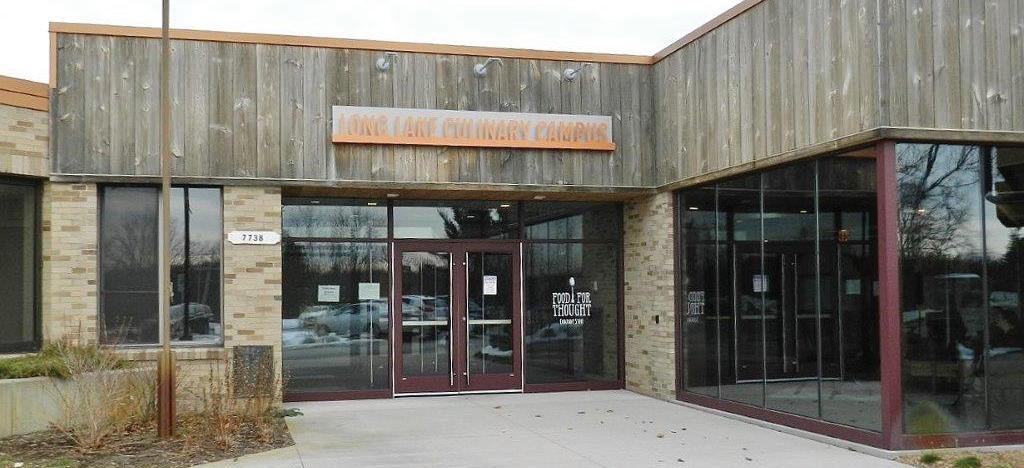
Unit 4 – 3734 SQ FT - $3,800 Monthly Rent – MLS#1907325
Unit 4A – 1445 SQ FT $1,145 Monthly Rent – MLS#1907326
Unit 4B – 2289 SQ FT $2,289 Monthly Rent – MLS#1907327
CBSR OFFICE - 402 E. Front Street - Traverse City, MI 49686


TRAVERSE CITY BUSINESS NEWS JULY 2023 21 THE ETHICS OF BUSINESS: INCLUSION, SUSTAINABILITY, AND RESPONSIBLE INVESTING
“You can express your personal values in your portfolio.”
– Mark Lundmark, executive director of wealth management and alternative investments, Morgan Stanley
SAM ABOOD 231-218-5130
Louis A. Rodriguez 231.943.1326 ThirdCoastIns.com Proud partners with You know your business. We know your business insurance.
SPACE FOR LEASE
Barnwood and Baked Goods
Two BIPOC business success stories
By Craig Manning
A rapidly growing business that reclaims and repurposes old barnwood. A new northern Michigan bakery that is bringing a surprising fusion of French and Asian flavors to Traverse City’s foodie scene.
These are just two of the companies that belong to Traverse City’s growing BIPOC business community. As northwest Lower Michigan becomes a more and more diverse place, that business community is growing, too – and bringing unique and innovative business ideas to the fore in the process.
This month, the TCBN honors the BIPOC business community by shining the spotlight on a pair of one-of-a-kind success stories.
LAKE ANN BARNWOOD
These days, Lake Ann Barnwood fields calls and emails from all over the country – and sometimes even beyond – about helping customers turn old barnwood into custom furniture, home décor, art pieces, and more.

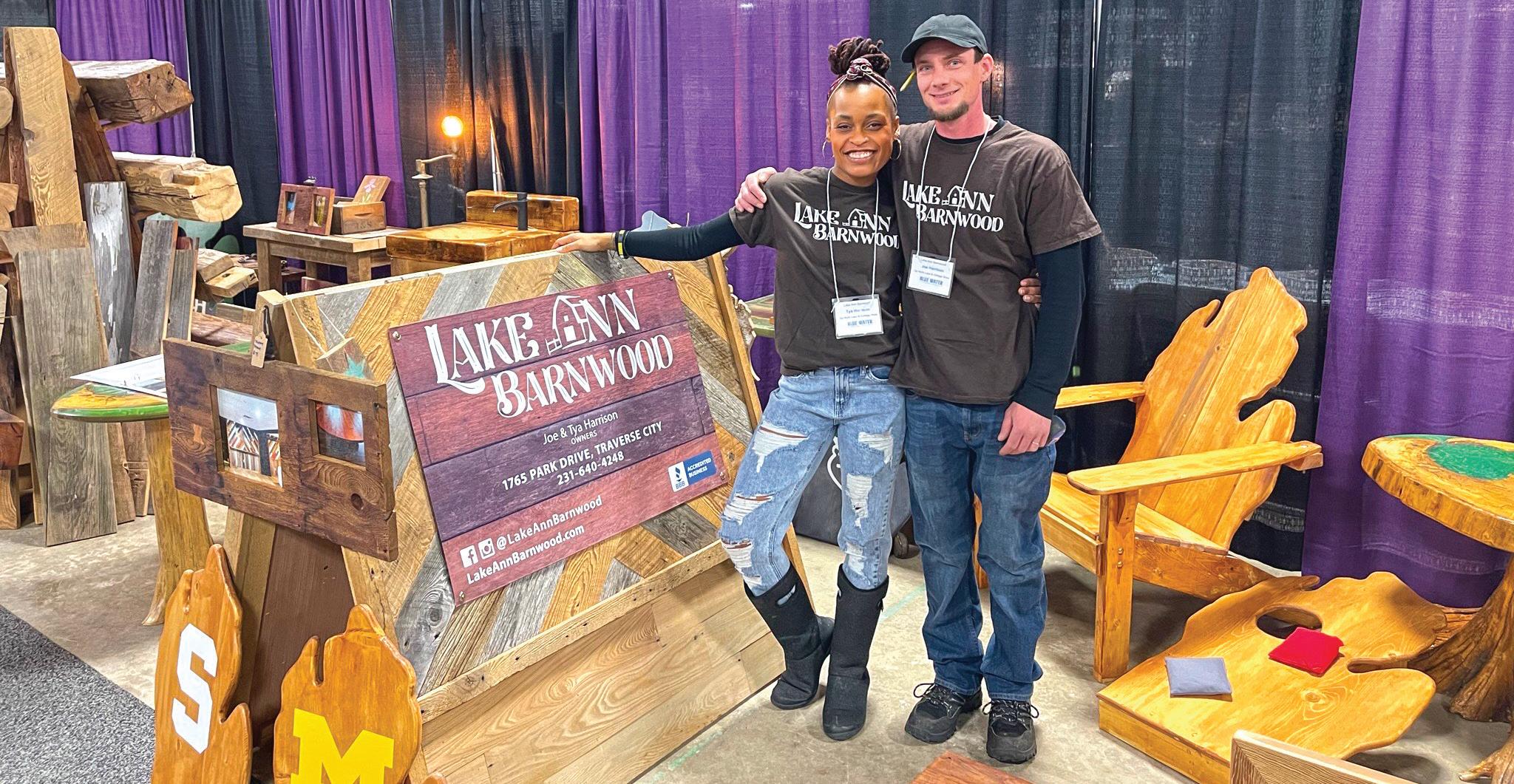
When the business got its start back
in 2017, though, it was simply because owners Joe and Tyasha Harrison had an old outbuilding on their property that had fallen into disrepair.
“We had this building that was just kind of falling apart,” Tyasha recalled.
“In theory, the way it looked was beautiful. But it was also kind of creepy; there were trees hanging over it; there were things growing out of it; the floorboards were falling through.”
Rather than let the building sit there and continue to deteriorate, Joe – who has a background in construction and carpentry – took up an ambitious project: Turning the decrepit old barn into a safe and livable mother-in-law suite.
“At the time, Chip and Joanna Gaines (of the popular HGTV series “Fixer Upper”) were just starting off with their ‘farmhouse chic’ look, and everybody was vibing off of that,” Tyasha explained.
Barnwood was becoming popular because it could go with any type of style, she said.
“And Joe was like, ‘I don’t know how long (this trend) will last ... but if I can just go tear down barns and use that material to basically rebuild this house,
we could save a lot of money,’” she said.
The trend lasted – to the point where Joe’s backyard rebuild eventually became a full-fledged business. Joe quickly developed a knack for dismantling old barns
from top to bottom, saving as much material as he could” – whether it came from siding, doors, roofing, or silos. At first, most of that wood went into the Harrisons’ new mother-in-law suite.
22 JULY 2023 TRAVERSE CITY BUSINESS NEWS
THE ETHICS OF BUSINESS
Lake Ann Barnwood has developed a reputation as a leader in its (still growing) niche.
Tyasha and Joe Harrison Tyasha and Joe Harrison
If you are on an entrepreneurial journey, let’s talk. We’ve been on ours for 22 years. “Be Entrepreneurial” is a core value at Nicolet Bank. Founded by entrepreneurs. Built by entrepreneurs. Supported by entrepreneurs.

Come join us.
from their mom for roughly a decade, living with relatives until their mom earned enough money to send for them.
Michael Caruso
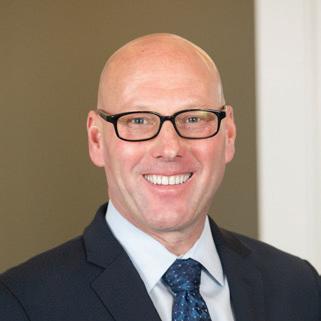
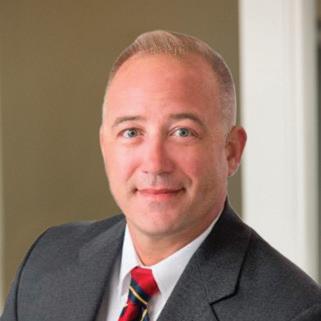
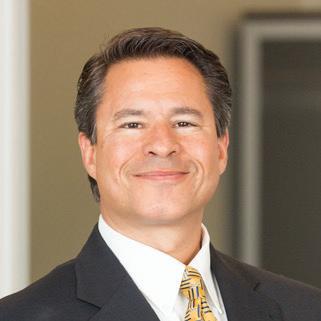
Eventually, though, the couple had more barnwood than they could use and started selling the extra out of their backyard.
“People would pull into our yard, they’d pick out a piece of barnwood, and then (Joe) would upcycle it,” Tyasha said. “We’d build barn doors; we’d build tables; we’d build wall installs; we’d build frames; we’d build mantels.”
The business has grown from those humble beginnings, largely on the strength of word-of-mouth. Some customers just want a wooden showpiece for their homes and come to the Harrisons seeking both the wood and the craft.
Others have old family barns on their property that they want to tear down, but also want to find ways of preserving the wood. Some clients want to build entire new homes out of reclaimed barnwood. By doing all those things and more, Lake Ann Barnwood has developed a reputation as a leader in its (still growing) niche.
By 2019, the business had grown enough that it needed a proper storefront, now located at 1765 Park Dr. in Traverse City. And while the Harrisons fretted that the pandemic might kill Lake Ann Barnwood before it even really got off the ground – “We weren’t sure we could stay afloat, just because all the builders around us that were shutting down,” Tyasha said – the opposite ultimately proved true.
“The loss of lumber in those big box stores, and the pricing of it, geared people more toward us,” Tyasha explained. “People were saying, ‘Well, I can’t pay that much for this lumber,’ or ‘Well, they don’t have what I need. What do you guys have?’ We kind of prospered (during COVID) because we had the material that people needed.”
Now, Lake Ann Barnwood is a business with national – and sometimes even global – reach. Tyasha said the pandemic-era uptick in demand and wordof-mouth has meant that Joe’s pieces are sometimes shipping downstate or even across Michigan lines – to Ohio, or Florida, or New York. Some of Lake Ann Barnwood’s work has even made it to far-off places like Hawaii and Brazil.
For Tyasha, Lake Ann Barnwood still feels like a small homegrown venture –even if, in terms of impact, it’s evolved beyond that.
“I think we’re still learning and growing and doing things that we can do within our capacity,” she said. “But once that wood leaves us it really does go all over the place. And that’s pretty cool.”
MERLYN’S PATISSERIE
Jun Dupra and Anna Kucharski were 16 and 19 years old, respectively, when they moved from their native Philippines to Mancelona. By that point, the brother-sister pair had been separated
“She raised us as a single mother going abroad and being a domestic helper,” Dupra said.
SVP Commercial Banking
231.941.6303
and while Dupra and Kucharski moved into a commercial kitchen space at the Cherry Capital Foods headquarters on Barlow Street earlier this year, they still have no public storefront.
mcaruso@nicoletbank.com
When Dupra and Kucharski did make their move to Michigan from the other side of the world, they brought something with them: a passion for food.
John Galbraith
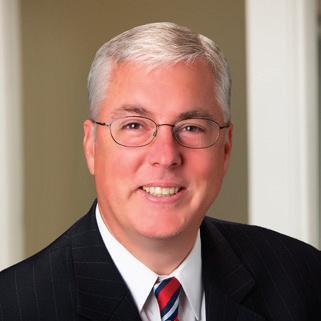
Now, the two are making that passion into a Traverse City-based business called Merlyn’s Patisserie, named in honor of their mother. Billed as “an Asian-French inspired patisserie,” Merlyn’s focuses in particular on pastries and desserts – from cakes to eclairs to macaroons to croissants.

Thanks to the farmers market, though, sales numbers are continuing to grow. Per Dupra, Merlyn’s Patisserie sold about 800 “intricate pastries” per week at the Sara Hardy Farmers Market last summer. This year, the business is aiming to bring that weekly number up to 1,000.
VP Commercial Banking
231.632.9331
jgalbraith@nicoletbank.com
And they’re well on their way: On Father’s Day weekend, which Dupra said tends to be one of the first really busy farmers markets of the summer, Merlyn’s Patisserie sold out of its stock.
The wrinkle is that Dupra and Kucharski are giving these familiar French desserts an Asian twist. One item on the menu is a yuzu cheesecake croissant, which trades the perhaps-more-common lemon curd for yuzu, an East Asian citrus fruit known for its extremely sour flavor.
Jeremy Harnish
SVP Commercial Banking Manager
231.941.6306
Long-term, Dupra hopes Merlyn’s Patisserie can grow enough to trade its commercial kitchen space for its own brick-and-mortar space – complete with a proper storefront.
jharnish@nicoletbank.com
This dream might take a while, he says.
The signature menu item, meanwhile, is the ube croissant (pronounced ooobeh), which folds purple yam – a popular dessert ingredient in the Philippines – into the flaky pastry of the croissant. The brilliantly purple yam has a nutty, vanilla-like flavor – and has become something a sensation among Merlyn’s Patisserie converts.
Andrew Sabatine
SVP Commercial Banking

“It’s just the two of us, no investors, and we’re at least trying to keep it just the two of us so that there’s no one to answer to, profits-wise,” he said. “But hopefully two to five years from now, we’ll have a small bakery where customers can sit down and enjoy the things we make.”
231.941.6301
asabatine@nicoletbank.com
Dupra says the goal they have is to give people another choice.
Traverse City NicoletBank.com
800.369.0226
Member
Those converts largely found their way to Dupra and Kucharski’s unusual pastries and desserts at the Sara Hardy Downtown Farmers Market, which Dupra said still drives much of the business’s sales.
Launched in May 2022, Merlyn’s Patisserie only just hit its first birthday,
“I feel like Traverse City has such a huge customer base that there’s no reason for competition (among businesses like ours),” she said. “I’ve never really believed in competition, even growing up.”
She says that being able to bring something new to the table is what the pair believe in.
Real People. Real Conversations.
“...(t)o make it so that people have more choices, that’s always going to be a win for us,” she said.
TRAVERSE CITY BUSINESS NEWS JULY 2023 23
THE ETHICS OF BUSINESS
Long-term, Dupra hopes Merlyn’s Patisserie can grow enough to trade its commercial kitchen space for its own brick-and-mortar space – complete with a proper storefront.
FDIC
Be Entrepreneurial

24 JULY 2023 TRAVERSE CITY BUSINESS NEWS
box peoexplained. pay do prospered sometimes panwordare even Florstill –evolved do once all cool.” were when the separated

from their mom for roughly a decade, living with relatives until their mom earned enough money to send for them.
“She raised us as a single mother going abroad and being a domestic helper,” Dupra said.
When Dupra and Kucharski did make their move to Michigan from the other side of the world, they brought something with them: a passion for food.
Now, the two are making that passion into a Traverse City-based business called Merlyn’s Patisserie, named in honor of their mother. Billed as “an Asian-French inspired patisserie,” Merlyn’s focuses in particular on pastries and desserts – from cakes to eclairs to macaroons to croissants.


The wrinkle is that Dupra and Kucharski are giving these familiar French desserts an Asian twist. One item on the menu is a yuzu cheesecake croissant, which trades the perhaps-more-common lemon curd for yuzu, an East Asian citrus fruit known for its extremely sour flavor.
The signature menu item, meanwhile, is the ube croissant (pronounced ooobeh), which folds purple yam – a popular dessert ingredient in the Philippines – into the flaky pastry of the croissant. The brilliantly purple yam has a nutty, vanilla-like flavor – and has become something a sensation among Merlyn’s Patisserie converts.
Those converts largely found their way to Dupra and Kucharski’s unusual pastries and desserts at the Sara Hardy Downtown Farmers Market, which Dupra said still drives much of the business’s sales.
Launched in May 2022, Merlyn’s Patisserie only just hit its first birthday,
and while Dupra and Kucharski moved into a commercial kitchen space at the Cherry Capital Foods headquarters on Barlow Street earlier this year, they still have no public storefront.
Thanks to the farmers market, though, sales numbers are continuing to grow. Per Dupra, Merlyn’s Patisserie sold about 800 “intricate pastries” per week at the Sara Hardy Farmers Market last summer. This year, the business is aiming to bring that weekly number up to 1,000.
And they’re well on their way: On Father’s Day weekend, which Dupra said tends to be one of the first really busy farmers markets of the summer, Merlyn’s Patisserie sold out of its stock.
Long-term, Dupra hopes Merlyn’s Patisserie can grow enough to trade its commercial kitchen space for its own brick-and-mortar space – complete with a proper storefront.
This dream might take a while, he says.
“It’s just the two of us, no investors, and we’re at least trying to keep it just the two of us so that there’s no one to answer to, profits-wise,” he said. “But hopefully two to five years from now, we’ll have a small bakery where customers can sit down and enjoy the things we make.”
Dupra says the goal they have is to give people another choice.

“I feel like Traverse City has such a huge customer base that there’s no reason for competition (among businesses like ours),” she said. “I’ve never really believed in competition, even growing up.”

She says that being able to bring something new to the table is what the pair believe in.
“...(t)o make it so that people have more choices, that’s always going to be a win for us,” she said.

TRAVERSE CITY BUSINESS NEWS JULY 2023 25
BUSINESS THE ETHICS OF BUSINESS
DO
Jun Dupra and Anna Kucharski along with their mother, Merlyn, who they named their business after. Anessa Songer,
Bradley P. Goodwin, MD
4290 Copper Ridge Dr, Suite 200, Traverse City, MI 49684 www.westfrontprimarycare.com 231.935.8930 New to Our Team! Serving Your Healthy NORTHERN MICHIGAN LIFESTYLE. NOW ACCEPTING NEW PATIENTS! Our team focuses on preventative care and health management by developing long-term relationships with our patients. We want the best overall health possible for you and your family.
Emily Weitzel, PA-C
7

















26 JULY 2023 TRAVERSE CITY BUSINESS NEWS Since 1973, we at Long Lake Marina have been earning the trust of northwest Michigan and beyond. The Brands You Love. The Service You Deserve. (231) 276-9910 • LongLakeMarina.net
Experience seven ways to play as a Bear member of Traverse City’s most inclusive health and fitness club. Tee off on three championship golf courses. Try award-winning tennis programs and fitness classes. Plus, Bear members receive access to our Beach Club, discounts on spa, dining, shopping and enjoy a variety of social events. 231-534-6586 | grandtraverseresort.com Owned and Operated by the Grand Traverse Band of Ottawa and Chippewa Indians TENNIS GOLF FITNESS SPA DINE SHOP SOCIAL Each office independently owned and operated LiveTraverseCity com | @LiveTraverseCity
WAYS TO PLAY AT THE CLUB
By David Mengebier, columnist
Community foundations are unique in that they operate for the benefit of our communities now and forever, thanks to the power of endowments.
That means the Grand Traverse Regional Community Foundation (GTRCF) –your local community foundation – is here to stay, supporting Antrim, Benzie, Grand Traverse, Kalkaska, and Leelanau counties in perpetuity.
For much of our 30-year history, we have had a focus on donor-designated giving, helping to match a donor partner’s interests with a philanthropic purpose, whether that be by setting up a particular type of fund, such as a donor advised fund or named endowment, or supporting an existing fund or broad cause category like arts and culture, the environment, or education.
Evolving to better meet community needs
Yet as local community needs have evolved, so too have we as a community foundation. While we continue to wholeheartedly support our donor partners in their giving dreams and decisions, we have also expanded our ability to leave a lasting impression on our region.
For instance, we have sought to enhance our impact through collaborative leadership efforts, such as with the Northwest Michigan Community Development Coalition, which we convene. Now made up of nearly 40 business, nonprofit, and governmental partners, together we are striving for transformational economic, societal, and environmental improvements for our region by 2030.
We have also delved deeper into providing a more flexible, responsive, and strategic way to address community needs through our community funds, which are dollars we steward that are able to grant to a wide variety of organizations and causes across the region in a way that our other funds cannot.
Investing in our local economy
In addition to these efforts, the Community Foundation has begun supporting
BEYOND GRANTMAKING

The Community Foundation’s leap into impact investing
local businesses by investing part of our endowment portfolio with Venture North and Northern Initiatives. This partnership is rooted in impact investing, also known as program-related investing.
As Stephanie Ligonde, Garrett De Temple, and Tuokpe Ajuyah share in a recently published article in The Foundation Review, “By thoughtfully defining a portfolio’s role in measurably supporting one’s overarching vision alongside financial goals, foundations can enjoy the double-bottom line of mission-based success and long-term financial rewards, complementing such traditional philanthropic activities as grant-making to buoy each organization’s overall impact.”
To date, we have invested an initial $1 million from our endowment portfolio with Venture North and Northern Initiatives, two community development financial institutions (CDFIs) that provide credit and financial services to under-served markets and communities.
Both CDFI partners will deploy our capital within the five-county region and use the economic, societal, and environmental objectives of the Community Development Coalition in making their investment decisions.
So far, our capital has been used to support 45th Parallel–Action Glow, TNT Electrical Systems, Mission Proper, BOS Wine, Grocer’s Daughter, and Northwest Michigan Farmer-Owned Cooperative, comprised of 25 smallto-mid-sized family farms that provide produce and other farm products to individuals, families, food pantries, schools, restaurants, and businesses across the region.
Previously, there were very few ways we could directly support the small business community; with the rise of impact investing partnerships, there is a new path forward.
We’re proud to be able to support our community and small business sector in this way. We’re also grateful for our partnerships with both Venture North and Northern Initiatives thus far. Looking ahead, we plan to allocate an additional $1 million of our endowment portfolio to support more local businesses across the five-county region. Our impact investing strategy marks a new, exciting chapter for the Community Foundation, and one that will be providing both social and financial benefits for many years to come.
Impact investing is an important tool that’s helping to expand our sources of community impact beyond grantmaking and donor stewardship. It’s also allowing us to strengthen drivers of our region’s vitality – our local economy and small business network.
David Mengebier is the president and CEO of the Grand Traverse Regional Community Foundation, a role he’s held since January 2018. Prior to joining the Community Foundation, he served for 17 years as senior vice president of governmental, regulatory, and public affairs for Consumers Energy, and president of the Consumers Energy Foundation. He serves on the boards of Munson Healthcare, the Council of Michigan Foundations and Traverse Connect.
TRAVERSE CITY BUSINESS NEWS JULY 2023 27
THE ETHICS OF BUSINESS
The Community Foundation has begun supporting local businesses by investing part of our endowment portfolio with Venture North and Northern Initiatives.












28 JULY 2023 TRAVERSE CITY BUSINESS NEWS 17 Fly non-stop from TVC Cherry Capital Airport to one of 17 popular U.S. destinations.Non�ops Cherry Capital Airport tvcairport.comNon�ops 17
By Ande Hentschel, columnist

Inclusion is a practice or policy of providing equal access to opportunities and resources. The definition goes on, but we will stop there because access is for everyone and anyone.
Where does that take you in the process of addressing your human resource practices? Do you already have a diversity, equality or an inclusion statement? Do you have goals in that direction? Do you know why? More importantly, your staff should know why and be included in the goals.
Inclusion is not just about now. Creating access and a culture takes intention and often happens by setting goals. Inclusion is about the future. Everyone’s and anyone’s future ... even perhaps your future.
Inclusion considers access to work, but also the financial vitality of your organization. Being accessible is not about each of us being unique or different; it is exactly the opposite. It gives your environment the accessibility that everyone or anyone could use, work or be a customer in it. It is not just about considering the initiatives that broaden ideas and contexts.
Inclusion is about being welcoming, belonging and respectful – and planned out for whoever works at or becomes a patron. From doorway to dashboard, becoming more universally designed for access allows hiring and consumer options.

To be inclusive, consider the following conversation kick starters on inclusion to use with your management team and staff:
1. Pretend you have what you want. Why? Approximately 90% of consumers reported in a 2018 study that they prefer organizations that are inclusive. With over 54 million Americans living with a disability, it encompasses all other demographics considered. That means one in four of us have or will have a disability in our lifetime.
2. Pretend you are the customer or the new employee and see the landscape from that perspective. Where would you run into challenges in your organization? Getting into the building or something even more challenging like the organizational culture.
WORKPLACE INCLUSION
It’s time to broaden your ideas and context
SCRAMBLES
WEDNESDAY NIGHT CONCERTS
TWINBIRCHGOLF.COM


Michigan Medicine Peninsula Community Lecture Series



MUST REGISTER TO ATTEND victors.us/MMPeninsula
Monday, July 17, 2023 — 3pm
3. Prioritize your intention and start somewhere. Examples include accessibility of your website, training your staff to recognize implicate bias or seek support to help hire and train new hires who have disabilities. Get an assessment of your access and do what you can. Start with the most important room in your building: the bathroom! Small changes add up. Too often businesses get stuck in the ‘What we should do’ mode. Start small with the ‘What we will do.’ Make the goal you can have success moving forward with be to begin with inclusive hiring, an accessibility project or policy adjustments.
4. Be an AND Leader. We will make our sales goals and offer diversity, equality and inclusion training to staff. We will be user-friendly and make sure our website
is end-user friendly for those who are visually impaired.
5. Start with you. Be open, be welcoming and be aware. It is not just an HR issue; it is a leadership issue. Small steps with intention that demonstrate being welcoming are noticed. Call Disability Network Northern Michigan to start finding out how we can help your accessibility and inclusive practices from training to hiring. We are here to guide, help, listen and offer suggestions.
Ande Hentschel is the executive director for Disability Network of Northern Michigan in Traverse City. Over the past 10 years, she has dedicated her work to create vibrant and inclusive workplace environments and to raise community awareness about disability and transform the disability culture; (231) 922-0903.
PREVENTING HEART DISEASE AS WE AGE
Are increases in blood pressure and cholesterol part of normal aging? Learn insights into new approaches in preventive cardiology research, including methods for diagnosis and treatment of blood pressure and cholesterol issues that influence cardiovascular risk.
John D. Bisognano, M.D., Ph.D Professor, Internal Medicine Director, General, Consultative, and Preventive Cardiology

TRAVERSE CITY BUSINESS NEWS JULY 2023 29
THE ETHICS OF BUSINESS
KALKASKA, MI
BIKE CART & GOLF CART RENTALS BRAND NEW PRO SHOP • CLUBHOUSE RESTAURANT
DAILY DRINK & FOOD SPECIALS
GROUP & COMPANY RATES
PENINSULA COMMUNITY LIBRARY 2893 Island View Road, TC

30 JULY 2023 TRAVERSE CITY BUSINESS NEWS visit us at actionwater.com Surf Supremacy
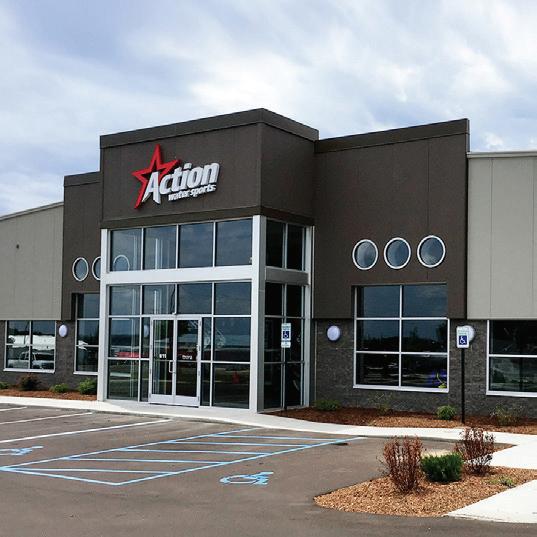



TRAVERSE CITY BUSINESS NEWS JULY 2023 31
the
Michigan:
SurfStar Surf System, you can create a wave for the whole family, from beginners to pros, at the push of a button.
your next dream boat at Action Water Sports of Traverse City today. 611 Olesons Commerce Dr. Traverse City, MI (231)943-3434 Action Water Sports Traverse City carves like a snowboard in fresh powder, but with the freedom to ride anywhere, anytime, without wind or waves. Find yours at Action Water Sports of Traverse City
Experience
number one selling surf boat in Northern
MasterCraft. With the awardwinning
Find
In May, the National Labor Relations Board (NLRB) General Counsel released a memo announcing that non-compete agreements violate the National Labor Relations Act (NRLA), and that employers using them may face unfair labor practice charges.
While this memo is not a statement or ruling of law itself, it does detail how the NLRB will proceed going forward when prosecuting the NLRA. Further, a decision by the NLRB agreeing with the memo would in effect have force of law. Thus, under the Biden administration, the memo will likely have monumental effect.
Covered employers need to promptly evaluate their own use of non-competes and consider the risks of noncompliance.
How did we get here?
Imagine needing a little extra money, and seeing a job posting for a warehouse worker position at one of Amazon’s massive warehouses around the country.
The job requires you to pick objects off shelves and put them in boxes to prepare for shipping. Because the job is repetitive and physically demanding, Amazon pays several dollars above minimum wage. You apply and you are hired!
Before you start your hourly job, the company asks you to sign a template agreement regarding certain terms of your employment. In all of the excitement, you sign, begin working, and start packing those smiling boxes. However, you later decide that Amazon is not your “Prime” spot. You decide to leave.
As you are heading out the door, the company reminds you of the little piece of paper you signed upon hire. You read the highlighted paragraph and realize that for the next 18 months, you are not permitted to “engage in or support the development, manufacture, marketing, or sale of any product or service that competes or is intended to compete with any product or service sold, offered, or otherwise provided by Amazon… that (you) worked on or supported…”
If you violate that provision, the agreement says that Amazon will sue you. Who knows how many thousands of products you picked and shipped while working?
EMPLOYERS, TAKE NOTICE
The NLRB attacks non-competes
What does Amazon NOT sell? As an hourly warehouse worker, you now feel trapped!
This was the case for many Amazon warehouse workers until The Verge technology news website published a story in March 2015 and set off a public relations storm for the online retailer. Almost immediately, under public scrutiny, Amazon announced that it was removing those clauses from its contracts for warehouse workers.
Since then, public scrutiny has turned to several other employers, from sandwich makers like Jimmy John’s to lampshade manufacturers like Canterbury. The question asked in these situations is always the same: Is it fair to make an hourly low-wage worker sign a non-compete?
Over the years, several states have answered that question with a resounding, “No,” and many others, like Michigan, have passed statutes that require such covenants to be narrowly tailored and based on legitimate business interests. Even so, PBS reported that nearly 40% of all American workers have, at some point, signed such contracts.
The FTC steps in
In January 2023, the Federal Trade Commission (FTC) proposed a blanket rule that would have flatly banned non-competes as a violation of the Federal Trade Commission Act. The FTC stated that the use of non-competes has become a widespread and exploitative practice that suppresses wages, hampers innovation and discourages individuals from starting their own businesses.
The FTC estimates that approximately 18% of U.S. workers are currently covered by non-competes and that eliminating them would increase worker earnings by nearly $300 billion. As such, the FTC found them to be an unfair method of competition.
However, many critics of the FTC proposed ban felt that the ban was too much and ignored the legitimate uses of such restrictions for executives and other high-level employees who had access to the “secret sauce” information and trade secrets, and who received ample compensation for that bargain.
The FTC proposed ban has not been finalized.
Finding the right balance with the NLRB memo?
Although the NLRB General Counsel memo views non-competes through the same lens as the FTC, its reach is more limited. The NLRA is a federal law that protects the right of nonmanagerial, nonsupervisory employees to organize, bargain collectively with their employers, and engage in other protected concerted activity.
Thus, this crackdown on the use of non-competes by the NLRB would not necessarily impact the use of such clauses with true supervisors, managers, and high-level executives who might hold the “keys to the kingdom” of the employers’ trade secrets and proprietary information.
Studies show that trade secret theft robs our economy of $300-500 billion a year. Accordingly, employers may still be able to use narrowly tailored non-competes in those limited situations to protect those interests.
However, for the rest of the workforce, employers now should proceed with great caution. The NRLA applies to most private sector employers, regardless of whether they are currently unionized.
Further, Section 7 of the NLRA states that employees have the right to not only organize a union and bargain collectively, but also to discuss wages and benefits and
other terms and conditions of employment, and take action with one or more co-workers to improve working conditions, among other rights.
The NLRB memo clarifies that non-competes violate those Section 7 rights by interfering with the employees’ ability to: (i) concertedly threaten or carry out threats to resign to secure better working conditions;
(ii) concertedly seek or accept employment with a local competitor to obtain better working conditions; and (iii) solicit their coworkers to go to work for a local competitor as part of a broader course of protected concerted activity, among others. This memo is essentially an invitation to employees to file unfair labor charges against employers using such noncompetes.
Considering the foregoing, employers should promptly consider their own use of non-competes and employee non-solicitation clauses in their agreements with non-managerial, non-supervisory employees.

Employers should work with legal counsel to consider and implement alternative protections and/or practices that incentivize retention, and encourage employees to protect and not disclose confidential information. Otherwise, the risk of noncompliance could be significant.
32 JULY 2023 TRAVERSE CITY BUSINESS NEWS THE ETHICS OF BUSINESS
Lindsay Raymond of Danbrook Adams Raymond, PLC is a business owner and an experienced employment law attorney who counsels employers on workplace compliance. You can reach her at lraymond@darlawyers.com.
By Lindsay Raymond, columnist
The NRLA applies to most private sector employers, regardless of whether they are currently unionized.




TRAVERSE CITY BUSINESS NEWS JULY 2023 33 TRAVERSE CITY 231-929-3200 • 4952 Skyview Ct. www.schulzortho.com It’s never too late to have the smile of your dreams. CHARLEVOIX 231-237-0955 • 106 E. Garfield Ave. Custom Invisalign treatment at any age. LEARN MORE AT GTRCF.ORG ANTRIM . BENZIE . GRAND TRAVERSE . KALKASKA . LEELANAU Join us in supporting the areas of greatest need across our region, now and forever. TOGETHER, WE CAN SHAPE OUR REGION’S FUTURE. Local. Wise. Nimble. Your Insurance is Changing. Your needs are changing. GROUP BENEFITS • INDIVIDUAL COVERAGE • MEDICARE Here to Serve and Support Northern Michigan’s Business Community and Individuals with Tailored Insurance Solutions. When you live and work in Northern Michigan you should expect more from your locally owned insurance agency. Visit Us At: traversebenefits.com Call Today: 231.640.0022 Locally yours, Andi Dolan
By Kierstin Gunsberg
Living under the stress of the Las Vegas sun and a fast-paced career in the fashion industry was destroying Madison Malmstrom’s skin. So, at the behest of her hair stylist, the 20-something booked a spa facial hoping for a little R&R and a fresh complexion.

What she wasn’t expecting though, was a totally fresh perspective.
“I fell in love with how much this person helped me with my skin and with giving me this space to breathe and so I felt really drawn to wanting to provide that for other people,” she said.
With this realization, Malmstrom ditched the desert heat and trekked back to her childhood stomping grounds of southern Michigan to attend East Lansing’s Douglas J. Aveda Institute where she studied cosmetology and esthiology.
After graduation, she worked in various roles as an esthetician at The Homestead’s Lilyjade salon and Spa Amira as well as at Crystal Mountain Resort’s spa, with a future goal of establishing her own spa when the time was right.
That time began to unfold in March of 2020 when Malmstrom and her family gathered in northern Michigan to be with her dad, who had spent years battling terminal cancer.
During their pandemic-era time together, she took comfort in the iconic call of the loons who nested near her parent’s home on Little Platte Lake, her dad con-
BEAUTY SPOT
Madison Malmstrom finds serenity running her own spa
soling her with a reminder that whenever she heard that peaceful call it would be his way of saying “hello.”
“After he passed, (my husband and I) decided to spend the whole summer out at my parent’s place with my mom to grieve. And there was no rush to go anywhere because nothing was open,” reflected Malmstrom.
An idea germinated of opening her own space.
“It’s been something that’s been in the back of my mind since I got into this industry,” she said.
In 2021, that idea came full circle when Malmstrom opened Lugn (pronounced “loon”) Esthetics in Traverse City. Located in The Village at Grand Traverse Commons, the spa’s name represents not only Malmstrom’s connection to her dad, but to her Swedish heritage with its meaning of calm.

“I wanted it to be a word that could really encompass the feeling I wanted people to have when they came into my place,” she said.
That place is a luxurious, yet warm suite ensconced in black walls and topped off with dark green and gold accents, cozy lighting, and relaxing jazz music.
Lugn’s service menu features one-time services at a range of price points, starting at $15 for a lip wax and $25 for brow tints to $350 for body and facial treatments.
She also offers a 12-week Transformative Journey package that includes biweekly facials, take-home products for clients
to incorporate into their skincare routine, and personalized consultations for specific skin concerns.
Malmstrom handles everything from keeping her spa clean and tidy to processing transactions at the end of each visit. Through word-of-mouth, she now has a waitlist.
“I’ve never done paid advertising,” she said.
A big part of that experience has been ensuring that her clients feel at ease
throughout every moment with Lugn, from diffusing essential oils in her spa room to directing them to an efficient online booking system.
Her product lines supplement her services.
“I want to make sure that I can target multiple skin concerns and conditions while also keeping in mind people’s personal beliefs ... if it’s organic or more science-driven, or even if it’s plant-based,” Malstrom said.
34 JULY 2023 TRAVERSE CITY BUSINESS NEWS
“I wanted it to be a word that could really encompass the feeling I wanted people to have when they came into my place.”
HEALTHCARE: WELLNESS AND VANITY
- Madison Malmstrom, owner, Lugn
Lugn’s inventory also includes luxury brands like HydroPeptide and the Hale & Hush line which she chose specifically for her oncology clients. She incorporates this line into a service called Healing Touch, which uses gentle massage and energy work.
“Everybody has such a personal relationship with their skin and how they want to treat it,” she said. “So, I want to make sure that I provide options for all people and also for all budgets.”
With swarms of visitors passing through Traverse City, Malmstrom prioritizes her local clients, flexing her hours to align with their schedules. She also includes evening hours, taking into account that many of her clients are working during the day – all factors she’s accounted for thanks to her previous years in the industry.

“Some places I worked at taught me exactly what I would want to bring to my own business and how I want to manage my own team, and some taught me exactly what I would not want to do,” she said.
For the future, Malmstrom is looking ahead to the possibility of expanding her business out of its one-room suite and growing her client base on a grander-scale.
“I still have that dream of creating that space in our community. I don’t know when, but I think that will be a forever goal of mine.”
Malmstrom’s Client Care Tips for Bodyworkers:
A personalized experience is key to client care.
I focus solely on each client and what they need on that particular day, not just for their skin but for them as a human being.
Utilize social media and a great website to inform and create trust with potential and current clients.
My Instagram shows my face, has reviews of services from clients, shows before and after pictures, and gives clients a sense of connection with me in between appointments.
Focus on client solutions, not an upsell.
I educate clients on what they need or don’t need and I’m honest and real about it. If they book a service that doesn’t suit their skin’s needs, I will adjust the service for them even if that means I’ll make less money.
Comfort and trust is in the details.

I created my space to be inviting, warm and cozy. From my color palette, the textures of linens and blankets, the type of cushions and bolsters on my table, to the aroma of the room, the lighting and the type of music.
See clients as humans, not just customers.
Everyone is going through something, all of the time, good or not so good, sometimes even terrible. Show up for them, be totally present for them, hold space for them, put intention behind everything you do for them, even in your touch. You have the power to impact someone so completely, to make them really feel seen, heard and important.
TRAVERSE CITY BUSINESS NEWS JULY 2023 35 HEALTHCARE: WELLNESS AND VANITY


36 JULY 2023 TRAVERSE CITY BUSINESS NEWS DEDICATED TO PRECISION METALWORKING VPDCS IS NORTHERN MICHIGAN’S LARGEST PUBLISHING COMPANY! 10 Titles Owned | 30+ Titles Produced VP Demand Creation Services is an industry-leading special-interest magazine publisher. We specialize in graphic design, advertising sales, copyediting, prepress services with online proofing, and all aspects of printing and manufacturing. marketing@vpdcs.com | 800.773.7798 & OUTDOOR RAILROADING JANUARY / FEBRUARY 2022 Live S FOR THE PILOTS OF OWNER-FLOWN, CABIN-CLASS AIRCRAFT OCTOBER 2021 $3.95 US VOLUME 25 NUMBER 10 Owner’s Corner: Diamond DA62 All-Electric eFlyer 800 Dream to f ly a EARN A B-25 PIC OR SIC RATING BOMBER $5.00 U.S.A. $7.00 Canada/Int’l A Celebration of the Labrador Retriever Spring Cleaning And Junior and JJ have fun with the humans MARCH APRIL 2021 VOL. 20 • NO. 6 5 Things Every good Lab should know Ph.D. Pups They’re smarter than we think Oh Those Eyes... A photo essay Lost Dog Tips for a happy reunion The Water Bowl Gather ‘round! My Dog Made Me Do It Get up and go Sometimes to save a river, you have to buy it. At the heart of Washington’s scenic Yakima River Canyon, Western Rivers Conservancy is working to protect the coveted 812-acre Yakima Canyon Ranch. Our efforts will ensure permanent public access at the Big Horn boat launch and forever conserve four miles of this extraordinary trout stream. We count on support from people like you, anglers who know the value of clean, cold water, healthy rivers and public access. To help WRC conserve Yakima Canyon Ranch and critical riverlands like this all across the West, please visit westernrivers.org. Yakima River, Washington Tyler Roemer $7.99 US/CAN • www.americanflyfishing.com Exposure Smith River, Montana On the Bookshelf American FLY FISHING November/December 2021 VOLUME 23, NUMBER 6 Incredible fly-fishing destinations The 15 Best Books About Rivers Spent Cicada Page 8 Whitetop Laurel Creek Gem in the Mountains VIRGINIA Valles Caldera Wild Browns NEW MEXICO Lake Shasta Big Water Bass CALIFORNIA
MIGHT AS WELL
New wellness businesses mushroom across northern Michigan
By Ross Boissoneau
A number of health-related businesses and organizations have opened, from exercise workouts and injury recovery to hydrotherapy, coaching and more.
Garden Spa
Among the businesses looking to help you improve your health is the Garden Spa at 2322 N. U.S. Highway 31 North. It offers a number of health-related services, including red light therapy, infrared sauna and cold water shower contrast therapy, biofield tuning, massage, and halotherapy dry salt therapy.
Red light therapy utilizes low levels of red or near-infrared light. It has been used to treat everything from dementia and dental pain to hair loss and skin damage, as well as arthritis and tendinitis. Biofield tuning uses tuning forks to relieve distortion in the electromagnetic energy field surrounding the body to reduce stress. Halotherapy dry salt therapy involves breathing in air with tiny salt particles to improve your breathing, an alternative treatment for lung problems such as asthma, bronchitis, and cough, notable with the air quality advisories in effect during the Canadian wildfires. Visit TheGardenSpa.org for more information.
At The Bedside
Tyler VandenBosch, RN, has opened
At The Bedside, a nurse coaching practice offering one-on-one coaching clientele as well as employee assistance programs for businesses, a concierge program they can purchase for their employees and leaders. He touts the service as going beyond traditional programs, building a strong and resilient company culture through its work with individuals, with each coaching relationship tailored to the client and/or business.
At The Bedside also offers private nursing home care and care during transitions from hospital to home, as well as assistance toward other health goals, including weight loss and muscle building. VandenBosch has 15 years of experience in healthcare and four years working in a sub-acute rehab facility. He and his wife Chelsea, also an RN, have written a book, Understanding Code Status: Powerful and Practical Guidance for Difficult Decisions. It is geared toward improving patient autonomy through adequate and accurate education regarding their healthcare. AtTheBedside-tc.com.
RENUE Wellness IV Hydration & Aesthetics
Kimberly Marino has operated her mobile IV drip business, RENUE Wellness, for three years. She’s now opened an expanded operation as a brick and mortar location at 607 Randolph St., Suite 101. Online, it’s at RenueWellness.net.
RENUE Wellness IV Hydration & Aesthetics offers a variety of therapies, including IV hydration, medical weight management, diabetes management, DUTCH hormone testing and bioidentical hormone replacement, ozone therapy, joint injection therapy and hair rejuvenation with PRP, as well as fully equipped outpatient lab services with QUEST Diagnostics. New services being offered include SkinMedica and DiamondGlow-branded facials, laser hair removal services, micro-needling with PRP, semi-permanent makeup, botox and dermal fillers, as well as body sculpting with EMSculpt. Marino is a registered nurse with more than 30 years in practice. Clients at the facility will be able to take advantage of its holistic approach to health and wellness, from treatments focused on the cellular level to cosmetic and aesthetic services.
Leelanau Wellness Collective
The Leelanau Wellness Collective debuted in the wake of the closing of Yoga4 Wellness Center during the pandemic. With people scrambling to determine how to stay or get healthy while a pandemic raged around them, the members of the collective came together – apart.
Kat Palms is a yoga instructor and serves as the director of the collective. Online offerings include yoga, strength training, meditation, stress management, ADHD coaching, nutrition, tennis clin-
ics, workshops for better sleep and functional fitness. More than 20 instructors provide services in a variety of disciplines and approaches.
It will be hosting a community potluck with Farmed Table at Dune Bird Winery in Northport July 25. Following dinner will be a panel discussion with collective members Susan Birch Carl of Sue B Fit and Martin Kimpston of Strictly Muscles. For a list of current class offerings, locations and times, go to LeelanauWellnessCollective.com.
Club Pilates
Brian and Ana Sheridan, an occupational therapist and physical therapist/Pilates instructor, respectively, are planning to open a Club Pilates franchise in the Kids Creek Marketplace on Division Street. Brittany Bolger will be managing the facility, scheduled to open in September.
Developed by Joseph Pilates to help dancers recover from injury, the movements and concentration on breathing can improve muscle tone, flexibility and strength, according to the Cleveland Clinic. Club Pilates will offer drop-in classes, class packages, and unlimited memberships at the facility.
Bolger said they will also be offering pop-up classes prior to opening, including one later this month at Mundos in Slabtown. They will be announced on the Club Pilates social media accounts, including Facebook: tinyurl.com/4dhe6eba.

TRAVERSE CITY BUSINESS NEWS JULY 2023 37 HEALTHCARE: WELLNESS AND VANITY
TAKING PAINS
Munson’s campaign to cull summer emergency room traffic
By Craig Manning
It’s officially summertime in northern Michigan, which not only heralds the busiest part of the year for local hotels, restaurants, retail stores, beaches, trails, wineries, and roads, but also the peak season for Munson Healthcare.
According to Dr. Joe Santangelo, who serves as Munson’s chief quality and safety officer, local summertime population swell – spurred by tourists, seasonal residents, college students back in town, and other factors – inevitably leads to substantial increases in emergency room visits.
As the healthcare system gears up for another busy summer, it’s leaning on two new COVID-era tools – the Ask-A-Nurse hotline and the Virtual Urgent Care clinic – to minimize the seasonal strain on its emergency department.
“We know that the summer is the most important time for us to be thinking about (managing traffic in our emergency department),” Santangelo said.
Santangelo says the hospital staff see 40% more ER patients in the summer than the winter.
“So, it’s really important for us to be thinking through lots of different initiatives to make sure that ... they get the best care and the shortest wait time possible,” he said.
To reduce pressure on the ER, Munson
time, the healthcare system was trying to discourage patients from coming to the hospital except for in the case of an emergency.
Ask-A-Nurse launched as a free hotline for patients to speak to a registered nurse, potentially saving a trip to the doctor or the emergency room in the process.
Santangelo says that in three years, Munson RNs have answered more than
According to Santangelo, those consultations sometimes result in patients coming to the emergency department anyway: A virtual urgent care doc might talk with a patient, determine that person’s case is severe enough to merit immediate action, and refer them to the emergency room.
More often, Santangelo says patients who use the Virtual Urgent Care service might also receive a referral to a specialist, a prescription, or other treatment instructions.
Since its launch, about 3,300 patients received care for allergies, coughs or colds, COVID-19, light sprains or strains, painful urination, pink eye, sinus infections, skin rashes, insect bites, abrasions, cold sores, sore throats, or tooth pain.
is looking for more efficient ways to triage patients, so that the only people coming to the emergency department are the ones who truly require emergency care.
One way is the Ask-A-Nurse hotline, which Munson launched in 2020. At the
80,000 calls to the Ask-A-Nurse hotline.
Munson also began offering Virtual Urgent Care last March. Through that system, a patient can check in with a physician digitally and get help with a specific illness or condition.
So far, Santangelo thinks the Ask-ANurse and Virtual Urgent Care programs are doing a good job of slowing down traffic to both Munson’s emergency department and its urgent care clinics.
“We have lots of great anecdotal evidence of people who either called the Ask-A-Nurse hotline or used Virtu-

38 JULY 2023 TRAVERSE CITY BUSINESS NEWS
HEALTHCARE: WELLNESS AND VANITY
“We know that the summer is the most important time for us to be thinking about (managing traffic in our emergency department).”
- Dr. Joe
Santangelo, chief quality and safety officer, Munson Healthcare
al Urgent Care instead of going to the emergency department,” he said.
Munson has begun promoting Ask-ANurse and Virtual Urgent care to locals, and the numbers so far primarily represent local adoption. With acknowledgement that much of the summer ER rush comes in the form of visitors, the healthcare system is taking steps this summer to communicate these offerings more effectively.


According to Megan Brown, Munson’s chief marketing and communications officer, the next step in the campaign for Munson is a brand-new partnership with Traverse City Tourism (TCT) that will seek to reach tourists this summer season.

The specifics of that initiative are still in the works, but Brown said the tactics will likely include partnerships with hotels to get information about local medical resources to guests who are visiting the region.
The ultimate goal, Santangelo says, is to create a situation that is better for all parties. Less traffic at the emergency department makes it easier for ER docs and nurses to do their jobs, ensures quicker responsiveness (and potentially life-saving care) to patients experiencing actual medical emergencies, and means less frustration and shorter waits for patients whose situations may not be as high-priority for
emergency department triage staff.
“If somebody presents with a mild rash, we are absolutely going to take care of them, but that doesn’t have the same severity of illness as somebody who comes in having a heart attack, or having been in a car accident,” he said. “As a result, they might wait awhile.”
Under triage, these various different medical situations are assigned scores that indicate their severity and need for emergency response. The scale is 1-5, with 1 indicating the highest level of severity and 5 representing the lowest. Chest pains and heart attack symptoms, Santangelo said, will always score as a 1
or 2. A rash would be more likely to be assigned a 4 or 5.
As Munson embarks upon its summer campaign to divert patients with less severe medical situations away from the emergency department, the healthcare system will be keeping track of those scores and where they land across the spectrum.

“We want to reduce the number of 4s and 5s in the emergency department by sending them to the right place at the right time – whether that’s primary care, virtual urgent care, or somewhere else,” Santangelo said. “And then, as a result, the 1s, 2s, and 3s would be seeing more efficient wait times and better quality care.”

TRAVERSE CITY BUSINESS NEWS JULY 2023 39
HEALTHCARE: WELLNESS AND VANITY
HEALTHCARE: WELLNESS AND VANITY
By Ross Boissoneau
Addiction Treatment Services (ATS) is one step closer to transforming its property at 441 East State St. into a residential care and treatment facility for women, pregnant women, and women with their children.
Paula Lipinski, CEO, says allowing women to bring their children with them would be a huge boon to the program.
“(Not allowing children) has been a big barrier,” she said.
The building onsite has been and is currently used for multi-family housing. In order for ATS to use it as a women’s treatment center, it needs a special land use permit.
The Traverse City Planning Commission voted last month to move that request to the City Commission, which will take up the matter at its meeting this month. It will review and either approve or deny the request.
“We are one step closer to opening our women’s program,” said Lipinski. “There’s a huge need in the community.”
At this time, there are no other facilities like it. The closest are in Sault Ste. Marie and Flint.
Lipinski said the average stay would be between 30 and 60 days. The facility would be staffed 24 hours a day, seven days a week, with up to four staff working during the day and two employees working in the evenings.
In addition, medical staff would be available on call 24/7, as would Lipinski and the ATS chief clinical officer.
Lipinski said the proposed women’s treatment center received a thumbs-up from those around the property when ATS hosted an open house with neighbors to discuss the project.
“It’s being a good neighbor,” she said. “We got good feedback.”
ATS bought the property in 2018 from the Women’s Resource Center, which ran a residential shelter for women and their children called Sara’s House. According to a memo from City Planning Director Shawn Winter, it was previously a rooming house for women and their children called Miracle Manor.

“There’s been a long history of this property providing residential care to women and their children who are experiencing various needs,” he noted in the memo.
That led to the request from ATS, which needed a special use permit specifically for the treatment side of care for substance use disorder, Lipinski says.
Lipinski said the use of the term “substance use disorder” rather than “addiction” or other terms is very deliberate.
“It’s the correct medical diagnostic term; it is a disease of the brain,” she said, and has the connotation of an illness rather than a stigmatizing condition.
ATS has been part of the community for more than four decades. Its slogan is “Hope Happens Here,” with the mis -
ONE STEP CLOSER
Addiction Treatment Services plans women-specific facility
sion of promoting the overall health, wellness, and recovery of individuals impacted by substance use and behavioral health issues by meeting the treatment needs of its clients and the community.
The women’s treatment center would fit alongside Dakoske Hall, ATS’s men’s treatment center. ATS also operates the withdrawal treatment center The P.I.E.R. and a location on Garfield Avenue, home to its administrative offices and meeting spaces, as well as being the central location for its outpatient services, including The P.O.R.C.H.
Allowing women to have their children with them dovetails with the center’s Family Road to Recovery program. It started a year and a half ago to offer
outreach not only to those struggling with substance abuse disorder but to those around them as well.
“I’m a person in recovery, and I saw how my dad struggled with having someone he loved go through this,” Lipinski said.
The Road to Recovery includes group and individual programs, support groups, psychological education, peer mentors and more.
She said the family is often the first to recognize the signs, yet the family is often left behind when it comes to treatment.
“It’s the hardest thing to manage and the hardest thing to see a family manage,” she said. “We hope to expand (the program).”
Lipinski
“It’s the hardest thing to manage and the hardest thing to see a family manage. We hope to expand (the program).”
- Paula Lipinski, CEO, Addiction Treatment Services

40 JULY 2023 TRAVERSE CITY BUSINESS NEWS



TRAVERSE CITY BUSINESS NEWS JULY 2023 41 Empire Commerce Center 11470 S. Leelanau Highway, Empire • Prime High Profile Mixed-Use Building • 15 suites - 8300sq.ft. • 100% Leased –Clean Bright Spaces • Rapidly Developing Community • High Traffic Corridor • $895,000 INVESTMENT OPPORTUNITY Nicolle Farris, Realtor® 231-357-3390 • nicollefarris@kw.com 830 E Front Street Suite #110 Traverse City, MI 49686 Each office is independently owned and operated
MIRACLE DRUG
Can Ozempic be both a weight-loss wonder and an important diabetes treatment?
By Craig Manning
A weight loss miracle drug, or a problematic trend that is making it more difficult for diabetes patients to access a crucial medication?
That either/or question has dominated the discussion around semaglutide, a drug sold under brand names like Ozempic, Wegovy, and Rybelsus, and often used to help adults with type 2 diabetes manage blood sugar levels.
Recently, the drug has become increasingly popular as a tool for weight loss, spurred by celebrity success stories and viral chatter on social media networks like TikTok.

While Ozempic and other GLP-1 agonists have been referred to as a weight loss “fad” due to their recent Hollywood and TikTok surges, Dr. Gustav Lo – the founder and medical director
at RegenCen – pushes back against that description.
“Doctors have been quietly using that class of drugs, the GLP-1 class, for weight loss for almost 15 years now,” Lo said.
something better comes out,” he said.
According to Lo, the team at RegenCen – a “regenerative medical center” on West Front Street in Traverse City that offers weight loss treatments, IV thera-
somewhat vilainized for the global semaglutide shortages, he vehemently disagrees with that narrative.
“Some articles pretend there’s an ethical dilemma, like overweight people are stealing semaglutide from diabetics who ‘really need it,’” Lo said. “That’s total crap.”
Lo says that the drug is approved for type 2 diabetics and overweight or obese people, and both have equal rights to obtain prescriptions for it.
“It’s not like one group is more deserving than the other; they are both massive health problems for the country,” he said.
After its 2021 approval, Lo said the publicity soon turned into a frenzy, but could not be described as a fad.
“It’s so effective and so safe; it’s going to be around for long, long time – until
py, hormone replacement therapy, hair rejuvenation services, and more – uses Ozempic and other GLP-1 agonists daily. And while Lo acknowledges that weight loss patients and docs have been
He says rather than an ethical question; it’s a supply/demand problem that will get fixed as soon as the manufacturer gets another production line up and running, or when other drugs are approved.
Dr. Samantha Windle is a local
42 JULY 2023 TRAVERSE CITY BUSINESS NEWS
HEALTHCARE: WELLNESS AND VANITY
“In terms of social media and diet fads, they can be extremely dangerous and lead to detrimental misinformation when information is not shared thoughtfully, truthfully, or completely.”
— Dr. Samantha Windle, physician, Munson Family Practice Center
physician who works at the Munson Family Practice Center in Traverse City and serves as one of the educators for the Munson Family Practice Residency, which is operated out of that clinic.


As a physician with a special interest in weight management, Windle is wellversed in the debate around Ozempic, and agrees with Lo that the weight loss side of the medical field has experienced some unfair finger-pointing as Ozempic has gained popularity.

In particular, Windle said that some people mistake weight loss treatments as a matter of vanity rather than a matter of healthcare, which helps explain the backlash against the use of Ozempic and other GLP-1 agonists for weight management applications.
“In the medical field, we know that obesity is a significant risk factor for developing and having worse outcomes of other medical conditions – including cardiovascular disease, many cancers, pulmonary diseases, liver disease, and musculoskeletal complications to just name a few,” she said.
Windle calls obesity a chronic medical condition that should be addressed and treated – just as diabetes should be – to limit long term morbidity and mortality.
“And, for some, medications are needed to overcome metabolic barriers


they face, so that the work they put in in terms of diet and exercise is effective,” she said.
Still, Windle does see certain fad-like characteristics to how Ozempic has exploded in popularity as of late, particularly on TikTok and other online platforms.
She says she’s hopeful that people who read or hear about GLP-1 agonists in those contexts won’t just assume they are miracle drugs, but instead consult their healthcare providers to find out how such medications might be used in concert with other weight management techniques.”
“In terms of social media and diet fads, they can be extremely dangerous and lead to detrimental misinformation when information is not shared thoughtfully, truthfully, or completely,” Windle said.
Windle calls on her fellow healthcare providers to be “understanding and thoughtful” when these individuals come in to the office.
“(We need to) create trusting, open lines of communication, educate them on our expertise, and help guide them to create healthy and realistic goals,” she said.
Lo thinks there’s also a misconception that the patients seeking semaglutide for weight loss are using the drug in place of other methods – such as diet, exercise, or hormone optimization – to achieve

fast-acting, low-effort results.
But while patients may come to places like RegenCen because they heard ringing endorsements of Ozempic on TikTok and want to try it for themselves, that doesn’t mean they’re handed the drug –no questions asked.
“It should go without saying, but I’ll say it anyway: Not everyone is a good candidate for every single weight loss technique out there,” Lo said.
Lo says he often sees patients who are very frustrated with not being able to
lose five to eigiht pounds.
“That sounds like a small amount of weight to a lot of us, but if you’ve been 115 pounds your whole life and suddenly you’ve hit menopause and you’re 123 and it all seems to have gone to one place and nothing fits, that’s pretty frustrating,” he said.
Lo adds that that particular patient is not a good candidate for semaglutide.
“But they don’t care; they just want an effective solution,” he said. “And that’s why we have multiple solutions.”
TRAVERSE CITY BUSINESS NEWS JULY 2023 43
HEALTHCARE: WELLNESS AND VANITY Lo
PATIENTS FIRST. TRANSPARENT PRICING | CONVENIENT ACCESS | MOST INSURANCES ACCEPTED NOVELLO IMAGING 4290 COPPER RIDGE DR, SUITE 100 TRAVERSE CITY, MI 49684 | 231.714.4306 NOVELLO INFUSION 4290 COPPER RIDGE DR, SUITE 130 TRAVERSE CITY, MI 49684 | 231.252.0893 Healthcare Reimagined Just Minutes from Downtown Traverse City! Our advanced practice nurses provide cost-effective infusion center care and we have a dedicated staff that helps with financial savings and counseling. Our high skilled, board-certified technologists provide imaging services such as MRI, CT, X-Ray and Ultrasound at a lower and more competitive cost.
Windle
By Andi Dolan, columnist




BUCKLE UP
The Inflation Reduction Act’s Part D redesign is here
Massive overhauls within Medicare’s prescription drug program have been completed. Expect double-edged side effects in the coming months relative to Medicare Advantage and standalone prescription drug plans.
The Inflation Reduction Act: Nimble notes for Medicare beneficiaries
The Good: The intention behind the act is to reduce drug spending by the federal government and lower prescription drug costs for the Medicare consumer.
Out of the gate in 2023, the mighty move to cap the cost of a month’s supply of covered insulin has begun. Insulin purchased through Medicare Advantage or standalone D plans cannot charge more than $35 for a monthly supply. Starting this month, Medicare beneficiaries receiving continuous insulin through their medical pump (administered via Part B) will also share in the goodness of a $35 cap, per one month’s supply.
Already in place, vaccines that are recommended by the Advisory Committee on Immunization Practices and administered under the benefit of Part D will no longer have cost-sharing requirements (this now includes the shingles vaccine).
Beginning 2024 and continuing thru 2030, the act will flatten commercial Medicare premium growth to 6% (per prior year). Once set in motion, the objective is to stabilize future spikes and ease hyper-eactions to commercial premiums.
Over the next calendar year, low-income subsidies (LIS) for Part D enrollees will be expanding. This means individuals with in-
comes up to 150% of poverty ($21,870) are eligible to receive full LIS versus partial benefits of years past. No premiums, no deductibles and low-to-no co-payments for prescriptions within the new income corridor.
Arriving in 2025, $2,000 will be the annual hard cap Medicare beneficiaries will pay for medications purchased at a pharmacy. This could mean substantial savings for Part D enrollees using brand-named drugs whose scripts push them to the less popular, catastrophic threshold. This Rx hard cap will be indexed annually.
New for 2025 is the option for the beneficiary to pay for their medications in monthly installments, a practice known as “smoothing.” A beneficiaries’ Part D cost-sharing maximum can be “smoothed” over the course of the year, moving forward. Insurance carriers will approach these equations differently. Plan sponsors with a greater market share may not have to work so hard to find savings. Overall, the consumer wins!
The Bad: Good intentions can yield unruly consequences

Utilization management will drastically swell. Consumers will be steered from using expensive brand-named medications (as seen on TV) to less costly generic alternatives and treatments. Prior authorizations, step therapy and strict quantity limits will be on the rise.

In 2024, formularies (the lists of medications offered per drug plan) may become shorter. Today, many menus offer more than the two drugs per therapeutic class requirement, yet in order to reduce spending, insur-
but
tier
the
44 JULY 2023 TRAVERSE CITY BUSINESS NEWS
ance
Rapid may quarter sibility
confusion common The
Health Services power prices manufacturer. drugs or biosimilar tors (starts B
be targeted. from stimy breakthroughs involved The place population, as well macy has The be harder The within
(begins
HEALTHCARE:
www .T he S hawn S chmid T G roup com FOR MORE INFO VISIT 522 E FRONT ST, TRAVERSE CITY, MI 49686
WELLNESS AND VANITY
OLD MISSION PENINSULA SHAWN SCHMIDT SMITH ASSOCIATE BROKER 231.499.1990 Shawn@ShawnSchmidtSmith.com For Traverse City area news and events, visit TraverseTicker.com
Stunner of a home! Located close to town on Old Mission Peninsula, this custom hilltop home is architecturally gorgeous. Panoramic views and privacy, along with a large West Bay beach, making this a retreat that is very dynamic and special. Infinity pool and large outdoor patio space feel like a resort.
are elbenefits deductibles prescriptions willsavings less Rx in “smoothed” forward. these with the using seen and therapy rise. become thaninsur-
ance carriers may have no other alternative but to narrow consumer choices.


Rapid changes with a drug’s tier placement may become a common occurrence. Each quarter a prescribed medication has the possibility to jump to a new tier (co-pay level). Sticker confusion may become a common occurrence.

The Act now grants the Department of Health and Human Services (HHS) the power to negotiate drug prices directly with the manufacturer. Specific drugs without generic or biosimilar competitors found under Part D (starts in 2026) and Part B (begins 2028) will be targeted. Reactions from these looming regulations could stimy future innovations and slow drug breakthroughs as HHS will become more involved with price setting.
The tightening of these controls will place increasing pressures on the Medicare population, physicians, healthcare workers, as well as the pharmacist. Lines at the pharmacy may become longer as the landscape has now been altered. Practice patience.
The Wise: Realize that prescriptions may be harder to swallow in the days ahead
The material impact the Act will create within the prescription drug market will
reach far and wide. Being prepared is the best medicine. Know your Medicare strategy (there are several); understand how your benefits will/will not function.
Seek unbiased guidance relative to benefits erosion within Advantage (Part C) plans. Understand where potential benefits may deflate; where liabilities may shift and how that may affect your circumstances and future care. Read the fine print. Do it often.

Standalone Prescription Drug Plans will continue to carve out agent commissions; thus, be prepared to self-serve. Discount cards will continue to flourish, enticing usage away from Part D programs and encouraging cash payments.
The Act’s double-edged side effects will ripple through 2024. Buckle up. On the upside, all things point toward a greater emphasis on healthy habits: Walk the Boardman Look, join pickleball or try yoga. This is your year! Seize the moment and stay active, Traverse City!


Andi Dolan, MBA, is founder of Traverse Benefits, a locally owned independent insurance agency advocating and providing health, life and disability insurance solutions for employers, individuals and Medicare beneficiaries across northern Michigan.

TRAVERSE CITY BUSINESS NEWS JULY 2023 45
UP
the
MORE impact on people, LESS impact on the environment. env-arch.com 231.946.1234 10241 E. Cherry Bend Rd. Traverse City > We design the circumstances, objects and conditions that surround you. © Environment Achitects < live. > < work. > < play. > servprograndtraversearea.com SNetCON 2023 SNetCON 2023 A CYBERSECURITY SYMPOSIUM Are you a business leader? Learn about real cyber threats and how to protect against them! Thursday, October 12, 2023 | DELAMAR Traverse City Former CIA agent turned World-Renowned Consultant Cybersecurity Industry Experts A Certified Ethical Hacker who has worked for the government (in Antartica!) Presenters include https://www.safetynet-inc.com/snetcon Celebrating 20 Years of Great IT in 2023!
The material impact
Act will create within the prescription drug market will reach far and wide.


46 JULY 2023 TRAVERSE CITY BUSINESS NEWS www.traversecpa.com 231.947.9260 Small Business Consulting. Succession Planning. Detailed Insight. We’re a different KIND of accountant. SUCCESS IS ACHIEVED IN THE DETAILS. (Let’s plan accordingly.) • Appointments throughout the day to get you in quickly • Treatment from orthopedic specialists who focus solely on orthopedic and sports medicine emergencies • Compare our quick, affordable office treatment to the cost of an Urgent Care or ER visit • Advanced diagnostic technology and services available on-site, as well as splints, boots, casts, and braces FOR ORTHOPEDIC INJURIES THAT CAN’T WAIT Please call before coming in 231.935.0900 Munson Ave - Traverse City
Swedish ownership boosts National Vacuum Equipment
 By Clark Miller
When publicly-traded Swedish corporation Atlas Copco purchased local manufacturer National Vacuum Equipment (NVE) one year ago, they bought 40-plus years of steady growth from founder Bruce Luoma.
Luoma, who is now retired, insisted he’d sell only to a company that would grow the leading U.S. producer of truck-mounted vacuum equipment used in the oil and gas, liquid waste and excavation sectors.
To help ease the transition, Ken Hall, who has been NVE’s general manager for 30 years, agreed to stay on to ensure a smooth transition.
“Atlas Copco has stepped up with significant investments, but it’s also allowing us to run our business,” Hall said.
The new owner, says Hall, has invested in manufacturing and other requests made by those working locally.
“If we call and say we need a new machine, they support it,” he said. “They know we’re innovative and that we’re market leaders.”
Along with new ownership has come new growth projections. Hall said they plan on doubling sales in a short period of time ... provided they can find the right people.

“I could use another 25 people today, folks at all skill levels from high tech welding and fabrication to basic shop work,” he said.
During the past 12 months, cultural differences have emerged, beginning with the doubling of employee vacation time and other upgrades in terms of benefits.
“I’ll admit, the vacation thing caught me off balance,” said Hall, “but a multi-billion dollar company can do a lot of things that a smaller operation can’t do.”
The transition to more vacation time was a challenge to manage, but switching to partial plant shutdowns during peak vacation times has helped, Hall says.
Being part of a multi-national company like Atlas Copco, which has 43,000 employees, has other upsides. While NVE had five engineers, Atlas Copco has 1,500.
Market reach is another considerable advantage. Until recently, Atlas Copco was traded on the Swedish market. Now it’s listed on NASDAQ.
All of that suggests that an expanded geographic reach is likely in store for NVE, which is now part of Atlas Copco’s industrial vacuum division. Until its acquisition, NVE had relied on domestic markets for about 80% of annual revenues.
Other international connections have been made through a recent purchase of the German firm CVS Engineering, which makes more or less the same kind of equipment as NVE.

Hall says his German counterparts will visit Traverse City this summer.
“We can work together to develop synergies and build a global effort together,” he said.
Although Hall’s original intention was to move on after the purchase and work on his Kalkaska-area farm, he says he is glad he stayed.
“They made it part of the deal that I would stick around for a while,” he said.
“I’m glad about that now. I like their approach to things.”
The Grand Traverse Area Manufacturing Council (GTAMC) sponsors this column. Its mission is to support a sustainable and globally competitive manufacturing sector for a stronger economy; makegreatthings.org.

Summer is here and it’s time to celebrate! Whether you’re firing up the grill for a backyard BBQ, spending a day at the beach, or enjoying one of the many festivals happening this season, there’s plenty of fun to be had. This fun even includes finding a new home! If you’re thinking about making a move, please don’t hesitate to give me a call – let’s make your summer truly one to celebrate!

TRAVERSE CITY BUSINESS NEWS JULY 2023 47
GTAMC MAKING IT IN NORTHERN MICHIGAN THIS ARTICLE IS MADE POSSIBLE BY
“Atlas Copco has stepped up with significant investments, but it’s also allowing us to run our business.”
– Ken Hall, general manager
PROUDLY SUPPORTING LOCAL & REGIONAL FARMERS. Our agent team has served agribusiness industries for decades and will continue to be there for our farmers. HOME | AUTO | LIFE | HEALTH | COMMERCIAL | FARM | AGRIBUSINESS 231.463.6969 | MBUTTLEMAN@GMAIL.COM | MOLLYBUTTLEMAN.COM INTRODUCING NEW AGENT 522 E FRONT STREET TRAVERSE CITY, MI MOLLY BUTTLEMAN Sweet Summer
Gabby Tester REALTOR®/Licensed Assistant working with the MB Collection of Coldwell Banker Schmidt Realtors. GABBY TESTER REALTOR® 231.645.5950 | Gabby.Tester@cbgreatlakes.com








48 JULY 2023 TRAVERSE CITY BUSINESS NEWS 231.947.8800 • www.LarkinGrp.com 13900 S. W. Bay Shore Dr. Experience, Knowledge, Protection & Peace of Mind We have allthe comfor ts of home without the work or worr ysoyou can relax. Independent Living 231-995-9385 Assisted Living-Memor yCare231-932-9757 3850 Scenic Ridge,off Silver Lake Road,Traverse City,MI49684 TRS Dial 711 ExperiencePeaceful Senior Living Experience Peaceful Senior Living We have all the comforts of home without the work or worry so you can relax. Bay Ridge Premier Independent Senior Living 231-995-9385 Assisted Living/Memory Care 231-932-9757 Traverse City Independent Li ving Your Way without the worries of maintaining your home. 3850 Scenic Ridge -Traverse City,MI www.villageatbayridge.com Independen 231-995-9385 Assisted Living 231-932-9757 TRS Barrier Free Apartments Available Independent Li ving Your Way without the worries of maintaining your home. 3850 Scenic Ridge -Traverse City,MI www.villageatbayridge.com IndependentSenior Living 231-995-9385 Assisted Living -Memor yCare 231-932-9757 TRS 711 Barrier Free Apartments Available Site Design Engineering Survey Winery Commercial Residential 830 Cottageview Dr. Suite 201 231.946.9310 Ext. 1001 830 Cottageview Dr. Suite 201 • 231.946.9940 Ext.1002 www.maaeps.com
dependentS
231-995-9385
Living -M 231-932-9757
TRS 711
TOUCH DOWN
Sun Country Airlines starts new non-stop service to MSP
States and to destinations in Mexico, Central America, Canada, and the Caribbean. It also provides crew, maintenance, and insurance service to Amazon.
Sun Country has been in business for 40 years, offering low fares and safe, reliable nonstop flights while being serviced by a team that is dedicated to getting you there safely, on-time and happy.
on overall fares because of their aircraft capacity. The Boeing 737-800 high-density version that Sun Country flies has 186 seats on board.
Community partnerships are key when working on air service development. As we developed the Sun Country relationship, Traverse City Tourism’s very own Trevor Tkach was a brilliant partner.

service change at smaller airports from nonstop to the hub.
Smaller, 50-seat jets are being retired at an accelerated pace due to the economics that prohibit their success. At one time, the 50-seat jet was a solution for small communities to have access to the air transportation system ... but that was at a time when fuel and labor costs were low.
Today, the 50-seat jet cannot support its own cost. Airlines that offer services on larger regional jets are being fought after by many communities, large and small.
Sun Country Airlines has landed at TVC. Sun Country is a hybrid low-cost air carrier, whose mission is to connect guests to their favorite people and places. The company deploys shared aircraft resources across a scheduled service, charter, and cargo business model.

Based in Minnesota, Sun Country’s focus is on passengers and charter customers with flights throughout the United
Sun Country will serve TVC from Minneapolis St. Paul (MSP) seasonally from June 16 - Sept. 6 on Mondays and Fridays and from Sept. 7 - Oct. 15 on Thursdays and Sundays.
The goal is to strengthen the MSP-TVC route and compete to improve overall air service in our local and regional market. Its arrival has already generated competition at TVC and has had an impact
When an airline brings new service in a market like Traverse City, it’s definitely a reason to celebrate.
Why is this so special? Pilot shortages and increased fuel prices have endangered airline travel. Seventy-four American communities have lost some part or all of their air service, including several in Michigan. In northern Michigan, we have watched
Seasonal demand is very important to the success of our market. Nearly 50% of our annual traffic uses TVC in the summer period. Our peak season is lengthening and our population is growing. That is why airlines like Sun Country are bringing new opportunities to northern Michigan.
How can you help keep these new opportunities coming? Fly local! Be mindful of chasing fares at other airports. You directly impact the opportunity to grow what you really want at TVC.
Kevin Klein, A.A.E, is the CEO of TVC.
TRAVERSE CITY BUSINESS NEWS JULY 2023 49
When an airline brings new service in a market like Traverse City, it’s definitely a reason to celebrate.
By Kevin Klein, columnist







50 JULY 2023 TRAVERSE CITY BUSINESS NEWS Two therapies in a single treatment. on average on average Exclusively available at RENUE Wellness Northern Michigan’s only EMSCULPT procedure provider Nurse Practioner Wellness Services Cosmetic/Aesthetic Services IV Hydration In-office & Mobile 607 Randolph St., Suite 101 • Traverse City 231.252.1000 • RENUEWellness.net • Non-invasive body shaping • Simultaneous fat elimination and muscle building • 30 minute session
BACK IT UP Protect your digital assets on multiple platforms
By Greg Harrand, columnist

Backing up data is an essential practice for any organization that values their digital assets. In today’s world, data is stored in various forms and on different platforms, such as on-premise servers and cloud servers. Therefore, it is important to know how to back up data on multiple platforms. This article will explore the best practices for backing up data on an on-premise server, a cloud server, and Microsoft Office 365.
On-premise server backups: An on-premise server is a physical server located on the premises of an organization. It is used to store data and provide services to other devices on the network. Backing up data on an on-premise server is critical because any loss of data can result in a significant impact on the organization’s operations.
Here are some best practices for backing up data on an on-premise server:
1. Decide which data to back up. The first step in backing up data on an on-premise server is to determine what data needs to be backed up. This involves identifying critical data that cannot be lost and ensuring that it is backed up regularly.
2. Choose the right backup solution. There are different types of backup solutions available. The three most common are full backup, incremental backup, and differential backup. Full backups are the most basic and complete – backing up all data to a storage device, such as a disk or tap. Every operation is backed up, providing a complete copy of all data, stored on a single type of media. Full backups take longer to perform and require more storage space. Incremental backups copy only data that has changed since the last backup operation of any type. Incremental backups can be run frequently because they’re fast and require less storage. Differential backups are like incremental backups the first time that the operation is performed. Subsequent differential backups copy all data that’s changed since the previous full backup. Differential backups require more time and space than their incremental counterparts, but they are faster and demand less space than full backups. Choose the right backup solution that suits the organization’s needs.
3. Schedule backups. Set up a backup schedule that is appropriate for the organiza-
tion. This could be daily, weekly or monthly. The backup schedule should also consider the organization’s peak hours of operation to avoid downtime.
4. Test backups. Regularly testing backups is crucial to ensure that the data can be restored if needed. Performing a backup restore test periodically can help identify any issues with the backup process.
Cloud server backups: Cloud computing has become a popular method for storing and accessing data because it provides flexibility, scalability and cost-effectiveness. However, data stored in the cloud is not immune to loss. Here are some best practices for backing up data on a cloud server:
1. Choose a reliable cloud provider. Select a reputable cloud provider that offers data backup services. Check their backup policy to ensure that it aligns with the organization’s backup requirements.
2. Use multiple backup locations. Backing up data in multiple locations can mitigate the risk of data loss. This involves backing up data to multiple cloud providers or to an on-premise server.
3. Encrypt backups. Encrypting backups is essential for securing data against unauthorized access. Choose a cloud provider that offers encryption services or encrypt the data before uploading it to the cloud.

4. Schedule backups. Set up a backup schedule that is appropriate for the organization. The backup schedule should consider
the cloud provider’s maintenance schedule to avoid any downtime.
Microsoft Office 365: is a powerful suite of productivity tools that have become increasingly popular among businesses and individuals alike. However, while Office 365 offers many benefits, it’s essential to have a backup system in place to safeguard your data in case of unforeseen data loss or accidental deletion. Here are some steps to ensure that you do not lose critical information.
1. Understand what you need to back up. Before you start backing up your Office 365 data, it’s essential to understand what you need to back up. The following are some of the Office 365 data that you should back up: Emails, calendars, contacts, OneDrive and SharePoint documents, Teams conversations and files, Exchange online mailboxes.
2. Choose a backup solution. Data living in the cloud, like that in Office 365, has limitations, and still requires purposeful backups. Once you understand what you need to backup, the next step is to choose a backup solution that meets your needs. A third-party tool like AvePoint Cloud Backup allows your Office 365 data to be backed up.
3. Set up a backup schedule. Once you’ve chosen a backup solution, the next step is to set up a backup schedule. It’s crucial to have a backup schedule in place to ensure that your data is regularly backed up
and to avoid data loss in case of unforeseen circumstances.
Monitor your backups regularly to ensure that they’re working correctly and that your data is being backed up as expected. You should also test your backups regularly to ensure that your data can be restored in case of data loss. This involves restoring a backup of your data and checking that everything is working correctly.
Backing up data is essential for ensuring that the organization’s operations are not impacted by data loss. Whether an organization uses an on-premise server or a cloud server, it is important to implement best practices for backing up data. These practices include determining what data to back up, choosing the right backup solution, scheduling backups, testing backups, choosing a reliable cloud provider, using multiple backup locations, and encrypting backups. By implementing these practices, organizations can ensure that their data is secure and can be restored if needed.
Greg Harrand is a senior fractional CIO at Safety Net, a local IT managed service provider, where he specializes in disaster recovery and business continuity planning. With a strong background in accounting and financial systems, Greg has more than 30 years of IT experience both as an independent consultant and with many successful businesses throughout northern Michigan.
TRAVERSE CITY BUSINESS NEWS JULY 2023 51








52 JULY 2023 TRAVERSE CITY BUSINESS NEWS Your Local Business Broker www.goldencircleadvisors.com info@goldencircleadvisors.com TRAVERSE CITY Curtis D. Kuttnauer (231) 922-9380 PLYMOUTH Fred Manuel (734) 320-6667 Are you a Baby Boomer business owner? Ready to move into retirement? We can help you sell your business at the highest price. Let our team enhance your natural beauty today. 231.929.7700 CopperAesthetics.com TRAVERSE CITY | PETOSKEY DAXXIFY ® — The NEW long lasting injectable. MORE TIME WITH LESS FROWN LINES.
THE MARKET
Retirement Planning

Why young savers should adopt a long-term mindset
Four key considerations could help young adults create a mindset to succeed with saving and investing for the future.
Michelle Wan, Wells Fargo Investment Institute senior wealth investment solutions analyst, has met many younger clients who have had reservations about investing. “Young investors may find themselves delaying investing for retirement because it seems so far in the future. Alternatively, they may enjoy trading volatile investment instruments for rapid profits,” she says. “They don’t realize how important it is to methodically develop planning and investing goals at a young age. Time is a young saver’s greatest ally.” Here, Wan shares four key considerations for young savers when it comes to prioritizing long-term savings and investment plans.
1. Adopt a planning mindset
One key factor is having a planning mindset — a positive and proactive stance that could set savers on a path to positive financial outcomes. A planning mindset can provide a road map that can help strengthen a person’s financial future.

2. Start with small changes
Small changes in your financial behavior today could have a big impact on long-term success. Creating a budget, building healthy financial habits, and becoming more comfortable and familiar with investing could go a long way in contributing toward achieving long-term financial goals.
Some practices to consider:

• Automatically transferring part of your income into a savings account or an investment account
• Paying down student loans to avoid late fees and damage to credit scores

3. Begin saving and investing now
Start saving for retirement as soon as you can. The sooner you start, the more time every dollar saved has the potential to grow. If dollars saved early in your working years generate investment gains year after year, they can have a much bigger impact on the size of your account balance at retirement than you might think. Thanks to the power of compounding, as the dollars invested potentially earn returns, those reinvested returns can start earning returns, and so on — year after year.
“For younger investors, compounding returns become especially powerful given their longer time horizon, so an early start can make a dramatic difference in helping investors reach their financial goals,” says Wan

4. Take full advantage of retirement savings plans


If your employer offers a 401(k) plan, be sure to participate — and max out any kind of matching-contribution offers. They are the equivalent of free money.

Roth IRAs — to which you contribute after-tax dollars — are also worth a closer look because they offer tax-free growth potential. Investment earnings are also distributed tax-free in retirement if specific requirements are met.
“Another savings vehicle to consider is a Health Savings Account (HSA), which offers tax benefits to qualified investors,” Wan says.
A discussion with an investment professional about your investment goals can help you develop a long-term plan and strategies to potentially help you achieve those goals.

ate
Fargo


TRAVERSE CITY BUSINESS NEWS JULY 2023 53
10850 East Traverse Highway Suite 5575 Traverse City, MI (231) 922-4213 www.JBWMG.com INVESTMENT INSIGHT FROM THE LOCAL PROS Wells Fargo Investment Institute, Inc. is a registered investment adviser and wholly owned subsidiary of Wells Fargo Bank, N.A., a bank affiliate of Wells Fargo & Company. This advertisement was written by Wells Fargo Advisors and provided to you by JULIAN | BLACK Wealth Management Group Investment and Insurance Products are: • Not Insured by the FDIC or Any Federal Government Agency • Not a Deposit or Other Obligation of, or Guaranteed by, the Bank or Any Bank Affiliate • Subject to Investment Risks, Including Possible Loss of the Principal Amount Invested Wells Fargo Advisors is a trade name used by Wells Fargo Clearing Services, LLC, Member SIPC, a registered broker-dealer and non-bank affili
& Company.
Wells
Clearing Services, LLC. CAR:
-
of Wells
©2023
Fargo
0223-03587
JULIAN | BLACK
Dr. Jill Balla DC, the newest addition to the wellness scene 415 E Front St, Traverse City AuthenticHealthLLC.com • 231.633.9393 ACCEPTING NEW PATIENTS ANN PORTER ASSOCIATE BROKER / REALTOR 231.944.4959 Ann@AnnPorterTC.com Find detailed listing information at www.AnnPorterTC.com 521 Randolph Street, Traverse City, MI 49684 FIND DETAILED LISTING INFORMATION AT www.AnnPorterTC.com Welcome Home! 4545 Gallagher Drive, Traverse City One acre of rolling land Great west side location 4 bedroom, 3.5 bathroom Main floor primary suite Fully finished walkout lower level Outdoor living room with TV! Guest suite with sauna MLS 1911706 | $699,090
Wealth Management Group of Wells Fargo Advisors


































54 JULY 2023 TRAVERSE CITY BUSINESS NEWS Is your agent a member? Theresa Boensch Kimberly Boyer Dotty Brown Denise Brummett Kristen Cano Gordon Chamberlain Brian Cote Brandon Darin Patrick Dewey Kevin Elliott Patrick Elshaw Madison Ford Christina Gonzales Jason Roys Shea Griffith Kimberly Hall Jim Hart Cassandra Hawkins Brian Huggins Kevin Jansen Jennifer Kuhar Shirley Kulpa Jennifer Ladley Marcy Lay Jacqueline Letts Denise Lewaniak Greg Lewis Kevin Mannor Cindy Mannor Jessica Marsh Adriana Martin Dawn McConnell Jennifer McDonnell Mark McLane Thomas Mielke Bonnie Nelson Raquel Paulus Tina Poindexter Terry Roote Vincent Rose Kelly Sandy Jennifer Seman Mark Sisson Jackie Steele Jessica Stevenson Logan Suttmann Jill VanDriessche Michelle Wiese Laverna Witkop Shea Griffith NABIP National Association of Benefits and Insurance Professionals Northern Michigan Chapter Shaping the future of healthcare Association and Professionals Northern Shaping future healthcare Business News Ad 3.18.23.indd 1 3/28/23 3:37 PM Mental Health Care for the Whole Family PSYCHIATRY | THERAPY | COUNSELING PINEREST.ORG/TRAVERSE-CITY 866.852.4001 26 JANUARY 2022 TRAVERSE CITY BUSINESS NEWS SUBSCRIBE TODAY! OUR BEST RATE POSTAGESTDPRSRT PAID CITY,TRAVERSE PERMIT $3 JUNE2021 • VOLUME26 • NUMBER GREENLIGHT FORSUMMER Localbusinessesprepareforwhatmightbethebesttourismseasonever. ssbankmi.com/yesican TCBNFrontCoverBanner Isyourbank Isonyourside? yourbank onyourside? orizontalones... POSTAGE PAID TRAVERSE PERMIT $3 MAY 2021 VOLUME 26 NUMBER RAKING IT IN Toprealtorsshineinourannualrankingof northernMichigan’stop-sellingrealestateagentsssbankmi.com/yesican Fedupwithyourbank? TCBNFrontCoverBanner DECEMBER VOLUME 26 NUMBER 5 $3 withquality 3 STEPS TO SHOP & SAVE ON CORPORATE AND LARGE GROUP GIFTS gift from greeting 3 Area nonprofit leaders reflect on an unprecedented giving season - page 20 Predicting a whole new tax year ahead - page 36 Even with offices closed,employees volunteering - page 8 New One-Year Subscription (12 issues) JUST $35 Renew my subscription for one year (12 issues) - $35 Payment Enclosed Bill Me Charge My Credit Card Visa MasterCard C.C No. Exp. Date Sec. Code Name Business Name Address City/State/Zip Email MAIL TO: TC Business News P.O. Box 1810 Traverse City, MI 49685-9965 theTCBN
>> BANKING & FINANCE
1 - Mike Kebler , a financial advisor in Morgan Stanley’s Wealth Management office in Traverse City, has been named to the firm’s Pacesetter’s Club - a global recognition program for financial advisors who, early in their career, have demonstrated the highest professional standards and firstclass client service. Kebler joined Morgan Stanley in 2020.
2 - Mark Lundmark has been promoted to executive director of Morgan Stanley’s Wealth Management office in Traverse City. Lundmark has been with the firm since 1986 and most recently served as a financial advisor and senior portfolio management director.


Honor Bank in Traverse City announces the following:
3 - Max Anderson , assistant vice president and commercial lender, has been chosen as a 40 Under

40 by the Independent Community Bankers of America (ICBA). According to the ICBA, “the winners are making a difference in their banks and communities through trailblazing innovations, a philanthropic spirit and a dedication to their industry.”
Anderson practices in the areas of business formation, business sales and purchases, business mergers and acquisitions, general business counsel, contracts, commercial real estate, residential real estate and estate planning. Prior to joining the firm, Anderson was a partner at Anderson & Huff in Traverse City.
4 - Christina Kachiros has been promoted to branch manager of the Lake Ann location.


5 - Alesha Paulsen has been promoted to Bank Secrecy Act (BSA) Officer. She joined Honor Bank in 2020 as an assistant branch manager at the Traverse City Union branch and moved into the Security and Compliance department in 2021.
>> LAW
- Cynthia A.
>> REAL ESTATE
8 - Nancy Packer is now a realtor with KW Northern Michigan. She first joined the company in 2019 as part of the leadership/agent support team. She brings more than 20 years of customer service experience to her new role.


TRAVERSE CITY BUSINESS NEWS JULY 2023 55 NEWSMAKERS
6
Anderson has joined Bowerman, Ford, Clulo & Luyt in Traverse City as attorney, of counsel.
7 - Diane Kuhn Huff has joined Bowerman, Ford, Clulo & Luyt in Traverse City as attorney, of counsel. Huff practices in the areas of estate planning trust administration, probate, supplemental needs trusts and elder law. Prior to joining the firm, Huff was a partner at Anderson & Huff in Traverse City.
1 // MIKE KEBLER
6 // CYNTHIA A. ANDERSON
2 // MARK LUNDMARK
7 // DIANE KUHN HUFF
3 // MAX ANDERSON
8 // NANCY PACKER
4 // CHRISTINA KACHIROS
9 // STACY SCHAFER
5 // ALESHA PAULSEN
10 // ABBY SIERZPUTOWSKI


56 JULY 2023 TRAVERSE CITY BUSINESS NEWS
>> OTHER
12 - Bill Knable is the new president of Grand Traverse
replacing the recently-retired Bob White. Knable brings more than 25 years of management experience to the company, with a track record of improving profitability and stakeholder experiences in

13 - Jerry Swanson , the City of Traverse City’s geographical information systems (GIS) coordinator, has been awarded the GIS for Everyone Award from IMAGIN. The award is presented to an organization/ individual that seeks to make GIS data or analysis accessible to other organizations and the public. Swanson was also honored with the Best Cartographic Design for the development of the City’s Hickory Hills Trail Map. He joined the city in 2018.
14 - Brittney Primeau has been named director of communications for Crystal Mountain. Primeau first joined Crystal Mountain in 2021 as manager of public relations. She is responsible for leading all aspects of public relations, including partnerships, media coverage, and community engagement.

15 - Captain Matthew Richmond of the Traverse City Police Department has been named interim police chief. Richmond follows Chief Jeffery O’Brien, who retired last month. Captain Richmond began his career with the city in 2004. Most recently, he served as captain of patrol services.

United Way of Northwest Michigan in Traverse City announces three new staff members for its new health initiative, United We Smile:

16 - Ashley Johnston is the new office manager. She brings extensive administrative experience and a background in working with adults with cognitive disabilities in the medical field to her new role.


17 - Danielle Oswalt is the new community health worker. Oswalt brings a background in public health and an interest in community outreach.
18 - Jay Rangel a registered dental assistant, is clinic manager. Rangel brings more than a decade of experience in the dental field.

Please send Newsmakers by the 10th of the month to news@tcbusinessnews.com
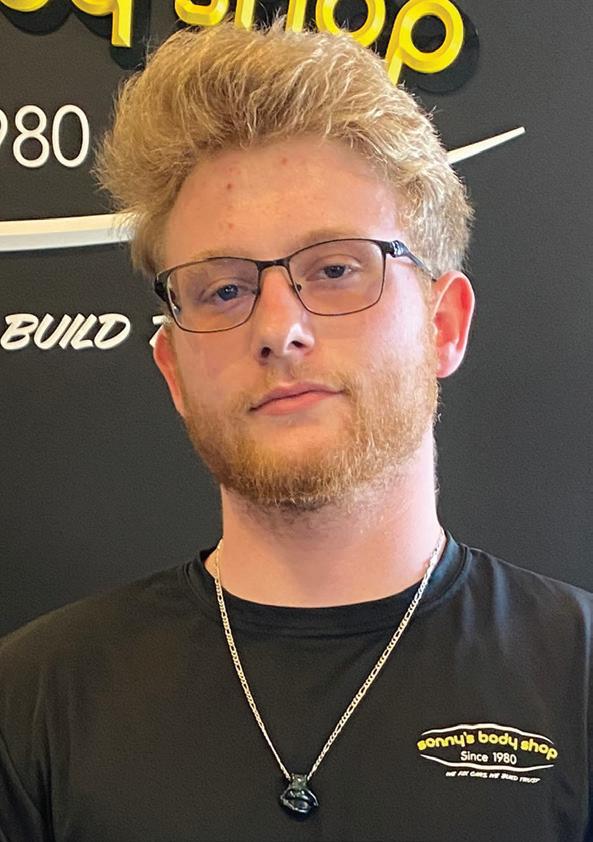
TRAVERSE CITY BUSINESS NEWS JULY 2023 57 NEWSMAKERS
9 - Stacy Schafer has joined KW Northern Michigan as an agent.
10 - Abby Sierzputowski has joined the Traverse City office of CENTURY 21 Northland. She has six years of experience in the local market, and an extensive background in urban development and property management.
11 - Will Mills has joined Sonny’s Body Shop in Traverse City as a detailer and also performing general shop maintenance.
Plastics,
competitive markets.
11 // WILL MILLS
16 // ASHLEY JOHNSTON
12 // BILL KNABLE
17 // DANIELLE OSWALT
13 // JERRY SWANSON
14 // BRITTNEY PRIMEAU
15 // CAPTAIN MATTHEW RICHMOND
18 // JAY RANGEL
EXPOSURES
Jim Modrall and Tom Menzel attended the recent Grand Traverse Regional Community Foundation’s Legacy Brunch, which celebrated Community Guardian Legacy Society members, a group of community-minded individuals and couples dedicated to making a long-term investment in the region. The event was held at the Village Piazza at Grand Traverse Commons. Photo by Courtney Kent Photography

Traverse Connect’s Cocktails & Connections event was held at Flight Path Creative’s new building and sponsored by Dart Bank. Pictured are Aaron Swanker, Flight Path creative director/co-founder, and Cooper Riehl, a software engineer.

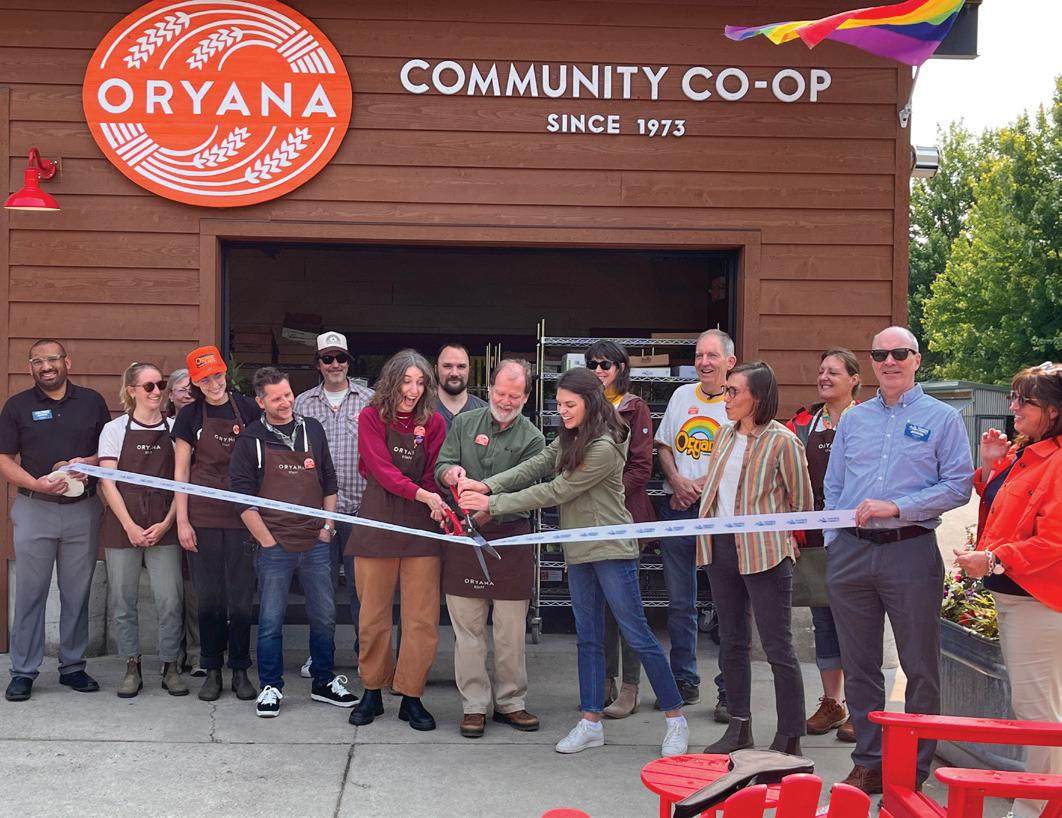

The

Construction team won the HBAGTA Third Annual Golf Challenge at Interlochen Golf Course. (Pictured l-r): Randy Hutchinson, Nick Pinto, Greg Pinto and John Pinto. The golf challenge raised over $18,000 that will go to support construction workforce development efforts in northern Michigan, including scholarships and educational programs.

Serra Subaru of Traverse City (in partnership with Subaru of America as part of Subaru Loves to Care) presented the Cowell Family Cancer Center with 100 blankets and arts and craft kits, and donated $2,500 to help offset treatment expenses patients may incur. Presenting on behalf of Serra Subaru of Traverse City were Sales Manager Mike McFarlan and Executive Manager Jerry Zezulka.

58 JULY 2023 TRAVERSE CITY BUSINESS NEWS
Chris Milliron, chief lending officer at TBA Credit Union, and Christie Dompierre, project manager at TBA, mingled at Applied Innovation’s reception celebrating its new 8th Street building.
Oryana recently marked its 50th anniversary with a ribbon cutting. On hand to cut the ribbon was GM Steve Nance and other staff members.
Pinto

TRAVERSE CITY BUSINESS NEWS JULY 2023 59 564
businesses participated in our Demand Response Program last year.
Together, they earned over $6.7 Million in financial incentives and reduced enough energy to run an entire power plant. Join your business neighbors in cutting your carbon footprint and saving money that can go back toward your bottom line. Show your commitment to a clean energy future and become part of If you’re ready to join the community, go to consumersenergy.com/demandresponse to learn how you can be part of something bigger. Reduce energy use Save money Get bill credits for Michigan
Michigan
Have you heard?








60 JULY 2023 TRAVERSE · ·
- Judi, Heather, Barb, Kristine
