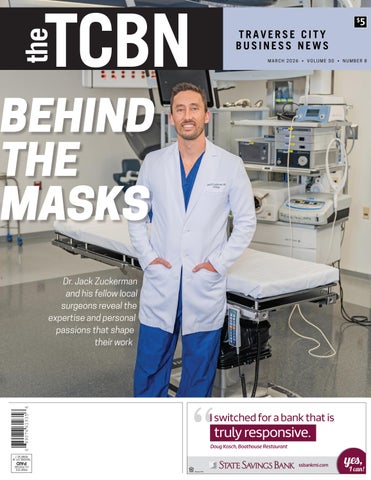
BEHIND THE MASKS
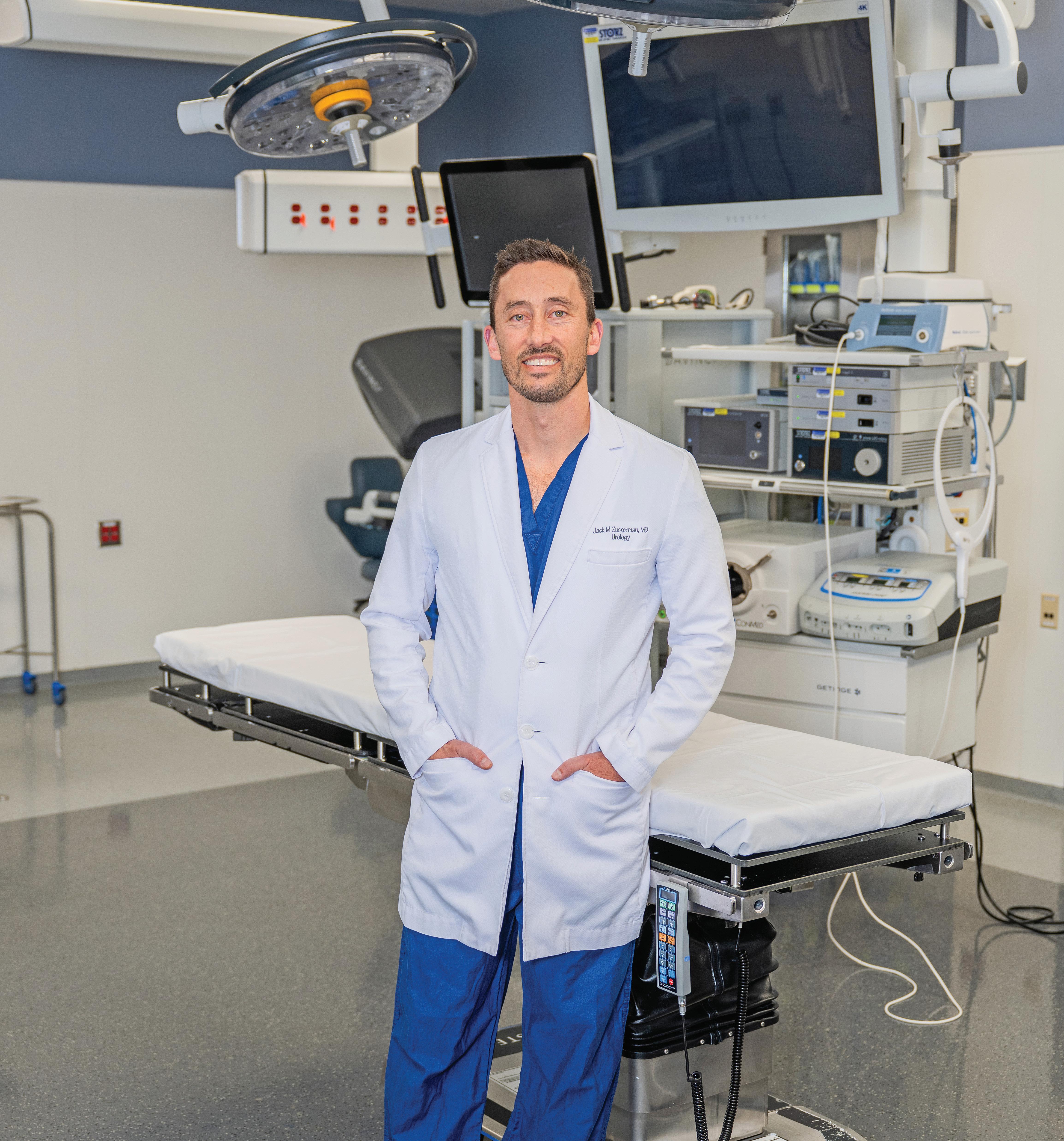

Dr. Jack Zuckerman and his fellow local surgeons reveal the expertise and personal passions that shape their work
“ truly responsive. I switched for a bank that is
Doug Kosch, Boathouse Restaurant




Dr. Jack Zuckerman and his fellow local surgeons reveal the expertise and personal passions that shape their work
“ truly responsive. I switched for a bank that is
Doug Kosch, Boathouse Restaurant
Office 5931 Oakland Drive Portage, MI 49024 269-385-5888 or 888-777-0216
• We uphold a Fiduciary Standard and work with clients on a fee-only basis.
• We do not receive commissions, kick-backs, or soft dollars from product sales, eliminating inherent conflicts of interest.
• Our team of professionals holds designations and degrees such as CFP®, CFA, CPA, MBA, JD, and PhD.
• Charles received his MBA from the Kellogg School of Management - Northwestern University, his MA in Economics from WMU, and Executive Education from Harvard Business School and Columbia University.
• Ranked #1 on Barron’s list of America’s TOP Independent Advisors for 2025. Charles has achieved the #1 ranking four times within the past five years.*
• Ranked #4 in the nation on Forbes’ list of TOP Wealth Advisors and is the highest-ranking Fee-Only Advisor on the list.*
Minimum investment: $1,000,000 in Michigan/$2,000,000 outside of Michigan. Assets under custody of LPL Financial and Charles Schwab.

The Grand Traverse Bay YMCA has officially entered the public phase of its capital campaign, moving the long-anticipated expansion project into its final stages ahead of a planned May groundbreaking. The total cost of the project is just over $13 million, with $8.2 million already raised through early leadership and private gifts. The expansion of its campus on Silver Lake Road includes a 50,000 square-foot space - part renovation, part addition - featuring a gymnasium with two full-size basketball courts, an elevated walking track, expanded fitness and childcare spaces, wellness studios, multi-purpose classrooms and additional parking. This expansion represents the first of two planned growth phases, with a fieldhouse facility envisioned sometime in the future. According to officials, the West Y campus is operating at capacity, currently serving 17,000 members, with an additional 7,000 individuals visiting annually for various programs.

Munson Healthcare recently opened an Outpatient Specialty Care Clinic in Elk Rapids as part of ongoing efforts to provide greater access and convenience to patients. Located at 115 Bridge St., the clinic offers consultation in three specialty areas in addition to existing lab services. Neurologists Nick Zendler, D.O., and Anne Pawlak, D.O.; neurosurgeon John Campbell, M.D.; and rheumatologist Nicole Tramontini-Gunn, M.D. see patients at the location. “Transportation is one of the greatest barriers in rural healthcare,” said Laura Glenn, COO of Munson Healthcare. “We’ve seen how specialty
outreach in a variety of areas has benefited patients in many of our communities and we’re excited to be expanding this access to our specialists in neurosciences and rheumatology.”
Traverse City’s Elite Appliance Service has joined Big Lake Appliance Service, headquartered in West Michigan, creating a partnership that will include faster service and expanded access to premium appliance repair. Jonathan Davis, Elite founder and lead technician, will continue serving customers. “This allows me to focus even more on what I love — helping customers and fixing appliances — while Big Lake handles the behind-the-scenes support,” said Davis.

20Fathoms and Venture North in Traverse City recently announced the recipients of just over $48,000 in small business grants. Local businesses receiving approximately $4,500 include Earthen Ales (Traverse City), Great Lakes Chocolate & Dessert Co. (Traverse City), Grocer’s Daughter Chocolate (Empire), New Moon Yoga (Traverse City), Popcycle (Maple City), Townline Ciderworks (Williamsburg), and Water Bearer Coffee (Traverse City). The recipients were selected based on their company’s strategic need for funds, as well as the expected impact on the local economy. There was also a focus on supporting those founded by individuals who are traditionally underrepresented in entrepreneurship. The selected businesses include a disabled-owned business, Indigenous-owned business, and 60% of recipients are women-owned businesses.
The NeedlePoints North launched last month in Traverse City. Founded by Becki Barnwell and Susie Wipperman, the e-commerce destination (theneedlepointsnorth. com) also has a pop-up shop in downtown Traverse City at 109 East Front St., Unit 215-A, offering canvases and other needle-



We’ve got your back! Our thoughtful and knowledgable insurance agents are here to make sure you're covered from head to toe— protecting what matters most, no matter the season!

point essentials and classes. “We’ve been stitching for a while, so we know the real joy is in the process,” said Barnwell. “Needlepoint is a way of saying, ‘Nope, I’m taking this time back.’ It’s about reclaiming peace, one stitch at a time.” The duo is on the hunt for a permanent home.
Eighteen employers across northwest Michigan have been awarded more than $1 million in the first cycle of the 2026 Going PRO Talent Fund (GPTF) awards, fueling workforce training for 460 employees. The awards highlight the region’s continued commitment to growing, retaining and up-skilling talent in high-demand industries. Local awardees include Cultured Ferments Company, Mawby Sparkling Wines, Moore Mechanical, Pro Image Design, Precision Plumbing & Heating Systems, RJG, SEEDS, Serra Toyota and Great Lakes Orthopaedic Center
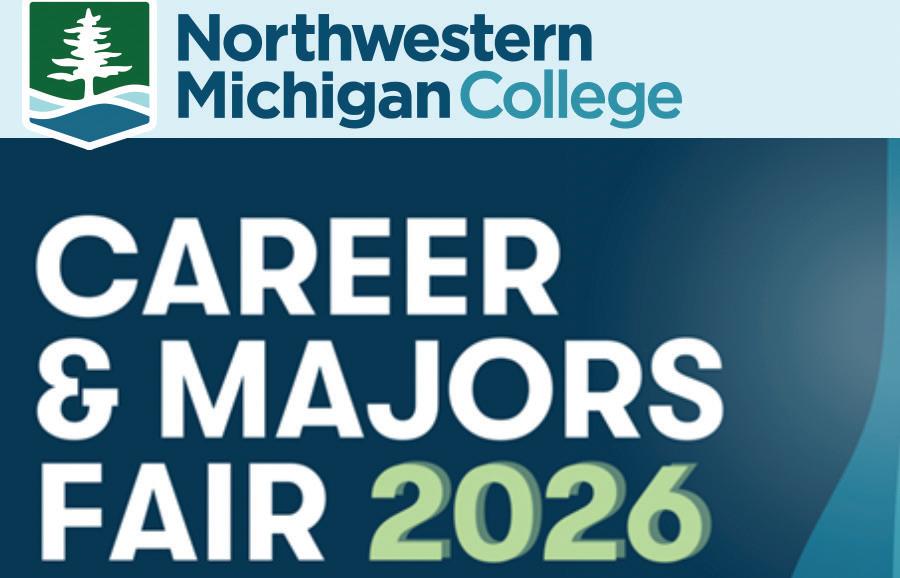
There is still time for area employers to register for Northwestern Michigan College’s 20th annual Career and Majors Fair at the Hagerty Center on NMC’s Great Lakes Campus, Friday, April 10, 1-5 p.m. Employer registration (nmc.edu/careerfair) is $50 ($25 for nonprofit organizations). The fair is expected to attract several hundred attendees and will feature the state’s Sixty by 30 and Michigan Reconnect initiatives, which promote continued education for degree-seeking adults seeking better employment opportunities.
Delta Air Lines recently announced increased summer connectivity with daily nonstop flights between Traverse City’s Cherry Capital Airport and Boston. The schedule, which begins May 21 and runs through September 7, is designed to give passengers greater flexibility and convenience during the peak travel season.
The Grand Traverse Regional Community Foundation recently welcomed eight new community members to its board of directors, the organization’s voluntary governing body comprised of individuals from across the region. They include Deb Allen of Grand Traverse County, Oran Hesterman of Leelanau County,
Brad Kik of Antrim County, Sara McGuire of Antrim County, Susan Odgers of Grand Traverse County, and Don Sheets of Leelanau County, as well as two new youth representatives to the board, Lilyana Gunther-Thompson of Benzie County and Coltrane Paryani of Kalkaska County.
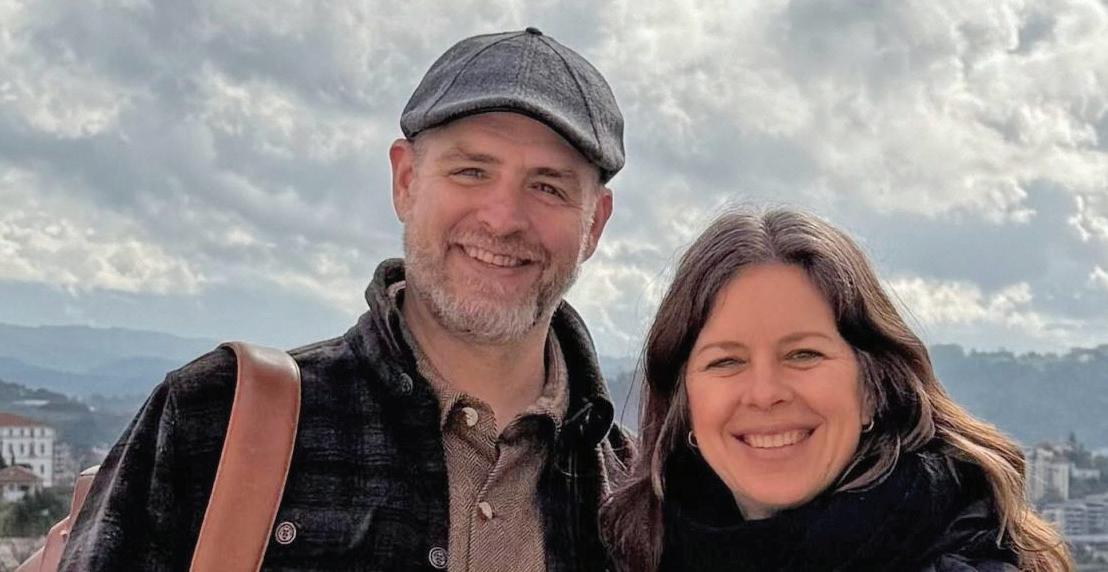
Great Lakes Sailing Company has announced new ownership, following the purchase of the company by longtime employee John Dykhuis-Deely and his wife, Brooke Dykhuis-Deely, from previous owner Dave Conrad. John brings more than 30 years of experience in the maritime industry, with a background in sail training, marine engineering and project management. He has served as service manager for Great Lakes Sailing Company since 2021 and will lead expanded efforts to enhance and broaden the company’s marine service offerings to include power boats. Brooke is focusing on elevating the customer experience. More information on the company can be found at greatlakessailingco.com.
“FUTURE-FOCUSED EDUCATION”
Northwestern Michigan College will explore how higher education and training are working to better meet the needs of regional employers and the workforce in an upcoming Economic Strategy Session hosted by Traverse Connect. Led by Jason Slade, vice president of strategic initiatives at NMC, the session will include examples of college-business partnerships, how these partnerships can help businesses stay competitive, and resources available to support employee training and upskilling. More details and registration for the March 18 event at the Traverse City Country Club available at traverseconnect.com.
The Grand Traverse Area Manufacturing Council is set to hold the annual Northern Michigan Manufacturing Summit - the premier gathering of industry leaders, innovators, and professionals shaping the future of manufacturing - on Mon., Apr. 13, at Traverse City’s Hagerty Center. From emerging technologies and AI-driven advancements to workforce development strategies and supply chain resilience, the full-day conference will tackle the most pressing challenges and opportunities in manufacturing today. Registration is available at traverseconnect. com/gtamc_summit.
Please send Briefly submissions by the 15th of the month to news@tcbusinessnews.com.
Tax-smart strategies for affluent families, pre-retirees, and retirees, designed to grow, preserve, and transfer wealth.
Eric Braund, CFP Founder ®
For portfolios with $1M+ in investable assets.
● Fee-only fiduciary wealth management
● Integrated tax & investment planning
● Retirement income designed to reduce lifetime taxes
● Multi-generational wealth & legacy planning

All investment advisory services are offered through Black Walnut Wealth Management.








As the snow begins to melt and the promise of spring returns to northern Michigan, our region comes alive with renewed energy for growth and collaboration. Against this vibrant backdrop, there are exciting local developments with national implications.
Northern Michigan will again welcome the United States defense industry this March as host of the second Northern Michigan Defense Conference, taking place March 5 and 6 in Traverse City. Organized by Traverse Connect and sponsored by Century, Inc., and the National Defense Industrial Association (NDIA) Michigan Chapter, the two-day conference convenes industry leaders, defense experts, manufacturers and small-business innovators to explore the growing opportunities in defense, aerospace and federal contracting.
This gathering reflects something larger than a single event: It signals northern Michigan’s accelerating role in a rapidly evolving statewide and national defense and innovation ecosystem.
That momentum comes as Governor Gretchen Whitmer released Michigan’s Defense and Aerospace Strategic Plan, a roadmap to strengthen the state’s position as a leader in defense manufacturing, advanced mobility and dual-use technologies. For northern Michigan, the plan affirms what regional leaders recognize: Our geography, infrastructure, and talent base place us in a uniquely competitive position.
Michigan’s defense legacy is deep. During World War II, Detroit earned the title “Arsenal of Democracy,” a legacy that continues at the Detroit Arsenal and the U.S. Army Contracting Command in Warren. The Detroit Arsenal supports the U.S. Army Tank-automotive and Armaments
EDITORIAL & BUSINESS OFFICE
P.O. Box 4020 Traverse City, MI 49685 231-947-8787
ON THE WEB
tcbusinessnews.com
PUBLISHER
Luke W. Haase
lhaase@tcbusinessnews.com
CONTRIBUTING EDITOR
Gayle Neu gneu@tcbusinessnews.com
HEAD WRITER
Craig Manning
STAFF WRITER
Command, Ground Combat Systems and the Ground Vehicle Systems Center, representing 60% of Army vehicles.
Northern Michigan benefits from proximity to this hub and from a changing defense landscape. As the Department of Defense invests in autonomy, robotics and advanced systems, innovation is no longer limited to large defense firms. Smaller tech and advanced manufacturers, like those in northern Michigan, are now central to the supply chain, with more than $100 billion in annual federal contracts reserved for small businesses.
For many northern Michigan companies, defense contracting can feel complex or out of reach. The upcoming conference will help lower barriers for small businesses and provide support to access these opportunities.
Northwest Michigan is served by its own APEX Accelerator, federally funded through the Department of Defense Office of Small Business Programs. APEX provides no-cost, one-on-one assistance to help businesses navigate compliance, understand requirements and pursue government opportunities. TACOM’s Office of Small Business Programs also connects military and private-sector innovators.
Equally important for our small businesses is the opportunity to connect and interact with larger manufacturers. Our firms can expand their operations by supplying parts and components to larger defense contractors.
Private investment underscores the region’s potential. Saab, Inc. is advancing its Grayling operations, creating over 70 full-time jobs in production, engineering, and management. This reflects confidence in Michigan’s workforce and northern Michigan’s ability to support advanced
Art Bukowski COPY
CREATIVE DIRECTOR Kyra Cross Poehlman
CONTRIBUTING WRITERS
Ross Boissoneau
Kierstin Gunsberg
Rick Haglund
Brendan Quealy
WEB PRODUCTION: Byte Productions
MAILING/FULFILLMENT Village Press
DISTRIBUTION Marc Morris
manufacturing at scale.
Meanwhile, northern Michigan is gaining national recognition. Camp Grayling and the National All-Domain Warfighting Center were recently designated as a National Uncrewed Systems Test Site, strengthening Michigan’s role in aerial drone systems, defense testing and training. This designation places our region among a short list of strategic sites nationwide.
State policymakers recognize northern Michigan’s lead role in these sectors. Through the Michigan Advanced Air Mobility Initiative, the state is aligning workforce development, manufacturing, infrastructure and testing to accelerate deployment of advanced air mobility and uncrewed systems technologies, with many of the early pilot projects centered on Traverse City.
The Michigan Office of Defense and Aerospace Innovation is working to expand production capacity, attract manufacturers and suppliers, and support dual-use technologies that serve both national security and civilian markets. Programs like the Uncrewed Triple Challenge, a statewide competition focused on autonomous drone transport, are already driving innovation and collaboration across the state.
Michigan’s broader aerospace credentials are formidable: nearly 4,000 companies engaged in defense and aerospace, a top 10 ranking for aerospace manufacturing attractiveness, the nation’s highest concentration of electrical and mechanical engineers, and one of the country’s largest advanced manufacturing workforces.
Looking ahead, northern Michigan partners are advancing proposals to deploy advanced air mobility infrastructure as part of the FY27 state budget. A key concept – the Northern Defense Corridor – would sup-
SERVING
Grand Traverse, Kalkaska, Leelanau and Benzie counties
AD SALES
Lisa Gillespie lisa@northernexpress.com
Kim Murray kmurray@tcbusinessnews.com
Kaitlyn Nance knance@northernexpress.com
Abby Walton Porter aporter@northernexpress.com
Michele Young myoung@tcbusinessnews.com
port defense-related and dual-use operations across Northeast and Northwest Michigan, connecting radar and sensor assets from Traverse City through Grayling to Alpena. The proposal calls for $9.5 million in state investment to establish state-owned infrastructure that will attract private investment to northern Michigan.
This work aligns with broader initiatives such as the Statewide Advanced Air Mobility Strategy and our region’s development of the NorthSky Uncrewed Innovation Zone, each designed to translate policy, investment and innovation into durable regional growth.
The message for northern Michigan businesses is clear: There are multiple entry points into the defense and advanced mobility economy, whether as a startup, manufacturer, technology firm or supplier. Now is the time to explore these pathways and identify where your organization fits into this evolving landscape.
With northern Michigan firmly on the radar for significant federal and state investment, doors are opening for companies ready to innovate and collaborate. The ecosystem to support participation is growing rapidly, offering resources, expertise and networks to help businesses succeed in this dynamic sector.
The opportunity now is to align local education, workforce talent and capital with the larger defense initiatives under development. By strengthening partnerships among K-12 schools, higher education, businesses and government agencies, our region can build a workforce equipped to meet the challenges and opportunities ahead.
Warren Call is president and CEO of Traverse Connect.
The Traverse City Business News Published monthly by Eyes Only Media, LLC P.O. Box 4020 Traverse City, MI 49685 231-947-8787
Periodical postage qualification pending at Traverse City, MI.
POSTMASTER: Send address changes to The Traverse City Business News, PO Box 1810, Traverse City, MI 49685-1810.
The Traverse City Business News is not responsible for unsolicited contributions.
Content ©2026 Eyes Only Media, LLC. All rights reserved.
EYES ONLY MEDIA, LLC


Fernando Meza, Owner and CEO of Oneupweb
By Art Bukowski
Fernando Meza is CEO and owner of Oneupweb, a full-service digital marketing agency headquartered in the bustling Grand Traverse Commons campus. His team of about 25 serves clients from across the country. We thank him for showing us around his desk! If you have an idea for a From the Desk Of feature, please email Art Bukowski at abukowski@tcbusinessnews.com

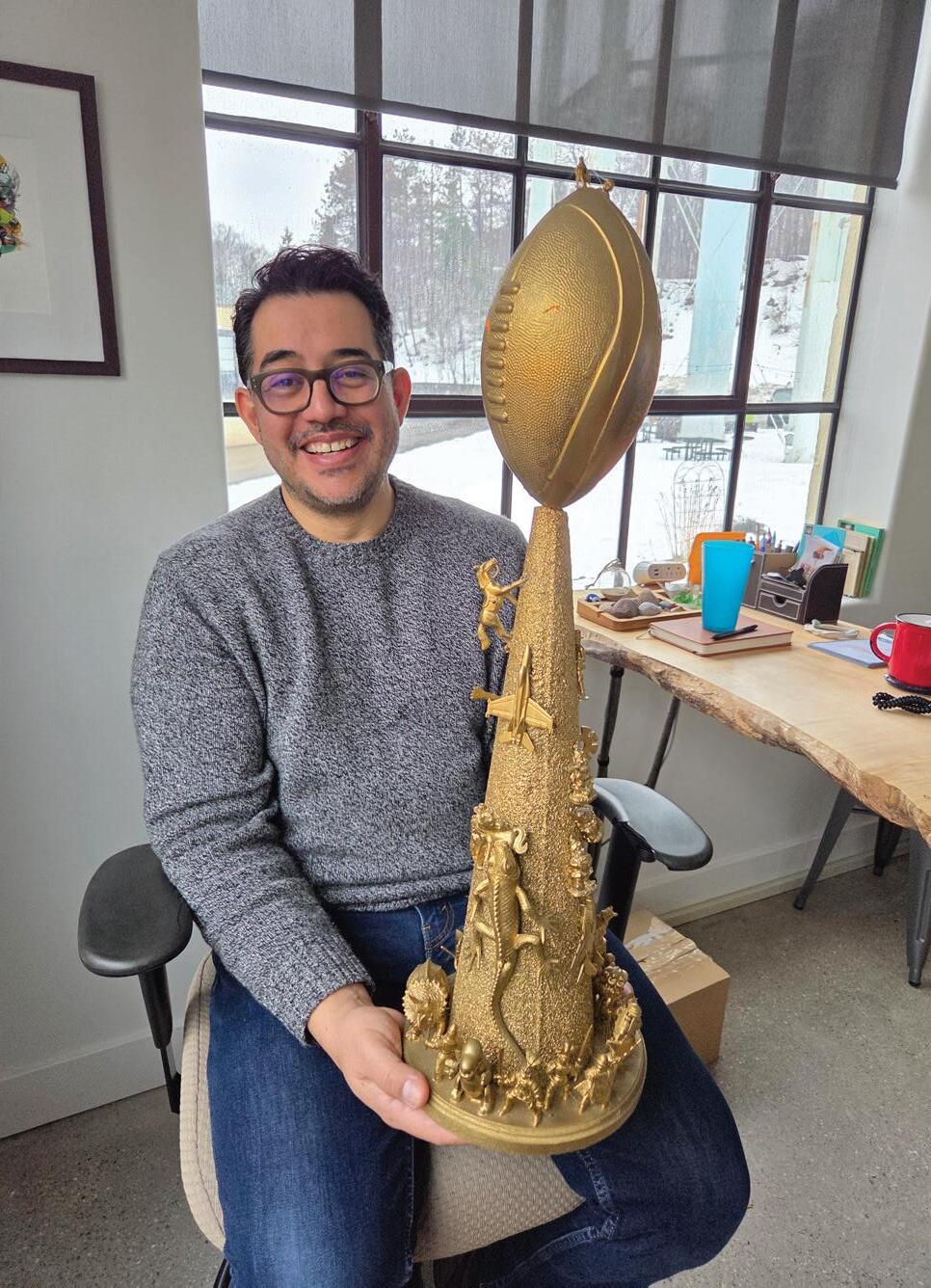
1. This desk came from a tree that fell on campus in that gnarly storm that came through in August of 2015. There were a bunch of slabs sitting in the building next door, and I turned one into this desk. It’s from one of the Norway maples they say was planted by Dr. Munson.
2. This is a subwoofer and speaker set from Harman Kardan. It’s a sick system. When you play something through this, it’s insane, and it’s also at the Museum of Modern Art in New York for design. Audio, for me, has always been a very big deal. I used to be a sound engineer and producer for commercials in my hometown of Los Angeles, and I like to think I can hear things that nobody else can.
3. That’s a photo of my beautiful wife Arminda. And we have three kids, Sofia, Luciana and Eli. People ask you what’s your why, and for me, my why has always been my family. Everything I do, I do for them.
4. My kids drew that. My schedule’s a lot more flexible than my wife’s, and my kids are in here all the time. They eat here, they play here. They’re part of the whole vibe, the whole aesthetic. I just love it.
5. I just love working at the Commons. There’s so much amazing energy, so many people doing really cool things. Even in this building alone, we’ve got phenomenal neighbors.
6. My coworkers know I love sea glass and rocks. One of my colleagues who makes a gift for everyone in our office every year is very crafty, and she made a bulb ornament with sand from Van’s Beach in Leland along with some small Leland blue stones. And we have a lot of sea glass from our old space on the bay at the Viridian building.
7. That thinking man on the wall is from a friend of mine who works for Apple as a big-time product designer. When I met him he was a lowly little intern working for an agency in Los Angeles. We stayed connected, stayed friends, and I always told him that when I made it, I wanted to have a piece of his art in my office.
8. This is our work fantasy football trophy. Anyone who wins gets this beauty, and they get to put their stamp on it by adding a little tchotchke. It’s been a lot of fun.
















By Art Bukowski
It just ain’t like it used to be.
For the second half of the 20th century, oil and gas was a huge industry in northern Michigan, with certain geologic formations attracting the attention of major multinational companies who – along with smaller players – produced millions of barrels.
Now, production levels are a fraction of what they were in those glory days, particularly in the northern half of the state, and exploration activity is down to almost nothing.
Data shows the state hasn’t cracked six million barrels of oil per year in a decade, with many years north of 25 million in the 1970s and 1980s. Recent gas production is averaging less than a third of the boom days of the 1990s. There were just 19 new holes drilled in 2025, down from
an average of 600 to 700 per year well into the 1990s.
“The bloom is definitely off the rose when it comes to oil and gas exploration in Michigan,” said Terry Beia, a longtime
With most oil and gas that can be easily extracted long gone, almost all of the big players have left, leaving behind smaller outfits that mostly focus on so-called tertiary or enhanced oil recovery techniques.
“I was told my whole life that it’ll probably be gone by the time that you’re 40, but I’m 42 now, and we’re still maintaining a lot of wells, we’re still fixing a lot of things. I’m very hopeful that I’ll retire out of this industry like my grandpa did, my dad did, my uncle did.”
– Kyle Yohe, Owner, Yohe Services
industry veteran who switched his focus to real estate years ago. “The basin is mature, the growth days in the Michigan patch are well behind us, and the low-lying fruit has been picked.”
But this isn’t an obituary. The industry still employs thousands of people, particularly in supporting roles, and there are some exciting things going on with new technologies. Many landowners continue
to receive important revenue from oil and gas leases. And any number of new technologies or discoveries could lead to another boom, particularly if supported by higher oil prices.
“One thing holds true in the history of the Michigan oil and gas patch,” Beia said. “Just when you think it’s over – it isn’t.”
Boom times
You’ll hear oil and gas people repeatedly use the term “play,” which refers to a specific set of oil and gas fields or prospects. Michigan history is marked by booms in activity around the discovery and exploitation of these plays.
Though there were others, one of the biggest was the Niagaran reef play from the 1960s into the 1980s, which pro-
duced millions and millions of barrels of oil. And everyone still talks about the Antrim shale, a primarily gas play that dominated the late 1980s and 1990s and produced trillions of cubic feet of gas.
These plays attracted massive attention and generated considerable economic activity. Pat Gibson, COO of Traverse City based West Bay Exploration Company, remembers the frenzy.
“When [West Bay] started in 1981, that was when the Niagaran reef play was really going on. Shell and Amoco were here, and they had offices down Grandview Parkway, and they had a lot of people here at that time,” he said. “It was Shell’s most economic play in the world, and they were putting a lot of resources into it.”
This meant a lot to many people throughout northern Michigan, particularly in high production areas like Kalkaska, Antrim and Otsego counties.
“My wife and I both went to Forest Area High School [in Fife Lake], and I would say that probably 75 percent of people we went to school with, their dads worked in oil and gas,” Gibson said. “And they made good money.”
Save for a few spikes here and there, particularly when oil prices were higher, the major players left over the next several decades as resources were extracted and better opportunities presented themselves elsewhere.
West Bay Exploration still employs 24 people in Traverse City, but almost all of its Michigan activity is now downstate. That pattern has repeated itself with several companies that were started and are still headquartered in northern Michigan, but that now focus in large part elsewhere.
John Wilson’s Ludington-based Western Land Services works with landowners to acquire leases for a variety of energy projects. The company used to be exclusively in oil and gas in Michigan, but now focuses on oil and gas in other states and renewables everywhere.
“Most of our current Michigan work is

“There are a limited number of geologic formations that will produce oil and gas, and as of this minute, those have been identified and drilled. It takes that new idea or a new geologic formation, or a different way of drilling for it or exploring for it to bring things back. What changes the environment is when somebody thinks different.”
– Pat Gibson, COO, West Bay Exploration
on renewables,” he said. “The oil and gas side keeps a couple of people busy, but in the old days it kept 50 people busy.”
But oil and gas is still coming out of the ground here, and the industry supports many people throughout the region.
“Oil and gas still means a terrific amount to this area. It’s not like it used to be, but there’s still a big impact,” said Rod Christopherson of Kalkaska-based Lambda Energy. “It still employs a lot of people in the area, whether it’s trucking, roustabout services, drilling services, maintenance services. It’s not the Shell boom or the Amoco boom of yesteryear, but there’s still a lot going on.”
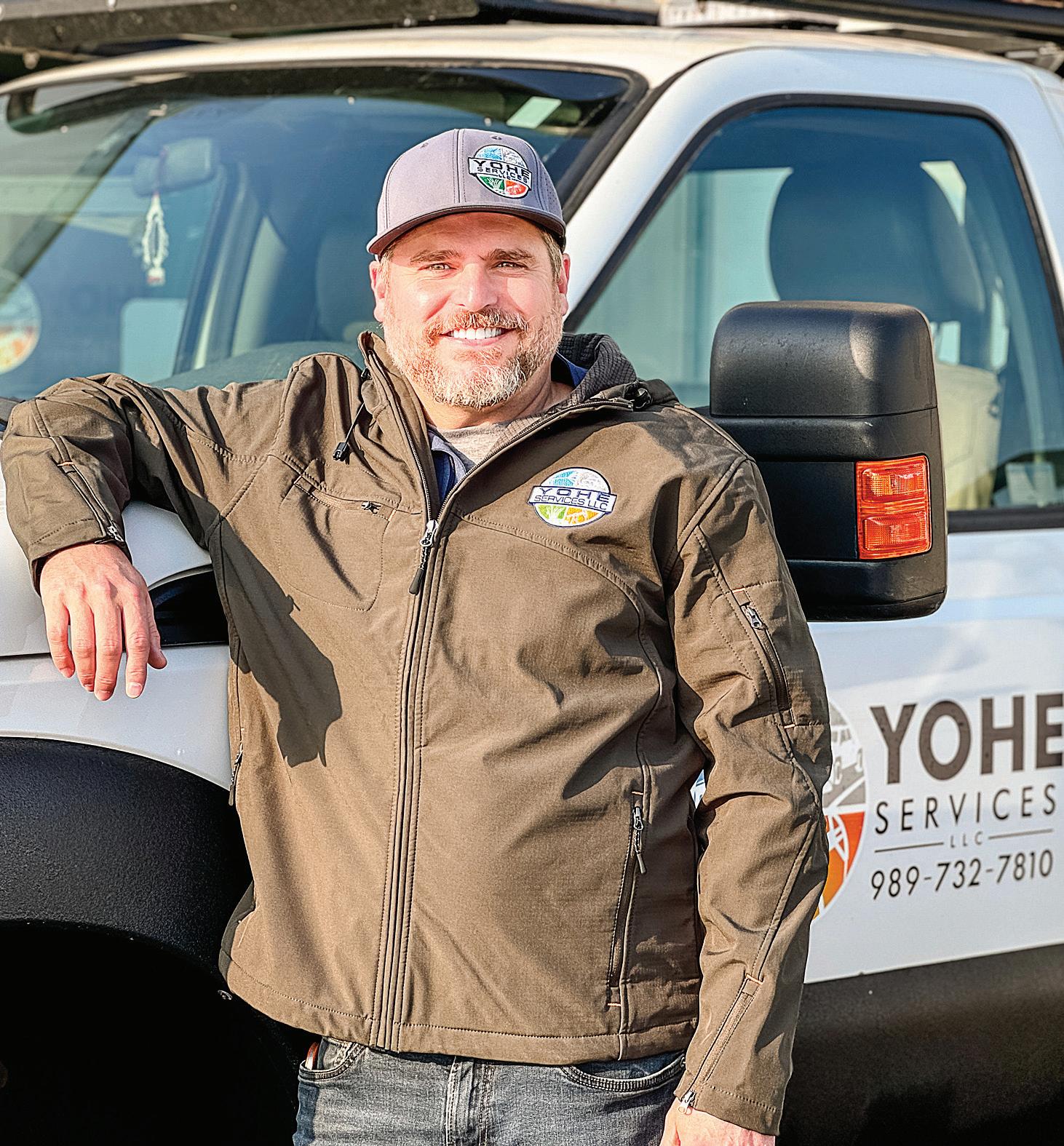
Among those keeping busy are Kyle Yohe and his team at Yohe Services, a Gaylord-based company that tends to about 750 natural gas wells in the northern half of the state. Their job is to keep these wells functioning throughout the year for a variety of clients.
“We’re just a small blip in the pan, and we’ve got 25 employees,” Yohe said. “There’s still a lot of jobs, and there’s a lot of people that are still dependent both the Antrim and Niagara plays.”
Players like Core Energy in Traverse City and Lamba are also making ground with advanced techniques. Core, run by Bob Mannes, injects carbon dioxide into spent wells to re-pressurize them and extract more oil. This has an added benefit of permanently sequestering that carbon dioxide in the ground once the well is resealed. This is unrelated to the highly
contentious practice known as to hydraulic fracturing, or “fracking.”
“As I like to tell people, we’ve been capturing carbon long before it was cool,” Mannes said.
The CO2 used by Core would otherwise go to waste, and the company is in the early stages of other projects to sequester carbon underground without oil recovery.
At Lambda, they’re actually repressuring wells with purchased gas itself, a “spend money to make money” approach that produces new gas or oil at a profit.
“We pull more natural gas liquids and oil out of the reservoir,” Christopherson said. “For every unit of gas we put in, we get more back.”
Challenges are plenty. Oil prices are low, which puts a major damper on exploration and production. Regulations are also higher than in other states. Wilson was surprised, for example, to find it easier to drill in a state known for its environmental ethos.
“We drilled wells in California over the last couple of years, and I’d say our regulations here are as stiff or stiffer than California,” Wilson said. “Not that that’s wrong or anything, but it does make the cost of drilling higher.”
A reduced support network has also driven an increase in costs.
“A lot of the tier-two suppliers, the service companies, when they’re not staying busy enough, they’re going to just close up shop or they’re going to pull out of
Michigan and stay down in Pennsylvania or Ohio,” Mannes said. “There’s certain services we used to get right out of Kalkaska that we’ve got to dispatch out of Ohio now, and that just costs time and money.” There is also continued and constant pressure to find more oil and gas for those still in the production arena. It is, after all, a finite resource.
“Every day, an oil and gas company is smaller than the previous day, because our value is measured by the oil and gas reserves that we have in the ground,” Mannes said. “And as we produce each day, it’s diminishing, so you’ve got to keep up with the exploration to keep replenishing the reserves.”
Everyone who spoke to the TCBN for this story said that while the northern Michigan oil and gas scene is a shell of what it once was, that doesn’t mean it will be that way forever.
“It’s a dying industry right now, and we need a new geological idea that is commercial to revive it,” said Wilson of Western Land Services. “But Michigan has been through this cycle numerous times. They did the Traverse, they did the Dundee, they did the Richfield, then along came the Niagara play, and Michigan became a national phenomenon before that petered out. Then along comes the Antrim.”
Ultimately, with the low hanging fruit




extracted, it will take a new process, concept (or discovery of more oil or gas) to set off another boom.
“There are a limited number of geologic formations that will produce oil and gas, and as of this minute, those have been identified and drilled,” West Bay’s Gibson said. “It takes that new idea or a new geologic formation, or a different way drilling for it or exploring for it to bring things back. What changes the environment is when somebody thinks different.”
Wilson pointed to Gibson and his team doing just that in southern Michigan not that long ago.
“West Bay revived the Utica play down in southern Michigan. They developed seismic techniques that allowed them to image these dolomite fractures, and
they started drilling wells in a play where historically you hit one out of 15 or out of 20 wells, and they were hitting one out of two,” he said. “So all of a sudden, people
Mannes says.
“We’re not done,” he said. “There’s investment dollars out there, we just need good geologists to come up with
“One thing holds true in the history of the Michigan oil and gas patch: Just when you think it’s over – it isn’t.”
– Terry Beia, industry veteran
started exploring down in southern Michigan again. A lot of wells got drilled and lot of hydrocarbons got recovered.”
The money will always be there ready to fuel another northern Michigan oil and gas boom if the resources – or a new way of getting to them – can be clearly demonstrated,


good prospects.”
Mannes, who says “there’s always room for optimism” in the industry, points to it being a good time for anyone looking to enter the field.
“The workforce is aging, and there’s a huge opportunity for people that are curi-
ous about our business that are ambitious and that have some entrepreneurial spirit,” he said. “I’d say come on in, the water’s fun. These are good paying jobs, and you’re making a product that people need.”
Yohe says he remains hopeful for the industry’s future.
“I was told my whole life that it’ll probably be gone by the time that you’re 40, but I’m 42 now, and we’re still maintaining a lot of wells, we’re still fixing a lot of things,” Yohe said. “I’m very hopeful that I’ll retire out of this industry like my grandpa did, my dad did, my uncle did.”
Editor’s note: The TCBN thanks Scott Bellinger at Michigan Oil and Gas News for his assistance with historical data, photographs and resources for this story.


By Brendan Quealy
Rising seems to be the pattern for many of northern Michigan’s private clubs. Rising costs. Rising prices and fees. But also rising membership.
In 2016, a golf initiation fee at Traverse City Country Club (TCCC) was $3,000. A social membership required $750 to join. Today, those numbers are $35,000 and $17,500, respectively. Yet TCCC’s membership a decade ago was fewer than 300. Now, that number sits above 550. At first glance, that math doesn’t make much sense. Increased costs can often cause people to shy away, keep their pocketbooks closed and their purse strings drawn. That sentiment is not just for country clubs but across nearly every sector of life. Yet private clubs in northern Michigan are not shrinking under that pressure. They are growing and, in many cases, getting younger.
“It’s all about evolving with the members,” said Susan McElduff, the club’s membership and marketing director. “If you don’t keep up with the Joneses, you’re going to fail.”
TCCC’s evolution
TCCC’s evolution includes more than
golf alone. While parents enjoy a glass of wine and linger over an early dinner during a harsh northern Michigan winter, their children enjoy the Tee Box — an activity center that allows them to release pent-up energy that might otherwise be trapped in thick coats and boots. Outside, the tracks of cross-country skis snake across the fairways, a quiet promise of the year-round life the club offers.
growth is not the result of luck or nostalgia: It is the result of deliberate reinvention.
The club wasn’t raising prices and hoping people would see the value. It was building the value first, McElduff says.
In 2024, TCCC completed a first-floor renovation that modernized its dining spaces with colors inspired by Grand Traverse Bay. A new general manager brought renewed focus to food and beverage.
“Members are increasingly drawn to the Club not just as a place to work out, but as a social and lifestyle hub. Golf, tennis, pools, family programming, holiday celebrations, member-only events — it’s a community.”
– Dawn Olsen, Director of Spa and Recreation, Grand Traverse Resort and Spa
In 2018, members asked for an outdoor pool. The club broke ground that December so it could open by summer 2019. The following year, a 4,000 square-foot clubhouse expansion brought a state-of-the-art fitness center, and the old gym became the Tee Box. Kids Night Out programming was added twice a month, giving parents a reason to stay for dinner or events while their children played in a supervised space.
Those decisions marked a philosophical shift, and McElduff says the continued
In August 2025, the club began its first major golf course restoration in 30 years, working with Renaissance Golf Design to return the course to its early 20th-century character. Originally expected to take three years, favorable weather shaved nearly a year off the timeline.
Each project, McElduff says, came directly from member input.
The club created what she calls a “listening post,” giving members near-constant access to management for feedback, suggestions and concerns through newsletters, texting and regular communication.
The investments paid off in ways the club did not fully anticipate.
“Younger members were bringing their friends to the pool and social events,” McElduff said. “Those friends became members. That was a nice surprise.”
The COVID-19 pandemic, while disruptive in many ways, accelerated the shift. Families spending extended time in Traverse City found themselves drawn into a club that was active, inviting and flexible.
Today, the average member age is 59. But beneath that number is a different story as more than 60 families under 40 are actively engaged in TCCC’s programming.
“We want to speak with individuals under 40 because their children are going to grow up here,” McElduff said. “That’s the legacy.”
To make that possible, initiation fees for members under 40 can be spread over five years rather than paid all at once.
McElduff says the fastest-growing segment of membership is nonresident members — people who live elsewhere for part of the year but want a community
when they are in northern Michigan for the summer or extended seasons.
Across town at the Grand Traverse Resort and Spa, the club experience looks different but follows the same logic.
The Club at the Grand Traverse Resort operates less like a traditional country club and more like a year-round lifestyle center.
“Members are increasingly drawn to the Club not just as a place to work out, but as a social and lifestyle hub,” said Dawn Olsen, director of spa and recreation. “Golf, tennis, pools, family programming, holiday celebrations, member-only events — it’s a community.”
Like TCCC, the Club has seen increased interest from seasonal residents and remote workers. Flexible options allow members to tailor access to their schedules.
The top tier of membership, known as the Bear, functions much like a traditional country club, with unlimited golf on the resort’s three courses along with full access to fitness facilities, indoor and outdoor pools, tennis and pickleball courts, winter sports equipment and a full calendar of social events.
The initiation fee is $7,500 for families and $6,500 for individuals, with monthly dues of $260 and $230, respectively.
More flexible options exist for members
who are less golf-focused or spend only part of the year in the area.
The Village option emphasizes fitness, pools, racquet sports and social access, while offering discounted golf rather than unlimited play. That option requires a $950 family initiation fee and $140 in monthly dues, or $675 and $115 for individuals.
The resort also offers a “Pick 6” membership, allowing members to choose any six consecutive months of access each year. Pricing mirrors the Village plan but with slightly higher monthly dues of $165 and $125.
Recent updates at the GT Resort include new weight machines, resurfaced indoor and outdoor tennis courts, spa upgrades, a redesigned gym boutique and wellness additions such as a cold plunge. Upgraded locker rooms with saunas, hot tubs and steam showers, along with personal training and group fitness, have become major draws.
Taken together, the two clubs illustrate a subtle but important shift: Private clubs are no longer selling golf as the primary product – they are selling community.
At TCCC, that means cross-country ski trails in the winter, trivia nights, eu-

chre tournaments and a social calendar that runs year-round and includes events such as Burgers, Beers & Bingo. At the GT Resort, it means birthday parties for kids, holiday celebrations and membership structures that recognize how modern families live.
“Sometimes people are looking for something inexpensive,” McElduff said. “But they’re not necessarily looking for a community. That’s what we offer here.”
The numbers still stand out. A golf initiation fee rising from $3,000 to $35,000
and a social initiation from $750 to $17,500 in a decade might have some experiencing sticker shock. But McElduff and Olsen maintain those increases reflect more than just inflation. They reflect expanded amenities, higher payroll, capital projects and a broader definition of what membership includes. For many affluent households — especially those who spend only part of the year in northern Michigan — clubs offer something difficult to replicate elsewhere: an instant network, a routine and a place where children and adults alike feel known.


Advisors expect another good year for investors despite ‘headline noise’

By Rick Haglund
Investors are facing another year of economic and geopolitical anxiety, one that is arguably more perilous than last year.
But, similar to 2025, the markets are largely shrugging it all off, portending another good year for investment portfolios.
“I think it’s going to be a lot like last year,” said Jay Berger, a partner at Independent Wealth Management in Traverse City. “We’re liable to have a ton of headline noise.”
It’s been pretty noisy already. President Donald Trump has alternately rattled and reassured the markets with a steady stream of moves, including enacting and rolling back tariffs, toppling Venezuelan President Nicolás Maduro and threatening the independence of the Federal Reserve.
But many on Wall Street say they think the resilience of the economy, which has experienced strong growth since the end of the COVID-19 pandemic, healthy corporate earnings and a boom in artificial intelligence spending will lead to another good year for investors.
The 128-year-old Dow Jones Industrial Average, a popular barometer of market strength, hit 50,000 for the first time in early February.
Wall Street firms are forecasting
a fourth straight year of double-digit growth this year in the S&P 500 index of the 500 largest U.S. publicly held corporations, but a likely slowdown from 2025. Goldman Sachs, for instance, predicts a 12% hike in the index, down from 18% last year.
“The economy has been more resilient than expected, and markets have reflected that,” said Autumn Soltysiak, partner at hemming& Wealth Management in Traverse City.
She and other local financial advisors say they were impressed by how well markets held up during an often chaotic first year of President Donald Trump’s second term.
The president enacted a dizzying, and often changing, series of tariffs against trading partners that many economists predicted would trigger at least a mild recession. Yet the U.S. economy continued its steady, post-COVID growth streak.
Trump also accelerated his trade war with China, threatened to seize Greenland and Canada by force, if necessary, and weakened strategic, decades-long ties with European allies formed in the aftermath of World War II.
There also have been some positives stemming from the Trump agenda. Many businesses have learned how to manage
“I think it’s going to be a lot like last year. We’re liable to have a ton of headline noise.”
– Jay Berger, Partner, Independent Wealth Management
profitably in a high-tariff-rate environment. Tax cuts in the 2025 One Big Beautiful Bill are likely to juice the economy this year as tax refunds jump. And interest rates have fallen, although they’re still higher than Trump wants.
“Headlines around tariffs and policy changes tend to sound dramatic, but so far, they haven’t meaningfully disrupted consumer spending or business activity,” Soltysiak said.
But while most economic indicators are
positive, many consumers are feeling gloomy over high housing and grocery prices, among other living costs. A Pew Research Center poll released in early February found that a whopping 72% of Americans rate economic conditions as fair or poor. Republicans were far more upbeat about the economy than Democrats.
Investors are feeling similarly distressed, some local financial advisors say, despite last year’s strong market performance.
“I never thought we’d be up 18%,” Horizon Financial President Holly Gallagher said about last year’s S&P 500 performance. “Our clients don’t feel that way emotionally.”
Gallagher said she thinks a major factor is the ubiquity of social media, which she says divides people with a steady stream of negative messages about politics and the economy.
“I swear that plays a big role in people’s lives,” she said.
Berger concurs, saying he’s seeing a lot of apprehensive clients.
“It’s hard in this environment to predict the economy, and that’s causing people a lot of anxiety,” he said. “The federal government is all over the place.”
A big worry for investors is Trump’s threats to take control of the Federal Reserve, which has long been independent of the White House.
The Supreme Court is expected to soon rule on whether the president can fire Federal Reserve Board Governor Lisa Cook, who Trump accused of mortgage fraud.
And Wall Street expressed alarm in January when the Justice Department issued a criminal subpoena to Federal Reserve Board Chairman Jerome Powell, apparently related to renovation cost overruns at the Federal Reserve’s headquarters building.
Powell, in a highly unusual response,
said the threat of criminal charges was the result of the Federal Reserve “setting interest rates based on our best estimate of what will serve the public, rather than following the preferences of the President.”
Trump has nominated Kevin Warsh, a former Fed governor to succeed Powell when his term end in May. The selection calmed markets, but there is still worry about whether Warsh will be able head off Trump’s repeated demands to lower interest rates if Warsh doesn’t think they’re warranted.
Eric Braund, founder of Black Walnut Wealth Management in Traverse City, says an independent Federal Reserve is essential for a healthy economy.
“My opinion is that maintaining independent Fed is critical for the long-term stability of the economy,” Braund said. “I don’t think what’s happening is positive in the long term. We don’t want politicians tying short-term decisions to trying to get others elected.”
Despite political and economic volatility so far this year, local financial advisors say their investment advice to clients is largely unchanged: Establish a long-term plan a stick with it.
And as in past years, they say an annual “rebalancing” of portfolios is in order.
“If your investments are up a lot, take some of that gain, sell it and buy something else that’s not up as much,” Gallagher said. “It’s forcing you to sell high and

buy low.”
Rebalancing a portfolio to align with an investor’s risk tolerance also can “eliminate any emotional reactions” to market corrections caused by adverse economic, political and unknown events, says Trevis Gillow, senior vice president of investments at Gillow Wealth Management of Raymond James.
Some advisors are recommending clients boost the percentage of foreign stocks in their portfolios because international markets are outperforming U.S. markets. Experts attribute that performance to the artificial intelligence boom in Asia,
more government spending on defense in Europe and a weaker U.S. dollar, which makes exports of U.S. goods cheaper for foreign buyers.
“It’s a great time to make sure your portfolio is globally diversified,” Braund said. “That’s a big theme we’ve been doing for the last five months with our clients.”
Creating a diverse portfolio can help insulate against political and economic upheaval that is likely to continue throughout the year, financial advisors say.
“Expected the unexpected and be prepared for volatility,” Gillow said.
The little things often make all the difference. It’s why you feel the care we’re known for from the moment you arrive. At Munson, we know healing happens when excellence is served with warmth, compassion, and sincerity. Because our care isn’t just clinical— it’s personal.



By Jeff Dennis, columnist
In my October 2025 article “Back to the Basics,” I introduced a simple three‑bucket framework for budgeting. This time, I’d like to revisit the three‑buck‑ et idea, only now with a focus on manag ing taxable income in retirement.
When most people think about diver sification, they picture portfolio construc‑ tion: allocating money across various asset classes – technology, industrials, finan cials, bonds – to avoid having all their proverbial eggs in one basket. Tax diversi fication works the same way, but instead of blending investment types, you blend tax treatments to better manage your tax exposure over time.
Hypothetical example
Consider a retired couple, both age 65, filing jointly. They receive Social Security, a pension and rental income. After deduc tions, their annual taxable income totals roughly $85,000.
They also have sizeable retirement savings: two traditional 401(k)s worth $750,000 each for a combined $1.5 million.
This couple lives comfortably without needing large withdrawals from their retirement accounts. But suppose they decide to take an additional $40,000 in a given year for a new car, home updates, major medical bills or a family emergency. Because the entire distribution is taxable, $24,200 of that withdrawal would fall into the 22% bracket, adding just over $5,000 in taxes for that year alone.
The RMD problem
A common planning oversight in volves Required Minimum Distributions (RMDs). Starting at age 73 (or 75 for those born after 1960), our couple must each withdraw about $28,300 – a com bined $56,600 – raising their annual taxable income from $85,000 to approxi mately $141,000.
The RMD calculation – based on the IRS Uniform Lifetime Table – represents about 3.7% of a 401(k) balance at age 73, and that percentage increases annually. In

practical terms, this means:
• The couple will consistently land in at least the 22% tax bracket.
• Their tax bill will rise every year as RMDs grow.
• Any additional distribution (like the earlier $40,000 example) will now be taxed fully at 22%, creating an $8,000–$9,000 tax hit on top of an already higher baseline.
three tax buckets
A diversified tax strategy relies on understanding the treatment of each type of account:
Traditional Retirement Accounts
• Pre‑tax contributions
• Fully taxable upon distribution
Roth Retirement Accounts
• Funded with after‑tax dollars
• Tax‑free distributions in retirement
Non‑Retirement (Taxable) Investment Accounts
• Gains taxed at long‑term capital gains rates if held more than one year
• Taxes apply only to the growth, not the entire withdrawal
• Often taxed at significantly lower rates than income taxes
With a mix of these three buckets, retir‑ ees gain flexibility: They can pull money from the most tax‑efficient source at any given time.
Let’s revisit our couple, this time assuming half of their retirement savings were in Roth accounts.
To take the same $40,000 distribution, they could withdraw:
• about $15,000 from traditional accounts (taxed), and
• about $25,000 from Roth accounts (tax‑free)
This keeps their taxable income in the 12% bracket for the year and signifi cantly reduces the overall tax impact. The benefits extend into RMD years as well: with only half their assets in traditional accounts, their future RMDs would drop by 50%, reducing their long‑term tax burden.
That is just at a 50/50 split between traditional and Roth; pursuing a 0% tax retirement may be technically possible but frequently is not optimal. Trying too hard to eliminate taxes can lead to unnecessary complexity, fees, or investment inefficien‑ cies. The goal shouldn’t be zero taxes – it should be the lowest reasonable lifetime tax cost.
If you don’t have a Roth or are heavy in traditional IRAs, you’re not alone. Anyone who has been saving for 20‑plus years likely contributed predominantly to traditional accounts. Roths were intro duced in 1998 and didn’t appear widely in employer plans until the mid‑2000s. But it’s not too late.
A better approach: Roth conversions
You can still improve tax diversification through partial Roth conversions. Howev ‑ er, conversions are taxable in the year they occur. Converting an entire account at once might create a massive, unnecessary tax bill.
The better approach:
• Review your expected income sources
• Understand your current and future brackets
• Use conversion strategies that spread out tax impact over time
This preserves the long‑term advan tages of tax‑free growth while avoiding short‑term fiscal strain.
Other ways to boost tax efficiency
There are many additional strategies – asset location, back door Roth contri butions, charitable planning, and estate structures, among others.
Since every financial situation is unique and missteps can be costly, it’s important to collaborate with a financial advisor and qualified tax professional to build a strategy tailored to your goals.
Jeff Dennis is a wealth advisor with 4Front Credit Union. He can be reached at jeff. dennis@4front-lpl.com or (231) 943-2652. Securities and advisory services are offered through LPL Financial (LPL), a registered investment advisor and broker/dealer (member FINRA/SIPC).

By Art Bukowski
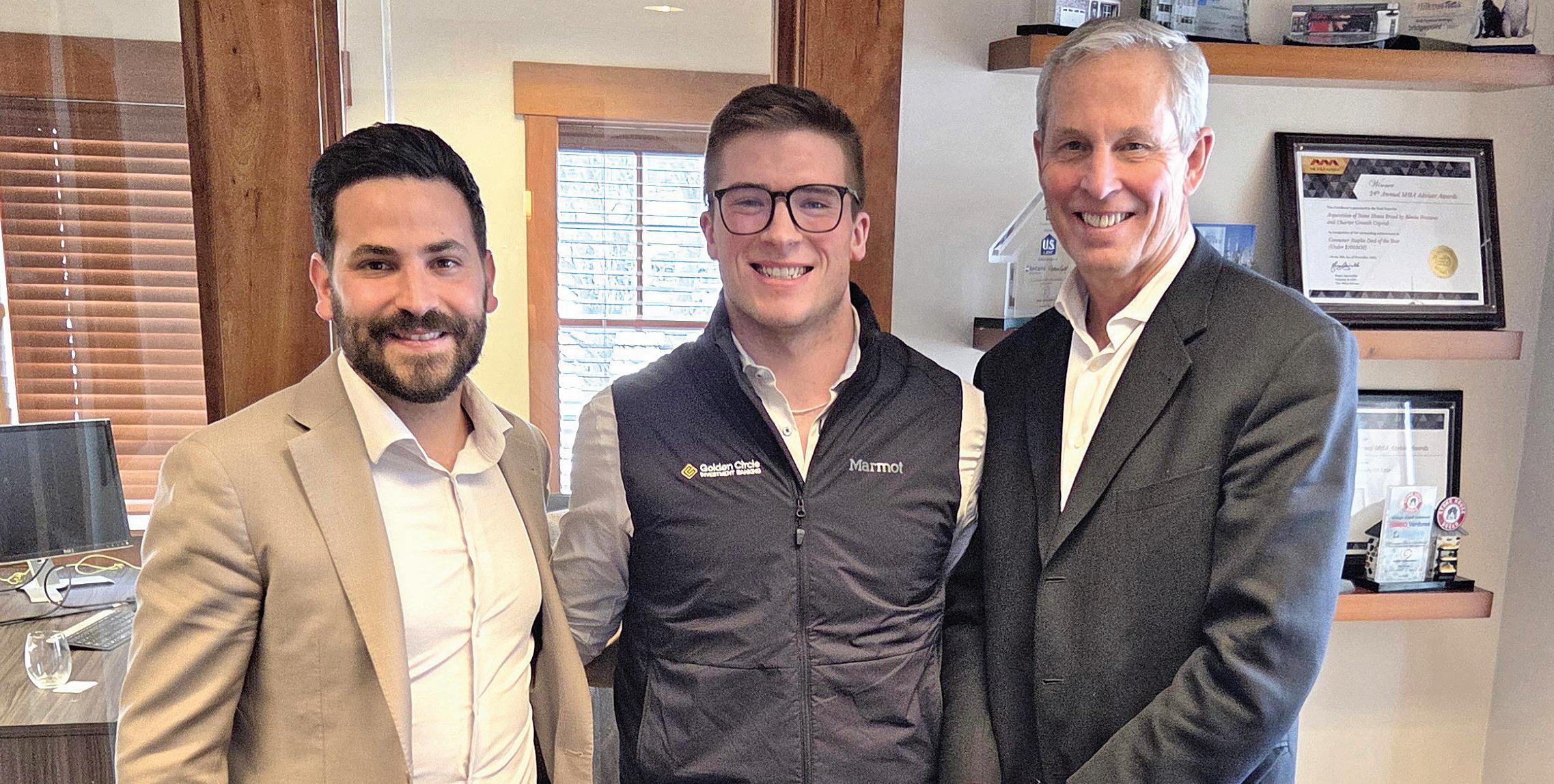
Andrew Nussbaum and his team at Golden Circle Investment Banking are in the early stages of cashing in on a big opportunity.
There’s a very deep pool of capital out there, with a lot of major groups hungry to invest in or acquire businesses. But the investment banks that connect these groups with potential targets are constantly overlooking the little guy, Nussbaum says.
Granted, little in this sense means companies with up to $10 million in earnings. But that’s still small enough to be off the radar for a lot of the biggest players in the game, which according to Nussbaum spend too much time looking “way upmarket.”
Meanwhile, a lot of the business brokers currently helping those so-called “lower middle market” companies find buyers or investment dollars are simply underwhelming, Nussbaum says. Too many just throw up a listing online and don’t have the work ethic or know-how to find and deliver solid opportunities for those business owners.
Enter Golden Circle, a Traverse Citybased outfit dedicated to helping this specific size of company find buyers, investors or other companies to acquire.
“As one example, we had a company in Pewamo, Michigan, that was a $1 million [earnings] manufacturer. A great company in a small town,” Nussbaum said. “We ran our process and ended up getting them a great deal, and they sold to one of the largest private equity firms in the world. We’re doing that all over the country now.”
Golden Circle was also a key player in the recent sale of local favorite Stonehouse Bread to the U.S. subsidiary of Grupo Bimbo, the world’s largest bakery. TCBN sat down with the Golden Circle team to learn more about their process and growth.
Nussbaum came up through a large investment banking firm in Omaha, Nebraska. He wanted to find a way to relocate to northern Michigan, where his wife was born and raised, so that they and their kids could be closer to family.
It was at his previous firm that he first noticed that smaller companies – many of which are very solid businesses with excellent growth potential – were more or less under the radar.
“They just don’t get the attention they should from investment banks, which are always way upmarket,” he said. “And so the vision I had was to take the investment banking services that I learned at my prior firm and apply it to the lower middle market. It’s just way overlooked.”
Nussbaum looked around and eventually connected with Curtis Kuttnauer, who together with Fred Manuel founded what was then known as Golden Circle Advisors in Traverse City in 2015. The pair primarily focused on mergers and acquisitions (M&A) with smaller companies throughout the state. Nussbaum joined their team in 2024, added more staff and eventually bought out Kuttnauer and Manuel.
Golden Circle’s value proposition is that no one will work harder to find the right opportunity. Whether you’re an owner looking to exit or one looking to take their business to the next level, Nussbaum and team promise a “white glove” approach that starts with deep research into your company followed by an aggressive pursuit of potential buyers or investors.
“We take you to market with an extremely active approach” he said. “We don’t just spray and pray.”
Repeatedly doing this work has a snowball effect of sorts that puts them in better
and better tune with investor groups and businesses looking to buy or invest.
“We have a pulse on where the private markets are, where the investors are, how they’re thinking, because we have hundreds of calls with those groups on the other side every week,” Nussbaum said.
To this end they offer smaller businesses a much better idea of what they’re actually worth, which is a difficult thing to pin down. Do it wrong, and you could leave millions on the table.
“Publicly traded companies have investor research people everywhere, but if I’m a $1 million manufacturer in Pewamo, how the heck am I going to know how I’m perceived?” Nussbaum said. “We provide unbelievable insight on what’s possible and real-time data for these owners to digest, not just something off the web.”
Because these businesses are often poorly or underrepresented, Golden Circle’s team can also drive much better deals for their clients.
“The reality of the situation is the investor groups have moved way downmarket, and now there’s a big mismatch between the high sophistication of the investor groups and the advisors [working with smaller companies],” Nussbaum said.
“We’re trying to line that up.”
A continued challenge is getting potential clients to see this value, though if they can get in the door, they can usually get their point across.
“We’re competing a lot against business brokers who just put the listing on the web. And it’s really tough because the owners don’t necessarily know the difference in quality of what they’re signing up for,” Nussbaum said. “But our win rate when we actually pitch is like 95% because they see the difference ... they’re like, ‘Yes, let’s do it.’”
Nussbaum and the team love the space they’re in. First, a variety of factors (including antitrust pressure and a search for better value) continue to cause large private equity firms and other investment groups to take a closer look at smaller companies.
“When I joined Golden Circle and had this thesis [about the lower middle market], folks weren’t sure if people were really going to invest down here,” Nussbaum said. “What I’ve found is there’s far more attention down here on these
deals than we could have ever imagined. And why do you think they’re down here? Because they can get a good deal.”
Second, investors are rapidly turning that interest into action.
“On the investor side, the amount of dry powder that’s on the sideline from the private equity firms, the private credit firms, it’s incredible,” he said. “They have mounds of capital that they need to get to work … and we’re seeing the largest funds in the world create lower middle market funds where they’ll invest in a $1 to $5 million earnings company.”
The good news for good businesses? If you were ever looking to sell – or for capital – now is the time.
“There are a lot more interested parties and funds that are out there that are looking to deploy capital than there are owners with quality companies that are ready to sell,” Nussbaum said. “There’s a frenzy right now to find companies.”
The right team, the right place
Golden Circle’s team of six (and growing) has both bankers and those with deep experience in the business ownership world. It’s a big selling point, Nussbaum says.
“The team that we’re made up of is very, very unique compared to other brokers or banks that are out there that only have finance people,” he said. “And that’s a big differentiator for us.”
“The reality of the situation is the investor groups have moved way downmarket, and now there’s a big mismatch between the high sophistication of the investor groups and the advisors [working with smaller companies]. We’re trying to line that up.”
– Andrew Nussbaum, Managing Director, Golden Circle Investment Banking
The talent and experience level is also “unparalleled” for a firm of its size and in this market, Nussbaum contends.
“Joe came to us from one of the largest investment banks in Chicago. Casey was at Duke University and could have worked at any hedge fund in New York or investment bank in New York. Mike’s worked for some of the largest private equity groups in the world,” Nussbaum said.
“A question I get all the time from investor groups on the other side is, ‘How the heck did you get this group of people?’”
And for a lot of the team at Golden Circle, it’s personal. Associate Casey Donahue is a Traverse City native who went off to Duke University. Instead of

following his classmates to New York or Chicago, he came home.
“For me, it’s just more impactful to be working in the lower middle market, especially coming from Traverse City and understanding the companies here and the market,” he said. “These people work their whole lives to build these companies, and they just don’t have that much representation.”
Golden Circle will continue to grow in the coming years, Nussbaum says, and it’s mostly through word of mouth.
“You kind of see the ripple effect of when you do a deal, the lawyers, the advisors on the other side or on our side, they see the quality of work we’re doing and it
just turns into way more deals for us,” he said. “Or when we sell a company, they’ll refer us to their friends because they’ve had their exit and they’re thrilled.”
Traverse City is an excellent location for a variety of reasons to serve as headquarters, but the firm will likely open an office in Phoenix and probably Florida soon, Nussbaum says, to better facilitate a growing number of deals across the country.
“The vision is to really provide that high quality, lower middle market service to the different parts of the U.S., and doing so with people like we have already, just in those other key markets,” Nussbaum said.

By Autumn Soltysiak,
Success is usually framed as a problem we hope to have. Sell a business, receive a significant equity award or watch a portfolio compound after years of strong market returns, and the assumption is that financial risk has diminished. In reality, for many accomplished business owners and professionals, success often introduces a new and less obvious challenge: concentration risk.
This risk does not show up as a sudden market drop or a poor investment decision. Instead, it builds quietly, reinforced by familiarity, confidence and recent experience. And if left unaddressed, it can undo years of disciplined planning.
Selling a business is often the largest financial event of a lifetime. While liquidity provides flexibility, it also creates a mental vacuum. Many former owners struggle with the transition from active wealth creation to passive stewardship. In the absence of a clear framework, the proceeds from a sale can unintentionally be re-concentrated.
Sometimes that concentration shows up in holding too much cash for too long, waiting for the “right time.” Other times, it appears as overexposure to a single asset class such as real estate, private investments or even a narrow slice of the public stocks that feels familiar. The risk is not simply market volatility. It is the lack of balance between growth, income, liquidity and long-term protection.
A successful exit should mark the beginning of a more intentional portfolio, not a pause in decision-making.
Stock compensation and the familiarity trap
Executives and professionals who receive stock compensation face a similar challenge. Equity awards often feel safe because employees are deeply familiar with their own company. When the company performs well, it reinforces the belief that holding more stock is prudent rather than risky. Over time, however, compensation, career and net worth can become tied to

the same outcome. This creates a form of double or triple exposure. If the company faces headwinds, income, employment security and portfolio value may all be affected simultaneously.
Managing this risk is not about abandoning confidence in the organization. It is about recognizing that familiarity is not the same as diversification. Thoughtful planning around vesting schedules, tax impact and gradual rebalancing can reduce vulnerability without forcing abrupt or emotional decisions.
Winners can become risks
Concentration is not limited to private businesses or individual stocks. It also appears in portfolios that have done exactly what they were supposed to do.
After more than a decade of strong performance from U.S. equities, particularly large-cap growth and passive index strategies, many affluent investors now find that their portfolios are far more exposed than they realize. What started as a diversified allocation has drifted into a heavy bet on a single market, style or economic outcome.
This is where recency bias plays a powerful role. Investors tend to assume that what has worked recently will continue to work. The danger is not that U.S. markets will suddenly fail, but that portfolios become unbalanced relative to future goals, cash flow needs and time horizons.
Success can lull investors into overlooking risk because nothing feels broken.
When planning shifts from accumulation to protection
The most important shift after a liquidity event or career peak is not tactical. It is philosophical. Wealth is no longer primarily about accumulation but understanding your distribution strategy. It becomes about coordination, resilience and optionality.
This means asking different questions:
• How much risk is actually required to meet long-term goals?
• Where does liquidity matter most in the next three years? In the next five?
• What risks are currently uncorrelated, and which are unknowingly stacked on top of each other?
• How does the portfolio support life decisions, not just returns?
Diversification in this phase is not about owning more holdings. It is about aligning assets with purpose, based on your timeline with an understanding of uncertainty.
The role of discipline over prediction
Managing concentration is rarely about predicting market tops or making dramatic shifts. Instead, it is a disciplined process
of rebalancing, tax-aware decisions and intentional trade-offs.
For some, that may mean gradually reducing exposure to a highly appreciated position. For others, it may involve broadening beyond U.S. stocks, incorporating income-producing assets, or rethinking how much capital is tied up in illiquid investments.
The common thread is structure. When success arrives, having a framework matters more than having an opinion.
Success deserves a second look
Affluent investors often focus on avoiding mistakes. Yet some of the greatest financial risks emerge not from errors, but from success itself. Liquidity events, equity compensation and strong market performance all deserve careful attention.
The goal is not to eliminate risk. It is to ensure that risk is intentional and aligned with the next chapter, not the last one.
Autumn Soltysiak, Vice President at hemming& Wealth Management, has been a CERTIFIED FINANCIAL PLANNER™ and investment advisor for 20 years. Soltysiak leads the firm’s investment strategy including oversight of the firm’s asset allocation process, investment selection and trading oversight. She studied portfolio management, earning a degree in economics at Michigan Technological University and the applied portfolio management program. In 2015, she merged her advisory business with hemming& Wealth Management.




Dart Bank takes aim with its Traverse City expansion
By Rick Haglund
Traverse City is blanketed with banks, but a Lansing-area financial institution is betting there’s room for another.
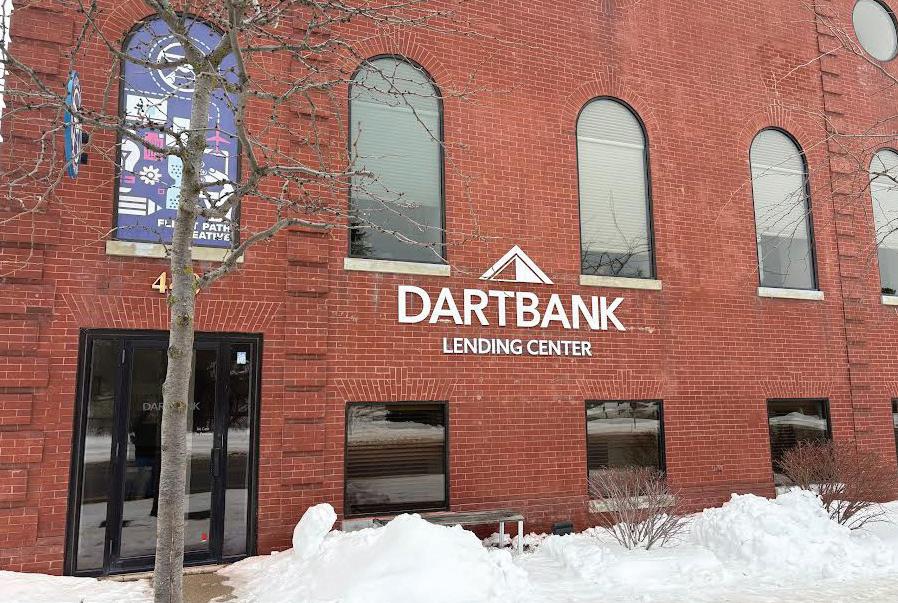
Dart Bank, based in Mason, quietly opened a loan production office last fall at 440 W. Front St. and is planning a grand opening sometime in the spring.
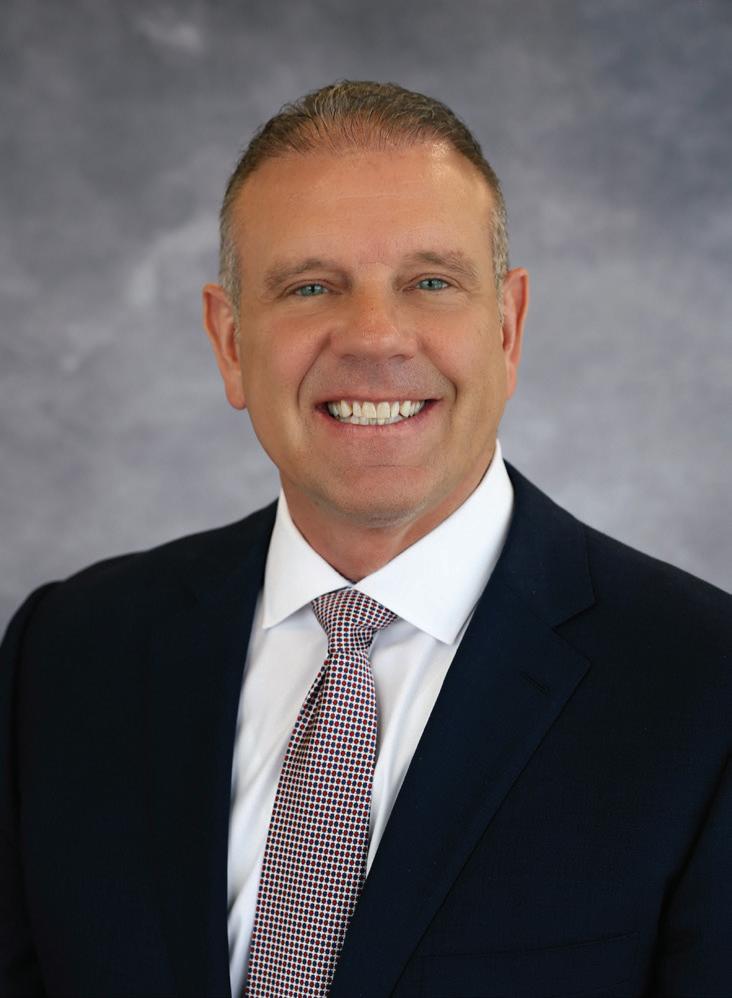
“We’ll be noticeable here soon,” said Dan Goethals, a Dart vice president and commercial relationship manager in the Traverse City office.
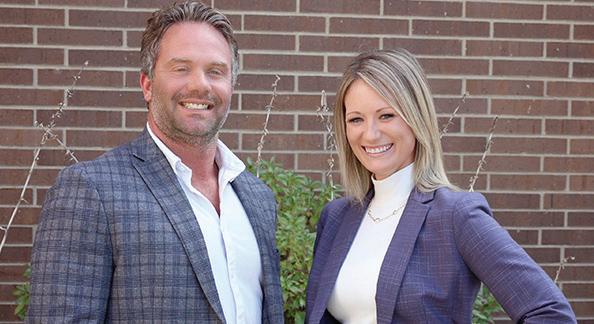
The small office is currently staffed by Goethals and treasury management officer Sarah Andrus, who joined the bank in September. Andrus came to Dart from Mercantile Bank in Traverse City. Goethals spent 14 years at Chase Bank in Traverse City before joining Dart.
Dart offers commercial loans, residential mortgages, merchant services and treasury management services from its Traverse City office. Treasury management is a suite of services for client businesses, including cash flow and payments services, fraud protection and escrow accounts.
Dart offers the Secure Escrow product,
one of just a few community banks in the country to utilize the advanced platform, Andrus says.
Grand Traverse County is home to 12 banks, with a 13th – Grand Traverse State Bank – expected to open by the end of March. In addition, there are 10 credit unions serving the county.
But Dart CEO Bill Hufnagel says the area’s strong population and economic growth make room for his bank to enter the fray.
“It’s a good market,” Hufnagel said.
“We do things a little bit different. We practice relationship banking and combine technology with personal service. It’s high tech, high touch. We have a mix of both to compete with other banks and offer all the products anyone needs.”
Cannabis banking sets Dart apart
But Dart will face stiff loan competition from big regional banks in Traverse City like Fifth Third and Huntington banks which dominate the market, and
“We do things a little bit different. We practice relationship banking and combine technology with personal service. It’s high tech, high touch. We have a mix of both to compete with other banks and offer all the products anyone needs.”
–
Bill Hufnagel, CEO, Dart Bank
local community banks that, like Dart, also tout their technology and personal service.
Dart Bank also is different in another way. The 101-year-old institution was once a sleepy community bank but has become one of the largest marijuana banks in the country.
It entered the cannabis banking business in 2019 and has since seen assets jump from about $454 million that year to $1.3 billion in 2024. The bank serves 1,100 cannabis accounts in 37 states, according to Crain’s Detroit Business. Most banks and credit unions have shied away from serving marijuana
businesses, even though cannabis is legal in Michigan and many other states. Most fear running afoul of regulators and losing their charters because marijuana is classified as a Schedule I drug under the federal Controlled Substances Act.
Hufnagel says Dart got into the marijuana business as a way of surviving in a fast-changing financial services industry. While it does not directly offer marijuana banking services from its Traverse City office – a specialized team handles that – Goethals estimated that Dart serves roughly 75% of cannabis businesses in northern Michigan.
Dipping a toe in the market
Dart Bank has 13 loan production offices covering much of central and southern Michigan. Its Traverse City office, the bank’s 14th, is Dart’s first in northern Michigan. (Many might know the Dart name for a product unrelated to the bank. Dart Container Corp., also headquartered in Mason, is the world’s largest manufacturer of foam cups and containers. The separate company was founded in 1960 by the son and grandson of Dart Bank founder Rollin Dart.)
Loan offices have long been a primary way that banks dipped their toes in a market before deciding to seek regulatory approval for a full-service, brick-and-mortar bank. But the digitization of banking
“Dan [Goethals] and I give out our cell phone numbers. We’re not a 1-800 bank. We do a lot of networking.”
– Sarah Andrus, Treasury Management Officer, Dart Bank
services is changing that strategy, says Jim Perry, a Kalamazoo-based community banking consultant.
“Mobile has become the dominant banking channel, and branches have their own set of challenges,” said Perry, senior strategist at Market Insights Inc. “Loan production offices are actually well-aligned with how physical banking works today in a way traditional, teller-heavy branches often aren’t.”
Hufnagel agrees, saying Dart can offer most banking services to customers through small loan offices, online channels and personal contact.
“Customers are not coming into the bank anymore. We’re going to them,” he said. “We’ll decide as we grow with the
market [on whether to pursue a full-service bank in Traverse City.] We don’t have it on the roadmap on what we do now.”
Perry says loan offices often recruit local talent to “drive early momentum” but sometimes fail to find a “clear path to meaningful, sticky relationships.”
He says he’s not familiar with Dart’s specific growth strategy but thinks that loan offices work best when they’re “highly targeted in their outreach, have clear performance expectations and are paired with strong digital capabilities.”
Driving growth through relationships
Goethals and Andrus say they’re working hard to establish those “meaningful,

sticky relationships.” Both are Traverse Connect ambassadors who volunteer to celebrate new business growth at ribbon cuttings and other events.
“Dan and I give out our cell phone numbers. We’re not a 1-800 bank,” Andrus said. “We do a lot of networking.”
Goethals is an area native who lives in Kingsley with his wife and five children and is an assistant football coach at Kingsley High School.
“We feel very blessed to be in an area where there is a lot of growth happening,” Goethals said. “There is a lot of opportunity despite the number of banks and credit unions in the market. At the end of the day, people do business with people they like.”


By Art Bukowski
Asked what makes Greenleaf Trust so special, local leadership is quick to point out that they always put their customers first.
And while that’s most likely true, it’s something that any financial institution (or any business, really) might say. Talk like this is easy to dismiss as simple lip service. Nothing to see here.
But consider the numbers: The northern Michigan office of this Kalamazoo-based bank, which primarily manages wealth, had about $218 million in assets under management in 2015. It was nearly $1 billion by 2020. It’s likely to break $2 billion this year.
Even with a booming stock market, that’s remarkable growth. And it’s mostly driven by happy customers.
“About 80% of our business comes from current client referrals,” said Regina Jaeger, senior vice president and Traverse City market director. “That’s been huge.”
What’s more, someone who signs on is really unlikely to jump ship.
“Nationally, we have one of the lowest attrition rates in our field,” Jaeger said. “Our client runoff is less than 2% a year. Clients don’t leave us.”
No matter how you slice it, all of these data points suggest Greenleaf is doing a lot of things right.
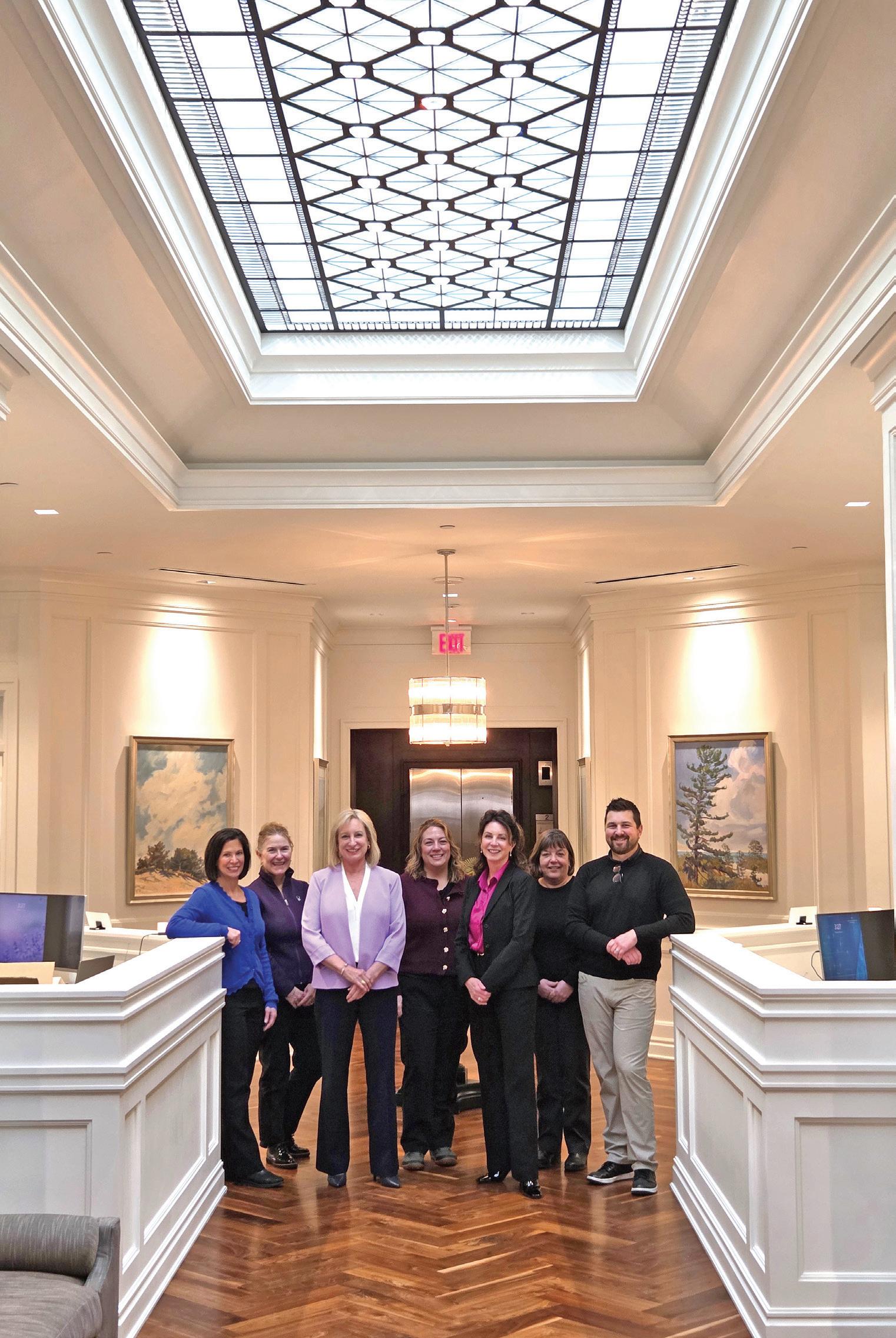
The TCBN sat down with Jaeger and Bay Harbor/Petoskey market director and senior vice president Lauree K. VanderVeen (who in tandem run the northern Michigan office) to learn more about Greenleaf’s presence in – and appreciation for – the northern reaches of the state.
Greenleaf Trust was founded in 1998 as one of Michigan’s first “trust-only banks.” Despite having the word bank in there, these specialized financial institutions focus almost exclusively on fiduciary services – acting as a trustee or custodian – rather
than traditional retail banking like checking and lending.
Trust-only banks frequently provide a variety of wealth management services within this fiduciary capacity, bound by legal and ethical standards to act in clients’ best interests. This – along with private, independent ownership in Greenleaf’s case – means no backdoor commissions, proprietary products or anything else getting in the way of delivering the best possible service.
“Doing what’s in the best interest of the client is really part of our DNA,” Jaeger said. “It’s what we live and breathe every single day. Everything we do is wrapped in a strict fiduciary standard where we are legally and ethically bound to act solely in our clients’ best interests, placing a client’s financial well-being above our own.”
The bulk of Greenleaf’s business comes from providing comprehensive wealth management services, including investment management, financial planning, trust and estate services, retirement planning and family office services. To
this end it functions as wealth management firm first and foremost, catering to high-net-worth individuals, institutions, businesses and families.
Greenleaf was founded by and is still led by William D. Johnston, who owns it with his wife, Ronda Stryker. While Stryker is a director and major shareholder of the Fortune 500 medical technology company Stryker Inc., leaders say the two Kalamazoo-based companies are completely separate.
“We’re very careful about that perceived conflict of interest,” Jaeger said. “You can’t get around the conversation because we were founded by Ronda Stryker and Bill Johnston, but as an organization, we have our own independent board of directors, and we have nothing to do with Stryker as a company.”
Notably, Greenleaf Trust is set up to be independent in perpetuity, with a merger or acquisition explicitly barred in its bylaws.
“We will never be bought or sold,” Jaeger said. “It’s why most of our employees have chosen to be here, and it’s something
a lot of our clients love because they have already experienced mergers or acquisitions [with previous companies]. We can commit to being the same Greenleaf Trust today, tomorrow and for our clients’ children and grandchildren, and that’s pretty amazing.” Greenleaf also boasts about having one of the lowest client-to-advisor ratios in the industry.
“Even at another bank trust company, your trust officers will likely have several hundred clients,” Jaeger said. “We do not load up our employees with more clients. We hire more teammates to keep that ratio manageable so that we can continue to provide that very high-touch, client-focused service.”
Northern Michigan growth
While only 14 (soon to be 18) of Greenleaf’s nearly 200 employees service northern Michigan, it’s the second largest of the company’s six Michigan (and one Florida) offices in terms of assets managed, behind only the home office.
Jaeger says northern Michigan could become a $4 billion to $5 billion market (at least in terms of assets under management) for Greenleaf in the coming years.
“The growth trajectory is incredible,” Jaeger said. “We’re an exciting market, and we’re growing much faster than the competition.”
This growth is mostly organic. The company does limited advertising, leaving its satisfied customers to do the rest.
“Our clients are excited to send their family members to us, their neighbors to us, the guy that they spend their Monday mornings having coffee with,” Jaeger said. “They’re excited to say, ‘You need to go talk to Greenleaf Trust because they do a great job.’”
Aside from 80% of referrals coming from existing clients, Jaeger credits “centers of influence” like attorneys, CPAs, realtors and other professionals that are impressed with Greenleaf.
Northern Michigan is also simply an exciting place to be right now from a financial services standpoint, Jaeger says.
“[Our area] continues to attract retirees, entrepreneurs and remote professionals who value lifestyle without sacrificing sophistication,” she said.
The client base has a lot of who you might expect, but plenty that you might not.
“While the majority of clients we serve in northern Michigan are retirees, busi ness owners and families with generation al wealth, we are experiencing an increase
in serving much younger generations who are in the wealth accumulation phase,” Jaeger said.
Greenleaf has had a presence here since 2008, but stepped up its game considerably with a spare-no-expense revamp of the Old City Hall building at Cass and State Streets in 2021.
“It was such a big commitment to the organization to purchase the space and renovate it in the manner in which we did,” Jaeger said. “It really represents our permanence, professionalism and community commitment.”
As with everyone else, hiring hasn’t been the easiest. Part of that is in line with staffing challenges plaguing nearly every business in northern Michigan for a variety of reasons, and another part is that Greenleaf is very selective by design. After all, its reputation is on the line with every employee.
“We’re a very high-performance organization, and that doesn’t fit everybody,” Jaeger said. “When we’re hiring to fill positions, we have a very robust hiring process to make sure that it is a good fit on both ends, and finding that good fit is often a challenge.”
Personality and drive are just as important as experience, VanderVeen says.

Big in this world are things like the “Great Wealth Transfer.” Many, many conversations are ongoing now about effectively and efficiently passing wealth on to the next generation.
“There’s over $120 billion in assets that are getting ready to transfer from the baby boomers and the Silent Generation to Gen X, millennials and charitable organizations,” Jaeger said. “That transfer requires thoughtful solutions, and we need to be prepared. And we feel like we are. We’re prepared to have those conversations.”
point, it’s one of the most common topics of discussion.
“Clients are really looking for tax-efficient portfolios,” Jaeger said. “That’s a huge trend. And that’s one of the things that we feel like we excel at. What are those strategies we can put in place that will keep more in your pocket?”
Finally, the folks at Greenleaf are hearing more and more about making sure that values get passed on along with that wealth, particularly in an increasingly divided world.
“I see more and more [concern] about transferring not just money, but belief
















By Rebecca Teahen, columnist
Have you ever built a home from the ground up, or been involved in a major renovation?
If so, you’ve likely experienced setbacks, changes to the plan and probably more bumps along the way than you ever would have imagined.
Yet, when the project is finally complete, you feel the pride of crafting a structure that will last, one that you can enjoy, share with family and friends, and perhaps even pass on to the next generation.
Crafting an estate plan can feel similar. Just like a home, the plan you need in your 20s is different from the plan you need when raising young children, which is different from the plan designed to transfer wealth to adult children, grandchildren and future generations.
In this article, I want to help you understand what a trust really is, when it’s helpful, when it’s not, and how to think about it in the context of your own family and stage of life.
At each stage, you’ll rely on different tools to achieve your goals. Trusts are often an important part of estate planning, and they can be used in many different ways. But, just like designing a home that fits your family, trusts are not the right fit for everyone.
To build or renovate a home, you need a vision and a plan – as well as a great team! The same is true for an estate plan. Depending on your needs and goals, a trust may be a helpful tool. Think of a trust as the framing for your construction project.
A trust is a legal structure created to hold and manage assets for the benefit of others. A trustee acts like the general contractor, following the blueprint (the trust document) and making sure everything is carried out as intended for the beneficiaries.
The great team I work with includes Attorney Heather Dykstra. She points out that a trust should be carefully drafted to addressed each client’s specific needs. Those needs may include tax planning, asset protection, planning for minor beneficiaries, succession planning for future generations or simply avoiding probate upon death.

While there are legal guardrails, there is still considerable flexibility in how trusts can be designed. Some of the most common situations where trusts are used include:
• Young children (often through a testamentary trust created in your will)
• A loved one with disabilities (a special needs trust)
• Charitable giving (charitable remainder or lead trusts)
• Multi-generation planning (marital and dynasty trusts)
Times change, and it seems like the pace of change accelerates over our lives. Over time, trends and styles change in our homes and estate planning needs to keep pace with changing times, too!
In the 1990s, hunter green and dusty rose dominated home design, and the estate tax exemption hovered around $600,000 per person. Many middle-class families built trusts into their plans as a way to avoid estate taxes.
As styles evolved to granite countertops and smart homes in the 2000s, the estate tax exemption climbed into the millions. Today, under current federal law, the exemption is historically high at $15 million per person, or $30 million for a married couple. For most families, federal estate tax is no longer the primary driver of planning decisions.
Much like evolving building codes, tax law changes shape how estate plans are designed. Most families today will not benefit from a trust if the only goal is to avoid estate taxes. In fact, trusts are often taxed at higher rates than individuals, which can
produce the opposite result.
Dykstra shared that today, few trusts are created to avoid or limit exposure to federal estate tax. Most are put in place to have some control over how and when assets are distributed to beneficiaries. Not only does a trust allow you to put a distribution plan in place for your assets, but it can also be drafted to give a trustee flexibility and discretion to address future unknowns or changes in the law.
So how do you know if a trust might be right for you?
Consider your life stage and goals. Do you have minor children or grandchildren you’d like to provide for? Children cannot legally control inherited assets until age 18. A trust can provide structure and protection.
Dykstra cautions the following: If you only have a will or have your minor children identified as your beneficiaries, your assets will be distributed directly to those beneficiaries when they attain the age 18. As we all know, very few 18-year-olds possess the maturity to make appropriate decisions with respect to financial management. This can lead to the purchase of unnecessary assets and the rapid depletion of their inheritance. It can also affect their ability to qualify for financial aid for post-secondary education.
Do you care for someone with a disability who may need long-term support?
Do you have charitable goals you want to integrate into your estate plan, possibly in a tax-efficient way?
If your financial life is more complex, there may be additional planning tools to explore with your advisory team.
Your team can help avoid common pitfalls.
In addition to potentially higher tax rates, trusts require separate tax filings, which can add complexity for heirs. More commonly, trusts are created but never properly “funded.”
You’ve likely seen unfinished buildings that were framed but never completed. The same happens in estate planning. A beautifully drafted trust that is never funded is like a house with no plumbing or wiring: impressive on paper, but unlivable in reality.
For a trust to work, assets must actually be transferred into it, whether by retitling accounts, updating beneficiaries, or using tools such as Ladybird Deeds for real estate. No matter which structures you use, the goal is the same: a plan that is thoughtfully designed and fully developed.
A good estate plan, like a good home, is only a success when it is complete and ready to support the people who will one day rely on it.
Rebecca Teahen, CIMA®, is a financial advisor with Baird who partners with women and families to build meaningful financial, estate, and philanthropic plans. She is based in Traverse City and works with clients across the country. Reach her at rteahen@rwbaird.com. Heather Blanton-Dykstra is an attorney with Kish, Dykstra, and Scott, P.C., specializing in estate planning, estate and trust administration, and probate litigation. The information offered is provided to you for informational purposes only. Robert W. Baird & Co. Incorporated is not a legal or tax services provider and you are strongly encouraged to seek the advice of the appropriate professional advisors before taking any action.
By Eric Braund, columnist
We live in a place where wealth shows up in different ways.
For some families, success is easy to see: a beautiful lakefront home, a growing business or the freedom to enjoy life. For others, wealth is quieter. It shows up as flexibility, security and the ability to make choices for the long term.
What successful families share isn’t just what they own – it’s how they think. Their money decisions come from clarity, purpose and a focus on the future, not just what’s happening in the markets today.
Wealth doesn’t always look the same
High-net-worth families don’t all live the same way. As Thomas Stanley and William Danko showed in their book, “The Millionaire Next Door,” many of America’s wealthiest people live surprisingly modest lives. Warren Buffett, one of the world’s richest people, still lives in the Omaha, Nebraska home he bought in 1958. Some wealthy families enjoy showing the rewards of their hard work. Others, like Buffett, prefer to keep things simple and private. Both are perfectly fine. Both reflect years of effort, discipline and smart choices.
What most have in common is a focus on making their wealth last. Their financial decisions are careful, connected and based on what matters to them — not on trends or what others are doing.
What high net worth really means today
High net worth is usually defined by a number, typically one to five million or more in investable assets. This doesn’t include your home, business value or real estate holdings. It’s the money you have available to invest and grow. But in reality, it means dealing with a more complicated financial picture.
Today’s wealthy families often manage:
• Multiple investment accounts
• A business or rental properties
• Ongoing tax planning
• Estate plans that change over time

How high-net-worth families think about money differently
• Support for family members and causes they care about
As things get more complex, coordination becomes critical. A decision about taxes or gifting can affect everything else.
Wealthy families see money as a tool, not a finish line. Growth still matters, but they also care about stability, flexibility and long-term goals. They don’t make decisions in isolation. They think about taxes, timing, family needs and risk all together.
Over time, success becomes less about getting the highest returns and more about feeling confident, staying organized and making clear decisions without stress.
Why financial planning looks different for every family
No two families build wealth the same way. So no two financial plans should look alike. Some families are still focused on growing their wealth. Others are getting ready to retire. Many are doing both while also supporting their kids, aging parents or charitable causes.
Good financial planning isn’t about using the same approach for everyone. It’s about understanding your complete picture and making sure your decisions match what matters most to you. That’s why planning should feel personal, not cookie-cutter.
From building wealth to protecting it
At some point, priorities naturally shift. Early on, wealth is about building and growing. Over time, it becomes about
stewardship — managing your money responsibly and with purpose. This often includes:
• Creating steady income
• Being smarter about taxes
• Planning for family transitions
• Supporting charitable causes
• Staying flexible as life changes
This stage is less about chasing big gains and more about making confident, informed decisions that support your long-term goals.
What successful families share isn’t just what they own –it’s how they think.
Clear decisions create lasting confidence
Wealthy families value clarity over complexity. When financial decisions connect to a solid plan, market ups and downs feel less scary. Confidence doesn’t come from predicting the future. It comes from knowing your decisions are based on strategy, not emotion.
Wealth — whether visible or quiet — works best when it supports the life you want to live. And when planning is done right, it creates something every family wants: confidence that lasts.
Finding the right guide for complex wealth
As financial lives grow more complex, general advice often isn’t enough. Planning for significant wealth requires a coordinated approach that connects investments, taxes, estate planning and long-term goals. In the Traverse City area especially, that complexity often includes multiple generations, family businesses or properties you want to keep in the family. The decisions you make today can affect your flexibility, your legacy and your family relationships for years to come.
To help them make those important decisions, wealthy families typically look for a guide who brings both experience and objectivity, especially during uncertain markets or major life changes. They want someone who helps them make thoughtful, values-aligned decisions, not someone who reacts to every headline or tries to time the market.
At its best, quiet wealth lasts when clear decisions are made with purpose, perspective and the right guidance. That’s how wealth becomes more than numbers — it becomes security, freedom and confidence that carries forward for generations.
Eric Braund, CFP®, CRPC®, is the founder of Black Walnut Wealth Management, a fee-only financial advisory firm providing fiduciary guidance and personalized planning services to individuals, retirees and families with complex financial needs in Traverse City and throughout northern Michigan. Contact him at (231) 421-7711 or visit BlackWalnutWM.com. Investment advisory services are offered through Black Walnut Wealth Management, an SEC-registered investment adviser.




By Craig Manning
On any given day in northern Michigan, they could be responsible for saving your life, or the life of someone you love. From oncological procedures that diagnose and remove cancerous growths to catastrophic emergencies, northern Michigan’s top surgeons have been the difference between survival and death for many local residents. But who are these local medical superstars, and what brought them to the operating rooms of Traverse City? The TCBN sat down with 10 area surgeons to learn more about the people behind the surgical masks.
Surgical specialty: Plastic and reconstructive surgery
Education: Though he’s Indiana born and bred, Burke did his undergraduate degree and his medical schooling at Michigan State University. From there, it was off to Atlanta, Georgia for a plastic and reconstructive surgery residency at Emory University School of Medicine, where Burke says he “had the privilege of working with many world-renowned plastic surgeons in both cosmetic and reconstructive surgery.” Burke has been a board-certified plastic surgeon since 2022.
My journey here: Burke’s family relocated to the Traverse City area after he graduated from high school. Even before that, he had fond memories of the area thanks to family summer vacations in northern Michigan, as well as frequent ski trips to Crystal Mountain. All those things instilled a lifelong love for the region in Burke, who says he made it his goal “to return to Traverse City after completing my medical training.” He even spent his medical school years right here in Traverse City, studying at the local campus of the MSU College of Human Medicine. It all set the stage for Burke’s return to the area just last fall, when he joined the team at Munson Healthcare’s Great Lakes Plastic Surgery and Skin Center.
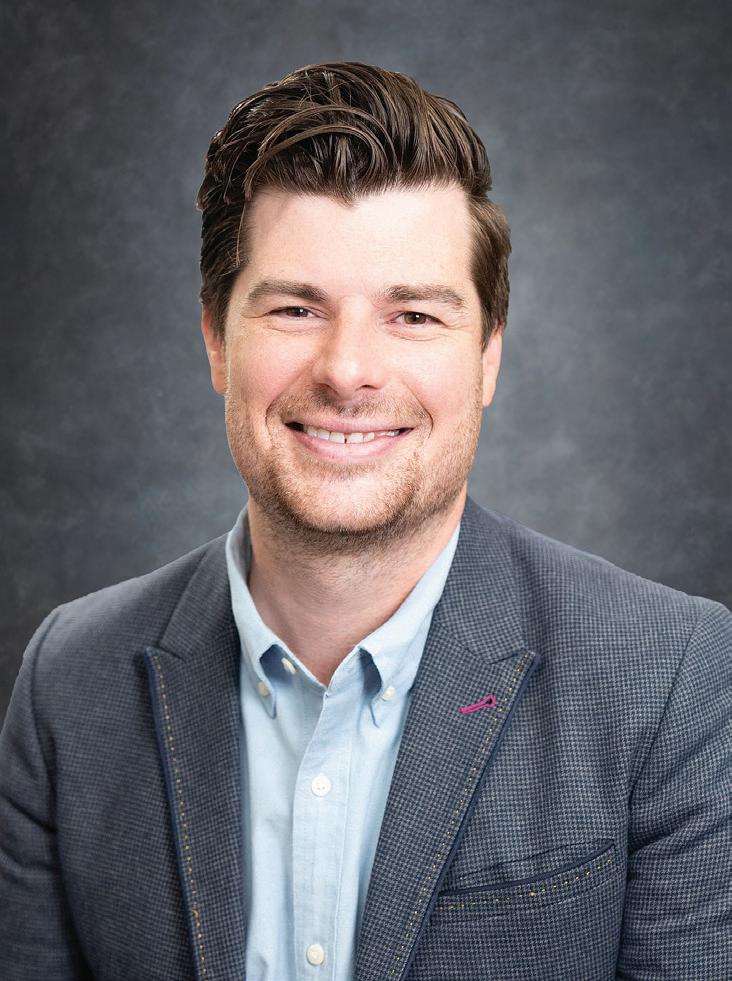
Surgical specialty: General surgery
Education: Featherstone did his undergraduate studies at Michigan State University, then traded East Lansing for Detroit for medical school at the Wayne State University School of Medicine. He completed his residency in general surgery at St. John Hospital in Detroit in 1996.
My journey here: After completing his residency, Featherstone returned to his hometown of Traverse City and started his career at Munson in 1996. He will celebrate three decades with the healthcare system this coming July – extending an even longer legacy of the Featherstone family working in the local healthcare field. “My family has been part of Munson for six decades,” he said. “I feel fortunate to have been able to return to my hometown and care for the people of my community for the last 30 years.”

Most critical surgical skill: Burke identifies versatility as his greatest strength – not to mention the best thing about the plastic surgery field. “Most people are not aware of the full scope of plastic surgery,” he explained. “The field encompasses everything from elective cosmetic procedures to complex reconstructive operations … My practice includes breast cancer reconstruction, facial and body cosmetic surgery, treatment and reconstruction of skin malignancies, post-weight loss body contouring, facial trauma management, medical brow lift and lower extremity reconstruction.”
How I’m pioneering in my role: “When I moved to Traverse City, I recognized a prevailing perception that patients needed to travel downstate to receive state-of-theart plastic surgical care,” Burke said. “By remaining current with surgical advances, medical literature and emerging techniques, I am able to provide a high level of comprehensive plastic surgery locally. Examples of advanced procedures offered in my practice include deep plane facelift, preservation breast augmentation and direct-to-implant breast reconstruction.”
Outside of the OR: “Spending quality time with my wife and two sons, serving as an assistant hockey coach during the winter; and enjoying time on the lake during the summer,” Burke said. Burke’s coaching roles come as part of the Traverse City North Stars hockey program, where he leads both the eight-and-under team and the introductory program for five-year-olds.
Most critical surgical skill: While surgery involves plenty of technical skill, Featherstone points to a not-so-scientific attribute as the key foundation for his career: relationship-building. “I learned from my mother, who was a nurse at Munson in the ‘70s and ‘80s, to listen and relate to my patients and treat them as human beings,” he said.
How I’m pioneering in my role: Recent years have significantly expanded northern Michigan’s medical capabilities in everything from stroke care to lung cancer removal. As Featherstone tells the story, though, he was bringing new treatment options to the area long before those advancements. “I started laparoscopic hernia repairs here in 1996, and started Munson’s bariatric [weight loss] surgery program in 2003,” he said. Featherstone was also Munson Medical Center’s trauma director from 2005 to 2008, the period in which the hospital first achieved accreditation by the American College of Surgeons as a Level II Trauma Center, and served as chief of surgery from 2017 to 2023.
Outside of the OR: When he’s not operating on people, you might find Dr. Featherstone operating on cars; the doctor is also an ardent collector of classic automobiles. In the near-future, Featherstone might not have nearly as much time to spend out in the garage. His first grandchild is due this month.
Emily Levin, MD, 47
Surgical specialty: Neurosurgery
Education: Dr. Levin’s passion for learning how things work initially had her eyeing a career in engineering. Eventually, Levin landed on neurosurgery as the right path, and the rest was history. That path has taken this New Orleans native all over the country, from her her medical school years at the University of Pittsburgh, to her residency at the UofM, and to her fellowship at the University of California, San Francisco.
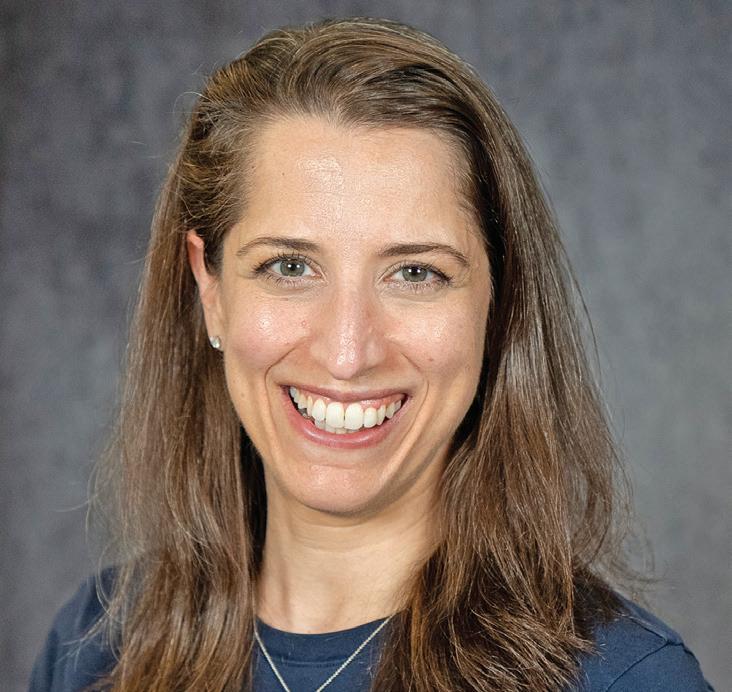
My journey here: A newcomer to northern Michigan, Levin only joined the Munson Medical Center staff last year. Previous to that, she’d spent 11 years working in Ann Arbor, both for the University of Michigan as an assistant professor of neurological surgery, and the VA Ann Arbor Healthcare System servicing veterans.
Most critical surgical skill: Levin still uses her engineering background when working with her patients, calling upon her lifelong “how things work” mindset to devise plans that optimize patient outcomes.
How I’m pioneering in my role: Levin’s fellowship at the University of California, San Francisco focused in stereotactic and functional neurosurgery – innovative techniques that improve or restore function in patients with neurological movement disorders like Parkinson’s, dystonia, and epilepsy, often by using implantable devices. “I am excited to bring advanced functional neurosurgery to Traverse City, preserving quality of life for patients with neurologic diseases,” Levin said. “We are developing a program here to offer a surgery called deep-brain stimulation, which involves placing electrodes into the brain and connecting them to a pacemaker-like device. This surgery helps patients with Parkinson’s disease or essential tremor to relieve shaking and improve the movement symptoms of Parkinson’s disease.”
Outside of the OR: “I enjoy spending time with my family, cooking and strength training,” Levin told the TCBN.
Gary B. Rajah Jr., MD, 40
Surgical specialty: Neurosurgery and neurovascular surgery
Education: After completing his undergraduate degree at Grand Valley State University, Rajah matriculated to the Wayne State Medical School, where he also completed his neurosurgery residency, in tandem with the Detroit Medical Center. He added a post-graduate fellowship in vascular neurology at the University of Buffalo and the Cannon/Toshiba Stroke Center in Buffalo, New York.
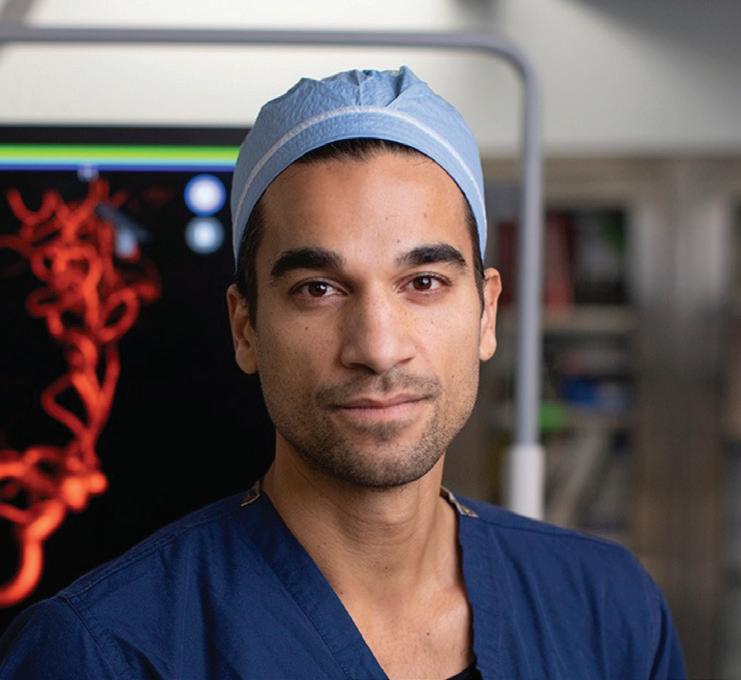
My journey here: It was a baptized-by-fire situation for Rajah, who came aboard at Munson Medical Center in 2020, during the COVID-19 pandemic. His task? Leading Munson’s then-brand-new comprehensive stroke center. “The goal was to bring surgical management of stroke to northern Michigan for the first time ever,” he said. Previously, patients who suffered emergent large vessel occlusion (LVO) strokes in northern Michigan had to be flown downstate for treatment. Rajah continues to serve as medical and surgical program director for Munson’s comprehensive stroke center.
Most critical surgical skill: When he moved to northern Michigan, Rajah brought with him a knack for performing minimally invasive, catheter-based mechanical thrombectomies for emergent LVO strokes – a procedure he describes as “the most beneficial emergent modern medical surgery a patient can have.”
How I’m pioneering in my role: Thanks in large part to Rajah, Munson is certified as a comprehensive stroke center – one of just 11 in the state of Michigan, and one of the busiest ones to boot. “Our team has also led groundbreaking work on stroke prevention, with numerous new staff members and clinics to provide preventative measures,” he said.
Outside of the OR: An accomplished runner, cyclist, swimmer and skier, he’s competed multiple times in the Ironman 70.3 Michigan triathlon in Frankfort, finishing just outside the overall top 100 in both 2022 and 2023.
Ashley Sachtleben, DO, 42
Surgical specialty: Breast surgery
Education: Sachtleben earned her undergraduate degree from Northern Michigan University, advanced to medical school at the Michigan State University College of Medicine, and completed her residency at St. John Macomb Oakland Hospitals in the Detroit area.

Journey: A Traverse City native, Sachtleben says it was always in the plans for her to come back to her hometown, both to practice medicine and be near her family. She achieved that boomerang journey in 2013, after finishing her general surgery residency downstate.
Most critical surgical skill: According to the American Cancer Society, one in every eight women will develop breast cancer at some point in her life. Sachtleben is Munson’s secret weapon against those staggering numbers, and she relies on “precise technique with emphasis on oncologic safety and preserving cosmetic outcomes” when in the OR. Her success “requires a thorough understanding of anatomy and the ability to make calm, decisive choices when needed while maintaining patient safety,” she said.
How I’m pioneering in my role: “I am the director of Munson’s Breast Program Leadership Committee,” Sachtleben said, which is accredited by the National Accreditation Program for Breast Centers. “As leader of this team, we have created a multidisciplinary patient center approach to care that integrates surgical excellence with coordinated oncology, radiation, imaging and survivorship care.”
Outside of the OR: When she’s off the clock, Sachtleben is a passionate outdoorswoman, with a penchant for hiking, swimming, skiing, paddleboarding and globetrotting.
Job: Partner at Cass Street Ear, Nose and Throat Associates; Chair, Munson Medical Center Department of Surgery
Surgical specialty: Otolaryngology (ear, nose and throat)
Education: Treadway did his undergraduate degree at Vanderbilt University in Nashville, Tennessee, then found his way to Michigan to spend both his medical school and residency years at the Wayne State University School of Medicine in Detroit.
My journey here: After finishing his residency at Wayne State in 2009, Treadway says he and his family “developed interest in moving to northern Michigan due to family connections as well retirement plans for my parents.” Those draws were enough to prompt a move from metro Detroit to Traverse City that year, and Treadway has been practicing in the area ever since. He works alongside colleagues at the Cowell Family Cancer Center “to advance the level of care for patients affected by head and neck cancer” in northern Michigan. “Through an expansion of both surgical and nonsurgical treatment, I believe we have been able to successfully allow more patients to receive care here, closer to home, and avoid travel downstate,” he said.
Most critical surgical skill: Many types of doctors deal with only certain types of patients For Treadway, the most important thing is being able to navigate a much broader spectrum of cases. “The field of otolaryngology provides access to a wide variety of patients,” he explained. “I have the pleasure of treating all age ranges, from newborns to elderly, both healthy and sick. Being able to provide both surgical and medical treatment to such a variety of patients is a truly rewarding part of my practice.”
Outside of the OR: These days, Treadway is spending a lot of time in the stands at local school sporting events, rooting for his kids. His son, Kade, plays varsity hockey at Traverse City Central, and his daughter, Sloane, is an up-and-coming hockey player in her own right. Beyond playing the role of supportive dad, Treadway lists cooking and boating among his top hobbies.

Michael J. VanWagner,
DO, 40
Surgical specialty: Adult hip and knee reconstruction
Education: A 2010 alumnus of Michigan Technological University, VanWagner advanced to the Michigan State University College of Osteopathic Medicine for medical school. He stayed with MSU for his residency in orthopedic surgery at McLaren Health Care in Macomb, and then completed his fellowship in adult hip and knee reconstruction at the famed Mayo Clinic in Rochester, Minnesota.
My journey here: For some surgeons, the craft is a generational inheritance, and such is the case with VanWagner. “My late father, Jim VanWagner, was an orthopedic surgeon in Traverse City, and as a young child I would follow him through the halls of Munson Medical Center,” he said. “Performing my first joint replacement surgery at Munson was deeply meaningful, and represented years of hard work and a lifelong goal of returning home to serve this community.” VanWagner has been practicing in northern Michigan since finishing his fellowship in 2021, and joined the Munson Orthopedic Institute the following year. He’s now the medical director for orthopedics for the entire Munson system.
Most critical surgical skill: “Manual dexterity matters, but the most critical skill is maintaining control of the situation at all times, regardless of pressure,” VanWagner said. “That means situational awareness, clear communication, leadership, emotional regulation, and the ability to make quick decisions, sometimes without all the information.”
How I’m pioneering in my role: When VanWagner joined the Munson Orthopedic Institute in 2022, it was a fledgling group made up of just three surgeons. “With the support of incredible surgeon partners, nurses, clinical team members, and Munson Healthcare leadership,” VanWagner has helped grow the institute into a team of 12 surgeons, 17 advanced practice providers, 12 registered nurses and “an outstanding group of radiology techs, medical assistants, and support staff,” he said. VanWagner has also been key in bringing robotic-assisted total joint surgery to Munson Medical Center, Munson Grayling Hospital, and Copper Ridge Surgery Center, “with plans to expand further” in the near future.
Outside of the OR: Before he was a surgeon, VanWagner was an elite athlete. A standout hockey player in his youth, he donned the black and gold for Traverse City Central as a freshman before leaving TC – and his family and friends – to join Honeybaked Hockey, a AAA organization in Detroit. Later, he played for the Chicago Steel, a junior hockey team in the United States Hockey League. Pro sports seemed to beckoning – and to be fair, VanWagner had that talent in his blood: His dad, Jim, had been a top football player at Michigan Tech before advancing to the NFL. Injury issues ended his hockey career, but also reaffirmed his commitment to orthopedics. Nowadays, VanWagner keeps his recreation spirit alive by using northern Michigan as a “playground” for himself and his family. “We love road cycling, boating, hiking, downhill skiing and staying active outdoors,” he said.
Brandon M. Wojcik, MD, 41
Surgical specialty: Cardiothoracic surgery
Education: Not many people can claim to have been a Michigan Wolverine for longer than Wojcik. He did both his undergraduate schooling and his medical school years at the University of Michigan in Ann Arbor, finishing those programs in 2007 and 2012, respectively. Wojcik finished his training outside the Mitten, though – first in Boston for a general surgery residency at Massachusetts General Hospital, then in Denver for a cardiothoracic surgery fellowship at the University of Colorado.
My journey here: Wojcik finished his fellowship in 2022, then returned to his home state of Michigan looking for the job “that allowed me to make the most impact.” That search led to Traverse City, and to his role with the Cardiothoracic Surgeons of Grand Traverse, based at Munson Medical Center. “Munson Healthcare serves an exceptionally large geographic area, and being able to provide care to this population is extremely rewarding,” he said. Wojcik felt that impact acutely last summer when he was part of the surgical response team that helped care for victims – and save lives – following the mass stabbing event at the Traverse City Walmart.
Most critical surgical skill: An underrated and under-discussed skill in the world of surgery, Wojcik says, is simple discretion. “Surgeons must know when to operate, and equally as important, when not to operate,” he said.
How I’m pioneering in my role: You may have read about Dr. Wojcik last July in our sister publication, the Traverse City Ticker. That month, Wojcik and a team of other Munson Medical Center surgeons used the hospital’s Ion Robotic Surgical Assistant to perform Munson’s first-ever “single-anesthetic event” for lung cancer treatment. The surgeons were able to perform a cancer biopsy and then surgically remove the cancerous tissue just a few hours later, all while the patient was asleep under a single sedation. The surgery represented a key milestone for Munson’s robotic navigational bronchoscopy program, given that single-anesthetic events can reduce mortality risk and are more convenient for all involved parties.
Wojcik is also an innovator on the cardiac side, advancing Munson’s “utilization of multi-arterial coronary artery bypass grafting, which is a technique associated with improved outcomes in carefully selected patients with coronary artery disease,” he said.
Outside of the OR: “Outside of work, I most enjoy experiencing the four seasons of northern Michigan with my wife and children,” Wojcik said. “My hobbies include snowboarding, jogging, cycling, pickleball, cooking, and reading.” Recently, he even joined a men’s book club to keep himself “accountable” to reading goals.

Diane B. Young, MD, 53
Surgical specialty: Urology, with an emphasis in female pelvic floor disorders.
Education: After getting her undergraduate degree from the University of Georgia, Young enrolled at Louisiana State University, Shreveport for medical school. From there, she took a fellowship at the University of Texas Health Services Center in San Antonio, focused on female urology and the treatment of urological conditions like neurogenic bladder Young has been a board-certified urologist for a decade.
My journey here: Though she’s neither a Michigan native nor an alumna of a Michigan-based school, Young made her way north after completing her fellowship and took her first full-time healthcare job a hospital system in Marquette. She moved to Traverse City six years ago “after needing a job change,” and put down roots as part of the Munson urology department.
Most critical surgical skill: According to the National Institute of Health, “between one quarter and one half of all women may experience pelvic floor issues, yet many accept it as a fact of life or feel embarrassed about seeking help.” Young’s skillset enables her to be an agent of change for these women and their quality of life, and she points to those abilities as her most important assets as a surgeon. “For female patients I would say being able to approach repair of pelvic organ prolapse through either a robotic or vaginal approach [is my greatest surgical skill],” Young said. “Sometimes, one approach is preferable for a specific patient, so it’s nice to be able to offer both. Occasionally you may start robotically and once inside the abdomen, the amount of scar tissue makes the procedure too risky; in this case, I’m able to switch gears and convert to a vaginal approach.”

How I’m pioneering in my role: Beyond her uniquely versatile skillset in women’s urology, Young is also actively working to make the local healthcare system better through dual roles on Munson’s surgical improvement committee and peer review committee.
Outside the OR: In the summer, she and her husband “are avid sailors” and enjoy taking to the Great Lakes aboard their sailboat. “I’m the first mate,” she said of those excursions.
Jack Zuckerman, MD, 42
Education: Zuckerman earned his undergraduate degree from the University of Michigan, then went on to Eastern Virginia Medical School. He has an extensive resume of post-graduate training, including a urology residency at the Naval Medical Center in San Diego, a Society of Genitourinary Reconstructive Surgeons (GURS) fellowship in male and female pelvis reconstruction, and a general surgery internship at the Wake Forest University Medical School in North Carolina.
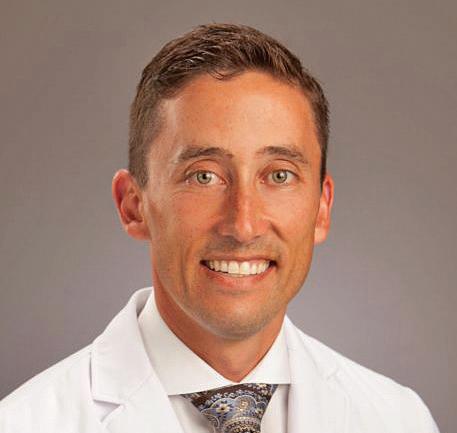
My journey here: Prior to joining the Munson staff five years ago, Zuckerman spent 12 years with the United States Navy, working as a urologist in San Diego, California and Virginia Beach, Virginia, plus “a short tour through Asia.” He was drawn to Traverse City not just for the hospital system, but also “to enjoy the beauty of northern Michigan and raise a family in this great community.”
Most critical surgical skill: For Zuckerman, the most pivotal attribute for a surgeon to have isn’t some fancy technical ability, but simple attention to detail. “This starts prior to scheduling surgery and continues well beyond the completion of the surgical procedure,” he said. “It inspires a culture of excellence and helps the team to perform at the same high standard that you hold for yourself.”
How I’m pioneering in my role: “I am currently leading the Munson system as the chair of the medical executive committee, and later this year will be transitioning to the chief of the medical staff,” Zuckerman said. “These roles allow me to give a voice to the medical staff on hospital policy and strategic development.”
Outside of the OR: Zuckerman is trying not to forget or take for granted what most drew him to northern Michigan in the first place. “I love doing anything outdoors when I am not in the hospital,” he said. “In the summer, that includes waterskiing, biking, and hiking. In the winter, I love skiing with my family and doing anything and everything in the snow.”

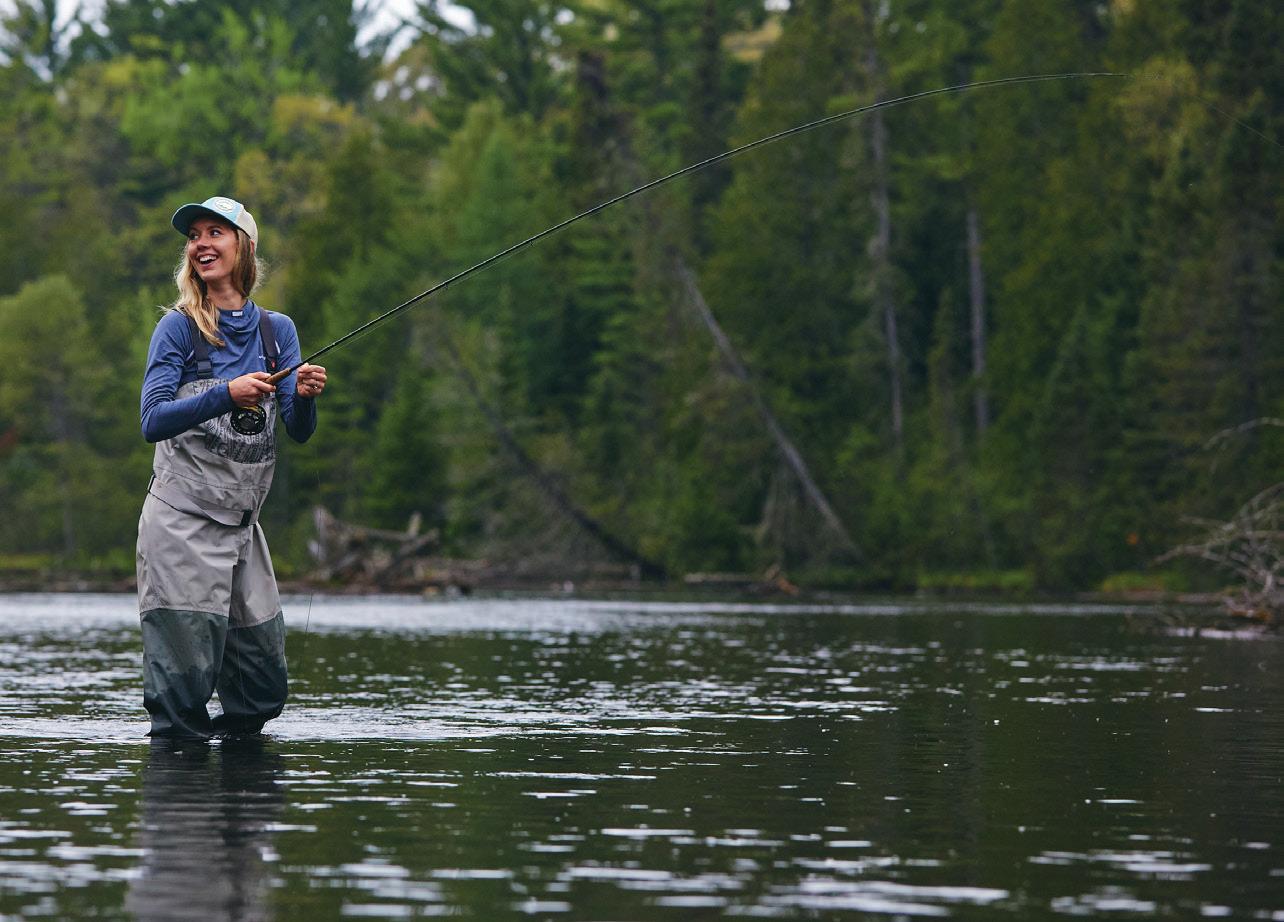






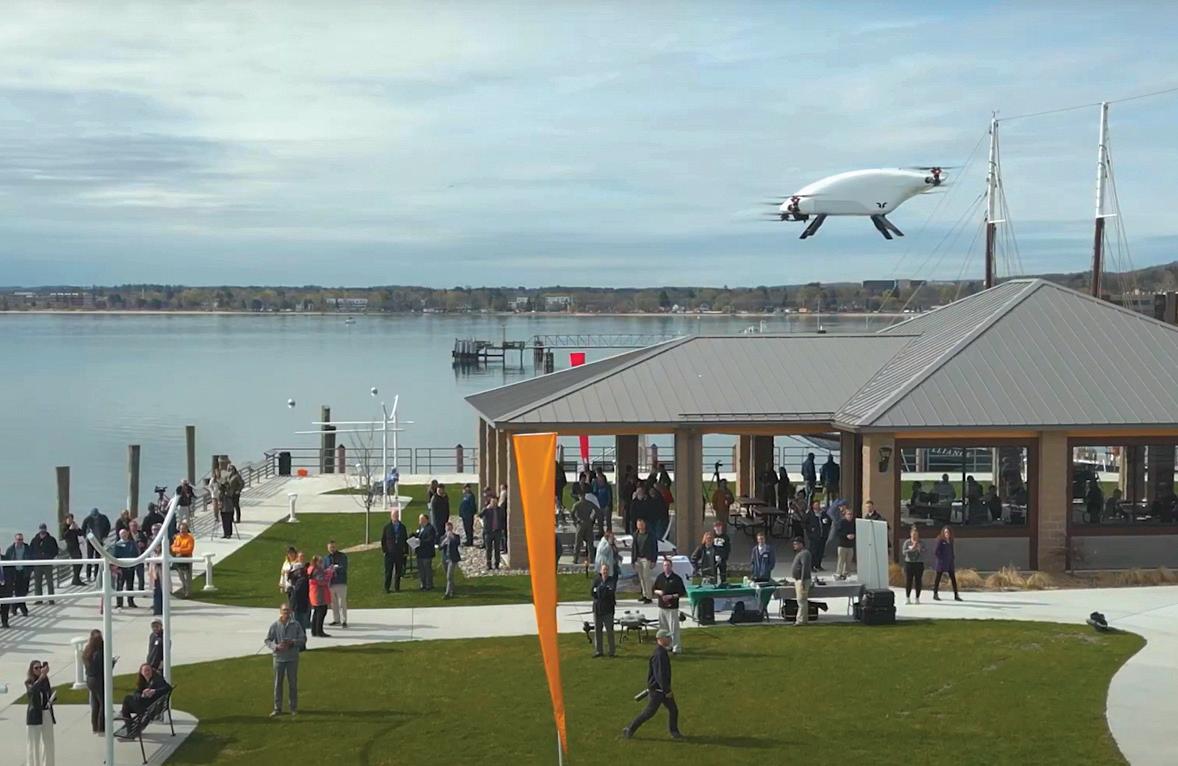
By Craig Manning
Three: That’s the number of hospital systems in the United States with “active research projects” investigating the viability of drones for efficiency gains and improved patient outcomes. One of them is in Traverse City.
So says Tracy Cleveland, vice president of supply chain for Munson Healthcare and one of the key players involved in Munson’s drone delivery pilot program. Announced in 2024 and officially launched last spring, the program is exploring the potential benefits of using advanced air mobility, or AAM, technology for medical logistics in rural Michigan.
The year 2026 will mark the biggest milestone yet for that project, as it moves through new phases that will put more aircraft in the skies and test beyond-visual-lineof-sight (BVLOS) flights. If all goes well, this year’s trials could serve as a proof-of-concept for wider use of drones in the healthcare field – not just at Munson, but at other hospital systems all over the country.
Telling the story of how the pilot program was born, Camille Hoisington,
vice president of ecosystem development for Traverse Connect, says it “all came about because Traverse Connect has a long-standing relationship with the Office of Future Mobility and Electrification (OFME) at the Michigan Economic Development Corporation.”
According to Hoisington, the OFME approached Traverse Connect a few years ago with a proposal. The office had recently contracted with Newlab, a technology incubator in Detroit, “to do some feasibility work to see where drones and AAM technology could be deployed across the state, and for what types of use cases.”
Armed with $689,500 in grant money from the state’s new AAM Activation Fund (the state kicked in an additional $950,000 last year), Traverse Connect became the regional implementation partner for a pilot initiative testing the use of drones to deliver medical cargo and supplies between Munson Healthcare facilities.
Other partners include Blueflite, the Brighton-based original equipment manufacturer making the drones for the project; and DroneUp, a Virginia-head-
quartered company that is handling the “day-to-day execution,” including the actual piloting of the drones. Finally, the Central Michigan University Rural Health Excellence Institute is participating as an “evaluation partner,” monitoring the project and collecting data.
So far, the project has yielded 67 test flights, all of which occurred last spring between May 9 and May 20. Per a phase one report published by Traverse Connect at the end of 2025, that 11-day test was all about evaluating “the feasibility of using uncrewed aerial systems (UAS) for transporting patient laboratory samples between Munson Healthcare facilities within a controlled Visual Line of Sight (VLOS) operational framework.”
All 67 flights were contained to a onemile radius of Munson Medical Center, or MMC, with drone pilots executing sample deliveries between MMC and two other nearby facilities: the Munson Dialysis Center and the Copper Ridge Surgery Center. The report ultimately indicated a 91 percent success rate and noted that the drones were able to maintain payloads at an average of 17.3 degrees Celsius, well
within the required range for clinical laboratory specimens.
Defining success and overcoming deconfliction
“The 91 percent success rate is even a little bit deceptive, because we didn’t fail,” Cleveland said, noting that there were no drone crashes and that “failed” flights mostly involved drones that had to return to their origin to get out of the way of incoming helicopters or other aircraft.“
In those cases, the flights didn’t really fail because our deconfliction protocols worked,” Cleveland continued. “From a learning perspective, we proved that the drone delivery system is a viable option for carrying laboratory samples from one place to another. That was an enormous step forward, even though it was just onemile flights.”
Phases two and three, which will occur back-to-back this spring, will extend the length of the test flights into BVLOS territory. Currently, BVLOS drone flights are highly regulated and restricted by the federal government. As such, the project

partners will need special waivers to proceed with the next two phases.
“We are still awaiting all of the pieces on the regulatory side, in order to set the hard dates,” said Katherine DeGood, Traverse Connect’s director of marketing and communications.
The potential gains are big for Munson Healthcare, which has eight hospitals and spans 14,667 square miles in 29 different counties. All told, the hospital system serves more than 540,000 residents. According to the phase one report, Munson employees drive approximately 90,000
miles every year to transport lab samples between facilities.
“At the end of the day, what we’re talking about is impacting the lives of patients by getting them results faster and getting their course of treatment and care delivered faster,” said Eric Bremer, who leads operations and enablement for DroneUp.
The northern Michigan factors: weather and wind
Of course, there are other challenges in the offing. The big one is weather, which already poses Munson’s biggest hurdle for lab sample transportation.
“Weather is a challenge, operationally
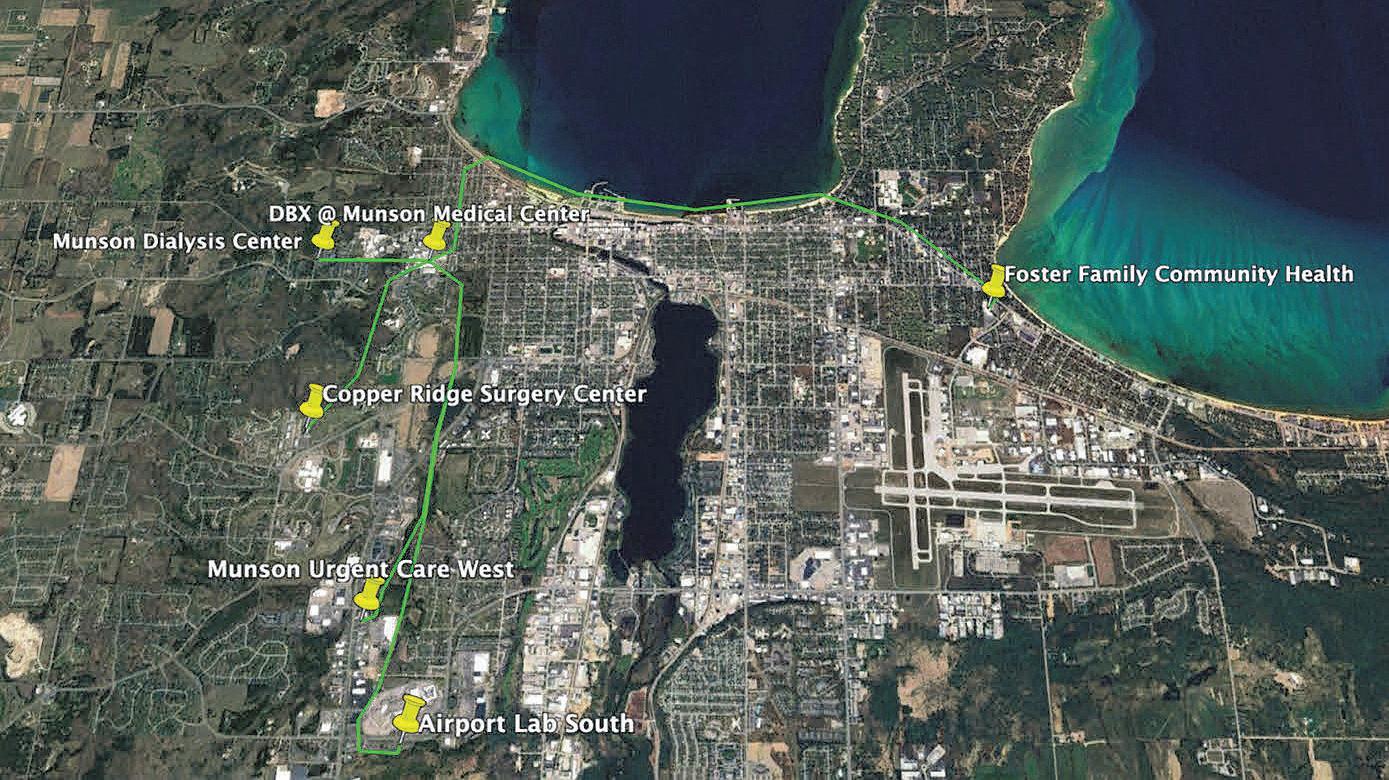
and technologically,” admitted Frank Noppel, co-founder and CEO of Blueflite. “To our drones, it’s primarily precipitation, temperature and wind [that pose a threat]. We want to understand some of these real-world limitations, so we can then also go back to the drawing board and ask, ‘How can we extend the operational envelope?’”
As one of the only healthcare-focused drone research projects happening in the country right now, the Munson pilot initiative has the potential to become a widely replicated test case.
“What’s nice about the data that we’re
collecting is, hopefully, we are also going to be able to inform the next hospital system or the next rural clinic that may decide to do this, so they don’t have to learn things the hard way,” said John Jervinsky, manager of telehealth programs for CMU. How long will it take before drones are routinely crisscrossing the Munson territory?
“It’s still probably more than months, and likely over multiple years,” Cleveland answered. “There needs to be a state-level of investment in infrastructure. We need the different municipalities participating to make sure that it’s safe and effective to fly into those communities ... There is definitely private-public cooperation and development that still has a ways to go.”





Since joining Bay View Flooring & Design Center last spring, Lucas has brought steady confidence and an easygoing style to the team. He’s known for his calm demeanor and approachable nature — the kind of project manager you’d trust with your home and genuinely enjoy grabbing a beer with afterward. We sat down with Lucas to get his insights on life at Bay View:
“What I enjoy most about working in the flooring industry is customer interaction. I like being part of the process as people improve and personalize their homes. Watching a project come together from the first selection to the final install is really satisfying. Knowing I had a hand in transforming someone's space is a great feeling.”
“My go-to flooring choice for customers is Luxury Vinyl Plank (LVP). It’s reliable, waterproof, and built to handle busy households with spills and pets. LVP offers the look of hardwood without the extra maintenance. I can confidently recommend it because it consistently performs well in real-life situations.”
“The recent project I’m especially proud of involved helping family friends whose home was badly damaged by a burst pipe this winter. Stepping in during such a stressful time gave the work more meaning. The goal was to be not just a flooring resource, but also a familiar and supportive face throughout the process. Seeing their spirits lift while choosing new hardwood floors has been rewarding.”
“One of my favorite products in our showroom is the Founders Collection from IFC. I actually installed this LVP in my own home, so I can speak from firsthand experience. The wood looks realistic, and it's tough enough to handle my two boys and our dogs. I enjoy showcasing it because it's a product I truly believe in.”
“Going into 2026, I’m excited about the continued growth of our tile showroom. With more trending styles, timeless classics, and unique options, it’s been a trip seeing customers get inspired by all the available choices. The expansion truly allows us to offer something for everyone.”
“My biggest advice for anyone shopping for new flooring is to relax and enjoy the experience. It’s a big investment, and it should be a fun one, too. Ask questions, take your time, and don’t cut corners just to save a little upfront. Doing it right from the start helps to avoid headaches later.”


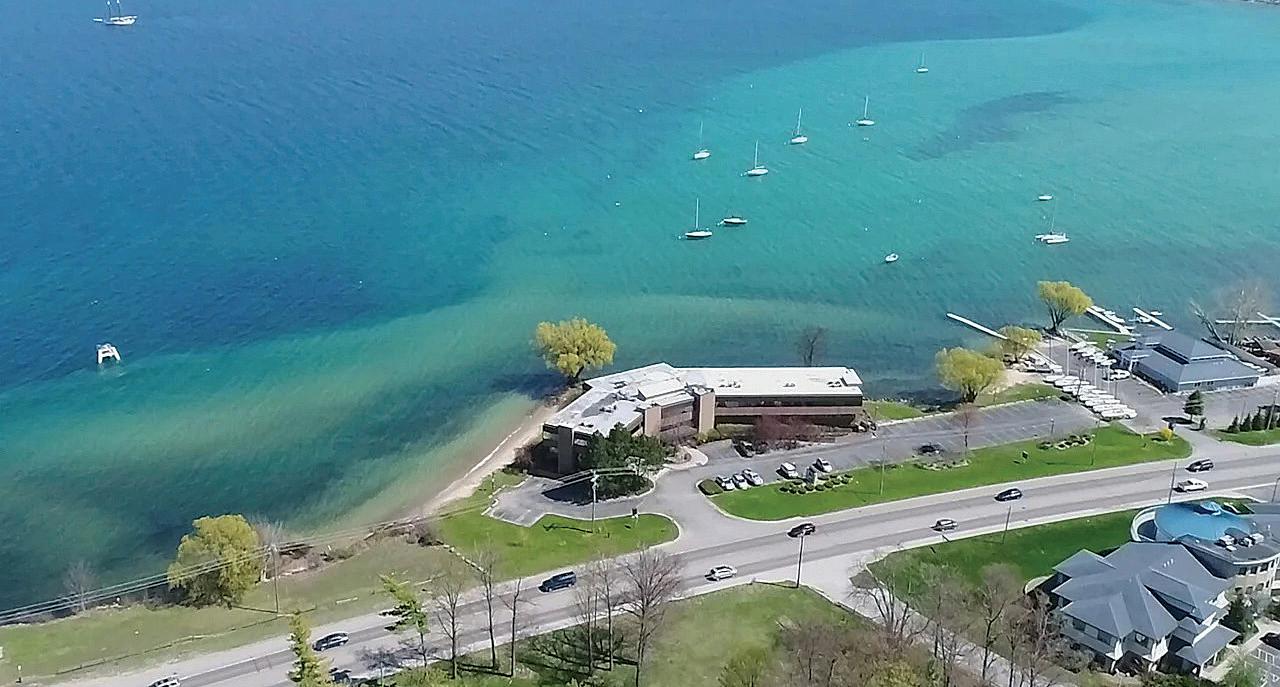
By Ross Boissoneau
In a region peppered with inland lakes and streams and miles of coastline along Lake Michigan, practically everything relies to some extent on the waters.
According to the Michigan Small Business Development Center, Michigan’s blue economy contributes approximately $60 billion annually and supports more than one million jobs in the state. This significant economic driver spans tourism, fishing, shipping and water technology.
The World Bank defines the blue economy as the sustainable use of ocean and freshwater resources for economic growth, improved livelihoods, and job creation, while preserving the health of the ecosystem. Hans Van Sumeren is in the middle of it all.
The Traverse City native is now senior director of the Ocean Enterprise Initiative, an institute at the Marine Technology Society, following 16 years at the Great Lakes Water Studies Institute at Northwestern Michigan College.
He says the blue economy offers huge opportunities for business and investment.
“It’s the most underutilized vertical in the investment space,” he said.
In his time at NMC, Van Sumeren developed several initiatives focused on the blue economy, including degrees in freshwater studies, water quality and environmental technology, marine technology,
and the remote operating vehicle (ROV) pilot training credential. His current position enables him to look beyond this region to the world’s water resources. He says that vision is necessary as the ocean economy – his preferred term – merits a macro approach.
“In the Great Lakes, tourism is our bread and butter,” he said, noting that the blue economy also includes fisheries, shipping, research, construction and more.
As the world’s waterways are all ultimately connected, the impacts of changes elsewhere affect things here, and vice versa.
“You cannot operate in one space without impacting another,” he said.
John Lutchko is now director of the Great Lakes Water Studies Institute at NMC. He says the institute’s emphasis on workforce development positions its graduates to take on a variety of roles, including marine technology, which offers one of the few four-year programs at the college. He says graduates move on to a variety of careers, from mapping the Great Lakes to water tunnel work in Qatar.
Besides offering degree programs in marine technology, freshwater studies and water quality and environmental technology, the college offers short courses for professionals to enhance and refresh their skills.
“We want to be in the middle of it all,” said Lutchko.
Which it is. As director of the marine center and director of strategic portfolio
and development, Denver Peters works with the business/entrepreneurship side of the institute, including identifying and growing future tenants for the Freshwater Research and Innovation Center.
“It’s the professional development arm,” said Peters.
Where the GLWSI offers degree programs, the marine center offers what Peters called microcredentials. For example, Peters says if a company needed to train its electrical engineers, the center could design the curriculum and teach the course.
Even though the focus of the challenge and Peters’ department is on the Great Lakes, he recognizes the universality of its applications. He says lakes in Africa face similar challenges, and applications and solutions formulated here could be exported abroad.
Peters also heads the Great Lakes Blue Tech Challenge, a competition designed to inspire, support and fast track early-stage businesses that are developing technologies and solutions for issues impacting the Great Lakes basin. What’s more, entrants in the Blue Tech Challenge could be future tenants in the emerging Freshwater Research and Innovation Center.
The 40,000 square-foot research center is located on the Discovery Center & Pier property on West Grand Traverse Bay. It is being developed to become the hub for the commercialization of freshwater and marine technology applications. Scheduled to open in spring 2027, Van Sumeren says the center’s goal is to attract new business growth, furthering the region’s
capacity in the blue economy.
While NMC works with traditional college students and those already in the field, the Inland Seas Education Association is helping future generations learn about the Great Lakes. Its primary focus is on students from kindergarten through 12th grade. Executive Director Fred Sitkins believes its mission of inspiring a lifetime of Great Lakes curiosity, stewardship and passion is a key to continued expansion of the blue economy.
“I like to believe we [impact] the blue economy in a couple different ways,” he said. “In the most simple form, we work with 10,000 folks every year. They come to our area.”
He also notes that some students will go on to careers directly within the blue economy, but all those who are part of the program become informed citizens.
“It opens students’ eyes. Why it is im-

portant, how it functions, the wide variety of careers,” he said.
Further evidence of the growth of the blue economy, and an additional bet on its future growth, is seen in the purchase of the Viridian property on West Bay by Walstrom Marine. The Harbor Springsbased company, which also has locations in Charlevoix, Bay Harbor, Holland, Cheboygan, Algonac and Traverse City, has plans to build a marina on the site at 13561 South West Bay Shore Dr.
Kyle Oleson, general manager of Walstrom Marine in Traverse City, says the need for additional marina slips is obvious.
opportunities and developments. Just being on and in the water is, in a word, fun. Myriad marinas and boat dealerships call the region home, and each year brings new advancements and new boats, all the better to enjoy the blue.
While sleek fiberglass boats always attract eyes, pontoons and their tri-toon cousins have overtaken their go-fast relatives at many dealerships. Traverse City’s Boatcraft is the country’s number one Viaggio dealer, according to Jeff Belanger, the family-owned company’s marketing director.
“We want to be in the middle of it all.”
– John Lutchko, Director, Northwestern Michigan College Great Lakes Water Studies
“We know that lake access for boaters has reached a critical status. Folks are waiting upwards of a decade to get a slip,” he said.
Jeremy Anderson, president of the company, says he knows of one person with a 60-foot boat who was eighth on a waiting list in 2018. Now, eight years later, that owner is still on the list, holding in third place.
“There are a number of people who want to trade up” to a larger boat, he says, but there aren’t any slips available. If they could do that, it would also open up the market to those looking to purchase and have a home for a smaller boat.
When finished – a process Anderson says will take until the summer of 2028, if all approvals and construction fall into place – the marina will be home to 80 to 100 slips, depending on the layout. The facility will also include a complete sales and service department.
He says given the interest, filling those slips won’t be a problem.
“We see continual growth every year,” Anderson said.
Of course, the blue economy is not just about technology, shipping, educational


“Out of 120 dealers in the United States, we are number one here in little Traverse City,” he said proudly. “Grand Traverse is one of the best [boat] markets.”
Heather Stetson-Leman at Long Lake Marina says sales of pontoon lines Bennington and Avalon are best sellers at the family-owned company. The fact that newer pontoons can handle larger engines enables them to reach speeds not thought of two decades ago further expands their appeal.
“If you’ve got kids, you can pull them on a tube,” she said.
New boating options
Brett Densé at Action Watersports, which carries Barletta and Bennington pontoons, agrees. He says interest is growing in center console boats, which are similar in style to bowriders but offer a driving console in the middle of the deck, which provides room for people to walk around, similar to a pontoon.
Kewadin’s NorthShore Dock and Marine is expanding, both in terms of its facility and its offerings. Originally dock and parts/repair specialists, it still offers those services, but now includes sales of numerous lines, even boat rentals in the summer.
That provides more opportunities for people to have fun, says the company’s marketing director, Mathias Dahline.






“Getting people lakefront and boating experience, from purchase to installation to accessories,” he said regarding the firm’s broadening focus.
He says the company now offers everything from personal watercraft, popularly known as jet-skis, to tritoons and pontoons, v-bottoms and more. Many are now on display in its new showroom, which features swirling blue epoxy floors with dock sections between the boats, providing customers a glimpse of what the actual experience on the water might feel like.
‘It’s a family togetherness thing’
One thing all the dealers agree on is that the COVID-related surge that saw people embracing virtually all outdoor activities has slowed, but growth continues as people embrace the blue.
“Deposits are up 65%. That speaks to consumer confidence,” said Densé.
“It’s a family togetherness thing,” added Stetson-Leman.
One innovation mentioned by a number of dealers is the inclusion of Lillipad ladders. The ladders and diving boards made by the Traverse City company have become standard equipment for many pontoon lines and others. The mounting system for the company’s Easy Step Lad-
der is designed for broad compatibility, allowing for installation on many vessel types. The diving boards are even more versatile, and can be installed on virtually any boat at least 18 feet long with a sturdy deck.
The diving board actually came first, according to company founder Corey Schaub. His wife, company co-founder Ann Schaub, wanted something to keep their older sons occupied on the water while they took care of their six-month-old daughter Lilli. When they saw how much the boys enjoyed the cobbled together diving board, made of wood with a basketball providing the spring, they realized they had something.
After further developing the concept, including the company’s proprietary Ghose Mount system, they turned to something they saw as even more essential.
“If you jump in the water, you have to get out. Boat ladders were horrendous,” Schaub noted.
He spent years working on a design which could easily unfold and fold back up again, and would enable swimmers to reboard without worrying about scratches and scrapes. He continued modifying the design so dogs could easily get out of the water as well.
The Lillipad ladders have won three major innovation awards since their introduction in 2019. They are now a standard option on many lines, from manufacturers like Barletta, Bennington

and Avalon, and are also available as after-market add-ons.
The blue economy even includes what’s below the surface. Robert “Bobo” LaMontagne’s company, Environmental Anchors, developed a system that screws into the lakebed, then flexes into position, much like toggle bolt into drywall. The Duckbill and Manta Ray anchors are driven into
the ground then attached via chain to the boat, providing a safe and environmentally sensitive installation.
LaMontagne says the system is used for boats, floating rafts, even docks. He touted the system’s environmental friendliness, and noted he has worked with the U.S. Navy and Coast Guard.
“They’re low-impact underwater,” he said, adding they are easier to work with and safer than some alternatives such as a giant tire with concrete, or an engine block.


PRESENTED BY KEEN

1209 S Garfield Ave ste a, Traverse City, MI 49686
KILOWATT HOURS AVOIDED: 40,168
SAVINGS EQUIVALENT TO:
3.3 Homes’ electricity use for one year. 24 Acres of U.S. forests preserved.




Keen is thrilled to partner with Elite Fitness North to bring bright, efficient LED lighting to their Turf Room, transforming it into a vibrant, high-performance environment where athletes can train, compete, and thrive. This upgrade not only enhances visibility and safety but also elevates the overall training experience, ensuring the space feels as dynamic and energized as the athletes who use it.
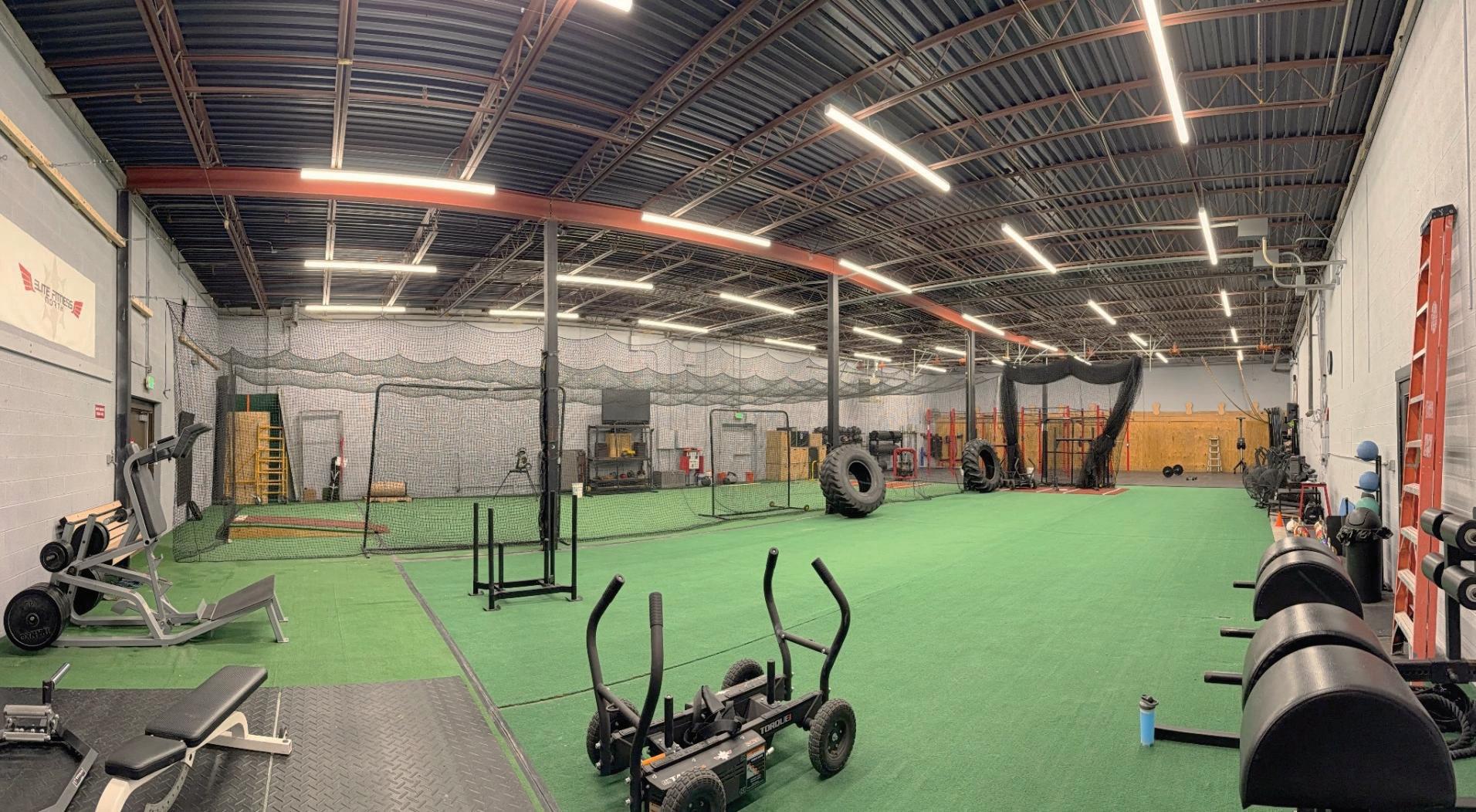














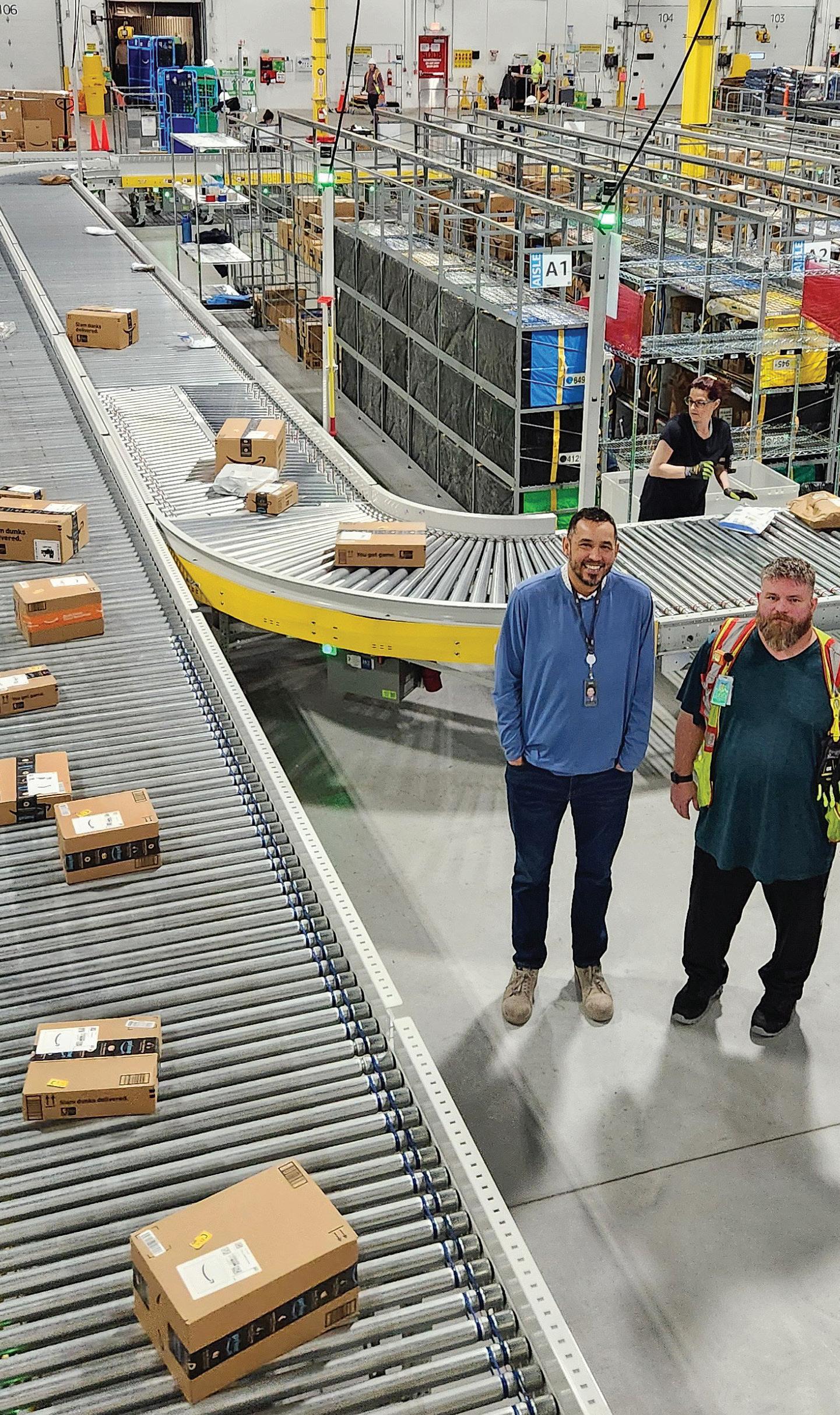
By Art Bukowski
An online retailing behemoth that’s often criticized for putting the squeeze on small businesses is now providing welcome income to business owners in the region.
Amazon is the country’s largest online retailer (and second in any form after Walmart). Its massive growth over the last decade in particular has put substantial pressure on brick-and-mortar retailers, particularly small, independent operations that already have a tough time holding their own against larger outfits. But some small businesses are now taking advantage of the Amazon Hub program, in which the online giant dumps packages at their doorstep and gives them a small fee for each package they deliver.
Will Harper, a Northport village council member and owner of North Shore Outfitters, gets $1.50 for each package he delivers within a three-mile radius of his shop. It’s a very welcome boost of income during the winter months when he normally closes his store.
“I never thought I’d find myself working for Jeff Bezos, and a lot of my friends give me a hard time about it,” he said. “It’s ironic that this company that has done so much harm to small businesses is, in a small way, helping us keep our lights on in the wintertime. And frankly, since I’m closed anyway, it’s something to do.”
Harper got involved in the program earlier this year after seeing an email in his very crowded inbox that promised a great opportunity for his business.
“It’s one of those things you never click on, but for some reason I did,” he said. After an Amazon team contacted Harper and got him approved, it was off to the races. He now spends a few hours several days a week delivering upwards of 500 packages a week. He gets asked about it by a lot by people who would love to do it, he says, but most aren’t eligible.
“To qualify to become a hub, you have to have a storefront and all the normal licenses and insurance of a small business,” Harper said. “I’d say the number one conversation I have with people is when they want to do this out of their homes, but can’t. And then when I tell them they can’t, their next question is: Can I be one of your drivers?”
It’s also not for every business, at least not all the time. Leelanau Cheese, one of the county’s most popular foodie outfits, served as a hub for about a month and is now taking a pause. Though they had a bit of a payment dispute, managing partner Gary Smith says, the far bigger issue was finding the time to get the packages out.
“We’re still not 100% closing the door on it,” Smith said. “If a business is scrappy enough and has more time to dedicate resources to it, it’s a really intriguing concept.”
Trine Allington is also taking a pause. She works as a waitress in Traverse City, but was able to take advantage of the program because her parents have a trucking company that’s registered at her Suttons Bay address. She started in October
“I never thought I’d find myself working for Jeff Bezos, and a lot of my friends give me a hard time about it. It’s ironic that this company that has done so much harm to small businesses is, in a small way, helping us keep our lights on in the wintertime.”
– Will Harper, Owner, North Shore Outfitters

delivering 30-40 packages a day, and when she wanted to up her package count, she worked with Amazon to expand her range from three to five miles.
“I was making that couple hundred extra bucks a week that I wanted,” she says. “I was tired of working double shifts [as a waitress] and this made up for that double that I didn’t want to do.”
She really liked it a lot. Then winter came.
“Once it started snowing, I ended up in the ditch, had to call a tow truck. So that wasn’t a good experience,” she said. “And in Leelanau County, there’s some pretty severe driveways, and that [also] caused
some anxiety for me.”
Allington hopes to pick it back up in the spring when things are once again safe and accessible.
“I’m 55 years old, I have a full-time job, and I’m not going to walk a quarter of a mile down someone’s driveway – or up someone’s driveway – to deliver a package for $1.50,” she said.
Regional Amazon spokesman Scott Seroka said there are 51 hubs serviced out of the main Traverse City shipping facility near Grawn. He didn’t immediately have a number for the entire country, but previously published reports say Amazon hoped to have at least 2,500 of these part-
ners nationwide by the end of 2023.
Seroka says hub delivery provides valuable support to the company’s rural delivery network, which also utilizes all the major carriers along with designated company drivers.
“It really just helps us fill some gaps in our network,” he said. “These folks that take on the hub deliveries for us really do not only do us a great service of expanding our delivery area and helping us get packages to customers more quickly, but also serving [their] communities so that they have the same access to Amazon as everyone else.”
Jay Brown manages the main Traverse City shipping center, which opened less
than two years ago. The facility shipped about 5.2 million packages in 2025, and final delivery of roughly 10% of its load is handled by hub drivers, Brown says.
“The hub partners do play a vital role, because we’ll have, say, 20 different vans that have both regular and hub packages on them. They go distribute to maybe 10 different hub partners, and that increases our ability to deliver packages basically by tenfold,” he said. “And the hub partners also provide local knowledge. They know the roads, they know where they can and can’t get out of and it makes it a much more safe environment when you’re doing deliveries.”




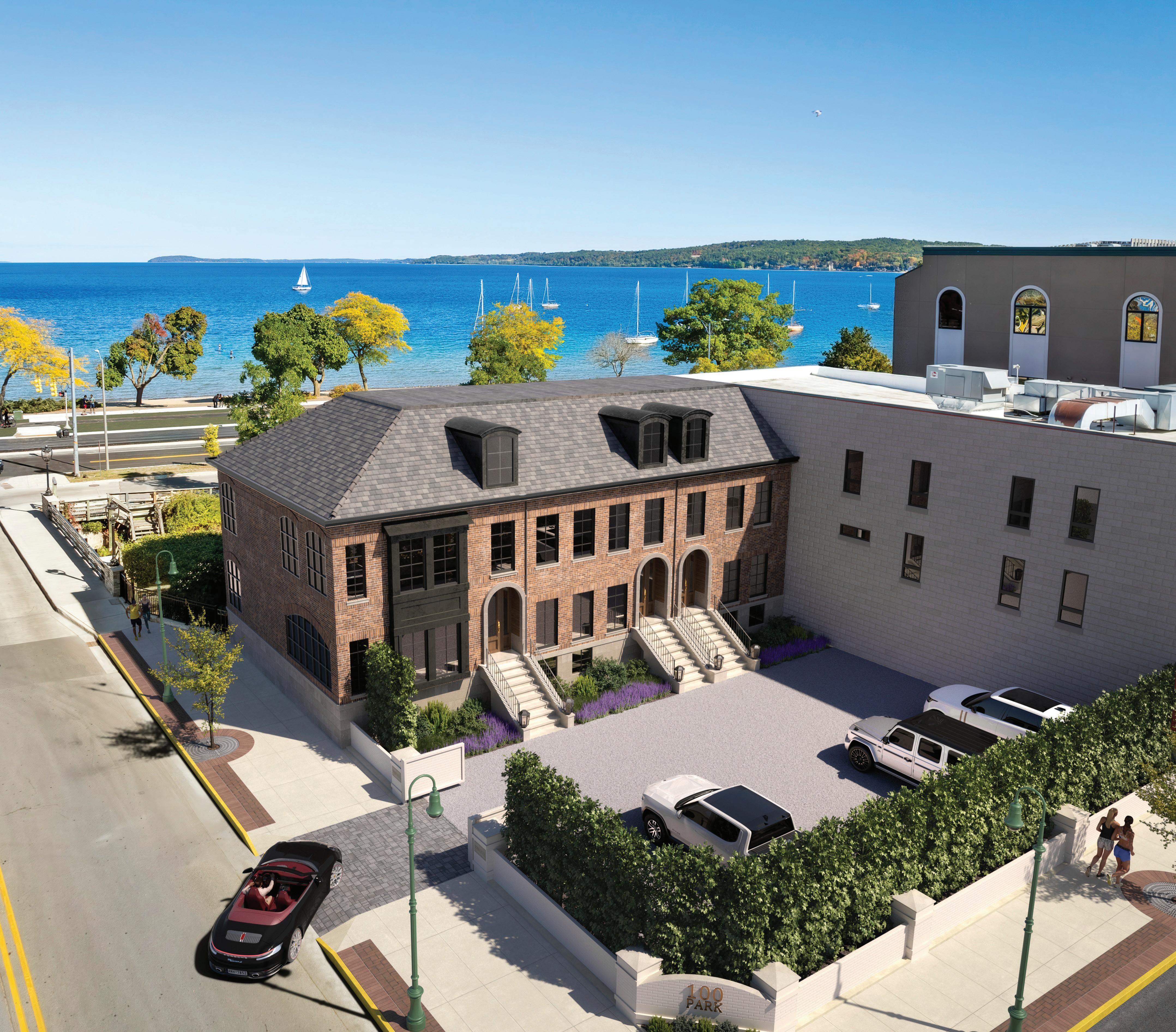





By Chris Wendel
Before every performance, Rolling Stones guitarist Keith Richards eats one slice (always the first slice) of a shepherd’s pie arranged for him. Since this tradition has taken place for decades, should it be considered a habit, obsession or ritual? I sought out the book “The Ritual Effect” by Michael Norton for an answer.
Norton is a professor at Harvard Business School and a behavioral scientist known for his research on decision-making happiness and consumer behavior. He may be best known for coming up with what has become known as the “IKEA effect,” the idea that people place disproportionately higher value on things they help create. Whether assembling a piece of furniture or building something from scratch, our labor increases our emotional investment and perceived value. In “The Ritual Effect,” Norton builds on this earlier work to consider if intentional actions performed with meaning boost life experiences.
Early in the book, Norton distinguishes between a habit and a ritual. A habit is something we do automatically, often mindlessly, like a behavior on autopilot. A ritual, on the other hand, has more intention and meaning. A simple example is the idea of sitting at a table consuming a liquid (habit) versus clinking glasses with others (ritual). While habits help us conserve mental energy, rituals help us create meaning. This difference becomes a key to understanding why certain repeated actions shape our emotional lives so powerfully.
Sports offer some of Norton’s examples. Athletes are famously ritualistic, from basketball players bouncing the ball a precise number of times before a free throw to baseball pitchers adjusting their caps and stepping off the mound in the same sequence every inning. Norton explains that these rituals reduce anxiety by giving athletes a sense of control in high pressure situations. The ritual becomes, in a way, a psychological anchor telling a performer they are “ready to go.”
“The Ritual Effect” also explores life’s most si gnificant milestones. Weddings and funerals, in particular, demonstrate the deep human need for ritual. A wedding is not simply a legal agreement between two people, it’s an organized public ceremony that signals commitment, gathers community and marks a transition.
Funerals serve a similar purpose in re verse. In moments of grief, ritual provides order when life feels disordered.
Norton describes an interesting clothing ritual that took place during the Civil War where specific colors were worn by mourners based on how much time had passed since a loved one’s or relative’s death.
Norton’s argument is that rituals help

The Transformative Power of Our Everyday Actions
By Michael Norton
us navigate both celebration and sorrow. They anchor us during uncertainty and celebrat e joy during success. Families gather for holiday meals not only out of tradition, but because the repeated structure provides identity. Companies establish office traditions and annual retreats because ritual builds camaraderie and culture. Even small personal things like brewing morning coffee with care or writing in a journal before bed can move routine moments into more meaningful experiences.
One of Norton’s themes is that rituals do not need to be ancient or complicated to be effective. They simply need to be intentional. The same increased value perception behind the IKEA effect applies to rituals we create ourselves. When individuals or teams design their own shared practices, they invest effort and meaning into the process.
“The Ritual Effect” blends academic research with relatable storytelling with Norton avoiding jargon, reinforcing his claims with behavioral science. Readers come away not only understanding why rituals work, but also noticing the rituals already rooted in their own lives.
In a world that often feels unpredictable, Norton’s message is optimistic, emphasizing that rituals help individuals perform under pressure, families stay connected and teams function as cohesive units. Perhaps Keith Richards’ shepherd’s pie ritual is one reason why the Rolling Stones have been performing together for over 60 years.
Chris Wendel works for Northern Initiatives, a mission-based lending organization based in Marquette, Michigan. Northern Initiatives provides funding to businesses throughout Michigan and online business resources through its “Initiate” program to organizations and small business owners throughout the United States. Wendel lives and works in Traverse City.




Building a prudent investment portfolio starts with a clear understanding of the investment plan process. A structured approach is used to determine the most suitable asset allocation for each investor. This method is the foundation of sound asset allocation, ensuring that investments align with goals, risk tolerance, and constraints.
any legal & regulatory issues, and any unique circumstances.


Investment Objectives: The journey begins with an assessment of the investor’s objectives. Are they saving for retirement, planning for a child’s education, or aiming for wealth accumulation? Each goal dictates a unique timeline and required returns, which play a pivotal role in setting asset allocation.
In essence, the investment plan process is a collaborative and iterative journey.
Risk Tolerance: Next, the investor’s risk tolerance is evaluated through conversations and reviewing historical asset mix risk and return profiles. Some individuals are comfortable with market fluctuations, while others prefer stability. This evaluation helps guide decisions on the appropriate asset mix between stocks, bonds, and cash equivalents.
Investor Constraints: Constraints are issues that are specific to each investor and are very important considerations in establishing a sound asset allocation. Constraints include an investor’s time horizon, short and long-term cash needs, current and future income, expense and debt levels, tax positions, an investor’s investment knowledge and experience,
Target Asset Allocation: After consideration has been given to investment objectives, risk tolerance, and constraints, a target asset allocation is established. Diversification is a key component as spreading investments across asset classes helps to mitigate risk and optimize returns. The end result is a tailored, diversified portfolio asset mix that is consistent with meeting an investor’s investment objectives while controlling the amounts and types of risks undertaken.
Portfolio Monitoring:
At a minimum, annual reviews should be conducted to ensure the portfolio remains aligned with an investor’s evolving goals and market dynamics. The review should include the portfolio asset mix, characteristics, and performance. Life is dynamic, not static. Adjustments may be required as life circumstances change.
In essence, the investment plan process is a collaborative and iterative journey. By following these steps, investors can achieve peace of mind, knowing their portfolios are designed to meet their financial aspirations while managing risk effectively.

By Ross Boissoneau
Since its founding in 2007, NorthShore Dock & Marine has earned a reputation for superior dock systems and high-quality, full-service docking purchases and installation. Its expertise and offerings have now moved beyond that singular focus.
While still maintaining its leadership position in dock sales and service, the Kewadin-based company also offers sales of new boats, boat rentals, electronics and accessories. Plus boat storage, hoist and trailer service, and the region’s most prompt and complete marine service.
It’s part of the company’s mission to do it all, and do it all extraordinarily well.
For proof, just step into its new showroom. There you’ll find dozens of new boats, from such manufacturers as Lund, Bentley, Manitou and now Harris. All in a scenic setting, with a swirling Caribbean-blue epoxy floor that mimics the scenic waters of Lake Michigan, Torch Lake, Lake Charlevoix and the other waterways around the area. Dock sections above the “water” connect the boats, just like you’ll find on the shores of the real thing.
That approach is the hallmark of NorthShore Docks & Marine owners Tad and Jessi Dowker. They want people to be able to focus on enjoying their boats and boating experience, rather
than worrying about dealing with all the potential headaches associated with storing, readying and launching them.
“Boating is all about fun,” said Jessi. “We want people to be able to spend time with friends and family on the water.”
Their roots in the area and the industry run deep. They both grew up in Elk Rapids and graduated from Elk Rapids High School before heading north to Michigan Tech in Houghton, where they each earned degrees in Mechanical Engineering; Jessi also earned a degree in Accounting. Upon returning to Elk Rapids, Tad started NorthShore Dock with 12 jobs in the spring of 2007 with his best friend Jeremiah Steffen.
Since that auspicious beginning, the Dowkers have built the company into a comprehensive service-oriented business. Tad believes the atmosphere and commitment at NorthShore Dock & Marine is all about working with their customers to help them enjoy their boating experience summer after summer. “We don’t just sell boats and docks,” he said. “We build long-term relationships with people who love being on the water. If you trust us with your lake life, we take that personally.”
“For us, it’s about creating a place where customers feel confident, excited, and supported,” added Jessi. “That’s the case whether they’re buying their first boat or upgrading their entire shoreline setup.”
The Northshore team also includes
long-time Dock Crew Leaders Zach and Justin Thomas, who have helped shape the company’s dock operations from the ground up. They say getting people on the water should be hassle-free. “We’re making sure every dock system, shoreline setup, and installation is done right. That attention to detail is what protects our customers’ investment,” said Justin.
“People are busy. We respect their time by making the process smooth, transparent, and dependable,” Zach added.
This process has shaped the company’s hassle-free dock and shoreline service, but its expansion into sales and rental means customers can find the boat of their dreams, then let NorthShore do the work of getting it ready and out on the water. All that’s left for the customer is just the joy of being on the water.
Operations Manager Allison Woodwyk is enthusiastic about the direction of the company and its commitment to growth and continued emphasis on service. “NorthShore is becoming a true one-stop shop for Northern Michigan boaters,” she said. “With our new showroom and adding brands like Harris, we’re making it easier than ever to find everything you need in one place.”
After all the years NorthShore Dock & Marine has been serving the community, Allison said this was the logical next step for the company. “The new showroom reflects where Northshore is headed: more options, better experi-
ences, and a stronger connection to the boating community.”
With a reputation built on how well it treats its customers, NorthShore Dock & Marine has continued expanding its service offerings beyond the water’s edge. In addition to boats and docks, the company has developed a strong presence in Softwash, land management, roof cleaning, and winter roof services - helping waterfront property owners protect and maintain their entire investment year-round.
Mike Davis, who oversees Softwash, land management, and ice dam removal services, says the team stays busy no matter the season.
“Winter doesn’t slow us down,” said Davis. “Our crews have been extremely busy with ice dam removal and roof snow removal. Protecting homes from damage during heavy snow seasons is just as important as getting boats ready in the spring.”
The expanded services reflect NorthShore’s broader mission: simplify life for waterfront homeowners. By offering everything from marine sales and service to exterior property care, NorthShore Dock & Marine provides far more than boating necessities. It delivers a comprehensive solution for Northern Michigan property owners who want one trusted team managing both their time on the water and the property that surrounds it.

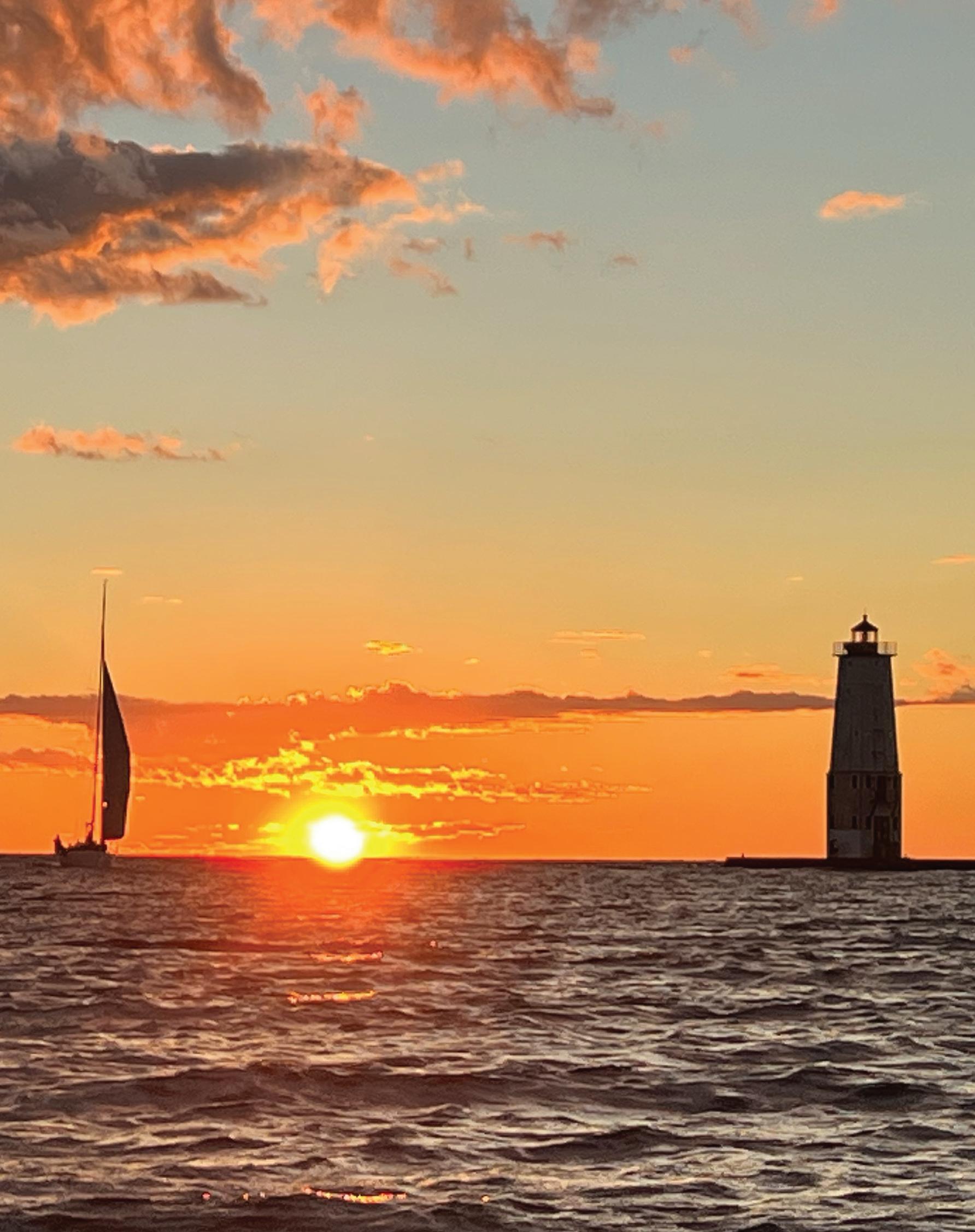

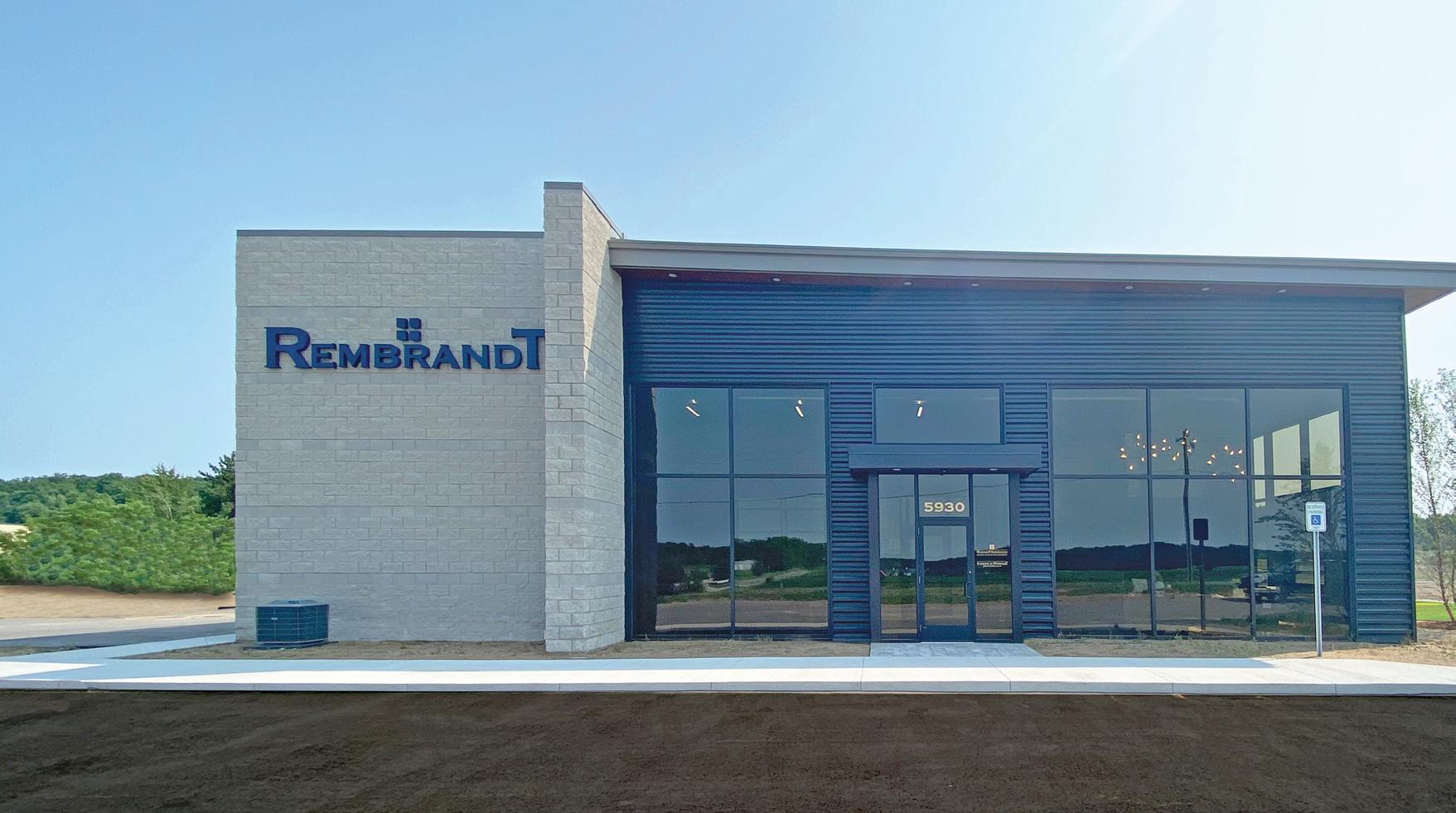

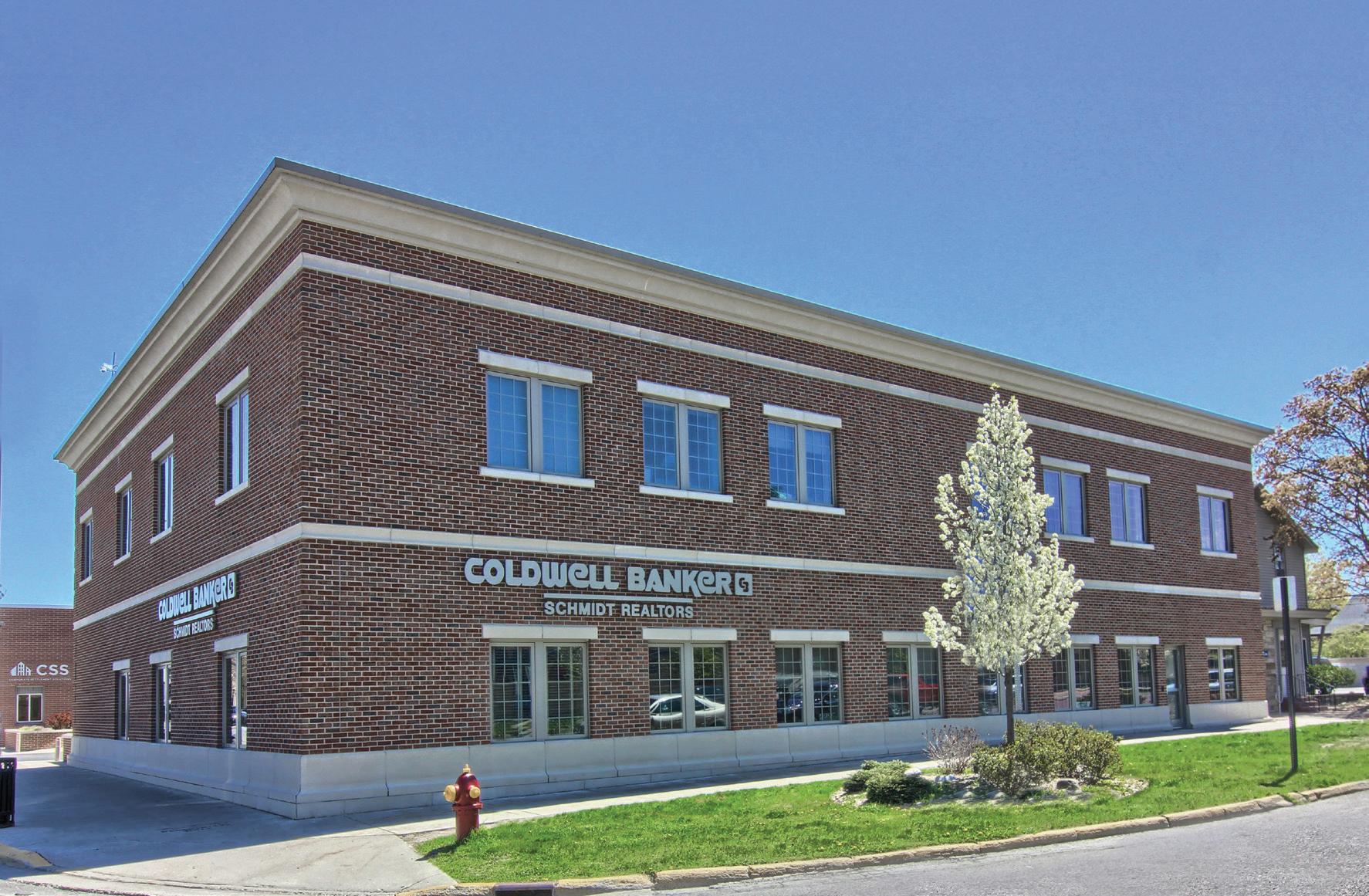

By Craig Manning
When Tom Gordon and John Velis, two of the three co-founders of the local startup Memory Bright, pitched their company to the audience at TCNewTech in November, things didn’t exactly go according to plan.
“We went, and we made some bad choices about how we were going to present,” Gordon said of the TCNewTech appearance. “Honestly, I’d call it a disaster. But it was also a learning opportunity. We took those lessons to heart and we rebuilt our pitch.”
Gordon, Velis and their third partner Mark DeLonge aren’t your typical startup founders. They struck up a friendship years ago, thanks mostly to their shared common ground as employees at Northwestern Michigan College (NMC). DeLonge is NMC’s online technology coordinator, which involves “helping instructors design and create their online courses.” Gordon and Velis were instructors – teaching history and software development, respectively – but have since retired.
The science of perpetual learning
Perhaps even more unusual than their initial connection point, the Memory Bright guys let their idea percolate for the better part of a decade before finally landing on the TCNewTech stage last November.
“Around 2015, Tom read a book by
Benedict Carey called ‘How We Learn,’ and there’s a chapter in there called ‘Learning Without Thinking,’” DeLonge recalled of Memory Bright’s earliest roots.
“The idea behind that chapter is perceptual learning, and an example would be that you get exposed to a bunch of images on art, and after multiple experiences, you learn what cubism is, you learn what
other educators to build and use their own PLMs. Enter Velis, who was running the capstone course for NMC’s computer information technology department at the time. That experiential learning class prompts teams of about-to-graduate students to select projects pitched by third parties and then develop them over the course of a semester. Gordon and DeLonge pitched
“The idea is that a person with Alzheimer’s can build their own albums, or they could work with a caregiver or a family member to put them together.”
– Mark DeLonge, Co-Founder, Memory Bright
impressionism is and you learn it without reading books or going to a lecture. You just experience the art, and then your brain starts to figure out what these things are.”
As an educator, Gordon was naturally drawn to the perceptual learning concept, and decided to put it to the test. He brought the idea to DeLonge, and the two worked together to build an online tool that would enable Gordon to create perceptual learning modules (PLMs) for a geography course.
From the classroom to the ThinkLocker
Impressed by the favorable results among his students, Gordon wanted to build a web app that would make it easy for
the PLM concept, and it resonated with a team of four students, who went on to build a prototype application that multiple NMC instructors used the following school year.
Originally dubbed “ThinkLocker,” the web app grew enough that it eventually hosted more than 60 modules and 200 regular users. It even grew beyond the scope of NMC, with outside users including a nursing instructor in Paris and a handful of graduate students at Harvard.
Pivoting to Alzheimer care
In 2022, a grant from the NMC Foun-
dation and the college’s Office of Possibilities (OOPs) supercharged ThinkLocker, giving Gordon, DeLonge and Velis the money they needed to redevelop their web app, fix bugs and add new features. It wasn’t the last time ThinkLocker would need a rebuild. According to DeLonge, NMC’s OOPs grant and the subsequent revamp of ThinkLocker happened to occur around the same time that Velis was having to do more caregiving for his father, who was living with Alzheimer’s.
“John said, ‘Boy, it’d be really cool if I could make some lockers’ – which is what we called the flash-cards-on-steroids modules in ThinkLocker – ‘about my family so that my dad could remember who his grandkids are,’” DeLonge said.
“Because at that point, John would go and visit with his mom and dad, and he would leave the room, and his dad would say, ‘Boy, that was a really nice young man. Who was that?’”
That conversation proved to be a light bulb moment for the trio. Though the app had up to then been primarily geared toward educators, the founders saw an opportunity “to really help people” by tweaking it to serve families navigating the challenges and heartbreaks of dementia.
According to Gordon, the initial thought was that ThinkLocker could be customized for a new audience and a new purpose through “just a couple of tweaks” to the software.

“But it became pretty clear pretty quickly that we actually needed to rebuild the app from the ground up,” Gordon said. “And we were glad we did, because it took a lot more than a couple tweaks.”
Specifically, because ThinkLocker had been designed with education in mind, the app revolved around a “game mode,” intended to test students as they learned.

“We thought, if we’re building this for folks who are struggling with dementia, we really need to take into account that they’re all on a spectrum in their journey,” Gordon said. “The game mode, early on in a person’s Alzheimer’s journey, makes a lot of sense. But after a while, it’s just going to frustrate them and remind them, ‘Oh, your memory really sucks.’ We thought a story mode would really help in that regard.”
The “story mode” is now the centerpiece feature of Memory Bright, which became the new name for ThinkLocker when Gordon, DeLonge and Velis rebuilt the app about two and a half years ago. Using that mode, families or caregivers can build virtual photo albums that tell a story about a specific person, place or thing to help jog the memory of someone living with dementia. Beyond the photos themselves, Memory Bright users can record voiceover audio, add music or write captions or brief stories to offer additional context or explanation.
“Now, you can just say, ‘I want a story about my grandson,’ and then you go through that album and you look at the images, you hear the audio, you read the captions and you have that experience,” DeLonge said.
The rebuilt Memory Bright also features an “explore mode,” which allows for more free-form explorations of different photos and photo albums, and an “autoplay mode,” which Gordon says “is for when you get toward the end of the Alzheimer’s journey, and then your caregiver can just open up the app and push play, and it just runs through your albums.”




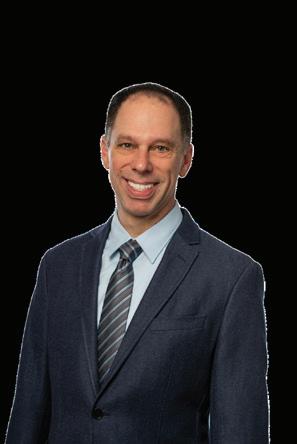
pitch night at 20Fathoms. Coming just a few weeks after the aforementioned “disaster” at TCNewTech, the founders were a little apprehensive about getting back on stage. As it turned out, the lessons they learned from their swing-andmiss presentation at TCNewTech were well-taken, and Memory Bright won the 20Fathoms audience-vote event and its $5,000 grand prize.
“It was just so gratifying, especially on the heels of the TCNewTech bomb,” Gordon said. “When they announced Memory Bright as the winner, that was the coolest moment, because the whole room erupted. It felt like an acknowledgement that we are doing something special.”
and for older adults still living at home. A smart camera sits on top of the TV, turning it into a hub for video calls, photo sharing, wellness videos, virtual group activities and more.
“Part of that wellness hub is an app center, and Memory Bright is going to live in that app center as one of the things that users, through Comfort Keepers, can then engage in,” DeLonge said.
The road ahead for 2026
The partnerships have big potential to grow Memory Bright well beyond the “onesie twosie” paid subscribers it has currently.
“The idea is that a person with Alzheimer’s can build their own albums, or they could work with a caregiver or a family member to put them together,” DeLonge said of the Memory Bright process. “You could build an album all about your family, or an album about the cabin you used to visit all the time. We typically recommend that you put in multiple pictures for each person or thing or pet that you want to remember. And because of our various different modes, you build the album once, but then you can interact with it in multiple ways.”
DeLonge acknowledges that the idea for Memory Bright – essentially a feature-rich photo album app “built with caregivers for people living with dementia in mind” – sounds simple on paper.
“Surprisingly, though, we haven’t found anybody else that’s doing this,” he said.
The novelty and appeal of Memory Bright was illustrated recently when Gordon, DeLonge and Velis presented their company concept as part of a December
The win sent Memory Bright into the new year with a burst of momentum, and DeLonge says the company is expecting “a big year” in 2026. The startup recently caught the eye of Russ Knopp, owner of the local Comfort Keepers franchise, and Memory Bright is now working to launch a pilot initiative that will put its app in the hands of Comfort Keepers caregivers –not just in Traverse City, but also potentially across the home care company’s hundreds of franchises.
“Having worked with hundreds of families caring for a loved one with dementia, we know how much reminiscing, hearing family stories retold and connecting with familiar voices can impact mood, functioning and quality of life,” Knopp said. “When we heard about the concept the founders of Memory Bright were working on, we immediately saw the potential of their idea to make a difference for families in an easy, accessible way. We’re working with Memory Bright to connect families we serve across the region with its innovative platform, and we’re seeing firsthand the joy it can bring to family members and their loved ones.”
That partnership has also connected Memory Bright with Vantiva, the technology company behind a device called HomeSight, which works closely with Comfort Keepers. Described as a “wellness hub,” the HomeSight system “leverages familiar technology to deliver an easy-to-use care experience” for caregivers
“Comfort Keepers has over 600 franchises, and then HomeSight has other clients as well,” Gordon noted. “So, we’re getting pretty excited, and we think we could reach a lot of new people pretty quickly. It’s like somebody stepped in and said, ‘You don’t have to do all these in-between steps [of growing a business]. You can just go from here to there.’”
As part of the growth, Memory Bright is already looking to expand its team. This winter, Gordon, DeLonge and Velis are bringing on a fourth partner to handle software development in-house (they previously worked with a company in town to build their app). With big potential growth on the horizon thanks to Comfort Keepers and HomeSight, DeLonge is expecting the company will need to make a few other hires soon, possibly before the year is out.
“We’re three educators; we’re not experienced entrepreneurs,” DeLonge laughed. “We haven’t done this before. So we’re trying to figure it out as we go. With this developer coming aboard, we know we’ll be able to scale the app. Broader scaling of the business – like whether we need sales people, or accountants, or all those types of things – that’s going to need to happen here eventually, but we haven’t hit that tipping point yet.”
Gordon adds that the project is “as hopeful now as it’s ever been.”
“I feel like we’ve been on a roller coaster, and it’s been clicking up and up and up,” he said. “Now, we’re at the top of that initial hill, and looking over at this crazy ride ahead of us.”










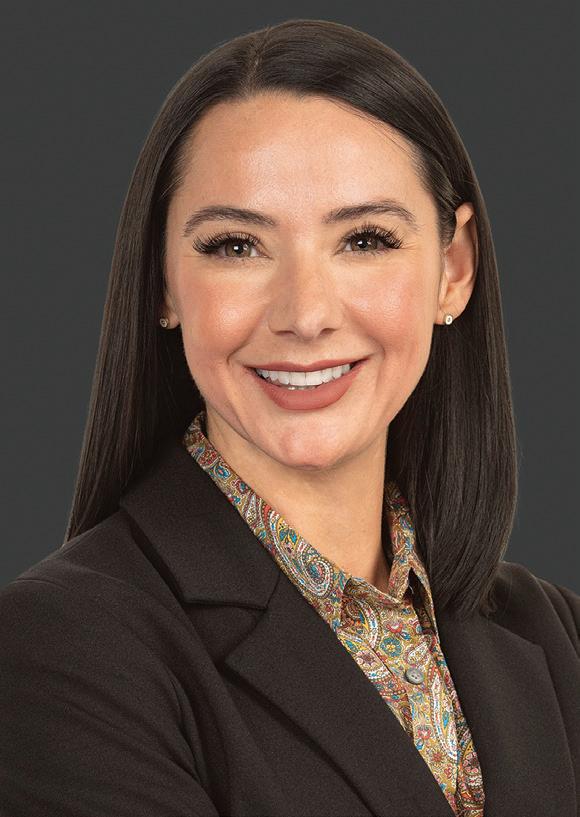

1 - Brittany Atkins has joined the Cardinal Insurance Group in Traverse City as a personal lines account executive. Atkins brings several years of experience in the industry to her new role.
2 - Mandi Shellenbarger has joined Brodeur Capital Management and Gillow Wealth Management of Raymond James in Traverse City as a registered client service associate. Shellenbarger brings more than 20 years of experience in the industry, including working with high-net-worth individuals and families, managing complex account needs, and supporting advisory teams.
4 - Maria Kinney recently joined the board of directors of Better Together Northern Michigan in Traverse City. Kinney works as an independent consultant in design and marketing.
5 - Laurie Lapp , human resources director at Wilson Kester in Traverse City, has joined the Habitat for Humanity Grand Traverse Region board of directors. Lapp brings more than 20 years of human resources management experience to her new role.
6 - Patty Seymour has joined the board of directors of Better Together Northern Michigan in Traverse City. Seymour’s expertise is in administration and project management.
3 - Jerome Jelinek , executive chairman of Corporate Settlement Solutions in Traverse City, has joined the Habitat for Humanity Grand Traverse Region board of directors. Jelinek brings significant experience in real estate law to his new role.
7 - Katrina Teague is the new operations director for Accelerate The Care in Traverse City. Teague brings more than 30 years of executive leadership experience to the nonprofit, which offers support for caregivers of people living with Alzheimer’s and Dementia diagnoses.
9 - Brittany Morton-Smith has been named operations coordinator.
Kristina Pepelko (not pictured) is now the director of strategic communications.
@properties REMI Christie’s International Real Estate in Traverse City announces the following:
10 - Nicole Bristol has joined the company as a Realtor.
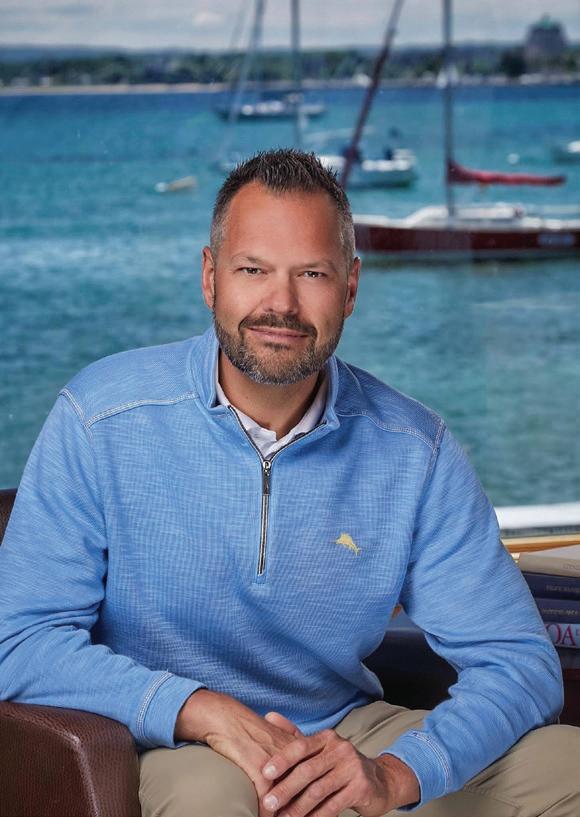
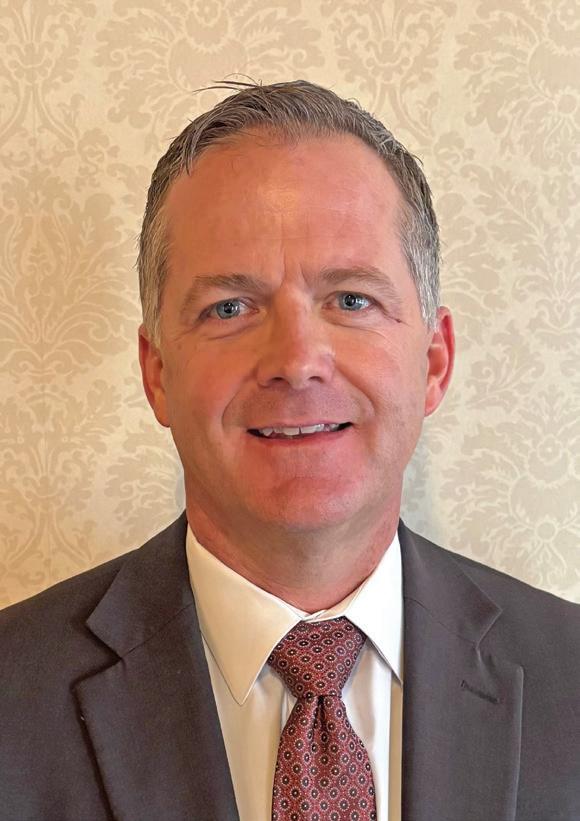

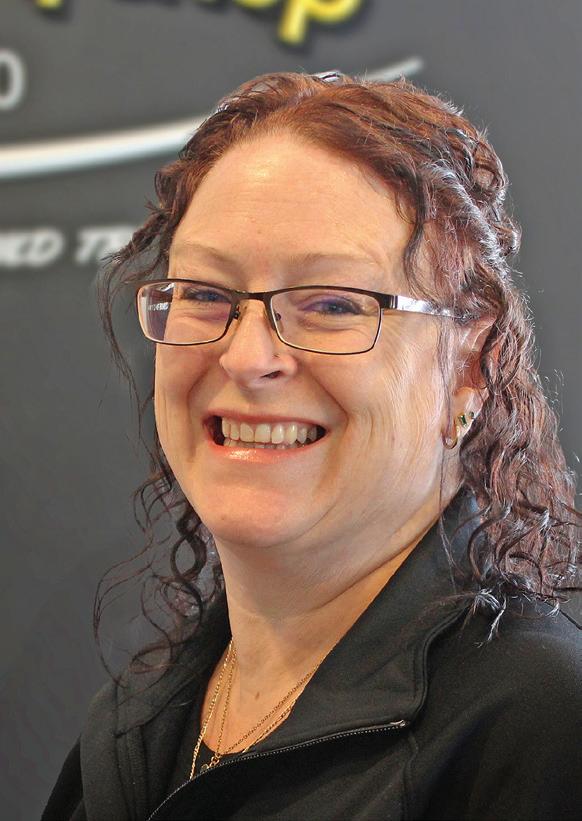
11 - Katherine Palms has joined @properties REMI Christie’s International Real Estate in Traverse City as a Realtor.
12 - Kevin Perkins has joined @properties REMI Christie’s International Real Estate in Traverse City as a Realtor.
13 - Brian Patrick has joined Reynolds Jonkhoff Funeral Home and Cremation Services in Traverse City as a licensed funeral director. Patrick has 36 years of experience in funeral service.
14 - Bruce Grosso recently joined Sonny’s Body Shop in Traverse City as an estimator. Grosso brings more than seven years of experience to his role, having pre -
viously worked in various body shops, including Bill Marsh Auto Group and Serra.
15 - Amy Wiser has joined Sonny’s Body Shop in Traverse City as a customer service representative. Wiser brings more than 10 years of experience, having previously worked at Fox Motors Collision Center and Walstrom Marine.
Please send Newsmakers by the 10th of the month to news@tcbusinessnews.com





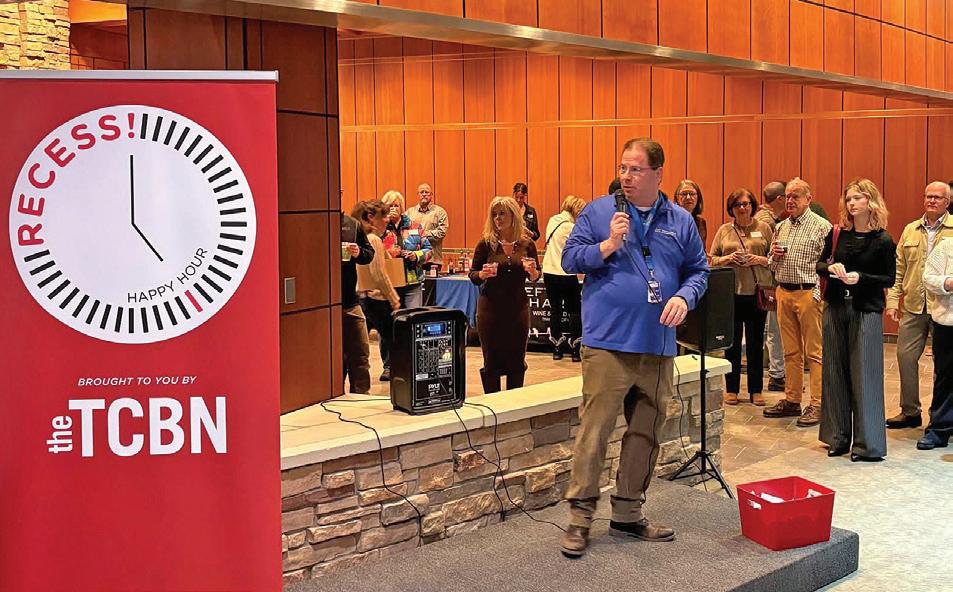
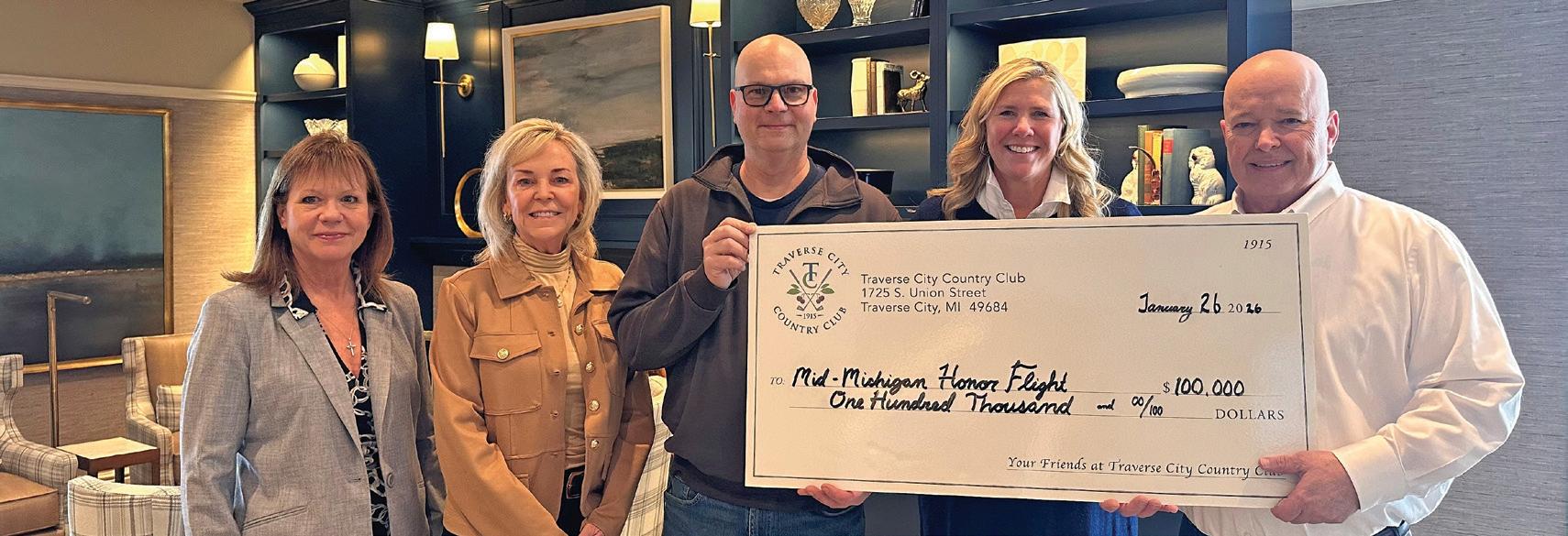





From kitchens to bedrooms and bathrooms, create beautiful floors anywhere in your home. Explore beautiful wood looks and stone looks in hundreds of colors. Now With Special Pricing!


Karndean Luxury Vinyl Flooring Designed for Life

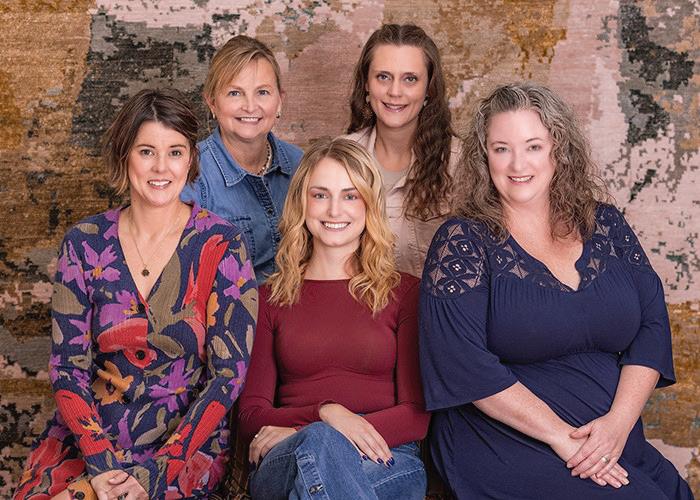
Expertly crafted vinyl flooring with the realistic look of wood or stone. Durable, water resistant, easy to clean and comfortable underfoot. Meet Our Team! Stop in


Our sales & design experts will help you find the best floor for your home.