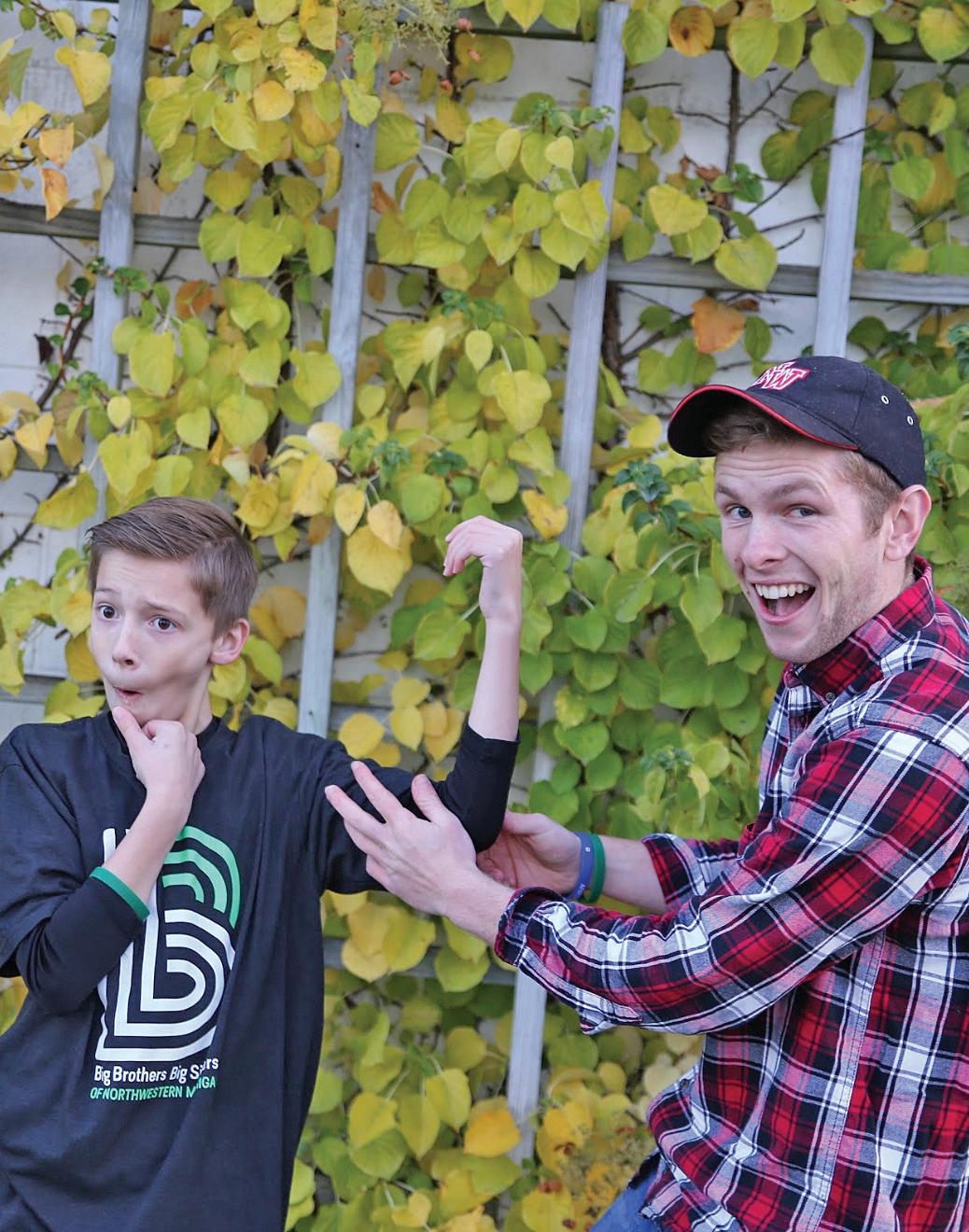
Welcome to our second annual Voices of the Next Generation issue! With the exception of our recurring columns and features (plus a story on Big Brothers, Big Sisters), all of the stories in this issue have been written by northern Michigan high school students. These students chose topics that were meaningful to them, conducted their own research and interviews, and wrote pieces that Northern Express is immensely proud to publish. Their talent and their hard work give us hope for the future of local journalism. So read on, and we hope you enjoy this special issue as much as we do.
Jillian Manning, editor of Northern Express
Good and Not So Good
Good moguls, alpine, and cross-country skiing: Schuss Mountain, Shanty Creek, Boyne Highlands, Holiday Hills, Boyne Mountain, Crystal Mountain. Not so good moguls and mostly downhill: Washington, D.C.
Ron Tschudy | Echo Township
The Greatest Threat We Face
In the Feb. 9 edition of Northern Express, Quinn De Vecchi mentioned nationwide strikes students held to express their displeasure of ICE, referring to the strikes as “the easiest first step we could take to raise awareness.” I’d like to raise awareness of what I believe is our greatest threat.
The Elite Class controls almost everything that pertains to our lives: energy, finances, technologies, communications, healthcare, military, food, etc. What they don’t have full control over, yet (for example: housing and education), they’re hellbent on obtaining. And with the help of their “political partners” (of all colors) they’ve largely seized control of our governments as well.
For profits, they’ve polluted our air, water, soil, our bodies, and our minds, and they’ve proven they’re capable of doing anything to achieve their goals.
In America, they’re warehousing often innocent people in squalid conditions, and with their “international partners” they’ve demolished a city of over 2.3 million people (about the population of Chicago), killing over 73,000 people (and counting) and leaving the rest displaced and starving and with no place to go; all to construct a seaside resort for the wealthy and eliminate a nation.
Because of their power and influence, many have gotten away with what could easily be considered to be heinous crimes, and they continue to blatantly show complete disregard for our constitution, laws, and our opinions.
Beginning now, all of us (Democrats, Republicans, Independents, non-voters, students), as a united front, must start doing much more (sustained acts of civil disobedience: boycotts, general strikes, divesting, etc.) to stop the onslaught of the Elites. If we don’t unite and act immediately, life will rapidly get unimaginably worse for everybody (except those at the top) and we’ll never be able to recover any of the rights and freedoms we’ve already lost.
Patrick McDuff | Manistee
Billions in War
According to numerous sources, the war in Iran is costing taxpayers roughly $1 billion a day, from missiles to the U.S. Navy escorting oil tankers. That’s billion with a B; dollars with a D. Homelessness could be solved nationwide with $10 billion. But here in northern Michigan, what did your last visit to the gas station cost you, or recently what has your 401(k) retirement lost?
George Golubovskis | Traverse City
Northern Express Weekly is published by Eyes Only Media, LLC.
Publisher: Luke Haase PO Box 4020 Traverse City, Michigan 49685 Phone: (231) 947-8787 Fax: 947-2425 email: info@northernexpress.com www.northernexpress.com
Sales: Lisa Gillespie, Kim Murray, Kaitlyn Nance, Abby Walton Porter, Michele Young For ad sales in Petoskey, Harbor Springs, Boyne & Charlevoix, call (231) 838-6948
Contributors: Eliza Aldridge, Anna Faller, Kerrigan Jenkins, Aubrey Lawless, Meridian Parsons, Addison Seivertson, Alice Song, Rachel Pasche Tess Tarchack-Hiss, Stephen Tuttle
Distribution Manager: Roger Racine
Distribution: Marc Morris, Gerald Morris, Dave Anderson, Joe Evancho, Jason Ritter, Sherri Ritter, Roger Racine, Sarah Racine, Brandy Grames, Rachel Cara, Jackson Price, Lisa Price, Peggy Bell
Listings Editor: Jamie Kauffold
top ten
The New Space Race
If space is the final frontier, we still have a lot of exploring to do. So the Traverse City International Affairs Forum is hosting a “new space race” event on March 19 with Dr. Aimee A. Hubble, a University of Michigan nuclear engineering grad who has gone on to become the director of the Propulsion Science Department at The Aerospace Corporation, one of the leading architects for the nation’s space programs. The event will address how “governments and corporations compete for technological advantage, data control, and access to resources” and what the consequences are for “citizens, the environment, and the balance of global power.” The discussion takes place at Milliken Auditorium at 7pm on Thursday, March 19, with a 6pm reception. In-person tickets are $15 ($20 at the door); virtual tickets are $10; and admission is free for current students and educators. Learn more at tciaf.com/event-march-2026.
2 tastemaker Fustini’s Hot Honey Balsamic
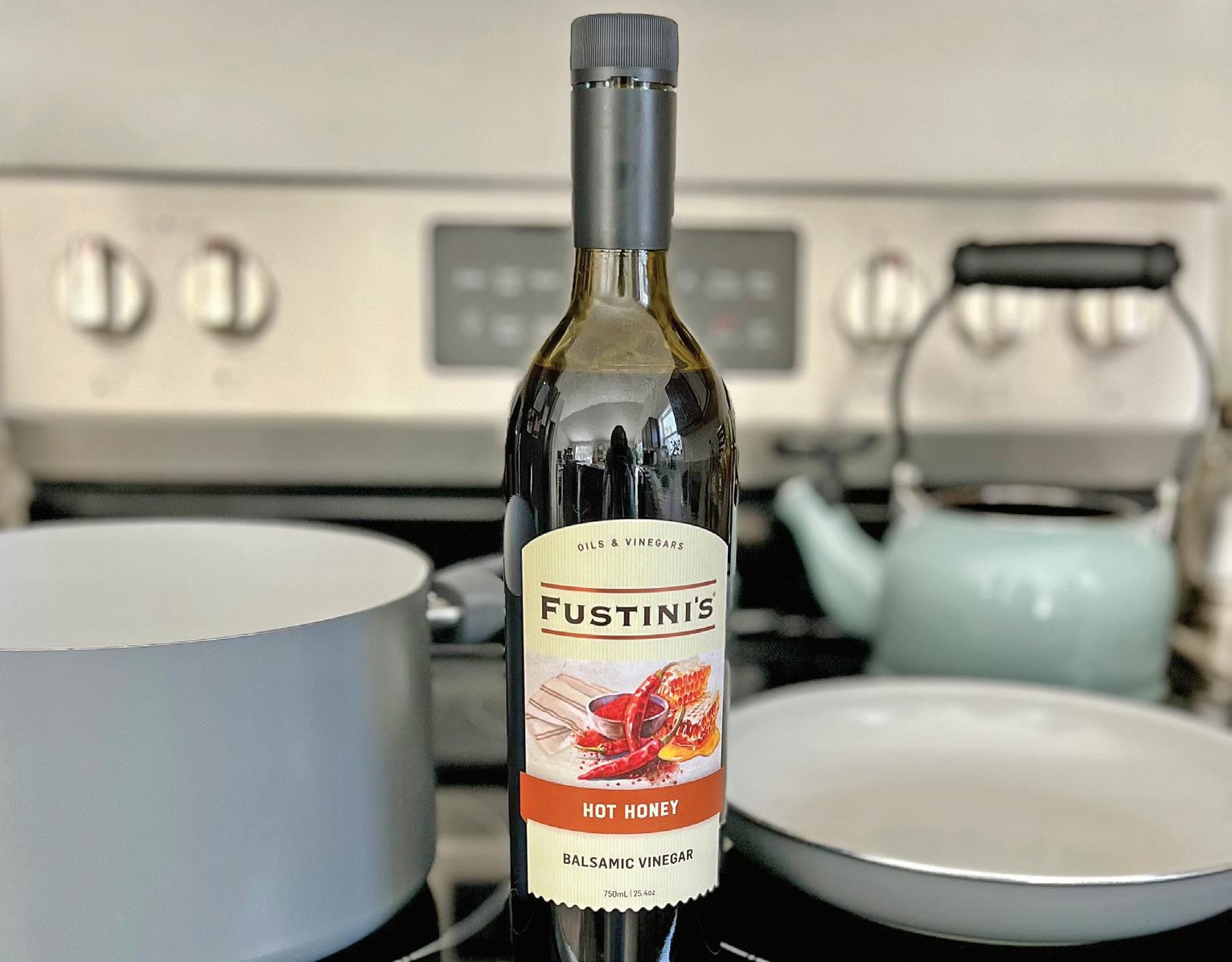
PSA: We don’t know how long this limited edition creation will be in stock, so get it while the getting’s good! Introducing the Hot Honey Balsamic ($39.95) from Fustini’s Oils & Vinegars, aka the bottle you’ll be secretly sneaking pulls from while you’re cooking in the kitchen. It has the sweet bite of balsamic with a touch of heat that never feels too spicy. While we are happy pouring this baby on everything in sight, Fustini’s has a more curated selection of recommendations for vinaigrettes, glazes, pizzas, and even cocktails and mocktails. They also have two recipes on their site: a Miso Salmon Marinade and a Sweet Potato and Kale Roast. Run to the nearest Fustini’s near you—141 E Front St. in Traverse City or 206 Howard St. in Petoskey—before they’re all gone! fustinis.com/collections/vinegars/products/hothoney-balsamic-vinegar
Maple Fun with Grass River
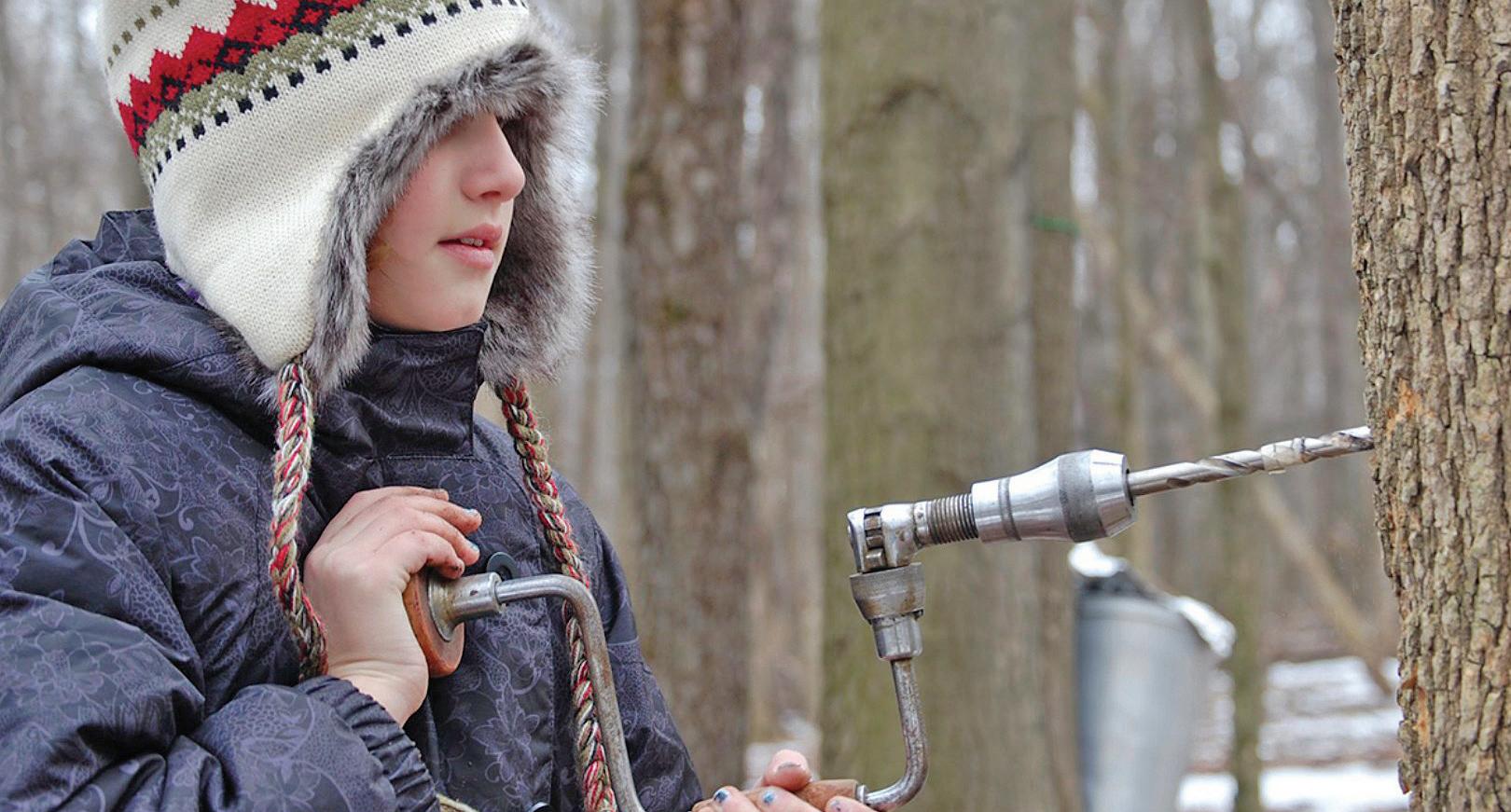
Ever wondered how maple syrup is made? Stop by the Pavilion at Grass River Center at Grass River Natural Area near Bellaire on Saturday, March 21, between 12-3pm to help turn maple sap to syrup! Ask staff questions and hike on the trail to see where trees are tapped, buckets and lines are hung, and sap is collected. There might even be Grass River Maple Syrup available for purchase! grassriver.org
4
Hey, read It! The Astral Library
When we meet Alix Watson, she’s approaching rock bottom. She’s been fired from her barista job (with only $36 left until payday); she’s locked out of her bank account, thanks to some fraudulent stranger named Libby Bibb; and if all of that wasn’t bad enough, she has less than a week before she’s evicted. In fact, her only glimmer of respite is the reading room at the Boston Public Library, where she beelines after her day from hell—and, in classic C.S. Lewis fashion, steps through a portal into the world of her dreams. The Astral Library, as Alix soon discovers, is a magical hub offering real-life safety to readers by concealing them inside their favorite books. But just as Alix is about to take the plunge, a new adventure emerges, one filled with familiar characters, sinister villains, and the power to destroy the Astral Library forever, along with everyone in it. Action-packed and utterly fantastic, Kate Quinn’s newest novel, The Astral Library, is literally one for the books!
ST. AMBROSE CELLARS
CAJUN BRUNCH
EVERY SUNDAY 10AM-2PM
Manistee County is hosting its firstever Restaurant Week March 15-21. More than a dozen local restaurants are participating—including some just over the border in Benzie! Here are a few of the eateries at a glance: Blue Fish Kitchen & Bar, the Blue Slipper, Bungalow Inn, Fricano’s, the Golden Stag, Iron Fish Distillery, MT Plate Diner, The Outsider, the Ramsdell Inn, Taco ’Bout It, Wander In, and more. Special prix-fix menus range from $15 to $45 with offerings throughout the week. (For example, Blue Fish has a Sunday brunch menu and not one but TWO weekday menus to explore—so you might need to go more than once!) Some spots will also offer fun activities, like regular trivia nights at Fricano’s (Monday) or The Outsider (Thursday). For the full line-up and all the restaurant week menus, head to manisteechamber.com/manisteecounty-restaurant-week.
Stuff
Love: A Moment of
Remember when coloring books were all the rage in the mid 2010s? The idea was to do something both mindful and a little mindless, to unplug from devices and channel your creativity. Well, we’ve found coloring books 2.0 at My Secret Stash in downtown Traverse City. The eclectic boutique on Cass Street carries a line of Watercolor Workbooks with whimsical art by Emily Lex. Each book includes illustrations for you to paint with watercolors (sold separately, but also available through MSS), and there are plenty of adorable topics to choose from: animals, birds, baking, bouquets, gardens, seasides, woodlands, and seasonal books focused on winter or autumn. Each workbook is $28 and contains 12 illustrations to paint—with easy-to-tear out sheets if you want to keep your masterpiece. Shop in store at 122 Cass Street in TC or online at mysecretstash.com.
Next month, we’ll run our “Now Hiring” issue on April 27, where we dedicate a special portion of the paper to job listings from across the region. If your team has a slate of summer jobs to fill for the high season Up North, now’s the time to submit them for free! There is no limit to the number of positions you may submit, though we do not guarantee publication of all jobs. To submit a job posting, head to northernexpress. com/jobs. You’ll need to have the following information ready: employer name, position title, position type, pay range, city, a brief description, and a contact email or phone number. We recommend sharing your openings as soon as possible and updating us if they are filled. Jobs must be in our 13-county coverage area. Happy hiring!
Kilkenny’s Irish Pub in Traverse City is flipping the script on our morning joe with an Iced Irish Coffee feature in time for St. Paddy’s Day! Inspired in part by the infamous Erin Rose Bar in New Orleans (with a nod to the Starbucks Frappuccino), this sweet treat blends Tullamore D.E.W. Irish Whiskey with roasty cold brew coffee, a touch of simple syrup and heavy cream—and the secret ingredient—Moomer’s Vanilla Malt ice cream, which was crafted just for North Peak Brewing Co., for a rich and creamy texture. Topped off with fresh whipped cream and a drizzle of Crème de Menthe, it’s served up in a stadium cup you can keep. Pair one with an order of Irish Egg Rolls and prepare for some greenthemed shenanigans! Celebrate at Kilkenny’s Irish Pub (400 W. Front St.) in Traverse City. kilkennyspub.com
Pictured: The Burrata de Caprese from Golden Stag
Easter
Brunch
Sunday, April 5 | 10am - 3pm
Celebrate Easter at Artisan with a Spring-inspired three-course brunch. Book your table today!
artisantc.com
spectator
By Stephen Tuttle
Secretary of Defense Pete Hegseth says, “We’re winning,” though what we’re winning is open to debate. But let’s back up.
What is now Iran has been an organized civilization for more than 2,000 years, going all the way back to Cyrus the Great and the Achaemenid Empire of 550 BCE. The preferred religion was a blend of Hinduism, Judaism, some Christianity, and Zoroastrianism, which dominated for 1200 years until the 7th century CE. (Zoroastrianism is still a protected religion in Iran today.)
Iran is not the typical Middle East country. They are Persian, not Arab, and would be quick to tell you there are both genetic and historic differences. Their primary language is Farsi, not Arabic, and they are a majority Muslim country practicing Shia Islam, the official national religion, though
Shah was overthrown, 52 Americans were held hostage, and virulently anti-West theocratic rulers were installed. One form of dictatorship was replaced by another.
Iran then became a thorn in the side of the region. They declared their intent to drive Israel, whose Jewish residents they refer to as “vermin,” into the Mediterranean. They fought a pointless war with Iraq (we were on Iraq’s side) and provided both financial aid and weapons to terror groups Hezbollah in Lebanon and Hamas in the Palestinian states.
Which brings us to our peculiar decision to start a war with them. We undertook an aerial campaign six months ago that we were told “totally obliterated” Iran’s nuclear and missile programs. Then we attacked again and had a difficult time arriving at a consistent or logical reason.
This administration learned nothing from Afghanistan and nothing from Iraq and is now spending American blood and treasure to beat up on smaller, weaker adversaries, including the bombing of a school full of children.
the overwhelming majority of the rest of the region practices Sunni Islam. This has created ongoing sectarian strife.
Their land area is a little smaller than Alaska, about one-sixth the size of the U.S. Their population is about 92.4 million as of last year, with an average age of just under 35.
They’ve been governed by an unbroken string of monarchs acting as dictators and autocrats, all of which we tolerated. We became their pals once their vast oil reserves were discovered.
CAMP CARVELA
The Qajar Dynasty took control in 1789 and managed to hang on until they were violently deposed in 1921. Four years later, the Pahlavi Dynasty began their reign, and it was not great for the Iranian people.
There were a brief few years in the late 1940s and early 1950s when Iran had a democratically elected leader, but the U.S. and Great Britain orchestrated a coup in 1953 to protect both country’s oil interests and because it was the early days of the Cold War and they feared communist influence in the country and region. Back then, we couldn’t tolerate their democracy.
The Pahlavi Dynasty, or more specifically our pal the Shah, then governed, increasingly by force and fear, until 1979. He outlawed political parties, religious dissent, press freedoms, and employed his brutal secret police SAVAK to terminally eliminate any form of dissent. The U.S. tolerated the increasingly oppressive conditions for the people of Iran because the Shah was reliably anti-communist and bought lots and lots of military equipment we’re now trying to destroy.
Which brings us to 1979, when Iran experienced an Islamic revolution. The
We were initially told we attacked because there was evidence they were going to attack us or Israel. Then we were told they were going to assassinate Trump. Then we were told it was because they were rebuilding their nuclear program. Then we were told by Press Secretary Karoline Leavitt we attacked because Donald Trump, “... based on fact, had a feeling we were going to be attacked...” Then Defense Secretary Pete Hegseth, in his “60 Minutes” interview, said we attacked because Iran was a “generational threat gathering.”
Meanwhile, according to Reuters, the Pentagon informed a Congressional committee there was “no evidence” Iran was preparing to attack either the U.S. or Israel nor sending an assassination squad to kill Trump.
Iran’s despicable leadership are not idiots, and attacking the U.S. would be an act of pure idiocy. They had about 150 naval ships, most of which are small gunboats, not warships. They do not possess an aircraft carrier, though they are trying to convert a container ship to something that is capable of launching drones. Their “air force” was mostly just pre-1979 U.S. jets and equally old Russian and Chinese aircraft.
Now the president has said we will jointly decide with Israel when to end our involvement. So we’re fighting somebody else’s war and taking our instructions from them.
We’re told this is not Iraq. No, it’s worse because we should know better. This administration learned nothing from Afghanistan and nothing from Iraq and is now spending American blood and treasure to beat up on smaller, weaker adversaries, including the bombing of a school full of children. That does not make us tough or strong. It makes us pathetic.
A SEAT AT THE TABLE
Student Guest Opinion
By Addison Seivertson
For young women, representation in government is more than symbolism. It is permission and proof that their voice matters and that they can make a difference. It allows them to look in the mirror and see someone with equal opportunities. They see someone who isn’t stopped by their gender identity. In a world that often tells girls to shrink, representation in government tells them to take up more space.
Studies have shown that “the incorporation of women into political institutions encourages the political engagement of women at the citizen level” (“‘Engendering’
also had representation in her life before entering government.
Shamroe was the first woman to be elected mayor in Traverse City in nearly 20 years when she took her first term in 2023. She was reelected in 2025.
When asked if she had any role models growing up, Shamroe responds with a quick yes. Her biggest role model was her greatgrandmother, Florence Mason. Shamroe describes Florence as a legend in her family, saying that everyone talked about her. She was outspoken and “just that presence.”
Young women should be reminded that their voices are not too loud, their dreams are not too big, and their place at the table is not something to ask for, but something they are already worthy of.
Politics,” SAGE Publications) and that “adolescent girls who were exposed to a woman running a viable campaign for a visible office … were more likely to vote in both presidential and non-presidential elections as adults” (“Nevertheless, Role Models Persisted,” Springer).
In Michigan, many roles in government are held by women. From local city councils to the state capitol in Lansing, women are actively shaping policies. Leaders like Governor Gretchen Whitmer and Traverse City’s Mayor Amy Shamroe stand as living reminders that power isn’t some distant, unreachable thing. Seeing places that feel and look like home being run by women makes leadership feel closer and more familiar.
Not only does representation in government help open the doorway for young women, but just having a powerful female figure in their lives helps. It can change the way they view their own future.
For example, a 2012 study published in the journal Science found that “female leadership influences adolescent girls’ career aspirations and educational attainment” in India. Forbes reports that “role models have an amplified benefit for women due to the gender biases, institutional barriers and negative stereotypes women have long had to contend with across a wide swathe of professional domains.”
These women become their own personal proof that strength can look and sound like them. And for young women, a group that has always been told that their gender makes them inferior, having that presence, that visibility, can be the first step toward believing they deserve to be heard.
Mayor Amy Shamroe is proof of this. Not only is she the representation young women need in government, but she
Despite her own success, Shamroe still sees women in government having to elbow their way in to keep their seats at the table. No matter how much growth has happened over the years, there are still times when it seems like a higher bar is set for women.
When asked why she thinks it is important to have female representation in government, Shamroe gave two reasons:
“Half of the population is women,” she says. “Women are not univocal; we don’t have the same thoughts on every single thing, but it is important to have that perspective that women bring from our lived experiences, which is different than men.”
Her second reason is that “representation also matters for future leadership … when you see a woman in power, it allows women and young girls and others to imagine it’s possible.” Shamroe adds that “if you don’t see women representing us … it means that you’re not putting that example out there for young women.”
Each woman who steps up becomes the light at the end of the tunnel. Each woman inspires the young women around them. Those are the people who drive the story forward and create the change that the world needs. These women are not only shaping our policies, but they are also shaping the possibilities.
Young women should be reminded that their voices are not too loud, their dreams are not too big, and their place at the table is not something to ask for, but something they are already worthy of.
Addison Seivertson is currently a senior at Traverse City Central High School. Oftentimes you will find her watching a movie or listening to Searows, but most days, it is common to find her working on a poem.
Government in Action
Call in to the Washington state Department of Licensing, and you'll have the option for Spanish language communication. At least that's what you'd expect. But instead, the Associated Press reported, an automated AI voice just speaks English with a strong Spanish accent. Maya Edwards, whose husband pressed 2 for Spanish, said, "It was hilarious to us in the moment because it was so absurd. But at the same time, it has real accessibility issues for people who ... need to speak in a different language." The DOL apologized and said the glitch had been fixed as of Feb. 27, but calls to the service still resulted in the accented voice and using Spanish words only for numbers, as in, "Your estimated wait time is less than tres minutes." Buena suerte! [AP, 2/27/2026]
Wait, What?
After being reported missing on Feb. 14, a 36-year-old Florida man was found on Feb. 26 up to his neck in mud, WCJB-TV reported. Andrew Giddens, who friends said had been depressed after a recent breakup, was found near the Vulcan Sand Plant in Melrose. A Vulcan employee discovered him and called authorities. Rescue crews from three counties spent more than two hours using ropes, ladders and other supplies to free him from the mud. After 12 days in the elements, without food or water, he was in critical condition at a local hospital. [WCJB, 2/26/2026]
Fine Points of the Law
Mob boss John Gotti's grandson, Carmine Agnello, 39, is headed to prison after pleading guilty to fraud in 2024, the New York Post reported. As his sentencing date, March 13, approaches, Agnello is hoping the federal judge will give him a break because he's donating a kidney to his mom, Victoria Gotti. But the Eastern District of New York isn't having it: "Being a kidney donor does not ... constitute extraordinary family circumstances and warrant a below guidelines sentence," the office wrote. They also argued that the Bureau of Prisons is more than equipped to care for Agnello after his kidney donation. Nice try. [NY Post, 3/1/2026]
The Passing Parade
On Feb. 28 in Thailand's Prakhon Chai district, 37-year-old Duangduan Ketsaro made headlines when, in the same ceremony, she married two Austrian men, the Times of India reported. Ketsaro met Roman, a retired police officer, five years ago, and then had flings with his friend, Macky, also a police officer. The three had settled into an open relationship, but they put a ring on it in a traditional Thai wedding. "Marry one, nobody remembers," Ketsaro said. "Marry two, they'll never forget!" [Times of India, 3/3/2026]
But Why?
Scientists in China have used gene editing technology to create a new tomato variety that smells like buttered popcorn, The Independent reported on Feb. 26. The project was conceived to address the problem of tomatoes losing some aroma and flavor during transport and storage. Peng Zheng, an author of the study, compared the alteration to creating varieties of fragrant rice. But why buttered popcorn? Why couldn't they smell like ... tomatoes? [The Independent, 2/26/2026]
That Rule Doesn't Apply to Me Layne Featherngill, 58, took matters into his own hands on Feb. 26 in Sykes Creek, Florida, WFTV reported. An ambulance on a call had parked in a way that blocked Featherngill from moving his car, so he got into the ambulance and started to move it out
of the way. Brevard County Fire Rescue crew members were working on a patient in the back when they felt the truck begin to roll. When one of the first responders got out and confronted Featherngill, he jumped out of the ambulance and into his own car, then struck a paramedic in the leg as he drove away. Deputies tracked him down and arrested him for grand theft of a motor vehicle and burglary of an occupied conveyance. [WFTV, 2/28/2026]
Field Report
Shoppers at The Market Place antique store in East Durham, New York, came across a cute little item on the shelves on Feb. 21, the Associated Press reported. There, tucked in next to a ceramic chicken cookie jar, was a sleepy eastern screech owl. The state's Department of Environmental Conservation was called in, and officers carefully cradled the sleeping owl and removed it from the store, then released it in a nearby woods. [AP, 2/27/2026]
News You Can
Use
If you're planning to fly through Tampa International Airport anytime soon, better put on your best duds. The airport announced on X on Feb. 26 that pajamas would no longer be tolerated at the facility, Fox News reported. "We've seen enough. We've had enough. It's time to ban pajamas at Tampa International Airport," the post read. As it turned out, however, Tampa was just kidding (or maybe testing the water?). An airport statement said they "regularly share lighthearted, satirical social media content" and called the post "another playful nod to day-of-travel fashion debates." Mmm-hmmm. [Fox News, 2/26/2026]
This one's no joke: United Airlines updated its policy on Feb. 27 to prohibit travelers who watch videos or play games without using headphones, Fox News reported. Under United's "refusal of transport" rules, passengers who refuse to use headphones may be denied boarding or removed from a flight. Including the rule in the contract of carriage gives crews more ability to enforce it. [Fox News, 3/4/2026]
Oops
Visitors to the Shantou Zhongshan Park Zoo in Guangdong, China, may be admitted to a special feeding area where they can feed lions through cage bars, the New York Post reported. But on Feb. 26, a 10-year-old girl was attacked by two lions after being allowed in the area, even though she was underage. The girl was up against the cage when a female lion reached through the bars and grabbed her leg. A zoo staffer used a metal rod to hit the cat's paw away from the girl's leg, eventually freeing her. The staffer who let the girl into the restricted area was suspended, the zoo said. The victim had minor leg injuries and received a rabies vaccination. [NY Post, 3/2/2026]
Bright Idea
On Feb. 22, drivers on China's congested highways encountered a determined fellow traveler, the South China Morning Post reported. Tan, 26, was headed to his girlfriend's hometown 580 miles away from his home with a singular mission: to propose marriage. As such, he posted a sign on his car's back window that read: "Brothers, let me go first. I am heading to Guizhou to propose to the love of my life." His girlfriend had returned home for Chinese New Year, during which roadways become crowded with travelers. "At first, the journey felt endless, but the closer I got, the more excited I became," he said. "The kindness I received made my happiness even greater." Tan said his betrothed was surprised to see him after his 12 1/2-hour trip, and she happily accepted his proposal. [SCMP, 3/3/2026]
SUNDAY, MARCH 15TH
ST. PADDY'S AT THE PULL BARN WITH BBQ POP UP
PLUNGE!
PUBLIC TRANSPORTATION: A LIFELINE FOR STUDENTS
How BATA helps students with mobility, employment, and education
By Alice Song, Interlochen Arts Academy
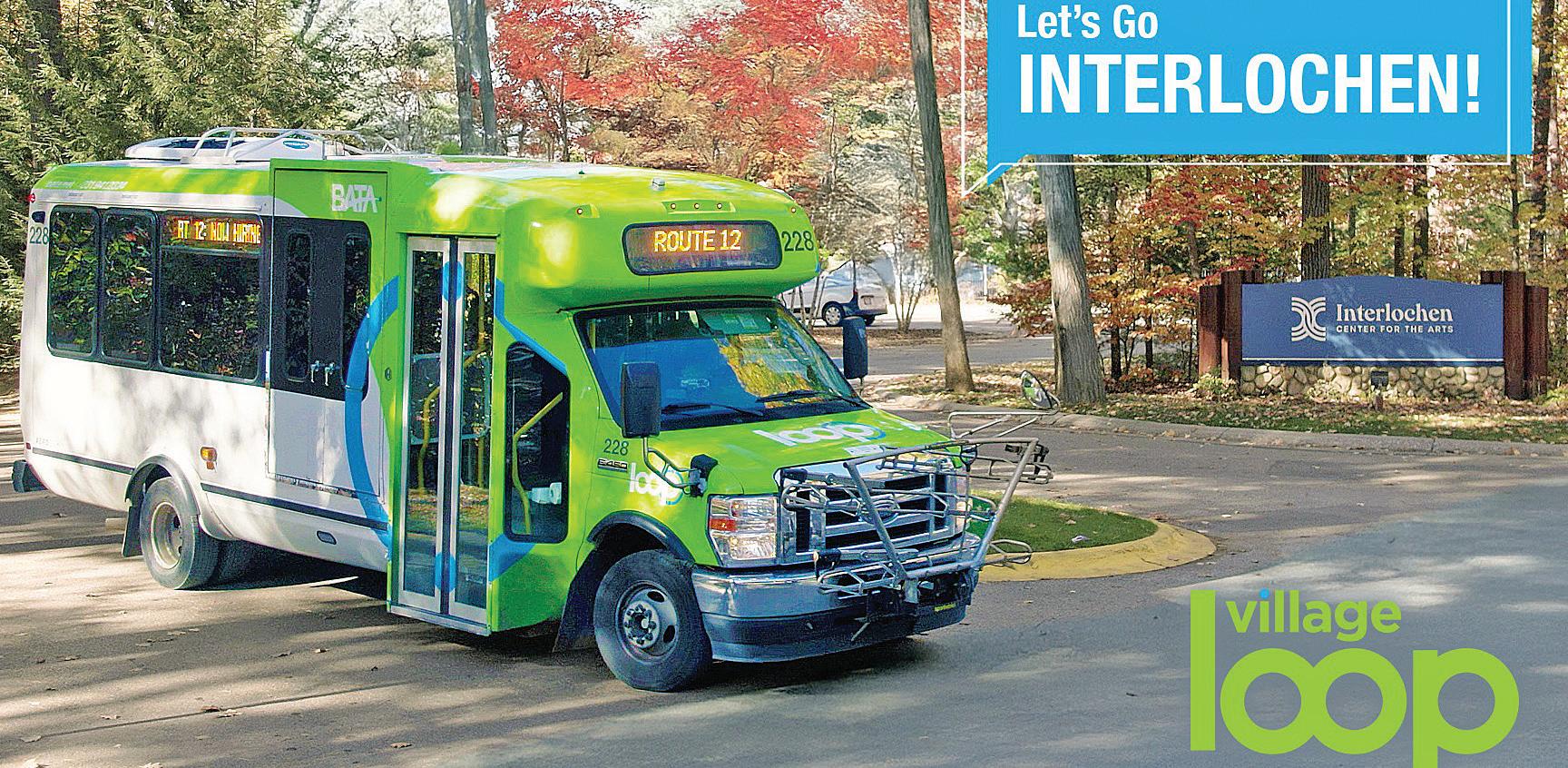
Every Saturday, students from Interlochen Arts Academy take the bus to Traverse City.
The commute is about 45 minutes, past farms and lake-view subdivisions and the occasional gas station. But for me and many of my classmates, it’s the only reliable way off campus. The bus shows up, and we go.
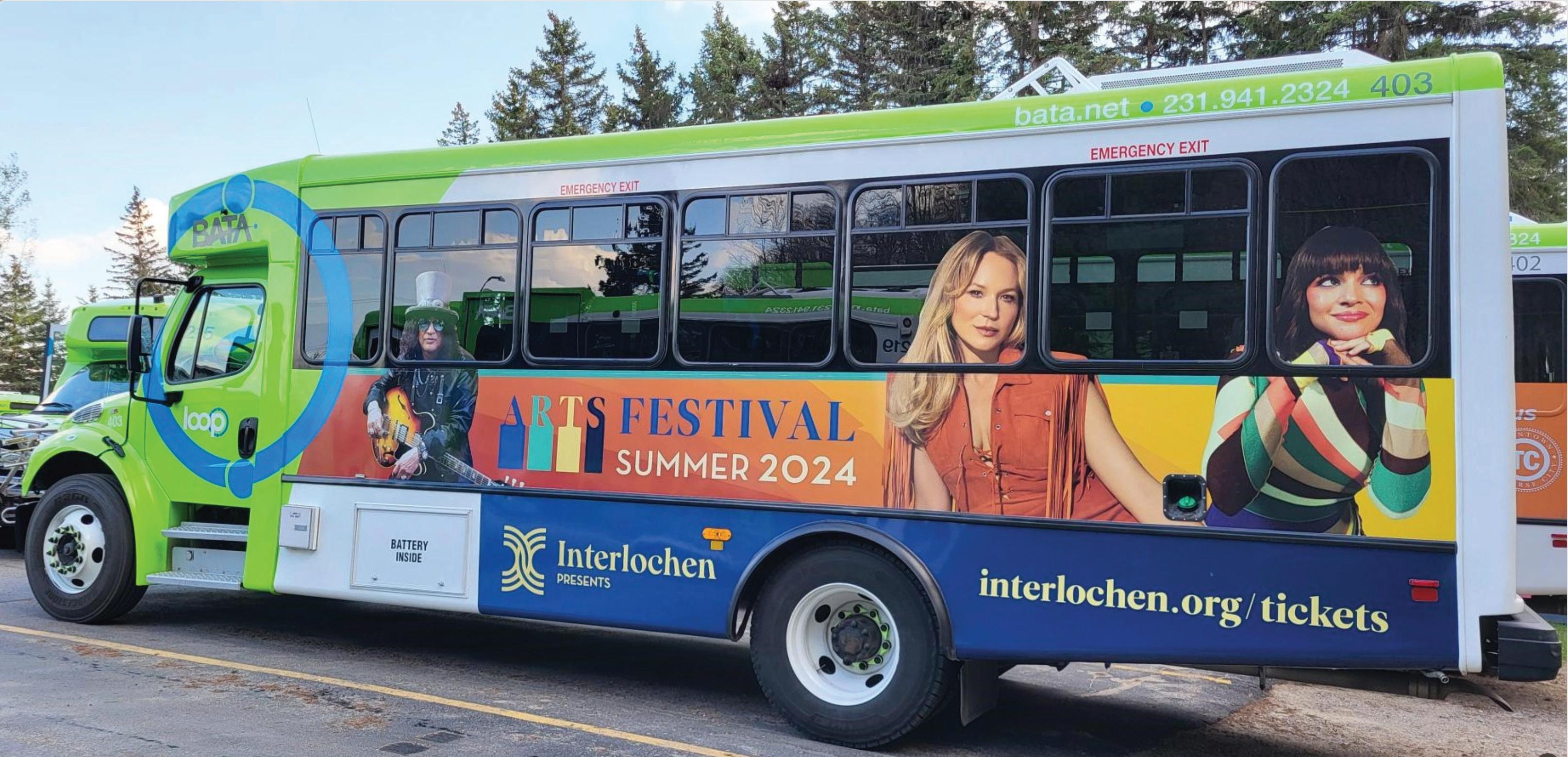
The Bay Area Transportation Authority (BATA) serves Grand Traverse and Leelanau counties, operating 14 fixed routes that connect students to schools, workplaces, and daily necessities across the region. For many young riders, this transit system is the catalyst for their independence.
Serving Students
The scale of BATA’s student reach is larger than many people realize.
“We currently provide transportation to almost every school in the area,” says Chris Davis, BATA’s interim executive director, listing Woodland School, Grand Traverse Academy, Glen Lake, Traverse City High School, Leland, and several Montessori programs, among others. “Out of our 14 fixed routes, 10 of them go to student campuses. We are providing transportation at BATA to students to get to their shopping, to school, to their work.”
According to Davis, approximately one third of BATA’s riders are students, one third are senior citizens, and one third are general ridership, reflecting the broad scope of the system’s impact on daily life across different generations.
Northwestern Michigan College sits directly on the Bay Line route. Traverse City Area Public Schools funded roughly 1,500 student passes in a single fall semester. Weekend service carries students to part-time jobs and activities outside the school week.
For students at boarding schools like Interlochen Arts Academy, where the vast majority don’t have cars or licenses, that Saturday route into Traverse City is especially important. Alexandra Workman, a student at Interlochen Arts Academy, describes what opportunities it provides for her.
“It’s really nice because, on Saturdays when I’m free with my friends, it’s good to get away from campus and explore downtown Traverse City,” she says. “It literally enables me to kind of get a break from campus and get a little taste of freedom.”
Transportation and the Workforce
Transit is particularly important to students because it helps them to gain access to the workforce.
For teenagers and young adults who want to work, transportation is often a prerequisite. A job offer is only viable when it can be reached and reliably commuted to. In a region where many students don’t drive, the bus route between where they live and where they work is, in practical terms, the employment pipeline.
Carolyn Ulstad, transportation program manager at the Groundwork Center for Resilient Communities, talks about the impacts of student mobility.
She remarks that “If you don’t have a car
on campus, whether you’re an international student or not, it can make life feel very isolating, where you can’t really travel outside of your little circle.”
That isolation, she argues, has downstream effects. Limiting where students can go in turn restricts what they can pursue.
“If students can access public transportation in this way, then they have more access to jobs, employment, or just higher education,” Ulstad says. “It could just expand even the possibilities.”
Public Transport Is Becoming More Important Fewer teenagers are getting their driver’s licenses at 16 than in previous generations.
Researchers point to a mix of factors, including cost and shifting cultural attitudes around car ownership.
Ulstad observes that “owning a vehicle might just not be in the picture because of the expense.” She adds that “insurance, fueling it up, doing all those things—especially when you’re a young adult, a student—you’re probably on a limited budget.”
Transit, she argues, is one path toward financial stability for young people who might otherwise drain limited resources on car ownership early in life.
“It can be a way that people can be more financially mobile. If they can utilize public transportation over owning a vehicle, you could save so much money. That can lead to
Ulstad Davis
better outcomes later in life.”
BATA structures its fares with affordability in mind. Students ride at half price, and an annual pass covering unlimited fixed-route travel costs $322, a fraction of what car ownership typically demands.
Expecting Consistency and Accessibility
Davis emphasizes that consistency is something BATA takes seriously.
“A lot of students that go there [Interlochen] do not have vehicles, and so they depend on us,” she states. “We’re very careful to not cancel transportation.”
For a system that students rely on daily, reliability is equally as important as reach. Davis points to this winter as evidence. Despite persistent severe weather across the region, service has barely paused.
“Our buses are very reliable with this inclement weather. We have not had to shut down and not provide service one day in this whole winter,” she says. “We’re not going to cancel, and we’re going to get them there safely.”
Accessibility is also built into the system. All BATA buses are equipped with wheelchair lifts, and drivers are trained to assist riders with disabilities.
“If a student is in a wheelchair, for example, they can take their wheelchair and our bus driver would help them get the wheelchair on a lift and into the bus so that they can be transported to work, grocery shopping, school—wherever they need to go,” Davis asserts.
Growth Requires Support
BATA’s current footprint, though, reflects the limits of what a transit agency can sustain without adequate support.
Funding is the most persistent barrier.
Rural systems cover large service areas with relatively low population density, a structural challenge that makes expansion expensive and difficult to justify on ridership numbers alone.
“The biggest barrier is money,” Ulstad states. “As a state, we need to do better at investing at a higher rate for our public transportation systems.”
She notes that the populations who depend most on transit have more in common than they might appear. The system serves a large share of the region’s population that may not have another option.
“The needs of youth and our young adults are actually really similar; the wants and desires are kind of the same wants and desires as our seniors,” Ulstad remarks. “It just seems to be there a little bit more.”
At the operational level, BATA also faces challenges when hiring. Drivers require commercial licenses and passenger endorsements—which are credentials that take time and money to obtain and that limit the hiring pool.
“We continue to be recruiting for bus drivers,” Davis says. “We will continue to do that so that we can expand services—not just
maintain the services that we have, but we’re always looking to add services.”
For the students who depend on BATA, a healthy transit system can signal long-term impacts like the ability to work or attend school, which ultimately benefits local communities as a whole.
As Davis puts it: “This might help other students who didn’t realize they can be helped to get to college, or to their school, or give them independence.”
That is a modest way to describe something that, for a lot of students, makes quite a lot possible.
THE PROCTOR’S DILEMMA
How artificial intelligence is being used in the classroom
By Kerrigan Jenkins, Traverse City Central High School
The sun gleams off the windows of the new $22 million Innovation & Manufacturing Center at Traverse City Central High School, a testament to the district’s commitment to the future. But the most significant technological shift isn’t happening in a high-tech lab: it’s happening in the classrooms, on the screens of student Chromebooks.
Once the stuff of science fiction, generative artificial intelligence (AI) is now as common in student backpacks as a halfeaten granola bar. However, as the rise of AI has no stopping point in sight, the line between an educational aid and an academic shortcut is thinner than ever.
AI from the Teacher’s Perspective
Advanced Placement English teacher at Central High School Susan Roskelley has seen the changes in AI classroom use firsthand. Looking back at the first months of AI coming out to the general public, Roskelley remarks, “I didn’t think that it was going to impact me much. It seemed like a silly tool. As time has gone on, it has gotten to be a lot more prevalent.”
The shift from the initial reaction in the beginning to the present has been a 180. Roskelley has even started to incorporate AI into her own daily tasks to “check” them. She explains, “Sometimes I actually use AI to check things that I write so that I can assess whether or not a student will just kind of take the easy way out.”
When she uses AI, she does so to make her assignments better, “and not as easy to cheat from.” However, she admits, “it doesn’t always work.”
To keep students from using AI to write assignments, Roskelley has transitioned to “more things now on paper, and try to use class time well,” as well as incorporating assignments that “are perhaps more meaningful, that students won’t be as
tempted to want to use AI for.”
Some students believe that they are being sneaky with their AI usage or that it is not obvious in moderation, but Roskelley believes that nearly any usage will be detrimental to the student’s success. Roskelley says that it is often obvious if a student is using AI tools, as “most students don’t really have a professional or strong range of writing, especially if they’re only partly through high school.” She expresses concern if she sees a student “writing leagues above where they should be—I can tell that right away.”
Roskelley says AI tends to sound “canned” and that it is a lot more meaningful to hear a student’s real voice over an essay that sounds like “how a college professor might sound” and “not like real people” with intentional writing.
As a teacher, Roskelley finds it “alarming” when she sees her students use AI because it makes her feel like “they don’t want to think.” She notices the students “who will naturally be curious, and then those students who kind of use [AI] as a crutch.”
The sad reality is that some students who are struggling with a concept will opt to use the AI “cheat code” without actually trying or learning the material. Roskelley notes that using AI isn’t always done out of laziness, but that “it may be because they don’t think they’re very smart, and that’s their safety net.”
For Roskelley, the danger of AI lies in how it accelerates the “checklist” mentality of modern schooling. She believes “the learning aspect gets lost” and school becomes more like “I just need to get X, Y, Z done,” she explains. When the goal shifts from mere completion to growth, the true purpose of education—opening one’s mind to different experiences and team-building skills—is sacrificed.
Roskelley defends the necessity of traditional literacy by using a “dinner party” metaphor, saying that without a foundation in classic literature or other diverse topics, an adult is left with, as she describes, “that
permanent feeling of being left out” during social and intellectual conversations.
AI from the Student’s Perspective Traverse City Central High School junior Layla Williams spoke on her fear of the future of AI use on her generation. Williams admits that she has used AI and agrees that there are negative aspects to it, as she remarks, “I’m definitely not learning as much, and with the workload that I have, it’s just easier to use it.”
Despite the convenience of the tool, Williams expects it will have a detrimental impact on her employment future. “I feel like people are definitely thinking about it more in the long run because it will probably be more advanced in the future. So people are just more cautious of what they want to get into because AI could take over their job in the future.”
In the meantime, she sees some of the other cons of AI to be that “students aren’t able to think critically. They just write it down to get it over with. They just can’t come up with their own ideas. So, when there’s actual testing or exams, they don’t really know what they’re doing because they don’t have that resource.”
Williams adds that “I feel like if I were an older person, I would be mad that people are using it, because they work so hard to do what they want to do.”
AI from the Administrator’s
Perspective
The superintendent of TCAPS, Dr. John VanWagoner, views AI as both an aid and a hindrance. He says, “I think that AI has tremendous potential and helps create and organize to solve problems at a faster rate.”
However, he also questions, “Are we able to not be so dependent on it yet [and] still have critical thinking skills?”
VanWagoner fears that AI will influence how people interpret their own thoughts and that self-confidence and independence will become foreign concepts in the near future. He is concerned that students will struggle
“to be able to rationalize that their values are not necessarily inherent in whatever the AI tool is that they’re using to make a determination of what they feel is right or wrong,” VanWagoner admits.
As the TCAPS Secondary Handbook clearly states, “Students are expected to hold themselves to a high standard of Academic Integrity. This includes, but is not limited to cheating, plagiarism, or misuse of generative Artificial Intelligence” and “falsification of school work are also forms of lying and are not acceptable.”
The transition from the $22 million Innovation & Manufacturing Center to the quiet, internal struggle over a “tool” highlights the true frontier of modern education. As VanWagoner, Roskelley, and students like Layla Williams have observed, the challenge of AI is not merely technical and obvious, but existential.
The ultimate test for Traverse City Central won’t be found in the speed of its network, but in whether its students can maintain their human edge. As the tools change, can the value of an education rooted in critical thinking and community remain?
VanWagoner
What Does the Political Landscape Look Like to Teens?
How disrespectful rhetoric, social media, and anti-immigrant attitudes affect up-and-coming voters
By Aubrey Lawless, Traverse City West Senior High
When I was in elementary school, I remember being proud to call myself an American, thinking that our government was strong, dignified, and honest, no matter who was in charge.
Now, every time I open my phone, I am disgusted by each new post from the White House: memes glorifying murder and racism, inflammatory speech targeted at its very own citizens, and overwhelming misinformation.
The language coming from our politicians feels like a disgrace to the words that I once uttered with pride at the toll of every morning school bell. Where does “liberty and justice for all” have a place in a society so willing to tear apart the fabric of its very own democracy?
It would appear that this fear-mongering and violent or derisive speech is a feature of politics now rather than a bug. That is to say, politicians are intentionally choosing this type of language in favor of more measured, professional, or respectful speech to get voter support or social media likes.
As my classmates and I head toward the polls this November and beyond, the tactics of our politicians will affect adolescent voting habits and overall political efficacy. So I set out to learn how the shifting landscape of politics affects future voters.
The Language of Politics
From a young age, children are taught to watch our language and that our words matter. But today, we see people in the highest offices of our government diverge from the basic principles of respect and
democracy that are normally presented in a governing body.
Language has the capacity to completely change the political climate. For young voters today, extreme party polarization, constant threats of impeachment, and political memes are the norm. It’s also “normal” to hear a sitting president say he hates his constituents.
Trump stating “I hate my opponent and I don’t want the best for them” at Charlie Kirk’s funeral or threatening to arrest Democratic lawmakers on Truth Social posts is a vast departure from previous disagreements
selfish ambition,” referring to the selflessness required to be in a position of power that we don’t often see in contemporary society.
Young people are noticing that the language of their political elders has changed…and they’re coming up with solutions.
“I think the first steps in [healing the] political divide are finding shared ground and holding onto compassion. Especially in our current state, we need to make a point to be kind to one another,” says Central High School senior Bridget Belden.
“Being a part of the solution means standing up despite the fact that you may face
“It’s imperative that people begin recognizing the basic fact that we all are the same at the end of the day, and we can’t lose our humanity because our politicians are manipulating us into thinking it’s okay to do so.” says Traverse City Central High School senior Bridget Belden.
between parties.
This new rhetoric is a far cry from the ver y premise of unity in Biden’s inaugural address, in which he stated, “We can see each other not as adversaries, but as neighbors. We can treat each other with dignity and respect.”
Threats of a third term, an act that would have our government’s founders rolling in their graves, have circulated online, adding another degree of separation from our government’s core values. In a recent “In Pursuit” article, former president George W. Bush says of the country’s first president, “Washington modeled what it means to put the good of the nation over self-interest and
backlash or criticism, but it also requires respect and courtesy from everyone,” Belden adds. “It’s imperative that people begin recognizing the basic fact that we all are the same at the end of the day, and we can’t lose our humanity because our politicians are manipulating us into thinking it’s okay to do so.”
Following the Leaders
Human brains aren’t fully developed until around our mid-20s according to the National Institute of Health, meaning that teens and young adults have more malleable, susceptible minds that are continuing to be molded by our environment.
A significant portion of our lives is spent listening and looking up to authority figures, which in turn tailors our own behavior. This becomes consequential when we begin to see patterns of hate speech and increasingly violent language from individuals we are supposed to regard as role models, and that behavior can begin seeping subconsciously into our own way of speaking and thinking.
In a political sense, this means that when one party member starts to say atrocious things, the rest fall like dominoes.
According to an article entitled “The rise of vice-signalling: how hatred poisoned politics” published in The Guardian earlier this year, “Every time open misogyny is voiced by a politician with no consequence except more attention, it emboldens his allies.”
Whether the topic is misogyny, racism, homophobia, or another form of hate, allowing even one political figure to begin to act inappropriately opens the door not only for teens to act this way, but fellow leaders of our country, normalizing hatred.
“Watching our nation fall apart like this is absolutely agonizing. The fact that we have politicians posting racist AI memes and groups on either side threatening horrible violence is obscene,” Belden says. “Our country is completely rejecting the basis of what the United States is, which is a nation built from immigrants.”
But Belden remains clear-eyed and specifically doesn’t let anti-immigrant rhetoric distract from what she knows to be true about her country. “The U.S. is called the melting pot for a reason, and I think it’s imperative we remember why our differences make us so strong. The gaping divide between people politically is going to ruin any social, scientific, and global growth
that we can ever dream of making. If we want to grow into a strong and lasting nation, we need to remember the importance of our differences,” Belden says.
The Dangers Online
In such a polarized world, it’s easy to feel completely isolated at times, especially as a teen. This is where the internet comes into play. The internet has a miraculous capacity to connect everyone and everything across the globe, yet manipulated algorithms often skew what we are presented with online.
Social media provides teens and adults alike with tailored information meant to boost their own beliefs, potentially sacrificing truth and integrity in the process.
“Social media and the internet has the benefit of making information and politics more accessible. However, accessibility comes with more misinformation and political manipulation,” Central High School senior and member of the local chapter of the Democratic Socialists of America Arthur Lijewski-Lee says.
Another form of media manipulation is disinformation—when a person or corporation actively skews the truth to promote a desired narrative. We see this often incorporated into political manipulation, where partisan supporters are encouraged to act as influencers to spread and endorse falsified news.
An article in the Oxford Report titled “Social media manipulation by political actors an industrial scale problem” says “the level of social media manipulation has soared, with governments and political parties spending millions on private sector ‘cyber troops’, who drown out other voices on social media.”
Social platforms pave the way for rumors to spread like wildfire. In the real world, if one person makes a claim, it is likely it will only spread to a handful of people. But on social media? We’re talking about thousands or millions of people all over the world. And even when false statements do get caught, any effort to recall what was said is futile: the damage is already done.
According to the article “How and why does misinformation spread?” published in the American Psychological Association, “Rapid publication and peer-to-peer sharing allow ordinary users to distribute information quickly to large audiences, so
misinformation can be policed only after the fact (if at all).”
The article above also says, “‘Echo chambers’ bind and isolate online communities with similar views, which aids the spread of falsehoods and impedes the spread of factual corrections.”
Keeping every individual strictly within the lane, or echo chamber, of their own beliefs lends itself to confirmation bias and group polarization, causing only more of a divide between the two parties.
Bridging the Divide
Today, many Americans feel animosity towards the “opposing side,” whether that be the left or the right. A Pew Research Poll last July even found that “Eight-in-ten U.S. adults say that when it comes to important issues facing the country, Republican and Democratic voters not only disagree on plans and policies, but also cannot agree on basic facts.”
As the next generation of rising adults, the weight now falls on our shoulders to sew the nation’s fabric back together. As we look to the future, it’s about time we start asking ourselves: What can we do to take care of our country like it once took care of us?
“The most important things to do are to be able to challenge your own ideas and to build community,” Lijewski-Lee says. “Every person has blind spots when it comes to politics, and not everyone has the life experience to come to an understanding that does not harm other people. For this reason, it’s important to have the will to change and the humility to understand when you’re wrong.”
Lijewski-Lee concludes with “Finally, community is crucial. Politics exists in the realm of people and having a community to collaborate and communicate with makes change possible.”
West Senior High junior Elijah Wynn also sees the benefits of teens getting involved in politics, using their voices, and building true community.
“I have unbelievable hope—I see it all the time, and I saw it [Jan. 30] when we marched out on ICE. When you get rid of the theater, when you get rid of the imaginary government that feels like it doesn’t even touch you, and you get people to move, [that’s when we make progress]. We’re a social species, and honestly, if we can’t interact socially, then we’re not [going to] make any change. Just get out there and talk to people,” Wynn says.
PRO SHOP • CLUBHOUSE RESTAURANT
MONDAY: 1/2 OFF FOR KIDS UNDER 12
TUESDAY: LOCAL’S NIGHT BURGER & A BEER : $11
WEDNESDAY: TRIVIA NIGHT 6:30 PM - 8:30 PM
FRIDAY: FISH & SHRIMP FRY
MUSIC EVERY SATURDAY
SUNDAY: BRUNCH 9-2 PM
High schoolers at Traverse City West Senior High scheduled a walk-out protest in January. Photo by Aubrey Lawless
We Need to Talk About the Lack of Eating Disorder Treatment Up North
One teen’s experience in a healthcare desert
By Tess Tarchak-Hiss, Traverse City West Senior High
I never planned on sneaking contraband into a foreign country, especially on a school trip.
Yet there I was, sprawled out on the floor of the Haneda Airport as teachers, peers, and random parents glanced over with concern. Despite having a Duolingo streak for three days, I wasn’t completely fluent in Japanese; however, the sign with the enormous cow head with a red cross through it made it clear that I couldn’t bring meat through Tokyo customs.
When this rule was established, I’m sure the Japan Civil Aviation Bureau didn’t expect a skeletal 5-foot-2 teenage girl to sneak in an entire family’s worth of Slim Jim Savage Sticks into the Land of the Rising Sun.
I didn’t necessarily have a choice, nor did I want to eat my bodyweight in Big Boss Meaty Treats. But I was stuck to a weight-gain meal plan of 8,000 calories a day, delegated to me by a team of faceless telehealth professionals and forced upon me by my mother.
My Story
The previous September, my hair started falling out. In October, I was anemic. November, I was osteoporotic, and December, I started to black out. In January, I was diagnosed with anorexia. If I didn’t make a change in February, I could have died.
I was barely allowed to be on this trip in March, but I convinced myself I felt fine, looked fine, and attempted to convince my mom I would be fine away from her.
Both my mom and I can be control fanatics: not of other people, but of our circumstances. As a kid, she went through phases of obsessively walking on only one side of the hallway. I went from compulsively counting the ceramic slabs in our kitchen to counting calories. Not because I initially
thought I was ugly: if I couldn’t have control of what was happening in my life externally, I could manipulate my body to feel better internally by creating the best version of myself.
It was addictive, and my pediatrician picked up on it instantly. I wasted time and money with online nutritionists who begged me to eat a piece of bread. I disregarded and destroyed relationships, prioritizing my “wellness journey” diet over actual healthy human interaction. Denial was the name of the game, which was due primarily to embarrassment. Yet by destroying my body, I destroyed any sense of autonomy I had.
Getting Help
I was unwillingly enrolled in an eating disorder program. Our options were as slim as my daily dose of beef jerky: my family either had to uproot our lives completely, moving to Ann Arbor to attend a daily facility, or I would wave bon voyage and book it to an inpatient downstate during the middle of junior year.
Through research, we discovered a telehealth-based treatment center specializing in eating disorders called Equip.
Since 2019, Equip has functioned as an evidence-based practice facility that treats across the lifespan, initiated to assist those who needed treatment and couldn’t afford the cost of a typical center. Although I was allowed to live my life by the program’s standards, every second of every day centered around Equip.
I only met with one person out of eight on my mysterious medical Zoom team, my therapist. Despite having constant appointments, meetings, and weigh-ins, I was in the dark about my position in the recovery process. I had only one purpose: to gain weight.
Melodie Simms, a clinical instructor at Equip, is professionally trained and certified in Family-Based Treatment, or FBT. Simms has been working in counseling since 2008,
following her experience in the modeling industry and experiencing the lethality of eating disorders.
“When we look at FBT, it’s primarily for ARFID and Anorexia, which usually both require weight restoration, even if they don’t have a low BMI,” Simms says. She explains that there are usually three phases of FBT: Eight to 10 weeks is usually phase one, six to 10 weeks is usually phase two, and phase three is about eight weeks.
In phase one, the accountability partner supports that patient. Or, if it’s a kid, the parents take complete and full control. “We take the responsibility from the patient and give it completely to the adult, until they start reaching that goal weight,” Simms says. “After 90 percent of their target weight is restored, and their return to independence is whatever is developmentally appropriate, like eating lunch at school, [we turn it over to the patient].”
Once a patient is out of the metaphorical woods, phase three is about independence, relapse prevention, and coping skills.
“It’s not completely focused on the eating disorder, but on gaining privileges, like going to prom. When they start reaching that weight restoration, oftentimes loved ones will say, ‘the lights went on.’ When we see the lights come on, and their disorder isn’t in control, that is when they truly return to themselves,” Simms says.
Looking for Community
Although I was slowly gaining weight, I was far from myself. I never openly told any of my friends, although they most definitely assumed. Even though I was enrolled in the family-based treatment, it felt like our family was falling apart. My relationship with my mother diverged from mother-daughter to doctor-patient due to the constant surveillance.
After I got back from Japan, I plateaued for five months straight: I was forced to ramp up my ten-thousand-calorie intake past sumo-wrestler status and weigh myself
multiple times a day, yet I was static in my progress. My physical body felt fine, better than it had previously—it was my mind that felt moldy, decomposing day by day due to the isolation and stress.
Nothing felt worthwhile: hobbies I once enjoyed were deteriorating, friendships were falling through the cracks, my personal bubble de-bloated to just me, my mom, and my six meals a day. I craved a community of others who shared my experience, who knew what I was experiencing.
I joined an Equip therapy group session and almost immediately quit. Everyone seemed worse than I was: lighter than a speck of dust, tubes attached to their nostrils, lamenting about their guardians ripping off every door in their house. During these calls, an Equip employee drearily talked through a PowerPoint on coping mechanisms while grumbling about how “your body is a vehicle” for an hour.
There was no discussion, no camaraderie. Nobody was paying attention; everyone was looking at themselves at the bottom of the screen, comparing themselves to the rest of the class. It didn’t feel like a community; it felt like a competition.
Ultimately, I felt like I wasn’t sick enough. I didn’t feel worthy of healing. I didn’t feel worthy of living.
“Groups are what you make of it. The group is also as good as the group facilitator. If the group facilitator doesn’t frame things correctly or manage the group well, it can become toxic and unhelpful,” Simms says. “That goes for both brick and mortar [healthcare centers] and within the virtual setting.
She adds that “I know that virtual group settings can be large, numerically. It can be difficult to connect with people; it defeats the purpose of a group. It can feel more like a lecture. It feels more like you’re being talked at over telehealth, compared to in person, where you’re actually seeing these people,
sitting next to them, being around them, connecting with and really getting them.”
The Breaking Point
I reached a breaking point. In May, I was on my hands and knees begging my mother to send me away. I couldn’t cope with my family observing me fall apart firsthand, couldn’t deal with the blinding limelight highlighting the fact that for every one step forward I took, I plunged eight floors down. At the time, it felt like the solution was suicide.
My mother understood the severity, but after consulting with doctors, determined with them that inpatient treatment in a facility downstate wasn’t the right decision for our family. Ideally, we would have an outpatient, in-person facility in our community; without one, I had to continue with Equip.
Simms addresses the cost of inpatient treatment programs, which can be inhibitive. “Some people may be reimbursing at the inpatient treatment level, around five to eight thousand dollars a day,” she says. “Equip isn’t a billing per service program; it’s significantly cheaper. For example, one hourlong therapy session may cost $175 for the whole hour. If you think about an inpatient program, you’re getting 24-hour supervision, you’re getting 24-hour nursing, three meals, and three snacks. You’re getting programming, groups for six hours a day, and individual twice a week.”
When the school year ended, I was all in on treatment from June through August. My doctors forced me to quit my job, which was my sole source of any social interaction, along with any form of unnecessary movement.
Yet it wasn’t until I rediscovered exercise with proper fueling that I started to reform myself. Going to the gym, roller skating, gardening, dancing around the kitchen table: I
yearned to be stronger, to be able, to recognize a future where I was myself again. Something clicked, and I regained the weight.
What Lies Ahead
As I recovered and was discharged from Equip, my mom slowly stepped away from her warden responsibilities. Currently, my future is still shady, with a looming cloud of relapse storming over my head. As much as I want to deny it, my mother and I both know it’s a possibility—the next stages of my life are uncertain, and so are my coping mechanisms. The lights could be switched off at any moment.
We’ve been actively looking for affordable resources in northern Michigan to keep my progress stable. We haven’t had much luck. There’s a severe lack of mental health resources in Traverse City, especially regarding eating disorders. There are mental health and physical therapy clinics, but nothing accessible and affordable for local adolescents balancing the two.
I think of the pre-teens and teens I’ve seen through computer screens, who were tube-fed their nutrition, who weren’t allowed to have in-person care because they lacked the resources. These children are going to live within the cycle of their eating disorder, live in the dark, almost endlessly, because there’s no in-person connection.
Equip discharged me when our insurance ran out, after a year in the program. It left me, and other teenagers in the same position, with a sense of false expectations and a flickering sense of fatality.
What do we do in this circumstance? We try to find hope.
More Resources Needed
I talked to Lisa Carpenter, who is the founder and executive director of the
Center of Hope Counseling, a program that specializes in treating eating disorders. The Center of Hope moved to Logan’s Landing in the Traverse Area from Mt. Pleasant two years ago and is currently trying to expand its practice through promoting stabilized recovery with in-person and online therapy.
“They say the average length of treatment for someone who struggles with an eating disorder is seven years,” Carpenter says. “There’s a saying we say: we always leave the light on for our clients. We have to eat. I see clients, [for] six months or six years, [and] I’ve been working with my clients off and on. Right now, I’m working with a client I’ve worked with years ago because she’s pregnant now. Her body is changing, and she’s really struggling with that. At different stages in life, there might be things that they may need to reassess and do a little bit of work on.”
Carpenter believes that meeting patients in person whenever possible makes a huge
ADVERTISEMENT
difference in their outcomes.
“If you don’t have the support on an outpatient basis, it’s going to be tough. There’s nothing like that in-person contact: you can see their whole body, their expressions, you can see them for who they are. I just think that ideally working in person, especially with eating disorders, is more effective,” she says. “There’s really no shame for teenagers or anybody struggling with mental health issues, including eating disorders. I’m right here with you.”
Our community in Traverse City needs to prioritize healthcare for its youth. We, as teenagers, are extremely vulnerable to the outcome caused by the absence of mental health resources. That also means that we, as teenagers, need to speak up and advocate for what we lack.
We, as teenagers, need to band together to advance our community. We, as teenagers, are the light, and we will keep it on for the future.
GVSU meets area needs by launching graduate program in public health
Michele Coffill Grand Valley State University
Leaders at Grand Valley State University are meeting the needs of Northern Michigan residents by launching a hybrid Master of Public Health (MPH) program this fall through GVSU’s Traverse City Regional Center.
Traverse City resident Jacqueline Clark-Mosley earned an MPH degree from GVSU last year. She applauded the decision to bring the program to Traverse City.
“This area embraces its people and it’s a great place to live,” she said. “Bringing Grand Valley’s public health program here is good news because the area personifies the values of a public health program.”
Ranelle Brew, professor of public health and graduate program director, said students in the five-semester program will take classes online and meet once in the summer for a two-day intensive class in Traverse City at Northwestern Michigan College’s Front Street Campus, which serves as home to the GVSU Traverse City Regional Center.
Brew added that community engagement is a hallmark of the program. “We have more than 400 community partners in the Grand Rapids area and we look forward to adding additional partnerships in Northern Michigan through the Traverse City expansion,” she said. “Combining didactic learning with community engagement, students are really building their resumes while they’re in the program.”
The master’s program has two emphases: health promotion and epidemiology.
Clark-Mosley said courses from both emphases are required, giving students a broad understanding of public health. She chose epidemiology, which she described as “being able to answer the who, what, where, when and why of public health issues.”
“It was a very student-centered program and I felt immediately like part of a community,” she said.
Clark-Mosley is a medical assistant at the Cowell Family Cancer Center, located at Munson Medical Center. She also assists a Michigan State University researcher who is
conducting a study on cancer survivors and their barriers to physical activity.
She earned a bachelor’s degree in allied health sciences from GVSU in 2024. During one of her classes, Brew gave a presentation about the program and spoke about its career possibilities. Clark-Mosley said she felt the information was directly meant for her.
“When Ranelle was speaking, it was like a lightbulb went off for me,” she said. “This program embodies my core values and will give me a good toolset for the future.”
Brew said she and other MPH faculty look forward to building connections with Northern Michigan leaders. For many years, GVSU has had articulation agreements with Northern Michigan University and Lake Superior State University, granting students with bachelor’s degrees from those institutions automatic entry into the MPH program.
“We understand the needs of Northern Michigan and Upper Peninsula residents. Graduates of our program will be able to step into their communities prepared to lead,” Brew said.
Master of Public Health Program
Learn more about GVSU’s Master of Public Health hybrid program, which will launch in Fall 2026 in Traverse City, online at gvsu.edu/grad/mph.
Carptener
Simms
Jacqueline Clark-Mosley is pictured delivering a pitch for a smoking cessation app during a 77 Idea Quest event while she was a student in the GVSU Master of Public Health program.
THE ETHICS OF ZOOS
Should all animals be free?
By Eliza Aldridge, Leland Public Schools
Since the 19th century, animals have captivated audiences as circus performers and zoo attractions. But in the present day, animal captivity is a much more controversial and nuanced topic.
Investigations by animal rights groups, zoo closures, new laws, and public concern have prompted many visitors to research facilities more carefully before attending. And when it comes to the ethical treatment of animals in captivity, there are those who champion safe zoos as places of research and rehabilitation, while others believe all animals should be free.
Born Free
Devan Schowe is a campaign associate from Born Free USA, an animal rights organization that campaigns for “keeping all wild animals in the wild.” Born Free advocates against all types of animal captivity, such as circuses, exotic pets, and zoos, regardless of accreditation status.
“In terms of our work, we kind of don’t really discriminate between grouping zoos into accredited zoos vs non-accredited zoos, because for us at Born Free, zoos are all kind of the same in the fact that they can’t provide wild animals with what they would need to achieve a happy or healthy life in captivity just because of the natural constraints there are at zoos,” Schowe says.
Some of these constraints are the sizes of enclosures, unnatural social groupings that the animals may be placed in, and incorrect diets that don’t match what animals would typically consume in the wild. Some of the main animal welfare concerns that Born Free sees in zoos are cleanliness, access to veterinary care, and safety.
“We’ve seen instances where animals have been living on inches of their own filth … or [zookeepers] just don’t have the staffing or the time or the resources to keep up with a hygienic cleaning schedule,” Schowe explains. “We see animals that don’t have consistent veterinary care regularly scheduled throughout the year. Even if they have something like an injury or an illness, sometimes these zoos don’t have the
funding to have a veterinarian come in and treat these animals.”
Born Free has seen multiple instances where animal encounters such as photo ops, feeding, or even playing tug of war with a big cat pose serious safety threats to humans and have resulted in injury or death from humans getting too close to animals with improper barriers.
Not only are these experiences dangerous to humans, but they also have significant effects on the animals. To habituate animals to human interaction, they are often taken from their mothers when they are much too young, especially in roadside zoos where there aren’t many regulations against this. (See more on roadside zoos below.) Exposing baby animals to these experiences is exhausting, stressful, and they often get ill as a result.
The Benefits of
Zoos
On the other side of the coin, Association of Zoos and Aquariums (AZA) argues that accredited zoos provide measurable conservation, research, and education benefits.
According to the AZA, its accredited institutions contribute more than $341 million annually to field conservation, support Species Survival Programs that manage genetically healthy populations, and partner globally to restore habitats and repopulate endangered species.
The AZA maintains that animals in accredited facilities are given “choice and control” within habitats designed to reflect their native environments, with on-site veterinary teams and structured enrichment that allows them to express natural behaviors. The organization also points to research conducted in accredited zoos and aquariums—from coral propagation projects to medical advancements addressing diseases such as EEHV in elephants—as evidence that managed care settings can generate data and tools that benefit wild populations.
In the AZA’s view, these combined efforts in conservation funding, scientific research, and public education demonstrate that properly accredited zoos do more than display animals;
they actively contribute to species survival and foster public understanding of how to protect wildlife and wild places.
Clinch Park Zoo
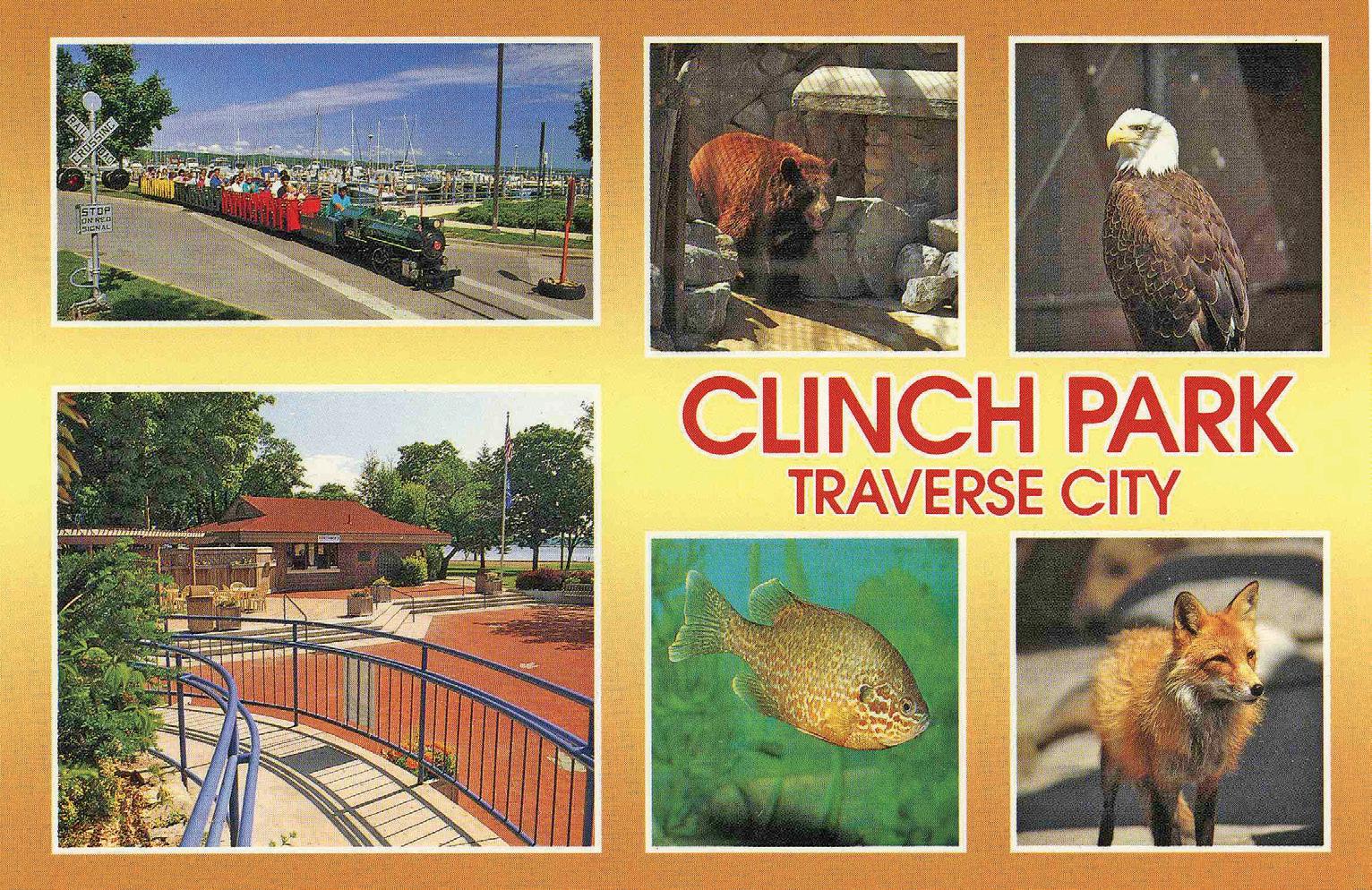
While national organizations emphasize accreditation as the benchmark for ethical animal care, former staff at the now-closed Clinch Park Zoo say smaller municipal zoos can also provide meaningful education and welfare-focused care.
Clinch Park Zoo was city-run under the governance of Traverse City, operating under municipal oversight with the support of a board of directors and a nonprofit zoological society established in the 1980s. The zoo hired an executive director with a background in wildlife biology, and its structure meant accountability to local government and the community rather than a private owner. The zoo housed only native Michigan wildlife that could not survive independently in the wild.
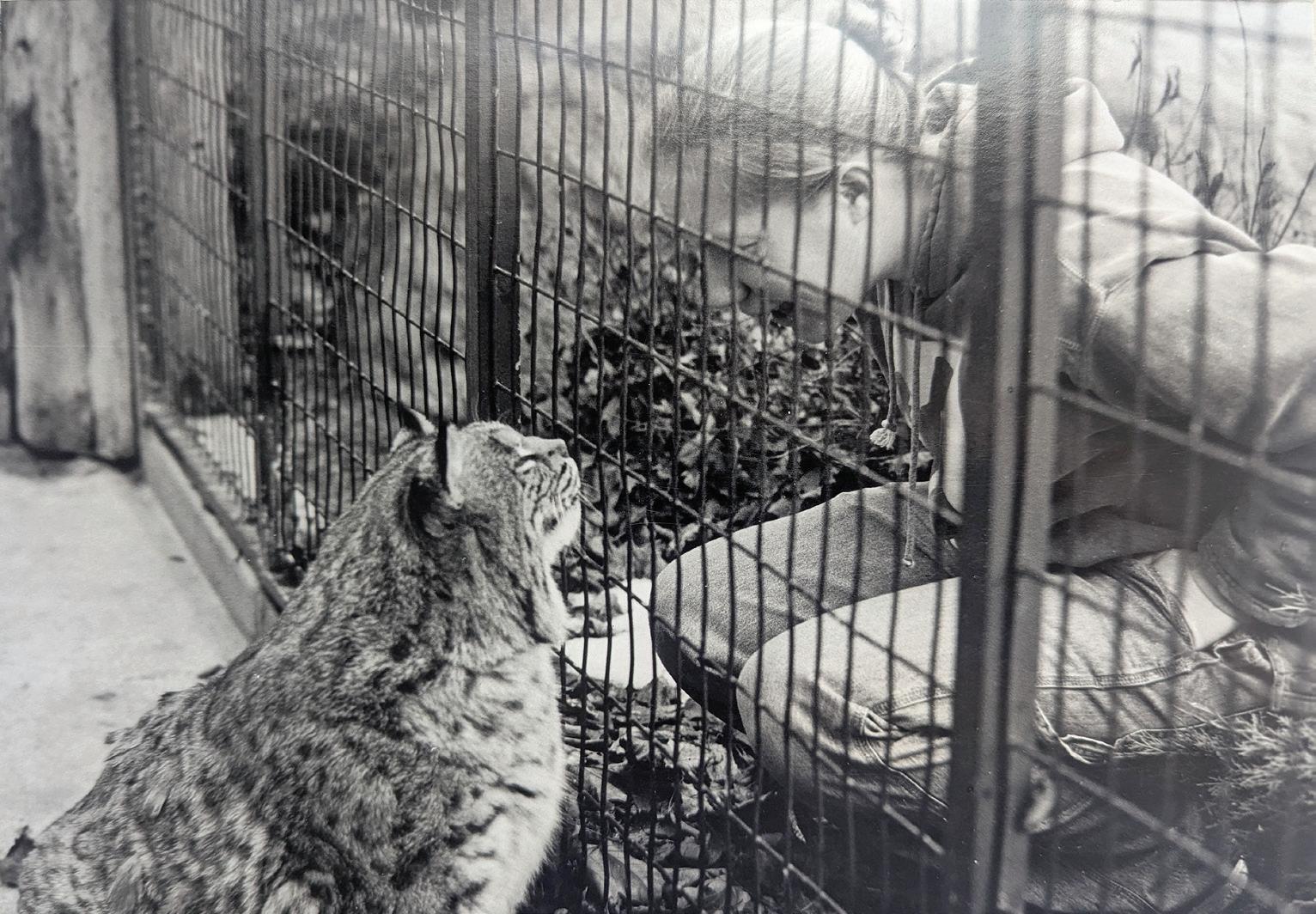
“All the animals at Clinch Park were native to Michigan and injured or orphaned in some way,” says former zookeeper Jen
Loup, who worked her way up from seasonal staff to full-time keeper. She describes written animal-care protocols, earned levels of staff responsibility, and annual U.S. Department of Agriculture inspections that evaluated enclosure cleanliness and food preparation. In Loup’s time at the zoo, there were never any citations given by the USDA.
“Because of knowledgeable staff, we provided a good deal of enrichment for most of the species,” Loup says, adding that when the zoo closed, staff traveled significant distances to ensure animals were placed in facilities that met their standards of care.
At the same time, Loup acknowledges structural limitations. Located in a busy downtown park, the zoo faced increasing pressure as the city grew and large events drew crowds nearby.
“Cherry Festival and other downtown activities put a lot of pressure on the area as Traverse City grew,” she admits. “That did add stress to the animals’ lives.”
Limited physical space also restricted
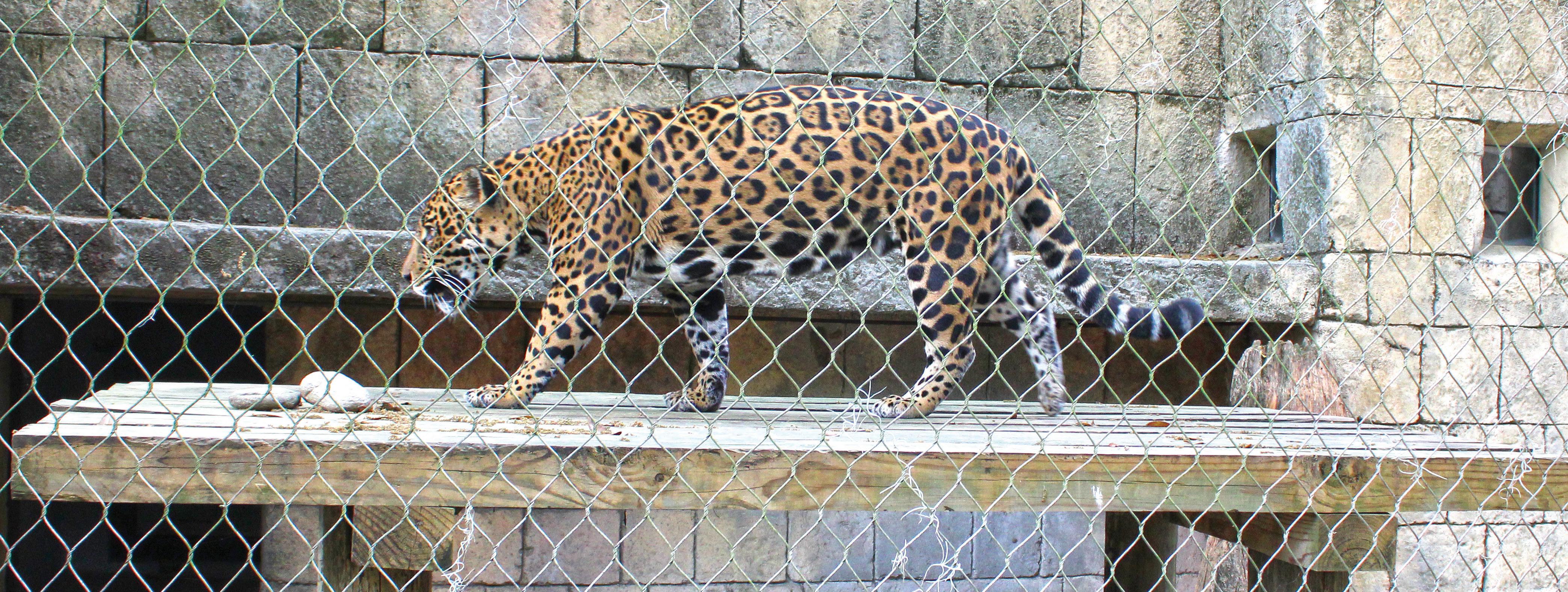
A jaguar enclosure at the Audubon Zoo in 2025.
Photo by Devan Schowe, Born Free USA
A Clinch Park Zoo Pamphlet, circa 2000, from the TADL Local History Collection.
the ability to expand enclosures over time. Ultimately, the city commissioned a feasibility study to determine whether it should continue operating a municipal zoo. Questions about funding, long-term sustainability, and whether the zoo should relocate led to its closure, even though population surveys indicated many residents supported keeping it open. The zoo closed for good in 2007.
Roadside Zoos
As a municipal zoo, Clinch Park bridged the size gap between large zoos like those you’d visit in Detroit or San Diego and smaller animal facilities. The latter are where more issues can pop up.
Roadside zoos are typically small, private facilities that operate in mostly rural areas. Often found off highways, these unaccredited facilities have limited oversight and often don’t have the resources to properly provide the animals with necessary care and conditions.
Ethically, these facilities raise concerns, as living conditions are often well below what animals need to thrive. While many label themselves as sanctuaries, they lack accreditation from the Global Federation of Animal Sanctuaries (GFAS), known as the gold standard for animal welfare. GFAS maintains strict, species-specific regulations to ensure animals live as naturally as possible.
These zoos are also not accredited by the AZA or the Zoological Association of America (ZAA). Zoos, aquariums, and other nature centers accredited by the AZA have regulations that only about 10 percent of the world’s zoos and aquariums can meet according to Sarah Fedele, vice president of communications for the AZA.
In many cases, these facilities prioritize profit over rehabilitation, conservation, or ethics, often leading to harmful public interactions between wildlife and people. Any opportunity for holding, petting, feeding, or taking pictures with animals is not only harmful to the animals, but is dangerous for people as well. Consequently, roadside animals often experience “zoochosis,” engaging in repetitive behaviors like pacing or self-mutilation due to a lack of enrichment.
USDA Loopholes
Legally, roadside zoos need to follow USDA regulations that are laid out in the Animal Welfare Act. Under this act, they must obtain a USDA exhibitor license, follow the minimum standards of care, and are subject to routine inspections. However, it is very easy for a facility to remain within the legal limits of the USDA while still being harmful to the animals’ welfare. The Animal Welfare Act sets minimum standards, not
best practices.
For example, the Animal Welfare Act’s requirements for primates only stipulate “sufficient space” for normal postural adjustments. However, normal postural adjustments are just sitting, standing, turning around, etc. This means that the actual space requirements are very small.
Furthermore, there aren’t specific details regarding animal enrichment. Additionally, there are some species fully excluded from the act, and it doesn’t outright prohibit public interactions such as petting or feeding. The USDA has authority to enforce these regulations, but the department has often faced criticism for inconsistencies with enforcement.
With a limited number of inspectors, facilities are typically checked only once a year. Violators may face fines or license suspension/revocation, but many accumulate multiple citations before facing serious consequences. Even then, fines are sometimes reduced through settlements, and licenses are rarely permanently revoked.
When a roadside zoo is shut down, there is also the question of where the animals will be rehomed.
“If the animals are lucky, they will go to a sanctuary,” Schowe of Born Free USA says. “However, a lot, if not all of the sanctuaries right now are almost always at full capacity.” Other than the lucky few sent to sanctuaries, the animals may be euthanized or transferred to another zoo.
The Future of Zoos
As the debate over animal captivity continues, experts and advocates alike agree on one point: visitors have more power than they may realize.
Before buying a ticket, consumers can research whether a facility is accredited by organizations such as the Association of Zoos and Aquariums or the Global Federation of Animal Sanctuaries, review inspection reports from the USDA, look into a zoo’s conservation commitments and animal care standards, and check online reviews from other visitors.
Visitors can also observe conditions firsthand. Are enclosures clean and spacious? Do animals have enrichment and space to retreat from crowds? Are there opportunities for unsafe public interactions?
Ultimately, deciding whether to visit a zoo requires weighing conservation claims, animal welfare standards, and ethical concerns. In an era of growing transparency and public scrutiny, informed choices by visitors may shape the future of how—or whether—wildlife is displayed in captivity. DID
Did you know the VA has a benefit to help pay for a nursing home, assisted living facility or in-home care?
Our office also assists in filing claims for VA disability, VA pension and financial assistance.
A bobcat at the Clinch Park Zoo, circa 1990s.
FROM LELAND TO GUATEMALA CITY
The power of community, education, and growth
By Meridian Parsons, Leland Public School
Planting Seeds International (PSI) is a groundbreaking organization focused on eradicating barriers for Guatemalan youth at the fundamental level. Through innovative early education programs across Guatemala, they are helping children receive crucial educational development.
PSI believes that “early childhood education is the foundation to break the cycle of poverty.” The nonprofit has created 13 preschools across Guatemala and currently has 97 percent of their graduates passing first grade, compared to the country-wide passing rate of only 78 percent.
PSI’s success comes through playbased learning, while prioritizing that “[p]arents need to be supported as the primary educators of their children.” The organization even has teachers provide individualized training sessions for parents to help their children.
“I’ve been in Guatemala on and off for 15 years, since 2010,” says Mac Phillips, co-executive director of PSI. “I originally came to do some volunteer work, but once I came, it became very clear that there are some educational gaps that students had. … Being able to expand and scale this methodology throughout the country really helps provide educational opportunity in rural communities and urban communities where that opportunity necessarily wouldn’t exist.”
A Trip of a Lifetime
Though a Guatemalan nonprofit may seem half a world away, PSI actually has ties to Leelanau County. Thanks to a connection between PSI, Northwestern Michigan College, Leelanau Investing for Teens (LIFT), and Leland Public School, there have been three trips to visit Planting Seeds. Most recently a group of Leland High School students traveled to Guatemala in 2025. I was one of those students.
In our rural community, there are very limited opportunities for students to see different parts of the world. But PSI provided
an opportunity for students to come see the impact dedicated work can do. Getting to go to Guatemala and work with PSI not only allowed me to experience a place I never had before, but it also showed me that there’s more to the world than just what you know. This trip gave me the opportunity to view experiences differently and reevaluate my idea of what’s attainable for my future.
I grew up going to Montessori school, which focuses on child-led, hands-on learning. These concepts are so similar to the Planting Seeds methodology of “childcentered, activity based, early childhood education.” When I got to visit the kids at San Lucas preschool, I saw materials identical to
A few steps up from the entrance was a large space with a ping-pong table and a shelf for board games on the left. The further I walked, the more I began to realize that the space was repositionable. The walls could slide around and be moved to make smaller classrooms. As we walked up the stairs you could see a smaller portion of the floor branching off into a library nook with multicolored chairs. Further up there was a dance-floor type of exercise room full of gym equipment, as well as a larger room for groups to meet in.
At the top of the building the roof was caged in, with spaces for basketball and soccer games. The design of the building itself was mesmerizing; I was in awe of its versatility.
Getting to go to Guatemala and work with PSI not only allowed me to experience a place I never had before, but it also showed me that there’s more to the world than just what you know.
those I had grown up using.
We got to play and learn with the preschoolers at their pace, and one girl in particular clung to me. She would just follow me around or stare at me dotingly, if I went to their painting table, she would follow. Next, she took me to their “construction zone” where we built towers and demolished them, only to rebuild them once again. We played here for a while as I helped her stabilize our forts, and she taught me the word for truck, camión, and other new words.
Later our student group from Leland would plan out a lesson for the children, so that we could teach them something in return.
On the Ground
When we went to the community center in Zone 3 of Guatemala City—one of the capital’s poorest neighborhoods—I was surprised at the sight. The building was a tall, multifloored building with its entry way slightly sunken in relation to the open room ahead.
After our tour we ventured back downstairs to the main floor, where we helped set up long tables for lunch. We ate with a number of community members, providing an opportunity to connect crossculturally. I sat next to an older woman who told me about where she had grown up, and how she visits the community center regularly for English classes and to play with her granddaughter. She told me about how when she was a kid there was nothing like this for her—this was a safe space her grandchildren could come to play and learn.
Funding the Future
Visiting Guatemala is one of my favorite things I’ve experienced. We saw captivating landscapes, volcanoes, and historical ruins such as Iximche, but what made our trip memorable were the people who lead our tours, our bus driver who sat through a sixhour traffic jam with us, a mother I met at the community center who told me about her dreams to be a doctor and study in the
U.S., and the PSI directors who entertained me in long conversations about their pasts and passions for this program.
As a nonprofit organization, Planting Seeds relies on philanthropic efforts from the U.S and Canada rather than more local donors since “there isn’t the same level of philanthropy in Guatemala as there is in the United States,” according to Phillips. “I think trying to build really authentic experiences for people to get to know and understand the realities that are happening here in Guatemala is really important. So we can build kind of cross-cultural citizens and really understand the problems that people in Guatemala are facing and how to support them.”
Phillips adds that PSI prioritizes ethical sponsorship. One way they do this is through their Champions program, where you donate $30 a month to become a “Champion” of education, while receiving updates on their work through occasional personalized stories about different community members.
Sharon Workman, a Traverse City local, serves on the board of PSI. She began her journey with another organization called Safe Passage in 2006, which led her to connect with Planting Seeds. Workman, who has background in family psychology and child abuse prevention, was a volunteer with PSI until she became a board member in 2016 working on the developmental committee to help implement family nurturing and parenting programing.
As a board member, Workman says she “was highly active in organizing Traverse City residents to support this work. We organized fundraisers and really helped involve more and more people in the efforts. … I think it would be really helpful for a new generation of people to learn about it and get involved.”
At least one new generation has benefitted: Leland students witnessed firsthand PSI’s belief in the power of education to create more prosperous futures in both Guatemala and northern Michigan.
To learn more about Planting Seeds International, visit plantingseedsinternational.org.
Leland students pose while playing at recess with Planting Seeds for preschoolers.
By Rachel Pasche
Big Brothers Big Sisters of Northwestern Michigan (or “Bigs” for short) is a mentorship program based in Traverse City with branches that spread throughout the region in Grand Traverse, Antrim, Emmet, Charlevoix, and Kalkaska counties. The program is all about connection, pairing kids who could use an extra adult in their corner with volunteers who have a little time and a lot of heart.
“Our goal is simple but powerful: help kids realize their full potential,” says director Cecilia Chesney.
The program carefully matches young people (the “Littles”) with a caring adult mentor (“Bigs) who can show up for their Little as a positive role model, a cheerleader, and a friend.
“We know from decades of research that having another trusted adult, outside of family and teachers, can be life-changing for a child,” Chesney says. “Our Littles come from a wide range of backgrounds, but often they’re facing obstacles like family instability, financial hardship, or just the general messiness of growing up. Every kid deserves to feel seen and supported. Nobody makes it on their own, and when a child feels like someone is in their corner, it will change their life.”
Since getting its start in 1970, Big Brothers Big Sisters has operated in the
region for over 50 years and has served more than 16,000 kids.
Growing Up in Charlevoix & Petoskey
Charlevoix and Emmet counties represent a significant portion of the service area (nearly 30 percent of children served in northwestern Michigan live there), yet hundreds of kids in these two counties could still benefit from a mentor.
While there is a team and office based in Petoskey, most of the funding comes from Grand Traverse County, and the Petoskey branch faces challenges in community awareness and recruiting both volunteers and donors. The hope Chesney has is to see Charlevoix and Emmet counties become locally led, thriving, and self-sustaining parts of the program.
“We want to put local leadership at the heart of what we do in Charlevoix and Emmet counties,” she says. “That means building a board made up of people who live here, who’ll eventually bring on a local director to run our programs. To pull this off, we need community members who care enough to step up and help lead the way.”
The regional board currently serves Antrim, Charlevoix, Emmet, Grand Traverse, and Kalkaska Counties. In 2025, they served 520 children—more than any agency in the state. (For perspective, Ann Arbor/Detroit, the second-largest program, served around 300 kids despite having more staff and budget.)
Big Brothers Big Sisters Looking to Grow Presence in Emmet and Charlevoix Counties
“It doesn’t take much time to make a difference in a child’s life”
“The reason we’re able to do so much is because our communities are full of people who genuinely care,” Chesney says.
“Still, we know we can do better,” she quickly adds. “Our goal is to serve at least 200 kids in Charlevoix and Emmet Counties in 2026. Long-term, we think this area could reach 400 if we have real community support. We need residents of Charlevoix and Emmet counties who know the community inside and out to help us raise funds, find volunteers, and build the relationships that make this program thrive. With that help, we can make sure these life-changing services are here for every child who needs them.”
We spoke with a few Bigs volunteers to hear their experiences with the program and learn what they love about it.
Emily Boss
Express: How long have you been volunteering for Big Brothers Big Sisters?
Boss: The first time I spent time with my Little was Feb. 4, 2017. I’ve been her Big since then. I most enjoy the longevity we now—and will always—have. To have been able to form a relationship when we were both young (in our own ways), and to be nearly a decade into our match means that we’ve been able to grow up together, and that’s such an immense privilege that I do not take for granted.
Express: Why did you start volunteering?
Boss: When I first began, my professional role intersected with area nonprofits. I was raised by very serviceminded parents and enjoyed nonprofit work, so I understood and respected the impact volunteers can have. I was ready to dive a little deeper into a role as an active, consistent volunteer somewhere, and I am forever grateful I went this route.
Cecilia Chesney
Express: What are your biggest takeaways from volunteering?
Boss: I feel like I went into the match thinking that it was a great way to personally have an impact on someone in my community, but the experience has taught me that it’s not at all just a “give.” It’s a two-way street, and one of the coolest things I’ve ever been a part of. I’m often told by folks when I share that I’m a Big that, “Oh, that’s so good of you to do, how cool!’ and I don’t disagree, it is cool. But it’s [also] one of the most rewarding, mutually beneficial, and treasured relationships in my life, and it takes trust, friendship, and vulnerability on my Little’s part to make it as cool as it is. Showing up consistently has the power to change not only the recipient of the volunteered time, but the giver just as much.
Express: What are some of the most memorable moments you’ve experienced?
Boss: A couple of years back, we took a day-trip to Grand Rapids to celebrate her 13th birthday, and that was a blast. It was kind of like a “Yes day” because why not? I know that one is a chart-topper for both of us. She was asked to speak at a fundraiser for Bigs a couple of years ago to give a statement on the impact our match has had on her. She had sent me a fake (unbeknownst to me) draft, so I went in expecting something, and was instead blown away and humbled by the real words she had put together.
Jill Jelinek
Express: How long have you been volunteering for Big Brothers Big Sisters?
Jelinek: I have been matched with my
Spring Cleaning? SHARE THE JOY AND DONATE
Little Sister for over nine years. We started when she was in kindergarten and now she’s a freshman at Central High School. My favorite part of volunteering is being able to offer encouragement and seeing how my Little has gained confidence in herself. We like hanging out and chatting about anything on her mind. I try to offer gentle direction to guide her in decision-making and in helping her to see her potential...but we also like just being silly together.
Express: Why did you start volunteering?
Jelinek: I love being a mother to my two now-adult daughters, and I felt like I could offer the involvement of another caring adult in the life of a girl in our community. It doesn’t take much time to make a difference in a child’s life.
Express: What are your biggest takeaways from volunteering?
Jelinek: My biggest takeaway from volunteering is that my Little and I are both gaining enjoyment and learning from each other. I believe that being dependable and present in her life has had a very positive impact. We’ve had many special moments together over the years, especially in the summer swimming at Clinch Park Beach and sailing on the Nauti-Cat. But we’ve also had many great moments together doing simple things like walking around downtown and window shopping or checking out the murals, bowling (with or without bumpers), playing board games, making art, and baking and cooking together. We’ve shared the gift of time with each other.
THE NEXT CHAPTER FEELS LIKE HOME
Saturday
LEAPIN’ LEPRECHAUN
5K: 9am, Lake Ave., Old Town, TC. Proceeds from this event support the littlest leprechauns through a donation to Munson Medical Center’s NICU. $35; increases after March 12. runsignup.com/Race/MI/TraverseCity/ LeapinLeprechaun5K -
FREE PICTURES WITH THE EASTER BUNNY : 9:30-11:30am & 1-3pm, Grandpa Shorter’s Gifts, Petoskey. grandpashorters.com
SPRING CARNIVAL: Crystal Mountain, Thompsonville. Includes a $10 discount on your open-to-close window lift ticket if you rock a luau theme, Lodge Deck BBQ, Cardboard Classic, Slush Cup, On-Slope Scavenger Hunt & more. crystalmountain.com/events-activities/events/event-calendar/spring-carnival
18TH ANNUAL TRAVERSE CITY BOAT
SHOW: 10am-6pm, GT County Civic Center, Howe Arena, TC. See the latest, most innovative watercraft including pontoons, tritoons, tow boats, bow riders, center console, fishing boats, personal watercraft, docks, boat lifts, water toys, boating accessories & much more. traversecityboatshow.com
BETHANY BARTON: 10am, McLean & Eakin Booksellers, Petoskey. Meet this author of “I’m Trying to Love Farts.” The first 50 families to sign up will get a free copy of the book. mcleanandeakin.com
SAINT PATRICK’S 5KRAWL: 10am, Primos BBQ & The Greenhouse, Cadillac. Presented by Cadillac Firefighters Local 704. Wear all of your green. Besides awards for top finishers, there will be an award for best-dressed guy & gal. $30. runsignup.com/Race/Events/MI/Cadillac/SaintPatricks5krawl
STORY TIME WITH MISS LINDA: 10am, Alden District Library. Kids will hear stories with a St. Patrick’s Day theme & enjoy simple activities. 231-331-4318.
LITTLE WAVES CHILDREN’S MUSIC
PROGRAM: Includes a multimedia musical storybook time & the chance to see instruments of the orchestra up close. For ages 4-10. Held at Petoskey District Library at 10:30am & at Charlevoix Public Library at 1pm. Free. glcorchestra.org/education
KIDS BIATHLON ON BOARDWALK: 11am, The Highlands at Harbor Springs, On Hill. Kids race uphill in ski boots, tackling hay bales, hoses, foam cushions & more. Then they click into skis & charge down the Silly Slalom course, finishing at the bottom of Boardwalk. Registration from 9-11am in the Brew Bar in Day Lodge. highlandsharborsprings. com/events/kids-biathlon-on-boardwalk
PROTEST ISRAEL’S GENOCIDE IN PALESTINE: 11am, Grandview Parkway + Union St., TC. Israel continues committing brutal genocide in Gaza & stealing more Palestinian land in the West Bank. Elected leaders are owned by Israel as the Epstein files show. It’s up to ordinary people to insist on justice. Stand together every Sat. mideastjustpeace.net
TRAVERSE CITY CENTRAL CHOIRS’ DISNEY & DESSERTS: 11am & 4pm, TC Central High School. Featuring TCC choir students performing music from various Disney productions. Attendees will enjoy face painting, activity booths, photo opportunities & treats. $10/ticket; ages 2 & under free. givebutter.com/lSujw3
26TH ANNUAL EAGLE 101.5 ST. PATRICK’S DAY PARADE: Downtown Gaylord. 10-11:30am: Breakfast at Timothy’s Pub honoring Parade Grand Marshal Jerry Lambert. 11:30am: Parade line-up on Michigan Ave. Noon: Parade begins down M-32 east to Center Ave. After parade, head to Timothy’s Pub for a complimentary cup of Irish stew. gaylordchamber. com/events/details/st-patrick-s-day-parade13384?calendarMonth=2026-03-01
AIR & APRÈS: BIGGEST SKI & SNOWBOARDING SHOW IN THE MIDWEST: March 13-14, Boyne Mountain, Boyne Falls. Olympic, X Games, & pro athletes launch massive jumps & aerial tricks while the slope transforms into a jumbo screen bursting with motion graphics. Stick around for the athlete meet & greet. Today includes the Air & Après Practice Demo at noon, & the Air & Après Main Event at 7:45pm. boynemountain.com/ upcoming-events/air-and-apres
FREE LEPRECHAUN CANDY HUNT: Noon4pm, Pond Hill Farm, Harbor Springs. Hike your way around the farm & collect a sweet treat at each gnome house. pondhill.com
SLIDE & SWING CHALLENGE: 1-3pm, The Highlands at Harbor Springs, On Hill. Meet at the top of Camelot run. Tee off, swing, & slide your way down Camelot on the 5-hole alpine snow course. Registration runs from 9am-noon in the Brew Bar in Day Lodge. highlandsharborsprings.com/events/slideand-swing-challenge
SAINT PATRICK’S PARADE - TC: 1:30pm, downtown TC. Hosted by the Ancient Order of Hibernians, Bun Brady Division. Parade HQ: Middlecoast Brewing Co. Starting on Boardman to Front, Union, State streets.
MEAN GIRLS JR.: 2pm & 6pm, Bellaire High School Performing Arts Center. Presented by Bellaire Middle High School Drama. $10; students free. bellairechamber.org/2026/03/12/490610/bellaire-middlehigh-school-drama-presents
DARK & STORMCLOUDY FILM & BEER SERIES: 4pm, The Garden Theater, Frankfort. This series pairs award-winning films with small batch dark beers, handcrafted specifically for each movie selection by Stormcloud Brewing. This month’s film is “Last Stop in Yuma County,” & this month’s beer is Last Stop for Rhubarb Pie. Tickets are $10/person & include a $5 coupon for Stormcloud Brewing. gardentheater.org/comingsoon
HOUSE OF HAMILL: 7pm, AuSable Artisan Village Performing Arts Center, Grayling. Celebrate St. Patrick’s Day with an evening of high-energy Celtic music. House of Hamill delivers everything from fiery jigs & reels to rich three-part harmonies & hilarious stories from the road. $35. artisanvillage.org/events
LITTLE SHOP OF HORRORS: 7pm, TC West Senior High School Auditorium. Presented by TC West Senior High School Music. Based on the 1960 film by Roger Corman & featuring a book by Howard Ashman, music by Alan Menken & lyrics by Ashman, Little Shop follows meek plant store attendant Seymour, his co-worker crush Audrey, her sadistic dentist of a boyfriend & the maneating plant. $15-$25. tcaps.booktix.com
ROBERT FULGHUM’S “ALL I REALLY NEED TO KNOW I LEARNED IN KINDERGARTEN”: 7pm, The Market at Cadillac Commons. Presented by Cadillac Footliters. $10-$12. cadillacfootliters.com
“VIRAGOS”: 7:30pm, Interlochen Center for the Arts, Phoenix Theatre. Viragos fol-
A day of service for those in need in Charlevoix and Emmet Counties, Project Connect will help over 400 individuals at North Central Michigan College in Petoskey, Weds., March 18 from 10am-3pm. Eighty plus local non-profit agencies and other businesses offer free services in areas such as education and employment, food and nutrition, health and wellness, housing and finance and more. Life can be overwhelming making ends meet and understanding the social services systems. Agencies here can help. Visit the web site to see what you need to bring in order to register for assistance programs during this event: projectconnect231.com.
lows a group of young Englishwomen as they rehearse a play at The Institute Mary Ward’s school for girls founded in France, 1609. Through their rehearsals, the girls test the boundaries of art, science, love, & politics. $19-$24. interlochen.org/concerts-andevents/all-events?search=Viragos
HARVEY MASON & THE MSU JAZZ ORCHESTRA: 7:30-10pm, The Alluvion, TC. Iconic drummer & MSUFCU Guest Artist in Residence Harvey Mason will perform the legendary music of Herbie Hancock’s Head Hunters & other jazz standards accompanied by the MSU Jazz Orchestra under the leadership of Rodney Whitaker. $10. thealluvion.org/tickets/harvey-mason-and-the-msu-jazz-orchestra-perform-herbie-hancocks-head-hunters
PAINT NIGHT: 7:30pm, Old Town Playhouse, TC. In this play, six women gather for a girls’ night out. They eat, drink & paint while celebrating a bride to be. But as the alcohol flows, so do their thoughts on womanhood, & their carefully curated lives get hilariously & heartbreakingly real. $25. oldtownplayhouse.com/performances/mainstage/thedrowsy-chaperone.html
SUSAN WERNER: 8pm, Freshwater Art Gallery/Concert Venue, Boyne City. A night of storytelling, humor & music. Chicago Tribune called Susan “one of the most innovative songwriters working today”. 231-582-2588. $45.
Sunday
FREE FORMULA 1 WATCH
PARTIES: CHINA: 9am, The Bay Community Theatre, Suttons Bay. Experience the thrilling races on the big screen, along with Formula 1 games. Doors open an hour before the start of each race. Free. thebaytheatre.org/home-page
18TH ANNUAL TRAVERSE CITY BOAT SHOW: (See Sat., March 14, except today’s time is 10am-4pm.)
FREE FRIENDS & FAMILY FUN DAY: The Botanic Garden, Historic Barns Park, TC. Local author Jeff Kessler will read sections from “Fixey Fox Lights the Night.” Readings are at 1pm & 2pm. Between readings, make your own fox face mask. Materials will be provided. thebotanicgarden.org/events
TC YOUTH ART SHOW AWARDS & RECEPTION: 1-3pm, Crooked Tree Arts Center, TC. This event will recognize the honorees & winners from the Youth Arts Show & the Youth Arts College Scholarships. Free. crookedtree.org/events-and-exhibitions/events/?page=1&location=traversecity#class-list
THE IDES OF MARCH: 1-5pm, The Village at GT Commons, TC. Roam this free Shakespeare festival where food, drink & live performance intertwine. The day unfolds as a journey: you’ll move from venue to venue, encountering scenes, songs, & soliloquies. Presented in partnership with The World’s a Stage, Mashup Rock ‘n Roll Musical, & local breweries, wineries, & Village businesses. RSVP. theworldsastage.org/ides
“VIRAGOS”: (See Sat., March 14, except today’s time is 2pm.)
GREAT LAKES CINEMA SERIES: FANTASTIC FUNGI: 2pm, Great Lakes Center for the Arts, Bay Harbor. A documentary that explores the hidden world of mushrooms & their powerful role in nature, medicine, & our planet’s ecosystems. $5 all seats. greatlakescfa.org/events/detail/fantastic-fungi
LITTLE SHOP OF HORRORS: (See Sat., March 14, except today’s time is 2pm.)
PAINT NIGHT: (See Sat., March 14, except today’s time is 2pm.)
-
ROBERT FULGHUM’S “ALL I REALLY NEED TO KNOW I LEARNED IN KINDERGARTEN”: (See Sat., March 14, except today’s time is 2pm.) -
BRAHMS’ REQUIEM: 3-5pm, Interlochen Center for the Arts, Corson Auditorium. Performed by more than 250 artists. Featuring Caitlin Lynch & Jonathan Lasch, who have sung throughout the U.S. with all of the top opera companies. Jeffrey Cobb’s NMC choirs are joined by choirs from around the state. $27-$65. tcphil.org/concerts -
OF STRAIGHT LINES & SPIRALS: 3pm, The GT Circuit, TC. A spoken word memoir exploring themes of race, class & culture through the voice of a twelve year old white boy in metro Detroit in 1967. Traverse City storyteller Steven Holl will reprise this story, suitable for teens. Donations gratefully accepted.
GLCO PRESENTS FREE HARP TRIO RECITAL: 4pm, First Congregational UCC, Charlevoix. The public recital is part of GLCO’s Sunday Series, which features small chamber ensembles performing free of charge in venues around northern Michigan. glcorchestra.org/sundayseries
monday
OTP YOUNG COMPANY AUDITIONS: Audition for “Once Upon A Mattress.” 4:30pm, Old Town Playhouse, TC. oldtownplayhouse.com
MI MOVIE MANIA: 6:30pm, Peninsula Community Library, TC. Watch “Frozen Stupid 2: Frozen Water” (NR). Filmmaker Rich Brauer will join & snacks will be provided. Free. peninsulacommunitylibrary.org
MARCH AAUW PUBLIC MEETING: JESSIE HOUGHTON: 6:30pm, Dennos Museum Center, Janis Room, NMC, TC. Resuming the focus on Women Matter, the featured speaker is Jessie Houghton, chief academic officer for Traverse City Area Schools. Free. traversecityarea-mi.aauw.net
tuesday
CONNECTING WOMEN IN BUSINESS LUNCHEON - ENTREPRENEURIAL JOURNEYS: 11:30am, The Talcott, Walloon Lake. Featuring a panel discussion with three area women entrepreneurs: Christine Donovan of The Bahnhof, Kelly Nash of Under The Stars Glamping and 1902 Resorts and Retreats, & Eeva Redmond of Elder Piper Beer & Cider. Register. $35-$45. petoskeychamber.com
OTP YOUNG COMPANY AUDITIONS: (See Mon., March 16)
GARDEN CLASSIC MOVIES: “THE QUIET MAN”: 6pm, The Garden Theater, Frankfort. A retired American boxer returns to the village of his birth in 1920s Ireland, where he falls for a spirited redhead whose brother is contemptuous of their union. Free. gardentheater.org/ comingsoon
A ST. PATRICK’S CELEBRATION - WITH TC PHIL HARMONIC CIVIC STRING ORCHESTRAS: 7pm, TC Central High School. Enjoy a program of Irish favorites & Celticinspired works. Free. tcphil.org/concerts
CERT: 7pm, The Cheboygan Opera House. Doors open 30 minutes before each show. Seating is first come, first served. Free. theoperahouse.org/2026/02/10/school-concerts
wednesday
PROJECT CONNECT: 10am-3pm, NCMC, Petoskey. If you or someone you know is struggling with financial problems, housing issues, employment challenges or health concerns, please join for a day of free services & get connected to people who can help. The Health Dept. of Northwest Michigan will join more than 70 local, nonprofit agencies & businesses, including SAFE in Northern Michigan, WIC, & Manna Food Project. You can also get free haircuts, car seat check-ups, stroke screenings & more. Visit web site to see what you need to bring to get registered for assistance programs during the event. Free. projectconnect231.com
BUSINESS EXPO & BEST IN TASTE: 4-7pm, Castle Farms, Charlevoix. Join Charlevoix & East Jordan Chambers of Commerce for a Business Expo to showcase their member business & enjoy a taste of the area with food samples from local members. $5 admission. business.charlevoix.org/events/details/2026business-expo-best-in-taste-14846
PARTNERING WITH PARENTS - TOGETHER WE RISE: 5:30-7pm, E-Free Church Auditorium, Gaylord. Listen to presenters speak on underage drug prevention, teen cyber safety & youth mental health. Presented by Gaylord Wellness Center. For more info email: m.luck@nwhealth.org.
BEYOND THE BALLOT WITH LEAGUE OF WOMEN VOTERS GRAND TRAVERSE AREA: 6pm, Traverse Area District Library, McGuire Community Room, TC. This informative session is a deep dive into the voting process in Michigan. Learn the year-round safeguards, steps, & teamwork that make our elections possible, accurate & secure. Free. tadl.org/beyond
PEPPA PIG: MY FIRST CONCERT: 6pm, Interlochen Center for the Arts, Corson Auditorium. Featuring Peppa Pig, Mummy Pig, Daddy Pig, George, & new baby sister Evie. This is a fun, interactive introduction to a live orchestra for ages 18 months & older. Join Peppa & George to learn all about the different sounds that instruments make. Tickets start at $27. interlochen.org/events/peppapig-my-first-concert-2026-03-18
PLACE SERIES: Presbyterian Church of TC, 701 Westminster Rd. Join each Weds. of March. Indigenous community members share stories & histories that contrast the pervasive colonial narratives about this region. Sharing will be through storytelling, art, music, & ceremony. 5:30pm meal ($5$7 suggested donation); 6:30pm program. March 18: Nibi (Water). JoAnne Cook & Jamie John will share. Find ‘PLACE: Re-taking the Story (week 3- Nibi)’ on Facebook. Free. MACKINAW CITY SCHOOL BAND: 7pm, The Cheboygan Opera House. Doors open 30 minutes before each show. Seating is first come, first served. Free. theoperahouse. org/2026/02/10/school-concerts
thursday
COFFEE @ TEN, PETOSKEY: THEATER FOR EVERYONE: 10am, Crooked Tree Arts Center, Gilbert Gallery, Petoskey. Ellen mar 16 mar 18 mar 19 mar 17
Blanchard, a co-founder of Little Traverse Civic Theatre’s Theater for Everyone program will be discussing the impact of empowering youth through art. She will be making this presentation surrounded by the student work on display during the Youth Art Show. Free. crookedtree.org/events-and-exhibitions/even ts/?page=1&location=petoskey#class-list
PETOSKEY BUSINESS AFTER HOURS: 5-7pm, Perry Hotel, Petoskey. Enjoy food, networking (bring your business cards), a cash bar & more. Wear green for a chance to get an extra entry into the year-long BAH Bonus. $10-$15. petoskeychamber.com
DEMO NIGHT WITH AMY PETERMAN: 6-8pm, Boyne Arts Center, Boyne City. Artist Amy Peterman will demonstrate how she captures the effects of sunlight in her acrylic landscapes. During this demo, she’ll share her approach to creating contrast, depth, & atmosphere through light & shadow. boynearts.org
FREE LENTEN SCREENING OF “THE PASSION OF THE CHRIST”: 6pm, Elk Rapids Cinema. Sacred Heart Catholic Church & the Chalfonte Foundation, owner & operator of Elk Rapids Cinema, will present this free, public screening. elkrapidscinema.com
TRAVERSE CITY STATE HOSPITAL: 2026 LECTURE SERIES: 6:30pm, The Village at GT Commons, Kirkbride Hall, TC. Women of the Traverse City State Hospital: Presented by Clover Keyes Avery, this lecture tells the stories of the women who lived, worked, & served within the hospital’s walls. $15. thevillagetc.com/events/tcshlecture2
CHEBOYGAN JAZZ BAND: 7pm, The Cheboygan Opera House. Doors open 30 minutes before each show. Seating is first come, first served. Free. theoperahouse. org/2026/02/10/school-concerts
INTERNATIONAL AFFAIRS FORUM:
“THE NEW SPACE RACE: HOW DATA, RESOURCES, & POWER ARE SHAPING OUR FUTURE”: 7pm, Dennos Museum Center, Milliken Auditorium, NMC, TC. The IAF Student Leadership Team explores the new space race & its implications for global power, resources, & international cooperation. Featuring Aimee A. Hubble, Ph.D., Aerospace Corporation, plus video interviews with space policy experts. Reception at 6pm. Hybrid event with online livestream available. $15 advance; $20 day of; $10 online; free for current students & educators. tciaf. com/event-march-2026#March2026Ticket
MUSIC IN FILM WITH CIVIC CHAMBER MUSIC ENSEMBLES: 7pm, TC Philharmonic Center, MSUFCU Desk Drawer Foundation Hall. From Bernard Herrmann’s eerie Psycho film score to the nostalgic tones of Edelweiss from Rodgers and Hammerstein’s Sound of Music, there’s sure to be a tune familiar to you. Free. tcphil.org/concerts
LOVE IS A BATTLEFIELD: 7:30pm, Interlochen Center for the Arts, Corson Auditorium. Join Interlochen Arts Academy’s Popular Music Ensemble for an evening of timeless hits that plumb the highs & lows of romance. $14-$17. interlochen.org/events/love-battlefield-2026-03-19
friday
LGBTQ+ SENIOR COFFEE MORNING: 8:30am, Up North Pride Community Center, TC. Start the morning off with a cup of Higher Grounds coffee. Held the third Fri. of the month. Free. upnorthpride.com/events
MARCH EARLY CHILDHOOD EVENTS: 10am, Lake Ann United Methodist Church. Featuring interactive storytelling with Jen Strauss, playgroup activities, snacks & a craft project. Aimed at ages 0-5. Each family will receive a book bag from PoWeR Book Bags. Free. northwested.org/article/2735054
SPRING CLEANING TIPS & TRICKS: 10:30am, Suttons Bay Bingham District Library, lower level Community Room. TCbased professional organizer & home simplification expert Ali LeJeune will present on how to bring calm & clarity to your spaces. No pre-registration required. Free. sbbdl.org
FAMILY FUN WITH BEES, BUGS & BLOSSOMS: 3:30-5:30pm, Suttons Bay Bingham District Library. No pre-registration needed. All ages welcome. Hands-on active fun with crafts & activities. Learn all about native pollinator plants & bugs with special guests from the By-The-Bay Garden Club & an entomologist from Michigan State University Extension. Free. sbbdl.org
UP NORTH PRIDE GAME NIGHT: 6pm, Up North Pride Community Center, TC. Try out a new game, play a classic favorite, or bring a game of your own. All ages welcome. Free. upnorthpride.com/events
JOHN JORGENSON BLUEGRASS BAND: 7pm, The Cheboygan Opera House. This all-star bluegrass group features four awardwinning musicians - Grammy-winning John Jorgenson, Herb Pedersen, Mark Fain, & Patrick Sauber. $10-$40. theoperahouse.org
LITTLE SHOP OF HORRORS: (See Sat., March 14)
PAINT NIGHT: (See Sat., March 14)
THE PIANO MEN: 7:30pm, City Opera House, TC. America’s Premier Billy Joel & Elton John Tribute Artist with over 3,000 appearances world wide. Experience all the hits, from “Piano Man,” “My Life,” “Benny & the Jets,” “Rocket Man” & more. $39-$69. cityoperahouse.org/events
THE LORDS OF 52ND STREET: 8pm, Leelanau Sands Casino Showroom, Peshawbestown. The original band who helped Billy Joel sell more than 150 million records, The Lords of 52nd Street isn’t just a tribute; they are the actual icons who recorded & performed the hits that defined an era. $20. leelanausandscasino.com/events
saturday
CELTS & KAYAKS: Crystal Mountain, Thompsonville. 9:30-10:45am: Kayaks on the Snow registration located slopeside on the Lodge Patio. 11am: Kayaks on the Snow Race, held on the Cheers to Lou slope. There will also be a slopeside DJ, leapin’ leprechauns, on-slope scavenger hunt & more. Receive a $10 discount on your lift ticket if you wear your Irish-themed gear. crystalmountain.com/events-activities/ events/event-calendar/celts-and-kayaks
FREE PICTURES WITH THE EASTER BUNNY: 9:30-11:30am & 1-3pm, Grandpa Shorter’s Gifts, Petoskey. grandpashorters.com
SPRING CRAFT SHOW & BAKE SALE: 10am-4pm, American Legion Post 10, Manistee. Presented by The American Legion Auxiliary Unit 10. Explore the creative talents of 26 crafters from across northern Michigan, offering a variety of arts, jewelry, & other homemade items. Also includes a luncheon & raffle basket.
MARCH EARLY CHILDHOOD EVENTS: 11am, Traverse Area District Library, TC. Featuring interactive storytelling with Jen Strauss, playgroup activities, snacks & a craft project. Aimed at ages 0-5. Each family will receive a book bag from PoWeR Book Bags. Free. northwested.org/article/2735054
PROTEST ISRAEL’S GENOCIDE IN PALESTINE: (See Sat., March 14)
2026 MARITIME HERITAGE ALLIANCE SEASON LAUNCH PARTY!: Noon-4pm, Maritime Heritage Alliance, 3820 Cass Rd., TC. Learn how you can get involved, get out on the water & plan for adventure in 2026. Free. maritimeheritagealliance.org/events
MAPLEFEST: Noon, Grass River Natural Area Education Center, Pavilion, Bellaire. Join to see maple sap turned to syrup using an evaporator. Ask staff questions & hike on the trail to see where they tap trees, hang buckets & lines, & collect sap. Free. grassriver.org
SLUSH CUP: The Highlands at Harbor Springs, On Hill. Ski across the pond! Registration runs from 9am-1:30pm near the Brew Bar in the Day Lodge. Slush Cup starts at 2pm. This elimination-style event takes those who succeed in crossing the pond to a lower start for another attempt. This continues until the top three finishers are determined. The Slush Cup Awards start around 3:30pm. highlandsharborsprings.com/ events/slush-cup
BALLADS OF SHOREVANIA: A D&D INSPIRED VOCAL PERFORMANCE: 4pm, Traverse Area District Library, McGuire Community Room, TC. A unique live story-telling experience where you get to help choose how it goes. Free. tadl.org/shorevania
LITTLE SHOP OF HORRORS: (See Sat., March 14)
2026 FLY FISHING FILM TOUR: 7:30pm, City Opera House, TC. Presented by The Northern Angler. Win some great prizes! $20-$25. cityoperahouse.org
PAINT NIGHT: (See Sat., March 14)
sunday
CARNIVAL WEEKEND - SLUSH CUP: 11:30am3pm, Boyne Mountain, North Mclouth, Boyne Falls. Watch daredevils attempt to skim across icy waters (or face a frigid splash). Stick around for The After Splash party in The Back Forty. boynemountain.com/upcoming-events/slush-cup
OPEN SKATE!: GT County Civic Center, Howe Arena, TC. Come roller skate! Bring your own skates or rent some. Two sessions: Noon-2pm or 3-5pm. $5 admission; $5 skate rental. If you need rental skates, be sure to arrive early; popular sizes rent-out quickly. Helmets are recommended, but not required. tcrollerderby.com/events-2-1/open-skate
GARDENING FOR BEGINNERS: 1pm, Traverse Area District Library, McGuire Community Room, TC. Workshop for beginning gardeners who are interested in learning how to start plants from seeds. Free. tadl. org/gardening
LITTLE SHOP OF HORRORS: (See Sun., March 15)
PIE & COFFEE CHAT: BUGGIES, BEARDS & BONNETS: 2-4pm, Helena Twp. Community Center, Alden. Carmen Yoder, who grew up in a Mennonite family, shares stories & lively discussions that unpack the history, traditions, language & culture of the Amish. 231-331-4318. Free.
DAVID CHOWN - A TRIBUTE TO THE SONGS OF 1976!: 3pm, The Music House, Williamsburg. Acclaimed northern Michigan pianist David Chown will take people on an historical adventure through piano, highlighting the great singer/songwriters of the 70’s. $25 online; $30 door. mynorthtickets. com/events/the-music-house-welcomesback-david-chown-at-300-pm-sundaymarch-22-2026-for-a-tribute-to-the-songsof-1976-3-22-2026
FREE PET PICTURES WITH THE EASTER BUNNY: 3-5pm, Grandpa Shorter’s Gifts, Petoskey. Special guests from the Little Traverse Bay Humane Society will be joining the Easter Bunny on March 26. Donations encouraged. grandpashorters.com
ongoing
BELLAIRE WINTER FARMERS MARKET: Fridays, 9am-noon through May 8, ASI Community Center & Park, Bellaire. The Market will move outdoors on May 15. areaseniorsinc.org/event/bellaire-winter-farmers-market/2026-03-20
INDOOR FARMERS MARKET: Saturdays, 10am-2pm, The Village at GT Commons, The Mercato, TC. Browse the Mercato halls every Sat. through April. More than 30 vendors offer a variety of items from farm fresh eggs, meats & cheeses, to fruits, veggies, homemade breads & more. thevillagetc. com/events
NAMI-GT SUPPORT GROUPS – MON.: Free, peer-led mental health support groups: NAMI Family Support (Mondays at 6pm; online & in-person - see web site for Zoom link), HBA, 3040 Sunset Ln., TC, & NAMI Connection Group (Mondays at 6pm, online - see web site for Zoom link). namigt.org/calendar/
NAMI-GT SUPPORT GROUPS – WEDS. AT NOON: Free, peer-led mental health support groups: NAMI Family Support and NAMI Connection Group. Both held Wednesdays at noon at Christ Church, 430 Fair St., TC. namigt.org/support-and-education/supportgroups/
NAMI-GT SUPPORT GROUPS – WEDS. AT 5PM: Free, peer-led mental health support: NAMI Connection Group. Held Wednesdays, 5pm online (see web site for Zoom Link) & in person at Child & Family Services, 3785 Veterans Dr., TC. namigt.org/calendar/ WOW ON WEDNESDAYS: Petoskey District Library. Held every Weds. from 3:30-4:30pm. Featuring a new craft, taste-test, or simple challenge each week. Dropping in during the hour is okay. Ages 8-12. petoskey.librarycalendar.com/event/wow-wednesday-8636
art
NEW EXHIBIT EXPLORES TRAVERSE CITY PSYCHIATRIST’S HISTORIC RESEARCH: Traverse Area District Library, TC. A new exhibit from TADL’s Local History Collection, “Traverse City Psychiatrist Makes History: The Shocking Career of Dr. Paul H. Wilcox” is on view through March. Examine mid-20th-century psychiatry & Wilcox’s electroshock therapy work. tadl.org/event/ wilcox-local-history-exhibit-zoe-29735
SMALL ACCOMPLISHMENTS BY HARVEY GORDON: Glen Arbor Arts Center, Lobby Gallery. Enjoy this exhibition of acrylic paintings. Runs through April 23. See web site for hours. GlenArborArt.org
THE WORK OF ROCCO PISTO EXHIBIT: Charlevoix Circle of Arts. Runs through April 11. Modern Expressionism, spontaneity & abstraction in watercolor. See web site for hours. charlevoixcircle.org/classes-workshops
WE WILL NOT WHISPER: The Commongrounds Building & The Alluvion, TC. Alluvion Arts presents “We Will Not Whisper,” an exhibition featuring 19 female visual artists, collectively responding to the ongoing erosion of civil liberties & democratic institutions in America. On view through April 11. See web site for hours. thealluvion.org
OUT OF THE BOX - ELEVATED CIGAR BOXES: Higher Art Gallery, TC. “Out of The Box” is a group show & invitational featuring 30 artists. Cigar boxes have been elevated, transformed & turned into treasures. The exhibit runs through March 14. See web site for hours. higherartgallery.com
ANNUAL YOUTH ARTS SHOW: Crooked Tree Arts Center, all Carnegie & Cornwell Galleries, TC. Celebrating the work of K-12 art students & educators from throughout the Grand Traverse region. Runs through April 11. See web site for hours. crookedtree.org/ events-and-exhibitions/exhibits/2026-youtharts-show-traverse-city.html
CROOKED TREE ARTS CENTER, PETOSKEY:
- 2026 YOUTH ARTS SHOW, PETOSKEY: Held in Gilbert & Bonfield galleries. Featuring thousands of unique works of art created by
area student artists. Runs March 17 - May 2. An opening reception will be held on March 21 from 11am-1pm & is free. See web site for hours. crookedtree.org/events-and-exhibitions/exhibits/2026-youth-arts-show-petoskey.html
- RADICAL POSSIBILITIES: ART IN PROTEST: Held in Atrium Gallery. The artworks in this show bring people together, share hope, & show how creativity can help build strong communities. Runs through March 28. See web site for hours. crookedtree. org/events-and-exhibitions/exhibits/radicalpossibilities.html
- OPEN STUDIO: Held in the Visual Arts Room, Saturdays, 10am-1pm. Free drop-in art studio for the whole family. New projects are offered weekly. crookedtree.org
DENNOS MUSEUM CENTER, NMC, TC:
- NEW PERSPECTIVES: RECENT AQUISITIONS FROM THE DENNOS PERMANENT ART COLLECTION: Held in McFarlane Gallery through May 31. From new paintings & works on paper gifted through the Museum Exchange program to generous donations on behalf of museum members, friends, & NMC alumni, New Perspectives seeks to highlight convergent, as well as, divergent perspectives on contemporary art & collecting practices in the 21st century. See web site for hours. dennosmuseum.org
- TRILOBITE TREASURES: Runs through May. This exhibit presents Paleozoic creatures in a way that tells a story of the prehistoric life in the ancient seas. The collection, assembled over 35 years, provides a unique snapshot of life in the ancient seas from 250 to 500 million years ago. See web site for hours. dennosmuseum.org
- TWELVE-BY-TWELVE: Runs through April 1. Created by students & faculty at Interlochen Arts Academy, every participant had
VETERAN LUNCH AND LEARN
to create something that would fit within an imaginary twelve-inch cube. They self-imposed this limit to discover what ideas those boundaries might produce. See web site for hours. dennosmuseum.org
- DOUG CANNELL: “SELECTIONS FROM BACKSTORIES”: An introduction to Doug Cannell’s works that merge sculpture, installation, & storytelling into layered experiences. Cannell creates objects that resist easy definition. Runs through April 3. See web site for hours. dennosmuseum.org
- IMPRESSIONS OF AN ERA: PRINTS FROM THE DENISON MUSEUM COLLECTION: This selection of prints, created between 1970 & 1990 by nationally & internationally recognized contemporary artists, reflects two transformative decades in contemporary printmaking. Artists include Dee Shapiro, Barbara Kohl-Spiro, KUDO Muramasa & James Rizzi. Runs through May 31. See web site for hours. dennosmuseum.org
OLIVER ART CENTER, FRANKFORT:
- CONSTRUCTED: Showcasing works in wood, paper & fiber, featured artists will present furniture, textiles, paper assemblages, basketry, & more in both functional & decorative creations. Runs March 14 - April 18. An opening reception will be held on Sat., March 14 from 5-7pm. Artist talk on April 18 at 2pm. Open Tues. - Sat., 10am-4pm, & Sun., noon4pm. Closed Mon. oliverart.org
- IMAGE MAKERS, THE ART OF ILLUSTRATION: Runs through March 28. Pen & ink, watercolor, pencil, gouache, whatever the media, the Illustrator is an artist with a story to tell. What is the difference between a painting & an illustration? This exhibition will explore the work of several artist-illustrators, their processes, differences, & similarities between art & illustration. See web site for hours. oliverart.org
Deadline for Dates information is Tuesday for the following week.
THURSDAY, MARCH 26 11:30AM-1PM
FRIDAY, MAY 8 11:30AM-1PM
THURSDAY, JULY 16 11:30AM-1PM
THURSDAY, AUGUST 20 11:30AM-1PM
Veterans and surviving spouses, come enjoy a lunch buffet on us while learning about the benefits that are available to you!
Call 231-995-6070 to register
Funded in part through a Michigan Veterans Affairs Agency Grant
Grand Traverse & Kalkaska
CHATEAU GRAND TRAVERSE WINERY, TC 4-6:
3/14 – Jesse Jefferson
3/21 – Elizabeth Landry
ENCORE 201, TC
3/13-14 & 3/20-21 -- DJ Ricky T, 9
IDENTITY BREWING CO., TC
3/16 -- Vinyl Night w/ DJ E-Knuf, 5-8
3/17 -- TC Celtic, 6-8
3/19 -- Beyond Trivia!, 7-8:30
KILKENNY'S IRISH PUBLIC HOUSE, TC 9:30:
3/13-14 -- Jay Hawkins Band
3/20-21 -- The Ampersands
KINGSLEY LOCAL BREWING
3/17 -- Open Mic Night, 6-9
3/19 -- Trivia Night w/ Marcus Anderson, 6:30
3/21 -- Reese Keelor, 6-8
LEFT FOOT CHARLEY, TC BARREL ROOM:
3/16 -- Open Mic w/ Rob Coonrod, 6-9
MARI VINEYARDS, TC 4-6:
3/14 -- Jakob Abraham
3/20 -- Chris Smith
3/21 -- Jesse Jefferson
BC LANES, BOYNE CITY
3/14 – Peril, 8
BOYNE CITY TAPROOM
3/19 -- Adam & The Cabana Boys, 7
BOYNE MOUNTAIN, BOYNE FALLS
FORTY ACRES TAVERN:
3/15 -- Robert Yates, 6-9
3/19 -- Chris Smith, 7-10
3/22 -- Charlie Reager, 6-9
BOYNE RIVER INN, BOYNE CITY
3/19 -- Nelson Olstrom, 6
CAFE SANTÉ, BOYNE CITY
3/14 -- Sean Bielby, 7-10
3/16 -- The Shifties, 6-9
3/20 -- Pete Kehoe, 7-10
3/21 -- Lavendar Lions Duo, 7-10
NOCTURNAL BLOOM, TC Thu -- Thurs. Night Trivia, 6
NORTH BAR, TC
3/14 -- Blue Footed Booby, 1-5
3/19 -- Drew Hale, 7
3/20 -- Chris Smith, 7
3/21 -- Dollar Shavey Club, 7
OLD MISSION DISTILLING, TC SEVEN HILLS:
3/14 -- Mitchell McKolay, 6
3/20 -- The Fridays, 7 3/21 -- John Paul, 6
RARE BIRD BREWPUB, TC
3/17 -- Tuesday Trivia Night, 7-9
TC WHISKEY CO. - THE STILLHOUSE
3/14 -- Winter Warm Up w/ Broom Closet Boys, 1-3pm & Hot Flat Pop,
3-5pm; John Piatek, 6-8
3/20 -- Paul Livingston, 6-8
3/21 -- Elizabeth Landry, 6-8
THE ALLUVION, TC
3/14 -- Harvey Mason & the MSU Jazz Orchestra, 7:30
PISCES (Feb 19-March 20): Poet Mark Doty wrote, "The sea doesn't reward those who are too anxious, too greedy, or too impatient. We should lie as empty, open, and choiceless as a beach—waiting for gifts from the sea." This quote captures your Piscean genius when it’s working at its best. Others may exhaust themselves trying to force results, but you know that the best gifts often come to those who are patient, open, and relaxed. This is true right now more than ever before. I hope you will practice intense receptivity. Protect your permeability like the superpower it is. Be as supple and responsive as you dare.
LEO (July 23-Aug. 22): In medieval Japan, swordsmiths would undertake spiritual purifications before beginning work on a new blade: abstinence, ritual bathing, prayer, and fasting. They believed that the quality of their consciousness influenced the quality of their creation—that the blade would absorb the maker's mental and spiritual state. I bring this to your attention because you're in a phase when your inner condition will have extra potent effects on everything you build, develop, or initiate. My advice: Prepare yourself with impeccable care before launching new projects. Purify your motivations. Clarify your vision. The creations you will be generating could serve you well for a long time.
VIRGO (Aug. 23-Sept. 22): Master chess players don't necessarily calculate more moves ahead than amateurs. Their years of study enable them to perceive the developing trends in a single glance, bypassing complex analysis. What appears to be stellar intuition is actually compressed expertise. You're in a phase when you can make abundant use of this capacity, Virgo. Again and again, your accumulated experience will crystallize into immediate knowing. So don’t second-guess your first assessments, OK? Trust the pattern recognition that you have cultivated through the years.
LIBRA (Sept. 23-Oct. 22): ): The cosmic powers have granted you a triple-strength, extra-long, time-release dose of sweet, fresh certainty. During the grace period that’s beginning, you will be less tempted to indulge in doubt and indecision. A fountain of resolve will rise up in you whenever you need it. Though at first the lucid serenity you feel may seem odd, you could grow accustomed to it—so much so that you could permanently lose up to 20 percent of your chronic tendency to vacillate.
SCORPIO (Oct. 23-Nov. 21): Crows can hold grudges against individual humans for years. But they also remember acts of kindness and bring gifts like shiny objects and buttons to those who've helped them. They're capable of both revenge and gratitude, and they never forget either. I suspect you're entering a period when you'll need to decide which of your crow-like qualities to emphasize, Scorpio. You have legitimate grievances worth remembering. You have also received gifts worth honoring. My counsel: Spend 20 percent of your emotional energy on remembering wrongs (enough to protect yourself) and 80 percent on remembering what has helped you thrive. Make gratitude your primary teacher, even as you stay wisely wary.
SAGITTARIUS (Nov. 22-Dec. 21): More than any other zodiac sign, you Sagittarians can be both a discontented rebel and a sunny celebrant of life. You can see clearly what’s out of alignment and needs adjustment without surrendering your wry, amused tolerance. This double capacity will be especially useful to you in the coming days. You may not find many allies who share this aptitude, though, so you should lean on your own instincts and heed the following suggestions: Be joyfully defiant. Be a generous agitator and an open-hearted critic. Blessings will find their way to you as you subvert the stale status quo with creativity and kindness.
CAPRICORN (Dec. 22-Jan. 19): Your persistence and endurance are among your greatest gifts to the world. You’re committed to building useful structures that outlast transitory moods and trends. On behalf of all the other signs, I say THANK YOU!, dear Capricorn. You understand that real power comes from showing up consistently and doing unglamorous work,
refraining from the temptation to score quick and superficial victories. May you always recognize that your pragmatism is a form of loving faith. Your cautionary care is rooted in generosity. Now here’s my plea: More than ever before, the rest of us need you to express these talents with full vigor.
AQUARIUS (Jan. 20-Feb. 18): One of your power symbols right now is the place where two tributaries blend into a single river. A second is where your favorite tree enters the earth. Here are other images to excite your imagination and stimulate your creativity: the boundary between cloud and sky; the darkness where your friend’s shadow overlaps yours; and the time between when the sun sets and night falls. To sum up, Aquarius, I hope you will access extra inspiration in liminal areas. Seek the vibrant revelations that arise where one mystery coalesces with another.
ARIES (March 21-April 19): In 1960, Aries primatologist Jane Goodall arrived in Tanzania to study the social and family lives of chimpanzees. Her intention was to engage in patient, long-term observation. In subsequent months, she saw the creatures using tools, a skill that scientists had previously believed only humans could do. She also found that "it isn't only human beings who have personality, who are capable of rational thought and emotions like joy and sorrow.” Her discoveries revolutionized our understanding of animal intelligence. I recommend her approach to you in the coming weeks, Aries. Your diligent, tenacious attention can supplant outmoded assumptions. Let the details and rhythms of what you’re studying reveal their deeper truths. Your affectionate watchfulness will change the story.
TAURUS (April 20-May 20): Ancient Romans had a household deity called Cardea, goddess of hinges and thresholds. She protected the pivot points, like the places where the inside meets the outside and where one state transforms into another. In the coming weeks, you Tauruses will benefit from befriending a similar deity. I hope you will pay eager attention to the metaphorical hinges in your world: the thresholds, portals, transitions, and in-between times. They may sometimes feel awkward because they lack the certainty you crave. But I guarantee that they are where the best magic congregates.
GEMINI (May 21-June 20): You are fluent in the art of fruitful contradiction. While others pursue one-dimensional consistency, you thrive on the fact that the truth is too wild and multifaceted to be captured in a single, simple story. You make spirited use of paradox and enjoy being enchanted by riddles. You can be both serious and playful, committed and curious, strong and receptive. In the coming weeks, Gemini, I hope you will express these superpowers to the max. The world doesn't need another person who separates everything into neat little categories. Your nimble intelligence and charming multiplicity are the gifts your allies need most.
CANCER (June 21-July 22): In traditional Japanese aesthetics, wabi-sabi celebrates imperfection, impermanence, and the soulfulness that comes with age. A weathered wooden gate may be considered more beautiful than a new one. Its surface has a silvery grain from years of exposure to rain and sun. Its hinges creak from long use by countless passersby. Let’s invoke this lovely concept as we ruminate on your life, Cancerian. In my astrological estimation, it’s important that in the coming months you don’t treat your incompleteness as a deficit requiring correction. Consider the possibility that your supposed blemishes may be among your most interesting features. The idiosyncratic aspects of your character are precisely what make you a source of vitality.
“Jonesin”
"Rows
Crosswords
and Columns" really, more of the latter.
by Matt Jones
ACROSS
1. Halloween mo.
4. Sauce on some pizzas
9. Eyelid nuisance
13. "Avatar" language
15. Drink, cat-style
16. Henchman
17. Ticklish Muppet
18. Assigned duty
19. Croatian currency
20. Not together
22. "I did perfectly!" (even if not)
24. City southeast of Los Angeles
27. Traffic jam ingredient
28. Band of schemers
29. Calculator component
33. "It's ___ vu all over again"
36. Decorative
39. Racetrack shape
40. Renaissance Faire title
41. "___, Interrupted" (1999 drama)
42. 1991 Red Hot Chili Peppers hit
44. Out on the briny
45. ___SmithKline (pharmaceutical company now known by its initials)
46. "Bed" or "home" ending
48. Cute animal reaction
50. Andes dweller, maybe
54. Undeveloped expanse
58. In a suitable way
59. Bugs Bunny antagonist Elmer
60. Energetically excited
63. Reach by phone
64. Compulsion
65. Michelangelo work in St. Peter's Basilica
66. 2025 Pixar film
67. One with a crystal ball
68. Rescue shelter resident
69. Japanese bread?
DOWN
1. Shaq's surname
2. Lily variety
3. Lois Griffin or Marge Simpson
4. "Thx" preceder
5. Grab a bite
6. Publication with a lot of backbone?
7. Fish in a flat can
8. Concerning sight
9. "Keep your hands at ten and two," say?
10. Dull sound from a weight
11. Space pioneer Gagarin
12. Elton John achievement
14. Hamilton, when focused on molecular particles?
21. Time period for Taylor Swift
23. Put cargo on
25. Like ___ from the blue
26. Cartoon spun off from "Beavis and Butt-head"
30. Elevator company
31. Challenge
32. Jazz singer Fitzgerald
33. Rap's Snoop ___
34. Wicked (and not for good)
35. Coffee
37. Marbled stone
38. "Twilight" author Stephenie
43. State home to Blank Park Zoo
47. "___ Wiedersehen!"
49. Tortilla-based sandwiches
51. "Boot" of Europe
52. "Hyperbole and a Half" writer/illustrator Brosh
53. 1930s DuPont fabric invention
54. "The Last ___"
55. Unadulterated
56. Jigsaw starting point, maybe
57. Release
61. Incoming train stat
62. When it's light out
CLASSIFIEDS
TRAVERSE CITY COTTAGE FOR RENT:
1 BR, Full Bath, Well Furnished, All Utilities
Included, New Appliances, W/D, Parking, Nice Setting, Month-to-Month - One Year, A/C, No Pets; $1,600 per month. Call (231) 631-7512.
NEED A BUDDY?: Is everyone too busy to just listen? Need a “Buddy” – a retired listener? 1st call is free to see if we click. Confidential. No sexual content. No advice; I ask a few questions so you can talk. To start Call (S.C.) 864-3923080 or email: IsHope1@proton.me. I like people and love stories.
SEWING, ALTERATIONS, MENDING & REPAIRS. Maple City, Maralene Roush 231228-6248
2026 COAST GUARD AUXILIARY BOATER
SAFETY CLASSES: sign up early for the 2026 coast guard auxiliary boater safety classes..........to view classes and sign up go to: traversecityflotilla.everbright.com ENJOY YOUR SUMMER
TEMPORARY BILLING & PAYMENTS
SPECIALIST
Seeking a detail-oriented Specialist to support day-to-day billing and payment operations. See link below for details. Ready to get in the driver's seat? Join us! https://www.hagerty.com/about-us/careers
HAGERTY TEMPORARY DATA ENTRY
CUSTOMER SERVICE REPRESENTATIVE
Seeking an accurate, organized Representative to support varied administrative tasks and provide excellent customer service. Ready to get in the driver's seat? Join us! https://www. hagerty.com/about-us/careers
NORTHWESTERN MICHIGAN COLLEGE IS HIRING NMC seeks an Advisor to join our highly talented team. $59,442.00/yr. A Master's degree and 2-5 years of experience are required. The position provides comprehensive academic and transfer advising and career counseling services for all NMC degrees, including developing and updating resources and tools, interpreting standardized assessments, and assisting with transfers. NMC is EOE nmc.edu/ non-discrimination