
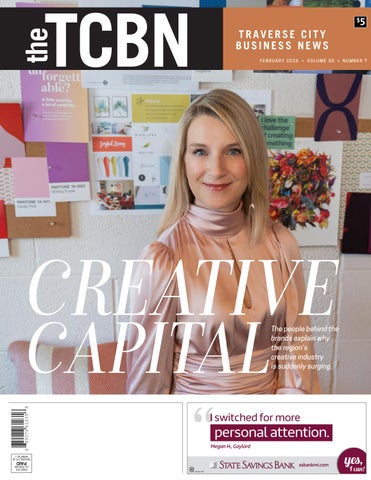
The people behind the brands explain why the region’s creative industry is suddenly surging.
The people behind the brands explain why the region’s creative industry is suddenly surging.
“



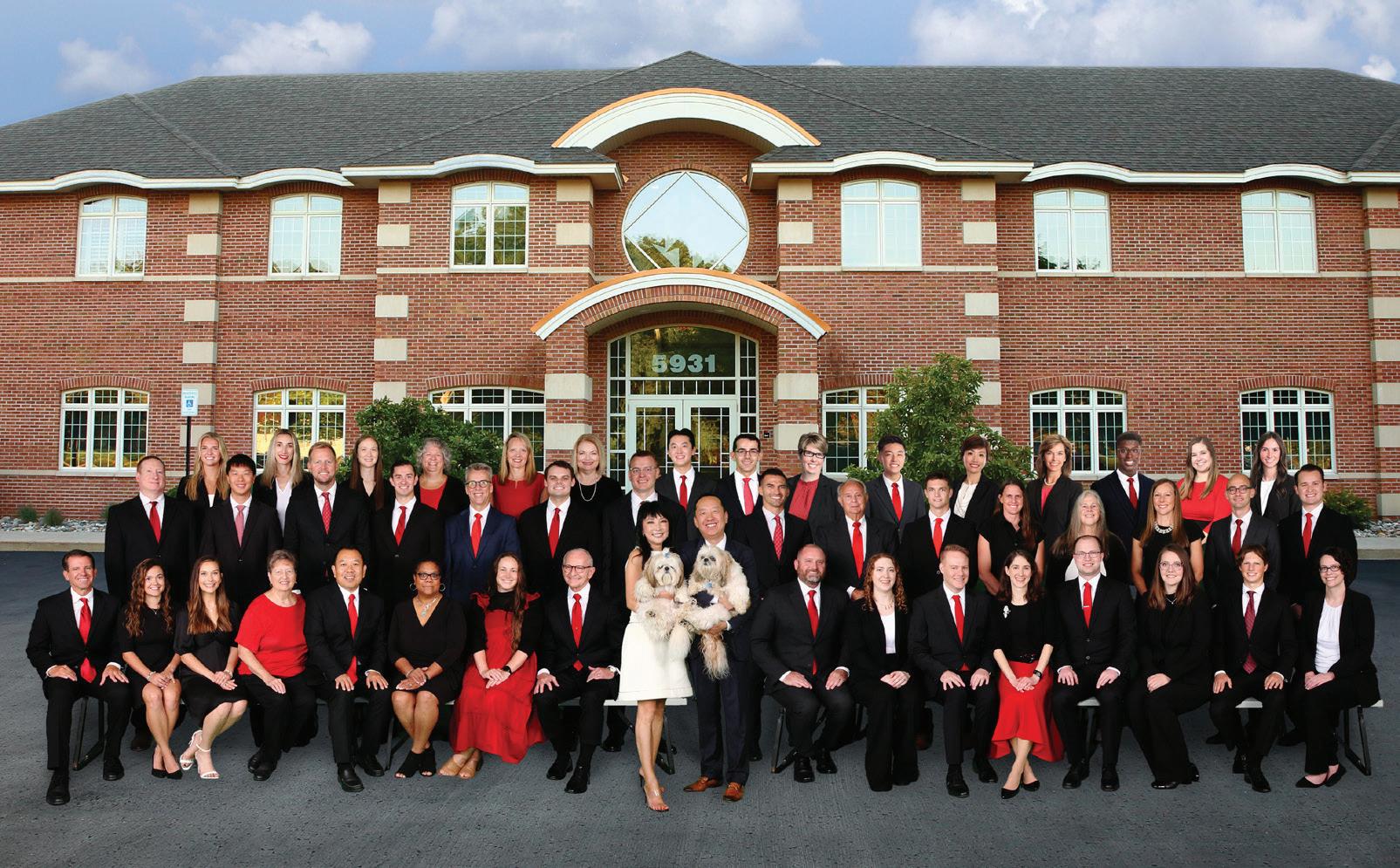
Main Office 5931 Oakland Drive Portage, MI 49024 269-385-5888 or 888-777-0216
• We uphold a Fiduciary Standard and work with clients on a fee-only basis.
• We do not receive commissions, kick-backs, or soft dollars from product sales, eliminating inherent conflicts of interest.
• Our team of professionals holds designations and degrees such as CFP®, CFA, CPA, MBA, JD, and PhD.
• Charles received his MBA from the Kellogg School of Management - Northwestern University, his MA in Economics from WMU, and Executive Education from Harvard Business School and Columbia University.
• Ranked #1 on Barron’s list of America’s TOP Independent Advisors for 2025. Charles has achieved the #1 ranking four times within the past five years.*
• Ranked #4 in the nation on Forbes’ list of TOP Wealth Advisors and is the highest-ranking Fee-Only Advisor on the list.*
Minimum investment: $1,000,000 in Michigan/$2,000,000 outside of Michigan. Assets under custody of LPL Financial and Charles Schwab.

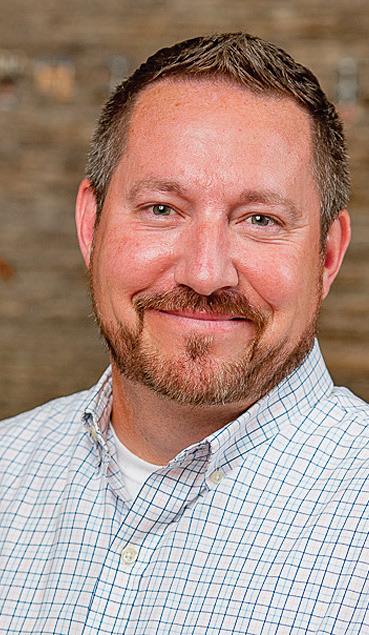
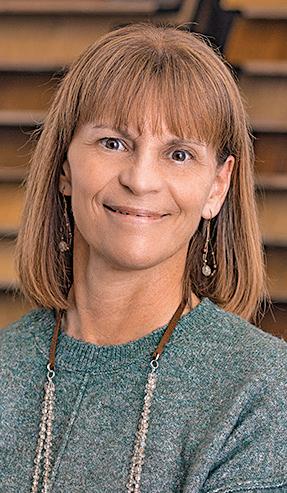
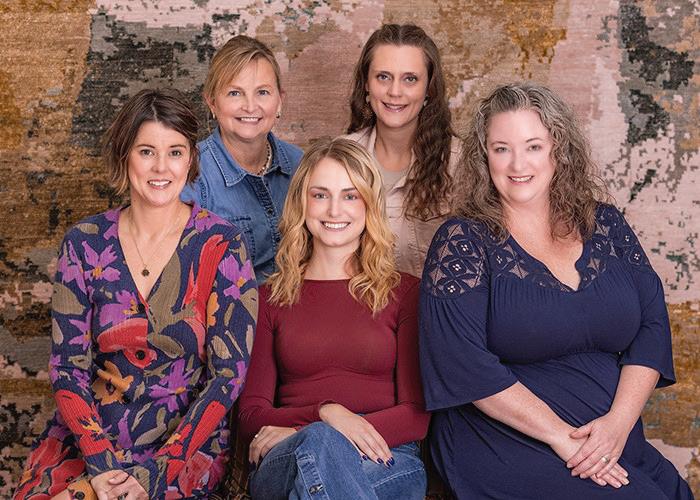
Floor Covering Brokers Carpet One and Carpet Galleria in Traverse City recently announced an ownership change. Michael and Kristi Watkins - longtime employees and leaders (pictured above) - purchased the two flooring stores from owners Denny and Jo Lauterbach, who have retired. Under the new ownership, all current employees will remain in place. Floor Covering Brokers Carpet One is entering its 40th year in operation. Carpet Galleria, a well-established local flooring retailer, became part of the Lauterbachs’ business portfolio in 2022. Together, the two stores comprise the largest floor covering business in northern Michigan.
Miller Canfield has opened a new office in downtown Traverse City. The office, located at 202 E. State Street, opened January 1. Steve Roach serves as the resident director. “Our clients here are navigating sophisticated legal issues while also facing the unique opportunities and pressures of a thriving tourism, hospitality, agricultural and manufacturing economy,” Roach said. “We’re excited to build on the work we have here and to be a long-term partner to businesses throughout the region.”
Northern Michigan Startup Week (NMSW) 2026 is set for April 2024. NMSW 2026 will feature expanded programming, new collaborations, and more ways to connect across the entrepreneurial ecosystem. The week will feature events designed for entrepreneurs, students, innovators, educators, investors, and startup enthusiasts from across northern Michigan and the broader Great Lakes region. Hosting partners include 20Fathoms, Northwestern Michigan College, Grove Incubator, and the MSU Research Foundation
The Benzie County Chamber of Commerce and the Economic Development Partnership recently announced their integration – combining the strengths of the private sector business network with county economic development interests – and the appointment of Jon Willow as executive director. Willow brings extensive experience in economic development, coalition building, and rural community engagement to the leadership role. Most recently, she served as the 2025 Innovation Fellow at Michigan State University’s Regional Center for Economic Innovation.

Golden-Fowler Home Furnishings in Traverse City recently announced its fourth ownership transition in 65 years of operation. Amanda Eshleman assumed the role of owner and president on January 1. Like the owners before her, Eshleman worked her way through every position in the company prior to taking the helm.
EB2 Vintage has completed its move to 1316 W. South Airport Rd. and will be holding a grand opening Feb. 14 from 11-5. The store, owned by Carla Weaver, offers vintage furniture, decor, local art, gifts, classes and consignment; eb2vintage.com.
The Fifth Third Foundation has awarded $25,000 to Venture North Funding and Development to help small businesses in northern Michigan. The money will be used to provide lowcost loans and no-cost business consultation. Venture North has provided 212 low-cost loans to northern Michigan businesses totaling more than $13 million, leveraging an added $33+ million from commercial lending partners, creating and retaining over 1,400 jobs. It has also provided more than 800 businesses with no-cost consulting services.
NOVELLO CLINIC EXPANDS SERVICES
Novello Specialty Clinic in Traverse City is now offering advanced gastroenterology services onsite through a new telemedicine clinic with Henry Ford Health. This expansion allows patients to receive specialty care locally, reducing the need for travel while staying connected to a full range of diagnostic and follow-up services.












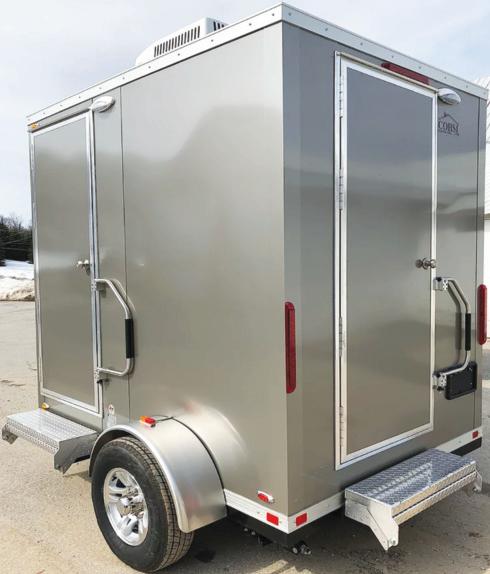





During this season of rest for many when the snow falls and our winter sports are enjoying their spotlight, the social and corporate planners are hard at work with suppliers getting ready for what is undoubtedly going to be yet another amazing season of festivals, weddings and meetings in beautiful northern Michigan.
This often-misunderstood industry is one of the oldest professions, dating back to the ancient Olympics. I’d give anything to join Bill and Ted and hop in their time machine to see what those event planners were up to. Did they write the timeline on a tablet? How did they crowd control? How did they handle marketing and registration?
Traverse City has a long and solid history of events. The planners who run the meetings, festival and weddings today – we’re ready. We’re excited. We are the glue that brings together the vendors. We’re the taste makers, the influencers of the region, the story curators, the memory makers, the dream weavers, the trend setters, but we are so much more.
For being around as long as this industry has been around, I am constantly shocked about how long it took for associations and four-year degrees to become developed. I believe this is part of what has taken many people so long to fully understand what planners do. Humor me for a quick story to get the full background from my perspective.
In 1987, I was hooked and didn’t even know what I was hooked on. I had just planned a canned food drive at my school for student council. Other than the phil-
anthropic effort that I enjoyed, there was something else, but I couldn’t put my finger on it. Fast forward to winter of 1997, I came home from my freshman year of college at Albion completely devastated. I was a music major, but I had a 2.0 in music theory and had to take it for four more years. I did not want to sing anymore.
Frustrated, I went to the library computer to “Ask Jeeves” what I should do for the rest of my life. I knew I loved being organized because I planned things at school, served on student senate, liked leading and enjoyed details. I found an association for event planners. I quickly joined the International Special Events Society (ISES) as a student member.
based in Traverse City is astounding for a mid-sized market. Our work takes a special person … a special breed, if you will. So, to know that there are so many of us up here is mind blowing. The seasoned veterans in this town could collectively write a New York Times best seller that would blow your mind. You see, no one really knows or gets what we do unless you’re in the industry. Let me try to explain.
The abundance of talented planners based in Traverse City is astounding for a mid-sized market.
ISES’s closest chapter was in Toledo. The association was only 10 years old when I joined.
The same year, I found a distance learning program from George Washington University. They mailed me VHS tapes, books and workbooks. Since then, the industry has come a long way. ISES finally changed its name to ILEA, International Live Event Association, in 2016. Today, there are dozens of associations for each niche market for planners and numerous colleges with four-year degrees in event management. I’d say the industry has really matured, elevating what we do from task master to so much more.
The abundance of talented planners
For years, Jennifer Lopez (“The Wedding Planner”) made our jobs looks silly, trivial and like all planners regardless of industry were more of an assistant with a headset and a clipboard.
As a corporate planner myself, it made it even harder to shake. That is not the case. Here’s what we are regardless of being a meeting, wedding, festival or other planner: We are the orchestra conductors of the meeting or event; we don’t know how to play every single instrument, but we have to be semi-experts enough and bring in the best partners to work with us. As business owners, CEOs and leaders, we have to be experts in contract law, creative development, marketing, software (lots of software), supply chain management, logistics, bookkeeping, budget management, staffing, human resources, leadership, food and beverage (and all of the dietary that comes with it), religious holidays and
EDITORIAL & BUSINESS OFFICE
P.O. Box 4020 Traverse City, MI 49685 231-947-8787
ON THE WEB tcbusinessnews.com
PUBLISHER
Luke W. Haase lhaase@tcbusinessnews.com
CONTRIBUTING EDITOR
Gayle Neu gneu@tcbusinessnews.com
STAFF
customs, travel, airlines, hotels, technology, production and communications (and Psychology 101 from college helps!)
You also should be an extrovert with an amazing memory and/or write everything down. When the meeting or event takes place, it’s like putting on a 24-hour play. We are also – for most meetings and events – the only ones who are sober and making sure everyone is safe. A Forbes magazine article on “The Top Stressful Careers Heading Into 2026” lists leisure and hospitality as number one. “Event planner” is often ranked in the top five on many most stressful job lists due to the high pressure, deadline-driven work that we do. So please understand why I give a fake smile and grit my teeth when you ask my how my “party planning” business that I’ve owned for 18 years is going. We are multifaceted experts. We are lifelong learners staying on top of the industry trends and what is best for our clients. Our industry is continuing to help others understand what we do. So, spread the word ... we’re ready for you! The planners, the suppliers, the hotels, the restaurants, transportation, the rental companies, the venues … we’re all ready! Bring it on!
Allison Beers is the founder and CEO of Events North and proud to be headquartered in Traverse City. Events North is a full-service meeting and incentive management agency. Its clients are based across the country and it operates meetings all over the world. Events North celebrates 18 years in business this year. EventsNorth.com.
COPY EDITOR
Becky Kalajian
WEB PRODUCTION: Byte Productions
MAILING/FULFILLMENT
Village Press
DISTRIBUTION
Marc Morris
SERVING
Grand Traverse, Kalkaska, Leelanau and Benzie counties
AD SALES
Lisa Gillespie lisa@northernexpress.com
Kim Murray kmurray@tcbusinessnews.com
Kaitlyn Nance knance@northernexpress.com
Abby Walton Porter aporter@northernexpress.com
Michele Young myoung@tcbusinessnews.com
COVER PHOTO BY
Megan Renae Studios
The Traverse City Business News
Published monthly by Eyes Only Media, LLC P.O. Box 4020 Traverse City, MI 49685 231-947-8787
Periodical postage qualification pending at Traverse City, MI.
POSTMASTER: Send address changes to The Traverse City Business News, PO Box 1810, Traverse City, MI 49685-1810.
The Traverse City Business News is not responsible for unsolicited contributions.
Content ©2026 Eyes Only Media, LLC. All rights reserved.
EYES ONLY MEDIA, LLC
By Art Bukowski
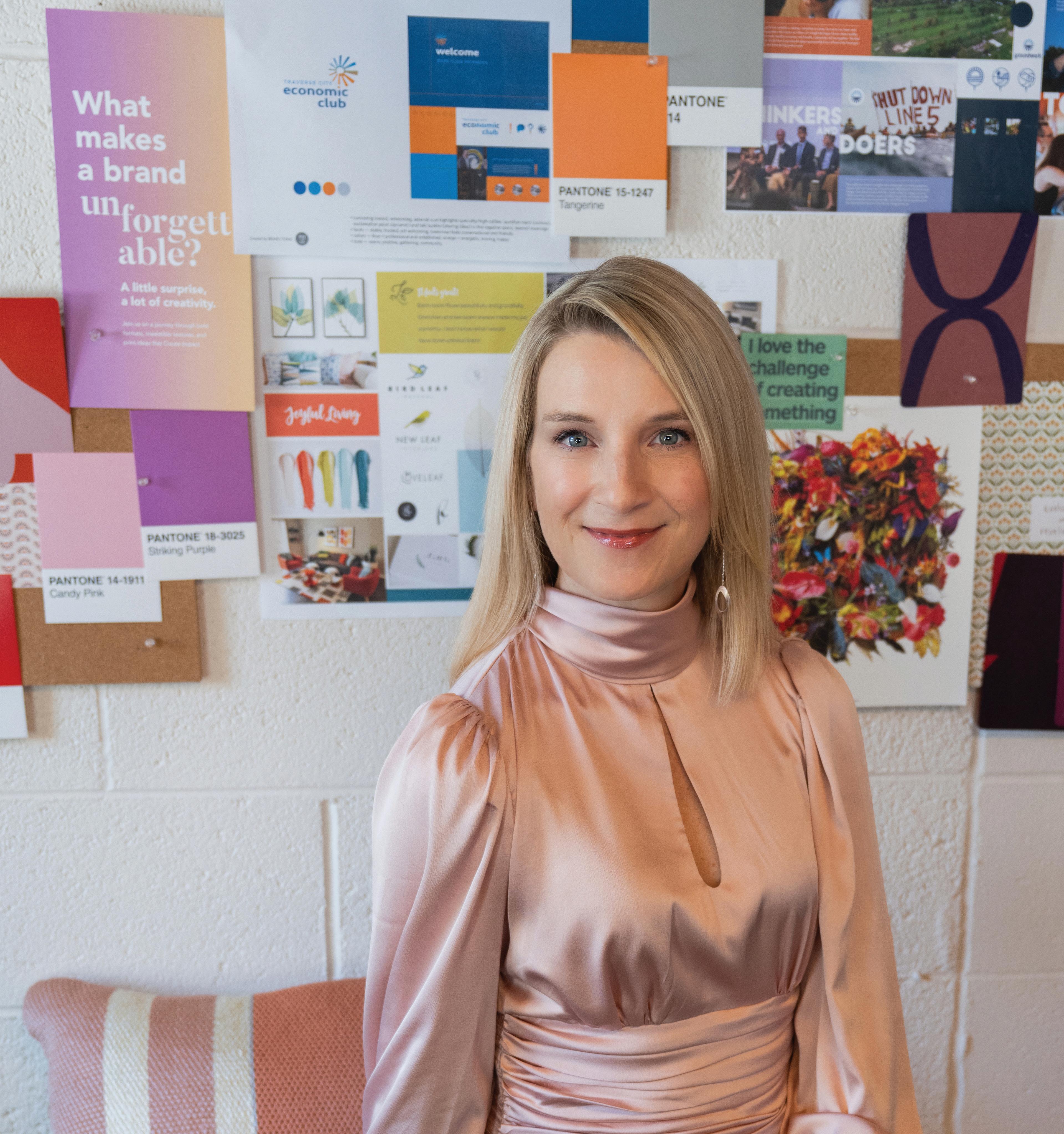
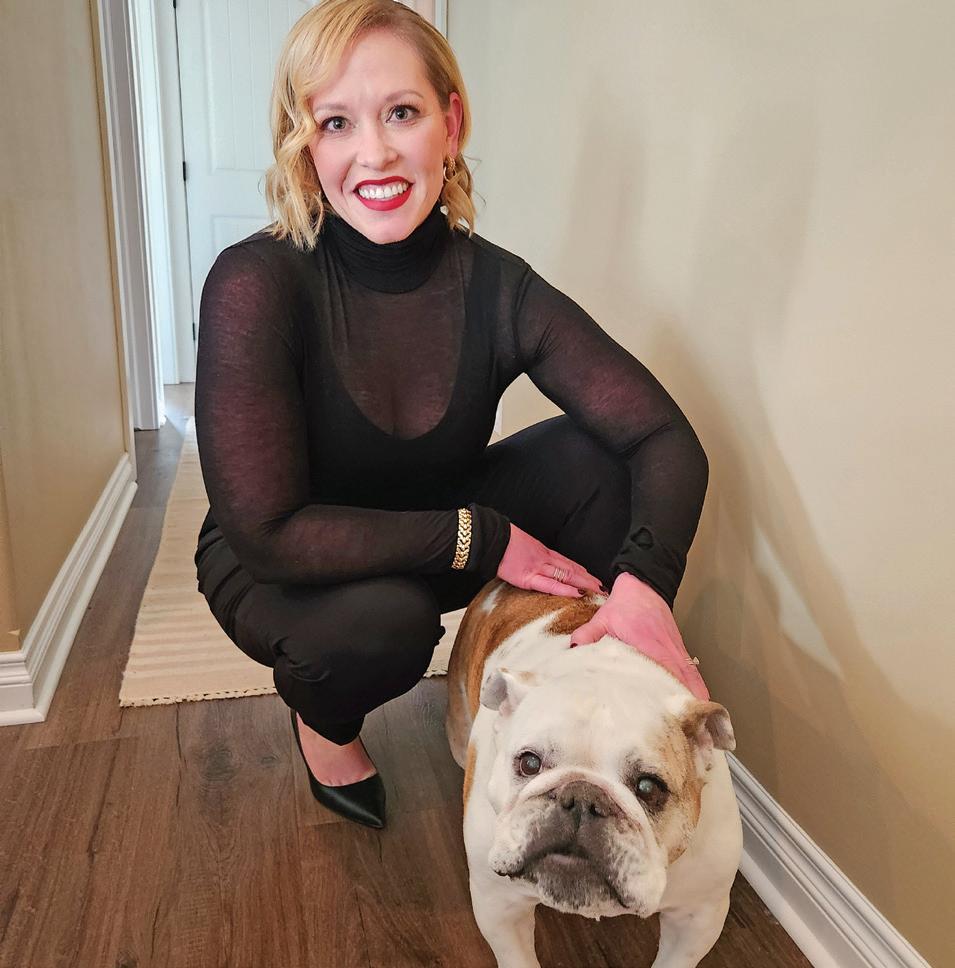
Melissa Conradie runs Conradie Event Design with her husband, Dawie Conradie. Her company is a boutique wedding planning & event design company that has helped hundreds of clients achieve that perfect day and scores of organizations host amazing events. We thank her for showing us around her home office! If you have a suggestion for a From The Desk Of feature, please email Art Bukowski at abukowski@tcbusinessnews.com.

1. Each of these signature projects took 12-18 months of very detailed planning and 2-3 weeks to build out the structures. It’s always surreal to stand in the room on the day of and truly reflect back on all of the time and trust it took to get to that moment. To see the joy it brings is the “why” in all that we do.
2. This is a review from the client we started our company with in 2011 and still work with today. This reminds me that all it takes is one person to believe in you and give you a chance. They see you are motivated and hardworking. This person is very instrumental in my story of building the company and their trust over the years means the world to me.
3. This has been on my desk since 2023. It’s a thank you letter from the mother of a bride. This particular event was a huge production, and with a production like that, the expectations, of course, are really high. We made her really happy, and she expressed that in the card. It’s always on my desk because it’s a reminder of the fact that we’re in charge of people’s most precious moments.
4. One of my favorite parts about event planning is the design process. On any given day you will find linen swatches and decor samples scattered about. Fun fact: before my first client had us plan their mother’s 90th birthday party, which started our company, I was scheduled to move to South Africa where my husband is from and finish out my schooling to go into interior design.
5. Working with my husband is honestly great. If there’s ever going to be a person that knows how you operate and knows your personality well, it’s going to be your significant other. We have a really great balance with our whole team as well. They’re like family, and they all have a bond with Dawie and myself.
6. You will always find a cup of coffee on my desk, music playing, a lit candle and often times fresh flowers. Creating welcoming spaces is what our company does, and my office space is a direct reflection of what inspires me.
7. As you can imagine, there are so many details and logistics that go into planning events. A staple next to my computer is always my notebook. This monogrammed Shinola notebook was a gift from one of our sweet wedding couples as a thank you gift they sent me on their one-year anniversary.
8. Lola is my English Bulldog. Chances are if you have had a call with me and it’s during one of Lola’s 20 naps of the day, you’ve heard me explain that the loud rumbling noise in the background is Lola snoring.

















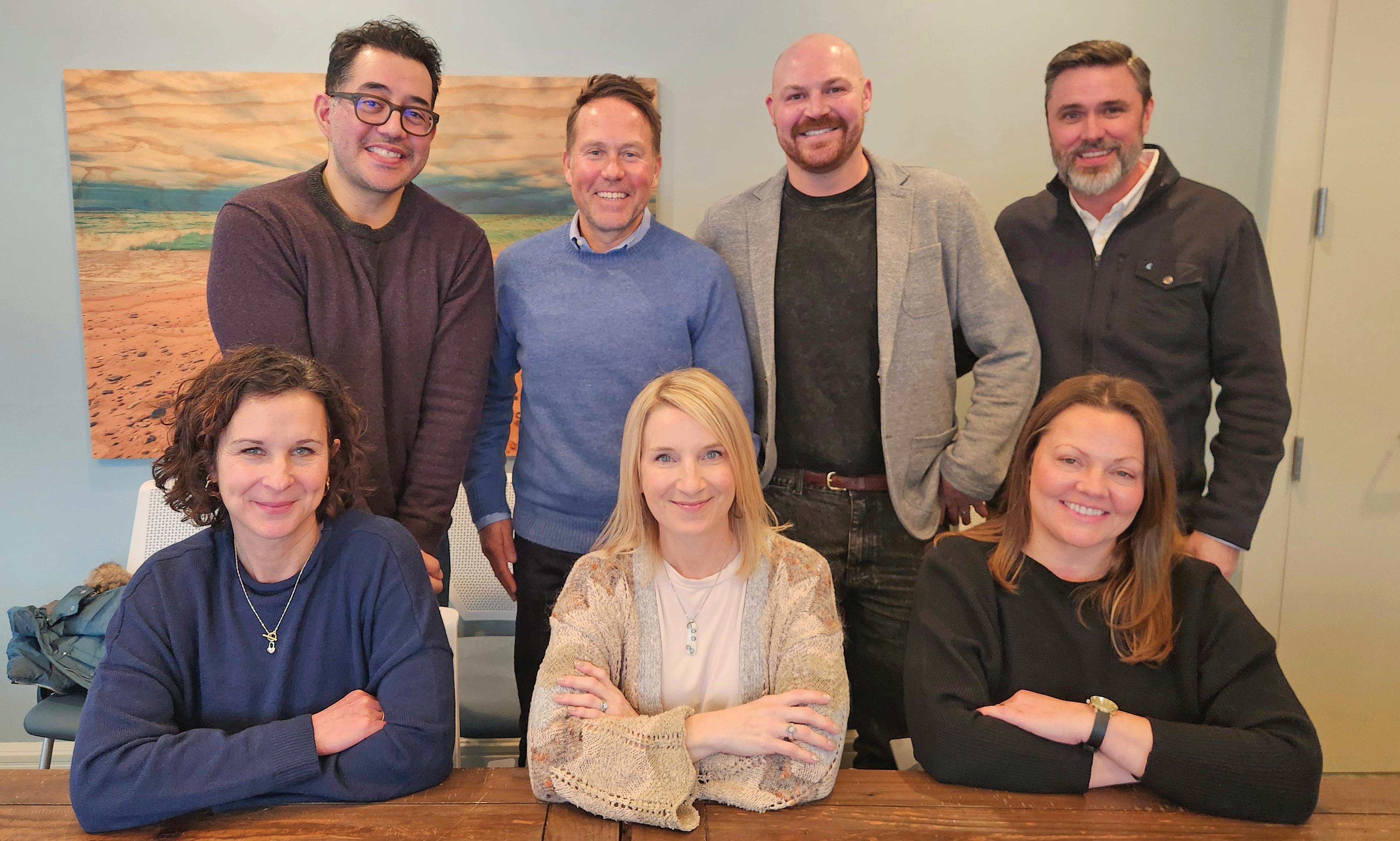
Coryn Briggs, Senior Director of Marketing, Traverse City Tourism
Paul Britten Jr., Executive Vice President/Sales and Marketing, Britten, Inc.
Jennifer Lake, Owner, Brand Tonic
Fernando Meza, Owner/CEO, Oneupweb
Chip Rice, Director of Marketing, Interlochen Center for the Arts
Aaron Swanker, Co-owner, Flight Path Creative
Carly Wujcik, Owner, WURCK Consulting
By Art Bukowski
The business world is constantly evolving, but one thing will never change: If you’re not connecting with customers, you’re in big trouble.
In an increasingly competitive environment where consumers are crunched for time and pummeled with promotions at every turn, careful and effective marketing
is more important than ever. But how do today’s marketers navigate a dizzying array of channels, tactics and technologies? How do they know what’s really working? And how do they do it all within budget?
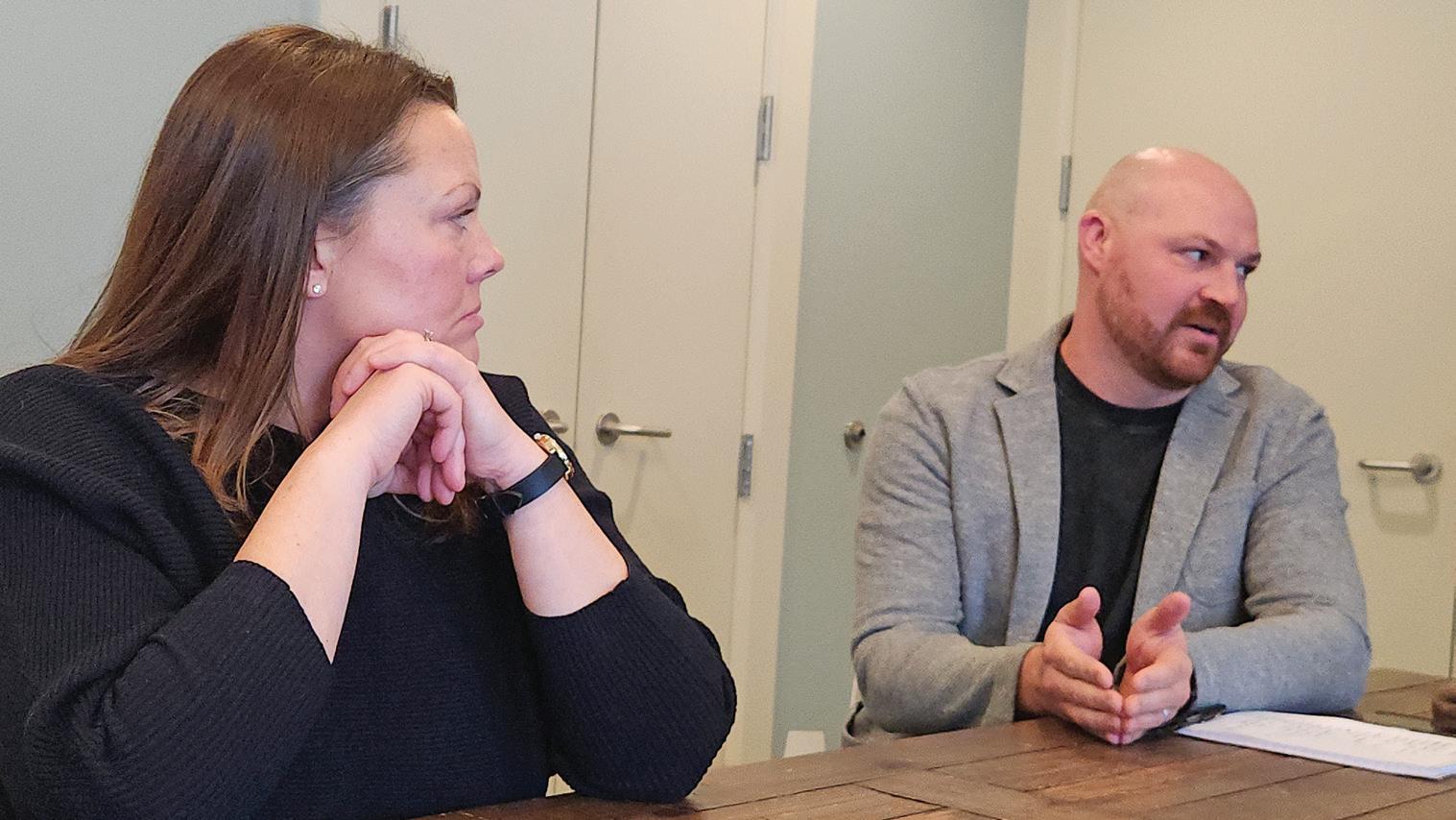
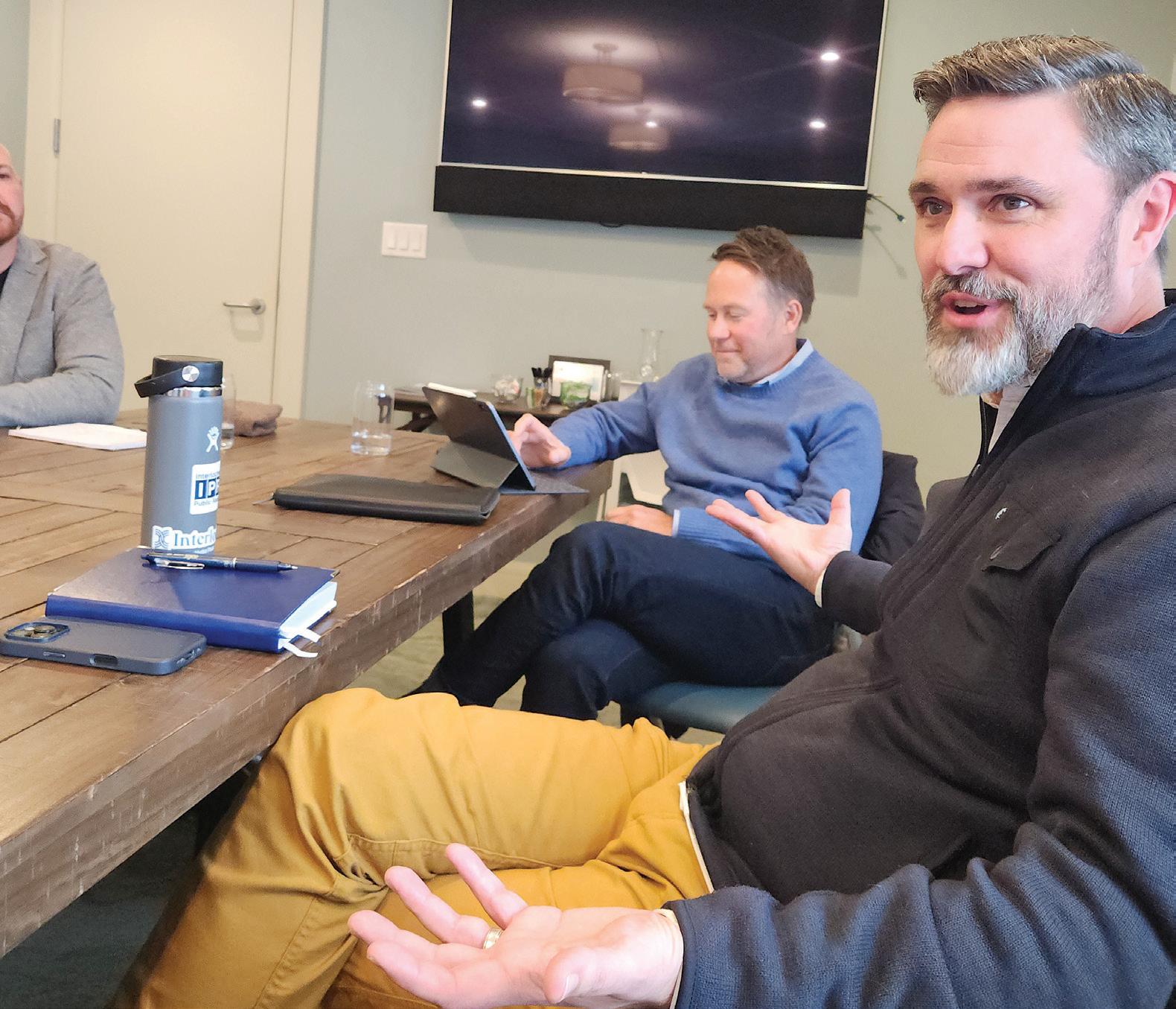
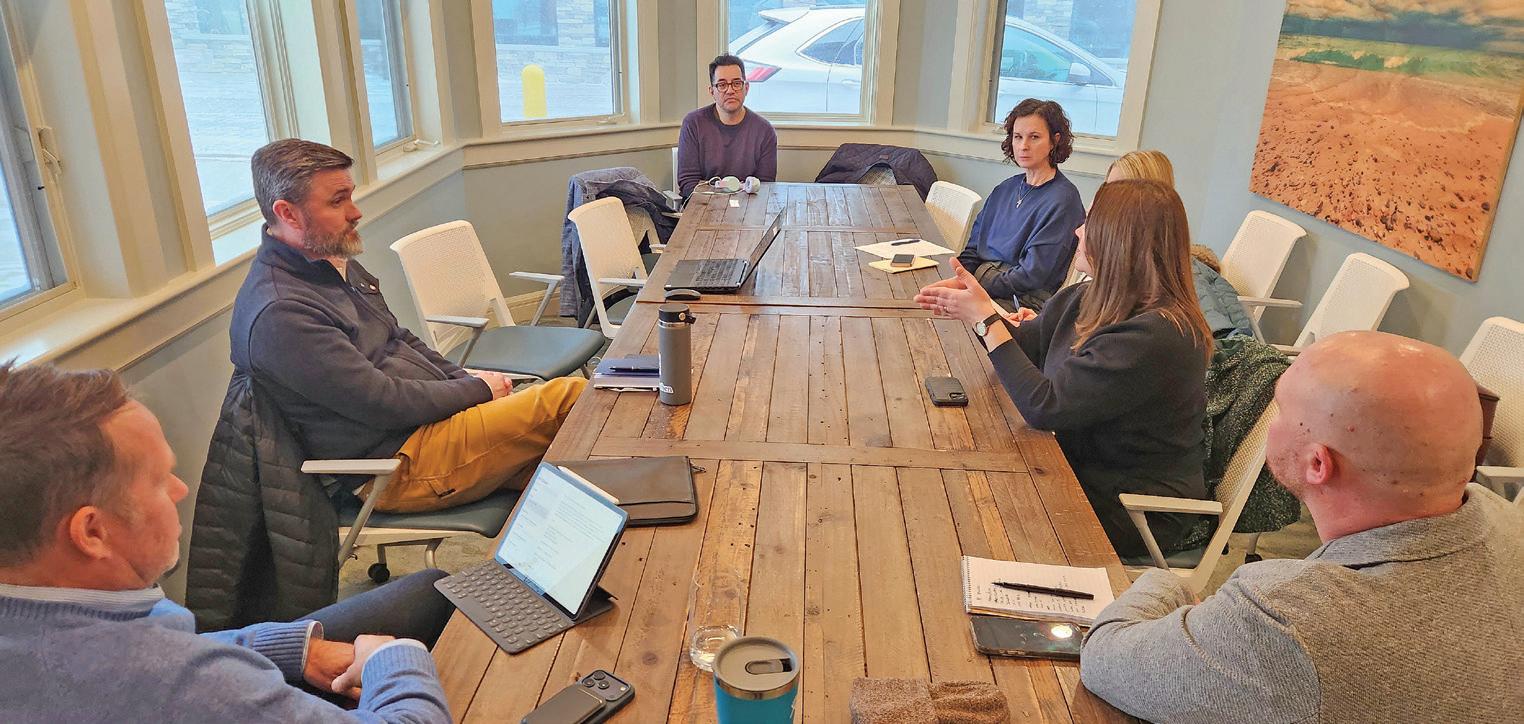
The TCBN convened a roundtable of local marketing professionals to discuss the trends, opportunities and challenges within this busy and vital space.
As with the average consumer, modern marketers simply have far more choices (or distractions, depending on how you look at it) than they did even a decade ago. One essential social media platform became three or four. Digital opportunities have exploded. Even old-school channels like outdoor, TV and print are far more diverse.
Add in artificial intelligence, which came on the scene with guns blazing, and you have an overwhelming suite of technologies and channels through which customers can be wooed.
So what’s worth pursing, and what’s just noise? Now more than ever, these marketers said, it’s critically important to figure out who you’re targeting – and why – before you give any thought to what tools you’ll use to connect with them.
“Every successful or experienced marketer knows the channels will always change. The possibilities will always
expand and contract, always ebb and flow, but you can’t ever abandon the basics,” said Carly Wujcik of WURCK Consulting. “You have to understand who that target audience is, which starts to shape where you might find them, and then you have to understand what problems you solve for them and communicate that message clearly.”
It’s tempting to get distracted by the how, marketers say, but you’ll be spinning your wheels – and wasting your money – if you don’t start with the who, what and why.
“Marketing, I feel, has always been an act of empathy,” said Chip Rice, director of marketing for Interlochen Center of the Arts. “No matter what industry, no matter what business, if you’re an agency or direct to consumer, it’s really understanding who they are, what they need and the solution that you provide. And if you don’t provide a solution, you’re not doing business with them.”
A marketing plan that clearly identifies will, in fact, be the best way to make sense of the madness when it comes to this overwhelming buffet of methods and solutions.
“The basics are not gone, and in fact, I think they’re more important than ever, because otherwise, you’re chasing down every possibility, the possibilities are endless, and how do you decide?” Wujcik said. “You have to have that clarity.”
This can be, of course, a challenge. Sometimes, clients (in the case of agencies)
or leadership (in the case of internal marketing teams), push for action before a plan is in place. But good marketers push back.
“They’ll say they want to campaign for X. Well, why? What’s it for, and who’s it for? So giving them the roadmap first is so critical,” said Jennifer Lake, owner of Brand Tonic in Traverse City. “There seems to be a lot more education with clients. Let’s really understand your goal, and then we can build a strategy.”
And it’s not just about defining a marketing plan – it’s about making sure your house is in order. No matter how urgent you are to connect with and convert customers, for instance, you can’t (or shouldn’t) do it with a bad website, an ill-defined brand or unclear value proposition.
“You cannot outrun a weak brand. You can, for a little while with a hell of a lot of money, but you can’t do it sustainably,” Wujcik said. “And that has always been the case.”
Despite an onslaught of new platforms, solutions and channels, these marketers say they are leaning heavier than ever into tried-and-true practices.
“It’s not necessarily about using new tools, but using the tools that you have and… fine tuning those strategies, really segmenting and honing in,” said Coryn
Briggs, senior director of marketing at Traverse City Tourism.
So, what time-honored tactics still work in 2026?
“Email marketing is never going to go away, much to my dismay, because I feel like it can be so challenging,” Briggs said. “But it’s a qualified list of people that have opted in to receive your communications. So you’re targeting people that have asked for you to message them and have shown interest in or engagement with the content that you’ve served up to them.”
Paid digital (Google Ads, as one example) are also still very effective, as is paid traditional media (print, outdoor) for both general awareness campaigns and those seeking conversions. Back again with a vengeance after COVID is the importance of in-person marketing, particularly the B2B event circuit, Wujcik said.
“But we’re shifting how they are treating those events, treating them more like a campaign,” she said. “We’re going into it with an objective rather than just show up and showcase our services or our tools. Who do we want to be getting in front of while we’re there? What are we doing with the leads after the show? What automation can we leverage to follow up?”
Still, experimentation is vital. Lean on the known tactics, but don’t be afraid to reserve a little money for trying something outside the box.
“If you’re able to have that little bit of
“Turnkey is a huge thing that we promote. From design, building and installation… people just need us to be the easy button. Because there’s so much going on in the world, and they want to trust that somebody’s just got it from start to finish.”
– Paul Britten Jr., Executive VP/Sales and Marketing, Britten, Inc.
budget for that moonshot idea, it’s really important to (do that), or maybe try a tried-and-true method a new progressive way,” Briggs said. “Those often lead to results that you may not expect.”
“About 70 or 80 percent of our budget is focused on those channels that are known to be producing for us, and then we reserve 20 to 30 to just constantly be testing and trying things,” Rice added. “As soon as we stop testing, we’ll die.”
Experimentation is not for the weak of heart, though, especially since it might not deliver immediate results.
“You need to allocate budget to experimentation and then take time to actually see it through. I’ve had a lot of clients
onboard a new tech stack, and then they give it about three months before they’re they’re done,” said Fernando Meza, CEO of Oneupweb in Traverse City. “And it’s like, how the hell are you ever going to expect anything to work out?”
Themes and messages
In terms of what’s working in marketing messaging, certain themes are rising to the top. One is that consumers are looking for quick, efficient solutions, so messaging that supports that goes a long way.
“Time [is huge],” Meza said. “When we launch certain campaigns for clients, the ones that perform best are the ones
that help to solve the problem as quickly as possible.”
And businesses need to show that consumers can trust them to deliver these solutions with relatively little input or hassle.
“Turnkey is a huge thing that we promote. From design, building and installation…people just need us to be the easy button,” said Paul Britten Jr., executive vice president for sales and marketing at Britten, Inc. “Because there’s so much going on in the world, and they want to trust that somebody’s just got it from start to finish.”
Trust has been important forever, but in an increasingly inauthentic and fragmented world, businesses are advised to keep doing whatever they can to build it.




“Consumers are doing their own thing. They have their own process. They’re going to go look at all the reviews, and it’s hard to control. We’ll have a client that comes to us as a four-point-something in their Google reviews. We can’t control that, so we can implement systems to get more reviews and bump this up,” said Aaron Swanker, CEO of Flight Path Creative in Traverse City. “Are you building trust? I think it’s a big thing coming into this year.”
And it’s not about how often or how many times you ping consumers these days. It’s about making sure you have something good to say.
becoming a thing as tools like Google’s AI overview are delivering so much information that a user doesn’t need to travel beyond that first step.
“About 70 or 80 percent of our budget is focused on those channels that are known to be producing for us, and then we reserve 20 to 30 to just constantly be testing and trying things. As soon as we stop testing, we’ll die.”
– Chip Rice, Director of Marketing, Interlochen Center for the Arts
“It’s not the volume play that it once was,” Wujcik said. “It’s about restraint and quality and making sure that what you’re putting out matters.”
Optimizing your website – both holistically and individual pages of content – remains important. The methods for doing so have evolved considerably over the years, with certain early tactics (keyword stuffing) now drawing penalization from search engines.
“Making sure that you’re optimizing your content front and back end, website and beyond, so that it can be found by the people who are looking for it is so critical,” Wujcik said. “And unfortunately for us as marketers, that is a perpetually moving target. We always have to learn. I mean, it changes every day.”
But things on this front – and indeed the entire nature of how people interact with the internet – is rapidly changing with AI. So called “zero-click searches” are
“The real challenge is with SEO and search. We’re already seeing declines in organic web traffic because people – and I do it myself –don’t have to go to your website if the answer’s right there on the results page,” Rice said. “So it’s structuring and optimizing data so it has a voice in there and can be present and visible.”
Briggs agreed that it’s more critical than ever to make sure website content is primed to work with modern search technologies.
“There’s all of this talk about how websites are dying; I’m sure we’ve all seen it,” she said. “I don’t think that they’re necessarily dying, I think they’re just changing. I think the structure and how they’re built is changing, and how we mark data and content up so that it can be read online through the [large language models] and anything AI related.”
Website structure aside, marketers are also dealing with significant shifts away from traditional – and even AI supported – searches. Younger people are using social media to find information in the same way older folks use search engines.
“You have recent studies that show social media being its own search engine – TikTok or Instagram are surpassing searches on Google,” Briggs said. “And I think that’s a generational shift in terms of how people consume content.”
“I have two teenagers, and they laugh at me if I Google something. They just go to YouTube and use it really the way we
used Google. They just go there to find answers,” Rice added. “[My two kids are] a small sample size, but times are changing.”
Part of this shift is that younger consumers place much higher value in user-generated content, which seems much more authentic (even if it, like everything else, can still be monetized).
“Three or four years ago, we sold a million and a half in video production. No way is that happening, ever again,” Meza said. “Now, you spend $5,000 to get some micro-influencer to go do some user-generated content, and that performs better, if not as good, as the $50,000 investment, and you can scale that so much easier.”
This group is largely bullish on AI, mostly because it allows them and their staffs to do more with less.
“We’ve really embraced AI and are mostly positive about it. We look to leverage it for efficiencies,” Rice said. “I mean, our team is finite. It’s a good, healthy-sized team, but we still are limited by number of people and hours in a day. We’re using AI everywhere we can to just help us do more.”
And it’s not just explicit AI solutions. Programs that have been around for years are adding AI wrinkles, and they’re a huge boost to productivity.
“Yes, there’s new shiny tools and there’s new awesome things, but the primary resources that we use – LinkedIn, Google, Microsoft Outlook – they’re all adding these AI add-ons to them,” Britten said. “Every tried-and-true tech platform is adding some type of AI functionality.”
“It’s an incredible assistant. It helps us a lot from a research perspective, especially competitor research,” Meza added. “And from a sales side, it’s incredible. Having to work with creative to come up with spec work is now not as hard. Our time invested in the sales process is now cut in half.”
Removing the human element of certain functions and interactions comes with risk, but as long as the system performs as good or better than a human, people are less likely to care.
“It comes down to the experience, really. I don’t really care if I talk to a human or I get a system if I have a positive experience,” Rice said. “You can get a person on the phone who is terrible or helpful, and you can have an automated system that is smooth and seamless or
one that drives you crazy. So it really just depends.”
There are definite efficiencies in the creative world as well – AI is a great tool for image processing and cleanup, for example – but this is where things get a little more hairy. Why hire a designer when ChatGPT can kick out a few logos for you?
Lake says it’s all about quality. There’s nothing wrong with starting with AI for brainstorming, she says, but then things need to go further.
“I always teach people that (AI) is just going to generate the base ideas that everyone else is going to come up with,” she said. “Let’s get all the junk ideas out, then come back and talk about what we’re really trying to do and make it creative, because it still has to be unique.”
A skilled professional with context and a handle on subtleties and nuances can still produce a logo or other creative content that’s worlds better – and more effective – than AI, Lake says. Some people will be just fine with the full AI content, but that’s not all bad.
“That’s OK. It happens in a lot of industries. [Professional assistance] is not right for everyone. But here, we want the people who appreciate the value we bring in the ideas and concept, and how we execute,” she said. “The real detail, the fine design, the great concepting – I like to think that’s not going away.”
“There’s always people looking for a shortcut, and shortcuts are always there, but that isn’t where the great work happens,” Rice added.
Meza and others are not overly worried about AI coming for creative jobs.
“Yeah, it’s something that we’re having to navigate, but it’s always like that. I remember when the first handheld HD camera rolled out and everyone in Hollywood thought that that was it. That was the end of time,” he said. “At the end of the day what happens is better ideas surface up. Strategies get better. It pushes us.”
Plus, there is already considerable scorn of AI content among certain segments of the population.
“I feel like people are almost overly sensitive to it,” Briggs said. “We don’t use any AI generated images here. We purposefully work with local photographers [because we] have an incredible region to photograph. And we’ll sometimes share photos on our social media and people will call it out.
That’s too perfect. That’s an AI image.”



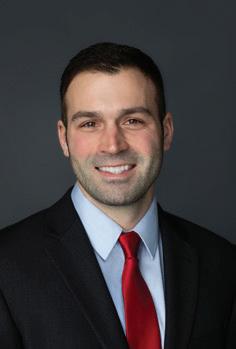



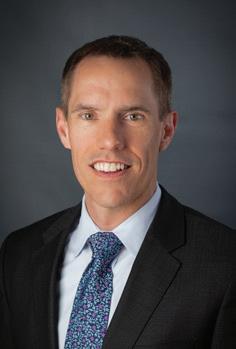




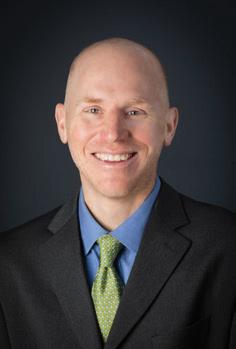
By Ross Boissoneau
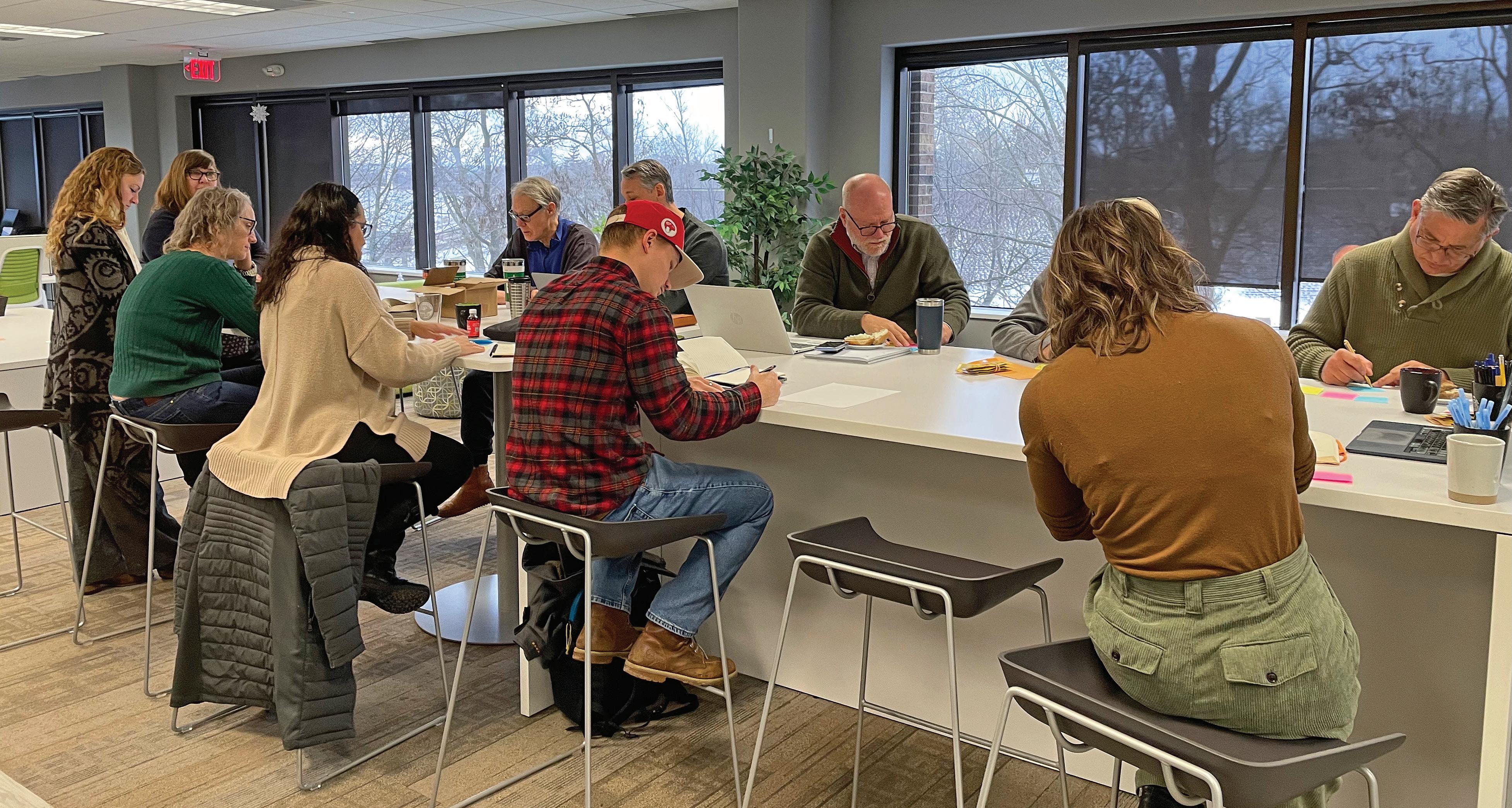
Mixing presentations with coaching and office camaraderie sounds like a great idea. As long as you don’t charge for the experience. And please, don’t forget the bagels. That in a nutshell is the premise of the Breakfast Lab at startup incubator 20Fathoms in Traverse City. The in-person, free Breakfast Lab takes place each Thursday, and is geared to help entrepreneurs in all phases of their business.
The morning starts with a selection of breakfast treats such as bagels or donuts, with a presentation of 45 minutes to an hour. It’s followed by free time, which attendees can use for peer coaching, visiting with other entrepreneurs or they can plug in and work at the facility’s co-working space. The lab is free of charge and open to all. While you can register ahead of time, walk-ins are welcome.
Delaney Keating was involved from the start. It was during her tenure as director of entrepreneurship and commercialization at 20Fathoms that she and Erin Srebinski created the program.
“It’s a flexible, accessible program,” said Keating, who is now operations director at Michigan Founders Fund.
With funding coming from an ARPA small business grant, the program is
free time which attendees could use how they wished.
“We were brainstorming in late 2024. Rural areas are different. So we broke [the presentation] into pieces without a gigan-
“What’s really nice is it’s all kinds of small startups. Food, tech, child-care, services – some really creative ideas come out.”
– Phil Hallstedt, Owner, Hallstedt Homestead Cherries
offered free of charge.
“A breakfast program, coaching, a free day of co-working [which otherwise costs $30],” she said. “It was incentivized enough.”
Srebinski, the manager of startup education at 20Fathoms, now oversees the program. She says the program evolved from a more structured meeting into a concise presentation by an expert in a field entrepreneurs could use – marketing, financing, perfecting a pitch – followed by
tic program no one has time for,” she said.
Ostensibly, the goal is to help attendees hone their pitch decks, their visual presentations to gain funding and support for their business. Srebinski says the presentation format started as a six-week program, with a different presenter every week. They then repeated the process.
“But the subject matter wasn’t really the draw. It was the regular meeting,” Srebinski said.
Attendees agree. They say the program
is much more than just a series of presentations. Breakfast Lab attendees also can take advantage of one-on-one coaching with the 20Fathoms Startup Services team and other experts. Perhaps best of all is the opportunity to meet and connect with other entrepreneurs.
“The key advantage I see is the ability to network,” said John Velis. He is one of the developers of the application Memory Bright, designed to help those dealing with dementia by collecting photos, films and other media. They are then loaded into a presentation the person and their family can watch and listen to, similar to a PowerPoint series of slides and films.
He says as a remote worker in rural Leelanau County, he misses the regular interaction he had over 30 years as a secondary school teacher and instructor at Northwestern Michigan College.
“When you’re not working with others, [this networking opportunity] lightens the burden. 20Fathoms does a really nice job of providing networking opportunities,” Velis said.
Kalob Hagen of Luigi Solutions, which
teaches people how to build an app in a day, says he began participating in the labs last year.
“I learned so much... It covers a lot of ground,” he said.
Gretchen Swanson, who also works with the program as director of talent at 20Fathoms, says there are typically between 15 and 20 attendees. Some come for only one or two meetings, while others seldom miss.
“We have a group of regulars. It’s an interesting mix,” she said.
While Hagen and Velis both come from the tech world, Srebinski and Swanson are quick to note the presentations are not exclusively relegated to technology.
“It’s open and welcoming, not just tech. It’s all things valuable to entrepreneurs at any level,” Srebinski said.
Phil Hallstedt would agree with that. He started Red Truck Orchards Cherry Vinegar, an offshoot of his Hallstedt Homestead Cherries, a u-pick orchard in Northport. He’s only too happy to extol the virtues of cherries in general and his cherry vinegar in particular.
“It’s bright and complex, with a lingering cherry finish, excellent with salad dressing, marinades, sauces and beverages,” he said.
He’s just as upbeat about the Breakfast Lab.
“What’s really nice is it’s all kinds of
small startups. Food, tech, child-care, services – some really creative ideas come out,” he said.
Sarah Alexander attended to help launch her Sleeping Bear Granola.
“I started the company not knowing there was a support system like this out there,” she said. “It’s an opportunity to network with folks who had been through it.”
Alexander says she was a regular for a while, but her attendance lately has been more sporadic. It’s not because she sees less value, but because of the distance she must travel from her home in northern Manistee County.
Recognizing the challenges for those who don’t live in the Traverse City area, 20Fathoms plans to offer the program virtually as well. The hope is that it will help draw people from further away, though everyone acknowledged the experience won’t be the same.
“We’ve had folks from Elk Rapids and Benzie,” Srebinski said, though those places are the exception. “Most folks are from Leelanau and Grand Traverse.”
Alexander for one is intrigued by the idea, though she says not attending in person means it will be lacking in some ways, particularly by limiting the networking.
“That doesn’t have the same energy, but it would make it more accessible,” she said.
Indeed it does, and Scott Walters is Exhibit A. The AccuWeather executive
“It’s open and welcoming, not just tech. It’s all things valuable to entrepreneurs at any level.”
– Erin Srebinski, Startup Education Manager, 20Fathoms

native joined the Jan. 15 meeting from his native Pittsburgh, the first to become a virtual participant in the breakfast lab. He said he sees the program as a way to make connections as he begins to navigate the possibilities of a move to his favorite place.
“I’m a Pittsburgher but my mom is from Chelsea, Michigan. My parents met at U of M, and we had family in Ludington and Northport. I’ve been coming to the area since I was a baby.
“I went to MSU and still have lots of friendships from college I maintain. I consider myself an honorary Michigander and
have a desire to be up there at least part of the time if not fulltime,” he said.
The head of IT and information security at AccuWeather, Walters said he has had some business and product ideas. “I’ve mulled some things over, done some prototype things,” he said. Walters said with a college major in history and a background in art along with his tech expertise, he sees the Traverse City and Leelanau areas as destinations where he could enjoy the outdoors and use his skills to make a living. “What I want is to meet like-minded people, make connections in the area,” he said.





By Marivi Bryant, columnist
We are living in a moment where marketing feels louder, faster and more crowded than it ever has before. Technology has accelerated nearly everything from how quickly ideas are generated to how easily content is created and distributed. AI is now part of everyday workflows, and automation has made it possible to design, publish and promote at a pace that would have felt impossible not that long ago.
While all of this has created efficiency, it has also surfaced something else. People are realizing that what they actually want from brands is not more content or more cleverness, but more humanity.
As marketing becomes more automated, the value of care, empathy and authenticity increases, because people still want to feel understood and seen, not simply reached. Marketing rooted in empathy is not a rejection of technology, it is a response to it, especially in moments when the tools make it easy to produce more without thinking more. It reflects a growing awareness that meaningful connection still comes from understanding people, not just getting in front of them. That belief matters everywhere, but it carries particular weight in a place like Traverse City.
This is a relationship-driven community. It is small, interconnected and personal, and reputation travels quickly. Word of mouth still holds real weight, and people notice when marketing feels genuine and when it feels performative, whether that is a business acknowledging feedback in a thoughtful way or pushing out messaging that feels disconnected from what is actually happening on the ground. In a town where business owners see their customers at the grocery store, at school events, or walking downtown, marketing does not live in isolation from real life. Here, empathy is not a soft idea, it is a business advantage. It builds trust, and trust is what creates loyalty over time.
In practice, empathy in marketing rarely shows up as a single moment or a perfectly executed campaign. More often, it shows up earlier, in how decisions are made before anything is launched. It can look like adjusting messaging after hearing the same question come up again and again at the counter, or rethinking a promotion because

More humanity – not campaigns – will connect you to customers
it does not reflect how customers are actually using a product or service. At its core, it starts with a willingness to understand what people care about, rather than assuming what should matter to them.
When that step is skipped, marketing tends to feel transactional or out of touch, like a promotion that feels tone deaf to the season or a message that sounds good on paper but does not match the in person experience. When it is prioritized, the work feels more natural and more relevant because it is rooted in what people are actually experiencing rather than assumption. Empathy becomes a lens for decision making, not a message added at the end. At the same time, there is a noticeable sense of panic in marketing right now. AI is here, and for many, the instinct is to move faster, cheaper and louder in order to keep up. That can look like rushing to automate social posts, cutting corners on messaging, or pushing out content simply
because the tools make it easy. Technology itself is not the problem. Used thoughtfully, it can remove friction and support execution. The issue arises when speed and automation start to replace strategy and care instead of supporting them.
The irony is that as marketing becomes more automated, the most valuable work often becomes more human.
For small businesses, this is where empathy becomes real, especially in a community like Traverse City, where everyday interactions shape reputation. It shows up in how feedback is received and responded to, in whether marketing aligns with the actual experience of being a customer, and in the consistency between what is promised and what is delivered. Those details are what people remember and talk about.
a place to a friend or choosing to return themselves. Over time, those experiences compound into trust, and trust is something no ad budget can manufacture.
As we look toward the next era of marketing, the businesses that stand out will not be the ones that move the fastest or shout the loudest. They will be the ones that understand that in a small community like ours, relationships and reputation mean everything.
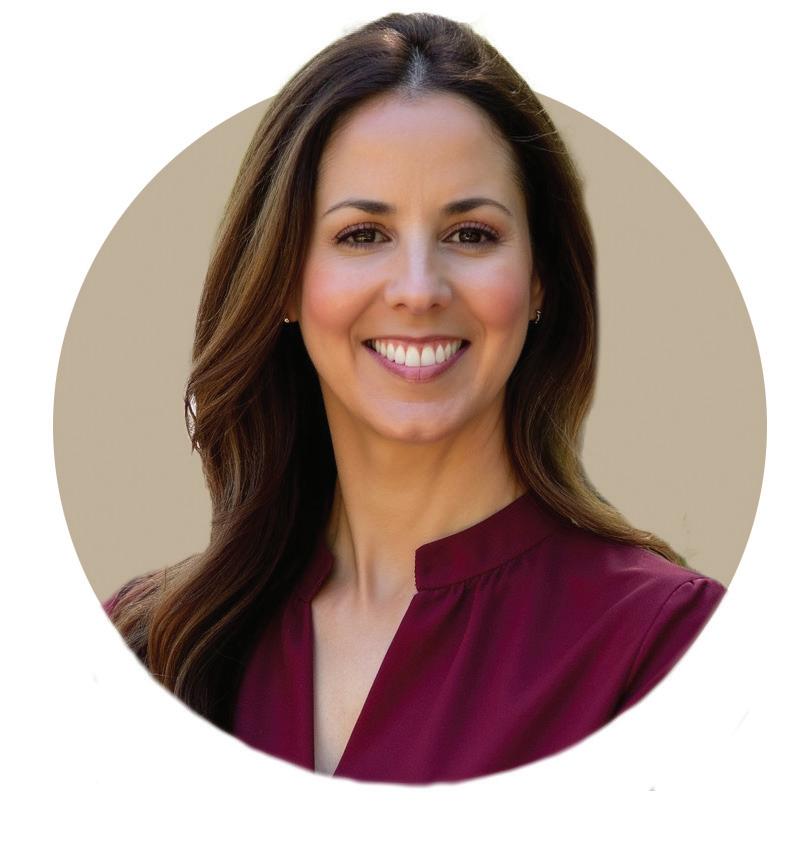
Marivi Bryant is the founder and president of HOME Agency, a people-first national creative, marketing, and digital firm partnering with mission-driven organizations and brands across the country. With nearly 25 years of experience spanning the Phoenix Suns, NASCAR, State Farm and Blue Cross Blue Shield, she believes the most effective marketing is rooted in empathy, community and real human connection. Bryant lives in Traverse City with her husband and two children. MARKETING PROMOTION & DESIGN
Empathy builds loyalty because people feel seen, not sold to. It shapes reputation because people share how a business made them feel, whether that is recommending
By Kierstin Gunsberg
It’s everywhere. Brochures in hotel lobbies, magazines in waiting rooms, piling up inside your inbox. And because it’s everywhere, good, genuine marketing that swoons its intended audience from the get-go is becoming more and more important to standing out against the fray. Meet some of the agencies helping northern Michigan businesses do just that behind the scenes.
Since opening in 2000, strategic marketing agency Idea Stream has built a roster of famil iar names including Miner’s North and Sonny’s Body Shop.
“When I look back, what stands out most is the lon gevity of those relationships,” said Idea Stream Founder and Owner Marsha Stratton. After celebrating 25 years in the northern Michigan marketing scene, watching campaigns play out in real time over the decades has been the high point for Stratton.


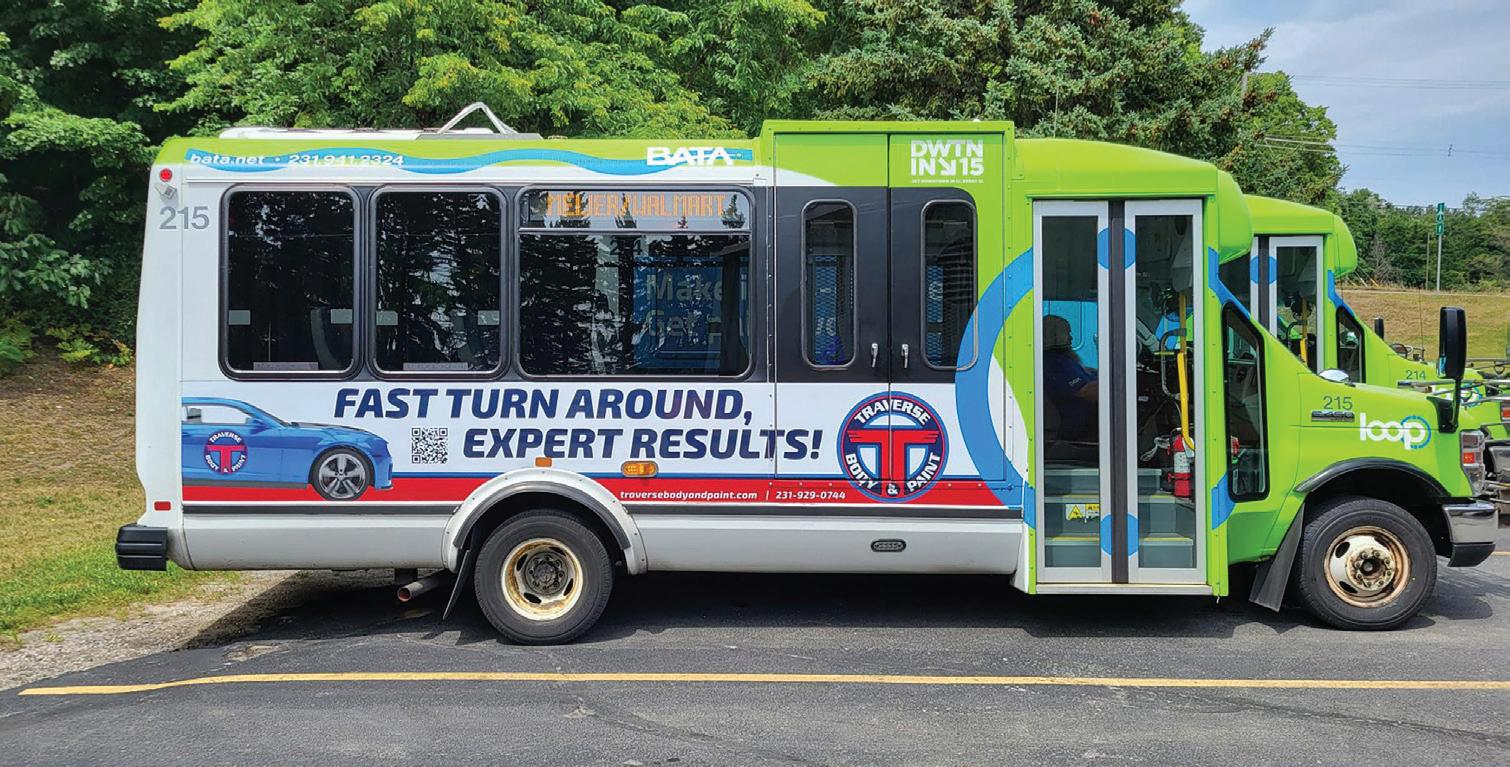
“It’s always fun when we get to do something big and visible, like BATA bus wraps or billboards, and see our client’s names all over town,” she said.

Where you’ve seen their work: Idea Stream’s portfolio runs the gamut from web design that showcases the work of area builders like Mac Custom Homes to highlighting Cobblestone Farm’s features for faraway brides and grooms. The agency has also designed labels and packaging for Herkner Farms’ fruit toppings and is the team behind photo and drone footage assets for Copper Ridge Surgery Center.
On the creative process: Keeping her team – which includes three other creatives –lean, and the overhead at her downtown Traverse City office low means “more of our clients’ budgets can go toward outbound marketing and media,” said Stratton.
Keeping things simple on the home front has also played a big part in allowing her team to channel their energies totally to client goals and challenges while developing strategies in which “no detail is ever overlooked.”
What’s rolling out: Grand Traverse State Bank, a brand-new community-based bank set to launch this quarter, collaborated with Idea Stream over the last year to build their brand from the ground up. It’s a full-scale project that’s involved everything from developing the bank’s internal marketing strategies to designing good old-fashioned signage.


Eric Campbell can’t quite put a number on how many projects he and creative partner Jacquie Auch tackled at their boutique design firm, Proof Positive, in 2025.
“We do dozens and dozens of projects throughout any given year,” said Campbell, whose retainer clients keep the pair busy with a steady stream of smaller work throughout the week.
Where you’ve seen their work: The team has developed everything from marketing materials for the Grand Traverse Conservation District and Austin Groesser’s TC startup, Big Dipper Cookie Co. This last year Campbell and Auch launched Prout Financial Design’s revamped website, complete with video assets that bring visitors straight into the office. They also wrapped up a full packaging redesign for Traverse City beverage brand Northwoods Soda (a.k.a. the original supplier of Wild Bill’s Root Beer).
Campbell and Auch also expanded their agricultural niche, adding Lake Ann’s Wanderwood Farmstead and Old Mission Peninsula’s Local Yokels Farm to their 2025 calendar, two detail-oriented projects that Campbell said show just how “sophisticated and savvy” farm branding can be, right down to the wallpaper he designed for the latter’s market bathrooms.
On their creative process: Regardless of scope, the pair’s process of brand building starts the same way: by digging into who a client is below the surface, then bringing their history and values to center in order to authentically appeal to their audience.
Once that’s established, it’s easier for Proof Positive to create anything from a squareone campaign to a light rebrand that feels totally genuine to their client’s brand identity – something businesses can’t afford to overlook, explains Campbell.
“Consumers are savvier than ever and are attracted to honesty and integrity in a brand,” he said. “That’s what sticks.”
What’s rolling out: Next up for Proof Positive is the continuation of a Brand Guidelines project for Oryana that kicked off last year, plus their annual update of outdoor-recreation focused visitors guides for the Gaylord Convention and Tourism Bureau and the Munising Visitor’s Bureau.



From brand consulting to full collateral rollouts, Audra Tompkins estimates that up to 90% of her marketing work over the past year was with northern Michigan organizations. She and business partner Jennifer Lake helm Brand Tonic, a boutique agency based in Traverse City’s SoFo neighborhood, where keeping contracts as local as possible allows them to offer clients more direct access – including meeting onsite to iron out campaign details. “That proximity allows us to stay connected,” said Tompkins.
Where you’ve seen their work: All over the packaging for Grocer’s Daughter chocolates, Copper Aesthetics metallic accented designs, Grand Traverse Pie Company’s modern brand identity, and Old Town Playhouse’s colorful, abstract logo. A large cut of Brand Tonic’s long-term clients are nonprofits. “Helping an organization evolve while staying true to who they are is one of our strengths,” said Tompkins, who along with Lake has added The Botanic Garden at Historic Barns Park, Leelanau Conservancy, Rotary Charities of Traverse City, and BATA to their portfolio over the years.
On their creative process: Keeping things close to home also helps the creatives manage audiences and expectations at the local level, while catching nuances out-of-area agencies might miss – from featuring the wild flora that pops up across The Botanic Garden in print materials, to incorporating the pine-green shades surrounding NMC into its brand identity, to knowing that a slice of Grand Traverse Pie Company’s cherry crumb is best captured in a state of messy imperfection across its visual collateral.
What’s rolling out: Lake and Tompkins have been collaborating with longtime client Interlochen Center for the Arts on fundraising campaign theming and an upcoming logo and design for the school’s centennial celebrations as they approach their 100th anniversary in 2028.

For the husband and wife duo behind Copper Bottom Creative Co., Emily and John Petrovich’s most recent work has centered around the demands of creating marketing plans, ad designs and website builds for national clients along with a growing slate of northern Michigan work — all while juggling school pick-ups for their two young children.
The company started out in Colorado in 2009 before moving to Elk Rapids. Collaborating with other working parents looking to scale their business is practically part of the Petrovich’s own business plan.
“It seems to have brought us connection with clients who are also family and community-focused,” Emily said.


Where you’ve seen their work: The latest update to Edson Farms’ website featuring a mix of graphics and photography that the Petroviches curated to complement a brand identity that they call both clean and fresh. Copper Bottom Creative is also behind the Elk Rapids DDA’s newest marketing push, designing print campaigns around the business owners and community members surrounding River Street.
“The goal was for people viewing the ads to see the real faces and families behind the businesses,” said Emily, adding that the process has “has offered an opportunity for connection within the community.”
On their creative process: The Petroviches say a big lesson they learned when they first launched was the importance of always carrying out ethical strategies in order to build trust with their clients, while helping those clients do the same with their own customers. With AI making its way into more workflows – sometimes showing up as unsettling and uncanny – that authentic approach is becoming even more important to their work.
What’s rolling out: Copper Bottom Creative Co. just signed on to a brand refresh and full website redesign for Elk Rapids Harbor Days. As Elk Rapids locals, Emily says this one feels extra special.

By Ross Boissoneau
Most nonprofit organizations have a particular challenge when it comes to marketing and public relations. Their budgets for such activities are typically small, even non-existent. Yet they have to find ways to get their messages out.
Northwestern Michigan College (NMC) instructor Caroline Schaefer-Hills wanted to provide her visual communications students with experiences outside the classroom. Although she’s been instructing for 26 years, she still works as a freelancer, which she says helps her stay current with the marketing and graphic design industries. So she decided to come up with a program that would provide that same kind of experience for her students.
She hit upon the idea of matching NMC students with nonprofits, providing both with something they needed.
“I wanted to work with nonprofits – get students real-world experience,” she said.
The college was supportive, so Schaefer-Hills reached out to some area nonprofits, and the program took off. Tom
Maynard, director of operations at the Great Lakes Children’s Museum, says his organization utilized the program to celebrate the organization’s 25th anniversary.
“It’s our 25th year of operation – we needed a special logo,” he said.
They presented us with an array of logos,” Maynard said.
The organization then determined which ones they liked and worked with the NMC students to craft the product they ultimately chose to use.
“We have some who are dual-enrolled [high school and college] and people in their 40s on their second career. It makes such a dynamic classroom.”
– Caroline Schaefer-Hills, instructor, NMC
Maynard says his organization has worked with numerous student-led programs over the years, and when NMC reached out they were happy to collaborate.
“I work with lots of student collaborations,” he said. While some are unsuccessful, he noted, “some are gold,”
This one was among the latter.
“These [students] did a lot of work.
“It was a good process of refinement,” he said.
The work went beyond just logos to include Instagram tags and other marketing and media materials. Maynard says he works with a number of educational institutions, and this was one of the most successful collaborations.
Amanda Harvey was one of the stu-
dents who worked on the Children’s Museum project. She said working as part of a team of several students required them to not only communicate clearly with the client but with one another. “In my group we had a woman in her late 30s who was married and had kids, some like me (around) 26, and kids of 19 or 20. You have to work together. It’s challenging but (it’s) like the real world.”
Harvey said they broke down the assignment so some students worked on the digital side, others printing. Their challenge was to come up with a design that was both scientific and whimsical, that didn’t depart too much from the organization’s pre-existing logo. She also worked on another project as part of a two-person team, creating materials for the college’s experiential learning program. “We got to make badges (and) logos,” she said. She said working on-campus with just one other student made the process fairly simple and straightforward.
The class project is free to the nonprof-
“It was genuinely inspiring to watch the students ask questions, take ownership of their work, and gain confidence.”
– Jill Wilson, Executive Director, Norte
its selected. It can include any of several elements, including logos, brochures, ad campaigns, posters, infographics, announcements, invitations, film, motion graphics, animations, exhibition design and television commercials. In short, most anything relating to visual communications, graphic design, branding, commercial art, illustration and film or web design.
Schaefer-Hills says the goal of this real-world assignment is to provide opportunities for students to interact with clients. It exposes them to the world outside NMC, including commercial printing and production, film and new media production, creative advertising, graphic design and packaging.
Norte Executive Director Jill Wilson said her organization embraced the program last year.
“We had the opportunity to work alongside Northwestern Michigan College Visual Arts students on logo development and a set of short, easy-to-understand videos focused on bicycle safety basics, like helmet fitting and bike fitting,” she said. She says the partnership functioned as a mini-internship experience, and it proved to be valuable for everyone involved.
“As a small nonprofit, Norte Youth Cycling is often operating at full capacity. Having motivated, up-and-coming young adults step in with fresh ideas, current skills and creative energy made a real difference,” she said.
Like Maynard, Wilson praises the process. She says the direct, ongoing communication between the organization and the students was invaluable.
“We met regularly in person, talked through goals and expectations, provided direct feedback, reviewed drafts and proofs, and saw the students thoughtfully make adjustments before delivering final versions,” she said. “The process felt collaborative, professional, and productive from start to finish. It was genuinely inspiring to watch the students ask ques-

tions, take ownership of their work, and gain confidence.”
Best of all, the final outcome provided Norte with materials that will have utility long past the duration of the program.
“The final logos and videos are tools we will use for years to come, and the experience reinforced how meaningful real-world learning partnerships can be,” said Wilson.
Schaefer-Hills says the size of the program – capped at 19 as that is the maximum number of the program’s Mac lab – allows her to easily oversee the projects and provide any assistance needed. It also allows the students to work both independently and in collaboration with other students as they work with clients who actually have needs in the marketplace, rather than just learning the tools and being confined to classroom presentations.
The mix of ages and experience in the class also more closely mirrors the work world outside the college.
“We have some who are dual-enrolled [high school and college] and people in their 40s on their second career. It makes such a dynamic classroom,” she said.
While the Great Lakes Children’s Museum benefited from the student’s efforts, Maynard knows firsthand how valuable the program is for the NMC students. That’s because he gleaned such experience in his own college days.
“I’ve been on the student side,” he said. “As a student I got to do something similar in my college days. Creating something in the real world gives you a great sense of pride.”
Better yet for him was the end result.
“I ended up getting a job” from the program, he noted.
Wilson agrees, saying such a partnership provides something both parties need and benefit from.
“We would gladly participate in this type of collaboration again and encourage more opportunities that connect NMC students with community-based organizations,” she said.












By Art Bukowski
The Grand Traverse region’s tourism economy has diversified over the years, but one thing that will (hopefully) never change is its reputation as the state’s premier location for conferences, events and group gatherings.
The TCBN checked in with some local event venues (this is not meant to be an exhaustive list, as the region is brimming with such facilities) to see what’s new for 2026.
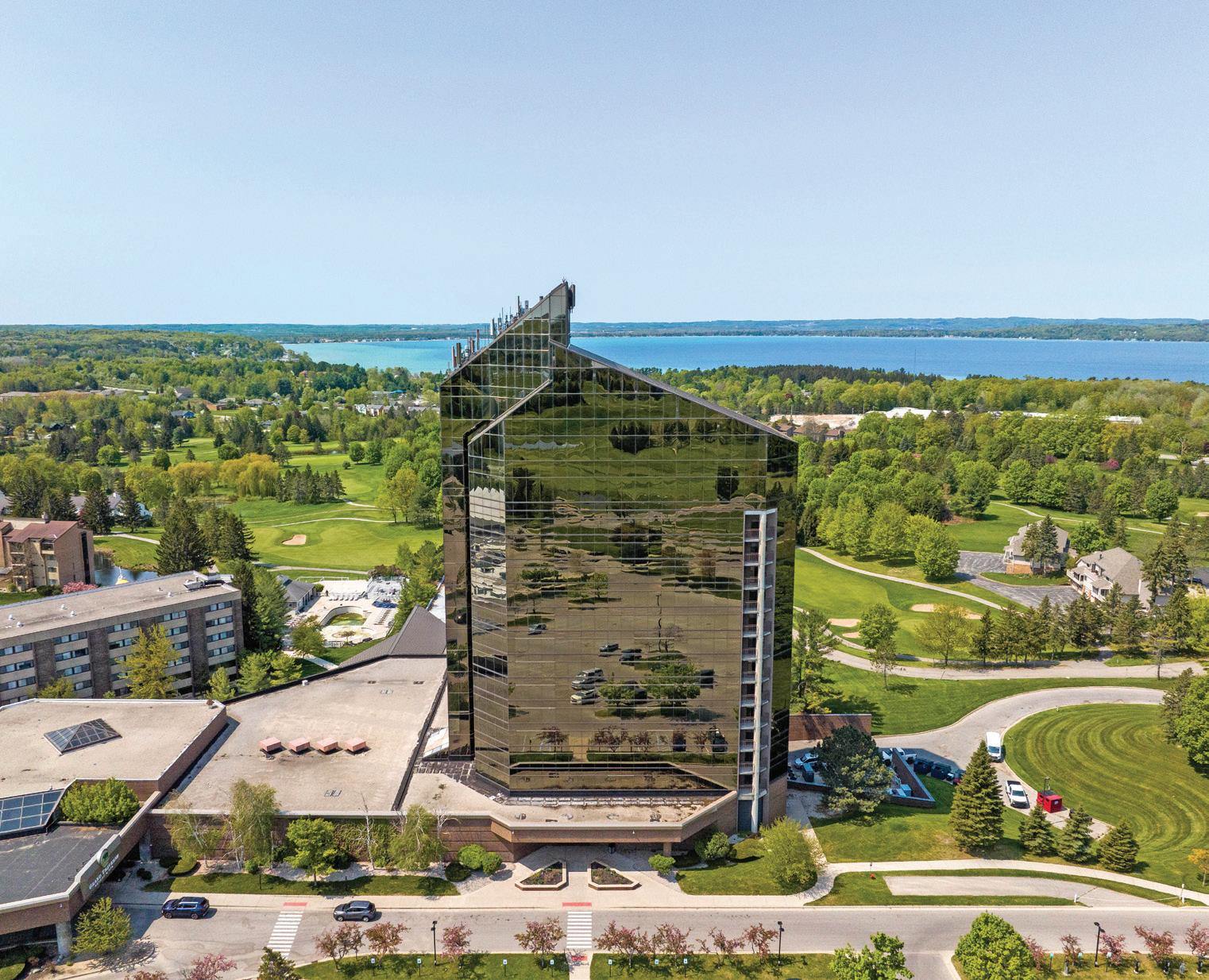
Katie Leonard, Director of Sales
What opportunities and challenges do you expect in the meetings/event space world in 2026?
In 2026, the meetings and events landscape continues to grow with a strong focus on destination-driven gatherings. Planners are looking for indoor-outdoor options, custom audio-visual and immersive team-building amenities. Our 86,500 square feet of adaptable space and scenic settings go beyond the traditional conference room. We always welcome the opportunity to showcase the beautiful region to our meeting planners, event hosts and conference attendees. We are seeing more groups want to engage in out of the boardroom activities and our 900-acre property, plus the Traverse City region, offer great access to relaxation, fun and unique networking.
What’s new or exciting in terms of your facilities, services or amenities this year?
This year we are thrilled to highlight enhancements across our property that elevate both business and leisure experiences. From new services and products at Spa Grand Traverse and updated weight machines and equipment in the Health Club, to refreshed offering in food and beverage and enhanced features on the golf course, these changes outside of the meeting rooms provide meaningful experiences before, during and after meetings.
Please name a few interesting groups you have booked for this year. We are excited to welcome back some of our favorite annual groups that leave a lasting impression on our property and the region, like the Special Olympics Michigan Winter Games. We are also thrilled to be this year’s host of the Pure Michigan Governor’s Conference on Tourism.
Brittney Primeau, Director of Communications

What opportunities and challenges do you expect in the meetings/event space world in 2026?
Meeting planners continue to face economic pressure and shorter lead times, but we have the resources to help them redefine the ROI of an event. Instead of doing more with less, we are focusing on doing more with meaning. Today’s attendees crave authenticity, wellness and environmental stewardship, which can be challenging in some regions, but plays perfectly in northern Michigan, specifically at Crystal Mountain. With unique outdoor venues for meetings and networking, we can help planners manage budget constraints without sacrificing quality and still deliver a successful meeting and memorable experience that attendees are expecting.
What’s new or exciting in terms of your facilities, services or amenities this year?
This past fall, Crystal Mountain installed two high-tech TrackMan golf simulators, offering a weather-proof venue for team building and continued networking. Also, as more guests seem to be traveling with their pets, we recently added more pet-friendly units to our lodging inventory. By providing premium cat and dog packages, our goal is to provide flexibility to all guests and provide a sense of home away from home.
Please name a few interesting groups you have booked for this year.
Crystal Mountain can accommodate a wide variety of groups throughout the year, from small, intimate weddings to large corporate events with hundreds of attendees. Crystal Mountain also hosts various community events, including the Beer and Brat Festival in May and the Total Archery Challenge in June, which each attract 2,000-plus people.
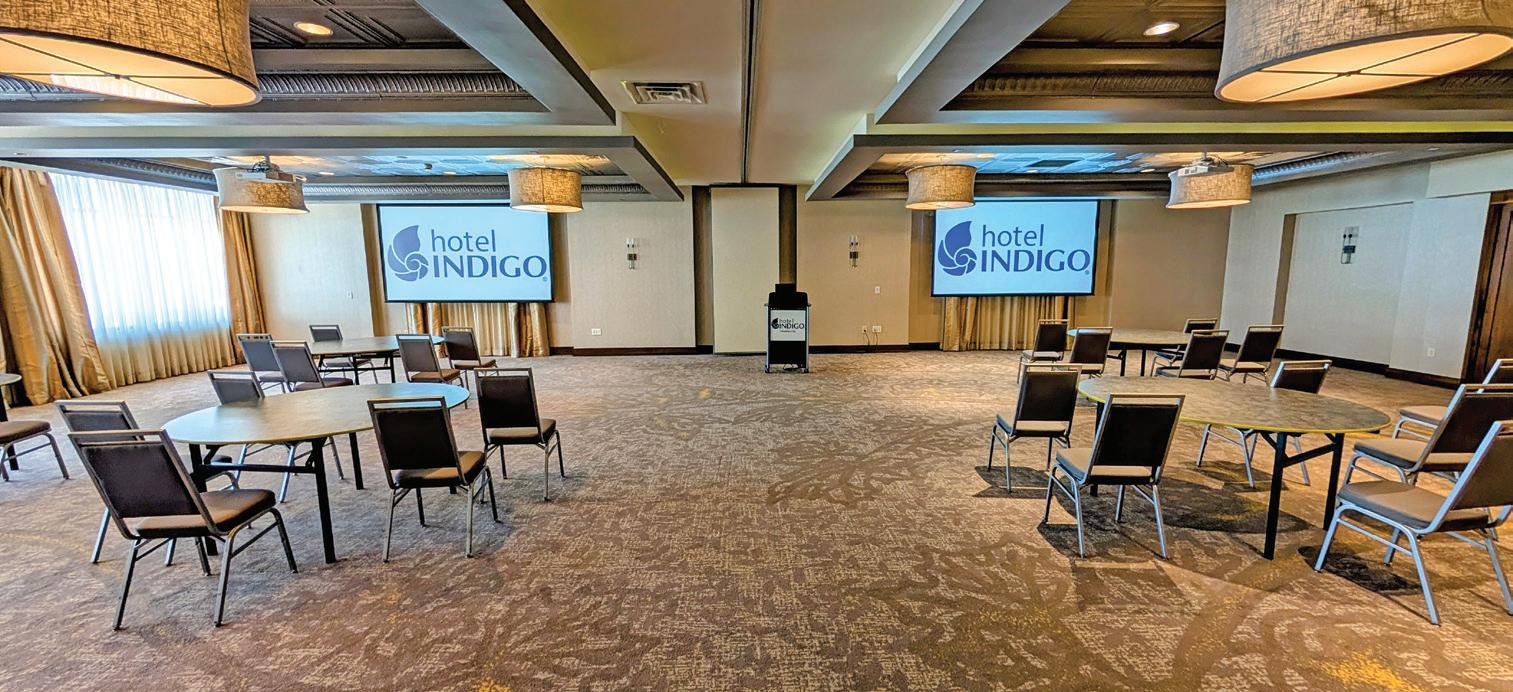
Lisa Monache, Area Director of Sales and Marketing
What opportunities and challenges do you expect in the meetings/event space world in 2026?
In terms of challenges, conferences and off-site meetings for government entities have been cancelled or severely limited due to budget cuts. The Traverse City lodging market has also become oversaturated, and this will become even more of an issue as additional properties come online in 2026 and 2027.
What’s new or exciting in terms of your facilities, services or amenities this year?
Hotel Indigo Traverse City has partnered with OncoreAV to install new audio/visual equipment in all of our function spaces. This includes wall-mounted monitors in each of our boardrooms and dual screen suspended projection and enhanced sound capabilities in the ballroom, which can be sectioned into Ballroom A and Ballroom B. Group presentations and training programs will benefit greatly from these improvements.
Please name a few interesting groups you have booked for this year.
A premier group travel company has booked a series of eight motorcoach trip stops in 2026, and we are already planning for their return with the same series in 2027. Our largest group will be an insurance company membership incentive outing in June for four nights, at 90 rooms per night.
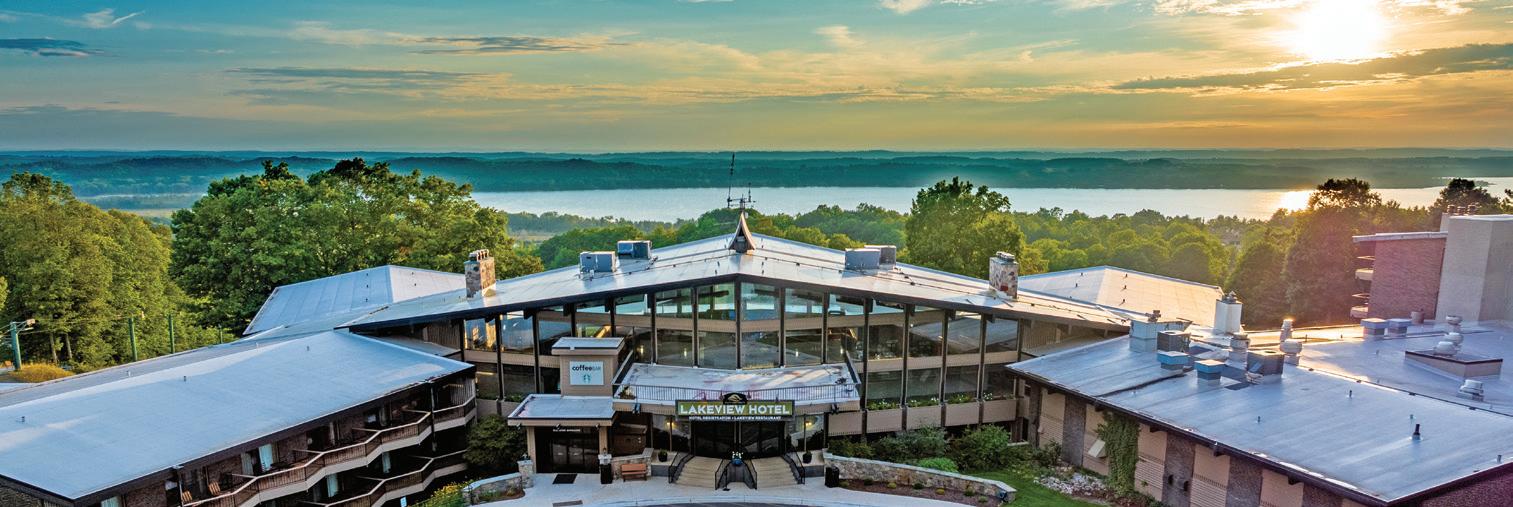
Tracey Ramsey, Vice President, Lodging and Sales
What opportunities and challenges do you expect in the meetings/event space world in 2026?
While our corporate and association meeting planners have clearly returned to in-person meetings, they are no longer booking as far in advance as they once did. Groups that previously booked five to 10 years out are now committing just one to two years ahead. This shift creates increased competition with our social markets, such as golf outings and weddings. All segments are now vying for accommodations, event space and tee times within a much shorter booking window, placing greater pressure on availability. As a result, sales managers must remain highly proactive and agile, staying on their booking toes to balance demand across all markets and maximize opportunities.
What’s new or exciting in terms of your facilities, services or amenities this year?
Staffing levels are stronger than they have been since the pandemic, allowing us to expand our food and beverage offerings. We’ve broadened our lunch options and introduced a new theme and menu at Cedar River’s River Bistro, featuring deli-style gourmet sandwiches, house-made pickle chips and our famous truffle fries. In addition, we’ve expanded and enhanced our outdoor seating options across patios, bonfire areas and poolside spaces in preparation for the spring and summer seasons.
Please name a few interesting groups you have booked for this year.
Shanty Creek Resort is proud to once again host the Michigan Open this June. In 2026, we also look forward to welcoming major events such as the Michigan Bear Hunters Association and the Michigan Association of Chiefs of Police, bringing nearly 500 and more than 300 attendees, respectively, to experience the resort.

What opportunities and challenges do you expect in the meetings/event space world in 2026?
Venue Blue’s biggest opportunity in the events world is that we are a blank slate venue. We have plenty of open space to convene and create any type of event you can imagine. The pavilion is 4,000 square feet while the lawn areas provide more space to spread out and enjoy the company of your guests! The biggest challenge for our clients we’ve seen has been the unknown costs of events. We have companies who have cut their event budgets and weddings that are sourcing decorations and attire from out of the country and are worried about impending tariffs.
What’s new or exciting in terms of your facilities, services or amenities this year?
2026 marks our third year open, and we are more booked than ever. We are continually excited to work with brides, grooms and all members of the community coming together on Grand Traverse Bay. Additionally, with the M-22 construction complete, we will have a brand new crossing signal to help all pedestrians get to Discovery Pier safely.
Please name a few interesting groups you have booked for this year.
This summer we are thrilled to host the Uncrewed Triple Challenge with Traverse Connect and the United States Coast Guard. While we host a few public events, with more in talks in coming years, most of our clients are celebrating a wedding celebration with us. Ceremonies, receptions, welcome parties and bridal showers, it’s an absolute photo op out on Discovery Pier!
What opportunities and challenges do you expect in the meetings/event space world in 2026?
In terms of opportunities, there is growing demand for experiential events that go beyond the ordinary, providing tailored experiences. There is also significant opportunity to capitalize on the shift toward regional and smaller scale meetings, offering personalized service and unique local touches that make each event feel special.
One of the biggest challenges will be navigating tighter budgets, which could affect the scale of events. Additionally, staying ahead of technological advances, such as AI-driven event platforms, will require ongoing investment and training. Lastly, the heightened focus on sustainability means venues must proactively adapt their operations to meet greener standards which, while rewarding, can also involve upfront costs and logistical hurdles.
Taryn Miracle, Director of Sales and Marketing

What’s new or exciting in terms of your facilities, services or amenities this year?
We are really excited about our new national and local partnerships. We have been working with Moet + Chandon, Veuve Clicquot on a partnership, so you’ll see several experiences throughout the year with that partnership, including our upcoming Veuve Cozy Cabana. Locally, we also recently partnered with Brys Estate Vineyard & Winery. They are featured in our new Winter in the Vines package and will be featured in our spring and summer experiences. Both also offer plenty of opportunity for our group team building program.
Please name a few interesting groups you have booked for this year.
We are grateful and proud to be home for the Detroit Red Wings during their time in Traverse City every September for training camp. Additionally, we have booked our first hotel buyout for a company’s incentive trip which will bring nearly 200 people on property.
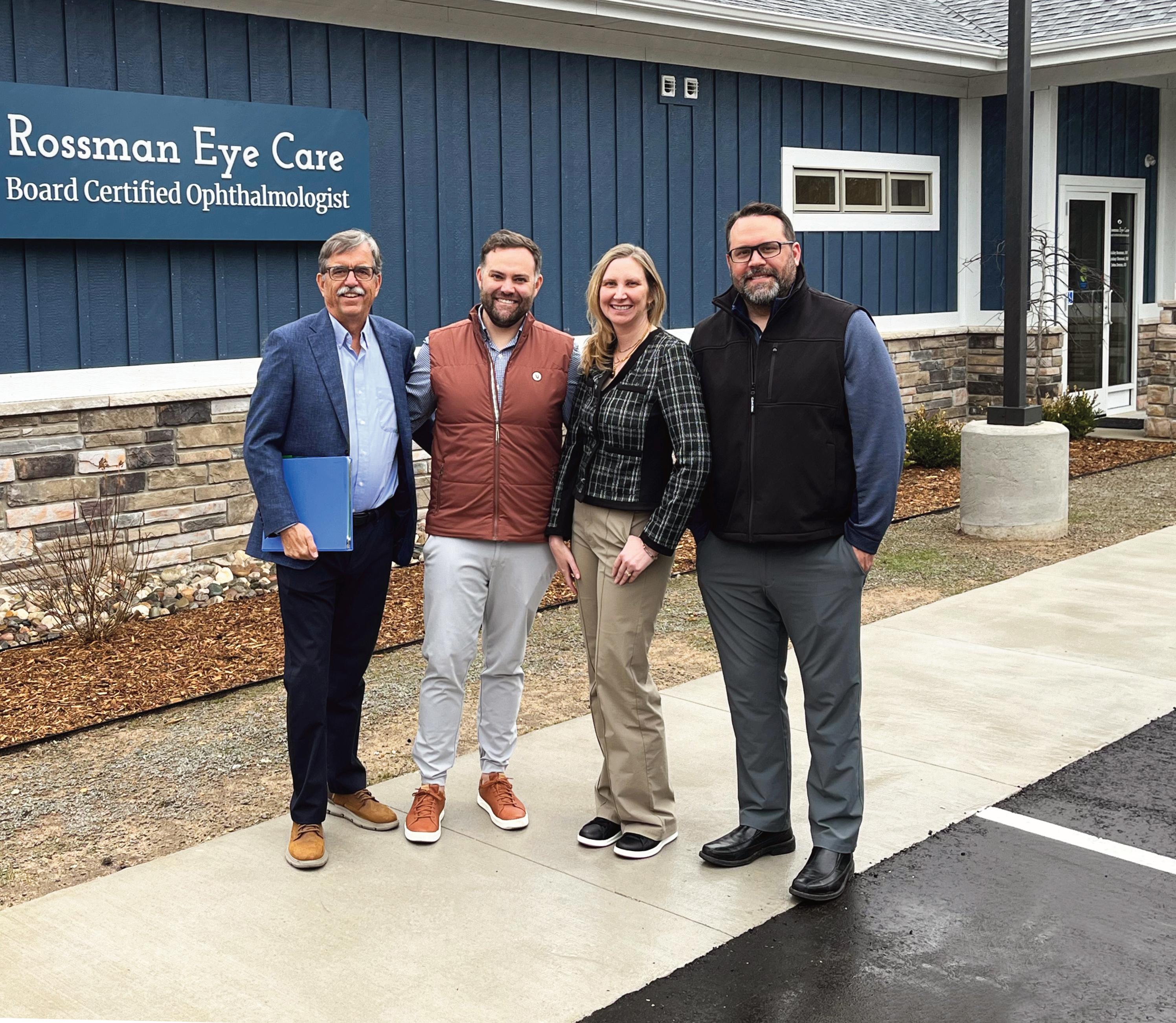
Design and build a state-of-the-art ophthalmology practice focused on efficiency, patient comfort and future growth.
Burdco delivered exactly what we needed— an expanded, well-planned space that enhances patient flow and satisfaction. Their expertise and attention to detail made decision-making easy, and their commitment to timelines was incredible— completing our build within days of the original projection. We highly recommend Burdco for their professionalism, accuracy and ability to turn vision into reality.
Jenelle Whipple-Keller, Interim Director of Sales and Catering
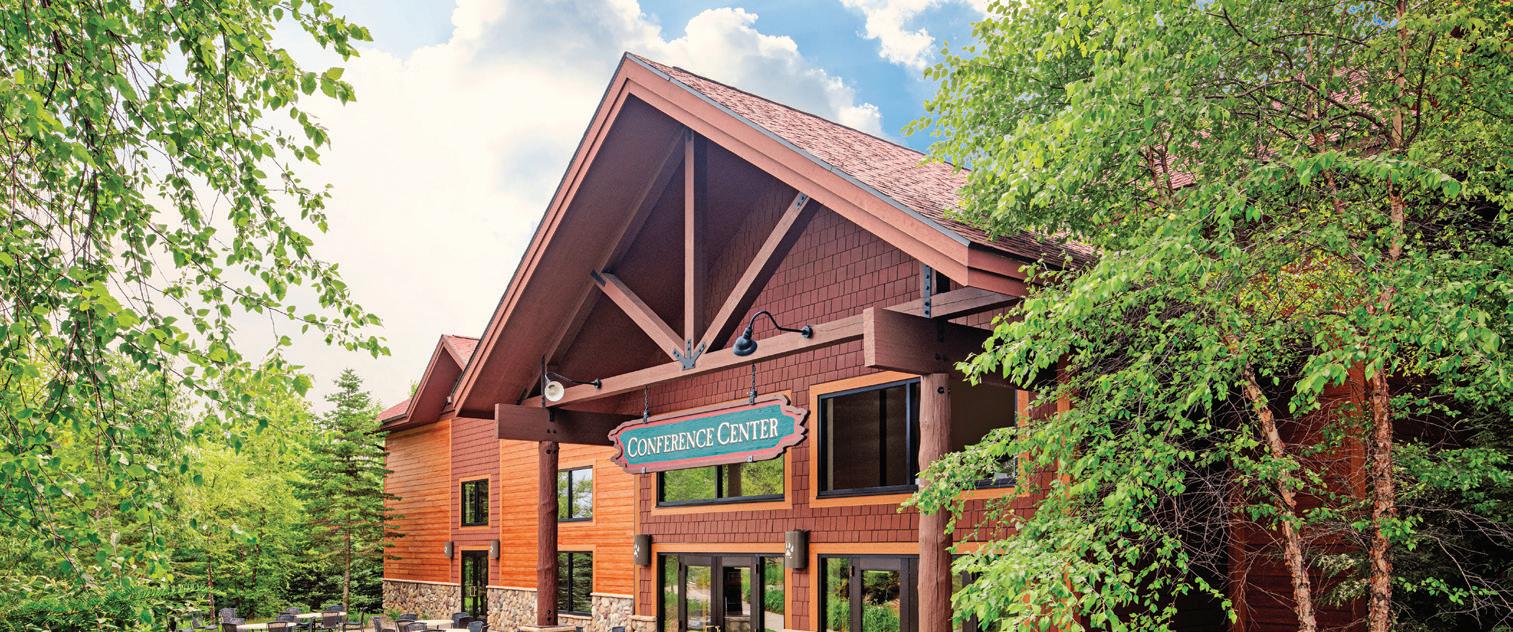
What opportunities and challenges do you expect in the meetings/event space world in 2026?
Economic pressures will be one of the most defining challenges for the meetings and events industry in 2026. Rising labor, food and beverage, transportation and technology costs continue to strain budgets, while many organizations remain cautious with spending. Planners are being asked to deliver high-quality, engaging experiences with tighter financial constraints and increased scrutiny around return on investment.
At the same time, this pressure creates opportunity – driving more strategic sourcing, shorter booking windows, flexible contracting and creative program design. Success will depend on strong partnerships, transparent pricing and the ability to adapt offerings while still delivering meaningful, impactful events.
What’s new or exciting in terms of your facilities, services or amenities this year?
Recently an upgrade of our A/V system was completed making wireless A/V options available in all meeting spaces. Along with hotel renovations of guest suites, lobby and water park facilities, there has never been a better time to host an event at Great Wolf Lodge. Booking a summer event? Make sure and ask about our semi-private pool deck on Thunder Bay for an exclusive outdoor meeting by the pool. Culinary is heating up with Executive Chef James Walker leading the pack to new heights in 2026.
Please name a few interesting groups you have booked for this year.
This year, we’ve seen strong momentum from both social and educational groups, which continue to be a great fit for Great Wolf Lodge. We’ve hosted a variety of school-related programs, youth organizations and educational associations that value our family-friendly environment, ample meeting space and built-in recreation.
On the social side, multi-generational reunions, faith-based gatherings and affinity groups have been especially impactful, as they benefit from our all-under-one-roof experience. Some of our largest groups this year have included educational conferences and youth-focused events welcoming many attendees, combining learning, connection and fun in one destination.
What opportunities and challenges do you expect in the meetings/event space world in 2026?
The biggest concern facing the hospitality industry in 2026 is food cost. Food prices were consistently on the rise throughout most of 2025 and they are continuing to trend that direction. We have seen sharp increases in the past with beef and seafood, but rising inflation seems to be affecting everything we order, especially produce.
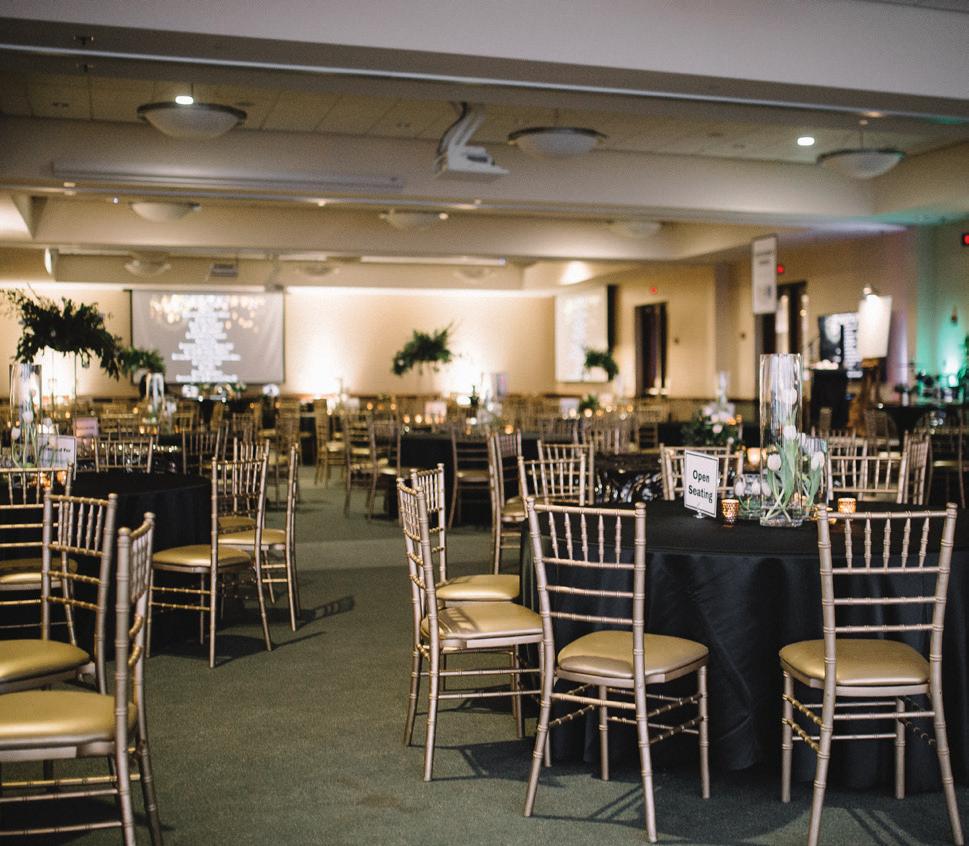
Chad Schenkelberger, Director of Food Services
Chelsea Harland, Sales and Social Media Manager


What’s new or exciting in terms of your facilities, services or amenities this year?
The Hagerty Center just completed an upgrade of the entire audio/visual system. We now feature six 100-inch LED TVs, two 10-by-6-foot portable LED video walls and upgraded speakers throughout the ballroom to give our guests a completely immersive experience.
Please name a few interesting groups you have booked for this year.
The Hagerty Center is proud to be the home in 2026 for the Lakebed Conference and the [Northwestern Michigan College] 75th Anniversary celebration. The largest event we will host this year is the Great Lakes Culinary Institute’s signature event, A Taste of Success.




What opportunities and challenges do you expect in the meetings/event space world in 2026?
events. Attendees are seeking gatherings that feel meaningful and memorable, with cre ative use of space and thoughtful programming. Hybrid events also remain an important tool, allowing organizations to extend their reach beyond in-person attendance. One of the ongoing challenges in our region is workforce-related: recruiting and retaining skilled staff amid the rising cost of living in Traverse City.
What’s new or exciting in terms of your facilities, services, or amenities this year?
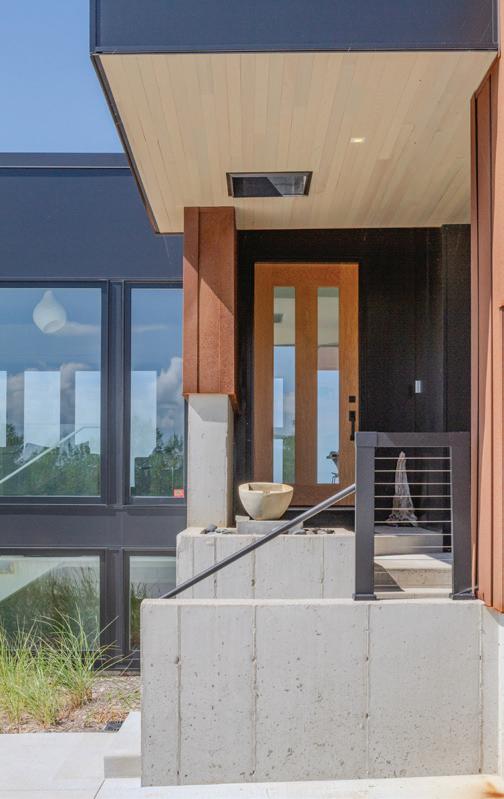

Please name a few interesting groups you have booked for this year.
welcoming additional winter performances by their string quartet. We’re also hosting three outdoor craft and vendor shows on the historic front lawn, bringing in hundreds of vendors and attendees.
This year, we’re excited to enhance the guest experience on our historic walking tours with upgraded wireless headset technology. These new headsets allow us to comfort ably accommodate larger tour groups while ensuring every participant can hear clearly, regardless of group size or surrounding activity. The improved audio quality creates a more immersive and engaging experience, allowing guides to share stories and historical details without raising their voices or competing with background noise. This upgrade not only improves accessibility and comfort for guests, but also gives us greater flexibili ty to offer larger tours in conjunction with meetings on property.

At the same time, this pressure creates opportunity – driving more strategic sourcing, shorter booking windows, flexible contracting and creative program design. Success will
on Thunder Bay for an exclusive outdoor meeting by the pool. Culinary is heating up with Executive Chef James Walker leading the pack to new heights in 2026.
Please name a few interesting groups you have booked for this year.
This year, we’ve seen strong momentum from both social and educational groups, which continue to be a great fit for Great Wolf Lodge. We’ve hosted a variety of school-related programs, youth organizations and educational associations that value our family-friendly environment, ample meeting space and built-in recreation.


groups have been especially impactful, as they benefit from our all-under-one-roof expe rience. Some of our largest groups this year have included educational conferences and youth-focused events welcoming many attendees, combining learning, connection and fun in one destination.

What opportunities and challenges do you expect in the meetings/event space world in 2026?
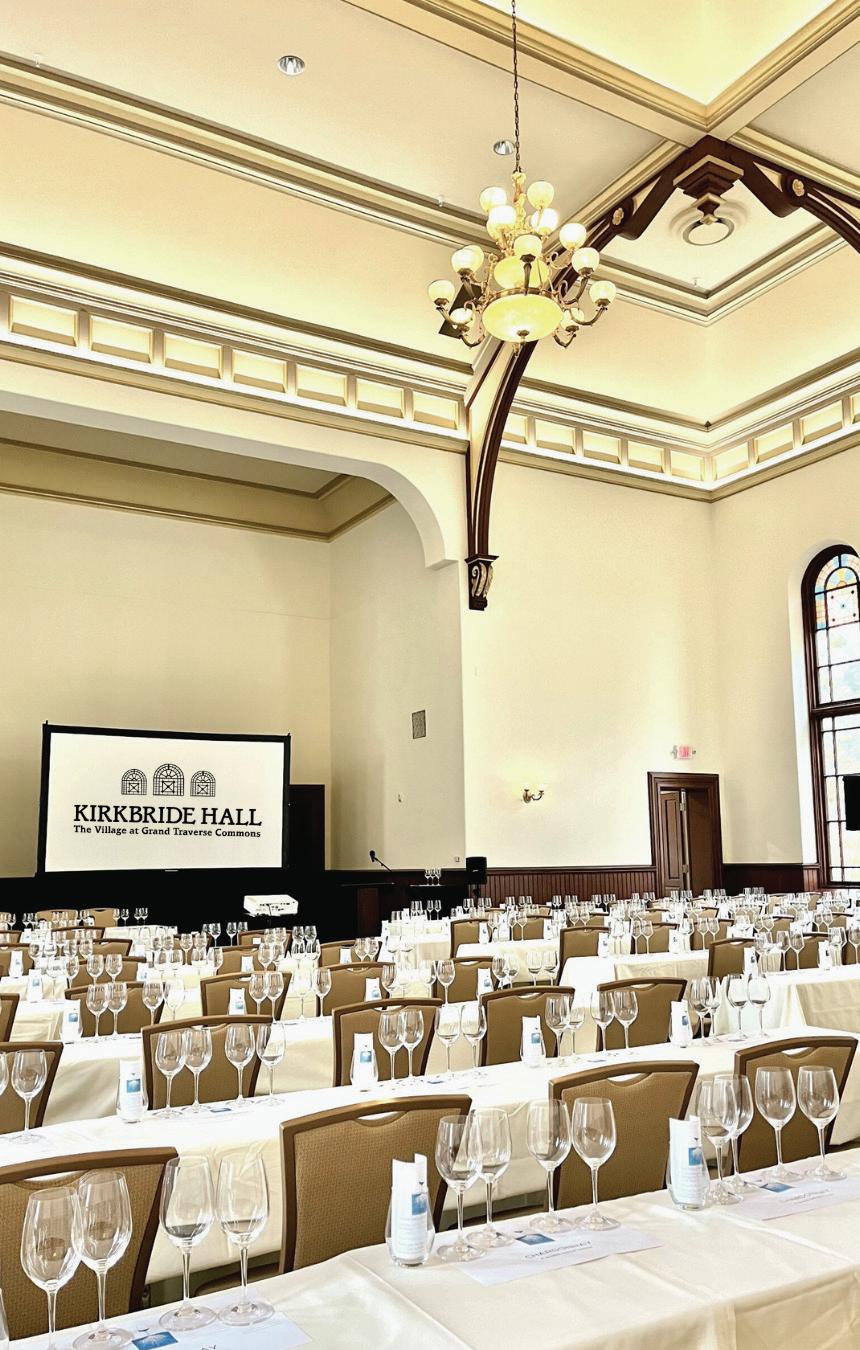
Looking ahead to 2026, we see continued demand for immersive, experience-driven events. Attendees are seeking gatherings that feel meaningful and memorable, with creative use of space and thoughtful programming. Hybrid events also remain an important tool, allowing organizations to extend their reach beyond in-person attendance. One of the ongoing challenges in our region is workforce-related: recruiting and retaining skilled staff amid the rising cost of living in Traverse City.
What’s new or exciting in terms of your facilities, services, or amenities this year?
This year, we’re excited to enhance the guest experience on our historic walking tours with upgraded wireless headset technology. These new headsets allow us to comfortably accommodate larger tour groups while ensuring every participant can hear clearly, regardless of group size or surrounding activity. The improved audio quality creates a more immersive and engaging experience, allowing guides to share stories and historical details without raising their voices or competing with background noise. This upgrade not only improves accessibility and comfort for guests, but also gives us greater flexibility to offer larger tours in conjunction with meetings on property.
Please name a few interesting groups you have booked for this year.
We’re delighted to continue our partnership with the Candlelight Concert series, welcoming additional winter performances by their string quartet. We’re also hosting three outdoor craft and vendor shows on the historic front lawn, bringing in hundreds of vendors and attendees.
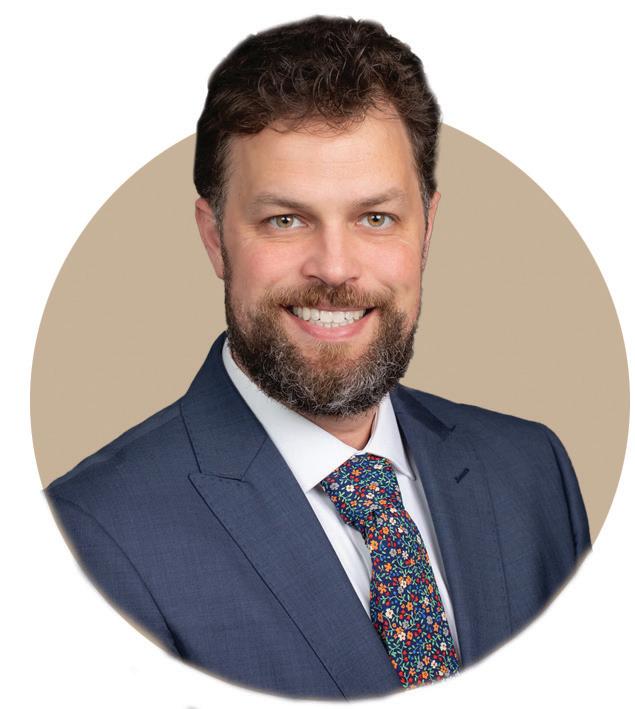
By Merek Roman, columnist
Last September, I stood in front of Traverse City Mayor Amy Shamroe with just two and a half minutes to evaluate the speech she’d just given to our Cherry Capital Toastmasters club. My role that evening: evaluator. The meeting wasn’t typical; we’d invited the mayor and three other local candidates preparing for the November 2025 election to speak and receive honest, constructive feedback in a fun, completely non-partisan setting.
Mayor Shamroe’s three-minute speech, “What Exactly Does a Mayor Do?” was packed with valuable information. But after six years in Toastmasters, I’ve learned that great content is only half the battle. How you deliver it – your pace, your voice, your presence at the lectern – can make or break the message.
Our Traverse City Toastmasters club, one of the oldest in Michigan, has been meeting every Thursday since the 1980s. In one fast-paced, supportive hour each week, lawyers, engineers, salespeople, retirees, and everyday residents step up to speak, evaluate, time speeches, count “ahs” and “ums,” tell jokes, or simply cheer each other on. Why do they bother? Because whether you’re running for office, leading a nonprofit, or just want to feel less awkward at the next family reunion, clear communication changes everything.
New members start with an icebreaker speech. Some are funny (“I once froze solid and had to be escorted off stage”), others vulnerable (“Group settings make me want to disappear”), and many are simply honest (“I just want to speak without my heart pounding out of my chest”).
After the icebreaker, members choose a learning “pathway,” essentially a personalized curriculum, and set specific goals. Every week we practice, get kind but direct feedback, and leave a little braver.
“Seven-minute speeches are my sweet spot,” shared one of our members, Dana Cowell. “I pick something interesting, write it out, practice in front of the mirror a few times, try (and fail) to memorize it, then walk to the lectern on Thursday morning and give it my best shot. I’m

always nervous, but the triumph when I’m done is real. Then comes the evaluation: someone tells me if I rushed, if I hid behind the lectern or my notes, if my voice stayed monotone, or if I actually connected. That feedback is gold.”
However, prepared speeches are only part of what we do. Table Topics – our impromptu speaking exercise – might be my favorite part of meeting. Someone asks a random question and attendees have one to two minutes to answer on the spot. No notes, no preparation, just quick thinking and courage. One memorable session had us playing “sell this object,” where we grabbed random odds and ends and pitched them for whatever price we could justify. I found myself holding a battered tin candle and, without missing a beat, claimed it was used by Indiana Jones in the Temple of Doom. (It sold.)
These exercises build real-world skills: thinking on your feet in a client meeting, answering unexpected questions at a job interview, or handling a curveball from a journalist. One of our members, Matthew French, honed his Table Topics skills so well that he advanced to the quarterfinals of Toastmasters International’s Table Topics contest, competing against speakers from around the world.
That’s exactly what we gave Mayor Shamroe. My evaluation was gentle but specific: “Slow down. Breathe. Let the
Local club helps public speakers tackle their fears
words land.” We praised her strong content and confident presence, then offered concrete ways to make an already good speech great. Toastmasters evaluations are never harsh or presumptuous; they’re encouraging, precise, and always focused on delivery, never personal politics.
These exercises build real-world skills: thinking on your feet in a client meeting, answering unexpected questions at a job interview, or handling a curveball from a journalist.
Every prepared speech at Toastmasters follows a clear structure:
• The speaker states their time goal (usually 5–7 minutes).
• They share exactly what skill they’re working on (“Evaluate my eye contact” or “Tell me if I’m speaking too quickly”).
• They deliver the speech.
• The evaluator answers: Did they meet their own goal? Did they keep the audience engaged? Did they use the stage, vary their voice, and avoid getting glued to the lectern? Importantly, evaluators never critique the speaker’s opinions or beliefs, only how effectively the message came across. That’s what makes the feedback safe, useful, and genuinely non-partisan.
Mayor Shamroe and the other candidates didn’t have to spend their early Thursday morning with 25 Toastmasters. They chose to because they know something vital: if you can’t clearly explain your vision to a room of friendly strangers, it’s going to be a lot harder in a packed, contentious city commission meeting.
That’s why we created “Let Cherry Capital Toastmasters Help,” a fun way to give local leaders – elected officials, candidates, nonprofit directors – a lowstakes place to practice and improve. We meet Thursdays at 7:30 a.m. at Horizon Books on Front Street. Visitors and future leaders are always welcome!
Merek Roman is a Traverse City resident, president of Cherry Capital Toastmasters, and Area 20 Director for Toastmasters District 62. Learn more at cherrycapitaltoastmasters.org or email merekroman@gmail.com
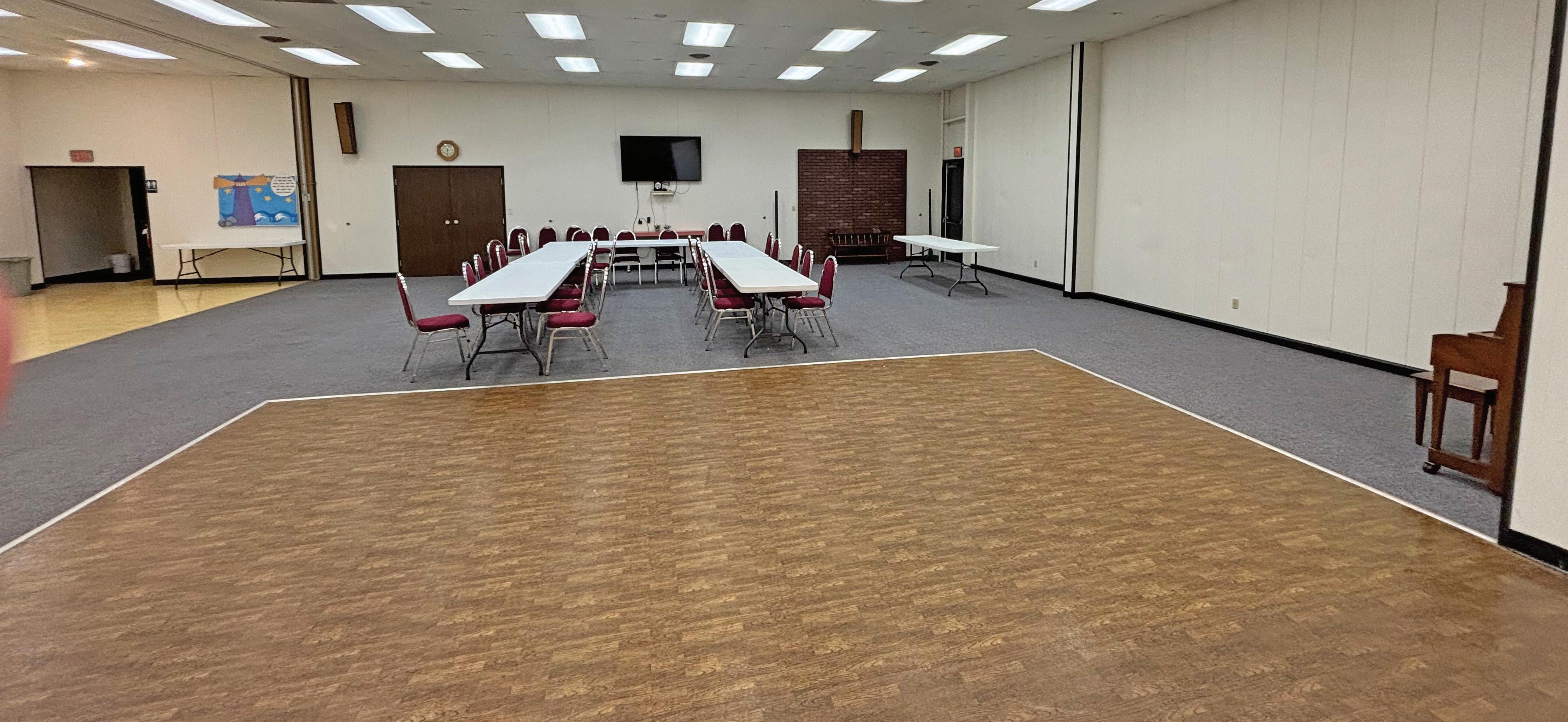
By Craig Manning
According to Fidelity, the average American wedding in 2025 cost $36,000, up a whopping $3,000 from just one year earlier.
Local wedding planner and officiant Samantha Pomranky wants to turn the trend around, at least for couples getting married in Traverse City, and she has a valuable new partner to help her do it. Starting this wedding season, Pomranky is leading a brand-new events initiative at the Traverse City Masonic Lodge.
Pomranky started her career in the nonprofit sector downstate, but pivoted to event planning after moving to Traverse City in 2000. She served for years as the in-house event planner at Scott’s Harbor Grill (now West End Tavern), and added “wedding officiant” to her business card in 2021. Along the way, she watched northern Michigan evolve from a best-kept secret to a widely known wedding destination – and saw costs skyrocket as a result.
“I have worked in all sorts of venues and facilities all around town and throughout the state of Michigan, from backyards to Airbnbs all the way up to the Grand Hotel,” Pomranky said. “I’ve seen the gamut of event planning, and I’ve seen how it’s become more and more expensive and exclusive – to the point where wedding planning went from being a really fun and exciting thing for couples to something really anxiety inducing and overwhelming. How I’d like to approach the industry is to be someone that makes it fun again.”
A serendipitous conversation
That opportunity materialized out of the blue last summer, when Pomranky
struck up a conversation with her neighbor, Paul Johnson. Speaking to Johnson, Pomranky opined about the unaffordability of the local wedding industry, and about her desire to find a “home base” venue where she could offer an alternative type of experience. Johnson, it turned out, had a similar mindset – and, more importantly, ties to a venue that happened to be looking for a new events pro.
A long-time member (and the current senior deacon) of Traverse City’s Masonic Lodge #222 – located at 13360 South West Bay Shore Dr. – Johnson says he and his fellow masons had been talking for some time about how to get more foot traffic into their space. Changing times have meant the temple wasn’t as much of a community centerpiece as it was 30 or 40 years ago, and the local freemasons were looking to build awareness, community connection and perhaps even membership. Some extra cash flow to bolster the organization’s philanthropic efforts wouldn’t go amiss, either.
Shortly after making the connection with Pomranky, Johnson and his fellow masons decided to bring her on board and reestablish Masonic Lodge #222 as an event space. That relaunch will happen this year, and while Johnson and Pomranky say they’ll spend this first season “feeling out” the local market to see where their offering fits, both agree affordability is going to be at the crux of the project.
“My grandson is getting married in South Haven in July, and he’s said to me, ‘Grandpa, I’ve got $80,000 worth of school debt. My down payment for a house now is going to go to pay for a wedding in a venue. How do I start life? How do I buy a house?’” Johnson said. “And so, this is a chance to let the people have
a venue and an awesome person to help them, and do it affordably.”
Pomransky concurs.
“This facility completely fits my vibe of wanting to make great memories that don’t set folks back for the first 10 years of their marriage. It shouldn’t cost the down payment on a house to rent a facility for one night, just so everybody can remember your beginning. Those memories can be created with that level of quality, without that level of anxiety,” she said.
Johnson says the minimum rental cost for the masonic temple space will be “around $3,000” for one night, depending on factors like the time of year, what parts of the facility clients hope to use, and add-on services. For instance, clients can add on a rental of the Kaiser House, an adjacent residence on the property that sleeps up to 20 people, for an extra cost. On the other hand, party hosts could choose to do their own post-event cleanup to defray costs.
Beyond the venue and the planning help from Pomranky, people renting the space can also choose to use everything the temple has to offer – its tables, chairs, plates, glasses, flatware, linens, and kitchen space – or to opt for other options.
“If you want to go fancier, you absolutely can, but if you don’t, all that stuff is there,” Pomranky said.
Masonic Lodge #222 has 80 on-site parking spots and capacity in its main hall for 140 people. The hall has a built-in dance floor space and an adjoining kitchen, which event hosts (or their catering teams) can use. The venue will have no on-site food and beverage team, but
Pomranky says she has a long list of local vendor contacts for food, drink, music, flowers, photography and more, and is happy to help couples coordinate those outside pieces.
Though the Masonic Lodge has done next to no actual advertising for their events relaunch, Pomranky says her phone is starting to ring off the hook – suggesting that word is getting out.
“It’s getting pretty crazy,” she said. “I’ve found that, between Thanksgiving, Christmas and New Year, probably 80% of the engagements happen. And then everybody says, ‘Okay, after New Year’s, we’re going to start planning.’ So, we’re right in that period right now, where the girls have just gotten engaged and they have their dream venues in mind. In northern Michigan, everybody grows up saying, ‘I’m going to get married at the Grand Hotel,’ or maybe, ‘I’m going to get married at the Resort.’ But what happens is they start poking around, and they’re figuring out that those places are booked through 2027 already, or they are out of the price range. And then they call us.”
John Hansen, the lodge education officer for Masonic Lodge #222 – and a major Freemason history buff – is excited about the growing word-of-mouth, which he says is the realization of a long-held dream for this particular property. The local chapter dates back to 1866, but the current facility on West Bay Shore Drive didn’t open its doors until 1977.
“[Hosting more events] was part of the intention when they moved out here, having it all on one floor and easily ac-
cessible,” Hansen said. “We actually paid for this building doing roasted chicken dinners for the community through the ‘80s, and we used to really pack the hall. That idea of community dinners just isn’t as popular anymore, but we’ve always tried to open this space up and fill it. The problem we find, as a volunteer organization, is burnout. You’d see patterns where one or two people would get really into event planning for a couple of years, and we’d have a lot of success, and then it would fall by the wayside again.”
Having a person on staff who is specifically dedicated to event planning, Hansen hopes, will help avoid those ebbs and flows in the future.
For Craig Maison, who currently serves as chaplain for Masonic Lodge #222, reinvigorating the temple as an event space has numerous benefits. A one-time president of the Michigan State Association of Masonic High Twelve Clubs, Maison sees events and foot traffic – and the visibility and awareness they generate – as key to preserving Freemasonry into the future.
As one of the oldest fraternal organizations in the world, Freemasonry’s impact is knitted into the fabric of history.
On a national scale, some of the most famous masons in history were also Founding Fathers, including inaugural president George Washington and multiple signers of the Declaration of the Independence, like Benjamin Franklin
and John Hancock.
Locally, masons have been mayors, business leaders, noted philanthropists and more. You’ll recognize many of their names from local streets, buildings or parks, including John T. Beadle, Herbert Montague, Oscar Carver, Clarence Greilick, Milton Bryant, Adophus LaFranier, William Rennie, Hugh Murchie, Frank Stulen and Les Biederman.
Despite that legacy, Maison says the local Freemason chapters have struggled to attract younger members as the tempo and responsibilities of modern life have evolved. He’s hopeful that getting more people through the door of the temple – particularly in those younger demographics – will spur more interest in the organization as a whole.
The charity factor
The other benefit of regularly renting out the lodge? Generating more cash. The three core values of Freemasonry are brotherly love (“caring for each other and our communities”), relief (“helping and assisting those in distress”) and truth (“using knowledge and understanding to improve ourselves, our families, and our communities”), and the intersection of those values is philanthropy.
“This is probably a unique situation in that, when you’re having a wedding here, you’re not profiting someone,” Hansen
“It shouldn’t cost the down payment on a house to rent a facility for one night, just so everybody can remember your beginning. Those memories can be created with that level of quality, without that level of anxiety.”
– Samantha Pomranky, Wedding Planner/Officient
explained. “That money is going to go back into your community through our charities. Our number one goal is philanthropy.”
Johnson agrees.
“We do have a fund for the building. If the roof blows off, we need enough money to put a new roof on, or we’re out of business,” Johnson said. “But most of the money will go back into the community.”
As for what those charitable causes actually look like, Maison says they can range from established nonprofits (Project Feed the Kids, Goodwill Industries, the Salvation Army), to scholarships for local students, to less formal things like donating mats for the local high school
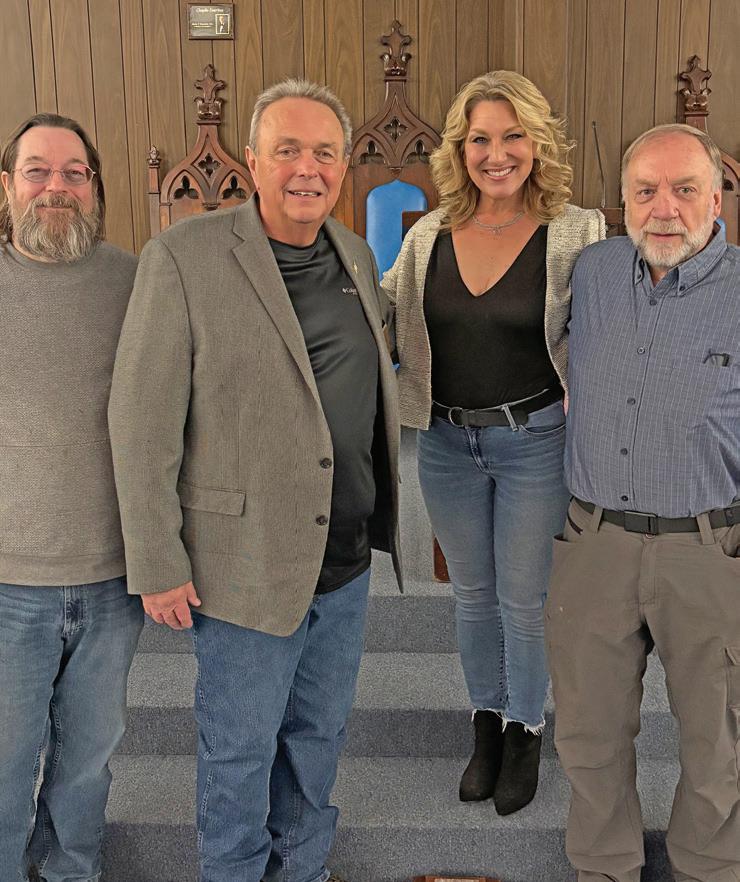
wrestling teams, sponsoring animals at the county fair, or covering costs for kids who need to travel to receive medical care.
One charity particularly near and dear to Maison’s heart is Camp Quality, a camp for kids with cancer.
“We’ll have 170-some people here [at the lodge] for a sock hop, and a lot of the kids, they’re wearing wigs because they’ve gone through chemo,” Maison said of the masons’ work with Camp Quality. “We have that night every year, where we get a DJ and do a dance party, and it’s just this really exciting thing to bring the families together. And it’s meaningful, because a lot of those kids, they don’t make it to the next year.”
“Since my shoulder surgery, I can walk my dog with confidence.”
After two shoulder replacements with Munson Orthopedic Institute, Traverse City resident Marsha W. is walking her dog, back to yoga, and sleeping on her side again—all without pain.
Watch her journey from pain to full recovery and get started on your own at: munsonhealthcare.org/MOI




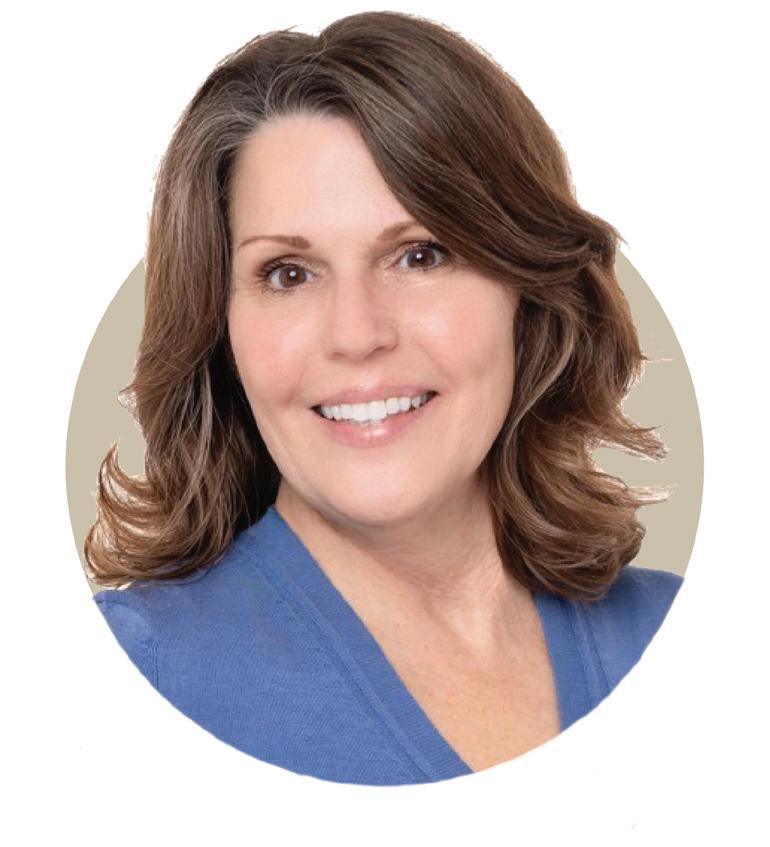
By Andi Dolan, columnist
Owning a small business is a choice made before sunrise and reaffirmed long after closing. You sign your name first, worry second and conquer problems as they surface.
In northern Michigan, where businesses are often family-built, seasonally tested and deeply tied to the community, ownership is personal. You don’t just run a business. You carry the risk, the responsibility and the reputation.
Behind the scenes, you are navigating the nonstop roundabout of tax law, benefit design and employment regulation. None of this moves slowly. Every so often, those forces collide in the one place that feels it immediately: payroll. That collision isn’t poor management. It is the operating environment you live in every day.
Section 125 is the framework that keeps those forces from crashing into one another. When it is designed and administered correctly, employees keep more of their earnings, and employers reduce payroll tax exposure legally, efficiently and without gimmicks. When it is misunderstood, ignored or left on autopilot, it creates compliance gaps, unnecessary cost and risk that may not surface until someone starts asking questions.
This guide explains what Section 125 actually is, how it works in the real world and why understanding it gives small business owners a measurable advantage.
It is a provision of the Internal Revenue Code governed by IRS rules. It allows employees to pay for eligible benefits using pretax payroll deductions. You will often hear it referred to as a “cafeteria plan” because employees may choose from a menu of options like health premiums, HSA contributions and Flexible Spending Accounts.
This favorable treatment is only permitted when the employer adopts a written Section 125 plan before pretax deductions begin. Without a valid plan document in place, those deductions are applied to taxable wages, regardless of how they appear in your payroll system.
The document should always mirror how your organization actually operates.

Whenever something material changes, such as new benefits, contribution adjustments, ownership restructuring, or eligibility shifts, this document needs to be updated.
Compliance responsibility sits with the employer. Payroll providers calculate and transmit data and deductions. Insurance carriers price risk and administer coverage. CPAs report outcomes after the fact. None of these vendors automatically govern this unless explicitly engaged to do so. Ask your professional circle who is helping you align this vital document, and where it’s housed.
If pretax deductions occur without a valid plan, the IRS may later treat those amounts as taxable wages. This is not punitive, it is procedural. Fixing it after the fact is almost always more time-consuming than setting it up correctly from the beginning.
Designed for employees, many owners cannot participate in their own Section 125 plan. Sole proprietors, partners, most LLC members and S-corporation owners with more than 2% ownership are considered as self-employed for cafeteria plan purposes. This does not eliminate tax advantages for owners. It simply changes where and how they are handled. In many cases, the benefit is claimed on the personal tax return rather than being taken through payroll. This is one of the most common pressure points! Confirm rather than guess.
Section 125 is not a single plan design. Employers can choose a structure that matches their workforce, goals and tolerance for ongoing administration.
A premium only plan (POP) is the simplest version. It allows employees to pay medical, dental and vision premiums through pretax payroll deductions. It is a strong fit for employers who sponsor group health coverage and want clean, straightforward savings with minimal complexity.
A flexible spending arrangement (FSA) offers savings with guardrails. Employees fund eligible out-of-pocket medical expenses with pretax dollars, including co-pays, prescriptions and deductibles. This structure requires education and clean payroll administration so elections, deadlines and rules are consistently followed. Employers may choose whether the plan includes a carryover or grace period option to reduce unused funds.
A full cafeteria plan allows a wider range of choices beyond premiums and FSAs. It can be designed with multiple benefit options and, in some cases, employer contributions. This approach is often best suited for more complex benefit environments where additional flexibility is valuable.
A simple cafeteria plan (100 or fewer employees) is built to reduce the burden tied to nondiscrimination testing. It requires more standardized eligibility and employer contribution rules. In exchange, it offers an easier way to manage over time.
A compliant Section 125 plan typically costs between $200 and $300 per year. That generally includes a written plan, eligibility guidance and light annual maintenance.
Anything that feels vague, inflated or layered with per-employee pricing and monthly document fees should trigger questions. Section 125 is foundational infrastructure, not a premium service.
When Section 125 is set up correctly and backed by accurate payroll controls, it stays where it belongs: in the background. Employees keep more of their pay. Employers reduce unnecessary payroll drag. Nothing flashy. Just clean, compliant results.
The issue is: It rarely brakes with a warning light. It slips during the busiest moments. That’s when eligibility gets blurred, deductions drift and a well-intended exception turns into liabilities. You don’t need to become an expert. This document should match how your business actually runs, is priced fairly and has a clear owner. Put it in place, keep it aligned as things change, and move forward knowing it’s doing its job quietly, every pay period.
Andi Dolan is the owner of Traverse Benefits, an independent insurance and employee benefits agency serving employers, individuals and Medicare beneficiaries across northern Michigan.

By Art Bukowski
April 15 will be here before you know it. Across the region (and indeed, the nation) people are gathering all the documents they need to get their taxes filed. The TCBN connected with two longtime local tax professionals to get the skinny on what’s new for tax year 2025, and thus the 2026 filing season.
Perhaps the most notable tax-related happening of 2025 is something that didn’t happen, even if it won’t be fully appreciated until the 2026 tax year.
Provisions of the 2018 Tax Cuts and Jobs Act (TCJA), including significant tax cuts, were set to expire at the end of 2025. But these provisions were extended “permanently” by the One Big Beautiful Bill Act (OBBBA) signed in July 2025, preventing a scheduled return to higher rates and preserving (at least for the foreseeable future) many benefits for individuals and businesses.
Exactly how much this means for a filer depends on their tax bracket and other factors, but many Americans will save a few thousand bucks with the extended provisions.
“You’re not going to necessarily feel it per se [compared to the last few years], but the biggest savings is that it’s not going back to what it was before 2018,” said Jonathan Sluis, president of Intrust CPA in Traverse City. “It’s government and it can always change, but as of right now, they’ve made it permanent.”
While this won’t directly impact 2025 filings in terms of a change in tax, it was pretty big from a planning standpoint since tax professionals knew the rates
weren’t about to pop back up effective January 1 of this year.
“Had it not been extended, good accountants would have been saying, ‘Holy cow, guys, you need to be doing stuff this year,’” Sluis said. “There would have been a lot of movement happening that would have impacted [2025 filings].”
So, what changes will impact 2025 filings? Many revisions from OBBBA took effect immediately, leading to several things to keep an eye on:
There is a new $25,000 federal income tax deduction for qualified tips, marking a big potential impact for those who earn them. Payroll taxes still apply, and detailed reporting is required by employers for eligibility.
The new deduction is expected to get more people to report their tips, Sluis says, resulting in a net win for Uncle Sam as that income is subject to other notable taxes.
“It’s a revenue generator, which sounds
“With (OBBBA), for manufacturers, the part of their facility that’s pertinent to their manufacturing operations qualifies for bonus depreciation. So that’s a huge boon to manufacturers if they need to expand.”
– Jonathan Benjamin, CPA, DGN
First off, the standard deduction increased from $14,600 to $15,750 for single filers and $29,200 to $31,500 for married couples, a continuation of the considerably higher standard deductions ushered in under TCJA in an effort to reduce itemizing.
On top of that, there’s a new $6,000 add-on to the standard deduction for people 65 and older. At $12,000 for a couple, it’s nothing to shake a stick at. The catch, though, is that it phases out for folks who earn too much from employment, retirement plan withdrawals or other sources.
“That phases out pretty quickly,” Sluis said. “Most of my clients aren’t benefiting from that because of the phase out.”
Make more than $75,000 or $150,000 as a couple and it starts to phase out, and it’s gone entirely at $175,000 or $250,000 for couples.
funny, because for most people that this applies to, it will result in a savings of income tax,” he said. “It’s income that wasn’t being taxed anyway, because no one’s claiming it … but it’s still subject to Social Security and Medicare.”
Tipped employees need to make sure they have good documentation of their tips.
“One little note is that because of the government shutdown they did not have time to change how they [add it to the W-2] … so they punted on the disclosure of it,” Sluis said. “It’s up to the employer to let the employee know. It may be on the W-2, but it could be a letter or an email. If you’re a tipped employee, make sure you see the amount of tips [somewhere].”
OBBBA introduced a personal auto
loan interest deduction, giving up to $10,000 annually for interest on new vehicles. The vehicles have to be assembled in the U.S. and purchased in 2025-2028 (the deduction is set to expire after that).
This like many other deductions phases out according to income, with parameters similar to the new senior deduction described above.
“If I happen to have a client that buys a brand new car and it is going to be assembled in the United States, sure, I’m going to take that deduction,” Sluis said. “Am I jumping out and running and telling all my clients to go buy branded cars? Not really, because it phases out.”
The state and local taxes (SALT) deduction cap significantly increases in 2025, jumping to $40,000 from $10,000 in 2024.
As the name suggests, this deduction allows for a more significant deduction of state and local taxes, and is particularly attractive to people who live in high tax areas.
Like the auto loan deduction, this one is temporary. It’s in effect through 2029 and will drop back to $10,000 in 2030 unless Congress acts.
For businesses, OBBBA provides for immediate expensing of domestic research and development. These costs can be fully deducted in the year incurred, improving cash flow and tax liability.
“A lot of manufacturing and even distillers and breweries have a lot of R&D activities,” said Jonathan Benjamin, a CPA with Traverse City-based Dennis, Gartland & Niergarth. “And what was required [previ-
ously] was that any of the costs that you had related to an R&D activity had to be capitalized. You didn’t get an immediate deduction for it. Instead, you had to amortize it over a period of, in essence, six years.”
The switch is great news for a variety of businesses.
“With a manufacturing outfit that has significant R&D, there could be significant costs there that you were not able to deduct as you’ve incurred those costs,” Benjamin said. “So with that tax bill change in July, it reverted back to old rules where you can still get R&D credit, but you can also get the deduction.”
OBBBA also permanently reinstated 100% bonus depreciation for most qualified business property. This was part of TCJA but began to phase out in 2023.
This allows businesses to deduct the full cost of eligible assets like machinery, equipment, furniture and some vehicles immediately in the year they were placed in service, significantly boosting cash flow and reducing taxes. A qualified production property (QPP) category also includes U.S. based manufac-
“I can’t tell you the number of times that people will come in and say, ‘Well, my buddy said this.’ And I’m like, ‘You’re right. They’re not wrong, but it doesn’t apply to you because of X, Y or Z.’ We could do that, but then it’s going to hurt the plan that we’re doing for you, which is better.”
– Jonathan Sluis, President, Intrust CPA
they need to expand.”
As with everything else, there are strings attached.
“The thing with it is it’s time limited,” Benjamin said. “So you have to start construction of your manufacturing facility before the end of 2029. And then it actually has to be in service before the end of 2031.”


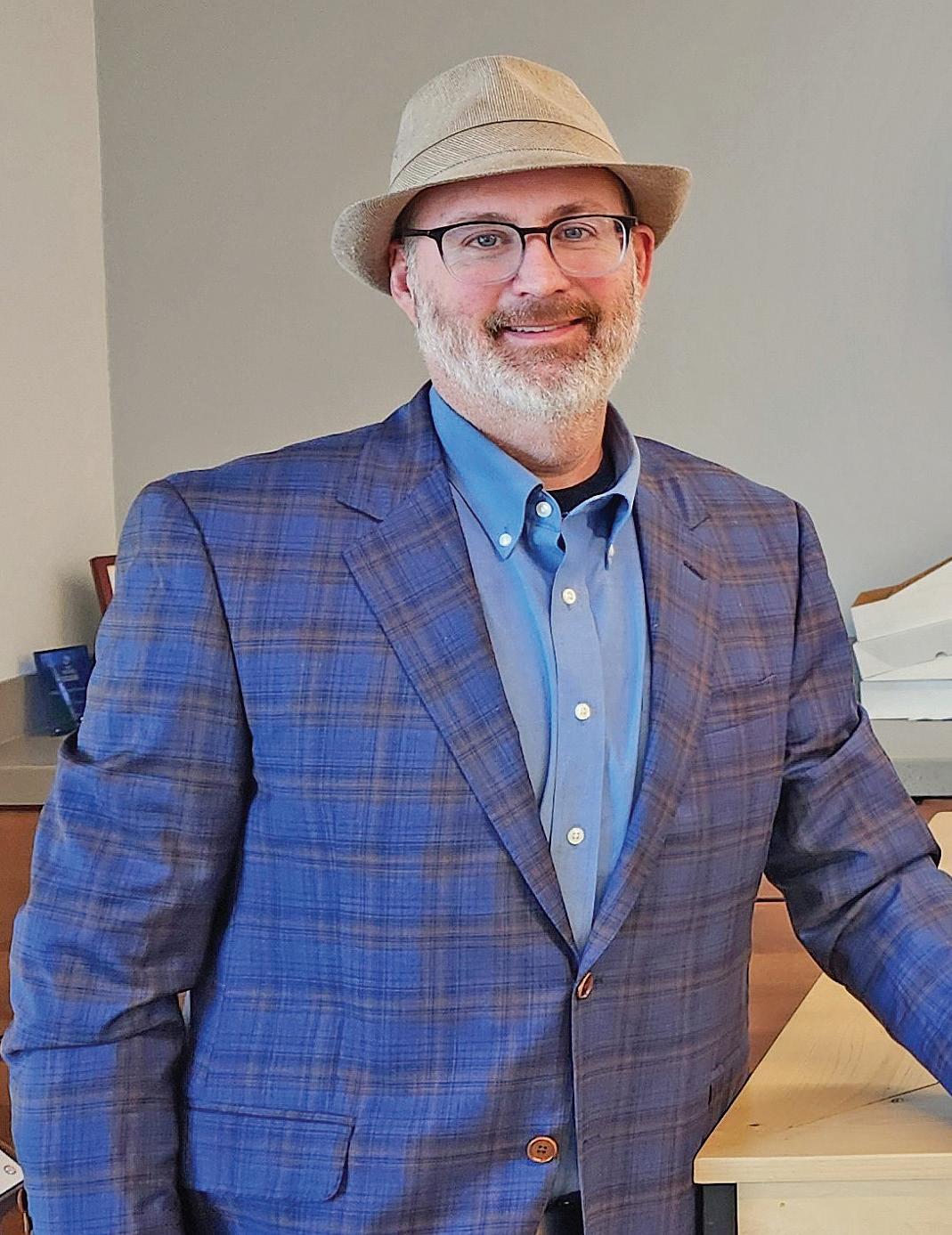
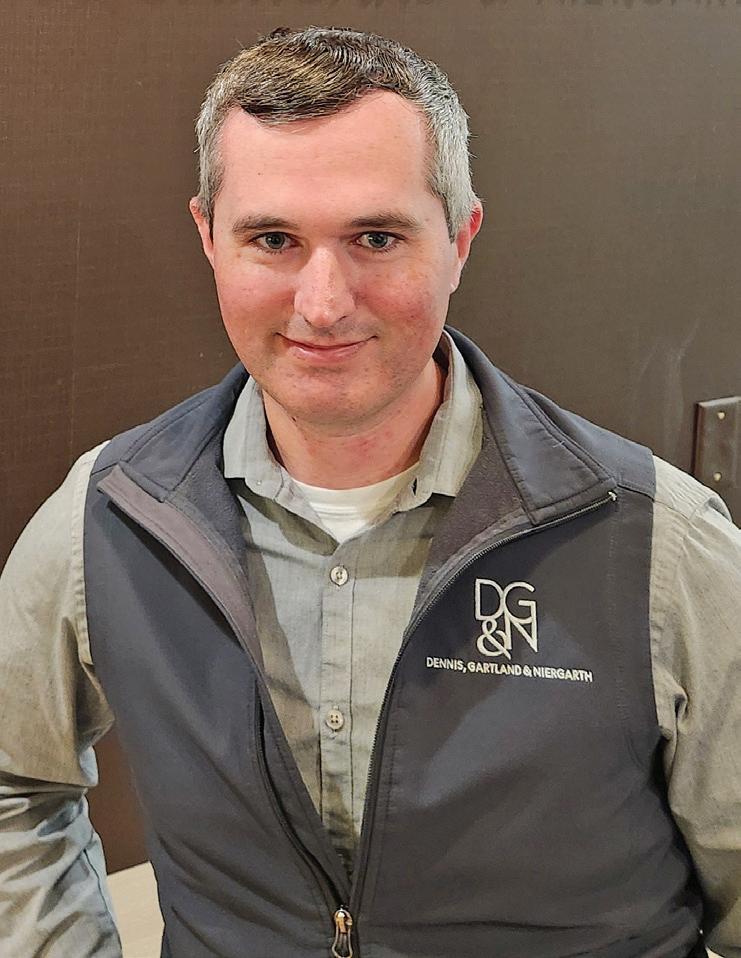
reasons. The first is entrusting important work to someone else instead of having to figure it out yourself, he says, even if today’s “YouTube generation” is always clamoring to do so.
“Just let it go and have a feeling of freedom of knowing that someone’s got your back,” he said. “We’re looking out, we’re taking care of things for you.”

The second is that a tax expert will help you look at the bigger picture, not
“Something I preach pretty heavily is that tax savings should be viewed over your life, not in any one given year. Go to a Tur-
boTax and … you might save some dollars in one year, but then hurt yourself in years three, four, five and six,” he said.
Finally, taxes are a complex thing that impact different individuals in different ways, and no one can navigate that better than a professional.
“I can’t tell you the number of times that people will come in and say, ‘Well, my buddy said this.’ And I’m like, ‘You’re right. They’re not wrong, but it doesn’t apply to you because of X, Y or Z,’” Sluis said. “We could do that, but then it’s going to hurt the plan that we’re doing for you, which is better.”

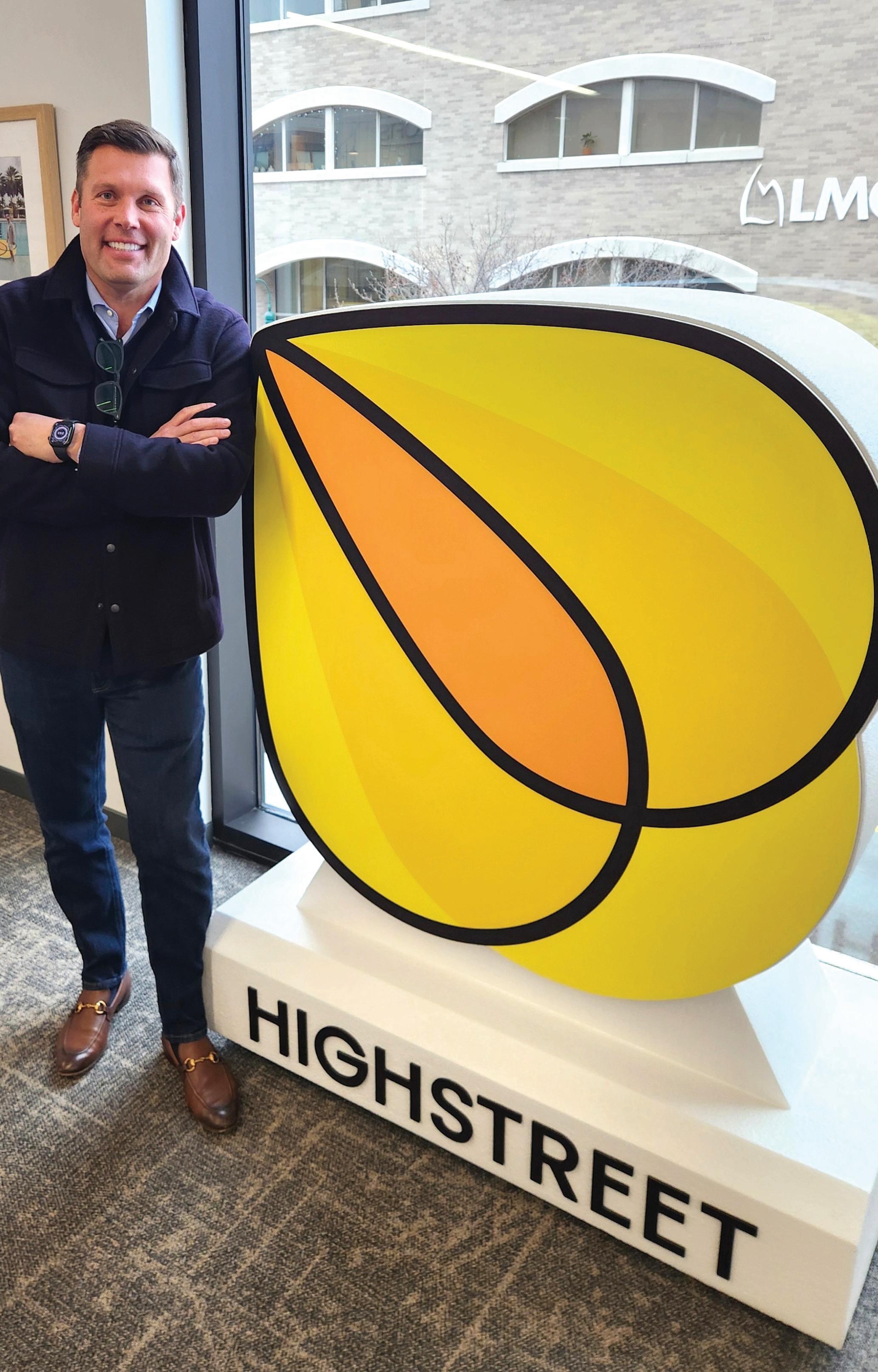
By Art Bukowski
Nine years ago, Highstreet Insurance partners didn’t exist.
Now, the company has more than 3,000 employees across 350 offices in 36 states, and $1 billion in revenue is a realistic goal (it hit more than $700 million in 2025). All told, it’s one of the top 25 insurance brokers in the country.
This entire operation is run from nationwide headquarters right here in Traverse City, where founder and CEO Scott Wick acquired the former Peterson McGregor & Associates as the very first in a massive (and growing) network of formerly independent agencies across the nation.
“It’s been a really fun run,” Wick said.
The TCBN sat down with Wick to learn more about Highstreet’s origins, growth and challenges.
The Mike O’Connor mindset
Wick grew up in small-town Wisconsin with schoolteacher parents. He ended up chasing glory and riches in Chicago, as many in financial fields often do.
“I was a salesperson who was only interested in writing the large, sexy accounts. The bigger the accounts, the better. The bigger the brands, the better,” he said. “The goal was to always move up the chain, make as much money as you possibly can, write the big accounts, see your name in lights.”
But Wick stumbled. Poor relationship management led to the loss of a few huge accounts and the need for a new path, personally and professionally.
“I needed to really think about the type of person that I wanted to be,” he said. “I probably wasn’t doing a great job with my customers. I probably wasn’t doing a great job with my friends. I probably wasn’t doing a great job with my family. I probably wasn’t doing a great job with my wife. The list goes on.”
It was around this time that he got to thinking a lot about the go-to insurance agent in his hometown of Belleville, Wisc.
“Ultimately what it came down to is I really started to reflect back on growing up in small-town Wisconsin, and [in my town], when you had an insurance-related question, you called Mike O’Connor,” he said. “He was the guy. Everybody would start with that phone call to Mike O’Connor.”
Wick wondered what would happen if you paired the impeccable customer service and familiarity of a Mike O’Connor with a deep bench of resources normally available only to large companies – essentially the best of both worlds.
“My thought process was, ‘Man, it would be really cool if Mike O’Connor was in a place where he could actually have the chassis, the solution bench, to take care of the customer in a really thoughtful [and complete] way,’” he said.
The business plan became simply that: Take agents and agencies in smaller and middle markets and arm them with much more tools, expertise and resources than they’ve ever had before. With that, tap into a “very sticky” base of customers who are already loyal to that agency and serve them even better.
Wick’s wife Megan is from Traverse City, and they moved the family here to start the Highstreet experiment in 2018. After acquiring Peterson McGregor, the company went on to add several more in Michigan and elsewhere, with 24 agencies acquired in the first two years.
Up, up and away
Considerable investment activity has allowed the company to scale rapidly, funding scores of acquisitions across the country. Boston-based private equity firm Abry Partners is invested to the tune of about 22%, Wick says, and just last August, Highstreet announced a round of $550 million in capital in the form of a delayed draw term loan from a group led by Ares Capital.
But Highstreet isn’t out to gobble up all the agencies it can. Several years in and with hundreds of acquisitions under its belt, the company is now being strategic and selective with the agencies it brings on.
“We actually look at every county in the United States and give it a score. We
“We try to be very strategic and very specific about the type of acquisition or the type of partner we’re looking for. We defined the box early on. This is the type of agency we’re looking for. This is the type of community we’re looking for. This is the type of target customer we’re looking for.”
– Scott Wick, Founder and CEO, Highstreet Insurance Partners
take a lot of different factors into place. Then we try to be very strategic and very specific about the type of acquisition or the type of partner we’re looking for,”
Wick said. “We defined the box early on. This is the type of agency we’re looking for. This is the type of community we’re looking for. This is the type of target customer we’re looking for.”
A key part of the company’s success is acquiring agencies still on the rise, Wick says, with strong organic growth and management that’s still hungry.
“This isn’t a retirement strategy. This isn’t, ‘Hey, I’ve built this really nice busi-
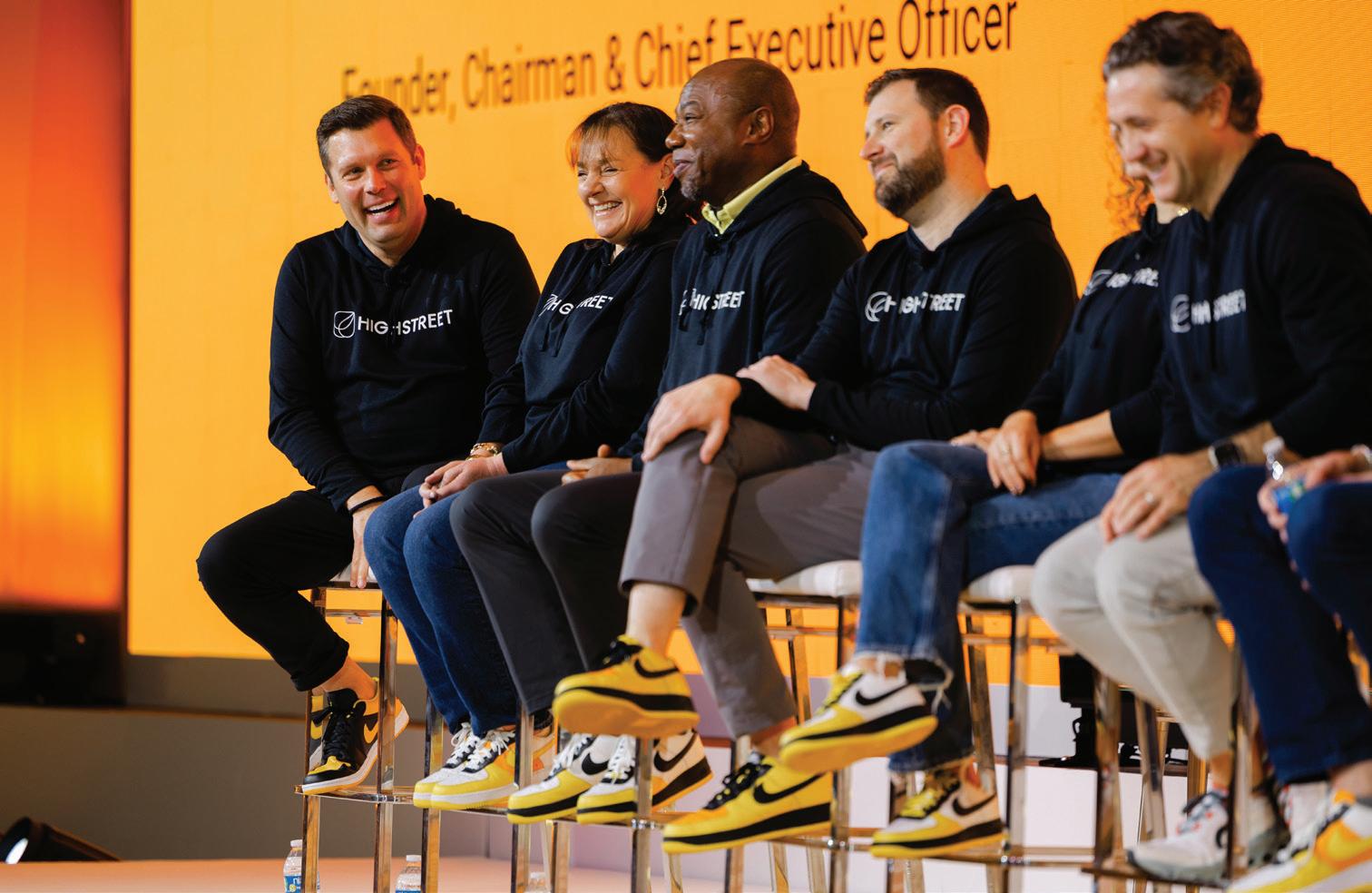
ness over a lifetime, now how am I going to monetize it?’” Wick said. “[You look for agencies that are saying,] ‘Hey, listen, we truly are in a spot where we can double down on what we’re already doing.’”
While “the proof is in the pudding” now regarding Highstreet, agencies who value their customers still sometimes need to be sold on being acquired by the company, Wick says.
“All of these insurance agencies have been called on by some potential buyer. We’ve seen so much consolidation in our space,” he said. “I think one thing I’ve found myself being able to say to them is,

‘I respect and understand who your target customer is.’”
They’re also greatly wooed by Wick’s initial concept: What if you had more tools at your disposal?
“They might be sitting there saying ‘I’m a heavy personal line of insurance agency. Maybe don’t have the commercial lines expertise. I don’t have the employee benefits expertise. I don’t have the wealth expertise. I don’t have the cyber liability expertise,’” Wick said. “Now they have the ability to bring those resources to bear and take care of their customers the best way they can.”
Located in the heart of Traverse City, Delamar is perfectly placed to accommodate your group and provide access to the region’s best entertainment and attractions. With our multiple flexible event spaces, attentive services and experienced catering team, we strive to make your event a resounding success.
Start the conversation: dtc-sales@thedelamar.com | 231-421-2122

Wick is also able to sell them on joining something bigger.
“You’re sitting in your agency in whatever small town, you’re a single owner or maybe you have one partner and you’re like, ‘I want to do more. How am I going to do more? What am I going to do?’” Wick said. “The fact that you can sit around the table with more partners, with more people that encourage you to grow or take chances, do those types of things, that’s a fun spot to be in.”
And make no mistake: Just because these are mostly small agencies doesn’t mean they only want small customers. Joining up with Highstreet has given them the swagger and tools to pursue much bigger fish.
“You have to do transactional personal lines really well. The one home, the two cars,” Wick said. “But you also have to have a chassis that can support the highnet-worth strategy as well. What are you doing for the folks that live on the peninsula? What are you doing for the folks that have one, two, three, four homes? What about [the major employers?]”
Highstreet’s book of business is about 35% personal insurance, 40% business/ commercial insurance, 20% employee benefits and 5% other, Wick says. While the company may test certain “adjacencies” like tax advice, there’s still plenty of growth opportunities in their current market.
“I think there’s an awful lot of meat on
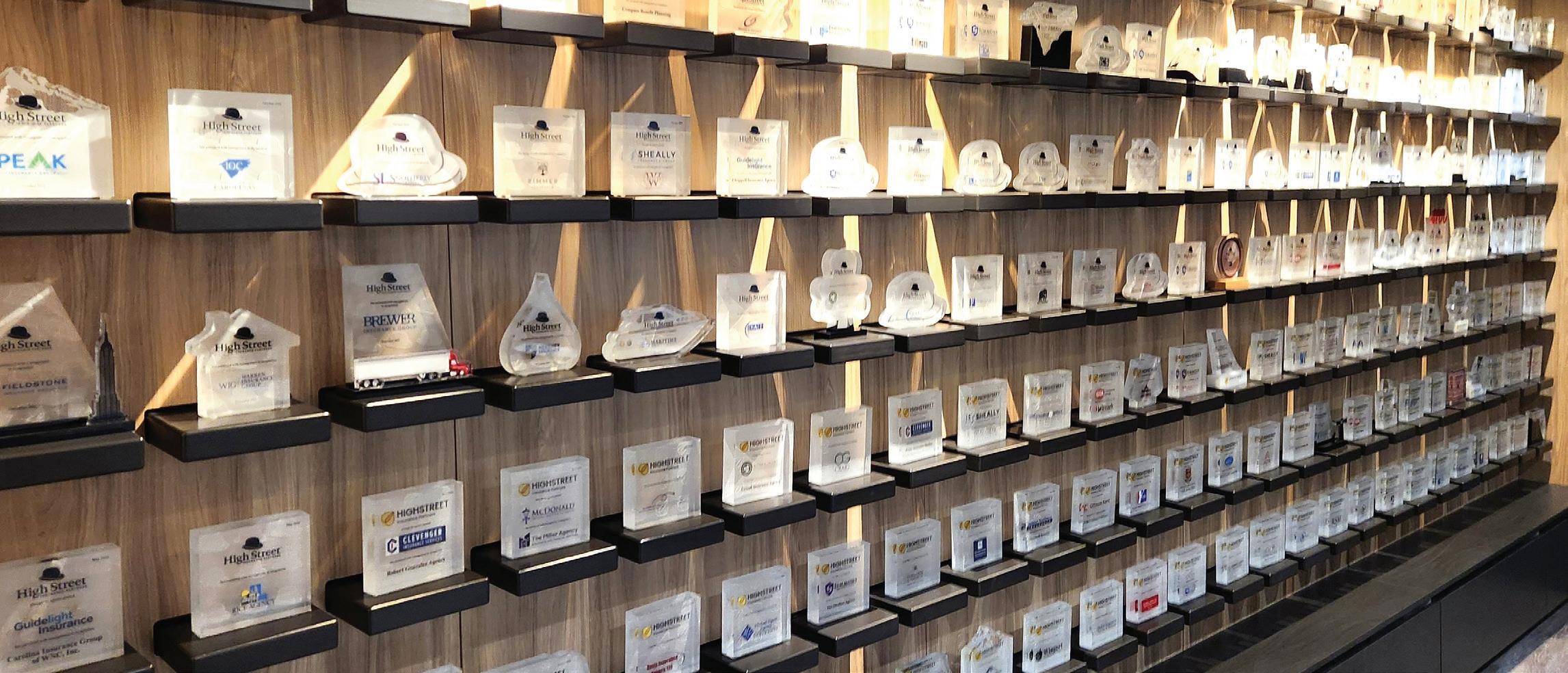
the bone to keep doing what we’re doing right now,” Wick said.
City … for now
By and large, Wick is glad to be in Traverse City. He and many of his employees (almost 90 here, between Highstreet corporate and local rank and file) enjoy the region’s natural beauty and outdoor culture, among other attractions. He also loves working with the area’s talented local vendors. Ask him about Bonnie Alfonso at Alfie sourcing his team’s custom Air Force Ones or
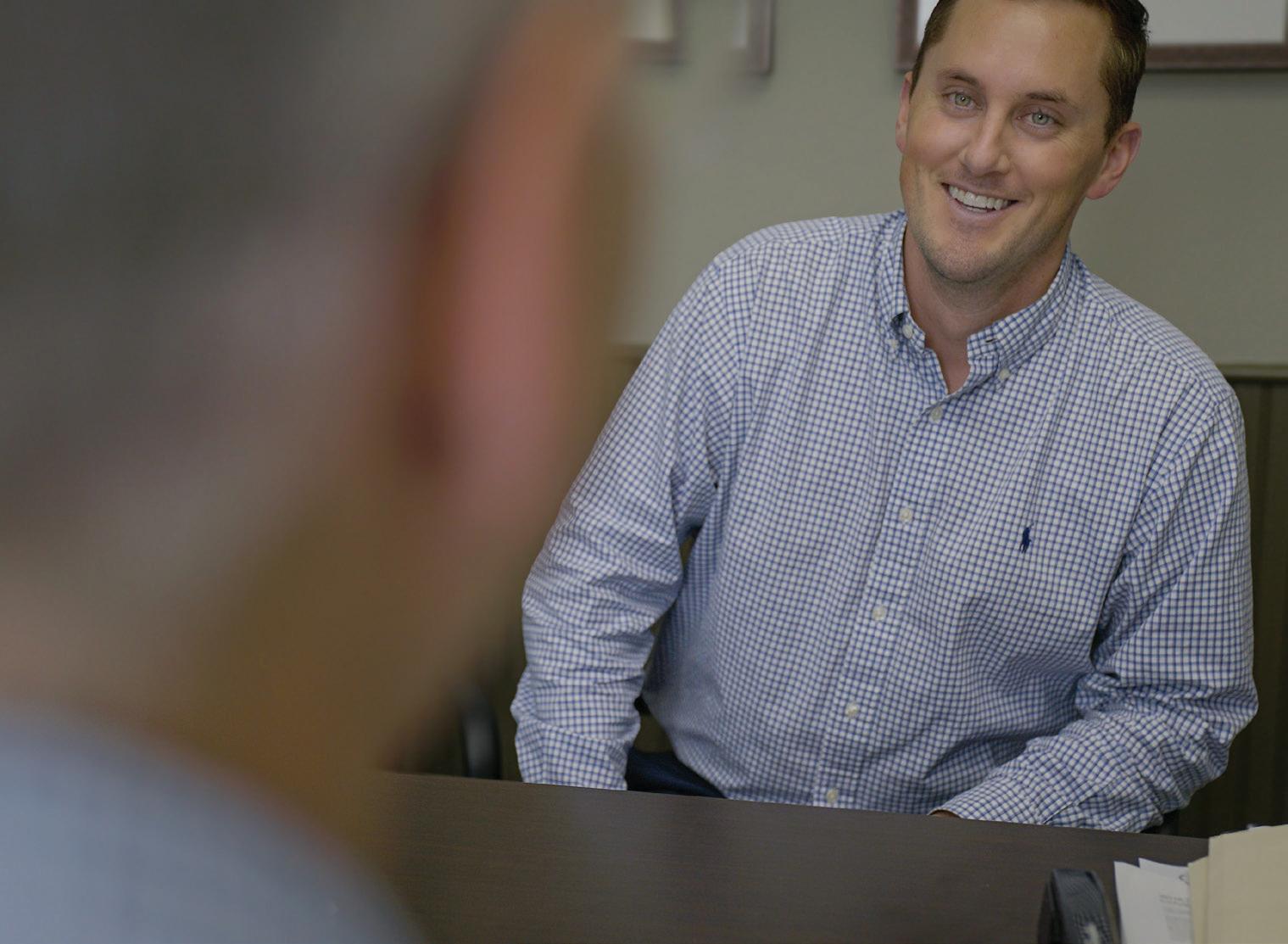

Allison Beers at Events North handling his many nationwide events. Across the country, he says, Highstreet’s branches prioritize local business relationships by matter of principle.
“What we’ve tried to do is plug local companies in when we have the opportunity, even if we’re paying more,” he said. “Because I think that if you’re going to build resilient communities, you have to find ways to help others grow.”
But there are challenges here, Wick says, particularly in talent attraction. He also has a nationwide management team of more than 200 that he’d like to eventually consol-
idate into one place. While they’d like to do it here, Wick says they’re in the process of determining if that’s feasible.
“I think if we stay on the growth trajectory that we’re on, does [Traverse City] have the infrastructure? Does it have the resources? Does it have the foundation to support as big of a move as we’d be making to bring all of these people here?” Wick said. “So that’s something we’re in the throes of right now. We’re thinking really long and hard about if Traverse City can be a place that we think we can scale this business for the long term.”










Local CPAs weigh in on oft-overlooked tax implications of gig work and STRs
By Craig Manning
Passive income. Side hustles. The “gig economy.”
No matter what you call it, an increasingly large subset of American taxpayers is now making money in some fashion other than traditional employment. From short-term rentals (STRs) to popular gig economy apps like Uber, DoorDash, or TaskRabbit, these supplemental income streams have diversified the way people make money. They’ve also complicated tax returns for tens of millions of Americans, introducing a lot of pitfalls not there in a typical W-2 filing.
Just how common are side hustles locally, and what are the biggest tax implications that people should be aware of before diving into the STR or gig economy world? The TCBN sat down with a pair of local CPAs – Chris Kindlinger, president of Kindlinger & Company, PC; and Jenifer Carmody, tax supervisor at Dennis, Gartland & Niergarth – to get the answers.
Trend watch: What the national and local numbers say
Just how many Americans are branching out beyond traditional employment? There is no single statistic that answers that question, but there are a few numbers that offer some insight.
According to the U.S. Bureau of Labor Statistics, there were about 16.85 million self-employed Americans as of 2025, up from 15 million a decade prior. More than 10 million of those people were in unincorporated work situations (examples would include freelancers, sole proprietors and gig workers) while another 6.7 million had incorporated their own businesses. Together, the two groups account for more than 10% of the American workforce.
As for STRs, a 2024 report from software company Granicus reports 2.4 million STR listings in the U.S. Locally, demographic data reported by the

rental listings company Point2Homes estimates that 13.6% of the workforce in Grand Traverse County area is self-employed.
Data from STR analytics firm AirDNA, meanwhile, indicates that there are about 9,100 STRs active along the northern coast of Lower Michigan during the peak summer tourism months.
The tax experts weigh in
Both Kindlinger and Carmody say they’ve seen an uptick in recent years of clients diving into gig economy side hustles or STRs – particularly the latter.
“Around COVID and then a little bit after, there was a really big jump of everyone getting into STRs,” Carmody said. “It feels like it’s slowed down a little bit, but it’s still popular.”
“There is a whole lot of STR activity happening among our clientele, and there has been for quite a few years now,” Kindlinger concurred. “When it comes to the rest of the gig economy, usually those are smaller-income individuals, which is just not generally what we serve. But we know those people are out there, too.”
About half the time, Carmody says, DGN clients finding their way into the world of side hustles will sit down with the firm’s accountants ahead of time to talk through the tax dos and don’ts of their new endeavors. In the cases where those sitdowns don’t happen, though, mistakes are common – sometimes with costly consequences. Those errors exist both in the gig economy world and with STRs.
“On the gig side, probably one of the biggest things is that people don’t always know they’re supposed to report that income,” Carmody explained. “Maybe it’s a small dollar amount they made with DoorDash or Uber, and they assume they don’t need to report it. If they make more than $600, they will get a 1099 – a re-
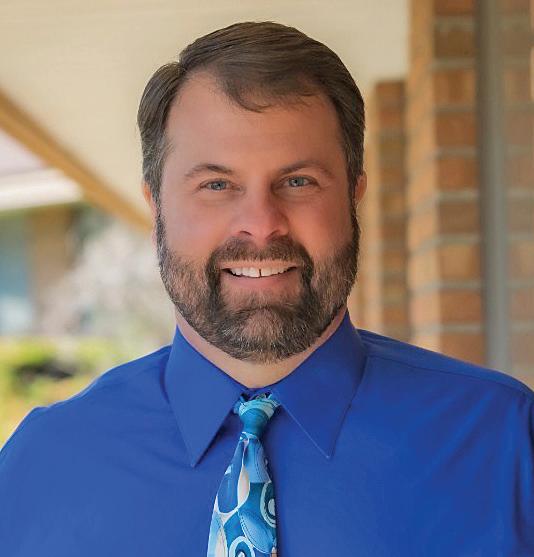
porting statement from the company they work for that tells them how much they made for the year, but also tells the IRS how much they made. But even if they don’t get that form, they’re still required to report that information, and a lot of people kind of aren’t aware of that.”
In other cases, people make so much money through gig work or freelance jobs that they’ll end up with hefty self-employment taxes. Per the IRS, the self-employment tax rate is 15.3%, which covers Federal Insurance Contributions Act (FICA) taxes including Social Security and Medicare. In traditional employment situations, where the main tax form is a W-2 rather than a 1099, both the employer and the employee pay portions of these FICA taxes. Independent contractors have to cover both halves, hence the hefty nature of self-employment tax – and they have to do it on top of paying regular income tax.
Self-employment taxes also come with another obligation: that of paying quarterly tax estimates to the IRS. By apportioning out tax payments during the year, the quarterly obligation saves independent contractors from the sting of a massive tax bill come April each year – but only if they know about it.
Beginners in the self-employment world often don’t.
“People, a lot of the time, are just not ready for the self-employment tax, because the self-employment tax is almost 50% on top of income taxes for the net income,” Kindlinger said. “What happens a lot is people spend that money because they don’t realize they need to be setting aside for the taxes, or they don’t realize how much they need to set aside for taxes. Then they can’t make their payment, so they’re on a payment plan, they’ve got penalties that are assessed both by the state of Michigan and the federal government for not paying their taxes on time, and interest keeps accruing.”
Knowing about the heftier tax burden of self-employment, Kindlinger says, is only half the battle. The other half? Claiming as many business deductions as possible to minimize tax liability. First-time independent contractors make mistakes there, too.
“They haven’t kept their business and personal expenses separated very well. They haven’t tracked their business expenses very well. They haven’t tracked the mileage they’re driving for their business well enough. They haven’t paid quarterly estimates, not realizing that there’s no withholding in anything they’re getting paid,” Kindlinger said. “And then comes tax time, and they get hit hard. We tend
to hear a lot of frustration from people the first year they’re self-employed, because they haven’t planned well for it.”
To minimize those frustrations, Kindlinger recommends staying on top of estimated tax payments, tracking every business-related expense down to the transaction, using separate credit cards for business and personal expenses, and setting up a dedicated bank account specifically for gig work.
Talking to a tax expert is one way to get familiar with these types of best practices, but Carmody also says there “is a lot of good content out there” from popular gig companies like Uber and DoorDash that outlines many of these things in detail.
“It’s just a matter of spending a little bit of time to look at that stuff,” Carmody said.
The good news for STR owners is that rentals don’t fall under the auspices of self-employment tax. The bad news is the tax obligations can still be complicated, in part because the rules vary depending on the geographic location of the rental.
The state of Michigan imposes a 6% use tax on any lodging rented for less than a month. In addition, STRs are sometimes subject to special local lodging taxes, such as to visitor’s bureaus like Traverse City Tourism (TCT). Traverse City area lodging businesses with at least 10 units
are required to a 5% assessment of every booking to TCT, to support tourism promotion efforts, and that rule applies not just to hotels but also STR operators that clear the unit threshold.
According to Kindlinger, the common assumption among STR operators is that whichever rental site they’re using – the two most popular options being Airbnb and VRBO – will bill and remit the necessary use and lodging taxes automatically. That’s sometimes the case, but not always.
“Generally, both Airbnb and VRBO set it up so you can enter in the use tax rate for your area, or, if there’s a visitor bureau tax, you can add in any of those things as well,” Kindlinger said. “But right now, there’s a court case going on where VRBO has sued the state of Michigan, saying they’re not responsible for collecting those taxes; the state has said that they are. So we’ll see where that comes out, but for now, if you’re using VRBO, you’d have to remit the use tax and file those returns, and that’s in addition to an income tax return.”
Typically, Kindlinger says, his clients who own STRs hire management companies to handle things like cleaning and maintenance. Those businesses help take care of tax obligations as well. Whether it’s going that route or working with a tax expert to iron out details before listing a rental on the market, he advises that one of the main goals should be to avoid any

and all end-of-the-year surprises.
“You don’t want to wait until the last minute to find out, after the fact, that you haven’t been charging or remitting use tax,” Kindlinger said. “If you didn’t think it applied to you and you didn’t collect it, but now you have to pay it, that really can substantially impact whether you made any money for the year or not, because you still have to pay what you owe [the state].”
Beyond use tax, Carmody sees similarly big challenges in the STR world around deductions, write-offs and business losses.
“There is a lot of content out there on TikTok, Instagram, and Facebook implying that it’s easy to write off all of your losses from STRs, and that it’s a great way to shelter income. And that’s not always the case,” Carmody said. “There are some intricate rules, and you have to qualify for some specific categories that not everybody qualifies for. So, if you see a quick little TikTok video and then say, ‘Okay, I’m going to buy an STR, I’m going to have a loss on it, and then I’m going shelter a bunch of my income,’ you could be in for a rude awakening.”
Specifically, Carmody says that claiming a business loss from an STR is difficult for owners who treat their rentals mostly as passive income. IRS rules require a taxpayer to have a certain level of “material participation” in rental operations before that person can use STR losses to offset
other earnings, and most operators don’t qualify.
“Say you have have a full-time job as a CPA, like myself,” Carmody explained. “If I have some STRs and I say, ‘Well, that’s also my job, and I should be able to take losses.’ The IRS is going to say, ‘Wow, how can you have two full time jobs? That’s pretty complicated.’ So, a lot of claiming losses from an STR has to do with the amount of time that you spent working with your STR, and some of it depends on what your job is. For example, a real estate person would have a lot more luck taking losses than a CPA or a physician, because that’s already what they do for a living.”
Writing off expenses is similarly complicated. Kindlinger gives the example of hiring someone to make repairs on an STR. A simple roof repair would be a reasonable write-off for a single tax year, while a full roof replacement would need to be taken as a deprecation deduction over a longer period of time.
“Because of things like that, STR owners will sometimes spend so much on their properties that they think they didn’t make any money that year [for tax purposes],” Kindlinger said. “The problem is, they can’t deduct all of the money they spent in that particular year.
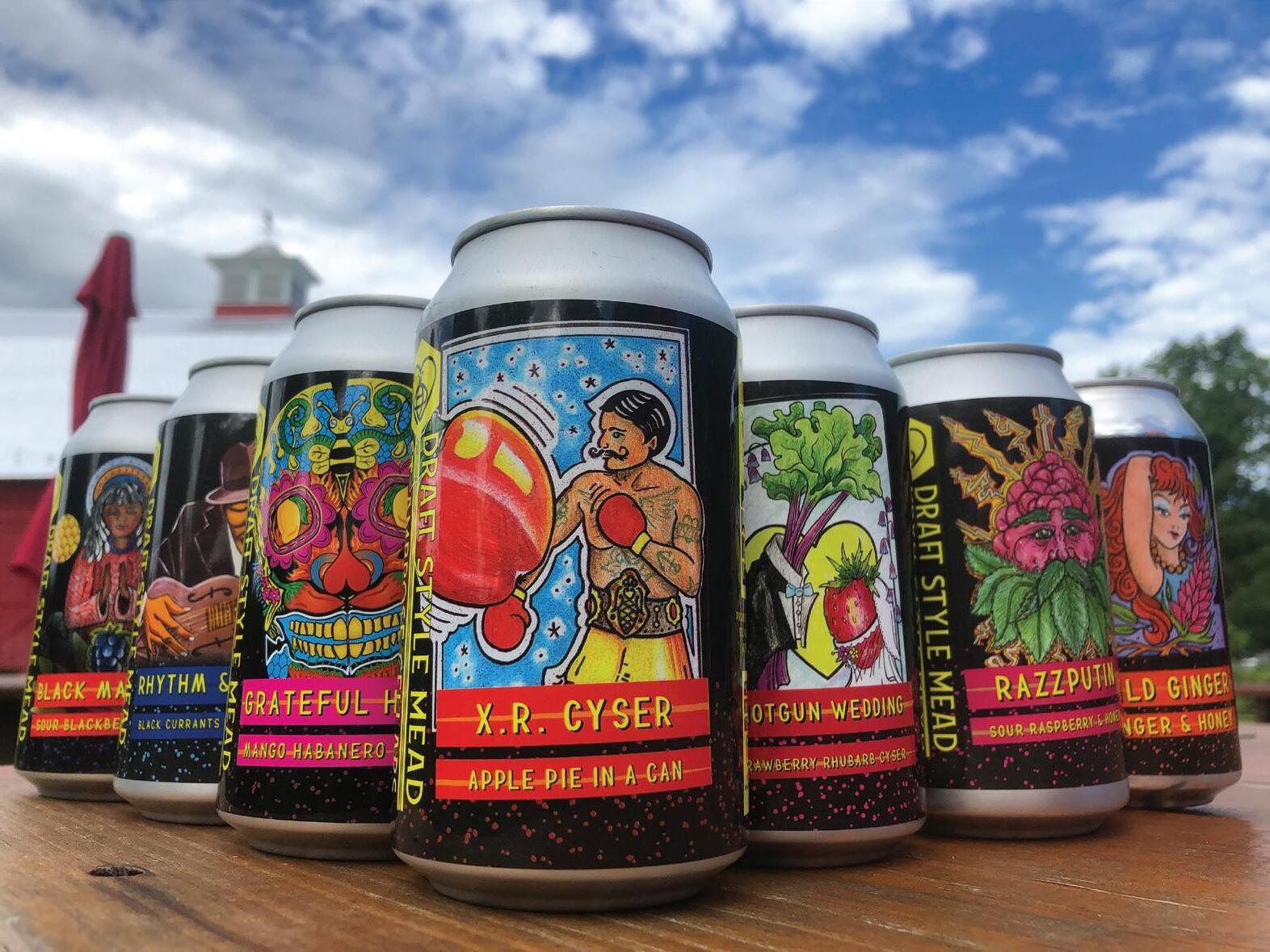






with
When 2025 began, there was much uncertainty in wealth transfer and estate tax planning. The $13.99 million (per person) gift and estate tax exemption, established by the 2017 Tax Cuts and Jobs Act, was set to expire at the end of 2025 and revert back to $5 million per person on January 1st. However, the passage of the One Big Beautiful Bill Act (the “OBBB”), on July 4, 2025, resolved this issue (for a while, at least) and made several other changes that will impact planning and charitable giving for many families.
The OBBB has made the following changes:
• The United States estate and gift tax exemption increased to $15 million per person (or $30 million for a married couple) on January 1, 2026, with annual increases for inflation beginning in 2027. Some estate plans may add language incorporating the inflation increase.
•The OBBB changes do not directly impact state estate tax laws. While Michigan does not have an estate tax, the 17 states that have an estate or inheritance tax will be mostly unaffected by the new federal law.
• The federal annual gift tax exemption amount remains at $19,000 per recipient ($38,000 for gifts by a married couple) for 2026. The exemption amount will be adjusted for inflation in 2027 and beyond.
For those who itemize their deductions, there are two new limitations in 2026 with respect to charitable deductions.
• The above exemption is “permanent,” but only in the sense that it has no built-in expiration date like some other past exemptions. A future Congress can always pass legislation to change the exemption amount.
• Revocable trusts will remain important given their benefits outside of estate tax planning. However, having such a high estate tax threshold for the foreseeable future should, for most, further shift the planning focus from irrevocable trust vehicles designed to remove assets from a taxable estate. Greater focus will likely be on retaining highly appreciated assets within an estate to benefit from the “stepup” in cost basis following death.
• The ability of a surviving spouse to inherit and carry over any portion of their deceased spouse’s unused federal exemption amount, called “portability,” will continue.
• Unfortunately, portability does not happen automatically and must be elected and filed within certain time limitations. Timely portability use will be key for many families, especially for younger surviving spouses.
• The United States generation-skipping tax (“GST”) exemption has also increased to $15 million. The portability of an unused GST exemption between spouses continues to be unavailable.
• The top marginal tax bracket for gift, estate and GST taxes remains at 40%.
• For non-itemizing taxpayers who take a standard deduction ($16,100 for single filers, $32,200 for joint filers in 2026), a new above-the-line $1,000 deduction ($2,000 for married couples filing jointly) will be available for direct contributions to charities.
• Contributions by non-itemizers to donor advised funds or similar intermediaries will not qualify.
• For those who itemize their deductions, there are two new limitations in 2026 with respect to charitable deductions. Charitable deductions will be available only to the extent that, combined, they exceed 0.5% of the donor’s adjusted gross income (AGI). Charitable donations totaling less than the 0.5% AGI floor will not qualify.
• A cap also went into effect on January 1st for charitable deductions made by filers in the top tax bracket (in 2026, individuals with income over $640,600, or joint filers with income above $768,700) will be limited to tax savings at a computed rate of 35%, rather than 37%.
• Some donors may now want to consider consolidating several years’ worth of charitable contributions into a single tax year to ensure that their total donations exceed the 0.5% AGI floor and maximize their deduction in that year.
As always, it is important to consult with experts in these fields to ensure that you are obtaining guidance specific to your individual needs and goals. The changes for 2026 are significant enough to warrant a review of an existing plan.
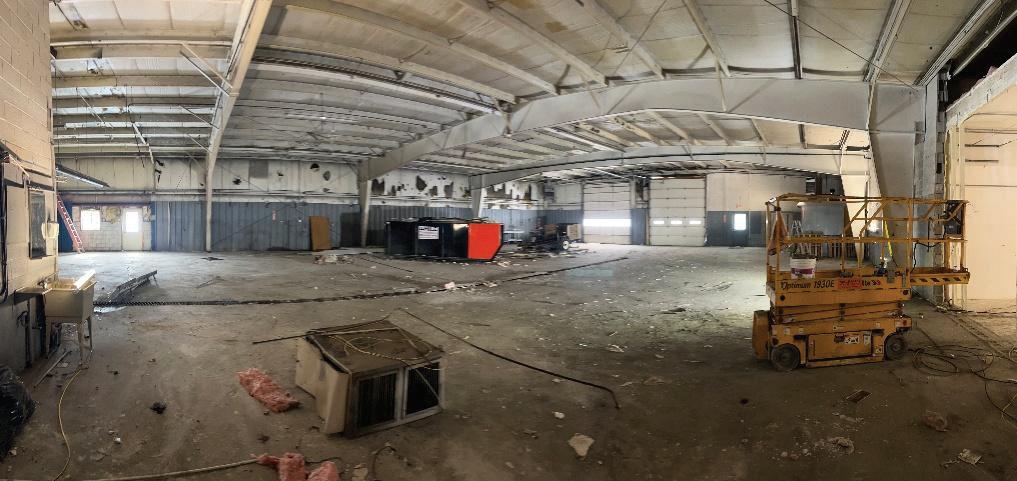




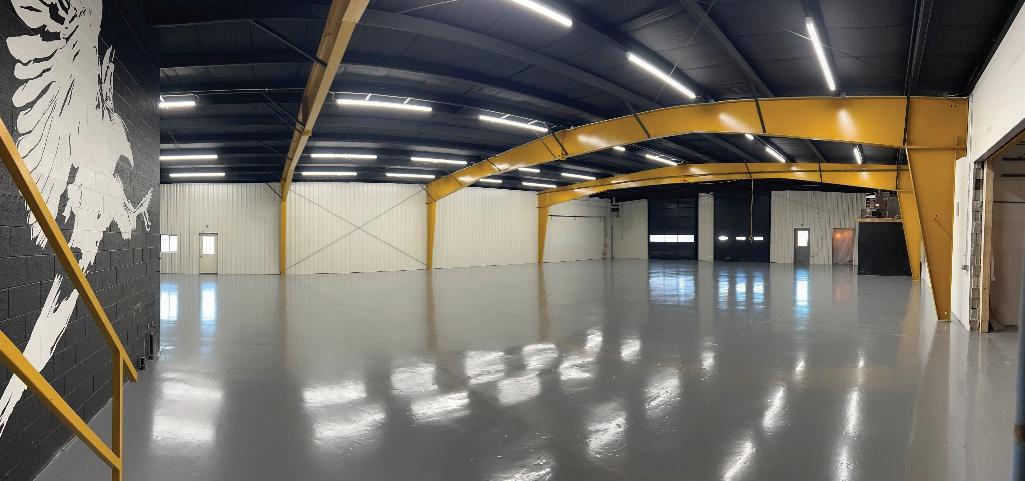
The Keen Team really delivered! Our renovation project was very intense, in that we had a huge project to complete in a short amount of time, and we are so grateful to have had Keen helping us with this massive undertaking. This project went smoothly as a result of having the right key players in the right places at just the right times. We had a vision of creating a "world class" facility, and I truly believe we have exceeded our own expectations, as we proudly have an unrivaled manufacturing facility righ t here in Northern Michigan. The Keen Team was responsive, professional, and on task. We would recommend them over and over! Thank you, Keen and all those who assisted us with their talents and expertise along the way.

~ Sarah Davis, Co -founder WarBird Protection Group



Our KEEN team partnered with WarBird Protection Group, Inc. to deliver a series of upgrades that boost efficiency, comfort, and long -term performance across the facility Including a full LED lighting conversion, a 400 CFM energy-recovery ventilation system that improves air quality by exhausting stale air and supplying fresh, conditioned air to key areas, and extensive construction work .



By Amanda Alvarado, columnist
On July 4, 2025, Congress passed the One Big Beautiful Bill Act, often referred to as the OBBBA. The provisions included in this momentous legislation build on the 2017 Tax Cuts and Jobs Act (TCJA), making many temporary provisions permanent while introducing new incentives for individuals and businesses. Through these sweeping changes, the goal was to provide long-term certainty, simplify compliance and stimulate economic growth.
However, Michigan taxpayers face unique challenges due to the state’s decision to decouple from several key provisions, adding complexity for Michigan taxpayers.
For individuals, the OBBBA locks in lower tax rates, expands deductions and adds incentives:
• Permanent TCJA Tax Cuts: Lower rates and expanded brackets set to expire in 2025 from the prior TCJA provisions now remain in place.
• Standard Deduction Increase: Increased to $31,500 for joint filers, $23,625 for head of household filers and $15,750 for single filers. Effective through 2028, taxpayers age 65 and older may claim an additional $6,000 ($12,000 for joint filers) deduction in addition to the standard deduction, subject to income phase-outs.
• Child Tax Credit: Enhanced to $2,200 per child, with higher income phase-out limits ($400,000 for joint filers).
• Charitable Contributions: Beginning in 2026, non-itemizing taxpayers may claim an above-the-line deduction of $1,000 ($2,000 for joint filers), paired with the standard deduction. Though taxpayers that are itemizing face a new 0.5% adjusted taxable income floor on their qualifying charitable deductions.
• 529 Account Expenses Enhanced: Qualified expenses now include K-12 expenses other than tuition, such as books, other materials, tutoring, tests and exams, and education-related therapy. The annual limit on K-12 tuition increased to $20,000 from $10,000.
• Tip & Overtime Income: Through 2028, tip income up to $25,000 and overtime premiums up to $12,500 ($25,000 for joint filers) are excluded

from taxable income.
• Car Loan Interest: Single filers up to $100,000 and joint filers up to $200,000 of adjusted gross income can deduct up to $10,000 of car loan interest per year through 2028 for certain newly purchased vehicles. Qualifying vehicles must be purchased for personal use and assembled in the U.S.
• Estate planning also gets a boost, with the unified credit and generation-skipping transfer tax exemption threshold permanently increased to $15 million per individual beginning in 2026.
For businesses, the OBBBA delivers provisions to support business growth and rewinds certain unfavorable provisions from the TCJA:
Full Expensing for Domestic R&D: Immediate expensing of research and development (R&D) expenses is restored and made permanent. However, note that foreign R&D remains amortized over a 15year period. Small businesses and startups may now receive refundable credits, allowing companies to receive cash returns even if they have not yet generated taxable income.
Prior Capitalization of R&D: The OBBBA delivers options for taxpayers to evaluate when revisiting previously required capitalization of R&D expenses. Businesses now may amend prior year tax returns to remove such capitalization. Alternatively, they may choose one of the following options: to reflect the change by immediately expensing prior capitalization of R&D expenses on their current return, expensing the costs over a two-year period, or maintaining the amortization at the schedule previously required.
100% Bonus Depreciation: Perma-
nently extended, now including qualified production property such as manufacturing buildings, which were previously subject to a 39-year depreciable term.
Section 179 Deduction: Increased to $2.5 million from $1 million previously, increasing the benefit of capital spending and business improvements.
Qualified Small Business Stock: Significant expansions have been implemented for qualified small business stock gains, reducing holding periods, raising the gain exclusion limit to $15 million, and expanding the asset threshold to $75 million.
Business Interest Deduction: Depreciation and amortization are back on the table when calculating adjusted taxable income (ATI), allowing greater deductibility. Taxpayers will see less limitations on deductions as ATI increases by this depreciation and amortization expense inclusion, easing the impact of interest limitation provisions.
Charitable Contributions: Corporations should be mindful that charitable contributions now are required to exceed 1% of taxable income to qualify for deductions. This does not eliminate the longstanding rule that limits charitable contribution deductions to 10% of taxable income, as this provision remains in effect.
Michigan has chosen to decouple from several key provisions of the OBBBA, creating differences that are imperative to consider for state tax filings:
• Bonus Depreciation: Michigan main-
tains the reduced bonus depreciation rates of 40% in 2025 and 20% in 2026, as well as decouples from the qualified production property inclusion when determining qualified property.
Section 179 Expensing: Michigan limits remain frozen at 2024 levels, ignoring all future federal increases.
Interest Expense Limitation: Michigan applies pre-2025 rules, requiring ATI calculations to exclude depreciation and amortization, resulting in smaller deductible interest amounts.
R&D Amortization: Michigan taxpayers cannot take advantage of the new federal option for immediate expensing of R&D costs. As such, the capitalization rewind that businesses will benefit from for federal purposes will not flow through to Michigan taxpayers at the state level.
These key differences will likely lead to higher taxable income for Michigan taxpayers, reducing cash flow and complicating compliance for Michigan businesses.
Though the OBBBA delivers changes aimed at benefiting taxpayers in this coming tax season and in future years, Michigan taxpayers must consider the complexities added due to state non-conformity. For Michigan taxpayers, proactive planning is no longer optional – it’s essential.
Amanda Alvarado, CPA, is a senior tax manager at Dennis, Gartland & Niergarth with more than 15 years of experience in accounting. She earned her master of science in accounting from Wayne State University and specializes in tax strategy and financial planning.
The following testimonials come directly from our 2025 Customer Satisfaction Survey.
“Very good partnership!” -12 year client
“Michigan Planners brings creative ideas and solutions to us They are also really great about researching ideas we have and providing information and options They are a great advisor to our HR and leadership teams ” -3 year client
“The excellent customer service and overall employee experience makes Michigan Planners a standout in a very competitive market for insurance brokers I wouldn't dream of moving our business.” -17 year client
“The friendliness of staff is second to none.”
-9 year client
“Your commitment to customer service is 2nd to none!”
-5 year client
“I'm thankful every day for our MI Planners Team They always go above and beyond!”
-22 year client

“Your expertise and advocacy have been invaluable in ensuring the best outcomes for our organization, employees, and retirees. We greatly appreciate the flexibility of employee meetings to discuss plans ”
-1 year client

“Great service to our employees - best ever!!!!!” -12 year client
“Really love the personalized one-on-one assistance with helping employees choose the right plan for them ” -1 year client
“Michigan Planners has spoiled me!” -5 year client
“You serve with compassion and integrity...don't ever change!” -18 year client
“Each member of the MPI team is a joy to work with and makes my job so much easier There is a great depth of experience and knowledge that inspires confidence ” -8 year client
“Responsiveness
to urgent matters is great.” -5 year client
A closer look at skyrocketing

By Craig Manning
You probably don’t need to hear it from us, but health insurance costs are skyrocketing these days.
According to KFF, an “independent source for health policy research, polling, and news,” the average rate that health insurers charge for plans listed on the Affordable Care Act Marketplace is expected to rise 26 percent in 2026. Those increases come on the heels of 2025, which already saw health plans tick further and further into unaffordable territory for many Americans. For employer-sponsored health plans, the average annual premium for a family plan last year was nearly $27,000, up 6% from 2024. All the rising costs are creating a “something’s gotta give” mentality among employers and individuals alike, and increasingly, that “something” is the deductible.
“There is absolutely a trend toward higher deductible plans, and it’s because of cost,” said Jill Butryn, founder and president of Traverse City’s Table Health. Per KFF, about 60% of Americans under the age of 65 get their health insurance through their employers. More and
more, though, Butryn said employers are unwilling or unable to bear the costs of rising health insurance premiums, which then has them looking at options to trim expense. Cost-sharing with employees is one option, and KPP reports that American workers contributed an average of $6,850 out of their paychecks last year to cover premiums for their employer-sponsored family plans.
The other option? High-deductible plans, which reduce the upfront cost of the insurance policy for the employer with the flipside that the employees will pay more out of pocket if/when they make major health insurance claims.
“In a lot of cases, the cost of rising premiums is borne by the employers,” Butryn continued. “So, they’re the ones making choices on how to manage that cost, and sometimes, the only option they have is to increase the deductible. As a result, when premiums are rising like they are right now, everybody’s getting hit.”
For Butryn and Table Health, the trend toward higher-deductible health plans has presented an opportunity. Table Health is a direct primary care provider, a model that asks patients to pay a recurring
“There is absolutely a trend toward higher deductible plans, and it’s because of cost.”
– Jill Butryn, Founder/President, Table Health
subscription/membership fee for primary care services. Direct primary care largely bypasses health insurance – an option
Butryn says has become increasingly attractive to local patients in the years since Table Health’s 2018 launch.
“For people who are only using the doctor a couple times a year, our monthly membership fees turn out to be less expensive [than insurance fee-for-service models],” Butryn shared. “Once that membership is paid, there’s nothing else to pay the doctor. And so, people are finding that operating

outside of their insurance for primary care is actually less expensive when they have a high-deductible plan.”
That affordability factor, combined with other selling points of direct primary care – a list that typically includes easier access to doctors, shorter wait times, longer appointments, and more “personal ized attention” – have Table Health “grow ing and growing and growing,” according to Butryn, mostly through word of mouth.
“We don’t do a lot of marketing at all, but we’re still growing 30-35% every

year,” Butryn said. “And recently, I have seen a lot more membership coming from employer groups. A lot more employers, in the last two years, are starting to recognize that what they’re doing is not sustainable for their businesses. The cost is getting out of control, and their employees are getting mad because they’re paying more for less.”
According to KFF statistics, the annual average deductible for Americans enrolled in employer-based health insurance plans in 2014 was $2,640 for a family plan and $1,353 for a single plan. A decade later, in 2024, those figures were up to $4,063 for family plans (an increase of nearly 53%) and $2,085 for single plans (up 54%).
Higher-deductible plans aren’t just a trend in the health insurance world.
David Ford, agency principal for Traverse City’s Ford Insurance Agency, is seeing higher deductibles become the norm in every category of insurance his firm helps provide, particularly in home insurance and commercial building insurance. Ford sees the trend as a change in the way people think about insurance – away from a “use relatively often” mindset and toward a “use only in the case of catastrophes” one.
“Historically, at least in our market, deductibles were really low,” Ford said. “When I started, it wasn’t uncommon to see a $100 deductible on a home policy. At some point, some of the companies said, ‘We really need to go to $250,’ and there was sticker shock even for that. But
it’s progressed over time. I remember when it went to $1,000, and now, we’re talking $2,500 as probably the standard deductible for a home insurance policy.”
The shift toward higher deductibles, Ford muses, is likely particularly jarring for people in places like Traverse City, which historically haven’t seen the kinds of catastrophic property losses that many other parts of the country have. In places where tornadoes, hurricanes, or wildfires are common, Ford says there’s long been an understanding that, at least for property, “insurance is for the catastrophic, not for the maintenance-type loss.” Northern Michigan, which has seen two of its most damaging weather events in just the past decade-plus – the August 1, 2015 wind storm and last year’s Gaylord ice storm –is less accustomed to big damage.
“We’re very insulated from big losses, on the property side,” Ford said. “People in Oklahoma or down in the coastal states, when they have high wind, they had percentage deductibles for years. If a named hurricane or windstorm comes through and your roof gets blown off, and you have a 1% or 2% deductible for that loss, you could still end up with a $20,000 out-of-pocket expense. Up here, if you’re only on the hook for the first $2,500 of a loss and the insurance company takes it from there, that’s not too bad in comparison to what some parts of the country deal with.”
Ford’s focus, as deductibles have in-
“Health insurance is obscenely expensive, so there are a lot of people looking at that whole system and saying, ‘Do we have to break it entirely in order to do something new?’ The people at Table Health are an example of people doing big work trying to change the model, and hopefully things like direct primary care will take root and help to reset some of the escalating costs.”
– David Ford, Owner, Ford Insurance
creased, has been to double down on client education. Making sure customers understand how their deductibles work for every policy they have – and how much exposure they’d have in the event of a loss – provides the tools necessary to plan ahead.
“Sometimes, we underestimate people’s ability to save money and people’s ability to recognize that insurance was designed for the catastrophic loss,” Ford said.
“Most of us can afford to fix a window or a door that gets broken, and that’s not what insurance is for. But if your house burns down, or a tree falls on your business building, that’s a whole other level.”
Asked to predict what the future will hold for insurance deductibles, Ford says people should get used to the higher rates.

“Based on watching these trends throughout my career, once deductibles move up, they don’t go back down,” he said. “That’s a reality we’ll all have to face going forward. It’s really a function of inflation.”
Health insurance, though, could be an exception.
“Health insurance is obscenely expensive, so there are a lot of people looking at that whole system and saying, ‘Do we have to break it entirely in order to do something new?’ Ford said. “The people at Table Health are an example of people doing big work trying to change the model, and hopefully things like direct primary care will take root and help to reset some of the escalating costs.”

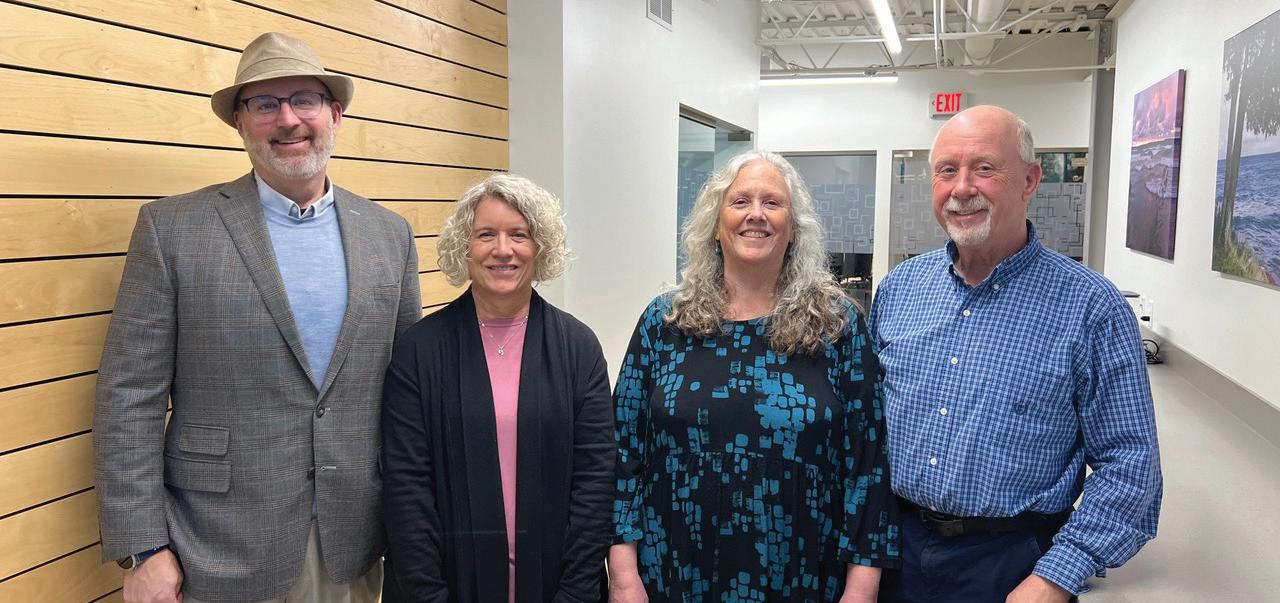
By Craig Manning
Four accounting firms have recently become two, thanks to a pair of high-profile mergers involving Traverse City players. With tax season closing in, the TCBN has the scoop on both mergers and what they mean for the businesses, employees, and clients.
Last October, Andrews Hooper Pavlik PLC (AHP), a downstate-based accounting firm, announced it was merging with Traverse City’s Hofstra, Bott & Kraft, P.C. (HBK). The merger was finalized and effective as of November 1, and brought HBK under the AHP umbrella. AHP, which was founded in 1993 with about 30 team members and a focus “on delivering Big 4 audit, tax, and accounting services in the Saginaw and Greater Lansing communities,” now has offices in 11 cities throughout Michigan, and more than 180 employees.
According to AHP Managing Partner Traci Moon, the prospect of the merger materialized at a lunch meeting “with a financial institution who had representatives from the Traverse City area in attendance.”
“It was during that lunch meeting that AHP expressed our desire to someday
have an office in the Traverse City area,” Moon said, noting that the prospect of a TC office is something the firm had been exploring “for many years.”
“It’s a growing community with a lot of opportunities, and we had current clients that had moved to that general area,” Moon explained of the interest in Traverse City. Other than an office in Marquette, all of AHP’s other locations are downstate.
According to Chris Bott, a partner at HBK, the merger with AHP was attractive because of the downstate firm’s size and reach. HBK was a small accounting firm in a small town, with a team of 10 and no partner offices outside of the region. AHP added some new heft to the equation.
“It provided us access to more resources in terms of services, staffing and technology, while still allowing us to maintain
“Through this merger, we can reach out [to AHP] when we need additional staffing or services which we don’t provide, and we can expand the services available to our local clients by bringing in firm expertise when needed.”
– Chris Bott, Partner, Hofstra, Bott & Kraft
Publicly announcing its desire to put down roots in northern Lower Michigan played in AHP’s favor. HBK was also on the lookout for a new partner, and the two firms had soon connected to discuss the possibility.
Like AHP, HBK also dates back to 1993, when the firm Schepers & Hofstra first took shape. The company became HBK in 2019, following a merger between Schepers & Hofstra and another Traverse City accounting firm, Bott & Company, P.C.
a local office presence,” Bott told the TCBN. “Through this merger, we can reach out [to AHP] when we need additional staffing or services which we don’t provide, and we can expand the services available to our local clients by bringing in firm expertise when needed.”
Under the merger, both Bott and fellow HBK partner John Kraft are still working in the Traverse City office, where they’ve been joined by George Wellings of AHP, who relocated from the firm’s Grand Rap-
ids office. The trio will run the local office as a team, with the TC location rebranding under the AHP name. All employees of HBK have been retained, as well.
“We are also working with a transition team of partners and administrators firmwide that are assisting us with the integration,” Bott added. “We are fortunate that both of our firms use the same tax software and billing systems, which is making the process easier.”
One crucial change? Back-end operations at the Traverse City office – including information technology, human resources, and marketing – have been “centralized” and “moved to AHP personnel,” according to Moon. She hopes the change “will allow Chris, John and their team more time to focus on providing exceptional service to our clients.”
“Many times, during our discussions, Chris and John would mention how they wanted to help this client or that client, but were struggling to find the time,” Moon said. “By taking some of the back-end tasks off their plates, they can completely immerse themselves in client relationships.”
Intrust CPA acquires WB CPA Group
Also late last year, Traverse City’s Intrust CPA announced that it had acquired WB
CPA, another TC-based accounting firm. The two companies have become one, as of October 31, with the three CPAs from WB CPA – Mike Wojtkowiak, Shaunna Bradford and Trish Cross – joining Intrust owner Jon Sluis and his team.
According to Bradford, WB CPA has “been working on some transition plans for the last several years.” Wojtkowiak and Cross have been working together for more than 35 years, and Bradford joined them –via another business merger – more than a quarter-century ago.
“We’ve been together for quite a while, and probably for the last several years, we’ve been talking about exploring our options and trying to find the right fit for making some changes down the road,” Bradford said.
As of now, none of the three accountants from WB CPA have immediate plans to retire, though Wojtkowiak admits that succession planning is part of the reason his team decided to seek an acquisition.
“I’ve been doing this for 45 years, so I’ve been at it a while, and I had to start really getting serious about an exit strategy,” Wojtkowiak said. “A lot of our clients have been with us for a long time – some of them upwards of 35 years – and at that point, they become more than clients to you – they become your friends. Once you’ve got a really good relationship with people, you just can’t cast them to the wind. So, it was really

important to me to find the best match and home for my clients, and after meeting with Jon, seeing his personality, and hearing more about his firm, I don’t think we could have done better.”
Wojtkowiak adds that WB CPA has “been through this a few times,” in terms of meeting with potential partners and considering mergers or acquisitions, but that “everyone before Jon was just not quite there.”
It’s not all about transition planning, though.
“In my case, it was a situation where the administrative tasks, plus the technology and cybersecurity stuff, was just taking a lot more of my time than it used to,”
Bradford said. “For a three-person firm, it was getting to be more difficult to operate

at the level that we wanted to operate and give our clients the best service. [Seeking to get acquired] was an opportunity to find a space where we could collaborate with like-minded professionals, split the burden and costs, and also provide our clients with a more expanded list of services than we had previously.”
Sluis says Intrust “gets approached pretty regularly” about M&A possibilities, especially as technology, cyber threats and compliance requirements make it “tougher and tougher to operate as a smaller entity.”
Even with so much consolidation happening across the industry, though, Sluis wasn’t ready to jump into partnership with just any firm.
“It has to be that right fit, because as professional service providers, it’s a trust-
ed relationship that is key,” Sluis said. “Your clients become more than just clients, and they’re coming to you for advice, almost like you talk to your pastor. We get to know our clients extremely well. And so finding that optimal end fit for two different entities and organizations is sometimes is a tough thing. But we found that with Shaunna, Mike and Trish. They had good reputations in town, good long-term relationships with their clients, and they were looking for a good long-term relationship with us. I think there were a lot of mutual things we were looking for.”
Wojtkowiak, Bradford, and Cross are integrating into Intrust’s existing team of 21 people, bringing the company’s employee count to 24.







By Jon Sluis, columnist
Artificial intelligence (AI) is having a moment – and unlike many business buzzwords, this one is actually changing how companies manage their money. For small and mid-sized businesses in northern Michigan, AI is no longer a futuristic concept. It is already showing up inside accounting software, forecasting tools and dashboards that business owners use every day.
When applied thoughtfully and paired with CPA guidance, AI can help businesses gain clearer insight into numbers, anticipate cash flow challenges sooner and make decisions with greater confidence.
From rearview mirror to real time insight
Traditional accounting has often been backward looking. Financial reports are prepared weeks – or months – after activity occurs, which limits their usefulness for day-to-day decision making. AI helps shift accounting from a rearview mirror view to a real time one.
Today’s AI-enabled accounting platforms automatically import transactions, categorize expenses and reconcile accounts with far less manual effort. As these systems learn from past activity, they become more accurate and efficient over time. The result is cleaner financial data and faster access to meaningful information. A word of caution: These auto features can produce incorrect classifications just as quickly as correct ones. For this reason, they should be viewed as a tool to assist and not unthinkingly to be relied upon.
For business owners, this means fewer hours spent sorting receipts and more time understanding what the numbers are actually saying about the business.
Why accuracy matters more than ever
Accurate books are not just about compliance, they are the foundation for good decisions. AI improves consistency by applying the same rules across all transactions, reducing errors caused by manual entry or oversight. It can also flag unusual activity, helping business owners review potential issues before they turn into costly problems.

This added layer of oversight is especially valuable for growing businesses, where transaction volume and complexity increase. While AI does not replace professional judgment, it strengthens the quality of the data CPAs and accountants rely on to advise their clients.
If profit is the headline number, cash flow is the story underneath it. Many profitable businesses struggle because cash arrives later than expected or expenses hit sooner than planned. Cash flow projecting has always been critical and often frustrating. AI brings a more practical approach to cash flow forecasting. Instead of relying solely on static spreadsheets and assumptions, AI analyzes historical patterns and current activity to create projections that adjust in real time.
For example, AI can recognize seasonal swings common to northern Michigan businesses, identify customers who regularly pay late or anticipate recurring expense spikes. These insights help business owners spot potential cash shortfalls earlier and plan accordingly.
One of AI’s most significant advantages is its ability to support better decision making.
Business owners can test scenarios before actually committing to them – such as hiring employees, purchasing equipment or expanding operations – and see how those decisions may affect future cash flow.
This turns financial planning into an active process rather than a once-a-year exercise. With CPA guidance, AI-driven forecasts become a practical tool for evaluating risk, timing investments and planning sustainable growth.
For small and mid-sized businesses in the Traverse City area, AI-powered accounting tools level the playing field. Capabilities that were once reserved for large companies are now accessible, affordable and increasingly user-friendly. That said, AI works best as a support system, not a standalone solution. The quality of insights depends on good data, proper setup and experienced interpretation. This is where CPAs continue to play a vital role: translating numbers into strategy and helping business owners avoid overreliance on automated outputs.
A tool, not a replacement
AI neither replaces internal accounting teams, bookkeepers or CPAs, nor does it eliminate the need for human judgment.
Instead, it removes much of the manual work that previously consumed time and attention. This allows CPAs to focus on higher-value conversations, such as cashflow planning, tax strategy and long-term financial health.
For business owners, the combination of AI tools and CPA expertise offers the best of both worlds: faster information and more competent guidance.
AI is reshaping business accounting and cash flow projecting in practical, measurable ways. For northern Michigan businesses navigating growth, seasonality and economic uncertainty, these tools offer clearer visibility and stronger planning capabilities. When paired with a trusted CPA, AI becomes more than technology – it becomes a strategic advantage. It can help businesses stay agile, manage cash confidently and make decisions that support long-term success.
Jon Sluis, CPA, is president of Intrust CPA in Traverse City. With a background in public accounting and private industry, he has more than 20 years in the industry. Specific areas of expertise include federal taxation law, tax credit financing, long-range strategic and financial planning, entity structuring, financial improvement measures and financial reporting; (231) 935-1590 or visit www. intrustcpa.us.
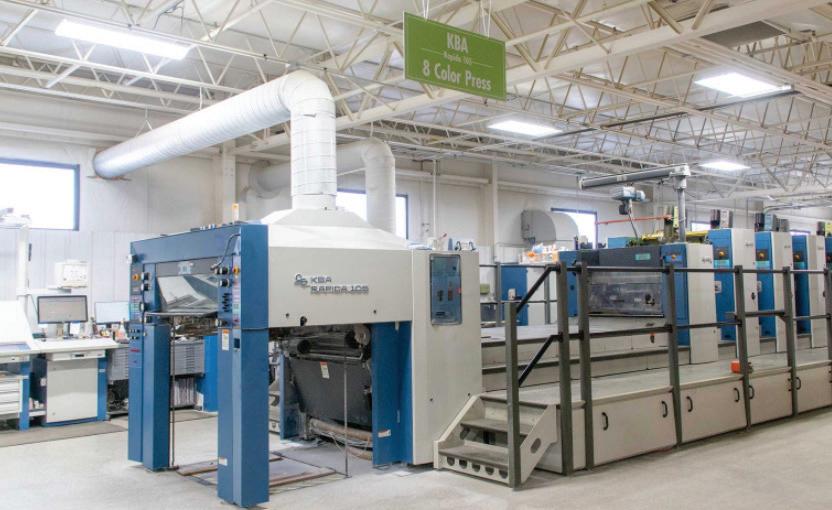

Discount is good for any print orders placed in February and March and completed by April 30th.
to order, or scan the QR code below.

Mention code TC10 to receive discount.

The TCBN does its quarterly check-in with Cherry Capital Airport Executive Director Kevin Klein, who takes a moment out of his busiest season ever to talk air travel, expansion and more.
TCBN: You must be one of the busiest people in all of northern Michigan right now.
Klein: There’s certainly a lot going on and there will be for the next two years. We’re not only really busy from a passenger perspective, but also from a capital development perspective.
TCBN: We saw the [Grand Traverse] County Commission vote 5-4 to move forward with bonding for the airport expansion. But how close that vote was was a big surprise, wasn’t it?
Klein: I was shocked, actually. Very appreciative it went our way, but I did think 7-2 at the worst or likely 8-1. But what I think happened is some influential groups challenged the commissioners on their vote at the last minute. But the reality is, gone are the days of unanimous votes. So we’re moving forward.
TCBN: So now the bonding is final?
Klein: We’re approved and moving forward. The process starts in late March and will be complete in April. All green lights from here. Now we’re working to earn more grant dollars from the State of Michigan and some private sources, trying to generate interest in the terminal development.
TCBN: Are you on schedule for your projected timeline for the new terminal?
Klein: Yes, we’re hitting all our marks. The next step is bids will go out this month to get final numbers, and we will also bid out the concrete apron work and around the building. We’ll continue to proceed and we’ll have shovels in the ground – if winter ends normally – in April. But if it’s a long winter, that might delay us a bit.
TCBN: Are all the interior designs complete too?
Klein: Yes, they’re all locked in.
TCBN: And vendors?
Klein: Well, there are two ways I’ll answer that. For concessionaires, we go out for bids in February. We’ll be looking for concession for a sports bar and also some remote or self-service concession opportunity. Of course our current cafe operator will be very interested. But there will be two new spaces vendors can bid on. And then [The Christman Company] is our construction manager at-risk. They held a vendor meeting with all the local construction firms in late December.
TCBN: Any preference given to local construction partners?
Klein: They do naturally give preference to local companies and also to those that have worked here before, but that will all be their responsibility. They’ll be bidding out soon and we’ll review at our February [Airport Authority] meeting.
TCBN: What else is new on-site?
Klein: Our new police department started operating on Jan. 4. By the beginning of February, the operation of our new economy parking lot will begin. Delta is expanding their service to Atlanta starting May 23, which is about a month longer than previous years. And Ron and Cindy Lemcool are expanding and redefining their café and adding more storage and prep space and more seating, so there will be some reconfiguring going on until probably Memorial Day there.
TCBN: What about the proposed hotel on-site?
Klein: Yes, that’s been approved and we’ll be working with them this spring to hopefully get shovels in the ground in 2026.
TCBN: Curious about the hotel. Where did that idea and need come from?
Klein: We had heard a lot from the general public about a need for a hotel at the airport, mostly from those who come from Leelanau who fly out on early flights. That’s really how it started. Then as different operators dug into the concept, they started looking at crew opportunities for lodging and also for travelers from all of northern Michigan. It started adding up to enough room nights to justify it, and then also looking at uses like Costco shoppers who come from farther away and businesses who want to fly in for the day for a meeting. So Socks Construction started working and looking at “How would a hotel look at all of this?” And they realized it could work very well. So we will operate
it with them; they will go out and seek a hotel brand. Our lease will be with them, with a percentage of revenue model.
TCBN: Understood. What else is happening?
Klein: Another thing is that AvFlight, our fixed base operator, is rebuilding their lobby and hangar, a $5M investment in that area. They will have invested over $12 million here since 2021, which is great. We’ll also be updating the lighting in our public area and Concourse A, a $2 million project just underway.
TCBN: Looking back at the big storm over the holidays, how bad were the disruptions?
Klein: A lot of what we experienced during what I’ll call the “holiday storm” was due to very substantial winds. And that did cause difficulty with deicing; it just causes havoc for the person out there spraying. But we were on top of clearing the runways and I think overall December turned out flat for us overall.
TCBN: And you’re constantly approaching airlines with new plans and ideas, correct?
Klein: Oh, I have all kinds of ideas for them! Yes, we’re mostly pitching to them in the fall, when we met with Southwest, JetBlue, United, American. It was a busy time. Another good thing about our expansion is we’re now having monthly meetings with the air carriers, so we’re getting more opportunities to be heard!




1 - Yarrow Brown is the new executive director of Generations Ahead, succeeding former director Marjie Rich. Generations Ahead supports teen parents across the five-county region. Most recently, Brown was the executive director of Housing North. She brings mores than 20 years of experience working in the nonprofit sector
2 - Dan Buron has joined Venture North Funding and Development’s board of directors. Buron, CEO and executive director of Goodwill Northern Michigan, has 20 years of experience in social enterprise leadership roles.
3 - Tanner Presswood has joined the Old Town Playhouse in Traverse City as its new production manager. Presswood’s previous experience includes working on movie sets and filming documentaries. He has been involved at OTP since 2024.
4 - Cherese Villarea l has joined CENTURY 21 Northland’s Elk Rapids office. Villareal brings a background in law to her new position.
5 - Alysia Boynton-Fisher has joined CENTURY 21 Northland as a REALTOR® in its Traverse City office. Boynton-Fisher brings a background in mortgage lending to her new role.
6 - Joanna Haaland has joined BoatCraft Sales & Service in Traverse City. Haaland brings more than 20 years of experience in the marine industry, including marina and boatyard management, hands-on technical work, and building sails for both racing and cruising yachts.
7 - Abigail Hetzel has joined the sales and design team at Carpet Galleria in Traverse City. Hetzel brings a background in customer service and assists customers with carpet, area rugs, and hard-surface flooring selections.
8 - Christie Dompierre , project manager at TBA Credit Union in Traverse City, recently earned the Project Management Professional certification issued by the Project Management Institute. Dompierre, who joined the credit union in
2011, has served as project manager since 2023, driving innovation, streamlining processes, and advancing team project collaboration.
9 - Rachel Johnson , C EO of Cherryland Electric Cooperative, recently received national recognition as the 2026 J.C. Brown CEO Communication Leadership Award winner. Johnson is the first female CEO to receive the award, which recognizes an electric cooperative CEO who demonstrates a deep commitment to the importance of communication in connecting electric cooperatives with their members, communities, and one another. Johnson became Cherryland’s CEO in 2023.
10 - Jessie Inm an has joined Sonny’s Body Shop in Traverse City as an auto body technician. Inman brings more than 15 years of hands-on experience in auto body repair and refinishing. He previously worked as a technician at Gerber Collision and Fox Motors in Traverse City.
Please send Newsmakers by the 10th of the month to news@tcbusinessnews.com

By Chris Wendel
Over the past 20 years, most of us have recognized the dramatic way our attention spans have been dominated by the use of smartphones. Getting lost in a black hole scrolling curated content or stepping back after realizing how much time has gone by are now routine experiences.
Understanding the overwhelming power of not just smartphones but also social media is at the core of “Smartphone Nation” by Kaitlyn Regehr. An associate professor at the University of London, Regehr is known internationally for her research on the impacts of social media on our wellbeing. Her expertise has made her a frequent commentator on digital safety and a lifeline for providing strategies for curbing the smartphone addiction, in particular for children and young students.
“Smartphone Nation” is one of several books centered on society’s digital overload. “The Sirens’ Call” written by TV news anchor Chris Hayes was released last year, rising to number-one best seller status. Highlighting how our lives have been co-opted creates plenty of headlines and frustration, but “Smartphone Nation” offers up thoughtful and actionable steps to curb negative online consumption.


Building Digital Boundaries When Offline Isn’t an Option
By Kaitlyn Regehr
learning tutorials and research than commenting and endlessly scrolling on social media.
Regehr also stresses how we have to have a keen sense for identifying bogus and false information that infiltrates what we view online. Combating this process requires some discipline, rather than an easy one step fix. She recommends carefully looking and verifying that your source is reliable and its information is trustworthy.

Smartphones and social media are designed to grab and maintain our attention. Notifications and algorithms intended to keep one scrolling results in clicks and extended time spent on apps and your phone. Using the emotion of content that reinforces our search histories and interests, combined with strong polarizing issues, creates what Regehr calls “you-loops.”
The book explains that this mix is the proliferation of misinformation and now AI carefully fanning the flames of controversy fed to users, further drawing them in. In the end we are the product, where our attention and minds are the product sold to the advertisers, essentially making the internet Goliaths the customers of our online information.
Regehr explains that the original positive attributes of smartphones (use as an actual phone, navigation) form a paradox developed between the essential utility of a smartphone (using in an emergency, work efficiencies) and the diversions that make them a time-sucking detriment. She points out that instead of going completely offline, we can build digital boundaries and make small changes to recognize and reduce compulsive use.
Regehr offers up a number of reasonable solutions. Most notable is what she terms the “Digital Nutrition Pyramid” that prioritizes quality screen time over passive consumption. For example, it’s much healthier to spend time on
This carries into perhaps the most valuable part of the book where Regehr presents strategies for parents that are trying to form strong digital habits for their children. It’s important to take a step back and recognize that children now know nothing but the digital age and all of the pitfalls and opportunities that come with it. Her advice includes parents having regular discussions about their online experiences, creating consistent phone-free moments at home, and offering guidance instead of policing usage.
“Smartphone Nation” goes beyond its title to emphasize the challenges we face being overwhelmed and dominated by the siren song of digital scrolling. Regehr presents a variety of best practices to step aside from the online rush under the heading “The Attention Economy.” First is becoming more aware of stopping before sharing emotional content and limit doom-scrolling (easier said than done). Although the remedies offered are easier said than done, Regehr uses interesting case study stories from her experiences that blend nicely with her research work and recommendations.
Chris Wendel works for Northern Initiatives, a mission-based lending organization based in Marquette, Mich. Northern Initiatives provides funding to businesses throughout Michigan and online business resources through its “Initiate” program to organizations and small business owners throughout the United States. Wendel lives and works in Traverse City.


Create your dream floor with luxury vinyl plank or tile in any room of your home. It ’ s stylish, easy to clean, water resistant and comfortable underfoot. Now with Special Pricing!


From wood looks, to stone or tile, luxury vinyl is a popular flooring choice at Carpet Galleria. No wonder it ’ s not only beautiful, but is extremely durable, delivering exceptional performance and low maintenance.