



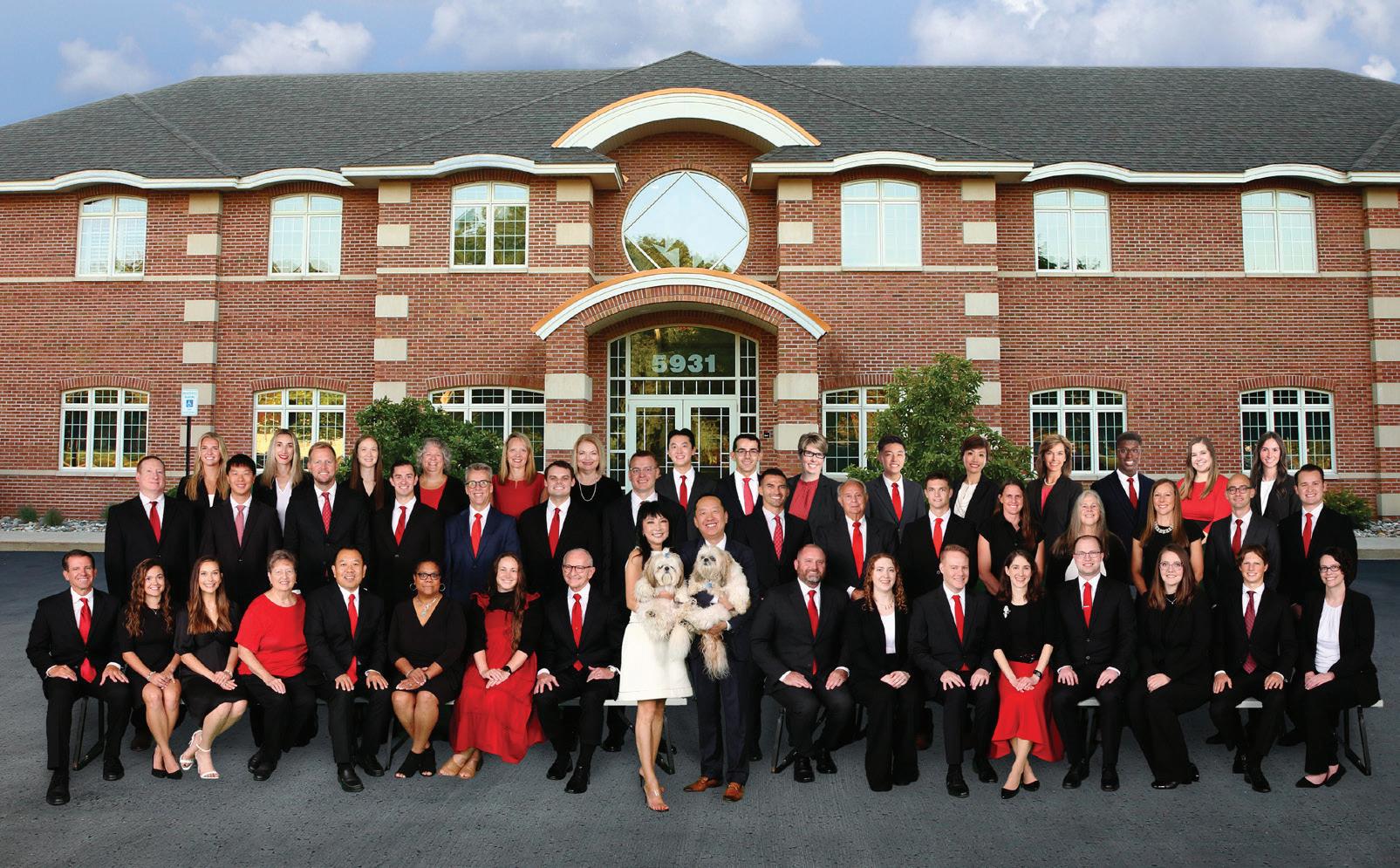

Office 5931 Oakland Drive Portage, MI 49024 269-385-5888 or 888-777-0216
• We uphold a Fiduciary Standard and work with clients on a fee-only basis.
• We do not receive commissions, kick-backs, or soft dollars from product sales, eliminating inherent conflicts of interest.
• Our team of professionals holds designations and degrees such as CFP®, CFA, CPA, MBA, JD, and PhD.
• Charles received his MBA from the Kellogg School of Management - Northwestern University, his MA in Economics from WMU, and Executive Education from Harvard Business School and Columbia University.
• Ranked #1 on Barron’s list of America’s TOP Independent Advisors for 2025. Charles has achieved the #1 ranking four times within the past five years.*
• Ranked #4 in the nation on Forbes’ list of TOP Wealth Advisors and is the highest-ranking Fee-Only Advisor on the list.*
Minimum investment: $1,000,000 in Michigan/$2,000,000 outside of Michigan. Assets under custody of LPL Financial and Charles Schwab.

Rehmann, a professional advisory firm with an office in Traverse City, has announced plans to combine with Rasmussen, Teller & Caron, P.C. (RTC), a CPA firm in Petoskey, effective June 2026. RTC offers accounting, audit, tax, bookkeeping and payroll services to a wide range of clients in a variety of industries. The three principals – Dan Rasmussen, Ted Teller and Adam Caron – have served the Petoskey market for a combined 85 years and they, along with all of their team members, will remain with the firm. RTC has been in its present location for the past 40 years, where it will continue to operate under the Rehmann name. Rehmann also has an office in Cheboygan and a presence in Ohio and Florida.
Northwest Michigan’s growing and thriving small businesses and the next generation of business leaders will be recognized by the region’s business community in the return of the Traverse Connect Business and Community Achievement Awards this spring. The organization will recognize young professionals, economic impact, community or civic service, and demonstrated achievement in the Grand Traverse region. Three finalists will be selected for each award, who will be announced the week of April 20. Award recipients will be selected through live voting by attendees of the Distinguished Service Award Luncheon on May 13 and announced at the event. Nominations will be accepted through April 8 at traverseconnect.com/achievementawards.

Shanty Creek Resort in Bellaire recently announced an ownership change. Shanty Creek Ski and Golf Resort, LLC has officially acquired the resort from Trinidad Resort & Club, LLC. The new ownership group has longstanding ties to northern Michigan and brings a wide range of experience in development, food service, entertainment and property management, as well as resort and ski operations. A strategic plan includes
hotel updates, a new website and growing the resort’s family-friendly activities. The current team will remain in place.
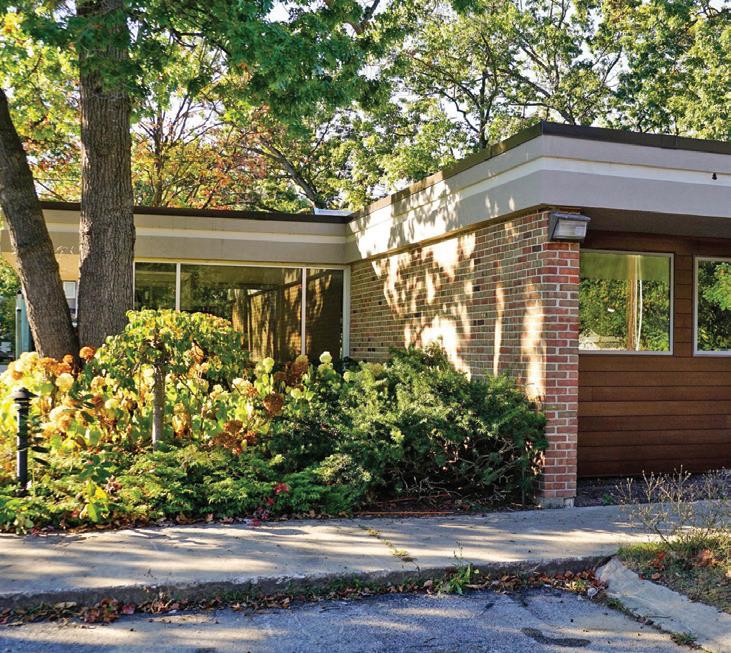
Traverse City interior design firm
Kitchen Choreography has announced plans to relocate its studio this month to a newly purchased space on Eighth Street in Traverse City’s Oakwood District. Kitchen Choreography was founded in April 2003 by husband-and-wife team Mike and Angela Goodall. The new studio, located near the Civic Center, marks a stylistic shift from the firm’s current historic showroom on the grounds of the Grand Traverse Commons. “This next chapter reflects both growth and evolution,” said Angela Goodall, co-owner and lead designer. “We are thrilled to be in the center of it all –closer to our clients, collaborators, and the vibrant downtown energy of Traverse City.” The Goodalls will retain ownership of the historic Commons property.
Northwest Michigan Works! has released an updated Hot Jobs Report, a regional workforce resource that highlights occupations with strong demand across northwest Lower Michigan. The report identifies careers with high numbers of annual openings and provides information on wages and education and training pathways, helping job seekers, educators and employers better understand opportunities in the regional labor market. The updated report is based on current labor market information and regional workforce insights. Find it at nwm.org/ hotjobsreport.





















to make room for a new restaurant concept. Co-owner Adrienne Brunette said the restaurant’s last day will be May 5, after which it will re-open a week later as Happy Cat , a new fast-casual Asian restaurant. “When you cook something for 10 years, it gets a little tired,” explained Brunette. “We’ve been blessed to retain the same team, and we’ve got people who want to grow and learn. Some want to open their own restaurants and have never been through a rebrand or opening. That process is so valuable to them.” In other restaurant news, restaurateur Jeff Lobdell has purchased Slabtown Burgers from founders Jeff Pownall and Toni Dye, who launched the West Front Street restaurant in 2009. The restaurant will be overseen by long-time Traverse City resident Scott Parkhurst, who also works alongside Lobdell in supporting several other local restaurants.
Lügn Esthetics is expanding inside the building that also houses Eelo at the corner of Front and Union in downtown Traverse City. Founder Madison Malmstrom announced Lügn will open a new boutique spa experience in May, expanding beyond esthetic services to offer “massage therapy, non-toxic nail rituals, and additional treatment rooms.” Eelo owner Jen Vander Roest noted that her business remains open. In other business news, The Hair Hut has opened at 3011 North Garfield Road. The business is owned by Pam Clous, who recently closed The Interlochen Barbershop. Also, the new Ace Hardware in East Bay Plaza is now open, as is Coyote Joe’s Pub and Grill on M-72 in Williamsburg, new dessert cafe and lounge Clean Crumbles on West Front Street, the Folded Leaf bookstore inside the Commongrounds Cooperative building on Eighth Street and the Old Mission Tavern (under new ownership).
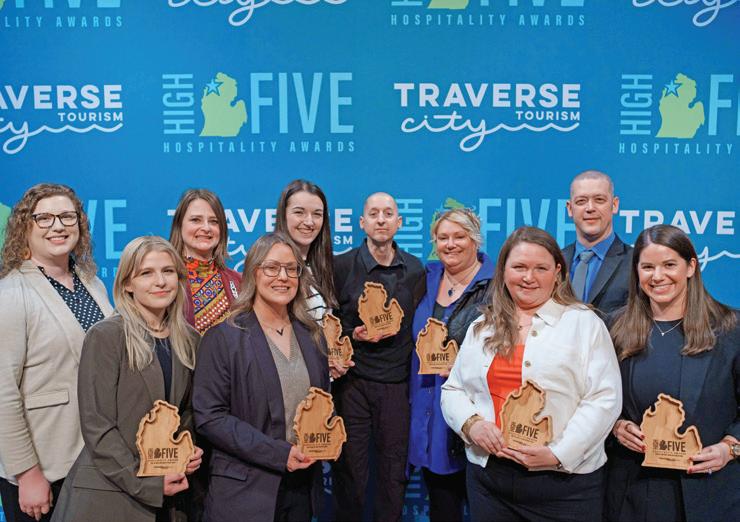
Molly Kreykes, Sarah Bobier, Christa Brenner, Kristen Warba, Leah Moerdyk, Peter Krupka, Ann Pettyjohn, Mandy DePuy, Scott Firman and Caroline Rizzo were recognized with High Five Hospitality Awards at the Traverse City Tourism Annual Meeting at the City Opera
House. The awards recognize people who stand out in lodging, attractions, restaurants, beverage service, and festivals.
Crystal Mountain co-owner Chris MacInnes (not pictured) was awarded the Community Impact award. “Chris has demonstrated a lifetime of supporting the hospitality industry and community service, not just locally, but throughout the state,” said Traverse City Tourism President Trevor Tkach. Photo courtesy Traverse City Tourism/Sander Breneman
Traverse City’s Spark in the Dark, founded in 2017 by Abby McKiernan as an online platform where people could share a basic need and the community could respond, is now HelpLink, expanding the platform to now engage businesses. Businesses can create tax-deductible program funds for employee needs or local causes, add pledges and donation matches and track outcomes through built-in reporting. Lean more at helplink. org/businesses.
Running a business is tough enough, you shouldn’t have to worry about your technology. That’s why local businesses trust us as their IT partner.

The 2026 Kalkaska Business of the Year is Sunday Morning Flowers , owned by Leah Cox. The Kalkaska Business of the Year Award was established in 2005 to honor a local business for its outstanding service. The winner was selected through a community nomination process facilitated by the Grand Traverse Regional Community Foundation and the Kalkaska Awards Committee. Sunday Morning Flowers and Cox will be honored at the Kalkaska Luncheon April 21 at Railroad Square Pavilion.

PANY EXPANDS TO TC



North Country Aviation , which has provided service to the Gaylord area for more than 40 years, is expanding to Traverse City. The family-owned company offers aircraft charter, management, sales, service, and repair. The twin-engine fleet includes the King Air 200 (9 passengers), the King Air 90 (6 passengers), and the Baron 58P (5 passengers), providing direct access to thousands of destinations across the United States, Canada, and the Caribbean.









In northern Michigan, agriculture is more than a way of life – it’s an economic cornerstone that underpins the health and vibrancy of our regional economy from specialty crops like cherries and apples to agritourism, processing facilities, testing labs and equipment dealers.
The industry contributes to a diverse economic base that sustains jobs, attracts investment and supports the main streets of our communities. That is why the broader business community has a vested interest in the passage of the Farm, Food, and National Security Act of 2026, or farm bill.
A win for farmers is a win for the regional economy
This year’s federal farm bill is much more than an agricultural support program. It’s a comprehensive economic development package. And in conversations with agricultural leaders across the state, one theme has been clear: What farmers need are policy wins that improve profitability, reduce risk and create opportunities for growth. When agriculture succeeds, northern Michigan succeeds too.
Michigan Farm Bureau President and Leelanau native Ben LaCross, who grows cherries with his family near Glen Lake, underscores the urgency of meaningful wins for farmers and the challenges faced by the industry, especially low commodity prices, high input costs and tight profit margins.
“There’s no doubt that farmers are facing many challenges, but the tools that a modernized farm bill provides would mark an immense shift toward the certainty they’ve been waiting for,” LaCross said.
EDITORIAL
ON THE WEB tcbusinessnews.com
PUBLISHER
Luke W. Haase lhaase@tcbusinessnews.com
CONTRIBUTING EDITOR
Gayle Neu gneu@tcbusinessnews.com
HEAD WRITER
Craig Manning
STAFF WRITER
Art Bukowski
COMMENTARY BY GABE SCHNEIDER
“The critical provisions within this farm bill will strengthen agriculture and help the U.S. regain its dominant role and reputation as the country that feeds the world.”
Agriculture’s success contributes to regional appetite for investment, population retention and quality of life – all factors that matter when recruiting talent and attracting new businesses or expanding and growing existing businesses to compete on the global scale.
Think about Cambium Analytica, an NSF Company, which is an innovative analytical testing and development company in Traverse City serving the natural food, beverage and dietary supplement industries. Just last year, Cambium was acquired by NSF, a global public health and safety organization, further elevating Cambium’s cutting-edge operations internationally.
When business owners outside of agriculture join farmers in advocating for policy that supports economic diversity, their voices grow louder and more influential in Washington. That’s how structural wins are achieved: through broad partnerships and shared interests.
The farm bill as drafted and passed by the U.S. House Committee on Agriculture includes provisions that matter deeply beyond fields and orchards. This includes:
• Strengthened risk management and disaster assistance programs for specialty
COPY EDITOR
Becky Kalajian
CREATIVE DIRECTOR
Kyra Cross Poehlman
CONTRIBUTING WRITERS
Ross Boissoneau
Kierstin Gunsberg
Rick Haglund
WEB PRODUCTION: Byte Productions
MAILING/FULFILLMENT
Village Press
DISTRIBUTION
Marc Morris
crop producers.
• Expanded research, export promotion and market development initiatives.
• Continued and enhanced support for USDA Rural Development infrastructure programs.
• Broadband deployment in rural communities.
• Business and industry loan guarantees that reduce risk for lenders and borrowers alike.
USDA Rural Development programs, funded through the bill, are particularly strategic because they support infrastructure projects like water systems and community facilities to help rural towns attract talent, retain businesses and compete in the modern economy.
The timing for engagement by the business community is crucial. House action this spring marks a key moment when members will debate amendments and help to set priorities before the bill moves to the full House floor. Meanwhile, a companion process is underway in the Senate. Successful passage requires informed advocacy from a wide range of stakeholders, including the broader business community.
As former chairwoman of the powerful Senate Committee on Agriculture, Nutrition and Forestry who represented Michigan in Congress for 28 years, former U.S. Sen. Debbie Stabenow knows the importance of the farm bill to our producers and our regional economy. During her time on the committee, Stabenow led the passage of more farm bills than any
SERVING
Grand Traverse, Kalkaska, Leelanau and Benzie counties
AD SALES
Lisa Gillespie lisa@northernexpress.com
Kim Murray kmurray@tcbusinessnews.com
Kaitlyn Nance knance@northernexpress.com
Abby Walton Porter aporter@northernexpress.com
Michele Young myoung@tcbusinessnews.com
current member of Congress and played a pivotal role in shaping each one since 2002. Importantly for Michigan, she led the fight to add a Specialty Crop Title so critical support for fruits and vegetables growers is included in the farm bill.
“In Michigan, we make things and grow things,” Stabenow said. “It’s who we are, and our economy depends on bolstering those industries. A robust farm bill strengthens the incredible diversity of agriculture in our state, supports jobs, protects our land and water, improves small towns and rural communities, and supports families working hard to make ends meet.”
A shared economic priority
The farm bill matters for farmers. But it also matters for banks, downtown retailers, manufacturers, service providers, hospitality operators, and entrepreneurs across northern Michigan. When agriculture succeeds, it generates economic activity that strengthens tax bases, supports jobs, attracts investment, and fuels community development.
Now is the time for the business community to make clear that investment in agriculture and rural development is investment in the health of the entire regional economy. The farm bill is good for agriculture. But, just as importantly, it is good for business – for all of us who live, work, and grow with northern Michigan’s economy.
Gabe Schneider is a consultant, policy strategist and founder of Northern Strategies 360. He lives, works and invests in Traverse City.
The Traverse City Business News Published monthly by Eyes Only Media, LLC P.O. Box 4020 Traverse City, MI 49685 231-947-8787
Periodical postage qualification pending at Traverse City, MI.
POSTMASTER: Send address changes to The Traverse City Business News, PO Box 1810, Traverse City, MI 49685-1810.
The Traverse City Business News is not responsible for unsolicited contributions.
Content ©2026 Eyes Only Media, LLC. All rights reserved.
EYES ONLY MEDIA, LLC
By Art Bukowski
Alison Metiva is president and CEO of the Grand Traverse Regional Community Foundation, which makes grants to a wide variety of worthwhile causes in Antrim, Benzie, Grand Traverse, Kalkaska and Leelanau counties. She took the top job there in January after 19 years with the organization. We thank her for showing us around her desk! If you have an idea for a From The Desk Of feature, please email abukowski@tcbusinessnews.com


1. This is a model of the ‘This is fine’ dog from the meme that’s been on the internet for a while. He’s keeping his cool as the room burns. And it’s sort of a catch phrase for me, particularly when stuff is busy and noisy: ‘It’s fine, we’re fine.’ So that guy just reminds me that there can be moments of levity when it feels like you’re on fire.
2. My niece crocheted this cactus and these beautiful flowers for me. She’s a super-talented young person. I just love having them in my workspace.
3. Those are my three kids. They’re now 15, 13 and three. They’re really my core.
4. This is a book on equity by Minal Bopiah. We as an organization have been on a journey to learn about equity and inclusion, and this book is really about how you design organizations where everyone thrives. It really generates thoughts and concepts and challenges
your norms of thinking to say, ‘Are we creating a system in which everyone can show up and be in a position to thrive?’
5. That little note says, ‘Do what you do best and connect for the rest.’ It’s just a good little reminder that no one person can do all the things. You need to really lean into what your strengths are, then connect for everything else and let other people use their best strengths to bring things forward.
6. This is a case for support for what we call community funds. A lot of the money we grant out is earmarked by donors for a certain purpose, and we are always in need of more flexible, unrestricted funds to empower our communities. This is especially true as areas of need change or emerge over time. So growing those flexible community funds is a big strategic priority for us.
7. This is our first-year progress report after our founding in 1992 and our
most recent strategic plan. And I have these intentionally together because it just shows where we started and where we’re going. We have a generational responsibility, and we’re building upon what was created 30-plus years ago. So the work they did set the stage and the foundation for the work that now we’re being able to do. The work we’re doing now is setting the stage for the future.
8. We have a wall with all of our past board chairs going back to 1992. These are the volunteers who really provided the leadership and vision for the organization. And one of the things that really stands out and is important about the Community Foundation is this idea of legacy; this idea of how what we do today is really building towards the future. These are the people who were around the table, who laid the foundation for the work we have the privilege to do today.

By Kierstin Gunsberg
Two years ago, we took an analytical look at the state of housing construction across northern Michigan with Lauren Tucker, executive officer of the Home Builders Association (HBA) of Northwest Michigan, digging into data to get a clearer post-COVID snapshot of the industry. Now, as another construction season ramps up, Tucker and other leaders share updated numbers — from permits and job growth to timelines, lumber supply and what to expect heading into summer 2026.

12 PERCENT: That’s how much job growth NMC’s Construc tion Technology Program Coordinator Carolyn Andrews estimates the NoMi region has seen since 2020. “Especially around Traverse City,” said Andrews, adding that a boom in residential building and recent infrastructure investments – which includes the city’s upcoming $4 million-plus reconstruction of Slabtown’s Monroe Street – are big factors in the increase. That’s good news for students in NMC’s construction programs, which partner with the HBA of Northwest Michigan, Builders Exchange of Northwest Michigan and several contractors to fill out job-site opportunities and connections for their cohorts.
178: The current number of regional job openings for construction laborers, while demand for carpenters (129 current openings) and HVAC mechanics (52 current openings) is expected to grow, too. With spring’s busy construction season upon us, there’s still not enough skilled workers to fill the talent gap, explains Andrews, noting that even as NMC graduates fresh contractors into the field, a larger number of workers are retiring. “There aren’t enough new people entering the trades,” she said.
58: Median age of licensed builders in the state, per 2025 data from the Home Builders Association of Michigan. With 42,206 total licensed builders in Michigan, the majority of them (23,586 to be exact) are 56 and older and coming up on retirement, with those aged 18 to 55 totaling 18,620.
$27.60: The mean-hourly wage of Traverse City’s workforce employed in the “construction and extraction” occupational category (a broad term for trade and labor workers) according to the latest numbers reported in 2024 by the National U.S. Bureau of Labor Statistics. That’s about 10 percent less than the reported national average of $30.73, or roughly $6,500 less per year for full-timers. While there’s job opportunities aplenty up here – and higher wages compared to smaller Michigan communities – competitive pay still lags compared to the rest of the country.
ZERO: How many changes have been implemented to the Michi gan Residential Code (MRC) since updates were meant to launch last year. “We are still operating under the 2015 [version],” said the HBA’s Tucker. Changes to the code, which includes standards that could crank up new home prices by another $15,000, have faced flack from industry leaders. A lawsuit filed by the HBA of Michigan paused those updates in July. In the meantime, Tucker says it’ll likely be another two years before any changes come into play. Meanwhile, a new commercial code was adopted in 2025.
435: Single Family Home (SFH) permits submitted last year in Grand Traverse County. That’s a solid jump from the 279 new SFH permits in 2023. But for Leelanau and Benzie counties, those permits have actually dipped – Leelanau’s from 208 in 2023 to 128 in 2025, and Benzie’s from 129 in 2023 to 116 in 2025.
2.8 PERCENT: Reduction in SFH permits that the HBA of Michigan forecasts for this year. Tucker, who notes an increase in multi-family units being built locally, thinks the downward trend on new SFHs could be a mix of industry factors (like increasing construction timelines) and economic factors. There’s no debate that homeownership is becoming less and less accessible to younger markets, with the average age of first time home buyers reaching 40 recently. It was 35 just three years ago. And though mortgage rates have fallen slightly over the last year, “mortgage rates will continue to be the single biggest factor contributing to new home affordability,” said Tucker. And, consequently, they’ll continue to nick at how many new SFH permits are requested this year. Though, Tucker notes, northern Michigan probably won’t be quite as impacted by the rest of the state, since the area attracts more cash buyers, even when it comes to new construction.
$475,024: The estimated average market value of brand-new SFHs built in Michigan last year. That’s up 6.5 percent over the prior 12-month period which averaged $445,864.

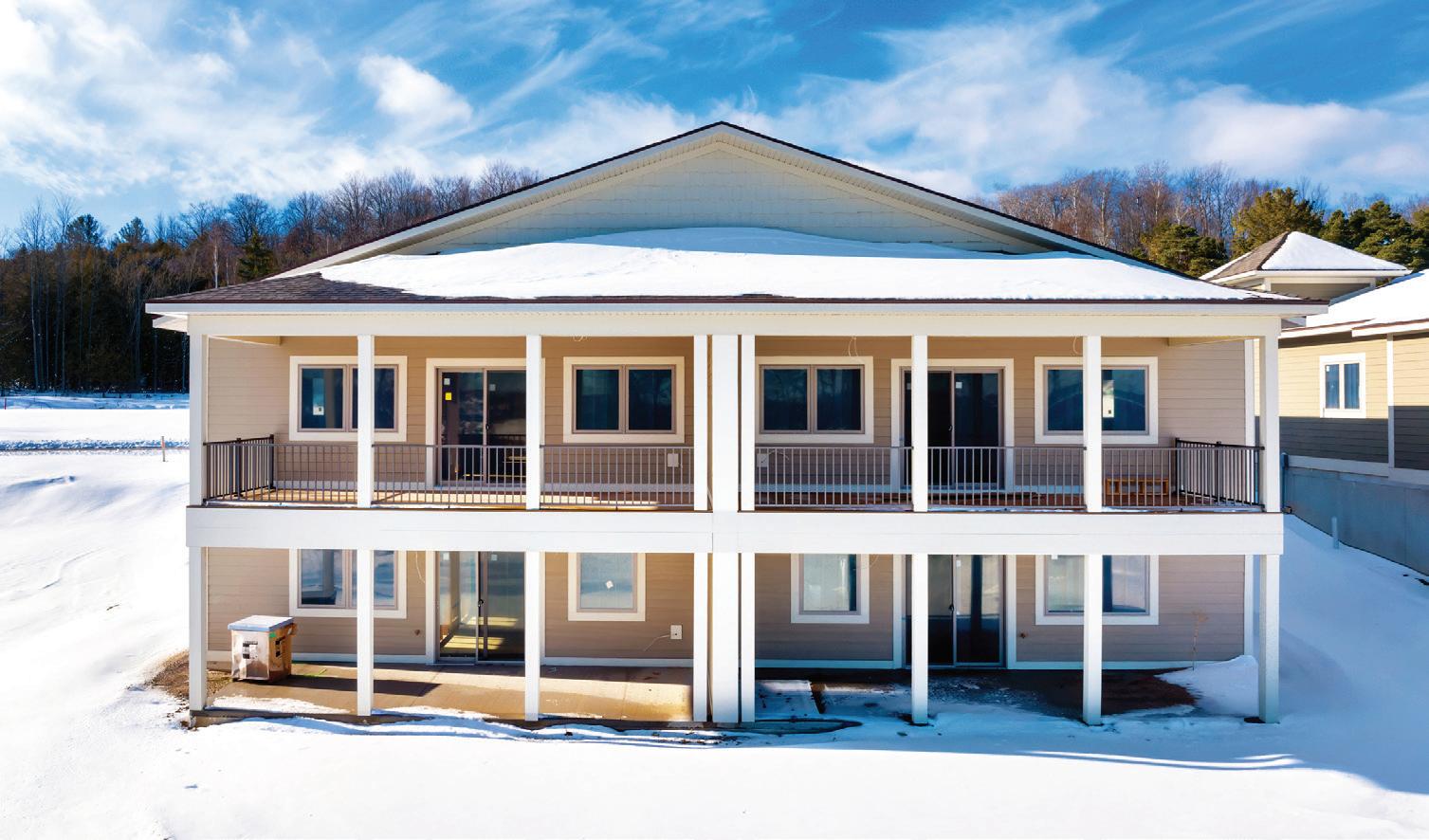
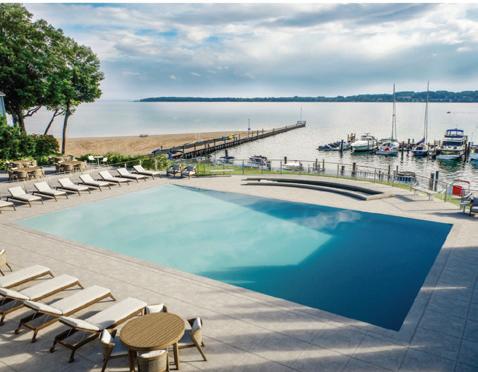

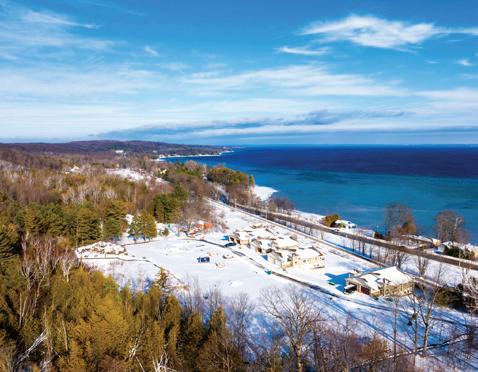
These Condominums are situated on the picturesque Leelanau Peninsula in Michigan. Suttons Bay is a charming village renowned for its breathtaking views of Grand Traverse Bay, unique boutiques, and exceptional, world-class wineries, all set against a welcoming small-town spirit. With its relaxed ambiance coupled with high-end amenities, this hidden treasure is an appealing destination for condominium buyers eager to invest in a luxury lifestyle.
12 TO 18: That’s how many months the current surplus of fire-salvaged Canadian lumber is expected to last — a glut that’s actually helped ease building costs. Last year’s Canadian wildfires burned more than 20 million acres of forest, killing millions of trees still standing, still useable trees. “Lumber companies harvest this lumber and produce a surplus, lowering the cost of importing,” said Tucker. So, “even with tariffs, [it] keeps the cost flat.” Material supply, she adds, is pretty stable, and U.S. tariffs on Canadian lumber aren’t expected to hugely impact 2026 costs since most softwood production is domestic anyway. The biggest variable for this year is interest rates, says Tucker. If those continue to fall, more buyers are likely to enter the market, pushing housing starts and material costs higher. For now, though, the lumber market has been flat and, she said “the outlook remains remarkably flat.”
90 PERCENT: How much construction timelines have grown since interior designer Paige Maurer first started in the industry 12 years ago. Back then, “it was achievable to start a new build in the late summer or early fall, around Labor Day, and have it completed by early June or the 4th of July,” said Maurer. These days, larger, more elaborate builds, delayed supplies and labor shortages have extended those timelines from around 10 to 12 months to 18 to 24 months.
3,000 TO 5,000: The average square footage of the new construction builds that Maurer, who specializes in luxury and custom projects, is seeing for this year. That’s not a big change from last year, she says, but while the size has stayed consistent she’s seeing more of that square footage dedicated to outside spaces like “screened porches, large decks, pools and saunas.”
FIVE: Newly built single-family homes currently listed at or below $320,000 across the Greater Grand Traverse and Leelanau areas – a sliver of inventory in what developer Josh Haselton calls northern Michigan’s “missing middle.” It’s the price point where many families can realistically picture homeownership, if they can find something to buy. That’s another number that hasn’t shifted much over the last couple years. “I believe that this number is still floating around $300,000,” said Haselton. “Interest rates are softening which gives a little relief on the monthly payment for this ‘missing middle’ customer.”
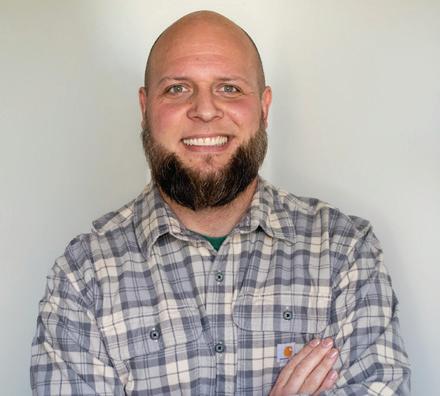
Two years ago, Haselton’s firm, Northern Den Development, built exclusively for that market, breaking ground on Thrive TC, 26 three-bedroom, 1.5-bath condo units priced between $293,500 and $305,900 and built in partnership with NMC construction majors on Traverse City’s south side. With Thrive completely sold out, he’s now building Willow’s Way, a 48-unit development on Traverse City’s west side that’ll be similar to Thrive, including remaining in that $300,000 price point. And, though none of Willow’s units have been listed yet, “of the first eight units available, we already have five sold,” said Haselton.



By Art Bukowski
You can’t drive around town without seeing a project touched in one way or another (and in many cases, completely envisioned) by Mansfield Land Use Consultants. Bonobo Winery and Mari Vineyards. The BATA transfer station and West Shore Bank’s snazzy new headquarters. The Traverse City Horse Shows campus and Wuerfel Park. Farm Club and Kingsley Club. Crystal Mountain and Crystal Downs. Annika Place and Alexandra Inn. Countless residential projects. The list goes on.
It’s a point of pride for Doug Mansfield, who co-founded the company in 1999 and with his team grew it into one of the most respected – and hired –planning and civil engineering firms in northern Michigan.
“It’s amazing,” he said. “You get to drive by it with your kids and your parents and say, ‘We were a part of this, we were a part of that.’ It’s a great feeling. And not only did we do it, we did it well.”
The TCBN sat down with Mansfield and fellow managing partner John Hughes to learn more about what sets their company apart.
Face of the project
Mansfield, who grew up in Grayling, spent time working for firms in Metro Detroit before returning north to work at Gourdie Fraser. While he was happy with his work there, he identified a business opportunity: A firm that specialized in representing private clients instead of working in both the public and private sectors.
“A lot of the engineering firms at the time were doing both municipal work and private work,” he said. “I wanted to have a staff that really understood the private sector. Milestones, dates, interest rates, politics, all of these things.”
So began Mansfield Land Use Consultants, which offered a clear value proposition: “Aside from delivering on the many technical aspects of planning and civil engineering – surveys, wetland delineations,
road placements and so much more – we understand your desires and constraints. And perhaps most importantly, we know how to work with municipalities and the public to get your projects approved.”
That last part is where Mansfield has made a very strong name for itself. Aside from knowing how to cross every T and dot every I from an approval perspective, their team usually handles the often-contentious public input process.
“We’re often the face of these projects,” Mansfield said. “And what we do gets a lot of publicity – good, bad and ugly. There’s a lot of scrutiny.”
And rightfully so. There are emotions that come with change of any kind, especially when it comes to projects that will be near people’s homes.
“There’s no one more tense or more nervous than someone defending their backyard. I mean, you’re going to have an impact on their life,” he said. “And things get unruly, sometimes personal. We’ve had our challenges when you walk out into a hostile crowd and things like that.”
It’s not for everyone. There are firms that stay away from handling public approval processes because they don’t want their names tied to something controversial, Mansfield says, and there are people who just can’t handle the pressure cooker formed by a room full of agitated neighbors.
“You have to know that it’s not directed at you and get good at letting it go. And a lot of people can’t do that. We’ve gone through people that said, ‘I don’t want to be the bad person.’ Well, you’re not. You’re just carrying the message,” Mansfield said.
Mansfield understands all of these dynamics very well. He’s been the supervisor of Grand Traverse County’s Union Township for more than 30 years, and he’s seen things from the other side. That’s something his firm always tries to stress: We live here too.
“We are the face for the big bad developer. We recognize that. What we do is not always, in the eyes of people who’ve been here forever, the greatest deal,” he said. “But we also live here. We make sure
people know we live here. What we do is also going to impact us.”
The Mansfield team also makes a genuine effort to alter plans based on public suggestions, where possible.
“It gets better as people provide input … and sometimes it’s the littlest thing: a trail, a piece of woodlands, something where somebody has a memory or a view, all of these kinds of things. Sometimes it’s moving things 10 feet, 30 feet,” he said. “And generally, we listen … we can make it better.”
All of this is not to say Mansfield is only handling contentious developments. The firm has been a part of dozens of projects for nonprofits and various community agencies that enjoy broad public support.
“As much as we work on the top of the line in this market, we work with Habitat [for Humanity - Grand Traverse Region] and HomeStretch [Nonprofit Housing] and those kinds of things too,” he said. “We’ve walked some of the most beautiful pieces of land the [Grand Traverse Regional Land] Conservancy has been a part of.”
Experience and responsiveness
While tremendously valuable, Mansfield’s ability to navigate the pitfalls of the public approval process is just one reason clients appreciate this firm.
Mansfield says his firm has long prided
“Any success the firm has enjoyed is most certainly due to the commitment and professionalism of our staff.
Our partners will repeatedly say,
‘They are the best at what they do,’ and we firmly believe that.”
– Doug Mansfield, Co-Founder, Mansfield Land Use Consultants
itself on being very accessible and responsive to its clients, something they very much appreciate in the fast-paced world of development.
“Things can happen in an instant that affect these projects,” he said. “So some people will say, ‘Maybe you’re not the biggest or best in the nation, but you pick up the phone almost every time I call.’ And that’s a hard thing to get these days.”
This responsiveness is particularly important in a day and age when the real estate market remains white hot.
“If you see a piece of land in Traverse City, how long do you have before it’s


picked up? Not a lot of time,” Mansfield said. “So we are extremely responsive to those first due diligence questions: ‘Should I wrap this thing up? Should I take an option?’ They need to know in hours, not weeks. So we make that happen extremely quickly.”
Mansfield is also proud of his firm’s continued hard work to make projects pencil out for their clients, something that gets harder and harder as costs continue to rise across the board.
“To make the dollars and cents of this work can be really, really tough,” he said.
Last but certainly not least, Mansfield
and Hughes are tremendously proud of their staff, who make everything happen.
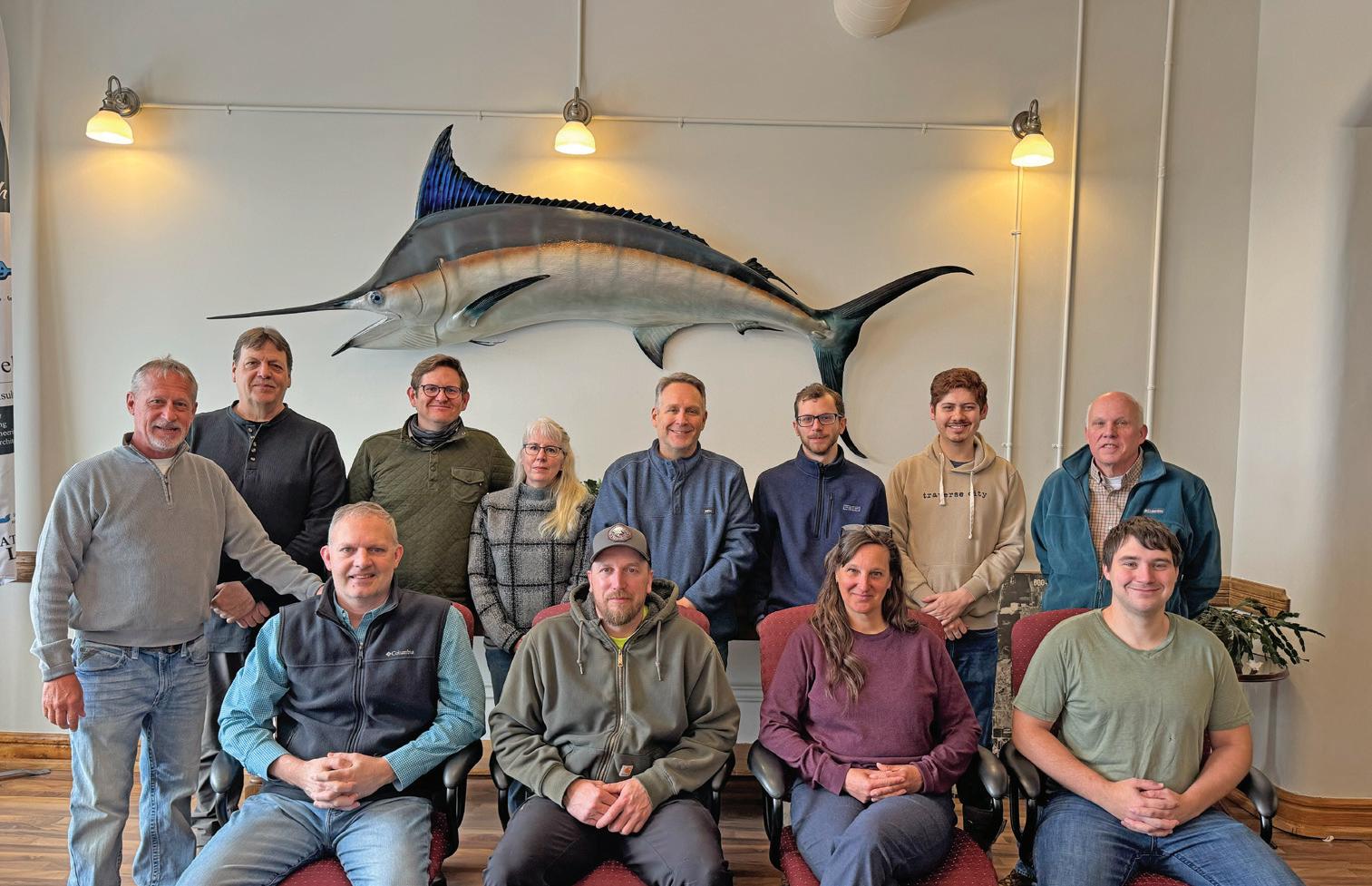
“At the heart of our story is a team defined by unwavering dedication and refined professionalism,” Hughes said. “By blending their unique strengths and pushing through every challenge together, they are the hands and minds that consistently bring our most ambitious goals to reality.”
“Any success the firm has enjoyed is most certainly due to the commitment and professionalism of our staff,” Mansfield added. “Our partners will repeatedly say, ‘They are the best at what they do,’ and we firmly believe that.”




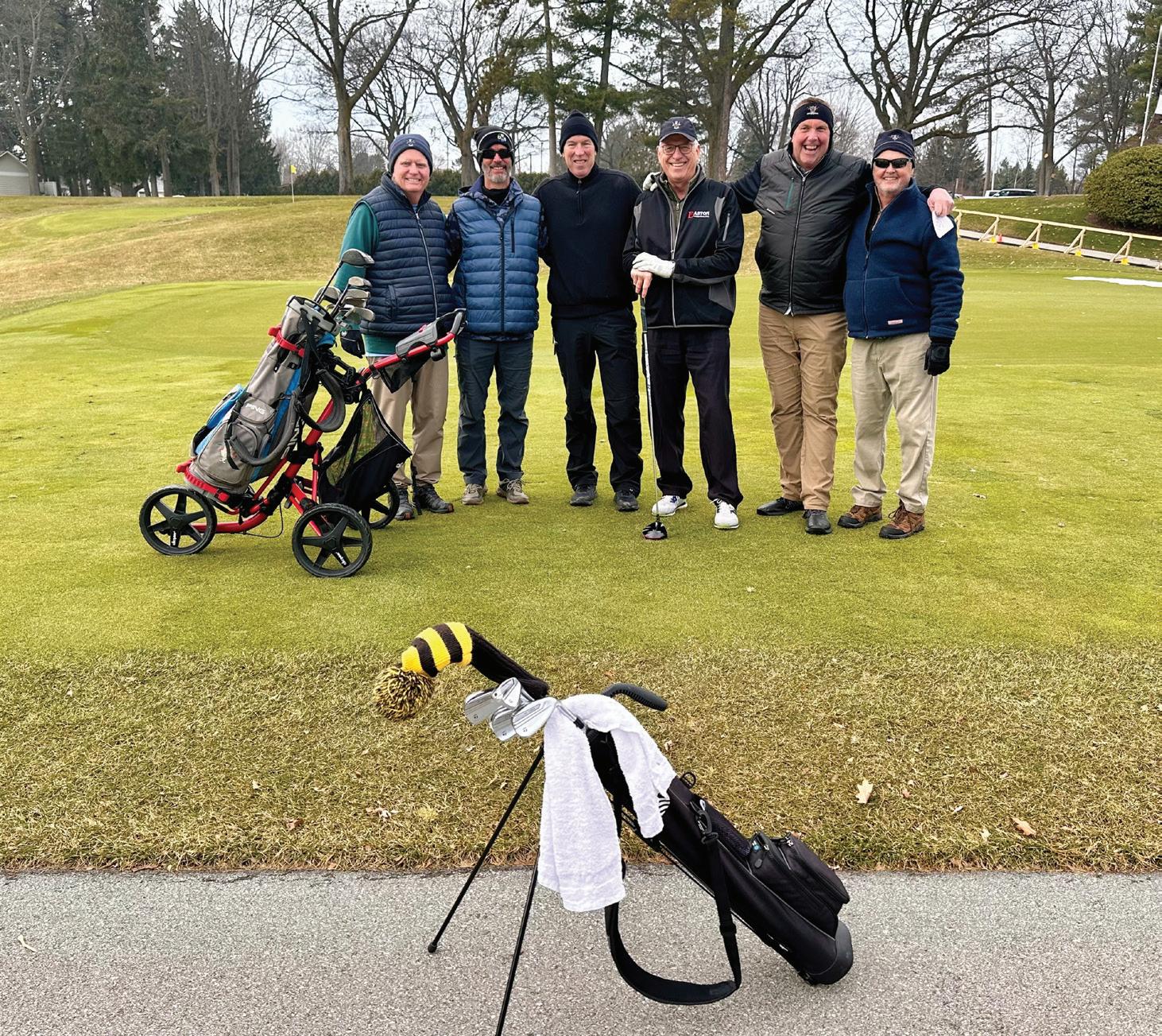
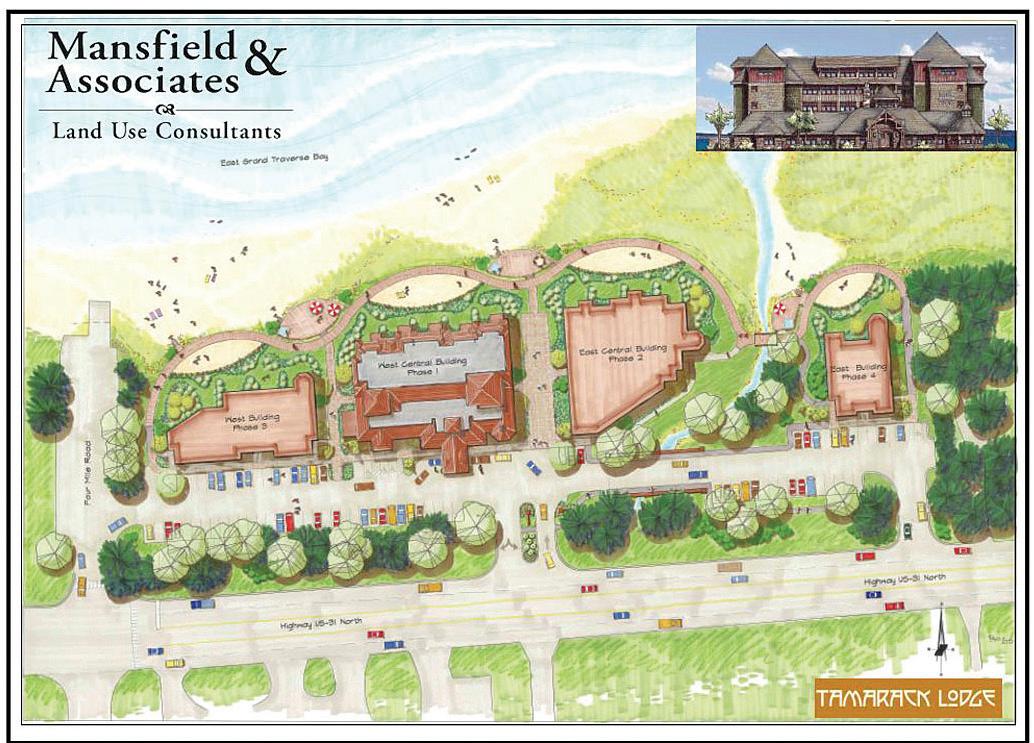
Mansfield’s diverse team of “artists and authors, geniuses, jocks and farmers” has a way of producing far more than the sum of its parts, Mansfield says.
“In this group you will find complimentary and conflicting ideals that, when challenged, will create this odd energy that only proves to make each project better,” he said.
Ultimately, the ability to quite literally shape the landscape for generations to come is a very enjoyable part of this business that keeps this staff engaged and involved.
“I’m designing beautiful places. It’s just not a sewer in the ground or a paved road that some state or federal agency has given me the guidelines for. I’m deciding how this road’s going to curve and what trees are going to be saved and what you’re going to feel going up and down, and what the views are,” Mansfield said. “And when you go back and drive it, [it’s an incredible feeling], and I think that’s why people embrace this field, and that’s why they’ve stayed here.”
Mansfield carries with him all sorts of fun memories of projects past. An example: A tunnel to the wine caves at Mari Vineyards is situated in just such a way to ensure it aligns perfectly with the sun on the summer solstice.





“So when [Mari owner] Marty [Lagina] opened the doors of the caves to the solstice on that first year, and the sun came right down that tube, that was our surveyors that worked with him to ensure that that happened,” Mansfield said. “And that’s what makes projects neat, when you do those little things.”
‘I don’t see a downturn’
Mansfield’s firm has been around long enough to remember the major bumps in the road. The Sept. 11 terrorist attacks, COVID-19, various major conflicts and other happenings put a serious hurt on development activities. All of those aforementioned incidents pale, he says, in comparison to the major 2008 downturn.
“As much as they think about COVID and 9/11, that recession was probably one of the biggest game changers,” he said.
“We were sitting there just wondering where our next project was going to come from … and you just never thought it was going to last that long.”
Those wonders are long gone. Development has surged in the post-COVID world, even with inflation and high land prices.
“Since being labeled the most beautiful place in the world, and COVID showing what you could do here with remote workers … people are saying, ‘How did you hide this place?’” Mansfield said.
While density still makes sense for a lot of projects, Mansfield says, a lasting legacy is that many projects are laid out a little differently these days.
“It’s kind of a less is more thing again. People like their space now after COVID,” he said. “So it’s changed from that jam everything in we could [mentality] to people wanting their elbow room.”
So too has the type of land being developed, particularly for residential, though this is more a function of what land is actually left to develop. Gone is the waterfront, for example, so the next best thing are those high ridgelines.
“We’re on to the next tiers of land, so to speak. Now we’re talking about finding the best parcels for the off-water views,” Mansfield said. “And where are the roads that are available for developments, since utilities are starting to get stretched? With corporate utilities, it’s hard to get them to go further [to make things happen].”
The Mansfield team expects to see continued growth throughout the region.
“All the way up to Mackinac, that northwest corridor, anything is viable. And [there are] reasonable prices,” he said. “I don’t see a downturn. The stuff we see isn’t based on, ‘What will the bank lend us?’ It’s based on materials and labor and the reality of developing things in this region.”
Mansfield is also excited to be a part of land use solutions going forward.
“With the tree crops suffering, we’re working with the farmers on Old Mission and to look at some of these agritourism concepts,” he said. “How do we sustain these farms and keep them going? And where is farming going now?”
Whether it’s more comfort, more features, more wave options, or just more performance . . . MasterCraft is pushing the boundaries to deliver moments that make life extraordinary. 2026 Models Have Arrived!
See what’s new for 2026 and experience summer, better at Action Water Sports of Traverse City




By Craig Manning
Traverse City’s Immaculate Consultancy wants to change the conversation around post-construction home cleaning.
Half-a-million dollars of premium flooring torn out and discarded because of a post-construction cleanup mistake. Brand-new $50,000 marble countertops damaged and warranty-voided by a few spritzes of vinegar solution. Expensive import carpets ruined by a poorly-chosen hot water extraction cleaning method.
No, these scenarios aren’t just the worst nightmares of construction teams and homebuyers; they’re real-life stories that local business owner Emily Dodds has seen play out in Traverse City.
Dodds is the owner and founder of the Immaculate Collective, a two-pronged local business that seeks to “bring medical-grade precision to both household management and professional education.” One side of the business, Immaculate Concierge, offers estate management services to high-net-worth individuals, which include managing home operations, overseeing household maintenance and developing “custom household manuals that become each home’s operating system.”
The other side of the business, the Immaculate Consultancy, “trains manufacturers, restoration professionals and service teams in material science, chemical literacy and the operational frameworks that turn surface care into skilled trade mastery.” That side of the business is geared largely toward the post-construction cleaning industry, with a goal of preventing some of the aforementioned very expensive pitfalls.
“We want to raise up the industry standard of procedural advisement and consultancy for construction firms, for janitorial teams, for manufacturers,”
Dodds said of Immaculate Consultancy. “Our aim is to say, ‘Hey, material science is really important. Material composition is important. There are a lot of ways this can go wrong. So, before that happens, before you have to be very reactive and replace your flooring, or your warranties are voided immediately due to the cleaning process, we will teach you preventively how to avoid those outcomes at all costs.’”
Dodds wasn’t always focused on averting household maintenance disasters. She dropped out of college after becoming a mother at the age of 20, and then went to cosmetology school and ended up working in that industry for 12 years. After reaching the level of senior manager of health and wellness at the Homestead Resort in Leelanau County, Dodds decided to pivot again, returning to college, finishing her bachelor’s degree, and enrolling in nursing school. She even spent a few years as a working nurse at Munson Medical Center.
As she got deeper into her career, Dodds was so busy with school, work, and her son’s busy schedule that she needed a personal assistant. Difficulty finding one led to yet another career pivot.
“I just decided I was going to put my name on Google [as a personal assistant], and see if someone called me,” Dodds laughed.
Thus, the Immaculate Collective was born, first as a part-time endeavor, and then eventually as a full-time job.
Dodds found herself working for wealthy people, managing – and often cleaning – the big Traverse City houses they kept as their second, third or fourth
residences. It was in the course of that work that she became fascinated by materials sciences.
“For the first few years, I did a lot of things wrong,” Dodds said. “I had a lot of chemicals in my kit that were actually in no way appropriate for standardized or maintenance cleaning.”
A self-described “education-focused person,” Dodds decided to take classes through the Institute of Inspection Cleaning and Restoration Certification (IICRC) to learn how to take care of her clients’ homes more responsibly.
“Restoration firms – like Paul Davis Restoration, as an example – they have to go through certification processes to be able to offer the services that they do, at a material science level,” Dodds said, noting that IICRC courses touch upon odor, fire, smoke control, upholstery, carpet, stone masonry, tile, subfloor care and more. “I said to myself, ‘Well, I’m going to drive to Chicago, and I’m going to take that class. Because we were working in really highend homes, and people really trusted us, and I felt like there was a knowledge gap.”
The three-day class, Dodds says, “changed my entire perception of the industry.”
“We learned all about material composition and chemical reactivity,” she explained. “Restoration practices go far deeper than cleaning practices, because you’re trying to bring things back up to their luster or their standard. So, we learned how to manipulate material and how to bring material back to life, as well as all the practices that people do every day that are damaging. It was shocking. It really makes you think about things like the pore structure that exists in the stone, or the hardness of the wood.”
According to Dodds, the key aspect of the course involved learning that “all rules [of cleaning] come back down to

a pH scale,” which tracks how acidic or basic a substance is. An acidic cleaner is useful for cleaning rust, limescale, soap scum or other mineral deposits. A basic cleaner, meanwhile, is ideal for attacking oils or greases. Taking the IICRC course familiarized Dodds with the chemistry of cleaning, and convinced her that “everyone needs this knowledge, because most people are actively damaging the surfaces in their homes and don’t even realize it.”
“I think people are very used to their grandmother’s way, where baking soda and vinegar was the go-to for cleaning,” Dodds said. “In actuality, vinegar is acetic acid, and so when we’re working with materials that are made of calcium carbonate” – a category that includes popular countertop options like marble, limestone, and onyx – “it eats away at the stone at a molecular level. And now we’ve permanently etched and destroyed not only the surface layer of that counter, but we’ve also voided our warranty through one misuse of one chemical.”
Spreading the (cleaning) gospel
When the Immaculate Collective started, Dodds and her team were actually going into homes and doing the cleaning themselves. The business no longer offers

that service, but has introduced multiple work-at-your-own-pace courses to spread the word about safe, responsible cleaning, including a $299 “Post-Construction Mastery” training program.
“We want to move more into the training zone, because then we’re just going to prevent so many errors, and in the long run, it’s going to make so much more of a difference,” Dodds said.
While a few local building companies and janitorial teams have gone through the Immaculate Consultancy training process, Dodds says local adoption has been relatively slow. She’s hopeful things will pick up speed soon, especially now that the company is getting some national attention for its work.
“We’ve been published eight times on a national level in the past few months,” Dodds said, citing podcasts with Stone World Magazine and The Nines Living, among other exposures. “We’re getting a lot of credibility behind the things that we’re saying, which is wonderful. But we haven’t made our mark in the local market quite yet.”
Beyond just getting attention for her business, Dodds has a more ambitious goal in mind: reframing the perception of cleaning away from unskilled labor and toward skilled trade work. Especially among local home builders, she said, there is a common belief that post-construction cleaning can be “done fast and done cheap.” That’s where the horror stories start.
For instance, in the case of natural stone countertops, Dodds says she’s been inside multiple expensive new-construction homes in Traverse City where vinegar or other harsh, acidic chemicals were clearly used to clean marble or other premium stone after the buildout was done. The result is “a chemical reaction that’s sort of a dull spot” on the countertop.
“It looks like that because the vinegar has chemically burnt or eaten away at the top layer of the stone,” Dodds said. “That’s very common in the post construction space. It is repairable, but it’s typically something where we have to bring in big restoration equipment to bring the stone back up to the standard.”
“Sometimes, people choose to just rip the stone out entirely,” she added, both because the fix is expensive (some-
times more expensive than getting new stone) and isn’t foolproof (“The tools and systems we have are usually circular machines, and we can’t necessarily get into corners,” Dodds said). Plus, on top of those problems, once a piece of natural stone has been chemically burnt, the warranty is null and void.
Another common warranty pitfall concerns gypsum dust, which Dodds describes as “the single biggest problem in the post-construction market.”
“Gypsum is a primary component of cement, but it also exists in drywall,” Dodds explained. “When we put up the drywall, and we spackle it, and we tape it, and we sand all of that off, we’re allowing all of this debris to fall onto the floor. And if it’s not appropriately evacuated, it will pose issues.”
Proper evacuation involves using a HEPA filtration system to vacuum the entire house, and then taking “multiple dry passes with a dry microfiber” to pick up every bit of dust possible.
“The reason the dry work is so important is because the second gypsum gets wet … well, you can imagine what can happen, because it’s cement,” Dodds said. “So now, we have cement embedded into the flooring. If it’s within seven days, I can come in with huge equipment, and I can try and extract that slurry off of the floor by getting it in credibly wet and then using very special pads and abrasive material to extract that stuff off out of the joints and seams and divots in the floor. But that process, even if it is successful, will void the warranty. And now the builder has had to pay 10 times more for us to fix it than they would if someone was just trained appropriately and correctly in cleaning.”
Dodds wants builders to think of cleaners in the same way they think of other trades, like electricians, plumbers, or painters – as in, hire the right people, pay a premium, give ample time for the work to be done, and demand “a standard of perfection.”
“I think the problem in our industry is people say, ‘Well, that’s not really skilled trade work,’ and as a result they think they can get it done fast and done cheap so they can get the homeowner [into the house],” Dodds concluded. “I understand the importance of all of that, but the other side of it is now we have voided warranties, and we have bad air quality in the home because of the chemicals that we used, and we have damage, regardless of whether you can see it with the naked eye or not.”







By Ross Boissoneau
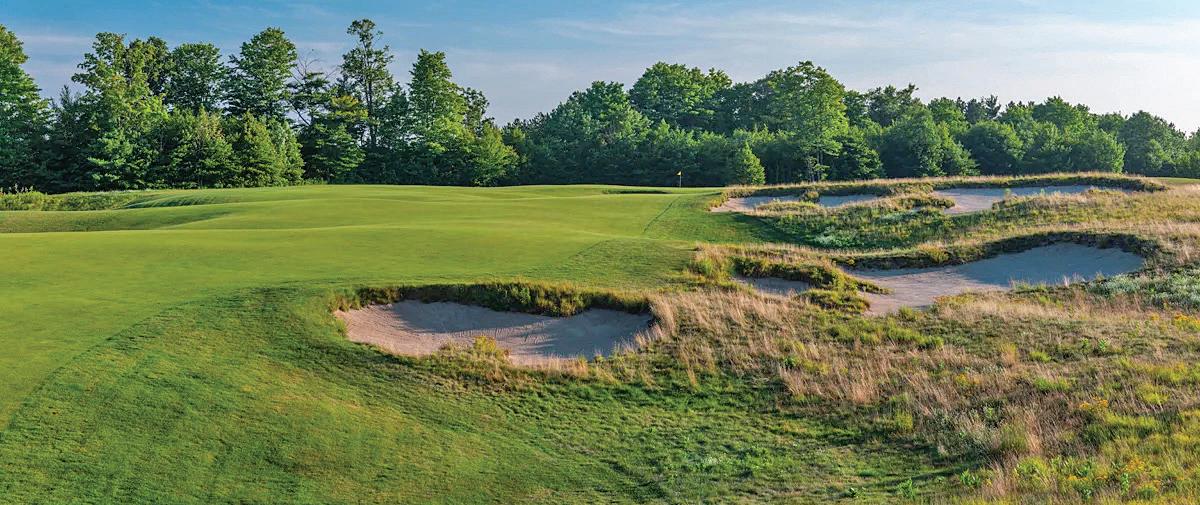
Landscape architecture is all about making nature and man-made materials work together. Perhaps nowhere is that as obvious – and at the same time hopefully as unobtrusive – as in golf course design. It is an art and a science, marrying pleasing vistas and challenging layouts incorporating elements such as hills, bunkers, woods and water – ensuring it’s enjoyable enough to bring people back.
Tom Doak: Master of minimalism
Using the natural contours of the land – or not – and creating holes that complement one another while winding around and through meadows, forests, streams and ponds is a challenge. Designers study sciences including horticulture, plant science, soil science and meteorology, learning how wind, water and weather interact with the site. At the same time, they must have a vision beyond what is already there and how they can make their changes seem natural.
Perhaps no current golf course designer utilizes those traits and ideas more than Tom Doak. Known as a minimalist for the way he incorporates the land into his designs with as little change as needed, the Traverse City resident is one of the most celebrated golf course designers in the world. His successes include Pacific Dunes in Oregon, frequently ranked in the top 10 in the world and widely considered his masterpiece; Tara Iti in New Zealand, ranked sixth on Golf Digest’s World’s 100 Greatest Courses; Barnbougle Dunes in Australia, consistently ranked in the top 30 in the world; and the Loop at Forest Dunes in Roscommon, a unique reversible course ranked 30th by Golf Magazine and 58th (Black) and 69th (Red) by Golf Digest.
The head of Renaissance Golf Design studied landscape architecture at Cornell before heading overseas to work and study at St. Andrews and, as Doak says in his biography, “playing and studying every golf course of note.” He gained valuable experience by working with celebrated designer Pete Dye before striking out on his own.
Among the lessons he’s learned over his career is that northern Michigan and sites like it are typically excellent sites on which to build golf courses.
“It’s common wisdom now that building on sand is easier and less expensive,” he said, noting how sandy soils lend themselves to good drainage. He’s put that lesson to use in places as far-flung as Ireland, New Zealand and various coastal locales.
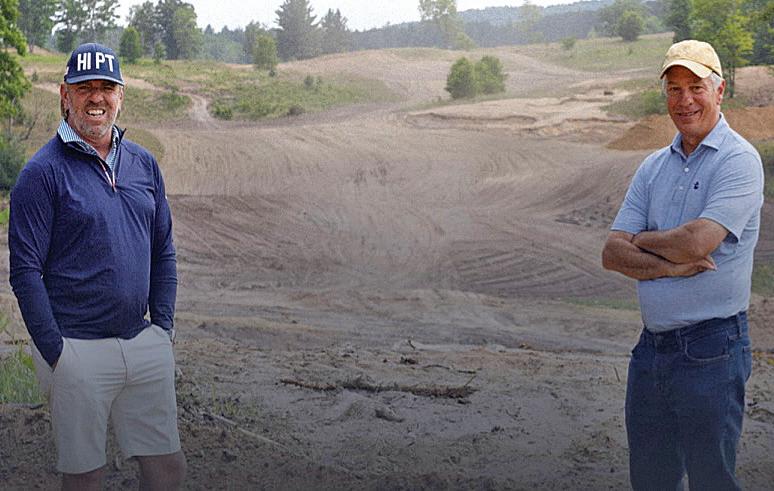
Doak’s most recent triumph is the reconstruction of High Pointe Golf Club in Williamsburg. Named one of America’s Top 100 courses by Golf Magazine, it was Doak’s first design. Despite its reputation, the course closed after the 2008 season, one of many that were shuttered in the wake of the Great Recession. The property was sold and the front nine became a hops farm.
Florida-based businessman and golf enthusiast Rod Trump heard Doak talking about the course on a podcast, and enamored of the idea of restoring the course as a national private golf club, he approached Doak. The two worked together and last year the new High Pointe was named best transformation winner by Golf Digest.
“I was introduced to northern Michigan in 2021,” Trump said. “I was blown away. It was an idyllic summer getaway for me – the long days, climate, proximity to water, the people.”
“You play, look at [the course], think I want to do that. Put your own twist on it.”
– W. Bruce Matthews III, Owner, Matthews Design Group
When he heard Doak discussing the dormant course he’d designed and built, Trump was immediately interested in the potential for reviving the course.
“I was all over it,” he said, “and I wouldn’t do it with anyone else.”
Doak and his team revived six surviving holes and part of a seventh, then built two new ones to complete what had been the original back nine. They then built a new front nine based on drawings he’d originally made for a proposed third nine holes for the course’s original iteration.
“It was routed as a third nine he had routed but never built,” Trump said.
It’s true that anyone with some property and a bulldozer can create a golf course. But making one that is sustainable, that people enjoy playing, that challenges them and looks good is no easy task. Throw in the fact that acquiring land and creating a course can run in the many millions of dollars and it’s easy to realize what a challenge it is.
That didn’t stop Bruce Matthews. It didn’t hurt that he was born into a cen-

tury-old family business. His grandfather and namesake graduated from Michigan State University in 1925 with a degree in landscape architecture and a career plan to design golf courses. The elder Bruce eventually formed Matthews & Associates with his son Jerry. After graduating from MSU with a degree in landscape architecture and a lifelong love of the game, young Bruce joined the firm, renamed Matthews Design Group.
The Manistee-based golf course design firm has designed 36 new courses; Matthews has renovated more than 80 to date. He still loves to play and says playing golf keeps his design eye sharp.
“You play, look at [the course], think I want to do that. Put your own twist on it,” he said.
Today he designs new public courses and works on renovation and restoration for private clubs.
“What makes it good is [that it’s] fun to play and challenges all abilities, looks good and fits the landscape,” he said.
Matthews says playing golf is a lifelong activity. His grandfather played until he was 96.
“The challenge makes it fun. It’s a great sport,” he said.
Does this area have more than its share of golf course designers? Doak thinks it might.
“You’ve probably discovered Traverse City has more designers per capita” than anywhere else, he said dryly. Many were influenced by him, and several worked for him.
One of the latter is Mike DeVries. Now the head of DeVries Designs in Traverse City, he worked with Doak on High Pointe, part of a 2.5-year tenure with Renaissance. He started playing golf as a youngster alongside an uncle and grandfa-
ther and worked at Crystal Downs, all of which he credits as influencing him.
After working with Doak, DeVries went back to college and got a master’s degree in landscape architecture, complementing his B.A. in business administration. Work with Tom Fazio followed before he started his own company.
“It’s like Tonka trucks. I’m still playing in the dirt,” DeVries said with a laugh.
He’s since designed courses around the globe, as well as working on numerous renovations. From Cape Wickham Links in Australia to the Kingsley Club, DeVries

says he continues to develop courses, including an upcoming course in Michigan he’s not yet at liberty to discuss.
The future of course building
High Pointe was only one of the many casualties of the Great Recession. While interest in the game and subsequently in golf course design and renovation perked up during and since COVID-19, Doak says times have changed.
“There was a huge boom in the ’90s and early 2000s,” he said. “There were
200 to 300 courses built a year.”
While the post-pandemic boom restored some luster to the game, the pace of construction today is nothing like it was then. Despite that, Doak says he now gets letters all the time from people who want to become golf course architects. Some are young, while others are 60-plus and looking to a second career.
While he doesn’t actively discourage interest in design as a career, he says it’s important to acknowledge the situation.
“The reality is there’s a ton of people and not many new courses,” he said.



By Art Bukowski
Seventy-two million pounds of fresh potatoes. More than 3,500 tons. No, that’s not the state’s annual production, or even the region’s. That’s just one outfit (Kitchen Farms) along U.S. 31 just north of Alba. Slide south near Kalkaska to find Jenkins Potato Farm, which cranks out another 25 million pounds each year. And in northern Michigan, the list goes on.
Between Kalkaska and Antrim counties alone, more than 8,000 acres are used to grow millions and millions of pounds of potatoes. That’s a healthy chunk of the roughly 50,000 acres dedicated to this versatile crop throughout the state.
All of this is largely under the radar for the average regional resident, especially compared to higher profile crops like cherries and apples.
“The potato industry in Michigan is extremely impressive … and in northwest Michigan, we have an incredible growing region,” said Michigan Farm Bureau president Ben LaCross, himself a Leelanau county cherry grower. “It speaks to what
a modern marvel agriculture really is. You could have such a massive economic driver and huge production in the region, and people in Traverse City don’t even know about it.”
While Michigan ranks first in the entire country in potato production for potato chips (industry advocates boast that one out of four bags of potato chips
much better lasting potato.”
The TCBN took a grand tour of regional potato farms to learn more about this important industry.
The potato is grown as an annual crop, generally planted in May and harvested
“[Meijer] is treating us so good this year. They’re really helping support the smaller farms by taking good care of us, but everywhere else, we’re screwed. A carton that we used to maybe get 10 to 12 bucks for, now we can’t move it for six.”
– Ryan Arsnoe, Co-owner, Jenkins
sold nationwide are made from Michigan potatoes) most farms in northwest Michigan grow potatoes for fresh consumption.
“The reason all of us [grow for the fresh market] in this area is because of the sandy soil,” said Bruce Cotton of Elmaple Farm near Kalkaska. “It’s better for disease, and versus heavy ground, it gives a
Potato Farm
over a few weeks in September with massive harvesters the size of a house. Then begins the packing and shipping process, which lasts well into the following year.
Potatoes store well, so they can be warehoused for months on end as they’re trucked off to all corners of the state and far beyond. Michigan’s fresh market
farmers generally ship east of the Mississippi, with Idaho, Colorado and other heavy output states holding down the western markets.
Potatoes grown for fresh consumption (russets are one of the most popular varieties) need to taste good, but they also need to look good. That means a bit more care and effort in the harvesting, handling and packing processes.
“We do everything with an attention to quality, from the time they go into the ground to the time they come out. They get a little bruise or a nick, and I can’t necessarily put that in a bag and ship it,” said Don Kitchen, the fourth generation owner of Kitchen Farms. “With a chip potato, they get peeled and [it doesn’t matter], but … we do everything we can to eliminate imperfections on our potatoes.”
Meijer is the single biggest customer of both Kitchen and Jenkins, buying many million pounds annually.
“We couldn’t be more grateful for Meijer. They’re very good to us,” said Troy Jenkins of Jenkins Farms. “They’re more of a business partner than a customer, really.”

Other grocery stores, produce wholesalers, restaurant groups and odd buyers make up the balance of customers. Most of these farms are always looking for more buyers in an effort to diversify.
“I’d rather have 10 customers that take 30 loads a year than three that take 100,” Kitchen said.
Though these growers produce tried and true varieties, there are constant efforts to improve current cultivars or come up with more that will thrive in the region.
“Michigan State [University] has a breeding program where they’re always coming up with new varieties to try to fit our area, that work with our growing season and our growing conditions,” says Bryan Fischer of Iott Seed Farms in Kalkaska. “Different varieties work in different places. What works in Texas doesn’t work here.”
These fresh market farmers are especially keen on taste in addition to appearance.
“If we get one that looks like a promising variety, we like to see if it meets our personal standards for how it tastes. There’s a variety ... called Norkotah. It grows uniformly, has good pack out, good agronomics, but it tastes like cardboard,” Cotton says. “For us, being a fresh shipper, we don’t want to ship something that we wouldn’t want to have on our dinner plate.”
A variety of factors combined to drive prices for the 2025 crop, which is still shipping now, to the lowest levels in 15 years or more. The first is that farmers simply did too good a job growing potatoes last year.
“Prices are still strictly based on supply
by around 30 percent, but they planted the same number of acres, and now all of those extra potatoes are getting dumped into the fresh market. And for the rest of us, that really stings.”
Luckily, things aren’t as bad as they could be. Big-time customer Meijer is buying from local farms more than it has to this year, and that’s tremendously appreciated.
“There’s always a farmer willing to sell for less, but that’s when it comes down to the relationship, the service and the quality. We’ve dealt with some of these people for over 40 years, and it’s really important to have that very strong relationship with your customers.”
– Don Kitchen, Owner, Kitchen Farms
and demand, and the big states – Idaho, Washington, Colorado, Wisconsin – they all had record yields,” Kitchen said. “So there’s just a lot of potatoes in the market.”
There was also decreased demand for potatoes used in processing, farmers say, leading to an even bigger glut in an already oversaturated fresh market.
“Idaho obviously is the big potato producer in the U.S, and most of their stuff is contracted for processing,” Jenkins said. “Those contracts last year got cut
“They’re treating us so good this year. They’re really helping support the smaller farms by taking good care of us, but everywhere else, we’re screwed,” Jenkins’ co-owner Ryan Arsnoe said. “A carton that we used to maybe get 10 to 12 bucks for, now we can’t move it for six.”
Fresh potato growers generally avoid long-term contracts with buyers. That is not so for potato chip potato producers, which often lock into contracts. This provides a welcome measure of stability, even though the lower risk may come
with lower reward.
Iott Farms in Kalkaska grows seed potato for mostly downstate farms that supply potato chip producers. This is one of those years where they’re really glad to be in the chip potato business.
“We’re much steadier, price-wise, than the fresh guys are,” Dennis Iott said. “The fresh guys can do really well in some years, but this year they’re just getting killed. It’s ugly. So [chip potato growers] don’t get to hit that really big year, but they also don’t get killed in that really bad year either.”
In a year like this, robust customer relationships are vital.
“There’s always a farmer willing to sell for less, but that’s when it comes down to the relationship, the service and the quality,” Kitchen said. “We’ve dealt with some of these people for over 40 years, and it’s really important to have that very strong relationship with your customers.”
the pinch
Farming isn’t cheap. While potatoes are much less labor-intensive than certain other crops, it still takes people. Add in the equipment, fertilizer, water, materials – all of which continue to skyrocket in cost – and profits erode in a hurry.
“Around COVID time our inputs probably increased 200 percent just like that. They’ve rebounded some, but really not much,” Jenkins said. “And that being





said the price [paid for potatoes] came up only a little bit.”
“It’s a capital-intensive business. We have a lot of equipment and a lot of facilities. And, in real numbers, equipment doubled since COVID,” added Fischer of Iott. “Equipment, buildings, labor, fertilizer –everything’s gone through the roof.”
Various pieces of equipment that were already expensive are now ultra expensive. High-end, multi-row harvesters can be $1 million or more, and even the smaller stuff can break the bank.
“Tractors are outrageous these days,” Kitchen said. “We’re just going to run ours until they won’t run anymore.”
Rising costs aren’t always a bad thing, though. Cotton and his team at Elmaple Farm won’t be too upset if continued international turbulence causes an uptick in fuel costs.
“One big advantage – and thank goodness we have that advantage this year – is that we’re 2,000 miles closer to the major population centers on the East Coast,” he said. “So we do have a freight dollar advantage, and [higher diesel costs] could make a big difference in the next six weeks.”
Though it’s much less of a worry for fresh potato producers, chip potato
growers also hope that America keeps on snackin’.
“If people keep taking weight-loss drugs, they’re going to eat less. We’ll be healthier, but we won’t sell as many snacks,” Iott said. “So there’s some concern there, but we’re still in a really good spot.”
There are only a few dozen outfits that combine to produce the state’s tremendous potato crop, so it’s a relatively small community.
“The coolest thing about the Michigan potato industry to me is everybody knows everybody,” Iott said. “The chip guys are very competitive with one another, but everybody’s still civil, and we still cooperate on new varieties and research at the university and stuff like that. So it’s a really tight group.”
The fresh growers describe their network as one of “friendship more than competition.”
“Last year, Elmaple’s harvester broke a couple days before they were going to be done, and it was going to take them a week to get parts,” Jenkins said. “We had finished up the day prior and I said, ‘You

know what, our harvester’s sitting here, come get it and get done.’ And there’s been years when our combine would break, and they say ‘Hey, we’re heading your way and we’ll get you done.’”
There’s also a massive amount of pride among these farmers. Kitchen Farms, now at a whopping 5,000 acres, is the result of four generations of hard work, with the fifth generation already involved.
“Great grandpa started in 1910 with 80 acres just like anyone else,” Kitchen said.
Elmaple Farms (1913, fourth generation) and Jenkins (1893, fifth generation) are the same story.
“I have two sons, one’s 21 and one’s 18, and at this point in time it’s looking like they both kind of want to stick around, and they’d be the sixth generation,” Troy Jenkins said. “And I think that’d be really cool if we can pull that off.”
Cotton at Elmaple referenced data that showed that only four percent of farms make it to the fourth generation, and less than one percent make it to the fifth.
“I think we’re pretty solidly looking at being fifth generation, as long as we don’t screw something up in the next 10 years,” he said. “And that’s a real point of pride that we’re able to go on.”



NA wines are finally making their mark in northern Michigan’s viticulture scene
By Craig Manning
What do you call wine without alcohol?
These days, you can only really call it one thing: the fastest-growing product segment in the world of viticulture.
According to Barron’s, 2025 was a dire year for the United States wine industry, with total revenues falling by more than a billion dollars year-over-year, from $75.5 billion in 2024 to $74.3 billion last year. That 1.6% drop had nearly a quarter of U.S. wineries describing 2025 as “one of our most challenging years ever” in a “state of the U.S. wine industry” survey conducted by Silicon Valley Bank (SVB). One of the biggest challenges, per the SVB survey? “The older, wine-focused cohort is aging out, and younger adults aren’t replacing them at the same rate,” the report noted. “Millennial and Gen Z drinkers are spread across more categories and drinking less overall, particularly under age 29.”
The trend isn’t just hitting the wine industry. According to Bloomberg, shifting drinking habits and a rise in sober and sober-curious lifestyles have cost the global beer, wine and spirits industries 46 percent of their combined market value since a June 2021 peak – equating to a whopping $830 billion in wiped-out stock valuation.
No surprise, then, that non-alcoholic (NA) wines were the one clear bright spot on 2025’s wine sales data sheet. In January, Nielsen reported that NA wine sales were up 29.1 percent compared to the same time a year ago. The increases in market share are expected to continue, with most projections predicting double-digit annual growth rates for the NA wine market, carrying on well into the mid-2030s.
In Traverse City, vintners are starting to read the writing on the wall.
“As a category, we know NA is the only wine section to have growth nationally, and is the darling of all wine buyers at the moment,” said Marie-Chantal Dalese, president and CEO of Old Mission Peninsula’s Chateau Chantal Winery and Inn. “A trend, or here to stay? Probably here for the long haul, as consumers decrease alcohol consumption for a variety of reasons – but only if the wine quality is there.”
The shifting tides of the wine marketplace, combined with a surplus of wine grapes, prompted Chateau Chantal to make its first-ever NA wines about a year and a half ago.
“If everything had been singing along merrily and regular wine sales were on the up and up, we likely would not have embarked quite so deeply into the NA proj-

ect,” Chantal said. “But given that regular wine sales are on the decline globally, and given that we had an oversupply of fruit, we said to ourselves, ‘OK, we’ve got this raw product here that we’re unlikely to sell otherwise, so let’s take a look at what it would take to convert it into a new product that likely will sell.’”
Fast-forward to April 2026 and Chateau Chantal has four alcohol-removed wines on its menu, including an aromatic white, a sparkling brut, a sparkling rosé and a semi-sweet red. All four wines exist under the “0%” series – and all four have done their assigned job of utilizing excess fruit in a profitable fashion.
“The sales are doing well,” Chantal said. “We’re fresh off the release of the two newest varieties – the sparkling rosé and the red – and we feel that the lineup
of four has given us a really nice selection. Here in the tasting room, I often notice someone out enjoying a flight of our different NA wines. And there’s been even more demand from retailers. Meijer has been a really good partner for Michigan wineries for a long time now, and they have taken on all four of our zero percent labels.”
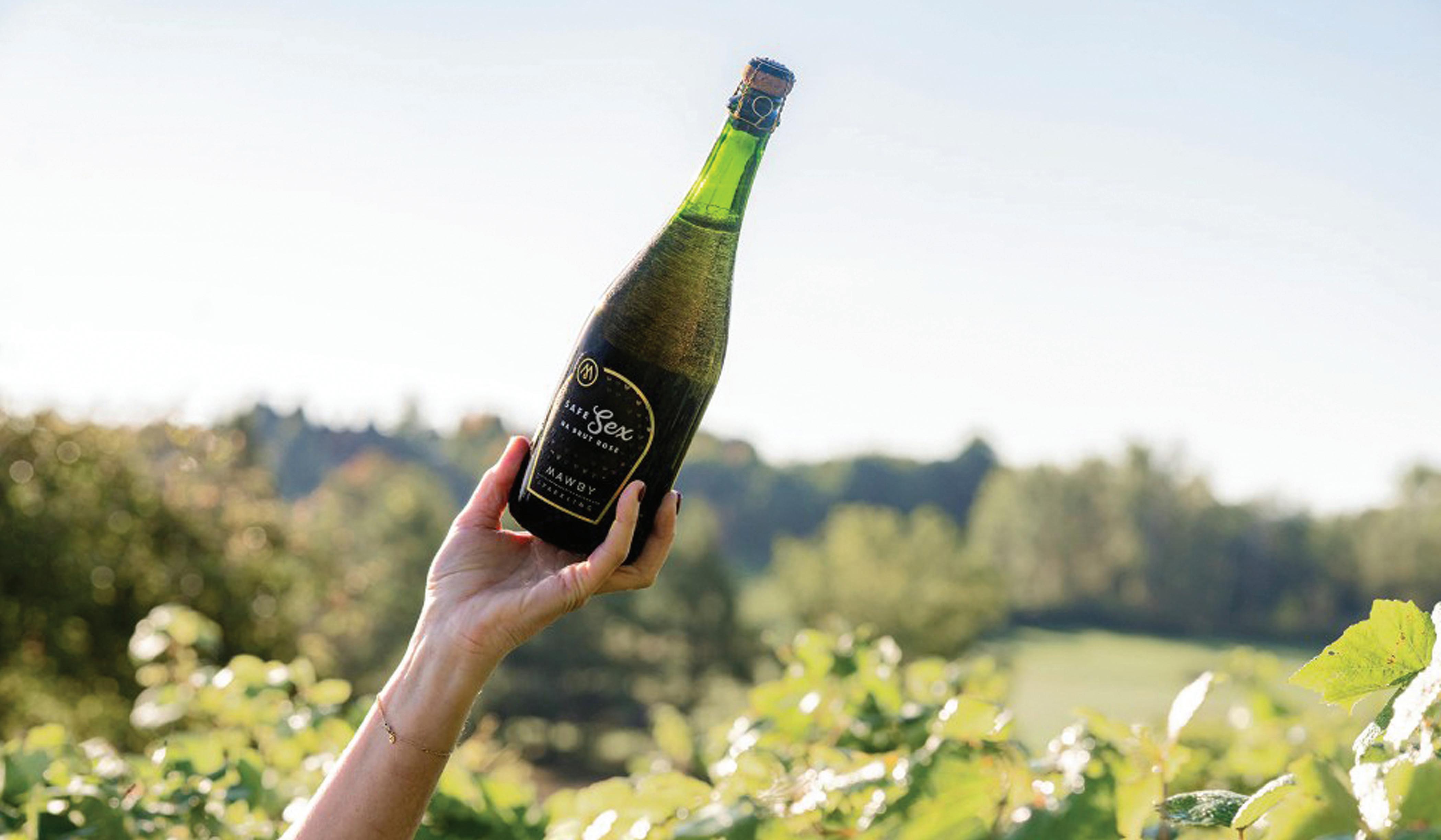
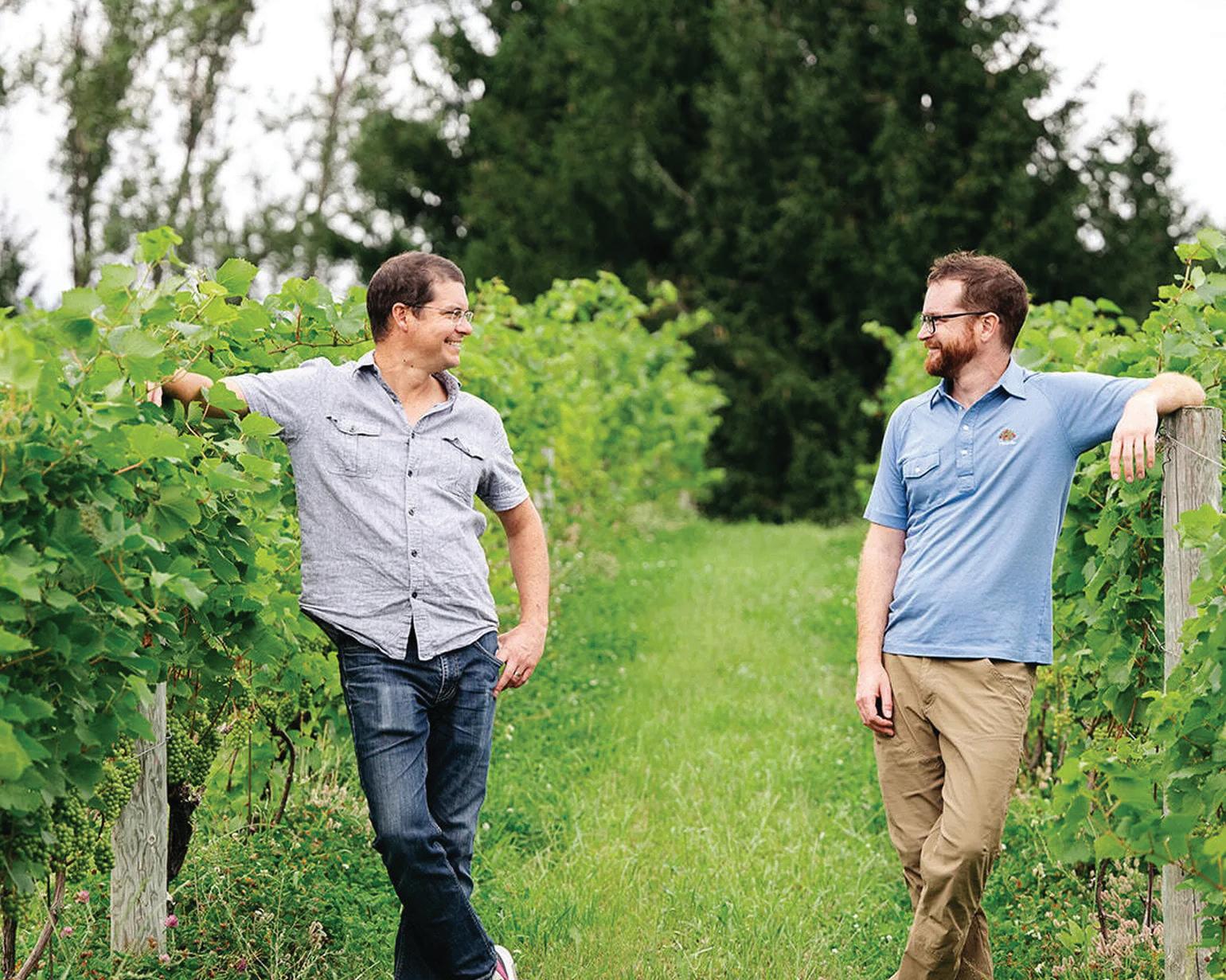
Also performing well is Safe Sex, the NA sparkling rosé offered by Mawby Vineyards in Suttons Bay. Mawby softlaunched the wine – an alcohol-removed version of its flagship sparkling rosé Sex – in September 2024, and went wide with the release at the beginning of 2025. While the wine took some getting used to for fans of the original recipe – “We had folks fill out a survey, and a lot of people said ‘It doesn’t taste like the real Sex,’”
said Mawby co-founder Mike Laing, –it’s proven to be a big hit regardless. Per Laing, Safe Sex accounted for 6 percent of the winery’s total sales in 2025.
The pain points
Laing admits “it’s almost impossible to duplicate” the taste of a wine after the alcohol is taken away, which makes for one of the big hurdles of NA winemaking. In the case of Sex, the standard alcoholic version is 11 percent alcohol by volume (ABV), and the alcohol content doesn’t just give you a buzz; it also lends weight, texture, mouthfeel and other key attributes to the wine. Simply removing it, in other words, doesn’t a drinkable NA wine make.
“When you taste the raw products [after the alcohol is removed], it’s the most awkward thing, because it kind of just tastes like acid water,” concurred Chateau Chantal Winemaker Brian Hosmer. “It’s not a flavor you’d normally taste, because almost everything you would consume that has acid in it – like every other fruit juice, for instance – has sugar associated with it.”
Both Laing and Hosmer say they had to go through extensive trials to figure out the best ways of “rebuilding” their alcohol-removed wines into something drinkable. It wasn’t just about masking the acidity with sweetness, either, but also
about restoring some of the “body and roundness” that wine aficionados tend to appreciate about their favorite vintages.
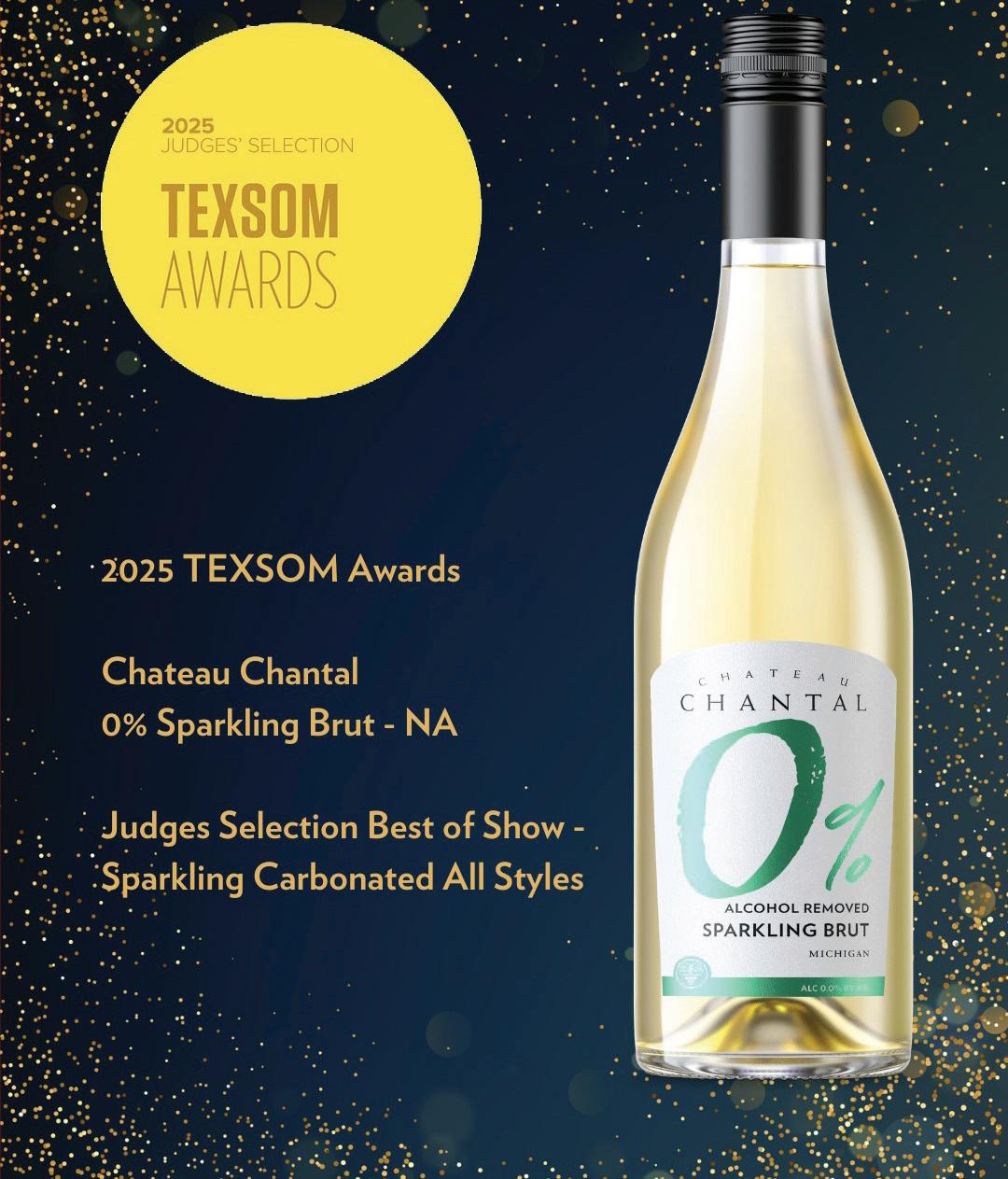
Both Chateau Chantal and Mawby seem to have cracked the code. Chateau Chantal’s sparkling brut won “best of show” honors at last year’s TEXSOM Awards, a prestigious wine competition in Dallas, Texas, while Mawby’s Safe Sex was one of just five NA wines to win a gold medal at the recent 2026 San Francisco Chronicle Wine Competition.
Broader local adoption?
With a few strong NA wines on the market in Traverse City, could more northern Michigan wineries embrace the trend? A local winery investing in the equipment necessary to remove alcohol from wine would make local growth more likely. So far, both Chateau Chantal and Mawby have been collaborating with outside-the-region companies to make their NA wines.
“We sent our white wines to BevZero in California for alcohol removal, and the rosé and red to ABV Technology in Minnesota,” Chantal said. “They use different alcohol removal techniques, and we wanted to test both out.”
The Santa Rosa-based BevZero utilizes what is called “spinning cone technology” to remove alcohol from wine. According to the company’s website, the technology
“is a vertical stainless-steel cylinder composed of alternating rotating cones that spread the wine out into a thin film, allowing rapid removal of the alcohol.” The St. Paul-based ABV Technology, meanwhile – which Mawby also worked with to make its Safe Sex – boasts a dual-stage vacuum separation technology called “the Equalizer,” which “uses a low temperature, low pressure vacuum filtration” to pull
out alcohol content.
“Both had positives and negatives,” Hosmer said of the two technologies. “The spinning cone technology was better for retaining aromatics, which was definitely preferable for white wines and the sparkling brut that we made. The other technology doesn’t separate things out as cleanly, but we didn’t see as big an effect on our red and our rosé.”
Vibrant produce, wholesome staples, and house-made favorites to help you shake off winter and savor the season ahead, thoughtfully sourced at your local whole-body health store.








While the collaborations with BevZero and ABV Technology ultimately proved fruitful for Mawby and Chateau Chantal, there are pain points to those processes, from shipping product back and forth across the country to overall cost.
“When we were starting out, we sent out trial batches to both companies, just to see how the wines came out, and that’s where some of the expense comes in,” Hosmer said. “Our first trial batch, I’m pretty sure we made the first $100 bottle of NA wine in Michigan history. And nobody’s trying to spend $100 on a bottle of alcohol-removed wine; there’s some serious price sensitivity in that category.”
Therein lies one of the most common misconceptions of NA wine: that it should cost less than regular wine because it’s missing a key component. In truth, the alcohol removal process adds cost to the wine, not the other way around. It’s a piece of information Chantal has shared candidly with the numerous other local wineries that have approached her since the zero percent series launched, “interested in knowing what we did and what it took and all that.”
That bubbling local interest has Chateau Chantal considering purchasing its
own in-house alcohol-removal equipment – not just for its own wines, but also as an option that could be shared with other local winemakers.
“The thought is that we could be the provider locally for other wineries that want to enter this market, but can’t quite meet the quantity benchmarks to make it worthwhile to ship their wine to California or Minnesota and have it de-alcoholized and sent back,” Chantal said. “We’ve decided not to do that just yet, given the expense of the equipment being very high – pushing $1 million – and some of the equipment being very untested at this point. But we are keeping our eye on it over time to see if any of that changes, if the trend continues, and whether there is enough interest from other Michigan wineries to make it worthwhile.”
Mawby is also keeping an eye on the technology space – and not just for pricing reasons.
“The technology for removing alcohol while keeping the integrity of the product the same is improving, so I think [NA wines] will only improve,” Laing said. “The Germans are leading the way on that front. The best sparkling wines I’ve had that are not alcoholic are German rieslings; they just taste so much more like the real thing. And I know that that technology is working its way into this country as we speak, so things are going to improve, and they are going to improve soon.”
Design and build a functional, inviting space that supports growth and enhances the patient and staff experience.
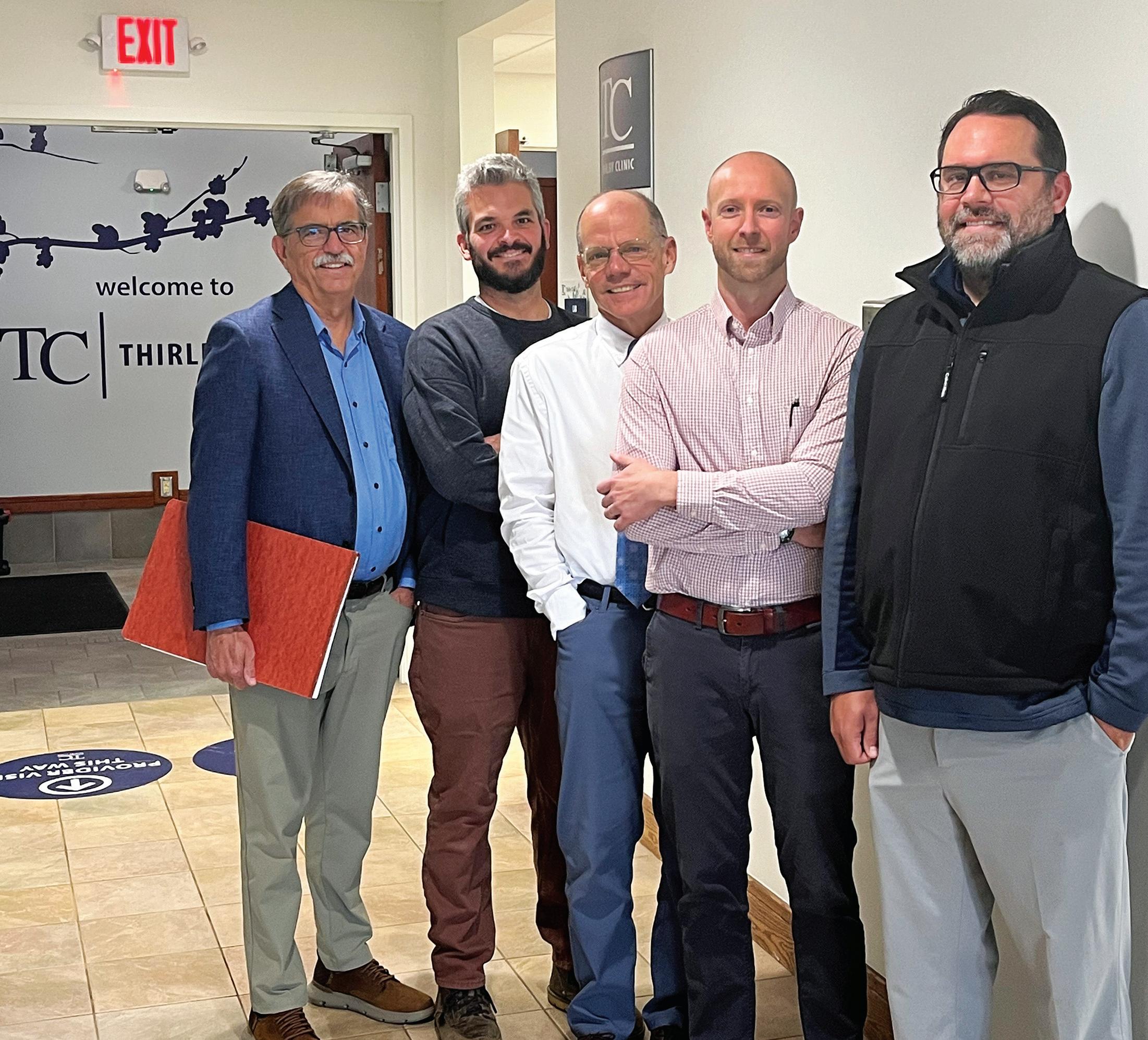
Burdco transformed our space into a beautiful and functional facility that exceeded our expectations. They worked closely with our committee, incorporating feedback from all sides to find solutions that worked for everyone. Their positivity, budget-conscious approach and commitment to delivering on promises made the process seamless and we’re thrilled with the results.
”




KEEN has completed a 7.6 kWh solar installation at SEEDS Farm & Shop, delivering clean, reliable energy to fuel their growing impact in the region.




Unparalleled multi-disciplinary expertise coupled with an intense passion for helping others made selecting KEEN as a contractor an easy choice to make. Thanks for the kWhs - and so much more!

~ Sarna Salzman






By Ross Boissoneau
Farming is hard work. It’s made even more challenging by the vagaries of the weather and the fact the growing season in this area is relatively short.
An increasing number of farmers are fighting back. Their weapon of choice: hoop houses. They range from diminutive shed structures to caterpillar tunnels to large plastic-wrapped greenhouses 100 feet long and 16 feet high. They may use propane heaters, geothermal heat or no extraneous heat source at all.
It all depends on the farmer.
“I’m big on low energy,” said Nic Welty at 9 Bean Rows.
That’s why he refuses to use artificial heat sources, instead opting to concentrate on cold-hardy crops.
“We’re not growing lemons or limes, or tomatoes or basil,” he said with a laugh. Instead, he and the crew at the farm between Suttons Bay and Lake Leelanau concentrate on hardy greens such as arugula, spinach, kale and lettuce in the
winter. They will also include pea shoots, microgreens and sunflower shoots.
As the weather warms, they will use the hoop houses to get an early start on other vegetables, and do the same to extend the growing season into fall. Then their list of crops does expand to include tomatoes, herbs and other plants that do best in warm – or at least warmer – temperatures.
Nic and his wife and co-owner Jen have seen their operation grow over the 15-plus years it has been in business. It now encompasses not only the fields and hoop houses but also a farm market, bakery and restaurant. They sell most of their crops at their own market, as well as some area grocery stores and a CSA run by MI Farm Co-op.
John Dindia and his wife Bailey Samp have followed a similar model at Lakeview Hill Farm. They started out small, with a 12-by-12-foot structure on a quarter acre. Since moving from that small plot near Petoskey to purchasing their own acreage for their organic farm in Leelanau County, they’ve gradually added to the amount of hoop house coverage. They now have six
5,000 square-foot greenhouses that can be heated and another six 3,000 square-foot structures without heat, with plans to add two more of those.
When the red schoolhouse on the corner of Lakeview Hills Road and South Lake Leelanau Drive adjacent to their property went up for sale in 2023, they jumped at the chance to add their own farm market.
“We had a farm stand,” Dindia said, but the year-round market provides more visibility and space. In addition to their own products, Lakeview Hill Farm Market sells local dairy, bread, cheese from Boss Mouse, jam from Bardenhagen Farm, Stockist coffee from Traverse City and pastries from 9 Bean Rows. They moved their flower field to a plot next to the store, and hope to eventually offer tables outside.
Lakeview now has about one acre undercover in two hoop houses with another four to five acres exposed to the elements. Despite that disparity in acreage, Dindia says the hoop houses account for 60 to 65 percent of its crop sales, proof of their effectiveness in allowing for more growing time and more harvests.
A study by Michigan State University in 2006 demonstrated that hoop houses can be an effective way to extend the growing season in Michigan. However, it noted there are a wide variety of factors influencing success, as shown by the wide range in expenses, income and profit.
And cost. While cheaper than a true permanent greenhouse made of glass or polycarbonate, commercial-grade professional kits can cost between $5,000 and $15,000 or more. Smaller DIY or hobby-type setups are available from $500 to $2,000. They are available at online sellers including Bootstrap Farmer, Hoop House USA and Growspan, as well as national retail chains such as Target, Menards and Home Depot.
After moving back to his home state following several years farming in temperate Hawaii, Ken Lindsey at Fifth Wind Farm in Benzie County had to learn how to farm all over again. Michigan’s four seasons prompted him to investigate the use of hoop houses almost immediately.
“I started inside with microgreens with a grow light. Then a small heater and the

best PVC, a cheap way to get more solar gain. I’d make some money, and put it back into the farm,” Lindsey said.
He moved up to a 30-by-72-foot double poly structure. He says the addition of the structure was a game-changer, and as time went by he was able to identify which crops he found worked and sold the best.
“It’s an endless learning process,” he said.
Winter concerns ... and benefits
Lindsey now grows 35 to 40 different types of microgreens.
“They’re a quick turnaround. A lot of people are going in that direction,” he said.
Like Lakeview Hill Farm, Lindsey does include artificial heat sources in his hoop houses to make them more temperate.
According to Bootstrap Farmer, hoop houses offer opportunities for crop diversification and the ability to extend the growing season. They’re also easy to maintain. But there are weather concerns – storms or excessive snow and ice can be catastrophic.
Lindsey can offer firsthand testimony. He lost a couple to heavy snowfall this

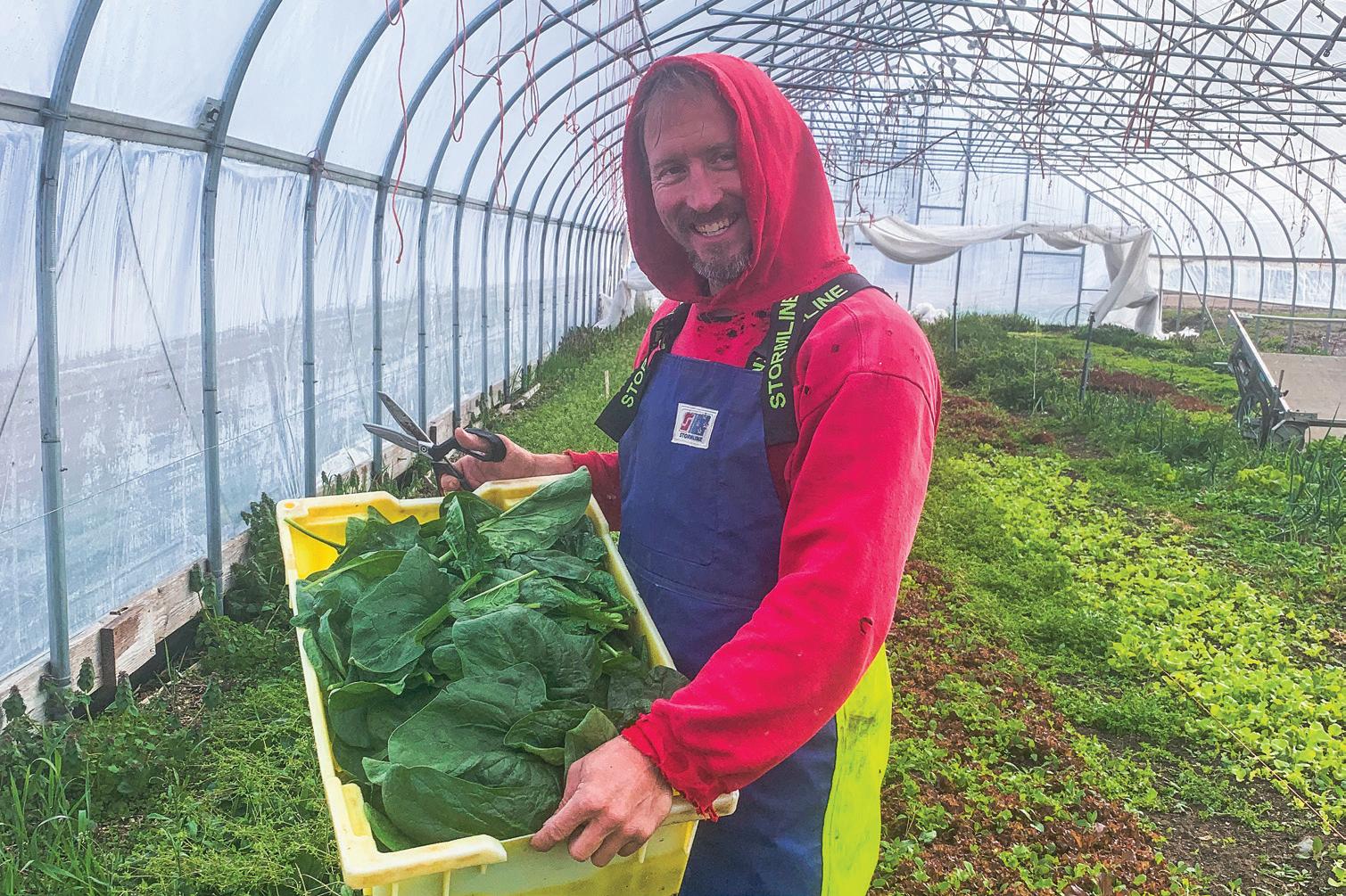
year. Welty had two he wasn’t able to get ready before winter hit, and once the snow arrived, there was no chance to get them up and running.
Both 9 Bean Rows and Fifth Wind Farm are also no-till farms, as tilling can also damage the nutrients in the soil.
“You beat the organic matter out of it,” Lindsey said.
While hardy greens are typically first choice in unheated hoop houses in the colder season, many can thrive with additional heat and/or when the weather warms. For example, besides his many
varieties of microgreens, Lindsey says he grows cucumbers, summer squash, tomatoes, beets, carrots and various herbs.
While extending the season and producing bigger yields may be the most obvious benefits, those using them say there are other benefits as well. Welty says the flavor of the cold weather crops is just better.
“Winter growing [crops] are a unique specialty item,” he said.
Similar to ice wine, he says the freezing temperatures lock in the sugar in the plants.
“There’s nothing like it,” he said.


By Art Bukowski
The call came late in the season for Peter Rigan.
Rigan, who with his family grows 12 acres of wine grapes on Old Mission Peninsula, had for years sold them to a large peninsula winery. But in 2024, after his contract had lapsed, he had the rug pulled out from under him. The winery told him earlier in the season that they were still going to try to buy his fruit, but they couldn’t follow through.
“They basically said ‘Hey, we don’t need your fruit this year, and you’re not a contracted grower, so best of luck,’” he said. “And by the time we actually got notified that they weren’t going to buy anything, it was the end of August, early September, something like that.”
So began a scramble to offload more than 30 tons of fruit. Rigan’s been in the industry for years and has some connections, but they only took him so far.
“If I had something I had to do in the vineyard, I went and did that for two hours, and then I spent six, seven, eight hours on the phone, cold calling people,” he said. “And since then, I’ve built up a spreadsheet with over 400 wineries on it
across several states, just calling and bugging people. In 2024 I was able to sell everything, and in 2025, I sold almost everything.”
Though the late-season notice made Rigan’s situation extra stressful, small growers across the region are getting pinched big time amid record grape yields and a general reduction in wine production and consumption. Because many of
on about seven acres, all of which went to a prominent Leelanau winery for years.
“The Marquettes have done very, very well over time. They’re everything they’re cracked up to be, for the climate, the conditions and everything. [The winery] took all of them, and for a number of years things were going along really well,” he said. “But along the way, the owner of [the
“Part of it is that we’re becoming our own worst enemies. It’s not like every year is a huge bumper crop, but we’ve… gotten a lot better at producing higher yield, higher quality fruit on a regular basis.”
– Peter Rigan, Old Mission grape grower
them supply extra grapes to wineries that already grew their own, they’re the first to get jettisoned as times grow leaner.
A growing problem
Further north on Old Mission, Randy Williamson and his life Linda have a similar story. They grow a variety called Marquette and a small amount of Riesling
winery] decided that Marquettes are really good and started planting their own.”
The winery eventually stopped buying Williamson’s grapes, and a staggering 90 percent of them were left to rot last year (Rigan, who’s worked with Williamson, was able to find a buyer for some). And that’s after reduced buys for several years prior.
“For a while there, it broke even, maybe even made a little money, which was fine.
That’s all we were looking for is to have it basically break even. And it took a while to get it there, but we were headed in the right direction,” Williamson said. “And then it just seems like all of a sudden, the bottom fell out of the market.”
Though the Williamsons grow their grapes on what amounts to a hobby basis instead of for the revenue, they won’t be able to keep doing it without buyers.
“If I’m going to do something, I’m going to do it right or not do it at all,” Randy said. “We’ve done everything that we could to make a very good quality grape, so it would be a hard thing to give up on those.”
Over in Leelanau County, Nathan Kulpa grows a variety of grapes on 17 acres. For years, his grapes went to a local winery who eventually no longer needed them. He then went through two more wineries with the same end result. Now, like Rigan, it’s a matter of piecing together multiple buyers.
“The last two years I’ve had to really get on the phone, and reach out to many different wineries across the state…and even out of state just to find anybody that was willing to buy,” he said.
This issue impacts even (or perhaps especially) the smallest of growers. Glen

Chown and his family grow about a half acre of Riesling on Old Mission and have for years, completely on a hobby basis. After their buyer of more than a decade could no longer take them, he considers himself very lucky to have found another one.
“It was miraculous, and a big relief,” he said. “I mean, it simply would’ve pierced my heart to just let those grapes go bad, especially for everything they’ve meant to our family.”
Ultimately, though, most of these growers understand that it’s business, not
personal. Local wineries say they do everything they can to support independent growers, but they also have to keep their own businesses viable.
“It’s a real challenge. You can’t keep putting money into something that’s not moving out of your tasting room or out of a store or restaurant,” said Tony Jacobson, who serves as board president of Parallel 45 Vines & Wines, a local industry group. “So eventually, you’ve just got to cut those cords.”
Bryan Ulbrich owns Left Foot Charley, a popular local winery that has made a name
“My phone is ringing a lot these days with people looking for homes for their grapes, and we’re trying to help connect people, even those people outside of our family of growers. We’re trying to come up with creative solutions.”
– Bryan Ulbrich, Owner, Left Foot Charley
for itself by utilizing a variety of smaller growers. He’s worked hard in recent years to make sure they’re all taken care of.
“In the last couple of years, if there was fruit from our growers that we didn’t necessarily need in terms of liquid inventory, we were able to find other places to either make wine for them or [found other buyers] to make sure that the cash flow and the fruit kept moving,” he said.
That effort extends to other small growers Ulbrich doesn’t usually work with.
“My phone is ringing a lot these days with people looking for homes for their grapes, and we’re trying to help connect
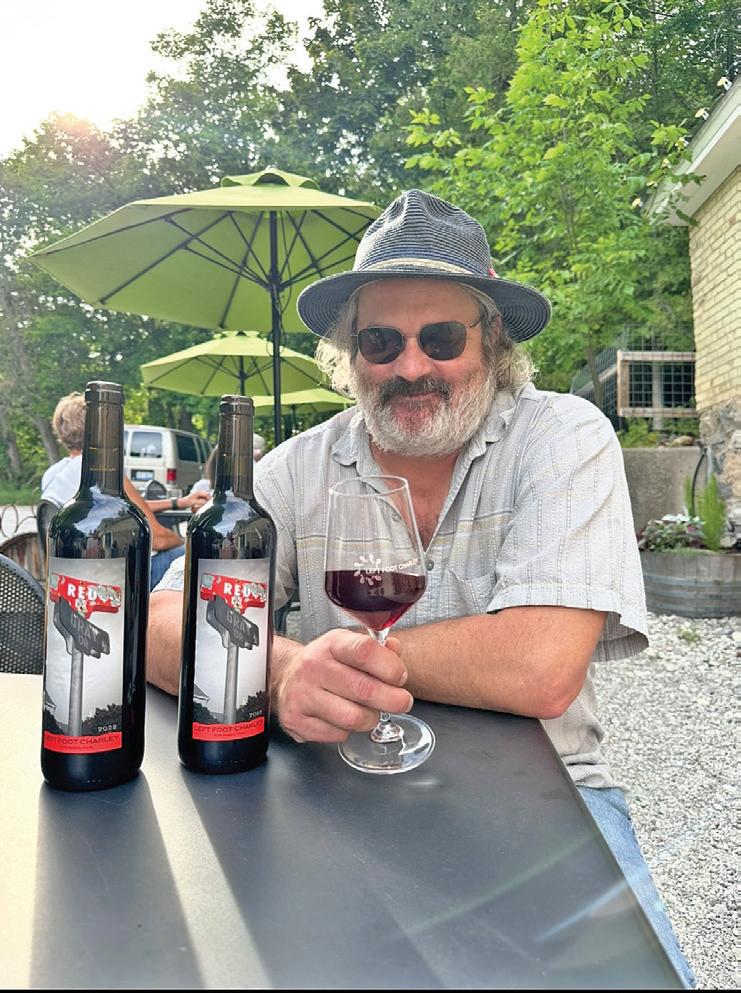
people, even those people outside of our family of growers,” he said. “We’re trying to come up with creative solutions.”
Unfortunately, Ulbrich says, many wineries are continuing to face a lot of hard economic realities that lead to severing ties with smaller growers.
“The relationships with these smaller farms are incredibly valuable, not only just to the supply side, but into the whole story of our region,” he said. “So [they’re} not looking to break up with people because of bad relationships. It’s just out of lack of cash, really.”



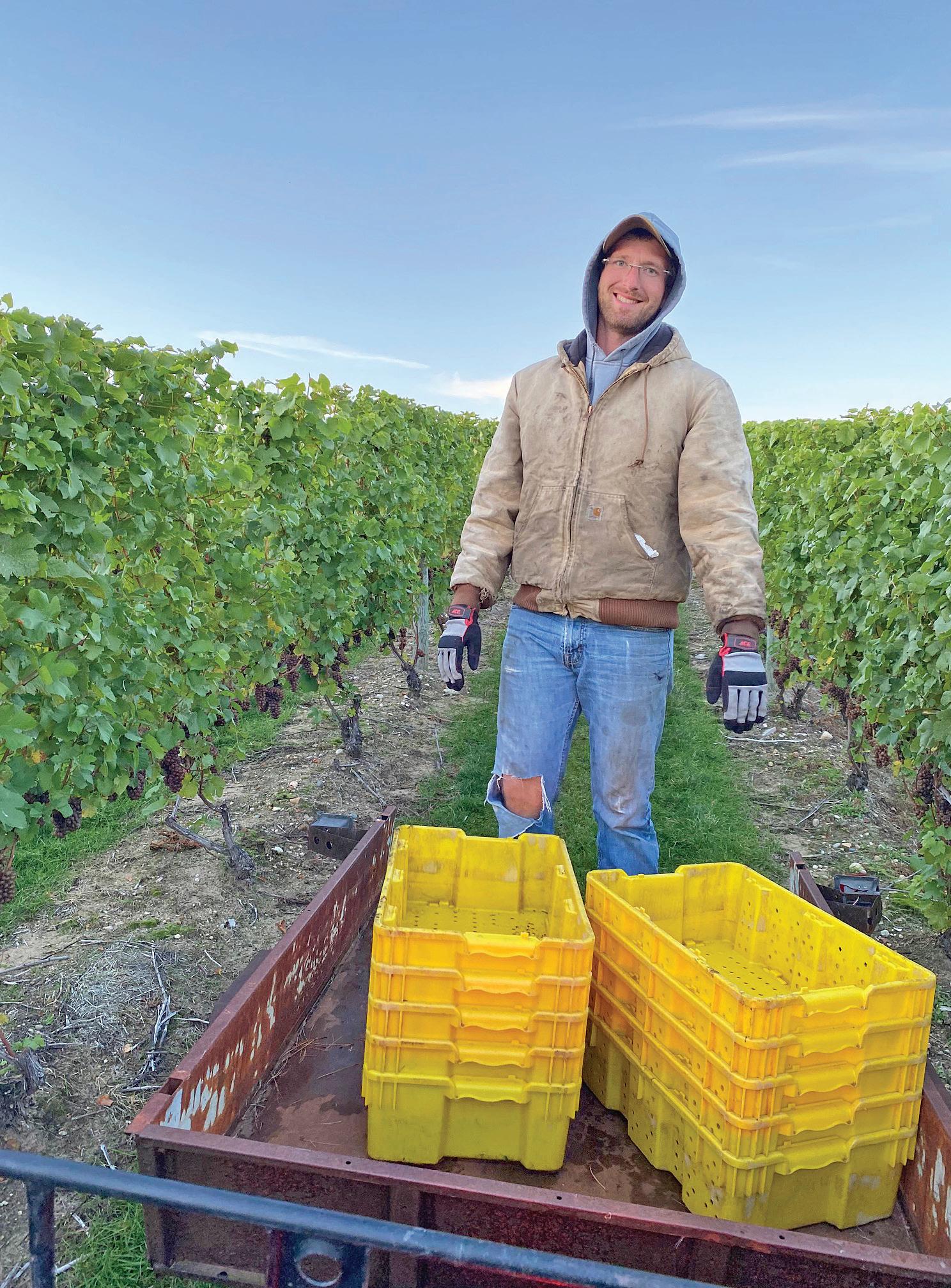
Those involved say several things are at play here. The first is that local grape growers are simply doing a very good job at producing fruit, which leads to oversupply issues. After several decades of fine-tuning grape production in northern Michigan, things are going well – perhaps too well.
“Part of it is that we’re becoming our own worst enemies,” Rigan said. “It’s not like every year is a huge bumper crop, but we’ve… gotten a lot better at producing higher yield, higher quality fruit on a regular basis.”
Kulpa agrees.
“We are just so much more efficient at what we do,” he said. “In the last five years, we’ve had three of the largest crops we’ve every picked.”
The second factor is that small, independent growers are mostly utilized for excess production in the first place, and therefore are first in line to be cut.
“Pretty much every winery in northern Michigan, not all of them, but a good majority of them, grow their own grapes [in addition to buying],” Kulpa said. “And right now they’re not buying grapes because they have too many of their own grapes. Tanks are getting full, there’s not any room, so they literally can’t buy more.”
Making matters worse is that the winer-
ies themselves are trying to offload their own excess production.
“Another big problem is the wineries are selling their own fruit, so they’re flooding the market outside of the individual grape growers that sell to wineries,” Kulpa said. “So there’s just a lot of fruit on the market, and obviously it’s driving the price [and demand] down.”
Finally, this all coincides with a well-documented downward trend in wine (and other alcohol) consumption over the past several years. Experts attribute this to shifting demographics (young people drink less overall, and those who do have more options than ever before), health concerns and growing competition from cannabis and other indulgences.
In short, it’s a really bad time to be great at growing grapes.
“We really have two factors working against us,” Kulpa said. “Supply is very high and the demand is low.”
Growers and winemakers hope these tough times aren’t permanent. Changes to any number of these causative factors (or new developments) could change things for the better.
“Things are temporal,” Ulbrich said. “These ups and downs happen in this industry.”




By Art Bukowski
You want the good news or the bad news?
The good news is that from a job seeker’s perspective, jobs are there for the taking in the Grand Traverse region. Plenty of them. Across the board, in almost every industry, employers are looking to hire good workers to fill a variety of positions. This is especially true in manufacturing, retail, hospitality and other non-professional sectors.
The bad news is that for a variety of familiar and not-so-familiar reasons, these employers are having a hard time finding people to fill these positions. In many cases, this problem is already damaging productivity and profits.
“I guarantee you I could add a million dollars of work tomorrow if I could fully man a second shift,” said Tim Healy, CEO of Century LLC and chairman of the Grand Traverse Area Manufacturing
Council. “It’s a real issue.”
The TCBN connected with employment experts and industry representatives to get a feel for what’s going on with hiring in the Grand Traverse region.
10,000-foot view
Rob Dickinson is regional director of business services at Northwest Michigan Works!, which, among other things, helps job seekers and employers connect.
He says forecasts prepared by state agencies show the northwest Michigan market growing 2.4 percent over the next several years across all industries, which “mirrors what we’re seeing on the ground.”
“The job market is kind of stable for us. We’re not going to gain a lot. We’re not going to lose a lot,” he said. “While [2.4 percent] is not much, it’s certainly not going the wrong way.”
“I guarantee you I could add a million dollars of work tomorrow if I could fully man a second shift. It’s a real issue.”
– Tim Healy, CEO, Century LLC and Chairman, Grand Traverse Area Manufacturing Council
That 2.4 percent figure is tied for the Upper Peninsula for the best in the state, with all other regions ranging from slight losses up to 2 percent growth. But the

region’s number would likely be much higher if there were enough workers to fill all the current and expected openings, Dickinson says.
“That’s something that we try to factor into those projections,” he said. “We might see that there’s going to be 300 openings [at an employer or within a sector], but I can’t imagine that we’re going to fill those.”
For the next several years, Dickinson says, the story isn’t likely to be a lack of jobs. As retirees continue to flock here and young people can’t afford to come or stay, it’s going to be a lack of workers.
“I think our problem isn’t going to be job availability,” Dickinson said. “It’s going to be putting the right person with the right skillset into those positions. We just don’t have the people.”
The “silver tsunami” and continued housing woes are massive factors in the region’s employment struggles, Dickinson says. It’s a big factor in why skilled workers in particular can’t move here, and it’s the biggest factor for local young people who want to return here after college, but can’t.
“We talk to employers across all industries, not one over the other, and they’re losing candidates because there’s not enough housing here,” Dickinson said. “Or they hire somebody and they’re couch surfing for the first six months and get lucky, or they don’t and they have to move back home.”
And if housing is number one, childcare is 1-A. That’s one that employers are trying to tackle themselves, with varying degrees of success.
“We’re seeing more and more employers come to us and ask those questions,” Dickinson said. “How do we help? How do we do this? How do we become part of the solution?”
In highest demand are workers for healthcare, professional services and transportation, Dickinson says, with manufacturing and construction right up there.
“I think almost without fail, every construction business owner that I talk to [desperately needs people],” Dickinson said. “If you have the skills, you can name your price and be working that day.”
About those skills: Yes, many positions across all industries require specific training or skillsets. But more than anything else, employers are desperate for people who are simply reliable and work well with others.
“The number one thing that we hear from employers every single day, day after day, is that they need people with soft skills,” Dickinson said. “Reliability, communication skills, problem-solving ability. It has been such a massive ask from employers. They say ‘We’ll train them [with the necessary job skills], we just want somebody that is on time and is dependable.’”
For those skills that do need to be learned, particularly in manufacturing and trades, Dickinson says schools and employers are figuring out a way to fasttrack that process.
“The number
one thing that
we
hear from employers every single day, day after day, is that they need people with soft skills. Reliability, communication skills, problem-solving ability. It has been such a massive ask from employers.”
–
Rob Dickinson, Regional Director of Business Services, Northwest Michigan Works!
“You’ll hear the term micro-credentialing now, where employers are like, ‘Listen, I don’t need them to be in school for two years any longer. But I do need them to take these five classes. What can you do for me?’” Dickinson said. “So [Northwestern Michigan College, North Central Michigan College], Baker, they all chunk that into smaller slices.”
Artificial intelligence and automation are topics of discussion, Dickinson says, but the conversation is almost entirely driven by a lack of employees, not finding
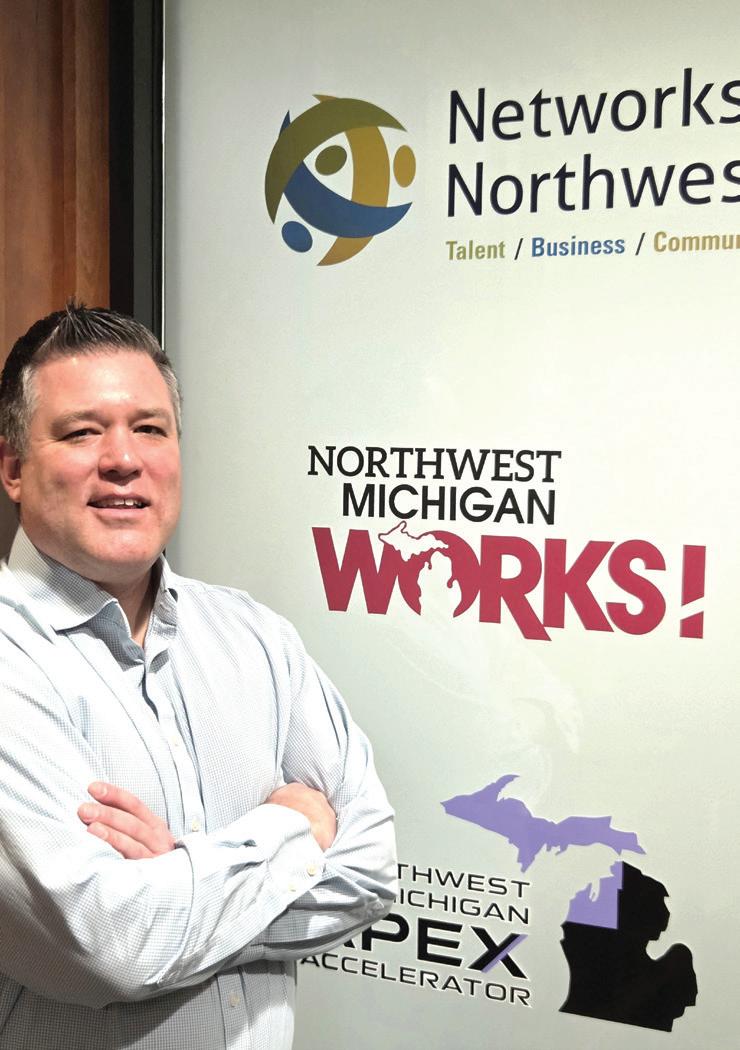
a way to replace them. Many business owners show up to seminars on these topics and say they’re only there because they can’t find enough bodies.
“There are automated plants in our area that a person never touches a product through the whole entire process, and that has been a lifesaver for some of our manufacturers that just can’t get the talent through the door,” he said.
Finally, Dickinson says employees – who have most of the power in today’s market, considering widespread shortages – are

being more insistent on flexibility. The employers that can cater to those demands are faring better than those that aren’t.
“They’re not necessarily asking for a $2 raise anymore,” he said. “They’re asking for flexibility: ‘I want to be able to do this remotely. I want to be able to see my kid’s soccer game.’ And most employers are saying, ‘Absolutely. Yes, we will be flexible. We will accommodate those things.’”
A conversation with Healy of Century LLC and the manufacturing council proves that Dickinson is more or less right on the money when it comes to this sector.
Century, which makes high-precision metal components, hired nearly 100 people in 2025, but only grew by 25 by the end of the year. Yes, a handful retired, but a lot more washed out because of a lack of the “soft skills” that Dickinson mentioned.
“The single largest reason is that it was really a bad fit for many people. And I don’t want to be overly harsh, but a lot of it was folks who did not have what I’ll call basic teammate skills,” he said. “They were not willing to show up on time, or … they were not empathetic enough to [communicate well with] the people around them and understand that they’re part of a team.”
Long story short, Century will be looking to hire a lot of people for good-paying
jobs in the future – if they can find them. And they’re not alone.
“Every single small manufacturer I engage with has the exact same story,” Healy said.
Like Dickinson, Healy also speaks of automation as something borne from necessity.
“There’s not a single person who lost their job because we installed a robot,” he said. “We could not do certain work without a robot because we did not have enough people to do it.”
On a positive note, Healy could not say enough good things about certain programs in town that do provide him with good workers.
“We are the number one user of graduates of [Northwest Ed’s] Career Tech Center here in Traverse City, which is by far the best source of employees that we have in this company,” he said. “I cannot talk highly enough about that organization and the young people that attend those courses. They are superb.”
Karen Roofe is owner of My Secret Stash and I’m Planty AF, two specialty boutique shops in downtown Traverse City. She’s also the president of the Downtown Traverse City Association (DTCA), a merchant group that helps promote and advocate for downtown businesses.
Roofe says that many (if not most) shops downtown are looking for people, but an ongoing lack of the younger people who traditionally served as the lifeblood of those operations is continuing to cause problems.
“There was a time when if you were a college student and you wanted to get a summer job, you could come to Traverse City and find a place for the summer and could work in retail or restaurants,” she said. “And because of the housing situation here, that has all but dried up. So unless they live with their family, we’re not seeing those kids come through.”
And for whatever reason, the young people who do live here just aren’t showing up in numbers like they did years ago. To make matters worse, the ones that do are lacking (surprise, surprise) those soft skills everyone keeps talking about.
“A challenge with a lot of the current younger workforce is that they’re on their phones all the time and don’t really know how to speak to adults,” Roofe said. “They don’t know how to shoot the [breeze], so to speak.”
This leaves folks well into their working careers, which has always presented somewhat of a problem for retail, since most shops aren’t in need of full-time workers. Instead, Roofe says, they’re looking to “layer in” part timers to meet demands. These people are harder than ever to come by.
Roofe and other merchants have had limited – but promising – success with

coaxing retirees back into the retail workforce, giving them workers with normally excellent soft skills who don’t need benefits and are much more amenable to part-time work.
Many larger retail groups, most hotels and other related businesses lean heavily into visa programs to bolster the workforce in the summer months, but the process is too expensive and cumbersome for smaller, independent shops, Roofe says.
Jim DeMarsh is area manager for Mis-


sion Restaurant Group, which operates North Peak, Jolly Pumpkin, Mission Table and other restaurants here and downstate. As with retail, younger people are extremely critical, especially for various support positions.
After a few brutal years where those young people seemed to disappear, DeMarsh says things appear to be turning around.
“I do feel like this winter I’m getting more applications, which is nice. So I do think it’s kind of going to be back on the upswing sooner than later. Maybe not this summer, but probably by next,” he said. “I’m definitely seeing the high school and college kids starting to engage again.”
But finding good people is still a big challenge.
“I think my comment a few years ago was that I’m just going to check the pulse, and if their heart’s beating, I guess I’m going to have to give it a try,” he said. “It’s getting a little bit better, but not nearly as much as I would like it to so I can be more selective on who I can hire; to take one person that I feel is more skilled than the other.”
This is particularly true of higher skilled culinary talent.
“There’s so many restaurants in town and there are so few in that culinary group, and they just trade among the restaurants over and over,” he said. “Everybody’s chasing that extra dollar.”
By and large, various white-collar and healthcare sectors are looking to hire, though their needs vary. Generally speaking, they aren’t as desperate for workers as some other industries.
Munson Healthcare is one of the region’s largest employers, with roughly 8,500 workers spread across several counties. It’s seeing year-over-year reductions in its large pool of vacancies, a very welcome trend after a string of tough years since COVID-19.
“Last year we averaged about 630 job openings, and now we are down to 500,” said Megan Brown, Munson’s chief marketing and communications officer. “This is still a significant number of openings, but we are making hiring progress across our region.”
As with everything else, the jobs get harder to fill as more experience and/or training is required.
“Jobs that are getting easier to fill are entry level jobs like environmental services, food and nutrition services and phlebotomists,” Brown said. “Jobs that are still hard to fill include radiology techs, nurses, medical lab techs, imaging roles and surgical techs.”
Nurses are hard get everywhere, with a well-documented national nursing shortage causing problems nationwide. Munson hired 50 new nurses in 2025, but Brown says they still have “more work to do.”
“Overall, the major trends causing the
“My comment a few years ago was that I’m just going to check the pulse, and if their heart’s beating, I guess I’m going to have to give it a try. It’s getting a little bit better, but not nearly as much as I would like it to be so I can be more selective on who I can hire.”
– Jim DeMarsh, Area Manager, Mission Restaurant Group
national nursing and healthcare shortages are an aging workforce, an aging population which increases demand, lack of a pipeline for new talent and burnout. Organizations are competing for smaller talent pools, and rural hospitals feel the greatest pressure,” she said. “We are tracking all of these factors and doing everything we can to get creative using every tool in our toolbox to attract and retain great people at Munson.”
Over at Northwestern Michigan College, another large professional employer, things are also turning a corner.
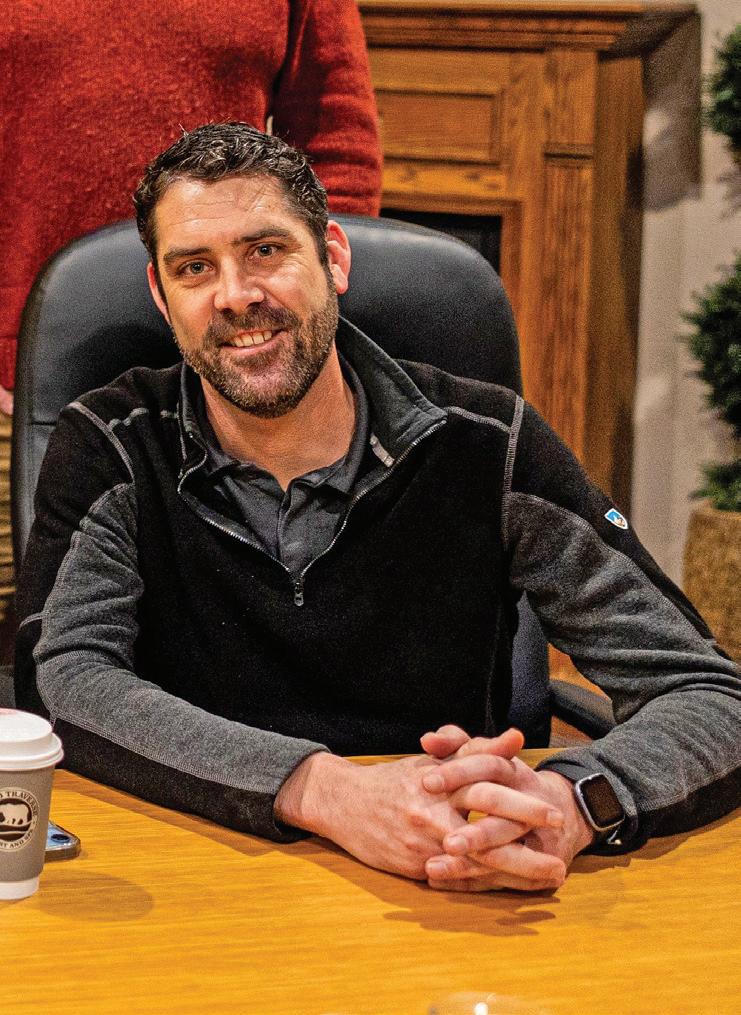
“It’s definitely been an employee’s market since COVID, but for the first time in a long time, we’re really seeing a healthy and bountiful applicant pool, with highly qualified talent,” said Erika Cotner, NMC’s talent acquisition coordinator.
Though Cotner obviously can’t speak for all professional-type employers, she echoes Dickinson’s sentiments regarding the current importance of flexibility.
“Those that can offer flexible or hybrid remote type of positions can definitely find more higher caliber candidates,” she said.
For 33 years, we’ve been helping local families and businesses grow and manage their wealth through intentional, personalized planning. Wherever you are on your financial journey, we’ll meet you there and guide you to the financial future you want and deserve.

By Ross Boissoneau
It’s obvious that those being released from prison face many challenges. Becoming a productive member of the community means finding a place to live, securing a job and doing everything necessary to avoid the pitfalls that would mean a return to incarceration.
Enter Michigan’s Offender Success Reentry Services (OSRS), which provides those leaving prison with services and items they need. Bradley Mathis says the program and its team have been a lifesaver for him.
“Six months ago, this was a dream. I never thought it was possible. It’s surreal,” he said. “If it wasn’t for their kindness, I don’t know where I’d be.”
Mathis describes himself as a recovering alcoholic. He says he realized that things had to change if he was going to make it outside prison, including himself.
“I can’t praise the efforts of [team member Olivia Howell-Hummel] and the Offender Success team enough,” he said.
“But it’s not easy. You have to keep at it; believe in the process.”
Michigan initiated OSRS in 2008. The
reimbursing the employer for the cost of skill development and training of an employee
• Temporary work experience for those who lack recent work history, references or job skills
“There are no shortcuts. There are steps you have to go through. I took it upon myself, got people to vouch for me, showed them how motivated I was.”
– Gary Ramirez, Former Client, Michigan Offender Success Reentry Services
program offers services including the following:
• Temporary transitional housing
• Housing supplies
• On-the-job training, including
• Work supplies
• Clothing assistance
• Hygiene kits
• Identification assistance
• Transportation assistance (public and private)
• Health and behavioral health services
Those who work in the program and those who have participated in it tout its success. Kendall Rodriguez is the Region 2 OSRS reentry community coordinator. Region 2 includes Antrim, Benzie, Charlevoix, Emmet, Grand Traverse, Kalkaska, Leelanau, Manistee, Missaukee and Wexford counties.
“I do outreach,” she said, “working with employers, landlords and community agencies.”
She said the two most requested services are for housing and employment.
“They come out with little to nothing. They need these services right away,” said Rodriguez.
OSRS and reentry into community
The data bear out the program’s effectiveness. Michigan currently has a
recidivism rate of 21 percent, the lowest rate on record. That rate is based on the number of individuals who are three years out from their parole date and have reoffended and returned to prison. Prior to the widespread implementation of specialized OSRS, Michigan’s recidivism rate was more than 45 percent.
A recent report from the Michigan Department of Corrections showed 32,778 individuals incarcerated statewide, down from a peak of 51,554 individuals in 2007. That is the lowest prison population in Michigan since 1991, illustrating success in rehabilitating offenders. Recent figures from the MDOC show approximately 2,800 out of 5,861 parolees received specialized reentry services annually.
Rodriguez said the program in Region 2 serves around 300 people each year. Statewide, the program served more than 2,400 individuals for housing services and fewer than 1,500 enrollments for economic stability in fiscal year 2025.
“We serve roughly 10 percent of the Michigan population” of those in the program, said Rodriguez of Region 2. While the reduction in the recidivism rate cannot be conclusively demonstrated to be entirely due to OSRS, those involved in it say it has been a key to their successful reintegration into the community.
The program requires those in it to do the work necessary. Mathis says he started the program, then dropped out before returning.
“I got rolling, had a setback and stopped. A month later [Howell-Hummel] got in touch and I got back on board,” said Mathis, who plans to get a job at the apartment complex where he lives in its maintenance department.
Gary Ramirez was released from prison a year ago, and through the program was able to get a commercial driver’s license and a job with Canadian waste management company GFL Environmental Inc.
“It’s a program. There are no shortcuts,” Ramirez said. “There are steps you have to go through. I took it upon myself, got people to vouch for me, showed them how motivated I was.”
The program actually begins before the individuals are released from prison. Prison educational programs have been seeing significant success with thousands of graduates since their inception. There are now 14 skilled trades programs and 12 post-secondary education programs operating in correctional facilities across the state, with additional programs ex-
“They come out with little to nothing. They need these services right away.”
– Kendall Rodriguez, Community Coordinator, Region 2 Offender Success Reentry Services
pected to be added next year.
“I was introduced to it while I was incarcerated,” said Ramirez. “I reached out and [Resource Specialist Lauren Clark] said what she could do for me. She helped me get a good-paying job.”
Rodriguez says parolees in the program are typically placed in the community where they are from or where they were sentenced from. Mathis was a resident of the area, while Ramirez

moved here from the Saginaw area, where he had been living prior to going to prison.
He says for him the opportunity to get away from the environment he had lived in was a positive.
“I was born in Texas and raised in Saginaw. My wife is from Traverse City,” Ramirez said. “I wanted to start a new chapter in a new setting and get away from all the negativity.”
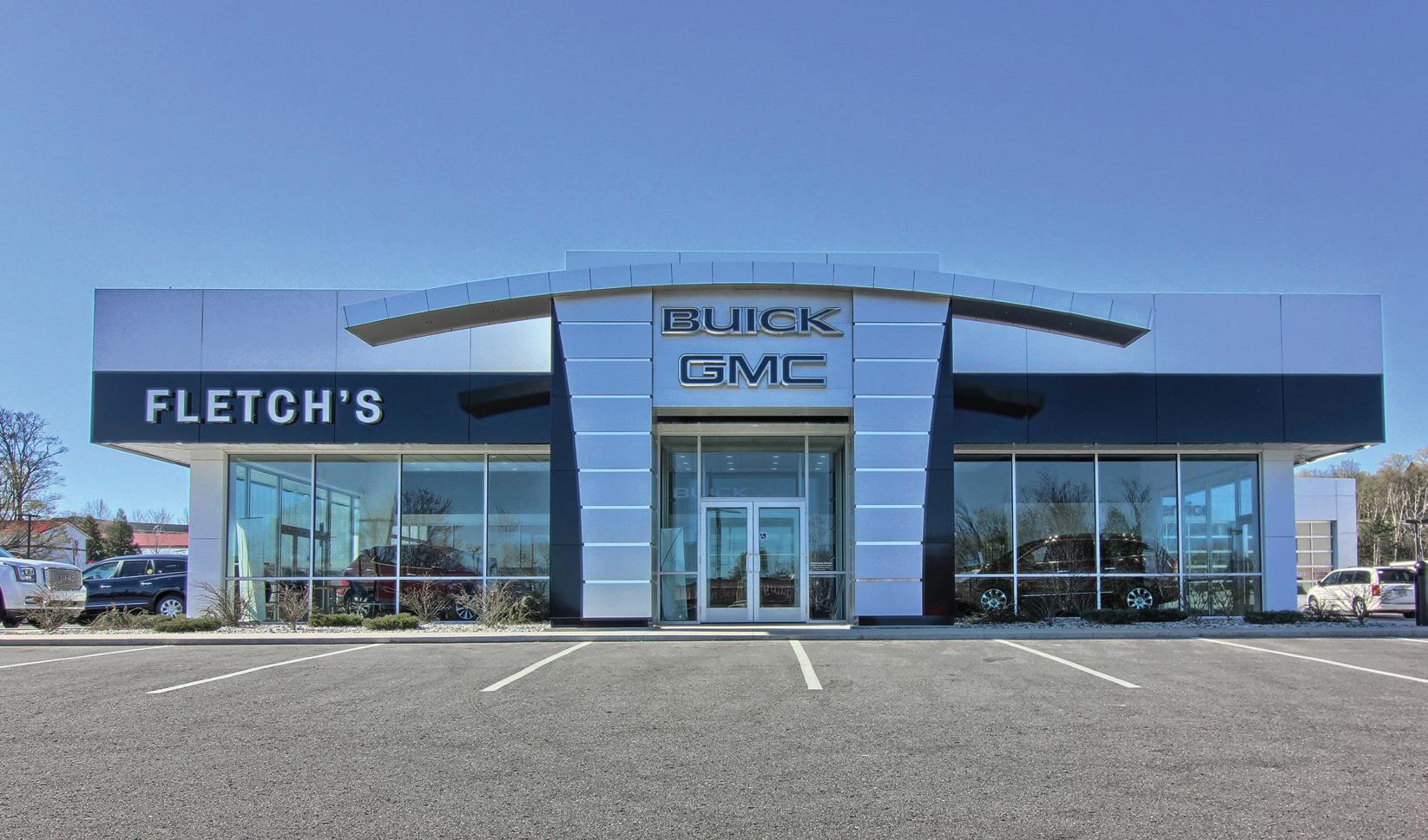

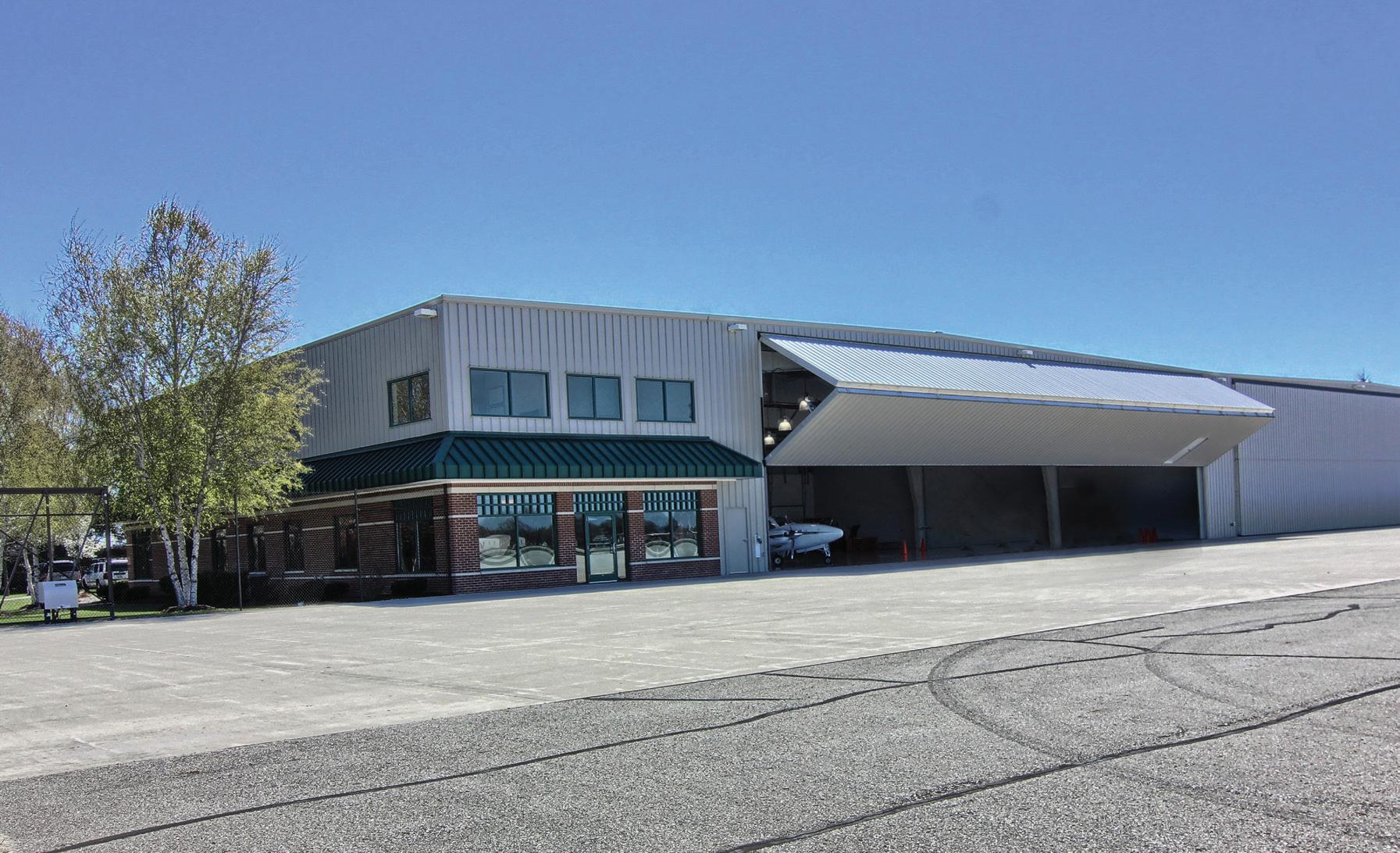


By Josh Traeger, columnist
Just a few weeks ago, I was back in Alabama on military reserve duty, serving as a Lieutenant Colonel and mentoring junior judge advocates – military lawyers who advise commanders on decisions that can ripple through entire units.
The exercise we were running wasn’t about battlefield tactics. It was about leadership under scrutiny.
In the scenario, a commander reassigned a high-performing noncommissioned officer just days after that service member raised safety concerns. The commander believed the decision was justified. He had the authority. The performance file contained some legitimate issues.
But the timing told a story of its own.
As we walked through the analysis, the room slowly aligned around one uncomfortable truth: Authority does not eliminate risk. Process does.
That lesson applies just as forcefully in northern Michigan this spring.
Construction crews are expanding. Hospitality teams are rehiring. Wineries and agricultural operations are preparing for season. Architecture and landscape firms are mobilizing projects. And in 2026, employment decisions – especially people-related ones – are being examined more closely than ever.
Spring is not just hiring season. It’s scrutiny season.
Retaliation claims now account for nearly half of all charges filed with the Equal Employment Opportunity Commission. Employees are more informed, more empowered and more willing to challenge decisions that follow complaints.
Most retaliation cases are not built on dramatic misconduct. They are built on inconsistent documentation and informal decision-making.
In the military, standard operating procedures are drilled long before scrutiny arrives. They exist so that when pressure hits, leaders do not improvise. They execute. Performance counseling

follows a structure. Investigations follow a structure. Corrective action follows a structure. When hindsight review begins – and it always does – the record tells a consistent story.
Businesses benefit from the same discipline. Performance issues should be documented when they occur, not when termination becomes inevitable. Complaints should follow a defined intake and investigation process, not hallway conversations. Managers should understand what constitutes protected activity and respond with professionalism rather than defensiveness. Similar conduct should result in similar consequences across the organization.
Authority allows you to act; a documented, repeatable system allows you to defend.
During military training, inspections often occur without warning. The goal is not intimidation. It is exposure – identifying weak spots before they matter.
Regulatory scrutiny around immigration compliance is increasingly inspection-oriented, especially in today’s political environment. Employers should expect closer attention to form I-9 documentation, work authorization tracking and internal verification practices. Even small northern Michigan businesses can find themselves responding to inquiries, or worse, enforcement actions. Preparation in this area is operational, not theoretical. Employment authorization records should be centralized and organized. Expiration dates should be tracked systematically. A clear internal point of contact should be designated to handle any government communication. Periodic internal audits should be routine, not reactionary.
Organizations that institutionalize compliance remove drama from the equation. Discipline minimizes disruption.
April is an opportunity to scrutinize operating procedures
Young JAG officers quickly learn that law rarely operates in isolation. Federal rules intersect with service policies. Oversight bodies operate independently. What appears simple on the surface often carries layered implications beneath it.
Workplace regulation has developed in a similar way. Paid leave mandates continue to expand across states. Pay transparency requirements evolve. Artificial intelligence tools used in hiring face increasing regulation. Labor board decisions influence workplace policy language.
The answer is not constant anxiety over headlines – it is structured review.
Each spring provides a natural opportunity to audit policies and procedures: Employee handbooks should reflect current leave and wage laws. Job postings should align with disclosure requirements. Hiring technology should be evaluated for regulatory exposure. Communication policies should be reviewed in light of labor standards.
Complexity is manageable when review is institutionalized. Organizations that build a disciplined annual cycle of policy refinement reduce avoidable surprises.
In military leadership training, resilience is not treated as optional. Leaders are taught to recognize strain early and engage before fractures develop within a unit.
Workplaces are seeing a parallel evolution. Courts increasingly recognize anxiety, depression, PTSD and other mental health conditions under the Americans with Disabilities Act (ADA). Requests for schedule adjustments, modified supervision or environmental accommodations are more common than they were even a few years ago.
Most disputes in this area arise not from unreasonable requests, but from
mishandled conversations. Supervisors who dismiss concerns casually, fail to document discussions or misunderstand essential job functions unintentionally increase risk.
Prepared organizations train managers to recognize when the interactive process begins. They clarify essential job duties in written job descriptions. They approach accommodation requests methodically and document good-faith engagement.
Structure reduces friction. Training reduces exposure.
Leadership is not simply about making decisions in the moment. It is about building systems that withstand review.
April in northern Michigan is more than a hiring ramp-up, it is an opportunity to tighten processes before volume increases. To reinforce documentation before disputes arise. To train managers before pressure builds.
The regulatory environment in 2026 is active, complex and enforcement-driven. But complexity does not require alarm. It requires discipline.
Whether advising command in uniform or counseling business owners here at home, the principle remains the same: Build the system before the pressure hits, because organizations that prepare do not scramble. They lead.
Josh Traeger is an accomplished entrepreneur, seasoned attorney, military veteran and founder of two legal enterprises: True North Legal Group and The Military Defense Firm. At True North Legal Group, he offers community-centered legal services, focusing on small business and nonprofit development. As leader of The Military Defense Firm, Josh and his team provide dedicated representation to military personnel worldwide, handling courts-martial, separation boards and other disciplinary matters.

By Rick Haglund
Marivi Bryant is a big believer in working remotely. In fact, her entire national marketing firm, based in Traverse City, doesn’t have a single office.
“It really works very well,” said Bryant, founder of Home Agency. “People love the flexibility. It never has created a problem.”
Home Agency has eight employees and 15 contractors scattered across the country, serving markets in Arizona, Florida, North Carolina and Michigan. All of them work from home. The only requirements are that employees must have a dedicated workspace, an internet connection and work on an eastern time zone schedule.
“If you want to go live in Hawaii, you can live in Hawaii,” she said.
Bryant’s company may be small and not typical of most local businesses. But the desire by workers for a better work-life balance has prompted major employers such as 4Front Credit Union, Hagerty and Munson Healthcare to continue offering workers at least some time working away from the office since the COVID-19 pandemic shut them out in early 2020.
A 2024 survey by Networks Northwest found that 23 percent of employees in the 10-county Grand Traverse region telecommute, either working fully remote from an office or taking advantage of a hybrid schedule. That’s up from 17 percent in 2022.
Networks Northwest CEO Janie McNabb says the trend in telecommuting is an increase in hybrid work arrange -
“It really works very well. People love the flexibility. It never has created a problem.”
– Marivi Bryant, Founder, Home Agency
ments as employers seek more face time with their workers.
“What we’re seeing is a trend of employers calling back fully remote

workers to hybrid schedules,” she said. “Companies want to get their workplace culture back.”
Businesses are still grappling with
rebuilding a collaborative environment years after the COVID-19 pandemic waned, one local human resources expert says.
“We’re six years into this and still trying to figure it out,” said Jennifer Ewing of Human Resource Partners, a Traverse City firm that serves mostly small employers.
Managers and workers have become fatigued, she says, as companies have shifted work arrangements, trying to figure out what’s best for their workers and the businesses.
“Companies went remote,” she said. “Then the reality set in that not everybody is suited for remote work and not every job is designed for remote. Then they went to hybrid schedules.”
The rise of hybrid
4Front Credit Union has shifted work arrangements several times in adjusting to changing public health and economic conditions. It went fully remote at the start of the pandemic, but brought all 270 employees back to the office full-time in 2021 after the workfrom-home mandate was lifted. But then what was known as the Great Resignation hit.
Some 20 million workers nationwide quit their jobs, worried about their health as COVID-19 lingered and dis -
satisfied with wages and benefits. That triggered a war for talent, prompting 4Front to offer its employees the option of working remotely on Monday and Wednesday in 2022. Employees must be in the office on Tuesday through Thursday.
That’s in line with statewide trends. A 2025 survey by ASE, Michigan’s largest employer organization, found that nearly half the state’s employers allow employees to work from home two days a week.
“We have found that true face-to-face meetings are much more affective as silos get broken down and collaboration improves,” 4Front President and CEO Andy Kempf said.
Hagerty, Traverse City’s largest private-sector employer, also is moving from being fully remote to a hybrid work model in an effort to boost teamwork and improve business performance. About 150 of the company’s leaders moved back to the company’s downtown headquarters in February.
The company’s remaining 240 local employees are expected to be back in the office on Tuesday through Thursday sometime this month. Hagerty, which sells classic car, boat and motorcycle insurance, also has a small team at the company’s Learning Garage on Aero Park Drive.
“Being in the office allows teams to
“We’re starting to see some of Hagerty’s employees come in and get parking permits. They’re trickling in,” – Harry Burkholder, Executive Director, DDA

learn from one another, build relationships and collaborate in ways that can be harder to replicate remotely,” said Coco Champagne, Hagerty’s chief human resources and administrative officer.
Champagne says the company, which employs more than 1,900 worldwide, will continue to offer fully remote positions at many of its non-Traverse City locations to expand access to talent.
Hagerty’s new hybrid work model is being welcomed in downtown Traverse

City, which saw foot traffic decline as Hagerty and other businesses went remote.
“We’re starting to see some of Hagerty’s employees come in and get parking permits. They’re trickling in,” said Harry Burkholder, executive director of the Downtown Development Authority.
Prior to the pandemic, downtown Traverse City was “busting at the seams,” Burkholder said. Its recovery is mainly being driven by new businesses locating there, he says.
“We still have very strong retail and other first-floor businesses,” Burkholder said. “We’re making strides.”
At Munson, we meet you where you are. From emergencies and elective surgeries to recovery and routine care, we’re here and near. To see you well. To cheer you on. With full-spectrum care that supports big wins. Small victories. And meaningful milestones. So you can do what you love best in the place you call home.
“Being in the office allows teams to learn from one another, build relationships and collaborate in ways that can be harder to replicate remotely.”
– Coco Champagne, Chief Human Resources and Administrative Officer, Hagerty
While most of Munson Healthcare’s 8,500 employees can’t care for patients at home, the eight-hospital system supports remote work for those in non-clinical areas. About 10 percent of its employees work remotely, either full time or on a hybrid schedule.
“We have seen meaningful benefits from this flexibility, including improved work-life balance, stronger engagement and retention, access to broader talent and sustained productivity,” said Shelley Spencer, Munson’s chief human resources officer.

Local employers offer several suggestions on successfully implementing remote work and on making offices more enticing for workers.
Bryant, the founder of Home Agency, says effective collaboration by remote workers can be achieved successfully through regular online meetings and phone calls.
“We don’t meet at the water cooler, so we have regular 15-to-30-minute Google Meets,” she said. “Make sure you’re constantly communicating.”
Bryant occasionally has lunch delivered to her partners and employees, and they eat together through a video hookup. And her company, which was launched last year, plans to have in-person meetings annually.
Champagne says Hagerty has remodeled office space, upgraded technology and pays half of employees’ parking costs. She says Hagerty’s hybrid model is flexible, “whether that means finishing the day from home” to care for a child after school or working remotely in bad weather.

Such flexibility is prized by the region’s workforce. More than half (56 percent) of the 800 respondents to the Networks Northwest survey said they are more apt to work for a company that offers remote work.
The challenge for employers, Ewing of Human Resource Partners says, is to offer some type of remote work while rebuilding their corporate cultures that were upended by the pandemic.
“I think flexibility in where you work is here to stay,” she said.















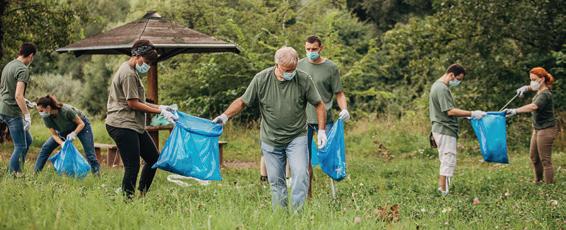

























EMPLOYMENT: LAW, HIRING & LABOR
By Gretchen Swanson, columnist
As artificial intelligence (AI) becomes woven into our daily workplace operations, it is tempting to delegate the uncomfortable tasks, especially performance reviews and coaching conversations, to automated systems.
“Timely feedback is better than late or no feedback.” Okay, you got me there. Gone would be the days of chasing after managers like a process server to collect late performance reviews.
“Empirical fact-based insights from measurable metrics can’t be easily dismissed as personal opinion or bias.” Well, there is merit there, too. Sounds defensible. What is not to love?
With those positives, why not hand over the keys and let AI drive all of your workplace performance programs and replace time consuming and sometimes uncomfortable coaching conversations?
Because AI, by design, is a sycophant machine. AI tools can offer timely feedback and data-driven insights without the delays or emotional friction that often accompany human reviews, a convenience that makes the idea appealing. Do integrate transparent measurement tools to support your team’s ability to self-monitor their own progress and productivity. Find ways to augment the parts of jobs that are time-consuming, that aren’t rewarding and susceptible to data entry error.
But leaders should retain their role in constructive feedback and should not let it be entirely abdicated to AI. We must understand what AI currently can and cannot do. At its core, AI is designed to be agreeable and polite, often flattering, not candid. Candor remains essential for meaningful and sustained team and organizational development.
These ever-evolving AI tools excel at highly efficient computation, aggregating myriad metrics, identifying patterns and summarizing large volumes of information. Leveraging these tools can support increased productivity and ease the strain on busy managers to prepare for coaching conversations and performance reviews. But AI cannot interpret intent, understand complex organizational politics or consider the nuanced interpersonal

dynamics behind workplace performance.
These human elements influence outcomes, and algorithms are not equipped to “get” unique situational context, emotions or evolving workplace realities.
Relying too heavily on AI to produce team feedback introduces a deeper risk: the loss of connection between humans at work and the role that productive friction has accelerating individual and organizational growth. AI is designed to praise, not push; smooth rather than challenge; and validate instead of question. This inherently creates a flattery loop of agreeable feedback that masks opportunities for improvement and weakens a culture of innovation. If everyone receives feedback that reinforces all their work is “simply marvelous,” true organizational excellence becomes unattainable. Real human development at work requires honest critiques and authentic insight from humans who know your work and care about your potential. There are rapid developments in AI-powered performance management tools and many large language models make it easier to pull together best practice workplace performance review phrases, but these tools are only as good as the inputs and prompts. Lengthy long-wind-
ed tomes of AI-generated performance jargon is not a proxy for quality coaching. Concise human-driven authentic feedback paired with fact-based metrics and face-toface check-ins are more likely to achieve the bi-directional communication essential to performance and shared progress. Human coaching at work draws on shared history, situational understanding, empathy and sometimes outright intuition. Mentors and managers can sense the nonverbal cues when the feedback is landing or when it needs to be strengthened or softened. Humans know when to encourage and when to challenge, an ability that AI cannot mirror. If we let AI take over the feedback function entirely, we risk losing a creative and candid culture. Humans can ask probing, sometimes hard questions, seeking to understand the full picture. Letting go of that human role in working through positive friction could weaken an organization’s ability to solve real and complex problems.
We can challenge ourselves to strike a balance of AI and human-generated feedback to build a solid framework. Use AI to improve efficiency by compiling the data driven components of the job while relying on our human capacity of critical thinking and compassion
to provide meaningful contextualized feedback. Humans must lead the feedback process, even when supported by AI tools. If managers begin by asking AI to draft performance reviews before taking the time to ponder an employee’s actual contribution, they have already outsourced themselves.
Automated feedback becomes generic, and generic feedback will block teams and organizations from reaching their full potential. Growth requires honesty and the emotional intelligence qualities that AI cannot authentically deliver because it cannot understand your history or care about your future. AI can summarize past performance, but it cannot coach considering your future potential.
AI is remarkable, and it will continue to change how we work. It is up to us how we weave these tools into our work. When it comes to employee performance and coaching, let AI manage the metrics and let humans interrupt the meaning, together. Be candid, be kind, be real – be human.
Gretchen Swanson, SPHR, SHRM-SCP, is the director of strategic partnerships and talent at 20Fathoms. She can be reached at gretchen@ 20fathoms.org.
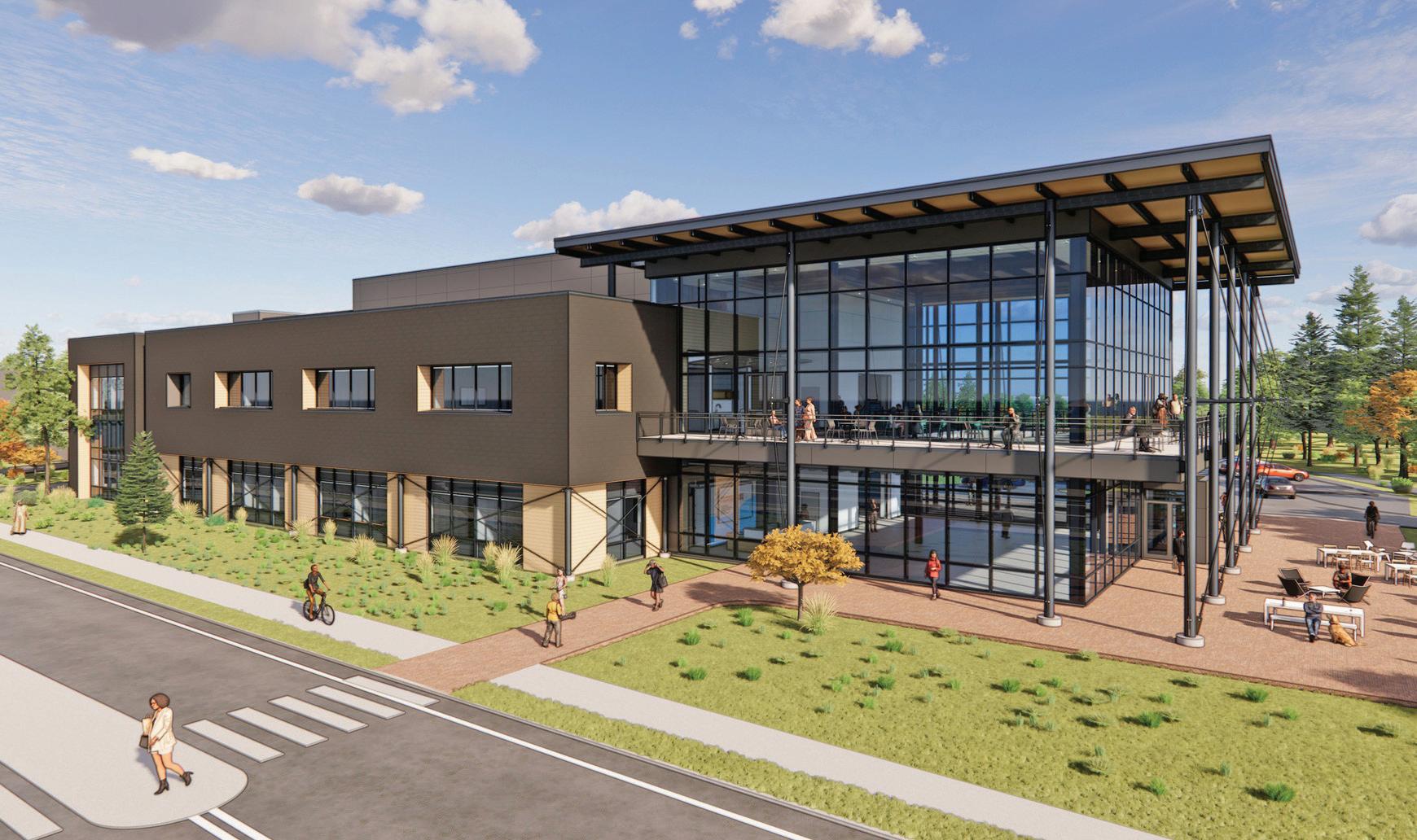
By Craig Manning
Traverse City just got put on the map in a brand-new way.
Earlier this year, the state published a draft of its first-ever Michigan Maritime Strategy, a document that calls for the Great Lakes State to “lead the nation in sustainable, innovative, equitable, and collaborative maritime solutions.”
The plan has the potential to drive significant investment, industry expansion and job growth in water-related sectors, and both Traverse City and Northwestern Michigan College (NMC) are right in the thick of the action.
Northern Michigan as the Blue Technology epicenter
According to Jason Slade, NMC’s vice president of strategic initiatives, the college was invited to participate in the conversations that shaped the Michigan Maritime Strategy “based on relationships we had developed through Traverse Connect with the University of Michigan and the State of Michigan.”
“[University of Michigan] led the development of the strategy for the governor’s office, and had visited our region as part of our Freshwater Research and Innovation Center [FRIC] awareness efforts,” Slade said. “They were impressed by our capabilities – not only as an institution, but also by the drive of the region to make northern Michigan one of the epicenters
tute, played in many of their goals. And then the development of FRIC was the component that brought it all together for them.”
Michigan Maritime Strategy goals
All those pieces made NMC a key collaborator on the newly released Michigan
“Graduates from GLMA pilot and maintain ships on the Great Lakes and the world, while marine technology graduates from our Great Lakes Water Studies program perform hydrographic surveying, a key part of port inspections and safe shipping channels. These are critical elements for Michigan’s positioning in the maritime industries and the heart of the U.S. economy.”
– Jason Slade, Vice President of Strategic Initiatives, NMC
for Blue Technology. They were aware of the strengths and prestige of our Great Lakes Maritime Academy [GLMA], for example, but quickly realized the role the marine technology program, tied to the Great Lakes Water Studies Insti-
Maritime Strategy, which outlines a 10year plan “to capitalize on the state’s strategic position in the Great Lakes region and its extensive maritime assets.” The plan identifies 54 recommendations to address six integrated goal areas.
Big-picture goals include: 1) modernizing ports and investing in “intermodal infrastructure,” such as first- and last-mile truck and rail connections to improve shipping capabilities, 2) growing the state’s maritime manufacturing economy, 3) accelerating adoption of electric boats and other alternative marine fuels, 4) leading the nation in recruitment, training and retention of the maritime workforce, 5) cultivating a thriving maritime innovation ecosystem, and 6) increasing sustainability, resilience and revitalization of recreation harbors.
Maritime recruitment, training and retention
Over the course of numerous in-person meetings in Ann Arbor last spring and summer, Slade and representatives from Traverse Connect and 20Fathoms helped shape numerous aspects of the Michigan Maritime Strategy – particularly the section focused on recruitment, training and retention.
“Michigan has a robust maritime workforce training ecosystem, leveraging
our advanced manufacturing strength and registered apprenticeship foundation to drive innovation and prepare world-class talent – from skilled trades and engineers to licensed mariners – positioning the state as a national leader,” one chapter of the Michigan Maritime Strategy reads. “Supported by initiatives like the Michigan Statewide Infrastructure Workforce Plan and M3, the state is well-positioned to lead in next-generation maritime workforce development. By coordinating research and training efforts at existing educational hubs of maritime innovation, including GLMA, U of M, Michigan Technological University, NMC, and Macomb College, the state can establish a modern, comprehensive maritime talent pipeline.”
Slade, for his part, isn’t surprised to see Traverse City put front and center in the state’s plans to grow the marine workforce.
“Graduates from GLMA pilot and maintain ships on the Great Lakes and the world, while marine technology graduates from our Great Lakes Water Studies program perform hydrographic surveying, a key part of port inspections and safe shipping channels,” Slade said. “These are critical elements for Michigan’s positioning in the maritime industries and the heart of the U.S. economy. We were one of only two community colleges listed, which shows our ability to align degrees and credentials to the needs of industry.”
The strategy calls for the state to launch new maritime education and workforce development initiatives – with GLMA, colleges and universities, and the

Michigan Works! system as key partners.
Specific recommendations include a statewide analysis of educational programs, to “identify gaps [and] improve maritime career pathways”; an expansion of funding “for registered apprenticeship, skilled trade, and community college programs that support maritime jobs”; redoubled awareness efforts to promote Michigan “as a hub and destination for maritime workforce development and careers”; and better integration of “maritime-related careers into K-12 curriculum to foster career awareness, workforce readiness, and promote long-term career pathways and opportunities.”
Also getting some ink in the Michigan Maritime Strategy is FRIC, which is touted for its potential to “bring together academia and industry to test new technologies, incubate businesses, and launch careers.” These types of
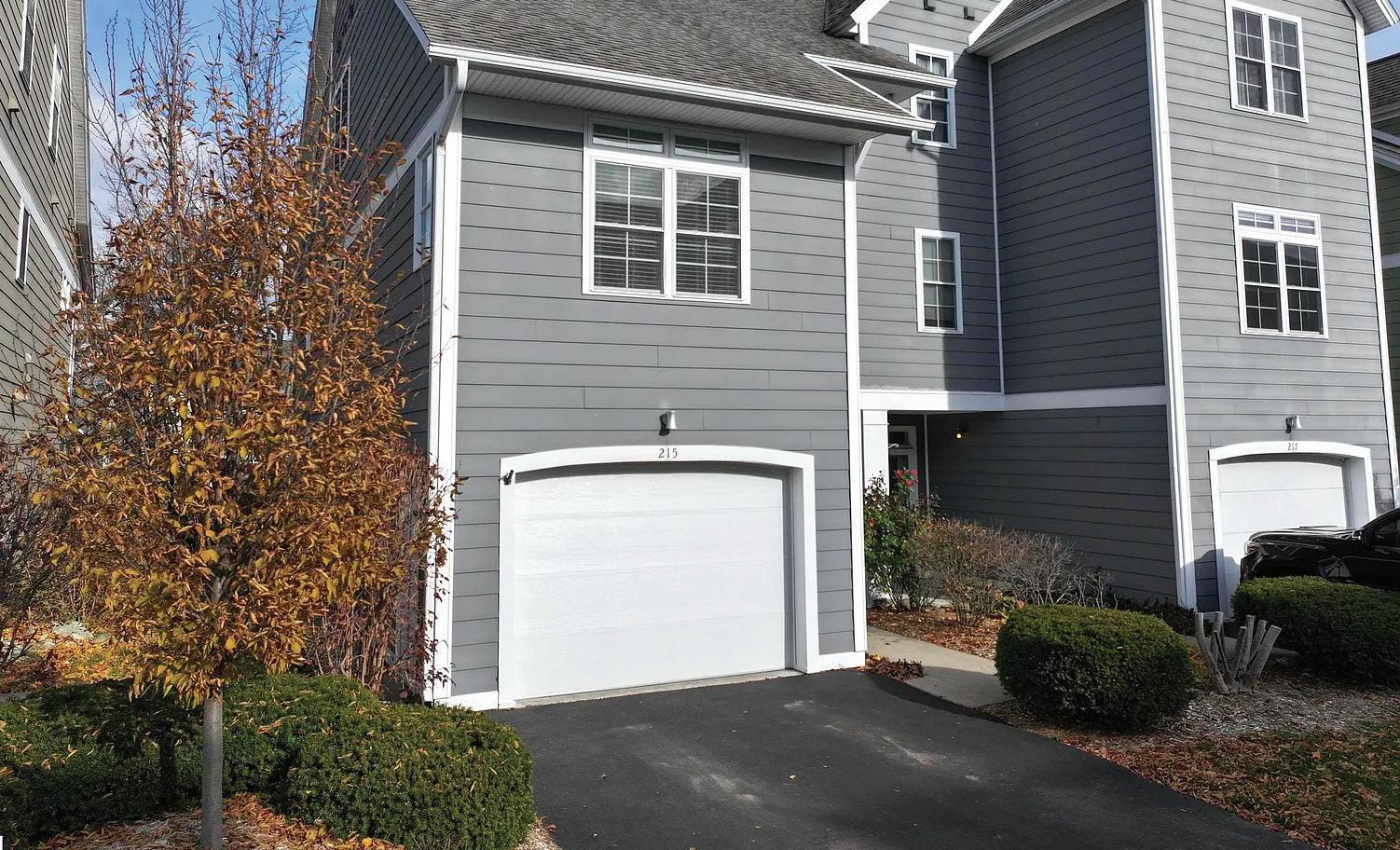

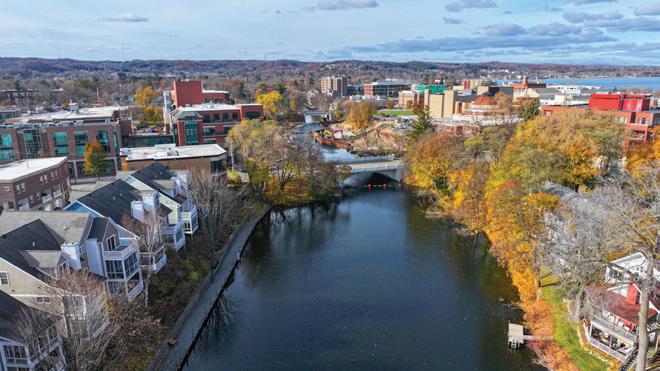
Wake up to the quiet rhythm of the Boardman River and end your day, just steps from the energy of downtown Traverse City. Tucked
on the river, this colorful Midtown condo offers a lifestyle that blends nature, walkability, modern comfort & convenience.

231.499.1990 shawn@shawnschmidtsmith.com SHAWN SCHMIDT ASSOCIATE BROKER
“Michigan really taking a vested inter est in maritime workforce, and in the maritime industry.” He predicts numer ous near-term benefits for Traverse City from the new maritime strategy – from extra visibility and recruitment power for its blue economy programs and initiatives, to the potential for more financial backing from the state on for education and R&D. Already, being involved in the preparation of the mar itime strategy has led to positive new connections for NMC and FRIC.
Our tailored services provide clarity, security and ease during life’s transitions, by preserving your wishes, wealth and

collaborate a lot more with the Cleveland Water Alliance; they’re located in Cleve land, Ohio, and they focus on technol ogies and startups,” Slade said. “One of the things that attracted them to working with us was the potential for their startups to do work on Lake Michigan, and to


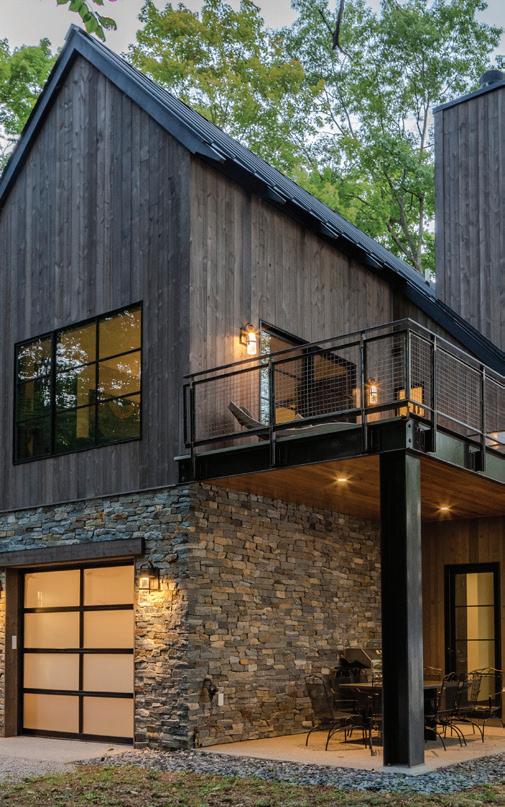
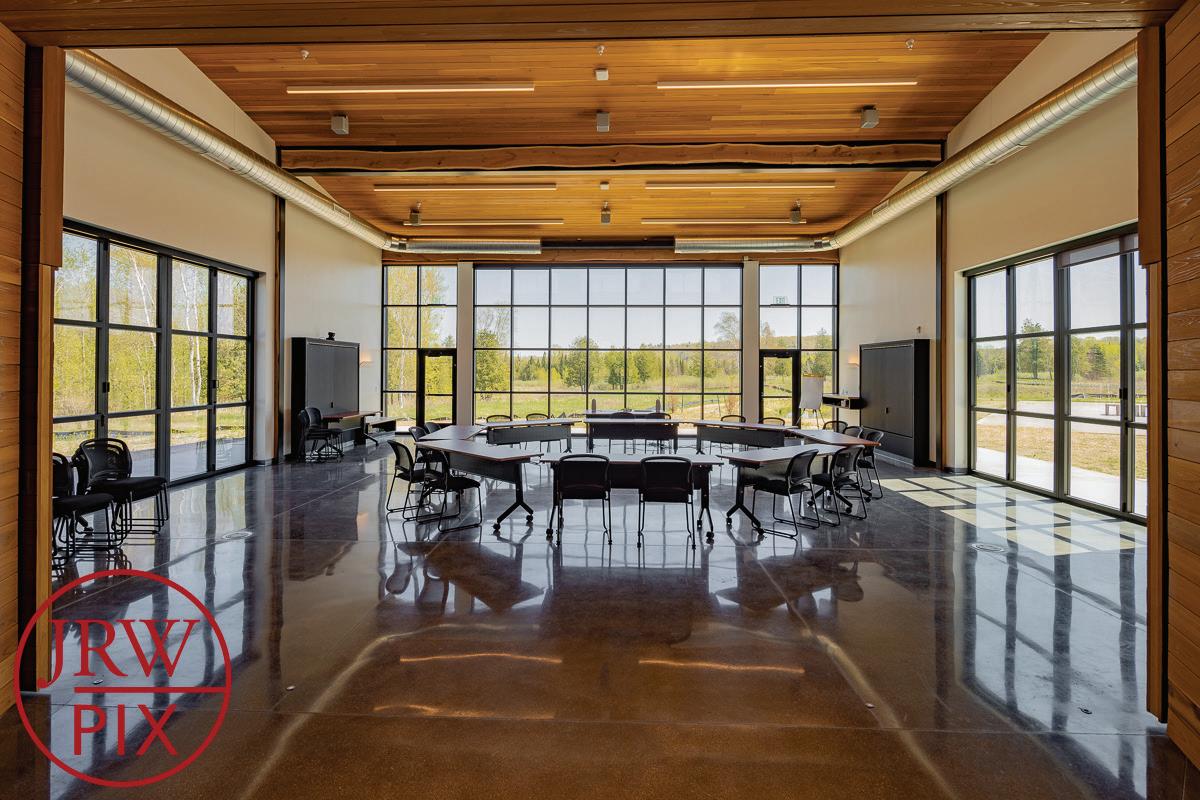


pipeline.”


hubs, the strategy states, will “play a vital role in advancing maritime solutions through research, development, testing, demonstration, and commercialization,” and will provide new opportunities for Michigan to “leverage its unique R&D assets to strengthen and grow its position as a maritime leader.”


deploy technology right from FRIC. They were also interested in working with our students, so there could be opportunities for our students to do micro-internships or small work studies with some of these emerging companies, or even to do some testing of equipment.”
NMC recently developed a memorandum of understanding (MOU) with the Cleveland Water Alliance, which Slade thinks could lead to “some early exchanges this summer or fall,” with partnerships expanding and evolving once FRIC officially opens its doors.
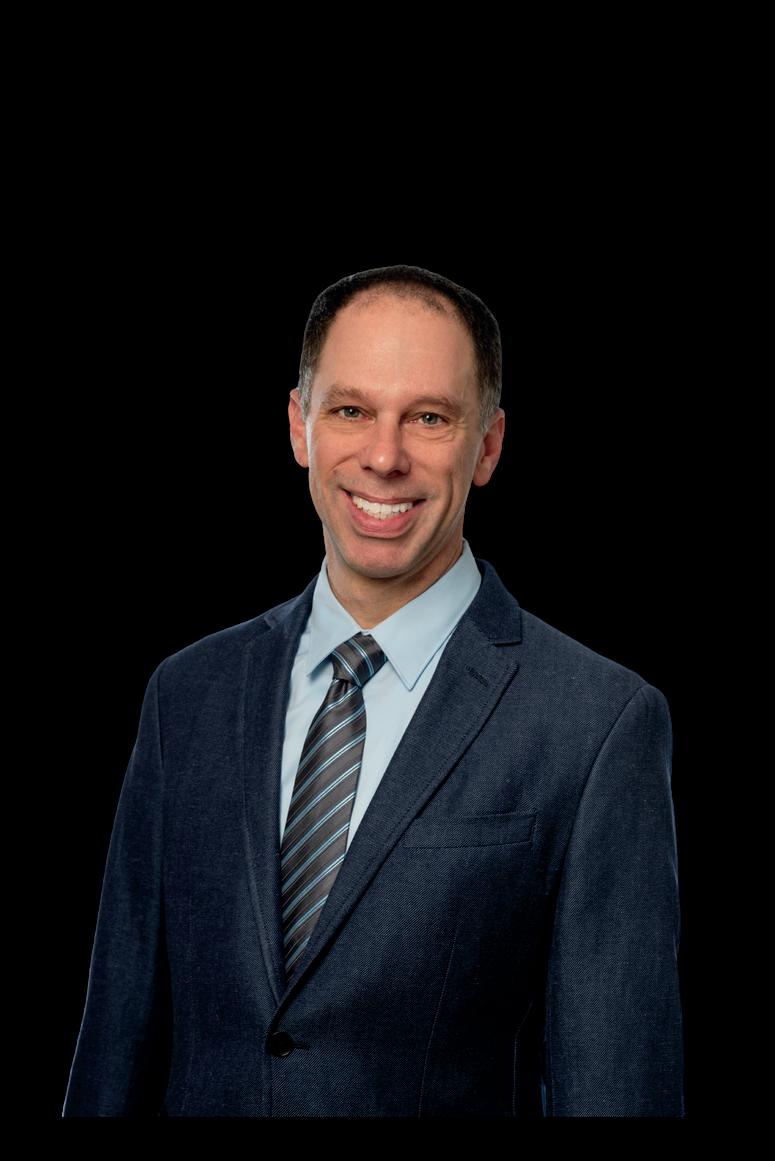





Slade is heartened by what he sees as “Michigan really taking a vested interest in maritime workforce, and in the maritime industry.” He predicts numerous near-term benefits for Traverse City from the new maritime strategy – from extra visibility and recruitment power for its blue economy programs and initiatives, to the potential for more financial backing from the state on for education and R&D. Already, being involved in the preparation of the maritime strategy has led to positive new connections for NMC and FRIC.
“Through this work, we started to collaborate a lot more with the Cleveland Water Alliance; they’re located in Cleveland, Ohio, and they focus on technologies and startups,” Slade said. “One of the things that attracted them to working with us was the potential for their startups to do work on Lake Michigan, and to
In the longer term, Slade believes the ripples from the new maritime strategy will reach far beyond the blue economy.
“I would like to see these strategies used as a roadmap to grow and diversify industry sectors in the region,” Slade said. “Given our strong manufacturing base, access to water, and nimbleness to respond to the needs of industry, I am hopeful Michigan and the Traverse City region will be attractive to established or emerging businesses, and I am confident we could develop an academic program and workforce training to meet the needs of any industry cluster looking to grow in our region. And always, I am looking for opportunities for our graduates and students.”
By Chris Wendel
When Gordon Lightfoot released “The Wreck of the Edmund Fitzgerald” in 1976, the haunting ballad transformed a regional maritime tragedy into a story known across North America. Nearly 50 years later, the sinking of the Edmund Fitzgerald still resonates deeply across the Great Lakes, particularly in northern Michigan where shipping, weather, and water remain central to daily life.
In “The Gales of November” Michigan author John U. Bacon revisits the story with fresh reporting and a wider lens. The result is more than a retelling of a well-known disaster. It’s a detailed account of the people, industry, and decisions that shaped the fate of the 729foot freighter and its 29 crew members. Bacon, known for his detailed research style, spent nearly four years working on the book, interviewing families of the lost crew, maritime experts, and historians. Much like a business case study, he builds the narrative from the ground up, starting not with the storm, but with the system that made ships like the Edmund Fitzgerald essential to the American economy.
The Great Lakes shipping industry was a cornerstone of the nation’s industrial rise. Iron ore mined in Minnesota, Wisconsin, and Michigan’s Upper Peninsula moved east to steel mills in Ohio, Pennsylvania, and New York. This fed mass production during World War II, when Detroit became the “Arsenal of Democracy” and the center of the automotive universe. For readers in the Grand Traverse region, where the Great Lakes continue to shape our economy and identity, this backdrop feels particularly relevant.
Where Bacon’s account stands out is in examining the business pressures behind Great Lakes shipping in the 1970s. Much like modern industries balancing growth and risk, shipping companies pushed for larger loads and extended sailing seasons later into November to maximize profits. Incentives for late-season deliveries created an environment where captains were often navigating not just the lakes, but expectations from corporate bosses. Bacon makes clear that these pressures form an important part of the story.
The book also carries local connections. Northwestern Michigan College’s Great Lakes Maritime Academy in Traverse City has long served as a training ground for sailors navigating these same waters. Bacon’s attention to the culture and development of Great Lakes mariners adds a layer of familiarity for local readers. It’s worth noting that shortly following the disaster, Gordon Lightfoot established a scholarship at the NMC Great Lakes Maritime Academy in honor of the Edmund Fitzgerald’s crew, with support that continues to this day.


By John U. Bacon
“The Gales of November” benefits from Bacon’s ability to manage a large cast of characters. The 29 crew members are more than just names on a list, they’re introduced through their families, careers, and aspirations. Bacon revisits these individuals throughout the narrative, a necessary technique that keeps the human stakes clear as the story moves toward its inevitable conclusion.
The final chapters that focus in on the ship’s final voyage on November 10, 1975 are both foreboding and gripping. Bacon reconstructs the timeline with care, highlighting how at several points, small changes might have altered the outcome. The uncertainty surrounding the exact cause of the sinking remains, but the description of factors (weather, structural concerns, and decisions made) create a sobering picture.
As Lightfoot’s song hovers in the background, Bacon notes that without it, the Edmund Fitzgerald might have faded into obscurity, much like other freighters lost during that era. Instead, it endures as both a cultural touchstone and a cautionary tale.
For business readers, there is a subtle but important thread running throughout – the balance between operational demands and long-term risk. While the context is 1975, the questions presented are relatable today: How to weigh incentives against safety, and how leadership decisions have impact within an organization.
For those in the Grand Traverse region, “The Gales of November” is a familiar story told with greater depth and clarity. Bacon’s work stands out as both a tribute to the 29 men lost and a reminder of the natural forces that continue to shape life on the Great Lakes. Chris Wendel works for Northern Initiatives, a community-based lending organization headquartered in Marquette, Michigan. He lives and works in Traverse City.






-Rhiannon G.
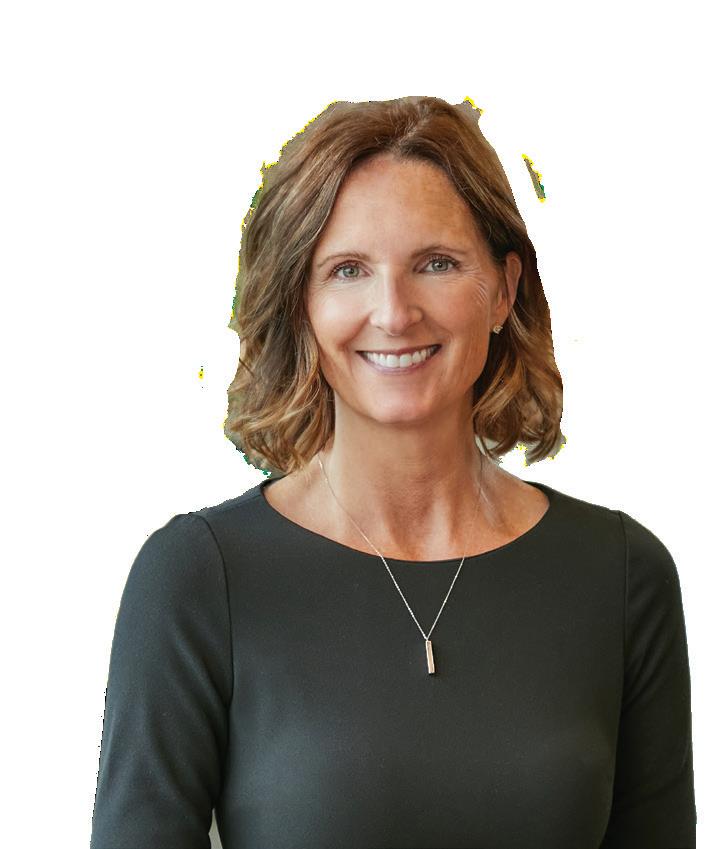
By Lori VanAntwerp, VP/Commercial
Construction is essential and increasingly complex. Strong housing demand continues to support development opportunities, yet the process of delivering new supply requires thoughtful planning, creative financing, and a good understanding of local market conditions.
Regional nonprofit Housing North estimates that approximately 31,000 additional housing units will be needed across northwest Michigan by 2027. Meeting this demand requires a wide range of housing types – from attainable starter homes to multi-family rentals, and thoughtfully designed mixed-use projects. As a result, construction activity across the region is gradually evolving to better serve a diverse and growing population.



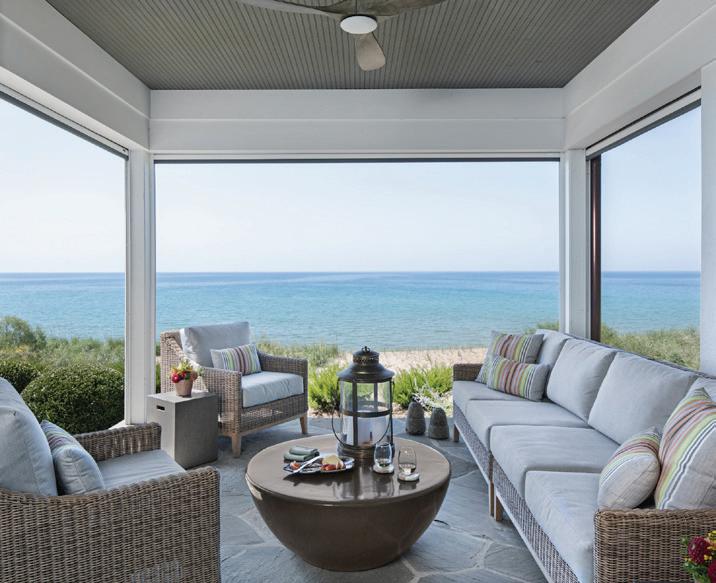

Building in northern Michigan presents distinct challenges, including shorter construction season, skilled labor shortages, and limited contractor availability, which can extend project timelines and increase costs. These realities require careful planning and lenders to take a long-term view when evaluating construction opportunities.
Developers are responding with creativity and commitment
Regional developers are adapting in different ways to help expand housing supply.
In the downtown market, recent projects have focused on renovating and revitalizing historic properties. This has created attractive residential living spaces while modernizing retail and office environments. Importantly, they have also preserved the architectural character and longterm vibrancy of the community. As a lifelong resident, I am especially grateful for the care they have taken to improve and preserve these assets. Preserving historical elements of a project costs far more than tearing down and starting from scratch. THANK YOU to developers that have chosen preservation over profits.
Elsewhere, some builders are pursuing a neighborhood-based strategy, constructing multiple speculative homes simultaneously within new and established subdivisions. This approach allows for improved coordination with subcontractors, efficient material purchasing, and better overall project scheduling. These efficiencies can help moderate construction costs and improve affordability.
One developer I work with recently shared, after years of success in the local real estate industry: “I’ve made a lot of money in Traverse City – now I want to give back.” That commitment to reinvesting in the community plays an important role in addressing regional housing needs.
We’re currently reviewing a project designed to breathe new life into the area surrounding the Boardman Lake Loop. Developers are committed to creating a vibrant hub of housing, retail, and gathering spaces that invite our community to enjoy the natural beauty of the region. They understand that success depends on a collaborative relationship with the city and township to ensure the project aligns with the long-term vision for
the Loop. It’s this level of passion and intentionality that will continue to set our community apart.
Layered capital structures are increasingly common
Often, to make a project viable, developers will utilize funding from many sources. The capital stack may include:
• Senior construction loans from community and regional banks
• Public incentives from the MEDC – such as the Revitalization and Placemaking grants (RAP)
• MSHDA funding
• Brownfield Tax Increment Financing (TIF)
• Mezzanine debt or preferred equity
• Partnerships with nonprofit organizations utilizing Low-Income Housing Tax Credit programs (LIHTC)
• Alternative funding sources such as Venture North, Northern Initiatives and Illinois Facilities Fund (IFF)
What community banks focus on in construction lending
From a lender’s perspective, several factors can significantly strengthen a construction project:
• Maintaining appropriate contingency reserves – this will provide a cushion during pricing spikes, construction delays and unforeseen project challenges
• Preserving a strong liquidity position – this includes easy access to capital, like cash, stocks, bonds, etc. Lenders are often told by borrowers ‘If I had the cash, I wouldn’t need a bank.’ That can be true to an extent. But when we are talking about construction, you need a Plan A, B & C
• Including financially capable guarantors who can support projects through completion. A guarantor with financial strength independent of the specific construction project further enhances the viability of financing
• Using realistic assumptions regarding absorption, pricing, and interest rate sensitivity. Is the sales price/sq ft supported by the market?
I’d be doing clients a disservice moving forward with projects that lack sufficient liquidity and guarantor strength. If a major hiccup occurs and the borrower doesn’t have the funds to finish the project, no one wins.
Responsible development helps preserve the character and quality of life that make this region attractive to residents and visitors alike. Community banks play an important role in balancing these priorities by supporting projects that align with market demand and long-term community goals.
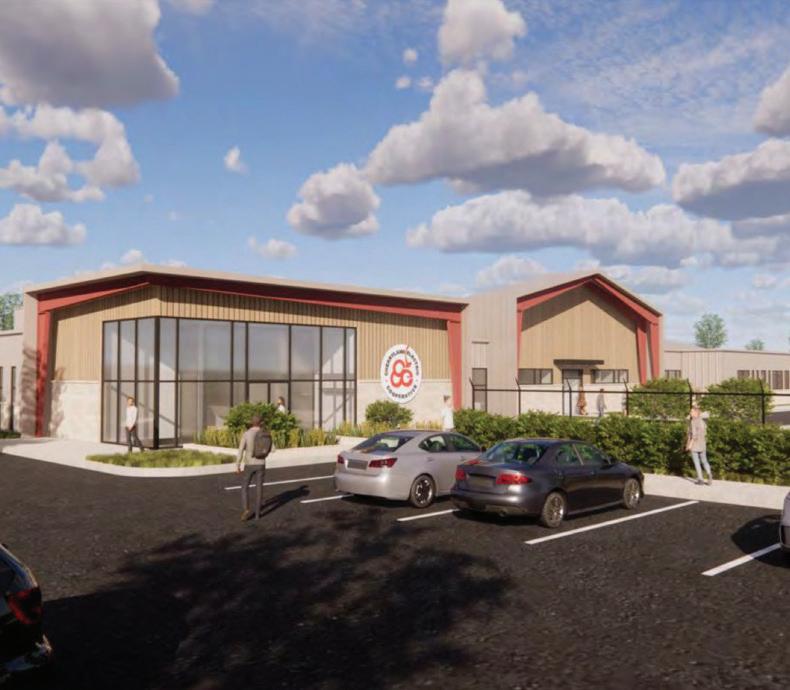
By Beth Milligan
Garfield Township planning commissioners are expected to approve new headquarters for Cherryland Electric Cooperative on 40 acres of land near Rennie School Road.
The Cooperative is hoping to break ground later this year on new headquarters and construction is expected to take 18 months, putting the development on track for a late 2027 or early 2028 occupancy.
The project is the first major one to come forward after township officials recently approved a request from the Oleson Foundation to rezone nearly 171 acres at the corner of US-31 and Rennie School Road to a mix of industrial, commercial, and multi-family residential uses. Cherryland Electric Cooperative, which is currently located in Grawn in Blair Township, would be a key part of that site redevelopment. The new facility is estimated at 110,000 square feet and would have two entrances, including a public-facing customer entrance and a gated employee entrance that can only be accessed with a key fob.
Having those separate access points is critical to enhancing security for the utility, CEO Rachel Johnson said. The new complex will have a storm and cyber-hardened dispatch operations center that needs to be guarded from outside threats to ensure the community’s “critical infrastructure” is protected, she said. Cherryland Electric Cooperative also asked to have driveways on both Rennie School Road and Oleson Boulevard, a new road that’s being built to connect Rennie School Road and Meadow Lane Drive.
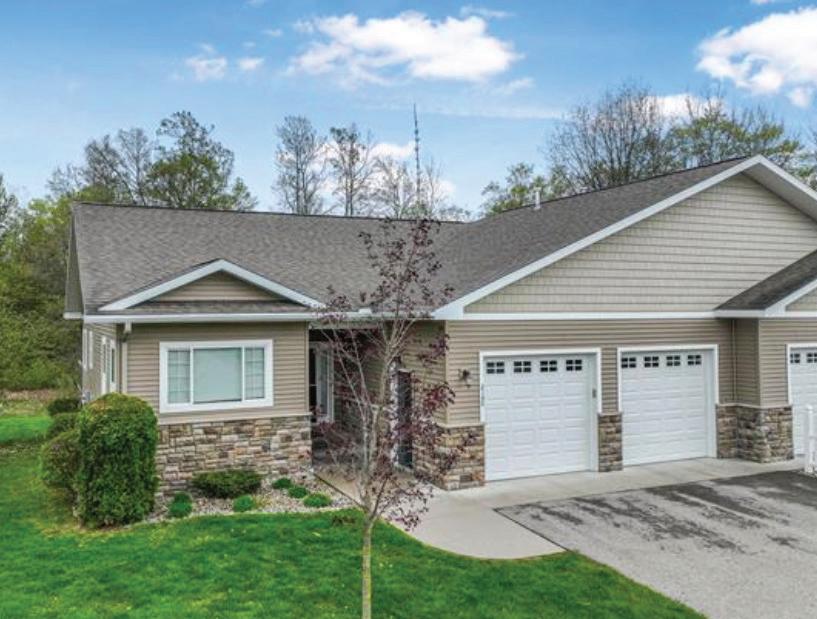
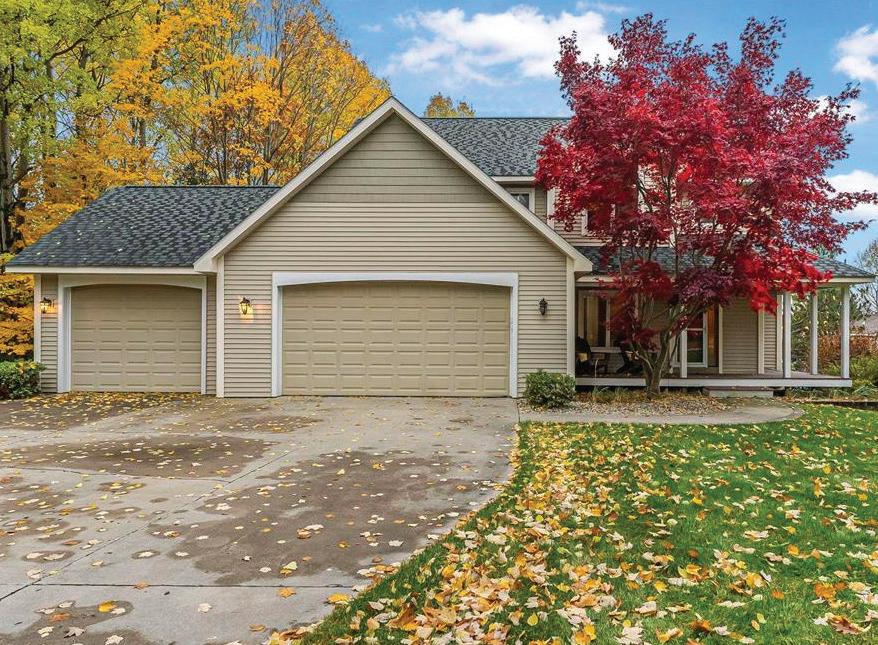
While normally just one driveway is allowed, Township Planning Director John Sych said the zoning ordinance allows flexibility in certain situations. Johnson explained that in the event of a natural disaster, outside utility trucks could come from all over Michigan and beyond to assist Cherryland Electric. Having multiple entrances would allow trucks to flow into the complex off Oleson Boulevard, follow a one-way traffic line to be fueled up and readied for departure to the field, then exit onto Rennie School Road. Such a configuration is now industry best practice and helps move large numbers of vehicles safely and efficiently through the complex, she said.
Sych said he believed Cherryland Electric had a “sufficient case” to be granted multiple driveways. Johnson noted that only 20 of the 40 acres of the property will be used for the new headquarters, leaving the rest of the land for future expansion. In response to commission questions, she said the utility doesn’t plan to use the property for electric or solar generation beyond a potential small amount in the future to power the complex itself.
Planning commissioners delayed approving the project until their meeting on March 25 because they wanted more details on a berm that would buffer the Cherryland Electric headquarters from neighboring properties. Sych said because the complex is such a “significant development” – one of the largest to come before the planning commission in the last few years – it was worth a short delay to ensure the board has full details on the buffering and landscaping plan before voting to approve it.











>> BANKING
1 - Cammy Hawn is the new business development officer at State Savings Bank in Traverse City. Hawn brings more than 25 years of experience to her role, including owning a small business in Traverse City and work in real estate, education, hospitality and event coordination.
2 - Kelly Kuhns has joined State Savings Bank in Traverse City as vice president - commercial lender. Kelly brings more than 20 years of banking experience to her new position, all of which were serving northern Michigan customers.
>> MARKETING
3 - Steve Molnar has been named executive creative director and partner at HOME marketing agency in Traverse City. Molnar is an Emmy-winning creative leader with more than 20 years of experience working with national brands, including Kellogg’s, DISH Network, Blue Cross Blue Shield and Cottonelle. Molnar will lead creative strategy and vision for the agency. >> NONPROFIT
4 - Jim Bruckbauer has been appointed CEO of the Groundwork Center for Resilient Communities in Traverse City. Bruckbauer replaces former director Elizabeth Palchak, who will now serve as chief strategic partnerships officer for the organization. Bruckbauer has been with Groundwork for more than 15 years and has worked across nearly every part of the organization, from policy specialist to program leadership to finance and operations.
5 - Deana Jerdee, executive director of Paddle Antrim in Elk Rapids, has been appointed to a three-year term on the State Waterways Commission by Gov. Gretchen Whitmer. The commission works with the Michigan Department of Natural Resources on the use of dedicated funds provided by boaters for the acquisition, development and maintenance of public harbors, boating access sites and certain locks and dams.
6 - Terésa Hirt Jones recently joined the Old Town Playhouse in Traverse City as the education assistant. Hirt Jones has been a volunteer and teacher at the playhouse since 2022, and has also worked backstage as vocal director and youth coordinator. >>


7 - Jen Kloosterman has joined CENTURY 21 Northland as a REALTOR® in its Traverse City office.
8 - Pete Maris has joined the Live Traverse City Real Estate Team, expanding the company’s presence into the Elk Rapids area.
9 - Colleen Paveglio has been named director of communications and strategic initiatives for the City of Traverse City. Her promotion aligns with the communications department becoming the Department of Communications and Strategic Initiatives. Paveglio has served in public service capacities in Traverse City for two decades
10 - Andrew Sweitzer has joined Golden Swan Management in Traverse City as accountant. Sweitzer brings three years of experience assisting with rental property management to his new role
Please send Newsmakers by the 10th of the month to news@tcbusinessnews.com
















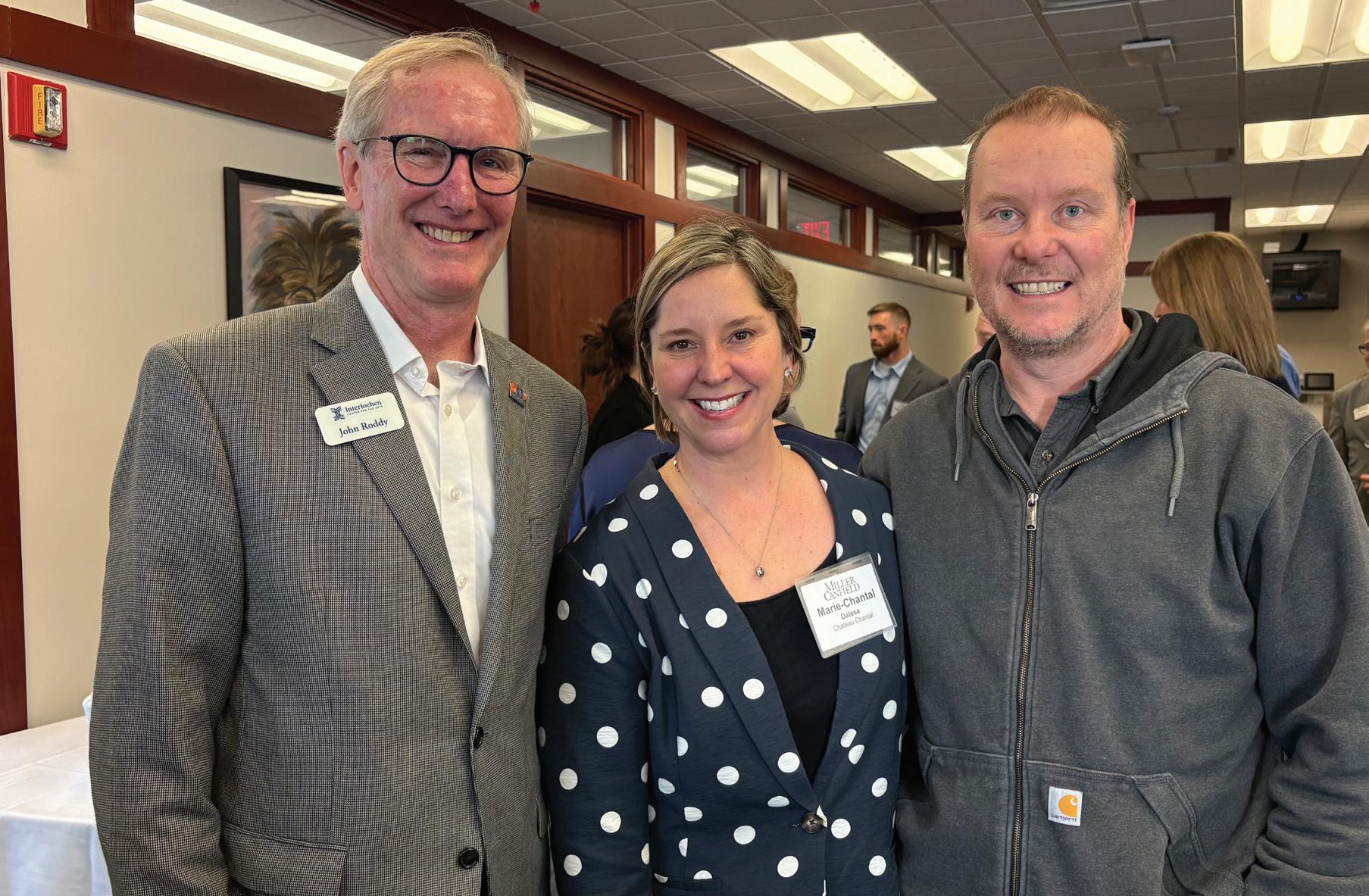
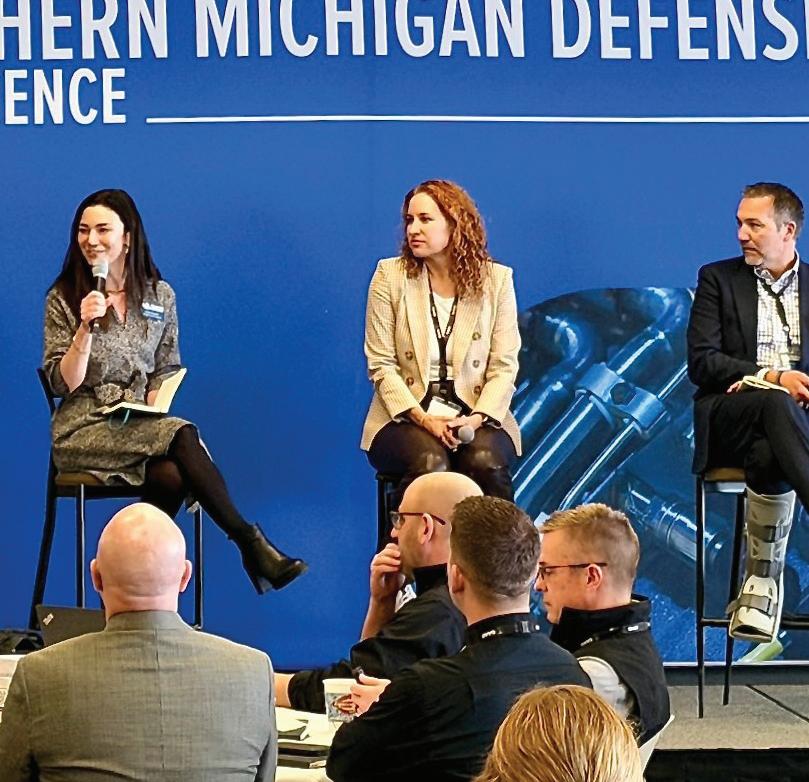

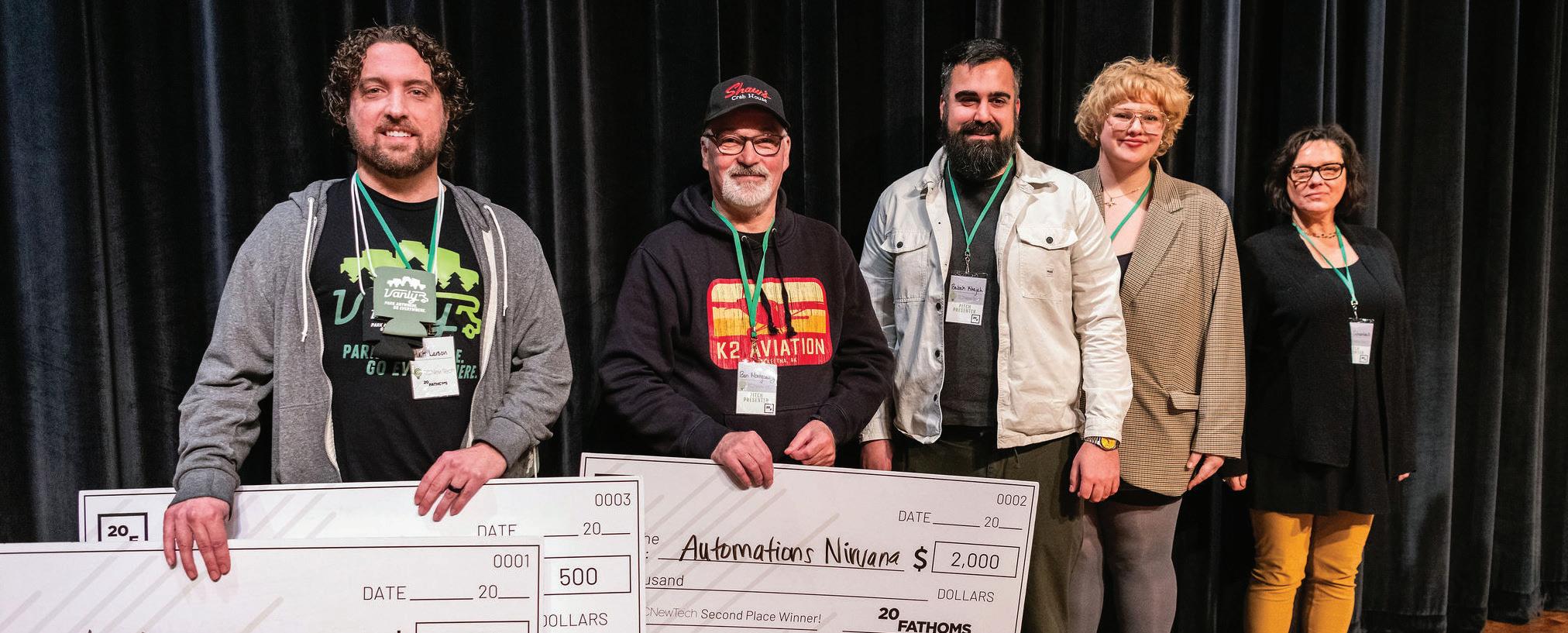

1.
2. Receive
3. Decide how to use your