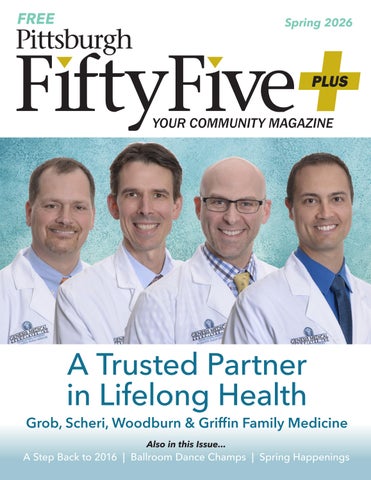
Pittsburgh 55+ Magazine • Spring 2026 Issue

Page 1


OF THE THINGS YOU HAVE TO DO.

LESS MORE

OF THE THINGS YOU WANT TO DO.

At UPMC Senior Communities, you’ll have fewer burdens and more activities, fun, and friendships.

Visit one of the UPMC Senior Communities near you and see how true independence can mean less of the things you have to do, and more of the things you want to do.

Call 1-800-324-5523 or visit srcare.org/UPMC

Communities located in: Allison Park • Hampton Monroeville • Washington, PA

Scan the QR code to learn more.

Phone: 724 -940

President & Publisher

Laura Lyn Arnold

Publisher Emeritus & Contributor

Marion Swanson Piotrowski

Executive Editor Emily King

Managing Editor/ Public Relations Coordinator

Paula M. Green

Marketing & Account Executives

Mary L. Simpson

Sharon Yezerski

Design & Production Kostilnik & Assoc. Graphics, Inc.

Web Master

Swanson Publishing, LLC

Contributing Writers

Joseph C. Maroon, MD, FACS

Janice Lane Palko

The mission of Swanson Publishing, LLC is to connect the people of Pittsburgh by publishing the area’s finest senior publication, Pittsburgh Fifty Five Plus Magazine. The publication is dedicated to the people, communities, educational, religious, travel, health, and recreational needs of seniors in our area. The contents of Pittsburgh Fifty Five Plus Magazine may not be reproduced or copied in whole or in part without written permission from the publisher. Pittsburgh Fifty Five Plus reserves the right to refuse editorial or advertisements that do not meet the standards of this publication. PO

Pittsburgh Fifty Five Plus Magazine is published four times a year by Swanson Publishing, LLC (P.O. Box 425, Mars, PA 16046, 724-940-2444) and is distributed free of charge throughout the Greater Pittsburgh region. Subscription can be purchased from the publisher at $25 for one year.

A Trusted Partner in Lifelong Health

As we begin to age, our health care needs can start to change. Men and women in their 50s and 60s may start to see natural signs of aging, such as loss of muscle mass, cognitive changes, and mobility issues. At this stage of life, preventive care becomes increasingly important.

Aging is inevitable, but paying attention to health changes can help slow the process and keep you independent for longer. Your greatest partner for staying healthy and strong is a primary care provider who knows your health history and can monitor and address ongoing or emerging health issues. A strong relationship with a trusted PCP can help maintain optimal function and independence for years to come.

If you are seeking a new PCP, the office of Grob, Scheri, Woodburn, and Griffin of Genesis Medical Associates is a great place to establish care. The physicians at this Wexford primary care practice are committed to addressing individual health care needs and promoting lifelong wellness.

The best time to establish care with a PCP is before problems arise. Your doctor can establish a baseline picture of your health, making it easier to recognize changes in blood pressure, cholesterol, weight, and other important indicators over time.

Though everyone’s health picture is different, there are some changes that become more common after the age of 55:

• Bone and joint conditions

• Changes in cardiovascular health

• Joint pain and mobility issues

• Metabolic changes

The first line of defense against these common health issues is prevention. Your doctor can work with you to help establish healthy habits that can help keep you healthier for longer. The most important health management strategies include consistent movement, maintaining healthy weight with good nutrition, early detection with screenings, and lifestyle adjustments.

It’s a common misconception that doctor visits are only needed when you’re sick. In fact, many conditions can develop without any obvious symptoms. Preventive care visits allow doctors to track trends in blood pressure, monitor cholesterol, and identify any early warning signs of disease. Taking a preventive, rather than reactive, approach to your health can lead to early detection and intervention.

As we age, one of the most important relationships we will develop is that with a PCP. Like any important relationship, it must be built on trust and communication. Managing a variety of health care concerns and specialists can be confusing, but your PCP can serve as a central coordination point, following up with your other doctors and keeping test results and care plans all in one place. Patients with an established PCP experience better health outcomes, including lower mortality rates, fewer hospitalizations, and improved management of chronic conditions.

Many families choose to entrust their care with the same physician or practice. When multiple generations of a family are treated by the same providers, they can gain unique insights into family history, hereditary conditions, and shared lifestyle behaviors.

An important function of primary care is preventive care and screening. As patients age, regular screenings become even more important. Genesis Medical physicians recommend regular mammograms, colonoscopies, prostate cancer screening, and lung cancer screening for qualifying patients. Your doctor may also recommend bone density testing and cardiovascular screening.

You can also discuss the benefits of vaccines, which are available for the flu, shingles and pneumonia. As we age, com-

plications from these viruses can become life-threatening, but prevention and vaccination can help protect our health.

With a trusted PCP, managing chronic conditions can help you maintain your quality of life for longer. Conditions like high blood pressure, diabetes, and arthritis can be managed with small, actionable steps. A balance of lifestyle changes and medication can help you feel in control of your health. Small improvements can lead to long-term success.

As we age, many of us will need medications to help manage chronic conditions. Your PCP will help manage your medications by reviewing and adjusting dosages, checking for dangerous interactions, and managing side effects, including medications prescribed by specialists. At Grob, Scheri, Woodburn & Griffin, clinical pharmacists and chronic care nurses are on hand to help patients navigate multiple prescriptions and avoid complications. Genesis Medical emphasizes team-based care to provide the best possible outcomes for their patients.

Above all, healthy lifestyle habits are key for maintaining your health and independence. The physicians at Genesis Medical recommend consistent daily movement and an “earthbased” diet to support brain and heart health long-term. Maintaining strong social connections can help boost mental health, which is inextricably linked to greater physical health. Your PCP can help guide you in making beneficial lifestyle choices that support your long-term health.

Aging does not have to equate to declining health. By taking advantage of advanced screening tools and preventive care, men and women are experiencing a better quality of life and maintaining their independence longer. Establishing care with a PCP creates a strong foundation for long-term health. Grob, Scheri, Woodburn & Griffin Family Medicine can help set you on the right path for many more years of living life to the fullest. n

For more information or to schedule an appointment, contact:

Pittsburgh Office: 1140 Perry Highway, Pittsburgh, PA 15237

Wexford Office:

4001 Stonewood Drive, Suite 200, Wexford, PA 15090

Phone: (724) 935-5330

Website: genesismedical.org

Depression: Do you Always Have to Take a Pill?

Dr. Joseph Maroon is a world-renowned neurosurgeon and sports medicine expert. He is also an innovator in concussion management, personal fitness, and nutrition. Dr. Maroon practices neurosurgery at UPMC Presbyterian.

In an ongoing study initiated in 2008 and updated in January of this year, scientists have followed over 2,000 adults with depression who were either treated with exercise only, or treated with medication(s) and cognitive therapy intervention. Their conclusion was that exercise was moderately more effective than a traditional intervention for reducing symptoms of depression. Exercise appeared to be no more or less effective than psychological or pharmacological treatments.

Additionally, they noted that if further research is to take place, it should focus on assessing which characteristics of exercise are more effective for different people. The bottom line is that we still don’t have a definitive answer, but it’s encouraging that exercise is being seriously evaluated as a potential alternative or additive therapy for this common condition in our society.

What Is Depression?

Depression is a serious mental health disorder that can alter behavior and mood. It is often treated with antidepressants, psychological therapy, or both. Common symptoms include persistent sadness and loss of interest. Depression affects millions globally, with 14.8 million U.S. adults having at

least one major depressive episode with severe impairment in the past year. Depression is an illness and should be diagnosed by a trained healthcare professional. Depression is not a moral weakness. It has various causes like genetics, trauma, and life stressors, and is treatable with therapy, medication, or lifestyle changes, including exercise.

In the United States, antidepressant medication is often prioritized over, or offered without, counseling. While combined treatment (medication and therapy) is generally considered most effective, the U.S. healthcare system frequently defaults to medication because it is faster, more accessible, and cheaper to initiate than long-term psychotherapy.

Personal Experience with Depression and Exercise

Years ago, my father died suddenly of a massive heart attack. Evolving personal family issues led to a marital breakup and eventually severe depression symptoms, all in the same week. After four months of extreme frustration and depression, a friend called and asked me to go for a run. I was also suffering from high blood pressure, was overweight, and chronically fatigued. Following four times around the

quarter-mile track at the local high school, walking and jogging, I slept for the first time in four months. The next day I found myself at the same track doing five laps, followed by six laps on the third day and gradually increasing the amount so that in a month I was up to running two miles a day. It was then that I felt the depression beginning to lift, my energy returning, my weight loss becoming noticeable, and my blood pressure decreasing. After four months I was up to five miles and began biking and subsequently swimming on alternate days.

I have since used daily exercise, not only to stay healthy physically, but mentally as well. I continue to recommend exercise, aerobic and resistance, for both the mind and the body to all who listen. n

REF: https://doi.org/10.1002/14651858. CD004366.pub7

Joseph C. Maroon, MD, FACS, is a board-certified neurosurgeon with more than 40 years of clinical experience at the University of Pittsburgh Medical Center. He is a neurosurgeon consultant for the Pittsburgh Steelers. Dr. Maroon is an expert and consultant in the areas of wellness, sports nutrition, concussion management, and brain and spinal problems. He is an internationally competing Ironman triathlete.

National Dance Festival to “Trip the Light Fantastic” in Pittsburgh

It was poet John Milton, who first described dancing in his 1645 poem “L’Allegro” as the “light fantastic toe,” which morphed into the more common phrase “to trip the light fantastic.”

Milton knew what he was writing about, as dancing is fantastic for the body, mind, and spirit. Those who will be heading to downtown Pittsburgh for the USA Dance Inc. 2026 National Dance Festival already know the delights of dance, and they invite others to join in on the fun.

This is the fourth year that USA Dance has hosted National DanceSport and Collegiate Championships in Pittsburgh, and this year’s festivities will be, once again, held at the Wyndham Grand Hotel in downtown Pittsburgh March 27—29.

“The competitions are a marvelous opportunity to see the very best dancers competing in age groups from PreTeen (age nine and under) to Senior (age 75 and up) and in a match-up of collegiate teams,” said Gloria Schohn, a member of USA Dance and an avid ballroom dancer. She and her husband, who are both seniors, have only been ballroom dancing for a few years, and are excited that the city will once again be hosting.

Competitors will be representing most states in the union, including Hawaii, and over 800 dancers, including 400 collegiates, who are expected to participate.

The DanceSport Championships are the culminating event of a year-long extensive program of local, collegiate, and regional competitive ballroom competitions, and it is where spectators will see the very best dancers of both American and International style performing dances. They will compete in Rumba, Waltz, Cha Cha, Tango, and Quick Step, as well as fun dances such as Salsa, Hustle, West Coast Swing, and Night Club Two Step.

The National Championships have proven to be so successful that USA Dance has expanded it this year into the National Dance Festival. New features include a Social Dance Celebration and a Professional Summit, which will include 44 workshops for all social dance levels and two evening social dances, as well as workshops for dance profession-

als (studio owners/instructors and competition officials) and USA Dance chapter leaders.

There are opportunities for social dancers to watch the competitions, and for competitors to join the social dancers, giving observers an opportunity to perhaps pick up a few new moves.

Recently, there have been a plethora of articles from medical societies to the U.S. Surgeon General bemoaning the epidemic of loneliness in America, which can be very detrimental to health. In fact, the Surgeon General’s report states that, “loneliness is far more than just a bad feeling—it harms both individual and societal health. It is associated with a greater risk of cardiovascular disease, dementia, stroke, depression, anxiety, and premature death. The mortality impact of being socially disconnected is similar to that caused by smoking up to 15 cigarettes a day, and even greater than that associated with obesity and physical inactivity.”

One solution to the epidemic is to dance.

“Dancing is a great exercise. It lifts the mood and increases social interaction,” said Gloria. “It’s difficult to be sad when you’re dancing.”

Another benefit of the National Dance Festival is that it provides opportunities for people to interact with volunteers who help with the festival.

Hosting the competition is a labor of love for the Pittsburgh chapter, as USA Dance is an all-volunteer organization. The members recruit dancers, volunteers, spectators, and sponsors for the Nationals, and do it for the love of dance. The Pittsburgh area has a vibrant dance scene with 17 ballroom dance studios and another dozen specialized dance organizations in the region.

“We can always use help,” said Gloria. “And volunteering is a great way to meet people and enjoy music and dance.”

For more information on the 2026 National Dance Festival, how to volunteer, and to buy tickets, visit the website: usadancenationals.org. n

Dealing with Arthritis

Statistics show that over half of adults will develop arthritis in their lifetime. For the millions of people living with arthritis, the natural instinct during a flare-up is to rest. However, clinical guidelines emphasize a shift in thinking: movement is actually a vital part of your treatment plan.

While arthritis causes joint pain and stiffness, inactivity often makes these symptoms worse by leading to muscle weakness, decreased range of motion, and less joint lubrication. Regular, low-impact exercise provides several benefits for arthritic joints:

• Lubrication: Movement helps circulate synovial fluid, which acts as the joint’s natural oil, reducing friction and stiffness.

• Support: Strengthening the muscles around a joint takes the mechanical load off the joint itself.

• Inflammation Control: Recent research indicates that exercise can modulate systemic inflammation as well

To get the most out of your routine while staying safe, we recommend the following approach:

• Start Low, Go Slow: Begin with just 5–10 minutes of activity and gradually increase as tolerated.

• Modify During Flares: If a joint is inflamed or more painful, switch to gentle stretching, nonweightbearing, or water-based exercises

• Use pain as your guide: It’s normal to feel some soreness. However, if your joint pain is significantly worse than it was before you started or soreness lasts more than 24 hours, you likely overdid it and should scale back next time.

• Consistency over Intensity: 150 minutes of moderate activity per week is the goal, but even short bursts of movement throughout the day can provide cumulative benefits.

If you or your loved ones are affected by arthritis, joint pain, functional limitations, or just need to stay active with some expert guidance, don’t hesitate to reach out to us. We offer one on one sessions, group

fitness classes, and will be offering several workshops in the upcoming months. See our list of upcoming events below. Our mission is to keep everyone moving and independent as they age and be able to enjoy life to its fullest! n

Life in Motion Gym

3735 Saxonburg Blvd, Pittsburgh, PA 15238 www.lifeinmotiongym.com 412-213-8524

Upcoming Events:

• April 6 and 13, 11:30-12:30

Lowback Workshop: A focused 2 part workshop of education and exercise for the lowback

• April 16, 11:30-12:30

Speaker Series: Blackburns is back! Come and learn about how they can be of assistance and what equipment they offer for the home and more.

• April 30, 11:30-12:30

Self Defense class with Lioness Martial Arts: All ages and levels welcome! Able to adapt to your mobility level while still learning some self defense moves.

• April 30, 12:00-2:00

Open House: Come by and see our gym! Take a tour and learn more about what we offer. Light refreshments will be provided.

• May 4 and 11, 11:30-12:30

Hip and Knee Workshop: A focused 2 part workshop of education and exercise for the hip and knee

• May 14, 11:30-12:30

Speaker Series: Learn about your pelvic floor and how physical therapy could be helpful!

• May 21, time is TBD

5-Week Lowback Group Class: This is your chance to take what you learned from the Lowback Workshop and put it into practice. Even if you did not take the Lowback Workshop and are interested in how to improve your strength and decrease your pain then this is a good class to try!

The Importance of Legacy Planning

Ensuring Your Wishes—and Your Values—Live On

If you’re 55 or older, you’re likely focused on retirement, grandchildren, and health changes. You’ve also likely spent decades building a life—raising a family, growing assets, supporting causes you care about, and shaping values you hope will continue for generations. Legacy planning is about protecting all of that.

Yet many families delay estate planning because the process feels overwhelming or emotionally difficult. In fact, studies show that more than three-quarters of Americans do not have a completed estate plan.

At the same time, financial experts project an $84 trillion intergenerational wealth transfer between 2025 and 2040—the largest in history. Without a clear plan, those assets may not be distributed according to your wishes. State laws can determine who receives what, and loved ones may be left to make difficult decisions during already stressful times. Worse, ambiguity can lead to bitter battles and permanent rifts

among surviving family members over inheritances.

What Is Legacy Planning?

Legacy planning goes beyond drafting documents. It begins with thoughtful decisions about:

• Who should receive your assets—and how

• Who will make financial or medical decisions if you cannot

• How to provide fairly for children or grandchildren

• How to protect a spouse in blended families

• What values and charitable intentions you want your wealth to reflect

Once these decisions are made, estate planning formalizes them through legal documents such as wills, trusts, powers of attorney, and healthcare directives. Many attorneys are highly skilled at preparing these documents. However, families often need professional guidance through an estate and legacy decisionmaking journey before that step—help thinking through the decisions that give those documents meaning. Estate planners can be your mentor for clarity and decision-making.

Why It Matters

When done thoughtfully, legacy planning:

• Reduces procrastination and uncertainty

• Ensures your wishes are clear and legally enforceable

• Minimizes stress and conflict among family members

• Protects loved ones from making difficult decisions during emotional times

• Aligns your financial resources with your personal values

• Most importantly, it provides peace of mind

Many families view estate planning as a “death discussion,” something you do at the end of life. We think of it as a life experience, one of the most caring conversations you can have while you are living. It is an opportunity to shape your legacy, protect loved ones, and reduce burdens on future generations.

Legacy Planning allows you to protect your independence, provide clarity for your family, preserve harmony among heirs, and leave a legacy of intention—not confusion. One helpful place to get started is Legacy Complete’s online questionnaire that can reveal the gaps in your legacy plan.

The result is more than a set of legal documents. It is a gift of clarity, confidence, and care for the people you love. Because ultimately, estate planning isn’t about money. It’s about protecting the life you’ve built—and the people who matter most.

Practice Growth Partners is an industry-leading firm providing resources for client-integrated advice by connecting the professionals from Financial Services, Law, & Tax to solve for clients’ needs. n

Introducing: The Joint Effort for Bone and Joint Health

We talk about cancer prevention and treatment. We monitor heart health. We track blood pressure, cholesterol, and blood sugar…but what about bone and joint health?

Learn more about how you can keep an eye on your bone and joint health with our free 5-point screening program!

Musculoskeletal conditions are one of the leading causes of disability worldwide. Osteoporosis often isn’t discovered until a fragility fracture occurs. Loss of strength and balance insidiously increases fall risk. The pain from arthritis is dismissed as “just aging” until mobility becomes limited.

Bone and joint health is a low-awareness, high-impact issue—but it’s also manageable and many times these health crises can be avoided when addressed early.

That’s why the AMD3 Foundation in partnership with the UPMC Departments— the Magee Bone and Joint Center, the Innovation Center and the Wellness Center for Bone and Joint Health—are joining forces to provide our free 5-point Bone and Joint Health Screenings in communities across Western PA and surrounding regions.

Our goal is simple: raise awareness, screen early and connect individuals to education and preventive care before small problems become life-changing events.

One way to take control of your bone and joint health is by taking advantage of our 5-Point Bone and Joint Health Screenings. These screenings are a free, easy, and painless way to take steps towards preventing the devastating effects of bone and joint health conditions and risks like osteoarthritis, osteoporosis, and falls. In addition to the screenings,

our team can provide free on-site care and lifestyle education to help you move forward and move better.

Ultrasound Bone Density

It is important to know your bone density and if you are at risk for osteoporosis. While the DEXA is the gold standard in determining bone mineral density, an ultrasound test helps determine if you may need a DEXA scan before the recommended age of 65 and is a great way to learn your bone density between DEXA scans. Done right in the community and as part of our “mobile unit,” you can arm yourself with the knowledge needed to take prevent fragility fractures, pain and immobility.

Grip Strength

Your grip strength is not only an excellent indicator of your overall strength but also a measure of your overall health and longevity. Grip strength is measured with a handheld device called a dynamometer. Your age and gender will affect your strength and how your measurement compares to others in your same sex and age groups. There is a natural progression of a loss of muscle strength as you age, so the goal is to slow that loss and if possible, improve it….and we can show you how!

X-rays for Your Painful Knees and Hips

There are many different reasons that your joints can hurt. The most common cause is osteoarthritis (OA) or the “wear and tear” form of arthritis. Simple X-rays can determine how much cartilage is left and the level of the degeneration in your joint. It is important to always have early evaluations so that you can prevent further degeneration and manage your joint pain. We will provide an individualized “report card” to help you understand and discuss personalized treatment options – from non-surgical strategies to surgical solutions if needed – so you can know where you stand and what you can do next!

Balance and Falls Prevention

Three million older adults are treated for fall-related injuries annually. Of those three

million falls, one in five results in a serious injury such as a broken bone or head injury. Many falls are preventable. By knowing your risk and learning safe ways to enhance balance, you are able to make adaptations to your home, decrease your risk of falls, and stay independent and mobile longer.

Food is Medicine and Nutritional Assessment

Food is medicine, and how you fuel your body effects how you feel and how well you build strong bones and muscles. As examples, calcium and vitamin D focused and antiinflammatory diets can help prevent osteoporosis and decrease joint pain. Through nutritional screening and education, we help you understand where you stand and provide practical guidance on simple dietary changes that can strengthen your bones, support your joints, and improve your long-term health. Interested in learning more about your bone and joint health through our free screening program? Contact gina@amd3.org at the AMD3 Foundation to find screening events near you, or email Tiffany Belculfine, PA-C, in the Wellness Center at belculfinetl3@upmc. edu to set up a screening appointment. n

Check out our websites… www.boneandjointhealth.org www.pittsburghboneandjoint.com …and follow us on socials! Facebook: The Wellness Center for Bone and Joint Health; Bone and Joint Center Instagram: @wellness_center_pgh; @Bone_and_joint_center

Spot the Scam Before It Spots You

As the seasons change from winter to spring, so do the tactics scammers use to target older adults. These months bring unique risks, from tax season fraud to weather-related schemes and the growing presence of artificial intelligence (AI) powered deception. Older adults are often targeted because of their perceived vulnerability, but with knowledge and vigilance, they can stay protected. This article explores some of the most prevalent scams during this time of year and provides practical resources for those who may be concerned about falling victim.

Spring Scams: New Beginnings, New Threats

As the weather warms, scammers pivot to take advantage of seasonal changes. Spring cleaning and home improvement can open doors for the following types of fraud:

• Home Improvement Scams:

Unsolicited contractors may offer to repair roofs, driveways, or gutters, often at a “discount” for cash payments. Frequently, these repairs are unnecessary, incomplete, or never happen at all.

• Landscaping and Pest Control Scams: Offers for low-cost yard work or pest removal may be accompanied by high-pressure sales tactics and requests for upfront payment with little to no work performed.

• Fake Vacation Offers: With spring break and summer approaching, fraudulent travel deals surface, promising luxury trips for a fraction of the cost. Victims may pay for trips or lodging that do not exist.

Tax Season Scams: A Persistent Danger

Tax season, which falls in late winter and early spring, is prime time for scammers to target older adults.

Common tactics include:

• IRS Impersonation: Scammers call, email, or send letters pretending to be from the Internal Revenue Service. They may threaten arrest or legal action unless immediate payment is made. The real IRS will never demand payment over the phone or ask for sensitive information via email.

• Fake Tax Preparation Services: Fraudulent “tax preparers” may promise large refunds, charge exorbitant fees, or steal personal information for identity theft. Sometimes, they file false returns in the victim’s name, pocketing the refund.

• Phishing Emails and Texts: Links in emails or texts may direct recipients to fake IRS websites or request personal information under the guise of “verifying” a tax return or refund status.

To avoid these scams, remember: the IRS will not contact you by phone, email, or text to demand immediate payment or personal information. Always use official IRS contact information and consult a trusted tax professional when in doubt.

AI-Related Scams: A New Frontier

The rapid development of AI has enabled more sophisticated scams that can be especially confusing for anyone. Some prominent examples include:

• Deepfake Phone Calls and Videos: Using AI, scammers can mimic the voices of loved ones or trusted officials, convincingly requesting money or personal information. For example, an individual might receive a call from someone sounding exactly like their grandchild, claiming to be in trouble and needing urgent financial help.

• AI-Generated Phishing Messages: AI tools can craft highly personalized emails or messages that reference real details about the victim, making them more believable and increasing the likelihood of falling for the scam.

• Fake Romance or Friendship Bots: AI chatbots can be used to build trust and emotional connections with isolated individuals, ultimately requesting money or sensitive information under false pretenses.

To combat AI-related scams, verify all unexpected requests, especially

those involving money or personal information, using a known phone number or in-person contact. Be cautious about sharing audio or video clips online and limit public access to personal social media sites.

Tips for Staying Safe Year-Round

• Be Skeptical of Unsolicited Contacts: Don’t provide information or agree to services from people who contact you out of the blue. If someone claims to be from a utility company, the IRS, or another official entity, call them back at a number you find independently.

• Never Pay with Gift Cards, Wire Transfers, or Cryptocurrency: Legitimate companies and agencies do not request these forms of payment.

• Consult Trusted Family and Friends: Before making major decisions or payments, talk it over with someone you trust.

• Shred Sensitive Documents: Dispose of old bills, tax returns, and personal papers securely to prevent identity theft.

Resources for Older Adults Concerned About Scams

By staying informed about common tactics, being cautious with unsolicited offers, and knowing where to turn for help, older adults can protect themselves and their loved ones from harm. Vigilance, skepticism, and support from trusted organizations are the best defenses against ever-evolving scams. If you or someone you know is worried about scams, there are several organizations and resources that could help:

• Federal Trade Commission (FTC): Provides information on the latest scams and allows you to report suspicious activity. Visit www.ftc.gov or call 877-382-4357.

• IRS Scam Alerts: Posts warnings and advice about current tax scams at www.irs.gov/newsroom/ tax-scams-consumer-alerts

• National Elder Fraud Hotline: The Department of Justice provides this call line for individuals aged 60 or above to report incidents of fraud they have encountered. Call 833–372–8311.

• AARP Fraud Watch Network: AARP offers scam tracking maps, prevention tips, and a helpline for victims. Visit www.aarp.org/ money/scams-fraud or call 877908-3360.

• Local Law Enforcement and Adult Protective Services (APS): If you believe you are a victim, contact your local police or your county or state’s APS for assistance. Call 800-490-8505 for the Statewide Elder Abuse Helpline. n

Making the Smart Medicare Choice for the Years Ahead

Medicare Part C, or Medicare Advantage, is an alternative way to receive Part A & B benefits. These plans are offered through private companies approved by Medicare and often include prescription drug coverage and additional benefits. Many people prefer having coverage bundled into one plan that may include vision, hearing, and dental services. For healthy individuals, this consolidated approach can seem efficient and even cost-effective. However, it’s important to consider the shortcomings of the plan when it comes to long-term health.

What Changes When Your Health Needs Change

Your experience with Medicare Advantage can change dramatically if your medical needs grow. When medical needs are minimal, these plans can work smoothly. But as medical needs grow, the structure of these plans becomes more important. The structure can affect access, cost, and timing of care. Medicare Advantage plans often have less freedom than Original Medicare, with network limitations and referral requirements.

While Medicare Advantage plans often promote low monthly premiums, that’s just one part of the financial story; you may encounter other costs. Copays for services

like imaging, therapy, hospital stays and skilled nursing facilities can add up. With serious illness or ongoing treatment, these costs can quickly reach thousands per year, up to your plan’s maximum out-of-pocket limit.

Medicare Part C plans require prior authorization of services like imaging and outpatient surgeries. This process may delay care and be especially frustrating for those managing complex and chronic conditions.

Before choosing a Medicare Advantage plan, make sure to consider its limitations and how they will affect your care. Medicare Advantage often works best for people who are relatively healthy,

comfortable with networks and referrals, and interested in added benefits like dental or fitness perks. Anticipating how these limitations might affect you later could help prevent a stressful situation down the road.

When Medicare Advantage Works Best

Medicare Advantage can work very well if:

• You don’t have chronic conditions requiring regular specialist visits.

• You live in an area with a strong network of doctors and hospitals that accept your plan.

• You’re comfortable with prior authorization and provider referrals.

• You want some benefits that Original Medicare doesn’t cover, like dental or fitness perks.

Dental, Vision, and Hearing Coverage: Worth It?

One of the most discussed benefits of Medicare Advantage is its extra coverage. But it’s important to understand the scope. Dental, vision, and hearing benefits are typically limited, often covering basic services with modest allowances rather than major procedures. If you need extensive dental or hearing work, out-ofpocket costs can add up quickly.

Prescription Drug Coverage Isn’t Always Simpler

Many Medicare Advantage plans include prescription drug coverage, but convenience doesn’t always mean

simplicity. Formularies vary, pharmacy networks may limit where you fill prescriptions, and step therapy rules can require trying lower-cost drugs first. Prescription coverage under Part C may be bundled, but it comes with its own rules and restrictions.

Finding the Plan That Works Best For You

Medicare Part C plans can be great for those with minimal healthcare needs but may be less advantageous as healthcare needs grow. Understanding the benefits as well as limitations of these plans can help you make an informed choice.

For help with choosing the right plan for you, contact Crystal A Manning, Licensed Medicare advisor at 412-716-4942 / crystalmanning33@gmail.com or Dvonya Sedlacko 412-657-3889 / djsedlacko@gmail.com. They can help you choose coverage that supports your future, not just your present. n

Let the National Aviary Become Your New Favorite Destination!

With NEW seasonal programming, immersive Daily Activities included with admission, and exciting add-on experiences that allow you to even closer to some of the world’s most fascinating species, visiting the National Aviary feels like you’re going on a tropical staycation!

Visit with your family, friends, or even as a solo outing and explore the National Aviary’s expansive, free-flight habitats at your leisure. NEW: Species Spotlight Program Series geared toward adult learners provides an engaging in-depth exploration of the National Aviary’s conservation work with some of our most charismatic residents, like flamingos, vultures, and penguins.

Digging the idea of a specialized experience? Plan a group outing with your gardening or book club, senior living community, or birdwatching group! Book a guided tour with exciting, educational programming opportunities and live, immersive bird shows! NEW Outreach Programs: Let our Education Team visit you with TWO new program offerings. If you can’t visit the Aviary, our “guided tour” experience brings the Aviary to you with stunning video of our birds, along with fun bird facts and stories from an expert educator.

For details and pricing on these seasonal and unique activities, visit aviary.org! n

Take a Gorgeous Trip without Leaving Pittsburgh:

The National Aviary is the perfect place to visit with friends, family members, a group, or even by yourself*!

• Explore expansive, free-flight habitats at your leisure, from the tranquil Grasslands to the canopied Tropical Rainforest.

• Come with a group or club and opt for an expert-led tour and live, immersive bird shows!

• Like what you see? Consider becoming a National Aviary Volunteer!

Solo Beauty, an applicator with a mitt-covered head, has the perfect angle to enable you to reach those areas of your back that you can’t with your hands.

Kathe D’Alfonso, 55, of Webster, New York, developed and patented Solo Beauty as a response to her own frustrations.

“When I was 25, I was diagnosed with stage 3 melanoma, so I know the importance of applying sunscreen. I got tired of asking my husband to apply lotion all the time, and I found I could not do it by myself. So, I started experimenting, and for four

Solo Beauty

Have you ever felt like a contortionist when trying to apply sunscreen, lotion, medication, or simply wash a part of your back that you cannot reach? If so, there is a solution—Solo Beauty.

years, I worked making prototypes until I found the best solution. And Solo Beauty was it,” said D’Alfonso, who began selling her invention at a local farmers market. “The response was fantastic.”

In 2024, she received a patent in a very short time, which she was shocked by, since many patent applications are denied.

“I wanted something that was quick, simple, and effortless and that also saved time and money,” said D’Alfonso, who notes that this product is designed for everyone but those with arthritis, Parkinson’s disease, and flexibility issues especially love it. “It’s all about the angle

that makes Solo Beauty so easy to use.”

Solo Beauty is made in the U.S. The applicator is made in New York, and D’Alfonso cuts all the materials for the mitts and has a local person sew them. The mitt options include lotion applicator (the material resists absorbing the product) and body exfoliator, which works great also when used separately from the applicator.

Solo Beauty also saves money as the mitts are washable and stand the test of time.

“The mitts can be washed and dried repeatedly, unlike thinner applicators that fall apart or are disposable,” said D’Alfonso.

“Solo Beauty is also attractive,” said D’Alfonso, “because I designed it to look like a seashell.” She also makes custom-colored mitts on request. An applicator with a soft lotion mitt sells for $34.99.

“I truly want to help others and make their lives better, and I believe Solo Beauty does that,” said D’Alfonso.

For more information on Solo Beauty, visit the website at: www.solobeautyroc.com. You can order Solo Beauty there, or can email D’Alfonso at: sdalfons@rochester.rr.com or by calling her at 585-737-8600. n

Still Swinging: Senior Softball Thrives in Pittsburgh

The Northern Allegheny County Senior Softball League (NACSSL) is celebrating its 39th year of play, and the interest is greater than ever. This competitive, slow pitch league attracts players from all over Allegheny County and beyond, with some coming from as far as Ohio and West Virginia to play. Most games are played at North Park.

“Senior softball is a big deal nationwide. There are three primary national senior softball organizations that sponsor tournaments all over the country,” says Ron Zankey, league president. With the Baby Boomer generation in the prime age groups for senior softball, there’s no wonder it has become so popular.

As of last season, there were 285 players competing on 20 teams in three age divisions: Silver Division (age 50 and older), Gold Division (62 and older), and Bronze Division (71 and older). Twenty-eight regular season games are scheduled beginning the first week of May, with teams playing twice per week. A season ending tournament concludes in late August. The Silver Division organized its first Fall League last year with four newly assembled teams continuing to play through midOctober. Some retired players even play year-round by organizing practice games at the indoor North Park Sports Complex on winter weekday mornings. Players are required to attend at least two of eight scheduled evaluation sessions and then are drafted onto an existing team. The overwhelming majority of those players remain on the same team until they are ready to move to an older division. There

is even the occasional trade between teams. There is some attrition every year due to players getting older, life changes, and injuries. If player turnout continues to be good, NACSSL will expand to more teams.

The Bronze division guarantees a spot for every player that signs up. Players still attend a few evaluation sessions. The managers take the information they collect to a joint meeting where the managers assemble the teams as equally as possible and then draw numbers from a hat to determine which team each manager will manage.

The league plays by USA Softball rules, supplemented by additional safety measures. Safety rules require USA Bats and balls that are softer with less of a severity index rating. There is no contact at home plate, and the pitcher is protected by a pitching screen.

While there are 20 teams, the league instills a “One Fraternity”

Scott Marzka
Elmer Ebeck
John Melaragno
Tommy Sommer

Take Note :

The Farina Foundation Welcomes Donations of Music Instruments

If you have a musical instrument you no longer use, consider donating it to the Farina Foundation. Established in 2015, this nonprofit organization carries on the legacy of Frank J. Farina Jr., a beloved music icon in the North Allegheny area. Through its Play-It Forward program, the foundation aims to provide underprivileged children in the Tri-State region with access to music education by accepting donated instruments. By donating your instrument, you can help these children fulfill their dreams of learning to play an instrument and discovering the joy of music.

The Farina Foundation accepts almost any playable instrument, but they are particularly interested in brass and woodwind instruments. The foundation partners with various organizations, such as the Pennsylvania Music Educators Association, the Children’s Hospital Music Therapy Department, and Goodwill Industries, to distribute the instruments to those who most need them. All donated instruments are repaired and sanitized before distribution, ensuring they are in good condition for the children who receive them. Your kindness can help inspire and nurture the next generation of talented musicians.

To donate your musical instrument, you can drop it off at Brighton Music Center, which is located at 2110 Babcock Boulevard in Ross Township. For more information on how you can help make a difference in a child’s life through this excellent program, please visit farinafoundation.org n

model where players are encouraged to befriend their teammates and opponents alike. Many players socialize together though travel tournament teams, bowling leagues, celebrating birthdays, or just getting together to watch a sporting event. Players often stick around in the parking lot for an hour or two after their games to discuss the game and their softball exploits.

“In many ways it is like a men’s support group where we have softball as a conduit and we never tire of talking softball,” says League Secretary, Dan Harrison.

“I remember a lunch after a softball practice at the North Park Sports Complex where six of us were at a table just having our normal discussions. Next to us a guy was quietly having lunch with his wife. He paid his check and visited our table. He asked, ‘Can I ask how you guys know each other?’ One of our players said, ‘we play softball together.’”

“As he walked away, I pondered his question and came to the realization that what he saw were six guys having a great conversation with the same enthusiasm that high school kids or college students have when they get together. It was then I realized I’m in the right place.”

There are many reasons players enjoy senior league softball.

“It’s a great way to stay in shape, a chance to get out and get some sunshine, to enjoy the thrill of competition, to meet new people and to enjoy the camaraderie of team play,” says Harrison.

Approximately 40-50 players are members of traveling regional and national tournament teams.

“However, the majority of players are average guys who still enjoy the game they grew up playing as kids.”

For more information about NACSSL, visit nacssl.com or email Harrison at danharri811@yahoo.com

Spring Blossoms on the Farm

Hi folks. With spring around the corner and Mother Nature’s last gasp of winter, spring officially starts on March 20. Area farmers and gardeners are looking forward to another growing season.

Farming and gardening have made gains over the decades, with many different and new flower and vegetable varieties to grow and harvest. Some of us have been blessed to learn from our parents and grandparents, who have worked alongside us, striving to gain wisdom.

One rule overlooked over the last ten years is that box stores and even some greenhouses offer tender flowers and vegetable plants the first week of April. This policy makes customers think that spring is here, and they had better buy now since there is a nice selection. Buying flowers in April can set you up for failure because the soil is cold and damp. There is even a chance of frost through May, which equates to inadequate growing and gardening conditions.

One important rule I take on in March, April, and May is being a “gardening angel.” It is essential to realize that young plants like sunshine and warm soil temperatures. Spring rain can strip the gains in soil temperature and leave plants with cold, wet feet or roots, hindering their growth. That is why most plants do much better when they’re planted after midMay. So don’t fall into the temptation when you see the beautiful young plants being sold in April through mid-May.

Looking at the spring calendar, on March 17 we celebrate St. Patrick’s Day, and on March 21 the spring equinox begins. On this date, daylight and nighttime are of equal length. You’ll also notice that daylight gains minutes each day.

The old saying, “April showers bring May flowers,” is a loose term that means April can be wet, and May is when timely gardening and planting are done. April starts out with April Fool’s Day and is also part of Holy Week. April 3 is Good Friday, a Christian observance recognized by many as a day of reflection and remembrance of the crucifixion of Jesus Christ.

April 5 marks Easter Sunday, one of the most widely celebrated Christian holidays, commemorating the resurrection of Jesus. The week leading up to Easter, known as

Holy Week, is an important time in the Christian calendar and is observed by many through worship, reflection, and gatherings with family and community. For many people, the season also serves as a reminder of renewal, hope, and the arrival of spring.

May has two special days. The first is Mother’s Day, which is a time to honor not only our own mothers but a diverse range of women: grandmothers, stepmothers, adoptive mothers, godmothers, aunts, expectant and new moms. All mothers are working moms, whether at home or at work. You can honor these special ladies with hanging baskets, flowers, lunch, or dinner. Just be sure to recognize them for all the love they have given.

The second significant date is Memorial Day, a time to solemnly honor and remember U.S. military personnel who have died while serving our great country. We thank them for their ultimate sacrifice in securing our freedom and national security. Their bravery will never be forgotten.

Our family farm is open seven days a week. The farm market and greenhouses can be a destination for our highenergy eggs, homemade bacon and sausages, a meat case full of products, roasting chickens and turkeys, homemade cookies, biscotti, buckeyes, local honey, maple syrup, cheeses, dairy, fruits, and vegetables.

Our greenhouses will have beautiful hanging baskets, flowers, herbs, vegetable plants, potting soil, and access to me as your “gardening angel.” For the kids and grandkids, stop in to see our four miniature goats, kunekune pigs and piglets, the Dexter cows and calves, and Pickles, our black cat.

Our goal is to support the community, and we hope for community support in return. We are nestled in a valley, and our farm market and greenhouses are open seven days a week. We welcome you all to come and visit Eichner’s Whole Farm and Greenhouses at 285 Richard Road in Wexford and discover “the rest of the story.” n

Clearer Body, Sharper Mind: Meet Glutathione, the Master Antioxidant

Glutathione is a small but powerful molecule made inside our cells from three amino acids: glutamine, cysteine, and glycine. While it’s well known for neutralizing free radicals, glutathione also plays a central role in detoxification, immune resilience, mitochondrial function, and most importantly, neurological health.

What Detoxification Really Means

The liver is the main hub of detoxification, supported by the kidneys, gastrointestinal tract, lungs, lymphatic system, and skin. Detoxification is the body’s method of transforming substances that could be harmful, such as pollutants, alcohol byproducts, medications, hormone metabolites, and internal waste, into forms that can be safely eliminated through bile, stool, urine, sweat, and breath.

Glutathione’s

Role in Detoxification

1) Antioxidant defense and cellular protection.

Many toxins and inflammatory processes increase oxidative stress. Glutathione helps neutralize reactive oxygen species and protects cell membranes, mitochondria, and DNA from damage.

2) Phase II conjugation (glutathione conjugation)

A major liver detox pathway uses glutathione to bind reactive compounds so they can be transported out of cells and eliminated. Think of glutathione as a “molecular escort” that helps move certain substances toward clearance.

3) Recycling other antioxidants.

Glutathione helps regenerate antioxidants such as vitamins C and E back to their active forms, strengthening the body’s overall antioxidant network.

4) Supporting bile flow and elimination.

Detoxification is only as effective as elimination. Glutathione contributes to healthy liver cell function and may support processes tied to bile production and transport that is important for moving fat-soluble waste out through the digestive tract.

Glutathione and Neuro Health: Why the Brain Cares

The brain is especially vulnerable to oxidative stress. It uses a large amount of oxygen, contains abundant fatty tissue, and relies heavily on efficient mitochondrial energy production. The brain has limited antioxidant capacity compared to other tissues, and it depends strongly on protective systems like glutathione.

Glutathione supports health in several ways:

• Protecting neurons from oxidative damage: Oxidative stress can disrupt signaling, damage cell membranes, and accelerate cellular aging. Glutathione helps buffer this stress and maintain neuronal integrity.

• Supporting mitochondrial function: Neurons are energydemanding cells. When mitochondria are stressed, fatigue, brain fog, and reduced resilience can follow. Glutathione helps protect mitochondria from oxidative injury.

• Modulating inflammation: Neuroinflammation is increasingly recognized as a factor in many neurological conditions and in

age-related cognitive changes. Glutathione contributes to balanced immune signaling and antioxidant control.

• Assisting with the clearance of metabolic byproducts: The brain produces waste through normal metabolism and neurotransmitter activity. Healthy antioxidant and detox pathways, including glutathione-dependent ones, support the body’s ability to manage that load.

Glutathione isn’t a stand-alone treatment for neurodegenerative conditions. Glutathione levels can be one meaningful part of a broader lifestyle and nutrition strategy aimed at protecting brain cells and overall function. Your body makes glutathione, but levels can decline with age, chronic stress, poor sleep, nutrient deficiencies, infections, high alcohol intake, medication burden, environmental exposures, and chronic inflammation.

Food and Lifestyle to Support Glutathione

• Sulfur-rich foods: garlic, onions, leeks, broccoli, cauliflower, Brussels sprouts

• Protein: amino acids are the raw materials for glutathione production

• Key nutrients: selenium (Brazil nuts, seafood), riboflavin (eggs, leafy greens), magnesium

• Fiber and regular bowel movements: helps ensure wastes bound in bile leave the body

• Sleep, movement, and hydration: powerful supports for antioxidant balance and elimination.

Glutathione is not a magic supplement, but it is essential for everyday detoxification and protecting the brain and nervous system from oxidative stress.

My approach is a supportive plan focusing on strengthening optimal healing. This is what the body does naturally, nourishing liver function, balancing antioxidant defenses, effective elimination, and sustainable lifestyle habits.

Reach out for an appointment; 412-302-4638, or Marla@NaturesDivineHealing.com. n

Marla Turnbull

National Board-Certified Health & Wellness Coach

Certified Dementia Pracitioner Owner 412-302-4638

Marla@NaturesDivineHealing.com www.NaturesDivineHealing.com marlaturnbull.juiceplus.com

Cash Was the Way to Pay

The Evolution of Financial Transactions

On November 12, 2025, a landmark moment arrived as the United States Mint ended penny production. These tiny coins, costing about 3.69 cents each to make and distribute, jingled in pockets for 232 years before taking their final bow, saving taxpayers nearly $56 million annually.

When you think back, pennies aren’t really the only monetary entities that have gone by the wayside. There have been times when I went to buy something, and I asked, “Do you take cash?” I never thought I would be asking a “silly” question such as that, but here we are!

Buying everyday things has changed a lot over the years. Wiring money became popular in the 1870s, thanks to the Western Union, which used telegraph networks to send money quickly over long distances.

Checks, like the ones we use today, started in the 11th century but didn’t become common until the early 1900s after the Federal Reserve Act of 1913. Checking accounts became popular after World War II. Personal checks grew in use until the mid-1990s, when credit and debit cards took over. Since 2000, check writing has dropped by nearly 75%.

Diners Club introduced credit cards in the early 1950s. Since their inception, these plastic necessities have become a cornerstone of the American economy. In 1969, a magnetic strip was added as an additional layer of protection.

In keeping up with the times, Diners Club created the first rewards program, Club Rewards, in 1984. The EMV (Europay, Mastercard, and VISA) chip technology was launched in 2010. This engineering concept uses a tiny, powerful chip embedded in credit and debit cards to enhance card transaction security.

Another handy banking tool is the ATM (automated teller machine), which first appeared on June 27, 1967, at a Barclays branch in north London. Just over two years later,

on September 2, 1969, Chemical Bank installed the first ATM in the U.S. at its Rockville Center branch in Long Island, New York.

Online banking started in the early 1980s with basic telephone and videotex systems, but modern internet banking really took off in 1994 when Stanford Federal Credit Union launched the first real online website.

In 1999, PayPal launched a platform for sending money. It became famous after eBay bought it in 2002. After that, PayPal grew worldwide and was accepted by many online stores. Today, it’s one of the biggest online payment processors in the world.

Google launched its first mobile payment system, Google Wallet, in 2011. It used NFC (near-field communication) to let users store credit cards. Android followed in 2015. In 2018, Android Pay and Google Wallet combined to become Google Pay, offering a simpler payment experience. Apple Pay started in the U.S. on October 20, 2014.

Venmo was established in 2009. This mobile payment app lets users send money to others using their phones. The only requirement is that both the sender and receiver live in the United States.

Gift cards remain a favorite way to shop. Whatever payment method you pick, choose wisely, and remember, it’s always perfectly fine to keep the cash flowing! n

Sources: home.treasury.gov/news/featured-stories/penny-production-cessation, checkeeper.com/blog/history-of-checks/, financesonline.com/frompaper-checks-to-digital-transfers-the-evolution-of-bank-transactions/,www. americanbanker.com/slideshow/the-evolution-of-the-atm, www.checkout. com/blog/evolution-mobile-wallets

Moving Your Parents: Advice From an Expert

Joy Loverde, best selling author of The Complete Eldercare Planner, offers thoughts on parents and moving.

What does the move mean?

When parents start talking about moving, it can mean that something is going on. Are they experiencing problems they may not be telling you about? Is the house beginning to be too much? Are they having memory problems? Can they no longer drive and won’t tell you? When a parent brings up moving, you might ask, “What’s the reason behind the move? Is there something you want to tell me?”

It’s a process.

You should anticipate that moving a parent may be a stop-and-start process. Your parent may say, “Okay, I’m moving.” And then they start to get overwhelmed, and they stop. Just because parents mention they’re going to move, it’s often not a nice, straight line; it could take longer than you think and get delayed at any time.

It’s more than just a house move.

Moving your parents doesn’t end when they move homes. They may need new doctors, want to know

what the new neighborhood is like, or how they’ll get around— all kinds of questions will need answers.

Make sure of the legal paperwork.

A parent might say they have all the paperwork to sell their house, but they actually may not. Put eyes on the paperwork needed. If they say everything is in a box, open the box. Then, you’ll know where things are if anything is required.

Let your parents feel in charge.

For a parent, moving is also experiencing losses. They’re saying goodbye to routines, friends, neighbors. They’re going into the unknown. It’s scary. And it takes time to be happy with their new home. So, keep them in the driver’s seat by allowing them to make as many decisions as possible. If you move a parent to some place they don’t like, it’s just going to be trouble.

The Center for REALTOR® Development (CRD) confers the Seniors Real Estate Specialist® (SRES®) designation, which is an official credential of the National Association of REALTORS® (NAR).

There will be stress.

You may feel overwhelmed at times. That’s normal and expected. But it’s best not to show that stress by telling everybody, “This is how it’s going to be.” It may seem like a way to handle the stress, but with all the emotions and potential conflict, it can easily backfire.

Find a trusted resource.

Dealing with parents during a move can be complicated. It’s wise to have resources you can trust to help you through it. When I moved my mother, my real estate agent was an invaluable partner. She made everything easier.

I’m Your SRES®.

Spring Happenings

Concerts

Carnegie Mellon Philharmonic , 8-10 pm, Apr. 8, Carnegie Music Hall, Pittsburgh. For details, visit

www.eventbrite.com/e/carnegiemellon-philharmonic-tickets.

Expos

Pittsburgh Senior Expo, 10 am-1 pm, March 26, Greater Pittsburgh Masonic Center, 3579 Masonic Way, Pittsburgh. For info, visit www.eventbrite.com/e/pittsburghsenior-expo-tickets.

Networking / Social

Cranberry Township 55+ Club meets 1 pm the 2nd Tuesday of the month at the Cranberry Township Municipal Center. Members must be residents of Cranberry Township. The Club features activities, social opportunities, and visits to nearby points of interest. For info, contact Frank at (724) 316-5807.

Young at Heart 60+ Singles meet at various restaurants in Cranberry/North Hills areas at 1:30 pm on the 3rd Wednesday of the month. To find out which restaurant and to reserve a seat, text or call (724) 831-0798 by Monday the week of the luncheon.

Recreation

Monroeville Senior Center, 6000 Gateway Campus Blvd., Monroeville. Provides a variety of activities for seniors ages 50 and older from quilting to book clubs fitness, travel groups. For details, visit monroeville.pa.us or (412) 856-7825.

Sports

Senior Softball for Northern Allegheny County Senior Softball League NACSSL. Competitive, slow pitch Senior Softball league comprised of 20 teams, 280 members, three age divisions 50+,62+,71+. Tryouts held March/April. Games are played May/August primarily at the North Park Senior Softball Complex at the Lodge in North Park. Sign up at  www.NACSSL.com, or email danharri811@yahoo.com.

Support Groups

Alzheimer’s Association Helpline for individuals struggling with the disease, their families and caregivers. Visit alz.org/pa, or call (412) 261-5040 or (800) 272-3900.

Caregivers Support Groups are available throughout the month at various days, times and locations in Allegheny County. For a list of meetings, www.alleghenycounty. us/caregivers/support-groups.

Caregivers Support Groups are available through UPMC. For a list of programs, visit www.upmc. com/services/seniors/resourcesfor-caregivers/caregiver-resourceshub.

Memory Cafe @ the JCC (Jewish Community Center), 1st Monday of each month from 1-2:30 pm, 5738 Forbes Ave., Squirrel Hill. Meeting Apr. 6, May 4, & June 1. Registration is required. Please RSVP by contacting Hillary at hgreen@jccpgh.org or (412) 2781787.

Parkinson Foundation of Western Pennsylvania offers various activities for those impacted by Parkinson’s disease. For further info, visit https://pfwpa.org/.

Tours

Homefront to Warfront Troop Train Rides, noon, 1:30 pm, 3 pm, or 4 pm, June 20, Dennison Railroad Depot Museum, Dennison, Ohio. For info, visit www.eventbrite.com.

Step Back Into... 2016

Lord Stanley makes his way back to Pittsburgh A surprise outcome in the U.S. Presidential Election

Hurricane Matthew unleashes its fury on Florida, Georgia, South Carolina, and North Carolina on October 7 and 8. The storm led to record-breaking flooding and millions of power outages, and at least 45 deaths. On December 27, Star Wars actress Carrie Fisher died of cardiac arrest. The next day, her mother, actress Debbie Reynolds, passed away from a stroke.

Average

The average income was $48,642, while the median home price was $321,100. The average cost of a new car was approximately $34,112. Gasoline was $2.14 a gallon. A loaf of bread was $1.37. A gallon of milk was $3.20, and eggs sold for $1.68 a dozen. Round steak was $5.90 per pound. Coffee was $4.39 a pound. The price of a movie ticket was $8.79. A first-class stamp was 47¢.

Firsts

This was the year driverless cars shifted into high gear. Uber, the first ride-sharing company, put driverless cars on the road, starting in Pittsburgh.

The solar roof was launched.

Nike released the Nike Hyperadapt 1.0 a self-lacing shoe.

The MiniMed 670G system, an artificial pancreas, is introduced for diabetics. The mini-insulin pump automatically adjusts insulin delivery based on its sensor, which measures blood sugar levels every five minutes.

U.S. Events

In Flint, Michigan, the water supply became contaminated after the city switched water systems.

Rock star David Bowie passed away on January 10 from cancer.

On April 21, pop superstar Prince died at his Minnesota home at age 57, shocking the music industry and fans worldwide.

In June, terror struck when Omar Mateen shot and killed 49 people at the Pulse nightclub in Orlando, Florida.

On October 22, AT&T announced an $85 billion to buy Time Warner.

World News

The Zika virus outbreak continued into 2016, and in February, the World Health Organization declared it a Public Health Emergency of International Concern.

On April 16, a 7.8 magnitude earthquake rocked Ecuador.

The July 14 Bastille Day celebration in Nice, France, turned tragic when a white truck barreled into the crowd, killing 84 spectators.

On Sept. 4, Mother Teresa was canonized as St. Teresa of Kolkata. She dedicated her life to serving the poorest of the poor.

Entertainment

Popular films: Rogue One: A Star Wars Story, Finding Dory, Captain America: Civil War, The Secret Life of Pets, The Jungle Book, Deadpool, Zootopia, Batman v Superman: Dawn of Justice, Florence Foster Jenkins, La La Land, The Magnificent Seven, Finding Dory, and The Sing.

Television

Stranger Things, House of Cards, Modern Family, Blue Bloods, Grey’s Anatomy, Silicon Valley, Criminal Minds, Game of Thrones, Westworld, The Walking Dead, Marco Polo, The Big Bang Theory, The Voice, and This Is Us.

Songs

Hit tunes: “Love Yourself,” “Sorry,” “One Dance,” “Work,” “Stressed Out,” “Panda,” “Hello,” “Don’t Let Me Down,” “Can’t Stop the Feeling,” “Closer,” “My House,” “Seven Years,” “Work from Home,” “Cheap Thrills,” “Stitches,” “Cold Water,” “Needed Me,” “Pillowtalk,” “Starboy,” and “Side to Side.”

Publishing

Best-sellers: Alexander Hamilton, Harry Potter and the Cursed Child, The Wild Robot, Scythe, The Vegetarian, Hillbilly Elegy: A Memoir, A Gentleman in Moscow, Pax, When Breath Becomes Air, The Woman in Cabin 10, Ghosts, The Girl Who Drank the Moon, Homegoing, and Salt to the Sea.

Sports

NFL–The Denver Broncos won Super Bowl 50. NBA – The Golden State Warriors were named NBA Champions. MLB–The Chicago Cubs won the World Series. NHL–The Pittsburgh Penguins clinched the Stanley Cup. The Summer Olympics were held August 5-21, in Rio de Janeiro, Brazil. It marked the first time the Olympic Games took place in South America.

Politics

President: Barack Obama: Vice President: Joe Biden. November 8 - Republican can didate Donald Trump was elected the 45th President of the United States, defeating Democratic candidate Hillary Clinton.

Quotes

“Don’t put a limit on anything. The more you dream, the further you get.”

~ Michael Phelps

“There are no barriers except the ones in your mind. Dream big, and you will make it!”

~ Adam Walker

“When a person believes in you, when they say you can do it, new doors will open for you.”

~Estrella Navarro

Sources: popculturemadness.com/2016-triviafun-facts-history/, stacker.com/stories/businesseconomy/cost-goods-year-you-were-born, goalifyapp.com/en/best-motivational-quotesin-2016/, mashable.com/article/biggest-techstories-2016, mashable.com/article/biggesttech-stories-2016, music.apple.com/us/playlist/pop-hits-2016

A Fond Farewell for Two Pirate Legends: Honoring Bill Mazeroski and Elroy Face

Spring training is underway, with Pirate players in Bradenton, Florida, preparing for another baseball season. Meanwhile, back home in Pittsburgh, people are mourning the recent losses of two Pirate legends, Elroy Face and Bill Mazeroski.

They were more than teammates—they were close friends. In a remarkable coincidence, they passed away just eight days apart. Mazeroski died at 89 on February 20, which would have been Face’s 98th birthday.

Mazeroski, often called Maz, is best remembered for hitting one of baseball’s greatest home runs: a Game Seven walk-off in the 1960 World Series against the New York Yankees at Forbes Field. He remains the only Major League player to achieve this incredible feat. While that home run made him famous, he was also a top-notch defender.

Maz was known for his fast, smooth throws to first base, earning the nickname “No Hands” because he made turning double plays look easy. He holds the MLB record for most double plays by a second baseman (1,706) and the most in a single season (161 in 1966). Maz played in ten All-Star games, won eight Gold Gloves, and helped the Pirates win two World Series titles (1960 and 1971). Pirates’ broadcaster Bob Prince called him “The Glove” for his steady Gold Glove performances.

After retiring as a player, Mazeroski coached the Pirates and the Seattle Mariners. In 1987, the Pirates retired his number 9 jersey. He was inducted into the National Baseball Hall of Fame in 2001.

In September 2010, a statue of Mazeroski was unveiled outside PNC Park. It captures him celebrating his famous home run, arms stretched out and ball cap in hand. In 2022,

Mazeroski was named an inaugural member of the Pirates Hall of Fame.

While Mazeroski mastered second base, Elroy Face was the Pirates’ ace relief pitcher, earning the nickname “The Baron of the Bullpen.” Face played 15 remarkable seasons with the Buccos, from 1953 to 1968.

Face holds the Pirates’ franchise records for most appearances (802) and saves (188), as well as the National League record for most relief wins (96). His 1959 season was unforgettable; he finished 18-1 with a .947 winning percentage, setting records for best winning percentage and most relief wins in a single season.

In the 1960 World Series, Face played a key role in helping the Buccos win the championship. He saved the first three Pirates’ victories before they clinched the series in Game Seven. He was a three-time All-Star from 1959 to 1961.

After his time with the Pirates, Face had a brief stint with the Detroit Tigers in 1968, making just two scoreless appearances. He was released and then signed as a free agent with the Montreal Expos in April 1969. He was inducted into the Pittsburgh Pirates Hall of Fame in 2023.

After retiring, he worked as a carpenter and later served as a foreman at Mayview State Hospital. He lived in North Versailles and passed away on February 12 at the age of 97.

Bucco fans honor these Pirate legends, Bill Mazeroski and Elroy Face. Thank you for all the years of baseball excitement you brought to Pittsburgh. May you rest in peace.

Sources: www.espn.com/mlb/story/_/ id/47994306/mazeroski-known-1960-worldseries-walk-homer-dies-89, baseballhall.org/ discover/remembering-bill-mazeroski, www.mlb. com/news/elroy-face-dies-at-97

Turn static files into dynamic content formats.

Create a flipbook
Pittsburgh 55+ Magazine • Spring 2026 Issue by Northern Connection Magazine - Issuu