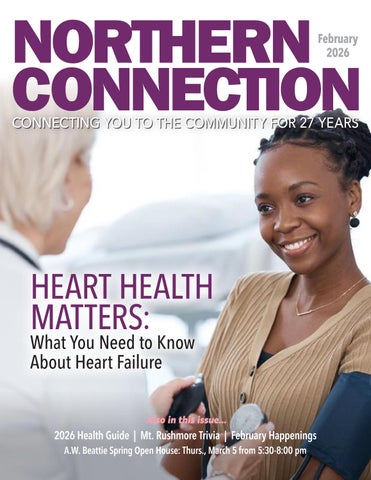
February 2026

CONNECTING YOU TO THE COMMUNITY FOR 27 YEARS
![]()
February 2026

CONNECTING YOU TO THE COMMUNITY FOR 27 YEARS
Also in this issue...
2026 Health Guide | Mt. Rushmore Trivia | February Happenings
A.W. Beattie Spring Open House: Thurs., March 5 from 5:30-8:00 pm
Deb Walton! Scan to Watch

• Over 25 Years of Expertise in Real Estate and Marketing.
• Award-Winning Realtor and Consistent Top Earner in the Region.
• Trusted Advisor with a Proven Track Record of Success.
• Dedicated to Providing Personalized Service Tailored to Your Needs.
• Expert Negotiator Committed to Getting the Best Results for You.
• Helping Families Find Their Dream Homes Throughout the Pittsburgh Area.
• Backed by the Power and Resources of Coldwell Banker Realty.
Deb Walton, SRES® Cranberry Office (O) 724-776-2900 | (C) 724-480-6690
DebWalton@pittsburghmoves.com | www.DebWaltonRealEstate.com


4 Year of the Horse – Chinese New Year on Tues., Feb 17
24 Senior Living: People Are Crazy – Even the Small Ones Janice Lane Palko
36 Local Author Spotlight: Sharon Flake Emily King
6 Cover Story: Heart Health Matters: What You Need to Know About Heart Failure
8 Solo Beauty Janice Lane Palko
10 For the Love of Friendship Maura L. Johnson
14 Advertorial One Meal at a Time: Opitimal Recovery with Anti-Inflammatory Eating Marla Turnbull, MS, CDP®, NBC-HWC
16 Preventive Care in 2026: What Patients Should be Doing Before They Get Sick Mark A. Woodburn, MD
18 Make the Right Choice for Rehabilitation Encompass Health
20 Why Chronic Pain Keeps Coming Back and What Actually Changes the Pattern Laura Ellis, LAc, LOM
22 Schogel & Fardo Family Medicine Announces New Practice Name: Schogel, Fardo, Atrasz and Associates
26 Advanced Technology Brings Hands-on Training to the Next Level at A.W. Beattie Career Center
28 School Movers & Shakers
5 Mover & Shaker of the Month: Libby Haas Paula Green
23 Support Our Troops: Army Nurse Corps Celebrates 125th Anniversary Paula Green
25 From the Editor: Winter Outdoors Emily King
29 MOM2MOMS: It’s All About Feeling Fab in Feb! Sofya Stearns
30 Trivia Connection: Mount Rushmore Trivia Paula Green
32 February Happenings

ncmagazine@northernconnectionmag.com www.northernconnectionmag.com
President & Publisher
Laura Lyn Arnold
Publisher Emeritus & Contributor
Marion Swanson Piotrowski
Executive Editor
Emily King
Emily@northernconnectionmag.com
Managing Editor/Public Relations Coordinator
Paula M. Green
Paula@northernconnectionmag.com
Marketing & Account Executives
Mary L. Simpson
Sharon Yezerski
Design & Production
Kostilnik & Associates Graphics, Inc.
Core Writers
Maura L. Johnson, LCSW, PMH-C
Ron Eichner
Paula Green
Janice Lane Palko
Sofya Stearns

Gail Boucek found her perfect spot at St. Barnabas Communities—alongside her loyal sidekick, Sparky. A Franklin Park native, she stays active at her nearby church and knows St. Barnabas well; her mother lived at The Village for 11 years. When Gail and her husband decided it was time to move—“I think we better,” he said—they chose The Communities for its friendly feel, no large upfront fee, and pet-welcome lifestyle. Today, Gail enjoys tail-wagging companionship, warm friendships, lively camaraderie, and plenty of paw-sitive moments..


The Year of the Horse promises a lively, high-spirited time for all. Life will be fast-paced and filled with adventure, encouraging a reckless, romantic, and carefree attitude. It is a favorable period for advancement, as decisions and projects come together quickly and efficiently. Action will be the guiding force, though care should be taken not to push too hard. The year will be rewarding, but at times exhausting.
Both exhilarating and occasionally frustrating, the rapid pace may test our energy and leave us feeling drained. It is an ideal time to release tension, indulge in long-held dreams, and follow your instincts. Planning and procrastination will fade as impulse and self-confidence take over. Industry, productivity, and the global economy are likely to improve, though tempers may flare in political and diplomatic arenas. Overall, good humor should prevail.
Those born in the Year of the Horse are said to be cheerful, popular, and quick-witted, with a warm, earthy appeal. Independent and adventurous, they often leave home early and pursue their careers with confidence. Energetic, perceptive, and expressive, the Horse is stylish, bold, and sometimes impulsive, falling in and out of love with ease. n
✓ Check Out our Special Trial Offer
✓ Scheduled at Your Convenience
✓ Kung Fu - Tai Chi - Kids
✓ Friendly Staff
✓ Call or Register Online
The Horse loves exercise, both mental and physical. You can spot him by his rapid but graceful body movements, his animated reflexes, and his fast way of speaking.

By Paula Green
Thirteen-year-old Libby Haas approached the “Higgy Bear Challenge” with determination. She turned a fundraiser into a clear mission: to comfort and support children with scoliosis by providing them with Higgy Bears that mirror their experiences. It is a welcoming gesture to receive a Higgy Bear outfitted with a back brace and surgical scar if the child or teen who has undergone spinal surgery.
Having faced scoliosis herself, Libby wanted others to feel the same comfort. Her mother, Kristen, contributed by coordinating fundraising events, sharing scoliosisrelated resources, and offering continuous emotional support to Libby and others throughout the process.

“A little while after I got my brace, my mom surprised me with a Higgy Bear sent to my house. It was a Taylor Swift-themed bear, orange like her new album, The Life of a Showgirl. The package even had some stickers, and one said ‘life of a scoli girl,’ which I put on my brace right away,” Libby said.
“Once I received my brace, I thought it would be fun if every kid who got their brace got a Higgy Bear along with it. They could leave their appointment with a new brace and a special bear to make them feel less alone. It’s a little scary to start wearing this big back brace, so a Higgy Bear might make it easier,” Libby added.
Coincidentally, while Kristen was searching the web for ways to be involved, she came across an amazing Higgy Bear fundraiser that she knew would be an ideal fit for Libby and their family.
“Mom discovered the ‘Million Bear Challenge,’ which had just begun to raise money for Higgy Bears. I knew immediately it was the perfect way to get involved,” Libby remarked.
“With the Million Bear Challenge, our goal was not only to fund more bears for kids and teens undergoing scoliosis treatment but also to raise awareness about the condition and its treatments,” said Kristen.
Once committed to the bear fundraiser, Libby encouraged her whole family and circle of friends to help spread the word.
“We shared Libby’s story via social media, and the support was overwhelming! We learned about others who had undergone scoliosis treatment and those who are currently experiencing it. I even had a friend who leads another national support group reach out to me and offer help,” Kristen said.
“Libby’s initial goal was to raise $500 for the challenge, and we far surpassed that. Libby raised $6,820 which is enough for about 350 bears!” The bears will arrive soon, and the family plans to put braces on each bear, package them, and donate them to local orthotics and spine clinics.
“Libby has amazed me with her positive outlook about wearing her back brace for 18 hours a day. What impresses me most is her openness in rais ing awareness and eagerness to help others feel less alone. We’re so proud of her kindness, and our community’s generosity made this possible. It was a beautiful way for Libby to see the benefits of being open and kind,” remarked Kristen.
Libby is a seventh-grade student at Marshall Middle School. She resides in Marshall Township with her mother and father (Josh), two brothers, Thomas (14) and Alex (9), and her dog, Kenny.
For more information, visit higgybears.com. n


Your heart works hard every day to keep you healthy and active. But when it isn’t pumping as well as it should, even simple tasks can feel exhausting. Heart failure impacts more than 6 million people in the United States, and the number continues to grow each year.
UPMC Passavant offers specialized services through the UPMC Heart and Vascular Institute, one of the world’s premier cardiovascular centers. With the right care team by your side, a heart failure diagnosis doesn’t have to feel overwhelming.
Despite the name, heart failure does not mean that your heart has actually failed — or completely stopped. Heart failure happens when your heart cannot pump enough

oxygen-rich blood through your body. When the heart cannot pump enough blood to meet your body’s needs, it tries to make up for it by:
• Beating faster so more blood can be pumped out.
• Enlarging to pump more blood out.
• Thickening to increase muscle mass so it can pump better.
Heart failure can happen for two reasons. The heart becomes too weak and is unable to pump effectively, known as reduced ejection fraction. Or the heart is too stiff or thick to relax and fill properly, known as preserved ejection fraction.
A recent study published in the Journal of the American Heart Association found that advanced heart failure occurs equally as often in women and men. Still, there are some differences between sexes. Women more commonly have heart failure with preserved ejection fraction. In the study, women were older when they were diagnosed with advanced heart failure. They also had more high blood pressure and less coronary artery disease than men with advanced heart failure.
Some people who have heart failure do not have any symptoms, but other people experience symptoms that range from mild to severe. Heart failure symptoms may include:
• Awakening with shortness of breath.
• Coughing or wheezing that won’t go away.
• Difficulty concentrating or staying alert.
• Extreme tiredness.
• Lack of appetite and/or nausea.
• Rapid or irregular heartbeat.
• Shortness of breath with activity.
• Shortness of breath when laying down, or when waking up at night.
• Sleeping with extra pillows or needing to sleep in a chair to ease breathing.
• Sudden weight gain and bloating.
• Swelling in your legs or abdomen.
• Weakness or low energy.
Heart failure affects more than just your heart. When your heart isn’t pumping enough blood, your blood vessels work
harder and raise your blood pressure. Your liver may feel strain too, as higher blood pressure can lead to scarring over time. Fluid can build up in your lungs, making it harder to breathe. Your kidneys might not get enough blood to filter waste, which can increase your risk of kidney problems. Even your stomach can be affected — poor blood flow can make digestion harder, leaving you feeling tired and low energy.
Certain health conditions can increase your risk of heart failure, including high blood pressure, obesity, diabetes, severe lung disease, and thyroid disorders. If you have any of these conditions, it’s important to talk with your doctor about your risk of heart failure. Heart failure can also be genetic, so make sure your doctor is aware of your family history.
Controlling blood pressure is critical in preventing heart failure and slowing its progression. To lower your blood pressure and cholesterol levels:
• Avoid smoking.
• Eat a heart-healthy diet.
• Exercise.
• Limit alcoholic beverages.
• Maintain a healthy weight.
Some experts think women may have increased expression of cytokines (molecules involved in inflammation), which can affect vascular health and heart function. In addition, pregnancy can increase heart failure risk due to complications like preeclampsia and pregnancy-induced high blood pressure.
An advanced heart failure diagnosis doesn’t mean you can’t live a long and healthy life. Your doctor’s goal is to help reduce the strain on your heart and support your quality of life. This often includes making some lifestyle changes, such as quitting smoking, maintaining a healthy weight, and staying active with an exercise routine that works for you.
Self-care is key. Your doctor may recommend limiting fluids to about two liters a day and following a low-sodium diet of less than 2,000 mg daily. Avoid alcohol, tobacco, and vaping. Weigh yourself every morning and report sudden weight gains — more than 2 to 3 pounds in two days or 4 to 5 pounds in one week.
Your doctor may prescribe medications to help control your symptoms, keep you out of the hospital, and improve your chances of living longer. Every patient is different, so your treatment plan will be personalized for you.
Take your medications as prescribed and let your doctor know if you have side effects or cost concerns. Exercise programs or cardiac rehab can also help improve your strength and energy.
If medications and other treatments aren’t enough, your doctor might talk with you about surgical options, such as a ventricular assist device (VAD) or even a heart transplant. These are usually considered when other treatments haven’t worked.
Located at UPMC Passavant’s Cranberry Township campus, the Advanced Heart Failure Evaluation Clinic provides advanced cardiac services, including evaluations for both VAD treatment and heart transplantation. The UPMC team will work together to determine if a heart transplant or VAD is right for you during a single trip to the evaluation clinic.
The UPMC team assesses every person referred to the program. UPMC’s cardiologists and surgeons work together to decide the treatment option that is right for you. The evaluation will help the team determine which care pathway provides the highest likelihood for the best possible outcome based on your condition and medical history. The evaluation includes:
• Blood work.
• Diagnostic testing.
• Multiple consultations with the heart transplant care team.
• Review of your medical and psychosocial history.
From your first heart consult through world-class treatment and post-surgery care, UPMC experts are here for you every step of the way.
The UPMC Heart Transplant Program is among the top centers in the nation for patient outcomes as reported by the Scientific Registry of Transplant Recipients
“At UPMC, we are committed to serving patients across the region by expanding access to pretransplant evaluation and testing services. If you or a loved one is in need of advanced heart care, our clinic at UPMC Passavant provides patients with convenient access to evaluations for both VAD treatment and heart transplantation at a convenient location close to home.”

Mary
Keebler, MD Medical Director, Advanced Heart Failure and Transplant
(SRTR). In addition to achieving excellent outcomes, UPMC was the highest volume transplant center in Pennsylvania in 2023. UPMC’s advanced heart failure experts have pioneered transplant and VAD technology for more than 40 years. UPMC was the first medical center to discharge a patient with a VAD in 1990 and is one of a few centers that has heart recipients living 40 years or more after transplant. This is a testament to the team’s commitment to providing each patient with advanced, long-term care.
Your heart health matters. The UPMC Heart and Vascular Institute at UPMC Passavant is dedicated to providing the community with comprehensive cardiovascular care close to home. From basic diagnostic tests to advanced cardiac imaging to stateof-the-art surgical procedures, our nationally recognized cardiac experts have you covered. n


Solo Beauty, an applicator with a mittcovered head, has the perfect angle to enable you to reach those areas of your back that you can’t with your hands.
Kathe D’Alfonso, 55, of Webster, New York, developed and patented Solo Beauty as a response to her own frustrations.
“When I was 25, I was diagnosed with stage 3 melanoma, so I know the importance of applying sunscreen. I got tired of asking my husband to apply lotion all the time, and I found I could not do it by myself. So, I started experimenting, and for four years, I worked making prototypes until I found the best solution. And Solo
By Janice Lane Palko
Have you ever felt like a contortionist when trying to apply sunscreen, lotion, medication, or simply wash a part of your back that you cannot reach? If so, there is a solution—Solo Beauty.
Beauty was it,” said D’Alfonso, who began selling her invention at a local farmers market. “The response was fantastic.”
In 2024, she received a patent in a very short time, which she was shocked by, since many patent applications are denied.
“I wanted something that was quick, simple, and effortless and that also saved time and money,” said D’Alfonso, who notes that this product is designed for everyone but those with arthritis, Parkinson’s disease, and flexibility issues especially love it. “It’s all about the angle that makes Solo Beauty so easy to use.”
Solo Beauty is made in the U.S. The


applicator is made in New York, and D’Alfonso cuts all the materials for the mitts and has a local person sew them. The mitt options include lotion applicator (the material resists absorbing the product) and body exfoliator, which works great also when used separately from the applicator.
Solo Beauty also saves money as the mitts are washable and stand the test of time.
“The mitts can be washed and dried repeatedly, unlike thinner applicators that fall apart or are disposable,” said D’Alfonso.
“Solo Beauty is also attractive,” said D’Alfonso, “because I designed it to look like a seashell.” She also makes customcolored mitts on request. An applicator with a soft lotion mitt sells for $34.99.
“I truly want to help others and make their lives better, and I believe Solo Beauty does that,” said D’Alfonso.
For more information on Solo Beauty, visit the website at: https://www.solobeautyroc.com/. You can order Solo Beauty there, or can email D’Alfonso at: sdalfons@rochester.rr.com or by calling her at 585-737-8600. n

• Over 25 years of experience in primary care
• Background in inpatient, outpatient & long-term care

• Now seeing patients at Northern Area Family Medicine
• Focused on timely, accessible outpatient care
• Treats patients of all ages (except adolescents)
• Specializes in chronic conditions: diabetes, heart disease, obesity, musculoskeletal & neurological issues
• Provides care for acute medical concerns
• Experienced in women’s health, including pap smears & menopause care
• Passionate about patient education & whole-person wellness

This year, Guardian Angel Home Care Services, Inc. will celebrate 25 years of serving our community’s seniors. We’re not a franchise or a cookiecutter operation. We are locally owned, relationshipdriven, and deeply invested in the people we serve. Every care plan we create is customized to each individual’s needs, routines, and goals. Winter doesn’t stop life and we help seniors keep living it. Cold days shouldn’t mean lonely days; from groceries to good company, we make winter warmer. Our mission has always been simple: keep our seniors safe, supported, and connected to the life they love, right where they belong…at home. n


By Maura L. Johnson
The shortest month of the year brings with it a glimpse into the coming winter reprieve, with a holiday created exclusively to celebrate when that might occur. While Groundhog Day is celebrated far more enthusiastically in my hometown, its celebration of new beginnings (50% chance of them arriving sooner rather than later) is widely recognized. However, the month of February has long been associated with a holiday many love, or love to hate: Valentine’s Day. And while much of the focus tends to be a celebration of romantic partnerships, the love shared among friends is equally deserving of celebration and recognition.
Friendships play a crucial role during every season of our lives. While we typically have the most access to our

friends in our formative years, there’s something incredibly special about maintaining relationships with people who have experienced multiple life stages alongside you. Prioritizing time with friends, especially as a parent, allows us to regroup, recharge, and create connections that are incredibly valuable to our mental and emotional health. Spending time with friends also tends to reduce anxiety and depression, lower stress hormones (vent away!) and provide emotional validation through feeling understood and supported. Friendships are especially important during times of major transition, loss, recovery, and isolation. While we may be aware of how valuable and beneficial friendships are, the very real issue of cultivating and nurturing them is often a concern. We may find ourselves

with genuine intentions to make time for our friends while everyday life has other plans. When it comes to building new friendships, creating consistent contact and access to one another assists in building the “familiarity effect.” This allows for trust-building over time and creates an opportunity for further connection. Regular texting, even if it seems low-effort, is still a way to create and foster connection with our friends. Social media allows us a window into each other’s lives; however, it can also mean finding fewer reasons to check in with someone.
Whether it’s setting aside time to catch up over the phone, dinner, traveling together or even planning an all-out Galentine’s Day, finding strategies to nurture our friendships remains an invaluable asset to our emotional and mental well-being. Wishing everyone a Happy Valentine’s Day and here’s to an early Spring! n

Maura Johnson is a licensed clinical social worker currently in practice at Cranberry Psychological Center. She is a certified perinatal mental health provider, as well as a contributing staff member with Postpartum Support International. While her primary focus is treating PMADs, she also treats a variety of conditions and clients of all ages. She resides in the Pittsburgh area with her husband, Brendan, daughter, Sloane, and dog, Max.

SPA TREATMENTS FACIALS & MASSAGES


Tooth loss is challenging. So is figuring out the best way to restore your smile. If you’re considering dental implants, here’s what to look for in a provider you can trust.
Dr. Zachary Raffensperger has been with ClearChoice since 2019. Here are some of his tips to help guide you:
Find a provider backed by science.
You’ll want to see qualifications like board certification, specialized training in dental implants and years of experience. It’s also a good sign if your team are members of professional organizations like the American Academy of Implant Dentistry (AAID) or the International Congress of Oral Implantologists (ICOI).
Find a smile you can fully customize.
Choose a provider you can collaborate with, who works with you to select the shape, shade and size from the start. Once your teeth are placed, it’s also important to test-drive your smile so that you can still refine the look, feel and fit. Don’t lock it until you love it.
Find a smile that’s backed for life.
To protect your investment, you should find a provider who has a warranty. You deserve a smile designed for the long term, with lasting fit, function and comfort. You’re also searching for a care partner for life, who can build a relationship and help maintain your smile.
Find a solution built around care and convenience.
Having your care team under one roof isn’t just convenient—it helps your doctors work together seamlessly, giving you a more complete, coordinated care plan. Also, look for a provider that works with trusted third-party lenders. They can connect you with financing plans to break out payments over time.


By Marla Turnbull, MS, CDP®, NBC-HWC
Inflammation is the body’s natural response to infection or injury. When you sustain an injury, your immunize system activates and sends white blood cells to repair the wound so that you can heal. But sometimes inflammation can stick around when it’s no longer needed, and this can lead to chronic health issues like high blood pressure, stroke, diabetes, joint pain, skin conditions, and more. Scientists are still studying how chronic inflammation affects the body and how to reduce it, but many experts believe that eating certain foods, and avoiding others, can help.
Anti-inflammatory eating doesn’t have to mean complicated recipes or a total pantry overhaul. The most effective approach is simple, small, consistent choices that lower your “inflammatory load” while supporting steady energy, mood, digestion, and overall wellness.
Anti-inflammatory (AI) meal planning can either fuel chronic, low-grade inflammation or help calm it—impacting energy, blood sugar balance, digestion, joint comfort, brain health, and immune function. Including meals consistently with fiber-rich plants, quality protein, and healthy fats. These raw ingredients repair, regulate, and help us recover more effectively each day.
My AI Tool Kit—a practical guide to print and keep visible. It’s designed to remove the daily guesswork and help you build meals that work without perfection, expensive ingredients, or complicated cooking.
1) Start with the “Anti-Inflammatory Plate” (the easiest win)
• ½ plate: non-starchy vegetables (more colors = better)
• ¼ plate: lean protein (fish, chicken, beans, poultry, tofu)
• ¼ plate: whole grains (as tolerated)
• Add: coconut and/or olive oil, avocado, nuts/seeds + herbs/spices for flavorr

2) Foods to “Choose More Often” (not “never again”)
Lean into colorful vegetables, lower-sugar fruits (especially berries), extra-virgin olive oil, omega-3s (fatty fish and seeds), whole grains (as tolerated), legumes, nuts/seeds, herbs/spices, and fermented foods.
Pick 1 category to improve this week:
• Incorporate berries at breakfast
• Drizzle extra virgin olive oil on vegetables
• Add chia or ground flax to oats or smoothies
3) Make one swap a day (consistency beats perfection)
Inflammation triggers: sugary drinks, refined grains, ultra-processed foods, processed meats, deep-fried foods, and frequent desserts.
Easy swaps:
• shake a day: fruit - about 1 cup (berries are a great choice) and include a plantbased protein + fiber (chia/flax, leafy greens such as spinach, kale, arugula)
• chips → nuts/seed mix or veggies + hummus
• cereal → oats + berries + cinnamon
• creamy dressings → olive oil + lemon + herbs
• deli meats → chicken, tuna, or beans
If you only do one thing, choose the swap that feels most doable and repeat it daily for two weeks.
4) Keep “mix-and-match” meal formulas on repeat
Decision fatigue is real—especially at the end of the day. Use simple meal formulas that repeat:
• Vegetables + protein + fiber carbs + healthy fats + flavor boosters
A few of my favorites:
• Breakfast: overnight oats + chia + berries + cinnamon
• Lunch: big salad + salmon/tuna/beans + olive oil + lemon
• Dinner: sheet-pan salmon (or chicken) + broccoli + sweet potato
• Snack: apple + almond butter, or hummus + sliced peppers
5) Snack Builder to stabilize energy
Blood sugar swings are frequent crashes that drive cravings, irritability, and fatigue. A simple “steady energy” rule is protein + fiber + healthy fats as snacks.
6) Plan once, then let the plan carry you
The weekly template and grocery framework are your secret weapons. When your environment supports you, your habits get easier.
• Choose: 2 meals + snacks then repeat
Anti-Inflammation Tool Kit Checklist
□ 3 colors per meal
□ Protein at each meal, especially at breakfast
□ Extra Virgin Olive Oil (no to low heat) and Coconut oil (high heat)
□ Omega-3s - 4-5x/week
□ Spices (turmeric/ginger/cinnamon/garlic)
□ Pair carbs with protein/fat
□ Water all day long
□ 3-minute wind-down routine
“If You Only Do One Thing This Week…”
Add one cup of colorful vegetables daily (fresh, frozen, or roasted). One of the fastest ways to increase fiber and plant nutrients—without changing your whole diet.
Want support using the Tool Kit?
Please email me. Let’s move the needle toward Optimal Health. n


By Mark A. Woodburn, MD, Grob, Scheri, Woodburn, and Griffin Family Medicine
Not long ago, preventive care meant stopping by your doctor’s office once a year, getting a quick exam, and hearing, “Everything looks fine.” In 2026, preventive care means much more than that. Today, it’s about keeping things fine, through proactive, personalized, and smarter healthcare that focuses on preventing problems before they disrupt your life.
Think of preventive care as routine maintenance for your body. It’s far easier to keep things running smoothly than to deal with emergency repairs later. At our practice, we like to think of ourselves as your co-pilot, helping you stay ahead of illness instead of reacting to it.
Feeling healthy is wonderful, but it isn’t a medical test. Many serious health conditions develop quietly, without noticeable symptoms in the early stages. That’s why routine screenings and annual checkups remain essential, even for people who feel perfectly fine.
Adults should prioritize yearly physicals, blood pressure checks, cholesterol and blood sugar testing, and age-appropriate cancer screenings such as colonoscopies, mammograms, and cervical cancer screenings. In recent years, some recommendations have shifted—for example, colon cancer screening often begins earlier than it once did.
Preventive care is not one-size-fits-all. Women need to stay current with breast and cervical cancer screenings, while men should begin paying attention to heart health sooner than they might expect. The best approach is a personalized one, tailored to your age, family history, and risk factors, much like a wellfitted suit. The better the fit, the better the results.
Establishing a relationship with a primary care provider before health issues arise is one of the most important steps patients can take. When something does come up, you’re not starting from scratch. We already know your baseline, what’s normal for you, and what isn’t.
That familiarity allows for quicker diagnoses, smarter decisions, and fewer unnecessary tests. Preventive care works best when it’s built on trust—not panic. (And while it’s tempting, Googling symptoms at 2 a.m. is not a reliable long-term healthcare strategy.) Long-term health works best when it’s supported by a long-term relationship.
Lifestyle habits are the backbone of preventive care. While medications have their place, daily habits are what truly change health trajectories over time.
If lifestyle changes feel overwhelming, don’t aim for perfection. Start small and boring and stick with it. Walk more. Sleep 30 minutes longer. Drink more water. Consistency beats intensity every time. Preventive care is about progress, not guilt.
Advances in technology have transformed preventive care. Today, we have more sophisticated lab testing, including advanced cholesterol markers like ApoB and Lipoprotein(a), and imaging such as coronary artery calcium scans that can detect heart disease before symptoms appear.
Wearable devices can track heart rate, sleep, activity, and even glucose levels, while patient portals make communication easier than ever. But data alone isn’t enough. At our office, every provider is supported by a dedicated nurse to help interpret information and turn it into meaningful action. Technology gives us insight; preventive care turns that insight into better health.
Some of the most dangerous conditions are also the quietest. High blood pressure, high cholesterol, prediabetes, and early kidney disease often cause no symptoms at first, yet they can lead to serious problems later. Preventive care helps catch these issues early, before they make headlines in your life.
If you avoid the doctor because you feel fine, are too busy, or worry about what you might find out, you’re not alone. But avoiding care doesn’t prevent problems; it only delays knowing about them. And earlier is almost always easier. Preventive visits are far more often about reassurance than bad news.
The key takeaway is simple: don’t wait for symptoms to introduce you to the healthcare system. Preventive care is the most powerful, least dramatic way to protect your future health—and there’s no better time than now to invest in yourself.
At Grob, Scheri, Woodburn, and Griffin Family Medicine, we focus on proactive, personalized care: before problems start and long before they become emergencies. When the unexpected does happen, we’re here for that too. Your health. Your future. Let’s stay ahead of sickness. n

After a serious illness or injury such as a stroke, hip fracture, spinal cord injury or brain injury, you may need additional care to help you achieve your highest level of independence. However, where you choose to recover matters.
Not all health care providers offer the same level of therapy and medical care. If you or a loved one require rehabilitation after your condition stabilizes, ask the following questions to ensure you are getting the care you deserve.
How much therapy and medical care will I receive?
Rehabilitation hospitals and nursing homes are different. At an inpatient rehabilitation hospital such as Encompass Health Rehabilitation Hospital of Sewickley, you will receive at least three hours of therapy a day five days a week. Patients at a skilled nursing facility typically receive less.
Inpatient rehabilitation hospitals also
have a higher level of medical care with frequent physician visits and 24/7 skilled nursing care.
Are the programs customized to meet my goals?
At Encompass Health Sewickley, multidisciplinary care from experienced clinicians and advanced technologies helps patients return to their communities at their highest level of independence.


For those recovering from a stroke, injury or illness, regaining your best quality of life begins with your ability to choose. Choose Encompass Health for exceptional results.
Each patient’s unique care plan includes physical therapists, occupational therapists, speech-language pathologists, physicians, case managers, pharmacists, dietitians and others.
Your care team will develop a plan that aligns with your goals. At Encompass Health Sewickley, therapy simulates reallife activities specific to you, whether it’s preparing a meal in our activities of daily living suite or feeding and walking a pet. When it comes to finding the best rehabilitation, be sure to understand the differences in settings of care.
To learn more about Encompass Health Sewickley call (412)-749-2396 or visit encompasshealth.com/locations/sewickley-rehab. n


Laura Ellis, LAc, LOM, Bridges Acupuncture & Oriental Medicine
You’ve “tried everything” already: all the tests and labs (all of them), medications, PT, exercises, supplements, yoga, hot packs, ice packs, CBD creams, meditation...you name it. And your body still hurts and no one can tell you why. Or, more importantly, what to do about it.
You’re stuck in a pattern. It can feel frustrating and demoralizing. It’s exhausting, and you may feel bad for the people who love you, who are watching you go through this and bearing the brunt of your frustration.
Patterns can be hard to change sometimes. The human body is great at surviving, and sometimes it locks into a pattern because that strategy has worked. You’re still alive. You’re reading this right now. Why change a pattern that has kept you alive this long?
The reasons chronic pain persists are as complex as you are, which is why something that worked for someone else didn’t work for you. Pain patterns often involve a combination of the nervous system (how safe your body believes it is), your tissues (over time, muscles and connective tissues adapt to pain, leaving less room for change), and daily habits - from sleep to nutrition to posture and compensation for what hurts.
This isn’t to say there’s no hope: this is just to say that the situation is complex. And there is hope. A lot of it.
Acupuncture, which is part of the system of medicine that I practice, has a long history of addressing health concerns that are as complex as the people who experience them. It’s why I chose this medicine: I wasn’t interested in releasing a tight muscle, stopping migraines, or treating sciatica. I was interested in treating the person who experience those things.
Acupuncture works in part by regulating the nervous system: helping your body recognize that it’s safe and can reduce persistent pain signals - even when something structural is contributing to that signaling. (For readers who are interested in this concept, The Way Out by Alan Gordon offers an accessible and practical explanation.)
Acupuncture also increases circulation, reduces inflammation, and stimulates a healing response. In other words, while the body relaxes it’s also actively repairing tissue and restoring optimal function.
Acupuncture can also help by encouraging muscles and connective tissue to relax through a technique many people have heard about recently: dry needling. Dry needling is


an acupuncture technique described in medical texts over 2,000 years ago that has been more recently adopted by physical therapists, chiropractors, and some other healthcare providers. In this approach, a practitioner identifies a exact trigger point contributing to the pain, inserts a needle, and then stimulates it until the tissue releases. It can be very effective for muscle-related pain. In Pennsylvania, however, dry needling is only legal when performed by a licensed acupuncturist or a Physician Acupuncturist (an MD with additional acupuncture training).
If acupuncture isn’t on the list of “everything” that you’ve tried and you’re curious to learn more about it, my clinic offers free 15-minute consultations. You’re welcome to schedule a consultation even if you don’t live near our clinic in Harmony. We’re non-competitive and are happy to refer you to a qualified acupuncturist closer to you or simply answer questions about acupuncture, whether or not you decide to book care with us.
Because you are more than the pain you’re experiencing. When healthcare meets complexity with patience, change becomes possible. n

Cranberry Township, PA – Schogel & Fardo Family Medicine, a trusted primary care practice serving the Cranberry Township community for nearly 25 years, is proud to announce a new practice name: Schogel, Fardo, Atrasz and Associates. The name change reflects the continued growth of the practice and the important role of its physicians in delivering comprehensive, patient-centered care.
Founded in 2001, the practice has been a long-standing member of Genesis Medical Associates, one of the region’s largest independent primary care networks. Genesis Medical Associates celebrated its 30th anniversary last year and now includes thirteen practices serving communities throughout Western Pennsylvania.
Dr. Karen Schogel and Dr. Barbara Fardo have led the practice since its inception, building a reputation for excellence
in both family and internal medicine. Over the years, the office has marked significant milestones, while continually expanding services and adapting to the evolving healthcare needs of its patients.
The addition of Dr. Rachelle Atrasz, a board-certified internal medicine physician who joined the practice in January 2024, represents the next chapter in that growth. Dr. Atrasz brings a strong academic and clinical background, along with a deep commitment to compassionate, high-quality care. Her inclusion in the practice name recognizes her integral role in serving patients and supporting the practice’s long-term vision.
Drs Schogel and Fardo feel the new name reflects their history and future. “We are proud of the foundation we’ve built over the past two decades and are excited to continue growing with Dr Atrasz,” says Dr Schogel. Dr Fardo adds,
“Our patients can expect the same personalized, high quality care they have always received.”
Schogel, Fardo, Atrasz and Associates provides comprehensive primary care services for patients ages 6 and older, including preventive care, chronic disease management, acute illness treatment, and coordination of care across inpatient, outpatient, and specialty services.
Looking ahead, June 2026 will mark the practice’s 25th anniversary, a milestone that underscores its enduring commitment to the Cranberry Township community and its mission to provide exceptional care for generations of patients.
For more information, patients may continue to visit the practice at its Cranberry Township location or through Genesis Medical Associates.P:724-741-0044 ext. 1600 | F: 724-741-0040 W: http://www. genesismedical.org/ n

By Paula Green
“When
you’re a nurse, you know that every day you will touch a life, or a life will touch yours.” ~Unknown
For 125 years, Army nurses have shaped U.S. military history and saved lives. As the Army Nurse Corps marks a milestone this month, we reflect on a legacy that began in the Continental Army and continued through the Civil and Spanish-American Wars.
Continuing this proud tradition, Army nurses consistently deliver exceptional care on the front lines, their unwavering dedication clear in every mission. Whether supporting military operations or engaging in humanitarian efforts, they breathe life into the Corps’ spirit. On February 2, 1901, Congress recognized this enduring value by establishing the Army Nurse Corps as a permanent entity.
From the start of the ANC, nurses rose to every challenge. They served in tent hospitals and requisitioned homes with resourcefulness and compassion. They tended to the sick, scrubbed floors, laundered linen, prepared meals, and managed supplies, exemplifying selfless service.
When the United States entered World War I, just 403 Army nurses were on active duty. By November 1918, their numbers had soared to 21,460 officers, including 10,000 serving overseas. During this transformation period, the Corps also proudly welcomed its first African American nurses.
Building on early accomplishments, ANC members have advanced military healthcare. They introduced the first organized battlefield triage system, established rapid evacuation protocols for wounded soldiers, and significantly reduced combat mortality rates. These innovations continue to earn admiration and gratitude.
Today, Army nurses carry this legacy forward. They lead trauma care innovation and have introduced new triage protocols and advanced lifesaving procedures. They also spearhead training programs to ensure medical readiness. These include simulation-based workshops and field emergency response drills.
Their ongoing commitment is also evident in missions to Bosnia, Haiti, Guantanamo Bay, and Suriname. In these locations, they have provided on-site medical care, humanitarian relief, and professional medical instruction. This record continues to inspire and shape the future of military medicine.
These special individuals will be honored this month. A 125th Army Nurse Corps celebration will be held on February 6 in Washington, DC. The celebration ceremony will pay tribute to:
• 57,000 Army nurses who that served during WWII,
• 8,000 nurses who served in Vietnam,
• 540 nurses who served on the Korean Peninsula,
• 6,000 who deployed to Afghanistan and Iraq, and over
• 6,000 Active and Reserve Officers who serve today.
Northern Connection magazine salutes all the past and present Army Nurse Corps members. Your loyalty and service have been indispensable. n


By Janice Lane Palko
I’m
not the biggest country music fan, and I don’t drink beer, but one of my favorite quips I often quote to sum up the absurdity of life is the lyric from country singer Billy Currington’s 2008 hit song “People are Crazy”:
“God is great, beer is good and people are crazy.”
By now you are probably aware of the “6-7” phenomenon, where when the numbers six and seven are mentioned, kids shout “6-7!” and make a juggling hand motion.
For those who don’t know, this means nothing; it’s just “a thing.” Some attribute it to a song, but no one knows for sure. I first came across the 6-7! craze in October. We were babysitting the grandchildren one Saturday night and my husband was watching college football. When the announcer said, “And the score is now 6-7.” Suddenly, my two-year-old grandson began moving his hands crazily and shouting, “6-7!”
“What is he doing?” I asked his older sisters, and they all did the same thing, but none of them could tell me what it meant.
A few weeks later I was selling my novels at a Christmas craft show in the South Hills. I was situated next to a crafter,
a woman who made homemade Christmas ornaments. She had “6-7” ornaments, and they were selling like crazy. I saw one teacher buy 15 of them—one for each of her students. Of course, I bought one for the grandkids, and they were so excited to receive it, they all burst into the hand motions.
The craze has made headlines all over the media, and even Vice President J.D. Vance posted a humorous incident on December 9 on his X account about it:
Yesterday at church the Bible readings started on page 66-67 of the missal, and my 5-year-old grandchild went absolutely nuts repeating “six seven” like 10 times. And now I think we need to make this narrow exception to the first amendment and ban these numbers forever.
I even caught myself doing it. As we left the gym one evening, my husband and I

were discussing the holiday class schedule, when he said, “I can’t remember if the class is at 6 or 7. I instinctively said, “6-7!” Apparently, the “6-7” fad is driving parents crazy. I’m not around kids all day long, so I may not be the best judge of this, but I think the “6-7” thing is funny. As the song says, people are crazy.
From swallowing goldfish to cramming into phone booths to streaking, young people have always embraced fads and people have always been influenced by others’ behavior.
Did you know that during the 13th and 17th centuries a dancing mania swept Europe, where people danced to exhaustion. Experts still don’t know what caused it, whether it was something physical or psychological. Scientists call these types of behaviors “mass madness.” On Wikipedia there is a list of mass madnesses that have swept the culture, everything from an epidemic of German nuns biting each other in the 15th century to the 18th century belief that playing an instrument known as a “glass harmonica” would drive you mad.
Sometimes “group think” can lead to evil like the Salem Witch Trials, but when it’s harmless, it’s amusing.
So, embrace the “6-7” because soon it will fade into the past and be regarded as ridiculous as pet rocks.
Oh, and by the way, on December 27, my parents celebrated their 67th wedding anniversary, You know “6-7.” You probably can guess how their great-grandchildren commemorated the occasion. n


By Emily King
The Norwegian have a term called “friluftsliv,” which translates to “open-air living.” The concept celebrates being in nature purely for recreational reasons, no matter the time of year or the temperature. Norway even has several outdoor kindergartens, where the children spend 80% of their time outdoors, as well as “libraries” where you can borrow outdoor gear for recreation.
Norwegians take their outdoor recreation seriously and have legislation that protects their right to roam the outdoors, regardless of land ownership. They are permitted to hike, cycle, ski, swim, or tent camp in any uncultivated land without needing the landowner’s permission, as long as they are considerate, respect the wildlife and property, and clean up after themselves.
Just like Western Pennsylvania, Norway has four seasons, with long months of snowy, cold weather, and depending on the region, stretches of days with very little sunlight. But unlike most Americans, Norwegians think of cold weather not as something to endure, but as something to celebrate. They look forward to the winter months, which they spend skiing, tobogganing, snow shoeing, dogsledding, whale watching, and more.
The benefits of spending time outdoors, regardless of weather or temperature, are impressive. Even on gray days, winter sunlight can help regulate circadian rhythms, improving sleep, energy levels, and mood. Cold weather movement also burns more energy because your body has to work harder to keep warm. So that winter walk or even playing in the snow with your kids can be a great workout. Outdoor activity also supports heart health, blood pressure, and immune function, a fantastic way to celebrate American Heart Month.
Though you might be disappointed with the whale watching on the Ohio River, there are plenty of ways you can integrate some of that Norwegian love for the outdoors into your Pittsburgh winter:
Hit the slopes! Plan a drivable winter weekend getaway with a trip to Seven Springs, Hidden Valley, Wisp, or Snowshoe. Or keep it local at beginnerfriendly Boyce Park, just 20 minutes from downtown.
We’re lucky to have a great variety of local parks with beautiful trails that look downright magical in the snow. Bundle up for a winter hike in North Park or take a drive out to Moraine State Park to hike, snowshoe, sled ride, or go ice fishing.
Check out the websites for your favorite local and state parks. Many of
our region’s parks hold winter festivals, offering free winter activities like snowshoeing, ice skating, skiing, and more.
Some of your favorite warm-weather activities are just as enjoyable in the winter. Did you know the Pittsburgh Zoo and PPG Aquarium is open all winter long? Many of the zoo’s animals, like Siberian tigers, polar bears, snow leopards, and red pandas, love cold weather and are more active in the winter. Though some areas of the zoo are closed during the winter, you’ll experience less crowds and lower admission rates.
What’s your favorite way to get outdoors during the long Pittsburgh winter? n


Students at A.W. Beattie Career Center have recently been introduced to a variety of cutting-edge technology upgrades to provide the best educational, hands-on experiences possible.
Among the major advancements, a life-sized ambulance has been installed in the Emergency Response Technology classroom to give students the opportunity to respond to staged and simulated emergencies, replicating real-life scenarios.
“We can have the crews treat the patients, load them onto the stretcher and finish their assessments inside the ambulance before transporting them to the Health and Nursing Sciences program where they can give a hand-off report,” Mr. Silnutzer said. “This will allow students to see a call from dispatch to delivery and get hands-on experience that will help ensure they are ready for the field.”

The ERT program also received mannequins that will allow staged scenarios from overdoses and hemorrhaging to asthma attacks and much more, enabling students to practice their skills while getting realistic, real-time feedback within the classroom. Additionally, students will use new SCBA Air Packs, which will be used in simulations to train for dangerous situations in their future careers.
These are just a few of the many new upgrades across Career Center programs.
The Health and Nursing Sciences program has introduced two new pieces of equipment to its state-of-the-art Hospital Suite lab.
The Emergency Crash Cart will be vital to teaching HNS students the importance and purpose of a crash cart during emergency situations inside a healthcare facility. The emergency crash carts are stocked with simulation medications by Pharmacy students and handed over to the HNS students to simulate everyday collaboration between these two professions to enhance patient care and safety.
The new SimVS Hospital Pro in HNS is a comprehensive, virtual simulation platform for healthcare education and provides realistic, tablet-based digital patient monitors and nurse call systems that instructors control to create dynamic scenarios for students, allowing for real-time feedback and skill practice in a safe environment.
“We are bringing real-world scenarios to our students to give them a meaningful and applicable education,” Health and Nursing Sciences instructor Doug Moran said.
The Dental program has continuously added high-tech equipment.


Students now use a Panorex machine, which takes full mouth X-rays, and a new 3D Printer and Scanner, which are used to make impression models in the field.
Dental students are also experiencing new equipment to master essential dental radiography skills to prepare for their future careers.
In the Dental program, students learn radiation safety, core principles, and advanced techniques to ensure they’re ready to sit for certification through the Dental Assisting National Boards. Hands-on training includes practicing on Dexter mannequins, taking both digital and traditional films, panoramic imaging, and operating the Nomad handheld X-ray system.
“This comprehensive experience equips our students to enter the workforce immediately after high school or begin their dental post-secondary education with a competitive edge,” Dental instructor Paula Gibson said.
Some the most significant new pieces of equipment being utilized in the Career Center are a combined 12 welding booths in the HVAC and Automotive Collision Technology programs.
Two of the new welding booths in the HVAC program have Lincoln multi-task welders.
“The two new Lincoln welders give each student the opportunity to learn a variety of new welding processes,” HVAC instructor Charles Wike said. “The Lincoln welders can be used in welding processes such as MIG, TIG or stick. They can also weld ferrous metals, stainless steel and aluminum.”
There is a new Lincoln Fresh Air Welding Booth System and MIG Power260 welders in the Automotive Collision Technology program, which has led to greater student outcomes.
Advertising Design students now utilize a new Roland TruVis VG3-540 Printer/Cutter and an Epilog Fusion Maker Engraver to enhance student work and develop industry specific skillsets.
“The advanced technological versatility of the printer/ cutter and engraver gives students an authentically hands-on experiences with industry-grade equipment,”

Advertising Design instructor Mrs. Lingsch said.
The new equipment being utilized at the Career Center was made possible through the assistance of Pennsylvania Department of Education grant funds.
Through their continued investment in technology, A.W. Beattie provides real-world training and an immersive education environment to tomorrow’s health professionals. Students can graduate with confidence in their skills, ready for the workforce or to pursue post-secondary education. These advancements in technology reflect the Career Center’s dedication to career-first education and providing real-world experience that prepares their students for a fulfilling career. n
Prospective and current students and their families are encouraged to attend A.W. Beattie’s Spring Open House from 5:30 pm to 8:00 pm on Thursday, March 5. Meet our Career Center staff and current students while exploring our programs. Learn more at www.beattietech.com

Anchored Christian Academy in Mars, PA had two-chapter winners for The Daughters of the American Revolution annual essay contest submitted by the Kushkushkee Trail chapter of the DAR. The winners were high school winner, Drew Williams, and the 6th grade winner, Levi Connor, along with their teacher, Ruth Butler

The 2026 Niche rating for best Catholic high schools in Pittsburgh has been published. Bishop Canevin High School ranks number five after getting recognition specifically for activities, diversity, and college attendance.
Members of Bishop Canevin’s Academic Team competed on KDKA’s KD Quiz (formerly known as Hometown High Q) and placed second, with Central Catholic in first place and Penn Hills High School in third. The show aired on December 20.
Fox Chapel Area High School senior Arman Alborzi has qualified to take the Mathematical Association of America (MAA) American Invitational Mathematics Examination (AIME). Arman qualified to take the national exam as a result of his distinguished performance on the American Mathematics Competition (AMC) 12 exam that he took in November. The AIME is a three-hour, 15 question invitation-only mathematics exam, and it will be given in February.


Six Fox Chapel Area High School students won awards at the annual Duquesne University Invitational Speech and Debate Tournament. Paulomi Goel and Ottilie Happold won first place. Anna Juliet Chrissis and Austin Helsel won sixth place, and Maya Agarwal and Prachi Behal won eighth place. Additionally, Fox Chapel Area High School students won the first-place Sweepstakes Award for Small Schools.

Four Fox Chapel Area High School students were named winners at the North Catholic High School Invitational Speech and Debate Tournament. Paulomi Goel and Ottilie Happold won fourth place, and Steven Li and Ryan Wang were awarded fifth place.
Mars Area Elementary School third-grader Addison Winn is featured in a commercial produced as part of the NFL’s Inspire Change social justice initiative.

Mars Area High School Varsity Competition Cheer Team competed in the 20252026 WPIAL Class 3A Competitive Spirit
all and fifth place in the Small Varsity division. Team members include Lily Becker, Riley Carrel, Josie Dressen, Gianna Goodman, Liv Hanna, Emlyn Kasperowicz, Sophia Lapina, Allie Lefcakis, Lexi Lefcakis, Marina Missos, Paige Nicholson, Maddy Osterman, Teegan Painter, Aliana Spagnolo, Bella Staines, Abby Stevenson, Avery Symchak, Teagan Tumulty, Addy Vargo, and Lainy Vargo
BC3


A 1972 graduate of Butler County Community College who founded an oil and gas exploration company has contributed $100,000 to the BC3 Education Foundation with an unprecedented request that it be disbursed
Fox Chapel Area School District students held their 36th annual telethon on December 23 and raised $101,001. The 2025 total brings the money raised by Fox Chapel Area students and staff to more than $1,379,497 over the last 36 years for various local and regional charities. The telethon raised money for the local organization Fox Families Care and involved students from all six schools. Additionally, this year, anonymous donors through Fox Families Care matched donations up to $50,000.

Competition, held at Hempfield Area High School. The Planets received 11th place over-

in one academic year through his creation of 125 scholarships ranging in amount from $500 to $2,000. That’s the way I wanted it to work, and I am happy with that,” said Gary Griwatz, of Cranberry Township and of Tampa, Fla.
By Sofya Stearns
There is one resolution many women aim for the year to come - feeling and looking our best! And perhaps it works in January, but come February, the intention is still there but the motivation does fizzle out a bit.
But what if I tell you that YOU can absolutely do things for yourself even with chaos around you. It’s the little things in life that can perk you up and make you feel FAB in FEB! My two most favorite things in the morning are coffee and eye bag patches. It’s ME time. And I love it! I’m then ready to face the world. My next favorite: audiobooks. We all do house chores, loading and unloading a dishwasher, doing laundry. They are necessary but mindless and need to be done. Why not make it you time? Choose a show or a podcast, anything that you love and your heart desires and it becomes more entertaining. Now, let’s talk about food. I give seminars and help women lose weight and to stay on track with nutrition. I don’t believe in diets and I don’t believe in starvation! The minute you tell yourself “I’m on a diet,” your brain tricks you and now you are in hungry mode. I believe you must treat your body like a good, expensive car on a daily basis. To run that FAB body of yours, you need good fuel. But like any car, at times, you can fuel it up with something down a grade. Why not? So once a week, praise FAB YOU, I don’t mean with a piece of dark chocolate, because guess what, dark chocolate is great for you. And I certainly don’t mean a glass of wine, because guess what, red wine is good for you, in moderation. And I most definitely don’t mean bread, because a sourdough toast with avocado is FAB for you. Avocado does wonders for your skin, especially during winter and dry air. What I mean is overprocessed stuff. Heck if you love those chips, have a small bag and enjoy. You deserve it. And, if you are craving pasta, I hate to burst your bubble, but if pasta is made from semolina flour, it is not a cheat food, it can easily be a few nights a week meal, in moderate proportions. Semolina is high in protein and fiber; and contains essential minerals like iron and magnesium. And, if you want something FAB in FEB for your kids, subscribe to my first show, it’s FREE, Cooking around the world with Chef Sofya on YouTube @ Chef Sofya.
Enjoy being FAB YOU. Don’t ever deprive yourself of YOU time, because you are FAB.
La Dolce Vita!!
Until next month. n


By Paula Green
n Monday, February 16, we will observe Presidents’ Day. To celebrate this meaningful occasion, let’s honor the four notable U.S. Presidents depicted on a renowned monument. Mount Rushmore, located in Keystone, South Dakota, invites visitors to experience history face-to-face.
To see how Mount Rushmore became iconic, let’s explore its fascinating beginnings. In 1923, historian Doane Robinson proposed a Black Hills sculpture to attract tourists. His idea was indeed successful because Mount Rushmore now draws nearly 3 million visitors annually.
South Dakota commissioned Danish-American sculptor Gutzon Borglum to oversee the mammoth-sized project. Carving of Mount Rushmore began on October 4, 1927, and continued until 1941. More than 400 men carried out the construction. Remarkably, no one died during the building of the monument.
Mount Rushmore features the faces of U.S. presidents: George Washington, Thomas Jefferson, Theodore Roosevelt, and Abraham Lincoln. Each leader was chosen for their major contributions.
Washington, because he was our first president and led the 13 colonies to independence. Jefferson was an author of the Declaration of Independence and doubled the nation’s size through the Louisiana Purchase. Roosevelt expanded international commerce by completing the Panama Canal and creating national parks. Lincoln kept the Union together and freed the slaves.
Mount Rushmore is 500 feet tall. The distance from the top of the head to the bottom of the chin is 60 feet. Each nose is 20 feet long, the mouths are 18 feet wide, and each eye is 11 feet wide. Crews carved Mount Rushmore’s faces with dynamite, blasting tons of granite to speed removal. Workers then used drills and other tools for finer details.
The original plan for the monument was to depict each president in full, not just their faces. Borglum’s vision was to carve each man from head to waist with hands. However, because of budgetary constraints, the plans were changed to focus solely on the presidential faces.
Having dug into Mount Rushmore trivia, let’s see if we can rock this presidential query. Put on those thinking caps; it’s time to get a little trivial.
1. Which president was carved first on Mount Rushmore?
2. How many years did it take to complete Mount Rushmore?

3. Under which President of the United States did the construction of the monument begin in 1927?
4. The monument was completed in 1941, during the term of this U.S. President, who was a distant relative of Theodore Roosevelt.
5. A Hall of Records is carved into the monument behind which one of the four presidents?
6. Out of these four presidents, he is the only one to ever have visited South Dakota.
7. The crew spent 18 months carving this President’s face, they discovered the granite was too weak. They had to blast it off and start over in a different location.
8. The mountain is named after Charles E. Rushmore. He was a lawyer from this heavily populated northeastern state.
9. Mount Rushmore’s entrance displays 56 flags, which represent the states, one district, three territories, and two commonwealths. It is called _____ of Flags.
10. Mount Rushmore appears in the final segment of this 1959 Alfred Hitchcock film, which starred Cary Grant and Eva Marie Saint.
11. The 2004 movie National Treasure: Book of Secrets shot scenes from Mount Rushmore. What actor starred in this film about John Wilkes Booth?
12. When 90% of Mount Rushmore was complete, sculptor Borglum died. His son took over the project. He shares a name with which one of these presidents?
13. Although it never came to fruition, in 1937, a bill was introduced to Congress to add the image of this women’s rights leader to the monument.
14. In 1991, this U.S. president held a Mount Rushmore dedication ceremony on the 50th anniversary of the monument.
15. What activity takes place at Mount Rushmore each night from dusk until the park closes? n
Source: luigimountrushmore.com/mt-rushmore-faq/, www. travelsouthdakota.com/trip-ideas/surprising-facts-about-mount-rushmore, www.thoughtco.com/interesting-facts-about-mount-rushmore-1779326


Blood Drive
Fox Chapel Area High School Community Blood Drive, 7:30 am-1 pm, Feb. 11, at Fox Chapel Area High School large group instruction room. Residents age 16 and older are encouraged to donate. As an incentive, anyone who donates blood will receive a $15 gift card. To schedule your appt, go to vitalant.org, call 1-87725VITAL.
Agnus Teaches Acting, a satirical musical, 7:30 pm, Feb. 5; 10 am & 7:30 pm, Feb. 6, at The New Hazlett Theater. For info, visit newhazletttheater.org.
Marvin Gaye: A Tribute To The Prince of Soul, 6-7 pm, VIP Reception, 7:30-9 pm, concert, March 14, Kelly Strayhorn Theater, 5941 Penn Ave. For ticket info, visit kellystrayhorntheater.

Ruckus and Davóne Tines reflects upon the 250th anniversary of the Declaration of Independence, 7:30 pm, Feb. 10, at the August Wilson African American Cultural Center. Presented by Chamber Music Pittsburgh. For details, visit chambermusicpittsburgh.org.
Three Rivers Young People Orchestras (TRYPO), Wind Symphony & Percussion Ensemble Concert, 1:30 pm, Feb. 14; A Pops Evening with Jesse Nager featuring YPO,
7 pm, Feb. 14, South Fayette High School. For tickets, visit trypo.org/event/.
St. Aidan Fish Fry, 4:30-7 pm, Ash Wed, Feb. 18 (take out only), and all Fridays during Lent, including Good Friday, Ryan Center at St. Alphonsus / Blessed Francis Seelos Academy, 201 Church Rd., Wexford. Dine in or take out available, call (724) 9310596 or fishfry@saintaidanparish.org.


Greater Pittsburgh Civil War Roundtable, John Rada presents Battlefield Angels of Mercy, 7 pm, Monday, Feb. 16, at Hampton Township Community Center, 3200 Lochner Way, Allison Park. Presentation is free and open to the public.
Northland Library has numerous events scheduled for February. For a complete list of events, visit northlandlibrary.org.
Vintage Market is a nonprofit store in Shaler that benefits The Blessing Board. Open 10 am-3 pm every Th/F/Sat in the Shaler Plaza, 880 Butler Street & Rt. 8 (look for the gray door between Rite Aid & Planet Fitness).
/ Nutrition /

Free Community Meal First Monday Meal, 5-7 pm each 1st Monday of the month at Bethlehem Lutheran Church, 1719 Mt. Royal Blvd., Glenshaw. Meal includes entrée, starch, vegetables, salad, homemade dessert, and drink. Open to the public. For info, call (412) 4860550.
Free Matinee Movies on Mondays: 2 pm, Feb. 2, Snow White; Feb. 9, How to Train Your Dragon; Feb. 16, The Last Rodeo; Feb. 23, Jurassic World Rebirth; Mar. 2, Downton Abbey The Grand Finale, at the Legacy Theatre at Cumberland Woods Village in McCandless Twp. For details, visit TheLegacyLineup.com.


Networking / Social
Cranberry Township 55+ Club meets 1 pm the 2nd Tuesday of the month at the Cranberry Township Municipal Center. Members must be residents of Cranberry Township. The Club features activities, social opportunities, and visits to nearby points of interest. For info, contact Frank at (724) 316-5807.
Glenshaw AARP 3744 meets at Elfinwild Presbyterian Church, Mt. Royal Blvd. 2 pm, second Tuesday of the month. Call (412) 487-1041 for more info.
UPMC Passavant Hospital Auxiliary Membership Opportunities! Are you looking for a stimulating opportunity for social interaction with other dedicated people in support of our community hospitals—UPMC
Passavant McCandless and Cranberry? Then join the Passavant Hospital Auxiliary’s long tradition of caring. The Auxiliary meets at 10 am the 2nd Monday of each month (Sept. through June). New members are always welcome! For more info, visit passavanthospitalfoundation. org/. Call (412) 748-6639 if you plan to attend a meeting.
Young at Heart 60+ Singles meet at various restaurants in Cranberry/North Hills areas at 1:30 pm on the 3rd Wednesday of the month. To find out which restaurant and to reserve a seat, text or call (724) 831-0798 by Monday the week of the luncheon.
Rummage Sales, 8 am-2 pm, Mar. 7, and 10 am-2 pm, Mar. 8, St. Aloysius Campus, 3616 Mt. Troy Rd., Reserve Twp.

Katie’s Clay Studio in North Hills is not only a vibrant community hub for art enthusiasts but also a haven for unforgettable kids’ birthday celebrations. From pottery painting to glass fusion, canvas painting, and even tie-dye adventures, we offer a diverse range of creative activities to ensure a truly memorable experience for the birthday child and their friends.
Large light-filled studio located in Gibsonia provides the perfect setting for these special occasions, complete with a gallery and retail gifts. Kids can unleash their imagination while exploring Pittsburgh’s largest selection of paint-your-own pottery items. Many packages to choose from for all budgets. Plus, our skilled instructors guide them through every step, ensuring their masterpieces reflect their unique creativity.
Gift cards are available for pottery painting experiences, making them the ideal present for any budding artist. To book your child’s unforgettable birthday party, visit our website or contact us at 724-502-4700. Be sure to reserve your spot early, especially during busy holiday seasons. Let Katie’s Clay Studio turn your child’s birthday into a colorful and joyous celebration they’ll cherish forever. n

Huge selection of kitchen items, jewelry, books, seasonal items, clothing etc. Baked goods available on Saturday. If you have furniture to donate, call Debbie at (412) 337-1713.
Treasures & Furniture Sale, 9 am-2 pm, Apr. 18, St. Matthew, Holy Spirit Campus, 608 Farragut St., Millvale. Six rooms of collectibles, religious items, holiday treasures, linens, framed artwork & furniture. If you have furniture to donate, call Deb at (412) 337-1713.
Fox Chapel School District registration for children entering kindergarten in the fall opens in March. The district also offers various pre-
registration events (including parent/guardian orientations & kindergarten story times) that are held beginning in Feb. For details, visit www. kdgfcasd.com/.
The CAN Art Gallery Solo Exhibition by Alan Byrne during February, located in the Cranberry Township Municipal Center. For details, visit www.cranberryartistsnetwork.com.
Magnificat Prayer Breakfast for Women, 9 am-noon, Mar. 7, at the Marriott North, 100 Cranberry Woods Dr., Cranberry Twp. A prayerfilled breakfast with guest speaker, Bishop Mark


Eckman. Registration is $35. For info, to register online, or to download a mail-in registration, visit, www.magnificatpittsburgh.org/.
Sensory Friendly afternoons, 1-5 pm, the 2nd Tues., of the month (Feb. 10, Mar. 10, & Apr. 14) at the Children’s Museum. Regular admission rates apply. For details, visit accessibility@ pittsburghkids.org.
The Child Health Association of Sewickley House Tour, May 1 & 2 continuing a long-standing biennial tradition that draws visitors from throughout the region for a weekend of architectural beauty. Save the dates and follow the Child’s Health Association on Facebook and Instagram for updates and ticket information.
“I’ll Be Seeing You” a Live Love Letter’s Reading, 5:308:30 pm, Feb. 7, Soldier’s & Sailors Memorial Hall, 4141 Fifth Ave. Over 21 event. For ticket info, visit soldiersandsailorshall.org, or call (412) 621-4253.
Hope Hospice, a non-profit organization in the North Hills is looking for compassionate volunteers to visit with patients at home or in facilities. Consider helping those in your community by reading, socializing, doing arts/crafts or merely offering your presence. Visit hopehospicepgh.org/ or call (412) 367-3685.
Send us your Events, Movers & Shakers, and School News. Email ncmagazine@northernconnectionmag.com. Deadline for submission is the 15th of the month.
Emily King


Pittsburgh author Sharon Flake released the second book of her three-book children’s series, Hattie Mae Begins Again, on January 13. The series chronicles the adventures and challenges of young Hattie Mae, who leaves home to attend an elite boarding school in Philadelphia. Her rural southern upbringing makes her feel like an outsider among the upper-society girls at Miss Abigail’s School for Exceptional Young Ladies. In this coming-of-age story perfect for readers aged 8-12, Hattie Mae learns the importance of following her dreams and finding confidence in yourself.
Sharon Flake has published over a dozen books, and she is a three-time Coretta Scott King Award-winning author. Her critically acclaimed first novel, The Skin I’m In, has been translated into several languages, with over 1.5 million copies in circulation around the world. Decades after it was first published, it is still a staple in many school libraries and curriculums.
Flake’s penchant for capturing the attention of the young reader isn’t a mystery—she writes with truth and honesty that allows teens and tweens to recognize themselves in her beloved characters. She exposes their faults, mistakes, and missteps, as well as their truths and triumphs.
Books and storytelling play an essential role in the life of a young person grappling with all the complex emotions, relationships, and identity issues that are so common in those years between childhood and adulthood.
“Young people will not always share what they feel or think, not even with educators or parents. But they may feel comfortable turning to a trusted friend or a good book for some of what they need,” says Flake. “Books do not criticize. They do not care about a person’s zip code, race, or reading level.”
This is especially true for children who don’t always see themselves represented in the pages of a book.
“I wrote my first novel The Skin I’m In because of my beautiful dark-skinned daughter, Brittney,” she says.
Flake’s stories always have undercurrents of larger social issues, whether that’s race, socioeconomic differences, selfesteem, bullying. But her characters, like real life kids, are also living everyday life, experiencing their first crush, joking with friends, dreaming of the future, all the things that happen while
boys and girls are coming of age, learning the hard lessons, sometimes without even realizing it.
“The young people in my novels matter most, the communities they live in and the adults who show up for them, all drive the story,” she says.
Though Flake grew up in Philadelphia, she has called Pittsburgh her home for decades. A University of Pittsburgh alum, she spent her years after college working at a youth shelter and then with kids in the foster system. She eventually ended up back at Pitt, serving as director of public relations for Joseph M. Katz Graduate School of Business. The Skin I’m In was published in 1998, beginning her career as a professional writer. Flake credits the Steel City with giving her the freedom and support to help her flourish as a writer.
“I get a lot of support here from writers, Indie bookstore owners, the Carnegie Library and its staff, and everyday people who stop me on the street. My work has been embedded in curriculums at churches and synagogues, at public, charter, and home schools, and universities from Pitt to Duquesne. The Pittsburgh Foundation gave me grants to write and stage The Skin I’m In as a play. I feel very fortunate to have lived in this city and received such support,” she says.
Recently, the University of Pittsburgh acquired Flake’s manuscripts, notebooks, letters, PR materials, and photographs to be archived within the University’s Library System. Her archives will be preserved and shared with scholars, instructors, students, and anyone interested in studying her work for decades to come.
To learn more about Sharon Flake, visit www.sharongflake.com. n

