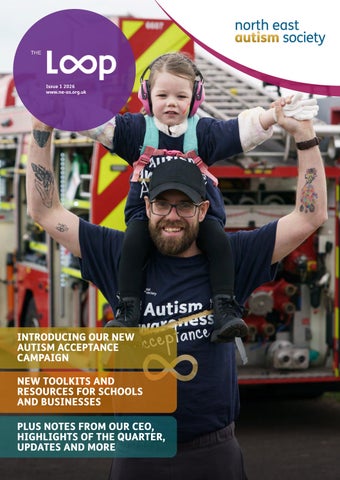
The Loop Issue 1 2026

Page 1


Notes from our CEO

As we roll into 2026, it’s brilliant to see the progress being made across our services, both in terms of the personal support we give to the individuals in our care and education settings, and how we’re developing as an organisation.

We’re continuing to work on some new developments with the prospect of three new children’s homes in Redcar and Cleveland, and work continues at New Warlands Farm, where we hope the main buildings will be finished by the end of the summer.

There has been a lot of activity on the farm since last autumn, which you can read about on page 15, including the planting of our ‘Tree of Hope’ sapling, which you may have seen on Tyne Tees news back in November.

We were honoured to receive the sapling, which is one of many grown from the felled Sycamore Gap tree by the National Trust, and it will soon be joined by hundreds of young fruit trees thanks to North East Community Forest whose work you can read about on page 12.

Preparations are underway for Autism Acceptance Month in April, which is going to be incredibly important this year, as we take on some of the myths that are being peddled about autism. A real fear is that people are trying to dismiss autism and neurodivergence as some kind of fad or epidemic.

I meet autistic and neurodivergent people every day of the week, and recognise the challenges they face, and they are real challenges. I urge all of you to get involved during Autism Acceptance Month by sharing stories and your personal experiences, and especially to join in with our Acceptance Project on page 7, which will use the power of artistic expression to tackle myths and misinformation.

In this edition of The Loop we are also shining a spotlight on Tracey Train (page 14), who has been our Director of Education since September, I am delighted to be working with Tracey, who has made a fantastic start in the role.

It looks like it’s going to be a really busy year for us, and we’re incredibly grateful for your continued support.

Save the Date…

A look ahead at the key NEAS events you won’t want to miss this year.

Introducing our Autism Acceptance Campaign

Explore our 2026 campaign and learn how The Acceptance Project is empowering schools, businesses and communities across the region.

New toolkits and resources

Discover our latest free resources designed to support schools, businesses, and families during Autism Acceptance Month and beyond.

Acceptance Matters Conference

Meet this year’s speakers and dive into the powerful topics shaping our flagship virtual conference.

Neurodiversity Celebration Week

Read more about Neurodiversity Celebration Week and how we can embrace, celebrate, and support all neurological differences.

Orchard partnership blooms

Our partnership with North East Community Forest bears fruit, as work begins to plant 500 fruit trees at New Warlands Farm.

Spotlight on…

Get to know our new Director of Education and their vision for the future of our education services.

Growing Futures update

Read more about the exciting winter developments at New Warlands Farm, from our ‘Tree of Hope’ planting to progress on the visitor centre and farm projects.

Highlights of the Quarter

A roundup of the moments, milestones, and achievements across NEAS.

Save the Dates

This year is shaping up to be one of our biggest yet, with incredible opportunities for supporters, families, colleagues, and community partners to get involved. Whether you’re taking on a challenge, celebrating Autism Acceptance Month, or joining us for our flagship conference, there’s something for everyone.

Autism Acceptance Month 2026 – Save the Dates

April is our biggest month of the year, a time to celebrate difference, champion autistic voices, and take meaningful action. Here’s what’s coming up:

World Autism Acceptance Day

Thursday 2 April Everywhere!

Get ready for the gold rush! Landmarks across the North East are set to be bathed in gold once again to celebrate World Autism Acceptance Day. You can join in by heading out and snapping a picture of your nearest landmark and tag us @NEAutismSociety on socials.

Walk for Acceptance

17 April

Our much-loved walk returns! Bring family, friends and colleagues and celebrate acceptance in action. This year’s event promises even more energy, activities, and colour — see page 4.

Acceptance Matters

Virtual Conference

24 April

Our flagship conference returns with an incredible lineup of autistic speakers sharing lived experience, insight, research, and powerful storytelling. A must-attend for families, educators, professionals, and anyone passionate about neurodiversity. Read more on p.9

Great North Swim

5–7 June 2026

Take the plunge for NEAS in one of the UK’s most iconic open-water events. Held in the stunning surroundings of Lake Windermere, the Great North Swim offers distances for every ability — from beginners to seasoned swimmers.

Click here for more information.

Great North Run

13 September 2026

Be part of the world’s biggest half marathon and run for acceptance, inclusion, and understanding. With its legendary atmosphere and unbeatable community spirit, the Great North Run is an unforgettable way to support NEAS. Join our charity team, wear your NEAS vest with pride, and help us continue making a difference across the region.

Click here for more information.

Skydive

16 May 2026

Take on a thrilling 14,000ft skydive at Peterlee Skydiving Academy with NEAS. Experience 120mph freefall over the North East coastline.

Click here for more information.

April

is World Autism Acceptance Month, a global effort to promote a better understanding of autism acceptance, and inclusion throughout society.

This year we are focused on putting a full stop to misinformation around autism and neurodivergence - and we need your help.

Whether that’s at work or in school, we want you to get involved and help us change the lives of autistic and neurodivergent people in our region for years to come.

At school

You can download your free teacher’s pack filled with resources on autism, neurodiversity, and more:

At work

Through our Acceptance Award scheme, we have already supported a number of local organisations and businesses to access specialist training and make positive changes for autistic and neurodivergent employees. Could your business be next?

Why should I get involved?

Around one in seven people are neurodivergent, which includes autism, ADHD, dyslexia and learning disabilities. However, society is not set up for them. Neurodivergent individuals face obstacles and discrimination in many areas of everyday life, from education to employment, and health to housing.

That’s why services like ours, and campaigns like World Autism Acceptance Month, are vital to support children, young people, and adults in overcoming these hurdles.

And that’s why we campaign to promote understanding among organisations, businesses, and individuals, so they can work to level the playing field.

Landmarks

Want an even easier way to get involved? Why not share a pic of one of the many local landmarks that will light up gold in celebration of autism acceptance?

As part of our campaign, several iconic North East landmarks will turn gold in celebration of autism acceptance.

Stockton Riverside

Newport Bridge

Stockton Fountain

Darlington Clock Tower

Millennium Bridge

Northern Spire Bridge

Penshaw Monument

Keel Square

Seaburn Lighthouse

Fulwell Mill

Hylton Castle

Tyne Bridge

St Mary’s Lighthouse

Killingworth Block A

Lumley Castle

Gateshead Trinity Square

South Shields Town Hall

Stockton Town Centre

Newcastle Civic Centre

Sunderland Market Square

The Acceptance Project

Inspired by our Autism Activists, the Acceptance Project aims to bring together pieces of powerful artwork exploring what autism acceptance means to you.

Participants are encouraged to express ideas, experiences, and perspectives through any creative format, using art to challenge misconceptions and promote inclusion.

The project is not about technical skill. It’s about expression, a feeling, having a voice, and above all, acceptance.

It’s open to everyone. All ages, all abilities, and all artistic formats. This is the perfect opportunity to use creativity and passion to share different perspectives and contribute to the wider conversation around autism acceptance.

Putting a full stop to misinformation

The Acceptance Project aims to challenge, and ultimately put an end, to many of the misconceptions and misinformation surrounding autism and neurodivergence. Misinformation can lead to increased discrimination towards autistic and neurodivergent individuals and it’s incredibly important to challenge harmful claims.

That’s why the artwork created will aim to advocate for acceptance, tackle archaic stigmas, and increase public understanding of autism and neurodivergence.

How to submit

Each submission will be proudly displayed on our website, on our social media channels, and will have the chance to feature in the Northern Echo.

So, what are you waiting for? Tell us your story, inspire others, and help create lasting change for the autistic community.

Deadline for submissions is Thursday, 2nd April

Click here to submit your artwork

Acceptance resources that can make a difference

Autism Acceptance Month is a chance to move beyond awareness and focus on real acceptance, where differences are celebrated, voices are heard, and meaningful action creates lasting change for autistic people and their families.

To make it easy for everyone to get involved this year, we’ve created new, free toolkits and resources tailored for different audiences, so each person can play their part in a way that works for them.

For Schools

Schools can access a range of engaging resources, including lesson plans and assemblies designed for different age groups. These materials make it simple for teachers to bring autism acceptance into the classroom and help pupils learn about difference in a positive, inclusive way, celebrating what makes each of us unique.

Through the Acceptance Project for Schools, participating schools also have the exciting opportunity to be featured in the Northern Echo’s online acceptance exhibition, shining a spotlight on the fantastic work happening across the North East.

For Businesses

Our corporate toolkit supports employers to create more inclusive, neurodivergent-friendly workplaces. The resources offer practical guidance on how businesses can better support autistic employees and colleagues, fostering understanding, belonging, and positive change. Companies can also become a corporate partner, register for one of our new training packages, or take part in volunteer days — giving staff the chance to make a real difference in their local community.

Fundraising

For those who want to raise funds during the month, we’ve launched a new fundraising pack filled with ideas, inspiration, and support. Whether at home, at work, or in school, people can get involved in a way that suits them. From bake sales to sponsored challenges to community events, every contribution helps.

This Autism Acceptance Month, there’s something for everyone.

Together, we can celebrate difference, take action, and make a lasting, positive impact right here in the North East.

Our virtual conference returns April 24th marks the exciting return of Acceptance Matters, the North East Autism Society’s virtual conference dedicated to amplifying autistic voices, challenging outdated thinking, and championing real, meaningful change. This year’s event brings together an inspiring panel of autistic speakers whose lived experience, research, and professional expertise offer deep insight into the challenges and opportunities facing autistic people today.

Designed for families, professionals, educators and anyone passionate about neurodiversity, the conference provides a space to learn, reflect and explore what true acceptance looks like in practice.

Guest speakers

Where Has All the Energy Gone?

In his thought-provoking style, Dr Luke Beardon invites attendees to rethink what we really mean when we talk about “energy” in autistic children and adults. Luke explores the emotional, sensory and social energy autistic people expend each day and the risks involved when expectations ignore that reality.

The Fight: A Family Experience

Drawing on his work as an autistic advocate, parent, and former criminal justice professional, Tristan examines how institutional language and systems can create barriers — and how they can change. The session explores the everyday “fight” for diagnosis, support and dignity, while offering practical ways professionals, employers and services can move from compliance to genuine understanding.

Tickets are currently reduced from £20 to £15

Offer ends 28th February

Beyond Professional Identification: Supporting Late-Diagnosed Autistic Women

Charlie Hamilton’s session shines a light on the unique journeys of late-diagnosed autistic women, often navigating decades of masking, misdiagnosis and misunderstanding before finally receiving clarity. The session also tackles practical barriers around employment, relationships and examines what meaningful postdiagnostic support should look like.

Reasonable Adjustments in Work, Health and Education

This session explores the challenges autistic people face when requesting reasonable adjustments, from communication differences to unclear systems and energy limits. Sarah shares practical strategies for preparing requests, structuring conversations, and safeguarding wellbeing across health, work, and education settings.

Neurodiversity Celebration Week

A leading business figure has pledged £500,000 to get our Growing Futures appeal off to a flying start.

Neurodiversity

Celebration Week is a worldwide initiative that challenges stereotypes and misconceptions about neurological differences.

The aim of the week is to transform how neurodivergent individuals are perceived and supported. By recognising the many skills and talents of neurodivergent individuals, we can all work together in more inclusive and equitable cultures that celebrate differences and empower every individual.

Neurodiversity or neurodivergence

Getting the two mixed up is understandable. They look almost identical, don’t they? But there’s a huge distinction between the two and it’s important we provide clarity.

Neurodiversity is about variety. We are all part of human neurodiversity. Much like how biodiversity describes the variety of life in nature, neurodiversity describes the variety of the human mind. Embracing neurodiversity is all about recognising and accepting that everyone has a unique neurological profile.

Neurodivergence, however, refers to individuals whose brain functions in a way that ‘diverges’ from the societal expectation of what’s considered ‘typical’. It’s not about deficits though, it’s about difference.

An estimated 15 to 20 percent of people are neurodivergent. That’s a big chunk of society!

That’s why embracing and celebrating neurodiversity encourages understanding of each person’s distinct strengths - as well as the areas they may find more difficult. Often, the biggest challenge faced by neurodivergent individuals comes from environments and systems built around the preferences of the majority, or the ‘neurotypical’, rather than for all.

NEAS Family Development Manager, Kerrie Highcock, said:

“The idea of ‘neurodiversity’ is that no brain is ‘typical’, and everybody is unique and different. I think it’s really important to recognise that difference because that’s where people’s strengths come in.”

“In society you need people who are creative, you need problem solvers, and you need people who think outside the box and come up with wacky and wonderful ideas. Why would you want everyone to be thinking the same way?”

“It’s a real strength for people to open their minds to neurodivergent thinkers,” says Kerrie. “For so long, we’ve had this negative connotation around ‘deficit’ and that someone who is neurodivergent is in some way ‘broken’. That’s absolutely not accurate at all. In fact, it couldn’t be further from the truth.”

Action, not awareness

Much like our Autism Acceptance campaigns, Neurodiversity Celebration Week aims to bring people together to celebrate, understand, and accept differences through action.

Because awareness, while a great first step, is simply not enough.

Archaic barriers need to be removed and environments need to become equitable for everyone.

Ways to get involved

So, this is where you step in and step up!

You can register for one of the many informative webinars via the link below. With sessions on best practice in leadership, changing outdated systems, and scaling inclusion across workplaces, schools, and communities.

In addition, practical toolkits for parents, schools, and employers are available to help spark conversations and turn ideas into real, tangible change.

You can also showcase your support by accessing a whole host of resources, activities, presentations, posters, and fact sheets about neurodiversity.

Click here for resources

An estimated 15 to 20 percent of people are neurodivergent.

Orchard partnership blooms as 500 young trees planted

A community partnership is bearing fruit as work begins to plant 500 trees at New Warlands Farm.

The saplings, including over 400 apple trees, will make up an orchard and a nearby grove of mixed fruit trees, funded by North East Community Forest (NECF) through its Trees for Climate grant, a UK Government–funded programme that forms part of a wider national initiative working with landowners to create new woodlands.

When grown, the trees will be a key supply of fresh fruit for the farm shop, café, and cidery being built at the centre of the North East Autism Society’s Growing Futures appeal.

The orchards and cidery are a key part of the development, offering autistic people opportunities for work and training in horticulture, land management, and the production of juice and cider.

Participants from NEAS’ Employment Futures service, which supports autistic and neurodivergent people to build employment skills and wellbeing, have already been getting stuck in at the farm, and were joined by volunteers from NECF to plant the first of the mixed fruit trees.

“I have enjoyed working alongside some of the participants from the Employment Futures programme, and it’s been really nice to see the direct benefits that a scheme like this provides,” says Roy Bearpark, Community Woodland Officer at NECF.

Alongside colleagues at NECF, Roy worked closely with the Society to plan out the orchard, consulting cider makers and apple growers across the UK to design the scheme, and supporting with soil testing and tree variety selection.

“It was really quite a rewarding experience,” Roy says.

“Challenging at times, just to make sure we make the right selection of varieties that, ultimately, is going to contribute to the long-term success of the orchard.

“We don’t just want it to be here for a few years, we want it to be here in perpetuity, and be a lasting resource that has a really great legacy.”

The orchard also brings environmental benefits to New Warlands Farm, encouraging pollinating insects like bees to flourish in the area, boosting the area’s biodiversity, and aiding with carbon sequestration, the process by which trees store carbon dioxide from the atmosphere.

Nine varieties of apples are being planted in the orchard, alongside crab apple varieties, and a range of other fruits such as pear, plum, quince, damson, and cherry.

John Phillipson, CEO at NEAS says: “We are really grateful to have the opportunity to plant these trees on our land at New Warlands Farm thanks to funding from North East Community Forest.

“The orchard is going to contribute to the natural environment and create an even better haven for wildlife, make our visitor centre more attractive, and provide vital opportunities for autistic individuals.”

The Society’s plans for the farm have also been shared by NECF, who are keen to see the social impact of their own contribution.

Roy says: “For us it’s really important that people benefit from the trees, as well as the trees being an end in their own right.”

“Coming to a natural space to work on the land and develop skills in horticulture and land management can be really valuable for people who might find other environments overstimulating,” He adds.

“We do try and encourage community involvement in planting, but this orchard is going to be planted, maintained, and kept in a beautiful condition, hopefully for a number of years, by people who are going to develop skills and a familiarity with the orchard.”

Members of the public can be a part of the new orchard too, supporting the construction of the visitor centre at New Warlands Farm, through the Society’s Growing Futures appeal.

Donors will be supporting the maintenance and development of the orchard and visitor centre, and can leave their own lasting legacy by donating to sponsor a tree.

Click here to sponsor a tree

Spotlight on...

In September 2025, after more than 30 years with the North East Autism Society, Chris Dempster retired. As Chris stepped into a very well-earned retirement, we welcomed Tracey Train as our new Director of Education. Now, six months in, we catch up with Tracey to find out how she makes a difference to young autistic people across our services.

When Tracey talks about taking on the role of Director of Education, she says,

“It just felt like the right next step. My time as Deputy Director gave me such a broad view of our services, and it was the best professional development I’ve ever had. I got to see what works well, what challenges teams face, and how sharing good practice can completely change outcomes.”

One of the things Tracey values most about our independent school and college environment is the opportunity to truly tailor learning. For her, it isn’t about squeezing learners into a system — it’s shaping the system around them to help build their confidence, independence and aspiration, not just academic achievement.

“When you see learners grow and know that the approach has contributed to that, that’s what drives you,” she says.

And it’s a motivation shared across the committed teams she works alongside.

Tracey joined the North East Autism Society in 2017, bringing with her a varied background across both mainstream and independent education.

“Working in different settings gave me a strong understanding of what meaningful, inclusive practice looks like,” she says.

Her experience working directly with learners with additional needs, families and multidisciplinary professionals cemented her belief in learner centred approaches. centred approaches.

“From the moment I joined NEAS, I felt aligned with its values. The shared ambition to achieve the very best for autistic and neurodivergent learners really resonated with me. I’ve had the opportunity to work across a number of services, which has broadened my perspective and deepened my appreciation of the expertise, dedication and collaboration that exists across our schools, college and the wider Society.”

As she begins her first year as Director of Education, Tracey is focused on building on the strong foundations already in place.

“My priority is to continue the excellent work across STEP, our schools and college, and make sure our approach remains consistent with the Society’s vision,” she explains.

Strengthening collaboration, sharing the best of what works, and ensuring staff feel confident and supported are central to her plans.

“Our teams are our greatest asset. When staff feel skilled and well-equipped, learners feel it too.” equipped, learners feel it too.”

Above all, Tracey wants every autistic and neurodivergent learner to feel seen, valued and able to thrive.

“I want to ensure that the voices of learners, parents and carers are central to our planning, so that our approaches are responsive, inclusive, and grounded in the experiences of the learners and families we work with.”

Campaign GrowingFutures

Winter has been a season full of activity at New Warlands Farm, with developments across the site, supported by our Growing Futures appeal.

Last November marked the start of construction on our visitor centre and rural enterprise hub, with the ground breaking ceremony celebrated alongside the planting of our ‘Tree of Hope’ sapling.

The sapling, one of 49 grown from the felled Sycamore Gap tree and gifted by the National Trust to organisations across the country, will be a symbol of hope, growing alongside the farm.

The early phases of work are well underway, preparing the site and parking areas before construction begins on the visitor centre, exhibition space, café, and cidery buildings.

Alongside that is the all-important farm work itself. Participants in our Employment Futures programmes are getting hands on work experience on the farm, where nature trails are being created, and new trees planted to supply our farm shop and cidery with fresh fruit, as well as encourage wildlife and biodiversity on the farm.

Social media pages for Growing Futures have been launched, where you can see the latest happenings around the farm development, including our #FarmerFriday updates from Farm Manager Dave Wilde each week.

You can follow the farm on Facebook, and Instagram and read more about the appeal by clicking the button below:

Click here to find out more

Highlights of the Quarter

From planting a Sycamore Gap sapling to breaking ground on the new development at New Warlands Farm, it’s been a busy few months at NEAS. Check out our highlights…

Breaking new ground

NEAS has marked a major milestone in the transformation of New Warlands Farm with a groundbreaking ceremony that included planting a symbolic “Tree of Hope” sapling from the iconic Sycamore Gap tree. The sapling was planted by Vice Lord Lieutenant Michael Poole, supported by Joseph Going, Keiran Halsall and Connor Cook who are among those to have already benefited from training opportunities on the farm.

Chief Executive John Phillipson said: “The sapling is so symbolic because it’s something that has overcome the odds to get this far – just like us as a charity. What better symbol of hope could there be?”

The £4.9m development will create a pioneering visitor centre and employment hub for autistic and neurodivergent people, with the first visitors due this August. The development will feature a farm shop, restaurant, cider press, retail outlets, a petting zoo, and wildlife havens.

NEAS Chief Executive John Phillipson told guests: “I can’t tell you how happy I am to be at this point and to see bulldozers on the site, ready to start work. When this is all finished, it will be a visitor centre, where families will enjoy a day out, and a place that will change the lives of autistic and neurodivergent people.”

Sponsor a Tree at New Warlands Farm

NEAS has launched a new appeal inviting supporters to sponsor a tree at New Warlands Farm as part of the Growing Futures campaign. From just £20, supporters can help create a thriving orchard within the 78-acre development, with funds going towards planting, maintaining and nurturing the trees.

Fundraising Manager Kevin Meikle said: “Sponsoring a tree is such a wonderful way to be part of the everlasting legacy at New Warlands Farm.”

Sponsorship packages range from digital certificates featuring artwork by Mackenzie Thorpe to personalised plaques and invitations to orchard events. The orchard will also include one of the 49 Sycamore Gap saplings donated by the National Trust.

Plant a tree

Thornbeck College supports new mums in need

Learners at Thornbeck College have extended their community impact by delivering “urgent baby parcels” to community midwives across County Durham and Darlington. Supported by the Baby Bank Alliance, the college’s learner run baby bank established in 2023 now provides essential newborn items including clothes, nappies, blankets and small treats for mums.

The parcels were recently delivered to midwives at Shotley Bridge Hospital, where Matron Kelly Moore praised the initiative, saying it makes “an amazing difference” to families who may be struggling.

Principal, Fay Strong added that the project helps the college learners build confidence, empathy and responsibility while seeing the real impact they can have in their community.

Thatchers Cider backs our Growing Futures Appeal

Family-owned Thatchers Cider is supporting our Growing Futures appeal, bringing its orchard and cider-making expertise to New Warlands Farm. The cider makers will help shape our plans for a rural enterprise hub including a café, farm shop and cidery which will create around 70 work and training opportunities each year for autistic and neurodivergent people.

Orchards are already taking shape on the farm, with heritage and regional apple varieties growing on site. More than 500 additional fruit trees are being planted, funded by North East Community Forest. See page 12.

Thatchers will work with NEAS to expand the orchards and make the most of our heritage apples in new recipes. Fourth-generation cider maker Martin Thatcher said: “We’re incredibly proud to be working with the North East Autism Society on this inspiring project… Being able to share our expertise and see it help create meaningful opportunities is something we’re truly honoured to be part of.”

Since 2010, the North East Autism Society has been developing New Warlands Farm into a place where autistic people can thrive.

In 2023, we secured planning permission to grow the farm into something special; a visitor centre, cider press, workshop and café – which will support autistic and neurodivergent people directly by offering work placements and training opportunities.

In 2025, our 45th anniversary year, we are launching our Growing Futures appeal to help make our most ambitious project into a reality and transform the lives of autistic and neurodivergent people in our region.

Help us make a difference

Our £4.4 million vision for New Warlands Farm is the charity’s most ambitious project yet. Whether you’re a business or an individual, there are many different ways to get behind our appeal and help create something that will benefit autistic people – and the North East community – for years to come.

To find out more about the appeal visit: ne-as.org.uk/growing-futures Scan the QR to donate

410 9974 or email fundraising@ne-as.org.uk

Turn static files into dynamic content formats.

Create a flipbook