‘It was the best of times, it was the worst of times’
So broods the melodramatic Charles Dickens as he sets the stage for his famous 1859 novel A Tale of Two Cities. And while Willis Hall might not be on the eve of history’s bloodiest revolution, the phrase does aptly capture the sentiment of the spring semester, particularly the tail-end months of April and May.
When spring descends on Colonial Avenue, when the bushes spelling N-C-S dot the side of Tennis Hill in all their green glory and when pollen (and wasps, mosquitos and general unpleasentries) return for the worse, students find themselves enamored with the exciting odds and ends of campus.
Whether it’s top-ranked tennis, soccer, lacrosse, track and golf teams, or the Mamma Mia fever sweeping campus after the spring musical and leading up to prom, North Cross now looks to end the year with a bang.
It isn’t all gilded glory though. Students across the board cite frequent stressors, including AP Exams, end of year projects, the intensification of classwork and athletics and, perhaps most notably for seniors, college.
For Shree Patel ‘28, it’s a mixed bag. “My favorite thing about the spring semester has been warming up outside,” she said. “[But] my least favorite has definitely been exams coming up—especially AP exams. I’m looking forward to summer.”
Patel taps into a very real push-pull factor that all students face. In the first week alone, students across ten AP classes will flock to exam rooms—some of them for the first time. Many students, therefore, would agree with Patel in her affinity for warm weather but ultimate desire for the chaos to end.
“I want to relax,” Joaquin Lamas ‘27 said. “No more school, and golf with my friends.”
He isn’t alone among students craving a less hectic pace. The consistent barrage of events, schedule changes and celebrations are charming but a bit overwhelming for many students. For instance, in the span of a month, it is possible for a student to have taken the SAT, hosted an Argentinian exchange student, helped with International Day, performed in the spring musical, toured trustees and participated in multiple athletic competitions—all while maintaining good academic standing.
It’s a lot, but it doesn’t refute the joy and thrill of this time of year.
“So many events happen back to back, especially when you’re trying something new because your time is quickly ending,” Maggie Bibby ‘26 says. “For example, after I had finished my final theatre production, 10 hours later, I was on a bus to Williamsburg. The weekend after that, it’s time for prom.”
Bibby, who played Rosie in Mamma Mia! has committed to Virginia Tech after a long year of senior speech prep, Model UN meetings and volleyball. “It seems like it never stops,” Bibby said. “But you still find joy in it because you know there’s little time left.”
Analyzing America
By Mason Bibby
“
Redistricting.”
“Gerrymandering.”
“Restoring fairness.” “Cheating.”
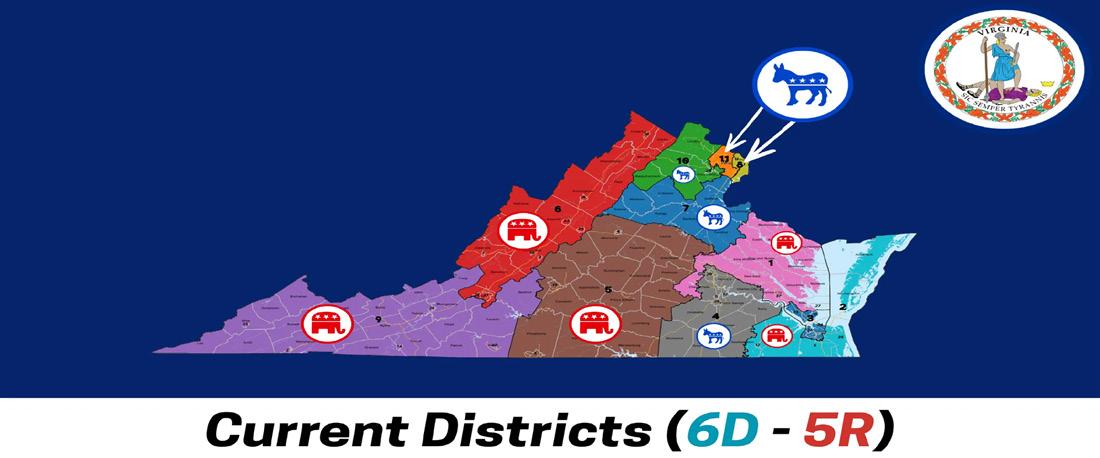
Those are just some of the words, along with a few choice ones that I’m certain aren’t fit for print, used to describe the 2026 referendum designed to redraw Virginia’s 11 congressional districts. The Democratic-controlled General Assembly (made up of the House of Delegates and the Senate, and headed by Governor Abigail Spanberger), pushed on Tuesday to redraw the lines in Virginia in order to offset motions made by Republicans in other states, like Texas and Florida.
Currently, districts are redrawn every ten years, after the census, typically done by a bipartisan commission. This amendment lets the Assembly redraw districts until 2031, with the caveat that other states also redraw mid-decade which, as discussed, is exactly what’s happening. After the results of the census, the commission returns from its suspension.
Virginia is doing what previous state administrations wouldn’t; entering a partisan battle that most governors have tried to isolate the Commonwealth from. Today, Richmond enters a national congressional arms race instead of staying out of it.
There’s a reason this is happening, and it doesn’t boil down to simple politics. Both parties are fighting tooth and nail for control of the House of Representatives; Democrats to reverse actions taken by the Trump Administration and the Republican-controlled Congress, and Republicans to
Vol. XV No. 4 Spring 2026
Founded in 2010 and based in the Journalism elective, The Willis Hall Herald is the official student-led publication of the Upper School at North Cross School. The Herald may be published in magazine form three or more times per year. Founded in 2017 and produced by the Herald staff, GeoPrism: A Global Studies Journal may be published in magazine form once or twice per year. the Herald welcomes letters, commentary and submissions of original content that adhere to the Herald’s dedication to factual journalism. Letters and other content must be signed and may be edited for length and Herald style. The Herald does not guarantee publication of outside submissions. Submit letters to willishallherald@northcross.org. the Herald won Gold Medals from the Columbia Scholastic Press Association in 2012 and 2015. The Herald is also a member of the National Student Press Association, whih awarded The Herald “First Class” honors in 2024 and 2025.
North Cross School 4254 Colonial Ave. Roanoke, VA 24018 www.willishallherald.org
Instagram: willishallherald
Roanoke
PROMMA MIA COVER: Senior boys in back left to right: Ethan Grigas ‘26, Ryan Thomas ‘26, Anderson Ratliff ‘26 and Carter Krzemski ‘29. Senior girls in front: Anna Ciccozzi, Lillie Dearing, Gabby Miller, Ferguson show a mix of styles. Photos by Morgan Kemp. Cover design by Anderson Ratliff
Virginia barely rewrites its political future
maintain the majority that they won handily in 2024.
Since Republican states have redrawn maps at the behest of the White House, Virginia Dems claim they responded in kind. “Republicans are gerrymandering maps across the country to override the will of the voters,” said State Senator L. Louise Lucas, from Virginia’s 18th Senate District which she has represented since 1992. “They are manipulating election maps because they believe they cannot win on their agenda in 2026. Instead of changing their ideas, they are attempting to rig the system. A 10-1 map achieves this leveling of the playing field.”
The 82-year-old native Virginian is one of the quintessential figures of this fight, most recently bucking Texas Senator Ted Cruz on social media.
But while partisan mudslinging is by no means uncommon within American society, it leaves a pretty fundamental question unanswered: What does this mean—for voters, candidates and Virginia?
To understand that, it’s very important to understand just how close this race was. According to the New York Times, the amendment only barely passed, with 51.5 percent of the over three million votes choosing yes, and 48.5 saying no.
Interestingly enough, ‘yes’ significantly underperformed Democratic Governor Abigail Spanberger, who won by about 15 points, according to CNN and the BBC. She carried the key cities and counties of Spotsylvania, Stafford, Virginia Beach and Montgomery—all of which voted ‘no.’
First-time voters, especially, perhaps felt a little off-kilter participating in such an unusual ballot. “I definitely enjoyed being able to participate in the democratic process for the first time,” Carter Doubman ‘27, a junior voting for the first time, said. “But it was an interesting way to do so.”
Roanoke City, Southwestern Virginia’s Democratic metropolis where Doubman voted, only experienced 41 percent voter turnout, the Virginia Department of Elections reports. Urban areas tend to lean left anyway, but this could signal one of two things:
Virginia Democrats aren’t keen on redistricting; showing abstinence toward the subject of redrawing lines that may lead to more partisan efforts in the future, or . . .
Virginia is more purple than strategists realize, even though Democrats have reliably won every presidential election in the state since Barack Obama in 2008. In reality, though, state level races are far more competitive, often falling between the 50-55 percent mark.
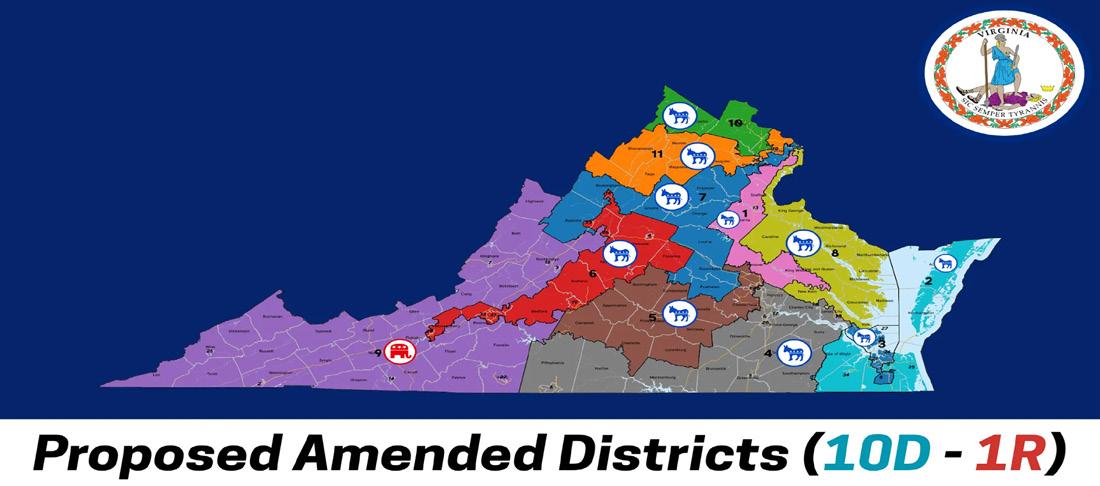
However, after the passage of the referendum, the new map renders the political makeup of all of Virginia’s districts functionally irrelevant. The new amendment shifts 10 of the state’s 11 districts to the left, for a net gain of
four, and according to the Cook Political Report, Virginia Congressional Districts 1, 3-5, 7-8 and 10-11 have become solidly Democratic, meaning that no credible competition between the Democrats and Republicans is possible in the area.
Virginia Congressional Districts 2 and 6 are lean and likely Democratic, respectively, whic h means the capacity for competition from the GOP in an already depleted midterm is more arduous.
The key point here is that two districts—5 and 6—completely shifted to the left after being solidly Republican. Virginia’s 2nd was classified as a tossup, and the 1st at least leaned to the right.
Now the only solidly Republican remaining district is Virginia’s 9th, currently represented by Morgan Griffith, who I met with in Feb. 2025.
“He’s gotta get all the big stuff done fast,” Griffith said of President Donald Trump’s plans for his second term in office. “It’s like pulling the Band-Aid off. It’s not all gonna feel good.”
Voters agreed.
Since the president isn’t on the ticket for 2026, Congressional Republicans will be evaluated by how convincingly they can pull off a turnaround, especially in the era of rapidly polarizing politics, social unrest and economic strain. Virginia’s redistricting campaign makes that a lot harder.
Republicans, therefore, lose on two fronts. They’re now out four congressional seats and a few chances at pickups, and they’ve proven that their momentum is tapering off.
The Democrats smell blood in the water, are energized after this and other wins, and seem to, at least in-state, have found their stride. That could make for a few embarrassing losses across the Commonwealth—more so than last year’s off-year elections.
This weird political saga isn’t over, though, and Virginia’s GOP could have a saving grace here. A judge in Tazewell County blocked the certification of the results shortly after projections began to roll in. “The opera’s not over until the fat lady sings,” Griffith said to WSLS 10. Attorney General Jay Jones says he’s appealing the ruling, with oral arguments at the Virginia Supreme Court beginning as early as Monday.
Virginia is for Lovers. Apparently, it’s also for political drama.
In 2026, you’re free to take your pick on the ballot.
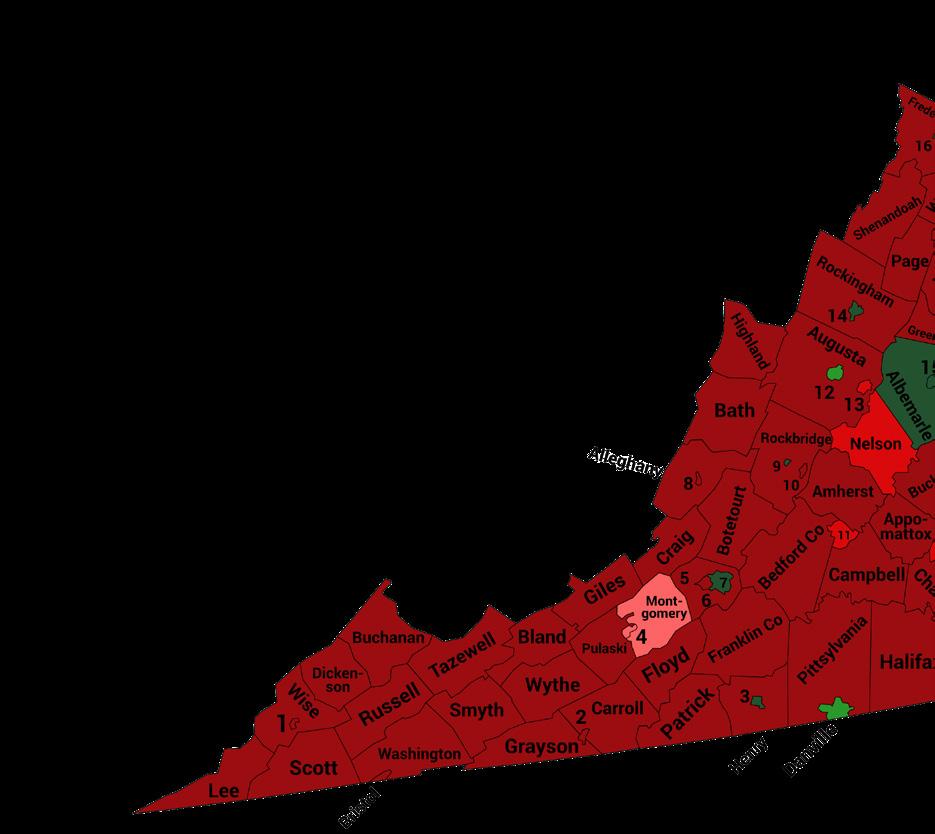
Virginia’s current and proposed U.S. House map graphics by Mason Bibby in Canva, with images from Wikipedia.
Map illustrations by Mason Bibby using mapchart.net
Fewer people realize American dreams since pandemic:
By Aadeetri Pandey
Most students in the Upper School were born into a period of time in the United States known as the Great Recession, or the 2008 financial crisis. The Great Recession was a period of economic turmoil in the U.S. that lasted from 2007 to 2009. The GDP went down by 0.3 percent and unemployment went up by 10 percent. While there were many reasons for the recession the biggest and most avoidable cause was due to subprime loans.
After the dot-com bubble burst and the terrorist attacks on September 11th, America’s economy took a big hit. To get the economy back on its feet, the government deregulated parts of the finance industries and slashed interest rates, and their plan worked. The economy was booming and everyone was buying a home. For a while, everything was fine and dandy until it wasn’t anymore after the government increased interest rates again in 2004. During those years, people could buy homes with almost no down payments at low initial interest rates – even people with bad credit scores, who in normal conditions would not be able to afford a home were getting offered subprime mortgage loans – zero percent down. Subprime loans are predatory loans offered by a bank or credit union to people with a bad credit history on the assumption that they would default on their loans. Subprime loans often have higher interest rates and more fees. They also gave them teaser interest rates. Rates that at first seemed normal but shot up after a few years making most people default on their mortgage payments. Banks purposely sold subprime mortgages to investors for liquid cash so they could get immediate money without any risk. Between 2004 and 2006 many banks made billions of dollars specifically selling subprime loans.
American dreaming
Homeownership is a goal most Americans aspire to, and in the subprime mortgage crisis, banks banked on that. Home ownership is often seen as the ultimate form of good economic standing, while the top gets most of their money from stocks or mutual funds, the bottom 90 percent of assets are mostly in their homes, and during the great recession, people began to realise that home ownership had become increasingly more difficult for ordinary people. About seven in 10 Americans under 30 think homeownership has become harder to achieve according to the poll done by the University of Chicago Harris School of Public Policy and The Associated Press Center for Public Affairs Research. However wealth and income inequality did not start during the Great Recession; it is something deeply entrenched in our society and shaped by decades of policy change. But there are two important types of inequality.
Two kinds of inequality
While both income and wealth inequality are highly related and – are impacted by each other – they are fundamentally different. According to the Pew Research Center, “Income inequality measures the distribution of income throughout a population. In the United States, for example, a greater share of aggregate income is now going to upper-income households, and the share going to middle- and lower-income households is falling, meaning income inequality has increased. Similarly, wealth inequality measures the distribution of net worth among the population. In America, the wealth gap between upper- and lower-income households is sharper than the income divide and has grown more rapidly in recent decades”
In a study done by the Federal Reserve, the top 10 percent of Americans now own over two thirds of the nation’s total wealth
while the top 1 percent holds 31 percent of total wealth.
Before 1975 income gain was divided more evenly between the workforce. As productivity grew so did wages. When a corporation made higher profits it would reflect back on the workers.
Presidential policies build billionaires
One significant shift was when Ronald Reagan came into power. His biggest economic strategy and probably the thing he is most known for is tax cuts. Over his two terms, he cut the top income tax rate from 70 percent to 28 percent which dramatically reduced the amount of money the wealthiest Americans had to give back to their community and nation.
Reagan’s economic policy was rooted in supply side economics, which is a theory of economics that emphasizes the creation of incentives for goods and services. It has commonly been achieved by lowering tax rates and giving greater returns to individuals after taxes have been taken from compensation or investments.
His first big act as president was the Economic Recovery Act of 1981 which greatly reduced taxes for the wealthy. The primary objective of the Act was to lower taxes on higher income earners to encourage more economic growth and investment that would benefit everyone in the nation. This is why Reaganomics and supply side economic theories are often referred to as “trickle own economics.”
Reagan wasn’t the only president who helped the wealthy by giving them tax cuts. Throughout the 1990s and 2000s Presidents George W. Bush and Donald Trump continued to help the top, which drove inequality further up. In 2017 Trump’s tax cuts gave an estimated $1.1 trillion in tax breaks to the top one percent.
The wealthy immensely benefit from preferential treatment regarding taxes. As mentioned previously income inequality is inequality based solely on income, things like wages and salaries. The top tax rate for ordinary income is 37 percent, but for higher income groups most of their income comes from investment profits, which is capped at a tax rate of 20 percent.
The net worth of the top 12 billionaires combined has exceeded $2.7 trillion as of January 1, 2026. This is over quadruple from the combined $808 billion they had on March 18, 2020, according to the Institute for Policy Studies. They also own over 50 percent of the U.S. stock market, which is up 10 percent from 2002.
For the past 30 years, while America’s elite have added to their net worth, the bottom have dipped into negative wealth: the value of their debts exceeds their assets. In 2018 the amount of taxes the top .01 percent paid was close to what it was back in 1953, however their share of the nation’s wealth is almost four times larger, rising from 2.5 percent to 9.6 percent.
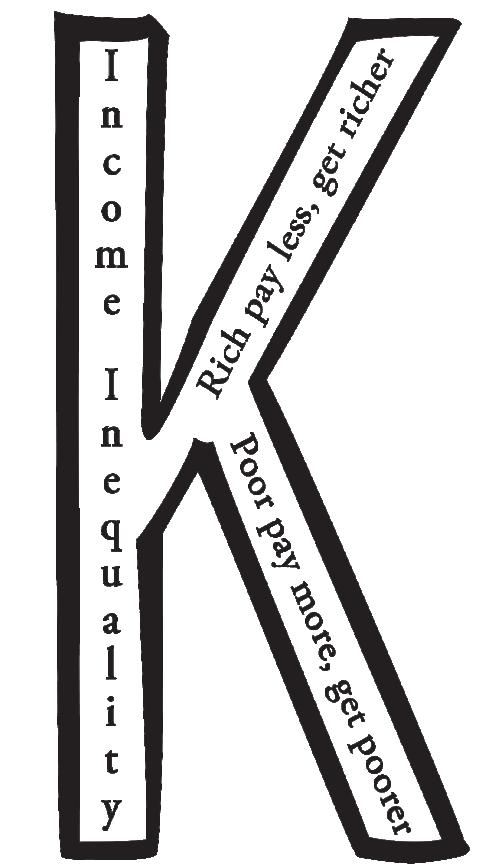
K-shaped economy
Recently in 2025 the phrase K-shaped economy really took off. In a K-shaped economy there are two lines: one shooting up which represents the economy doing well and the people benefiting from it. For example the people who have a lot of stocks because the stock market is doing really well right now would be in the top part of the K. The other line points down, which represents just about everyone else. Ordinary people see a wider gap between the top and themselves. While the GDP of the U.S. rose 4.3 percent in the third quarter of 2025, it doesn’t reflect how the people in the bottom K are doing, they can’t afford to live the American dream, while people in the top of the K can, furthering the disconnect between their actual lives and how strong the economy is. However, even at the bottom, certain groups of people are over represented, but
American success depends on DNA more than diligence
not by chance, it is often the effect of centuries of systematic oppression. Race rules
Race places a significant role in wealth inequality things like structural racism, which refers to the historic and curtain policies, programs and institutions put in place that leads to an environment that better facilitates some races accumulating more wealth than others.
An example of structural rasim is red lining, while it has been outlawed the effects of it are still persistent today.
The term originates from the 1930s New Deal era. Government homeownership programs were created, which offered government insured mortgages for homeowners during the great depression. As the program grew larger they started to add criteria for determining the value and condition of the property, as well as who would qualify for the government aid. They used color coded maps to determine the worth of certain neighborhoods as well as ranking from risky to least risky. Using these factors, they would determine if the value of the houses in an area would increase or decrease over time, and if they qualified for government help. Banks then used the government created system to determine who they would give loans to. Predominantly black American households and areas were deemed not qualified, so during the depression black Americans saw little to no aid from the government.
bills or buy a home. Oftentimes people who face economic insecurity are more vulnerable to exploitation, an infamous example is Purdue Pharma role in the opioid crisis.
In 2006 the racial group with the highest rate of subprime loans for home purchases was African Americans, with a rate of 52.9 percent, which is nearly double their white counterparts. That is because even though redlining ended, the impact of it still persists today. Because they did not receive the same help from the government during the great depression they were not able to increase their wealth by keeping their house, unlike white families who could pass their house down to their children. Today Black families face denial rates two times higher then white families for a mortgage loan.
A bleak forecast for overcoming inequalities
Stephen Menendian, director of research at UC Berkeley’s Othering and Belonging Institute said, “If I had a magic wand and I could wave that wand and make a wish and say that every American will be free of bigotry, prejudice or interpersonal racism, what would change, in terms of measured outcomes of racial inequality? Would life expectancy change? Maternal mortality? Disparate rates of dementia? Would the racial wealth gap suddenly even out? The answer is no. Once you create an organized system, it can continue to produce the same outcomes regardless of intent.”
Femme fatale financial futures
Another group that faces high wealth inequality is women. While today women represent about half of the United States work force, they represent only 27 percent of the top 10 percent and among the top 0.1 percent they represent only 11 percent. In households where women make the majority of the income tend to have less wealth compared to households where men contribute to the majority of the income. Women still face discrimination in the workplace and tend to be placed in less senior roles compared to their male counterparts – even in female dominated industries like nursing. While women make up the majority of the nurses in America, the bosses of the nurses tend to be male.
Poor pay more -- even with their lives
Being poor in America doesn’t only mean it may be harder for you to pay
Purdue has gained an estimated 35 billion dollars due to the sale from OxyContin alone, a highly addictive opioid They mainly targeted rural working people in places like Appalachia, where people do labor intensive jobs such as coal mining and other blue color jobs. These people are more likely to suffer from injuries and pain and are less likely to question the doctor’s prescription of the drug. While they faced legal troubles in 2007 regarding the mismarking of the drug, it wasn’t until 2020 that they faced multiple federal charges and lawsuits, which finally forced them to stop. Over the past two decades over 200,000 people died from prescribed opioids and over 500,000 have died from illicit opioids, which most addictics turn to after the prescribed ones become harder to get or they turn to more cheap drugs such as heroin and fentanyl. Over 1.7 million Americans in 2017 were addicted to prescribed opioids. The opioid epidemic has devastated millions of American families and continues to do so. While Purdue Pharma has agreed to pay 7 billion dollars to fund addiction treatment and lawsuits, the Sackler family, the owners of Purdue Pharma have faced no criminal charges and continue to have a net worth of 13 billion dollars all while denying any personal wrongdoing or guilt for the opioid epidemic. And while it’s great that there will finally be more funding for drug addiction treatment, no amount of money can bring back people’s family members who died from drug addiction.
Throughout many lower income peoples lives they are constantly told to work harder, that they too can achieve the american dream if they just tried harder, But in truth hard work does not lead to class mobility, due to decades of policies that make it harder to get an education, own a home, and make it even harder for certain groups to grow their wealth, coupled with business preying on low income people to make billions of dollar, causes wealth inequality to be ramped and lower income people to be in the same economic state from birth to death.
The fix exists
The thing is we know how to fix the issue. If we want there to be less inequality in the U.S. we need to stop giving more wealth to the already wealthy and start prioritizing the middle and lower class by increasing taxes for the wealthy.
However the United States will not.
About 70 percent of the economy is run and owned by the top 10 percent of the wealthiest Americans. This means the government can not afford to anger them, and many non billionaires also dont think it’s fair that billionaires should have to give up a portion of their wealth they worked for. But the government needs taxes to run the government, so who foots the bill? Recently, funding for many welfare programs has been significantly reduced or cut altogether, things that are designed to help low income Americans, especially in regions like Appalachia, a place that was hit particularly hard by the opioid crisis. Have the coal miners in Appalachia not worked hard enough? Is their labor not deserving of federal funding to improve their quality of life? No one would say that explicitly, however it is their reality. Low income people are being shown by citizens and the government that their dream for a better life is not worth more than the wants of billionaires.
When the music fades: Limits of using music therapy to treat Alzheimer’s
By Anderson Ratliff
Music has enriched the lives of elderly patients living with Alzheimer’s disease. However, studies have shown that the benefits of music and music therapy gradually decline as a patient’s condition worsens. Even though music therapy provides early-stage emotional support and relaxation for Alzheimer’s patients, its effectiveness declines as the deterioration of the brain results in the destruction of the neural networks for emotional response and memory.
My great-uncle, Barry Ratliff
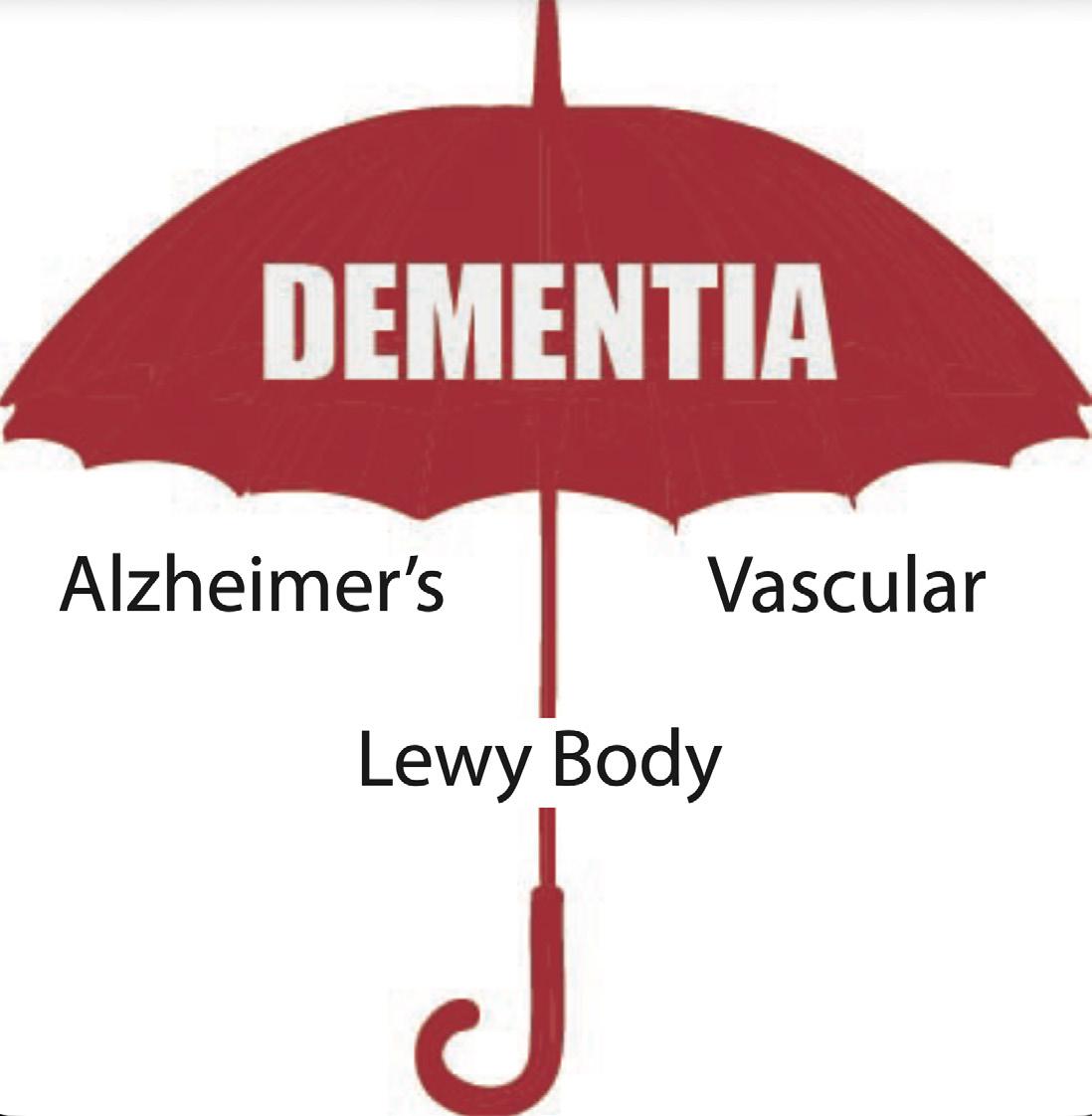
My grandfather told me, “Uncle Barry was one of the greatest hunters I’ve ever seen, and most importantly, he was the greatest older brother.” Barry was diagnosed with Alzheimer’s Disease in 2013, and throughout the years, I witnessed and heard stories about his worsening condition. Once a quiet old soul, Uncle Barry turned into a short-tempered and agitated man, although it wasn’t his fault. Unfortunately, his symptoms worsened rapidly, and within a couple of years, he was unable to remember most of his family members. My grandfather recalled instances of Uncle Barry talking to imaginary people and getting spooked by his reflection in the mirror. In the early stages of his illness, he and my grandfather would commonly sit on their porch and listen to the music they both loved. However, he became sensitive to loud sounds and music, and he had to wear noise-cancelling headphones to drown them out. He had to stop watching television because he thought the reporters were in the room with him. Uncle Barry died after a 12-year battle with Alzheimer’s disease, so I knew I wanted to learn more about the disease in his honor. Differences between Alzheimer’s and dementia: Dementia is an umbrella term for a group of mental disorders that cause cognitive failure and memory loss in the brain. Alzheimer’s is a specific disease that is the main cause of dementia, with a rate of around 60-80% of all dementia cases being a result of the condition. Other causes of dementia can be Lewy Body disease, a more extreme form of neurological breakdown, and Vascular disease, a condition in which damaged blood vessels block the flow of oxygen to the brain. As Alzheimer’s progresses, basic abilities such as speaking and walking become difficult for patients. Eventually, cognitive decline becomes so severe that patients
are unable to live without someone else’s assistance. The average life span for somebody diagnosed with Alzheimer’s disease is around ten years, depending on the age of the patient. In many cases, doctors may prescribe medication to people with Alzheimer’s disease. These medicines inhibit acetylcholinesterase, an enzyme that blocks the breakdown of the protein acetylcholine, a neurotransmitter that declines during Alzheimer’s, which causes significant neural damage. Unfortunately, however, medications have a low likelihood of success given the severe nature of the disease at hand. Instead, most doctors suggest music therapy as a non-drug approach to limiting the effects of Alzheimer’s.
A little history of music therapy
According to the American Music Therapy Association, “The earliest known reference to music therapy appeared in 1789 in an unsigned article in Columbian Magazine titled ‘Music Physically Considered’. In the early 1800s, there were countless early arguments supporting the idea that music could help physical health. There was also an experiment conducted on Blackwell’s Island in New York that used the first documented case of music therapy and the use of music to alter dream states in patients. In 1903, the National Society of Musical Therapeutics was created by Eva Vescelius, and in 1941, the National Association for Music Therapy was founded by Harriet Seymour. Both organizations were responsible for some of the earliest scientific teachings regarding music therapy as a treatment. Around the same time, the so-called Father of Music Therapy, E. Thayer Gaston, promoted the theory to be introduced as an educational course in universities. According to the Kansas Music Educators’ Association, “[Gaston] was a professor of trumpet, founder of the music therapy program, [at the University of Kansas], and chaired the Department of Music Education and Music Therapy.” He also wrote a book titled Music in Therapy while he served as president of the aforementioned National Associa-
tion for Music Therapy. Music therapy’s current impact Alzheimer’s Usually, Alzheimer’s patients live around six years after diagnosis; however, some have lived upwards of 20 years. Sometimes, Alzheimer’s can be spotted approximately four years before any major symptoms occur. This is due to the preclinical stage, which is only detectable in a research setting. This stage can last for years and even decades; however, according to Mayo Clinic, “[N]ew brain-imaging technologies can identify amyloid plaques and neurofibrillary tangles,” which result in Alzheimer’s later on. Mild cognitive impairment (MCI) occurs in the second stage of the disease and usually consists of the patient forgetting minor things and misjudging situations. These symptoms transform into mild dementia, which results in personality changes, memory loss of recent events, and getting lost. Eventually, patients will need assistance from other individuals to live somewhat comfortably; however, they always reach the stage of severe dementia, in which they are unable to speak, walk, or even use the bathroom by themselves. More studies confirm little impact of music or music therapy on slowing Alzheimer’s.
In a study conducted by Sandra Garrido and colleagues, a group of 117 elderly people was selected from six different nursing homes in Australia. Of the group, “113 met the eligibility criteria: a score of <25 on the Standardized Mini-Mental State Examination (SMMSE), indicating the presence of mild to severe cognitive impairment. Of these 113, one participant withdrew, and 13 were unable to complete the study due to illness.” The patients were then given personalized playlists, around 10 minutes each, based on their music preferences, where facial expressions and whole body movements were analyzed during listening. Results varied slightly, with some participants not recognizing the music being played, while others, at most, hummed or tapped the tune of a song. None of the participants communicated any specific memories associated with the music. The
researchers were able to conclude that as cognitive impairment declines, the pleasurable response to music decreases, with Alzheimer’s patients experiencing more negative effects than those with other mental disabilities.
One of the key reasons music therapy stops working, especially in late-stage Alzheimer’s patients, is the breakdown of neural networks around the brain. Music engages regions of the brain, including the amygdala and hippocampus, but these connections are sometimes blocked by amyloid plaque accumulation, limiting the effective responses and functions of these regions. Thus, music therapy is unable to elicit any meaningful response from patients with this condition.
According to Harvard Medicine, “[Conditions like] Alzheimer’s could someday have therapeutic solutions derived from an understanding of music.” Currently, modern research has suggested that some people with epilepsy, a common symptom and cause of Alzheimer’s Disease, may experience less frequent seizures when listening to Mozart’s Sonata for Two Pianos in D Major. A study conducted by Robert Quon involved nine different “musical stimuli” being played for each participant, all of whom had been previously diagnosed with epilepsy. For every participant, they played the original Mozart piece alongside a few distorted versions and a preferred piece of music chosen directly by the patient. Their results showed no significant changes or effects, except for the Mozart piece. So, what gives?
The researchers hypothesized that the transitions in the song prompted stronger emotions within the brain. After breaking apart the song into segments, that’s exactly what they concluded. Cur-
rently, they still have little knowledge as to why this happens, but if they could find substantial evidence, it would change how targeted music is used in medicine. According to Quon, “Our next step would be to test whether we could detect other musical stimuli with these preexisting properties, like tempo or timbre (Tam-ber), or add these properties through signal alteration.” A finding like this would be astronomical, as computers could generate playlists of preexisting music that lowers the severity and frequency of seizures.
Another similar case of music healing the brain was documented by Dr. David Silbersweig, who currently works for Harvard’s School of Medicine. Silbersweig has seen patients who’ve had strokes or tumours that cause brain amusia. Brain amusia is a condition caused by a lesion in the brain’s right hemisphere that damages the person’s ability to comprehend musical sound waves. Patients are unable to revive the broken-down tissues; however, music has been used in order to help some people regain forgotten abilities. It is important to note that music does this indirectly, as the person is unable to process the actual sounds being played in their ears. The reason for this seemingly miraculous healing effect is the rapid firing of neurons in new ways, which inhibits the creation of new neural networks across the brain.
Alzheimer’s patients have the ability to play music
An interesting fact I discovered while researching this topic is the numerous instances of people mind-blowingly and almost magically being able to recite certain songs on an instrument. One of the most famous examples of this is a video of an elderly woman being prompted by her daughter to play Ludwig van Beethoven’s famous Moonlight
Sonata As you can see, she clearly DOES know how to play it! The cause of this phenomenon is the ability of the brain to store musical information in a more resilient section of itself. Although it is currently unknown why Alzheimer’s targets that specific section of the brain last, it shows that there may still be opportunities for patients in the future who have prior musical experience to hold off the disease for longer than the average person. Conclusion: There is hope
Although there are currently no scientific studies that prove music therapy slows down the degeneration of the brain in Alzheimer’s, its usage in treatment is far from insignificant. As the disease progresses, patients may lose the ability to comprehend music; however, the persistence of musical memory in certain individuals supports the idea of music being processed in more resilient parts of the brain.
Music is being used to help other mental conditions, especially epilepsy, anxiety, and depression. Despite being in early stages, I believe it is extremely likely that scientists will discover a way to translate this to help slow down the progression of Alzheimer’s disease, and even find ways to help late-stage patients overcome their sensitivities to noise.
Here is a hopeful quote from the Alzheimer’s Association: “Alzheimer’s currently has no cure and no survivors. But this will change. The first survivor of this disease is out there. [We are] going to make it happen. With relentless advocacy. Investment in groundbreaking research. Compassionate, knowledgeable care and support. But we can’t do it without you.”
Symposium speakers inspire students
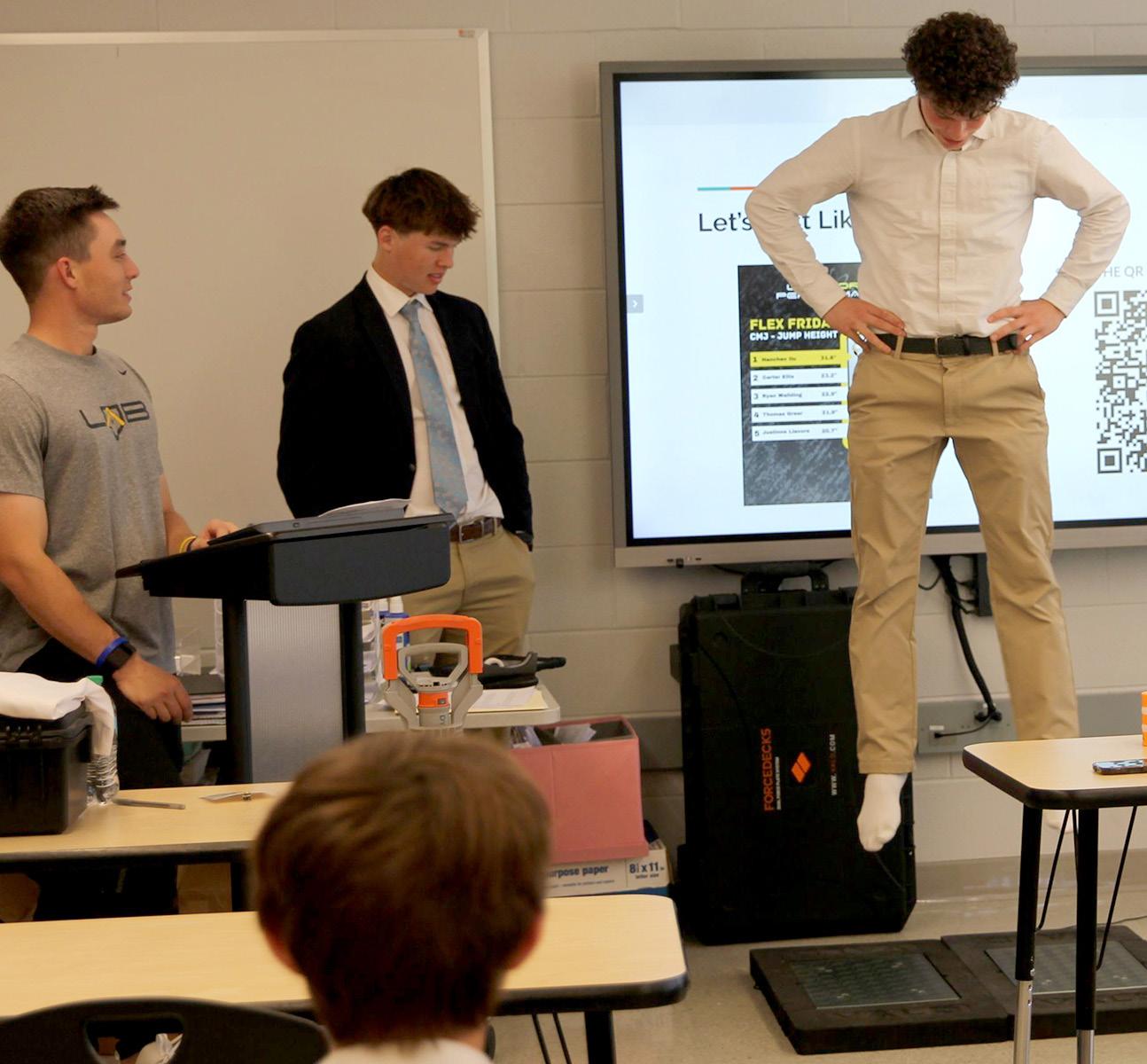
FLOAT LIKE A BUTTERFLY: Cole Basile ‘28 jumps off the force plates at the Train
Like an Athlete session. “Even if you’re doing random workouts,” Justin Jensen ‘16 said, “you will get better as long as you stay consistent.” During this session students got to try the force plates that measure vertical jumping height and tested their grip strength with a grip strength measurer. Shree Patel ‘28 said, “I really enjoyed doing the grip test and trying out the vertical jump thing [force plates].” Caption by Camryn Stevens. Photo by Suvi Hansen
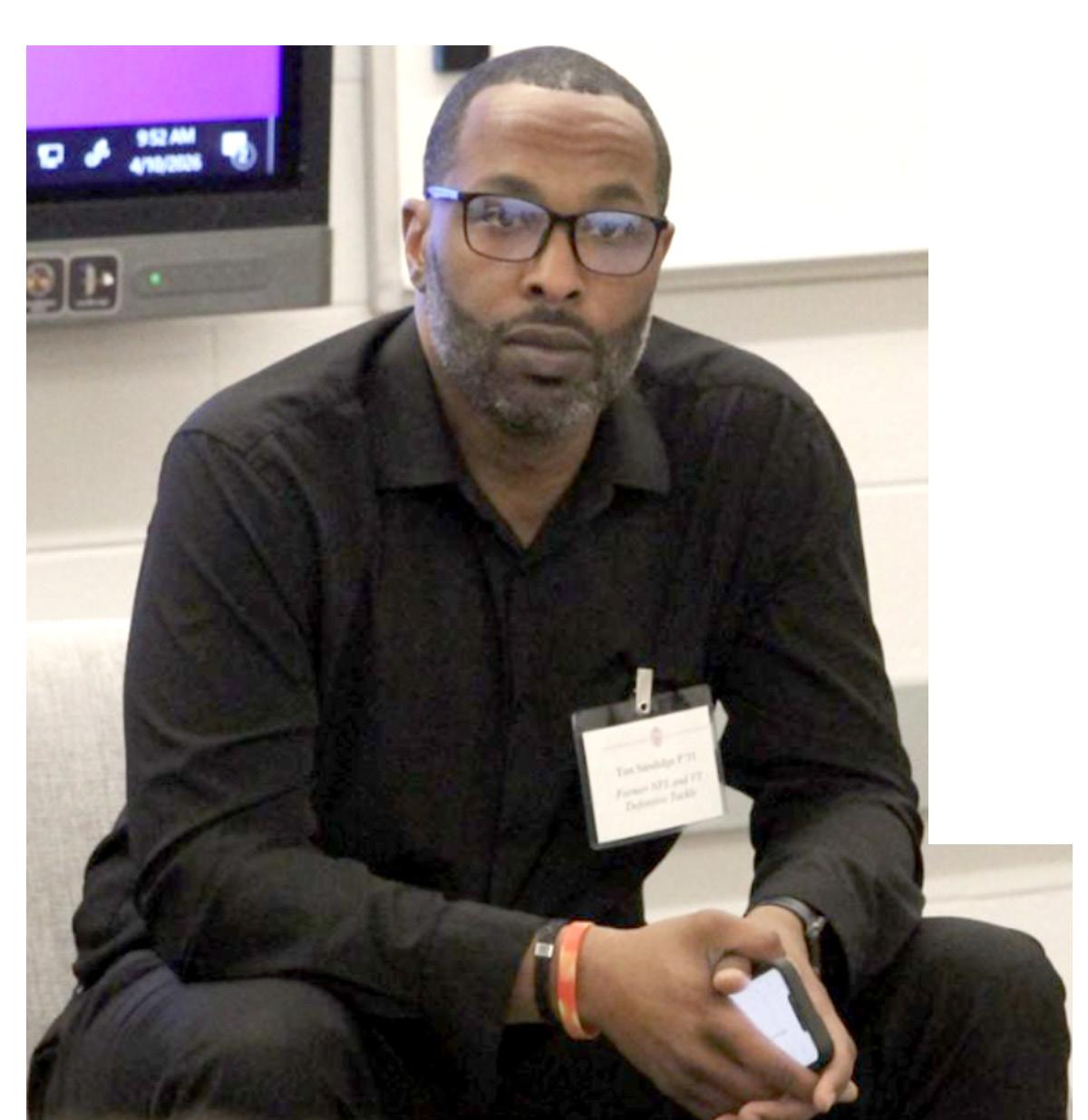
LEARNING FROM A PRO: Tim Sandidge, parent to a current seventh-grade student and a former NFL and VT defensive tackle, speaks to students about his career playing for the LA Rams and the Kansas City Chiefs. Formerly over 300 pounds in his prime, he had his hands in the dirt and played defensive tackle throughout his football career. Sandidge talked about how he started football in the 11th grade. “I never thought I would or pictured making it to the NFL,” he said. “I just made it because of the man above .“ Sandidge asked me what I wanted to do in the future, and I said “I i don’t know.” I told him I play basketball and football. He said, “Since you’re in the ninth grade, you still have some time to develop and grow. I believe you could possibly make it if you give the effort.” Caption by Jax Bentley. Photo by Compass staff
HOW CAN I HELP? A service dog trained by the Saint Francis Service Dogs facility, Solo, lays resting after a long day of showing all of the students what type of work these dogs can do. Solo is a black lab with bad hips. Due to this circumstance, Solo failed as a service dog, but the staff at Saint Francis made him their staff dog. “We do not like to tell the dogs they failed, so we do a career change,” Cabell Youell said, “and often find them happy families, or they become a facility dog.” Saint Francis has a training program for many of the service dogs in the Virginia area. They train around 40-50 dogs per year, and place about 10-12 in homes. This is a program that involves patience, hard work and determination. The goal is to place more than 15 dogs per year, and train even more than 50. Caption by Piper Malloch. Photo by Compass staff
TEAMWORK MADE HIS DREAM COME TRUE: In a matter-of-fact way, Dr. Will Dichtel ‘96 explains how he realized his dream of swimming the English Channel to students in room 16. In his keynote speech earlier in the morning, Dichtel showed the value of doing hard things, whether in chemistry or swimming. During the second session, Dichtel discussed how teamwork helped him accomplish his longterm and pandemic-delayed goal of swimming the English Channel -- often regarded as the most difficult of all the open water swims due to the unpredictable weather and currents. Not only did his 12-hour, 8-minute swim require a team of four friends including his wife, but also the boat captain and mate. Photo by Robert Robillard
with career stories and sage advice
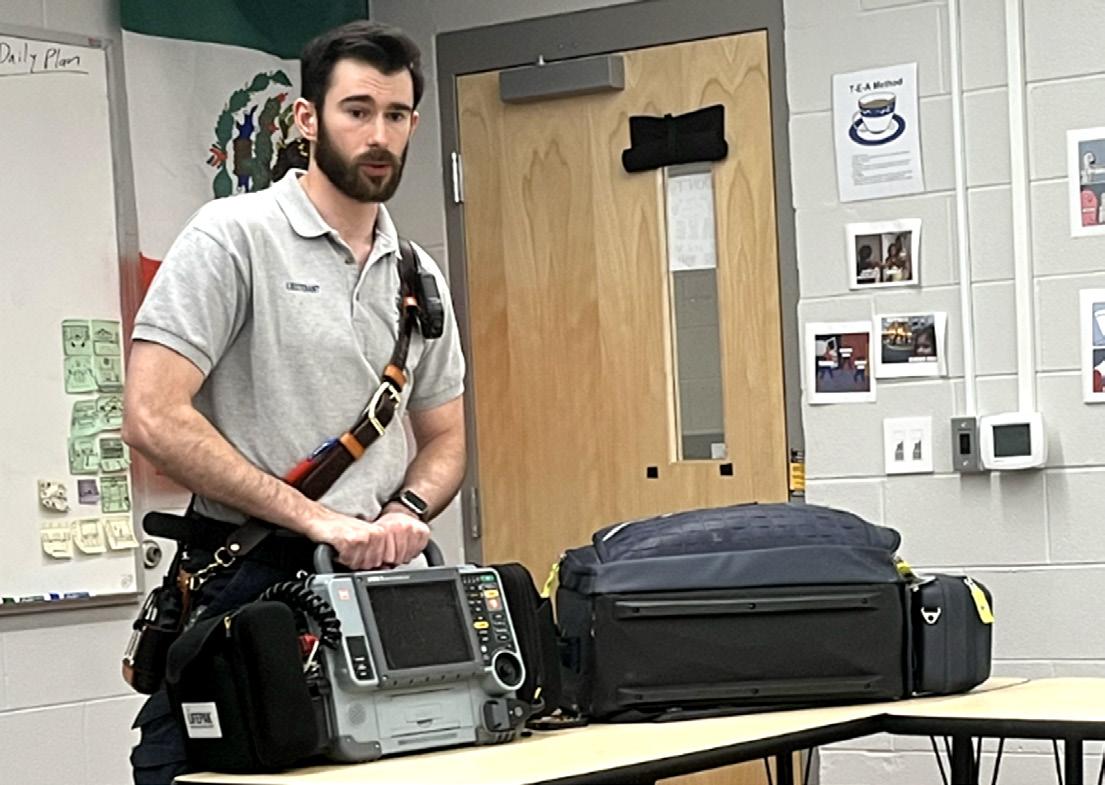
SAVING LIVES? Jim Card ‘16, a volunteer Emergency Medical Technician from the Cave Spring Rescue Squad, displays the equipment used frequently by EMTs. The experience is helping Card prepare for medical school. Michael Clark joined Card to talk about what it is like to work as an EMT, specifically answering both emergency and non-emergency calls in the Cave Spring area. (Do not call in if it is not an emergency!) “These unique experiences and skills on your resume look great,” said Card, who also volunteered during his senior year at NCS. “Leadership is of course a big one that everyone wants to have on [their resume], medical care itself is importan. . . . All this really builds to make you an attractive candidate for jobs.” The volunteers shared their personal experiences and also informed students on how to become a volunteer EMT, what it entails, and talked about what EMTs are legally allowed to do such as what medications they can administer. Volunteers can be certified as an EMT at the age of 16 and once 18, one can lead a team, such as a team of four on an ambulance. “Being able to say I’m a leader on car crash, on a heart attack, whatever, is really a great resume filler. It’s also a hard skill to learn.” Card said. “I remember when I was in school - ‘Oh, it’s a team project, ugghh - God it’s a team project’ - right. On this [being a leader as an EMT] you’ve got a very focused goal: patient care, keep the patient safe, keep them alive, get them to the hospital. So you all got that team but you’re the one telling people what to do.” Caption and photo by Kaitlyn Perkins
SERVING SMILES: Carolyn Kiser P’31 speaks to students about the ins and outs of the customer experience at Blue Cow, the ice cream shop founded, owned and operated by herself and her husband, Jason. The Kisers noted that so much more than just cones, ice cream and toppings go into engendering a hospitable and sustainable business model. “My family and I have been going to Blue Cow since it opened,” Isla Whittle ‘28 said. “It was cool to be in the class and learn about it, especially how they make their ice cream.” On that note, Kiser noted that all ice cream flavors are made in-house, including most cookies (they buy Oreos and Nilla wafers), cones and assorted toppings offered in their six stores. “We make everything fresh,” Kiser said after explaining the process. “It makes for a far better customer experience.” Caption and photo by Mason Bibby
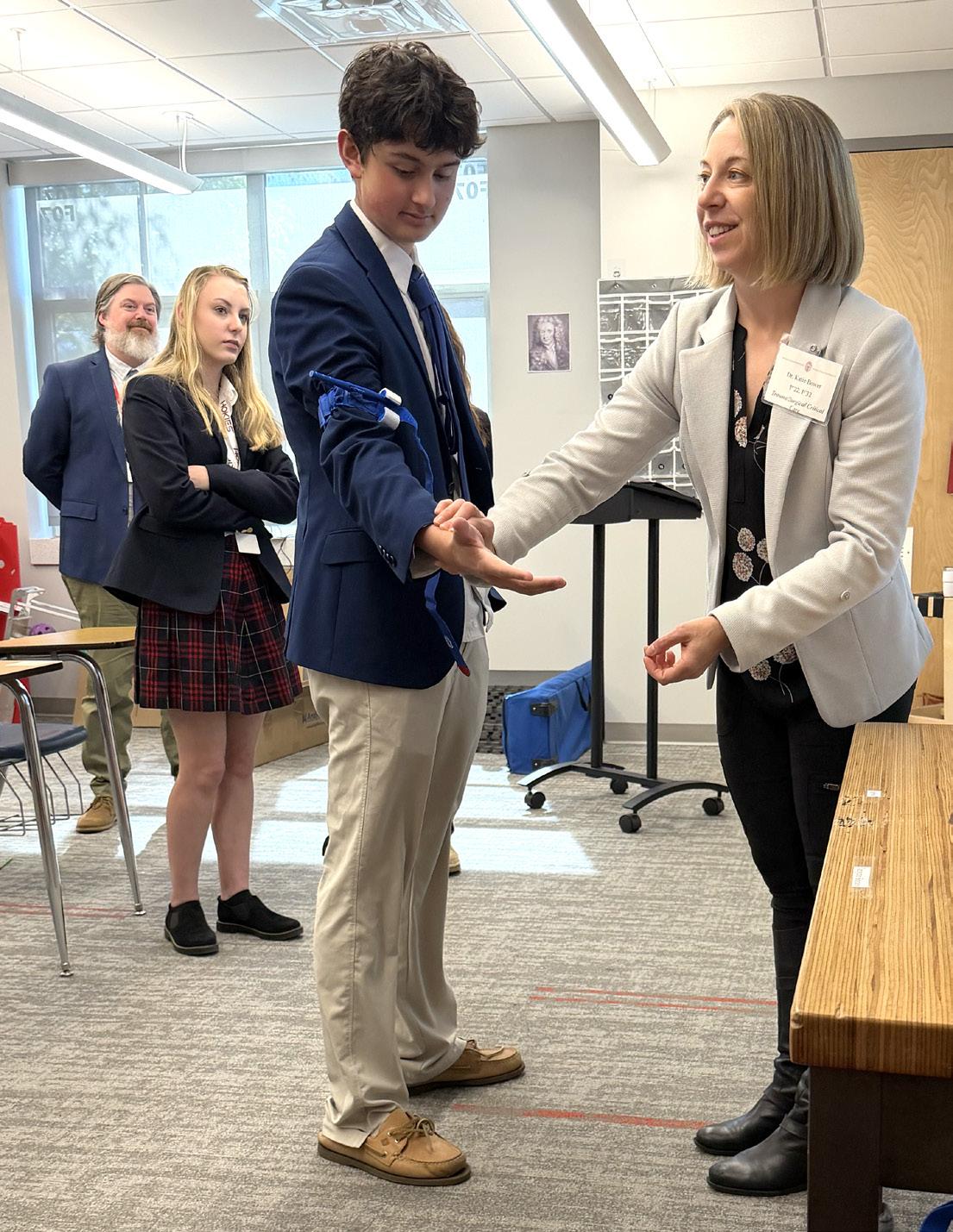
STOP THE BLEEDING! Dr. Kaitie Bower checks the pulse of Joaquin Lamas ‘27 after applying a tourniquet to him during the first session. Bower, parent of Ben ‘31 and Samantha ‘22, explained to the students what she does as a trauma surgeon. “Even if it hurts,” she said, “it is better to stop blood loss than to worry about any pain from the tourniquet.” Bower taught students an XABCDE acronym that she uses for in an emergency room: eXtrnguinating blood loss (stop blood loss); Airway (make sure the patient can breathe); Breathing (support breathing); Circulation (maintain circulation); Disability (assess brain/spinal cord/extremities); Expose (shield the patient from any unhealthy heat or cold temperatures). Photo by Robert Robillard
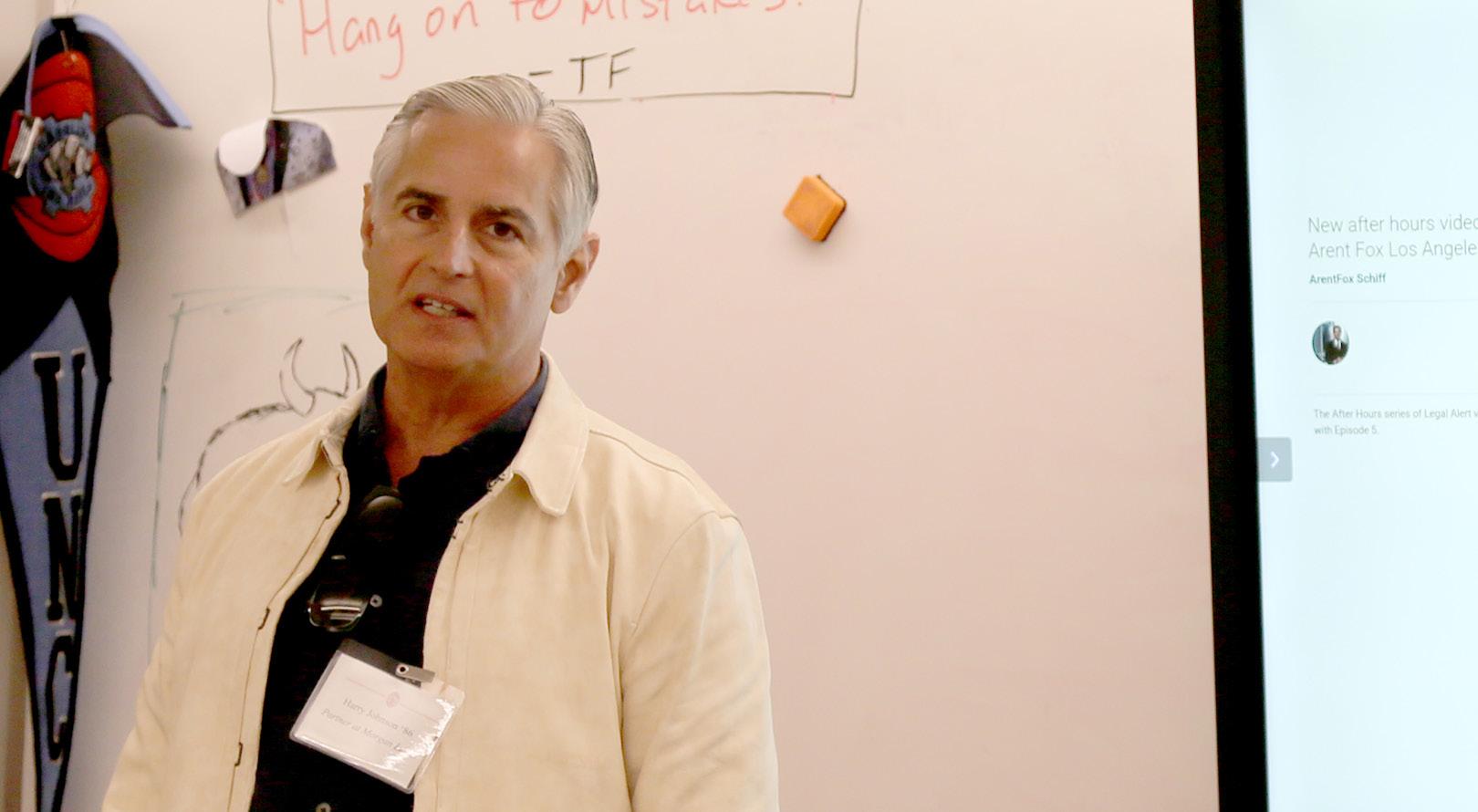
EAGLE: Returning to campus for his 40th class reunion, Harry Johnson ‘86 discusses his recent U.S. Senate confirmation hearing after being nominated for the National Labor Relations Board. In his opening statement, he thanked family and friends from Roanoke to supporting him at the hearing. “If confirmed, I would [work] as hard as I could so that we have a functioning Board fairly adjudicating the important issues coming before it,” he said to the senators. “To paraphrase Winston Churchill, I can only give the American people my blood, toil, tears and sweat, but that is exactly what I will give you, along with nearly two decades of salient experience.” After NCS, Johnson went to Tufts University and then Harvard Law School. During his time at NCS, he ran cross country, but more importantly, he served as an editor of the Scarlet Letter newspaper, the Herald’s ancestor. In the Compass yearbook, he chose a quote to go next to his photo: “It’s never too late to be human.” Photo by Andrew Weng
LEGAL
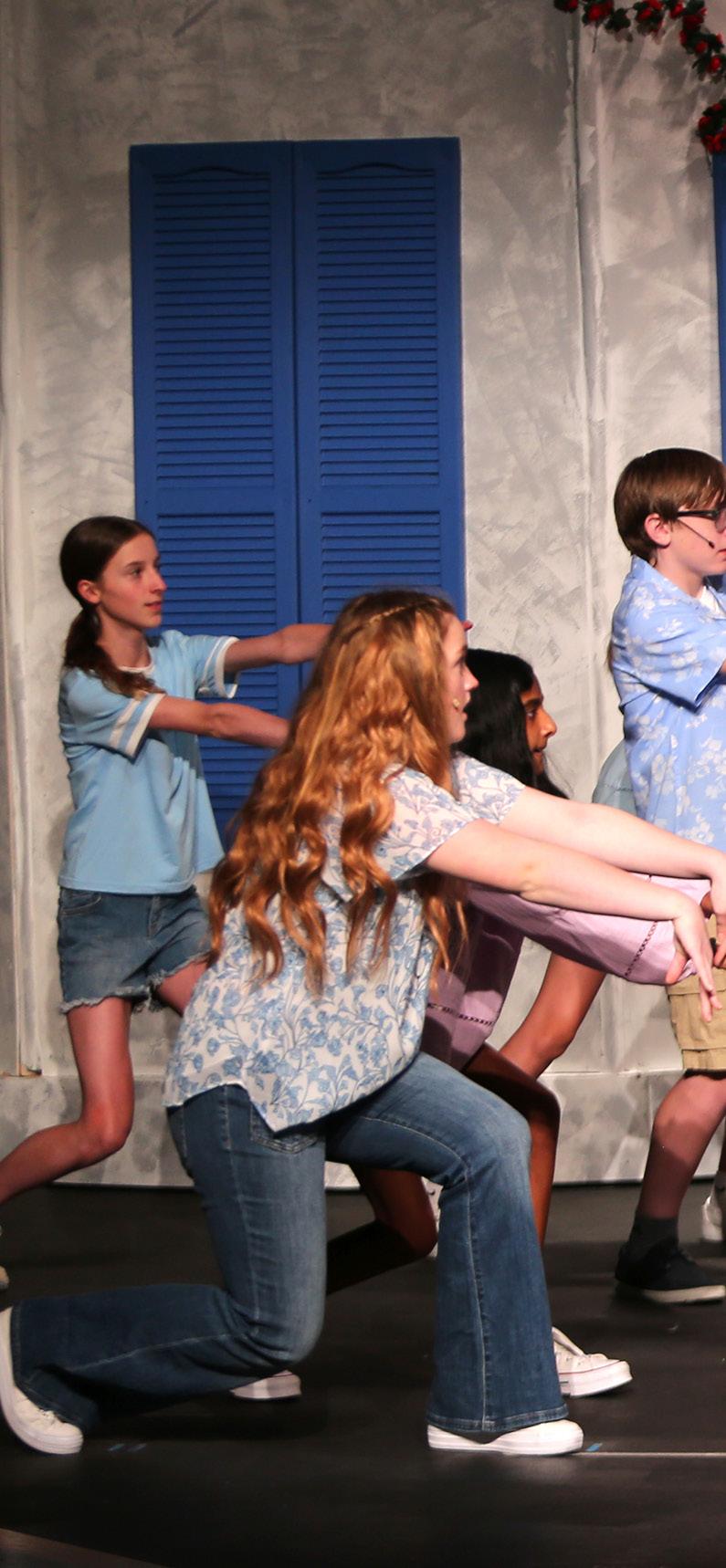
DYNAMO TRIO! Maggie Bibby ‘26, Lily Lenkowski ‘28 and Akali Koeda ‘28 perform together during the dress rehearsal of the song “Super Trooper” for the spring musical, Mamma Mia! The trio plays three best friends with Lenkowski as Donna, the lead, and Koeda and Bibby as Tanya and Rosie, Donna’s wild friends and support crew. “That’s from scene six in the first act,” Koeda said. “It’s where we’re performing Super Trooper in front of Sophie, who is Donna’s daughter and it’s like the first time that she’s seen her mom perform and she’s thinking like wow, my mom is hot, my mom is amazing, and it’s like our little trio, it’s Donna and the Dynamos.” The musical was performed in Fishburn Auditorium by Upper and Middle School students on April 16 and 17 at 7 p.m. and April 18 at 2 and 7. “Be really excited for a night of fun and music,” Koeda said before the show. Caption by Kaitlyn Perkins. Photo by Andrew Weng
Mamma Mia marries music and dance:
By Kaitlyn Perkins
Mamma Mia the musical from 1999 -- based on the songs of Abba – came to life on stage April 1618 starring Lily Lenkowski ‘28 as Donna and Belle McNamara ‘30 as Sophie.
Set in a hotel on a Greek island run by a woman whose daughter is getting married, Mamma Mia has been described as a jukebox musical(a musical based on already existing songs and a romantic comedy).
Thomas Costello, Fine Arts Department Chair, Musical Theatre and Choral Director is directing this year’s spring musical.
“He (Costello) picked Mamma Mia because everyone wanted to do it,” Lenkowski said, “and he was like
‘this is finally the year, I think we have enough people to do it, I think we have the right people to do it,’”
Surprisingly, Lenkowski did not watch the movie before her first audition.
“I didn’t know the show,” Lenkowski said , “I knew it existed, I didn’t know what it was about or anything but it looked fun.”
Lenkowski said that she watched the movie after being called back for Donna, the protagonist who balances her role as a mother to her engaged daughter, Sophie and the increasing drama in regards to her three past lovers. She explained that during the audition, she did not know much about the role she was auditioning for, however, during the audition she only had to “sing and do a dance.”
For callbacks though, Lenkowski did more research on the role.
“I didn’t think I was going to get Donna at all,” Lenkowski said, “I got called back for Donna but I also got called back for Tanya and Rosie, the two friends, so I kinda focused more on them and then through that I kinda saw stuff for Donna but I didn’t take it that seriously until the day of callbacks.”
Lenkowski explained that it was not until after callbacks for the role of Donna that she really wanted the role. Initially, Lenkowski had been more interested in the role of Tanya or Rosie.
“It would be so much fun if I could get to be Donna,” Lenkowski had looked forward to performing the song “Slipping Through My Fingers.”
“I think Slipping Through My Fingers is a very emotional song, and I really want to push myself to act really well.” Lenkowski explained how thrilled she was to be able to perform the song with McNamara. “I am really excited to get to work with Belle because we already have that mentor-mother-daughter relationship anyway so it was nice how we could get together for that.” For Lenkowski, getting Donna was a big deal. “This was my first lead role I’ve ever gotten…I didn’t look even to see if my name was on the first section you’d see, I looked for Belle’s name because I know she was going to be very excited and when I saw that I got the part, I literally cried, I screamed and I ran around my house.”
The cast performed 20 songs in just over two hours including three after taking a bow: Mamma Mia, Dancing Queen and Waterloo.
Understudies take lead roles for Saturday matinee
Akali Koeda ‘28 explained that she played Tanya alongside Maggie Bibby ‘26 who played Rosie, both of whom are Donna’s wild but supportive best friends.
“I auditioned for Lily’s other best friend,” Koeda said. “I auditioned for Rosie but Maggie was perfect for Rosie and I was cast for Tanya, which I was extremely excited about.”
Koeda explained how one of the roles Lenkowski initially auditioned for was Tanya and they had hoped to play the parts of Rosie and Tanya together.
“But she’s an amazing singer,” Koeda said, “so she got Donna and it all worked out really well.”
Koeda said that she was ecstatic about the castings.
“I was very happy when I found
out I got Tanya.”
Furthermore, Koeda said she was happy for Lenkowski.
“I was so excited for her,” Koeda said of Lenkowski. “She’s so talented at singing, she sounds amazing, and I think she can really nail the roll down and I was so proud of her.”
Koeda looked forward to one scene in particular.
“My solo scene with Liam Gibbs, who is Pepper, my little fling. I think it’s going to be a lot of fun. Because I really get to embrace my role, my character, and it’s also with people that I usually don’t act with.”
Koeda also enjoyed working with Lenkowski and Bibby as a trio of best friends, “we are so funny together,” Koeda said, “and we work perfectly together.”
Bibby, as a senior, showed ambition auditioning for Rosie and Donna having never done a production before.
“It’s a bigger role,” Bibby said, “so the fact that I got it, I was really surprised.”
Bibby related to her role as Rosie in the sense that they both have a similar energy.
“I feel like Rosie is a bit like me in a way,” Bibby said. “Obviously she’s older, she’s in her late 40s maybe early 50s but some of the jokes that she makes, and her personality in general kind of resembles me a little bit, so I don’t feel like I have to ‘act’ that much.”
Bibby went on to say that she would probably say some of Rosie’s quotes in her life anyway.
“It’s interesting because obviously they’re younger than me but it’s kind of fun together,” Bibby said about working with Koeda and Lenkowski. “Obviously most of the scenes that I’m in, we’re in together because we are supposed to be best friends, we are visiting the island together, we’re visiting Donna for the first time… Getting to know them more just outside of the roles and as people is a lot of fun.”
Lenkowski shared some teasers for the show.
“You’re going to have a really wild night,” she said. “It is a very high energy show and we’re going to try and implement that as much as we can.”
HERE WE GO AGAIN: Commanding the stage from her perch on chairs, Lilly Lenkowski ‘28 belts out the Abba anthem “Money, Money, Money.” In an unusual twist, the understudies for a few of the main roles performed lead roles on Saturday at 2. Pictured to the left of Lenkowski, Margaret Bass ‘28 stood on top of the chairs as Donna for the Saturday performance. Theater Director Thomas Costello said in an email to faculty: “Our rockstar Middle and Upper School students opened our spring musical production of Mamma Mia tonight with a spectacular performance!” Photo by Robert Robillard
Girls lacrosee ranked No.1 going into Mangus
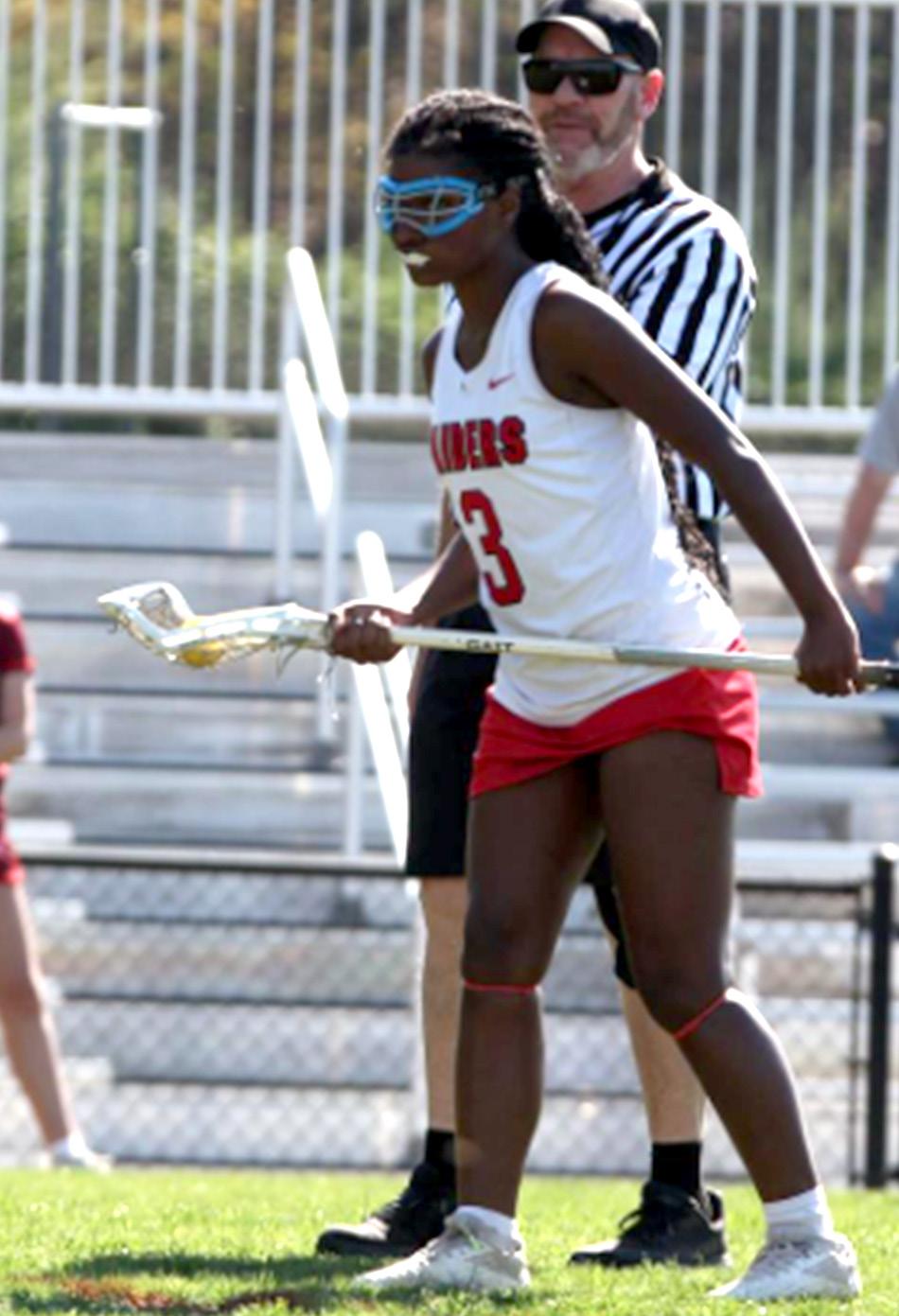
ON GUARD: Fiona Parnell ’26 has been the goal keeper for girls LAX all four years she’s been on the team. She has saved 70 gooals this year. “Fiona is an amazing and devoted goalkeeper who holds together the girls lacrosse team,” Millie Chopski ’26 said, “and is a really big supporter to everyone on the field.” Compass photo
READY TO SHOOT: Julia Cephas ’28 getting ready to shoot the ball against VES. Cephas recorded four goals and one assist getting 5 points to help the Raiders win 17-4 win. Cephas scores 3.6 goals per game, makes 1.3 assists per game. Photo by Compass staff
Boys lacrosse remains No.1 in state;
BACK FROM BLACKSBURG:
Averaging at least one assist per game, Preston Rippel ‘27 looks for a teammate as he tries to outmaneuver rival Patrick Henry on Mar. 23. The hard-fought 16-15 victory served as a sharp rebuke to one of the most dominant public school programs in the region. Rippel, who transferred back from Blacksburg High School after previously attending North Cross in middle school, had a myriad of praise for the team he’s grown to cherish. “I love lacrosse, so obviously playing it is pretty fun,” he said. “We’re growing with each other, working on [things] together, so [our teammates] are all getting better. It’s really fun.” Rippel has consistently demonstrated his capabilities offensively, currently averaging a cavalier 2.4 points per game. He’ll serve in a vital capacity going forward, as the team looks to take on Virginia Episcopal School, The Covenant School, Veritas School and eventually Rippel’s old school, Blacksburg High. “We all really love each other, love playing with each other and Coach Pollack is great and will lead us super well.”
Photo by Compass staff
late season; 1st time in program history
shoots scores
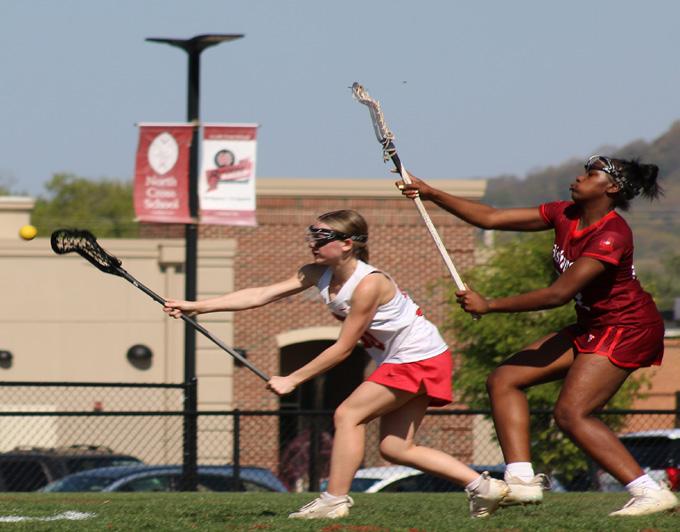
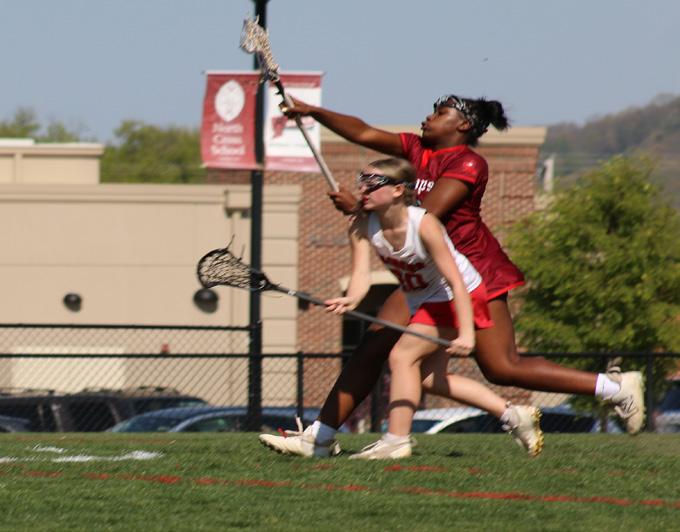
Above: With Gabby Miller ‘26 rushing to her wing, Virginia Bass ‘30 moves forward after scooping up one of five ground balls on April 10 to thwart a VES Bishops offensive possession. Miller collected two more ground balls during the match.
Retzler Mangus ‘30 scores the ninth goal of the game for the Raiders. Mangus scored two other goals to help defeat the Bishops 13-7.
seeks 4th state title in last 5 years
LAX BROS: Ethan Grigas ‘26, the Swarthmore commit and longtime lacrosse player, looks for a signal from teammate Sebastian Miller ‘26, committed to Hampton University. The duo has been electric this season, combining for a monstrous 206 goals across both of their varsity careers. Miller and Grigas put on an especially strong showing against Benedictine on Apr. 2, defeating the 5-6 team from Richmond by 3 for a final of 17-14. The two look to do more great work in the future as they take on Veritas School for Senior Day.
Above: Lillian Keudjeau ‘28 wins a faceoff against Benedictine. The new student from Canada takes most faceoffs.
Photos by Sue Nguyen
Left:
Photos by Robert Robillard
Girls soccer undefeated with big wins over STAB
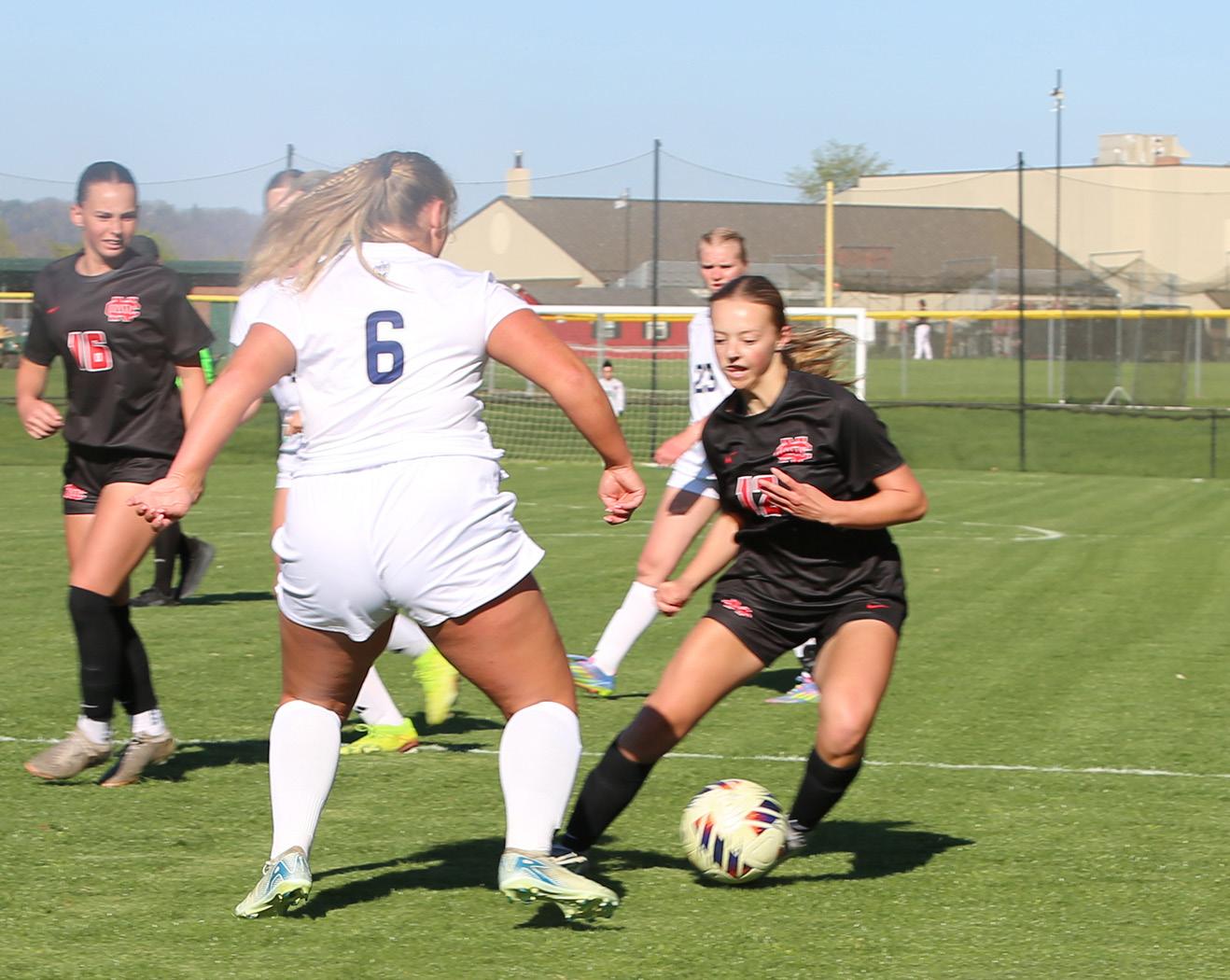
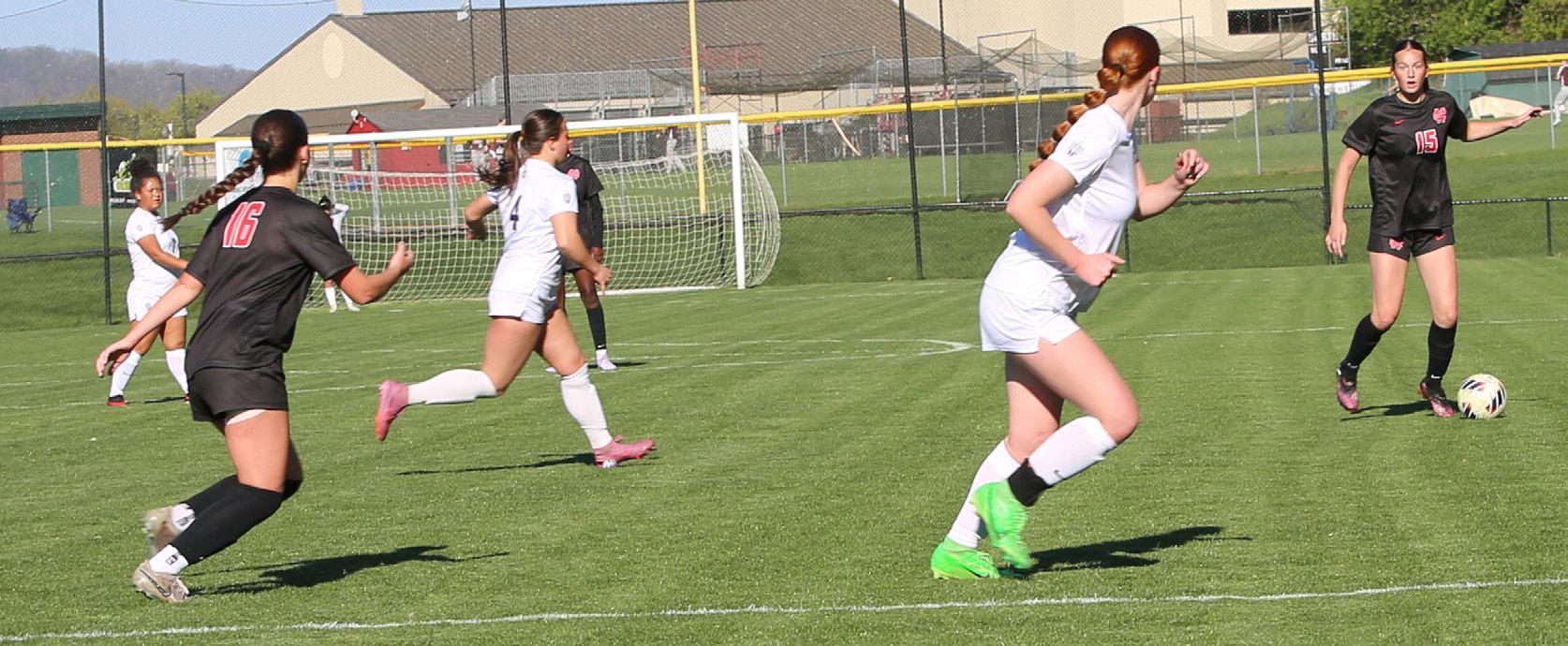
MAY I ASSIST YOU? Sophie Dalton ‘29 prepares to kick the ball toward her teammate at a home match for the Raiders. In 11 games Dalton made nine assists - fifth best on the team. Dalton’s favorite part about soccer is “having fun with my teammates.” She has played soccer off and on since she was 4 years old. Dalton has had a wonderful season as a freshman on the varsity team that is undefeated and ranked No. 2 in VISAA Div. II as of April 27 – including major wins against Div. I opponents St. Gertrudes and No. 6 ranked STAB. The Raiders continue to build toward the conference tournament the first week of May. Photo by Compass staff
LOW BLOW: Below, Dalton finds the back of the net against New Covenant on April 14 for one of her five goals this season. Photo by Andrew Weng
BRACE YOURSELF: Below: Setting herself up for a left-footed strike on goal, Isla Whittle ‘28 weaves her way through the back row of Christiansburg High School’s last line of defense before scoring one of her two goals on April . Through 12 games this season, Whittle has found the back of the net 25 times, almost equal to her output last year when she was team MVP and earned First-Team All-BRAC, All-State and All-Timesland honors. Perhaps the biggest goal she has scored this season came against St. Anne’s Belfield for a 1-0 victory against the No. 6 team in VISAA Div. I. Whittle has also assisted on 13 goals, which brings her total points to 63 with at least five games left in the season. Next, they play archrival Covenant at home, which will provide another chance to test their ability to go deep in this year’s conference and state tournaments -- something rarely accomplished by the girls program. The girls have never won a state championship, but they have won 10 conference championships. The last BRAC title happened in 2022, when Scout Kappes and Eliza Vogel were eighth-graders. Photo by Robert Robillard
and Covenant; ranked No. 1 in VISAA Div. II
GLUT IS GOOD? Above: Camryn Stevens ‘28 a transfer from Glenvar, scores one of five goals against Christiansburg. The referee called the mercy rule that day, since the Raiders were winning by eight goals with 20 minutes left in the game. The striker has scored 46 goals and 14 asssists equaling 100 points in 15 games.
1. One game with one goal = 1
2. Two games with two goals (brace) = 4
3. Six games with three goals (hat trick) = 18
4. Two games with four goals (haul) = 8
5. Three games with five goals (glut) = 15
SENIORS AT YOUR SERVICE: James Brown can trust seniors Eliza Vogel and Scout Kappes to make the right in-bounds passes in their fifth year of playing varsity soccer. Along with senior defensive back Tina Chickwata and senior goalie Lillie Dearing, the four defenders ensure a rock solid backline that has allowed only 13 goals in 14 games with eight clean sheets. With their goals against average being 1.043. The two defensive stalwarts are the only players who have experienced winning a conference championship when they were eighth-graders. Photos by
HOWES TO TRULLOLS: Above: Maddie Howes ‘28 looks to pass to Alejandra Trullols “27 against Christiansburg. In 14 games, Howes has 11 assists and seven goals for 25 points. Left: Trullos looks to pass in the box. The Spanish player has 25 assists and 11 goals in 14 games. Photos by Robert Robillard
Robert Robillard
Photo by Robert Robillard
Boys tennis heads toward post-season ranked No.
Track and field teams prepare to win VISAA:
COOL: At the Titan Track Classic at Hidden Valley HS on April 18, Lillian Phillips ’29 runs in the 3200 meter event. The weather was very hot, but Phillips was not affected by the heat.“It didn’t really affect me on Saturday because my run was in the morning,” she said, “but usually when it’s hot during a race, I try to not let it bother me.” During the final lap, she pushed all the way to the finish line and got second place with a time of 12:11.77. “I was hoping to finish in about 12:00 minutes,” Lillian said about her pacing, “so I tried to run about 1:30 each lap.” Caption and photo by Andrew Weng
HIGH
STANDARDS: Head Coach Ed Dickenson watches Wynn Yardley clear the high jump bar at the Titan Track Classic. Photo by Andrew Weng
NO SHADE: Gritting his way to fourth place in the 1600 in 4:48, Bryce Austin ‘28 kept enough energy to earn first place in the 3200 with a time of 10:08. Austin showed strong fitness as he prepares to help the boys contest for the Blue Ridge Athletic Conference (BRAC) and Virginia Independent School Athletic Association (VISAA) Div. II titles. Photo by Andrew Weng
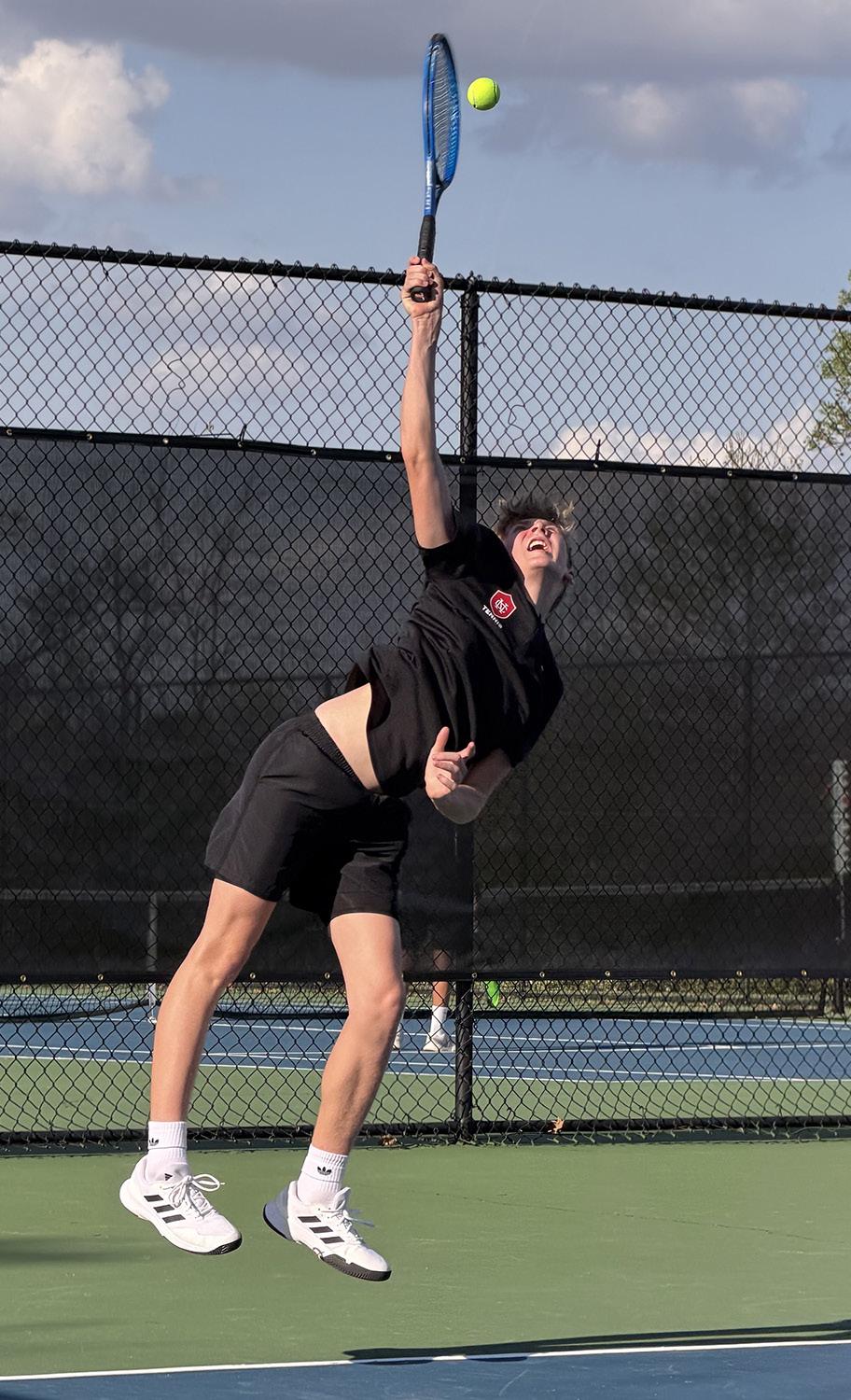
JUMP SHOT: Left: Playing No. 3 doubles with Anderson Ratliff ‘26, Higgins Harlow ‘28 leaps a foot off the court to blast a serve against STAB. The boys won 8-5 en route to a 9-0 victory over the Div. I team. Rebounding from an injury, Harlow sometimes plays #4 singles. Photo by Robert Robillard. Above: L-R: Coach Jim Schaefer, Sam Schaefer, George Lugar, Jacob Juneau, Kemper Prillaman, Khalil Burroughs, Higgins Harlow, Anderson Ratliff and Asst. Coach Ryan Schlachter show the joy they feel as a team playing the No. 4 team in Div. I on a Saturday morning in Richmond. Photo by Tracy Schaefer
1in VISAA Div. II seeking 5th straight state title
At St. Christophers on April 18, the Raiders faced their toughest test: the No. 4 team in Div. I. The Raiders lost 6-3, but two sets lost sets went to tie-breakers. Sam Schaefer ‘26 and Khalil Burroughs ‘27 won their doubles #2 set 8-4. Burroughs won his #3 singles match 8-1, and Schaefer won at #5 8-5.
TITAN: No. 1 singles player George Lugar ‘28 hits a volley against Britton Basten ‘28 of New Covenant on April 14. George handily defeated his opponent 8-0 in about 30 minutes. According to Sam Schaefer ‘26, “George’s match against New Covenant was some of the greatest tennis I’ve ever watched.” In Richmond, George added more wins to his record against VISAA Division I opponent Trinity Episcopal bringing him to 12-1 in doubles and 9-4 in singles as of April 18. He and the rest of the top-ranked DII Raiders hope to win their fifth state championship in a row this season.
on course for team and individual titles:
HIGH: Wynn Yardley ‘29 leaps over the high jump bar at 6-00 feet to place fourth at the Titan Track Classic on April 18. Listed at 6 feet tall in the fall as a football player, Yardley leapt over the bar as tall as he is. He also ran the 400 meter dash in 55.61. Photo by Andrew Weng
1ST RACE 1ST PLACE: Spencer Britton ‘27 runs the 800 meter race, finishing first at the Byrd Opener on March 31. “It was special to win the 800,” Britton said, “The 2:04 being 1 second off my personal record, for not doing as well as I should have during the indoor season. . . . It was just very nice, and it was an ecstatic crowd, which I’m very blessed to be around.” Overall the Boys Track and Field team performed well for their first meet of the springyear. Caption by Camryn Stevens. Photo by Andrew Weng
RACKET
Photos by Morgan Kemp
Baseball builds confidence with 3-1 win against No. 4 ranked
Nansemond-Suffolk
Raiders aim to take winning record into BRAC tourney
“I just love the environment, and I thank my teammates for their help.” - Oliver Ingram
BUNT IF YOU DARE! Left: Playing first base, Hanchen Ou ‘26 steps into the grass in case the James River batter decides to bunt. His fielding percentage of .903 helps limit opponent’s scoring. Through 11 games, Ou is hitting .353 with 10 RBIs on two doubles. One of those doubles happened with the bases loaded, so all three runners scored against Fishburne. Photo by Compass staff
Mirza and Hendrickson lead boys golf team to postseason
3555 Electric Road, Suite B1 Near Ginger’s Jewelry
WHAT A WAY TO SHINE ON SENIOR DAY: Above: Tristan Lange enjoys his senior day ceremony with his family, including his father, Todd Lange, who graduated from NCS 30 years earlier as a three-sport star like his son. Then, Tristan proceeded to pitch a five-inning no-hitter against Roanoke Catholic. Photo by Morgan Kemp
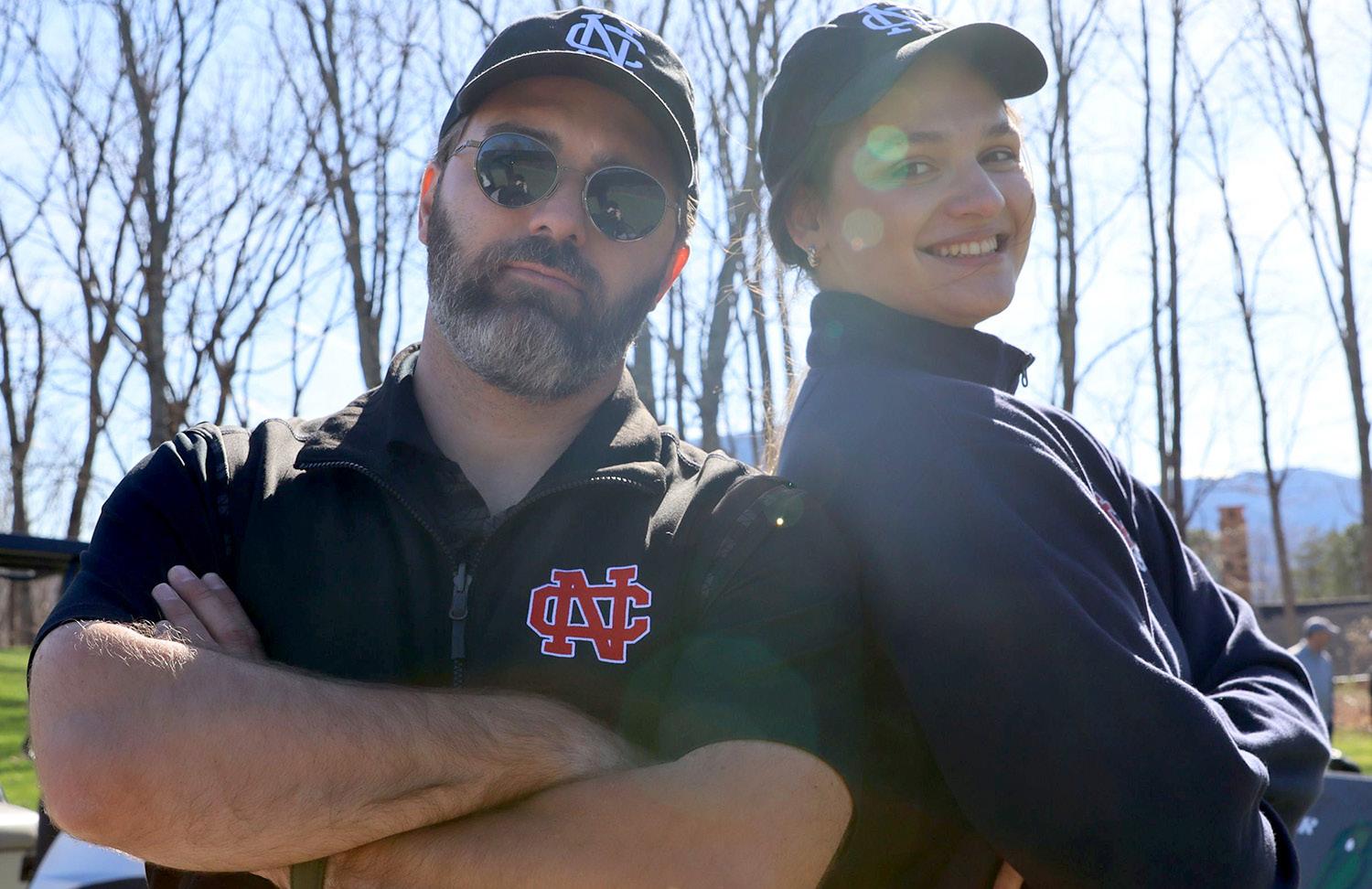
History Department Chair Zachary Virgin took over golf coaching duties this season in time to coach players he teaches, like Milica Andjelkovic ‘26, pictured upper left at Hunting Hills Country Club. Zuhair Mirza ‘26 is shown teeing off that day. William Hendrickson ‘27 prepares to chip onto a green at Roanoke Country Club. Both boys played well in the recent Junior Valentine Invitational tournament at Hermitage Country Club in Virginia. Mirza placed fourth (-2) and Hendrickson placed 10th (+2) in a field of 54 players from the East Coast. Compass staff photos
IMPACT FRESHMAN: Right: Oliver Ingram ’29, a new student this year from Cave Spring, pitches two innings with only one hit and three strikeouts for the Raiders win against James River on April 14. When he’s not pitching, Ingram plays in the infield with a .955 fielding percentage – second best on the team. “Man it feels great that I’m doing good this season as a freshman, and [as] a person in general,” Ingram said. “But I just love the environment, and I thank my teammates for their help.” Photo by Compass staff
RBI GUY: Above: With Luke Daniel ‘27 on deck, Ingram hits against Fishburne Military Academy on April 7. Through 11 games, Ingram leads the team with 13 RBIs, has 14 hits with one home run and five doubles. His slugging percentage is .564 and his batting average is .359. As it is starting to reach the end of the season, Ingram has had a big impact on the baseball team. With three big conference games coming up, the boys will try to position themselves for a top seed in the BRAC tournament. Photo by Andrew Weng
gingersjewelry.com
Instagram: gingersjewelryroanoke
3565 Electric Rd Suite C Roanoke, VA 24018
Tel: (540) 563-5559
Email: ginger@gingersjewelry.com
Store Hours: Mon to Fri: 10:00am - 6:00pm Sat: 10:00am - 5:00pm Sun: closed MENTION THIS AD AND GET