Home Stories
Vitra Home Collection
→ 9 Lounge chairs
→ 29 Sofas
→ 63 Chairs and tables
→ 101 Chairs and tables for the home office
→ 123 Accessories
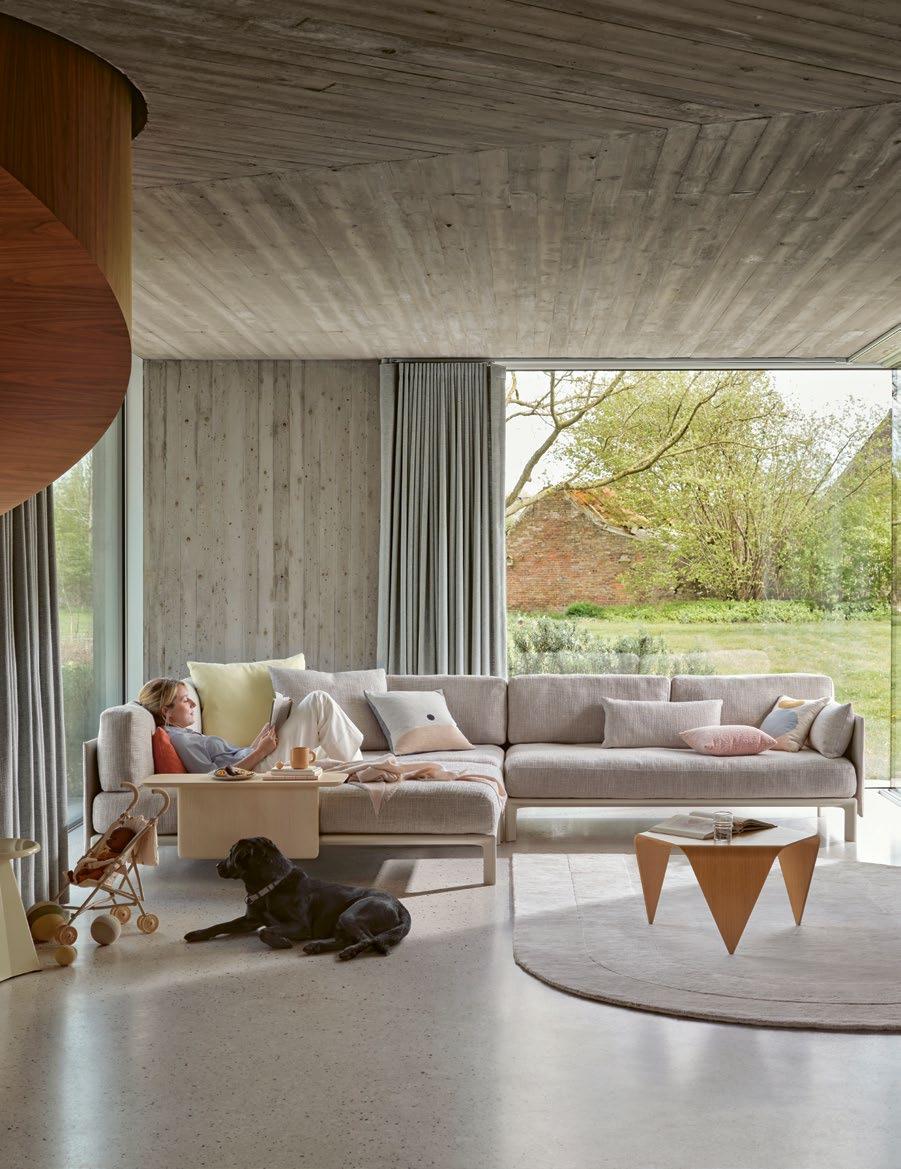
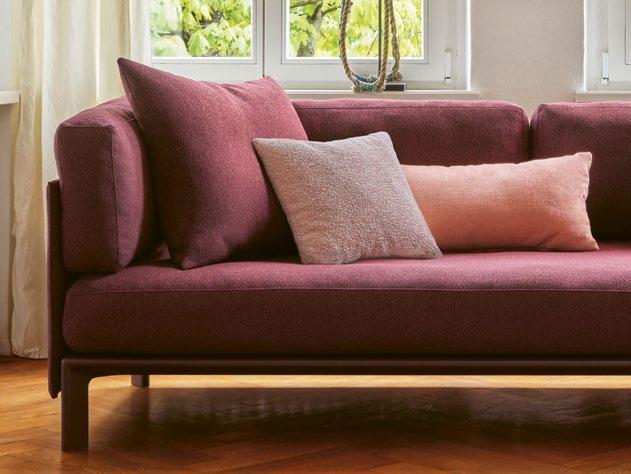
Front cover: Anagram Sofa (→ 30)
Back cover: Mynt (→ 102) and Courier (→ 120)
Launched in 2004, the Vitra Home Collection has developed and matured over the last twenty years and continues to do so to this day. This same period has also seen the transition from the second to the third generation of our family company. In their day, my uncle and my father initiated the cultural mission embodied by the Vitra Design Museum, its collection and archives, as well as by the architecture of the Vitra Campus. The current generation of our family business remains committed to this cultural mission while at the same time embarking on a new path: Vitra’s environmental mission.
Creating products that can be passed down to the next generation has always been the guiding principle for all our development activities. Our range is being expanded with two products that exemplify this commitment – the first is a sofa by new designers Panter&Tourron, which redefines the way we furnish our living rooms. Anagram adapts effortlessly to your changing life circumstances. The second is Mynt: a chair by Erwan Bouroullec who has collaborated with Vitra since the earliest days of the Home Collection. Mynt offers innovative sitting comfort and a versatile aesthetic that is perfectly suited to dining table settings as well as to the home office. These new additions to the Vitra Home Collection reflect our broader environmental mission: recycled materials are increasingly finding their way into all our products, existing and new. The ability to repair items extends their lifespan even further, while reducing the carbon footprint has become a key objective during the product development process.
Although there is still a long way to go, the Vitra team is highly motivated by these ambitious environmental goals. And we hope you are too.
Nora Fehlbaum (CEO, Vitra)
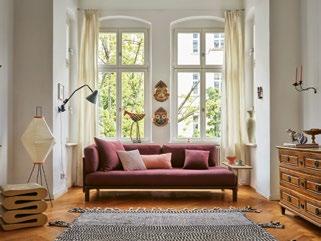
Anagram – the flexible sofa that adapts to everyday life
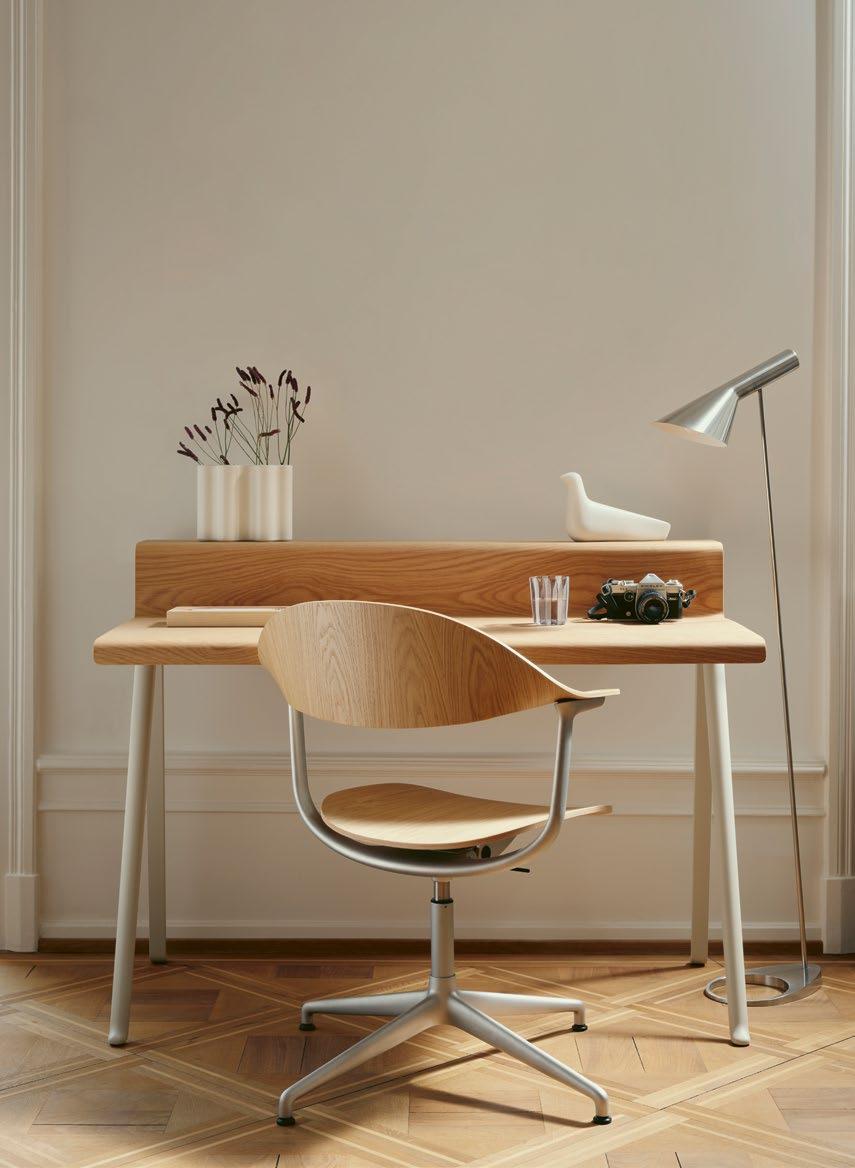
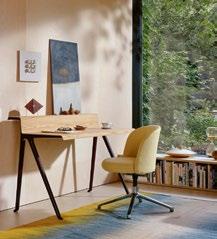
Courier – the desk that integrates seamlessly into any interior
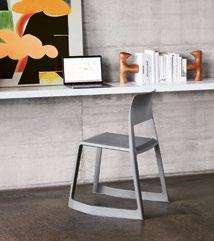
Tip Ton RE – since 2020 in recycled post-consumer plastic
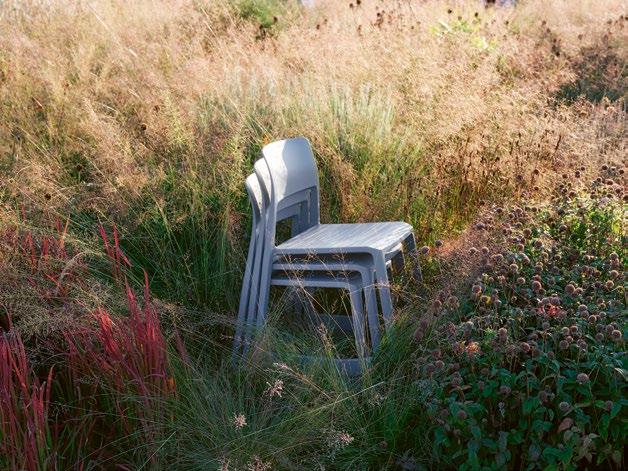
The sourcing, processing and use of materials in products constitute about 80% of Vitra’s overall carbon footprint. That is why materials are continuously analysed, and production methods monitored and evaluated by independent external institutions: the used materials should be as sustainable and low impact as possible. Vitra manufactures an increasing selection of products, such as Tip Ton RE, the HAL RE family and many accessories in a post-consumer recycling material.
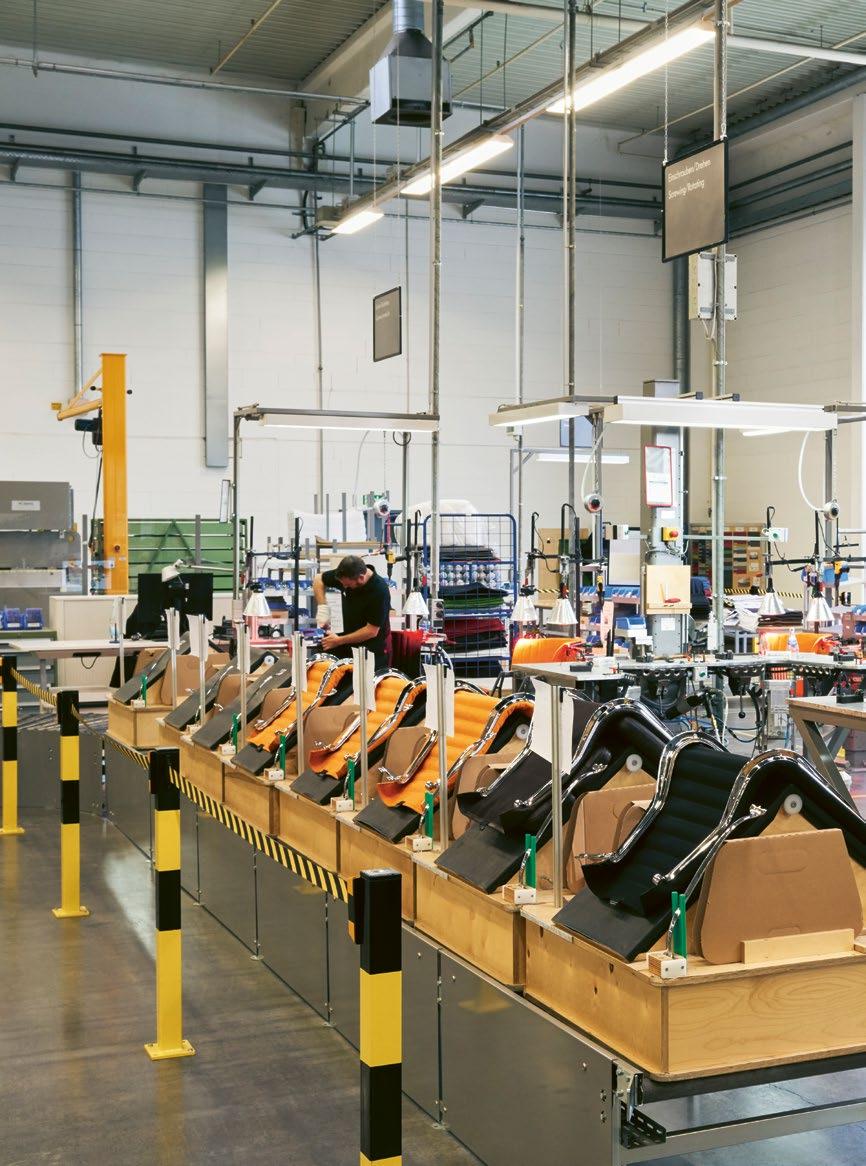
The Vitra Campus in Weil am Rhein is home to Vitra’s principal production sites. Here classics have been manufactured in virtually the same manner for decades. Visitors to the Vitra Campus can observe the individual steps during a guided tour of the production facilities. Vitra imposes the highest quality standards on their material and component suppliers, who are subjected to regular compliance audits. In 2022, 96% of Vitra’s suppliers were located in Europe, with 45% in Germany.
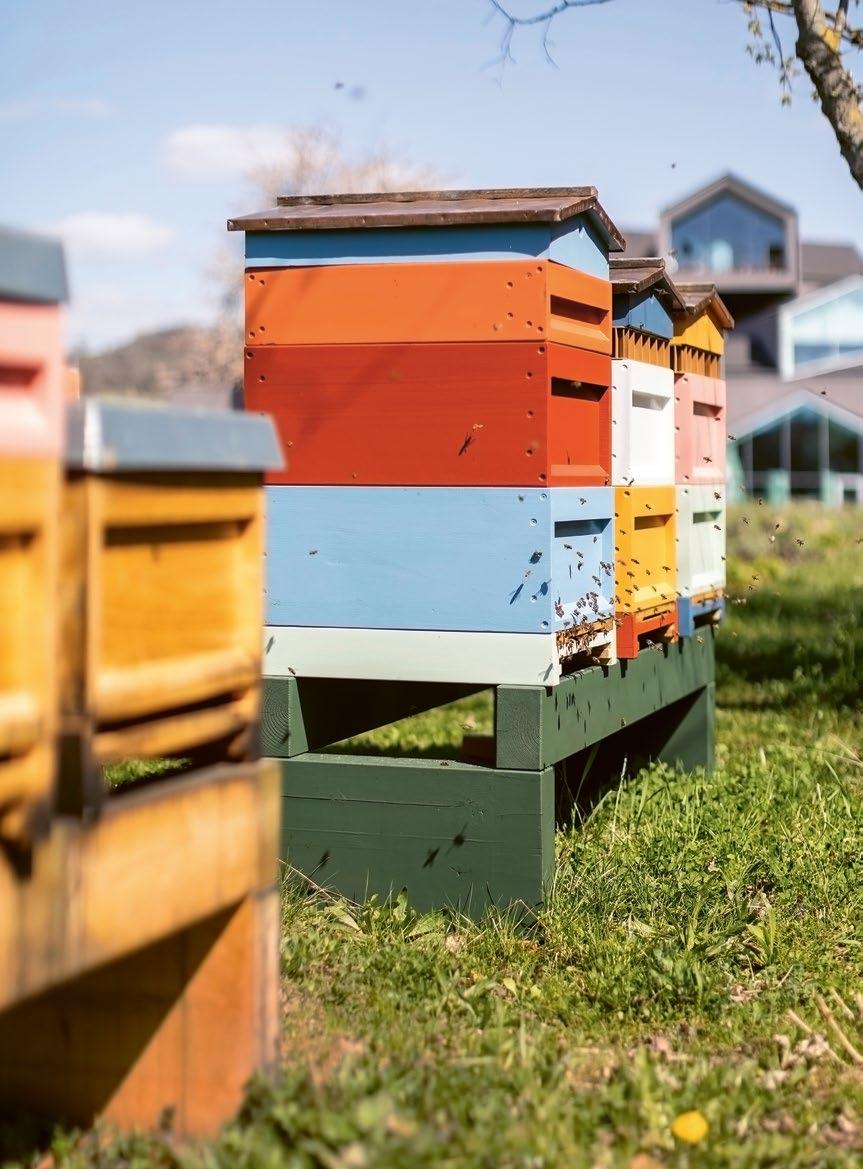
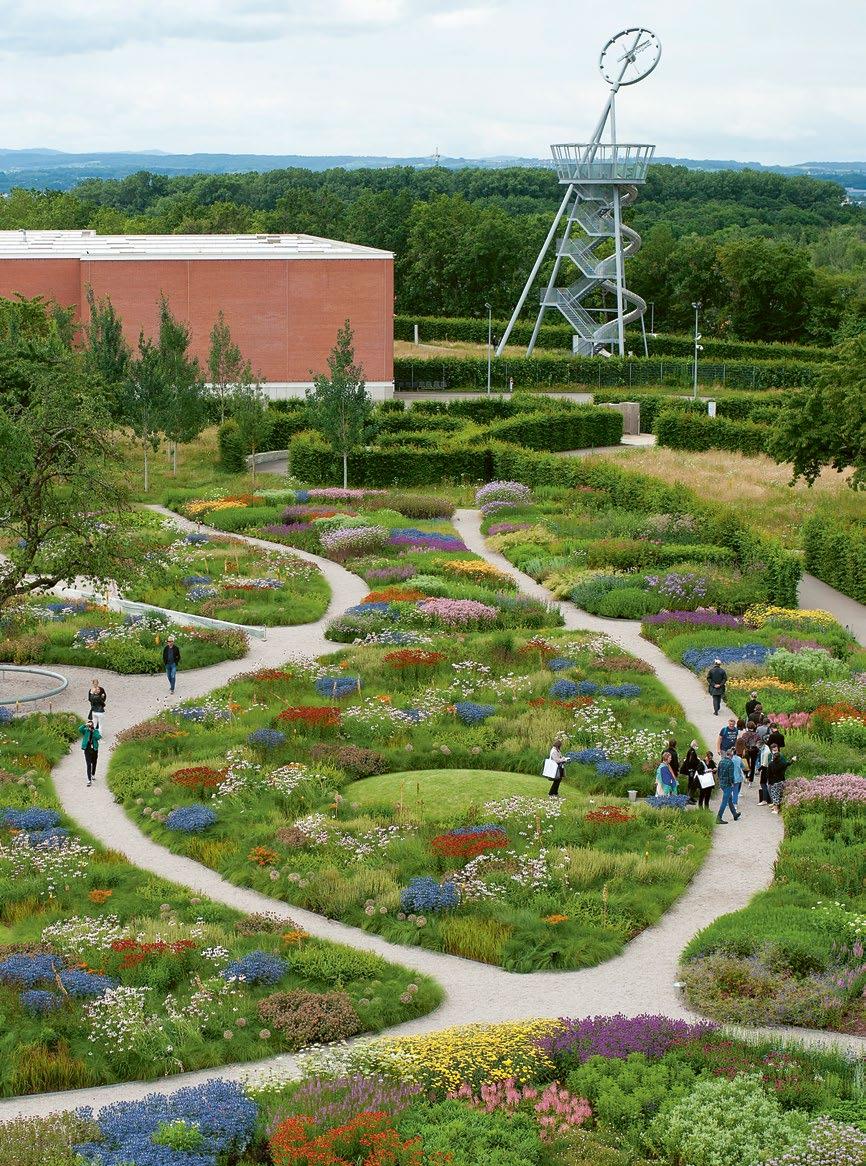
Inaugurated on the Vitra Campus in 2020, the garden by Dutch designer Piet Oudolf features perennial, self-regenerating plants, shrubs, grasses, bushes and wildflowers. Six colonies of bees can be found nearby and are kept according to a combined nesting method by Vitra employees, who are trained apiculturists. To promote further biodiversity on the site, additional areas of the Vitra Campus are also being transformed into green spaces and employee gardens.
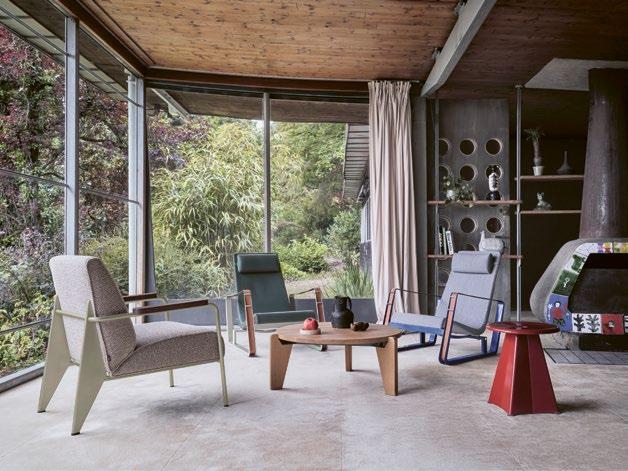
Prouvé furniture by Vitra in the Maison Prouvé in Nancy in 2022. These classic designs in the original colours have withstood the test of time and remain as fresh and relevant today as ever.
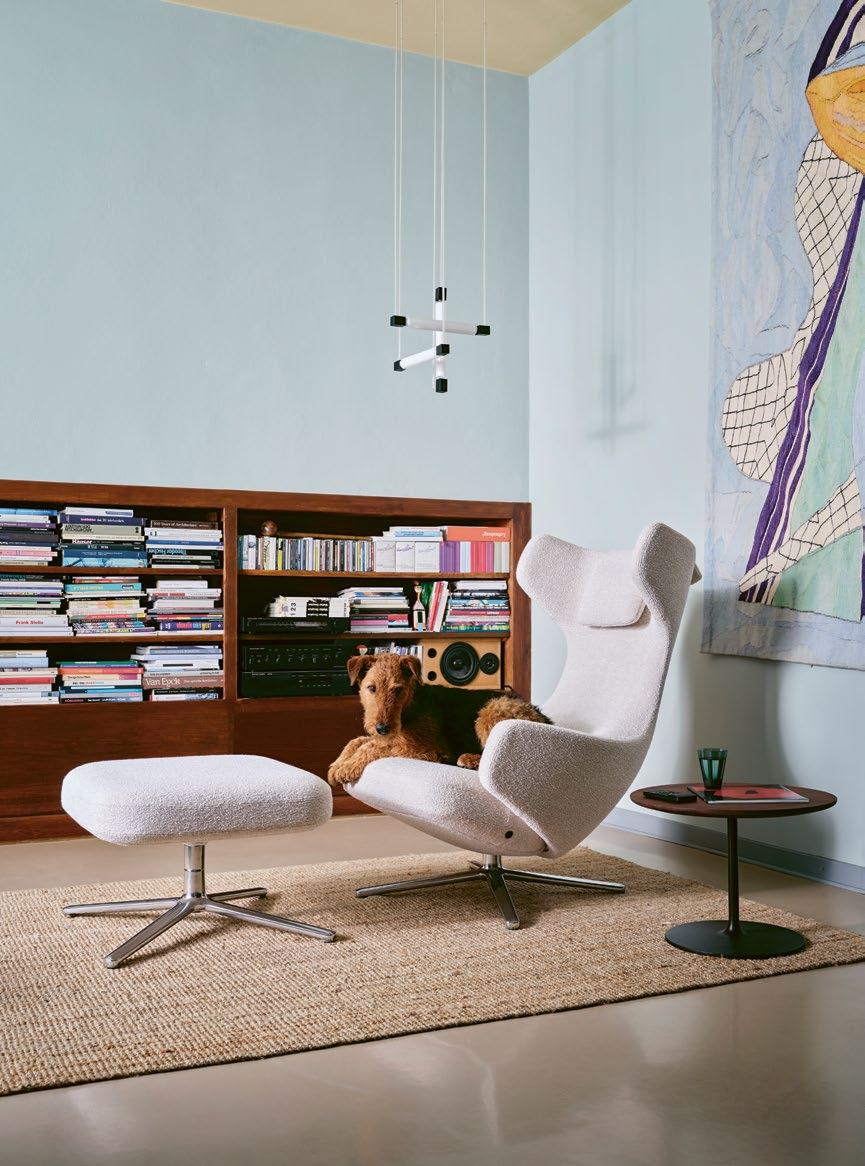
Lounge Chairs
The portfolio of Vitra lounge chairs and armchairs ranges from classic to contemporary designs, from compact versions to expansive models, from unupholstered armchairs to soft lounge chairs for comfortable relaxation, some with integrated mechanisms. What they all share is a timeless aesthetic, carefully crafted from durable materials. Lifelong companions, cherished even by future generations.
→ 20 Cité
→ 10 Grand Relax
→ 22 Fauteuil de Salon
→ 24 Cone & Heart Cone Chair
→ 14 Repos & Grand Repos
→ 26 Slow Chair
→ 16 HAL Lounge Chair
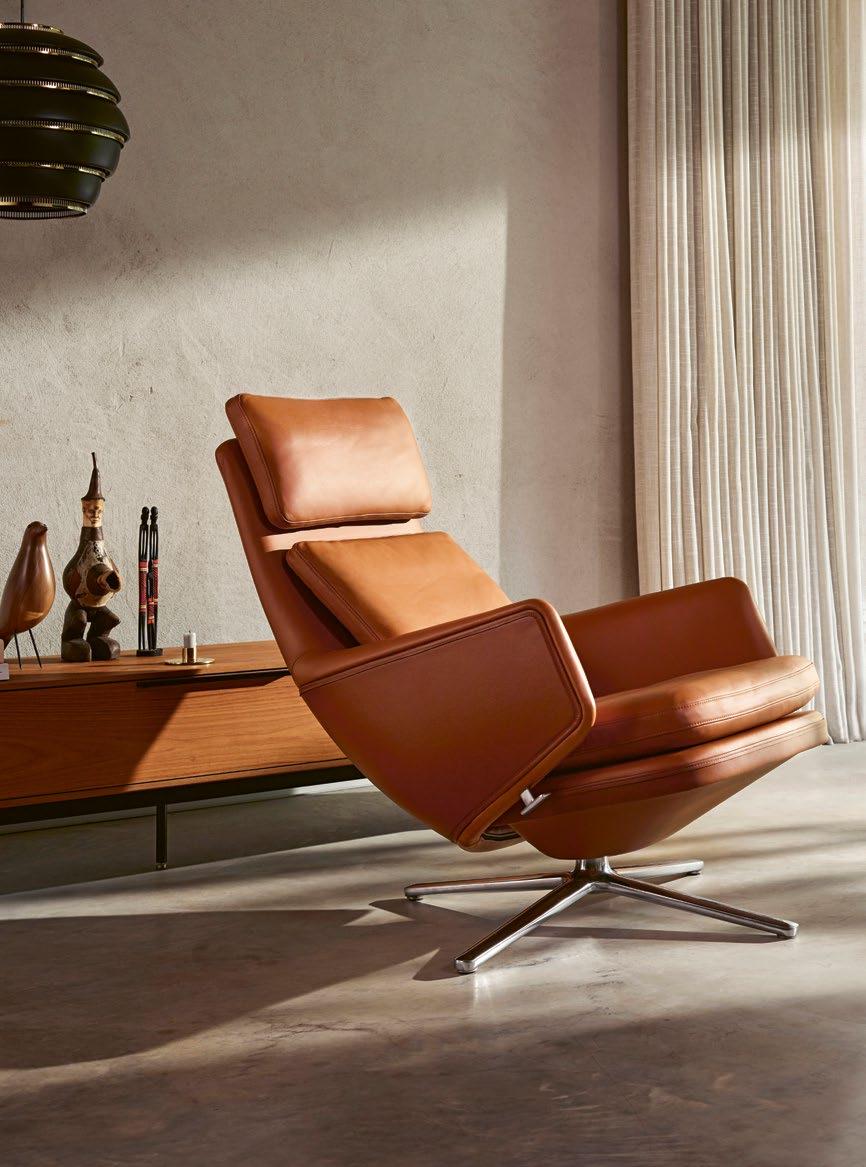
Grand Relax, Antonio Citterio, 2019
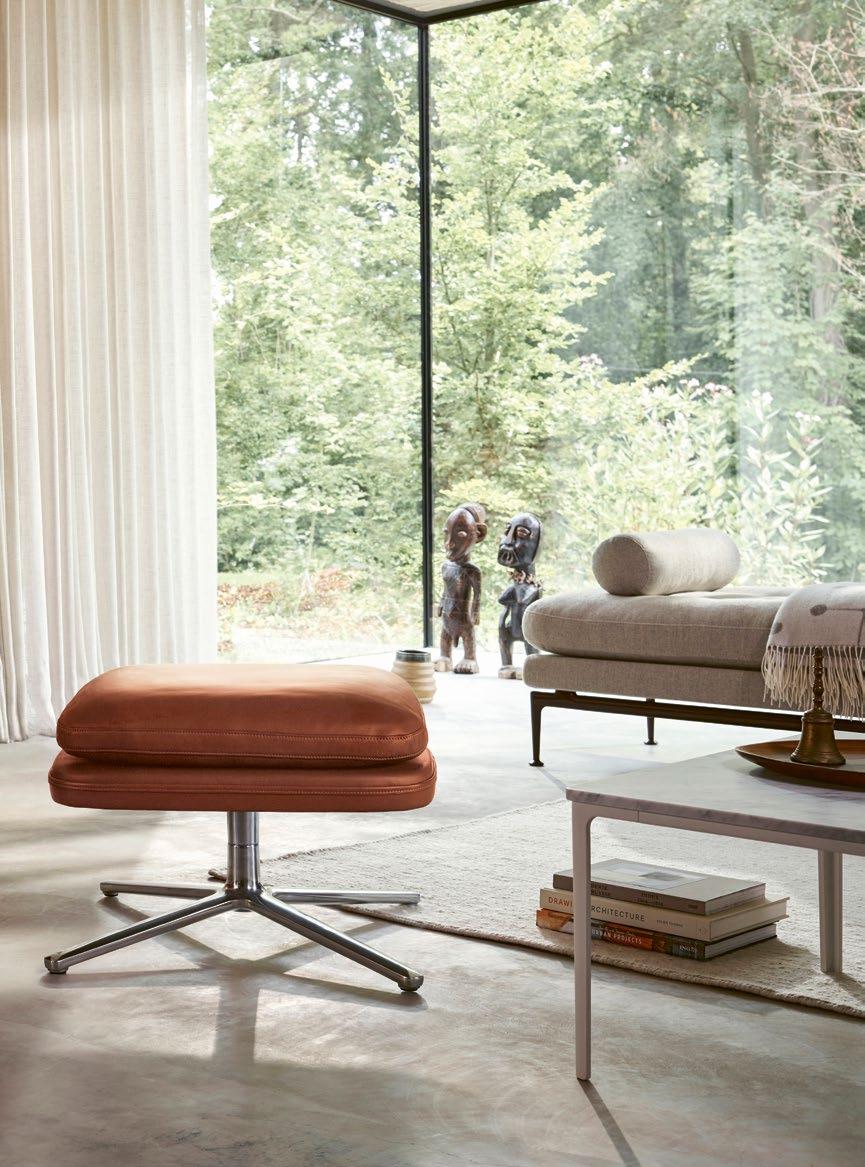
( 1 ) Grand Relax & Ottoman · Leather Premium F, 97 cognac / Leather Forte (deco), 01 cognac (dark) · Antonio Citterio, 2019 ( 2 ) Suita Daybed · Dumet, 03 beige/grey · Antonio Citterio, 2010 ( 3 ) Plate Table 410 × 410 mm · Marble · Jasper Morrison, 2004 ( 4 ) Eames House Bird · walnut
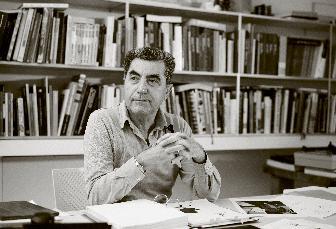
The architect and designer Antonio Citterio, who lives and works in Milan, has collaborated with Vitra since 1988. Together they have produced a series of office chairs and various office systems, as well as products for the Vitra Home Collection. The Citterio Collection is constantly being expanded.
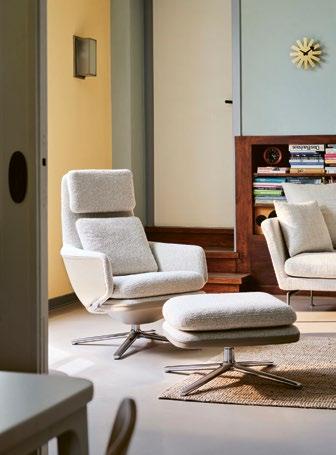
Grand Relax is a luxurious reclining lounge chair combining outstanding comfort with compact dimensions and a classic understated aesthetic. Upon sitting down, the user sinks into the soft cushions, and the chair reclines thanks to an adjustable synchronised mechanism concealed within the seat. The backrest can be locked in any position. Grand Relax is available with leather or fabric covers.
Grand Relax, Antonio Citterio, 2019
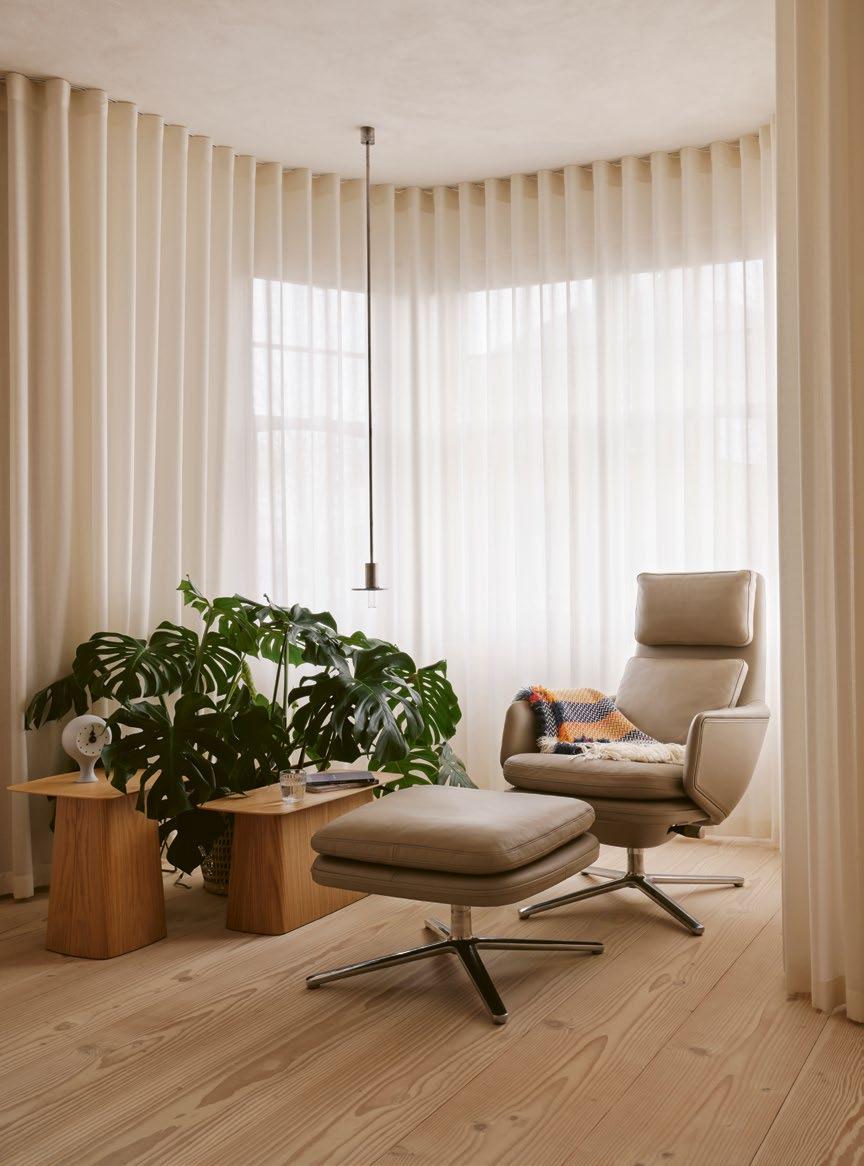
( 1 / 2 ) Grand Relax & Ottoman · 03 polished aluminium · ( 1 ) Nubia, 03 cream/sand, Leather Forte (deco), 07 sand /
( 2 ) Leather Premium F, 71 sand · Antonio Citterio, 2019 ( 3 ) Wooden Side Tables
17 light oak · Ronan & Erwan Bouroullec, 2015
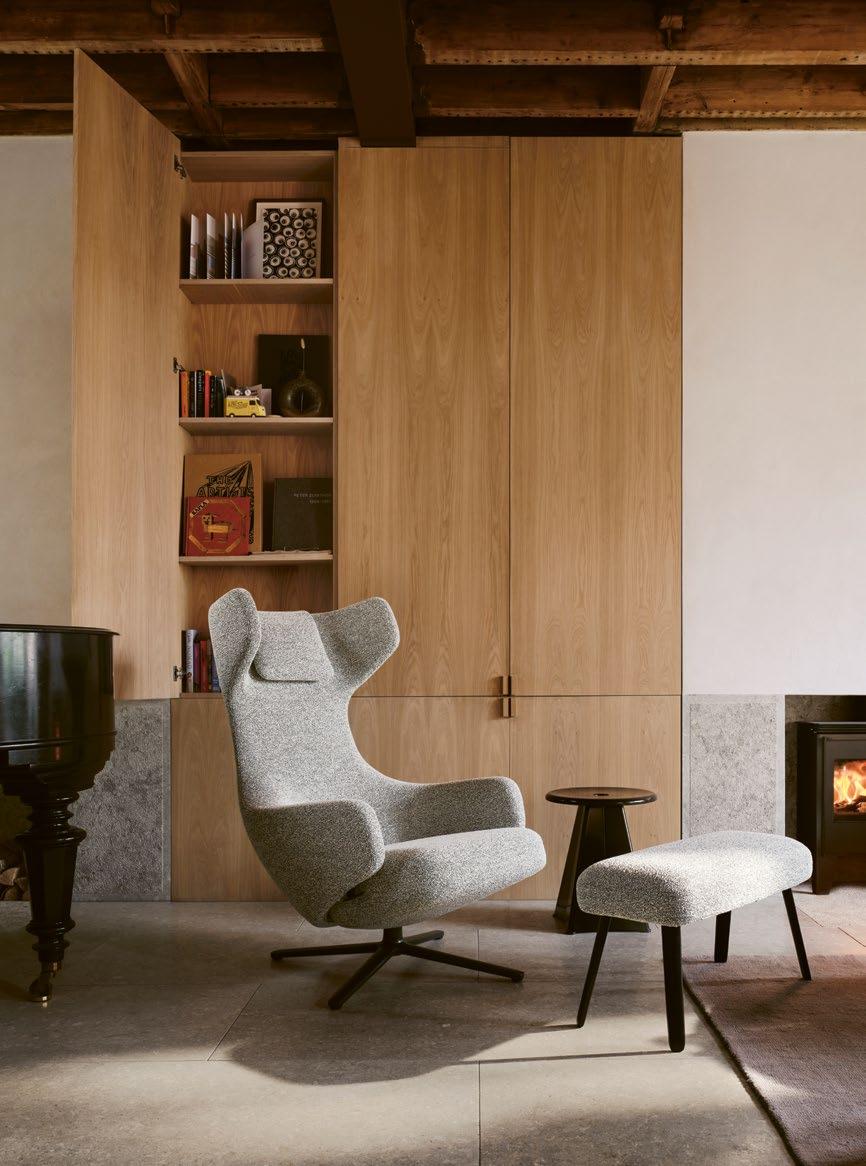
( 1 ) Grand Repos & Panchina · 30 basic dark powder-coated (smooth) · Nubia, 09 ivory/forest · Antonio Citterio, 2011
( 2 ) Tabouret Métallique · 12 deep black powder-coated (smooth) · Jean Prouvé, 1936
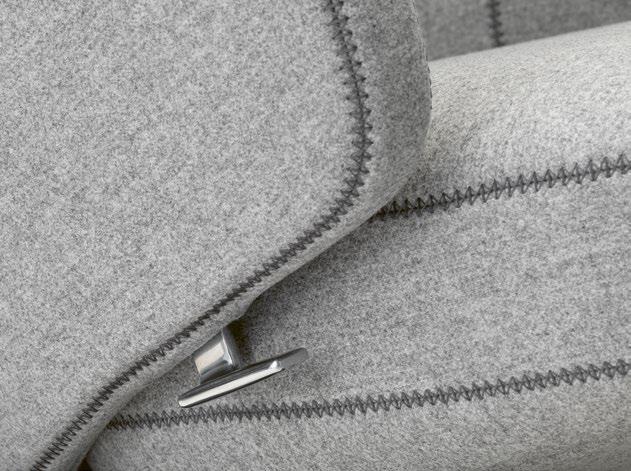
The swivel-based lounge chairs Repos and Grand Repos convey a feeling of exceptional comfort with their generous padding, inviting armrests and high backs. Thanks to the synchronised mechanism concealed beneath the upholstery, sitters can move from an upright posture to a reclined angle for resting and lock the backrest in any position. The resistance of the backrest can be manually adjusted to the user’s weight. Repos and Grand Repos are available in two different seat heights, as well as in a choice of fabric or leather covers in a wide range of colours.
Repos & Grand Repos, Antonio Citterio, 2011
The resistance of the backrest can be manually adjusted to the user’s weight.
HAL Lounge Chair, Jasper Morrison, 2021
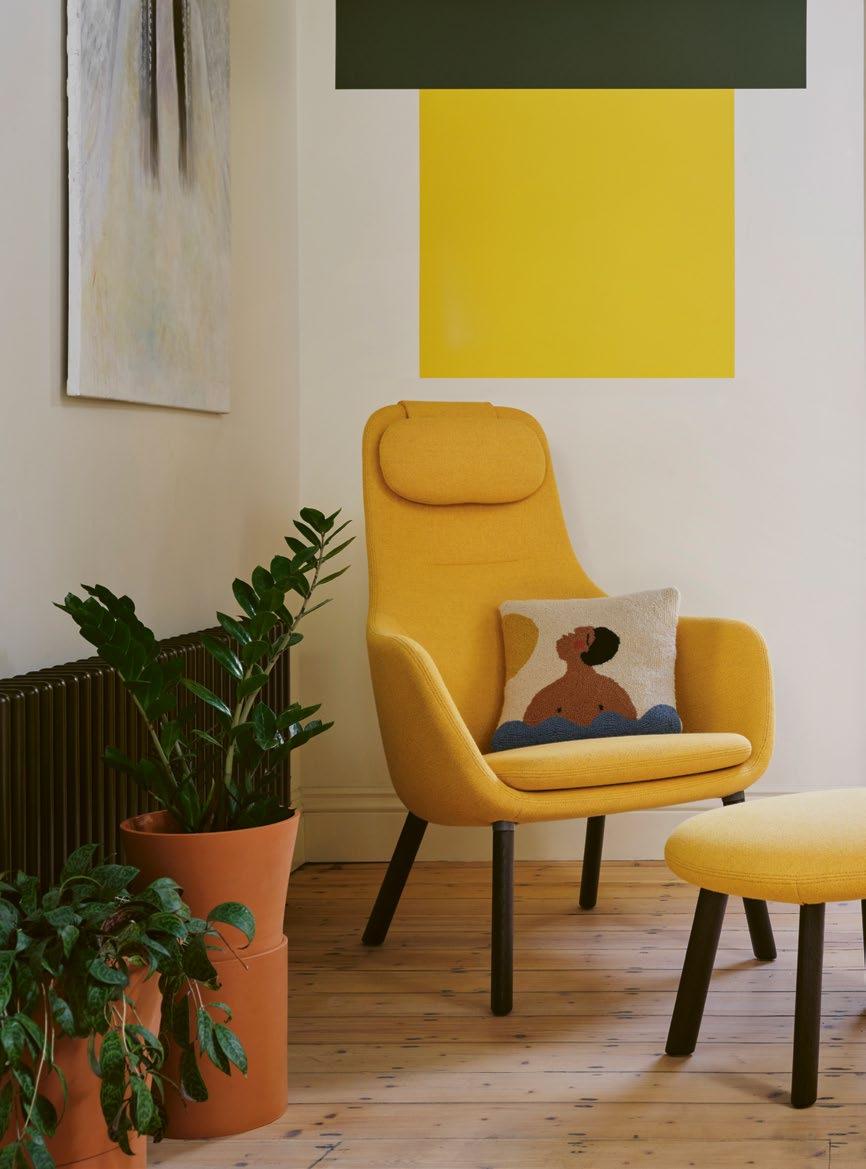
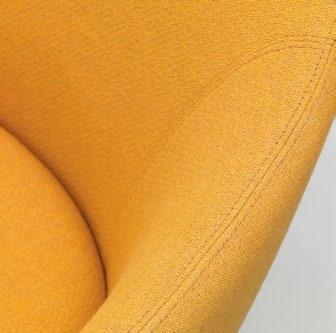
( 1 ) HAL Lounge Chair & Ottoman, with loose seat cushion · 04 dark stained solid oak, with protective varnish · Dumet, 24 mango melange · Jasper Morrison, 2021 ( 2 ) Cork Family, Model A · Jasper Morrison, 2004 ( 3 ) Cork Bowl, large · Jasper Morrison, 2020
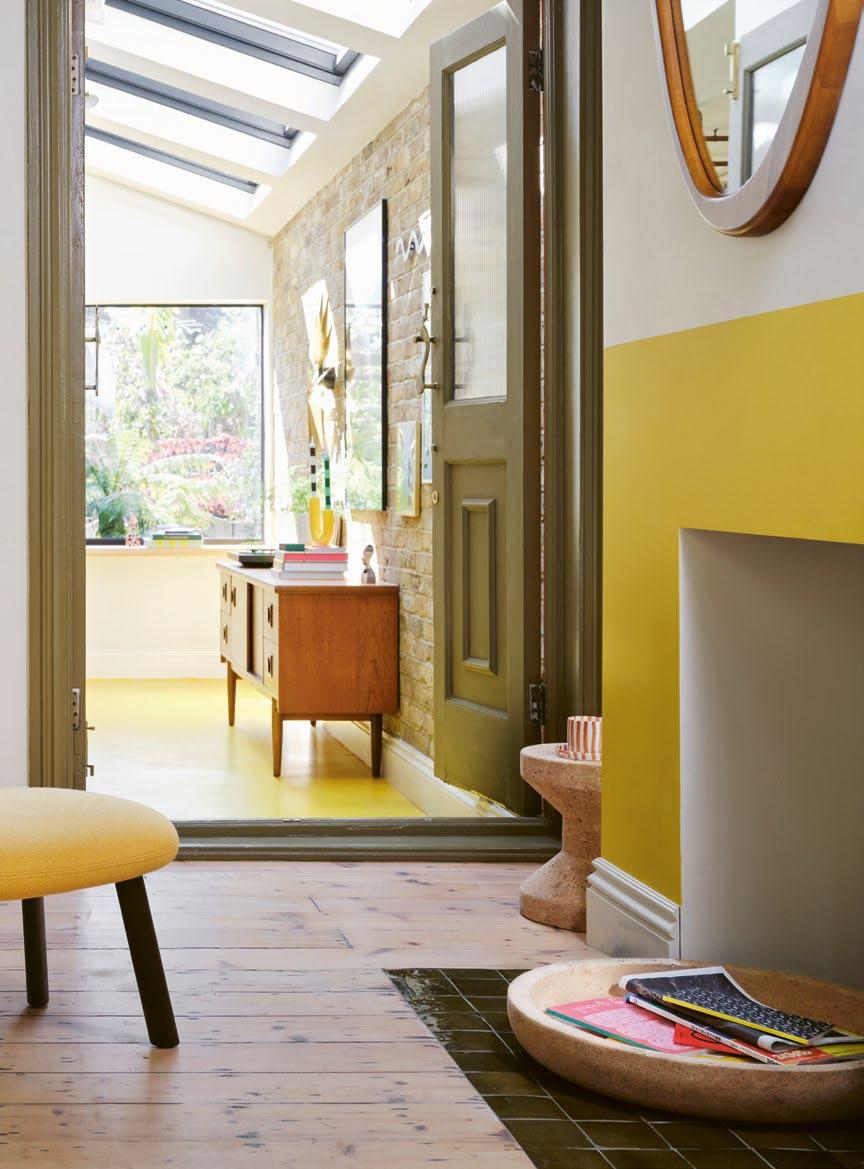
HAL Lounge Chair, Jasper Morrison, 2021
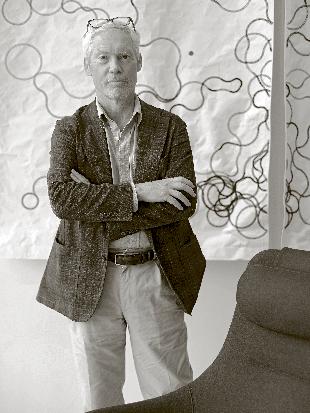
Jasper Morrison lives and works in London and Tokyo. His designs are expressions of the ‘super normal’ design philosophy: rather than seeking unusual or extravagant results, he often breathes new life into proven solutions by means of reinterpretation, further development and refinement. He has worked together with Vitra on a regular basis since 1989.
Creations by Jasper Morrison are not characterised by a strikingly new or fashionable design, but instead represent the update and refinery of a familiar typology – as demonstrated with the HAL Lounge Chair, which is Morrison’s reinterpretation of the upholstered four-legged armchair with a high backrest. Despite its compact dimensions, the lounge chair is exceptionally comfortable. It comes with soft loose seat and neck cushions or, if preferred, with an integrated seat cushion. Thanks to its understated aesthetic, the HAL Lounge Chair is extremely versatile, suited to use at home or in public spaces, and can stand alone, in pairs or in groups. The HAL Lounge Chair can be paired with the HAL Ottoman, which will allow users to enjoy its full comfort with their feet up.
The HAL Lounge Chair shown here and all other configurations can be found at: www.vitra.com
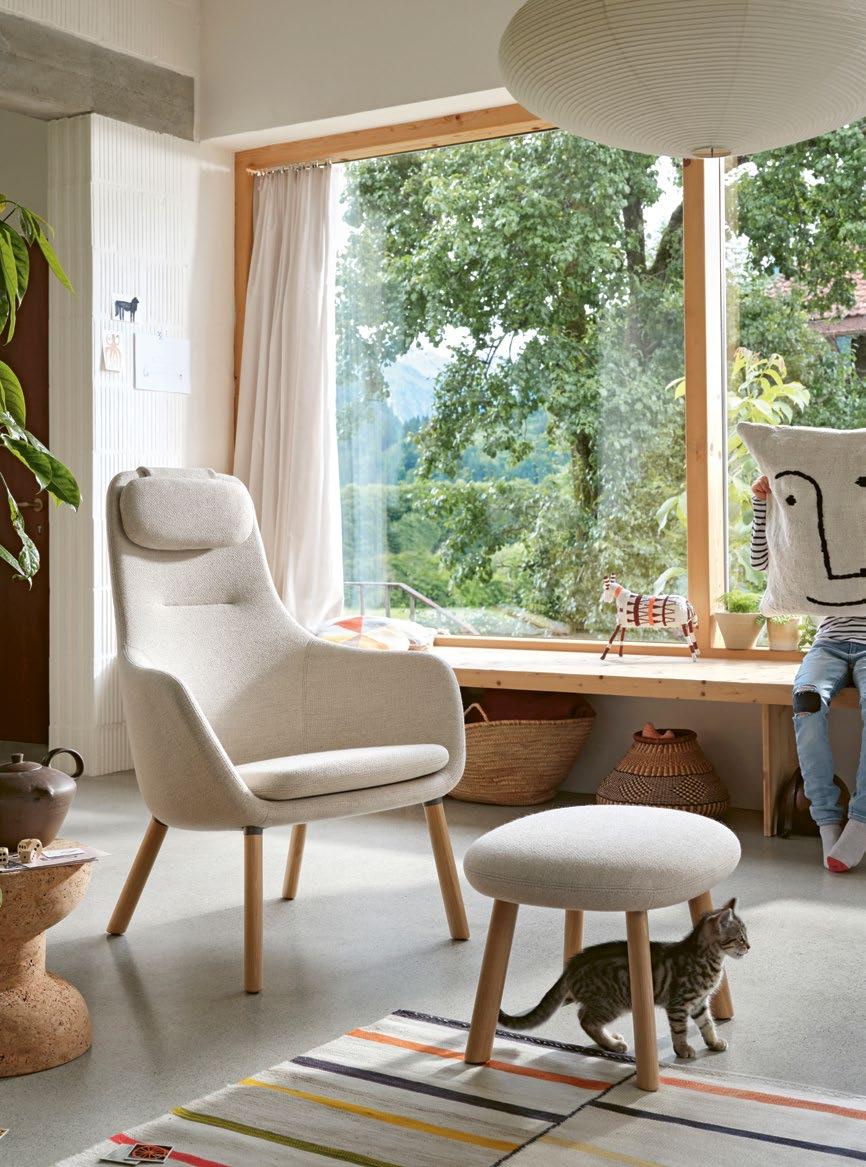
( 1 ) HAL Lounge Chair & Ottoman, with loose seat cushion · Dumet, 02 beige melange · 10 natural oak, with protective varnish · Jasper Morrison, 2021
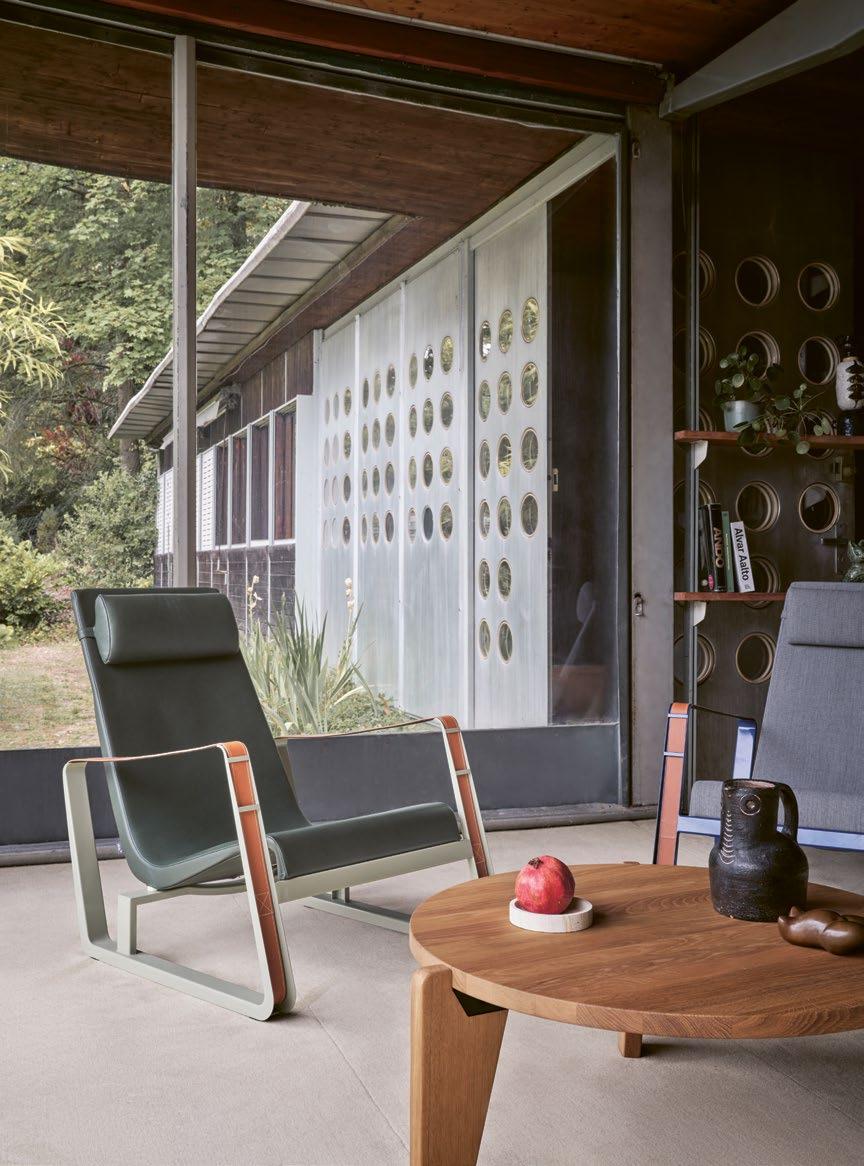
( 1 ) Cité · 13 Prouvé Gris Vermeer powder-coated (smooth) · Leather Premium F, 59 jade · Jean Prouvé, 1930
( 2 ) Guéridon Bas · 75 solid American walnut, oiled · Jean Prouvé, 1944
Photographed in the Villa Dollander, Le Lavandou, France; built in 1949 by Jean Prouvé (construction) and his brother Henri (architecture).
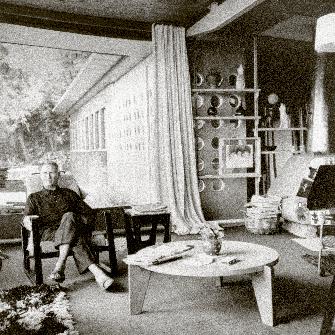
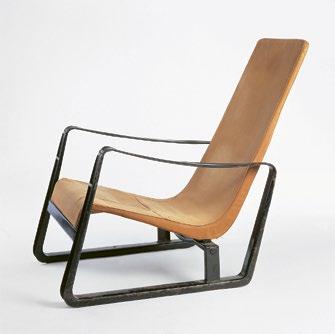
The Vitra Design Museum’s 2006 exhibition ‘Jean Prouvé: The Poetics of the Technical Object’ was revelatory. Among the pieces on show was Cité, an armchair that demonstrates the essence of the designer’s philosophy: ‘Furniture is like houses, you have to construct it.’ The French engineer and designer Jean Prouvé developed the chair in 1930 for a competition to furnish the student residence halls at Cité Universitaire in Nancy. The design is extremely comfortable, yet completely free of extraneous elements. Now considered an early Prouvé masterpiece, it is the perfect expression of the designer who called himself a ‘factory man.’
Jean Prouvé in the living room of his house in Nancy, France.
A Cité from the collection of the Vitra Design Museum, Weil am Rhein, Germany.
Cité, Jean Prouvé, 1930
Fauteuil de Salon, Jean Prouvé, 1939

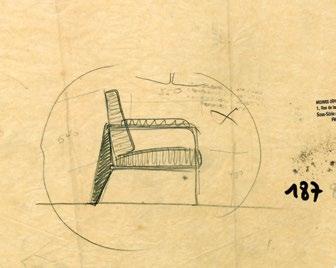
Original drawing of the Fauteuil de Salon from the Archives départementales de Meurthe-et-Moselle, Nancy, France.
Fauteuil de Salon joins simple planes into a unified architectural object with a comfortable seat surface and backrest. Rediscovered in the archives of the French engineer Jean Prouvé, the armchair has been updated in a contemporary colour palette. With solid wood armrests and the designer’s characteristic structural aesthetic, Fauteuil de Salon can be ideally combined with other pieces in the Prouvé Collection.
Jean Prouve’s designs clearly reflect the structural principles that guided his creative process.
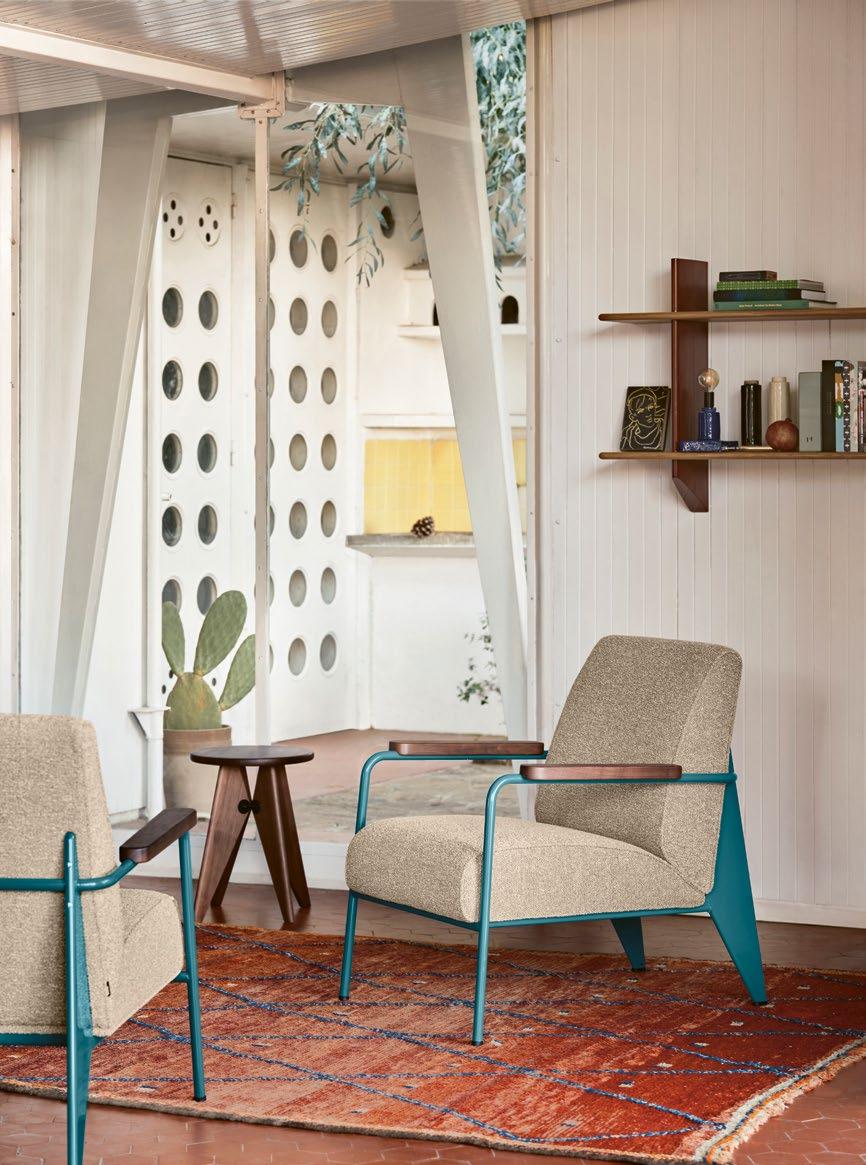
( 1 ) Fauteuil de Salon · 75 solid American walnut, oiled · 14 Prouvé Bleu Dynastie powder-coated (smooth) · Nubia, 05 cream/dark brown · Jean Prouvé, 1939 ( 2 ) Tabouret Bois · 75 solid American walnut, oiled · Jean Prouvé, 1941
( 3 ) Rayonnage Mural
04 dark stained solid oak, with protective varnish
06 Japanese red powder-coated (smooth) · Jean Prouvé, 1936
Photographed in the Villa Dollander, Le Lavandou, France; built in 1949 by Jean Prouvé (construction) and his brother Henri (architecture).
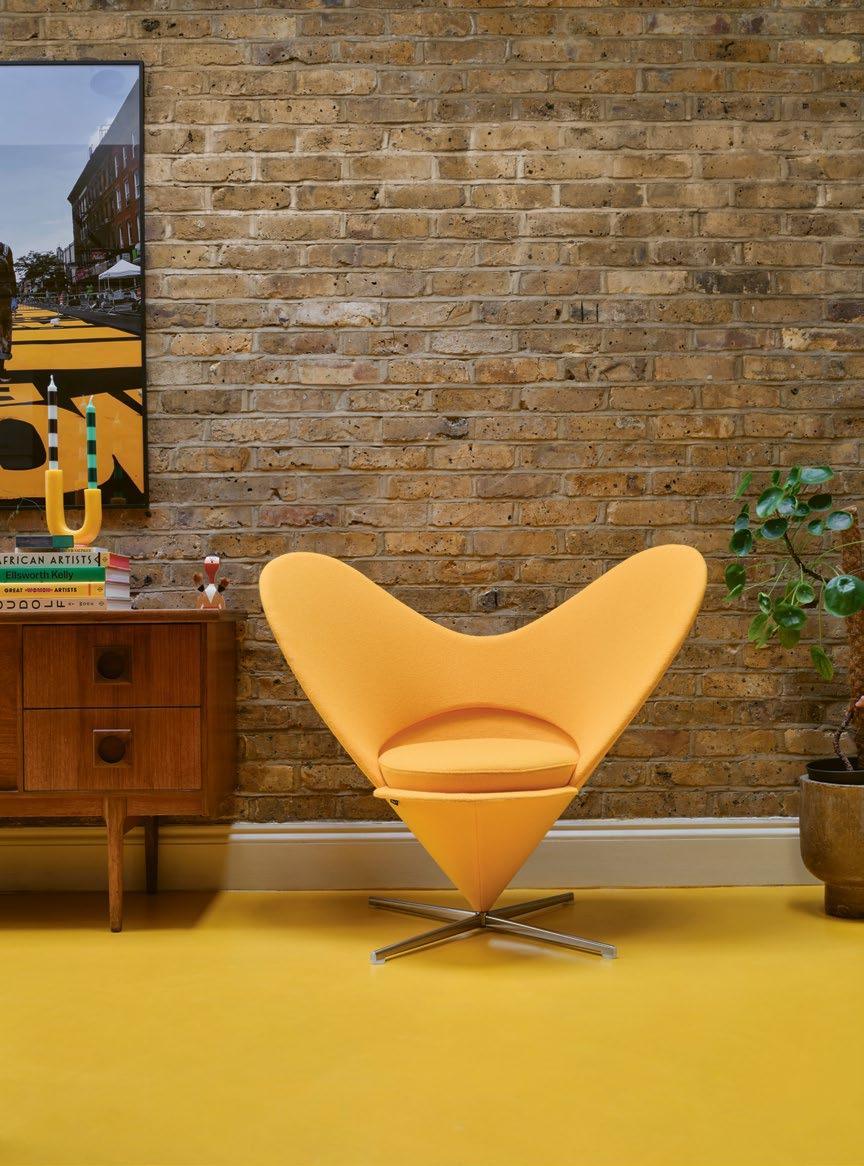
( 1 ) Heart Cone Chair · Tonus, 52 dark yellow · Verner Panton, 1958 ( 2 ) Wooden Doll, No. 10 · Alexander Girard, 1952
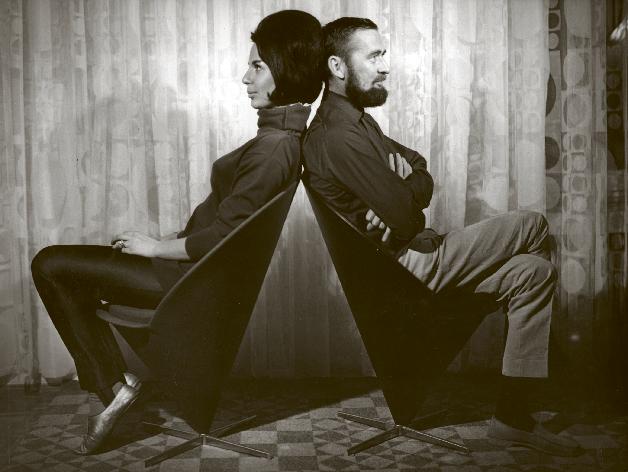
The Heart Cone Chair takes its name from the expressive, heart-shaped silhouette of its seat shell. Designed by Verner Panton in the late 1950s, the chair combines a comfortably upholstered seat with an understated, elegant base made of satin stainless steel.
Cone & Heart Cone Chair, Verner Panton, 1958
Marianne and Verner Panton sitting back to back in Cone Chairs. The photo was taken in 1965 in Starnberg, Germany. © Verner Panton Design
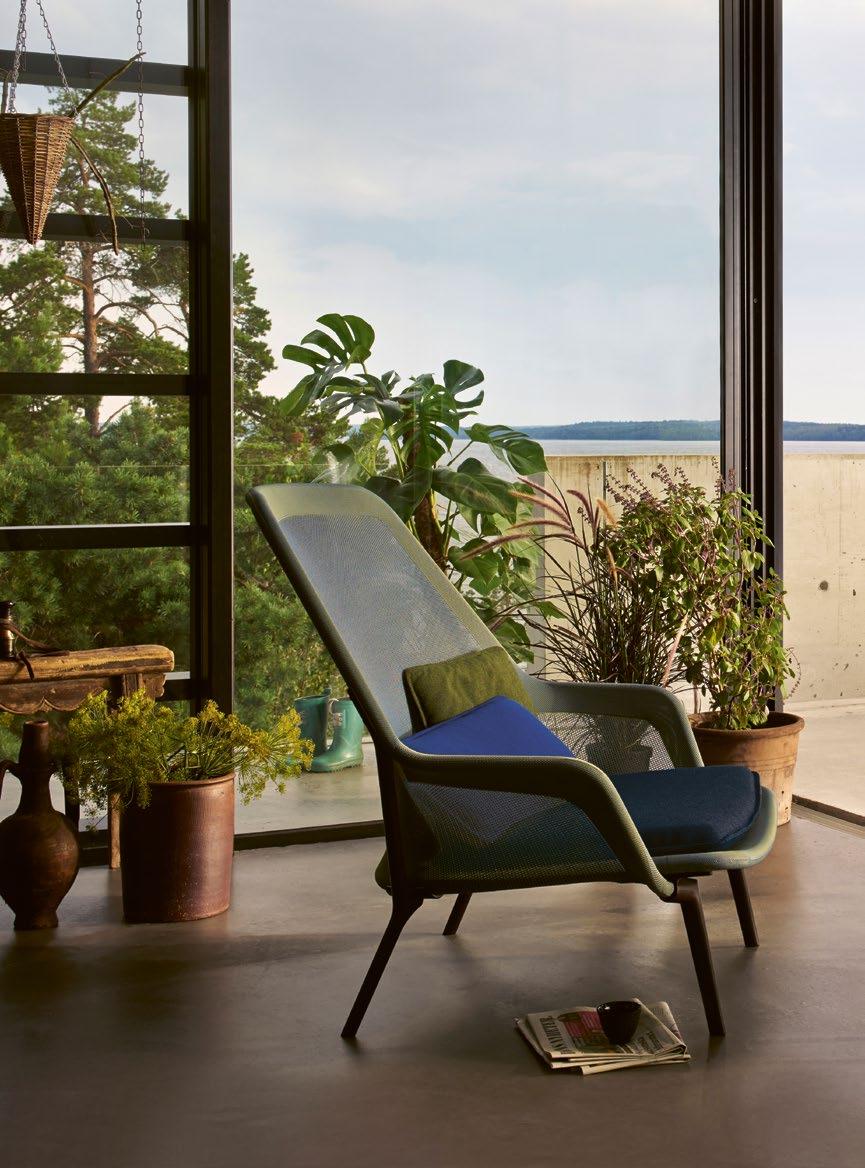
Slow Chair, Ronan & Erwan Bouroullec, 2006
(1) Slow Chair & Ottoman · Tricot - blue/green · Ronan & Erwan Bouroullec, 2006
Sofas
Sofas take the centre stage in almost any living space. Yet however varied their appearance, the actual function of a sofa never wavers: it should provide exceptional comfort. Vitra offers a wide range of different sofas, from statement pieces to modular systems, available with various soft fabrics in a broad selection of colours.
An overview of coffee tables can be found on page 60.
→ 30 Anagram Sofa
→ 34 Suita
→ 40 Mariposa Sofa
→ 37 Grand Sofà
→ 48 Soft Modular Sofa
→ 52 Polder
→ 56 Abalon Sofa
→ 58 Freeform Sofa
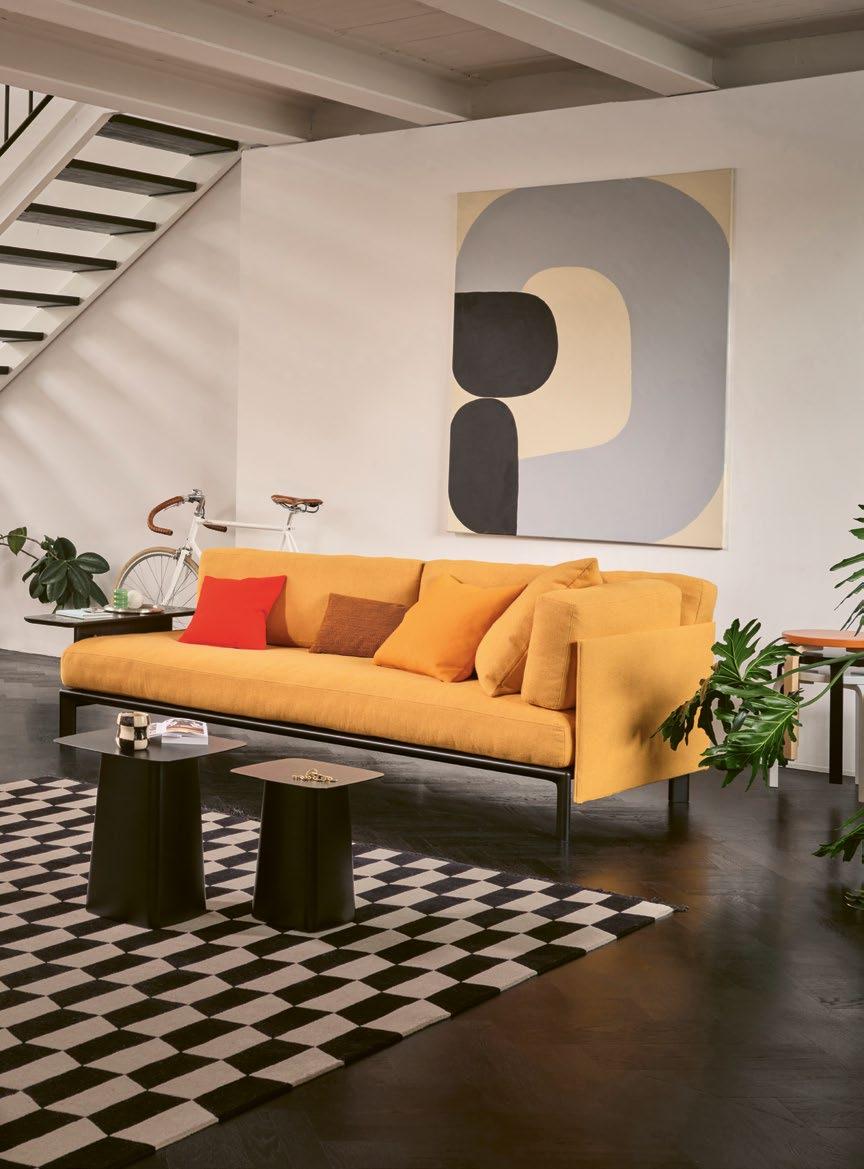
Anagram Sofa, Panter&Tourron, 2024
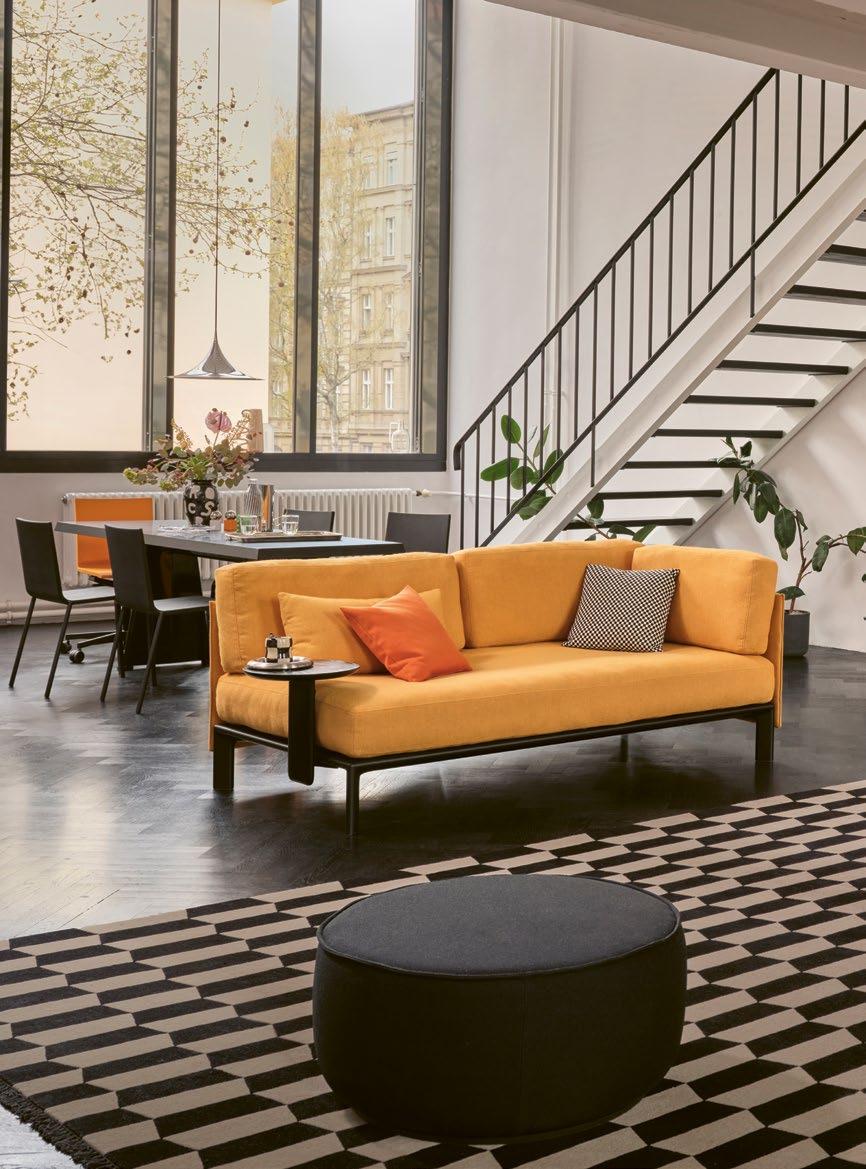
(1) Anagram Sofa · platform 900 × 1800 mm · Dumet, 24 mango melange · 30 basic dark powder-coated (textured) · Anagram attachable table Ø 350 · 68 black ash · Panter&Tourron, 2024 (2) Anagram Sofa · platform 900 × 2200 mm · Dumet, 24 mango melange · 30 basic dark powder-coated (textured) · Anagram attachable table 300 × 900 mm · 68 black ash · Panter&Tourron, 2024 (3) Vitra Cushions – various sizes and fabrics (4) Metal Side Tables Outdoor · 12 deep black powder-coated (textured) · Ronan & Erwan Bouroullec, 2004 (5) Mariposa Ottoman · Volo, 16 black · Edward Barber & Jay Osgerby, 2014 (6) .03
01 basic dark · 55 black powder-coated (textured) · Maarten Van Severen, 1998
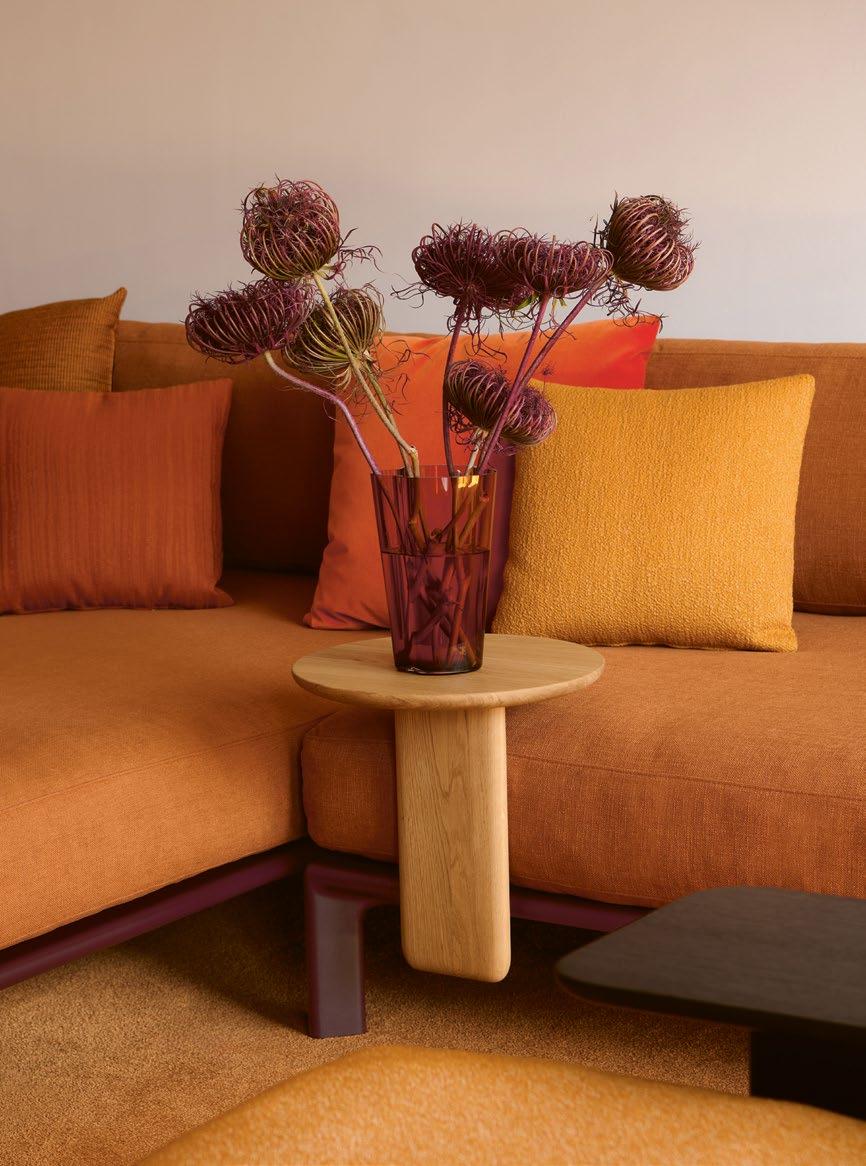
( 1 ) Anagram Sofa · Hola, 02 terracotta · 60 dark bordeaux powder-coated (textured) · Panter&Tourron, 2024 ( 2 ) Anagram attachable table Ø 350 · 70 natural solid oak, oiled finish
Panter&Tourron, 2024 ( 3 ) Vitra Cushions – various sizes and fabrics
( 4 ) Anagram Sofa · Nubia, 02 cream/pearl
37 chalk powder-coated (textured)
Anagram attachable table 300 × 900 mm
cotton white ash, oiled
Panter&Tourron, 2024 ( 5 ) Vitra Cushions · Nubia, 01 ivory/pearl
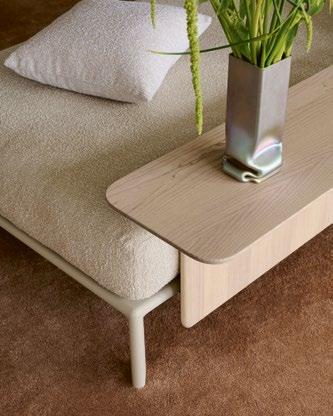
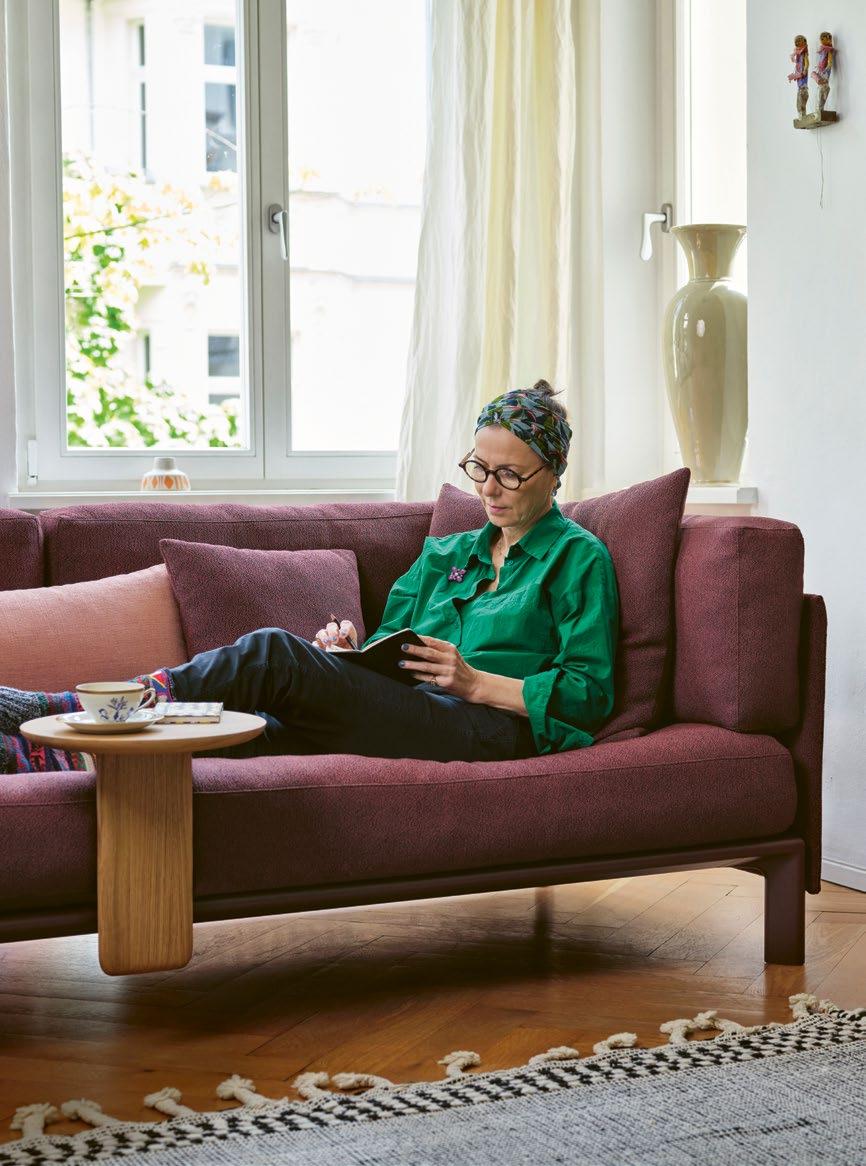
Attach a small table for your laptop today? Remove the panels at the weekend to accommodate overnight guests? And simply extend it with additional elements in two years’ time when you move into a larger flat? The Anagram Sofa is able to respond to life changes both big and small. Thanks to an ingenious click mechanism, the panels and add-on tables can be freely positioned anywhere on the platform while the modular structure allows endless modifications of the entire configuration. Anagram’s softly comfortable and inviting cushions are filled exclusively with recycled PET fibres and the fabric covers are easy to remove for cleaning or replacement.
‘Anagram lives up to its name: you can continually rearrange the individual components to create different stories and situations.’ Panter&Tourron
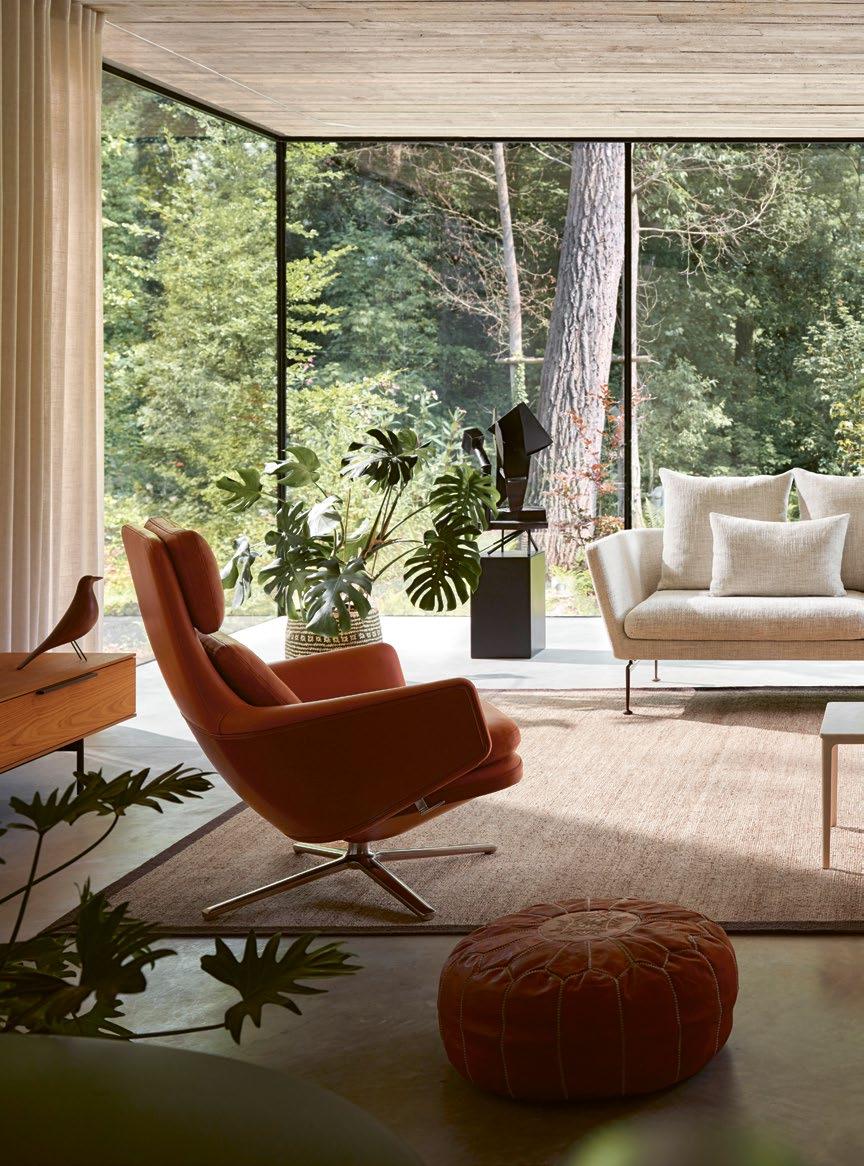
Suita, Antonio Citterio, 2010/19
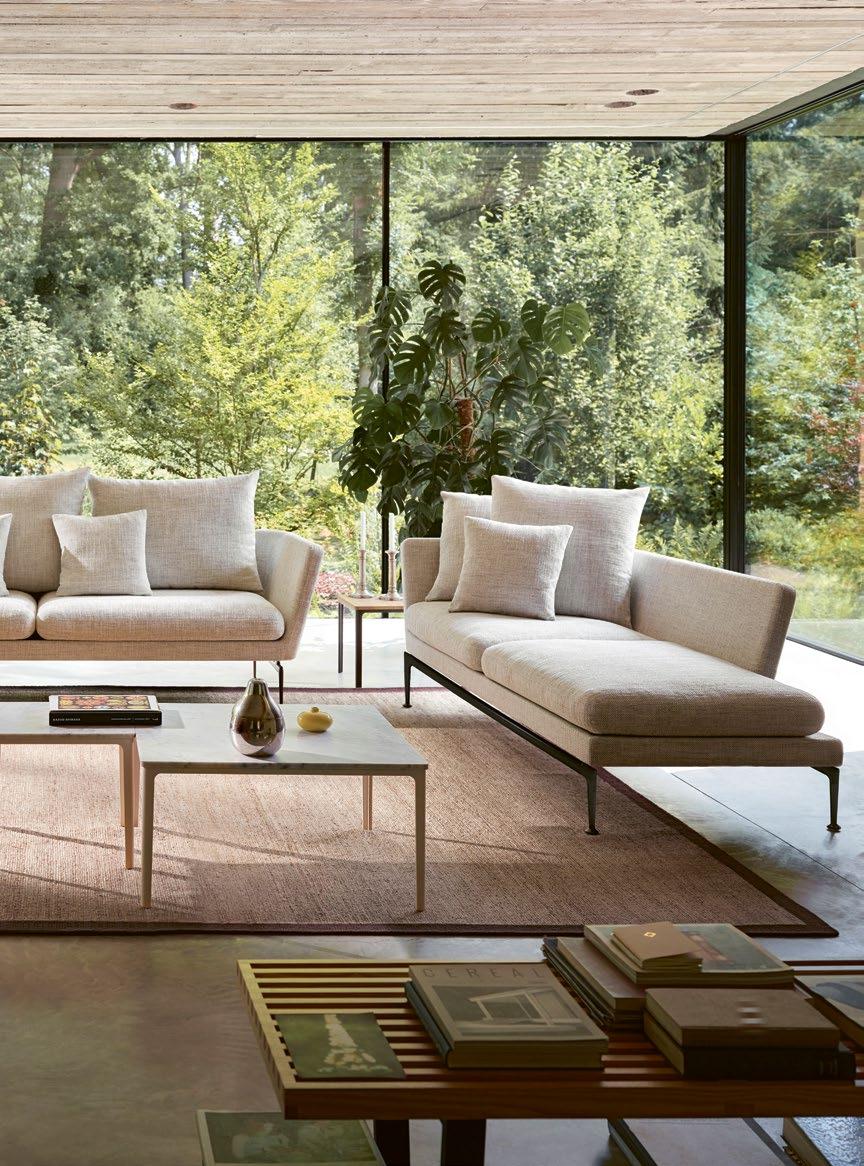
( 1 ) Suita 3-Seater, pointed cushions · Corsaro, 05 stone melange · Antonio Citterio, 2010/2019 ( 2 ) Suita Chaise Longue, pointed cushions · Corsaro, 05 stone melange · Antonio Citterio, 2010/2019 ( 3 ) Plate Table · Marble · Jasper Morrison, 2004 ( 4 ) Grand Relax · Leather Premium F, 97 cognac · Antonio Citterio, 2019 ( 5 ) Stools, Model B · walnut · Charles & Ray Eames, 1960
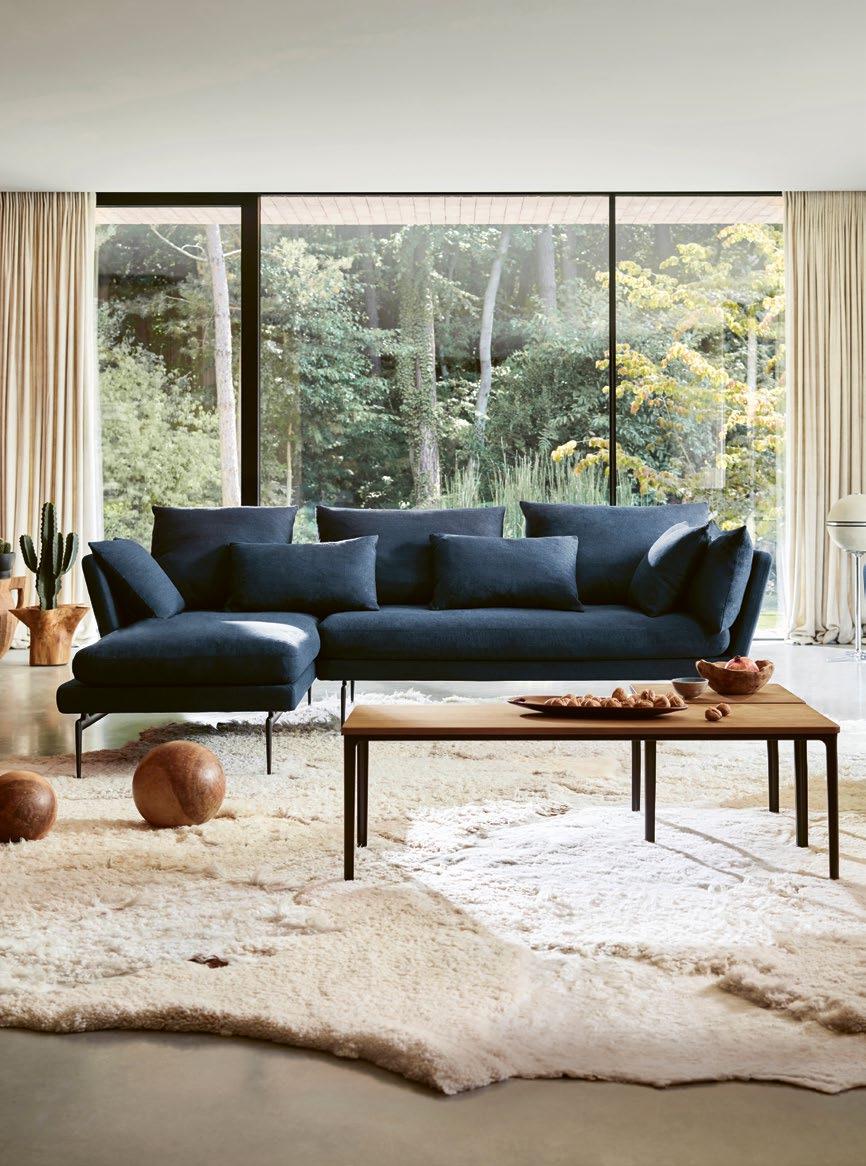
( 1 ) Suita 2-Seater open, pointed cushions with Chaise Longue small · Linho, 09 atlantic · Antonio Citterio, 2010/2019
( 2 ) Plate Table · 70 natural solid oak, oiled · Jasper Morrison, 2004 ( 3 ) Suita 3-Seater open, pointed cushions with Chaise Longue · Hola, 09 pearl · Antonio Citterio, 2010/2019
3
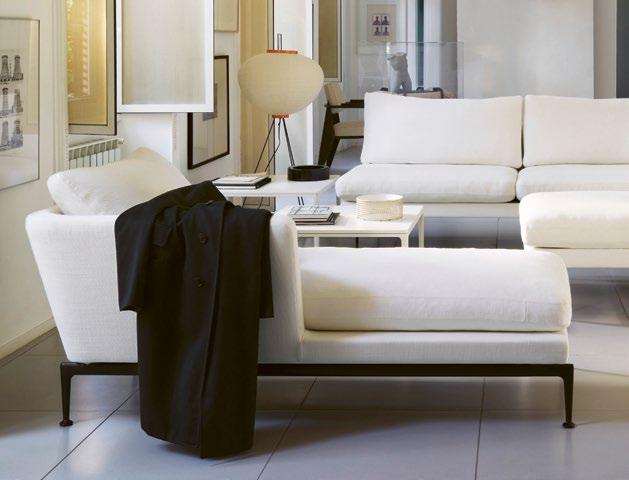
Antonio Citterio is known for his systematic approach to design, construction and materials. Nowhere is the impact greater or more tangible than with sofas, making Citterio the undisputed master in this field with a preeminent influence on contemporary living. The large Suita sofa family developed together with Vitra is an expression of this expertise.
Suita comprises various pieces of furniture that can be used as solo pieces or combined to form small and large sofa constellations. The slender body seems to float above the classic-looking base, which lends light-footed elegance to each configuration.
With a choice of individual elements, various upholstery and cushion finishes, optional head sections and shelves that can be attached at the rear, as well as a diverse range of fabrics, leather and colours, Suita offers a wide selection of individual design options. So when are you going to start planning your Suita sofa landscape?
Suita, Antonio Citterio, 2010/19
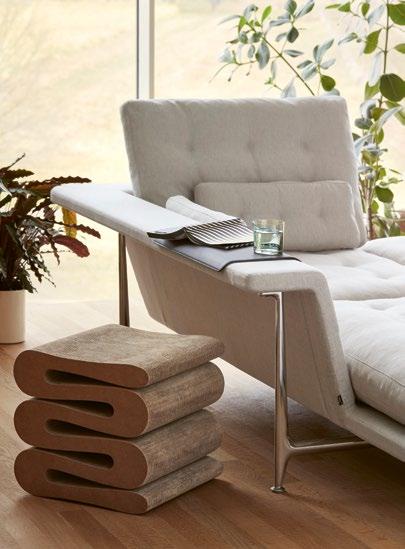
Grand Sofà is Antonio Citterio’s interpretation of luxurious comfort and contemporary design, uniting the designer’s Italian flair for elegance with Vitra’s trademark quality and precision. Despite the sofa’s expansive proportions, the generously dimensioned platform for sitting and reclining has a light, graceful silhouette. The seating elements emphasise the horizontal planes of Grand Sofà, which is available with a full-length backrest or shortened version. This makes it possible to configure a sofa landscape with an almost topographical character and an expression of lightness and variability.
Sofa Tray is a narrow rectangular tray and stable surface, specially developed for use on upholstered surfaces.
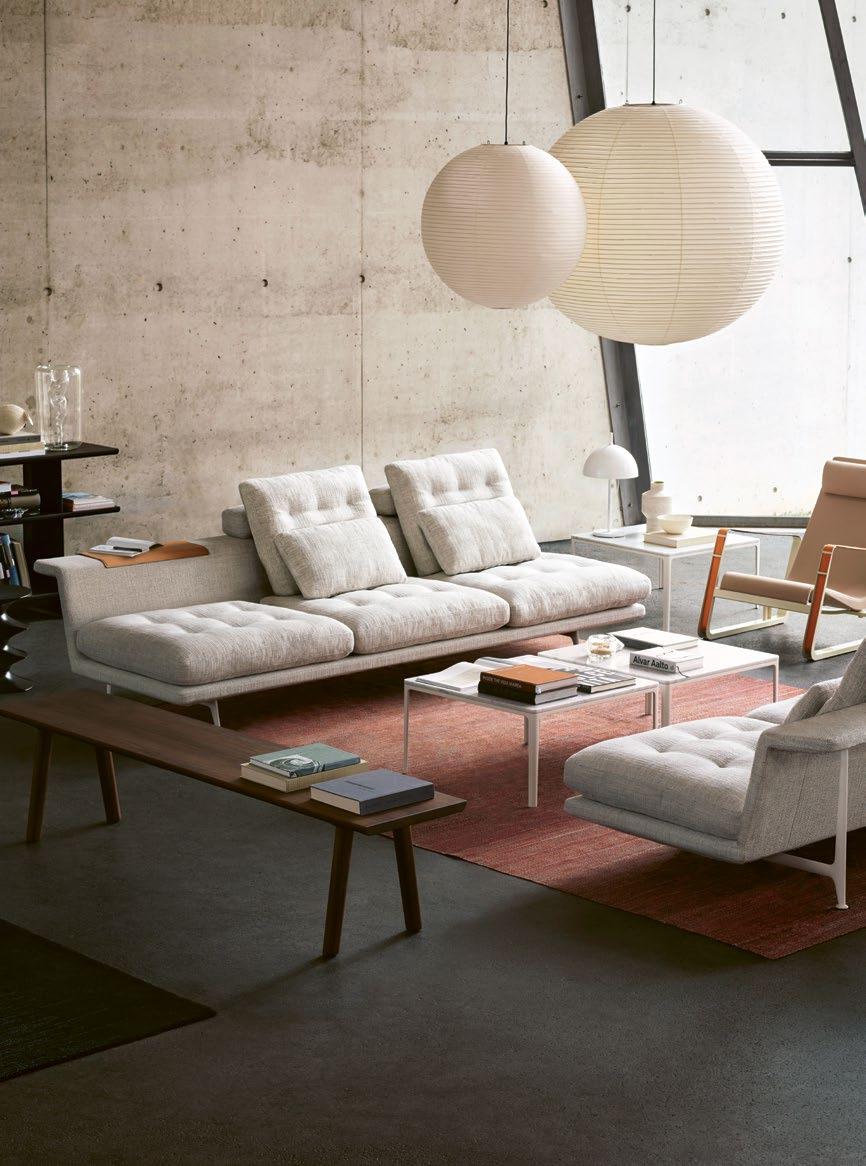
( 1 ) Grand Sofà 3½-Seater, full backrest, divided seat cushions, tufted · Corsaro, 05 stone melange · Antonio Citterio, 2017
( 2 ) Plate Table · Marble · Jasper Morrison, 2004
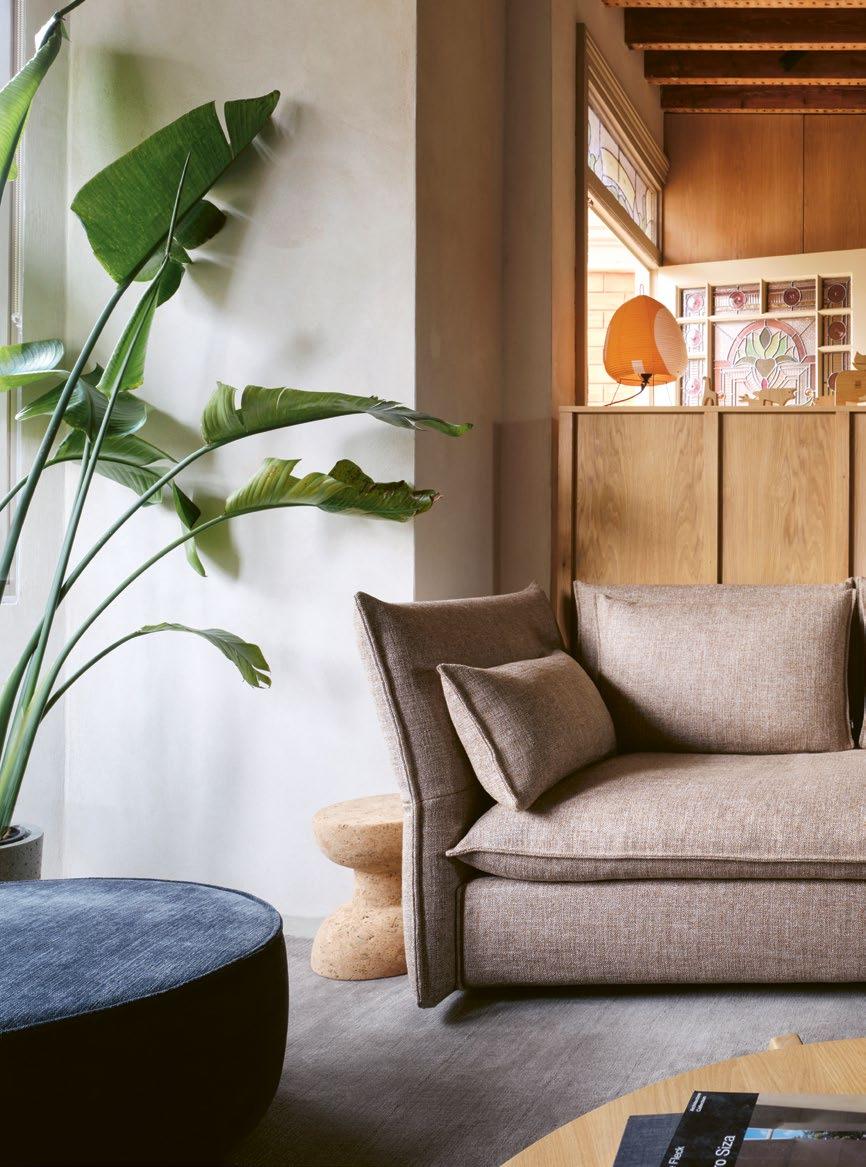
Mariposa Sofa, Edward Barber & Jay Osgerby, 2014
( 1 ) Mariposa 2-Seater · Savana, 04 papyrus melange · Edward Barber & Jay Osgerby, 2014 ( 2 / 3 ) Mariposa Ottoman large / medium · Iroko 2, 06 dark blue / 15 cognac · Edward Barber & Jay Osgerby, 2014 ( 4 / 5 ) Cork Family, Model D / Model E · Jasper Morrison, 2004
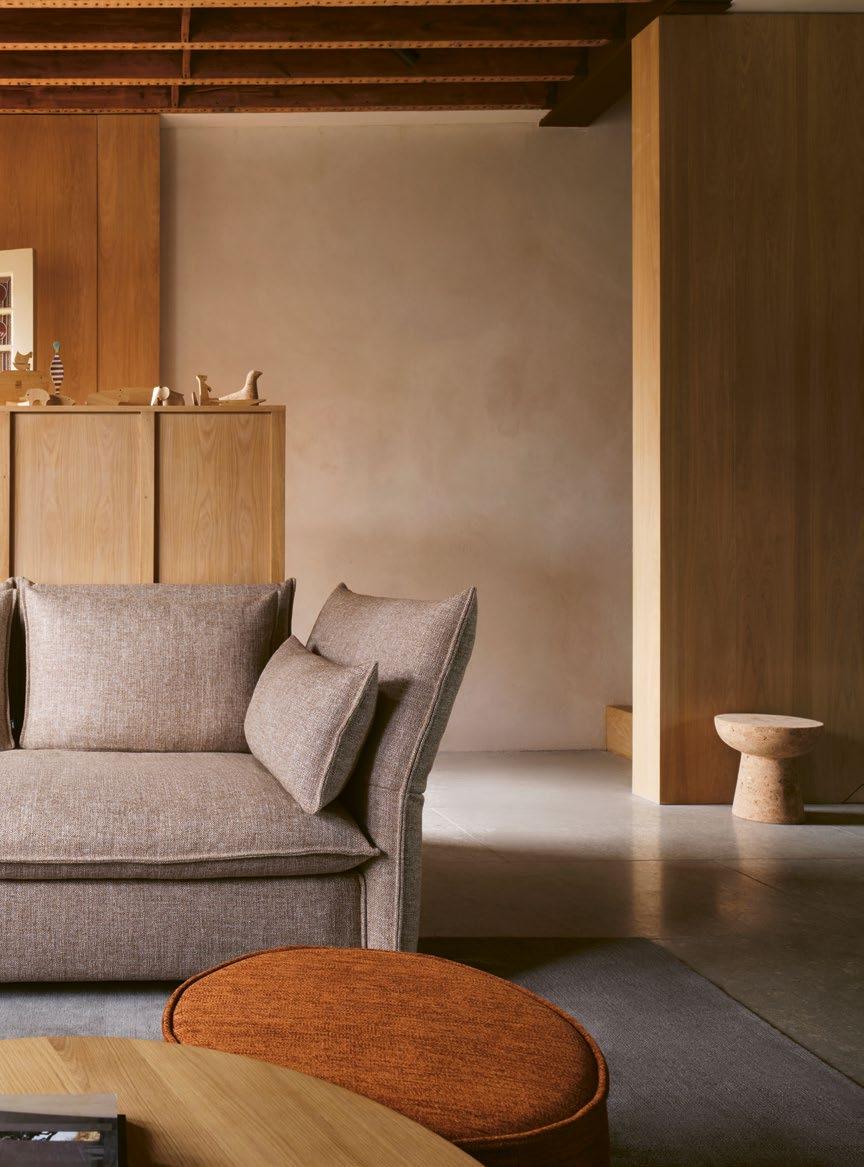
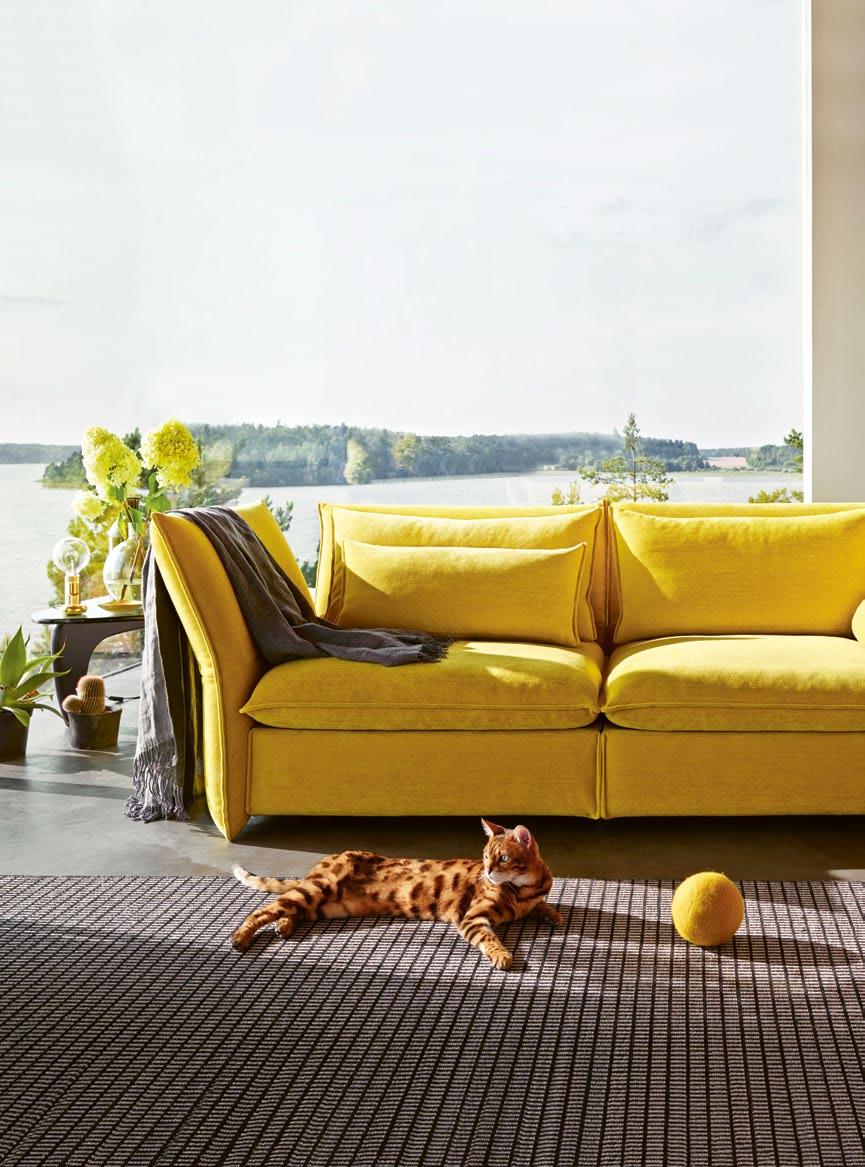
( 1 ) Mariposa 3-Seater · Iroko 2, 01 lemon · Edward Barber & Jay Osgerby, 2014 ( 2 ) Mariposa Corner / Mariposa Ottoman large · Credo, 21 royal blue/elephant · Edward Barber & Jay Osgerby, 2014/2020
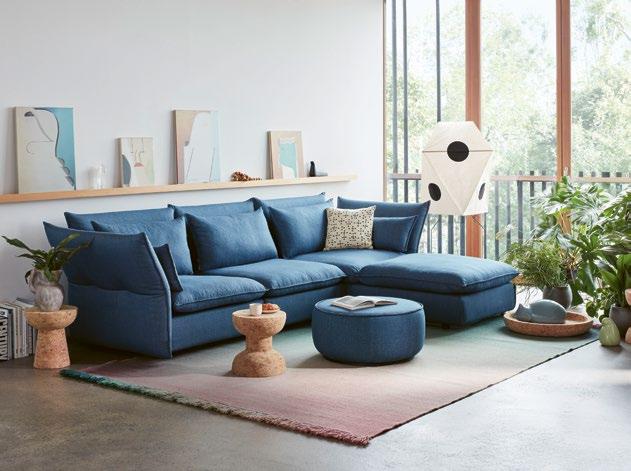
The variously sized sofas of the Mariposa family are cosy and inviting, yet with a modern touch. They owe their extraordinary comfort to the pleasantly soft upholstery and an ingenious adjustment mechanism, which makes it possible to individually adapt the side and backrest elements for various sitting or reclining positions. The Mariposa sofas do not openly display their functional features: the slim side and back elements can be continuously and silently adjusted, from an upright position to an outward angle of approximately 30° and back again. The resistance is calibrated in such a way that these elements stay in place when the sitter leans back in a normal fashion, but will adjust to the desired angle when intentional pressure is applied. This flexibility allows individual users to determine the position that is most comfortable for them.
Mariposa Sofa, Edward Barber & Jay Osgerby, 2014
Comfort in a wide palette of colours
Sofas – more than any other item of furniture – reflect the lifestyle of their owners, while their size, shape, materials and colours define the character of any interior setting. Yet the actual purpose of a sofa never varies: it should provide exceptional comfort – and for as long as possible. That is why Vitra sofas are manufactured from durable high-quality materials, mainly sourced in Europe. The style, typology and functional characteristics of the individual variants are so diverse, however, that customers often immediately and intuitively recognise which model is the right choice for their needs.
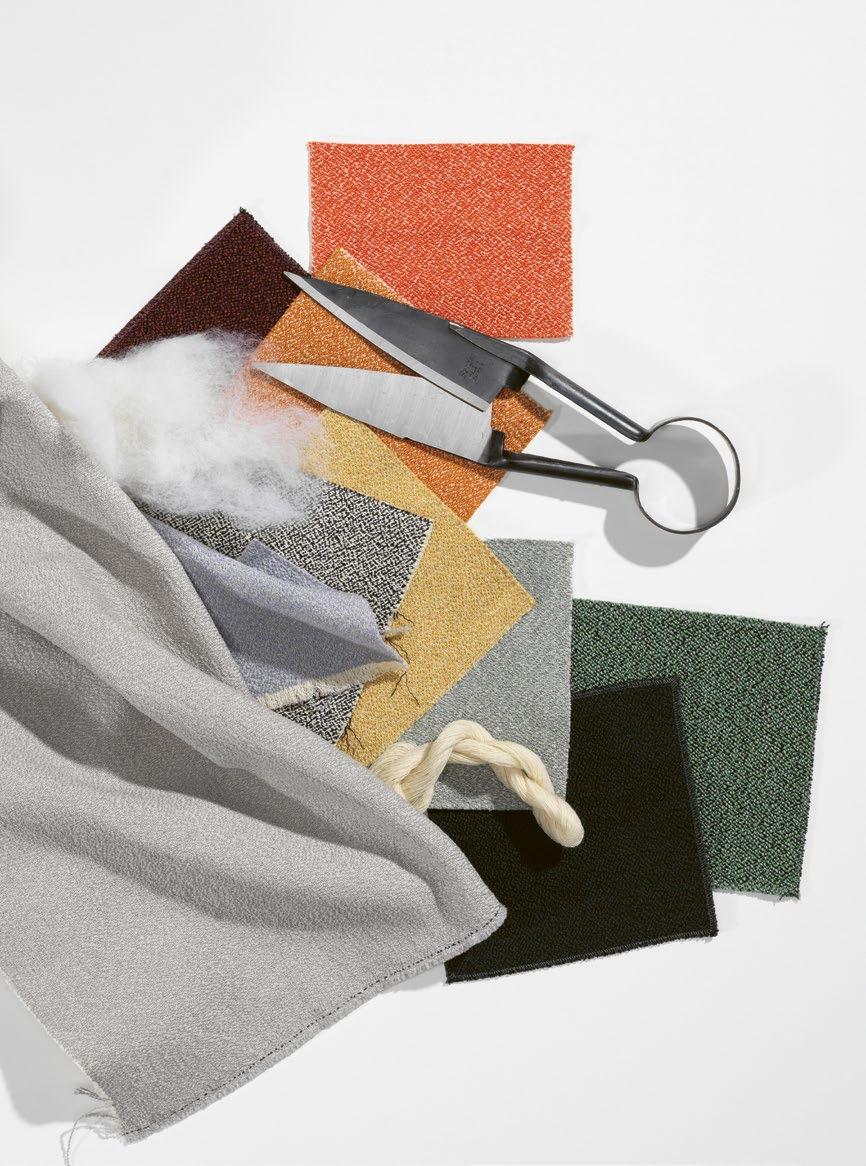
← The new Cento fabric is made of 100% high-quality virgin wool and is therefore fully recyclable. It is available in a selection of nature-inspired hues.
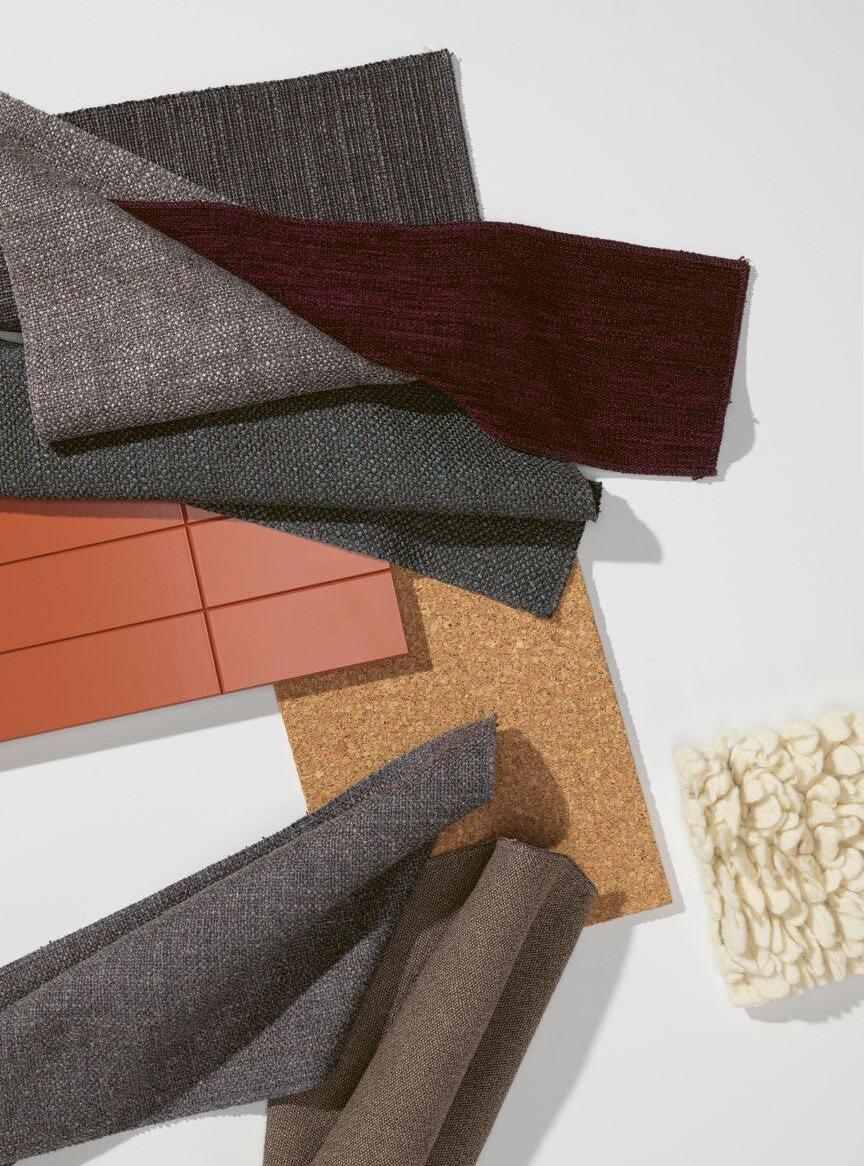
Vitra works with independent ‘authors’ – primarily with designers, but also with architects and graphic artists. What distinguishes the work of these creatives from that of other designers is the fact that their personal imprint and outlook is reflected in every one of their products. The collaborative phase results in prototypes, and requires numerous rounds of sketching, constructing, testing, modifying and improving until the high expectations demanded of a Vitra sofa are fulfilled.
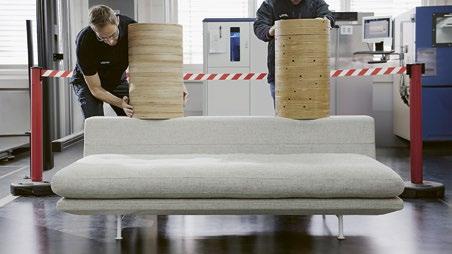
For Vitra, manufacturing longlasting products also involves selecting high-quality materials and conducting tests that simulate 15 years of use. Robust constructions, the use of high-grade foams precisely matched to the desired seating comfort and firstclass cover materials ensure qualitative longevity and durability.
To this end, Vitra maintains close relationships with suppliers, 97% of whom are based in Europe (48% in Germany) and 3% in other countries.
For a product to have a long lifespan, it is also crucial that its design remains up to date. This is why Vitra avoids short-lived trends, fo -
cusing instead on understated yet distinctive forms and features. There is no better way to ensure that products remain continually relevant, when other things that perhaps seemed more exciting at the time have long since faded.
To produce sofas that meet high expectations of comfort, Vitra has constituted a team of upholstery experts over the years. With passion for their craft and enthusiasm for innovation, they transform the designers’ ideas into outstandingly comfortable solutions.
Vitra sofas – both new and existing models – are extensively tested in the company’s own test center: to guarantee an exceptional level of quality, Vitra testing goes above and beyond official regulations. Final production takes place at Vitra’s manufacturing sites in Europe and after the customer’s purchase, we devote as much care and attention to our after-sales service as we do to our products.
The upholstered covers in fabric or leather are part of the Vitra Colour & Material Library, which Vitra developed in collaboration with designer Hella Jongerius. The different materials and colours
are carefully coordinated and curated to offer countless possible combinations. Vitra fabrics vary in their properties, applications and composition, but they are all produced in Europe – in Germany, Italy, Scandinavia and the UK to be precise. Vitra leathers differ in their thickness and surface characteristics, but are all obtained from cowhides that are a by-product of cattle breeding for food production. Tanners must comply with strict environmental reg ulations when manufac turing leather and have developed stateof-the-art technologies to ensure eco-friendly processes. This makes leather is a sustainable material –one that ages well and acquires an attractive patina through use.
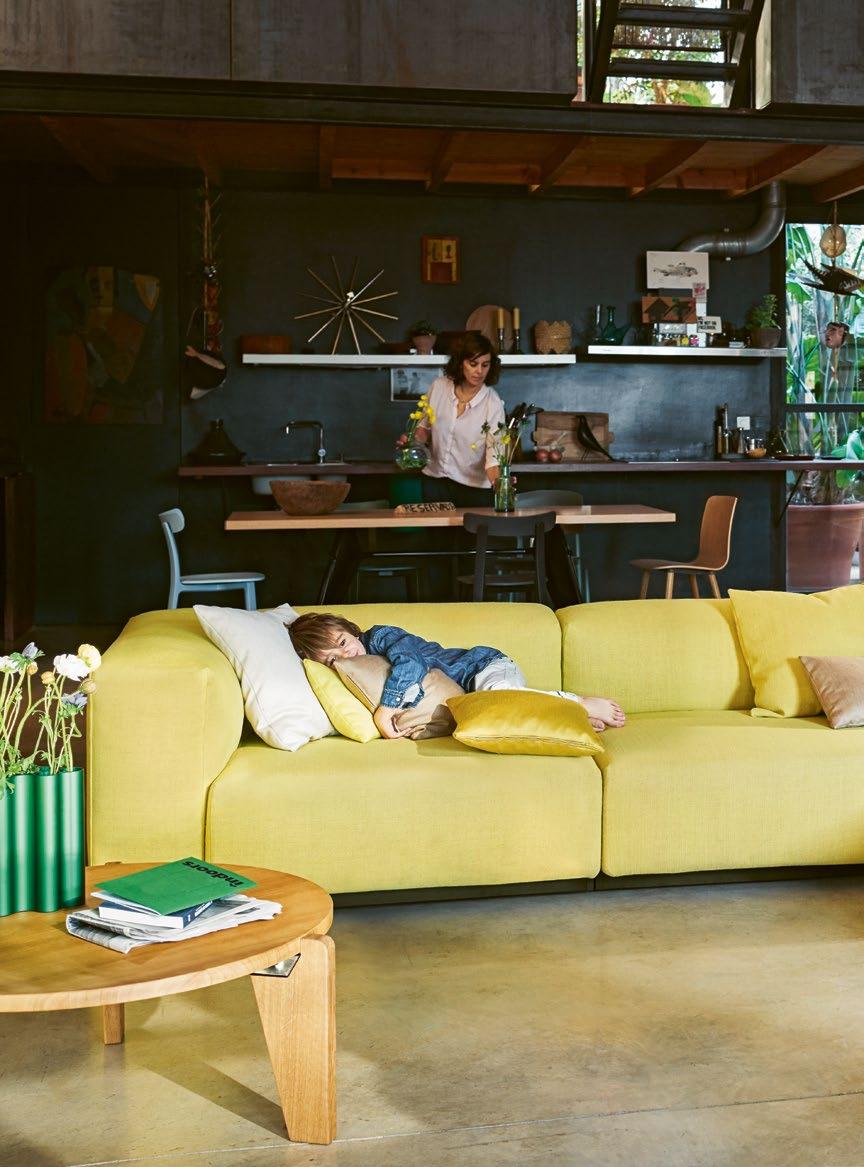
Soft Modular Sofa, Jasper Morrison, 2016
( 1 / 2 ) Soft Modular Sofa Three seater / Ottoman · Credo, 19 lime/curry · Jasper Morrison, 2016
( 3 ) Guéridon Bas · 70 natural solid oak, oiled · Jean Prouvé, 1944
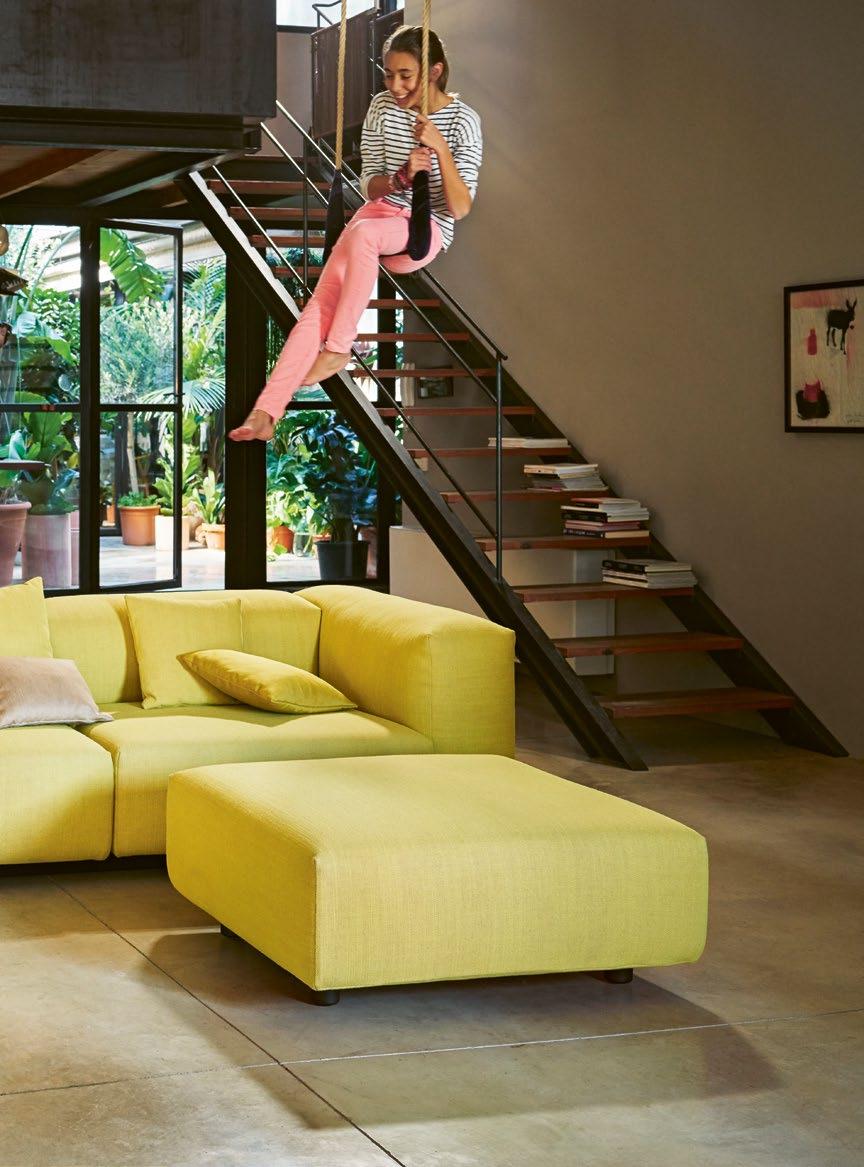
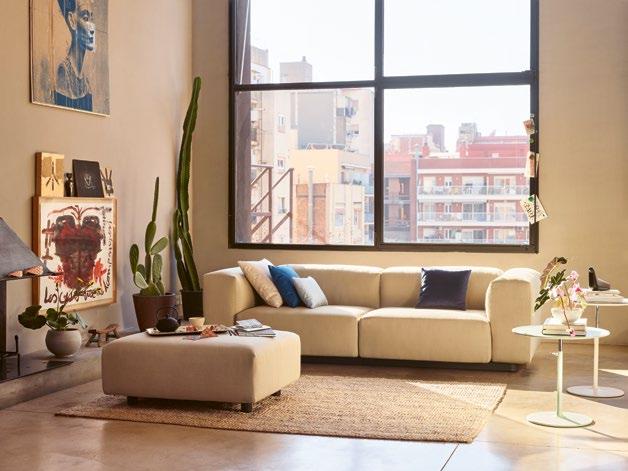
Jasper Morrison’s design of the Soft Modular Sofa successfully couples home-like informality with precise detailing and expressive clarity – firmly in line with his philosophy of ‘super normal’ design. As a result, the Soft Modular Sofa functions like an architectural element that can be subtly integrated in any interior. Thanks to its modular design with side, corner and central elements as well as a chaise longue, the size and form of the sofa are adaptable to a diverse range of requirements. And optional elements like the ottoman and additional cushions as well as a wide selection of leather and fabric covers in an array of colours allow further personalisation of any individual configuration.
Soft Modular Sofa, Jasper Morrison, 2016
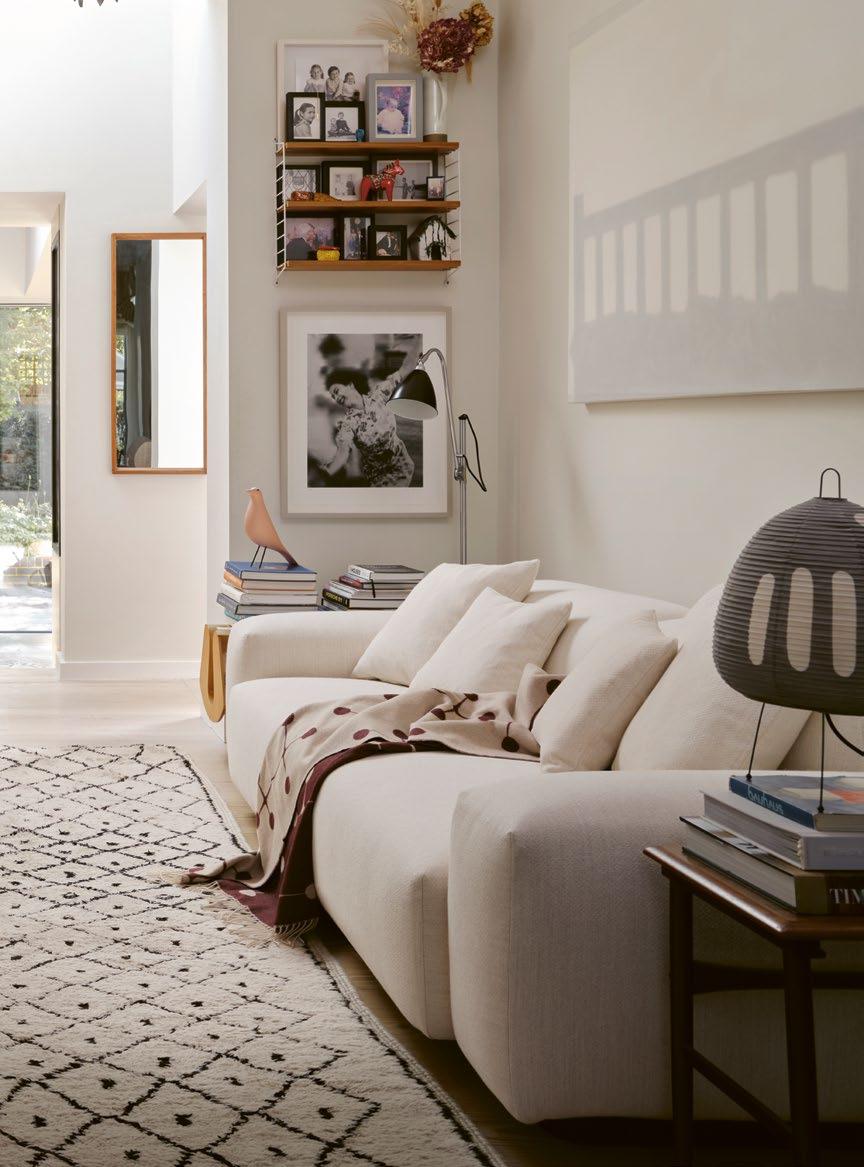
( 1 ) Soft Modular Sofa Two seater with Ottoman · Linho, 02 sand · Jasper Morrison, 2016 ( 2 ) Soft Modular Sofa Two-Seater · Dumet, 01 ivory melange · Jasper Morrison, 2016 ( 3 ) Vitra Cushions – various sizes and fabrics
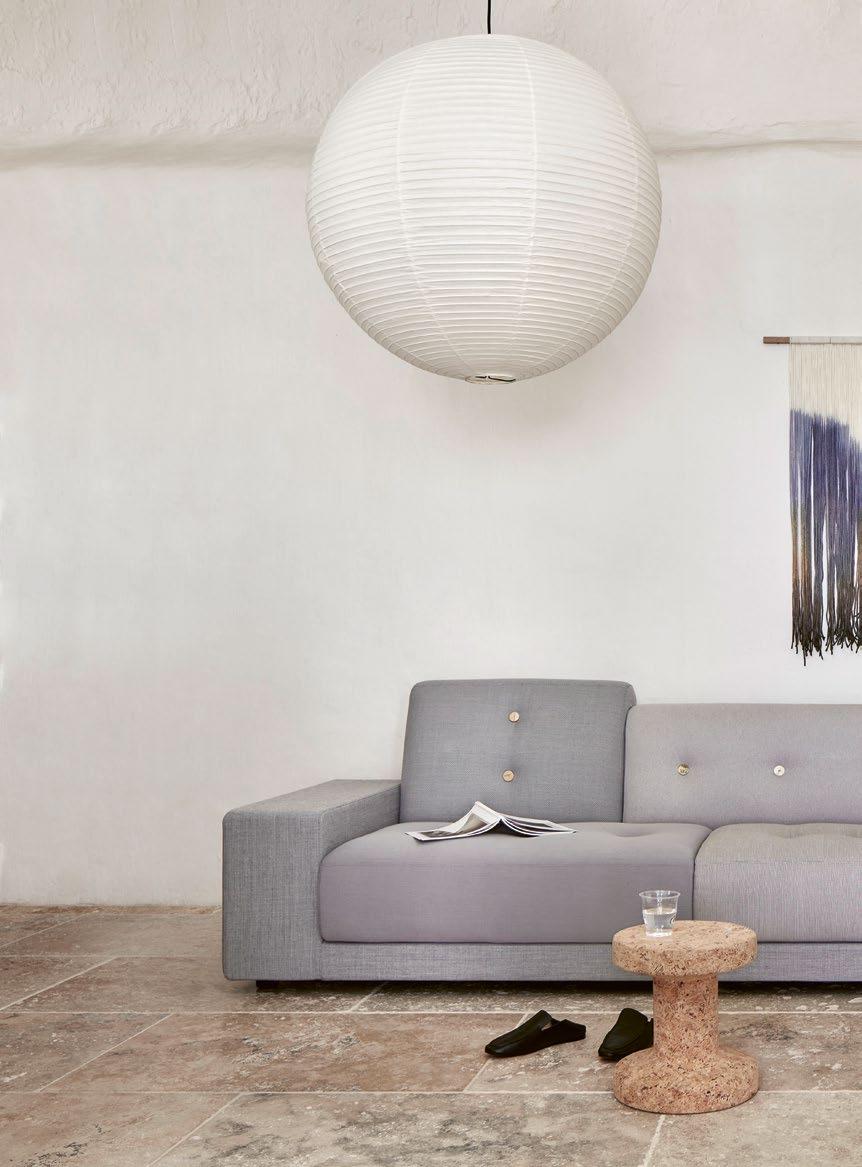
Polder, Hella Jongerius, 2005/15
( 1 ) Polder Sofa · Fabric mix 'The Pebble Greys' · Hella Jongerius, 2015
( 2 / 3 ) Cork Family, Model B / Model C · Jasper Morrison, 2004
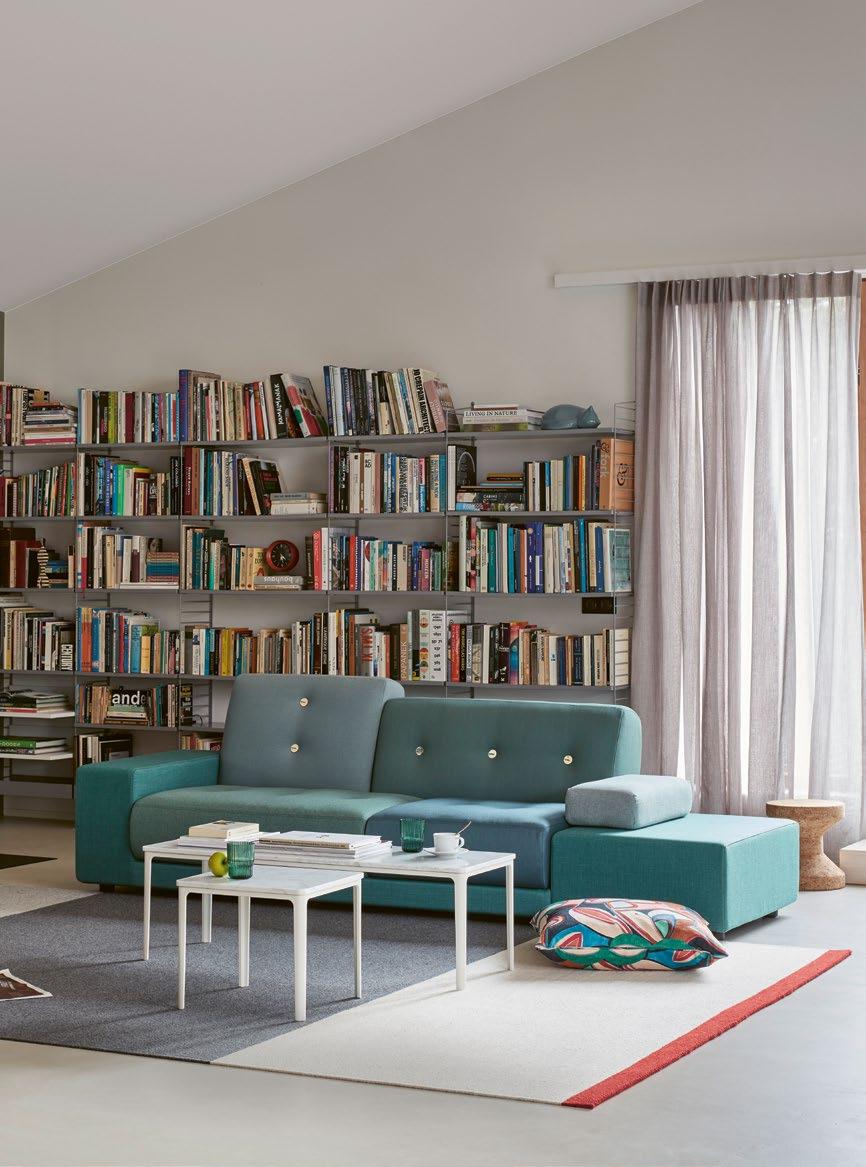
( 1 ) Polder Sofa · Fabric mix 'The Sea Greens' · Hella Jongerius, 2005/2015
( 2 ) Plate Tables · Marble · 04 white powder-coated (textured) · Jasper Morrison, 2004
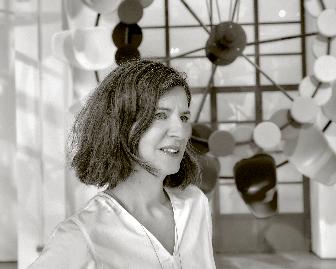
The Dutch designer Hella Jongerius lives and works in Berlin. She founded the Jongeriuslab studio in 1993 and began collaborating with Vitra in 2004. Since then, she has not only contributed a substantial number of designs to the continually expanding Vitra Home Collection, but has also applied her expertise in the realm of colours and materials to the Vitra Colour & Material Library.
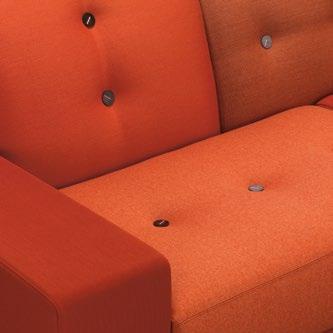
The distinctive character of Hella Jongerius’s comfortable Polder Sofa derives from the combination of diverse fabrics and colours, an asymmetrical shape and charming details.
Dutch designer Hella Jongerius named her sofa ‘Polder’ with its different colour compositions after the low-lying flatlands in Holland, which have been reclaimed from the sea.
The smaller Polder Compact is available in addition to the Polder Sofa. Both can be configured with the higher armrest on the left or right side, making them adaptable to different interior layouts. The platform is available separately and can also be used as an ottoman.
Abalon Sofa, Ronan & Erwan Bourroullec, 2022
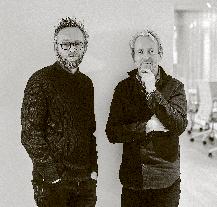
The brothers Ronan and Erwan Bouroullec live and work in Paris. Their oeuvre ranges from small everyday objects to architectural projects. They have worked with Vitra since 2000 and have contributed numerous designs to both the office and home collections.
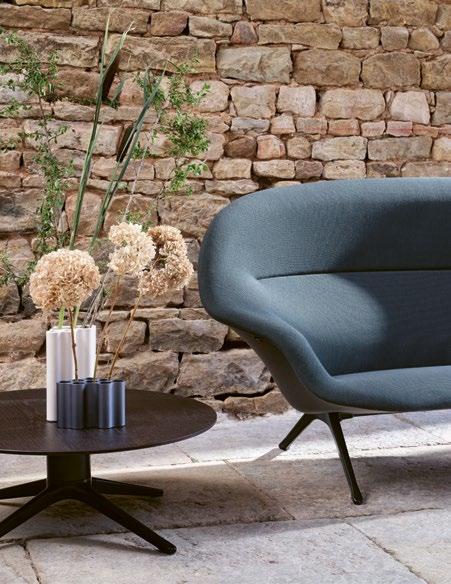
Taking its name from the shell of a sea snail, Abalon forms its own architecture for seating circles: with its organically curved shape, the sofa evokes a circle to which people feel drawn. Generously accommodating three people, the upholstered seat shell features different knitted fabric covers on the front and back. These are available in a diverse selection of hues and, together with the choice of two colours for the base frame, result in a wide range of configuration options. The fabric covers of the sofa can be removed in full for cleaning or replacement.
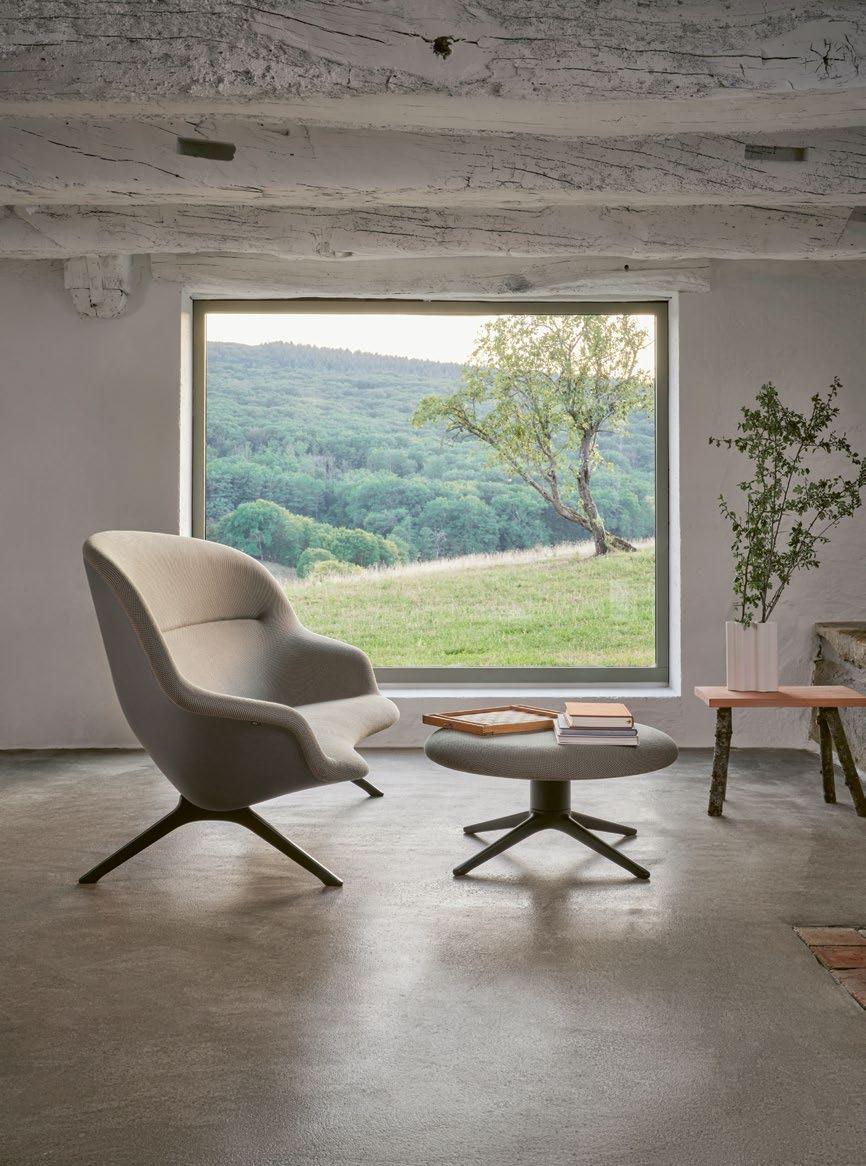
( 1 ) Abalon Sofa · Drop, 10 black/dark grey (191) · Planum, 03 black (1191) · Ronan & Erwan Bouroullec, 2022 ( 2 ) Abalon Table · 04 dark oak, with protective varnish · 12 deep black powder-coated (smooth) · Ronan & Erwan Bouroullec, 2022 ( 3 ) Nuage, small · steel blue anodised · Ronan & Erwan Bouroullec, 2016 ( 4 / 5 ) Abalon Sofa / Abalon Platform · Drop, 02 dark green/ochre (951) · Planum, 01 silver grey (111) · Ronan & Erwan Bouroullec, 2022 ( 6 ) Nuage (céramique), small · white · Ronan & Erwan Bouroullec, 2018
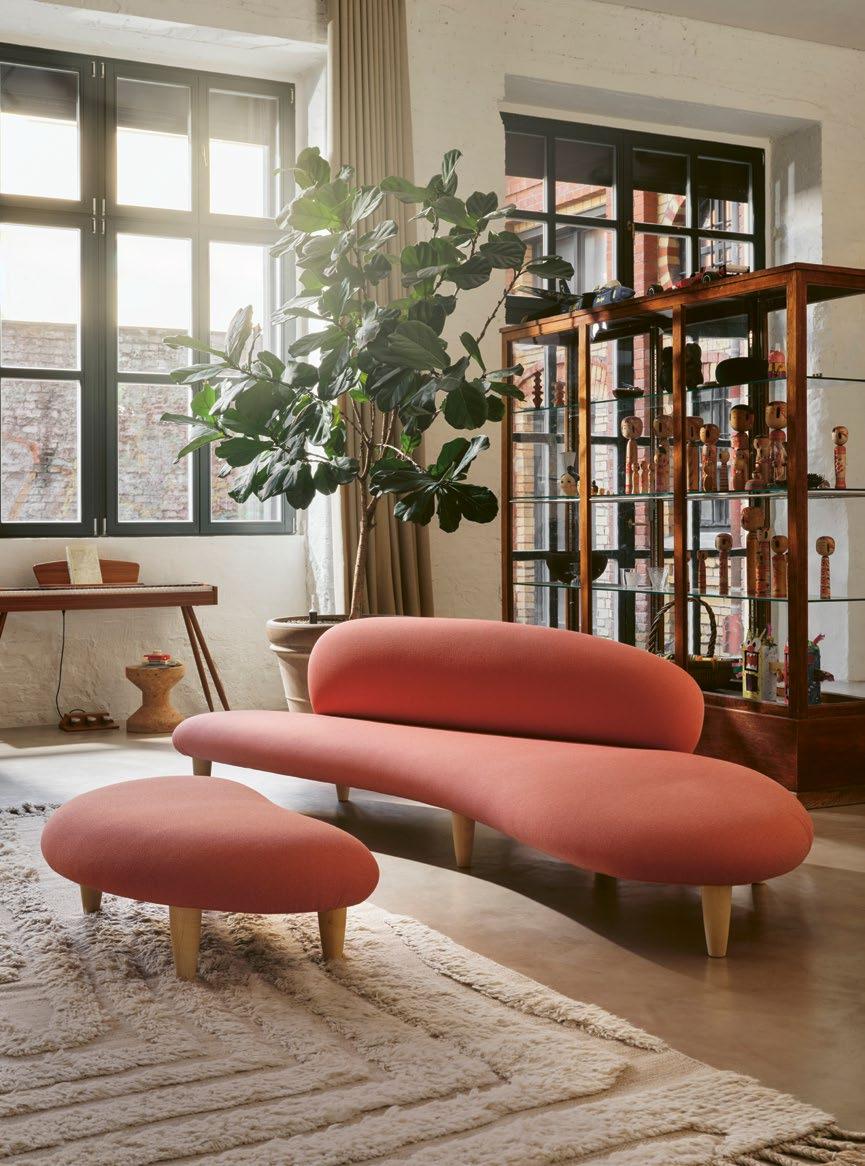
( 1 ) Freeform Sofa · Credo, 23 pale rose/dark orange, 54 maple · Isamu Noguchi, 1946 ( 2 ) Cork Family, Model A · Jasper Morrison, 2004
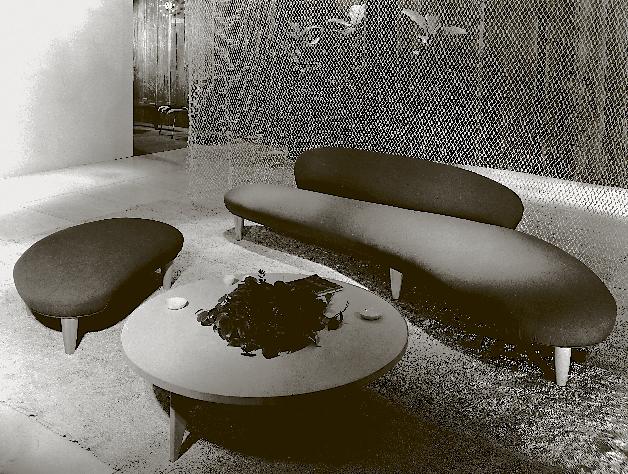
The Japanese-American designer and sculptor Isamu Noguchi approached the task of furniture design with the organic aesthetic of his sculptural work in mind. This is also evident in his Freeform Sofa, which appears like a large, flatly rounded river stone that has been smoothed by centuries of running water. The fluid, graceful shape of this slender sofa distinguishes it clearly from other designs of the time. It has a sculptural presence in any room –iconic yet reserved.
Freeform Sofa, Isamu Noguchi, 1946
Freeform Sofa and Ottoman, 1946
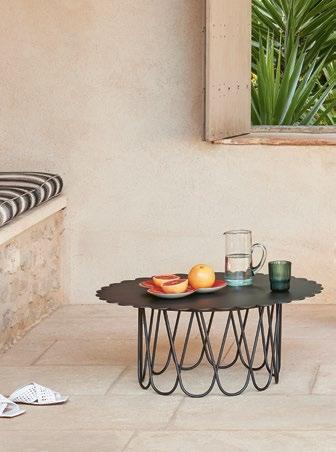
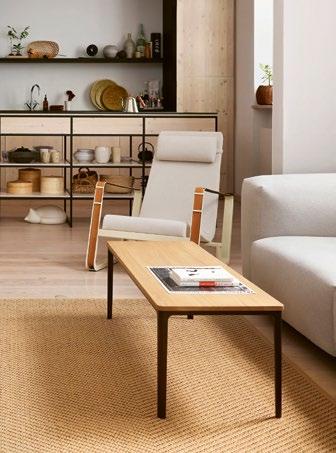
Coffee tables enhance any setting. Thanks to Vitra’s collection of low tables, the perfect companion can be found for any sofa or lounge chair.
Additional coffee tables can be found on pages 7, 8, 13, 20, 31, 35, 36, 39, 48, 54, 108, 132, 133.
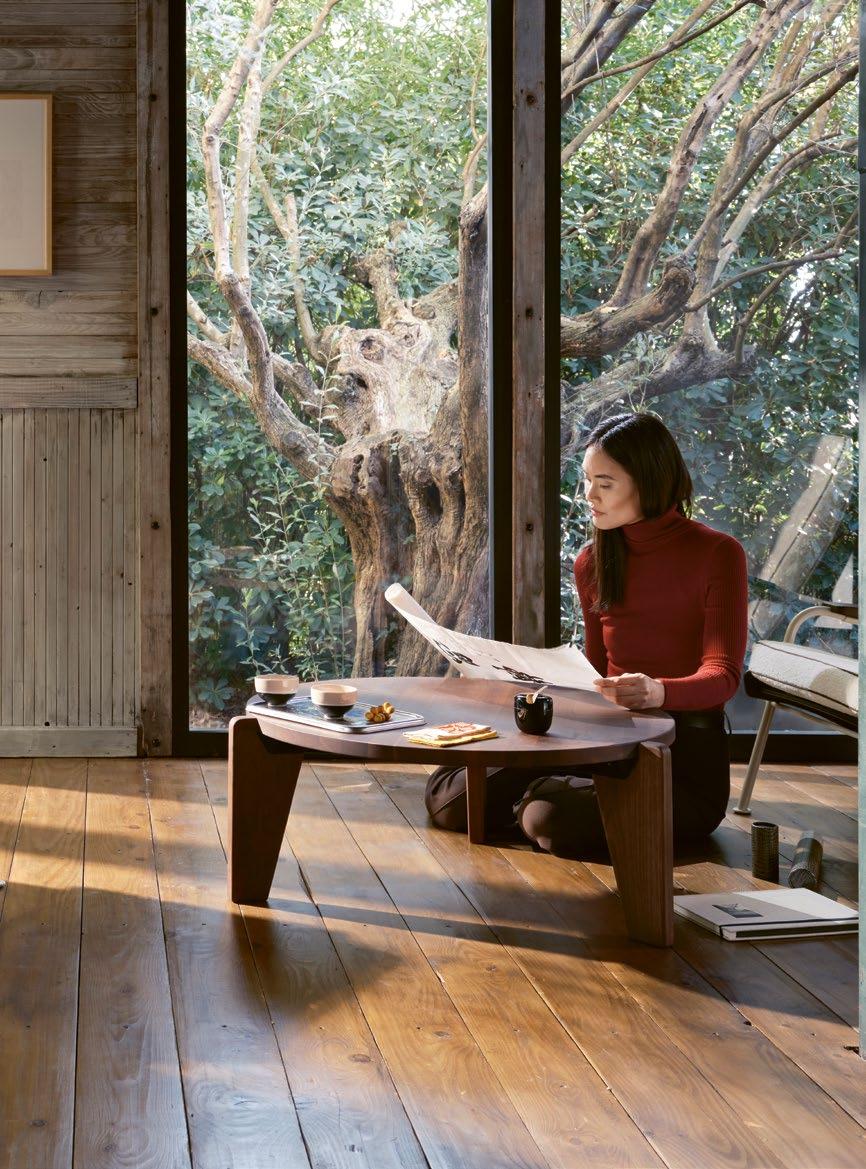
Photographed at Demountable House 6×6, Fondation ACB, Saint-Paul-de-Vence, France; constructed by Jean Prouvé in 1944.
( 1 ) Flower Table, large · 81 anthracite powder-coated (textured) · Alexander Girard, 1977 ( 2 ) Plate Table · 70 natural solid oak, oiled · Jasper Morrison, 2004 ( 3 ) Guéridon Bas · 75 solid American walnut, oiled · Jean Prouvé, 1944
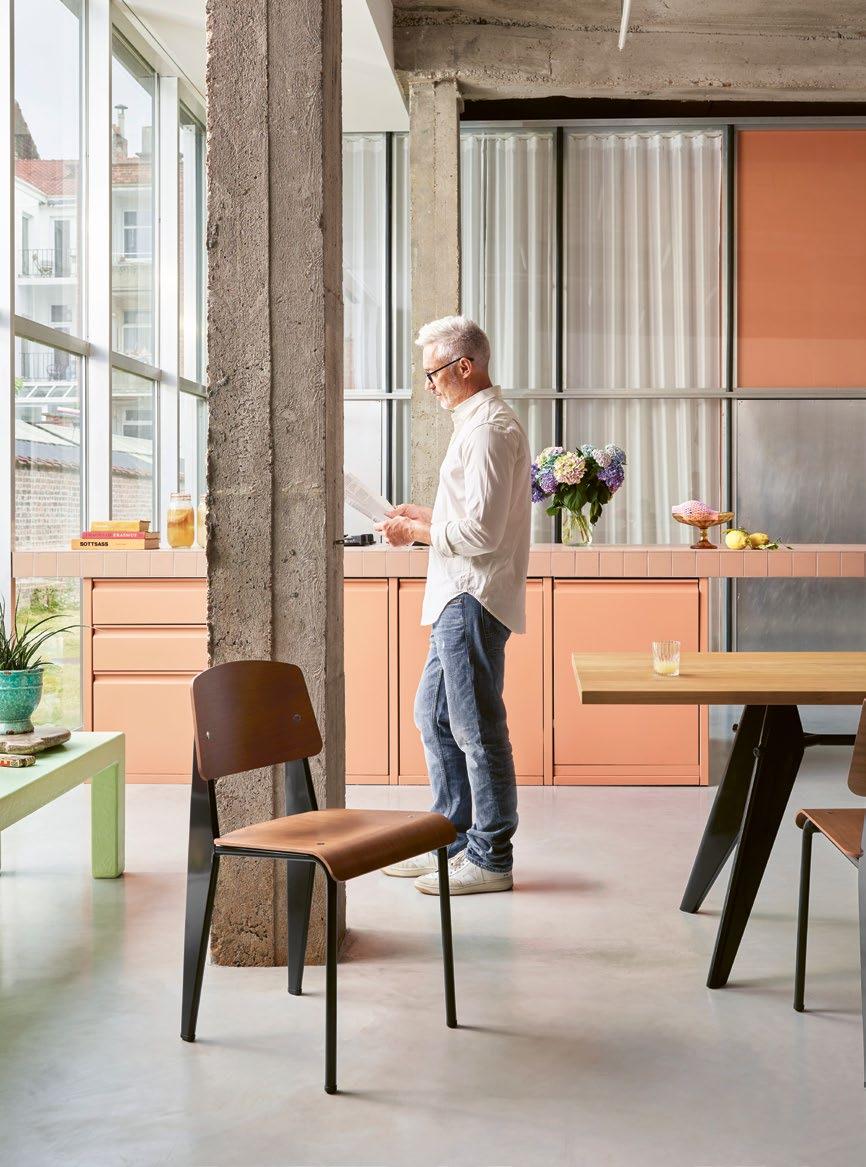
Chairs and tables
Vitra’s portfolio of chairs includes twentieth-century furniture classics that have been produced by Vitra for decades, as well as contemporary designs. Available in a broad selection of materials – from soft upholstery fabrics and wood from sustainably managed forest areas to recycled post-consumer plastic – Vitra offers a suitable chair for every use and setting.
An overview of all dining tables can be found on page 98.
→
Mikado
Chaise Tout Bois
Chair & Panton Chair Classic
Belleville Chair
Chair
Collage – a reflection of our own life
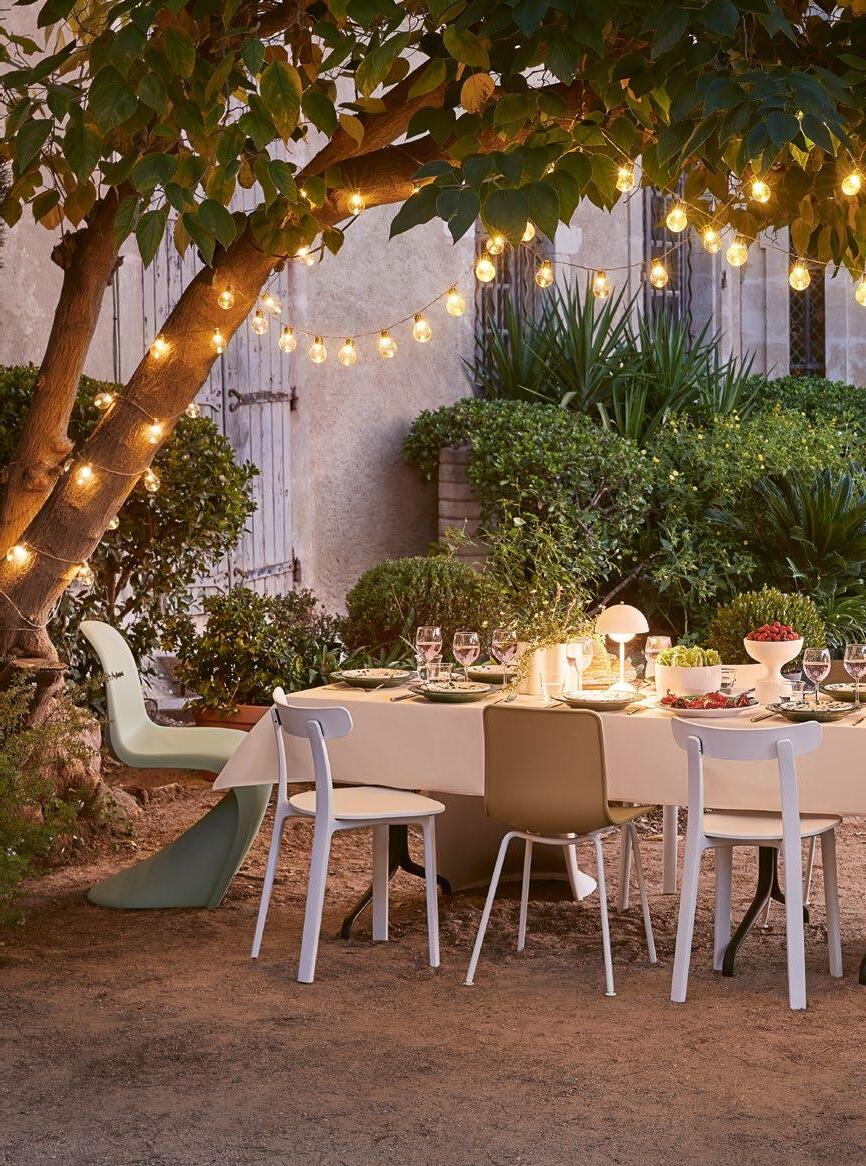
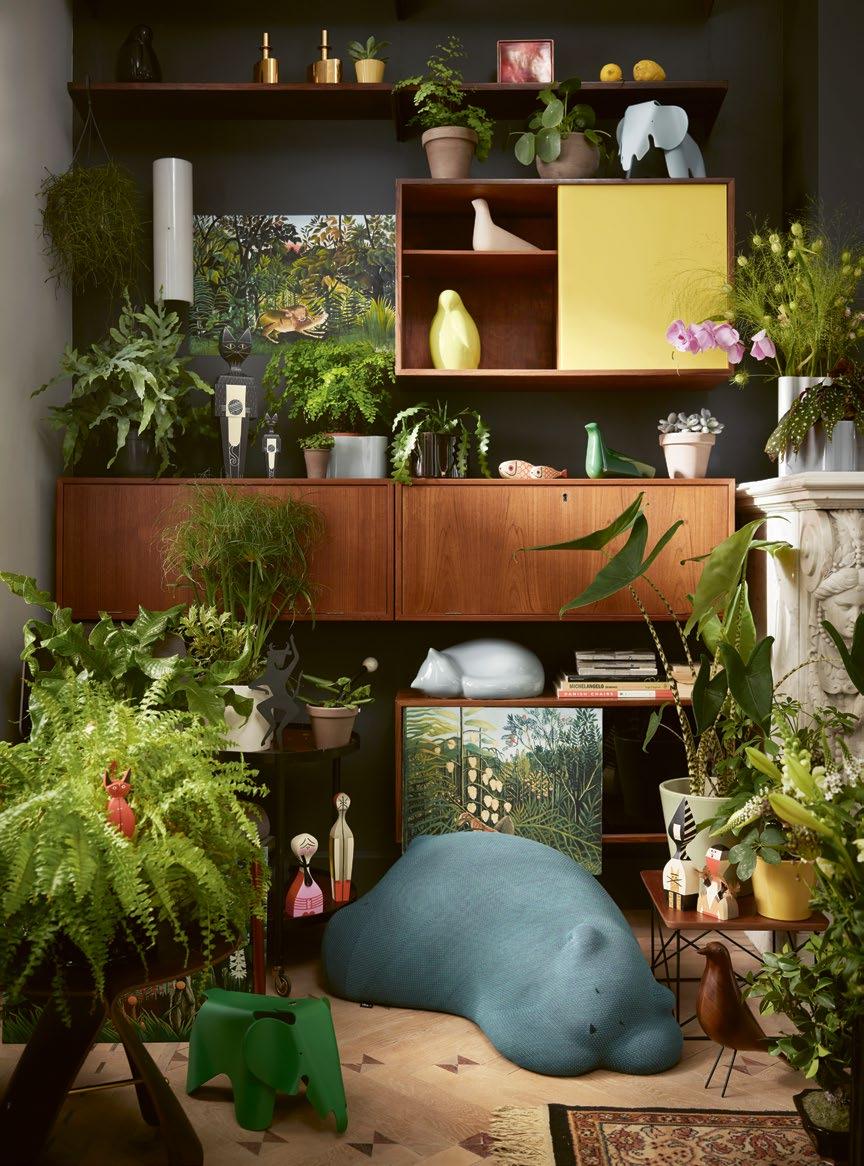
Vitra believes in the principle of collage: a mix of old and new, classic and modern, functional and decorative, industrial and handcrafted that defines the personal spirit and character of any home setting. Contradictions are permitted and even welcomed due to their authenticity – because a collage is a curated reflection of our lives in all their richness and complexity.
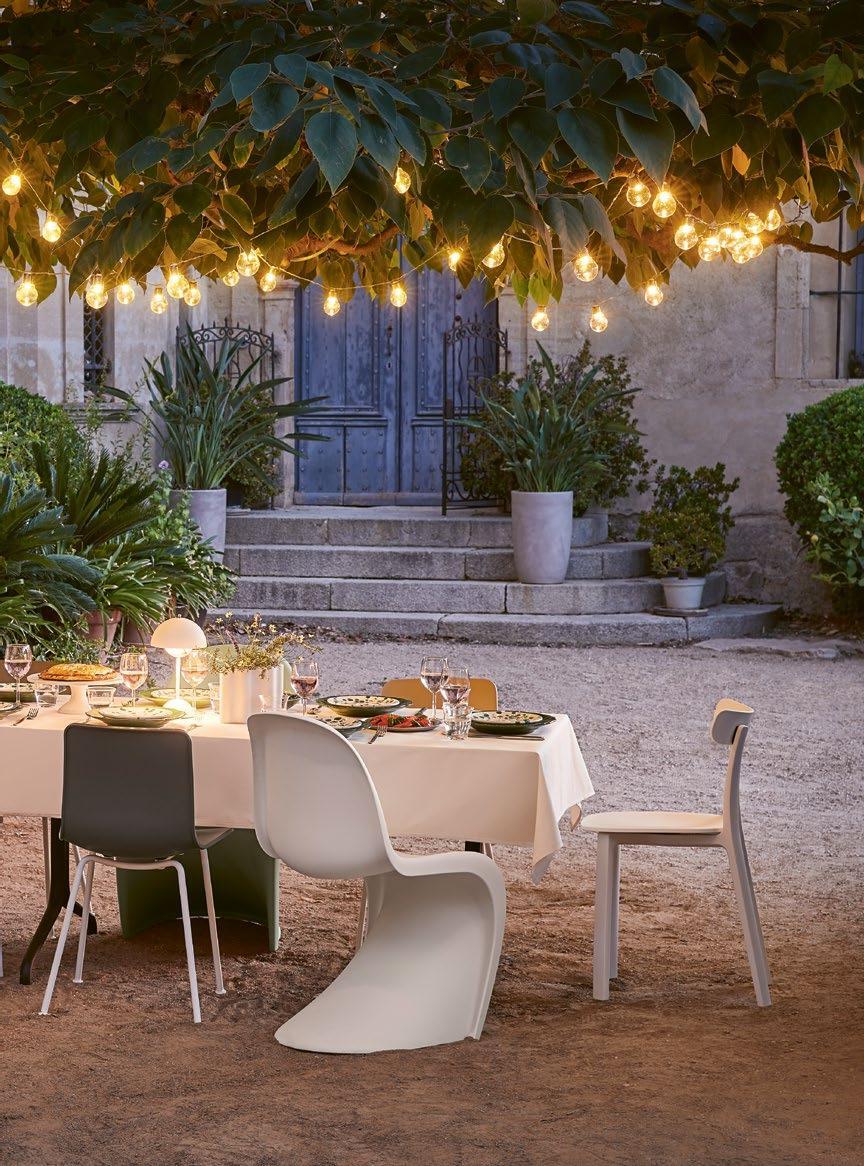
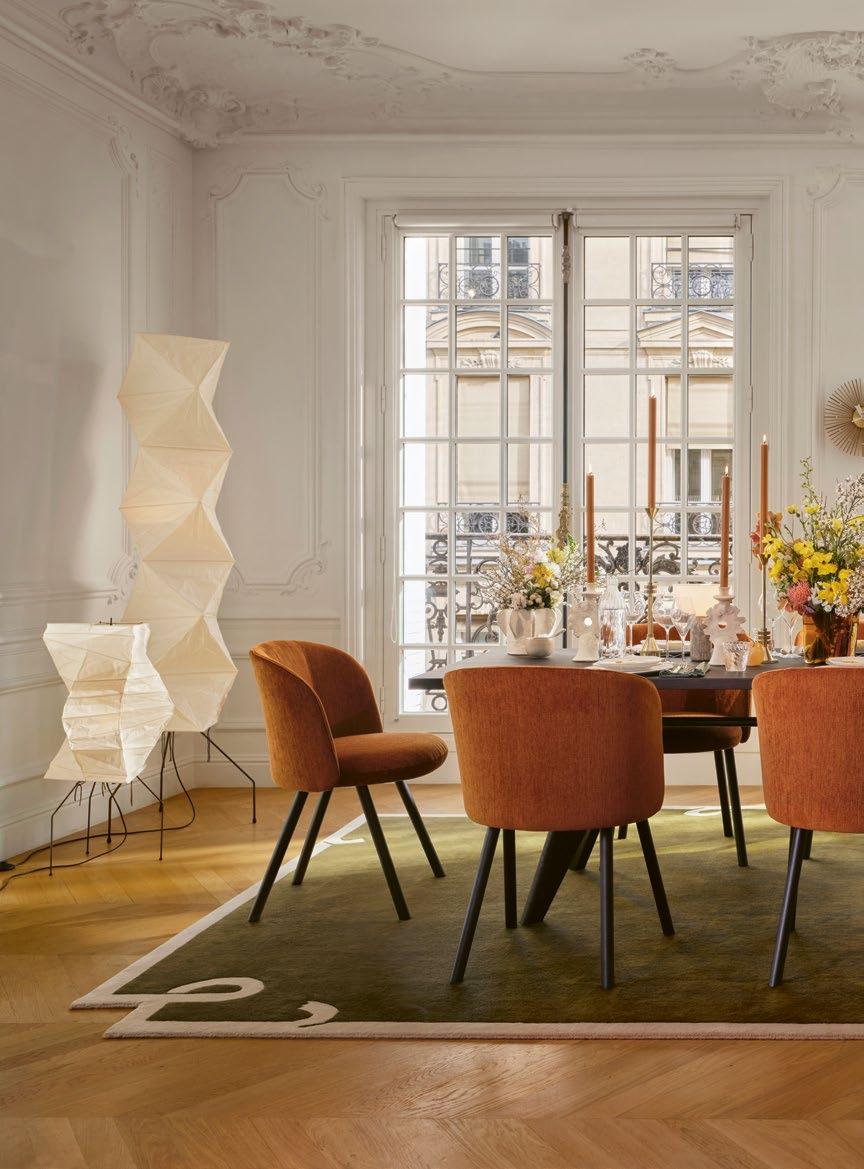
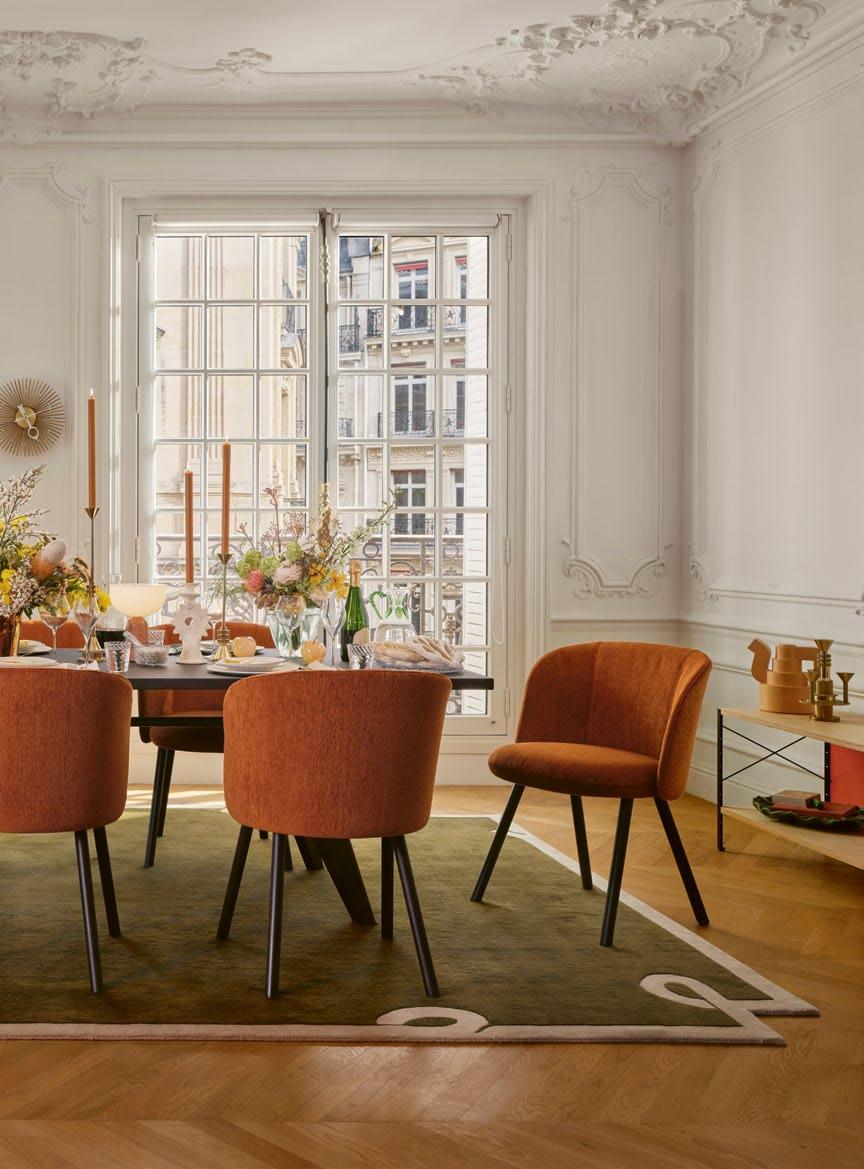
Mikado, Edward Barber & Jay Osgerby, 2024
( 1 ) Mikado Side Chair · Iroko 2, 15 cognac · Solid Wood, 04 dark stained solid oak, with protective varnish · Edward Barber & Jay Osgerby, 2024 ( 2 ) Table S.A.M. Bois · Solid Wood, 75 solid American walnut, oiled · Jean Prouvé, 1941
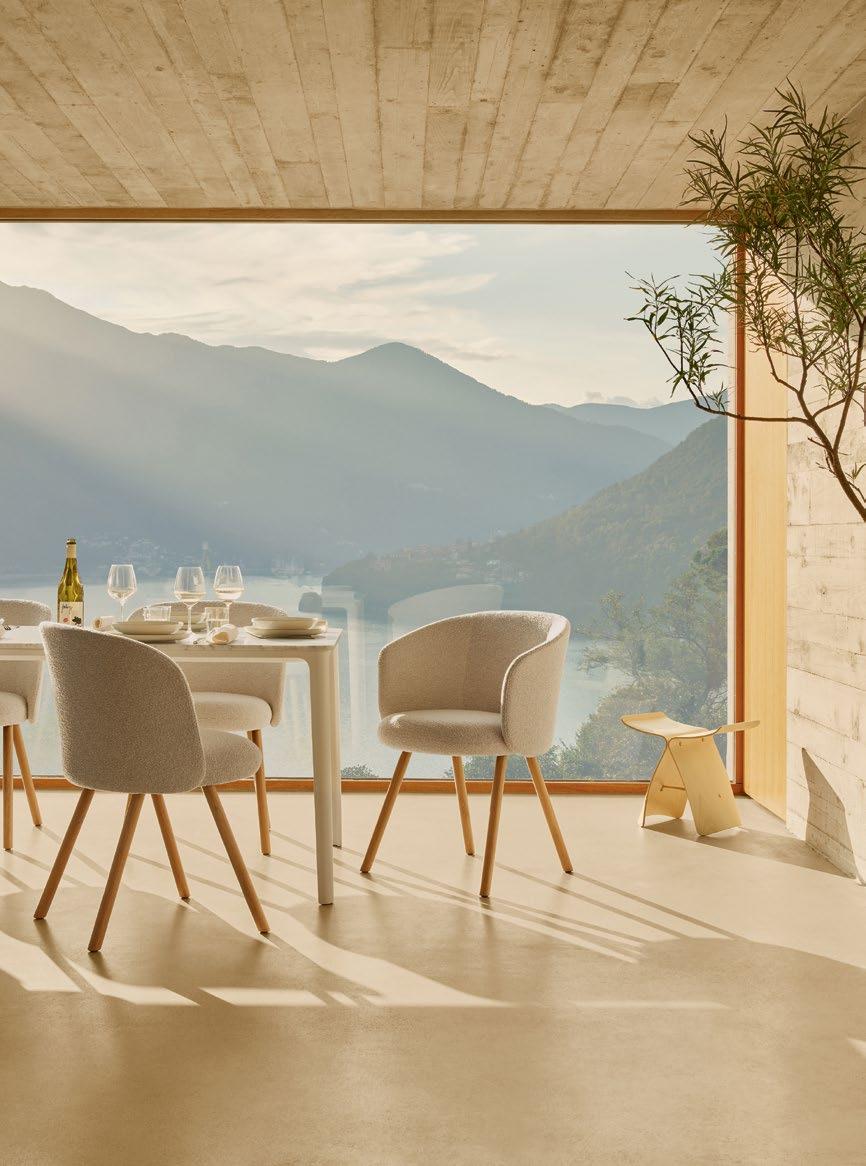
( 1 ) Mikado Side Chair · Nubia, 01 ivory/pearl · Solid Wood · 10 natural oak, with protective varnish · Edward Barber & Jay Osgerby, 2024
( 2 ) Mikado Armchair · Nubia, 01 ivory/pearl · Solid Wood · 10 natural oak, with protective varnish · Edward Barber & Jay Osgerby, 2024
( 3 ) Plate Dining Table · Marble, 50 marble Carrara · 04 white powder-coated (textured) · Jasper Morrison, 2018
Mikado,
Edward Barber & Jay Osgerby, 2024

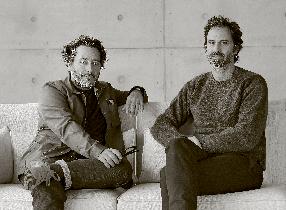
Edward Barber and Jay Osgerby studied architecture as fellow students at the Royal College of Art in London. Since that time, their collaborative work has probed the interface between industrial design, furniture design and architecture.
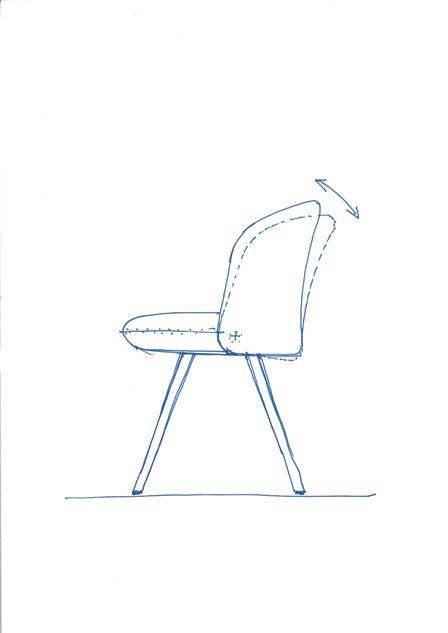
Mikado is a chair with a serene yet commanding aura that aims to impress not by its form but through its comfort. It achieves this thanks to upholstery on all sides and an ingeniously simple mechanism concealed beneath the seat that facilitates subtle movement of the backrest.
Mikado was designed with sustainability in mind from the outset: the covers are not glued and can be removed for cleaning or replacement. The legs may be replaced individually or exchanged for a different material option – wood or recycled aluminium. The inner seat panel is made of recycled aluminium while the core of the backrest shell is produced from recycled post-consumer polypropylene, which can be easily separated from the foam padding during recycling. The concept of a simple exchange of components gives Mikado long-term versatility, thereby ensuring longevity.
Mikado is available as an armchair with suggested armrests or as a side chair. The two backrests, different legs, a choice of fabric or leather covers and numerous colours enable a wide variety of possible combinations.
Flexible movement for enhanced comfort, sketch by Edward Barber & Jay Osgerby, 2023.
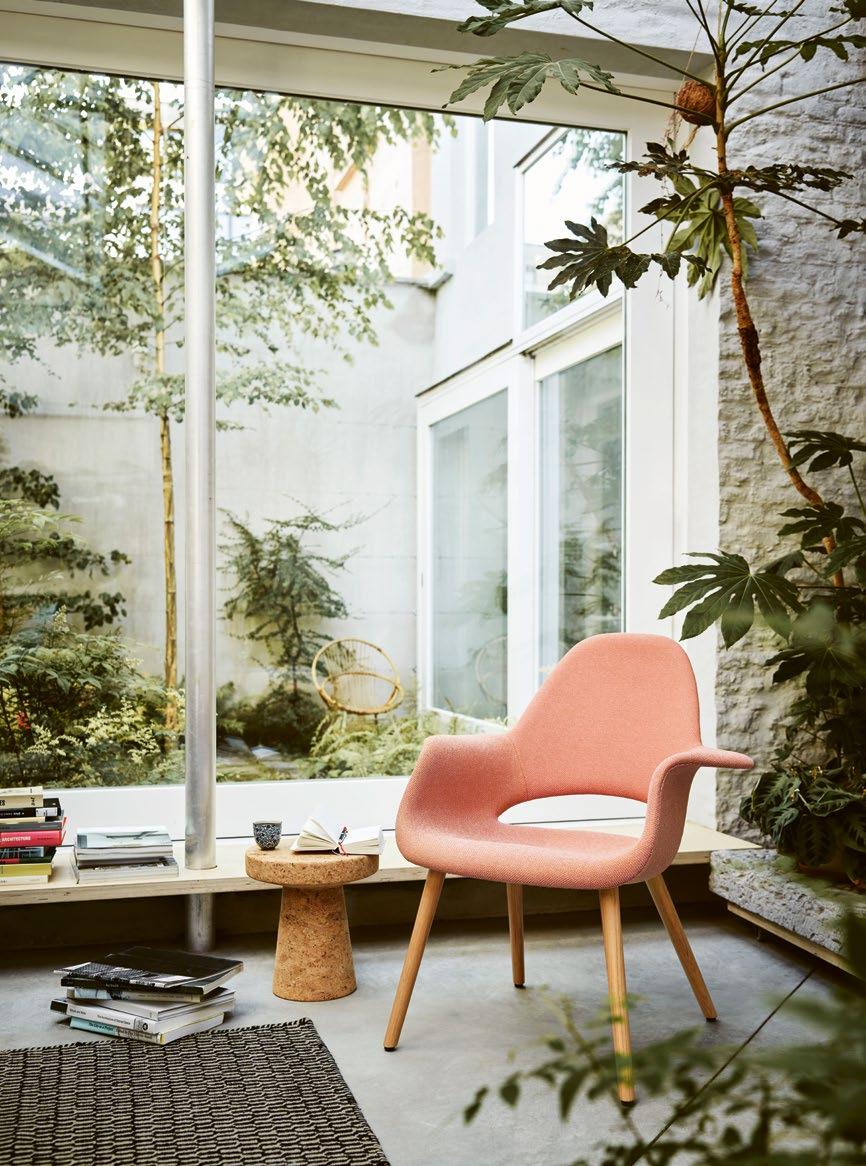
( 1 ) Organic Chair · Credo, 18 pale rose/cognac · 10 natural oak, with protective varnish
· Charles Eames & Eero Saarinen, 1940
( 2 ) Cork Family, Model C · Jasper Morrison, 2004 ( 3 ) Organic Chair · Credo, 13 salt’n pepper
· 68 black ash · Charles Eames & Eero Saarinen, 1940
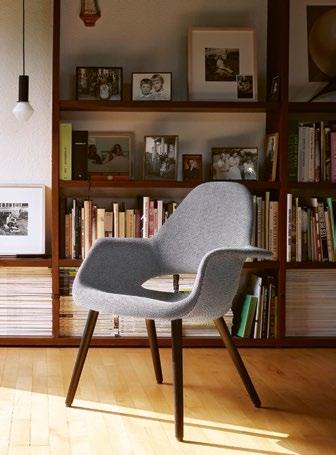
Organic Chair, Charles Eames & Eero Saarinen, 1940
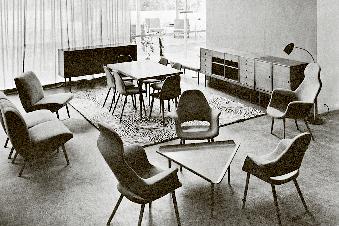
‘Organic Design’ competition in the exhibition space, MoMA, New York, 1941.
The Organic Chair – a small and comfortable reading chair – was developed in several versions for the 1940 ‘Organic Design in Home Furnishings’ competition organized by the Museum of Modern Art in New York. With its sculptural shapes, the design was ahead of the times. But due to the absence of suitable manufacturing techniques, the armchair never went into production. Not until 1950 did it become possible to manufacture and market organically shaped seat shells in large quantities, as exemplified by Charles and Ray Eames’s famous Plastic Armchair or Saarinen’s Tulip Chair.
The Organic Chair is also available in a version with an extended backrest and longer, wider armrests – the Organic Highback armchair. The Organic Conference version can be used as table seating.
Standard & Standard SP, Jean Prouvé, 1934/50
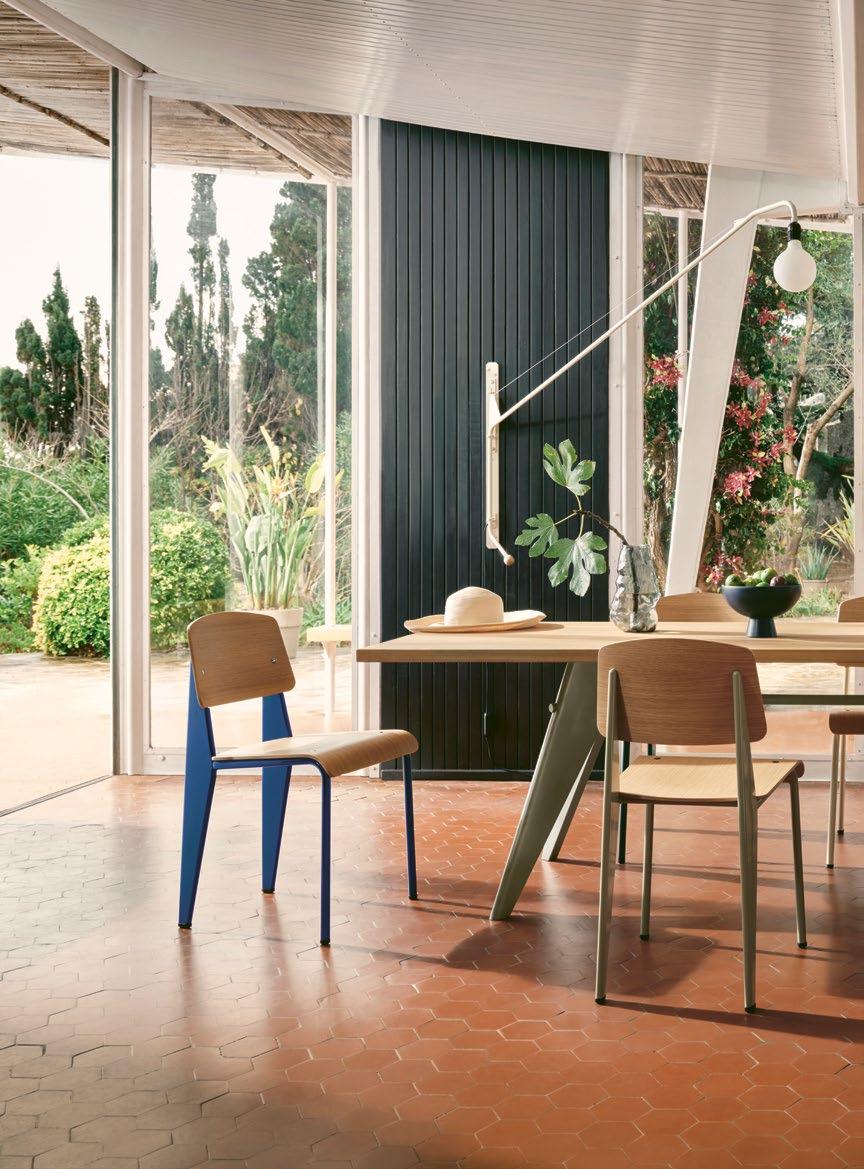
( 1 – 3 ) Standard: ( 1 ) 41 Prouvé Bleu Marcoule powder-coated (smooth) ( 2 ) 13 Prouvé Gris
) 18
Vermeer powder-coated (smooth)
( 3
Prouvé Blé Vert powder-coated (smooth) · 10 natural oak, with protective varnish · Jean Prouvé, 1934/1950
( 4 ) EM Table · 13 Prouvé Gris Vermeer powder-coated (smooth) · 70 natural solid oak, oiled · Jean Prouvé, 1950 ( 5 ) Potence · 88 Prouvé Blanc Colombe (Ecru) powder-coated (smooth) · Jean Prouvé, 1950
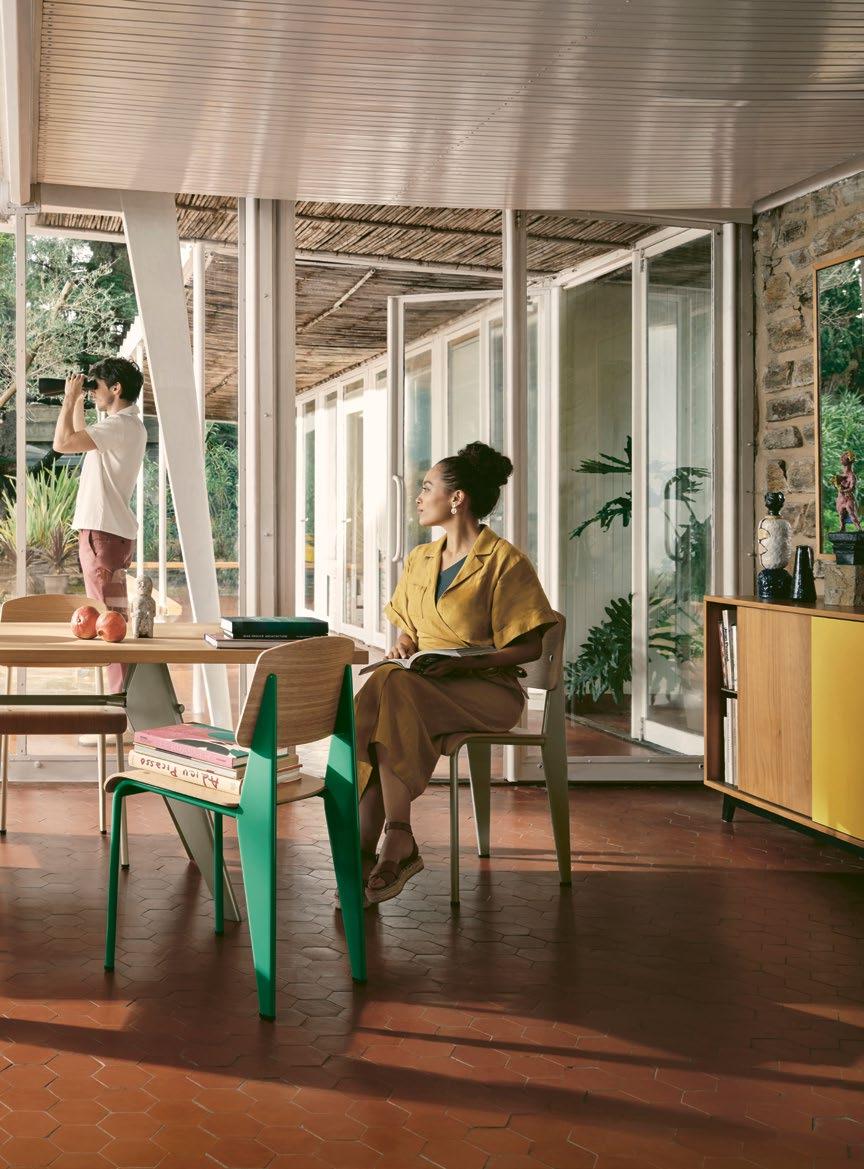
Photographed in the Villa Dollander, Le Lavandou, France; built in 1949 by Jean Prouvé (construction) and his brother Henri (architecture).
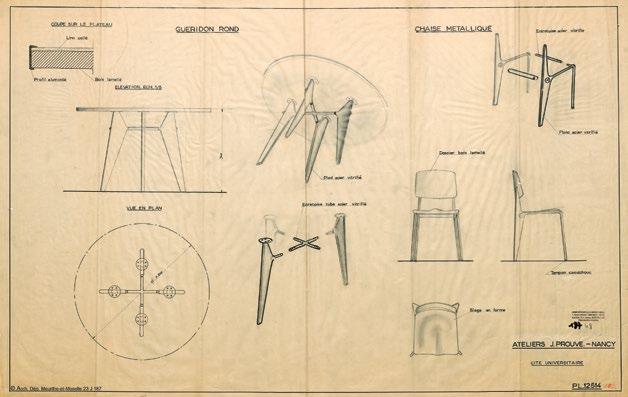
Technical drawing of the ‘Guéridon rond’ and the ‘Chaise métallique’, a version of the Standard chair, approx. 1950.
Jean Prouvé created the Standard chair in 1934. This design exemplifies a fundamental aspect of Prouvé’s numerous furniture pieces and architectural works: his unwavering focus on structural requirements.
The load on the back legs of a chair is greater than on the front legs – this is hardly a surprising discovery, but no other seating design demonstrates this principle as clearly as the Standard chair.
The 1934 model was introduced as Chair No. 4, since it had been preceded by three prototypes; later developments continued under the name ‘Standard’.
The chair was manufactured in Jean Prouvé’s own factory. Vitra regards Prouvé as one of the twentieth century’s leading designers and expanded the palette of Prouvé furniture in 2022 to include several of the Frenchman’s original colours.
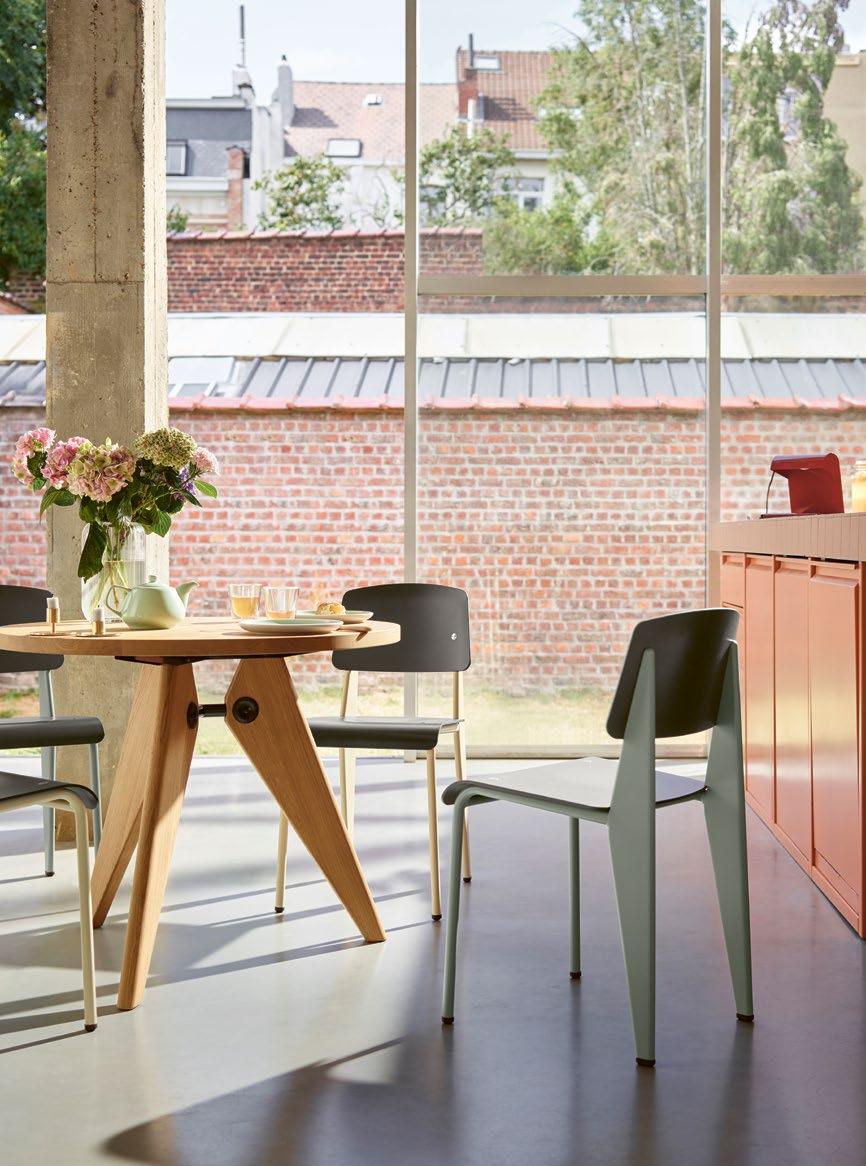
Colombe (Ecru) powder-coated (smooth)
oak, oiled
Jean Prouvé, 1949 ( 4 ) Lampe de Bureau
powder-coated (smooth) · Jean Prouvé, 1930
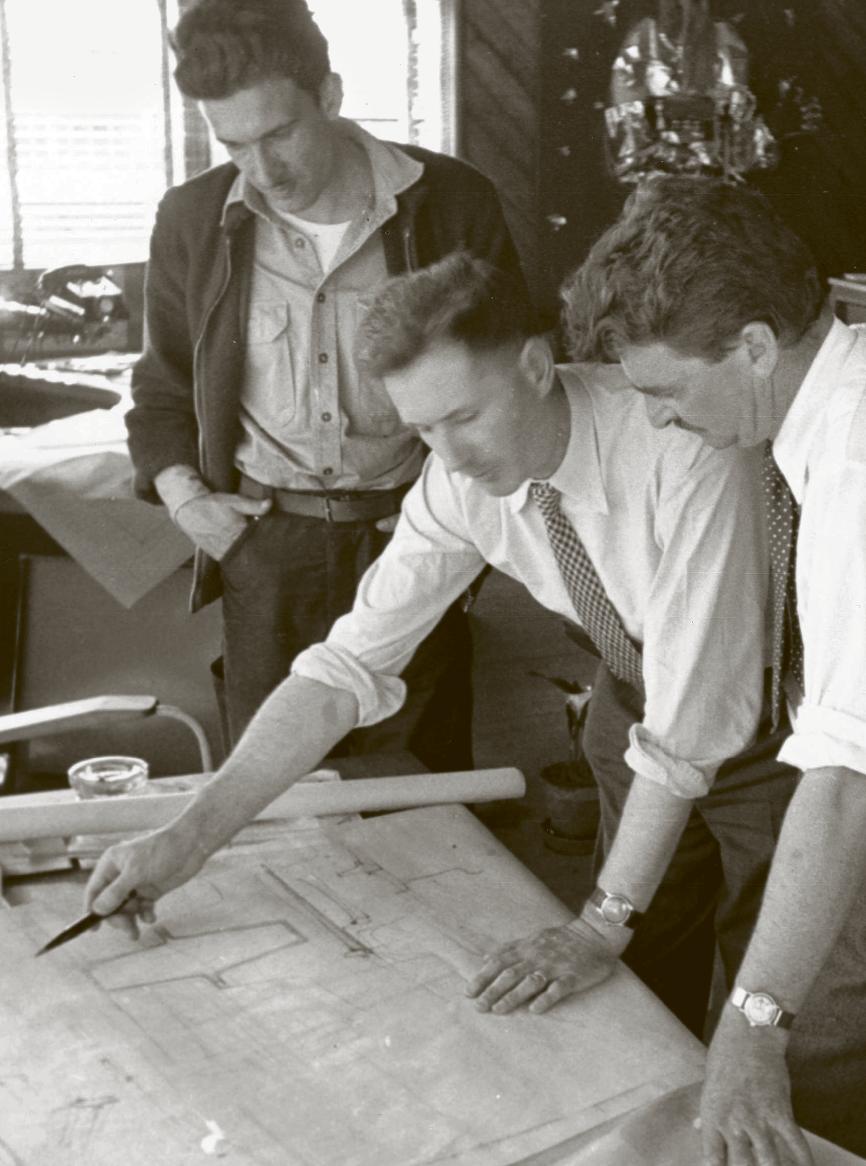
Jean Prouvé Engineer, architect and designer
With his constructive approach to design, Jean Prouvé significantly influenced furniture creations in the interwar and post-war modern periods, and was a pioneer in the field of series production and industrial construction with his prefabricated and modular elements. The Vitra Design Museum holds the most extensive collection of furniture by Jean Prouvé in the world and Vitra has been manufacturing Prouvé designs in close collaboration with his family since 2002.
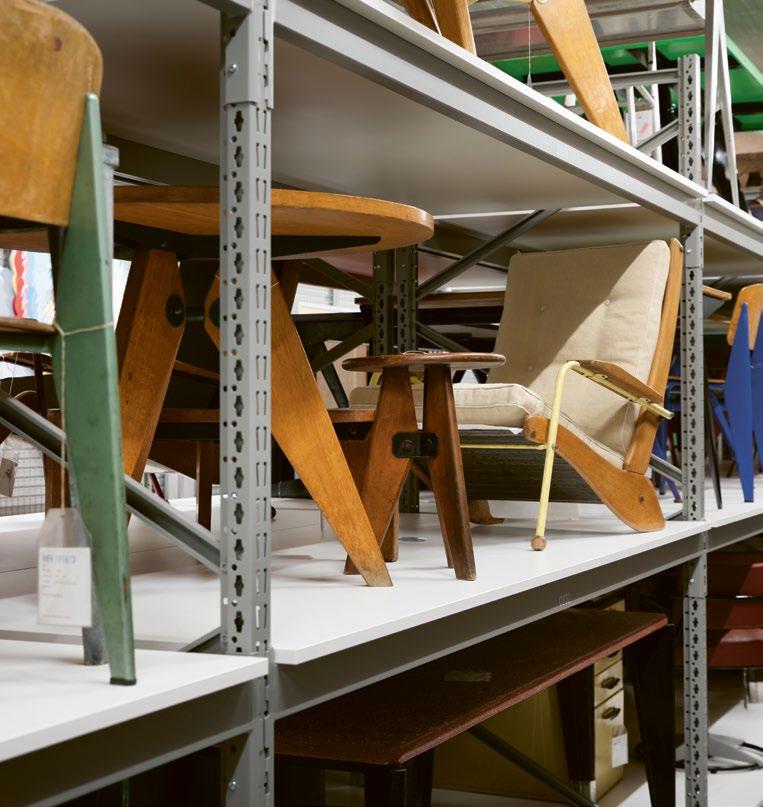
The museum’s collection of historical furniture and objects plays a major role in Vitra’s ongoing development of the Prouvé product portfolio.
↑ The Jean Prouvé Collection of the Vitra Design Museum in Weil am Rhein
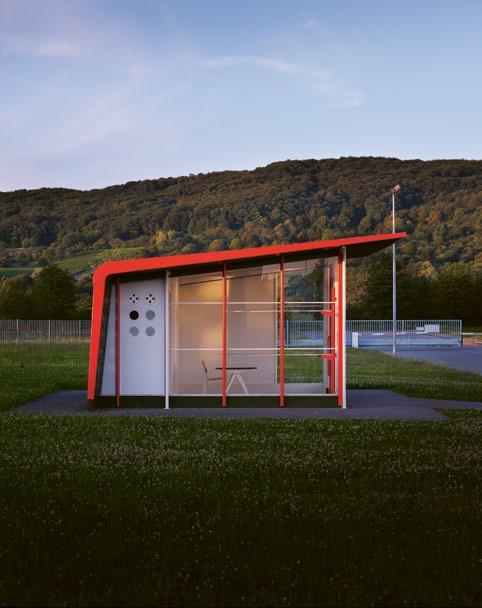
↗ The Petrol Station created by Jean Prouvé together with his brother Henri, 1953 / 2003, Vitra Campus, Weil am Rhein
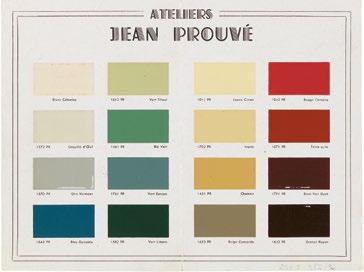
→ Colour chart from Ateliers Jean Prouvé, 1951
A trained metal artisan, Jean Prouvé (1901–1984) was also a craftsman, architect and lecturer. His work encompasses a wide range of objects, from a letter opener to door and window fittings, from lighting and furniture to façade elements and prefabricated houses, from modular building systems to large exhibition structures – essentially, almost anything that is suited to industrial production methods. Prouvé tried out his ideas in his own workshop ‘Les Ateliers Jean Prouvé’: he created drawings on a 1:1 scale, which he sent to the factory or handed over to his employees in person to make a prototype.
His creations follow the principle of simplicity, consisting of individual elements that are assembled and screwed together. This cumulative construction process is also visible in the finished product –as well as in Prouvé’s architectural work. As he did not have any formal architectural training, he collaborated with the modern architects of his time to execute his construction ideas. He is known for his use of standardised, prefabricated elements to create costeffective housing in the post-war era. He left his mark on architectural history again in 1971, when he played a major role in selecting the design of Renzo Piano and Richard Rogers for the Centre Pompidou as chairman of the competition jury.
Jean Prouvé’s furniture reflects his unwavering focus on structural requirements, giving his designs a technical poetic expression. In 2022 Vitra expanded the colour palette to include several of the French engineer’s original colours.
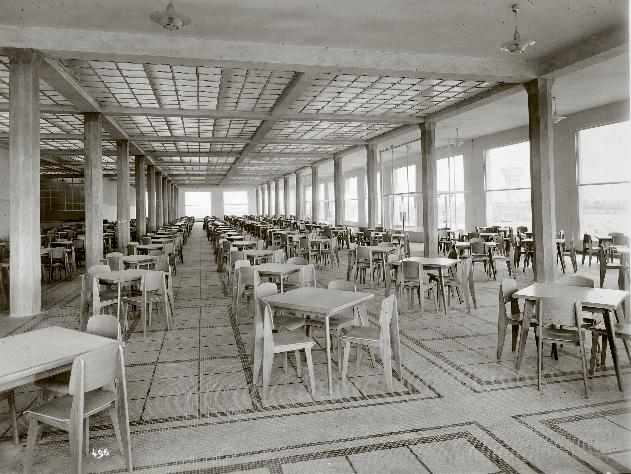
Chaise Tout Bois in the canteen of the headquarters of the Centre d’Etudes Nucléaires du Commissariat à l’Energie Atomique, Saclay, France, 1950s.
Chaise Tout Bois is the only chair by the French ‘constructeur’ and designer Jean Prouvé that is made entirely out of wood. The design is very similar to Prouvé’s famous Standard chair, but wood was substituted for the metal base due to the scarcity of metal during the Second World War.
Chaise Tout Bois by Vitra corresponds to one of Jean Prouvé’s design variants from 1941, whose construction does not require a single screw. The height and seat geometry are the same as those of the Standard chair and thus meet current norms and requirements. The warm look and feel of wood contrasts appealingly with the practical structural design, which is typical of Prouvé’s functional approach. Chaise Tout Bois is available in light oak or dark-stained oak.
Chaise Tout Bois, Jean Prouvé, 1941
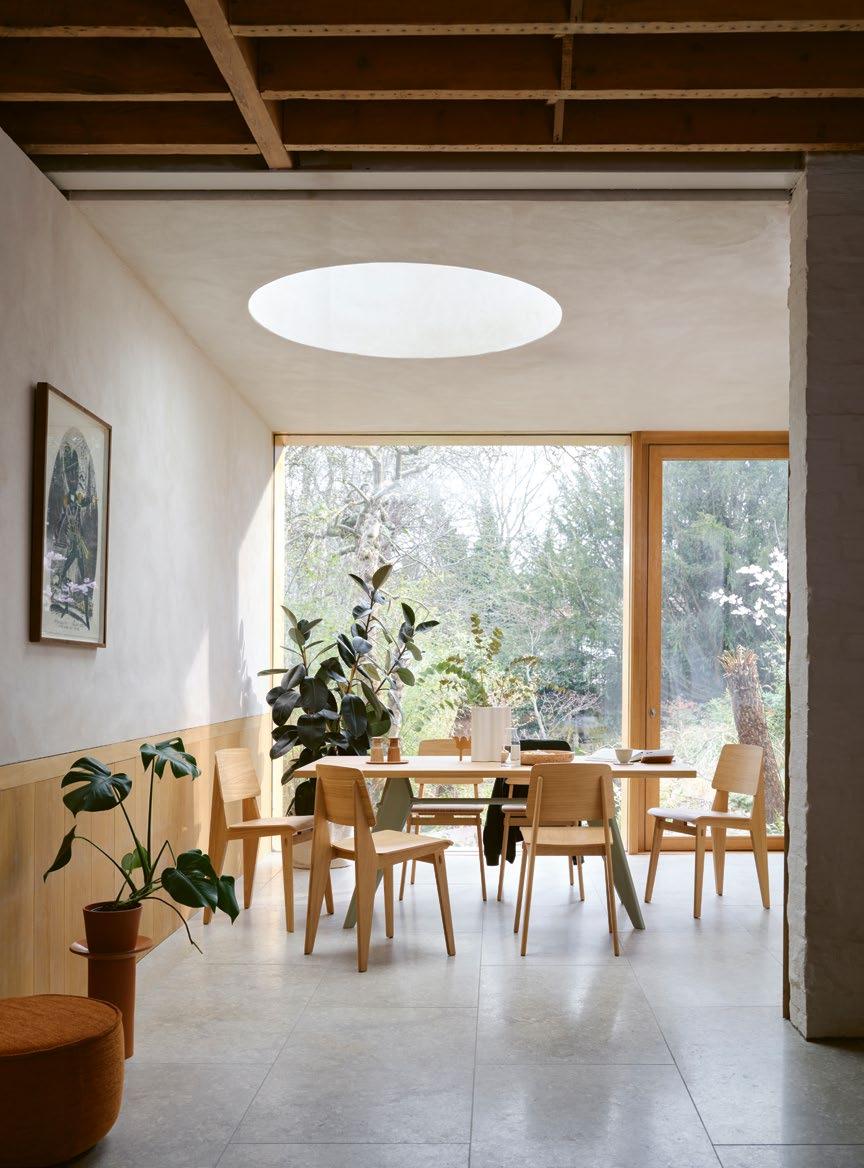
( 1 ) Chaise Tout Bois · 10 natural oak, with protective varnish · Jean Prouvé, 1941
( 2 ) EM Table · 70 natural solid oak, oiled · 13 Prouvé Gris Vermeer powder-coated (smooth) · Jean Prouvé, 1950
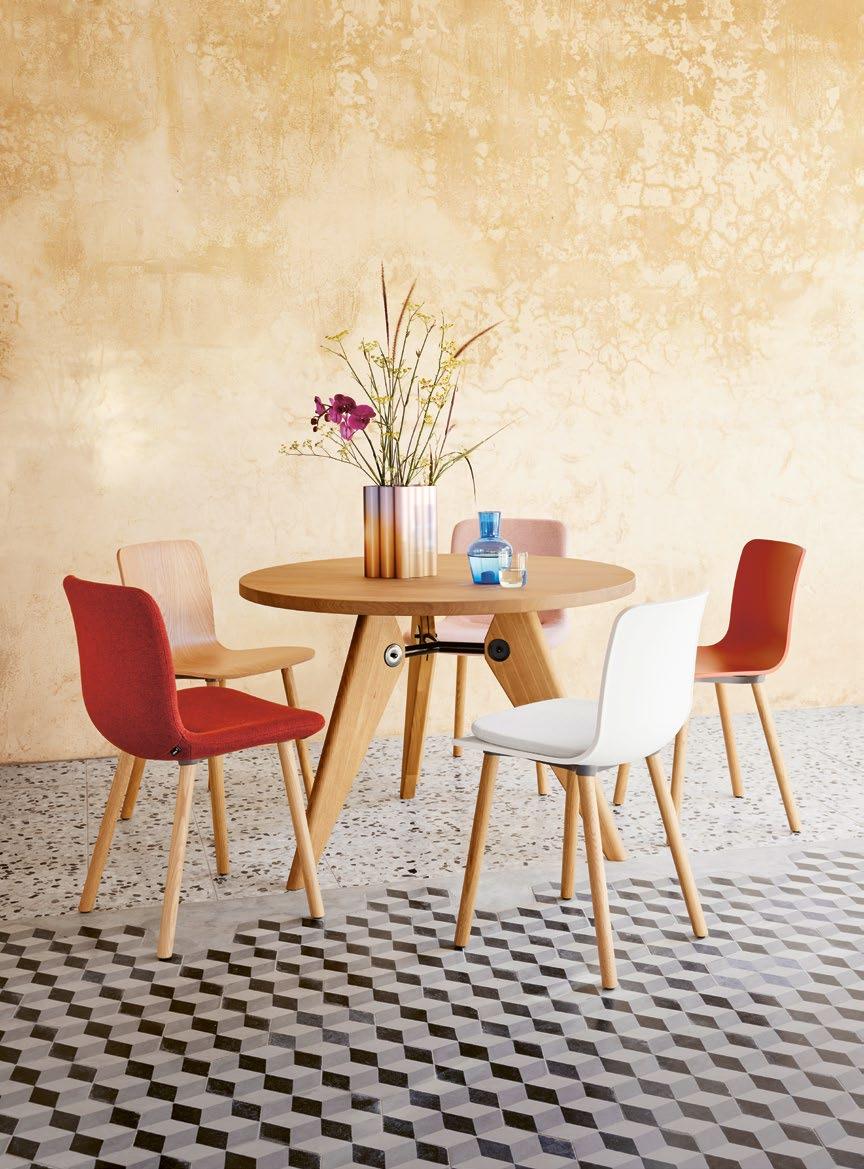
( 1 ) HAL Soft Wood · Plano, 97 red/coconut · Jasper Morrison, 2021 ( 2 ) HAL RE Wood · 85 cotton white RE · Jasper Morrison, 2010/2014 ( 3 ) HAL RE Wood · 29 brick RE · Jasper Morrison, 2010/2014 ( 4 ) HAL Ply Wood · 10 natural oak, with protective varnish · Jasper Morrison, 2012 ( 5 ) Guéridon · 70 natural solid oak, oiled · Jean Prouvé, 1949 ( 6 ) Soft Seats type B · Plano, 03 parchment/cream white · 2022 ( 7 ) Nuage abstrait · Ronan & Erwan Bouroullec, 2016 ( 8 ) HAL RE Tube, outdoor compatible · 85 cotton white RE · 49 ivory powder-coated (textured) · Jasper Morrison, 2010/2014 ( 9 ) Soft Seats Outdoor type B · Simmons 55 grey/white · 2022 ( 10 ) Belleville Table (rectangular) · 30 black (textured) · Ronan & Erwan Bouroullec, 2015
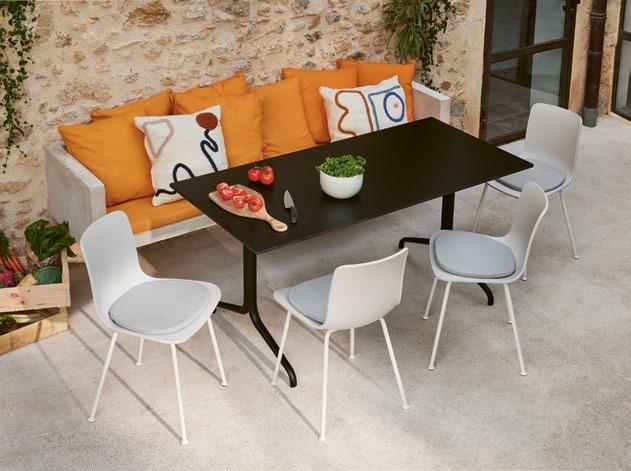
HAL is Jasper Morrison’s interpretation of a shell chair in the tradition of the Plastic Chair by Charles and Ray Eames, whose variety of different bases enables versatile use. HAL RE is a further development of this design with a seat shell made of recycled plastic.
The recycling material for HAL RE stems from Germany’s ‘Yellow Bag’ (Gelber Sack) collection of household waste, which primarily consists of used packaging. Utilising this recycled material instead of conventional plastic generates fewer climate-damaging emissions and also significantly reduces energy consumption. The HAL RE seat shell can also be 100% recycled at the end of the product’s life.
The many different chair bases can be combined either with a seat shell in plastic (HAL and HAL RE) or plywood (HAL Ply), or with a lightly padded shell covered in fabric (HAL Soft). In the versions with a polypropylene shell and powder-coated base, HAL is also suitable for use in outdoor settings.
HAL, Jasper Morrison, 2010/14
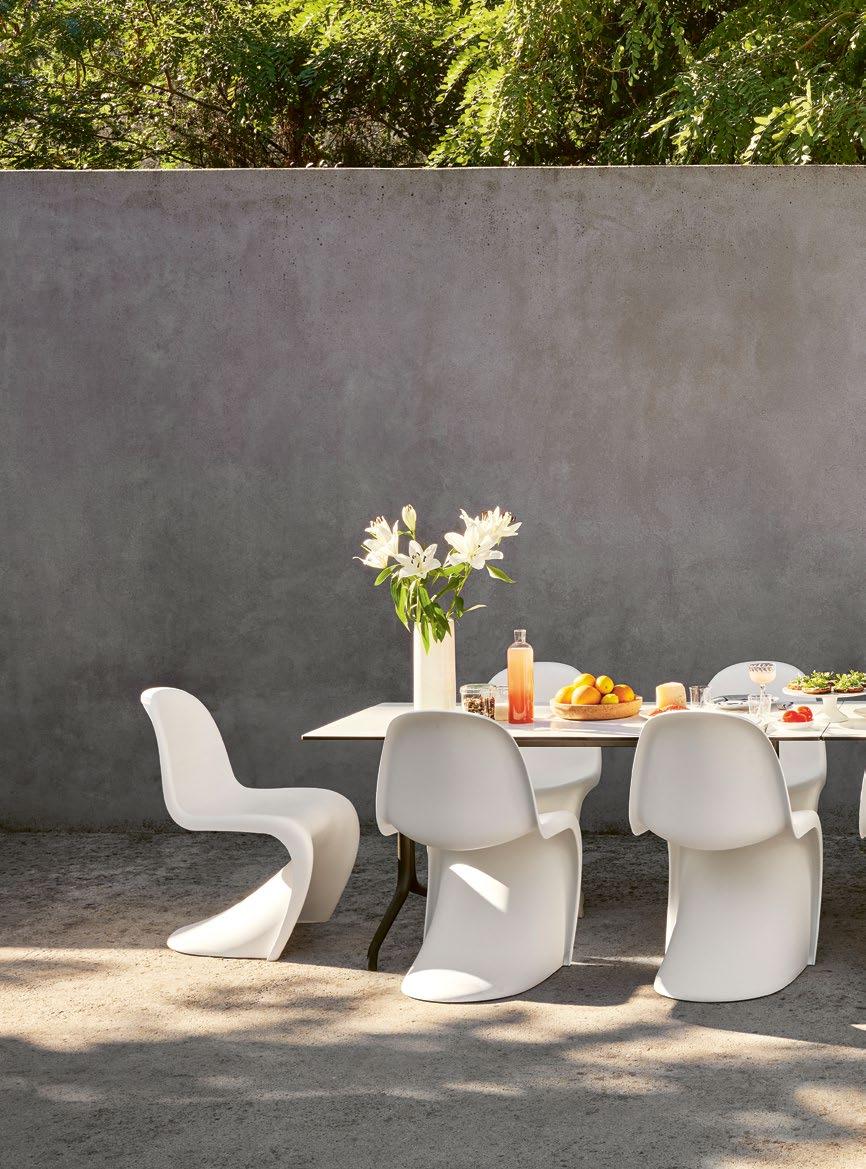
Panton Chair & Panton Chair Classic, Verner Panton, 1959/99
( 1 ) Panton Chair · 04 white · Verner Panton, 1959/1999 ( 2 ) Belleville Table (rectangular) · 12 deep black powder-coated (smooth) · 01 white (textured) · Ronan & Erwan Bouroullec, 2015 ( 3 ) Herringbone Vase plain · sand · Raw-Edges, 2019
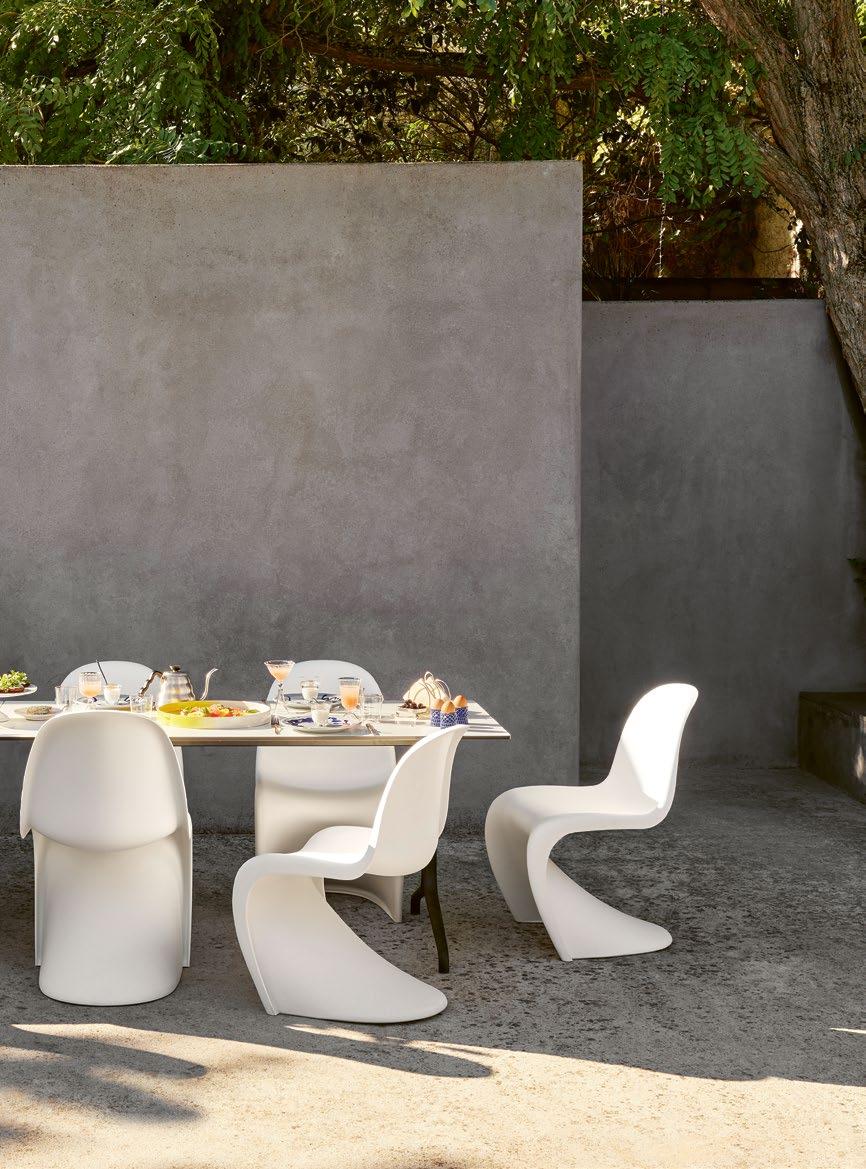
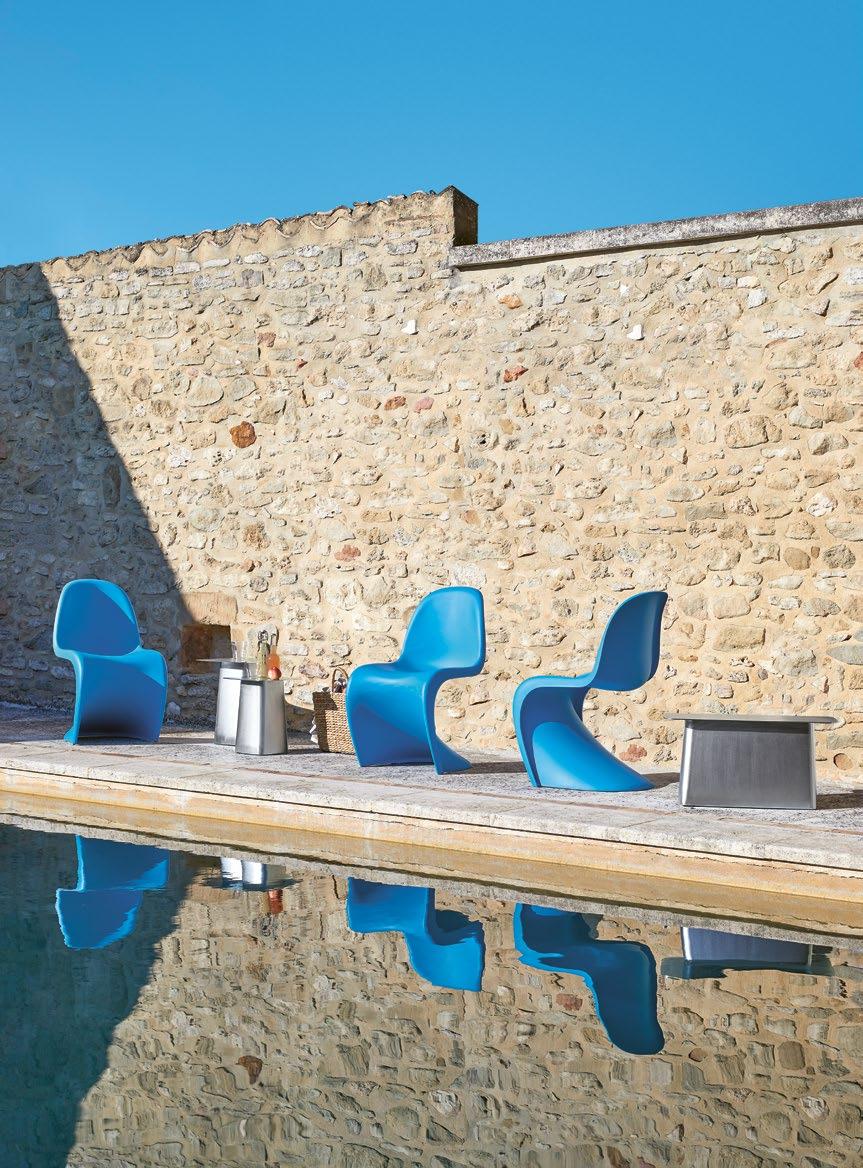
( 1 ) Panton Chair · 37 glacier blue · Verner Panton, 1959/1999 ( 2 ) Metal Side Tables Outdoor · 95 galvanised · Ronan & Erwan Bouroullec, 2004
( 3 ) Panton Chair Classic · 11 white · Verner Panton, 1959 ( 4 ) Potence · 12 deep black powder-coated (smooth) · Jean Prouvé, 1950
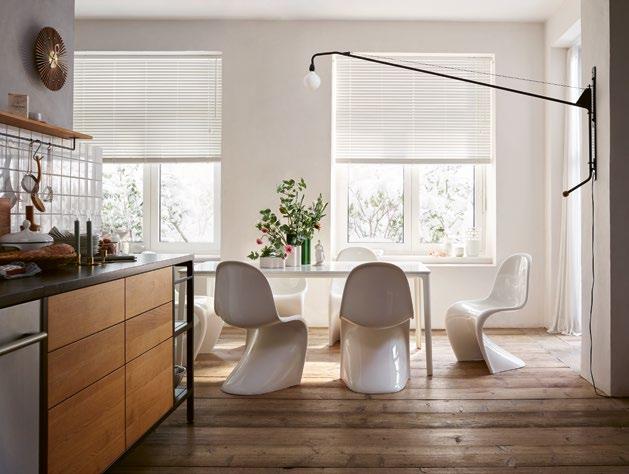
The curved silhouette of the Panton Chair has become a familiar sight, but when Verner Panton first proposed the chair to manufacturers in the 1950s, they all considered it impossible to make. All but Vitra that is, who believed in the design and took up the challenge with Panton of bringing it to production. In 1967 the Panton Chair was launched.
As the first all-plastic cantilever chair it was an instant hit and over the following years, it was continuously upgraded as the quality of plastics improved. It remained extremely popular until fabrication had to be discontinued in 1979 when existing chairs threatened to break. Happily, Vitra was able to resume production in 1990 using a shatterproof polyurethane and went on to elaborate a version in polypropropylene with Verner Panton, which was launched in 1999. From start to finish, the development of the Panton Chair therefore took forty years.
Panton Chair & Panton Chair Classic, Verner Panton, 1959/99
The Panton Chair is available in three different models: the Panton Chair Classic in rigid polyurethane foam with a glossy surface, the Panton Chair in polypropylene with a matt finish and the children’s version, Panton Junior.
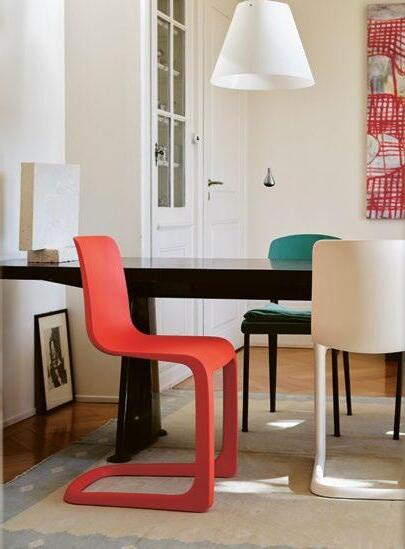
EVO-C is a successful, uncompromising iteration of the principle and characteristics of the classic cantilever chair in the material of plastic. The load-bearing structure is formed by hollow tube-like components that flow seamlessly into the planar surfaces of the seat and back. Morrison’s aim was to eliminate all superfluous details: the shape of EVO-C, which is made entirely from 100% recyclable polypropylene, is determined by the indispensable factors for achieving stability and comfort. It combines the springy properties of tubular steel with the comfort of an ergonomic seat shell. EVO-C is available in a selection of different colours.
EVO-C, Jasper Morrison, 2020
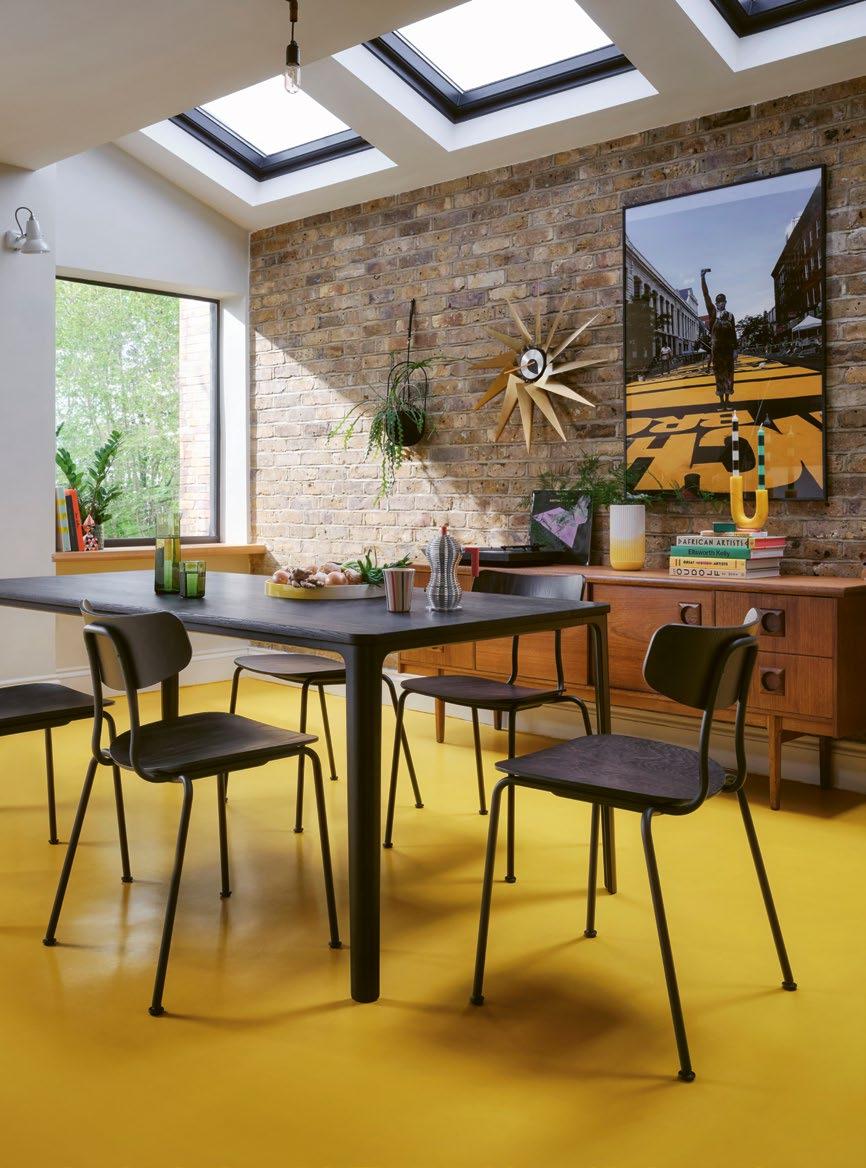
Moca, Jasper Morrison, 2020
( 1 / 2 ) EVO-C · Plastic, ( 1 ) 03 poppy red / ( 2 ) 49 ivory · Jasper Morrison, 2020 ( 3 ) Moca · 30 basic dark powder-coated (textured) · 04 dark oak, with protective varnish · Jasper Morrison, 2020 ( 4 ) Plate Dining Table · 04 dark stained solid oak, with protective varnish · Jasper Morrison, 2018 ( 5 ) Turbine Clock · brass/aluminium · George Nelson, 1949-1960 ( 6 ) Herringbone Vase, ribbed · Raw-Edges, 2019
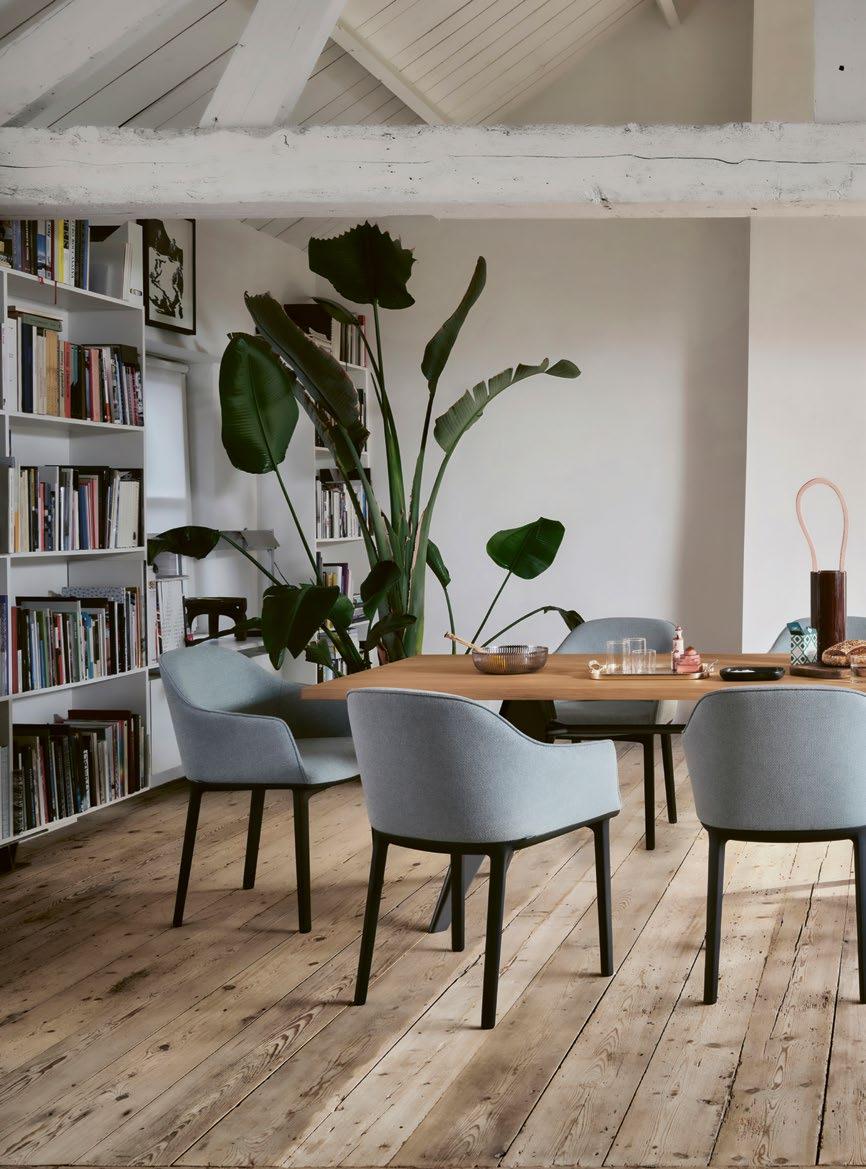
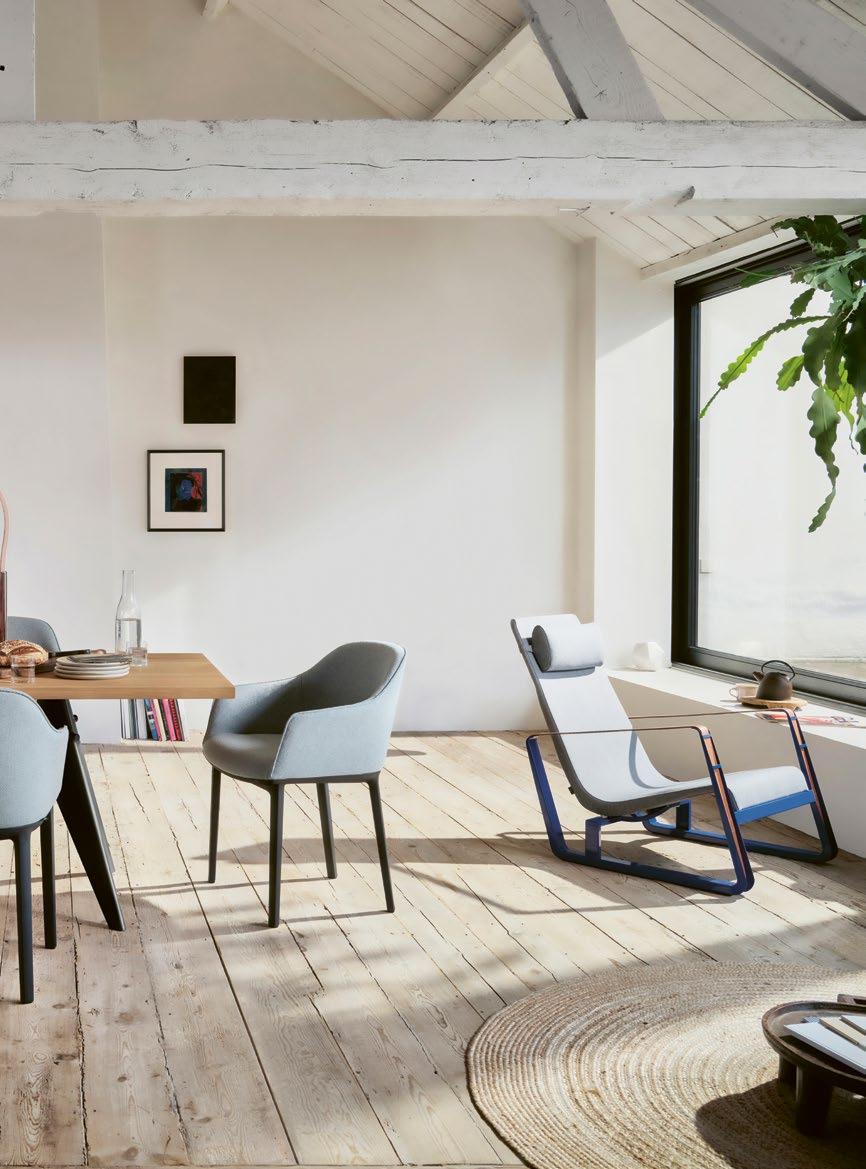
Softshell Chair, Ronan & Erwan Bouroullec, 2008
( 1 ) Softshell Chair, four-legged base · Dumet, 28 sage/steel blue · Ronan & Erwan Bouroullec, 2008
( 2 ) EM Table · 12 deep black powder-coated (smooth) · 70 natural solid oak, oiled finish · Jean Prouvé, 1950
( 3 ) Cité · 41 Prouvé Bleu Marcoule powder-coated (smooth) · Tress, 10 pebble melange · Jean Prouvé, 1930
( 4 ) Vases Découpage, Boucle · Ronan & Erwan Bouroullec, 2020
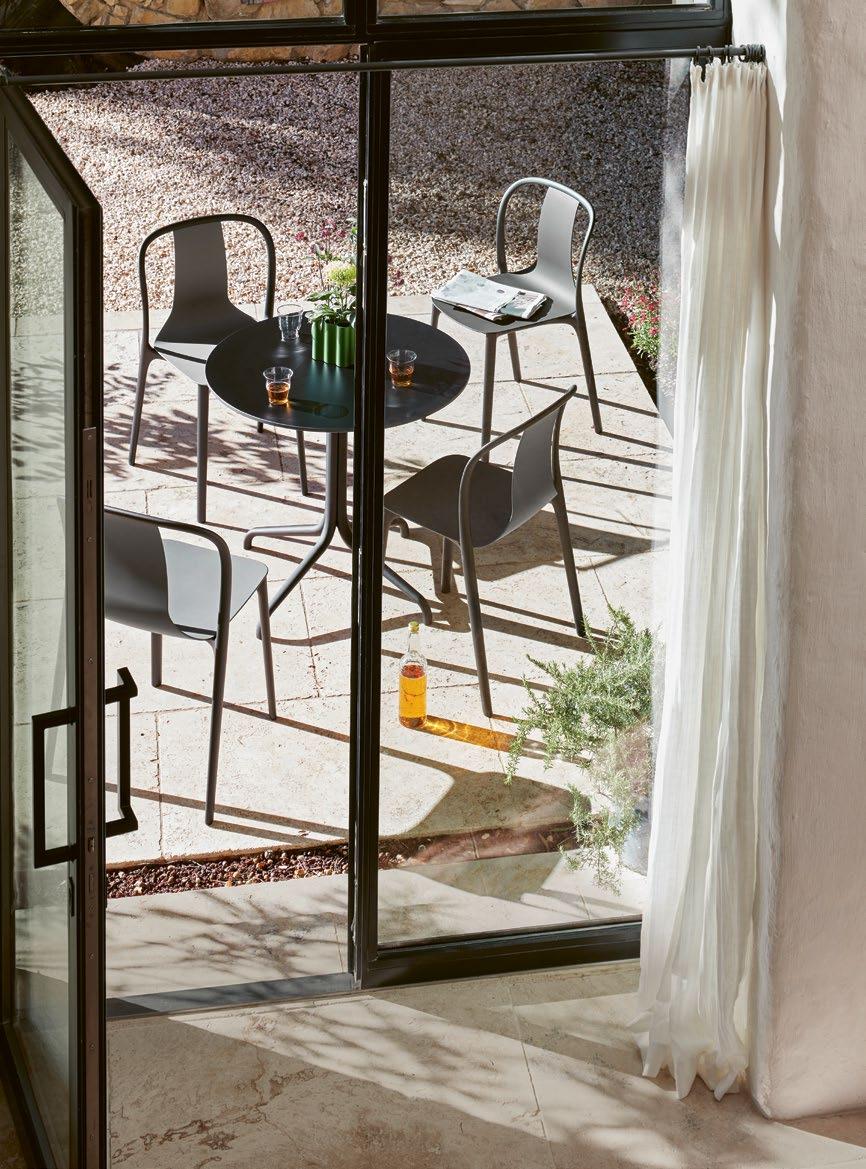
Belleville Chair, Ronan & Erwan Bouroullec, 2015
( 1 ) Belleville Chair · 35 basalt · 12 deep black · Ronan & Erwan Bouroullec, 2015 ( 2 ) Belleville Table (Bistro) · 30 black (textured) · Ronan & Erwan Bouroullec, 2015 ( 3 ) Nuage · ivy anodised · Ronan & Erwan Bouroullec, 2016
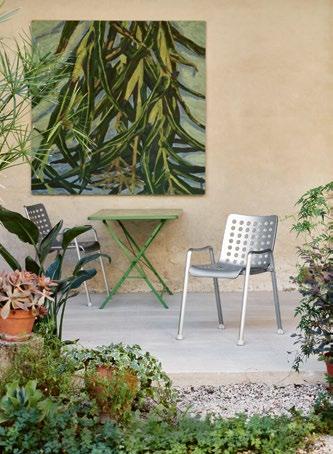
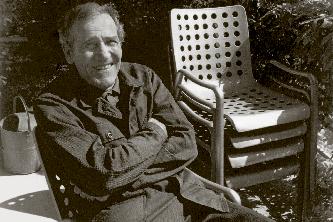
Throughout his lifetime, Hans Coray (1906–1991) positioned himself at the intersection of art, design and architecture, attaching great importance to functionality and simplicity. From the 1950s onward, he was primarily active as a painter and sculptor.
Developed for the 1939 Swiss National Exhibition (Schweizer Landesausstellung), the Landi Chair occupies an important place in the history of twentieth-century design: this classic by Hans Coray established the new typology of a threedimensionally moulded seat shell on a separate base. Two U-shaped profiles welded to the crossbars of the self-supporting chassis simultaneously serve as legs and low armrests. This base supports a seat shell, which makes ideal use of the material’s possibilities: the 91 punched holes not only ensure the modest weight and flexibility of the comfortable shell, but also give the graceful Landi its trademark appearance. The lightweight, stackable Landi Chair is robust and weather-resistant.
Landi Chair, Hans Coray, 1938
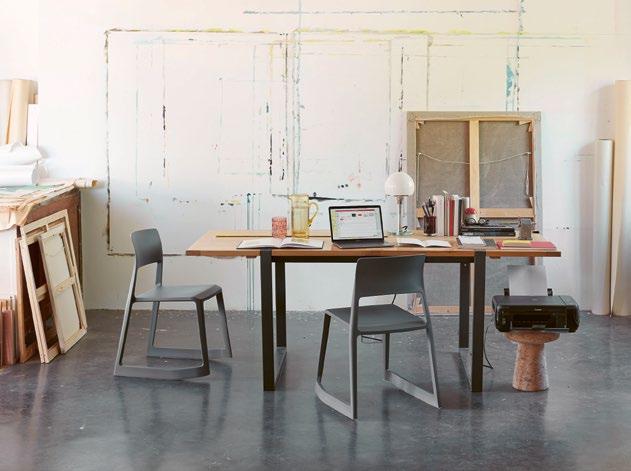
Tip Ton RE is an all-plastic chair with a forward-tilt action, which is manufactured from post-consumer recycling material. From a normal position, Tip Ton RE can be tipped forwards a few degrees, which straightens the pelvis and spine and thus improves circulation to the abdominal and back muscles.
The high-quality recycled material for Tip Ton RE stems from Germany’s ‘Yellow Bag’ (Gelber Sack) collection of household waste. The chair is manufactured from a single mould without any mechanical components. To achieve the required stability and quality, the recycling material is mixed with a proportion of glass fibres. Extremely durable and 100% recyclable, Tip Ton RE can be stacked up to four chairs high and comes in a choice of different colours.
Tip Ton RE, Edward Barber & Jay Osgerby, 2011/20
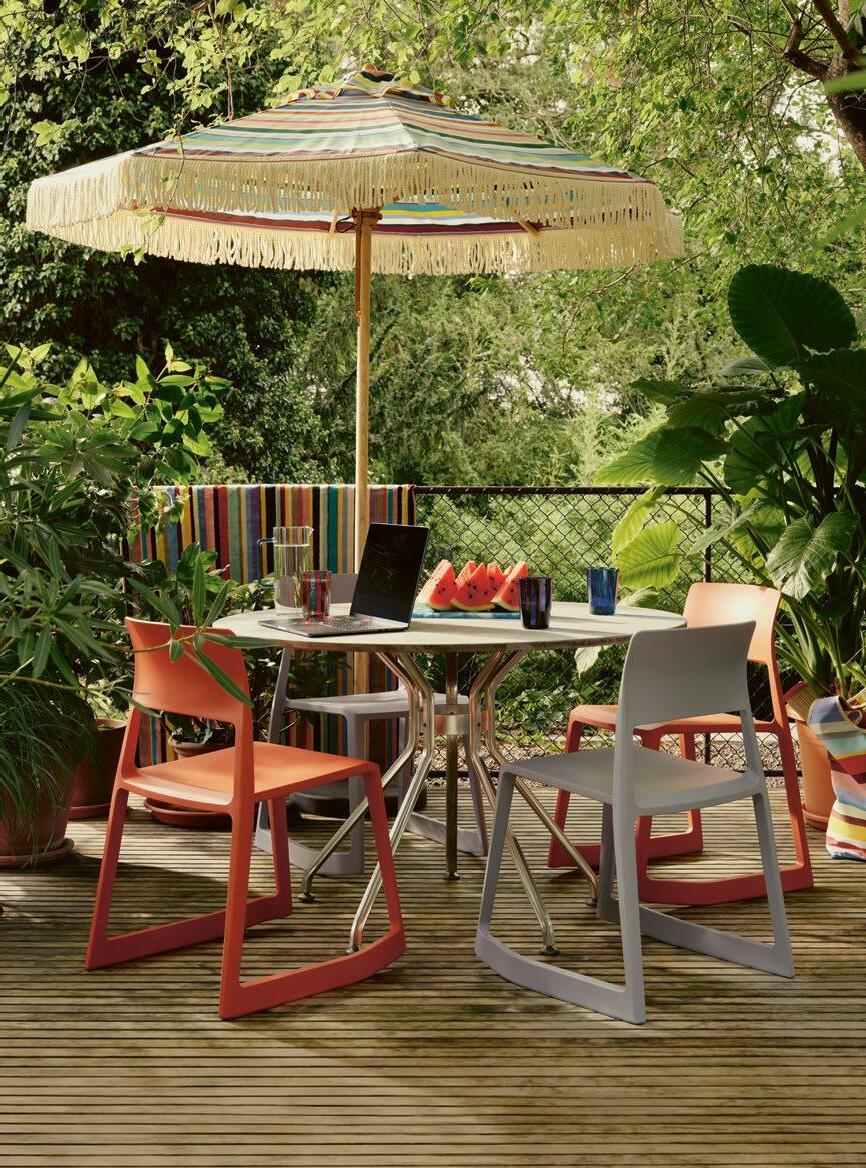
( 1 ) Tip Ton RE · Recycled polypropylene, 22 dark grey RE · Edward Barber & Jay Osgerby, 2011/2020 ( 2 ) Cork Family, Model C · Jasper Morrison, 2004
( 3 ) Tip Ton RE · Recycled polypropylene, 64 coral RE · Edward Barber & Jay Osgerby, 2011/2020 ( 4 ) Tip Ton RE · Recycled polypropylene, 38 light lavender RE · Edward Barber & Jay Osgerby, 2011/2020
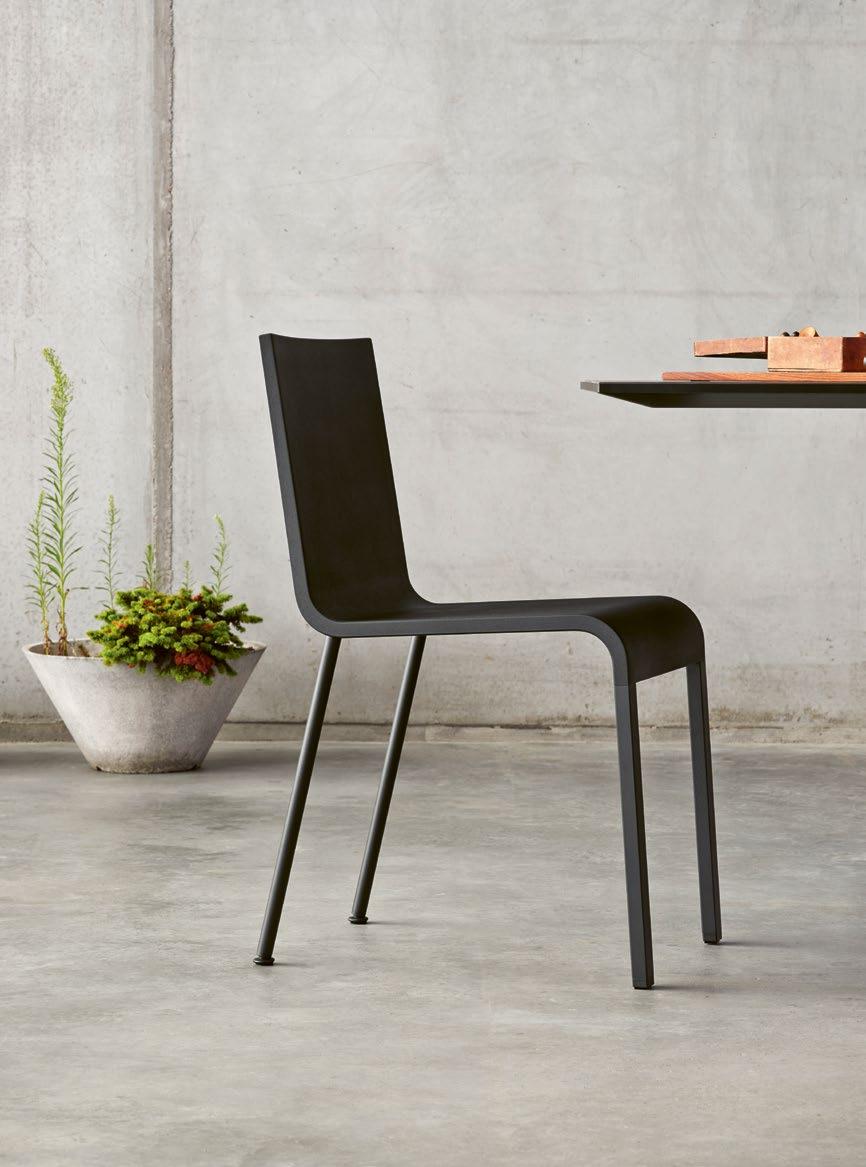
.03, Maarten Van Severen, 1998 (
Maarten Van Severen, 1998
Jasper Morrison, 2016
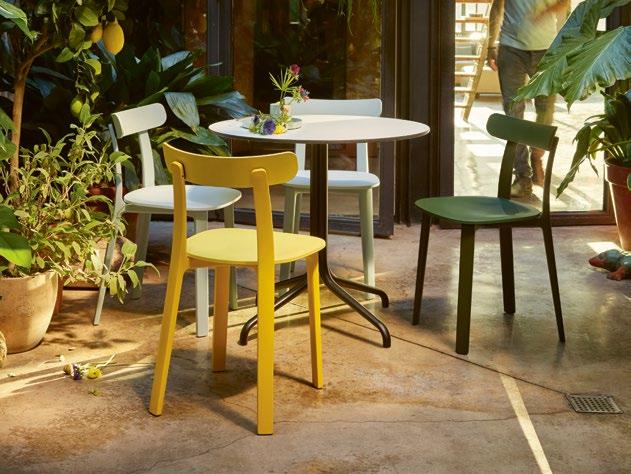
The APC is reminiscent of the classic wooden chairs that have been common in Europe for many decades, yet further enhances the typology in plastic: the frame is moulded in a single piece and the backrest, which is more finely modelled than with conventional wooden chairs, connects to the frame in a manner that allows flexible movement. The frame and seat with backrest are paired in different nuances of the same colour, giving the classic shape a more contemporary appearance. The APC is a robust chair suited for both indoor and outdoor use.
APC, Jasper Morrison, 2016
The dining table is the social hub of most homes: where household members gather to eat, entertain guests, work, play and talk. With a range of different designs and dimensions, Vitra tables suit the requirements of any given space in the home.
Plate Dining Table, Jasper Morrison, 2018
Height: 735 / 745 mm
Table top: 1800/2000 × 900 mm or 2200/2400 × 1000 mm
See p. 68, 87, 89
Belleville Table (rectangular)
Ronan & Erwan Bouroullec, 2015
Height: 740 mm
Table top: 1600 × 750 mm
See p. 83, 84–85, 142
Belleville Table (Bistro), Ronan & Erwan Bouroullec, 2015
Height: 740 mm
Round table: Ø 796 mm
Square table: 750 mm
See p. 92, 97
Trapèze, Jean Prouvé, 1950/54
Height: 720 mm
Table top: 2230 × 725 mm
See p. 30, 88, 106–107
EM Table, Jean Prouvé, 1950
Height: 740 mm
Table top: 1800–2200 × 900 mm
See p. 62, 66–67, 72–73, 81, 90–91, 99
Guéridon, Jean Prouvé, 1949
Height: 740 mm
Table top: Ø 900/1050 mm
See p. 75, 82
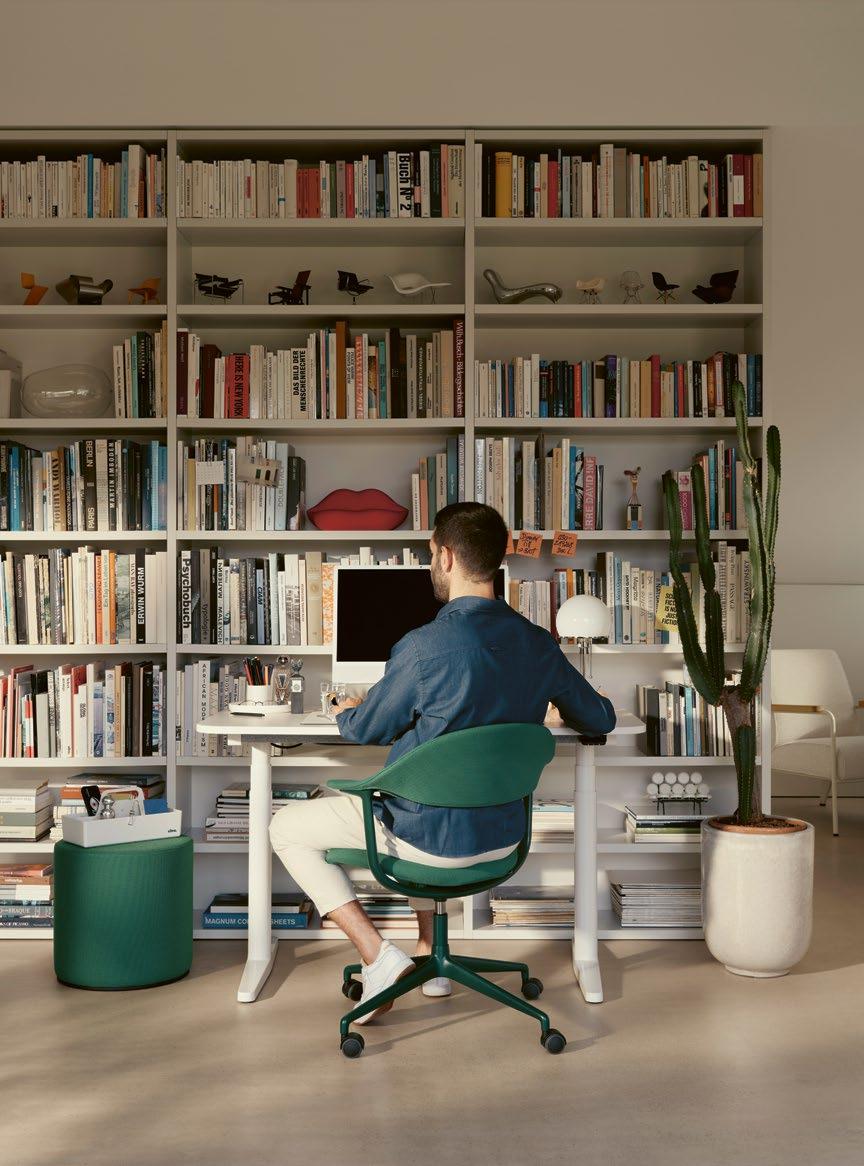
Chairs and tables for the home office
The multifunctional chairs
Compact in design, they embody just the right mix of ergonomics, functionality and understated aesthetics, making them ideal for working at the dining table or in an office nook.
The ergonomic chairs
Vitra has over 45 years of experience in the development of ergonomic task chairs that can be intuitively adjusted to different user needs.
The classic chairs
Thanks to their timeless design and structural honesty, classic office chairs such as those by Charles and Ray Eames or Jean Prouvé are still vital and relevant decades after their creation.
Vitra has been developing task chairs for the workplace and home office for more than 45 years. These chairs meet ergonomic requirements while offering a varying range of functions. Thanks to their understated aesthetics, they are perfectly suited to any style of interior.
An overview of all Vitra desks can be found on page 120.
Chair Concept
Direction Pivotant
Allstar
Physix
111 Rookie
Mikado
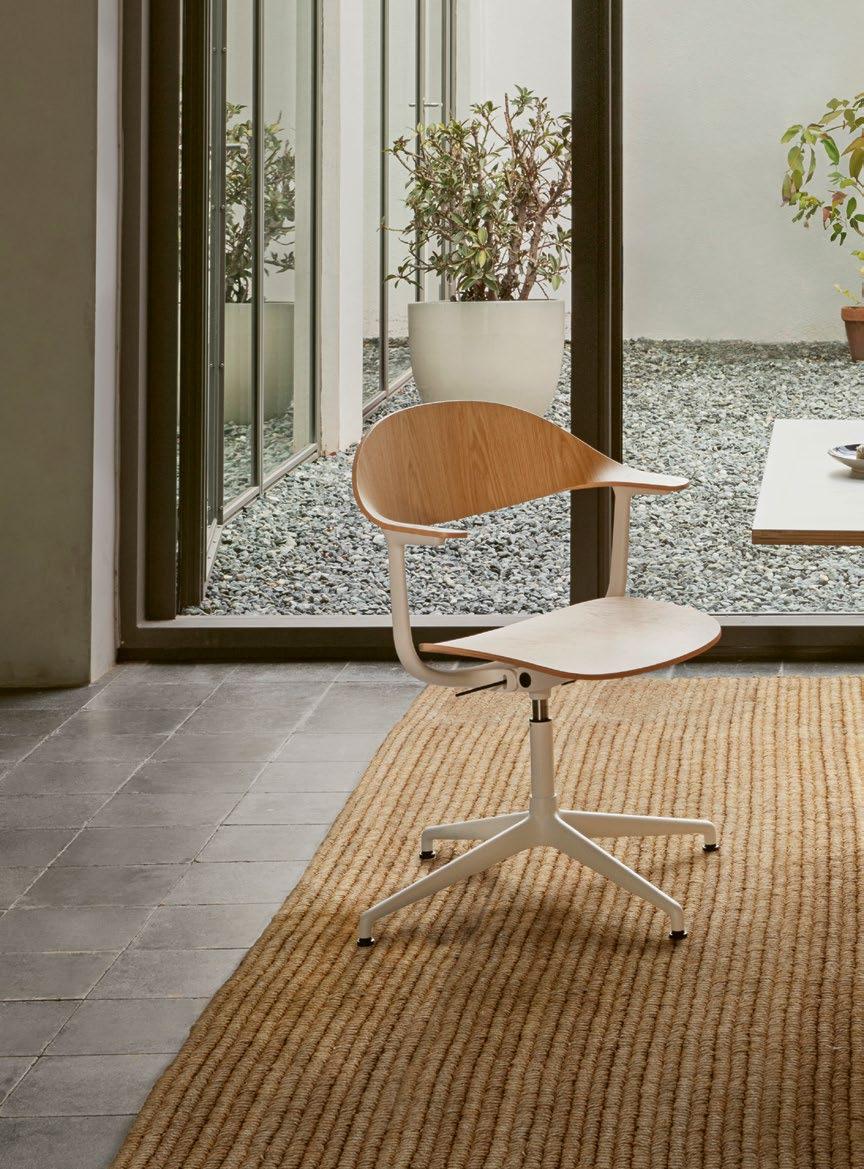
Mynt, Erwan Bouroullec, 2025
( 1 ) Mynt · Veneer, 10 natural oak, with protective varnish · 52 soft light powder-coated (textured) · Erwan Bouroullec, 2025 ( 2 ) Mynt · Recycled polypropylene, 05 grey RE · 52 soft light powder-coated (textured) · Erwan Bouroullec, 2025 ( 3 ) Nuage, medium and large · Anodised aluminium, light silver anodised · Ronan & Erwan Bouroullec, 2016
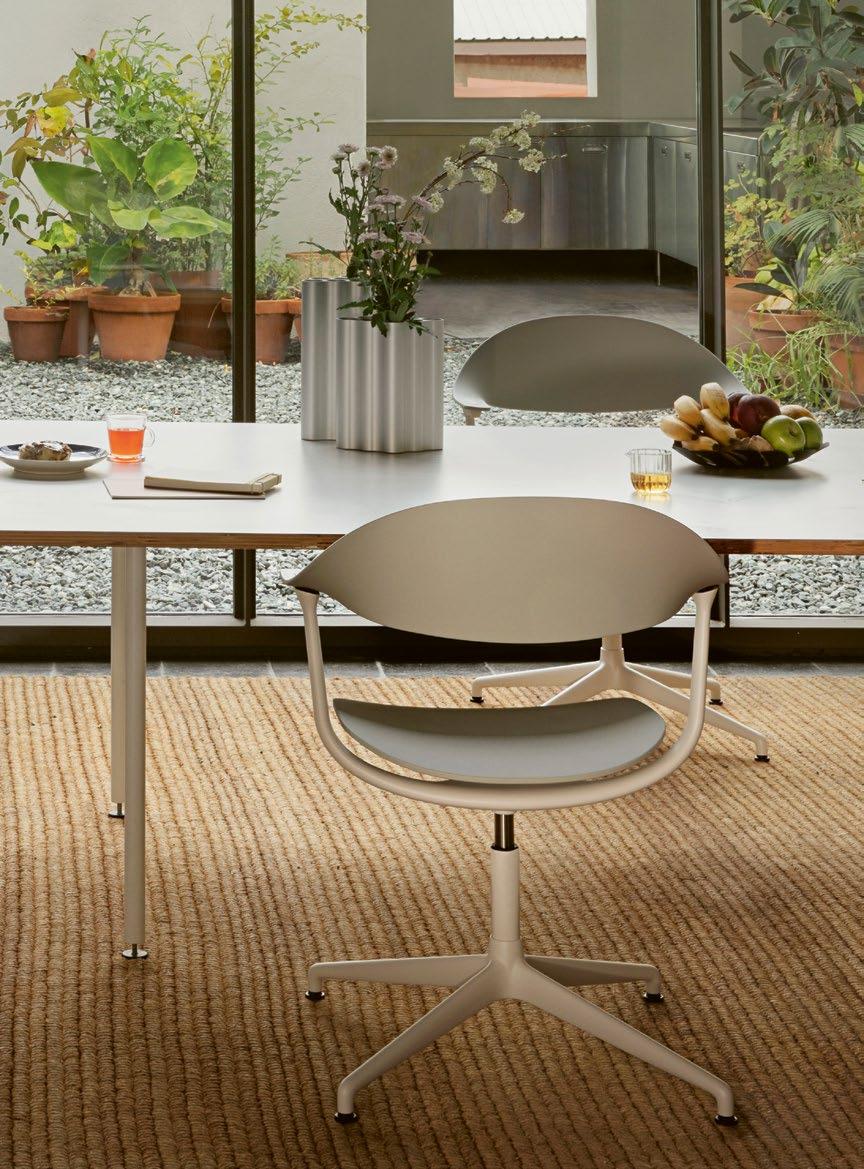
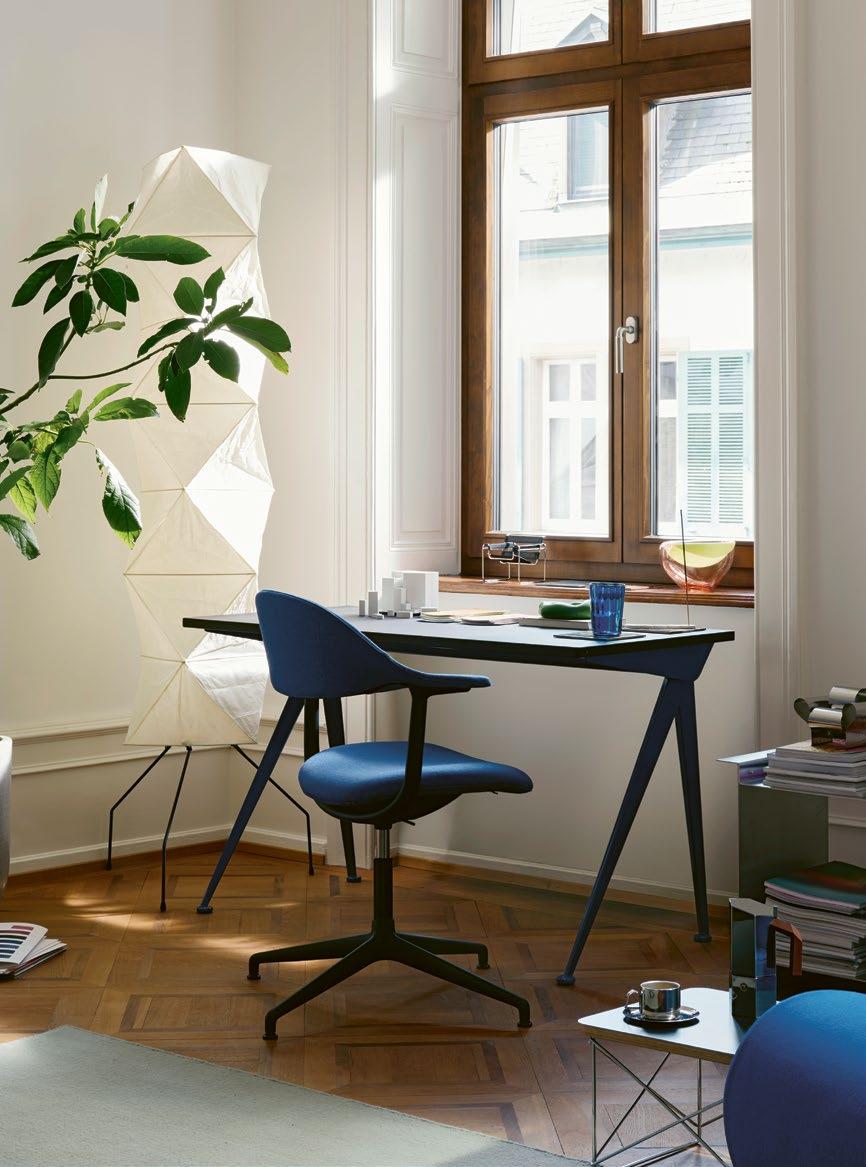
( 1 ) Mynt · Cosy 2, 20 electric blue · 12 deep black powder-coated (textured) · Erwan Bouroullec, 2025 ( 2 ) Compas Direction · Solid Wood, 04 dark stained solid oak, with protective varnish · 41 Prouvé Bleu Marcoule powder-coated (smooth) · Jean Prouvé, 1953
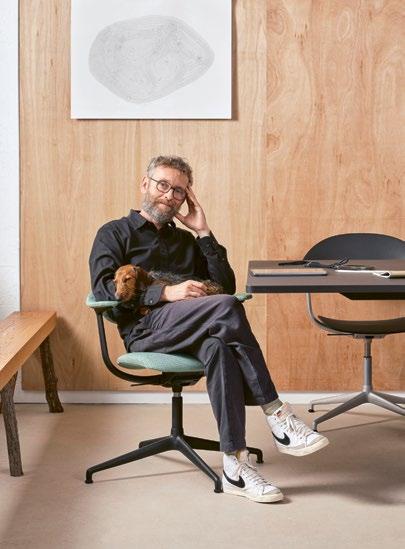
‘Apart from the fact that Mynt had to perform, it had to be inviting – inviting for any kind of person, any kind of task, at any time.’ Erwan Bouroullec
Mynt brings a new way of sitting to offices, public spaces and home interiors. The core element is its patented mechanism, which is activated by body weight and tilts forwards or backwards depending on shifts in the sitter's position – with the seat moving independently of the backrest and automatically adapting to the user's weight. Only the height has to be adjusted.
Seat and backrest are available in wood veneer or recycled polyamide made from 100% post-industrial sources and can be replaced or exchanged for a different materialor colour option. With the four-star base, users can switch between glides and castors. Thanks to zip fasteners, the optional seat and back cushions can be removed for cleaning or replacement.
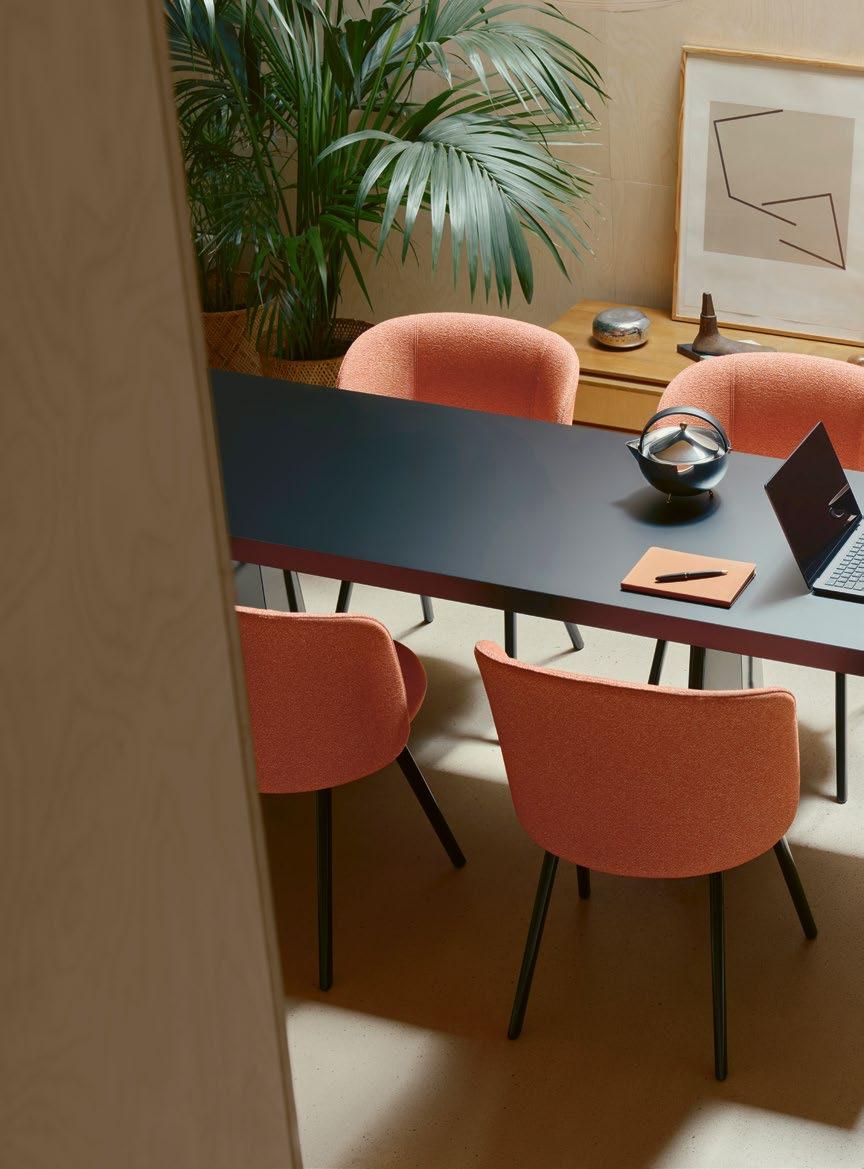
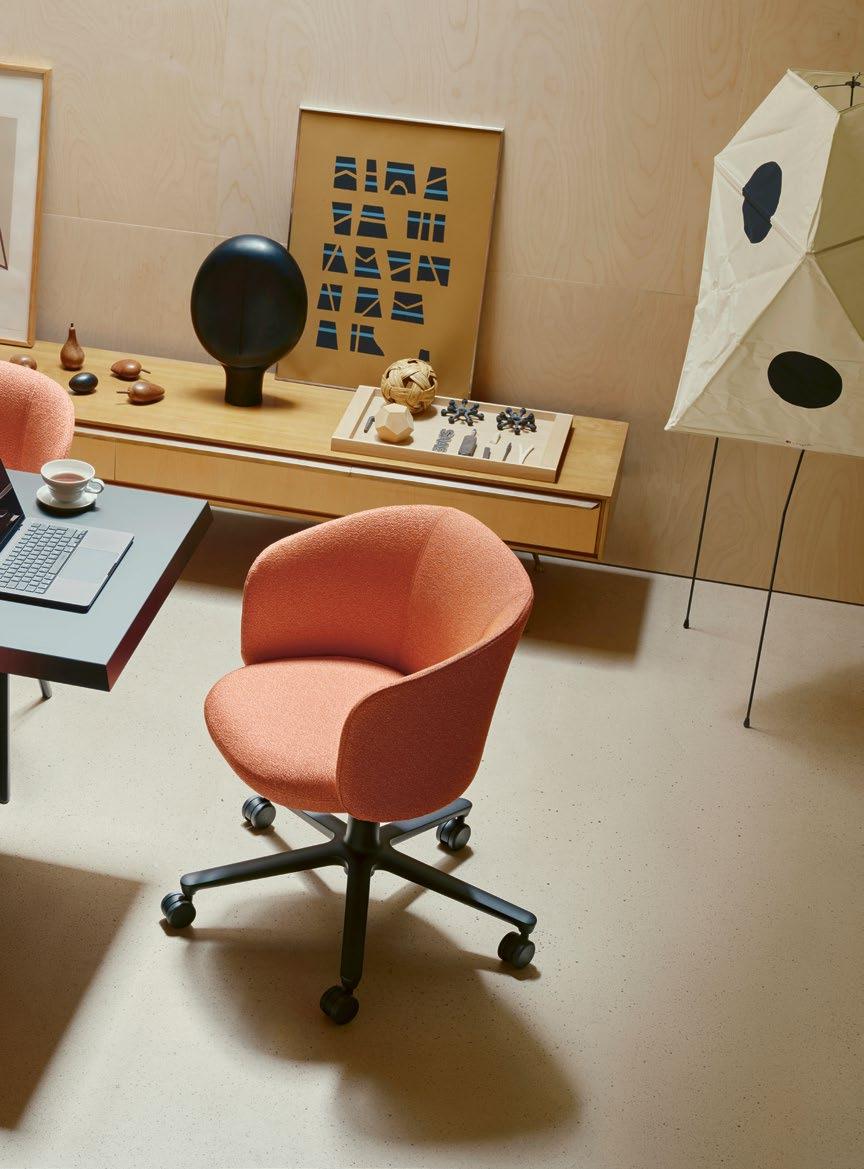
Mikado, Edward Barber & Jay Osgerby, 2024
( 1 ) Mikado Side Chair · Cento, 05 orange · 30 basic dark powder-coated (smooth) · Edward Barber & Jay Osgerby, 2024
( 2 ) Mikado Armchair, five-star base · Cento, 05 orange · 30 basic dark powder-coated (smooth) · Edward Barber & Jay Osgerby, 2024
( 3 ) Trapèze · HPL, 30 black (smooth) · 30 basic dark powder-coated (smooth) · Jean Prouvé, 1950/1954
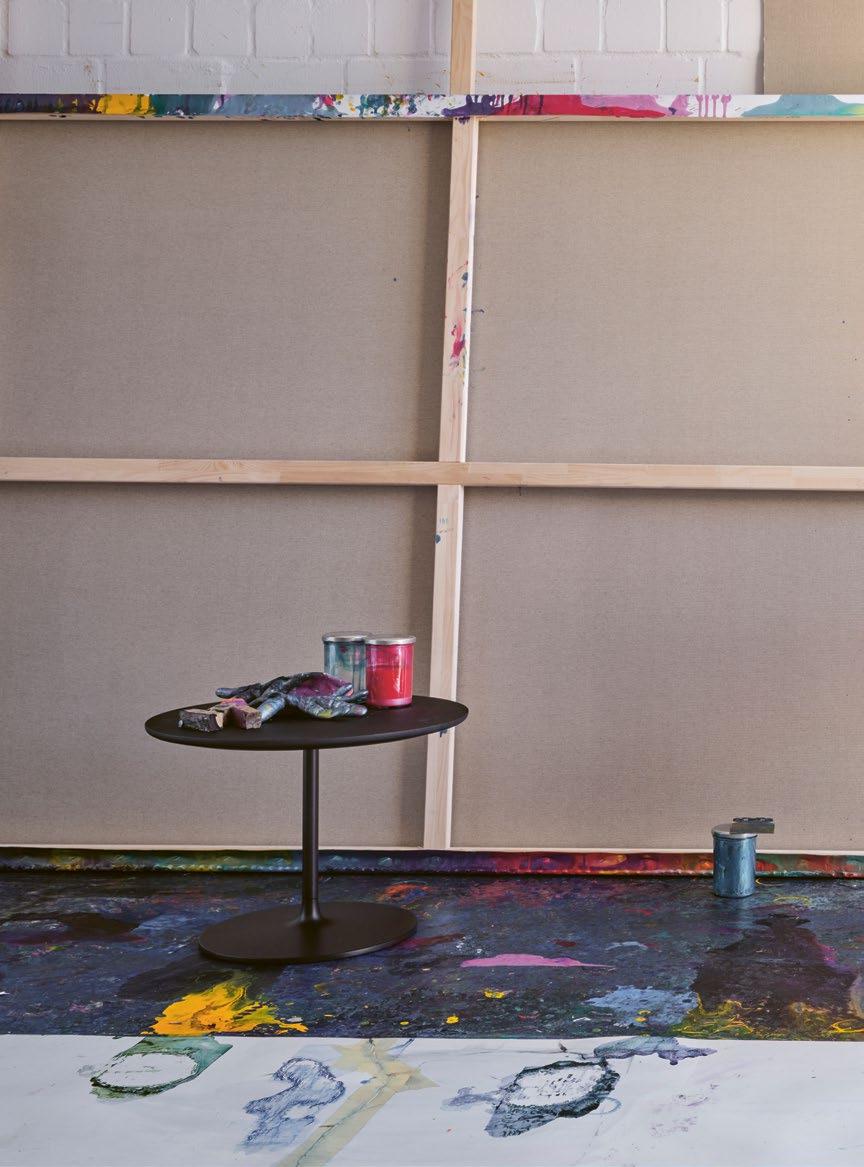
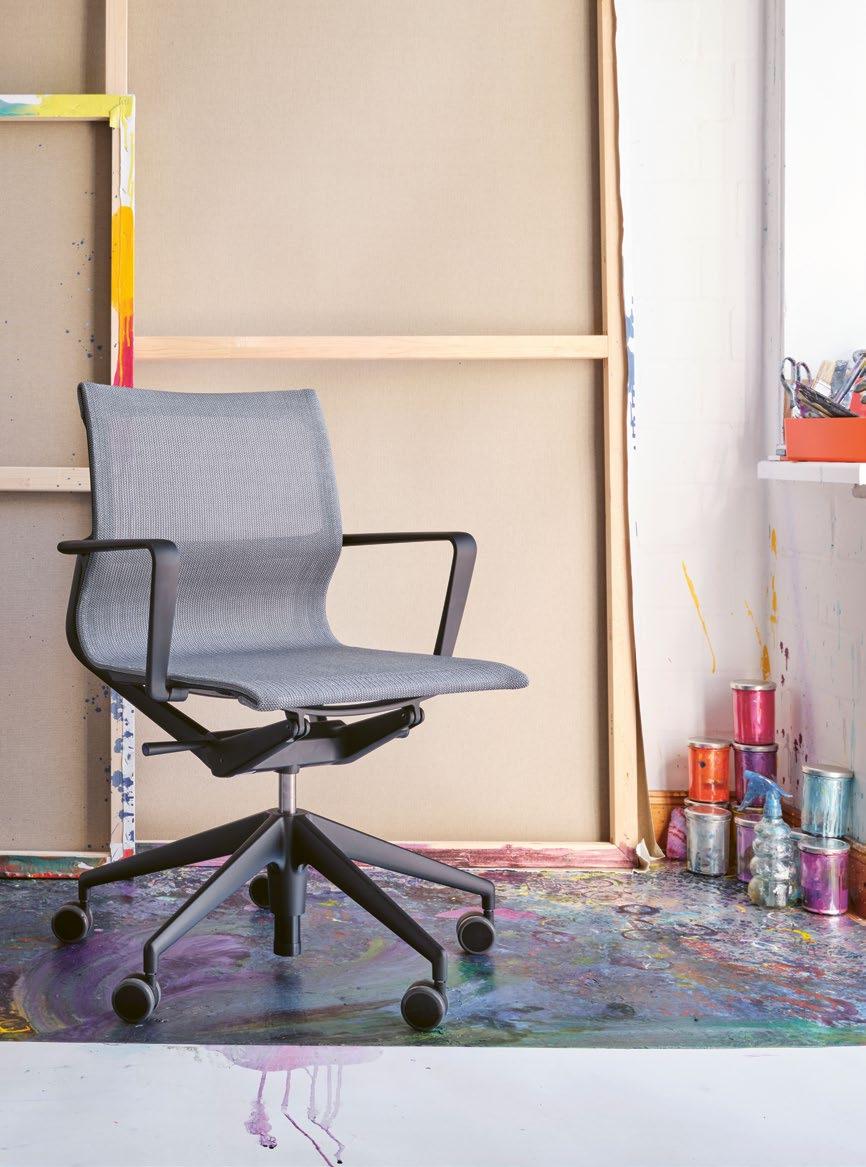
( 1 ) Physix · 12 deep black powder-coated (textured) · TrioKnit, 08 pebble grey · Alberto Meda, 2012
( 2 ) Occasional Low Table · 04 dark stained solid oak, with protective varnish · Jasper Morrison, 2016
Physix, Alberto Meda, 2012
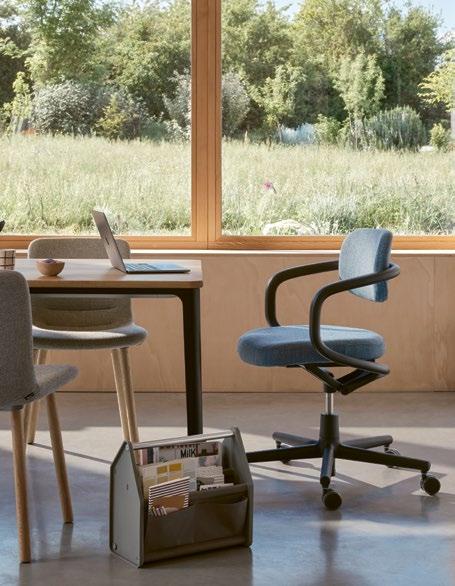
The Allstar chair defies conventional categorisations: is it a chair for office workplaces or the home office? What period is it from? Does it offer any functional features? What is it made of? In developing Allstar, Konstantin Grcic kept such formulations open in order to create a relaxed, home-like ambience for workers in office settings. Allstar’s appealing design is emblematic and familiar, inspiring a sense of dependability and trust. Its casual ease and comfort has a calming influence and de-accelerates the fast-paced dynamic of today’s offices.
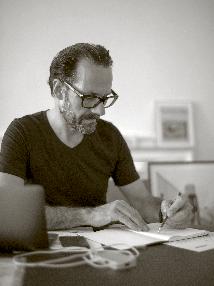
Konstantin Grcic was trained as a cabinetmaker at Parnham College in Dorset before studying industrial design at the Royal College of Art in London. In 1991 he set up his own practice, Konstantin Grcic Design.
Allstar, Konstantin Grcic, 2014
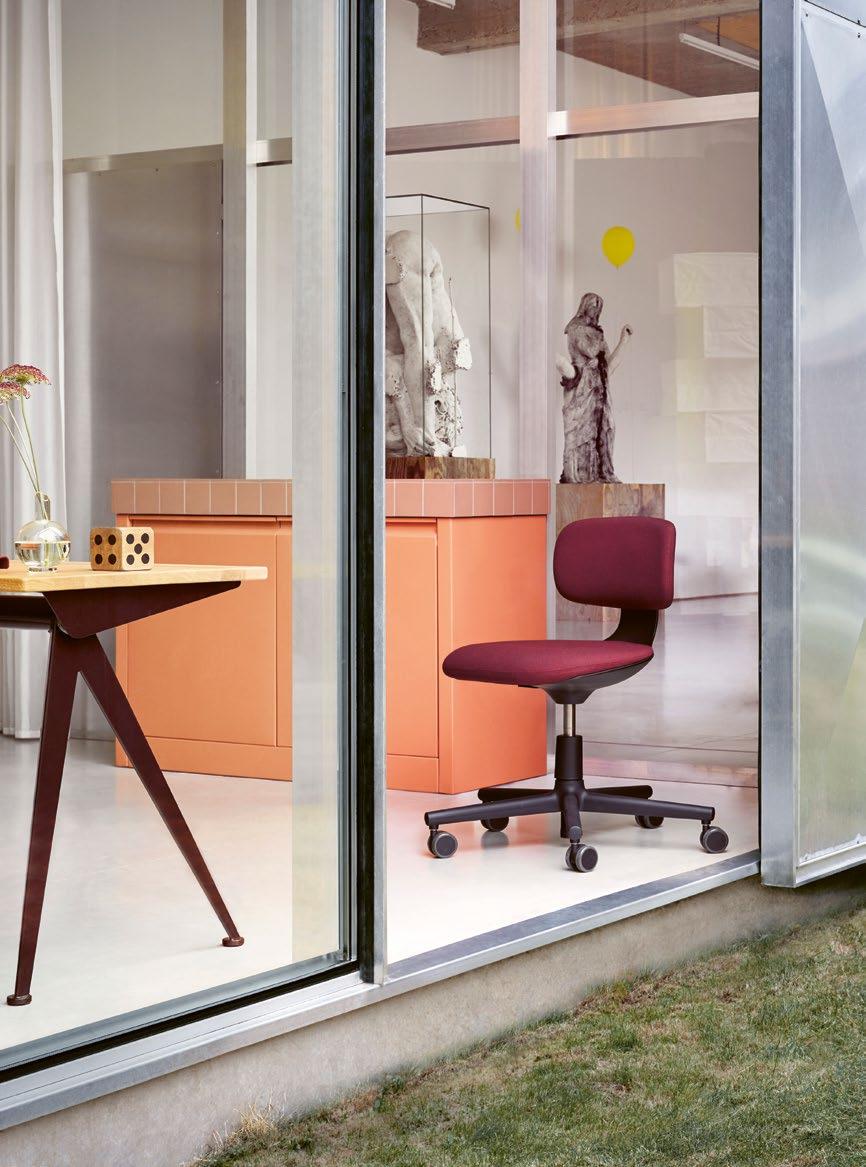
( 1 ) Allstar · Tress, 12 steel blue melange · 12 deep black · Konstantin Grcic, 2014 ( 2 ) Locker Box, small, dark grey RE · Konstantin Grcic, 2022 ( 3 ) Rookie · Plano, 97 red/coconut · 12 deep black · Konstantin Grcic, 2018
Rookie, Konstantin Grcic, 2018
All good things come in tens
ACX is the tenth and most sustainable office swivel chair that Italian designer Antonio Citterio has developed in collaboration with Vitra. It is packed with extensive know-how and draws on years of experience. The maestro himself explains what is so very special about the new chair in an interview.
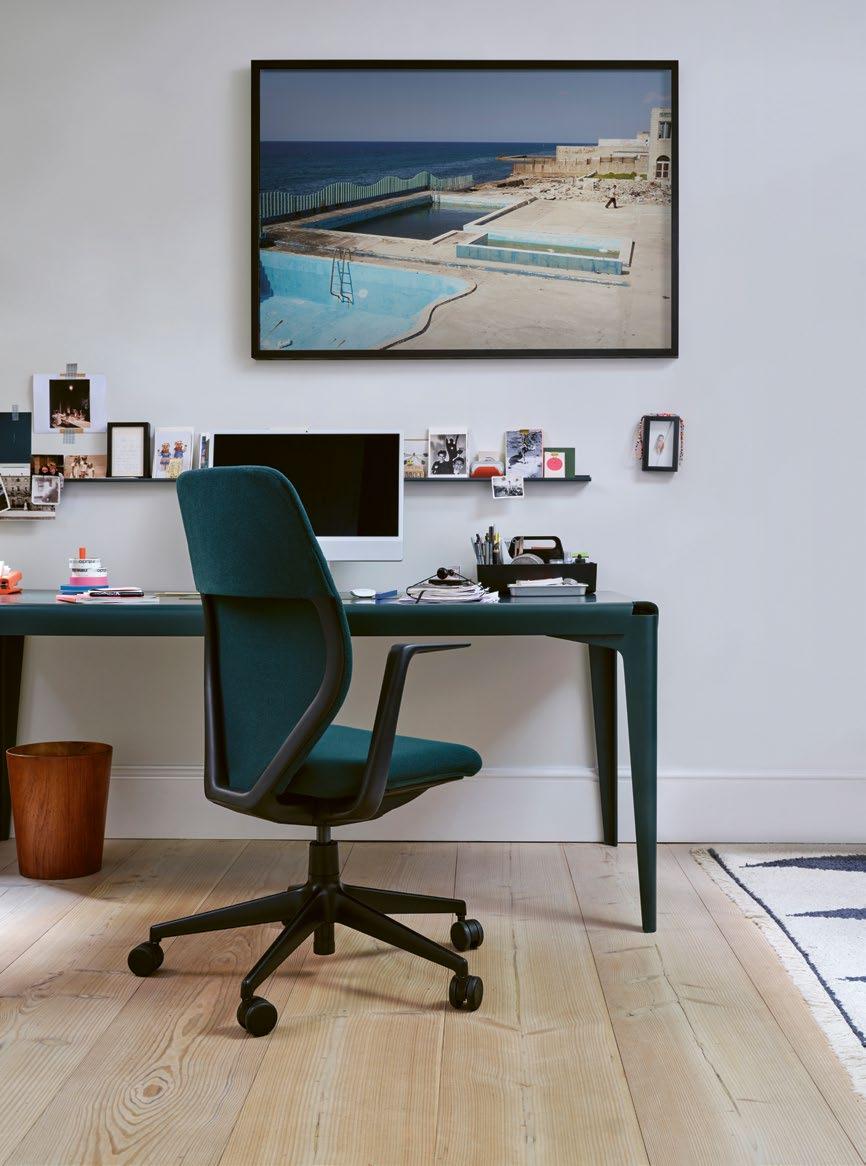
( 1 ) ACX Soft · Grid Knit, 05 pine green / Quilted Knit, 05 pine green · 12 deep black · Antonio Citterio, 2023
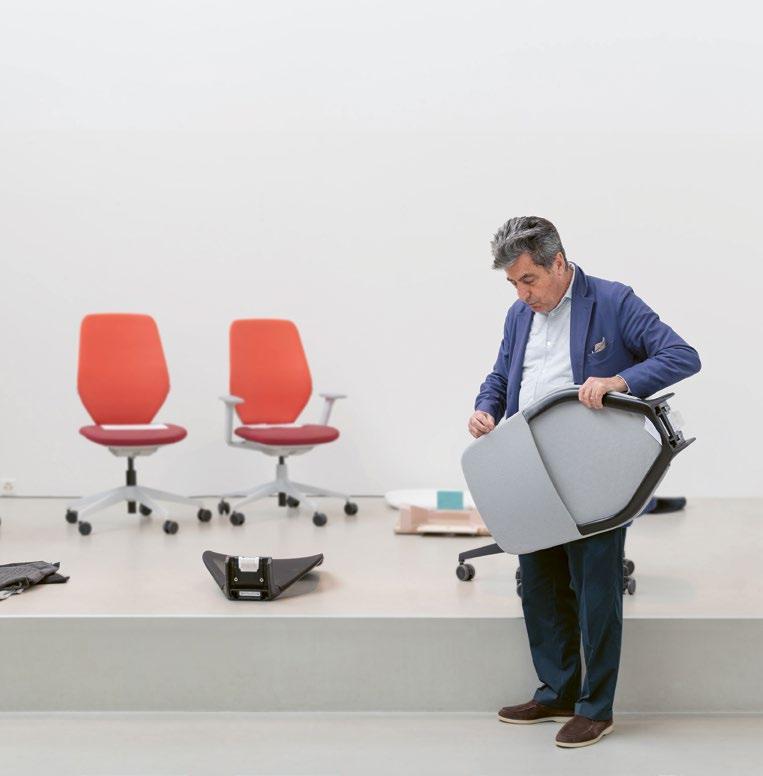
‘Nowadays you design with the product’s end of life in mind, trying to figure out how it can be easily dismantled and recycled to reduce waste.’
–Antonio Citterio
ACX is your tenth task chair for Vitra. Can you tell us something about this impressive collaboration?
And after 30 years of collaboration, I can say that ACX is the result of continuous development, shared knowledge and a close, lasting partnership.
Was sustainability on your mind while designing ACX?
More than that. The design process was wholly guided by the principle of sustainability, with the aim of using, for example, only recycled materials where possible. The structural elements in ACX are made of approximately 60% post-industrial recycled materials.
So did the product’s life cycle also influence its development?
Yes, nowadays you design with the product’s end of life in mind, trying to figure out how it can be easily dismantled and recycled to reduce waste. Depending on the chosen model, ACX is up to 100% recyclable.
And what was the goal of the design process in terms of aesthetics?
The idea was to have a compact, inviting chair, with a reduced backrest and a warm array of upholstery colours, suited for workspaces in the home and office.
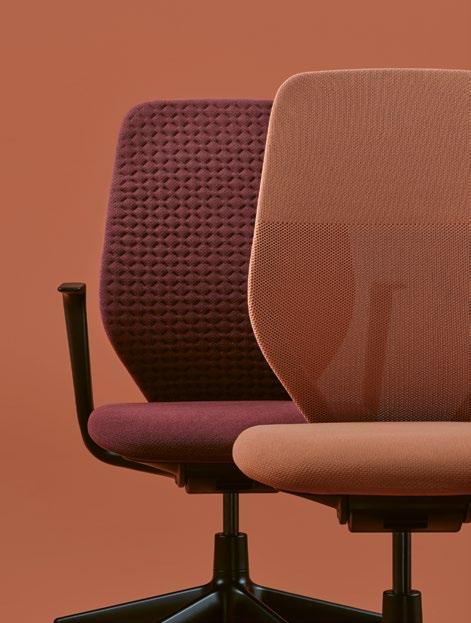
ACX is equipped with a new automatic mechanism. Does this impact the manner in which it can be used in the office?
Yes, the chair components must no longer be individually adjusted as the mechanism automatically adapts to the user’s weight – but the adjustment options are still provided, of course. It is therefore possible to sit down at any workstation in an open-plan office and enjoy instant comfort, only needing to modify the seat height, if necessary.
You are not just a designer, but also an architect. Which trends do you see in the office spaces you design today?
I have noticed that the office environment is becoming more and more collaborative, more relaxed, less hierarchical, with the emergence of more informal, flexible, multi-purpose meeting spaces –also including ‘disruptive’ elements inspired by residential ambiences, such as plants, decorative items and furniture with a focus on comfort and well-being.
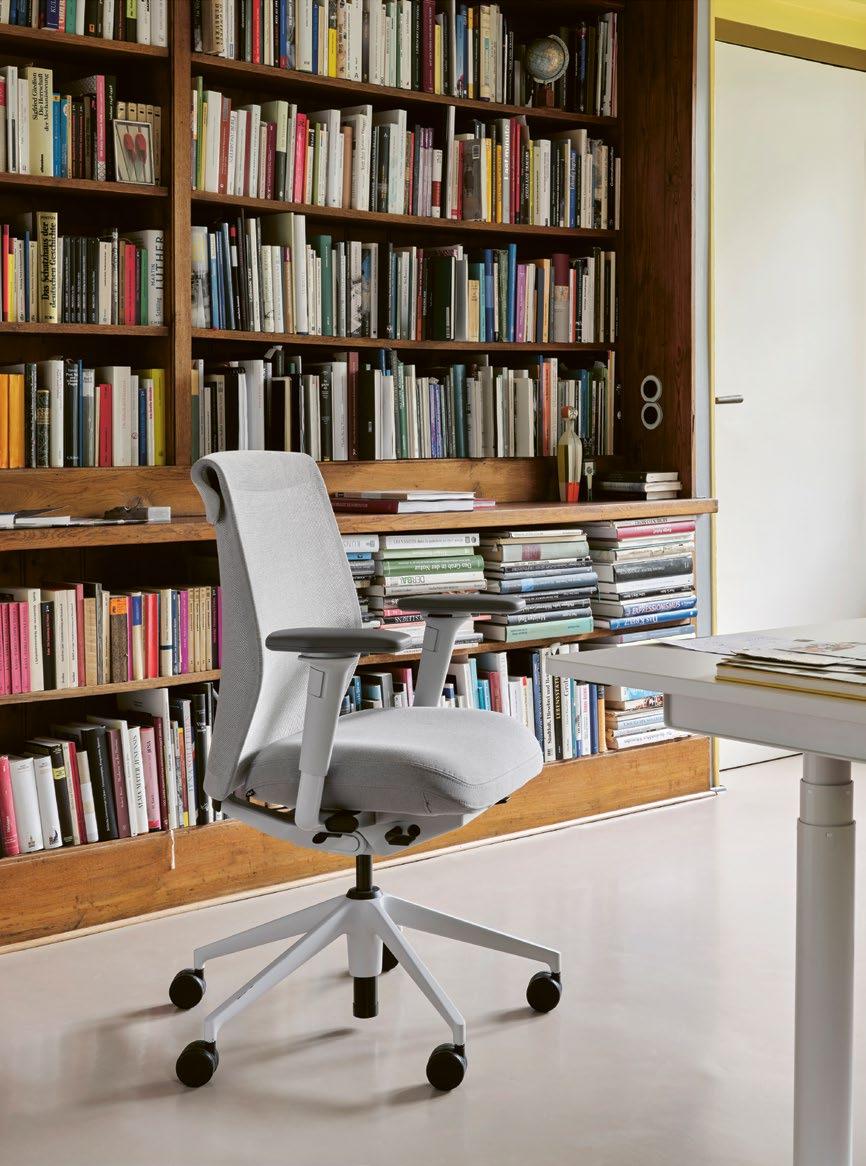
( 1 ) ID Cloud, FlowMotion with forward tilt, with seat depth adjustment
Plano, 18 light grey/sierra grey
Duo Knit, 01 cream white/sierra grey
Antonio Citterio, 2021 ( 2 ) ID Soft, FlowMotion with forward tilt, with seat depth adjustment
66 Plano - nero · Antonio Citterio, 2010/2021
( 3 ) Cork Family, Model E · Jasper Morrison, 2004 ( 4 ) Cork Bowl, large · Jasper Morrison, 2020
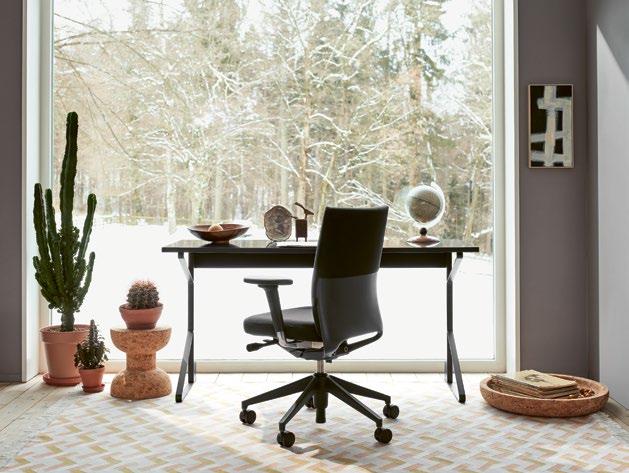
The ID Chair concept offers countless options for customisation. Different variations of the FlowMotion mechanism, a selection of backrests, armrests, seats and bases, along with a broad array of colours and fabrics, enable every user to find the perfect ID Chair. Despite the many possible variations, it always remains essentially the same chair in look and construction – with benefits in terms of aesthetics, maintenance and service.
A study by the Institute for Biomechanics at ETH Zurich demonstrated the comprehensive benefits of the ID Chair’s dynamic sitting features and their role in actively preventing health problems.
The ID Chair Concept consists of the models ID Cloud, ID Air, ID Mesh, ID Soft, ID Soft L, ID Trim and ID Trim L, each with a different backrest.
ID Chair Concept, Antonio Citterio, 2010/21
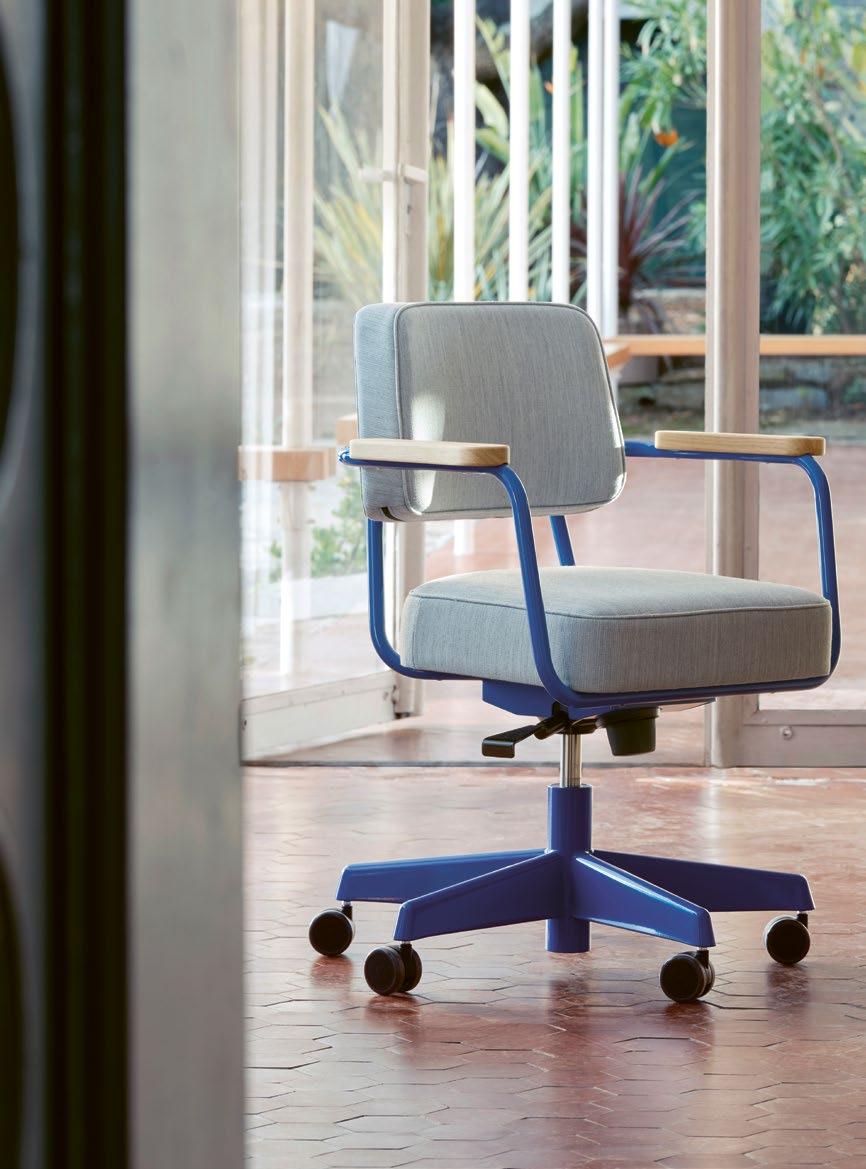
Fauteuil Direction Pivotant, Jean Prouvé, 1951
( 1 ) Fauteuil Direction Pivotant · 41 Prouvé Bleu Marcoule powder-coated (smooth) · Tress, 06 ice grey melange · 70 natural solid oak, oiled · Jean Prouvé, 1951 ( 2 ) Compas Direction · 41 Prouvé Bleu Marcoule powder-coated (smooth) · 70 natural solid oak, oiled · Jean Prouvé, 1953
( 3 ) Lampe de Bureau · 12 deep black powder-coated (smooth) · Jean Prouvé, 1930
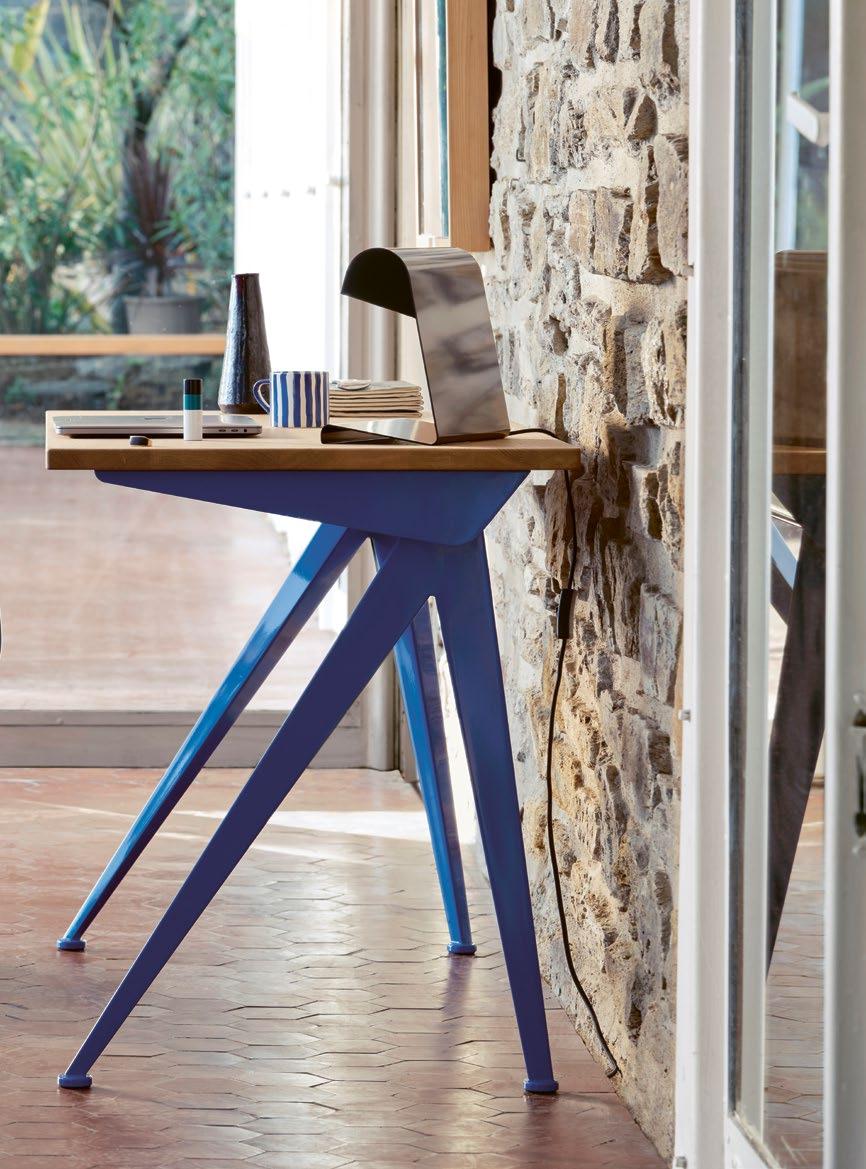
Photographed in the Villa Dollander, Le Lavandou, France; built in 1949 by Jean Prouvé (construction) and his brother Henri (architecture).
Desks
Vitra’s classic desks with compact dimensions are ideally suited to virtually any home office setting, where their iconic design will add an appealing aesthetic touch. They are manufactured in Europe from durable high-quality materials.
Courier, Ronan Bouroullec, 2025
Height: 895 mm
Table top: 1200 × 725 mm
See p. 3, back cover
Compas Direction, Jean Prouvé, 1953
Height: 730 mm
Table top: 1250 × 600/700 mm
See p. 104, 111, 119
Tyde 2 Home Desk, rectangular and barrel shaped, Ronan & Erwan Bouroullec, 2024
Height: 650 / 1250 mm
Table top: 1200 × 700 mm / 1300 × 750 mm
See p. 100
vitra.com/finder
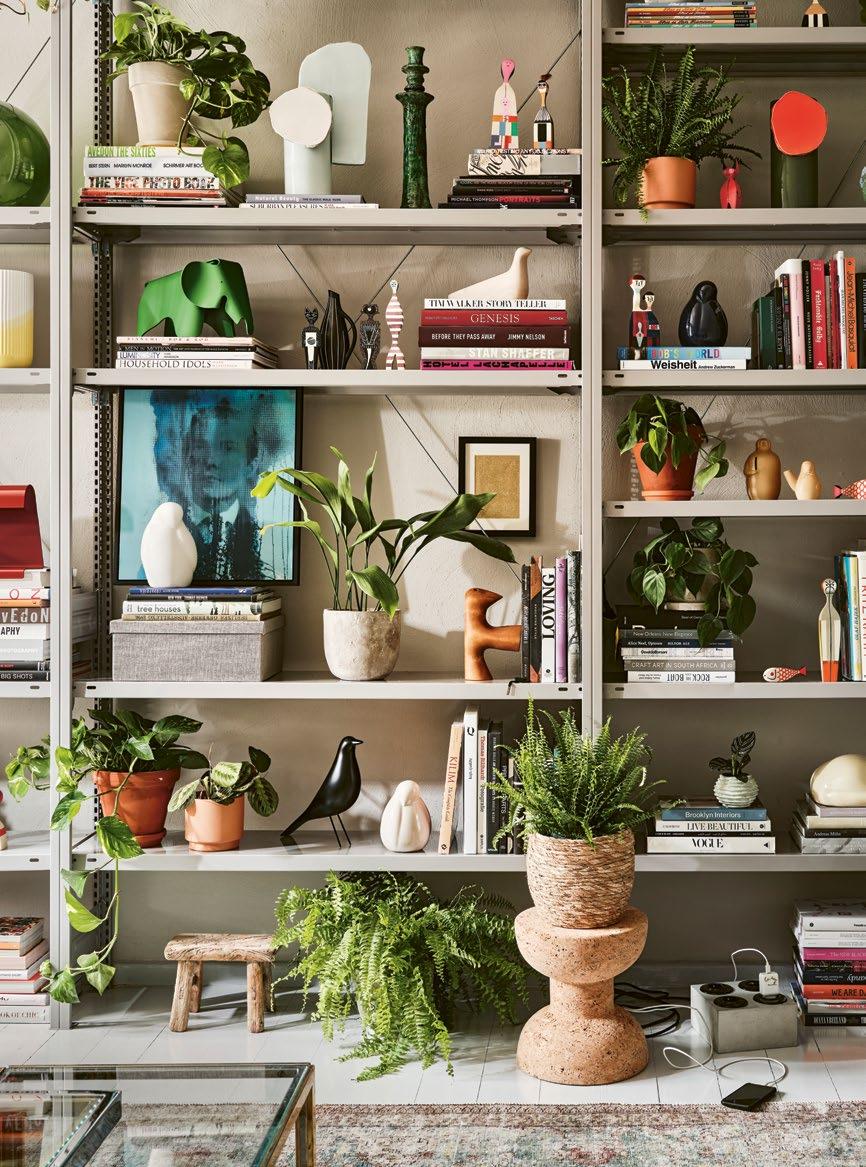
Accessories
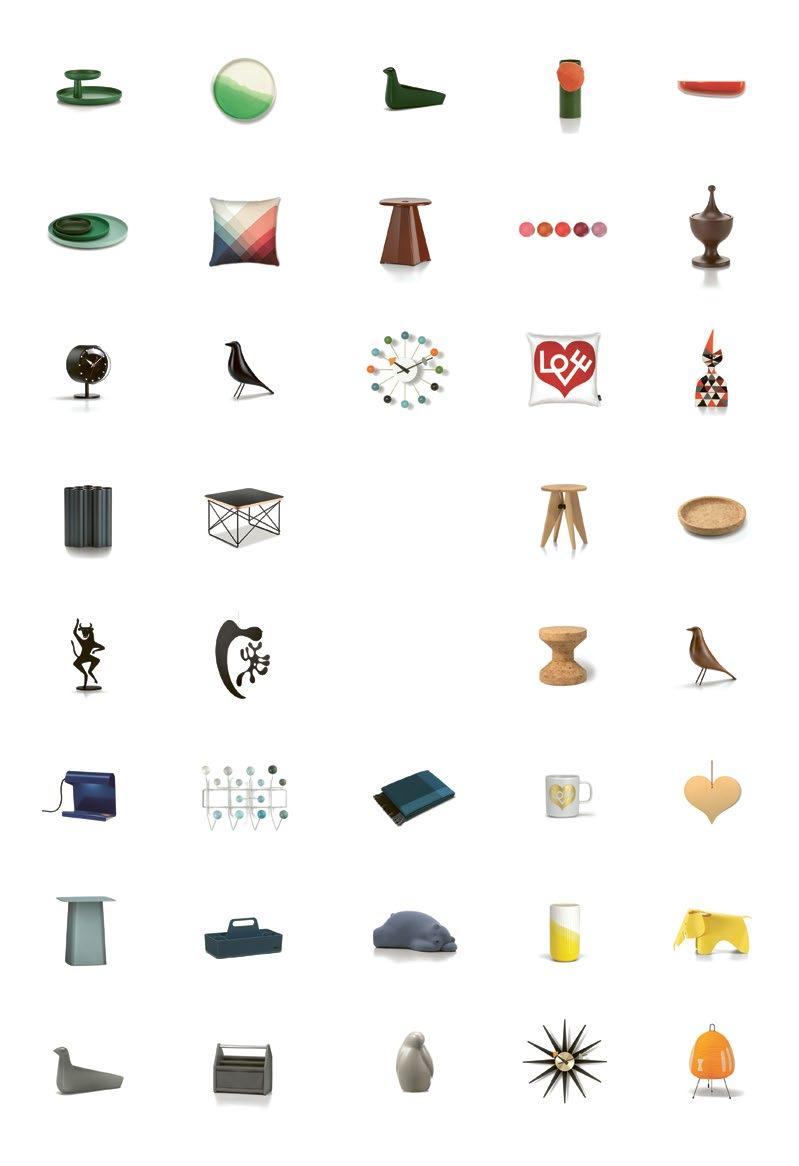
Interiors reflect our personality: each object tells its own story and serves as an expression of our individual identity. The Vitra Accessories Collection has something for every taste.
Textiles
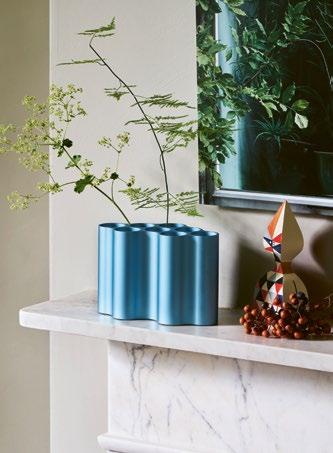
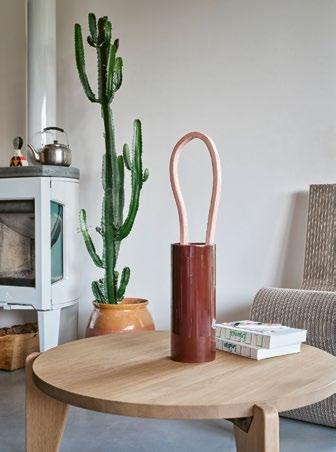
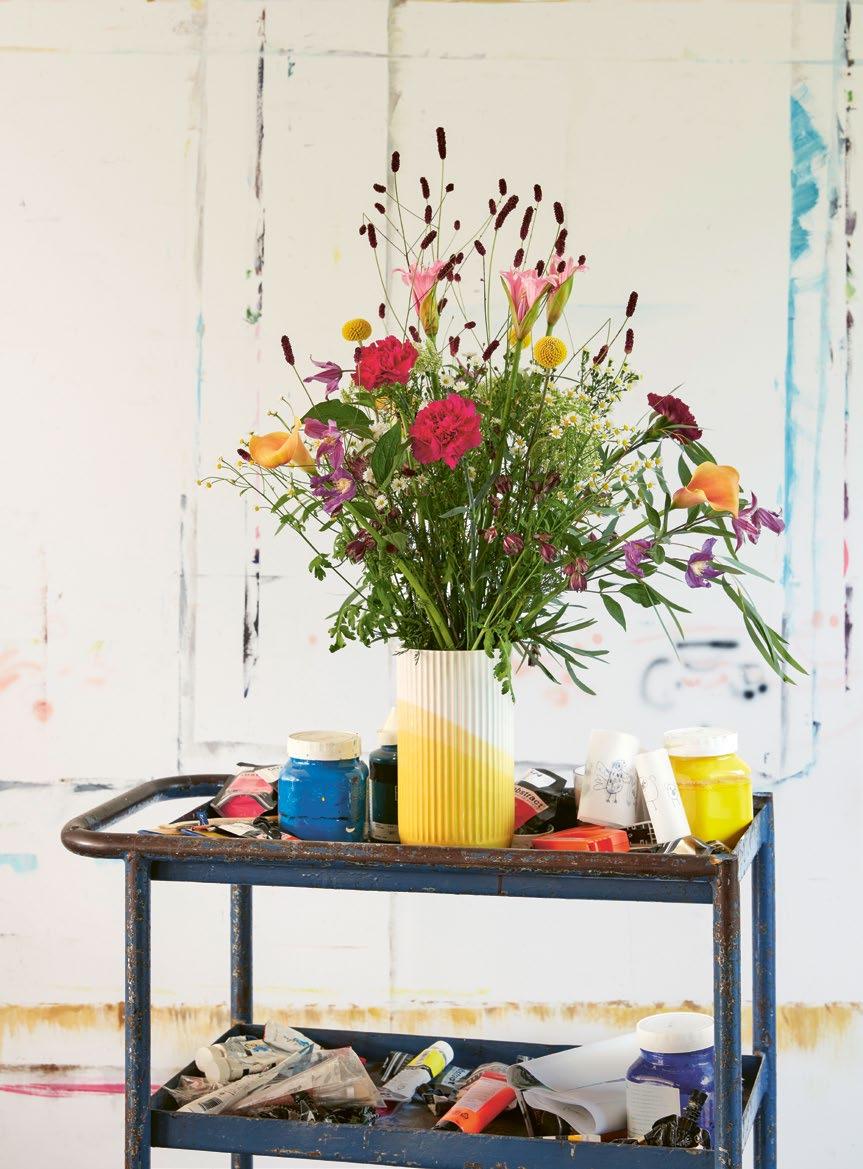
( 1 ) Nuage, small · steel blue · Ronan & Erwan Bouroullec, 2016 ( 2 ) Wooden Doll No. 12
· Alexander Girard, 1952
( 3 ) Vases Découpage, Boucle · Ronan & Erwan Bouroullec, 2020 ( 4 ) Herringbone Vase, ribbed · yellow · Raw-Edges, 2019
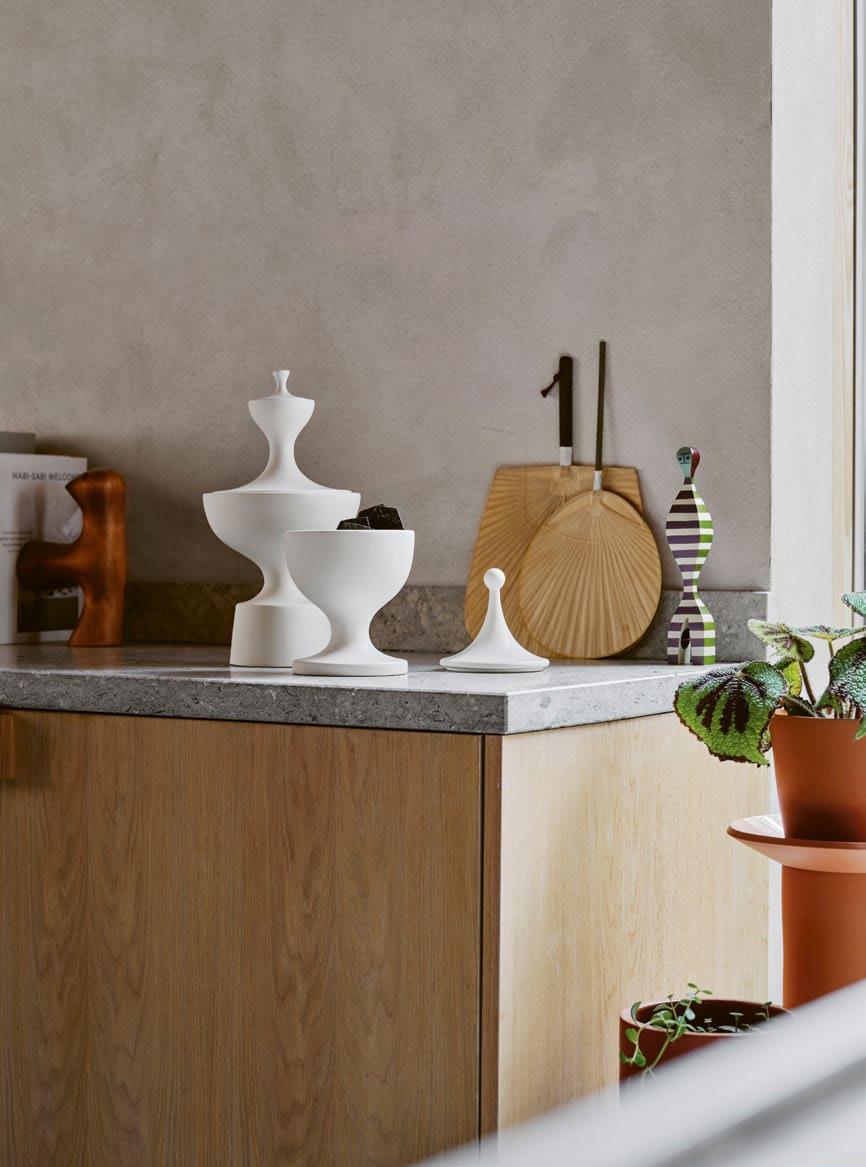
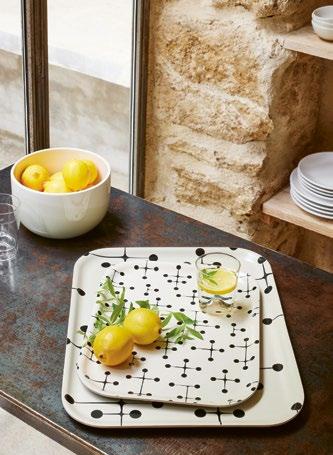
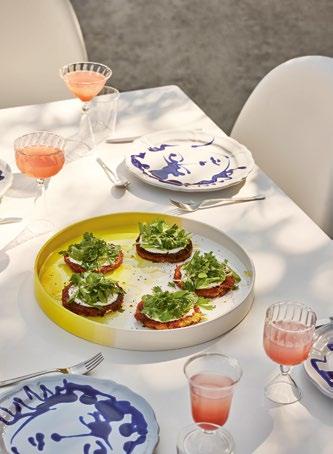
( 1 / 2 ) Ceramic Container No. 1 / Ceramic Container No. 2 · cream · Alexander Girard, 1952 ( 3 ) Girard Bird · Natural maple · Alexander Girard, 1945 ( 4 ) Wooden Doll No. 16 · Alexander Girard, 1952 ( 5 ) Herringbone Bowl · sand · Raw-Edges, 2019 ( 6 ) Classic Trays - Dot Pattern light · Charles & Ray Eames, 1947 ( 7 ) Herringbone Tray · yellow · Raw-Edges, 2019
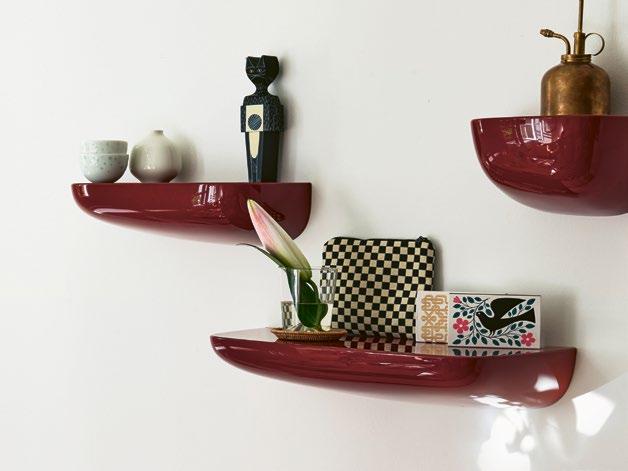
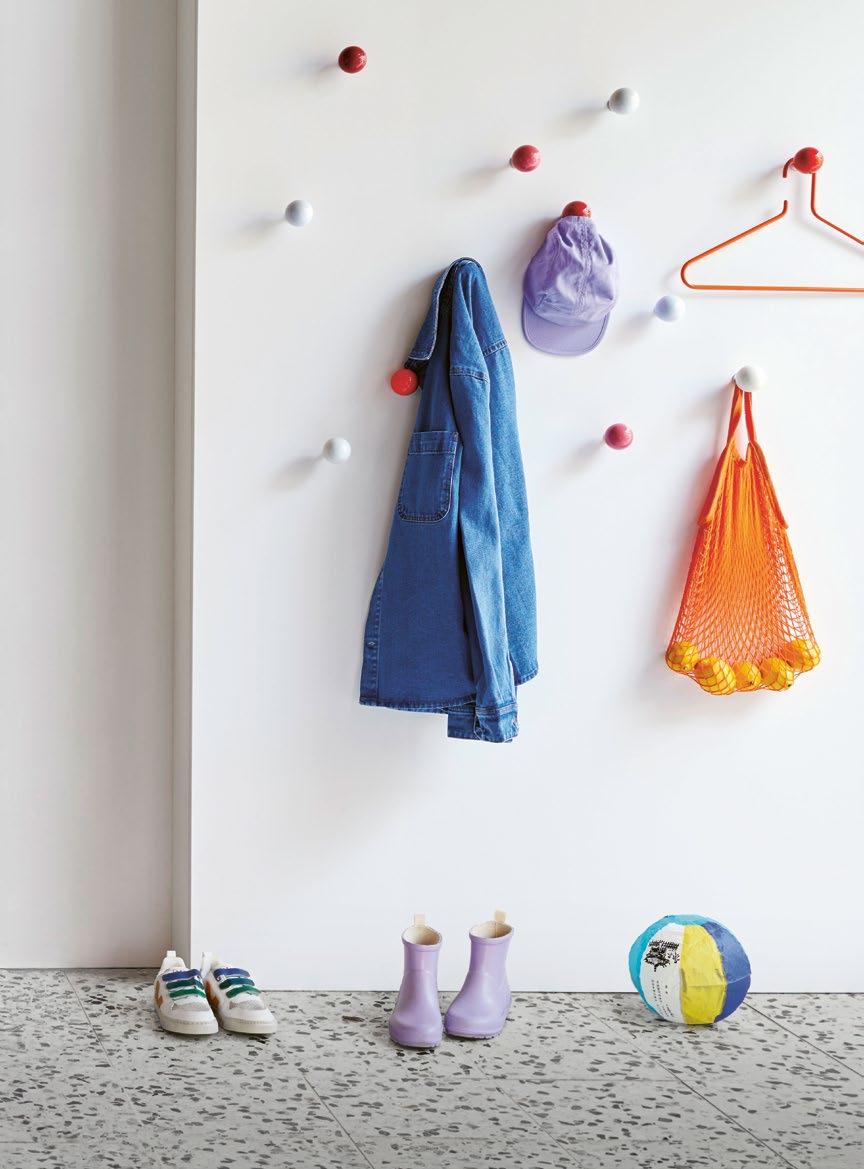
( 1 ) Corniches · japanese red · Ronan & Erwan Bouroullec, 2012 ( 2 ) Wooden Doll Cat · Alexander Girard, 1952
( 3 ) Coat Dots · red / white · Hella Jongerius, 2013
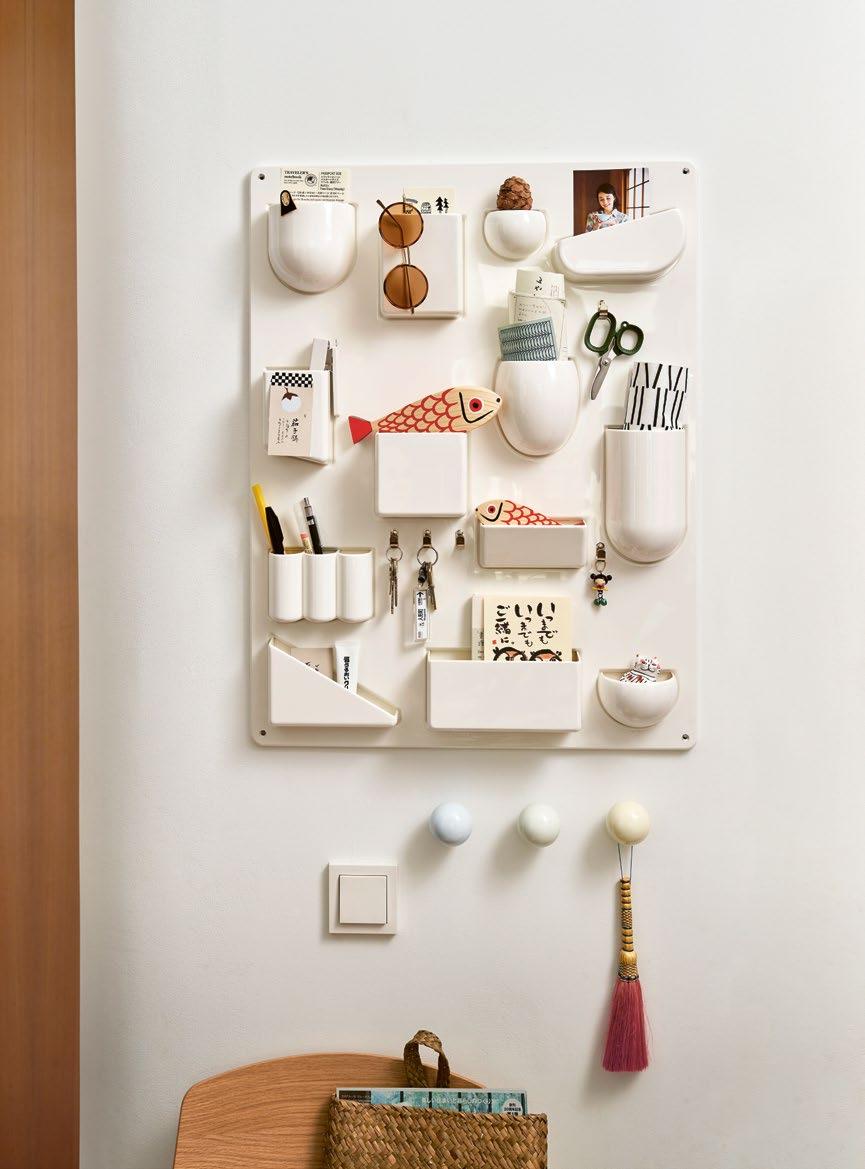
( 1 ) Uten.Silo RE II · white RE · Dorothee Becker, 1969 ( 2 ) Wooden Dolls Mother Fish & Child
· Alexander Girard, 1952 ( 3 ) Coat Dots · set of 3, white · Hella Jongerius, 2013 ( 4 ) Locker Box, small · brick RE · Konstantin Grcic, 2022 ( 5 ) Toolbox RE · sea blue RE · Arik Levy, 2010
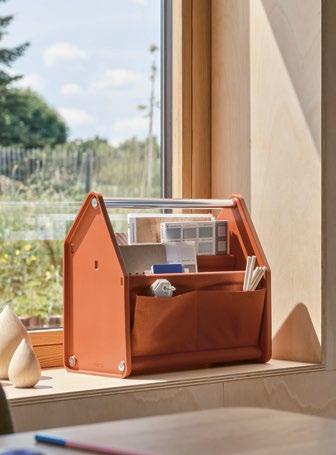
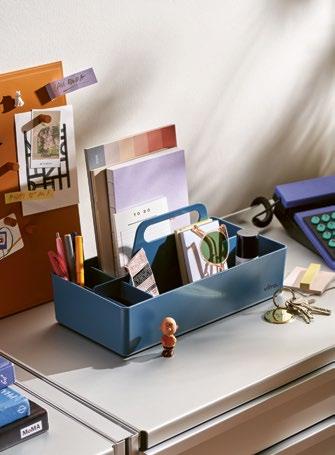
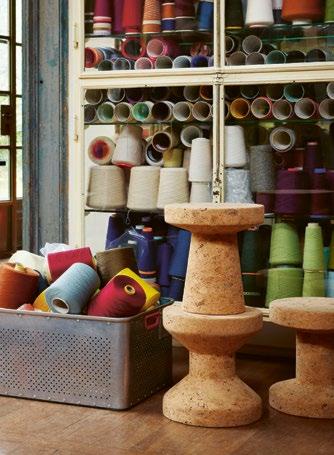
( 1 ) Cork Family, Model A, B, C · Jasper Morrison, 2004
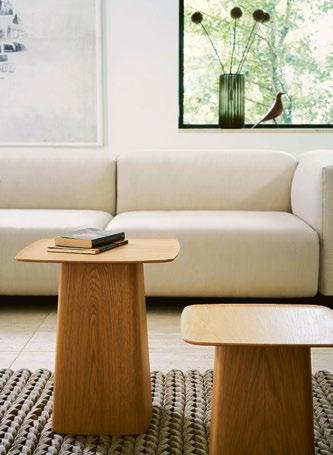
( 2 ) Wooden Side Tables · 17 Eiche hell · Ronan & Erwan Bouroullec, 2015
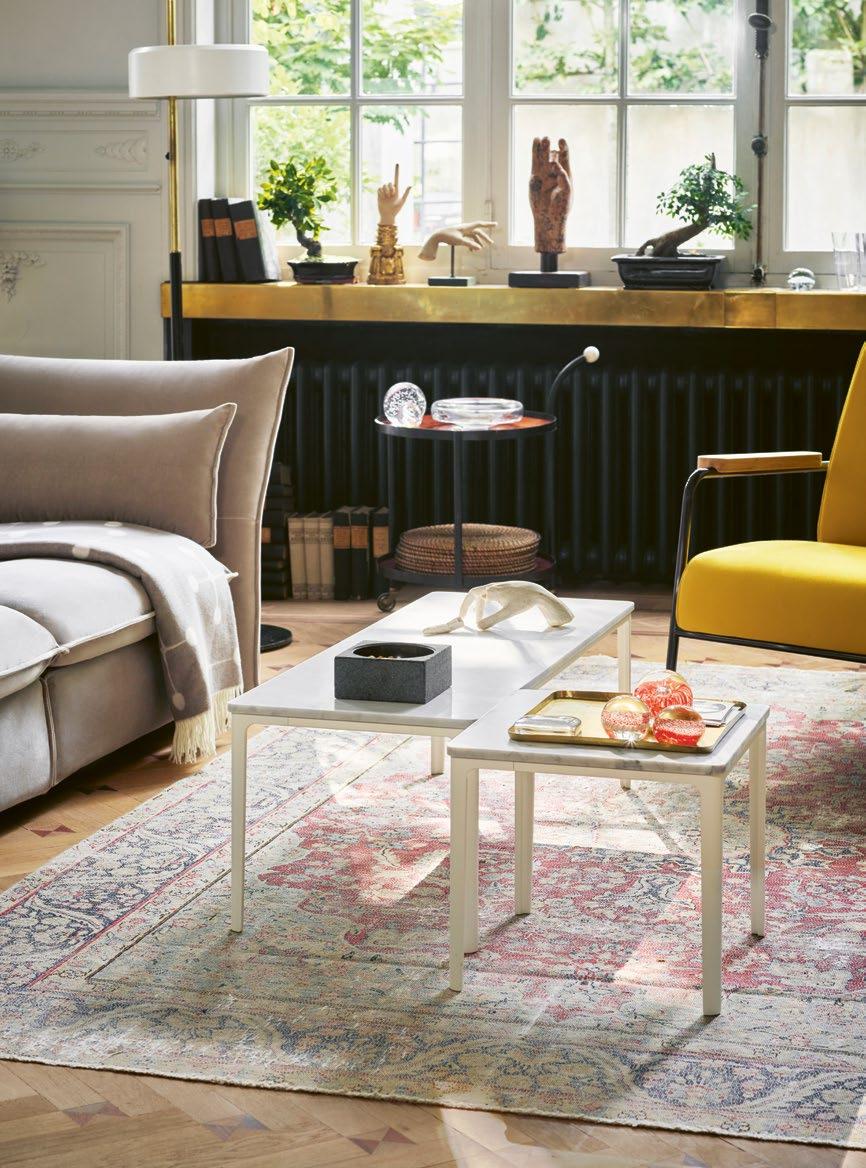
( 3 ) Plate Table · Marble · 04 white powder-coated (textured) · Jasper Morrison, 2004
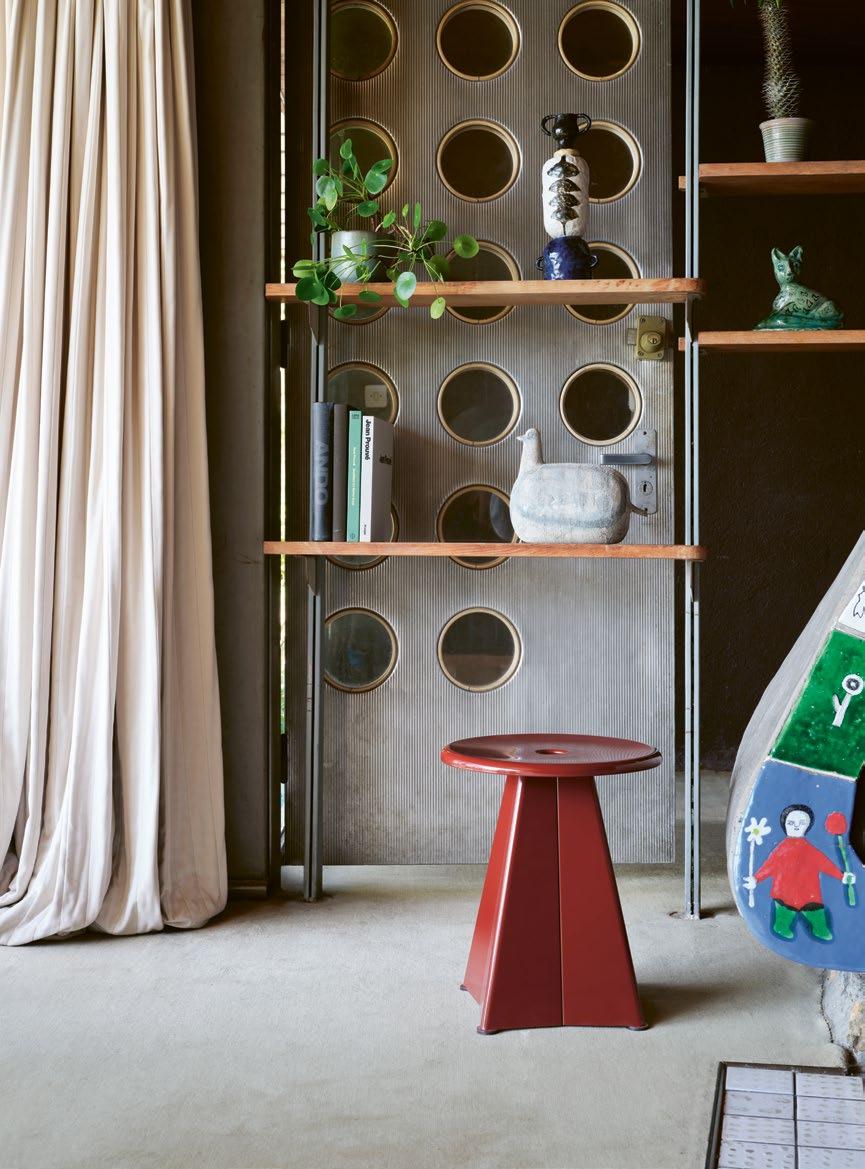
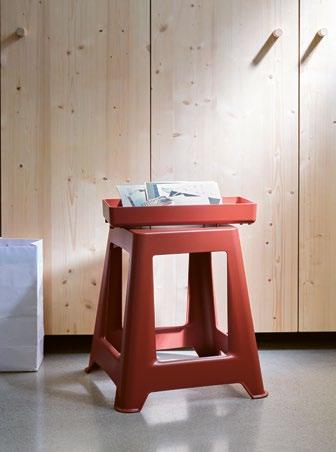
( 1 ) Tabouret Métallique · Japanese red · Jean Prouvé, 1936 ( 2 ) Chap & Chap Tray
· brick RE · Konstantin Grcic, 2021
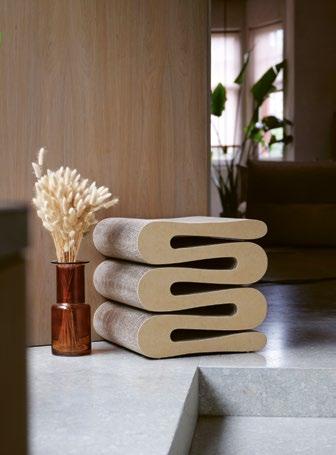
( 3 ) Wiggle Stool · natural · Frank Gehry, 1972
Side Tables & stools
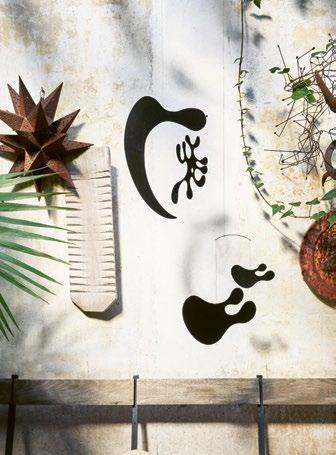
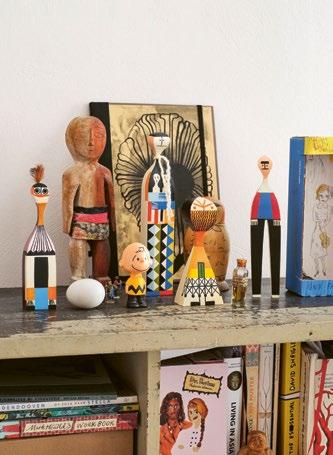
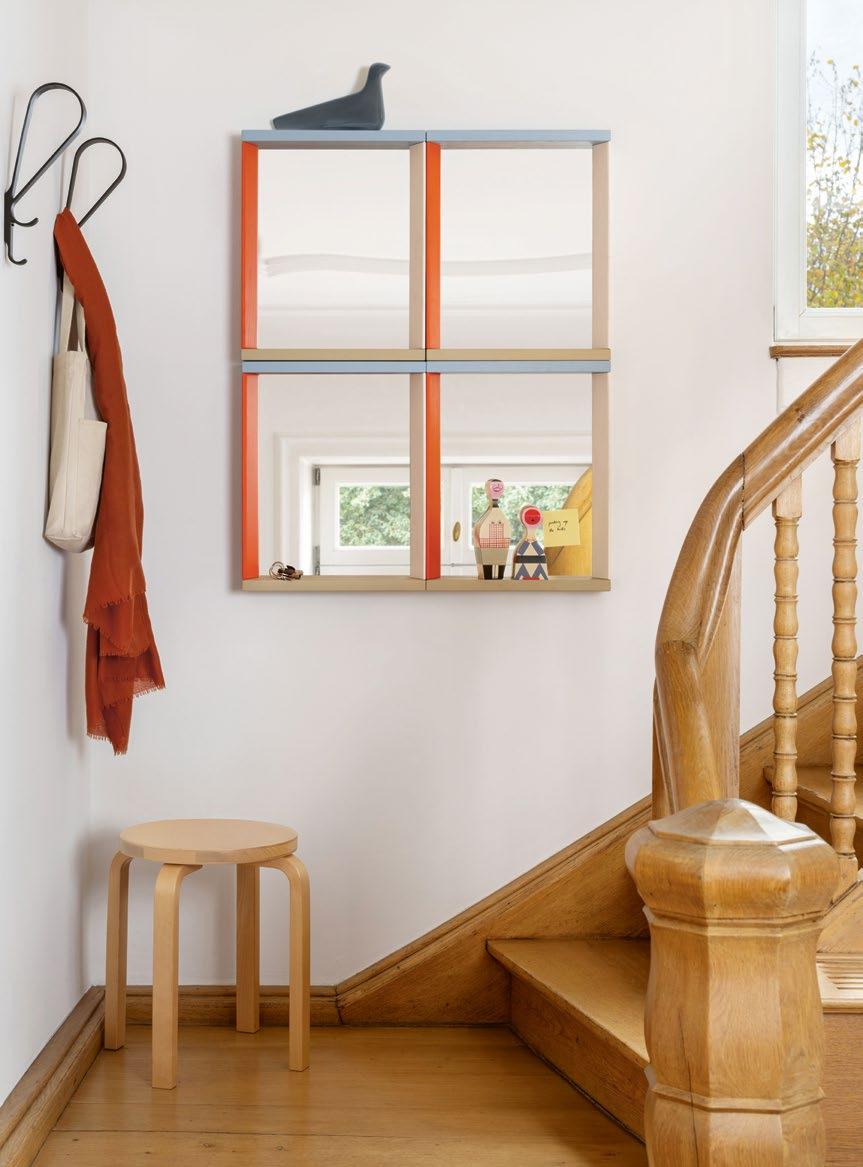
( 1 ) Plywood Mobile, Model A · Charles & Ray Eames, 1941 ( 2 ) Wooden Dolls No. 1, No. 4, No. 13 and No. 22 · Alexander Girard, 1952 ( 3 ) Colour Frame Mirror, small · Solid ash, lacquered, blue/orange · Julie Richoz, 2024
( 4 ) L’Oiseau · Ceramic, charcoal, matt finish · Ronan & Erwan Bouroullec, 2011
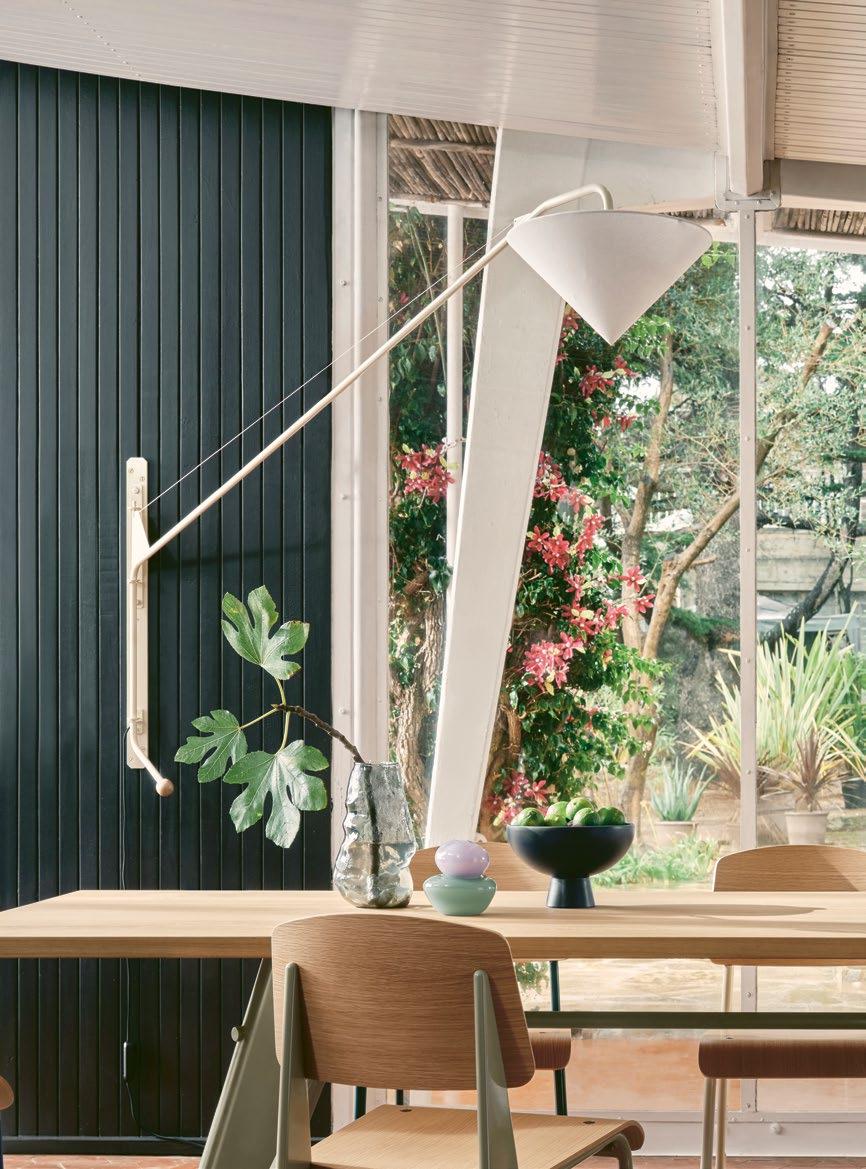
( 1 ) Potence Prouvé Blanc Colombe (Ecru) & Abat-Jour Conique · 88 Prouvé Blanc Colombe (Ecru) powder-coated (smooth) · Jean Prouvé, 1947
( 2 ) Lampe de Bureau · 06 Japanese red powder-coated (smooth) · Jean Prouvé, 1930 ( 3 ) Petite Potence · 12 deep black powder-coated (smooth) · Jean Prouvé, 1947
by Jean Prouvé
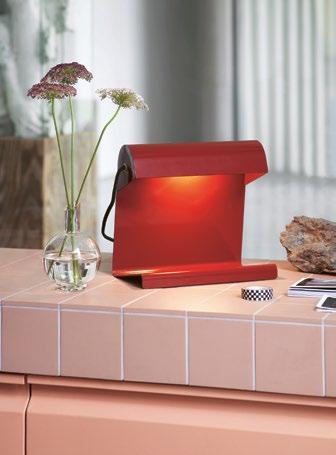
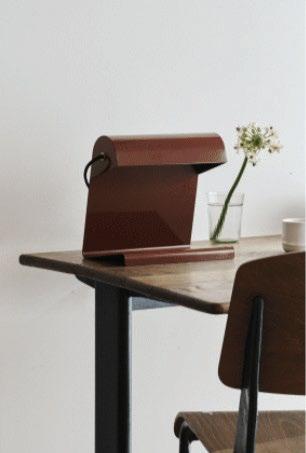
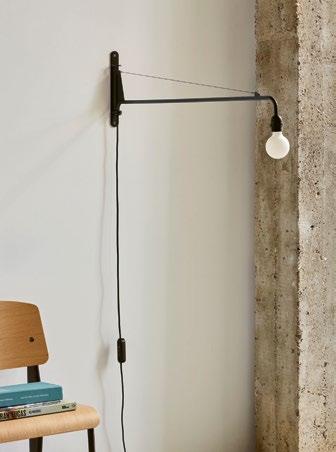
The distinctly technical design of the luminaires by Jean Prouvé – described as the ‘poetics of the technical object’ – reflect the Frenchman’s renowned constructive approach.
Lighting
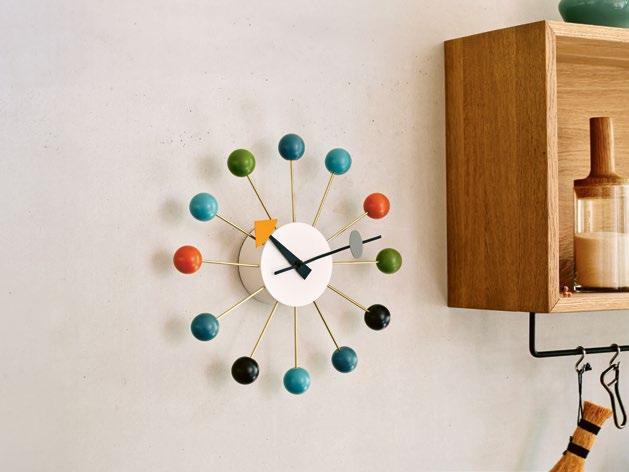
With his Wall Clocks, Desk Clocks and the wall-mounted Zoo Timers for children, the legendary American mid-century designer George Nelson has created refreshing alternatives to conventional clocks in a wide variety of designs and materials.
Clocks by George Nelson
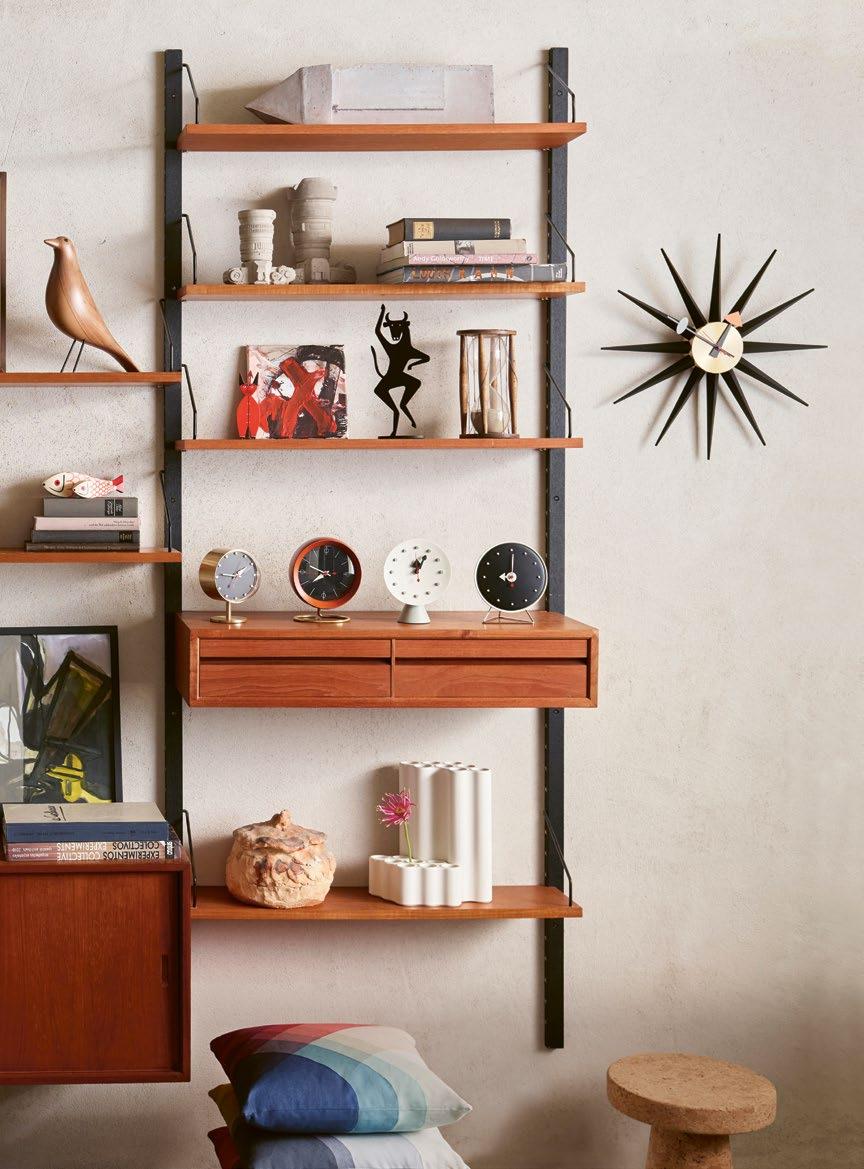
( 1 / 2 ) Wall Clocks: ( 1 ) Ball Clock · multicoloured ( 2 ) Sunburst Clock · black/brass · George Nelson, 1949-1960 ( 3 – 5 ) Desk Clocks:
( 3 ) Chronopak · Walnut veneer ( 4 ) Cone Base Clock · powder-coated sheet metal ( 5 ) Cone Clock · Polyurethane · George Nelson, 1947/1953
( 6 ) Silhouette Bull · Alexander Girard, 1965 ( 7 ) Nuage (céramique), small / medium · Ronan & Erwan Bouroullec, 2018
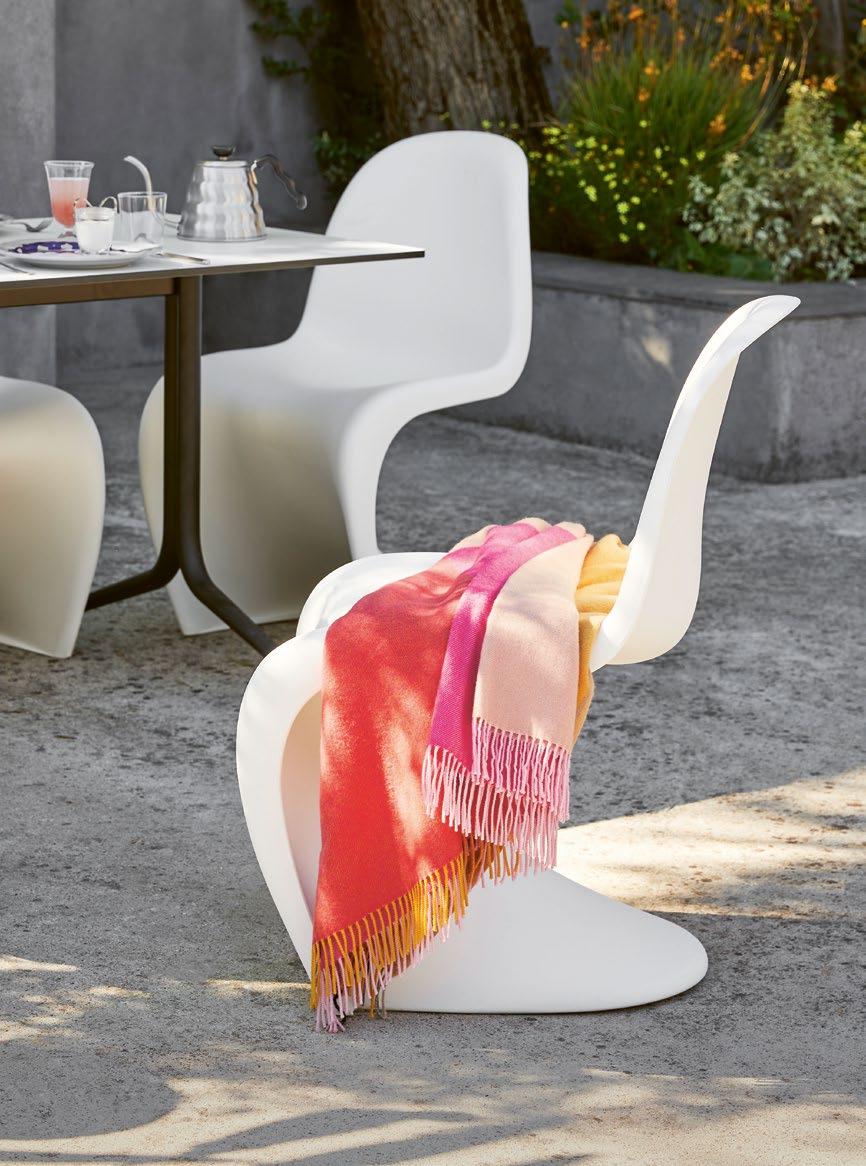
( 1 ) Colour Block Blankets · pink-beige · Hella Jongerius, 2016 ( 2 ) Vitra Cushions – various sizes and fabrics
vitra.com/gift-finder
Authors
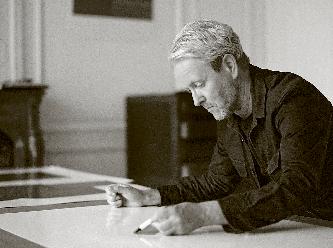
Ronan Bouroullec
The artist and designer Ronan Bouroullec founded his own Paris-based studio in 1995. The year 1999 marked the start of a longstanding partnership with Vitra, which led to the creation of many important products and concepts for home and office.
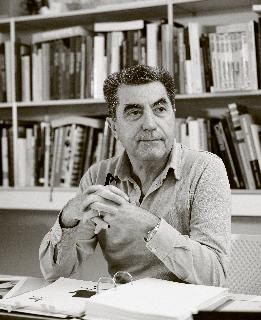
Antonio Citterio
The architect and designer Antonio Citterio, who lives and works in Milan, has collaborated with Vitra since 1988. Together they have produced a series of office chairs and various office systems, as well as products for the Vitra Home Collection. The Citterio Collection is continually being expanded.
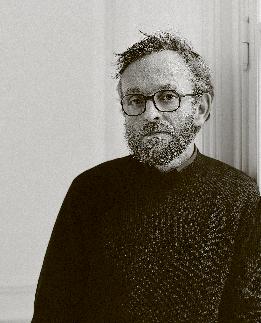
Erwan Bouroullec
The designer Erwan Bouroullec studied at the École Nationale Supérieure d’Arts de Paris-Cergy (ENSAPC). In 1998 he joined his brother Ronan’s studio and the two formed acomplementary duo. Since 2023 the brothers have been concentratingon their own independent projects.
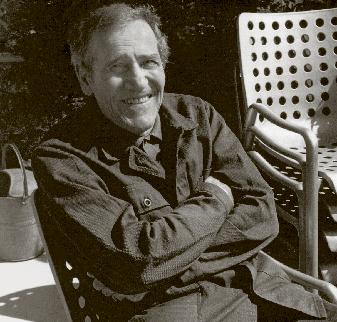
Hans Coray
Throughout his lifetime, Hans Coray (1906–1991) positioned himself at the intersection of art, design and architecture, attaching great importance to function ality and simplicity. From the 1950s onward, he was primarily active as a painter and sculptor.
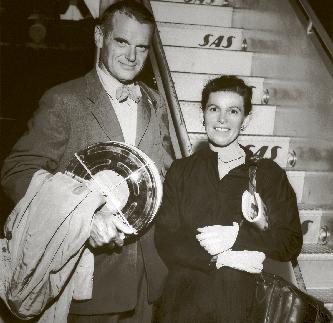
Charles & Ray Eames
Charles and Ray Eames are counted among the most important figures of twentieth-century design. Their work spans the fields of furniture design, filmmaking, photography and exhibition design. Vitra is the sole authorised manufacturer of Eames products for Europe and the Middle East. When you own an Eames product made by Vitra, you know it is an original.
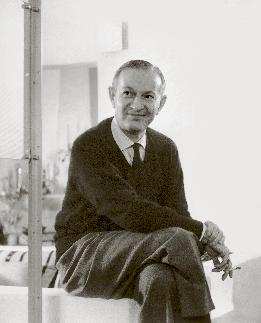
Alexander Girard
The architect and designer Alexander Girard was one of the leading figures in American design during the post-war era. His passion for colours, patterns and textures found expression in the field of textile design, which was a focal part of his oeuvre.
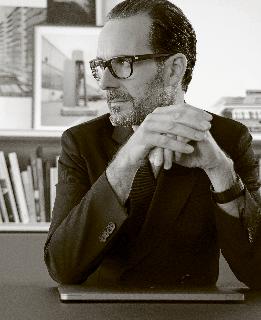
Konstantin Grcic
Konstantin Grcic was trained as a cabinetmaker at Parnham College in Dorset before studying industrial design at the Royal College of Art in London. In 1991 he set up his own practice, Konstantin Grcic Design. The Vitra Design Museum devoted a monographic exhibition to Grcic and his work in 2014.
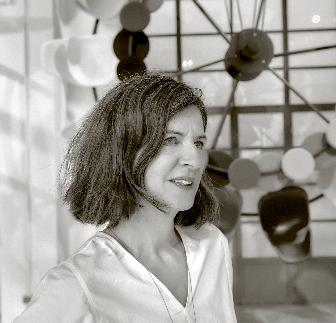
Hella Jongerius
The Dutch designer Hella Jongerius lives and works in Berlin. She founded the Jongeriuslab studio in 1993 and began collaborating with Vitra in 2004. Since then, she has not only contributed a substantial number of designs to the continually expanding Vitra Home Collection, but has also applied her expertise in the realm of colours and materials to the Vitra Colour & Material Library.
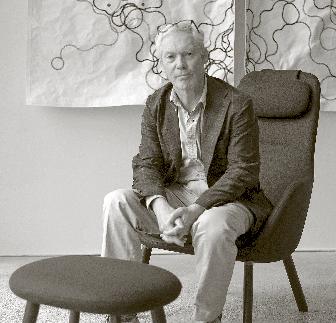
Jasper Morrison
Jasper Morrison lives and works in London and Tokyo. His designs are expressions of the ‘super normal’ design philosophy: rather than seeking unusual or extravagant results, he often breathes new life into proven solutions by means of reinterpretation, further development and refinement. He has worked together with Vitra on a regular basis since 1989.
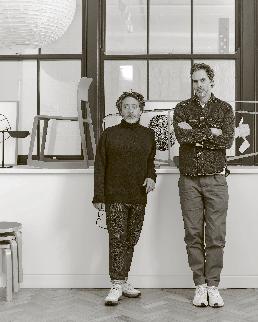
Edward Barber & Jay Osgerby
Edward Barber and Jay Osgerby studied architecture as fellow students at the Royal College of Art in London. Since that time, their collaborative work has probed the interface between industrial design, furniture design and architecture.
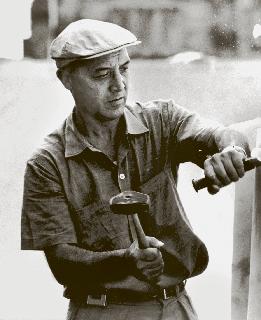
Isamu Noguchi
The oeuvre of Japanese-American artist and designer Isamu Noguchi is unusually multi-faceted, ranging from the fine arts to industrial design. Since 2002, Vitra has produced re-editions of his designs in cooperation with the Isamu Noguchi Foundation in New York.
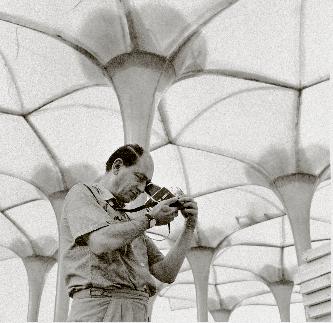
George Nelson
George Nelson is regarded as one of the most important figures in American design. Active as an architect, a product and exhibition designer and a writer, he was a leading voice in the discourse on design and architecture over several decades. Vitra is the sole authorised manufacturer of specified Nelson products for markets in Europe and the Middle East.
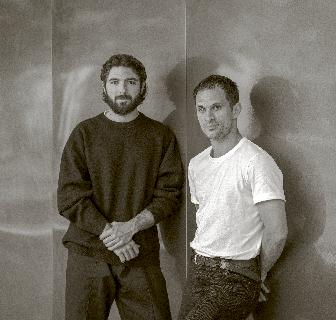
Panter&Tourron
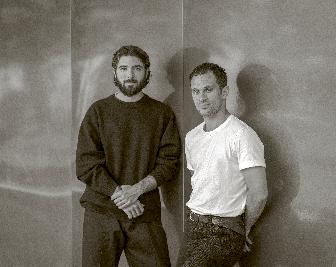
Stefano Panterotto and Alexis Tourron met while studying at the ‘École cantonale d’art de Lausanne’ (ECAL) – a university of art and design. They founded their own studio together in Lausanne in 2016, developing products and visual experiences at the intersection of design, technology and society. They have been collaborating with Vitra since 2023.
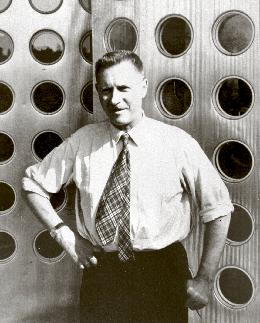
Jean Prouvé
Jean Prouvé, who regarded himself as an engineer throughout his lifetime, was both the designer and manufacturer of his product ideas. His unique oeuvre, ranging from a letter opener to door and window fittings, from lighting and furniture to prefabricated houses and modular building systems, encompasses almost anything that is suited to industrial production and construction.
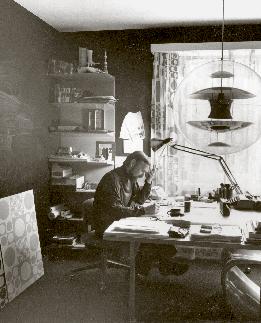
Verner Panton
Verner Panton was an influential figure in the development of design during the 1960s and ’70s. After moving to Switzerland in the early 1960s, the Danish designer became known for his inventive, novel ideas for furnishings, lighting and textiles. The masterful use of colour was a hallmark of his work.
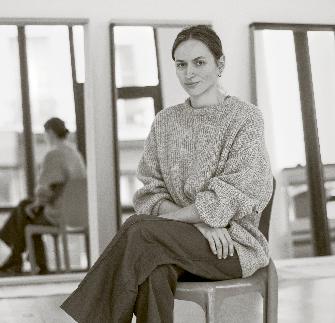
Julie Richoz
The Swiss-French designer Julie Richoz studied industrial design at Lausanne University of Art and Design (ECAL) and went on to work with Pierre Charpin. In 2012 she founded her own design studio in Paris and has been teaching industrial design at ECAL since 2017. She has been collaborating with Vitra since 2023.
Vitra Campus
The Vitra Campus in Weil am Rhein near Basel is a unique ensemble of contemporary architecture. Buildings by Tadao Ando, Frank Gehry, Zaha Hadid, Herzog & de Meuron, Álvaro Siza and other leading architects are united with exhibitions, installations, shops and Vitra furniture production in a single location. #VitraCampus
1,2 Factory Building, Nicholas Grimshaw, 1981
3 Balancing Tools, Claes Oldenburg & Coosje van Bruggen, 1984
4 Vitra Design Museum, Frank Gehry, 1989
5 Gate, Frank Gehry, 1989
6 Factory Building, Frank Gehry, 1989
7 Conference Pavilion, Tadao Ando, 1993
8 Fire Station, Zaha Hadid, 1993
9 Factory Building, Álvaro Siza, 1994
10 Dome, after Richard Buckminster Fuller, 1975/2000
11 Petrol Station, Jean Prouvé, 1953/2003
12 Vitra Design Museum Gallery, Frank Gehry, 2003
13 Bus Stop, Jasper Morrison, 2006
14 VitraHaus, Flagshipstore for Home Collection & Interior Studio, Herzog & de Meuron, 2010
15 Airstream Kiosk, 1968/2011
16 Factory and Logistics Building, SANAA, 2012
17 Diogene, Renzo Piano, 2013
18 Álvaro-Siza-Promenade, 2014
19 Vitra Slide Tower, Carsten Höller, 2014
20 Bell, from: 24 Stops, Tobias Rehberger, 2015
21 Vitra Schaudepot, Herzog & de Meuron, 2016
22 Blockhaus, Thomas Schütte, 2018
23 Ruisseau, Ronan & Erwan Bouroullec, 2018
24 Ring, Ronan & Erwan Bouroullec, 2018
25 Oudolf Garten, Piet Oudolf, 2020
26 Vitra Designweg, Ronan & Erwan Bouroullec, 2021
27 Torre Numero Due, Nathalie Du Pasquier, 2021
28 Umbrella House, Kazou Shinohara, 1961/2022
29 Barragán Gallery, 2022
30 Place Jean Prouvé, 2022
31 Garden House, Tsuyoshi Tane, 2023
32 Circle Store Vitra, 2023
33 Khudi Bari, 2024
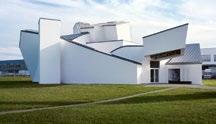
Since its opening in 1989, the Vitra Design Museum has become one of the world’s leading design museums. It is dedicated to the research and presentation of design, past and present, and examines the relationship to architecture, art and everyday culture. The main building designed by Frank Gehry hosts several major exhibitions per year, while the neighbouring Vitra Design Museum Gallery showcases current perspectives on design and architecture.
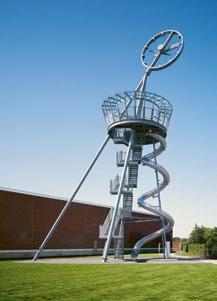
The 30-metre-high Vitra Slide Tower by Carsten Höller is located along the Álvaro-Siza-Promenade, which connects the north and south parts of the Vitra Campus. Accessible to the public in fine weather, the free-standing work of art offers an exceptional view of the Vitra Campus and a thrilling experience on the 38-metre-long corkscrew slide.
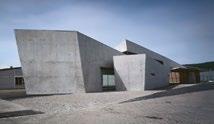
Designed by Zaha Hadid, the Fire Station on the Vitra Campus was the Iraqi-British architect’s first major built work. The jaggedly expressive volumes contrast with the orthogonal order of the adjacent factory buildings, like an explosion frozen in time. The sculptural structure was originally used to house the company’s fire brigade. Today it hosts Vitra installations and exhibitions by the Vitra Design Museum.
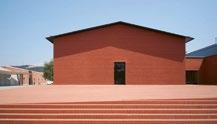
The collection of the Vitra Design Museum ranks among the most important holdings of furniture design worldwide. It contains some 7000 pieces of furniture dating from 1800 to the present day, over 1000 lighting objects as well as numerous archives and the estates of several prominent designers. Since 2016, approximately 400 key objects from the collection are on permanent display in the Vitra Schaudepot, which was designed by Basel-based architects Herzog & de Meuron.
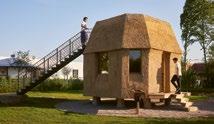
The Tane Garden House was designed by Paris-based Japanese architect Tsuyoshi Tane and built by local craftsmen using sustainable and, wherever possible, locally sourced materials.
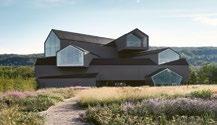
Originally intended as a showroom for the Vitra Home Collection, the VitraHaus has become a beacon for the Vitra brand over the past ten years. Visible from a distance, it marks the northern entrance to the Vitra Campus and sends an unmistakeable signal: Vitra not only produces furniture in Weil am Rhein, but also focuses its attention on architecture, art and interior design.
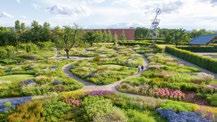
A garden by the renowned Dutch designer Piet Oudolf was inaugurated on the Vitra Campus in May 2020. The artfully composed wilderness is in full bloom from summer to early autumn.
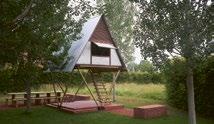
Flooding in Bangladesh has become increasingly unpredictable due to climatechange, regularly displacing hundreds ofthousands of people and forcing them to seek a new home. It was in light of this context that Marina Tabassum and her team at MTA Architects developed the Khudi Bari (‘small house’) concept.

The Vitra Campus App is available in the App Store and Google Play Store.
Vitra is represented worldwide. Your local Vitra partner can be found at www.vitra.com/find-vitra
Vitra International AG, Klünenfeldstrasse 22, 4127 Birsfelden, 0041 (0)61 377 00 00, info@vitra.com, www.vitra.com
Distribution rights
All of the designs shown in this publication as well as the images themselves are legally protected.
Vitra and the Vitra Design Museum have been authorised by the authors or their legal successors to exclusively manufacture, develop and distribute the products corresponding to these designs worldwide. The following restrictions apply:
Charles & Ray Eames → Organic Chair, La Chaise, Eames Elephant, Plywood Mobile, Classic Trays, Paper Napkins, Eames Quotes Posters, Eames Wool Blankets und Miniatures Collection: Vitra holds the worldwide rights.
All other products: Vitra holds the rights in Europe and the Middle East. The rights in the rest of the world are held by Herman Miller.
Alexander Girard → Environmental Wall Hangings and Flower Table: Vitra holds the rights in Europe and the Middle East. The rights in the rest of the world are held by Herman Miller.
George Nelson → Clocks and Miniatures Collection: Vitra holds the worldwide rights. All other products: Vitra holds the rights in Europe and the Middle East. The rights in the rest of the world are held by Herman Miller.
Isamu Noguchi → Akari Light Sculptures: Vitra holds the distribution rights in Australia, Austria, Belgium, the Czech Republic, Denmark, Finland, France, Germany, Greece, Iceland, Ireland, Italy, Liechtenstein, Luxembourg, Malta, the Netherlands, Norway, Portugal, Sweden, Switzerland, Turkey and the United Kingdom.
Coffee Table and Dining Table: Vitra holds the worldwide rights with the exception of North America.
The rights in North America are held by Herman Miller (Coffee Table) and Knoll (Dining Table).
Sori Yanagi → Butterfly Stool: Vitra holds the rights in Europe, Africa and North and South America. The rights in the rest of the world are held by Tendo Mokko.
Other products → Classic Pillows: Vitra holds the distribution rights in Europe and the Middle East. The rights in the rest of the world are held by Maharam.
The design of the Eames Aluminium Chair is a registered trademark.
The design of the Eames Lounge Chair is a registered trademark.
The design of the Panton Chair is a registered trademark.
ALEXANDER
GIRARD, EAMES, NELSON, GEORGE NELSON, NOGUCHI, ISAMU NOGUCHI, PANTON and VERNER PANTON are registered trademarks. Various product names enjoy trademark protection.
v ® All copyrights and intellectual property rights, including trademarks, patents and copyrights, remain the property of Vitra and are explicitly reserved. No part of this brochure may be reproduced without prior written permission from Vitra.
Picture credits
→ Front cover Florian Böhm / back cover Robert Rieger → 2 Marek Iwicki → 3 Florian Böhm / Robert Rieger / Lorenz Cugini → 6 Dejan Jovanovic → 18 Marek Iwicki → 21 © Roland Engerisser, Vitra Design Museum Archiv / Centre Pompidou, MNAM-CCI, Bibliothèque Kandinsky, Fonds Cardot-Joly → 22 © Archives départementales de Meurthe-et-Moselle → 25 © Verner Panton Design → 32 Benjamin Lund → 33 Dejan Jovanovic / Benjamin Lund → 38, 43 Lorenz Cugini → 52, 54 Lorenz Cugini → 55 Eduardo Perez → 56 Tom Ziora → 59 Andreas Sütterlin → 60 Lorenz Cugini / Florian Böhm → 64 Lorenz Cugini → 68 Robert Rieger → 69 © Barber Osgerby Studio / Lorenz Cugini → 71 © MoMA → 74 © Fonds Jean Prouvé at the Archives départementales de Meurthe-etMoselle → 76 © Centre Pompidou, Centre de Documentation et Recherche du MNAM-CCI, Bibliothèque Kandinsky, Fonds Jean Prouvé → 78 Dejan Jovanovic → 79 Julien Lanoo / © Agence Photographique de la Réunion des musées nationaux, RMN-Grand Palais and ProLitteris → 80 © Fonds Perret. CNAM, SIAF, CAPA, Archives d’architecture du XXe siècle, Auguste Perret, UFSE, SAIF, 2020 → 82, 83, 84, 86, 92, 93, 94 Lorenz Cugini → 93 Roland Beck → 95, 100, 104, 106 Robert Rieger → 102
Asier Rua → 110 Marek Iwicki → 114 Dejan Jovanovic → 117, 125, 127, 129 Lorenz Cugini → 131 Jonathan Maloubier → 137 Dejan
Jovanovic → 142 Lorenz Cugini → 146 © Marion Berrin / Tom Ziora / Roland Beck → 147 © Eames Office, LLC / Eduardo Perez → 148 Marek Iwicki / © Isamu Noguchi Foundation / © Michael Sinclair / © Vitra Design Museum Archiv → 149 Dejan Jovanovic / © Verner Panton Design / © Centre Pompidou, MNAM-CCI Bibliothèque Kandinsky,
2025, art. no. 09193704
Dist. RMN-Grand Palais, Fonds Prouvé / Marek Iwicki → 150 GTF → 151 Julien Lanoo / Richard Bryant / Lorenz Cugini / Marek Iwicki
Interviews → 112 led by Barbara Gies
Studio pictures → 22 Florian Böhm → 15, 18, 45, 46, 55
Studio Eggimann
Artek products shown
→ Front cover Trienna Table → 10 Pendant Light A331 “Beehive“ → 31 Stool 60 → 99 Pendant Light A330S “Golden Bell“ → 122 Pauper Coin Collector, Easter Dog Vase → 137 Tupla Wall Hook, Stool E60 Artek is distributed by Vitra.
For more information, visit www.artek.fi
Set Design
→ Front cover, 3, 13, 14, 16, 24, 28, 30, 40, 51, 58, 66, 81, 89, 90, 109, 110, 113, 124, 126, 131, 135, 136, 143 Anka Rehbock → 7, 20, 131, 134, 137 Conny Wyssen → 8, 12, 19, 116, 122 Linda Ehrl → 10, 23, 34, 61, 62, 72, 75, 111, 118, 138, 139, 141 Sebastian Soukup → 26, 42, 48, 50, 71, 97, 99, 136 Filippa Egnell → 36, 70, 132, 133, 144 Erwin Prib → 37, 96 Paolo Bonfini → 56, 57 Erwan Bouroullec → 60, 87, 130, 140 Annahita Kamali → 88 Till Weber → 102 Pauly García → 124, 128 Annahita Kamali, Leonie von Arx → Back cover, 3, 43, 52, 54, 60, 64, 68, 82, 83, 84, 86, 92, 93,94, 95, 100, 104, 106, 117, 125, 127, 129, 142 Rahel Morgen
Vitra International AG strives to respect the rights of third parties. If we have inadvertently used material without acknowledgement, we will correct the omission immediately upon notification.
Concept, design, art direction
Studio AKFB, Munich (DE)
Photography Florian Böhm, Studio AKFB (unless otherwise listed in picture credits)
Technical realisation ENGN, Hamburg (DE)
Lithography GZD Media GmbH, Eberdingen (DE)
Printing DRUCKEREI VOGL GmbH & Co. KG, Zorneding (DE)