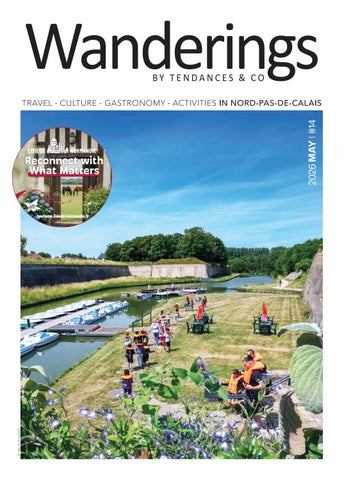
Wanderings
BY TENDANCES & CO
TRAVEL - CULTURE - GASTRONOMY - ACTIVITIES IN NORD-PAS-DE-CALAIS


Reconnect with What Matters
LISIEUX NORMANDIE

BY TENDANCES & CO
Welcome to the latest edition of Wanderings by Tendances & Co, published by the Nord Littoral group – a French counterpart to the Kent Messenger.
These pages invite readers to cross the Channel and the 34 kilometres (18.64 miles) that separate its two shores.
From Dunkirk to Le Touquet, via Calais and Boulogne, taking in such Hauts-de-France highlights as the Audomarois region and the Land of the Two Capes along the way, this summer edition of Wanderings showcases a fantastic selection of destinations. Expect local gastronomy, memorable experiences and a wide range of activities along the Opal Coast.
As the days get longer and brighter, this is the ideal time to enjoy the French way of life at its very best!
Whether visiting for a short break or a longer stay, travellers of all ages will find plenty to see and do in this remarkable region.
We look forward to welcoming you!
Jean-Francois Duquene
Marie’s Artisan Ice Creams WILL MAKE YOU MELT 4 Spontaneous Cuisine WITH CHEF SOLÈNE ELLIOTT 6-7
In Calais, the 39–45 Memorial Museum GETS A MAKEOVER AND UNVEILS WHAT’S NEW 20
Exploring the fortifications OF GRAVELINES BY BOAT 22
The Mussel Festival: A DISTINCTLY LOCAL COMMUNITY TRADITION 10
The Hôtel du Golf: THE BIRTHPLACE OF LE TOUQUET’S SPORTING SCENE 24
Dunkirk’s Museums, SYMBOLS OF A REGION 16
A Summer with Our Animal Friends IN THE REGION 30-31
General manager : Daniel Picault - Managing Editor and Publishing Director : Ahmed Kara
Commercial Director : Jérôme Dimarcq - Words : Jean-François Duquene
Design and Production: Studio Groupe Nord Littoral - Advertising : Groupe Nord Littoral
Reproduction of this magazine in whole or in part without the written permission of the publishers is strictly prohibited. A Groupe Nord Littoral publication, 91 boulevard Jacquard, 62100 Calais. T.: +33 (0)3 21 19 12 12 Printed by SIB - Boulogne-sur-Mer

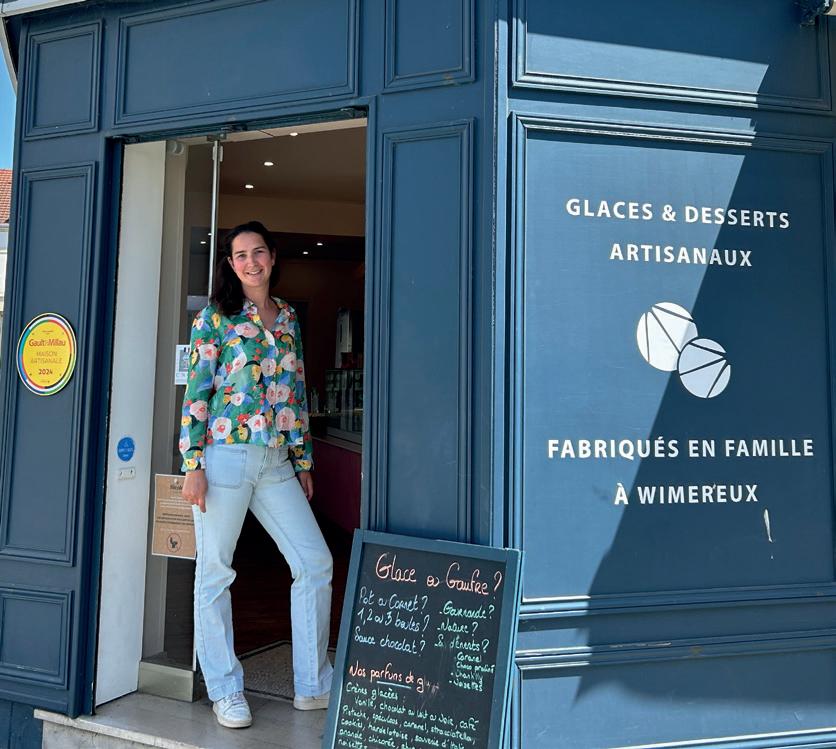
Since they set up shop in 2021, Étienne and Marie Roberlin have been delighting foodies with their melt-in-the-mouth artisan ice creams and original creations—such as the famous Flobart!
One scoop or two? Strawberry or chocolate? Ice cream or sorbet? This summer, food lovers will be spoiled for choice at Nicole Glacier in Wimereux. Since opening on Rue Carnot in 2021, Étienne and Marie Roberlin have filled a real gap with their delicious homemade ice creams.
“We’ve been living on the coast for eight or nine years. Étienne was originally a marine works engineer, and I was in marketing and communications. When we moved here, I initially retrained as a pastry chef. Then, during Covid, like many people, we felt the need for something new. And since Étienne has a real sweet tooth,” Marie laughs, “he really missed not having an artisan ice - cream maker in Wimereux. He suggested we embark on the adventure together, so I retrained in ice - cream making.”
The name Nicole is a tribute to Marie’s grandmother, with whom she loved baking. “We wanted the business to be family- oriented and high quality— traditional, yet modern.” A smart career change that quickly won over Wimereux locals. Building on that success, the couple opened a second shop in Boulogne -sur- Mer the following year, and a third in the seaside resort of Hardelot in their third year.
At Nicole Glacier, most ingredients are locally sourced. The milk comes from Lait Prairies du Boulonnais, the salt for the caramel is harvested at Cap Gris - Nez by Xavier Helsmoortel, and the
couple also works with Lutun Chicorée du Nord and Le Verger de la Beussingue in Peuplingues. Ice creams, biscuits, nougatines and meringues are all handmade in their Wimereux workshop. When local sourcing isn’t possible, the couple carefully selects responsible, high - quality suppliers. Nicole Glacier also works strictly with seasonal produce. When it comes to sorbets, these are authentic full-fruit sorbets. “By law, a sorbet can be called ‘full fruit’ as soon as it contains 42% fruit. Ours contain at least 54%, excluding acidic fruits, and we reach up to 72% fruit in our pear sorbet, for example. Our goal is to offer a product packed with fruit— not sugar!” As for flavours, while vanilla remains the best-seller, cookies and pistachio have become hugely popular. “What’s great about ice cream,” Marie admits, “is that the possibilities are endless.”
The Flobart: THE Signature Creation
And she has certainly proved it. At Nicole Glacier, visitors can also indulge in a full pastry range, ice - cream bars and frozen macarons—alongside the house speciality: the famous Flobarts. These ice - cream cakes, shaped like small fishing boats, are instantly recognisable to locals from Boulogne -sur- Mer.
“Our shops stay open all year round and help keep town centres alive. So we realised that the best way to sell ice cream year-round was to offer pastries as well. I’m very attached to local heritage, and when we dug a little deeper, we realised the Flobart resonates not only with locals, but also with tourists interested in the region’s history.” Inside this unusual cake, you’ll find ice cream, of course, but also coulis, meringue, biscuit and homemade whipped cream. “The magic of the Flobart is in the cutting—discovering what surprise awaits inside!” Enough to make anyone’s mouth water.
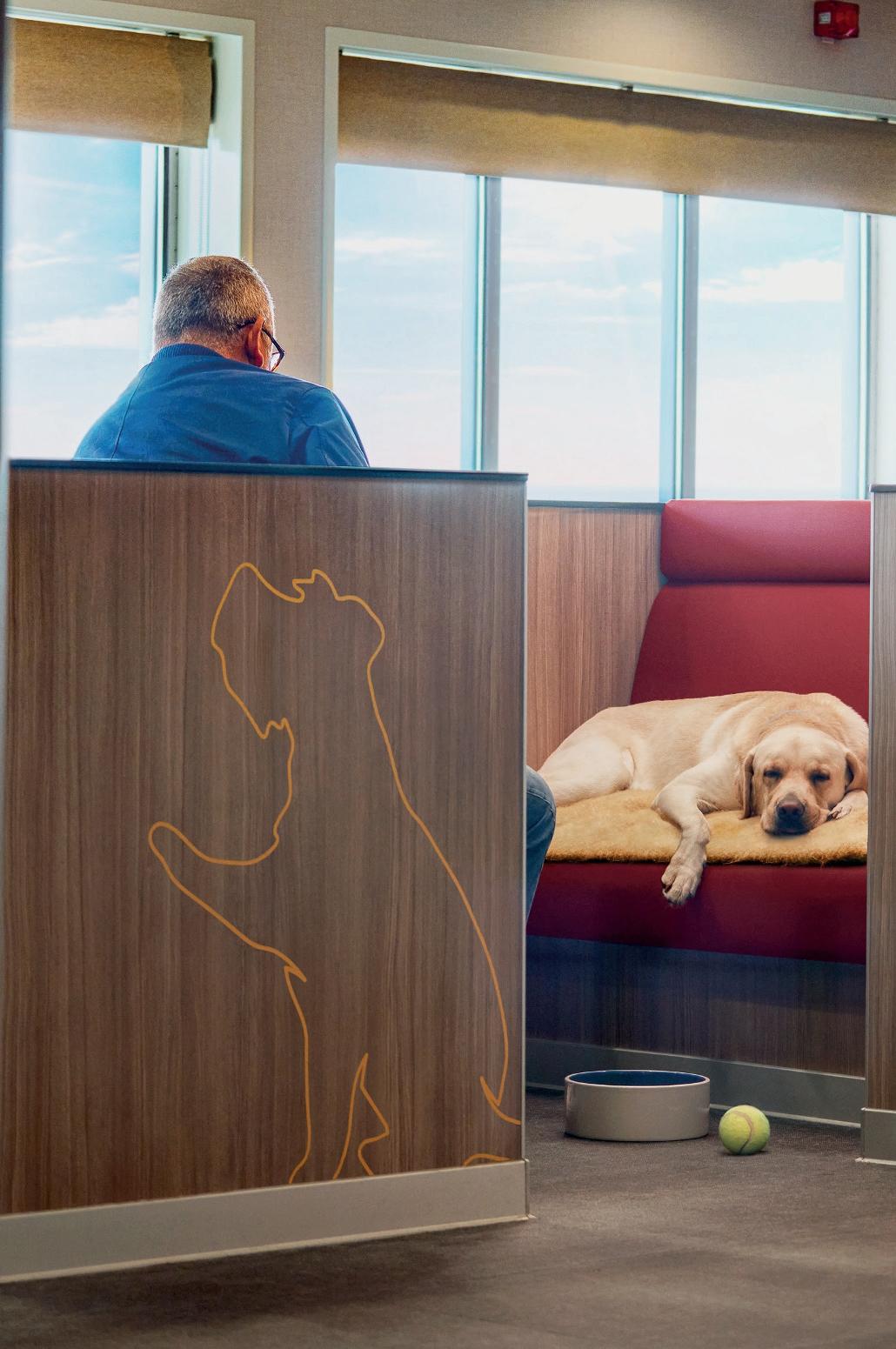
But not without your furry four–legged bestie in our on board Pet Lounges


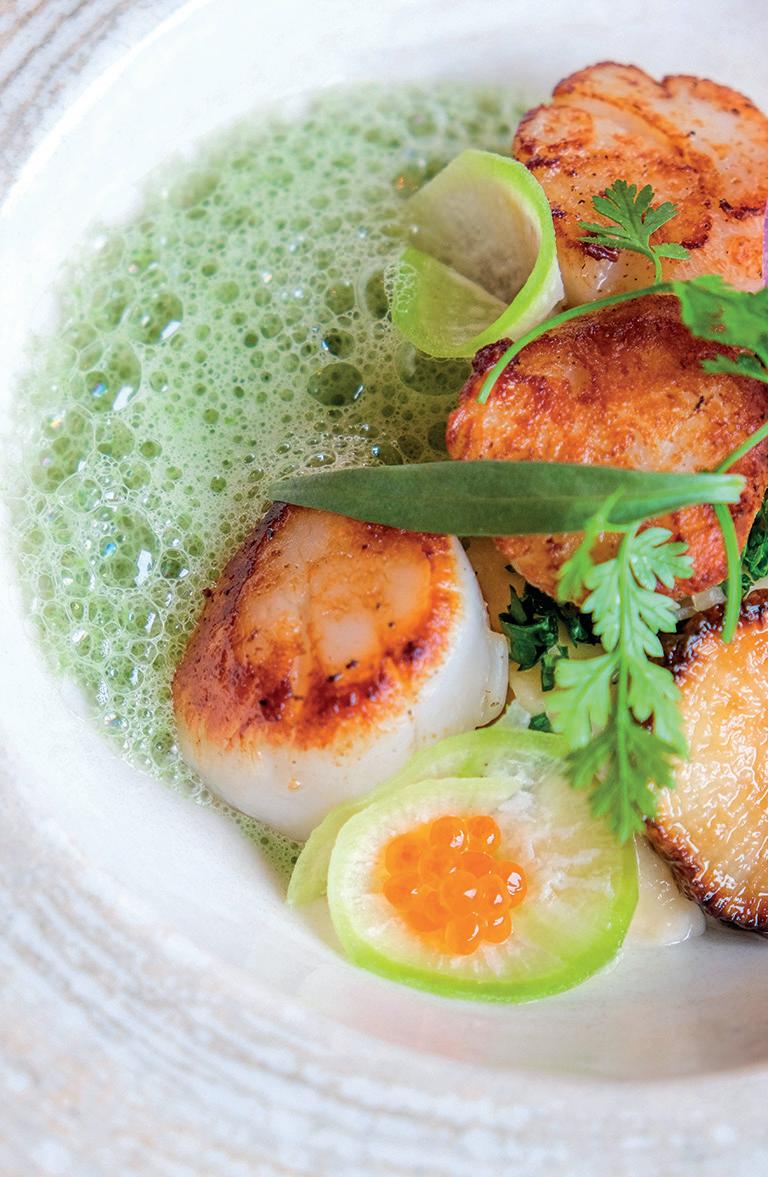
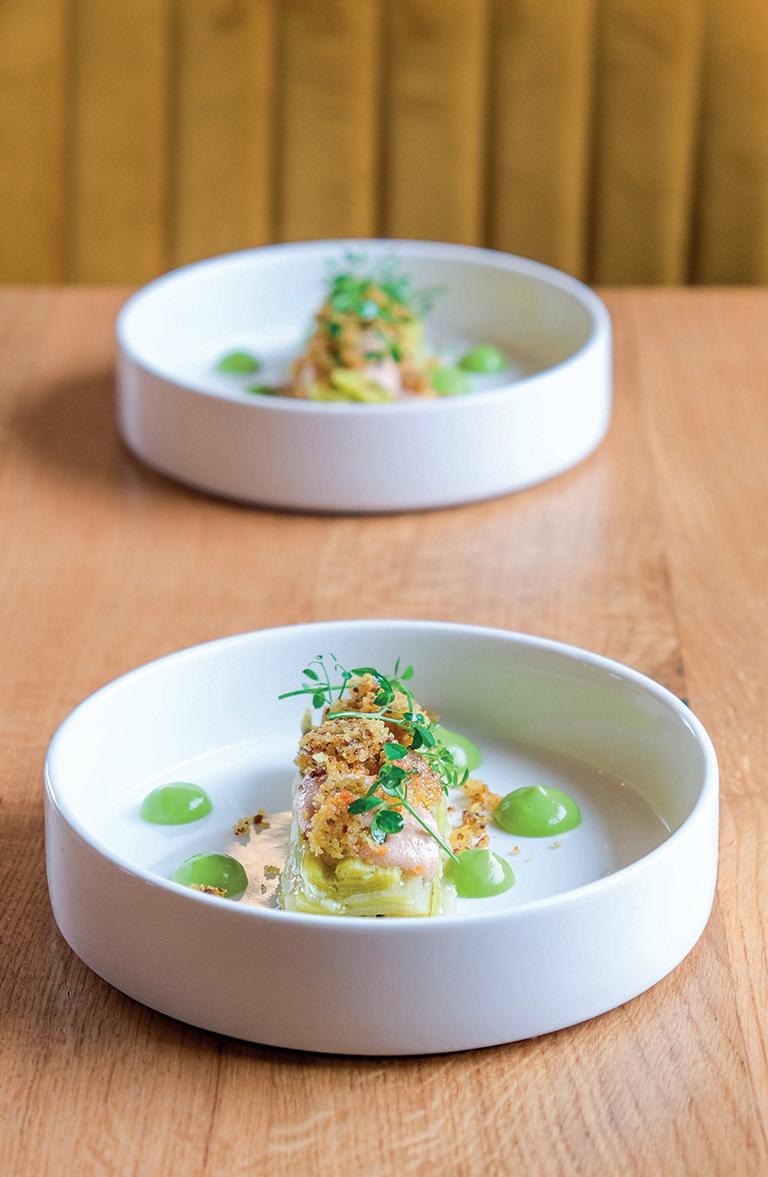
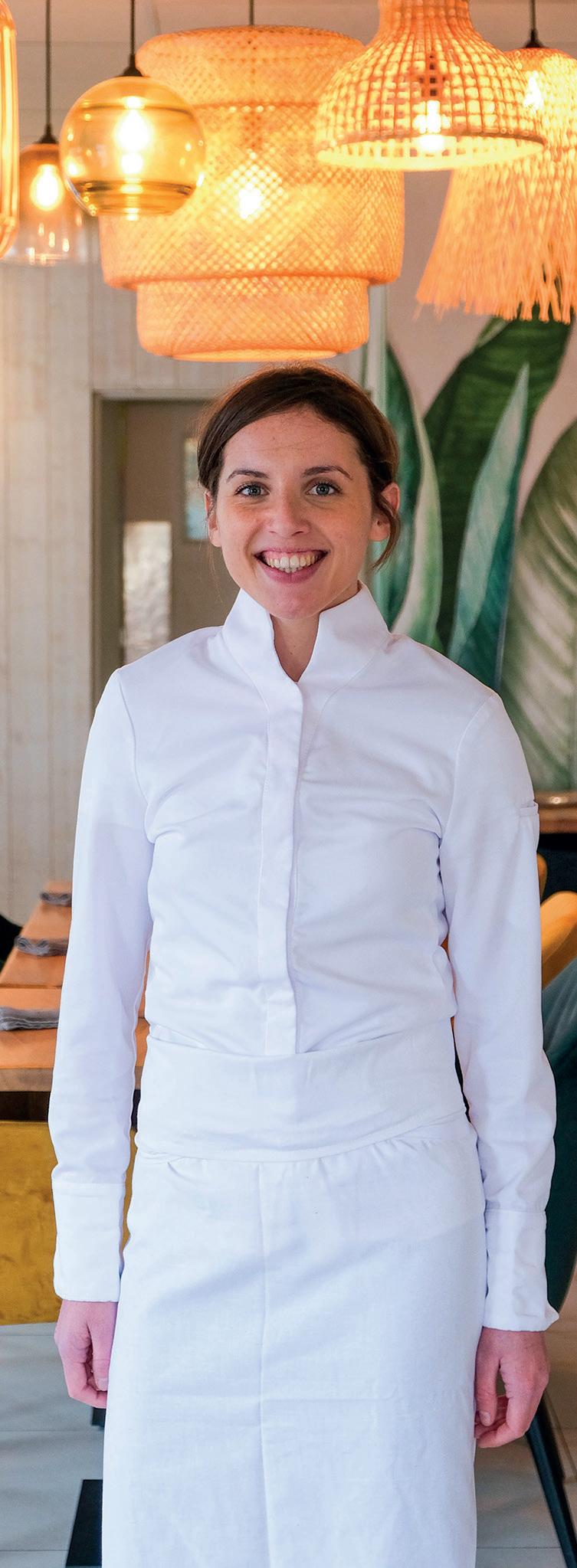
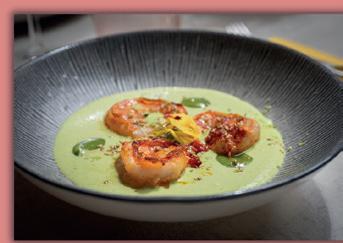
Solène Elliott, a passionate, self-taught chef based in Audresselles, runs the restaurant at Hôtel de la Plage with a clear philosophy: local, seasonal cuisine, served with a strong sense of spontaneity. She talks to us about her inspirations, her menu, her close connections to both land and sea produce … and her recent Bib Gourmand award. Read on for the interview.
Solène Elliott, how would you describe your cuisine in a few words?:
Local and seasonal, first and foremost. We’re not overly pedantic about it though—we still use pepper, chocolate and coffee, so not everything is completely, 100 percent local. But we make a real effort to source mostly locally caught fish, local meats, and seasonal fruit and vegetables, ideally from nearby. I also like to say that my cuisine is spontaneous, because I’m self-taught and I cook in a very authentic way.
How do you design your menu? What guides your choices?
We have a small menu: four starters, four mains and four desserts, which change every eight weeks.
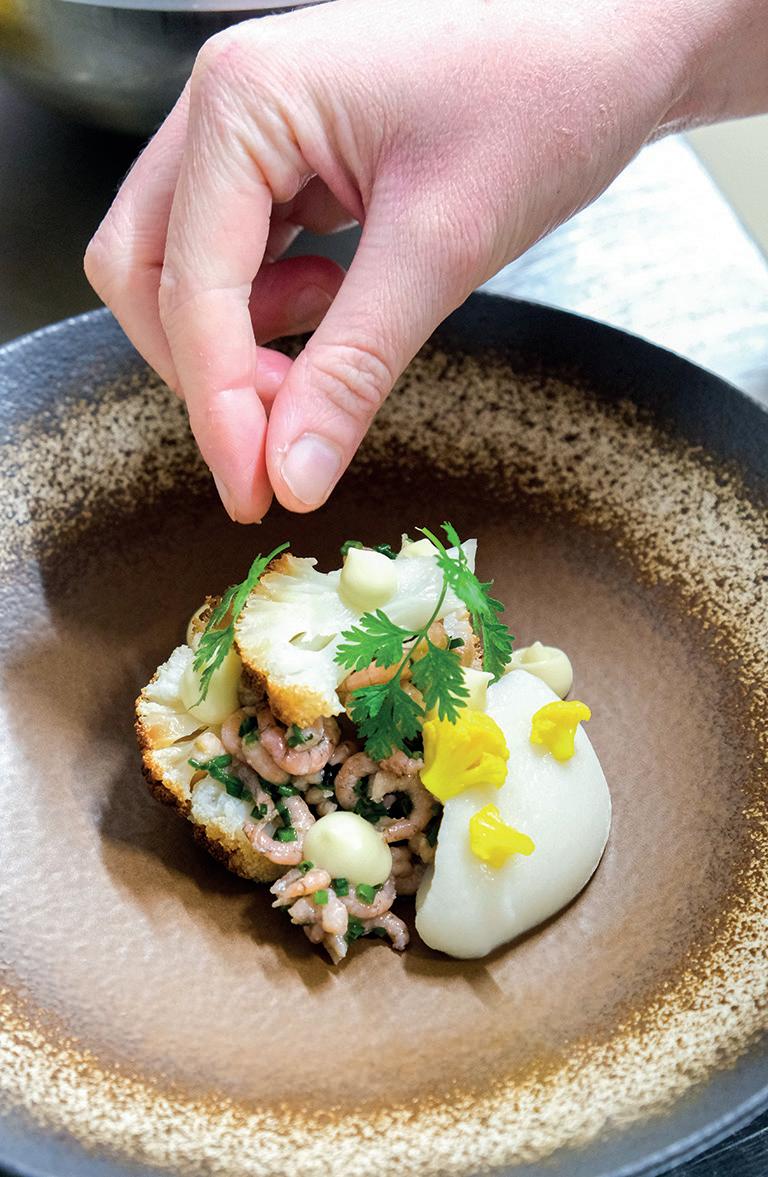
The idea is to follow the seasons as closely as possible. There’s a lot of discussion within the team and plenty of experimentation. We aim to serve up a relatively original cuisine—for example, by pairing pork with anchovies. We try to shake things up a bit with our desserts too, such as with fresh herbs. Our goal is always to create flavours that feel comforting and familiar, while adding a touch of originality and an element of surprise.
Which product from the Opal Coast is your favourite, or inspires you the most?
I’d say seafood in general, because you can do so much with it and because we’re lucky to be close to Boulogne-sur-Mer, France’s number one fishing port. But I really enjoy pairing seafood with
products from the land, like pork. We’re fortunate to have an excellent local pig farmer here: Quentin Druart from Les Cochons de Warcove.
How are you managing your new role as a mother alongside such a demanding profession? It certainly is a demanding job being a head chef— or a cook in general for that matter. Becoming a mother completely changes your perspective—it makes you take a bit of a step back from work for a start. I poured my heart and soul into Hôtel de la Plage—you could say it was my first baby. I spent a lot of time there. Having a child helps you gain perspective and see the world differently, not just through the lens of cooking. But I’m still the same chef: just as passionate and as inspired as ever.
About a year ago, you were awarded a Bib Gourmand…
It was a wonderful surprise and we’re incredibly proud of it. It was only in February last year, so it’s still fairly recent. It’s fantastic! I never imagined we might receive a Bib Gourmand so quickly. It’s a tremendous sign of recognition of our work— especially for the team, because we work hard. It’s also confirmation that we had the right idea, when I first arrived at the restaurant. We wanted to offer something new: above all, great value for money. But also somewhere people could eat well at the right price. Ultimately, that’s exactly what the Bib Gourmand stands for. We didn’t set out to get it, this was simply our working philosophy—but it’s a great endorsement. It shows we were on the right track. Now the challenge is to keep it.
Any new projects on the horizon?
For now, what matters is to take the reins and maintain our standards. I’ve always said that opening strong is one thing, but maintaining that level year after year—with the staff turnover we all know—is the real challenge. That’s one of my main priorities going forward. There are bound to be other projects, but for now I’m fully focused on the hotel and restaurant.
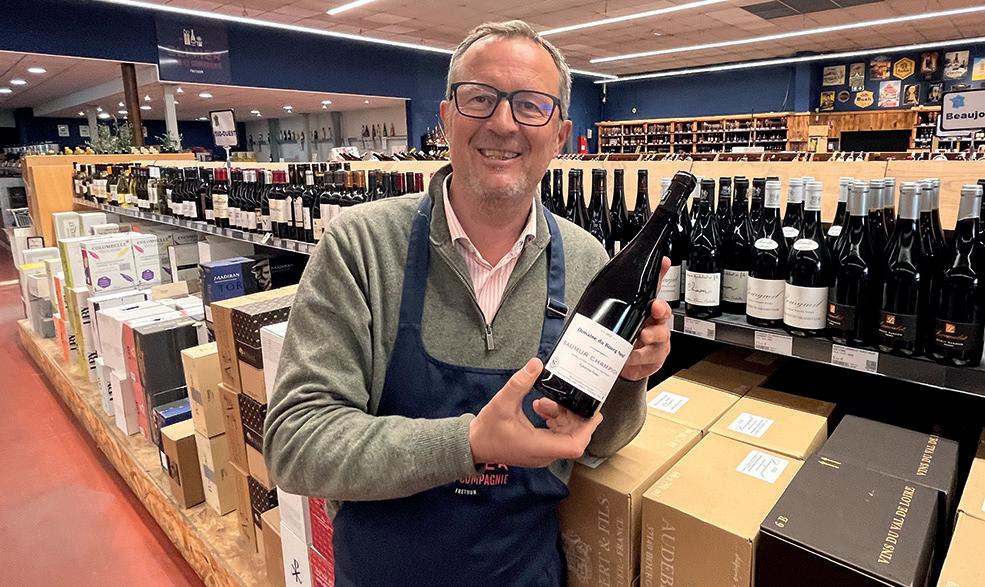
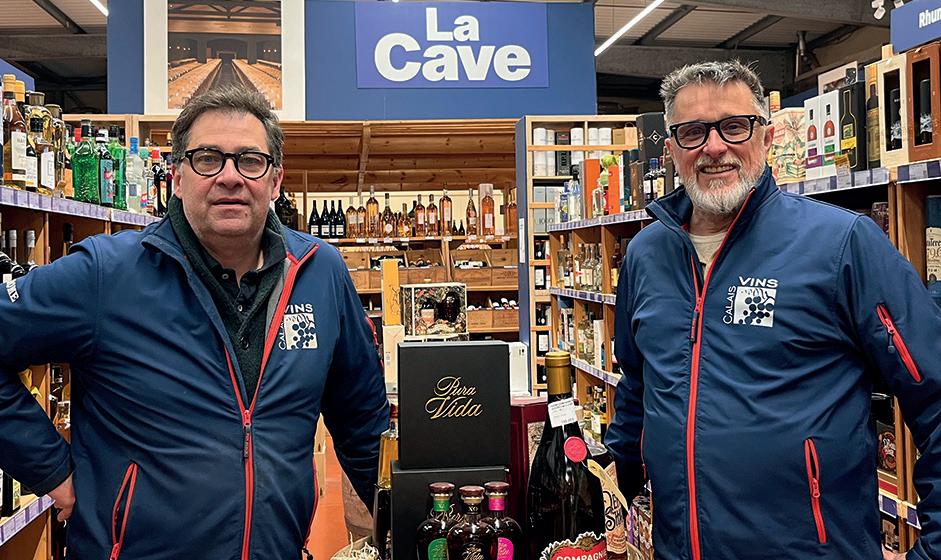
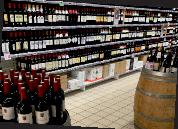
Just minutes from the port and the Channel Tunnel, these two stores offer British customers an exceptionally wide selection of wines and spirits, along with expert guidance and highly competitive prices.
For nearly 30 years, fine wine enthusiasts have consistently found the bottles they are looking for in the Calais area, at Calais Vins and Olivier Vins. The two businesses work closely together.
“By operating two stores, we are able to order in large volumes, and thus offer unbeatable prices to our customers,” explains Jérôme Pont. Both addresses are already well-known and highly regarded in the UK. British shoppers make up a loyal and significant share of their clientele. Experienced sommeliers are on hand to offer advice and help customers uncover great finds. Regular tasting sessions are organised, giving visitors the opportunity to explore different grape varieties and discover a wide range of wine regions and terroirs.
Thousands of products in stock in Calais
On the shared website of the two stores (winecalais.co.uk), customers will find thousands of products available in stock in Calais: 1,800 wines, 290 sparkling wines (including champagnes and crémants), 2,000 spirits (among them 600 whiskies
and 450 rums), as well as around 700 beers. There is something to suit every taste and every budget, with bottles starting at under £3, right through to prestigious grands crus at higher prices. Shoppers will also enjoy complementing their drinks purchases with a selection of products from the 300-plus delicatessen items available in-store. A major advantage for UK buyers and all non- EU residents is the possibility of reclaiming a large portion of French taxes. Using the PABLO terminals, 15% of the value of their purchases can be recovered, refunded directly to the bank card used in store.
And that’s not all: by pre - ordering a minimum spend of €300 via the website, online customers can benefit from a free Channel crossing thanks to a partnership with P&O Ferries. An unmissable offer!
Please note that alcohol allowances per person are regulated: 24 bottles of wine, 12 bottles of sparkling or fortified wine, 64 bottles of beer (75cl) and 5 bottles of liqueurs or spirits.
Calais Vins and Olivier Vins are open seven days a week.

Every summer, several coastal towns pull out all the stops to celebrate this delicious mollusc harvested from our shores—and above all to uphold this popular, sociable tradition inspired by a love of sharing and good times.
Mussels are a speciality of our coastline, which still boasts a number of renowned natural beds. In the past, shore fishers used to head out at low tide to gather mussels from rocky outcrops, before selling them door-to-door to local households. Things were different back then. These days, both the harvesting and sale of mussels by private individuals are strictly regulated. While many people still go mussel fishing as a family activity, others relish them in restaurants instead. Sharing a plate of mussels with a generous serving of fries has long been a seaside tradition. Several coastal towns, where mussel gathering still takes place, have therefore turned this occasion into a summer festival full of good vibes.
Wimereux: A Long-Standing Celebration
In Wimereux, the Mussel Festival—established in the 1970s—has always held a special place, with its long communal tables set up on Place Albert I st
The local municipal workers’ association, among others, traditionally took charge of cooking the mussels and fries, while the concert stage drummed up a lively atmosphere, getting guests dancing late into the night on the Saturday evening. With major works currently reshaping the town centre, the festival is still going strong but has moved—for the second year in a row—to the Bay of Saint- Jean event area. Visitors will once again find the same large tables for everyone to gather around, live music and a Sunday show.
On the Saturday evening, the traditional parade of floats will take to the streets come nightfall.
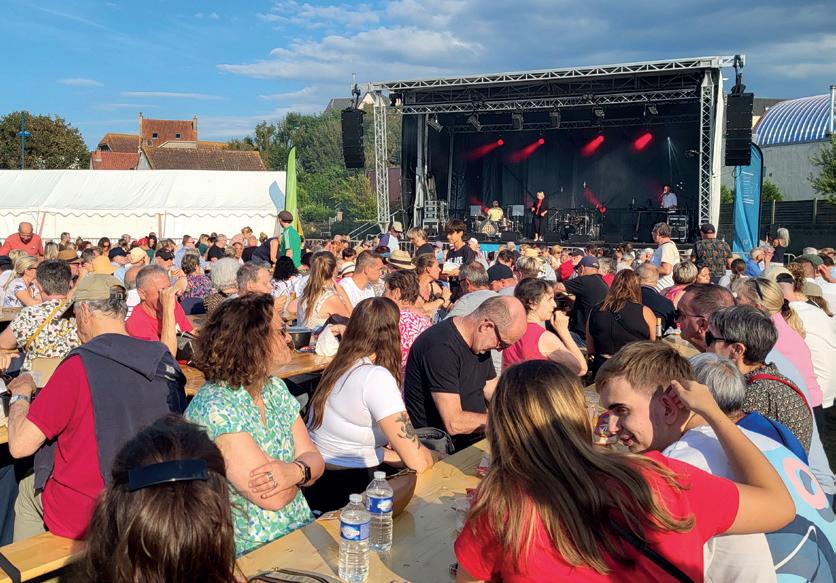
Starting at 10 p.m., the illuminated procession will wind its way through the streets as children look on delightedly, their eyes asparkle with excitement! Saturday 19 and Sunday 20 July at the Bay of Saint- Jean Saturday from 6 p.m. / Sunday from 12 noon.
Nighttime parade on Saturday at 10 p.m., departing from the Bay of Saint- Jean, then along the seawall and Rue Carnot.
Other coastal towns also celebrate mussels in their own way—always in a festive spirit. In Le Portel, the festivities take place at local restaurants, both at lunch and dinner. Over the course of a weekend, chefs rustle up special menus where mussels are the star of the show. In the evenings, the celebrations spill out into the streets with concerts and impromptu brass bands. This event is scheduled for 19 and 20 July.
Équihen - Plage, which is home to one of the largest mussel beds on the Opal Coast, organises a special event giving pride of place to mussels too. Volunteers spend an afternoon preparing the mussels, which are then sold and enjoyed in the evening. Once the tasting is over, it’s time for entertainment and festivities.
27 July, at the Équihen community hall.
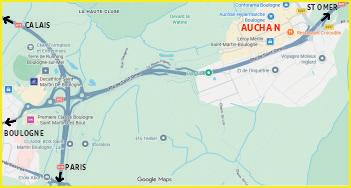
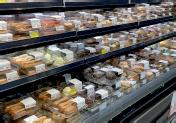
“Huge supermarket, wide selection, especially in wines and beers” - Mike
“The produce is much fresher than in the UK” - Ross
“Clean and well-organised store; we find everything we need there” - Peter




SPECIAL OFFER

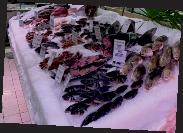
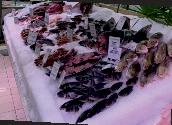
“ Fruit, veg and fresh fish that put British supermarkets to shame for price, quality and range” - Edward
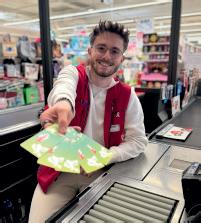
“Friendly, smiling and highly motivated staff in the fish department” - Nicole “Great! Auchan special offers — I love it” - Mylène “Staff were friendly, some spoke English” - Jones
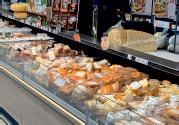
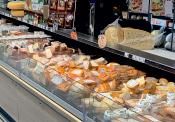
“The cheese and deli counter service is truly excellent; the staff are very kind and professional” - Juliet

“This is a great supermarket, it sells amazing food & produce, staff are nice and helpful, I recommend it!”- Seb “The only place I take school groups; it has a safe and spacious coach parking area” - Neil “Good value for money and plenty of choice” - Lyanu


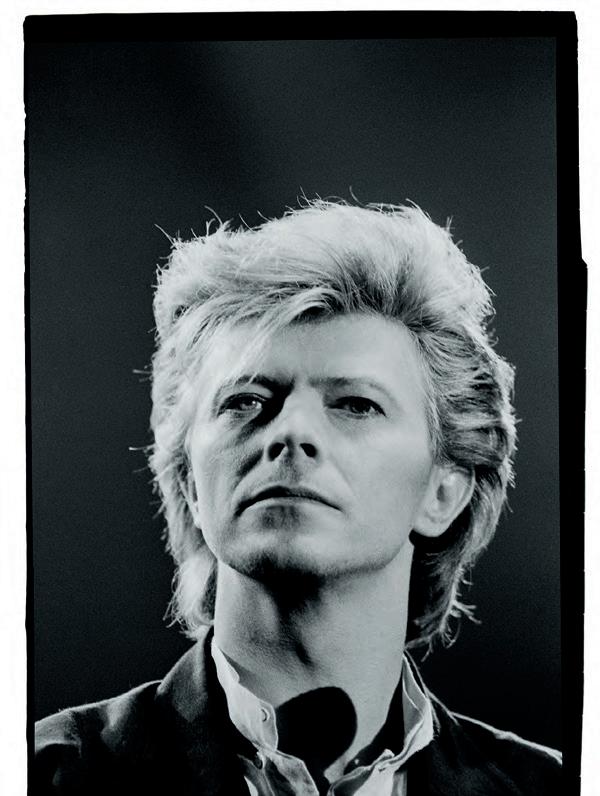
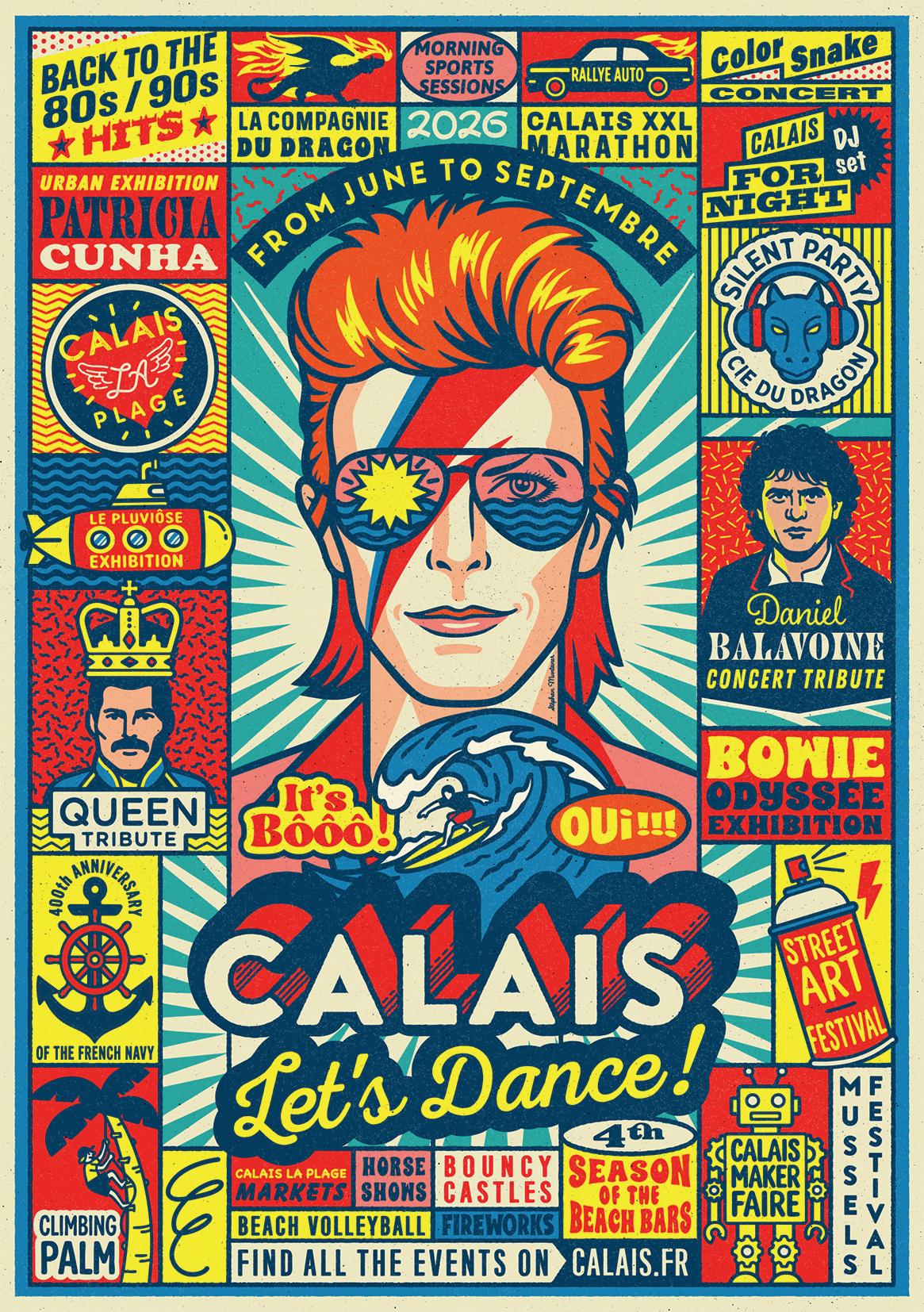
Although he never performed in Calais during his lifetime, David Bowie will be headlining the city’s summer 2026 programme. A tribute concert marking the tenth anniversary of his death will take place, along with a special exhibition at the Gambetta Hall.
In recent years, tribute concerts held on Place d’Armes have found a loyal audience in Calais. The guiding principle of the summer programme is to provide some respite – however brief – from the noise and turmoil of the world around us.
“Bowie Odyssey,” the exhibition of a devoted fan The poster sets the tone: a portrait of David Bowie takes centre stage. Although municipal officials admit that “there’s no direct connection between Calais and David Bowie,” they’ve nevertheless identified two indirect links. First, 2026 marks the tenth anniversary of the artist’s death, after he succumbed to cancer in 2016.
The second link is Jean-Charles Gautier, a resident of the Opal Coast. This collector has amassed thousands of items and documents related to David Bowie, which will be on display from 4 July to 16 August at the Gambetta Forum: a 1970s turntable, original documents, signed album covers, original prints by photographer Mick Rock, and more.
“He was a multifaceted artist, and the exhibition will reflect that,” says the collector. “Over his 50-year


career, the theatrical aspect, for example, is rarely mentioned—yet he played the lead in The Elephant Man on Broadway!” Admission will be free, and the exhibition will be accessible in both French and English. The Alhambra cinema and the public library will also host screenings and readings dedicated to David Bowie.
A rocking season: opening with Bowie and closing with Queen
The summer season will get well and truly underway in Calais Nord on 10 July, from 8:00 p.m. to 10:00 p.m. on Place d’Armes, with a tribute concert in honour of David Bowie. Entitled Once Upon a Time David Bowie, this tribute will, as always, be free to attend. City officials point out that while purists may turn their noses up at tribute bands, similar shows at venues like the Bataclan (in Paris) can cost over €50 a ticket. What about after Bowie? A full line-up of tribute concerts is set to follow on Place d’Armes, including a Patrick Bruel tribute on 11 July at 9:00 p.m. and Back to the Hits (covering 1980s and ‘90s classics) on 14 July from 8:00 p.m. to 10:00 p.m., just before the traditional fireworks display at 11:00 p.m. on the beach.
On 25 July, local band Color Snake will open the evening, followed by a tribute to French singer Daniel Balavoine. On 8 August, the second edition of Calais for Night will take place at 8:00 p.m., again on Place d’Armes, featuring The North Project and LMBD as opening acts, before a DJ set by one of the youngest rising stars on the scene, El Figo—the 14-year-old revelation of Britain’s Got Talent.
The summer programme will return to a classic finale with the last tribute concert of the season, scheduled on 22 August and dedicated to Queen.
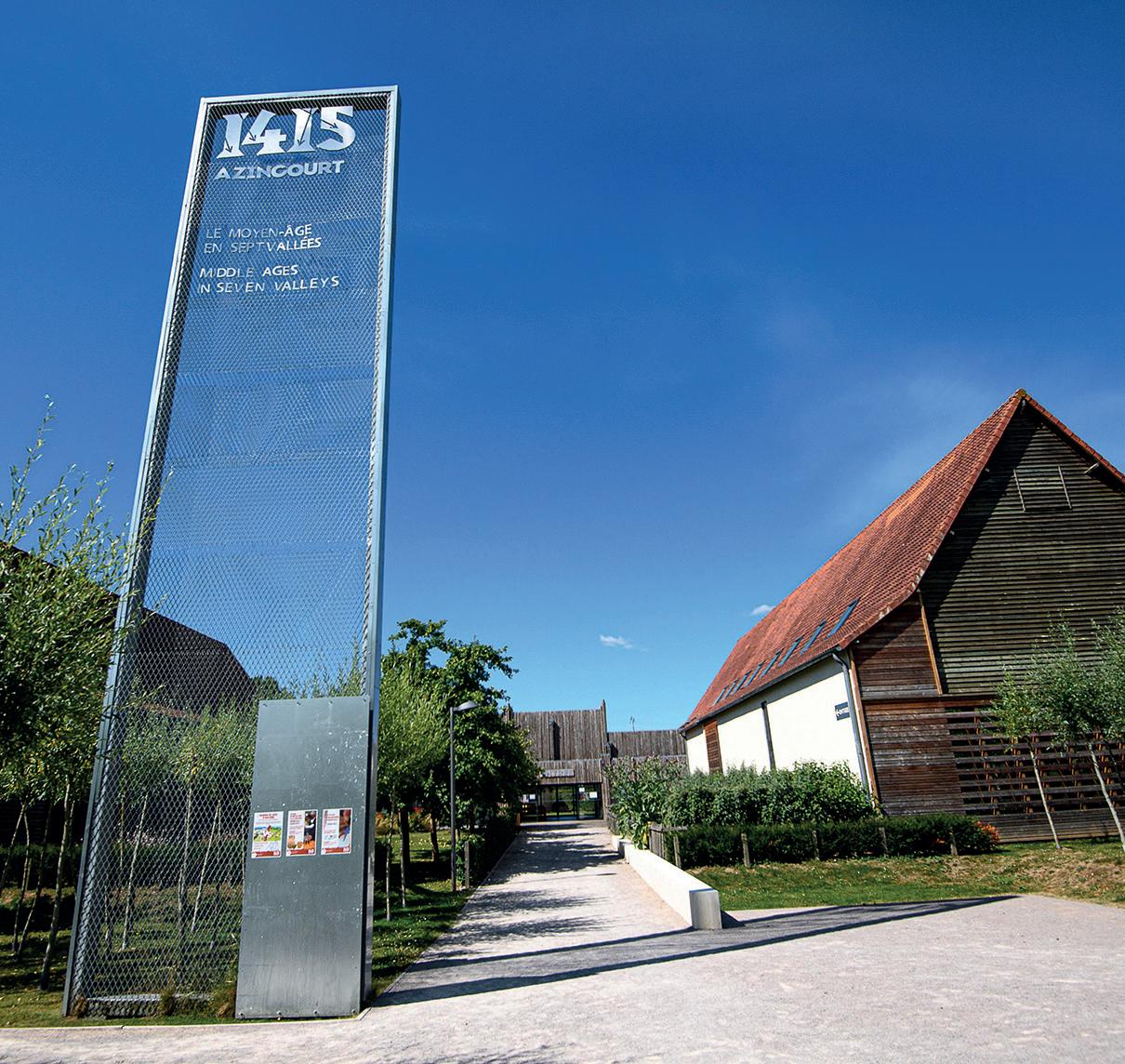
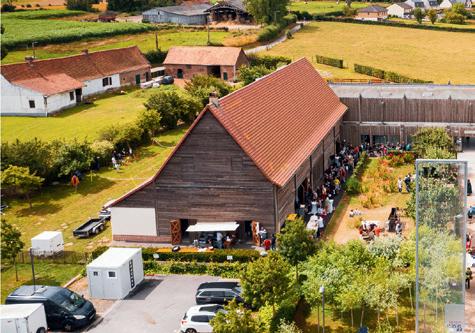
In Azincourt, a tiny village nestled in the Pas-de-Calais countryside, less than 20 miles from Montreuil-sur-Mer, visitors can walk the very ground where the famous Battle of Agincourt took place.
For UK visitors, Agincourt is more than a historical footnote—it’s a place to connect with a legendary chapter of English identity. Whether you’re a Shakespeare enthusiast, a military history buff, or simply curious about the past, a trip to Agincourt takes you on an unforgettable journey back to 1415.
Agincourt, the battlefield of legend
Tucked away in the peaceful countryside of northern France lies a place where English history was changed forever. The Battle of Agincourt, or Azincourt, as it is known in France, was waged here on 25 October 1415, and remains one of England’s most celebrated military triumphs. Immortalised by Shakespeare in Henry V, the battle continues to capture the imagination of history lovers and
battlefield tourists alike.
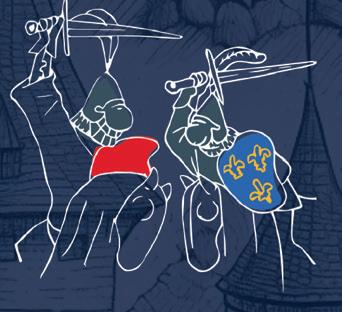
In the autumn of 1415, King Henry V led around 11,000 English troops into Normandy. After a hard-fought siege at Harfleur and heavy losses to disease, his army dwindled to 6,000-8,000 men. Attempting to return to England, the English found themselves trapped near Agincourt, facing a French force more than double their size — possibly up to 25,000 men.
Despite the odds, the English claimed a decisive victory. The battlefield’s muddy, narrow terrain neutralised the French advantage. Henry V’s archers, armed with the longbow, devastated the French cavalry. Internal disorganisation among the French further hampered their efforts.
The result was over 6,000 French dead, many from the nobility, with only around 450 English casualties. The victory boosted English morale and secured a period of dominance in the Hundred Years’ War.
Visiting the battlefield today
Today, Azincourt offers visitors a chance to walk the very ground where the battle took place. Located in Pas-de-Calais, the village and its surroundings preserve the memory of the conflict in an accessible, thoughtful way.
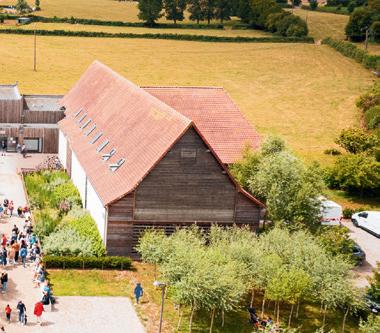
Centre Azincourt 1415:
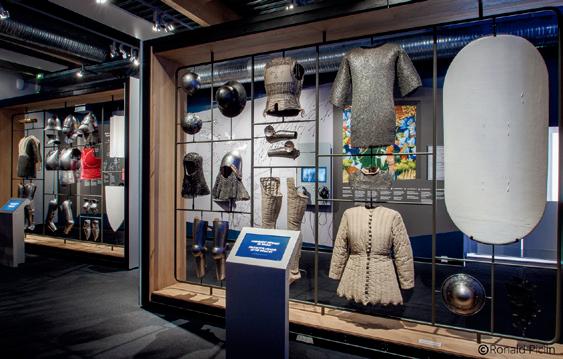
This modern museum and interpretation centre is the perfect starting point. Immersive displays and interactive exhibits tell the story of the battle, its political context and its legacy in an altogether engaging way.
Visitors can drive or walk along a two-and-ahalf-mile route around the battlefield to see key locations from the day of battle, including the surviving woodland where Henry V set his ambush.







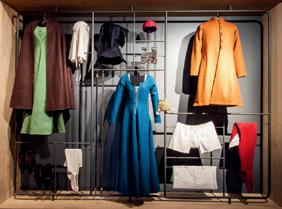

















A repurposed port warehouse, a redeveloped coastal fort… These are the remarkable settings in which Dunkirk’s museums tell the enthralling story of their region.
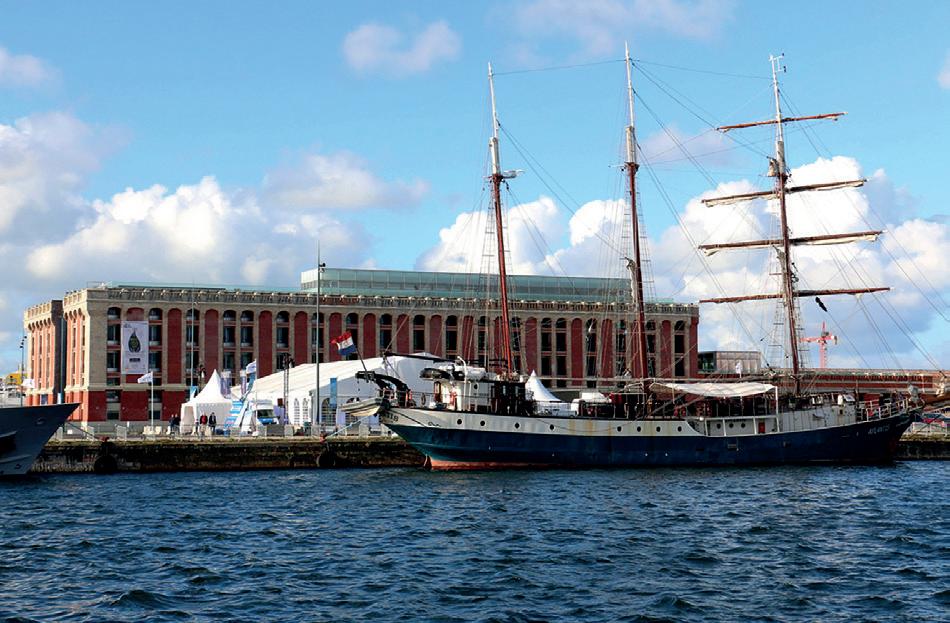
La Halle aux Sucres
In the 19 th century, this area of Northern France—already the leading French county for sugar beet cultivation— also became the country’s foremost sugar-producing territory. The Port of Dunkirk emerged as the main national sugar transit hub, creating the need for large storage facilities. The Chamber of Commerce thus built the first sugar warehouse at the port in 1899. During the two World Wars, this warehouse sustained severe damage. The Chamber of Commerce moved its offices there once the wars were over and undertook major renovation work on it until 1955. The warehouse building was vacated in 1963. Increasingly obsolete, the warehouse was replaced in 1979 by the Sugar Terminal (TTS) built on Pier 4. The building was completely abandoned in the early
1990s, eventually undergoing major renovations in 2011. Overseen by the architect Pierre-Louis Faloci, this revamp turned the 19 th - century port warehouse into a 21st- century “Learning Centre for Sustainable Cities”—a place dedicated to public education and to reimagining territorial development.
(source: archives-dunkerque.fr)
From Industry to Art
A venue for exhibitions, workshops and conferences, La Halle aux Sucres puts on a varied, accessible programme all year round.
Its latest exhibition explores the challenges of urban planning and community life, with a view to shaping a more inclusive, attractive and open city for the future. There is also a fun, immersive experience on reinventing the Dunkirk area. Key themes relevant to everyone—mobility, industry, employment, water, nature, and more—are presented through cinematicstyle storylines and sets.
The exhibition is on show until September.
The Dunkirk 1940 Museum
It all began back in the early 1970s, when a group of World War II history enthusiasts set out to honour the soldiers of the Battle of Dunkirk and Operation Dynamo. This extraordinary military operation enabled the evacuation of 340,000 Allied soldiers from Dunkirk to England while they were surrounded by the German army.
At the time, the exhibition featured items from private collections—objects gathered over the years from battle sites, particularly along the beach. In the mid-1980s, the municipality allocated two ramparts of Bastion 32. Built in 1874 as part of coastal defence reinforcements, Bastion 32 had served as the headquarters of French and Allied forces during the Battle of Dunkirk and Operation Dynamo.
After cleaning and restoring the whole site themselves, a group of volunteers opened a very small museum on the premises. That all changed with the filming of Christopher Nolan’s movie Dunkirk. The film, combined with support from the new municipal administration, enabled these enthusiasts to expand and complete what has since become a flagship museum.
The entire exhibition layout was recently redesigned. An extensive collection of period artefacts, weapons and uniforms now whisk visitors back in time to this extraordinary era and unprecedented military operation.
dynamo-dunkerque.com
Built between 1440 and 1460 at the request of Sir Jean V de Créquy, a member of a noble family from the Artois region, this remarkable site is getting ready to host two exceptional summer evenings in August…
Les Folles Nuits du Monde!
Although time has left its mark, the Château of Fressin continues to thrive. What remains today includes the fortified tower, the lower and upper courtyards, a wall of the lordly residence and sections of the former moat structures. Since 2022, the Haut Pays d’Opale Tourist Office has managed the site, supported by the passion and dedication of nearly 90 volunteer members of the Château de Fressin Association, which has been active for more than 40 years.
Listed as a Historic Monument, this limestone gem also owes its charm to its majestic trees and medieval gardens, part of which are naturally maintained by goats from the nearby Chèvrerie de la Planquette. The site also features an exhibition room showcasing period artefacts uncovered within the castle grounds, as well as 12 brand-new mini- golf courses.
25 minutes of fireworks!
Two spectacular evenings await visitors for the 9 th edition of Les Folles Nuits du Monde, on Friday 1 and Saturday 2 August. Organised by the Château de Fressin Association in partnership with the Haut-Pays du Montreuillois Community of Municipalities, the event unfolds in three stages.
The evening begins at 7:00 pm with a live musical performance by Gaylord, François and Aélia. At 9:00 pm, the Tan Elleil troupe takes over with juggling acts and fire performances. Finally, the highlight of the night: a breathtaking fire and light show culminating in the setting ablaze of the castle. A rare and intense moment, featuring one of the most impressive fireworks displays in the area, launched around the towers and from the opposite valley for a full 25 minutes.
Admission: €14 for adults, €7 for children aged 6 to 12. Booking required (maximum 1,000 people per
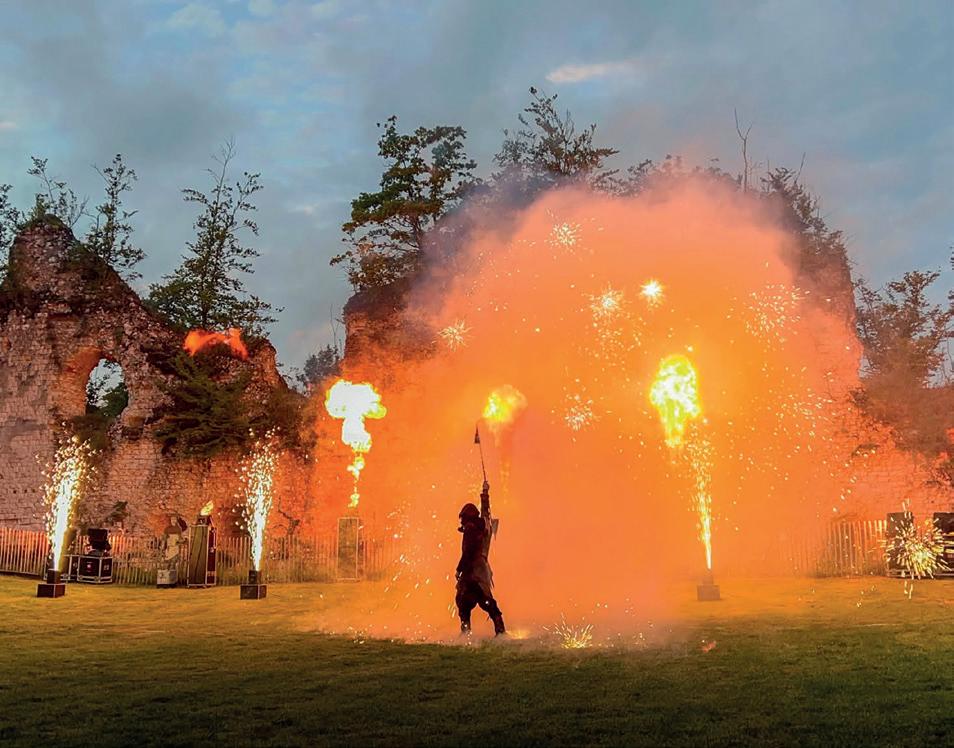
evening). Refreshments and fast food available on site from 7:00 pm.
Cow-pat lotto, rock music and sword fights… Throughout the opening season, the site hosts a wide range of events. Local rock band Fath’Son will perform on Saturday 19 July at 8:30 pm. A first for the château takes place on 27 July, from 2:00 pm to 6:00 pm, with a cow-pat lotto and a farmers’ market, offering three gift-voucher prizes worth between €100 and €200. Information: +33 (0)6 98 09 16 05.
On 23 and 24 August, from 10:00 am to 5:30 pm, the Tournoi du Créquier invites visitors to enjoy medieval combat demonstrations: tournaments with various weapons on Saturday, and sword fights on Sunday.
The château is open from April to the end of September. Audio-guided tours for individuals and groups, an escape game and archery activities are available on site.
association@chateaudefressin.fr +33 (0)3 21 86 56 11
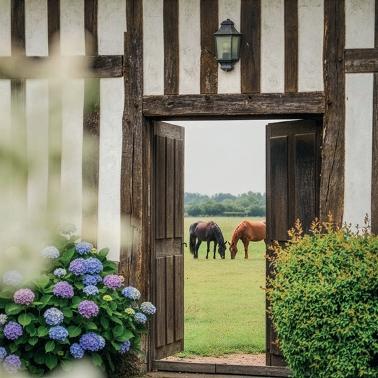
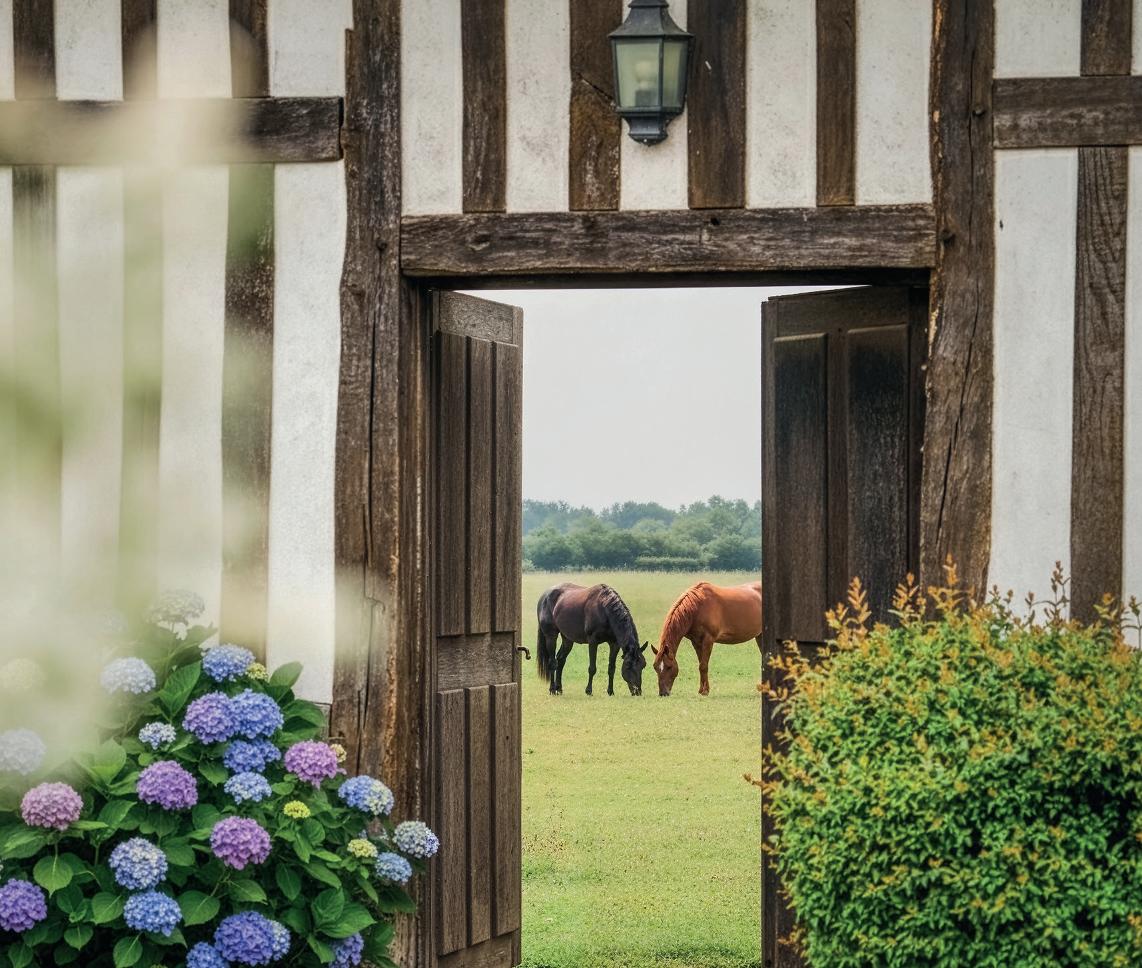
Visitors do not come here merely to admire the natural scenery—they set out to explore it. Beyond the picture-postcard image of the southern Pays d’Auge—apple orchards, rolling meadows, horses and cows—lies a landscape shaped and animated by stories.
Along one of the quality-certified circular hiking trails, a fountain renowned for its healing virtues suddenly appears, while small, discreet churches and historic estates gradually come into view… Nature is constantly interacting with the traditional architecture of the Pays d’Auge. This alliance is evident through the gardens themselves, whether they are formal, landscaped, or left in a wilder state.
Nicknamed “The Wonder of the Pays d’Auge”, SaintGermain-de-Livet Castle is truly an architectural gem nestled in the heart of a valley, deep within the Norman countryside. It is considered one of the most beautiful castles in Normandy. Its park and gardens remain open to visitors.
The Pays d’Auge Gardens rank among the finest in Calvados. Take a stroll through four hectares of leafy greenery. Boutemont Castle boasts a rich history spanning the Middle Ages, the Renaissance, the French Revolution and the Battle of Normandy. Follow the lovely cedar-lined avenue to cross the drawbridge leading to the two historic salons and the gallery, where you can see the projects of landscape architect Achille Duchêne.
The Orbec mushroom farm invites visitors to venture beneath the surface on a tour of the last underground mushroom farm in Normandy. This former stone quarry, once used to build some of the town’s finest buildings, has been repurposed as a site for mushroom cultivation. Guided tours of the cave are available, and a wide variety of mushrooms can be purchased on-site.
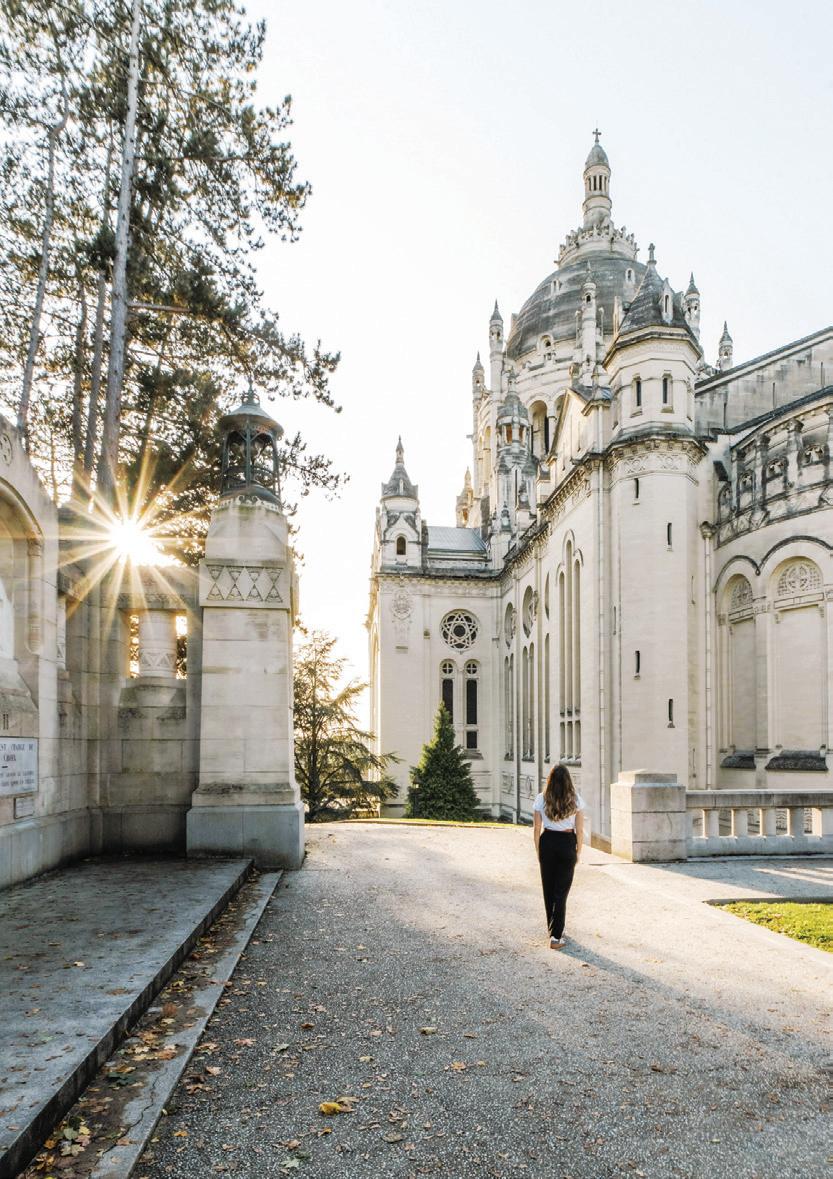
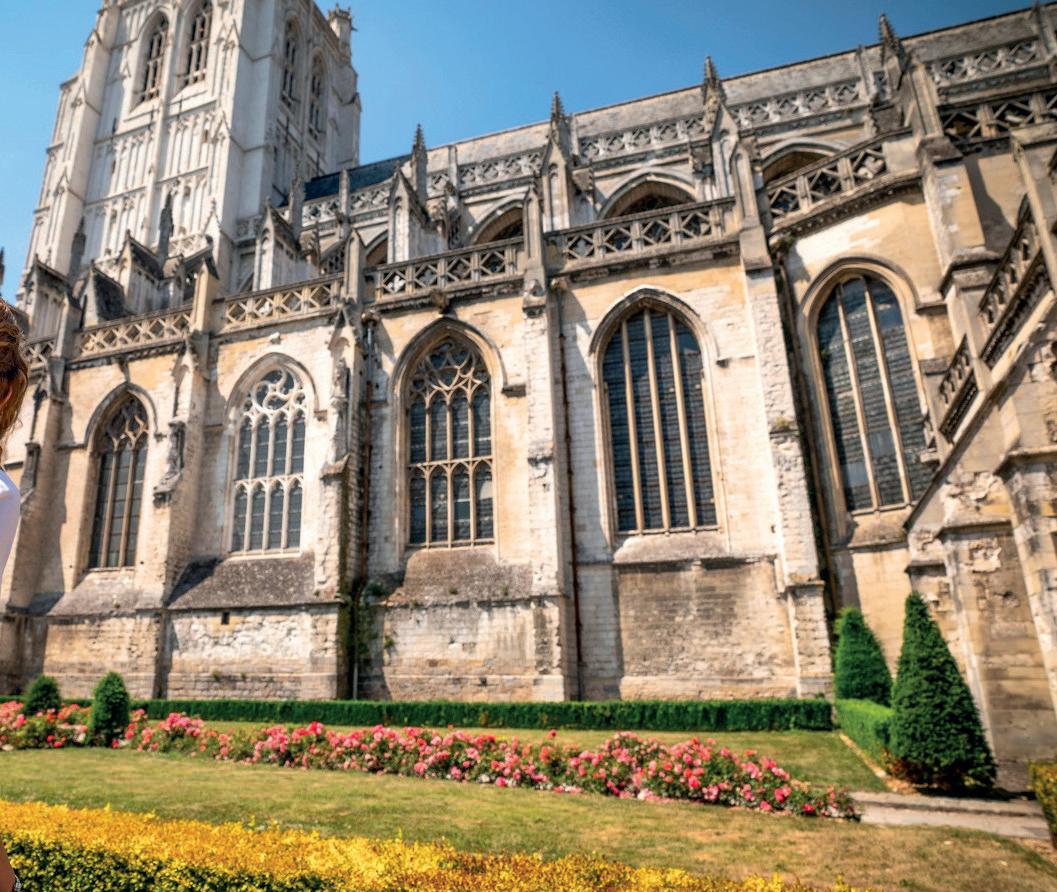
The Lisieux Arboretum is a refreshing green lung in the heart of the city. Just ten minutes from the city centre and directly opposite the Basilica of Sainte Thérèse, this vast 12-hectare green space is home to 700 trees representing 130 different species. Botanical information panels provide details about each tree’s common name, Latin name, botanical family, geographic origin, visual characteristics, flowers, fruits and leaves. You’ll also find anecdotal facts about its history or uses. The arboretum is located on the SaintJacques plateau in Lisieux.
At all these sites, nature is experienced as an adventure for the senses—an invitation to slow down, step off the beaten track and explore a region that, if you’re willing to wander and lose your way, just a little, will reward you with all it has to offer.
The Basilica stands proud as a gateway to the region, encouraging visitors to delve deeper and discover new themes: “The striking Basilica, this majestic gateway, watches over a vibrant territory. Lisieux Normandy — a destination where you can get back to what truly matters.”

Reopened since 1 February, the 39–45 Memorial Museum in Parc Saint-Pierre took advantage of its annual closure to refine its collections while shedding light on other facets and figures of local history who distinguished themselves.
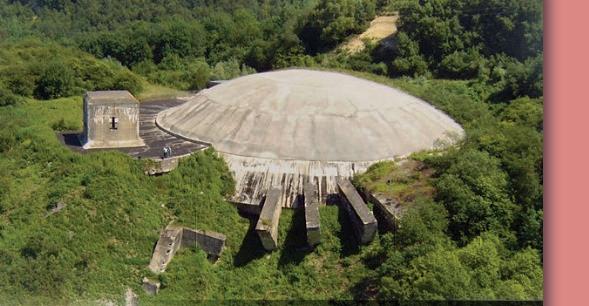
The longest bunker built in Europe under the German occupation—as it describes itself—is an inescapable integral part of Calais’ heritage. Originally used for military purposes, it has become, at the initiative of the City of Calais, a place of remembrance recounting the dark hours endured by the city during the last World War. Operating under the auspices of the Calais XXL Tourist Office, it is managed by the public company Grand Calais Tourisme & Culture. The museum shut for its annual closure on 11 November 2025 and reopened on 1 February 2026. During this customary hibernation period, various works and interior improvements were carried out. “Maintaining the collections is essential, as is renovating the rooms and updating the displays to make them as clear and accessible to visitors as possible. The museum is essentially stripped bare. We almost start from scratch again. Cleaning, painting, framing numerous documents, and installing new showcases all help to enhance the exhibits,” explains Frédéric Manier, who devotes much of his time to welcoming visitors and overseeing the various works. The first four rooms (out of a total of 20) to have been refurbished are the oldest ones. Right at the entrance, visitors will notice the reconstruction of one of the operational telephone exchange stations used here during the occupation. This is the first scene that the public encounter at the museum. “By placing it there, we wanted visitors to immediately connect with the place they are in,” Frédéric says. It

also serves to clearly illustrate that this impressively sized bunker was intended to house a key facility of the Kriegsmarine, the German navy.
The bunker escaped all bombardments 94 metres long, its width varies from 14 metres at the centre to between 23 and 32 metres at the ends, with walls 1.5 metres thick. Despite its massive size, the structure—built by the Organisation Todt in 1941 to accommodate the Port of Calais commanders who served there until 1944—housed the German naval artillery’s telephone exchange in the Pas-de-Calais sector, the most powerful defence system of the Atlantic Wall. Hidden beneath the dense foliage of the park and topped with an artificial layer of ruins to camouflage it, it was never struck by Allied bombing. The Canadian liberators discovered it, in its original state, on 30 September 1944.
As such, it is one of the very few completely intact remnants of Fortress Europe, envisioned by Hitler to counter any attempted invasion. This rarity explains the strong interest it attracts from visitors keen to discover it.
The 39–45 Memorial Museum in Parc Saint-Pierre is open from 1 April to 31 August, every day from 10 a.m. to 6 p.m.
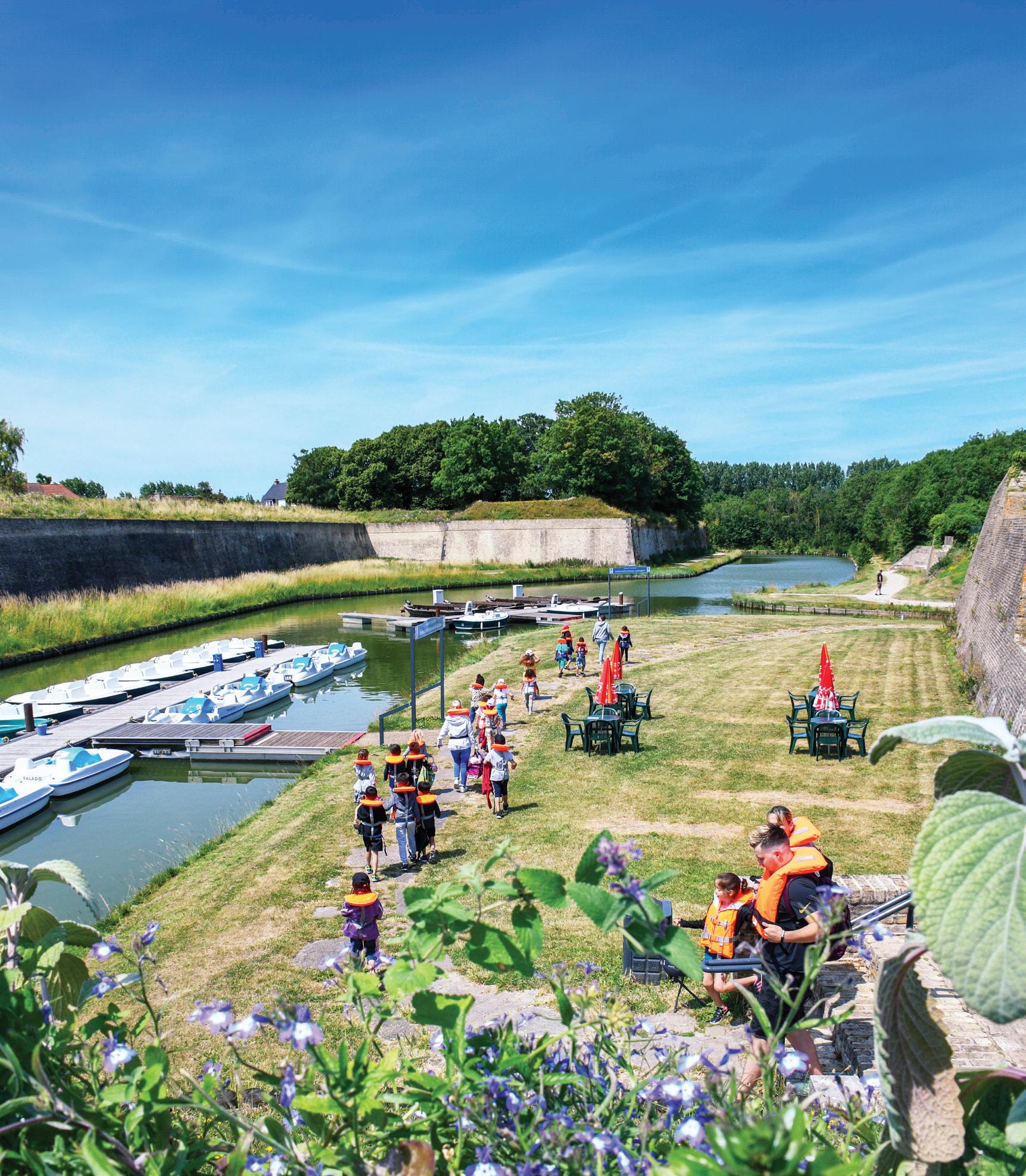
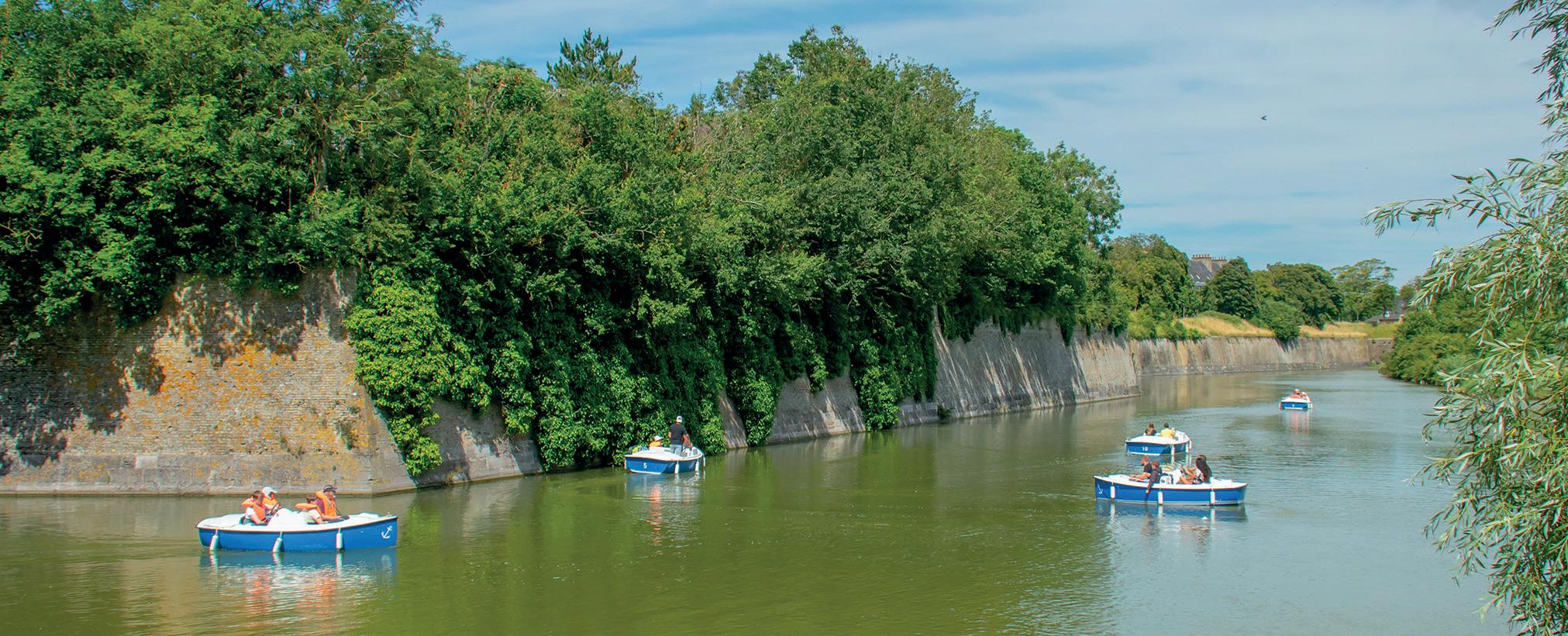
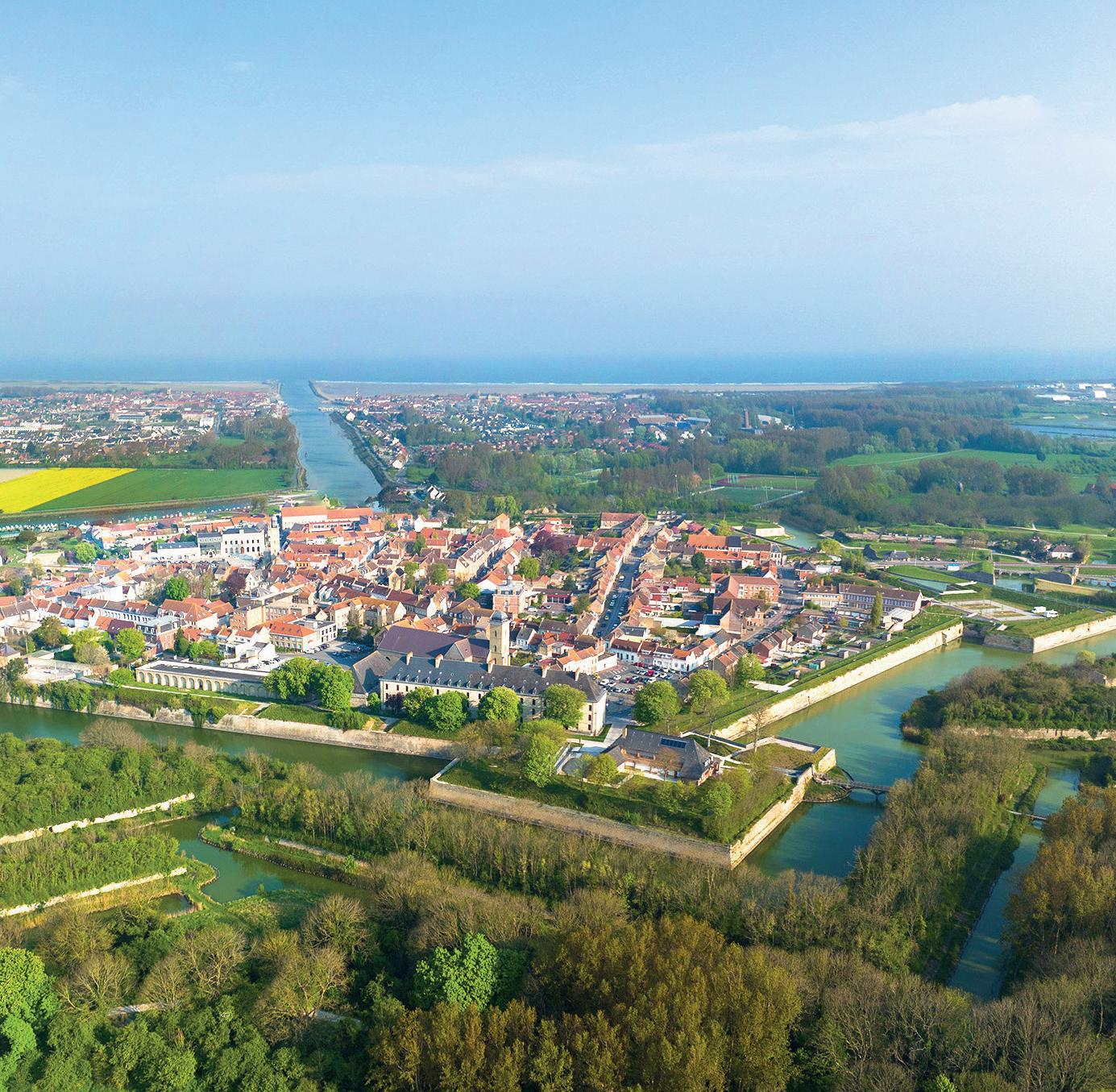
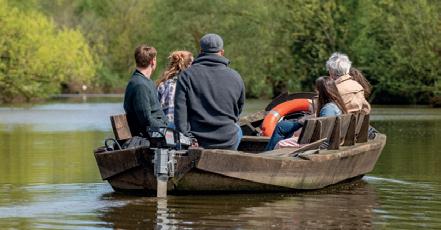
Gravelines is the only town in France where visitors can circumnavigate its entire fortifications by boat. And this remarkable heritage site harbours many other treasures too.
A town steeped in history and heritage, Gravelines boasts an exceptional system of fortifications that continues to shape both its identity and its landscape today. Ramparts, the Porte aux Boules, guardhouses, patrol paths and the belfry all bear witness to centuries of history and recall the strategic importance this stronghold once held.
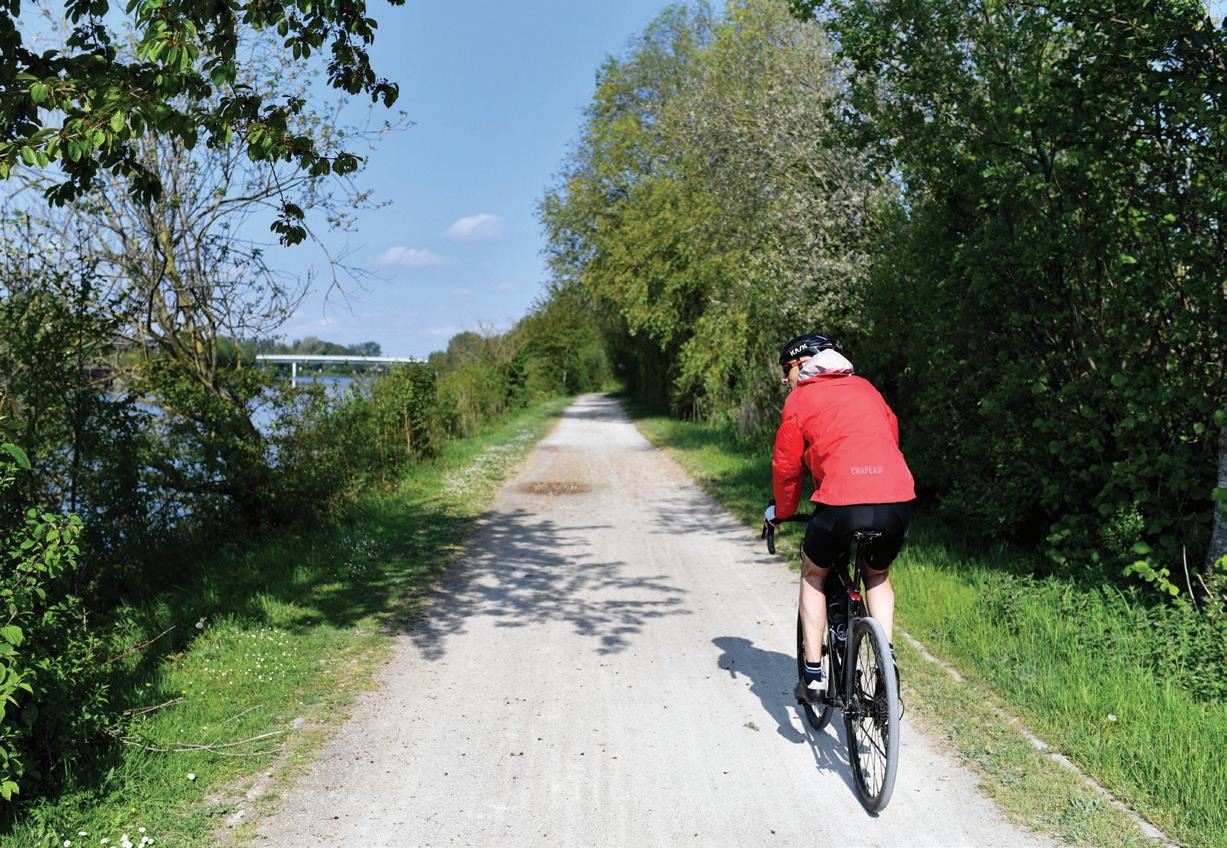
On foot, by bike and by boat Gravelines’ fortifications are unique in France in that they can be explored in their entirety by boat, following the line of the moats. Several options are available: visitors can embark on an enjoyable, independent cruise on a pedal boat, rowing boat or electric boat, through peaceful, unspoilt natural scenery, with discoveries galore in store. Heritage enthusiasts may prefer guided tours aboard bacôves, traditional flat-bottomed wooden boats dating back to the Middle Ages. These visits
offer an insight into the rich history of Gravelines, from the earliest fortifications designed by Charles V, Holy Roman Emperor, to Vauban’s later defensive system.
40 years of spectacular sound-and-light displays
Since 1986, Les Troubadours de Gravelingues have staged a sound-and-light show bringing to life the turbulent and fascinating history of this stretch of coastline.
To mark the 40 th anniversary, the troupe has created a series of new scenes, as striking as they are inventive. Performances are scheduled on 20, 21, 22, 27, 28 and 29 August at the Porte aux Boules.
If you are unable to attend the August performances, the town’s heritage department offers a whole host of other events and activities throughout the year.
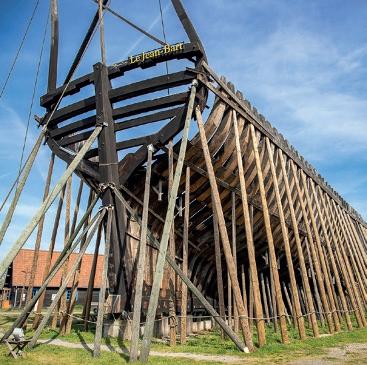
Historic shipyard reconstructing a 17th-century ship
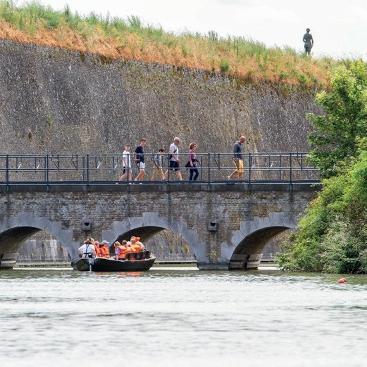


VAUBAN PROMENADE
Boat hire within the fortifications
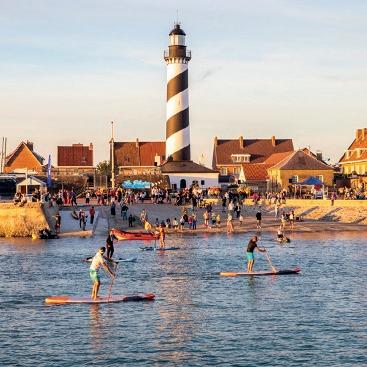
A family-friendly seaside resort. Home to one of Europe’s shortest crossings by ‘canote’ (traditional small boat)
Each week, we take a step back in time to explore the town’s historic hotels, from the earliest days of the resort through to the Roaring Twenties.
A symbol of elegance and leisure during the Belle Époque, Le Touquet’s Hôtel du Golf features prominently in the resort’s history. Built in 1908 by architect Horace Hutchinson (who also designed the golf course), the hotel was imagined from the outset as part of an ambitious vision for tourism development. With just 40 rooms at opening, it already drew visitors seeking fresh air, nature and refined leisure pursuits. Success came swiftly. In 1912, a dedicated access road was created, linking the hotel to the edge of Cucq (now known as Avenue François Godin), making this popular destination easier to reach. However, this momentum was abruptly halted by the outbreak of World War One. From 1914 onwards, the hotel was requisitioned and converted into a military hospital.
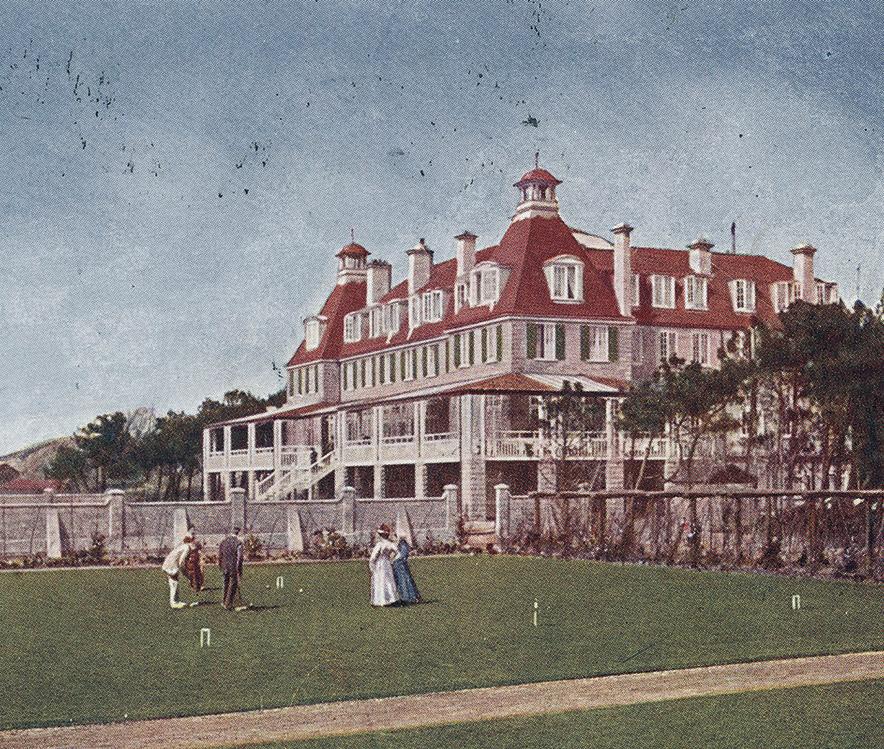
In the interwar years, the Hôtel du Golf regained its former prestige and entered a new phase of expansion. This period truly marked its heyday. In 1923, the Prince of Wales stayed at the hotel, firmly establishing its international reputation. Further extensions followed in 1925 and 1926, bringing the total number of rooms to between 160 and 174 to meet ever-growing demand.
But such prosperity did not survive the turmoil of World War Two. From June 1940, Le Touquet was occupied, and both the golf course and the hotel entered a period of decline. The grounds deteriorated and the facilities suffered extensive damage. On 4 September 1944, an assessment by Stoneham, co-founder of Touquet Syndicate Ltd, painted a stark picture: the hotel was destroyed, the clubhouse devastated, the courses disfigured and the greens gone.
With this destruction, an entire era came to an end. The Hôtel du Golf, once a showcase of the refinement and vitality of Le Touquet during the Roaring Twenties, would never rise again. In 1956, the Motels du Golf were built on the site, heralding a new, more modern chapter—one markedly less opulent than the past.
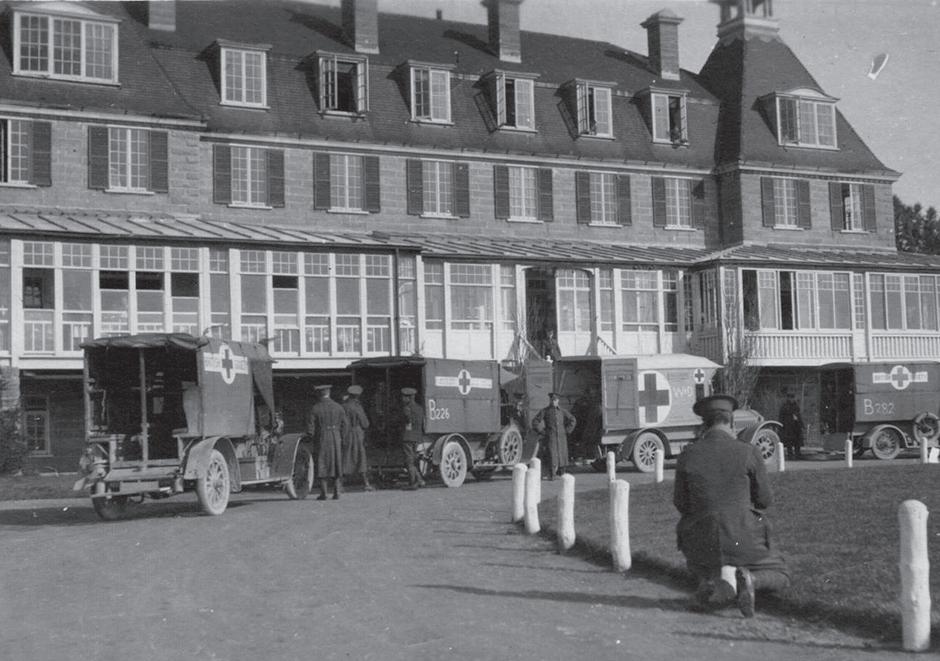
Did you know that the Deux-Caps Grand Site de France was highlighted by the French daily Le Monde as the top European destination to visit in 2026?
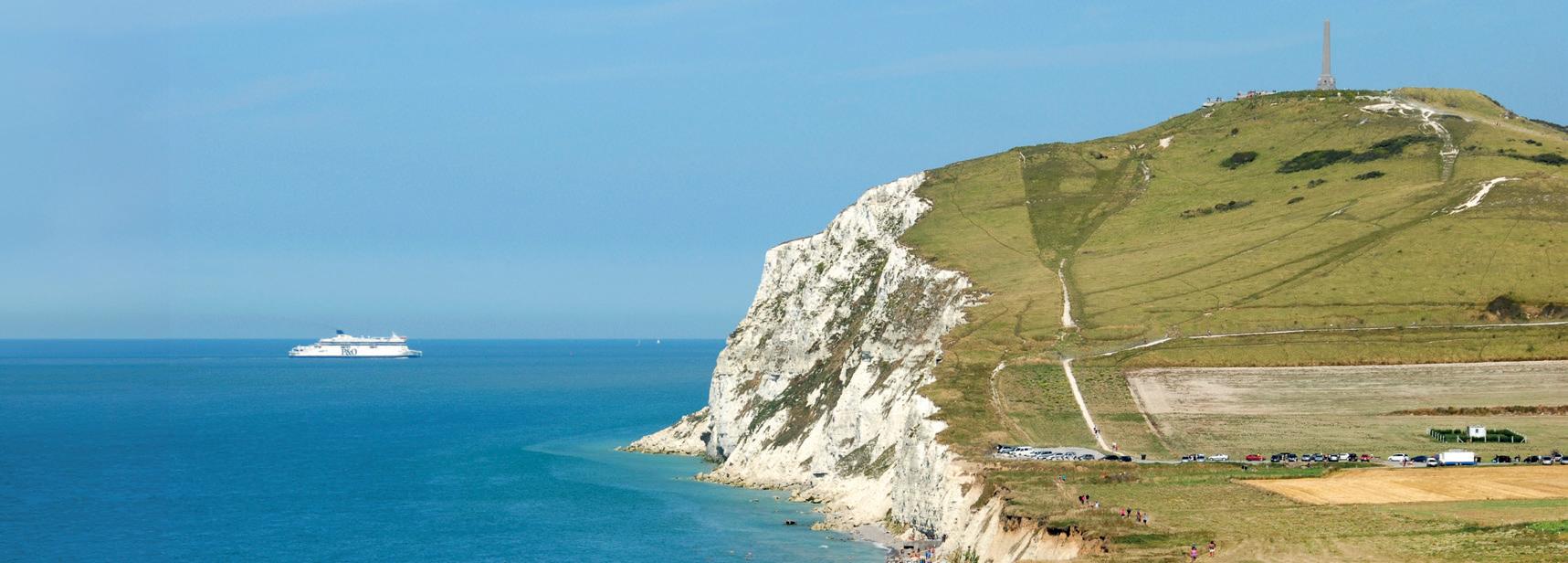
In January 2026, Le Monde launched a series of travel articles featuring a selection of ten trips through France and Europe. The newspaper ranked the Deux- Caps site as the number- one European destination to visit in 2026, particularly praising the opportunity for a delightful “geological ramble” around Cap Blanc- Nez and its surroundings. An honour? Absolutely. A surprise? Perhaps not for those already familiar with the natural and heritage treasures of this area, which has held the prestigious Grand Site de France designation since 2011.
A Grand Site de France is a territory recognised at national level for the remarkable quality of its landscapes, natural environment and cultural heritage. This status is granted under the French Environmental Code to sites where a significant portion of the area is protected and which welcome large numbers of visitors.
Pas- de - Calais was first awarded the Grand Site de France label in 2011 for its iconic coastline spanning two capes: Cap Gris - Nez and Cap Blanc - Nez. In
2018, after extending the boundary to include surrounding municipalities, the site renewed its label for six years. A second renewal was confirmed in 2025, this time for a further eight years. The Deux- Caps area, as it is known, promises a wide range of experiences for visitors. Seaside resorts and coastal villages such as Wimereux, Ambleteuse and Audresselles, along with inland villages like Bazinghen, reveal very different facets of what the Grand Site des Deux- Caps has to offer today.
Through a variety of places and events, follow our tips for a springtime outing enabling you to make the most of this exceptional “Grand Site”.
Discover the Fartz Trail in Wissant. Just over two and a half miles long, this path is a protected natural site bordering the former Fond du Phare quarry. Along the trail, visitors can observe the plants and wildlife of the Bay of Wissant, including sea gorse, sea buckthorn, Highland cattle and cormorants.
Are you a fan of slow tourism, the beautiful Nord–Pas-de-Calais region, challenges and vintage cars? Then look no further than the touring rallies organised by Les Belles Échappées!
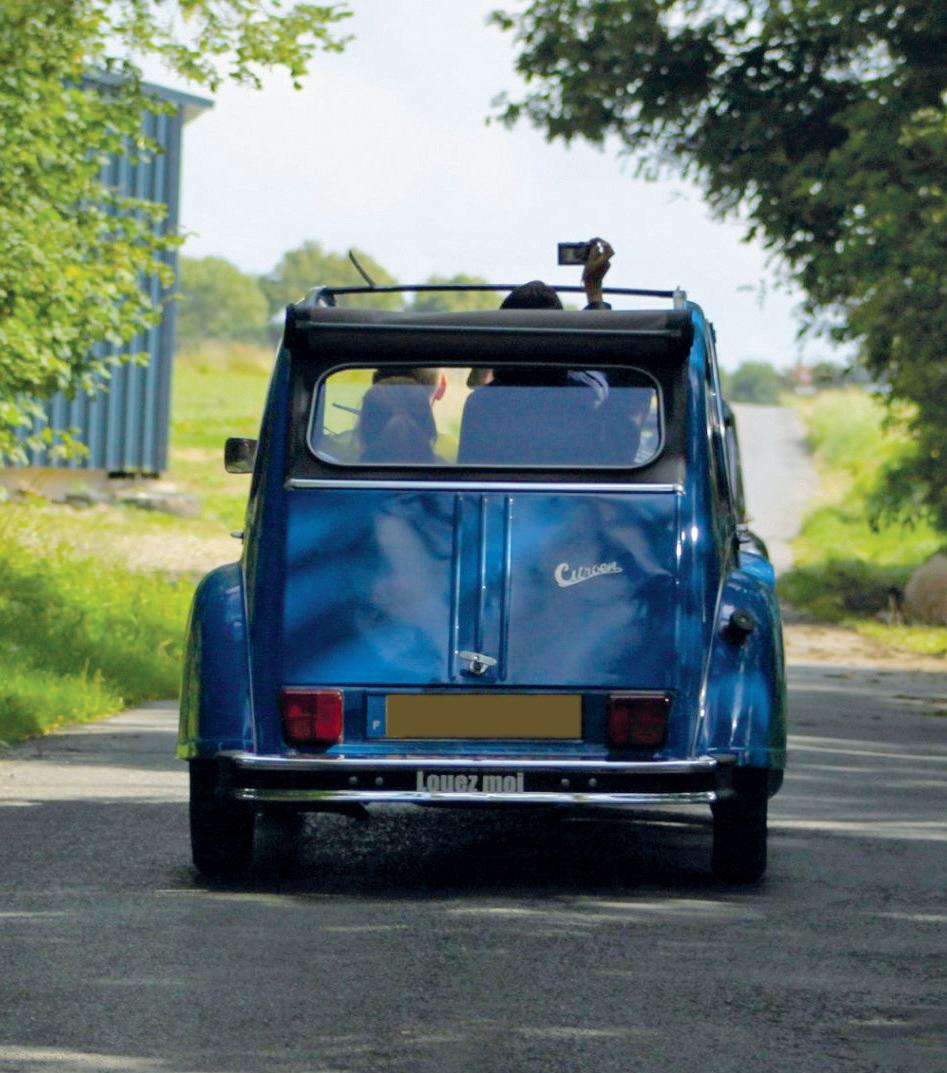
Ready to challenge friends or family during a touring rally across the Nord–Pas-de-Calais region?
Since getting his driving licence at the age of 18, Bruno Delforge has only ever driven classic vehicles, from a Beetle to a Combi van—and even a Citroën 2CV. Vintage cars are his passion!
“In a classic car, you travel differently. You don’t head for the motorways; instead, you take small, scenic roads. It’s a wonderful way to explore a region. People’s reactions are completely different too—they’re thoughtful and curious. Connections form more naturally.”
© Les Belles Échappées
This insight led Bruno Delforge to establish his company, Les Belles Échappées, in Clairmarais, offering tourist rallies designed to showcase the Nord–Pas- de - Calais region.
“Travel isn’t just about the destination—it’s also about the journey that gets you there.”
Quizzes, Challenges and Tourism
From Clairmarais, depending on whether you head east, west or south, the landscapes change completely. Seaside views and the Deux- Caps? Mining spoil heaps and the Artois region? Windmills and Flanders? The choice is yours.
For a family reunion, a birthday or a stag do, forget long sit- down meals and opt for a challenge that nurtures bonds instead! With four people per Citroën 2CV, each participant has their own roadbook to navigate the routes. And here, it’s not the fastest team that wins, but the one that successfully answers a tailor- made quiz and completes the challenges along the way (milking cows, traditional Flemish games, and more).
Throughout the journey, participants can stop at scenic viewpoints and points of interest, and enjoy tastings, guided visits or a leisurely lunch on the road. The bonus? You’re the driver!
“I really want people to experience the driving as well,” insists Bruno.
It’s also an opportunity to spend quality time with loved ones for half a day—or longer.
“I love the intergenerational aspect. Grandparents chat with their grandchildren and tell them how the Citroën 2CV was one of their first cars. Parents are delighted to share this experience across generations.”
At the end of the rally, a prize - giving ceremony takes place at the Clairmarais abbey brewery, over a drink, along with a tour of this exceptional site. Find out more at: les-belles-echappees.com
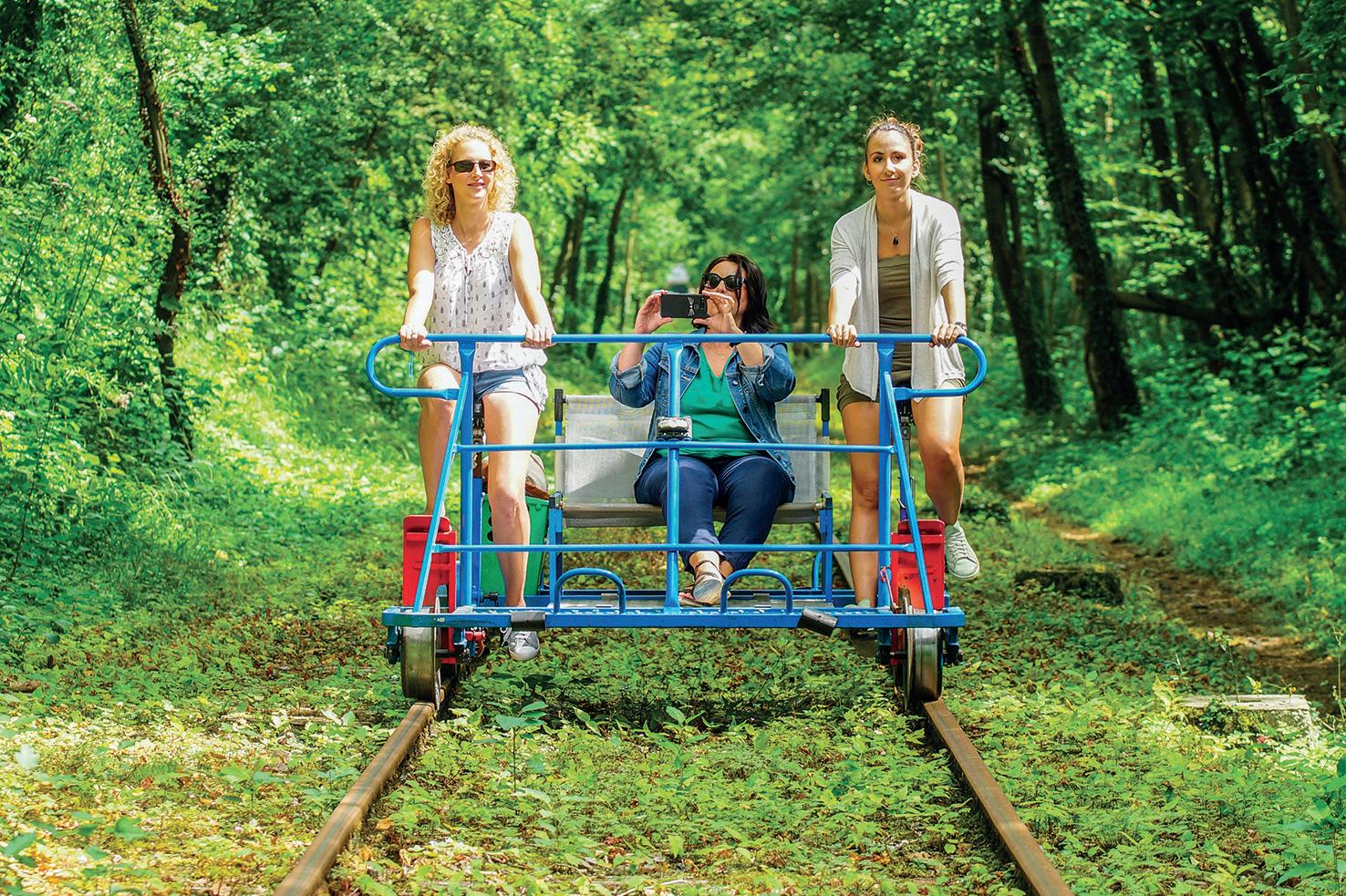
On the site of the former railway depot in Nielles - lès - Bléquin, visitors can enjoy an entirely pedal-powered activity! Here, Christophe and David welcome you for a rando - rail experience— an original, nature -based pursuit along a disused railway track. This line once served towns between Saint- Omer and Hesdigneul.
The Alderthur route starts with a downhill stretch and ends on an uphill climb. Lasting around 90 minutes, this five-and-a-half-mile round trip takes you across the rolling hills of Artois, the Bléquin Valley and the village of Affringues. Meanwhile, the Chevalier de la Chapelle forest route meanders through the sweeping woodlands of Nielles-lès- Bléquin.
While rando - rail buggies are easy to pedal, stopping them is also a breeze thanks to a foot- operated brake. Rando - rail can be enjoyed solo or in twos, and each buggy can carry up to
With the season for Rando-Rail and Trotti-Trail in the Pays de Lumbres underway since 1 April, we jumped at the chance to test the Alderthur route, winding its way between fields and woodlands.
four people, including two pedallers (must be at least 1.4m/4’5” tall). A fifth passenger may be added under three conditions (maximum age: 4 years, maximum weight: 15 kg, maximum height: 1m/3’3”).
Young children can also hop aboard thanks to specially adapted child seats. As for the question everyone asks—how do you turn around at the end of the track? A ground-level turning platform allows you to rotate your buggy and head back the way you came. Which means that the first to set off are the last to return.
Thrill - seekers will love the Trotti -Trails—off- road electric scooters designed for adventure. The Bivouac Ô Rail experience is also available. Onsite, you can relax, enjoy a drink and tuck into some sweet treats.
And there’s even more fun to come… A brand -new outdoor attraction is expected to launch over the next few months. Watch this space!
“Take me to the ends of the earth…” It was through song that Mouts, from the duo Nans and Mouts of the TV show Nus & Culottés, celebrated the launch of the Tourist Office’s new platform, named after Charles Aznavour’s song Emmenez-moi (or Take me along in English).
The new platform fully chimes with the idea of slow travel championed by Nans and Mouts, the two TV hosts who travel the world with almost nothing. On this website, visitors will find routes, tips, directions and alternative ways of journeying through these places. Travelling through human encounters is, of course, a key element—and who better than Nans and Mouts, inspiring ambassadors of spontaneous encounters along the way, to launch this platform at the Tourist Office?
On the site, you’ll find cycling routes, hikes, trail routes, water-based routes, horseback rides, and
The Pays de Saint-Omer Tourist Office has just launched a new platform encouraging visitors to explore the region in a different way, through slow travel, encounters and local adventures.
more—all selected and validated by the Tourist Office. In addition to the platform’s ‘ready-made’ routes, which you can enjoy to your heart’s content, there is also the possibility of creating your own itinerary.
Exploring the Pays de Saint-Omer
Whether you’re travelling on foot, by bike, by boat, on horseback or otherwise, there are routes for everyone.
Many other features are also listed, such as motorhome services, local shops, traditional knowhow, leisure facilities, accommodation, cultural and natural heritage, as well as dining options. The perfect opportunity to set off on an adventure close to home and rediscover travel right on your doorstep. Spring is well and truly here, so what are you waiting for?
Take yourself along to emmenezmoi.com















Native or exotic, feathery, furry or with scales, they never fail to amaze us! A selection of regional sites where you can get up close to (and even feed!) some truly adorable creatures.
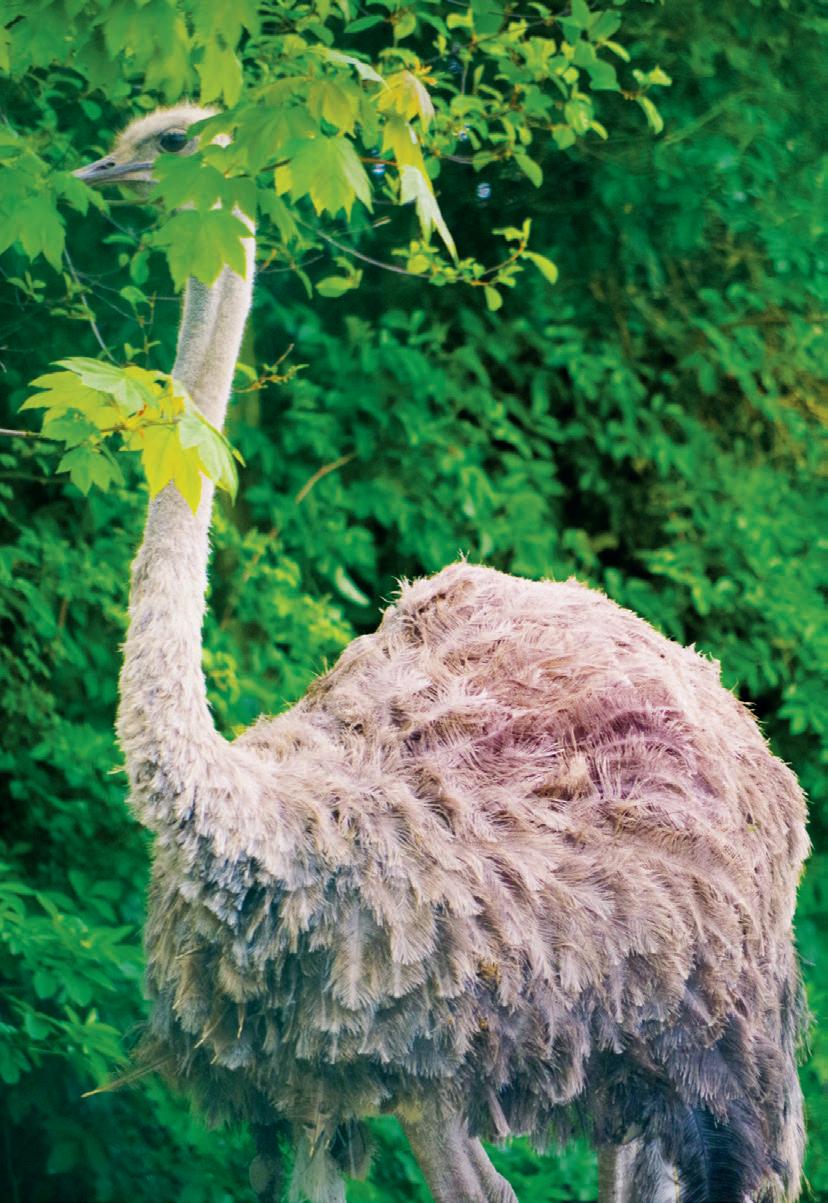
Walking with Llamas and Alpacas (Pitgam)
Amélie organises guided tours of her farm, Les Camélidés de Pitgam, which is home to nine llamas and alpacas. During the visit, she adapts her talk to the age of her audience, explaining the lifestyle of her animals and the process of wool transformation, using traditional machines on-site. Once the theory bit is covered, it’s time for hands - on fun at feeding time, a moment that visitors especially love.
Then comes the highlight of your visit: a 20 - to 30 -minute walk leading the animals on a leash. To ensure both animal welfare and visitor enjoyment, groups are limited to 12 people (adults and children combined).
Amélie also welcomes or travels to medical - educational institutes (IME) and care homes for dependent elderly people (EHPAD). Leisure centres can book visits and walks as well. Ages 2 and over. Booking required: +33 (0)6 21 49 18 63

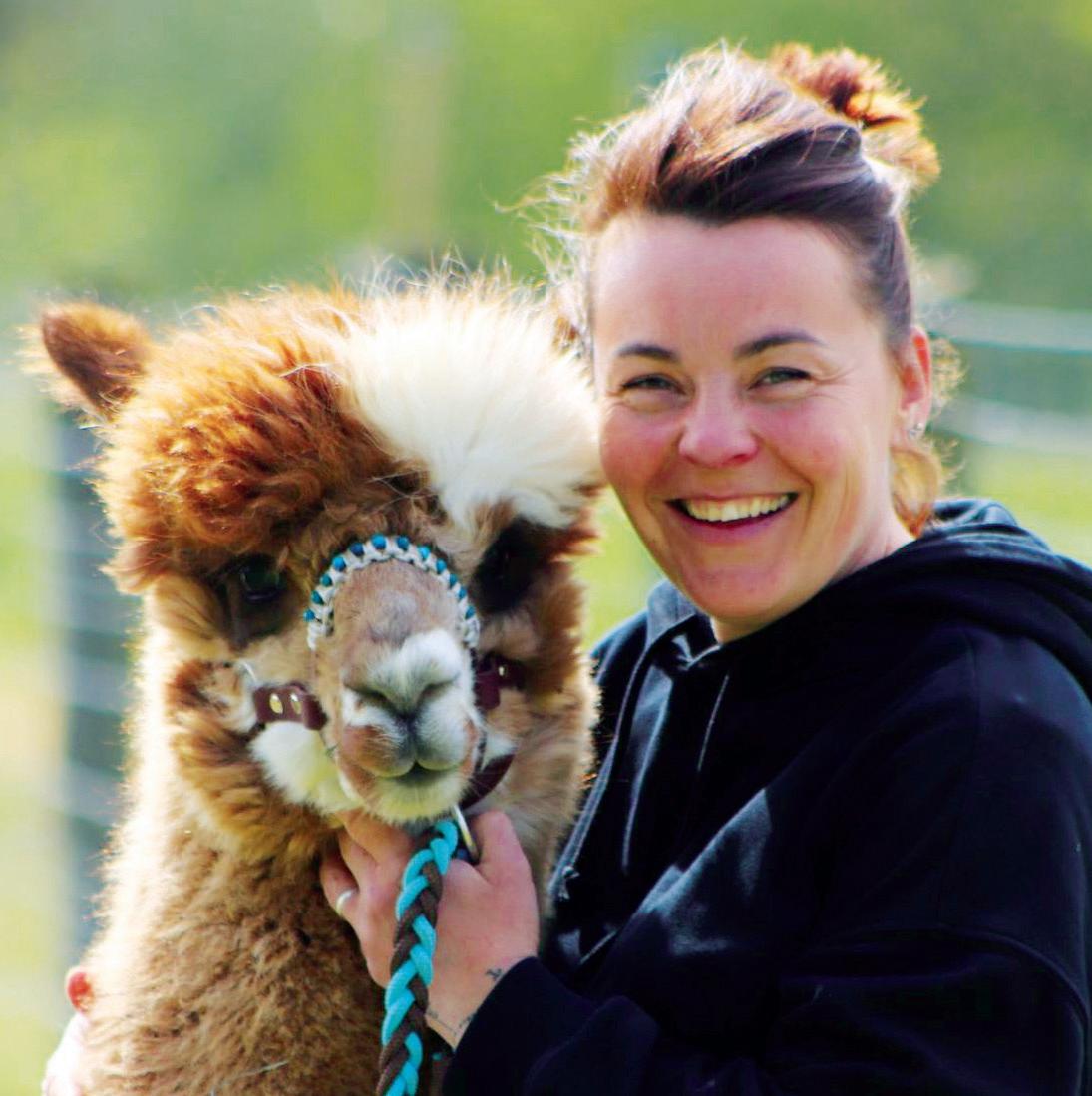
Tickled Pink about the Red Pandas (Fort- Mardyck)
Great news! Following the birth of two Carpathian lynxes at the end of May, two jaguarundis were born in early June. These four youngsters have joined the Bio -Topia family, a site dedicated to species conservation and home to over 270 animals—including raccoons, seals, owls, ibises, peacocks, vultures, lynxes and Kodi bears—spread across 2 hectares.
Open until 31 August, from 9:45 a.m. to 6:30 p.m. (last entry at 5:45 p.m.) bio-topia.fr
Admiring Snails (Fleurbaix)
These minibeasts are such a common sight in our gardens, and yet how well do we really know them? To delve into the fascinating world of gastropods,
head to Christelle Duquesne’s snail farm. On Saturdays 12, 19 and 26 July, and Saturday 2 August, visitors can enjoy a one -hour guided tour through the snail park, learning and observing along the way. A tasting session rounds off the visit. reservation.tourisme-flandrelys.fr
Cnidarians (Étaples - sur- Mer)
Cartilaginous and bony fish, molluscs, echinoderms (including starfish and sea urchins), cnidarians and crustaceans can all be found at Maréis, the sea -fishing discovery centre. This site shines the spotlight on marine life from the English Channel and the North Sea, as well as the world of fishing. Every Sunday at 11 a.m., visitors can attend a public feeding session with a member of our animal husbandry team. mareis.fr
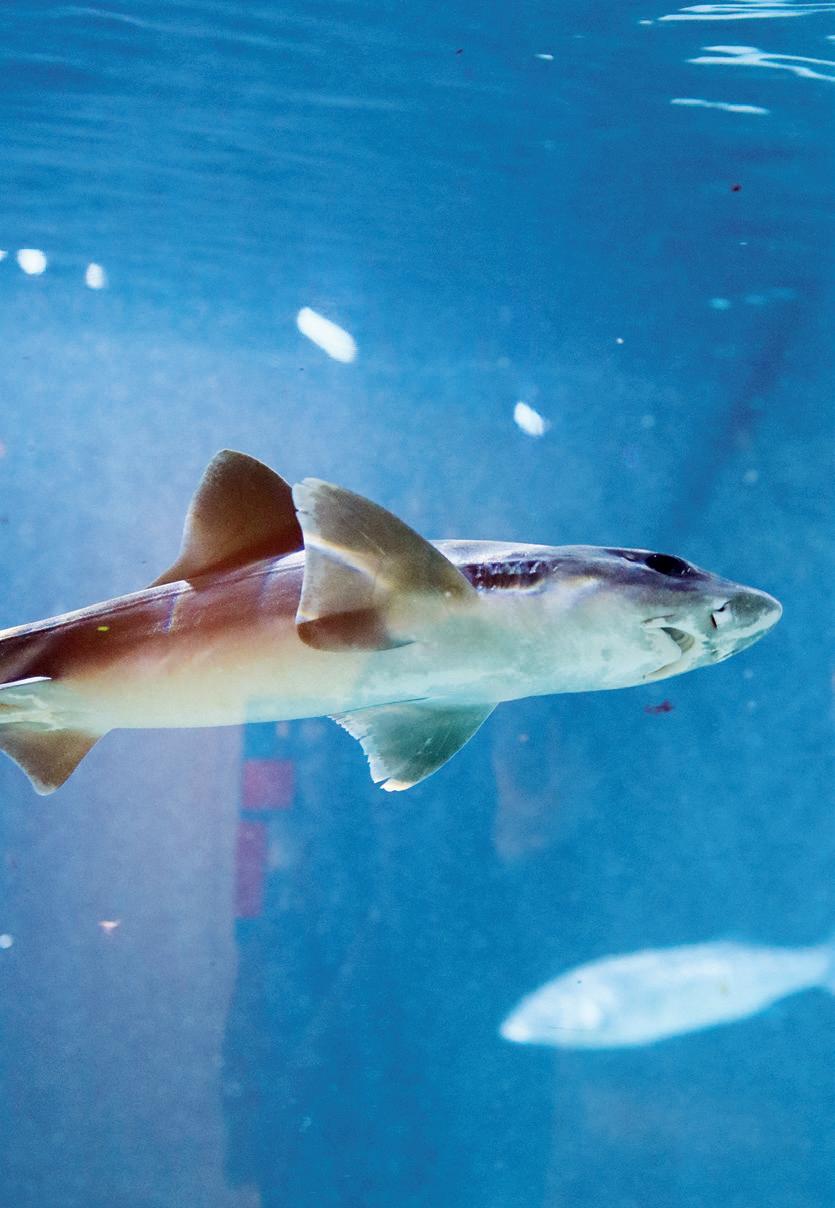
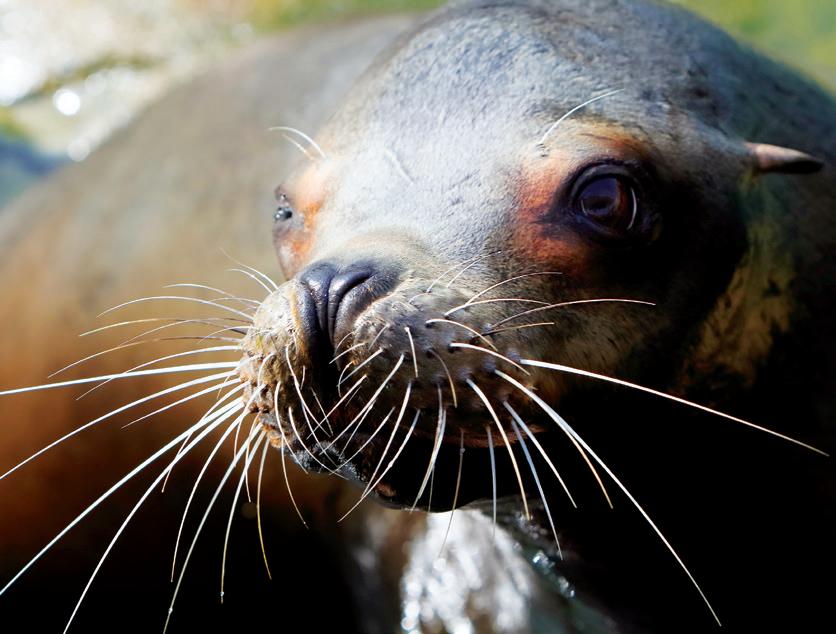
In early June, Speedy—the iconic California sea lion at Nausicaá, the National Sea Centre in Boulogne - sur- Mer—celebrated his 30th birthday. Born on 5 June 1995, he’s one of the oldest sea lions in the world!
A perfect excuse to step inside Europe’s largest aquarium and meet its residents: pig - nosed turtles, spotted garden-eels, African penguins, grey sharks, chameleons, jellyfish and countless species of fish. nausicaa.fr
Is the crockery you inherited from your parents or grandparents sitting forgotten in your cupboards? Why not turn it into something more modern—so it can continue to stand the test of time? Here’s how.
Passing things on—that’s what Lynda, a Calais native, seeks to do through her creations. Her journey began in 2010, after being diagnosed with severe fibromyalgia. At that moment, she realised that she wouldn’t be able to keep working all her life. A blessing in disguise, perhaps, because ever since childhood, Lynda had only ever dreamed of one thing: creating.
“I’ve always created. Even as a child, when I had artistic projects, it became something really intense,” she says. She first tried her hand at painting, without much success. She then became a self - taught mosaic artist, before enrolling in formal training to earn qualifications as a tiler, mosaicist and screed specialist. This is how Broken Art Mosaïc was born. But her idea evolved, progressing from mosaics to jewellery. Not just any jewellery: necklaces, bracelets, charms or earrings made from antique tableware
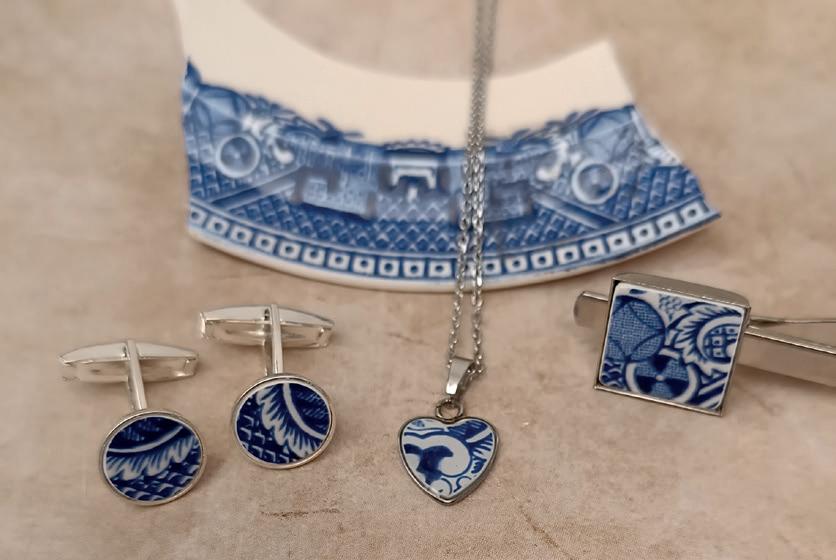
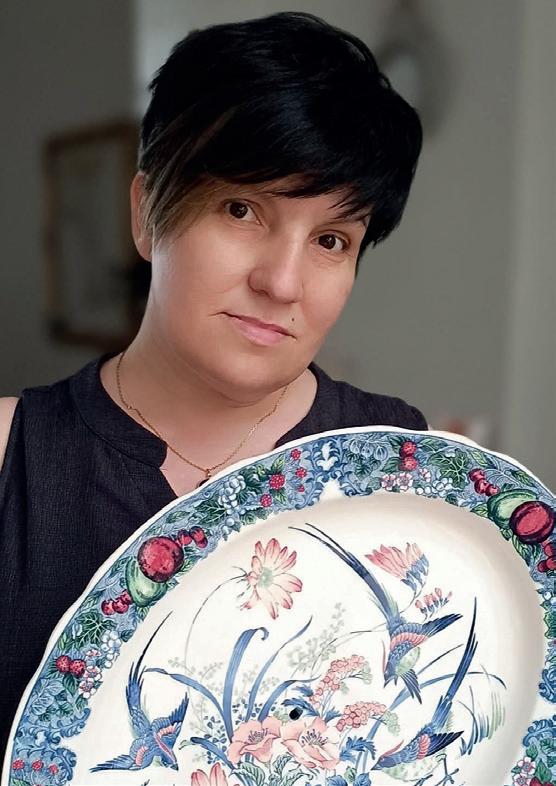
inherited from our parents and grandparents. A unique way of passing things on, of preserving our heritage in a more modern form—with sentimental value.
Lynda first got the idea during a participatory mosaic workshop: Calais locals brought her old tiles, along with lots of crockery. “People would tell me: ‘We don’t have the space. We inherited this from our grandma and it’s gathering dust,’ or ‘When I die, my kids will throw it away, so it may as well be useful.’ But I could see it was painful for some of them emotionally. So I started cutting heart shapes and giving them back as keepsakes.” A tribute to those who have handed down to us far more than just objects!
Lynda now creates collections from what she finds at recycling centres or thanks to donations. But what she enjoys most is crafting new pieces from family tableware. Simply send her your family heirloom, whether a plate, teacup, dish or vase for instance, choose a design, and Lynda will turn it into gold, gold-plated metal or stainless-steel jewellery—so each item can endure over time. “I accept all challenges!” she smiles.
What Lynda loves most about her work are the stories behind the objects. “A lady once sent me a dinner set that had belonged to her great- grandparents, given to them on their wedding day, and she ordered 15 necklaces. She received them, but sadly passed away soon after… She was buried wearing the pendant, and later her daughters contacted me to make new pieces, because one of them had just had a baby.” Through these creations, Lynda feels useful. “I’ve always wanted to help people,” she says. And she certainly does.
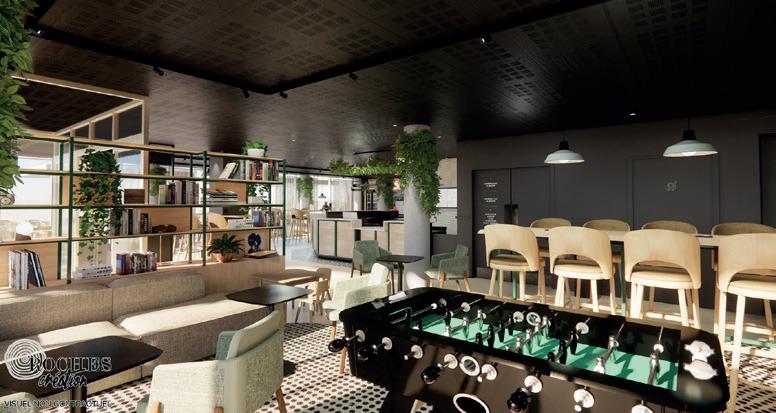
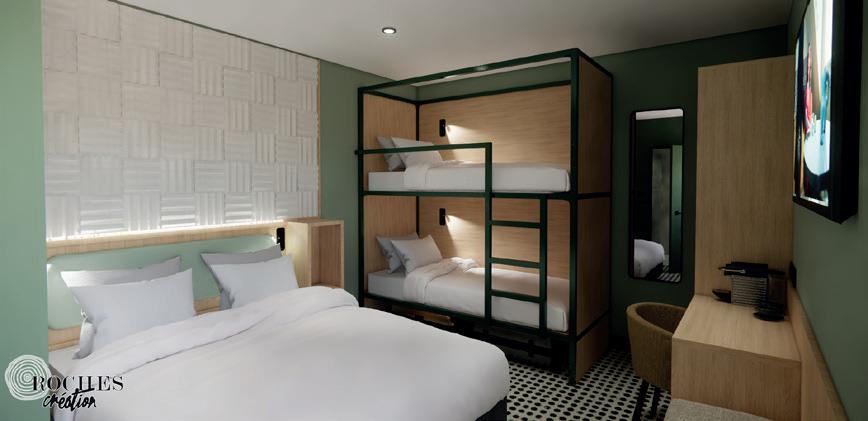
The new Best Western hotel is set to open its doors in May, in the Marquise retail park, within convenient reach of the A16 motorway. Located in a strategically important tourist area, the establishment is ideal for families, leisure travellers and business guests alike.
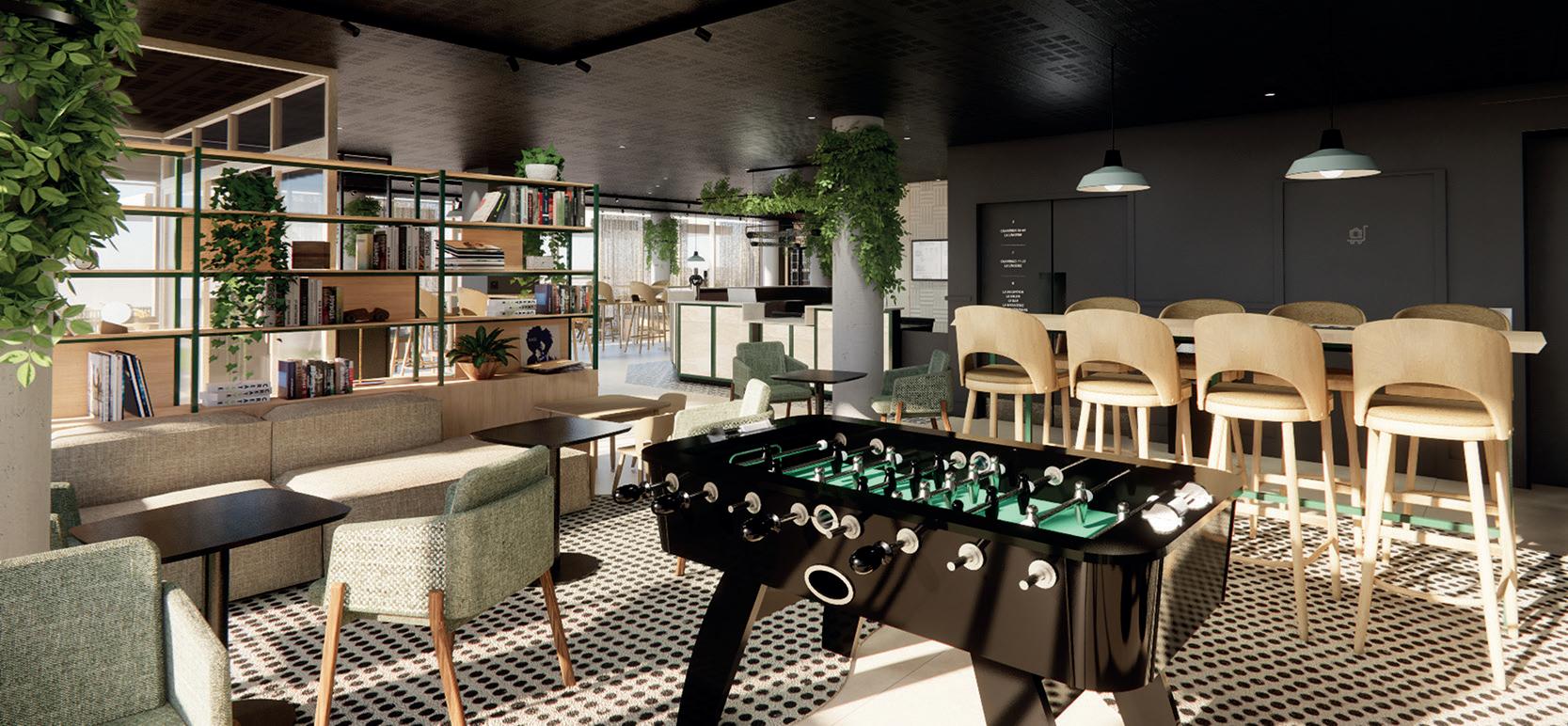
Managed by the Boulogne-based couple Guillaume and Camille Barillon, the hotel has 60 rooms, including ten family rooms. These connecting rooms can accommodate up to six people, an undeniable advantage for families.
“Three-star hotels are our speciality,” explains Camille Barillon. “This is what we have already developed in Boulogne-sur-Mer with Opal’Inn and the Métropole, two establishments that have proven highly successful.”
The hotel enjoys a prime location, just a short distance from the motorway. Its large parking area is equipped with electric vehicle charging stations. “At a later stage, a secure bicycle shelter will be installed to cater to the ever-growing numbers of cycling tourism enthusiasts.” In terms of design, the hotel boasts a contemporary
and welcoming atmosphere, with clean lines, natural materials and soothing autumnal tones inspired by the surrounding countryside. The breakfast room, which opens onto a terrace, is bathed in natural daylight thanks to the large picture windows.
“The Best Western brand places particular emphasis on the quality of bedding. Bed dimensions, mattress height—everything is designed to guarantee optimal comfort.”
The establishment fully meets all the standards of a three-star hotel. It will also feature a lounge bar open to the public, a coworking space and two modular seminar rooms able to host up to 60 people.
Venture behind the scenes of Castelain Brewery at Le Spot, an immersive museum combining history, craftsmanship and tasting. A visit that promises a unique journey into the world of beer-making.
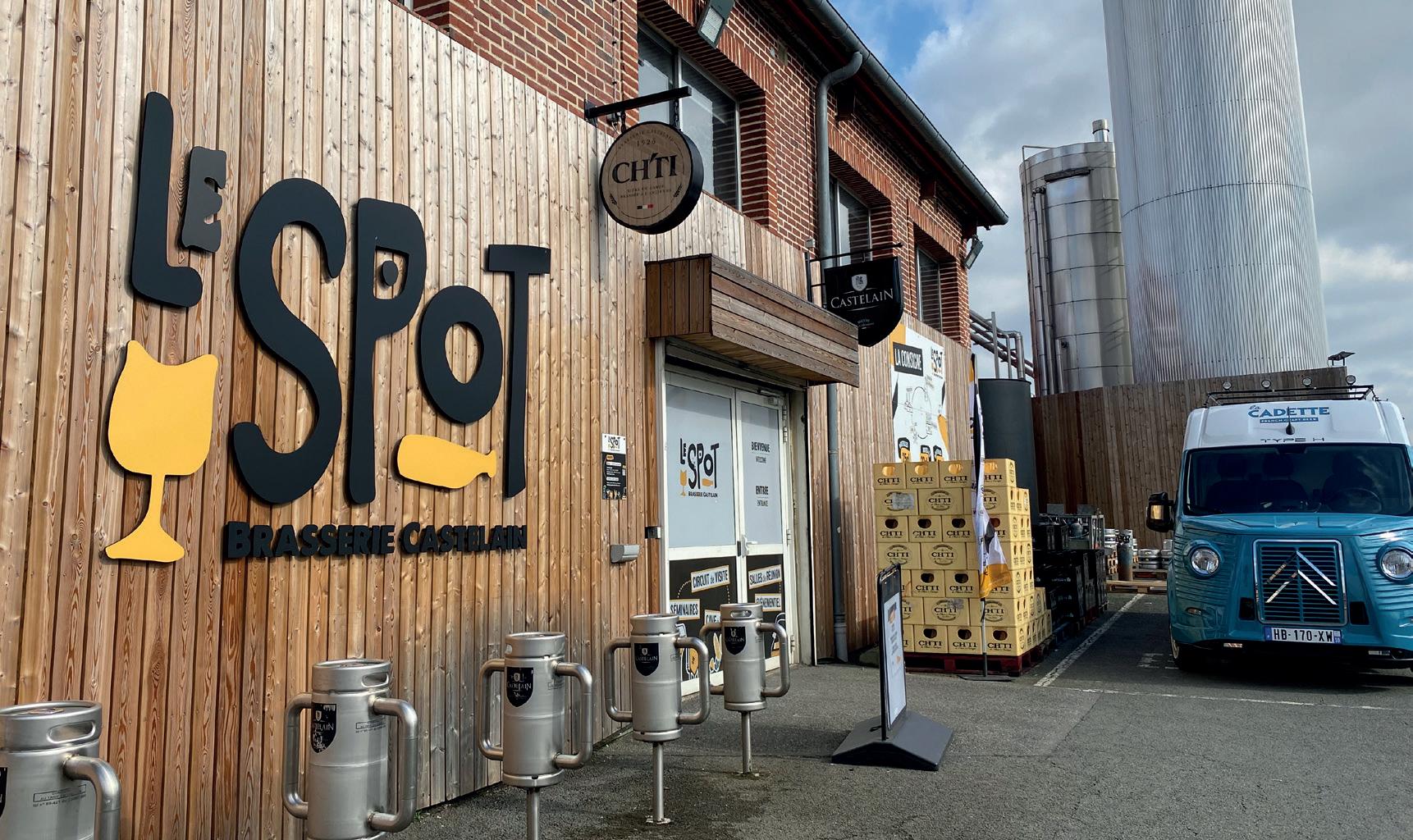
An enthralling experience to learn all about Castelain Brewery, based in Bénifontaine near Lens: that is what Le Spot offers visitors. Located at the very heart of the working brewery, this immersive beer museum also tells the story of a family and how they have been passing down know-how through generations.
“Since the 1990s, we have had a small museum where customers and tourists can find out more about who we are and about beer,” explains
Nicolas Castelain, the company’s current Managing Director. “But the 1990s are a long way behind us. Visitors’ expectations have changed, as have museum concepts, with more interactivity, immersion and, of course, our own story has evolved over the past 30 years too.” The museum was therefore completely redesigned in 2024. “We really wanted visitors to become active participants in their visit,” adds Marie Posmyk- Bossut, Head of Development and Seminars.
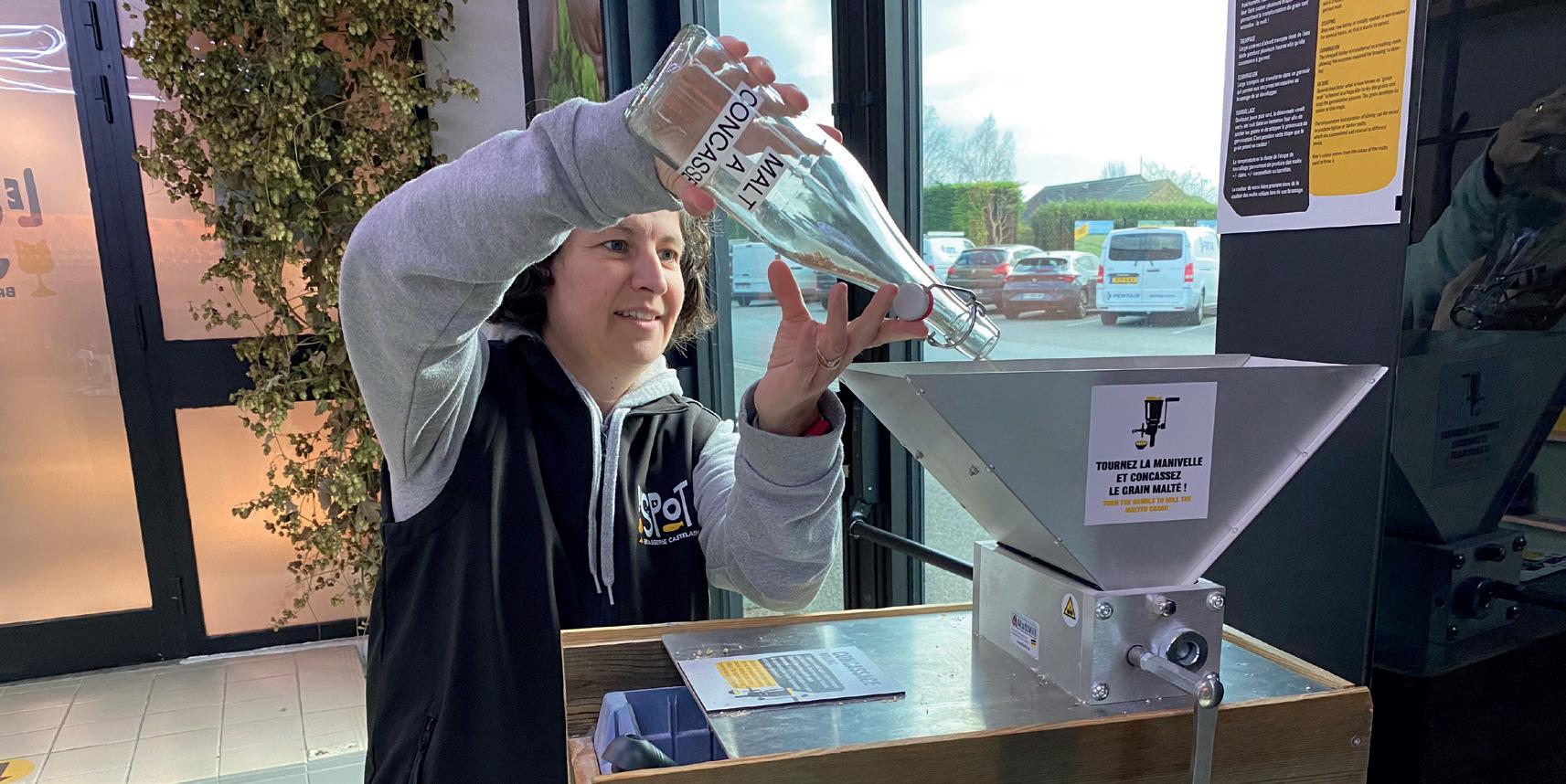
The one -hour visitor route is laid out in a way that is both educational and immersive, combining multimedia and sensory experiences. The visit begins inside a stainless-steel fermenter before unfolding as a journey through time: from the brewery’s founding in 1926, through the voices of three generations, the transmission of a family heritage, periods of crisis and major successes to key innovations.
Did you know that JADE was France’s first organic beer, launched in 1986? Or that the water used to brew Castelain beers is drawn directly from beneath the brewery itself? Legend has it that the village owes its name – Béni- Fontaine, the “blessed fountain” – to a blind man who miraculously regained his sight after drinking from the spring.
Room by room, visitors encounter tools from past and present, step into the former brewhouse with its impressive copper vats and discover the birth of the iconic bière de garde, the original Ch’ti beer first brewed in 1978. Tasting is also very
much part of the experience: three samples (or soft drinks) are included in the visit. Touch, smell, learn and enjoy.
As a bonus, the tour concludes with a recreation of the brewery – entirely in LEGO®. The model was designed by the Ch’ti Lug association. If the weather’s nice, visitors can also explore the brewer’s garden, a green haven showcasing raw ingredients in their natural state: hops, wheat, barley and aromatic herbs. There’s a dedicated activity booklet specially for children to guide them throughout the visit.
A visit not to be missed, especially as the brewery will celebrate its centenary next year! And that’s not all: Le Spot hosts at least one event a week in its taproom: guided tastings, aperitif evenings, open -air gatherings, beer yoga, gourmet walks, food trucks, culinary events, quizzes and live sports screenings. A vibrant meeting place, in the spirit of a village square, where people can come together to talk, relax and have fun.
Self- guided visits. Departures every hour, booking required. Opening times: Wednesday and Thursday, 10am–12pm and 2pm–6pm; Friday and Saturday, 10am–6pm. Prices: €10 including the visit and three tastings; €7 for ages 8–18; free for under 8s.