SEASONS

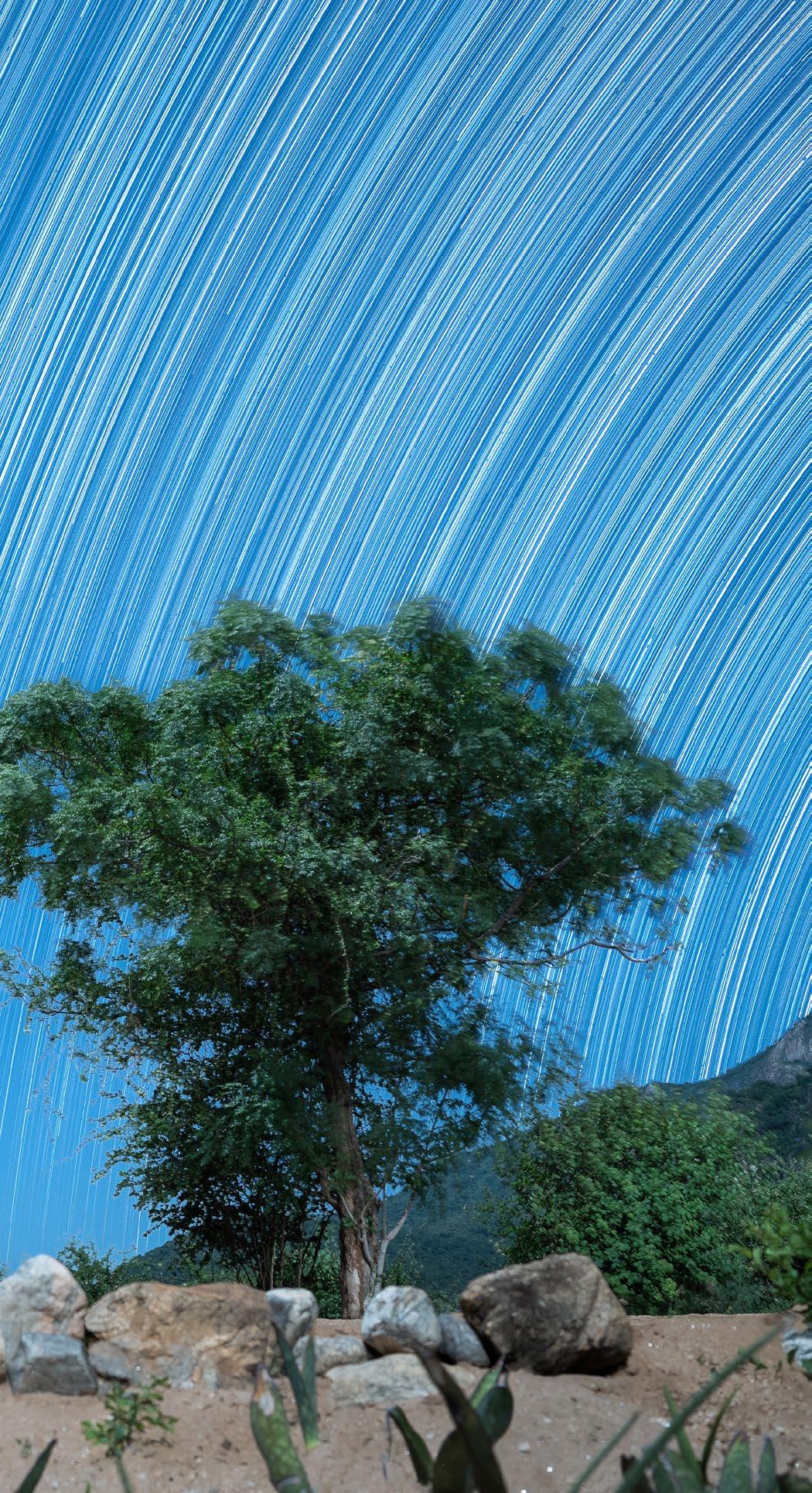
Picture by Tatiana Karanja
CEO Message from the
Dear Readers,
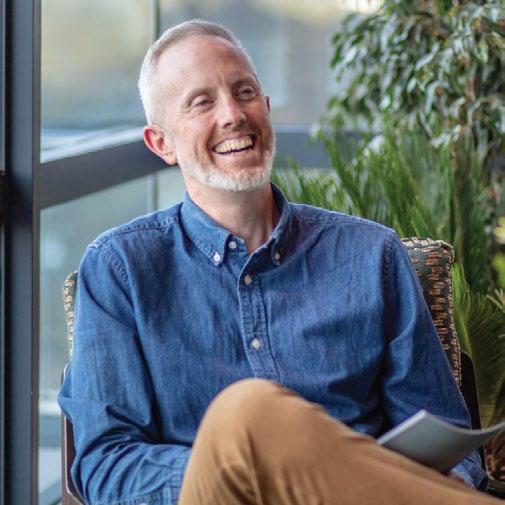
Every March, amidst Nairobi’s green canopy, a star-shaped flower bursts across the skyline in pink and white. I look for the Bombax blossoms each year, recalling a season of my Nairobi life a decade ago as I waited for my first child to be born. On the day she arrived, a long dry spell gave way to replenishing rain - the mvua za masika, the long rains - a season that will always remind me of new beginnings.
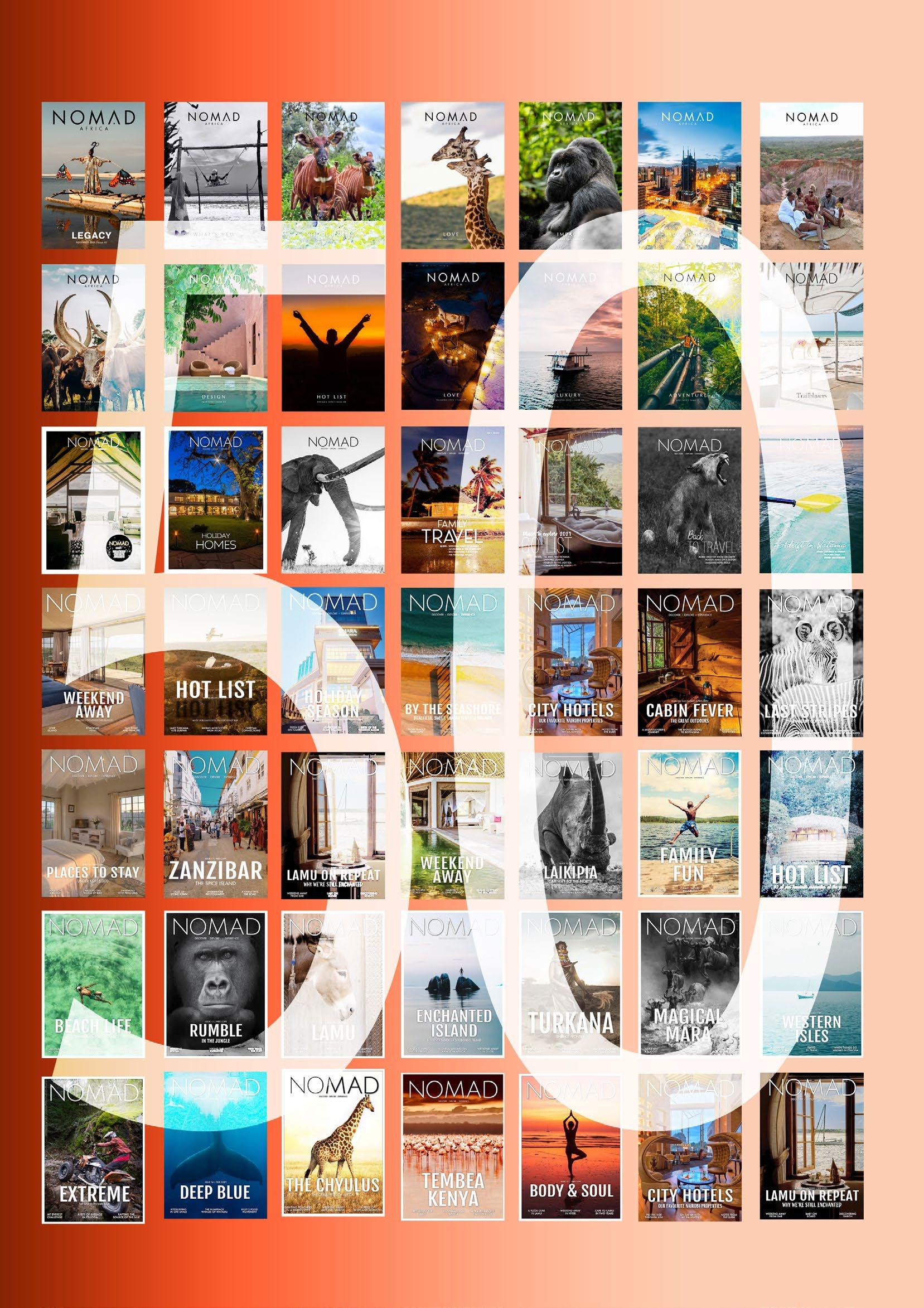
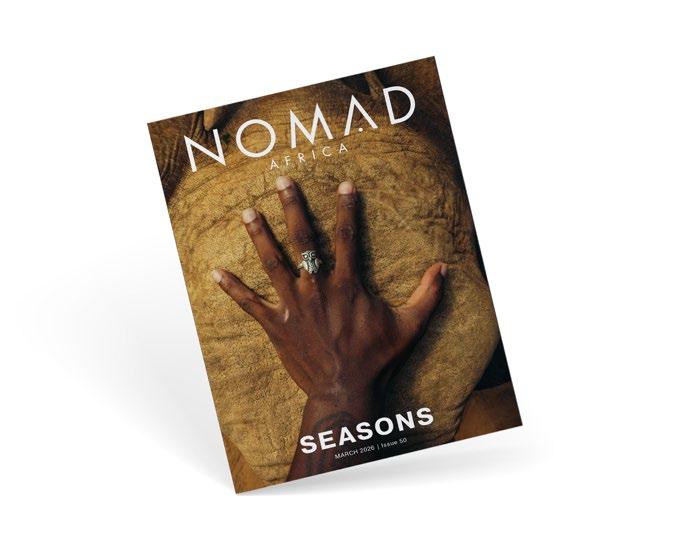
To celebrate our 50th edition of Nomad Africa, we bring you the theme: Seasons. As both a travel company and
To celebrate our 50th edition of Nomad Africa, we bring you the theme: Seasons.
a magazine, we’re focused on inspiring exploration across a continent that is not a single story, nor a single experience. In the pages ahead, we showcase Africa’s many seasons, from rain to harvest to rebirth, each offering its own lessons.
As the new CEO of Nomad Africa, I’m honoured to welcome you to a new season for our company. I remember reading the first edition in 2017 and nearly every one since, and when Nomad began offering travel advisory services in 2021. Today, alongside our magazine revenue, Nomad’s travel business enables us to continue inspiring a new generation of travelers, spotlight African artists and writers, and support regenerative, responsible travel.
There are many travel publications, and many travel agencies. Few do both. We’re proud to be an outlier, a curator of content and of experiences. In this new season, we’re telling a clearer story of how these two parts fit together while strengthening the focus of our magazine.
Going forward, our editorial content will be clear and intentional: stories that inspire exploration of Africa’s many stories. When we share travel opportunities, there will be clear signposts. Our content will expand beyond East Africa, while continuing to prioritse indigenous perspectives and creators from across the continent. Nomad Africa will remain the trusted publication on your coffee table and the trusted travel advisor you keep top of mind, wherever you are in the world. With 10,000+ copies distributed mainly in Kenya, we’re expanding our print presence. You can now find us at KOFISI locations in Casablanca, Lagos, Dar es Salaam, Nairobi, and soon Kigali and Dubai.
Whatever season this edition finds you in, we hope the pages ahead inspire you to connect with your nomad spirit, travel with purpose, and find meaning in each new season.
Sincerely,
Thom Wallace CEO, Nomad Africa Magazine & Travel
Share your feedback with letters to the editor at editor@nomad.africa

Changing Seasons
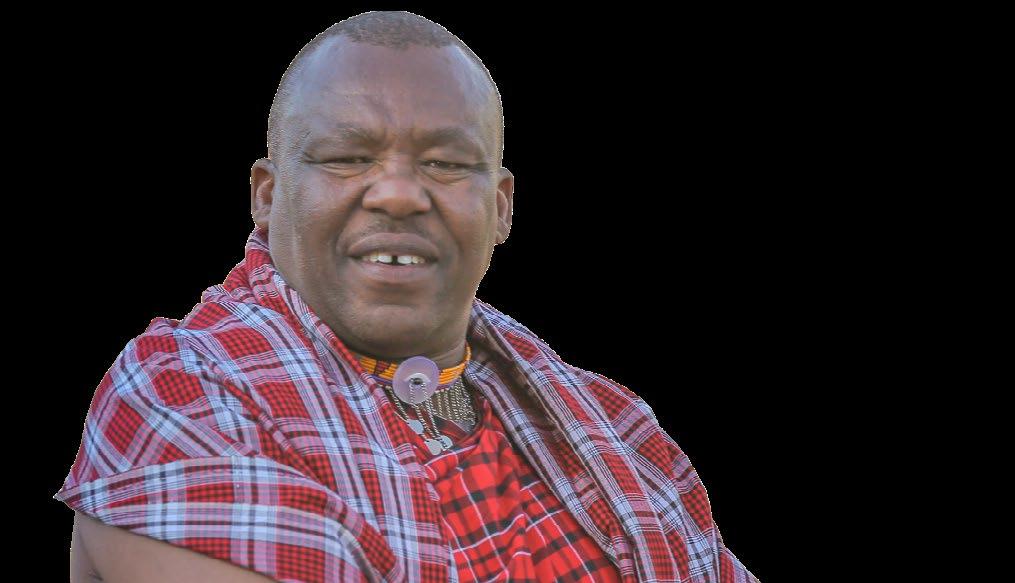
By Dickson Kaelo
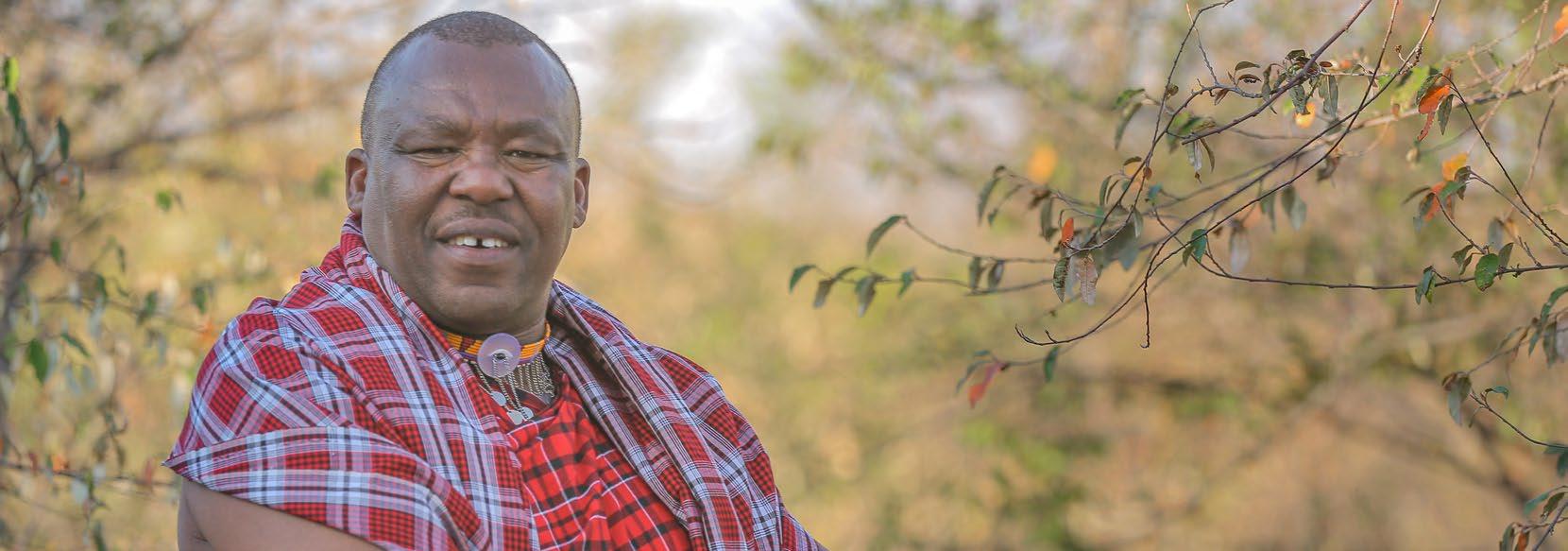
Guest Perspectives are reflections on each edition’s theme. In this edition we hear from Dickson Kaelo is the founding CEO of the Kenya Wildlife Conservancies Association, a leader in community-led conservation, and an active member of Enonkishu and Lemek-Olchorro Oiroua Conservancies in the Maasai Mara.
March marks a season of transition across much of Africa. The long dry months soften. The first rains tease the horizon. Dust settles. Grass returns. Wildlife moves differently. So do people.
Seasons here are never just about weather; they are about renewal .
Seasons here are never just about weather; they are about renewal. Over nearly three decades in conservation, I have witnessed a new season unfolding across Kenya’s landscapes. The creation of national parks and reserves in the 1940s was vital for protecting wildlife. Yet it also created distance, separating people from wildlife and disconnecting communities from the benefits of conservation and tourism. Wildlife, once part of daily life, became fenced off. Without incentives to coexist, numbers declined and tensions grew.
But seasons change.
Across Kenya, a quiet transformation is taking root, placing communities at the centre of protecting their ancestral landscapes. Conservation and tourism are returning to community hands. This is the season of community conservancies.
In Naboisho Conservancy in the Maasai Mara, this shift is clear. Over 50 lions roam 50,000 acres of restored land, alongside eight eco-friendly camps. More than 600 Maasai landowners collectively earn about $2 million annually in lease payments, supporting families, education, and resilience.
This model now spans over 200 conservancies across Kenya. Tourism is expanding into rangelands, forests, arid regions, and coastal areas. For visitors, it offers something deeper: a story of coexistence, where safaris help fund schools; where tourism is a bridge, not a barrier; and where conservation is chosen, not imposed.
Every season asks something of us. This one calls for partnership between communities, travellers, investors, and governments.
As the rains awaken dormant seeds, community-led conservation reveals what was always possible: tourism rooted in equity and local leadership can restore land and dignity.
As you travel across Africa this March, you may notice greener horizons, fuller rivers, young calves at their mothers’ side. Look closer, and you may see another renewal underway: a tourism sector becoming more sustainable, community-centred, and resilient. That is the season we are entering.

Thige Njuguna:
Here to Inspire a New Generation
By Charlotte Breuking
Thige Njuguna is a Kenyan wildlife photographer and filmmaker whose work explores where people, culture, and wildlife meet. His storytelling centres on the human relationships that underpin meaningful conservation across Africa, focusing not only on animals but on the communities, histories, and systems of care that allow coexistence to endure.
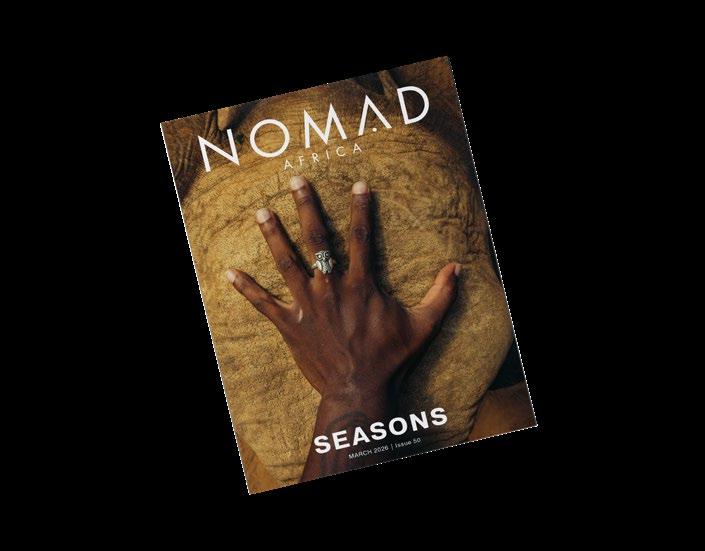
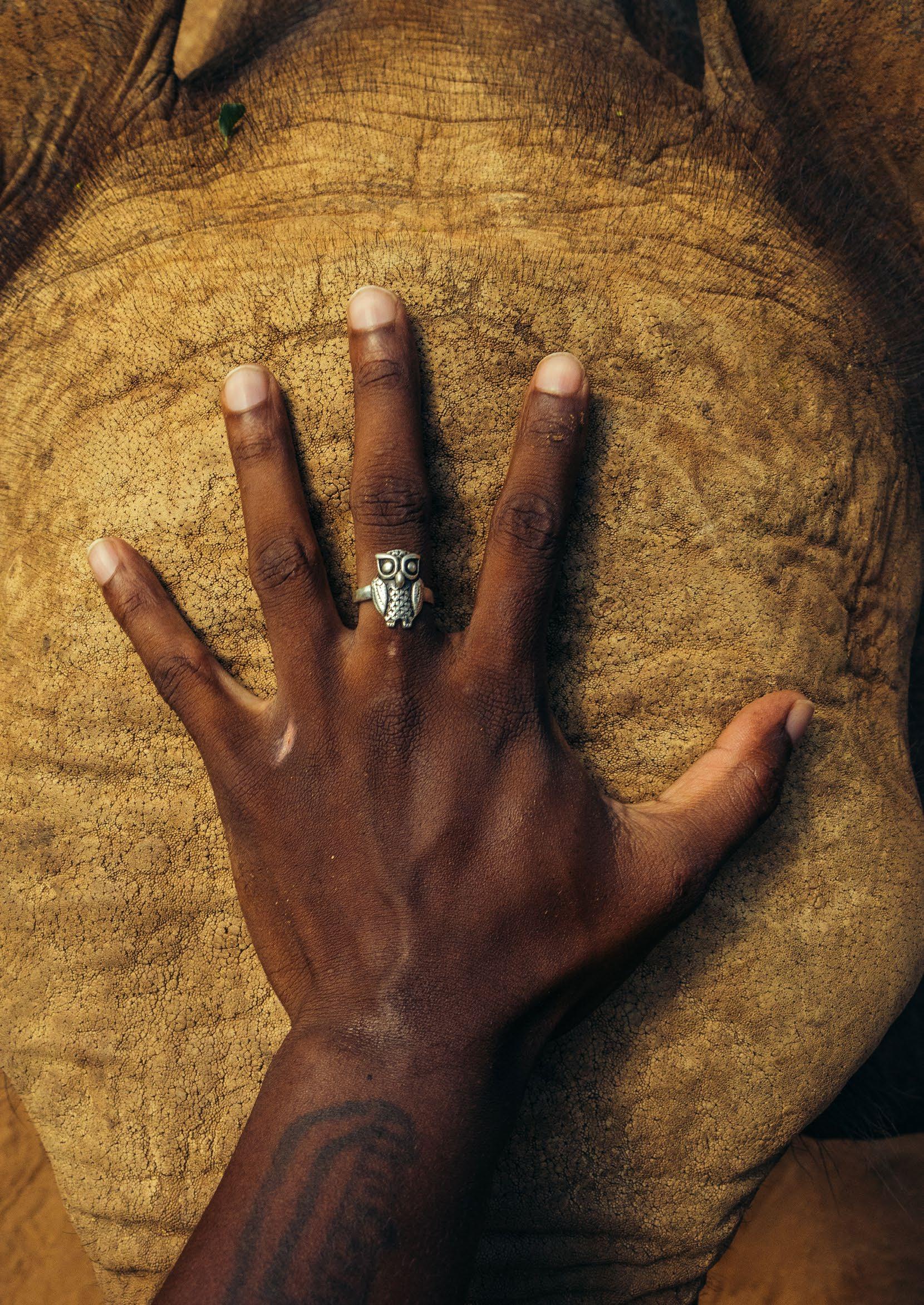
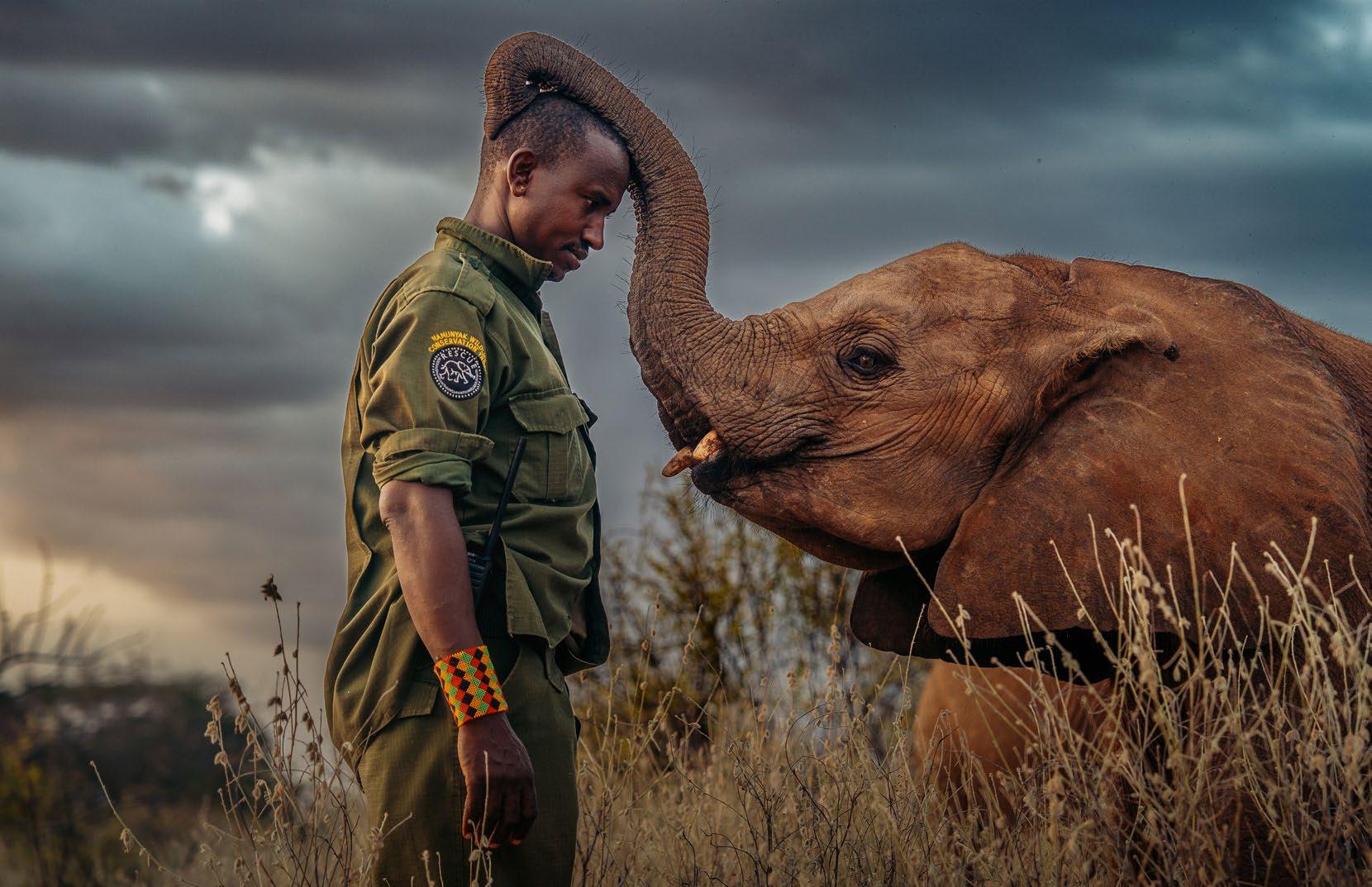
Thige, the artist behind the cover photo, shares the story of the image: “This image was made during my time at Reteti Elephant Sanctuary in northern Kenya, where orphaned elephants are cared for by a team drawn from the surrounding Samburu community. Spending time there reshaped how I think about conservation, not as an abstract mission, but as something deeply human, rooted in trust, patience, and shared responsibility. The photograph captures a simple moment of contact, but behind it lies months of quiet observation and learning.

It represents not ownership or control, but coexistence.”
Thige’s journey into photography began while studying wildlife management in college, where he picked up his first camera. Field trips to Kenya Wildlife Service parks quickly revealed he was drawn less to lectures and more to observing and photographing animals and landscapes. Photography became a way of paying attention: a tool for understanding the environments he was studying and the stories within them.
After graduating, Thige secured an internship as a photographic studio assistant at Angama Mara, one of the first dedicated photographic studios within a safari lodge. Immersed where wildlife, tourism, and storytelling intersect, he refined his technical skills and sense of narrative. It was there that photography shifted from fascination into a calling.
Since then, the camera has taken him across diverse conservation landscapes in Kenya and beyond. What began as a passion for wildlife imagery evolved into a deeper commitment to storytelling, recognising conservation is about people as much as animals. His work follows communities living alongside wildlife, documenting not only species but the knowledge, resilience, and stewardship that sustain these relationships.
In 2023, Thige received a full scholarship from the BBC Natural History Unit to pursue a Master’s in Wildlife Filmmaking at the University of the West of England in Bristol in the United Kingdom. The program expanded his practice into long-form storytelling, exploring narrative, ethics, and African-led perspectives in global environmental media.
After completing his studies, Thige returned to Kenya, where he worked across conservation landscapes, including at Reteti Elephant Sanctuary, a community-owned initiative embodying locally driven conservation. He also collaborates with organisations across conservation, wildlife, and travel, while developing documentaries that centre African voices in global narratives.
For Thige, photography is not about untouched wilderness or distant spectacle, but about connection. He hopes his work contributes to conservation conversations by raising awareness and inspiring change.
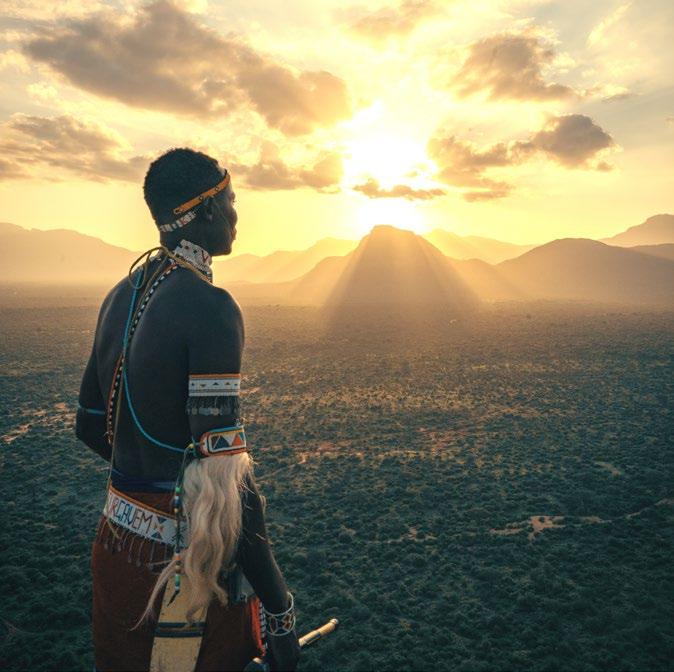
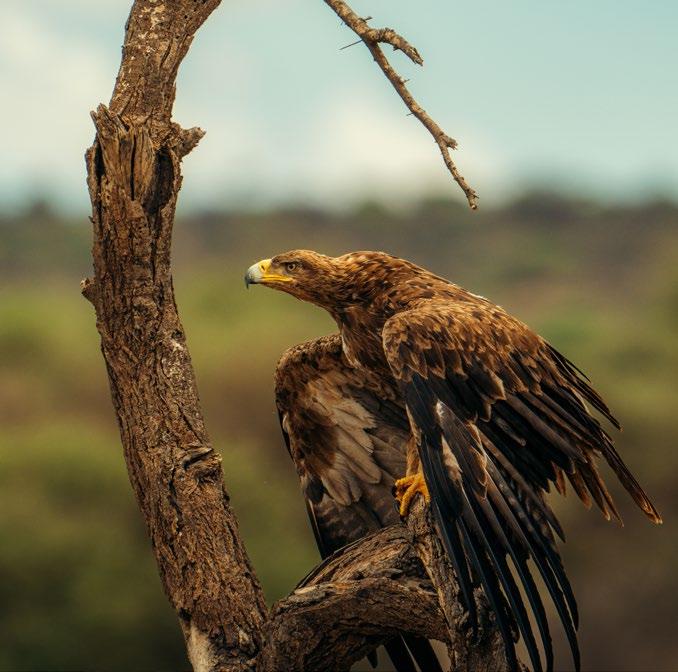
As part of a small but growing community of African wildlife storytellers, he is committed to opening pathways for the next generation. Growing up, he rarely saw people like himself in this field. Today, he hopes his journey reminds young Africans that these stories belong to them too, and that they have every right to tell them.
Explore Thige’s full portfolio by scanning the QR

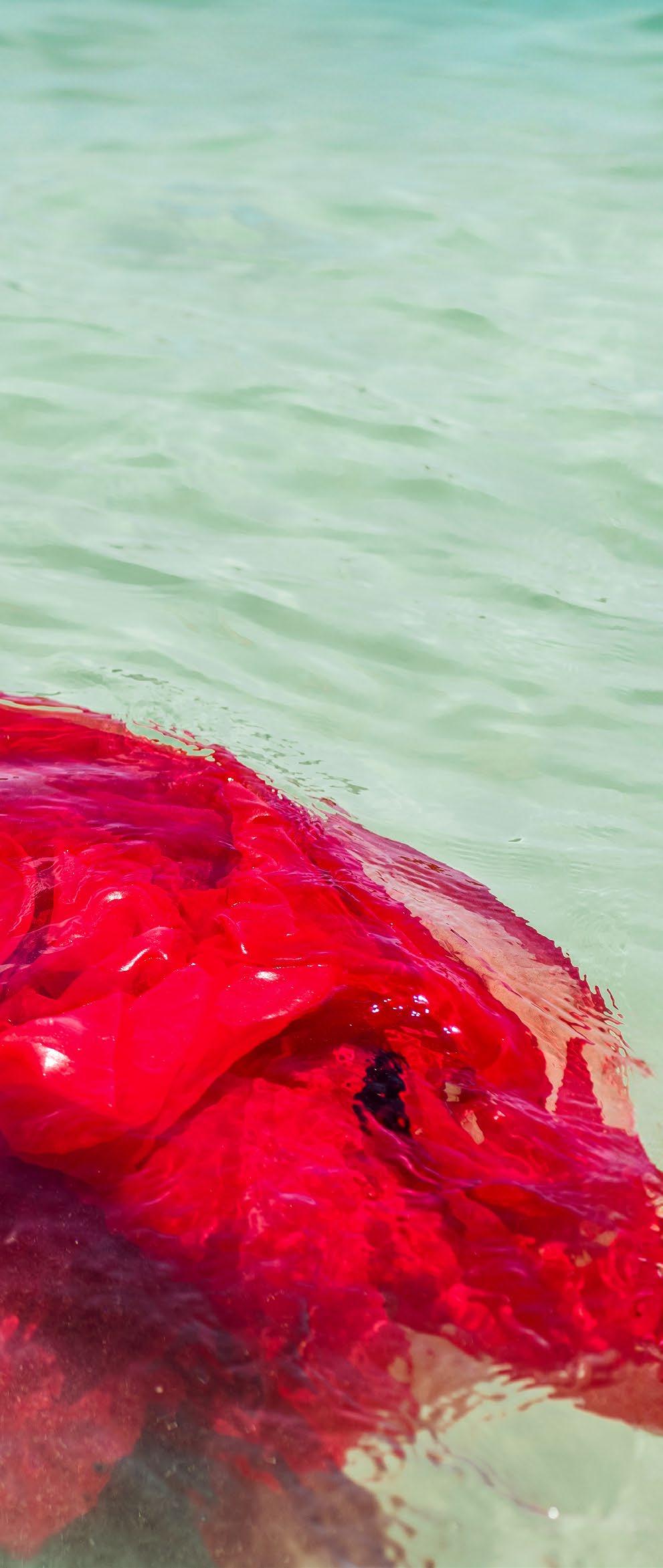

The photo
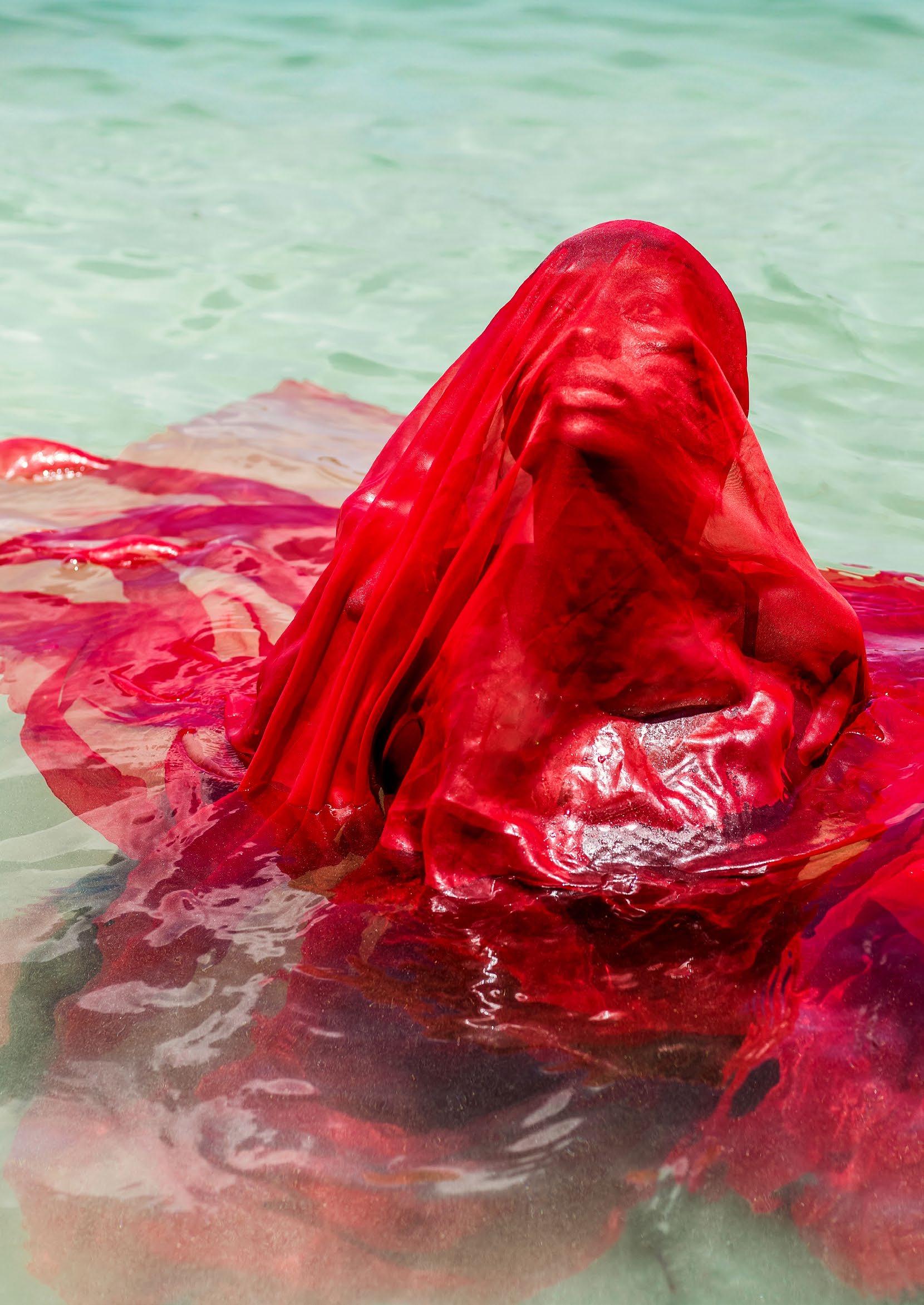
Still Becoming.
Wrapped in a red veil, she stands in the water at a moment of change. It speaks to release, renewal, and the quiet space in between… where strength is soft, beginnings are slow, and becoming is allowed.
Model: @nzulesaiyalel
The artist
Kathomi Maorwe is a self-taught Kenyan photographer, visual artist, and creative director. She notices the small, powerful moments that make people and places come alive. Through portraiture, conceptual work, and documentary photography, she captures the stories, emotions, and quiet strength that exist in everyday life. Her work invites viewers to feel, connect, and witness the unseen. Explore Kathomi’s full portfolio by scanning the QR

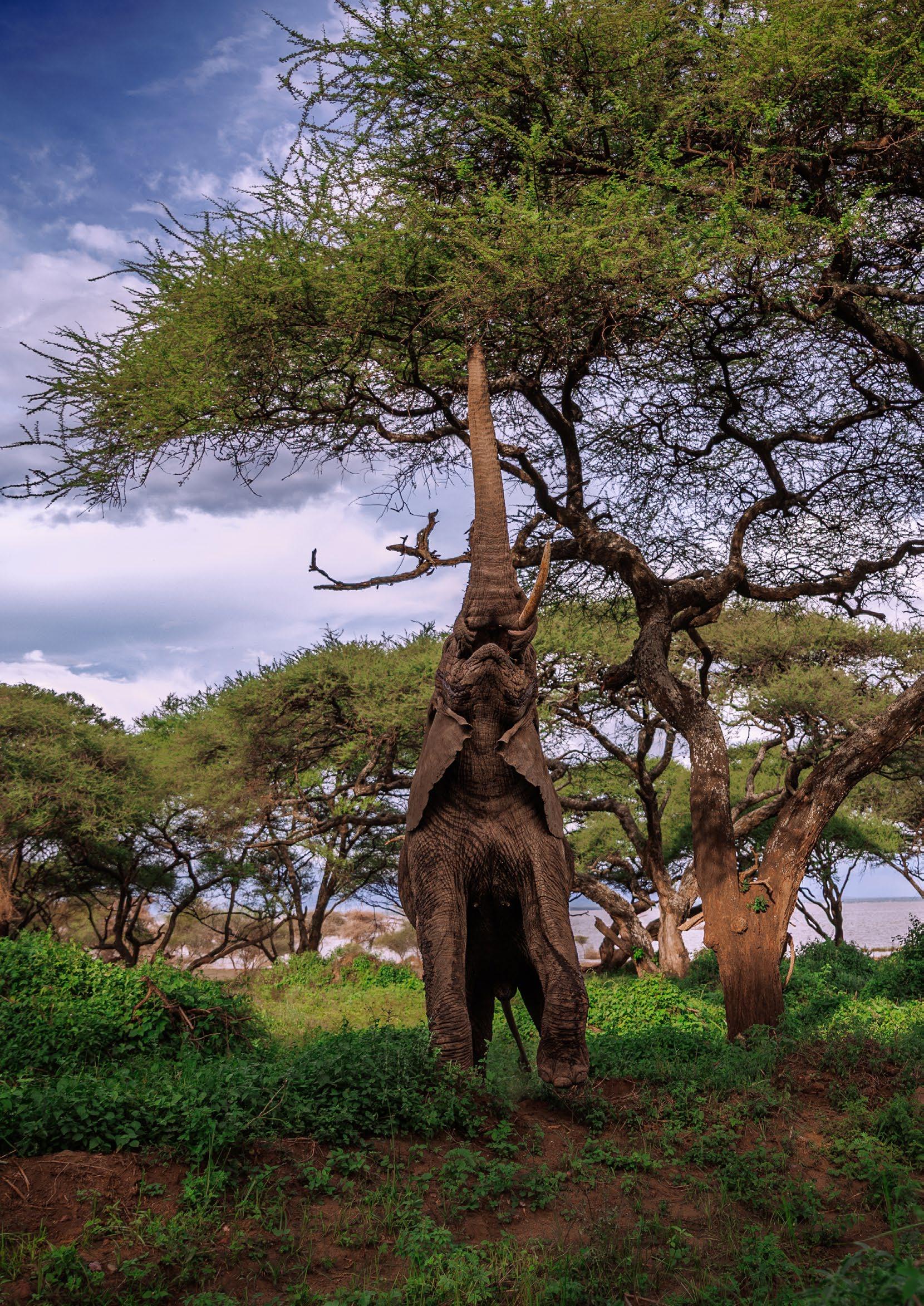
The photo
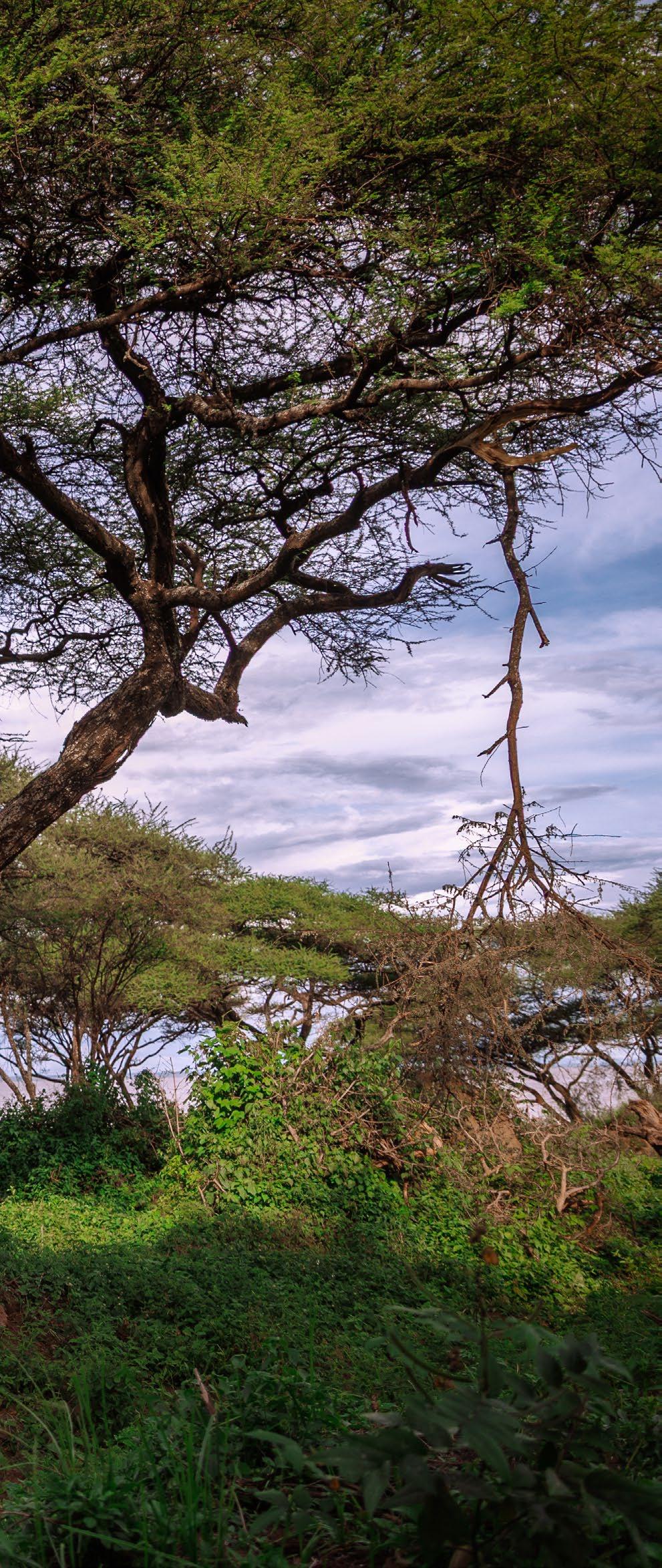
Beneath the spreading acacias of Lake Manyara, a majestic bull defies gravity. Balancing his massive frame with surprising grace, he stretches skyward to claim the tender acacia canopy. This scene feels almost mythic, Elephants usually favor what the ground offers: grass, fallen branches, the easy abundance below. After drinking from the lake, the bull wandered over, then surprised us, rising high for tender acacia tips. We froze, thinking we’d startled him, but he fed on, calm and towering, a gentle giant rewriting what we thought we knew about elephants.
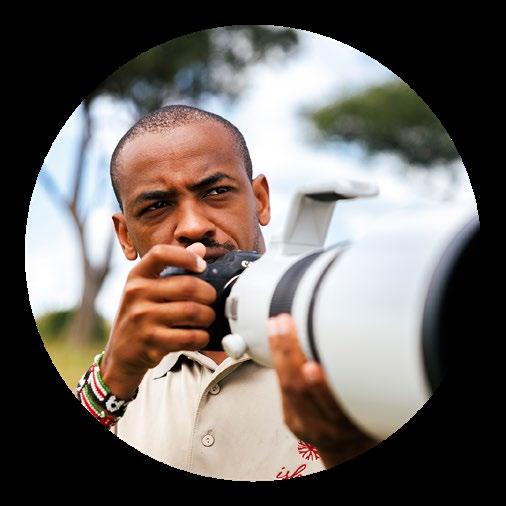
The artist
Joseph Njenga was born and raised in Nairobi. His passion for photography was sparked by his father’s old images: quiet reminders of time’s impermanence. He began in sports, then leapt toward wildlife, trading structure for instinct and finding purpose in preserving fleeting moments.
Explore Joseph’s full portfolio by scanning the QR


The photo
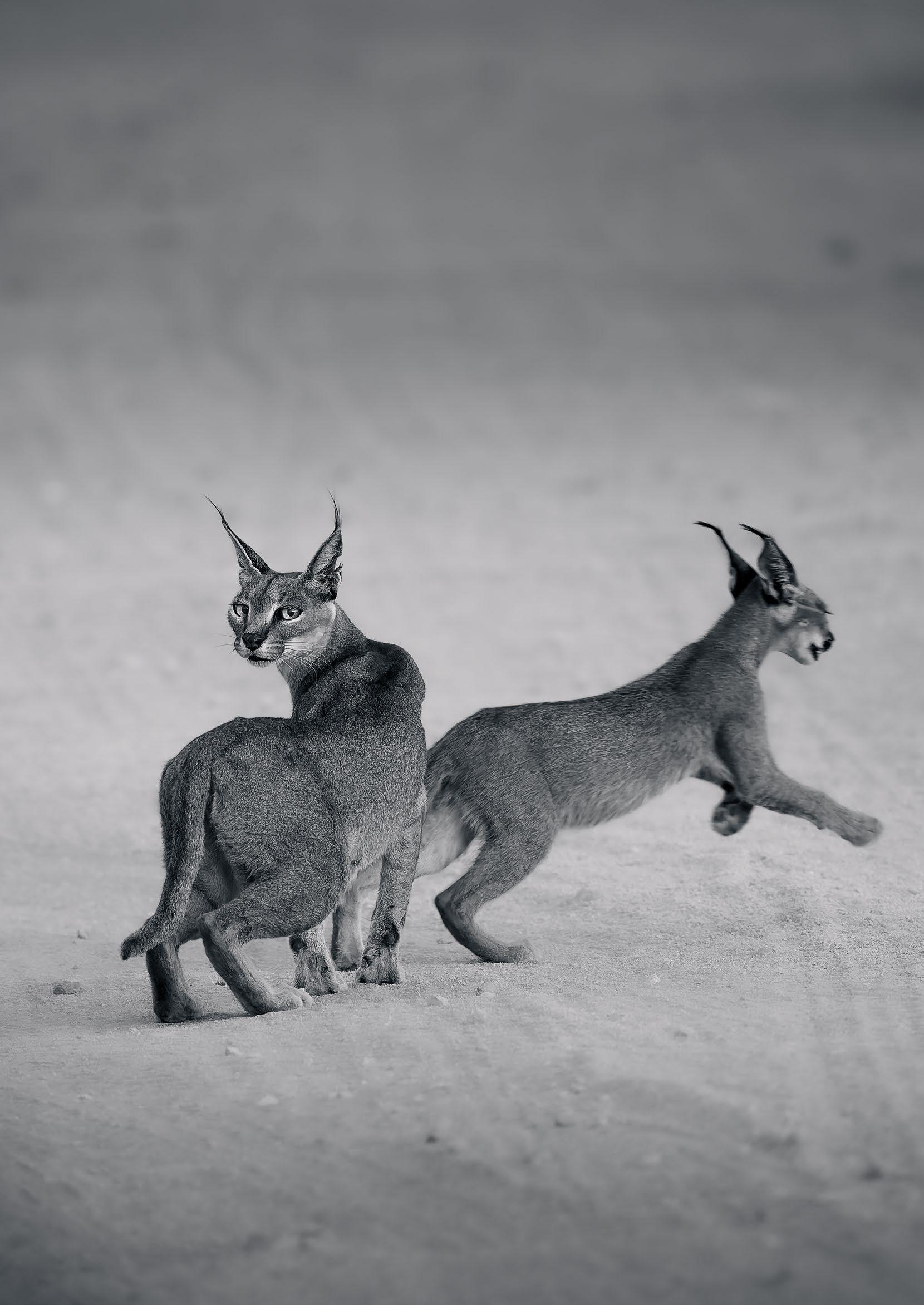
In the quiet heart of Samburu, fortune revealed one of Africa’s most elusive predators. A caracal mother moving through sand and silence, her two cubs dancing between curiosity and instinct. Though only one cub and the mother found their way into the frame, the presence of all three shaped the moment. These secretive cats are rarely seen in the African wilderness, revealing themselves only to stillness and patience. For a fleeting breath in the wild, time slowed, and we witnessed a secret the savannah seldom shares: raw, tender, and unforgettable.
The artists
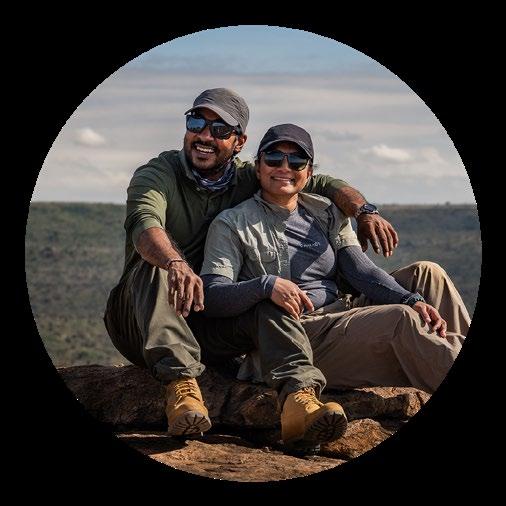
Imash and Nadunshi are the creative heartbeat behind The Safari Souls, bound by love for each other and a deep connection to the wild. Through evocative imagery and cinematic storytelling, they illuminate conservation and inspire a profound reverence for Mother Nature.
Explore their full portfolio by scanning the QR

Following the Floods:
Elephants of the Okavango Delta
By Anna Songhurst
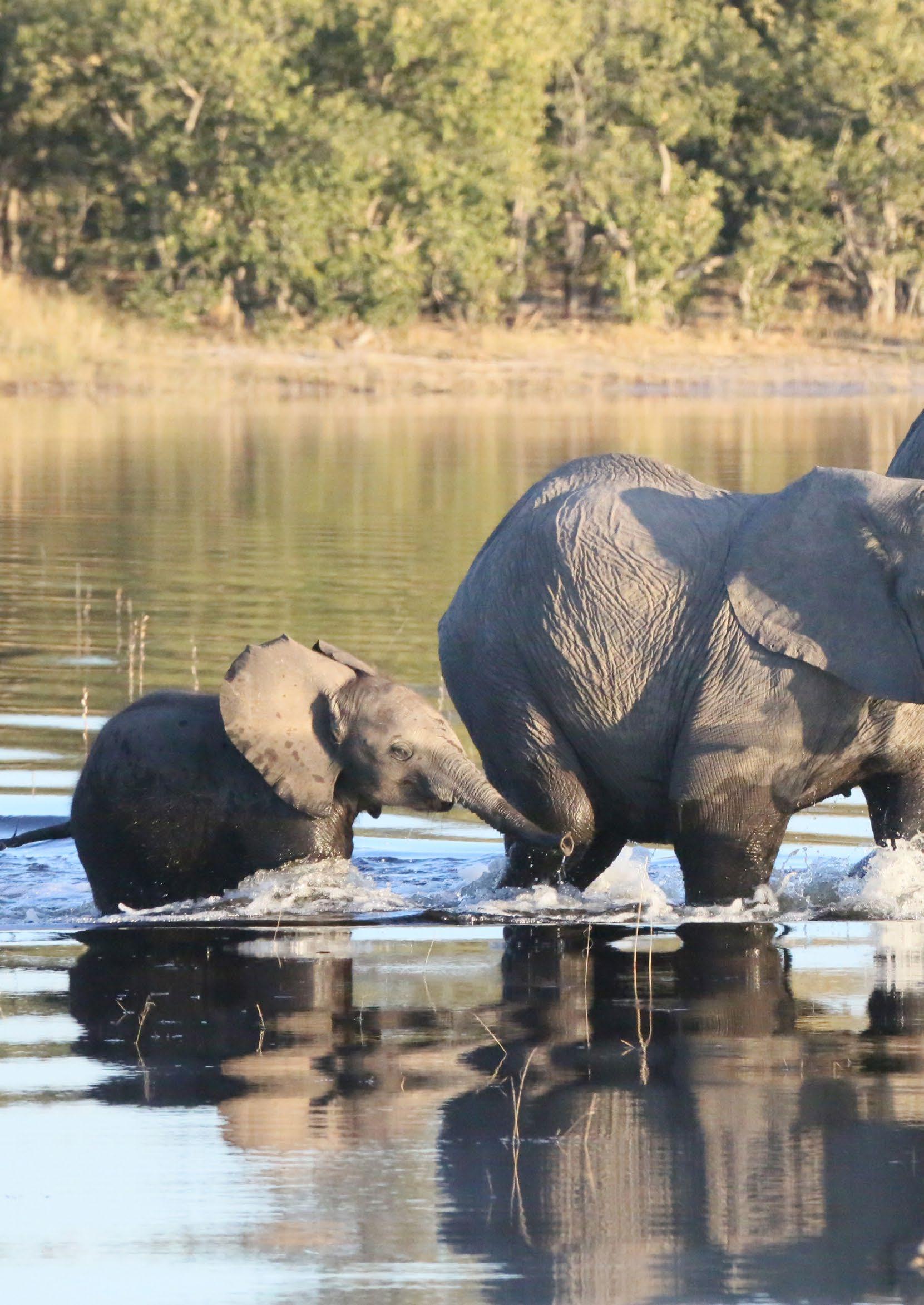
Elephants in Delta by Graham McCulloch
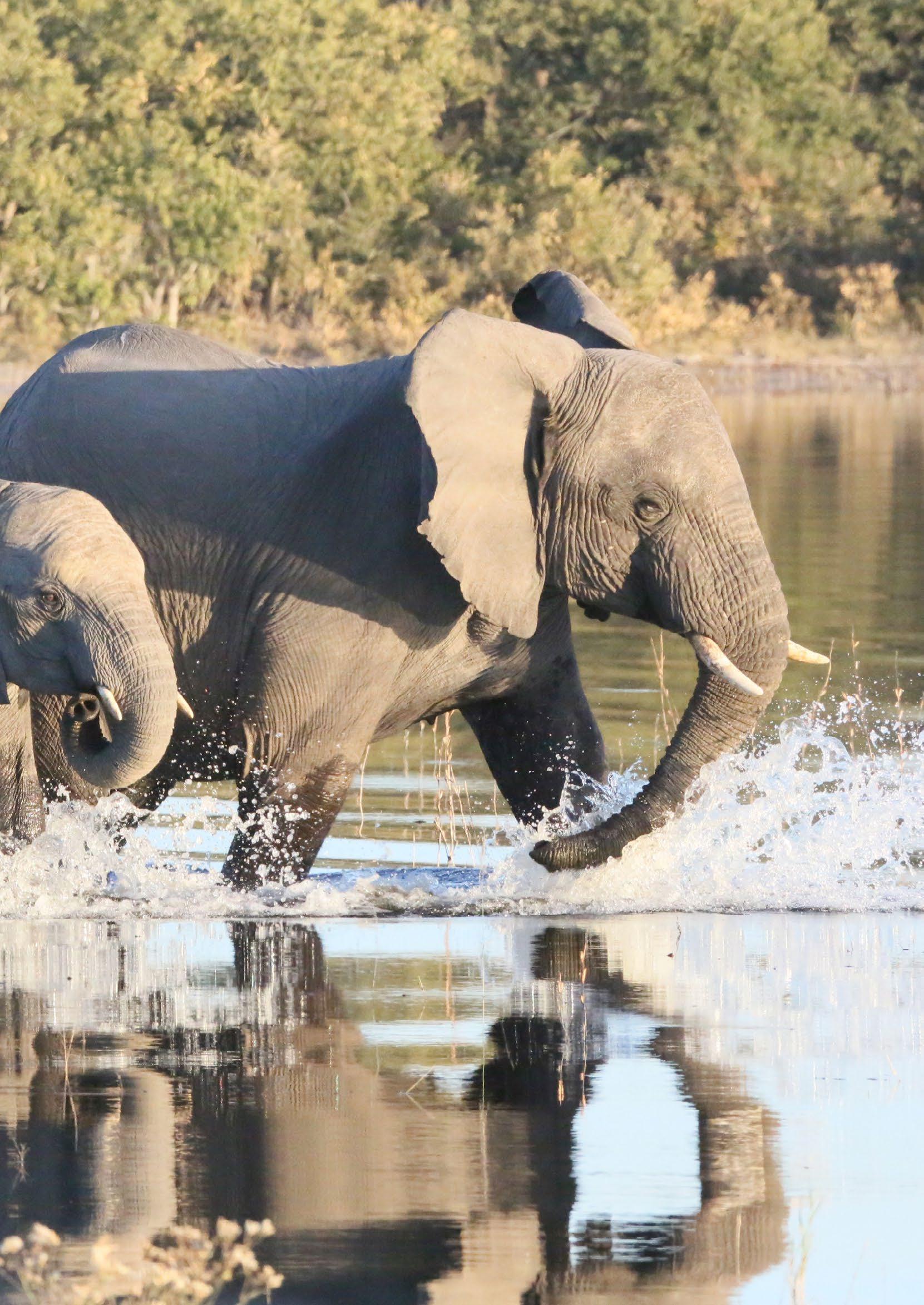
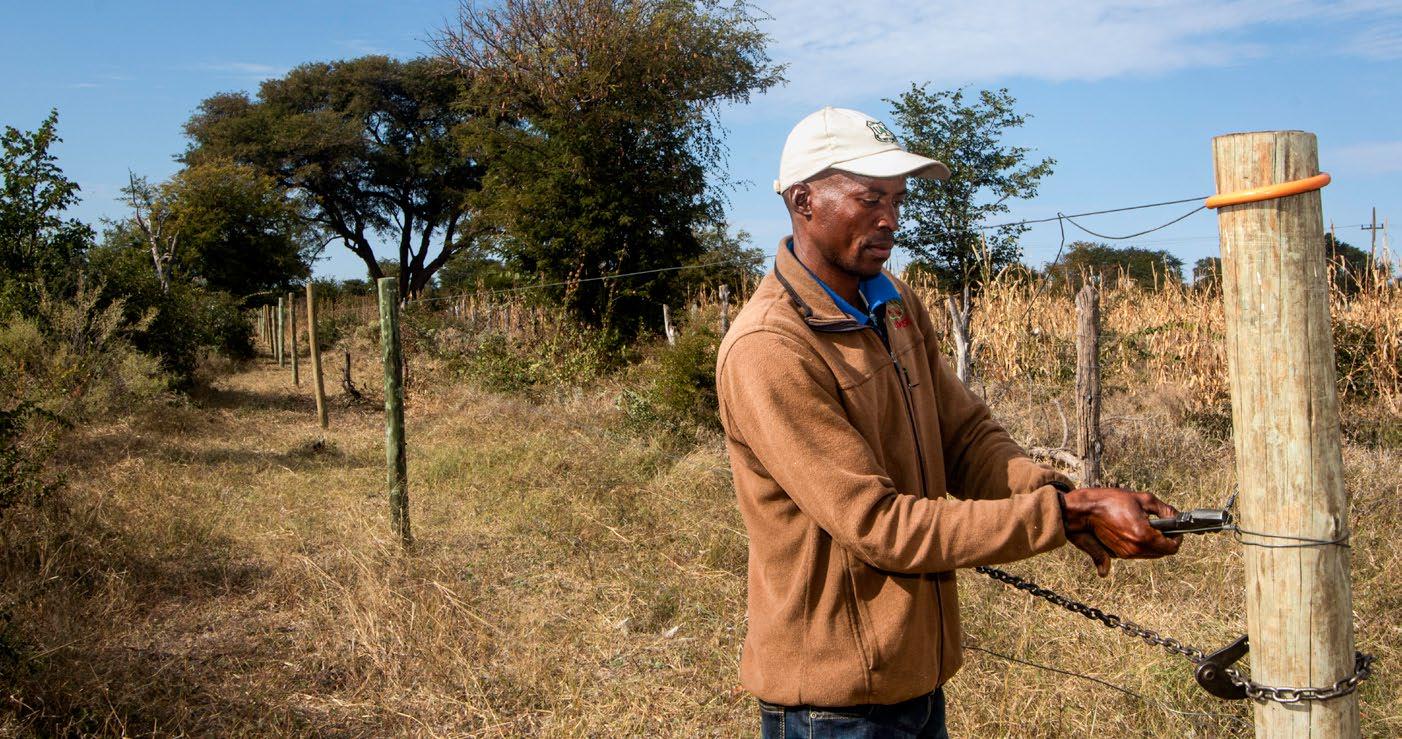
The Okavango Delta of northern Botswana is one of Africa’s most pristine wetlands, a living system shaped by distant rains and delayed floods. Its waters rise in the Angola highlands before flowing south to form a vast inland delta that sustains an extraordinary diversity of life. It is this rare hydrological rhythm that has earned the delta Ramsar status as a wetland of international importance, as well as recognition as a UNESCO World Heritage Site.
The delta is home to part of the largest contiguous population of elephants in Africa, estimated at around 227,900 individuals.
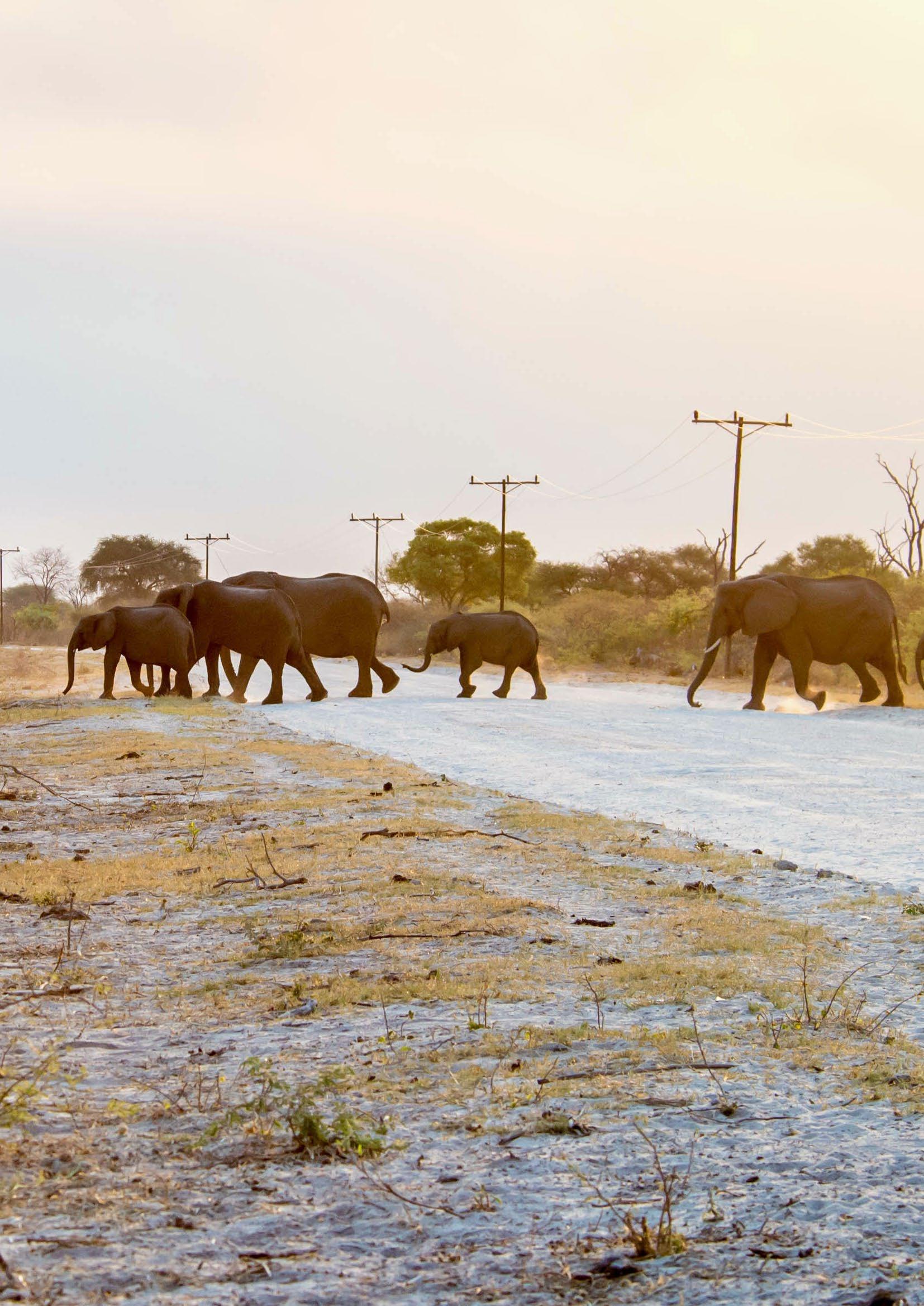
These elephants range widely across northern Botswana and into neighbouring Angola, Namibia, Zambia, and Zimbabwe, moving through the interconnected landscapes of the Kavango Zambezi Transfrontier Conservation Area (KAZA TFCA). More than passive inhabitants, elephants actively shape this environment: opening pathways, dispersing seeds, and influencing vegetation patterns that support countless other species. Each year, elephants move in and out of the delta in a seasonal cycle closely tied to water. During the rains, they disperse across surrounding drylands to access alternative grazing. When the annual floods arrive, often months after rain has fallen upstream, they return in large numbers, drawn by reliable water, fresh grasses, and fruit. These movements are not random, but finely tuned responses to the delta’s unique ecology. Elephants follow distinct, time-worn pathways into the delta, routes passed down through generations. Many of these ancient corridors pass directly through areas where people live and farm, reflecting a long history of shared use of this landscape. Communities have settled around the Okavango Delta for generations, relying
Cluster fence by Giancarlo Velmarch

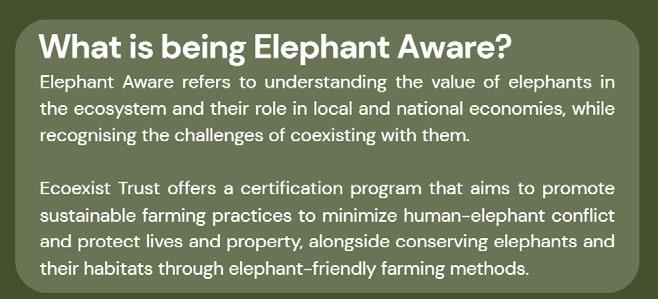
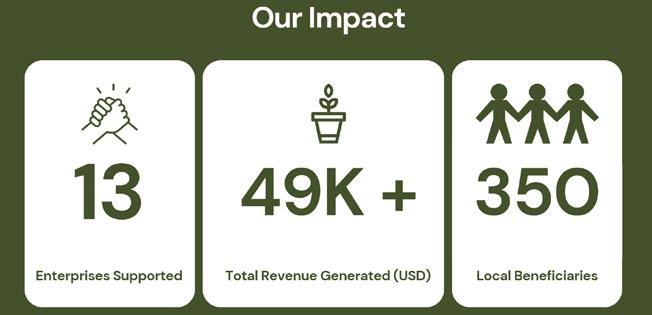
How the Elephant Aware Mark works by Coexist Trust
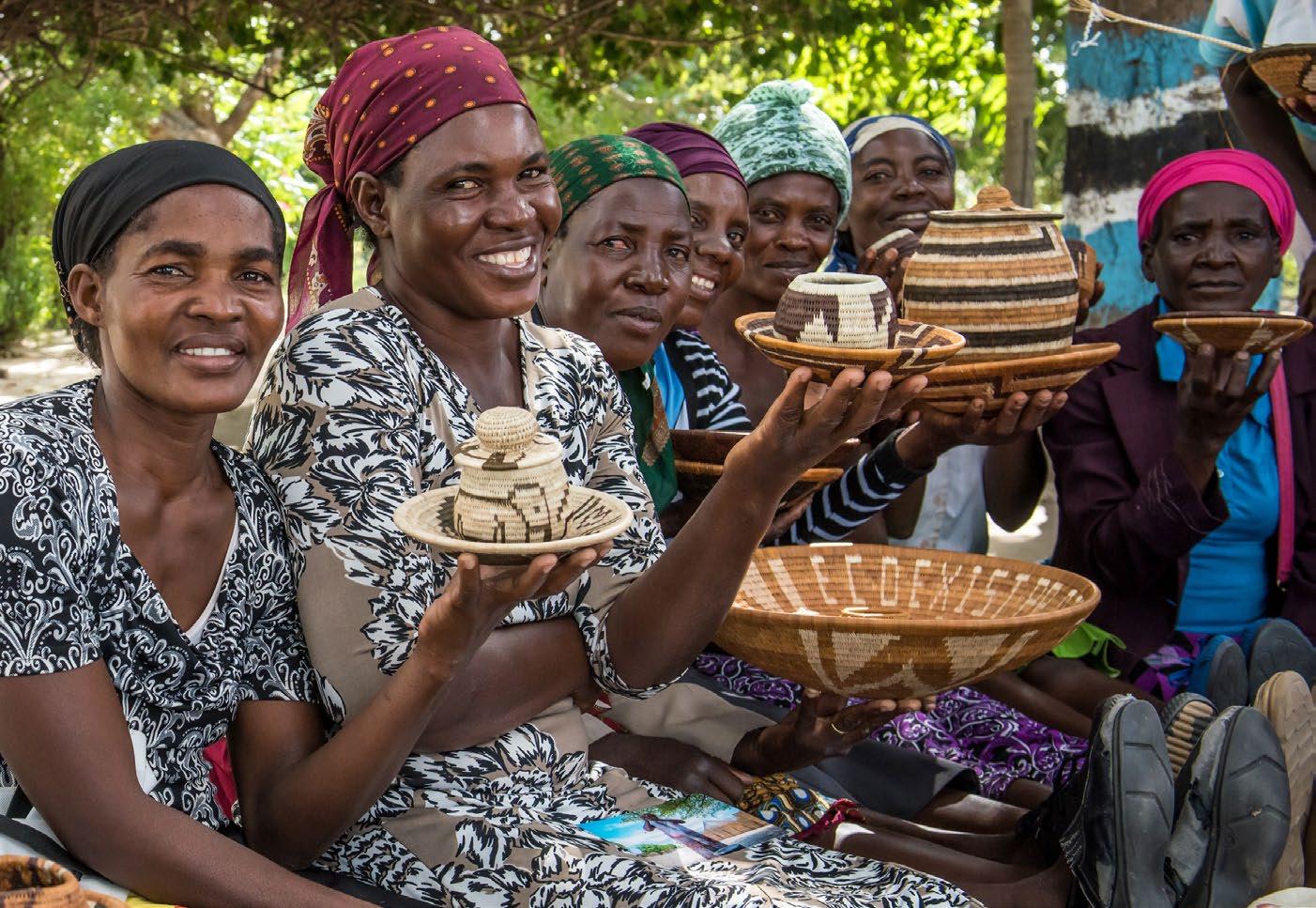
Elephant themed basket weavers by Amanda Stronza
on its resources for food, livelihoods, and cultural identity. Most are subsistence farmers whose lives are closely aligned with seasonal cycles of water and soil fertility. When elephants move through these settled areas, the overlap of needs for land, water, and food can become intense, often leading to conflict. Human–elephant conflict arises from a complex web of social, ecological, political, and economic pressures, frequently compounded by tensions between people themselves. Land-use policies can place humans and elephants in direct competition for space, while growing populations, vulnerable crops, and limited access to benefits from wildlife deepen local risk. Together, these forces can shape negative attitudes towards elephants, even in regions where they have long been part of daily life.
Navigating human–elephant conflict is one of conservation’s most enduring challenges and demands a holistic approach. For more than a decade, the Botswana-based NGO Ecoexist Trust has worked around the Okavango Delta to support coexistence through practical, affordable, and lasting solutions. In a landscape where competition for resources is high, Ecoexist works to enable shared space, keeping communities safe and food-secure while ensuring elephants retain access to critical habitat and movement corridors. Central to this approach is the belief that coexistence must deliver tangible benefits to the people who live alongside wildlife. As part of this work, Ecoexist supports elephant-themed enterprise development among communities surrounding the delta, offering capacity building, access to resources, market connections, and partnerships. This Elephant Aware Economy promotes sustainable, non-consumptive products and services linked to life with elephants, creating value from coexistence and reinforcing the idea that elephants are most valuable when they are alive and free to move across the landscape.
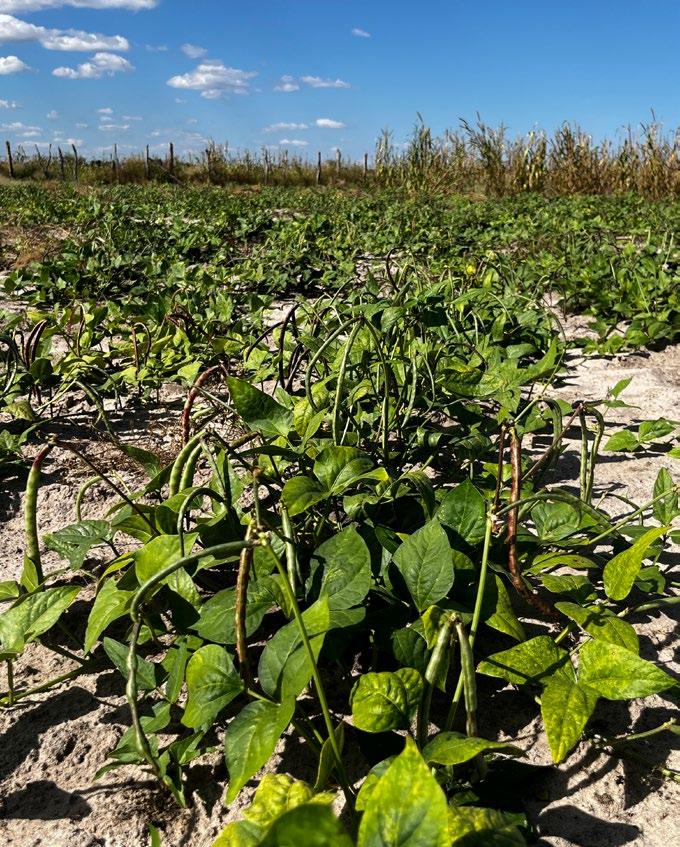
Conservation Agriculture field crop by Graham McCulloch
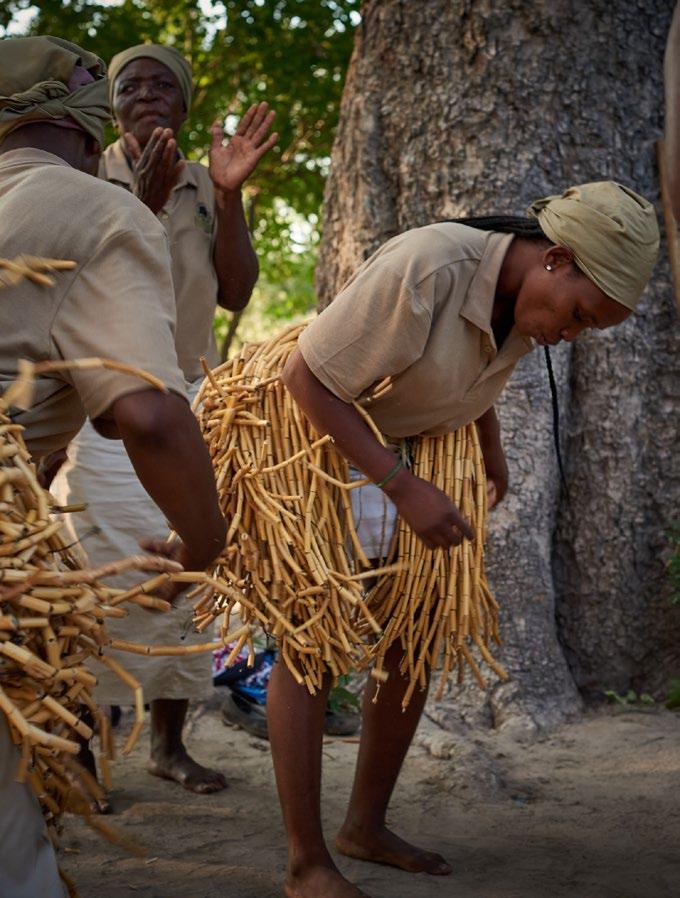
Dance During Life With Elephant Tour by Graham McCulloch
Navigating human–elephant conflict is one of conservation’s most enduring challenges and demands a holistic approach.
Elephant crossing by Graham McCulloch
A New Season for Meetings in Nairobi



Meetings and Events have long been treated as static affairs, held in rooms designed for a single outcome. But the reality of work is more fluid. A day rarely stays in one mode. It moves from focus to expansion, from alignment to decision-making, from intensity to pause. What was once driven by scale and spectacle has evolved into something far more nuanced.
Introducing Gather at KOFISI Kaskazi in Nairobi, a new approach to Meetings and Events in the city offering design-forward spaces complete with state-of-the-art A/V technology and on-demand hospitality. Named after the northern winds that sweep along East Africa’s coast, bringing steady momentum and renewal, KOFISI Kaskazi reflects the idea that work, like nature, moves in cycles. Gather embodies this seasonal philosophy.
Rather than treating events as fixed moments in fixed rooms, it operates as part of a wider ecosystem spread out on a single floor. Rooms can be configured individually or combined, allowing the environment to shift with the rhythm of your day. Early moments, when ideas are still forming, call for closeness and intention. A 6-person Spark Room holds these beginnings, creating space for quiet alignment and momentum to build.
As conversations take shape, the day opens up. The energy shifts from instinct to brainstorming. A 10-person Meeting Room supports this middle season — roundtable in nature, designed for dialogue and collaboration. When ideas need room to stretch, Gather responds with a 15-person Knowledge Room, a space for workshops, training sessions and collaborative thinking. Double doors link this room to the adjacent Meeting Room, allowing conversations to broaden or narrow as momentum builds and recalibrates.
A 20-person Academy Room at Gather is the largest configurable space here, designed to flex with your agenda. Setups can switch between Boardroom, U-Shape, Classroom, Roundtable and Theatre to fit your needs. When clarity matters most — when decisions carry weight — a 14-person Board Room offers a composed, assured setting for critical conversations to land with confidence.
Centrally located is Graze, Gather’s all-day dining concept. Not an intermission, but part of the ecosystem. Like a natural watering point, it sustains the flow of people and ideas, keeping energy steady as the day unfolds.
If you would like to try out a new way to convene in Nairobi, Kenya, reach out to events@kofisi.africa.
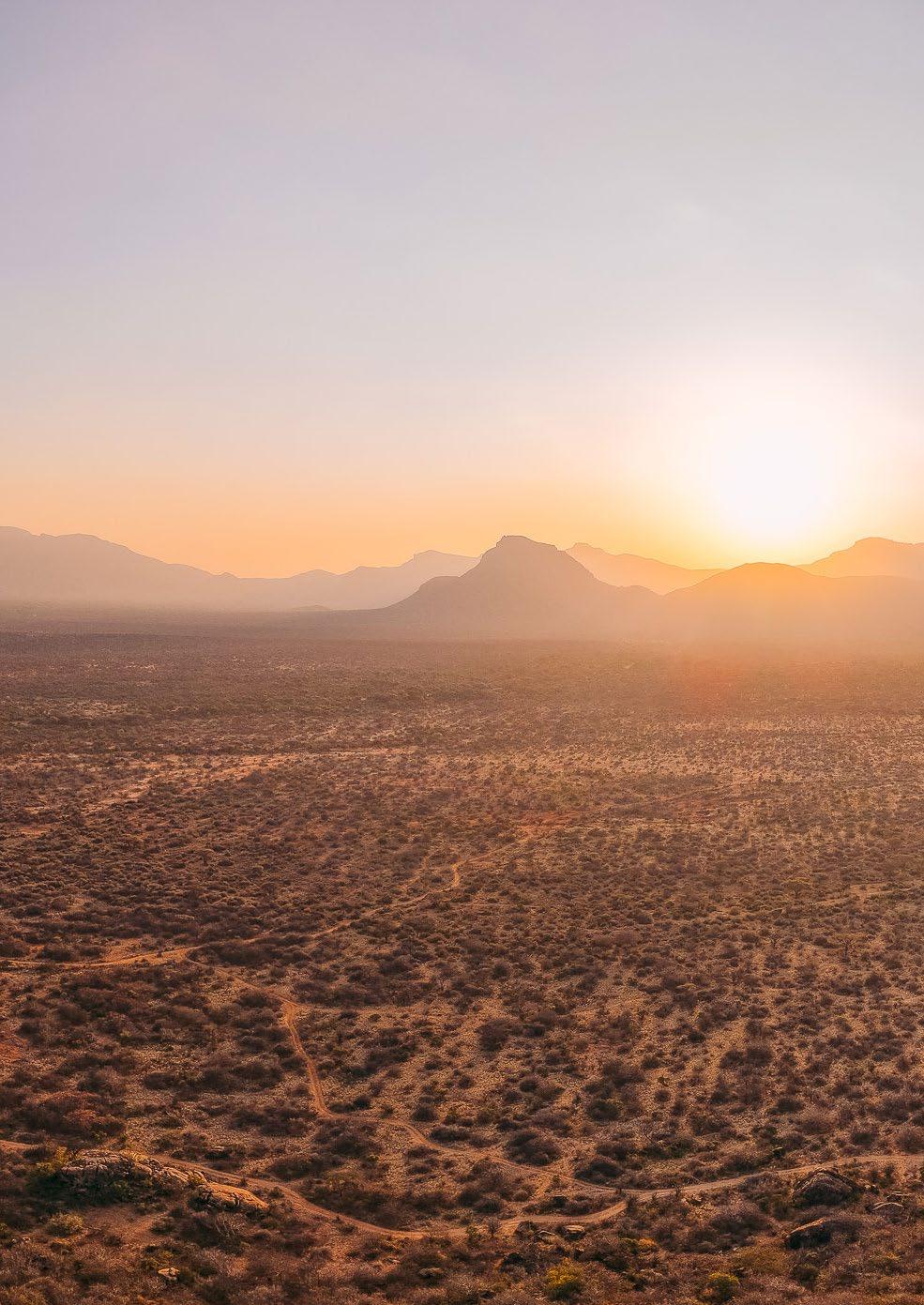
The Life of Rain:
Arrival and Absence
Building Resilience in Namunyak Conservancy
Written by Alex Johnson
Pictures by Thige Njuguna
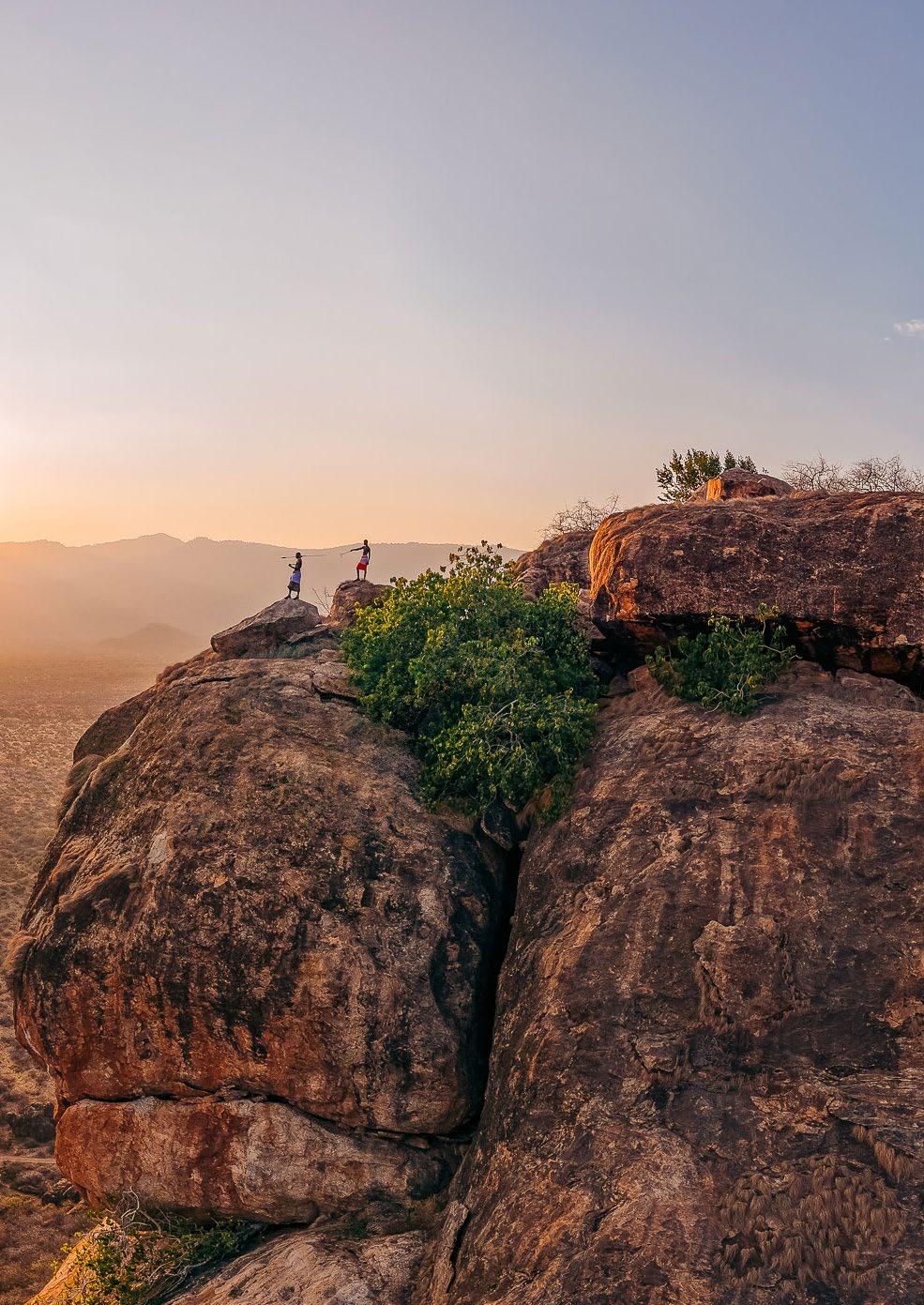
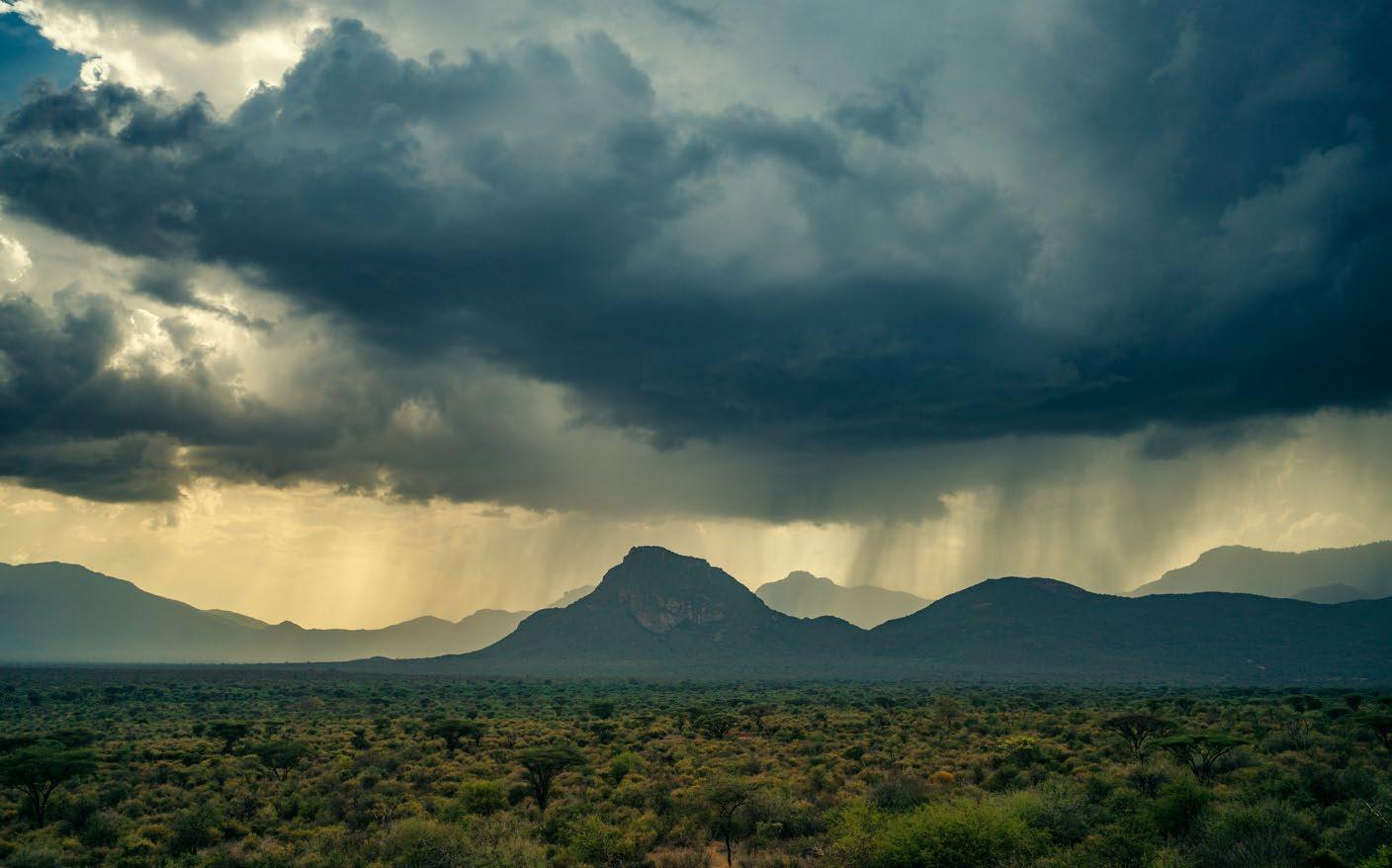
Look out the window of a plane flying low over Northern Kenya and you'll see land shaped by humans and wildlife, rainfall and drought. "Seventy percent [of the land] is highly degraded," says Titus Letaapo, Director of Community for the foundation that manages the Namunyak Conservancy in Samburu County. "There are a lot of gulleys. The soil is hard. It's bare. It doesn't have any vegetation cover. Even if it rains, grasses don't grow. The runoff is very high. The topsoil disappears."
But the Namunyak Conservancy is defying this trend. To understand why, one must first understand the weather. Ask a child in New Zealand or Russia or Uruguay about the seasons and they’ll tell you about fall and spring, winter and summer. They may even tell you that the change in seasons depends on the length of the day, which in turn depends on Earth's 23-degree tilt.
In Kenya, which straddles the equator, day length hardly varies at all. What does vary is the angle at which
sunlight strikes the earth. At the equinoxes of March and September, the sun passes directly overhead. This concentrates more solar energy on the earth, which in turn causes moist air to rise, cool, and condense into rain. This is why the equinoxes typically mark the beginning of Kenya's rainy seasons.
The operative word – "typical" – is is becoming less reliable. While day length and sun angle remain consistent over millennia, climatic variation is increasing. The rainy season that just finished, for example, wasn't very wet at all. Rain was late to arrive, and significantly lighter than usual. According to the World Health Organization, this recent dry period puts over two million Kenyans at risk of food insecurity.
At Namunyak Conservancy, where Titus Letaapo works, rainfall hasn't been as scarce as elsewhere in Kenya. Even so, many of the Samburu pastoralists who
call the conservancy home have already moved north and east in search of grass for their cattle.
But the community is not simply passive or reactive, wishing for rain and trying to respond when it doesn't arrive. They prepare for periods of drought and make the most of the rain that falls. They block the outlets of rain-scarred gulleys so the gulleys will refill with sand and soil when the rains return. They dig semicircular bunds and seed them with indigenous grasses to make the most of the small amount of rainfall they receive. And before the rain falls, the conservancy works with families to make plans for where they will graze, and when. This helps the community maintain their semi-pastoralist lifestyle; it also benefits the wildlife with whom they share the conservancy. Namunyak is now home to one of Kenya's largest populations of elephants, plus Grévy's zebra, wild dogs, and De Brazza’s colobus monkeys.
These programmes are made possible by the structure with which the conservancy was originally created. According to Katie Rowe, who married into the family
that founded the conservancy and is now part of its management, it all goes back to the area's original inhabitants. "All of these beautiful enormous chunks of wilderness exist on community-owned land, [because of] the Samburu. They are conservationists – they know how to coexist alongside wildlife and share resources." The conservancy is governed by a democratically elected board of trustees. Besides drought resistance and grazing management initiatives, the conservancy also runs programmes dedicated to education, healthcare, and small enterprise. All of it is based on the belief that if the natural world is to thrive, then people must thrive along with it.
When rain finally falls in Namunyak, the environment will respond. Rowe describes what it will look like. "It goes from a very dry desert landscape, and with a little bit of rain there's this carpet of emerald green grass that pops up. Every single valley becomes a beautiful trickling river with crystal clear water. Wildflowers, bees, butterflies, insects – just an explosion of life that has all been living under the surface."
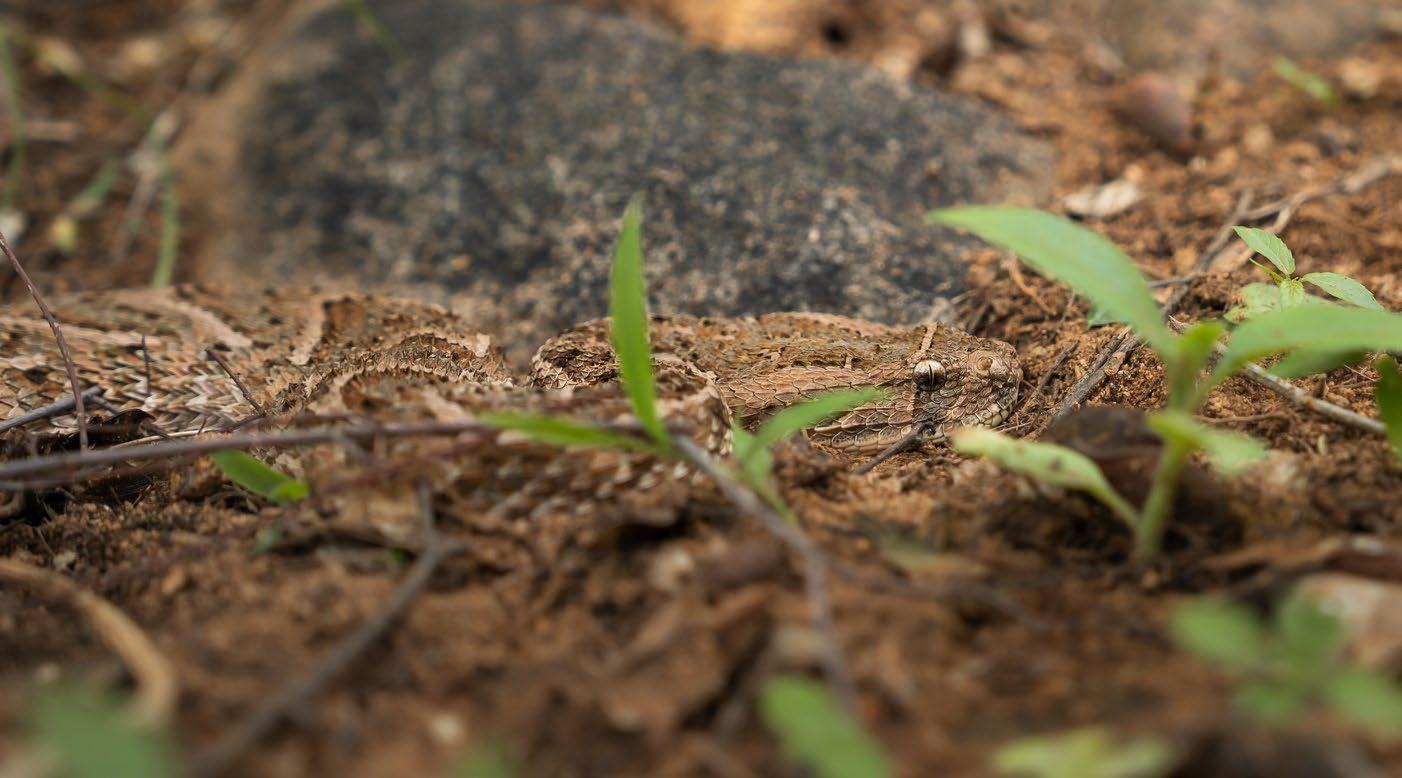
Kiboko in Tsavo East A Different Way to Be in the Bush:
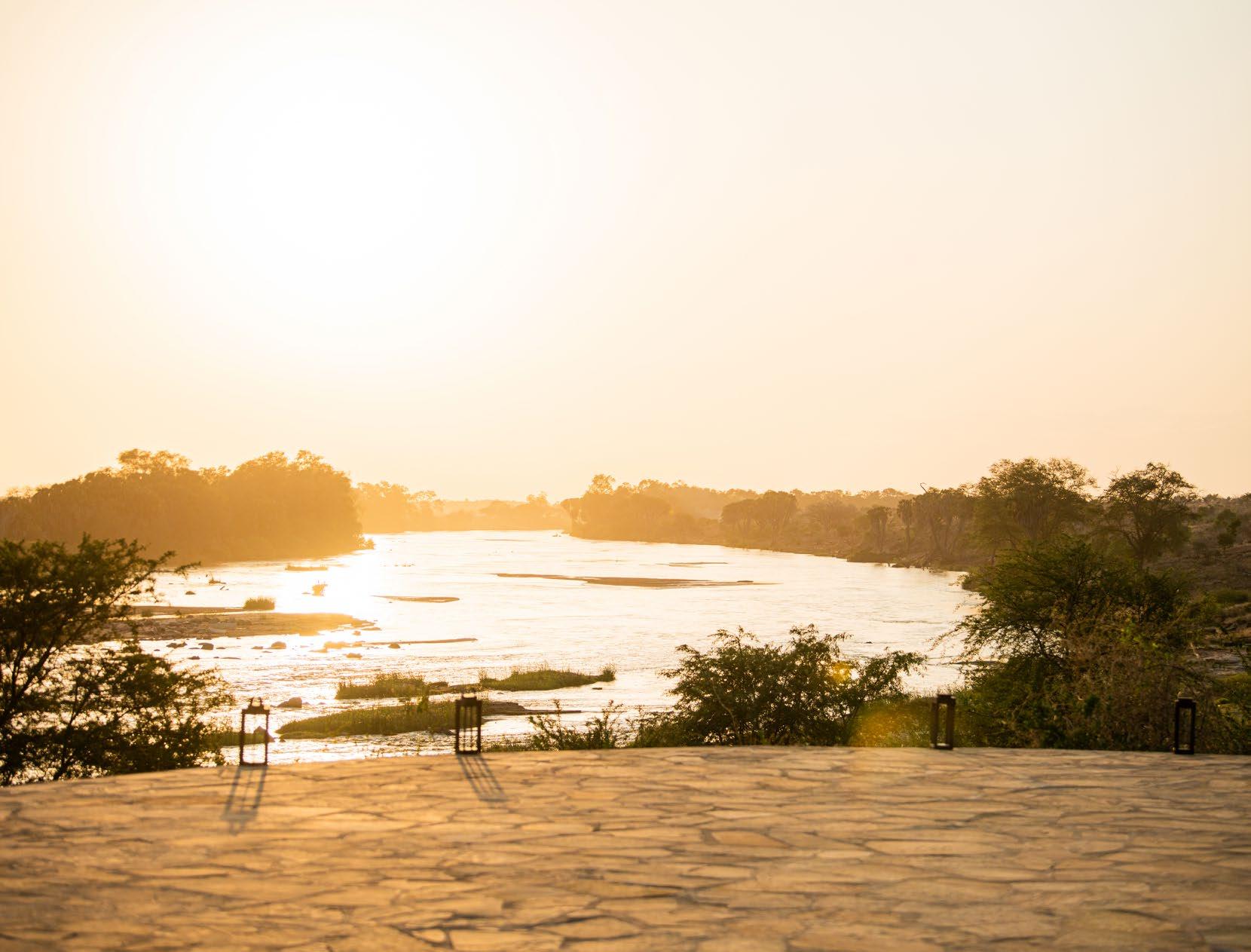
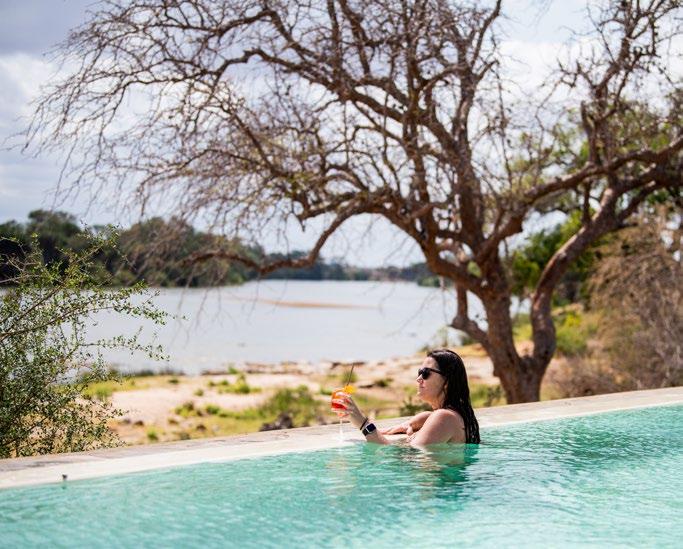
In a quiet corner of Tsavo East National Park, within the Galana Kulalu Conservancy, Kiboko offers a different way to experience the bush. Just an hour’s flight from Nairobi, this intimate safari camp moves away from the classic lodge formula and instead focuses on something more essential: space, connection and a deeper engagement with nature.
Kiboko is intimate and thoughtfully designed, welcoming both Kenyan and international travellers while opening the safari experience to a broader audience. Families, small groups, schools, older travellers, and guests with mobility needs all find a place here. Accessibility and inclusivity are not afterthoughts but part of the camp’s very foundation, shaped by its owner, Mr. Siro Brugnoli, who is a wheelchair user himself. As a result, more people can experience the wilderness in comfort, dignity, and ease.
Six tents, endless possibilities
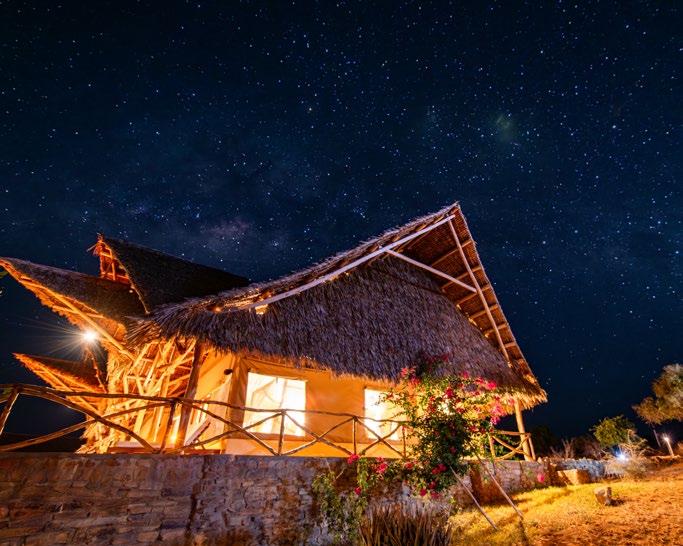
With just six spacious double tents, Kiboko naturally lends itself to exclusive use. Each tent is built on a solid stone base and positioned within landscaped surroundings overlooking the Galana River, blending quietly into the environment while offering privacy and flexibility. This small scale makes the camp particularly well suited to families, group travel and multigenerational stays, including older guests who prefer to explore the bush together at a gentler pace. While game drives in Tsavo East remain central to the experience, Kiboko is best described as a “safari plus” destination. It supports inclusive safari stays adapted to different mobility requirements, school retreats and conservancy education programmes where the landscape becomes a living classroom, domestic group getaways that offer a meaningful escape close to home,
as well as corporate retreats, informal meetings and private family celebrations. The atmosphere is calm and unhurried, allowing days to unfold naturally.
Spaces designed with care
Each tent offers step-free access, in line with the rest of the camp, along with generous interiors and modern comforts, including air conditioning. En-suite bathrooms with hot water are designed for ease of use, and private verandas open onto views of the river and surrounding wilderness. The design remains natural and understated, ensuring the landscape always takes centre stage. Shared areas are open and fluid, encouraging guests to move comfortably and safely throughout the camp, from sunset drinks to long dinners under the stars. An electric fence provides peace of mind without disrupting the sense of openness. For groups, these shared spaces
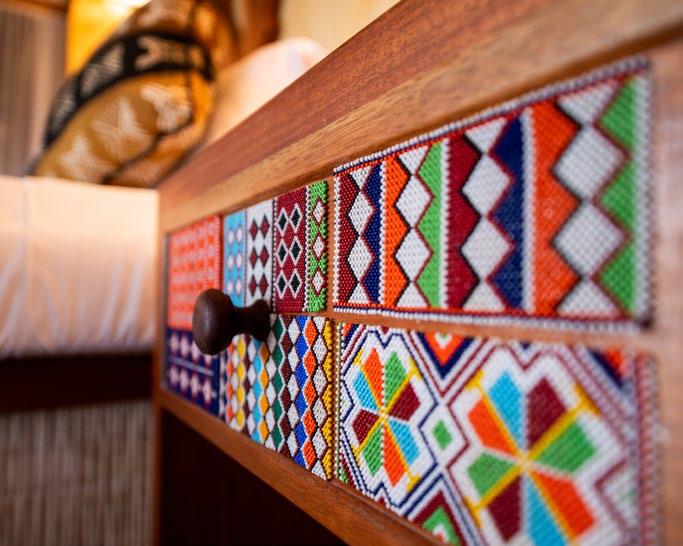
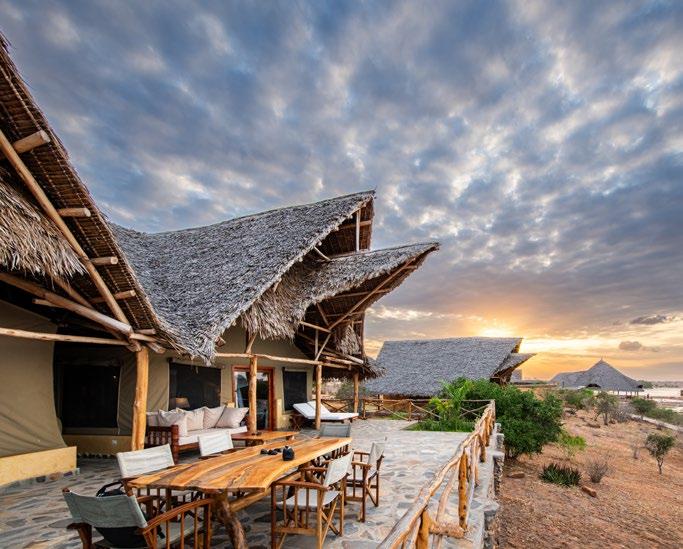
often become the heart of the stay: places to gather, learn, reflect and connect.
Tsavo East: wild, open, timeless
Tsavo East is one of Kenya’s most expansive and least mediated wilderness areas, known for its vast landscapes, red-dusted elephants and powerful sense of space. Kiboko embraces the belief that accessibility, education and wilderness can coexist, allowing the bush to be experienced without compromise.
Kiboko does not impose an experience. It quietly makes room: for people, for ideas, and for meaningful moments in a remarkable landscape.

Scan and find out more!


Life Explodes in the Serengeti:
Discovering Calving Season
By Harriet James
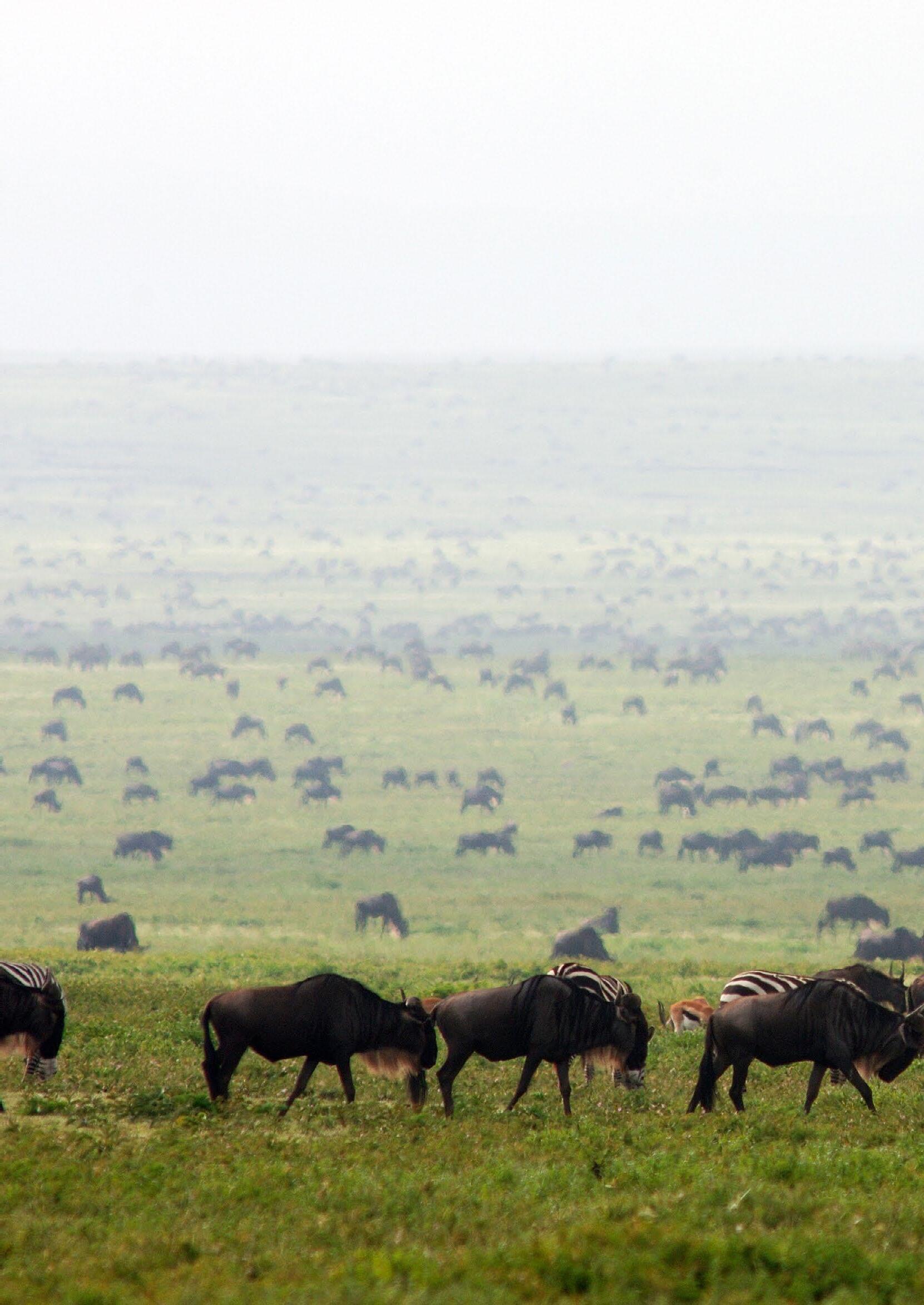
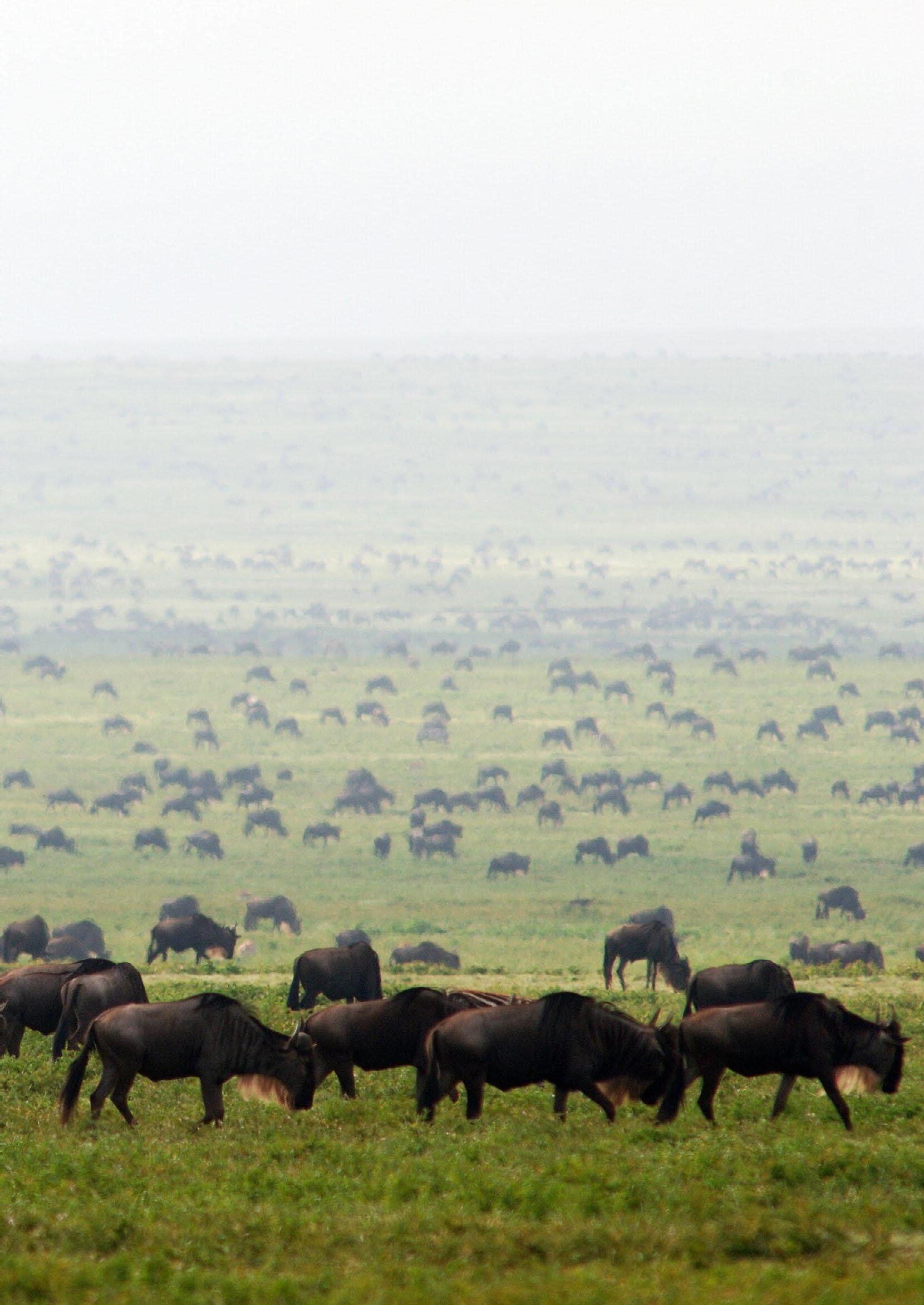
The Great Wildebeest Migration is one of the most spectacular wildlife events in the global tourism calendar. Driven by rainfall and the search for fresh grazing areas, over 1.5 million wildebeest move across the Serengeti–Mara ecosystem of Tanzania and Kenya through distinct seasonal phases. These include the calving season in the southern Serengeti and Ndutu plains between January and March, when thousands of calves are born each day; the long trek north through the central and western Serengeti from April to June; the dramatic Grumeti River crossings in western Tanzania around May and June; and the iconic Mara River crossings between July and October, as the herds enter Kenya’s Maasai Mara. As the short rains return in November and December, the herds begin their journey back south, completing a timeless cycle that shapes both the landscape and the predators that follow.
The most famous phase is the iconic Mara River crossing, which draws thousands of travellers to the Maasai Mara to witness one of nature’s most dramatic spectacles. Yet while these crossings will always hold their allure, the future of safari travel may lie in moments like the calving season – a quieter, more intimate period that’s grounded in a deep sense of respect for the rhythms of the wild.
Calving season is the period when the Great Migration reaches its most tender and dramatic phase
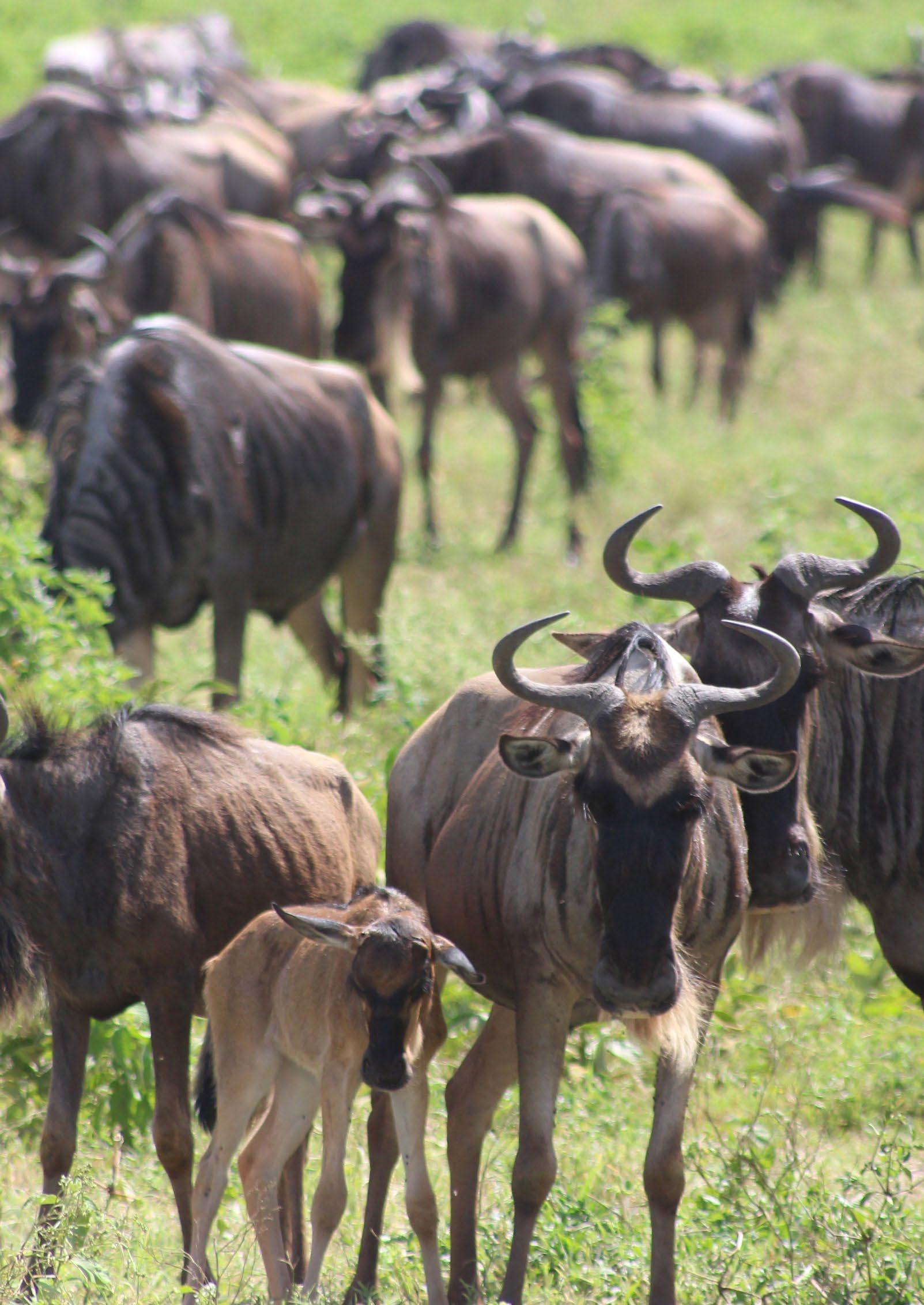
Hundreds of thousands of wildebeest give birth across the southern Serengeti plains. It is called calving season because this is when the majority of the herd delivers their young, often within a few short weeks, creating one of the highest concentrations of newborn animals anywhere in the world. The short grass plains provide rich nutrients for lactating mothers, while the open landscape allows them to spot predators from a distance. During this time, not only wildebeest but also zebras and gazelles give birth, filling the plains with fragile calves taking their first steps. This sudden explosion of life also draws predators like lions, cheetahs, hyenas, and leopards, making the season a powerful, emotional display of survival, instinct, and balance in nature.
The first time I witnessed this, I felt as if I had stepped into the very heartbeat of the Serengeti. We left before sunrise with my guide, Ayoub Hosea, from Asilia Dunia Camp, the sky still washed in pale blue as we drove
towards a place Ayoub called Korongo la Kujificha, the Hidden Valley. The journey was long, quiet, and filled with anticipation. We were also battling tsetse flies, a sharp reminder that I had forgotten one golden rule of the bush: never wear dark clothes, which only makes you more visible to these relentless insects.
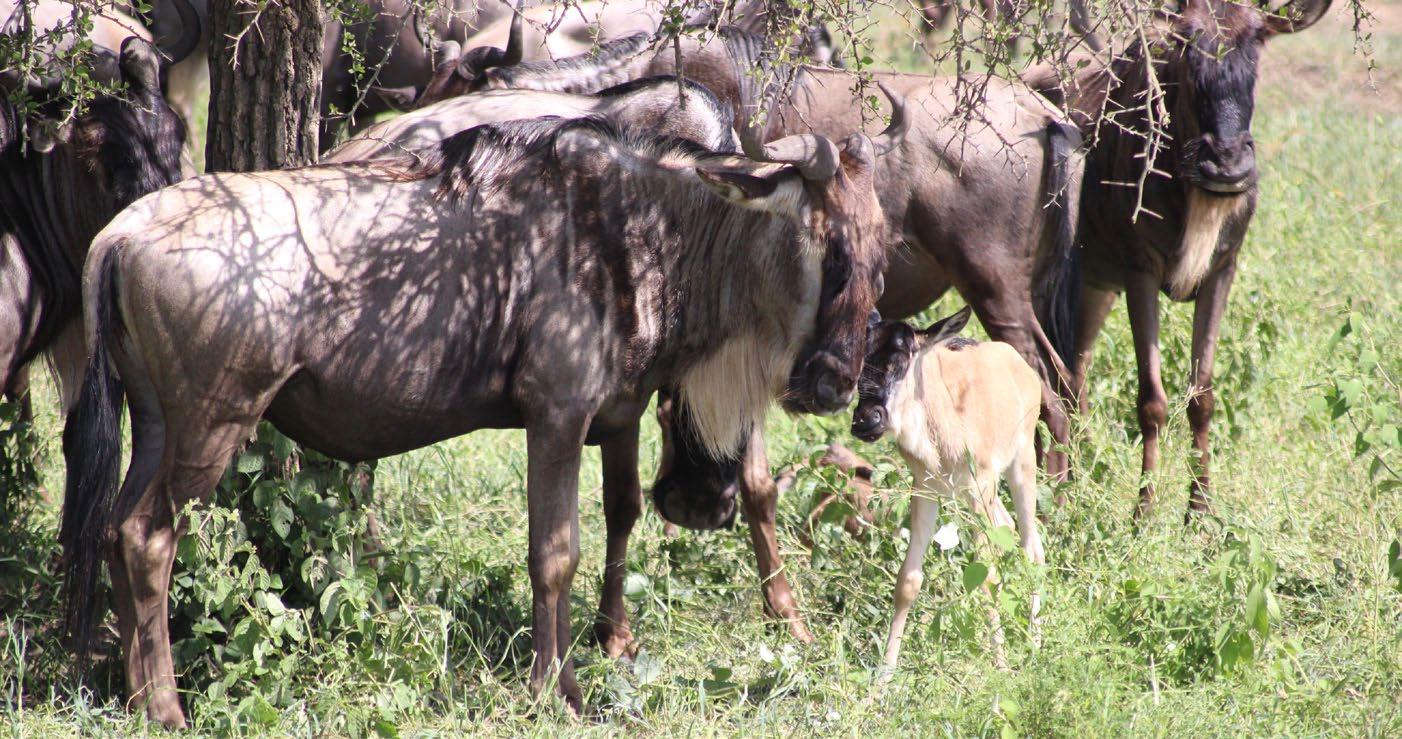
We arrived at around midday and witnessed mothers forming protective circles around their calves, creating living barricades. The newborns were a soft yellowbrown, some wobbling unsteadily, others resting under a spreading acacia tree. A few suckled quietly while their mothers scanned the horizon. Watching this fragile beginning felt like witnessing the Earth breathe.
“They love this area because it is open and safe for giving birth,” Ayoub explained. “There is plenty of grass and water. They need strength for their calves.”
We continued south toward Ndutu near the Ngorongoro
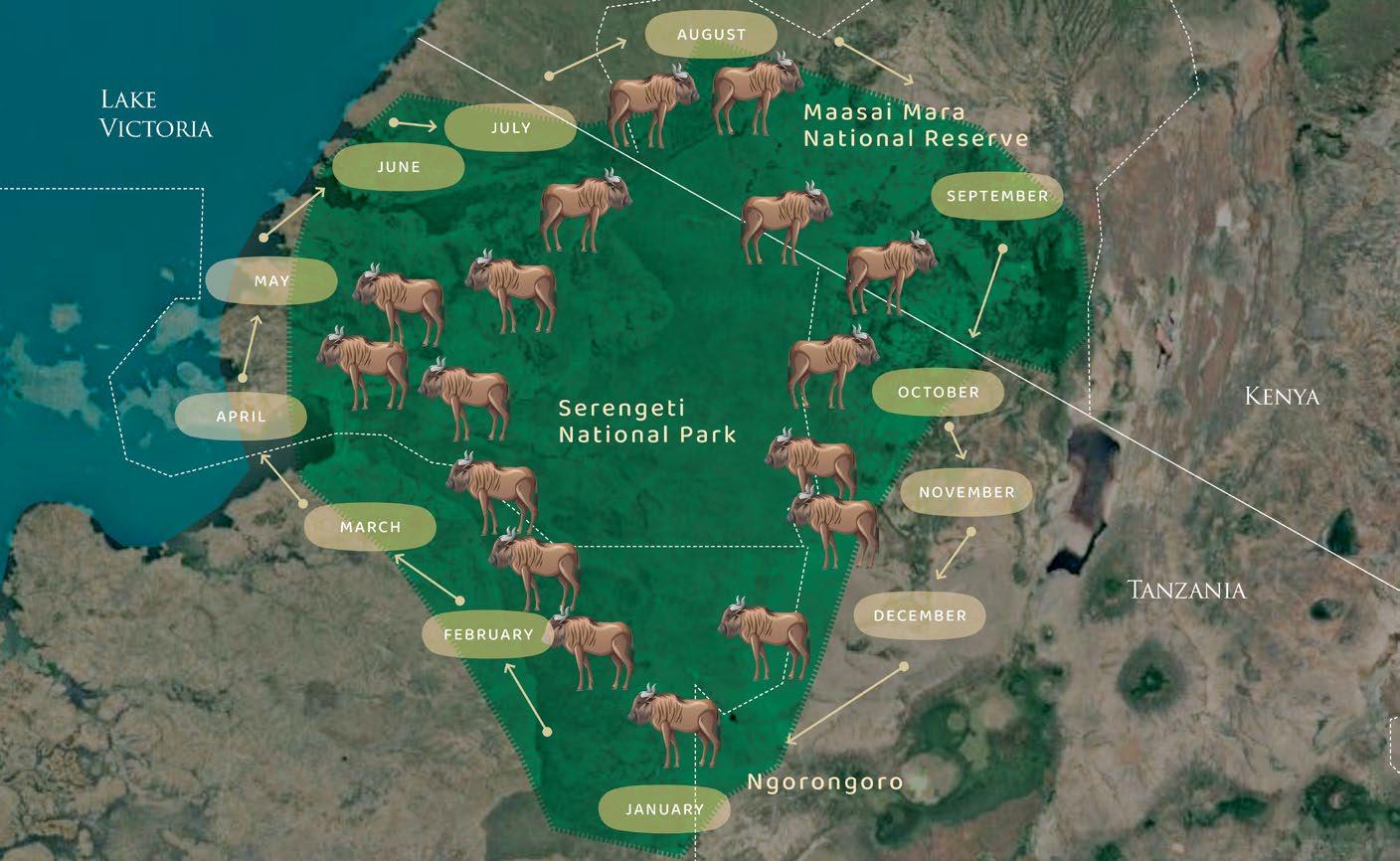
Conservation Area. Tens of thousands of not just wildebeests, but also zebras, gnus, and gazelles were there grazing – some expectant, others guiding their newborns through the tall grass. They congregate here to take advantage of abundant fresh grazing land and water, which supports both mothers and newborns.
Synchronized births in large herds also reduce individual predation risk, increasing the survival chances of their young. The gnus, zebras, and gazelles all move together because they cannot easily camouflage. When danger comes, they stomp, charge, and listen for alarm calls from birds and baboons. As they graze, they fertilize the soil with their droppings, feeding new grass. They remain here for nearly three months because the volcanic soils are rich in nutrients, perfect for calves to build strength and for mothers to produce milk.
At one point, Ayoub spotted something dark in the grass—a dead gnu. Flies hovered thickly around it. He explained that placentas left behind during calving attract insects. Above us, Rüppell’s griffon vultures descended, jostling for position. “They are fighting because they can’t remove the tough skin,” he told me in Swahili. He explained that their beaks are not strong enough to tear skin, so they begin with softer parts like the eyes. Yet they play a vital role. “They clean the ecosystem. Disease cannot spread because vultures are immune,” he said.
Calving season is a reminder of how life renews itself, even in harsh conditions.
It shows us that survival is fragile, and that every choice we make as visitors shapes what remains for future generations.
Wildebeest are not just travellers; they are architects of this ecosystem. By the end of March, the southern grasslands will be bare. The herds will rise again and march north through the central Serengeti, toward the dramatic river crossings of the dry season. This is the chapter most people know, the chaos of the Mara River between July and October.
The Serengeti, known in the Maasai language as the land that moves forever, feels like an endless twin of the Maasai Mara, only vaster. According to Tanzania tourism data, nearly 150,000 to 200,000 people visit the Serengeti each year, many drawn by this moment of renewal. National Geographic estimates that between 300,000 and 500,000 calves are born annually with nearly 8,000 arriving each day. But that fame comes at a cost. During the famed Mara River crossing, dozens of safari vehicles cluster around the crossing points. Engines hum, cameras click, and the wildlife grows visibly stressed. Amid this popularity, the magic of the moment risks being overshadowed.
This is why the Serengeti calving season matters now more than ever. It offers an alternative that is quieter, deeper, and equally powerful. It spreads tourism across the migration calendar, easing pressure on the Mara while reminding us that the story of the wildebeest is not only about survival, but also about beginnings.
Yet even as we talk about calving, it’s sad to note that their numbers are declining. A decade ago, the herds numbered 1.5 million, but they are now closer to 1.2 million. Human population growth, shrinking habitats, and climate change – which is bringing unpredictable droughts and floods – threaten their future. These dangers were
foreseen in the 1960 documentary Serengeti Shall Not Die, which urged the world to protect this living system.
The future of both the Mara and the Serengeti depend not just on park rangers and conservation policies, but on how we visitors choose to experience these places.
Responsible safari travel begins with respect for wildlife and space. Animals need room to rest, feed, and protect their young without being surrounded by vehicles.
Ethical operators understand this and limit how close they go and how long they stay. The best guides know that sometimes the most respectful thing to do is simply to watch from a distance. It also means choosing experiences that support conservation and local communities. Park fees, conservancy contributions, and community-run lodges fund anti-poaching efforts, ranger salaries, habitat protection, and education programmes. When travellers stay in places that give back, their presence becomes part of the solution, not the problem.
Simple actions matter too. Staying on designated tracks protects fragile grasslands. Reducing plastic waste, keeping noise low, and following park rules all help preserve the wilderness for the animals who depend on it. Learning the story of the migration before arriving deepens the experience, turning it from sightseeing into understanding.


Through My Eyes Rwanda
Text and pictures by Georgia Mugisha
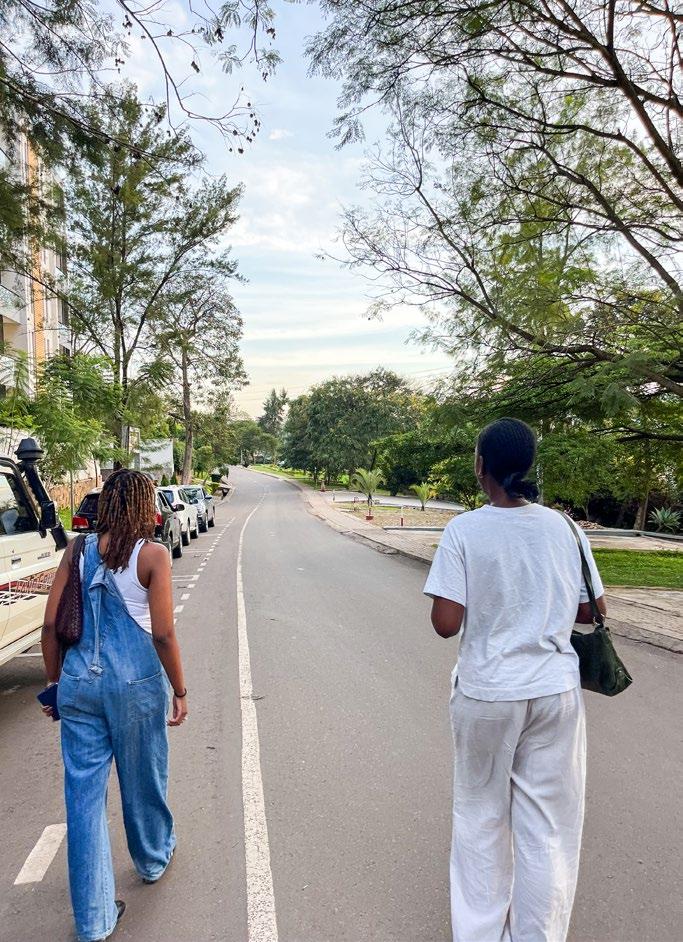
I was born and raised in Kigali in 2004. My early memories are not shaped by urgency, but by easy rhythms, beginning with slow mornings and ending with relaxed evenings. I have had the unique experience of seeing my country and city flourish at an unprecedented rate right before my eyes. Economic growth and the abundant creativity of Rwandans have attracted international attention to our small country, and rightfully so. What I love about Rwanda, however, is the ease of my days there and a steady flow that is rarely found elsewhere.
If you’re searching for a grounding travel experience that adapts to the kind of traveller you are, Rwanda is unusually forthcoming. Kigali is both active and quiet. It really depends on which Kigalian you ask. What you will not find is the relentless, fast-paced grind of a megacity. In Kigali, I like to move by motorbike taxis, or “motos,” as they are locally called. Yes, the nerves are normal, but it looks far scarier than it is. Helmets are mandatory for both passenger and rider, and speed limits are taken seriously, making this a safe and affordable way to get around. Despite being a common feature of life in the city, it brings me into full alertness, and even short journeys to a friend’s house are eventful.
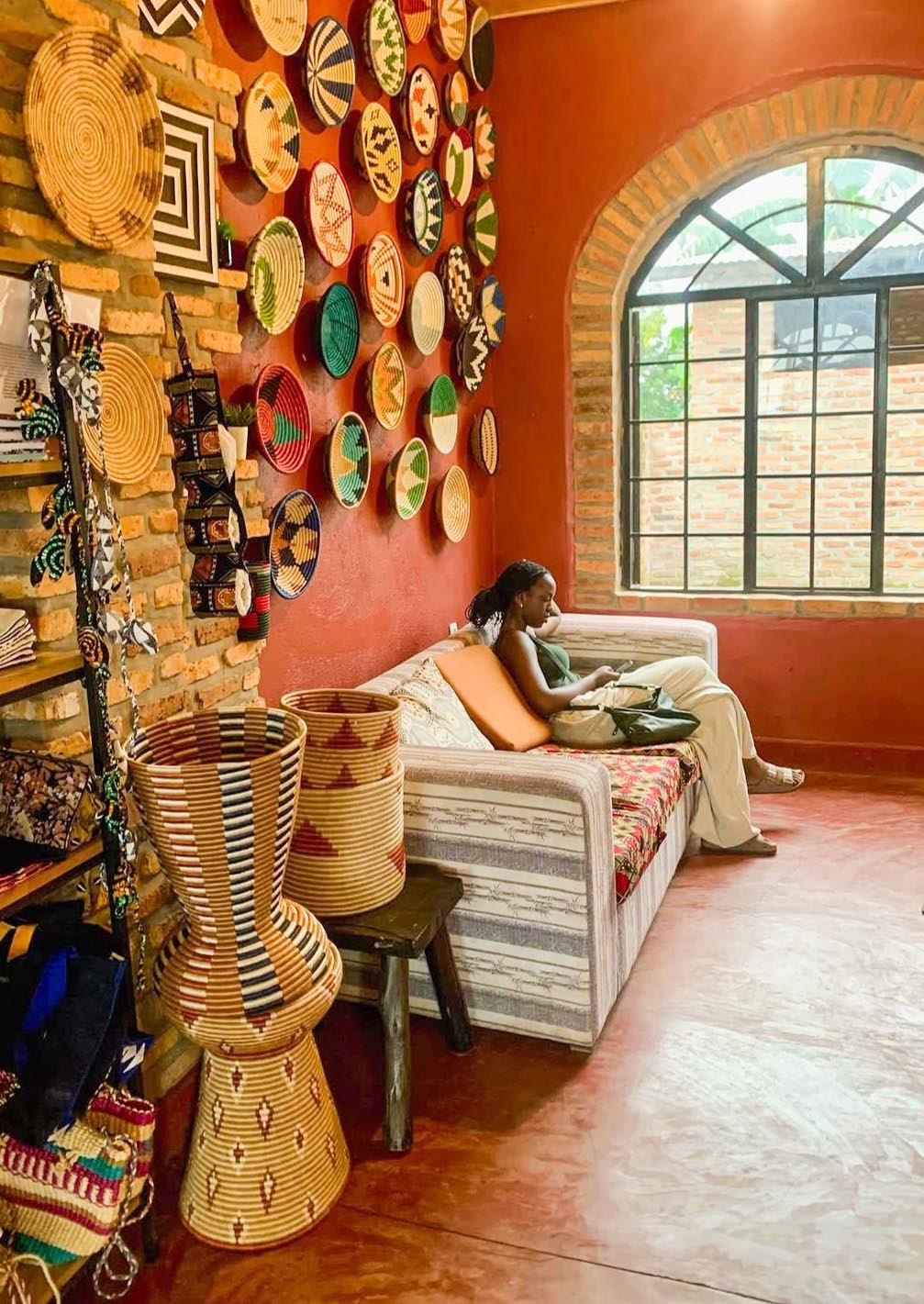
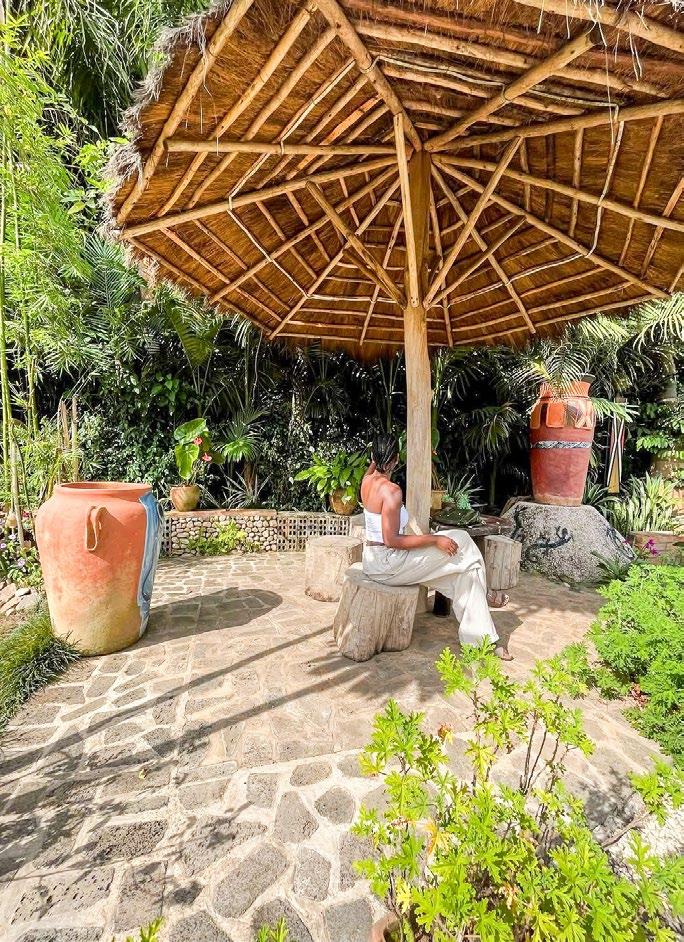
I spend much of my time at cafés. Indabo Café, in Kimihurura or Kiyovu, with Kiyovu being my preference, is one of these. Trees and greenery fill the space, which is reflected across the city as well. Just through the gate, there is an open studio by local artist David Mugire, where I often stop for art and conversation.
Beyond cafés, much of life in Kigali unfolds in the spaces between plans. Meals always stretch longer than expected; I don’t think I’ve ever actually placed a reservation at a restaurant. Importance is
When someone decides to speak, it means there is something worth saying.
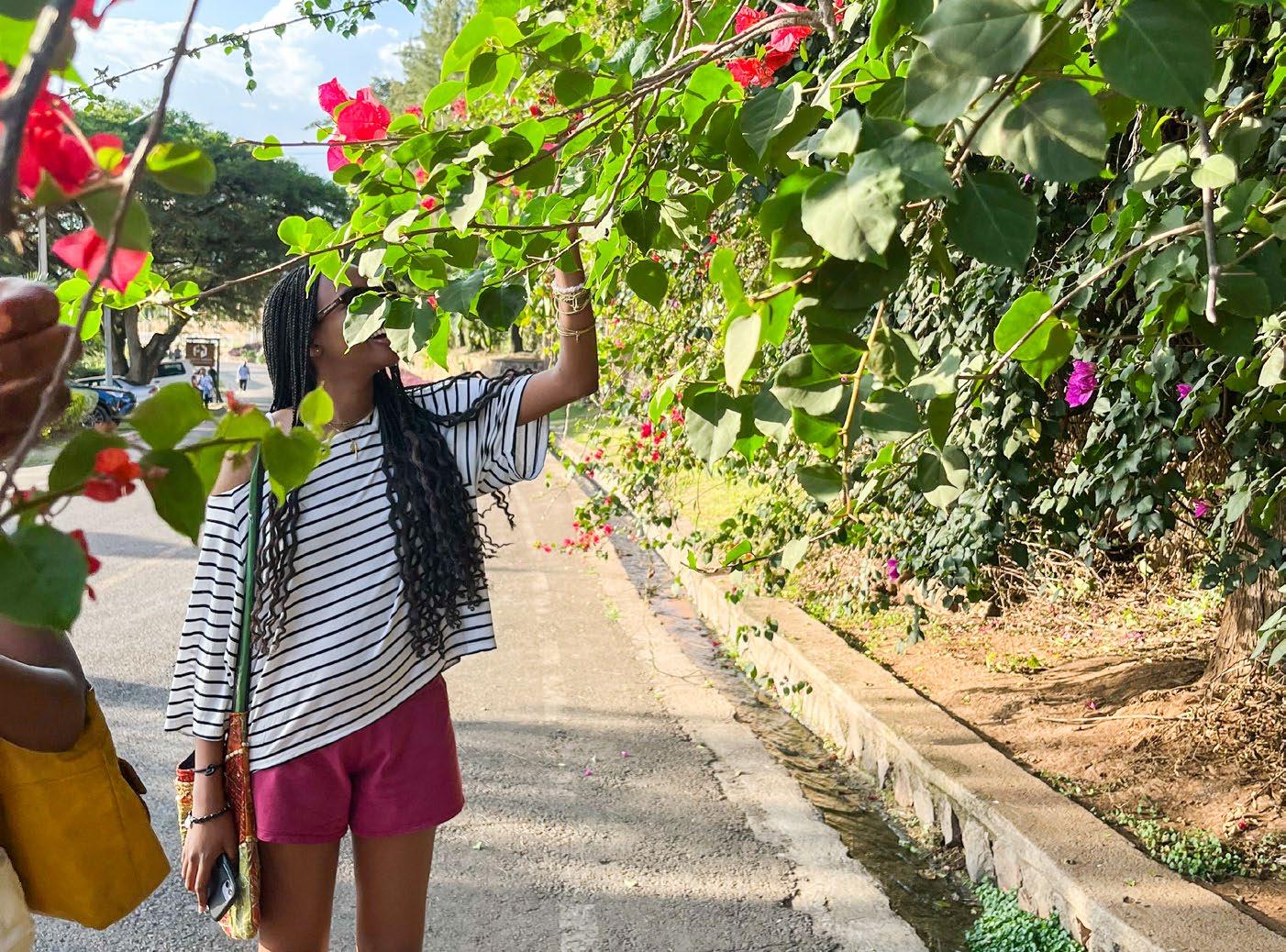
placed on conversation: a casual exchange will extend without effort, and a little longer than planned. What you will notice is that people are rarely in a rush, and that lack of urgency requires you to adjust to it, rather than it to you. Rwandans move from language to language (Kinyarwanda, English, French, and more) in a melodious way that is often interesting to listen in on as a visitor. There is a calm demeanour and warmth to the way people engage, even when language barriers exist.
I have had friends from around the world visit me in Rwanda. One of the first things they always notice in our first days around the city are the eyes that seem to follow them. The stares you may notice are not hostile. They come from curiosity and do not carry any weight of disrespect in our society. Silence, too, does not translate as discomfort, but rather as thoughtfulness.
When someone decides to speak, it means there is something worth saying.
I have always found it grounding to get out of the city once in a while. Fishing communities and lake life surrounding Kivu and Muhazi are a breath of fresh air, with serene natural beauty throughout. The same can be said about Nyungwe’s forests and Musanze’s volcanoes. Any honest experience of the country must also make room for its history to understand the resilience foundational to Rwanda.
A visit to the Kigali Memorial of the 1994 Genocide Against the Tutsi is necessary and sobering. In continuity, in care for shared spaces, and in the discipline of showing up for one another, daily life is not defined by tragedy.
From a young local Rwandan, Murakaze neza. You are welcome.

Events Worth Travelling For 2026

17th March - 3rd April
Africa’s premier women’s football tournament brings together the continent’s top national teams in a powerful celebration of talent, competition, and the continued rise of the women’s game across Africa.

27th - 28th March
One of the world’s leading jazz festivals, this vibrant two-day event fills Cape Town with the sounds of legendary international artists and Africa’s most exciting contemporary musicians.
Cape Town, South Africa
Photo Credit: Confédération Africaine de Football
Photo Credit: Cape Town International Jazz Festival

22nd - 31st May
Rwanda’s nightlife takes center court as the continent’s top basketball clubs compete in Kigali for the BAL playoffs and finals, showcasing Africa’s rapidly growing presence on the global basketball stage.
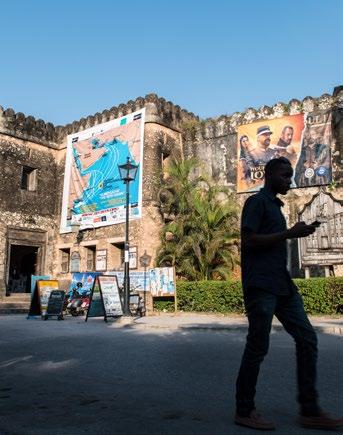
24th - 28th June
East Africa’s largest film and arts festival brings filmmakers and audiences together in historic Stone Town for a celebration of African and international cinema.
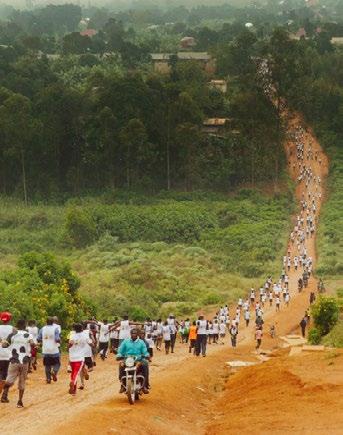
24th - 31st May
More than a race, the Uganda Marathon combines running through rural landscapes with community projects, offering participants a meaningful way to connect with local life
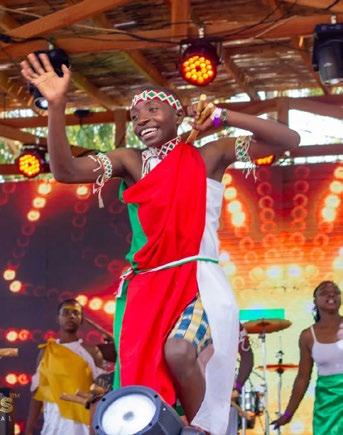
2nd - 4th October
Set on the shores of Lake Malawi, this intimate lakeside festival blends music, art, and culture in one of Africa’s most breathtaking natural settings. Lake
Kigali, Rwanda
Masaka, Uganda
Zanzibar, Tanzania
Lake Malawi, Malawi
Photo Credit: Armand Lenoir/ NBAE via Getty Images
Photo Credit: Jason J Mulikita / iStock
Photo Credit: Uganda Marathon
Photo Credit: Lake of Stars Malawi Arts Festival Photographer