






[ON THE COVER]
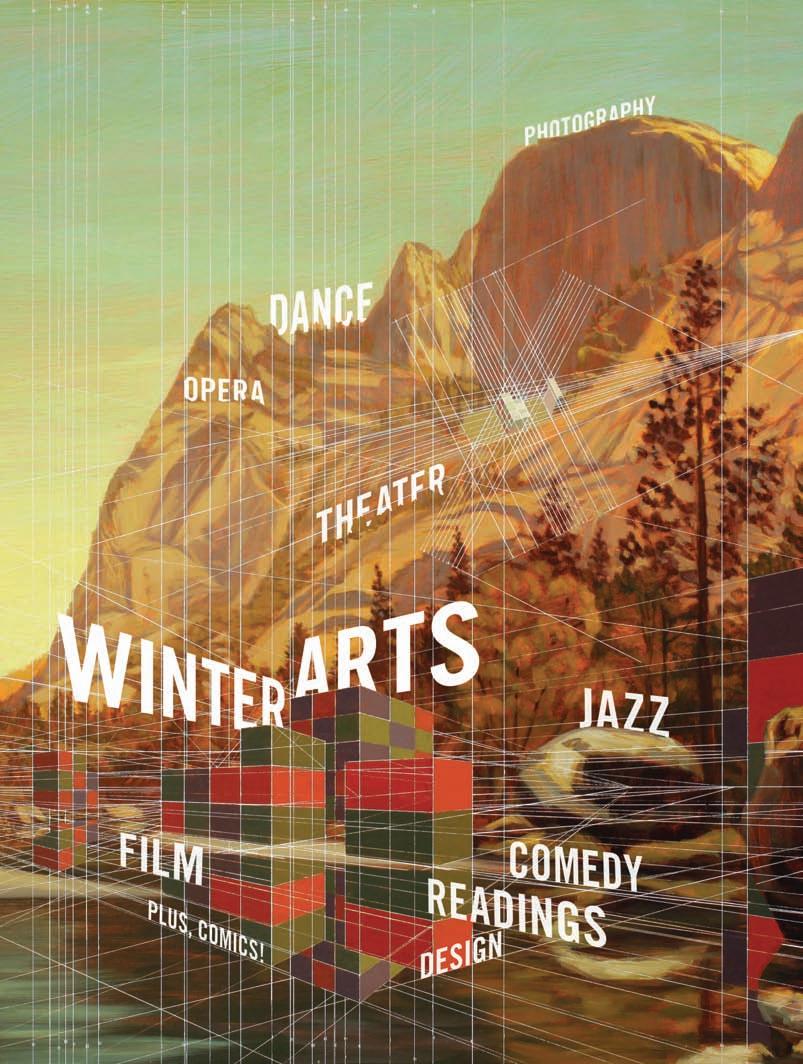
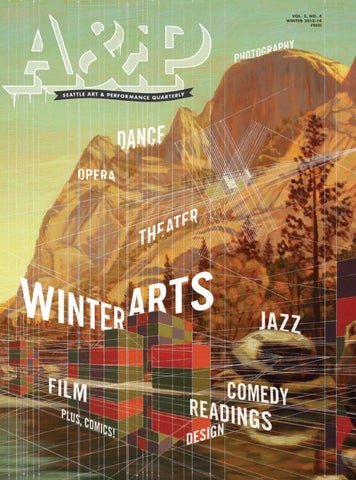
MIRROR LAKE WITH CONTAINERS BY MARY IVERSON
This is “the aftermath of an enormous catastrophe,” the artist says—a vista where it’s hard to enjoy the view. It’s Mirror Lake in Yosemite, and Iverson painted it based on a photo she took while camping there. The shipping containers are “like a stack of poker chips representing the viability of our economy,” she says. “The capitalist system wagers the needs of a growing population against the stress the environment can bear.” The painting is on exhibit at Davidson Galleries, 313 Occidental Ave S, Tues–Sat, 624-7684, davidsongalleries.com, through Dec 28.
Starting on page 4, scintillating, longer-than-usual interviews with
Keeara Rhoades, artist: “I’m more into the dark, the subversive, the sadcore.”
Clyde Petersen, filmmaker: “We’d just pile into a tiny car, and I started filming those Laura Veirs tours with a Super 8.”
Jennifer Jasper, performer: “The part about finding my grandfather’s dildo collection? She said, ‘Oh that. Who cares? Dirty old man!’”
Charles Parrish, sculptor: “I’d rather work with bronze or marble. Foam is just what I can afford.”
Charles, comedy duo: “There is nothing funny about a nuclear meltdown.”
L.B. Morse, scenic and lighting designer: “When I was younger, the answer was ‘because it looks cool,’ and that’s not a good answer.”
Matika Wilbur’s Fight Against a Hundred Years of Native American Photography
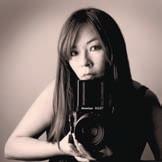
“To get one shot, she rode a Natives-only helicopter down into the interior of the Grand Canyon. She followed another subject to the rim of Hawaii.” Page 12
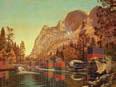
Co m ics Page 42
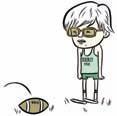
“The Andy Warhol High School Diaries” by Mike Force “Jean Genet” by Sarah Galvin and Robyn Jordan “Did You Know That We Can Turn Our Phones into Flashlights and Interrogate Each Other?” by Maged Zaher and Eroyn Franklin
To get an event listed in the spring issue of A&P— covering March 5 through June 10—send details to calendar@seattleaandp.com by January 31. For advertising information, contact adinfo@seattleaandp.com or 206-323-7101


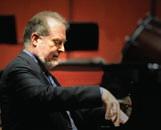

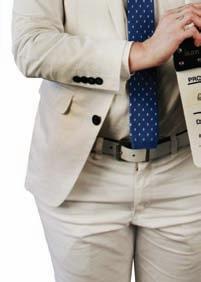
Interviewed by Jen Graves
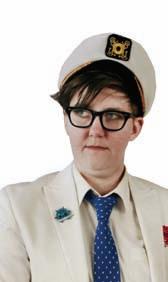
Your latest project, a “Graphic-Tele-Novella,” is called Cutie Beauty & the Trailer of Doom. It stars you as Cutie Beauty, is performed live but also filmed by several cameras at once to be put on YouTube in episodes, and includes music and comics and the character BearSometimes-Man, played by emeritus UW photo professor Paul Berger. It’s sort of Cindy Sherman meets Adbusters, the Kardashians, and experimental film. What exactly is it? It’s like this living thing that’s becoming its own organism. It started with a collaboration between me and Paul Berger. I had been teaching his spring classes while he was on sabbatical. Then I was taking students to Spain, and he asked me, “What work are you going to be doing in Spain? Are you working with another persona? Are you taking all of your wigs?”
I said, “Yeah, I want to be this persona who delivers soliloquies, because I’m going to be teaching all day, and I’ll have no time to myself except when I wake up in the morning and when I go to bed at night.” I wanted to be like
continued on page 7



filmmaker, illustrator, musician
Interviewed by David Schmader
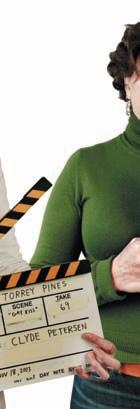
You did documentary filmmaking and queer studies at Fairhaven College in Bellingham. What was the first film you ever made? I think it was called Sex Trek It was a Star Trek puppet show. I was 12, and I made it with my best friend on his dad’s crappy camera. I wish I still had it.
You’ve made a bunch of music videos—for the Thermals, Kimya Dawson, Quasi, Deerhoof, Sean Nelson, and many more. How did you get started with that? I started making videos for bands in about 2004. I had been touring with my band [Your Heart Breaks] for a few years. Eventually, I ended up back in Seattle and started working with Laura Veirs. During those early tours, when she’d just been signed to Nonesuch, we’d just pile into a tiny car, and I started filming those tours with a Super 8. After about four tours, I put one film together, and the record label was really in love with it, and that kind of kicked it off. Then I started making stuff with Thao and the Get
storyteller, performer, director
Interviewed by Brendan Kiley
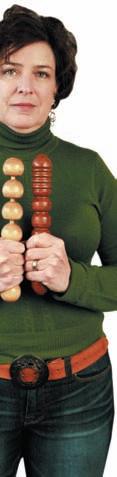
What hooked you so hard on performing? I have two favorite moments in theater: One is when the first cue hits on opening night and it’s like [gasp] Oh my god—the audience is there and it’s all together and this world is created. The other is when the stage is painted and the set is torn down and you turn the ghost light off and it’s done. Those are very different moments, but they fill me with the same sense of awe of creating a world—a world you don’t have to live in forever. I don’t have a maternal instinct. I love kids, but I don’t need to create a life. I create mini-lives every time I create theater or tell a story—and when I don’t like them anymore, I can give them up for adoption! I also found theater as another way of being around people like me—the first gay people I ever met were in theater, and older, like a family. They were mentors and fun people you want to be around. It’s addictive.
Why do you tell stories about your family so much? Is your family more interesting than ev-
continued on page 7 continued on page 9



Interviewed by Jen Graves
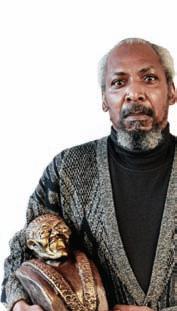
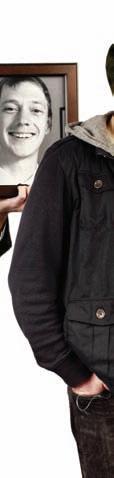
You’re a sculptor of heads. Your living room at home is full of heads you’ve made. Who are they? Let’s see. Down the line, there’s Leonardo da Vinci, Desmond Tutu, Albert Einstein, Beethoven. Ah, here’s Edwin T. Pratt. A Native American. Michael Jordan, Abraham Lincoln, Mother Queen, John Stanford, Van Carvinton, George Washington. Here’s a portrait of myself. Um, Booker T. Washington, Martin Luther King Jr. Let’s see now, one called Black Southerner, Forest Whitaker, one called Penetrating Eyes, Benjamin Banneker, Inigo Jones, John F. Kennedy, Ken Griffey Sr., John J. Oliver, one called Black Character. Mike Dillard, you know, of the department store in the South? This one is Architectural-Geometrical Portrait. That there is Old and Lonely. Michelangelo, Jimmy Carter, Karl Marx, and Malcolm X. And one more—who is that? I can’t think. Oh. Lawrence Welk.
They’re made of foam and painted to look like bronze or marble. Why? I’d rather work with bronze or


Interviewed by David Schmader
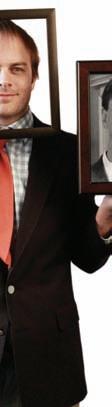
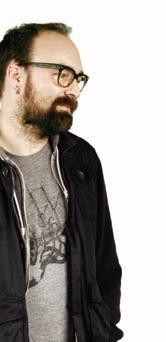
After graduating from Stanford, doing comedy around San Francisco, and honing your sketchcomedy chops in the Northwest, you’re finally doing your first full-length narrative work. Tell me about Moby Alpha.
Chuck: A friend and I were both reading Moby-Dick, so we would talk about Moby-Dick, and we had the idea that you could set Moby-Dick in space and it’d be the same story—just harvesting some sort of energy from space.
Charlie: I had this idea about how cool it would be to have a space helmet lined with LEDs and do a sketch in the dark. So I built these helmets that have LED strips with million-color LEDs in there, and I programmed different effects into them. So it starts blue, then it goes into space launcher and fades into red, then you get the sparkling of stars, and you control it all through a button on the side. Then we thought, what if we do this Moby Alpha thing all in the dark, with these helmets? So that’s what it is. There’s like 90 tiers on our helmets that we move through. We use the continued on page 9 continued on page 10
Interviewed by Brendan Kiley
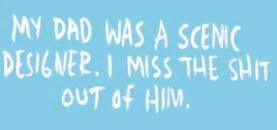
How did you get your start as a scenic and lighting designer? My dad was a scenic and lighting designer. When I was a kid, I’d be in the shop taking the scrap wood and building little things. Before he passed away, I would be in the middle of tech and have a problem I couldn’t wrap my head around, and I could call my dad. I miss the shit out of him all the time, and I definitely miss the shit out of him when I’m hitting roadblocks.
Once you’ve read a play and met with the creative team, what’s your next step as a designer? The first research I do is more emotional, finding imagery that is emotionally resonant with me the same way the play is. One book I always go to is the works of Mark Rothko—I’ll flip through the pages, waiting for something to hit me like “That’s the blue. That blue hits my heart the same way the play does.”
Did you find a Rothko for your The Hound of
continued on page 10

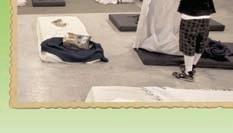

the Log Lady, who says these prophetic things, but nonsensical.
I decided I would let my students decide who she is. They each wrote down character traits. They had a brunch and read the traits into a confessional camera hidden in the refrigerator. When I edited the episode footage later, I was able to learn who my character was: Cutie Beauty is always late. Cutie Beauty has daddy issues. Cutie Beauty has a secret husband in prison. Cutie Beauty lives in a camper trailer. Now I write scripts, but I have to honor her character traits. And people are still writing them.
Like who? Anyone I give a prompt to. Prompts are based on various things. Like these cards. You can have that one. [Pulls a Rhymo Dominoes card with the words and pictures for a ram and a dinner plate out of her bag and pushes it across the table.] You can do anything. Write anything. Cutie Beauty is defined by the people around her.
Why? I don’t know, other than I am really interested in how society shapes us. I’m kind of a chameleon in some ways. It’s partly because I’m a middle child, and my sister was made fun of because she had really bowed legs, and I would take that role of trying to defend her but make people like her. It was really hard for her, growing up in a small town. We were in Newcastle, Wyoming. One stoplight. Everyone is ranchers, coal miners, or they work in the oil fields. It’s a place where everyone is the same for the most part, so one little abnormality makes you a total outcast.
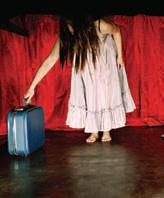
Some of my favorite filmmakers are Jeunet and Caro; they did Delicatessen

What do they have in common, the common thread? It’s just a feeling. Feeling alive and feeling haunted, feeling empowered to activate the senses and not be afraid of them. I think I’m more into the dark, the subversive, the sadcore—it inspires my visual field in some way. And my first photography teacher was a feminist, and I really responded. I was like, yes, just let it all out, who cares? I can photograph penises and do what I want with them.
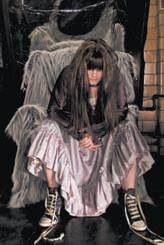
Five panels for one penis? For one penis. It was a great penis, though. People were like, “Whoa, really?” And I was like, “How do you know? It’s out of context.” It was taller than me. I’m five foot three, and it was a hundred inches.
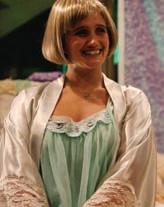
and the innocent, the small and the tangible. My husband recently got me this little dog from a bubble-gum machine, and I can’t even explain how fucking cute this thing is, and it’s so dumb. I put it on my dashboard, and we were driving up to get on the ferry, and I’m looking at this cute little dog, and I almost drove us off the road. What the hell is that?
Music, movies, art—what’s the biggest influence? Cinema more than anything. David Lynch. Have you seen the HBO show Carnivàle? Terry Gilliam. But musicians, too, like PJ Harvey. I love her. I would become her in my bedroom. The Pixies I couldn’t help, because I love Kim Deal.
Down Stay Down. Eventually, I was working so much for Kill Rock Stars that I said, “Hey, why don’t you just put me on salary for a couple years?” And they did! I’ve designed record covers and made a bunch of T-shirts for bands. I used to make zines and comic books—just your basic DIY kid.
What are you working on now? I’m in the calm before the storm of making my first animated feature film. It’s called Torrey Pines, and it’s going into production next year. I’m fundraising, but I’m also finishing storyboards, and starting to build characters and sets, and contacting musicians I want to work on the soundtrack of the film, and building a team.
What’s the film about?
Basically, it’s the story of growing up with my mom, who was a paranoid schizophrenic, but undiagnosed and untreated. My parents split when I was about 6, and the courts gave custody to my mom, because no one really knew she was sick. So I grew up with a single
Did you do that? Yes [laughs]. I photographed my boyfriend at the time’s penis. It’s so embarrassing. This is art school, so tampon in the teacup is okay, right? I went to the cemetery and decorated the statues with leopard-print panties and photographed them, and then the central statue—I put the penis on a pedestal. I had five panels. The biggest was 16 by 20.
mom in Torrey Pines in San Diego, in a shitty surfer shack, not knowing things were any different from any other person’s family, except my mom would always say crazy shit like “Deanna Troi can read your mind.” A lot of it is about watching TV with someone who’s schizo-
phrenic. Star Trek: The Next Generation and Beauty and the Beast with Linda Hamilton. Watching Terminator 2 with someone who’s schizophrenic— that was a really weird moment in my life. I would definitely put my mom on the same planet as Linda Hamilton in Terminator 2. That actor’s portrayal is pretty accurate to what I grew up with.
It’s also about the politics of the world, Bush to Clinton to Bush, and about the time
My video of the lap dance—this is when I figured out what I wanted to do. [The video is a loop of a woman’s whitecable-knit-stockinged feet dancing on a man’s lap as an erection repeatedly appears under his gray slacks.] It played on a small TV. You put this dress over your head to watch it, like a peep show, with mirrors so it was reflected infinitely.
My sister was made fun of because she had really bowed legs, and I would take that role of trying to defend her but make people like her.
Is Cutie Beauty cute and beautiful at the same time? Can something be? I think of beauty as being where empathy is. I mean, things that are ugly can be beautiful. And then, there’s something also to the cute
when cell phones became really prevalent. When you live with someone who talks to themselves out loud all the time, and then all of a sudden the entire world is talking to themselves out loud all the time, it’s a real transformation. There’s a lot of material.
What movie would you cite as your biggest influence? The biggest influence for me, in terms of what I’m doing now, is probably the Pee-wee’s Playhouse Christmas Special My uncle taped it and gave it to me, and I watched that tape so many times. It’s SUPER gay. There’s so much animation and creativity. That’s what my brain feels like—the Pee-wee’s Playhouse Christmas Special, all the time.
Aside from money not growing on trees, what’s the greatest hindrance to your creativity? Time. There’s just never enough time to do everything I want to do.
Keep up on all things Clyde Petersen at torreypinesfilm.com.
Then there’s the whole thing about how the eyes of a baby are placed in a certain place on the head so you think it’s cute and don’t abandon it—well, that’s cute, but it’s empathy, it’s beauty, too. It’s survival.
Keeara Rhoades shares her photography, video, and music at keeararhoades.com, where there’s a link to episodes of Cutie Beauty & the Trailer of Doom. On Valentine’s Day, Cutie Beauty will be performing her instructional video live on how to do the BearSometimes-Man walk. Participation is encouraged. The theme song for B-S-M is posted at prettyfences.bandcamp.com.
































erybody else’s? No, everybody’s family is crazy. Everybody has stories. But mine have to do with this change in parenting since I was raised, from indifference to caring—or at least to nurturing. My parents were young and not particularly equipped to have children. My mother wanted to travel. My father is a recluse who somehow ended up with a gaggle of girls around him. When my mother saw a DVD of the show, she said, “I can’t believe how much happened when I was out of the house!”
Did she freak out? No, I was surprised— the part about finding my grandfather’s dildo collection? She said: “Oh that. Who cares? Dirty old man!” But she wanted me to take out the part about her making out with my youngest sister—it was just an accidental slip of the tongue. I told her: “It’s okay, you just forgot who you were kissing, it happens to everyone. It just happened to be your daughter.” And I do a whole segment about the sister who passed away—that meant a lot to them.
Are you pissed off at your parents? I might be angry that they don’t realize how well we turned out despite them. But I love them. And they loved us. It’s why I continue to explore it. I’m way past blaming them for anything. The family stuff is a hard one. People say, “Oh, you’re fine, just look at David Sedaris.” But you’re putting people out there, and are you just putting them out there to get ahead? But the family stories are the ones other people always say, “Tell that one!” about.
You started the Family Affair storytelling series earlier this year—how’s that been going? I love the space [in the Rendezvous] because it’s so intimate. I’ve gotten to see a lot of people who I never see perform, and it’s such an intimate, sharing night. It’s what I love about theater—the connection. People don’t leave. They want to sit around and talk and meet the performers and meet the audience members. I always end it with an improvised story—a box of slips of paper with people I’ve never talked about or a story I’ve never told onstage.
Every show is a benefit for a family in need, right? Yeah, a little chunk of change for people in chemotherapy for leukemia or people who need a little help. I did it for one actor who was missing work because of health problems who said, “That actually paid for my groceries.”
You quit your job in the corporate world and now work at a restaurant— why? I decided to do more of my art before it’s too late. I turned 50, and I’m just coming into my own as a director, because I have life experience, and coming into my own as a performer, but now I’m tired! Why couldn’t I have had all this knowledge when I was 25 and could stay up all night?
Jennifer Jasper hosts the monthly Family Affair storytelling series, where performers from all disciplines gather to share stories about family, on the third Wednesday of every month at the Rendezvous JewelBox Theater.
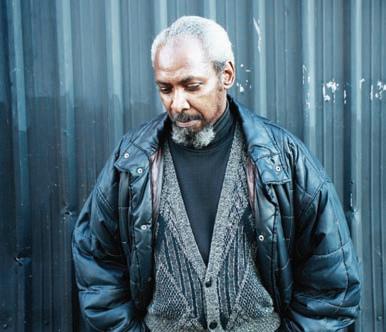
marble. Foam is just what I can afford.
When you walk down the street, do you just constantly look at people’s heads? Yeah, I do. I find myself doing that. You see the squares and the rectangles. Most times, a woman’s face is like a pentagon, and then the male, he’s either round or a rectangle. And then you look at the horizontal and vertical lines inside the geometry. You want to come from the interior line of the bone because that’s where everything starts. When you get to a certain age, from 17 to 21 or 22, that line of your head locks, and then you stop growing.
Have you ever told a lady she looks like an especially good pentagon? Oh, I never do that. They might get offended.
You work as groundskeeper at the James and Janie Washington Cultural Center in the Central District, where you also use the studio to make actual stone carvings. You’ve shown drawings and sculptures there, and a few other places around the city including A/ NT Gallery. But if you could show anywhere, where’s your dream venue? I would like to have a Martin Luther King Jr. or an Edwin T. Pratt out on the waterfront.
ist, she was a pretty smart lady, but she died when I was 4, and so my father raised me. My mom had a bad heart. When she was pregnant with my little brother Johnny, the doctor told her it was between the baby and her, and she picked the baby.
Did art always come easily to you? I got better at it. I’d draw people. We’d have people pose in front of us. I did that from eighth grade up till twelfth grade, and I got good at it. My dream when I graduated from high school was to be a portrait sculptor.
What inspired that? My teachers Charles Bishop and Ken Swanson. I used to work at the country club, and my teacher Charles Bishop would come through the door and say, “Where’s Charlie at?” He said he thought I had a good imagination for it.
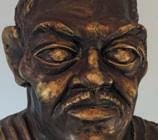
Pratt was a local civil rights leader who was assassinated in 1969. He’s the namesake of the arts school in Squire Park. In some ways, you know him better than anyone because you made his face. What was he like? I had a scholarship at that school there, and after my scholarship, I made this piece of him. I wish I had known him better. When I got here to Seattle, he had already died. He had been murdered. His face, it was subtle. It was a rectangle.
“I pick a lot of people from the past who I think the public should know about.”
If you had an Edwin T. Pratt on the waterfront, what would you want it to be made of? Bronze, maybe, or stone carving.
What’s your favorite portrait sculpture in Seattle? The one up there on Broadway of Jimi Hendrix, I guess. I like that one up there. I love the expression that he has, and the profile of him, the feeling, the emotion of it.
Did your family think it was normal to go to art school? Were they artists? No, my father worked for DuPont in janitorial. My mother, she worked as a cook and as a hairstyl-
Before art school, you took high school art classes in Greensville, Virginia. Were there many portrait sculptures in Greensville? No. When I was a kid, though, we went to Washington, DC, and I saw the Abraham Lincoln memorial and stuff and things like that. On Capitol Hill, I saw all those presidents going around in a circle. That’s what I wanted to do. I pick a lot of people from the past who haven’t been done before who I think the public should know about. Especially the black people in America. Every one of my pieces down at the Washington Cultural Center is black.
You lived for years at Yesler Terrace, but now that it’s being torn down, you’ve had to move. What do you think of what’s going on there? Well, they gave me a two-bedroom apartment, housing did. So actually, it’s a good thing for me. I got two studios now. I didn’t even have a studio at the time when I started at the Washington Cultural Center seven years ago.
How did you get the job? A guy named Tim Detweiler brought me in as groundskeeper, and then he found out later that I was an artist. He said, “I hear you know something about stone carving.” And I said, “Yeah, yeah, I know something about that.”
See more of Charles Parrish’s heads at A/NT Gallery (2045 Westlake Ave, 233-0680, antgallery.org, Wed–Sun 11 am–6 pm, free), where he is a lifetime member, or at the James and Janie Washington Cultural Center (1816 26th Ave, 709-4241, jameswashington.org, by appointment, free), where he spends his days.

colors to establish the characters. Ahab and Starbot are blue, and red is like a red-shirt thing for the belowdeck people, so you’re seeing two different trajectories while Ahab pursues Moby Alpha, who’s like an amorphous energy cloud that took his leg. The great white energy cloud.
One word that regularly gets applied to Charles’s comedy is “cerebral.”
Chuck: We have a lot of sketches that assume an understanding of science or literature. We both listen to a lot of NPR, we both read a lot, and we draw from pop-culture stuff that has a bit of an intellectual lean. We write almost exclusively premisebased material, which seems to feel a bit more academic in nature.
Charlie: We’re analytical about it, like how do you escalate the situation, what do people want, how are you getting it.
Chuck: Approaching things “academically” allows you to go to ridiculous places. We have this sketch—it’s not a barn burner, we typically put it in the middle of a show—about a guy who travels back in time to get a vasectomy, to keep his girlfriend from getting pregnant. Every line is essentially a dick joke, but because
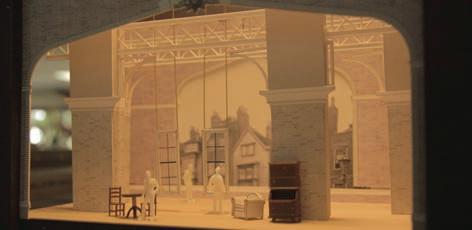
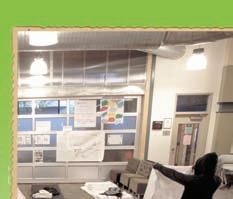
What the set looked like big, after it was built and actors were tromping around on it.
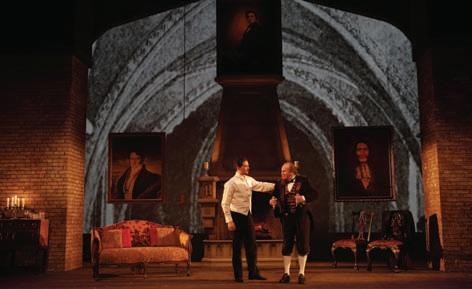

we caged it in this weird sciencefiction universe, with boiler-plate facts about quantum physics, we can do this sketch that is in essence pretty base, but in a way that feels new.
What is the funniest thing in the world?
Chuck: Generally harmless catastrophic failure. It’s a tough line to walk—most catastrophic failure has an element of reverberating tragedy, affecting those outside the endeavor. There is nothing funny about a nuclear meltdown. But an atrocious film with a massive budget, or an overwrought poem, or a selfimportant dramatic work that ends up being entirely incomprehensible is just about the funniest thing in the world.
Charlie: Southwest Airlines flight attendants.
Charles will perform Moby Alpha as part of the First Night Festival in Tacoma on New Year’s Eve and perform sketch comedy at Annex Theatre’s Weird and Awesome on Feb 2.
the Baskervilles set at Seattle Rep? There are a couple of his paintings that are almost black with limited variation in tone—it’s almost more a texture than anything else, like a soft, blurry horizon. It felt like the moor to me, and that sense of a void being both vast and claustrophobic at the same time. There’s a darkness to the character of Sherlock Holmes himself—him being a drug user, his social ineptitude that sometimes borders on Asperger’s syndrome, this need to feed his mind and his sense of excitement.

the answer was more “because” or “because it looks cool,” and that’s not a good answer.
Then you draft and make models, right? Everybody still makes physical set models. It’s an important tangible thing— the thing you show at first rehearsal that people get really excited about. Then it sits in the rehearsal hall for when a director and an actor have a blocking question they can’t wrap their heads around. They can walk over and look at it and say, “Well, the couch is here, but what if we put it over here?” and physically shove things around.
How has your design sense changed over the years? I’m more interested in substance than surface—it’s really easy to get excited when you’re young about moving lights and fog machines. That stuff is great (there’s a shit-ton of fog in Hound), but you have to ask “Why?” When I was younger,
Can you give me an example? The Glass Menagerie at the Rep in 2012. I did the lighting design. I told Braden Abraham, the director, and Mikiko Suzuki MacAdams, the scenic designer: “You guys have to keep me honest about not making everything too pretty.” There’s a griminess to the story, but there’s a temptation to romanticize it and make it look pretty. Sheila Daniels taught me that when I worked with her on Abe Lincoln in Illinois at Intiman. At the end of the show, when Lincoln is up on this rolling platform, I’d written a really pretty light cue. Sheila came back to the tech table and said, “That’s really gorgeous, but this isn’t a gorgeous moment—he’s going off to start a war, and there needs to be some of the pain of that.” I was heartbroken for half a second, and then I said, “Yes, of course, you’re right.”
a design that is fleet, able to shift and change and sculpt our world and perspective quickly. We had a conversation about limiting the amount of stuff onstage. Baker Street [Holmes’s apartment] could be a fireplace, wall hangings, tables, chairs, pipes, and deerstalker hats. But for this production, there’s just a breakfast table, an armchair, Holmes’s study hutch, and a pair of windows that come in. It’s simple, but it really specifically sets the location.
It’s easy to get excited about fog machines.
More Seattle theatergoers seem to talk about design than they used to. At the Rep, we do these lobby talks before shows, and there will be 150 to 200 people showing up early to hear designers talk. Lighting tends to be the most esoteric. We all deal with lighting every day, but it’s not something people consider all that much. There’s an old adage: “The best review for a lighting designer is the review that doesn’t talk about lighting at all.” Which is true in some ways and not in others—it’s the invisible thing that’s not really invisible at all.
What were some of the design challenges for Hound? We go to 18 different places in the course of the show—there is a lot about the script that feels cinematic, but it has a strong momentum that is specific to theater, so we wanted to come up with
L.B. Morse is the scenic and lighting designer for The Hound of the Baskervilles at Seattle Rep (through Dec 15). He’s also the lighting designer for A Great Wilderness, Jan 17–Feb 16, also at Seattle Rep.
BY JEN GRAVES
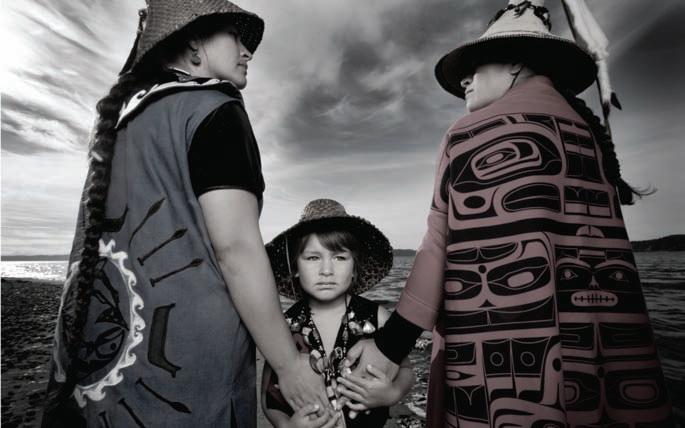
Matika Wilbur is the kind of photographer who calls ahead. She laughs loud and makes friends easily and sleeps on the couches and floors of her subjects. If she gets sick, like she did this past August, after too many nights with no sleep, driving through the American West with her camera, she is offered an actual bed, and actually takes it. In August, it was Steven Yellowtail who insisted she take his bedroom and he would sleep on the family couch. He’d never met her before. He only knew she was a friend of his older sister’s and that she was doing something she wouldn’t be able to do unless she had couches and beds and floors to sleep on. What she’s doing is spending several years—as long as it takes, and as long as the grant money and Kickstarter funds last—visiting and taking pictures of every Native American tribe in the United States.
She’s been traveling a year so far, at the wheel of her improbable black sports car, one woman following her own grand vision. But she’s also fulfilling what really is a communal mission: picturing Native America from the inside, for the first time. She’s trying to bring “image justice,” as one museum curator calls it, to the world of social justice. She is traveling long distances, sometimes to remote
locations, but as a Native woman—she is of Swinomish and Tulalip descent, tribes near Seattle—each place is a version of her own home, and these are family portraits. She’s trying to find methods of shooting and capturing that don’t repeat her extended family’s history in real life of being shot and captured, restricted and suffocated within artificial borders and frames.
By the end of the first year, she has thousands of pictures and has visited almost 200 tribes, but she also has more than 300 tribes to go and much more money to raise. If anyone can do this—and it’s a fair question to ask whether anyone can—Wilbur is the one. From her childhood of being bused from Swinomish across a tiny channel to attend a white school in La Conner, to her teenage years of addiction and recovery, to her early training and career as a fashion photographer who finally dropped out when she found herself on a meaningless and exorbitantly expensive shoot in Malibu, she’s had more struggle and adventure than many 80-year-olds. Next year, she’s turning 30.
There’s another photographer Wilbur is always compared to: Edward Curtis. Wilbur’s first exhibition at Seattle Art Museum paired them, and, frankly, everybody gets compared to him if they take pictures of indigenous Americans. Curtis was based in Seattle and
undertook exactly what Wilbur is doing, a national survey of Native Americans, except that he was a white guy who brought his own props and sprinkled them where he wanted them, never knew even the names of most of his subjects, and, whether knowingly or not, became one diplomatic arm of the regime laboring so hard at disappearing the Native people on this land. His famous 1904 photograph Vanishing Race is a diaphanous, arty portrayal of faceless Navajo on horseback, casting long shadows and kicking up romantic dust as they march toward their inexorable extinction. It’s a white-supremacist fantasy.
This is the history Wilbur photographs against, full of stories that would be unbelievable if they weren’t true—and supported by visual representations in photography, painting, and prints you can still find sometimes, lingering over a bar somewhere, or displayed in museums, maybe described in embarrassed terms, maybe not.
Another common visual from around Curtis’s time: depictions of the Battle of the Little Bighorn, which happened in 1876. George Armstrong Custer died ignominiously—even the mainstream news of the day in the New York Times called him “imprudent”—but in the art of the time, he appears as a hero. That art was also used as propaganda for the acceleration of the American government’s attack
on the people of the region during the Curtis years. This is also the history Wilbur makes art against, the history of art as propaganda for killing. Her project—Project 562, referring to the number of federally recognized tribes, give or take a few as administrative moods change— is propaganda for living. Each image contains only two parts: person, land. They are here.
Reenactors of Custer’s defeat dress up and redo the events every June, and then two months later is Crow Fair, a whole insta-village of tepees that rises on the banks of the Little Bighorn River, in the shade of green puffy cottonwood trees. Bethany Yellowtail—a fashion designer in Los Angeles, an old friend of Wilbur’s, and the sister of Steven Yellowtail—brought Wilbur to her first Crow Fair this past August. Established in 1904, Crow Fair is made for photography. All week long, there are giant celebrations: horseback parades, thousands of Crow members streaming by in full-body regalia, powwows, all-Indian rodeos. After Crow Fair, when Wilbur was recuperating at the Yellowtail ranch, Bethany had to return to LA, so Steven gave Wilbur a tour of the ranch and they got to talking. He was barely 20 years old, home from college on break, and arose every morning at 5 to help his father with the horses.
The Crow people have a long history of ranching—more than a hundred years now,
ever since European Americans hunted the bison almost into extinction to starve the Crow of their food source and push them onto fixed lands. (Crow Fair was the brainchild of a Bureau of Indian Affairs agent who modeled it after Midwestern county fairs to encourage agricultural lifestyles; eventually, Crow people cut the 4-H and tailored the fair for themselves.)
Steven Yellowtail is a proud rancher, the son of a proud rancher, and has a future beyond ranching if he wants it. He exemplifies not only Native survival but continuing adaptation. It turns out that this is what Wilbur is looking for when she’s searching for subjects. It’s a quality that applies to all sorts of people all over the country, of all ages, doing all sorts of jobs, wearing all sorts of different clothing. Wilbur thinks of the quality simply as leadership. These are her tribal leaders; she appoints them in her pictures. They are “positive” and “getting well” is how she puts it. What she means is that they might be, like her, forever in active recovery from specific addictions, or they might be, also like her, forever in recovery more generally from the condition of their shared violent history. They face forward but don’t turn their backs on their past. They are not all happy-golucky. They do not all agree on specific political matters like the meaning of sovereignty or blood quantum (the government’s measure of your blood to determine whether you qualify as a tribal member). But these are all issues that she brings up in their interviews. When Wilbur uses the word “recovering,” you might think of its old meaning, “regaining consciousness.”
Subjects pick where they want to be photographed. Wilbur’s only request is that the location be within their indigenous lands. This can mean extreme circumstances, and Wilbur sometimes longs to return to the stability of studio photography. But for Project 562, she’ll take the picture anywhere, regardless of conditions. To get one shot, she rode a Natives-only helicopter down into the interior of
the Grand Canyon. She followed another subject to the rim of Hawaii. At the ocean edge of Washington State, she waded with her camera, following twin brothers, into the frigid water on the sacred, private beach of the Quinault Tribe. On that freezing errand, she was assisted by a young volunteer named Coup Trudell, who held the portable light stand and its umbrella aloft as the waves crashed closer, the tide moved in, and the sun went down. Trudell’s father is John Trudell, the spokesman for the United Indians of All Tribes’ takeover of Alcatraz in 1969. This past summer, Wilbur photographed the Trudells on the street in the Mission District in San Francisco, where they live.
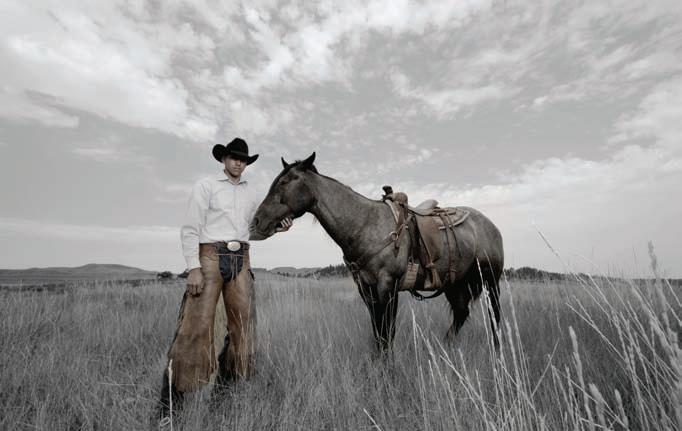
As for Steven Yellowtail, he wanted his photograph made on the ranch. He wanted to stand with his prize horse. He wanted to wear chaps and cowboy hat, not buckskins, beads, feathers, warbonnet—not Crow Fair stuff. When he talks about ranching, he calls it “cowboying,” Wilbur notes. He shared with her that he’s been alternatively accused of not being Indian enough or being too Indian, which she can relate to; it’s a phenomenon she terms the “lateral racism of the younger generation,” the latest set of judgments placed on an adapting people with an oppressive past.
Wilbur’s chosen printer. Taking into account the price of film and silver gelatin print development, Wilbur estimates that every frame costs her $1.75—one reason she sleeps on people’s couches rather than hotel beds.
In Montana that summer day, she uses a wide-angle lens. The streaky sky, blazingly
the horse and the man, like the wind is giving a little blessing to the portrait.
Wilbur, after the photograph is printed, hand-colors sections of it with oil paint on the fiber-based paper. She highlights the horse’s saddle, Yellowtail’s chaps, and his only visible skin—hands, neck, face—in rich brown, which stands out only subtly in the field of printed grays, blacks, and whites. Legs rooted so strongly they’re like extensions of the land, his body appearing to lean on the horizon itself, Yellowtail appears fairly epic. He looks great.
Out on the shoot, Wilbur begins with a digital camera. She shoots a hundred frames or so, while Yellowtail gets used to the general presence of her and the lens. When they’re both relaxed, and she can feel what she calls “the connection,” she takes out her Mamiya RZ67.
The Mamiya RZ67 is a box-shaped 6x7 cm. camera with a back that rotates 90 degrees for vertical or horizontal composition. Sam Ameen, the legendary South African blackand-white printer based in Santa Barbara, is
bright to the eye, will appear in her photograph of Steven Yellowtail as shades of gray. His cowboy hat will be purest black. It dips down over his eyes. The head of the horse— dark, shiny, proud—is cradled in the crook of his arm. The horse is nuzzled, contrastingly, against the man’s crisp white button-up shirt, tucked and belted neatly with a glinting buckle. At the bottom right corner of the photograph, fluffy stalks of grass jut up into the frame, struck by light and blurred from swaying. The cluster of grass points toward
“But that’s not how you photograph a horse!” he tells Wilbur.
The horse’s ass, it turns out, is too small from this perspective. More of the horse’s body should have been turned toward the wideangle lens, he says. The horse looks like a mule, Yellowtail thinks. Wilbur laughs. She has two reasons. One, the Crow are horse people. Before they were ranchers, they hunted bison, which you do on a horse. At Crow Fair, they made fun of Wilbur for being spooked around horses. Meanwhile, she made fun of the Crows for wearing life jackets while swimming by the Yellowtail Dam on the Bighorn River.
Of course she would take a photograph that made a prize horse look like a humble mule.
Then she laughs again, because “I always want my ass to look smaller.”
This is how a picture from Wilbur’s Project 562 gets made. Each one is an exercise in collaboration. Because of that, each is unpredictable. While outlining the fact of indigenousness, the series explodes what’s inside those lines. Wilbur talks about The Exhibit—the final showing of all the pictures once she has visited all 562 tribes and made





every image perfect—as the construction of an alternative universe: a Native America you can walk around inside of, unlike anywhere that has ever existed.
“When people walk through The Exhibit, they will see the canoe culture, the horse culture, the Swinomish, the Cheyenne, the Lummi, the regalia, the young, the old, the women with master’s degrees from Stanford, the twins, the tattoos, the business suits… Then, then, finally, in that moment, there will be no denying that there is no such thing as an Indian,” she says.
There will be infinity Indians, doing every last thing but vanishing.
Wilbur’s home, the Swinomish Reservation, is immediately across the water from lily-white La Conner, Washington, a little town known for its quaint charm. Visitors go to La Conner to browse antiques and brunch in cute cafes with floral tablecloths. It is best suited for visitors not overly dismayed by the occasional appearance of mammy dolls in a display case.
Approximately zero-point-zero-zero percent of visitors to La Conner ever seem to find a reason to cross the channel to Swinomish, pronounced “SWIN-a-mish” (you rush to the end of the word). It would be surprising if many even knew Swinomish is there, despite these two places being the two naked, deforested banks of the same rivulet. The village and the reservation are connected by a bucolic two-lane bridge out of a movie. It’s called the Rainbow Bridge, and its span is shorter than two football fields end-to-end. On the La Conner side are cottages, trimmed lawns, vanity mailboxes, and about 900 people.
That’s about how many members are in the Swinomish Tribe, but the population on the rez—only 15 square miles—is larger because of all the white renters who live there, too, most of them in big houses on the water. Though small, the reservation contains multiple worlds. Wilbur points out the administration building, the health center, the longhouse, the Shaker church, the Indian college, the cannery, the tall and imposing home of the tribal manager, and the tracts of subsidized housing all around it, whose yards are crowded with nets thrown over piles of bright buoys. The Swinomish fish; Wilbur’s brother is a commercial treaty-rights fisherman, and what he brings back, Wilbur takes as gifts for the people she meets on the road.
Wilbur has to drive quickly because she knows too many people and would otherwise be stopped to talk. “That’s Albert Dan’s house there, and my first boyfriend’s house was there, and this is my aunt Lisa’s house, and…” —she would be there for hours. A little boy in a driveway stares as we pass, pointing a toy gun right at Wilbur’s car. Maybe another photographer would take a picture of something like him. “I am not shocked by poverty,” Wilbur says later. “I don’t think it’s the only thing worth photographing. These are the pictures that come out about our people. It’s always the same thing. It’s like all they can see is the three-legged dog.”
She’s talking specifically about another Seattle-based photographer, Aaron Huey, who has a coffee-table book out of photographs taken at the Pine Ridge Indian Reservation, which in a TED talk he equated to a prisoner of war camp. Those photos have been adapted by street artist Shepard Fairey for billboards and have appeared in Harper’s and National Geographic. But Huey will always be a white photographer on the rez, as he acknowledges. He told me recently that his pictures are bleak in part because so much is kept away from him: He’s forbidden, most importantly, to photograph Native spirituality. Usually if something is hidden from a photographer, it’s something ugly; in this case, it’s something beautiful that’s missing from his pictures.
Wilbur’s home on the reservation is not among the subsidized houses, and it’s not prime waterfront real estate. To get to it, you drive through the forest. The fastest way from Interstate 5 is to connect over to country Highway 20, where after you drive past the Swinomish Casino on the right, you see a sign that says, “Entering Swinomish Reservation,” and then you blink, and then you see another sign that says, “Leaving Swinomish Reservation,” as if it were a joke, as if the land itself were announcing having been absurdly sliced up. After that exit sign, you hit Reservation Road and take a left onto it. You soon find yourself on Wilbur Road.
Matika’s mother’s name is Nancy, and she’s Swinomish. Matika’s father, Kenny Joseph, is Tulalip, and he doesn’t figure very large in Matika’s telling of her stories. The two are not together. Nancy’s home is perched at the end of the winding forested road, on the edge of Swinomish Channel, a narrow saltwater pass 11 miles long that leads in one direction toward Deception Pass and the other toward the San Juan Islands.
To keep the commercial fishing boats moving through it, Swinomish Channel has to be dredged about every three years, which sometimes seems like it’s not going to happen depending on funding from the Army Corps of Engineers. It’s a happy place to be for Matika. “After living here, it’s hard to think of anywhere else as good,” she says, waving her hands around her mother’s cozy kitchen. This is not the reservation Sherman Alexie talks about needing to leave lest you be stuck inside the “reservation in your mind.” Growing up, Wilbur’s friends on the rez thought her family had money, because they lived out here in the middle of nothing. Her mother always had several modestly paying jobs at once, actually—teaching Native history at the college level, advocating for Native issues in Olympia, running a cafe in La Conner. They didn’t have much. But the Swinomish Wilburs are endowed with an illustrious past.
Laura Wilbur was born—she was emerging—right when Edward Curtis was hunting Vanishing Race. 1904. Laura lived to be 93 years old. She was a tribal senator for half a century. She became known for advocating for the tribe in Washington, DC, becoming friends with Senator Henry “Scoop” Jackson. “But when visiting Washington, DC, she would always sit with her tribal members,” her 1997 obituary in the tribal newsletter read. Matika was born eight decades after Laura, on April 28, 1984. Laura is the reason Matika is doing Project 562, in some ways.
“That house will become my house,” Matika says outside an empty A-frame house, Laura’s old house, tucked into the trees like a grandmother’s house in a fairy tale.
Will Matika come back to live here after she’s done with Project 562, when she gets finished with the road? “I’m still trying to figure that out,” she says. Before the project, she’d been teaching at Tulalip Heritage High School and living in Seattle. She doesn’t say anything else for a little while, which is unusual. She just drives.
Laura Wilbur is buried in the bumpy earth of the Swinomish cemetery, which is the first part of the reservation you encounter on the Swinomish side of the Rainbow Bridge. The bridge is how reservation kids get to school in La Conner every day. Wilbur rode the Rainbow Bridge.
“My family expected that I would become versed in Western education so that I could help my people,” she says, adding that her name means “messenger.” “I was always told that I would be a leader, that I would do great things, that I was important. The poverty porn that Sherman [Alexie] speaks of was not my reality. That doesn’t mean that hopelessness isn’t real for several young American









With a calendar featuring 400 events annually, drawing together dozens of independent artists, speakers, and organizations, TOWN HALL tells the story of our community celebrating its creativity and curiosity through diverse, inexpensive programs that are intrinsically timely and relevant.
TOWN HALL IS ITS MEMBERSHIP. With a grassroots base of 3,500 members who support TOWN HALL intellectually, socially, and financially, our membership is always the core of what we do. ARE YOU A TOWN HALL MEMBER?

Indians. It just wasn’t my reality.”
Wilbur has been written about enough times that she has a bit of a mythology. It usually centers on the narrative that leads up to her great-grandmother appearing to her in a dream and urging her to go home and photograph her people, and it starts with her addiction to alcohol and drugs beginning around the time her great-grandmother died, when she was 13, and ending in rehab at 17, where she was dragged by her mother with a bribe of a bottle of vodka. The rehab stuck. She’s been sober for more than a dozen years.
While her family positioned her to be skilled in Western education, she was sometimes humiliated by the trips across the Rainbow Bridge. She was sent to special-ed accidentally, even though her grades were high, because that was just where the rez kids went, her teacher told her. At age 9, after having been turned down at ballet class for being different from the other girls, her school took a cultural enrichment trip to the reservation, where she was dancing powwow. She loved dancing powwow. Her father was a powwow dancer. But not like this, on display. Real learning of cultures only happened in one direction across the bridge; in the other direction went indifference punctuated by occasional voyeurism.
In high school, she channeled her energy into softball, volleyball, and basketball. She was popular. After graduation, she split, moved to Santa Barbara, and enrolled in photography school at the technically oriented Brooks Institute. At some point, she had attended a lecture on photography and decided that’s what she wanted to do. When she found herself in Malibu at that vapid photo shoot, she decamped to the nonprofit world and to shooting in South America. When Wilbur moved back to Seattle, she started making pictures of Swinomish elders in a series she called We Are One People, which she exhibited first in La Conner in 2006. Her next series was We Emerge, another series of portraits, this one more arty.
One day, her mother drove her straight to Seattle Art Museum to make a cold call.
Matika did not want to get out of the car.
“We’re here to see the curator of Native American art,” Nancy told the receptionist.
“Do you have an appointment?”
Nancy said, “We do not need an appointment.”
Hearing this exchange from the other end of the receptionist’s phone, Barbara Brotherton, the museum’s curator of Native American art, decided that anyone with this much pluck should get a hearing. She found an open conference room. She listened while Matika talked, not Nancy now.
“She was pretty forceful, and you know, I think she was like 23 years old then,” Brotherton remembers.
By the end of the meeting, Wilbur had talked her way into becoming included in the large Salish exhibition Brotherton was organizing for SAM in 2008. “No,” Brotherton laughs, “no other artist has ever gotten a show from me that way before.”
In the exhibition, which headlined the museum that season, Brotherton contrasted Curtis’s outsider gaze with Wilbur’s view from within indigenous experience.
“What Matika’s doing—it’s such a simple thing,” says Sandra Jackson-Dumont, the SAM education director who formerly worked at the Studio Museum in Harlem, an institution that was formed in the late 1960s as part of the civil rights movement. “This is social justice. It’s image justice. It’s people having the right to participate in their own image construction. There’s a whole group of photographers out there right now who are going back to people and giving them agency, saying, ‘Work with me, and we can create an image that reflects you.’” Photography, Jackson-Dumont points out, once was in the hands of the few: those few
who could afford a camera, or afford to go to a studio to have a portrait done. Or it was used by scientists and anthropologists voyeuristically studying the Other, researchers driving across bridges but never really knowing where they were once they got there, just like Wilbur’s elementary-school class. Today, people have cameras in their hands. The word “selfie” has just been inaugurated into the OED. The predatory language of photography has been under suspicion at least since Susan Sontag wrote about it in the 1970s, and the technology caught up and then some.
“It’s this really interesting shift in agency and the gaze,” Jackson-Dumont says. “Now, it’s like, ‘I finally have control. I’m gonna stand here for hours just to get this photo exactly the way I want it.’ You have the camera in your hand, and you are immediately able to publish it to the world.”
Jackson-Dumont mentions another artist, Dawoud Bey, whose first solo show back in the 1970s at the Studio Museum was a survey of photographs he’d taken in Harlem—and who recently unveiled a permanent installation of photographs in the library at the University of Washington Tacoma. Bey’s career began because of an exhibition that was offensively wrong in the same ways Curtis’s images were. It was called Harlem on My Mind, held at the New York’s Metropolitan Museum of Art in 1969, organized by a white curator at a white institution, and it didn’t even include any artists. It was a history and anthropology show, with news footage and photographs and archival documentation of Harlem, just blocks north of the museum. At 16, Bey went to visit, mostly to see the protesters. But no protesters showed up that day, so he went in. He was taken by the photographs by neighborhood studio portraitist James Van Der Zee—later enshrined as a fine-art photographer by the mainstream art world—but overall, Harlem on My Mind mainly left Bey with the impression that Harlem was not represented at the Metropolitan Museum of Art. And that if he wanted to find Harlem, he’d have to do it himself.
Bey was an insider and an outsider in Harlem, like Wilbur is when she travels through Native America. Just as Wilbur always calls ahead, writing letters to tribal leaders to ask permission and access weeks before she arrives in a place, nobody in Bey’s pictures is caught unawares. At Bey’s opening in Tacoma in November, the people in the photographs were there in the room. Tasha Ina Church looked determined in her picture, unsmiling, her arms folded, but at the reception, she was all smiles. In an interview, she described appreciating Bey’s way of collaborating with subjects rather than capturing their images as he saw them. She’s part Nez Perce, and when people photograph her, especially for public uses—she’s the director of a coalition called Vibrant Schools in Tacoma—they pressure her to wear beaded jewelry and braids. “But I think of myself as multicultural,” she explains. “People always want me to be the version of them that they think I am.”
Caleb Dunlap—one of the twins Wilbur followed into the freezing water at Quinault this summer, program manager at Chief Seattle Club—echoes the idea in an interview about what it was like to be photographed by Wilbur: “Her work is about changing how people perceive us by demonstrating how we perceive ourselves.”
Wilbur herself is unpleasantly intimate with the unspoken edict that You should look like my idea of who you are. It penetrates even places where she might not expect it. Up on the cliffs of the Quinault Reservation above the sacred beach, during the days of the Tribal Canoe Journey, she was sitting outside her mother’s tent, near her mother’s pickup truck, in a circle of tents inhabited by her close family. She was home. Two journalists arrived from a newspaper that has written about her before, asking



sir alan ayckbourn jeff fielder
xolie morra marita dingus wade madsen etsuko ichikawa
more & ryan lewis ben kasulke
ginny ruffner cuong vu r.
hamilton wright jim woodring
star anna lauren weedman
leroy bell joel mchale charles s
cross picasso norman durkee
hey marseilles isaac layman
john relyea su ludovic morlot suttonberesculle
bazan kt niehoff






rodrigo valenzu

mark mitchell b

dayna hanson m
graham nash










for an interview. The news has spread quickly that Project 562 was rewarded with a grant from the National Institutes of Health, and the reporters wanted to talk about that. The interview took a half hour. Afterward, she slumped her shoulders. “First, he asked, ‘What are the values of Indian Country?’ as if I could describe that,” she says. She tried to deflect the question. “He asked three times. ‘No, but what are the values of Indian Country?’ It’s always dumb questions. Always.”
On the other hand, she relates a story about arguing with the editor of Native Peoples magazine when they put her on the cover of their September/October edition. First, the editor wanted a photograph of one of her subjects who’d appeared in regalia. Traditional sells. Wilbur countered that if the story was about her, she should be the subject of the cover photograph. “He said, ‘Okay, can you wear regalia?’” In the end, Wilbur appeared wearing what you might see her wearing any day—her black leather jacket. “I told him, ‘We’re on the same team!’ I won, but only because I shamed him, I think,” she says.
She knows, meanwhile, that she’s on the other side of image-making, too, controlling the means of production for her subjects. Like Bey, she is present in the final image: She’s not pretending at documentary photography, and hand-coloring the prints is part of that. “When you add color to a project, it’s very clear that this is what I want you to see,” she says.
Yet she defers, to keep the collaborations honest. When she was on Kauai, Josh Mori—a master’s-degreed activist and founder of two nonprofits—wanted Wilbur to photograph him displaying his tribal tattoos. “I would choose to depict him in a really different way,” she says. “But then, would I be any different from Curtis? Doing this work really fucks with your perceptions.”
In the photograph, Mori is shirtless and exuberant-looking. The word “MAKANA” appears in ink below his collarbone. If you look up “makana,” you easily discover that it refers to a mountain located on the northern shore of Kauai and translates from Hawaiian to mean “gift” or “reward.” Then again, if you don’t need to look up “makana,” it’s yet another photograph entirely, like all of Wilbur’s pictures, which split the subjectivity of the audience rather than the subjectivity of the pictured subject.
There is no Native America. There is no place to go to find all the tribes, no territory they own and inhabit besides the imaginary one, made of history and projection at best. Except, eventually, in the photography of Matika Wilbur. And just as Bey didn’t want to take pictures of Harlem for the purpose of showing them at the white Metropolitan Museum of Art, Wilbur knows that a single mainstream institution is not the true home for Project 562. She pictures something more like a big-tent roadside attraction that can move, combined with a book, plus an app that Native kids can hold in their hands for the instant queuing-up of potential heroes they can’t find on television and in movies. But institutional imprimatur will help her finish, which ultimately matters to her more than anything else. She does have an institutional exhibition scheduled: About 50 of her pictures, with audio of the interviews, will open in May 2014 at Tacoma Art Museum.
“Rock could not have been more supportive,” Wilbur says, referring to Rock Hushka, the curator at Tacoma Art Museum. “When we first sat down, he said, ‘How can we help?’”
Hushka is a fascinating character. An insider/outsider himself, he has taken on some of the region’s most complicated exhibition projects, establishing Tacoma Art Museum as a home for socially engaged art even while the museum works to open a new wing devoted to a German couple’s Western art collection. “Western art” usually means bronze sculptures of cowboys
and is inevitably politically inconvenient. But Hushka’s commitment to the politically inconvenient is a hallmark of his curating. A few years ago, he opened an exhibition empty. It was supposed to feature a Puyallup carver named Shaun Peterson carving a log live and in person. But Peterson had determined that every log the museum found for his use was insufficient. Eventually, Peterson found a log, carved it in the gallery, and it now stands
to help. She helps coordinate Wilbur’s travels and speaking engagements, assembles maps marked with the tribes in each state, prepares the preliminary letters to the tribe asking, “humbly,” for Wilbur to come and visit.
“She’s the leading female Native American photographer in Indian Country today,” Haljo says. “I’m happy to get to work with her.”
The logistics are unthinkably byzantine, because tribes of people are not corporations
outside the museum, across the street, in the permanent collection of the City of Tacoma as a Puyallup welcome figure. Hushka did what Wilbur describes as a requirement in Indian Country: He went with the flow. “What I learned,” Hushka says, “is to trust the artist, to believe in their vision, and when they change directions, to just take a deep breath and be confident that they’re doing the right thing, and then also to learn to ask questions— to be willing to acknowledge all the things that you don’t know and to accept responsibility for what you ask and how you ask it.”
It’s entirely believable that Hushka wants to feature Project 562 as more than a token of the Native American presence so lacking in the Western art collection the museum will soon highlight.
“If you look at the fact that Curtis’s project took 30 years and bankrupted him, we certainly don’t want that to happen,” says Hushka, noting that Curtis’s 700-some photographs have never, to his knowledge, been exhibited all in one place. “What she’s proposing is so monumental that it’s inevitably going to go through several iterations. I’m just thrilled that Matika is willing to include us as part of it.”
Wilbur has an assistant—a woman named Jessica Haljo, based in Los Angeles, who is Native herself and has a day job, but who heard about Project 562 and simply wanted
They feed me, and they are kind to me, and they show me all their cool places, and I nestle into a couch or a room. And then eventually, I gotta go, and it breaks my heart.”
In 2011, Wilbur had a follow-up exhibition to her outing at SAM in 2008. This time it was a solo, of 12 pictures, of a series she titled Save the Indian and Kill the Man. It included portraits like one called City of Dreams and Mr. Runningwater, a black-and-white photograph of a cool-looking thirtysomething man in sunglasses and cowboy boots relaxing under palm trees in a plastic inflatable, like one you’d stock with a beer while floating in a pool. The photograph seemed implicitly to ask: Can you tell he’s Native? How? If not, what did you expect to see instead? What’s not there is as suggestive as what is. The title of the series, Save the Indian and Kill the Man, refers to a quote from the late-19th-century architect of the boarding-school system that stole Indian kids from their parents and sent them away so they wouldn’t learn tribal language or customs. Its creator famously said he disagreed with outright genocide; he preferred to see Indianness killed culturally, “saving the man” while “killing the Indian” in him. Save the Indian and Kill the Man seemed to be a thought experiment that would be different for white and Native audiences. But probably each image would also be different between tribes.
It’s important to remember that Wilbur doesn’t know what she’s going to find out there on the road. She doesn’t set out with a fixed idea of what the Crow are like, or the Havasupai, or even the Lummi closer to home. You can’t sit in Swinomish and know those things. Even as a member of a tribe, you can’t guess in advance how to represent people, or what it’s going to mean to represent people, that how someone feels about his representation is going to be associated with the size of his horse’s ass. There are multiple interiors and exteriors to the project of Project 562.
with schedulers. What’s most difficult is not the weather on any given location, but the weather within the schedule of the individuals involved, the way things constantly change. Somebody five miles away might be ready in a week, while somebody a thousand miles away is ready now. If Wilbur’s movements were mapped, they would not look reasonable.
But that’s just something she has learned to accept. It keeps her on her toes, and it keeps her in true collaboration with others. There are things that keep her up at night, though. One has to do with a scholar who, at a talk she was giving on the road recently, accused her of sugarcoating by making pictures of the “positive,” “getting well” parts of Native life. “I’m not an optimist,” Wilbur counters. “I just explained to [the scholar] that this is me, this is who I am, this is how I approach being Native. I told her my story.” The scholar apologized. But Wilbur still thinks about it. She wants to be honest while being an advocate.
The second thing that keeps her up at night is money. “I go back and forth between feeling good about it and feeling really defeated,” she says, “feeling overwhelmed and terrified and alone and then excited and grateful and humbled and honored. Honestly, I didn’t think I would ever raise the money in the first place. I was like, ‘I raised the money, now I gotta go.’ I cry every time I leave someone’s house.
And Wilbur knows how to work multiple audiences at once. Every summer, she works the family fireworks stand off Highway 20 in Swinomish. The sign on Matika and Nancy’s booth reads, “Sonic Boom Babes. Unsafe and Insane.” She’s been doing this for a long time. She knows repeat customers by name, and she knows how many boxes of backyard-skydecorating Acid Rain they want, what kind of sparklers. She knows the new products they haven’t seen yet—rockets and missiles, poppers and snaps, parachutes, Roman candles, mines, ground spinners and flying spinners, fountains, and snakes and strobes.
For new people, she comes out from behind the booth and invites the kids to follow her behind the stands. Once she’s back there, she performs like a wizard. One night last July, she set off something crazy, something a little frightful, and it made expressions of awe and terror appear on the faces of the white kids while the Native kids laughed and ran around on the tidal flats.
This watery landscape, over which the sun was setting just exactly so shortly before American Independence Day, is the most gorgeous, unexpected backdrop for the uninitiated fireworks shopper. This is the land where the Swinomish Tribe meets their customers for the business of purchasing explosive expressions of American pride. Wilbur has many friends there where she is sovereign. She has many friends in places where she submits, willingly or not, to someone else’s sovereignty, too.
At Seattle Center in the spring of 2013, Wilbur gave a TED talk of her own about the people she’s met so far in Project 562; it’s posted online and titled “Surviving Disappearance.” Afterward, the sky was watery gray, but Wilbur looked triumphant and vibrant in her leather jacket and red dress. An older white man approached to compliment her. “I loved your talk!” he told her. “Have you ever heard of Edward Curtis? You might like him.”


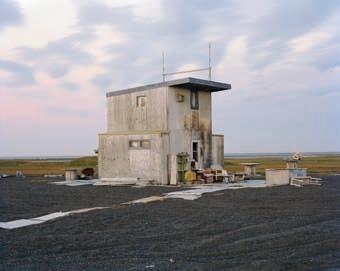
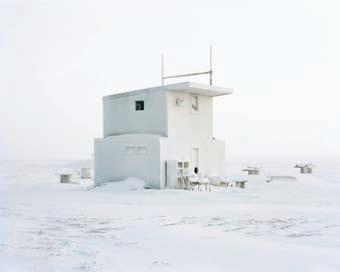
BARROW CABIN 10 BY EIRIK JOHNSON Barrow, Alaska, is the northernmost city in the United States. The average temperature year-round is 11 degrees. As you can see, it’s an environment where shapes exist in a purer form. Eirik Johnson first photographed these cabins in 2010, during the perpetual twilight of the arctic summer months. He returned two years later in the depths of winter, resulting in a series of diptychs like this one. (G. Gibson Gallery, 300 S Washington St, 587-4033, ggibsongallery.com, Wed–Sat, Dec 5–Jan 18) KRISHANU RAY
by Jen Graves and Krishanu Ray Museums
BELLEVUE ARTS MUSEUM
510 Bellevue Way NE, Bellevue, 425-5190770, Tues-Sun
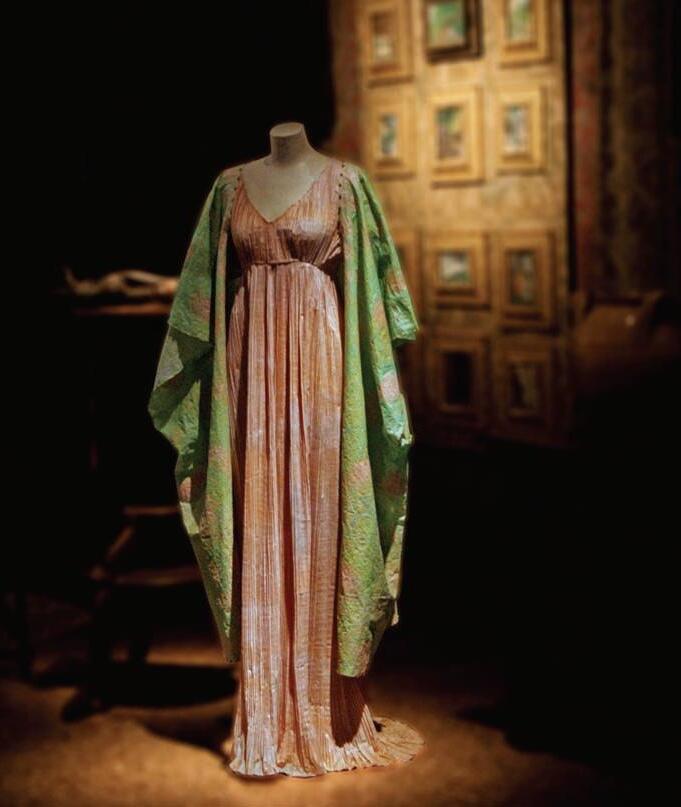
Rick Araluce: The Minutes, the Hours, the Days: Araluce constructs teeny, tiny, immaculately detailed spaces that look to have been abandoned five minutes ago or five years ago. $10. Through Feb 2. A World of Paper, A World of Fashion: Life-sized paper outfits, costumes, and accessories from Belgian artist Isabelle de Borchgrave. $10. Through Feb 16. Telling Tales: Narrative Works by Nate Steigenga, Cappy Thompson, and Anna Torma: Steigenga uses bedsheets and pillow covers as a medium for conveying charmed scenes of myth and fantasy; Thompson’s blown-glass urns depict Hindu gods with vibrant energy; and Torma’s work is a collage of textiles, patchwork, and doodling embroidery. $10. Through Jan 19. Crafting a Continuum: Rethinking the Contemporary Craft Field: Sixty examples of ceramics, wood, fiber. A little scary sheep; a weird woven thing that definitely isn’t a basket but isn’t quite anything else; a cactus that may have been made out of old shirts; a humanshaped, human-sized thing that may have been made out of blue stripy socks. You know, crafts! $10. Jan 30 through April 27.
BURKE MUSEUM
NE 45th St and 17th Ave NE, 543-5590, Mon-Sun
Elwha: A River Reborn: This season’s special exhibition at the Northwest’s natural history museum is a look at the recent dam-removal project, and an overview of the people, history, and science of the now-freed Elwha River Valley. $10. Through March 9.
CHIHULY GARDEN AND GLASS
305 Harrison St, Seattle Center, 753-4940, Mon-Sun
A promenade of rooms, an outdoor gar-
den, and a café chronicling Dale Chihuly’s series and packages over the years. $19.
EXPERIENCE MUSIC PROJECT
325 Fifth Ave N, 770-2700, Mon-Sun
Martin Schoeller: Close Up: Whether Schoeller is shooting celebrities or unknowns, he crops their faces tightly and gets so close it’s almost uncomfortable. Often, their eyeballs shine. Here are 48 of his large portraits, previously seen in magazines and books. $15. Mon-Sun. Through Jan 31. Block by Block: Inventing Amazing Architecture: Lego versions of real, life-sized buildings like the Space Needle. $15-$20. Jan 25 through April 20.
FRYE ART MUSEUM
704 Terry Ave, 622-9250, Tues-Sun
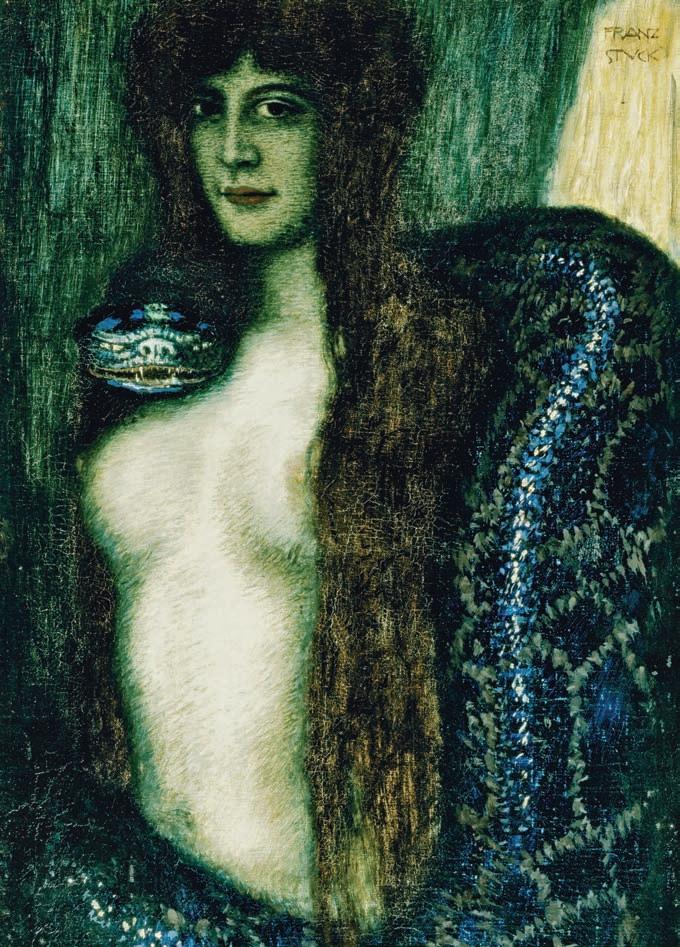
In keeping with the Frye’s blending of contemporary with historical works, Seattle artist Jason Hirata comes into the galleries to present “new sculptural manifestations of his camera support modification videos installed in an optimized white environment.” Free. Through Jan 5. Franz von Stuck: This is dark, dirty, strange Symbolism with Art Nouveau flourishes— we’re talking Satan and hellfire and naked ladies and beautiful, swirling patterns. On the occasion of the 150th anniversary of his birth and the 120th anniversary of his American debut, Munich Secession cofounder Franz von Stuck—the painter of Sin—finally gets his due in his first monographic exhibition in the United States. Free. Through Feb 2. Isamu Noguchi and Qi Baishi: Beijing 1930: Here are drawings, ink paintings, and sculpture from two Japanese artists who simultaneously capture the traditional aesthetic of calligraphy and present essentially modern, dynamic forms. Free. Through May 25.
HENRY ART GALLERY
4100 15th Ave NE, 543-2280, Wed-Sun
Camera Nipponica: Photographs from Japan, 1880–1930: This small exhibition includes a shelf of incredible, teeny, handcolored glass-lantern slides taken between 1880 and 1930 in Japan. They glow bright. $10 suggested. Through Jan 5. Sanctum: For this installation you don’t even need to go indoors. Six surveillance cameras capture you as you walk by the museum. If you get within 12 feet (as you are warned by signs), you’ll be profiled— sensors will scan the “landmarks” of your face, as the artists Juan Pampin and James Coupe describe them, and you’ll appear on the video screens in the windows. Text taken from donated Facebook posts will
appear beside your image. Free. Through Nov 30, 2015. David Hartt: Stray Light: The photographer David Hartt got inside the iconic 1971 headquarters of Johnson Publishing in Chicago—the launching pad for Jet and Ebony magazines—right before the building was sold. The photographs, pictures, and sculptures he created are deadpan memorial documents of a specific time of pride and purpose. $10 suggested. Through Jan 5. Sol Hashemi: Software Update/System Build: In Software Updates, Hashemi will make begin making a series of alterations to his recent work. When System Build rolls around, the artist will begin construction of a “custom modded personal computer designed to power a 3D laser scanner used to create new work.” $10 suggested. Through Dec 8. The Photographs of Ray K. Metzker: A five-decade career charted. $10 suggested. Through Jan 5. Haegue Yang: Anachronistic Layers of Dispersion: South Korean-born artist Haegue Yang grew up in an environment where you closed the blinds when company came over, just in case the government was watching. Now, she makes installations entirely out of artfully arranged, dangling Venetian blinds. They’re swaying constellations of pretty surveillance. $10 suggested. Through Jan 9. Jason Dodge’s sculptures are stories. They are: what’s left after 19 farm animals spend time in the galleries, pillows slept on only by ornithologists, pillows slept on only by acrobats, linens from a local hotel linen service changed weekly, and rolls of newsprint that will become actual pages of the Seattle Times during the run of the exhibition. $10 suggested. Through Jan 26. Katinka Bock: A and I: Bock’s sculpture often takes the form of tiles laid out across a gallery floor. Other times, it’s slabs, or pieces that look like detritus from a construction site. On rare occasions, television monitors will be employed. $10 suggested. Feb 2 through May 4.
MUSEUM OF GLASS
1801 Dock St, 253-284-4732, Wed-Sun
Links between Australian and Pacific Northwest glass. $12. Through Jan 19. Bohemian Boudoir is an entire exhibition of glass crystal perfume bottles and bedroom accessories hand-crafted in Czechoslovakia in the 1920s and ‘30s. $12. Opens Jan 15. Chihuly’s Irish Cylinders: Nigh-on 40-year-old pieces from the glass guy evoke traditional Irish iconography as well as Joyce. $12. Ongoing. Coastal Alchemy: Anna Skibska and
Associates highlights the work of the contemporary artist who makes rooms full of glass webs. $12. Opens Feb 2. Look! See? The Colors and Letters of Jen Elek and Jeremy Bert features two local masters in neon and glass. $12. Opens Feb 15.
NORDIC HERITAGE MUSEUM
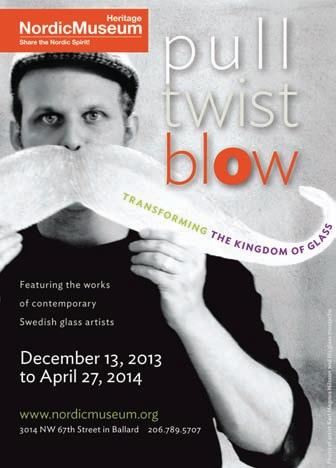
3014 NW 67th St, 789-5707, Tues-Sun Eino: 50 Years of Making Sculptures: The stone sculpture of celebrated Finn Eino Romppanen. $4-$6. Through Dec 7. Pull, Twist, Blow: Transforming the Kingdom of Glass: An exhibit of young and emerging Swedish glass artists. A glass face? Yes, it’s possible. A glass coat hanger? Yes, my friend, the Swedes are making these glorious glass things. $6. Dec 13 through April 27.
NORTHWEST AFRICAN
2300 S Massachusetts St, 518-6000, WedSun
Making and Breaking Patterns: Youth Art from the James and Janie Washington Foundation: Artwork from local high school students. Through Jan 6. Marita Dingus: Fashion Free-for-All: Northwest artist Marita Dingus improvises garments, drawing inspiration from French high fashion as well as traditional African textiles. $6. Through Jan 6. Pitch Black: African American Baseball in Washington State: An historical and cultural exhibition that includes film viewings, performances, and interactive family events. $6. Through March 1.
SEATTLE ART MUSEUM
1300 First Ave, 625-8900, Wed-Sun
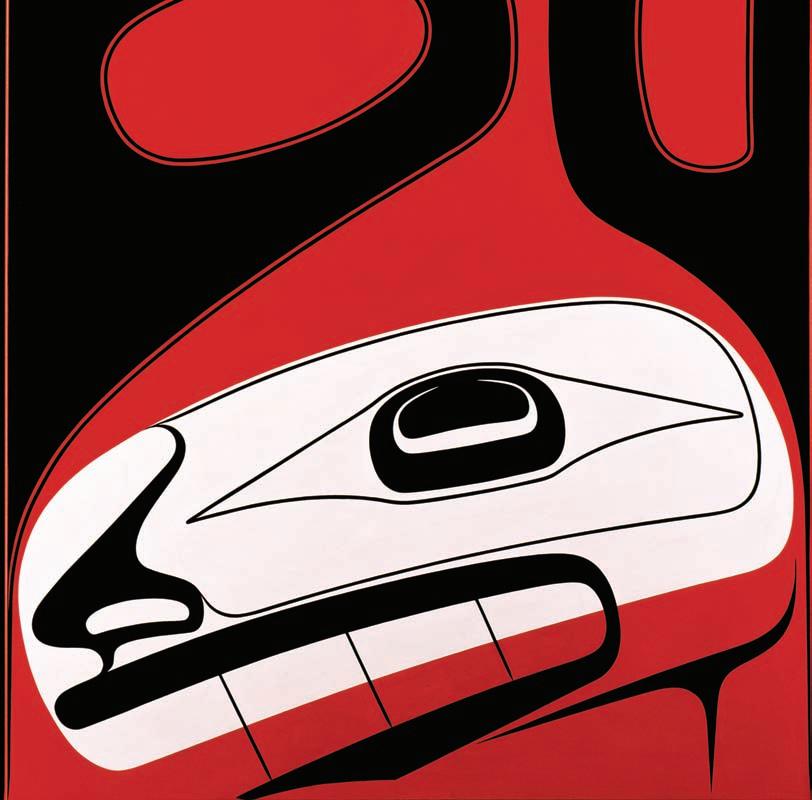
Machu Picchu After Dark: A tower of large speakers, about 12 feet high, by Peruvian-born artist William Cordova, commissioned by the museum to coincide with the Peruvian exhibition. $10 suggested. Through Jan 19. Peru: Kingdoms of the Sun and Moon: The museum turns its focus southward to Peru this season, with a great big sparkling exhibition of rarely seen sculpture, painting, and textiles surveying 3,000 years of patrimony, from the Incas to the viceroys and the saints. $20. Wed-Sun. Through Jan 5. Permanent collections in African, Asian, Native American, early American, European, modernism, decorative arts, and contemporary arts. $15 suggested. Robert Davidson: Abstract Impulse: SAM and the National Museum of the American Indian in New York co-organized this first major U.S.
exhibition of Haida artist Robert Davidson, who’s been pivotal in Northwest Coast art since 1969, when he erected the first totem pole in his ancestral Massett village since the 1880s. $15 suggested. Through Feb 16. LaToya Ruby Frazier is the 2013 winner of Seattle Art Museum’s Jacob Lawrence and Gwendolyn Knight Prize, given to black artists who’ve been working for less than 10 years. Frazier is from Braddock, Pennsylvania, a mining town that she’s gone back to mine for her own highly personal yet broadly relevant photo and media work. It’s been shown and praised at Brooklyn Museum and the New Museum, the New York Times describing it as “preternaturally mature...arresting black-and-white photographs that sometimes look like studio portraits or social documentaries but aren’t fully at home in either category.” $15 suggested. Dec 13 through Jun 22. Miró: The Experience of Seeing: SAM’s big canonized-artistart-exhibit this season is devoted to the Spanish modernist/surrealist Joan Miró and drawn from the collection of the Museo Nacional Centro de Arte Reina Sofía, Madrid, containing 48 drawings and paintings. $20. Feb 13 through May 25.
1400 E Prospect St, 654-3100, Wed-Sun Liu Xiaodong grew up in a small industrial town in China that’s been left behind in the same rapid urbanization that swept him up and out into Beijing and the international art world. In Hometown Boy he goes back to portray the lost place in heartrending paintings and captioned sketches. A documentary film on the process plays in the gallery, too. It’s a stark and moving little show. $7 suggested. Through Jun 29. A Fuller Version of China, Japan, and Korea: To celebrate SAM’s 80th birthday, the museum has organized a definitive exhibition of its Asian masterpieces intended to detail the evolution of the collection, originated in the early part of the 20th century by Asian art scholar and collector Richard Fuller. $7 suggested. Through Jun 30. Inked: Wan Qingli is a small, charming exhibition by the ink painter who puts his brush in the service of visual puns and social satire. $7 suggested. Through Jun 29.
TACOMA ART MUSEUM
1701 Pacific Ave, Tacoma, 253-272-4258, Wed-Sun
Shimmering Tree: A Projection by Jennifer Steinkamp: In 2007, as part of

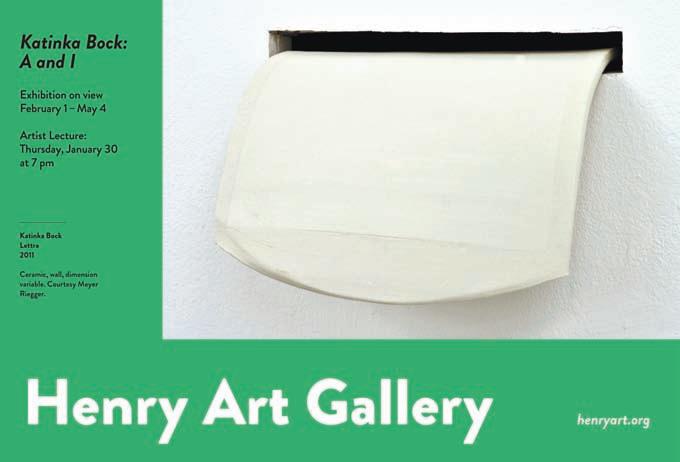
a series of projections of shimmering trees produced in honor of her favorite teachers, Steinkamp created one for her mentor Mike Kelley. In 2012, Kelley was found dead of an apparent suicide. Now, Steinkamp’s projection Mike Kelley will appear in TAM’s largest, cathedral-like gallery. $10. Through April 20. Sitting for History: Exploring Self-Identity Through Portraiture: Portraits, portraits, portraits! All portraits, all the time. $10. Through Jan 12. The title Memories and Meditations: A Retrospective of Michael Kenna’s Photography provides an indication of the serenity expected in Kenna’s pristine visions. $10. Through March 24. Optic Nerve: The Art of Perception: Op art takes advantage of the short circuits in the brain to make still images shiver and dance. A group show. $10. Through April 20. Agnes Martin: The New YorkTaos Connection: This traveling exhibition of work by the influential pure-abstractionist covers the period between 1947 and 1957, a decade she spent in Taos between periods in New York. Jan 25 through April 20. A Punch of Color: Fifty Years of Painting by Camille Patha: Spanning the length of the Northwest artist’s career of experimentation in both figurative and abstract painting styles. $10. Feb 8 through May 28.
WASHINGTON STATE HISTORY MUSEUM
1911 Pacific Ave, Olympia, 253798-5877, Wed-Sun
Cooper: Artifacts, FBI files, a mock-up of a 727, and other stuff concerning the Northwest’s most enigmatic hijacker, D.B. Cooper, who overtook a plane in 1971, got the ransom money, then parachuted out and was never seen again. It’s the only unsolved hijacking in American history. $9.50. Through Jan 5. David Douglas: Naturalist at Work: Botanical scientific illustrations of Northwest plant life created by Douglas during his travels around the Columbia River in the early 19th century. $9.50. Through Feb 23. Hands at Work: Photos by Summer Moon Scriver of hands doing all the things that hands do: pulling ropes, playing electric guitars, laying bricks, playing acoustic guitars. $9.50. Through May 4.
WING LUKE MUSEUM
719 S King St, 623-5124, Tues-Sun #iconic: Power and Pop Culture takes a look at the representations of Asian Pacific Americans—or lack thereof—through figures from Amy Tan to Margaret Cho to Blue Scholars. $9.50. Through April 13. War Baby/Love Child: Mixed Race Asian American Art is a traveling exhibition of 19 artists across the spans of their careers—some famous, some not—working in traditional media as well as video, installation, and “other approaches,” considering everything from US wars in Asia to transracial adoption and, more generally, the racialization of humans.
$12.95. Through Jan 19. Asian Pacific Pioneers Across the Northwest: A historical exhibition that focuses on the challenges faced by some of the first Asian-Pacific people who settled in the PNW. $12.95. Dec 12 through Oct 14.
Gallery Openings
A/NT GALLERY
2045 Westlake Ave, Wed-Sun
Color the Winter: Colorful
works, in most senses of the word. Including a “spray paint abstract” work from Andrew Parry that looks like an extreme closeup of a tiger. Free. Reception Dec 7, 6 pm. Through Dec 28. Board of Directors Show: Works of all types, sizes, and media from past and present members of the board. Free. Reception Jan 4, 6 pm. Through Jan 26. Eros as a Life Force: A juried show dedicated to Western art’s favorite little cherub. And a party on Valentine’s Day, 7 pm. Free. Through Feb 23.
ALJOYA SENIOR APARTMENTS AT THORNTON PLACE
450 NE 100th St, Mon-Sun
Issei Artists: Three first-generation female Japanese artists show paintings. Free. Through Jan 1.
ALL CITY COFFEE
1205 S Vale St, 764-7146, Mon-Sun 2013 Holiday Miniature Art Extravaganza: Small, affordable, gift-sized art pieces. Reception Dec 14, 6 pm. Through Jan 5. Brigid Blume: Paintings of mopeds. Reception Jan 11, 6 pm. Through Mar 7.
4711 California Ave SW, 938-0339, Thurs-Sat
Regeneration: A four-person show featuring mixed-media works, painting, and drawing. Nia Michaels’s collages radiate out from old photographs like shrines. With Scott Mayberry, Elizabeth Reed Smith, and Laura AholaYoung. Through Jan 4. Dee Dee Redux: Artworks by Deborah Faye Lawrence: A retrospective for an artist who has been working in Seattle for two decades. Her varnished collages buzz with color, pattern, text, and politics. Free. Reception Jan 18, 6 pm. Through Feb 22.
BAINBRIDGE ARTS AND CRAFTS
151 Winslow Way E, 842-3132, Mon-Sun
Three Gentlemen of Northwest Art: Phillip Levine, Norman Lundin, and Gerard Tsutakawa: Levine makes figurative bronze sculptures. Lundin, a representational painter, is also showing work this season at Francine Seders Gallery. Gerard Tsutakawa is best known for the large bronze mitt he created for Safeco Field. A mitt with a hole in it is a pretty good metaphor for our baseball team. Probably an old joke. Free. Reception Jan 3, 6 pm. Through Feb 3. Caroline Cooley Browne: Tactile Tactics and Beautiful Bowls: Woven works in reeled silk. Free. Reception Feb 7. Through March 3.
THE BELLTOWN COLLECTIVE
2231 1st Ave, Mon-Sun Interstitial Theatre’s Juried Show: The three hardworking curators of this cavernous building temporarily devoted to new media have chosen a group of spacebased pieces (read: not just videos on monitors) for a big group exhibition. Free. Through Dec 20.
312 N 85th St, 234-8348, Wed-Fri Spectral Menagerie: Joe Vollan and Megan Shore: Paintings of the afterworld of the animal kingdom. Like the kind of afterworld where cats wearing tweed outfits dance around burning pentagrams. Free. Through Dec 20.
BLINDFOLD GALLERY
1718 E Olive Way, Ste A, 328-5100, Wed-Sat
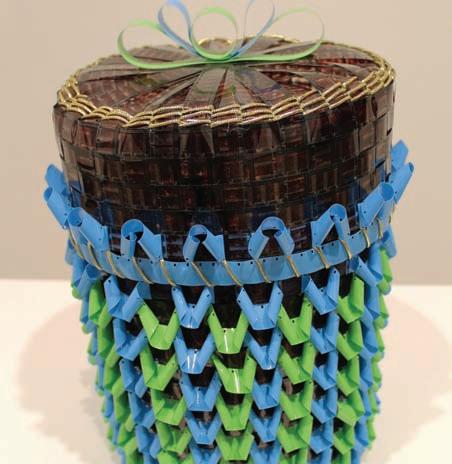
LIVING OFF THE HERDS THAT ROAM THE LAND BY GAIL TREMBLAY This basket was made from 16 mm film and leader (the opaque bright green and blue plastic pieces are leader, the woodier portions are film)—specifically, footage from an early documentary entitled Caribou Hunting aging and faded to a soft pink sepia. Lean in close and you can make out images of hunters in wait and tall waves of prairie grass. Gail Tremblay currently teaches at the Evergreen State College, but hails from Buffalo, New York, where she inherited the knowledge of traditional basket weaving techniques from her Mi’kmaq and Onondaga family. I have qualms about preserving film this way—my instinct would be to restore it so it can be run through a projector—but Tremblay has different ideas about preservation than I do. (James Harris Gallery, 604 Second Ave, 903-6220, jamesharrisgallery.com, Wed–Sat, Dec 5–Jan 4) KRISHANU RAY
Sam King, Leanne Grimes, Chris Roberts: New works from three painters in varying degrees of abstraction. For instance, in a landscape by Roberts, the sky degrades pleasantly into ever-widening pixelated color swatches. King will speak at the gallery Sat Dec 14 at 3 pm. Free. Reception Dec 12, 6 pm. Through Jan 4. Poets and Painters: A show that was inspired by a Rothko excerpt. An excerpt from the excerpt: “it is the poet who provides the community of objectives in which the artist participates.” Participating artists include Kimberly Trowbridge and Anne Petty. Free. Reception Jan 9, 6 pm. Through Feb 8. Magic: The Photographic Art of Paul Dahlquist and Almendra Sandoval: Two dozen black-and-white photographs of the nude form, presented as a dialogue between mentor (Dahlquist, who has been making photographs, especially portraits, in the Northwest for decades) and mentee. Free. Reception Feb 13, 6 pm. Through March 8.
BRYAN OHNO GALLERY
519 S Main St, Tues-Sat
Holiday Group Show: Twinkle lights, pumpkin-spice lattes, cozy scarves, gallery group shows. Free. Dec 12 through Dec 28. Amanda Manitach: New Works brings the Seattle artist and writer into the gallery for a full solo show. She deserves the room, whether she’ll fill it with drawings at the intersection of sex and death or videos
at the intersection of performance and abstract sculpture—or both. Free. Reception Jan 16, 6 pm. Through March 1.
5701 Sixth Ave S, Plaza Ste 258, 728-1980, Mon-Fri
Ceci N’est Pas une Pipe: Northwest Flameworking on the Brink of Legalization: A survey of flameworking, that stepchild of glass art, on the occasion of marijuana’s coming-out party. Where else can you see a glass pipe shaped like a submachine gun? Free. Through Jan 10.
4864 Rainier Ave S, 760-9843, Wed-Sun
Glow: Gallery artists show ceramics, jewelry, monotype prints, and ink wash paintings. Free. Through Jan 12. The Big Little Show: The show is big, the actual pieces in the show are small. Free. Through Jan 12. Stomp: Forty-five teens and adults with disabilities created massive monoprints using their feet and wheelchairs. Free. Reception Jan 18, 5 pm. Through March 2.
117 Prefontaine Place S, 467-4444, Wed-Sat
Holiday Show: A group exhibition. Free. Reception Dec 5, 6 pm. Through Dec 21. Earth Pearl Collective: Body image art from queer women of color. Free. Reception Jan 2, 6 pm. Through
Jan 25. Michael Harrison, Kalindi Thompson: Reclaimed wood assemblage by Harrison, and bright paintings from Thompson featuring hexagons, sunflowers, and sad tree branches. Free. Reception Feb 6, 6 pm. Through Feb 22.
1000 Lenora St, Wed-Sat
Heather Hart: Oracular Rooftops: Mixed media and gallery work by the artist whose outdoor installation, The Western Oracle: We Will Tear the Roof Off the Mother, spent the summer embedded in a hillside at the Olympic Sculpture Park. Free. Through Dec 20. Russia Rising: Votes for Freedom: Thirty international artists created posters that call for democratic and human rights reforms in Russia. Free. Through Dec 20. Staff Exhibition: They’re not just staff, they’re also artists! Come see their stuff. Free. Through March 7. Robert Jones Retrospective: A look back at 50 years of painting. Free. Reception Jan 16, 5 pm. Through March 8.
313 Occidental Ave S, 624-1324, Tues-Sat
E4C
101 Prefontaine Pl S, 296-7580, Mon-Sun
Ellen Dicola’s trippy Arborealis video of found Northern Lights images overlaid with footage of steam, alternating with Dakota Gearhart’s Odes to Me, which involves a small singing fish with a large eyeball. Free. Through Feb 28. Matthew Hilger: A camera,
Wood Engravings Old and New: Compare and contrast. Free. Reception Dec 5, 6 pm. Through Feb 1. Mary Iverson and Dane Youngren: Progress and Sacrifice: Iverson’s postapocalyptic shipping container paintings from her “Sunk” exhibition, paired with large-scale ceramic work from Youngren. Free. Through Dec 28. Patti Warashina is acclaimed for a reason. The ceramic artist makes objects that are fearlessly strange, usually figures, but that don’t look like anyone you’ve ever seen before. “Add a healthy dose of frank and biting humor to highly informed themes of human condition, feminism, political and social topics, and you have the masterful poignance of Warashina,” the gallery describes. Free. Reception Jan 2, 6 pm. Through Feb 1. Wendy Orville: Inkgarden: This is the Seattle artist’s first time showing her stark monotypes at the gallery. They’re a tribute to “both the bleak and the beautiful” of the local landscape. Free. Reception Feb 6, 6 pm. Through March 1. Robert Marx: New paintings and drawings from the German-born Expressionist artist whose work recalls “Bosch, Grünewald, and Bruegel.” Free. Reception Feb 6, 6 pm. Through March 1.
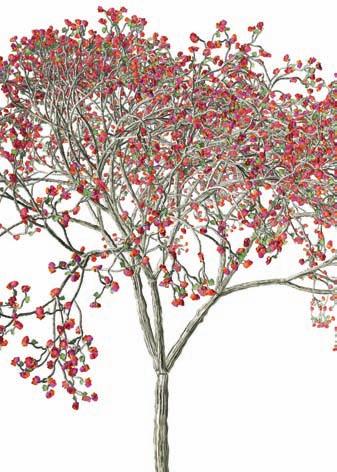
by
November 9, 2013 – January 26, 2014
pointed at the artist’s mismatched shoes, tracks his path as he walks along painted lines in a parking lot. Free. Ongoing.
ECHO ECHO GALLERY
8537 Greenwood Ave N, 6331236, Fri
Annual Holiday Blockbuster: Affordable artwork, mostly paintings, from Xavier Lopez, Christopher J. Olson, Maxx, Ripley, and Alexandria Sandlin. Free. Reception Dec 13, 7 pm. Through Dec 31. A Night at the Movies: A group show dedicated to the theme of movie-poster creation, featuring the works of “luminaries of the Seattle Seapop Movement.” Free. Reception Jan 10, 7 pm. Through Feb 5. Taking Stock: Six Visions of the Present: A show highlighting the works of six of the gallery’s current members. Reception Feb 14, 7 pm. Through Feb 28.
FACÉRÈ JEWELRY ART GALLERY
1420 Fifth Ave, Suite #108, 6246768, Mon-Sat Holiday Show: Gems and stones on rings and earrings. Also there are lego earrings. Free. Reception Dec 4, 5 pm. Through Dec 31.
FETHERSTON GALLERY
818 E Pike St, 322-9440, Wed-Sun
Iceland: Hvitt Dagar/White Days: Landscape photography. Free. Through Dec 13.
FLATCOLOR GALLERY
77 Main St, 390-6537, Wed-Sun
A solo exhibition by prominent Seattle street artist Pars kicks off Flatcolor’s new location. Free. Reception Dec 5, 5 pm. Through Dec 22.
407 First Ave, 349-2509, Wed-Sat
Sam Birchman: Large-scale oil paintings. Don’t miss the one with a fat man, sitting on a telephone pole with what appears to be a baguette thrust into, and drawing blood from, the heaping fat rolls of his bare back. Free. Reception Dec 13, 6 pm. Through Jan 4. Feminist Eclat: Work by a range of feminists, including paintings by Playboy Playmate/ writer Juliette Fretté. Free. Jan 10 through March 8.
6701 Greenwood Ave N, 7820355, Tues-Sun
Hear ye, hear ye: This is 80-yearold Francine Seders’s final show in her Phinney Ridge gallery, which has hosted great art and Sundayafternoon openings for decades. Don’t miss your last chance to meet the legendary Frenchwoman in person; she’ll still be working remotely, but no longer will she just be available at her desk inside the old Seattle home adapted into her gallery. Farewell and thank you, Francine Seders Gallery. Dale Lindman, Norman Lundin: Lindman provides the viewer with bars of colors and patterns to contemplate. Lundin’s latest landscapes are set on dreary, overcast evenings when the sky occupies most of the view. Free. Reception Dec 8, 2 pm. Through Dec 24. Diann Knezovich: New work by the artist who alters photographs of architecture, pulling you in to inspect. Free. Dec 6 through Dec 22.
G. GIBSON GALLERY
300 S Washington St, 587-4033, Wed-Sat
Barrow Cabins: Eirik Johnson’s (Sawdust Mountain) photographic essay on remote Alaskan hunting cabins built by the native Iñupiat.
See page 21. Also on display: new drawings by the evocative placeportraitist Mark Thompson whose black-and-white landscapes from a couple of years ago pulled our hearts halfway out. Free. Reception Thurs Dec 5, 6 pm. Through Jan 11. Cable Griffith: Soft and skillful painting by the Seattle artist and director of Cornish College’s gallery program. His work evokes the rounded utopian qualities of platformer SNES-era video games. Free. Reception Feb 6, 6 pm. Through March 1.
GAGE ACADEMY OF ART
1501 10th Ave E, 526-2787, MonSun
Chandler Woodfin: Dirty River: The artist uses bleeding watercolors to convey a sense of sickness and disharmony in her depictions of natural flora and waterways. Free. Through Jan 1. //SIGHTLINES: Five outstanding Seattle artists—Thuy-Van Vu, Iole Alessandrini, (Stranger Genius Award winner) Rodrigo Valenzuela, Whiting Tennis, and Allyce Wood—respond to the recent BUSTER SIMPSON // SURVEYOR exhibition at the Frye. Free. Through Jan 10.
GALLERY 110
110 Third Ave S, 624-9336, WedSun
White: A group show of metaphorical and literal interpretations of the color. Free. Reception Dec 5, 6 pm. Through Dec 28. Members Exhibition: A showcase of work from the gallery’s members. Free. Reception Jan 2, 6 pm. Through Jan 25. Illusion: Digitally rendered images that capture a retro CG aesthetic. Free. Jan 2, 6 pm. Through Jan 25. 4th Annual Juried Exhibition: SAM’s modern and contemporary curator Catharina Manchanda is juror. Free. Reception Feb 8, 6 pm. Through March 1.
101 Prefontaine Pl S, 296-7580, Mon-Fri
Laura Castellanos: Borrowed Tribe: The artist whose graphically bold work in painting has appeared across the city goes 3D with a large exhibition of handmade dolls. Free. Reception Dec 5, 6 pm. Through Dec 24. Ronald Hall: Skillful and socially aware paintings that visualize the weight and the anxieties of African American history. Free. Reception Jan 2, 6 pm. Through Jan 30. Mark Kang-O’Higgins: The Gage Academy figurative painting teacher shows his portraits, here blurred, here precise, calibrated at exactly the right moments to capture the sharp emotion of his subjects. Free.
Reception Feb 6, 6 pm. Through Feb 27.
212 Third Ave S, 624-0770, TuesSat
Miles Cleveland Goodwin: Dreary, macabre paintings of bleak winter scenes and from Gregory Blackstock, encyclopedic drawn renditions of sheet music and corresponding illustrations from this autistic artistic savant. Free. Reception Dec 5, 6-8 pm. Through Dec 21. Claude Zervas: New drawings by the Seattle artist, made by a painting machine adapted from a frame-shop cutting machine. Landscapes? Local microorganisms? Carved-wood bears? Those have all been Zervas’s subjects before. Free. Reception Jan 3, 6 pm. Through Feb 15. Sale of Francine Seders Gallery Inventory Collection: The
Francine Seders Gallery is closing, after decades of exhibitions, and the pieces remaining in the collection will be on sale here. Free.
Reception Jan 3, 6 pm. Through Feb 15. Darren Waterston: Paintings and Works on Paper: Ethereal works that focus on interpreting and reinterpreting foggy shapes and forms, as the artist prepares for an exhibition based on Whistler’s Peacock Room, an elaborate installation (Google it!) based in Washington, D.C. Free. Feb 20 through March 29.
319 Third Ave S, 223-0816, TuesSat
Fay Jones: New paintings by the beloved longtime Seattle artist, this time inspired by the films of great French director Jean Renoir. Free. Through Dec 21.
HADDON HALL
1919 Third Ave, Mon-Sun
ShopSeattle: A pop-up boutique featuring men’s and women’s clothing, artwork, gifts and furniture made by Northwest artists and designers. Free. Through Dec 26.
JACK STRAW NEW MEDIA
4261 Roosevelt Way NE, 634-0919, Mon-Fri
Srivani Jade and Annette Solyst: Art to Art: Mixed-media works by Solyst, and the Indian raga music they inspired Jade to compose. Free. Reception Dec 5, 7 pm. Through Jan 17.
JACOB LAWRENCE GALLERY
Art Building, University of Washington, 634-0919, Wed-Sat UW MFA First Year Exhibitions: MFA hopefuls in the first showing of their graduate careers. Free. Reception Jan 14, 4 pm. Wed-Sat. Through Jan 31. Juried Show: With submissions open to all students in the UW’s School of Art. Free. Reception Feb 11, 4 pm. Through Feb 28.
JAMES HARRIS GALLERY
604 Second Ave, 903-6220, ThursSat
SML: A photography, sculpture, and painting group show cocurated with Julie Alexander (one of the participating artists) about how form generates art. Artists include: Claire Cowie, Nicholas Nyland, Serrah Russell, Francis Celentano, Stranger Genius Award winner Wynne Greenwood, and Colleen Hayward. Free. Reception Dec 5, 6 pm. Through Jan 4. Gary Hill: The widely lauded Seattle-based new media virtuoso. Free. Reception Jan 16, 8 pm. Through March 29.
KIRKLAND ARTS CENTER
620 Market St, 425-822-7161, Tues-Sat
Gone to the Dogs: One million artists who like dogs do a thing. Free. Through Jan 11.
KRAB JAB STUDIO
5628 Airport Way S, Suite 246, 715-8593, Tues-Thurs
Chamber of Wonders: A group show that takes its inspiration from the 18th-century “wonder cabinet” phenomenon. Collections, relics, doo-dads. Free. Reception Dec 14, 6 pm. Through Jan 2. Quoth the Raven: Nevermore, nevermore. A corvid-themed group show. Free. Reception Jan 11, 6 pm. Through Jan 30. Faerie II: “A collection of work from many of the contemporary faerie artists worldwide.” Free. Feb 8, 6 pm. Through Feb 27.
LISA HARRIS GALLERY
1922 Pike Pl, 443-3315, Mon-Sun
Lois Silver: Vividly colored paintings of human interaction. Two people on a rowboat, a woman and her dog walking through a hotel lobby, people being waited on at a nice restaurant. Free. Reception Dec 5, 6 pm. Through Dec 29. Ed Kamuda, Dion Zwirner: From Kamuda come hypersimplified paintings depicting the great outdoors and old buildings, sometimes making forays into pure abstraction, with rustic hues and aesthetics liberally employed. Free. Reception Jan 4, 4 pm. Through Feb 2. Peter de Lory: Black-and-white landscape photography of the American West. Free. Feb 2 through March 3.
LTD. ART GALLERY
307 E Pike St, Tues-Sun
Picture’s Worth a Thousand Words: A group show of art inspired by the characters and landscapes of literature. Free. Through Dec 7. Episode III: Star Wars: For the third year in a row, LTD. brings holiday cheer to this galaxy far far away with a Star Wars art show. Free. Reception Dec 12, 6 pm. Through Jan 31. CATZ!: The gallery’s description says it all: “I love cats, you love cats, we all love cats (except those who are dead inside).” Free.
Reception Feb 1, 6 pm. Through Feb 23.
LXWXH
6007 12th Ave S, Sat
Cristin Ford: Planar Visions: Folded-paper sculptures that evoke topography using a gradient of tones and the geometry of interlocking creases. Free.
Reception Dec 14, 6 pm. Through Jan 4. Graham Downing: Photodocumentation of paintings Downing has made and secretly hung in office environments. Free. Reception Jan 11, 6 pm. Through Feb 1. Jess Rees: Volumetric: Gouache paintings that depict the plain boxiness of city blocks and interpret other architectural spaces, too. Free. Reception Feb 8, 6 pm. Through March 1.
721 E Pike St, 726-9509
Overlooked historical regional artists. Free. Ongoing.
MARTYR SAUCE
122 S Washington St, 624-0495, Mon-Sat
Elizabeth Lopez: Paintings and photography from an artist who’s interested in the effects that sensory overload has on viewers. Free. Dec 5 through Jan 1.
MIA GALLERY
1203A 2nd Ave, 467-4927, TuesSat
Sofie Knijff: Translations: How should a fine artist picture a child? Knijff takes formally posed photographic portraits of children all over the world, offering her own answers. The children live in South Africa, India, Mali, and Brazil, among other places. Free. Tues-Sat. Through Dec 14.
NORTHWEST
this in many, many different designs. Free. Through Jan 1.
700 5th Ave, Mon-Fri
Becoming a Public Artist: A show that charts the process of creating public artwork. On display are blueprints, original proposals, miniature models, etc. Through Dec 27.
234 Dexter Ave N, 343-9647, Mon-Fri
Tatiana Garmendia: The Garden of Joys: Intimate, delicate, and erotic mixed media drawings in two- and threedimensional forms. Free. Through Dec 20.
900 12th Ave, 720-7222, Mon-Sun
Our Lives... Fleeting Timelines: A curated show of the past works of PCNW students. Through Dec 31.
Holly Andres: The Homecoming: Tableaux photography that portrays an eerie, heightened suburban reality. Free. Through Dec 15. Andy Mattern: Absent Vessel: Photographic images of crushed polystyrene cups, created not with the use of a camera, but with a different imaging contrivance that yields infinitely more unusual results: pressing the subject directly against the photographic paper while in a dark room. Sort of like a ghostly cross between an X-ray and a Xerox copy. Free. Through Dec 20.
Question Bridge: Black Males: This nationally touring trans-media exhibition/discussion between black men about black male identity was created by the artists Hank Willis Thomas, Chris Johnson, Beyeté Ross Smith, and Kamal Sinclair. An original complementary exhibition, curated by Seattle’s Maikoiyo Alley-Barnes, with Michelle Dunn Marsh and Ann Palleson of PCNW, is called Seen: An Exploration of the Inside and the Out, the Then and the Now, by the (Still) Invisible Men. Free. Jan 3 through March 8.
PLASTEEL FRAMES GALLERY
3300 1st Ave S Suite 400
Preparing Icarus: Works by Christopher Martinez-Luna, including a chubby child illustrated in pencil with an actual feathered wing extending out of the frame. Free. Mon-Fri. Through Dec 31.
114 Third Ave S, 323-2808, WedSat
Holiday Show: Free. Through Dec 23. Kristin Schimik: Juncture: New sculpture inspired by the Sri Yantra, one of those geometrical creations that holds the secrets of existence. Free. Jan 10 through Jan 31. Virginia Jenkins: Farewell Show: Ceramics with decidedly unorthodox surfaces. Free. Jan 8 through Feb 28.
3419 E Denny Way, 322-3851, Wed-Sat
Third Annual Figurative Invitational: A group show in various 2D mediums focusing on interpretation of the human form. Faces too. Figures and faces. Free. Dec 7 through Jan 11. The Still Life: Ah, yes. The still life. Bowls, fruit. Skulls. There are only a few things in this busy world that remain motionless, and when artists find them, they paint them. Brian Blackham and Jordan Wolfson present their oils. Free. Jan 18 through Feb 15.
523 South Main St, Fri-Sun
Pretty Litter: Simple, vacationcolored, almost-tropical detritus with a sorry future. These acrylics on paper by Seattle artist JD Banke are accompanied by a story that begins “There’s a town where all the homes are mobile homes...” Presented by SEASON. Free. Reception Dec 5, 6 pm. Through Dec 28.
119 Prefontaine Pl S, 621-1945, Thurs-Sat
International Juried Exhibition: Almost two thousands submissions from around the world culled and organized by TAM curator Rock Hushka into a sensible, exhibitable, multimedia mass of art. Don’t miss it. Free. Reception Dec 5, 5 pm. Through Dec 21. Natalie Schmidt Dotzauer: Romanced: An exhibition of paper Afghan blankets is the Thorp-based artist’s way of evoking what she calls “porch life.” Free. Reception Jan 2, 5 pm. Through Jan 30. Bill Finger: Icarus: A show that combines miniature diorama sculpture and photography to examine the subject of space exploration (!). Free. Reception Feb 7, 5 pm. Through March 1.
1321 E Pine, 913-7538, Wed-Sun
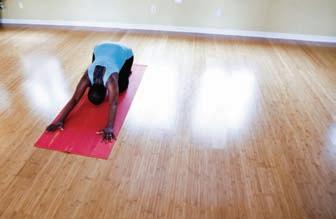


GALLERY
2111 1st Ave, 625-0542, Tues-Sun 34th Annual Box Show: So many different kinds of boxes. Free. Tues-Sun. Through Dec 31.
Helga Winter: So imagine you tore all the pages out of a book, rolled each one into a tube, and stacked all the tubes on their sides so they looked like a pile of hollow logs. And then you painted them pretty colors! Winter did
Correlate: Eric Eley, Debra Baxter, and Adam Ekberg, correlating. Eley works in installations that highlight the curvature of line through space, sometimes recalling the fragmented wiresculpture aesthetic of a 3D graphing engine. Ekberg’s photography is perhaps more cheerful, or at least more likely to include a pineapple or teacup. Baxter works wild wonders with crystals and mirrors. Free. Reception Dec 5, 6 pm. Through Dec 14. Dark Entries: New paintings and collage by Robert Yoder and Michelle Kloehn, whose creations can be dark in literal and figurative senses. Free. Reception Jan 2, 6 pm. Through Feb 1. Mountain: In which soft beauty radiates from new photo light-boxes from Stephen Hilyard. Free. Reception Feb 6, 6 pm. Through March 22.
POTTERY NORTHWEST
226 First Ave N, 285-4421, Tues-Fri
Krysta Sa: Cancer Mouth: A jumbo-sized photo essay capturing travels from Ohio to Yakima. Not so much rolling landscapes as pictures of drunk people making out. Free. Reception Dec 12, 6 pm. Through Jan 4. Natalie Friedman: Begin, End, Repeat: Photography of women that examines agency when it’s pitted against external forces. Free. Reception Jan 9, 6 pm. Through March 7.
532 1st Ave S, 374-8977, Wed-Sat
John Brophy: Breaking the Spell: Proof that creating contemporary icons based in the symbols of “15th-century Flemish primitive art” can result in paintings of faces surrounded by butterflies. Free. Wed-Sat. Through Jan 4. Femke Hiemstra: “Darkly fantastical” illustrations from the artist’s book The Timid Cabbage Free. Reception Dec 5, 6 pm. Through Jan 4. Unpredictable Gravity: Inspired by his wife’s struggle and survival, Robbie Lowery, a contributor to art blog Arrested Motion, wanted to put

Crosscut “…


together a fundraising show. This great big exhibition runs two months, includes two-and-ahalf-dozen artists from all over, and fully half of all proceeds will be donated to Seattle Cancer Care Alliance, Seattle Children’s Hospital, and the Leukemia & Lymphoma Society. Free. Jan 9 through March 1.
SAM GALLERY
Seattle Art Museum, 1300 First Ave, 343-1101, Wed-Sun
Hybrid: Three- or four-tone pop hybrids from Seattle artist Troy Gua. Oh look, it’s Lady Gaga with a Dali mustache! Free. Reception Dec 12, 6 pm. Through Jan 21.
SEASON
1222 NE Ravenna Blvd, 679-0706
Dawn Cerny: Boys, Jokes and Things: Small, largely nonrepresentational multimedia sculptures by the always-fascinating Seattlebased artist. Free. Through Dec 29.
SEATTLE ART RESOURCE
625 First Ave Ste 200, 838-2695, Tues-Sat
Greg Kucera and Larry Yocom venture into affordable resales from local collectors, with an ever-changing lineup of works. Free.
SEATTLE CITY HALL
600 4th Avenue, Mon-Fri
A Sense of Place II: Following up on the group show at IDEA Odyssey in the International District, here’s the next iteration exploring ideas of home, belonging, cultural identity, and regionalism, curated by Juan Alonso. Free. Through Jan 3.
306 S Washington St, Ste 105, 6798915, Fri-Sat
Pam Galvani, Lee Withington: Withington exhibits new paintings and 3D abstract works. Galvani, a printmaker and lettering artist, focuses on the way meaning is created in unusual contexts. Free. Opening reception Sun Dec 5, 5-8 pm. Through Dec 31. Here and There: A bunch of works received in an exchange with Gallery 25 in Fresno, California. Free. Reception Jan 2, 5 pm. Jan 1 through Jan 31.
SISKO GALLERY
3126 Elliott Ave, 283-2998
Charles Emerson: Vaguely representational of landscapes. Free. Fri-Sun. Through Dec 31.
112 Third Ave S, 264-8061, ThursSun
Import/Export: New works from two Scottish-born artists, Pete Fleming and Ross Hamilton Frew, dwell in the realm of pure geometric form. Free. Reception Dec 5, 6 pm. Through Dec 28. Julie Alexander: Free. Reception Dec 5, 6 pm. Through Dec 28. A Place for Memories and Secrets: Drawing, painting, and sculpture. Free. Reception Jan 2, 6 pm. Through Feb 1. New Members Show: Introducing five of the gallery’s new members, including Glaswegian Pete Fleming. Free. Reception Feb 6, 6 pm. Through March 1.
605 15th Ave E
Lamps Meninas: Always wry Seattle artist Jenny Zwick this time offers an interpretation of Velazquez’s classic painting Las Meninas using entirely light
fixtures for the characters. Free. Through Dec 31.
SUYAMA SPACE
2324 Second Ave, 256-0809, Mon-Fri
Drawn from the Olympics: Installation by Stephen Nguyen and Wade Kavanaugh: Nguyen and Kavanaugh wrestle and twist sheets of paper into fully-immersive gallery installations. Free. Vision Machines: Installations by Tivon Rice: A network of cameras, screens, and lighting installations transforms the gallery into a hi-tech immersive space. Rice is a Fulbright winner and PhD. candidate in UW’s DXARTS program. Free. Reception Jan 17, 7 pm. Through April 11.
1300 First Ave, 903-5291
Junko Yamamoto, Olivia Britt: Drawings and oils from these two deserving Northwest artists are displayed in Seattle Art Museum’s cafe. Free. Wed-Sun. Through Feb 9.
7513 Greenwood Ave N, Tues-Sun
Animal Kingdom: A group show featuring funky pictures of all your favorite animals, especially in the work of Jesse Link, in a career he began while serving in Iraq and continued while helping rebuild New Orleans after the hurricane. Free. Through Dec 10. Holiday Showcase: Ten artists show off their quirky pop-gothic acrylics. Free. Reception Dec 13, 6 pm. Through Jan 31.
THRESHOLD GALLERY AT MITHUN
Alaskan Way #200, 623-3344
Eric Nation: Sculptural yet functional furniture as well as purely sculptural sculpture. Free. MonFri. Through Dec 24.
TWILIGHT GALLERY
4306 SW Alaska St, Wed-Sun
Holiday Miniature Art
Extravaganza: Forty artists and jewelers have created pieces and things that are small. Free. Through Jan 6.
UNIVERSITY HOUSE AT WALLINGFORD
4400 Stone Way N, 447-1181
Turning Point: A group show that “explores that catalytic moment of change.” An artist talk is scheduled for Nov 19. Free. Through Feb 8.
VERMILLION
1508 11th Ave, 709-9797, TuesSun
The Laurelton: No Place Like
Home: Generations of artists pay tribute to the Capitol Hill apartment complex that has housed soooooo many artists over the years. Dec 19 will be a night of performances. Free. Dec 12 through Jan 6. Dylan Neuwirth: Forever: Thirty neon cursive blow-ups of Tweets. Free. Jan 9 through Feb 8. Touch Me: I Am Violent: A group show curated by Yonnas Getahun featuring Siolo Thompson, Greg Lundgren, Maikoiyo Alley-Barnes, Ellen Dicola, and Jennifer Zwick. Free. Feb 13 through March 8.
WASHINGTON STATE CONVENTION & TRADE CENTER
800 Convention Pl, 2nd Floor, 694-5000
Palimpsests II: A group of Shift Gallery artists curated by Liz Patterson. Free. Through Jan 8.
WINSTON WACHTER FINE ART
203 Dexter Ave N, 652-5855, Mon-Sat
Tracy Rocca, Christopher Boffoli: Rocca’s super-blurry airbrushish paintings occasionally evoke out-of-focus landscapes, but more often are completely nonrepresentational color studies. Boffoli’s photography depicts the tiniest of tiny people walking around on pieces of food. Free. Through Dec 20. Piper O’Neill: Marking Time: Macabre illustrations on tissue paper. Unhappy little girls, spiderwebs, and arteries. Free. Reception Wed Jan 8, 6-8 pm. Through Feb 27. Robin Layton: Capturing Energy: Large-scale photography. Fog, waves, clouds. Blurry stuff. Free. Reception Jan 8, 6 pm. Through Feb 27. Jessica Craig-Martin: High-contrast photos of glamourous ladies at parties. Free. Reception Feb 25, 6 pm. Through April 1. Ann Gardner: Silvery, gold, and bronze colored nonrepresentational sculpture or patterned prints on paper. Free. Reception Feb 25, 6 pm. Through April 1.
2101 Ninth Ave #102, 622-7243, Tues-Sat
Group Exhibition: Including but not limited to art from Kathleen G. Adkison, Jacob Lawrence, and George Tsutakawa. Free. Opening reception Thurs Dec 5, 6-8 pm. Tues-Sat. Through Dec 28. Jared Rue: Landscapes that focus on the leaves and branches that hang into their frames. Free. Reception Jan 9, 5:30 pm. Through Feb 15. Victoria Adams: New Works: The radiance of the natural world painted with such a soft beauty as to lull the viewer into a state of suspended animation. Free. Reception Feb 20, 5:30 pm. Through March 18.
407 Dexter Ave N, 264-8200, Thurs, Sat 9 from L.A.: This winter, it’s L.A. in Seattle at the Wright Space. Virginia Wright, in conjunction with the Getty Conservation Institute, has brought together works by postwar L.A. artists including Larry Bell, Ed Ruscha, Robert Irwin, John McCracken, Peter Alexander, and De Wain Valentine. Highlighted is Valentine’s Gray Column, which is exactly what it claims to be: 12 feet tall and 8 feet wide of grey polyester resin.
THE 2014 HENRY GALA
This year’s honoree is the remarkable installation artist Ann Hamilton, and the decór will reflect her aesthetic. Henry Art Gallery, 4100 15th Ave NE, 543-2280. henryart.org. $500. Sat Feb 8 at 6 pm-midnight.
CHRISTINE WYGANT
Wygant, a senior lecturer in the UW’s interdisciplinary Comparative History of Ideas department, gives a lecture called Empire of Masquerade: Crazy for “Mad” King Ludwig. Frye Art Museum, 704 Terry Ave, 622-9250. fryeart.org. Free. Thurs Dec 5 at 6:30 pm.
DAVID MAISEL: BLACK MAPS
A lecture from the artist whose black-and-white aerial photography has documented mining sites in the American Southwest. Photographic Center Northwest, 900 12th Ave, 720-7222. pcnw. org. Free. Thurs Jan 23 at 6:30 pm.
Loretta Pl. $5-$10.
FRANZ VON STUCK DISCUSSION
A discussion on the subject of Lust, Performance, and the Artist’s Gaze, from Anna Delacroix, Joanne della Penta, and Kathy Weissbourd, who are all psychoanalysts. Juicy. Frye Art Museum, 704 Terry Ave, 622-9250. fryeart.org. Free. Sun Dec 8 at 2 pm.
HAEGUE YANG
Exhibiting artist Yang will speak. Henry Art Gallery, 4100 15th Ave NE, 543-2280. henryart.org. $10 suggested. Thurs Feb 6 at 7 pm.
KATINKA BOCK
Exhibiting artist Bock gives a talk. Henry Art Gallery, 4100 15th Ave NE, 543-2280. henryart.org. $10 suggested. Thurs Jan 30 at 7 pm.
TH. BRANDLHUBER
The curator at the Museum Villa Stuck— the Munich museum completely dedicated to the work of Franz von Stuck—gives a lecture called In the Temple of the Self: The Artist’s Residence as a Total Work of Art—Europe and America 1800-1948. Frye Art Museum, 704 Terry Ave, 622-9250. fryeart.org. Free. Thurs Jan 30 at 6:30 pm.
MARY ANN PETERS
Peters, a founder of CoCA and Neddy Award winner, participates in a discussion.
Cornish College of the Arts, 1000 Lenora St. Free. Mon Feb 10, 12-1 pm.
MIDNIGHT TEA FOR WOMEN OF COLOR
A special, midnight-tilldawn art ritual, in association with Earth Pearl Collective. Guests must RSVP to attend.
CORE, 117 Prefontaine Place S, 467-4444. mikokuro.com. Free. Sat Jan 11, midnight.
OPEN STUDIOS
Come see what everyone’s been so busy working on in there, as the artists fling open their doors, jovially beckoning in all wandering art viewers. Inscape, 815 Airport Way S. Free. Sun Dec 8, 12-6 pm.
PARTY LIKE IT’S 1957!
This open studio features affordable handmade gifts for the holidays: letterpress stuff, jewelry, linens,
tintypes, little paintings and print and more.
With live opera and installation. ‘57 Biscayne, 110 Cherry Street. 57biscayne. com. Free. Thurs Dec 5, 6-9 pm, and Sat Dec 7, noon-6 pm.
REOPENING
A sparkling reopening party for the gallery that used to be up the block but is now nestled in SAM’s gift shop. Some people say they wish it hadn’t moved. What do you think?
SAM Gallery, Seattle Art Museum, 1300 First Ave, 343-1101. seattleartmuseum.org. Free. Thurs Dec 12 at 5 pm.
SILENT AUCTION
Bids on works by local artists will be accepted in person, over the phone, or via email. Columbia City Gallery, 4864 Rainier Ave S, 760-9843. columbiacitygallery.com. Free. Jan 15-26.
SPACE WEATHER LISTENING BOOTH
An immersive, performative piece by Nat Evans and John Teske that involves digital projections as well as actual human improvised performance. Inspired by the Aurora Borealis. Interstitial Theater, 2231 First Ave. Free. Nov 22 at 6 pm and Dec 6 at 8 pm.
TOM POSTLEWAIT
Affiliate professor in UW’s drama department talks about the plays of Strindberg and the paintings of Stuck, currently on display at the Frye. Crossdisciplinarytimes. Frye Art Museum, 704 Terry Ave, 622-9250. fryeart.org. Free. Thurs Jan 16 at 6:30 pm.
YADESA BOJIA
In this one-night-only showing, Yadesa Bojia shows his work and talks about his experiences using art to raise money for childhood education in Ethiopia. M. Rosetta Hunter Art Gallery (Seattle Central Community College), 1701 Broadway, #2BE2116, 344-4379. seattlecentral.edu/artgallery. Free. Thurs Dec 12, 5-9 pm.
Art Walks
Pioneer Square, first Thurs 5–8 pm; Fremont, first Fri 6–9 pm; Capitol Hill, second Thurs 5–8 pm; West Seattle, second Thurs 6–9 pm; PhinneyWood, second Fri 6–9 pm; Belltown, second Fri 6–9 pm; Ballard, second Sat 6–9 pm; Georgetown, second Sat 6–9 pm; U-District, third Fri 6–9 pm. seattleartwalks.org

















Friday | January 17
$22, $27 & $32, $15 youth/student
Sponsored by Christine & Jackson Loos and Comprehensive
Management
Saturday | January 25
$22, $27 & $32, $15 youth/student
Sponsored by Jan & Benny Teal, Comprehensive
Management, David & Maureen Jaffe, and Gallaghers’
Sunday | March 2
$17, $22 & $27, $15 youth/student
Sponsored by Julie Long & Tim Standal and Dennis & Kathy Hutton
Saturday | February 15
$22, $27 & $32, $15 youth/student
Sponsored by Bruce & Elaine Nickolson and Glenn & Judith Works
Saturday | May 3
$27, $32 & $37, $15 youth/student
Sponsored by Bob & Sylvana Rinehart, Sound Health Physicians, and Barclay Shelton Dance Centre



www.bedroomsandmore.com (206) 633-4494 300 NE 45TH ST. • Wallingford 2 blocks west of I-5, Free off street parking




Theater (below), Dance (p. 32), Burlesque (p. 32), Comedy (p. 33) by Brendan Kiley and Krishanu Ray
5TH AVENUE THEATRE
1308 Fifth Ave, 625-1900, 5thavenuetheatre.org
Oliver! (Through Dec 31): The most exclamatory Dickens adaptation of all time, directed by David Armstrong and starring David Pichette as Fagin, Hans Altwies as Bill Sykes, and Merideth Kaye Clark as Nancy.
Spamalot (Jan 30 through March 2): The musical adaptation of Monty Python and the Holy Grail, “lovingly ripped off” from the original with book, lyrics, and some music by Eric Idle.
427 Ninth Ave N, cornish.edu
The Penelopiad (Dec 5 through Dec 9): Margaret Atwood’s theatrical response to Homer’s Odyssey finds Penelope serving an eternal sentence in Hades, reflecting on Odysseus’s violent homecoming. Produced by Cornish College of the Arts.
A NONDESCRIPT HOUSE
5801 Sand Point Way NE, www.seattleimmersivetheatre.com
Strange Snow (Dec 6 through Dec 21): Two men, dealing with the emotional baggage of military service, make plans to go fishing. Drama subverts these plans. Presented by Seattle Immersive Theatre.
ANNEX THEATRE
1100 E Pike St, 728-0933, annextheatre.org
Spin the Bottle (Ongoing): The longrunning, late-night variety show where you can find just about anything: nervy comedy, smutty puppets, trailers for new plays, experimental films, erotica, an irate actor singing an angry song to a theater critic before slapping a pie in his face, rapturous covers of Madonna songs, drag, burlesque, demonstrations of practical household skills, the occasional sincere poet, and stuff you can’t even imagine.
Black Like Us (Jan 31 through March 1): A story of racial identity in Seattle from 1958 (when a young woman decides to begin passing as white) to 2013 (when three sisters find out a family secret).
Written by Rachel Atkins, directed by Jose Amador.
Story and Song (Feb 4 through Feb 26): New fairy tales by Bret Fetzer, performed with a blues-folk choral backdrop by Sari Breznau and Eric Padget in this production that promises “alligators, debutantes, whimsy, and wonder.”
4711 California Ave SW, 938-0339, artswest.org
Little Women (Nov 29 through Dec 29):
A Broadway musical based on the novel in which the hashish-addled Louisa May Alcott introduced the yet-to-be-fullydismissed theory that girls are, in fact, just littler versions of adult human women.
Directed by Mathew Wright.
The Little Dog Laughed (Jan 22 through Feb 8): A play by Douglas Carter Beane about an actor, his agent, and her worries about how his “slight recurring case of homosexuality,” including a physical relationship with a hustler, might damage his career. Directed by Annie Lareau.
Seattle Center Armory, 684-7200, seattleshakespeare.org
Holiday of Errors (or Much Ado About Stockings) (Dec 6 through Dec 21): A Shakespearean holiday mash-up (by Sound Theatre Company and One Lump or Two Productions) that boasts a boatload of historical inaccuracies.
Richard II (Jan 8 through Feb 2): Seattle Shakespeare Company performs this history play about a king, “more poet than monarch,” and the challenges to his throne. Directed by Rosa Joshi. Frankenstein; or, the Modern Prometheus (Feb 14 through March 9): A man makes a man out of many men.
Adapted and directed by David Quicksall for Book-It Repertory Theatre.
CORNISH PLAYHOUSE AT SEATTLE CENTER
201 Mercer St, 441-7178, intiman.org
Cabaret (Nov 29 through Dec 13): A staging of Cabaret by Arts on the Waterfront that comments on contemporary Russian persecution of the LGBTQ community. Starring Wes Hurley and Zachary Simonson and featuring video clips from real-life vigilantes and young fascists talking about the situation in Russia.
ThanksKilling (Nov 29 through Dec 14): A comedy musical adaptation of the cult-horror holiday film. A production of Balagan Theatre.
It’s a Wonderful Life (Dec 14): A stage adaptation of the Capra classic by Theater Anonymous. This company’s central device is the anonymity of the cast—not even the other cast members know who’s in the show until an actor speaks his/her first line and rises from the anonymity of the audience.
Jinkx Monsoon & Major Scales (Dec 15): A holiday-themed performance from the Cornish alum and RuPaul’s Drag Race champion.
DOWNSTAGE THEATRE
4029 Stone Way N, 633-1883, stonesouptheatre.com
A Child’s Christmas in Wales and The Long Christmas Dinner (Dec 5 through Dec 24): Two short Christmas plays featuring child and adult performers.
Doubt (Feb 14 through March 8): A questioning nun, a questionable priest, a possible child-abuse scandal, and an off-Broadway success for playwright John Patrick Shanley that was adapted for the screen in 2008 and is now performed by Stone Soup Theater.
ECLECTIC THEATER
1214 10th Ave, 679-3271, eclectictheatercompany.org
Total Family Massage: The Musical (Dec 12 through Dec 29): A world premiere by Copious Love Productions in which a wedding reception in Seattle goes sideways with an erotic masseur, a psychic, and a Baptist busybody.
HALE’S PALLADIUM
4301 Leary Way NW, 800-838-3600
Dick Whittington and His Cat (Dec 7 through Jan 5): A new British panto (a traditional genre in which kids are welcome, as is shouting at the stage) about a boy and his cat and the fantastical adventures they have. Featuring the Fremont Players and the Fremont Philharmonic Orchestra.
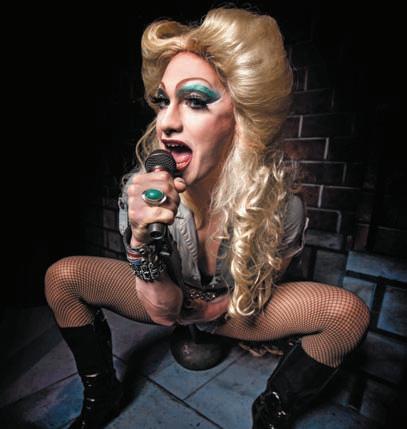
HEDWIG AND THE ANGRY INCH STARRING JINKX MONSOON Well, okay, technically it’s Jerick Hoffer starring as Hedwig, but he’s the current reigning champion of RuPaul’s Drag Race as Jinkx Monsoon, so that’s the name America knows. One of the side effects of being America’s drag superstar is apparently having to work until you explode. Not only has Hoffer been touring small-town USA as Jinkx, he also had a several-months-extended New York City run in The Vaudevillians, performing hilarious reinterpretations of pop songs. In Seattle this winter, Jinkx appears in the holiday cabaret Unwrapped at Cornish Playhouse on December 15 (see left) and in Homo for the Holidays at Odd Fellows Hall December 12 through 24 (see p. 33). In his spare time, Hoffer is reprising the role of Hedwig in this coproduction between Balagan Theatre and Seattle Theatre Group. It’s an incredibly demanding role—Hedwig never leaves the stage—so who knows how Hoffer is fitting it into an already bananas schedule. Please don’t die of exhaustion, Mr. Hoffer. At one point, Hedwig muses: “How did some slip of a girly boy from communist East Berlin become the internationally ignored song stylist barely standing before you?” That “barely standing before you” part will never have had more truth to it. (Moore Theatre, 1932 Second Ave, 812-3284, stgpresents.org, Dec 17–22) CHRISTOPHER FRIZZELLE
HUGO HOUSE
1634 11th Ave, 322-7030, hugohouse.org
The Salesman Is Dead and Gone (Dec 5 through Dec 21): The Splinter Group presents this nonverbal journey into the afterlife of Willy Loman, created and directed by Paul Budraitis (Bo-Nita), and using physical theater, video, and “an original soundscape” by Evan Mosher.
KIRKLAND PERFORMANCE CENTER
350 Kirkland Ave, Kirkland, 425-893-9900, kpcenter.org
Celtic Christmas Celebration (Dec 13 through Dec 14): A Christmas variety show featuring violinist Geoffrey Castle, now in its sixth year, that blends storytelling, dance, music, and “a visit from Santa Claus.”
MEANY HALL
UW Campus, 543-4880, meany.org
Reading to Vegetables (Jan 29 through Feb 9): This “Hitchcockian” thriller, directed by UW student Tina Polzin, draws its inspiration from the infamous Milgram psychological experiments of the 1960s.
MOORE THEATRE
1932 Second Ave, 812-3284, stgpresents.org
Hedwig and the Angry Inch (Dec 17 through Dec 22): See above.
Jerry Springer: The Opera (Jan 9 through Jan 26): Set on the “worst day of his career,” this musical sends Jerry Springer to hell to put on a show for Satan, then up to heaven to give God a hand. It infamously includes tap-dancing Ku Klux Klan members. A coproduction between Balagan Theatre and Seattle Theatre Group.
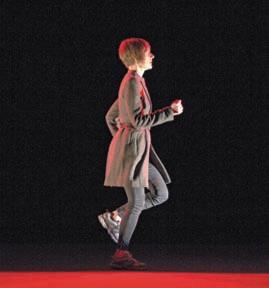
THERE THERE It begins with the absence of an actor—Christopher Walken, we learn, is supposed to be here performing a solo show inspired by Chekhov’s Three Sisters but recently fell off a ladder and cannot perform it. The script’s proofreader, played by Kristen Kosmas (above), will perform as Walken’s substitute. Because we’re supposedly in Russia, Karen must have her English lines translated through an interpreter, who, on this night of all nights, is an understudy for the usual interpreter. The result is a real-life performance (There There) of a fictional performance (Walken’s solo show performed by unprepared artists) as it completely unravels. Directed by Paul Willis. (On the Boards, 100 W Roy St, 217-9888, ontheboards.org, Jan 9–12) BRENDAN KILEY
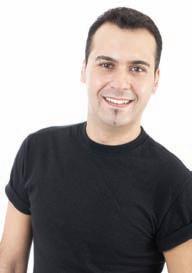




NORTHWEST FILM FORUM
1515 12th Ave, 267-5380, nwfilmforum.org
Monstrous (Dec 5 through Dec 7): A new work by Stranger Genius Award winner Rebecca Brown about monsters, romantic authors, and how their “images and ideas have informed our concept of what is ‘cinematic.’”
ON THE BOARDS
100 W Roy St, 217-9888, ontheboards.org
The Clay Duke (Dec 5 through Dec 8): In 2010, a man named Clay Duke walked into a Florida school board meeting and fired a dozen rounds, hitting nobody. After being shot several times by a security guard, Duke shot himself in the head. Using this event as a starting point, local choreographer and filmmaker Dayna Hanson assembled a group of collaborators (including Sarah Rudinoff, Wade Madsen, Peggy Piacenza, and Thomas Graves of the Rude Mechs in Austin) to create a piece about Chekhovian suicide, Charles Bronson, and revenge.
There There (Jan 9 through Jan 12): See page 29.
The Room Nobody Knows (Feb 6 through Feb 9): The comically surreal sexual psychodrama in the mind of an “overworked and undersexed” Japanese student. This show by Niwa Gekidan Penino (led by playwright, director, and former psychiatrist Kuro Tanino) contains giant phalluses.
PARAMOUNT THEATRE
911 Pine St, 812-3284, stgpresents.org
Stuart McLean & the Vinyl Cafe (Dec 11): A live radio show from the Garrison Keillor of Canada (he probably hates it when people call him that).
Cirque Dream Holidaze (Dec 20 through Dec 22): Acrobatic pageantry of the Christmas variety from this touring, tinsel-doused troupe of performers. Evita (Dec 31 through Jan 5): The Webber-Rice joint about Eva Perón and her tearful South American country.
SEATTLE CHILDREN’S THEATER
201 Thomas St, 441-3322, sct.org
James and the Giant Peach (Through Jan 5): A musical adaptation of Roald Dahl’s fantasy about a boy and a peach-load of giant bugs going on a transatlantic journey.
SEATTLE MUSICAL THEATRE
7210 62nd Ave NE, 363-2809, seattlemusicaltheatre.org
A Christmas Carol (Dec 6 through Dec 22): There is no shortage of Dickens adaptations in the city during this, or any, Christmas season. Last year, Cienna Madrid wrote of Seattle Musical Theatre’s holiday efforts: “If daytime Emmys were awarded to community-theater casts, Seattle Musical Theatre would be in the running for a shiny new paperweight.” Directed by Rick Wright.
Scrooge! (Dec 6 through Dec 22): A 1992 musical tale of ghostfacilitated redemption by Leslie Bricusse.
SEATTLE PUBLIC THEATER
7312 W Green Lake Dr N, 5241300, seattlepublictheater.org
The Best Christmas Pageant Ever (Dec 6 through Dec 23): Seattle Public Theater’s annual production about “the horrible Herdman family” and how they wreak havoc on a community
Christmas pageant. Directed by Shana Bestock. The Santaland Diaries (Dec 6 through Dec 22): This Christmas play by David Sedaris is “for mature elves only” and stars Patrick Lennon as Crumpet the Elf, as directed by Kelly Kitchens. American Wee-Pie (Jan 24 through Feb 16): A man returns to his small hometown to spread his mother’s ashes. As if that’s not depressing enough, he’s a professional textbook editor. But he nudges his way toward a happier life via a former high-school classmate and her French-baker husband who run a cupcake emporium together. Directed by Anita Montgomery.
SEATTLE REPERTORY THEATRE
155 Mercer St, Seattle Center, 4432222, seattlerep.org
The Hound of the Baskervilles (Through Dec 15): Sherlock Holmes attempts to outwit a large dog in this most famous of Arthur Conan Doyle stories, adapted for the stage by David Pichette and R. Hamilton Wright. A Great Wilderness (Jan 17 through Feb 16): A drama about an aging de-gayer (or whatever you call people who try to coach other people into straightness) who is forced to confront his life’s legacy by one final client. Directed by Braden Abraham. Venus in Fur (Feb 7 through March 9): An audition-withina-play escalates into a sexually charged coup as an actress, who initially seems needy and crass, turns the tables on a playwright who has written a stage adaptation of the 19th-century BDSM novel Venus in Furs (and thinks he’s in charge). Directed by Shana Cooper.
SHORELINE COMMUNITY COLLEGE
16101 Greenwood Ave N, Shoreline, 546-4101, shoreline.edu
Costly Desires (Jan 10 through Jan 11): A multimedia stage performance that takes human trafficking as its subject. A production of Dry Bones Collective.
SHOWBOX AT THE MARKET
1426 First Ave, 628-3151, showboxpresents.com
The Rocky Horror Show (Dec 28): Chandelier Productions promises more blood, more sex, and more muscle in their new Rocky Horror staging. And there will be a real “rock-n-roll” band. Directed by Georgina Spelvin.
TAPROOT THEATRE
204 N 85th St, 781-9707, taproottheatre.org
Le Club Noel (Nov 29 through Dec 28): This Christmas production by local artists is set in a 1930s Parisian cabaret with an undercurrent of approaching war. Mr. Pim Passes By (Jan 31 through March 1): A light comedy in which marriages and relationships are farcically called into question by the arrival of Mr. Pim. Written by A. A. Milne.
TEATRO ZINZANNI
222 Mercer St, 802-0015, zinzanni.org
Hail Caesar: Forbidden Oasis
(Through Jan 26): Frank Ferrante returns to his recurring character Chef Caesar, along with a Ukrainian contortionist, a trapeze act, the acrobats Les Petits Frères, and former Cirque du Soleil performer Andrea Conway Doba.
Tambourine Submarine
(Through Dec 15): Family-friendly “sea-nanigans” including an aeri-
alist, a ballerina, and the nauticalthemed children’s entertainers Recess Monkey.
THEATRE OFF JACKSON
409 Seventh Ave S, 340-1049, theatreoffjackson.org
An Xmas Carol Project (Dec 5 through Dec 7): The new twist employed in this riff on the hoary old Carol: Different parts of the play are interpreted by different theater companies, including STAGEright, Confrontational, Lungfish Productions, Quiet Theatre, and Blood Ensemble.
VILLAGE THEATRE
303 Front St N, Issaquah, 425-3922202, villagetheatre.org
Les Miserables (Through Jan 5): An astute wordsmith will likely notice that the title of this popular musical is an anagram for “less miserable,” which is all the good, poor people of France have ever wanted to be.
The Foreigner (Jan 23 through March 2): A man pretends to not speak English in order to get some peace and quiet while on vacation. He realizes instead that his ruse puts him in a position to hear intriguing things said by people who think he can’t understand them.
WASHINGTON ENSEMBLE
THEATRE
608 19th Ave E, 325-5105, washingtonensemble.org
Ed, Downloaded (Jan 31 through Feb 24): Michael Mitnick’s sci-fi drama set in the (hopefully) near future where a digital immortality device allows expired users to dwell in a virtual heaven pieced together from their own pleasant memories.
Directed by Ali el-Gasseir.
The Icelandic Illumination Rangers (Feb 1 through Feb 23): This synth-infused arctic adventure finds our hero attempting to locate and restore the aurora borealis with detours into solar winds, magnetic poles, and the Reykjavik pop scene. Another in Ali el-Gasseir and Jonah Von Spreecken’s series of new mysterycomedies for small children and the grown-ups who accompany them.
Too Famous to Blame Us (Feb 4): An installment in the Six Pack reading series, where playwrights and writers are encouraged to let loose on a theme. Sometimes audience members get up and tell their own stories. There has also been Jell-O wrestling.
WASHINGTON HALL
153 14th Ave S, washingtonhall. org
Santa Breakfast and Mini Nutcracker (Through Dec 21): Another Nutcracker. Explicitly family-oriented.
12 Minutes Max (Feb 2 through Feb 3): The long-running R&D wing of On the Boards where artists try out new scraps of dance, theater, music, film, and stuff that defies categorization. Each month is curated by a new cadre of artists, thinkers, and community members.
WEST OF LENIN
203 N 36th St, 352-1777, westoflenin.com
Christmas: B-Sides and Rarities (Dec 16): A one-night variety show celebrating the darker side of Christmas with storytelling from Jennifer Jasper, “theatrical bits” by Daniel Tarker and others, buffoonery from Christine and Lyam White (of UMO), and ukuleles.
















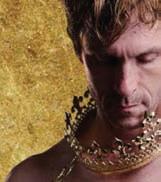
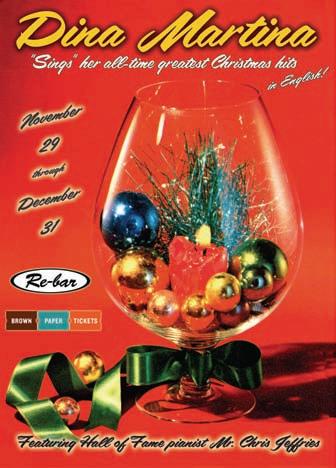
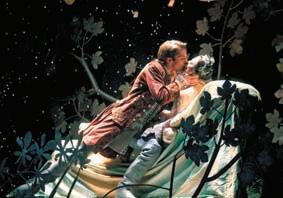
“
—

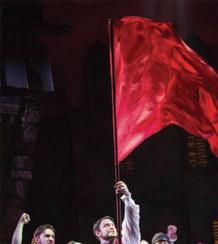

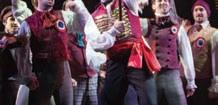



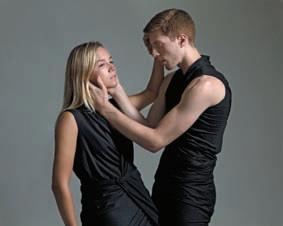
ARC DANCE SPACE
9250 14th Ave NW, 352-0798, arcdance.org
Nutcracker Sweets (Dec 13 through Dec 15): A child-friendly version of the holiday classic performed by the students of the ARC School of Ballet.
Nutcracker (Through Dec 29): Pacific Northwest Ballet’s annual return to the rat-riddled Christmas classic about heroic kitchen gadgetry.
The Sleeping Beauty (Jan 31 through Feb 9): A second course of Tchaikovsky will follow Pacific Northwest Ballet’s run of Nutcracker. See above.
MEANY HALL
based Frédérick Gravel and the Grouped’ArtGravelArtGroup.
VELOCITY DANCE CENTER 1621 12th Ave, 325-8773, velocitydancecenter.org
Seattle Youth Dance Collective Showing (Dec 7): Teenage members of Velocity and STG’s Youth Dance Collective showcase their work.
UW Campus, 543-4880, meany.org
BROADWAY PERFORMANCE HALL
1625 Broadway, cornish.edu
New Moves Concert (Dec 6 through Dec 7): Choreography and performance from students at Cornish.
COLUMBIA CITY THEATER
4916 Rainier Ave S, 723-0088, columbiacitytheater.com
The Best Burlesque Pageant
Ever (Dec 6 through Dec 8): A Christmas special that promises to be “dripping with sex appeal” from the edgy five-woman troupe Stripped Screw Burlesque.
Dance Faculty Concert (Jan 22 through Jan 26): UW School of Dance faculty showcase their choreographic erudition with a program of varied performances.
Grupo Corpo (Jan 23 through Jan 25): This Afro-Brazilian dance company will premiere Sem Mim “inspired by the sea and the songs of medieval Galician-Portuguese troubadours,” and O Corpo “exploring ideas about movement and the human body.”
The Bridge Project 2014 (Jan 31 through Feb 2): The Bridge Project is one of Velocity Dance Center’s great gifts to the city—you want to find the next important dancer or choreographer (or musician or designer or filmmaker) in this town? That person might be here. This will, as usual, be four new works created in three “pressurecooker” weeks by emerging artists.
Super Eagle (Feb 13 through Feb 16): See above.

HUSKY UNION BUILDING
Dance Majors Concert (Feb 26 through March 2): Presented by the choreographers, dancers, and designers of the UW School of Dance.





4001 E Stevens Way NE, UW Campus, hub.washington.edu
Reign Supreme (Dec 6 through Dec 7): An international breakdance battle with a $3,000 prize!
MCCAW HALL
321 Mercer St, 684-7200, mccawhall.com
ON THE BOARDS
100 W Roy St, 217-9888, ontheboards.org
Usually Beauty Fails (Jan 23 through Jan 26): Sex, love, and raw physicality are the themes of this dance performance with pop sounds by Montreal-
CAN CAN 93 Pike St, Suite 307, 652-0832, thecancan.com
Can Can Castaways (Ongoing): The Can Can Castaways, as we’ve often said in The Stranger, are like a gateway drug for modern dance. People show up at the subterranean, red-lit bar, order a few drinks, expect to see some hardbodies dancing—and they
get that. But what they also get is the expert choreography by Rainbow Fletcher and her team of dancers and designers (often the dancers are the designers) who create dreamscapes from the Moulin Rouge to a bondage club in Tokyo. Fletcher and her team have also performed at On the Boards and other, more august venues, and their marriage of artistry and sensuality is excellent.
The Inheritance (Through Dec 19): A three-part burlesque series in stages (“maiden,” “mother,” and “crone”) with postshow discussions—so probably not your typical burlesque show. Featuring Jesse Belle-Jones, Dona Dei Cuori, Evilyn Sin Claire, and others from the Sinner Saint Burlesque Revue.
NARWHAL
1118 E Pike St, 325-6492, unicornseattle.com
Mimosas with Mama
(Ongoing): The demise of the Broadway Grill cannot stop drag diva Mama Tits from hosting this brunch buffet with the titular mimosas and a drag cabaret to go along with! Now find her/them/ it at the (very festive) Narwhal, in the basement of the Unicorn.
915 E Pine St, Ste 200, 324-7263, centuryballroom.com
Homo for the Holidays (Dec 12 through Dec 24): You could call Homo for the Holidays a holiday-themed burlesque revue, but that would be like calling the virgin birth an unintended pregnancy. A merrily profane satire-ball wrapped in glitter and false eyelashes, Homo pulls in some of Seattle’s best drag/dance/ queer performance talents: Kitten LaRue, Cherdonna Shinatra, Lou Henry Hoover, Inge Ingenue, Faggedy Randy (of the Can Can Castaways), Jinkx Monsoon, and tons more. Jinkx will perform Dec 12–14 and Dec 23–24. Scott Shoemaker will perform Dec 18–22.
1919 Post Alley, 443-3241, thepinkdoor.net
Burlesque Behind the Pink Door (Ongoing): The Pink Door has burlesque on Saturday nights plus aerial performances, music, cabaret, and other stuff on other nights.
RAISBECK PERFORMANCE HALL AT CORNISH COLLEGE OF THE ARTS 2015 Boren Ave, 726-5066, cornish.edu
Tasteless/Appetites, A Cabaret (Dec 11 through Dec 13): “The themes of artistic relevance and passion are explored in this evening of parody” with songs by Michael Jackson, Sophie Tucker, the Starland Vocal Band, and others. Directed by Frances King and Timothy McCuen Piggee.
RE-BAR
1114 Howell St, 233-9873, rebarseattle.com
Belltown Burlesque Revue (Dec 14): Featuring the talents of Mae Kim Beg, Maggie McMuffin, Vixen Valentine, and many more. Wheel of Tease (Jan 4): An improvised burlesque performance with live music that includes acts from Morgan LaMay, Jesus la Pinga, Violet DeVille, and several others.
RENDEZVOUS
2320 Second Ave, 441-5823, rendezvousseattle.com
Family Affair (Ongoing): A monthly cabaret, hosted by Jennifer Jasper (I Can Hear You... But I’m Not Listening), in which guest artists “will be sharing their
sick, hilarious, and ultimately relatable familial skeletons.”
SKYLARK CAFE & CLUB
3803 Delridge Way SW, 935-2111, skylarkcafe.com
Westside Burlesque Review (Ongoing): A monthly show with a rotating roster of burlesque performers.
TRIPLE DOOR
216 Union St, 838-4333, thetripledoor.net
Land of the Sweets: The Burlesque Nutcracker (Dec 12 through Dec 24): Lily Verlaine and Jasper McCann return for this holiday production, described as a “spectacle of ecdysiastic pageantry.”
13 COINS
125 Boren Ave N, 682-2513, 13coins.com
The Flipside Comedy Show (Ongoing): Jokes with a side of chicken parm. Folks who’ve appeared at recent Flipside shows: Harrold Gomez, Jen Seaman, Jubal Flagg, Gabriel Rutledge, and others.
88 KEYS
315 Second Ave S, 839-1300, ilove88keys.com
Comedy at 88 Keys (Ongoing)
C.C. ATTLE’S
1701 E Olive Way, 323-4017, ccattles.net
Emmett Montgomery Presents: Beard Practice (Ongoing): The host and creator of Weird and Awesome with Emmett Montgomery at Annex Theatre hosts a weekly standup comedy open-mic night and “humor growth hour” for comedians of all levels.
COLUMBIA CITY THEATER
4916 Rainier Ave S, 723-0088, columbiacitytheater.com
The Comedy Shop (Ongoing)
COMEDY UNDERGROUND
109 S Washington St, 628-0303, comedyunderground.com
Comedy at Comedy Underground (Ongoing)
JAI THAI BROADWAY
235 Broadway E, 322-5781
Open Mic at Jai Thai (Ongoing): A popular spot for new comedians and experienced comedians working on new material.
JET CITY IMPROV
5510 University Way NE, 352-8291, jetcityimprov.com
It’s Your Wonderful Life (Dec 5 through Dec 21): Like the movie
It’s a Wonderful Life, but with George Bailey’s life substituted with the life of a willing audience member!
Jet City Improv (Ongoing)
Uncle Mike Ruins Christmas (Through Dec 21): An unscripted, hour-long theatrical Christmas production from the perspective of Uncle Mike. In the promotional photo, Uncle Mike is holding a beer. There are probably several other beers just outside of the frame.
LAUGHS COMEDY SPOT
12099 124th Ave, Kirkland, laughscomedy.com
Comedy at Laughs Comedy Spot (Ongoing): Open mic and touring acts.
MARKET THEATER
1428 Post Alley, 587-2414,
unexpectedproductions.org
Improv Seattle Showcase (Ongoing): Seattle’s comedy and improv community on display.
A(n Improvised) Christmas Carol (Through Dec 28): The improvidickensian yuletide classic.
Xtreme New Year’s Theatresports Party (Dec 31): Count down to 2014 with three hours of improvised entertainment.
NEPTUNE THEATRE
1303 NE 45th St, 682-1414, stgpresents.org
Rob Delaney (Dec 4): Standup comedy from Delaney, who won Comedy Central’s 2012 “Funniest Person on Twitter” award. Okay, Rob, but this is real life now. Let’s see how funny you are in real life.
A John Waters Christmas (Dec 5): John Waters and his “sleigh full of smut” with a Christmasthemed monologue-athon. Special guest at the event will be Moldy Peaches frontwoman Kimya Dawson.
RENDEZVOUS
2320 Second Ave, 441-5823, rendezvousseattle.com
Evan’s Family Variety Show (Ongoing): An ongoing, familyfriendly variety evening featuring jugglers, dancers, circus acts, magicians, and other acts that are not explicitly child-oriented, but explicitly child-friendly. So everyone should enjoy it.
Comedy Womb (Ongoing): The rules of this pro-lady standup night are refreshing in their simplicity: no misogyny and no heckling. Based on the size, quality, and diversity of the crowds it attracts, the rules work. Every Tuesday night, fans pack the Rendezvous Grotto to watch two and a half hours of comedy, about half of which is delivered by women. Having so many women onstage and in the crowd makes male comics more mindful of their sets and their audience, while reinforcing what should be obvious: Women can be just as funny (or unfunny) as men. Equality, hurrah!
PARAMOUNT THEATRE
911 Pine St, 812-3284, stgpresents.org
Stephanie Miller (Dec 14): The political commentator and comedian on her “Sexy Liberal Comedy Tour” with special guests John Fugelsang and Hal Sparks.
Jerry Seinfeld (Feb 7): The comedian, known by some for his work in Seinfeld
THE PARLOR BILLIARDS & SPIRITS
700 Bellevue Way, #300, Bellevue, 425-289-7000, parlorbilliards.com
Comedy at Parlor Live Comedy Club (Ongoing)
THEATRE OFF JACKSON
409 Seventh Ave S, 340-1049, theatreoffjackson.org
Coming Out Laughing (Jan 31 through Feb 1): LGBTQ comedy.
INSCAPE
815 Seattle Blvd S, 458-2716, inscapearts.org
Satori SmashBash NYE (Dec 31): The Satori Group—a newish, boundary-pushing theater collective—kicks in the New Year, and celebrates its first year at Inscape Arts, with live music, DJs, and cheap drinks.
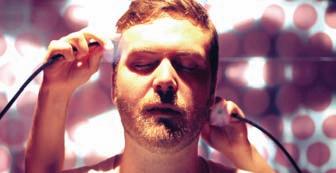
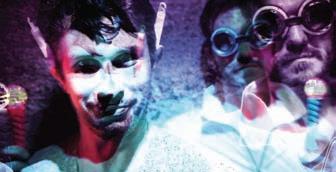
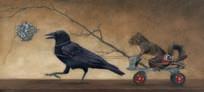

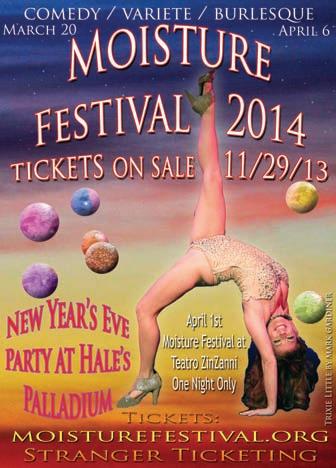
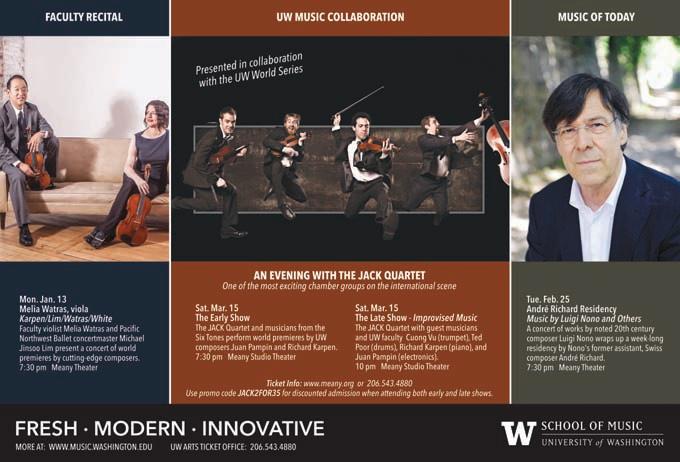
by Jen Graves
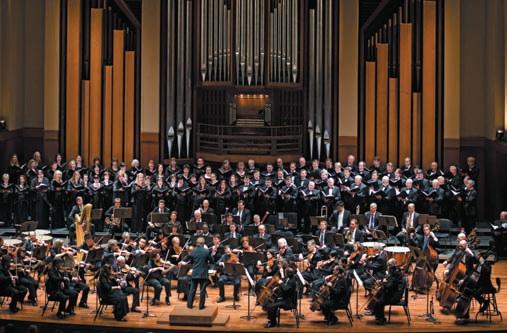
ROBERT WADE
BACH’S ST. MATTHEW PASSION WITH THE SEATTLE SYMPHONY, CHORALE, AND NORTHWEST BOYCHOIR “There is nothing like it in all music,” Leonard Bernstein said of the eruptive moment in Bach’s St. Matthew Passion when the main choir splits into two and is accented by a third, releasing a torrent of layered sound. The story is taken from the Gospel of Matthew, chapters 26 and 27, tracking the plot against Jesus, and his death and burial. Bach wrote it in the 1720s, for multiple soloists, double orchestra, double choir, organ. The words are in German, written by a poet of the time who went by the name Picander, and Bach prepared it for a church service—and for the ages. Bach wrote for church every Sunday. His church was the luckiest church that ever was. This enormous production is pretty much the biggest thing on this winter’s season. (Benaroya Hall, 200 University St, 8 pm, Feb 21–22, 215-4800, www.seattlesymphony.org)
SEATTLE SYMPHONY
Benaroya Hall unless otherwise noted: 200 University St, 215-4700, www.seattlesymphony.org
Vivaldi’s Four Seasons (Sat Dec 14): Led by symphony associate concertmaster Emma McGrath.
Seattle Symphony Presents Handel’s Messiah (Fri Dec 20, Sat Dec 21, Sun Dec 22): Holiday classic! Holiday classic! Big, beautiful, hallelujah.
A Festival of Lessons and Carols (Mon Dec 23): The Nativity story with Northwest Boychoir, Vocalpoint! Seattle, and members of the Northwest Sinfonia.
Seattle Symphony Presents Beethoven’s Ninth Symphony (Sat Dec 28, Sun Dec 29, Thurs Jan 2, Fri Jan 3, Sat Jan 4): Hum along to “Ode to Joy” and more in a performance led by Carlos Kalmar and featuring Nathalie Paulin, soprano, Angela Niederloh, mezzo–soprano, Brendan Tuohy, tenor, Charles Robert Stephens, baritone, and the Seattle Symphony Chorale.
New Year’s Eve Concert (Tues Dec 31): Favorites from The Nutcracker, Rhapsody in Blue, and, we hear, Star Wars. Canadian pianist Jon Kimura Parker is the special guest in the concert hall, then, in the lobby countdown to midnight with Ludovic Morlot, there’s dancing to HB Radke & the Jet City Swingers.
Big Nightmare Music (Thurs Jan 9): Comedy and classical music: two terms you never hear together. Musicians Aleksey Igudesman and Hyung-ki Joo are said to be changing that.
Bach’s Coffehouse (Fri Jan 10, Sat Jan 11): Taking audiences back in time to Zimmermann’s Coffeehouse in Leipzig,
the home of concerts by Bach and his student orchestra!
Tchaikovsky’s Piano Concertos Nos. 1 and 2 (Thurs Jan 16): The first half of a Tchaikovsky mini-festival featuring piano and violin concerti, conducted by Carlos Miguel Prieto, and with Boris Giltburg and Alexander Lubyantsev, piano.
Tchakovsky’s Violin Concerto (Fri Jan 17): The second half of a Tchaikovsky mini-festival featuring piano and violin concerti, conducted by Carlos Miguel Prieto. This half features Mayuko Kamio, violin, and Boris Giltburg, piano.
Prokofiev, Haydn, and Mozart (Thurs Jan 23, Sat Jan 25, Sun Jan 26): Prokofiev’s First Symphony, Haydn’s Piano Concerto in D major, and Prokofiev’s Piano Concerto No. 4 for Left Hand, featuring Jean-Efflam Bavouzet, piano. Guest-conducted by Marcelo Lehninger.
Shostakovich & Adams (Thurs Jan 30, Sat Feb 1): Olari Elts guest-conducts and Alexander Melnikov is the pianist in a program that begins with John Adams’s 1985 outtake from his opera Nixon in China, The Chairman Dances, followed by Shostakovich’s Piano Concerto No. 2 in F major, Adams’s arrangement of Liszt’s The Black Gondola, and Shostakovich’s Symphony No. 9 in E-flat major.
[UNTITLED] Series (Fri Jan 31): After the 7 p.m. performance of Shostakovich’s Second Piano Concerto and Ninth Symphony comes a 10 p.m. [UNTITLED] Series presentation in the lobby called Black Angels. On the adventurous program: Morton Feldman’s The Viola in My Life, Part 3; Kalevi Aho’s Trio for Clarinet, Viola, and Piano; R. Murray Schafer’s Theseus;
and George Crumb’s Black Angels for Electric String Quartet. The late-night series is always terrific. Try it!
Joseph Adam (Mon Feb 3): Seattle Symphony’s resident organist performs Bach, Saint-Saëns, and more.
Joshua Bell (Wed Feb 5): A solo recital by the traveling violin star.
Symphonie Fantastique (Thurs Feb 13, Sat Feb 15): Xavier Phillips, cello, performing Schumann’s Concerto in A minor for Cello, and Berlioz’s Symphonie Fantastique. Morlot conducts.
St. Matthew Passion (Fri Feb 21, Sat Feb 22): See above.
Mozart’s Symphonies Nos. 39-41 (Thurs Feb 27): Mozart did start early— child prodigy—but still, he died young. There are only so many Mozart symphonies out there. Seattle Symphony, led by former music director Gerard Schwarz, will lead the orchestra in three of them in sequence, culminating in the great “Jupiter,” No. 41.
McCaw Hall unless otherwise noted: 321 Mercer St, 753-9725, seattleopera.
org
Rigoletto (Jan 11-Jan 25): Rigoletto is one of the classics, a Verdi opera for the ages, meaning the music is as beautiful as the plot is perverse. The action includes a hunchback, an assassin, a duke, and much “ruining” of virgins. Several of the arias, duets, and quartets are famous. It’s a great opera to come back to, or to begin with. Seattle Opera’s production is set in 1930s Italy, directed by Linda Brovsky (Don Quichotte in 2011) and featuring baritone Marco Vratogna (Ezio in Attila) as Rigoletto, tenor Francesco Demuro (Rodolfo in La Bohème) as the Duke of
JEN GRAVES
Mantua, Andrea Silvestrelli (Fasolt and Hunding in the Ring) as Sparafucile, soprano Nadine Sierra as the innocent young Gilda, and conductor Riccardo Frizza (Aida and Falstaff).
The Consul (Feb 22-March 1): This is the first time Seattle Opera has produced Gian Carlo Menotti’s 1950 thriller about a political dissident on the run from secret police in an unidentified totalitarian country in Europe. It won the Pulitzer Prize for Music. The cast features soprano Marcy Stonikas (recently seen as Turandot and Leonore) and baritone Michael Todd Simpson, both former Seattle Opera Young Artists, plus mezzo soprano Lucille Beer (this past summer’s Erda in The Ring). Directed by Young Artists head Peter Kazaras and conducted by Carlo Montanaro (La Bohème).
WAYWARD MUSIC SERIES
Good Shepherd Center’s Chapel Performance Space, 4649 Sunnyside Ave N, 290-1601, www.waywardmusic.blogspot.com
Sarah Davachi and Kaori Suzuki (Thurs Dec 5): This evening of electronic music features music by Kaori Suzuki and Sarah Davachi. Davachi describes her work as including “simple harmonic structures that emphasize acoustic and psychoacoustic variations... in order to approach distanced and altered landscapes.”
Michael Owcharuk (Fri Dec 6): Featuring Seattle composer/pianist/ accordionist Michael Owcharuk. Electronic Compositions (Sat Dec 7): Electronic music by Cornish students. Yesod (Fri Dec 13): Yesod’s “4th-world improvisations”—”experimental alter-

Run your own sexy science project with a LoveLab membership this holiday season.




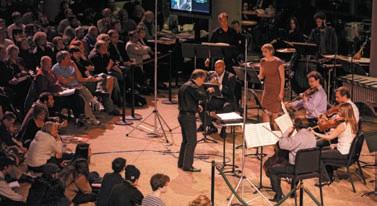
BLACK ANGELS IN THE [UNTITLED] SERIES AT BENAROYA This photograph was taken in the lobby of Benaroya Hall during one of Ludovic Morlot’s magical, tux-less, late-night concerts of experimental music. They’re always packed and warm, people sitting on folding chairs, stairs, floor mats, or peering over the lobby’s balconies. In this picture, Morlot’s conducting Arnold Schoenberg’s freaky expressionist song cycle Pierrot Lunaire, accompanied by a projection of an angst-ridden painting from the time of Schoenberg’s life (on that screen in the background). This winter’s [untitled] concert will feature a different great oddity: George Crumb’s 1971 Black Angels, where Dantesque archetypes meet the nightmarish Vietnam War era. The composition is performed by electric string quartet, crystal glasses tuned by the amount of water they contain, and gongs. (Benaroya Hall Grand Lobby, 200 University St, 10 pm, Fri Jan 31, 215-4800, www.seattlesymphony.org) JEN GRAVES
native ambient improvisational psychedelic world” music.
Gradus (Sat Dec 14): Gradus is the composition resulting from this experiment (!): “Since 2002, Neal Kosaly-Meyer has been systematically working through all combinations of all the As on the piano, devoting an extended improvisation session to each single A, and to all combinations of 2, 3, 4, 5, 6, 7 and 8 As.”
Christian Pincock (Thurs Dec 19): Christian Pincock, trombone/composer.
Noisegasm + Distorrent (Fri Dec 20): electronic music.
Vanessa Skantze (Sat Dec 28):
Vanessa Skantze, butoh performance with live experimental music.
Wayne Horvitz (Fri Jan 10): Wayne Horvitz, composer, with pianist Cristina Valdes and others.
Jacob Zimmerman (Sat Jan 11): Jacob Zimmerman, avant saxophone.
Spontaneous Rex (Thurs Jan 16): experimental/jazz/avant-rock.
Islaja, Kira Kira, and Sokai Stilhed (Fri Jan 17): Electronic music from artists in Finland, Iceland, and Seattle.
MIKE STERN BAND feat.
RANDY BRECKER, ANTHONY JACKSON, AND KEITH CARLOCK
TUE, DEC 10 - WED, DEC 11
Jazz fusion all-star band
BILL FRISELL’S GUITAR IN THE SPACE AGE feat. GREG LEISZ, TONY SCHERR & KENNY WOLLESEN
THU, JAN 30 - SUN, FEB 2
KPLU 88.5FM PRESENTS DOUBLE BILL: KENNY WERNER TRIO & CECILE MCLORIN SALVANT
TUE, FEB 18 - WED, FEB 19
World Class pianist/composer and up and coming versatile vocalist/winner of the 2010 Thelonious Monk International Jazz Competition
TERENCE
BLANCHARD SEXTET
THU, FEB 20 - SUN, FEB 23
Five-time Grammy winning trumpeter and renowned film-score and soundtrack composer touring in support of his new release Magnetic
EN VOGUE
THU, FEB 27 - SUN, MAR 2
PRE-SALE SHOW
Chart-topping vocal R&B divas
2033 6th Ave. | 206.441.9729 all ages | free parking full schedule at jazzalley.com
Matthew Shipp (Sat Jan 25): Matthew Shipp, piano, and Michael Bisio, bass, perform improvised music.
Amy Denio (Thurs Jan 30): Underground leader Amy Denio, who’s been in Seattle taking chances for years, doing all kinds of work in all kinds of genres and contexts: composition, improvisation, collaboration with film, dance, theater.
Elizabeth Baker (Fri Jan 31): Young, marvelously eggheaded experimental composer/pianist Elizabeth A. Baker.
Fisher Ensemble (Sat Feb 15): Experimental music-theater inspired by stories from such sources as Japanese Noh, Medea, and Nazi Germany.
Seattle Modern Orchestra (Fri Feb 21): contemporary classical.
Pincushioned (Sat Feb 22): electroacoustic/percussion.
Michaud Savage (Fri Feb 28): A Seattle-based composer, songwriter, and performer with influences in jazz, tango, film music, trance, Western classical music, overtone singing, and North and South American ecstatic singing.
MEANY HALL
UW Campus, at 15th Ave NE and NE 40th St, 685-2742, meany.org
Silent Night, Joyous Night (Wed Dec 4): For the annual university CarolFest, the Chamber Singers, University Chorale, University Singers, Women’s Choir, Gospel Choir, and UW Men’s Glee Club all come together for varia-
tions on “Silent Night.” It’s the 150th birthday of the song’s composer, Franz Grüber, y’all!
Melia Watras (Mon Jan 13): UW faculty violist Melia Watras and Pacific Northwest Ballet concertmaster Michael Jinsoo Lim present world premieres by Richard Karpen, Frances White, and the performers themselves. The musicians will be joined by renowned Seattle theater director Sheila Daniels, singing! Garrick Ohlsson (Wed Jan 15): A stop on the tour for the piano giant. On the program: Beethoven’s Sonata in E Major, Op. 109; Schubert’s Fantasy in C Major, Op. 15, D. 760; Griffes’s Selections; and Chopin’s Sonata in B Minor, Op. 58.
A Far Cry (Thurs Jan 16): The six-yearold, Boston-based, self-conducted orchestra of 17, performing music by Ives, Gershwin, Dvorák, Kip Jones, and Lev Zhurbin.
Modern Music Ensemble (Fri Jan 31): The students in the modern music ensemble call themselves Inverted Space. They’ll perform a couple of classics: Messiaen’s Quartet for the End of Time and Takemitsu’s Quatrain II Brooklyn Rider & Bela Fleck (Tues Feb 4): The world’s leading banjo player and a string quartet credited with reinventing the form, on tour together.
Mallethead Series (Fri Feb 7): Faculty artist Tom Collier and bassist Dan Dean with special guest artists.
University Symphony with Ludovic Morlot and Concerto Competition Winners (Fri Feb 14): The students of the University Symphony led by Seattle Symphony maestro Ludovic Morlot in selections from Symphonie Fantastique, plus winners of the 2013 Concerto Competition.
André Richard: Music by Luigi Nono and Others (Tues Feb 25): This concert is the culmination of a weeklong residency by Swiss musician André Richard, who studied with Luigi Nono, the antifascist 20th-century Italian composer.
1119 Eighth Ave, 652-4255, townhallseattle.org
Ceremony of Carols: Britten
Centenary Christmas (Sat Dec 7): Happy 100th birthday to Benjamin Britten with his Ceremony of Carols and A Boy Was Born Holiday Concert (Sun Dec 8): Carol sing-along and festiveness galore with the local orchestra.
35th Annual Seattle Celtic Yuletide Concert (Sat Dec 14)
in Europe and Javanese gamelan. This should be unusual and grand. Fire and Passion: Music of the Spanish and Italian Baroque (Sun Feb 2)
Canzonetta (Sun Feb 9): Canzonetta sings music spanning 600 years. You could end up anytime.
Seattle Modern Orchestra
Featuring Séverine Ballon (Thurs Feb 20): The 21st-century French cellist plays 21st-century cello music with the orchestra.
Brechemin Auditorium, UW Campus, 543-1201, music.washington.edu
Dainius Vaicekonis: Cultural Crossroads (Sun Dec 8): Faculty artist Dainius Vaicekonis is joined by his wife, Asta, and colleagues Donna Shin and Ron Patterson in a concert featuring legendary American composers with Lithuanian heritage (Copland, Glass, and more).
Littlefield Organ Series: Eunyoung Kim (Sun Jan 12)
Michael Partington (Sun Jan 12)
Salvation Army Brass Band & Breath of Aire Choir (Sun Dec 15)
Seattle Baroque Orchestra Presents Dresden Concertos (Sat Jan 18): Guest artist Rachel Barton Pine directs and performs concertos on the viola d’amore, a seven-stringed instrument popular 400 years ago.
Seattle Festival Orchestra Presents Sibelius Karelian Overture (Sun Jan 26)
Mozart Birthday Toast (Mon Jan 27): Town Hall’s fifth annual toast to Mozart’s birthday (he’d be 258 this time) brings a concert with pianist Byron Schenkman, soprano Linda Tsatsanis, violinist Liza Zurlinden, violist Jason Fisher, and clarinetist Sean Osborn, and chocolates, sparkling beverages, prizes, “and merriment all around.” Any reason to hear Mozart is a good one; remembering he was a real person with a small group of great and loving interpreters is particularly nice.
Early Music for All: An Intergenerational Sing-Along! (Sun Feb 2): Everybody’s invited to join in on songs that are hundreds of years old.
Thalia Symphony Presents: Passion, Love, and Tragedy (Sun Feb 9): Music by Sibelius, Chausson, and Rossini.
Early Music Guild Presents: The King’s Singers (Sat Feb 15): The King’s Singers sold out their appearance on Early Music Guild’s season last year, so they return for a night celebrating Netherlandish composer Josquin des Prez, a 16th-century master of polyphony (voice-mixing). Obscure and neat!
Simple Measures Presents: The Magic Flute (Sun Feb 16): Featuring the Seattle Symphony principal flute, who is a wonder (and who may be leaving Seattle, so see him while you can).
LUCO Presents: Rimsky-Korsakov, Prokofiev, and Scriabin (Fri Feb 21): With Victoria Parker, violin.
Early Music Guild International Series Presents: “Folias Antiguas y Criollas” (Fri Feb 28): Jordi Savall and his famous ensemble, Hesperion XXI (founded 1974), join with Mexican folklore ensemble Tembembe Ensamble and special guest harpist Andrew Lawrence King.
CORNISH COLLEGE OF THE ARTS
Poncho Concert Hall, 710 East Roy St, 726-5151
Bach-Gamel (Sun Dec 8): Yes! Gamelan Pacifica, with Stranger Genius vocalist Jessika Kenney and four baroque music specialists, explore links between music of the baroque period
Eric Zuber (Sun Feb 23): Zuber, a rising piano star, will perform a recital of works by Rachmaninoff and Schumann, then take part in a panel discussion: “Building a Career in Classical Music,” with UW faculty and music professionals.
QUEEN ANNE CHRISTIAN CHURCH
1316 Third Ave W, 726-6088
Romantic Moments with Trio Paradies (Sat Jan 25, Sun Jan 26): The early Romantic music of Schubert, Schumann, Mendelssohn, and Chopin, and the debut of the 1830s Viennese “Grafendorfer” grand piano.
The Dutch Masters Return (Sat Feb 22, Sun Feb 23): Three internationalmusic stars from the Netherlands celebrate the 300th birthday of Bach’s son C.P.E. Fight amongst yourselves about which of Bach’s sons was the best.
SEATTLE CHAMBER SINGERS
First Free Methodist Church, 3200 Third Ave, 281-2919
Handel’s Messiah (Sun Dec 15): This is the first time the Seattle Chamber Singers have done this concert since 2010, when they performed a version as a memorial to their founder, George Shangrow, who died in a car accident that year. New conductor Clinton Smith takes the lead here.
Friendship and Imagination (Sat Feb 8): Liadov’s The Enchanted Lake, Mendelssohn’s Violin Concerto in E Minor, Op. 64; and Mussorgsky/Ravel’s Pictures at an Exhibition, conducted by Stilian Kirov.
THE ESOTERICS
Venues vary, 935-7779. theesoterics.org
The Esoterics: Sacra (Dec 6 through Dec 8): In two programs this fall, the Esoterics perform Britten’s entire repertory for a cappella chorus, divided into earthly and sacred. This second half is for heaven.
SEATTLE WOMEN’S CHORUS
Cornish Playhouse at Seattle Center, 201 Mercer St, flyinghouse.org
We Can Swing It! (Thurs Feb 6, Fri Feb 7, Sat Feb 8, Sun Feb 9): A world premiere by Eric Lane Barnes about female pioneers “from the forests of the Pacific Northwest to the foundries of Pittsburgh and many places in between,” performed with the allfemale MoodSwings Jazz Band.
SEATTLE MEN’S CHORUS
Benaroya Hall, 200 University St, flyinghouse.org
Play It Again, Santa (Through Dec 22): Starring Tony Award winner Levi Kreis, Seattle Men’s Chorus kicks off the holiday season with favorite tunes and new songs. Cheeseball never felt so good.
SUN 12/22
Piano Starts Here: The Music of A Charlie Brown Christmas
It is, I think, one of the most beautiful pieces of jazz ever composed. Listening to it is like watching falling snow through a window. The room is warm, something is roasting in the oven, and outside, the flakes are falling faintly through the universe and upon the trees, the hedges, the water gutters, the telephone poles, and the rooftops of a thousand apartment buildings. This is where you want to be forever. This is Vince Guaraldi’s “Christmastime Is Here (Instrumental).” It opens with a trembling bass, like someone coming out of the cold, stamping their feet, brushing the snow off their shoulders, hanging the winter coat, rubbing and blowing on numb fingers, and entering the living room where there is a window, watching the flakes falling faintly upon all the buildings and the living.
Tonight, the Piano Starts Here series, which is curated by Wayne Horvitz and Tim Kennedy, features music from Vince Guaraldi’s score for the TV special (and American cultural institution) A Charlie Brown Christmas, which was first aired in 1965. Tim Kennedy, Dawn Clement, Chris McCarthy, and Michael Stegner are some of the musicians who will provide interpretations of this jazz and American classic.
Royal Room, 5000 Rainier Ave S, 906-9920, theroyalroomseattle.
com, 5:30 pm, all ages
SAT 12/28
Ellington’s Sacred Music: Seattle Repertory Jazz Orchestra with Everett Greene, Nichol Veneé Eskridge, NW Chamber Chorus
This is the annual concert of Sacred Music by Duke Ellington. Ellington was, of course, the greatest and most creative figure
JAZZ ALLEY
Downtown
WED 12/4: Eldar Djangirov
If you are in the mood to hear some serious jazz piano virtuosity, then this is the show for you. Eldar Djangirov, who is based in New York but was born in the former Soviet Union, is just simply and honestly a brilliant musician. By honestly, I mean his gifts are transparent, comprehensible, and immediate. No gimmicks with Djangirov, just flat-out genius. 2033 Sixth Ave, 441-9729, jazzalley.com
TULA’S Belltown
Tula’s is a joint where you can see lots of local genius jazzers— Marc Seales, Bill Anschell, Greta Matassa—on almost any night. 2214 Second Ave, 443-4221, tulas.com
THE TRIPLE DOOR
Downtown
THURS 12/5: D’Vonne Lewis
The young and very gifted jazz drummer D’Vonne Lewis does
Charles Mudede
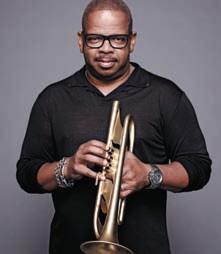
of the big band era. He had, one could argue, three main musical projects: One was the production of dance-hall hits, two was the production of serious black music (music that would represent the 400-year history of African descendants in the world that was new to Europeans), and three was the production of pieces that expressed his religious/existential feelings.
Tonight is devoted to the third and in many ways most profound of Ellington’s projects. Anyone who has heard his composition “Come Sunday” instantly understands that Ellington felt God as something that’s inside and not outside of (or remote from) the human experience.
Town Hall, 1119 Eighth Ave, 652-4255, townhallseattle.org, 7:30 pm, $35, all ages
THURS 2/20–SUN 2/23
Terence Blanchard Sextet
his thing in the magic room with the big fish tank. Lewis, who comes from a family of talented musicians, is also the founder of the powerhouse quartet Industrial Revelation. 216 Union St, 838-4333, thetripledoor.com
SERAFINA Eastlake
The genius of this venue is its atmosphere: classy and yet cozy. 2043 Eastlake Ave E, 323-0807, serafinaseattle.com
VITO’S First Hill
THURS 12/12: Brazil Novo
The genius of classical bossa nova is that it effortlessly blends rootsy African rhythms with a kind of urban cosmopolitanism that’s almost futuristic. To get a good sense of this genius, check out Brazil Novo, a local group that performs bossa nova gems by João Gilberto, Tom Jobim, and Caetano Veloso. The group’s vocalist, Michel Navedo, sings in Portuguese. 927 Ninth Ave, 397-4053, vitosseattle.com
ROYAL ROOM
Columbia City
TUES 12/31: New Year’s Eve
In Terence Blanchard, a trumpeter and composer, we find the perfect marriage of two forms of art that the icon Clint Eastwood recognized as American originals: jazz and cinema (when not talking to chairs, he can make some sense). Blanchard has composed for jazz and for films, the most recent of which was Red Tails (a movie produced by George Lucas that concerned black American fighter pilots in World War II). Blanchard even has an album that celebrates the moments when the two American forms were united: Jazz in Film—check out his interpretation of Quincy Jones’s score for The Pawnbroker and Duke Ellington’s for Anatomy of a Murder. To watch Blanchard is to see and hear not only a jazz legend, but also a film one. Jazz Alley, 2033 Sixth Ave, 4419729, jazzalley.com, 7:30 pm, $23.50, all ages
at the Royal Room
What’s happening tonight (the last night of 2013) at the Royal Room? Big band jazz from the ’30s, ’40s, and ’50s. And who was a genius of the big band movement? The elegant and sophisticated composer Billy Strayhorn. “Take the ‘A’ Train,” a Strayhorn composition, is the signature tune of the whole big band era.
5000 Rainier Ave S, 906-9920, theroyalroomseattle.com
BARÇA
Capitol Hill
This lovely bar, which presents jazz (Phil Sparks and Adam Kessler) on Thursdays, has had a string of genius-like bartenders. 1510 11th Ave, 325-8263, barcaseattle.com
COASTAL KITCHEN
Capitol Hill
It’s nothing but genius to devote a Monday night (the first night of the week) to jazz and oysters. Pork Chop Trio (sax, bass, drums) fills the air with sweet music, and the raw oysters fill the mouth with memories of the sea. 429 15th Ave E, 322-1145, coastalkitchenseattle.com




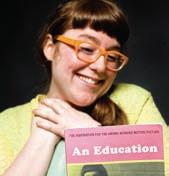


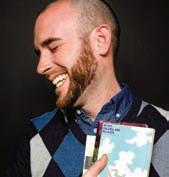
Constant
WED 12/4
Castalia


The UW Creative Writing MFA showcase returns with first-year poet Allison Stagner, first-year prose writer Kay C. Rogers, and Stranger contributor Sarah Galvin, who writes some of the funniest poems you’ve ever heard. In addition, UW faculty member Andrew Feld will read poetry. Hugo House, free, 7 pm
Coll Thrush
The interestingly named Thrush is the author of Native Seattle: Histories from the Crossing-Over Place Stranger art critic Jen Graves says Thrush is “AWESOME.” The caps are hers. She is not the sort of person to overuse capital letters, so pay heed.
Olympic Sculpture Park, 2901 Western Ave, 654-3100, seattleart museum.org/visit/OSP, free, 7 pm
Julia Serano
Serano is the author of Excluded: Making Feminist and Queer Movements More Inclusive. This is a book that a whole lot of people on Tumblr ought to read.
Elliott Bay Book Company, free, 7 pm
THURS 12/5
Amy Tan
The wildly popular author of The Joy Luck Club returns with her new novel, The Valley of Amazement University Temple United Methodist Church, 1415 NE 43rd St, 634-3400, utemple.org, free with book purchase, 7 pm

GARY SHTEYNGART In his new memoir, Little Failure—a childhood nickname bestowed by his mother—Gary Shteyngart tosses fiction aside and discusses his life as a Jewish immigrant with dreams of literary success. It’s hilariously honest and queasily self-effacing. Here’s Shteyngart’s explanation of what he wants out of his first real love affair: “A chance to lower myself into complete abasement, a chance to beg for someone’s love over and over again, knowing I will never get it.” He’s not above begging for the love of an audience: He’ll happily autograph anything you want him to. Be creative. (Elliott Bay Book Company, 1521 10th Ave, 624-6600, elliottbaybook.com, free, 7 pm, Mon Jan 13) PAUL CONSTANT
Davis, Maggie MK Hess, Sierra Nelson, and Alexis Vergalla will read new work about Miller’s Law, which says that we can only retain so much information in our memories.
Hugo House, free, 7 pm
FRI 12/6
Ellen Forney, David Montgomery Montgomery is a prominent local geologist. Forney is a Stranger Genius Award–winning cartoonist. These two people have been artists in residence at Town Hall for the last few months. Tonight, they’ll talk about their work, what they’ve been up to, and where they’re going.
Town Hall, $5, 7 pm
Kate Lebo
Lebo is the author of A Commonplace Book of Pie, a book of poetry that is inspired by different types of pie. At these readings, Lebo will often take requests from the audience: Name a pie and she’ll read you a poem for that pie. I’ve never once seen her stumped by a weird pie, which is pretty impressive.
Elliott Bay Book Company, free, 7 pm
SAT 12/7
What to Read in the Rain
This is a release party celebrating the new anthology collecting local writers and students at 826 Seattle, which benefits the very good local writing organization. The event features a reading, a signing, and “Northwest-themed refreshments.” 826 Seattle, 8414 Greenwood Ave N, 725-2625, 826seattle.org, free, 1 pm
TUES 12/10
Daniel James Brown
The Boys in the Boat is subtitled Nine Americans and Their Epic Quest for Gold at the 1936 Berlin Olympics. It’s about the UW rowing team that fought the Nazis. University Book Store, free, 7 pm The Magical Number Seven, Plus or Minus Two Local poets Kelly Davio, Nicelle
Nicola Griffith Griffith is a local fantasy author Her newest, Hild: A Novel, is about a king’s rebellious niece in 7th century Britain. Central Library, free, 7 pm
WED 12/18
Langdon Cook Cook’s new book, The Mushroom Hunters: On the Trail of an Underground America, travels from Seattle to New York in search of people who go out into the forest in search of a fungus to eat.
University Book Store, free, 7 pm
Who Will Speak? — An Evening in Celebration of Poetry and Readers Poet Roger Reeves will read from his debut collection, local poets and performers will read work written by Copper Canyon poets, and “the first 100 RSVPs will receive a complimentary book of poetry at the door.” Since Sherman Alexie says that Copper Canyon is the best poetry publisher in the US, this is a hell of a deal.
Hugo House, free, 7 pm
TUES 1/7
Jayne Ann Krentz
A woman has to come to terms with a difficult moment in her past in the highly prolific Krentz’s new novel, River Road Seattle Mystery Bookshop, free, noon
Nancy Bartley
A 12-year-old Washington boy shot and killed a sheriff in 1931. He was nearly killed by a lynch mob. The Boy Who Shot the Sheriff tells the story of what happened to that boy and why he shot a cop.
Elliott Bay Book Company, free, 7 pm
WED 1/8
Laurie Halse Anderson
A girl and her Iraq war vet dad are on the run in Impossible Knife of Memory University Book Store, free, 7 pm
Ilan Stavans
Stavans is the translator, most recently, of a collection of Neruda poetry titled Neruda Odes, All the Odes: A Bilingual Edition. Tonight, he’ll read from the poems and discuss translation. I’m a sucker for Neruda, and you should be, too. Town Hall, $5, 7:30 pm
THURS 1/9
Kurt Timmermeister, Dan Savage
The local author, who has a farm on Vashon Island, discusses his new book, Growing a Feast, with Dan Savage. I work with Dan Savage and I can’t imagine him ever setting foot on a farm, so this could be a kind of interesting pairing. Town Hall, $5, 7 pm
FRI 1/10
Scott Montgomery Montgomery’s Does Science Need a Global Language? examines the use of English in the worldwide scientific community.
University Book Store, free, 7 pm
MON 1/13
Ingrid Ricks
Subtitled A Girl’s Story Hippie Boy is Ricks’s memoir about growing up dysfunctionally Mormon. University Book Store, free, 7 pm
TUES 1/14
Kim Fu A boy and his three sisters flee their home and travel the world in For Today I Am a Boy Elliott Bay Book Company, free, 7 pm
Tami Parr
Are you ready for a book title? Okay, here goes: Pacific Northwest Cheese: A History. Yup. University Book Store, free, 7 pm
WED 1/15
Chang-Rae Lee
Chang-rae Lee is an excellent literary novelist. His new one, On Such a Full Sea, takes place in the far future, which is a change of pace for the author, who has traditionally been quite the realist. Central Library, free, 7 pm Ransom Riggs Ransom Riggs sounds like the name of a fictional detective. He
follows up his breakout debut novel, Miss Peregrine’s Home for Peculiar Children, with a second book called Hollow City: The Second Novel of Miss Peregrine’s Children. It’s also got found photographs in it, like the first book. University Book Store Mill Creek, 15311 Main St, 634-3400, free, 7 pm
SAT 1/18
Clean Republic
The local organization, which distributes and sells “personal alternative energy products including electric bike conversion kits and wind turbines,” will give a presentation titled “How and Why to E-Bike.” Ada’s Technical Books, free, 3 pm
MON 1/20
Elizabeth Kolbert
The New Yorker writer’s new book, The Sixth Extinction: An Unnatural History, is about extinctions happening all around us and possibly our own extinction as a species. Town Hall, free, 7:30 pm
TUES 1/21
Scott Stossel
Stossel has always been anxious. His new book, My Age of Anxiety examines the fact that anxiety didn’t really exist as a thing three decades ago, but now it’s everywhere. Town Hall, free, 7:30 pm
THURS 1/23
Julie Kramer
A TV news reporter receives a package containing human teeth in Delivering Death Seattle Mystery Bookshop, free, noon
Cheap Wine & Poetry Wine is so cheap at these events to get you in the mood for poetry. When you’re drunk, poetry is more meaningful, funnier, and more beautiful. (It’s like sexual attraction that way.) This outing of the popular poetry series features Rauan Klassnik and Amber Nelson, among other readers. Hugo House, free, 7 pm
Max Tegmark
Promotional materials indicate that Our Mathematical Universe is based on the author’s “hypothesis that our physical reality is a mathematical structure and his theory of the ultimate multiverse.” For some reason, this book description makes me really wish David Foster Wallace was alive to read it. Town Hall, free, 7 pm.
FRI 1/24
Pam Houston
The very popular author of Cowboys Are My Weakness will give a lecture on writing dialogue. This event will be followed by a Q&A between Houston and local yoga memoirist Suzanne Morrison. Hugo House, $10, 7 pm
TUES 1/28
Armistead Maupin
San Francisco’s Maupin is a popular author who comes to town often. The Days of Anna Madrigal revisits one of Maupin’s most famous characters, who in press materials is referred to as the “transgender landlady of 28 Barbary Lane.” Elliott Bay Book Company, free, 7 pm
WED 1/29
Richard Powers Powers is one of the most underrated authors in the business today. His novels are incredibly smart, tremendously affecting, and intricately crafted. His new novel is titled Orfeo, and it features a retired composer who is a genetic engineer in his spare time. Something goes wrong—with the genetic engineering part, not the composing part—
and trouble happens. You should be excited for this book.
Town Hall, free, 7:30 pm
THURS 1/30
Garth Stein, Jennie Shortridge
The local novelists share the spotlight for just one night. Stein is the author of The Art of Racing in the Rain. Shortridge is the author of Love, Water, Memory University Book Store, free, 7 pm
Sophie Cabot Black
Here’s a piece of a poem from The Exchange: “I took care of myself. I took care/Of myself, thinking much too often/I took care of someone else./Everything feels like payment.” That’s a nice couple stanzas, right there. Elliott Bay Book Company, free, 7 pm
WED 2/5
McKenzie Funk
Funk’s book Windfall: The Booming Business of Global Warming allegedly reads like a dystopian novel. It’s about all the people who are cashing in on the death of the human race.
Town Hall, free, 7:30 pm
THURS 2/6
Rabih Alameddine
An Unnecessary Woman is a novel about a Beirut woman who loves books and is viewed as eccentric by everyone around her Elliott Bay Book Company, free, 7 pm
FRI 2/7
Bob Shacochis
The novelist and journalist, who published a lot of books in the 1990s but who seemingly disappeared for a decade before returning with his new novel, The Woman Who Lost Her Soul, this year, will give a talk on the “manipulation of time in narrative.” After his talk, Shacochis will be interviewed by local author Peter Mountford. Hugo House, $10, 7 pm
MON 2/10
Daniel Jones Jones edits the Modern Love column in the New York Times. He’s peddling an anthology collecting his column at this event, with local Modern Love writers Nicole Hardy, Theo Pauline Nestor, and Wilson Diehl. Hugo House, $5, 7 pm
TUES 2/11
Roddy Doyle Doyle is a beloved author for good reason. His novels Paddy Clark Ha Ha Ha and The Woman Who Walked into Doors have moved thousands upon thousands of people. His new novel, The Guts, is a sequel to his popular novel The Commitments, which was turned into a movie a long time ago.
University Book Store, free, 7 pm
WED 2/12
Harriet Baskas
Baskas’s Hidden Treasures: What Museums Can’t or Won’t Show You is about the dark side of museums. It may or may not involve a wallet made out of human skin.
University Book Store, free, 7 pm
ADA’S TECHNICAL BOOKS 425 15th Ave E, seattletechnicalbooks.com
CENTRAL LIBRARY 1000 Fourth Ave, 624-6600, spl.org
ELLIOTT BAY BOOK COMPANY 1521 10th Ave, 624-6600, elliottbaybook.com
SAT 2/15
Search for Meaning Book
Festival
Seattle University’s spiritual-minded book festival has often been a very hot ticket, presenting authors like Michael Chabon and Sherman Alexie. The 2014 lineup hasn’t been released yet, but maybe you should plan on reserving a ticket anyway. Seattle University, Pigott Auditorium, 900 Broadway, 296-6135, seattleu.edu, 9 am
Jerry Pollack
Are you ready for the most exciting lecture title in this whole damn magazine? Are you ready? Here it is: “The Fourth Phase of Water: Beyond Solid, Liquid, and Vapor.” EEEEEEEEEE!
Ada’s Technical Books, 3 pm
SUN 2/16
Bev Sellars
They Called Me Number One is a memoir by a Xat’sull chief about her early life in British Columbia. Central Library, free, 2 pm
TUES 2/18
Matthew Quick
Quick’s Silver Linings Playbook became the very good movie, but the book itself wasn’t very good. But because the movie was so good, a lot of people are going to give Quick’s next novel, The Good Luck of Right Now, a shot. Let’s wish him luck. The book is about a young man who doesn’t know what to do when his mom dies. Elliott Bay Book Company, free, 7 pm
WED 2/19
Chris Ware, Chip Kidd
The Greatest Cartoonist of Our Time appears in discussion with the very popular designer of books. Ware is the kind of genius who appears once in a generation. His cartoons can make you cry. Kidd’s book covers can make you laugh with their cleverness and inventiveness. This should be a night to remember. Town Hall, free, 7:30 pm
FRI 2/21
Must the Gun Always Fire?
(And Other Rules of Writing) Fiction writer Anthony Doerr, poet Natalie Diaz, and doublethreat poet/novelist Karen Finneyfrock will read new work based on the theory of Chekhov’s gun and other rules of writing, along with musician Jake Uitti. Hugo House, $25. 7 pm
MON 2/24
Natalie Handal Poet in Andalucía is a reverse response to Federico Garcia Lorca’s Poet in New York. That’s a clever idea for a book. Elliott Bay Book Company, free, 7 pm
THURS 2/27
Nathan Oates
The short-story author reads from his new book, The Empty House, in an event hosted by Willow Springs Editions. Naked City Brewery & Taphouse, 8564 Greenwood Ave N, 838-6299, nakedcitybrewing.com, free, 5 pm
HUGO HOUSE 1634 11th Ave, 322-7030, hugohouse.org
MYSTERY BOOKSHOP 117 Cherry St, 587-5737, seattlemystery.com TOWN HALL 1119 Eighth Ave, 652-4255, townhallseattle.org UNIVERSITY BOOK STORE 4326 University Way NE, 634-3400, ubookstore.com



Eligibility:
• 25-55 years of
• Healthy male
• No History of







5840 Airport Way S. Ste. 212
Contemporary Art Gallery Open Thurs-Fri 12-6Pm, Every Second Saturday for Art Attack & By Appointment. eightandsand.com


DECEMBER 14th, 6 pm






“Chamber of Wonders” with Aline Gorson, Anthony S Waters, Benjamin Vierling, Braden Duncan, Brian White, Chris Mars, Corey Urlacher, Dean Summers, Drew Tucker, Ego, Halsey Swain, Heather Hudson, Isaac Stuart, Jack Howe, Jason Hite, Jason Soles, Javier S Ortega, Jethaniel Peterka, Joe Vollan, Julie Baroh, Kat Houseman, Kyle Abernethy, Larkin, Natalia Pierandrei, Nick Gucker, Nola Avienne, ShirrStone Shelter Dolls, Stephanie Vega, Terese Nielsen, Tracy Cilona, Weston Brookes, Yuko Ishii, Yvette Endrijautzki and Zeb Shaffer


JANUARY 11TH, 6 pm “Quoth the Raven” 5628 Airport Way S, Ste 246 www.krabjabstudio.com
FEBRUARY 8th, 6 pm FAERIE II
by David Schmader
DEC 5
The Limey
A one-night-only screening of Steven Soderbergh’s 1999 crime thriller, featuring a killer performance by Terence Stamp, and presented as the closing-night feature of SAM’s 36th annual Film Noir Series.
Seattle Art Museum
DEC 6
Out of the Furnace
From the writer-director of Crazy Heart comes this gritty drama about two workingclass brothers (Christian Bale and Casey Affleck) drawn into a twisty murder mystery.
Wide release
The Punk Singer
Sini Anderson’s The Punk Singer feels like a revelation.
Its subject: Kathleen Hanna, cofounder of riot grrrl, creator of the bands Bikini Kill and Le Tigre, coiner of the phrase “smells like teen spirit,” and spouse of Ad-Rock. I’ve been a Kathleen Hanna fan for decades; this film introduced her to me as someone new.
To quote talking head Carrie Brownstein, it’s “an empowering and surreal experience.”
SIFF Cinema Uptown
DEC 6–12
At Berkeley Master documentarian Frederick Wiseman made this expansive portrait (four hours!) of the eponymous University of California campus, hub of the 1960s student radicalism movement, now a highly ranked research school beset by severe budget cuts.
Northwest Film Forum
DEC 6–13
Let the Fire Burn
An award-winning documentary using archival news footage and interviews to tell the tale of the deadly clash between the City of Philadelphia and the Black Power group MOVE on May 13, 1985.
Varsity
DEC 7–8
National Theatre: 50 Years
On Stage
A night of classic stage performances drawn from the archives of the National Theatre, featuring actors such as Judi Dench, Ralph Fiennes, Michael Gambon, Derek Jacobi, and Maggie Smith doing their thing in plays by Harold Pinter, Peter Shaffer, Tom Stoppard, Alan Bennett, and David Hare.
SIFF Film Center
DEC 9–10
Next Dance Cinema
Now in its eighth year, Next Dance Cinema is the annual collaboration between Northwest Film Forum and Velocity Dance Center, which fills the Film Forum screen with contemporary dance on film, from staged work to choreography created specifically for the camera to animation.
Northwest Film Forum
DEC 10–15
Royal Shakespeare Company Live: Richard II
A live cinema broadcast from the Royal Shakespeare Company, featuring David Tennant in the title role of Richard II. SIFF Film Center
DEC 12
Auntie Mame
Three Dollar Bill Cinema’s holiday-time screening of the gayly beloved 1958 film, in which Rosalind Russell plays a woman so fabulous, fearless, life-loving, and drunk that she was immediately and forever crowned Queen of the Gays. Pacific Place
DEC 13–15
Screen Style
A guided tour of fashion on film, with images selected and explicated by style-conscious Seattleites, including the Seattle Art Museum’s Chiyo Ishikawa, designers Aykut Ozen and Julianna Vezzetti of the Ozen Company, and garment artist Mark Mitchell.
Northwest Film Forum
DEC 13–19
Improvement Club
The debut feature by Seattle filmmaker/choreographer Dayna Hanson is a dance film/ mockumentary hybrid following an experimental dance/ theater troupe. Instead of easy laughs about pretentious habits and the Actor’s Craft, we’re submerged in the reality of the situations (which still makes room for plenty of laughs). Small and lovely performances abound, including the ones given by Hanson and fellow choreographer Wade Madsen.
Northwest Film Forum
DEC 18
American Hustle
The latest from David O. Russell concerns two con artists (Christian Bale and Amy Adams) forced to work for the FBI in the world of New Jersey’s corrupt political establishment and Mafia.
Wide release
DEC 20
Anchorman 2
The feverishly awaited sequel. It’s kind of a big deal.
Wide release
Inside Llewyn Davis
The Coen brothers’ latest is a Cannes-honored musical drama set in the 1960s folk scene in NYC.
Wide release
Saving Mr. Banks
A biographical drama about the production of the 1964 film Mary Poppins, starring Emma Thompson as Poppins author P.L. Travers and Tom Hanks as Walt Disney.
Wide release
DEC 25
Fiddler on the Roof SingAlong Ignore Christmas with the
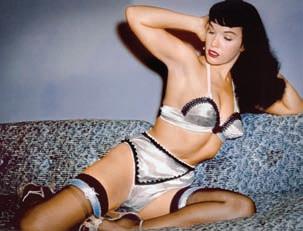
greatest Jewish-themed musical of all time (screw you, Yentl), complete with a Chinese-food buffet at intermission!
SIFF Cinema Uptown
Grudge Match
Sylvester Stallone and Robert De Niro star as aging rival boxers coaxed out of retirement for one last fight. (Think Rocky meets Raging Bull meets Grumpy Old Men meets Lemon Party.)
Wide release
Her Written, directed, and produced by Spike Jonze, Her is a “science-fiction romance” about a man (Joaquin Phoenix) who falls in love with the voice of his computer operating system (Scarlett Johansson).
Wide release
Mandela: A Long Walk to Freedom
A biographical drama starring Idris Elba as the anti-apartheid revolutionary and former
ARK LODGE
CINEMAS 4816 Rainier Ave S, 721-3156, arklodge cinemas.com
CINERAMA 2100 Fourth Ave, 448-6680, seattlecinerama.com
NORTHWEST FILM FORUM 1515 12th Ave, 267-5380, nwfilmforum.org
PACIFIC PLACE 600 Pine St, Ste 400, 888-AMC-4FUN, amctheatres.com
SEATTLE ART MUSEUM 1300 First Ave, 654-3210, seattleartmuseum.org
SIFF CINEMA
UPTOWN 511 Queen Anne Ave N, 324-9996, siff.net
SIFF FILM CENTER Seattle Center, Northwest Rooms, 324-9996, siff.net
VARSITY 4329 University Way NE, 632-6412, landmark theatres.com
president of South Africa.
Wide release
The Secret Life of Walter Mitty
The big-budget adaptation of James Thurber’s classic story, starring Ben Stiller and Kristen Wiig.
Wide release
The Wolf of Wall Street
Martin Scorsese directs Leonardo DiCaprio in this darkly comic true tale of a New York stockbroker drawn into a securities-fraud case involving Wall Street corruption and the mob.
Wide release
DEC 27–JAN 2
Faust
Aleksandr Sokurov’s contemporary reworking of the devilish legend.
Northwest Film Forum
JAN 3–9
A Touch of Sin Winner of the best screenplay prize at Cannes, Jia Zhangke’s latest follows four Chinese outcasts driven to a murderous rampage.
Northwest Film Forum
JAN 10
August: Osage County
After winning the Pulitzer Prize for drama, Tracy Letts’s explosively brilliant family saga hits the big screen with nuclear star power, including Meryl Streep, Julia Roberts, Ewan McGregor, and Benedict Cumberbatch.
Wide release
Lone Survivor
A dramatization of author/ director Peter Berg’s account of four Navy SEALs ambushed in the mountains of Afghanistan, starring Mark Wahlberg and Taylor Kitsch.
Wide release
JAN 16–MARCH 13
The Golden Age of Italian Cinema
Eight weeks of classic Italian cinema, including The Bicycle Thief (Jan 16), Umberto D (Jan 23), I Vitelloni (Jan 30), Le Amiche (Feb 6), Il Posto (Feb 13), The Organizer (Feb 20), and 8 ½ (Feb 27).
Seattle Art Museum
JAN 23–FEB 2
Children’s Film Festival
Eleven days packed with the best children’s cinema from all over the world, from Belgian animation to Chinese shorts to
Ethiopian features, all picked with an eye on the intersection of high aesthetic quality and family friendliness. Bonus delights: live musical performances, hands-on workshops, and a morning “pajama party” screening with pancakes! Northwest Film Forum
JAN 24
I, Frankenstein
An action thriller set in a dystopian future where Frankenstein’s monster must battle supernatural powers to protect the secret of his immortality or something.
Wide release
JAN 31
Oscar-Nominated Short Films 2014
Dueling programs of Oscarnominated short films: one package featuring the five nominees for best animated short and another featuring the five nominees for best liveaction short.
Varsity
FEB 6–9
Seattle Asian American Film Festival
For its second year, SAAFF graduates to Columbia City’s Ark Lodge Cinemas, to present four days of the best in recent independent films by local and national Asian American filmmakers. See seattleaaff.org for full lineup.
Ark Lodge Cinemas
FEB 7
Visitors
From the man who brought the world Koyaanisqatsi comes another immersive documentary, featuring a succession of 74 “moving stills” projected for roughly a minute each and set to a Philip Glass score.
Cinerama
FEB 14–20
Like Father, Like Son A Cannes-honored Japanese drama from director Hirokazu Koreeda, following two families who discover their children were switched at birth.
Varsity
FEB 21–27
The Rocket
An Australian drama about a scrappy 10-year-old Laotian boy drawn into a rocketbuilding contest, written and directed by Kim Mordaunt.
Varsity














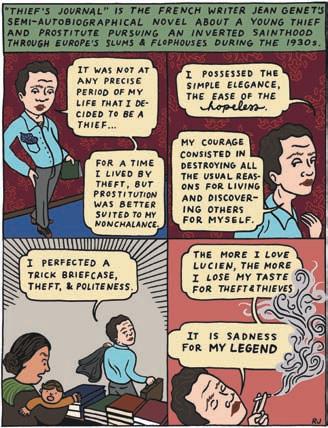
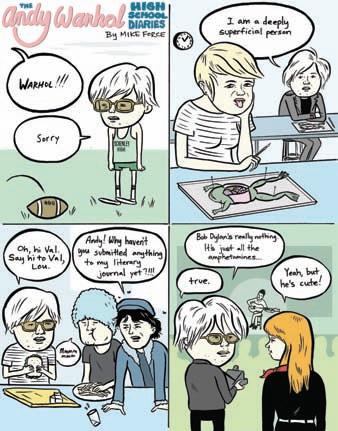
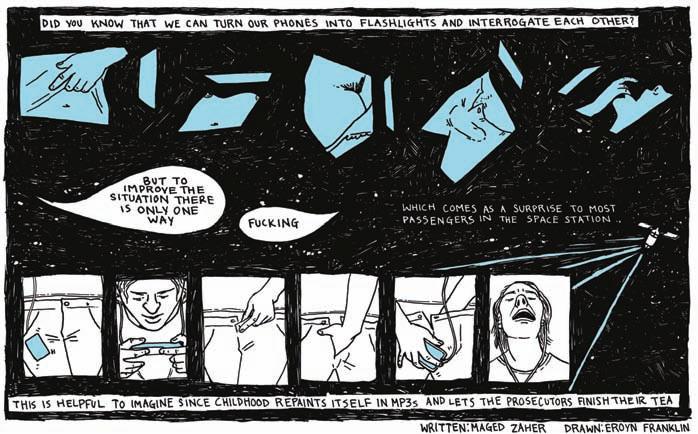
DECEMBER 17
GO TELL IT ON THE MOUNTAIN: THE BLIND
CHRISTMAS SHOW
Celebrate the holidays with living legends of gospel! The Blind Boys bring their special Grammy-winning Christmas show back to Benaroya Hall.
Performance does not include the Seattle Symphony. TICKETS GOING FAST!
DECEMBER 31
NEW YEAR’S EVE
FEATURING GERSWHIN’S FAMOUS RHAPSODY IN BLUE
Music Director Ludovic Morlot and Principal Pops Conductor Jeff Tyzik join forces for a festive program that features Tchaikovsky’s beloved Nutcracker, Gershwin’s famous Rhapsody in Blue, music from Star Wars and much more. Then, count down to midnight at a post-concert party.
TICKETS FROM: $52
JANUARY 9
IGUDESMAN AND JOO: BIG NIGHTMARE MUSIC
Classical musicians Aleksey Igudesman and Hyung-ki Joo have taken the world by storm with their unique and hilarious theatrical shows, which combine comedy with classical music and popular culture.
TICKETS FROM: $19
FEBRUARY 5
BELL IN RECITAL
For one night only, hear why the Washington Post calls Joshua Bell “one of the finest musicians of his generation.” Performance does not include the Seattle Symphony.
TICKETS GOING FAST!
FEBRUARY 6–9
WITH THE SEATTLE SYMPHONY
SEATTLE POPS SERIES sponsored by Broadway sensation Brian Stokes Mitchell returns to Benaroya Hall for a weekend of beloved ballads and romantic music.
TICKETS FROM: $19
FEBRUARY 13 & 15
MORLOT CONDUCTS THE FANTASTIQUE
Hear the wistful call of shepherds, the cackle of witches and a dramatic march to the scaffold in Berlioz’s thrilling orchestral showpiece: Symphony fantastique.
TICKETS FROM: $19
APRIL 3, 5 & 6
With more than 250 musicians onstage, all led by conductor Rafael Fruhbeck de Burgos, Carmina Burana promises to be one of the biggest and boldest concerts of the season.
Sponsored by
TICKETS GOING FAST!
JUNE 6
Presenting sponsor Brand-new symphonic compositions inspired by icons Bill Frisell, Ray Charles and Sir Mix-A-Lot.
TICKETS FROM: $19