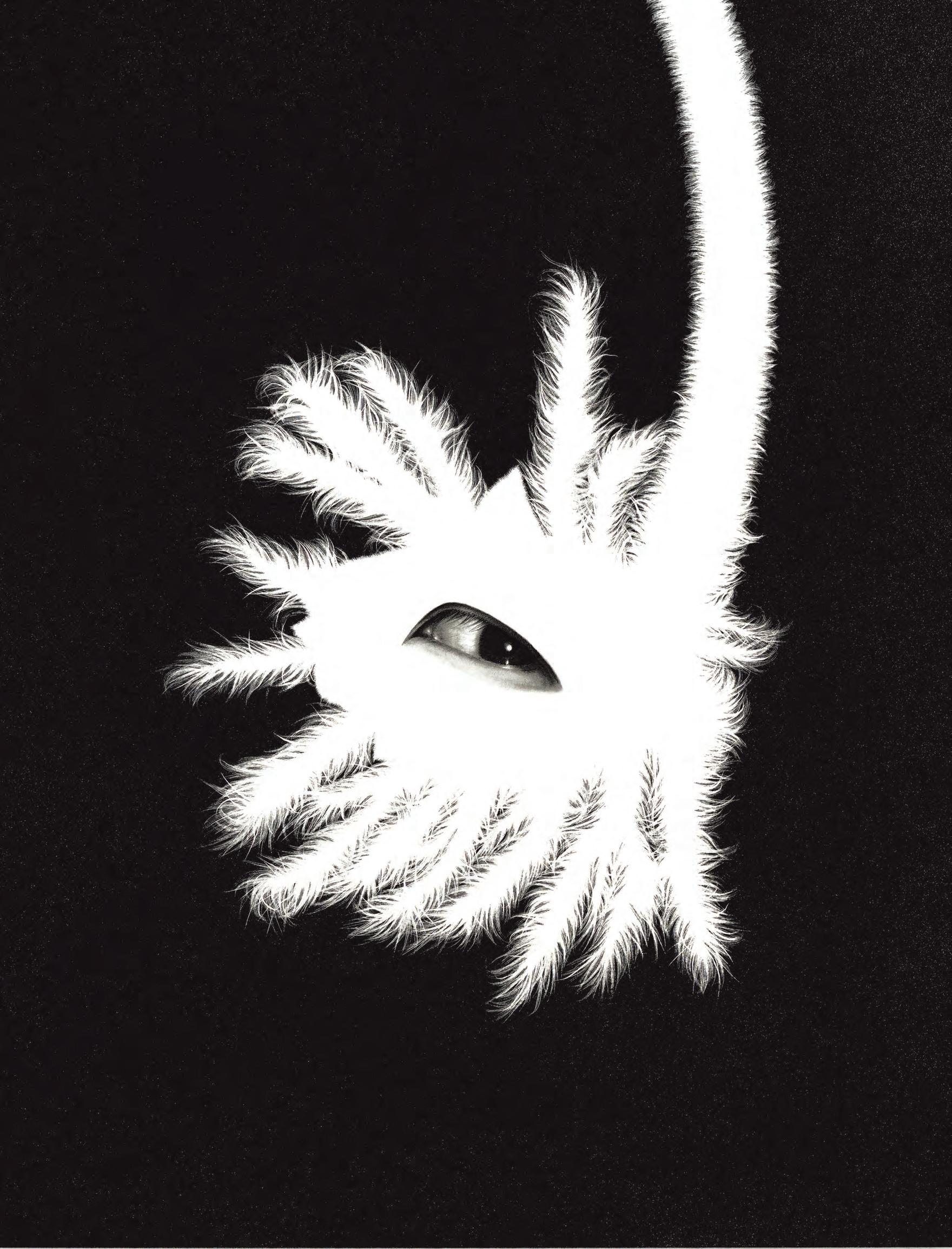
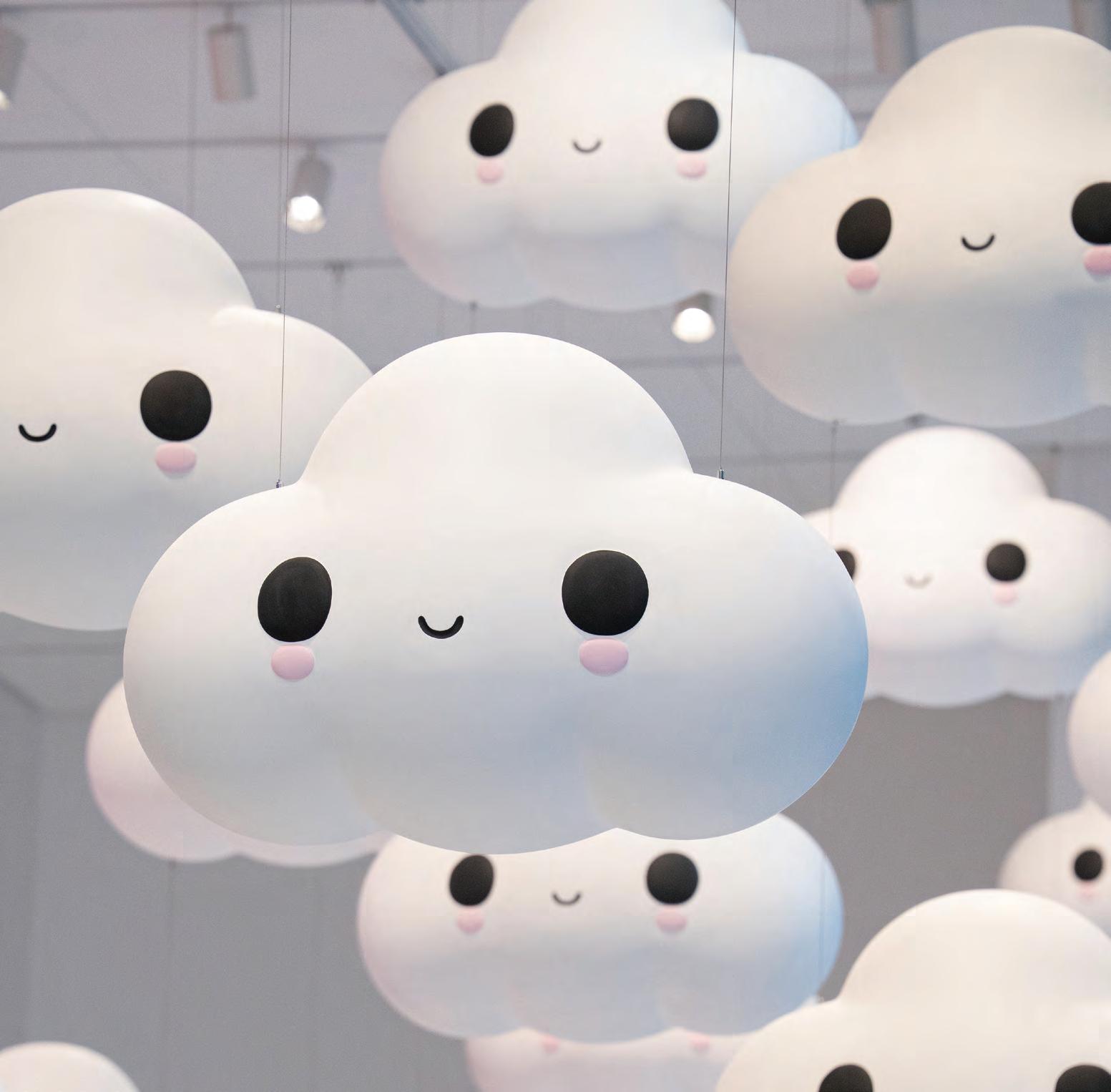


Rendering of Little Cloud , 2024.
Courtesy of FriendsWithYou,
photo: Chloe Collyer.
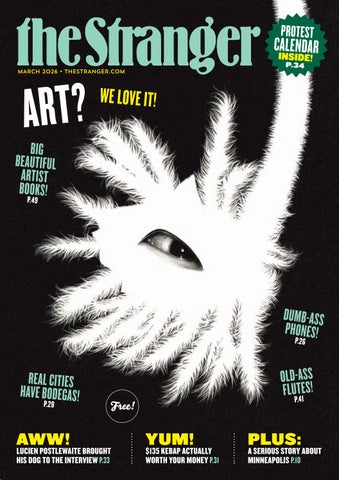
Sorry to immediately be a bummer, but I can’t stop thinking about the state of technology. About how we could have done anything in the world with it at this point, and yet this is where we landed.
Waist-deep in a slop gauntlet run by the most corrupt/least cool (in every sense of the word) grifters imaginable. An internet that currently looks like shit and works like shit, in service of shareholders who will monetize it until there is nothing left to extract. I won’t belabor the point.
Except of course I will. We are supposedly inching toward an era of AI grandiosity beyond our wildest dreams/nightmares, but until that happens, can we make one website function correctly? It would be incredible, if in the year of our 2026, I could look up what time a show starts without being led to a third-party ticket site, bloated with ads, with some out-of-date map widget that blocks the screen while their glitchy AI asks if you want whatever the fuck. Anything but the information you’re looking for. You will never find it; you will forget what you came here for.
Woman yells at [the] Cloud, I know. But if you are a venture capitalist reading this (hiiii), let me whisper my incredible idea, then: Make the internet work again.
Beyond its current janky state, AI’s insidious seep into the arts raises genuine concerns around labor displacement, authorship, surveillance capitalism, and the slow evaporation of expertise. Another concern is simpler: The people pushing AI are fucking dweebs. Mikey Shulman (of generative AI start-up Suno) literally said, out loud, in an interview: “It’s not really enjoyable to make music now. It takes a lot of time, it takes a lot of practice, you need to get really good at an instrument or really good at a piece of production software.” Concluding that this is a problem to be solved (by him, for money) rather than, you know, the entire point.
Finally. We are so close to solving the problem of having a creative process.
Okay that is enough rain! The days are getting longer, my friend, and I am once again trying to keep it weird around here. What are the interesting people of Seattle doing with their one precious life?
My moodboard for this issue was ARTS, of course, with a special interest in: antislop, DIY out of ethical necessity, weird/ cool/fun, hands-on, physical media, in real life. We may not be able to escape algodriven toxicity entirely at this point, but I was curious about the people and places operating outside of all that. People dedicated to the value of physical experience, or people doing strange or difficult or specific things with a lot of dedication. Some as a deliberate statement, some just because it’s what they’re into, or it’s what they’ve always done. I’m tickled by the results. People are making such neat things!
In these pages you’ll find artists who deal in physical media—less because the aesthetic still fucks (it does), but because every other option sucks (pg. 24). We make the case for recession-era art (pg. 21), repairing your own clothes (pg. 37), and the joy and frustration of a dumber phone (pg. 26).
Elsewhere, what’s more analog than a baroque flutist (pg. 41)? An opera singer, perhaps (pg. 45)—did you know they are just belting it out without amplification up there? We also learn about the ancient techniques like the Korean paper art of hanji (pg. 49), and Turkish meat-carving with giant blades (pg. 31).
We also envision something better. A city with a healthy bodega culture (pg. 28), a city that invests in the arts (pg. 57), a city with unique arts spaces (pg. 43), and a city that envisions something better for a neat old building in a queer/arts neighborhood than a… McDonald’s (pg. 61).
Spring is coming. — Emily Nokes
Realizing I’ve been wearing my carabiner on the wrong side
Season two of The Boyfriend on Netflix
Joy sobbing to videos of Alysa Liu
Hilary Knight refusing to make excuses for men’s behavior
“Regular Rabbit” by Stephen Spencer
Keri Russell’s wigs on The Americans
Puppy anticipation
A powder day, finally
My last fried nerve

Chu Minh Tofu and Vegan Deli Ex-Lax
LITERALLY MAKING PHYSICAL MEDIA
Cold red wine
Lightrailers is real word, Henry
The Kissenger Pocket Pussy for Kissing Ring, the dogcatching company
Being Chinese before Chinamaxxing made being Chinese cool
Sparkle kicks in Las Vegas


I Saw U
Is Different Here
I photographed the mob at the Capitol on January 6. What I saw in Minneapolis was far
Seattle Has a Long Way to Go, but These Five Grocers Are Ahead of
At Hamdi, Chef Berk Güldal Is Keeping This Ancient Turkish Culinary Art Alive Goodbye, Sweet Prince
Hanging on by a Thread with the Capitol Hill Tool Library’s Mending
If It Ain’t Baroque…
& CREATIVE Rou Leonard
DIGITAL STRATEGY & COMMUNITY
ENGAGEMENT MANAGER Allie Huska
PROJECT MANAGER Lindsay Powers
EXECUTIVE DIRECTOR Patrick Kearney
EXECUTIVE PRODUCER Nancy Hartunian
SOCIAL MEDIA MANAGER Celene Ramadan
Katya Schexnaydre MANAGING EDITOR Janey Wong
MANAGER/STAFF WRITER Shannon Lubetich STAFF WRITERS Bri Brey, Langston Thomas

ILLUSTRATIONS BY HELEN NESBURG
Did you recently share a ~*moment*~ with someone while riding the bus, dancing at the club, or standing in line at the supermarket? Do you want to try to reconnect? Submit your own I Saw U at thestranger.com/ isawu, and maybe we’ll include it in the next roundup! Look for a new batch of I Saw U messages every week on TheStranger.com.
Mullet 4 Mullet at the Ice Protest: Revolutionary Eye Contact
You: pink/purple curly mullet cutie carrying a long sign Me: gray/black mullet w boot sign. We locked eyes many a time, let’s go on a date? FUCK ICE!
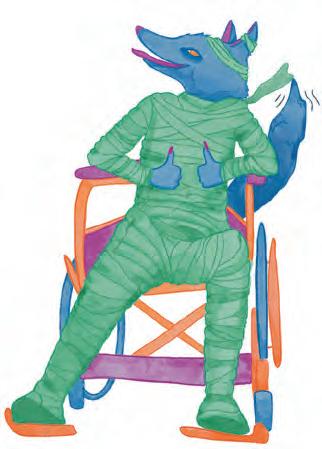
Drugged up and down bad
Me: I’m the ER for a broken back. You: hot doctor who had to give me a rectal exam. Let’s break HIPPA?
Southcenter skate claw machine
You: short masc in a hat. Me: red jacket zombie shirt. You watched me win a prize for my friend’s birthday. I should have won you one too! Forgive me?
Are you the cute Superbowl fan at the Rebel?
You were with friends, but I asked if me and my friends could sit down. We sat next to each other and then you left without asking for my number. :’(
SIFF Uptown 2025
You used to work in the ticket booth. You looked like Chad Michael Murray with Kurt Cobain hair. Where did you go!
MaxLuna
You were at Target in downtown. You had a dachsund with you. I watched you sheepishly laugh as you looked at the birthday cards!
Lots of eye contact with a cutie at the Seahawks parade On the corner of 4th and Pine. U- guy in a
beige hoody & black jacket. Me- brown curly hair in a blue jacket & glasses. I was with friends & a baby. Wish I would have talked to you!
met on bumble great sex u: cute podcaster w the best stories, I blocked u and deleted ur number. Email me?
Braids and hoops dancing at Ghostface show @ Crocodile
You: gorgeous femme dancer with braids and hoops Me: tall w/ frizzy hair & patch jacket in gay panic You are gorgeous, wanna go dancing more with me?
The 1 on the 1 line
On the light rail leaving SIFF with a friend. I was leaving a movie high. We chatted & laughed until I had to get off. I never asked for your name.
baldie baddie at the gay gym you: bald, sexy. me: curly, mesmerized. you are always at RCF when I’m there. can’t tell if you’re gay, but you’ve def seen me staring. ruin my life?
three friends on the one line you and your friends hopped on the packed 1 line yesterday as i was heading home, but your black/blond hair combo got me, hmu?
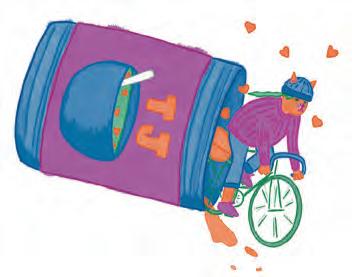
My heart stopped in the soup aisle Cap Hill TJ’s 2/11 6pm. You: Dark ponytail, glasses, 2 black panniers, rolled up pant leg Me: Blue coat, short brown beard, wishing I paused when we locked eyes by your bike
huggers outside la dive 1/5 Seattle, we don’t hug enough. Or at least not like the two I saw last Thursday night. That was an EMBRACE. TY for keeping romance and whimsy alive.
Compliments @ st. Bread 2/6 you, blonde cutie w/ a blue bag and “mt. st. helens pin” me: wearing an orange knitted hat. You complimented my hat and name. Baked goods on me?
Is it a match? Follow The Stranger on Instagram and leave a comment on our weekly I Saw U posts to connect!
BY STEVE WEISSMAN
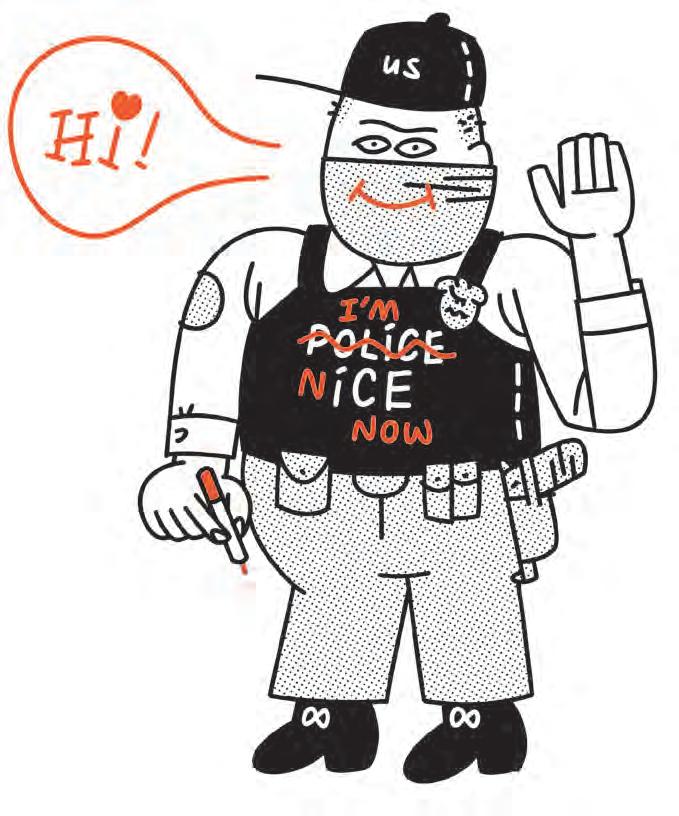
Dear ICE and CBP Agents, Resign. Quit. Retire. Think about it. If you quit now, you can at least say you got out when the shit got crazy. If you continue to work for ICE or CBP, however, you will fuck yourself over in multiple ways.
You are probably not very bright, so I’ll try to make this simple: Nobody likes you. Nobody. At all. Forever.
No real employers will want to hire you in the future if they see ICE or CBP on your resume. No one will be your friend. No one will fuck you. Your food will be spit on, or worse. If you have children, they will hate you. You will be subject to mockery, ridicule, and loathing forever. And you hopefully will get criminally prosecuted.
But if you resign now, there is a glimmer of hope. You can say that you got out when you realized that ICE and CBP are Nazis. You can say, “I’m one of the good ones who did what was right when my country depended on it.” Sure, it was significantly later than

any rational, sane person would come to the same realization, but at least you got to the right place eventually.
If you resign, you will still be a douchebag, but you won’t be a fascist douchebag. And regular, non-fascist douchebags are incrementally better. They are far more likely to get a job and get paid. Or laid.
But if you stay? After the shootings? The beatings? The tear gas? The intimidation of protesters and observers? The detainment of 5-year-olds? The Nazi coats?
If you stay, you’re a Dick with a capital D for the rest of your sorry, lonely, pathetic life. So grow a pair of balls and resign already. Get a real job. Ice Out.
Do you need to get something off your chest? Submit an I, Anonymous, and maybe we’ll illustrate it! Send your unsigned rant, love letter, confession, or accusation to ianonymous@thestranger.com. Please remember to change the names of the innocent and the guilty. Read more I, Anonymous letters every week at TheStranger.com.


All the Dead Cartel Leaders, Realized Conspiracy Theories, and Relatable Baby Monkeys You May Have Missed in February
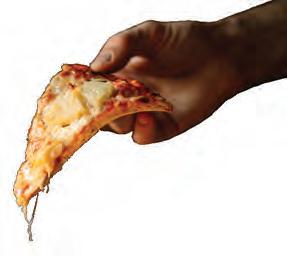
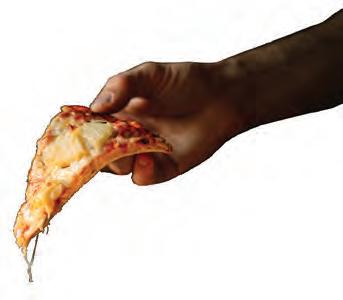
Ugh, Epstein. Props to the conspiracy theorists, it turns out there is a secret pedophilia cabal using pizza-coded language (maybe). The scale of it, and just who did what, is still murky (no thanks to the redactin’ feds), but some of the world’s richest people were involved with the financier. People like Bill Gates and the Andrew formerly known as Prince whom British police arrested for possi bly sharing trade secrets with Jeffrey Epstein. The files also implicated Hyatt Hotels heir Thomas Pritzker, who has since stepped down as the chain’s executive chairman. The files implicated another hotelier , but the president has yet to face any repercussions for allegedly molesting a child, allegedly participating in a sex-trafficking ring, or anything else. Though the Supreme Court did hang his tariffs out to dry, which is something.
The situation is so dire that 1,400 cases could be thrown out for a lack of lawyers. You could also take the Oregon State Bar if you’re looking for a low-pay, highstress vocation.
* * *
BY
Mayor Katie Wilson swept a Ballard homeless encampment , fooling us once; she isn’t taking down the city’s police CCTV surveillance cameras , fooling us twice.
* * *
A report on the Seattle Police Department’s handling of last summer’s May Day USA anti-trans rally showed that SPD was biased against the counter-protesters, aka the people they’re sworn to protect. They also didn’t realize the neighborhood with rainbow crosswalks was gay . Boys, sit down. We have something to tell you about Freddie Mercury, Liberace, and Glee
* * *
* * *
Onto our bread and circuses: The Seahawks won the Super Bowl. To celebrate, fans climbed on top of the Pioneer Square pergola and broke it. The city asked each resident to donate $12 to fix it The Stranger staff did not do this, and doubt you did either. Someone
After the Super Bowl win, the Seahawks’ stock rose to a new level. Jody Allen, Paul’s sister, announced she’ll give the boys and their bird to the highest bidder. For sale: team, lightly used Seriously, someone dig up Paul Allen. He’d say, “This is exactly what I wanted,” and we’d all smile.
Seattle must cough up $29 million in a settlement to the family of Jaahnavi Kandula, the 23-year-old Indian graduate student whom Seattle officer Kevin Dave slammed into at 50 miles over the speed limit, something he was miraculously never charged for


*
* *
At his Governor’s Mansion, Bob Ferguson is scheming for an NBA team . Or, at least, Zooming with NBA commissioner Adam Silver about it. Bruce Harrell’s veins are about to pop out of his neck and strangle him to death.
* * *
Speaking of things you can buy, there’s a waterfall up for grabs in Oregon. If you’ve got enough liquid, you can slurp up Abiqua Falls.
* * *
If you’re feeling generous, Oregon needs some cheddar for its public defenders.
Money-laundering scheme Melaonly scraped together $15.4 million at the box office—far less than the $75 milAmazon paid for it. Perhaps that’s why Bezos laid off a third of the Washington Post newsroom. Or, maybe he wanted Democracy Dies in become a directive
* * *
Fortunately, our enemies are the stupidest people alive. A Louisiana National Guard soldier left his AR-15 in a hotel bathroom on Bourbon Street while on patrol in the French Quarter. “I kind of feel bad for him because that’s one of the main rules of being in the Army, I would think, is you’re always supposed to have your weapon in your hands and not in somebody else’s,” said French Quarter performer Nervous Duane. You said it Duane, that must be one of the main rules of the army.
* * *
In an attempt to appease Trump’s calls for action against the fentanyl trade in exchange for lighter tariffs, the Mexican army killed
cartel leader “El Mencho.” Cartel members did not take well to this. They incited violence across multiple Mexican states. They set fire to vehicles , blocked roads, and killed at least 25 Mexican National Guardsmen in six separate attacks. American tourists were advised to hunker down in their all-inclusive resorts.
* * *
Border czar and future federal inmate Tom Homan announced he’s reducing chud numbers in Minnesota. A quarter of the ICE agents out on the ice will get to warm their sackless junk by the fire. The whistles and the optics—try not murdering people or kidnapping children in broad daylight—proved to be too much.
mercial star who hawked super absorbent pads to handle spills and messes has got his eye on “soaking up the swamp.” Don’t get it twisted, Shlomi is an anti-woke warrior whose slogan is “Make America Grow Some Balls Again.” His campaign promises to “slap chop the nuts out of the ‘woke,’ making less blue-haired commies and more red-blooded Americans.” That’s not going to fit on the baseball caps.
* * *
* * * Meanwhile, the Department of Homeland Secu rity is in a funding freeze. Brr?
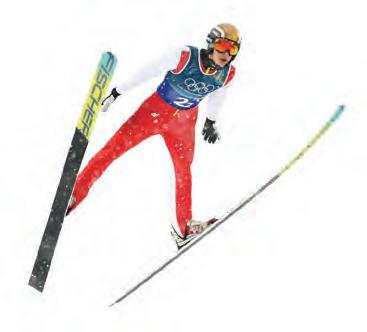
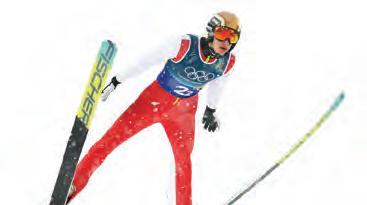
* * * The cold got to the Olympians. Ski jumpers are injecting acid into their penises. Not for fun or pleasure, but for ski suits. The extra girth gives them extra room, which gives them more lift and just a little athletic advantage. It’s a physics thing, and a cheating thing.
* * *
For one cheater, it was a sex thing. Immediately after winning the bronze medal, a Norwegian biathlete confessed to his worst mistake: cheating on his beautiful girlfriend of three months. He hoped his podiumside remorse would win her back. It did not.
* * *
The men’s and women’s US hockey teams both won gold. Guess which game FBI Director Kash Patel flew to while his agency is searching for an 84-yearold woman kidnapped from her home?
* * * Everywhere in the country froze over last month except the West Coast. This is not bad news, because, according to the Trump administration, climate change is not real and neither are the dangers of greenhouse gases. To celebrate, we’re eating raw, unrefrigerated pork and sharing needles.
Seeing as we’re on our own, we must remain vigilant. Or else our whistling Olympic marwill continue to die off, and people will keep snatching our morning show hosts’ mothers from their Arizona mansions. Luckily, Ring cameras are here to help! In their 30-second Super Bowl ad, Ring highlighted “Search Party,” a way to trigger all of your neighbors’ cameras to look for a dog if it’s gone missing. Sweet, right? They’ve pinky-promised to limit this technology to dog-finding only.
* * *
Here is who died this month: Dawson’s Creek ’s James Van Der Beek at 48, Harold and Maude ’s Bud Cort at 77, and Rev. Jesse Jackson at 84. The Boeing IMAX theater isn’t totally dead, but it got sold to the Space Needle Corporation, and the big screen as we know it seems dead as a doornail
* * *
Anderson Cooper is also dead. Well, his gig at CBS’s 60 Minutes is , at least, as well as 60 Minutes ’s reputation. The gay dad of news said in a statement that he wanted to spend more time with his children. But reading between the lines, we suspect he wanted to spend less time with CBS News’ Bari Weiss.

* * *
Perhaps someone can save us. Someone like Vince “ShamWow” Shlomi. The info-
* * *
Clearly, we need a hero, and his name is Punch . Because he is only a baby, and a monkey in a Japanese zoo being bullied by other monkeys while he clings to his surrogate mother (a stuffed orangutan toy from IKEA), he cannot comprehend fascism or sex crimes. But he understands the meaning of perseverance And maybe he’ll do a Curious George thing and figure this out for us. Or, maybe something sad will happen. Probably that. ■
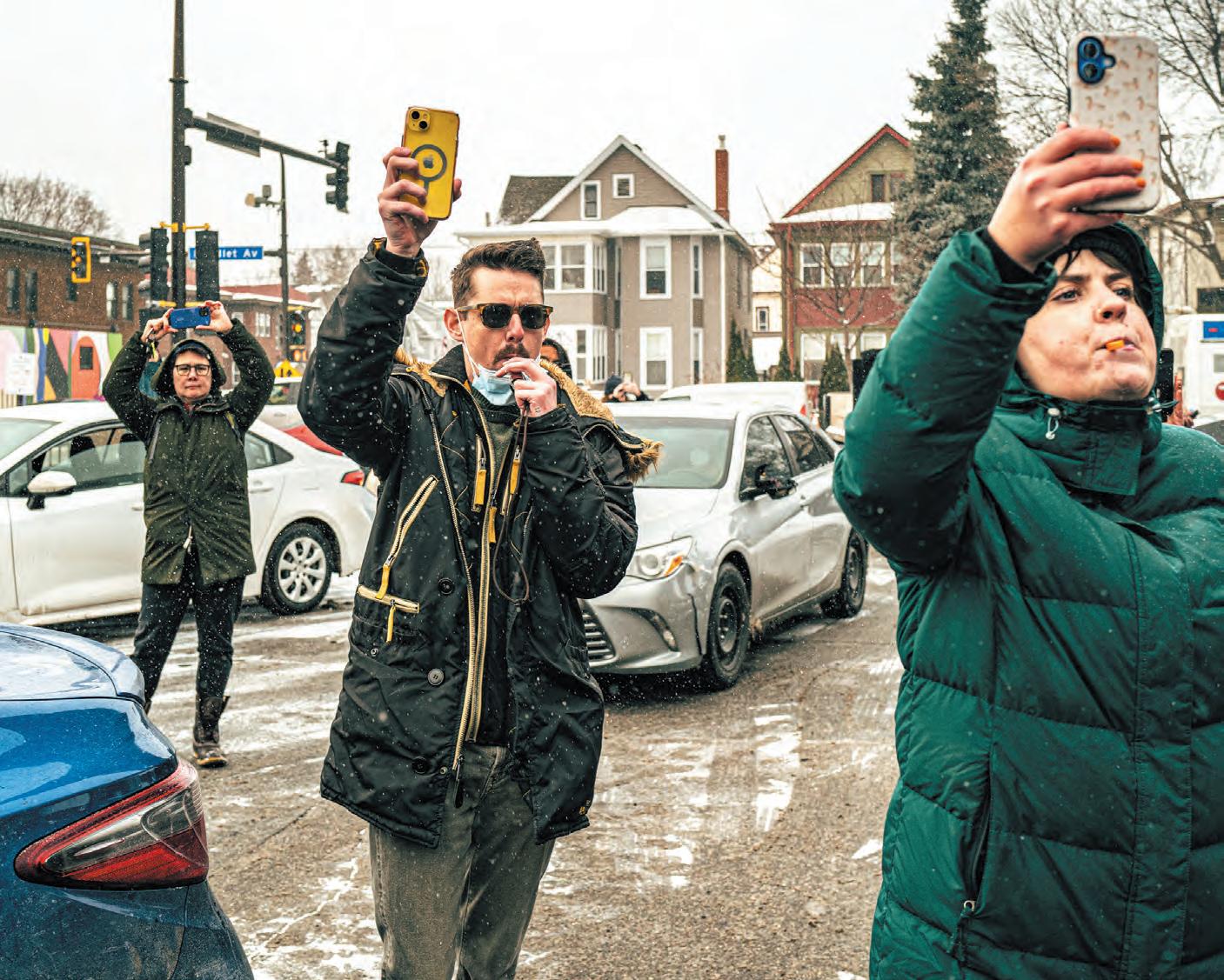
Seattle-based photographer Nate Gowdy went to Minneapolis to document the Department of Homeland Security’s Operation Metro Surge. From January 17 to January 26, and February 13 to February 18, he photographed the civilian efforts to protect their communities from the Trump administration’s immigration enforcement. This is what he saw.
January 17, 2026 — Invasion
Ilanded at the Minneapolis–St. Paul airport at 3 p.m., and stepped through the sliding glass doors into the extreme chill of a Midwest winter. It was the first day of a cold snap, with a few inches of snow on the ground and highs around 13 degrees. I exhaled. My breath fogged my glasses. Eleven days earlier, the Department of
Homeland Security had launched what they called the largest-ever immigration enforcement operation, centered on the Twin Cities. They deployed roughly 3,000 personnel, more than the metro area’s 10 largest local police departments combined. State officials and the mayors of Minneapolis and Saint Paul sued. They described Operation Metro Surge as an “invasion. ”
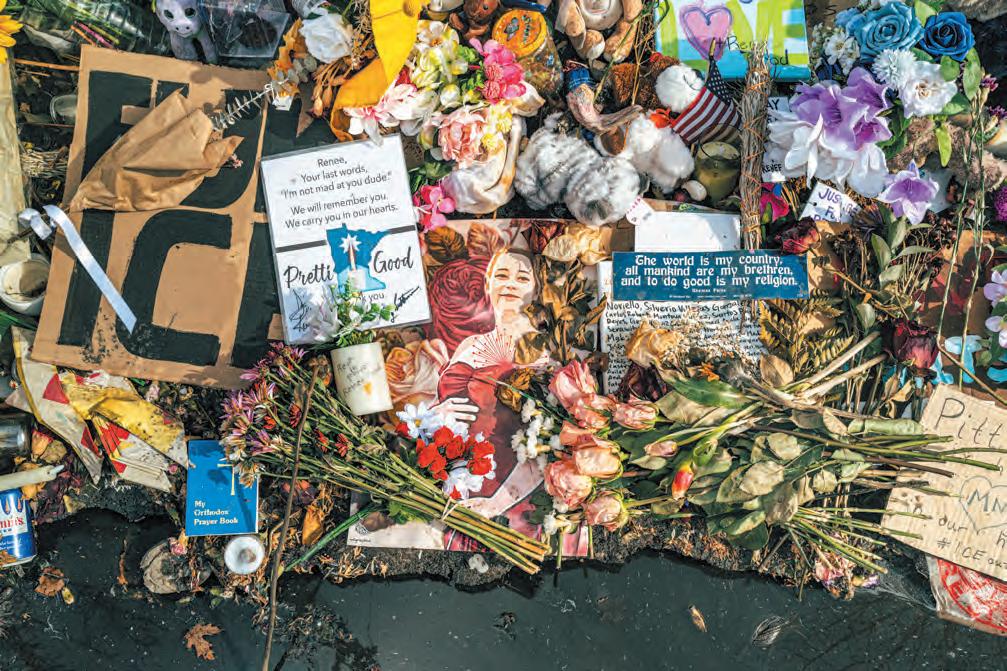
Ten days before I arrived, an Immigration and Customs Enforcement agent shot and killed Renée Nicole Good, a 37-year-old Minneapolis mother of three, in the driver’s seat of her car. She was driving away from the agent when he shot her three times.
Authorities called it self-defense.
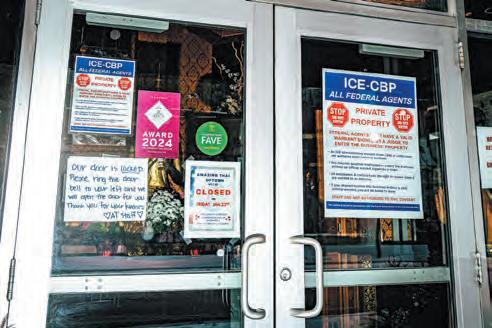
Good’s death prompted outrage and protests. In the days that followed, busi -
nesses throughout the Twin Cities locked their doors, not to close, but out of fear.
Parents kept children home. Residents circulated agent sightings and license plate numbers on suspicious vehicles in encrypted Signal group chats.
When I arrived in Minneapolis, I expected to find overarmed agents, tear gas clouds, traumatized civilians, and I did. I also found people walking their dogs, running errands, meeting for dinner.
Daily life continued, but it was unmistakably altered. Community events were canceled. It came through in every conversation with residents: weekend plans became risk assessments about the federal agents operating in residential neighborhoods without visible name tags or badge numbers. Tension
lived in lowered voices and furtive glances toward any vehicle with tinted windows.
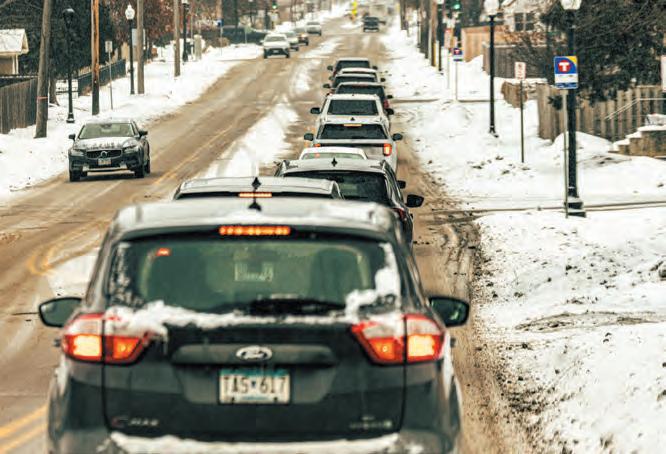
For eight days, I worked from a rented Toyota RAV4 with Texas plates with a group of other photojournalists. We taped a PRESS sign inside the windows as a disclaimer to the volunteers standing on almost every street corner in the subzero cold. We tracked federal movements through Signal channels, mixing confirmed sightings with rumors in a steady stream of pings. We stayed in contact with five other cars of photojournalists, all trying to document every abduction—failed or successful—that we could.
As we moved through the city, residents told us about their community-led rapid-response trainings. Volunteers distrib-
NATE GOWDY
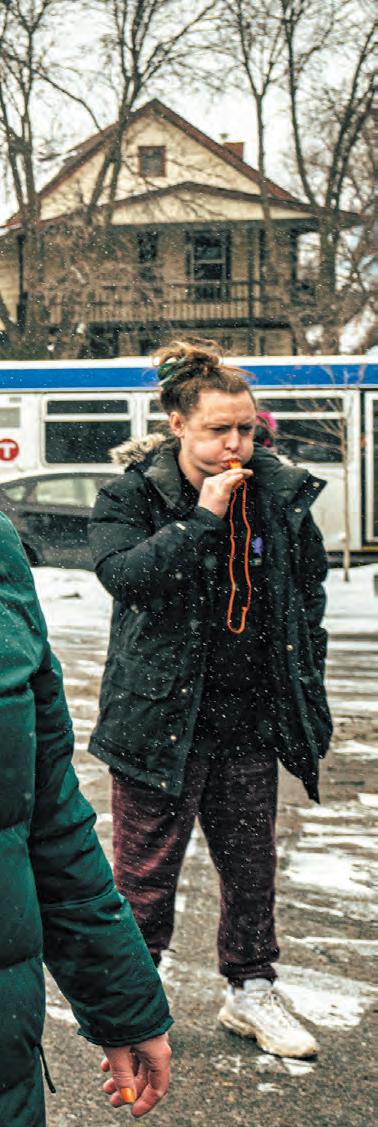
uted whistles and explained how to document raids safely. From this peaceful resistance, we learned to drive slowly through residential blocks, roll down our windows, and identify ourselves.
“We’re press. We’re watching ICE, too.”
Five years earlier, on January 6, 2021, I photographed the pro-Trump mob as thousands laid siege to the United States Capitol. Claims that “Might Makes Right” exploded into acrid fear. I have an audio recording of that day, when I was deep in the crowd at the Capitol steps, that can still bring back that fear. Wild and chaotic.
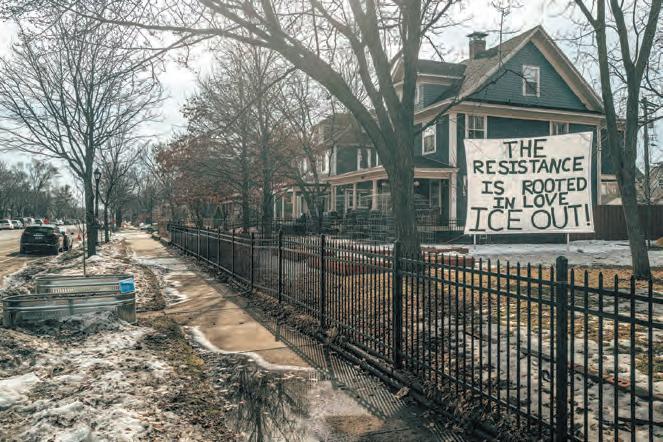
In Minnesota, the fear worked differently. It folded itself into school pick-ups, grocery runs, work commutes. People recalculated familiar routes before start -
ing engines. Ordinary traffic drew scrutiny. Conversations sought a lower volume. Or went completely underground. The anxiety was procedural.
Veteran conflict photographers deployed to Minneapolis recognized the pattern: when heavily armed forces operate in civilian space, residents adjust.
As we drove, we kept our windows cracked to hear observers’ whistles carry through the thin, frigid air. From blocks away, over and over again in the weak winter light, concerned citizens on street corners signaled the presence of federal agents, putting the whole community on alert.
The first agents we found were idling in a white minivan near a Catholic church after a Spanish-language mass. Two men sat inside wearing tactical vests and face coverings, ball caps pulled low. No visible name tags. No badge numbers. A Minnesota Vikings towel and a Black Ice air freshener hung from the rearview mirror.
One agent rolled down his window and pointed at the polarizing filter I was holding to my lens.
“What’s that do?”
“It helps me photograph you through your tinted windows.”
He nodded. I snapped a few frames. The window went back up.
Around the corner, volunteers ushered church-goers in the opposite direction, alerting them to the occupation’s officers with whistles. Within minutes, the lot was empty.
January 22, 2026 — Border Patrol commander-at-large Greg Bovino
Earlier that afternoon, we’d seen word on Signal: “Border Patrol commander-at-large Greg Bovino is moving through the Twin Cities in a five-vehicle convoy.” For hours, observers and press fell in behind.
The convoy ran red lights and looped roundabouts, blasting “Ice Ice Baby” and the ice-cream-truck jingle as agents pointed professional cameras out windows, filming the terror they were inflicting on the people filming them.
When they stopped at a Speedway gas station, Bovino let the press document him grandstanding on a snowbank as a rightwing influencer asked softball questions. His breath hung in the cold, rank and visible. A fistful of Slim Jims bulged in his pocket. When the convoy accelerated back into traffic, we lost them on the highway.
We’d been trailing the convoy for most of the day, so we stopped in a Somali cafe to regroup. A tea kettle shrieked in the kitchen and we stood on alert. None of us will hear whistles the same way again.
At the cafe, videos started popping up from the convoy. In one, now infamous, Bovino shouted three warnings, then lobbed
a canister of green smoke into the crowd of residents and children, during what locals described as an attempted abduction. People scattered. Parents shouted for their children.
23,
— “Please, stop making things worse.”
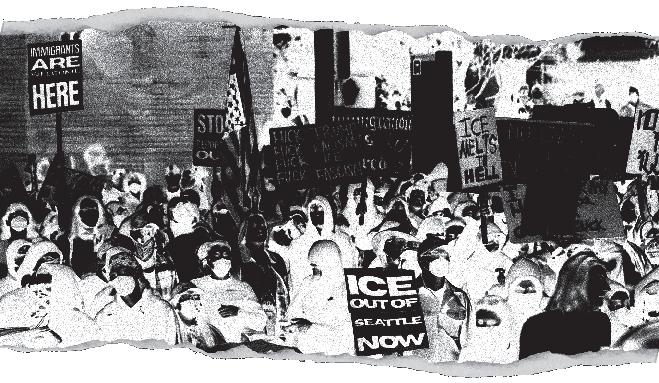
On our sixth day, tens of thousands of Minnesotans joined a general strike opposing the federal surge. It was the first general strike in the US in 80 years, and the crowd marched in wind chills nearing 40 below. I went to change my camera battery, and found the latch frozen shut. Within 20 minutes, even packed into the dense crowd on the street, it was too cold to think. But Minnesotans rallied against the administration for hours.
The following morning, Minneapolis resident and VA intensive-care nurse Alex Jeffrey Pretti was trying to help another protester when federal agents shot and killed him. By the time I reached the neighborhood-wide crime scene, ICE had withdrawn. Minneapolis police in riot gear were
left behind to hold the perimeter. They could have helped de-escalate, but they didn’t.
A woman beside me pleaded, “Please, stop making things worse.”
Officers responded by launching gas canisters into the crowd of grieving neighbors around me. My eyes burned. I nearly threw up. Protesters pressed water bottles into each other’s hands to flush the caustic chemicals from their eyes.
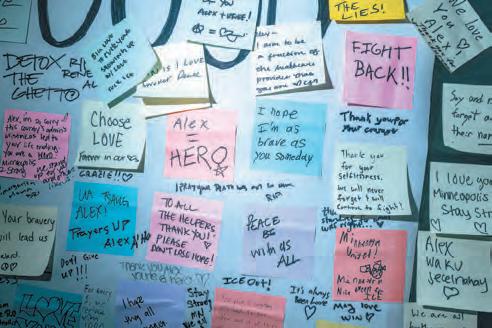
Through the day, protesters gathered around a growing memorial between strips of yellow tape. Some grabbed candles from emergency kits and lit them. At the impromptu evening vigil, tears froze on my glasses. Icicles stiffened my mustache.
February 13, 2026 — “I’ll believe it when my neighbors feel safe.”
Within 48 hours of Pretti’s death, Bovino was removed from the operation. I was back in Seattle by then, following the reset from afar.
I got back to Minneapolis the day after




“border czar” Tom Homan announced a “significant drawdown.” Personnel numbers would decline. Enforcement would continue.
I met a woman on the sidewalk and asked about her thoughts on the drawdown. “I’ll believe it when our neighbors who’ve been in hiding for weeks feel safe enough to walk down the street,” she told me.
Outside the Bishop Henry Whipple Federal Building, what began as a mass demonstration had settled into a sustained presence. Legal observers rotated shifts in neon vests. Mutual-aid volunteers stocked folding tables. Observers tracked agent arrival and departure times. Whistles hung from lanyards, ready.
A bearded farmer in camouflage winter gear introduced himself as Uncle Billy. He had driven from Arkansas. A longtime registered Republican, he told me: “This isn’t the party I signed up for. This isn’t small-government conservatism.”
Vehicle after vehicle rolled through. Some cars, suspected to be ICE, had no visible plates. Another had a new plate bolted awkwardly on top of the old one. A woman beside me yelled and blasted her airhorn as the car passed.
Then a two-tier car carrier pulled around hauling six fresh SUVs and trucks with tinted windows.
The mass of live-streamers was gone. The national television crews were gone. The agents were not. Twelve citizens kept watch on the building.
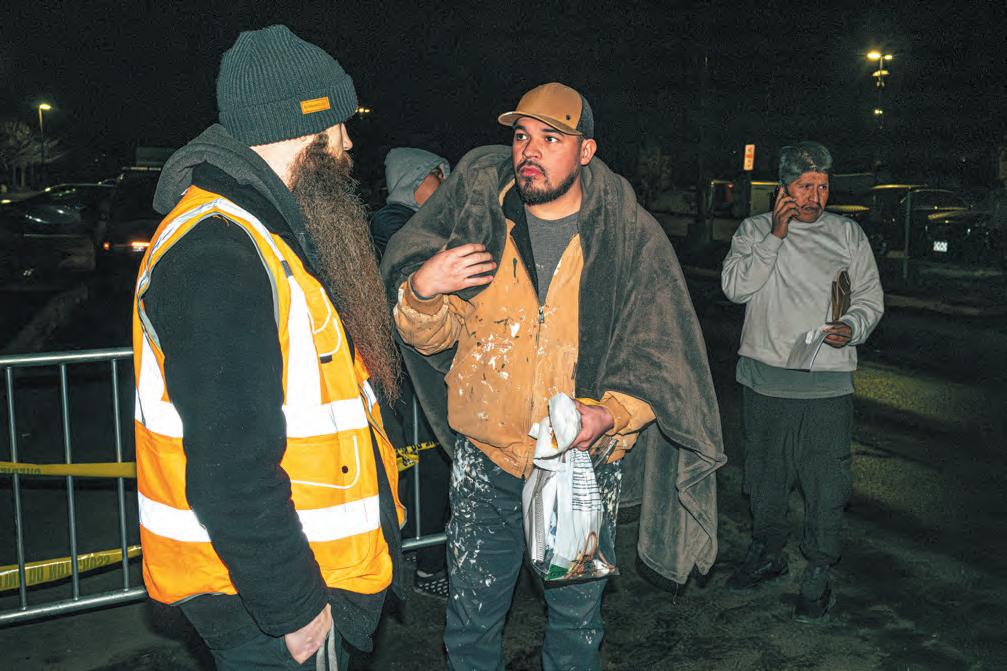
Detainees were released one or two at a time, perhaps a dozen over an hour. Mostly Hispanic men, and one French speaker. Each time someone walked out, legal observers in high-visibility vests stepped forward.
“¿Tiene hambre?”
“Sí.”
A volunteer handed him a tamale. A second draped a blanket over his shoulders.
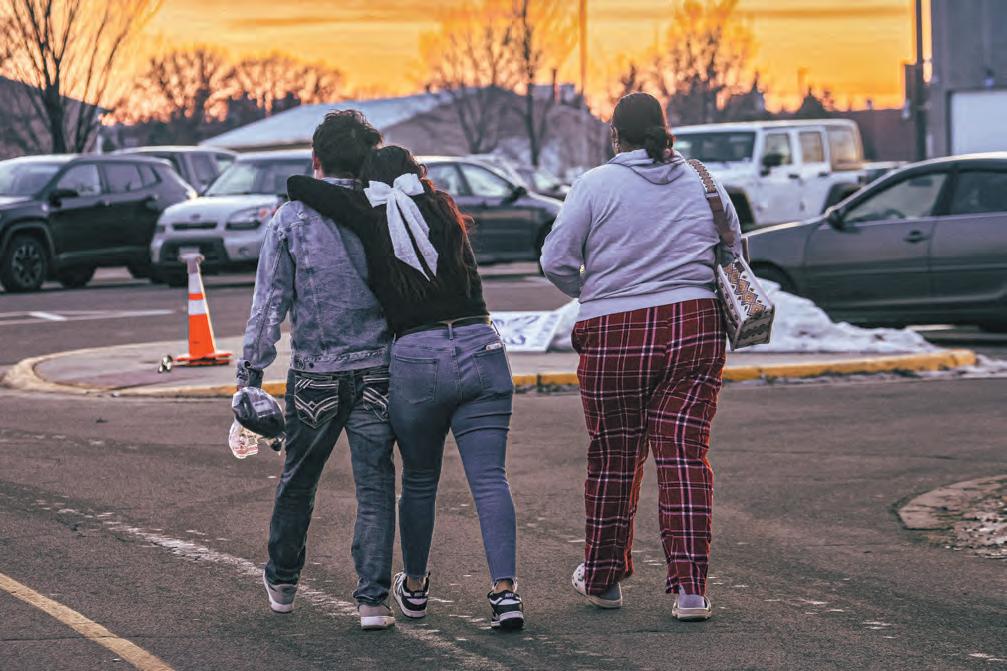
Another man, just released, wore a paint-speckled Carhartt jacket. I learned he’d been pulled from a job interview. When a woman spotted her partner, she rushed forward and wrapped him in an embrace. The volunteers guided them toward folding tables and comfort. Toward rest.
I met Julie Prokes around 8 p.m., at the end of a 10-hour shift. He ran a warming tent and table with hot chocolate, instant noodles, snacks, and phone chargers. Whatever people dropped off. He said it was his 23rd straight day outside Whipple.
“You can’t control what happens inside. We can control how people are received when they get out.”
February 14, 2026 — “Customers are staying home.”
Karmel Mall, the country’s largest Somali shopping center, was full of bright fabric shops and halal markets. Tax preparers and travel agencies shared space with glass cases of gold jewelry and racks of flowing satin abayas in electric blues and emerald greens. The food court smelled of cardamom and fried sambusas filled with ground meats and leeks.
Vendor after vendor said business was way down. Some said as much as 90 percent. One woman said she hadn’t made a


sale in two months because “the people are staying home.”
A few storefronts down is 65-year-old Osman Abo. He came to Minnesota from Somalia three decades ago and has sat behind his counter for 20 years. Now, business has slowed to a crawl.
On a typical Saturday, the mall would be full of families shopping and teenagers killing time. Now there are long stretches of days without a sale.
Unprompted, Abo reached into his wallet and pulled out a laminated Trump donor card. Then a Republican Party membership card. He said he had been donating since 2019. He held them up for me to photograph.
“I’m Republican,” he said. “I help Republicans. I vote Republican.”
Then he drew a line between policing and what he was seeing now.
“Police is okay. Criminal go to jail. I’m not criminal. I’m citizen,” he said.
He said he would remain a Republican. Still, he shook his head at the idea of MAGA.
“Last two months, not good,” he said. “How I can pay the rent? My house rent, my store rent. How?”
That evening, Lee’s Café, owned by a man named Liban Sheikh hosted a community gathering for volunteers. He passed trays of sambusas around the crowded room. Folding chairs scraped as people crammed into the small space. His employees refilled tea glasses, declining payment from anyone who tried to leave cash behind.
I asked him how business had fared during the surge.
“A lot of mess,” he said. “Our president makes a lot of mess.” He looked around the room. “I love my neighbors and they are heroes.”
I asked how he was holding up.
“Yeah, I’m still hanging,” he said. “I have a lot of friends. The community supports me. We will be all right.”
February 17, 2026 — “Too afraid to go to the grocery store.”
On my second-to-last day in Minnesota, two women who asked to be called Betsy and Maria invited me to join them at church— not for a Sunday service, but to document
their congregation’s version of protecting those less fortunate than themselves. They’d converted the basement into a soup kitchen of sorts, assembling meal kits for the most vulnerable members of their community. People were “too afraid to go to the grocery store,” they told me.
Maria took me to her house before she and her daughter left to get dinner. She led me into the dining room, which she called “The Little Pantry”—shelves packed wall to wall with canned goods, rice, cereal, and diapers, no table to eat on any longer.
Maria, a Latina mother, worked with the local high school’s food shelf and local schools to ensure donations reached families afraid to leave their homes.
Her daughter, a fourth grader, moved easily through the room—bringing in and sorting items, counting cans. In her class of 24 students, eight had been absent for most of the month. A third of the room empty. The fourth grader said the pattern held across grades. Some kids had begun to return, but three or four desks still sat vacant.
She spoke about the families they were helping with the matter-of-fact seriousness of someone far older. This was a civic education: watching her mother respond to fear with action, learning that community is something you practice.
February 19, 2026 — “Turn around and point your weapons that way.”
When I left Minnesota, I did what I always do after a major assignment. I listened.
I have audio recordings from January 6 and from Minneapolis. I didn’t set out to make sound recordings that would explain the difference between them. I was documenting what was in front of me. But listening back, the contrast is unmistakable.
The Capitol audio sounds like a declaration. Layered voices. Imperatives. “Push!” “Hold the line!” Metal clanging. Wind gusting. The surge and swell of bodies pressing forward. The energy moves in one direction, toward breach. Even the fear in the recording faces outward.
The Minneapolis audio sounds like interruption. A woman’s voice, close and human: “You represent us in this equation. Turn around and point your weapons that way. We are your community.” Another woman repeats, “What are you doing? What are you doing?” The crowd begins chanting “Alex Pretti. Alex Pretti.”
And suddenly, my own voice: “Fuck you!” The officers in riot gear had just lobbed a bevy of tear-gas canisters at us. Everything goes quiet, except for coughing and someone in the distance calling out: “Water? Water? Who needs water?”
The January 6 recording captures a crowd trying to overwhelm a system. The other captures a system overwhelming a crowd.
At the Capitol, the sound builds toward force. In Minneapolis, force descends into the people.
This piece was produced with contributions from Lisa van Dam-Bates and R. Langford.



BY MEGAN SELING
Mar 7
Seattle’s chapter of Stand Up for Science will host a rally at the Mural Amphitheatre at Seattle Center to fight the Trump administration’s “well-funded, well-platformed anti-science attacks” and call for the removal of Health and Human Services Secretary Robert F. Kennedy Jr. Find more details at standupforscience.net/march7. ( Seattle Center Mural Amphitheatre, noon–3 pm)
Seattle Women’s March Mar 8
Evergreen Resistance and the Defund Musk Women’s Group—who often protest around town dressed as handmaids—will host a rally and march at Cal Anderson Park for International Women’s Day. Details were still coming together at press time—find more information at defundmusk.com. (Cal Anderson, 11 am, all ages, free)
Resistance Training with Pramila Jayapal Mar 8
You could tune in to Congresswoman Pramila Jayapal’s virtual Resistance Lab training from the comfort of your own home—or you could congregate with fellow activists at Central Cinema, where they’ll be streaming the presentation on their big screen. No tickets or RSVPs required, and the event will include breakout discussions and a Q&A session. Find more info at pramilaforcongress.com. (Central Cinema, 11 am–1 pm, all ages, free)
Speaking of Seattle: Immigrant Rights Are
Mar 19
Stranger contributor Marcus Harrison Green will lead a discussion with Angelina Snodgrass Godoy (the Director at the Center for Human Rights at the University of Washington), Roxana Norouzi (the Executive Director of OneAmerica), Councilmember Alexis Mercedes-Rinck, and Seattle City Attorney Erika Evans about how the city is responding to ICE
and what Seattleites can do to advocate for immigrant rights in Seattle. (Town Hall, 7:30 pm, $10–$35 sliding scale)
No Kings
Mar 28
No Kings has announced March 28 as their next nationwide day of protest. Thousands of events are being planned across the country. Details for Seattle’s rally and march, organized by Seattle Indivisible, were still coming together at press time, so keep an eye on Seattle Indivisible’s Instagram (@seattleindivisible) for updates. No Kings organizers said more than seven million people attended at least 2,700 rallies across the country for their October 18 demonstrations. Here in Seattle, an estimated 90,000 people gathered at the Seattle Center. That’s almost 10 percent of the city! Seattle Indivisible will also host a No Kings volunteer fair on March 4. ( Location and time TBA, visit seattleindivisible.com for updates)
Every Friday
Every Friday morning, Southend Indivisible gathers in front of the Department of Homeland Security building at 12500 Tukwila International Boulevard to “demand an end to the kidnappings of our neighbors, separation of families, and terrorizing of our community.” Bring a sign, or make one on-site with provided materials. ( Department of Homeland Security, Tukwila, 9 am–10:30 am)
Every Sunday
Every Sunday, Seattle’s most punk-rock art shop, Push/Pull, hosts free Riff Raff League meetings, where folks can talk about political action and mutual aid while making zines, posters, buttons, and whistle kits for their neighbors. While you’re there, grab a free ABOLISH ICE poster and sign up for one of their monthly zine-making workshops. Masks are required. ( Push/ Pull, 7:15 pm–8:15 pm)
BY MICAH YIP
ILLUSTRATION BY TERESA GRASSESCHI
February in City Hall was all about ICE. In a way, so was January.
Days after ICE agent Jonathan Ross shot and killed Renée Good in Minneapolis, the Seattle Alliance Against Racist and Political Repression (SAARPR) sent letters to councilmembers with two central demands: that they stop the city from working with ICE and shut down a network of CCTV cameras run by the Seattle Police Department. When the councilmembers didn’t respond, they launched the first protest against this new council. Council President Joy Hollingsworth handled it better than her finger-waggling predecessor, Sara Nelson, by letting each person speak and asking security to step back through all the shouting (at Hollingsworth and each other).
But protesters weren’t happy she couldn’t meet their demands right away. They started chanting, “ICE OUT NOW!” and the council went into a 10-minute recess. Since then, many of the same protesters have returned with protest signs and similar calls.
As Hollingsworth told Stranger , she’s committed to “dialogue not division… no matter how you show up in chambers.” Maybe she’s trying to rebuild rela tionships with the public broken by the Nelson-controlled council.
As these protests were going on, councilmembers were making promises. Throughout January, Alexis Mercedes Rinck told us legislation was in progress, Eddie Lin told us “he’d push back against ICE,” Bob Kettle issued press releases saying he’d work with councilmembers to create “a safer Seattle for everyone.”
the city’s own two-decades-old “don’t ask” policy. Council unanimously approved the bill on February 17.
Alexis Mercedes Rinck will introduce legislation at the March 3 city council meeting that would create a land use moratorium on building new or expanded detention facilities in Seattle for the next year. The official reason for the bill is that the city needs time to manage any issues that may come up with building in a dense urban environment. The real reason is that a moratorium gives council more time to come up with additional protections against ICE.
Rinck’s bill is timely. In December, the Department of Homeland Security and ICE issued a pre-solicitation notice seeking to build a detention facility capable of holding 1,600 people in Seattle. That’s roughly the capacity of the Northwest Detention Center in Tacoma.

Her bill would block construction of that facility and any like it for at least the next year.

But it was Councilmember Maritza Rivera who actually did something first, introducing a bill to strike language from the municipal code that said city employees (including police) should “cooperate with, not hinder” federal immigration enforcement, and added a section clarifying that they can’t share personal information with immigration agencies. It’s not earthshaking. The bill just brings a section of the municipal code up-to-date with the Keep Washington Working Act, a state law that restricts local law enforcement from sharing and collecting information for immigration enforcement, and
Bob Kettle introduced a bill in the Public Safety Committee that would bar ICE from operating on city-owned property. As of the time of this writing, Kettle’s bill hasn’t yet been heard in committee. If it passes, it would prevent ICE from staging civil immigration enforcement operations on city-owned property. This means that ICE can’t assemble personnel or equipment in places like the Southwest Precinct parking lot. The city attorney could seek injunctive relief if the ordinance is violated.
City council can’t stop ICE from operating in Seattle, but it can make agents’ jobs a bit harder with this legislation. ■
BY MEGAN SELING
Good news! Seattle is still funny! Yes, our comedy scene has taken some big hits in recent months. In August, the Rendezvous switched ownership, leaving their regular weekly comedy open mics, including the Comedy Nest, Kitchen Sink Comedy, and Naked Brunch, without a home. And in December, the Crocodile shut down their 100-capacity theater Here-After, which regularly hosted local and national names including Bernice Ye, Janeane Garofalo, and Hari Kondabolu, all of whom performed there last fall. Folks have started to recover a bit, but it’s slow going. In January, co medians Emmett Montgomery and Derek Sheen launched the month ly Open Michael: A Storytelling Standup Strangeness Open
Describe your comedy in five words. Not received well in Issaquah :(
Mic, at the Rabbit Box. In February, the Comedy Nest was reborn at Common Objects. This city remains full of hilarious weirdos who are committed to making us all laugh through these dark (and getting darker!) days.
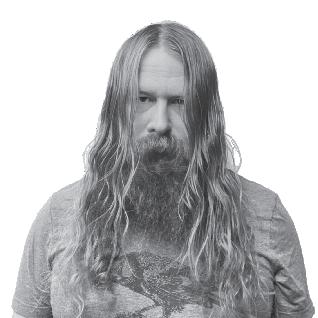
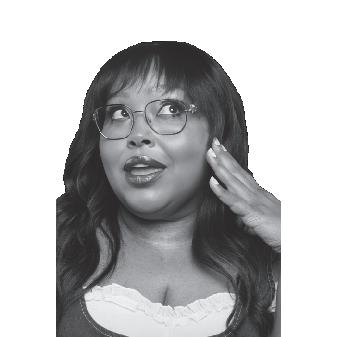
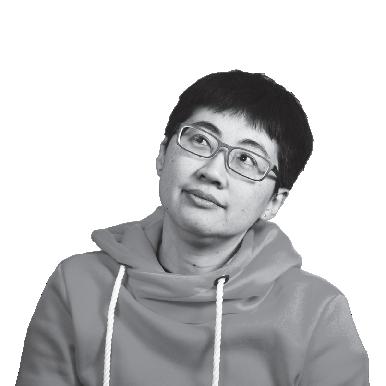
Next month, The Stranger will celebrate some of Seattle’s most entertaining laugh factories at our annual Undisputable Champions of Comedy showcase. Curated by Montgomery, this year’s lineup is packed with talent, as ever. There’s Min Lin, who is sunshine in human form (and sometimes performs with her service dog companion Sunny!), and Cheri Hardman, a regular at the Disabled List’s comedy showcase, who told a bit about big boobs and falling food at
On your Instagram page, you quote the great Danielle Staub. I truly appreciate the deep Real Housewives cut. Is she your favorite Housewife? She’s not my #1, but I will always enjoy watching an underdog housewife come in and disrupt the social order. (I am a Britani Bateman apologist!!!!) For the uninformed: A major part of Danielle’s storyline was that she had beef with a teenager, and that’s exactly what I come to Real Housewives for.
Do you remember your first time doing stand-up? Were you hooked right away?
I do! This was way back in late 2013, before I came out as trans. I had read about this women-centered open mic called the Comedy Nest, and I was in the mood to do something scary, so I tried it on a whim. I barely remember performing, but I do remember the founder, Danielle Gregoire, being warm and welcoming and encouraging me to come back. I think I was hooked on what was going on, spe cifically in that basement.
I can’t believe you just did comedy on a whim!
Any words of encouragement for anyone who might be thinking about giving it a go?

Doing it for the first time is the hardest part, so rip that Band-Aid off and get freaky.
Bumbershoot in 2024 that still makes me laugh. Most of you have probably been sent one of Scott Losse’s videos that lovingly mock life in the Pacific Northwest have gone viral several times (yes, of course I asked him about Death Cab), and former Seattleite Danielle Radford, who moved to LA and became Queen of the Nerds and a beloved pop-culture commentator on Dropout, is even coming back to town for the show! (Maybe if we all clap and cheer and shower her with adoration loudly enough, she’ll decide to move back!)
If we want our comedy scene to thrive, we’ve got to support the people putting in the work to keep it going. I’ll see you at Washington Hall.
Read our full interviews with each comedian at TheStranger.com throughout March.

Describe your comedy in five words. Hilarious, Earthy, Risqué, Raucous, Seated
Is there anyone in your life who said you wouldn’t make it, and you would now like to take this opportunity to rub it in their stupid face?
Everyone that told me not to tell vagina jokes can bite me.
You have a podcast, Diary of an Ex Ho, where you interview comedians about sex and love, and your material includes dating advice—“If they don’t yawn, keep your panties on.” You’re full of wisdom! Have you ever considered a career as a relationship therapist?
I don’t know about therapist, but maybe a relationship guru. I do something called sexual mind reading, where I can tell people what they’re like in bed, and I also have loads of info about menopause. I’m like a wellspring of useful TMI.
Do you remember your first time doing stand-up? Were you hooked from the start?
My first time doing stand-up was on the strip in Las Vegas. I went down for a comedy workshop, and when the teacher told me I was good at this, that’s all it took to get me hooked. I didn’t start until I was 54 years old, and I like to inspire older people, especially women, that you can be old, disabled, fat, etc., and still do amazing things that you didn’t think you were capable of.
Describe your comedy in five words. People seem to like it.
Is there anyone in your life who said you wouldn’t make it, and you would now like to take this opportunity to rub it in their stupid face?
I was kicked out of Cornish’s theater program for being “dogshit” or whatever, and will never pass on the opportunity to be bitter about it. Engraved on my tombstone will be the words “Here
Describe your comedy in five words. Warm and super silly human.
I am in love with your dog, Sunny. She makes such good faces! Will she be joining you onstage?
I am also in love with my dog, Sunny. She is the Undisputed Champion of Silly Goof. Is this an official invitation for her? If so, yes!
You’ve mentioned that Sunny has helped “rewire your brain,” and that has played a big role in making your dreams of performing stand-up comedy come true. Can you talk a little more about that? I used to overanalyze every interaction with people. I had hoodie that said “Ewwww people,” and it reflected accurately how I felt about people. Training Sunny as my service dog and having Sunny by my side helped me exist in the world differently. Sunny rewired my brain to be grounded in newfound worthiness. Sunny was solely responsible for pushing me over the threshold of finally pursuing comedy, my lifelong dream since I was 13. And my kids are 13 now. So it all feels magical. By the way, I love people now.

Lies Danielle Radford, Probably Not the Worst Professional Actress to Get Kicked Out of Cornish.” I will leave a copy of THIS article in a time capsule with a note that says “do not open until 2099 unless you are also a petty bitch,” and then strap that time capsule to a NASA rocket, and the aliens who find it will be like, “I mean she’s no Viola Davis but she couldn’t have been THAT bad.” “God, remember how good the first season of How to Get Away With Murder was?” “SO GOOD! Should we do a rewatch?” “We should totally do a rewatch.” And then they rewatch
HTGAWM’s very good first season while making out sloppy style. Anyway, I’m still paying that student loan off.
You moved to LA from Seattle years ago. Who has the better comedy audiences, Seattle or LA? It really depends on the room. Rooms full of paid ticket holders in Seattle will always be better than rooms full of comics in LA, but LA has a wider variety of rooms appealing to different audiences, so any comic can find the perfect place to eat absolute shit.
Describe your comedy in five words. Sassy, gassy, big old lassie.
You’re from Tacoma, a city that has a pretty vibrant comedy scene of its own. Who has better audiences: Seat tle or Tacoma?
Describe your comedy in five words.
Personal, silly, smart, stupid, and relatable.
Life in the Pacific Northwest is very much a part of your comedy. Here’s a Pacific Northwest-specific question for you: What’s your go-to Taco Time order?
Crisp pinto bean burrito, tots (Mexi-Fries if you’re old school), and a Diet Coke to keep it healthy. Same order at the other Taco Time.
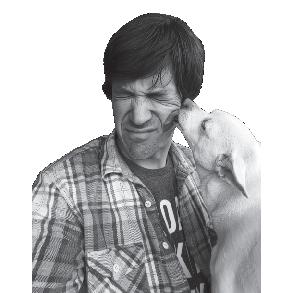
Did you know Taco Time now sells burritos in the frozen food section of Metropolitan Market? I was thrilled when I found out.
I saw that! I have an air fryer at home. I feel like that could be very bad for me. You could order six pinto bean burritos for yourself at the drive-through, but you have to talk to another person and lie about having a party. If they were in the fridge, I’m afraid it might become the only thing I eat.
You’ve joked a lot about the Pacific Northwest stereotype of listening to Death Cab for Cutie in the rain, a true Seattle experience. The Champions of Comedy show will be in April, right at the start of spring. What’s the perfect Pacific Northwest spring soundtrack? That’s a hard question. There’s so much good music. Content Oscillator by Telehealth. Muted Crowd by Spirit Award. I have 15 others. People can ask me if they see me walking around.
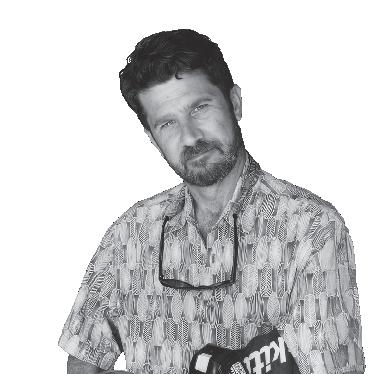
Seattle audiences and Tacoma audiences are both better than Portland audiences, and that’s all that matters to me.
Do you remember your first time doing stand-up? Were you hooked right away?
My first time doing stand-up was in the back bar of an Italian restaurant in Olympia, WA. I lasted two minutes, hated every second, and haven’t been able to stop since.
On top of your own headlining gigs, you’ve also opened for some really big names in comedy! Tim Meadows, Michael Ian Black, Bob the Drag Queen— do you have any good celebrity gossip?
Ooooooooh, girl. I heard that Madonna is very much an old white lady. And Tim Meadows purposely buys cheap bikes because they keep getting stolen in LA.
Describe your comedy in five words. Discover your Wistful Handyman Quotient
Who would win in an arm-wrestling competition: Brett Hamil, a political comic artist who co-hosts Joketellers Union at Clock-Out Lounge, or Burl Dirkman, a hardware store-loving man who has a lot of thoughts about patio furniture?
I’d give myself the edge there because while I was toting 80-pound bundles of asphalt shingles up rickety ladders onto hurricane-ravaged roofs in 99-degree heat, he was off at college learning about semiotics and French existentialism so he could do good opinions on websites.
It’s about to be ant season in Seattle. Do you have any tips on how to prepare?
The most important preparations you can make for ant season are emotional. Having ants in your house is a lot like being a stepdad: You’re presiding over these small creatures whose ways are not your own, and who may be suspicious of you and your priorities. I try to let the ants know that I support them following their path no matter what, though I may sometimes be disappointed and personally inconvenienced by their choices.
Where is your favorite place to see comedy in Seattle right now?
If I’m looking for a fun night out, I’m more inclined to take my girlfriend Amy to go see tribute bands at the local casinos. Recent favorites include: Indigo Guys, Cocteau Twinks, Discounting Crows, DILF Leppard, and Faith Some More. ■
BY AMANDA MANITACH
ILLUSTRATION BY ERIN WALLACE
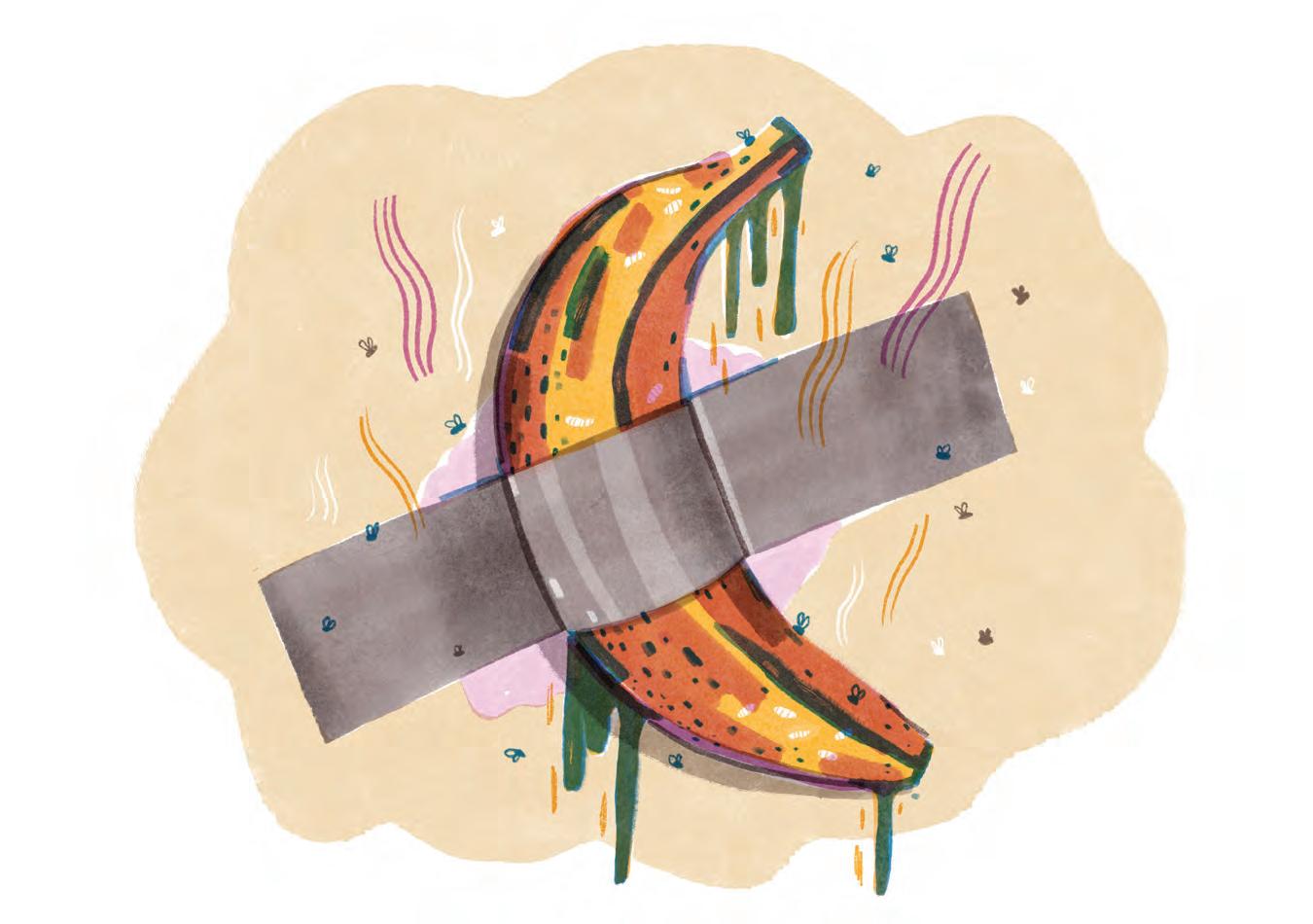
In November 2024, cryptocurrency entrepreneur Justin Sun paid $6.24 million at Sotheby’s to purchase Maurizio Cattelan’s Comedian —the iconic banana duct-taped to a wall. Nine days later he ate said banana during a press conference in Hong Kong.
If that reads like an inside joke with no punchline, you aren’t wrong. Mischievous Cattelan must have been laughing that day as the bids rolled in, but who was laughing to the bank? Sotheby’s, definitely.
The financialization of art has been a steady, miserable tour de force since the 1980s, a time when Americans—downtrodden by relentless recession and endless war—traded protest signs for COEXIST bumper stickers and let the narcotic rush of yuppie prosperity wash over. Art was not immune to late capitalism in full bloom. As once-public auction houses were absorbed into luxury-goods portfo -
lios and acquired by media moguls, the art market became the playground of the ultrawealthy. Speculative purchases of works by promising art stars reached fever pitch during the pandemic, with high-value paintings promptly stuffed into storage in hopes of flipping them later for profit. And NFTs… let us not speak of those.
But art isn’t like a house or a stock. The art market peaked on November 20, 2024, when the gavel struck the auction block and the last trace of art’s soul departed from the fleshy mesocarp of a 23-cent piece of fruit.
In 2025 it all started to collapse. Christie’s quietly shut down their Digital Art and NFTs department in September. Blue-chip and mid-tier galleries alike have been shuttering left and right. As the market in Asia cools, Art Basel, Frieze, and other art fair conglomerates have
flocked to the Middle East in search of the last untapped collector. Everyone is in on the joke, of course: The highlight of Art Basel Miami Beach this past December was Beeple’s robotic dogs with the faces of Andy Warhol, Pablo Picasso, Mark
Zuckerberg, and Elon Musk. They literally crapped reams of AI slop.
But satire loses its luster after a point. The banana has gone bad. In 2026, art is having an identity crisis; what does art after extractive capitalism look like?
One upside of Seattle being a second-tier art city—not because we’re lack-
ing in art, but because our market power and visibility are less established than in other places—is that we aren’t hit as hard when a K-shaped economy starts to have its revenge on the market. That’s not to say artists outside New York and LA don’t feel the sting. They do. But operating on the decentralized fringe has its benefits. It also doesn’t hurt that our city has a deeprooted sense of anti-authoritarianism that extends to doing art our own way. In that way, we’re kind of recession-proof. I came up in Seattle’s art scene on the heels of the 2008 financial crisis. There were a lot of folks like me who had never been to art school and didn’t have MFAs— artists just raw-dogging the art world, making, showing, and seeing art wherever we could. Which was literally wherever, in part because there’s never been sufficient commercial galleries in town to match the amount of good art, but also because
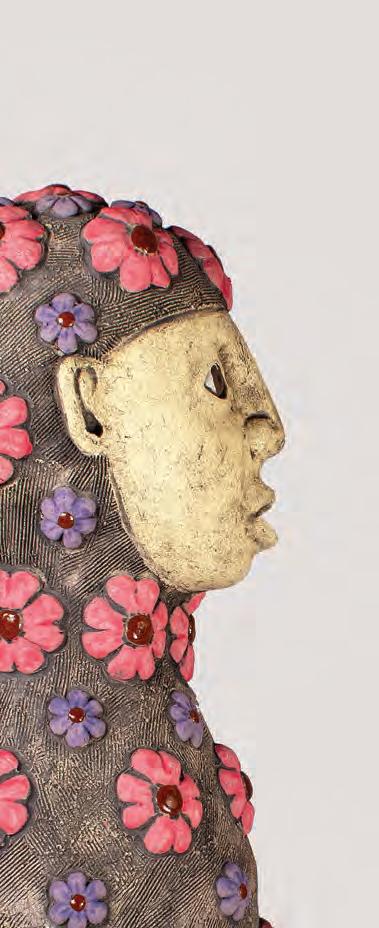
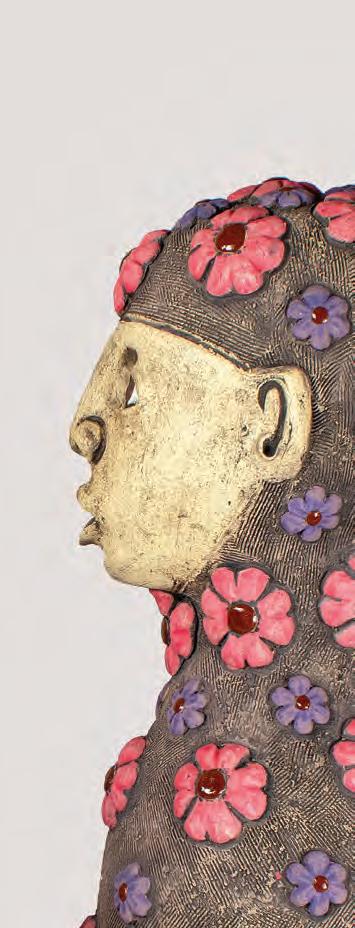
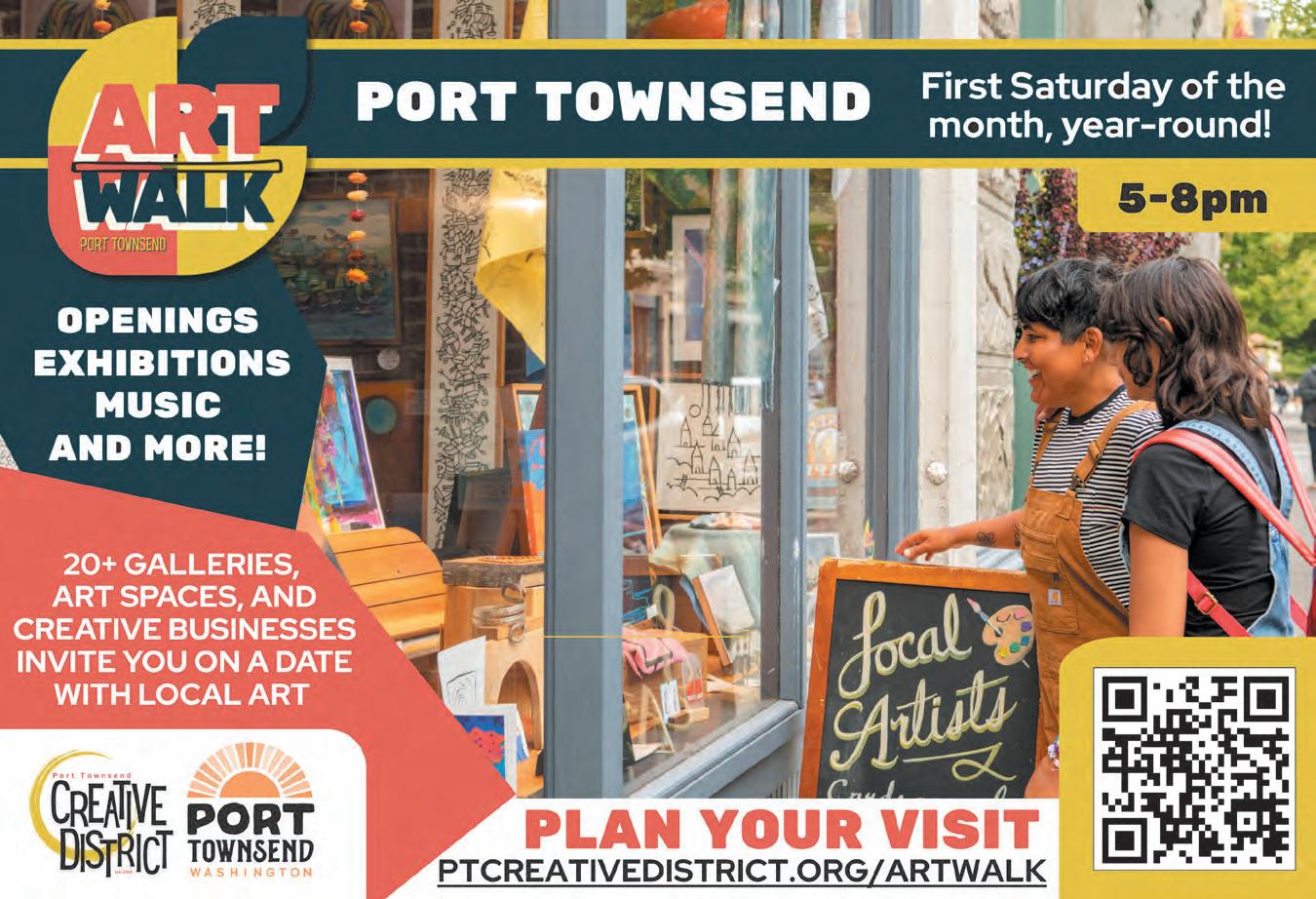
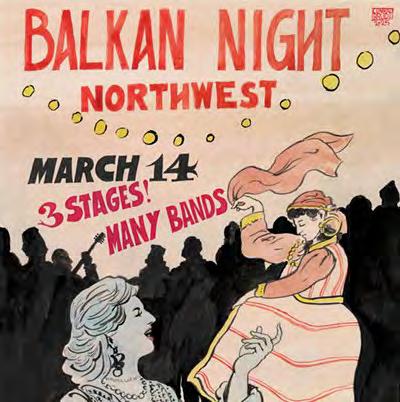
The Puget Sound region is rich with educational and studio-based resources for artists. This group exhibition will be curated from referrals of emerging artist’s from more than twenty Craft-based programs and professional groups. Artworks will include ceramics, fiber art, glass, jewelry and metal-smithing, wood carving, various wearable art, and other media.
This exhibition is part of BIMA’s year-long celebration of Handwork: Celebrating American Craft 2026, a nationwide initiative led by Craft in America to honor the handmade during America’s Semiquincentennial.




that DIY mentality really shines when the economy slumps.
And that’s what I love about recession-era art. Circa 2009 and beyond, everything was fair game: a studio apartment on Capitol Hill transformed into one of the city’s hottest galleries for one night each month (or whenever—there were no rules!). Also an old sweater factory in Ballard, a decommissioned BMW dealership on Pike, a cubby under a stairwell in the Central District, the back of a U-Haul on the street, an I-5 underpass at dusk. All you had to do was make a press release and it could be a thing.
It’s something Sammy Skidmore and Zoë Hensley have figured out. The organizers behind ONCE REMOVED: Art in Vacant Spaces , Skidmore and Hensley are both gallerists with day jobs at commercial galleries. Skidmore (also a singer/ songwriter and guitarist for Dining Dead) is the gallery manager at Traver Gallery, and Hensley (who has a background as a visual artist) works at Foster/White. “Galleries can be really intimidating, we all know that,” says Skidmore. “People think they have to act a certain way in a gallery. We’re interested in flipping expectations of what it means to enter an art space.”
After brainstorming in the summer, they began cold-calling developers in search of decommissioned spaces where artists could play—specifically, artists whose work doesn’t neatly fit in a commercial gallery. Their first yes was a small bungalow in Greenwood. They received the keys five days before the reception on February 21; in that short time, five artists raced to transform each room.
The result was a labyrinthine web of semi-interconnected installations threaded through the building, including video work by Allie Meyer projected onto a darkened bathroom window, Gaeun Kim’s delicate graphite rubbings made against a series of broken doors, and Nadia Ahmed’s beeswax-drenched reliquaries encasing found detritus like knobs, tiles, handles. Rachael Comer used cornstarch to harden a bedsheet around the shape of her own huddled body, creating a ghostly carved-out space in one of the bedrooms. Visitors peering under the covers watched as a string of Google searches (for porn, sourced from 100 friends and strangers) traced a poetic interrogation into the nature of collective eroticism, longing, and trauma. In the basement, Jenikka Cruz created the scene of a different kind of haunting: lifelike figures clustered in one corner of the subterranean dark while a droning soundscape filled the space.
underground—they don’t list the event address on their website; you have to email or DM for details. They foresee the project continuing as a series, each location inspiring a unique response. “You just have to be able to take no for an answer,” says Hensley about the challenge of getting handed keys to a stranger’s place. “There’s always a way to do something. Don’t talk about it, just do it.”
Another moment in recent history when art came out from under the shadow of commodification unfolded in the late 1960s and 1970s, when Arte Povera and Fluxus took hold. These movements—rooted in commonplace materials, music, and poetry—were not only a pragmatic response to global recession, but a revolt against the centering of (primarily white male) Abstract Expressionist painters in New York as the de facto lifeblood of the art world.
Arte Povera (“poor art”) and Fluxus (which embraced humor and process over product) were both intrinsically political, purposefully pushing against the commodification of art. In the age of AI—where ideation at the most basic level is becoming filtered through corporatized pipelines of prescriptive thought—imagination itself is political.
In other words, it’s time to make the art world weird again. Mess and typos make us human. Flesh and blood experiences in abandoned houses are proof of life.
It’s also a time for imagining new models of patronage in the art world. For the past four years, artist Lars Bergquist has crowdsourced funds to raise money for Free Blanket February, a project to purchase wool blankets for the unhoused. Each day in February— the coldest month in Seattle—he stocks the blankets in repurposed newspaper boxes set up across downtown. An extension of his street-art practice, or just one human caring for another? Bergquist shows how easily it can be both.
Right now there are a lot of things stirring in the fresh recession air, even in terms of commercial spaces that are bucking against the norm. Last month, 27-year-old attorney Elizabeth Hawley took over the lease at 85 Yesler Way to breathe new life into the bones of Davidson Galleries, giving its artists a new next chapter as Gallery No. 85. Next month, designer Michelle Dirkse and photographer Jeremy Prim are opening Dirkse/Prim Gallery in Madrona, where they will be representing a roster of emerging and mid-career artists like Joey Bates, Mya Kerner, and Zak Helenske, whose epic, large-scale flora made of black walnut, ash, lilac, and brass will be debuting in April.
“We want to act as a little eddy in the stream of gentrification for these houses that are going to be demolished,” Skidmore says, “give them one last burst of life.”
ONCE REMOVED deftly straddles both the world of the white cube and the
What is art in 2026? Detached from the imploded market, art is able to find its center elsewhere, a place where imagination, collaboration, and new ways of doing things are paramount. When everything is broken, including the rules, anything is possible. We are here now. ■

BY TODD HAMM ILLUSTRATION BY ABBY OUELLETTE
In 1984, American science fiction writer William Gibson defined “cyberspace” (a term he coined) as “a consensual hallucination experienced daily by billions of legitimate operators” in the near-future world of his novel, Neuromancer , where human consciousness drifts through a blinding data-world of corporate geometries. More than three decades later, the English documentarian Adam Curtis traced how that hallucination became reality in his BBC documentary HyperNormalisation: “Over the past 40 years, politicians, financiers, and technological utopians—rather than face up to the real complexities of the world— retreated. Instead, they constructed a simpler version of the world in order to hang onto power, and as this fake world grew, all of us went along with it, because the simplicity was reassuring.”
Today, this “simpler version of the world” fits into our pockets. The average American now spends around five hours per day— about 2.5 months per year—on their smartphone. Most artists now depend on social media for visibility, and a small handful of tech companies now determine how culture is discovered and monetized. Whether you experience this moment as a dystopian technocratic existence, an interconnected digital wonderland, or some incredibly boring third thing, technology doesn’t just permeate most every facet of life, it intercepts substantial chunks of the day, warps tastes, and short-circuits human interaction.
It’s true that within many artistic fields, digital tools have made an extraordinary amount of art possible and accessible, but there is also the reality that the hyper-integration of technology has left the door open
the aLgorithmic overLorDs
LETTERING
CHAR HARRIS
too wide for manipulation by powerful corporations, and has encouraged isolation between artists and audiences.
“Take Spotify, for example,” says Aaron C. Schroeder, owner and recording engineer of Pierced Ears Recording Co.—a tiny yet wondrous basement studio in the Ballard neighborhood. “They bury musicians that don’t pay them money to get promotions on playlists,” he says, referring to the streaming service’s forcing of lower royalty rates on artists to be included on “Discovery” playlists, a practice that bears striking resemblance to the radio “payola” schemes that were outlawed by Congress in 1960. “I just don’t like having someone else in control. And then how do you get people to hear you in a digital space? Well, now you have to promote in a digital space, so now we’re stuck on social media constantly. A false reality of a sort, or
a second reality. And I’m analog.”
On a recent Sunday morning, Schroeder invited me to his studio to show me the workings of his Presto 8N vinyl lathe, an original from the 1940s. It “cuts” records in real time, a process in which a Van Eps Duotone cutter head—a needle-like device on an adjustable arm—carves sound vibrations into a soft vinyl disc (or record blank) in the form of the continuous spiral grooves, which your home record player needle then traces back into sound.
“You can really record any sound onto the record,” he explains. We discuss his ideas for hosting pop-ups around town where anyone can record anything they want on the spot and take home the record, and his ideas for bespoke groove patterns, like recording the record from the center outward, or in sequential spirals.
Schroeder uses a mix of digital and analog recording technologies, and maintains a website for his studio and business-only Instagram and TikTok accounts for minimalist marketing (“It’s like Backpage”), but he talks of tech devices and programs as though they are only one kind of tool among many, the amount of importance we have placed on them being unfortunate. The idea that a platform could change their business model or simply close shop if profits dried up, essentially deleting the most visible evidence of musicians’ artistic output, is also a possibility that haunts Schroeder. If that happens, “who’s to say you ever existed?”
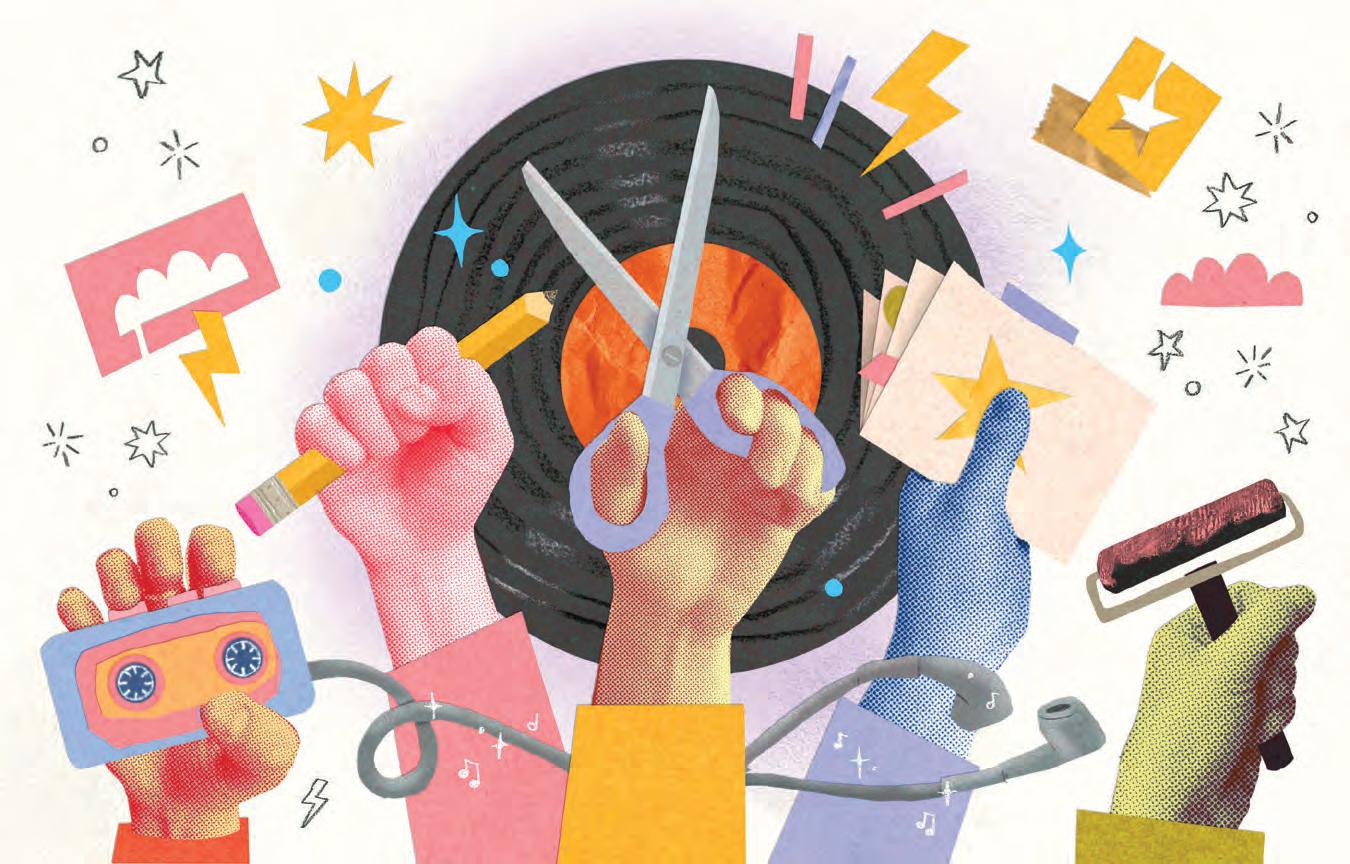
Kelly Froh, cofounder and acting director of Short Run comic and zine festival-turned-nonprofit, is among the many people I spoke with who think physical media—things like handmade books, visual art, hand-drawn comics and zines, vinyl records and cassette tapes—and the communities they spawn provide a necessary counterbalance to tech domination in the arts. “Why do any of these smaller festivals exist if we can just buy whatever we want online? It’s so you can show up, and you can actually look into the eyes of the artist, and talk to the artist, to the person that made these books.”
Froh is a firm believer in real-life settings where you can meet the artist at the point of purchase, and likely come away with personal artist recommendations, a newfound knowledge and appreciation for the time and techniques that go into the art form, and make any number of person-to-person connections—all weaknesses of the digital marketplace.
The online environment also gives the false sense of infinite choices and egalitarian platforming, when in reality, online algorithms (not to mention governments) suppress many artists and voices if you don’t follow their guidelines, both stated and unstated, before the general public even has a chance to click on them.
With physical media, however, “there’s no need to censor yourself,” Froh says. “If you were to promote something on the internet, you would have to block out certain words so the post doesn’t get buried. I don’t want to think about any of that shit. Just do your own thing.”
Froh also sees organizational potential in physical formats for off-the-grid information sharing in times of political or social turmoil: “Zines are untrackable in that way, and they’re not gonna be blocked by some evil algorithm.” She continues, “For people who feel helpless as our democracy is crumbling, guess what? They’re screen printing posters, they’re making pins and buttons, they’re making zines and fliers, posters on poles.”
Indeed, at a recent anti-ICE rally on Capitol Hill, organizers were handing out keychain whistles packaged with a zine that outlined the whistle’s uses and whom to contact if officers are spotted; on a recent trip to Hex Enduction Records & Books in Lake City, I left with a tour guide zine for safe smalltown queer hangouts, and leafed through an impressive hand-bound book about anarchism and “settler socialism.”
James Ballinger, who ran the influential heavy-rock-focused Seattle music zine The Seattle Passive Aggressive during its decade-long run in the 2010s, agrees that
physical media is an important part of the social ecosystem. “It keeps things true, and it keeps things away from [that] kind of outside influence, or a fear of saying things that’ll make people upset, or [come off as too] political. I print it, I can’t go back and change it, or delete it. I can’t go back and edit that typo, it’s out there. Technology’s weird, and social media has made people weird as far as what they feel they’re free to say. So I think zine culture is important, because you can say what you need to say, get it out there.” Ballinger also takes issue with the thoughtlessness that social media rewards through ambiguous reposts and bandwagon “likes.” Conversely, physical
If a platform deletes the most visible evidence of musicians’ artistic output, who’s to say you ever existed?
media “allows you to not just say what you want to say because you’re passionate about it; you have to collect your thoughts and say things intelligently.”
Across town at Concuss Creations screen printing, local musician and artist Rob Castro prints band merch on the same press as protest swag. “Since I print my own shirts out of my own shop, I can basically print anything I dream of. If I want to flex a run of protest tees before a march, I can do that.”
Kay Redden, founder and operator of Seattle cassette-tape label Den Tapes, likens the choice to interact with physical media to shopping local, given the increasingly competitive attention economy of today: “It’s kind of like voting with your dollar, like when you’re opting to support a local business rather than go to Home Depot or whatever.”
In this way, devoting time to the making or consuming of physical art can be seen as a net positive in the war over our time and data points—each non-technological activity we participate in has become an act of micro-revolution.
Back in the Pierced Ears studio, Schroeder is walking me through the process of folding a zine. Using scissors, he cuts a slit across the middle of a halved 8”x11” piece of paper, then accordions it into eighths. The result is a miniature flipbook complete with quirky yet informative diagrams showing the step-by-step process of recording a record on his equipment. He puts one in the sleeve of each record he cuts.
“It is a problem in every aspect of Western civilization,” he says. “We use tools to try and make things we consider to be beautiful, but I think we have corrupted the concept of beauty. The natural world is what’s actually beautiful, a manicured lawn, not so much… I’m a fan of music with edges.” I suggest that an ideal metaphor may be a Zen garden, where humans manipulate natural elements with tools, but the tools aren’t pesticides that are supposed to kill any imperfections.
After thinking for a moment, he answers, “We’re just doing an odd beautification ritual. I don’t think everything looking the same is the correct answer.” ■
Everything You Wanted to Know About My Dumbphone, but Were Afraid to Ask
BY JULIANNE BELL
ARTWORK BY ELLY MINAGAWA
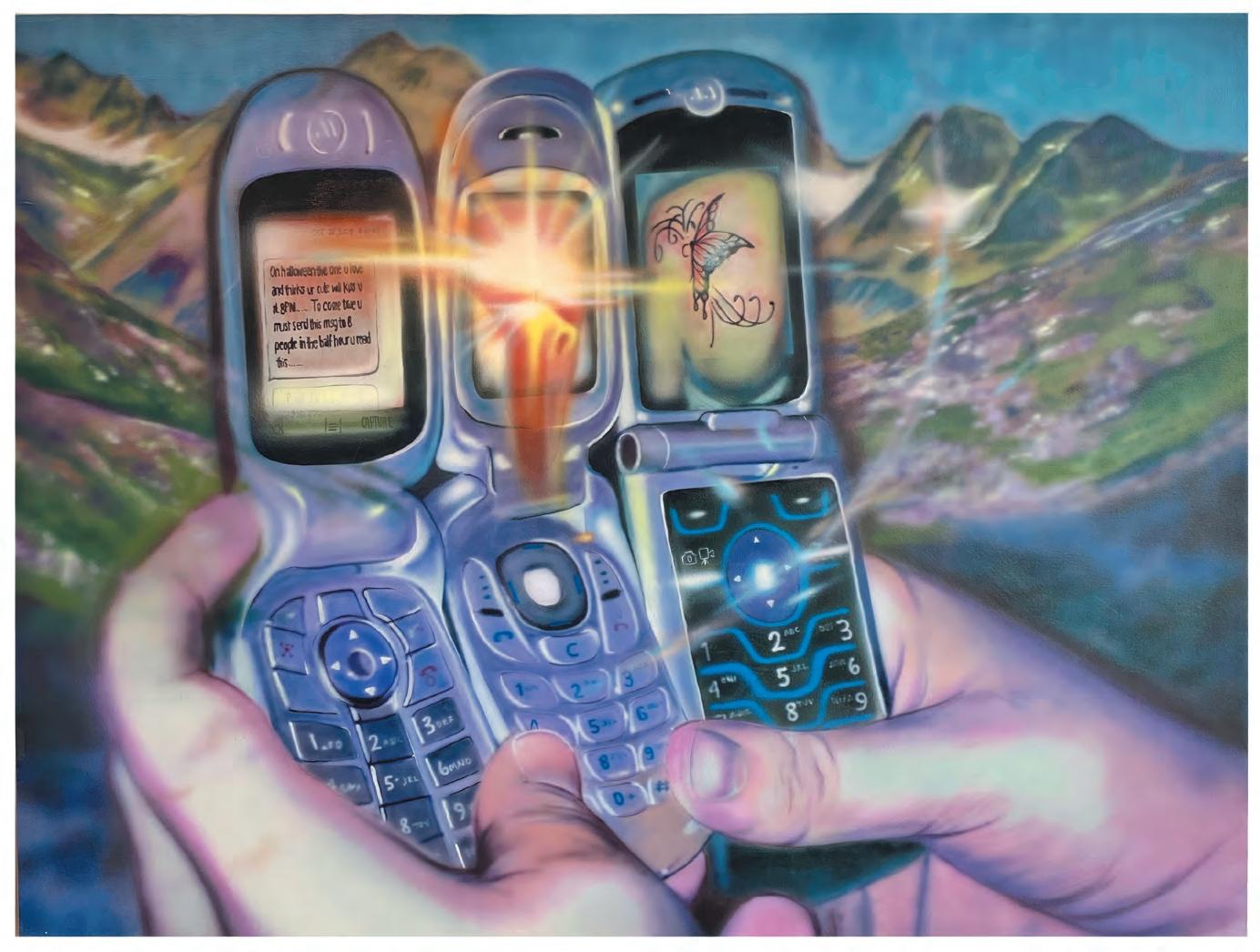
For the last few years, I’ve carried around a primitive mobile device called the Light Phone II, otherwise known as a “dumbphone.”
It’s a tiny hunk of gray plastic approximately the size of a credit card, with a backlit e-ink screen and the ability to send texts and make phone calls. Its other features include an alarm clock, calculator, calendar, directions, directory of local businesses, music, notes, podcasts, a hotspot, and a timer. That’s it. It doesn’t have a camera or an internet browser or social media or an app store. It can’t receive images or videos or links—those are forwarded to email. It costs $299.
Seeing the reactions to my Light Phone
has been interesting. It draws attention, starts conversations. Strangers are immediately fascinated by it and ask what it is, and I show them the menu screen and let them try the text keyboard. Most people say, “Oh, I would love to do that, but…” and name the one app they couldn’t live without. The most common culprit is “maps,” with “Spotify” coming in as a close second. (Kind of like saying, “I’d love to be vegetarian, but I could never give up bacon.”) There’s always a tone of longing in their voice, a distant, wistful look in their eyes as they briefly imagine their life without being tethered to a pocket-sized Skinner box for all their waking hours. Maybe finally finishing that novel
draft, or learning to meditate, or reading Anna Karenina
Some people ask me why I don’t just block my apps or grow a modicum of self-control. The answer to that is that
As corny as it is to say, it felt like going from black-and-white to seeing in color.
I’ve tried, and every proposed solution is just too easy for my dopamine-starved ADHD brain to maneuver around—like
a rat pressing a lever for food, I will just hit “15 more minutes” or figure out how to bypass any shortcuts automatically. I’ve tried app blockers like Freedom and the app OneSec that makes you take a deep breath before opening apps, even going so far as to trap my phone in a box with a timed lock. It never stuck. Others ask why I didn’t just buy an old flip phone— as much as I would love to go back to the orange LG enV I toted in high school, the antiquated 2G and 3G networks that allowed phones like it to work are no longer available in the US. The dumbphone life is messy and imperfect and not for the faint of heart. The Light Phone’s small screen is often
laggy and difficult to text on (possibly a feature, not a bug?). I can’t send photos and can only use a handful of emojis. The battery life is minimal. I still can’t figure out how to get group chats to work consistently and sometimes miss important messages as a result. The limitations often mean having to give embarrassing, convoluted explanations to other people that I’m not on a smartphone. I carry a digital camera if I want to take a photo. And I do still need to use my iPhone (by swapping my SIM card in or connecting to the Light Phone’s hotspot) to call Lyfts or go anywhere requiring a QR code or digital ticket, or even to use my building’s app-activated laundry machines. It adds friction to my life constantly. Occasionally, I wonder whether it might be more trouble than it’s worth.
There is also the worry that it might actually be more inconvenient for the other people in my life than it is for me. Even if you extricate yourself from social media and smartphones, you still live in
a world being actively shaped by them, and the truth is that most people expect near-constant availability these days. I’ve risked losing friends over being more difficult to reach. I find this acts as a useful filter—the ride-or-dies have always found ways to keep up with me. I make more phone calls, send more snail mail, send messages from my computer like I’m a teen on AIM again.
There is sometimes a feeling of FOMO, but my online friends keep me caught up on what I’m “missing” (“Everyone is posting photos of themselves from 10 years ago”). I’m rarely far from someone else holding a smartphone, I’m still online on my computer far more than I would like, and I still check in on social media every once in a while. As a writer who is obligated to “build a platform” (ugh), this will probably remain an inevitability.
When I first switched to my Light Phone, I immediately felt a weight lift off my shoulders. I started getting bored more often, but was surprised to find it wasn’t an unpleasant sensation. I noticed myself daydreaming and staring out the window at fluffy clouds, the way I did as a kid. I’d forgotten the way I used to get so bored I would challenge myself to count to 1,000 or reread the same book over and over.
I went on walks without checking notifications and noticed the dusky lilactinged skies and cats in windows and the people all around me staring vacantly into their phones. Live music became a transcendent, immersive, quasi-psychedelic experience. As corny as it is to say, it felt like going from black-and-white to seeing in color. I began reading more, writing more. I felt like I had suddenly added six hours to my day or turned into Bradley Cooper in Limitless Now, it seems that “analog” and “offline living” are the buzzwords of 2026. Our
collective digital fatigue has reached a critical mass. When I do check them, my feeds proliferate images of pristine leather-bound journal “ecosystems” (a complex system of multiple notebooks, each with a dedicated purpose), “analog bags” stuffed with jigsaw puzzles and crosswords, and people taking up “analog” hobbies like knitting. It was no sooner than this trend started that it began to draw detractors, who accused it of encouraging overconsumption and performativity.
There is credence to these critiques, I think. Capitalism loves to cannibalize an anti-capitalist movement. While I hope that people will use what they already have and source their physical media from the library and thrift stores and eBay, I fear that this will become just another flash-inthe-pan personality to buy and that Urban Outfitters will soon sell MP3 players and DVDs. I myself am not immune—in a fit of nostalgia, I broke down and succumbed to a $100 hot pink Barbie-themed HMD flip phone, which comes with adhesive rhinestones and greets me with “Hi, Barbie!” when I turn it on.
Cynics are suspicious that the Light Phone is yet another product full of empty promises, tricking you into buying something else you don’t need. While I get that, I find it satisfactory for my purposes when there are currently so few alternatives. I also like that the Light company seeks to “future-proof” their phones to resist planned obsolescence, promising to “continue to support our products as long as we can” with updates, and improving the phone’s ability to be repaired over and over. Still, I understand $299 is an exorbitant price to swallow for what is essentially little more than a glorified calculator. The newer Light Phone III, which features a larger OLED display and a camera, will set you back $699. Is it worth it? That all depends on your perspective. I think of Kurt Vonnegut’s famous anecdote, in which he praises the glorious inefficiency of going out to purchase a single envelope, after his wife asks him why he doesn’t just go online to buy 100 envelopes to keep on hand: “I pretend not to hear her. … I’m going to have a hell of a good time in the process of buying one envelope. I meet a lot of people. And see some great looking babies. And a fire engine goes by. And I give them the thumbs up. And I’ll ask a woman what kind of dog that is. And, and I don’t know. The moral of the story is—we’re here on Earth to fart around. Of course, the computers will do us out of that. But what the computer people don’t realize, or they don’t care, is we’re dancing animals. You know, we love to move around. And it’s like we’re not supposed to dance at all anymore.”
Vonnegut’s words came to mind last night as I walked through Capitol Hill in the waning golden-hour light without checking my phone. I saw a big family crowding the sidewalk to take a group photo and smiled at two scruffy terriers and smelled the scents of cooking dinners wafting from open windows. My dumbphone might not be a perfect solution, but it gives me these little slices of my life back. And I’m pretty sure that’s what it’s all about. ■
BY CHARLES MUDEDE
ILLUSTRATIONS BY CARLOS ROQUÉS
There are four things that define a great city. (1) It doesn’t require a car for mobility. (2) It’s a microcosm of the whole world (some neighborhoods or businesses are Latino, some Black, some Jewish, Arab, Polish, Chinese, and so on). (3) It has lots of parks. And (4) it provides a public kitchen for all classes.
We have cities that rise to each point in the US. New York City is one; Chicago another. But we struggle more on the West Coast. Portland would be perfect if it wasn’t wanting in the second requirement. Los Angeles has a lot to work on as regards the first requirement. Seattle is almost there with the first, struggling (thanks to gentrification) with the second, receiving excellent marks on the third. And, to the point I wish to speak to now: This city is embarrassingly weak when it comes to the fourth.
Seattle kitchens cater primarily to those with high incomes (even its dive bars demand between $15 and $20 for a hamburger, and it’s almost impossible to leave a restaurant without spending at least $100). But perhaps most importantly, you can’t have cheap food in a city without a thriving street food culture and bodegas.
Indeed, the reason why it’s cheaper to eat in New York City is because there’s a bodega or food cart practically on every corner, many of which provide excellent hot food at reasonable prices. Which means that, while in Seattle it’s hard to find a breakfast sandwich that costs below $15, in New York, you can order one in a bodega, have it made in a few minutes, and be on your way after paying around $7.
Think only of the convenience store that recently replaced Flowers Bar and Restaurant on the Ave, Flowers Market. It’s located next to a major Link station but, despite having a kitchen left by the former owner, only offers “top-tier vape and smoke essentials” and some grocery items.
This would never have happened in a city that celebrates, and enables, a quick, cheap meal. That corner should be blessed with a bodega that has practically everything you need. Hot food, cold food, booze, smokes of every kind, avocados, nail clippers, chargers for phones, perhaps some flowers.
So why does Seattle have so few bodegas?
According to King County’s public health department, the total cost for a grocer or convenience store to get a permit to sell hot food is $947 a year. They emphasized that it’s only, by their estimation, 1.2 percent of the overall startup cost for a convenience store. But even that seems to be a real barrier because the margins for bodegas are so small.
There’s a grocer on First Hill that has a respectable wine selection and an excellent premade cold Cuban sandwich, but no hot food to go. The owner told me that the city’s permits and fees for a small deli or kitchen are too expensive. I heard the same complaint from the owner of the 3rd Little Pig, a convenience store in a quiet but dense section of North Beacon Hill. If the city made permits cheaper, he says, he would sell Korean food in a minute.
The cost, it seems, is at least in part the reason that Seattle lacks corner stores that offer more than a few basic items, and the structural consequence is that our food culture is dominated by establishments devoted to people with deep pockets. That said, there are five bodegas in Seattle that I love.
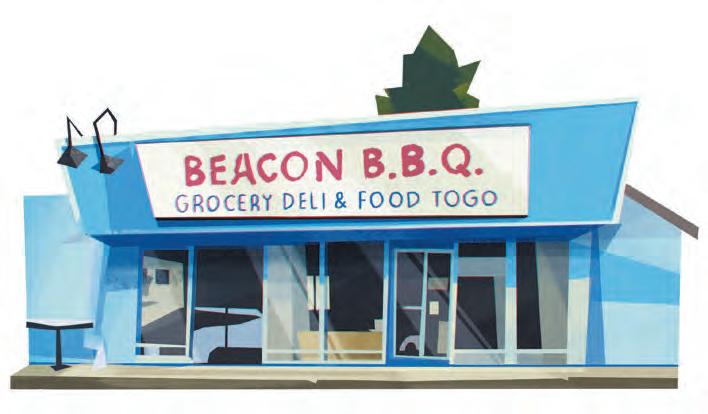
Beacon B.B.Q. Grocery Deli & Food TOGO (4886 Beacon Ave S)
I will be honest. This place is a bit skimpy when it comes to the grocery part. Ideally, it would sell more things (combs, cellphone accessories, brooms). That said, Beacon B.B.Q. has the best roasted duck in this city. This is no exaggeration. It’s not super salty, the meat is soft and juicy. The man behind the counter chops the bird with the smoothness of that butcher in one of my favorite Chinese parables, “Cook Ding,” by the fourth century BCE philosopher Zhuang Zhou. “At every touch of his hand, every heave of his shoulder, every move of his feet, every thrust of his knee — zip, zoop! He slithered the knife along with a zing, and all was in perfect rhythm.” You can also buy good dim sum here, but if you have the time to sit and eat, I recommend visiting the Dim Sum House, which is around the corner. The dim sum there is superb.
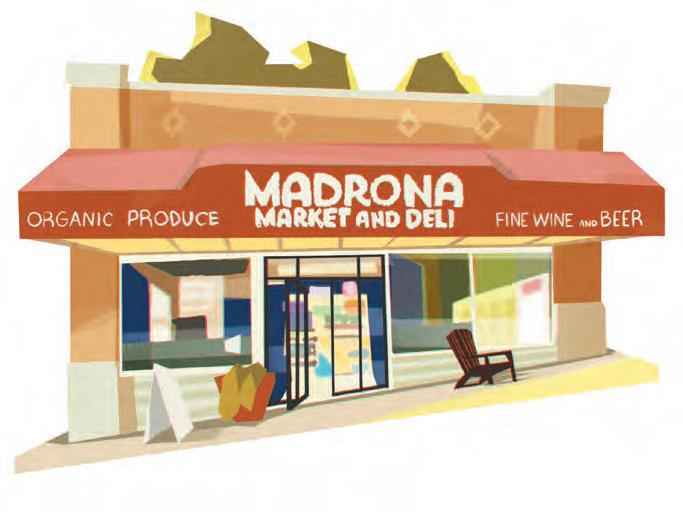
Madrona Market and Deli (3309 E Union St)
This is as close to a classic NYC deli as you can get. But there is one big difference: It has an excellent selection of wine and top-tier nonalcoholic spirits (Wilderton, Pathfinder). Most NYC delis sell just beer, White Claw, and Chateau Diana “wine product.” But Madrona Market does make solid sandwiches with Boar’s Head’s deli meats and cheeses—each is around $12— and little hot potato samosas and corn dogs on the side. Plus, the grocery has everything for your basic needs. Now, if we had more Madrona Markets in Seattle, then the grip of corporate supermarkets would be weakened. Imagine if there was a bodega near 23rd and Jackson. Then the recent closing of Amazon Fresh, which replaced one of Seattle’s Black institutions, Promenade Red Apple Market, would not be a disaster for ordinary people. They are now forced to take long trips for even the basics.
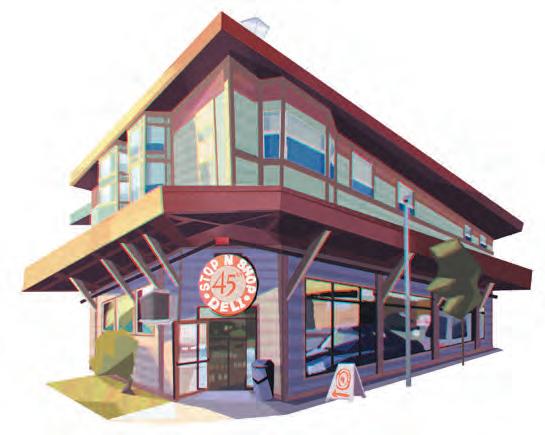
45th Stop N Shop & Poke Bar (2323 N 45th St)
One night, when I was complaining about the lack of bodegas in Seattle, the bartender at Lottie’s Lounge recommended that I visit this Stop N Shop in Wallingford. It’s a bodega that has, in the bartender’s estimate, the best poke in town. When I happened to be in that neighborhood, which, regrettably, is not near a Link station, I popped in and found a small business packed with all the basic groceries and, at the back, a poke bar with a few tables. I ordered a fish bowl ($21) and a bowl of udon ($8.99). Both were ready in a matter of minutes, but I had to take them all the way back to Columbia City, which took forever. Nevertheless, both bowls were superb, particularly the poke.
(3828 S Graham St)
If you live within walking distance from this Hillman City bodega, consider yourself a lucky person. It’s the real deal. You happen to live in a real city. Vientiane has a great kitchen, which is located opposite the entrance, and the food, which is Lao and Thai, is excellent and prepared in a matter of minutes. My favorite dish on the menu is the Lao Sausage, which costs $10 and is also available in the frozen meat section of the charmingly packed grocery. Vientiane also sells Kiwi knives, Dao coffee, canned sardines from Morocco, bright yellow flowers, golden statues of Buddha, a variety of Southeast Asian clothes, and small Laotian flags. The downside of this place is it closes at 6.
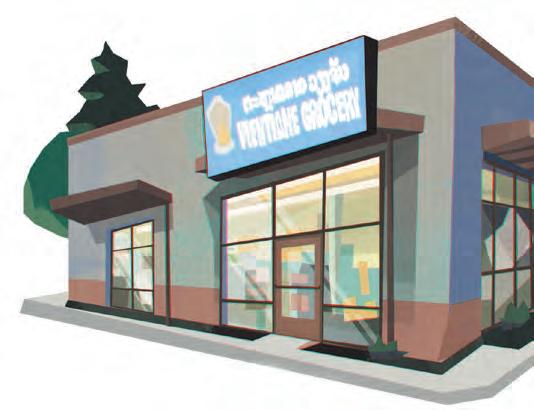
(5903 Rainier Ave S)
The minute you walk into this Rainier Avenue business, the smell of African spices overwhelms you. It’s as if you left the US by a magic door and ended up in coastal West Africa. There are so many goods in the small space that it’s hard to concentrate on one. But what you do is head to the refrigerator in the back and find cold meals prepared at another location. The best thing there is the Chicken Yassa ($12). It is just perfect and addictive. I always buy two bowls, take them home, and heat them up and, voilà, I got an authentic African meal in minutes. Every bite of this yassa recalls the words of Young Dro: “We in da city.” n
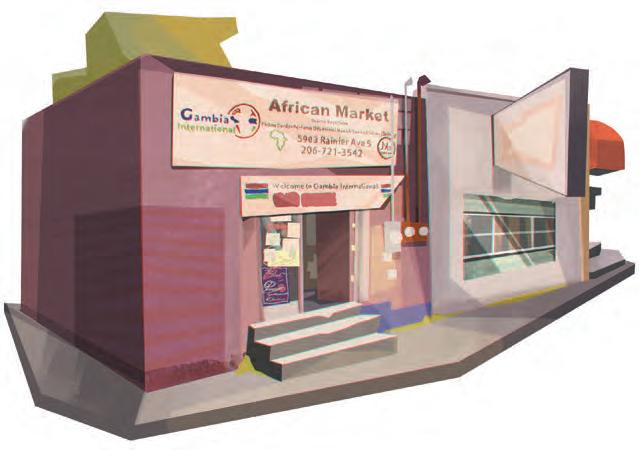




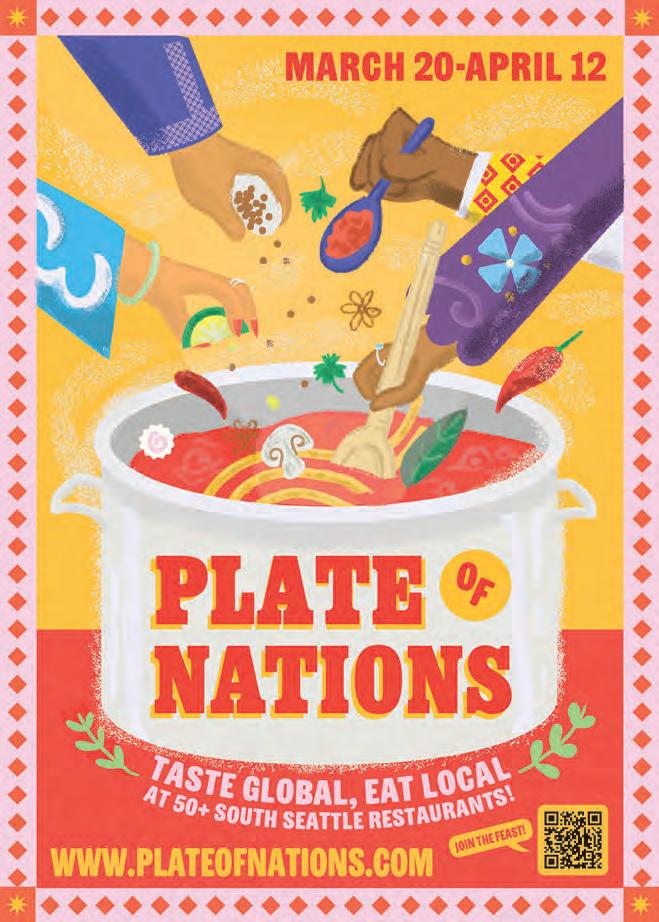
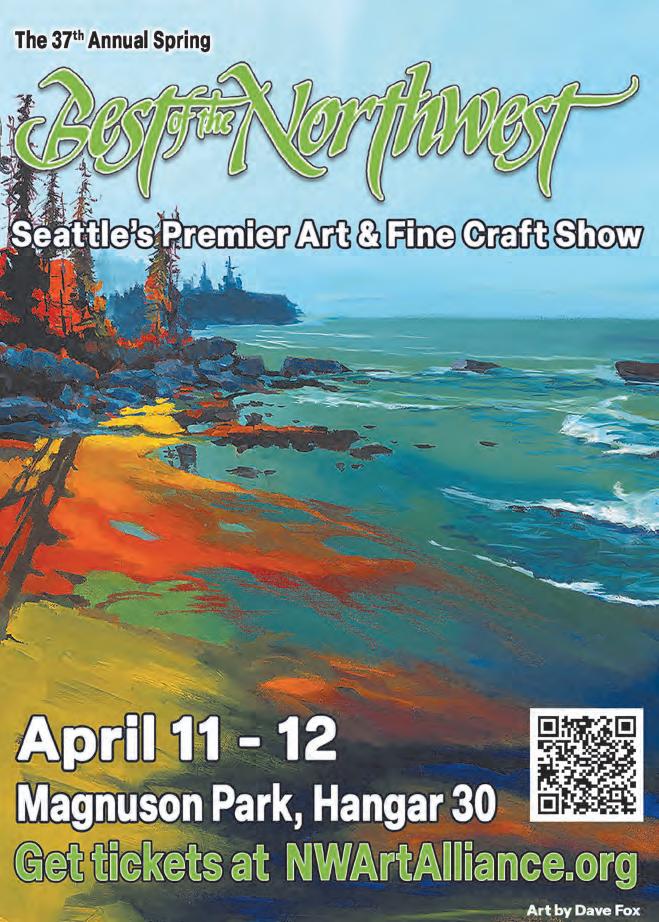
BY MEG VAN HUYGEN
PHOTO BY BILLIE WINTER
It’s prep shift at Hamdi, and the room smells like fire. Winter sunlight filters in, and there’s a faint hum of spices in the charred air. Chef Berk Güldal is giving a private tutorial on making Turkish Adana-style kebap—aka kebab—a meticulous, laborious two-day process that plumps up these peppery lamb skewers.
Hand-mincing kebap is considered an art form in Southwest Asia, but this time-consuming process is being practiced less and less these days—even in Turkey, and certainly here in Seattle. Güldal, however, has all the time in the world to practice this thousand-year-old culinary craft.
Hamdi opened in 2021 as a Turkish food truck and moved into its beautiful, simple fine-dining space on Leary Way the following year. Güldal and his partner, Katrina Schult, had spent their careers in Michelin-starred restaurants—in Güldal’s hometown of Istanbul as well as NYC and Healdsburg, California, among other places—before peacing out to starless, Michelin-free Seattle to do their own thing.
That thing is fire. “We don’t have gas ranges,” Güldal says. “It’s all fire—wood or charcoal.” Low flames and embers burn here and there under grills around the open kitchen. It’d be a waste to NOT make kebap here.
The artist’s tools are a butcher block, a scraper, and a giant medieval-looking Turkish zirh (“zuh-ruh”). Genetically somewhere between a machete and a Bowie knife, it looks like the weapon your orc-slaying half-paladin/half-rogue D&D character carries. A fantasy knife.
I ask him if he bought it in Turkey, and he says, “No. I got it on Etsy.”
Güldal holds his colossal knife with both hands. A few pieces of suet—the hard fat that surrounds a lamb’s kidneys—sit in a ninth pan. He utilizes the zirh as a parer, deftly removing the silverskin enclosing each parcel of fat. “In Turkey,” he says, “they use tail fat for kebap. But it’s a different kind of lamb with a much bigger tail. It’s like a second butt.” However, America’s lambs aren’t quite as caked up, so Hamdi uses suet instead.
It’s no compromise. “To be honest, this lamb right here is the best lamb ever,” Güldal boasts. “We don’t need the tail.” Hamdi sources lamb from Anderson Ranches, 30 minutes outside Eugene, Oregon. “I cooked a lot of lamb in New York and California, at Michelin restaurants? I never tasted any lamb like this lamb.”
Güldal adds that Hamdi only uses grassfed lamb, so Anderson Ranches is a natural choice, where free-range sheep and lambs
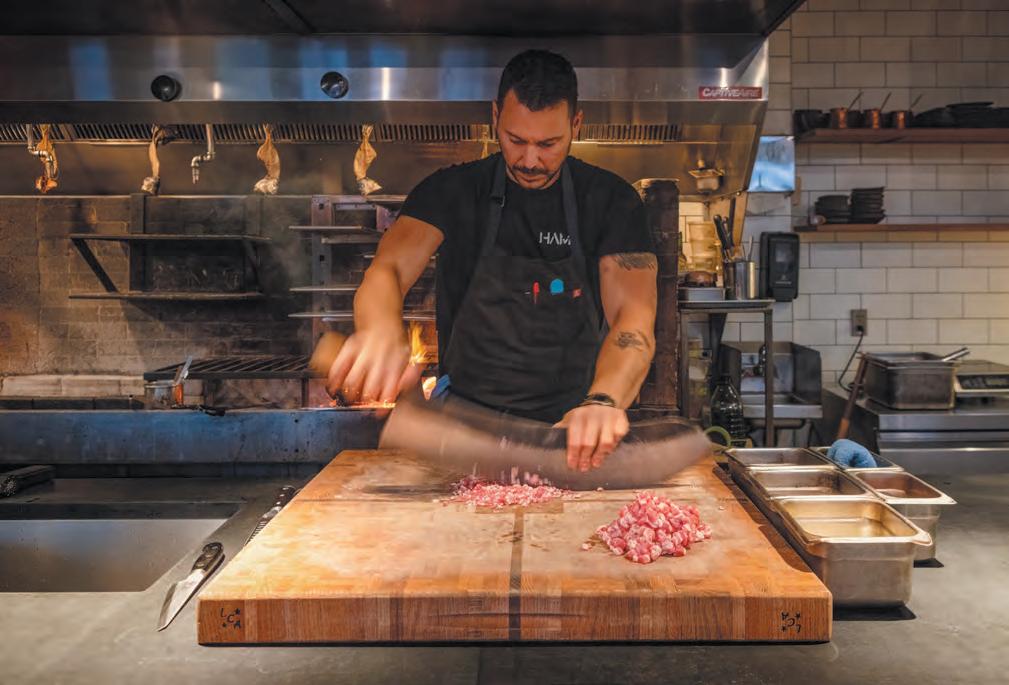
graze on pasture ryegrass, herbs, and flowering forbs. “I really believe that grass-fed meat is the best, most nutritious food for your body,” he says. “It’s more chewy. It’s not gonna melt in your mouth. That’s why it’s great for kebap.”
The artist’s canvas is a massive wooden butcher’s block. This one was custom-made by Lee Andrews, a woodcarver in Walla Walla. “This artist told us this block’s gonna survive like four generations,” Güldal says. “Plastic just breaks.”
He sets the snow-white suet chunks on the block, then places his two-foot blade
Controlled strength as art. I could watch him do this all day.
alongside them. Carefully but powerfully, he lifts the knife’s handle up and out, like a crank on a water pump, pinching the back of the blade with his other hand. He slides it back and forth over the pile for what seems like 20 minutes but is probably like five.
After Güldal pulverizes the suet into a hill of crumbles, Schult brings over some rough-chopped lamb belly, cold from the
fridge, where it’s been aged for 24 hours. He begins delicately smithereening it with the same precise skill: slicing motions, not crushing motions. Sounds simple, but it really is a complex physical performance, requiring minute movements to flick and flex this heavy sword. Controlled strength as art. I could watch him do this all day.
“The purpose of this knife is to slice,” Güldal says. “When you put meat in a grinder—how most people do kebap now— it smooshes it, and it becomes very sticky and soft and loses texture. But here, you use a very sharp knife like this one, moving it minimally to slice, not chop.”
He adds that a grinder creates a dry kebap. “Not as juicy. And the texture this way is gonna be very coarse. Not, like, smooshed.” That coarseness creates more edges and facets to be Maillarded later.
After mincing the meat and fat separately, Güldal does the same to a red bell pepper. Then he methodically kneads the pepper, lamb belly, and suet together to create binding protein structures. “Another thing,” he says, after wordlessly kebapping for a while, “is that you don’t wanna use gloves to do this. Because then it tastes like gloves. I believe the flavor of your hand needs to go in the food.”
Güldal produces a speckled loaf of mince.
Now it’s time to season: paprika, Turkish pepper flakes, and salt. He pulls out a sheet pan of lined-up skewers, specifying that they must be iron, not aluminum, and starts fleshing out the metal skeletons.
The meat football gradually disappears as Güldal applies it to the skewers, punctilious, his fingers tantamount in his arsenal to his big-ass knife. We simmer in the piano lick from “Ms. Jackson” on the aux as he shapes the mince. Per tradition, he’s giving the kebap a subtly scalloped pattern, for both Mailliard reaction and artisanal reasons. Meaty finger waves.
And that’s it. They’re ready to hit the charcoal. The raw skewers look kinda pixelated, since unrendered suet is so brittle, but it’ll liquefy into nutty, golden, umami-tinged tallow on the grill, like lamby compound butter. It’s the art of suspense. A delicious future promise.
When asked if doing this makes him feel like an ancient person from a thousand years ago, Güldal frowns. “No! I believe we should still do these things today, not just in ancient history. I actually think everything has gotten too modern, too easy. I think we’re losing the fun part.”
Güldal takes a beat to admire his handiwork, then nods solemnly. “This is the fun part.” ■
BY MEGAN BURBANK
PHOTOS BY BILLIE WINTER
longest such tenure for a male principal dancer—and he’s still seemingly everywhere: dancing Cinderella on opening night in a generous partnership with fellow principal Leta Biasucci, emblazoning promotional billboards throughout the city, taking a memorable turn as a heartbroken teenager
years as he has—but whether partnering with ballerinas as a go-to story ballet prince or embracing the animalistic verve of Crystal Pite’s Emergence, Postlewaite makes it look easy. His expression is always legible from the cheap seats, his smile magnetic, and when he retires at the end of the com-
tlewaite is originally from California, and attended New York City Ballet’s feeder program the School of American Ballet. Peter Boal, artistic director at PNB, met Postlewaite on the first day of a summer course there, when the dancer was a 13-year-old student. “One of us knew what tremendous
Francia Russell and Kent Stowell, who offered him an apprenticeship. But Postlewaite was holding out for City Ballet, so he turned Russell and Stowell down. When the New York company came through with the offer of an apprenticeship, he was elated. He was 17, and went
out drinking to celebrate. But when he got back to the dorms, he got caught. “I lost my apprenticeship and was sent home: the poster child for the school’s new drugs and alcohol program,” he told the Seattle Post-Intelligencer in 2008. The ballet world rarely gives young dancers second chances for being normal teenagers.
“I got so depressed I lost my confidence and will to dance. I was out for five months. I didn’t have a job or any place to go,” he told the PI. But Postlewaite reconnected with Russell and Stowell. They didn’t have a spot for him at the time, but suggested that he join the school for another year. He joined the company as an apprentice in 2003.
He’s the last dancer still in the company to have been hired by Stowell and Russell—and has had the longest tenure among the company’s male principal dancers. Only PNB legend Patricia Barker has him beat: when she retired in 2007, she’d been a PNB principal dancer for 21 years.
Postlewaite had an unusually quick trajectory up the company’s ranks, with promotions to corps de ballet in 2004, soloist in 2007, and principal in 2008. While his repertoire at NYCB would likely have been limited by that company’s pure focus on the artistic legacy of George Balanchine, dancing with PNB, punctuated by a formative, years-long stint with Les Ballets de Monte-Carlo, allowed Postlewaite greater creative freedom and a broader range of roles. He’s danced plenty of Balanchine ballets—the title role in Prodigal Son was a pivotal one for a young Postlewaite—but he’s also had the chance to work closely with choreographers like Czech contemporary dancemaker Jiří Kylián (“He changed the way I thought about performance”) and Jean-Christophe Maillot, who created roles for Postlewaite while he danced in Monaco.
While many ballet dancers are queer, their professional world doesn’t always reflect the spectrum of gender and sexuality of its performers. And more so than other dance forms, ballet is bound by strict gender roles. As a young dancer, says Postlewaite, “I had people say, ‘Make sure you don’t dance too gay,’ or ‘You’re too effeminate.’”
“I’ve always had to filter myself through the lens of a role,” says
Postlewaite. “There isn’t really queer representation in ballet [roles], and so that part of me, that facet of me, which is a big part of me, doesn’t come on to stage.”
This rigidity is slowly, belatedly changing, as PNB and other dance companies— though not nearly enough of them—begin to evolve beyond some of the art form’s most damaging strictures. And some roles have allowed for greater integration of his queerness, recalls Postlewaite, including in Edwaard Liang’s The Veil Between Worlds , which explores themes of immi -
gration, departure, and grief. “It’s not a story ballet, but the choreographer invited me to bring all of myself into the role,” Postlewaite says. After a performance at the Kennedy Center, Postlewaite came offstage with tears in his eyes. “That role feels like it integrates so fully who I am… I felt so seen and so full,” he says. And even some more traditional roles have afforded a greater feeling of alignment and freedom. Playing Romeo in Jean-Christophe Maillot’s Romeo et Juliette allowed Postlewaite to draw on his own experiences
to bring the character’s emotional experience to life. “It allowed me to share such a multitude of the range, the range of human experience,” he says.
This is one of the joys of seeing a dancer get older: When life experience can inform expression, it becomes legible from the audience in a new way. It’s a culmination of decades of creative growth and exploration—something possible only with longevity few ballet dancers get to experience. Ballet careers are short. Margot Fonteyn famously retired at age 60, but she’s the exception that proves the rule. It’s rare to see dancers continue to perform into their forties, something Postlewaite is acutely aware of. Some of his fellow company members are half his age.
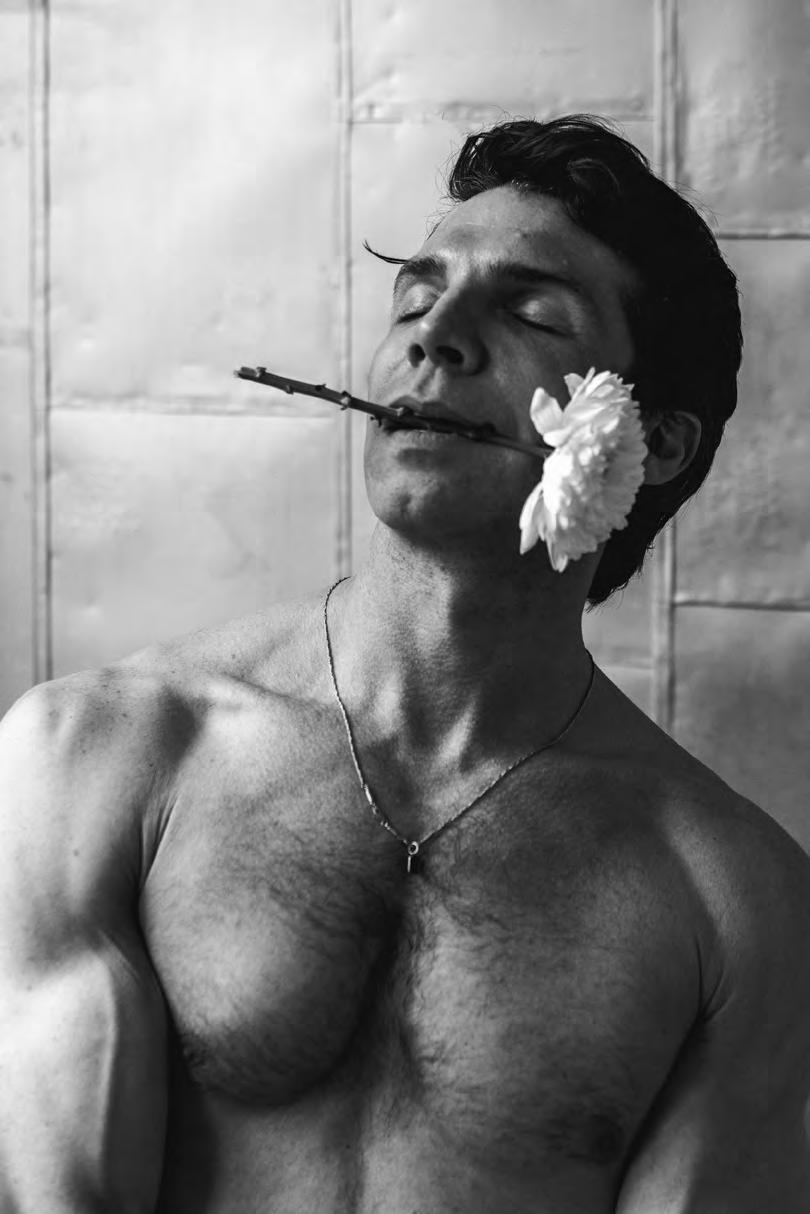
“I’ve always had to filter myself through the lens of a role,” he says, which often excluded his queerness.
Company retirements are a natural time to reflect on PNB’s rising stars. Here are a few who have captured my attention so far this
season.
Yuki Takahashi: Takahashi has been a standout performer since she first landed
with the corps de ballet, tackling her roles with grace and glorious technique. Now a soloist, she’s headed for big things.
Ashton Edwards: Two things I love about Ashton Edwards: their smile and their pointework. Pointe takes tremendous strength, but ballerinas are often told to make it look easy. When Edwards is on pointe, you can see their strength shine through. They’re also challenging ballet’s
busted gender norms, dancing both classically male and female roles.
Juliet Prine : Many dancers perform the role of the Sugar Plum Fairy, but when soloist Juliet Prine tackles the iconic Nutcracker role, it’s with absolute joy and surefooted strength. I can’t wait to see what she does next.
Destiny Wimpye: A corps de ballet dancer, Wimpye shines in athletic, almost
On a coworker’s 22nd birthday, he remembers, “That same week, I was turning 42, and I was like, ‘Dude, I am double your age.’ And that was wild to see an embodiment of what 21 years looks like. And then think, I’ve had two of those.
“Something that I’m proud of in my work is that all of these moments, the highs and the lows, I consider them part of my artistry,” says Postlewaite of what it’s like to dance with the inevitable life experience, both good and bad, that comes with being a person in their forties. “It’s part of my palette, my artistic range.” Postlewaite will take his final bow on June 7, and in the months between now and then, he’ll dance in Red Angels, Giselle (the most goth ballet of all time, and probably a better adaptation of Wuthering Heights than “Wuthering Heights”), and Jessica Lang’s Ghost Variations
There’s an old saying that dancers die twice: once when they shuffle off this mortal coil, and once when they stop dancing. But Postlewaite no longer sees it that way. “I remember thinking that this was the pinnacle of my life, and how special, how wonderful, but that, from there, I would just sort of wither, and if that’s all, I would be happy and grateful,” he says of ballet. “And now I’m in a place where I’m like, but this is the launch pad.” He’s looking forward to what’s next, and glad for where he’s been. “I guess I would just like to share some gratitude,” he says. “Gratitude for the audience, for this life that has given me so much.”
gymnastics-tinged roles. She was a major standout during the company’s recent Twyla Tharp rep. I’ve also been glad to see corps de ballet dancer take on classical roles in Balanchine’s Jewels and The Nutcracker
Melisa Guilliams: This corps de ballet dancer has been getting more substantial roles this season, and she’s killing it. Keep letting her shine! ■


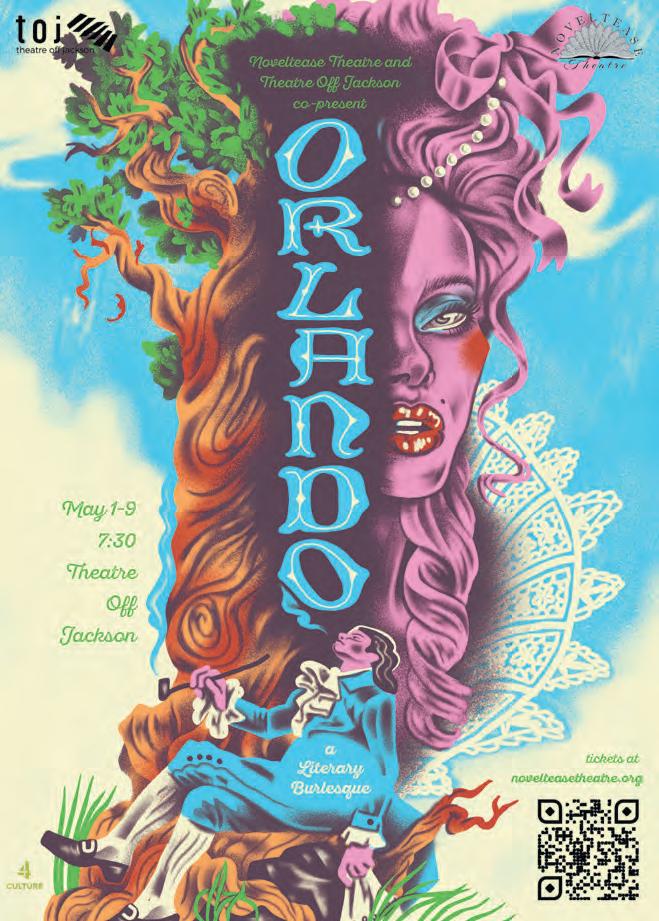
BY NATHALIE GRAHAM
PHOTO BY WEST SMITH
The four people at my table had their heads down, needles and threads in their hands. Behind me, books like How to Fix Almost Everything, Basic Electricity , and, fittingly, Successful Shelves and Built-ins filled one shelf in a shelving unit full of everything from surge protectors and spare keyboards to at least four different types of inductors. Down the lime-green wall, sewing machines weighed down another shelf.
Across the room, more people sat around tables next to woodsaws and clamps. They weren’t working with wood, but on shirts and pants.
This was the Capitol Hill Tool Library’s monthly mending circle. On the first Sunday of each month, anyone can bring any textile items that need fixing into the workshop. Volunteers are on hand to show you what to do. No experience required.
I went to the mending circle armed with zero sewing knowledge and an armful of clothes. I left with a sense of self-reliance previously foreign to me.
“So,” I said to my tablemates, “the knot in the thread? I just tie a knot?”
In spite of having a mother who once handmade my baby blankets and at least one Halloween catsuit, I never learned to sew. According to Clare, the mending circle’s founder, only 50 years ago many people sewed their own clothes. Not anymore. The skill isn’t as universal anymore.
Clare started the mending circle in 2022 as a way for her to meet sewing friends. It became more than that. Under her stewardship, the mending circle grew to a monthly mainstay where she could equip people with real life skills. Except, most of the people who showed up didn’t know how to sew. That didn’t bother Clare. “The most important part of that work we’re doing is giving people skills,” Clare says.
Clare’s no longer part of it—not for any reason other than she moved to Ballard, which is basically dying in Capitol Hill terms. She now helps with Sustainable Ballard’s mending group and one at the Ballard Food Bank.
The act of mending clothes is radical to her. “Because it doesn’t make financial sense,” Clare says. “You could just buy a new jacket for 20 bucks. It’s almost antiestablishment.”
I suppose I have been very “establishment.” When my clothes fall apart, I throw them to the back of my closet, or throw them away. Then, the pocket on my favorite jacket ripped. It’s an article of clothing—a vintage denim chore jacket—I’m certain I won’t be able to find again. But I’m not preservation-minded. I can’t stop wearing it. Hence the mending circle.
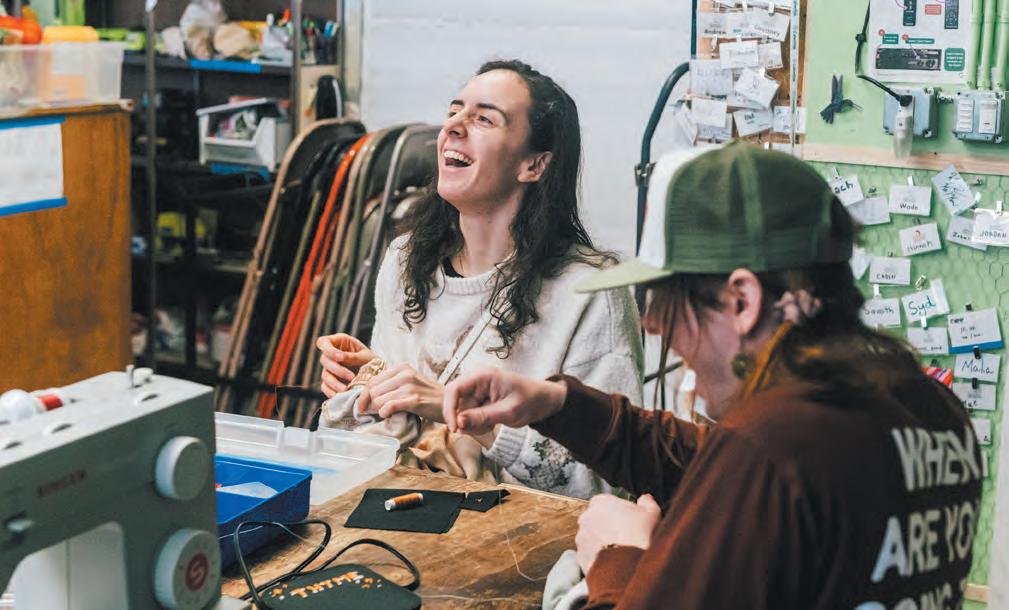
The other people were also trying to save their clothes: Marco sewed a patch into his new shoes because they were slightly too big. Will’s favorite shirt—an eight-year-old flannel—split down the entire armpit. He could fit his head in the hole with room to spare. “Does anyone know how to choose a needle?” he asked. Vanessa, who sat at the end of my table, started coming to the mending circle a few months ago and is now a regular. She learned to sew there, which is helpful since she has “the bad habit of wearing clothes probably long after I should have gotten rid of them,” she says. Today, she coerced her friend Thyme to come so she could mend their clothes. She’d run out of her own things to mend. They both sewed holes shut in two matching pairs of Thyme’s sweatpants. “I have to specifically buy athletic-cut pants because my butt is too big,” they said. Their butt is always busting holes into their pants. (According to mending circle volunteers, the dreaded groin rip is the most common mending project.) Thyme was new to sewing. Learning the skill excited them. They’re a furry and often have to ask their mom to fix their two fursuits when things fall apart. Most people had a passing familiarity with needles and thread. I stared blankly at the threaded needle in my hand. Where do I go from here? Katherine, who had sat down across from me, busy with her own clothes, lent her expertise. “My grandmother always told me to do two knots,” she said, demonstrating how to tie a double
knot. She learned to sew from two different grandmothers. “They didn’t talk to each other at all,” she says.
Following Katherine’s lead, I attempted a double knot. Except I really didn’t grasp what she’d shown me, and I felt bad asking again, so I pretended I’d gotten it.
A seat down from me, Thyme interrupted. “I heard the knot question, but I didn’t hear the answer. How many times did you go around?”
“So, I ended up making three little knots,” I said, examining my now-bumpy thread.
“The most important work we’re doing is giving people skills.”
“I’m hoping they’ll go on top of each other to make one big knot, but they haven’t done that yet.” Katherine demonstrated again for both of us. I got it that time.
Overseeing this exchange, the volunteer coordinator, Saralyn, commented on it to another volunteer: “I always love when people come in not as volunteers, but they end up helping other people. One of my goals for [the] mending circle is to bring people together.” And she had.
Katherine came here today because she’d had “a brief crisis” in December. “My younger sister sat down and was like, ‘Here’s a list of things in your area. Go to them,’” she
told me. “I think this might be legitimately the first thing that I’ve gone to—which is sad.” Vanessa and Thyme jumped in. “It’s only been two months!” Thyme said. “Don’t worry, I only started getting out of the house for realsies a few weeks ago,” Vanessa said. We all chatted for the three hours the mending circle spanned—which is about how long it took me to sew my pocket back together, as well as a ripped armpit hole on another shirt. Other people came in with their worn clothes, picked up the supplied needles and thread, and set to work. One person came in to make anti-ICE whistle packets. She took a break to darn a sock.
“I always feel like I get worn down [by the world],” Saralyn said, over the hum of conversation and the occasional buzz of a sewing machine. “Then I come to mending circle. On a large scale, things are stressful. On a small scale, I remember, ‘I can fix this.’” The patch I sewed to bolster my jacket is not beautiful. So far, the patch is holding and the jacket functions, but the lines are uneven and the stitches are wonky. I feel proud nonetheless. I like that even though it’s imperfect, I can see the passage of time on this garment I love. I like that I did it myself. And I feel comfortable knowing there is a place I can go when the patch inevitably falls off, and next time I will sew it on even better.
For her column Play Date, Nathalie Graham immerses herself in Seattle's subcultures. Got a fun group? Invite her: playdate@thestranger.com!















BY NATHALIE GRAHAM
ILLUSTRATION BY JO TURNER
Jeff Cohan brings three flutes with him to the Victrola Coffee Roasters on Capitol Hill. All of them are wood and modeled off flutes from the 1550s to the 1700s. Two are placed lovingly in worn satchels. Cohan slides one—a Renaissance flute—out of a PVC pipe. Often the TSA inspects this PVC pipe because they suspect he is hiding contraband in there. He isn’t. It’s just the flute.
Cohan, whose hair is white and wild, pours his to-go cup of green tea into a delicate Japanese cup he has stashed on his person. “I bring this everywhere,” he says. A baroque bassoonist gave it to him. Sensing a good anecdote, I reach for my phone to start recording. Tell me about this cup
He mentions the bassoonist again. “There’s great demand for baroque bassoon,” Cohan says. “I would say it’s the civilized bassoon.” We never make it back to the cup. Instead he launches into a lesson about the difference between baroque and modern instruments.
This is Cohan’s world. He specializes in old flutes and antiquated music. Each year, he organizes a series of monthly concerts at the Faith Lutheran Church at which he performs period instrument chamber music with a rotating cast of musicians. They unearth a world long-forgotten by most of society.
Baroque instruments are simpler than modern ones, but harder to play. In the flute’s case, the baroque version is a wood tube with six holes and one key. By comparison, the modern flute is metal and has 16 holes and a system of keys that makes chromatic play easier. To achieve the same range, baroque flutists do intricate cross-fingerings. Cohan says it gives him a “much more intimate relationship with the instrument.” The sound is softer and warmer and “more colorful” than the modern flute, which has a certain “stridentness” to it, Cohan explains, emphasizing the word by driving his arm forward, cutting it through the air.
That instrument evolution came about when the world got louder. In the mid-18th century, steam engines, machines, and people living in cities created cacophonies like never before. This Industrial Revolution bore a newfangled concept: a middle class with disposable income to spend on things like live music. This created big concerts. The instruments needed to be able to compete. Before then, music was mostly for aristocrats. The concerts were small, intimate. That’s what Cohan is attempting to bring to audiences now—except the shows are donation-only. Perhaps our dis-

connected, distracted, high-tech society is ready to come full circle. Maybe we are in need of the baroque flute.
Cohan, 75, has played the flute his entire life. He first saw it in action in second grade when a flutist performed at his Illinois school. With a dad in the Navy, Cohan moved to Texas in fourth grade. There, in order to supply the football teams with bands, the schools administered a test to students to find musicians. Anyone who passed went to the gymnasium to choose
“That instrument evolution came about when the world got louder.”
their instrument. With every instrument laid out before him, Cohan chose the flute. His dad was with him. “My dad said, ‘What, and march with all the girls?’ That almost scared me away,” Cohan remembers. But Cohan stuck with it. The flute became his whole world. “I remember going down the street on my bike,” he says. “I was hearing tunes in my head and playing them on my handlebars.” He twiddles his fingers on imaginary handlebars.
Cohan’s parents separated. He moved back to Illinois and took up lessons with a
German flutist. Years later, he learned his teacher was the same flutist who had performed at that second grade assembly all those years ago. When he went to college at the University of Washington, Cohan originally studied marine biology. That didn’t last long. Soon, he sought music. A scholarship he earned to learn the South Indian flute and the Japanese shakuhachi changed his life. “I was able to study these really simple flutes of other nationalities, and I discovered how expressive they were,” Cohan says.
In the 1970s, a grant took him to Paris, where he lived on the Seine in an apartment full of other artists. An American harpsichordist showed Cohan his first baroque flute. Cohan was hooked. Since then, he’s performed around the world and won several awards. He’s also played in hospitals. Like the one run by nuns in Bern, Switzerland. They asked him to perform in the hallways; at lunch, he’d play for the nuns. Playing for the ill and in-need is moving. “That’s a big central issue behind music,” he says, “caring for one another.”
The intimacy of those performances is what he’s striving to recreate in his Seattle series. For his January show, Cohan played “A Little Concert for Louis XIV.” Around 30 years ago, Cohan found a manuscript in the Bibliothèque nationale de France. In it was all of the music Louis XIV instructed his court to play during his reign. Part of the
collection Cohan found included songs “to put the king to sleep, basically,” he says. The collection varies, though. “They’re sometimes very sort of upright and martial music that attracts your attention, and other times they’re very touching and beautiful,” Cohan says.
One of the challenges with baroque music is the guesswork. The notes exist on the page, but there’s no instructions about accentuation; it’s unclear exactly how it was meant to be played. Cohan and his performance partners—a group of ofteninternational players—try to suss this out.
Cohan’s February show featured Olena Zhukova, who is the first result when you type “Ukraine” and “harpsichordist” into Google, Cohan says, and Montreal’s Susie Napper (“I think she’s the goddess of the viola da gamba”) alongside Mélisande Corriveau on treble viol playing French and Italian 17th-century music. On March 19, he’ll play folk songs from the Renaissance and Baroque periods accompanied by lute and guitar. Those songs are the equivalent of the “popular music we have today,” Cohan says, “like the Beatles.”
The challenge of understanding and relaying an artifact like baroque music creates a one-of-a-kind live performance in a world where the answers are often digital and always at our fingertips. “We want to try to find the kernel of truth on the emotional level,” Cohan says, “and make it resonant.” ■



BY KATIE LEE ELLISON
Iwalked down the steps on the northeast corner of First Avenue and South Main Street in Pioneer Square and expected to find the founders of ANTiPODE at the bar. Instead, a live saxophone blast from a kid who couldn’t have been more than 15 hit me from the small stage to the right. Past the front room, I found Amir Amini, cofounder of the gallery space and arts center, in a back stairwell helping to move a large piece of furniture wrapped in a blanket.
While he tended to this task, Saina Heshmati, also cofounder, and warm and welcoming, chatted with me about the art in the room she curated. We sat in a small office space made from makeshift walls, drank Colombian coffee (roasted by a couple from Colombia now living in Seattle), and Amini joined us, flustered but ready. A friend visiting the two from out of town—a teacher, German but living in San Diego—sat in the space with us, minding her business on her laptop, while the band, a group from Seattle Jazz Fellowship, played as we talked, reaching a crescendo as our conversation did.
In this handsome basement gallery and arts center, you can now take a book out from their new library (off the bookshelf Amini was helping Arne Pihl, the maker, move in). You can also see art unlike any in the city, hear experimental music, watch rare films or a dance performance, and take a workshop or write alongside other members on Saturday afternoons. Between the rolling gallery walls they built themselves, the exposed brick, and the polished wood bar, there is a balance of scrappy and polished, sincerity and playfulness, hyperlocal and global.
Saina Heshmati (artist, designer, and curator) and Amir Amini (research scientist, self-proclaimed wannabe writer, and general multi-hyphenate) are two self-described “jet-lagged immigrants from Tehran.” The gallery’s name refers to points on Earth that are opposite one another, or a point on Earth directly across from another through the planet’s core. The concept behind the gallery’s name is that Tehran is a cultural antipode to Seattle, and they’re engaged in the dynamic and beautiful contrast.
The ANTiPODE website states that the space exists “to use the immigrant experience to create an ‘art bridge’ between Seattle and other cities. We are interested in cities because, unlike countries, cities are tangible. We can hate them, love them, live in them, leave them—and as immigrants,
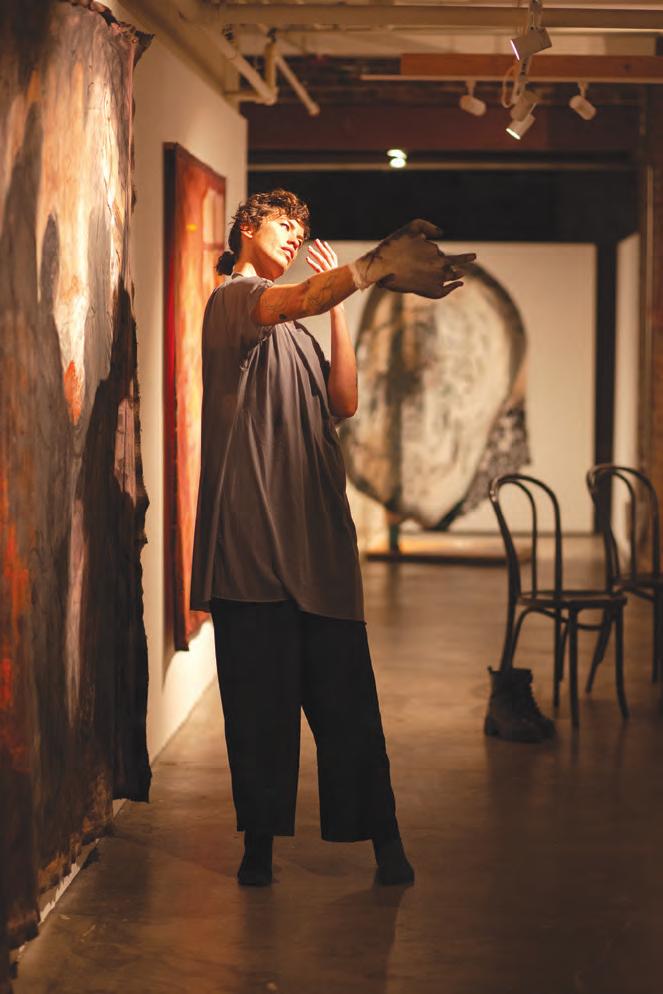
they can live together inside us.”
Heshmati and Amini left Tehran two days apart after the Green Movement in 2009, a protest against election fraud in the Iranian government. Of this migration, which was of significant size, Amini said, “When you come with such a wave, you’re not being pulled by the destination, you are being pushed… you don’t know why you’re here. You [only] know why you left.” It took a while before either of them felt ready to have something to say in Seattle, but eventually they felt they had a lot to contribute.
“There are a lot of opposite aspects in the two cities,” Amini said. “Seattle is very supportive. I don’t think we could do this in Tehran or in New York. People are
really open and thirsty [here].” And then there are the darker insights that come from holding them up to each other. “Seattle kind of avoids pain,” Amini said. “It’s kind of conservative in that way. Tehran is more about living for today, for pleasure and pain because there’s no tomorrow, or tomorrow is always worse. You’re getting there in the US, I think.”
We spoke about how thousands of protesters are currently being systematically murdered and maimed by the government in their first home, and how it felt for them to be here in Seattle.
“About an hour ago, a friend of mine [in Iran] connected to the internet after eight or nine or 12 days [of no connection]. Saina
and I were coming to ANTiPODE to get the bookshelf. I couldn’t tell my friend, Hey, I have to leave. The phone was working. The quality of the internet wasn’t good enough to have a phone call, but it was good enough to text. So I sat and texted with him.”
Right now, the terror in Iran is an unavoidable part of their having two homes. “It’s leaving a home,” Amini said, “then coming here and trying to recreate it. The other home [continues to] fully exist while you also tend to life here. And it never ends. You come to define yourself as something in between... an agent, switching between each life, unseen.”
For this reason and many others, Heshmati and Amini present immigrant artists
This is about creative freedom and resisting an industrialized art market that feeds a polarized political system.
from a position of power. They’re not interested in objectifying anyone’s experience, but in making room for complex perspectives and stories to be told. This is about creative freedom and resisting an industrialized art market that feeds a polarized political system.
ANTiPODE also prioritizes young artists and artists early in their career. They’re committed to presenting 70 percent immigrant artists and 30 percent locals. The gallery is designed to make room for experimental forms, video, performance, and more.
This month, on March 5, check out their opening for Esra Güler, an artist from Istanbul who’s been showing work in Seattle for years. The pieces are paintings but feature charcoal and illustration. Heshmati described the show as “a little dark and quite brave.” The artist will also give a talk on March 28.
On March 15, they’ll feature an experimental performance to the music of traditional Persian instruments and sound artists. As for literary happenings, you’ll find me at the gallery on the second Saturday of every month to write and share work.
Come for the art, stay for the radical intellectual community with an absurdist sense of humor. ■

BY AUDREY VANN
ILLUSTRATION BY KAITLIN BRITO
In January, I attended my first opera, Strauss’s Daphne at McCaw Hall. The experience was everything I wished it to be, though far less intimidating than I anticipated due to a lifetime of being inundated with stereotypes suggesting that opera was stuffy and old. My best friend and I used the occasion to dress up—both wearing black velvet dresses and fur-trimmed coats with updos and our fanciest costume jewelry.
It can be scary to step out in opera finery onto city streets full of sweatpants and parkas, but we found our people inside McCaw Hall—primarily silver-haired folks in dress pants and matching cardigan sets. While waiting in line at concessions, one woman in funky reading glasses acknowledged our efforts. “I love the outfits, ladies!” she marveled. We told her it was our first time at the opera. She looked genuinely excited for us, adding that she isn’t normally this chatty, but the Irish cream in her morning coffee had her feeling brave. We asked what her favorite opera was, to which she mumbled, “This isn’t a very unique answer, but I have to say Carmen .”
ence, an average human speaking voice is in the 100 to 200 hertz range. “There is a big misconception that an opera singer must be louder than the orchestra, which is not really achievable,” she explains. “It’s about manipulating the resonance and the space inside your vocal tract so that the sound is heard through the orchestra.”
Simply put, an opera singer’s unamplified voice can reach every ear of the nearly 3,000-seat McCaw Hall, not because of the volume of their voice, but because of the frequency that they achieve.
“We are trained to project with no
what I learned from High School Musical , she tells me that singing and sports are not all that different—singers are athletes, and thus, it takes their entire bodies to do the job. Bridges follows the Alexander Technique, which focuses on lengthening the spine and correcting posture. “If you listen to a baby scream, it’s so loud because their spine is in the perfect placement,” Bridges explains. “As we age, we move further away from that resonance, and, as opera singers, we’re always trying to get back to that natural cry.
“I have a couple of warm-up exercises
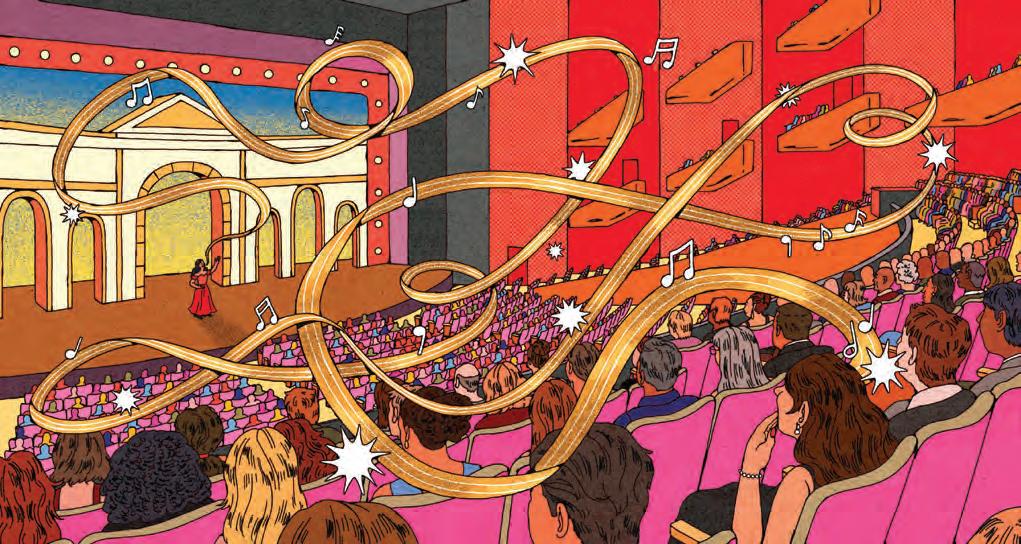
The Seattle Opera’s upcoming performance of Carmen will be a big full-circle moment for Bridges, not just because she’ll be back near her hometown, but because it was the first opera she ever attended. “My godfather took me, and I remember feeling super overwhelmed with amazement,” recalls Bridges. “We were sitting really high up in the nosebleeds, and I remember recognizing ‘Toreador Song’ and ‘Habanera’ from commercials and movies.” And I bet you’d recognize it, too— Carmen is perhaps the most referenced opera in pop culture, with “Habanera” needle drops in Up Trainspotting , and Magnolia , and there’s even a Muppet-fied cover by Swedish Chef and Beaker.
When Daphne began, I was immediately awed by the delicate quality of sound—the orchestra: rich and unified. The vocals: crystalline and all-consuming. The sound: soft, but never quiet. This was because, as Google told me after the show, opera singers and classical musicians do not traditionally use microphones or electronic amplification. Once my ears adjusted, the sound was actually quite loud. (Incredible, considering that my eardrums were once blown out at a My Bloody Valentine concert.)
“The human voice is capable of producing sounds that could exceed frequencies above 2,500 hertz,” Michaella Calzaretta, the Seattle Opera’s chorus master and head of music staff, tells me. For refer -
amplification,” confirms J’Nai Bridges, the acclaimed Lakewood, WA–born opera singer and star of the Seattle Opera’s upcoming production of Carmen . “It takes a lot of breath work, riding the air
Singers are athletes— it takes their entire bodies to do the job.
of the voice, and tapping into resonators in the face so that the overtones in the resonances project all the way to the back of the house.”
With the encouragement of her high school choir teacher, Bridges began singing opera at the age of 18, turning down a basketball scholarship to study at the Manhattan School of Music. But, despite
that are very similar to crying. I don’t actually cry, but it’s similar to the placement of the mouth, and even the eyes are like crying. Even emotionally, it can be a similar feeling, because we have to be so vulnerable and open.” Bridges achieves this physical openness with a combination of yoga, Pilates, chiropractic work, acupuncture, and a lot of vocal practice.
Another way to reach maximum resonance is through proper enunciation. Bridges speaks Italian, French, German, and Spanish, all of which she absorbed through years of learning and translating operas. Calzaretta underlined the importance of pronunciation: “If you don’t have clear diction, the likelihood of your voice not ever leaving the stage is pretty high, especially for the chorus. I talk about that all the time, because we want aligned consonants and vowels that match for the sound to have the biggest bloom.”
Written in 1875 by French composer Georges Bizet, Carmen tells the story of a powerfully uncompromising woman who captivates every man she meets, including the self-destructive, lovesick soldier Don José, who sabotages his future in pursuit of her. Carmen stays true to herself until the bitter end, prioritizing freedom and fame over love, which ends in Don José killing her in a jealous rage.
“ Carmen is a great gateway opera, because it has everything—literally everything,” says Calzaretta. “It has a huge chorus, a children’s chorus, dancers, and all of the stage and storytelling pageantry that we expect from grand opera, along with love, conflict, tragedy, and other relatable themes of the human experience.”
Calzaretta also highlighted the rarity of experiencing an unamplified performance in this day and age: “I take it for granted because I live in this world, but there are people who are going to come and see this for the first time and experience what analog performance is like. In the 21st century, we get so little of that unless we put ourselves in that situation. I’m honestly a little jealous!”
See the Seattle Opera’s Carmen at McCaw Hall, May 2–17.
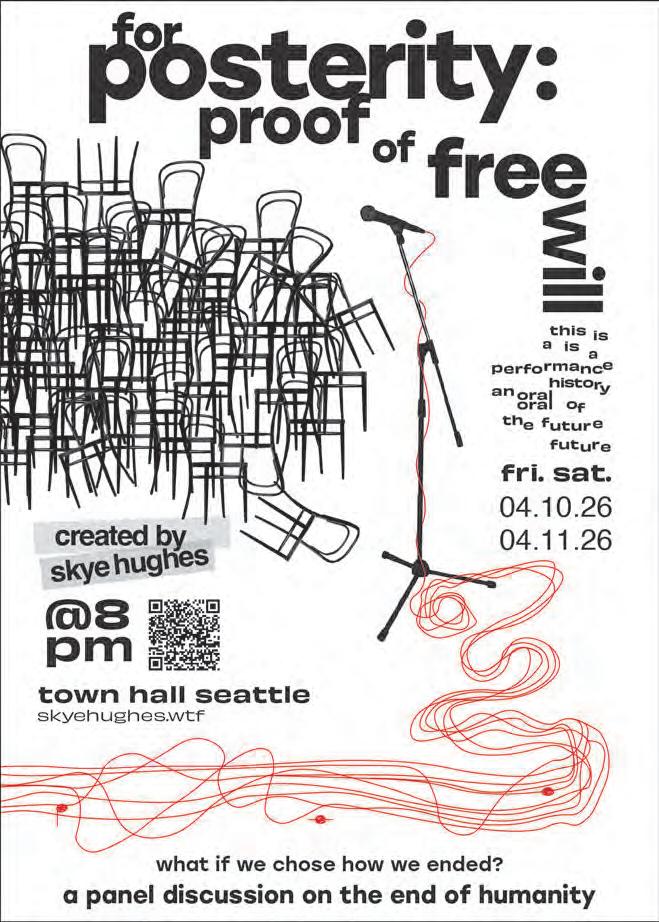
Seattle’s hottest nightclub doesn’t have velvet ropes, bottle service, or a bouncer. Instead, it has folding tables. It has name tags. It has four people to a table, all playing mahjong. A year ago, this kicked off with two borrowed sets. Tonight, Emerald City Tile Club is standing room only.
An Unexpected Friday Night
On a recent Friday night, when I’d usually be confronting my shortcomings as both a home cook and a human, I instead found myself craving connection. For many these days, “socializing” means forwarding each other Reels… and not replying. Which is why it felt somewhat revolutionary to get dressed, hop in my car, and brave the parking situation of Capitol Hill. All to play mahjong with strangers.
I was at Stoup Brewing wearing a name tag, in a small room upstairs—high above the Carhartt-clad product managers and their Patagonia-donning dogs. The room was rocking, and it felt like a fashion show: gold and jade jewelry brushing against Chrome Hearts hoodies, ruched halter tops, and mock neck sweaters. Perfect mahjong fits: dressed for a game their grandparents played, styled like they might end up at a warehouse party after.
Fifteen tables were in play and not one empty. At some, the mood was loose, alternating between silly and flirtatious. At others, players leaned in without speaking, eyes fixed on the pile of engraved ivory tiles in front of them, focused like they were refining macrodata in Severance . Hong Kong, Taiwanese, and Filipino gameplay ensued, with rule sheets open between beer glasses. Onlookers, myself included, crowded around especially interesting games like a Vegas craps table.
I met a white man celebrating his 26th birthday wearing a magnificent custom felt crown like a malevolent mahjong monarch. I dapped him up. At another table, I saw a guy on crutches and another with a boot on. People planned their night around this event—insurance claims included. In the middle of Seattle’s winter, here were over a hundred people voluntarily sitting knee to knee, Labubu to Labubu, for hours, all sharing the understanding that if you sit down long enough, something great might happen.
BY MICHAEL WONG
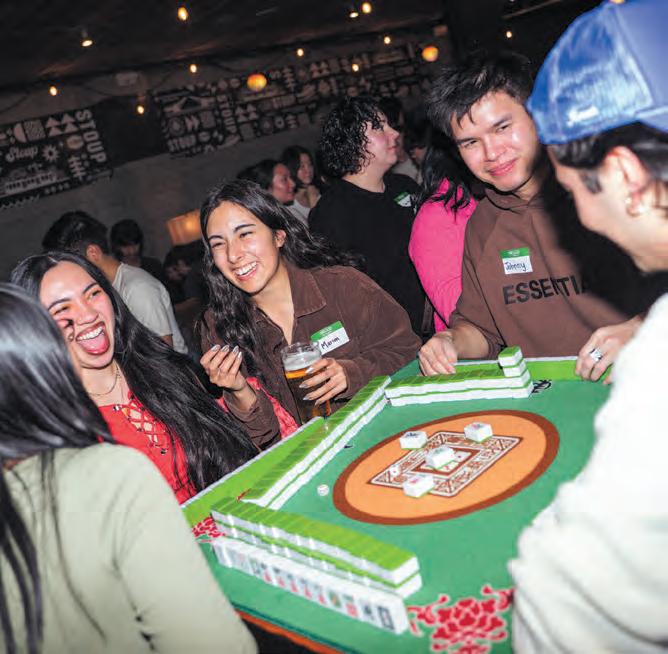
Believe it or not, this isn’t Las Vegas.
Herrera, the humble proprietor of Emerald City Tile Club.
A year ago, almost to the date, Sean was sipping a beer at Stoup, contemplating his future while doing trivia. He looked up to see folks playing board games, and the idea for Emerald City Tile Club formed all at once. He envisioned an accessible and welcoming social night surrounding the game his dad taught him to play. As a Filipino kid growing up in Alabama, Sean used mahjong as a magnet to find his people. He parlayed that energy when he moved to Seattle, hosting small mahjong nights with friends during COVID. Then they stopped being small. “It got too big at my place,” Sean told me, yelling over the DJs. “And I was like, how do I transform this into something bigger than myself?”
At the center of this room—though he would probably object to that phrasing—was Sean
Around that time, he noticed mahjong social nights taking off in New York and Los Angeles, with editorial shots of young Asians framing the game as cool again. Some of the clubs in LA even charged membership or event fees, but that never sat right with Sean. “I don’t want someone moving to Seattle thinking they have to pay to meet friends,” he said. “I hate the idea of having a physical barrier to coming in and hanging out.”
When Sean decided to pitch Stoup on a mahjong night, he went full-out honor
student. He shared MLA citations on the resurgence of mahjong among Asian American youth. He included a deck with mockups of attendance. He made a business case for foot traffic and sales. He said please. Stoup obliged, and ECTC was born. Forty people showed up to night one, blowing Sean away and earning more buy-in from
“I hate the idea of having a physical barrier to coming in and hanging out.”
Stoup. Tonight, and most nights, ECTC is hosting hundreds of folks.
“I hear about people meeting here and then going on dates,” Sean told me. “Someone came up to me and was like, ‘I met my girl here.’” He laughed, still slightly stunned by it. “I see people hanging out elsewhere and I’m like, ‘I didn’t know y’all were friends.’ And they’re like, ‘Oh, we met through ECTC.’ That’s crazy.”
One night, walking through Capitol Hill, he overheard a group of 20-somethings ahead of him debating whether they were going to “mahjong night” that week. They didn’t know he was behind them. “That’s when I knew this was real.”
For decades, mahjong lived in kitchens and garages, in the background of family parties, in rooms that smelled faintly of vapor rub and pork. It was something you inherited. A game you aged into. Now it’s something people line up for.
Across America, mahjong nights are quietly filling restaurants and backrooms. Young people are showing up dressed for a night out and are learning that the romantic prospects are better at the mahjong table than the bars. What used to signal retirement now signals arrival. “The traditional view about mahjong,” Sean said, “is that it’s an old man’s game.” He gestured to the brimming room. “Here in Seattle, we’re flipping that script.” It’s definitely happening in Seattle, headlined by ECTC and supported by budding nights including Mahjong Mondays at Kilig and QT Mahjong Nights—a community for queer/BIPOC folks to learn mahjong together. At each of these events, community is table stakes, but knowing how to play is not.
Part of the appeal is structural. Mahjong is analog. You can’t scroll through it, you can’t multitask. In a time where you see more AI slop on your timeline than pictures of actual human beings, the youth yearn for something real. And mahjong provides, not only with tangible tiles and real-life conversations, but also an invitation to unplug. To lean in. To pay attention. In an economy of distraction, that feels radical.
But part of it is cultural. For a generation of Asian Americans, mahjong is less about preserving tradition and more about reclaiming it. It’s taking something your parents played and deciding it belongs in public. It belongs under DJ lights. It belongs in breweries.
It belongs to us.
Back at Stoup, my wife had just won her first game, thanks to three new friends she just met, thrilled to be beaten by their new padawan. The DJs were getting crunk, backed by the comforting cacophony of shuffling tiles. Someone just found a roommate. In a city designed to keep you alone—in your car, in your apartment, in your feed— the kids are choosing something older. Something slower. Something you can’t swipe away.
I stepped outside into the cold and immediately saw three people I recognized from upstairs arguing about game strategies on the sidewalk.
They’ll be back next week. So will I. ■

BY BESS LOVEJOY
When Aimee Lee’s face pops up on my Zoom screen for our interview, her head is framed by something I can’t quite comprehend. It appears to be a tapestry of bricks. The bricks—persimmon-colored, cream, gray-blue—look somehow soft and light, as if molded from putty still wet and waiting to be touched. It’s paper. When it comes to Lee’s work, it’s always paper. But this paper is a far cry from the crisp stack of 8.5" x 11" that sits next to my printer. It’s paper that troubles the neat boundaries around that material, or at least the ones in my head. This is paper as fabric, paper as ceramic, paper as survival, paper as memory, paper as art. Specifically, this paper is hanji —Korean paper, made from a millennia-old, achingly laborious process that involves, in part, stripping the inner bark from the paper mulberry tree and mixing it with a mucilage often made from hibiscus roots. The reason anyone in the US knows how to do this is because of Aimee Lee; she wrote the book (literally). She opened up the first hanji studio in North America (in Cleveland, where she now lives). Her work will be on display in the Sherry Grover Gallery at the Bainbridge Island Museum of Art March 6 through June 14, where it appears in the form of artists’ books, clothing, baskets, and also ducks.
BIMA’s collection of artist books is unique. Most artist books (more on what that form entails in a moment) are kept in academic institutions or special collections. But the collection of 4,000-plus
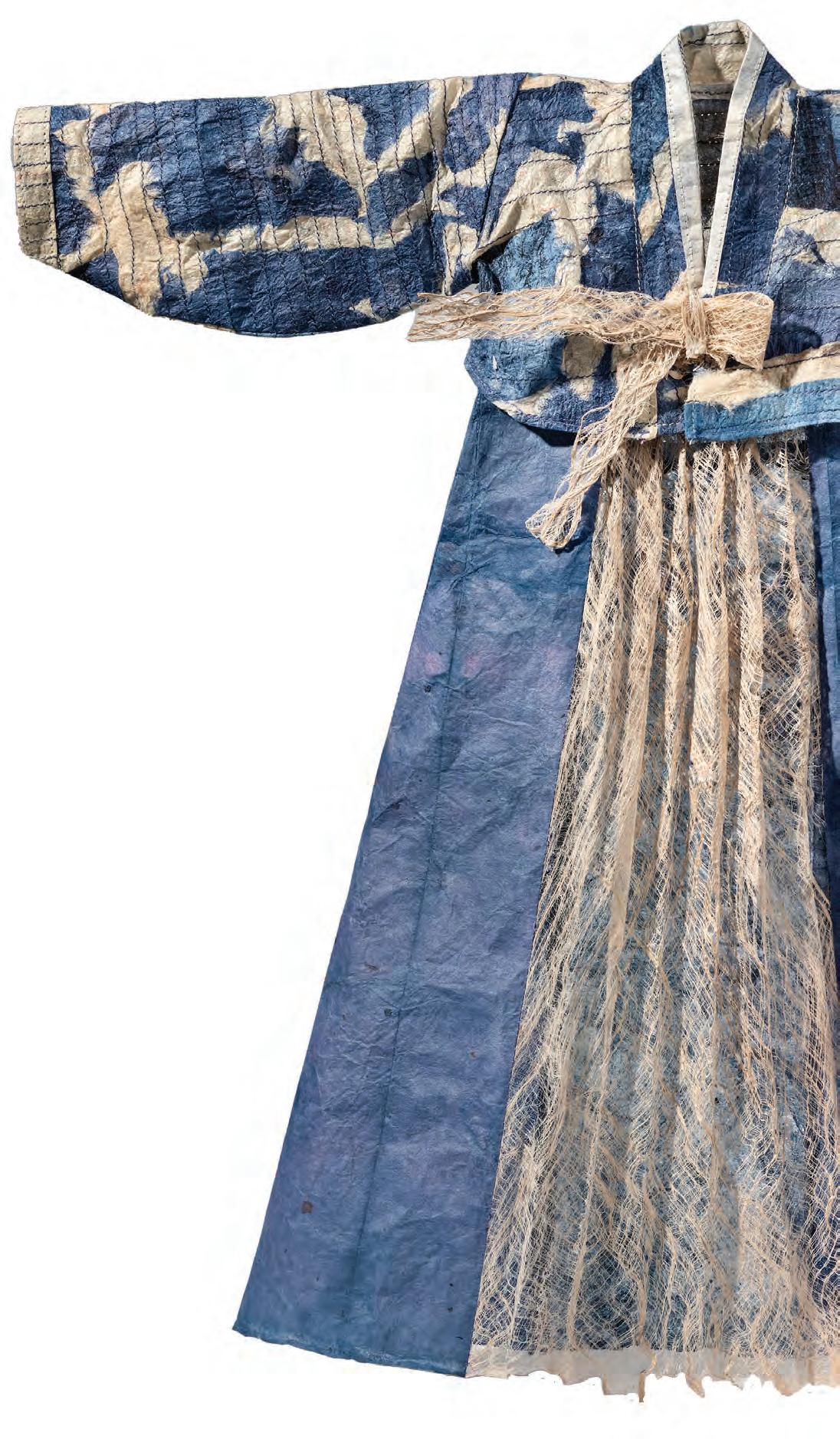
artist books at BIMA, initially amassed by the museum’s founder, Cynthia Sears, is one of the largest in a museum, and a free museum at that. The gallery hosts three exhibitions a year of items drawn from their collection, as well as loaned objects—all usually small but vivid, often heartbreakingly personal and political.
BIMA’s website explains that artist books “exist at the intersection of art, craft, and storytelling.” Erin Zona, the new curator of BIMA’s artist books collection, says: “The artist is using the language of the book, historically or abstractly, as the art form, as their material.” She adds that there’s often a narrative, timebased element: “I use the same parts of my brain when I’m looking at an artist book from page 1, 2, 3, 4 that I do when I’m in a cinematic experience.” Unlike, say, a painting, where the viewer’s eye might dart all around the work, in an artist book, the creator can control the journey and let the story unfurl according to their will.
But the form is always challenging itself: An artist’s book might involve a long indigo scroll, a crown of thorns, a fortune cookie, a butterfly, a specimen cabinet, a piñata. The artists who make them often combine multiple disci-
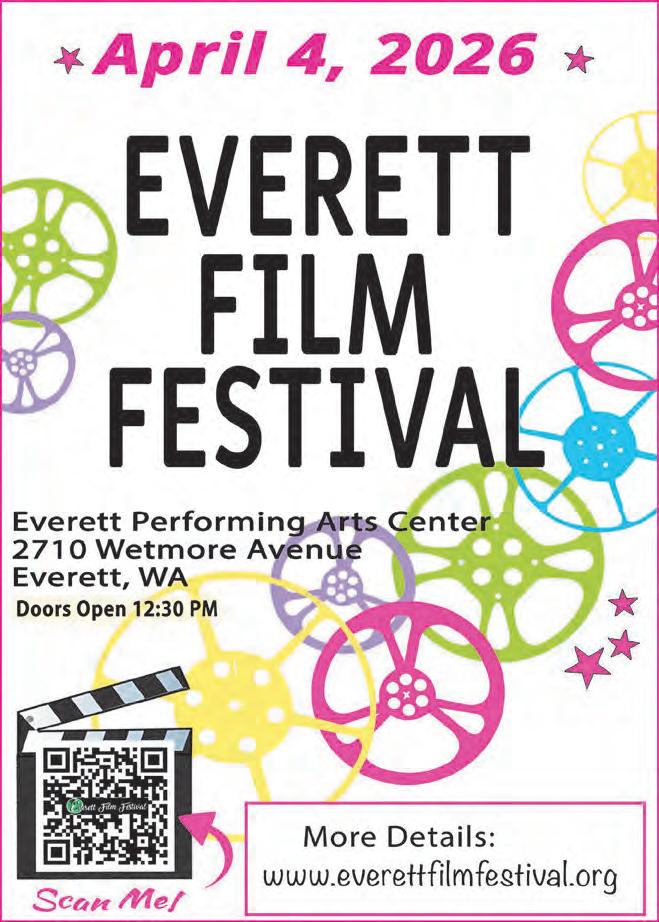
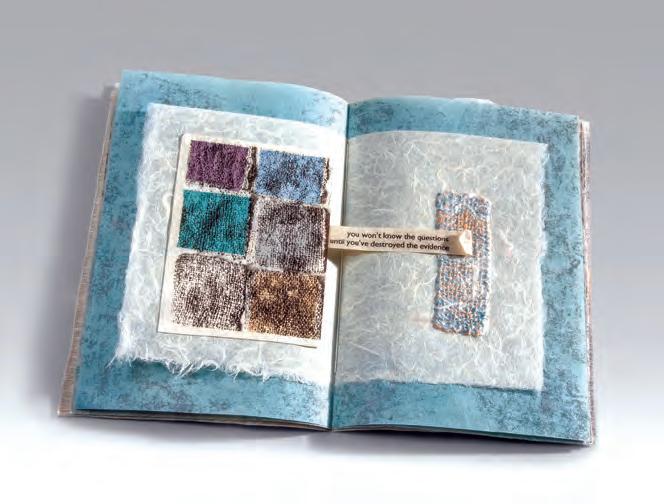
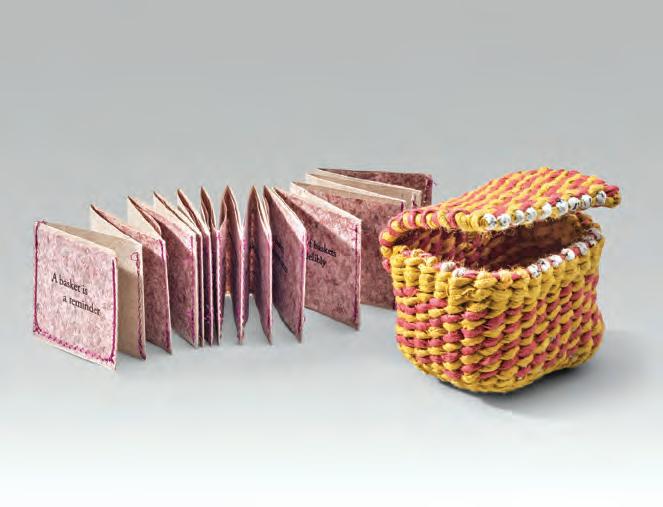
plines, such as paper-making, sculpture, photography, fiber, drawing, or block printing. Aimee Lee says that during her undergrad at Oberlin, for example, for her final project she “sewed together a doll and then saved all my hair and tried to attach it and made like little organs that were separate from it. And that was my final book.”
But eventually, Lee fell in love with paper. “What I love about paper is it really can mimic many different things,” she tells me. “Like you can make a sculpture out of just paper. And it looks exactly like a rock, you know? It can be this chameleon, and for me … it just feels very much like my experience of growing up and feeling like unseen or invisible or underestimated.”
Few would dare underestimate Lee now. But she came to her life’s work almost by accident. On a field trip to the campus museum at Oberlin, her class was shown a 17th-century Chinese scroll spattered with gold. The museum’s curator of Asian art said the scroll was probably painted on Korean paper, which Chinese artists of the time often preferred. That was the moment Lee’s life changed.
“I just suddenly was like, what am I doing studying Chinese art? I don’t know anything about Korean art. And I’m American; up until then, I had a very typical second-gen experience being
born in New York and really rejecting Koreanness,” she says.
That fleeting reference to Korean paper sent her to a language program in Korea and, eventually, to graduate study in book arts and papermaking. But she quickly noticed that most mentions of Asian paper focused on Japanese styles, which had become dominant through colonization. Information about Korean hanji was harder to access, so she applied for a Fulbright and went to Korea to learn it herself.
Getting that Fulbright turned out to be the easy part. The technique she wanted to learn was traditionally performed by men, and Lee was repeatedly turned away. “It’s not even just you’re a woman ,” she recalls being told. “But you don’t look very strong .”
Once a teacher finally agreed to take her on, the apprenticeship expanded into learning a whole constellation of crafts: paper basketry ( jiseung ), texturing and fusing techniques (joomchi), natural dyes, and calligraphy. Lee learned how Koreans had once used hanji to make armor, quivers, ammunition pouches, even chamber pots and teapots. She’s made some of those herself—yes, hanji can be watertight, thanks to heavy coats of rice paste and lacquer.
Part of the reason hanji was put to so many uses is that it’s extraordinarily
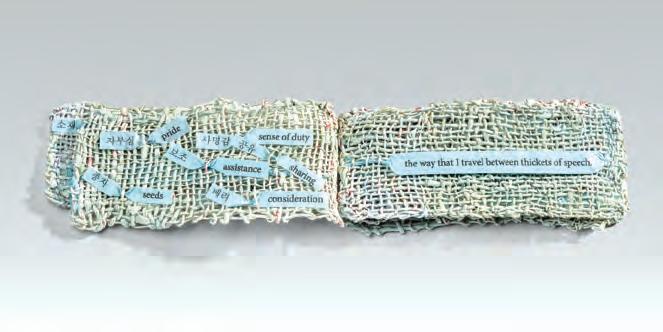
Vocabulary (above) and How We Survive (below) were hand-dyed using indigo. durable. (Think “survives for 1,000 years” durable.) Lee cites the long fibers of the paper mulberry tree, and the papermaking technique that layers the fibers at different angles to reinforce the material’s strength. That means hanji can bend, not break, when exposed to stress.
Lee sees another metaphor in that resilience. “The things you can do to hanji reflect the Korean history in terms of the horrible things that have happened to people, just insane amounts of war and colonization … and that just makes them stronger.”
Something of that strength is reflected in the title of the BIMA show, Tethered It comes from an On Being podcast with the former poet laureate Ada Limón, in which Limón talked about writing as a way to anchor yourself to the world. Lee, and former curator of the Cynthia Sears Artists’ Books Collection Catherine Alice Michaelis, liked the concept but preferred the word “tether” to the heavier “anchor.”
“If I am handling this [material], it connects me to all the people who did this all the way back, you know, for thousands of years. It connects you to a human lineage,” Lee says.
Zona also sees this kind of tethering in Lee’s meticulously crafted books and sculptures, dyed sky blue with indigo or juicy orange with the flower coreopsis.
“We always think that we’re living kind of in the future or in some sort of space that’s not the same as somebody who lived a thousand years ago,”
Zona says. “But through [Lee’s] work, there’s this connection to time and processes and the human experience.”
That kind of connection, that tether, can feel especially good right now, and it’s part of why Zona and BIMA are committed to expanding access to the collection (parts of which can be viewed and touched in twice-a-month tours) and deepening its holdings. In the coming months, there will be a new publicly accessible database of the collection, a new video series on YouTube, and upcoming exhibitions on textile-based artworks and artist books created by Black artists.
“I’ll speak for myself, [but] every single time I look at my phone or the newspaper or whatever, it’s just something else is happening. Like what acts of violence is our government conducting today?” Zona says. “Sometimes I try to kind of ground myself and root myself in terms of, you know, the sun is still shining in the exact same way that it did 1,000 years ago on a body that was just like mine. And so, there’s some sort of nurture that comes through in that, where it’s just, it kind of alleviates the pressure of the moment. And it’s just kind of this outlet to nurture ourselves and be present in our bodies, present in the planet, and, you know, related to the history of the world in a way that feels less stressful.”
“I use the same parts of my brain when I’m looking at an artist book that I do when I’m in a cinematic
See Tethered: An Artist Talk with Aimee Lee March 14 at BIMA’s Frank Buxton Auditorium
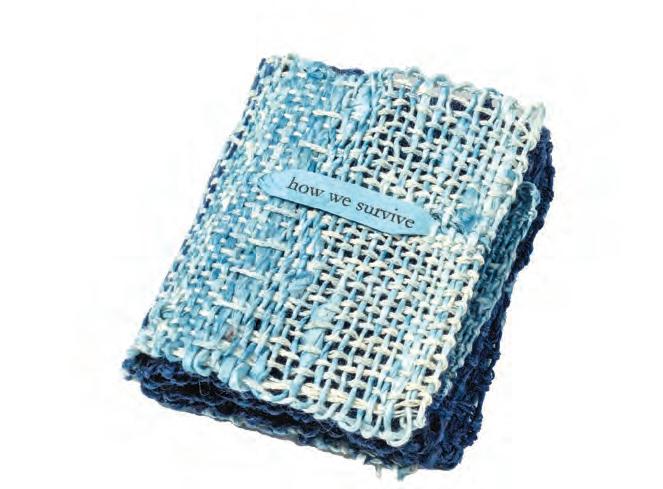

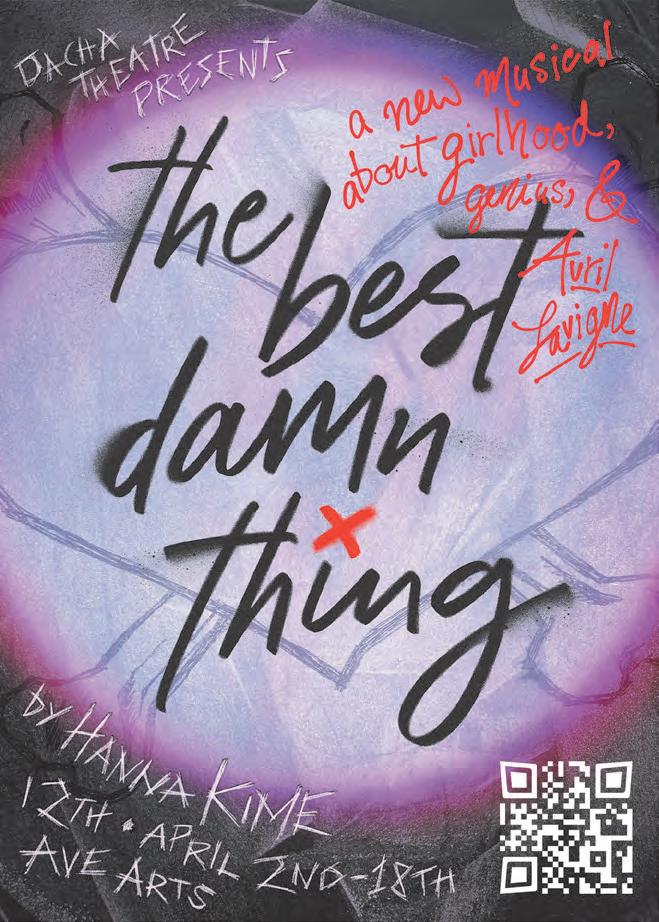

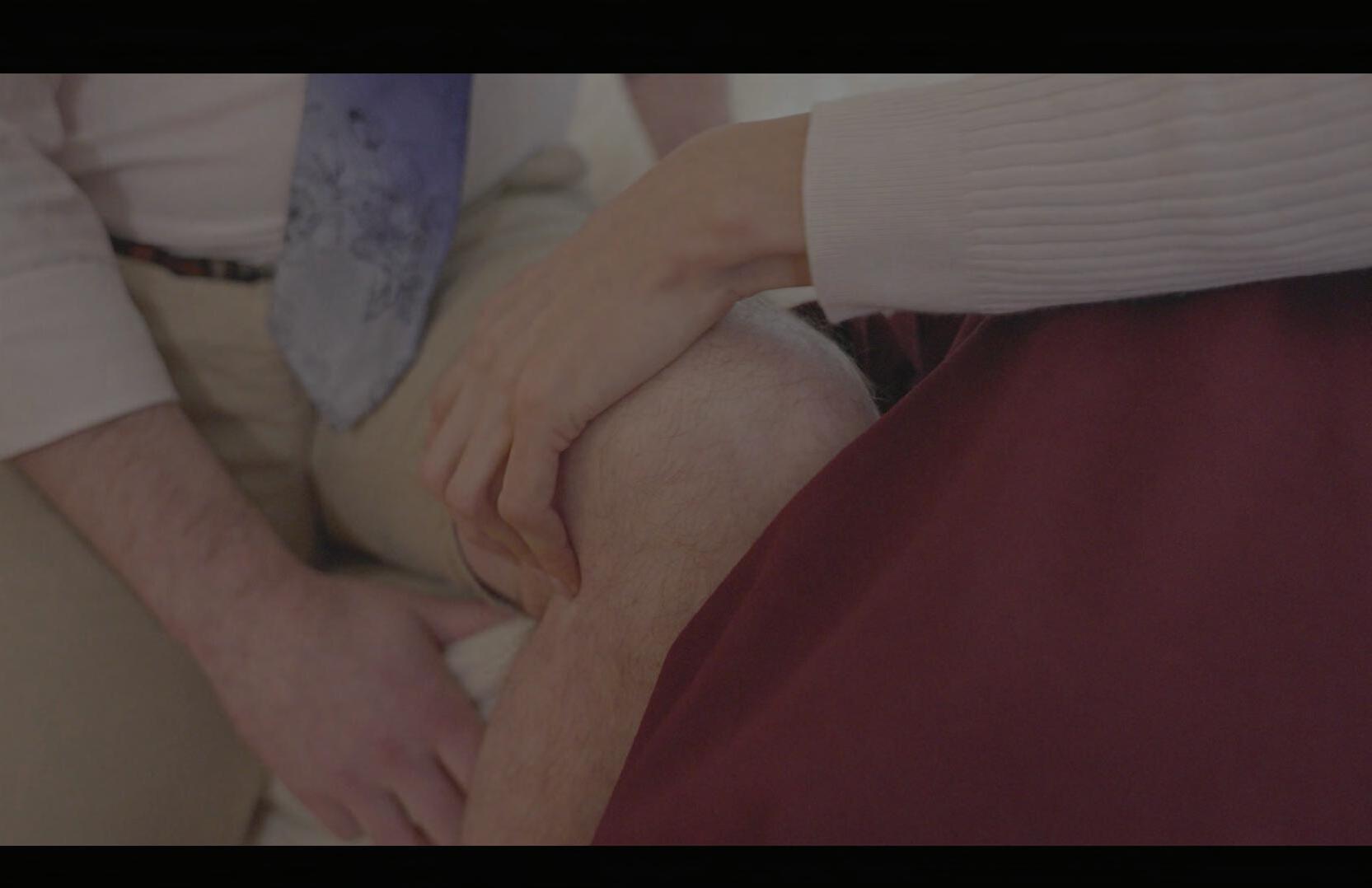


A
BY NICO SWENSON
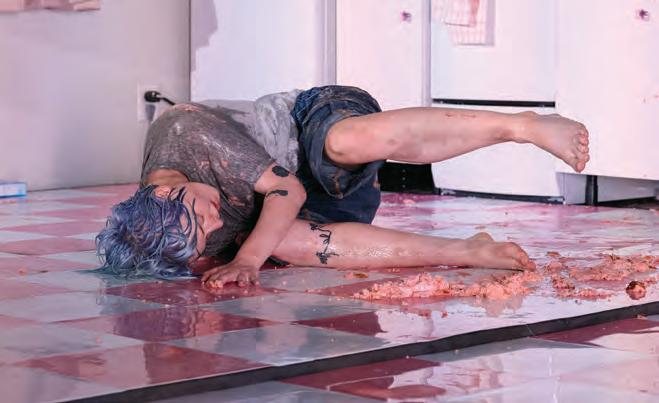
kelly langeslay is redefining Seattle dance. With stories spoken “to and/ or about you,” they create sincere, striking pieces that are the perfect balance of writing, dance, performance art, and Shrek references. Pop culture meets queer theory in repurposed spaces that might have you walking into a room made of blankets, a hyper-pink kitchen, or someone’s apartment with a melting Barbie cake in the oven.
langeslay’s journey here started early. “I grew up in a teeny town and took dance classes from when I was 3,” they say. They studied dance at the University of Washington with a double major in psychology. “If you want to study arts in college, everyone tells you that you should study something useful, too, so I did psychology, which is not useful; I use the dance degree all the time.” They graduated into COVID lockdown. After a pause from creating, a brief stint running a childcare karate dojo, and the second of two major concussions, langeslay found themselves back in the dance world with an internship through Velocity Dance Center. From there, “I was applying to everything,” they say. “I started getting things, and I’ve been making stuff nonstop.”
After receiving an impressive roster of short-form opportunities, langeslay began self-producing and applying for funding to make their own long-form work. As an emerging artist, “you can’t make long work unless you self-produce,” says langeslay. They created their first evening-length piece, girl dinner , at Base: Experimental Arts + Space, receiving grants from 4Culture and Northwest Film Forum. Opting out of the black box, langeslay created a pastel kitchen for the piece, “about ghosts and queer time and Barbie-embodiment-as-escapism, and literal/metaphorical fingering.”
The site-specific use of unconventional spaces is a signature of langeslay’s riveting creations. “Theater spaces feel like a blank piece of paper,” says langeslay. “I always
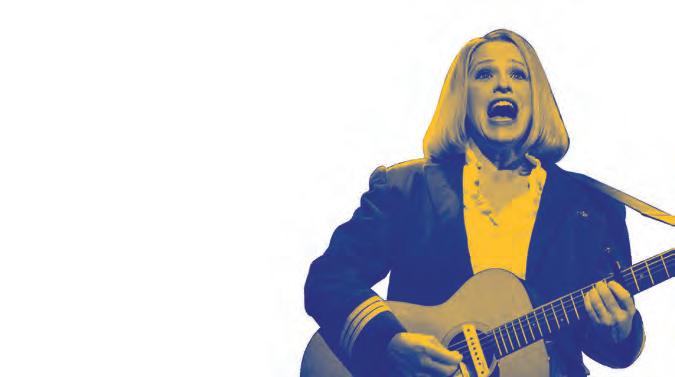
From the cathartic Mary Jane to the explosive family drama in Appropriate, and the riotous return of The Play That Goes Wrong, a reckoning of an entirely different kind—Seattle Rep’s spring lineup delivers bold storytelling, acclaimed playwrights, Seattle premieres, and award-winning work. These are plays built for this moment—stories of confrontation, care, and chaos—brought to life by local actors, directors, and our backstage shops. All built local. All #BuiltBySeattleRep.
want to use part of the context that’s in the room.” For an iteration of their work crush, langeslay brought the audience into an annex space at Mini Mart City Park, where they fed the audience Totino’s inside of an elaborate blanket fort. An earlier iteration took place at their apartment—chili cooking on the stove as they delivered gorgeously intricate, poetic exposition. “It went super well. So it feels like when I want something to happen, I can make it happen. Which is crazy,” says langeslay.
crush is langeslay’s ongoing long-form work, with each iteration counting down asynchronously from 100. Every performance reestablishes a narrative canon of langeslay’s thought-provoking writing, building and changing it through durational movement. The storytelling straddles personal, reality, and fantasy, and references queer artists like Sarah
“It feels like when I want something to happen, I can make it happen. Which is crazy.”
Kane, Jack Smith, and Freddie Herko.
“It’s definitely not theater because I’m not acting. Sometimes it goes around theory and queer history and kind of blends all together, but it’s not acting because I’m directly addressing the audience. I talk to ‘you’ a lot, as a signifier because it could be ‘you’ personally or it could be ‘you’ anyone.” The piece takes real-life details and spins them into the absurd, paired with snippets of pop culture and descriptions of vivid events such as 10,000 cockroaches falling from the ceiling.
“It’s not about crushes, but [it] has this crush theme woven up into it because they’re kind of horrible. I want something horrible to happen in crush,” says langeslay. ■
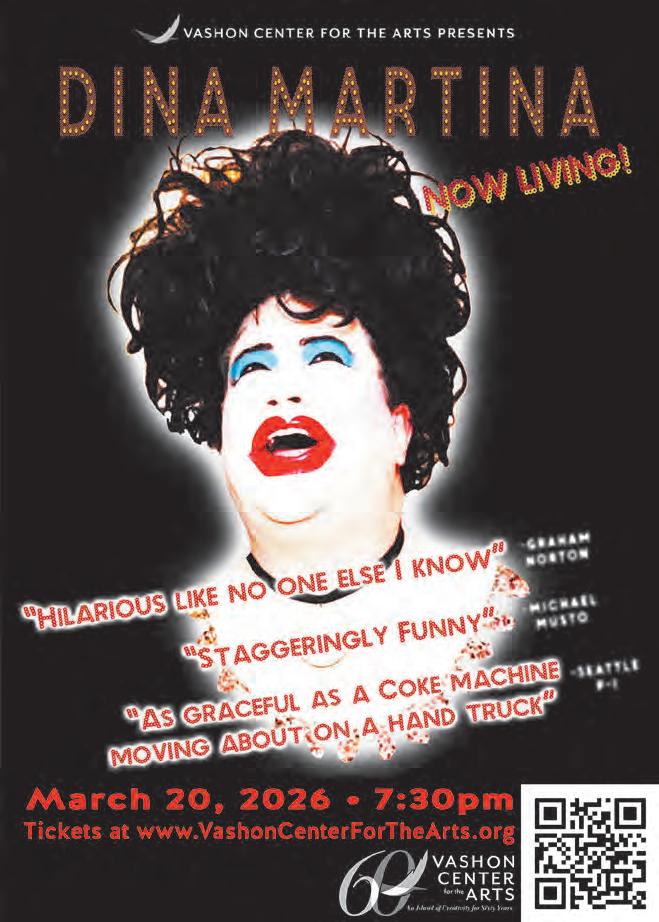
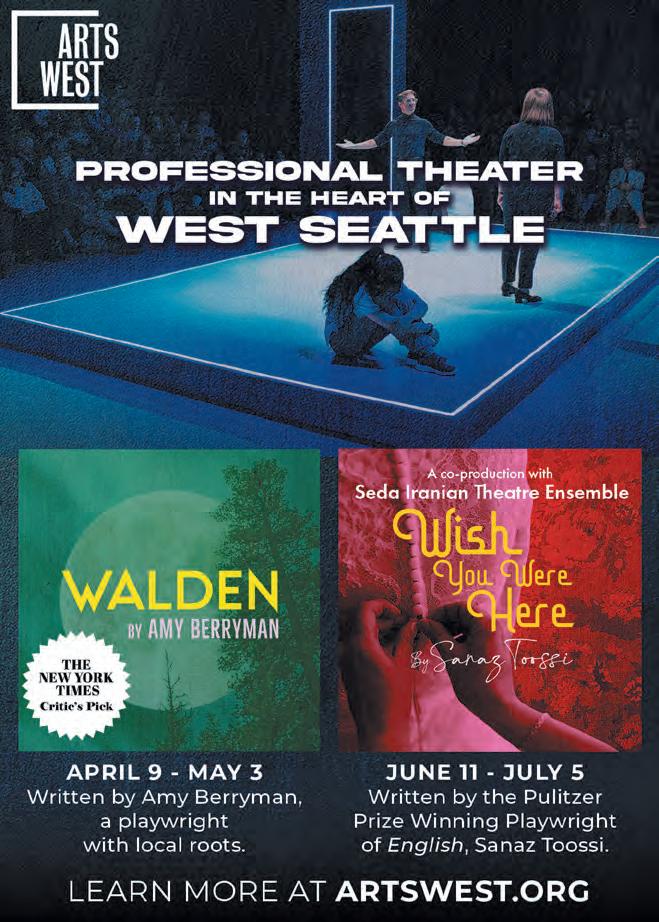
With Rye, Calvados, Amaro, Espelette, and a Touch of Apricot, It’s a Luminous Treat BY
MEG VAN HUYGEN
ART BY JAYA NICELY
With an hour to kill before my birthday party, I was walking around Belltown in my silly dress in the freezing rain. I rarely drink alone, but…maybe that’s the move here? To celebrate myself on a date with myself?
It’s not hard to figure out how to spend the most luxurious possible solo hour in Belltown. Despite the attention it gets from both national food media and snobby listicle sites, Roquette’s somehow maintained a real-ones-know reputation in this city. Surrounded by oontzy dance clubs and yelly sports bars, this sleek, French-inspired cocktail lounge frequently sails under even my own radar, and definitely others’. A shame, considering its cool combo of elegant and chummy—Roquette’s unlikely to disappoint anyone who visits, even unreal ones who do not know.
What a perfect secret hideaway for an intimate little date with yourself, though. Self, we really must do this.
Fresh off its second James Beard nom, Roquette is standing room only on a blustery Friday. Ah, it’s so pretty and plush inside, with its cobalt velvet and palmy murals. They’ve got an ensemble cast tonight: Kyton Blair from Roquette’s original 2019 opening team—who’s also the StarChefs Seattle 2025 Rising Stars Award winner for his work there—as well as Chelsea Mathews (The Doctor’s Office) and Parker “Top Shelf” Knowles (Oyster Cellar). All major players in Seattle’s beverage programs.
From Roquette’s book of spectacular, world-class cocktails, I choose a Golden Hour: George Dickel Rye, Calvados
This cocktail has always known me and is, in fact, my date tonight.
Coquerel, Amaro Nonino, Giffard Piment d’Espelette, and apricot. The name was like a lovely personal welcome; in my wet scarf and drippy hair, I thought a sunny-golden hour spent in here just might break through the winter chill.
I like to smell the fruit before I take a sip—here, a swath of orange peel—and doing this adds enormously to the experi -
ence. Always a fan of gingerbready Dickel Rye. Calvados Coquerel is from Normandy, an oak-barrel cider brandy with farmy notes. Amaro Nonino is Italian and reminds me of MarketSpice tea: orange, cinnamon, chamomile, thyme, with a fruity grappa base. Also French, Piment d’Espelette’s a spicy, intense liqueur made by macerating espelette peppers in rhum agricole. And the sweet zang of the apricot juice unites everything, like hot honey on an experimental pizza.
This cocktail has always known me and is, in fact, my date tonight. We understand each other. We’re in love.
Before I go, Mathews sends me a Disco Ball—green AND yellow Chartreuse, mezcal, and “sparkles,” served in a disco ballshaped shot glass. She’s “made it skate” with floaty ice slivers. In comparison, this tiny drink’s a flamboyant stranger who doesn’t know me at all, and it’s dazzling. I want a big version.
The karaoke party later is chaotic and fun, if exhausting, and I feel celebrated. It’s a privilege. But when the day is over, I’m deeply thankful for my meditative golden hour with the Golden Hour beforehand, hidden in plain sight at a svelte little lounge. This is the frequency I want this year. Age 46: I totally hang out at Roquette all the time now. ■
BY DAVE SEGAL
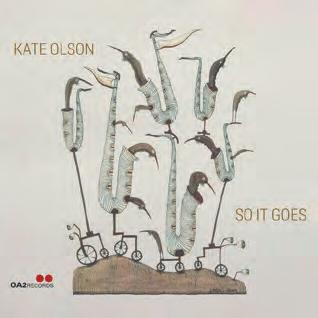
Kate Olson So It Goes (OA2)
Saxophonist/composer Kate Olson has excelled in Seattle’s jazz and experimental scenes for about 15 years as a solo artist, bandleader, and member of Syrinx Effect, Royal Room Collective Music Ensemble, and Battlestar Kalakala. She’s especially shown an affinity for minimalist works that exhibit a deep spirituality, à la Terry Riley, Pauline Oliveros, and Don Cherry. Olson’s last album, 2020’s Homeland , pushed her into new territory: funereal post-rock, industrial music recalling the Bug’s iciest and most ominous moments, and discombobulating IDM.
Olson returns to jazz on her new LP, So It Goes , joined by Conner Eisenmenger (trombone, trumpet), Tim Carey (electric bass, electric guitar), and Evan Woodle (drums, percussion). With Olson playing soprano sax, the album zips out of the gate with “Bumbling Thumbs Blues,” bustling bebop full of thrilling dynamics, with Woodle devoting acute attention to the tom-toms. Which makes the transition to the sly “Take Five” homage of “ShouldaCoulda” a brilliant change of pace. Olson finesses a quietly ecstatic and rococo solo in this utterly beguiling and introspective tune. The burrowing, mesmerizing bebop sorcery of “All Pear-Shaped” continues So It Goes ’s hot streak.
But Olson also excels at cooler temperatures; her ballad game is strong. “Nominally Challenged” is beautiful, serpentine jazz for late nights or early mornings, while “Pink Mountain”—a delicate, bittersweet ballad—displays Olson’s playing at its most tender. Dedicated to Billy Pilgrim, protagonist of Kurt Vonnegut’s Slaughterhouse-Five , “So It Goes” is a languorous, melancholy ballad with scene stalwarts Wayne Horvitz on piano and Geoff Harper on double bass. And showing immaculate taste, Olson and company—with Horvitz
and Harper again lending stellar support— do justice to the legend Alice Coltrane’s questing astral-jazz composition “Translinear Light,” the title track from her final studio album. Real recognize real.

Thomas Andrew Doyle Twilight (Incineration Ceremony)
It’s crazy that Thomas Andrew Doyle’s synth-based music from 2017 onward flies so far under the radar, even though it ranks among his best output. The man best known as the leader of Sub Pop grunge brutes TAD has undergone a radical transformation in this century, and maybe fans of that band and critics just can’t get their heads around this new and improved musician/composer. These days, Doyle’s into creating soundtracks in search of film directors who revel in transporting viewers to profoundly disturbing places. Twilight is Doyle’s latest excursion into the vast bleak. The epic title track begins with a subdued, solemn organ drone poised between hope and distress, creating a paradoxical tension. Eventually, ceremonial male chants enter and lend a wafting gravitas to proceedings. It would sound infernally grand in a theater. “1 over 137” is a bass-heavy dirge of deep suspense, cut with fluid synth motifs that suggest an appreciation for Dune-loving keyboard sorcerer Bernard Szajner. On “Decimated,” Doyle coaxes out the interstellar eeriness of Brian Eno’s best ’80s ambient releases. The despairing drones of “Dormant Complexities” approximate the sound of E.M. Cioran’s brain waves as he was writing A Short History of Decay . Dedicated to Doyle’s late friend, and friend of the paper (and entire city), Bradley Sweek, Twilight epitomizes the art of darkness.
Seattle-area musicians can send music to NewSeattleMusic@thestranger.com for possible coverage.

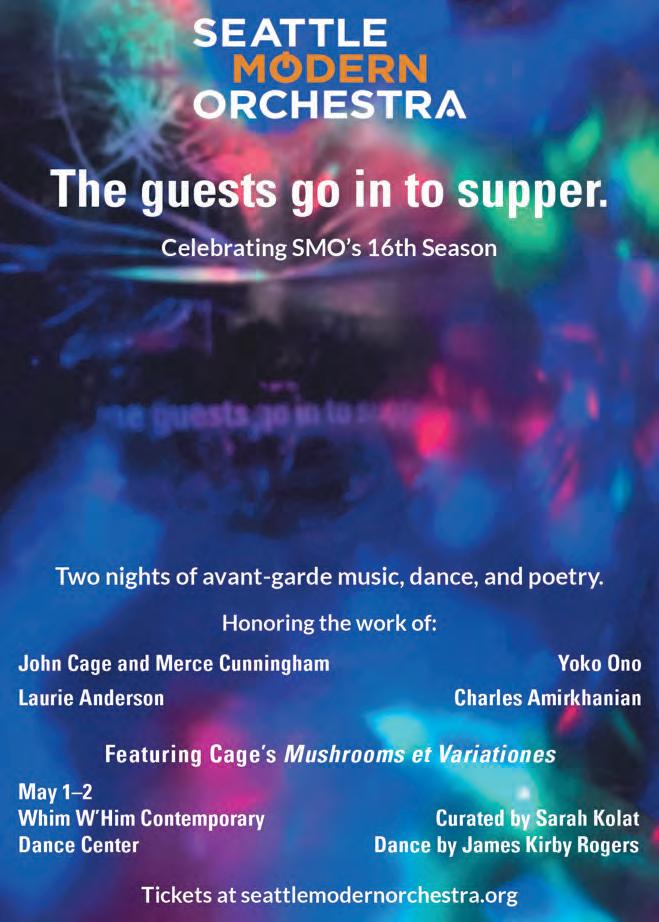


The opening jingle from Tom Goes to the Mayor was running through my head as I filed into a standing-roomonly Wyncote NW Forum at Town Hall last month for the final of three public roundtables hosted by Mayor Katie Wilson’s Arts, Culture, and Creative Economy Transition Team. The mayor wasn’t there, but her rock-star lineup was: Northwest Folklife artistic director Ben Hunter as co-lead along with Randy Engstrom (who himself served as director of the Seattle Office of Arts & Culture from 2012 to 2021), Elisheba Wokoma (co-executive director of Wa Na Wari), Michael Greer (president and CEO of ArtsFund), Jesse Hagopian (educator, author, musician), Edwin Lindo (cofounder of Estelita’s Library), and Amy Nguyen, executive director of Watershed Community Development and Wilson’s newly appointed director of the Office of Arts & Culture.
Do the Arts Have to Be an Economic Driver for Us to Give a Shit About Them?
BY AMANDA MANITACH
ILLUSTRATION BY PETE GAMLEN
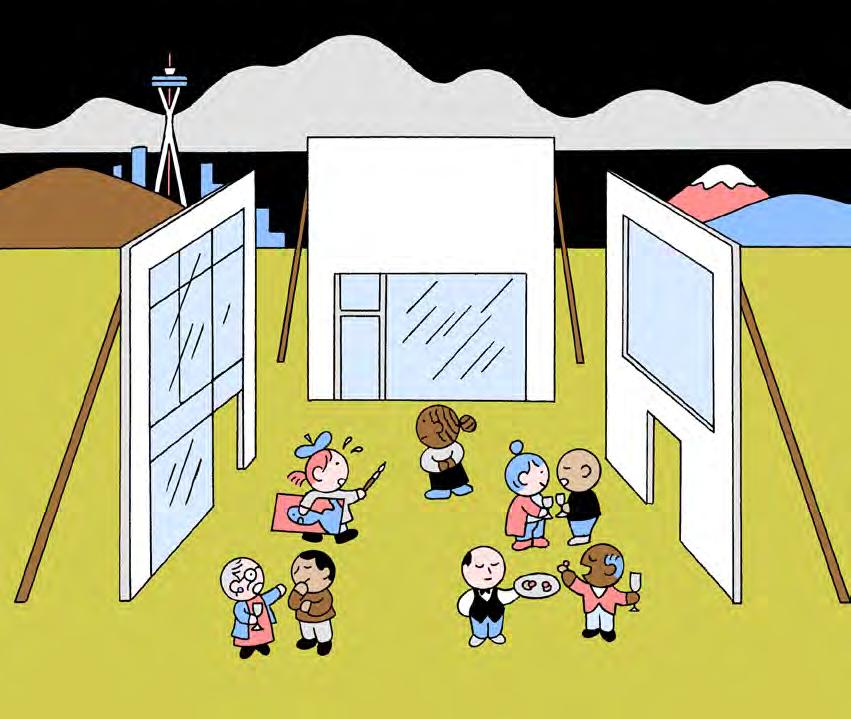
Attendees comprised a cross-section of the community, from members of the Arts Commission and nonprofit execs to working artists. While the crowd mingled, Hunter plucked guitar on the dais, but the chill vibes didn’t prevent a jump scare caused by piles of sticky notes stacked on high-top tables around the room—a sure sign of impending break-out groups. Experience has shown that sticky notes rarely move past ideation purgatory. Spoiler: All conversations lead to affordability.
Yet, something in the Wilson-charged air felt different. In assembling this transition team, the mayor made the arts a co-equal policy area alongside housing and transportation. What could this mean for us?
As the presentation and subsequent Q&A unfolded across the next two hours, the team discussed their findings—priorities that had emerged after two months and hundreds of conversations with community members. Some items landed like a broken record skipping, like the need to position the creative industry as an economic driver. Others felt vaguely Kafkaesque, like the creation of a brand-new cross-departmental Creative Economy & Cultural Infrastructure Office. Some ideas sent a frisson of excitement through the room. Here are some of the big ones:
1. Untapped tax opportunities that don’t place the burden on homeowners and residents, including a cruise ship tax (it would function similarly to the current hotel-motel tax and could hypothetically fund free public programming across town), a secondary market ticket tax, and a men’s professional sports tax. In Seattle,
Sticky notes rarely move past ideation purgatory… Yet, something in the Wilson-charged air felt different.
men’s pro sports have historically enjoyed an exemption that allows stadium tax to be retained for stadium upgrades only, instead of funneling into the Seattle Arts Account (as does the tax revenue from other Seattle teams—funds that are subsequently administered by the Office of Arts & Culture).
2. A municipal bank. This one’s a potential money saver. Seattle currently banks with Wells Fargo and uses our money to
pay this private company. (A feasibility study commissioned by the city in 2018 indicated $150,000 to $200,000 spent in annual banking fees.) Those public funds could be reinvested in community needs, including the arts. The bank itself could offer low-interest loans to artists.
This ambitious, many-hurdled goal isn’t new—Seattle has explored the idea since 2014, and in 2016 former city councilmember Kshama Sawant introduced legislation to end the city’s contract with Wells Fargo when the company was taking heat for funding the Dakota Access Pipeline. The council voted to break up with Wells Fargo, but we soon ran back because no other bank could manage our $3 billion annual cash flow.
Logistical hurdles include amendments to both the city charter and state Constitution, compliance with a slew of federal banking regulations, obtaining a significant amount (hundreds of millions) in start-up capital, and meeting state collateral protection rules. There’s only one municipal bank in the US—the Bank of North Dakota, founded in 1919. It’s been successful; it was the only US bank to remain profitable during the 2008 financial crisis.
3. The creation of interdepartmental teams or subcabinets to cultivate a civic
identity around art—messaging that speaks to tourists, residents, and artists that we are, in fact, an art city, damn it. Unsurprisingly, this topic ruffled the crowd at Town Hall and elicited ping-ponging points of view from audience members: We should look to cities like New York or New Orleans for the blueprint— why reinvent the wheel? Conversely: Our culture and assets are unique; imitating other cities is futile and foolhardy and we must look inward.
A few days after the meeting, I met a fellow attendee (an artist) for coffee. “For as big a political revolution this city went through with this election, I wish there was more visionary thinking,” they said. Frustration is fair: Supposing the city is able to accomplish any of this, are taxes, banks, and defining our nebulous civic relationship with art going to help artists pay rent? And isn’t framing art as an economic driver just a euphemism for gentrification?
“Artists creating value that ultimately prices them out: It’s so clear that this is a failed way to think about how art fits into a city,” the artist continued. “It just ends up being a little Potemkin village. Much of what the city funds is more about creating an appearance of art activity than truly supporting artists. You have to ask, who does this benefit?”
It’s hard to know what to do with this buzz in the air: The ideas are inspiring but embryonic, at times incredibly vague. And we’ve been burned before. But something Engstrom touched on in a conversation a few days after the Town Hall meeting sums up why the excitement seems justified. “Wilson doesn’t have a lot of lived experience with the arts community,” he said. “Maybe it’s a good thing she’s not already deeply embroiled in the arts; she’s going to bring some fresh perspective to moving things along.”
Maybe that’s ultimately the most exciting part of this moment: We don’t know what Wilson has in store for us. That also makes it all the more important to maintain these conversations and the accountability they foster. I implore the transition team and the Office of Arts to keep some form of these roundtables going—sticky notes and all. ■

BY EVA WALKER
ILLUSTRATION BY OLIVIA FIELDS
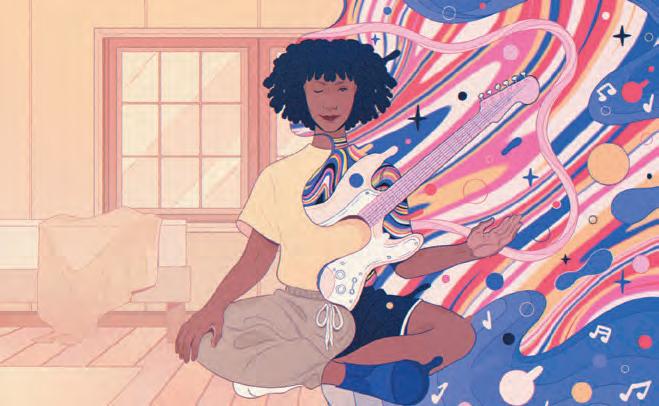
Dear Hendrix,
As I write this, you are sleeping soundly on the sofa, maybe dreaming about the alphabet or perhaps Peppa Pig. When you grow up, I can’t wait to fill your head with my stories about touring the world with my rock band, playing at a soccer stadium filled with 40,000 people, and sharing the stage with some mind-bending musicians like Mavis Staples, Weezer, and Death Cab for Cutie.
But none of that would have been possible if I hadn’t learned the value of staring blankly at a wall. It might actually be my favorite activity. Because Henny, I have a confession: I love a blank screen, a bare wall, growing grass, and drying paint. To some, they’re mind-numbingly boring. To me, they sparkle, and they always have.
I don’t remember a time in my life when daydreaming didn’t take up a big portion of my day, if not all of it. Your grandma probably still has my old school report cards to prove it. I spent most of my school days drifting in and out of imaginary worlds. My teachers sounded like Charlie Brown’s—all mumbly and fragmented. As they’d talk in the background of my daydreams, I’d pop back into reality from time to time, wondering Who? What’s a Plymouth Rock? Fractions? Wait, what’s going on outside the window…?
There are others like me, too.
My favorite YouTuber, Michael Stevens, said, “Boredom compels us to try new things; a propensity to boredom is a sign of a healthy mind.” People have invented and discovered amazing things because they were bored. When you allow your thoughts to wander, when your mind becomes a blank page, you can conjure up images and ideas and futures. Some of the songs I’m most proud of writing have come from sitting and staring.
My band, the Black Tones, have a song called “Striped Walls.” I was inspired to write it while, you guessed it, staring at my bedroom wall. I had been gazing at the black-and-white stripes I’d painted a few months before, and then a lyric came to me—“Two chords for two colors / Don’t lose its touch / Feeling happy, feeling lousy
/ It makes you feel like you’re downtown.”
I picked up my secondhand banjo and began to strum the only two chords I knew.
I’d never written a song on banjo before; the Black Tones traditionally play blues-rock. But fast-forward a year later, and there we were, tracking “Striped Walls” with super producer Jack Endino (!), and the song ended up on our debut album.
Just like that. Boredom, man.
That said, my hobby can catch some people off guard. There were times when your father would walk into our bedroom and see me sitting, staring, thinking. “You okay?” he’d ask. I’d turn to look at him and smile calmly, happily, like we were on a dinner date over candlelight. “Yeah, I’m great!” Early on, he may have given me a puzzled look—I know that look. It’s the look that says, Are you needing a straitjacket?
But it’s quite the opposite. Silence, peace, tranquility—these aren’t signs of illness, burnout, or mental exhaustion. To me, they are signs of health. Of course, your dad gets it now. He understands it’s just me exercising my imagination. It’s something I’ve done since childhood, and something I’ve continued to lean into, even into my thirties. I hope to be staring at blank walls until the day I die.
So dear, if you’re ever feeling stuck, uninspired, or restless, try this:
1. Sit down in front of a wall in a quiet room.
2. Stare, think.
3. Make up a world, a story, or an event you could be doing in a parallel universe.
4. Make sure it stirs you.
Embrace a blank page, Henny. A bare day, an unplanned road. Boredom is the perfect canvas upon which to draw with every tool of your imagination.
I love you, Mom
Every month, KEXP DJ and author Eva Walker writes a letter to her daughter Hendrix to share wisdom learned from her experiences—and her mistakes. Read more installments of Dear Hendrix at TheStranger.com.
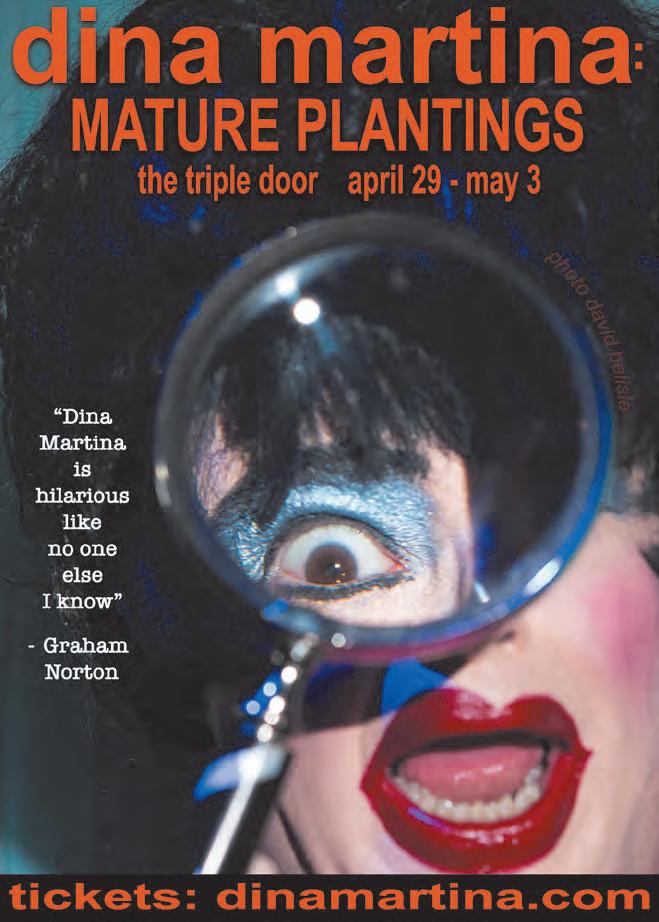


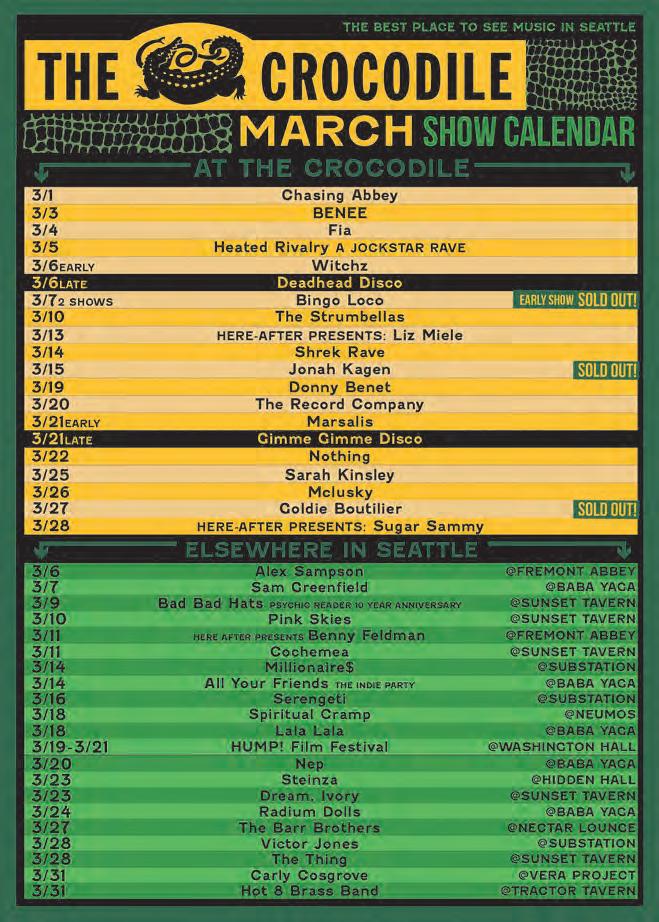
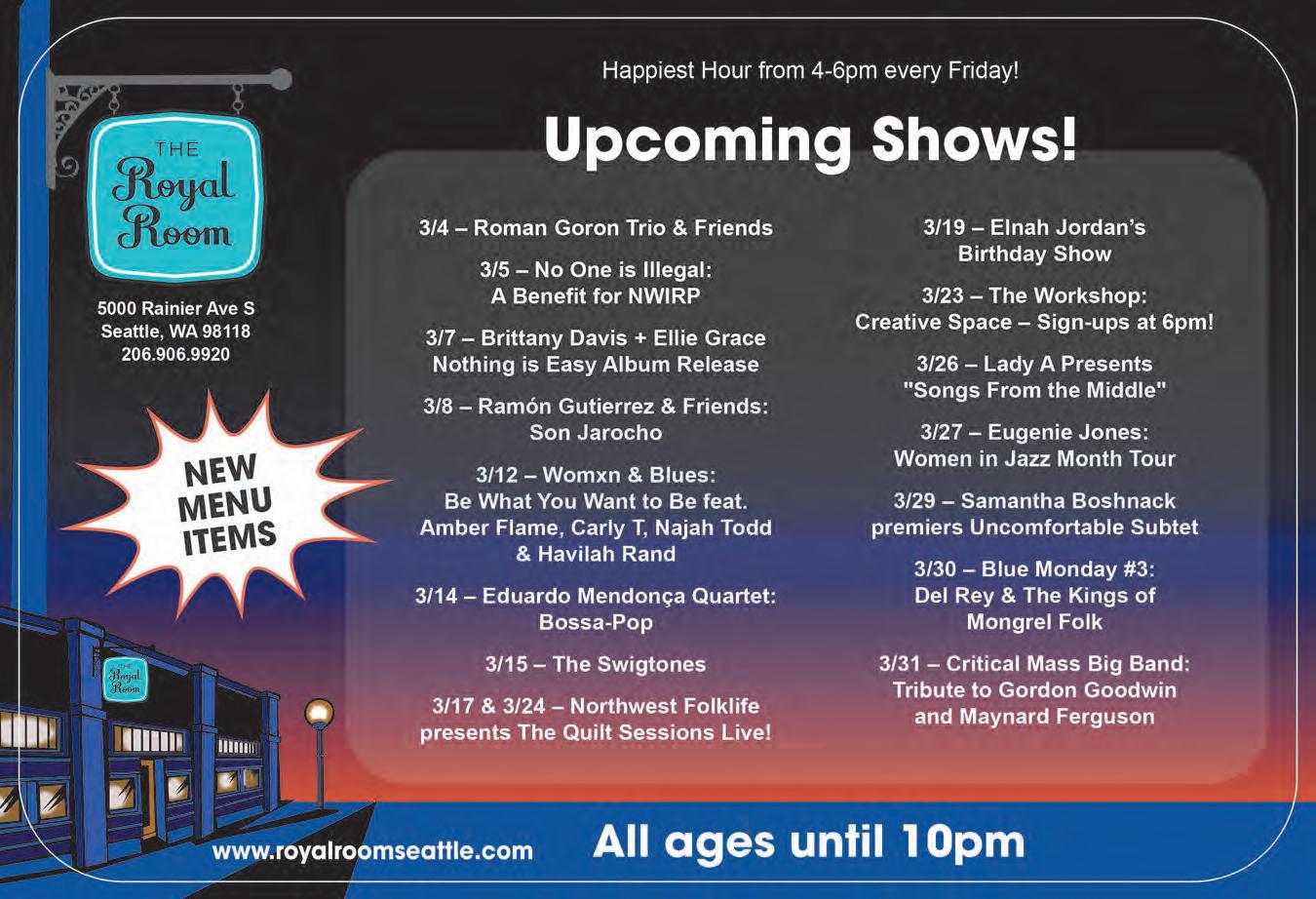
BY EMILY NOKES
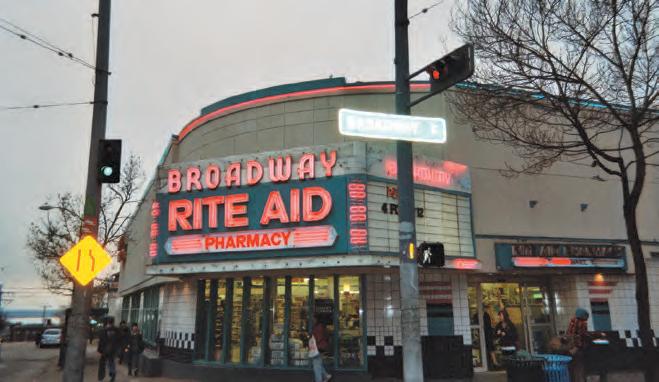
On December 6, 1911, the Seattle Times announced: “The new Society Theatre, a photo playhouse, opens at Broadway and John next Friday night, with four reels of new films … music will be furnished by a threepiece orchestra.” (Next to an ad for 15-cent mechanical toy mice, and the “permanently useful gift” of an electric iron.)
Nearly 80 years later, on January 11, 1990, the paper reported: “The Broadway Theatre on Capitol Hill will close its doors for the last time tonight. The Pay’n Save store next door is scheduled to expand into the theater’s space at the corner of John and Broadway. (Other headlines included “Drug Foe Returns To War At Home” and “‘Glass’ May Be Drug of the ’90s.”)
The Pay’n Save became a Rite Aid, which kept the iconic neon theater marquee; in 2022 it said “come get flu shots here.” After the store shuttered in December of 2023, the abandoned sign drifted into the poetic: “come get shot here.”
It’s a sad site these days. A patchwork of greige paint on the graffiti-prone walls; “BROADWAY” is all that remains on the sign and the neon has all been stripped out. Something needs to go there. But what?
Last month, fast-food conglomerate and official caterers of late-stage capitalism, McDonald’s, filed to take over the space, half a block from a (for the record, cheaper) Dick’s. I’m not here to hate on fast food. I, too, feel nostalgia for when Broadway had a Jack in the Box and Taco Bell, but those were also the days when the Lamborghini was still on top of Club Lagoon. I’m also not here to hate on cheap food and reliable bathrooms. But should a McDonald’s also be a crisis clinic? And how big does a McDonald’s need to be? Surely not 5,000 square feet, especially when new McDonald’s are serving slate-gray, tech-prison realness.
“Preservation” is a loaded concept when we need max efficiency in this expensiveas-fuck city of ours. But must every choice we make include no rizz whatsoever? If we need a neighborhood sacrifice, why not tear
When you think about cities you love, aren’t they defined by old, interesting buildings? When we imagine the city we want to live in, what’s there to do? Are there options besides bars? Are there places to gather, take in art, shop, exist outside the home?
I’m not here for a policy debate. I’m simply not buying that a McDonald’s is the best possible use of one of the most transit-rich, historically recognizable corners in Capitol Hill. For fun, let’s imagine…
It’s a movie theater. Obviously! With the Egyptian in a coma, and so many other theaters gone, we need this.
It’s a venue. A big, banging venue would be incredible for the neighborhood, and the city.
It’s a roller-skating rink.
It’s a combination roller-skating rink and venue. (Southgate Roller Rink! Take over this building!)
It’s an ice-skating rink. (Yes, I have caught Alysa Liu fever, and I hope I never recover.)
It’s a bowling alley, or a thrift store, or a record store, or a giant bookstore. (Let’s stop letting Portland win.)
It’s a year-round haunted house.
It’s an indoor sculpture park.
It’s a Trendy Wendy II. It’s a Daiso.
It’s a magic-show emporium.
It’s a Rainforest Cafe. Or one of the Factories (Cheesecake or Spaghetti, your choice).
It’s a… drugstore! A good ol’ iffy city drugstore in a charming old theater space in a neighborhood that really needs more drugstores.
Okay, fine, imagine it’s a McDonald’s. But consider: In 1985, McDonald’s planned to demolish a dilapidated mansion called the Denton House, but residents of New Hyde Park, NY rallied to save it. The home earned historic status in 1988, leading to a compromise: McDonald’s had to restore the façade to its 1926 beauty; the renovated landmark reopened as a McDonald’s in 1991. ■

We do our best for accuracy, but please check venue websites for updates and more information, as event details may have changed since press time!
Housekeeping note: We have ceased to include pricing information, unless the event is free or sliding scale. (This is mostly due to third-party ticket vendors, like Ticketmaster, who have a monopoly on pricing that is not only unfair, but also confusing, due to varying fee structures. We hate them, and so should you.)
MAR 6
I once found myself sitting at a bar beside PNW legend Toody Cole and told her that she was my all-time favorite bassist, to which she blushed and said, “Thank you, I’m trying really hard, and I practice a lot.”
A telling response from a humble punk veteran who is far too cool to play it cool. Over the past five decades, Toody and her dearly departed husband, Fred, have kept Portland’s music scene alive with their bands— Dead Moon, the Weeds, the Rats, Pierced Arrows, and several others—self-recording and self-releasing music in their self-built Clackamas County home. Can we
get this woman a key to the city of Portland already!? Toody will be joined by her band, Kelly Halliburton and Christopher March (of Jenny Don’t and the Spurs), for a retrospective of material from her aforementioned projects. Fingers crossed that she plays one of her solo deep cuts, “Coming On Strong” or “Rather Be Your Lover.” Tacoma-based psych rock trio Semisoft and DJ Kurt Bloch (the Fastbacks, Young Fresh Fellows, Filthy Friends) will open. (Tractor Tavern, 8:30 pm, 21+) AUDREY VANN
MAR 6
With their classic 1995 debut album, Fast Stories... from Kid Coma, Seattle’s Truly peaked just as gr*nge was heading to the morgue. Guitarist/vocalist Robert Roth, ex-Soundgarden bassist Hiro Yamamoto, and former Screaming Trees drummer Mark Pickerel had released two Sub Pop EPs that foreshadowed the brilliance to come. On Fast Stories..., a concept album
about a comatose youth “reliving a past summer of grandeur,” the songs have the eerie glow of a codeine dream. Similar to fellow Seattleites Love Battery, Truly possess a keen grasp of triumphant psych-rock guitar tones and vocal extenuation. A blurred majesty prevails here and on 1997’s Feeling You Up, and Roth’s unhinged snarl and tuneful moan are Cobain’s equal. At their best, Truly’s songs display a cinematic sweep that’s absolutely transcendent while simultaneously seeming nonchalant. It’s a feat that few can pull off. Welcome this return by our (relatively) unsung local heroes. (Baba Yaga, 8 pm, 21+) DAVE SEGAL
MAR 6
The Reflections series has become a nexus of challenging, chill music and retina-rippling light shows in nontraditional venues. The latest match-up features ex-Emeralds synth sorcerer Steve Hauschildt and
March 28, Clock-Out Lounge
Canadian composer Kara-Lis Coverdale. The former is a studious builder of majestic arpeggios and icily pretty melodies. His huge catalog abounds with twinkling tunes that will surely sound stunning bouncing off stained glass. The latter is a PhD-level sound scientist who excels in melodically complex, long-form excursions and concise, timbrally exciting abstractions. Last year, Coverdale peaked with Changes in Air, a sonorous drone-athon par excellence. Before she entered the heady world of electronic music, Coverdale began working at age 13 as an organist and music director at many Canadian churches, where she also put in time as a choir conductor. A cavernous Capitol Hill church should be an ideal setting for her. (Seattle First Baptist, 7 pm, all ages) DAVE SEGAL
MAR 7
When former Smith Westerns guitarist Max Kakacek and departed Unknown Mortal Orchestra touring
drummer Julien Ehrlich formed Whitney and released their acclaimed 2016 debut, Light upon the Lake, they revealed a rare, enviable dynamic that was both raw and comforting. Ehrlich’s Sunday-morning armchair poetry felt like effortless reflections; his falsetto should have been required to register as an electric blanket. Kakacek’s alternating pedal steel and bendy ’70s guitar licks melted into the warm lo-fi recording like a grilled cheese on a motel room radiator. Plus, Ehrlich sang from behind the kit, which was cool. Though the Chicago duo has made the occasionally questionable choice to veer into overly produced cutesy funk (2022’s Spark), they were able to reclaim much of their country soul and tavern piano charm with last fall’s Small Talk. The band doesn’t hit as many high notes as it once did (so to speak), but they still have enough lightning in the bottle to warm a stage for an evening. (Showbox, 8:30 pm, all ages)
TODD HAMM
MAR 10
Portland-born all-female metal band Blackwater Holylight contrast their shimmering harmonies with sludgy, psychedelic instrumentals, creating a product that is haunting, beautiful, cathartic, and scary all at once. Their new album, Not Here Not Gone, features some of their most approachable songs yet. Take “Heavy, Why?” for example, which is reminiscent of 2010s rock bands like the Dum Dum Girls and Broken Water. I don’t listen to very much metal, but I find myself revisiting this band every time I’m in a dark, hostile mood (which these days is often). Consider this evening of metal your gateway into the genre, with opening sets from the shoegaze-inspired SOM and sludge metal punk trio MUÑECA. (Neumos, 7 pm, 21+) AUDREY VANN
MAR 11
MAR 10
Indigo De Souza’s music has always dealt with different kinds of death; her layered vocals revel in the ownership of personal missteps that echo as communal failings and social death. Last summer’s Precipice is no different in tone, from the consistently awesome skeletons-with-boobs album artwork to the edge-of-existence conceit. A main marker of evolution has been the embrace of electronic pop production over the crunchy Lucy Dacus–esque guitar ballads of albums past, which she has confirmed to be a purposeful choice, even excitedly. To this, I cannot give a more heartfelt endorsement, to the contrary of Pitchfork’s Robins-Somerville review. Even the album’s most Taylor Swift–ian of tracks are dark as fuck, and I can’t imagine a better, more worthy philosophical mindfuck to jam the pop algorithms. ( Showbox, 8 pm, all ages ) TODD HAMM
The Daptone label’s most out-there act, saxophonist/ flautist/bass clarinetist Cochemea creates humid, psychedelic roots music that vibrates in its own lane. Before the Yaqui/Yoeme artist went solo, he played sax for Sharon Jones & the Dap-Kings and worked with Quincy Jones, Amy Winehouse, Archie Shepp, and others. However, Cochemea’s own recordings skew more toward Budos Band and Antibalas, of whose touring bands he was a member. On his 2010 debut LP, The Electric Sound of Johnny Arrow Cochemea fused spiritual jazz, funk, and boogaloo into gripping sonic panoramas. His next three albums broadened the palette to include cumbia, Moroccan gnawa, blues, and his ancestral Indigenous music. Tangy percussive timbres—Asian Indian and Latin American drums figure heavily—combined with Cochemea’s electrified sax and chants from his tribe result in songs that sound at once ancient and otherworldly. This show promises, if only briefly, a primal trip out of our national political nightmare. (Sunset Tavern, 8 pm, 21+) DAVE SEGAL
MAR 12
If a Washington rainforest started a band, it would sound something like Mt Fog—Carolyn B.’s playful whispers are like a sprite luring you into a mossy forest. The percussion, like raindrops plopping into a mushroom. And the electronics, like a ray of light shimmering through the trees. The Seattle-based trio whimsically marries the vocal stylings of Kate Bush, Björk, and Siouxsie Sioux with sparse electronics, evocative of CAN and Mort Garson. They will celebrate the release of their new album, Every Stone Is Green, which they describe as a “Gothic tale (in the Brontë sisters’ sense) about finding happiness, which is human-ness.” They will be joined by the psychedelic instrumental band iroiro and music journalist/DJ Martin Douglas. (Tractor Tavern, 8 pm, 21+) AUDREY VANN
MAR 14
It’s 2026, and we need Peaches’s sexually transgressive electroclash hip-hop more than ever. Luckily, the
donning chic pajamas and sailor-inspired outfits for the tour, so wear a comfy sleepwear set or dress to the nautical nines! (Climate Pledge Arena, 8 pm, all ages) JULIANNE BELL
MAR 26
An instrumental improv trio whose name hints at their music’s effects, THC.XLR filter elements of drone, krautrock, jazz, and dub into hazed and glazed sonic vistas. Their drummer, Madi Levine, has created some of Seattle’s deepest techno of the last decade under the name IVVY, but this new project is a much looser and more exploratory experience. The lineup’s rounded out by Erik Sanchez (Richie Dagger’s Crime) on synth/sampler and Rob Hanlon (Sketch Artist) on sax, piano, and electronics. Their live sets are continuous, spontaneous streams of creativity that demand and reward long attention spans. On their newest track, “beside you,” THC.XLR detour into watery, Talk Talk–style songcraft. Very cool. Erin Jorgensen is that rarest of beings on the local scene: a singer/composer who plays five-octave marimbas. With soft, caressing vocals à la Young Marble Giants/Weekend singer Alison Statton’s, Jorgensen creates intimate art pop that perfumes the air with enchanting melodies and the marimba’s wondrous timbres. Hear “Man of Steel” from 2018’s Little Hex for proof. (Black Lodge, 7 pm, all ages) DAVE SEGAL
MAR 26
The newish Champagne Bubblebath feature the cream of Seattle’s robust funk scene: four members of Afrobeat-inflected funkateers Polyrhythmics, plus Hendrixian guitar virtuoso Jimmy James of True Loves and Parlor Greens. Bandleader Grant Schroff is the Ziggy Modeliste of the Pacific Northwest—a drummer whose impeccable feel and powerful, precise funkiness have moved more asses over the last decade than Sound Transit. This show celebrates the release of Champagne Bubblebath’s debut album, Mixtape: Volume One. The band says it was “[o]riginally conceived as a throwback beat-tape of minimalist garage-funk grooves,” and the 10 songs here reflect deep immersion in history’s most effective, subtlest groove science and the world-class chops to infuse soul into every bar. The band’s slinky, head-nodding instrumentals are ripe for another generation of hip-hop producers to sample. Clearly, these old-school funk disciples still have many vital sonic lessons to impart. (Hidden Hall, 8 pm, 21+) DAVE SEGAL
noted feminist musician, director, and performance artist is back with her first album in over 10 years, No Lube So Rude. “When the world is friction, lube isn’t a luxury. It’s a necessity,” Peaches writes. “It’s how you turn that friction into pleasure, into power, into pride.” The icon’s seventh album does just as it’s advertised by acting as a relieving salve for these dark times, slickening the constant thrust of dystopian news with empowering, funny, and celebratory tracks for the dance floor like “Fuck How You Wanna Fuck” and “Not in Your Mouth None of Your Business.” She will support the album alongside electropop trio Pixel Grip. (Showbox, 8:30 pm, 21+) AUDREY VANN
MAR 16
If you can’t get enough of Chappell Roan and Olivia Rodrigo, I hope you’re also listening to Conan Gray—he shares their songwriter and producer, the pop Midas hitmaker Dan Nigro (previously the lead vocalist in the indie rock band As Tall as Lions). Gray’s latest album, Wishbone, traces the rise and disastrous fall of a star-crossed gay teen romance with irresistible ‘90s panache, channeling Beck on the biting “Romeo” and the Cranberries on the tender “Care.” The standout “Vodka Cranberry” is a devastating torch song that showcases Gray’s soaring vocals and simply begs to be belted while drunk at karaoke. Gray has been
MAR 28
Indie-pop group Grrrl Gang’s members—vocalist/ guitarist Angeeta Sentana, bassist/vocalist Akbar Rumandung, and guitarist/vocalist Edo Alventa—met at college in Yogyakarta, Indonesia, in 2016 and decided to form a band. Their blend of pop hooks and irrepressible
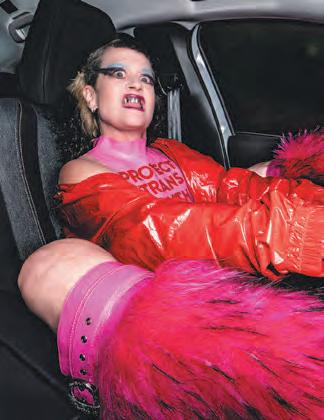

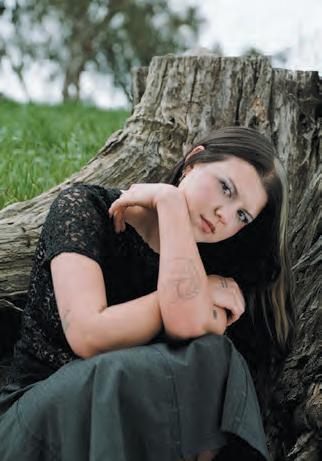
punk spirit garnered international attention and praise from the likes of legendary critic Robert Christgau. In 2023, they released their debut studio album, Spunky! which fully embraces their riot-grrrl influences and which NME called “an instant ticket to the sort of basement show where sweat rolls down the walls.”
If you’re into bands like Potty Mouth and the Linda Lindas, you won’t want to pass up the chance to catch their gritty, infectious energy at the Clock-Out. (Clock-Out Lounge, 9 pm, 21+) JULIANNE BELL
MAR 31
nonchalant artfulness while Clerkin sings in a feathery deadpan. Touchstones include the ECM label’s chamber jazz, Virginia Astley’s delicate, poignant songcraft, Pram’s oneiric, accidental dub, and the wee-hours-in-the-cathredal atmospheres of Talk Talk circa Laughing Stock. However, deviations do occur, such as on their 2021 In Spring EP: the hauntological trip-hop of “Night Steps” lollops between Portishead and Seefeel, which is... holy shit! The ridiculously charming “Marble Walls” would be a chart-topper in Utopia. I had the good fortune to catch Tara Clerkin Trio in Detroit in 2025, and it mesmerized me like no other performance from that terrible year. They truly got the special sauce, so clear your schedule and get your head right for this show. (Sunset Tavern, 8 pm, 21+) DAVE SEGAL
Gogol Bordello Mar 4, Showbox, 8 pm, 21+
Tortoise, Spacemoth Mar 5, Neptune, 8 pm, all ages
KenTheMan Mar 5, Neumos, 7 pm, all ages
St. Vincent Mar 5, Town Hall Seattle, 8 pm, all ages
Marble, Love So Deep, Plash Mar 6, Sunset Tavern, 8:30 pm, 21+
Listening Session: Fleetwood Mac, Rumours Mar 6, Shibuya Hi-Fi, 6 pm
Where’s Beth, Bryan John Appleby, Don Piano Mar 6, Add-a-Ball, 9 pm, 21+
The Briefs, the Drowns, the Coolers Mar 7, Clock-Out Lounge, 9 pm, 21+
Sam Greenfield Mar 7, Baba Yaga, 8 pm, all ages
Brittany Davis, Ellie Grace Mar 7, Royal Room, 7:30 pm, all ages until 10 pm
Matt Pryor, Small Uncle, Carl Christensen Mar 7, Sunset Tavern, 8:30 pm, 21+
Sunny War, the Local Strangers Mar 8, Sunset Tavern, 8 pm, 21+
The Wayne Horvitz Ensemble Mar 9, the Royal Room, 7:30 and 8:30 pm, all ages until 10 pm



I was introduced to North Carolina–born singer-songwriter Eliza McLamb via her podcast Binchtopia, but quickly became enamored of her incisive writing on her newsletter Words from Eliza and her introspective, clever indie pop. (McLamb recently stepped away from Binchtopia to pursue music full-time.) Last October, she released her sophomore album, Good Story, which explores her urges to self-narrativize and the stories she tells herself and others. “An effective narrative, I came to realize, is a reserve with limited returns,” she writes on Substack. “But I still love to work the magic—I love knowing that a bad time can be a good story, that experience without meaning is only missing a few narrative beats. I love the limits of the story, agency that was once out of reach returning through the act of creation and recreation.” (Neumos, 7 pm, all ages) JULIANNE BELL
MAR 31
Paragons of musical understatement and elusiveness, England’s Tara Clerkin Trio weave magical spells with piano, clarinet, drums, synth, and looped samples. Lovely, dreamy melodies tumble out with a
Dining Dead, Glass Egg, Reverse Death Mar 11, Tractor Tavern, 7:30 pm, 21+
Listening Session: Tracy Chapman, Tracy Chapman Mar 12, Shibuya Hi-Fi, 5 pm
Yung Kai Mar 12, Neumos, 7 pm, all ages
Diminished Men, Corespondents, Von Wildenhaus Mar 12, Add-a-Ball, 8 pm, 21+
Oldies Dance Party with DJs Shannon Shaw, Swain, and Ganj Mar 13, Clock-Out Lounge, 9 pm, 21+
Bill Frisell’s 75th Celebration featuring Luke Bergman and Tim Angulo Mar 13, Moore Theatre, 8 pm, all ages
Shrek Rave Mar 14, Crocodile, 10 pm, 21+
The Hoot Hoots, Rat Queen Mar 14, Add-a-Ball, 9 pm, 21+
Redveil, Chenayder Mar 14, Neumos, 8 pm, all ages


MAR 19
Since spurting onto the scene in 2011 with Don’t Hold Back, a quirky nine tracks of tinny drum-machine lounge and 16-bit love songs, Australian multi-instrumentalist Ben Waples has developed his Donny Benét character into something of cult star on the Italo disco-referential/fetishized ’80s synth funk circuit. Benét has certainly captured the hearts of many with a presentation that is gleefully tongue-in-cheek, but there is no punch line per se. Suffice to say, the shtick is thicc, but as a classically trained jazz musician, Benét knows how to work it. Last month saw the release of Il Basso, the chronological follow-up to 2024’s Infinite Desires, though he has clarified it is a spiritual descendant of his 2022 single, “Le Piano” with a bass (as in his four-string) emphasis. Though his music is typically adorned with his sultry tenor crooning or softcore raps about consensual loving, Basso is entirely instrumental, but it still has all the pulsing, boxy four-on-the-floor to get you going. (Crocodile, 8 pm, 21+) TODD HAMM
Bog Ore, Kinski, Toxic Thrust Mar 14, Clock-Out Lounge, 9 pm, 21+
Aimee Mann, Jonathan Coulton Mar 15, Neptune Theatre, 8 pm, all ages
Ruthie Foster Quartet Mar 17–18, Jazz Alley, 7:30 pm, all ages
Anthers, My Pet Fossil, Slugfeast, Miscomings Mar 19, Add-a-Ball, 8 pm, 21+
Band of Horses Mar 19, Vera Project, 7 pm, all ages
Dirty Three Mar 21, Neumos, 7 pm, 21+
Tune-Yards, Kassa Overall Mar 22, Neumos, 7 pm, 21+
Drug Church, White Reaper, Spy, Death Lens Mar 23, Neumos, 6 pm, all ages
Liz Cooper Mar 25, Sunset Tavern, 8 pm, 21+
Mclusky, Ekko Astral Mar 26, Crocodile, 8 pm, 21+
Marissa Nadler Mar 26, Tractor Tavern, 8 pm, 21+
Listening Session: Frank Ocean, Channel Orange Mar 27, Shibuya Hi-Fi, 7:30 pm
Skullcrusher Mar 30, Barboza, 7 pm, 21+
L.A. Witch, DAIISTAR, Buckets Apr 1, Neumos, 6:30 pm, 21+
Spoon Benders, Semisoft Apr 1, Baba Yaga, 8 pm, 21+
Hockey Teeth, Poached, Zailee Haze Apr 2, Hidden Hall, 7:30 pm, 21+
Prism Bitch, Byland, Melanie Radford Apr 2, Sunset Tavern, 8 pm, 21+
FKA twigs, Brutalismus 3000 Apr 2, WAMU Theater, 8 pm, all ages
Jeff Tweedy, Macie Stewart Apr 2, Moore Theatre, 7:30 pm, all ages
Sex Mex, Sux, Taste Testors Apr 3, Clock-Out Lounge, 9 pm, 21+
Witch Ripper, Dust Moth, Izthmi Apr 3, Sunset Tavern, 8:30 pm, 21+
Tomo Nakayama, Maita, Plash Apr 3, Tractor Tavern, 8 pm, 21+
Father John Misty Apr 3–4, Paramount Theatre, 8 pm, all ages
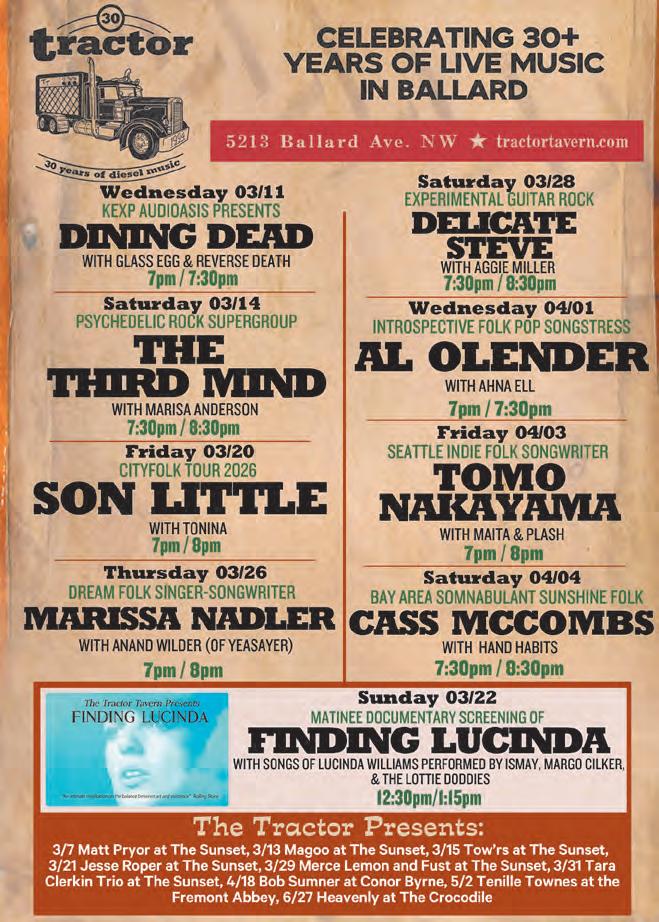
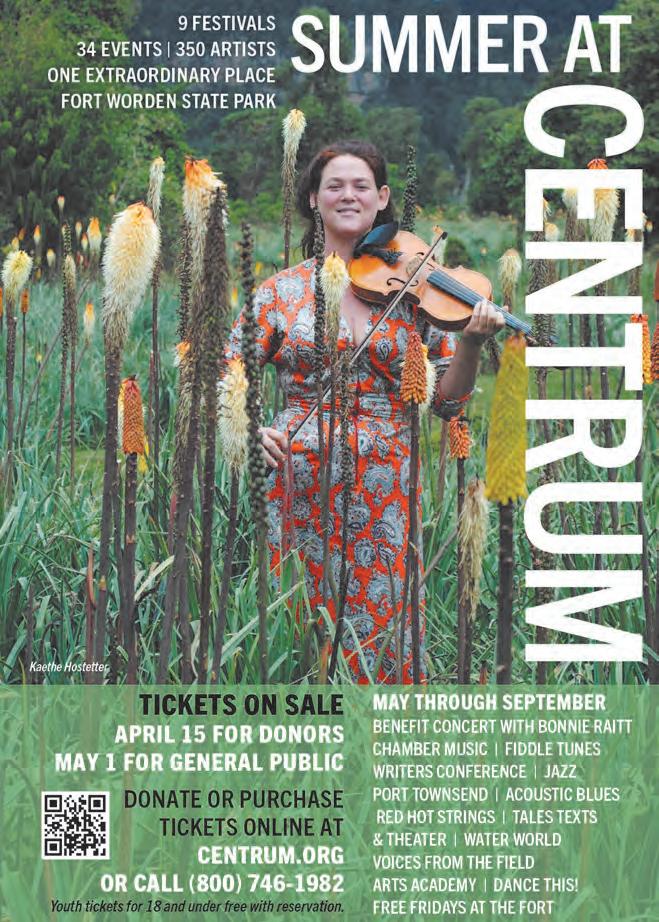
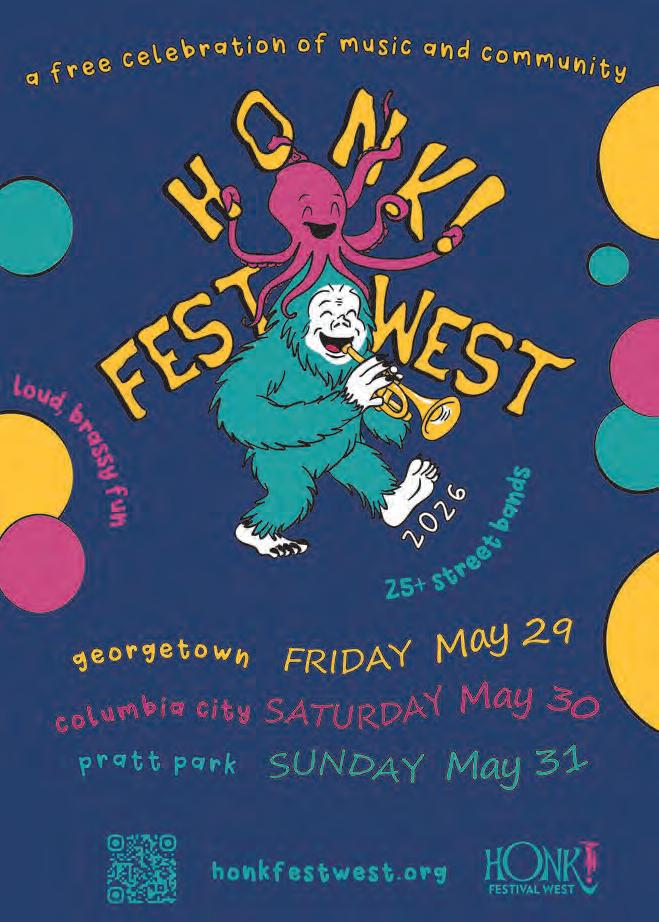

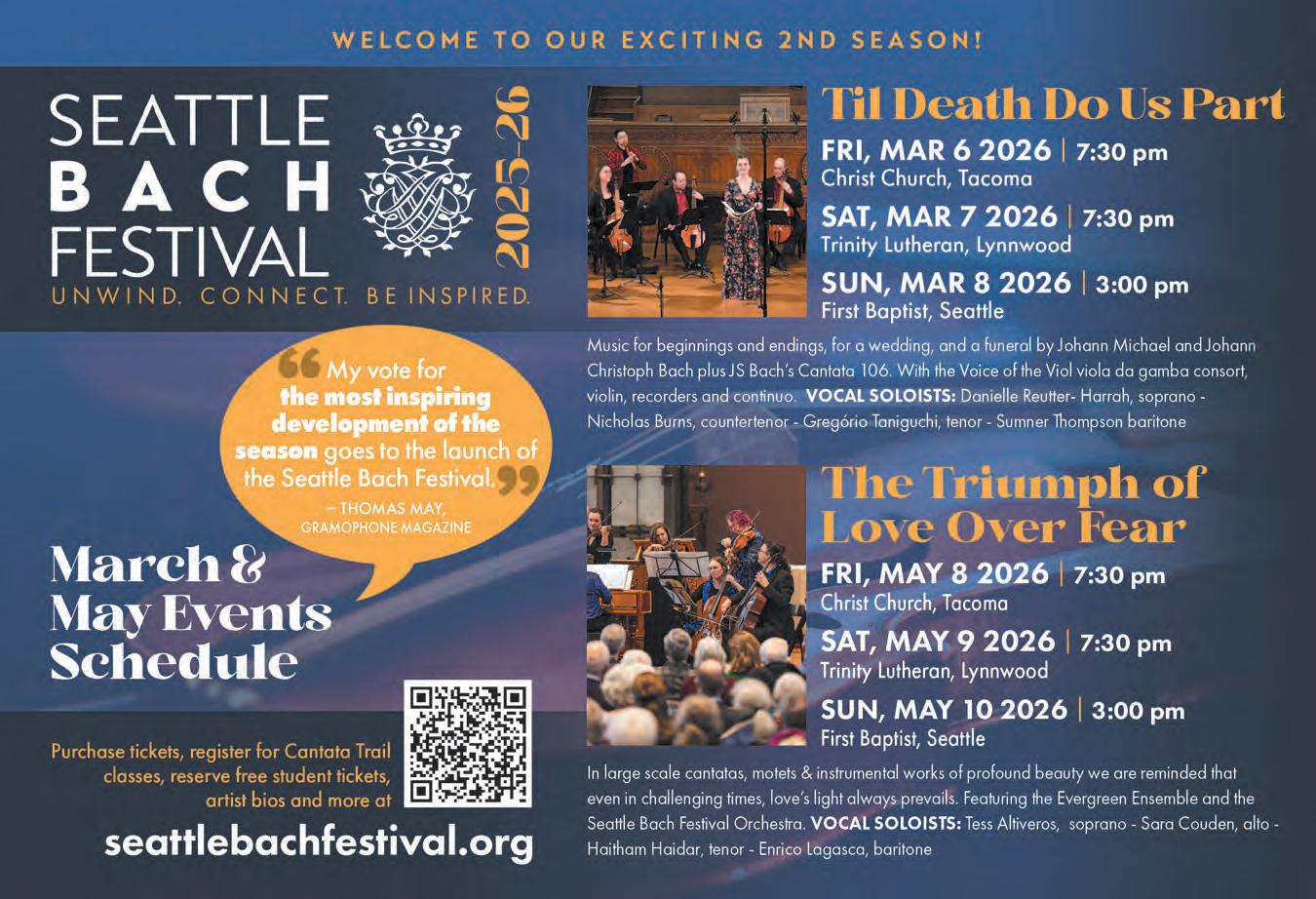
Raye Apr 3, WAMU Theater, 8 pm, all ages
Cass McCombs, Hand Habits Apr 4, Tractor Tavern, 8:30 pm, 21+
Ratboys, villagerrr Apr 7, Neumos, 7 pm, 21+
Fishbone Apr 11, Crocodile, 6 pm, 21+
Weedeater, Conan, Telekinetic Apr 12, Crocodile, 7 pm, 21+
Ari Lennox Apr 12, WAMU Theater, 8 pm, all ages PinkPantheress Apr 14, WAMU Theater, 8 pm, all ages
Throwing Muses Apr 15, Crocodile, 8 pm, 21+
Midpak, BendreTheGiant, Super Mother Apr 17, Add-a-Ball, 9 pm, 21+
Waxahatchee, MJ Lenderman May 3, Paramount Theatre, 7:30 pm, all ages
Northwest Terror Fest VIII May 7–9, Neumos, 21+ Florence + the Machine May 12, Climate Pledge Arena, 7:30 pm, all ages
The Last Dinner Party May 22–23, Showbox SoDo, 8 pm, all ages
Capitol Hill Block Party Aug 7–9, Capitol Hill Iron & Wine Oct 13, 5th Avenue Theatre, 8 pm, all ages
MAR 5–APR 25
This spring marks the 60th anniversary of Foster/ White, one of Pioneer Square’s longest-standing fine art galleries. To mark the occasion, they’re bringing out a little bit of everything: works by some 55 represented artists, installed salon-style throughout the space. Alongside work by local legends such as Alden Mason and artists associated with the Northwest School, Foster/White’s roster spans a wide range of contemporary practices—from George Rodriguez’s ponderous ornamental ceramics and Ilana Zweschi’s algorithmic dances on canvas, to Eric Louie’s sheening metallic landscapes, and Casey McGlynn’s rough-hewn, punk poems gushing color. Word has it there will be cake on First Thursday. (Foster/White) AMANDA MANITACH
OPENS MAR 13
The appetite for figurative work has grown ravenous over the past decade, eclipsing nearly all else (I jest—but bring back the conceptual weirdos and prankster-philosophers, please). That said, Let There Be Light is poised to be a blockbuster exhibition of
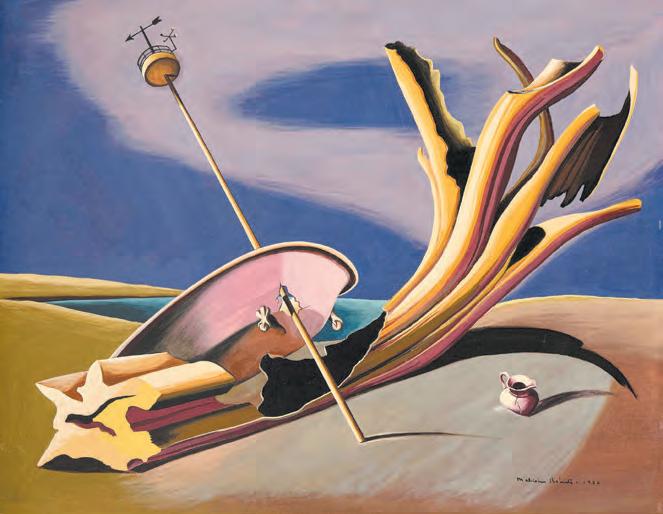
MAR 5–AUG 2
Featuring over 150 works, the SAM’s newest exhibit chronicles a rapidly changing 20th-century Seattle as told by artists who questioned the environmental and social impacts of industrialization through the visual language of social realism, surrealism, and abstract expressionism. Among these artists were the Northwest School’s Mark Tobey, Kenneth Callahan, Guy Anderson, and Morris Graves. I am most excited to see works from the unsung painter and Seattle-viaNew York City transplant Yvonne Twining Humber, known for incorporating touches of Impressionism into her vibrant cityscapes. (Seattle Art Museum) AUDREY VANN
figuration, curated by local artist-célèbre Anthony White. White’s own practice—steeped in fetishized beauty and objects of desire—draws from art-historical figurative traditions, often staging languorous odalisques refracted through a male-on-male gaze. Featuring work by 20 artists from Toronto, New York, Los Angeles, London, Paris, Philadelphia, Portland, and Seattle, this exhibition pushes figuration into the murkier terrain of the abject—a place where beauty melds with grotesquerie and the absurd. (Cannonball Arts) AMANDA MANITACH
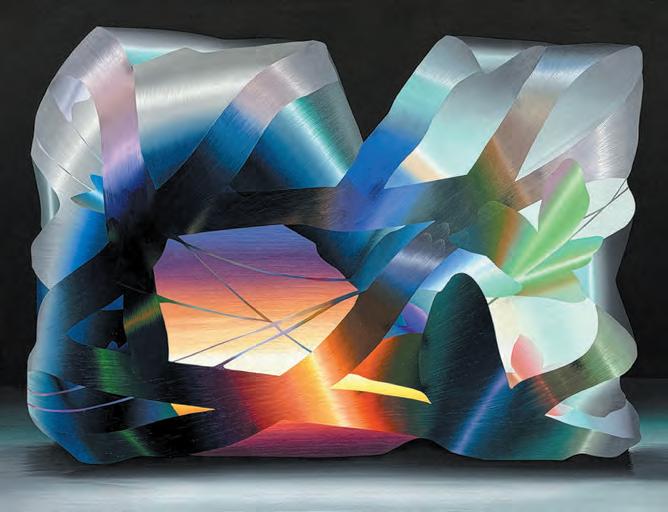
MAR 14–OCT 25
The soft sculptures of Eric-Paul Riege aren’t quiet objects—their presence inscribed in space is monolithic and monumental, and when brought to life through movement, they become instruments of sound. Riege, who is Diné, has built a practice of collaging and reworking elements drawn from Navajo weaving and jewelry-making traditions, ultimately constructing large-scale, hanging installations that sway, ripple, and jingle when touched. For this exhibit—his largest solo show to date—Riege researched collections of Navajo artifacts held by Brown University’s Haffenreffer Museum of Anthropology and the University of Washington’s Burke Museum of Natural History and Culture. What emerged is an immersive environment that envelops the viewer while quietly unsettling institutional narratives of Indigenous culture. (Henry Art Gallery) AMANDA MANITACH
MAR 19
Unpoetry, organized by Eric M. Acosta, is not your everyday open mic night; defying tidy description, it descends from a lineage of happenings and communal experiments where performance, poetry, and visual art collide. This year marks Unpoetry’s fourth anniversary and its third season collaborating with the Frye Art Museum, activating the galleries through ekphrastic intervention. This evening’s performances draw inspiration from works on view by Priscilla Dobler Dzul and Camille Trautman, and while the particulars are still gestating (there are rumors of
a wall of CRT televisions, live video augmentation, and immersive soundscape performance), the lineup features multidisciplinary artist Arabella, composer Eddie Mospan, poet Caleb Thomson, and interdisciplinary collective Til the Teeth. The after-party is down the street at the Hideout. Where else in this city will you find ekphrastic-themed drinks and NA uncocktails? (Frye Art Museum) AMANDA MANITACH
More
New Nordic: Cuisine, Aesthetics, and Place Through Mar 8, National Nordic Museum
Susan Meiselas: Crossings Through Mar 22, Photographic Center Northwest, free Tininha Silva: It’s Not What I See, It’s How I Sea Through Mar 25, J. Rinehart Gallery
Gala Bent: A Woman Awash Through Mar 25, J. Rinehart Gallery
Future Forward: crisscross Through Mar 29, Mini Mart City Park
The One-Two Punch: 100 Years of Robert Colescott Through Mar 29, Tacoma Art Museum
Indira Allegra: The Book of Zero Through Apr 4, Jacob Lawrence Gallery, free Boren Banner Series: Camille Trautman Through Apr 12, Frye Art Museum, free Priscilla Dobler Dzul: Water Carries the Stories of Our Stars Through Apr 19, Frye Art Museum, free Project NW: Ralph Pugay Through May 17, Tacoma Art Museum
Haunted Through June 7, Tacoma Art Museum
Jonathan Lasker: Drawings and Studies Through Sept 27, Frye Art Museum, free
A Room for Animal Intelligence Through Jan 2027, Seattle Art Museum
Ten Thousand Things Through Spring 2027, Wing Luke Museum
Ivy Jacobsen: Into the Wild Mar 5–28, Patricia Rovzar Gallery
Fred Holcomb: Fast Forest Mar 5–28, Harris/Harvey Gallery
Service/Symbiosis Mar 5–Apr 18, Actualize AiR and SOIL
Aimee Lee: Tethered Opens Mar 6, Bainbridge Island Museum of Art
Crafting Futures: Emerging Artists Invitational Opens Mar 6, Bainbridge Island Museum of Art
George & David Lewis: Deeply Rooted Opens Mar 6, Bainbridge Island Museum of Art
Interwoven Narratives Opens Mar 9, M. Rosetta Hunter Art Gallery, free
Tethered: An Artist Talk with Aimee Lee Mar 14, Bainbridge Island Museum of Art, 3 pm (See preview, pg. 18)
Any Body: An Exploration of the Body in Abstract and Figurative Art Mar 19–May 2, Magnuson Park Gallery
Water Ways: Healing the Circle of Water and Life
Opens Mar 26, Schack Art Center, free
Bootsy Holler with KEXP DJ Troy Nelson Mar 30, Elliott Bay Book Company, 7 pm, free
Kiliii Yüyan: Guardians of Life: Indigenous Science, Indigenous Wisdom and Restoring the Planet Apr 1, Town Hall Seattle, 7:30 pm
Pioneer Square Artwalk Every first Thursday
Capitol Hill Art Walk Every second Thursday
Georgetown Art Attack! Every second Saturday
Chris Kallmyer: Song Cycle Ongoing, Seattle Art Museum
Gossip: Between Us Ongoing, Tacoma Art Museum
Legacy: Highlights from the Permanent Collection Ongoing, Tacoma Art Museum
Qiu Zhijie: Map of the History of Science and Technology Ongoing, Olympic Sculpture Park, free Ash-Glazed Ceramics from Korea and Japan Ongoing, Seattle Art Museum



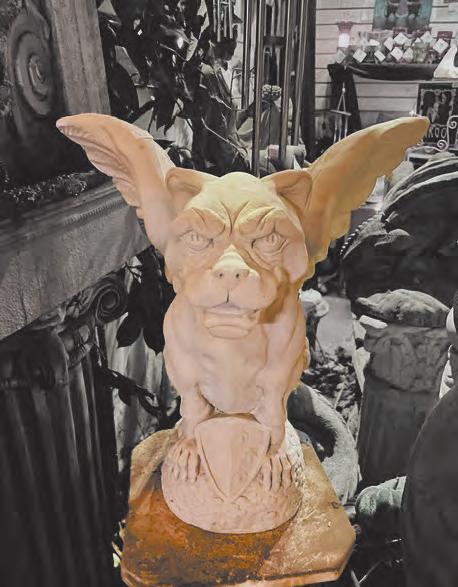


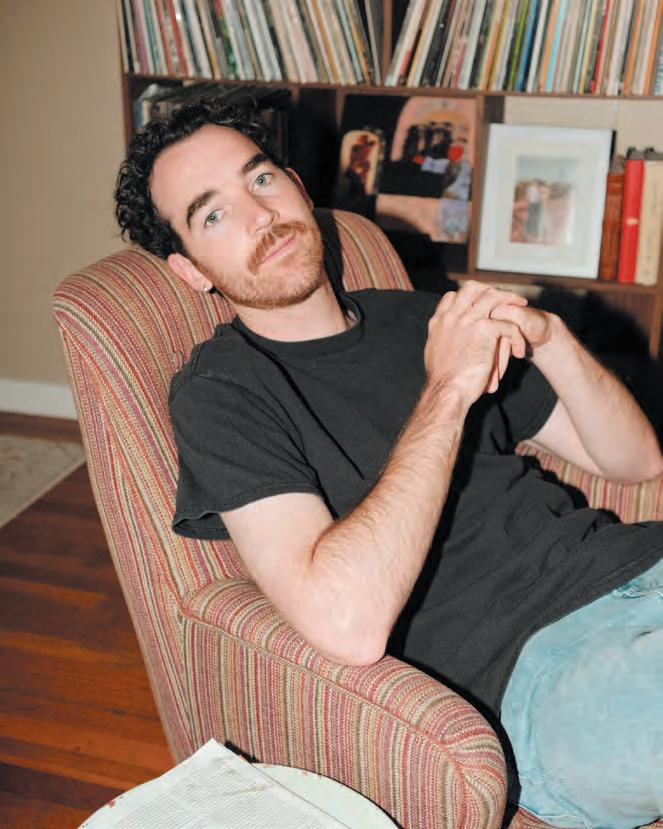
MAR 13
Scott Broker’s first novel, The Disappointment, starts where so many stories do: a man trying to sneak his mother’s ashes into his suitcase without his husband noticing. The book is described as a surrealist vacation through this couple’s desperate, disconnected trip to the Oregon Coast. And no one could be better to interview him than Seattle’s own Mattilda Bernstein Sycamore (who recently released Terry Dactyl, if you somehow haven’t gotten your hands on it yet). The conversation promises to be brilliant, funny, and very, very queer. (Elliott Bay Book Company, 7 pm, free) HANNAH MURPHY WINTER
MAR 9
In his 2005 novel Godlike, punk pioneer Richard Hell reimagines the tumultuous relationship between 19th-century French poets Arthur Rimbaud and Paul Verlaine in 1970s New York. Hell’s adaptation follows esteemed poet Paul Vaughn, a married 27-year-old New Yorker, and a newly transplanted teenage poet, R.T. Wode, as they embark on a messy affair full of acid trips, crashed parties, and unrequited love. The book is getting a snazzy rerelease from NYRB (the Criterion Collection of the book world), and Hell will be there in the flesh to discuss the book and maybe even sign a few (if we’re lucky). (Elliott Bay Book Company, 7 pm, free) AUDREY VANN
MAR 30
With books like The Only Good Indians My Heart Is a Chainsaw, and I Was a Teenage Slasher, Stephen Graham Jones has established himself as one of the most thrilling and urgent voices in horror right now. His latest release is the critically acclaimed historical horror novel The Buffalo Hunter Hunter, which tells the story of a Blackfeet Indian vampire named Good Stab who haunts the fields of the Blackfeet reservation, searching for vengeance. Jones will discuss his chilling oeuvre with local horror expert Sadie Hartmann, aka “Mother Horror,” co-owner of the horror fiction subscription company Night Worms and a Bram Stoker Award–nominated editor. (Town Hall Seattle, 7:30 pm) JULIANNE BELL
James McBride Mar 3, Town Hall Seattle, 7:30 pm
Norma Wong Mar 4, Elliott Bay Book Company, 7 pm, free
The Moth StorySLAM Mar 5, Fremont Abbey, 8 pm
Olivia Waite: Nobody’s Baby Mar 10, Charlie’s Queer Books, 7 pm
Lit Lounge: A Prose & Poetry Salon with Jodi-Ann Burey, Minda Honey, Deesha Philyaw, Mitchell S. Jackson, and DJ Twilight Mar 13, Royal Room, 8 pm
Kate Schatz with Molly Wizenberg Mar 16, Third Place Books Ravenna, 7 pm, free
Darcy Michael with Jeremy Baer Mar 18, Third Place Books Lake Forest Park, 7 pm
Lauren Westerfield with Erin Langner and Katie Lee Ellison Mar 19, Elliott Bay Book Company, 7 pm, free
Bob Crawford with John Roderick Mar 19, Third Place Books Lake Forest Park, 7 pm
The Moth StorySLAM Mar 20, St. Mark’s Cathedral, 8 pm
Tayari Jones with Ijeoma Oluo Mar 23, Elliott Bay Book Company, 7 pm, free
Ibram X. Kendi Mar 23, Town Hall Seattle, 7:30 pm
Sasha taqwš blu LaPointe with Katie Campbell Mar 23, Seattle Public Library Central Branch, 6:30 pm, free
Jane Hirshfield Mar 24, Elliott Bay Book Company, 7 pm, free
Sydney Langford: Someone to Daydream About Mar 28, Charlie’s Queer Books, 6:30 pm
Rebecca Brown with Christopher Frizzelle Mar 28, Elliott Bay Book Company, 7 pm, free
Ashley McGirt with Marcus Harrison Green Apr 1, Elliott Bay Book Company, 7 pm, free Lindy West Apr 3, Town Hall Seattle, 7:30 pm
MAR 19–APR 19
Mary Jane is by no means a new play. Amy Herzog wrote and premiered it at the Yale Repertory Theatre in 2017; that same year, Carrie Coon (who you at least know from the most recent season of White Lotus or The Gilded Age or Fargo) won an Obie for playing the title character at the New York Theatre Workshop; then in 2024, Rachel McAdams made her Broadway debut as that same lead. And based on the critical reaction to every staging so far, I’m certain of one thing: This compact, 95-minute play is guaranteed to break your heart. Herzog’s story is semi-autobiographical, about the impossible reality of parenting a chronically ill 2-year-old who wasn’t expected to live past his first week. But don’t mistake it for a tragic Lifetime movie. Instead, it captures what it is to be suspended, frozen in a state of crisis, but the play still promises humor, clarity, and humanity. Whether you’ve seen it staged already or not, catch it this time. (Bagley Wright Theater, times vary) HANNAH
MURPHY WINTER
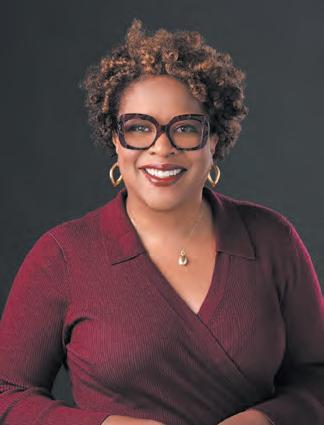
MAR 26–28
Amy O’Neal is back home again. After spending two decades dancing and curating in Seattle, she took a few years off in LA, but she’s settled back into the Pacific Northwest, and at On the Boards. When O’Neal was a finalist for a Stranger Genius Award back in 2013, Jen Graves and Brendan Kiley wrote that “delicate, wide-eyed girls with mouths that never open are about the only thing you will never find in Amy O’Neal’s dances.” And it’s a solid bet that you won’t find them in her newest play, either. She describes her return to On the Boards as a “ritual of femme power and connection” that “interrogates fear for the Feminine in patriarchal culture.” The piece combines the energy of nightclub and theater through five femme dancers, and includes original music from WD4D, Shabazz Palaces, Natasha Kmeto, and Moderat. (On the Boards, 8 pm) HANNAH MURPHY WINTER
MAR 26–28 AND APR 2–4
Longtime Seattle choreographer and dancer Heather Kravas has put together a contemporary dance series in late March through early April. RoCoCoCoCo has four movements—all take place in the black box theater at 12th Avenue Arts, all feature a different combination of dancers, and all will be accompanied by two pianists playing on two upright pianos that are bound together. You can see these dances—which are described like a DIY folk dance—unspool over four evenings, or if you haven’t rotted the fuck out of your attention span, you can opt for the marathon version and watch 4.5 hours of dance in one evening and see
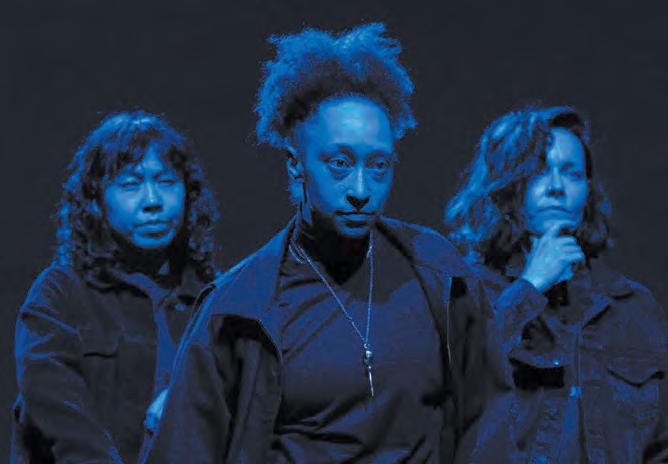

everything all at once. Whatever you choose, RoCoCoCo will be an experience you shouldn’t miss. (12th Avenue Arts, times vary) NATHALIE GRAHAM
A Midsummer Night’s Dream Through Mar 8, Union Arts Center, times vary
The Bonnies Mar 4–7, 12th Avenue Arts, 7:30 pm
I Will Miss You When You’re Gone Mar 5–21, Theatre off Jackson, times vary
Spike Einbinder & Honey Pluton Mar 10, Clock-Out Lounge, 8:30 pm, 21+
Benny Feldman Mar 11, Fremont Abbey, 8 pm
Joketellers Union with Emmett Montgomery and Brett Hamil Mar 11, Clock-Out Lounge, 8:30 pm, 21+
Morgan Jay Mar 13, Paramount Theatre, 7 pm, all ages
Tina Friml Mar 13–14, Laughs Comedy Club, times vary, 21+
Pacific Northwest Ballet Presents: Firebird Mar 13–22, McCaw Hall, times vary
Ain’t Misbehavin’ Mar 18–Apr 25, Taproot Theatre, times vary
Samantha Bee Mar 19, Neptune Theatre, 8 pm, all ages
Moisture Festival 2026 Mar 19–Apr 12, Broadway Performance Hall, times vary
Alvin Ailey American Dance Theater Mar 20–22, Paramount Theatre, times vary, all ages
Hurricane Diane Mar 20–Apr 12, Seattle Public Theater, times vary
Wife of Headless Man Investigates Her Own Disappearance Mar 27–Apr 11, Annex Theatre, times vary
Grand Kyiv Ballet: Swan Lake Mar 29, Moore Theatre, 4 pm, all ages
Brandon Wardell Apr 3, Crocodile, 7 pm, 21+
Walden Apr 9–May 3, ArtsWest, times vary
The Stranger’s Undisputable Champions of Comedy Apr 5, Washington Hall, 7:30 pm, 21+ (See preview, pg. 18)
Appropriate Apr 9–May 10, Bagley Wright Theater, times vary
Pacific Northwest Ballet Presents: Giselle Apr 10–19, McCaw Hall, times vary, all ages
Jet City Improv at ArtsWest: An Improvised Musical Apr 19, ArtsWest, 7:30 pm
Margaret Cho Apr 19, Moore Theatre, 7 pm, all ages
Jonathan Van Ness Apr 24, Moore Theatre, 8 pm, all ages
Seattle Opera: Carmen May 2–17, McCaw Hall, times vary (See preview, pg. 43)
Jesus Christ Superstar May 2–17, 5th Avenue Theatre, times vary
Feat: Velocity Bash 2026 May 6, Washington Hall, 6 pm
Fauxnique: How Do I Look? May 7–9, On the Boards, 8 pm
Barefoot in the Park May 13–June 20, Taproot Theatre, times vary
Pacific Northwest Ballet Presents: All Lang May 29–June 7, McCaw Hall, times vary
NW New Works 2026 June 4–6, On the Boards, 7 pm
Disappearance at the Rocky Mountain Leatherdyke Snowpicnic June 5–20, Annex Theatre, times vary The Play That Goes Wrong June 11–28, Bagley Wright Theater, times vary
MAR 1–15
Todd Haynes’s Safe is a horror movie cloaked in pastel colors, plastic tarps, and unsettling silence. Julianne Moore, the master of tension and nuance, plays Los Angeles housewife Carol White, who comes down with a debilitating illness that doctors cannot diagnose. After becoming self-convinced that the illness is caused by extreme environmental allergies, White flees to a retreat in New Mexico led by a New Age guru. Perhaps the most fascinating element of this film is the numerous ways it can be interpreted: a critique of suffocating suburban life, an allegory for the queer experience, a metaphor for the AIDS crisis, or a commentary on self-help culture—the more time that passes since its release, the richer the text gets. Don’t miss the chance to see it on the big screen this month to celebrate its 30th anniversary. (Northwest Film Forum, times vary) AUDREY VANN
MAR 20–29
A24’s kinky gay “dom-com” Pillion, adapted from the 2020 novel Box Hill by Adam Mars-Jones, is one of my most highly anticipated films of 2026. English filmmaker Harry Lighton’s feature directorial debut follows the meek, guileless Colin (Harry Melling), whose life is turned upside down when he hooks up with gorgeous biker Ray (certified sexy freak Alexander Skarsgård) in an alley. Soon, Colin is initiated into the intriguing world of gay biker culture and BDSM and finds an unexpected sense of purpose and agency in his role as submissive. It’s a hot, funny, and surprisingly sweet meditation on sex and power— Secretary for the leather boys. (Northwest Film Forum, times vary) JULIANNE BELL
The Hawks and the Sparrows Mar 2–5, the Beacon, times vary
Scorsese - Taxi Driver: 50th Anniversary Mar 4, SIFF Cinema Uptown, 7:30 pm
The Bride! Opens Mar 5, wide release Truth to Fiction: The Librarians Mar 5, NW Film Forum, 7 pm
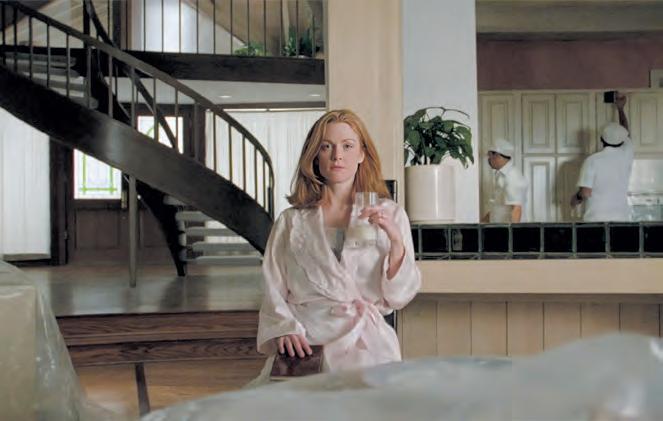
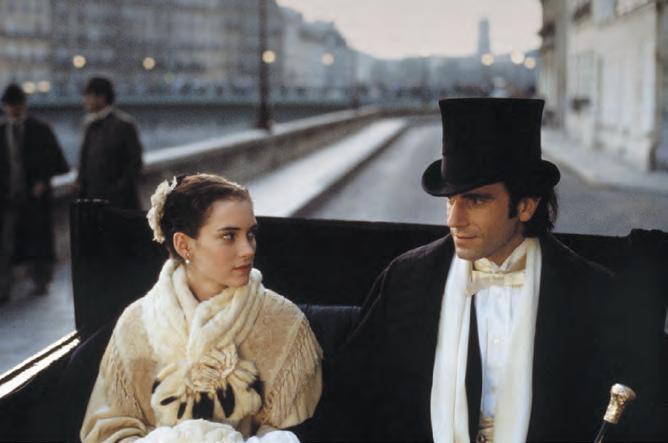
APR 1
Martin Scorsese has made countless iconic films about the Big Apple in different time periods, from Wall Street in the late ’80s (The Wolf of Wall Street) and decaying post-Vietnam New York City (Taxi Driver), to the city’s swanky jazz clubs of the 1940s (New York, New York). So naturally, he was the man for the job when it came to adapting fellow New Yorker Edith Wharton’s 1920 novel The Age of Innocence. Set in Gilded Age Manhattan, the story follows a messy love triangle between a young lawyer, his fiancée, and his fiancée’s newly separated cousin. This movie has everything: Winona Ryder, staggering period accuracy, decadent feasts, sweeping cinematography, and plenty of yearning glances. This is part of SIFF’s Martin Scorsese: Maestro of Cinema series, showing a different film by the director every Wednesday evening through the end of April. (SIFF Cinema Uptown, 7:30 pm) AUDREY VANN
The Room Mar 5, Central Cinema, 5 pm
A Poet Opens Mar 6, SIFF Film Center
Days and Nights in the Forest Opens Mar 6, SIFF Cinema Uptown
Dial M for Murder Mar 6–11, Central Cinema
The Big Lebowski Mar 6–11, Central Cinema
HUMP! Film Fest Through Mar 7, On the Boards
Collide-O-Scope Mar 9, Clock-Out Lounge, 7 pm
Scorsese: Raging Bull Mar 11, SIFF Cinema Uptown, 7:30 pm
Retro Night: Mean Girls Mar 11, Majestic Bay
Numbskull Revolution Mar 11–12, Northwest Film Forum
The Ugly Stepsister Mar 11–12, SIFF Film Center, 7:15 pm
Werckmeister Harmonies Opens Mar 13, SIFF Film Center
Learning to Be Naked Screening with live burlesque from Mx. Pucks A’Plenty Mar 14, Central Cinema, 4 pm
Emerald City Irish Film Festival Mar 14–15, Pacific Science Center PACCAR IMAX theater
The 13th Annual On Cinema Oscar Special Mar 15, the Beacon
Raised by TV Oscars Viewing Party Mar 15, Clock-Out Lounge, all ages, free
Scorsese: The King of Comedy Mar 18, SIFF Cinema Uptown, 7:30 pm
Project Hail Mary Mar 19, wide release
Tow Opens Mar 20, SIFF Cinema Uptown
He Never Dies: The Films of Kalil Haddad Mar 20–29, NW Film Forum
The Cutoff Presented by Aravaipa Running Mar 21, SIFF Cinema Uptown, 1 pm
Scorsese: Goodfellas (4K Restoration) Mar 25, SIFF Cinema Uptown, 7:30 pm
National Film Festival for Talented Youth (NFFTY 2026) Mar 26–29, SIFF venues, times vary Stand by Me: The Film and Its Stars 40 Years Later with Wil Wheaton, Jerry O’Connell, and Corey Feldman Mar 28, Paramount Theatre, 7:30 pm, all ages
MAR 7
The Chinatown–International District Business Improvement Area’s annual Lunar New Year party returns this year, and so does its signature food walk. While the list of which restaurants will be participating wasn’t out before our publication date, you can count on neighborhood staples like Dim Sum King and Kau Kau BBQ to be included. The best part of the food walk? Too many choices. Last year, there were more than 40 businesses. Each one will offer $6 specials ranging from snacks like wings to drinks like boba. One time, I went with a friend and created a whole spreadsheet so we could maximize our time,
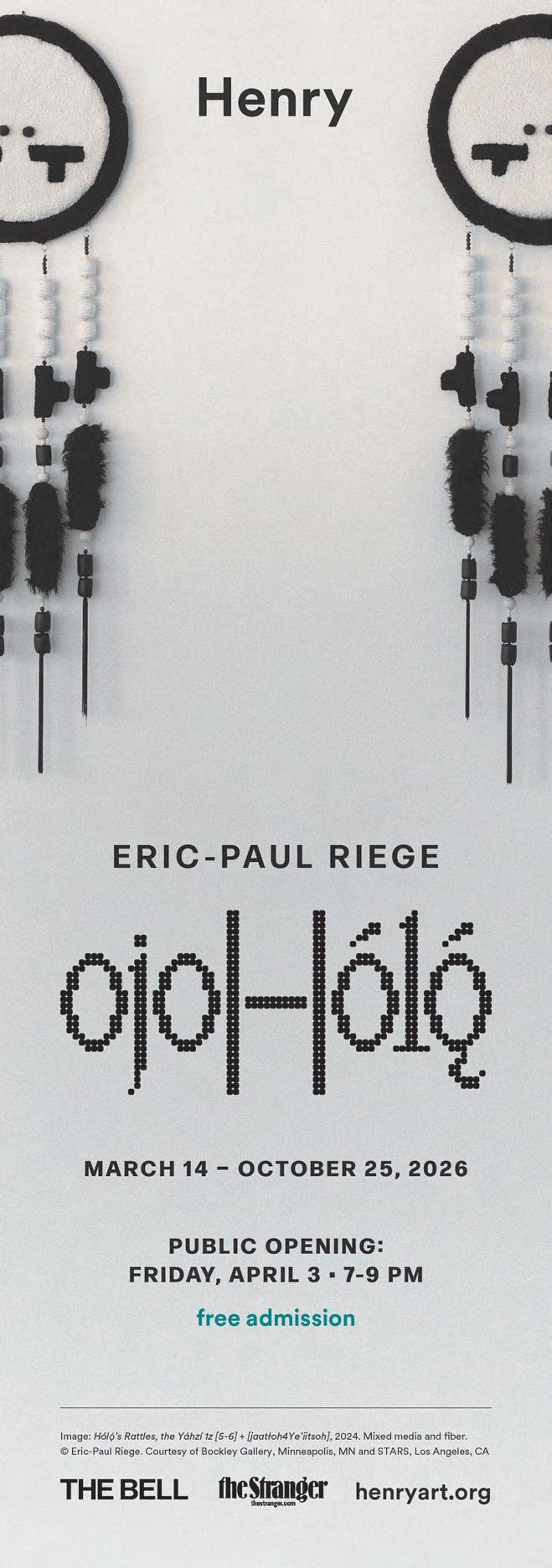



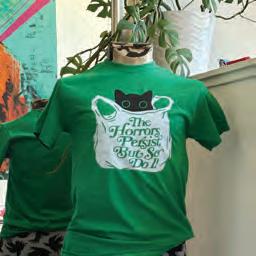



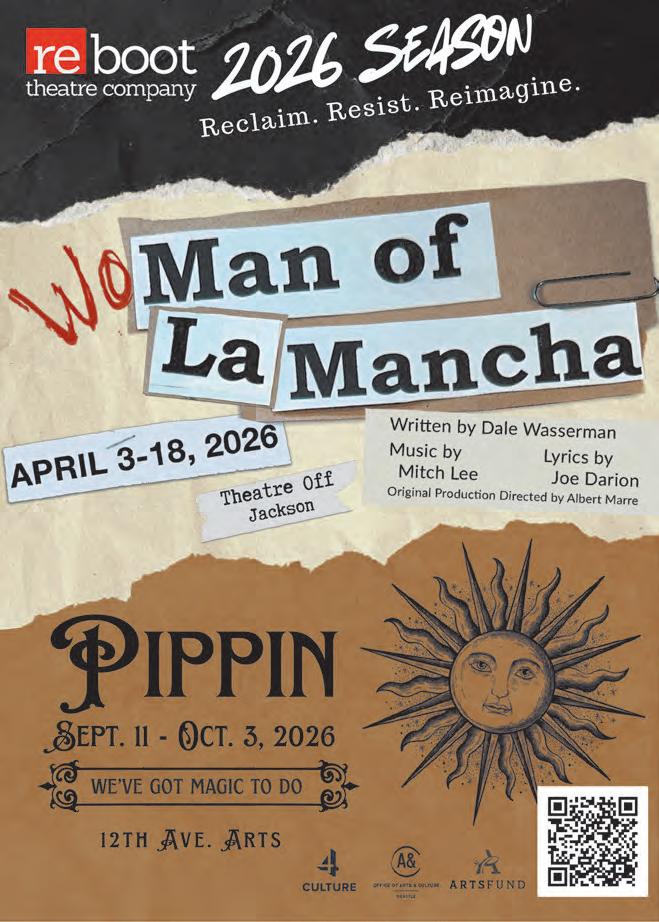
stomachs, and money spent. Once you’re stuffed from all the food, you can head over to Hing Hay Park, where there will be a main stage with dragon and lion dance performances. And, hey, if you’ve got some of that lucky money to spend after feasting your way through the neighborhood, there will also be arts and crafts vendors. (Hing Hay Park, 11 am–5 pm, all ages, free) GRACE MADIGAN
MAR 9
Everything that the No Call No Show pop-up—themed craft cocktails and snacks concocted by a group of fine-dining creative weirdos—does is fucking elite, and this one’ll be no exception. Chef Mutsuko Soma, who owns award-winning Kamonegi, is hosting this month’s NCNS next door at Hannyatou, her foggy-windowed tavern straight out of a Miyazaki film. Your bartenders tonight are Murray Stenson’s prodigal protégé and NCNS impresario Matt Pachmayr (Le Coin, Streamline Tavern) and the mononymous Quan from the exquisite Sake Noire popup. (And soon-to-be Hillman City bar!) Fresh off a trip to Mexico, Quan and Soma came home inspired by “street tacos, endless hot sauces, ceviches, and late-night micheladas.” So they’re doing a Hannyatou x Three Amigos! shtick this month! Featured bites include Japanese curry nachos and wagyu taco rice—that’s Okinawan-style ground beef on rice with crushed Doritos—while the drink list includes a horchata-clarified milk punch with sōchū and chocolate, a jalapeño–yuzu gin martini, and a pickled strawberry old-fashioned made with yellow Chartreuse and tropical-fruity Nuestra Soledad Ejutla mezcal. To quote the film: I like these guys. They are funny guys. (Hannyatou, 21+) MEG VAN HUYGEN
MAR 19
FareStart Seattle provides culinary on-the-job training to individuals facing barriers to employment and a unique dining experience all in one. Twice a month on Guest Chef Night, the FareStart students prepare a three-course meal served by volunteers, and March 19 will feature a dinner made in collaboration with local chefs Matt Lewis and Dre Neeley. Chef Matt Lewis is best known for his food truck, Where Ya At Matt, slinging Southern soul food reflective of his roots in New Orleans. Chef Dre Neeley of Vashon Island’s much-celebrated Gravy is likewise recognized for his Southern-inspired American fare and use of locally sourced, seasonal ingredients. Students in
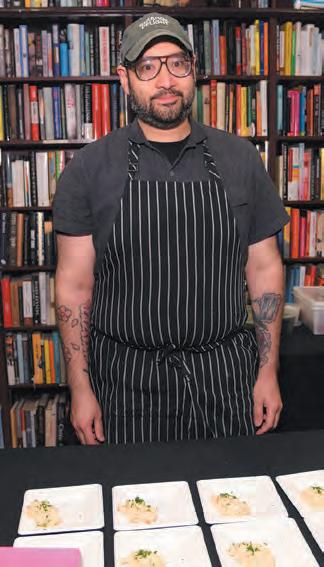
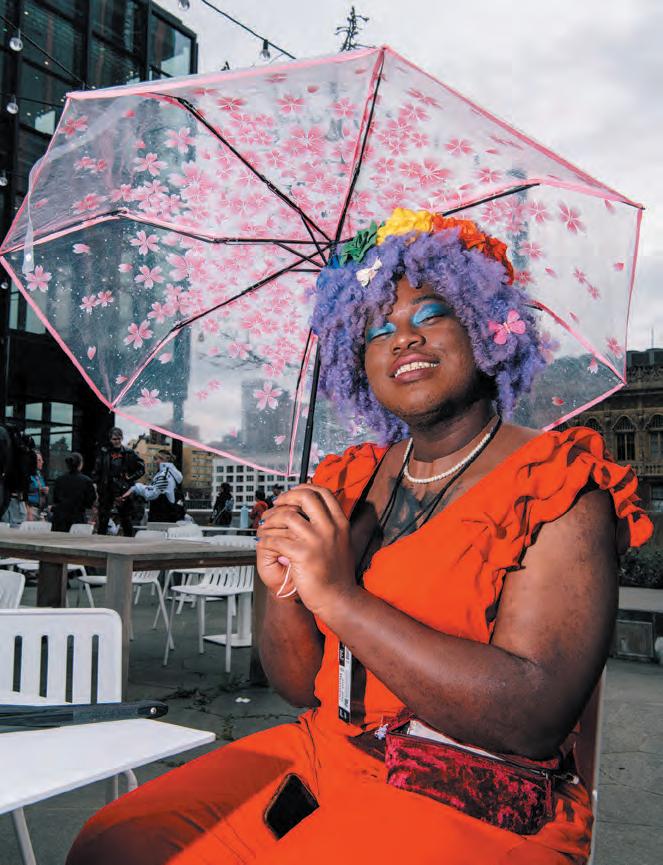
MAR 5–8
Nerds run the city the first week of March. They, bedecked in cosplay, are the mayor now. Their first conquest: the Convention Center. Emerald City Comic Con is the place to be if you like sci-fi, fantasy, or popular Renaissance faire acts like Jacques ze Whipper. If you head to ECCC this year, you could be in the same room as Kyle MacLachlan (Twin Peaks, Fallout) or the one woman who was in Heated Rivalry. You’ll also get to see Hayden Christensen from everyone’s least favorite Star Wars movies and renowned authors like Matt Dinniman, who wrote the electric Dungeon Crawler Carl, or Chuck Tingle, who writes “tinglers” like Pounded in the Butt by My Own Butt. Something for everybody! Don’t forget to wear deodorant! (Seattle Convention Center, all ages) NATHALIE GRAHAM
the program receive 12 weeks of culinary training, including food safety, recipe planning, and food prep, and Guest Chef Night will be a celebration of their work and a further opportunity to learn from established local chefs who have been through every stage of the industry. All proceeds from Guest Chef Night directly support the FareStart job training programs. (FareStart Restaurant, 5–9 pm) DYLAN BUECHE
MAR 31
Sohla and Ham El-Waylly are one of the most charming, talented, down-to-earth chef couples around, and I regularly tune in for their dispatches from the kitchen on YouTube. Their laid-back approach has a way of making cooking seem fun and effortless, which is why I’m so excited for Ham’s debut cookbook, Hello, Home Cooking: Do-Able Dishes for Every Day. The book encourages home cooks to experiment
Decorative Pie Class with Natalie Popkave Mar 14, Pastry Project, 3 pm
My Dinner with SAM: Preeti Agarwal Mar 12, Seattle Asian Art Museum, 6:30 pm
Taste Washington Mar 21–22, various locations
Author Talk: Ella Quittner Mar 12, Book Larder, 6:30 pm
Author Talk: Sana Javeri Kadri and Asha Loupy Mar 17, Book Larder, 6:30 pm
Celebrate Women’s Month with Freeland Spirits Mar 17, Barrel Thief, 6 pm, 21+
MAR 28
Celebrate Holi, the Hindu Festival of Colors, almost a month late but near the Space Needle. Entry is free, registration is mandatory, colors are not free, and you can’t bring your own colors. This palette is regulated. We’re celebrating the eternal love of Radha and Krishna, the end of winter, and the arrival of spring, not your favorite shade. I would not recommend the festival to crowd-a-phobes. Last year’s Holi celebration drew 10,000 people. (Mural Amphitheatre Seattle Center, 11 am, all ages, free) VIVIAN McCALL
MAR 20
The clocks are forward. The birds are chirping. The rabbits are going to start fucking any second. The daffodils have burst forth from the earth, buttery and hopeful. Spring has sprung. The only way to celebrate is to venture down to Pike Place Market on March 20. The roof of the market turns yellow, lined with the happy flowers. Underneath the blooms tossing their heads in a spritely dance (Wordsworth, anyone?), you’ll be able to participate in the market’s annual Daffodil Day. Between 11 a.m. and 2 p.m., the market just gives away bundles of flowers. You’ll need to be quick, though—the free daffodils go quickly. If worse comes to worst, you may need to prepare for daffodil battle. Stems can poke an eye out. (Pike Place Market, 11 am–2 pm, free) NATHALIE GRAHAM
Riding Together: 135 Years of Cycling in Seattle Through Apr 26, Museum of History & Industry Stitch and Bitch Mar 4 (every first Wednesday), Push/Pull, 6 pm, free
Northwest Record Show Mar 8, Seattle Center Armory, 10 am–5 pm, all ages
Free Play Open House Vinyl Night Mar 10, Northwest Pinball Collective, 8 pm, all ages
Pi Day Dash Mar 14, Green Lake Community Center, 8 am, all ages
and promises nostalgic, out-of-the-box comfort dishes with international flavors and a “can’t-quite-put-myfinger-on-it heart-warming quality,” such as Bolivian cheesy rice, onion-smothered pot roast, and a version of Cinnamon Toast Crunch made out of pita. Ham will drop by Book Larder to discuss the book with Ahmed Suliman, the James Beard–nominated chef of Cafe Suliman. (Book Larder, 6:30 pm) JULIANNE BELL
Tacoma Beer Week Through Mar 8, various locations across Tacoma Crumb Bakery Tour Through Mar 30, various locations
Soup Club Mar 7 (every first Sunday), Book Larder, 11 am
2nd Annual Seattle Sister Cities’ Soup Sampling Mar 8, National Nordic Museum, 2 pm, all ages
Cultivating Your Best Crop of Tomatoes Mar 14, NE Seattle Tool Library, 1 pm
Irish Festival Mar 14–15, Seattle Center Armory, all ages, free
The Gothic Market Mar 14–15, Seattle Center Exhibition Hall, noon, all ages
Block Printing Workshop Mar 27 (every last Friday), Push/Pull, noon
Sneaker Con
Seattle Mar 28, Seattle Convention Center, noon, all ages
Spelling Bee 2026 Mar 29, Town Hall, 1 pm, all ages, free

THE STRANGER PRESENTS THE 2026 UNDISPUTABLE THE COMEDY SHOW OF THE CENTURY! ONE NIGHT ONLY! SAT APRIL 47:30PM21+$25 ADV WASHINGTON HALL 153 14TH AVE







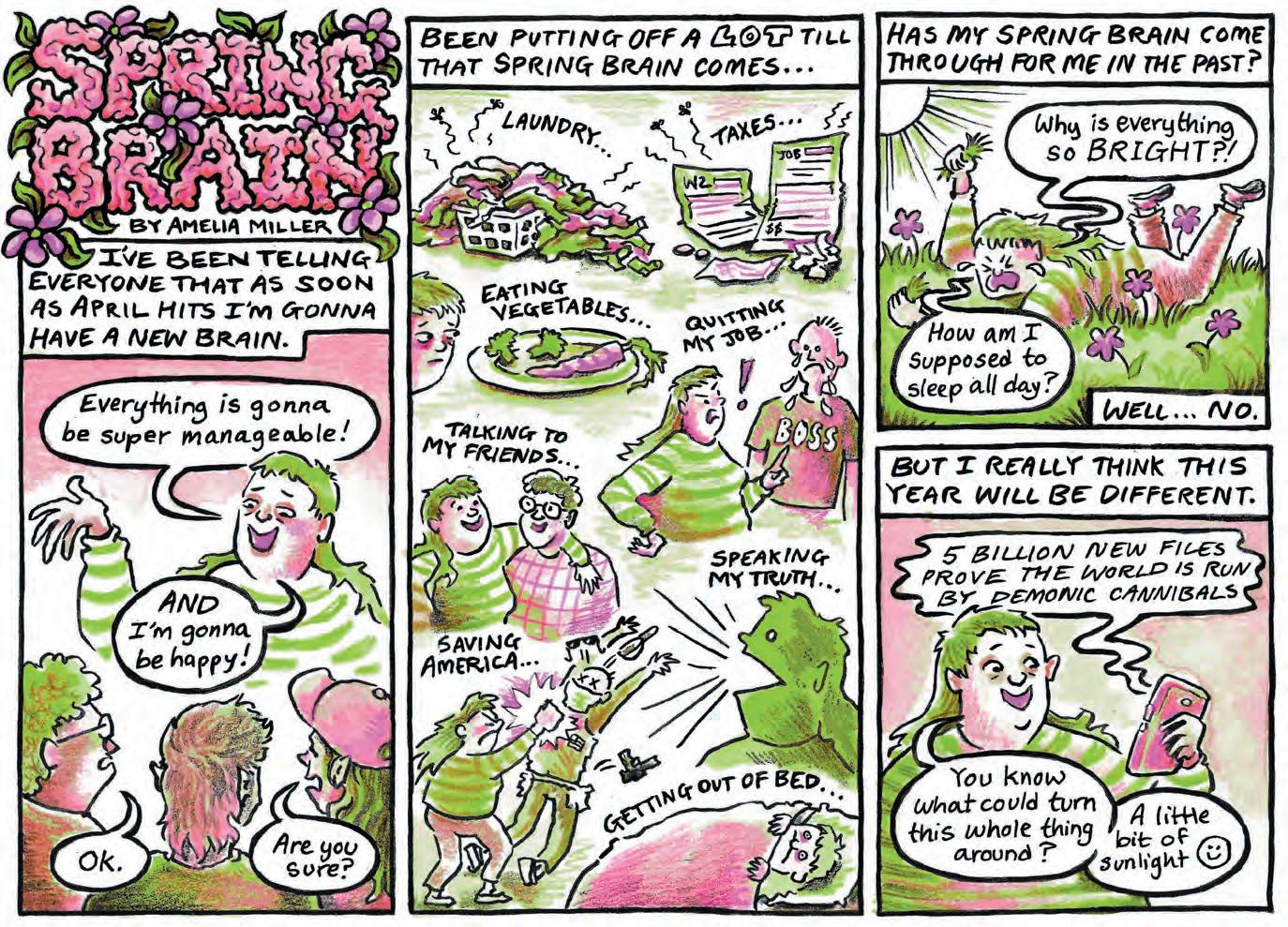
1. ___ the pot (causes drama)
6. Take a noisy bite, like PacMan
11. “... but maybe I’m wrong”
12. Live-in child carer
14. Yellow plastic bird used as a comedic prop
17. Earth-friendly prefix
18. Yoga surface
19. Historic periods shorter than an eon
21. “I’m too ___ for my shirt / so ___ it hurts”
23. Sun-blocking hat part
27. Up to the task
29. Versatile blackjack card
31. “CIA Realizes It’s Been Using Black Highlighters All These Years” satirical news source
33. “Becoming” author Michelle
36. All over again
37. “___ Pepper’s Lonely Hearts Club Band”
38. One in a gym set
39. Biweekly or monthly expense for an employer
42. Hot Wheels toy
43. “___ you kidding me?”
44. Former partners
45. Monthly magazine focused on African American news and culture
47. Incentive from the IRS
49. K-12 school fundraising org.
50. List-ending abbr.
51. In a deadpan manner
53. Mother’s spouse, sometimes
57. Give off
59. 401(k) alternative
61. Catch some rays
62. How to shift our clocks in March ... or a hint to what can precede the circled words
67. Fruit-flavored frozen dessert
68. Spine-tinglingly creepy
69. Microsoft videochat app that replaced Skype for Business
70. “Hasta la vista!”
DOWN
1. Tender skin spots
2. Peaceful pause
3. ___ zero (status of having no unanswered emails)
4. Steal from
5. Acronym that sometimes includes A for Arts
6. Prickly desert plants
7. Palindromic “What’d you say?”
8. Big name in nail polish
9. PC alternative
10. A block from Pine
13. Aired on TV again
15. All-night dance party
16. Oreo and Nilla Wafers company
20. “Just Say No” or “Just Do It!”
22. Sweet potato
24. Hutch’s 1970s TV partner
25. “Say it ain’t so!” 26. Short Instagram video
Way in
Bit of high jinks 32. Baby bird that hoots
Give a speech
Scold harshly 35. Tests that help high schoolers earn college