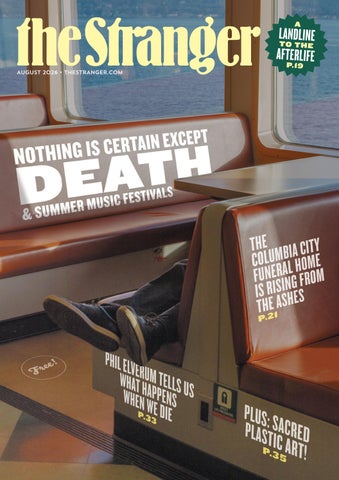
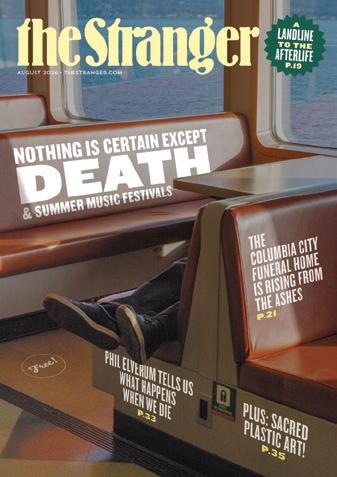
Three things are certain in life: death, summer music festivals, and the absolute poetry that The Stranger’s death-themed issue is my last at this paper.
Our August issue’s feature package started with a pitch for a photo series from photographer Madison Kirkman. Two years ago, they lost a dear friend, quickly and unexpectedly. The grief hit them like a Mack truck. And because we don’t learn how to grieve before it happens, no one showed them how to keep it from isolating them. Consuming them. So they started looking for teachers. And in doing that, they discovered a network of death and grief workers—people who have dedicated their lives to looking this singularly shared human experience in the face, treating it like something real, tangible, and most importantly, survivable (p. 13).
Then Stranger contributor Bess Lovejoy told us about the Grievers Library—a project founded by Pamela Belyea, that reimagined the Little Free Library to be a collection of books and resources that she never had when she lost her child. And with that, we wondered if we had a death package on our hands. It kicked off a conversation in our office that lasted weeks. We talked about planning our own funerals. We talked about the vernacular of death: how we use the language of religion or art or atheism to understand what does (or doesn’t) come next (pg. 23). And it expanded outside of editorial: Our marketing manager, Evanne Hall, has one of the
most heartwarming stories about Death with Dignity that we’ve ever heard (pg. 23). Others write about the unexpected holes those family members left behind.
When we first decided to make this issue, I didn’t know this would be my last at The Stranger. And to be perfectly honest, I’ve been a little annoyed by it. It’s almost too perfect. (Did we joke about designing a tombstone that read “Hannah Murphy Winter: 2024–2026”? Absolutely.)
But all of the poetic absurdity aside, creating a package about death while going through a huge change is, quite genuinely, a gift. Death is like sex. We do our best to not talk about it in polite company. And we only talk about it once it’s already on top of us, not when we have the chance to see it with some perspective. But it’s also like sex because it shapes so much more about our lives than just the individual act. This package is about looking at something huge and inevitable in the face, and naming it. Moving through it. And letting it be a part of us. Learning about grief and death makes us better at being human in our lives.
I got to be a part of this paper for two years of its long, storied life, and we get to be a part of each other for many years after that. I love The Stranger. And I’ll keep loving it—and the team that creates it—from the other side.
Bon Voyage, Hannah Murphy Winter Editor-in-Chief 2024–2026
In loving memory of Hellebore, a sweet and cunty black Netherland Dwarf who returned to the care of the Dark Lord. May she rest in bananas and head pets.
The dreams I cannot share
The Pope/Anti-Pope and the US Attorney/Anti-US Attorney
“Big Boss Big Time Business” by Santigold
Mercury most certainly in the microwave
Julia from Love Island UK
Practical effects
The consistency of cat
Tiiiiiiiight, not tiiiiiiiite
Caterpillar poop all over the desk
Metropolitan Market chef’s sushi sampler
’eeping with one leg out of the blanky
Mai Tais, bottomless Megan’s pull-out fantasy
Dev Seagull
Diarrhea 2
Jason Mraz 2
Shutting up and dancing
Never being enough for Bluesky
Booboo
Olympia Pizza & Spaghetti House 3
Shock, Denial, Anger, Bargaining, Depression, Testing, and Acceptance
Robert Pattinson’s strong jaw and tiny teeth
Margarita Georgette (welcome to the family)

HEAD
HEAD
Editorial
SENIOR PRODUCER
ASSISTANT TO BRADY WALKINSHAW
Taylor McCormick
AP/AR COORDINATOR
Surprise
DIRECTOR
Turner
HEAD OF PRODUCT
Anthony Hecht
STRATEGIC ADVISOR
Tim Keck
MEMBERSHIP DIRECTOR
Caroline Dodge
DIRECTOR, STRATEGIC PROJECTS
Luke Lamb
EXECUTIVE
Patrick Kearney
EXECUTIVE PRODUCER Nancy Hartunian
HEAD OF BOLD TYPE TICKETS
Kevin Shurtluff
CLIENT SOLUTIONS MANAGER Diana Schwartz
PROJECT MANAGEMENT/CLIENT
SOLUTIONS REPRESENTATIVE Campy Draper
CUSTOMER SOLUTIONS
REPRESENTATIVE Anita Chao
EVEROUT MANAGER Katya Schexnaydre
CONTENT LEAD Janey Wong
DATA MANAGER/STAFF WRITER Shannon Lubetich
STAFF WRITERS
Bri Brey, Langston Thomas


It’s a Neighborhood Under Duress, but Yenvy Pham Wants to
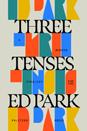
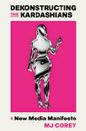
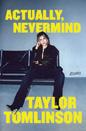
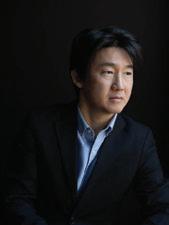
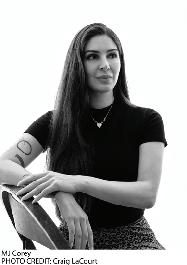
ED PARK with Thomas Kohnstamm
Three Tenses: A Transmission from the Nineties Tue 8/25 at 7pm
Dekonstructing the Kardashians: A New Media Manifesto Thu 9/3 at 7pm
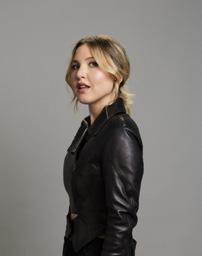
Actually, Nevermind: Essays Fri 9/25 at 7pm TICKETS REQUIRED
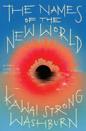
The Names of the New World: A Novel Wed 10/21 at 7pm Find out more at thirdplacebooks.com




All the Dead and Dying Politicians, High-T Soldiers, and Explosive Diarrhea You Missed in July
You want us to talk about him. You like his body. The curve of his spine, the way it makes you feel. How he is a bandit up to no good, throwing trash everywhere. But we’re not interested in talking about Mitch McConnell . Besides, everyone is talking about a different little freak these days. Jimothy the raccoon is the only thing that has made Ballard worth mentioning. This monstrous furball is everywhere: art fairs, the Salmon Run at Mariners Games, Last Week Tonight With John Oliver. People are getting tattoos of Jimothy, which we cannot condone. Imagine getting a Moo Deng tattoo today. Does that seem smart?
***
It’s been a terrible month for people named Graham, except Nathalie. Nothing happened at The Stranger in July. But Lindsey Graham’s heart was struck down by Lindsey Graham’s heart, and Graham Platner the Democratic Senate candidate in Maine, was struck down by Graham Platner saying “yes” to Nazi skull tattoos and “no” to consent, allegedly.
come down. The city must also sta the park with masturbation spotters, maintain the landscaping, and other things.
***
This fall, the wealthy conservatives could cream all over us again now that the anti-Millionaires Tax will officially be on November’s ballot. Hateful hedge fund millionaire Brian Heywood’s goons at Let’s Go Washington have collected enough signatures for Initiative 645, and now voters will decide whether they want to keep being finsubs to our state’s tax-avoidant money doms
***
Wait! In the sky! What’s that? A bird? A plane? An anti-Brian Heywood campaign? The pro-Millionaires Tax avengers are assembling , and they have already amassed $3 million in contributions. Who are these heroes? Professor Chess (Gov. Bob Ferguson), the Quiz Kid (Ken Jennings), and the Amazing Globetrotter (Rick Steves)! KAPOW
***
BY NATHALIE GRAHAM AND VIVIAN MCCALL
***
***
Eating is so yesterday. Shitting your brains out is so today. The outbreak of the explosive, watery, forever diarrhea-causing cyclospora parasite spread to nine US states and nearly 2,000 cases countrywide. It’s in the iceberg lettuce ! The Centers for Disease Control might have been more effective at stopping this thing if Elon Musk’s Department of Government Eciency hadn’t gutted the lab that specializes in cyclospora. Millionaires are cloning themselves to harvest their organs, so why can’t we solve the poops? Diarrheal illness may ruin underwear in the states, but it is fatal in low-resource countries where clean water is a daily struggle. Get the picture?

*** Lindsey may be sweating right now, and so are we. Fires have scorched Canada, ruining East Coast summer vacations for us poor Americans with a cloud of what used to be Canada. Large swaths of Washington are on fire, or have recently been on fire. Over the Fourth of July weekend, a fire in Chelan Hills took what was most dear: Hobbit Hole. Also, one person died.



***
In France, they had to stop smoking cigarettes during Le Tour de France due to fire risks. That is a national tragedy. Cycling is boring when you are not smoking. These are depressing times for the French, especially because France lost in the World Cup semifinals and on Bastille Day, too. C’est dommage. America also lost the World Cup, despite our dear leader’s best e orts to bend the rules and compel FIFA to dispose of Folarin Balogun’s red card. And people say Donald Trump doesn’t care about birthright citizenship, which survived the Supreme Court by the hairs of its constitutional chin.
***
Denny Blaine, Seattle’s premier outdoor space for gay naked bodies, also survived a legal battle. After neighbors sued to shut down this “public nuisance,” a judge ruled that the beach will stay open, with conditions. The anti-masturbation fence will divide the park until—like the Berlin Wall—a wealthy, conservative man demands that it
Seattle City Council got into a food fight with the mayor . Katie Wilson proposed funding universal school meals next year with money from the Seattle education levy; the Council voted to delay that plan for a year and instead fund a program to feed kids on weekends and school breaks. The city’s progressives promptly freaked . A day later, with their tails between their legs, three councilmembers who voted for the measure—Joy Hollingsworth, Dionne Foster, and Dan Strauss—reversed course and announced a plan to pay for universal meals out of the city’s general fund, which already has a $175 million deficit next year.


***
Being alive is for the rich. Millionaire freak Brian Johnson, who injected himself with his 17-year-old son’s blood as part of an undying quest to live forever, announced he has cloned himself “as a newborn” and will use this clone to “become my own blood boy, test therapies on the clone, grow organs for transplantation, develop new treatments, and inject young cells.” See, men can have hobbies
***
Defense Secretary Pete Hegseth aims to make an army of supermen by injecting enlisted men with testosterone. They will be invulnerable unless our enemies obtain a powerful biological weapon known as the flu, as the annual vaccination is now optional.


parasite spread to nine US people. In Houston, Lorenzo






Senseless killings abounded this month. Trump’s lawless henchmen in Immigration and Customs Enforcement are still killing people. In Houston, ICE officers killed Lorenzo Salgado Araujo, a law-abiding Mexican homebuilder who lived in the US for more than 35 years, during a tra c stop. Araujo wasn’t even a target, and there’s no evidence he tried to ram officers with his car, as ICE initially claimed. In almost the same story, ICE killed 26-year-old Joan Sebastián Guerrero in Portland, Maine, as he attempted to drive away from officers while they were looking for someone else.
***
***
Also in avoidable American problems, three people were shot and killed at Bite of Seattle at the Seattle Center: Carlos Israel Sanchez Villalba, 44, Ashley Whitehead, 56, and Junior Cee Niko Semo, 19.
Don’t forget about regular old cop killings. A police officer in Madison, Wisconsin shot and killed a Black man, 38-year-old Corey Durell Ruiz, during a broad daylight struggle in the street. Video shows the ocer shooting Ruiz in the head at close range. “That looked an awful lot like an execution to me,” a witness said.
When you go to lap swim at one of Seattle’s public pools, the lanes are broken down by speed: very easy, easy, medium, fast, and very fast. “Medium” and “fast” lanes get crowded first; “easy” and “very fast” are not as crowded. You swim in a circle in a lane with (usually) four to eight strangers for 90 minutes.
“fast” lane. Relocating to either lane me frustrated looks. I am training for
I am a medium swimmer. I’ve been going regularly for three years. I swim faster than the “easy” lane and slower than the “fast” lane. Relocating to either lane when the medium lanes are full gets me frustrated looks. I am training for steady distance swimming and don’t want to bother people who are sprinting or breaststroking leisurely.
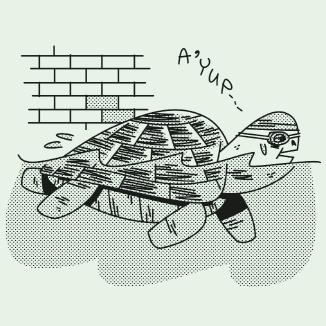
To 80 percent of my fellow “medium lane” lap swimmers: You belong in the easy lane, and that is okay. Most of you are men over 40. Many of you can’t make it 50 yards without stopping to walk in the shallow end. There’s nothing wrong with being slow or taking it easy—the pool is for you, too. It’s another thing to hold everyone else up. I know it would hurt your feelings to tell you in person that you’re slower than you think. But if I had a car horn to honk at you, this would be it.
Do you need to get something o your chest? Submit an I, Anonymous, and maybe we’ll illustrate it! Send your unsigned rant, love letter, confession, or accusation to ianonymous@thestranger.com. Please remember to change the names of the innocent and the guilty. Read more I, Anonymous letters every week at TheStranger.com.

BY MADISON KIRKMAN

In 2024, while leaving my birthday party, my sweet friend Vlora was killed in a motorcycle accident. I’d always had a severe aversion to people who ride motorcycles for this very reason. Growing up in Arizona, where state law does not require helmets for those over age 18, I’ve seen some motorcycle accidents that still haunt me to this day. But who could say no to a friend like Vlora? Not me. Vlora was 10 years younger than me and loved life more than anyone I knew.
They weren’t the first friend I lost. In 2015, while I was in Costa Rica, my friend and former climbing partner, Mark, committed suicide. As I made the long, morose trek back home to Arizona, I sobbed in every form of transportation along the way. Curious and worried locals inquired, but with my limited Spanish, all I could say was, mi amigo es muerto. My friend is dead. I was so griefstricken, in fact, that I didn’t immediately realize I had also contracted chikungunya, a tropical mosquito-borne disease whose primary symptoms include “severe malaise.” What is “severe malaise” to grief, anyway?
I moved to Seattle the following year, still deep in my grief. It isolated me.
Mark and Vlora’s deaths were radically different. Mark withstood a series of neverending struggles, and it was hard to imagine
a future where any of his circumstances would improve. Even after multiple suicide attempts, Mark’s healthcare repeatedly denied further treatment options to save his life. I felt rage toward the systems that failed him, but there was also some small sense of peace that came from knowing he was no longer suffering. I was proud of him for making it as long as he did—he hadn’t been staying alive for himself.
out of bed. Grief continues to make me sick. But I know that’s normal now. I’ve actually learned a lot about grief this time around. Community, ritual, connection to nature, compassion, understanding—I have found all these things while wading through my grief in Seattle. There is an inherent avoidance in mainstream culture when it comes to witnessing death. We keep it at an arm’s length, not spend -
I found community, ritual, compassion, and understanding while wading through grief.
Vlora adored life. An average day for them included things like skateboarding, juggling, reading about activism, teaching themselves Arabic, making friends of strangers, camping under the stars, adventuring with friends, and walking a regular gaggle of dogs for their adoring owners. Vlora was vibrant, energetic, talented, and gushing with potential.
Losing Vlora meant losing all of the future they should have been promised. And it nearly destroyed me. No one teaches us how to grieve. It’s been two years since their accident, and some days I still can’t get
ing time with decedents’ bodies. Most of us don’t create rituals and altars. We’re discouraged from taking bereavement time, and we lack the language to openly talk about death and grief. Instead we embalm bodies, put them in impenetrable coffins, separated from nature and public view. We lean on practices that are quiet, restrained, and profoundly misaligned with the realities of death and grief.
But in the past two years, I’ve met many grief and death workers in Seattle who are changing and challenging the white, colonial narrative of loss.
I was fortunate to have found a grief group in West Seattle, just weeks after Vlora’s death, hosting a grief walk in nature.
In my stunned silence, I joined a group of fellow grievers through Schmitz Preserve, led by Tamara Kubacki of Listening to Grief. I began attending her weekly grief groups after that, and she helped plug me into resources I would have never found alone.
It was a lifeline, thrown by someone who knew how disorienting and overwhelming the world becomes after loss. Since then, I’ve attended grief groups, wailing rituals, and guided walks in nature, planted and grown a grief garden, shared stories, and built a little community in the shadow of heavy, heavy loss.
Here, you’ll find some of the lifelines in this city: Kubacki of Listening to Grief; Derek Dizon, founder of A Resting Place, a nonprofit that creates physical space for nonwhite grief; M Abeo, who created a portrait series called “Faces of Fortitude,” documenting the friends and families of suicide victims; Katrina Spade, a pioneer in human composting; and Lashanna Williams, who founded A Place to Die, where people can travel from out of state to Die with Dignity.
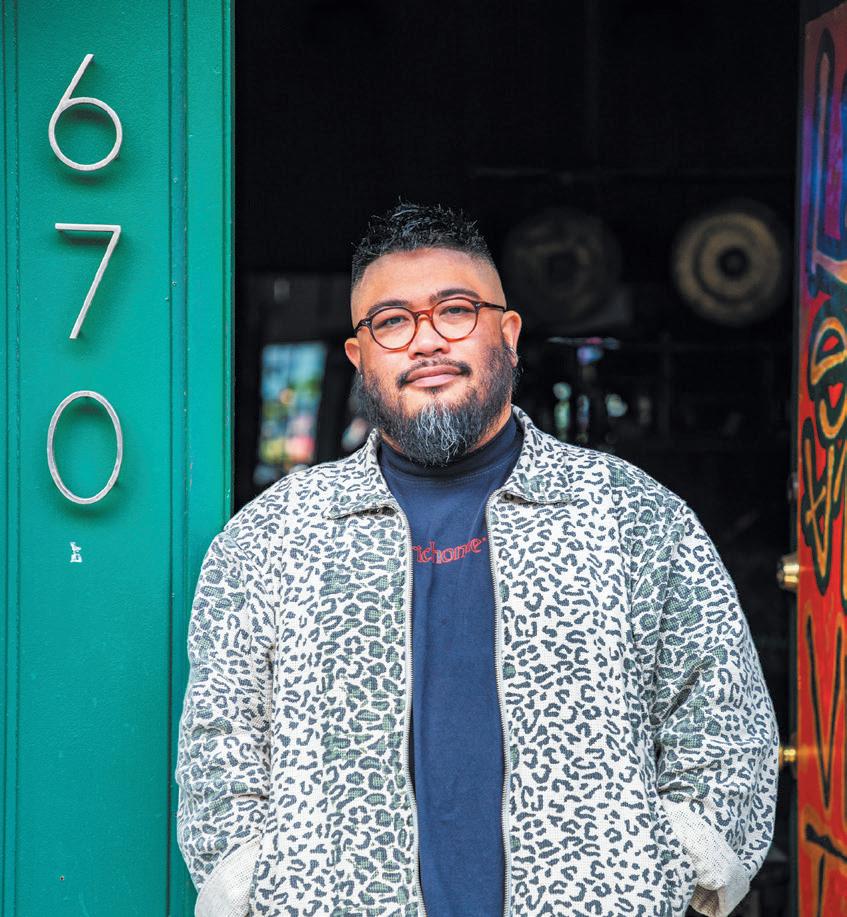
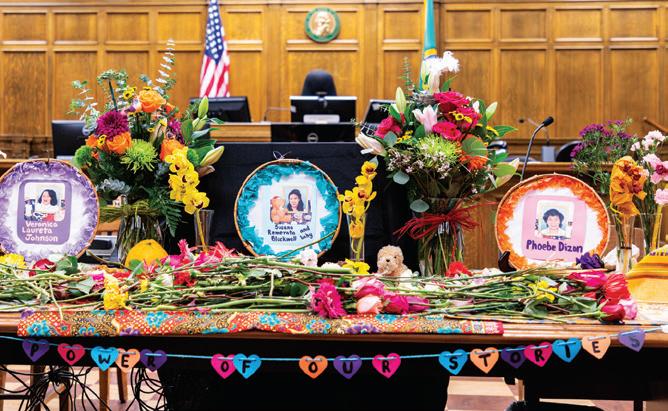
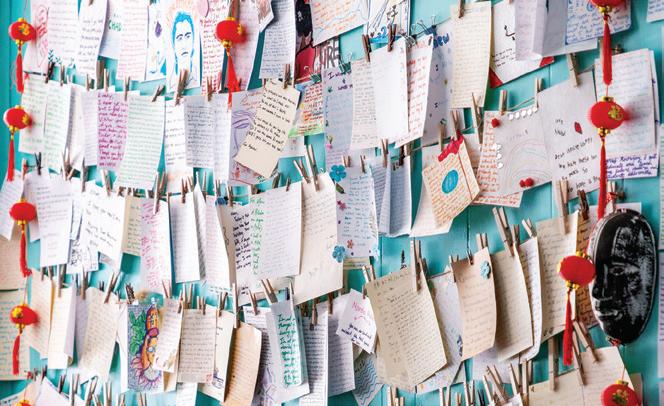
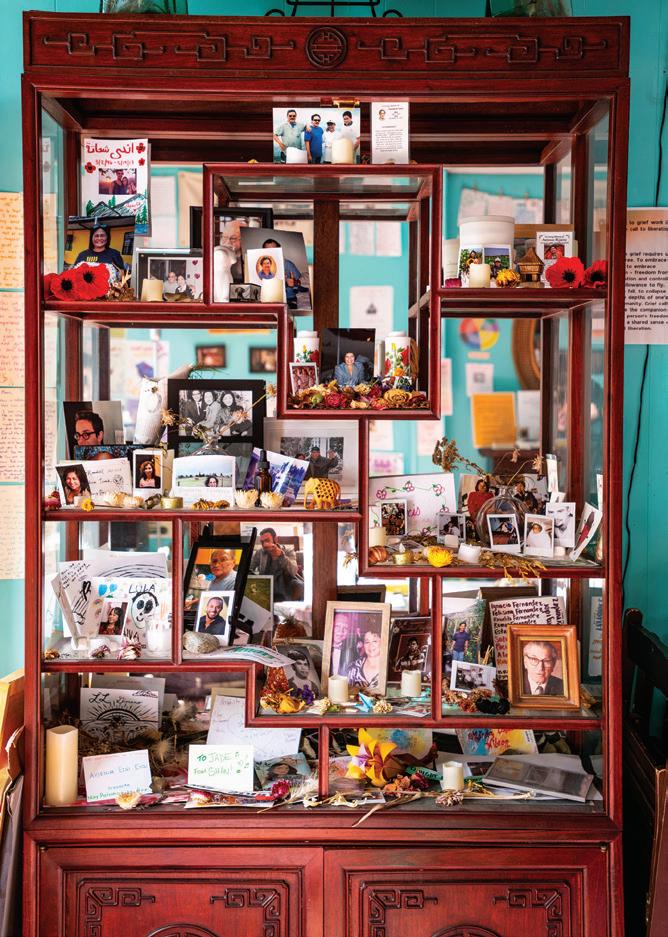
Upon walking into A Resting Place, I was viscerally overwhelmed. Derek Dizon, founder of the nonprofit, immediately clocked my reaction and encouraged me to walk around and “take it all in” before we spoke. It’s a humbling, sacred space. It felt like both unmitigated love and incomprehensible loss. My eyes welled up, I put down my camera bag, and explored the space in silence.
Softly lit altars stood against one wall, adorned in photographs, flowers, candles, incense, and other meaningful gifts. Next to that were small stacks of beautiful art prints by Dizon. There’s a wall of handwritten letters to the dead, written in many languages, that have been clipped to string and hung like prayer flags. There was even a place to sit down and write your own. Along the other wall stood a grief library, a tea station, incense to offer prayers, and printed resources to take with you.
From a shared storefront in the middle of the Chinatown–International District, weekends here are open for grief. A Resting Place centers Asian American, Black and Brown, Immigrant, and other non-white communities in grief, and acknowledges the shared grief across cultures, languages, art, and community. This includes racism, systemic state violence and oppression, suppression of culture, and other detrimental realities.
Dizon’s entry to grief was early and personal. In 1995, his mother, Phoebe Dizon, and her friend were volunteering as advocates, interpreters, and guides to support Susana Remerata Blackwell, who was pregnant going through a grizzly divorce after years of abuse. All three women were Filipina, and the white husband she was trying to leave came to the courthouse and shot and killed all three of them, and Remerata's unborn child.
This tragedy deeply affected the community. It was also a cornerstone in the creation of API Chiya, a nonprofit that supports domestic abuse survivors, cultural healing, educating, and building accountable communities within the South Asian, Asian, Pacific Islander, and immigrant populace.


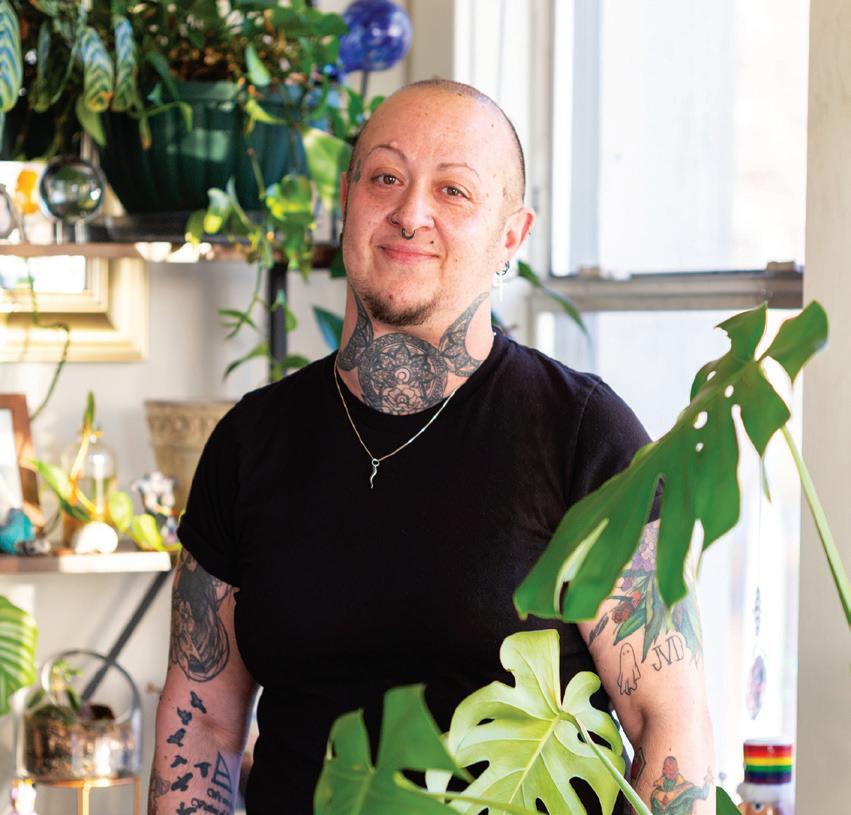
After the suicide of their brother, M Abeo’s life was never the same. While working through their grief, Abeo began an art project in which they interviewed and photographed family members and friends of their brother. There’s a specific pain and stigma that comes with grieving a loss by suicide, and so few resources to navigate them. The project gave them a safe place to explore it. Abeo continued to expand this project into Faces of Fortitude, a portrait and interview series focused on friends and family members of suicide victims, first responders to suicides and attempts, and survivors of suicide attempts. Abeo gives a voice and a face to the people who dare to speak of the suffering surrounding this kind of death. “We all need to be seen by somebody,” Abeo says, "somebody that can mutually understand through their own experience.”
All of their photos are taken in black and white—a thoughtful choice on M’s part. “I don’t want you focusing on somebody getting a red nose when they cry or somebody’s rosacea or the color of their tattoos, or their hair—none of that matters. We are talking about their emotions.” Abeo continues to exhibit their Faces of Fortitude show around Seattle.
Due to the chasmic gap in suicide-related care, M has also launched a group for suicide-specific grief, co-led by Lashanna Williams of A Sacred Passing. This group meets virtually, once per month, and is free to attend. Additionally, Abeo is a suicide caregiver, death worker, author, podcaster, and public speaker. Their commitment and conviction in life to providing community care and a greater understanding around suicide is inextricable. Like all the best people, M continues creating the very resources they once desperately needed.
Tamara Kubacki Founder of Listening to Grief
Death, divorce, suicide, politics, pet loss, traumatic passings. You name it, Tamara Kubacki will listen to your story of grief. But it’s not like talking to a therapist. Kubacki’s background is in folklore, interviewing, and storytelling. Her company, Listening to Grief, is dedicated to grief education, grief groups, one-on-one counseling, grief walks in nature, artistic expression, and collaborations with other wellness professionals.
Kubacki lost her sister to suicide in 2021, and it “absolutely brought me to my knees,” she says. She found an online support group, which she still attends, and a therapist to work with as she navigated deep grief. The work felt important, and with the encouragement of those around her, she studied grief work, became a Grief Educator, and began a business devoted to the listening and processing of all manner of bereavement.
It was a reminder that grief is everywhere, that no one is exempt from it.
Kubacki is dedicated to changing the silence of grief and loss. At Listening to Grief, all kinds of loss are honored and respected. “One of my goals,” says Kubacki, “is to offer a disenfranchised grief group: sibling loss, empty nest syndrome, ambiguous grief.” Events and offerings are tailored to address both specific types of grief, and collective grief.
Kubacki told me about the first grief walk she led in nature. While stopping to do a breathing exercise with the group, a few teenage boys in the park stopped to ask what they were doing. When she explained that they were on a grief walk, two of the boys asked if they could join for a bit. The teens shared that they had also lost a mutual friend very recently. It was a reminder that grief is everywhere, that no one is exempt from it.
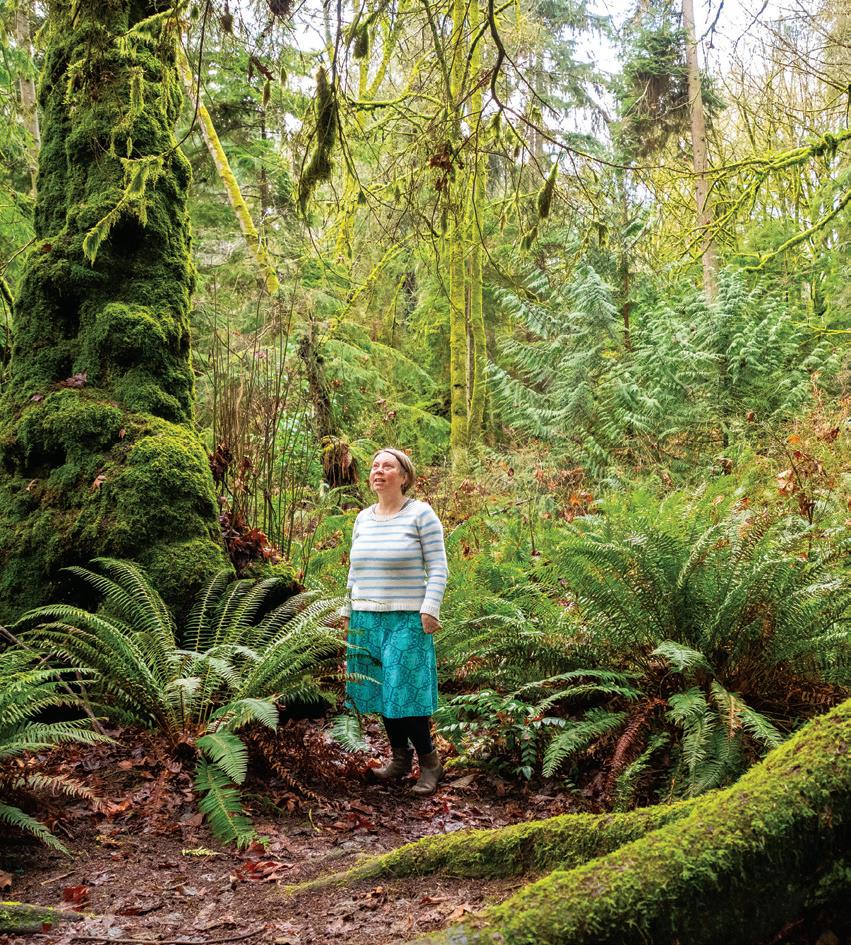





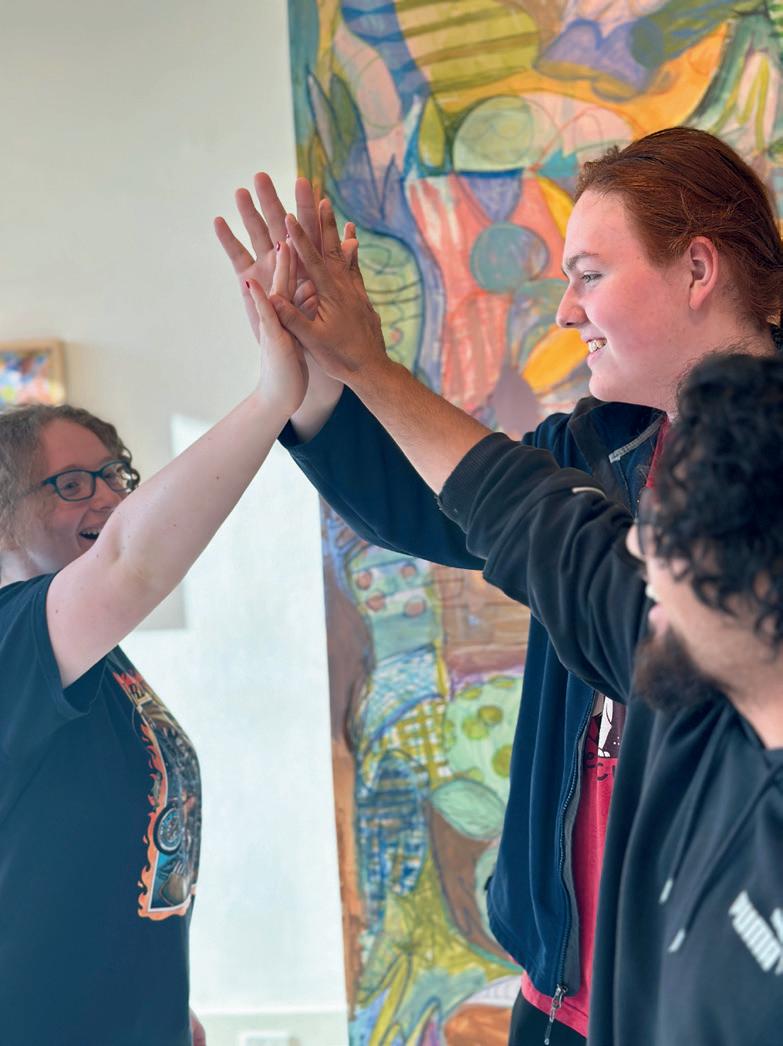

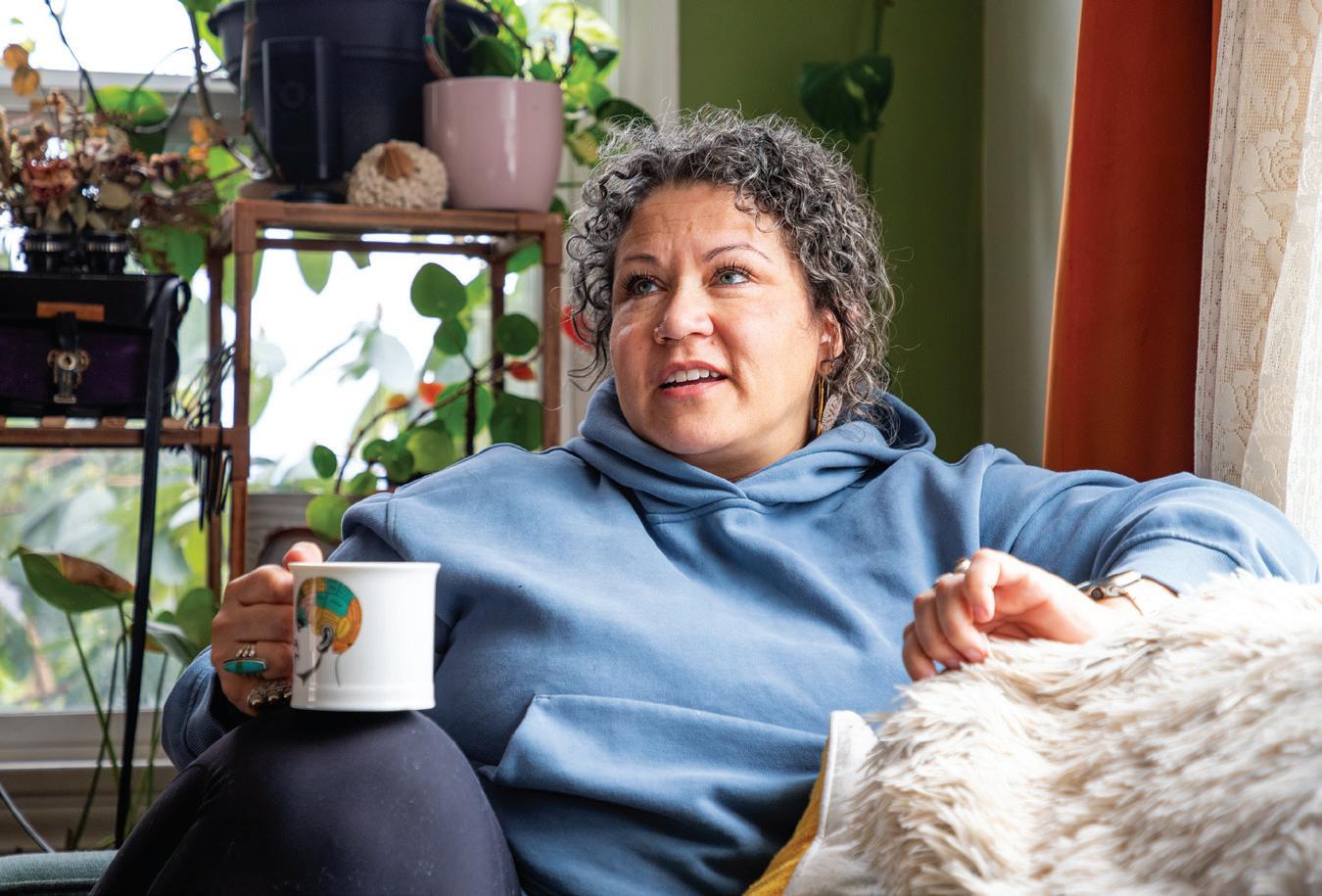
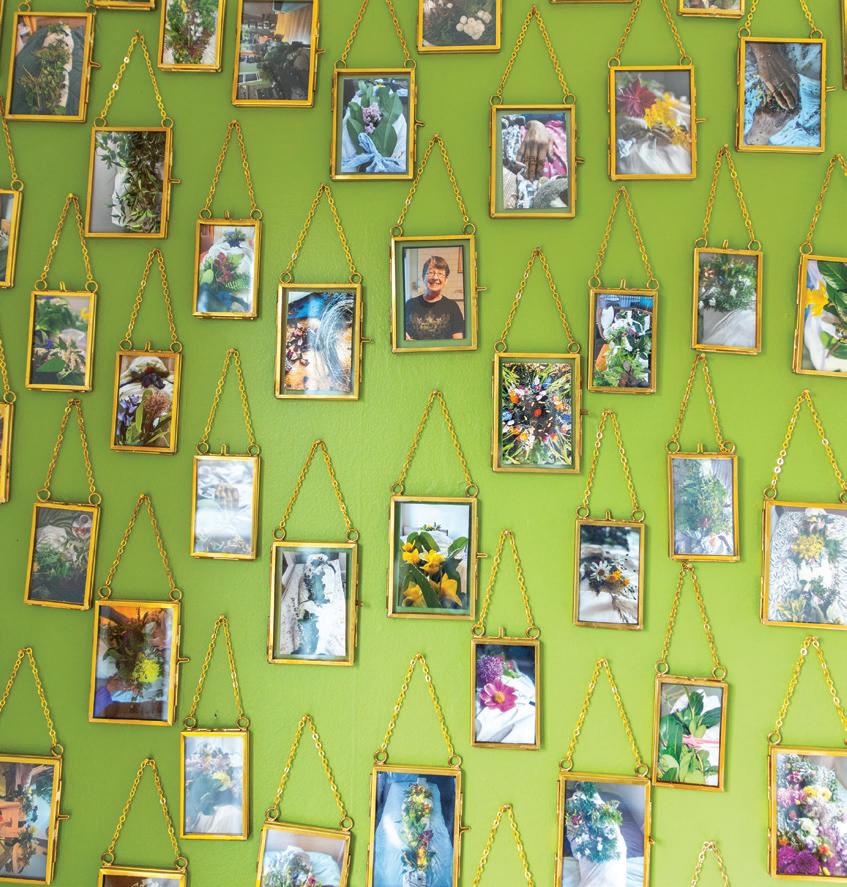
Before running the nonprofit A Sacred Passing, Lashanna Williams worked as a massage therapist. Williams laughs while recalling a birth doula class she once took, just to hang out with her friend, in which the instructor told her she’d “never be hired” as a birth doula. Instead, the teacher recommended that Lashanna might be more interested in death doula/death care courses. She was. Eventually, Lashanna started volunteering with A Sacred Passing; And three years later, the founder transferred ownership to Lashanna, who transformed the program into a multifaceted framework to better reflect and facilitate her own understanding of community care and needs.
Williams continued her work as a masseuse, and one day, one of her terminally ill clients, Sally Baily, had a radical idea. After learning about Lashanna’s work in death care, she invited her over to give her something. Lashanna recalls that Sally “answered the door with a quick claim deed and a plant, and said ‘welcome home.’” Sally was donating her house to the nonprofit, for however Lashanna wanted to use it to help others. Asphodel House, as it is now known, quite literally arose from Sally’s death.
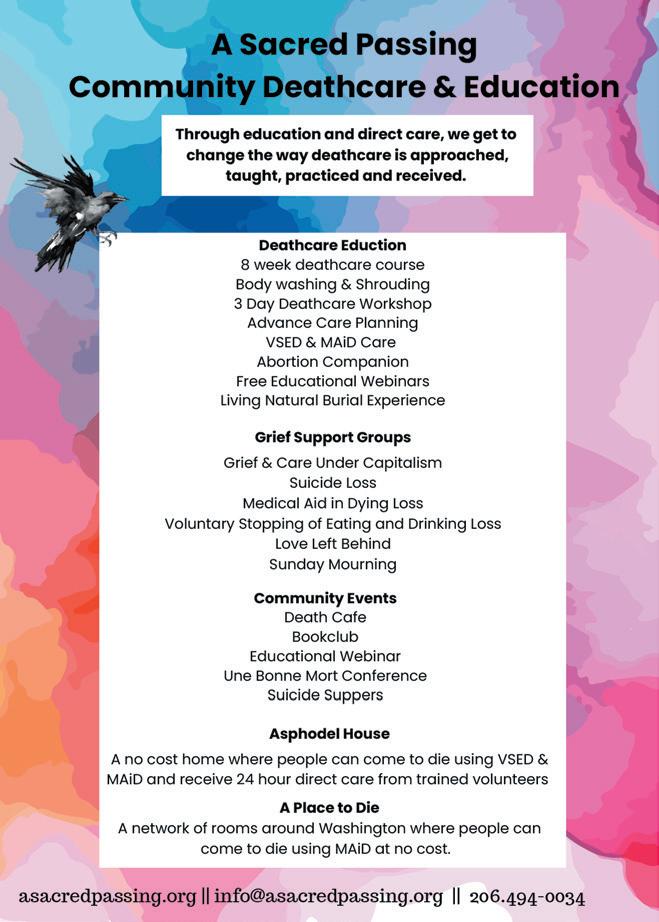
Asphodel House is a multifunctional community home located in Lakeridge. It provides a physical space where terminally ill people can spend their final days being cared for by volunteers and professionals at no cost. This includes bedrooms for people who have chosen to die by way of VSED (the voluntary stopping of eating and drinking) or MAID (medical aid in dying). Lashanna has even worked with pharmacists and patients to create drink recipes with ingredients to mask the harsh taste of the end-oflife medications. (She has found that liquid sugar, brown sugar, and cinnamon help mitigate the bitterness.) Asphodel also hosts monthly gatherings, like Suicide Supper and Sunday Mourning, to bring grievers together in community.
“We started by sharing what we had,” Williams says. For her, that included time, energy, acts of service, compassionate care, and massage. For Sally, it included the deed to her home, deep trust in Lashanna, and the opportunity to improve the lives and deaths of all future visitors to her beloved home.



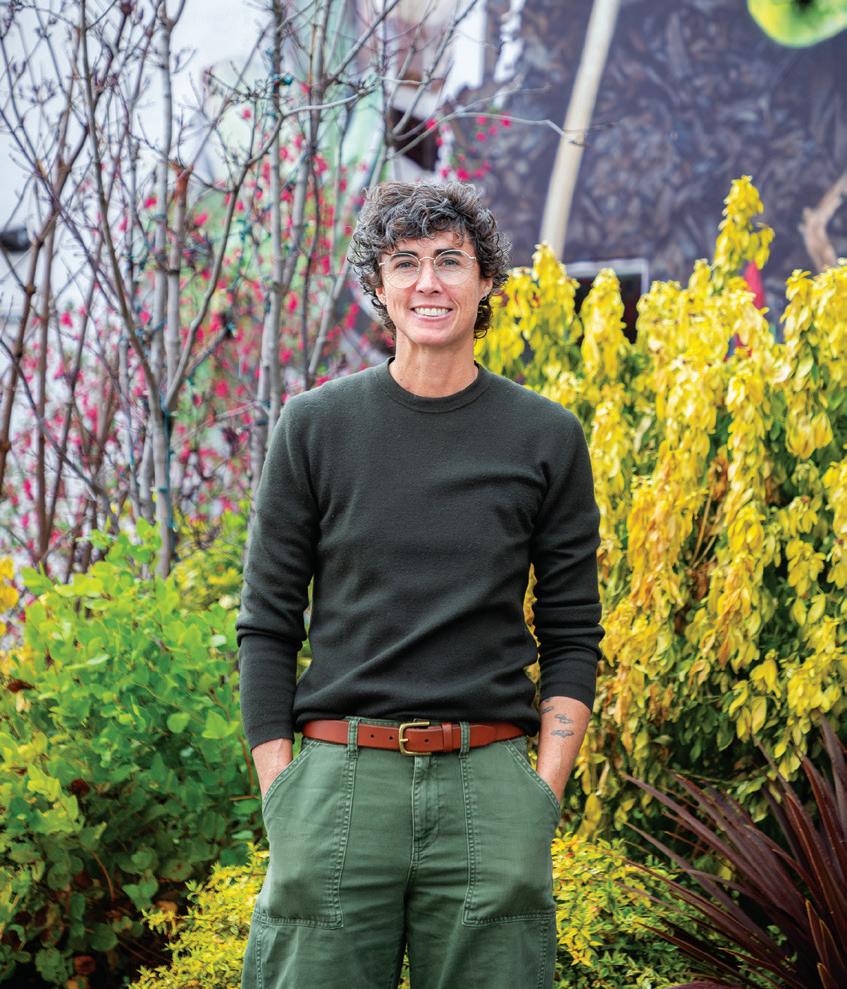
Katrina Spade has spent more than a dozen years reimagining the “traditional” ways we handle our dead, outside of burial, cremation, and donating your body to science after death. While in grad school for architecture, Spade recalls, “I was looking for something rich to think about from a design perspective. And what’s richer than mortality?”
Spade admits she found the funeral industry to be “uninspiring.” When it came to funeral homes, she says “the offerings that existed were not for me.” After learning about how farmers compost their livestock, Spade wondered if terramation was also possible for humans. While her thesis project was never intended to be a real business, the interest was immediate and undeniable.
Along with a very talented team of engineers, lawyers, and scientists, Recompose became the first company to make terramation not only physically possible, but also a legal, viable alternative for bodily disposition. They also helped legalize alkaline hydrolysis (aquamation) for other companies who want to offer the option.
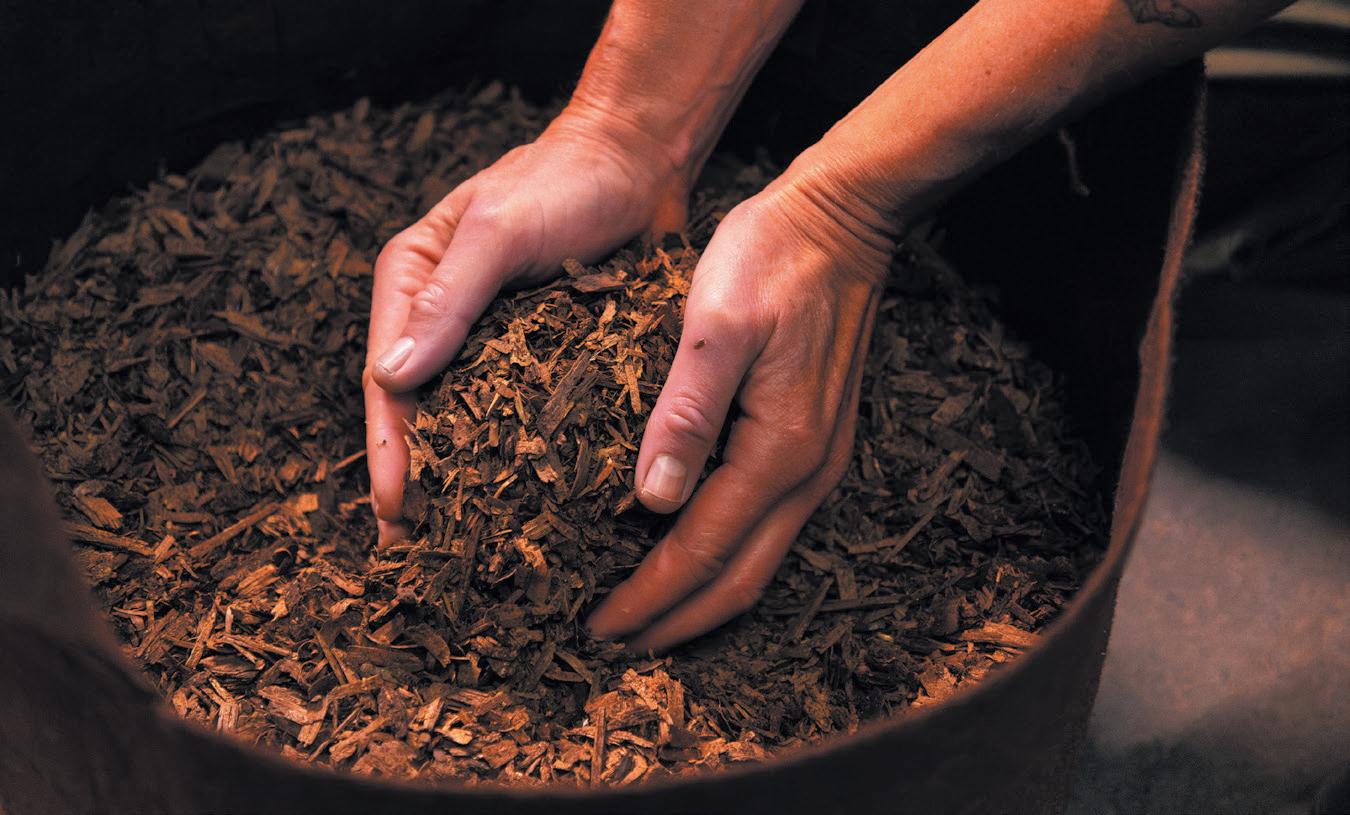
Once Spade’s team receives the body, the process takes about 45 days to complete, and results in approximately one cubic yard of soil. This soil is then packaged and can be collected by family, or donated to Recompose, who uses donated soil to restore and preserve conservation land in western Washington. Now, people from around the nation can transport decedents here from near and far to be turned into soil through human composting (terramation)—an option which is not legal in most states.
With the rise of cremation, it feels like people have lost the ceremony that comes with the body of a loved one. “I believe that when someone dies, it’s the perfect time to make a fuss,” says Spade. Although it may be new, she says “ritual is really just about marking the moment with some action.” At Recompose, ritual is built-in to their design. Bodies are gently washed and shrouded in biodegradable cloth, loved ones can gather and place organic material on the body. “At the end of the service, everyone gathers around and places the body into this threshold vessel which then is actually and truly a doorway to the next space. So that’s how we’re passing the body onto its next phase.”



BY BESS LOVEJOY
PHOTO BY BILLIE WINTER
Pamela Belyea didn’t set out to build a library so much as she set out looking for one.
After her 23-year-old son, Ben, died by suicide in January 2020, the Seattle architect and Gage Academy of Art cofounder started doing what many newly bereaved people do: search for answers. Therapy helped, even though it was eye-wateringly expensive. Gardening helped, too. As did journaling—nine notebooks worth, written every morning before she got out of bed.
But again and again, Belyea found herself returning to books written by other grieving people, looking for reassurance that the strange and awful territory she’d entered had a map, that it was survivable, even though her heart hurt so much it had turned into a donut.
Finding good grief books turned out to be difficult. At the time, the Seattle Public Library listed more than 1,600 titles under “grief,” but the first two were a thriller and a murder mystery. (The list is now nearly 2,600 titles long, heavy on novels.) Many of the books Belyea found most useful were self-published, out of print, or unavailable at the library. Buying used copies online meant waiting weeks for each arrival. Meanwhile, Belyea says, she was “numb and dumb,” cognitively impaired by loss, as were the people in her grief support groups.
“People in grief have no idea what hit them,” she told me over Zoom. “They have no idea how to cope, are not getting enough support, don’t really know where to turn, can’t afford the fucking therapist.”
Instead of continuing to journal about Ben, Belyea found herself sketching plans for something else entirely: a small, free library devoted exclusively to grief. Today, the Grievers Library consists of 10 free public collections scattered across the Puget Sound region: three large “Mama” Book Boxes that each hold 65 books, five smaller “Baby” Book Boxes holding roughly 30 books each, and two indoor bookshelves—including at Zeitgeist Coffee in Pioneer Square. Other locations include Crown Hill Cemetery, Bonney Watson Funeral Home in SeaTac, and Saltwater Bookshop in Kingston.
Together, the Grievers Library distributed more than 2,100 grief books in 2025 alone. Each is adorned with a series of colorful dots that indicate the category and subcategory—a system that allows grievers to find the books most relevant to them after, say, the loss of a child or a spouse, or as a queer person or a person of color. Belyea sees the project as “a biblio-life-
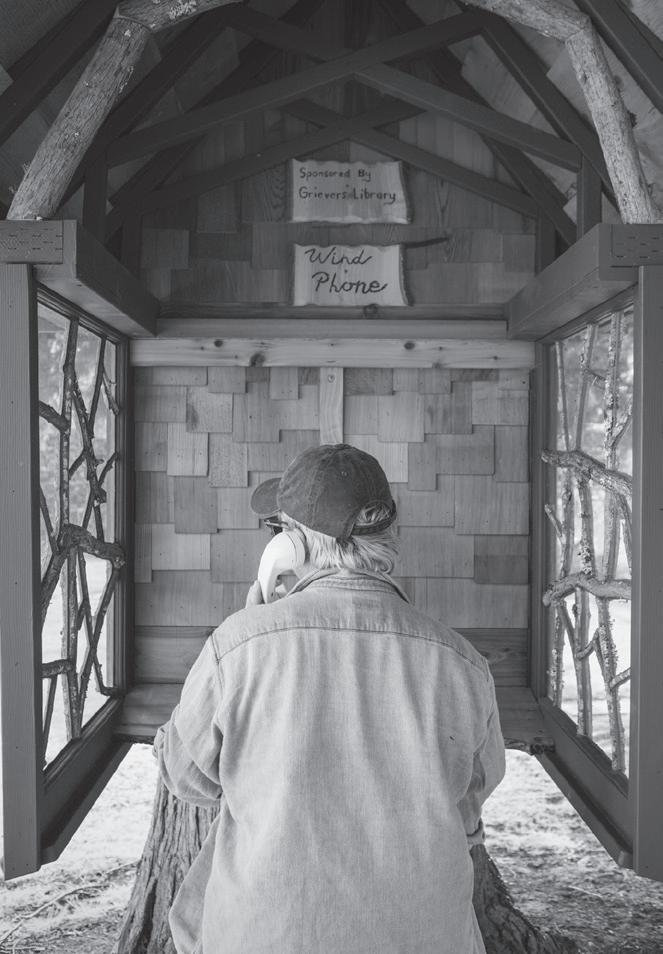
line,” a form of “love medicine.” In fact, the whole project is built on love. Also, cookies.
To build the first of the library’s boxes, Belyea walked into lumberyards, hardware stores, and painting contractors carrying two things: a one-page proposal and a tin of cookies baked that morning. “The only currency we have is love,” she’d tell managers, sliding the tin across the counter and asking for hundreds of dollars of materials.
It worked (perhaps in part because the tins qualified for refills). Nearly every component of the first generation of library boxes arrived as a donation. Volunteers baked, built cabinets, painted the royal purple exteriors, created artwork to discourage graffiti, and assembled the boxes at community work parties. Even today, every book is cleaned, color-coded, and catalogued by
hand before it goes out into the world.
The organization remains entirely volunteer-run. “It’s refreshingly non-commercial,” Belyea says. The website doesn’t sell books or link readers to any booksllers. Instead, it links to public libraries through WorldCat, allowing anyone, anywhere, to locate copies nearby. University of Washington Library Sciences students have helped create the taxonomy for the books and the online WorldCat lists, which are also available in Mandarin and Spanish.
But the project’s biggest hurdle wasn’t finding the right books, or getting the boxes built. It was finding the sites to host it. Belyea’s first idea was simply to install a grief library in her own driveway. Her late husband, artist and Gage cofounder Gary Faigin, vetoed that plan. “He said, ‘I’m not
coming down the stairs to find a griever crying in my driveway,’” she recalls.
She next approached the city, hoping to put boxes in front of community centers. They declined, telling her it “wasn’t appropriate.” After other local bureaucratic refusaled, she emailed then-President Joe Biden. “I knew that he knew the deepest, most horrific grief. And I asked him to tell the mayor of Seattle to get with it.” She never heard back. “I’m the only person on the planet who would escalate it that high, right?” she says.
Seattle officials ultimately explained that placing privately operated boxes on public land raised First Amendment concerns. If the city approved Grievers Library, it might have to permit any other private group— including extremist organizations—to install boxes alongside them.
Belyea accepts the legal reasoning. Still, the repeated refusals stung. She was also
Belyea found herself returning to books written by other grieving people.
turned down by churches, businesses, libraries, and local nonprofits. She calls it our “cultural allergy to grief at work.” We tend to treat grievers like they’re radioactive, she points out. It’s as if we might avoid it if we don’t look it in the eye.
The project continues to evolve. She’s worked on a Wind Phone Lending Library that allows the bereaved to borrow a backpack with a rotary phone to speak to their dead. (Think of it as a kind of therapeutic play-acting, inspired by the first Wind Phone that went up in Japan in 2010. It also includes a stationary Wind Phone beneath a cedar tree at Crown Hill Cemetery.)
Next, Belyea hopes, is music. After leading a workshop on music and grief at a bereavement conference this spring, she left convinced that playlists belong alongside books. Her own song, the one she listened to after her husband died, is Bruno Mars’s “Talking to the Moon.” After he died in 2025, Belyea built a memorial garden for him outside the house, and installed a Grievers Library in the middle of it.
Looking back on how the project began, she says there came a point when she realized she’d stopped writing in her journals only about her own loss.
“Now I’m inching out of my pain into this new place,” she says, “which is the compassion that you can give to all the others.”



BY CHARLES MUDEDE
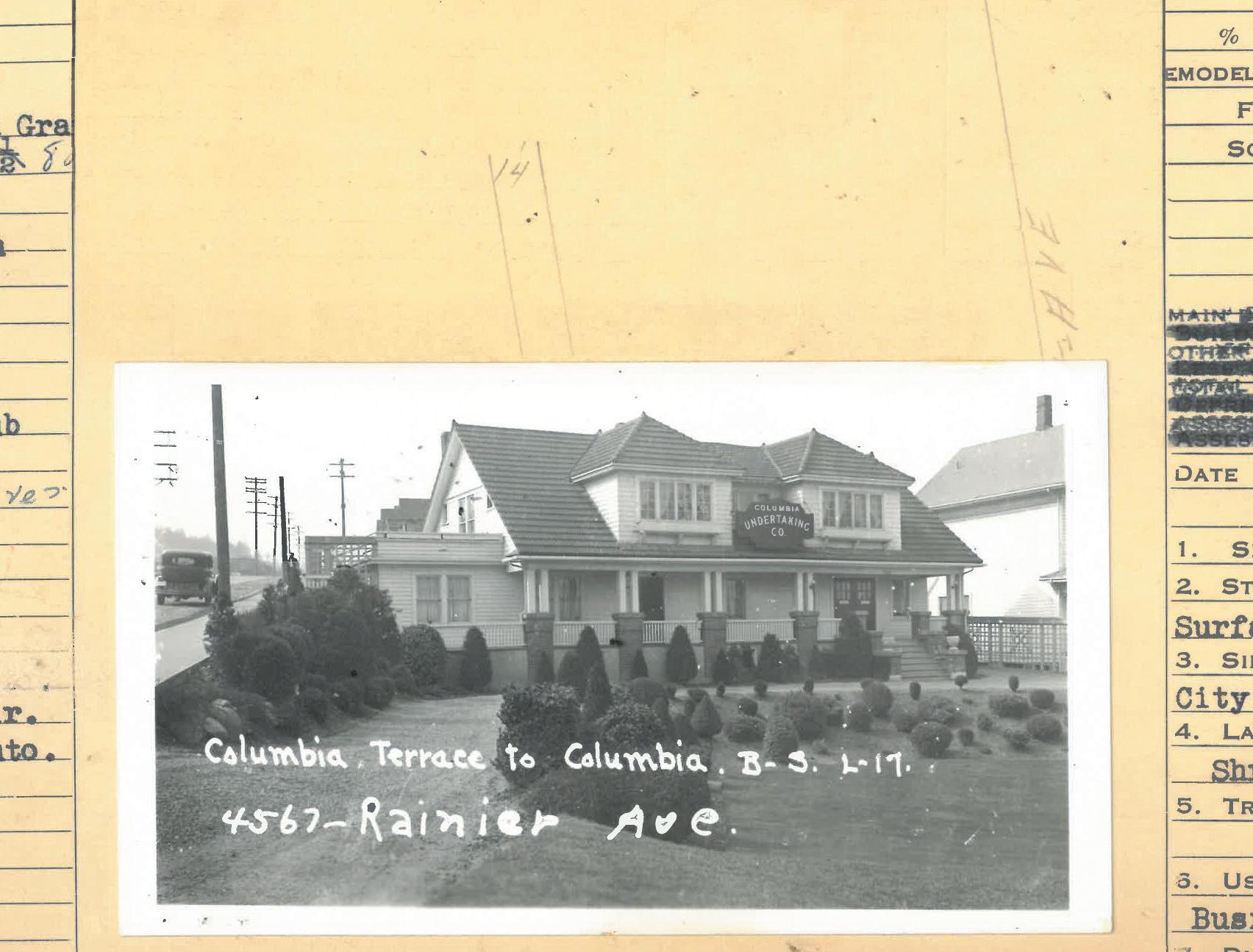
For decades, Columbia Funeral Home & Crematory greeted drivers, passengers, pedestrians as they entered Columbia City. The neon sign, “Columbia Funeral Home,” fixed on the side of the roof faced Rainier Avenue, stood out against the old building, built in 1906, which was by all standards unremarkable: barrel tiles, dormers, veranda, clapboard siding. The sign, on the other hand, was shamelessly splashy and, at night, it seemed to float in the darkened air.
The sign was everything. It welcomed you to this old city with a feeling captured by these words: “Have a good time here, with the living. But before entering, please remember the dead. We are no longer in space and time, but we exist in your memories. Think of us.”
A city is truly lost when it forgets its dead.
The funeral home was destroyed in a huge fire, believed to be started by an arsonist around 3:45 a.m. on July 30, 2025. The iconic neon sign also met its end in this early morning fire. “We were really relieved that everyone was okay, and all the decedents and people in our care were okay,” says Russ Weeks, one of the owners of the funeral home, over the phone.
A year later, the arsonist remains a mystery, and the burnt building is still there (charcoaled by smoke and flames). It now stands as an emblem of its own death, not the dead.
But behind the skeleton of the funeral home, Weeks is still keeping the services it offered to the community alive. “We’re still serving about half the number of families
cold or heat in a garage is not ideal.”
The Weeks’s family is only the Home’s most recent owner. They bought the business from the son of Wilbert Lewis, Paul
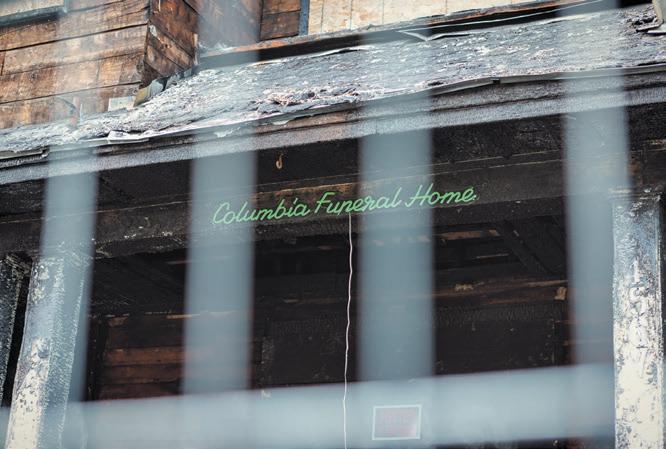
that we served prior to the fire,” Weeks says. They’re operating out of a portable office trailer in the parking lot and a small second building that survived the fire. A replica of the green neon sign sits in the window.
“Our staff has been tremendous. They’ve put up with many things… working in the
Lewis, in 2006. The Lewis family bought the home from its original owners, Fred and Georgia Rasmussen, in the early 1950s. Before it was a funeral home, the property was the home of Leo Lassen, an announcer for the Seattle Rainiers baseball team. In 2002, the funeral home was
the star of Six Feet Under’s Episode 4, Season 2 (“Driving Mr. Mossback”).
Weeks had originally planned to sell the property, listed, according to the Seattle Times , for $7.5 million. But the offers for it were so laughably low that he decided to rebuild the funeral home instead. They’ve already applied for a permit, but the earliest available appointment is in December. “You can pay an extra fee, and then they will put you on a list in case cancellations come up,” Weeks says. “But my thought is, why?”
We contacted Bryan Stevens, the chief of staff for the Seattle Department of Construction and Inspections, to ask why this community landmark was stuck in city permitting limbo. “We always prioritize permits in cases of an emergency repair for fire damage. We rely on the applicant to tell us their circumstance so we can prioritize the intake and review of their permit to demolish and rebuild,” he said. Stevens then explained that since my email to his department concerning the funeral home, they have contacted “the applicant to help on prioritizing for repairing fire damage.”
“What we really need is a chapel,” says Weeks. “That’s what people want. A sacred place.” And hopefully, the sign will return and it will once again announce to the living of Columbia City that the dead are here with you. They will be here forever.









By Evanne Hall
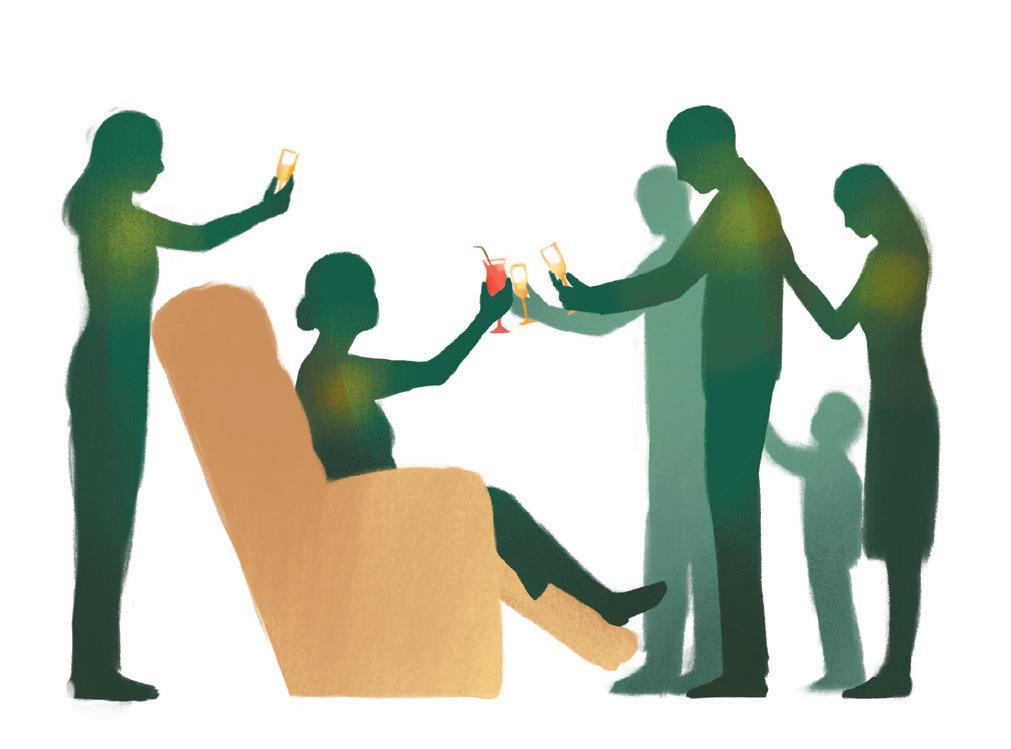
On December 9, 2019, my grandma— wearing her favorite dress, with her hair set and makeup applied—sat in her favorite recliner, surrounded by family at home, and raised a glass of strawberry daiquiri for a toast. We all yelled “kanpai!” She thanked us, and drank. Eighteen minutes later, she was dead.
Mildred was a complicated woman to love. She was not a hugger or giver of compliments. While she was exceptionally generous (money was her preferred gift to give), had a good sense of humor, and was adored by her friends and neighbors, everything needed to be on her terms. People came to her, she did not go to them.
She had always been pragmatic regarding death, so it was no surprise when, on her 98th birthday, she told my mom and aunt that she wanted to look into the Our Care, Our Choice Act Hawai’i had enacted six months earlier. Her health had been declining; mentally she was sharp, but physically her legs and eyes were giving out. She would rather be dead than unable to do laundry and cook. After some brief research, we determined that she met all but one requirement to move forward with the process: being terminally ill.
The next few months were a blur of travel to Honolulu from the mainland. We split our time between getting her affairs in order, and medical scans—trying to find something, anything, to make her eligible. She had already survived colon cancer, and for a brief moment, when a dark spot
By Charles Mudede
There is this idea that all death is just death. And all of us are dissolved, in the end, by this oneness: ashes to ashes, dust to dust. We were persons in life; we are all just nothing in the universal nothingness of death. Death is the ultimate democracy: Elon Musk will go the same way as a person living in a tent near what remains of Rainier Mall, which was destroyed by a fire in 2023 and is now an economic graveyard. But this is not at all what happens. A death is not dissolved into the great all-for-one. The death of an individual is as singular as their life.
Recall how a Looney Tunes character, when fleeing Wile E. Coyote or Elmer Fudd, punches a hole through a brick wall in the perfect shape of its body. Death does this to its survivors, but the shape of the dead’s departure doesn’t correspond with the shape of the departed’s body. Instead, it corresponds with something that’s intrinsic to the space they took up in you.
But that doesn’t mean that the shape of their departure can be predetermined. Because this is hard to explain, I must use my personal experience of loss. All of the members of my first immediate fam -
appeared on a scan, we were all genuinely hoping that grandma had breast cancer. She did not. She was annoyed. Eventually her doctors declared her congestive heart failure as terminal enough, given her age and quality of life after she had fallen in the shower in August. She was elated. She picked her death day.
In November, more than 100 people came to the house for her celebration of life. Friends and family, mostly local,
but many from the mainland, lined up to pay their respects and tell her how much they loved her. She took note of who did not show up.
Then her death day arrived. Around 12 p.m. on December 9, her doctor called to say that he was running late but would be there ASAP. Mildred was upset: She was hoping to be dead before 2 p.m. She was more upset when she found out that her three medicine doses needed to

ily are dead. My mother, father, sister, brother—gone. I loved them all equally but each entered death unequally. In a way, this is to be expected. My mother, in life, was not at all like my father. She was practical, and, though a professor, ran a popular bar in the middle of a city (Gaborone, Botswana), a fact that embarrassed my father because he saw himself as a bit of gentleman: read books, drank good whiskey, and philosophized about the nature of humans and the world in general (he was, above all, a theologian). Business was beneath him.
And so it is: A death is as singular as a life.
My mother’s departure left me deeply reflective. The hole she left in me was philosophical: What is death exactly? Do we go anywhere? Will I ever see her again?
My mother did not believe in hell, but my father did. You would think, then, that his death would make me more philosophical than my mother’s.
Instead, his departure was worldly, all business: the accounts he mismanaged, the secrets he hid from me, the clumsiness of it all. And so the hole he left when exiting life
be spaced out 30 minutes apart. By the final, lethal dose, she was out of patience and barely waited for my dad to tell her it was the big one before she had finished it. She was ready.
Her doctor noted that it was the most peaceful death he had ever witnessed and we should all be so lucky to go out on our own terms, surrounded by exactly who we wanted. That was Mildred, always in control. I sure do miss her.
turned out to make me more upset, more worked up, than sad. He should have done this, he should have done that, he shouldn’t have been so aloof. The hole he left was frustration, and my frustration with his ghost will go on until I’m gone.
My brother’s death hit me much harder than expected. I thought I was never that close to him (he was 12 years younger than me and died in 2019 at the age of 37). I didn’t like his music or his bands, and I thought he was born lazy. But, my God, his death to me had the drama and power of Jesus Christ being nailed to cross. He did not want to die. He wanted more time. And he did not hide, to me and others close to him, his absolute fear of the nothingness that was fast approaching him. He looked at death with horror. And so the hole he left is still raw, still painful to me
My sister’s death, which happened two years ago, I feared would hit me with a force that surpassed that of my brother’s. She was only two years younger than me. I spent the greater part of my life with her. But her death didn’t blow me away. And I now know why.
Though she’s gone—I have no illusions about that—the hole she left was so large, it was unimaginable. I just can’t process the scale of her departure. Indeed, if I were to see her in a bar on Pike or Pine or somewhere in London, the city she lived in before she died, I would not be in the least surprised.
By Amanda Manitach
Sometimes I think about post-mortem earworms. The thought will randomly cross my mind while I’m driving and I’ll frantically make a note for a playlist for when I’m dying. Crystal Castles. “Summertime Sadness.” “Bittersweet Symphony. “Gentle techno and all the kinds of things I listen to while driving or in the shower. In case we cling to the last things we hear, I want my earworms in the afterlife to be the ones I loved in life. I’m not sure, but I think this is important enough that it should probably go in people’s wills.
Death was never foreign to me: I grew up touching cold, stiff bodies because my father was a Methodist minister who officiated weddings and funerals all the time (and I was a curious kid). I hated weddings because everyone seemed stressed. I loved funerals because there was always cherry pie afterward. There were a lot of funerals in our tiny west Kansas community, where elderly German American congregants dropped like flies about once a month. My mom wasn’t a good cook, so I was always excited to hear that one of the parishioners had passed. We would eat well. Somewhere between the latticed crust and the open caskets, I learned what death was supposed to mean. I was 5 the day we filed out of a funeral home and I asked my
dad. He pointed to a beetle lying upside down on the sidewalk and explained that both the bug and the body we’d just left behind were empty shells. But it was okay, because: heaven.
I don’t believe in heaven anymore, but I do believe in art. As a recovering pastor’s kid, I think a lot about the parallels between art and religion. The role of an art community is not unlike church. Art has the profound ability to transmit otherwise ineffable feelings that hover over the precipice of the sublime. It can invoke altered states, ecstasy, moments of transcendence. But can it help us comprehend death?
A lot of art skirts mortality without quite
touching it. Munch’s mourners in lachrymose shades of blue and black tell of grief. Hans Holbein’s grinning plague skeletons are the great equalizer. Egon Schiele’s subjects are imbued with a sensual death rattle—Eros and Thanatos enmeshed, skeletons half-visible beneath the flesh. Arnold Böcklin’s Isle of the Dead looms, ensorcelling, dragging the viewer inward with a terrifying gravitational pull.
In 1960, Yves Klein—creator of the famous eponymous shade of blue—created the photomontage Leap Into the Void (Le Saut dans le Vide). The iconic black-andwhite image shows the artist suspended midair after flinging himself from a sec -

ond-story ledge. His body is nearly horizontal, frozen above the street. Another figure pedals away on a bicycle, oblivious to the apparent catastrophe unfolding behind him.
Something Klein captures in this image feels correct: I think we’re all a little bit Klein—flying, dying—but also the guy trying to just mind his business and stay upright on the bike, unwilling to look death full in the face.
But there’s only one artwork, for me, that perfectly gets at the paradox of dying: Damien Hirst’s The Physical Impossibility of Death in the Mind of Someone Living It might just be the title that’s doing the heavy lifting. The work itself, a 14-foot tiger shark preserved in a tank of murky emerald formaldehyde, has been famously fraught, in terms of holding together; the flesh of the beast, first interred in its tank in 1991, wasn’t properly preserved, and it eventually fell off the bone. In 2006, the old shark was replaced with a brand new one—this time embalmed.
The work’s physical failure is inseparable from its conceptual success—the material integrity (or lack thereof) functions in tandem with the mental gymnastics put forward by Hirst in the title. As such, I put forth that it’s the most perfect vanitas ever created: An unparalleled vanity that underscores the hubris of an artist trying to fuck with death like that in the first place.
I’ll probably die without ever understanding death, and I’m okay with that. In the meantime, don’t lose my playlist and pass the cherry pie.

By Emily Nokes
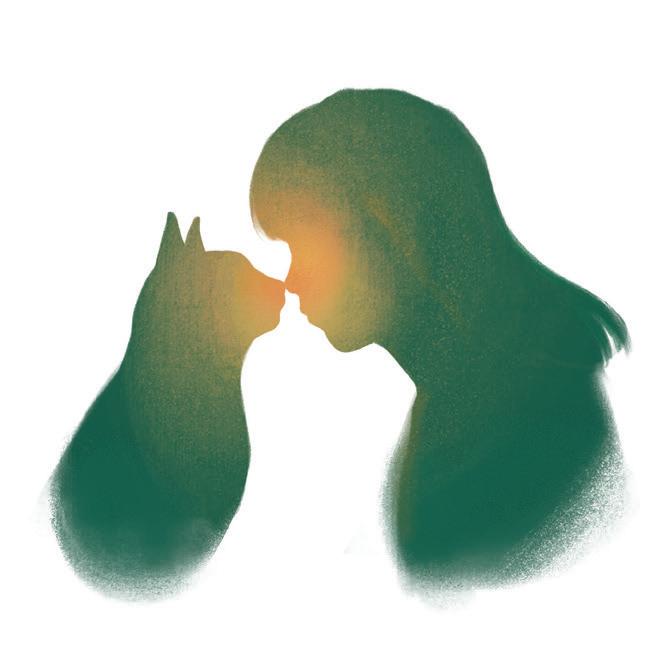
One year ago this month, I said goodbye to my beloved kitty, Vangelis, at the veterinary emergency room in the middle of the night. I am a very “good in crisis” type of person, but after the clinician told me he was gone, I stood alone in the empty waiting room and wailed in a way that felt ancient and uncontrollable.
In the following days and weeks I was numb, and trying very hard to present as a “normal” amount of sad.
After all, I’d had three years to prepare for this—Vangie was diagnosed with congestive heart failure at the age of 1. I became a CHF medication expert, and I doted on him. I tried to memorize his entire being with enough detail I could holographically project him back into my life at a later date. I had not wasted any of our time together. I thought, then, that I could circumvent some of the mourning process. We had already been through so much.
Instead, I was spun into a state of grief that felt disorienting in its magnitude. This grief felt erratic, white-hot, and embarrassing; I blubbered at the wrong times and dissociated at the wrong times. I broke out in hives and my lymph nodes were swollen and angry.
My friends were lovely and caring, but I was acutely aware that any amount of time spent in mourning, beyond a week, felt “prolonged.” This was made all the more
surreal because a dear friend/mentor had died just a month earlier. After his passing, though, there was an entire community who missed him terribly—we could check in, gather, talk about it at length; eventually he would have a massive celebration of life where we could begin to integrate this loss.
My kitty only had his little world. Our little world. The thought that only a small handful of people would ever really under-
stand how perfect and extraordinary he was felt like a universal error.
Somewhere in the cremation paperwork, I was handed a brochure called Understanding Loss and What Happens Next Brochures? At a time like this? I expected antiseptic language, corporate reassurance. But, because I did not, in fact, “understand loss” and could not imagine “what happens next” I gave it a read. The writing was so
simple and so caring it caught me off guard.
“Give yourself grace and embrace your emotions,” it began. “Grief is not an obstacle. It can’t be avoided or outsmarted. The only way to get to the other side is to go through it.” Of course this was information I’d encountered before, but the simple and careful way it had been put together moved me. There was evidence of human attention behind it. Someone—or likely several people—on the other side of this brochure, had sat down and tried to anticipate what a devastated stranger might need to hear upon leaving an emergency veterinary hospital without the animal they brought in.
They had been there, you could tell. They had not known my pet, but they had known theirs, and in our grief, we had something in common. “By pet parents, for pet parents.”
This little piece of printed writing, which I came to call “the grieflet,” reminded me that grief (even wild, deranged-feeling grief) is a healthy response to loss, no matter what our culture of denial would have you believe. Without trying to diminish it, it helped me begin the process.
“For a time, thoughts of your loved one will invoke feelings of sadness…But one day you’ll wake up, think of them and smile. It might seem far-fetched in this moment, but if you embrace your emotions, that moment will arrive.”
On a sunny day, I made a piece of artwork for my kitty that said “I loved my life with you.” I wrote him a long letter and buried it with his ashes on Mount Rainier. Now every time I see the mountain, I think of Vangelis.
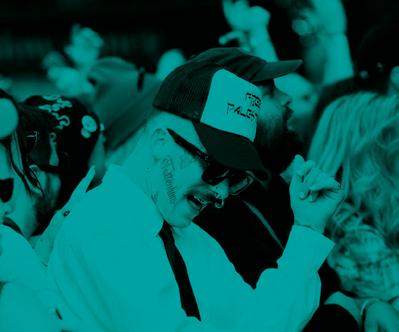
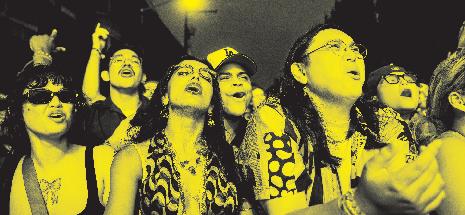
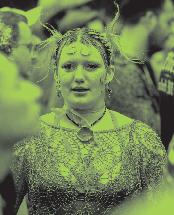
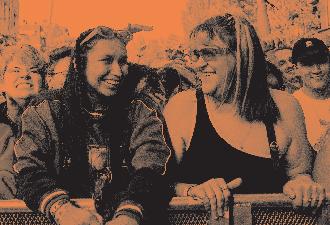
Welcome to the Capitol Hill Block Party , three days of more music than you can fit into your summer-drunk brain. This weekend, allow us to be your pocket-sized pal who’ll tell you where to find all the good shit happening between Pine and Pike Streets. We’ve plucked out the
dream of the crop, highlighting the acts you cannot miss, plus some tips on where to escape to dark, cool air-conditioning. While you’re here, swing by the Stranger booth to say hi and win some merch! And please, wear earplugs, reapply sunscreen, and drink


Which Bands to See if You Love Ghillie Suits, Pop-Tarts, and/or Songs About Falling in Love on Roller Skates
Main Stage
During 2022’s Capitol Hill Block Party, Magdalena Bay played the relatively small Vera Stage to a crowd of about 200 people. Back then, early hype swirled around their viral single “Killshot” and their debut LP Mercurial World. The Miami electro-pop duo took that buzz and ran with it, putting on an exhilarating show that made every onlooker into a convert. Four years later, their crowds have multiplied substantially. A massive world tour on the strength of their second album, Imaginal Disk, has confirmed what they proved back in 2022: Magdalena Bay are simply one of the best live pop acts around. Their placement on this year’s main stage—on which whole city blocks’ worth of fans will bear witness to vocalist Mica Tenenbaum’s many costume changes—feels more than appropriate. ROB MOURA
Daydream Stage
I don’t think you’re ready for this Gelli! Gelli Haha, that is, the monochromatic play cathedral fronted by Angel Abaya, which spews chunks of synth pop, Jazzercise, and confetti. If you’re into things like LCD Soundsystem, the B-52s, Lisa Frank, and ribbon dancing, this is a Certified Must See. Abaya, the human manifestation of red Pixy Stix, leads a whole crew of Hahas—Juju Haha, Jojo Haha, and Sisi Haha—through performances that involve trampolines, parachutes, hula hoops, and more. Watching Gelli Haha is best described as
the moment a Pop-Tart jumps out of the toaster: unexpected, hot, eager, nostalgic. They’re moving full speed ahead just like the spaceship they came in on, so see them now before ticket prices for Haha are up the hoo-ha!
BRITTNE LUNNISS
Neumos Stage No, that’s not a human manifestation of the reflecting pool algae; that’s Fleetwood Snack, Seattle’s premier experimental electronic wizard who performs in a ghillie suit and mashes up keyboard, saxophone, and a collection of seemingly random sound samples to create dizzying beats that are sometimes confusing, sometimes funny, and always entertaining. Actually, ignore all this. If you’ve never heard of Fleetwood Snack, pretend you never read this. It’s best to be surprised. Shun all pretension and expectation at the door and embrace the adventure. MEGAN SELING
Barboza Stage
A savory-sweet treat from Maui, Hawaii, Drew Martin plays music inspired by nature and the places he calls home in the Mauna Kahālāwai mountains. Combining harmonica, ukulele, Hawaiian slack key guitar, and 12-string, Martin’s one-man show isn’t your average solo performance. He relies heavily on folk and blues to create a cultural experience his ancestors would groove to. The best preview of Martin’s multi-instrumentalism is his 2023 single, “Second Nature.” Martin performs the layers that sweep through the song simultaneously, playing percussion with his feet while plucking strings with his hands and singing, whistling, and whatever other noises and instruments he decides to surprise audiences with. At times, Martin even performs standing on his chair, which makes me both anxious and dazzled! I dare you not to smile in the wake of Martin’s joy. BRITTNE LUNNISS

Main Stage
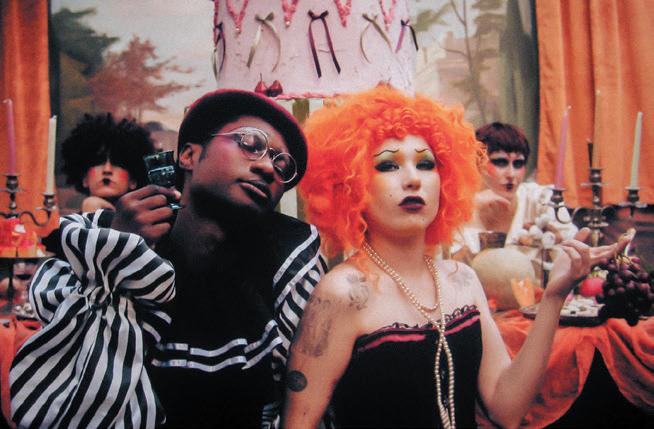
Momma’s Welcome to My Blue Sky is a quintessential summer album, perfect for those bright days of racing down the highway with your best friends in tow, off to lie in the sun and discuss the same things you’ve gone over a thousand times before. Fronted by Etta Friedman and Allegra Weingarten, the Brooklyn-based band sounds like it should be part of a soundtrack to an early-2000s high school movie. The song “I Want You (Fever)” strikes a cinematic chord with the lyrics “Pick up and leave her, I want you, fever.” It’s got a hint of grunge with its heavy guitar, but swirls of pop and shoegaze set it apart. Fans of Soccer Mommy or Snail Mail should not miss this set. GRACE MADIGAN
Neumos Stage
One of the best parts of Block Party is getting to discover artists in your own backyard. There’s plenty of opportunities for that this year, but one of the performers you’ll want to be sure to catch is Kenshi Killzzz. The Mercer Island High School grad dove into music and released her first EP when the pandemic hit her senior year. Now, after a three-year break from putting out any full-length projects, Kenshi Killzzz is back with He Rules Us All, an album featuring singles she dropped during the hiatus along with previously unreleased tracks. Expect lo-fi vibes with R&B and jazz-infused vocals. And peep her music videos with stellar visuals—they will convince you to make room for her in your packed Block Party schedule. GRACE MADIGAN

Daydream Stage
It took a full 15 years for British Jamaican house artist Rochelle Jordan to break out of the IYKYK crowd and into a wider audience. Even when 2021’s Play With the Changes seemed like it could be her moment, she was still playing Barboza to a half-full room. Then Through the Wall dropped last year and everything really changed—her return to Barboza in 2025 was, much deservedly, sold out. It would be a dismissal to call Jordan just a house artist. Fifteen years is a long time to hone your craft, and her craft combines infectious four-on-the-floor grooves with a singer-songwriter’s approach to storytelling. You come out of a Jordan show feeling purged: sweaty on the outside, self-empowered on the inside. ROB MOURA
Main Stage
When a band achieves a smash hit out of seemingly nowhere, there’s always the chance the short-term success curdles. They run the risk of being branded as a flash in the pan, stricken with the terminal diagnosis of “one-hit wonder” or, worse, labeled an industrial plant or psyop. I
don’t see that happening for British group Wet Leg, whose devastatingly simple “Chaise Lounge” made them indie rock stars and Grammy nominees within three years of existence. Moisturizer, the 2025 follow-up to Wet Leg’s self-titled album, did what every good sophomore album does: It zeroed in on the band’s strengths while expanding their use cases. Expect the group to surge through cuts from “Pangetout” to “Pokemon,” and for the city to experience a registerable earthquake when they inevitably launch into the song that started it all. ROB MOURA
Main Stage
You couldn’t dream up a better fit for the current iteration of Capitol Hill Block Party than Haute and Freddy. Ostentatious, campy, and deeply queer, the Los Angeles duo of Michelle Buzz and Lance Shipp make music that thrives on a crammed dance floor. Into the cauldron they throw 1980s effervescent synth pop à la Pet Shop Boys with 1780s sartorial choices and stir it around until it theatrically boils over in a glittery ooze. Theirs is music for bruised souls willing to, per the title of their biggest song, “dance the pain away.” If this describes you, you might want to consider costuming up for this one—shoulder pads, frilly sleeves, and face powder are a must. ROB MOURA
few nearby spots to run to if you want to cool down, rehydrate, and reset your nervous system.
NEKO Cat Cafe
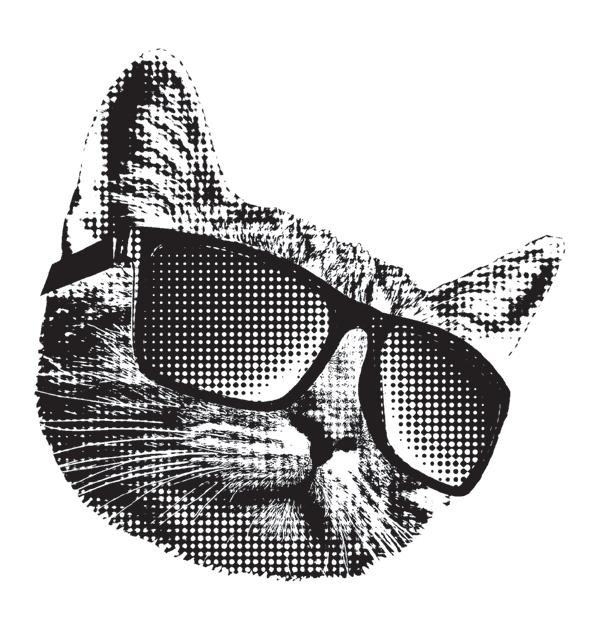
NEKO Cat Cafe will be open during Capitol Hill Block Party weekend, and they take day-of appointments, so if you find yourself burning out (or burning up), just stroll just a few blocks down Pine Street and settle your system with some sweet cat snuggles and a variety of drinks and snacks, including kitty macarons and CBD-infused sparkling drinks. It’s the purrrrrfect escape. (Haha, sorry, I had to.)
Narwhal
Downstairs from Unicorn on Pike Street is Narwhal, an air-conditioned, windowless haven glowing

with neon lights and arcade games including Skee-Ball, pinball machines, and a claw machine loaded with stuffies and dildos. What more could you ask for?
Embrace all things analog at Porchlight Coffee & Records on 14th Avenue, where yes, they offer coffee and records, but also a collection of cute greeting cards, point-and-shoot cameras, and film. They even have a drop box, so you can send your film off to be developed once you’re done capturing this weekend’s memories like it’s 1982.
H Empty reusable bottle (no glass)
H Handheld umbrella & personal misting device
H Non-transparent bags that do not exceed 12” x 12”
H Sunglasses, sunscreen, hats
H Cigarettes, disposable e-cigs, & vape pens
H Chapstick and gum
H Sealed Naloxone/Narcan
H Point & shoot cameras with non-detatchable lenses
H Outside food & drink
H Weapons or projectiles
H Drugs or drug paraphernalia
H Cameras w/ detachable lenses
H Drones
H Fireworks
H Personal shade structures or tents
H Coolers or chairs
H Pets
H Hula hoops or inflatable toys
H Cans or glass bottles
H Wagons, bikes, carts, skateboards, rollerblades
H Selfie sticks, GoPro sticks, tripods
Friday AUG 7
Siouxsie & the Banshees, Latin house music, fishnets, The Lost Boys
There are two kinds of summertime people: Summer’s Day people, and Summer’s Night people. Day people are the happy, glowing partiers who embrace the weather, wear swimsuits 24/7, and host poolside barbecues like life’s a Mike’s Hard Lemonade commercial. And if that’s you, I have good news! The Block Party lineup is loaded with artists who’ll deliver a quintessential soundtrack for the season: Disco Lines, Parcels, and Frost Children, to name a few.
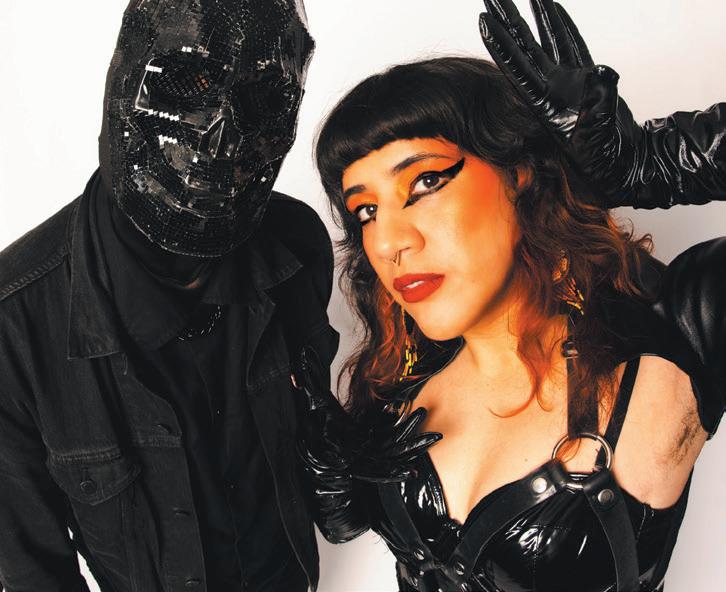
But if you’re a Summer’s Night kind of person, the sun-averse goth with an all-black wardrobe and who’d rather blast Siouxsie & the Banshees records in dimly lit basements, then put Dark Chisme on your Do Not Miss list. The local duo—Christine Gutiérrez and Erik “E” Schneider—play bilingual, industrial-kissed dark wave dance songs that pulse like a racing heartbeat. In their single “Dominance of Truth,” synth samples and loops swirl around one another like reflections on a crystal ball—it’s moody, haunting. When listening to “Desire My Soul,” my brain cuts to scenes of The Lost Boys. Dark Chisme are for when the sun goes down, and the vampires come out to play.
MEGAN SELING

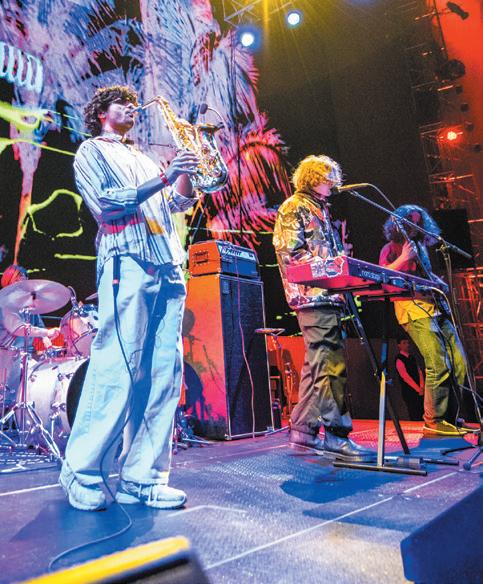
Jeff Buckley, Mahavishnu Orchestra, that one polka-dot-covered band KEXP constantly plays
Though they’re all University of Washington students or just out of college, Rose Peak hearken back to rock and jazz’s golden age of complexity: the first half of the 1970s. (My first exposure to their music was an Instagram post in which the young sextet were going through the turbulent convolutions of King Crimson’s apocalyptic prog-rock classic “21st Century Schizoid Man.”) In that era, elite instrumental finesse often translated
into big sales, arena bookings, and outdoor festival slots. Now, that sort of music exists more on the fringes, though the ascent of Angine de Poitrine suggests a bigger appetite for weird jazz and prog. Enter Rose Peak. The band members’ intellectual ambitions skew higher than most. Saxophonist Aadithya Manoj and bassist Packard Stephenson are pursuing degrees in computer engineering; drummer Aiden Chan’s studying biochemistry; vocalist James Eberle’s working on an architecture degree. Keyboardist Andrew Atkison and guitarist Marko Vidich’s educational backgrounds are unknown, but they’re phenomenal musicians. The latter guested with Nile Rodgers and Chic at Paramount Theatre in May.
Rose Peak’s self-titled 2024 debut album is a fine display of soul-jazzinflected psychedelia and dynamic blues rock à la the Allman Brothers Band, but they made a serious advance with this year’s follow-up, Brothers Inspired by the improvisational zeal of much ’60s and ’70s music, Rose Peak de-emphasized Eberle’s Jeff Buckley–esque vocals and honed their chops to a Mahavishnu Orchestra–like velocity and virtuosity. But they don’t ignore music’s potential for bodily pleasure and mysticism, as the flamboyant funk of “That Thang” and “Speak of the Devil” and the devotional “The Light We Share Forever” and “Brothers” prove. Rose Peak are one of the rare Seattle acts that could play Bonnaroo and Earshot Jazz Festival. DAVE SEGAL
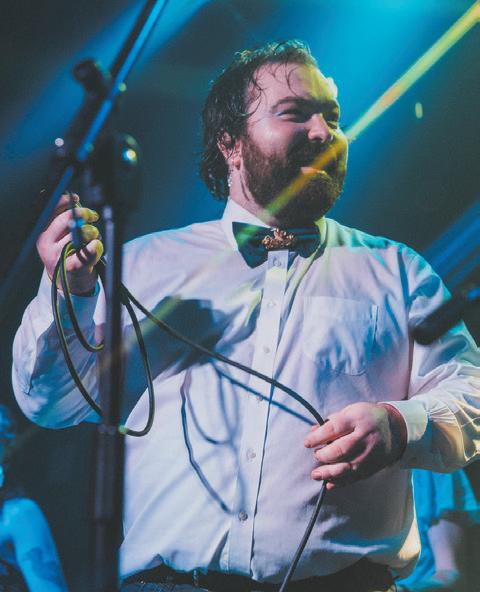
MUNA, rollerskating, High School Musical, therapy
f you’ve ever cried in a high school theater practice room after auditioning for the spring musical, this one is for you.
Seattle singer and keyboardist Henry Mansfield leads a delightful crew of queer misfits who pride themselves on making you dance with radio-worthy riffs, charming lyrics, and masterful instrumentation, all delivered with a good dose of camp. His shows truly are all about the experience. Case in point:
He hosts an annual prom, complete with tuxedos, gowns, and decor; for a recent show, titled Lover Boy, Mansfield established a breakup hotline, and he played fans’ voicemails about messy splits during the set; and to mark the release of his single “Bend Your Knees” (which is about falling in love on roller skates), Mansfield visited all 17 roller rinks in Washington State. The group also features Nikhita Sheller (saxophone), Dylan Walsh (guitar), Sunny Radford (trumpet), Kevin Silveira (bass), and Alex Roemmele (drums), a collective of seasoned musicians who excel at establishing group catharsis. You have more time to work on the emotion behind a performance once you’ve got technicalities
down, and that’s one of the reasons Mansfield’s shows are so uniquely cinematic. In a sea of SoundCloud sad boys and MacBook pop stars, Henry is bringing back musicality, and there’s something romantic about the results. The heartache, the choreography, the fishnets—the drama of it all would make a theater kid gasp. So if you like MUNA, the Last Dinner Party, or Grouplove, get your ass to that barrier—and don’t forget the glitter. BRITTNE LUNNISS

BY AUDREY VANN
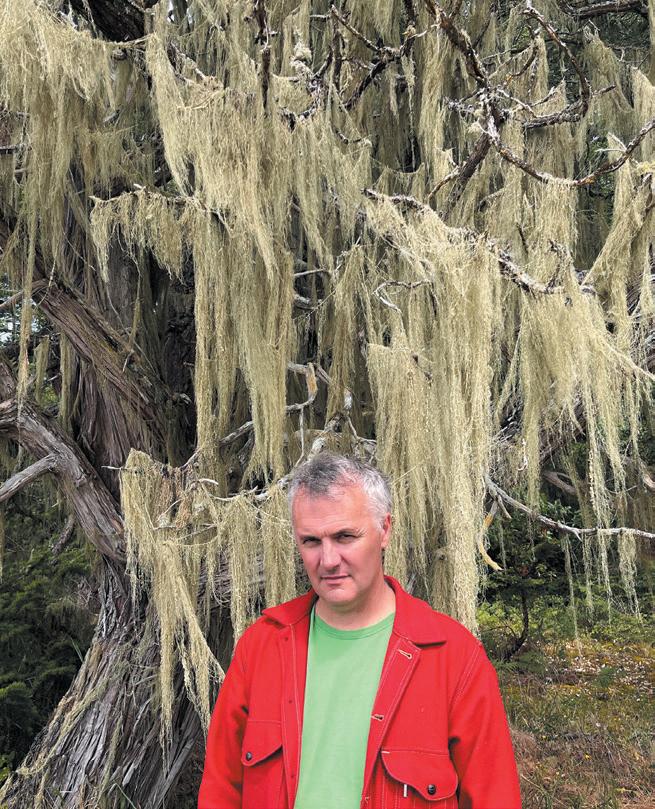
“How does it feel to be called the saddest musician in the world?” I asked Phil Elverum on a Monday morning from his home on Orcas Island. I thought this question, referring to the title of a 2018 Spinoff article, might make him laugh, but instead, he looked at me in seriousness. “I’m not into it,” he said, shaking his head, “It seems shallow to me.” Although Elverum admits he understands why that perception is out there. Under the moniker Mount Eerie, he has released 11 experimental folk-forward albums that have touched on breakups, political disillusionment, existentialism, the natural life cycle, and, perhaps most notably, grief. In 2017, he released the critically acclaimed album A Crow Looked at Me , written and recorded a month after the death of his wife, the cartoonist, writer, and musician Geneviève Castrée, when grief was fresh and emotions were raw. “But even within those songs, I tried to put humor and love in them,” he offers, “but maybe not everyone is ready to go beneath the surface.”
On A Crow Looked at Me, Elverum did the thing that most of us wish we could do: turn tragedy into art. But at the time of the album’s release and supporting tour dates, he seemed unsure about its toll on both himself and the audience (“It feels very much like I am going out there and reenacting a trauma and charging people money for it,” he told Double J in 2018). Ahead of his upcoming solo acoustic show at the Neptune Theatre, I caught up with him to discuss the album’s anniversary, parasocial relationships, and how to push through embarrassment to reach the magic of vulnerable exposure.
You began writing A Crow Looked at Me 10 years ago. Have you thought much about that anniversary?
Well, yeah, actually. Geneviève died on July 9, 2016. This past July 9, I didn’t notice it had passed. I forgot. Then the day after, I had crazy nightmares. When I woke up, someone pointed the anniversary out to me. The death anniversary is not something I try to remember. It’s not the day I want to commemorate.
When was the last time you listened to A Crow Looked at Me?
Well, I don’t throw it on for fun [laughs]. One of the songs came up on shuffle sometime within the last six months. I listened to it. I didn’t skip it. It was cool. It’s far enough away now that I can kind of hear it the way other people hear it, rather than being swept away by my own personal recollections.
Did you find that writing and performing those songs helped you? Would you recommend making something in the midst of grieving?
I don’t know if I’d recommend it… Well, maybe I would, because it really did help me, but that wasn’t my intention with doing it. I didn’t set out to do a self-help project in front of everyone, but I recognized how healthy it felt to digest and metabolize this stuff. In our culture, we
“I used to have recurring dreams about Björk. I don’t know why. ”
don’t have a very organized or healthy way of integrating these things into our ongoing lives.
After I had made the album and I was still in it—in the core, in the hot part of grief—I brought my CD to group hospice therapy. I was like, “This is kind of rele -
vant. I made this thing out of my grief,” and I realized that others in the group didn’t have a creative outlet for those feelings. There was a juxtaposition at that moment between the people in the room and me. I was like, “Oh my god, this really does help!” I felt like an expert at grief compared to them.
Have you experienced fans being emotional with you?
Yeah, it still happens, but it happened more when I was touring for A Crow Looked at Me. It was a new level of raw interpersonal intensity. I was out at the merch table each night just available to everyone. I noticed myself wanting to be open-hearted to each stranger that came up to me, because everyone’s experience with it is so intense and real, but I couldn’t be fully available to every person. It wasn’t sustainable. Eventually, I noticed a shell developing, which I hated, but it was necessary for survival. I’d look them in the eye and be present enough, and then go back inward. It still happens, but mostly through emails and letters. I respond, but I have to protect
my own heart, too. It’s parasocial in a lot of ways, but I know I’m putting myself out there in such a way that lends itself to that.
Are there any artists that you’ve felt a parasocial relationship with?
I used to have recurring dreams about Björk. I don’t know why. It was like a dream world, supernatural something. But yeah, I felt like we were probably friends. And then weirdly, and I haven’t really said this ever, I felt that way about the actress Michelle Williams. I would see her in Kelly Reichardt movies, and think we were friends. I felt like we knew each other. She just seemed like a punk friend of mine. I didn’t realize she was like mainstream famous. Then we did meet, and we… got married. It was a real mindfuck. It got so confusing. I felt so familiar with this person—the parasocial turned into reality and then came apart in a painful way. So yeah, I don’t know where I am with that stuff now.
What do you think happens when we die?
I used to be a meat-and-dirt-and-bonesand-nothing type of guy, then I started entertaining the idea of the spirit world. Like communicating with the people we’ve lost through the natural world in a non-ironic way. That’s about as far as I’ve gone. I like the comfort and depth it brings to indulge in that type of thinking. It feels playful to me. I’m walking around talking to the birds, or not even animals, just the air itself. There’s not a belief system around that, more so a daily practice of surrender to who-knows-what and pushing aside that masculine/rational part of my brain that is resistant to blurriness.
I know you are busy taking care of a baby right now, but do you have any ideas percolating in your mind or projects you’re itching to work on?
I’ve been writing songs very slowly in the little 30-second windows of free brain space. That’s always going on, even when I’m doing baby stuff. In a way, it’s the same inspiration as always—I always feel like I haven’t quite gotten it yet. I’m almost there. I almost said it clearly enough before, but now I want to try again and shed all the metaphors, decorations, and persona to talk about this present moment. I don’t want to talk about myself at all. Having a baby is a shortcut to having a zoomed-out perspective on the next 1,000 years, hoping that humanity does okay and that the nonhuman world does okay. That’s where my head has been—in a 1,000-year perspective.
BY AMANDA MANITACH
There’s a work of art at the Henry Art Gallery I can’t stop thinking about. It’s a sheet of plastic—thick, construction-grade—suspended from the ceiling with all the pomp of a medieval tapestry hanging at the Met. It’s clear, but slightly milky in places where the translucence has turned mottled and hazy from use. Its polyethylene edges have been meticulously whipstitched with undyed white twine, the corners embellished with braided hemp tassels.
It’s part of Eric-Paul Riege’s solo exhibit, ojo|-|ól Riege is a Diné artist from New Mexico who integrates traditional Native art forms like weaving, silversmithing, and beading into contemporary sculptural forms. Giant textile works resemble oversize jewelry, woven rugs, or big kinetic abstractions that gently spin and sway. Others share a quizzical resemblance to heavily ornamented cat towers, deconstructed punching bags, or fuzzy chandeliers. Many double as instruments, dripping with jangling metals, tassels, and beads. One of the first objects a person encounters is a small spray of metal jingle cones threaded onto a rope tied to a vent near the ceiling; air blasting from the museum’s HVAC system sends the thing twirling and tinkling.
After having it live rent-free in my head since March, I returned to ojo|-|ól to see if the plastic holds up to the myth it had become in my mind. As I approached, I overheard one visitor ask another, “I think it’s a shower curtain?”
It’s actually packing material: a protective piece of plastic used by another museum to wrap another work during deinstallation. Riege has incorporated salvaged packing materials into their practice for years, a quiet jab at institutional systems. Its title is a delicious run-on thought: blankets have warmed us for a long time why not just keep making MORE Make a blanket for a blanket – they get cold 2.
Riege’s work operates on many levels: as an extension of Diné weaving traditions— Riege comes from a long line of weavers— and as a critique of the colonial institutions that collect and frame Native art. Riege also inhabits the role of trickster: rule-breaker, shape-shifter, and sacred fool, upturning and unsettling hierarchies of materials and expectations. To that end, none of the show labels identifies materials. Instead, a single placard lists every organic and synthetic substance used throughout the exhibition: blood (human, sheep), bone (elk, deer), dye (cedar, coffee, juniper, tea), glass, ink, leather, paper, tin, nickel, silver, tobacco, wax, wood, and so forth.
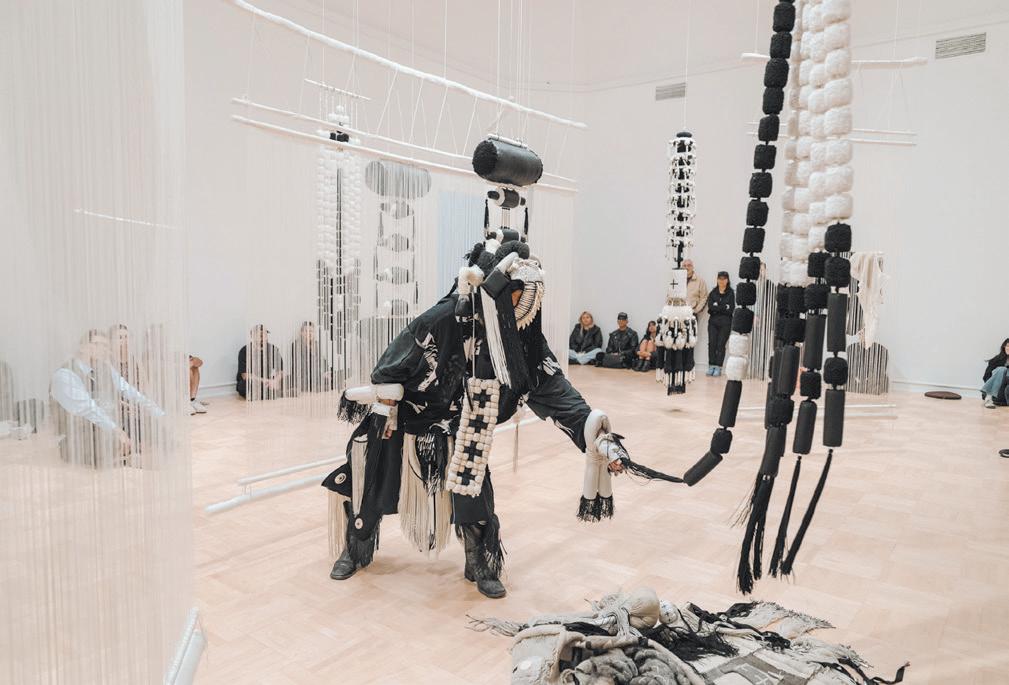
Set free, materials become the ingredients for a kind of self-mythologizing central to Riege’s practice. Across exhibitions, Riege has woven the story of Hól —an alter ego, son, collaborator, and imagined future ancestor—through sculptures, videos, and the transformed scraps of everyday life. Many of the sculptures are designed to be worn. During performances, Riege dons and activates them, granting the objects an
On a plinth in the center of the room, two broken chairs briefly become the most compelling objects in the universe.
uncanny animation and agency of their own. Riege’s work is anything but didactic—a playfulness prevails—but there’s a quiet murmuring throughout: that the sacred can be found in the ordinary.
The act of reenchantment echoes through another exhibition recently
unveiled at the Henry, Day-to-Day: Rhythm, Routine, Resistance, a survey of contemporary artists exploring the poetics and politics of everyday life.
The exhibition feels important at a time when the domination of digital spectacle has dulled our ability to be present in the material world. Many of the artists featured in the exhibit are Gen X and older— the last generations to remember life before the internet. Their works point back to a way of navigating the world of objects with slowness and awe.
The show opens with one of Isaac Layman’s macro photographs of the most banal of banals: a white plastic ice-cube tray against a white background. Yet the image is a digital composite of 26 separate photographs blown up so large the detail surpasses anything the naked eye can see. The ice is not clear at all, but crystalline galaxies roiling with bubbles and spotted with flecks of dirt as bright as stardust.
Many works, though quiet, contain entire universes. Dawn Clements’s 78-foot drawing Middlebury spans two walls, constructing a dizzying panoramic record of a single room she occupied during a residency in Vermont. Rashid Johnson’s video Black and Blue follows the artist through an ordinary day during the COVID-19 pandemic, lin-
gering over moments by turns melancholic, boring, and sublime.
The exhibition’s power lies in such subtle gestures. On a plinth in the center of the room, two broken chairs briefly become the most compelling objects in the universe. One, Louise Nevelson’s Throne, presents the fragment of a destroyed chair framed in a shallow shadow box. A smudged clump of bright peacock-blue paint across the seat back shimmers with the luminosity of gold leaf on a medieval manuscript. It’s an unmistakable American Beauty moment— the plastic bag dancing in the wind—but such sweet, jarring epiphanies recur over and over throughout the exhibition.
Nearby, a delicate wooden dandelion carved by Dan Webb rises from a block of redwood. Every part—the rosette of leaves, twin stems, flower heads, even the taproot emerging through the charred base—is carved from a single piece of wood. Upon leaving, I find dandelions following me everywhere. They cluster along the sidewalks and push upward into the present moment. Somewhere along the way, I’d forgotten how to see them.
See Eric-Paul Riege: ojo|-|ól through Oct 25, and Day-to-Day: Rhythm, Routine, Resistance through Jan 3, 2027 at the Henry.
BY MEG VAN HUYGEN
It’s not exactly breaking news, but Seattle’s hospitality industry is having a real rough time. Over the past few years, our city’s restaurantscape has seen some of the nation’s highest minimum wages instated, justifiably. In its wake came a rolling wave of wage theft investigations and late-pay disputes. That’s alongside the issues that’ve been affecting restaurants across the nation: rent gouging, astronomical food costs, booze tariffs, supply chain issues, inflated insurance payments, and other Trump- and pandemic-related discombobulation. It’s why we’re seeing restaurant staff striking and unionizing, and why we’re losing our beloved James Beard–nominated darlings right and left. Restaurant owners are scrambling, as their business models don’t seem to pay the bills anymore, and the fallout has been hitting some unfortunate workers in the paycheck.
The problem’s not helped when there’s just one person or entity at the top of the restaurant pyramid to navigate these challenges, whom employees must trust implicitly, with zero visibility on what’s going on inside—or when the whole structure might crumble.
***
Brothers, chefs, and biz partners
Seth and Zach Pacleb had a better idea. After a decade and a half of co-running farmers market stalls, pop-ups, and catering operations together, they opened Pidgin Cooperative last fall, along with fellow industry pros Erica Reich and Spencer Rossman. Located inside Fishermen’s Terminal in a boaty, industrial area of eastern Magnolia, the worker-owned restaurant and bottle shop brings together the team’s values of collaboration, trust, and financial transparency in a way that could reshape the city’s whole hospitality industry.
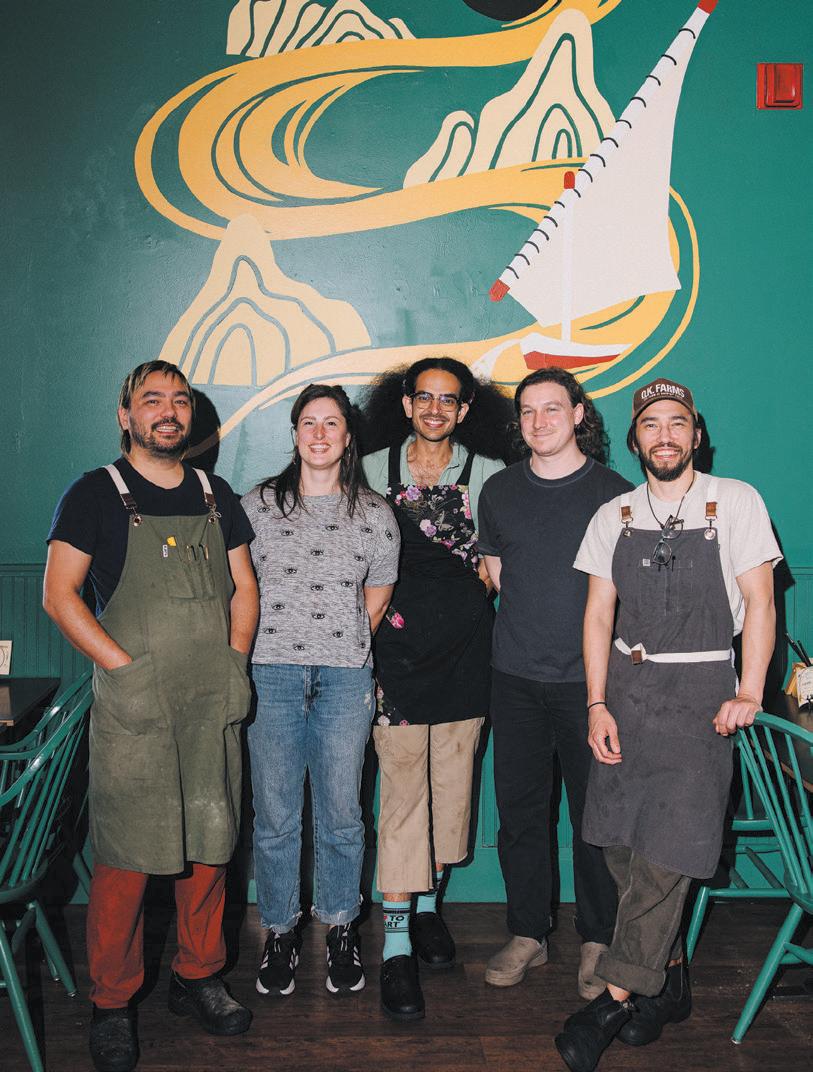
to us, you know, like ‘We’re hungry,’ and we’d feed them, and then at some point one of them asked us, ‘Do you want to trade food for food?’ And then it just became a part of the model. We had regular farmers, we knew their orders, and then we would go across the aisle and pick stuff up from them.” That barter system soon became the norm, and the brothers eventually gave up trying to track who owed them how much or vice versa.
“You’d have a farmer who has, like, a 35-pound bin of delicata squash that they just don’t want to take home. I’d be like ‘Yeah, okay! Totally! Looks like I’m feeding you for the next three weeks.’”
The Paclebs didn’t know it yet, but this squash-based currency system would become an important plot device in the genesis of Pidgin Cooperative. The network they’d formed with dozens of hyperlocal producers at the farmers markets meant they knew exactly when the best stuff was in season. Zach even created a detailed color-coded spreadsheet to record the names of their favorite farmers, what they sell, and what time of year their, say, asparagus was at its very sweetest.
Like so many other local culinary ghosts, Ramen and Tacos was slain by the COVID-19 pandemic, and the Paclebs reverted back to the name Brothers and Co., focusing anew on catering. But all pandemic long, they and their team had a glimmering little idea brewing.
Pidgin was built around a radically simple notion. Instead of a traditional hierarchy model—where workers get hourly wages plus tips, while owners make all the decisions and reap the profits, if indeed there are any—the whole staff is invited to be in the founder’s club. On day one, Pidgin employees are paid $25 per hour and given a clear pathway toward becoming
co-owners. After 2,000 hours of service (roughly one year of FTE), workers can purchase a membership share for $1,000 that grants them voting rights in the business, visibility on its finances, and access to profit-sharing. They can invest that $1,000 through a payment plan, if they like, and prelim voting rights are unlocked after an initial investment of $200. The model also includes an equal share of the pooled tips for both front-of-house and back-of-house workers. Currently, Seth says, there are six worker-members at Pidgin, and one who’s on track to becoming the seventh.
This power-to-the-people restaurant
concept began, appropriately, in the farmers markets. Around 2010, the Brothers Pacleb used their collective decades of fine-dining expertise to start a pop-up called Brothers and Co., first doing catering and one-off dinners. A few years later, they were selling handcrafted snacks at farmers markets, eventually pivoting to pan-Asian tacos and ramen but make it farm-to-table.
Later restyled as Ramen and Tacos, they found themselves continually freestyling new dishes, often drawing from their Pacific Islander heritage—and whatever produce their fellow vendors had around.
Zach says, “The farmers would walk up
When asked why start a worker-owned restaurant in the first place, Zach says, “I think for Seth and I specifically, our bodies were really starting to hurt. So there was this desire to figure out something that’d be better for us as we move forward. I don’t know how many anecdotes we’ve heard from other chef-owners who just run their bodies into the ground because they have this vision. I think it terrified us!
“This co-op model allows us to not only give our long-term staff the opportunity to grow with us but also spread the labor of steering the direction of the business, so everyone can have input on making decisions. So it’s not just on the two of us. This way, there’d be more opportunity for workers to have agency over their work, and it
would also allow us a little bit of relief.
“Obviously, this is a low-margin industry,” Zach admits. ”But since a co-op is essentially a profit-sharing model, as long as everybody is participating in the day-today operations, we’re all committed to having that skin in the game. With the help of our lovely lawyer, we developed the financial structure to make sure that everybody is getting what they’re earning.”
If you’re gonna start this kind of a thing, it certainly helps to be brothers. Originally from Bothell, Seth and Zach Pacleb got their start in fine dining, with Canlis, Crush, Restaurant Zoë, the London Plane, and other splashy restaurant names studding their résumés. They’ve
“We’re all committed to having that skin in the game.”
worked together often, long before they co-owned businesses.
Erica Reich, who is also Seth’s life partner, sometimes gets left out of the origin story conversation, but she’s been on board since the farmers market days. A food service veteran with experience in marketing and arts org management, Reich is one of the four initial worker-members, and she’s Pidgin’s general manager. In fact, Zach credits Erica, along with his brother, with the idea to start the co-op in the first place.
The other O.G. worker-member, Spencer Rossman, is the Paclebs’ buddy since middle school who spent two decades as the beer and wine steward at upscale supermarket chain Town & Country Markets. He’s Pidgin’s beverage director.
Okay, but let’s talk about the food. Unsurpringsly, Pidgin is very, very good at vegetable dishes in general, and I fuck very deeply with their smoky eggplant tortang talong (Filipino omelet) and harissa-kissed blackbean noodles with fresh cucumbers and pickled mustard greens, whenever they cameo on the menu. The tingly, effervescent house kimchi is a serious contender for best in town, too—I can never resist taking a li’l box of that and their prickly ash popcorn, ’zazzed with Sichuan spices and nutritional yeast, home with me.
brought to us by Zach’s elaborate Excel of PNW farmers. On my last visit, it clued me into a special, the stunning, savory nettle noodles: hand-foraged stinging nettles kneaded into a dough made with Washington-grown flour and then shaped in Pidgin’s custom noodle machine. Served with peanut-forward chili crisp, garlicky green nettle sauce, curry leaf, fermented corn, preserved lemon, hazelnut, and Parmesan, it was enough for two meals at just $16. Among other bangers, that day’s fresh sheet also listed tamarind-tamari grilled short ribs and tempura fish ’n’ chips made with rockfish, hijiki-enhanced batter, and Sichuan remoulade.
Whew. These folks are not playing.
***
Pidgin’s in its first year, so it’s a little early to dream big, but Seth confesses he’s thinking of starting some kind of umbrella group of restaurant co-ops someday. The idea is that his team could teach other new businesses how to get up and running under a co-op model, with a pool of resources, lawyers, and maybe even capital to help them realize their visions.
Obviously, a cooperative isn’t a business model that every restaurateur can adopt, and if it’s not baked into the process from the start, a switch for an extant restaurant is gonna be tricky. You’ll also need to trust your team utterly or there’s no way, and you can’t be trying to build a
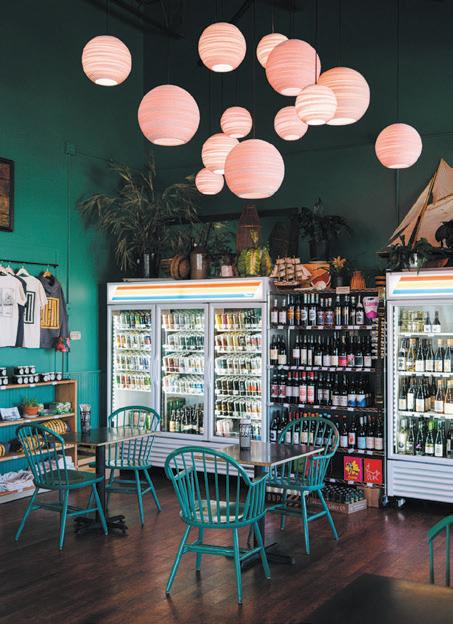


Pidgin’s also developed a devout fandom around their fried chicken sandwich: a crispy inasal-and-koji-marinated chicken thigh—flavors of calamansi, black pepper, garlic, coconut vinegar—on toasted brioche with ranch, shredded cabbage, and sumac onions. And you should never ignore the fresh sheet at Pidgin, largely
shimmering empire of oyster shells. You’ll probably need to stick to one restaurant for a while. But if they can, every reasonably humble prospective new owner who hopes to build a restaurant concept with purpose and deliberation—and wouldn’t mind a few extra accountable helping hands in the process—should consider a cooperative model.
If enough of them do, Seattle could revolutionize its presently very dismal hospitality industry, dismantle a now-broken business model, and plant some hope in the process. It might just take a village.


An author’s connection to blues music and the environment provokes new ways of thinking.
BY NICO SWENSON
Environmentalist movements have a polluted history of excluding Black and Indigenous narratives. Rasheena Fountain’s work debunks myth and misconception to honor the full story.
Fountain is a polymath of the arts who has centered creativity in her decades-long work in environmental advocacy and social justice. Her essays, poetry, music, and film have garnered her fellowships with Jack Straw Writers Program, National Audubon Society, and Sundress Academy for the Arts as well as publications in HuffPost, collaborations with Natural Resources Defense Council, and a feature on Hamilton’s social media where a cast member did a reading of her work. Fountain’s art and scholarship carry a philosophical understanding of history, human experience, and naturalist insight. Fountain’s recently released book, Starfish Blues: A Memoir, is a deeply personal collection of nonlinear memory, poetry, and letters to family that details her experience as a Black queer mother moving from central Illinois to the Pacific Northwest. The artist and current PhD candidate queers typical categories of thought using her research on blues literature and the environment. Her work cracks open the boundaries of how we grapple with complex experiences and presents profound opportunities to think in more expansive ways.
“A lot of my work deals with memory, and specifically looking for ways to remember Black environmental relationships beyond what is promoted or seen in the mainstream,” says Fountain. “My grandmother was a sharecropper in Mississippi and migrated north to Chicago. She and my grandfather became homeowners and became very middle class, if you look at it on paper. I encountered a Chicago that didn’t feel like success or progression. There were a lot of systems that were weighing down on my family. Whether that’s mass incarceration, or gun violence and things like that. There’s a generation of my family where that’s all we’ve known, and so one of the things that is prevalent in my family is the desire to escape. I feel it’s a responsibility of mine to be a part of helping us remember a time before Chicago, before Mississippi, or even an afterlife that isn’t constrained. A large part of my work, and what I carry, is not thinking about ‘I’ve made it out’ and more about making sense of where my family is and remembering the abundance within the stories that we carry.”
Before moving to Seattle with her daughter, Fountain was taking environmental science classes with a goal of pursuing a master’s degree. “I’ve always been interested in what was left out. I didn’t grow up knowing
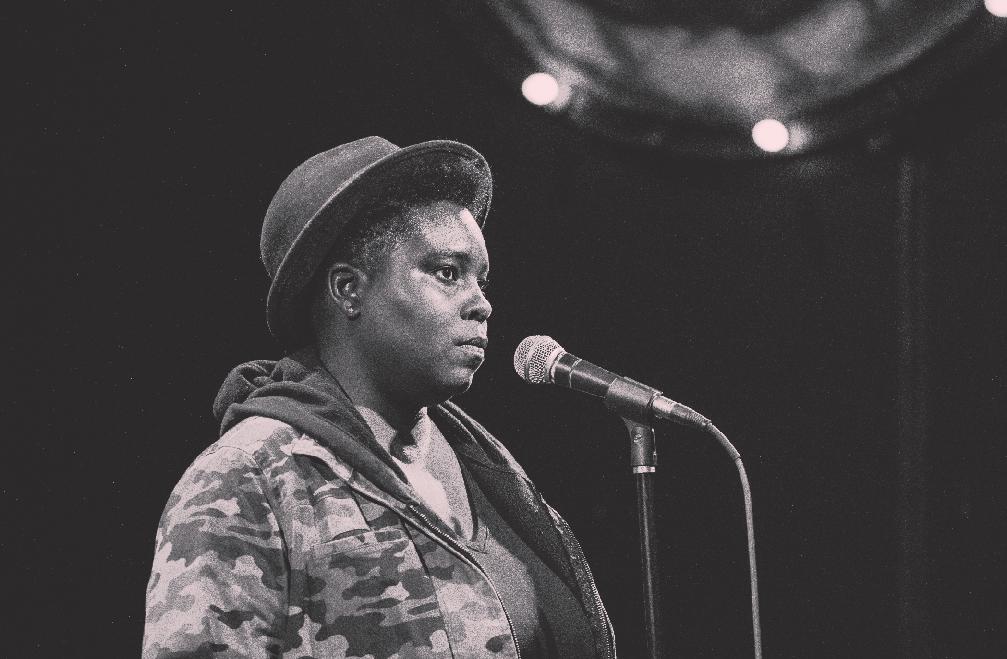
that there was a field such as environmental science, or that people were studying air pollution, yet I was living in a community that was being disproportionately impacted.” She moved to Seattle to pursue an M.Ed. in urban environmental education at Antioch University.
After graduating, Fountain navigated opportunities in Seattle; having a rooted space for her daughter was a priority, but in the book, Fountain explains much of the racism that environmentalist spaces contained. She writes about the concept
“It’s important not to have a pristine look of what an environmentalist is.”
of “charismatic megafauna,” and the way endangered species—like giant pandas or orcas—are used as mascots for environmental efforts, used to soothe the collective conscience of the society that made life hostile for them in the first place. She then deftly connects this to experiences of tokenization and exclusion. In Starfish Blues , she writes, “I never wanted to be a charismatic megafauna for diversity and inclusion... but I’ve been made to feel this way. I’ve seen many Black people used in
this way, no matter their credentials or expertise. I have often found myself symbolizing a fiction rather than a true inclusion and acceptance. In many situations, ‘inclusion’ for them has meant either just assimilation or an expectation to mimic the current ways of being and knowing.”
Fountain is hopeful that environmental spaces are changing, in terms of both opportunity and representation. “One of the highs was meeting people who were Black and passionate about environmental justice. One of my favorite authors, Dianne Glave, talks about how there’s this assumption of apathy with white environmentalism. It’s not a lack of care, it’s just that Black people engage with the environment in a different way. My own family was incredibly into nature. My grandfather would watch nature channels. That was his way to travel across boundaries that wouldn’t be possible as a Black man in that time. My grandmother gardened in the backyard, in what is considered a concrete jungle.”
In her book, Fountain examines how her ancestors’ relationship to the environment—and memory—was informed by slavery, cycles of forced migration, and escape from racial terror. “A lot of what I get into is about memory and why memory wasn’t transported to us. Instead, it was the continual act of forgetting and moving forward. My grandparents didn’t really talk about the bad things that happened.”
Fountain structured Starfish Blues around the 12-bar progression of blues music. “Blues has long served as an archive and articulation of Black relationships to the land, environment, environmental catastrophe, and social life.” The progression typically moves through three lines: The first states the problem, the second restates the problem, but with variation in tone and voice, and the third offers a resolution or irresolution. Fountain uses that final line to reimagine the problem, embedding environmental aesthetics within the musical framework—disrupting the conventional landscape of nature writing.
Although Fountain doesn’t shy from digging into the issues she’s experienced within environmental spaces, the book isn’t a litany of complaints; she hopes readers are able to geek out about nature and question their own relationship to place, as well as their relationship to this colonial system that has governed environmentalism for so long.
Fountain navigates these questions with generous vulnerability. “There isn’t one route to environmental advocacy. It’s important not to have a pristine look of what an environmentalist is. That pristine image is what keeps a lot of people out. I hope my book helps everyone reflect on our own relationships with movement, with our families, history, and identity. I’m excited about being one small part of diversifying the types of narratives that are out there.”



It’s a Neighborhood Under Duress, but Yenvy Pham Wants to Make It the Best Block in Seattle
BY MICHAEL WONG
Iactually came for a food story, for the chicken. It’s the only dish they serve at the Boat in Seattle’s Little Saigon.
But before I could even order, I was greeted by the owner, Yenvy Pham, and promptly whisked out onto the street with a new mission: visit all her favorite vendors in the neighborhood. In 2026, Little Saigon is embattled, to say the least, faced with the reality of a drug and homeless crisis unfolding on of their doorsteps. But a tour with a James Beard finalist restaurateur through the neighborhood—one her family has helped steward for decades—didn’t sound like a losing proposition. So, with an empty stomach and a curious mind, I followed Pham out the door.
As we walked, Pham revealed herself as a veritable Little Saigon wiki. She would point at a building and give me the Carfax: who owns it, who their kids are, what ethnicity, and what other businesses they own.
Pham’s own family has a deep-rooted history in the Seattle food scene. Often credited with opening the city’s first phở shop, her family now owns and operates the Boat, Phở Bac Súp Shop, Phở cific Standard Time, and Hello Em Việt Coffee and Roastery. And they like keeping business in the community.
“One thing about Vietnamese people and Little Saigon, we all use each other,” she says. “I stick to my people. We have been for the last 40 years.”
I learned how true that was at our first stop, WT Seafood Market, where Pham exclusively sources her picks of the freshest fish, geoduck, and lobsters that the shop has to offer. It’s a family affair–one of the fishmongers at WT is the brother of the chef at the Boat. It’s this kind of closeness that makes the connectivity of the neighborhood feel alive and electric.
But this is a community at a crossroads, dually beloved by its people and neglected by its city. And given her surface area on the block, Pham has certainly earned the right to an opinion on the subject, and one she holds closely is that human-to-human communication could solve so much.
“No one likes to be dismissed. No one likes to be told to GTFO,” she says of the illicit drug and alcohol use taking place around us as we walked. “There’s a way to deescalate by talking to people. Like, ‘Hey, how are you doing? Please don’t do that here, I’m running a business.’”
“It’s different for me because I’m in it,” Pham said as we arrived at the next location. “I live here. I know how to talk to people.”
We’d go on to visit almost a dozen of her businesses, including P&S Food for rice rolls, her own cafe and roastery Hello Em for a
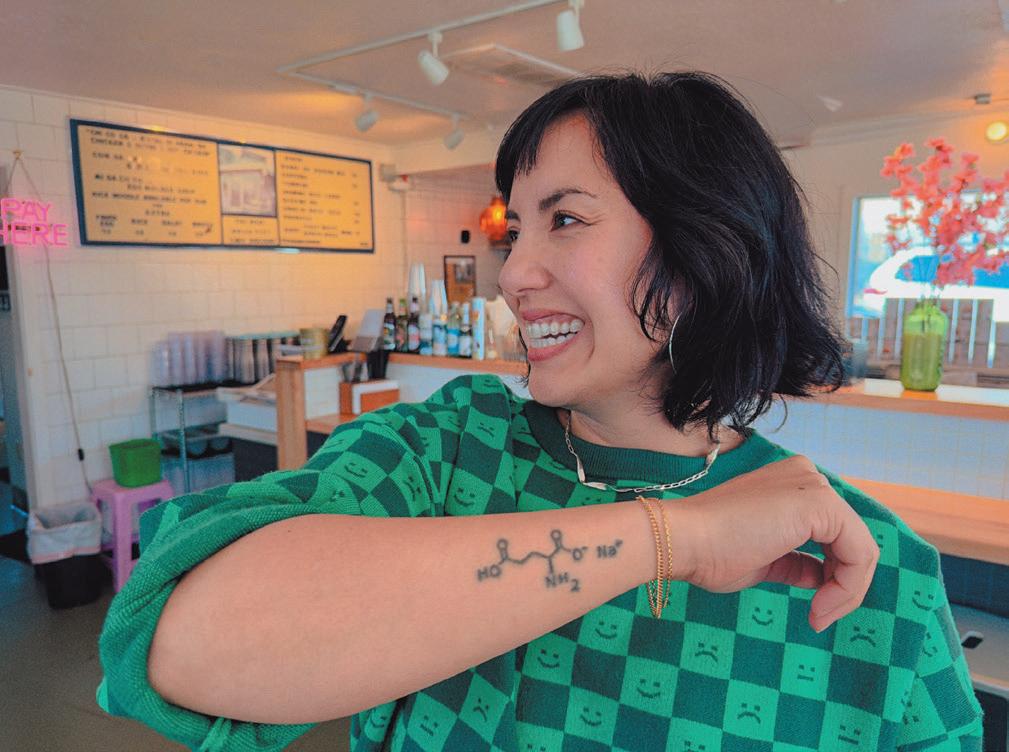
caffeine break, Seattle Nails Spa Supply just for fun, and a special visit to Lam’s Seafood warehouse, where Pham got us access to see true Little Saigon history.
Hiding in the back, behind her Hello Em coffee beans, live the famed Viet-Wah lions that once stoically guarded the grocery store entrance for over 40 years, before it tragically
“There’s a way to deescalate by talking to people. Like, ‘Please don’t do that here, I’m running a business.’”
burned down. They were handcrafted by a local Vietnamese family in the 1980s and became synonymous with memories of the neighborhood for decades. So when Pham was in Chicago for the James Beard Awards, and learned of the fire at Viet-Wah, she immediately made arrangements to save the beloved icons, mobilizing her network back home to
evacuate the statues to safety. We snapped some pics before returning to the Boat.
Walking past some especially grim parts of the neighborhood, it’s easy to feel sorry for what’s unfolded. But that’s not the spirit of the folks who live and breathe this place. Pham herself is done waiting around for any sort of change to come down the pike. She knows no one is coming to save Little Saigon, so she and her friends are saving it themselves.
“This is the future space of the Landmark Project,” said Pham while hugging the manager of Dong Hing, where she exclusively buys her meat.
The Landmark Project is an ambitious, $70 million endeavor driven by Friends of Little Saigon and the Seattle Chinatown International District Preservation and Development Authority (SCIDpda). The goal: inject a new sense of community into this pocket of the city. Pham described the plan for a mixedhousing and creative/community space with a shared kitchen for use by a variety of vendors. It’s also going to be the new home of Hello Em. The Landmark Project has also paid Dong Hing to comfortably relocate in the neighborhood.
All of this—plus a new food hall in the works by the Thanh Son (Tofu) family and the reimagining of Little Saigon Creative— feels like the start of a new chapter for Little Saigon, and exemplifies the forwardlooking spirit I’d come to grasp while on this impromptu tour.
“I just want to hang out in my ’hood. What’s wrong with that?” she told me. “I want to have it alive and activated, lively. How hard is that to ask for?”
We finished back at the Boat. As I processed the previous two hours, Pham served me the marquee cơm gà mắm tỏi, a dish heaped with pressure-fried chicken coated in a brown butter fish sauce with fried garlic, golden turmeric rice, and pineapple pâté Maggi sauce. Perfection on a plate. Though complex on paper, the dish is really just chicken and rice. Pham’s solution for the neighborhood is just as simple: Be a neighbor. Talk like neighbors. Treat others like neighbors. For her, this goes for both the folks on the streets and the folks inside—also for the people in charge. I believe her. Somewhere between the geoduck and the garlic chicken, I started worrying less about Little Saigon. Pham’s already on it.
Den Fest
Aug 7–8, Sunset Tavern
We do our best for accuracy, but please check venue websites for updates and more information, as event details may have changed since press time!
Housekeeping note: We have ceased to include pricing information, unless the event is free or sliding scale. (This is mostly due to third-party ticket vendors, like Ticketmaster, who have a monopoly on pricing that is not only unfair, but also confusing, due to varying fee structures. We hate them, and so should you.)
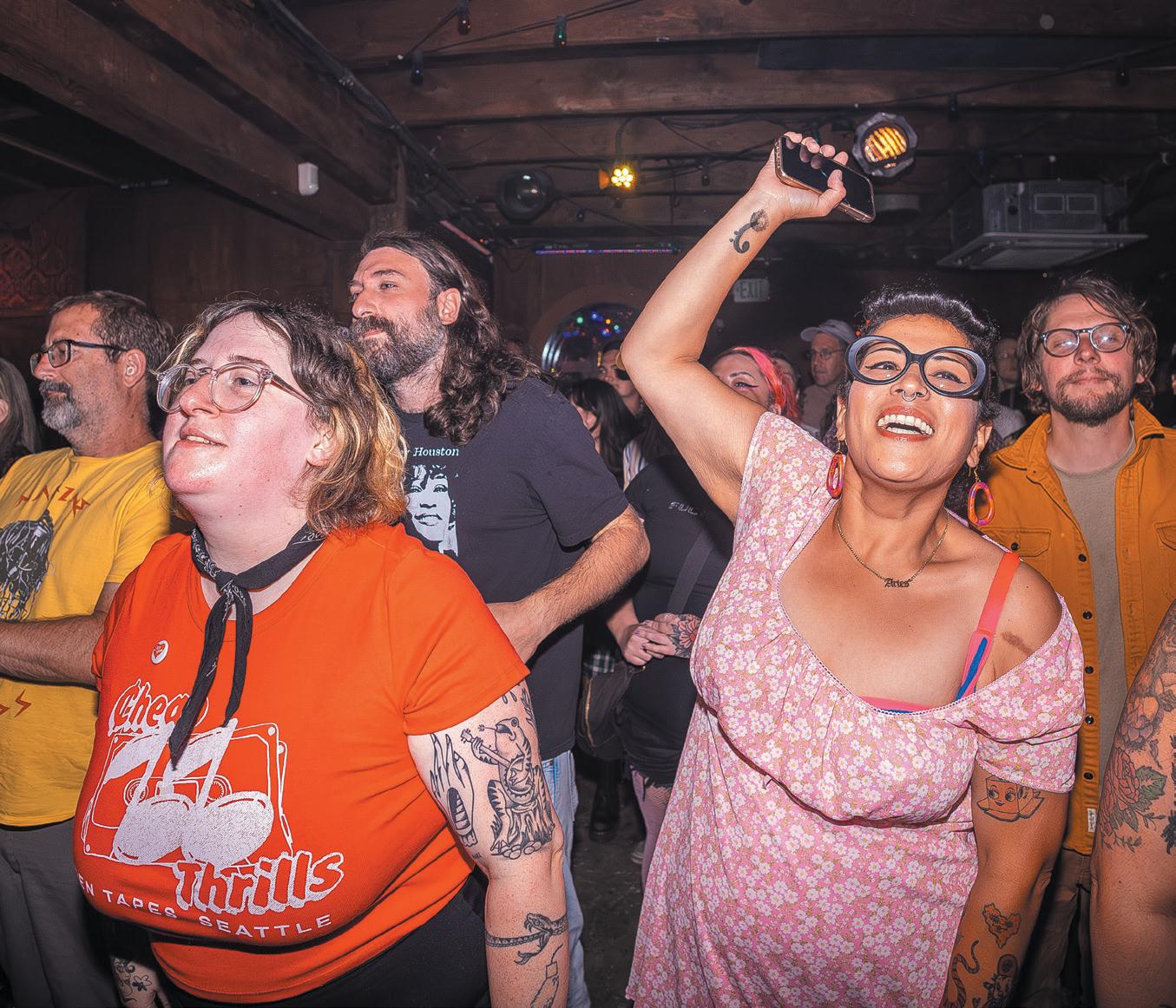
Sérgio Mendes Band –Celebrating 60 Years of Brasil ’66
AUG 6–9
Sérgio Mendes (1941–2024) played a major role in popularizing Brazilian music in the US in the 1960s, fusing bossa nova with Anglo-American pop, rock, jazz, and soul. The bandleader/keyboardist and his talented players and singers—including the distinctively enchanting Lani Hall and his wife of 50 years, Gracinha Leporace—had an uncanny ability to imbue whichever style or song they approached with a carefree beauty that instantly lowered your blood pressure and got your toes tapping. This was apparent from Brasil ‘66’s 1966 debut LP on Herb Alpert’s A&M label, which featured the hit cover of Jorge Ben’s utterly infectious “Mas Que Nada.” Mendes’s ingenious
arrangements, especially with vocals, and astute selection of source material have made his records perfect for hot-weather festivities. And Mendes & Brasil ‘66’s version of Buffalo Springfield’s “For What It’s Worth” proved that they had the funk, too. This four-night, six-show stand at Jazz Alley promises to be a classy nostalgia wallow. (Jazz Alley, 7:30 pm, plus 9:30 pm on Aug 7 & 8, all ages) DAVE SEGAL
AUG 7–8
Kay Redden is a modern-day Andy Warhol of sorts, gathering the coolest-of-cool artists in Seattle for her cassette-only label Den Tapes, releasing over 100 albums since it launched nearly 11 years ago. (It’s kind of like Warhol’s Factory, if you think about it.) Each year, Redden organizes Den Fest, which is not just a celebration of the label itself, but an emblem of the excellent music coming out of our city. Ranging from shoegaze and indie folk to hardcore and sound collage, the fifth annual Den Fest lineup features 16 bands across two days, including Coral Grief, Versing, Linda From Work, Pitschouse, and Spiral XP. (Sunset Tavern, 7 pm, 21+) AUDREY VANN
MULTIPLE DATES
Seattle’s favorite femme rock band, Thunderpussy, is giving us a gift this August. They’re performing at small venues around the city across three weekends in the doldrums of summer in a mini-festival they’re calling Good Clean Fun! Vocalist Molly Sides (fresh off her run as Mary Magdalene in 5th Avenue Theatre’s Jesus Christ Superstar) and bandmates Whitney Petty, Leah Julius, and Michelle Nuño will be tearing it up with a slew of other local class acts at each show. On August 8, see them at Baba Yaga with dance-punk band Zookraught; on August 14, they play Vera Project with rock bands Black Ends and Sundries; and then the cherry on top will be August 21 at Sunset Tavern with hardcore pop artist TeZATalks and alt-rockers Liberty Strikes. Since it’s Thunderpussy, you can expect costumes and theatrics for this love letter to the Seattle music scene. (Aug 8 at Baba Yaga, Aug 4 at Vera Project, and Aug 21 at Sunset Tavern) NATHALIE GRAHAM
AUG 11
“We make music for heads” is something TV Star just started saying one day, until it became their tagline. “The phrase just kind of materialized, not even from a specific thing or person,” guitarist Che Hise-Gattone told me in an interview back in April. “Heads,” of course, refers to the band’s abundance of musical references, ranging from ’90s psych rock and Britpop to alt-country and jazz. A music obsessive could perhaps identify that the band name itself comes from a Butthole Surfers song. Or that their swirling guitars and vocal harmonies take inspiration from bands like Lush and the Stone Roses. However, being a music fan isn’t essential to enjoying their music. “Heads” can also be read literally: they make music for living beings. Their lyrics are profoundly human and rooted in life experiences, as deep as the sunflowers that bloom on the cover of their debut album, Music for Heads. They will support the album alongside New Jersey jangle-pop band Lightheaded






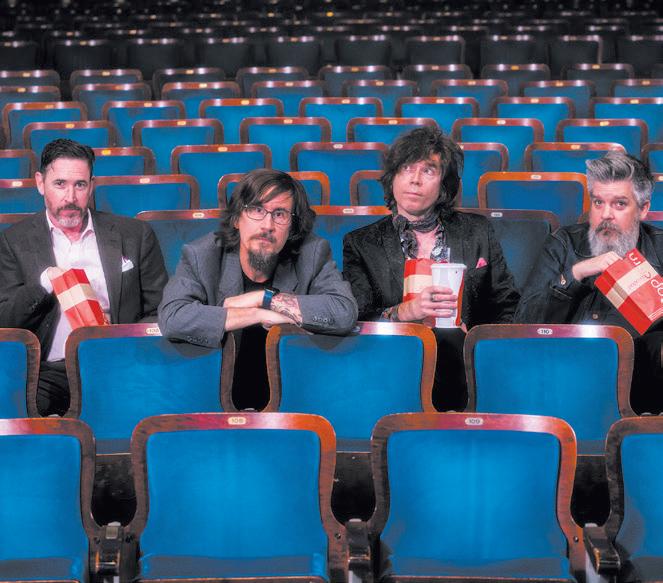
AUG 9
This show’s for the writers. The wordsmiths. The tenderhearted poets who have strong opinions about dictionaries (Merriam-Webster or bust), and pore over lyrics while listening to records, because they know that it’s the ~words~ that can make a great song timeless. Both the Hold Steady and the Mountain Goats reliably deliver fortifying rock music with a flair for the dramatic hook, but their songs are more than just songs. They’re worlds full of characters you connect with and people you want to know or regret that you do. Because Craig Finn of the Hold Steady and John Darnielle of the Mountain Goats are also two of the world’s best writers in modern music, telling captivating tales about the dangers of partying with townies (“One for the Cutters” by the Hold Steady), the benefits of touring with one-hit grunge wonders (“Candlebox” by the Mountain Goats), and vampires (both bands have songs about them!). Every English major with a half-finished novel in their notes app will be at this show. (Woodland Park Zoo, 4:30–8:30 pm, all ages) MEGAN SELING
AUG 11
Multi-instrumentalist Angel Deradoorian came to most people’s attention during her tenure with Dirty Projectors (2007-2012), using her stunning voice in tandem with Amber Coffman’s to beautify David Longstreth’s abstruse compositions. Since then, she’s gone solo and also formed the excellent krautrock-flavored electronic duo Decisive Pink with Kate NV. Adept with guitar, bass, and flute, Deradoorian has released six albums under her surname. Her 2015 debut solo LP, The Expanding Flower Planet, abounds with artful, minimalist electronic pop featuring Deradoorian’s pliable, pleasurable voice to the fore. Her work’s also shown flashes of neo-krautrock locomotion, plus ambient and minimalist brilliance. Eternal Recurrence is bathed in a holy penumbra of droning synths and multitracked vocals, while Disembodied
Improvisations Vol. 1 features tranquilly oscillating, Terry Riley-esque meditations. Last year’s Ready for Heaven found Deradoorian composing in danceable, song-oriented mode, with strong ESG and Danielle Dax influences. Now that’s versatility. (Substation, 7 pm, 21+) DAVE SEGAL
AUG 13
If you were glued to the TV every morning in the early 2000s like I was, watching music videos, then you probably first saw Corinne Bailey Rae as a VH1 You Oughta Know Artist, riding her bike around a scenic park in the video for her 2006 summertime hit “Put Your Records On,” which turned her into an overnight success. I was 10 years old when I first heard it, and I immediately begged my dad to drive me to Target so that I could get her self-titled CD—the first album I ever bought with my own money. I played this album to death for the next several years, floating around my room and lip-syncing in the mirror. To this day, I put
on the album when I’m feeling untethered and need to remember who I am. This August, I’m turning 30, Bailey Rae’s debut album is turning 20, and I feel like the stars have aligned. She will celebrate the album’s anniversary by playing it in its entirety. (Moore Theatre, 8 pm, all ages) AUDREY VANN
AUG 20
As a fangirl of the Deal sisters who has obsessively followed their solo projects and bands (the Pixies, the Amps, the Kelley Deal 6000, etc), I will never miss an opportunity to hear Kim and Kelley play together as the Breeders. The alt-rock four-piece has released just five albums since their formation in 1989—each one flawless—showcasing their mastery of restraint. This control is also reflected in the music itself, which is never overworked, overproduced, or overcomplicated. The Breeders aren’t supporting a particular album on this tour (they haven’t released an album since 2018’s All Nerve), and according to recent setlists, you can expect to hear many songs from their seminal 1993 album, Last Splash, along with a few covers and deep cuts sprinkled in. You’d be a fool to miss the opening set by pioneering queercore band Team Dresch, supporting their first album in 30 years, Furthermore (out September 18). (Woodland Park Zoo, 4:30 pm, all ages) AUDREY VANN
AUG 29
Writer, designer, and “Music Person” podcast host Dylan Tupper Rupert is the mastermind behind this scrappy DIY annual music festival, which takes place in the backyard of the James Beard-nominated restaurant Houlme on Orcas Island. The weekend kicks off with a welcome party on Friday night, followed by a stacked lineup on Saturday: ’90s indie rock/slowcore cult favorites Ida, Oakland alt-country-ish band Mildred, Olympia-born ensemble Gun Outfit, Minneapolis lo-fi indie project Walker Rider (“queer love songs leaning into limerence”), and LA-based “digital twang” singer-songwriter Deloyd Elze. You can expect “luxurious hot dogs,” a steady
flow of wine, and a potential dip in the Salish Sea— does this not sound like the makings of a perfect summer weekend? Camping is also available by way of nearby Alder Vulture, a privately owned 10-acre property on the island. (Houlme, Eastsound, WA, 2–11 pm, all ages) JULIANNE BELL
AUG 29
Let’s break down the greatness that is this year’s Linda’s Fest lineup because there is not one dud on the list. We’ve got Helms Alee, whose atmospheric and supersonic heavy rock can tear a hole through space and time; Suzzallo, the guitar-driven, anthemic rock band that is a must-see if you like the Sunny Day Real Estate songs where Jeremy Enigk is especially pissed; and Filth Is Eternal, whose new album Impossible World is loaded with surging guitars and brain-pummeling drumming that I blast into my headphones when I’m cranky and don’t want to feel alone in my rage. Sux are on the other end of the hardcore spectrum—guitars also surge, drums also pummel, but it’s delivered with a wink and bratty punk attitude that sounds like it time-traveled from Gilman Street circa 1988. And last but not least, Linda From Work, who also have ’80s vibes, but think bigger, poppier, and crunchier, like if the Go-Go’s went glam rock. There are at least two other bands performing, but I’ve been sworn to secrecy. Trust me when I say, they are exciting additions to this already packed bill. (Linda’s Tavern, 4 pm, 21+) MEGAN SELING
AUG 29
Brian Noyes is a deft multi-instrumentalist who’s contributed greatly to Seattle group Tomten’s five nuanced, tuneful psych-pop albums from 2012 to
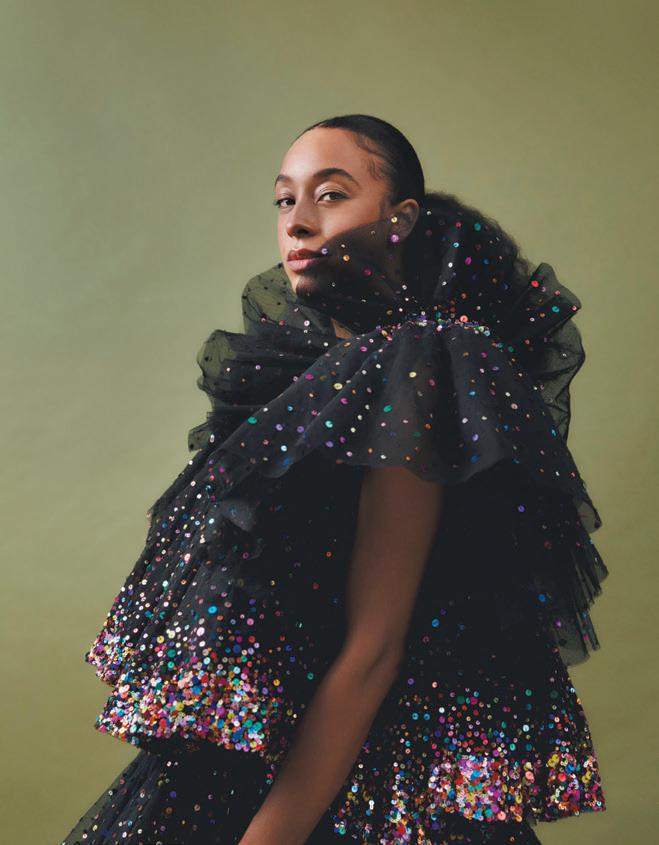

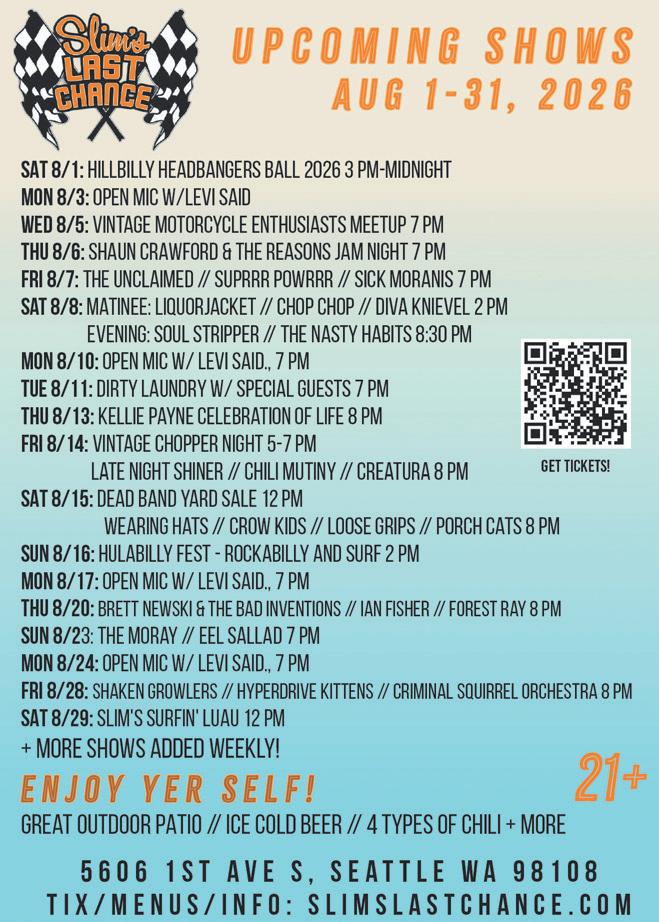

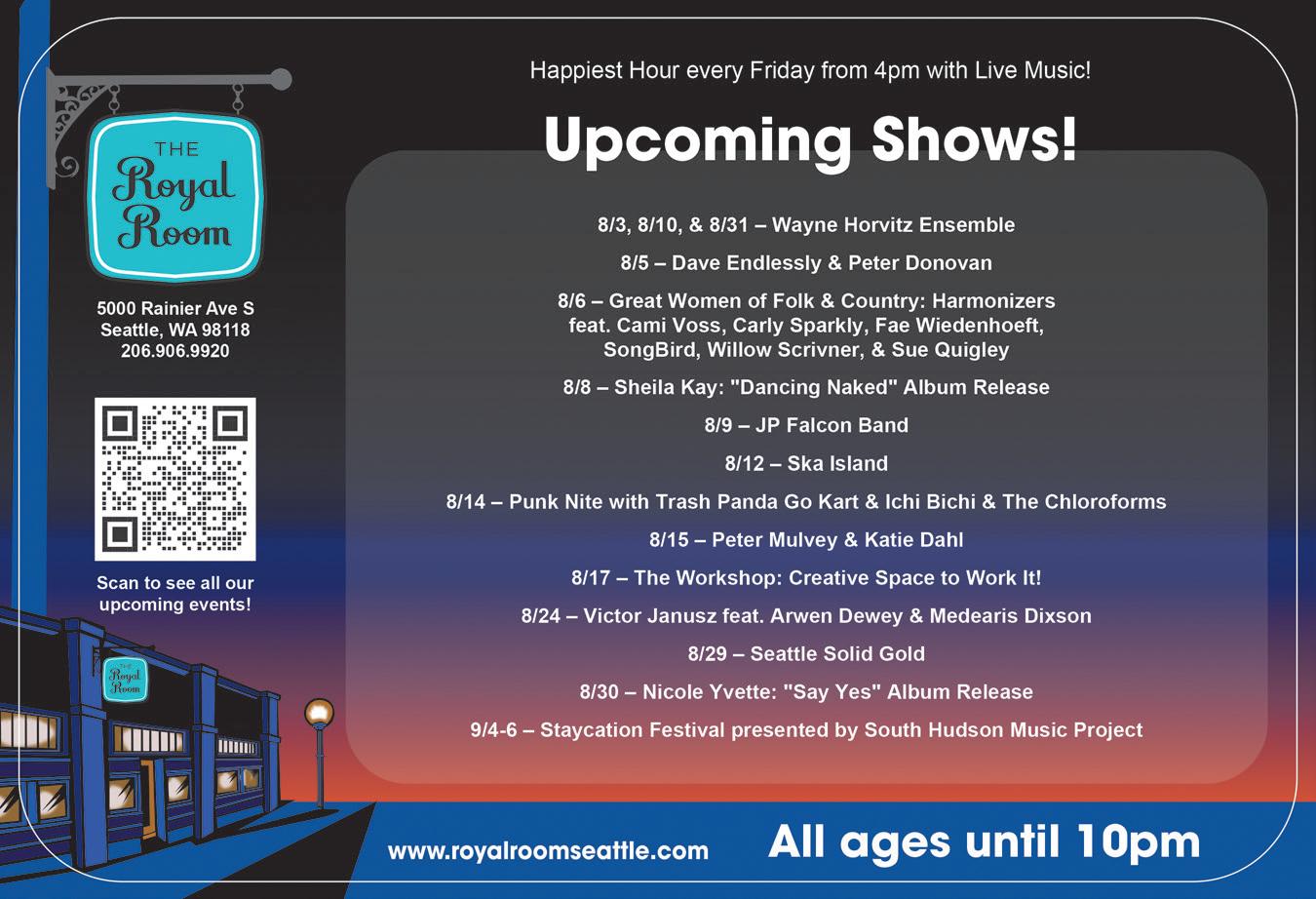
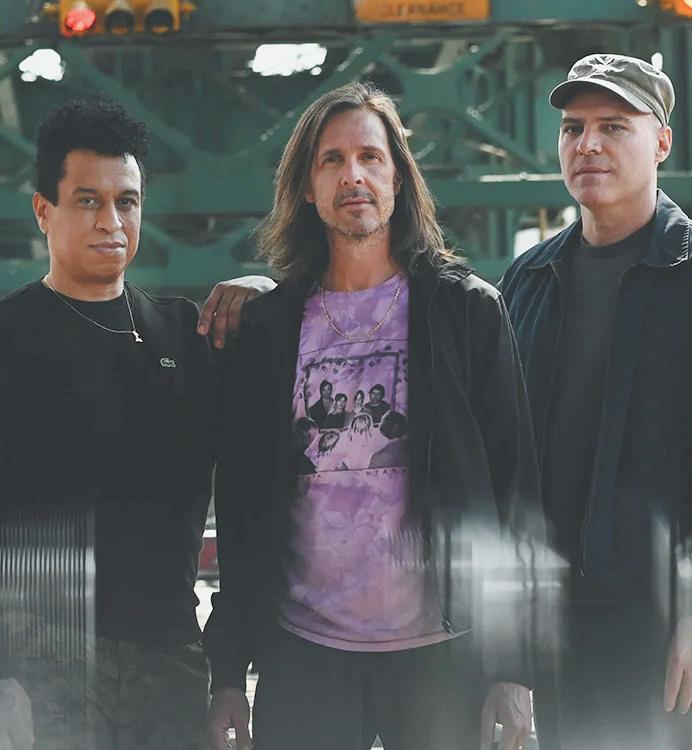
2023. His 2020 and 2025 solo LPs, Brian Noyes and Seelie Court, don’t deviate much from the Tomten sound, but the songs are livelier, with hints of Syd Barrett and the Clientele’s melancholy beauty in the melodies. This is the release show for Noyes’s new album, The Ringing World, which shows he’s still a natural-born songwriter of exquisite craft. Low-key, Noyes is creating Father John Misty-style baroque-pop gems with a fraction of the budget, as well as finessing lovely and literate Nick Drake-like bedroom ballads. Get to Clock-Out early for DJ Mike Nipper, former Stranger receptionist/ icon who possesses more fantastic, obscure records than you’ve had hot meals. (Clock-Out Lounge, 8 pm, 21+) DAVE SEGAL
Summer Sounds: La Fonda Aug 5, 999 Third Ave, noon, all ages
Den Fest Kickoff Party with Black Ends, M.A. Sampson, Small Paul Aug 6, Tractor Tavern, 8 pm, 21+
Sux, the Gobs, Shitty Dudes Aug 7, Add-a-Ball, 8 pm, 21+ Vandoliers, Hutchie, Old Coast Aug 8, Tractor Tavern, 8:30 pm, 21+
Porcelain, Museum of Light Aug 8, Clock-Out Lounge, 8:30 pm, 21+
Acid Bath, Russian Circles, Twin Tribes, devora Aug 8, Paramount Theatre, 7 pm, all ages Monsterwatch, Destrends, Stetson Heat Seeker Aug 9, Add-a-Ball, 7 pm, 21+
Helado Negro, Reyna Tropical Aug 9, Neptune Theatre, 8 pm, all ages
ZZ Top, Cheap Trick Aug 11, Marymoor Amphitheater, 6 pm, all ages
Tomahawk, Melvins Aug 11–12, Showbox, 8 pm, 21+
Spyglass, Dandelioness, Halley Greg, Old Man of the Woods Aug 12, Rabbit Box Theatre, 7:30 pm, all ages
Man Man, American Tomahawk Aug 12, Neumos, 8 pm, 21+
Kellie Payne Celebration of Life hosted by Pho Bang with Fall-Outs, Cheliceral Kiss, the Hyphens Aug 13, Slim’s Last Chance, 8 pm, 21+ Passion Pit, Arden Jones Aug 13, Showbox, 8 pm, all ages
Men at Work, Toad the Wet Sprocket, Shonen Knife Aug 14, Remlinger Farms, 6 pm, all ages
Perennial, Trash Sound Conglomerate, Pyramid
Scream Aug 14, Belltown Yacht Club, 8 pm, 21+
The Chloroforms, Ichi Bichi, Trash Panda Go Kart Aug 14, Royal Room, 7:30 pm, all ages
Midpak, mega cat Aug 14, Sunset Tavern, 8 pm, 21+ Belltown Blast: Muñeca, killbuzz, TeZATalks, Beautiful Freaks, Biblioteka, Plash, Black Ends, Anthers, AJ Suede, and many more Aug 15, Second Avenue between Lenora and Battery, noon–2 am, all ages
Jejune, Racecourse Aug 15, Vera Project, 7 pm, all ages
Drew Martin, Dog Mom, Bryan John Appleby Aug 15, Sunset Tavern, 7:30 pm, 21+
Sugar, J. Robbins Aug 15, Paramount Theatre, 8 pm, all ages
The Divorce, Planets in the Ocean, Chimestone Aug 15, Tractor Tavern, 8 pm, 21+
Quicksand, Bane, Soul Blind Aug 19, Showbox, 7:30 pm, all ages
Gillian Welch & David Rawlings Aug 19–20, Moore Theatre, 8 pm, all ages
Tracy Bonham Aug 20, Rabbit Box Theatre, 7:30 pm, all ages
Summer Sounds: La Luz Aug 20, Occidental Square, 4 pm, all ages
The Sword, Red Fang, Spoon Benders Aug 21, Showbox SODO, 7:30 pm, all ages
KEXP BBQ: Ty Segall, Arlo Parks, Angine de Poitrine, Los Mirlos, Packaging, Sea Lemon Aug 22, Northwest Courtyard at Seattle Center, 2 pm, all ages
The Guess Who Aug 22, Climate Pledge, 7:30 pm, all ages
Ida, Storey Littleton Aug 23, Sunset Tavern, 8 pm, 21+
Cake Aug 23, Remlinger Farms, 7 pm, all ages
J. Cole Aug 25, Climate Pledge, 8 pm, all ages
Summer Sounds: Them Aug 26, Occidental Square, noon, all ages
Bill Callahan, Lonnie Holley Aug 26, Neptune Theatre, 7 pm, all ages
Mutual Shock, Ghost Fetish, Overripe Aug 27, Sunset Tavern, 8 pm, 21+
The Strokes, the Garden, ÖLÜM Aug 28, Climate Pledge, 7 pm, all ages
Black and Loud: Iniko, King Youngblood, Cyril Neville featuring Omari Neville & the Fuel, Making Movies, Peter Collins, and more Aug 29, Neumos, 6 pm, 21+
Eagles of Death Metal Aug 29, Neptune Theatre, 8 pm, all ages
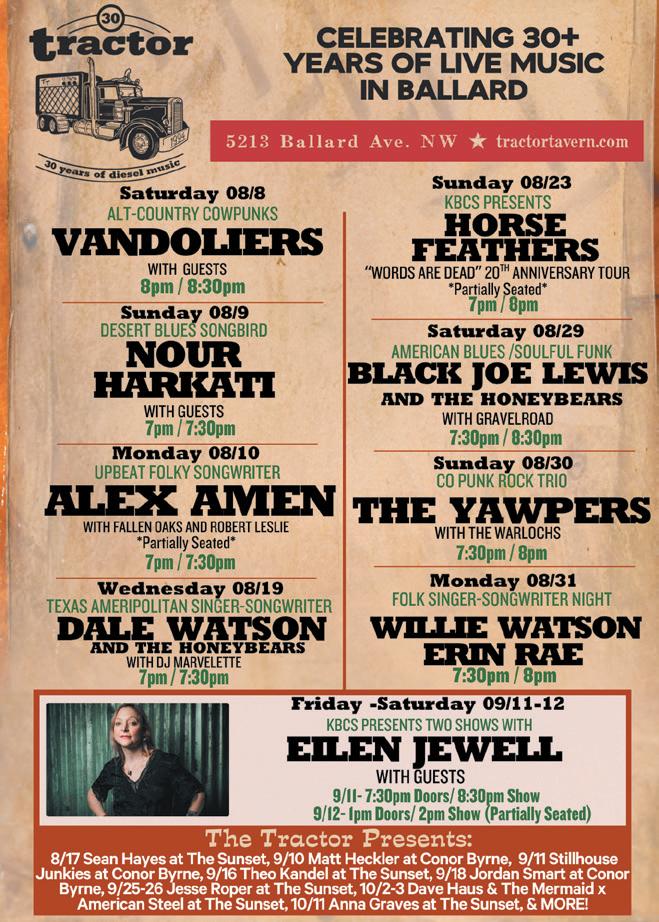

Day-to-Day: Rhythm, Routine, Resistance
Henry Art Gallery
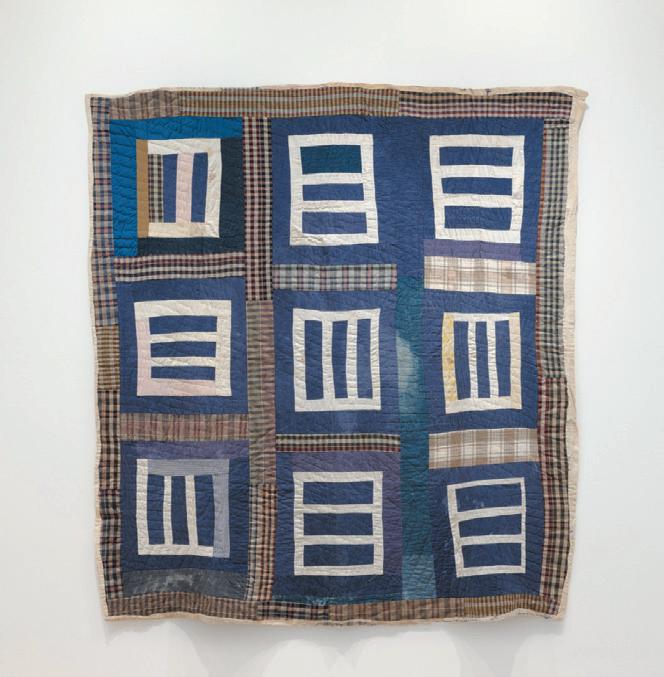
waltzerr, Justin Harden, Zailee Haze Aug 29, Sunset Tavern, 8:30 pm, 21+
Conan Neutron and the Secret Friends, theNull, Yellfire Aug 30, Belltown Yacht Club, 8 pm 21+
Sweet Pill, Bike Routes, Deux Visages Aug 31, Neumos, 8 pm, all ages
Nitzer Ebb, Lead Into Gold with Paul Barker Sept 1, Neumos, 7 pm, 21+
Tame Impala, Dominic Fike Sept 1–2, Climate Pledge, 7 pm, all ages
AUG 7–21
In April, I wrote about Marcellus Bonow-Manier’s residency at the Georgetown Steam Plant, which has stretched out over the past year as the artist haunted and documented the darkened corners of our city’s iconic industrial cathedral. Now his photographs are being exhibited onsite in two simultaneous exhibitions: 13th & Greely, titled after the abandoned intersection where the Steam Plant stands, and Perimeter Road, “an inquisition and love letter to the building itself.” The show features Bonow-Manier’s ethereal point-and-shoot images and sculpture by colleague and collaborator Mack Greene. The opening reception—with a live DJ set billowing through the building—on August 7 is free, but RSVP to save your spot. (Georgetown Steam Plant) AMANDA MANITACH
AUG 22
It’s the sixth iteration of Coffin Farm’s Summer Show, a site-specific exhibition on a bucolic, goat-populated, 15-acre family farm at the edge of Redmond. Since 2018, Von Coffin and their father, Edward, have invited artists from around the world to install work on the land, creating one of the region’s most unexpected (and coolest) sculpture parks. (Cover your ears, Olympic Sculpture Park!) Wander the goat field, and you’ll encounter the bones of felled sculptures and fragments of monuments half-sunk into the earth, where time, decay, and the elements become collaborators. This year’s show features a whopping
31 artists from Seattle, Vancouver, Glasgow, Philadelphia, Boston, and LA. No word yet on whether Tomo’s Brady Williams will return with the pig-roasting rig he brought in 2024; either way, you’ll cry if you miss this. (Coffin Farm, Redmond) AMANDA MANITACH
AUG 28
They’re doing it again! The masterminds behind IKEA-spoof STÖR, Mary Anne Carter and Lilia Deering, are putting together another pop-up art exhibition and retail experience, Inconvenience Store. Where STÖR—in all its Swedish meatball glory—fleshed out the sprawling Base Camp 2, this new venture inhabits the ghost of a former 7-Eleven at Third and Pine, on the ground floor of the new office high-rise-turnedart-space, Parnassus. Inconvenience Store will feature artist-made renditions of familiar goods, organized by department (Food & Pantry, Beauty & Personal Care) by over 50 artists, including Colleen Louise Barry, Shiloh Davies, Emma Kates-Shaw, Maayan Haim, and more. A soft opening is planned for August 28 during the downtown art walk. (Parnassus) AMANDA MANITACH
Between the Sea and Me Aug 6–13 with opening reception Aug 6, Europa Gallery
Ruth Kapcia: Resilience in Bloom Aug 6–29 with opening reception Aug 6, Gallery 110
Frye Nouveau After Hours Aug 14, Frye Art Museum, 6–9 pm, 21+
Carles Gomila ~ The Holy Purry Order Aug 15–Sept 5 with opening reception Aug 14, Roq La Rue
The Feast: Artists Doing featuring Ben Hunter, Cherdonna Shinatra, Bradley Wrenn, Keyes Wiley Aug 15, Actualize AiR, 8 pm
Self. Reflexive.: Ian Brownlee, Gegam Kacherian, Michael Lazarus, Kaoru Mansour Aug 15–Sept 27 with opening reception Aug 16, AMcE Creative Arts PCNW’s Photo Zine and Book Fair Aug 16, Photographic Center Northwest, noon–5 pm, free Public Opening: Summer Exhibitions Aug 27, Henry Art Gallery and Sculpture Court, 6 pm
Black. Power. Black Panthers. Through Aug 3, Arte Noir
Ancestral Future: Taino Archives Through Aug 8, ARTS at King Street Station
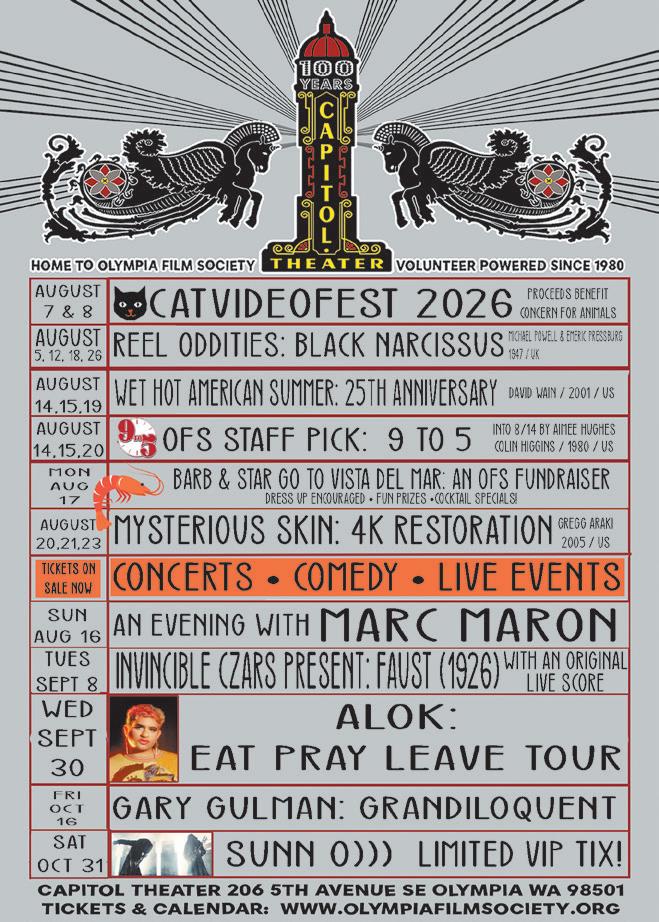
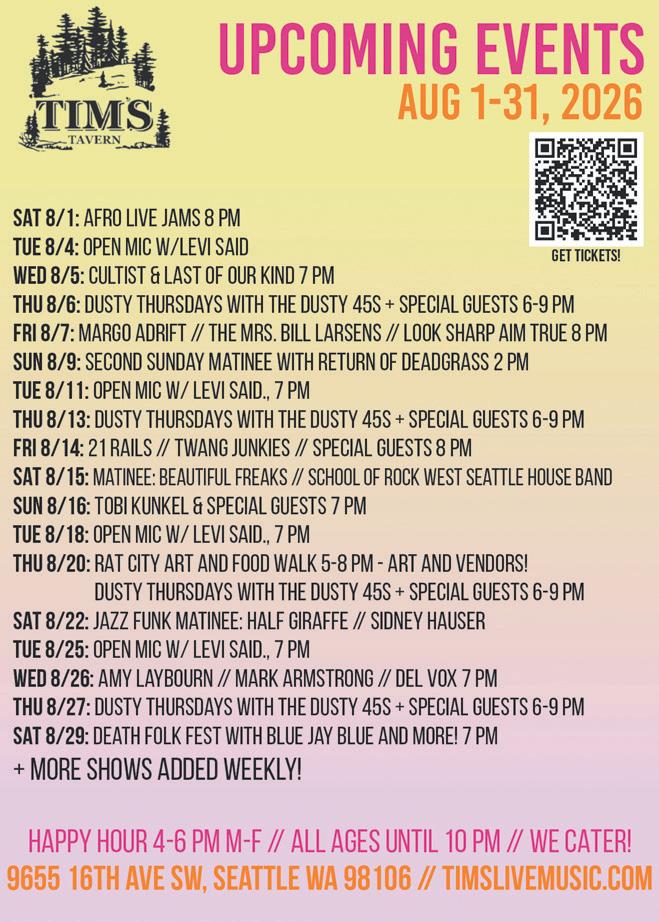



Barry Johnson: silence is golden Through Aug 22, Winston Wächter
Ariana Heinzman: Red Tree in Bright Memory Through Aug 26 with opening reception Aug 6 and artist talk Aug 8, J. Rinehart Gallery
Woven in Wool: Resilience in Coast Salish Weaving Through Aug 30, Burke Museum
Actualize AiR Summer Showcase: Recollections Through Sept 5, Actualize AiR
Moomins’ Sea Adventures & Tove and the Sea Through Sept 6, National Nordic Museum
Lost & Found: Searching for Home Through Sept 14, Wing Luke Museum
Tom Lloyd Through Sept 20, Frye Art Museum
Lotus L. Kang: I hear the hollow boom of time Through Sept 27, Frye Art Museum
Let There Be Light Through Sept 30, Cannonball Arts
Samantha Yun Wall: What We Leave Behind Through Oct 4, Seattle Art Museum
Jonathan Lasker: Drawings and Studies Through Oct 11, Frye Art Museum
Artists’ Choice with Guest Curators Through Oct 11, Frye Art Museum
Boren Banner Series: Chloe King Through Oct 11, Frye Art Museum
Eric-Paul Riege: ojo|-|ól Through Oct 25, Henry Art Museum
Monochrome: Calder and Tara Donovan Through Jan 17, 2027, Seattle Art Museum
A Room for Animal Intelligence Through Jan 2027, Seattle Art Museum
Day-to-Day: Rhythm, Routine, Resistance Through Jan 3, 2027, Henry Art Gallery
The Kondō Family: Storytellers in Clay Through Jan 3, 2027, Seattle Asian Art Museum
Ten Thousand Things Through May 2, 2027, Wing Luke Museum
Joiri Minaya: To Hell With Hibiscus Through May 2, 2027, Henry Art Gallery
Chloë Bass: Soft Services Through Aug 2027, Volunteer Park
Pioneer Square Art Walk Every first Thursday Capitol Hill Art Walk Every second Thursday
Georgetown Art Attack! Every second Saturday
Chris Kallmyer: Song Cycle Ongoing, Seattle Art Museum
Gossip: Between Us Ongoing, Tacoma Art Museum
Legacy: Highlights from the Permanent Collection Ongoing, Tacoma Art Museum
Qiu Zhijie: Map of the History of Science and Technology Ongoing, Olympic Sculpture Park
Ash-Glazed Ceramics from Korea and Japan Ongoing, Seattle Art Museum
Rebels + Icons: The Photography of Janette Beckman Ongoing, MoPOP
AUG 9
The Puget Sound Book Festival bills itself as the “supersized, all-ages book fair of your dreams.”
Located on the Bremerton waterfront, it features over a dozen indie bookstores in one place, plus author appearances and food and drink vendors. Participating booksellers include the romance bookstore Wicked Words, the sci-fi-and-fantasy-leaning Little Lost BookShoppe & Beyond, the mobile bookstore Lost the Plot, indie press and design studio Arledge Comics, and traveling pop-up arts and crafts bookstore Overnight Craft Society, and more. There’s an author in attendance for every kind of reader: Patricia Wants to Cuddle author Samantha Allen, ice hockey goalie and romance author Dr. Lexi LaFleur Brown, speculative fiction author Fonda Lee, and feminist horror author G.G. Silverman, to name just a few. Spend a leisurely
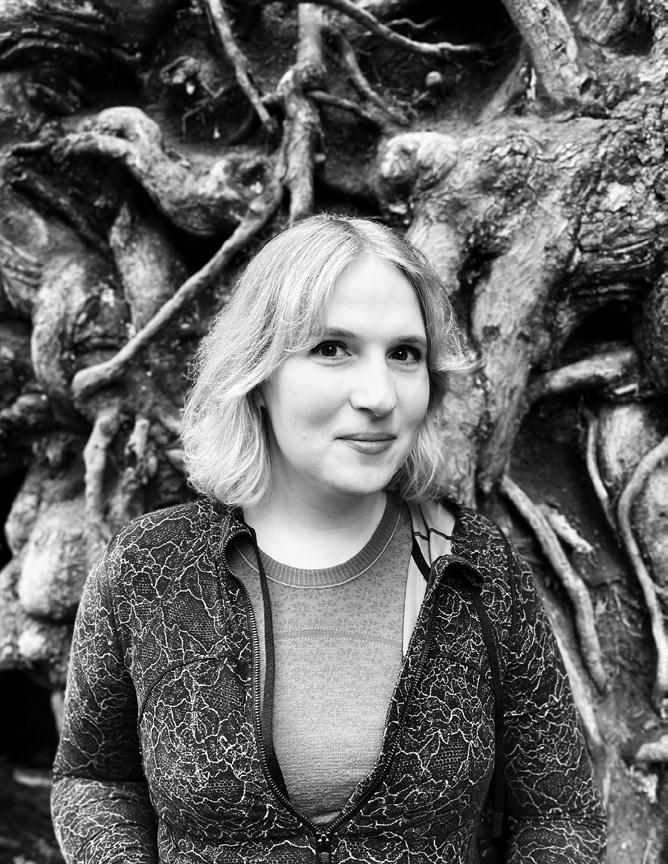
AUG 16
I devoured Seattle journalist and author Samantha Allen’s 2022 razor-sharp dark comedy/horror novel Patricia Wants to Cuddle, which follows the four finalists on a Bachelor-type reality dating show called The Catch, filmed on a fictional Pacific Northwest island called “Otters Island.” Things take a turn when the cast and crew run into a cult that worships a giant female Sasquatch. I’m thrilled to see Allen return to the reality TV realm with her latest novel, Puck, a modern riff on A Midsummer Night’s Dream that reimagines the mischievous title character as a pot-stirring nonbinary dating show producer. Puck’s friend group is upended when their college roommate Mia gets engaged to her ex’s best friend Damon. Secretly, Puck takes it upon themself to save the day by matchmaking their friends into new couples, all while falling for a bridesmaid. Obviously, hijinks ensue! (Elliott Bay Book Company, 7 pm, all ages) JULIANNE BELL
afternoon strolling the boardwalk and loading up your tote bag with more books than you could possibly read in a lifetime. (Bremerton Waterfront Boardwalk, noon–4 pm, all ages) JULIANNE BELL
Zen Cho with Amy Hirayama Aug 5, Elliott Bay Book Company, 5 pm
The Moth StorySLAM Aug 6, Fremont Abbey, 6 pm
Emil Wilson with Paul Constant Aug 6, Elliott Bay Book Company, 7 pm
Amanda Rizkalla with Bella Bravo Aug 10, Elliott Bay Book Company, 7 pm
Ed Park with Thomas Kohnstamm Aug 25, Third Place Books Lake Forest Park, 7 pm
AUG 6
Dancer, choreographer, and writer Ishmael Houston-Jones has pursued experimental dance since the early 1970s, notably starting the gay men’s performance collective Two Men Dancing while living in Philadelphia. After he moved to New York City in 1979, Houston-Jones’s dance style became influenced by the punk clubs, breakdancing, and early hip-hop that surrounded him in the East Village, which developed into a unique improvisational dance style that he spent the next several decades teaching around the world. He will perform an improvised routine alongside his longtime collaborator, self-proclaimed “frolicker, imperfectionist, and witch” Keith Hennessy, with music from josé e. abad. (Velocity, 7:30 pm, all ages)
AUDREY VANN
AUG 20
Hollywood Crime Scene has been my emotional support podcast for more than a decade. Hosts Desi Jedeikin and Rachel Fisher break down true crime and scandal stories involving celebrities: everything from tragic tales of Frances Farmer, Sam Cooke, and Gianni Versace to deep dives on film disasters like Altman’s Popeye, and urban legends like Rod Stewart getting his stomach pumped from ingesting too much semen. The show is a masterclass in balancing comedy, history, and tragedy, often focusing on humorous details of the crimes while never making light of the subjects—unless they deserve it (see episodes on deserving men like Tim Allen, Bing Crosby, and Mickey Rooney). The duo is bringing their live show to Seattle for the first time, offering a unique show about Seattle-specific crimes. (Emerald City Comedy Club, 7:30 pm, 21+) AUDREY VANN
AUG 31–SEPT 1
Salon of Shame Aug 11, Theatre Off Jackson, 8 pm
Curtis White: On Resistance: A Manifesto Aug 12, Elliott Bay Book Company, 7 pm
Bookstore Romance Day Aug 15, Beguiled Books, 10:30 am–8 pm
Danny Ramadan: Crooked Teeth: A Queer Syrian Refugee Memoir Aug 17, Elliott Bay Book Company, 7 pm
Téa Obreht with Rachel Sobel Aug 19, Elliott Bay Book Company, 7 pm
Maya Jewell Zeller with Katie Campbell: ‘Raised by Ferns’ Aug 20, Seattle Public Library Central, 6:30 pm
Jane Don’t is Seattle’s latest star to compete on RuPaul’s Drag Race. If you’ve seen her locally, you already know she was poised to do well. Her drag style uses vintage aesthetics in contemporary ways, combining her knowledge of queer history, fashion references, and her own innovative sewing skills. With a fully glamorous mug, she delivers high-camp performances full of witty pop-culture and classic diva references. Her talents especially come out when she’s handed a microphone to show off her seemingly effortless grasp on comedy. On the show, that skill in particular led her to high praise from comedy giants such as special guest judges Sarah Sherman and Atsuko Okatsuka. If you haven’t gathered yet, she absolutely crushed it, right up until a shocking elimination in the top 5 of Season 18. She made a record-smashing run of high placements, and claimed the title of Miss Congeniality during the finale. Jane Don’t truly made Seattle proud, and proved to the world she is one of the best in the business. She will kick off her extensive Don’t Does America tour in her hometown. (Emerald City Comedy Club, 7:30, 21+) NICO SWENSON
AUG 27–SEPT 27
Jurassic Parking Lot, which is produced by the Habit (the same folks who put on Seattle Public Theater’s hilarious and beloved holiday tradition, A Very Die Hard Christmas), has everything you’d want from a


’90s-obsessed Jurassic Park musical spoof. There are Seinfeld references, ridiculously oversized cell phones, sexy singing and dancing raptors, and juuuuust the right amount of very, very horny Jeff Goldblum. (Warning: Prepare yourself for a Chris Pratt jump scare, too—ahhhh!) (Seattle Public Theater, times vary, recommended for ages 14 and up) MEGAN SELING
Joseph and the Amazing Technicolor Dreamcoat Through Aug 15, Taproot Theatre, times vary, all ages Shakespeare in the Park Through Aug 15, multiple venues, times vary, all ages
KAIDAN: Japanese Ghost Stories Through Aug 29, various locations, times vary, all ages
Seattle Rep Presents: Freak the Mighty Through Sept 6, Bagley Wright Theater, times vary, all ages
Daegen Asfaha Aug 6, Laughs Comedy Club, 7 pm, 18+
Space Age: A Futuristic Drag Cabaret Aug 7, Timbre Room, 7 pm, 21+
WRONG! A Dark Comedy Game Show Aug 7, Rabbit Box Theatre, 8:30 pm, 21+
Night Night, Roger Roger Aug 7–15, Seattle Public Theater, times vary, all ages
Love Isn’t Blind: The Dating Show Where Men Can’t Speak Aug 7, Fremont Abbey Arts Center, 7 pm, 21+
Research in Performance: Works by Corrie Befort, Kayla Hamilton, Moriah Evans Aug 8, Velocity Dance Center, 7:30 pm, all ages
Comedy Bang Bang! Aug 10, Moore Theatre, 8 pm, all ages
Joketellers Union: Zac Maas Aug 12, Clock-Out Lounge, 8 pm, 21+
Tush!: Amora Namor, Angel Baby Kill Kill Kill, Betty Wetter, the Bonnies, Pussy Willow, and More Aug 13, Clock-Out Lounge, 7 pm, 21+
Marc Maron Aug 13–15, Tacoma Comedy Club, times vary, 21+
Ali Wong Aug 12–14, McCaw Hall, 7 pm, all ages
Bailey Pope, Ryan Danley, Andy Iwancio, Derek Sheen Aug 15, Rabbit Box Theatre, 9 pm, all ages
Jack Bensinger Aug 16, Rabbit Box Theatre, 8 pm, 21+
Malik Elassal Aug 16, Emerald City Comedy Club, 7 pm, 21+
Joe Dombrowski Aug 19, Rabbit Box Theatre, 6:30 and 9 pm, 21+
disPLACE Aug 21–22, Theatre Off Jackson, times vary Festival Unexpected Seattle 2026 Aug 24–30, Market Theater and the Improv School, times vary, all ages
Open Michael: A Storytelling Stand Up Strangeness Open Mic Aug 25, Rabbit Box Theatre, 6 pm, all ages
Tush!: Beau Degas, Betty Wetter, Faggedy Randy, Lesbian Death Bed, Miss Texas 1988, and more Aug 27–28, Clock-Out Lounge, 7 pm, 21+
Jordan Jensen Aug 28, Moore Theatre, 7:30 pm, all ages
OPENS AUG 13
Never in my life have I been so seated for a film as I am for I Saw the TV Glow director Jane Schoenbrun’s latest release, Teenage Sex and Death at Camp Miasma. It contains all my favorite things: queer horror, psychosexual obsession, a sultry sapphic age-gap pairing, X-Files icon Gillian Anderson, and Hacks actress Hannah Einbinder. Einbinder stars as Kris, an up-and-coming queer filmmaker who is enlisted to direct a reboot of the slasher series Camp Miasma and casts the elusive Billy Presley (Anderson), who played the franchise’s original final girl back in the day. Schoenbrun’s
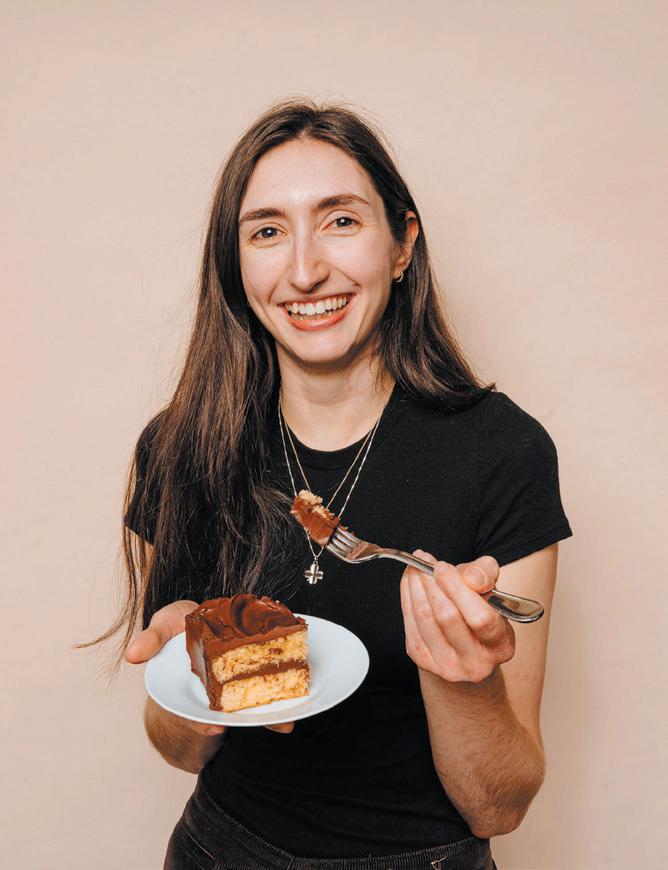
AUG 11
What’s more dependable or classic than a sheet cake? No matter the occasion, it never fails to delight a crowd. However, the treat rarely gets a chance to live up to its full potential, usually relegated to flavors that are kind of, well, vanilla. In her new cookbook Sheet Cakes: 51 Exceptional Cakes to Make in One Pan, Seattle-based writer, recipe developer, and food stylist Zola Gregory gives the humble staple a long-overdue upgrade. Choose from among showstopping variations, like buttermilk funfetti, honey chiffon with orange blossom cream, and hazelnut meringue stack with coffee cream and chocolate ganache. At this launch party, you can taste some recipes from the book and have your copy signed and personalized by Gregory. (Book Larder, 6 pm) JULIANNE BELL
school graduation, due to jealousy and unequal opportunities based on class privilege. The film is both an ode to complex female friendships, the awkward transition from childhood to adulthood, and the effects of South Korea’s globalization efforts. I have an idea: Go see the film with a group of friends, then head over to BOPBOX (on Airport Way) to discuss the film over bibimbap and kimchi pancakes. (Beacon Cinema, times vary)
AUDREY VANN
Truth to Fiction: Sherman’s March (4K Restoration) Aug 6, Northwest Film Forum, 6:30 pm Momentum Cycling Film Night and Block Party Aug 7, Old Stove Ship Canal, 4–11 pm
Movies at the Mural: Hamilton Aug 7, Mural Amphitheatre, dusk
CatVideoFest Aug 7–9, SIFF Cinema Uptown, times vary
Collide-O-Scope Aug 10 (every second Monday), Clock-Out Lounge, 7 pm, 21+
Muppet Treasure Island Aug 13–20, Central Cinema, times vary
Movies at the Mural: Coco Aug 14, Mural Amphitheatre, dusk
Cabaret with Charlie’s Queer Books Aug 14–16, Northwest Film Forum, times vary
Children of the Night: The 3rd Annual Beacon All-Nighter Aug 15, Beacon Cinema, 6 pm
Animation Domination: The Wolf House Aug 16, Northwest Film Forum, noon
Mikey and Nicky Aug 17–20, Beacon Cinema, times vary
Little Shop of Horrors 40th Anniversary Screening
Hosted by the Original Audrey Ellen Greene Aug 18, 5th Avenue Theatre, 7:30 pm, all ages
WTF with STUFF: Señorita Aug 19, Northwest Film Forum, 7 pm
SFCS at 10: First Cow Aug 20, Northwest Film Forum, 7 pm
Unstreamable: Tekkonkinkreet (4K Restoration) Aug 21–22, Northwest Film Forum, times vary VHS Über Alles Presents: 1986 Aug 22, Beacon Cinema, 10 pm
Two Angels in the Night: A Gregg Araki Double Feature Aug 23–30, Northwest Film Forum, times vary
AUG 5–9
likened the film to “Portrait of a Lady on Fire set in a Friday the 13th sequel.” Throw in a soundtrack by Alex G, plus roles from Sorry, Baby director/writer/ actor Eva Victor, SNL cast member Sarah Sherman, Severance actor Zach Cherry, and Yellowjackets star Jasmin Savoy Brown, and yeah, I’m ready to make this movie my entire new personality. (SIFF Uptown, times vary) JULIANNE BELL
AUG 18–21
Jeong Jae-eun’s 2001 sleeper hit Take Care of My Cat ticks all the boxes for a perfect film: female friendship, delicious Korean cuisine, and a cat as a central character. The film follows a group of five friends whose bonds begin to break after their high
For five nights, the Carlile Room is unleashing Sushi Kaiju upon the city, a wacky pop-up from head chef J.R. Head that crosses his meticulous culinary artistry with his love of giant monster movies. Inspired by Japanese kaiju films and especially Gojira (aka Godzilla), the menu features concoctions like spicy, tuna-based Breath of Fire Roll, the uni-forward Kraken’s Nest Udon, and the Ganimes Roll—a crab-forward combo named for the colossal stone crab from 1970




sci-fi flick Space Amoeba. Among other big flavors, there’s also kimchi-cream cheese rangoons and a miso cinnamon ice cream finale. If you hate monsters or/and sushi but your date likes them, the Carlile Room’s regular dinner menu remains available. I’ll admit, I was hoping for some sort of Rodan-themed chicken appetizer on the menu, but perhaps Chef is keeping it in his back pocket for the next time his concept pops back up. (The Carlile Room, reservations available) MEG VAN HUYGEN
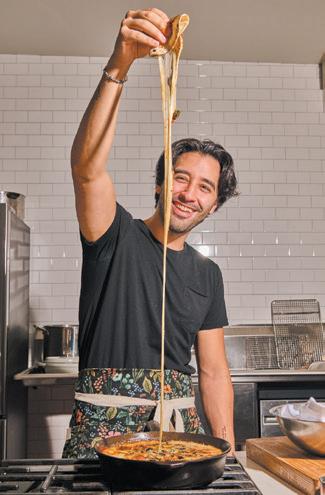
AUG 13
Chef, recipe developer, and social media muggins Matthew Broussard—aka @ACookNamedMatt—is taking his Instagram show on the road with the release of his debut cookbook, Now We’re Cooking: All-Purpose, Laid-Back Recipes (Simon & Schuster/Simon Element). On August 13, Kirkland-based Broussard will swing by Elliott Bay Book Company for a launch party featuring a convo about the book, anecdotes from the writing process, and a signing. Broussard’s built a sizable online following by breaking down his restaurant-grade techniques into approachable
video instructions for home chefs, with lots of sizzly cast-iron ASMR, with recipes showcasing his South Texas roots, Mexican-Syrian heritage, Mediterranean influences, and lived experience in Seattle kitchens. Some examples from the new book are crispy salmon with toasted miso corn, O.G beef birria, and charred broccolini with cotija dressing. He also has one in there called “The Creamiest, Cheesiest Mac and Cheese.” That’s a bold promise, cowboy. (Elliott Bay Book Company, 7 pm, free) MEG VAN HUYGEN
5k Beer Run Aug 8, Lucky Envelope Brewing, 11 am, all ages (but must be 21+ to get beer)
CHOMP! Cat Power, Whitney, Lady A, Marshall Law Band, Warren Dunes, and more Aug 15, Marymoor Park, 10 am–6 pm, all ages Panda Fest Aug 28–30, Fisher Pavilion at Seattle Center, times vary, all ages
AUG 16
With the show flyer touting, “We’re looking for a new mama! If you see her, tell her to come to the Antique Doll & Toy Market,” I am doing my due diligence to help these antique dolls find loving homes. The Lynnwood Embassy Suites’ showroom will fill with approximately 50 vendors peddling antique dolls, teddy bears, toys, miniatures, and books. I myself am a proud mother of three beautiful daughters: a 2001 Takara Blythe doll, a Hasbro 1965 Little Miss No-Name doll, and a 1966 Hasbro Pateena Poodle doll, and this annual market (now on its 47th year) is the perfect place to buy my girls something nice. (Embassy Suites, Lynnwood, 11 am–4 pm, all ages) AUDREY VANN
19th Annual Duwamish River Festival Aug 8, Duwamish River People’s Park, noon–5 pm, free, all ages
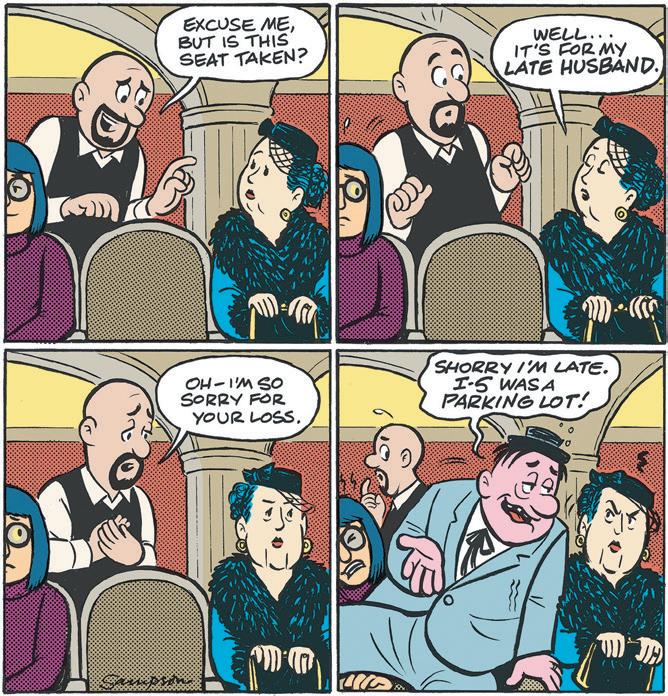
For the Culture Summer Resource Festival Aug 8, Rainier Beach Community Center, 11 am–4 pm, all ages
Tibet Fest Aug 8–9, Seattle Center, times vary, free, all ages
South Lake Union Block Party Aug 14, Westlake Ave N and Denny Way, freel, all ages
The Queer Not-Creepy Gathering for People Who Want to Fall in Love Aug 14, Ballard Homestead, 7 pm, 21+
Korea Expo & Festival Aug 14–16, Pier 62, times vary, free, all ages
Seattle Tattoo Expo Aug 14–16, Seattle Center Exhibition Hall, times vary, all ages
Seattle Design Festival Aug 15–20, Lake Union Park, times vary, all ages
BrasilFest Aug 16, Seattle Center, 11 am–6 pm, free, all ages
My Little Pony Convention Aug 21–23, Hyatt Regency Bellevue, times vary, all ages
Festival Sundiata Presents Black Arts Fest Aug 22–23, Seattle Center, 1–8 pm, all ages, free
Mariners 50: Community & Baseball Through Aug 28, MoPOP, times vary, all ages
Seattle Black Nerd Festival 2026 Aug 28–30, Langston Hughes Performing Arts Institute, times vary, all ages

ACROSS
1. What this puzzle’s constructor and his husband lost to the January 2025 Los Angeles wildfires
5. “Evacuation Alert” weekend sketch show
8. Safety ___
11. Nail polish brand with a “Liquid Fire” color
14. “Worst day ___!”
15. Like the number of phone calls that had to be made after the fires
17. Mom’s mom (whose dementia means she has no idea what’s happened to us)
19. DENIAL: Sign in front of a restricted area
21. Pretends, like everything is normal
22. Cooking liquids
23. Floral garland where it’s often quite hot
24. They may be stationary
25. Body tissue built (to angry music) at the gym
28. ANGER: Extremely popular
30. Site of a fury-pumped tricep
31. “Take it or leave it”
33. Slippery, snakelike fish
34. Drenched, unlike LA before the fires
35. Slick-talking, like promise-making politicians
37. “You get this round, I’ll get the next” beverage
40. Where sacrifices might be made
42. BARGAINING: Game show whose hosts have included Monty Hall and Wayne Brady
46. Take the ___ route
48. Shelter that’s far inferior to a house
49. Like the odds that the fires would be so catastrophic
52. ___-la-la
53. First word of a rhyming cocktail
55. Take ___ day as it comes
58. Metal resource often found in a deep, dark place
59. DEPRESSION: Nearly out of stock
63. Day-slept (when nothing else felt helpful)
65. Tacked on, like insult to injury
66. Negative conjunction
67. Alone, which this constructor thankfully was not
68. Implements used to fill out the mortgage for our new house(!) across town
69. ACCEPTANCE: Documents signed by research study participants
74. Narrow opening, like on our new mailbox
75. Cookie crust dessert (that’s great for comfort eating)
76. Safe harbor
77. Fabric amounts (like for making new curtains): Abbr.
78. As ___ (our new) usual
79. @@@
80. What this puzzle’s constructor and his husband now have, thanks to over eighteen months of working through their grief
DOWN
1. Egg layer
2. Lacto-___-vegetarian
3. ___ culpa (words from someone not denying it)
4. Critical care MD (like one who had to treat some of my neighbors)
5. Things you have no choice but to go through (to get on the subway)
6. Haves and have-___
7. Piece of land we ultimately decided to sell
8. Group of experts
9. Spark, like a riot
10. December holiday that precedes a hopefully fresh start: Abbr.
11. Broadcasting live, like Anderson Cooper from our street(!) as the fires progressed
12. Have a tremendously powerful impact
13. Whole number, like 770 (the dollar amount we received from FEMA)
16. Multi-store destination to buy all-new clothes
18. Valuable things, most of which we lost
20. “Black Swan” actress Kunis
24. Beast’s tamer
25. Newsstand buy, like TIME (which featured a photo of our empty 7-Down in a November 2025 issue)
26. Web address, like https:// app.watchduty.org
27. “Sure, why not!” response to having no clue what to do
28. “Have ___” (waiting room directive)
29. Site of aches from decision fatigue
32. Watson’s tech company
36. My phenomenal husband (who shares a name with London’s “Big” attraction)
38. Barely manage, with “out”
39. Sign up for more
41. Profs’ helpers
43. Unassertive, like with officials
44. Read quickly, like huge legal documents
45. ___ loss
46. Adjustable pair on a gobag backpack
47. In an unrefined manner
50. Intense, seething anger
51. Rx item, like for anxiety or sleeplessness
54. Tune out
56. Bills worth a hundo
57. 50%
60. Snug retreats for birds 61. Solitary person 62. Roughly
64. Pupper, like our brave little French Bulldog 67. Agitated state
69. Own up (to)
70. Post-fire pollutant monitoring org.
71. “Winnie-the-Pooh” joey who can tuck safely into Kanga’s pouch
Envision, like possibility Answers on p.