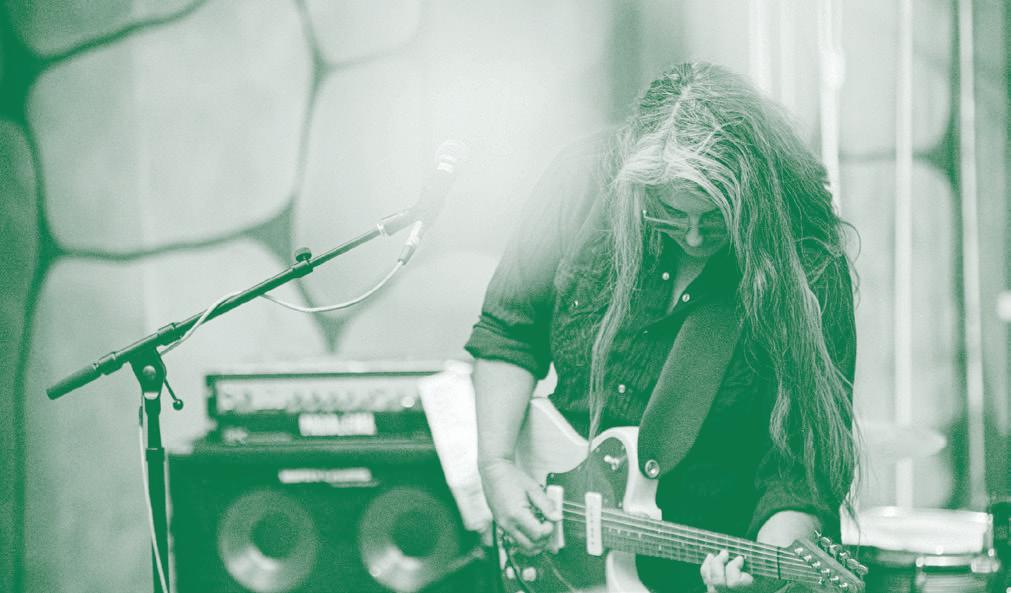
On The Anthology of UnAmerican Folk Music, Marisa Anderson reinterprets recordings from United States conflict zones.
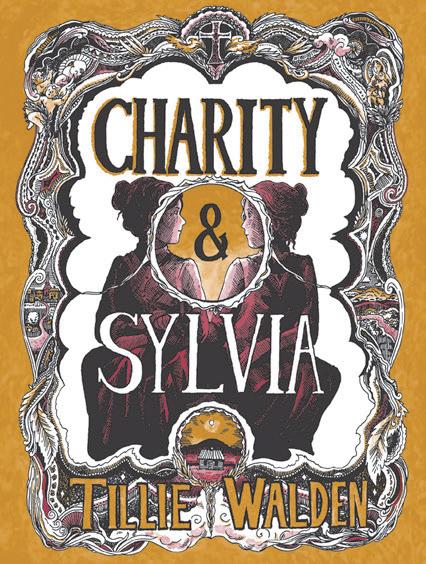
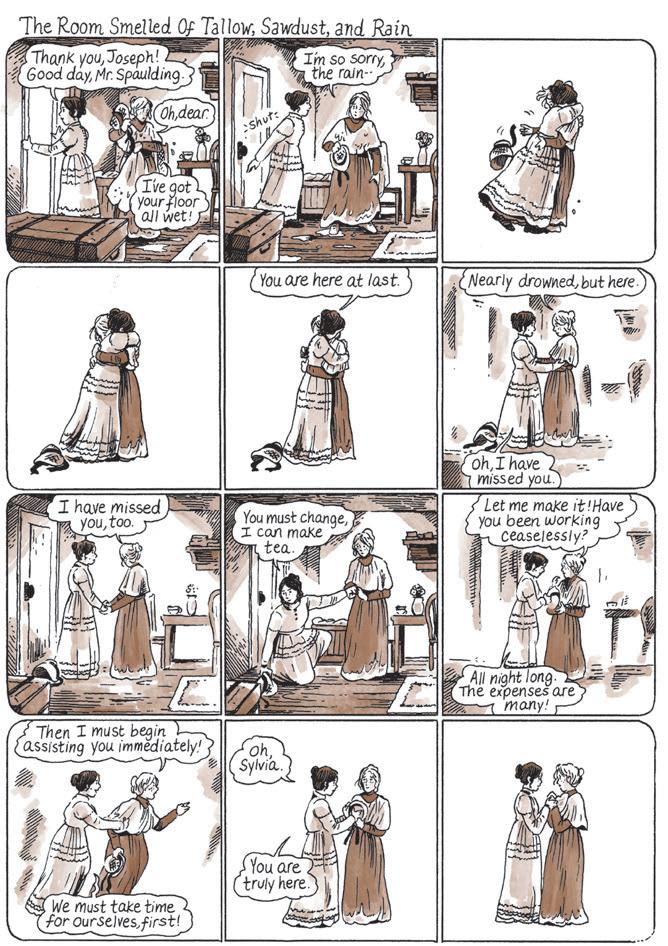
The Portland-based
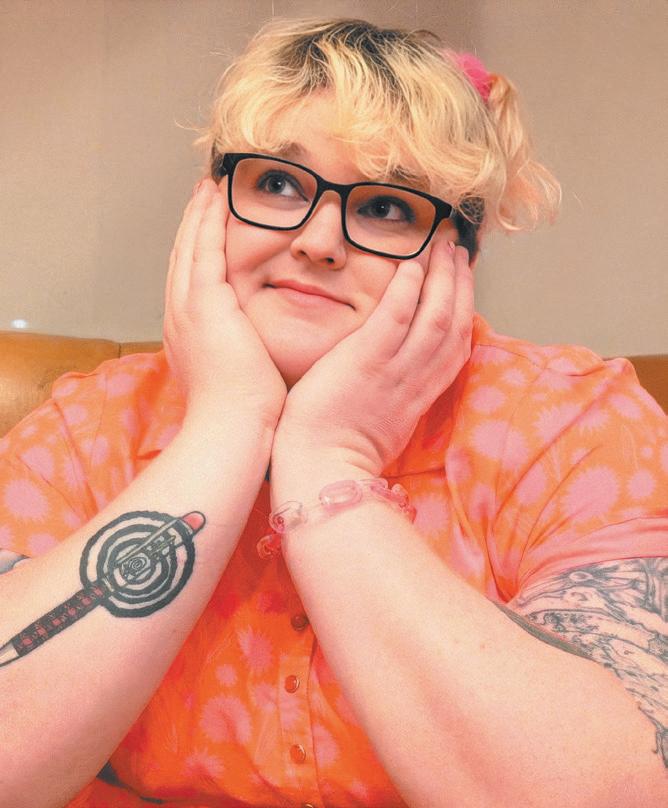
genius Tillie Walden traces an
Do This, Do That
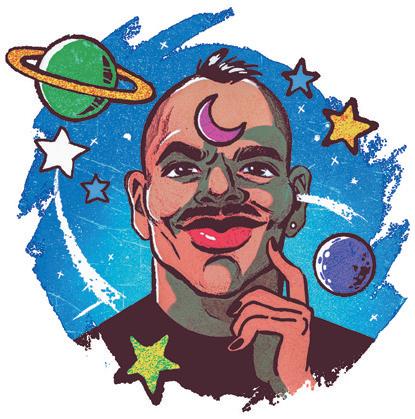
The only horoscopes column in the universe (for the month of June).
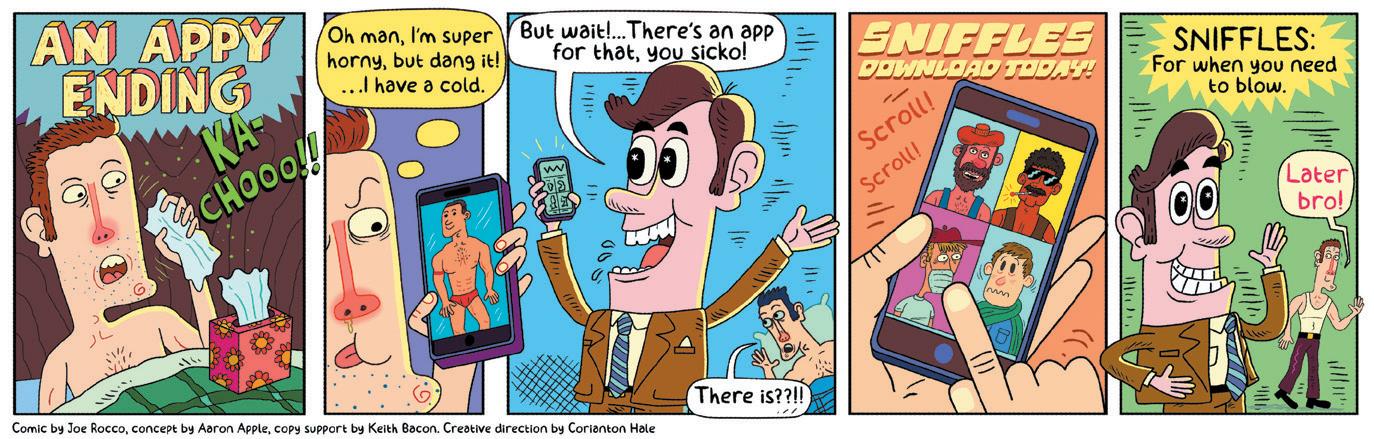
Get your sexual problems solved lickety-split in this edition of “Quickies.”
HTHE TRASH REPORT
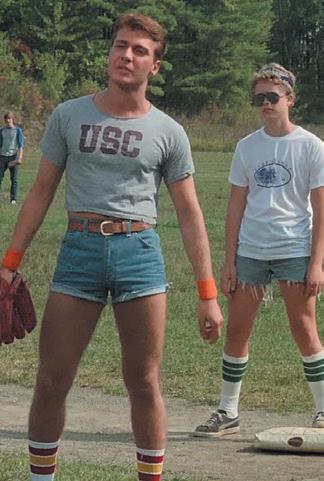
With Liberty and Sweaty Shirtless Men for All!
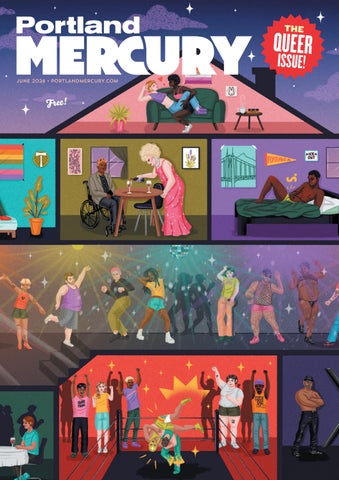
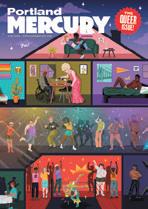
ello, and welcome to the Trash Report! This is a very special Trash Report for our very special Queer Issue. You may be wondering, “Elinor, I am not queer, will this column have anything for me?”
To which I reply: grow up. Everybody in Portland is queer. They put fabulosity in the water instead of fluoride. In fact, just having a Portland Mercury in your hands has unstraightened you by at least 10 percent. So, grab a friend of any gender and join me in discussing the most important trash of the month.
Baelectoral College
Many states held primaries last month, including Texas , where Congressman James Talarico beat Jasmine Crockett to become the Democratic candidate for Senate. People always say that Democrats will have a shot at a statewide race in Texas, and while that hasn’t ever been true, maybe this time it will be true?
Republicans are doing their damnedest to smear Talarico before anyone can start to like him, going so far as to label him a “gay vegan pagan.” While that may have an impact in Texas, all that does nationally is increase the likelihood of him appearing in our freaky leftist news feeds and making us want to give him $5 that we otherwise would have spent on our gay, vegan, and/or pagan hobbies.
National (Anti)Pride
Speaking of MAGA, their leader is putting together a party for America’s 250th birthday in Washington, DC next month. It was going to consist of a series of concerts, but of the few acts who did sign up, most later dropped out due to Trump’s toxicity and extreme loserdom.
There will still be a fair on the National Mall and a cage fight on the White House Lawn. In other words, it’s an outdoor gathering with thematic outfits and major displays of shirtless sweaty dudes; is it just me or does this America party sound an awful lot like Pride? Throw a few more colors on those flags and I could see some legit divas showing up there by accident.
He/Him/His-Man
BY ELINOR JONES
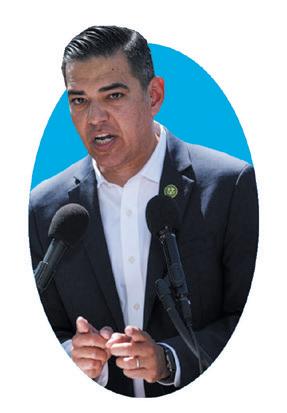
In other political news, the shuffling of congressional districts in California is likely to result in the mega-MAGA town of Huntington Beach falling into a district represented by progressive gay immigrant Congressman Robert Garcia (Isn’t that set of adjectives a dream blunt rotation for a politician?) But now the conservatives who live there feel that their voices are not being heard. Dude, if ONLY that were the case. I feel like I hear MAGA voices all the damn time. Constantly, in fact.
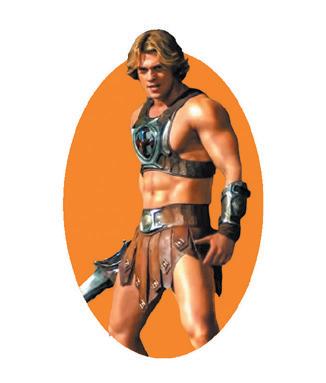
In other summer events, we are entering the season of blockbuster cine matic events drawing us away from that cruel sun and into darkened cinemas. The new He-Man movie Masters of the Universe has been highly anticipated, at least by cash-grabby movie exec utives and nostalgic men in their 40s. Its June release is a choice: Is it because it wants to be the first summer block buster, or because it fancies itself
an LGBTQIA activity? Let’s investigate. Pro-gay: nipple-forward outfits, Nicholas Galitzine , an extended universe of characters with names like Ram-Man and Fisto . Not gay enough: the joyless colorscape (why is Skeletor’s cape not a gorgeous purple?!) and He-Man’s boring haircut. This guy has one of the most iconic Prince Valiants of all time; let him dazzle, you cowards!
Speaking of Nicholas Galitzine , he is rumored to be in the running for our new James Bond, along with Callum Turner Jacob Elordi , Aaron Taylor-Johnson , and Rege-Jean Page . Are they actually casting a movie or are they publishing articles with these men on a list? They never actually have to do the reboot, because people like speculating so much and we will click on any of these actors’ photos any time we see them. Buzzfeed could pretty much fund itself for years with quizzes like “Which prospective James Bond would be your boyfriend based on your Harry Potter house?”
Queen Kylie the First
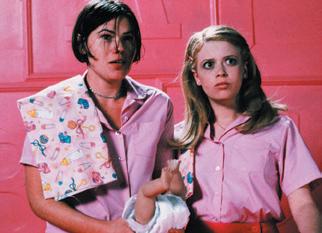
In other movie news, a documentary about Kylie Minogue just came out on Netflix, giving fans a rare glimpse into the life of the private superstar. It pains me that younger generations are not thinking of her first when they hear the name Kylie, so hopefully this documentary can put some respect back on that name. For the haters, please note that even indie icon Nick Cave his undying love for her music. Damn straight. Not liking Kylie Minogue is like not liking a peanut butter and jelly sandwich: you do like it, you just forget that you do, because it’s so institutional and iconic. Speaking of powerful blond women in gay news, actress Hayden Panettiere came out as bisexual in her newly released memoir. She lamented having had to wait until her 30s to be able to share it, citing public pressure she’s been under since a young age, but “better late than never.” Hear, hear! She’s even started doing press in pantsuits; that’s how you know she’s comfortable in her sexuality.
intelligence: “The human heart is where God desires to dwell,” he wrote. He also pointed out the cynicism of tech oligarchs’ insistence of AI’s potential, writing “technology is never neutral, because it takes on the characteristics of those who devise, finance, regular, and use it.” Subtext: “I think this product is evil because I think all y’all are evil.” Throw down, Leo! More like Magnifica Boo-manitas. Because he is booing you.
In other fake news—as in news about fake things—there is apparently a real thing called the Enhanced Games, where participants get juiced up on performance enhancing drugs to see who can go the fastest disingenuously. This is like having an enhanced art competition of who can make their AI Mona Lisa have the biggest tits. Like… okay???
Below the Belt
The latest development in toxic masculinity is something called “ballsmaxxing,” wherein men gas up their testicles like balloons to fill out their shorts better. I support people doing what they need with their own bodies to move confidently throughout the world, so more power to them. Also, I’m also curious what the end game is. How far will they take this? How big are we talking? Will there have to be new kinds of underwear for the next-gen nuts? Will we get ball bras? Underwear underwires? It’s rare to have actual innovation in clothing these days so I will, quite literally, salute their shorts.
Artificial Things
Chicago Pope Leo penned his first encyclical in a screen called “Magnifica Humanitas,” in which he railed against artificial
And in other men’s privates, briefly: Brad is being sued by a line of men’s high end penis creams after he rebranded his own skincare line from Le Domaine to Beau Domaine, and the penis cream brand, Beau D , allege it’s now too similar. Huge bummer of a month on name sharing for ol’ Brad. First his kids go to court because they don’t want to be associated with him, and now not even the penis cream does? Ouch.
On that uncharacteristically mean note, I would like to say something, which is that I am only mean about Brad Pitt because he is (allegedly) a jerk. I’d never be mean to any of you, because you are all (factually) angels. Thank you for spending time with me. Thank you for spending time with others. Thank you for increasing the national average of hot and queer people. Love,
MOISE GET
Robert Garcia
He-Man
Kylie Minogue
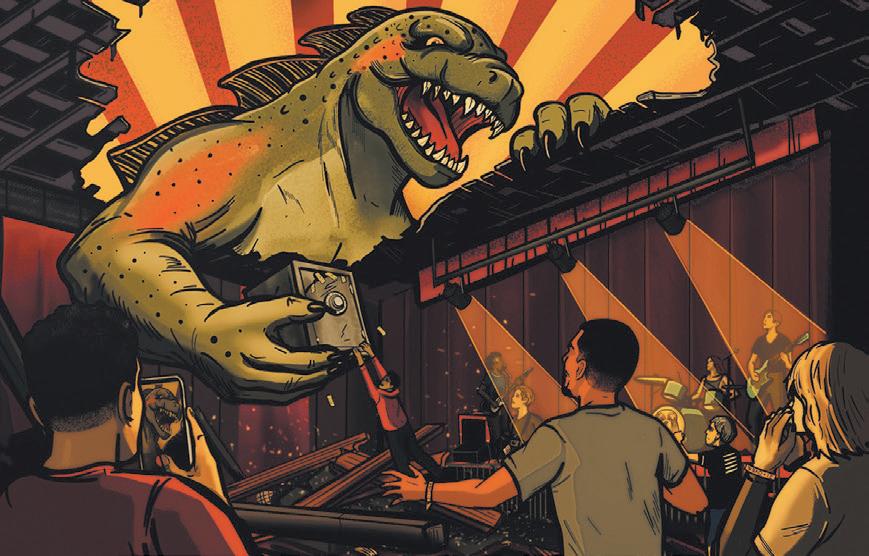
Big Steelhead, Small Market
Live Nation’s new Portland venue is slated for a 2027 opening.
BY ABE ASHER
ILLUSTRATION BY CHRISTOPHER CRUZ
Last month, Live Nation released renderings of the 3,500-seat venue expected to open next year. It also released a name: the venue will be called Steelhead, a nod to the trout that populate the rivers of northwest Oregon.
Per Live Nation, the name is a nod to “a species known for its toughness and instinct to move upstream, mirroring the venue’s connection to Portland’s independent spirit.”
Live Nation has, from its inception, pitched the venue as filling a gap in Portland’s music scene—attracting national touring acts who are too popular for a number of the city’s existing venues like the Roseland Theater and Crystal Ballroom, but can’t fill the Moda Center or Providence Park.
“At the end of the day, our goal is for Steelhead to be additive to Portland’s already thriving venue ecosystem,” Mary Clare Bourjaily, Live Nation’s market president for Oregon, told the Mercury. “There’s a gap here for artists who are growing into larger rooms, but who still want to play Portland.”
Now, however, with Live Nation’s venue set to open in just more than a year, and an AEG-backed venue inside the Lloyd Center footprint under construction as well, Jamison said the organization has to take a waitand-see approach.
“I think the best we can do is listen, notice the trends, track data, and then bring that information to the people in power who could potentially put guardrails out
Oregon has been opposed to Live Nation purchasing or opening a second venue in Portland for at least a decade, but Live Nation’s plans on that front remain similarly unclear.
Bourjaily said the company is “focused on operating Steelhead and booking artists and tours that are looking for a venue of this size in Portland,” but did not rule out further expansion in the city.
competing for one show, we’re competing against 10 shows.”
Matt Sever, an Austin-based singer-songwriter who performs as Matt the Electrician, said that while Live Nation’s presence in Austin hasn’t been a death knell for the city’s independent venues or scene, the number of venues the corporation controls has made it more difficult for those venues— particularly midsize venues—to compete.
But plenty of people remain unconvinced that a Live Nation-operated venue will fit so seamlessly into the city’s redoubtable independent music scene.
Portland was the last major city in the country without a Live Nation-operated venue, and since construction began on Steelhead, the company’s reputation has taken a beating: A federal jury found in April that Live Nation violated federal and state antitrust laws by operating as a monopoly, a lawsuit in which the state of Oregon was a plaintiff. Days later, the city council in Portland, Maine voted to block a Live Nation project.
“We’ve got a huge amount of action and creativity and passionate people,” Cheri Jamison, co-chair of MusicOregon’s music advocacy council, said of Portland’s music scene. “So it is vibrant on its own, and it has functioned without a big, corporate-owned promoter controlling a major room. That’s what we are wanting to ensure is protected.”
MusicOregon, a nonprofit trade organization for the state’s independent music scene that merged with MusicPortland this year, has been among the chief skeptics of Live Nation’s arrival in Portland.
there,” Jamison said.
Jamison said MusicOregon “has always been pro-venue” and wants to have a “collegial” relationship with Live Nation—a corporation that, she noted, has booked shows at independent venues across Portland for years.
Still, there are a few markers MusicOregon will be paying particular attention to after Steelhead opens next year that may signal the approach Live Nation is taking to its Portland operations.
Jamison wants to see, for instance, whether Steelhead will limit capacity for any shows—a move that could put the venue into direct competition with the smaller, independent venues it has ostensibly been built to supplement.
That possibility remains very much on the table. Bourjaily told the Mercury that the company is “focused on booking shows that fully utilize [the] venue’s capacity,” but did not rule out the possibility of limiting or subdividing the venue’s capacity as it sees fit.
Jamison also wants to see whether Live Nation will be content with operating just one venue in Portland. She said Music
Aside from concerns about the particulars of where Steelhead is located, independent music advocates in Portland have warned that Live Nation’s arrival in the city represents a slippery slope: that, once here, the corporation will begin to expand and use its vast resources to gobble up venues and bookings across the city.
That, to some extent, is what has happened in Austin—another midsize city renowned for its independent music scene where Live Nation operates or has exclusive ticketing partnerships for a wide array of venues.
“They have a lock on everything that is above a certain capacity and ticket price in the city, for sure,” said Jack Wilson, the co-owner of Radio Coffee & Beer, which operates a 2,000-plus capacity outdoor venue in East Austin.
Wilson said that Live Nation’s booking reach goes beyond the venues they control.
“We’re just fighting for whatever we can, really, because it’s not even just the money they offer—they’re the main booker for Austin City Limits and Lollapalooza, and all of these other festivals, and they’ll dangle the whole tour,” Wilson said. “So we’re not just
“Maybe they come in with [one] venue, but eventually they start affecting the ticketing around town,” Sever said. “It seeps in, it gets in all the crevices and cracks.”
One concern Wilson has about the state of the music scene in Austin is “show fatigue”—the idea that, with so many Live Nation venues booking major national touring acts, music fans have less time and less money to support the independent venues and up-and-coming artists they otherwise might. That can affect local musicians as well as venues.
“Is there any kind of night in, night out industry of music that supports a [local] band scene? That’s what’s under attack with the corporatization of everything,” Wilson said. Those kinds of questions are key, not just for Portland’s identity as an independent music town but for the city’s economy as a whole.
According to an economic impact study funded by the Oregon State Legislature three years ago, Portland has more music venues than both Austin and Nashville. The state’s for-profit music industry as a whole generates some $3.8 billion in economic output annually across the state, with the vast majority of that output concentrated in Portland.
Jamison said Portland City Council President Jamie Dunphy, a former MusicPortland board member who vocally opposed the granting of permits for the Live Nation venue, is at work on a comprehensive music policy package for the city to “strengthen the entire music ecosystem and community.”
If that plan includes efforts to limit possible expansion efforts from Live Nation or AEG in Portland, Sever will cheer it on.
“Nothing good comes from those companies,” he said.
Road Rules
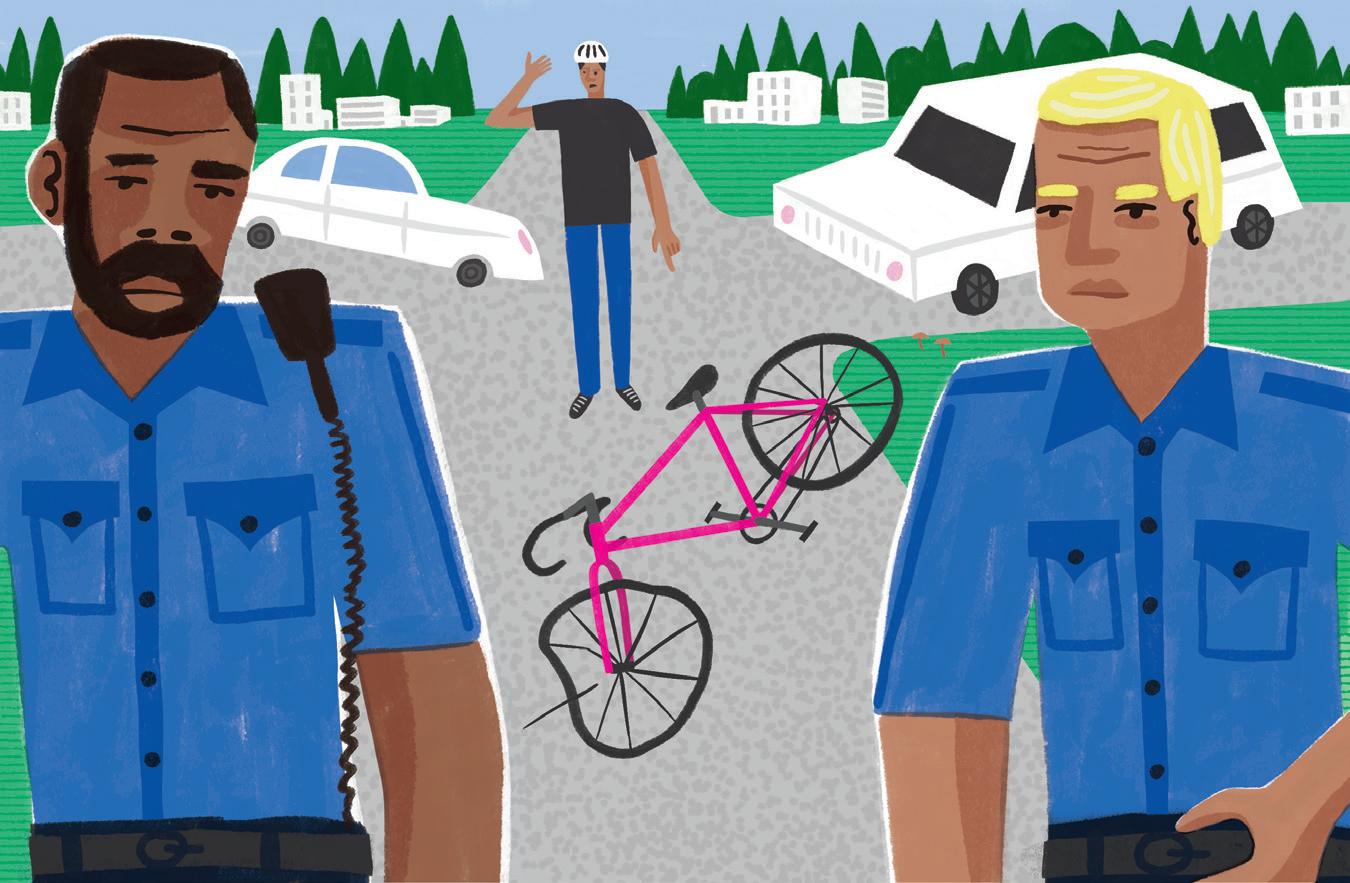
Police policies allow at-fault drivers to leave certain crash scenes without so much as a ticket.
BY TAYLOR GRIGGS
ILLUSTRATION BY JOE ANDERSON
In late April, Portlander Jennifer Shuch was biking across Northeast Halsey Street near the Hollywood Transit Center when she was struck by a driver running a red light. The impact, which was caught on video, left Shuch bruised and shaken up, but not seriously injured.
Despite a witness calling 911, no paramedics or police ever arrived on the scene. Shuch briefly talked to the driver, who claimed she couldn’t see Shuch crossing the street because it was raining and her windshield wipers were broken.
Later that day, Shuch called the police to directly file a report. But despite the driver having a documented history of traffic violations, the police didn’t cite
the driver. As it turns out, in situations like these, police aren’t required to.
“This was a failure of a driver to reasonably stop and follow the rules of the road,”
Reckless drivers are often not held accountable, as long as they didn’t cause serious injury.
Shuch told the Mercury. “I don’t want people who are driving really recklessly to not face any consequences for that.”
Portland Police Bureau (PPB) officers are not mandated to report or investigate all traffic crashes. Per the bureau’s administrative rules, police do not necessarily need to investigate crashes caused by a driver who violated the law, unless it was fatal or resulted in a traumatic injury. Police are also supposed to report and investigate crashes caused by intoxicated drivers, and those who flee the scene.
When it comes to crashes involving vulnerable road users, like cyclists and pedestrians, police have a lower bar for investigation, theoretically meaning they would pay more attention to these kinds of incidents. However, police must report and investigate such crashes only if the victim is injured badly enough to require ambu -
lance transport. They may report, investigate, and cite drivers for other incidents, but are not mandated to.
The lack of reporting mandate means reckless drivers who hit pedestrians and bicyclists are often not held accountable, as long as they didn’t cause serious injury. It also means cyclists like Shuch may run into trouble when trying to seek legal or financial recourse from auto insurance companies or the courts for damages or minor injuries. PPB says it doesn’t have the staffing to follow up on these types of crashes.
“We’re a significantly under-resourced police department and we’re always having to make hard choices about where to put our limited personnel,” PPB Public
Information Officer Sgt. Kevin Allen told the Mercury
Some Portlanders, including Shuch and others, who have had similar experiences, question the narrative that staffing issues are the sole reason PPB often fails to cite drivers for violating the law. They note the practice may make it harder to collect data about how safe it is to walk and bike in Portland, giving a false impression about how many crashes are taking place on city streets. They also worry PPB is letting dangerous drivers off the hook, making it more likely those drivers will go on to seriously injure or even kill someone.
“It doesn’t seem right that there are so many people getting hit by cars in Portland, and unless we die, we don’t matter,” Shuch said. “How many times does this have to happen before it’s taken seriously?”
Police crash protocol and practice
PPB cites two main challenges—a backlog of 911 calls and an arduous crash investigation process—that supposedly prevent officers from showing up to the scene of a crash or citing drivers for illegal and dangerous conduct. The bureau ties both of these challenges back to a lack of agency resources.
Portland’s 911 response times are poor by any standard. Data shows that the average response time for low-priority calls, which would include situations like Shuch’s non-injury collision, is roughly an hour and 38 minutes. In the case of Shuch’s crash, it appears police weren’t even notified about the call until several hours after the incident.
Per PPB’s policy, police are required to investigate crashes caused by drivers who are intoxicated behind the wheel. But if they don’t show up to a crash, how would they know what state the driver was in?
Allen acknowledged that it would be “very difficult” for officers “to gather enough evidence of [a driver’s] impairment” if they were not able to immediately respond to the scene. He said with officers overburdened, it’s “not a stretch to assume that there are a lot of crimes committed that don’t result in an arrest.”
But even if officers do show up to a crash scene, it doesn’t mean they will conduct an investigation or cite an at-fault driver.
Late last month, Brandon Mullen was biking across NE Sandy Blvd at 24th Avenue when he was struck by a driver running a red light. Mullen was uninjured and declined treatment from paramedics who arrived after a witness called 911. The 911 call also summoned a police officer to the scene, who Mullen says was helpful. But, like in Shuch’s case, the police declined to cite the driver who hit Mullen.
Mullen followed up with the officer who responded to the crash, sharing a detailed account of the situation in an email. In response, the officer confirmed that he wouldn’t be filing a police report due to the lack of “notable injuries on scene” or ambulance transport. This left Mullen frustrated.
“We have a society with rules, laws, policies, and disincentives that we say are, in part, to drive people’s behavior,” Mullen told the Mercury , reflecting on the crash
and the police response. “If someone blows a red light and hits somebody, and not only do they not get a ticket, but there isn’t even a police report… are they encouraged to drive more carefully or not?”
Allen told the Mercury that in order for officers to cite someone for a moving violation, they must also complete a full crash investigation, which is a complex and time-consuming process. While any officer can do a crash investigation, traffic officers have the most experience doing it, likely making it easier to primarily make it their responsibility. But Portland doesn’t have very many dedicated traffic cops.
The average officer response time for low-priority calls is roughly an hour and 38 minutes.
In 2020, citing understaffing and a lack of resources, PPB effectively disbanded its Traffic Division. Bureau leaders publicly discussed the lack of traffic enforcement on Portland’s streets, essentially spreading the message that reckless drivers were unlikely to face consequences. Later, a bureau leader admitted PPB purposefully framed the situation to “create a stir” and encourage the city to give police more money.
In 2023, PPB brought back its traffic enforcement team, though in a limited capacity. Allen said the department is a “shadow of its former self,” with zero fulltime traffic officers on patrol most of the day.
Portland Mayor Keith Wilson has committed to adding 24 new investigators to PPB by the end of 2027, partially to address traffic crashes. But it’s unclear if low-level crash investigations would be a priority for the team.
When Mullen and Shuch posted online about their crashes and subsequent interactions with the police, people responded with shock. Unintentional though it may be, PPB’s practice to let at-fault drivers off the hook in these cases appears to many as a sign the bureau doesn’t take the safety of vulnerable road users seriously.
Portland City Councilor Sameer Kanal told the Mercury his office has been hearing anecdotes like Mullen and Shuch’s for some time. Kanal said he’s looking into potential solutions for the issue, noting that “when PPB is tasked with doing something, they generally do it.”
Kanal said he wants all Portlanders to feel the city will take their concerns seriously, particularly when they’ve experienced something as alarming as being hit by a car. To Kanal, this is a primary reason for the police to take such crashes seriously.
“It’s about making clear to the public that you are equally valid using a road as a pedestrian or a bicyclist… and that your life matters to us,” Kanal told the Mercury . “If your life is in danger, we’re going to care about that, and try to hold the driver accountable. Not in a punitive way, but in a way that’s designed to prevent it from happening.”
THE BLACK BYLINE
Why It’s Finally Time for Oregon to Pay Reparations
Repaying the debt owed to Black Oregonians is not only necessary, it’s very feasible.
BY DONOVAN SCRIBES
ILLUSTRATION BY ARANTZA PEÑA POPO
So if I come to your job / Take your corn on the cob / And take a couple kernels off / Would that be alright with you?
—Andre 3000, What a Job (2007)
Re•pair: to restore by replacing a part or putting together what is torn or broken
Impossible
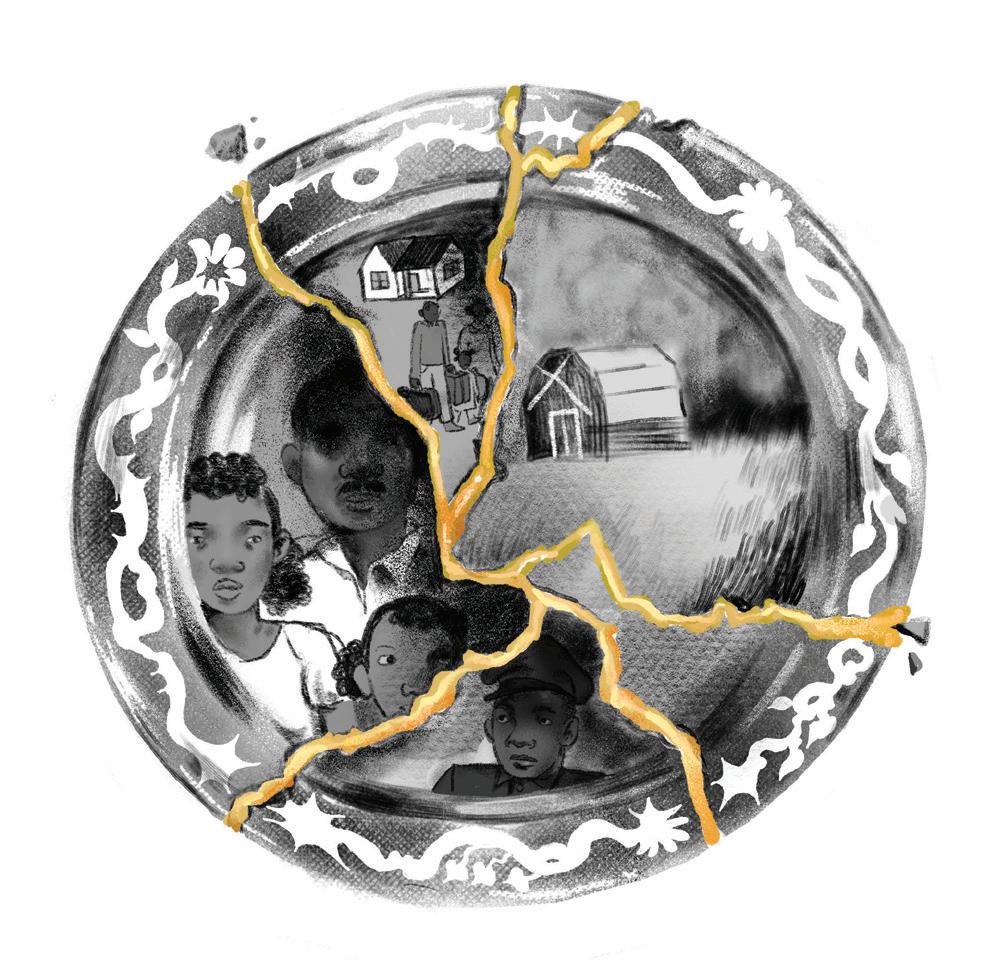
Rep. Shannon Jones Isadore is the only Black woman in the Oregon Legislature. Her grandfather, a Mississippi-bred World War II veteran, returned to the United States from France after being discharged with honors, first to Louisiana—then Portland, Oregon.
He got a job, built a life here, and planted deep roots across several decades.
In 1978, he fell sick with cancer. It was then he learned he had been denied access to a lucrative Veteran Affairs benefits program offering vets the most valuable asset in this country: land.
“During his time in the VA hospital, he learned of more veterans—some of them with lesser ranks—who had received land grants,” Isadore said last year. “The only difference? They were White, and he was Black.”
The freshman lawmaker was testifying in support of a reparations package that would include a task force to study how reparative policies could be issued in Oregon.
“He died that same year without ever receiving the compensation he was owed,” she continued. “This was especially painful because he and my grandmother were farmers—imagine what they could have done with that land if it had been rightfully allocated to them.”
The reparations package failed. It didn’t even pass out of committee.
The success of Black Oregonians is still being stifled at best, and cannoned at worst.
ous occasion—one that calls us to to imagine beyond the confines of impossibility. It was not long ago the abolition of slavery seemed implausible to most.
How we glare at that notion today.
However, questions still persist: “Who?” “what?” “when?” “where?” “why?” and of course, the classic, “How would we pay for it?” are lobbed around like bombs bursting in air when the question of reparations is posed.
But does Oregon owe such a debt to its Black citizens? Not only is the answer glaringly and irrefutably “yes,” but it’s painfully feasible, too.
Oregon, bearing the distinct disgrace of being the only state in America to ban Black people from living in its borders, today carries with that unseasoned legacy the predictable consequence of having a small Black population—two percent to be exact. These Exclusion Laws stayed on the books until 1926. Oregon barred Black people from doing business or owning land while simultaneously offering White people up to 300 acres of land simply to move here— talk about a government handout.
The rebels who defied did so at the threat of lawful public whippings.
Such truths are not simply facts of an unpleasant past, but roots tilled, maintained, and nurtured across more than a century-and-a-half.
There are of course exceptions of prosperity, just as there were runaways before Emancipation. But even so, the numbers tell a story of a general truth: The success of Black Oregonians is still being stifled at best, and cannoned at worst.
Education. Housing. Health.
But must this be? The groundwork to a new path has already been well-tilled.
The Groundwork
Two. Years. Later.
Despite the horrors of such an embarrassing delay, Juneteenth is above all, a joy-
Juneteenth spends its fifth year in the sun as a federal holiday this June 19th. However, for many Black communities nationwide, it’s been cause for celebration for more than a century-and-a-half. Born from the cotton fields of Galveston, Texas, this holiday marks the day when enslaved Black people there finally gained their freedom, more than two years after the Emancipation Proclamation.
America turns 250 this summer. And yet it seems shackled in its ability, as the wealthiest nation on the planet, to imagine how to pay its debts to those who built the place for free.
However, as Juneteenth teaches us, freedom, even delayed, is not less worthy, nor impossible.
“I remember Donovan raising HR-40, reparations. I committed to asking if that priority can be part of the City’s legislative agenda,” read an email from the mayor’s office to me, before a window of possibility flung open. “Please see below that reparations is now an explicit part of City Council’s agenda.”
The year was 2021. The mayor was Ted Wheeler.
To my surprise, my request for the city to lobby the feds for reparations was heeded. HR-40 is legislation that, if enacted, would impose a national study of the lin -
gering impacts of slavery and anti-Black laws to advance a slate of proposals to remedy these continuing legacies. But, despite being introduced to Congress every year since 1989, the bill has never even advanced to a floor vote.
DC’s delays, however, should not run out the clock on homegrown justice.
Cascadian shockwaves rippled through Portland last year when 27 Albina descendants were finally awarded an $8.5 million settlement from the city, more than four decades after local agencies seized their families homes and businesses for an expansion of Emanuel Hospital which never happened. A lawsuit led by an archivist and librarian who goes by “Byrd,” through her Emanuel Displaced Persons Association 2 (EDPA2) initiative, alleged that her family and others had survived a “real estate massacre” when the city took these properties through the power of eminent domain. The settlement was originally slated to award the descendants $2 million, until Councilor Loretta Smith stepped in and petitioned Wheeler’s successor, Mayor Keith Wilson, to increase the final payout.
“[Past] policies deliberately marginalized Black communities and left lasting scars when residents were pushed out of Albina without reparations, leaving an indelible mark on our city’s history. Our response must be deliberate, comprehensive, and rooted in fairness and justice….” Councilor Smith said at the time.
A Portland State University report commissioned in partnership with EDPA2 found displaced residents would control nearly $100 million in property wealth today—before accounting for commercial assets seized at the time. Among other proposals, the report recommended the city start a restitution task force to begin the work of issuing payments to even more descendants of such harms— this has not happened.
An unrelated estimate from EcoNorthwest says that more than a billion dollars in wealth was siphoned out of parts of Albina from the ’50s through the ’70s due to racist urban renewal policies and broken covenants at a time when 80 percent of the city’s Black residents lived there.
These numbers underline that scores of additional Portlanders have inherited the consequence of this systemic theft, and yet still have never been compensated.
The Portland Housing Bureau’s N/ NE Preference Policy is an admirable attempt at redressing some of the impacts of this legacy. This policy offers targeted housing opportunities in the core of this neighborhood to those with deep generational ties to the area. But where this brilliant policy falls short (outside of issuing a check) is accounting for the whole of Oregon’s debt.
Reparations Now (It’s Possible)
From sunset laws and property seizures, to school segregation and entire communities reduced to rubble, cities from Eugene to Medford carry the living memory of a onesided civil war on Black Oregonians.
In 2018, Rep. Julia Fahey stumbled across something buried in the deed of her
Eugene home that jarred her: “No member of any race other than the Caucasian race shall use or occupy any building except as domestics in the home of an owner or tenant.”
That clause was written in 1949.
In response, Rep. Fahey attempted to advance legislation that would wipe such language from deeds statewide, but faced legal barriers in doing so.
Not long after, the Central Oregon Black Leadership Assembly created the Good Deeds Program to assist individual homeowners in removing these shockingly common clauses from their deeds. While the 1964 Fair Housing Act voids these racist covenants from being enforced, they remain proof of ever-constricting forces yet to be truly reconciled today.
Time alone does not unbind us from our debts. Some are codified in paper, some persist through culture. Some remain through negligence, or a belief that time heals all wounds. But one must remember, 167 years ago, Oregon itself did not exist.
However, since Oregon has existed, it has had a reflexive habit of blocking and
Oregon has a reflexive habit of blocking money and opportunity out of Black communities.
siphoning money and opportunity out of Black communities far more than it invests in them.
Freedom is not simply the releasing of physical chains. It’s the release of the mental shackles that anchor us to the traditions of corroded and predictable outcomes.
If our state can materialize $600 million on a dime to renovate the Moda Center— an entertainment venue built where dozens of Black folks once owned homes—then surely it can find funds to make its Black citizens whole… no?
The makings of a new day live in the EDPA2 settlement. They live in the city’s commitment to lobby for reparations— and actualizing that commitment here, at home. They live in deciding that good governance is possible, and that good governance is not negligent, nor agnostic, towards the past. Good governance stewards the present, recognizing that potholes are no more a natural phenomenon than wealth gaps.
It is time to fill those holes.
It is time to dress those wounds. It is time to pay those debts. It is possible. And now: It. Is. Time. Happy Juneteenth.
Donovan Scribes is an award-winning writer, communications consultant, speaker and producer. A former vice president of the Portland NAACP, he writes on culture, place, and politics. Follow him on Instagram @donovanscribes. Want to keep the conversation going? Email him at donovanscribes@gmail.com.
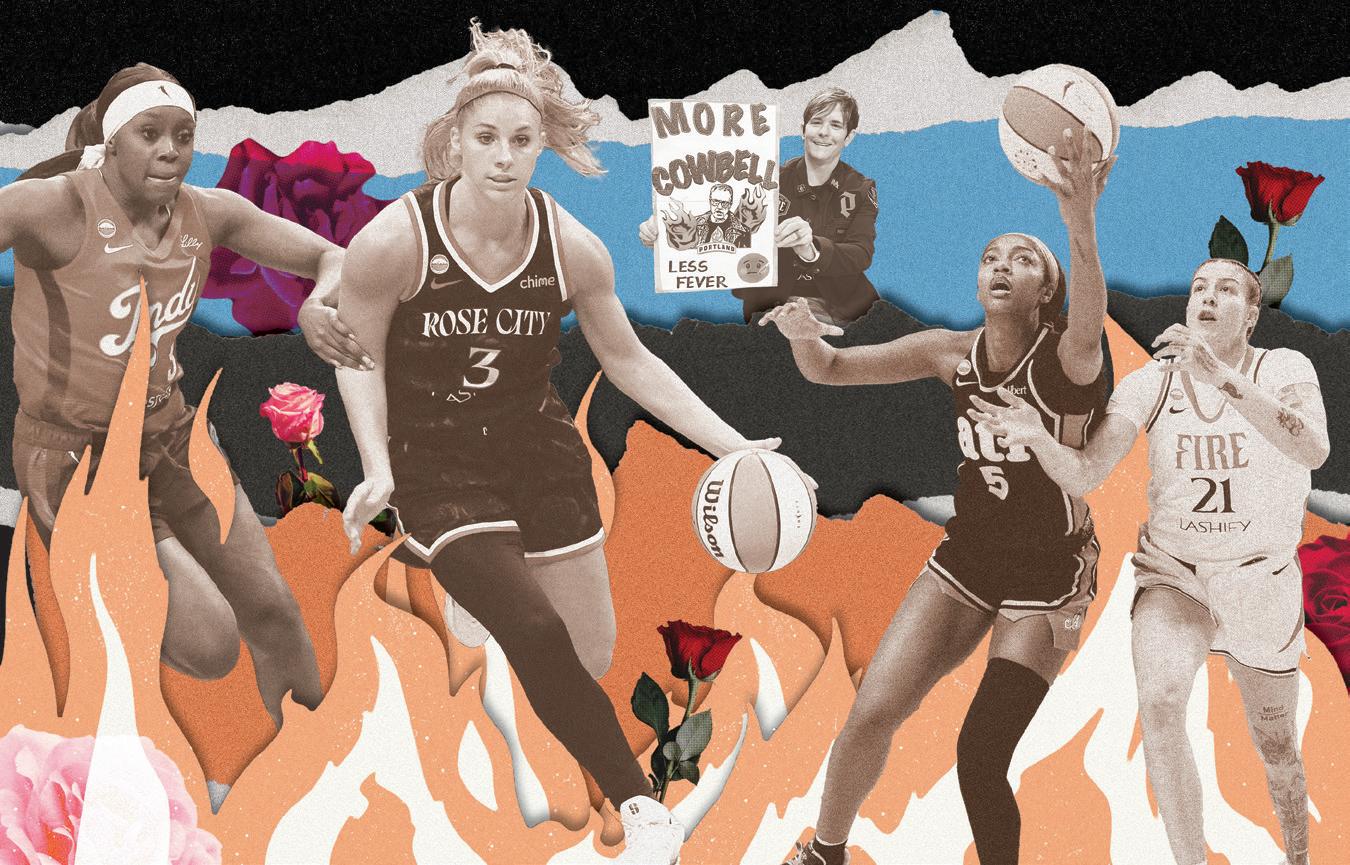
Sparks Fly During the Portland Fire’s Opening Season
The Mercury’s guide to Portland’s first WNBA season since 2002
BY CAMERON CROWELL
PHOTO ILLUSTRATIONS BY CHAR HARRIS
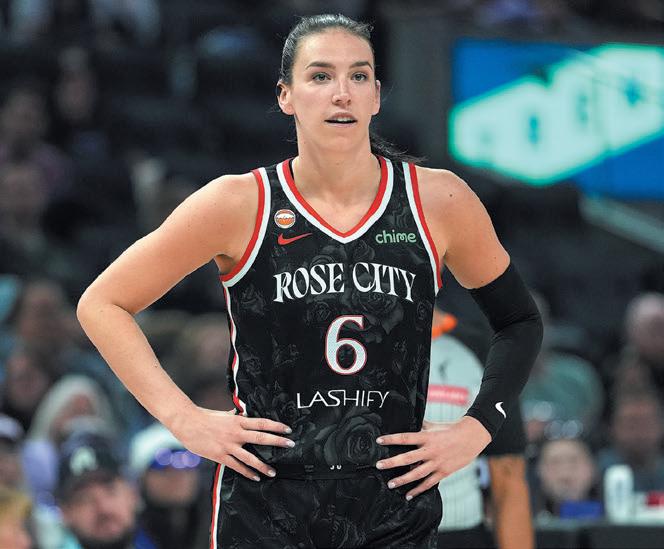
On their first night as a Women’s National Basketball Association franchise, the Portland Fire set the Rose Garden ablaze, breaking attendance records (it’s not a competition, Golden State Valkyries and Toronto Tempo, but yes it is), and igniting a fanbase thirsty for professional women’s hoops after a 24-year drought.
What’s not to love? Great basketball with a fun cast of WNBA and former college role players, fresh branding and uniforms, a singular noun team name, halftime entertainment from R&B legends, an already iconic kindling-inspired court dubbed the “Fire Pit,” players winning 400% salary increases in the new collective bargaining agreement, and a short but sweet summertime schedule so you can bike to every game. It’s the WNBA; the vibes are the best. And
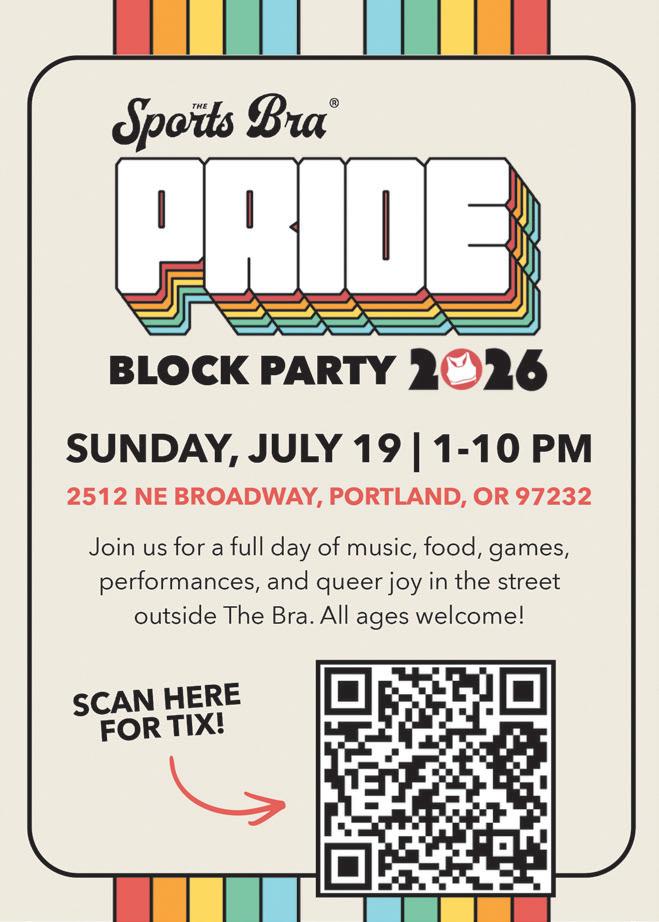
the Fire make a perfect domestic partner with a city like Portland, boasting a proven track record of supporting women’s sports between the Portland Thorns, all-women’s sports bar The Sports Bra, and several queer pickup sports meetups.
For those hopping into the fire a little late, there’s still plenty of time—our hometown heroines can always use more fuel. Here’s a few things to keep in mind, whether you’re new to basketball, a MNBA fan, or coming back to the game after a long Fire-less break.
The WNBA Is Run By Gay Fans and Hoopers
As one fan told the Mercury after the Fire’s first game, “This is a really gay city, you can’t go without saying that.” Obviously, queer love is something we celebrate in the Rose City. It took less than two games in
the Fire Pit for the first Jumbotron lesbian marriage proposal, and during that game, the Fire went on to deliver the lovebirds the team’s first win, too.
Unlike their MNBA counterparts, who have only ever had one out gay player in Jason Collins (RIP to a real trail blazer),
Unlike their MNBA counterparts, the WNBA is full of queer stars.
the WNBA is full of queer stars. On the court, the Fire’s starting 3&D forward, Emily Engstler, lights up the scoreboard with blocks on defense and sharpshoot -
ing from three (37% from beyond the arc over her five years in the pros), and briefly dominated WNBA TikTok with speculation about her dating Valkyries guard Veronica Burton. Unfortunately, in late May, the Fire let go of two solid queer Black contributors in guard Sug Sutton (best tunnel fits in the game), and three point specialist Kamiah Smalls. Some of the WNBA’s best talent across the league, however, are gay hoopers, and they’ll be coming through the Moda Center throughout the summer to face the heat of the Fire. The Dallas Wings’ extremely talented sapphic guard duo Azzi Fudd (#1 overall pick in this year’s draft) and Paige Bueckers (2025 WNBA “Rookie of the Year”) visit the Fire Pit on June 13 and again July 22. The Las Vegas Aces are both the WNBA’s best team over the past half decade, and one of the gayest—between
their second-best player Chelsea Gray, hyper-efficient big NaLyssa Smith, and off-the-bench standout Jewell Loyd. The Aces visit June 11 and July 9. Even the Portland Fire’s geographic rivals in Seattle are led by their biggest offseason addition in guard Natisha Hiedeman, one half of the lesbian WNBA streamers/podcasters/ player media icons StudBudz. Her Seattle Storm will come to Portland June 17.
Small Rule Differences
That (Generally) Make the Game Better
Perhaps the biggest (and best) rule difference between the WNBA and the MNBA is the shorter season. The WNBA regular season is 44 games in the height of the summer months (plus three rounds of playoffs), as opposed to the grueling 82 games (plus four rounds of playoffs) in the MNBA. This really benefits players and fans alike. There are fewer opportunities for tragic injuries to players in the W, there’s less incentive for stars to rest for entire games, and it raises the stakes of the regular season when every game matters as a mid-season losing streak can easily tank a team’s playoff hopes. Meanwhile, the MNBA seasons have a period colloquially called “Mickey Mouse March” where fans joke about stats not mattering because bad teams are actively trying to lose, and good teams are resting players for playoff runs.
Fans might notice that WNBA games are 10-minute quarters as opposed to 12-minute quarters in the MNBA, a change we say is better as well, since nearly every other level of basketball around the world is 40 minutes. The extra playing time in the MNBA is really just in service to television advertisers, but I could concede that some basketball sickos really are looking for their hoop fix and might need that extra eight minutes.
Looking at the court itself, the WNBA features a slightly shorter three point line, about a foot shorter from the top of the key and a virtually unnoticeable five inch difference from the corners. This, along with the one inch smaller circumference of the basketball itself, works to incentivize shooting more in the women’s game. Who doesn’t love buckets?
While Fans Keep Bringing the Energy, Don’t Expect a Roaring Flame (Playoff Run) in Year One
Every home game is a rager amongst the Fire faithful, but Portland’s inaugural season is probably not yet a championship one. The team matches the fan intensity with a fast-paced, swarming full court press that has led to an unlikely, fun winning streak. Generally, new teams filling out rosters through the expansion draft (selecting from a pool of players on existing teams that are not “top 5 protected players”) puts the newbies at a disadvantage. Combine that with the Fire drafting alongside another brand new team in the Toronto Tempo, and those players (mostly) having never played with each other before, it’s a recipe for real struggles. Some national WNBA analysts picked the Fire to finish last this year. Might Portland overcome the odds and shock the haters?
Stranger things have happened in sports and the Fire ignited with a hot start to the season. However, the consolation prize for a rough Year One is a higher likelihood of getting the first pick in next year’s amateur draft—bring JuJu Watkins’ super powered high bun and generational skills to Portland, please!
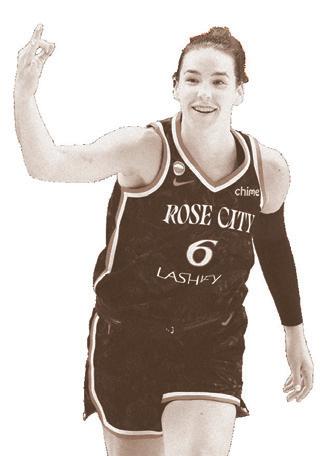
All that being said, Portland is already home to some freshly minted standouts. Bridget Carleton, the veteran Canadian and former rotation player for the Minnesota Lynx, already holds the unofficial spot as the Fire’s spiritual leader. Carleton leads by playing the game the right way with her established defensive intensity, while seamlessly sliding into a bigger offensive role by leading Portland in scoring. Carla Leite is a young French point guard coming off the bench for the Golden State Valkyries last season. Leite has struggled to shoot from three so far in her pro career, but she has a real knack for getting two feet in the paint, drawing fouls, and setting up teammates to score.
Sarah Ashlee Barker is another young guard whose loud spinning layup in the final minute against the Connecticut Sun helped seal a much-needed win at the Moda Center. Barker’s ability to shoot the rock and score in clutch—all while in an underdog role coming off the bench—has her in early contention for “Fan Favorite” status in
Dance and Be Gay Stomptown,
Landline, and
Queer Baile are upturning the
outdated heteronormative
culture of social dancing.
BY KATHERINE CHEW HAMILTON
PHOTOS BY TRANG NGUYEN AND ESMÉ HENSON
Partner dancing, at least traditionally, follows a strict gender binary: who leads and who follows, who asks who to dance, and who wears lace-ups and who wears heels. But a number of queer-led organizations in Portland are keeping all the things they love about partner dancing and social dancing—the connections, the energy, the community— while breaking down the outdated gender roles and adding clear communication about consent. The result: places where people can dance and be their true, full selves. There’s never been a better time to be queer on the dance floor.
Stomptown
Country two-step, waltz, and West Coast swing, plus country line dance Country line dance may be exploding in popularity at the moment, but Stomptown’s
been at this country dancing thing for a lot longer—about 20 years, according to its current president, Zoe Frost. But while line dancing is an entry point to country dancing for many these days, Stomptown’s real bread and butter is country partner dancing.
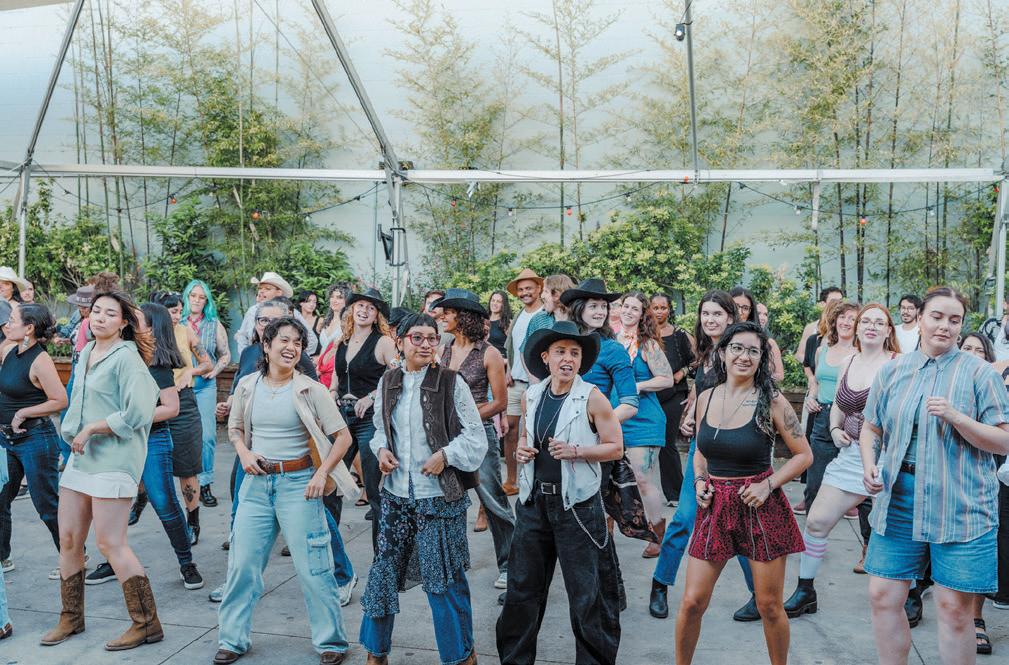
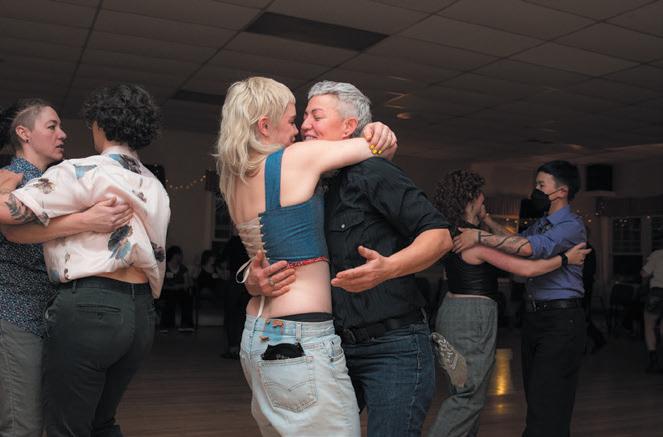
Stomptown, a 501(c)3 nonprofit, hosts dance nights every first and second Friday at Escape Bar and Grill, a tiny lesbian-owned bar on Northeast Sandy and Prescott, with up to 100 dancers crowding the dance floor at peak times. On third Saturdays, up to 150 dancers flood the upstairs ballroom of the Central Eastside’s Norse Hall. Each night starts with a beginner-friendly lesson—usually two-step or line dancing—ending with three hours of partner and line dancing.
“We’re trying to really balance ourselves as an organization, making sure not to lose our ethos of the importance of partner
dancing and the experience of being able to connect in these intimate ways on the dance floor,” says Frost. “We’re bringing in new generations who are more focused on line dancing, while also not wanting to
People needed safe spaces where they could dance together without having to go to straight honkytonks or unsafe country bars.
forget our past and our community, and specifically our elders who came to this experience through partner dancing.”
Queer country partner dancing has a long history. People needed safe spaces where they could dance together without having to go to straight honky-tonks or unsafe country bars, explains Frost, and out of that, a distinct culture developed. Some dances only exist within queer spaces, like shadow dancing, in which partners hold each other close, one in front of the other, while one guides the other’s movements.
“It’s a very fun, sexy way to dance together to slower songs, and that was created by gay men in country partner dance. It’s a really sweet way to connect and be sultry,” says Frost.
Unlike straight partner dancing in which men often lead and women often follow, there are no gendered roles in queer partner dancing—anyone can lead, anyone can follow, and some do both. At Stomptown, dancers wear name tags that specify what roles they want to dance.
Stomptown, of is often Dancers others to to dance, May, Queer late photographers tally at skaters derby yearly parts
‘deer
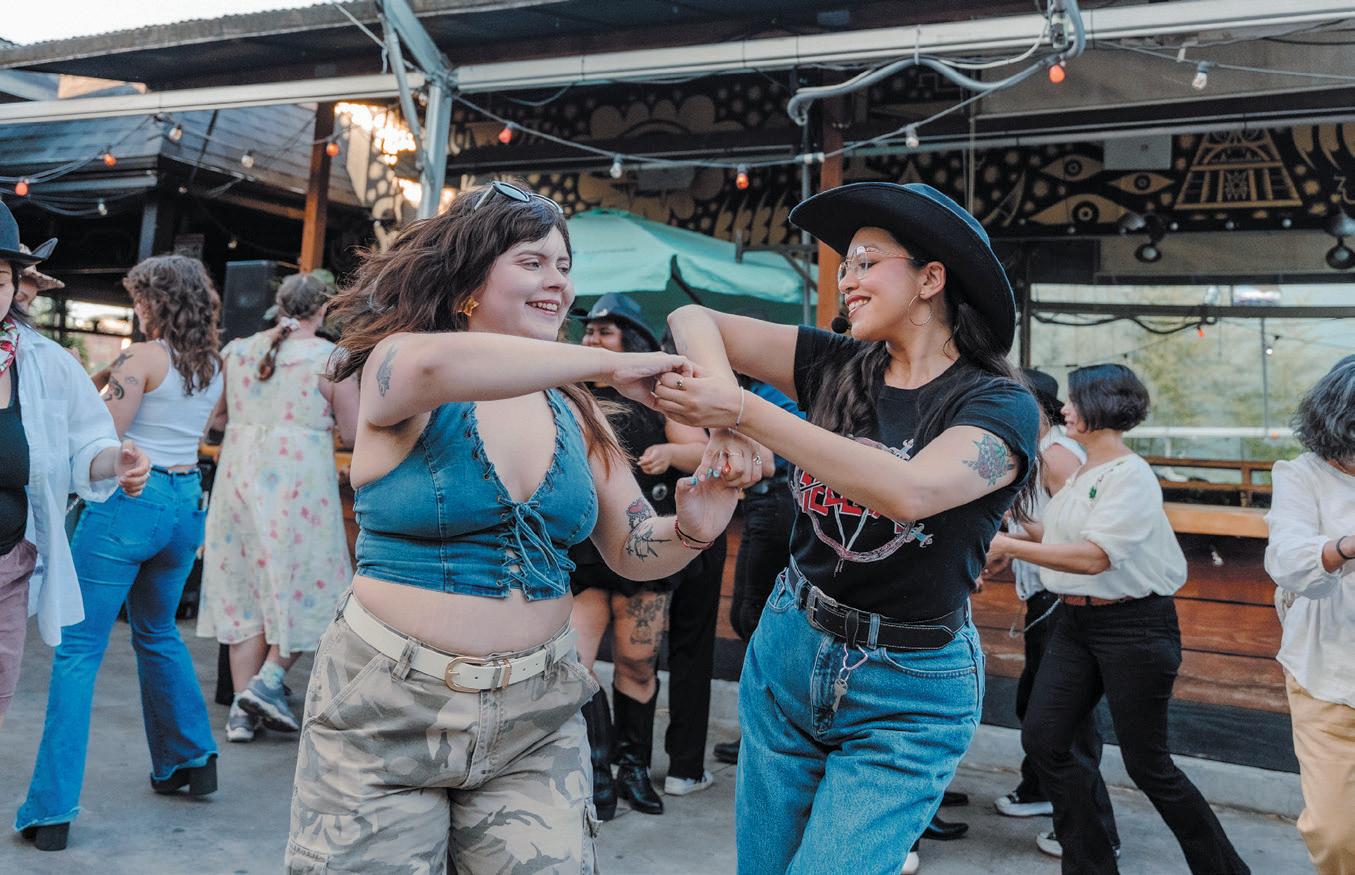
Queer Baile organizers Kylie Davis and Sarah Arias dance at White Owl Social Club.
a spaces without or out Some like hold other, dance credance. be which follow, partcan Stomptown, what
Many queer dance spaces, including Stomptown, also strive to create a culture of clear communication and consent that is often lacking in straight partner dance. Dancers should feel empowered to ask others to dance and to freely say yes or no to requests. For those who are just there to line dance or don’t want to be asked to dance, Stomptown offers red wristbands. Stomptown also hosts special events. In May, the group held a garden party themed Queer Prom fundraiser. Volunteers stayed up late making boutonnières and corsages, and photographers captured the event both digitally and on film. Stomptown has performed at Rose City Rollers half-time shows—the skaters even coordinated a Western-themed derby round. Stomptown also performs yearly in the Portland Pride parade.
For Frost, one of the most rewarding parts of Stomptown is watching firsttimers try something new—and having them come back for more.
“You watch people come in a little bit like ‘deer in headlights’ when they arrive the first time, like, ‘How does everybody know how to do this?’ And then they see that they can do it too, and you just keep showing up, you put in the effort, you practice at home, you ask strangers to dance. It’s really beautiful to watch the community build and change over time.” stomptown.org, @stomptownlgbtqcountry
Landline
Country line dance
Sye Laird loves to line dance. When he was living out in the country without cell service or internet, he would go to the library and print out line dancing step sheets, studying them carefully until he could perform them seamlessly on the dance floor.
Like lots of longtime country dancers, Laird got into country line dancing after originally starting out with partner dancing. In fact, Laird is also an attendee of Stomptown events, teaching line dancing classes for them. But living outside Vernonia, he wanted to create a series of country dance events that complemented rather than duplicated Stomptown’s Portland-based, partner dance-focused offerings.
In January 2025, Laird founded Landline, starting off as a series of line dance classes at the Vernonia Grange. By April, Landline had grown to offer weekly line dance lessons at Dance with Joy Studios in Southeast Portland, with each week tailored to a different skill level, from beginners to improvers, intermediate to advanced. Landline also continues to offer line dancing lessons and social dancing at the Vernonia Grange around once a month. Now, car fulls of Portlanders will drive out to the Vernonia Grange for some true country dancing.
“A lot of queer people come from rural places and have had to leave those rural places, and so I think there’s a real healing process that comes from redefining how they want to interact with country dancing and rural spaces,” says Laird. “As someone who lives rurally, I find it really important to try to create a safe space in a rural environment where queer people can explore that connection, whether they came from rural places or not.”
When Laird first started Landline, the classes were made up entirely of friends he
met through the dance community. Now there are fresh faces every week.
“I’m providing the logistics and the structure, but everyone else is really doing the work to connect by showing up,” says Laird.
“It’s really fun to see people that you know come alone and make friends and start to be involved in the community. I think there are even people who’ve met their partners in class.” @landline_dance
Queer Baile
Salsa, bachata, cumbia, and merengue
For co-organizer Sarah Arias, Queer Baile couldn’t have come into her life at a better time.
“I had just gotten a new position at work, and I was going through a breakup in early 2023. Doc Marie’s had just posted something they were hosting called Sapphic Salsa, and I was like, ‘I need to get out of my lonely studio apartment,’” Arias recalls. “I thought it was super fun, because I’m using my body, I work a desk job. I’m in the comfort of being at a lesbian bar, so it’s full of the fellow girlies up in there.”
Soon, Sapphic Salsa, as it was originally called when it was founded in 2019, had
become a regular part of her life. “I had so much fun the first time, I just went back the next Wednesday, and then the next Wednesday,” Arias says. There, she became close with the friends, all queer and Latiné, that she now co-leads Queer Baile with: Anna Schneider, Kylie Davis, Sophia Bermudez-Eredia, and Karen Ceballos.
Queer Baile was once a small weekly gathering of around 20 people in the basement of now-closed lesbian bar Doc Marie’s; now, the events, held on the fourth Wednesday of each month, often draw over 100 dancers of all identities to the patio of White Owl Social Club. Though the event focused on salsa in its early years, offerings have expanded to include bachata, as well as dances that are taught much less frequently in dance schools in the United States: traditional Dominican bachata, cumbia and cumbia norteña, and merengue. The first hour is dedicated to a group lesson. No partner necessary, and anyone can choose to lead or follow. Then, DJ Mala takes the floor for the next two hours, playing bachata, salsa, cumbia, merengue, and reggaeton.
For Arias, her co-organizers, and many attendees, Queer Baile provided a safe, joy-
ful space that was missing in their lives in Portland.
“What really holds a lot of weight for me is the celebration of that intersectionality that is being queer and also being of Latin descent,” says Arias. “I’m originally from California, so almost 90 percent, if not everybody [in my community] was Black and brown. I moved to Portland, I fell in love with the city… but the downside is that it’s just not anything like where I grew up in LA,” she says. “Even if I did find those Latin spaces, it’s not specifically for [people who identify] with the alphabet gang.”
Arias emphasizes that Queer Baile focuses more on learning the basics, having fun, and connecting with others, rather than on complicated turns and footwork. “We’re trying to make it fun, casual, and comfortable,” says Arias. “We try to sneak some humor into lessons and give pop culture references.”
During a Heated Rivalry-themed bachata event, organizers and attendees alike showed up in hockey gear, with Shane and Ilia references sprinkled throughout the choreo. Guests were asked to dress up in their ‘Holi-Gay” best for December’s dance, whose flyer featured a twerking Grinch. For Valentine’s Day, Queer Baile sold handmade cards and matchbooks decorated with phrases like “I’m T4T; Dance With Me?” and “Cumbia With Me?,” raising over $500 for Portland Immigrant Rights Coalition. For the last couple years, Queer Baile has also hosted a Pedalpalooza bike ride, kicking off with an outdoor dance lesson and stopping at multiple points for dance parties, culminating in a DJ set along the Eastbank Esplanade. This year’s ride will likely take place in July; check Queer Baile’s Instagram page for updates.
Speaking of Valentines, a couple who originally met at Queer Baile just got married last fall.
“This is really for the community, by the community,” says Arias. “We have all developed such beautiful friendships and connections with people through this class.” @queerbailepdx
Above: Cumbia lessons from Queer Baile at White Owl Social Club. Below: Scenes from Stomptown’s Queer Prom.
The Many Queer Saints
Shining a spotlight on a few of Portland’s legendary gay greats.
BY HOLLY HAZELWOOD
What She Did: Physician, Labor Rights Activist
Why She Matters: Doc Marie Equi was everything you want in a doctor: gay, angry, compassionate, anti-war, and a staunch advocate for reproductive and workers’ rights. She was just as devoted to throwing gay parties with Olympia Brewing heiress Harriet Speckart as she was for flagrantly ignoring anti-abortion laws. Equi was once called “the most dangerous radical on the West Coast” by the US Attorney for Oregon, and “the brainiest woman” in the state by the Oregon State Editorial Association. In other words: Equi was a certified dreamboat. Stories about her are numerous; some seem made up. For example, when she allegedly horse-whipped her girlfriend’s boss for stiffing a paycheck, or when she threatened to stab a cop with a poison-tipped hat pin. She and Speckart adopted a child together at a time when being openly gay was still a criminal act. Oh, and she was so openly against World War I that the government sent spies to her anti-war speeches in union halls, and to befriend her to gain information on her
day-to-day activities. Her unwavering dissent landed her in San Quentin Penitentiary after she was convicted under the newly-minted Sedition Act.
Despite her rich and storied life, Equi’s exploits and tireless activism have been swept under the fickle rug of history. To queer history nerds, the radical empathy that beats within the heart of her actions makes her worthy of more reverence. Her dedication to others is hard to overstate, down to joining pro-union protests on behalf of local cannery employees. When San Francisco was hit with an earthquake in 1906, she felt it her duty to take temporary leave from her Portland medical practice (which she started as one of the city’s first women doctors) and travel south. She knew she could help, so she did.
Today, Equi’s legacy lives on in the Marie Equi Center, the Brooklyn neighborhood institution full of tireless crusaders for LGBTQIA2+ healthcare accessibility. Simply put, Marie Equi was one tough, amazing lesbian.
Idon’t have the data to back it up, but based on anecdotal evidence gathered from existing 20 years in Portland, it feels safe to say our city is one of the queerest places in the United States—maybe even the world.
What He Does: Writer, Cartoonist Why He Matters: Like many Portlanders, Kinnard is a transplant who was so drawn to the city that, despite moving away in the 1980s, he couldn’t resist returning. He’s lived many lives in many cities, but his mark on Portland is inescapable. From serving as associate art director for Willamette Week and co-founding Just Out, the fertile soil of Portland allowed his recurring strip Cathartic Comics to grow and endure.
In a way, cartoonist Rupert Kinnard’s Cathartic Comics aren’t far off from the characters in Alan Moore’s tone-perfect Justice League/Avengers deconstruction, Watchmen . Kinnard, by contrast, used teen crimefighter, the Brown Bomber, and immortal lesbian, Diva Touché Flambé, to pillage superherodom for elements worth lovingly lampooning.
Many other comparisons spring to mind when reading Cathartic Comics, like Alison Bechdel or Harvey Pekar. Kinnard stands in his own lane, using Brown Bomber and Diva Touché Flambé to examine the intersection of queerness and Blackness. His razor-sharp wit is so effortless, you don’t immediately realize what a gut-punch it can be, whether you can relate to the
depicted struggles or not.
Queer, Black characters like Black Bomber and the Diva are still too rare, and while Cathartic Comics refuses to shy away from its own novelty, all of Kinnard’s characters feel natural… even inevitable. They’re impossibly self-aware and hysterical, taking local politicians and Reagan-era public figures to task for their erasure of everyone besides the most straight-passing and socially palatable cis white gay men, while also caricaturizing well-meaning, but ignorant, liberals stepping on your throat on their way to “help” you.
In recent years, Vivian Kleiman’s documentary No Straight Lines: The Rise of Queer Comics and Kinnard’s curated collection, Ooops… I Just Catharted: 50 Years of Cathartic Comics, have shone a much-deserved spotlight on the work of Kinnard and artists like him. It also highlighted how vital his perspective remains—a potent reminder of how things have improved, but with many struggles staying unchanged more than 40 years later. It’s a depressing truth, but the Black Bomber and Diva Touché Flambé make it easy to laugh through the frustration.
Marie Equi Rupert Kinnard
Saints of Stumptown
As such, Portland’s history and culture are chock full of queer luminaries—homegrown or transplanted—who have made Stumptown that much gayer and cooler. As you can probably guess, it was a nightmare keeping this list to just
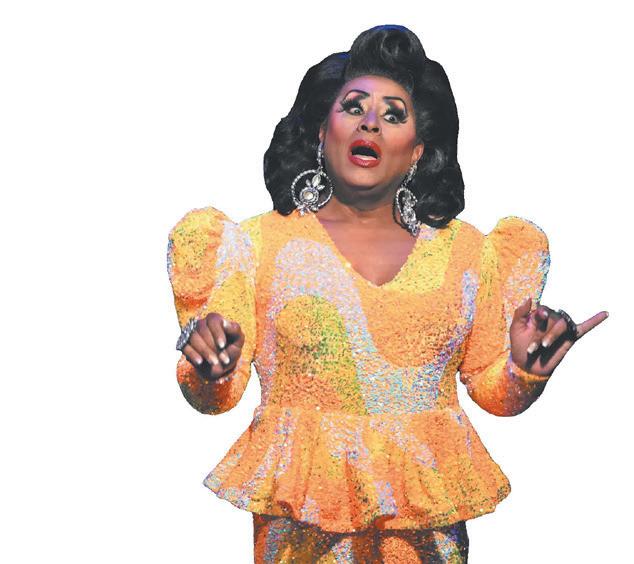
Jinkx Monsoon
What She Does: Actress, Singer, Drag Artist
Artist
four people—it meant cutting names like Kathleen Hanna, Chanticleer Trü, Gus Van Sant, Bobby Fouther, Beth Ditto, and dozens of others equally worthy of celebration. But let’s start our short list of honorees with…
Katherine Paul
Why She Matters: It’s kinda tacky to rattle off resumé bullet points, but for many queer Portlanders, Jinkx Monsoon’s ascendancy (even beyond her appearances on dragthemed television shows) is an all-consuming point of hometown pride. If there’s a proverbial Mount Rushmore for drag performers, Jinkx Monsoon’s big, beautiful head and hair have a strong chance of being chiseled into immortality.
chiseled into immortality.
Portland’s greatest nonbinary ginger
Adventure Time, Steven Universe, and Brav-
a Ghost.” Monsoon has also been a
Labeling her as just a drag queen sells Portland’s greatest nonbinary ginger export short. She’s provided voice acting for Adventure Time Steven Universe, and Bravest Warriors; she’s released multiple albums and recorded songs for television—one of which has the evocative title “I Wanna Fuck a Ghost.” Monsoon has also been a Doctor Who villain, inhabited Judy Garland, and filled the big gay shoes of Cole Escola’s take on Mary Todd Lincoln. It’s an impressive body of work.
If you spent your teens dancing at Escape Nightclub until 2 am before eating cheese fries at the Roxy while waiting to take a MAX back to the suburbs, then you know
her teeth doing drag at the former down the first time at 15—an impressive queer
Monsoon is a staple of Portland life. She cut her teeth doing drag at the former downtown all-ages queer club, performing for the first time at 15—an impressive queer performance tenure.
To a certain Portlander, she’s both largest about her identity as a nonbinary trans speak about her open queerness, one key openly about who I am, the more people
To a certain Portlander, she’s both larger-than-life and refreshingly human, honest about her identity as a nonbinary trans femme at every turn. When listening to her speak about her open queerness, one key principle rises to the top: “The more I talk openly about who I am, the more people come to me.”
In the wrong hands, drag can feel like a haven for cis gay men abusing jester’s privilege, practicing misogyny under the guise of artistic liberation. As a gender expansive drag performer, Monsoon matters so deeply, because her very existence rises above that: She approaches drag as a celebration of femininity with the kind of levity and charm that only comes from a deep, witchy connection, full of earnestness that cis performers don’t have and can’t emulate. Even for trans folks not interested in drag, Monsoon’s level of cultural domination is inspiring.
mentalist, Mother
What She Does: Musician, Multi-Instrumentalist, Mother
Scout, has categorized herself for us: “Rad-
Indigenous Puget Sound music as it is in
Why She Matters: For years, Katherine Paul (KP), the Swinomish multi-instrumentalist better known as Black Belt Eagle Scout, has categorized herself for us: “Radical Indigenous Queer Feminist.” It’s an intersection of multiple forces inseparable from her music, which is just as steeped in Indigenous Puget Sound music as it is in Pacific Northwest grunge.
What elevates KP to being a “queer
What elevates KP to being a “queer saint” are the ways in which she weaves queerness into the fabric of her art. She’s released music videos that trans, queer, and nonbinary Indigenous artists helped create, and though she often writes songs that are opaque enough to feel universal, the spirit of radical queerness beats within the heart of every album she’s released under the Black Belt Eagle Scout moniker.
As a songwriter writing about her relationship to queerness, KP’s secret strength is the way she treats it as an immutable truth: “I have gotten to the point of just, ‘I am who I am,’” she said in an interview with Them. Songs like the queer, yearning anthem “Soft Stud” on Mother of My Chil-
dren, At the Party With My Brown Friends’ closer “You’re Me and I’m You,” and The Land, the Water, the Sky’s hushed “Sčičudᶻ (A Narrow Place)” each examine her personal relationship with queerness from different angles.
closer “You’re Me and I’m You,” and The Land, Water, the Sky’s hushed “Sčičudz different angles.
doesn’t beat you over the head, as other
who has listened to Black Belt Eagle Scout,
What links each song is a focus on empathy and how that aspect of herself connects to KP’s home, community, and family. It doesn’t beat you over the head, as other songwriters might—which, for anyone who has listened to Black Belt Eagle Scout, is absolutely no surprise.
At present, KP and her partner, drummer Camas Logue, are likely still basking in the exhausting glow of welcoming their new child into the world. One of the harshest truths about being queer is that things like living, thriving, and starting a family are enough to make you a beacon of hope and resilience for your community. One day, the LGBTQIA2+ artists who decide to have babies won’t feel like a minor chorus for the entire community. As newer acts find themselves inspired by Black Belt Eagle Scout’s body of work, maybe we’ll find ourselves closer to that future.
At present, KP and her partner, drummer
How to Listen in America
On The Anthology of UnAmerican Folk Music, Marisa Anderson
reinterprets
recordings from United States conflict zones.
BY LINDSAY COSTELLO
In 2022, Portland experimental guitarist Marisa Anderson visited the bohemian musicologist Harry Smith’s archives at the Bob Dylan Center in Tulsa, Oklahoma. Already familiar with Smith’s 1952 compilation Anthology of American Folk Music Anderson thought she knew what to expect from the collection: “Southern gospel, country blues, Native American ceremonial music; genres well-documented and known to be of deep interest to Smith,” she explains in the liner notes of her new album, The Anthology of UnAmerican Folk Music. But Smith’s archive surprised her.
Anderson recalls encountering a Tuareg recording there, Niger: La Musique Des Griots (1964), which sparked a deeper fascination. “I remember that ‘aha’ moment,” she says over the phone. “I was only in [the archive] for 15 minutes, but that made me very curious.” Supported by the Tulsa Arts Fellowship, Anderson later returned to Oklahoma after her initial exploration to dig more fully into Smith’s collection. While there, her project came into focus: Anderson’s Anthology of UnAmerican Folk Music—a project with the same name as her new album, but with a much broader scope—would collect songs from places shaped by United States military conflict, from 1970 (her birth year) to the present. “The wars of my lifetime,” she says. That project comprises roughly 900 tracks from Southeast Asia, the Soviet Union, and Islamic and Arabic regions, totaling nearly 45 hours of music. On the newly released The Anthology of UnAmerican Folk Music, Anderson absorbs and reinterprets nine of those songs using guitar, keyboard, accordion, requinto jarocho, and tres cubano. The pieces are full of drones and unresolved longing, echoing across deserts and mountain ranges. Anderson draws from musical traditions tied to mysticism, ritual, and nomadic life. The album opens with “Quodlibet,” her interpretation of an Afghan piece with roots in teahouse performance, originally played on a dambura—a long-necked lute. Anderson’s research process, and its frustrations, become clear in the liner notes. “When I searched for [original performer] Bābā Qerān, no musician by that name was found…. I ran the name through an online translation tool, and learned that Bābā Qerān means ‘old man’ in Kurdish. Another search for the song called ‘Alpaqadar Tulari’ led nowhere. We have what is possibly a medley of three unknown songs played by an unknown old man,” she writes. Anderson navigated mistranslations and
conflicting documentation throughout the album’s creation, and had to devise ways to interpret musical systems outside of Western notation and instrumentation. “Trying to uncover information about the songs in this collection is like searching through a house of mirrors where everything is slightly distorted,” she writes.
She’s careful to mention that she’s a musician, not an ethnomusicologist or anthropologist. Still, Anderson is interested in the webs connecting people, place, and sound, and how borders and wars reweave those relationships. And she works well under pressure.
“There were discrepancies between liner notes, YouTube videos, and published research. I didn’t try to solve it,” Anderson explains. “The limitations became a slightly comedic story… kind of like how a record collection is a whole bunch of small points of information put together.”
Anthology ’s strength lies in Anderson’s ability to interpret source material without flattening it. On her guitar-and-accordion rendition of “Quodlibet,” she adapts quarter tones through a technique she describes as “bluegrassy.” Her translation of the sorrowful, mysterious “Sarvi Simin,” interpreted from a 1977 recording released by the Soviet state-run record label Melodiya, braids together cumbia-inspired accordion and violin contributions from Gisela Rodríguez Fernández. On “Zar,” inspired by Yemeni music associ -
ated with spirit exorcism, Anderson builds a magnetic sonic form with just five notes.
The album’s effect mirrors Anderson’s experience in Smith’s archive—it’s somehow both familiar and surprising. Her fingerpicking style is as urgent, weathered, and devoted as ever, tethered to American folk traditions, yet not at all confined to them. Anthology sometimes evokes the dusty static of a far-off transmission. Elsewhere, it’s warm and energetic. The music always seems to be searching for something just out of reach.
Before she began arranging the material, Anderson spent eight months immersed exclusively in the anthology’s source recordings. It changed her as a musician. “I just listened deeply, hoping that these songs might enter my bloodstream and start to become part of my natural vocabulary,” she writes in the liner notes.
On the phone, Anderson reflects further on the process. “My senses around phrasing and tonality have definitely expanded,” she muses. “And I’ve grown more patient with long form. There’s been an expansion of thought around theoretical systems, how music can be expressed or organized. I find that fascinating on a nerdy, intellectual level.”
But the project feels as politically grounded as it does technical. “I was born in the United States and I am subject, like anybody with a similar history, to the narrative that the country presents of itself,”
Anderson says. “When that narrative starts to unravel, and when the information that we receive counters what we observe, that’s a personal thing.”
Asked whether music can achieve something politically or socially that other forms of discourse cannot, Anderson thinks for a moment.
“Music is one of the best art forms that we experience in community,” she responds. “It’s something that we make together. We enjoy experiencing it together. That’s a really unique and special attribute.” With community in mind, this release is the first of three Anthology installments Anderson has planned. Future volumes, she says, “won’t be me tackling it alone.”
“My goal is to make it as available and accessible as possible,” she explains. “The next releases will be in service of more people hearing more of the music.”
That sentiment lies at the core of her desire for The Anthology of UnAmerican Folk Music. Above all, Anderson hopes listeners will be curious.
“Seek out information about the world,” she advises. “Look beyond all that which is presented on the surface of things.”
The Anthology of UnAmerican Folk Music is out now on Thrill Jockey and available through Anderson’s Bandcamp on vinyl, compact disc, and as a digital download. Anderson will play at Homie Fest, Aug 14-16, at Camp Colton.
Marisa Anderson’s new album interprets folk music beyond American borders.
SHAUN ASTOR
PATIO PAGES
Arbor Beer Lodge & Brewery
Consider Arbor Beer Lodge & Brewery your go-to summer patio for an afterwork wind-down, serving up signature cocktails and hyper-local beers brewed onsite and offering live music and frequent trivia nights. The brewery also hosts the Yellow Line Food Cart Pod, with everything from corn dogs and funnel cakes to sushi burritos.
Mad Hanna
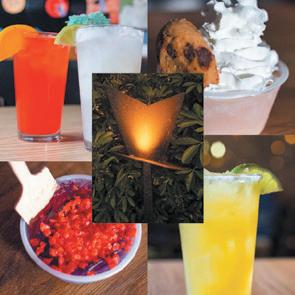
Mad Hanna’s big backyard patio offers a sunny-day extension of this neighborhood joint’s divey vibes. Decked out with a jukebox and pinball machines, it’s an all-day-hang kind of place—and covered in case of surprise showers— where you can bring your dog, make new friends over Pop Rocks Jell-O shots, and expect a little chaos, all in the name of summer fun.
Birdie Time Pub
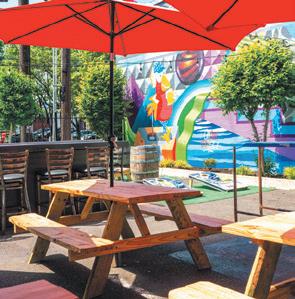
Enjoy your summer drinks and classic bar bites with a side of friendly competition on Birdie Time Pub’s backyard patio. Known for their indoor mini-golf setup, you can also head outside to try your hand at cornhole and other yard games. Bonus: all-day happy hour Mondays and misters for those extra-hot days.
Portland Spirit
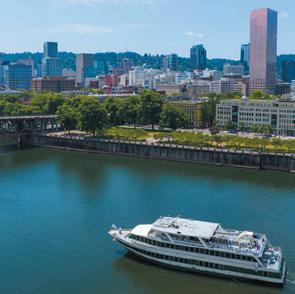
Hit the high seas—or at least the scenic waters of the Willamette—for an ultimate summer patio experience aboard the Portland Spirit’s happy hour sightseeing cruise. A full-service bar and happy hour bites are on deck to accompany the passing river views.
Bahn Mi Up
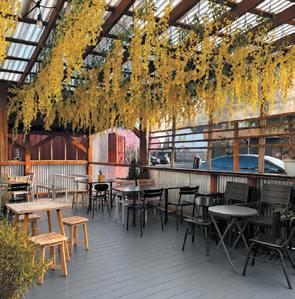
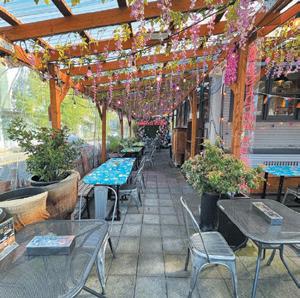
The cozy covered patio at Bahn Mi Up in St. Johns is a warm and welcoming summer hang spot for family and friends. Celebrate the good weather amongst hanging flowers and a menu focusing on bold Vietnamese flavors— bánh mì, noodle
and
Que Pasa Cantina
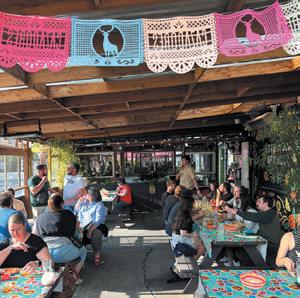
Who doesn’t love a $5 margarita happy hour (in this economy!?)? The covered patio at Que Pasa Cantina in Southeast Portland shines bright this summer offering friendly and lively vibes, delicious Mexican dishes from savory street tacos to shrimp ceviche, and tangy, fruity cocktails by the glass or the pitcher!
White Owl Social Club
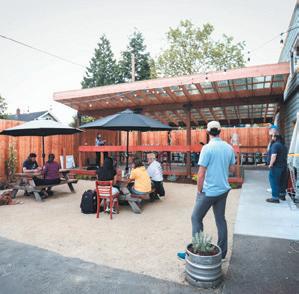
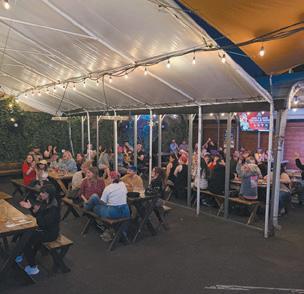
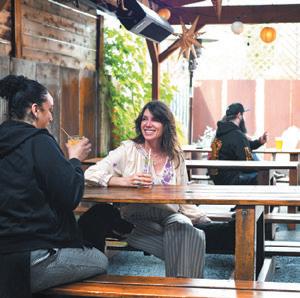
True to its name, White Owl Social Club is an ideal place for friends all year around, but its enormous dog-friendly outdoor patio is a particular flex during the summer. Wooden picnic table seating, a firepit, ambient lighting, and a danceable soundtrack are ideal for big group hangs. The strong cocktails and daily happy hours ’til 7 don’t hurt, either.
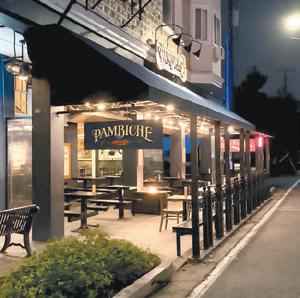
Restaurante Bar Pambiche
Al fresco dining at Pambiche takes visitors to Cuba through its CubanCreole cuisine. The covered, open-air seating area feels like an extension of the restaurant’s intimate indoor space. Sit down and soak up the casual summer street vibes over a Café Cubano, classic daiquiri, or plates of lechón asado and empanadas.
Farmhouse Kitchen
Thai Cuisine
Find a group of friends who love eating great food and grab a table on the front patio at Farmhouse Kitchen Thai Cuisine. Here, Chef Kasem “Pop” Saengsawang, a 2025 Food Network Chopped Champion and Thai SELECT honors awardee, shows love to the community through heaping plates of bold and flavorful Thai dishes meant to share. Caution: some dishes may be hot as the sun.
Space Room Lounge
Space Room Lounge is a staple dive bar along Southeast Hawthorne. Step into their galactic wormhole for great drinks (including 16 taps), food, and arcade games. Their 3,000-square-foot covered patio oasis is stocked with TVs, fans, and free events like Tuesday drag bingo and Thursday trivia, plus daily happy hour until 5.
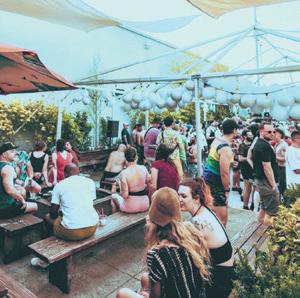
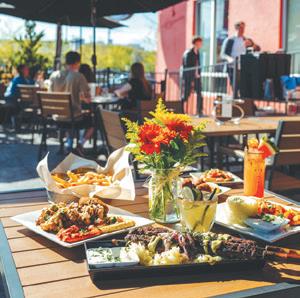
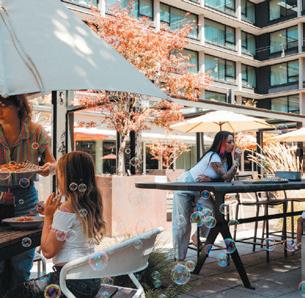
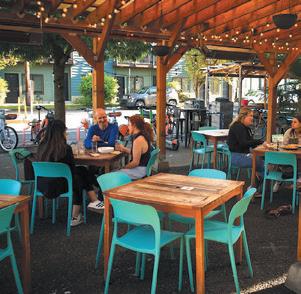
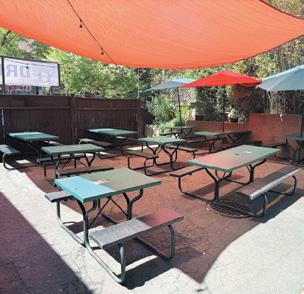
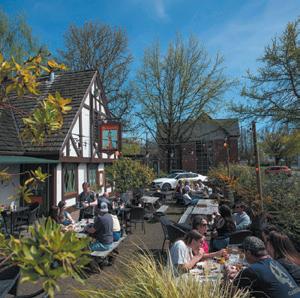
Summer, summer, summertime! The sunny season is back and Portland’s patios are in full swing. Here are some of our favorite patios, perfect for catching sun, ogling views, and hanging with buds over some of the city’s best food and
drinks. Whether you’re looking for tranquility, a breezy catch up, somewhere to get rowdy with old and new friends, or to enjoy the long summer nights with your dog by your side, there’s a patio out here waiting for you to claim your space.
Nicholas Restaurant
Head to this family-owned Lebanese spot for a made-from-scratch Mediterranean menu, refreshing cocktails, and friendly service. Immaculate vibes, relaxed dining, and umbrella-topped seating keeps folks coming back to Nicholas’ open-air patio. Lock-in to their creative cocktail menu for distinct and delicious drinks you won’t find anywhere else.
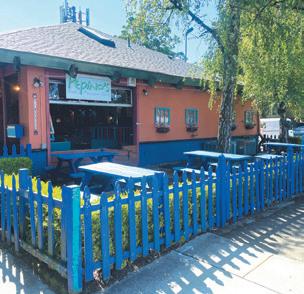
Pepino’s Mexican Grill
When the sun finally shows off in Portland, the patio at Pepino’s Mexican Grill becomes one of the happiest places in the city. Sip on their fresh margaritas or aguas frescas in the sun or enjoy the warmth from a shaded spot—just don’t be surprised if the delicious Mexican food, cold drinks, and colorful surroundings leave you to linger a little longer than usual.
Pacific Standard
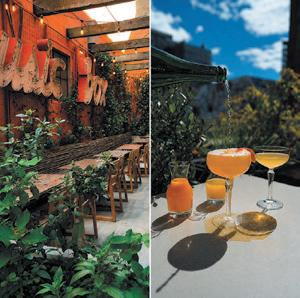
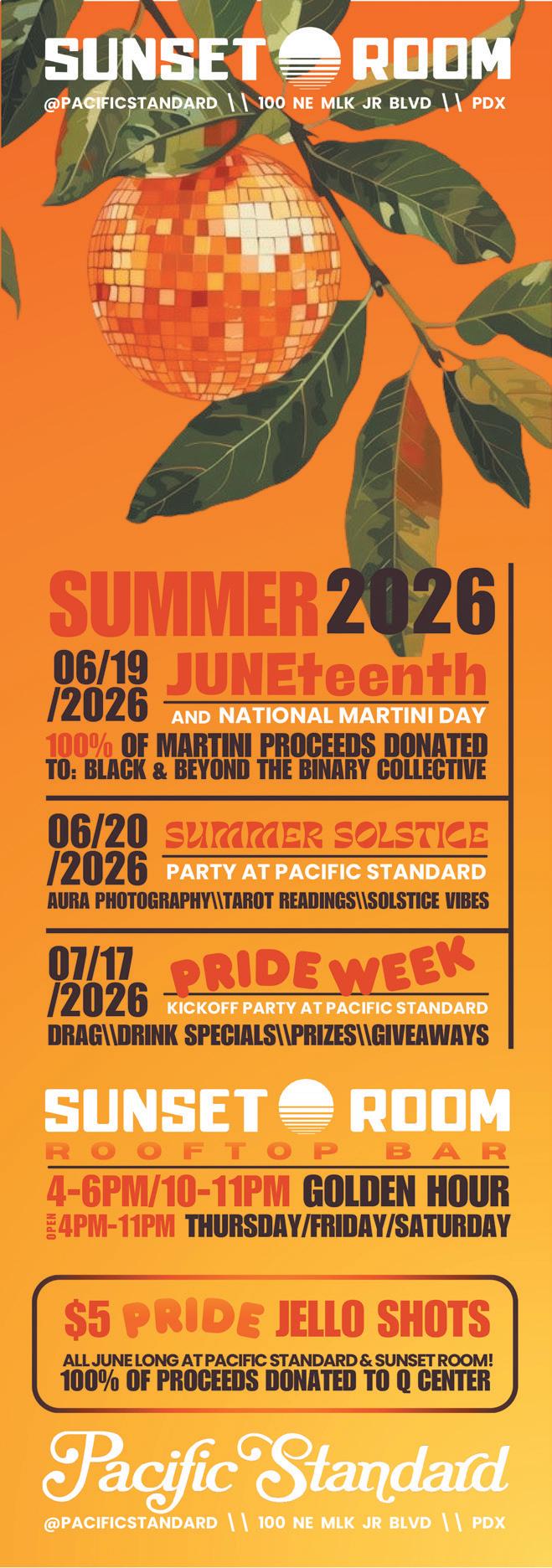
The Sunset Room, Pacific Standard’s hidden 4th-floor rooftop patio, is no secret to locals looking for an intimate, fun space to suck down freshshucked oysters, mini frozen martinis, and boozy slushies a little closer to the cloudline. Bonus: the Golden Hour menu pairs delicious deals with gorgeous natural light.
The Deck
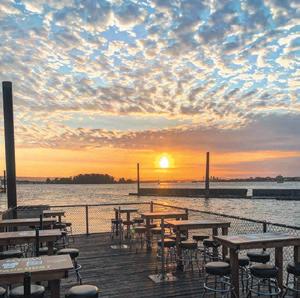
Panoramic river views await at The Deck, Portland’s warm-weather floating restaurant. Grab a drink, dig into summer seafood dishes, and feel the breeze against your cheeks as the ebb and flow of the Columbia River gently guides you into a sublime state of relaxation. Bring the family, bring the dog, and don’t skip the unforgettable sunsets.
PLS on Sixth & The Hotel Zags
The common courtyard patio at PLS on Sixth and The Hotel Zags is a lively summertime social spot. Long tables and daily open-air programming, including games, drinks, snacks, movie screenings, and fireside storytelling, invite locals and visiting Hotel Zags guests to mix, mingle, and decompress.
by Katherine Alex Beaven
Tropicale
Tropicale is all about celebrating its Latin American and Caribbean heritage and creative flair. Order up a bright bowl of passionfruit ceviche, nuzzle up to a comforting plate of maduros con carne, and spend all summer exclusively drinking handcrafted piña coladas served in a gigantic pineapple shell.
The Standard
For nearly two decades, The Standard has been keeping dive bar values in check with its no-frills, “big fucking deals” watering hole approach. It’s the land of $2 beers (Busch Light all day and Hamm’s during happy hour), rotating boozy slushies, and Jell-O shots, and a basic patio that’s perfect for day drinking into the wee hours of the night.
Leisure Public House
Leisure Public House believes the best neighborhood spots feel welcoming as soon as you walk through the door. Their partially-covered patio in St. Johns gets packed with people chatting over cocktails, enjoying Trivia Mondays or Taco Tuesdays,or just chilling with drinks and snacks after work.
McMenamins
McMenamins is one of Portland’s premier summer patio dealers. Big patio? Small patio? You want a sun-draped deck, or do you prefer a tree-laden estate? Center-city spots like Hal’s Cafe or the Annex? Neighborhood joints in Fulton or St. Johns? McMenamins has a patio for you. Find one and order a burger and a pint.
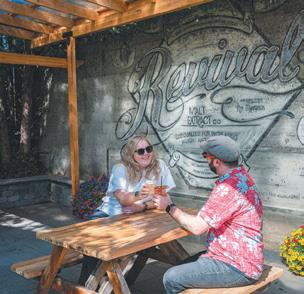
Revival Patio at Bible Club PDX
Revival Patio is prepared to absolve us from our gray-season blues. Redemption lies in a yellow house in the heart of Sellwood-Moreland, where the Bible Club PDX speakeasy has been serving up Prohibition-era charm since 2016. Its lush backyard patio, weekend live music, twinkling lights, and inventive cocktails just might save your summer soul.
An Appeal to the Queers on Behalf of Pro Wrestling
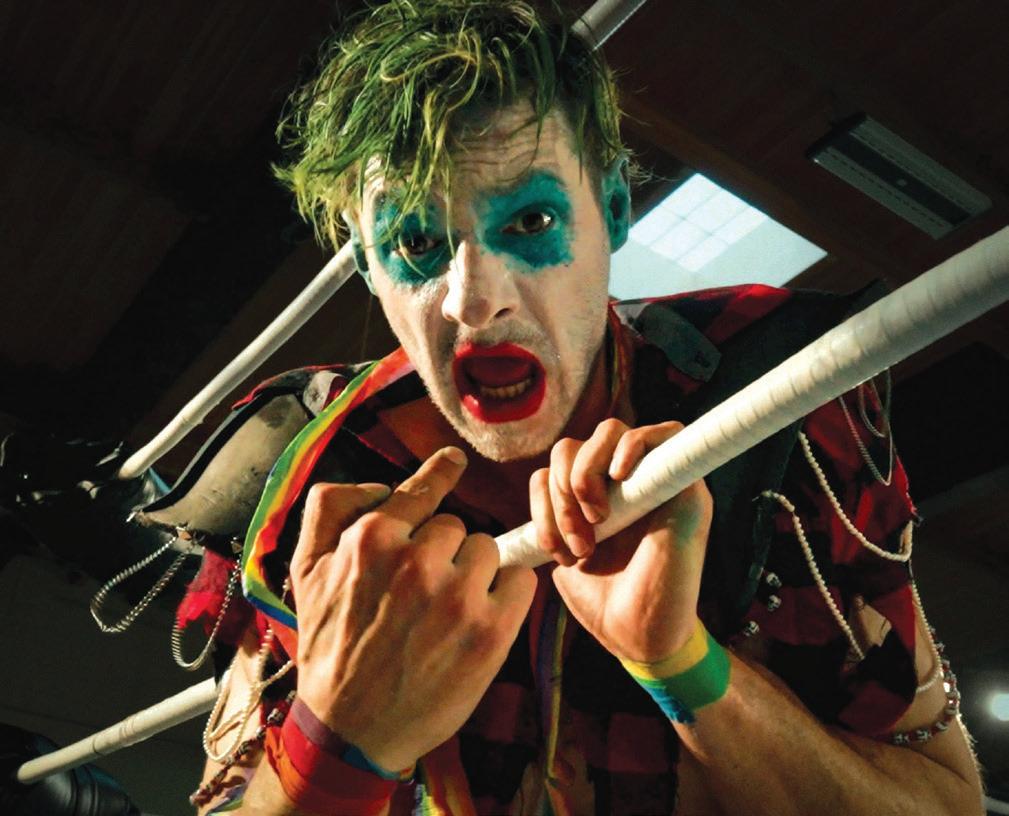
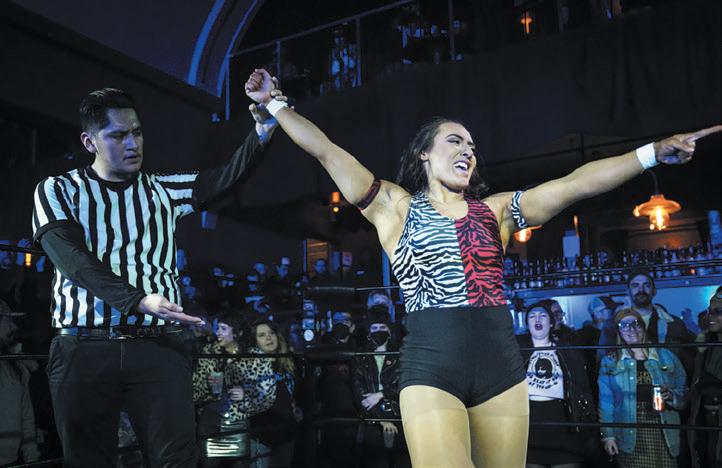
Hot take: pro wrestling is drag. Fight me!
BY RILEY MCCARTHY
Violence is never the answer.
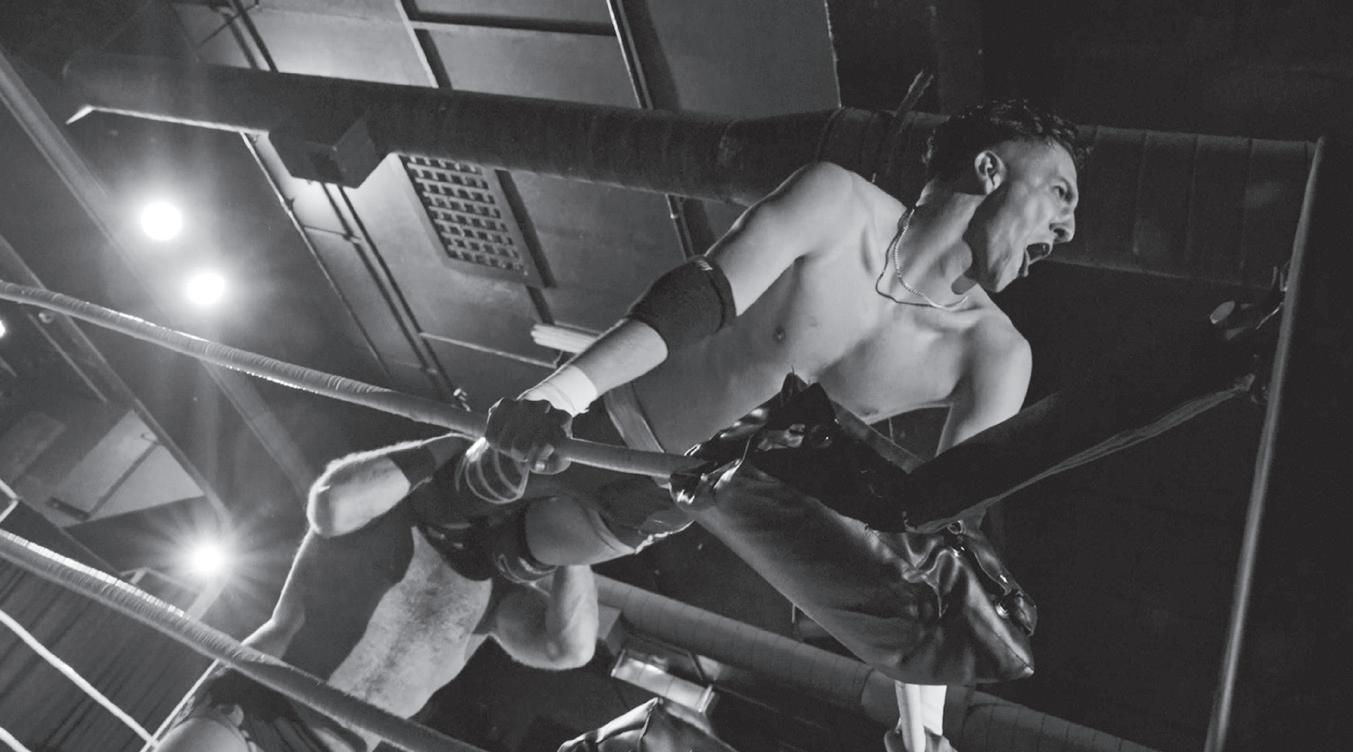
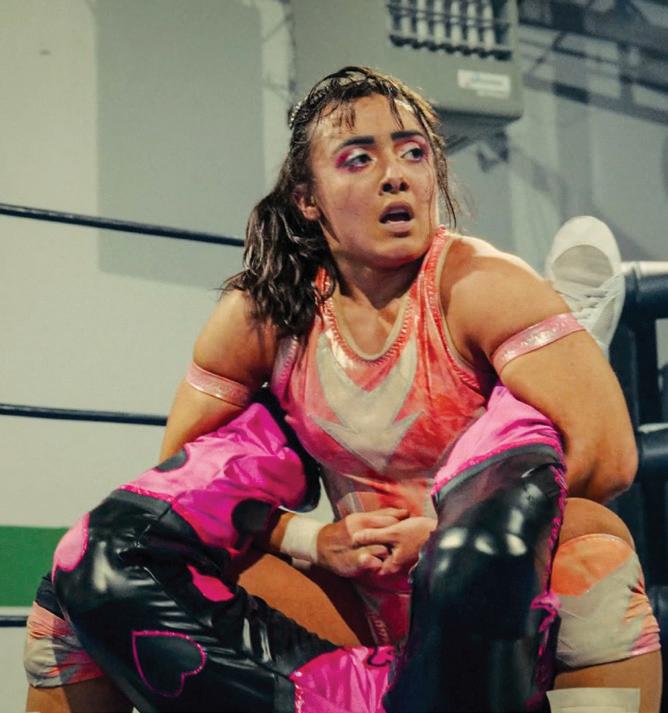
Well, “never” is a strong word. Surely violence has some value in revolution, art, and myth? The world is a brutal and chaotic place—certainly a peaceful person can, once in a while, have a bit of violence as a treat? Professional wrestling is a collaborative, performance-based storytelling medium rooted in the spectacle of violence as sport. It’s also deeply and profoundly queer.
Fellow queers are forgiven if, presently, they have an image in their head of wrestling as the peak of toxic masculinity. And if there’s one thing queer people love, it’s selecting a niche corner of pop culture and extolling it as subtextually queer. One needs only to visit one of Portland’s many zine fairs to find a litany of essays with titles like “Queer Archetypes in Star Wars” or “Queering Quahog: Lionization of Othered Voices in Family Guy.” That’s not where we’re going here. I come to you today with wonderful news: wrestling is queer in a much more explicit way, no reaching, liberal-arts pedantry required. I am speaking of wrestling as queer text, no bullshit, subtext be damned. If you are queer and skeptical, read on.
Round one: Let’s address some preconceptions. “Wrestling is fake, right?” Yes… well sort of. “Why would I watch something that was fake?” I don’t know… why watch The Pitt ? Why read Pride and Prejudice ? Wrestling isn’t fake, it’s fixed. Yes, the outcome of any given match is predetermined. However, wrestlers take real hits, and those
risks and beatings are authentic in the telling of their story. Think of it less as the least real form of sport and more as the most real form of fiction. No one watching believes it’s real and no one is trying to trick you.
The power of myth is more in the telling than the believing. New viewers may be put off by how hard both the performers and the audience are committing to the verisimilitude of the show. Some may even call it cringe (the bluntest cudgel of the contemporary bully and the easiest way to avoid engaging with a work of art on its own terms). Instead let us consider another C-word that should be quite familiar to queer audiences: Wrestling is camp. And as any seasoned drag performer will tell you, the only way to pull off camp is full commitment, hand on the throttle, don’t look down.
Pro tip: don’t let your thinking get pinned to the mat with stereotypes. Take the demographic that is the pro wrestling fan: Many people may have an image in their heads of a jeering, middle-aged straight man with bad body odor and worse politics. If this is where your mind went, you may have some internalized classism to examine. Wrestling is theater for the working class. It’s easy for an educated and urbane Portlander to think of the working and middle-class American as closed-minded and not able to fully understand nuanced art. As someone who grew up in the Midwest, I can tell you this simply isn’t the case. Wrestling fandom is one of the most inclusive and diverse spaces in both sports and entertainment. I’m taken, for example, by just how many
trans people I see when I go to a wrestling show. (Big surprise that trans women flock to a subculture with body spectacle/body horror as a primary component.)
Fact: a major draw for queer people to wrestling is the sheer amount of representation.
Let’s look at All Elite Wrestling (AEW),
Top: Zaye “Playboy of the PNW” Perez, who wrestles for DOA, POW, and more. Bottom: Amira was the first female graduate of Oregon Pro Wrestling School.
ISZY BONNEY ISZY BONNEY
the second biggest wrestling company in the world that sells out arenas worldwide and has major mainstream TV exposure. AEW has featured: several queer women champions, including Toni Storm (whose Gloria Swanson-inspired character would make even the most traditional Manhattan drag queen gag), nonbinary trios champion Speedball Mike Bailey (who shows feet on main if that’s your thing), plus a trans women’s champion, a gay men’s tag champion, and even a bisexual men’s world champion. I challenge you to show me a mainstream sport with that number of queer athletes— not just competing, but dominating at the top of their field. There are, in fact, so many queer wrestlers working today that Outsports puts out an annual ranking of the top 200 queer wrestlers of that year.
Wrestling is also drag. You heard me cor-
rectly, I didn’t say wrestling bears resemblance to drag, I didn’t say that drag and wrestling are comprised of similar material components, I said that wrestling IS drag. A physical performance of gender tropes and character using song, costume, choreography, and improv, the two art forms are at times indistinguishable. You could take any single wrestling performance and evaluate it as a drag performance, just as you could similarly take any drag performance and evaluate it as wrestling. You would be 100 percent valid in both cases.
The history of pro wrestling in America is a muscle-bound, greased-up reflection of the history of queer art in the past century. Art historian David Getsy once said, “Artists who identify their practices as queer today call forth utopian and dystopian alternatives to the ordinary, adopt outlaw stances, embrace
criminality and opacity, and forge unprecedented kinships.” Wrestling as an art form was first practiced at carnivals, with outlaw mud shows under the same circus tent as freakshows and contortionists. In the 1920s, rough-neck carneys were laying the groundwork for what would become modern professional wrestling at the same time the “pansy craze” in the speakeasies of New York was giving rise to the first drag queens. Queer art has always fermented at the fringes of society. Wrestling was born in the same back alleys, basements, and abandoned buildings that have served as incubators and Petri dishes for dozens of queer art movements. And while most people today may only be familiar with its most polished, mainstream, and sanitized version (ahem, WWE), there are still hundreds of smaller wrestling companies around the country making cutting edge art in the grand fringe tradition of indie wrestling. There are several such companies here in the Portland area, such as Oregon Pro Wrestling, Metalmania, POW, and Inclusion Pro Wrestling. However, few companies embody this outlaw spirit like DOA. Founded in Portland in 2008, DOA (Don’t Own Anyone) has always managed to keep storytelling in the forefront of their shows. With a rotating roster of up and coming local talent as well as national stars, DOA rewards its returning audience members with satisfying long term story arcs while still remaining accessible to first time fans. Not to mention they also have a TON of kick-ass queer talent. At the time of this writing, their current grand champion is a nonbinary pop punk, manic-pixie-dream babe, AKA the Weirdo Hero: Randy Myers.
Randy blends the raw charisma and physical dynamism of James Brown in his prime with the wide-eyed childlike whimsy of Pee-wee Herman. Other queer standouts on the roster are local heavy hitter Amira and high-flying heart throb Zaye Perez. Then there’s House of Danger. HOD is “backyard fed,” a term often used pejoratively to describe a group of self-taught performers with no formal training. HOD features an entirely queer roster, and what it lacks in pedigree and experience, it makes up for in ambition and chaos. Less of a true wrestling event and more of an antagonistic alt-comedy variety show that features some wrestling, HOD strives to reconnect wrestling with its freak show carnie past. In addition to wrestling matches, one can expect to see drag, burlesque, music, magic, and the occasional demonic ritual. They’ve also hired a silver-tongued and distractingly attractive comedian named Riley McCarthy (yours truly) to be their ring announcer and play-by-play commentator (YES, I’m getting paid a bonus to write this).
The history of pro wrestling in America is a musclebound, greased-up reflection of the history of queer art in the past century.
With the multitude of entertainment options at our disposal as Portlanders, one can experience near-terminal levels of FOMO. With hundreds of events fighting for your attention, peace of mind can feel out of reach. And with Pride Month now at hand, it’s easy to be overwhelmed by choices. It’s my hope that after reading this you might, if only just once, choose violence. Because when queers need a good time, sometimes violence is the answer.
The next DOA event is Come Out and Play on June 13 at the Jackson Armory. Information about all wrestling companies mentioned can be found on Instagram @doaprowrestling, @houseofdangerwrestling, @oregon_pro_ wrestling, @metalmaniapdx, @pow_pro_ wrestling, @inclusionprowrestling
Riley McCarthy is an award-winning stand up comic, writer, and artist currently based in Portland. Their full schedule of stand up gigs can be found every month on Instagram @Rileycandunk.
Top: Randy “the Weirdo Hero” Myers, a Canadian import who pops in to wrestle locally. Bottom: Referee Fidel Martinez declaring Amira the winner.
ISZY BONNEY
JETT FRISBIE
JETT FRISBIE
“The Devil” Drexl is also the primary booker at DOA.
Steve Earle
Mary Halvorson
Cosmic Tones Research Trio
Hannah Hill
The Womack Sisters
Terror Cactus|
Meridian Brothers
Esther Rose
Alela Diane
Hannah Juanita
Ana Frango Electrico ,
Quasi
Thee Sinseers
D.K. Harrell
Ben Chapman
Automatic
El
Sgt. Papers
The Takes
mercury
Florry Family
Dylan Earl
Friendship Setting
Portland Songwriters Guild
Folk Bitch Trio Lyrics
Buddy Wynkoop The Brothers Comatose
the South Hill Experiment
Shakey Graves
jonny's Day Out
Nathan Bowles
Hannah Frances
Ken Pomeroy Acid King
Boy Golden
Leroy From the North Meatbodies
The Onlies Caitlin Canty
Marcos Valle
Rose Gerber
Corndog Cowgirl
William Surly
Hudson Freeman
Ora Cogan
Hogslop String Band Mexican
Rumbo Tumba
iLoveMakonnen Plays His First Portland Pride
The Portland-based rapper reflects on what makes Pride special, and how the city has fueled his creative work.
BY ANDREW JANKOWSKI
Though he has attended Portland Pride celebrations since relocating here in 2017, chart-topping rapper iLoveMakonnen has never performed here during Pride season. That changes next month, when the multi-platinum artist headlines Pride in Demand at the Star Theater. Pride in Demand, a queer showcase on July 17-18 arranged by singer-songwriter Logan Lynn’s queer talent agency Music in Demand, will see the rapper celebrate LGBTQIA2+ Pride, Portland style. It’s his first show of the year by design.
iLoveMakonnen will perform both nights, sharing the bill with musicians Gia Woods and Morgxn; drag artists Jay Colby, Heavy Cream, Quesa D’Mondays, Transjenifahs Gawdy, and Monique Michaels; and comedians Mx. Dahlia Belle, Rochelle Cochran, Guy Branum, and Jeffrey Jay.
“This is what I like to be a part of. I like to have all walks of life and everybody be able to come together, and just show them whatever it is—from art, comedy, whatever. I really enjoy bringing us together and letting us appreciate all of us, whoever we are, in our uniqueness,” he tells the Mercury.
iLoveMakonnen is best known for his Grammy-nominated 2014 song “Tuesday,” an atmospheric, bubbly track about mid-week clubbing that went platinum after Drake hopped on the track as a feature. Its strength lies not only in its musical arrangement, but in Sheran’s unique cadence and vocal quality—also evident in his natural speaking voice.
“Pride here is so welcoming and enjoyable,” he says. “It’s not too much competing, like certain Prides in Atlanta. And this is no shade, but I feel like there’s always someone trying to outdo and updo the other—like there has to be an event that’s bigger than the other. Here it’s just overall a full celebration for the city.”
Sheran naturally gets along with artists regardless of genre, which has led to some collabs that seem puzzling on paper until the tracks come together. He’s worked with Mike WiLL Made-It, DJ Mustard, Gucci Mane, the late Juice WRLD, Santigold, Abra, Fall Out Boy, and Ezra Koenig, to name only a few. His latest album, Everything Is Fake, came out in May, a joint release with the grunge-rap duo Yellow Trash Can that feels like a more mellow, healed version of the emo rap iLoveMakonnen released with the late Lil Peep.
“Portland is such a diverse place, and I love when all the cultures clash,” he says, comparing the city to a house party he
once attended in his hometown of Atlanta, Georgia. “That’s one of my favorite things ever… it was a culture clash of so many different walks of life, all here at a house party with everyone having a great time.
“I really enjoy bringing us together and letting us appreciate all of us, whoever we are in our uniqueness.”
But if you look at everybody, you wouldn’t think they’d talk to each other and bond over similarities... and that’s what I like to bring in my art.”
Being openly out in the hip-hop world still felt revolutionary in the era when “Tuesday” came out—unheard of, almost. Artists like Frank Ocean, Cakes da Killa, CupcakKe, and Mykki Blanco had just recently shattered perceptions about who could and couldn’t be a rapper with their personas, productions, and pen games. Tyler, the Creator hadn’t yet flirted earnestly with bisexuality on Flowerboy , Lil Nas X was years away
from the “Old Town Road,” and Sheran hadn’t publicly come out.
“Sometimes I don’t look back. I’ve been so happy with where I am now and where things are that I’m just thankful,” he says.
iLoveMakonnen came out as gay on Twitter in 2017, mostly to positive responses. But members of the trio Migos, iLoveMakonnen’s one-time collaborators, commented on Sheran’s coming out in an interview with Rolling Stone, stating “world is fucked up” and suggesting that his being gay somehow undermined the legitimacy of his lyrics about trapping. In response, Sheran, in his first interview post-coming out with the Fader , said, “Oh well. With friends like these, who needs enemies?” But he had already long learned how to wholly accept himself in his private life.
“Life happens, and I think the best thing for anyone to do—especially somebody like me, being in the public—is to take some time for myself, so that when I’m back in the public I’m not lashing out or having the wrong issues because I haven’t settled them within myself yet,” Sheran says. “I’ve had to understand this responsibility that I have of being a public figure, and I know I can’t not be in a leadership type of role, so I want to make sure that I check myself so I know how to interact and do things.”
Sheran has, in recent years, shifted
between two creative poles: his music career, including helping other musicians produce projects at Portland recording studio Burn Money Music, and practicing visual art and fashion design under the moniker Makoregon503. Prior to a fire at Burn Money Music last summer, Sheran was focused on the latter, making both paintings and hand-painted T-shirts. But after the fire destroyed several of his works, Sheran shifted focus to helping BMM’s team recover through both fundraising efforts and production work to clear the studio’s backlog of music projects.
“I personally didn’t think I would be in Portland this long. That just goes to show how happy, healed, loved, accepted, and appreciated I feel being in a place like this,” Sheran says. “I can’t believe how much I’ve grown being in this new space of [maturation]. I’m thankful and appreciate everything that I’ve been through, and I wouldn’t be who I am today and in the space I am where I’m trying to get back out there to be in the public, be a testimonial, to give inspiration to others—to let them know that they can find their own paths, too.”
Pride in Demand, Star Theater, 13 NW 6th, Friday, July 17 and Saturday, July 18, 9 pm, $25 and up, startheaterportland.com, 21+.
Multi-platinum artist I LoveMakonnen has big love for Portland.
COURTESY OF THE ARTIST
Spin Cycle: Very Proud of Ya
The sounds of queer liberation via shoegazin’, folk singin’, punk rockin’ baddies.
RYAN J. PRADO
Pride Month, like most if not all designated awareness months, ought to just be imbued into the everyday fabric of society. Pride in who you are, what you believe, how you identify, and how you show up is really about the freedom to be whoever and whatever the hell you want to be, with whomever you want to be. The albums in this edition of Spin Cycle talk the talk, walk the walk, and rock the rock—where applicable— representing a diverse cross-section of LGBTQ artists for whom the world is a great big oyster just waiting to get shucked. Listen hard!
Triple Lutz
In the Hands of an Angry Mob
Fans of the most recent Winter Olympics likely have a sense for the majesty of a triple lutz as it relates to physics-bending feats of athletic prowess. On their debut LP, In the Hands of an Angry Mob , Portland punks Triple Lutz bring a “half queer, half femme, and half bald” skew to the game over eight songs of icy-cool mayhem sticking the landing torrid and true.
By the time you get to album finale “Ultraviolet,” the band trades lightning riffs for a proto-grunge maelstrom before smashing the glass ceiling yet again with a four-on-the-floor assault serving as the tuffest bookend imaginable to about 20 minutes of disorderly delight.
In the Hands of an Angry Mob drops Friday, June 26 via SBÄM Records, and can be purchased on vinyl, compact disc, and as digital download at Triple Lutz’s Bandcamp. The band is appearing Saturday, July 4 at UnMuted: Pride at Full Volume, an all-ages, free block party at the 2500 block of SE Clinton. Visit www.volumebomb.com for more information.
Light Bird
See Her
Just a few weeks before her wedding in 2022, folkrocker Danni Hoshino came out as trans, marking the beginning of her musical identity as Light Bird. On her debut album, See Her, the Brooklyn-based songwriter earmarks many of the tribulations and personal ascensions of her journey with a new perspective.
the face of new possibilities, and Hoshino delivers the catharsis she’s achieved through a gauntlet of affecting folk confessions.
See Her was self-released on Friday, June 5 and is available in compact disc and digital download formats via Light Bird’s Bandcamp.
Zoon Happy Thought School
On their third album, Anishinaabe-Canadian LGBTQIA2+ songwriter Zoon (AKA Daniel Monkman) sets the tone to blown-out shoegaze folk that’s as thoughtful as it is elusive. From the jump, album opener “Beautiful II” hits like an interstellar bedroom jam, with tape hiss spectres accentuating the hazy milieu. Elsewhere, disparate bleeps and bloops usher in big-echo tracks like psychedelic downer “One Too Many Nights,” featuring fellow Québécois fuzz purveyor Sam Jr., attempting to sort through the recalibrations of post-relationship doldrums.
For fans of Poison Idea, McClusky, The Latter
Propagating a self-assigned “Tonya Harding-core” mystique, the LP marauds a taut onslaught of blistering punk rock attitude cultivated over an ever-changing lineup since the band’s 2017 inception. Nearly every second of the album scorches, with widespread cultural pissiness blazing a path headlong into general rage on album opener “Trigger Warning” and beyond. Like slam-dance protests against asshole rent-gouging landlords? Throw on “Slumlord Millionaire” and try not to break all the windows in your overpriced abode. Dig heretic anthems roasting absentee creators? Blast the album’s central anthem “Don’t Wake Daddy,” a tune smothered in sneers evocative of 1980s hardcore bluster.
“Tricho-Tillo-Maniac” expands the album’s instrumental breadth in seeming homage to Fear’s “New York’s Alright If You Like Saxophones,” wherein a healthy mid-song skronk accompanies Triple Lutz’s inherently caustic rawk. Later, “Dead Grass” downshifts into a slower progression, offering brief respite and evidence of smart dynamics and depth of lyricism, including the welcome addition of a watery guitar lead driving a vitriolic chorus, with vocalist Asher Weinbaum asking, “Can I change myself? / Can I still change my mind? / We’re all running out of time / How long can you sit and wait for something to happen?”
For fans of Jenny Lewis, Haley Heynderickx, Lisa Loeb
See Her opens with a tune about crying on public transit—we’ve all been there for one reason or another. “Williamsburg Bridge” covers Light Bird’s range of emotions in the wake of her transition, a pretty acoustic guitar plucking dulcet melodies out of the ether like rhythms from a rattling Manhattan train. On the title track, a voice memo prompt opens a misty folk song featuring a coil of pedal steel accompaniment. This recording sample serves as an anchor for the LP, reminding Hoshino of her resilience while watching an Emmylou Harris video that compelled her to dance and revel in a euphoria that solidified a true and unabashed sense of self.
On “Big Time Texter,” Hoshino drops a folk-pop gem driven by stray piano and emotive vocals, touching base with the everyday relationship threads she adheres to, including texting quite a lot and falling in love. Layers of lush guitar help frame the song’s uptempo barrage, with Hoshino’s confessions yielding lines like “I just can’t play things cool / I want to be your very best lover / But I moonlight as the fool.”
See Her is teeming with folk-country ballads revealing spacious arrangements and poignant lyricism. It’s an album that arrives raw and fragile, yet defiant in its addressing of limitations breached and old paradigms broken. These are songs full of purpose and poise in
For fans of Rain Parade, Youth Lagoon, Spiritualized
The album proffers big bliss tunes for late nights, preferring steady lulls and watery atmospherics to statement pop kicks. But it’s also an indictment of racism in Manitoba, where Monkman attended the titular “Happy Thought School” as one of its only Native students. On “Atactic,” Zoon frees up the guitars to distorted heights, with plenty of wormhole reverberations and space-y accoutrement. In tandem, Monkman’s crystalline vocals parry the waves of feedback with steady swirls of melodic rapture. The hissing persists on “I Was Younger,” where an omnipresent squall permeates the margins of a muffled dream-pop number, with Monkman’s auto-tuned vocals populating the peaks and valleys like an omniscient spirit.
The title track comes across like a horror-film score with an intergenerational audio recording of Zoon’s mother and aunt, doubling down on the dreamscape motif before it gives way to a synth-laden psych-pop dustup on the buoyant “Omni II.”
Across Happy Thought School , Monkman’s falsetto breezes through phases of instrumental moods, offering a lifeline amidst a spidery web of ethereal musical threads.
Happy Thought School drops Friday, June 19 via Paper Bag Records, and is available in vinyl, compact disc, and digital download formats on Zoon’s Bandcamp.
Day Skanks
At Pride Northwest, Pride Is Year Round
The nonprofit organization plans one of Oregon’s largest festivals—and cultivates the season’s spirit all year long.
BY ANDREW JANKOWSKI
Pride is year round, as the saying goes, but for Pride Northwest it’s doubly true.
Portland’s Pride Parade is the largest in the state, and combined with the two-day weekend Waterfront Festival, the whole shebang attracts more than 70,000 visitors to the Rose City every year. Pride Northwest’s budget is slightly over a million dollars, but its organizers estimate the parade and festival generates $11.4 million in tax revenue for Portland’s economy, per a 2024 economic impact study they ordered.
“We have this amazing flashpoint moment,” says Ian Morton, programs
director at Pride Northwest, the nonprofit that plans the festivities. “It’s a space that, no matter where you’re [from], you can come be with a critical mass of folks who represent your community.”
By the time Portland Pride heats up in July, Pride Northwest’s organizers will have already begun working on next year’s plans. So it goes for the small five-person team of core staff.
In keeping with this year’s theme— Made With Pride—we spoke to three of Pride Northwest’s five staffers who make the event happen every year. They took us through Portland’s Pride Parade planning process, which unfolds in varying levels of
complexity at all times of year.
“People are not writing checks left and right, but we’re sharing way more spaces than we used to be, because it dawned on
Pride Northwest simultaneously closes out the old year and plans the new one.
the movers and shakers in this town that we can’t keep getting left out,” says Debra Porta, Pride Northwest’s executive director.
From the festival’s end in July up to the holiday season months, Pride Northwest simultaneously closes out the old year and plans out the new one. Pride Northwest’s festival analysis wraps by August; parade permits open in September and festival permits open in December.
With the previous year officially wrapped and invoices paid by October, Pride Northwest gears up for its Powerfully Pink holiday season and lays more groundwork for next year. Headliner negotiations begin, as does brainstorming the year’s theme. Pride Northwest calculates how many vendors and parade delegations it can physically accommodate in
Marching with Pride... this year and every year.
the North Park Blocks and at Tom McCall Waterfront Park, and supplies needed from staging to tables to potties.
“The unsexy part is that there’s so much administrative work,” Morton says.
Planning turns to action in January, just after the new year. Orders are placed, headlining entertainment contract negotiations are underway, and the year’s theme is publicly announced. Preferred vendor applications open in January and usually fill by February. Pride Northwest prioritizes building relationships with organizations and businesses taking part in the festival, particularly small businesses and nonprofits directly tied to the LGBTQIA2S+ community. Public registration opens in March, which starts a waitlist process
Northwest held a kickoff party with Portland Gear on June 5, and will host a makers market at the Hotel Zags on June 13. It will co-sponsor a concert with vocalists Arietta Ward, Saeeda Wright, and Kourtni Capree Duv on June 14, and will appear at the Juneteenth Oregon Festival on June 20. June’s official activations end with a drag pageant at the Crystal Ballroom on June 21, where contestants vie for titles and the privilege of representing Pride Northwest at community partnership events like Oregon Ballet Theatre.
“We’re not celebrating Pride just to celebrate Pride, we’re doing it to be visible and move the mark,” says Henry Felton, Pride Northwest’s marketing director.
“Pride is the one thing that belongs to every single person in our community.”
once full. With a clearer sense of who’s coming, Pride Northwest plans the festival’s layout and the parade’s order. It also recruits the army of volunteers that organizers repeatedly credit for the festival and parade’s success.
Headliners are announced in April— national drag entertainers Tenderoni, DeJa Skye, and Lushious Massacr will lead this year’s bill—as local entertainer applications open. Pride Northwest calls for talent through its website and social media channels, but similarly prioritizes entertainers who have previously entertained their crowds. Not everyone can make it every year, of course, so fresh faces are always welcome.
The all-hands-on-deck season begins in May as Pride Northwest battens down its hatches.
The festival and parade are in July, but Pride Northwest still hosts events in June like most of the country. This year, Pride
Morton says that when the festival finally hits in July, only three in seven people pay its suggested $10 donation. While charging more or making the fee mandatory would obviously boost Pride Northwest’s revenue, organizers would rather make do with a smaller budget than add an economic barrier for attendees.
“That’s why [other festivals are] able to have commercial, sleek, less community-feeling experiences that are more about the spectacle and the entertainment,” he says. “That’s different than who we are. We want ours to be a reflection of the Portland community, and we don’t see that being Portland’s values.”
Pride Northwest throws Portland’s biggest Pride celebrations, but its organizers are clear that it doesn’t want to define how the city and its neighborhoods do Pride.
“There is not one right or wrong way to ‘manifest Pride,’” she says. “Pride is the one thing, above and beyond anything else, that belongs to every single person in our community.”
The crowd shows up and out for Pride 2025.
JOE MOORE/PRIDE NORTHWEST
A True Story of Actual 1800s Vermont Lesbians
Comics genius Tillie Walden traces an archived account of Charity, Sylvia, and hope.
BY SUZETTE SMITH
Pride can be so booty shorts and body beats. And we love that… most of the time. But what about when we’re in our quiet queer era? At those times, we might want something earnest, sweet, and hopeful—a vibe which has lately felt in short supply.
When we’re feeling sincerely, ardently gay, we’re looking for a period lesbian romance. Bonnets as big as the passionate glances they contain. Poetry scratched out with an ink quill. Oddball eccentricities that we just accept!
In Charity and Sylvia, a new 260-page graphic novel based on the lives of 1800s seamstresses Charity Bryant and Sylvia Drake, the eponymous “two maiden ladies” commission an adult-sized cradle so they can rock one another during times of stress, illness, or simply as a reward for finishing the day’s labors. (Sounds kind of nice.) Their surrounding community barely blinks at this practice because it flies under the greater strangeness of two unmarried women living together in the same house, sharing a bed, and supporting themselves independently.
This is not to say the 19th century was an accepting time for LGBTQ+ relationships. At the novel’s opening, Charity Bryant visits the small community of Weybridge, Vermont to escape “choice words” aimed at her in her home of Massachusetts. In Weybridge, she’s able to rent a room and begin her own tailoring business. As the story unfolds, the people of Northern Vermont seem to have greater worries (blizzards, disease outbreaks, leech-forward health care) than the propriety of two spinsters—who are willing to make them a pair of pants on credit.
It’s hardly a spoiler and much more of a selling point that the bonded lovers experience 44 years together—as happy an ending as was possible in that and any era.
The work’s author and artist, Til -
lie Walden, hit the indie comics scene running in 2017 with her Eisner-Award-winning graphic memoir Spinning and runaway-success webcomic On a Sunbeam . The massive double debut earned her the title of prodigy, which is why people are still calling her that at age 30. Walden has since become a professor at the Center for Cartoon Studies in Vermont, spearheaded the Walking Dead spinoff series Clementine , and been named Vermont’s cartoonist laureate for a tenure of 2023-2026.
Charity and Sylvia is the product of a commission—funded by Vermont Humanities and the National Endowment for the Humanities—but that doesn’t mean she’s any less obsessed with its subject matter. Walden actually created a companion website to the book (charityandsylvia.com) where she painstakingly unpacks her research. It includes an assertion that adult-sized cradles were normalized by Shakers and therefore not all that unusual. These Vermont lesbians were Congregationalists.
If it seems like we’re fixated on that cradle, we are! But that’s merely one small detail to this dense history that Walden artfully unfolds. Like many period pieces, it starts out a little slow and Dickensian,
the latter quality found here in more than just stiff collars and regards conveyed to family relations. Walden structured her packed pages with little titles, giving the work a serialized feeling. No single section could stand on its own, but the titles are another way to add story without overloading the reader.
The muted-brown 12-panel pages of Charity and Sylvia may not be as visually striking as Walden’s other works, like 2020’s vivid, dreamlike Are You Listening? , but the illustrations fill her scenes with unexpected emotion. Right at the
beginning, on the eighth page, there’s a panel of a chastised child barely holding back tears that heralds the kind of artful lines Walden goes on to employ. Hold tight, because you’re going to love that kid so much by the book’s end. Let the deeply engrossing history of these pious—yet stubbornly rebellious—lovers give you a break from hot girl summer and plunge you into Intimate Lesbian Winter.
Charity and Sylvia will be published by Drawn and Quarterly on June 15.
Graphic novelist Tillie Walden explores the intimate lives of “two maiden ladies.”
Wine often feels shrouded in rigidity— the jargon, the inaccessible prices, the impossibly thin glassware that might break if you look at it wrong. That’s not even counting the preconceived notions about who’s making, pouring, and drinking it. But a growing group of queer winemakers is challenging old ideas of who wine is made by and for. They’re making wines with unusual varietals, offering bottles at accessible prices, and hosting everything from queer wine festivals to drag shows to late-night queer dance parties. When we talk about winemakers who are changing the game in Oregon, you’re bound to find queer winemakers on that list.
Hip Chicks Do Wine
Back in 1999, married couple Laurie Lewis and Renee Neely took a gamble: they decided to open the only urban winery in Portland at the time.
“We ran up all our credit cards, got a second mortgage on the house we used to own, bought a bunch of grapes, made 500 cases of wine, and found the spot we are in now,” says Lewis. “We quit our day jobs within a couple years and cashed in those 401ks.”
“When I look back now, I’m like, ‘Man, we were gutsy,’” Lewis says. But the two had always wanted to be parents, and opening in Portland seemed to be the only way to achieve their winemaking and parenting goals. “The idea 30 years ago of two lesbians deciding to move out to the country, have a kid, and expect to be accepted just wasn’t very realistic.”
Lewis says Hip Chicks Do Wine was Portland’s only urban winery for several years, and one of few queer-owned wineries in the country. Twenty-seven years later, the groundbreaking winery is going strong, releasing Pride wines every June that benefit queer-centered organizations, and hosting events that are as fun as the winery’s name suggests, like Frosé Fridays and plant bingo with drag queen Adrienne Alexander. 4520 SE 23rd, hipchicksdowine.com, @hipchicksdowine
Ram Cellars
When Vivianne Kennedy came out as trans in 2018, she wasn’t sure if that was going to be the end of her wine career. She was the only openly trans winemaker she knew of at the time.
“Luckily, I have some friends who love me a lot, sat me down and, in the most lov-
Wine with Pride
A growing community of queer winemakers is changing the industry.
BY KATHERINE CHEW HAMILTON
PHOTOS BY CHERYL JUETTEN
ing way possible, gave me a stern talking to about how my existence fully as myself and as a professional craftsperson and winemaker were not mutually exclusive,” Kennedy says.
How lucky we are that Kennedy has kept making wine. Her Orange Fraîche is a dry skin contact riesling with notes of cantaloupe and elderflower; her Sparkle Pony red blend, made from Malbec, Cinsault, and the lesser-known Counoise is a homage to classic dry lambrusco. Her Viv line of reserve wines—her nickname as well as “to live” in French—is named in honor of her decision to live fully as herself, and a portion of pro-
ceeds go to the Transgender Legal Defense and Education Fund.
Since Kennedy has come out, she’s found community with winemakers like Hip Chicks Do Wine, whose facility she uses to make her wines. And she’s also gotten to meet more trans winemakers.
“I’ve had the pleasure of connecting with other trans folks who were looking at whether there was a path forward for them in the wine industry, and I’ve had some really lovely opportunities for mentorship,” she says. Kennedy’s assistant winemaker, Beatrice Barrar, is also a trans woman, and this year she’ll release
her second vintage under her label, Just A Vessel. ramcellars.com, @ramcellars
Statera Cellars/Lares
Luke Wylde never saw himself as much of a beer drinker. “I was at a college party, and I saw the way that straight boy frat culture was happening, like keg stands, and I was like, ‘This is not it,’” says Wylde. “I looked over and I saw the theater kids and girls all gabbing around a table with cocktails and wine bottles, and I was like, ‘That’s better.’” Wylde and friend Meredith Bell opened Statera Cellars in 2014, the only Oregon winery at the time focusing exclusively on chardonnay. Wylde and Bell also have their own lines; Wylde’s, named Lares after the Roman gods of the hearth, is (ahem) wild and experimental, bottling everything from aligoté to apples.
Statera’s tasting room is tucked in a Southeast Portland warehouse, home to several other micro-tasting rooms, but by mid-June, Statera plans to open more spacious digs in that same warehouse. The tasting room functions as a community space, with weekly D&D and family-friendly video and board game nights; it also hosts the monthly queer dance party Jacques Strappe. Wylde also takes his wines to Orlando and Nashville with Wine Flair, a touring queer wine festival.
“I came out when I was 39,” says Wylde. “Ultimately, my life has just gotten better and richer as I have decided to say ‘fuck it’ and lean into this life.” 109 SE Salmon, stateracellars.com, @stateracellars
Remy Wines
Remy Drabkin has always known who she is. When she was 8 years old, she decided she wanted to be a winemaker, and at 14, she worked her first harvest. She launched Remy Wines in 2006 when she was 25.
Drabkin has always been out within her community, but wasn’t as vocal about being a queer winemaker as she is now. She built her brand around old-world Italian wines, making chestnut barrel-aged nebbiolo, and being the first Oregon winemaker to vinify Lagrein, a Northern Italian grape. When she started talking more often about her identity, she noticed online comments on Wine Enthusiast articles saying things like “Can’t wine just be wine?” But Drabkin became even more outspoken. “Wine is wine, but gay people have contributed tremendously to the world of wine, and we should acknowledge and celebrate it,” she says.
the From first 2020, which festival zations Valley. Fest, this Dayton, Zane tors to ward. $20-$25, approachable named that have
Zane Morris of Zē Wines makes affordable, crushable wines.
Left:
A of and culture was looked all and better.’” opened Oregon on their the wild from a to but more warehouse. commufamiit party his Wine Wylde. better it’ statshe decided 14, launched her being built wines, and vinify often comsaying But outspoken. contribwine, celebrate
duced wines,” says Morris. “Often, the queer community tends to fall in that category, especially younger people.”
“Gay people have contributed tremendously to the world of wine, and we should acknowledge and celebrate it.”
Drabkin is also a community leader in the Willamette Valley, where she grew up. From 2022 to 2024, she was McMinnville’s first woman and first openly queer mayor. In 2020, she co-founded Wine Country Pride, which hosts McMinnville’s Pride on Third festival and raises money for queer organizations and scholarships in the Willamette Valley. In 2022, she founded Queer Wine Fest, which will hold its fifth and final event this year on June 28. 17495 NE McDougall, Dayton, remywines.com, @remywines
Zē Wines
Zane Morris doesn’t shy away from descriptors old-school winemakers might not dare to utter: chuggable, crushable, fruit-forward. But with most bottles priced from $20-$25, Morris wants their wine to feel approachable for anyone—hence Zē Wines, named after the gender-neutral pronoun.
“We want to make it possible for people that can’t afford expensive wine but still have access to quality, responsibly-pro -
Zē Wines is unusual in that it uses American hybrid grapes—a cross between the European vinis vinifera grape that’s used to make wine and the fruitier American vitis labrusca that’s often used for grape juice. These hybrid grapes are more resistant to weather and disease, making them a more sustainable, inexpensive choice. Morris used Chelois, a French-American hybrid, for his $20 Zē Rouge Blend, and thanks to the grape’s unusual red flesh, the wine gained deep color with reduced skin contact time, giving it the lighter texture you’d find in white wine.
Morris founded Zē Wines in 2021, and he’s found constant support. He coldemailed Drabkin to ask if he could pour at Queer Wine Fest; he now makes his wines at Remy’s facilities. Vivianne Kennedy of Ram Cellars lent equipment.
“There hasn’t been a single time where I’ve seen a queer producer ask for help and not get help from another queer producer almost immediately,” says Morris. “I’ve been really lucky that’s been omnipresent in my career, this big supportive queer community—where I know people like Remy, Viv, and Hip Chicks Do Wine did not have this support when they were starting.” zewines.com, @zewines
Landmass Wines
Melaney Schmidt and Malia Myers, partners in winemaking and life, make seriously
good wine—but don’t mistake that for rigid or boring.
“We look towards the old guard as far as quality goes, but I think we bring a fresh enthusiasm to it, and that’s because we’re not beholden to anyone but ourselves,” says Schmidt.
Without a vineyard of their own, they’re able to choose fruit from their favorite sites across the Willamette Valley, Columbia River Gorge, and Rogue Valley. Sparkling wine is a particular strength, like the Heavy Glow sparkling rosé. Schmidt and Myers were also way ahead of the trend with their chilled red; theirs is made from an unconventional combination of pinot noir, chardonnay, and tempranillo.
Landmass started in 2018 with 200 cases and has grown to 6,000. Last year, Landmass opened a tasting room in the Alameda neighborhood, a space they hope will feel welcoming to all, with most bottles under $30. Not only are they one of few wineries owned by a queer couple, but Myers is also Filipina, making Landmass part of a growing group of AAPIowned wineries.
Landmass’ winemaking facility in Cascade Locks opens once a quarter for wine club releases and an annual Pride party in June. They’ve held Pride celebrations every year since 2018, complete with raunchy drag performances from Peachy Springs— save the date for June 28. 4727 NE Fremont, landmasswines.com, @landmasswines
More Queer-Owned Oregon Wineries
Augustina Cellars augustinacellars.com
Franchere Wine Company francherewine.com
Maloof Wines maloofwines.com
Circadian Cellars circadiancellars.com
Seufert Winery seufertwinery.com
Queer-Owned Wine Bars
Living Room Wines 4818 N Lombard, livingroomwinespdx.com
Stem Wine Bar 3920 N Mississippi, stemwinebarpdx.com
Natty’s Wine Bar various pop-up locations, nattyswinebar.com, @nattyswinebar
Summer
Queer Wine Events
Made With Pride, Director Park,815 SW Park, June 14, 1 pm-5 pm, $30$45, madewithpridepdx.com
Queer Wine Fest, Remy Wines, 17495 NE McDougall, Dayton, June 28, 4 pm-7pm, $135, queerwinefest.com
Landmass Pride Party, 160 NE Herman Creek, Cascade Locks, June 28, noon-5 pm, $15, landmasswines.com
Left: Melaney Schmidt and Malia Myers of Landmass Wines. Right: Vivianne Kennedy of Ram Cellars.
COURTESY VIVIANNE KENNEDY
DO THIS, DO THAT
A Selection of the City’s Coolest (and Queerest) Upcoming Events
EDITED BY LINDSAY COSTELLO
Street Books
Queer Book Drive
JUNE
(COMMUNITY) Portland’s favorite bikemobile lending library and harm reduction project, Street Books, is asking for your favoritest, gayest book to fill out their carefully curated bike library collection. Through June, share gently used or new queer books that you love via a dropbox at Always Here Bookstore in North Portland. (Always Here Bookstore, 4555 N Williams, streetbooks.org) SUZETTE SMITH
Risk/Reward Festival of New Performance
JUNE 11-14
(THEATER AND PERFORMANCE) Over the years we’ve described Risk/Reward as speed dating for weird art, elevator pitches for ambitious work, and an “attention-span friendly sampler-platter of cutting-edge West Coast performance.” It’s great. We recommend it every year and always see something good that later develops into something wonderful. For example: If you went in 2024, you caught a short work by Sarah K. Finn about their professor turning into a mushroom. This year’s programming hosts two special presentations of Finn’s full-length performance. The mainstage smorgasbord of new pieces shows thrice, June 11-14. (Portland Institute for Contemporary Art, 15 NE
Hancock, $25 per performance, $40 weekend pass, other payment tiers available, risk-reward.org, all ages that can engage with weird performance art) SS
Queer Soup Night
JUNE 14
Made With Pride
JUNE 14
(FOOD AND DRINK) Portland is very gay. Portland also loves wine. These two truths come together at Made With Pride, a festival celebrating Oregon queer winemakers. Over a dozen winemakers will be pouring at this event, including Augustina Cellars, Franchere Wine Company, Just a Vessel, and Zē Wines. Pay a little extra for a VIP ticket, and you’ll have an extra hour to sip and schmooze with the winemakers before the crowds show up. (Director Park, 815 SW Park, 2-5 pm [1 pm start time for VIPs], $30-$45, madewithpridepdx.com, 21+) KCH
Score: A Baker Fair
JUNE 14
(FILM) Donna Deitch’s landmark 1985 film is known for being the first feature film to present a lesbian romance in a positive light. Set in 1959, the sapphic cult classic follows the story of Vivian, an English professor who stays on a ghost ranch in Reno in order to establish residency and expedite a divorce from her husband. She soon becomes enchanted by the free-spirited Cay, a younger, tomboyish lesbian sculptor in cowboy boots. The two fall in love, but struggle to imagine a future together due to Vivian’s hangups about being with a woman. The movie is astonishingly gorgeous and intimate. When I first watched it last spring, I was left nearly speechless and prompted to write a four-word Letterboxd review: “I am very gay.” (Clinton Street Theater, 2522 SE Clinton, 7 pm, $10, cstpdx.com, rated R) JULIANNE BELL Portland
(FOOD AND DRINK) Founded in Brooklyn in 2017, Queer Soup Night is now a nationwide event that brings queer people together over bowls of soup, raising money for local nonprofits. This month’s special Pride edition features performances from DJs and drag queens, plus food from local chefs Jami Cakes, Emily Dasilva, and Deepak Saxena of Desi PDX. The event benefits Black & Beyond the Binary Collective, which supports leadership training and healing for queer Black Oregonians. (The Side Yard Farm, 4800 Northeast Simpson, 4-7 pm, $15-$20 suggested donation, no one turned away for lack of funds, queersoupnight. com, all ages) KATHERINE CHEW HAMILTON
Now in its second year, this fair hosts 20 of the best local, independent cottage bakers. Vendors will include Alchemy Desserts, Bun Bakeshop, Toothbutter, and more; grab bread, pastries, cookies, and perhaps a copy of Drawn Hungry, a Portland-made illustrated card game for food lovers. Smith Tea and Stumptown Coffee will provide free iced tea and cold brew to pair with all that baked goodness. Proceeds from tickets benefit nonprofit Zenger Farm, and bakers keep 100% of sales. (Zenger Farm, 11741 SE Foster, 10:30 am-2 pm, $10 [$20 for early 10 am entry; kids 12 and under free], scorebakerfair.com, all ages) KCH
Desert Hearts
JUNE 14
COURTESY
and Pride with an unmissable panel discussion, fashion show, performances, and stand-up. Get there early for a community market of Black-owned vendors. (The Avenue, 631 NE Grand, 5:30 pm, $35 w/tiers for dinner and VIP seating, racetalkspdx.com, all ages) SS
Punk Rock Pride
JUNE 20
Promising to be “bigger, louder, and GAYER” in year two, Punk Rock Pride returns to your favorite stretch of SE Foster with a street party that doubles as a benefit for Outside In. If you loved Lana Electra’s drag brunch at Bar Carlo, grab tickets now! That sold out really early! This year, there are four drag shows happening throughout the day: in the mix with an all ages bill of bands at Performance Works Northwest, a 21+ gig at Starday Tavern, flash tattoos at Rose and Dagger, and bingo(!) at 5 and Dime. Once again, NakedHeartsPDX leads a group ride from Sewallcrest Park, leaving promptly at 2 pm. (SE Foster between SE 65th and 66th, noon to late, $15 wrist band gets you in everywhere but brunch, @not_a_phase_pdx) SS
HeatedRivalry Bike Ride
JUNE 20
(SPORTS) In the words of the Mercury’s Trash Report columnist Elinor Jones, love is trash—except, of course, for Heated Rivalry. Okay, you binged the gay hockey romance last year, which feels like a million years ago. But you’re still a millennial who yearns and pines (or Gen Z. Or Gen X. Or whatever! Yearning and pining knows no age bracket). Soundtracked by t.A.T.u., Pedalpalooza’s 21+ Heated Rivalry ride will cruise in a loop starting at Oregon Park, AKA the cottage. Feels destined for a few meet-cutes, no? (Oregon Park, NE 30th and NE Oregon, 6 pm, FREE, shift2bikes.org, 21+) LINDSAY COSTELLO
But I’m a Cheerleader Screening and Drag Bingo, hosted
by Pluto
underground, ADA accessible theater? It’s probably been a minute, huh? Well, what about drag bingo? If, like me, you’ve been neglecting your socialist obligation to support public libraries and bingo culture, this is your event. Hosted by the bearded goddess Pluto, BCL will screen everyone’s favorite conversion dramedy, But I’m a Cheerleader
Filled to the absolute brim with camp, its cast and cameos are unhinged: Yes, Natasha Lyonne and Clea Duvall crush in the good girl/ bad girl dynamic, but did you clock Mama Ru’s gay ass tryna be so straight, or unbelievably hot Dante Basco (Rufio in Hook)?! Win prizes, watch queer canon, and check out
a copy of Be Gay, Do Crime while you’re at it. (Beaverton City Library, 12375 SW 5th, Beaverton, 6:30 pm, FREE, beavertonlibrary.org, rated R) NOLAN PARKER
Darcelle XV Plaza Spectacular-Spectacular Grand Opening
JUNE 25
(PERFORMANCE) Idk about you, but my brain automatically associates the words “Spectacular-Spectacular” with the campy Moulin Rouge number. I do, however, have words in my vernacular to describe this great event: Downtown’s newest public space, named in honor of dearly departed local drag legend Darcelle, is opening with a bang. Poison Waters will host the joyful celebration in tribute to her former mentor as Darcelle XV Plaza is christened with performances from a “dynamic lineup of entertainers connected to Darcelle’s legacy.” If you’ve never experimented with the art of drag, visit the glam station, where profesh makeup artists will be on hand to paint a full Darcelle-inspired beat on your mug. (Darcelle XV Plaza, 800 SW Harvey Milk, 5-10 pm, FREE, downtownpdxactivations.com) JANEY WONG
Hear You Loud & Queer
JUNE 24
SleepawayCamp: The MidnightMass Experience
JUNE 26
(FILM) Drag queens, meet campy horror. Before this screening of ’83 slasher Sleepaway Camp, the night will kick off with a drag show by Peaches Christ, followed by a Q&A sesh with Peaches, Felissa Rose (who stars in the film), and Midnight Mass podcast co-host Michael Varrati. Don your summertime best to enter the ’80s camp costume contest; VIPs will also get to meet the trio and grab autographs. Then, it’s time for the cult horror classic—let the slashing and screaming begin. (Clinton Street Theater, 2522 SE Clinton, 7 pm, $30-$75, cstpdx.com, rated R) KCH
Menopunkpalooza
JUNE 27
(FILM) If you flocked to see riot grrrl bands during the ‘90s, or if you cherished your compilation CDs from Olympia-based indie label Kill Rock Stars, you might be in menopause or perimenopause. The bad news: You’ve probably been subjected to a lot of medical misinformation. The good news: Things are starting to turn around, and physicians understand the value of hormone replacement therapy (HRT). The ultra good news? Portland-based filmmaker Alicia J. Rose is on a quest to unearth the collective experience of many Gen X women with a documentary called Menopunks, featuring trailblazers like Margaret Cho, Corin Tucker of Sleater-Kinney, Sara Lund of Unwound, and plenty more. Check out a slew of iconic bands and a resource fair to help support the film. (Crystal Ballroom, 1332 W Burnside, FREE resource fair from 12-4 pm at Lola’s Room with Menopalooza ticket or RSVP; 5-11 pm show, $59.75, linktr.ee/menopunks) COURTNEY VAUGHN
Be Gay, Do Crime
JUNE 28
JUNE 24
(FILM) When was the last time you went to a FREE movie at Beaverton City Library’s gorgeous,
(PERFORMANCE) Come all ye merry Portlanders, be gay and laugh with some of Portland’s best queer comics! Your hosts for Hear You Loud & Queer are Mack Lee, who aims to “eliminate feelings of shame through exploration of kink, mental health and queerness,” and Ally J Ward, a Mercury Undisputed Genius of Comedy of 2025 who also hosts and produces the comedy shows Lady Killers and Punchlines & Piledrivers. The lineup includes Lindy Tongol, Gabe Holmes, Daisy Claire, Esau World, and IMANI. (Show Bar, 1300 SE Stark #101, 7 pm, $10, @hearyouloudandqueer, 21+) KCH
(COMEDY) One of the funniest (and most educational!) comedy shows in town, Be Gay, Do Crime features a storytelling format in which comedians share tales of their fave queer “rebel” icons throughout history. Host Jenna Britann says the show grew out of “a desire to connect to our trailblazing LGBTQ+ ancestors that came before us— many of whom are neglected or straight-washed in our history books.” Be Gay, Do Crime is instructional, goofy, and thoughtful, with an extra dash of fun provided by audience members who share their own past “crimes” for the riffing pleasure of guest comedians (who have included Mx. Dahlia Belle, Julia Corral, and the occasional “mystery gay”). Yep, there are prizes to be had as well! (Back Door Theatre, 4319 SE Hawthorne, 7:30 pm, GAYAF [Give as you’re able, friend], fusetheatreensemble.com) WM. STEVEN HUMPHREY
Ally J Ward
Poison Waters
SUZETTE SMITH
MARK LIPSON KUSHNERN LOCKE IGNITE.
COURTESY ALLY J WARD
COURTESY UNITED FILM DISTRIBUTION COMPANY
Happy Together
JUNE 30
(FILM) In Happy Together, director Wong Kar-wai’s (In the Mood for Love, Chungking Express) scalding 1997 romance follows two men traveling through Argentina as they cycle through a seemingly endless break-up-and-make-up process, depicting a turbulent queer relationship with unusual complexity. The iconic director’s saturated color choices help cultivate the flick’s dreamy, lonely sensibility. (Clinton Street Theater, 2522 SE Clinton, 7 pm, $10, cstpdx.com, not rated) LC
Portland Pickles Dill-ie Nelson Night
JULY 3
(SPORTS) I can’t substantiate this, but there’s a certain VERY queer and chaotic energy about both the in-person and online presence of Portland’s premier collegiate baseball team, the Portland Pickles. It’s certainly not my place to make assertions about how the mascot identifies, but all I’m saying is that I’m here to accept them with open arms if they ever have anything they’d like to divulge. Hey Dillon T. Pickle, love is love! On July 3, the Pickles play the Willamette Wildcats on a Willie-centric night of “outlaw pickle energy.”
The Merc will be tabling— come find us! (Walker Stadium, 4727 SE 92nd, 7:05 pm, $15+, picklestickets. com, all ages) JENNA
FLETCHER
Chuck
Tingle
JULY 6
(READINGS & TALKS)
Best known for his wildly popular series of eccentric erotic
ebooks—like Pounded in the Butt by My Own Butt and Buttageddon: The Final Days Of Pounding Ass—it may come as a surprise that Chuck Tingle is also a perfectly lovely horror novelist. I absolutely tore (slammed?) through his 2023 tale Camp Damascus and the Locus Award-winning Bury Your Gays that followed in 2024. His new one, Fabulous Bodies, tells the story of a fashion influencer who moonlights as a grave-robber and finds herself facing a night of carnage in Palm Springs. (Powell’s Books at Cedar Hills Crossing, 3415 SW Cedar Hills, Beaverton, 7 pm, $30.38 ticket includes a copy of Fabulous Bodies, powells.com) SS
Queer Cruise and Slutty Siren Competition
JULY 11
(COMMUNITY) It was June 2012 when Alex Pond and Talon Wood took me to my first Pride event ever, aboard the Portland Spirit. Alaska Thunderfuck performed, we got wasted on the upper deck, and all was right with the world. With the motto of “what happens on the river, stays on the river,” the Let Her Cook and Queer Cute party people will recreate that energy with DJs Lapaushi and Deadpan for your bootypoppin’ pleasure. If you need another reason to throw ass on a boat with a ton of other hotties who probably practice
Chuck Tingles
Portland Fire vs. Las Vegas Aces
JULY 9
(SPORTS) What’s not to love about the WNBA? It’s got ball movement, a reasonable season length, summertime stadium bike rides, women at the top of their field, and the intrigue of seeing queer players face off against their partners on the other team. The Las Vegas Aces aren’t just one of the WNBA’s best teams (they won three of the past four championships), with the best player in the world in A’ja Wilson—they’re also among the league’s gayest teams. Three of their starters are queer: 2 guard Chelsea Gray, guard Jewell Loyd, and power forward NaLyssa Smith. Leading the Aces is another legendary basketball lesbian, head coach Becky Hammon, whose immediate success in Vegas serves as a thorny reminder that the Blazers hired the guy arrested by the FBI for cheating instead of her. (Moda Center, 1 N Center Ct, 7 pm, $34.05+, fire.wnba.com , all ages) CAMERON
nonmonogamy, there’s a Slutty Siren competition at midnight (the slutting hour). Participate, or just scream your heart out. (Portland Spirit, 1010 SW Naito, 10:30 pm, standard tickets $30+, accessible tickets $20, queercute.com, 21+) NP
BANG: Queer Techno
Transmission
JULY 16
(MUSIC) BANG, a brand-new, queer-helmed techno night, launches during Pride Month. The trifecta of baddies kicking off the inaugural event include Portland DJ Sappho, co-owner of queer electronic record label Koritsi Komma Records and resident DJ for the Rose City Rollers, as well as local DJ Bro
Hoe, who curates Eagle Portland’s monthly Classic Cock event spinning ’70s-’90s house, synth pop, and disco. All the way from Philly, multidisciplinary artist kraftwitch—known for their live film scoring performances—will bring their setup of 4 CDJs, which they use to construct layered, ethereal-industrial sound. (Holocene, 1001 SE Morrison, 9 pm, free with RSVP before 10 pm, $13 doors, holocene.org, 21+) KCH
Portland Pride Parade and Waterfront Festival
JULY 18-19
(COMMUNITY) While Pride is certainly celebrated throughout June and most of July, the undisputed, largest event in Oregon is the annual Portland Pride Parade and accompanying Waterfront Festival, which attracts tens of thousands of happy, vibrantly clothed (and unclothed) individuals every year. The parade kicks off at 11 am on July 19 at NW Broadway and Davis, takes a hard right on NW Naito, and ends at SW Harvey Milk, where the fun of the Waterfront Fest awaits. It’s not unusual to see multiple stages jam-packed with top queer talent—this year includes Tenderoni, DeJa Skye, and more—a LGBTQ+ makers market, lots of food and drinks, and, OF COURSE, all sorts of naughty frivolity. (Tom McCall Waterfront Park, SW Harvey Milk & Naito, Sat noon-8 pm, Sun 11:30 am-6 pm, $10 donation, no one turned away for lack of funds, portlandpride.org, all ages) WSH
CROWELL
THEARON W. HENDERSON:STRINGER - GETTYIMAGES
Don’t peek! Puzzle on p. 50
Artwork David Sims Design Season Sponsors
Braeden Ayres, Ph.D artistic director and conductor of PGMC
Sara Mishler Martins choreographer
concert sponsored by
The Portland Gay Men’s Chorus presents
The Faults in Our Stars
The only horoscope column in the universe, for June 2026.
BY ANTHONY HUDSON
Happy Pride, Portland! I know, I know— technically we celebrate Pride in July, unlike the rest of the country, because we like to keep Portland “weird” (à la Austin, Texas), and we’re still too hip to follow trends like celebrating annual occasions at the correct time. The legendary Stonewall Riots, in which Martha P. Washington and Sylvia Plath threw bricks at Stonewall Jackson after the death of Judy Garland (as portrayed by The Truth About Pam’s Renée Zellweger), did occur in June. But it rains here in June, or it used to, back
Aries
(March 21–April 19)
Don’t be too proud of yourself, Aries. Just because the majority of your remaining “friends,” family, and innocent bystanders were marked safe from your birthday party a few months ago, this doesn’t mean they’ll forget the diva meltdown to which they bore witness in the Chuck E. Cheese ball pit. But you’ve got to admit those gifts fit you to a T: After all, you can pull off a bib, bonnet, diaper, and teething ring like they’re Louis Vuitton.
Taurus
(April 20–May 20)
Congratulations are due to you, dear Bull—you made the most of Taurus season, and in true Taurean fashion, you did so while demonstrating absolutely no growth. You might have actually moved back a few steps, or floors, or decades. But everything old is new again, especially at Mar-aLago, and you seem destined to turn that can’t do attitude into a political career. Have you ever considered honing your forward-denying mindset on the Supreme Court?
Stupid Ex Larry Gemini
(May 21–June 20)
It’s time to admit I’ve been wrong about Gemini. My Stupid Ex Larry was the worst of the worst and classically two-faced like Harvey Dent, but I’ve met someone, and Janice would never do me wrong. Janice lets me know how much she cares about me every day. Janice has low self esteem and only I can help her. She gently corrects me when I’m careless or inconsiderate or wrong or stupid, but Janice needs me, and I need her, and she would never, ever betray me unless I did something to deserve it—as long as I keep sending money orders. Online dating is such a game changer!
when we had weather other than fire, and it’s not like everyone else is on the same page, either. Palm Springs celebrates Pride in October—because it’s too hot to go outside in the summer, when all the elderly, oiled-up bears would fry to a crisp in open-air slings—and Washington, D.C. no longer recognizes the existence of LGBTQ people at all. Anyway, you had rights and something to celebrate once, and now you don’t. I’m sure there’s a cazimi or full moon or stray node somewhere that could explain all this better, but more importantly, let’s gaze at what the stars have in store for you this month, personally:
Cancer (June 21–July 22)
Your incoming natal return means it’s almost Cancer’s time to shine—and by “shine,” I mean hide in your shell and violently snap through the sand at anything approaching. But I jest: All that time in your safe space has given you a killer design sense. Your taste is impeccable, and you’ve feng shui’d your way into securing the most auspicious placements for that air horn, bear mace, fire poker, shotgun, pole-axe, and under-pillow hunting knife.
Leo (July 23–August 22)
This Pride season, let’s take a moment to appreciate our courageous Lion! You’re a one-person Pride float, showing up for your community to fiercely celebrate yourself. Never mind that due to budget cuts, yours is the only float in this year’s parade, and the route’s been reduced to the ten feet between Soho House and the majority of Portlanders who can’t afford to be there. But don’t get disheartened—sometimes success just looks empty, like all those storefronts downtown or Gus Van Sant’s eyes.
Virgo
(August 23–September 22)
You put the “anal” in “anal retentive,” but thanks to your IBS, the buck stops there. Perhaps you’ve tried dietary gummies, salves, serums, and all manners of Kathy Hilton’s AI cleanses, but maybe what you need to do is simply relax. Try letting go. Get a massage, and then try getting those bunched-up muscles to let go of that poor masseur’s hand: It’s currently trapped somewhere between your glute and hamstrings, and the resulting lawsuit is only going to make spendthrift Virgo even more tense.
Libra
(September 23–October 22)
You’re a peacemaker, and that accompanies a tendency for people pleasing. Your uncanny ability to straddle the fence of indecision evokes Switzerland, but you’ve actually got more in common with the Cheesecake Factory’s cornucopic (I think I made this word up) menu. You may feel innately called to offer Italian fusion egg rolls, Korean barbecue mini-pizzas, and cream cheese-based confections, or maybe you simply fear conflict and hide behind a laminated, ring-bound menu designed to prevent suburban displeasure. But the graham cracker crust on these fish tacos is delicious!
Scorpio
(October 23–November 21)
If you were a piece of media, you might fancy yourself a messy, yet irresistible deep dive like Euphoria or MILF Manor but you’d actually be Monster: The Ed Gein Story , a ham-fisted mash up of one or two facts with a whole lotta fancy. Like Ryan Murphy’s latest serialized miscarriage, you’re sexy, confusing, and mildly terrifying when you aren’t downright tedious. You may look unreasonably good in a slip and a skinned face, but at the end of the day we’re all just sticking around for Laurie Metcalf.
Sagittarius
(November 22–December 21)
You’re the life of the party, but did you have to go all telekinetic and kill everyone? Even the nice gym teacher? You’ve got your triggers—along with a tendency to take the “die” part of “ride or die” a bit seriously when pushed— but they weren’t all laughing at you, they were all laughing with you, and that wasn’t pig’s blood, it was a champagne toast! (The next time Sagittarius wants to do a conga line, follow suit like your life depends on it. It absolutely does.)
Capricorn
(December 22–January 19)
As a workaholic perfectionist, you throw events like none other—thoughtfully considered, exceedingly arranged, rigidly structured, and finetuned into oblivion with a vise-like death grip. As an attendee myself, I really enjoy the considerations you’ve made and labeled extensively for your guests: Which room is reserved for conversation, which room is for penitent silence, and which room is for unrepentant fisting. At least you’re full of surprises (and a Cash & Carry’s worth of Crisco).
Aquarius
(January 20–February 18)
Ever the thinker, you hold the highest IQ of the signs. So what’s your problem, huh? You had loving and supportive parents? You did time in the Talented and Gifted program? Or maybe you went to a Montessori school?? You think you’re soooo enlightened, just because you’ve got intellectual vision, progressive ethics, and a humanitarian mindset. Well, guess who else has all that? Not me, and not the majority of the country either—so you can take all that water you’re lugging around and get out of here. We don’t want it! The only water we need is owned by Nestlé and powers AI searches on Google, do-gooder.
Pisces
(February 19–March 20)
You’re a dreamer, seeker, and mystically-attuned empath, so you’re kind of the Zodiac’s own personal Jesus. Like Him, you’ve been known to speak in parables, hang out with hippies, and return to life after three days dead—but in your case, the latter was after an ayahuasca trip in a white shaman’s yurt. While the tattered robe and thorns in your hair may complete the ensemble, the resemblance ends there. You’re just not one to spread the Word, unless it’s a recipe for homemade opium or a neverending monologue about an erotic dream featuring Haley Joel Osment in a hot dog eating contest.
MATTYNEWTON
Anthony Hudson is a Grand Ronde and Siletz artist, writer, and former clown. His first book, Lamp Back: Plays and Other Grievances
fall by Northwestern University Press.
Savage Love
BY DAN SAVAGE
Quickies
1. I’m a woman living with a supportive, caring man. We’ve been together—on and off— for 20 years. The sex is always hot when we get back together. Then, after a year, the sex fades to nothingness. I believe the problem is that hot “reunited” sex only turns me on for a while and then I crave a more passionate, erotic connection, which is not his thing. He’s a wham-bam kind of guy. This time around, after we didn’t have sex for a year, he had an affair. I was devastated. Help?
Break up with him for cheating on you, get back together when (or if) you can forgive him for cheating on you, dump him when the sex has started to fade, but before he has a chance to cheat on you again. Then start the cycle over again.
2. Will hooking up and having fun while single lessen my hunger for an LTR? I’m horny!
I met my husband doing something fun and sleazy (drunken one-night stand in Seattle) and I met my boyfriend doing something fun and sleazy with my husband (sex dungeon in Berlin). So, if you go into your hookups with the right mindset—fun hookup partners can make great life partners—you could wind up finding the LTR you want while you’re out there having the horny fun you need.
3. Should I take on a summer lover even though I really want a partner?
Yes!
P.S. Lover? We’re not using that word— it’s gross.
4. I got on a dating app and pretty much instantly matched with the couples counselor I saw with my ex. This feels unethical. But is it?
It’s not unethical for a couples counselor to be on dating apps and—according to the American Psychological Association—it’s not unethical for a mental health provider to date a former client, provided more than two years have elapsed since the client/ provider relationship was terminated. (There are, of course, other considerations.)
P.S. I’m assuming this person “swiped right” on you and that weirded you out. If your pictures aren’t recent and/or aren’t representative, there’s a chance your former counselor didn’t recognize you. There’s also a chance your former counselor is a creep. You aren’t required to see this person just because you matched with them on an app. If it’s giving you the icks, block ‘em and move on.
5. What do gay men think of shirt-cocking? Women of all orientations seem to be united in our disgust of the practice, but are there any gay men who think it’s hot? I’m all for shirtless and naked men, but shirt-cocking is just… well, gross, in my estimation.
I have something of an in-house expert when it comes to shirt-cocking, AKA “Donald Ducking,” which is when a man wears a T-shirt and nothing else.
“I love it,” said Terry Miller, my husband and a huge fan of shirt-cocking. “Maybe it was an old locker room moment that imprinted on me. But there’s something about a hot guy in a cropped tee and a Speedo or naked from the waist down. Fucking hottest thing ever.”
My husband, of course, speaks for all gay men everywhere.
6. Is it normal for my orgasms to get stronger the older I get?
It’s normal for you, you lucky bastard.
7. Dating a friend’s ex: out of bounds or fair play?
Fair play. Setting up a friend with your ex? God-level play.
P.S. Friends don’t blindside friends. If you’re dating a friend’s ex, do the right thing and tell your friend. Don’t let them find out about it from a mutual or—even worse— from social media.
8. Great sex with my ex who says he could never be in love with me again? Yes or no?
I would be happy to have great sex with your ex—provided he’s hot. (What’s his Insta?) P.S. My meddling, middling killjoy of an editor gently suggested that you might be asking whether you should have great sex with your ex again. If that’s the case, my advice would be… as my advice so often is… depends. Fucking an ex who doesn’t love you when you still love them—especially if you’re hoping to get back together—keeps an already existing wound open and could leave you with another, even deeper wound when your ex inevitably moves on. If you’re still in love with your ex, having mediocre sex with someone else is probably a better idea than having great sex with your ex— assuming you were asking about yourself and not offering your ex to me.
9. I am a 70-year-old, cisgender, closeted bisexual man. I’ve been happily married to a woman for 40 monogamous years. My wife is very accepting of gays but has no empathy for bisexual people, which is the reason I haven’t told her. She occasionally takes trips with family without me. During those trips I spend a lot of time with a friend of mine in a similar situation. My feelings for my friend are deep. My friend and I have agreed to no sex and to not doing anything that would be considered cheating. What is your opinion on what is possible for us—feelings or more—but wouldn’t be considered cheating?
Does my opinion really matter? The issue is the wife and her opinions—one of which has kept you in the closet for the last four decades. If you don’t want to cheat, you’ll have to wait until you’re a widower to do anything even remotely sexual with your similarly situated friend.
P.S. Bisexual and married to a biphobe for 40 years, sure—but happily? Really?
10. A terrible thing happened to me. I fell in love with a guy—and then found out he was sent to prison and isn’t getting out. I am heartbroken. I refuse to speak to him ever again because of what happened. I also have never been too lucky with men. I work so hard all the time, and I never seem to get the right outcome. I just can’t wait to get over this broken heart. Will I ever feel normal again?
Reading between the lines… you can’t have known this person very well (or for very long) if you only found out he was in serious legal trouble after he was sent to prison for the rest of his life. I’m not trying to minimize your feelings—the pain you’re in is real—but the cliché applies: time heals all wounds. And falling in love with someone (someone you met online?) and getting your heart broken isn’t proof that you’ll never find love. It’s proof that you can. The takeaway here is not to get too invested in someone emotionally too soon—at the very least, you need to meet them in person a few times (and maybe do an online search for outstanding warrants).
11. I’m a straight married man with kids. I haven’t done it since high school, but something about jerking off with another man turns me on so much and I want to revisit it. If I want to meet a guy and jerk off with him—no touching one another— should I run it by my wife first? I told her that I did this in high school, but I’m unsure how she’ll react if I tell her I’d love to do it again.
If you haven’t already listened to my response to your question on Episode 1020 of the Savage Lovecast—and I’m guessing you haven’t, seeing as you submitted your question in writing for the column after your call was featured on the Lovecast— DON’T LISTEN! Instead, read what my listeners had to say in response to your question (and my terrible, no good, really bad advice) in the comment thread about that show. Do what they said! Don’t do what I said!
GOT PROBLEMS? YES, YOU DO!
Email your question for the column to mailbox@savage.love!
Or record your question for the Savage Lovecast at savage.love/askdan! Podcasts, columns, and more at Savage.Love
to Play…
54. Major heart artery
Like jeans that are very much not skinny
“Someone Like You” singer who’s called the LGBTQ+ community her “soulmates”
Wanders
Kissing in public, for example: Abbr.
Mrs., in Marseilles 25. Brad and George Takei, in the tabloids
Queer (“Fab Five” Netflix show)
27. “Aladdin” monkey whose name is hidden in “Fabulous!”
28. Hole-punching tools
30. Sub’s term of address for his dom, perhaps
31. “Believe” queer icon with an Oscar for “Moonstruck”
32. Peru’s capital
34. Promise-to-pay note
35. Vitamin infusion hookups: Abbr.
36. Rowers’ paddles
37. Big rig
38. Boob tubes
39. Palindromic Vietnamese New Year festival
40. Dumbbell weights: Abbr.
41. To be, in Spanish
42. “ Just Not That Into You”
43. Web addresses, like twocc.org for the Trans Women of Color Collective
45. Place for pillow talk between ace partners, say
48. Reply to an invitation, like to a queer wedding
50. Country home to Manvendra Singh Gohil, the world’s first openly gay prince
52. “Rocky” actress Shire
57. 1979 Kermit the Frog song that hints at this puzzle’s circled letters, as well as what unites the LGBTQ+ community
60. Bills slipped to a drag king or gogo boy
61. Starts doing business again
62. 2022 RuPaul clapback “Blame It on the
63. Spot for a stud
64. Word before Electric or Motors
65. Where to find a sub with cut meat?
DOWN
1. Flutter, like your eyelashes at the soft butch across the bar
2. Like many queer parents
3. Field of research influenced by Judith Butler and Simone de Beauvoir
4. Twinkle
5. Enthusiastic word of affirmative consent
6. Midday quickies
7. Podcast guest’s bit of selfadvertisement
8. Strikes down, like Don’t Ask, Don’t Tell or the Defense of Marriage Act
9. Hip beer brand whose initials are spelled out in 9-Across
10. Pleasant smell
11. Smile broadly, with a deep sense of self worth