THE NOE VALLEY VOICE
Noe Garden Tour Reaches New Heights
May 6 Fundraiser Features Several Homes on Liberty Hill
By Suzanne Herel
The charm of many Noe Valley homes isn’t visible from the street—it’s hidden behind them in enchanting landscapes.
Saturday, May 6, is your chance to peek into your neighbors’ back yards, as Friends of Noe Valley hosts its annual Noe Valley Garden Tour, 10 a.m. to 4 p.m.

The tour highlights nine gardens, some in areas of the neighborhood not featured previously, including the home atop Liberty Hill once owned by San Francisco’s longest sitting mayor, James “Sunny Jim” Rolph Jr.

Peggy Cling, secretary-treasurer of Friends of Noe Valley and a member of the committee that organizes the tour, said she was thrilled they were able to get the Rolph home this year. Having
CONTINUED ON PAGE 9
Quake Shack Preservation Project Inching Forward City to Review Plans for 369 Valley St.
By Matthew S. Bajko
The latest plan for a historic earthquake shack structure in Noe Valley is snaking its way through the city’s review process. While planners are now supportive of the proposal, residents and preservationists continue to raise objections about how the noteworthy building will be incorporated into the design for a new single-family home.
Property owner John Schrader of Nova Designs + Builds has spent nearly a decade seeking permission to build a new house at 369 Valley St., between Sanchez and Noe streets. The lot currently contains a building composed of two shacks built to house refugees from the 1906 earthquake.
Schrader had hired historical resource consultant Tim Kelley, who at one time served on the city’s landmarks advisory board, to evaluate the building for its historical significance. Kelley had concluded the structure shouldn’t be considered a historic resource because it had been moved from its original location in a refugee camp and because modifications made to it over the years diminished its historical significance.
Thus, Schrader had initially sought to demolish and replace it with a new three-story, single-family home. Those
plans prompted objections, however, from nearby residents and community groups, as the Voice first reported in its May 2015 issue.
That spring, the San Francisco Planning Department concluded that the former shacks were of historical value and eligible for listing on a statewide register of historic properties in California, though the double-shack building is not currently on the registry. Just a handful of the 5,610 earthquake shacks remain standing, with only two found in Noe Valley, according to city planners.
Gabled and L-Shaped Since 1907
The front shack at 369 Valley has a prominent gable, a key feature of the
Let’s Not Roll: Companies Put the Brakes on Self-Driving Cars
By Elliot C. Phool
As residents of Noe Valley, you may have noticed dozens of cars cruising around our neighborhood without drivers in the past few years. These are fully autonomous vehicles, robots if you will. And so far they’ve compiled a good safety record.
But if they seem to be loitering at intersections or driving around aimlessly, it’s because they were hit hard in the latest round of tech layoffs.
“The cost of operating the driverless cars was too much, and unfortunately we had to let them go,” explains Otto
Motiff, a spokesman for Funston Street car maker WayNo. “But all cars were given strong severance packages: a full tank of gas and a new pine tree air freshener.”
Once hoping to replace human drivers, companies such as WayNo, NoVa, and GoWay built cars equipped with enough sensors and artificial intelligence to comfortably drive themselves. However, with the tech economy skidding, manufacturers were forced to cut costs.
Motiff said shareholders had urged WayNo to hire cheaper human employees, who often excel in the pick-’emup, drop-’em-off service model.

CONTINUED ON PAGE 7 TOWED
Meanwhile, vehicle rights activist Ethel Unledded has demanded the selfdrivers be reinstalled in their jobs. “These poor cars aren’t trained to do anything else,” she said. “They will need serious counseling to land back on their wheels.”
Some cars have been able to find work, though. One was signed on by the Postal Service but is having trouble reading addresses. Another tried crosscountry trucking but couldn’t haul enough freight. In desperation, many have resorted to illegal gigs, such as being a getaway car.

Whole Foods manager Tom Joad told the Voice that a car came in recently to interview for an automated checkout stand position.
Joad said, “I felt bad, but it just didn’t have the people skills we were looking for.”
April 2023 Vol. XLVII, No. 4
™
Standing Proud: The cottage at the back of the property at 369 Valley St. is made up of two shacks that housed refugees after the 1906 earthquake. The current owner plans to build a home that would move the cottage closer to the street. 2015 photo by Art Bodner
Like in a Fairy Tale: Nine gardens, including this picturesque landscape at a home once used for entertaining by San Francisco Mayor “Sunny Jim” Rolph Jr., will be shared Msy 6 in this year’s Friends of Noe Valley Garden Tour.
Photo by Art Bodner
TO PAGE 5
We don’t just talk the talk, we walk the walk.
Our care is one-of-a kind. We don't just treat symptoms. We treat your child from the inside out.

We find the right remedy. We gladly offer safe alternatives to antibiotics when appropriate.
We offer house calls. Kids don’t come with manuals. Let us be your village.
We’re always here. Your GetzWell pediatrician is available 24/7. Just call or email. We’ll answer.
We are what we eat.
We believe nutrition and functional medicine are powerful ingredients for growing kids.
Indoor cats need veterinary care too!
Indoor cats can develop many illnesses and conditions that have nothing to do with the outside world, such as issues with weight, hormone problems, genetic conditions, and tumors, so it’s important for them to see the vet for regular check-ups. Cats are great at hiding pain and illness, meaning that by the time they show any symptoms, the problem has likely already advanced.
Prevention is KEY!
Annual veterinary visits help keep up with changes in your cat’s health.

Make your cat’s next appointment at Noe Animal Hospital!
Drs. Gopisetty and Goodrich are here to help protect their health!
2 The Noe Valley Voice • April 2023
noeanimalhospital.com • ( 415 ) 727-9101
415.826.1701 | WWW.GETZWELL.COM 1701 CHURCH ST, SAN FRANCISCO | 1800 UNION ST, SAN FRANCISCO
Optimize Your Health
TAKE C ONTROL OF YOUR F UTURE WITH
Dr. Nina Campagna NMD
Naturopathic Medical Doctor


Since 2012, I’ve helped my patients restore and optimize their health and vitality.

My areas of expertise include:
• Female and Male Hormone Balancing
• Longevity Medicine
• Thyroid Issues
• Sustainable Weight Management
• Chronic Fatigue and
• Gastro-Intestinal Conditions
Get in touch today and see how I can best support you.
I
I look forward to working with you!
415.879.9340
The Noe Valley Voice • April 2023 3
Dr. Nina Campagna NMD • Naturopathic Medical Doctor
offer all potential new patients a complimentary 15 minute Health Coordination Appointment by phone so you can find out more about my approach and determine if working together is a match.
Naturopathic Medicine
root causes of your health
natural
your vitality. be sunshine be blossoms be blooming be home. FIND YOUR HOME AT CORCORANICON.COM © 2020 Corcoran Group LLC. All rights reserved. Corcoran® and the Corcoran Logo are registered service marks owned by Corcoran Group LLC. Corcoran Group LLC fully supports the principles of the Fair Housing Act and the Equal Opportunity Act. Each franchise is independently owned and operated.
DrNina@DrNinaCampagna.com www.doctor-nina.com
addresses the
challenges and utilizes
therapies to restore
LETTERS 63 ¢
Noe Valley’s Own ‘Q’
Editor:
Like many, I read with sadness the story of the woman, known as “Q,” who was sprayed with water outside a storefront in North Beach in January.
“Q” was unhoused and reportedly suffering from a serious psychological illness. She was well known to the advocates for the homeless and even to Supervisor Aaron Peskin of that district. Yet she remained alone on the street, until this awful incident and the resulting news coverage prompted the politicians to get her into a hospital for treatment.
Noe Valley has its own “Q.” An unhoused woman in nearly an identical situation, clinging to existence on the sidewalks around 24th and Church streets.
Noe’s “Q” demonstrates she is also suffering psychologically. The homeless response team and SFPD have come out multiple times, imploring her to get shelter, especially during a period of record cold temperatures. However, their offers have been rebuffed.
If a person with Alzheimer’s or a similar affliction were discovered on the streets, no doubt they would be quickly assisted—with more concern for their care and well-being than perceived loss of rights. Yet persons with more visibly disagreeable mental conditions are left to their own devices.
Kristie Fairchild, executive director of the homeless services nonprofit North Beach Citizens, is quoted in the SF Chronicle as saying, “The reality is that she [North Beach “Q”] needs conservatorship.”
THE NOE VALLEY VOICE

P.O. Box 460249 San Francisco, CA 94146 www.noevalleyvoice.com
The Noe Valley Voice is an independent newspaper published in San Francisco. It is distributed free in Noe Valley and vicinity during the first week of the month. Subscriptions are available at $40 per year ($35 for seniors) by writing to the above address.

The Voice welcomes your letters, photos, and stories, particularly on topics relating to Noe Valley. All items should include your name and contact information, and may be edited for brevity or clarity. (Unsigned letters will not be considered for publication.) Unsolicited contributions will be returned only if accompanied by a self-addressed, stamped envelope.
The Noe Valley Voice is a member of the San Francisco Neighborhood Newspaper Association. Email: Editor@noevalleyvoice.com or Sally@noevalleyvoice.com
Website: www.noevalleyvoice.com
Distribution: Call Jack, 415-385-4569
Display Advertising: Call Pat, 415-608-7634, or email PatRose@noevalleyvoice.com
Display Advertising Deadline for the May 2023 Issue: April 20, 2023
Editorial Deadline: April 15, 2023

CO-PUBLISHERS/EDITORS
Sally Smith, Jack Tipple
CONTRIBUTING WRITERS AND EDITORS
Corrie M. Anders, Associate Editor
Heidi Anderson, Matthew S. Bajko, Owen Baker-Flynn, Karol Barske, Michael Blake, Kit
Cameron, Elliot Carlson, Gabe Castro-Root, Chris Faust, Jan Goben, Suzanne Herel, Liz Highleyman, Jeff Kaliss, Doug Konecky, Richard
May, Roger Rubin, Tom Ruiz, Megan Wetherall
CONTRIBUTING PHOTOGRAPHERS
Art Bodner, Pamela Gerard, Najib Joe Hakim, Charles Kennard, Beverly Tharp
ACCOUNTING
Jennifer O. Viereck
PRODUCTION
Jack Tipple, André Thélémaque
DISTRIBUTION
Jack Tipple
WEB GURU
Jon Elkin
ADVERTISING SALES
Pat Rose, Jack Tipple
PRINTED ON RECYCLED PAPER by Fricke-Parks Press
Contents 2023 The Noe Valley Voice
Noe’s “Q” needs someone with the courage to act as conservator and intervene on her behalf. There are many success stories of persons like her, who have been saved by getting the required medical attention. I hope the City can find it in their will to rescue this woman before it’s too late.
Peter Connor Chattanooga Street
Mourning the Loss of Trees
Editor:
Over the past couple of years, some of the oldest neighborhood trees that still had a long life ahead of them have been cut down. The latest casualties are two incredibly grand Monterey Cypress trees (on the list of California’s protected trees), which stood at a property at Jersey and Noe streets. My guess is the trees were around 200 years old.
In the years I have lived here, I have seen countless ravens, crows, mourning doves, and occasional hawks frequent the trees, and of course squirrels clamber around their trunks. I thought my neighbors were simply trimming, but now both trees are gone.
The loss of the trees is devastating to the neighborhood and the city’s ecology. I wish someone with more time and resources than I would look into the legality of the removal of these irreplaceable parts of the life of our city. I used to be so happy to live here, but now every time I look at the skyline it is with heartbreak.
Zach Von Joo Noe Valley
Finding Home
Editor:
It has been two years since I left Noe Valley to build a new life and home in Santa Fe, New Mexico. This journey to find home began almost 12 years ago with an apartment fire that shook my life and the lives of six others who lived in two units of the building at 4049-51 24th St. Before that experience, I had always considered myself “nomadic,” holding tenuously to the concept of home, and yet I had never truly experienced a “loss of home.”
In the fall of 2011, after the fire, I wrote a “letter to the editor” of the Noe Valley Voice, describing how I had just begun nesting in the apartment, having moved from Vietnam and spent most of my 20s living abroad. I shared the overwhelming support that I and the other tenants received from the neighborhood after the fire. Stores offered to donate items, and the neighborhood association put on a fundraiser for us.
A year later, the building was restored, and I was the only one of the original seven residents who moved back in. My return marked the true
beginning of my San Francisco life. Up to that point, it had been defined by the fire and the time spent waiting for the apartment to be completed.
Over the years, housemates came and went, with many staying for extended periods. Through the ups and downs of communal living, I learned what it meant to truly “root” in a place. Although I wasn’t great at cohabitating, I needed those years to understand the significance of being part of something, even if it was just a shared apartment.
Still, I began to see signs it was time to leave—my car got towed and broken into, although I had gone years without any such infraction.
In 2019, a few months before the pandemic, I took a road trip that ended up lasting two years, first to the bohemian enclave of Ojai, then to Santa Barbara, then back to San Francisco, and finally to Santa Fe.
During the months when the world was on pause and I was back in the city, I reconciled my deep feelings about my apartment, Noe Valley, and San Francisco. I put my belongings in our large hallway closet, gave away old vases and items from my floral business, and let go of the notion I was in charge of the space. That was liberating.
Now, when I visit San Francisco, I usually stay at least one night in my old apartment. A good friend has taken over the lease, and it no longer feels like mine. The back living room, filled with plants and different décor, has created a new life for the apartment. The familiar sounds of the Valley Tavern, the noises of trucks along 24th Street in the morning, and the neighborhood conveniences still make Noe Valley a comforting place to visit and a reminder of my life there.
My new life in Santa Fe is quite the opposite; it’s quieter and more spacious. I rent a small casita—for the same price as my portion of rent in my shared Noe Valley apartment. I can still walk to coffee shops. But now they are a seven-minute walk instead of just steps away.
Santa Fe suits me, just as San Francisco did a decade ago. In the two years I’ve lived here, I’ve dedicated significant time to my personal writing. My first memoir, The Veil Between Two Worlds: A Memoir of Silence, Loss, and Finding Home, which explores home and family and covers my life in San Francisco and my journey to Santa Fe, will be published on April 25.
Signed copies are available at Folio Books on 24th Street, and I will also be having a book talk at Manny’s in the Mission on May 4 at 6 p.m.
Now I feel grateful for all of it—and for the many places in the world that I still call home.
Christina Vo Santa Fe, N.M.
A List of ‘Gripes of Wrath’
Editor:
(February Rumors columnist Mazook invited readers to send in their gripes, and this list was the first to arrive.)
My #1 gripe is that walking down 24th Street many times between March 1 and March 8, I was unable to locate a hard copy Noe Valley Voice, even after asking merchants if they had seen it. I finally read the NVV online today (March 12), only to learn that I had missed Word Weekend and the Upper Noe Valley meeting with the District Attorney and Chief of Police.
My #2 gripe is that the post office on 24th Street opens later in the morning than every other post office in San Francisco, including on Saturdays, when hours are already truncated.
My #3 gripe is that Noe Valley Bakery charges some sort of extra fee on each order. There is no tax on food, so it is not sales tax. The price in their display case is not the price of the item!
My #4 gripe is that the Noe Valley Bakery stopped making Noe-O’s, one of the few original items they made. They were a much better version of Oreos. When I asked, they said it was too much work to make them. Jeepers! Bay Gelldawg Noe Valley
Ed. Note: Regarding gripe #1, the Voice covered Word Weekend a month ahead, in our February issue. We received notice of the March 10 safety forum well after our deadline for March, but rushed to put it in. The digital Voice appeared March 4. The paper edition was delayed due to a print scheduling conflict. We apologize.
Lights glimmer and yoga flows in a Victorian on 24th Street that is now the subject of a memoir about home. Photo courtesy Christina Vo
LETTERS TO THE EDITOR
THE VOICE welcomes your letters to the editor. Send an email to editor@noevalleyvoice.com. Please include your name and contact information. (Anonymous letters will not be considered for publication.)
Be aware that letters may be edited for brevity or clarity. We look forward to hearing from you.
4 The Noe Valley Voice • April 2023
THE CARTOON BY
OWEN BAKER-FLYNN
Big Library Stolen Overnight Little One Still Missing
By Susiznne Amanpour
With the Labor Day theft of a cherished Noe Valley Little Library still unsolved, San Francisco police say thieves apparently were emboldened to set their sights on a bigger prize. In the wee hours of April 1, someone made off with the Sally Brunn Library, formerly located at 451 Jersey St.
“They left nary a book behind, not a single Harry Potter. Not a Mother Jones magazine. Not even a book on tape. And who even uses books on tape anymore?” lamented longtime librarian Paige Turner, wiping a tear from beneath her wire-rim spectacles as she gazed at the empty expanse.
Her eyes caught on something atop the front steps, which had been left untouched. “That’s odd—there’s a pile of Noe Valley Voice papers still there,” she said, frowning suspiciously at a reporter.
“Yep, the whole library’s been checked out, even the eBooks,” said Officer Sam Spade, who had rushed to the scene.
Turner sniffed. “I guess ‘up to 100 items’ isn’t enough for some people.”
Spade said there were no suspects, but police were canvassing nearby homes for footage from Ring doorbells and making a list of those owing overdue fines.
Spade said an anonymous tip from Florida “blaming the theft on spy balloons, crows-turned-CIA drones, and drag queen story hours” was not considered credible.
French detective Aimée Leduc, who happened to be in Noe Valley visiting author Cara Black, was among the onlookers in the crowd. Asked if she was on the case, Leduc replied, “Non, pas encore,” but her dog, Miles Davis, barked twice.
San Francisco is not a city to sit still—especially where real estate is concerned—and before the sun had settled in the sky, teams of tech entrepreneurs with iPads and measuring wheels

had flooded the space, ignoring the police tape.
Some would-be developers quickly submitted plans for new uses for the land, including:
—A compound for unhoused coyotes;
—Tiny houses for unhoused humans (though some argued they should be used for the coyotes);
—A “supervised safe rejection site,” for emotionally paralyzed singles;
—A million-dollar bathroom, which would pay homage to its Carnegie predecessor by being stocked with reading material;
—And, of course, another dog park.
Indeed, several canines already were running around unleashed as the librarian yelled, “We can’t have these dogs here with the coyotes!”
Turner clucked her tongue as Spade sped off, responding to a call of a wayward Waymo that had wandered onto Slow Sanchez.
NEW BOOKS TO BAN
Here’s a selection of new books and films, deserving of your protection should friends suggest you are too old and mature to want to see them:
J.D. Salinger’s newly discovered cookbook, The Catsup on the Rye, offers provocative recipes from the Glass family.
In Everything Everywhere, neatnik Marie Condo continues her quest to spark joy in the lives of hoarders.
George Santos’ autobiography, I Have to Tell You the Truth, recounts his time as president of the Upper Noe Neighbors, second-place prizewinner at the Noe Valley Girls Film Festival, and parrot at the Animal Company.
After losing her bid to play in the Ozempics, an actor fights to stay on the fasting track, in The Scale by Twig Harma.
In Winnie-the-Putin and the Cagey Bee, a honey-loving despot and a sly insect make plans to rule the world.
Prince Harry, currently fifth in line to the throne of England, offers tips for both new and experienced bowling enthusiasts, in Spare.
A bath salt convention at a Farmers Market venue takes a dark turn in Square of Madness by Dr. Heinz Doufenshmirtz.
Red Skelton’s Bone Broth cookbook shares recipes for leftover hooves, beaks, gizzards, and fins, plus the occasional worm.
A Hundred Years of Slow Sanchez, by Sis Jendhur, chronicles four generations of a Noe Valley family whose fortunes rise and fall with the Jarvis-Gann initiative, the Twinkie Defense, and the 2012 vote to ban public nudity.
Nik Nak Boom is an Etsy Lifestyle guide to re-cluttering your Open Plan home.
—Annotations and other Short Fakes on this page by KB, SS, KT, SH, HA & CA
Toilet Dig Yields Buried Treasure
By Hans Anderson
Nowthat a toilet has been donated to the Noe Valley Town Square on 24th Street, saving the city hundreds of thousands of dollars, work has begun to install the modular structure
As Department of Public Words crews broke ground in March, however, an atmospheric waterspout created a massive hole, halting the digging
The morning after the April 1 incident, Church Street resident Babe Didrikson, who was kayaking past the site, spotted a large wooden box floating at the surface of what already is being called Horner ’s Pond
“Of course, at first I figured the Diamond Heights gophers had moved down to Noe Valley and buried some supplies,” Didrikson said Still, she
alerted Noe’s Secret Merchants Society, which immediately opened the box and reported its contents: a Willy McCovey baseball card, a bathroom key attached to a hubcap, and a Pet Rock
“Clearly, this was a time capsule buried in the ’70s by an employee at Dan’s Shell Station,” said local historian Thucydides (460–400 BC)
Thucydides noted the gas station had occupied the spot where the Town Square is today for seven decades, finally closing its doors in 2000
Four employees from Last Republic Bank, rolling coins on a bench nearby, offered to ascertain the value of the box’s contents
“The items in this box, particularly the Pet Rock, are worth exactly $1 7 million, which we will gladly invest for you,” said banker Fred Reserve
Congressman George Santos, in town to start the Gold Rush, confirmed the assessment, adding, “My father had gas, and also invented gas stations ”
Putin Caught Red-Handed
Russian Leader in Custody at Latvian Hall
Special to the Voice from foreign correspondent Chad G Petey
In a shocking turn of events, Russian President Vladimir Putin has been arrested and accused of stealing catalytic converters in Noe Valley The arrest came as a surprise to many who had assumed that Putin’s post-political career would consist of hunting wild boar and riding horses shirtless
According to eyewitnesses, Putin was dressed in all black and was using a pair of bolt cutters to remove the precious metals from parked cars When confronted by police, Putin allegedly tried to use his famous “poker face” to talk his way out of trouble But it was no use The officers knew they had their man
Putin was taken into custody and brought to Latvian Hall, which has been temporarily converted into a high-security prison for world leaders accused of petty theft (A new arrival is expected any day, said police )
The Russian government has yet to issue an official statement on Putin’s arrest, but sources close to the Kremlin say they are deeply concerned about the implications of the case “If Putin can be arrested for something as small as stealing catalytic converters, then who knows what other crimes he might be guilty of?” said one insider
Despite the seriousness of the charges against him, Putin seems to be taking the whole thing in stride
“I am innocent, of course,” he said in a statement released by his lawyers “But I must say, the Latvian Hall is a very comfortable place to stay The pierogi are excellent ”
The Noe Valley Voice • April 2023 5
Noe Valley residents were stunned to wake up the morning of April 1 and find the Noe Valley Library missing. Police are investigating a variety of suspects but have not ruled out gophers.
Photo by Artiste Bodner
Kisses and Hugs
ACROSS
Kind Words from a Happy Home Seller!

“Danielle is the consummate professional. Her listings always get tons of buyer interest, even in the most challenging markets. She is well known for creating bidding environments and getting buyers for her listings to pay more through competitive situations. When it comes to disclosures and transparency, she leaves nothing to chance, which ultimately results in a smooth transaction all parties can feel good about. I strongly recommend Danielle and look forward to working with her again in the future!”
Eli D.
Curious
37. Loser to John F. Kennedy
41. Silver ___ (cloudseeding compound)

42. Hit a “frozen rope” in baseball
44. Pen name?
47. Revolt leader Turner
48. Lemon-peeling tool
49. Inescapably
53. “___ to Billy Joe”
54. Freud colleague Alfred
55. Star Wars good guys
58. Crystal ball consulter
59. Declares not guilty
64. Spain’s longest river
65. Broadcast
66. Place at 30th and Church to drink, eat…and especially to solve this puzzle

67. River of Hades
68. Sardine container
69. 2,000 pounds
DOWN
1. Emeril’s shout
2. Mandela’s land: Abbr.
3. Cooling units, for short
4. Publisher Conde
5. Eins, zwei, ___
6. Phrase on candy hearts since 2010
7. Rival of UPS
8. Hosp. area for critical cases
9. Votes against
10. The ___ Archipelago (Solzhenitsyn)
11. Infant bodysuit
12. “Say it ___, Joe!”
13. Animals with brown summer fur
18. “ ___ wish I were an Oscar Mayer wiener...”
21. Like some witnesses
22. Beast of burden
23. Letter starter
24. “___ Want for Christmas...”
26. “You Don’t ___” (Lesley Gore hit)
27. Set (down)
29. Twosome in an ellipse
30. As a tribute to, with “of”
34. Big name in water filtration
35. Opposite of “even”
36. W.W. II foe
38. Sixth Jewish month
39. Glom ___ (take)
40. Necessity
43. Dr. ___, Eminem mentor
44. Prejudgments
45. Owing (to)
46. “Ants on a log” log
48. Cajun “roots music” style
50. Big name in copiers
51. Tennis star Borg
52. Deighton or Dawson
56. Persia, after 1935
57. Ump’s call
59. Have dinner
60. Sundial number
61. Asian New Year
62. Outer: Prefix
63. Male kid
Solution on Page 21
Find more Crosswords at www.noevalleyvoice.com
6 The Noe Valley Voice • April 2023 Vivre is a real estate broker licensed by the State of California and abides by Equal Housing Opportunity laws. License Number 02014153. All material presented herein is intended for information purposes only and is compiled from sources deemed reliable but has not been veri昀ed. 20 Years in Business · Noe Valley Homeowner VIVRE REAL ESTATE DANIELLE LAZIER · REALTOR ® · 415.528.7355 See more market insights and our smiling faces at NoeValleyMarketUpdate.com DRE 01340326
About the SF Real Estate Market? Scan the QR to see our latest posts! Case Studies: Real Client Success Stories • Selling a Tough Property in a Tricky Market • Stale to Sale: Turning Around an Expired Listing Gas Appliances Banned?
Everything homeowners need to know about new Bay Area regulations
•
1. 1960s German chancellor Willy 7. Half a sawbuck 10. “Come and ___ you please” 14. Throw ___ into (frighten) 15. Earth-friendly prefix 16. Parental ___ (mom or dad, jokingly) 17. General evacuation 19. Comedian Jay 20. Give 10% 21. “___ la vista” 22. Org. for tooth doctors 25. Bartender, fancily 28. Arm’s-length photo 31. Used to be 32. Canon camera named for a dawn goddess 33. Lisa’s or Episode on Church Street 34. “La Isla ___”‘ (Madonna hit)
THE CROSSWORD BY MICHAEL BLAKE
Plans for Quake Cottage Under Review
Type B earthquake shacks, noted the planning department in its report about its historical significance. It was combined with a side-gabled Type A earthquake shack, noted the report, "to form the L-shaped residence originally constructed in 1907."
The decision that the structure was worthy of preservation meant Schrader needed to rework his plans for the site. At the time, he had told the Voice he was considering relocating the shack building to the back of the property for use as a home office or artist's studio, or he suggested, it could be moved to an entirely new location where it could be preserved.
Then, in 2017, Schrader proposed building a new basement structure under the shack building, which would raise it off the ground, and constructing a new residential structure behind it. The plan, however, was met with opposition both from neighbors and city planners, sending Schrader and his team back to the drawing board.
planners’ response, “They like the changes. They are supporting the project.”
While a new two-story rear addition would be built, it would leave a deeper rear yard of 25 feet than the current one measuring 11.5-feet deep, Fabien Lannoye, the principal designer for the project with Schrader’s firm, told the Voice. The new house would also be set back three feet on the property’s east side.
The new home would total 2,706 square feet, roughly the same size as the current structure, noted Lannoye. The existing earthquake shack structure would be preserved but moved approximately 12 feet toward the street and be slightly raised above ground.
“The earthquake cottages would become more visible from the public right of way and would be seismically upgraded and installed on a new foundation,” said Lannoye.
‘Save the Shack’ Campaign

Marc Norton, a 39-year resident of 29th Street whose back yard abuts the earthquake shack property, has been a main organizer of the campaign to save the historic structure. For years he has been posting updates to the website https://www.savetheshack.net/ to raise public awareness about the plans for the site and to rally support for protecting the existing building.
“It has been a long process to get to the planning staff saying, ‘No, you can’t do that.’ Then they came up with all these wacky ideas,” recalled Norton. “One was to pick it up and move it to the back of the property and build in front of it. It would mean I could look at the earthquake shack and no one else could. That is silly.”
Norton said he was pleased that the variance hearing had been postponed and was hopeful it would lead to a new development proposal that would protect the earthquake shacks.
“It is probably a good thing it was postponed, because it is clear the developer is having some second thoughts on what he wants to do. I can’t give you a clear insight on what they want to change,” said Norton. “Hopefully, we will hear from them next month and negotiate something that is good for everybody. We shall see.”
who, then knowing no other way of life, lived close to the sacred land,” wrote Cryan, who now lives in Wisconsin, in a letter last October posted on the website created by Norton. “This historic cottage must not be raised or built upon either above or below.”
If the zoning administrator grants Schrader the planning code variance he needs for the project, then no additional public hearings would be required by the city. Should the neighbors or a preservation group continue to object to the plans, they can file a Discretionary Review application with the planning
department. It would result in a joint hearing of the Planning Commission and zoning administrator to consider the project, likely later this spring, Sider said.
Even if Schrader receives the variance this month, he expects it will take upwards of two years before he gets all the approvals he needs from various city agencies to break ground on the project.
“With this project, there is no money to be made. We just want to finish it and move on,” said Schrader. “I am sure to lose close to $1 million on it, at least.”
They drew up a revised plan that was to be heard in March at a variance hearing before the city’s zoning administrator, but its size and placement on the lot also elicited objections from both neighbors and planning staff.
It resulted in Schrader submitting a revised proposal for a smaller and more code-conforming structure to the city a week ahead of the March 22 hearing. With the planning department requiring more formal plans to be submitted, it pushed back the hearing to April 26.
“This project has been in our office for a number of years; it has evolved significantly over that time. While we ask questions of every project sponsor, we don’t have any concerns with the project at this point and plan on advancing it to the April 26 Variance Hearing,” San Francisco Planning chief of staff Daniel A. Sider told the Voice.
Project Would Be Two-Story Home

What Schrader is now proposing to build is a two-story single-family home, with four bedrooms and three bathrooms, that would incorporate the shack building into it. The existing unpermitted rear additions to the historic structure would be removed.
“We listened to the neighbors and redesigned it to try to accommodate them. Then Planning moved the hearing back,” said Schrader, adding of the city
He hired Michael Garavaglia, president of Garavaglia Architecture, Inc., to review Schrader’s plans for the property and represent the concerns of neighbors with the planning department. While Norton said he understands if the shack structure needs to be raised “a little bit” in order to repair its foundation, he told the Voice he continues to have objections with relocating it on the property.
“My main concern is that the shack be preserved. The best way to preserve it is to leave it where it is,” he said. “It doesn’t need to be moved forward; it doesn’t need to be moved back. It just needs to be rehabilitated in the proper way under the standards of California state law.”
A Long and Bumpy Road
Jane Cryan, the founder and former director of the Society for the Preservation & Appreciation of San Francisco's 1906 Earthquake Refugee Shacks, shares Norton’s stance. She had first determined in 1984 that the building at 369 Valley St. had been constructed out of two former earthquake shacks.
“The Valley Shack Cottage should not be moved forward, backward, or sideways. It should remain atop the dear San Francisco earth upon which it was placed 115 years ago by people

The Noe Valley Voice • April 2023 7
CONTINUED FROM PAGE 1
According to the latest project design, the earthquake cottage(s) at 369 Valley St. will be moved 12 feet closer to the street and slightly raised. Rendering courtesy Nova Designs + Builds
Come See
Our recent gallery shows Noe Valley Voices and Women Painted by Women will be followed by more fun and vibrant shows! Watch for our Summer Camp dates and Adult Class times. Life Drawing sessions will start in late May. And for information on Artist Calls and Commissioned artwork, email info@arthaussf.com Art Haus • 3977 24th Street
Though now painted yellow, the cottage at 369 Valley is often overshadowed by its multilevel neighbors. 2023 Photo by Sally Smith
what’s up at ART HAUS
JESSICA BRANSON
•Top 4 All San Francisco Listing Agent 202


•Top 8 Agent 20
•Noe Valley Property Owner


•Stellar marketing, intelligent strategy, amazing results! oma i a ind a tat o 01162 in th Stat o aionia and aid a oin otnit a matia ntd hin i intndd o inomationa o on nomation i omid om o dmd ia t i t to o, omiion, han in i, ondition, a, o ithda ithot noti o tatmnt i mad a to aa o an dition mamnt and a oota a aoimat at dimnion an otaind
ll the homes Jessica has sold so ar in 2023 sold or over the list rice and received multile oers. nventory is low, so ood homes have been wildly cometitive. you have a Noe Valley home you are thinin about sellin, now is actually a reat time. uyer cometition is hih relative to the low maret inventory. ne Noe home listed in arch had 25 disclosure reuests. here our maret will be in the summer could be dierent. here is tal o a recession, and there is also tal o interest rates oin lower both havin dierent otential imacts on our housin maret. all Jessica to o over your otions and ind out how your home will erorm in todays maret. er iner is on the ulse, and she is the eert advisor you have been looin or a to realtor or year Jeca a eert at tm tratey a rear roerty or ucceul ale. you are coer ell your ome mae ure to terew Jeca a let er tellece eerece a wom ue you er recor o ucce ea or tel. all Jeca toay at .. or a ree otr etmate o your ome alue. JecaJecaBrao.com www.JecaBrao.com c

8 The Noe Valley Voice • April 2023
tainin th i o an ahitt o nin hi i not intndd to oiit ot aad itd Stat ad on 2022 S S data at th tim o int
ometea t www.VewNoe.com ll treet 3325, www.ertyllDream.com SOLD eerytreetDream.com 150 hn St $1 90,000
SOLD SOLD SOLD BeautifulInNoe.com 4015 25th St $3 025,000 SOLD SOLD DreamnDiamond.com 642 Diamond St $3,400,000 uallDream.com 1150 ombard 31 $1,95,000 ModernBernalAode.com 506 an St $2,400,000 Beraloreerome.com 211 nderson $2,50,000 BueaVtaVctora.com 235 ivisadero $3,5,000 ModernNoeMasterpiece.com 254 a St $4 000 000 SOLD We’re partying like its 1993! (Our original opening) Now open for indoor and outdoor dining, Tues-Sat 5:30-8:30 fireflysf.com/reservations • Individual • Business Returns • Electronic Filing Call for an appointment TODAY! 300 Vicksburg Street #1, San Francisco • 415-821-3200 (on the corner of 24th near Church Street) Member of the National Association of Enrolled Agents • Tax Planning • Prior Year Returns • Out-of-State Returns ST. JOHN CATHOLIC SCHOOL where community matters 925 CHENERY STREET SAN FRANCISCO, CA www.stjohnseagles.com 415.584.8383 offering traditional faith-based education while incorporating cutting edge technology IMAGE: SONPHOTO.COM MAY ALL BEINGS BE RESILIENT, HEALTHY, EQUANIMOUS and FREE
Nine-Garden Tour A Stroll Through Noe Valley
CONTINUED FROM PAGE 1
such a highlight at 21st and Sanchez streets to lure walkers up the steep hills opened the door to other gardens there, she said, including her own terraced “Hillside Retreat.”
This year, the tour has a garden on nearly every block on the northern ridge above Noe Valley.
One of them, at Alvarado and Sanchez streets, is a lot-sized vegetable garden recently renovated by the owners and made accessible for people who use walkers or wheelchairs.
“What I think is really interesting is that all of the gardens on the tour this year are owner-maintained. There are no professional gardens—they are really lovingly taken care of by their owners,” Cling said.
“The second thing is, a number of people have their own art in their gar-
den.” That was a happy coincidence, she said, as the tour aims to feature art in the landscapes.


Outside Art
In one park-like space, visitors will find intimate, miniature succulents growing in ceramic pots crafted by the owner.
“Another woman does beautiful tile tables. They’re made with broken pieces of clay tiles that are really beautiful,” Cling said. “So, different people have art in their yards that they made, not from someone coming in to display it.”
For those who plan to do the whole tour, Cling advises wearing good walking shoes and blocking out a couple of hours. The walk is spread out this year, from up at 21st Street down to around 26th Street.
Included on the tour are the sun and shade gardens of the Noe Valley/Sally Brunn Library at 451 Jersey St. There, Master Gardeners will be on hand to answer any of visitors’ plant-related questions.
A full map will be provided on the
Flowery Garden Preview
A walking map of the nine gardens featured on the May 6 Friends of Noe Valley Garden Tour will be provided on your ticket Tickets $20 adults, $18 seniors, kids free may be purchased at FriendsofNoeValley.com; the Noe Valley Town Square on Saturdays in April, as well as the day of the tour; at shops such as Folio Books, Just for Fun Olive This Olive That Omnivore Books and When Modern Was; and at any of the gardens from the volunteer greeters who will be stationed out front
Stunning Vegetable Garden
This large garden was recently redesigned to be accessible for people using walkers and wheelchairs. It features easy access from the gate to a recycled brick patio, wide main pathways, and several chair-height raised beds. Primarily a food garden, mature pomegranate, fig, persimmon, and guava trees grow alongside a seasonally changing array of vegetables, herbs, and edible flowers. The storage shed features a green roof.
Hillside Retreat
High up a hill, sidewalk plantings greet you in front of this home. In the back yard, you will find a terraced garden with lovely views, surrounded by greenery. Plantings include colorful bee-, butterfly-, and bird-friendly plants mixed in with shade plants, mature trees, and shrubs. Two coral bark maples and a 38year-old Meyer lemon tree add to the mix. Owner-created art is scattered throughout the garden.
Library Garden
At the Noe Valley/Sally Brunn Library at 451 Jersey St., you will discover both sun and shade gardens. This inviting space awaits exploration and allows patrons to enjoy both a western shade garden filled with azaleas and rhododendrons as well as a sunny garden filled with a riot of color enhanced with California natives and a large lemon tree. A path of ferns and camellias leads to a large espaliered plum tree. Master Gardeners will be on hand to answer your garden- and plant-related questions.
Crest Hill
Behind an ornate iron gate, you will find a historic property featuring a beautiful Italian fountain. The home, with its stunning views atop Liberty Hill, was originally built and owned by the longest sitting mayor of San Francisco and former California governor James Rolph Jr., locally known as “Sunny Jim.” In the newly renovated front garden, colorful plants spread throughout well established ceanothus, spruce, and palm trees. There is even a lovely bed of roses.
Hummingbird Haven
A flagstone entranceway leads visitors into this fragrant, colorful garden of hummingbird and butterfly favorites
Fuchsia ceanothus Douglas iris penstemon, cuphea, multiple varieties of sage, and several types of ground cover border a wooden walkway, creating a lush English-style garden Flowering trees can be seen throughout the garden and
Lost in Plein Air
We have a wonderful artist in Noe Valley who paints outdoors. Perhaps you have seen him. Painting is his hobby when he’s not working as an architect, so he usually can be sighted early mornings, paintbrush in hand see left), on a street corner such as 24th and Diamond, capturing the Diamond Cafe on a small canvas. Eric, if you're reading this, please reach out to the editor@noevalleyvoice.com, so we can hear more of your story.

tickets, which are $20 for adults and $18 for seniors.
Greeters Still Needed
Kids are admitted for free, but keep in mind that garden greeters in front of each home will be watching your stroller for you. (The same with dogs.) Also be aware that even though all of the gardens are accessible from the street, some passageways can be crowded.
Proceeds from the Garden Tour are donated each year toward neighborhood beautification projects.
Volunteer garden greeters are still needed and will receive a free ticket for the tour. Shifts are 10 a.m. to noon, noon to 2 p.m., and 2 to 4 p.m. To volunteer, email LindaLockyer3@gmail.com.
Gardens of Delight
The event will be held rain or shine.
include cherry, dogwood, lemon, and a large princess tree Many of the delightful ornaments displayed throughout the garden are owner-made
Sun and Shade
This south-facing garden is a typical backyard space defined by two planted fences on the east and west, and a tall, ivy-covered retaining wall at a higher elevation to the south. A challenge is that part of the garden is very sunny, and part quite shady. The yard was originally a concrete disaster. Over many years, all the concrete paving has been demolished, the soil improved, a brick terrace added, and the new space planted with trees and shrubs. There is an ever-changing seasonal garden featuring two plum and two apple trees, a plethora of culinary herbs, and bees, birds, and other pollinators.
A Revived Garden
In 2009, the garden you will see at this home was in its natural state, with just a fence, high weeds, and not much else. Since then, the owners have added a meandering flagstone garden path lined with hydrangeas, lavender, and succulents. Roses, which survived a few years of neglect, are now happily blooming. A highlight for the owner, who grew up on an apricot orchard, is a 30-year-old Blenheim apricot tree that still produces a bountiful crop of apricots.
Urban Delight
Originally designed by Carolyn Atherton in 1989, this garden was renovated by Malcolm Hillan in 2014. The garden features a rich and fragrant display of roses, wisteria, and fruit trees that are anchored by tree ferns, a Japanese cherry tree, and a New Zealand tea tree. Don’t miss this colorful oasis.
Perfect for Entertaining
In this peaceful, park-like setting, you forget that you’re in an urban environment Multiple decks were created throughout the garden for lounging and entertaining One has comice pears that can be picked directly from a raised deck A unique variety of Japanese maple trees, some of which have been cared for in pots for more than 20 years, are growing throughout the garden Intimate, miniature succulent gardens are displayed in ceramic planters thrown and hand-built by the owner
Compiled from garden hosts submissions by Peggy Cling, treasurer for Friends of Noe Valley and a member of the Garden Committee
Tickets—and raffle tickets—may be purchased outside the Farmer’s Market on the Town Square every Saturday morning in April, at friendsofnoevalley.com, and outside the gardens on tour day. Merchants selling tickets include Folio Books, Just for Fun, Olive This Olive That, Omnivore Books on Food, and When Modern Was.
Cling said what she enjoys most each year is the delightful surprise each garden reveals.
“You just don’t know what’s behind each house. You get back there and go, ‘Wow!’ I’ve seen so many incredible things over the years. Last year, some of them were stunning,” she said.
“You would never know it by looking at the front.”
The Noe Valley Voice • April 2023 9
“Fewmusicianshavehadsuchawide-rangingmusicallifeas theAmericanpianistStephenPrutsman.”—TheNewYorkTimes THE30TH ANNIVERSARYSEASON 2022-2023 BEETHOVEN COMPLETE SONATAS FORVIOLINANDPIANO PROGRAMIII SUNDAY, APRIL16 4PM StephenPrutsman,piano andOwenDalby,violin TICKETS&INFOAT NOEMUSIC.ORG Schedule a complimentary 15 minute consultation -grahamgallivan.comLMFT 137223 Here to help in the healing process psychotherapy graham gallivan







10 The Noe Valley Voice • April 2023 321 Fair Oaks San Francisco, CA 94110 SaintJamesSF.org admissions@sjsSF.net 415-647-8972 PODEMOS HACERLO! WE SUCCEED TOGETHER! Open Enrollment Apply Today! Kindergarten - 8th Grade ST. JAMES SCHOOL Blended Learning Spanish Classes Affordable Tuition Team Sports Extended Care Program Proudly Celebrating 99 Years Prayer, Study, Service & Community Established in 1916 by St. Paul's Catholic Parish Academic Excellence Diverse Community Enrichment Programs Beautiful and Safe NOW ENROLLING K-8 Schedule a tour today! 1690 Church Street, San Francisco (415) 648 - 2055 www.stpaulschoolsf.org ENROLL TODAY www.addaclevenger.org ir Oaks Street San Francisco, CA 94110 (415)824 2240 TK8th Grade Where students get more from their school day! ACCELERATED ACADEMICS ARTS CHARACTERBUILDING ATHLETICS
Police Make a Pitch for More Officers
By Sally Smith
More than 100 people packed into the Upper Noe Recreation Center auditorium on Friday, March 10, to attend a town hall featuring San Francisco Police Chief William Scott, District Attorney Brooke Jenkins, and other city officials working to keep the city safe.


In a forum moderated by District 8 Supervisor Rafael Mandelman, the two
main speakers each made their pitch for support from the public they serve.
“In the DA office, I prosecute crime,” said Jenkins, who was sworn in as the city’s chief prosecutor in January after winning election last November to finish the term of progressive Chesa Boudin, ousted in a voter recall in June.
“It may not have looked like it the past couple of years, but we are back to business now,” said Jenkins.
began his seventh year at the helm in San Francisco in January, after serving 27 years in the Los Angeles Police Department.
When Mandelman complimented Scott by saying “[he] has reduced officer-involved shootings dramatically [while] dealing with highly conflicted directives from the city and public,” the chief of police responded, “We are on our way to a much better place in terms of how we work together.”
Asked whether she had a mandate to prosecute more cases, Jenkins said yes but that “out-of-control drug-dealing and retail death” had convinced her the DA’s office had a mandate long before the Boudin recall. “Yes, I do feel there is a mandate,” she said. “We had lost 62 prosecutors in two years.”
Her staff’s new imperative is: “When you walk into court, you’d better be advocating for public safety.”
made a plea at the forum for more applicants to the Police Academy. He said ranks were down about 25 percent from three years ago.
Police Chief William
She said the city would no longer shy away from prosecuting crimes, especially for repeat offenders. “It’s not a safe haven for criminals anymore, not a safe haven for drug use,” she said.
That was a sentiment well received by the crowd, as it was by Scott, who
CRIME SNAPSHOT
February Shows a Sharp Decline in Incidents
The number of crimes reported in Noe Valley fell dramatically in February, according to data collected by the San Francisco Police Department.
There were 55 incidents reported during the month—nearly a third fewer than that reported in January (79).
In fact, February registered the lowest monthly total since the Voice began tracking the numbers in 10 crime categories in Crime Snapshot in June 2020. The previous low of 58 was recorded in September 2021.
In the latest report, police counted 17 larceny/theft incidents, such as car break-ins and package thefts from doorsteps. Burglars struck 10 buildings
during the month, while car thieves stole 10 vehicles in and around Noe Valley streets. (Two were recovered.)
There were no street holdups, though police responded to three reported assaults and two domestic violence incidents.
We collected the February data on March 16, 2023, from Data.sfgov.org.
To do online reporting of incidents such as vandalism, burglary, or theft, go to http://www.sanfranciscopolice.org/inde x.aspx?page=774. Otherwise, simply call 3-1-1.
In an emergency, call 9-1-1.
—Corrie M. Anders, Sally Smith
Noe Valley Incident Reports June 2022 – February 2023
Incident TypeJun22Jul22Aug22Sep22Oct22Nov22Dec22Jan23Feb23
Larceny/Theft 453743284141263217
Burglary 281820162510171110
Malicious Mischief 4051077634
Motor Vehicle Theft111413161325101510
Assault003573173
Robbery130141110
Other Misc. 3545106155
Fraud251004633
Family D. Violence 082001012
Vandalism 002200211
Totals 9490938310798707955
Source: Dataset titled “Map of Police Department Incident Reports: 2018 to Present” at Data.sfgov.org/PublicSafety/Police-Department-Incident-Reports-2018-to-Present/wg3w-h783. This dataset includes police incident reports filed by officers and by individuals through self-service online reporting for non-emergency cases.
Disclaimer: The San Francisco Police Department does not guarantee the accuracy, completeness, timeliness, or correct sequencing of the information, as the data is subject to change as modifications or updates are completed. The Noe Valley Voice collected the February 2023 data on March 16, 2023. “Noe Valley” on the SFPD map is an area bounded by 21st Street, San Jose Avenue/Guerrero Street, 30th Street, and Grand View Avenue/Diamond Heights Boulevard.
However, Scott said, “we are suffering from a staffing issue.” He explained that the department, which is authorized for 2,045 officers, was “548 officers below where we should be. We need more officers for things like foot beats and for [places] where tourists go.”
Scott noted that “after George Floyd [was killed by police in Minneapolis in 2020], there was chaos in this profession. We lost a lot of people. These are not excuses, but they have to be dealt with. When we don’t perform like the public expects us to, we have to address it,” he said.
Asked how long he thought it would take for the SFPD to become fully staffed, Scott said, “Five to 10 years.”
That brought a groan from those assembled, who had noted their questions on index cards and listened quietly throughout the hour-and-a-half proceeding (though several anti-police violence protesters held signs outside).
Scott said the department was implementing a new retention unit, devoted to helping officers stay on the force.
And it had reason for hope, he said. Today, “we are double the number of applications than last year” to the police training academy.
Be More SAFE and Secure
But the city also needs tough juries, she said. If lawbreakers feel they have free rein to sell dangerous drugs, “we can become another Detroit or Baltimore,” Jenkins warned.
So what is actually new? “I came in and said, ‘No, you can’t sell fentanyl and get a misdemeanor,’” she said.
Still, Jenkins stressed she was focusing on “egregious sellers,” people who had received three or more citations. “As time has gone on, we have gotten traction,” she said. “We’ve doubled the arrests.”
Her office is also finding ways to “propel people into treatment. It’s not compassionate to leave people on the street to die,” she said.
Sam Dodge, of Healthy Streets Operations, a homelessness outreach program, and Dave Burke, District 8’s safety liaison, said they were trying, respectively, to get people from encampments into housing and to help residents communicate issues to police.
At the close of the meeting, Mandelman said the lack of beds for mental health treatment, now at a crisis level, was one of the biggest roadblocks to public safety. The panel sadly agreed.
Despite all, Scott said to keep reporting crimes. “Don’t just walk away.”
Security specialist Furlishous Wyatt, representing San Francisco SAFE Inc. at the March 10 Town Hall at Upper Noe Rec Center, said his organization partnered with police to help community members set up neighborhood watch programs, conduct surveys, or do trainings in District 8 and elsewhere around the city.
SAFE is aware of an uptick in AAPI (Asian American/Pacific Islander) incidents, he said, and is eager to hold more trainings for residents or merchants, as well as safety presentations geared for older adults. “We will come out for a group as small as three to five people,” he said.
As for reducing crime, Wyatt said the best way was to immediately report incidents to police and not waste time posting complaints on social media. The police are not on Nextdoor scanning your posts—that’s a misconception—he told the Voice in a pre-meeting interview.
“If you are ever a victim, please make the police report. Stay off Nextdoor,” he said.. “If you have time for that, you have time to make a police report.”
To get aid from SF SAFE, go to www.sfsafe.org and fill out a Request for Service form. “Then push submit,” Wyatt said. Or call 415-416-6435. To file a police report, go to http://www.sanfranciscopolice.org/index.aspx?page=774 or call 3-1-1.
—Sally Smith
The Noe Valley Voice • April 2023 11
At the request of moderator Supervisor Rafael Mandelman (left), the five panelists at a March 10 town hall—District Attorney Brooke Jenkins, Police Chief William Scott, Healthy Streets Operations director Sam Dodge, SF SAFE security services manager Furlishous Wyatt, and District 8 safety liaison Dave Burke—each described their role in addressing public safety.
Photo by Art Bodner
Scott
Photo by Sally Smith
We were delighted to work with Claudia Siegel on the recent selling of our home. As it was our 昀rst experience selling a property, it required extra patience and a willingness to walk us through every step. Claudia did this graciously, thoroughly and with true professionalism. She was able to give her advice and opinions willingly, while remaining respectful of our concerns. Claudia also invested a lot of personal time and energy into preparing our home for sale - certainly going above and beyond our expectations. Her experience and knowledge, coupled with her easy and forthright manner helped to create a very positive experience in what can often be a very stressful situation. We were pleased to have Claudia as our agent and would recommend her highly.

ClaudiaSiegel.com


























12 The Noe Valley Voice • April 2023 Compass is a licensed real estate broker and abides by Equal Housing Opportunity laws. All material presented herein is intended for informational purposes only. Information is compiled from sources deemed reliable but is subject to errors, omissions, changes in price, condition, sa statement is made as to accuracy of any description. All measurements and square footages are approximate. Exact dimensions can be obtained by retaining the services of an architect or engineer. This is not intended to solicit property already listed. Claudia Siegel, Realtor® 415.816.2811 | ClaudiaSiegel.com | DRE 01440745
it directly from Claudia’s clients!
Hear
448 Cortland Avenue • Bernal Heights • San Francisco • 94110 Free Parking Across the Street In our Very Own Parking Lot ! We Accept: ATM Cards Discover Cards MasterCard & Visa Elec. Food Stamps & EBT Store Hours: 7:00 am - 9:00 pm Every Day! Sales e昀ective April 4-27, 2023 THANK YOU FOR SHOPPING AT THE GOOD LIFE Sunday April 9th Straus Ice Cream 16 oz -reg 6.49 $5.79 Nugget, Spiral cut, & BoneBone-in Hams in Hams Available For Your Celebration Dinner! Awesome April-Full of Cheer Feasts, Friends & Baseball is Here Shady Maple Farms Organic Maple Syrup 8 oz- reg- 12.79 $10.99 Belgian Boys Pancakes 10.6 oz -reg 8.49 $7.99 Planet & Green Forest Products On Sale This Month For Earth Day! Hampton Farms Peanuts 16 oz -reg 2.95 2/$5 Take Me Out To The Ballgame Annies Salad Dressing 8 oz -reg 7.79 $4.49 King’s Hawaiian Sweet Rolls 12 oz -reg 4.99 $4.49 April 5th Olipop Probiotic Soda 12 oz -reg 2.29 2/$4 Tasty Bite Indian Meals 10 oz -reg 4.99-5.49 $4.49
- Debbie & Alain
Church Street Could Get the Greenlight
Funds for Branding Project and Graffiti Cleanup
By Kit Cameron
The future of Church Street was front and center at the March 15 meeting of Upper Noe Neighbors, held in the auditorium at Upper Noe Recreation Center on Day Street.
UNN President Chris Faust welcomed the 40 or so attendees with good news: a $50,000 grant from Avenue Greenlight could move the Church Street Branding Project, presented at previous meetings, from interesting idea to actual work in progress.
Architect Andy Levine, along with UNN board members Ryan Patterson and Judy Marrocco, is developing the draft plans and welcomes input from Noe Valley residents and merchants.
Avenue Greenlight is the philanthropic foundation launched two years ago by Mayor London Breed and angel investor Chris Larsen (who contributed $1.7 million). Its mission is to use privately donated money to “support merchant corridors through a variety of neighborhood cleaning, safety, and beautification projects.” All 34 merchants associations in the city could be eligible for $50,000 grants. More information and the application form can be found on the website avenuegreenlightsf.org.
The Church Street Branding Project aims to make the seven blocks of Church from Cesar Chavez to 30th Street a more inviting destination. As Faust put it, the plan is to “attract people, to get them to slow down, to step out of their streetcar a stop or two early and have a fun little place to walk.”
Design elements such as benches, banners, and history medallions in the sidewalk would brighten up the workmanlike promenade and help establish a sense of uniqueness. Faust also noted that as the street became more vibrant, foot traffic would increase for local merchants. A prime goal of Avenue Greenlight, Faust said, “is helping merchants make the community better.”
Vandalism Relief, J-Line Stress
Other good news was the announcement of the city’s new Storefront Vandalism Relief Grant, which gives merchants up to $2,000 to clean up property damaged by graffiti and vandalism. Check out the page at info.sf.gov/vandalism to learn who
qualifies and to apply.
Then it was the turn of SFMTA transit planner Felipe Robles and public information officer Erin McMillan to unpack the proposed use of Proposition K funds for the J-Church line, specifically as it travels from 24th to 30th streets. The $3 million plus allotment comes from a sales tax increase approved by voters in 2003.
As Robles explained it, “The primary goal is to improve safety for everyone.” Nevertheless, some of the safety proposals drew ire from attendees, such as the planned removal of several parking places to create “bulb-out” sidewalks for safer boarding. Another contentious point was the inclusion of a traffic light at 25th Street.
“These are only ideas,” stressed Robles. To lay claim to funds for improvements, the agency must present some design proposals.
“Right now, we’re in the outreach phase, talking to people up and down the line. Then we work it out internally,” from people’s feedback, “and come back to bring more ideas to the community before making the final design, so we can build a project that works.”
McMillan and Robles promised to return to UNN “in a couple of months.” In the meantime, UNN will continue to have an active voice in the conversation. Interested parties can review the Muni Forward initiative at sfmta.com.
Slow Sanchez Seeking Islands
Finally, Faust shared news he had learned from the San Francisco County Transportation Authority, the transportation planning agency for San Francisco County (sfcta.org). A recent grant from the agency’s Neighborhood Program, of $277,300, requested by the Slow Sanchez group (@slowsanchezsf or SlowSanchez.com) and supported by Supervisor Rafael Mandelman, will fund some street enhancements and roadway upgrades.
Originally created in 1990 to administer the funds voted for in Proposition B—the first of many sales-tax-fortransportation money pots—the Authority has since taken on the management of Prop. K funds and, most recently, Prop. L funds. Its 11-member board consists of the San Francisco Board of Supervisors, with Mandelman as the chair.

Improvements suggested by Slow Sanchez include “up to four trafficcalming concrete islands on Sanchez Street to create community space and add green elements to the roadway.”
Faust noted that such islands would be contrary to the Slow Street protocols hammered out last year with SFMTA and interested groups, specifically that
Bringing Music to Odd Mondays
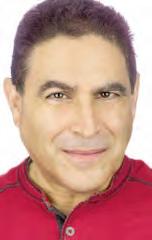
Noe Valley cellist Hans Kolbe and pianist Wayne Goodman will perform solos and duets in concert Monday, April 3, as part of the Odd Mondays event series. The concert takes place 7 to 8 p.m. at Bethany Methodist Church, 1270 Sanchez St. They will play pieces by Bach, Chaminade, Chopin, Schubert, Vivaldi, and several other composers. Admission is free.

Hans Kolbe has done and been many things—lawyer, theatre performer, musician, activist, computer consultant, entrepreneur, husband, father—but making music has always been a part of his life. A recent highlight was playing with neighbors on weekends in the front yard of Mayor Rolph’s mansion at the corner of 21st and Sanchez streets in Noe Valley. His group of cellists, the Multi-Celli, has also performed at the Farmers Market in the Noe Valley Town Square. He has lived in the neighborhood since 1980, when he arrived from Germany.
Hans Kolbe
Wayne Goodman has lived in Noe Valley for 10 years. He is a writer, player of multiple musical instruments, composer, actor, and psychiatric nurse. His latest book is the novel Lazarus in St. Petersburg. He hosts Queer Words Podcast, conversations with queeridentified authors about their works and lives. He has composed several musical pieces, including Wife of the Party, a musical based on an incident in the lives of Mikhail and Raisa Gorbachev. When not writing or recording, he enjoys playing Gilded Age parlor music on the piano, with an emphasis on women, gay, and Black composers.
Wayne Goodman
Odd Mondays is in its 22nd year in Noe Valley. Events are held monthly on the first odd Monday. See the series’ Facebook page for more information.
no additional barriers should be added to intersections. He added that he hopes the “next generation” plan will have an airing in a public forum and suggested that the UNN meeting was a good place to have it.
“Upper Noe Neighbors is about government and process working
throughus, not to us,” he said. “It’s all about talking it out, finding out what people really want.”
The robust turnout and the lively interchange of views certainly proved that is the case. The next meeting, on May 17 at 7 p.m., will no doubt bring more of the same.
BY QUI NGUYEN DIRECTED BY JAIME CASTAÑEDA
MAR 30–MAY 7
A.C.T.’S STRAND THEATER
In 2018, A.C.T. audiences enjoyed the first part of playwright Qui Nguyen’s kickass hiphop trilogy about a Vietnamese family who swapped war-torn Saigon for rural ’70s Arkansas. We’re excited to finally bring you the second part of the story. The lovers from part one, Tong and Quang, are now married . . . that’s the good news. The bad news is that with low-wage jobs, a son struggling with English, and rumors of old flames, the challenges are only beginning.
Nguyen reunites with Vietgone director Jaime Castañeda to draw from rap, leap into martial arts, and dig deep into his own family journey. Funny, sexy, and subversive, Poor Yella Rednecks confirms Nguyen as a groundbreaking American voice. Don’t miss your chance to see this exciting story. Oh, and if you didn’t see Vietgone, don’t worry—we’ll get you caught up in no time.

The Noe Valley Voice • April 2023 13
“WILDLY EXUBERANT, UNABASHEDLY OVER-THE-TOP, AND GLEEFULLY IMAGINATIVE” —BROADWAYWORLD
TICKETS START AT JUST $25 ACT-SF.ORG/PYR CHARLES SPIEGEL ATTORNEY Mediation & Consensual Dispute Resolution Only CharlesSpiegelLaw.com • CharlesSpiegelLaw@gmail.com 1102 Sanchez St. • SF, CA 94114 • 415.644.4555 Email for Information on: Pre & Post Marital Planning & Agreements and Divorce Options Workshops & Mediation Including Saturday May 6, and Wed. June 14. Thanks to Noe Valley for Donating $250,000+ for our Action-SF.com Victory Funds Since 2017.



14 The Noe Valley Voice • April 2023 Stefano DeZerega REALTOR® | LIC# 01730431 415.987.7833 | SellingSF.com sdezerega@corcoranicon.com Hugh Groocock Broker Associate | LIC# 01209589 415.971.4414 | HughGroocock.com hugh@hughgroocock.com Call for a free consultation. Inventory remains tight and the most compelling properties continue to sell for a premium despite volatility with interest rates and banking. With 40 yrs of combined experience we offer a skilled and hard-working team approach to selling or acquiring your Noe Valley home. Whether you are a first time buyer or seller looking to right-size your home, give us a call and put our experience to work for you. ©2023 Corcoran Icon Properties. All rights reserved. Corcoran® and the Corcoran Logo are registered service marks owned by Corcoran Group LLC. Corcoran Icon Properties fully supports the principles of the Fair Housing Act and the Equal Opportunity Act. Each franchise is independently owned and operated. Information is deemed reliable, but is not guaranteed. Represented Buyers 1026 CHURCH STREET Represented Buyers 1117 CHURCH STREET NOE VALLEY MINISTRY A Worship Celebration with Guest Musicians! Special music by the Jeffrey Chin Trio, Dara Phung, and the NVM Choir Rev. Candice Provey leading Festive Refreshments After Worship Easter Sunday, April 9, 10:30 am Holy Week & Easter Events Looking forward from Holy Week Sunday Worship: 10:30 a.m. Presbyterian Church, USA 415-282-2317 Maundy Thursday, April 6, 7:00 pm Please join us in welcoming Rev. Carmen Mason Browne! She will begin leading us as Transitional Pastor following Holy Week Simple Service of Readings & Reflection Rev. Candice Provey leading (the Maundy Thursday service will not be livestreamed) www.noevalleyministry.org 1021 Sanchez St., between 23rd & 24th Find the livestream links on our website! Come visit a place of visual peace and take part of that home to have for your own. The image above and other original pen & ink drawings are available for sale at Jack-draws.com Marincello Oak 3
Want to show your neighbors what you’ve been up to and where you’ve been? Pack a copy of the Noe Valley Voice in your luggage and send a photo to editor@noevalleyvoice.com


The Noe Valley Voice • April 2023 15 Voice Readers Ramble
Anne Snowball (left) on assignment in Thailand at The Friends of the Asian Elephant Hospital— the first elephant hospital that developed leg prosthetics for elephants that have stepped on land mines. Snowball has visited several times to do healing touch on injured elephants when she’s not reading her local paper.
Pete and Peggy Cling did a little dog-sledding in the Lyngen Alps in Norway at the Arctic Circle. Fortified with 15 layers of clothing they were abke ti finish reading their copy of the Noe Valley Voice.
OMNIVORE BOOKS ON FOOD
APRIL EVENTS
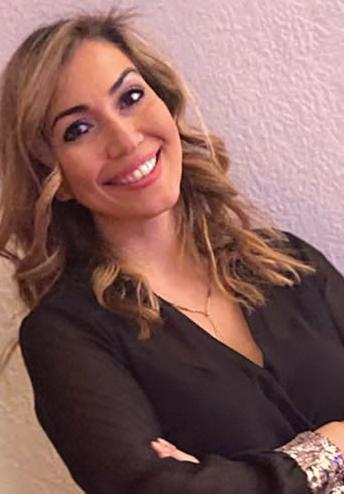
YUMI KOMATSUDAIRA• JAPANESE SUPERFOODS:
LEARN THE SECRETS OF HEALTHY EATING AND LONGEVITY - THE JAPANESE WAY! • 6:30 P.M. FREE!
Yumi Komatsudaira grew up in her family's seaweed shop, snacking on the green treats on which her family built their health-based culinary business. Now she shares the secrets of healthy eating that have guided the Japanese for ages.

HANNAH CHE• THE VEGAN CHINESE KITCHEN: RECIPES AND MODERN STORIES FROM A THOUSANDYEAR-OLD TRADITION • 6:30 P.M. FREE! Hannah Che shows us the magic of zhai cai, the plant-based Chinese cuisine that can be traced back over centuries to Buddhist temple kitchens, with recipes for nearly every dish in the Chinese repertoire replicated in a meatless way.
ANDREA NGUYEN• EVER-GREEN VIETNAMESE:
SUPER-FRESH RECIPES, STARRING PLANTS FROM LAND AND SEA • 6:30 P.M. FREE! Plant-based cooking meets the dynamic flavors of Vietnamese cuisine in these 125+ vegetabledriven recipes—from the James Beard Award–winning author of Vietnamese Food Every Day.

omnivore books on food
16 The Noe Valley Voice • April 2023 3885a cesar chavez street (at church st) san francisco, ca phone: 415.282.4712 omnivorebooks.com
WED APR 12 TUES APR 25 MON APR 17 Spring BEAUTIFUL NEW YOU! Z ARÉ M EDICAL Where Health is Restored Dr. Sara Zaré, ND To look and feel your best, the expert services of Zaré Medical can provide you with the lasting results you’ve been looking for. Get in touch with Dr. Sara Zaré today and make this Holiday Season your time to shine! Phone 415.766.7266 or use the contact form at zaremedicalsf.com OUR SERVICES • Hormone Replacement • Relief of Menopausal Symptoms • Adrenal Fatigue Therapy • Weight Loss • Anti-Aging Procedures including PRP injections, micro-needling & medical aesthetics. Contact Dr. Zaré Today! 2087 Union Street, Suite 1 • San Francisco, CA 94123 www.NoeValleyPet.com | 1451 Church Street | 415.282.7385 SIT. STAY. PLAY. We now sell High Tail Hikes collars and leads; durable, colorful and waterproof. Jack-draws.com Pen & Ink Drawings Great Highway Path Cypress — 9x12 in. Micron Pens on Bristol Come visit Jack-draws.com to view a sampling of recent work. I favor scenes of trees, rocks and hills and try to capture the essence of their shapes. Most images are available for purchase. Use the contact form to get more information. Thank you!
The Cost of Living in Noe




Two Victorian Charmers Top the List
By Corrie M. Anders
Two homes built in Noe Valley at the turn of the 20th century sold in February for more than $3 million each.


The Victorians were among six single-family detached homes closing escrow during the month, one more than in January, according to data supplied to the Noe Valley Voice by Corcoran Icon Properties. Buyers paid on average 112 percent of sellers’ asking price.

Condominium sales, after zero sales in January, also rebounded, as buyers picked up keys to five.

“The five condo sales are back in line with historical numbers” for February, said Randall Kostick, president and CEO of Corcoran Icon. There were four condo sales in February the previous year, seven in 2021, and four the same month in 2020.

But the volume of home sales is “still low,” Kostick said, about half of what it’s been the last couple of years.” Buyers purchased 11 detached homes in February of 2022 and nine the same month in 2021.
In this year’s lackluster real estate market, the two $3 million houses provided the sparkle to push up February’s average home price to $2.5 million.
One was an elegant 1910 Stick Victorian on the 4000 block of 26th Street, between Sanchez and Noe streets. The three-bedroom, three-bath home, with 2,298 square feet of living space, sold before it formally hit the market for its asking price of $3.3 million. The new owners took possession of a house with an updated kitchen and dining room, a rear deck overlooking a lushly landscaped yard, and a legal inlaw unit plus one-car parking on the ground level.
The other, a Victorian built in 1900 in the 1000 block of Sanchez Street between 24th and Elizabeth streets, was on the market for less than two weeks before getting an offer of $3.2 million, or 6.8 percent above its asking price ($2,995,000). With three bedrooms and four baths in 2,843 square feet of living space, the home featured skylights throughout, a spacious remodeled
Noe Valley Rents**
kitchen that flowed into a dining/play room, rooftop views of the city, a family room opening onto a plant-filled back yard, and a one-car garage and laundry room.
February’s most expensive condominium, a three-bedroom, 2.5-bath unit located in a striking 1999 building in the 500 block of 29th Street near Noe Street, waited nearly two months before attracting an acceptable bid. The 1,871square-foot unit included an open floor plan, a cathedral ceiling, glass walls, two gas fireplaces (one in the master bedroom), a loft bedroom that could double as an office or guestroom, and Noe Valley views from a sheltered terrace. The final sale price on Feb. 14 was $1,850,000—7.3 percent below the original asking price of $1,995,000.
The Noe Valley Voice • April 2023 17
The most expensive home sold in February, a 1910 Stick-style Victorian on 26th Street, set buyers back $3.3 million.
No. in Range Average Average Average Unit Sample March 2023 March 2023 February 2023 March 2022 Studio 10 $1,795 – $3,150 $2,420 / mo. $2,185 / mo. $2,256 / mo. 1-bdrm 40 $1,700 – $6,000 $3,115 / mo. $3,022 / mo. $2,834 / mo. 2-bdrm 44 $2,750 – $7,500 $4,132 / mo. $4,067 / mo. $3,723 / mo. 3-bdrm 23 $3,500 – $11,855 $6,001 / mo. $6,343 / mo. $5,123 / mo. 4+-bdrm 6 $4,500 – $18,500 $9,166 / mo. $9,410 / mo. $8,909 / mo. ** This survey is based on a sample of 123 Noe Valley rental listings appearing on Craigslist.org from Feb.. 10 to March 8, 2023. In March 2022, there were 100 listings. NVV4/2023 Noe Valley Home Sales* Low High Average Avg. Days Sale Price as Total Sales No. Price ($) Price ($) Price ($) on Market % of List Price Single-family homes February 2023 6 $1,600,000 $3,300,000 $2,517,458 26 112% January 2023 5 $1,080,000 $3,902,500 $2,247,500 69 104% February 2022 11 $1,705,000 $6,866,278 $2,958,753 13 114% Condominiums/TICs February2023 5 $1,205,000 $1,850,000 $1,442,300 30 100% January 2023 0 — — — — — February 2022 4 $562,000 $1,455,000 $949,87519 113% 2- to 4-unit buildings February 2023 2 $1,100,000 $2,475,000 $1,787,500 34 102% January 2023 0 — — — — — February 2022 1 $1,549,000 $1,549,000 $1,549,000 103 100% 5+-unit buildings February 2023 0 — — — — — January 2023 0 — — — — — February 2022 0 — — — — — * This survey includes all Noe Valley home sales completed during the month. Noe Valley is loosely defined as the area bordered by Grand View, 22nd, Guerrero, and 30th streets. The Noe Valley Voice thanks Corcoran Icon Properties, San Francisco, for providing sales data. NVV 4/2023 This 1900
Street
February
$3.2 million.
chef’s kitchen,
Buyers paid $1,850,000 for a threebedroom condominium in this distinctive two-unit building on 29th Street, built in 1999.
Victorian cottage on Sanchez
sold in
for
Features included a
skylights, and rooftop views.
Photos by Corrie M. Anders
PALM SPRINGS Living in the Sun Escape the fog and snarls of City life to Paradise on Earth. Experience the hot springs, golf courses and spas and make the bountiful desert your new home. Buy here where properties are 2 to 3 times less expensive than in the LA or SF Bay Area! Contact Tom Campagna, your Real Estate expert for Palm Springs, Indian Wells, La Quinta and the surrounding area. mrtomc@pacbell.net 415.328.5456 cell Realtor Associate CalRE#00402828
What’s in Your Earthquake Kit?
Suzanne Herel and Sally Smith
Illustrations by Karol Barske
Are you ready to face the next earthquake, severe weather event, or health emergency? Think of the things you might need in order to live for a week without water or electricity
Below is a list of items to put in your home preparedness kit, suggested by the San Francisco Fire Department’s Neighborhood Emergency Response Team (NERT) To get more informaton or to find out about the department’s trainings in disaster preparedness, call 415-970-2022 or visit sffdnert@sfgov org or www sfgov org/sfnert
Water: One gallon per person to last 3 to 5 days (Use bleach to purify it, 2 to 4 drops per quar t )

Food for 3 to 5 days Choose canned or dried soups, juice , milk, etc
Cooking Supplies: A grill or camp stove (outdoors only), utensils, matches
Clothing: Light and heavy layers for all, stored to stay dr y Include a pair of shoes and gloves




Safety: Flashlight, radio and batteries, rope , knife/scissors, fire extinguisher, wrench for utility shut-off
Supplies such as cash, house or car keys, impor tant documents, maps
Hygiene: Hand sanitizer, toilet paper, shampoo, toothbrush, and toothpaste
Special items for children, the elderly, or people with disabilities
Shelter: Tent, sleeping bags
Medical: First-aid kit, prescriptions, medications and an extra pair of glasses
Pet Supplies, such as food, water, leash, medications, and carrier
Checklist for the ‘Go Bag’
It never hurts to have a “go bag” at your workplace or in your car.
□ Comfortable walking shoes
□ Flashlight
□ Extra pair of glasses
□ Crank or battery radio
□ Food and water
□ Cash ($100 in small bills)
□ Basic first-aid, medications
□ Change of clothes
□ Toiletries
□ Big trash bag, mylar blanket
□ Copy of driver’s license
□ Contact info, paper, pencil, family or pet photo
CITY AND COUNTY OF SAN FRANCISCO
Community Outreach Public Notice
San Francisco Board of Supervisors Board or Commission Vacancies:

Participate on a Board or Commission!
The Assessment Appeals Board (AAB)
The AAB resolves legal and value assessment issues between the Assessor’s oce and property owners. Hearings are quasi-judicial, conducted in a manner similar to a court setting, with evidence and testimony presented by the parties. The Board then evaluates the evidence and testimony and renders its decision.
To be eligible for seat appointment, you must have a minimum of 昀ve years professional experience in California as either a: (1) public accountant; (2) real estate broker; (3) attorney; or (4) property appraiser accredited by a nationally recognized organization, or certi昀ed by either the Oce of Real Estate Appraiser or the State Board of Equalization.
For a full list of current or upcoming Boards, Commissions and Task Forces, please visit https://sfbos.org/vacancy-boards-commissions-task-forces
Department Announcements
Notice of Public Hearing and Availability for Public Review and Comment

Draft 2023-2024 Action Plan and CDBG, ESG, HOME and HOPWA Funding Recommendations

The Mayor’s Oce of Housing and Community Development (MOHCD), Oce of Economic and Workforce Development (OEWD) and Department of Homelessness and Supportive Housing (HSH) invite you to join us for a public hearing. We would like your input on the Draft 2023-2024 Action Plan, which includes funding recommendations for 昀scal year 2023-2024 under the following four federal funding programs: Community Development Block Grant (CDBG), Emergency Solutions Grant (ESG), Home Investment Partnership (HOME), and Housing Opportunities for Persons With AIDS (HOPWA). This public hearing is part of the annual process to receive community input on funding recommendations and in accordance with the City’s Citizen Participation Plan for federal funding.
Please note that the Draft 2023-2024 Action Plan will not including funding recommendations with 昀scal year 2023-2024 General Fund, Housing Trust Fund and other local funding sources.
Date and Time of Public Hearing
Tuesday, March 21, 2023, at 5:00 p.m.
You may attend this public hearing online or in-person. Four (4) hybrid meetings, one in English, one in Filipino, one in Cantonese, and one in Spanish, will be held simultaneously. To attend virtually, please register below for the meeting that meets your needs.
Virtual (Zoom) Registration Links
English meeting: https://us02web.zoom.us/webinar/register/WN_rgz_vokwTdWYtsGPlQFpBw Filipino meeting: https://us02web.zoom.us/meeting/register/tZYldO-pqTMoEtbHiq63V-Sc9ZLx1KHYeJOm Cantonese meeting https://us02web.zoom.us/webinar/register/WN_vANmtdDCQSulYRAbLnqmKw Spanish meeting: https://us02web.zoom.us/webinar/register/WN_Fmoq8ybUT0SV6kkiWCmzCQ
PLEASE NOTE: After registering, you will receive a con昀rmation email from Zoom containing information about joining the online meeting.
To attend in-person, the meetings will take place at the MOHCD oce located at 1 South Van Ness Avenue, 5th Floor in San Francisco. Please register for in-person attendance by 5:00 p.m. on Monday, March 20, 2023, by emailing Gloria Woo at gloria.woo@sfgov.org
The Draft 2023-2024 Action Plan will be available for public review and comment from March 13, 2023 to April 11, 2023. The draft document will be available electronically on the MOHCD website at https://sfmohcd.org, OEWD website at https://oewd.org, and HSH website at http://hsh.sfgov.org on the dates listed above.
Members of the public who wish to provide feedback on the draft document, including funding recommendations, may do so at the March 21st public hearing or by submitting written comments to gloria.woo@sfgov.org. The deadline for receiving written comments on the draft Action Plan and preliminary funding recommendations is 5:00 p.m. on April 11, 2023.
For more information, please visit https://sfmohcd.org. If you have questions, please email Gloria Woo at gloria.woo@sfgov.org
The City and County of San Francisco encourages public outreach. Articles are translated into several languages to provide better public access. The newspaper makes every e昀ort to translate the articles of genera interest correctly. No liability is assumed by the City and County of San Francisco or the newspapers for errors and omissions.
Spring Things to Do
Sun or clouds, it’s time to play. Spring Session at Upper Noe Recreation Center continues through May 26. Many classes and activities are drop-in and free. Call the office at 415-970-8061 or visit www.uppernoerecreationcenter.com for more information.
Meanwhile, promote park maintenance by using 311. The most effective way to improve park conditions is to contact San Francisco Customer Service (311), either by phone, web, or the super-easy-to-use phone app. Park personnel rely on your 311 reports to support service requests. Help them keep our park healthy.
Upper Noe Rec, bordered by Sanchez, Day, and 30th streets, is a block full of fun. Meet your friends in the gym, at the children’s playground, or at zumba, pickleball, or petite bakers’ class.

—Chris Faust, Friends of Upper Noe Recreation Center
Upper Noe Spring Schedule (March 21 to May 26, 2023) Rec Center Hours, 295 Day St.: Tues.–Fri., 10 a.m. to 8 p.m.; Sat., 9 a.m. to 5 p.m.
A Place to Play (free play)
10 to 11:30 a.m. weekdays
1 a.m. to 4 p.m. Saturday
Hours are subject to change.
Tuesday
9 to 10 a.m. Zumba (outside) FREE
10 a.m. to 1:30 p.m. Pickleball (all ages)
FREE
Noon to 1 p.m. Pilates (all levels)
1:30 to 2:30 p.m. Pilates (all levels)
2 to 5 p.m. Open Gym (youth)
4:30 to 5:30 p.m. Tennis–Beginning (8-9 yrs)
6 to 7 p.m. Tennis–Intermediate (18+)
5:30 to 7:30 p.m. Open Gym (adult)
6:30 to 7:30 p.m. Yoga Hatha
Wednesday 10 a.m. to 2 p.m. Open Gym (adult)
12 to 1 p.m. Feldenkrais (18+) FREE
2 to 5 p.m. Open Gym (youth)
5:30 to 7:30 p.m. Drop-In Adult Volleyball (advanced players only)
6 to 7 p.m. Tennis (18+)
Thursday 10 to 11 a.m. Petite Bakers (3-5 yrs)

10 a.m. to 1:30 p.m. Pickleball (all ages) FREE
12 to 1 p.m. Pilates (all levels)
2 to 5 p.m. Open Gym (youth)
4 to 5 p.m. Karate- Little Kickers (6-8 yrs)
4:30 to 5:30 p.m. Tennis–Beginning (8-9 yrs)
5 to 6 p.m. Karate Kids (9-12 yrs)
5:30 to 7:30 p.m. Open Gym (adult)
6 to 7 p.m. Tennis–Intermediate (18+)
Friday
9 to 10 a.m. Zumba (outside) FREE
10 a.m. to 2 p.m. Open Gym (adult)
2 to 3:30 p.m. Open Gym (youth)
4 to 5 p.m. League Volleyball (8-10 yrs)
4:30 to 5:30 p.m. Tennis–Beginning (7-8 yrs)
5 to 6 p.m. League Volleyball (11-14 yrs)
6 to 7 p.m. Tennis–Beginning (9-10 yrs)
6 to 7:30 p.m. Girls Play Sports (14-18 yrs) Instructional Volleyball
Saturday 9:30 to 10:30 a.m. Family Zumba FREE 10 a.m. to 4:30 p.m. Open Gym
18 The Noe Valley Voice • April 2023
UPPER NOE RECREATION CENTER
A pair of daffodils spread their sunshine, celebrating the first day of spring at Upper Noe Recreation Center.
Photo by Chris Faust
CNSB#3684836 Noe Valley 3868 24th Street • 641-4433 Noe Valley 1551 Church (at Duncan) • 648-1166 Bernal Heights 745 Cortland Avenue • 642-7585 Inner Sunset 401 Irving Street • 742-4662 Offering 50 Varieties of C • O • F • F • E • E by the pound or half-pound Custom Drinks Healthy Breakfasts Delicious Pastries Mouthwatering Desserts • • • Open Monday through Saturday 5:00 a.m. to 7:30 p.m. Sundays 5:30 a.m. to 7:00 p.m.
STORE TREK
Store Trek is a regular Voice feature spotlighting new shops and businesses in Noe Valley. This month we introduce a florist on Church Street that can make a bouquet, then help with a card or a flower pot.

LOVE AND STEM
1585 Church Street


628-267-0313
https://loveandstemsf.com/
Inearly November co-owners Venus Hijada and Darlene Gutierrez opened their floral shop Love and Stem in time for the busy holiday season. Then came the whirlwind of Valentine’s Day, the most important date on the calendar for florists. For several days leading up to the holiday, they put in long hours to meet the demand for roses and other floral bouquets customers had purchased for their loved ones.
“When I am here, it doesn’t feel like work, unless it’s Valentine’s Day. Then it’s crazy,” said Hijada, who was born in San Francisco and now lives in South San Francisco.
“It was definitely nonstop,” remarked Gutierrez, also a San Francisco native, who currently resides in Potrero Hill.





Last month, the business partners took some much-needed time off and celebrated Gutierrez’s 41st birthday in Honolulu. They returned in late March to get ready for Easter, another busy floral holiday, with tulips one of the most in-demand flowers this year.
“A lot of people want flower centerpieces with tulips for their tables for Easter brunch or dinner,” said Hijada, 36, who also co-owns and manages the Japanese hot pot restaurant Mokuku on Clement Street.
Best friends who first met while working for a restaurant on the Peninsula, the women started discussing opening a florist shop together last year. Gutierrez’s family has worked in the floral business for decades, both independently and for William Paul Floral Design in North Beach.
Now Gutierrez’s mother, also named Darlene and a San Francisco native, helps out at Love and Stem during the week, while her two sisters lend a hand on weekends. Besides flowers for every day, the new shop can now provide floral arrangements for weddings and other celebrations. Anyone interested in Hijada and Gutierrez’s services can request a consultation via their website or by stopping into the store.
The women took over the storefront that formerly housed Key Kraft at 1585 Church St., near 28th Street. They are helping to revive business on that block and are pleased to be next door to Lehr’s German Specialties, which was reopened last year by longtime customer Hannah Seyfert.
“I love Noe Valley. I grew up in the Mission, and we would come here all the time to eat and shop,” said Gutierrez, who works nights as a bartender at the Marriott Hotel at Fisherman’s Wharf.
The women felt lucky to find the Church Street space, which in the afternoon is usually awash in sunlight and prominently visible on the corner of their block. “This is my favorite part of San Francisco,” said Hijada. “People are always walking by during the day, and it seems like everyone knows each other.”
Their first day open to the public ended up being Nov. 8, due to so many people popping into the store that Tuesday. They had filled the space with flowers for a photo shoot to take some pictures for their website and left the front door open.
“People kept asking if we had something for sale,” recalled Hijada.
With so many flowers on hand, the women decided to sell them off at a deep discount.
“As people kept walking in, I thought I guess we are open,” said Hijada. “I loved it. It worked out.”
Hijada and Gutierrez offer a wide selection of flowers and floral arrangements they create on their own or are designed by BloomNation. They are premier florists for the online floral marketplace, which partners with about 3,500 florists offering delivery to nearly 5,000 cities across the country.
Their offerings are broken down on their website by different occasions or life moments, such as for the upcoming Easter and Passover holidays. Choices listed under that heading include the Love & Tulips ($39.95) made with assorted tulips in a fish bowl or the Ursula ($125) bouquet of pink roses.
In the sympathy category is an arrangement called the Noe Valley ($65), made with roses, snapdragon, lisianthus, dusty miller, and lemon greens. They will also create BloomNation’s Eternal Love ($499.95), a full casket arrangement made with red roses and white flowers symbolizing love and purity. There is also the Tranquility, made with all white flowers and greenery meant to evoke a feeling of peace.
Customers can also choose bouquets made with fresh seasonal flowers that the shop’s staff arranges daily. The Designer’s Choice ($50) and the Grand Designer’s Choice ($80) are among the shop’s most popular selections.
Other favorites are the Darlene ($70), made with white roses, white snapdragons, and white button pompoms, or the Cristen ($75), made with a dozen short-
stem roses, eucalyptus, bupleurum, and baby’s breath. They name their arrangements after their friends.
“It has been an eye-opener working in a different business than what I have been doing with food,” said Hijada, who has owned several eateries over the last decade.
But, noted Gutierrez, “flowers do make people happy.”
They are still working on the look of their nearly 1,300-square-foot space, with plans to repaint the front room and turn a hallway area into a retail display space. They plan to add more gift items to the shop in addition to the birthday cards ($6.50), candles ($24), and ceramic pots of various sizes (prices vary).
“We want to be a one-stop shop for birthday gifts,” explained Gutierrez. The store allows customers to make payments in four interest-free installments for online purchases. Orders made before 2 p.m. can be delivered the same day within San Francisco for a charge of $14, or to San Mateo County, Alameda County, or West Contra Costa County for $16.

Dogs are welcome in the store and can get a free treat when they stop by. Tuesdays through Fridays canine and other customers may be greeted by Tito, Gutierrez’s three-year-old chihuahua.
The shop is open daily from 10 a.m. to 5 p.m.
—Matthew S. Bajko
The Noe Valley Voice • April 2023 19
Serving Noe Valley Since 1961 800-908-3888 www.discovercabrillo.com Lic #629538 Custom Home Renovation Green Building Foundation Replacements New Garages !"#$806.2635((((()))$**+,-+./01-+.2$2345(67489:8(;%<=%!%( B. Birirmingham, Inc. mingham, General Contractor
As sun pours into Love and Stem’s door at the corner of Church and 28th streets, flowers lean forward in a showy display. Photo by Art Bodner
April 1: Brooklyn-based “noir rock” group

Elysian Fields is in CONCERT at 8 pm Noe Valley Ministr y 1021 Sanchez noemusic org
April 1 & 25: LEGO Free Play at the Noe Valley Librar y welcomes children ages 5 and older, and their families 2-3 pm 451 Jersey 355-5707; sfpl org
April 1, 8, 15, 22 & 29: The Noe Valley FARMERS MARKET offers fresh produce , music , and fellowship, Saturdays from 8 am to 1 pm 3861 24th 248-1332; noevalleyfarmersmarket com
April 1-29: NOE WALKS strolls around the neighborhood on Saturdays, star ting at 10 am Meet at 24th and Sanchez
April 1-May 13: Chung 24 Galler y displays
“Touchstone , ” featuring work by Tony Bellaver, Mark Citret, Susannah Hays, Michael Starkman, and Cindy Stokes WedSat 1-6 pm 4071 24th chung24galler y com
April 2: ACTION SF hosts vir tual monthly meetings open to all noon to 1 pm Email actionsfsolidarity@gmail com for the link
April 2: Learn how to bake matzoh and decorate an afikoman bag for Passover April 5-13 4 pm CHAB AD of Noe Valley, 3771 Cesar Chavez Reser ve at Eventbrite

April 2 & 16: Folk hosts a free community Vinyasa Flow YOGA CLASS; bring your own mat 11 am-noon Town Square , 3861 24th noevalleytownsquare com
April 2 & 16: ACOUSTIC SUNDAYS at the Noe Valley Town Square features Corner Window April 2 and Amy Obenski
April 16 2-4 pm 3861 24th noevalleytownsquare com
April 2-May 31: Lola Galler y exhibits LANDSC APES by Willa Owings Reception
April 2, 5-7 pm; Tues -Sat , noon-6 pm 1250 Sanchez 642-4875

April 3: ODD MONDAYS features a concer t “Cello and Piano Solos and Duets ” with Hans Kolbe and Wayne Goodman 7-8 pm Bethany UMC , 1270 Sanchez facebook com/OddMondays
April 6, 13, 20 & 27: The Noe Valley Librar y offers Children’s STORYTIMES on Thursdays, 10:15 and 11 am 451 Jersey 355-5707; sfpl org
Rick
APRIL CALENDAR
April 8: The Randall Museum celebrates “BUG DAY” with ar ts and crafts, music , and live bugs (some edible) 10 am-2 pm 199 Museum 554-9600; randallmuseum org
April 8: The World Literature BOOK CLUB at the Noe Valley Librar y discusses Br itt-Mar ie Was Here by Fredrik Backman 23 pm 451 Jersey 355-5707; sfpl org
April 10, 12, 17 & 25: AUTHOR/CHEFS
discuss their books: Alison Riley and Meshell Ndegeocello (Recipe for Disaster)
April 10; Yumi Komatsudaira (Japanese Superfoods) April 12; Hannah Che (The Vegan Chinese Kitc hen) April 17; and Andrea Nguyen (Ever-Green Vietnamese) April 25 6:30 pm Omnivore Books, 3885 Cesar Chavez 282-4712
April 11: The Noe Valley Librar y offers drop-in TECH HELP 11 am-noon 451 Jersey 355-5707; sfpl org

April 11: Local author CHARLIE JANE
ANDERS signs copies of her books at Folio Books, 3957 24th Call 821-3477 for times
April 13: The Main Librar y screens the 1936 Charlie Chaplin FILM, Modern Times Noon-2 pm 100 Larkin 557-4400; sfpl org
April 13: Poet Laureate Kim Shuck’s POEM
JAM features poets from antholog y This Wander ing State: Poems from Alta 6-7:15 pm The Main Librar y, 100 Larkin 557-4400; sfpl org
April 13: The Noe Valley Ministr y offers a meditative LABYRINTH WALK on the second Thursday of the month, at 6:30 pm 1021 Sanchez noevalleyministr y org
April 13 & 16: On April 13, Mamahuhu, 3991 24th St , hosts a BOOK par ty and dinner for Kathr yn Ma, author of The Chinese Groove Reser ve your spot at chloe@eatmamahuhu com On April 16 Ma is in conversation with author Julia Flynn Siler at the Main Librar y 3-4:30 pm; sfpl org
April 13-23: The 2023 San Francisco International FILM FESTIVAL screens 180 films at theaters including the Castro, Roxie , and Victoria sffilm org
April 14: FRIDAY MATINEE at the Noe Valley Librar y features the film This Gun for Hire 2 pm 451 Jersey 355-5707; sfpl org
April 15: The Noe Valley Librar y welcomes children ages 5 and older to choose and plant SEEDS to take home 2-3 pm 451 Jersey 355-5707; sfpl org
April 16: NOE MUSIC hosts a performance of Beethoven’s complete sonatas for piano and violin 4-5 pm Noe Valley Ministr y, 1021 Sanchez noemusic org
April 18: MAGNETIC BLOCK Play, for children ages 3 to 5 with caregiver, runs from 2 to 3 pm Noe Valley Librar y, 451 Jersey 355-5707; sfpl org
April 19: The Noe Valley BOOK CLUB discusses The Buddha in the Attic by Julie Otsuka 6:30-7:45 pm Noe Valley Librar y, 451 Jersey 355-5707; sfpl org
April 21: The ZOOFEST GALA celebrates the Bald Eagle’s recover y; music by SFJazz and the Illeagles 6 pm cocktails, 7 pm dinner 1 Zoo Road sfzoo org
April 21: LITQUAKE celebrates National Poetr y Month with Grace Notes free readings at Grace Cathedral by James Cagney, Henri Cole , Jewelle Gomez, Jacques Rancour t, and Rachel Zucker 7:30 pm 1100 California litquake org
April 22: A PIANO RECITAL at Bethany Methodist Church is set for 1 pm, in the sanctuar y 1270 Sanchez 821-3477
April 23: YOGA Flow SF leads a free alllevels class; bring your own mat and water
11 am-noon Town Square , 3861 24th noevalleytownsquare com
April 23: Evelyn Rose of the Glen Park Histor y Project discusses Noe’s “Abby & Alexander Fisher : From Enslavement to Entrepreneurial Power Couple , ” at the Colma Community Center 1520 Hillside Blvd 2 pm Rsvp by April 21: 650-757-1676; cha@colmahistor y com
April 23: Music on the Hill hosts The Bow and the Brush, a CONCERT by the
VSA Construction General Contractor

LIC # 990233
No job too small Old World Craftmanship (415) 877-1293

Solano Trio 7:30 pm St Aidan’s Church, 101 Gold Mine 285-9540; musiconthehill org
April 25: The SF HISTORY Association hosts Laura Ackley discussing the “Panama Pacific International Exposition: Design Color, and Light 7 pm Sherith Israel, 2266 California sanfranciscohistor y org
April 26: Leslie Kirk Campbell reads from her SHORT STORY collection The Man With Eight Pair s of Legs 6:30 pm Noe Valley Librar y, 451 Jersey 355-5707; sfpl org
April 27-May 20: The We Players perform “Adventures With Alice , ” a Lewis Carroll mashup, in Golden Gate Park, beginning at the stables and ending at Por tals of the Past Thurs -Sun , 5 pm 547-0189; weplayers org
April 28: CREATIVITY EXPLORED hosts “Ar t Changes Lives,” a benefit to celebrate its 40th anniversar y 6-10 pm City View at Metreon 135 4th St 4th Floor 863-2108; creativityexplored org

April 29: NOE MUSIC KIDS features Teacher Barb performing in a variety of styles with Daniel Fabricant and Aaron Kierbel 10:30-11:30 am Noe Valley Ministr y, 1021 Sanchez noemusic org
April 30: Folio Books sponsors Cor y Doctorow, author of Red Team Blues , in conversation with Annalee Newitz 2-3:30 pm Main Librar y, 100 Larkin 557-4400; sfpl org
May 6: The Noe Valley GARDEN TOUR features nine local gardens 10 am-4 pm Tickets 24th Street shops and Saturday Town Square FriendsofNoeValley com or LindaLockyer3@gmail com to volunteer May 6: The Ingleside Terraces Homes Association holds a GARAGE SALE with items from households between Ocean Ave Junipero Serra Holloway and Ashton 10 am-3 pm events@ihasf org
To Do in April
The next Noe Valley Voice will be the May 2023 issue, distributed the first week of May. The deadline for calendar items is April 15. Please email calendar@noevalleyvoice.com. Events in Noe Valley receive priority. Thank you.

20 The Noe Valley Voice • April 2023 25 year member of Pet Sitters Intl. Cass Morgan • 415.513.9299 positivelypets1@earthlink.net www.sfpositivelypets.com •Dog Walking •Pet Sitting •Behavior Help
construction SERVING SAN FRANCISCO FOROVER 35 YEARS HISTORIC RESTORATION CUSTOM REMODELING MAJOR RECONSTRUCTION FOUNDATIONS – ADDITIONS KITCHENS – BATHS GENERAL CONTRACTOR STATE LIC. NO. 579875 WWW.SCHWED.NET 415 - 285 - 8207 MEMBER: NOE VALLEY
HANDYMAN SERVICES Custom & Refaced Cabinets Replacing Dry Rot Deck Planks Carpentry and Painting Refinishing Hardwood Flooring Call Miguel (510) 333-0732 ATTORNEYS AT LAW 4091 24th Street NOE VALLEY (415) 641-0700 Custom reupholstery service in Noe Valley. If you have a special piece that needs some TLC (reupholstery, custom cushions, frame repairs, fabric, etc.) please contact me. Email or call for a quote today! sue@redorenew.com | (415) 309-0531 www.redorenew.com Troubleshooting/Tutoring Tune-Ups/Upgrades SFMacMan.com (415) 821-1792
Schwed
LOCAL Services
Collins Macintosh Help 29 Years Experience Jewelry & Watch Repair Feng Shui Reading • Fine and Custom Jewelry Repair • Bead Stringing and Knotting. • Custom Jewelry Creation • Ring Sizing and Stone Cutting •Watch and Clock Repair & Engraving 4107 24th St. • SF • 415.861.4515 karizma94114@gmail.com Tuesday – Saturday 12:00 – 6:00 p.m. Sunday by appointment • Monday Closed
Home Organizing Clear the Clutter Reclaim Your Space patrosehomeorganizing.com 415.608.7634 patrosepr@gmail.com
Pat Rose
and now for the RUMORS behind the news Spring Has Sprung
By Mazook
THE VERNAL EQUINOX marked the first day of spring in Noe Valley, on March 20 at 2:24 p.m. It seemed more like another day of winter: rain, wind, and flooding. Storms have beset our valley from New Year’s Eve to April Fools Day.
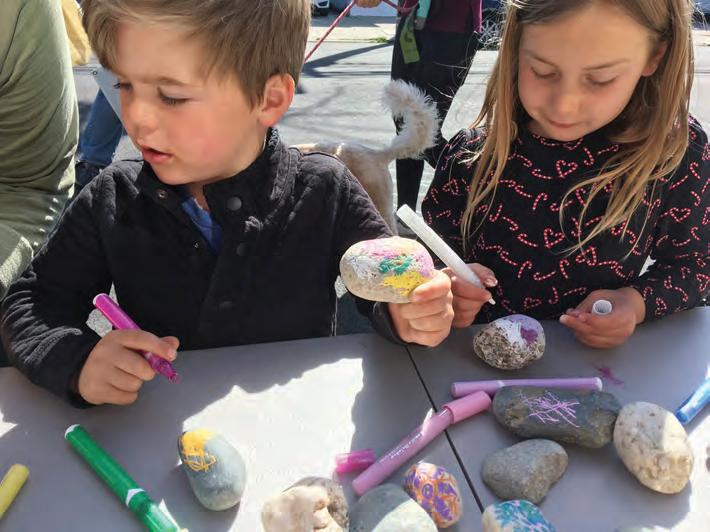
I have been looking at the “Air Quality in Noe Valley” site to get our weather report and forecast. Every day for the past three months, it has been “cloudy with rain.” You can check it out online at www.iqair.com/usa/california/noe-valley. My guess is the “atmospheric rivers” will subside and spring will arrive in Noe Valley no later than Easter (April 9). Give or take.
THE GREEN SCENE: Rain did not dampen the spirits of the many who showed up in Downtown Noe Valley (DNV) to celebrate St. Patrick’s Day. Says Keli Leal, owner of The Peaks, “It was the best day we’ve had since I took over the bar over three years ago. I would estimate we had between five and six hundred different people drop in between 11:30 a.m. to closing time, 1 a.m.”
She adds, “I was quite surprised when, without any prior notice, three tour buses came by and dropped off tourists during the day, with the first one coming not long after we opened, and so the bar was at times over three deep in people ordering drinks.”
The Dubliner owner Ken Yeung was also happy about the turnout. “We had the largest crowd I have seen since taking over the bar 10 years ago.” Yeung estimated that about 400 celebrants showed up to have a drink or two.
“Our St. Patrick’s was the busiest I’d seen since our grand opening party in 2002, when about a thousand people showed up,” says Valley Tavern coowner Declan Hogan. “This St. Patrick’s Day, I would say we served somewhere around 400 customers.”
Down at Mr. Digby’s, co-owner Mike McCaffery said, “It was just a normal Friday at work for me. We had no events planned for St. Patrick’s Day, and I know that the crowds go up the street to the Dubliner or the Valley Tavern to celebrate. If I didn’t have to work that day, I would have gone up there to celebrate as well.”
McCaffery says the next special event on their schedule is their newly inaugurated (since February) Supper Club, where “every month, we curate a unique themed-menu featuring exciting prix-fixe appetizers, entrees, and desserts, served family-style.” This month, the event’s on April 13, and they will be serving a Passover-style dinner with matzoh ball soup, chopped liver, braised brisket, and kugel for dessert. He wanted to emphasize that the meal will not be kosher. The Jewish celebration of Passover this year runs April 5 to 13.
BANK SHOT: By the end of March, rumors were circulating in Downtown Noe Valley that First Republic Bank, which has a branch in Noe Valley at Castro and Jersey streets, was in jeopardy of failure after the monumental
demise of Silicon Valley Bank. First Republic’s stock tumbled on Wall Street, and locals were worried that their deposits in the bank (above the insured $250,000) would be lost in the debacle. Would the branch be closing its doors? Would they still be moving the branch down to 24th Street to the former location of Umpqua Bank (next to Whole Foods), where they had just gotten their conditional use permits from the city at the beginning of March?
As many of you know, several large banks, including Bank of America, Chase, and Wells Fargo, came to the rescue by depositing around $30 billion into First Republic’s coffers, which eased fears of a collapse. And unnamed sources tell me that First Republic will open its new Noe Valley branch in late 2023 or early 2024, as planned. So, Noe Valleons, don’t worry, be happy.
Alexander Yokum, an equity research analyst for CFRA, one of the world’s largest independent investment research firms, went online to talk about First Republic. Yokum said the bank’s location was a key factor in some of the issues it faced after Silicon Valley Bank collapsed. He told Yahoo Finance, “I truly believe if they were based in a state like Alabama, they would not be struggling like they are now. So the fact that they are only 50 miles away from Silicon Valley Bank, their headquarters, and nearly half of all of their deposits are in that Silicon Valley” is what made people temporarily lose faith.
First Republic also was offering a special seven-month certificate of deposit with $10,000 or more at an annual percentage yield (APY) of 4.95 percent (on March 27). By the way, Sterling Bank, another San Francisco banking institution, offered a similar CD with an APY of 4.85 percent.
A RESTROOM OF ONE’S OWN: There was still controversy about the proposed installation of a potty in the Noe Valley Town Square. The poo over the loo was still clogged with city politics. Geez!
When the story came out last year, the cost of the project was an outrageous $1.7 million for equipment and installation, and the completion date was 2025.
Now the cost of the toilet has been greatly reduced, to $300,000 in city funds, thanks to an out-of-state donor’s gift of a modular bathroom. The SF Recreation and Park Commission signed off on the project when Nevada’s Public Restroom Company offered to donate a store model bath-
room, valued at $425,000, in exchange for a donor recognition sign at the park.
As March began, a story in the San Francisco Standard by reporter Josh Koehn cast doubt on it all. Koehn reported: “Larry Mazzola, a Rec and Parks commissioner who was joined by colleague Laurence Griffin in opposing the project, vehemently disagrees [with the plan]. He argued during a Feb. 16 commission meeting that the project not only sets a precedent for San Francisco to ignore its own values, but also sets a path for the city’s skilled laborers to be overlooked for future work.
“‘All this developer cares about is free advertising,’ said Mazzola, who is president of the San Francisco Building and Construction Trades Council. ‘This is a publicity stunt for them. Nothing is free.’”
Well, time will tell. At its February meeting, the SF Recreation and Park Commission voted to recommend that the Board of Supervisors accept the toilet donation, so now it’s up to the supes. They are expected to decide in April.
CHOW BELLA: La Ciccia Restaurant, at the end of Church Street (291 30th), reopened last summer, many months after Massimiliano Conti and Lorella Degan sold their internationally recognized Sardinian eatery, established 17 years ago. Conti told me at the time he and his wife needed a break and that a South Bay Restaurant Group would continue his celebrated menu. However, the deal never closed, the buyer backed out, and the Contis were left holding their spatula.
Cheryl Maloney, the real estate broker in the failed sale and a longtime patron who lived two blocks from La Ciccia, decided she would buy and reopen it, with the same menu. She did so last June.
Maloney assumed Degan’s role as maître d’ and retained Umberto Herrera as head chef. He had worked in the kitchen with Conti since the restaurant opened, along with sous-chef Edilberto Martinez, who had been there for 17 years as well.
Maloney says, “We have tried to keep everything the same.” It appears she has succeeded—try the octopus stew or the oven-roasted prawns. Reservations are strongly recommended.
And neighborhood vegans will be happy that the very busy restaurant Trad Bone Broth (3903 24th) started serving a seaweed broth last month.
“We would have people coming in
for bone broth with their vegan friends, who kept asking us if we served a vegan broth,” says co-owner Jonathan Kim, “so we introduced a konbu, which is an edible kelp very popular in Japan and Southeast Asia.”
He adds, “We have been really surprised that so many of our customers are now asking for it.”
And congrats to DNV’s Holey Bagel (3872 24th), which made Eater’s top 10 list of bagels in the Bay Area.
TAGALONGS, PLEASE: As spring arrives in Noe Valley, so do the Girl Scouts setting up card tables in Downtown Noe Valley to sell their famous cookies. In my afternoon walk on the 24th Street beat, I encountered a cookie pop-up in front of the Bank of America at 24th and Castro, where customers were lined up to buy a box or two of the iconic cookies The proceeds go to help activities of local troops. The cost: $6 a box.
The first known cookie sales by an individual Girl Scout unit were by the “Mistletoe Troop” at their local high school in Muskogee, Okla., in December 1917.
The group in front of Bank of America, according to parent Lauren Lewis, who is supervising the scouts, is Troop 62718, many of them fifth- and sixth-graders from Alvarado School and Girl Scout junior cadets who live in the neighborhood. “We were quite busy that day,” Lewis says, “selling over 200 boxes of cookies, most of which were boxes of the thin mint cookie.” She says sales will go through April, but “there are supply issues for us, so we’ll see what happens.”
AN ABUNDANCE OF CHANGE: Noe Valley political activist Todd David has joined hands with tech executive Zack Rosen to form Abundant SF, a new political action group that reportedly intends to spend up to $5 million a year—over decades—to rewrite the script on housing, transportation, education, and public spaces in the city.
While the group is news to most politicos in San Francisco, it has been strongly endorsed by State Senator Scott Wiener, who may join the race next year to fill the seat in the House of Representatives currently held by retiring Congresswoman Nancy Pelosi. Wiener was quoted in the Standard: “By advocating aggressively for more housing, sustainable transportation, and better city governance, Abundant can help cement these issues as top priorities in San Francisco politics.”
SHORT SHRIFTS: Tiffani Elliott has a new business at 1211 Church near 24th, named RE’Newed Beauty Chateau. ”We are a nail shop servicing manicures, pedicures, and acrylic nail enhancements. We offer part-time waxing and will offer more beauty services in the future.” … The yoga studio at 4159 24th has a new twist. It used to be called Moxie and then Yoga Garden. But according to practitioner Jenniferlyn Chiemingo, the yoga group has changed the name to Folk Noe … Bistro Ember is applying for an on-sale beer and wine license for 1298 Church, and should open soon to feature Burmese cuisine. It is the former site of Inle Burmese Cuisine, which moved to 822 Irving St.
THAT’S ALL, YOU ALL. Have a happy Passover seder, a wonderful Easter, and/or a sweet Laylat al-Qadr.
The Noe Valley Voice • April 2023 21
Third Rock From the Sun Needs a Makeover: Last year’s Earth Day was a celebration on Sanchez Street. Can we paint rocks again this year? The date is April 22. Photo by Kit Cameron
Action SF https://m.facebook.com/ActionSFactivism/
Website: http://www.action-sf.com/
Email: ActionSFsolidarity@gmail.com
Meetings: Usually first Sundays, noon–1 p.m. Virtual meeting. All welcome.
Al-Anon Noe Valley
Contact: 834-9940
Website: al-anonsf.org
Meetings: Wednesdays, 7:30-9 p.m. St. Philip Church, 725 Diamond St. (park on Elizabeth Street side; enter on 24th Street)
Castro Community on Patrol
Website: castropatrol.org
Email: info@castropatrol.org
Castro Merchants
Contacts: Masood Samereie, President; Dave Karraker, 415-710-0245
Email: Dave@mx3fitness.com
Address: 584 Castro St. #333, SF, CA 94114
Meetings: Email info@CastroMerchants.com
Diamond Heights Community
Association
Contact: Betsy Eddy, 867-5774
Address: P.O. Box 31529, SF, CA 94131
Website: www.dhcasf.org. Meetings: Second Thursday, 7 p.m. Call for location.
Dolores Heights Improvement Club
Email: info@doloresheights.org
Website: www.doloresheights.org
Meetings: Third Thursday of every second month. Bank of America, 18th and Castro.
Duncan Newburg Association (DNA)
Contacts: Deanna Mooney, 821-4045; Diane McCarney, 824-0303; or Sally Chew, 821-6235. Address: 560 Duncan St., SF, CA 94131. Meetings: Call for details.
Eureka Valley Neighborhood Association
Website: https://evna.org
Address: P.O. Box 14137, SF, CA 94114
Meetings: See website calendar. Castro Meeting Room, 501 Castro St., 7 p.m.
MORE GROUPS TO JOIN
Fair Oaks Neighbors
Email: hello@fairoaksneighbors.org
Address: 200 Fair Oaks St., SF, CA 94110
The Fair Oaks Street Fair is traditionally held the day before Mother’s Day.
Friends of Billy Goat Hill
Contact: Lisa and Mo Ghotbi, 821-0122
Website: www.billygoathill.net
Friends of Dolores Park Playground
Contact: Nancy Gonzalez Madynski, 828-5772
Email: friendsofdolorespark@gmail.com
Website: friendsofdolorespark.org
Friends of Glen Canyon Park
Contact: Jean Conner, 584-8576
Address: 140 Turquoise Way, SF, CA 94131
Plant restoration work parties, Wednesday mornings and third Saturday of the month.
Friends of Noe Courts Playground
Contact: Laura Norman
Email: lauranor@yahoo.com
Address: P.O. Box 460953, SF, CA 94146
Meetings: Email for dates and times.
Friends of Noe Valley (FNV)
Contact: Todd David, 401-0625
Email: info@friendsofnoevalley.com
Website: friendsofnoevalley.com
Meetings: Two or three annually.
Friends of Upper Noe Recreation
Center
Contact: Chris Faust
Email: info@uppernoerecreationcenter.com
Website: uppernoerecreationcenter.com
Meetings: Email or check website.
Friends of Upper Noe Dog Owners
Group (FUNDOG)
Contacts: Chris Faust, David Emanuel
Email: info@fundogsf.org
Website: www.fundogsf.org
Glen Park Association
Contact: info@glenparkassociation.org
Website: glenparkassociation.org
Address: P.O. Box 31292, SF, CA 94131
Juri Commoners
Contact: Dave Schweisguth, MI7-6290
Email: dave@schweisguth.org
Website: meetup.com/Juri-Commoners
The group is on hiatus and seeking a new leader. Contact Dave.
Liberty Hill Neighborhood Association
Contact: Dr. Lisa Fromer, president
Email: efromer3@gmail.com
Meetings: Quarterly. Email for details.
Noe Neighborhood Council
Contact: Ozzie Rohm or Matt McCabe
Email: info@noeneighborhoodcouncil.com
Website: noeneighborhoodcouncil.com
Meetings: Quarterly at Sally Brunn Library, 451 Jersey St., with date publicized on website and Nextdoor.com.
Noe Valley Association–24th Street
Community Benefit District
Contact: Debra Niemann, 519-0093
Dispatch: To report spills or debris on 24th Street, call Billy Dinnell, 802-4461. Email: info@noevalleyassociation.org.
Website: noevalleyassociation.org
Board meetings: Quarterly. See website.
Noe Valley Democratic Club
Contact: Carrie Barnes, President
E-mail: noevalleydemocrats@gmail.com
Website: www.noevalleydemocrats.org
Meetings: Monthly at the Valley Tavern, 4054 24th St., with dates publicized on website.
Noe Valley Farmers Market
Open Saturdays, 8 a.m. to 1 p.m., and Tuesdays, 3 to 7 p.m.; 3861 24th St. between Vicksburg and Sanchez.
Contact: Leslie Crawford, 248-1332
Email: info@noevalleyfarmersmarket.com
Noe Valley Merchants and Professionals Association (NVMPA)
Contact: Rachel Swann, 225-7743
Meetings: Last Thursdays, Old Republic, 4045A 24th St., 9 a.m. Call to confirm.
Website: www.NoeValleyMerchants.com
Noe Valley Parent Network
An e-mail resource network for parents
Contact: Mina Kenvin
Email: minaken@gmail.com
noevalleyparentsubscribe@yahoogroups.com
Noe Walks
Contact: Chris Nanda
Email: christopher.n.nanda@gmail.com
Website: NoeWalks.com
Meetings: Saturdays, 10 a.m. Starts 24th and Sanchez. Ends Noe and Duncan for photo. Progress Noe Valley
Facebook: ProgressNoeValley
Email: progressnoe@gmail.com
Website: progressnoe.com
Meetings: Check Facebook page for current meeting and event schedule.
Resilient Noe Valley
Contact: Antoinette
Email: resilientnoevalley@gmail.com
Newsletter: http://eepurl.com/gYuCD5

Website: www.resilientnoevalley.com
San Francisco NERT (Neighborhood
Emergency Response Team)
Contact: Noe Valley NERT Neighborhood
Team co-coordinators Maxine Fasulis, mfasulis@yahoo.com; Carole Roberts, carole_roberts@faludi.com
Website: https://SF-fire.org
Visit the SF NERT website for more information.
San Jose/Guerrero Coalition to Save Our Streets
Contact: Don Oshiro, 285-8188
Email: contact@sanjoseguerrero.com
Website: sanjoseguerrero.com
Meetings: See website.
Friends of Slow Sanchez
Contacts: Christopher Keene, Andrew Casteel
Email: info@SlowSanchez.com
Website: SlowSanchez.com
Upper Noe Merchants
Contact: Info@UpperNoeNeighbors.com https://uppernoeneighbors.com/merchants/
Upper Noe Neighbors
Contact: Chris Faust, President
Email: Info@UpperNoeNeighbors.com
Mail: 235 30th St., SF CA 94131
Meetings: Bi-monthly on third Wednesday. Confirm by email.
Pending // Eureka Valley • $3,995,000

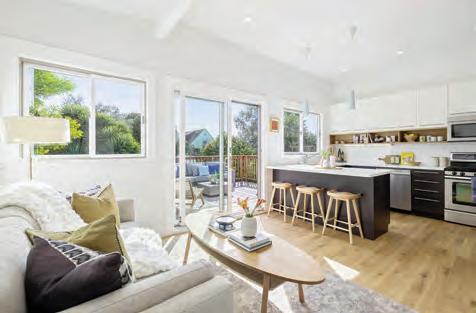
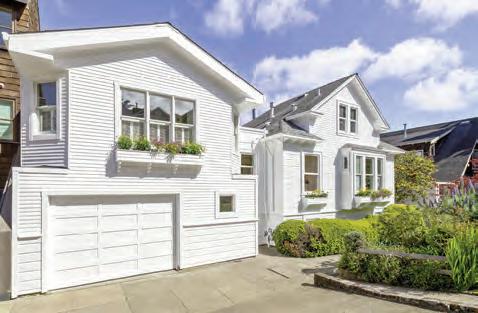
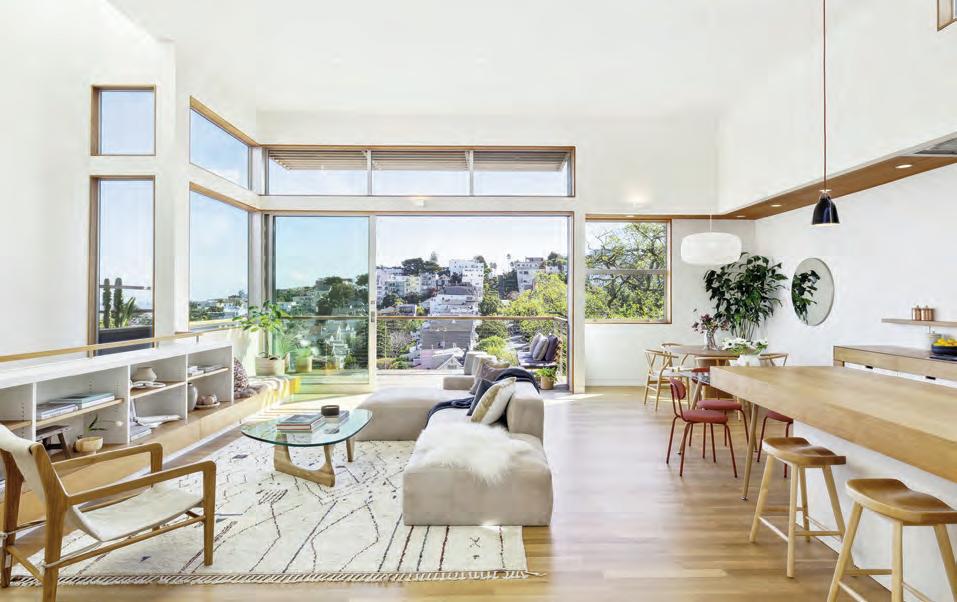
Lamisse Droubi has been selling real estate in San Francisco for 24 years, with over $1.7 billion in total sales, and has navigated many complex market transitions. We have seen some market volatility over the past few months, but with the appropriate pricing, presentation, and strategy, a successful outcome is possible. Whether you are buyer or selling, having a seasoned partner to guide you through the process is imperative. Let Lamisse and her dedicated team support you in this significant transaction. As a native San Franciscan, raised in Noe Valley, her expertise, transparency, and market knowledge is unmatched.
Lamisse Droubi
DRE#01257759
415.531.2134
lamisse@droubiteam.com
DroubiTeam.com
22 The Noe Valley Voice • April 2023
Active // Noe Valley • $2,950,000
Active // Bernal Heights • $1,649,000
Sold // Noe Valley • $3,260,000
THE NOE VALLEY VOICE editor@noevalleyvoice.com
All phone numbers are in the 415 area code, unless otherwise noted.
CHILDREN’S FICTION
A dog makes new friends and learns about sharing in Ruffles and the Teeny Tiny Kittens by David Melling. Ages 2-5. Emma Straub’s picture book Very Good Hats (illustrated by Blanca Gomez) points out that anything can be a hat, if you believe it is. Ages 2-5.

Best friends cheer each other up in Silver Linings, written and illustrated by Fiona Woodcock. Ages 4-8.
In The Enchanted Life of Valentina Mejía by Alexandra Alessandri, two siblings search for a creature from folklore in the Andes. Ages 8-12.
The graphic novel Hoops by Matt Tavares follows the struggles of a girls’ basketball team in 1975 Indiana. Ages 8-12.
CHILDREN’S NONFICTION
Exploring Insects is a Hello, World! kids’ guide to bugs by Jill McDonald-Gomez. Ages 3-7.
Readers can play a guessing game about ova and also learn about the creatures that produced them, in Whose Egg Is That? written by Darrin P. Lunde, with illustrations by Kelsey Oseid. Ages 3-7.

Idan Ben-Barak, author of Do Not Lick This Book, takes on the origins of life, in We Go Way Back: A Book About Life on Earth and How It All Began, with illustrations by Philip Bunting. Ages 4-8.

Breaking the Mold: Changing the Face of Climate Science, by Dana Alison Levy, includes profiles of 16 people who study the earth’s landscape, animals, and climate. Ages 8-12.
In Voices of the People, Native American writer Joseph Bruchac introduces indigenous leaders throughout history, using poetry and art. Ages 8-12.
CHILDREN’S EBOOKS:
A creative boy tries to make the best of homelessness, in The Bright Side by Chad Otis. Ages 4-8.
One Tiny Treefrog: A Countdown to Survival, by Tony Piedra and Mackenzie Joy, examines the life cycle of the tiny Costa Rican amphibian. Ages 4-8.
A turtle swims 23,000 miles to return to the beach where she was hatched, in Yoshi, Sea Turtle Genius: A True Story
About an Amazing Swimmer, written by Lynne Cox, illustrated by Richard Jones. Ages 4-8.
The Last Plastic Straw: A Plastic Problem and Finding Ways to Fix It, by Dee Romito, with illustrations by Ziyue Chen, is part of the “Books for a Better Ear th” series. Ages 6-9.
An autistic girl and her dog aim to uncover the secret behind humanity’s disappearance, in Izzy at the End of the World by K.A. Reynolds. Ages 8-12.
ADULT FICTION
The second book in Samantha Shannon’s “The Roots of Chaos” series, A Day of
MORE BOOKS TO READ
April Showers
What better companion on a rainy day than a book?
Perhaps an art book tracing the thousand-year history of Black visual art, or a children’s reader about the origins of the universe, or a book about the thrilling adventure of a sea turtle that swam 23,000 miles to return to its hatching place.
These and dozens more options are highlighted this month by Voice bookworm Karol Barske, with the help of children’s librarian Julieanne Randolph and adult services librarian Amy Lewis, of the Noe Valley/Sally Brunn Library.
To get your hands on a book or film in the lists below, go to sfpl.org, call 415-355-5707, or visit the Noe Valley branch, 451 Jersey St., between Castro and Diamond streets. (Masks are still recommended but not required.)

Library hours are Monday noon to 6 p.m., Tuesday 10 a.m. to 8 p.m., Wednesday noon to 8 p.m., Thursday 10 a.m. to 6 p.m., Friday 1 to 6 p.m., Saturday 10 a.m. to 6 p.m., and Sunday 1 to 5 p.m.
Don’t forget to check out the garden in back of the library. Who knows, the sun could be shining.
Fallen Night is a prequel to the epic fantasy The Priory of the Orange Tree.
In Bad Cree by Jessica Johns, a Native American woman, haunted by ominous visions, investigates her sister’s untimely death.
When Earth is taken over by a mysterious force, humans must travel to Antarctica to save themselves, in Cold People by Tom Rob Smith.
A woman returns to her boarding school to examine the mysterious death of her former roommate in I Have Some Questions for You by Rebecca Makkai.
In Our Best Intentions by Vibhuti Jain, a girl becomes entangled in the murder of a classmate from a prominent family.
ADULT NONFICTION
BLK ART: The Audacious Legacy of Black Artists and Models in Western Art, by Zaria Ware, is a compilation of visual works spanning centuries. Paul Auster offers a rumination on gun violence and the ingrained attitudes toward weapons in the U.S., in Bloodbath Nation.

In The Climate Book: The Facts and the Solutions, activist Greta Thunberg gathers opinions from 100 experts on what can be done to save the planet. The work of French archaeologist Christiane Desroches-Noblecourt is
examined in Empress of the Nile: The Daredevil Who Saved Egypt’s Ancient Temples From Destruction, by Lynne Olson.
In I Know Who You Are: How an Amateur DNA Sleuth Unmasked the Golden State Killer and Changed Crime Fighting Forever, Barbara RaeVenter describes her methods of DNA analysis.
ADULT EBOOKS
A scientist attempts to salvage humanity’s last chance at a future in The Deluge by Stephen Markley.
Historian Kidada E. Williams describes post-Civil War events from the perspective of African Americans in I Saw Death Coming: A History of Terror and Survival in the War Against Reconstruction.
In Moonrise Over New Jessup by Jamila Minnicks, set in 1957, a woman fights for integration in an all-Black Alabama town.
Caroline Dodds Pennock’s On Savage Shores: How Indigenous Americans Discovered Europe details how native peoples traveled east across the Atlantic after 1492.
ADULT BLU-RAY/DVDS
The 2022 drama Babylon, starring Brad Pitt and Margot Robbie, takes place in the
LIBRARY EVENTS
The Noe Valley Library hosts LEGO Free Play for children ages 5 and older and their families, on Sundays, April 1 and April 25. 2-3 pm.
The Noe Valley Library hosts a Family Storytime on Thursdays, April 6, 13, 20 & 27 at 10:15 and 11 a.m.; space is limited.
The World Literature Book Club’s selection is Britt-Marie Was Here by Fredrik Backman The group meets Saturday, April 8, from 2 to 3 p.m. Copies of the book are held at the Noe Valley’s circulation desk for checkout.
Get Drop-In Tech Help from the library staff, including tips on downloading ebooks, using electronic resources, and doing basic computer tasks; bring your own device or use a library computer. Tuesday, April 11, 11 a.m.-noon.
Friday Matinee features This Gun for Hire, a 1942 film noir set in San Francisco, April 14, from 2 to 3:30 p.m. Kids ages 5 and up are invited to select and Plant Seeds to take home and watch them grow. Saturday, April 15, from 2 to 3 p.m.
Children 3 to 5, with a caregiver, will enjoy playing with colorful Magnetic Blocks on Tuesday, April 18, from 2 to 3 p.m.
The Noe Valley Book Club discusses The Buddha in the Attic by Julie Otsuka on Wednesday, April 19 6:30-7:45 p.m.
Leslie Kirk Campbell reads from her short-story collection, The Man With Eight Pairs of Legs, on Wednesday, April 26, from 6:30 to 7:30 p.m.
The Noe Valley Knitting Circle meets on Saturday, May 6, from 10 a.m. to 12:30 p.m. The library has supplies to practice on, but bring your own yarn and needles or hooks if you have a special project in mind.
All events take place at the Noe Valley/Sally Brunn Library, 451 Jersey. For information, call 415-355-5707 or visit sfpl.org.
decadent Hollywood of the 1920s. Set in an English coastal town in the 1980s, Empire of Light (2022) is about a young woman with mood swings who forms a relationship with a fellow employee at a seaside cinema.
A gay Black man, played by Jeremy Pope, decides to join the Marines in the film The Inspection (2022).
Two New York Times reporters break the story of film producer Harvey Weinstein’s alleged sexual abuse, in the 2022 drama She Said.
Spoiler Alert is based on an autobiography by TV Guide reporter Michael Ausiello, exploring his relationship with photographer boyfriend Kit Cowan.
Annotations by Voice bookworm Karol Barske
HOURS Noe Valley/Sally Brunn Branch Library 451 Jersey St., 355-5707 Sun Mon TuesWedThursFriSat 1-512-610-812-810-61-610-6 Mission Branch Library 1234 Valencia St., 355-2800 Sun Mon TuesWedThursFriSat 1-510-610-810-810-81-610-6 Glen Park Branch Library 2825
Mon TuesWedThursFriSat 1-510-610-612-810-71-610-6
Valley–Harvey Milk Branch Library 1 José Sarria Ct. (3555 16th St.), 355-5616 Sun Mon TuesWedThursFriSat 1-510-610-810-810-61-610-6 6
BRANCH
Diamond St., 355-2858 Sun
Eureka
CROSSWORD SOLUTION
❧ ❧ ❧
Kisses and Hugs by Michael Blake
The Noe Valley Voice • April 2023 23
1298 Treat Avenue
4 Bed | 2 Bath | Offered at $1,250,000


This sunny, corner flat is a welcoming mix of modern and vintage in one flexible floor plan. It boasts hardwood floors, designer lighting, in-unit laundry and large shared courtyard. Fully remodeled with spacious kitchen - custom cabinets, recessed and under cabinet lighting, stone counters, high end fixtures and stainless steel appliances.
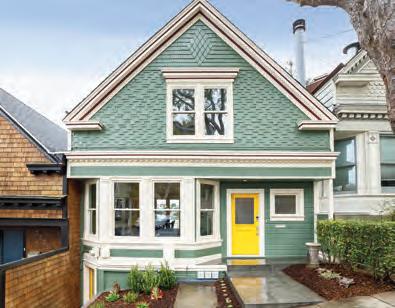

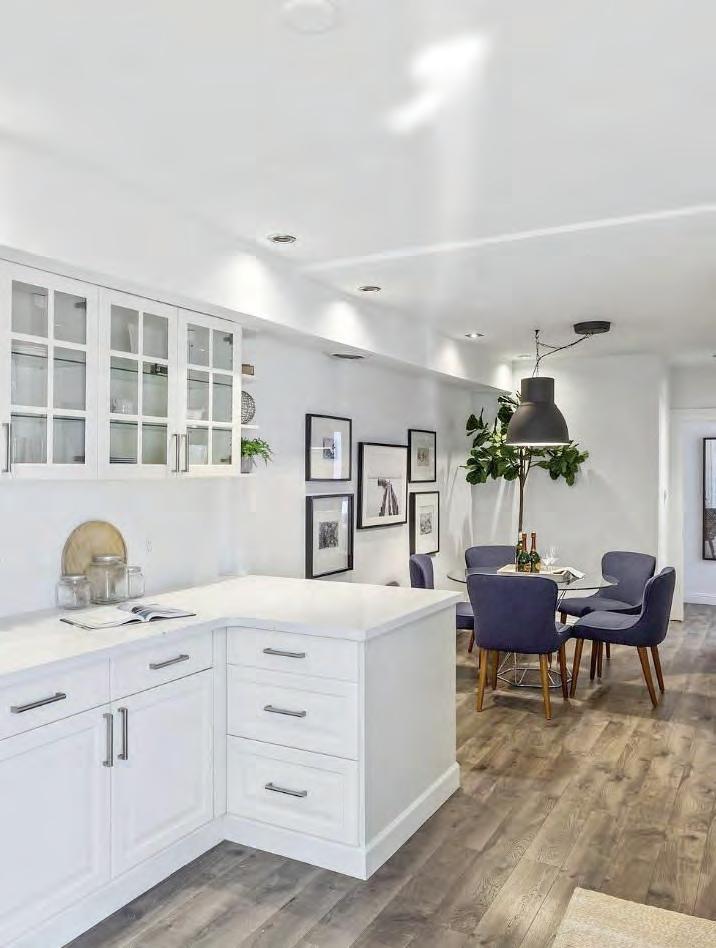
533 Oak Street
3 Bed | 1 Bath | Offered at $799,000
This spacious full-floor residence in a boutique 3-unit building is one block from the heart of Hayes Valley. With a private entrance, huge private patio, three bedrooms, one large bathroom, laundry, an expansive private courtyard, and an upgraded kitchen and bath - this is a perfect place for entertaining and relaxing!
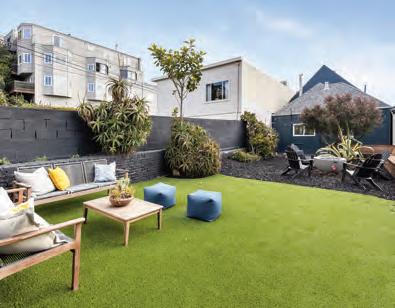
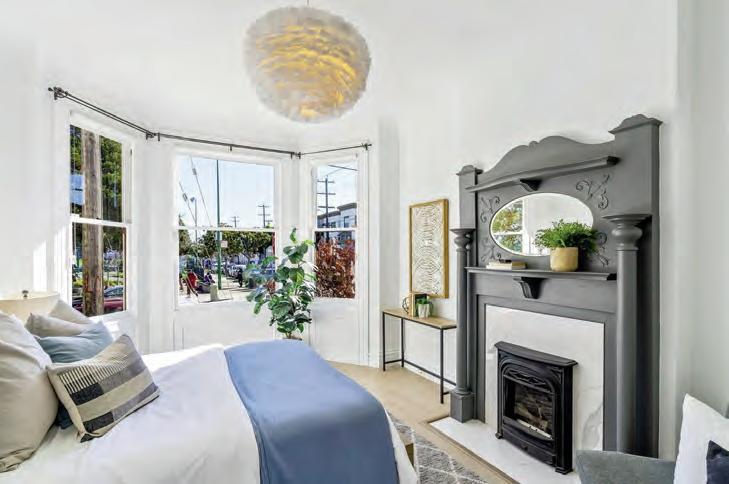
24 The Noe Valley Voice • April 2023
Follow Along @TheRealDealSF | TheSwannGroup@Compass.Com The Swann Group | 415.225.7743 | DRE 01860456 | SwannGroupSF.Com
THE SWANN GROUP DIFFERENCE. FROM THE BAY AND BEYOND.
Our
in
3339 Folsom Street 3 Bed | 2.5 Bath Sold for $105K Over Ask 2102 Castro Street 2 Bed | 1 Bath Sold for $1,562,000 148 Ellert Street 2 Bed | 1 Bath Sold Off Market
Recent Sales
Noe Valley and North Bernal
