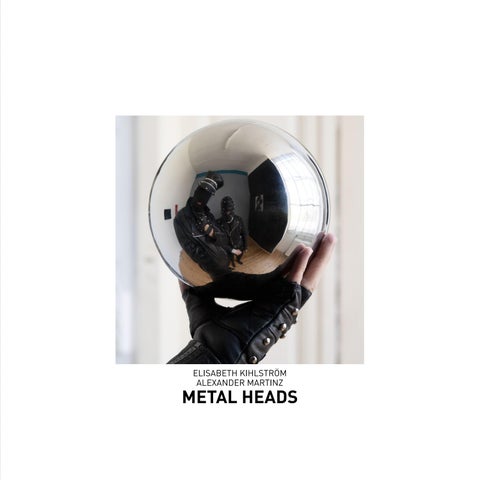
METAL HEADS
ELISABETH KIHLSTRÖM
ALEXANDER MARTINZ
METAL HEADS
IHe shows me a film at the house of his uncle. Hard to reach but exciting to get, you need to remember the timing.
A scene with candies that melt in her cookie. Molten cherries, in chunks, black and brown. I am not ready for that.
I am sure they did it on the field trip, but I was too late. They carried a grudge because was not game.
I thought everything was a trap. A self-fulfilling prophecy.
II
I remember us three on the couch going through a catalogue, page by page, telling us what we want.
I remember us in the park handing out favours.
He told me about the bathtub, he told me about the brush.
“What are you gonna do if I come?” he asks. “Then it’s too late.” I answer and mean “I will swallow.” He is my friend. The other one’s gone.
III
Once, next to each other, on the toilet of the hard rock cafe, once on the couch watching softcore TV. Later in the bathroom, on the floor, head to toe, while he makes me come in his mouth.
He rubs himself, talks about Vaseline, and worry that he wants to be top. I think I was wrong, and we never talk about it again.
Favours among friends happen in the park. In a field, in the woods, on the street, moving, standing still, a one, a two, a three. A dull pain at the end of the day.
THE PERFUME (Kihlström)
Her bag is soaked with the perfume that you got from a time when love was real but not romantic (Her) clumsy hands are symbolic iconic and in an instant the smell is sweet and sexy appalling
She wipes her feet the bathroom floor the memory gets exhausted Out into the street (where) it evaporates your old body in the rays of the blazing sun
DYNAMITE (Kihlström)
Say dynamite you crush by your presence
Supreme being your kind is rare, your movements unbound
In jeans jacket and white leather shoes you liberate you dynamite
I looked through your glasses, and saw the dawn
A sky of pulsating red and blue vibrating green a promise in slow-motion (my refuge)
FAVOURS AMONG FRIENDS PT. 2 (Martinz)
With the neighbour’s boy, a girl as a crocodile. A hole in my jammies, it needs to give.
Behind the island on a summer day. After another, but looking the other way. There are too many, this is just foreplay, just foreplay.
Days of comic books and rocks, heat and showers in the dark. You are not supposed to laugh at the tender touches of your arm. It is a game with a price, you lose.
He asks: “What would you do?” I say: “Look at you.” He says: “Not that.”
He bends over like a bridge. His hands grab his ankles. One single tension, a helpless rod.
My dad, awkward and tender, under a pretence, cuts us some slack, but carries a grudge.
We cover our heads with a pillow, so nothing has happened again.
I expired in your arms that night erased and reborn the next day in the white of the morning
You saw through me, you washed over me
You rubbed your diamond against mine
Your breath burnt tobacco and your lips are holy
Say Divine
“If you bring forth what is within you, what you bring forth will save you.
If you do not bring forth what is within you, what you do not bring forth will destroy you.” *
You push your body against Mine
Mine against the car our journey set in motion on the surface of metal
I see myself reflected in the paint
I look again, and see pink
Take me there to this exploding horizon
Our nights and days are one
This time ours, life ours just once
Where we lay midday in melted air
I am out, and smell the city inside
The bedroom worlds are blending
An open window
Our aching bodies are a tender victory white cotton
Let’s rest for a moment dynamite in this sweet sweat
The loving carved in stone their spirits untouchable
Your sex is dynamite darling Dynamite
Divine
NOSTALGIA IS A KILLING MACHINE (Halford, Kihlström, Martinz)
Along deserted avenues
Steam begins to rise
The figures primed and ready for surprise
Prepared for a quickie
He’s watching for a sign
His life is on the line
You can look to the left
And look to the right
But you’ll live in danger tonight
When the blue comes
They will not be heard
Blinding lights, flashing colours
So keep it up
Don’t give in
Religion’s radioactive
But freedom’s not a dream Make a stand
We’re gonna win
Just don’t take it for granted
Nostalgia is a killing machine
Ticking like to time bomb
The fuse is running short
On the verge of snapping if he’s caught
As the lights start to dim
The fear is closing in
This is how the nightmare begins
If the man with the power
Keeps pushing for control
Some heads are gonna tumble, some heads are gonna roll
Pressure has been building up
All the years it bore the load
The cracks appear, the frame starts to distort
So keep it up
Don’t give in
Religion’s radioactive
But freedom’s not a dream
Make a stand
We’re gonna win
But don’t take it for granted
Nostalgia is a killing machine
United, united, united we stand
United we never shall fall
United, united, united we stand
United we stand one and all
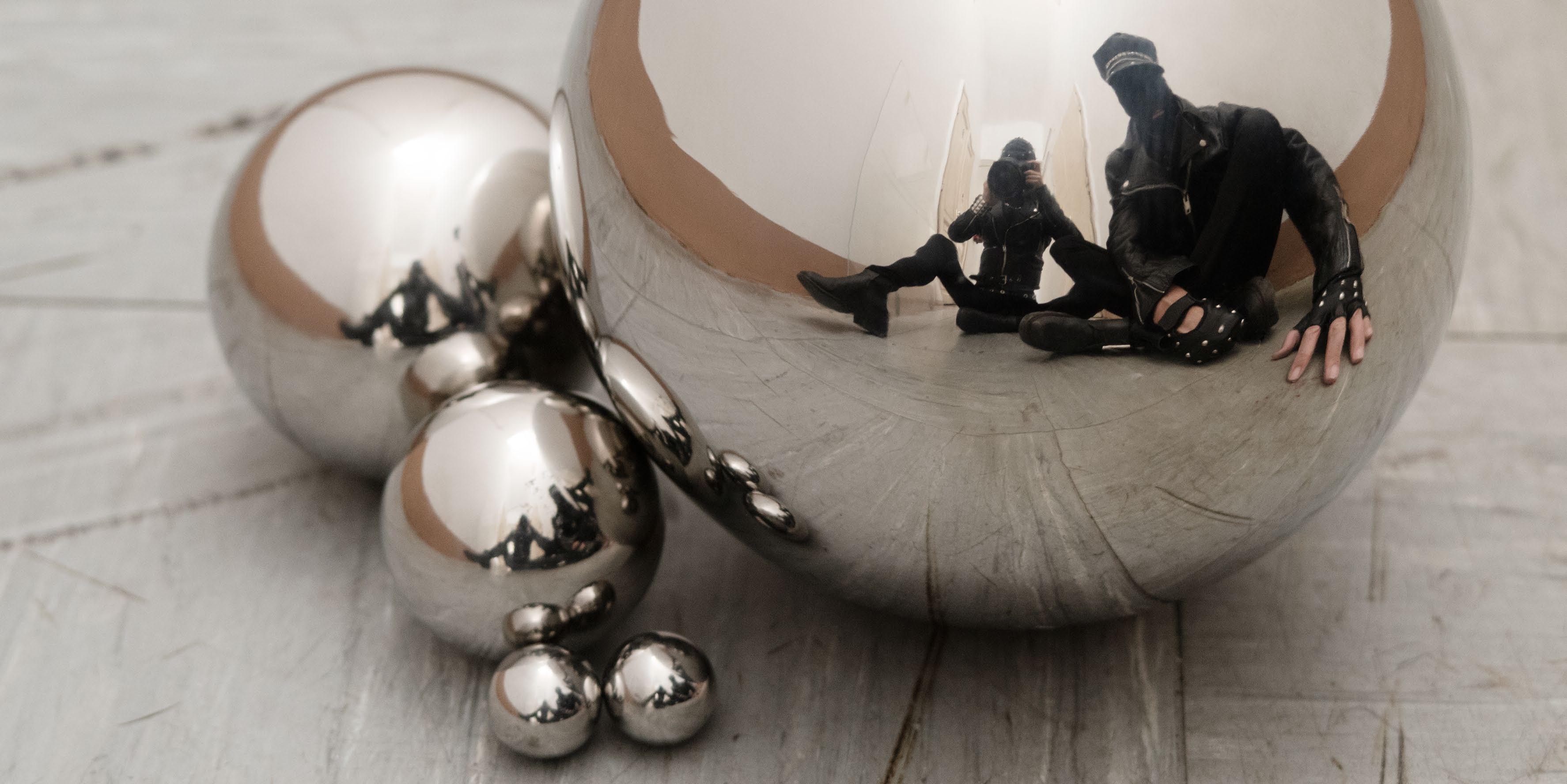
Elisabeth Kihlström (* 1988, Sundborn, SE) studierte bildende Kunst an der Academy of Fine Arts Umeå (SE) und der Akademie der bildenden Künste Wien bei Julian Göthe. Ihre künstlerischen Arbeiten wurden ausgiebig im In- und Ausland gezeigt. Jüngst wurden Elisabeth Kihlström ein Auslandsatelier des Bundesministeriums für Kunst, Kultur, öffentlichen Dienst und Sport in Tokio sowie ein Förderatelier des Bundes zugesprochen.
Alexander Martinz (* 1979, Klagenfurt, AT) studierte elektroakustische Komposition an der mdw – Universität für Musik und darstellende Kunst Wien bei Germán Toro-Pérez und Transmediale Kunst an der Universität für angewandte Kunst Wien bei Brigitte Kowanz. Künstlerische Arbeiten von Alexander Martinz wurden u. a. im Rahmen des Steirischen Herbst und der Diagonale gezeigt und finden sich in der Sammlung Lenikus und dem Ursula Blickle Video Archiv.
Elisabeth Kihlström (* 1988 in Sundborn, SE) studied fine arts at the Academy of Fine Arts Umeå (SE) and the Academy of Fine Arts Vienna with Julian Göthe. Her artistic works have been shown extensively at home and abroad. Recently, Elisabeth Kihlström was selected for a residency in Tokyo and awarded a state-sponsored studio by the Austrian Ministry of Arts and Culture.
Alexander Martinz (* 1979 in Klagenfurt, AT) studied electroacoustic composition at the mdw – University of Music and Performing Arts Vienna with Germán Toro-Pérez as well as Transmedia Art at the University of Applied Arts Vienna with Brigitte Kowanz. Artistic works by Alexander Martinz have been shown at festivals such as steirischer herbst or Diagonale and can be found in the Lenikus Collection and the Ursula Blickle Video Archive.
Masken können angreifen und sie können vor Angriffen schützen. Auf viele Träger:innen wirken sie befreiend, bieten ihnen Handlungsoptionen, die zu ergreifen diese ohne Maskierung nicht wagen würden. Masken schützen von der Norm abweichendes Verhalten vor gesellschaftlicher Abstrafung. Sie ent- und verhüllen gleichermaßen: Sie können eine verborgene Identität zum Vorschein bringen oder aber das wahre Selbst ihrer Träger:innen verbergen. Beispielhaft beschrieben findet sich das in Yukio Mishimas Roman Bekenntnisse einer Maske (1949), der die Zerrissenheit des Erzählers angesichts seiner schwulen Identität im militaristischen Japan thematisiert. Kostüme und der Akt des Verkleidens übernehmen ähnliche Rollen. Die Präsenz von Masken und Kostümen markiert einen Schwellenbereich, einen Zwischenraum. Sie signalisieren einen Grenzbereich, in dem ein Zustand in einen anderen übergeht. Egal aus welchem Material sie hergestellt werden, ob aus hartem Metall, aus Holz, Papier oder lockerem Stoff: Das Wesen von Masken und Kostümen ist ihre Fluidität. Sie sind ein Vexierbild zwischen Beständigkeit und Veränderung. Wenn Masken also zwei so gegensätzliche Funktionen gleichzeitig erfüllen können, was verbargen und enthüllten dann die Kostüme und Maskierungen des Bauhaus-Künstlers Oskar Schlemmer? Und was jene von Rob Halford? Oskar Schlemmer abstrahierte in seiner künstle-
rischen Praxis immer wieder den menschlichen Körper. In seinem Triadischen Ballett (1922) präsentierte er etwa Tänzer:innen, deren Körper zu geometrischen Formen umgeformt erscheinen, in avantgardistischer Ausstattung und leuchtenden Farben. Viele von ihnen waren maskiert. Das Stück war eine Synthese von industrieller MetallÄsthetik, Geometrie und spielerischer Energie –sowohl durch die Performance der Tänzer:innen als auch durch Bühnenbild und Ausstattung. Die exaltierten Formen der Kostüme und die kryptischen Masken löschten die Individualität der Tänzer:innen aus. Ihr Geschlecht, ihr Alter, ihre ethnische Zugehörigkeit wurden unsichtbar gemacht. Das Kostümbild formte sie zu Engeln des Maschinenzeitalters – als ob Schlemmer zeigen wollte, dass die traditionellen Kategorien der Subjektivierung überholt seien. Als sich Rob Halford, der Leadsänger von Judas Priest, 1998 als schwul outete, hatte die in den 1970er- und 1980er-Jahren gefeierte Band den Höhepunkt ihres Ruhmes bereits überschritten. Bereits damals hatte er mit Leder, Spikes und Nieten die Mode der Schwulenszene in seinen Heavy-Metal-Outfits zitiert, in Folge wirkte er für ganze Generationen an Metal-Fans stilbildend. Sein Stil wurde rasch von anderen Bands
und Fans übernommen, die keinen Bezug zu den Ursprüngen dieser Ästhetik hatten. So bewirkte Halford, dass auch ausgewiesen machohafte Heavy-Metal-Bands manchmal wie lebendig gewordene Fotografien von Robert Mapplethorpe aussahen.
Für beide Beispiele – das eine aus der Blütezeit des Industriekapitalismus (Schlemmer), das andere aus unserer post-industriellen Gegenwart (Halford) – war Metall von entscheidender Bedeutung. In der bildenden Kunst wurde das rohe Metall durch das Aufkommen des Minimalismus in den Vereinigten Staaten ab den 1960er Jahren aufgewertet. Obwohl die Verwendung von Metall in skulpturalen Arbeiten als hyper-maskuline Geste und Verweis auf die Schwerindustrie verstanden wurde, erfuhr es eine entscheidende queere Umdeutung durch Figuren wie Andy Warhol, der sich beispielsweise in Werken wie Silver Clouds (1966) und Oxidation Painting (1978) mit Metallperücken zeigt. Anekdote am Rande: Eine 1979 entstandene Fotografie zeigt, wie Rob Halford sich mit Handschellen an Andy Warhol kettet. In ihrer Arbeit führen Elisabeth Kihlström und Alexander Martinz diese Stränge zusammen, das Bauhaus als historische Basis ihrer künstlerischen Ausbildung und den Heavy Metal, der
H13 NIEDEROESTERREICH PREIS FÜR PERFORMANCE 2022
H13 LOWER AUSTRIA PRIZE FOR PERFORMANCE 2022
LIQUID METAL
TEXT: Yuki Higashino Künstler, lebt und arbeitet in Wien Artist, lives and works in Vienna
A mask can be both a defence and an offence. It can liberate you and enable you to behave in public in ways you normally wouldn’t dare. And it can shield you from aggression and the consequences of behaviour that deviates from restrictive norms. A mask can bring out one’s hidden identity, or it can hide one’s true self, as Yukio Mishima explored in his Confessions of a Mask (1949), a novel about the narrator’s bewilderment in his burgeoning gay identity in militarist Japan. Costumes, the act of dressing up as such, can play similar roles. Masks and costumes are a threshold. Their very presence implies in-betweenness. A border where one state transitions to another, and perhaps back. Made of metal, wood, paper, fabric, the essence of mask and costume is their fluidity. They are liquid masquerading as solid. So what were the mask and costume of Oskar Schlemmer hiding and revealing? And those of Rob Halford? In his Triadisches Ballett (1922), Schlemmer, a Bauhaus master whose art depicted streamlined human bodies, presented dancers clad in fantastical attire consisting of vivid colours
and exaggerated geometric forms, many of them masked. The performers attained a peculiar synthesis of the industrial aesthetic of metal and geometry and toy-like playful energy. With their extravagant forms and cryptic masks, many of these costumes erased the individuality of the dancers; their sex, age, race, etc. became invisible, transforming them into an Ariel of the machine age. As if Schlemmer was asserting that the traditional categories for personhood were no longer adequate in modernity.
When Rob Halford, the lead singer of Judas Priest, came out as gay in 1998, it revealed that he was in closet during the height of the band’s fame in the 1970s and 1980s. However, he had introduced leather, spikes, studs, and other fashion items he gleaned from the gay scene to heavy metal outfit, which proved to be hugely influential, quickly adopted by other bands and fans clueless of their origin. This is why so many ultra-macho
beiden in ihrer Teenagerzeit viel bedeutete. Sie brauen aus diesen zwei historischen Momenten ein neues Gemisch, in dem ihre Identitäten, sexuellen Orientierungen, ästhetischen Vorlieben und kunsthistorischen Affinitäten verschmelzen. In der begleitenden Ausstellung, die auch das Performance-Setting zeigt, präsentieren sie weitere in diesem Zusammenhang unverzichtbare Artefakte wie ein Mapplethorpe-Bild oder Platten von Bands, die in die Fußstapfen von Judas Priest getreten sind. Diese Dokumente fügen sich nahtlos in das von der Moderne inspirierte Ausstellungsdesign von Kihlström und den von Metal und experimenteller Musik durchdrungenen akustischen Raum von Martinz – beide das Resultat einer Art Warhol’scher Neuinterpretation des multidisziplinären Geists, der das Bauhaus prägte. In Kihlströms und Martinz’ Kollaboration wird Geschichte selbst zur Maske. Sie ermöglicht es ihnen, Aspekte ihrer selbst zu enthüllen und hervorzuheben, die sich in ihren künstlerischen Praxen sonst nur implizit äußern. Die akustische Intensität des Heavy Metal verwandelt die Fluidität der Maske in eine Sintflut. Durchdrungen von autobiografischen Impulsen, bedienen sich ihre Performance und Ausstellung der Vergangenheit als Werkzeug zur Konstruktion eines Narrativs, das Kihlström und Martinz zwischen Metal(l), Selbstsein, Kunst und Sex verortet. Ein Austausch, wie er seit 100 Jahren stattfindet.
heavy metal bands dress like they are in a Robert Mapplethorpe photograph.
For both of these examples, one from the height of the industrial age, the other from the dawn of deindustrialisation, the concept of “metal” was crucial, albeit interpreted quite differently. Metal as material and concept took centre stage in the United States in the 1960s with the advent of Minimalism. This initially hyper-masculine art form of metal, a symbol of heavy industry, was then turned queer by metallic wig-wearing Andy Warhol with works like Silver Clouds (1966) and Oxidation Painting (1978). Incidentally, there is a photograph of Rob Halford handcuffing himself to Warhol from 1979.
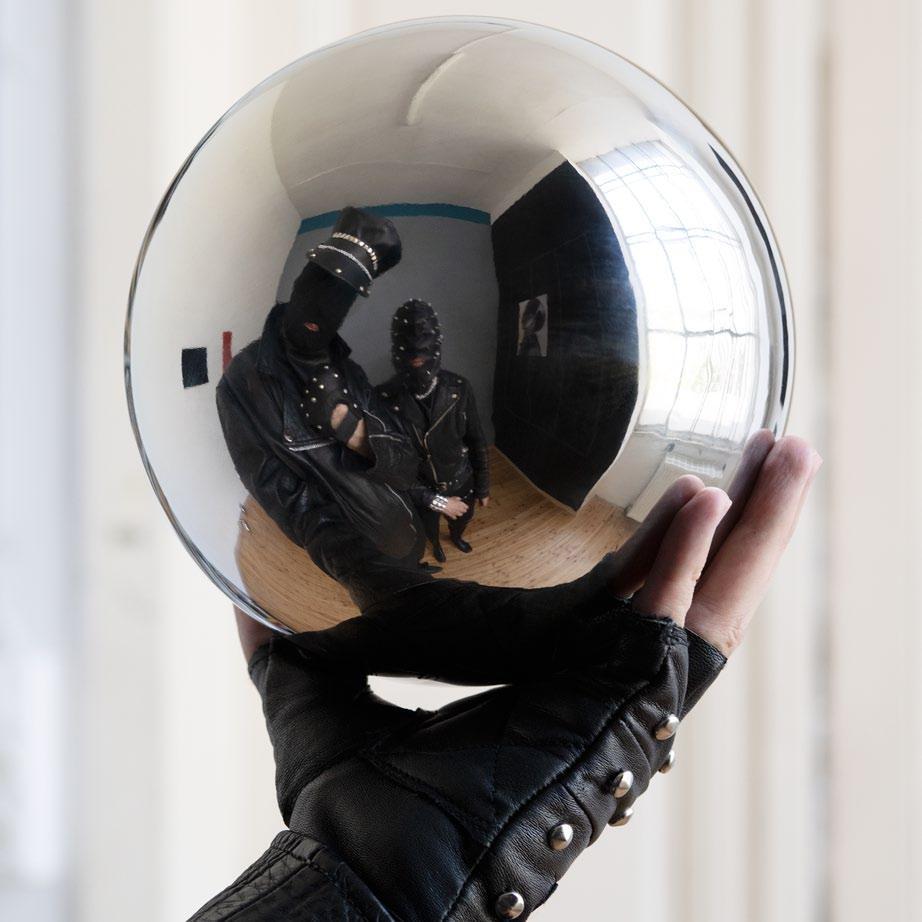
In their work, Elisabeth Kihlström and Alexander Martinz merge these two costumed performances that had formative importance for them: Bauhaus is the foundation of their contemporary art education, and heavy metal meant a lot to both of them in their respective teen years. Now they amalgamate these two historical moments to concoct a new brew, which at once melds their identities, sexual orientations, aesthetic preferences, and art historical affinities. Other relevant artifacts, such as a Mapplethorpe picture or records by bands that followed Judas Priest’s footsteps, are thrown in for good measure, enveloped in the modernism-inflected exhibition design of Kihlström and the metal and experimental music-infused acoustic space by Martinz – both products of a kind of Warholian reinterpretation of Bauhaus multidisciplinarity. Here, the two artists employ history as a mask that allows them to reveal and amplify aspects of themselves that are normally only implicit in their individual practices. The acoustic intensity of heavy metal turns the liquidity of the mask into a deluge. Infused with autobiographical impulses, their performance and the accompanying exhibition use the past as building blocks to construct a narrative that situates themselves between metal, selfhood, art, and sex – an interchange that has been going on for 100 years.
Elisabeth Kihlström: Spine, 2022
Handgewebte Textilien, Baumwolle und Polyester / handwoven textile, cotton and polyester, 125 × 70 cm
Elisabeth Kihlström: Skin and structure (Metal Heads) Plexiglas, Metall / plexiglas, metal, 270 × 240 cm
Elisabeth Kihlström: Tender two, 2022
Aluminium, Silbergarn, Handgewebte Textilien, Holz / aluminium, silver yarn, handwoven textile, wood, jeweils / each 176 × 35 cm
Robert Mapplethorpe: Lisa Lyon, 1981
Silbergelatineabzug / silver gelatin print 40,6 × 50,8 cm (16 × 20 in), Rahmen / Frame 78 × 68 × 2,5 cm (30.71 × 26.77 × 0.98 in), Ed. 3 von / of 10 Lisa Lyon, 1981 © Robert Mapplethorpe Foundation. Verwendung mit Genehmigung / Used by permission. Courtesy Thaddaeus Ropac gallery, London·Paris·Salzburg·Seoul.
ELISABETH KIHLSTRÖM
ALEXANDER MARTINZ
METAL HEADS
H13 NIEDEROESTERREICH PREIS FÜR PERFORMANCE 2022
Performance: DO, 01. 09. 2022, 19:00 Uhr
Ausstellung: FR, 02. 09. 2022 – SA, 10. 09. 2022
JURY 2022
Katharina Brandl (Künstlerische Leitung, Kunstraum Niederoesterreich), Nele Kaczmarek (Kuratorin, Tangente St. Pölten - Festival für Gegenwartskultur), Claudia Lomoschitz (Choreografin, Performerin und bildende Künstlerin), Franz Thalmair (Kurator, Herausgeber und Autor)
In diesem Jahr wird der H13 Niederoesterreich Preis für Performance zum 16. Mal verliehen. Die Jury, bestehend aus Katharina Brandl, Nele Kaczmarek, Claudia Lomoschitz und Franz Thalmair sprach sich einstimmig und voller Überzeugung für das Projekt Metal Heads von Elisabeth Kihlström & Alexander Martinz aus.
„Die prämierte Performance Metal Heads von Elisabeth Kihlström und Alexander Martinz eröffnet auf überraschende und aufschlussreiche Weise einen neuen Blick auf Performances der historischen Avantgarde, insbesondere Oskar Schlemmers Arbeiten der 1920er-Jahre sowie auf die Stilistik von Heavy-Metal-Bands der 1980er. In der Performance knüpfen die Künstler:innen Verbindungen zwischen der geometrisierten Ästhetik Schlemmers und den von queerer Gegenkultur inspirierten Auftritten der Metal-Pioniere Judas Priest.“
Nach der Preisverleihung und der Premiere der Performance am 01. 09. 2022 vermittelt die Ausstellung von 02. 09. 2022 – 10. 09. 2022 die Performance und den Recherchekosmos der Künstler:innen.
BEGLEITPROGRAMM
Artist Talk: SA, 03. 09. 2022, 13:00 Uhr
Führung: SA, 10. 09. 2022, 13:00 Uhr
Alexander Martinz: SV
Digitaldruck / digital print, 40 × 40 cm
Alexander Martinz: JB
Digitaldruck / digital print, 40 × 40 cm
Alexander Martinz: TL
Digitaldruck / digital print, 40 × 40 cm
David Wojnarowicz: Arthur Rimbaud in New York, 1978-79/2004 44 S/W-Fotografien / b/w photographs, jeweils / each 27,6 × 35,4 cm, Edition: 5/6 © David Wojnarowicz / Courtesy P.P.O.W. Gallery, New York und / and Cabinet Gallery, London / VERBUND COLLECTION, Vienna
H13 LOWER AUSTRIA PRIZE FOR PERFORMANCE 2022
Performance: TH, 01 09 2022, 7:00 pm
Exhibition: FR, 02 09 2022 – SA, 10 09 2022
JURY 2022
Katharina Brandl (artistic director, Kunstraum Niederoesterreich), Nele Kaczmarek (curator, Tangente St. Pölten – Festival für Gegenwartskultur), Claudia Lomoschitz (choreographer, performer and visual artist), Franz Thalmair (curator, publisher and author)
This year Kunstraum Niederoesterreich awards the H13 Lower Austria Prize for Performance for the 16th time. The jury, consisting of Katharina Brandl, Nele Kaczmarek, Claudia Lomoschitz, and Franz Thalmair voted unanimously and with full conviction for the project Metal Heads by Elisabeth Kihlström & Alexander Martinz.
“The winning performance Metal Heads by Elisabeth Kihlström and Alexander Martinz takes a provocative and enlightening new look at the performances of the historical avant-garde, in particular Oskar Schlemmer’s works of the 1920s and the stylistics of 1980s heavy metal bands. In their performance, the artists draw connections between Schlemmer’s geometric aesthetic and the queer counterculture performances of metal pioneers Judas Priest.”
After the award ceremony and the premiere of the performance on September 1, 2022, the exhibition running from September 2 to 10, 2022 conveys the background of the performance and the research cosmos of the artists.
ACCOMPANYING PROGRAM
Artist talk: SA, 03 09 2022, 1:00 pm
Guided tour: SA, 10 09 2022, 1:00 pm
Performance konzipiert und inszeniert von / Performance written and directed by: Elisabeth Kihlström und / and Alexander Martinz · Performer:innen / Performers: Alexander Martinz, Elisabeth Kihlström, Adriano Tomasetti · Kostüme, Ausstellungskonzept und -design / Costumes, exhibition concept and design: Elisabeth Kihlström · Musik, Sound Design, Klanginstallation / Music, sound design, sound installation: Alexander Martinz · Dank an / Thanks to: Alexa Dobelmann /Staatsgalerie Stuttgart, Julia Frank, Moritz Fröhling, Yuki Higashino, Thomas Hörl, Göran Kihlström, Peter Kozek, Michikazu Matsune, Martina Menegon, Wolfgang Obermair · Leihgeber:innen / Lender: Sammlung Verbund, Galerie Thaddaeus Ropac Salzburg Impressum / Colophon: Fotos / Photos: Elsa Okazaki · Lektorat / Copyediting: Peter Blakeney & Christine Schöffler (Engl./en.), Else Rieger (Ger./dt.) · Übersetzung / Translation: Peter Blakeney & Christine Schöffler · Grafische Gestaltung / Graphic design: Wolfgang Gosch Druck / Printer: druck.at Druck- und HandelsgesmbH, 2544 Leobersdorf · Papier / Paper: 200 g/m2 Recyclingkarton · Auflage / Print run: 200 · Medieninhaber / Owner: NÖ Festival und Kino GmbH, Minoritenplatz 4, A-3500 Krems · Herausgeber / Publisher: Kunstraum Niederoesterreich, Wien · © Text: Yuki Higashino, Elisabeth Kihlström, Alexander Martinz, Kunstraum Niederoesterreich · © 2022 NÖ Festival und Kino GmbH, Kunstraum Niederoesterreich · ISBN 978-3-9505011-5-5