10 NMCGA President’s Message by Tom Paterson, NMCGA President
12 Just the Facts... & Then Some by Caren Cowan, Publisher, New Mexico Stockman
16 New Mexico CowBelles Jingle
22 Sandhill Sheriffs and Shotgun Diplomacy
30 News Update: Federal Grazing Fees, NMDA Marketing Specialist Honored
32 Food & Fodder by Deanna Dickinson McCall
36 New Mexico’s Old Times & Old Timers by Don Bullis
54 Marketplace
55 Seedstock Guide
59 Real Estate Guide
64 In Memoriam
74 View from the Backside by Barry Denton
76 New Mexico Federal Lands News by Jerry Schickendanz
78 Riding Herd by Lee Pitts
79 For the Love of Beef by Patty Waid
80 From The Arena by Julie Carter
84 Advertisers’ Index
42 Santa Gertrudis
FEATURES
24 How Many Wolves is Too Many for the Wild to Handle? by BeckhamLangford, Morning Overview
34 Industry Partnership Drives Texas A&M Study on Tylosin Use & Liver Abscess Control by Camryn Haines, Texas A&M University College of Veterinary Medicine and Biomedical Sciences
38 Why Dental Care Matters for Horses
Source: College of Veterinary Medicine and Biomedical Sciences, Texas A&M University
40 Preventing Cattle Theft by Mark Z. Johnson, Oklahoma State University Extension Beef Cattle Breeding Specialist
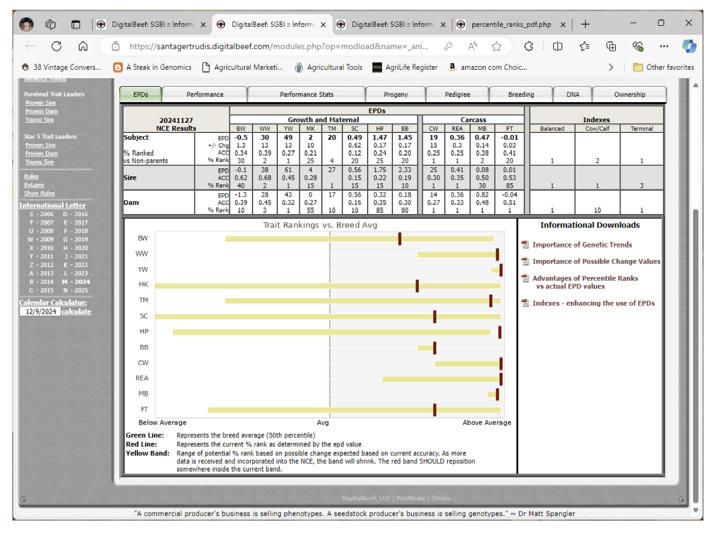
42 SGBI’s Genetic Evaluation System Empowers Breeding Decisions for Seedstock and Commercial Breeders by Bob Weaber, Ph.D., SGBI Genetic Consultant, Professor and Dept Head, Kansas State University
48 Produced Water: From Waste Stream to Managed Resource by Rebecca Dow
50 Produced Water Reuse in New Mexico: From Research to Rules By Matthias Sayer, Co-Director, WATR Alliance
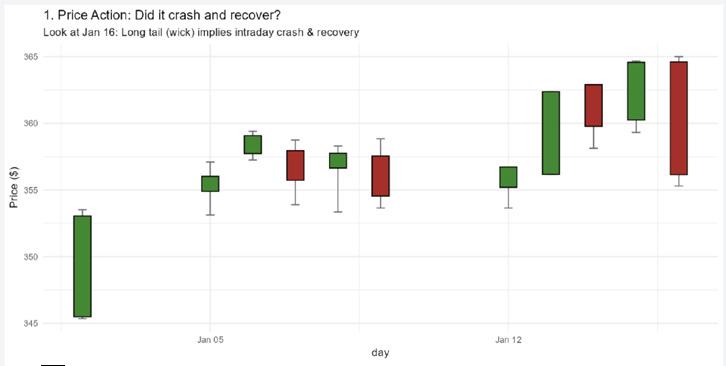
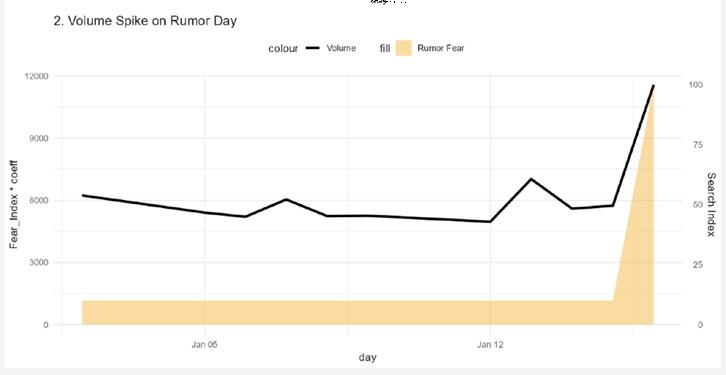
70 Rumors, Risks, and the Screwworm: A Lesson from January 16
Source: Southern Ag Today, by Eunchun Park, University of Arkansas Division of Agriculture
82 Doing It For the Kids by Julie Carter
Soul Mates by Kim Trickey. Kim is one of the few western artists blessed to live the lifestyle she loves and paints. Born and raised in Arizona on a large working cattle ranch, Kim comes by her love and knowledge of ranch life and the cowboy way more honestly than most. A lifetime of observation and participation enables Kim to see the western essence not only through the lens of experience but also through the unique eyes of a woman. Drawing and horses were always her first great loves. For more on this work and others, contact Kim at 928-386-1309, kptartwork@gmail.com, or www.kimtrickey.com
DEMAND THE BRAND DEMAND THE BRAND
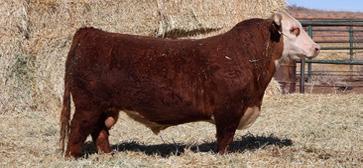
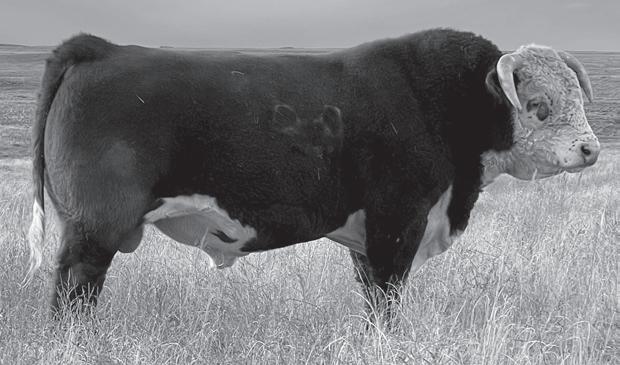
COPELAND & SONS HEREFORDS
ANNUAL BULL SALE
MONDAY, MARCH 30, 2026
1 p.m. MDT at the Five States Livestock Auction, Clayton, New Mexico
50 HEREFORD
BULLS
SELL Horned & Polled
25 Open Commercial Heifers Sired by Copeland Herefords bulls and out of Zieman Ranch Angus cows
Utilize the most proven database in the industry for traits that go directly to your bottom line and give you a marketing advantage.
Now is the time to invest in bulls that excel at maternal traits and will improve your fertility, longevity and profitability . Bulls out of the most proven range cow herd in the Southwest.
With
With
Skip
BK Miss Sancho 3059
BK Belle Air 2299 ET
MESSAGE
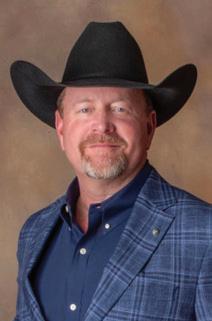
by Tom Paterson NMCGA President
Tom Paterson President Luna
Dan Estrada President Elect Trementina
Marshal Wilson Vice President at Large Mesilla Park
Tracy Drummond SW Vice President Reserve
Dave Kenneke NE Vice President Cimarron
Jeff Decker SW Vice President Lovington
Marjorie Lantana NE Vice President
Tamara Hurt Secretary/Treasurer Deming
Bronson Corn
Immediate Past President Roswell
Loren Patterson Past President Corona
Dear Cattle Growers,
Your New Mexico Cattle Growers’ Association has been fully engaged on your behalf—at the Roundhouse and beyond. As the 2026 Legislative Session moves toward the finish line, here are key developments since our last update.
Santa Fe is always intense. This year has been no exception. Our primary focus has remained on the seven funding and policy priorities we identified after the 2025 session. Those objectives continue moving through the process, and while nothing is final, we are cautiously optimistic. We will report specific outcomes as soon as they are clear.
In addition to those core priorities, several high-impact bills demanded sustained attention.
Rural healthcare is not an abstract issue for cattle producers—it affects where and how we live and work. Senate Bill 1, creating interstate medical compacts, passed both chambers and has been signed into law. That is a step towards progress if we also get medical malpractice reform, a necessity if New Mexico is going to retain physicians and attract out-of-state providers to rural communities. There is strong opposition, but the need for a stable medical liability environment remains clear.
We also testified in opposition to this year’s version of the so-called Green Amendment to the Constitution. It was tabled—an important outcome.
Senate Bill 18 would have significantly increased transportation fuel, propane, and electricity costs across rural New Mexico, with little evidence of measurable climate impact. We testified repeatedly against it. The Senate stopped the bill for this session—a major win for agricultural producers and rural families.
Senate Bill 17 presents a different challenge. If enacted in its current form, it has serious constitutional problems and will make it more difficult for rural New Mexicans to lawfully acquire firearms—an issue of practical necessity for ranching operations and family safety. We continue to engage on this bill.
Mid-session, Abby and I joined a strong New Mexico delegation at the National Cattlemen’s Beef Association Annual Convention in Nashville. We met with senior officials from Interior and Agriculture to press for policy reforms that strengthen domestic beef production. That dialogue is ongoing. One thing is clear: federal leadership heard us on the importance of beef in a healthy diet and the need to rebuild and retain our breeding herd to meet rising domestic and international demand.
February also brought three concentrated days of state-level engagement. We hosted the 2026 Linda Davis Young Cattlemen’s Beef Academy participants in Santa Fe for a hands-on look at the legislative process. We followed with a committee leadership program focused on strategic advocacy and priority deployment—more to come at Mid-Year. Our annual legislative dinner drew legislators for an engaging evening. The next morning, we had our annual Santa Fe Board meeting and then had direct legislator visits at the Roundhouse, particularly on SB17 and SB18. Boots and hats in the Capitol matter.
Thank you to everyone who has stepped up this session. Special appreciation to our bill readers, to past president Loren Patterson for his work on SB18 and to past president Alisa Ogden for her leadership at NCBA and co-facilitating our committee training.
Please watch for details on our upcoming spring regional meetings. We will provide legislative updates, the latest on New World Screwworm, and continued efforts to secure fair compensation for damages caused by Mexican and gray wolves.
Adelante juntos, ganaderos.
Tom Paterson, President
by Caren Cowan, Publisher New Mexico Stockman
How dumb do they think we are?
Although the New Mexico Primary is still about three months away, the political silly season is in full swing. The conversation isn’t even about New Mexico races. In recent weeks not one, but two, members of the New Mexico congres sional delegation have tried to sway their constituents with laughable allegations against the SAVE (Safeguard American Voter Eligibility Act) Act.
The SAVE Act is the bill in Congress that would require national voter identification. The measure has passed the U.S. House of Representatives and is awaiting action in the Senate.
The allegation is that the SAVE Act would prohibit women and working families from voting. Would any woman in the House vote for something that would deny them rights?
BRANGUS ANGUS RED ANGUS
trapping heat and driving rapid climate change, which causes sea-level rise, ocean acidification, and extreme weather. Mind you, AI lists no facts to support this assertion.
In terms of real dollars, EPA reports that the average cost of a vehicle could go down by $2,400. That sure helps affordability.
NEPA Reform
The Department of the Interior announced in late February reforms to the National Environmental Policy Act (NEPA). The reforms are part of a whole-government approach, reaffirming the rescission of more than 80 percent of Interior’s prior NEPA regulations, with the majority of those regulations moved into a streamlined Departmental NEPA Handbook of Implementing Procedures.
The regulations that remain govern when and how to comply with NEPA and which of the NEPA processes that should be used in the various decision-making processes and protect the ability of state and local governments to be part of the analysis process as required by NEPA itself.
The action follows the White House Council on Environmental Quality’s recent confirmation of its own rescission of NEPA
regulations, clearing the way for agencies to modernize outdated and duplicative requirements.
Interior’s final action rescinds outdated and duplicative regulatory provisions that had accumulated over decades, while retaining core requirements necessary to comply with the NEPA statute as amended by Congress. By shifting most procedural requirements into a Departmental handbook, the Department provides clear, practical guidance to staff while preserving flexibility to meet operational and project needs.
The reforms are expected to significantly reduce delays and costs for projects across public lands, including energy development, critical minerals, livestock grazing approvals, infrastructure, wildfire mitigation, water projects, and conservation efforts. Interior estimates the changes will save taxpayers hundreds of millions of dollars over time by shortening review timelines and reducing unnecessary paperwork, while maintaining transparency and informed decision-making.
These reforms do not eliminate environmental review. NEPA remains in full effect, and Interior will continue to consider environmental impacts and other impacts to the human environment, coordinate with tribes, state and local governments, and other partners, and comply with all applicable
environmental laws.
Interior will begin implementing the updated procedures immediately, providing certainty to project sponsors, states, tribes and local communities, and ensuring that critical projects move forward without years of unnecessary delay.
Lesser Prairie Chicken Finally Delisted
The lesser prairie chicken, found in New Mexico and West Texas, was removed from the endangered species list at the end of February after years in court. In August 2025 a federal judge in Midland, Texas ended ESA protections for the bird, but some federal agents continued to offer those protections.
In 2025 the Fish & Wildlife Service (FWS) reevaluated the bird and agreed with the states and groups challenging the listing in court that it lacked justification to classify the lesser prairie chicken into two distinctly different populations.
In August, the U.S. District Court in Midland granted a FWS motion to reverse its Biden-era listings for the lesser prairie chicken.
“Fish and Wildlife’s concession points to serious error at the very foundation of its rule,” District Judge David Counts wrote in his ruling.
LIVESTOCK COMMISSION DEXTER
First and foremost, thank you to all who fought — and are still fighting — for our rights in Santa Fe. Your dedication, long hours, and commitment to protecting our industry and our way of life do not go unnoticed. You are appreciated more than you know. We must continue standing strong and keep fighting the good fight for agriculture, ranching families, and future generations.
We had a wonderful and productive time in Nashville, Tennessee, at the American National CattleWomen (ANCW) Annual Meeting, held January 30 through February 3, 2026. It was an encouraging and energizing event for all who attended.
We were honored to hear from leadership with the National Cattlemen’s Beef Association (NCBA), including CEO Colin Woodall, Senior Vice President of Government Affairs; Ethan Lane, and President Buck Wehrbein. They shared updates on upcoming meetings and important topics such as the screwworm issue and current legislative priorities affecting our producers.
One of the most exciting announcements was that meat has officially been placed back at the top of the food pyramid — YAY!!! This is a huge win for our industry and a testament to the hard work of beef advocates across the country.
New Mexico CowBelles is also looking to host a District Workshop within the next month or so. We are excited to gather, learn, and continue building strong leaders within our organization. More details will be coming soon.
If you are a current member and are not receiving emails with up-to-date information such as our monthly Zoom meetings and Calls to Action, please email us at president.nmcb@gmail.com so we can update our directory. We want to make sure everyone stays informed and connected.
We are also requesting that all newly elected officers please send us your updated contact information so we can ensure our records are current.
Thank you all for your continued support, leadership, and passion for promoting beef and protecting our industry. Together, we
will keep moving forward.
With gratitude,
– Misti Orr President New Mexico CowBelles
▫
Copper CowBelles 01-19-26 - As the Copper CowBelles prepare for first meeting of 2026, they look back on things accomplished during the past year. Hosted the Western District NMCB Workshop in April, followed by assisting Margie McKeen and her crew with Ranch Days. What a joy to see nearly 700 children learn why agriculture is important to them, having fun and enjoying their real beef hamburger lunch! The kids all went home knowing where butter comes from and that they should thank a cowboy for their hamburger and so much more! Many of the members were able to attend the WALC Conference and the Mid-year Meeting in Ruidoso. All hands were on deck for the Cliff-Gila Grant County Fair in September, manning our booth and the Extension Office booth as well as participating in demonstrations on Brands and Beef By-Products. The group raffled off some lovely quilts, donated to benefit the Scholarship Fund. Copper CowBelles were able to bless several students as they pursue their Agriculture or Skilled Trade goals. It’s been a great year, despite drought, and see the hard working members have woven their talents and skills into a web of support for agriculture and the western way of life. In the process, had fun and supported each other. It doesn’t get better than that! (But rain would help.) God bless all in 2026! Submitted by Carol Crosley
Hello New Mexico CowBelles! I am your Jingle Jangle editor. I received no other news from local CowBelles this month other than Copper. Hopefully several of you other locals will begin submitting news. They do not always have to be in the form of minutes or formal newsletters. Please send via snail mail or email your happenings! Thank you again! janetwitte@msn.com
New Mexico CowBelles, including junior members, or a child or grandchild of a New Mexico CowBelle. Returning college upperclassmen or adults returning to college or a trade school must also be a member of the New Mexico CowBelles in order to apply for the scholarship.
2. Two $500 scholarships will be awarded to two graduating high school seniors and two $500 scholarships will be awarded to college upperclassmen or adults returning to school. The scholarship amounts are contingent upon available funding.
3. The scholarship will be awarded as a cash award in the form of a check issued directly to the recipient once a copy of the official class schedule is received by the state scholarship chair. The scholarship award may be used for educational purposes as needed.
4. Previous scholarship recipients may reapply and receive the scholarship only one additional time.
5. Applicants will not be disqualified because of sex, race, color, creed or religious beliefs.
6. The application form must be completed in full, with all attachments, including the New Mexico CowBelle local verification form, transcript and photo, at the time of submission.
• New Mexico CowBelle Local Verification Form must be completed and signed by the sponsoring New Mexico CowBelle local president and secretary. Applicants should allow time for their scholarship form and attachments to be reviewed by the CowBelle local at a slated meeting.
• A small photo must be included for publicity purposes.
• Graduating high school students and college upperclassmen must provide a current high school transcript, homeschool record of courses, or college transcript last attended with this scholarship application.
7. Scholarship application and all required attachments must be postmarked or received by email no later than April 15th. Incomplete applications will not be considered. CowBelle locals may wish to set an earlier deadline for applications in order to meet the above state deadline.
Scholarship RULES
To obtain all application forms, contact shporter@nmsu.edu
Cell Phone: 575-447-7447
1. The Pat Nowlin Memorial Scholarship is available to a current paid member of the
8. Submit applications to the NM CowBelle Scholarship Chair via mail or email. Shelly Labrier, NM CowBelle Pat Nowlin Scholarship Chair, 4706 Alamocito Ct., Amarillo, TX 79124
What’s the big deal with these composite bulls anyway? And why should I use them in my cow herd?
Those are two very valid questions, says Dr. Rob Weaber, a geneticist and head of Kansas State University’s Research and Educations Centers. For answers, he says look at the female side of the question.
Why? Because that’s where composite bulls help commercial cow-calf producers realize the benefits of heterosis without the headaches of a more complex crossbreeding program.
“Heterosis is just the little extra boost in performance we get above the average of the straightbred parents’ expected performance,” he says. “It’s the little icing on the cake, if you will.”
That icing may be more than just a little. “We get our biggest boost in performance due to heterosis in lowly heritable traits like cow longevity and fertility,” he says. And given
today’s cost in developing replacement heifers, cow longevity is more important now than ever before.
Indeed, cow longevity and fertility are two of the most important economic traits in a commercial cow herd. Without question. That’s because you can’t sell a calf that’s never born. And the longer a cow stays in the herd, the more her calves return economic value to the rancher.
Typical crossbreeding programs, however, can be complicated and difficult to implement, especially if you want to realize genetic improvement by retaining heifers. That’s why Weaber thinks incorporating composite genetics like Lim-Flex composites is a good fit. Lim-Flex composites can have 25 to 75 percent Limousin genetics with the remainder being registered Angus or registered Red Angus.
“It’s very easy to implement and they (the bulls) come with the crossbreeding system already built in,” he says. “The commercial producer doesn’t have to do anything extra in terms breeding pastures or identifying replacement heifers by breed of their sire. It’s as simple as straight breeding.”
Composite bulls also allow cattlemen to benefit from breed complementarity when breeds selected possess traits like Limousin and Angus do. Coupled with heterosis, it
adds even more to a commercial herd’s economic potential.
“So, producers can expect a 13 to 15 percent improvement in weaning weight per cow exposed using a Lim-Flex breeding program, for example,” he says.
Real World Results
That is what commercial cow-calf producers across the country have found. Shane Whiting and his two sons run about one thousand commercial cows in northeastern Utah near Roosevelt — all Lim-Flex, bulls and cows alike. His operation is testimony to how Limousin genetics have changed and improved over the years.
“Docility and calving ease are the two number one things for a commercial rancher,” Whiting says. “And the docility of the LimFlex is really great. But calving ease is the top of the line. She has to be able to produce a calf without a lot of problems.”
Beyond that, he appreciates the longevity and fertility of his cows. “We run all our cows until they turn 12 years of age,” he says, adding that they have a 60-day breeding season. “And our conception rate with the Lim-Flex cattle has run 95 to 99 percent consecutively for 20 years now.”
That’s notable because he doesn’t coddle his cattle. “We’re grass farmers,” Whiting says and that’s what his cattle get by on.
He also appreciates that his cows have a moderate frame size, yet they milk well. “We have better longevity and we have a better bag,” he says. “These hold up.”
Then there’s payday. Whiting has carcass data on thousands of cattle beginning in 2014. That year, his calves came down the rail grading 95 percent Choice and Prime. Now we’re at 97 percent and they (the feedyard) think we have peaked out, he said.
Looking at data from the Meat Animal Research Center (MARC), Clay Center, Nebraska, helps explain why Whiting’s LimFlex cows perform well on a diet largely of grass and grass hay. According to the research, Limousin-sired heifers had lower feed intake (3.25 lbs./head/day) than Angus, Weaber says. The Limousin heifers had lower body weight gain, about .03 lbs./head/day.
“There was no statistical difference in feed efficiency, yet lower intake. That’s likely tied to the expected lower mature weights on these females,” Weaber says.
Citing other research, Weaber points out that Limousin females had the lowest mature cow weight among ten breeds, with weights corrected for breed effect and contrasted to Angus. ▫
PROFIT FROM OUR PROGRESS
ECONOMIC ANALYSIS FOR FEEDING PERFORMANCE AND CARCASS GRID RESULTS
• 216 HEAD OF CATTLE RAISED ON TWO MONTANA RANCHES THEN FED AND HARVESTED ON RESEARCH AT SDSU
• CALVES SIRED BY PROVEN LIMOUSIN, LIMFLEX, AND ANGUS A.I. SIRES (1/3 EACH) ON COMMERCIAL ANGUS COWS.
• CALVES SPLIT EQUALLY INTO 3 HARVEST GROUPS (200, 235, 270 DAYS ON FEED)
• RESULTS REFLECT FEEDING PERFORMANCE AND CARCASS GRID PERFORMANCE
• LIM-FLEX SIRED CALVES GENERATED $23 MORE PROFIT PER HEAD; LIMOUSIN SIRED CALVES GENERATED $27 MORE PROFIT PER HEAD THAN THEIR STRAIGHTBRED ANGUS COUNTERPARTS DUE TO THEIR ABILITY TO ACHIEVE SIMILAR QUALITY GRADE WHILE IMPROVING FEED EFFICIENCY AND YIELD GRADE.
NALRF/SDSU RESEARCH COMPLETED 2025
JANUARY — Wildlife; Gelbvieh; Joint Stockmen’s Convention Results
FEBRUARY — Hereford; Beefmasters; Texas Longhorns
MARCH — Limousin; Santa Gertrudis
APRIL — Dairy MAY — News of the Day
JUNE — Sheepman of the Year
JULY — Directory of Agriculture
AUGUST — The Horse Industry
SEPTEMBER — Charolais; Fairs Across the Southwest
OCTOBER — Angus; Brangus; Red Angus; NM State Fair Results
NOVEMBER — Cattleman of the Year; Joint Stockmen’s Convention Preview
DECEMBER — Bull Buyers Guide
High Country in South Park
It was late one afternoon in South Park, Colorado. My partner, Baker, and I headed out to gather a few cows whose ear tag numbers we’d spotted earlier that morning. At 10,000 feet, the floor of South Park already feels like the top of the world, and any mesa or ridge above it seems even closer to the sky.
We found the cows around 4:30 p.m. on a small mesa. Early summer days up there turn dark quick—by 6:00, shadows take over the mountains. One stubborn cow refused to be pushed down the steep side, standing
firm against the contrast of bright sunlight above and darkness below.
The Wreck Waiting to Happen
Baker finally said, “We have to rope her— and you need to do it. I’m on a young horse. I’ll run her by you so she doesn’t jerk your horse down. He’s an old calf roping horse, so he’ll hit the brakes once you rope.”
That sounded like a wreck in the making. “Tie hard, you have to commit!” Baker hollered.
I shot back, “Who says I want to commit?”
The Wild Ride
Baker ran the cow past me and as my loop caught her, I had a bad feeling, this was not going to end well. After a half hour of trying to get her to go back to the narrow opening to head down the trail, suddenly she bolted over the edge and into the darkness. She hit the end of the rope and jerked me and the horse over the edge. I couldn’t see a thing and felt like we were falling straight down. With rocks flying and tree branches slapping, I was laid straight back thinking any minute he was going to go head over heels with me under him. Somehow, he was able to maintain his balance, as we crashed downward blind and wild.
The only thing I could picture was the scene from The Man From Snowy River except in my version, the hero had a roped cow dragging him into chaos.
Free Fall and Frozen Soaking
Then came the moment of silence before impact. We were free-falling. I thought, This is where I die.
Instead, we splashed into an ice-cold irrigation ditch. The water surged under my down coat. I couldn’t see, only feel, clinging to my horse with a death grip.
Somehow, cow and horse scrambled out, heading instinctively for the pens. By the time we got there—half an hour later—Baker helped peel me off the saddle and put the horse up.
Fire, Coffee, and Lessons Learned
I was shaking harder than a tomcat passing peach pits. Baker built a fire on a bare spot, handed me a coffee, and threw some old blankets around me. “Get those wet clothes off,” he said.
Sitting there steaming in the firelight, I thawed slowly. Baker looked at me and grinned.
“Dang boy, you did good once you committed.”
Low Birth Weight Heifer Bulls Top Genetics
Over 150 Bulls Sold Annually High Altitude Genetics
Rock Footed and Range Raised Our registered cows raise calves and breed back on 6-8” of annual precipitation in 6-9 head/section country No irrigated pastures. No creep feed.
Semen available through ABS Global on our bull “LKK Crusher 719” owned jointly with ABS Global & F6 Cattle Company Free Delivery in the Western U.S. For Volume Purchases
Willcox Livestock Auction Bull Sale March 23, 2026
Cattlemen’s Weekend Bull Sale - Chino Valley, AZ March 13-15, 2026
Private Treaty at the Ranch Available bulls can be viewed at www.diamondkangus.com “LKK Crusher 719”
How Many Wolves is Too Many for the Wild to Handle?
by BeckhamLangford, Morning Overview
*This article was researched with the help of AI, with human editors creating the final content.
The question of how many wolves a region can sustain without tipping the balance against prey herds, livestock operations, and the wolves themselves has no clean answer. Since the federal government returned management authority to individual states, each has drawn its own line, using different data, different political pressures, and different definitions of “enough.” The result is a patchwork of plans that reveal just how contested wolf population targets really are.
Federal Delisting Shifted the Burden to States
When the U.S. Fish and Wildlife Service issued its final delisting determination for gray wolves nationwide in 2020, it declared that wolf populations had recovered sufficiently to no longer warrant Endangered Species Act protections. The agency pointed to supporting documents including the Federal Register final rule, the Gray Wolf Biological Report published by USFWS in 2018, and a post-delisting monitoring plan. Together, those documents argued that wolves had met biological recovery benchmarks across their range. But the delisting did not prescribe a national population ceiling or floor. It simply handed the management question to state wildlife agencies, each of which inherited a different mix of wolf density, prey availability, and ranching interests.
That transfer of authority matters because it replaced a single federal standard with a set of regional experiments. States now decide independently what “too many” means, and their answers diverge sharply.
The federal docket on regulations and supporting materials housed by the Interior Department preserve the scientific rationale behind delisting, but they offer no binding
guidance on the population levels states should maintain going forward. The absence of that guidance is precisely where conflict begins, as states weigh ecological goals against hunting traditions, tourism, and the economic realities of livestock production.
Idaho and Wisconsin Draw Different Lines
Idaho illustrates one end of the spectrum. The Idaho Fish and Game Commission approved a wolf management plan with a stated rationale of achieving balance with prey populations and reducing livestock conflict. The plan drew significant public comment, reflecting deep divisions among ranchers, hunters, and conservation advocates within the state.
On the federal side, USDA Wildlife Services formalized its own role through a Record of Decision for predator damage management in Idaho, which includes limitations on lethal control along with method restrictions. Taken together, Idaho’s framework treats wolves primarily as a variable to be managed downward when they threaten ungulate herds or cattle, aligning wolf numbers with the state’s broader priorities as set out on the official Idaho portal.
Wisconsin took a different path. The state’s 2023 Wolf Management Plan, announced by the state natural resources agency, frames the challenge as a shift from recovery to long-term stewardship. Rather than setting a hard population cap, the plan communicates expected statewide wolf abundance as an overwinter estimate range of roughly 800 to 1,200 animals.
That range is designed to accommodate natural fluctuation rather than trigger automatic culling, and it is paired with commitments to public engagement and periodic review. The contrast with Idaho is instructive: one state builds its plan around conflict reduction and prey protection, while the other tries to define a band of acceptable abundance and let wolf packs self-regulate within it, stepping in only when conflicts or ecological indicators cross agreed thresholds.
entirely, assuming that a “right” number of wolves can be defined without continuous reference to the condition of the landscape and the animals they depend on.
Recent work in Communications Biology reinforces this point. The study found that the demands of raising dependent young can influence the feeding behaviors of social carnivores, especially for adults provisioning pups when prey abundance decreases. In practical terms, adult wolves work harder and range farther when food is scarce, which increases the likelihood of encounters with livestock and human infrastructure.
That behavioral shift means a wolf population that seems sustainable in a year of abundant prey can become a source of conflict the following year without any change in actual wolf numbers. The trigger is not the count of wolves but the ratio of wolves to available food, a moving target that weather, disease, and human hunting pressure constantly reshape.
The Gap Between Plans and Monitoring
One common assumption in the current debate is that states have the tools to track wolf populations precisely enough to manage them against a target. In practice, monitoring is expensive, logistically difficult in remote terrain, and subject to wide confidence intervals. Wisconsin’s choice of an overwinter estimate range of 800 to 1,200 implicitly acknowledges that uncertainty by giving itself a 400-animal margin that can absorb survey error and natural swings.
Idaho’s plan, paired with USDA Wildlife Services’ operational caps, relies on a different kind of control: limiting lethal removal rather than counting every wolf, and using reported depredations and hunter observations as practical proxies for population pressure. Neither approach is inherently wrong, but both reveal how much guesswork remains embedded in official policy, especially when budgets and staff capacity lag behind the ambitions of management plans.
The federal post-delisting monitoring plan referenced in the 2020 determination was supposed to provide a safety net, tracking whether state management kept wolf populations above minimum viability thresholds. Yet updated, synthesized metrics on livestock depredation trends or population trajectories at the national scale remain sparse in the public record, leaving policymakers and the public to piece together a picture from scattered state reports and
The difficulty with any fixed number is that wolf populations do not behave like inventory on a shelf. Wolves are highly social animals that live in packs, and worldwide, pack size depends on the size and abundance of prey, according to research from Yellowstone compiled by the National Park Service. When elk or deer populations are large and accessible, packs grow. When prey thins out, packs shrink, split, or disperse. A static target number ignores that feedback loop continued on page 26 >>
HARTZOG BULLS
Check
✔
✔
✔
✔
✔
technical appendices.
That information gap feeds mistrust: ranchers question whether wildlife agencies are undercounting wolves, while conservation advocates worry that aggressive control programs could drive local declines before federal oversight has time to respond. Without timely, transparent monitoring, numeric targets risk becoming political symbols rather than science-based tools.
Toward More Adaptive Wolf Management
What emerges from this patchwork is not a clear answer to how many wolves a region should hold, but a clearer sense of how the question ought to be framed. Fixed caps or broad ranges, like those used in Idaho and Wisconsin, provide a starting point, yet they cannot substitute for adaptive management that ties decisions to changing conditions on the ground.
A more resilient approach would treat wolf numbers, prey abundance, and conflict
Hooper
Cattle ompany
indicators as a linked system, adjusting harvest quotas, non-lethal deterrent programs, and compensation schemes in response to new data rather than pre-set thresholds alone. That kind of flexibility requires steady investment in monitoring and a willingness to revisit politically sensitive targets as evidence accumulates.
It also requires acknowledging that wolf management is not purely a technical problem. The same numbers can look very different to a cattle producer who has lost calves, a hunter worried about elk tags, a tribal community with cultural ties to wolves, and an ecologist tracking trophic cascades.
Federal delisting shifted the burden of reconciling those perspectives to the states, but it did not make the underlying trade-offs disappear. As more wolf plans come up for revision in the years ahead, the most durable ones are likely to be those that pair clear, biologically grounded objectives with transparent processes for changing course, recognizing that in a living landscape, the “right” number of wolves is less a fixed figure than a moving compromise, negotiated again and again.
Editor’s Note: The U.S. House passed the Pet and Livestock Protection Act (H.R. 845) in December 2025, which aims to permanently remove Endangered Species Act (ESA) protections for gray wolves in the lower 48 states, now moving to the Senate. The bill reissues a 2020 delisting rule and blocks judicial review, transferring management to states. A measure to delist the Mexican Wolf is waiting for action in the U.S. House. This bill would also delink U.S. Mexican Wolf recovery from Mexico. ▫
575-763-9191
bryan@mesafeed products.com Alan Flores
575-693-0325
Fandsrail@yahoo.com
P.O. Box 418, Clovis, NM 88102 Preston &
Antiparasitic
50 mg of fluralaner/mL
CAUTION: Federal law restricts this drug to use by or on the order of a licensed veterinarian. Conditionally approved by FDA pending a full demonstration of effectiveness under application number 141-617.
It is a violation of Federal law to use this product other than as directed in the labeling.
DESCRIPTION: Exzolt Cattle-CA1 (fluralaner topical solution) contains fluralaner, an antiparasitic of the isoxazoline class. Each mL of Exzolt Cattle-CA1 contains 50 mg of fluralaner. The chemical name of fluralaner is (±)-4-[5-(3,5-dichlorophenyl)-5-(trifluoromethyl)-4,5-dihydroisoxazol-3-yl]-2-methyl-N-[2-oxo-2-(2,2,2-trifluoroethylamino)ethyl]benzamide.
INDICATIONS FOR USE: Exzolt Cattle-CA1 is indicated for the prevention and treatment of infestations caused by New World screwworm (Cochliomyia hominivorax) larvae (myiasis) and treatment and control of cattle fever tick Rhipicephalus microplus) in beef cattle 2 months of age and older and replacement dairy heifers less than 20 months of age. Not for use in bulls intended for breeding 1 year of age and older, dairy calves, and veal calves.
DOSAGE AND ADMINISTRATION: Exzolt Cattle-CA1 is a ready-to-use topical formulation intended for direct application to the hair and skin in a narrow strip extending along the dorsal midline from the withers to the base of the tail (see Figure 1). The recommended rate of administration is 1 mL/44.1 lbs. (1 mL/20 kg) body weight, which is equivalent to 1.13 mg of fluralaner for each pound (2.5 mg/kg) body weight. Effectiveness has not been evaluated in cattle with wet hides.
Recommended site of administration:
Figure 1: Recommended location for the topical application in a narrow strip along the dorsal midline from the withers to the base of the tail.
Administration of the product with 250 mL and 1L bottles with built-in dosing chamber:
To ensure administration of a correct dose, body weight should be determined as accurately as possible, and accuracy of the dosing volume should be checked before administration. Round the dose up to the nearest volume increment on the dosing chamber, which goes up in 2.5 mL increments.
The table below can be consulted to assist in the calculation of the appropriate volume which must be applied based on the weight of animal being treated.
Administration of the product with 5L bottle with an applicator device: These bottles are designed for use with the Simcro Breaze Applicator Device (30 mL). This applicator device and delivery tubing (sold separately by Simcro as a kit) should be used with the 5L bottle. The 5L bottle is supplied with spigot cap attached to dip tube for its use with the applicator device. A strap is also included for use of the 5L bottle as a backpack.
To ensure administration of a correct dose, body weight should be determined as accurately as possible, and accuracy of the dosing volume should be checked before administration. Round the dose up to the nearest volume increment on the applicator device, which goes up in 1 mL increments.
The table below can be consulted to assist in the calculation of the appropriate volume which must be applied based on the weight of animal being treated.
* Add 2.5 mL for each 110 pounds above 1320 pounds of body
Practice the Administration and Overfill Reduction Instructions a few times to become familiar with operating the package before dosing animals.
Step 1 On first use remove cap and Do not remove cap from the bottle. peelable seal from the dosing chamber.
Step 2
Hold the bottle upright and at Dosing chamber eye level while slowly and gently squeezing the bottle to fill the dosing chamber to the selected mark.
Step 3
Pour the measured volume on the dorsal midline from withers to the base of the tail. Application to a small area should be avoided.
A small amount of liquid will remain on the walls of the chamber, but the chamber is calibrated to account for this.
Avoid squeezing the container section while the solution is poured from the dosing chamber. If the dosing chamber is overfilled follow the Overfill Reduction Instructions below:
Step 1 Re-apply Confirm the cap is tight. cap to dosing chamber and tighten.
Step 2 Transfer Tube
Air Pocket
Tilt the bottle to allow an air pocket to form at the beginning of the transfer tube inside the bottle.
Step 3 Transfer Tube
Hold the bottle horizontally to allow product to cover the end of the transfer tube inside the dosing chamber.
Step 4
Squeeze and release the bottle repeatedly. Product will return to the bottle through the transfer tube.
* Add1 mL for each 44 pounds above 1320 pounds of body weight.
Assembly, Disassembly and Cleaning Instructions for the 5L bottle with applicator device:
Step 1
Follow the applicator device manufacturer’s assembly directions. Connect one end of the delivery tubing to the connection point on the dosing applicator.
Step 2
Remove the transit cap and protection seal from the 5L bottle and replace with spigot cap attached to dip tube. Tighten spigot cap to bottle and attach other end of delivery tubing to the spigot cap. Do not discard the transit cap until the contents of the 5L bottle are completely used. Please refer to Figure 2 for the assembled 5L bottle with applicator device.
Step 3
Keeping the 5L bottle in an upright position, gently prime the applicator device per the included manufacturer’s instructions, checking for leaks. With the applicator device in an upward position, expel all visible air from the barrel and confirm that product is visibly expressed from the tip of the applicator device so that it is free of any residual air.
Step 4 Follow the applicator device manufacturer’s directions for adjusting the dose.
Step 5
When the interval between uses of the applicator device is expected to exceed 1 week, take off the entire spigot assembly (delivery tubing connected to the spigot cap with attached dip tube while still connected to the applicator device), from the 5L bottle. Return any unused product remaining in the applicator device and in the delivery tubing back into the 5L bottle. Raise the spigot cap with dip tube attached and place the tip of the applicator device into the 5L bottle. Discharge the remaining product from the spigot assembly into the bottle. Place the transit cap onto the 5L bottle to close it. Submerge the dip tube in warm, soapy water. Flush warm soapy water through the delivery tubing and through the applicator device, followed by flushing them with clean water and allowing them to dry. Once dry, store the entire dosing assembly (applicator device, delivery tubing, spigot cap with attached dip tube) in a safe, clean place until next use. Refer to the manufacturer’s directions for maintenance of the applicator.
WARNINGS:
WITHDRAWAL PERIODS AND RESIDUE WARNINGS: Cattle must not be slaughtered for human consumption within 98 days of treatment. Not for use in female dairy cattle 20 months of age or older, including dry dairy cows; use in these cattle may cause drug residues in milk and/or calves born to these cows or heifers. Not for use in beef calves less than 2 months of age, dairy calves, and veal calves. A withdrawal period has not been established for this product in pre-ruminating calves.
USER SAFETY WARNINGS:
Not for use in humans. Keep out of reach of children.
This drug product is a skin and eye irritant; special care should be taken to avoid contact. Personal protective equipment should be worn, such as gloves, long sleeve shirt and pants, as well as glasses or goggles to prevent skin, eye and mucous membrane contact and/or drug absorption, while handling the product. In case of skin contact, wash with soap and water. If contact with eyes occurs, immediately rinse thoroughly with water. In case of accidental spill, immediately remove affected clothing and wash contacted skin with soap and water. In case of accidental ingestion, immediately rinse the mouth with plenty of water and seek medical advice.
Do not eat, drink, or smoke while handling the product. Wash hands thoroughly with soap and water immediately after use of the product.
The product is highly flammable. Keep away from heat, sparks, open flame or other sources of ignition.
To obtain a Safety Data Sheet (SDS) or for technical assistance, call Merck Animal Health at 1-800-211-3573.
CONTACT INFORMATION: Contact Merck Animal Health at 1-800-211-3573 or https://www. merck-animal-health-usa.com. To report suspected adverse drug experiences, contact Livestock Technical Service at 1-800-211-3573. For additional information about reporting adverse drug experiences for animal drugs, contact FDA at 1-888-FDA-VETS or https://www.fda.gov/ reportanimalae.
CLINICAL PHARMACOLOGY
Mechanism of Action: Fluralaner belongs to the class of isoxazoline-substituted benzamide derivatives. Fluralaner is an inhibitor of the arthropod nervous system. The mode of action of fluralaner is the antagonism of the ligand-gated chloride channels (gamma-aminobutyric acid (GABA)-receptor and glutamate-receptor).
Pharmacokinetics: The pharmacokinetic properties of a single 2.5 mg/kg dose of Exzolt CattleCA1 administered topically along the dorsal midline from the withers to the base of the tail to cattle that were not restricted from grooming are presented in Table 1 (n = 12).
Table 1. Mean (± standard deviation) plasma pharmacokinetic parameters of total fluralanera after a single topical administration of Exzolt Cattle-CA1 in male and female cattle in warm conditions (54 – 98°F)
Cmax (ng/mL)
Parameter (units)
Estimate
127 ± 82.2
5 (4 – 12)
Tmaxb (day)
AUC(0–56) (day*ng/mL)
AUCinf (day*ng/mL)
aAlthough total fluralaner (R+S) is reported, the S enantiomer is more abundant and active than the R
bMedian and range
Cmax = maximum plasma concentration
Tmax = time to maximum plasma concentration
AUC(0–56) represents the AUC from day 0 to day 56
AUCinf = area under the curve from the time of dosing extrapolated to infinity
t½ = half-life
TARGET ANIMAL SAFETY
Margin of Safety: In a margin of safety study, Exzolt Cattle-CA1 was well tolerated in 32 six to seven month old healthy beef cattle (16 males and 16 females). Study animals were administered 3.7, 11.1, or 18.5 mg/kg body weight (1X, 3X, and 5X the maximum anticipated labeled dose) of Exzolt Cattle-CA1 by topical application three times 42 days apart (Days 0, 42, and 84). Cattle in the control group (0X) were treated with green dyed sterile saline at a dose volume similar to the 5X treated group. General health observations were conducted twice daily from acclimation to the end of the 98-day study. Variables measured periodically throughout the study for each animal were body weight; physical examinations; neurological examinations; analysis of blood for hematology, clinical chemistry, coagulation, and toxicokinetics; fecal and urine analysis; and feed and water consumption. All animals were necropsied at the end of the study for gross and histopathological examination and select organs were weighed.
Test article-related application site reactions, including skin flaking/scurfing and scabbing were observed. These findings were dose-dependent in both incidence and severity. Reactions in the 1X animals appeared after the second administration. These reactions in the 1X group were cosmetic in nature and did not require treatment.
Female Reproductive Safety: In a reproductive safety study, Exzolt Cattle-CA1 was well tolerated in 200 healthy beef cows between the ages of 3 to 11 years old. Study animals were administered 11.1 mg fluralaner/kg body weight (3X the maximum labeled dose) of Exzolt Cattle-CA1 by a single topical application once during breeding (estrus; before timed-artificial insemination), early in the 1st trimester of pregnancy, during the mid-1st trimester of pregnancy, or in the 3rd trimester of pregnancy. Cattle in the control group (0X) were treated with green dyed sterile saline at a dose volume similar to the treated groups (3X). General health observations were conducted twice daily from acclimation to the end of the study at 30±2 days postpartum. Variables measured at start of acclimation and at the end of the study for each animal were body weight (including prior to each dosing) and physical examinations (including at parturition for offspring). Reproductive safety parameters included conception rate, abortion rate, calving rate, live births, stillborn calves, perinatal death, premature deliveries, neonatal death, dystocia, ability of calf to stand, walk and suckle, and abnormalities. Three stillbirths and one premature delivery were observed in animals in the control group. One stillbirth associated with dystocia and one premature delivery were documented in cows treated with Exzolt Cattle-CA1. Six abortions occurred across three of the Exzolt Cattle-CA1 treated groups (2 out of 31 cows in the estrus-treated group; 2 out of 34 cows in the early first trimester-treated group; 2 out of 27 cows in the mid first trimester-treated group). One calf was found dead within 24 hours of birth in an Exzolt Cattle-CA1 treated cow. These events were considered to occur at rates typical for the source herd and unlikely to be test article related. Not for use in bulls intended for breeding over 1 year of age, as reproductive safety has not been evaluated.
Reasonable Expectation of Effectiveness: A reasonable expectation of effectiveness may be demonstrated based on evidence such as, but not limited to, pilot data in the target species or studies from published literature.
Exzolt Cattle-CA1 is conditionally approved pending a full demonstration of effectiveness. Additional information for Conditional Approvals can be found at www.fda.gov/animalca. A reasonable expectation of effectiveness for Exzolt Cattle-CA1 for the prevention and treatment of infestations caused by New World screwworm (Cochliomyia hominivorax) larvae (myiasis) and treatment and control of cattle fever tick (Rhipicephalus microplus) in beef cattle 2 months of age and older and replacement dairy heifers less than 20 months of age is based on results from the following foreign studies conducted in Australia, Brazil, and South Africa.
A. New World Screwworm (NWS) (Cochliomyia hominivorax)
Three effectiveness studies utilizing natural NWS infestations conducted in Brazil in 2018 are described below:
1. Support for a prevention indication: This study evaluated prevention of New World Screwworm (NWS) myiasis in a surgical wound created seven days after treatment administration. Animals received either a placebo (n=6) or Exzolt Cattle-CA1 (n=6) on Day -7. Seven days later, two surgical incisions were made on each side of the body at the shoulder. Animals were housed outside to facilitate natural infestation of the wounds with NWS. Cattle were monitored twice daily for 10 days post-incision to assess the presence of eggs and larvae. A single topical application of Exzolt Cattle-CA1 at the dose of 2.5 mg/kg provided 100% prevention against myiasis for the length of the study.
2. Support for a prevention indication: This study evaluated prevention of NWS myiasis in a castration wound created on the day of treatment with either a placebo (n=15) or Exzolt Cattle-CA1 (n=15). Animals were housed outside to facilitate natural infestation of the wounds with NWS. Cattle were monitored daily for 14 days post-surgery to assess the presence of eggs, larvae, and the progress of wound healing. A single topical administration of Exzolt Cattle-CA1 at the dose of 2.5 mg/kg provided 100% prevention against myiasis for up to 14 days following castration.
3. Support for a therapeutic indication: This study evaluated the effectiveness of the product to treat a wound already infested with NWS. A surgical wound was created and left exposed to facilitate natural infestation with NWS. Three days later, after confirming the presence of live larvae, animals were treated topically once with either a placebo (n=12) or Exzolt Cattle-CA1 (n=12). A single topical administration of Exzolt Cattle-CA1 at the dose of 2.5 mg/kg achieved 90.9% effectiveness by the second day post-treatment and reached 100% effectiveness by the third day. No myiasis in treated animals was observed up to day 5.
B. Cattle Fever Tick (Rhipicephalus microplus) Three dose confirmation studies conducted in Brazil and South Africa and a rain exposure study conducted in Brazil utilizing induced infestations of R. microplus were evaluated. These studies were conducted between 2018 and 2021. In each study, animals were individually housed and randomly assigned to control and Exzolt Cattle-CA1-treated groups. Exzolt Cattle-CA1-treated groups received a single administration at the dose of 2.5 mg/kg. A total of thirty animals were treated with Exzolt Cattle-CA1 across these four studies. The product demonstrated 100% effectiveness within the first week after Exzolt Cattle-CA1 administration. Length of consistent 100% persistent effectiveness ranged from 39 days to approximately 110 days post-treatment. Thirteen field effectiveness studies conducted in Brazil and Australia utilizing natural infestations of R. microplus were evaluated. These studies were conducted between 2017 and 2023. In each study, animals were grouped housed and randomly assigned to control and Exzolt Cattle-CA1-treated groups. Exzolt Cattle-CA1-treated groups received a single administration at the dose of 2.5 mg/kg. Approximately 220 animals were treated with Exzolt Cattle-CA1 across these thirteen studies. The product demonstrated 100% effectiveness within the first week after Exzolt Cattle-CA1 administration. Length of consistent 100% persistent effectiveness ranged from 28 days to 70 days post-treatment.
C. Rain exposure study
One study was conducted to evaluate the impact of simulated rainfall post-treatment on the effectiveness of Exzolt Cattle-CA1 with cattle artificially infested with R. microplus. A total of 30 cattle (cross-bred beef bulls) were randomized to one of five groups with six animals each: Groups A, B, C, and D were treated with Exzolt Cattle-CA1 (2.5 mg/kg) and Group E with saline (equivalent volume). Groups A, B, and C were exposed to simulated rainfall at the following post-treatment timepoints: 6 hr, 12 hr, and 24 hr, respectively. Groups D and E had no exposure to rain. Percent effectiveness of Exzolt Cattle-CA1 was 100% in Groups A, B, C, and D up to 77 days. Rain exposure as early as 6 hr post-treatment did not affect the therapeutic or persistent effectiveness of Exzolt Cattle-CA1 in beef cattle.
HOW SUPPLIED: Exzolt Cattle-CA1 is available in 250 mL, 1L, and 5L bottles.
STORAGE AND HANDLING: Store at or below 30°C (86°F), with excursions to 40°C (104°F). Use within 6 months after first opening. Store the dosing applicator when loaded with product at or below 30°C (86°F) and use within 1 week.
Figure 2. 5L bottle and applicator device with tubing
ROSWELL LIVESTOCK AUCTION SALES, INC.
& ROSWELL LIVESTOCK AUCTION TRUCKING, INC.
900 North Garden · P.O. Box 2041 Roswell, New Mexico 88201 575-622-5580 www.roswelllivestockauction.com
CATTLE SALES: MONDAYS • HORSE SALES
BENNY WOOTON CELL 575-626-4754
SMILEY WOOTON CELL 575-626-6253
Producers hauling cattle to Roswell Livestock New Mexico Receiving Stations need to call our toll-free number for a Transportation Permit number before leaving home. The Hauling Permit number 1-800-748-1541 is answered 24 hours a day, 7 days a week.
Trucks are available 7 days a week / 24 hours a day Roswell
livestock Auction Receiving stAtions
ATTENTION RECEIVNG STATION CUSTOMERS, To be able to schedule trucking, all cattle need to be permitted by 1:00 p.m.
LORDSBURG, NM
20 Bar Livestock Highway #90 at NM #3 – East side of highway. Receiving cattle for transport 2nd & 4th Sunday of each month. Smiley Wooton, 575622-5580 office, 575-626-6253 cell.
PECOS, TX
Jason Heritage is now receiving cattle every Sunday. For information to unload contact Jason Heritage 575-840-9544 or Smiley Wooton 575-6266253. Receiving cattle every Sunday.
VAN HORN, TX
800 West 2nd, 5 blocks west of Courthouse. Bob Kinford, 432-284-1553. Receiving cattle 1st & 3rd Sundays.
MORIARTY, NM
Two blocks east and one block south of Tillery Chevrolet. Smiley Wooton 575-622-5580 office, 575-626-6253 mobile. Receiving cattle every Sunday
SAN ANTONIO, NM
River Cattle Co. Nine miles east of San Antonio on U.S. 380. Receiving cattle for transport 2nd & 4th Sunday of each month. Smiley Wooton 575-626-6253.
NEWS UPDATE by Labradoodle
III
The federal grazing fee for 2026, as calculated by the National Agricultural Statistics Service, is $1.69 per animal unit month for lands administered by the Bureau of Land Management (BLM) and the U.S. Department of Agriculture Forest Service (USFS).
An animal unit month or head month — treated as equivalent measures for fee purposes — is the use of public lands by one cow and her calf, one horse, or five sheep or goats for a month. The newly calculated grazing fee takes effect March 1, 2026. The fee will apply to nearly 18,000 grazing permits and leases administered by BLM and nearly 5,550 permits administered by the Forest Service.
The formula used for calculating the grazing fee was established by Congress in the 1978 Public Rangelands Improvement Act and has remained in use under a 1986 presidential Executive Order. Under that order, the grazing fee cannot fall below $1.35 per animal unit month/head month, and any increase or decrease cannot exceed 25 percent of the previous year’s level.
The annually determined grazing fee is established using a 1966 base value of $1.23 per animal unit month/head month for livestock grazing on public lands in Western states. The figure is then calculated according to three factors: current private grazing land lease rates, beef cattle prices, and the cost of livestock production. In effect, the fee rises, falls, or stays the same based on market conditions.
BLM and USFS are committed to strong relationships with the ranching community and work closely with permittees to ensure public rangelands remain healthy, productive working landscapes. The grazing fee applies in 16 Western states on public lands administered by BLM and the USFS.
Permit holders and lessees may contact their local BLM or USFS office for additional information. ▫
NMDA Marketing Specialist Honored as Collaborator of the Year
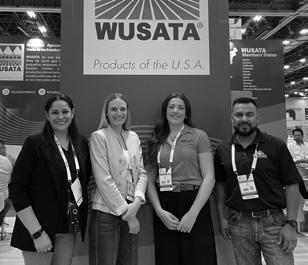
The New Mexico Department of Agriculture (NMDA) is proud to announce that Marketing Specialist Juan Sanchez has been named the Western U.S. Agricultural Trade Association’s (WUSATA) Collaborator of the Year.
The New Mexico Department of Agriculture is proud to announce that Marketing Specialist Juan Sanchez (far right) has been named the Western U.S. Agricultural Trade Association’s (WUSATA) Collaborator of the Year. Sanchez is pictured here at a trade show in 2025.
Bennington,
The award recognizes Sanchez’s years of partnership with WUSATA to promote New Mexico-grown commodities, strengthen international partnerships, and support export opportunities for the state’s agricultural producers.
“Juan’s leadership has been instrumental in elevating New Mexico agriculture on the global stage,” said Jeff Witte, New Mexico Secretary of Agriculture. “His work continues to open pathways for our producers and position New Mexico as a competitive player in international markets.”
Through his work with WUSATA, Sanchez has led and supported domestic and international trade missions, facilitated New Mexico food and beverage businesses’ participation at global trade shows, and coordinated agricultural site visits throughout New Mexico and abroad. These efforts have connected New Mexico producers with buyers in key markets in Colombia, Germany, India, Mexico City and South Korea.
WUSATA is a non-profit organization that assists western U.S. states in expanding international markets for agricultural products through export development and trade promotion.
Leadership in Quality Herefords
by Deanna Dickinson McCall
Spring Eggs
Spring is really around the corner, and maybe already here, depending on where you live. In addition to baby calves and lambs, it is when tiny green plants start emerging and the chickens really start producing more eggs. I love using fresh herbs with fresh eggs, it just shouts Spring.
I often make a lot of breakfast burritos this time of the year and stock them in the freezer. Eggs are so versatile, and I count on them when I am in a hurry to get a meal on the table. The popular term for serving breakfast for dinner is “brinner”, by the way. I am sure I’m not alone in using eggs for any meal, in many forms. I try to keep hardboiled eggs handy, for egg salad, to put in ramen soups and just to snack on. Eggs are so versatile. A quick meal when we are cold and tired is a chili omelet. I’d just make quick, plain omelets and fill them with cheese and a heated can of chili. Pretty simple and filling.
I’ve come to really love making frittatas,
an Italian omelet of sorts. They’re a great way to use leftovers. The recipe below is a good basic one for the method. I’ve used leftover steak, either chopped or sliced thin and small; diced ham, whatever you have on hand for the meat. Leftover veggies are great in here, too, anything from asparagus to broccoli and squash.
The flavor combinations for this are endless. If you use ham, try replacing some of the cheddar with gouda, jack or Swiss cheeses. I like to use some Asiago or parm if I am using beef. I’ve even used ground beef or lamb and changed the peppers to diced green chiles and added garlic to the egg mixture. You can make it Mexican using chorizo, more Italian using Italian sausage. The spinach can always be omitted, the same for the mushrooms. Use what you have.
If this is going to be for your main meal a green salad and crusty bread are excellent to serve with it.
2
1 tsp
Black pepper
1
1
Handful
3 or 4 small sweet peppers chopped, or use chopped green chile
Fresh parsley, chives or herb of your choice if available
Directions:
Preheat the oven to 350 degrees
Brown a nd break up the sausage in a large cast iron skillet or any pan that can go from the stove top to the oven
Remove the sausage to a plate or bowl, using a slotted spoon
Add the olive oil, peppers, mushrooms and onion stirring until the onion is soft, remove pan from heat
Place the eggs in a large bowl and whisk until the same color, then
whisk in the cream
Then stir in about half the cooked sausage, onions, peppers and mushrooms, and a little over half of the cheese, add the salt and pepper
Pour this egg mixture back into the pan. Sprinkle on the rest of the sausage, the fresh spinach, herbs, and the remining cheese and the diced tomato. Sprinkle with more salt and pepper. Place the pan in the oven and bake until it is set and golden brown, about 20 to 30 minutes depending on your pan
Let cool a few minutes before cutting into wedges. It is great with salsa, pico or hot sauce ▫
Industry Partnership Drives Texas A&M Study on Tylosin Use & Liver Abscess Control
by Camryn Haines, Texas A&M University College of Veterinary Medicine and Biomedical Sciences
As consumer demand for beef continues to reach historic highs, feedlot operators are paying close attention to anything that affects cattle health, performance and carcass value — including liver abscesses, a long-standing and costly challenge in feedlot cattle.
To help address that issue, researchers from Texas A&M’s Veterinary, Education, Research and Outreach (VERO) initiative in Canyon partnered with the cattle feeding industry to study how tylosin, a commonly used feed antibiotic, can be managed to reduce liver abscess risk while also supporting responsible antibiotic use, including whether shorter feeding durations could still
provide meaningful protection.
The Texas Cattle Feeders Association (TCFA)-supported study found that reduced-duration feeding strategies can lower liver abscess risk compared to not using tylosin at all, though continuous feeding throughout the finishing period remains the most effective option for control.
Dr. Paul Morley, director of research for Texas A&M’s VERO initiative within the College of Veterinary Medicine and Biomedical Sciences (VMBS), said the study was designed to help producers better understand the tradeoffs associated with different tylosin feeding strategies.
“Rather than prescribing a single solution, these findings provide producers, veterinarians, and nutritionists with clearer information to help weigh management decisions that affect animal health, operational efficiency, and long-term sustainability,” said Morley, the study’s principal investigator.
A longstanding challenge with real economic impact
Liver abscesses have challenged the cattle feeding industry for decades, with industry estimates suggesting that these infections cost the U.S. beef industry approximately
$257 million each year, which highlights the scale of the issue and its economic impact on feedlot operations.
“Liver abscesses represent a major loss to the cattle industry on an ongoing basis, and we’re really no better at preventing them than we were decades ago,” Morley said. “The only method that has consistently shown efficacy is feeding antimicrobials, primarily tylosin, and of course we want to use less if we can.”
Beyond packer discounts, cattle affected by liver abscesses often gain weight less efficiently, making prevention both an animal health and economic concern for producers.
“There’s evidence that cattle with abscesses don’t perform as well,” Morley said. “So, this is both a health and welfare issue.”
Evidence-based insights into tylosin feeding strategies
The study showed that cattle fed tylosin throughout the finishing period had the lowest overall risk of liver abscesses. Cattle fed tylosin for shorter periods still experienced reduced risk compared to cattle that received no tylosin, though not to the same degree as continuous feeding.
In practical terms, reduced-duration
feeding refers to stopping tylosin earlier in the finishing period rather than feeding it continuously until harvest. Because cattle consume more feed as they grow, changes late in the feeding period have a larger impact on total antibiotic use.
“If producers stop use in the last 10 percent to 15 percent of the feeding period, it represents a significant portion of the total antibiotic use,” Morley said.
That timing, he said, helps producers better understand how adjustments in feeding strategies affect both antibiotic use and liver abscess risk.
The role of industry collaboration
Morley emphasized that the project was built through extensive collaboration across the cattle feeding sector — a model he said reflects how complex industry challenges are addressed.
“This was truly an industry partnership that produced an industry-driven answer,” Morley said. “It exemplifies how research at public universities is supposed to work. The scientists involved were not limited to academic — this was a multidisciplinary collaboration across the cattle industry, bringing together researchers from five universities, production scientists and
veterinarians from private companies, and partners from the pharmaceutical sector.”
The research was funded by the U.S. Food and Drug Agency, conducted with invaluable support from a commercial feedlot where the research took place. Additional industry partners contributed data to ensure the findings had the greatest relevance for real-world production systems. This level of collaboration is especially important as consumer demand for beef remains strong and the industry seeks science-based solutions to support sustainable production.
“Consumer beef demand is at a 40-year high, which shows producers are taking many of the correct steps to produce a beef product consumers desire,” said Ben Weinheimer, TCFA President & CEO. “At the same time, the cattle feeding industry is always looking for ways to improve feeding efficiencies and cattle health.”
Weinheimer said partnerships between member feedlots, allied industry, TCFA, and Texas A&M’s VERO program are critical to maintaining progress.
“Having science-backed information helps cattle feeders make decisions that move the industry forward,” he said. “It also allows them to continue producing the highest-quality, safest beef for consumers — not
just here in the U.S. but across the globe.”
While the study provides clearer insight into how tylosin feeding duration influences liver abscess risk, Morley said important questions remain — particularly around why liver abscesses develop and how antibiotics reduce risk.
He said answering those questions will be key to identifying future prevention strategies that reduce reliance on antimicrobials while still protecting cattle health and performance.
For now, the research highlights the value of science-based, industry-driven collaboration in addressing complex challenges facing the cattle feeding industry — providing producers with data they can use to make informed decisions in a rapidly evolving production landscape. ▫
Santa Fe’s Tertio-Millennial Celebration July 1883
Santa Fe’s Tertio-Millennial celebration, which opened on July 2, 1883, was not a fraud in the usual sense of the word but it was nonetheless a sham event of the first order and widely attended.
Tertio-Millennial means one third of one thousand, or 333 years. Someone “discovered” that Santa Fe was settled in 1550 which would mean that such a celebration was in order in 1883. The historical problem with such a postulation is that in 1550 there was no European presence in New Mexico, and no trace of Santa Fe existed.
Francisco Vázquez de Coronado (15101554), the first Spaniard to explore New Mexico (1540-42) had come and gone nearly a decade earlier than 1550. The next Spanish entrada would not be made until more than four decades later when Francisco Sánchez Chamuscado (c. 1520-1582) arrived with a trio of friars in 1881. Even then, however, he did not make the beginnings of any town in New Mexico, let alone Santa Fe.
In 1582 Antonio de Espejo visited what would become New Mexico. He visited several Pueblos, from Zuni on the west to Pecos on the east. He is said to have traveled the length of the Pecos River. He, too, left no settlement behind. He died while enroute to Spain to seek permission from King Phillip II to colonize New Mexico. It seems unlikely that New Mexico’s capitol would be established before the territory had been colonized.
Yet another Spaniard, Gaspar Castaño de Sosa, entered New Mexico in 1590. Since his entrada was illegal, and he was returned to Mexico City in chains, it is unlikely that he founded Santa Fe, either.
As the legend went, according to those who promoted the 1883 Tertio-Millennial celebration, what would become Santa Fe was situated upon the original Tiguex Pueblo, and it was there that Vásquez de Coronado
wintered in 1540-41. They believed that while Vásquez de Coronado himself and the majority of his men returned to Mexico in the spring of 1542, there were deserters from the expedition, so the story goes, and it was those errant Spaniards who eventually, in 1550, settled and founded Santa Fe, and even built the church.
There is no historical support for this myth. Anywhere. New Mexico was colonized in 1598 and Santa Fe was established in 1610 although many historians believe that actual construction didn’t begin until some years after that.
Gilberto Espinosa (1897-1983), Albuquerque lawyer and historian, said that the true facts concerning the settlement of New Mexico, and the establishment of Santa Fe, were not correctly known until the publication of History of Arizona and New Mexico by Hubert Howe Bancroft (1832-1918) in 1889. Espinosa asserted that Bancroft was the first to use Historia de la Nueva México by Gaspar Pérez Villagrá (c. 1555-1620), which was first published in 1610. (Espinosa, it should be noted, translated Villagrá’s epic poem from Spanish to English and published it as prose in 1933.)
None of the questions about dates,
however, slowed the promotion of the Tertio-Millennial Exposition. Later-day Santa Fe writer Oliver La Farge (1901-1963) wrote, “Arbitrarily selecting 1550…as a starting date, in 1883 the enthusiasts of Santa Fe (meaning most of the population) decided that the city was 333 years, or a third of a millennium, old. Accordingly, a celebration …was staged extending over several days.”
And the celebration was no minor affair.
Historian Ralph Emerson Twitchell (1859-1925) wrote, “Almost an entire year was given over to preparing for the great event, which opened its gates to an immense throng of New Mexicans and others from points far and near. Ten to 12,000 people witnessed the opening ceremonies, which included a grand street pageant and notable addresses by Governor Lionel A. Sheldon (1838-1917) and the delegate in congress, Hon. Tranquilino Luna. No more interesting pageant has ever been viewed on this continent.”
A news item in the New York Times seriously promoted the Santa Fe Tertio-Millennial event. Most observers of the day reported that in spite of its wide attendance, it did not return enough revenue to offset what it cost to prepare for it. Sup-
porters were satisfied, however, that it did a good job of promoting Santa Fe and New Mexico.
Recall that by 1883, there had been numerous unsuccessful attempts to gain statehood for New Mexico, and the effort was on-going. This event was no doubt a step in that direction, though some historians make no mention of it. It is also worth remembering that the railroad had but recently arrived (1880) in New Mexico when this event was held.
If, long after the fact, there was any doubt that the 1550 date was bogus, fray Angelico Chavez (1910-1996), in a 1955 El Palacio article entitled, “Santa Fe’s Fake Centennial of 1883,” put the matter to rest. The good Father cited Bancroft, too. ▫
Why Dental Care Matters for Horses
Source: College of Veterinary Medicine and Biomedical Sciences, Texas A&M University
Dental problems are common in horses and can affect nearly every aspect of their daily life — from eating, grazing and maintaining body condition to performing comfortably under the saddle.
Because horses spend the majority of each day chewing and grinding fibrous forage, their teeth are constantly wearing. While this process is a normal part of equine life, uneven wear can lead to sharp points, fractures and other abnormalities that can cause pain and can interfere with overall health and well-being if left untreated.
Complicating matters, as prey animals, horses instinctively hide signs of discomfort, allowing dental issues to progress unnoticed
until they begin affecting chewing, digestion, behavior or performance. Without care, dental disease can progress and can jeopardize the health of the horse.
This delayed recognition is especially concerning because a horse’s teeth do not grow endlessly, as is commonly believed. Rather, each adult tooth has a fixed reserve that gradually erupts over time to replace what is worn down. Once that reserve is depleted, there is no way to replace it, making early detection and routine dental care essential for preserving long-term oral health.
Dr. Kyle Johnson, a clinical assistant professor at the Texas A&M College of Veterinary Medicine and Biomedical Sciences, explains the most common dental concerns seen in horses and why routine dental care with a veterinarian is essential to your horse’s health.
Common dental problems
One of the most common dental issues in horses is sharp points that develop on the cheek side of upper teeth and the tongue side of the lower teeth.
“These sharp points form naturally over time as a result of jaw shape and the way horses chew,” Johnson said. “If left uncorrected, these points can cause trauma inside
the mouth, mainly the cheeks and tongue, and can be a considerable source of pain for horses.”
To address these sharp points, veterinarians perform a procedure known as “floating,” which smooths the teeth using a specialized, battery-operated instrument.
Horses can also experience other dental issues, including fractured teeth and periodontal disease.
“Because of the unique anatomy of the equine skull, dental disease can advance and affect the sinuses,” Johnson said. “These cases can require prolonged, and often expensive, treatment.”
Signs of dental disease
Dental problems in horses can be difficult to detect, but one of the earliest warning signs is a behavior known as quidding, when partially chewed feed or hay is dropped while eating.
“Quidding occurs when a horse cannot chew properly and is often the first sign that there’s an issue in the mouth,” Johnson said. “The dropped food often looks like a small bird’s nest on the ground.”
When chewing is impaired, horses may also swallow feed before it’s adequately broken down, which can result in long pieces
of hay or grass in the manure.
“Poor chewing can be particularly problematic, as it can cause a horse to choke or increase the risk for certain types of colic,” Johnson said.
In more advanced cases of dental disease, horses may lose weight or show discomfort while being ridden, including head shaking, reluctance to the bit, or holding the head in an abnormal position to avoid pain.
Additional signs of dental disease may include:
Ї Chewing with the head tilted to one side
Ї Making a slurping sound while eating
Ї Halitosis (bad breath)
Ї Nasal discharge
Ї Swelling along the nose or under the jaw
Ї The right care
Unlike dogs and cats, horses have limited options for at-home dental care. As a result, working with a veterinarian is essential for ensuring a horse’s teeth and oral health are properly managed.
“Oral and dental health are extremely important to a horse’s overall health and welfare,” Johnson said. “Dental exams should be part of their routine wellness program, alongside regular vaccinations and deworming.”
Most horses should receive an oral examination once a year as part of their routine care. However, senior horses — generally those over 15 years old — should be examined every six months, as dental problems become more common with age.
Because horses have a fixed amount of tooth, routine dental care plays a critical role in preserving how long their teeth remain functional. Regular examinations allow veterinarians to identify and correct uneven wear early, helping teeth wear more evenly and reducing unnecessary loss of tooth structure.
When it comes to dental care, Johnson cautions horse owners to carefully consider who is providing these services. Some individuals claim to be equine dentists without being licensed veterinarians, often performing treatments without proper sedation — a practice that can put both horses and handlers at risk.
“Horse owners should be wary of non-veterinarians offering dental care services,” Johnson said. “Only veterinarians who’ve completed extensive training after veterinary school and are board certified by the American Veterinary Dental College can claim the title of equine dentist.”
That said, most horses do not need to see
a board-certified equine dentist for dental care.
“Your veterinarian is best suited to provide for your horse’s oral and dental health,” Johnson said. “They have both the knowledge and equipment, including appropriate sedation, needed to thoroughly examine a horse’s mouth and safely provide treatment as necessary.”
With routine veterinary care, dental issues can be identified and managed early, helping preserve tooth function and prevent unnecessary pain. By making dental exams part of a horse’s wellness routine, owners can
help ensure their horses remain comfortable, healthy and able to do their jobs well throughout their lives.
Pasture Talk is a service of the College of Veterinary Medicine & Biomedical Sciences, Texas A&M University. Stories can be viewed on the web at vetmed. tamu.edu/news/tag/pasture-talk/. Suggestions for future topics may be directed to vmbs-editor@tamu. edu.
Gordon Morris, Chairman of the Board/EVP
Please call Colten Grau to arrange a visit. He’s working hard for our ag community and he’s eager to go to work for you!
Mac Langford, President/CCO
Colten Grau, Vice President
Preventing Cattle Theft
by Mark Z. Johnson, Oklahoma State University Extension Beef Cattle Breeding Specialist
At a time of record high cattle value, management to prevent cattle theft has more value than ever as well. Preventing cattle theft involves consistent herd monitoring, secure fencing and proper identification of cattle. While some large-scale thefts occur, it is often small operations (less than 50 head) which are targeted. Thieves, often suffering from drug and alcohol addiction, are motivated by the need to make fast money. In many states cattle theft is a serious felony with penalties of up to 10 years in prison per head, plus potential court-ordered restitution for up to three times the value of the cattle stolen.
Some Key Steps of Action to Prevent Theft Include:
Ї Branding: Branding is considered the most effective way to prevent and track stolen cattle. Although it is not legally required in some states, branding remains the primary deterrent. Unbranded cattle are virtually
impossible to track once stolen.
Ї Secure Facilities: Lock gates, chain portable panels, and ensure corrals are not easily accessible from high-traffic highways. Avoid leaving cattle penned overnight, or for any longer than necessary.
Ї Frequent Audits: Count cattle regularly, especially if they are scattered across multiple locations.
Ї Staggered Routine: Alter your feeding times and routine enough that thieves can’t target your cattle during a time they know you will be gone.
Ї Record Keeping: Maintain detailed, written records of herd numbers and
individual ID tags, with copies stored in a secure, separate location. Keep copies (electronic and hard copies) that can be shared with law enforcement after theft.
Ї Strategic Location: Avoid leaving cattle in pens near high-traffic roads. If Cattle are Suspected to be Stolen, Take Immediate Action: Contact your local county sheriff’s office. Furthermore, being proactive and reporting suspicious vehicles or activities to local law enforcement in advance of theft is an effective deterrent. Notify the your local brand inspector or your department of agriculture depending on your state. ▫
■ Homes, Mobile Homes
■ Scheduled Equipment, Hay, Cattle, Horses
■ Autos, Pickups, RVs, Motorcycles, Boats, Jet Skis, Four Wheelers
■ Personal/Commercial Liability, Umbrellas, Bonds
■ Corporate & Personal Ranches, and more!
SGBI’s Genetic Evaluation System Empowers Breeding Decisions for Seedstock and Commercial Breeders
by Bob Weaber, Ph.D., SGBI Genetic Consultant, Professor and Dept Head, Kansas State University
Beef seedstock producers are charged with the development of germplasm to move the industry towards a number of broad goals including improved sustain-
ability, profitability and consumer acceptance of our product—high quality, wholesome beef. This charge is no small undertaking and requires
producers of all sizes to utilize the best possible tools to make precise breeding and selection decisions. To that end, your membership in Santa Gertrudis Breeders International (SGBI) enables you to access industry leading tools for the genetic
improvement of your herd and the genetics your program provides to the broader beef value chain through the sale of animals into the commercial breeding sector. SGBI members collectively support two key services to the membership through their registration, data submission and registry transfer business. The two products are the DigitalBeef portal for data submission and herd management as well as the SGBI genetic evaluation powered by Neogen.
The DigitalBeef portal plays a key role in the genetic improvement of Santa Gertrudis cattle by providing a convenient online resource for members to submit pedigree and performance data. The online portal computes adjusted performance records and within herd contemporary group ratios. The platform also provides a data pipeline to the genetic evaluation system. That pipeline returns the genetic predictions in the form Expected Progeny Differences (EPD) back to breeders and others through the lookup features. DigitalBeef provides both members and association staff convenient, 24-7, access to data. The database includes powerful tools to search for animals of defined merit and test mating decisions enabling breeders to make efficient and impactful breeding decisions.
The genetic evaluation system used by SGBI is provided on a contract basis by Neogen. The state-of-the-art system utilizes both traditional pedigree and performance records combined with genomic data to compute EPD. The methodology employed is a single step process that seamlessly combines all data sources for genetic prediction. Genomic data is exploited through a process that adjusts the relationships among related animals based on the genetic material they inherited. Animal’s always have one-half of their genetic complement from each their sire and dam. However, due to random assortment of chromosomes to gametes and recombination, animals have relationships that vary between 0 (zero) and 50 percent with an average of 25 percent. During egg or sperm cell formation in mammals, haploid cells are formed which have only one of the two copies of each chromosome. During fertilization, diploid chromosome status, where the cell has two copies of each chromosome, is restored. The random selection of one of the two copies of each chromosome results in individuals having a genetic makeup that may not have equal (25 percent) contribution from each grandparent. The evaluation uses that information to adjust
predictions of an animal’s genetic merit. It makes sense that if an animal has more genetic content from one particular grandparent, then their genetic merit is also more similar to that grandparent.
Seedstock producers are encouraged to utilize genotyping in the herd improvement program. Having a genotyped cowherd benefits the seedstock producer in several ways. First, it means that the pedigree of current cows are parent verified. Accurate pedigree is a key step in production and reporting of accurate EPDs. Genotyping of existing cows can identify errors in pedigree improving EPD reliability through correction of kinship. Typical pedigree error rates, even in very well
managed herds, can range from 5-10 percent due to inadvertent record keeping errors, estray bulls, cows switching calves and even errors in semen selection from the AI tank. Genotyping tests easily find those errors and often provides a path to resolving the error.
Combined, the inclusion of a revised kinship and construction of reliable pedigrees increases the accuracy and reliability of the EPDs produced in the system. Improved EPD accuracies mean more reliable mating decisions can be made for your genotyped cows enabling more rapid genetic improvement.
Investment in genotyping replacement heifer candidates prior to selection provides an effective way for producers to plot out their genetic destiny. Genomics adds more accuracy to female EPDs than their lifetime
production of natural calves for many traits. In today’s fast moving genetic landscape, time is more valuable than ever. Making investments that help capture genetic information early in an animal’s life is essential to remain competitive in the seedstock marketplace.
The incorporation of traditional pedigree and performance data is achieved through the implementation of a mixed animal model that accommodates both multi-breed and multi-trait approaches. SGBI formally allows percentage cattle into the database and genetic evaluations system. By grouping animals by breed fraction and estimating merit of the various founder groups, the evaluation effectively accommodates genetics from various breed sources. Differences in environment and management are cor-
rected for through establishment of within herd contemporary groups.
Genetic evaluation utilizing phenotypic records depends on analysis of data where animals have had fair competition; in other words, an equal opportunity to perform. The basis of genetic evaluation is the concept that if a group of animals all have the same nutritional and physical environment, then differences observed in their performance is due to genetics. Of course, we have to make sure that the competition is fair, else the genetic predictions include bias from non-genetic sources. Individual performance observations are adjusted for known non-genetic effects. These non-genetic effects include age of calf, age of dam and contemporary group.
The genetic evaluation system leverages the genomic and traditional data to produce genetic predictions across a range of economically important traits. The suite of traits is designed to address the need for improvement in merit across a whole range of traits in value chain. Included in the suite are maternal traits like maternal calving ease and milk. Maternal traits account for the genetic effects in those characteristics exhibited by a cow that affect her calf’s performance. One way to think about maternal traits is that they are the heritable components of the environment a cow provides for her calf. Fertility traits are estimated through both scrotal circumference, heifer pregnancy and breed back EPDs. Direct traits are those exhibited by a calf and influenced by both paternal and maternal genetic contributions. These traits include calving ease, birth, weaning and yearling weights. Additionally, end product traits carcass weight, marbling, ribeye area and fat thickness.
Three separate, endpoint defined selection indexes are computed based on reported EPD. The selection index tools are particularly useful for commercial producers to simplify selection processes. The indexes distill the EPDs into a single value of net merit to a particular endpoint. Commercial producers should use the index whose production scenario and assumptions most closely describes their own operation. The balanced index assumes a commercial producer will keep replacement heifers and sells either carcasses priced on a value-based grid or that buyers of their feeder cattle base pricing on feedlot/carcass performance. Many large operations will fit this description. The Cow/Calf index assumes producer keeps replacement heifers from the bulls they purchase and that calves are marketed at
weaning fitting the production scenario of many small and medium sized producers. The terminal index assumes producers don’t keep replacements (no economic weighting of maternal traits) and calves sold on a value-based carcass grid.
SGBI and its members have made sound investments in genetic improvement tools. Now’s the time to make sure you are using them to your advantage and positioning your commercial customers for profit and success! ▫
SILER
Santa Gertrudis Cattle
David and Avanell Siler P O Box 3, Doole, Texas 76836 325/483-5449
Produced Water: From Waste Stream to Managed Resource
by Rebecca Dow
New Mexico is in a water crisis. Ranchers and farmers across our state are being asked to do more with less — less surface water, less groundwater, and less certainty about the future. Allocations are tightening. Drought is persistent. Every drop matters.
And yet, one of the largest water streams in New Mexico continues to be treated solely as waste.
Produced water — the water that comes up during oil and gas production — represents billions of gallons generated annually. Many oil and gas operators are already cleaning and reusing at least 90 percent of produced water within their own operations, such as for hydraulic fracturing and enhanced recovery. That reuse significantly reduces demand for freshwater inside the
oilfield.
But the remaining volumes are staggering.
Today, the overwhelming majority of produced water that is not reused in-field is reinjected underground for disposal or transported to Texas. Reinjection has long been the standard practice. It is permitted, regulated, and widely utilized. But reinjection does not solve a water scarcity problem — it simply removes a potential resource from circulation.
The policy question we have failed to answer — again — is whether highly treated produced water can safely become part of a broader non-potable supply portfolio.
Could it be used for industrial applications? Road construction? Dust suppression? Certain agricultural applications under strict safeguards? Could it offset freshwater use in areas where ranchers are being squeezed by reduced availability?
Those questions deserve real answers grounded in science, transparency, and public trust.
In 2019, the Legislature passed the Produced Water Act. Its purpose was clear: clarify regulatory jurisdiction between agen-
cies and direct the New Mexico Environment Department (NMED) to develop rules governing beneficial reuse of produced water outside the oilfield. Those rules were to be presented before the Water Quality Control Commission (WQCC) to establish standards and guardrails.
That was seven years ago.
Comprehensive rules were never fully developed or advanced. Subsequent efforts to clarify or expand beneficial reuse stalled amid concerns about safety, scientific gaps, and public confidence.
Those concerns are legitimate. Produced water contains salts, hydrocarbons, heavy metals, and other constituents that demand rigorous treatment and oversight. No rancher wants contaminated water near livestock or soil. No community wants unintended consequences. Safety must come first.
But prohibition is not a policy.
The Water Quality Control Commission did adopt rules prohibiting discharge of oil and gas wastewater to surface or groundwater without proper authorization. That was prudent. It protected against uncontrolled release.
Yet while we prohibited discharge, we failed to build a pathway for responsible, sci-
ence-based reuse. Without defined treatment standards, monitoring protocols, liability frameworks, and specific reuse categories, New Mexico remains in regulatory limbo.
And while we remain in limbo, billions of gallons continue to be injected underground or sent across state lines.
Meanwhile, agricultural producers face tightening allocations and long-term uncertainty. Ranchers are drilling deeper wells. Irrigators are navigating curtailments. Generational operations are making decisions based on shrinking supply.
It is fair to ask: Why has the Legislature failed to act again?
If the science is incomplete, then fund the research and complete it. If advanced treatment is required, define the standards. If agricultural reuse requires site-specific safeguards, write them. If pilot projects are
needed, authorize them under strict oversight.
Other arid regions are exploring advanced treatment technologies. Private sector innovation is moving quickly. But without a clear regulatory framework in New Mexico, investment stalls and uncertainty prevails.
This is not a call for reckless reuse. It is not a call to shortcut science. It is a call for leadership.
Water policy requires courage. It requires transparency. It requires bringing ranchers, scientists, regulators, and industry to the same table. It requires acknowledging risks honestly while also acknowledging opportunity.
Produced water will not solve New Mexico’s water challenges on its own. But ignoring one of the largest water streams in
the state while agriculture bears the brunt of scarcity is not sound policy.
We can protect groundwater. We can protect public health. And we can explore whether advanced treatment can turn a waste stream into a managed resource for non-potable uses under strict, enforceable standards.
But first, the Legislature must do its job. Clarify authority. Demand rulemaking. Fund independent science. Establish guardrails. And move New Mexico from paralysis to policy.
Because doing nothing is still a decision. And once again, it is a decision to waste water while our producers are asked to sacrifice
NMSU Spanky D Cat
AQHA Stallion sired by Palo Duro Cat (full brother to Sophisticated Cat), out of an own daughter of Docs Oak.
Coverage and service you can count on.
Produced Water Reuse in New Mexico: From Research to Rules
By Matthias Sayer / Co-Director, WATR Alliance
How the Proposed Rule Would Work — and Why It Matters Now
Last month, we discussed what produced water is and why it has become part of New Mexico’s long-term water conversation.
To be a bit more specific, New Mexico now generates approximately 325,000 acrefeet of produced water each year (nearly 7 million barrels per day), primarily in the Permian Basin. That is water brought to the surface during oil and gas production — water that today is largely managed within the oilfield, and when we say managed, we mean disposed of by subsurface injection.
However, a significant portion of that water, somewhere in the neighborhood of 3-5 million barrels per day (call it 500 acre-feet per day, or ballpark 200,000 acre-feet per year) is transported across state lines into Texas for management and disposal.
And Texas is moving forward with that water. Texas regulators are actively advancing permits that would allow treated produced water, much of it from New Mexico, to be discharged into surface waters and put to use. New Mexico, by contrast, while we have spent the better part of the last decade investing in research and building a scientific foundation to support a regulatory framework, is not moving forward.
We are stalled.
While New Mexico’s caution has value, it also presents a practical reality: if Texas permits reuse while New Mexico remains without a framework, much of the water being treated and put to use in Texas will originate in New Mexico. That water will count toward Texas’ water future — not ours.
The issue is not whether New Mexico has been thoughtful. It has.
The issue is whether thoughtfulness is followed by a workable framework that allows the state to act — carefully — rather than watching others do so with water generated here.
The proposed rule now before the Water Quality Control Commission is intended to create that framework.
For ranchers and farmers, the key question is straightforward:
If reuse is to be considered, how would the rule proposing reuse ensure treated produced water is used in appropriate applications — and done safely?
Clear Lines at the Start
The draft rule begins with firm limits.
• Untreated produced water cannot be discharged to ground or surface water.
• Irrigation of food crops is not authorized.
• Direct livestock watering is not authorized.
Those uses are not permitted under the proposal.
That does not mean science will never evaluate those pathways. In water reuse generally — including municipal wastewater reuse — programs typically begin with lower-risk applications and expand as treatment systems demonstrate reliability and public confidence grows.
The proposal follows that same stepwise approach. Even if treated produced water is not used directly in certain agricultural contexts, its availability can reduce pressure on
traditional freshwater supplies. Water that might otherwise be diverted from agriculture to support industrial or municipal uses could instead be offset with treated produced water. In practical terms, that means communities and economic development can continue without further stressing the freshwater resources that agriculture depends on.
Matching Treatment to Risk
The rule is built around a simple principle: the higher the potential exposure, the higher the safeguards.
The draft rule establishes different permit categories depending on how treated water would be used. Uses with no discharge pathway fall into one category. Uses where treated water could reach groundwater require more detailed review and enforce-
43rdAnnual NMSU
Cattle Sale & Horse Expo & Sale
BULL SALE: April 11, 2026
• We will be offering yearling Angus bulls that boast some of the lowest birth weight EPDs in the industry along with some of the highest $EN
• Cattle are available to view in the pens next to the Bull barn off Knox Street and Stewart Street
• Sale will be held at the Landmark Mercantile Livestock Auction, 12000 Stern Dr., Mesquite, NM
HORSE SALE and OPEN HOUSE: Tentatively May 9, 2026
• See Department website for animal data and pictures as they become available • Open house starts at 9:00 a.m. NMSU Horse Center, 400 W. Union Mesilla Park, NM ~ Opportunity to visit with Equine program faculty and students and check out educational facilities, stallions, and learn more about our horse program
• Horse Sale preview 10:30 a.m. to 12:00 p.m
• Horse Sale will start at 1:00 p.m.
• Check out NMSU Horse Farm Facebook for updates
ejs@nmsu.edu Angus: Eric Scholljegerdes 575-646-1750 ejs@nmsu.edu
able permit conditions. Surface water discharges require the most stringent oversight, including compliance with New Mexico’s surface water quality standards and toxicity testing.
In other words, the closer a proposed use comes to soil, water resources, livestock, or people, the stricter the requirements become.
“Treated” Must Be Demonstrated
Under the proposal, treatment is not assumed — it must be proven. Before a permit is issued, an applicant must show:
• what contaminants are present in the untreated water,
• how the treatment system removes them, and
• what remains after treatment.
That includes targeted analysis for known contaminants as well as broader non-targeted analysis for unexpected or emerging compounds.
If protective standards cannot be met, a permit would not move forward.
Monitoring — and Shutoffs if Needed
For higher-risk permits, monitoring is not occasional. The proposal requires:
• continuous or daily tracking of key water quality indicators,
• routine laboratory testing for salts, metals, and organic compounds, and
• for surface water discharges, whole effluent toxicity testing to protect aquatic life.
If monitoring shows a problem:
• confirmation samples must be taken quickly,
• the state must be notified, and
• delivery or discharge must be suspended if limits are exceeded.
The system is designed to verify performance — and to stop operations if standards are not met.
Responsibility Remains with the Operator
Another consistent concern in rural communities is liability. The proposal requires closure plans and financial assurance — such as bonds or letters of credit — sufficient to cover closure and, where applicable, abatement.
Responsibility remains with the permit holder, not neighboring landowners or the public.
A Starting Point, Not a Mandate
The proposed rule does not require agriculture to use produced water. It does not authorize direct irrigation of food crops or
livestock watering.
What it does is create a regulated pathway for limited, defined uses — structured so that treatment level matches risk, monitoring is continuous, and safeguards are enforceable.
Meanwhile, Texas is actively building the regulatory tools to put treated produced water to use — including water that originates in New Mexico.
In a water-scarce region, that raises a practical question:
If our neighbor is preparing to count this water as part of its supply future, what does it mean for New Mexico if we do not establish our own framework?
For agriculture, the priority remains clear:
If reuse is ever considered, the guardrails must protect soil, water, livestock, and landowner rights.
Staying engaged ensures those guardrails remain firm — and that New Mexico does not remain on the sidelines while others move ahead.
Produced Water by the Numbers
• Annual produced water in New Mexico: ~325,000 acre-feet (about 2.5 billion barrels)
• Produced water generated in New Mexico each day: ~900 acre-feet per day
• Estimated volume transported to Texas: 140,000–235,000 acre-feet per year
• Texas regulators are advancing permits for treated produced water reuse
• Much of the water treated and reused in Texas will come from New Mexico
Uses Not Authorized Under the Proposal
• Direct irrigation of food crops
• Direct livestock watering
• Discharge of untreated produced water
• Mandatory use on private land
Any approved use would require a permit and landowner consent.
FAQ:
Questions Ranchers Are Asking
Is agriculture being asked to use produced water?
No. The proposal creates a permitting framework. It does not require participation.
Why are food crops and livestock watering not included?
Because the proposal begins with lower-risk applications. Water reuse programs typically expand cautiously as treatment systems demonstrate reliability and public confidence grows.
Could the scope expand in the future?
Only through additional rulemaking and regulatory review. Any change would require data, standards, and public process.
Who checks whether the water is safe?
The permit holder must conduct required monitoring and testing and report results to the state. If limits are exceeded, delivery or discharge must stop.
Who is responsible if something goes wrong?
The permittee. The rule requires financial assurance to cover closure and cleanup. How much New Mexico produced water is currently transported to Texas?
Estimates suggest roughly 140,000 to 235,000 acre-feet per year. As Texas advances reuse permits, much of the water treated and put to use there will originate in New Mexico. ▫
ANIMAL & RANGE SCIENCES
The Department of Animal & Range Sciences is part of the College of Agricultural, Consumer & Environmental Sciences
The Department of Animal & Range Sciences is part of the College of Agricultural, Consumer & Environmental Sciences
Four on-campus animal facilities house: beeF CaTTle/horses/swine/sheep
Students can major in Animal or Rangeland Resources and are provided with the very best of “hands on” academic instruction by our faculty. Fully equipped labs allow students access to cutting-edge research in:
The Department also offers pre-veterinary studies –our graduates have a high acceptance rate into veterinary medicine programs. We offer graduate degrees at the Master of Science and Doctor of Philosophy levels. The M.S. or Ph.D. in Animal Science can emphasize nutrition or physiology, and offers a Ph.D. in Range Science to study range management, range ecology and watershed management.
• The Chihuahuan Desert Rangeland Research Center (The College Ranch) –64,000 acre ranch just outside of Las Cruces
• The Corona Range & Livestock Research Center – 28,000 acre ranch & facilities in Corona, NM
• Student organizations, including a Block & Bridle Club, Pre-Vet Club, Range Club, Horsemen’s Association, Therapeutic Riding Club, & Judging Teams
• Clayton Research Center hosts research on shipping protocols, particularly evaluating the health and performance of newly received cattle, and nutrition and management from feedlot to slaughter THE DEPARTMENT
Dr. John Campbell –575/646-6180 / Dr. Dennis hallford –575-646-2515 http://aces.nmsu.edu/academics/anrs/
MARKETPLACE
Grau Charolais ranCh ranCh
Bradley 3 Ranch Ltd.
& Laura Conniff 1500 Snow Road, Las Cruces, NM 88005 575/644-2900 • john@conniffcattle.com www.conniffcattle.com
CreekRunningRanch
JANUARY — Wildlife; Gelbvieh; Joint Stockmen’s Convention Results FEBRUARY — Hereford; Beefmasters; Texas Longhorns MARCH — Limousin; Santa Gertrudis
APRIL — Dairy MAY — News of the Day
If
JUNE — Sheepman of the Year
JULY — Directory of Agriculture
AUGUST — The Horse Industry
SEPTEMBER — Charolais; Fairs Across the Southwest
OCTOBER — Angus; Brangus; Red Angus; NM State Fair Results NOVEMBER — Cattleman of the Year; Joint Stockmen’s Convention Preview DECEMBER — Bull Buyers Guide
REAL ESTATE GUIDE
www.chassmiddleton.com
5016 122nd STREET LUBBOCK, TEXAS 79424 • 806-763-5331
Sam Middleton 817-304-0504 • Charlie Middleton 806-786-0313 Jim Welles 505-967-6562 • Dwain Nunez 505-263-7868
MIAMI 80+/- ACRES, 3 bedroom, 2 bathroom home with water shares, roping arena, steel barn with shop. Other historic barns, Pipe corrals. Far enough off road to be private. Includes 80 shares of irrigation 2350 SHW 21, Miami NM 87729. $569,999
MIAMI PRIVATE 80, Located ¼ mile off blacktop with dedicated easement, 80 +/deeded acres, large barn, small sleep out, buried utilities, domestic water meter, 80 shares of irrigation and septic able to handle a 3 bedroom home. Some of the best views in Miami. 2050 HWY 21, Miami NM 87729.$559,000
BAR LAZY 7 RANCH, Colfax County, Moreno Valley 594.38 +/- deeded acres, accessed off blacktop between Eagle Nest and Angel Fire. Historic headquarters. Currently used as summer grazing, pond and trees accessed off county road on rear of property as well. Presented “ASIS” New Survey, $3,800,000 $3,629,000
RIVER ROAD FARM
100 acres w/85 acres irrigated in permanent pasture. Secure, grandfathered water rights. Fence and Crossed fenced. Price $1,720,000 I have many qualified Buyers looking for Ranches. Give me a call If you are looking to Buy or Sell a Ranch or Farm in Southwestern NM or Southern AZ give us a call ... Sam Hubbell, Qualifying Broker 520-609-2546
■ BLACKTOP RANCH — Columbus, NM — This ranch lies in the Tres Hermanas Mountain Range, south of the three main peaks. 7.8+/- sections 1,287+/- acres of deeded land, 640+/- acres of state, 3,080+/- acres of BLM. The deeded land is contiguous and is located in the mountain country of this ranch, great for off grid living, two wells, two pastures and a horse trap 70 AYL plus 5 horses. Priced at $1,200,000
■ SAN JUAN RANCH, Deming, NM 46+/sections, 29,562+/- total acres. Consists of 3,176+/acres of deeded land, 3,201+/- acres of state land, and 23,185+/- acres of BLM land, including 5,100+/- acres of WSA. 185 AYL, 4 wells. Priced at $2,500,000
■ MOUNTAIN TOP RANCH — Piñon, NM
This ranch is 100% deeded land, allowing for a sportsman’s hunting ranch with endless possibilities. This ranch consists of 5,366+/- acres of deeded land. 3 homes, 4 barns, spotting blinds, airplane runway, dog kennels, hennery, two wells 60,000 gallons of water storage, 8 miles of pipeline, troughs with storage tanks & dirt tanks. Exclusively listed w/ Keith Brownfield Priced at $5,600,000
■ AKELA RANCH is located along I-10 between Las Cruces & Deming, NM 18,467 total acres spread across 28 sections +/- deeded 66+/- acres, blm land 7,646+/- acres, state land 5,190+/- acres, city of Deming 1,260 acres+/-, adverse land 4,305+/- acres. The ranch is equipped with two sets of corrals and 4 wells w/adequate storage. Priced at $1,150,000
■ GREY FARM, Deming, NM 480+/- acres, 319+/acres of water rights, 4 wells. Priced at $2,600,000
■ FLORIDA MOUNTAIN FARM, Deming, NM 118+/- acres with water rights, 321+/- total acres, 24+/- acres planted in pecan trees 4 & 5 years old, irrigated by sprinkler system, site-built home, barn, two wells. Priced at $1,200,000
REAL ESTATE GUIDE
in the New Mexico Stockman. Call: 505/243-9515.
Chip Cole
r A n c h B r o k e r
Petroleum Building
14 e. Beauregard Ave., Suit e 201 San Angelo, texas 76903-5831 ofc.: 325/655-3555
Terrell land & livesTock company
Milky Ranch – Apache County, Arizona: 450 AU including 37,518 deeded acres with an additional 7,680 acres of Arizona State grazing lease located between Holbrook and Saint Johns, Arizona. The ranch is located directly off of US Highway 180 including seven miles of highway frontage. All access to the ranch is via private property and is contained behind locked gates and provides one-of-a-kind privacy with vast views of the National Park. Also included is an additional 7,270 deeded acres located outside the ranch fence. Price: $14,000,000 — Contact Traegen Knight.
Hay Hollow Property – Navajo County, Arizona: 19,458 deeded acres located between Holbrook and Snowflake, Arizona along the Little Colorado River. Stunning views of painted desert scenery accessible by County roads yet great privacy and the feeling of seclusion. This could be a great investment or development property for solar, wind or residential use. Price: $6,500,000 Contact Traegen Knight.
SOLD – Burro Springs Ranch – Grant County, New Mexico: 423 AU with 1,073 deeded acres, state and blm leases located north of Lordsburg. Abundant old feed as ranch has been rested for two years. Livestock water supplied by four wells serving over twelve miles of pipeline. Nice set of shipping corrals located just off the improved county road with great access.
Price $3,100,000 Contact Traegen Knight
NEW LISTING! River’s Edge Farm in Pleasanton, NM
The River’s Edge Farm offers everything today’s homesteader or retiree could want privacy, self-sufficiency, and natural beauty. With approximately 36 acres and over 11 acres of irrigation rights dating back to the 1880s, this rare property combines historic water security with modern comfort. The custom passive solar adobe home (approx. 1,700 sq. ft.) built in 2013, blends rustic Southwest charm with thoughtful efficiency. Offered at $995,000
NEWLISTING!
Mimbres
RiverFarmand
RanchinSilver
City,NM. Thiswell improved47headranch providesa unique, turn-keyopportunity toown a picturesque and remarkable farm/cattle ranch coupled with a developed investment property nestledinthe MimbresValley.Consistingof1,566 total acres the ranch iswell wateredand improvedwith goodstrong feedand irrigated farmland. Offered at$3,400,000
Uncle Bill’s Bar in Reserve, NM
Situated within the vast Gila National Forest, Uncle Bill’s is ideally located to serve a steady flow of hunters, hikers, campers, and travelers with seasonal income increases. With approximately 4,100 sq ft under roof, you will find two full bars, booths, pool tables, stage, karaoke machine, numerous storage areas, an upstairs and multiple coolers. The building itself sits on an .19+/acre parcel that is tied to a commercial area conveniently located in Reserve and at the junction of NM State Roads 12 ND 435. Offered at $1,700,000
SOLD! Whitewater Mesa Ranch & Airfield in Glenwood, NM
With easy access this multi-faceted property spans 764.9 deeded acres on top of Whitewater Mesa at the base of the Mogollon Mountains. The property features extensive improvements including a classic site-built home with extensive 360-degree views of the majestic surrounding area, a two-runway registered airfield with hangars, RV hookups, an apartment, and substantial cattle working facilities. This property has historically run up to 25 CYL.
McKeen Ranch and Farm in Alma, NM
OFFERED FOR THE FIRST TIME IN OVER 100 YEARSLocated on the banks of the San Francisco River, the ranch offers a rare opportunity to own one of the finest small cattle ranches in western New Mexico. Consisting of almost 500 acres of deeded land and the USFS Cedar Breaks grazing allotment, the McKeen Farm & Ranch is easily accessible The property has been operated as a cattle ranch and hay farm but offers multifaceted opportunities. With secured irrigation rights out of the San Francisco River, the fertile soil can support a multitude of crops or a preppers paradise. Its location is ideal for a corporate retreat, dude ranch, summer camp, wedding venue or a base for big game hunting in the Gila Wilderness. The 145 head USFS forest allotment is contiguous to the Ranch and the current owners supplement cattle income with the sale of hay. The ranch is enrolled in the E-Plus elk tag program providing additional recreational opportunity and potential income streams. Offered at $7,300,000
REDUCED! Woodruff Farm in Woodruff, AZ
Turnkey farm located in the beautiful small town of Woodruff, Arizona. The farm includes a newly constructed 4500 sq ft. masonry barn with electric and water, large enough to store yearly hay production. Attached is a newer two-bedroom home which is well-constructed, insulated, quiet and comfortable with all the modern amenities. Above the home, two unfinished, rough framed 750 sq. ft studio apartments are located which can be finished with minimal expense. Seller has established 54 acres of alfalfa/grass watered by historic Woodruff Irrigation District. Tractors and attachments may be included with the right offer. Offered at $1,450,000
Bourdon Ranch Farm in Snow Lake, AZ
Amazing opportunity in a growing area of the White Mountains! Approximately 180 acres including 45 acres planted in permanent pasture. Bring your animals and create your own ranch or farm or invest in a great piece of property to subdivide. Fantastic water area, great soil and welcoming neighborhood. Parcel features amazing views, and is located above the Coconino Aquifer for abundant, clean water. Just off a paved road and close to Show Low. Offered at $1,800,000
Riding for the brand is our time-honored tradition
REDUCED 160 +/- Acre, San Simon Pistachio Orchard
50 Acres of third leaf Pistachio trees and 110 acres of second leaf trees. Planted and developed with best farming practices. USDA compliant. Irrigation well capable of producing 1,000+ gpm. Well currently equipped with an 8” submersible producing 625 gpm from 350’ $2,295,000 Call Harry Owens
PENDING Prime 39.81+/- Acre Parcel
In the rolling grasslands of Elgin, AZ, a celebrated wine-growing region Mild year-round climate at an elevation of 4,800’ ideal for homesteading, winery, equestrian pursuits or the peace and quiet of country living. Just 30 minutes from major services. $378,195.00
REDUCED 8+/- Ac, Equestrian Estate, Sonoita, AZ
3,472+/- s f home, 5-BR, 3-BA, vaulted ceilings, 3 fireplaces, private office with custom cabinetry, 6-stall horse stable with tack and feed rooms, round pen, outdoor pens, turnout area, fully fenced, 2 pastures, arena panels ready to go, shop 36’ x 36’; totally solar powered, grid tied as backup
$1 25M Owner/ Broker
Prime 275± Acre Investment Opportunity, McNeal, AZ
Positioned along the U S -Mexico border, the property benefits from proximity to a major $328 M expansion of the Douglas Commercial Port of Entry Acreage is located on Hwy 191 directly across from the Bisbee–Douglas International Airport. $1,650,000
RECENTLY SOLD
Ranches/ Farms
Hale Ranch, Patagonia, AZ
218+/- Acres and 60 Head USFS
Horse Properties/ Land
10± Acre Country Estate –Sonoita, AZ
Grazing Allotment Sold prior to auction
472± Acre Organic Apple Orchard (5 Tracts)
Includes processing facilities, retail center, two homes, wells, and apple trees Sold at auction
305± Acres – Ash Creek, Pearce, AZ
Organic potential, cleared of mesquites, FAA landing strip, two wells, fenced/cross-fenced
Hilltop home with mountain views, stable, shop, orchard, water features Sold at auction.
Pearce, AZ – Four Offerings at the Foot of Dragoon Mountains Lot 1: 3BR/2BA custom territorial-style home on 5.5± acres. Lots 3 & 4: Three vacant 1± acre land parcels Sold prior to auction.
Auctions are gaining momentum like never before delivering faster results, competitive prices, and real-time excitement. We’re seeing more buyers, more sellers and more success with every auction! Feel free to call us if we can help you accelerate the selling process.
Nancy Belt, Broker
520-221-0807
Harry Owens
602-526-4965
Paul Ramirez
520-241-3333 STOCKMENSREALTY.COM
Robert Arlan Cochran, 79, was born October 11, 1946, in Shelby, Montana, to Grover Cleaveland Cochran, Jr., and Alyce Boyce Cochran. He passed away on February 2, 2025.
The son of a Border Patrol agent, Bob spent his childhood moving frequently— from the northern border to the southern border and throughout the West Coast.
At the age of 16, Bob left the Mormon Church and began his California adventures. Those years included working as a taxi driver, running a coastal paper route, serving as a merchant sailor, and—most importantly— endless days in the Pacific Ocean with his surfboard. Horses were Bob’s first love, followed closely by surfing and physical fitness, a thread woven through everything he did. Bob became fluent in Spanish to earn cookies and other treats while serving time in a Tijuana prison, along with time spent in various other facilities along the way.
His midlife years were dynamic, unpre-
dictable, and unapologetically his, but eventually Bob was ready to settle down. In 1984, he began writing letters to a cute gal in Wisconsin named Sioux Vogel. Three years later, his “mail-order bride,” Sioux, joined him in California. Their first son, Ry Grover, was born in 1987, and Bob and Sioux were married shortly after on February 27, 1988, with Ry serving as Bob’s “Best Man” at just under eight weeks old.
Their shared love of horses became the backbone of the life they built together. They started a trail-riding business in California before moving to Boulder, Utah, where that dream expanded into something much larger—Boulder Mountain Ranch—offering lodging, multi-day pack trips, farming, and cattle operations that drew guests from around the world. Along the way, they welcomed two more sons: Cru Harley in 1990 and Dawz McGreggor in 1992. From the moment each boy was born, Bob’s heart belonged to them completely. His sons were
JE Harris & Sons Ranch
San Juan County, NM
The JE Harris & Sons Ranch is a histrocial ranch located in premier wildlife habitat. The ranch lies in the Colorado Plateau, which encompasses rugged tableland topography. The ranch has grass, shrub, and woodland-covered benches rising from the La Plata River valley to the Ute Mountain Reservations.
his greatest joy, a pride that never faded.
In 2007, the Cochran family sold the Boulder Mountain Ranch business and purchased the South Fork Ranch in southern New Mexico. Here, Bob thrived. He built his home and the ranch headquarters from the ground up. Bob held the New Mexico Senior Olympics pole vault record in 2012 for his age group. He was a proud member of the Sierra County Sheriff’s Posse, Winston Fire Department, and WCCD. He loved the countless hours spent horseback and watching his boys become fathers. He may have grouched about the messes they made, but his sons and grandchildren made his heart swell with pride.
Bob worked hard, loved deeply, and left nothing undone. He built his life with his hands, his will, and his refusal to be anything other than exactly who he was. “It is what it is.”
continued on page 66 >>
Bob is survived by his precious wife, Sioux; sons Ry (Kara), Cru (Kelsie), and Dawz (Skylar); seven grandchildren; and siblings Gary (Sueann), Kent (Leslie), Kirby (Elaine), and Wendy (Wally) Barr.
In lieu of flowers, the family asks that donations in Bob’s honor be made to the Sierra County Sheriff’s Posse.
Owen “Tooter” Cosper, 92, a longtime resident of Corrales, passed away peacefully on January 31, 2026, his spirit lifting gently and lovingly into the arms of the Lord. A true old school cowboy to the very end. Tooter lived a long, full, and adventurous life rooted in hard work, loyalty, and a deep love for others. Toote leaves behind his beloved wife of 48 years, Patricia Cosper, with whom he shared a lifetime of partnership, devotion, and family.
Tooter is survived by his children, son Jerry and wife Eileen Cosper, son Terry and wife Nicole Cosper, daughter Shelly Cosper, son Gary Cosper, and daughter Christine and husband Milton Carrasco. He is also survived by his stepchildren Monty Mathis, Cheryl and husband Mark Mitchell, Sherri and husband David Garcia, Mark and wife
Dianne Mathis.
He leaves behind seventeen wonderful grandchildren and seventeen beautiful great-grandchildren, each one carrying a piece of his legacy forward.
Throughout his ninety-two years, Tooter built a remarkable and varied career. He spent more than twenty years in car sales, management, and finance, earning respect for his honesty, grit, integrity and meaningful handshake. He later became a Farmers Insurance agent and proudly owned his own independent agency for 40 years, earning numerous awards and the trust of generations of clients. A cowboy in both spirit and action, Tooter remained a current member of the Professional Rodeo Cowboys Association and the United States Team Roping Association, winning multiple awards even after the age of seventy. He helped found the New Mexico Junior Rodeo Association and played a meaningful role in theAlbuquerque/ Bernalillo 4-H program, shaping the lives of countless young riders.
Tooter will be deeply missed by his family, friends, and the many people whose lives he touched with his humor, generosity, and cowboy wisdom. His boots may be empty now, but his trail lives on in all who loved him. Rest in peace, cowboy.
Tooter’s lifelong cowboy spirit, guests are invited to attend in jeans, boots and cowboy hat.
Donna Sue Crandall, 77, passed away peacefully on February 16, 2026 surrounded by her loving family.
Donna’s greatest dream in life was to be a mother, and she lived that dream with her whole heart. Her family was her pride and her purpose, and she gave them her unwavering love every single day. A devoted wife and true partner, Donna stood strong beside her family through all of life’s seasons. With steady hands and a determined spirit, she met each day with resilience, grace, and quiet strength.
Donna had many passions in her life. She timed the rodeo in Capitan for many years and was an integral part of the Billy The Kid Pageant in Lincoln which she loved dearly. Above all else, dancing with her beloved husband Lee was her greatest passion. The couple was well known for their talent and love of dancing together, often traveling many miles for the next dance. It is often said that “Donna would rather dance than eat” showing her deep love for the pastime.
Her home was a place of comfort and
JOIN TODAY!
welcome. At Donna’s house, coffee and dessert were always ready, and no one ever left without feeling cared for. She had a special way of making everyone feel like family.
Donna’s life was built on love, loyalty, hard work, and hospitality. The home she created and the family she nurtured are her lasting legacy. She will be deeply missed and forever cherished.
Donna is survived by her loving husband, Lee Crandall; son, Travis Crandall and wife Jill; honorary sons, Thomas and John Shrecengost; daughters, Shana Nowell and husband Raif, and Sheila Keltner and husband Ty; honorary daughter, Shawna Trujillo; seven grandchildren; brother, Danny Bryant and wife Jo Ann; honorary brothers, Drew Goslin, Waddy Hobbs, and Rodger Hawkins; sister, Connie Richardson; sister in law, Shirley McIntosh; honorary sister, Brenda Gill; Nieces, Tiffany Fuller husband Klinton and their daughter Addison, PJ Bryant and son Jeebz; cousins, Johnny Parker, Jeanie Parker, Danny Parker, and Darlene Parker; many more cousins, extended family, and dear friends.
Editor’s Note: Email caren@aaalivestock.com. Memorial donations may be sent to the Cattlegrowers’ Foundation, a 501(c)3, tax deductable charitable foundation serving the rights of ranch families and educating citizens on governmental actions, policies and practices. Cattlegrowers Foundation, Inc., P.O. Box 7517, Albuquerque, NM 87194. The New Mexico Stockman runs memorials as a courtesy to its readers. If families & friends would like to see more detail, verbatim pieces must be emailed to us, & may be printed at 10¢ per word.
SANTA TERESA, NM
Rumors, Risks, and the Screwworm: A Lesson from January 16
Source: Southern Ag Today, by Eunchun Park, University of Arkansas Division of Agriculture
Generally, the cattle market follows a clear pattern. Tighter supplies lead to higher prices. Currently, the U.S. cattle herd is at its lowest level in decades. This scarcity supports strong market prices. However, the recent emergence of the New World Screwworm (NWS) has created significant uncertainty. Since late 2025, concerns about the pest spreading from the south have introduced a risk premium into the market. As a result, the market faces two opposing forces. The first is the reality of tight physical supplies. The second is the anxiety regarding live cattle trade restrictions and dealing with an occurrence.
ONLINE FARM AUCTION — MARCH 5, 2026
First lot starts to close at noon — Items located in Hillsboro, NM – Contact Buddy at 505-900-4185 or main office at 575-485-2508 for more information. Now accepting items for our Albuquerque Area Equipment Auction on April 11, 2026. Contact 575-485-2508 for more information
GARNETT INSURANCE AGENCY
Support for Energy, Agriculture, & Rural Economies
nergy production plays a critical role in funding New Mexico’s public schools and services. Michael supports the responsible development of oil and gas resources while ensuring land and environmental protections remain in place. He supports recycling of produced water.
He also recognizes the growing importance of renewable energy in New Mexico’s future. As Land Commissioner, he will work to expand opportunities in geothermal energy ensuring that New Mexico continues to lead the way in energy sectors.
Equally important, Michael understands that New Mexico’s farmers and ranchers are the backbone of our rural communities and essential to our way of life. He is committed to advocating for their rights, protecting grazing access, and ensuring that agriculture remains a vital part of our state’s economy and land use strategy.
Headline Risk in Action
That tension reached a breaking point on Friday, January 16, 2026, which offered a clear case study of how headline risk can temporarily disrupt market fundamentals.
Unverified rumors circulated that NWS had been detected in Texas or New Mexico. The reaction in the futures market was immediate. Feeder cattle futures opened near $364.60. As the rumors spread, algorithmic trading and panic selling accelerated. This drove prices down to a low of $355.30. In just a few hours, the market lost nearly $10 per hundredweight. This move approached “limit down” territory.
Trading volume surged alongside the price drop, confirming that there was a broad “rush for the exits.” However, the market collected itself later in the day and closed at $356.15, recovering part of the intraday loss.
To support the cause of this crash, Figure 1 presents an analysis of intraday market data alongside online search trends. This comparison maps the timing of the price drop against Google Search intensity for terms related to the outbreak. The data reveals a direct link. As search volume for “NWS rumors” spiked (shown in the orange area of Figure 1), trading volume exploded, and prices collapsed. This data supports the hypothesis that the sell-off was driven by information flow and psychology, not by a sudden change in the physical cattle trade.
For producers, January 16 highlights a critical difference between futures and cash markets. Futures respond instantly to headlines. An occurrence would likely cause short-term futures market volatility and lower prices. Cash markets respond to physical reality. Rising production costs due to a sustained outbreak would lead to tighter supplies in the longer term but, little immediate fundamental market changes. When a frightening story hits the news, the futures board turns red immediately. It prices in worst-case scenarios. At the same time, buyers at the sale barn still need cattle to fill orders. Therefore, cash prices often remain
This disconnect creates a dangerous trap. Selling futures or locking in prices during the peak of a rumor-driven crash is equivalent to accepting a panic discount. The January 16 episode suggests that patience is often the best risk management tool in these moments. Allowing liquidity to stabilize after a headline shock can preserve mean-
In a market shaped by both supply tightness and disease fear, traditional fixed-price hedging can be double-edged. It protects against sharp drops but limits participation in rallies driven by scarcity. More flexible tools such as Livestock Risk Protection (LRP) insurance or put options may offer a better balance in 2026. These strategies provide protection against a true outbreak. They also preserve the ability to benefit when rumors fade and fundamentals reassert themselves.
Conclusion
The New World Screwworm is a serious biological threat that warrants vigilance. For producers, however, the more immediate challenge is market volatility. The fundamentals of the cattle cycle have not changed. Supply remains tight.
The winners in 2026 are unlikely to be those who correctly predict the next headline. They will be those who build marketing plans resilient enough to withstand the sudden swings of a nervous market.
Figure 1. Intraday market shock on Jan 16, 2026.
The red bar in the top chart shows the massive price drop (approx. $9.30) from the market open to the daily low. The bottom chart shows Google search interest for rumors (orange area) and trading volume (green line) spiking simultaneously. This confirms the crash was driven by news headlines rather than market fundamentals.
Villanueva
by Barry Denton
The Chyna Sin-Drome & Cattle Imports
(The views expressed in this column are not necessarily those of the New Mexico Cattle Growers’ Association or this publication.)
Recently Vice President Vance has been talking about preventing Communist China from buying farmland in the United States, plus stripping land from them that they already own. That just seems like common sense to me.
Of course, I think we ought to punish the Americans that sold them the land in the first place. The trouble is that we have people in our own government that want to give land to the Chinese communists, hence the rancher Bundy incident in Nevada a few years ago. Remember, Nevada Senator Harry Reid wanted the Bundy Ranch off of the federal grazing leases so the Chinese communists could build a solar farm.
It was so important to Senator Reid that the Feds sent an army of US Marshals, along with hired dough headed cowboys to shoot the Bundy cattle. Boy, there must have been some big rewards in it for Senator Reid to go to that extent. Senator Reid apparently forgot that he was an employee of the state of Nevada and was supposed to represent the Bundys.
I wonder what the communist Chinese plan was with the farmland that they purchased? I’m sure one of you may know more about that than I do. However, we know they make every effort to infiltrate American life. Look at what is happening to our American Universities now that they accept money from our enemies. It goes on and on and the communist Chinese are having a field day.
Thankfully, President Trump and his administration are working hard to keep them in check. Shutting down their oil
VIEW FROM THE BACKSIDE
imports from Venezuela and the tariffs have weighed heavily on their economy.
Having the communist Chinese as trading partners is one thing, but owning American soil is another. Notice they no longer run the Panama Canal. They still do own some American ports which is scary enough.
I have a few friends that get various parts and products manufactured in communist China. I understand the attraction to the low-priced labor costs that make these items more affordable.
However, at some point I think it would be wiser to make these items at home. That is where tariffs come into play by making it more affordable to manufacture here. My only point is, why be dependent on other countries for anything? The more we can keep things in house the better.
I saw where recently the US is allowing more beef imports from Argentina to reduce the cost of beef to the consumer. While that is a good temporary solution, I’m curious to know how much of the Argentine herd are owned by American cattle producers.
I understand because over the years US cattle herds have shrunk according to United States Department of Agriculture. The reason in my opinion is they have all but eliminated the small rancher. I know in our case, it changed dramatically in the 1980s and 1990s.
It seems that the US government welcomed cattle on grazing leases and then the focus changed to removing them. I believe that certain organizations that lobby the US Congress allegedly on behalf of the cattle industry, pressured the vote this way.
It is almost like they secretly got behind extreme environmentalists and encouraged them to join government agencies that regulate grazing. From my perspective, the globalized agricultural industry has become “woke” as many other large corporations have done. Simply put, small producers are being pushed out and controlled by the large producers.
It’s time to look forward and see if we can get the Chinese Communists and globalized agriculture out of our lives. Hopefully, we can bring the small rancher and farmer back in. ▫
EVERY WEDNESDAY @ 10:30
by Jerry Schickedanz Linebery Policy Center
SHEEP GOATS CATTLE
HEADS UP
The views and opinions expressed do not represent those of the Regents of New Mexico
have been reading a new research report on “Economic Performance of Communities Near National Monuments” by Headwaters Economics, dated January 20, 2026. Their major conclusion is: “Across decades of national monument history, one pattern holds true: national monuments protect valued landscapes without disrupting the local economies that depend on them.” That is their strongest message!? I was immediately reminded of that old saying “What goes around, comes around”.
I will take you back prior to May 21, 2014, when President Barack Obama designated the Organ Mountain Desert Peaks National Monument (OMDPNM). I was opposed then, and still am, of the national monument protection of 496,591 acres in five different mountain ranges surrounding Las Cruces, New Mexico.
The People for Preserving Our Western Heritage organization representing over 600 businesses in Dona Ana County and I were in favor of a smaller national monument that had a footprint of just the Organ Mountains that are a backdrop to Las Cruces. The loud rhetoric raised in opposition to our stand was deafening. How could we be so opposed to the immense wealth and prosperity that was predicted just by establishing a national monument.
There were predictions of major increases in jobs, population, spending and other magnificent attributes of having a national monument. We were accused of being out of touch with reality and were called many names with our opposition to the proposed large monument and wilderness.
This research study included OMDPNM, Rio Grande del Norte National Monument near Taos and 28 other large national monuments established between 1982 and 2022 in the eleven western states. It concludes that
national monument designations do not disrupt local economies, employment and population trends that have continued the same trajectory after designation. I realize that this study is a composite average of 30 national monuments and locals want to discuss only the monument here. I reviewed the document that Headwaters Economics compiled for OMDPNM.
When analyzing the line graphs for this monument, the data beginning in 1970 to 2022 show a steady trend up for each of the economic indicators for jobs, non-labor income earnings per job and per capita income before and after the date of the monument designation. This indicates no marginal change due to the monument designation.
The Green Chamber of Commerce of Las Cruces bought and paid Headwaters Economics Research Firm for a separate study for just the OMDPNM cited as A Review and analysis of “A Decade of Opportunity: How the Designation of OMDPNM is Boosting Economy”. One of the major principles of the scientific method is reproducibility. The final report appears to lack this characteristic.
The basis for the study is an increase in visitors to the monument, multiplied by expenditure data of those visitors to estimate the direct economic impacts of visitors to the monument. These direct impacts are then used in the IMPLAN program to estimate the total economic impacts to the local economy.
Visit numbers claim to be collected and reported by the BLM for 2012 and the period from 2017 through 2022, but there is no citation for the reported numbers. It is unclear how the numbers were derived and, therefore, verification or reproducing this report is impossible. It is NOT REPRODUCIBLE. The high number of 662,445 visits per year would equate to almost 1815 visits per day, every day of the year. Suspect.
I was concerned about this paper and the questionable impact it had when I read the newest publication from Headwaters Economics on national monuments. I could not ignore the long term message that national monuments do not disrupt the local economy, but don’t have extraordinary increases that claimed would happen.
Keep your eyes on the horizon and don’t listen to the snake oil salesman. ▫
Custom Slaughtering & Custom
by Phil Harvey, Jr.
FIBERGLASS TANKS
by Lee Pitts
Theirs
During the past two years ranchers have had to do something they’ve never done before... pay taxes to Uncle Sam that they’ve already spent. Albert Einstein once said, “The hardest thing in the world to understand is the income tax.” And keep in mind he was the smartest man in the world in his day. So how can the feds expect a bunch of cowpokes from the boonies to understand the intricacies of income tax? Even IRS employees don’t understand the tax code as 20 percent of the answers they give on the IRS hotline are incorrect. How can they possibly expect first-time payers like ranchers to grasp the concept?
If you do your taxes yourself like I once did you’ll soon learn that filling out all the required forms is harder than it was to make the money in the first place. Ranchers should not take taxes lightly. If you fill out the forms correctly you’ll end up in the poorhouse, do them wrong and you’ll end up in the jailhouse. I’ve paid taxes now for 56 years so I know a little something about the evil that lurks within all the IRS forms, so as a public service to cattlemen I will now provide much better answers to your frequently asked questions than the IRS hotline will.
My cows get bred mostly by my neighbors’ highly bred and expensive ten thousand dollar bulls. Do I depreciate or expense what HE paid for them?
You are pursuing what accountants and H & R Block call an “aggressive tax-avoidance strategy”’. Before pursuing such a plan I would assess in advance how strong your marriage is. The IRS depends to a great extent on “snitches”, their favorite being divorced wives who would like nothing better than to see you behind bars.
Doing my taxes was incredibly difficult and time consuming. Is this something I’ll have to do EVERY year?
Don’t worry, these current incredibly high cattle prices are an aberration, a fleeting moment in time. So you might have to pay income taxes for another year or two but sooner than you think you’ll be back to
massive losses that will feel more familiar.
Q: Can I deduct the entire cost of a new pool table we bought last year or do I have to depreciate the cost over several years? Can I also write off any gambling losses I rack up on the table?
A: To expense the cost you would have to use said table as a place to store things on like baler twine, ear tags, salt, cases of beer, sacks of minerals, etc. As for writing off gambling losses I’ve never tried it but what have you got to lose? Although you might have to wear a heavy ankle monitoring bracelet so the IRS can track your every move.
Q: My sleazeball brother-in-law sells fancy hydraulic squeeze chutes and he said he’d write out a phony receipt for one for only $1,000 that I could use to offset income on my taxes. What do you think, is it worth the risk?
A: Only if you want to end up in prison where you could become the girlfriend of a big bad bully.
Q: I’ve met a fellow prisoner here in prison who said he could arrange for the assassination of my brother-in-law who has now run off with my wife to South America. What is the current rate for a hit job?
A: I don’t know but whatever it is don’t try to write it off on your income taxes.
Q: Can I write off my wife’s chiropractor bills for her bad back that she got from lifting heavy hay bales?
A: I don’t see why not? But who’s gonna feed your cows when you end up sharing a cell with the hit job guy?
Q: I’ve only been paying taxes for two years now but I’m already sick and tired of the feds stealing my money and then wasting it the way they do. And their attitude! Have you ever noticed that if you put a space between the e and the i in the word THEIRS it spells The IRS.
A: Just be glad we’re not getting all the government we’re paying for.
Note: This column was sponsored by XYZ Bail Bondsman.
We are excited to feature a special recipe this month from the kitchen of PATRICIA HUNT.
INGREDIENTS
Her SWISS STEAK recipe has been a family favorite for many years.
• 1 lb. boneless beef round steak, cut to 1/2” inch thick
• 1 1/2 Tbs. flour
• 1 Tbs. salad oil
• 1-16 oz can fire-roasted, diced tomatoes
PREPARATION-2 Methods
Method #1 with skillet
1/2 green pepper, diced
1 medium onion, diced
1 1/2 Tsp. basil
1. Trim any excess fat and cut into serving size pieces.
2. Coat beef on one side with half of flour and with a meat mallet, pound meat well. This will tenderize it. Turn beef over and repeat.
3. Heat oil in skillet on medium and add beef. Cook until browned on both sides.
4. Add tomatoes with their liquid, and the remaining ingredients.
5. Heat to boiling, then reduce heat to low, cover and simmer about 1 hour or until fork tender.
Method #2 with Dutch oven (heavy cast iron or enamel cooking pot with thick walls and tight fitting lid)
1. Repeat steps #1, #3 and #4. Add beef.
2. Heat to boiling, then reduce heat to low and cover tightly.
3. Place in a 225 oven OR you can cook on top of stove...either way, cook for 2 -2 1/2 hours.
Pa tty’s Pointers
“Since the 1980's my husband Dusty and I have a cow -calf operation, the Flying A Ranch here in Grant County, located at Mangas Valley on Hwy 180 in the Burro Mountains 20 miles west of Silver City. In addition to rangeland, we have irrigated pasture and we grow our own alfalfa and other hays. We also grow field corn to grind and enough sweet corn every year to sell locally.
Much to our delight, our daughter Alida (only child) returned to Grant County with her husband Robert and our two grandsons, Rowan,13 and Brennan 9, about 5 years ago. They are now living place and are full time partners with us and what a difference their help has made to our operation! Alida was Dusty's best cowboy growing up and she has taught Robert everything she knows about our ranch.”
Thanks, Pat for sharing not only your family ’s “Swiss Steak” recipe but how the Flying A Ranch is a family ranch with much to be proud of! Tried and true America, the backbone of our country!
If you all have a family recipe & story you would like to share, just let me know! Happy Cooking! See you all next month. Patty
Horsehair was flying when the curry combs came out of winter hibernation and the rodeo kids that hadn’t had much arena time over the past few months headed to the practice pen. Squeezing in FFA, basketball and track didn’t leave much daylight. By the time you are reading this, the New Mexico High School and Junior High Rodeo Association will be at the door ready to start their spring season.
Spring season stock contractors will be Lance Wood, Regester Cattle, and Darrell Triplett (goats) for timed event cattle. Frontier Rodeo, 777 Rodeo, and Valenzuela Bucking will provide the rough stock. Corbin Riley is contracted announcer. Recently announced, the State Finals will be held in Lovington.
Hot off the press is a New Mexico HS/JH Rodeo Association Fundraiser through the sale of “rodeo merch” on the NMHSRA website at nmhsra.com. Check it for a variety of adult and youth hoodies and t-shirts.
Please see the NMHRA website (nmhsra. com) for Spring 2026 eligibility forms, Ground Rules, Remind App sign up instructions, RCH patterns and Updates to NHRRA
rules. The site also lists contact information for board members and event directors.
THE SPRING RODEO SCHEDULE IS AS FOLLOWS:
March 20-22, 2026
April 10-12, 2026
April 17-19, 2026
May 1-3, 2026
May 21-24, 2026
Socorro, NM
Lovington, NM
Clovis, NM
Farmington, NM
State Finals –Lovington, NM
Shooting Events will compete at ranges in:
Belen: March 20th
Hobbs: April 10th
Clovis: April 17th
Farmington: May 1st
Hobbs: State Finals
Cutting
Double headers both days at Socorro and Lovington
Socorro, NM
March 20, 3 pm for Socorro Rodeo
March 21, 7 am for Lovington Rodeo
Lovington, NM
April 10, 3 pm For Clovis Rodeo
April 11, 7 am for Farmington Rodeo
Reined Cow Horse -
At the rodeo locations on March 20, April 10, April 17 and May 1— Time to be announced.
They are cowboys, they are cousins. Raised together like brothers. If there was a way to measure and there isn’t, the amount of time, energy, and love for the kids and the sport that they have poured into the New Mexico High School and Junior High Rodeo Associations, it would set the bar higher than you could see.
Jimmy Dearing and Billy King are two of the steadfast pillars in every New Mexico HS/ JH rodeo arena from the time stock is drawn in the wee hours of the morning until the last chute gate bangs shut as the sun goes down. They call them rodeo judges. They carry a flag, a clip board and a rule book. They also carry decades of experience, wisdom and a heart for rodeo you can’t manufacture. But bigger yet, they both have that special heart for the kids they watch grow year after year. From the new excited and a little scared 10-year-old at his/her first junior high rodeo to the seasoned senior seeing his “lasts” on the way out the gate to an adult world, they have quietly invested time and dedication in them.
Jimmy Dearing
This is Jimmy’s 46 th year of judging NMHS Rodeo. In 1980, he started judging the very rodeos that only a few years prior he’d competed in (bull riding, calf roping and team roping). In 1982 when he married Lori, he hung up his ropes but not his pencil. Lori, a veteran rodeo secretary was for a time the New Mexico Rodeo Association Central Entry Secretary and served four years as the NMHRA State Secretary. She retired after 25 years of teaching at Los Lunas Middle
School. Jimmy retired from Cattleman’s Livestock in 2023, where between there and Valley Livestock, he spent 40 years preg testing cows among other duties. Jimmy and Lori raised two kids, Brandi and Brock and have four granddaughters.
In addition to judging and being the NMHSRA judging coordinator, Jimmy took on judging NMRA rodeos and did a stint as
the association Vice President and Judging Coordinator. He’s judged Gallup’s Wild Thing Bull Riding Championships since it began 32 years ago (Lori has served as secretary.), as well as the Best of the Best Rodeo annually. He judged Pagosa’s 4 th of July rodeo for 16 years and for 10 years he’s been the arena director for Durango’s Fiesta Days Rodeo. “I also judged Prewitt for 4-5 years until I ended up in ICU. Billy (King) and Benny (Smith) ran a bucking horse over me, so it was a couple years before I went back,” he recalls.
What changes has he seen in High School rodeo since he began 46 years ago? “Kids starting rodeo in Junior High now, I see a much higher level of skilled competition. It has helped 100 percent. Many of them have parents who competed and the kids are much better mounted today.”
Jimmy’s favorite event to judge? The discussion started out with bull riding, but by the time he got done listing what he liked about other events, he nearly had them all named. Pole bending was challenging but the goat tying had his complete respect. “The science of it has gotten so precise, it’s amazing,” he said. “And those little kids in all the events, trying so darn hard.” He also said he always appreciates the kids’ manners and politeness. “I just want to be honest with them, show them the right way.” he said.
Jimmy is definitive about how much longer he expects to keep judging high school rodeos.
“Until I stop enjoying it,” he said.
Jimmy watching the line at the roping boxes
Jimmy flagging goat tying.
Jimmy Dearing
Billy King
Billy King’s journey to the JH/HS rodeo judging also took a long rodeo route, just not with a clipboard in hand. Billy grew up ranching and rodeoing and started picking up bucking horses when he was 14 years old. He was a high school team roper and qualified for Nationals with Neal Felton. After high school he went to work for W/A Rodeo (Buster Webb) for 14 years. He picked up the NMRA finals seven years and the NARC WORLD FINALS three times. “I kept doing it (32 years) until my kids got rodeo age and then I couldn’t afford to feed the horses they needed and what I
would need to have a pickup string. My kids came first.” Kayla, the oldest roped, qualified for Nationals in Breakaway. Then Shiloh (Barrels) and Ryder who worked all the events he could, qualifying for nationals in several events and winning it in Ribbon Roping and later went in the Team Roping
with Shad Mayfield. Billy’s wife Becky teaches 3rd grade in Tularosa and they are grandparents to Shiloh’s 9-month-old little girl.
The National Junior High Rodeo Association was founded in 2004 and the first NJHRA Finals was held in Gallup in 2005. Billy was there when New Mexico formed their JH association and not long after, when Kayla was in junior high, he became State President. “I thought it needed to be somebody that knew a little about rodeo, and no one stepped up, so I did,” he recalled. He served for five years.
When Ryder graduated in 2019, Billy thought he was done with it all until Jimmy vetoed that with a, “No, now you’re going to help me.” And that’s when his JH/HS rodeo judging job began.
Jimmy says “It’s always Billy and I and then whoever else for a third.” Billy agrees it works well. “I hate drawing stock,” he said. “So Jimmy does that and I go take care of the barriers.”
Billy has also judged some other rodeos (Mescalero, Alamogordo, Baca Rodeo Tour series, Military Rodeo in Clovis).
The responsibility of a judgment call isn’t missed by Billy. “The hardest to judge is the team roping. There’s just a lot going on and a lot that needs to be right while the clock is running.
Breakaway can be tough too. Again, everything is happening so fast.”
It’s all exciting to him. “Watching a kid grow up and be an outstanding kid that you know was struggling when they were little bitty. When they start climbing that ladder and they love it and strive to do it. They work at it. You know who has been working their butts off. It’s just the best to watch.”
“I’ll keep doing this as long as I enjoy it,” he said. “I really do like it. I want the kids to learn not to second guess us. Ask us, let us explain why, we’ll tell them why. And trust our reasons. I’ve seen some of the wildest freakiest accidents that shouldn’t happen but did. It’s safety first and kids don’t always understand that.”
“I’ve been part of rodeo for 52 years, almost all my life,” he said. “I’m glad to still be part of it.” ▫
Billy King with the flag the watch
Billy judging rough stock
Billy flagging the goat tying
A Lazy 6 Angus Ranch . . . . 55, 73
Ag Lands Southwest 61
American Angus Association . . 50
American Heritage Bank / Colten Grau .
. . . . 39
American Int’l Charolais 57
Baca Rodeo .
. . 40
Bar G Feedyard 31
Bar M Real Estate
60
Bar T Bar 8
Beaverhead Outdoors
. . 63
Bill King Ranch 9
BJM Sales & Service Inc. . .
. . 54
Border Tank Resources 48
Bradley 3 Ranch, Ltd. . . . . . . . 56
Brinks Brangus / Westall Ranch,
Brownfield Ranch & Farm Properties
13, 58
59
C Bar Ranch 57
Carter Brangus
. 56
Carter’s Custom Cuts 77
Casey Beefmasters
. . 57
Cattlemen’s LS Auction 75
Cauthorn & Griffin Insurance . . . 5
Caviness Packing Co., Inc 34
Chas S. Middleton & Son
. . 59
Chip Cole Ranch Real Estate 60
Clark Anvil Ranch
57
Clovis Livestock Auction 33
Conniff Cattle Co., LLC
. 57
Copeland & Sons Herefords 6
Corn Ranches
84
Cornerstone Ranch 86
Cox Ranch Herefords .
55
Denton Photography 73
Dexter Livestock Commission . 14
Diamond K Angus Ranch 23
Diamond Seven Angus
. 56
Domenici Law Firm, PC 33
Evans Beefmasters
. 56
Express Scales Services 22
Farmway Feed Mill 32
FBFS / Larry Marshall 50
Five States Livestock Auction 76
Ft. Sumner Processing 48
4 Rivers Equipment 3
4G Mountain Angus 36, 56
Garnett Insurance Agency 71
Genex / Candy Trujillo 55
Grau Charolais 21, 56
Grau Ranch 56, 87
Harrison Quarter Horses 54
Hartzog Angus Ranch 25, 57
Hayhook Limousin 20
Headquarters West / Traegen Knight 60
Headquarters West Ltd. / Sam Hubbell 59
Heartstone Angus, LLC .
66
Henard Ranch 33
Hi-Pro Feeds / Sendero . . . . . . . 7
Hooper Cattle Company 26
Hubbell Ranch 55, 67
Livestock Supplements 35
Western 65
Services of New Mexico 41 J & J Auctioneers 70 J-C Angus Ranch 17 James Sammons III 60
Kaddatz
CONFIDENCE MAXIMIZED. NOW ZINPRO® VERIFIED.
The proven reputation of Purina® Wind and Rain® mineral with the benefits of the full research-recommended levels of Zinpro® Availa® 4 trace minerals. We’ve been doing it since the beginning. See the difference for yourself. Check your bag. Check your tag.