With
With
Skip
Skip the pressure of an
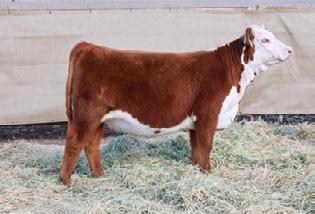
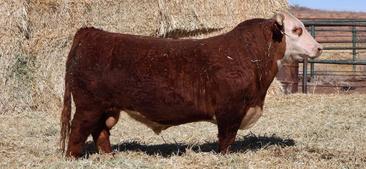

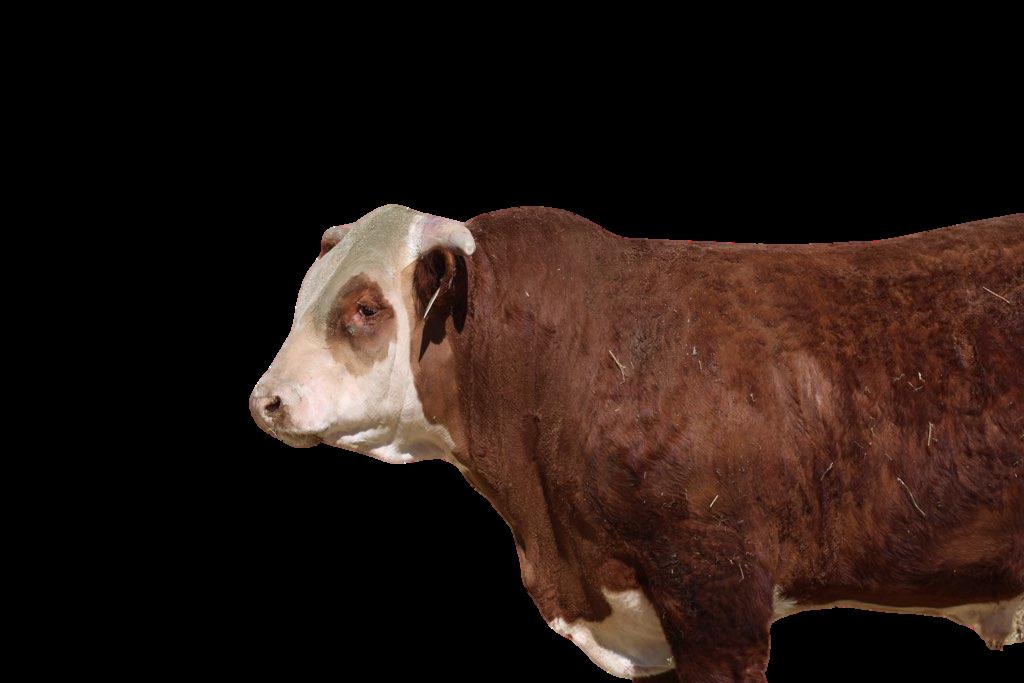
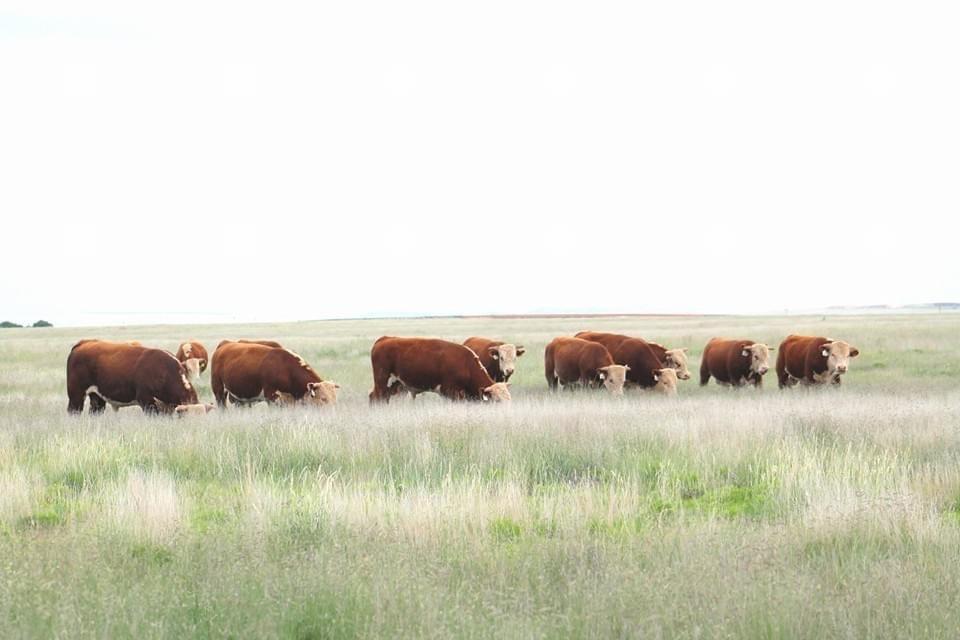
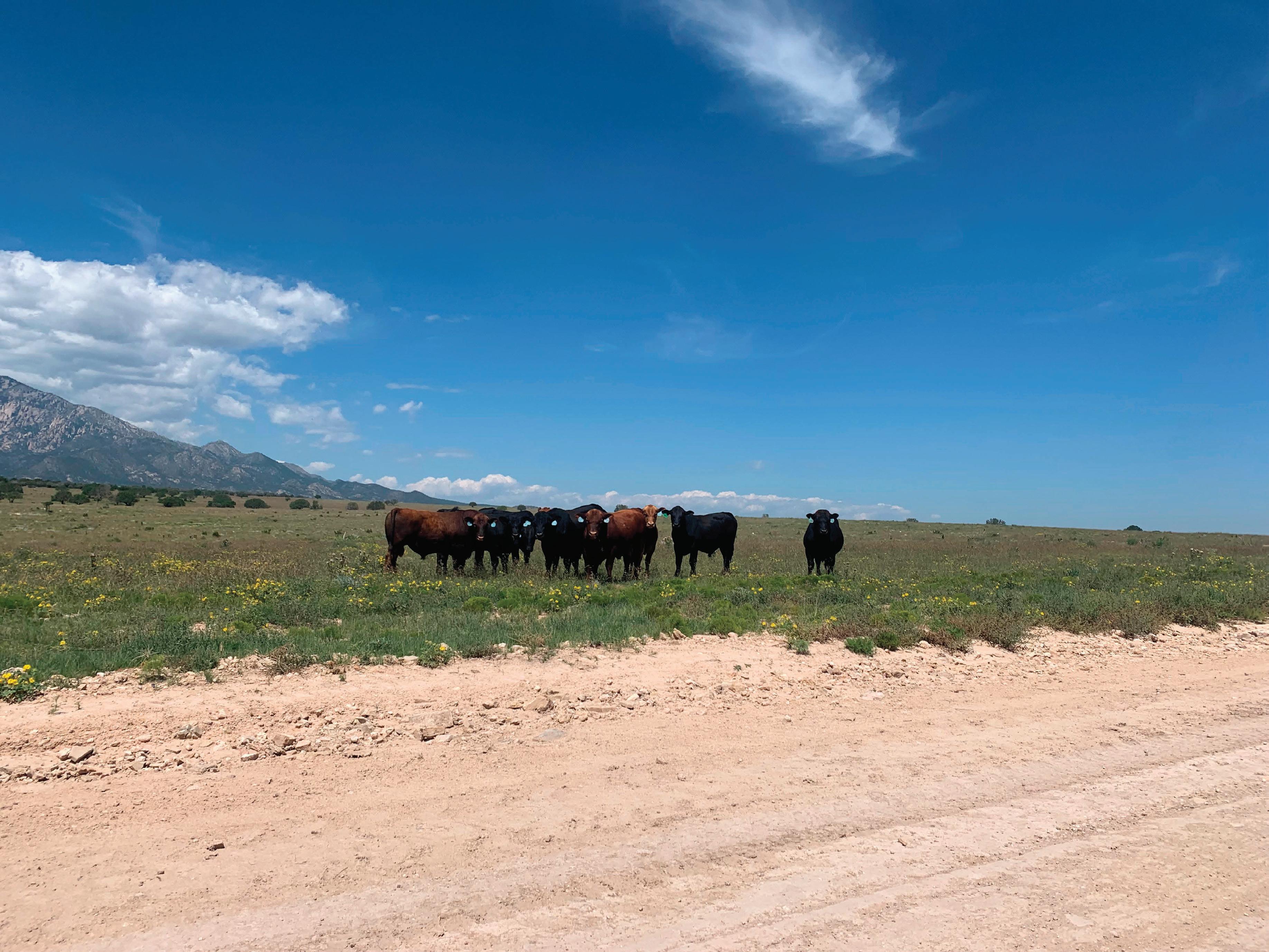
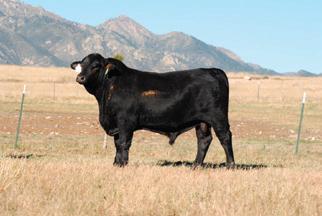
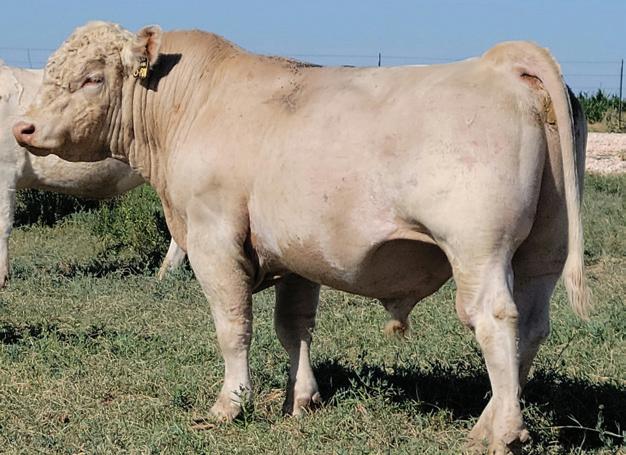
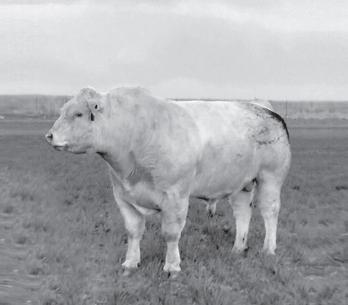
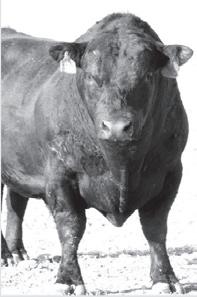
BK Miss Sancho 3059
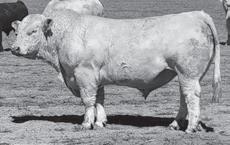
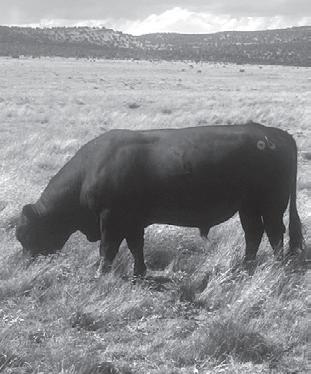
BK Belle Air 2299 ET
With
With
Skip
Skip the pressure of an





NMDA, NMLB, FSA, NMSU, NMBC, enviro update, legislative update, federal issues, etc.)


8:00am Golf Tournament at Inn of the Mountain Gods Golf Course

NEW MEXICO STOCKMAN
P.O. Box 7127, Albuquerque, NM 87194
505-243-9515 Fax: 505-349-3060
E-mail: caren@aaalivestock.com
Official publication of ...
n New Mexico Cattle Growers’ Association nmcga20@gmail.com
P.O. Box 850, Moriarty NM 87035 Office: 505.247.0584 , Fax: 505.842.1766
Physical Location: 809 First Street, Moriarty NM 87035 President, Bronson Corn n New Mexico Wool Growers, Inc. nmwgi@nmagriculture.org
P.O. Box 850, Moriarty NM 87035 Office: 505.247.0584 , Fax: 505.842.1766
Physical Location 809 First Street, Moriarty NM 87035
President, Antonio Manzanares
n New Mexico Federal Lands Council newmexicofederallandscouncil@gmail.com 3417 Avenida Charada NW, Albuquerque, NM 87107 President, Ty Bays
Publisher: Caren Cowan
Publisher Emeritus: Chuck Stocks
Advertising Representatives: Chris Martinez Melinda Martinez
Contributing Editors: Carol Wilson Callie Gnatkowski-Gibson Howard Hutchinson Lee Pitts
Production Coordinator: Carol Pendleton
Editorial & Advertising Design: Kristy Hinds
Chris Martinez at 505-243-9515 or chris@aaalivestock.com
New Mexico Stockman (USPS 381-580)
is published monthly by Caren Cowan, P.O. Box 7127 Albuquerque, NM 87194
Subscription price: 1 year hard copy and digital access $50, Digital access $30 Single issue price $10, Directory price $30 Subscriptions are non-refundable and may be purchased at www.aaalivestock.com
POSTMASTER: Send address changes to New Mexico Stockman, P.O. Box 7127, Albuquerque, NM 87194. Periodicals Postage paid at Albuquerque, New Mexico, and additional mailing offices. Copyright© 2015 by New Mexico Stockman. Material may not be used without permission of the publisher. Deadline for editorial and advertising copy, changes and cancellations is the 10th of the month preceding publication. Advertising rates on request.
17 FDA Issues Emergency Use Authorization for Over-the-Counter Injectable Drug for New World Screwworm in Dairy Cattle, Horses, Swine, Sheep, and Deer
18 Colten Grau Selected for 2026 Young Cattlemen’s Conference
20 Wayward Wildfires: Protecting Horses and Livestock From the Flame-Filled Threat Source: Texas A & M
21 New Mexico Unveils One-Stop New World Screwworm Website
24 Go On Offense with Strategic Deworming by Wade T. Nichols, Ph.D., PAS, Dipl. ACAN, Senior Technical Services Manager, Merck Animal Health
32 USDA Risk Management Agency Announces Livestock Insurance Program Enhancements
34 Conservation Planning Training Expands Support for New Mexico Producers
38 NMCGA Announces 2026 AIM Internship Recipients for Mid-Year Meeting
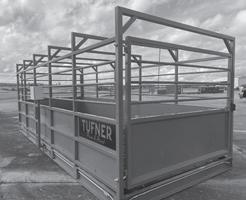
47 Cattle Facilities & Safety by Mark Z. Johnson, OSU Ext. Beef Cattle Breeding Specialist
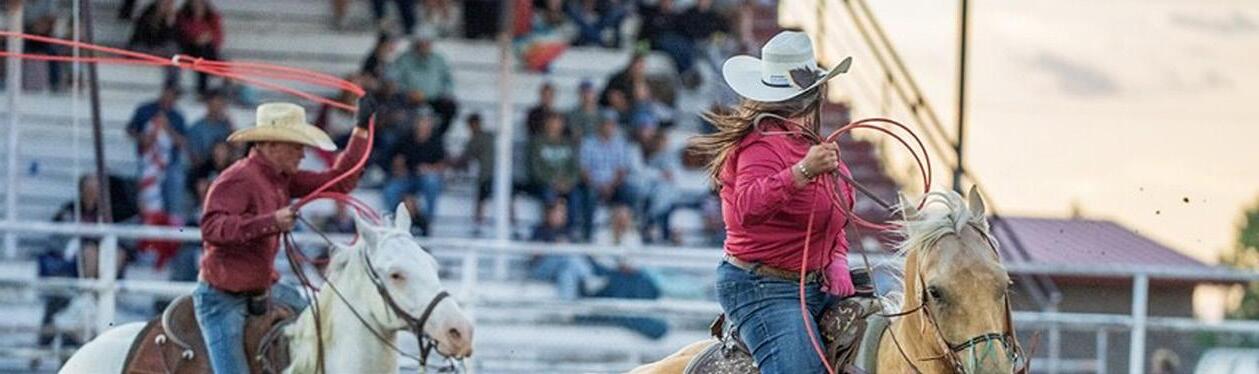
52 NM HS Rodeo Association Tylee DeHerrera: When Humble Carries A Winning Loop by Julie Carter
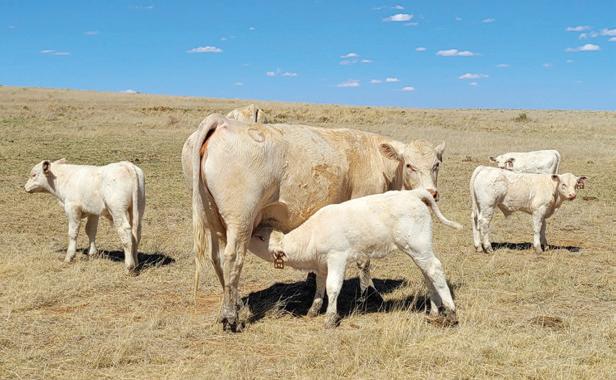
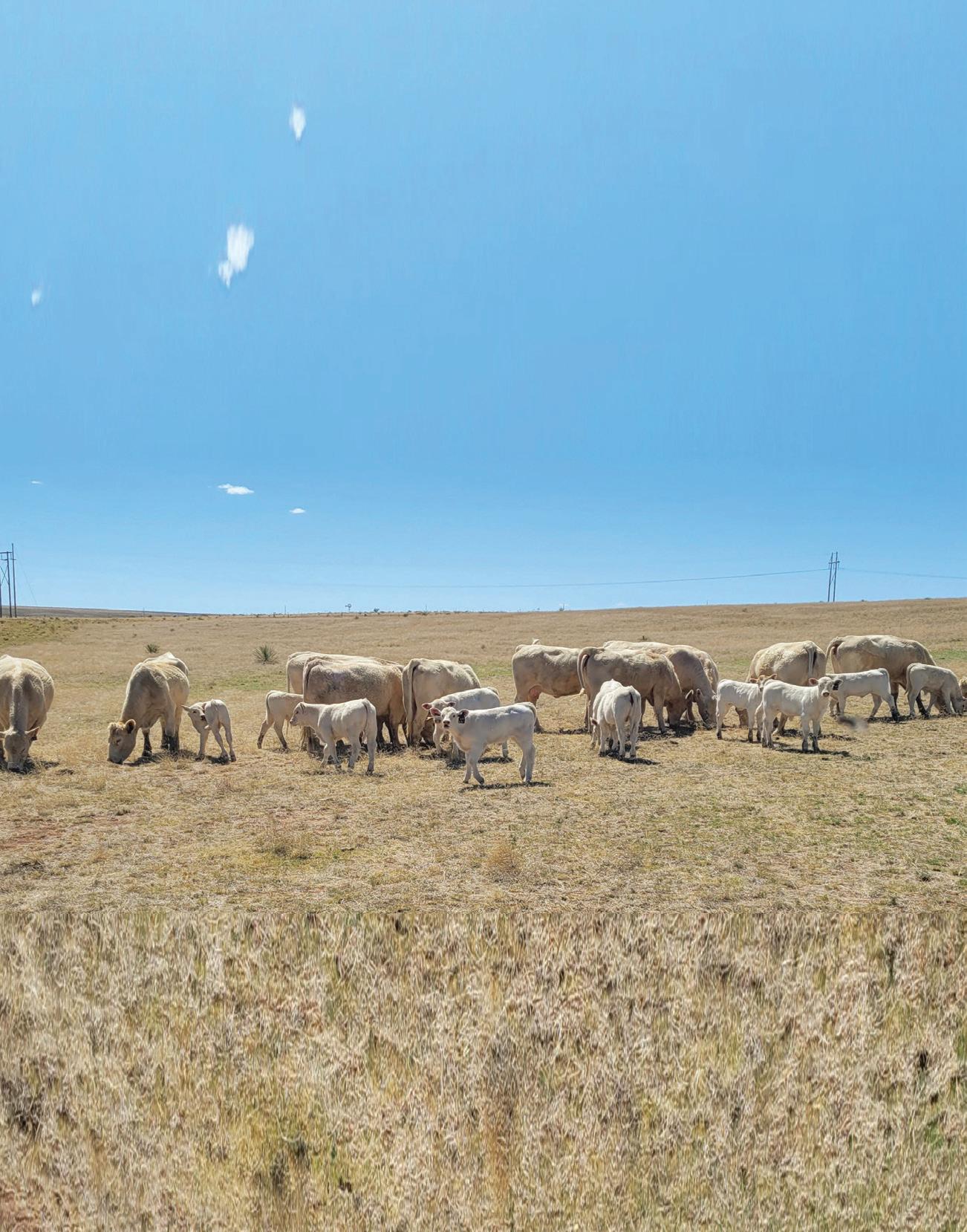
• 58 generations
• Light births / Heavy weaning weights
• 90% of calves on the ground in 45 days
• Adaptable – Sea level – High mountain
• Show Quality
• Longevity
• Gentle
• Heat resistant / Cold resistant
• Performance Oriented
• Grading Quality



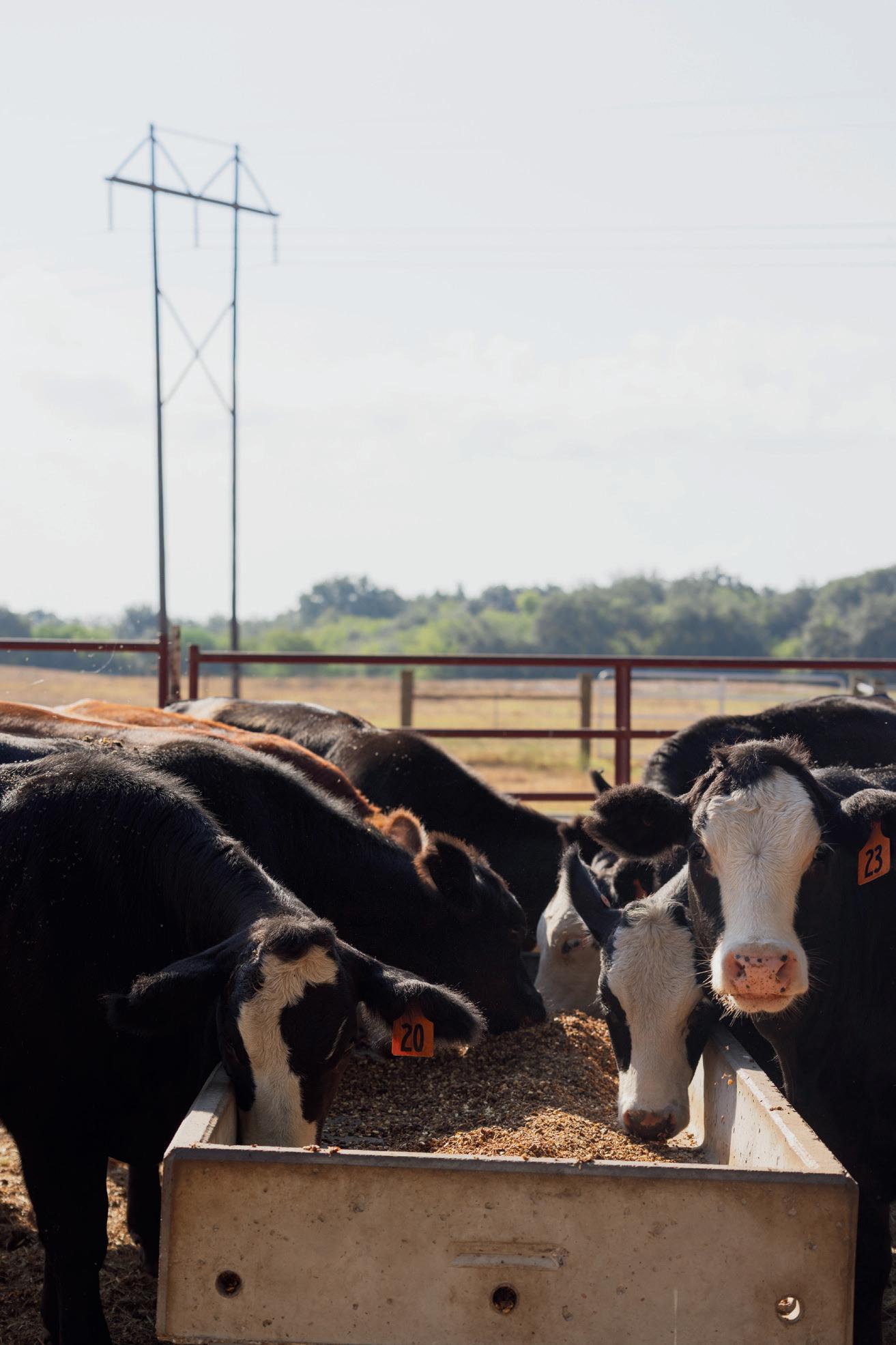

CONSISTENT FOR ALL CLASSES OF CATTLE
SCAN HERE TO LEARN MORE








MESSAGE
by Tom Paterson NMCGA President
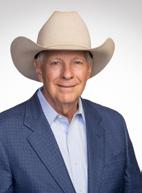
Tom Paterson President Luna
Dan Estrada President Elect Trementina
Marshal Wilson Vice President at Large Mesilla Park
Tracy Drummond SW Vice President Reserve
Dave Kenneke NE Vice President Cimarron
Jeff Decker SW Vice President Lovington
Marjorie Lantana NE Vice President
Tamara Hurt Secretary/Treasurer Deming
Bronson Corn
Immediate Past President Roswell
Loren Patterson Past President Corona
Since our last letter to you, the New Mexico Cattle Growers’ Association has continued to be on the move across New Mexico and beyond—working every day to protect, strengthen, and advance the interests of our cattle producers and rural communities.
We extended our statewide outreach with regional meetings and listening roundtables in southwest (with Tracy Drummond, Savannah Daniels, Erica Valdez, William Hurt) and southeast (with Jeff Decker and Wayne Shockey) New Mexico, including events in Deming, Carlsbad, and Lovington. Those meetings gave us valuable, direct input from producers about the challenges and opportunities facing cattle producers in every corner of the state.
In Washington, D.C., we (with Dan and Lillian Estrada, Alisa Ogden and Callie Paterson) worked at the PLC/NCBA Spring Legislative Conference, ensuring New Mexico ranchers have a strong voice in national policy discussions affecting public lands, livestock markets, natural resources, and rural economies.
Back home, we remained deeply engaged on key regulatory and policy issues. Work continued on the rollout of legislative priorities we had during the last legislative session—wolf damages, a trich eradication program (with Marshal Wilson), ag water conservation (with Howard Hutchinson and Jenny Pearce), meat processing grants, veterinary student loan repayment and Star Link mini’s for ALIRT members (with Marshal Wilson). We provided comments on proposed NMED surface water regulations (with Tom Shelley, Anita Hand, Dave Kenneke, Tom Sidwell, Nelson Shirley) and on State Land Office bonding rules (with Alisa Ogden). We took action to protect members’ property interests in the oil patch (with Jeff Decker and Alisa Ogden) and to preserve the E-Plus program.
We are also investing in the future of our industry. NMCGA is working on strategic planning, membership and sponsor development (with Callie Paterson), Mid-Year Meeting preparations (with our staff of Michelle, Abby and Jen), Cattlemen’s College programming (with Jim Thorpe and Jim Armendariz), and planning for our Joint Stockmen’s Meeting.
On the communications front, we continued expanding outreach through educational programs, interviews (Beef Magazine), articles (Albuquerque Journal ), op-eds (Albuquerque Journal ), and social media engagement to help educate broader audiences about the realities facing rural New Mexico.
One of the most significant efforts this month involved intensive meetings regarding Mexican wolf management. More than 150 ranchers, agency representatives, and stakeholders joined us (with Nelson Shirley, Audrey McQueen, Tracy Drummond, Ginger Cheney) to participate in meetings in Reserve and Datil, and in Springerville, Arizona. We will continue those discussions to produce meaningful results, including renewed Wildlife Services involvement in wolf removals, additional funding support, movement toward more management flexibility, expanded compensation opportunities, and improved communication tools for producers. We will also continue pressing for faster response times, improved access to GPS data, and meaningful changes in agency culture to better serve ranching families on the ground.
Beyond policy work, NMCGA also helped support agricultural education and youth outreach through McKeen Ranch Days in Alma, where approximately 300 students participated (Margie and Hugh B. McQueen, Misty Werkman, Howard Hutchinson, and Tracy Drummond).
Simply put, your association through its members and its staff is engaged on multiple fronts—defending producers, developing future leaders, strengthening rural communities, and making sure our cattle industry’s voice is heard wherever decisions are being made. Thank you for standing with us as we continue moving New Mexico’s cattle industry forward.
Adalante juntos,









by Caren Cowan, Publisher New Mexico Stockman

On May 12, 2026, the Bureau of Land Management (BLM) published a proposed rule that would change how it manages livestock grazing on federal public lands in the Federal Register.
The rule would apply land health standards to all BLM programs, not just grazing, so that ranchers are not unfairly blamed when other land uses cause environmental problems. It would also give ranchers more flexibility in how they operate, make it easier for BLM to update land health standards without going through as many approval steps, and change the appeals process so that a BLM grazing decision is automatically put on hold when a permittee files an appeal.
The BLM acknowledges that the proposed rule may significantly affect small ranching and livestock operations that hold grazing permits or leases on federal public lands. These businesses may be affected by changes to how the BLM evaluates land health, how much operational flexibility they have under their permits, and how quickly they can challenge BLM decisions that affect their livelihoods.
Small entities are encouraged to submit detailed comments describing how the proposed changes would affect their operations. The comments should include quantitative information on expected compliance costs, operational challenges, and suggestions for regulatory alternatives. The suggestions should be flexible approaches that would achieve BLM’s accountability objectives while minimizing disproportionate impacts on small businesses.
The draft can be found at: federalregister.gov/documents/ 2026/05/12/2026-09387/ revision-of-regulations-for-grazingadministration-exclusive-of-alaska
Comments are due on July 13, 2026. Every rancher who utilizes BLM lands is encouraged to submit comments on how they will be impacted.
The New Mexico State University is headed to Casper, Wyoming June 14 through 20 for the 2026 National Intercollegiate Rodeo Finals. The Men’s Team won the Grand Canyon Region. Freshman steer wrestler Damian Padilla won the All-Around for the Region. He picked up Team Roping as his second event and is taking teammate Kade McKnight to rope with him. McKnight, a freshman, will be competing in steer wrestling as well.
Freshman Kaden Miranda and sophomore Billy DeLong will be in the saddle bronc riding, while Lucas Cruz will be in the calf roping and Cade Griego will be in the bull riding.
The Women’s Team placed third in the Region. Brett Tully will be competing in the goat tying while Payton Levine competes in the breakaway roping.
Congrats Tyse Delk!
Fourth generation country musician got the surprise of a lifetime during the 2026 New Mexico State FFA Convention. His dad Neal announced to the world that Tyse will be inducted into the Grand Ole Opry on July 16 in Nashville.
Delk isn’t just a rising country star, he’s a fourth-generation farmer and rancher whose roots and family traditions have shaped
everything he does in life, including music. Raised around music, from gospel hymns to swing dancing, he didn’t pick up a guitar until age 19, but his storytelling and heartfelt sound quickly set him apart. Today, Delk is taking his music to new heights and building on a breakthrough year, which included the release of his debut EP.
Just when you thought it can’t get much dumber, it does. Folks enjoyed Yellowstone, but worse than the violence for most was the foul language. The writers on the show had a narrow vocabulary.
Its sequel Dutton Ranch might be worse. But there’s an app for that. For an introductory $3 per month VidAngel will connect to your existing streaming accounts (like Netflix, Prime Video, Paramount, and Apple TV+) and lets you set strict filters to skip or mute profanity, violence, and other mature content. Let’s not mention that you are already paying about $10 a month and up just to stream the filth into your home. ▫





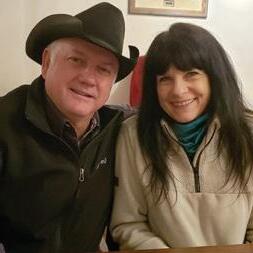

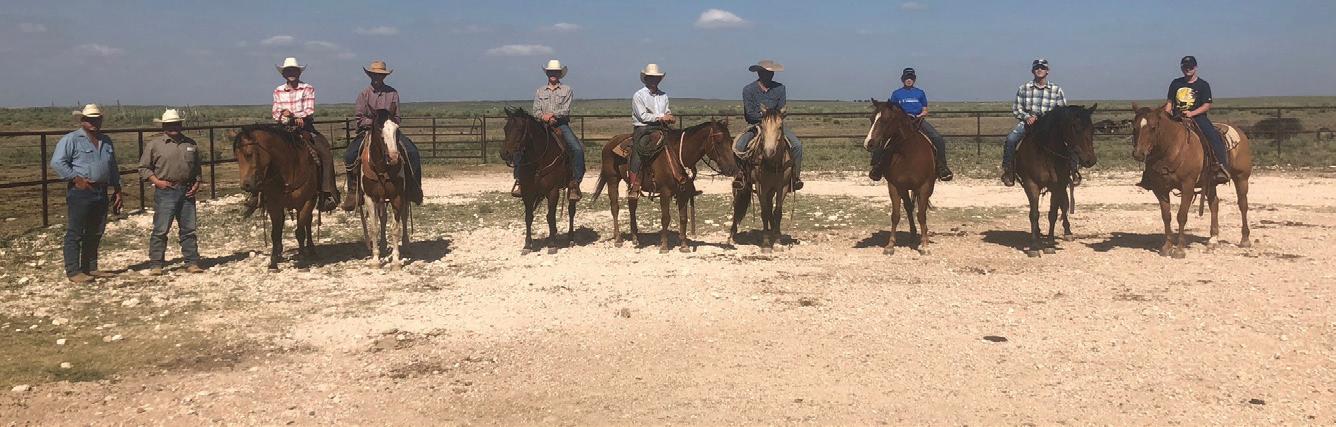
What a great start to May! New Mexico CowBelles hosted their Annual District Workshop May 8 and 9, 2026, in Socorro, New Mexico, and if you were not there, you missed some awesome presentations.
I would like to give a great big THANK YOU to everyone who helped put it together — from the organizers, speakers, and sponsors, to those who provided the binders for notes, the NMSU bags, pens, food, and beautiful table decorations. Without our sponsors, this event would not have been possible. Your hard work and dedication made this event a huge success, and I am already looking forward to doing it again.
Mid-Year is right around the corner, June 7 through 9, 2026, in Ruidoso. Ladies, you can register online, or a hard copy registration form can be found in the Wrangler that was emailed to you.
May was also National Beef Month, and many of you helped spread the word to youngsters all across the state about where
their beef comes from. Thank you, ladies, for all you do to keep this industry alive through your presentations, education, and outreach efforts.
Hope to see you all at Mid-Year!
God Bless you all, – Misti Orr NMCB President
Yucca CowBelles had a work meeting Tuesday April 28,2026 at CVE at 9:00 a.m. There was no business meeting. 11 members brought their pencils and good scissors and cut out the brands for the Brand Quilt that Carol Guiterrrez makes every year to raffle at the Eddy County Fair. After the work meeting we all enjoyed lunch together at The Herra Dura Restaurant. Respectfully submitted, Tina Kincaid, Secretary
Chamiza CowBelles, April 9, 2026. The regular meeting was called to order by President Destiny Sanders in T or C. Prayer, Pledge, and Creed were read. Agenda approved. Both previous month’s minutes and treasurer reports were read and approved. Candidate for Sierra County Commissioner Bruce Swingle was a guest speaker. It was confirmed that the application for Man of The Year was received. Beef Raffle tickets are ready to be handed out. Discussion whether all members should sell tickets. Sharon sug-
gested that if all must sell tickets then all should help at events. Sharon also questioned whether Chamiza CowBelles’ focus is solely on selling beef raffle tickets (which supports the scholarship program) or includes educating and advocating for the beef industry. Only one scholarship application has been received so far. Lots of confusion this year with the school, the kids, and the applications. The one applicant was forwarded on to the Pat Nowlin scholarship as the deadline was fast approaching. AG Day for the school will be May 14, where Beef By-Products will be presented. Banners to be made showing the different cuts of beef. The group will serve ice cream to the kids. Members Sharon Luna and Kristie Hawkins visited Washington, DC and met with several key personnel in the USDA. Sharon is putting together “Thank You Baskets” for each dignitary. It was voted to include NM Beef License plates and beef stickers. T or C is May 1-3. Sharon will include Chamiza CowBelles banners with the Farm Bureau and 4-H float. Meeting was adjourned at 1:05. Betty Welty won the free lunch. Next meeting is Thursday May 7, same place and time.
The U.S. Food and Drug Administration has issued an Emergency Use Authorization (EUA) for Dectomax/ Dectomax-CA1 (doramectin injection) injectable solution for the prevention and treatment of New World screwworm (NWS) infestations (myiasis) in dairy cattle (lactating dairy cows, dry dairy cows, and replacement dairy heifers 20 months of age and older), except for calves that will be processed for veal. The EUA also authorizes Dectomax/Dectomax-CA1 for the prevention of NWS myiasis in swine, horses at least one year old, sheep except for lactating sheep, and deer.
The FDA has concluded that based on the totality of the scientific evidence available, it is reasonable to believe that Dectomax/Dectomax-CA1 may be effective for the indications in the species described above, and the known and potential benefits of the product outweigh its known and potential risks.
Dectomax/Dectomax-CA1 is a single product with one label to reflect the product has:
Ї Approval (Dectomax) for the treatment and control of certain nematode and arthropod parasites in cattle and swine;
Ї Conditional approval (Dectomax-CA1) for NWS indications in beef cattle; and
Ї EUA (Dectomax/Dectomax-CA1) for NWS indications in dairy cattle, horses, swine, sheep, and deer.
The FDA evaluated relevant human food safety information and concluded that the

food products obtained from treated animals are safe for human consumption when the conditions of use granted by the EUA are followed, including the milk discard time and withdrawal periods. Adhering to the milk discard time and withdrawal periods helps avoid unsafe drug residues in animal-derived human foods.
Milk taken from lactating dairy cows, dry dairy cows and replacement dairy heifers during treatment and for 468 hours (19.5 days) after treatment must not be used for human consumption.
Slaughter Withdrawal Periods
Producers must wait the specified number of days after the last dose of Dectomax/Dectomax-CA1 before slaughtering treated animals for human consumption:
Lactating dairy cows, dry dairy cows, replacement dairy heifers: 35 days
Swine: 24 days
Sheep: 35 days
Deer: 35 days
Additional Limitations of Authorized Use
A withdrawal period has not been established for this product in pre-ruminating calves. Treated calves and calves born to treated cows must not be processed for veal. Do not use in horses less than one year old or horses intended for human consumption.
Not authorized for use in lactating sheep. Use in these sheep may cause drug residues in their milk.
Detailed product information for this EUA can be found in the fact sheet about the Dectomax/Dectomax-CA1 EUA for dairy cattle, swine, sheep, and deer; and the fact sheet about the Dectomax/Dectomax-CA EUA for horses.
This EUA will be effective until it is revoked or the HHS Secretary terminates the declaration that the potential public health emergency presented by NWS justifies the emergency use authorization of animal drugs for NWS.
Dectomax/Dectomax-CA1 is sponsored by Zoetis Inc. of Parsippany, New Jersey.


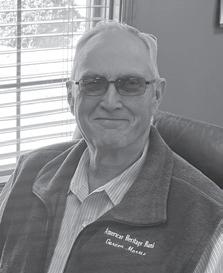
Colten Grau, vice president and loan officer at American Heritage Bank and rancher from Grady, will represent New Mexico in the National Cattlemen’s Beef Association (NCBA) Young Cattlemen’s Conference (YCC) May 28 through June 4, 2026. The week-long program includes stops in Colorado, Iowa/South Dakota, Ohio and culminates with meetings in Washington, D.C.
Grau earned a B.S. in Animal Science (production agriculture emphasis) and a B.A. in Spanish from Texas Tech University. His background includes living and studying abroad in Spain and time in Washington, D.C., Virginia and Texas before returning to the family ranch in Grady in 2013. From 2013 to 2020 he worked full time on the ranch with his father, Lane. In spring 2020, he joined American Heritage Bank in Clovis, where he now serves as vice president and

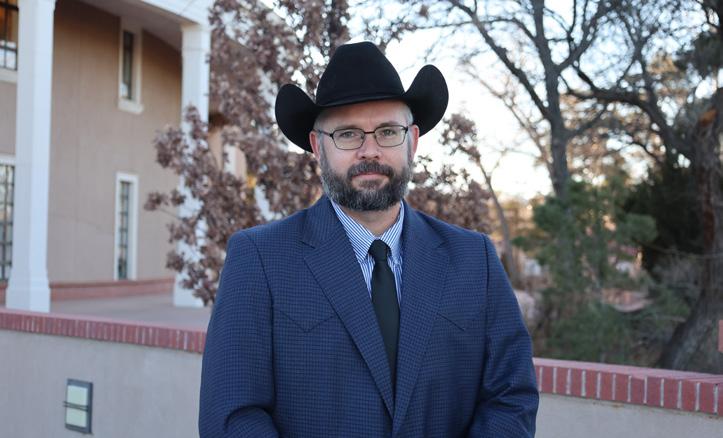
continues to support local ranchers and farmers as a loan officer. Grau remains active on the family ranch during evenings and weekends.
A committed community leader, Grau has served on the Grady School Board since 2016 and is its current president. He also serves on the New Mexico Cattle Growers’ Association (NMCGA) board and is a convention sponsor through American Heritage Bank. In his limited free time, he coaches his
daughter’s youth basketball team.
Grau is a member of NMCGA’s Linda Davis Young Cattlemen’s Leadership Academy (YCLA) Class 1 (2025). The YCLA and YCC are immersive leadership development programs that expose participants to leaders across the beef industry, deliver business and financial management training, provide behind-the-scenes access to the supply chain, and create direct advocacy opportunities on Capitol Hill. ▫





by Deanna Dickinson McCall
Igot a text from the church we attend. Another funeral was being held, and our church always feeds the family and attendees before the service. Sometimes it is 20 people, sometimes it is a hundred or more. The church provides the meat and a crew from the church cooks it, along with quite a few sides. I usually help out with providing food but usually make it at home. A kind of too many cooks in the kitchen thing, they don’t need more folks in their way. And I can cook quicker and easier in my kitchen.
This time it was for a church leader’s father. I know how much it meant to me when folks provided a nice meal for my family. Just knowing that folks care enough to want to make things easier for the family means a lot. Feeding folks is a way of caring for them. So, despite it not being the most convenient time, I try to “unbegrudgingly” serve when asked. This time I had to fit in making something between two medical appointments in two different towns.
I really hadn’t gone grocery shopping lately, but I can usually pull something together. I’ve always kept a well-stocked pantry and this is one of those times when boxed and canned goods, and the freezer, are lifesavers. I freeze things like bell peppers, herbs, pepperoni, salami, cooked meats, in addition to buying commercially frozen veg etables and meats.
I don’t live very close to the church, so I always try to make something that doesn’t require reheating and can pretty much just be set out. It also allows me to take the food when I might be going that direction, I just put it in the refrigerator there at the church. I try to bring something that doesn’t require more work for those serving. Today I was told there was not an abundance of dishes coming, so I made a pasta salad and brownies from a box. Using the bottled, store brand Italian dressing is a real time saver, it adds so much flavor. I usually have the ingredients on hand to make either pasta or potato salad.
The Italian pasta salad I’ve shared today has many variations. I’ve added chopped broccoli, cucumbers, herbs, even chopped zucchini. I’ve also not used tomatoes or olives if I didn’t have them. I like to have pretty colors in the food I prepare, remembering we eat with our eyes first.
12 ounces pasta (use what you have)
1 pint cherry tomatoes, halved 3 colored sweet peppers, chopped 1 shallot or ½ red onion, chopped 1/4 cup pitted kalamata olives or black olives
6 pepperoncini, chopped
6 to 8 ounces salami or pepperoni, cut into bite-size pieces
6 ounces mozzarella cheese, cut into small cubes
½ cup chopped celery
1 can of kidney or white beans, drained
Dressing Ingredients:
1 cup of mayonnaise
1 cup bottled olive oil based Italian salad dressing
Directions:
Boil pasta in salted water with a TB of oil added to the water until barely tender
Drain into colander and rinse with cold water until cool, set aside
Meanwhile, mix the dressing ingredients in a large bowl, add salt and pepper to taste
Add the remaining ingredients except the cooled pasta, mix well
Slowly add the pasta, sprinkling a layer of the pasta with salt, repeat for each layer. Fold the ingredients together carefully. Sprinkle with fresh or dried parsley and torn fresh basil leaves, if you like. Refrigerate to blend flavors, this is a good salad to let sit in the refrigerator for a day or two before serving.















Rural, wide-open spaces offer a peaceful life — except when the smoke and amber glow of a wildfire loom on the horizon. Whether a wildfire is quickly approaching or has ignited nearby, large animal owners must be prepared to protect their horses and livestock.
Dr. Kyle Johnson, a clinical assistant professor and Veterinary Emergency Team faculty member at the Texas A&M University College of Veterinary Medicine and Biomedical Sciences, discusses methods to protect your herd and homestead against wildfires and how to safely evacuate animals during an emergency.
Creating a protected and fire-conscious environment is key in slowing down or deterring a wildfire from reaching the large animals and structures on your property. Property owners can do this by approaching fire safety in “zones.”


“Implementing features incompatible with fire growth can give owners vital time for evacuating livestock,” Johnson said. “The goal is to create a defensible space around a barn in case of an approaching fire.”
The first zone — called the immediate zone — is the first 5 feet around the barn or structure; this area should not contain any flammable materials, such as plants, firewood, and propane tanks.
Other tips to keep in mind for the immediate zone include:
Ї Keeping a structure’s roof, particularly shingles, in good repair to prevent hot embers from igniting it
Ї If present, keeping gutters clean and free of flammable debris
Ї Regularly removing cobwebs from the structure
Ї Ensuring electrical systems, fans and lights are kept in working order
“Next is the intermediate zone, which is roughly 5-30 feet from the barn,” Johnson said. “In this area, landscaping choices and routine maintenance can greatly reduce wildfire risks.”
Tips to keep in mind for the intermediate zone include:
Ї Choosing fire-resistant, droughttolerant plants
Ї Using nonflammable groundcovers like stone or gravel instead of mulch
Ї Keeping grass mowed to less than 4 inches and pruning tree limbs
Ї Ensuring tree canopies do not extend to within 10 feet of a structure
“Finally, the extended zone extends up to 200 feet past the intermediate zone,” Johnson said. “In this area, your goal should be to limit a wildfire’s path to a structure by removing dead trees and ensuring that there is sufficient distance between neighboring trees.”
The Texas A&M Forest Service is a great resource for information about fire-resistant landscaping and how to create defensible space; it also maintains both a current wildfire status webpage as well as an incident viewer tool.
“It’s important to be aware of fire conditions in your area,” Johnson said. “These tools can help ranchers and horse owners know their area’s current fire risk and allow them to see actual fire incidents in their vicinity.”
Evacuation efforts
Despite having fire-resistence efforts in place, some wildfires may rage past defenses and infiltrate structures on your property, making evacuation necessary.
When evacuating animals from within a barn, Johnson recommends calmly but quickly haltering and leading them toward a secure pasture out of the fire’s path or off the property altogether.
Wildfires may also blaze through pastures full of horses and livestock, which can present additional challenges.
“When faced with a wildfire, animals will follow their natural instincts and move away from it,” Johnson said. “When an animal is pastured, however, their ability to move away is limited.”
Evacuation is the best option, but it is not always possible — wildfires are unpredictable and can move quickly across open terrain.
“In an emergency situation, many ranchers will cut fences to allow horses and cattle to move away from the fire,” Johnson said. “It’s important to speak with your neighbors to create a hypothetical plan, as the best option may be cutting a fence to allow animals to move onto a neighbor’s property.”
It’s best to avoid cutting fences that allow
New Mexicans now have a single, state-run website with up-to-date information about New World screwworm, including how to identify infestations, protect people and animals, and report suspected cases.
New World screwworm (NWS) is a parasitic fly whose larvae infest open wounds and feed on living tissue, causing rapid, often fatal damage if untreated. It primarily affects livestock and wildlife but can also affect pets and, in rare cases, humans.
The New Mexico Department of Agriculture (NMDA), in partnership with state health, livestock, and wildlife agencies, has streamlined resources on ScrewwormNM.org, providing step-by-
livestock access to roads, as this creates a hazard for both the animal and drivers.
Once the wildfire has subsided, the next battle may be locating dispersed animals — a

step guidance on recognizing infestations, reporting suspected cases, and contacting experts. If NWS is detected in New Mexico, the site will be the state’s primary source for updates and response actions.
“This website provides clear, accurate information in one place from the agencies leading the response,” said New Mexico Secretary of Agriculture Jeff Witte. “Be alert, not alarmed — early detection and strong communication are vital to protecting animals and public health.”
“Cases in animals can deteriorate rapidly if not addressed early,” said Dr. Samantha Holeck, state veterinarian with the New Mexico Livestock Board. “Having guidance in one place supports faster diagnosis, appropriate treatment, and timely reporting, all key to limiting spread.”
The New Mexico platform complements federal resources at screwworm. gov, the one-stop website providing consistent messaging and nationwide coordination.
JANUARY — Wildlife; Gelbvieh; Joint Stockmen’s Convention Results
FEBRUARY — Hereford; Beefmasters; Texas Longhorns
MARCH — Limousin; Santa Gertrudis
APRIL — Dairy
MAY — News of the Day
JUNE — Sheepman of the Year
JULY — Directory of Agriculture
AUGUST — The Horse Industry
SEPTEMBER — Charolais; Fairs Across the Southwest
OCTOBER — Angus; Brangus; Red Angus; NM State Fair Results
NOVEMBER — Cattleman of the Year; Joint Stockmen’s Convention Preview
DECEMBER — Bull Buyers Guide
task made easy if they have an identifier.
“It’s critical for horses and livestock to have proper permanent identification — like microchips, tattoos, or brands — before disaster strikes so they can be returned back to their owners once the emergency is over,” Johnson said.
“There are also a variety of non-permanent forms of identification, both commercially available and homemade, that owners can use, including halter tags, plastic neck or ankle bands, and using shoe polish or spray paint to mark animals with a name or telephone number,” he said.
If ear tags or cattle brands are used, it’s important to properly register them with the county, if such a program is in place.
In addition to identification, it’s helpful to take photos of horses from all sides to ensure they are returned to their rightful owner post-disaster.
In the midst of a wildfire emergency, horses and livestock depend on their owners to have a formidable plan to ensure their safety and well-being. Wildfire preparation is not a suggestion; it is a life-saving necessity to shield animals against flames that may reach their home. ▫
900 North Garden · P.O. Box 2041 Roswell, New Mexico 88201 575-622-5580
www.roswelllivestockauction.com
CATTLE SALES: MONDAYS • HORSE SALES
BENNY WOOTON CELL 575-626-4754
SMILEY WOOTON CELL 575-626-6253
Producers hauling cattle to Roswell Livestock New Mexico Receiving Stations need to call our toll-free number for a Transportation Permit number before leaving home. The Hauling Permit number 1-800-748-1541 is answered 24 hours a day, 7 days a week.
Trucks are available 7 days a week / 24 hours a day
ATTENTION RECEIVNG STATION CUSTOMERS, To be able to schedule trucking, all cattle need to be permitted by 1:00 p.m.
LORDSBURG, NM
20 Bar Livestock Highway #90 at NM #3 – East side of highway. Receiving cattle for transport 2nd & 4th Sunday of each month. Smiley Wooton, 575622-5580 office, 575-626-6253 cell.
PECOS, TX
Jason Heritage is now receiving cattle every Sunday. For information to unload contact Jason Heritage 575-840-9544 or Smiley Wooton 575-6266253. Receiving cattle every Sunday.
VAN HORN, TX
800 West 2nd, 5 blocks west of Courthouse. Bob Kinford, 432-284-1553. Receiving cattle 1st & 3rd Sundays.
MORIARTY, NM
Two blocks east and one block south of Tillery Chevrolet. Smiley Wooton 575-622-5580 office, 575-626-6253 mobile. Receiving cattle every Sunday
SAN ANTONIO, NM
River Cattle Co. Nine miles east of San Antonio on U.S. 380. Receiving cattle for transport 2nd & 4th Sunday of each month. Smiley Wooton 575-626-6253.
Texas Attorney General Ken Paxton has launched an investigation into the beef industry over potential anticompetitive conduct among the nation’s largest meatpackers..
Paxton said the investigation would be conducted alongside a separate antitrust probe announced by the U.S. Department of Justice under President Donald Trump’s administration.
The investigation is focused on the highly concentrated beef packing sector, where four companies — JBS S.A., Tyson Fresh Meats, Cargill and National Beef Packing Co. — collectively control more than 85 percent of U.S. beef processing capacity, according to Paxton’s office.
The attorney general cited reports alleging the companies may have used their market power to suppress cattle prices paid to ranchers while increasing beef prices for consumers.
“These four firms have reaped enormous profits at the expense of Texas cattle ranchers and consumers nationwide,” the attorney general’s office said in a statement.
“Texans deserve fairly priced beef and our state’s cattle ranchers deserve to be paid fairly for their hard work,” Paxton said. “If major meatpackers manipulated the market to underpay ranchers while forcing families to pay higher prices at the grocery store, we will hold them accountable.”
Paxton said his office would investigate potential violations of antitrust law “to protect fair competition, ranchers, and Texas consumers.”
by Peter Voskamp, meatingplace.com
The US cattle stock rebuild may be slowly emerging as initial 2026 data show a higher heifer retention rate year-over-year, according to a report in the Q2 North American Agribusiness Quarterly.
Citing the USDA’s semiannual producer survey, “heifer calf and feeder heifer sales, heifer inventories on feed, and heifer slaughter, showed declines of between 0.3 and 1.6 percentage points in the share of heifers,” per the report.
Slaughter of beef cattle between January and April was also down 18 percent when compared to the year before.
The report asserts that while slow, herd rebuilding in the US is underway in cow-calf regions especially among large operations. Nevertheless, “cattle supplies are not expected to increase meaningfully until 2029,” adding that drought continues to potentially undermine the process.
Pasture conditions in the US, as growing season approaches, are in their worst shape since 2021 and 2022. Approximately 80 percent
of the beef cow herd in the US in April was located in areas suffering moderate or worse drought.
The report goes on to state that Canada has a jump on the US in rebuilding its herd. Beef cow inventories in Canada as of January 1 were 1.9 percent higher year-over-year, and beef replacement heifers increased 4.8 percent to 543,700 head.
Nevertheless, Canada has had to supplement its beef supply.
“As in the US, reduced cow slaughter has led to higher imports as lean beef supplies tighten. January and February beef imports reached a record 52,900 tones, up 23 percent from last year,” the report reads.
Meanwhile, the report notes that Mexico is ensnared in a battle with New World Screwworm, and that as of May 15 incidences of the sickness were reported within 100 miles of the Texas border.
Current efforts to stem the disease’s spread include the release of between 100 and 125 million sterile male flies per week in the infected areas, with a goal of dispatching up 500 million such flies into the zone of interest.


By Wade T. Nichols, Ph.D., PAS, Dipl. ACAN, Senior Technical Services Manager, Merck Animal Health
If you’ve ever been near a football field, basketball court or other sporting venue, you may have heard the phrase, “The best defense is a good offense.” Instead of taking it to the end zone, let’s take it to the pasture. This metaphor emphasizes the power of taking a proactive approach to protect yourself or achieve your goals, rather than passively waiting for threats to arise. The same can be said for strategic deworming. Deworming at the right times can assist in providing season-long parasite control and help your cattle maximize their potential.
Implementing a strategic deworming program can reduce parasite burdens in the
herd and especially on pasture. By administering dewormers at the right times, you can interrupt the parasite life cycle.
In stocker operations, strategic deworming involves administering dewormer on arrival and/or at the start of pasture green-up, when extended grass growth begins. A second treatment is given three to four weeks later and, where warranted, a third treatment three to four weeks after the second. The region’s geography, climate, and parasite load affect your deworming management decisions and approach to improving margin in your cattle. Consult your local veterinarian and/or nutritionist for best practices in your region.
Research shows summer deworming improves cattle health and production. A research trial compared grazing performance and economics, parasite enumeration and pasture larvae contamination over a 99-day summer grazing period.1 Steers were divided into groups and assigned one of the following treatments:
1. SAFE-GUARD® (fenbendazole) Suspension + Cydectin® (moxidectin) Pour-On given at processing only (control
2. SAFE-GUARD Suspension + Cydectin Pour-On given at processing followed by SAFE-GUARD 0.5% Pellets fed on Day 29 and Day 59 of the study.
Results showed the strategically dewormed steers in Group 2 gained an average of about 17 more pounds and had 0.18-pound greater average daily gain than the control steers. Considering today’s market prices, this could result in a $45-$49 per head profit margin.1
Strategic deworming reduced the parasite burdens cattle experienced and resulted in improved animal performance. At the conclusion of the study, steers in the control group harbored approximately seven times as many immature O. ostertagia nematodes, commonly known as brown stomach worms, compared to strategically dewormed steers. Strategically dewormed steers harbored significantly fewer numbers of parasites in all life stages of the brown stomach worm and reduced Cooperia , a detrimental small intestine parasite, in all stages and significantly reduced those numbers in the early L4 stage.

Since the vast proportion of parasitism resides on the pasture, managing pasture larval contamination is one of the most critical components of controlling internal parasites. Adult cattle shed internal parasite eggs in their manure. These eggs will then hatch and progress through several larval stages until they reach an infective form. By reducing the parasite load on pasture, you reduce the likelihood of cattle ingesting those parasites and developing production and health issues associated with internal parasites.
The study also evaluated pasture larvae count. Because cattle were maintained on the same pastures throughout the study, multiple treatments with SAFE-GUARD 0.5% Pellets on pasture resulted in reduced pasture larvae contamination. Pasture nematode larval contamination was reduced by 61% on Day 84 and 33% on Day 99 in pastures grazed by strategically dewormed steers.
Save yourself a trip to the chute Summer deworming can provide huge
advantages to your herd, and it doesn’t require a trip through the chute to reap the benefits. Using feed forms of dewormers require relatively little time and labor while still being highly effective, as seen in the study above.
Additional research has shown that SAFE-GUARD feed formulations show an average weaning weight increase of 31 pounds in calves and a 16 percent increase in average daily gain in stocker cattle.2-9
Accurate dosing is critical to reduce resistance and ensure the dewormer is effective. It is important to follow label directions carefully and feed the proper amount required for the total number and weight of cattle being treated.
Add summer deworming to your play-
in the New Mexico Stockman. Call: 505/243-9515.
book and see improvements in your pasture parasite load and more money in your wallet.
References:
1. Data on file. Merck Animal Health. Technical Bulletin, Deworming with SAFE-GUARD® Suspension and Cydectin® Pour-On with or without Strategic Deworming with SAFE-GUARD® 0.5% Alfalfa-Based Pellets. 2024. US-SFG-231000009.
2. Taylor, FT. Effects of a Strategic Deworming Program in Beef Cattle with Subclinical Parasitism in the Western United States. BCVA Edinburgh. 1996.
3. Kvasnicka, WG, et al. Fenbendazole in a strategic deworming program. The Compendium. Food Ani. Parasit. 1996;18(4)113-117.
4. Wholgemuth, KM, et al. Deworming Beef Cow and Calves with Fenbendazole: Effect on Weaning Weight of Calves. North Dakota Farm Research Bimonthly Bulletin. 1990;48(4)27-30.
5. HRVET Study GHM/19. Cow/calf producers in the Northern Plains have wondered if parasite control can pay for itself. 1990.
6. Hoechst-Roussel Agri-Vet Company. Study Number A640468.
7. Hoechst-Roussel Agri-Vet Company. Study Number A640438.
8. Hoechst-Roussel Agri-Vet Company. Study Number A640039.
9. Keith, EA. Utilizing Feed Grade Formulations of Fenbendazole for Cattle. Agri-Prac. 1992;13(1)17.

LeRoy Carl Cravens, 94, Encino, passed away on May 16, 2026. Born at Pedernal, New Mexico on October 21, 1931 to Carl and Lorine Cannon Cravens. LeRoy was the oldest of brothers Lamar and Phillip.
He attended primary school in Pedernal, middle and high school at Encino, both in Torrance County. In high school LeRoy played basketball and worked on the family homestead where they raised dry land beans. While in high school he met his future wife Mercedes Perez, who was from a pioneering family that owned the Victor Perez Ranch. LeRoy graduated in 1949. In 1950 the Korean War started and Leroy joined the Navy, serving four years during which time he and Mercedes were married.
After the Navy, the family moved to Las Cruces where LeRoy earned a Bachelor of Science in Agriculture and a Master of Arts degree from what is now New Mexico State University. Following this, the family moved to Albuquerque where LeRoy taught school and earned a Master of Education in Science degree from the University of New Mexico. LeRoy taught for 26 years and retired in 1984 to pursue ranching full-time on ranches both he and Mercedes inherited. LeRoy lived and worked on the ranch for 42 years until his passing on May 16th at age 94. Ranching was his life-long dream.
LeRoy is survived by Mercedes, his wife of 75 years who is still actively working the ranch. Their four children Keith; Mark and his wife Jayne; Clay; and Cindy; five grandchildren and nine great-grandchildren, ranging in age from 15 years to 15 months.
Thelma Ruth Walker, 96, passed away on March 22, 2026, in Alamogordo, New Mexico. She was born on June 10, 1929, in James Canyon, New Mexico, to George Gordon Wimsatt Sr. and Johnnie Alice Rhodes Wimsatt.
She had a full life together with the love of her life, Charles R. Walker. For over 78 years they worked together ranching, cooking, hunting, and reading the Bible together. She was a great hunter, musician, cook, and gardener. She was an excellent follower of Christ and loved God, her country, her family, and her many friends.
She faithfully supported the Christadelphian faith, New Mexico Cattle Growers’ Association, the Lincoln Forest Grazing Advisory Board, Otero County Cattleman’s Association, Otero County Grazing Advisory Board, Agricultural Stabilization and Con-
continued on page 29 >>




by Lee Pitts
WARNING: This is a modern day fairy tale that you shouldn’t read to your kids or grandkids because it will give them nightmares. They won’t want to go outside to play or walk to school. It’s been awhile since anyone has read me a fairy tale but if I recall correctly this is based on two old classics: “The Three Little Pigs” and “Little Red Riding Hood.”
Once upon a time a big bad wolf showed up at the door of a Chicago penthouse and knocked on Little Red Riding Hood’s door. “Open up or I’ll tear your house down and eat you,” said the wolf.
The high society billionaire heiress looked at her Ring camera and said with great excitement, “Oh, how wonderful, a real wolf showing up at my doorstep. I’m surprised you made it this far because this is the murder capital of the country and there are lots of hoodlums around here with guns.”
“I came with a pack of other wolves and we all came disguised as dogs,” the wolf explained.
“My, what big claws you have. You don’t look at all like the pictures in National Geographic. I thought you were just found out West with all the hick ranchers. I never dreamed I’d get to come face to face with a real wolf. I want you to know I’ve been sending money to the Wolf Conservation Center, Lobos of the Southwest and the American Wolf Foundation for years but I’ve never actually seen a real wolf up close and personal. It’s so exciting.” She unlocked the five locks on her door and said, “Come on in. Have you had anything to eat.”
“I had a couple lamb chops and some veal cutlets for breakfast but I never turn down a free meal.”
“Well, you’ve come to the right place,” said Miss Riding Hood. “I never did believe all that propaganda about wolves terrorizing
the countryside and killing defenseless animals. You poor thing. I’m so glad you didn’t get shot coming here.”
“So am I, the last time I saw this many murderers all in one place was at my family reunion.”
“Please do come in and make yourself at home. You’re certainly welcome to spend the night.”
After no one heard from Miss Hood for weeks the cops finally went to her apartment and found a pile of bones and what was later determined to be wolf droppings.
A few months later the wolf showed up in a suburb of Denver despite nearly getting run over by all the traffic. He knocked on the door of a tract home. “I heard you folks here in Colorado really love wolves and are big supporters of bringing in more illegal immigrants like me from Mexico and Canada. It’s freezing out here and I could use a place to come in out of the cold.”
Once again, the resident looked through her peephole and said, “My what big teeth you have. Is that blood there on your chinny chin chin? I love wolves but to be honest, you’re the first one I’ve ever met. I thought you were just like dogs who could share my life and cuddle with me on the couch as I watch The Housewives of Beverly Hills. You’re not what I expected.”
“BURP! Excuse me,” said the wolf. “I got a bad case of indigestion from eating your Llasa Apso in your backyard.”
“You ate my dog?” the lady shrieked. “I’m calling the police, the Army and the National Guard.”
“It won’t do any good lady. I’m an endangered species and fully protected.”
“I don’t care. I’m canceling my Friends of the Wolf membership and if you don’t leave this instant I’m calling the governor to come and get his wolf.”
The wolf took off and later found himself in ranch country out near Sterling where he dined on a calf as the cow was giving birth to it. Then just for kicks he ate the hindquarter out of the cow and left her to die a slow death. He saw a ranch house nearby and knocked on the door. “Open up. It’s me and I’ve come to eat you out of business.”
“Well you’ve pretty near done it,” said the rancher. “But I’m afraid this story doesn’t have a fairy tale ending.”
“KaBoom!”
And nobody lived happily ever after.
servation Service, Otero County Farm Bureau, and the Lincoln Forest Allotment Owners Association. She and Charles donated land and helped with the 16 Springs Fire Department.
Survivors include her daughter, Kathleen Wells (husband Foye Wells); grandchildren, Shawna Wells (husband Chris Huzdovich), Troy Wells (wife Dana Wells); great-grandchildren, Moriah Cubwell (husband Lachie Cubbin), Caleb Martin, Charlie Wells; and great-great-grandson, Aslan Cubwell.
In lieu of flowers, contributions may be made to the Pioneer Christadelphian Bible School, Judy Bouma Treasurer, 39 Cielo Montana, Alamogordo, NM 88310.
Elizabeth Mae (Patee) Jones, 94, Crow Flat, New Mexico was born February 11, 1932 to Lyman and Sadie Patee, in Tucumcari. She was raised in Alamogordo, and married her high school sweetheart Robert A. (Bob) Jones on March 10, 1950. They moved to the family ranch where they raised
two sons, Robert (Bobby) and Michael (Mike).
Liz was always a gracious host, cooking many meals for folks who stopped by to visit, and for big crews of cowboys over the years, as well as an excellent seamstress. She was also the local “Mary Kay Lady” for a number of years, sporting her signature red lipstick.
Liz was very active in Otero CowBelles and statewide with the New Mexico CowBelles, holding several offices throughout her tenure with the groups. In her later years, Liz enjoyed time with her friends in the “Red Hat” group in Dell City, Texas. Liz loved to brag about her grandchildren and great-grandchildren, and they were a source of great joy, as evident by as many pictures as she could gather of them all. Known widely for her kindness and dedication to her family and friends, Liz will be greatly missed by many.
Liz passed away peacefully at the age of 94 on May 14, 2026. She is survived by son, Bobby and wife, Pat; granddaughter,
Michelle Greeman and husband, Ty; grandson, Mike Jones and wife, Anna; Amanda (Snow) Swanson and husband, Jacob; and nine great-grandchildren, Trey, Ethan, Gage, Evie, Zoe, Embrie, Xeric, Corbin, and Gunnar.
A special thank you to Rudy Calderon and family for the care and kindness given to Liz over the several years.
In lieu of flowers, please consider donating to the NMCB Pat Nowlin Scholarship Fund in her memory or another charity of your choice. Donations can be mailed to: NMCB Pat Nowlin Scholarship Fund , c/o Shelly Labrier, 4706 Alamocito Ct., Amarillo, TX 79124
Editor’s Note: Email caren@aaalivestock.com. Memorial donations may be sent to the Cattlegrowers’ Foundation, a 501(c)3, tax deductable charitable foundation serving the rights of ranch families and educating citizens on governmental actions, policies and practices. Cattlegrowers Foundation, Inc., P.O. Box 7517, Albuquerque, NM 87194. The New Mexico Stockman runs memorials as a courtesy to its readers. If families & friends would like to see more detail, verbatim pieces must be emailed to us, & may be printed at 10¢ per word.

by Don Bullis, New Mexico Author donbullis@msn.com
Remember the western movies in which the United States Army’s cavalry on the 19th century western frontier withstood attacks upon its forts by large groups of Indian warriors? Did you ever wonder why the Indians would engage in such an obviously self-destructive military tactic? Some Indian leaders, after all, were very good at offensive military strategies. They had to have known that the soldiers had the complete advantage with virtually unlimited supplies of ammunition and stockades to protect themselves from arrow and bullet.
The fact is that such a scene rarely, if ever,
happened. There was no good reason for the Indians to attack fortified army posts. They well knew that the soldiers had to come out from time to time, and that is when they were vulnerable.
The best-known example is the so-call Fetterman massacre near Fort Phil Kearney, Wyoming in December of 1866. Sioux Indians set upon a firewood gathering detail outside the fort’s walls. Captain William Fetterman and eighty troops were dispatched to the rescue only to be confronted by about 2,000 Indians under the leadership of Crazy Horse. Within twenty or so minutes, Fetterman and his command was wiped out to a man.
Capt. Fetterman had previously boasted thus: “Give me eighty men and I’ll ride through the whole Sioux nation.”
And it wasn’t only the Indians who understood the folly of a frontal attack on a fortified position. When General H. H. Sibley led the Texas Confederates into New Mexico in 1862, they simply by-passed Fort Craig with its adobe walls and proceeded north. The Union troops were thus forced to fight in the open at the Battle of Valverde. The Confederates lost anyway.
Forts in New Mexico were not of log stockade construction, for a simple want of
We made it through the primary, and now the real work begins. Thank you to everyone across New Mexico, who believes our state deserves experienced leadership, common sense, stewardship, and someone who understands our land because they have actually worked on them. This campaign has never been about politics as usual. It has been about ranchers, farmers, sportsman, energy workers, small business owners, and families who want a stronger future for New Mexico. Now we head toward the general election with momentum, determination, and a growing coalition of hard-working New Mexicans from every corner of the state. I’ve spent my life working on the land, protecting wildlife and watersheds, supporting rural communities, and fighting for responsible use of our natural resources. I am ready to bring that experience to the State Land Office. Together, we can protect our traditions, strengthen our economy, support our schools, and leave New Mexico better than we found it. The next chapter for New Mexico starts now.

• perry4nmland.com • facebook.com/perryfornm
logs. Those that had parapets were constructed of adobe, but most didn’t have any walls at all. Fort Union in northeastern New Mexico, the largest of them all and a major supply facility, had only earthen bunkers around it. That was quite enough. In its 40 years of service (1851-1891) it was never attacked by Indians or anyone else.
It is also incorrect to imagine that the New Mexico’s forts, especially in the early days, were manned by cavalry troops. More often than not they were manned by infantry troops or dragoons. Dragoons were defined as mounted infantry, and they differed from cavalry in that they were more heavily armed. There were also light artillery units scattered among the forts even though Indian warfare rarely lent itself to the use of cannons.
The history of military forts in New Mexico is an interesting one, as much for economic reasons as military. There was no general agreement as to exactly where the forts should be located. From 1846 until the beginning of the Civil War in 1861 there were almost constant “reorganization” plans for the army’s Department of New Mexico, both piecemeal and grandiose. All such plans were based on the economy of provisioning the military installation and the protection of economic interests in the area

they were intended to serve.
The cost of maintaining forts was enormous. Troops had to be fed and housed, and so did all their support animals. Military personnel do not traditionally produce commodities for their own sustenance and so foodstuffs had to be purchased locally or hauled in. Some could be produced nearby and some could not. For instance, for a time, the army preferred pork as a meat staple rather than beef or mutton and there was not then much in the way of hog production in New Mexico Territory. Pork was thus freighted in from elsewhere.
The upshot was that local, territorial and national economies were affected by the activities of the army in New Mexico.
And once a fort was constructed—at no small cost to the taxpayers—there remained other costs of operation. In the case of Fort Union, the U. S. government was obliged to pay rent of $1,200 per year for the land upon which the fort stood. In other places, such rentals were frequently only token payments. In yet other places, such as Albuquerque, the army rented housing facilities for troops along with warehouses and offices.
Forts were built in areas where they could best protect local economic interests. In the

Rio Grande Valley they protected farming and ranching. In the southwest part of the territory they protected mining interests. Elsewhere they protected transportation routes such as the Santa Fe Trail and the Butterfield Stage Road. The key word is “protect.” In the years after the close of the Mexican War in 1848 the idea was to make the territory safe for population growth and the expansion of the economy. The forts were to make that possible. They were not situated to serve as bases for all-out war against the Indian tribes.
Albuquerque is an example of just how ineffective the army was in this regard. While there was never a true fort in Albuquerque, there was a garrison manned by a company of dragoons after 1848. In 1849, marauding Navajos raided nearby Rio Puerco valley and made off with more than 6,000 sheep. Later the same year, the Navajos returned and attacked Sandia Pueblo, killed five people and looted the place. In 1851, they were back again, attacking both the Isleta Pueblo and Corrales, killing people in both and making off with livestock and other valuables. The dragoons never seemed to be in place to prevent such depredations, and they never seemed able to catch up to the
perpetrators.
The other way forts impacted the economy was the way in which soldiers spent their disposable income, even though it wasn’t much per man. Privates in all branches—cavalry, infantry, dragoons, artillery—made about $13.00 per month. Of that, $2.00 was held out by the army to be given back to the soldier upon his discharge from the service. Out of the remaining $11.00, each soldier was obliged to pay for his laundry, buy his tobacco, and make whatever other purchases he desired from the post sutler. That left $5.00 or $6.00 he could contribute to the local economy by way of expenditures at the town’s saloons, gambling houses or other places of entertainment.
And, life inside a frontier fort was anything by pleasant, but that is a subject for a future column. ▫



The Department of Animal & Range Sciences is part of the College of Agricultural, Consumer & Environmental Sciences
The Department of Animal & Range Sciences is part of the College of Agricultural, Consumer & Environmental Sciences
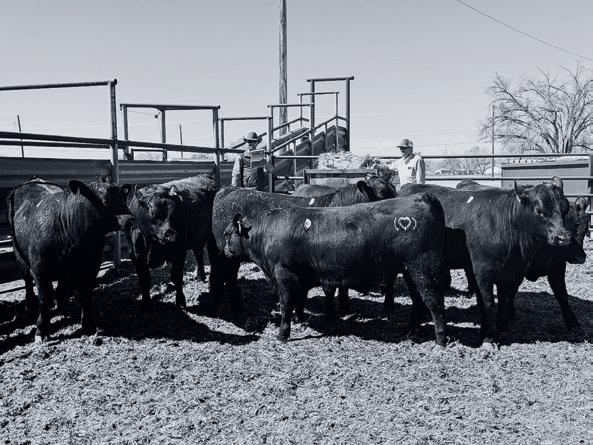
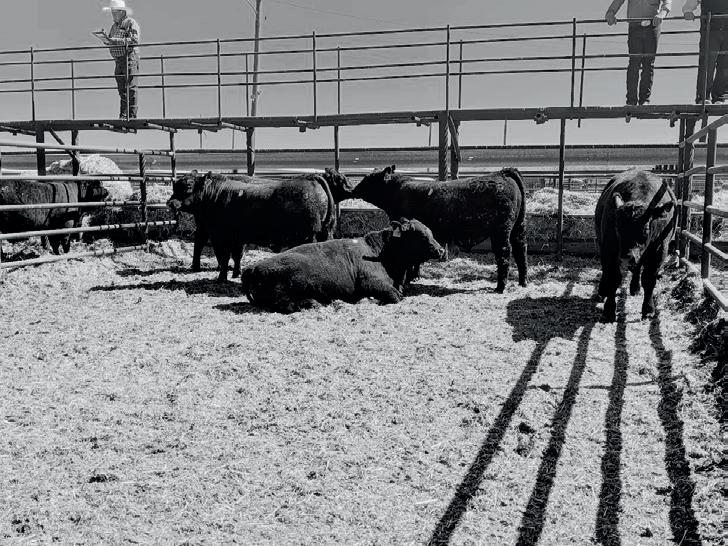
Four on-campus animal facilities house: beeF CaTTle/horses/swine/sheep
Students can major in Animal or Rangeland Resources and are provided with the very best of “hands on” academic instruction by our faculty. Fully equipped labs allow students access to cutting-edge research in:
LIVESTOCKNUTRITION / GENETICS / PHYSIOLOGY / ENDOCRINOLOGY / MEATSCIENCE / WOOL / TOXICOLOGY / WATERSHED & RANGELANDECOLOGY / WEED & BRUSHCONTROL / PLANTSYSTEMATICS / GRAZINGMANAGEMENT
The Department also offers pre-veterinary studies –our graduates have a high acceptance rate into veterinary medicine programs. We offer graduate degrees at the Master of Science and Doctor of Philosophy levels. The M.S. or Ph.D. in Animal Science can emphasize nutrition or physiology, and offers a Ph.D. in Range Science to study range management, range ecology and watershed management.

• The Chihuahuan Desert Rangeland Research Center (The College Ranch) –64,000 acre ranch just outside of Las Cruces
• The Corona Range & Livestock Research Center – 28,000 acre ranch & facilities in Corona, NM
• Student organizations, including a Block & Bridle Club, Pre-Vet Club, Range Club, Horsemen’s Association, Therapeutic Riding Club, & Judging Teams
• Clayton Research Center hosts research on shipping protocols, particularly evaluating the health and performance of newly received cattle, and nutrition and management from feedlot to slaughter
Dr. John Campbell –575/646-6180 / Dr. Dennis hallford –575-646-2515 http://aces.nmsu.edu/academics/anrs/
The U.S. Department of Agriculture’s (USDA) Risk Management Agency (RMA) has announced a series of updates to improve insurance coverage through the Livestock Risk Protection (LRP), Livestock Gross Margin (LGM), and Dairy Revenue Protection (DRP) insurance programs beginning with the 2027 crop year. These updates were approved by the Federal Crop Insurance Corporation Board of Directors.
Uniform changes across LRP, LGM and DRP include:
Ї Adding subsidy capture language to address off-exchange contracts.
Ї Updating the definition of beginning farmer or rancher and subsidy percentages to align with the One Big Beautiful Bill Act.
Ї Permitting concurrent coverage between similar livestock programs.
Ї Enabling policies that have not earned premium for three consecutive years to be subject to cancellation.
Ї Revising transfer of coverage language to clarify when coverage can be transferred.
Ї Updating general policy language for consistency with other RMA insurance policies.
“These updates expand coverage options, update eligibility definitions and strengthen
and
program consistency across RMA’s livestock portfolio,” said RMA Administrator Pat Swanson. “These enhancements are another way we are putting Farmers First. We want to ensure that livestock and dairy operations across the country have the best tools available to manage risk.”
LRP provides protection for livestock producers looking to insure against declining market prices. This program offers coverage levels ranging from 75 percent to 100 percent of the expected ending values (expected price at the end of the insurance period).
The changes to LRP include:
Ї Expanding guidelines for the forage disaster exemption to address extended drought and other natural disasters and include specific grazing dates during which the exemption may apply.
Ї Increasing the maximum weight threshold for Fed Cattle types.
Ї Extending Cull Cow coverage to a maximum of 52 weeks.
Ї Adding three new feeder cattle types, Unborn Bulls and Heifers Weight 2, Unborn Brahman Weight 2, and Unborn Dairy Weight 2, with a weight range of 6.0 to 9.0 hundredweight (cwt), broadening coverage options for producers with unborn livestock.
LGM provides protection to cattle, dairy, and swine producers against unexpected decreases in gross margin (market value of livestock or milk minus input costs). The program calculates the expected gross margin for a period using futures market prices and pays an indemnity to the extent that the actual gross margin is less than the expected gross margin.
The changes to LGM include:
Ї Increasing the maximum insurable weight for the LGM Cattle to 1,800 lbs.

Ї Revising the definition of “target feeder cattle weight” to increase the maximum allowed target weight from 9 to 12 cwt for yearling finishing operations and stipulated that the difference between target live cattle weight and target feeder cattle weight must not exceed 6 cwt for yearling finishing operations and 10 cwt for calf finishing operations.
Ї Modified the definition of “share” for LGM Cattle to require that the producer own the calves for a minimum of five months for yearling finishing or eight months for calf finishing.
Ї Revising the definition of “target live cattle weight” to increase maximum allowed target weight from 15 to 18 cwt for yearling finishing operations and 13 to 16 cwt for calf finishing
covered milk production elected by the dairy producer.
The change to DRP:
Ї Moving the sales period end date to the following calendar day, making DRP consistent with the sales period structure used in other livestock insurance programs.
LRP, LGM and DRP are available to livestock producers in all states and counties.
RMA secures the future of agriculture by providing world class risk management tools to rural America through Federal crop insurance and risk management education programs. RMA provides policies for more than 130 crops and is constantly working to adjust and create new policies based on producer needs and feedback.
Contact a crop insurance agent to see how
On April 29, conservation leaders from across New Mexico met in the field— not in a classroom—to tackle a growing problem facing ranchers and farmers: getting timely access to conservation plans required for funding and on-the-ground improvements.
The Conservation Planning Field School, hosted through a partnership between the New Mexico Association of Conservation Districts (NMACD), New Mexico Department of Agriculture (NMDA), and USDA Natural Resources Conservation Service (NRCS), trained Soil and Water Conservation District (SWCD) staff to become certified conservation planners.
That matters more than it might sound.
With 19 participants representing 12 districts, the training—funded by NMDA—focused on building local capacity so producers can work with someone they

know and trust, instead of waiting on limited federal staff.
For most producers, programs like New Mexico’s Healthy Soil Program and other conservation grants aren’t out of reach because of interest—they’re out of reach because of process and support.
To qualify for many of these programs, producers need a clear conservation plan that identifies resource concerns and lays out practical solutions.
These plans address real issues on the ground, including:
Ї Grazing management
Ї Water use and irrigation efficiency
Ї Brush control and rangeland restoration
Ї Soil health and erosion
Ї Livestock infrastructure tied to conservation
Healthy Soil grants, in particular, are designed to help producers improve soil organic matter, water retention, and longterm productivity. But without planning support, many operations struggle to put together competitive applications or implement projects effectively.
The challenge? There aren’t enough trained planners in New Mexico to meet demand.
That bottleneck slows everything down— from applications to implementation—and in some cases, keeps producers from participating at all.
This training is aimed squarely at fixing that problem.
By equipping local SWCD staff to develop conservation plans, producers gain:
Ї Faster service
Ї Local expertise
Ї Help building stronger grant applications
Ї Practical guidance for implementation
In rural parts of New Mexico, where technical support can be limited, having trained


planners at the district level can make the difference between getting a project funded— or not getting started at all.
NMACD, which supports all 47 conservation districts in the state, has made workforce development a priority.
The goal is simple: put more technical know-how at the local level so districts can better serve their producers.
When districts have trained staff:
Ї Projects move faster
Ї State conservation dollars are fully utilized
Ї Producers have a direct, local point of contact
It’s a practical approach that keeps conservation grounded in the communities it serves.
Due to strong interest, additional conservation planning trainings are already in the works. Space will be limited to keep the hands-on format effective.
SWCD staff and partners interested in future sessions should contact their local district or NMACD to get on the list.
Another piece of the puzzle is also on the horizon.
An upcoming Archaeology Field School will help districts navigate cultural resource requirements—an often-overlooked step that can delay projects involving ground disturbance.
Understanding these requirements upfront can save producers time and prevent costly delays.
At the end of the day, this effort isn’t about meetings or certifications—it’s about keeping working lands working.
By training more local conservation planners, New Mexico is making it easier for producers to access programs like the Healthy Soil Program and put those dollars to work on the ground.
And in a state where water, soil, and rangeland are the foundation of the ag economy, that kind of practical investment matters.



(575) 502-0013
SANTA TERESA, NM

facebook.com/people/ Rafter-G-Ranch-SupplyLLC/100063622261519

VIEW FROM THE BACKSIDE
by Barry Denton
It has come to my attention that the master plan is working. Every time I turn around, I meet another robot. I think what truly advanced the robot mentality was the advent of the COVID-19 virus.
With that, many of our alleged leaders gained control of their constituents and the established mentality has never left. One of the best examples of this absurdity that people bought into are stores with arrows on the floor and making you stand in line six feet apart.
How does that prevent the spread of a disease? It never has and it never will. Even the architects of those systems now admit that it did no good.
However, the more tragic tale here is how many people bought into this fairy tale. The state and federal government found out that with a little manufactured fear you can control 75 percent of the population.
Let me give you another bizarre example. I was at a local Lowe’s Store the other day and bought a gasoline lawn mower which came folded up in a large bulky box. When I paid the cashier, I asked if she had a boy that could give me a hand putting the large box in my pickup which is quite high.
She called this guy and he was about 40 or so and said he would give me a hand. I am 6’1” and weigh about 200. He was a giant compared to me. I walk out the door with the guy and when I get to my pickup which is about 20 feet away, I look back and I have lost him. I look back and he is standing back by the door we came out of.
I said, “What happened to you? Will you give me a hand with this?”
He said that I had to be in the loading zone and he could not leave it, it was against the rules. I asked him if he ever broke the rules, even when it made sense.
He said, if I wanted help I would have to drive my truck 20 ft to the loading zone. I explained to him that I did not want to be around such a lily-livered man and went ahead and tossed the mower in the truck myself.
Talk about a robot! He was trained not to
go beyond those yellow lines in front of the store. Once again, pandemic training at its best.
Have you ever noticed that most who cannot make a living on their own become government workers? The United States Forest Service is probably the best example of incompetent people that I have been in contact with. They are so brainwashed to follow the rules that they cannot vary even when it makes sense.
They did not used to be this way, but nowadays many think they are on a mission to save the planet. First, the planet doesn’t need saving, that’s God’s job. I never realized that when you got one of those little green uniforms that you became a “savior”.
Hopefully, the Trump administration will clean up this mess and get them back on the correct track.
Finally, you have the new governing body known as HISA (Horseracing Integrity And Safety Act) on the backside of thoroughbred racetracks in America. I see that Texas is in a lawsuit trying to get rid of them, but the problem is that every state ought to be joining Texas in that fight.
Like most things the government gets involved with it has become a complete disaster. While the initial idea may have been noble, the result has ruined livelihoods.
I was speaking to a long-time horse trainer the other day and what they were explaining sounded more like they were now in a prisoner-of-war camp. Everything that they do with a horse on the backside is under scrutiny from a government employee that has never raced a horse. Robots are everywhere.
How to think for yourself should be the motto for every American.

The New Mexico Cattle Growers’ Association (NMCGA) is proud to announce the selection of three outstanding collegiate students to serve as 2026 Allied Industries Mentorship (AIM) interns during the NMCGA Mid-Year Meeting, June 6–9, 2026, at the Ruidoso Convention Center.
Selected interns include Addie Lafferty, Bard, New Mexico; Kaylee Dunn, Canyon, Texas; and Shayla Severance, Alvin, Texas.
The AIM internship program, coordinated through the NMCGA Allied Industries Committee, provides collegiate students with hands-on experience in event management, agricultural communications, industry relations, and association operations during one of New Mexico’s premier cattle industry events.
Lafferty is currently attending Oklahoma State University where she is majoring in Agricultural Communications with a minor in Animal Science. She is active in the Oklahoma Collegiate Cattlemen’s Association, Block and Bridle Club, and the Thoma Scholars Organization. In addition to her ranching background, Lafferty owns and operates Rafter F Bar Photography, specializing in family, event, and livestock photography.
Dunn is a student at Texas Tech University pursuing a degree in Agricultural Communications. A President’s List student with a 4.0 GPA, Dunn has earned numerous academic scholarships and is active in Pi Beta Phi, where she contributes to philanthropy and chapter leadership efforts. Her career goals include establishing her own agricultural marketing firm focused on creative services and strategic communications for agricultural producers and businesses.
Severance attends West Texas A&M University where she studies Agribusiness. She has been recognized on the Dean’s List and is actively involved in Collegiate FFA, the National Society of Leadership and Success, and agricultural education programs. Severance also founded and serves as president of her university’s Salsa Dancing Club and has experience as a teaching assistant in agricultural education.
Throughout the Mid-Year Meeting, the interns will assist with registration, trade show operations, social media engagement, audiovisual support, vendor relations, silent auction coordination, and overall event management. The internship is designed to provide students with direct exposure to the cattle industry while developing leadership and professional skills.
32190 Co. Rd. S., Karval, CO 80823 719-446-5223 • 719-892-0160 Cell cathikclark@gmail.com www.ClarkAnvilRanch.com

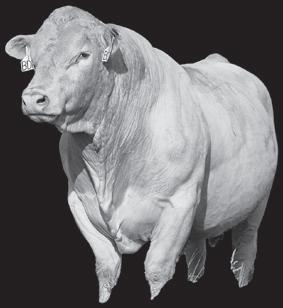
The power of payweight starts with a registered Charolais bull. Superior weaning weight matters in your operation, and every pound translates to

























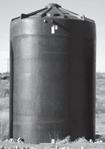

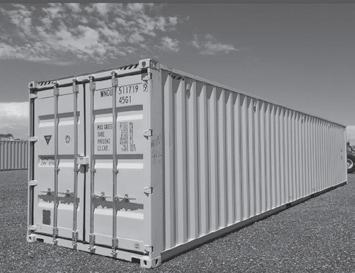




100 acres w/85 acres irrigated in permanent pasture. Secure, grandfathered water rights. Fence and Crossed fenced. Price $1,720,000
— West of Deming NM. 31,093 total acres consisting of 7529 deeded acres, 16,635 NM State Land lease acres, and 6929 BLM lease acres 480 head yearlong, great water and improvements Price $5,300,000
I have many qualified Buyers looking for Ranches. Give me a call If you are looking to Buy or Sell a Ranch or Farm in Southwestern NM or Southern AZ give us a call ...

SCOTT MCNALLY www ranchesnm com
575/622-5867
575/420-1237
Ranch Sales & Appraisals
P.O. Box 145, Cimarron, NM 87714 • 575-376-2341 • Fax: 575-376-2347 land@swranches.com • www.swranches.com
VERMEJO RIVER VIEW, 87.43 +/- Deeded
Acres. Small cabin, Conex Box, great views, just 3 miles east of Cold Beer, NM, in Colfax County. 913 SHY 505 Maxwell, NM 87728. $325,000
MIAMI 80+/- ACRES, 3 bedroom, 2 bathroom home with water shares, roping arena, steel barn with shop. Other historic barns, Pipe corrals. Far enough off road to be private. Includes 80 shares of irrigation 2350 SHW 21, Miami, NM 87729. $569,999
MIAMI PRIVATE 80, Located ¼ mile off blacktop with dedicated easement, 80 +/- deeded acres, large barn, small sleep out, buried utilities, domestic water meter, 80 shares of irrigation and septic able to handle a 3 bedroom home. Some of the best views in Miami. 2050 HWY 21, Miami, NM 87729. $559,000

RUN RANCH, ROSWELL, NM Discover the perfect blend of ranch life, recreation, and investment opportunity with this 737 acre property nestled in the heart of New Mexico ranch country. With 2,800 feet of Hwy 70 road frontage, rolling terrain, and breathtaking views of Capitan Mountain, this property is an ideal candidate for your dream retreat and outdoor living. Excellent new water well producing approximately 40 gallons per minute. New electric line ready for home build and development. Antelope Creek runs through the property enhancing both wildlife habitat and scenic value. Rolling hills and native grasses, perfect for grazing and outdoor recreation. Prime wildlife area, ideal for outdoor enthusiasts.

Proudly Serving for 50 Years!
Contact Cherri Michelet Snyder – 575-626-1913 or Jan “JJ’’ Graham – 806-782-1986


BAR LAZY 7 RANCH, Colfax County, Moreno Valley 594.38 +/- deeded acres, accessed off blacktop between Eagle Nest and Angel Fire. Historic headquarters. Currently used as summer grazing, pond and trees accessed off county road on rear of property as well. Presented “AS IS” New Survey, $3,564,500 $3,500,000

RANCH & FARM PROPERTIES

Texas, New Mexico, Arkansas, Oklahoma & Missouri Broker 214.701.1970


575-640-9395
575-640-9395

RANCH & FARM PROPERTIES
KEITH BROWNFIELD
jamessammons.com
jsammons@briggsfreeman.com
We need listings on all types of ag properties large or small!
Associate Broker, GRI
KEITH BROWNFIELD
Associate Broker, GRI
www.BrownfieldRanchandFarmProperties.com
www.BrownfieldRanchandFarmProperties.com
BHGRE Steinborn & Associates
BHGRE Steinborn & Associates
3131 Turtle Creek Blvd. | 4th Floor Dallas, Texas 75219
141 Roadrunner Pkwy., Ste 141 Las Cruces, NM 88011 575-522-3698
141 Roadrunner Pkwy., Ste 141 Las Cruces, NM 88011 575-522-3698
Milky Ranch – Apache County, Arizona: 450 AU including 37,518 deeded acres with an additional 7,680 acres of Arizona State grazing lease located between Holbrook and Saint Johns, Arizona. The ranch is located directly off of US Highway 180 including seven miles of highway frontage. All access to the ranch is via private property and is contained behind locked gates and provides one-of-a-kind privacy with vast views of the National Park. Also included is an additional 7,270 deeded acres located outside the ranch fence. Price: $14,000,000 — Contact Traegen Knight.
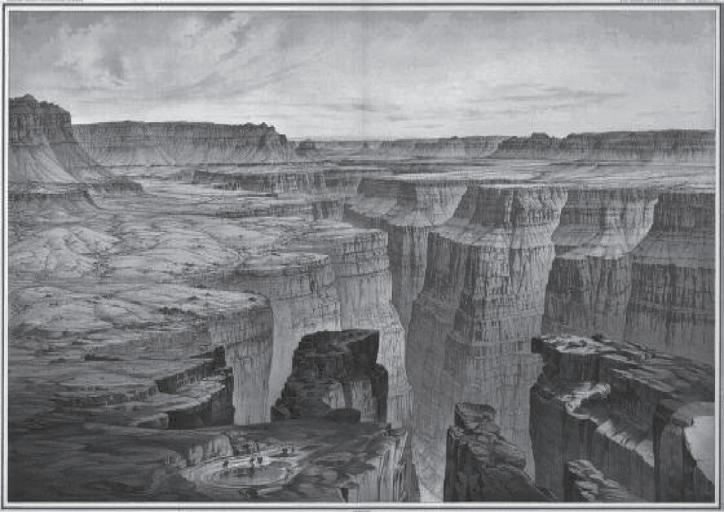
Hay Hollow Property – Navajo County, Arizona: 19,458 deeded acres located between Holbrook and Snowflake, Arizona along the Little Colorado River. Stunning views of painted desert scenery accessible by County roads yet great privacy and the feeling of seclusion. This could be a great investment or development property for solar, wind or residential use. Price: $6,500,000 Contact Traegen Knight.
SOLD – Burro Springs Ranch – Grant County, New Mexico: 423 AU with 1,073 deeded acres, state and blm leases located north of Lordsburg. Abundant old feed as ranch has been rested for two years. Livestock water supplied by four wells serving over twelve miles of pipeline. Nice set of shipping corrals located just off the improved county road with great access.
Price $3,100,000 Contact Traegen Knight
CONTACT: ST. JOHNS OFFICE: TRAEGEN KNIGHT www.headquarterswest.com email: info@headquarterswest.com
■ EAST CENTRAL NM – Registered air strip, 5,149.60 ac. +/- Deeded & 160 acres +/- State Lease, good useable improvements (2 houses, barns, pens & fences), well watered by several wells (two wells strong enough to indicate pivot sprinkler potential on a number of acres of the property), on pvmt.
■ NORTH EASTERN NM – 8,858.63 ac. +/Deeded, 1,003.34 ac. +/- Lease Purchase, 160 ac. +/- State Lease, well fenced and watered by mills, subs and spring, strong grass country, substantial additional income from GCRP and other income, three sets of pens.
■ BACA COUNTY, CO – 6,542.33 ac. +/- of well managed grassland with 5.2 miles +/- of Two Butte Creek through the ranch, the creek flows from time to time with several year-round live springs in the cottonwood lined creek which provides water for livestock and a haven for mule deer, antelope, quail, turkey, waterfowl and an occasional elk. Well fenced and watered by pipeline with six large drinkers located strategically throughout the ranch. Gramma and Buffalo grass provide excellent grazing for a cow/calf or yearling operation. GCRP contract on 2,832.45 ac. provides additional income.
■ ADAMS CO., CO – EAST OF DENVER –2,550.65 ac. +/-, dryland farm, partially sowed in winter wheat, will sell the one separate section of the four sections separately. Wind/solar lease in place on one of the sections, MP ins. in place for the 2026 wheat crop. Good access!
■ GUADALUPE CO., NM – Escape to wideopen freedom on the Old Route 66 Ranch — 1,540 acres of rolling hills, native pastures, and rugged beauty nestled halfway between Santa Rosa and Tucumcari, New Mexico. Just minutes off I-40 near Newkirk, perfect for ranchers, hunters, and outdoor lovers alike, this Guadalupe County gem offers room to run cattle, space to roam, and unforgettable views in every direction. Sheltering terrain draws in wildlife, making this property the real deal for those who crave privacy, purpose and the outdoors. Privacy, potential, and panoramic skies — give us a call to walk the land and make it yours.
■ UNION CO., NM – divided into three tracts for rotational grazing of 1,822 ac. +/- enrolled in the new Grasslands Conservation Reserve Program & 120 ac. +/- of the property in the standard CRP program. GCRP can be grazed year-round each year. Excellent fencing, one mile of hwy. frontage together with all- weather roads on the remainder, equipped with almost new set of steel working pens with scale, a second set of almost new working pens, watered by subs on electricity with pipelines furnishing water for drinkers in each pasture. Gramma & buffalo grasses. Broker owned.
■ UNION CO., NM – Just out of Clayton, a large feedyard w/four circles irrigated by ¼ mile sprinklers, five irr. wells, one domestic well for office & feedyard & just across the hwy. an 800 ac. grass lease.

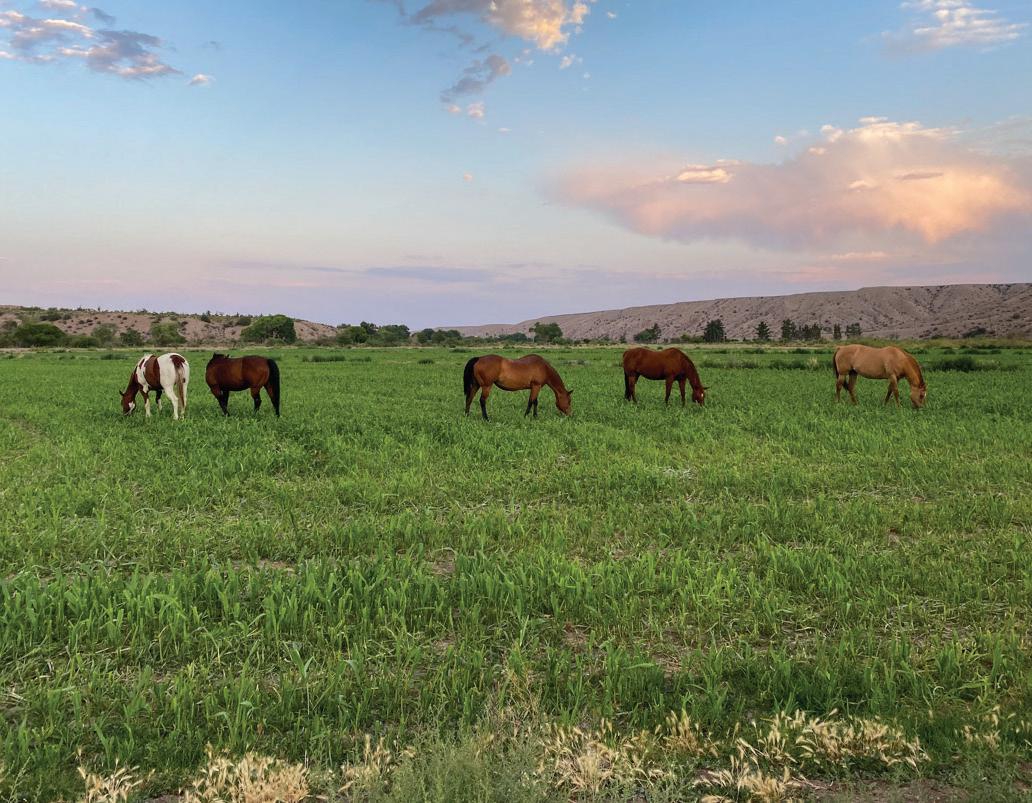
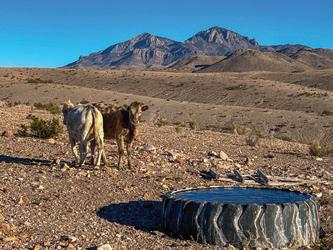























SPECIALIZING IN FARMS, RANCHES AND LUXURY HOMES
139 APACHE MESA RD, HWY 84, LAS VEGAS, NM – 140 deeded acres has long distance rim rock views. New well, power, high speed internet and 3 live-in camp sheds are located at the view building site. This location 20 minutes from Las Vegas & owner will finance. Asking Price is $325,000
129 TIERRA DE DIOS, ROWE, NM – This 10-acre residential parcel has a meter loop & water stubbed out and ready to use. Fiber optics on the property line. Horses & pets allowed w/sensible C&R’s. Hilltop building site has views! Priced at $124,900
COUNTY ROAD B29A, VILLANUEVA, NM – This 38 deeded acre parcel north of Villanueva is partially fenced and shares a 100-gpm water well. There are No Restrictions, build what you will on a couple of great home sites. Mfg. homes, horses, llamas, goats, cows or kids all allowed. All weather CR B29A is maintained year-round! Asking Price is $174,900 – Bring offers!!!
RUIDOSO — 575-258-8656 • FT. SUMNER — 575-355-2855
OUR BROKERS:
Keli Cox • 575-937-4616
Nick Cortese • 575-760-3818
Kelly Sparks • 575-760-9214
Rye Richardson • 575-430-0777
Jymmy Kay Cox • 512-921-8877
Donda Richardson • 575-937-1056
Jackie Higgins • 806-787-5814
Jenna Lawrence• 575-937-8849
Dixie Brown • 575-937-1049


VILLANUEVA, NM – SOLD – Pecos River frontage is 8.82 acres ready to start farming. Plant alfalfa, sweet grass, punkins, beans, squash or okra! Irrigation water rights go with the land. Overhead power is on the property and community water on both sides. Asking $219,900
VILLANUEVA, NM – We have ~680 deeded acres for sale w/Pecos River frontage located just NE of the village. List price is $476,000 for grazing land. I have several buyers looking for small irrigated Pecos River frontage parcels. Call me to sell your land por favor!

Office: 505/989–7573 • Mobile: 505/490–0220
Email: kahler@newmexico.com • Website: www.SantaFeLand.com
TORRANCE COUNTY, ABOUT 8 MILES SE OF WILLARD. 4,680 Acres of Deeded Land plus a small Forest Allotment. Mostly open grassland with some Cedar Trees. Two wells less than 150 feet deep with attached pipeline systems that include enclosed 12,000 gallon storage tanks and a total of 9 water troughs. Sandy-Clay Loam Soils support good turf and no erosion. A nice small operation suitable for a yearlong operation or a seasonal use for cows or yearlings or combination.
GUADALUPE COUNTY, JUST SOUTHWEST OF DILIA; which is between Las Vegas and Santa Rosa. 7,483 ALL Deeded Ranch, joins the Pecos River for over 2 Miles. Varied terrain with lots of “Scenic Views”! Both open grasslands and some pastures with scattered Juniper Trees. Six main Pastures and two smaller pastures-traps. Fences are good to new. Nice 2 bedroom, 1 bath house with a huge living room. Oldervery large barn and a brand-new barn/airplane hanger with concrete floor. A nice Ranch for cows yearlong or yearlings.
by Mark Z. Johnson, OSU Ext. Beef Cattle Breeding Specialist
Profitability in the cow-calf sector over the past several years creates the potential to upgrade cattle working facilities. Good design and layout of pens, chutes and alleyways can lead to improved profit potential in cowcalf operations but requires intentionality and proper planning. Objectives of good cattle working facilities include reducing stress on the animals, increasing the efficiency of labor, and the safety of both cattle and humans alike. Proper facility design and good stockmanship skills are critically important to handling cattle as safely and efficiently as possible. A good working facility, understanding animal behavior and good animal husbandry skills all work in synergy with regard the safe handling of cattle. Consider the following when planning facility upgrades and layout:
Ї animal behavior
Ї site selection
Ї lighting
Ї drainage
Ї surface (dirt, rock, concrete)
Ї number of animals to be worked
Ї size of animals to be worked
Ї frequency of use
Effective stockmanship is typically the result of understanding the following aspects of cattle behavior:
Ї cattle want to see you
Ї cattle do not like to be alone, they will go to other cattle
Ї cattle typically have one thought at a time, they are motivated by fear and have a “fight or flight” mentality
Ї cattle want to remove pressure
Ї cattle have a flight zone
Ї cattle have a point of balance
For those of us who work in production agriculture, physical risks are inherent on a daily basis. Agricultural occupations are consistently ranked as one of the most dangerous. An OSU study done by researchers in the Department of Biosystems and Agricultural Engineering showed that over 50 percent of injuries sustained while working cattle were the result of human error. Equipment and facilities were perceived as the cause about 25 percent of the time.
In most cases, a better understanding of how an animal may respond to human interaction and its immediate surroundings will help keep someone from becoming an injury victim. Human errors in judgement are due to a variety of reasons, but are more likely to occur when people are tired, hurried, upset, preoccupied or careless. Remember, the human factor greatly influences the occurrence of life-threatening accidents. Using this information in combination with good facilities and proper cattle handling techniques will reduce the risk of injury. ▫

Riding for the brand... is our time-honored tradition.
REDUCED 160 +/- Acre, San Simon Pistachio Orchard
50 Acres of third leaf Pistachio trees and 110 acres of second leaf trees. Planted and developed with best farming practices. USDA compliant. Irrigation well capable of producing 1,000+ gpm. Well currently equipped with an 8” submersible producing 625 gpm from 350’. $2,295,000. Call Harry Owens.

SOLD Prime 39.81+/- Acre Parcel
In the rolling grasslands of Elgin, AZ, a celebrated wine-growing region. Mild year-round climate at an elevation of 4,800’ ideal for homesteading, winery, equestrian pursuits or the peace and quiet of country living. Just 30 minutes from major services. $378,195.00
PENDING 8+/- Ac, Equestrian Estate, Sonoita, AZ
3,472+/- s.f. home, 5-BR, 3-BA, vaulted ceilings, 3 fireplaces, private office with custom cabinetry, 6-stall horse stable with tack and feed rooms, round pen, outdoor pens, turnout area, fully fenced, 2 pastures, arena panels ready to go, shop 36’ x 36’; totally solar powered, grid tied as backup.
$1,175,000. Owner/Broker.
Prime 275± Acre Investment Opportunity, McNeal, AZ
Positioned along the U.S.-Mexico border, the property benefits from proximity to a major $328 M expansion of the Douglas Commercial Port of Entry. Acreage is located on Hwy 191 directly across from the Bisbee–Douglas International Airport. $1,650,000
Ranches/Farms
Hale Ranch, Patagonia, AZ 218+/- Acres and 60 Head USFS Grazing Allotment. Sold prior to auction.
472± Acre Organic Apple Orchard (5 Tracts)
Horse Properties/Land
10± Acre Country Estate –Sonoita, AZ
Hilltop home with mountain views, stable, shop, orchard, water features. Sold at auction.
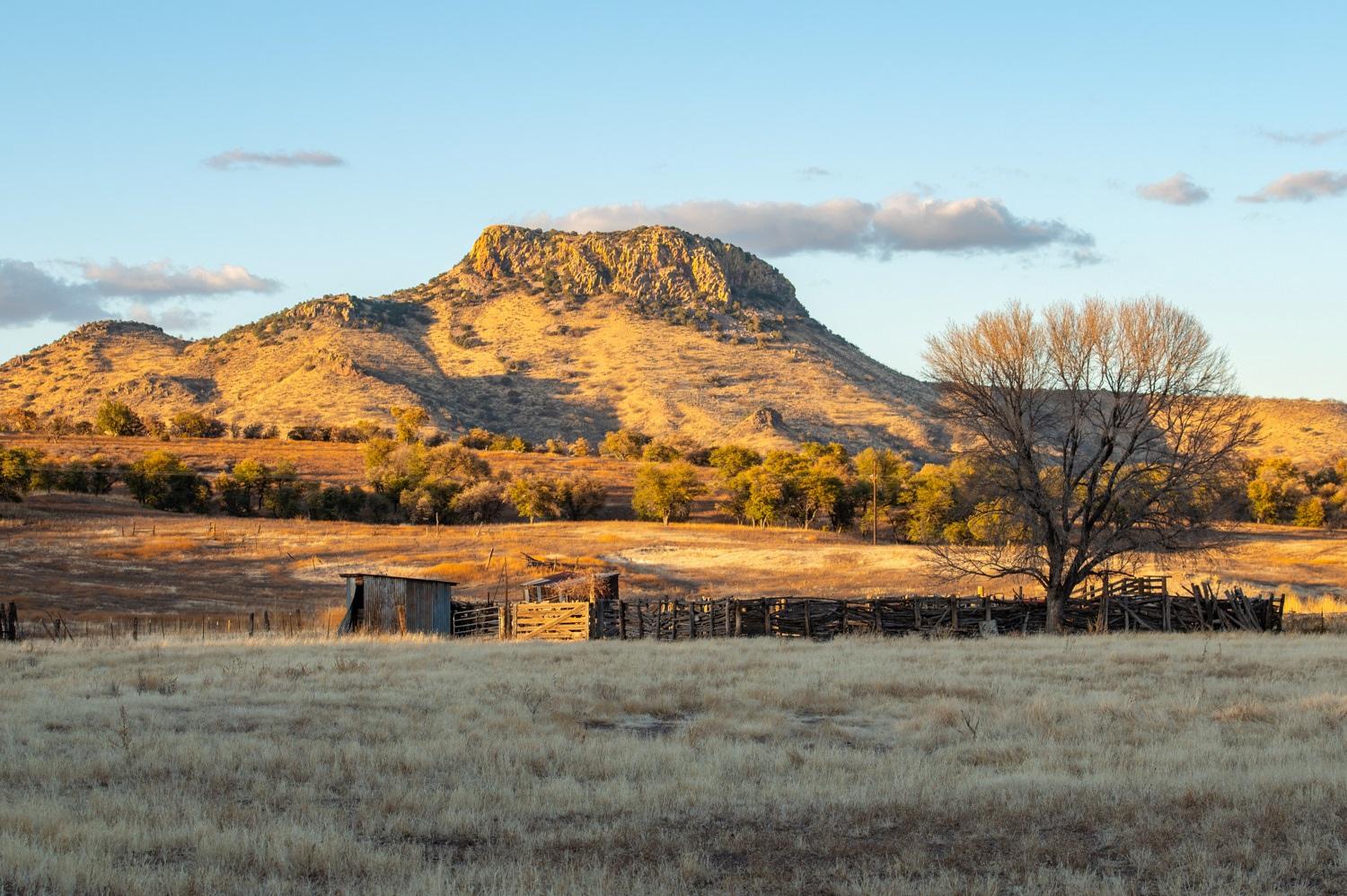
Includes processing facilities, retail center, two homes, wells, and apple trees. Sold at auction.
305± Acres – Ash Creek, Pearce, AZ Organic potential, cleared of mesquites, FAA landing strip, two wells, fenced/cross-fenced.
Pearce, AZ – Four Offerings at the Foot of Dragoon Mountains
Lot 1: 3BR/2BA custom territorial-style home on 5.5± acres. Lots 3 & 4: Three vacant 1± acre land parcels. Sold prior to auction.
Auctions are gaining momentum like never before—delivering faster results, competitive prices, and real-time excitement. We’re seeing more buyers, more sellers and more success with every auction! Feel free to call us if we can help you accelerate the selling process.
Nancy Belt, Broker 520-221-0807
Harry Owens 602-526-4965
Paul Ramirez
520-241-3333




By the time you are reading this, the dust has settled on the NMHSRA/NMJHRA 2025-26 year. The State Finals are over and the National Finals qualifiers (top 4 in each event) have been determined. June will see over 1,000–1,200 of the top 5th through 8th-grade student athletes from 43 U.S. states, five Canadian provinces, Mexico, Australia, and New Zealand competing at the Lazy E in Guthrie, Oklahoma. In July, approximately 1,500 High School competitors from those same states, provinces and countries (grades 9-12) will compete for national titles in Lincoln, Nebraska.
Of special note, NMHSRA freshman Taylor Armenta from Bloomfield qualified in barrel racing for a run at $2 million at the American Rodeo at Globe Life Field in Arlington, Texas, May 22-23. Taylor’s 2nd out of 15 spot was earned at the West Qualifier Tournament Regions in Las Vegas, Nevada May 1-2
The Trap shooters offered up a special treat in Farmington early in May when seniors Lane Helmer and Ace Whitson were tied and had to have a shoot off. Ace prevailed finally, but it took several rounds to do it. The pair are best friends and have shot competitively together since their freshman year. Tough competitors, Ace finished 4th in the nation in 2025 and Lane was 7th. They’ll go confidently to Lincoln in July for their last HS nationals.
Jr. High Nationals: June 21–27, 2026, Lazy E Arena, Guthrie, Oklahoma
High School Nationals: July 19–25, 2026, Sandhills Global Event Center, Lincoln, Nebraska.
HS Girls All Around: Caydence Roberts
JH Girls All Around: Reagan Barba
HS Boys All Around: Liam Powell
JH Boys All Around: Jace Wild Green
HS Light Rifle: Addison Tixier
JH Light Rifle: Bonnie Montoya
HS Trap: Ace Whitson
Boys Cutting: Bray Bennett
Girls Cutting: Caydence Roberts
Reined Cow Horse: Kyon Hatley
HS Steer Wrestling: Stetson Trujillo
JH Chute Dogging: Elias Chacon
HS Pole Bending: Cylee Jo Roberts
JH Pole Bending: Morgan Parra
HS Barrel Racing: Channing Robinson
JH Barrel Racing: Brinlee Eshleman
HS Breakaway: Wacey Trujillo
JH Girls Breakaway: Reagan Barba
JH Boys Breakaway: Riley Caviness
HS Tie Down: Rance Rathjen
JH Tie Down: Jax Jameson
JH Ribbon Roping: Jett Jameson & Reese Barba
HS Goat Tying: Wacey Trujillo
JH Girls Goat Tying: Bristol Shiver
JH Boys Goat Tying: Reiner McConnel
HS Team Roping: Holt Haynes & Koen Romero
JH Team Roping: Graden Acuna & Jaret French
HS Saddle Bronc: Tate West
JH Steer Saddle Bronc: Brody Bisetti
JH Steer Bareback: Jace Wild Green
HS Bull Riding: Jordon Meador
JH Bull Riding: Jace Wild Green
HS Girls All Around: Caydence Roberts
JH Girls All Around: Payzlee Ware
HS Boys All Around: Kyon Hatley
JH Boys All Around: Reiner McConnel
HS Light Rifle: Zoey Cline
JH Light Rifle: Jaret French
HS Trap: To be determined
Boys Cutting: Bray Bennett
Girls Cutting: Caydence Roberts
Reined Cow Horse: Baylee Nunn
HS Steer Wrestling: Pike Ketcham
JH Chute Dogging: Walker Region
HS Pole Bending: Cacie Sherburne
JH Pole Bending: Jintrie Mirabal & DaleLynn Romero (tie)
HS Barrels: Channing Robinson
JH Barrels: Breely Green
HS Breakaway: Sydney Triplett
JH Girls Breakaway: Kollins Griggs
JH Boys Breakaway: Taylor McCutcheon
HS Tie Down: Rayce Griggs
JH Tie Down: Bryce McCutcheon
JH Ribbon Roping: Graden Acuna & Payzlee Ware
HS Goat Tying: Eva Chavez
JH Girls Goat Tying: Paige Trujillo
JH Boys Goat Tying: Reiner McConnel
HS Team Roping: Kyon Hatley & Joe Cortese
JH Team Roping: Kasen May & Jase Burris
HS Saddle Bronc: Daniel Jackson
JH Steer Saddle Bronc: No Qualified Rides
JH Steer Bareback: Jace Wild Green
HS Bull Riding: Noah Gonzales
JH Bull Riding: Jace Wild Green
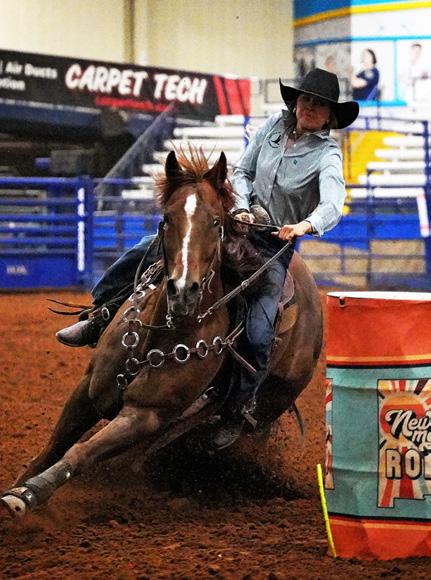
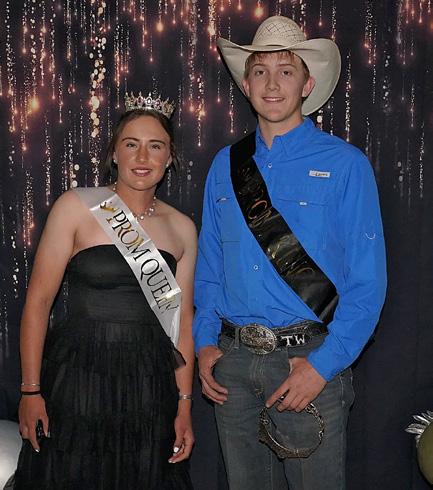
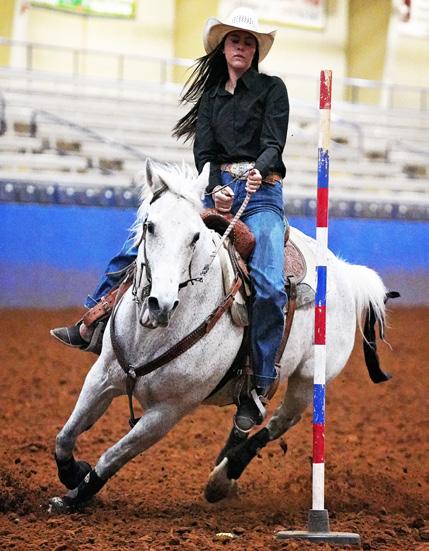
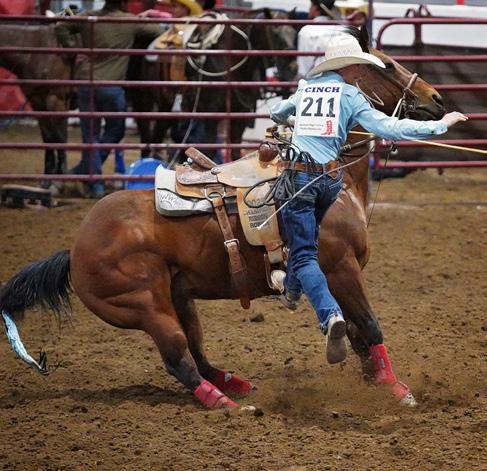
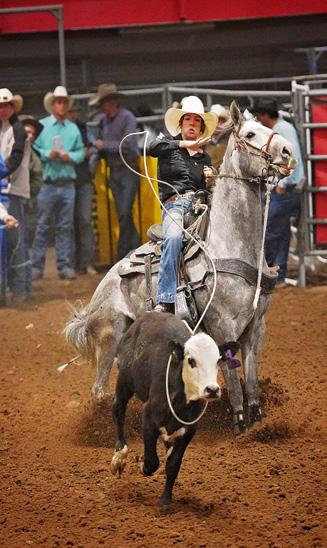
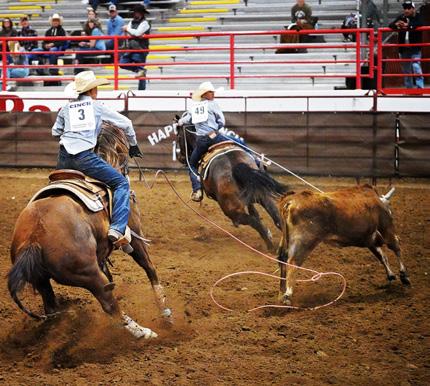

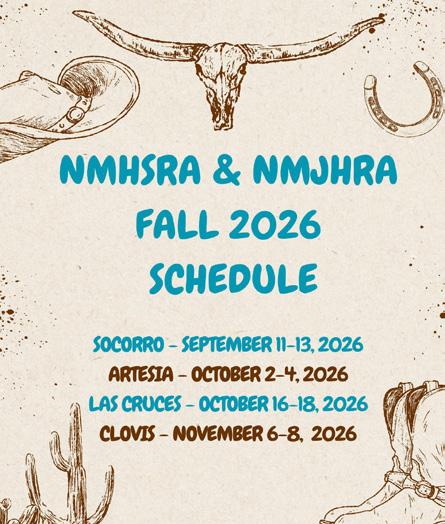
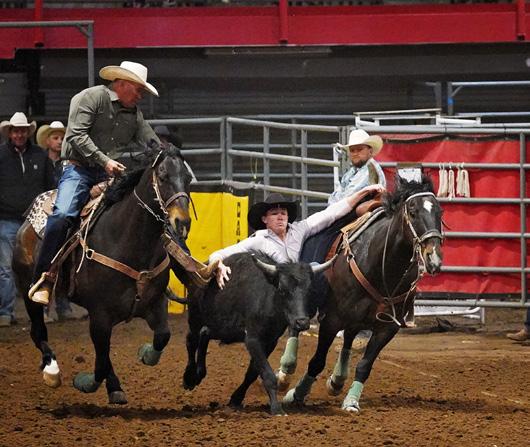
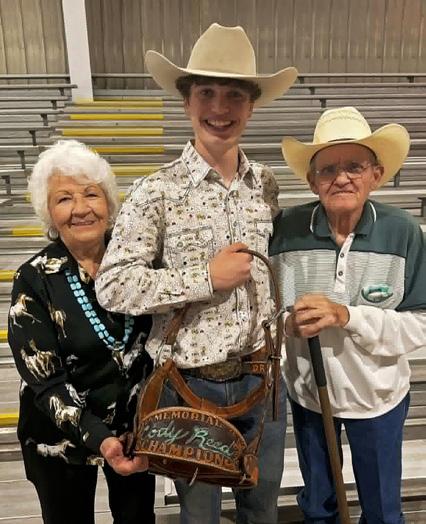
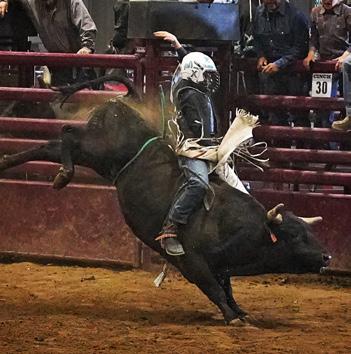
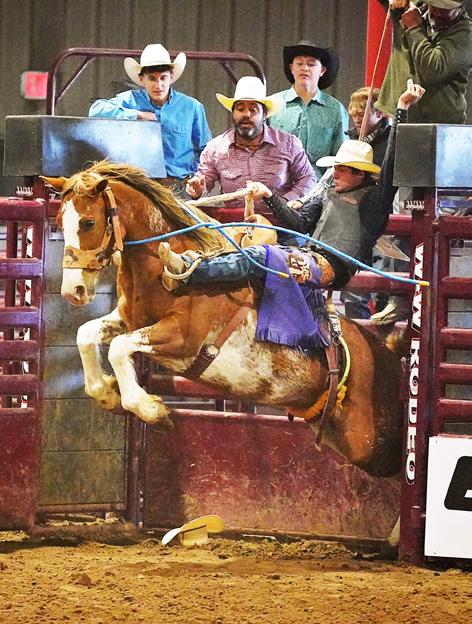
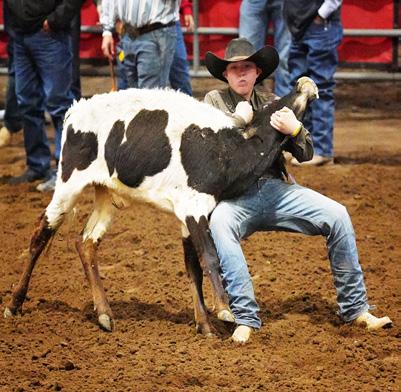
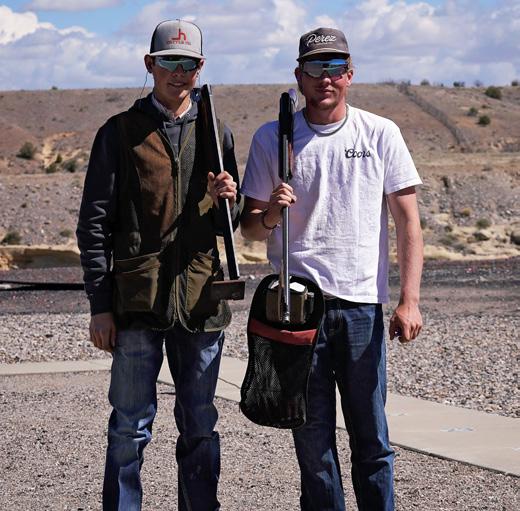
Private
Low
Large
Delivery
Fully
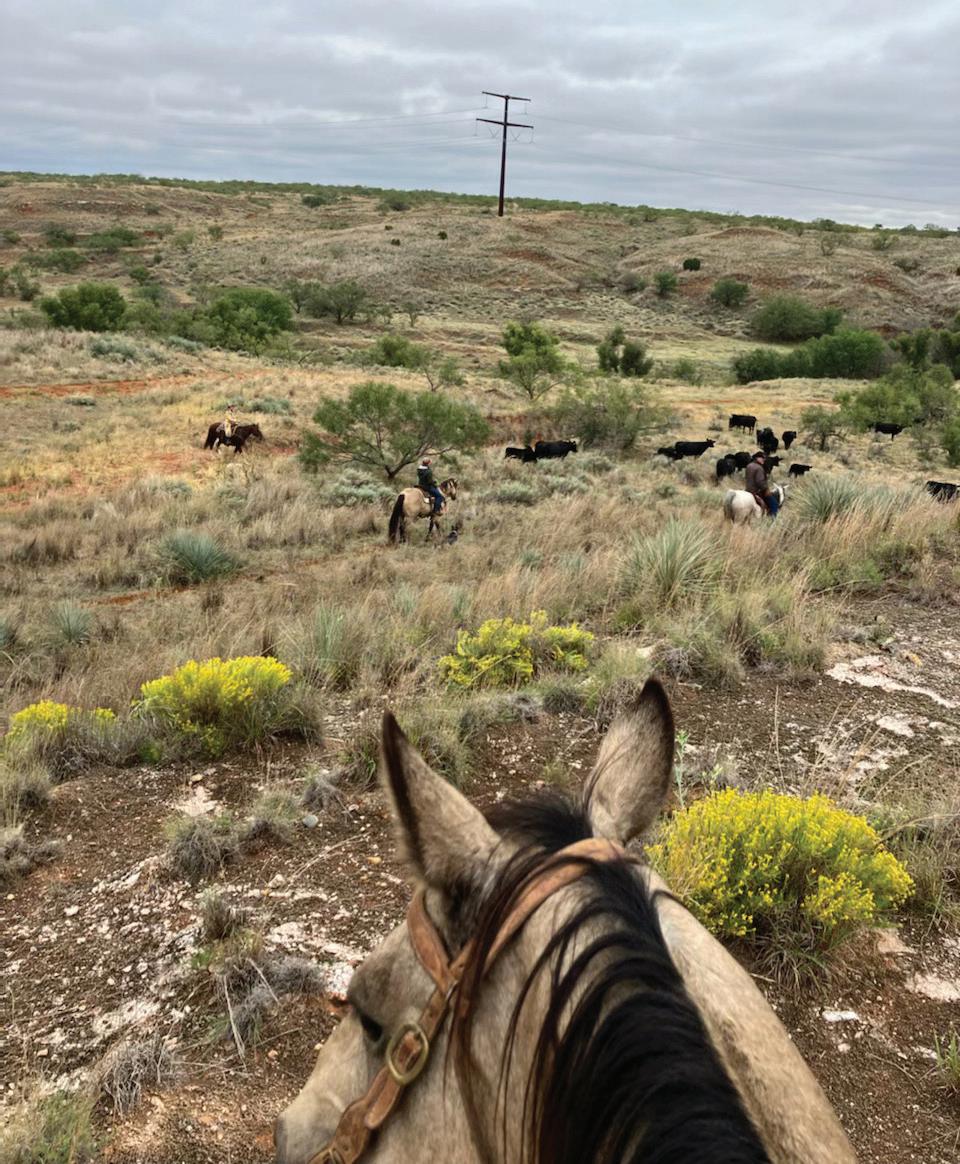
by Jerry Schickedanz Linebery Policy Center
The views and opinions expressed do not represent those of the Regents of New Mexico State University
The Trump Administration, under the leadership of the Department of the Interior and Secretary Doug Burgum, developed reforms to the National Environmental Policy Act and specifically the Endangered Species Act (ESA). The reforms for ESA were included in H.R. 1897. They were marked up and passed by the House of Representatives Natural Resources Committee.
They were scheduled to be voted on in the House of Representatives on April 22, 2026, but the Speaker of the House pulled the bill from the floor before the vote. This failure to pass the bill was much to the relief of environmental non-governmental organizations, which had opposed the changes proposed in H.R. 1897.
What were the controversial issues that stopped the passage of the bill?
Weakened listing/Delisting Standards: Speeds up delisting (removing protections) while slowing the listing of new endangered species, potentially moving away from science-based recovery requirements.
Reduced Habitat Protections: Narrowly redefines “habitat” and restricts the desig
nation of critical habitats, allowing development in areas previously protected.
Reduced Consultation Requirements: Exempts incidental take permits from strict consultations (Section &), making it easier for projects to proceed even if they harm species.
State-Level Control: Shifts more authority for endangered species management and recovery planning to state governments.
Economic/Commercial Considerations: Adopts statutory definitions for “best scientific and commercial data available” and allows for increased consideration of economic impacts during the listing process.
Changes to “Take” Prohibitions: Remove the blanket protections for threatened species (formerly covered by Section 4(d)) and require specific protections to be determined on a case-by-case basis.
Restricting Legal Action: The proposed change to 16 U.S.C. 1540(g)(4) is the section that received little publicity and would mainly affect who can recover litigation costs and fees in ESA citizen suits, not whether people can file the suits in the first place. In my estimation, it is one of the most important changes to the Non-Governmental Environmental organizations like WildEarth Guardians and the Center for
Biological Diversity. Under the current law, courts may award “cost of litigation (including reasonable attorney and expert witness fees) to any party” when appropriate; the proposed bill would narrow that and make fee awards much harder for plaintiffs, while making it easier for defendants to recover fees.
The proposed change would limit the hourly rate to $125/hour, with no exceptions for specialized expertise; bar well-funded non-profits from recovering fees if their net worth exceeds $2 million; and impose a cap of $200,000 per individual case. This will reduce the “sue and settle” approach to ESA lawsuits and reduce the amount of taxpayer funds going to a few non-governmental organizations. Attorney fees paid to NGOs in the past have amounted to millions of dollars.
The real unspoken objection to the changes in the proposed ESA legislation is who gets paid and how much, rather than shedding crocodile tears over the potential loss of habitat and endangered species.
Keep your eyes on the horizon: the proposed bill to amend the Endangered Species Act is not dead and will be back before this Congress is adjourned. ▫



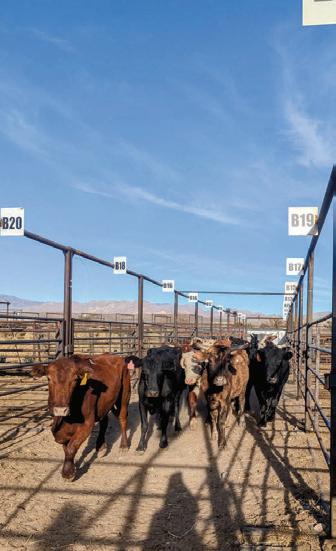
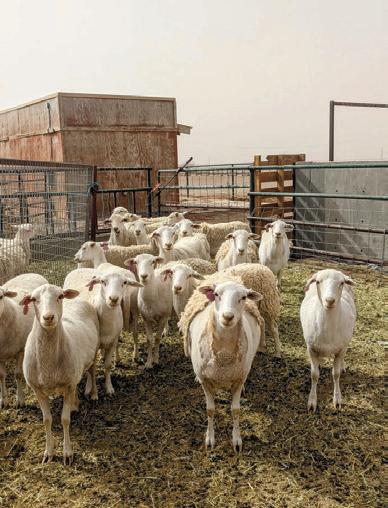
by Julie Carter
If rodeo math had an algebraic equation, it would include variables for passion, miles, grit, try and skill. Tylee DeHerrera from LaJara, Colorado brings all that and more to her love of the sport. Specifically, roping.
The newly graduated high school senior will spend the summer roping in jackpots and rodeos before she heads to South Plains College in Levelland, Texas where she will study Ag Business and has been signed to their rodeo team in breakaway and team roping. Tylee admits that while she is a good student, the academics are her way to be able to rodeo.
“My dad and mom (Tim and Brittney DeHerrera) both rope,” Tylee explained, “so it was natural for me to pick up a rope, too. My Dad taught me everything. He’s pretty handy.” The DeHerreras ranch in country that is home to four generations.
“My grandparents live a half mile down the road, and my great-grandparents live a
mile away.” The family also owns and operates an asphalt business, so Tylee works there as well.
Tylee says she has two older brothers that played sports, not rodeo. Her younger sister Taycee starts high school this fall and will continue to rodeo with the NMHSRA. “Taycee runs barrel, poles and ropes, but after I got a little older all I wanted to do was rope,” Tylee said. “I’m not sure I could pick between team roping and breakaway. I love them equally.”
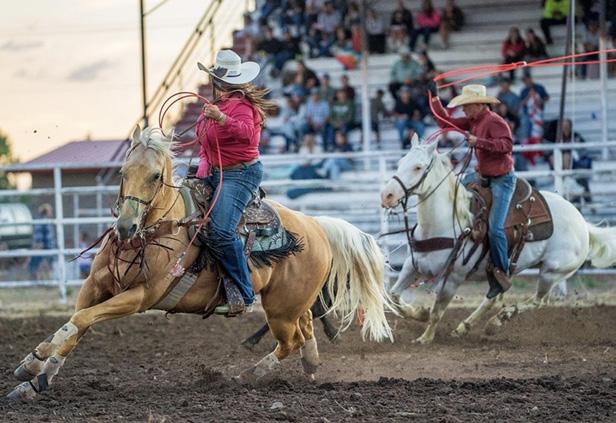
a runner. I haven’t been able to get back since,” she said.
As this story goes to print, Tylee is headed to the NMHSRA State Finals. She and her partner Braxton Regester are sitting 4th in the HS Team Roping Standings and will rope their best to hold that position for a shot at Nationals. “I qualified for Nationals my freshman year with Kayson Shahan, made the short go coming in at 10th high, but drew
Magnum, 9, is her main ride in the team roping but his full brother Bex, 8, is her backup. Both will be going to college with her. The all too familiar story of, “he was my dad’s and I begged and begged to rope off of him and the answer was always a hard no. Then one time he relented and of course, Dad never got him back.”
Tylee breakaway ropes off Dixie, an 8-year-old mare that she says she can count
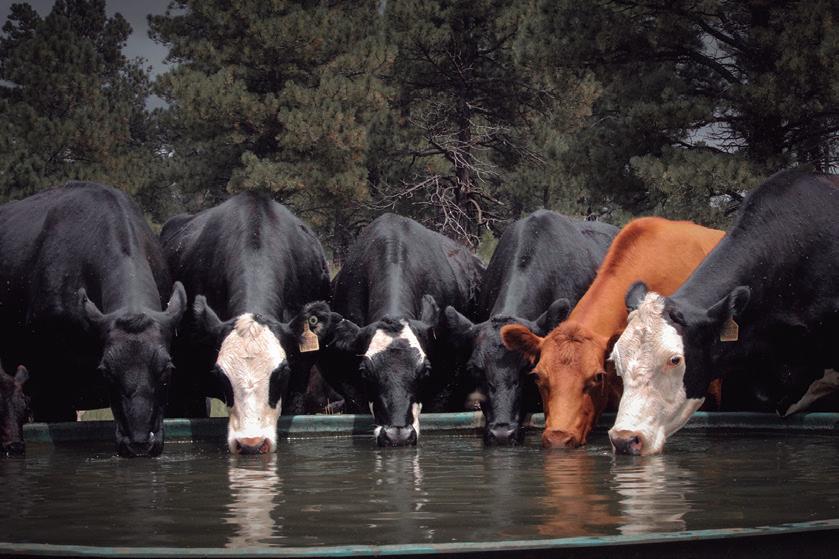
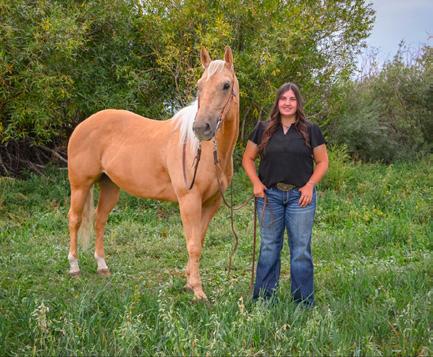
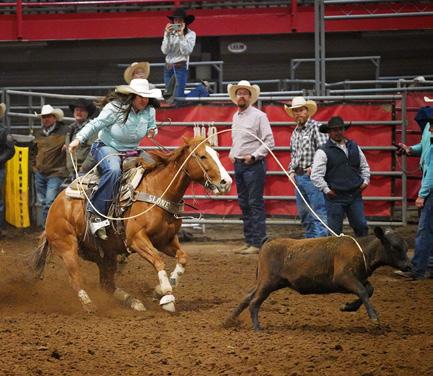
on every trip. “She just does her job; I never have to worry about her.”
You may not notice Tylee in the room at first, she’s quiet and shy, but with a sweet smile and a kind humble manner you won’t forget. She’s easy going, responsible and compassionate and her mother says honesty and integrity are strengths. “She’s so easy to be around and loves to rope and compete,” Brittney added.
It’s an 8-hour drive from LaJara to Lovington and not much less to a lot of the other rodeos in the NMHSRA season. “Farmington is like ‘hometown’ closest for us,” Tylee said. “But Lovington is actually my favorite place to rodeo, so it’s worth it.”
Tylee also wished to express her deep gratitude to her parents for all they ‘ve done over the years. “They work their butts off and then still get up and drive us eight hours to a rodeo. They definitely try and give us every opportunity they can. I want them to know how thankful I am for them.”
The reality of this being the last round of the rodeo season for her is starting to hit home. “I’ve made a great group of friends over the years. Everyone is so supportive, so helpful, always there for each other. I will miss that very much. College rodeo will be fun, but it’ll be a lot different.”


Border Tank Resources 34
Bradley 3 Ranch, Ltd. 41
Brand / Jeff Jasper 25
Brinks Brangus / Westall Ranch 9, 41
C Bar Ranch
Cattlemen’s LS Auction Co
. 35
Cauthorn & Griffin Insurance . 55
Chas S. Middleton & Son . . . . 42
Clark Anvil Ranch 39
Clovis LS Auction 25
Conniff Cattle Co., LLC 40
Cox Ranch Herefords 41
Denton Photography
Dexter LS Commission
Diamond Seven Angus 41
Domenici Law Firm, PC 25
Express Scales Services
Farmway Feed Mill 24
FBFS / Larry Marshall 13
Feeding Quality Forum/ Certified 11
Five States LS Auction, 17
4 Rivers Equipment 7
Fort Sumner Processing 34
Garnett Insurance Agency 12
Genex / Candy Trujillo 40
Grau Charolais 14, 40
Grau Ranch 5, 39
Harrison Quarter Horses 42
Hartzog 39, 50
Hartzog Angus Ranch 40
Headquarters West / Traegen Knight
Headquarters West Ltd. / Sam Hubbell
Ranch .
. 44
43
25 Hi-Pro Feeds
6 Hubbell Ranch
41 Hudson LS Supplements 26 Hutchison Western 8
James Sammons III. .
Kaddatz Auctioneering & Farm Equipment 42 Ken Ahler Real Estate Co., Inc 46
L & H Manufacturing 30 Landmark Mercantile LS A 51
Lavender Brangus 35
Lazy D Ranch Red Angus 39 Lazy J&G Sales 42
Lonestar Stockyards, LLC 33
Lyssy & Eckel Feeds 8
Manzano Angus 40
McPherson Heifer Bulls 41 Mesa Tractor 16, 41
Michael Perry For Land Commissioner 30
Michelet Homestead Realty 43 Monfette Construction Co. . . 42 National Animal Interest Alliance
38 New Mexico Farm & LS Bureau 3 NM Federal

Purina® Wind and Rain® ProCycle® delivers high trace mineral bioavailability, Puriferm® enzyme technology, and premium vitamins A, D & E for elite reproductive performance. Designed for consistent intake and less waste to support breeding success and herd health.
COWBOY’S CORNER
Lovington, NM
Wayne Banks, 575-396-5663
CREIGHTON’S TOWN & COUNTRY
Portales, NM
Garland Creighton, 575-356-3665
CREIGHTON’S AT THE FORT
Fort Sumner, NM
Garland Creighton, 575-760-6149

DOUBLE D ANIMAL NUTRITION
Artesia, NM
Don Spearman, 575-302-9280
ONE STOP FEED, INC.
Clovis, NM
Austin Hale, 575-762-3997
ROSWELL LIVESTOCK & FARM SUPPLY
Roswell, NM
Matt Rogers, 575-622-9164
PURINA ANIMAL NUTRITION
Eastern NM
Steve Swift, 575-760-3112
PURINA ANIMAL NUTRITION
Western NM
Joram Robbs, 520-576-8011

CASE & CO.
Tucumcari, NM
Luke Haller, 575-403-8566
BUNKS FEED
Hobbs, NM
Jim Selman, 575-397-1228
DICKINSON IMPLEMENT CO.
Tucumcari, NM
Dwight Haller, 575-461-2740

LINCOLN COUNTY MERCANTILE
Capitan, NM
Greg McVey, 575-208-9566
HE BAR HAY LLC
Deming, NM
Megan Albrecht, 575-993-2998
STOCKMEN’S FEED BUNK, INC.
Dalhart, TX
Mark Schumacher, 806-249-5602