14 Judge Denies Injunction, But Jury Trial Fight Continues
Source: Pacific Legal Foundation
18 Stewardship Starts at Home: Why Local Conservation Districts Matter More Than Ever by Rebecca Dow
20 How Technology and Innovation are Revolutionizing the Future
Source: Dairy Farmers of America
22 Dairy Checkoff Launches Online Grant Database for Farmers by AGDAILY Reporters
23 Will The Government Get Away with Stealing Water Rights?
Source: Mountain States Legal Foundation
28 Climate Policy Belongs to Congress— Not the EPA by Ivan London, Senior Attorney at Mountain States Legal Foundation and Director of MSLF’s Center for American Prosperity & Energy (CAPE)
30 NMSU Experts Team Up to Keep New Mexico Alert on New World Screwworm
33 Ranchers Ask Court to Vacate USDA Ear Tag Rule by Tom Johnston, meatingplace.com
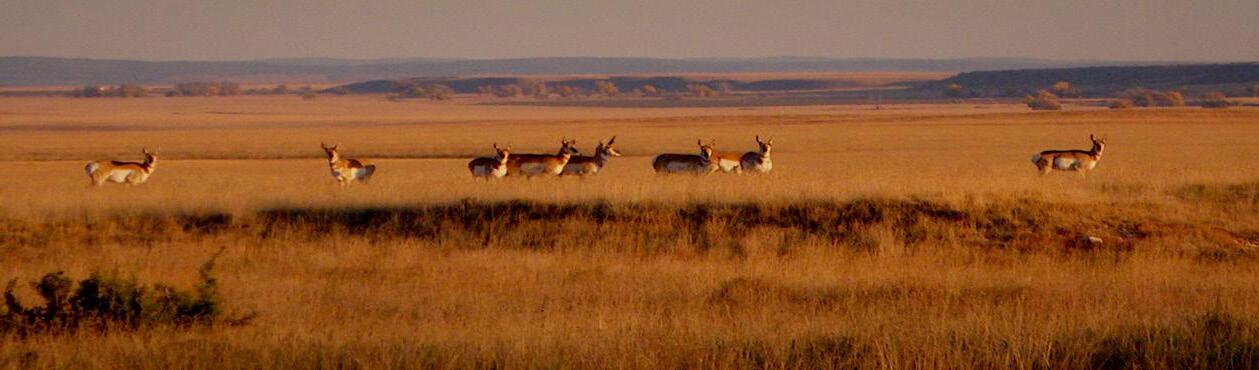
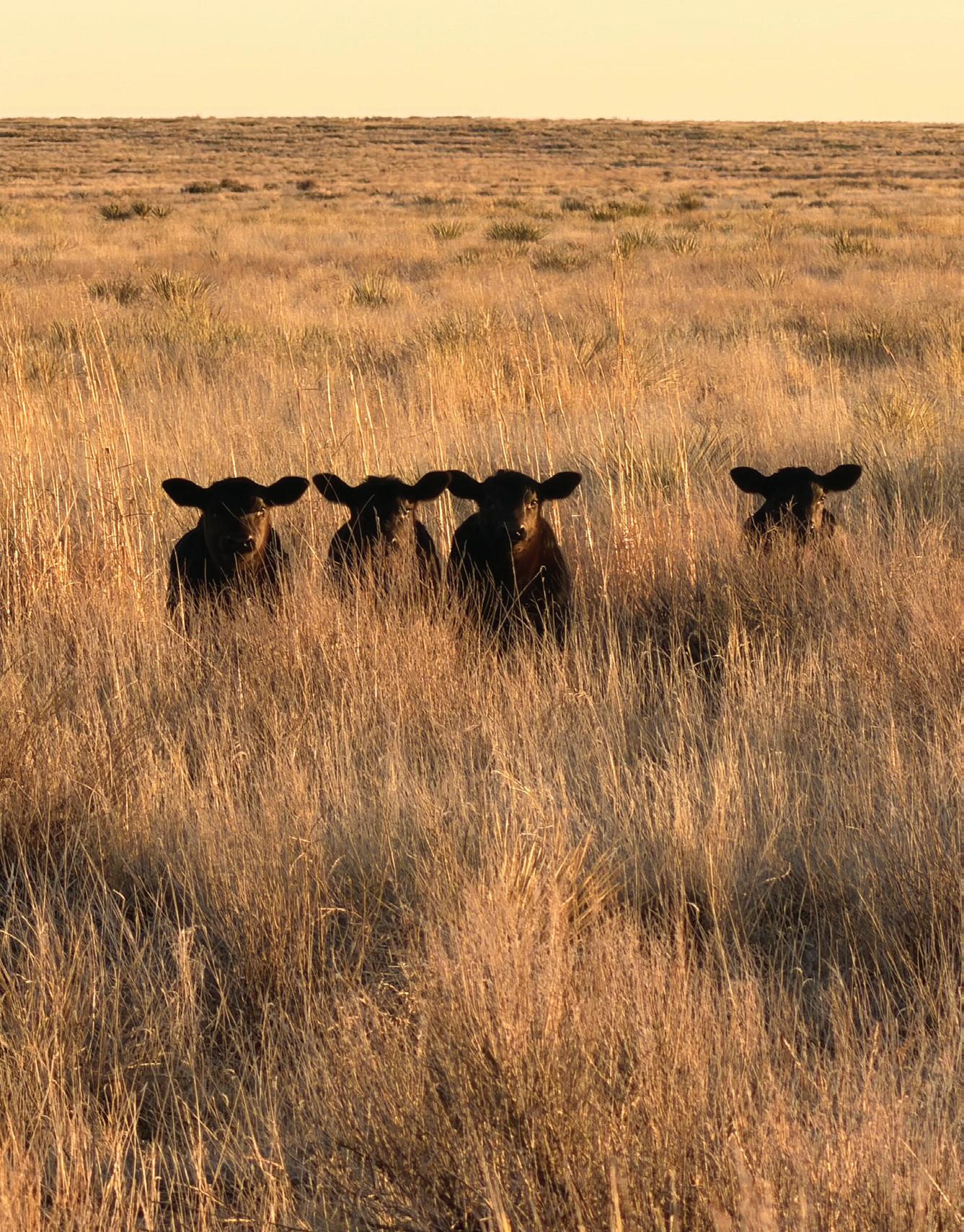
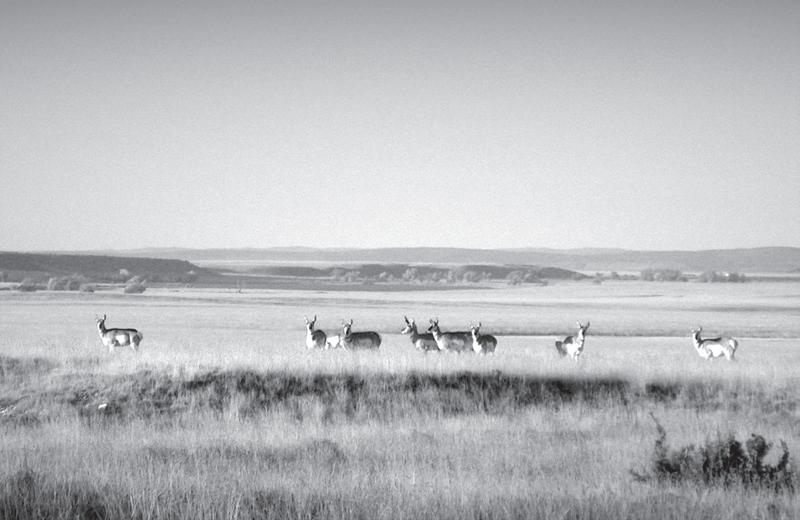
34 Pronghorn and Cattle: Biodiversity Match Made in Heaven? by Owen Hablutzel for CPLA Backyard Biodiversity series
39 Cowboy Artists of America Moves Annual Exhibition to Denver for 60th Anniversary
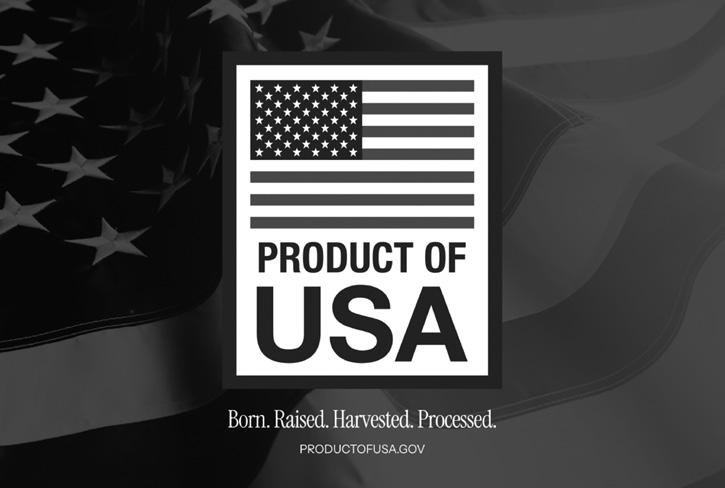
40 USDA Promotes New, Voluntary “Product of USA” Label
45 6666 Ranch Announces Leadership Transition
56 Mid-Year Convention
60 Old Cooperatives and New Farmers by Phil Kenkel, Bill Fitzwater Cooperative Chair, Oklahoma State University
62 Bull Breeding Soundness Exams by Cheyenne Young, King Ranch Institute For Ranch Management Graduate Student
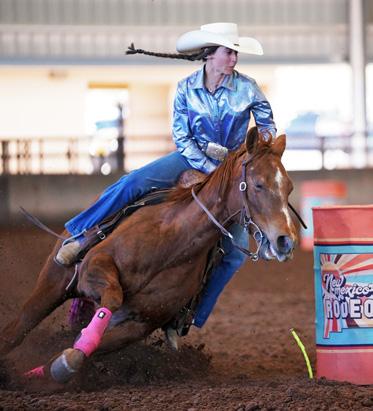
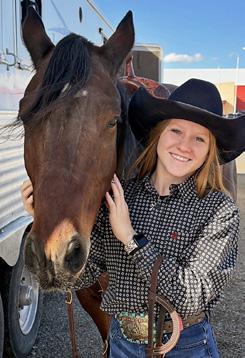
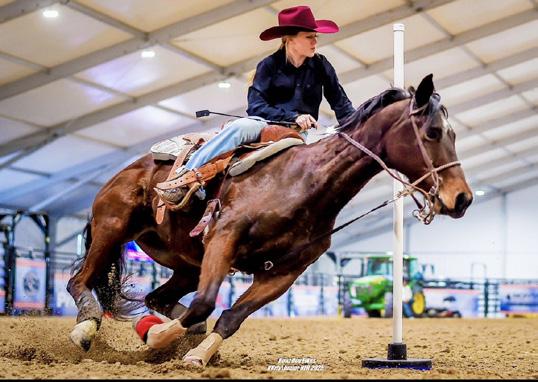
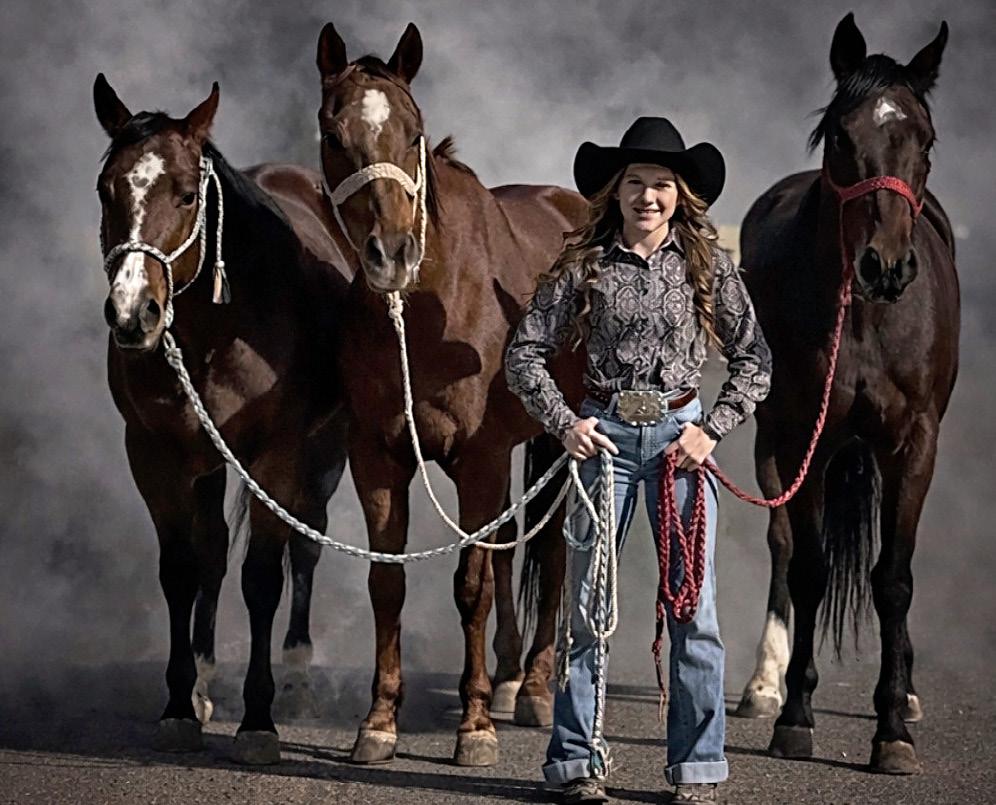
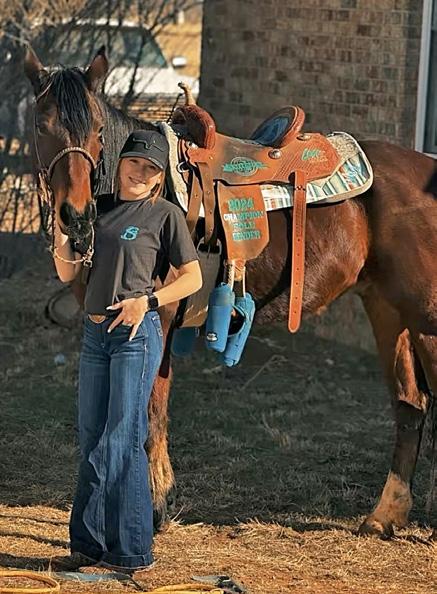
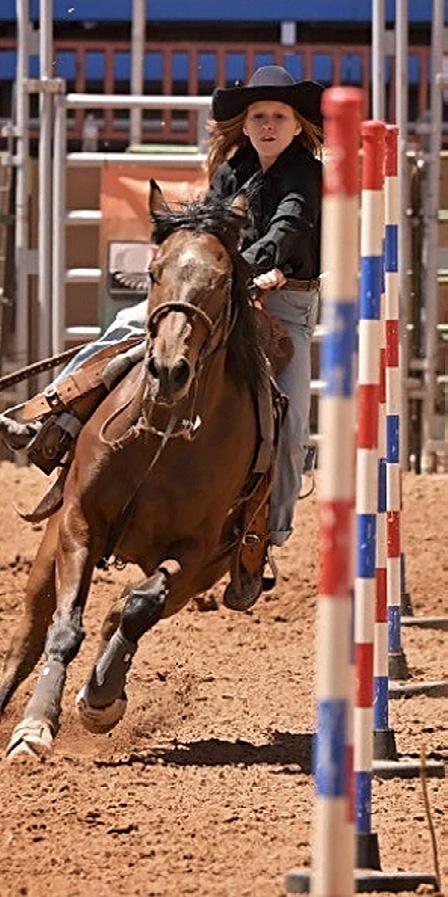
66 New Mexico High School Rodeo Association Cacie Sherburne by Julie Carter
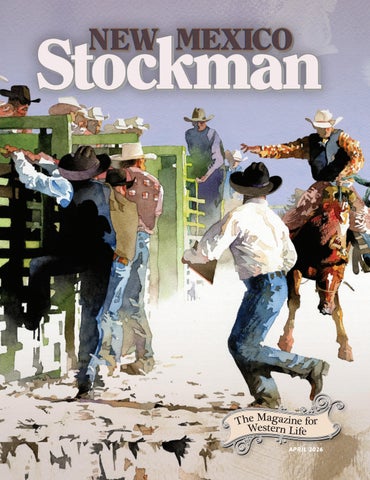
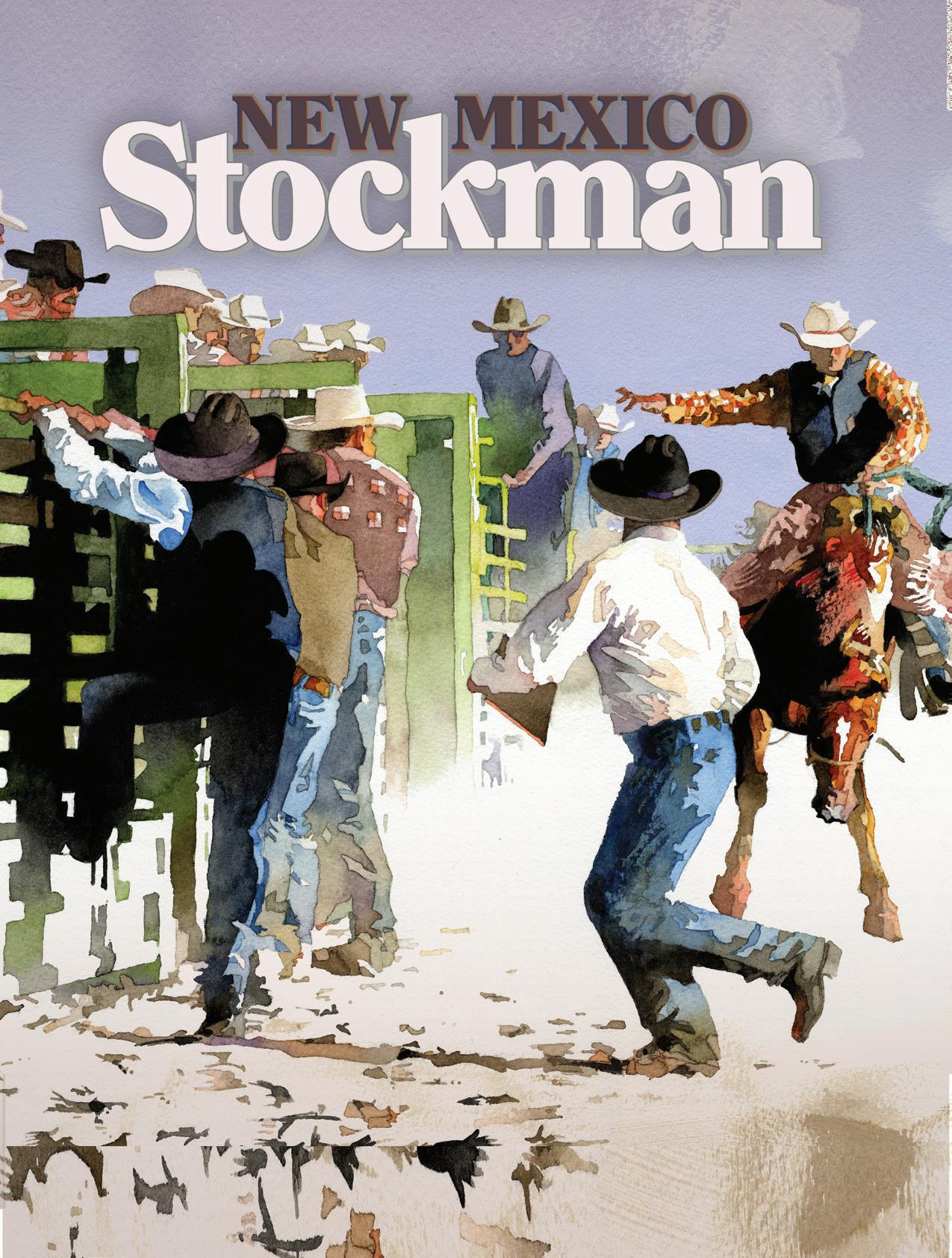
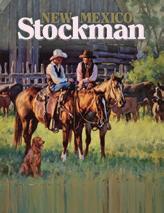
on the cover
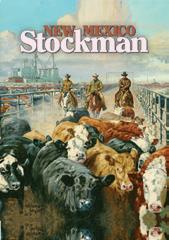
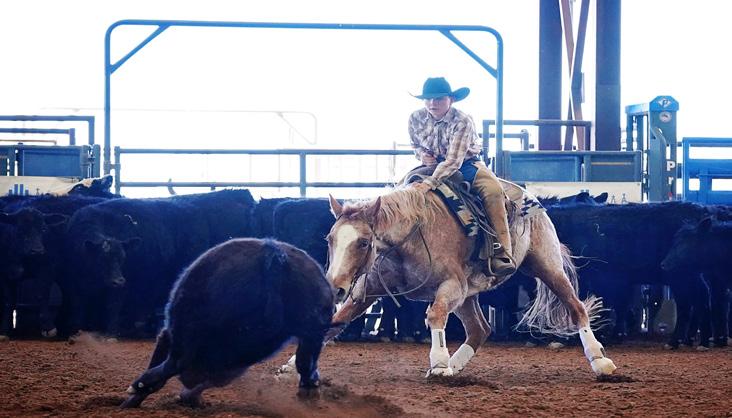
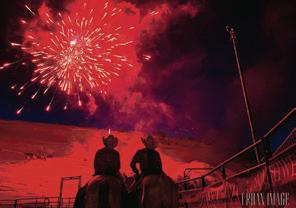
Clearing the Arena by Don Weller graces the cover this month. As a boy Don Weller drew horses and cowboys when he wasn’t exploring with his horse along the Palouse River or over the rolling hills that surrounded his childhood home near Pullman, Washington. Graduating from Washington State University with a degree in Fine Art, he sold his horses and moved to Los Angeles where he spent decades doing graphic design and illustration. Clients included Time Magazine, The Hollywood Bowl, The National Football League, the 1984 Olympic Games in Los Angeles, and he created five stamps for the United States Post Office. Besides illustration and graphic design, he taught school part time, three years at UCLA, where he met his wife Cha Cha, and eleven years at the Art Center School in Pasadena. Finally, Don realized he had seen all the cement and palm trees he could stand and moved to Utah. He and Cha Cha live in rural Oakley, Utah, with Eddie the border collie, two cats, and three horses who are bred to cut. Don creates western paintings and rides the cutting horses. Recent awards include 2020 Western Heritage Award from National Cowboy and Western Heritage Museum for Don’s memoir, Don Weller: Tracks. Don was also awarded a Lifetime Achievement award from the Los Angeles Society of Illustrators and an Honorary Doctorate Degree from the San Francisco Academy of Art. For more information on this work and Don’s others, visit donweller.com/works or contact him at PO Box 518, Oakley, UT 84055 phone: 801-599-5515
Plan Today. Protect Tomorrow.
Introducing Hayden Garnett, Life lnsurance Agent
Life can be unpredictable, but the right planning can make all the difference for the people you love. Hayden Garnett is here to help families prepare for life’s uncertainties with thoughtful life insurance solutions.
Business Marketing Major from WTAMU dedicated to helping families protect their future.
With
With
Skip
Skip
BK Miss Sancho 3059
BK Belle Air 2299 ET
BRANGUS ANGUS RED ANGUS
MESSAGE
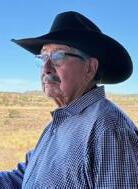
by Dan Estrada NMCGA President-Elect
Tom Paterson President Luna
Dan Estrada President Elect Trementina
Marshal Wilson Vice President at Large Mesilla Park
Tracy Drummond SW Vice President Reserve
Dave Kenneke NE Vice President Cimarron
Jeff Decker SW Vice President Lovington
Marjorie Lantana NE Vice President
Tamara Hurt Secretary/Treasurer Deming
Bronson Corn
Immediate Past President Roswell
Loren Patterson Past President Corona
Dear Cattle Growers,
During the 2026 Session of the New Mexico Legislature, the New Mexico Cattle Growers’ Association advanced several appropriation requests and policy priorities aimed at strengthening livestock Producers, improving agriculture infrastructure, and addressing long-standing challenges facing New Mexico’s ranching communities.
A key priority for NMCGA was continued funding to address livestock losses caused by the Mexican and grey wolves. The House and Senate approved $3 million to support programs that compensate producers for direct losses and indirect damage from wolves.
Funding was also secured to support statewide efforts to eradicate Trichomoniasis, (trich) a reproductive disease that causes significant economic losses for cattle producers. The House and Senate approved $5.1 million for testing, surveillance and management practices to protect herd health and maintain the productivity of the New Mexico cattle industry.
Recognizing the growing pressure on water resources across the state, the House and Senate approved $10 million to support agricultural water resilience initiatives. These programs are designed to help ranchers and farmers implement practices and infrastructure that improve water efficiency, drought preparedness, and long-term sustainability.
To address the shortage of veterinarians serving rural agricultural communities, the House and Senate approved $1.5 million to expand large food-animal veterinary services in underserved regions of New Mexico. This investment will help ensure livestock producers have access to essential veterinary care, improving animal health, biosecurity, and food safety.
The House and Senate also approved $3 million to support meat processors through waste management equipment and technological innovation, strengthening local processing capacity and sustainability.
We asked the legislature to approve $50,000 to pay for hardware and software so our ALERT members will have mobile internet access as they work across the state. The legislature approved the request and made it a recurring budget item.
Collectively, that is more than $22 million toward strengthening New Mexico’s livestock industry. The funding approved during the 2026 legislative session supports ranchers facing predator impacts, improves herd health programs, expands veterinary access, strengthens agricultural infrastructure, and promotes innovation across the livestock sector. On March 11 the Governor approved each of these requests and we are grateful to Governor Michelle Lujan Grisham and the legislature.
Other measures that made it into the budget were Senate Bill 108, the Regional Farm to Food Bank program; House Bill 114, an appropriations bill to expand the Double Up Food Bucks program; and House Bill 111, to increase penalties for violations of New Mexico water laws.
Several pieces of legislation were also closely monitored during the session. House Bill 3, the proposed Green Amendment to our Constitution, failed in House Energy and Conservation. Senate Bill 17, the Stop Illegal Gun Trade and Extremely Dangerous Weapons Act, passed the Senate 21-17 but did not become law. Senate Bill 18, the Clear Horizons Act which proposed codifying greenhouse gas reduction goals into state law, failed on the Senate floor.
Participating in the 2026 legislature session was a valuable and educational experience. Observing the legislative process firsthand provided a deeper understanding of how policy decisions are developed, debated and implemented. The experience strengthened my appreciation for the importance of advocacy and collaboration in representing the interests of the livestock industry and representing members of NMCGA.
Since the close of the 2026 Session, I have attended several follow-up meetings, including the Energy Corridor meeting in Clayton, the Wildlife Committee meeting on March 5th. On March 11 I traveled to Show Low, AZ for a meeting regarding the Federal Regulatory Fairness Hearing. On March18 I participated in a meeting on theft and health.
To support membership growth through Community outreach, I will be attending various bull sales where we will host an NMCGA booth to promote the NMCGA, accept new membership applications, and sell NMCGA merchandise. These events provide an opportunity to share the benefits of membership, including advocacy on behalf of livestock producers, access to industry information and resources, networking with fellow producers, and participation in programs that support and strengthen the New Mexico ranching community.
In late March and early April, we held a Northeastern “listening tour” to engage with producers and discuss regional agricultural issues. Ranch stops included the Phoenix Ranch in Watrous and ended with the NMCGA Northeastern Regional Meeting in Philmont Scout Ranch.
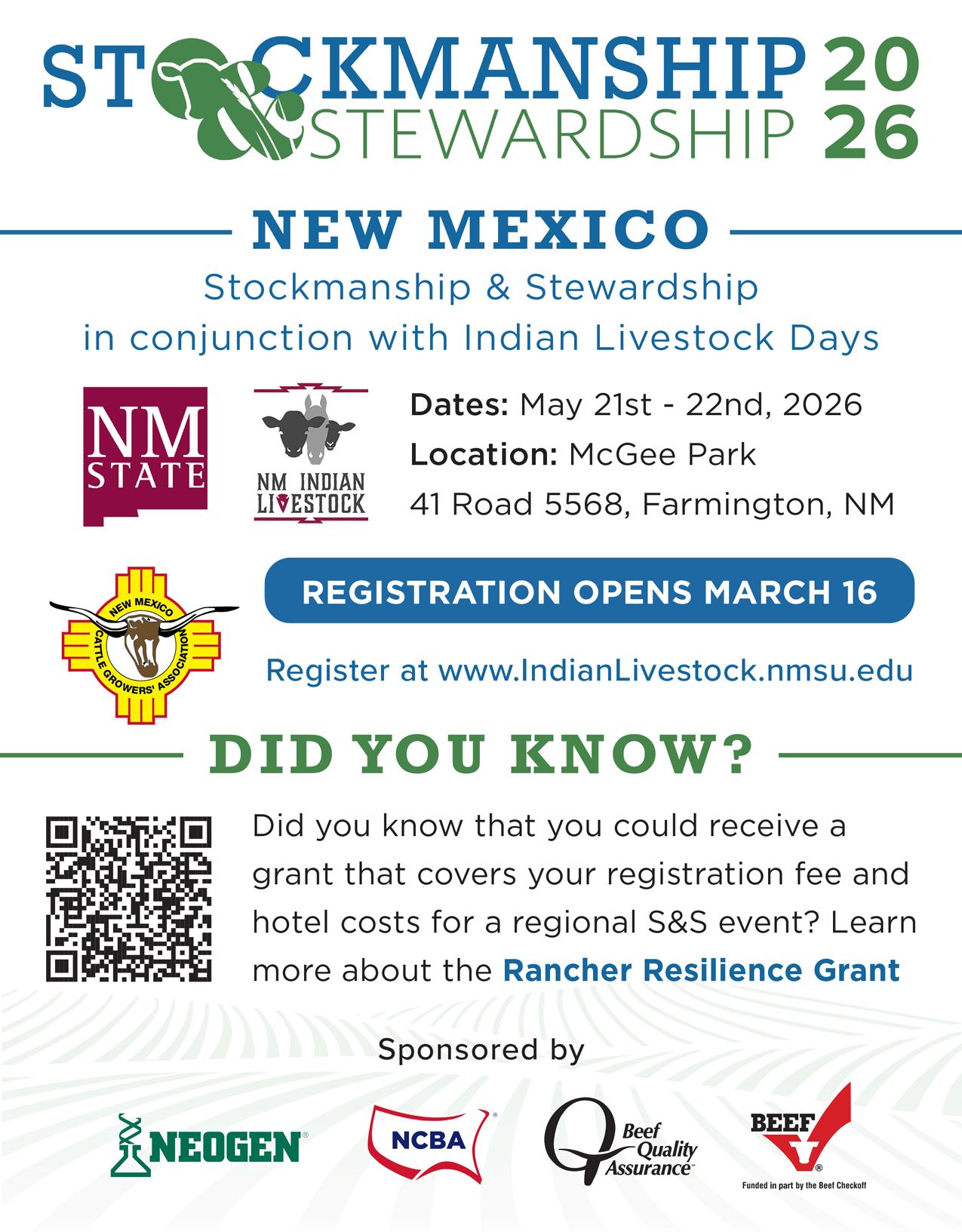
Additional Regional meetings will be held on April 9 in Deming, April 16 in Lovington and May 21 and 22 in Farmington.
I look forward to continuing our work together in support of New Mexico’s cattle producers and ranching communities.
Warm Regards, Dan Estrada
JUST
THE FACTS ... & THEN SOME
by Caren Cowan, Publisher New Mexico Stockman
Maybe Montana Will Leave Us Alone Now.
News is that both US Representative Ryan Zinke and US Senator Steve Daines are not running for re-election. This is good news for New Mexico because the two seemed to take great delight in working with anti-grazi ng folks from out of state.
Texas taking interest in New Mexico…
Texas House Speaker Dustin Burrows has tasked the newly formed Governmental Oversight Committee with studying the potential annexation of one or more contiguous New Mexico counties. This directive follows Burrows’ public support for Lea County’s secession from New Mexico, echoing a proposal by New Mexico Representative Randall Pettigrew. The committee will assess the Texas–New Mexico border, potential economic effects, and legal feasibility before recommending any legislation.
It might be one thing if Texas wanted the whole east side, but it appears they will be picking and choosing, desiring only Lea and Roosevelt Counties because of their oil and gas production and strong conservative leaning.
According to msn.com, the annexation study comes amid heightened conservative dissatisfaction with Democratic leadership in New Mexico’s state government, particu-
larly over oil and gas regulation. Burrows’ move appears to energize Texas secessionists, a small but vocal faction in the state’s Republican base. Analysts suggest the push is less about realistic border change and more about political signaling to consolidate intraparty support.
Historically, Texas claimed large parts of present-day New Mexico after declaring independence in 1836 but ceded these claims in the Compromise of 1850 for $10 million. The current proposal to absorb Lea and Roosevelt counties would partially reverse that settlement, adding roughly 6,849 square miles to Texas. Such a move would disrupt a border arrangement established by Congress in 1850, raising questions about precedent and federal approval, according to the Washington Examiner
For annexation to proceed, New Mexico law would require petitions signed by 15 percent of voters in at least three contiguous counties, a two-thirds majority in a special election, county commissioner approval, and presidential consent. The earliest any change could take effect is 2027, and political observers rate the chances as minimal. Even proponents, including former Roswell Mayor Dennis Kintigh, acknowledge the idea is more fantasy than actionable policy.
The coveting of land along the 103rd meridian that divides Texas and New Mexico has a bit of a history. Just over 22 years ago, then-Texas Land Commissioner Jerry Patterson and his New Mexico counterpart, Pat Lyons, revived a dispute from 1859 about the actual boundary, according to the Austin American-Statesman . Lyons said the frontier-era surveyors drew the line a little too far to the west, and he wanted an adjustment that would bring the tiny towns of Farwell, Texline, Bledsoe and Bronco — plus a 600,000-acre strip of empty land — over to his side.
Patterson disagreed. And in mock seriousness, he suggested that he and Lyons settle the dispute with dueling pistols. And that’s what they did. Well, sort of.
According to a January 6, 2004, story in the Midland Reporter-Telegram , the two Republicans, armed with antique sidearms, met in an agreed-upon location, stood backto-back and counted off their paces. But neither turned to fire on the other. Instead,
they agreed to leave the border as it had been.
Patterson disagreed. And in mock seriousness, he suggested that he and Lyons settle the dispute with dueling pistols. And that is what they did. Well, sort of.
Let’s make clear from the outset that the annexation by Texas of one or more of the five counties looks iffy at best. It would require a vote of the people in the counties affected — and an act of Congress.
CBD loses
The oil and gas industry was at play in a meeting in late March. A judge ruled that the Trump administration could convene a meeting to seek an exemption from the Endangered Species Act (ESA) on the basis of national security for expanded oil and gas drilling in the Gulf of America.
The committee was to meet to seek an exemption from endangered species laws — which make it illegal to harm or kill species on a protected list, without a viable alternative — for national security purposes as invoked by Defense Secretary Pete Hegseth.
According to a Department of Justice filing, Hegseth called for an exemption for “all Gulf of America oil and gas exploration and development activities” overseen by federal agencies in his request to Interior Secretary Doug Burgum for the meeting. The request came as the world experiences oil shocks and soaring energy prices amid the U.S.-Iran war.
Composed of six high-ranking federal officials plus a representative for states involved, the committee has been called the “God Squad” by environmental groups that say its actions can essentially determine the fate of an endangered species. It has convened only three times in its 50-year history, and the national security provision has never been invoked.
The Center for Biological Diversity sued earlier this month, saying Burgum did not meet requirements or the legal basis needed to convene the committee. In seeking a temporary restraining order, the center argued the government could cause irreparable harm through the actions it decides in early April.
See the Stockman’s May issue to see the outcome. ▫
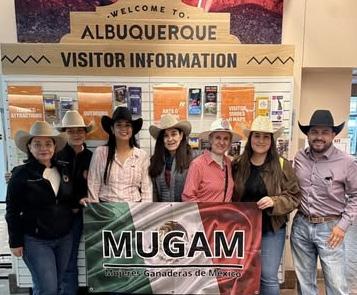
In a first-of-its-kind effort emphasizing the growing role of women in the cattle industry, the New Mexico Department of Agriculture (NMDA) partnered with the Kansas Department of Agriculture to host an all-women delegation of six cattle producers from Chihuahua, Mexico, for a multi-state trade mission focused on U.S. beef cattle genetics.
Women play an increasingly important role in agriculture, contributing significantly to farm and ranch operations worldwide, yet they remain underrepresented in international trade missions and leadership opportunities in the livestock sector. This mission, held during the International Year of the Woman Farmer and Women’s History Month, underscores the expanding leadership and influence of women in agriculture across borders.
The delegation represented Mujeres Ganaderas de México (MUGAM; “Cattlewomen of Mexico”) and traveled through New Mexico and Kansas March 2 through 4 to strengthen commercial relationships and explore opportunities to import U.S. beef genetics. The mission was made possible through the state departments of agriculture’s membership in U.S. Livestock Genetics Export, Inc., with funding support from the USDA Market Access Program.
“I had an outstanding experience on this trade mission that exceeded expectations,” said delegation member and rancher Ana Maria Baeza. “From touring ranches to exchanging knowledge with producers, the visit created meaningful connections, strengthened cultural and commercial ties, and opened the door to future collaboration.”
“Mexico is a vital trading partner for New Mexico agriculture,” said Jeff Witte, New Mexico Secretary of Agriculture. “Welcoming this delegation of women leaders in the cattle industry highlights the strength of our international partnerships and the growing leadership of women in agriculture. Missions like this help build relationships and create new market opportunities for our producers.”
Throughout the tours, participants discussed breeding objectives, bloodlines and export requirements while exploring poten-
tial opportunities for live animals and genetics. Several members of the delegation plan to return to New Mexico in April to participate in a bull sale and purchase U.S. cattle genetics, further strengthening trade relationships established during the mission.
NMDA supports New Mexico agriculture by connecting producers with international buyers and expanding global market opportunities.
Monday, June 15 - Wednesday, June 17
INDIAN
PUEBLO CULTURAL ARTS CENTER ALBUQUERQUE, NEW MEXICO
Do you want to learn about the agriculture industry and how you can become more involved?
SAVE THE DATE for the 2026 AgriFuture Educational Institute. Scholarships are available! Apply by April 15. College-age students are especially encouraged to attend.
Cost of attendance is just $75. Includes ag tours and all meals.
Some of the topics you can expect to learn about include:
- Financial management
- Marketing and agribusiness
- Opportunities for getting started
- Utilizing agencies
Your time at AgriFuture will be rewarding, as you will have the chance to learn from and network and interact with experts in multiple agriculture-related fields.
For more information, contact NMDA Public Affairs Specialist Jane Steele Heitz at (575) 646-1864 or jheitz@nmda.nmsu. edu.
Women from the Mexican Beef Genetics Trade Delegation pictured with Juan Sanchez, NMDA International Trade Specialist
Judge Denies Injunction, But Jury Trial Fight Continues
Source: Pacific Legal Foundation
Ajudge in Washington state has denied a preliminary injunction for a multigenerational ranching family fighting for their constitutional right to a jury trial, allowing a state agency to move forward
while the underlying constitutional question remains unresolved. Wade and Teresa King, whose family has ranched in Grant and Douglas counties since the 1950s, face significant penalties and compliance costs from the Washington State Department of Ecology—sought without ever letting a jury hear their case.
“Today’s denial is disappointing, but Washington’s constitution is unambiguous that the right to a jury trial shall remain inviolate, and we intend to hold the State to that promise,” said Oliver J. Dunford, senior attorney at Pacific Legal Foundation. “The
Kings have spent generations building their ranch. They deserve to have their day in court before a jury of their peers, not a panel of government appointees.”
The Department of Ecology issued administrative orders against the Kings beginning in February 2023, claiming their permit-exempt stock water ponds disturbed regulated wetlands and imposing a $267,540 civil penalty. A separate restoration order followed in January 2025, bringing estimated compliance costs to over $3.7 million. The Kings dispute that their ponds are subject to state jurisdiction at all and deny that the Department has authority to regulate stock water ponds under Washington law.
Forced to either comply or appeal to an administrative tribunal with no jury mechanism, the Kings challenged the proceeding in Grant County Superior Court. The case also raises the broader question of whether the Seventh Amendment’s civil jury trial guarantee should apply to the states, as nearly every other constitutional right does.
The case proceeds to a full merits hearing on May 21. Pacific Legal Foundation remains committed to vindicating the Kings’ right to a jury trial. ▫
Happy Spring, Everyone!
Wow—March is already here! Time is moving quickly, and while there isn’t a lot to report this month, there are still several important items to keep on your radar.
Our district workshop plans are still in the works, so please keep an eye out for more information coming soon. If your local association is planning an Ag Day event, I would love the opportunity to attend and visit with you. Please reach out and let me know your plans.
This is also a reminder to please submit your dues if you have not already done so. Let’s continue working together to strengthen our organization and encourage involvement from the younger generation—they are the future of our industry.
The Pat Nowlin Scholarship application is now available and must be returned and postmarked by April 15, 2026, to Shelly Labrier, Chairperson.
If you have any questions or need additional information, please don’t hesitate to reach out. Thank you, ladies, for all that you do and for your continued dedication and support. It is truly appreciated.
Sincerely,– Misti Orr, NMCB President
Yucca CowBelles met Wednesday February 25, 2025 at CVE in Artesia at 10:00 a.m. with 11 members in attendance. Meeting was called to order by President Joan Kincaid. Pledge of Allegiance was led by Riki Lopez. Stepanie Tilton read the CowBelle Creed. Correspondence was shared. Tricia Monk gave the Treasurer’s report. Donations for Grammy’s House were collected to be delivered after the meeting. The newest member Emily Metcalf was introduced. Members introduced themselves and shared two of their favorite things. Year books were distributed and checked and corrections and additions made. Meeting adjourned at 10:30. Program was the traditional trip to the Historical Museum for the Quilt Show at 11:00, after which lunch was enjoyed at La Fonda. Respectfully Submitted, Tina Kincaid, Secretary
Mesilla Valley CowBelles met March 17, 2026, at Chilitos Restaurant with only a few ladies. Cowboy Day/School Day April 10, 2026, discussed and Mary Esther and Janelda will do the “Have you eaten any soil today?”. Pat Nowlin Scholarships – the deadline is April 15, and no one knew anyone to pass this on to. ANCW Webinar Series discussed and recommended to all. Dr. Julia Herman has worked with SW Border Center at NMSU regarding Screwworm and Biosecurity Plans. Other upcoming Ag Days were discussed April 28 at Carrizozo, NM Indian Livestock May 21-22 – Farmington, ACES Open House April 25 – NMSU Campus, Chaves County Ag Day April 20-21, April 28-29 McKeen Ranch Days. Submitted by Janet Witte
Hello New Mexico CowBelles! I am your Jingle Jangle editor. I received no other news from local CowBelles this month other than Yucca and Mesilla Valley. I know all of you locals are doing amazing things. Hopefully more will begin sharing news. They do not always have to be in the form of minutes or formal newsletters. Please send via snail mail or email your happenings! Thank you again! janetwitte@msn.com ▫
NM CowBelles Recognize Scholarship Winners
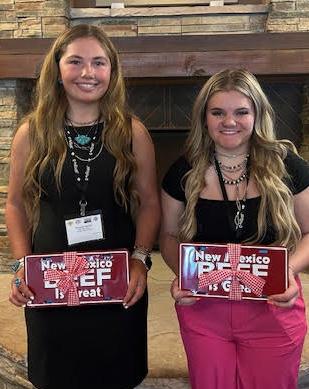
The NM CowBelles awarded three $500 scholarships to two graduating high school seniors and one college upperclassman at the New Mexico Cattle Growers’ Joint Stockman’s MidYear Conference in Ruidoso, New Mexico. The Pat Nowlin Memorial Scholarship honors the memory of Pat Nowlin, the first president and founder of the NM CowBelle organization.
Karleigh Erramouspe, of Corona, NM was selected as the NM CowBelle upperclassman scholarship winner this year. Erramouspe completed her freshman year as an Oklahoma State University student majoring in agriculture communications with a minor in ethical leadership. She is pursuing a career in agricultural journalism or policy in hopes to bridge the gap between livestock producers, lawmakers and consumers. This summer Erramouspe is working as an intern with the Oklahoma Farm Report to learn about delivering the latest agricultural news, market and commodity reports, and weather information to farmers and ranchers in the area. A previous summer internship with the NM Cattle Growers’ Association allowed her to meet with legislators in Santa Fe and Washington, DC to further advocate for our industry.
While at OSU, Erramouspe was named to the President’s Honor Roll with a 4.0 GPA and served as a student ambassador for the Ferguson College of Agriculture. Other leadership roles included: OSU Agriculture Communicators of Tomorrow committee member, volunteer for the Stillwater Humane Society and the OSU Cowboy-thon fundraising event, and leader for feedlot and purebred beef center tours as a member of the OSU Block and Bridle Club.
Kagan Bequette of Fort Sumner, and Natalie Smith of Mills, each received $500 as winners of the scholarships for graduating high school seniors.
Kagan Bequette is the daughter of Tanya Bequette and is a recent graduate of Fort Sumner High School with plans to enroll in the San Juan College on-line veterinary technician program based in Farmington, NM. The time spent working on her family ranch raising Hereford and Angus cattle and alfalfa, gave her the inspiration for her chosen career path. Bequette has already acquired her New Mexico and National Beef Quality Assurance certifications and has completed a veterinary science certificate program which will enhance her plans to become further certified in pregnancy checking, artificial insemination and embryo transfer in cattle. Her beef promotion and education activities include beef industry presentations for elementary students and beef cattle workshops at the De Baca
Natalie Smith and Kagan Bequette
County Ag Days. Bequette says, “Agriculture has taught me to be resilient and to never give up even when things get hard.”
Bequette has also received numerous awards and leadership opportunities in 4-H and FFA which include, 2024 National 4-H Record Book winner, 2024 State FFA SAE entrepreneurship award winner in breeding cattle, swine production, goat production and diversified livestock, 2023 NM State 4-H high point sewing individual, as well as officer positions in her local 4-H club and county council.
Natalie Smith, daughter of Brandon and Becky Kelling Smith, graduated from Roy High School and plans to attend Clarendon Junior College in Clarendon, Texas as a member of the college’s livestock judging team. Her goal is to obtain two associates degrees in agricultural communications and agriculture economics before transferring to Texas Tech University in Lubbock, TX to major in agriculture communications and minor in political science as she prepares for law school. While at TTU she also plans to participate in the agricultural legislative intern program in Washington, DC.
Smith says, “Becoming an attorney in the area of agriculture will allow her to help agriculturists like her family to fight tough issues that are detrimental to the very people that are producing the food and fiber of our nation.” She also subscribes to the biblical principle that “evil prevails when good men do nothing” and wants to set herself up to be in a position of authority to contribute to the solution rather than the problem as she serves the industry she knows and loves.
Beef promotion and education activities have included: NM Beef Council Grass Fed Beef Smack Down event, NM Farm and Livestock Bureau Ag Day volunteer at the Isotopes baseball game, creating a promotional video explaining the benefits of beef to athletes while also playing in the NM State Girls Basketball Tournament, and serving as the 2024-2025 NM CowBelle Beef Ambassador.
Smith has attained a wide range of honor and achievements during her time in high school, some of which include, the Final Drive Jackpot Grand Champion Market Beef (2025), Leon H. Harms Memorial Award for Beef Exhibitors (2024), NM State Fair Reserve Champion Simmental Market Steer (2024), NM State 4-H Conference 1st place livestock judging team and 4th high individual overall as well as high point individual in prepared public speaking in 2023 and 2024. Additionally, Smith received 4th high point individual honors at the Casper
College Livestock Judging Contest in Casper, WY and attained her NM State FFA Degree in 2024. The NM Cattle Growers’ Association also named Smith as the Williams Ranch Supply Spring Scholarship winner of $1000.
Smith’s outstanding athletic achievements included, 2025 1A Girls NM State Basketball State Champions in 2021, 2023 and 2025, NM All Star Basketball Team selectee and 1st place All-State Team in 2025, All District Basketball Player for three years and the NM Activities Association “Together We Rise” Award winner. She also excelled in track and field, volleyball, 4-H, FFA, and high school academics with many additional awards and honors.
The NM CowBelles wish to congratulate our scholarship winners and extend thanks to the Crown, Pinon, Powderhorn and Silver Spur CowBelle locals that endorsed our scholarship applicants this year. Appreciation is also extended to the many individuals and CowBelle locals who donated funds throughout the year to the NM CowBelle Pat Nowlin Memorial Scholarship in memory or honor of family members or loved ones. Should individuals or groups wish to donate to the scholarship, contact the NM CowBelle scholarship chair below.
Stewardship Starts at Home: Why Local Conservation Districts Matter More
Than Ever
by Rebecca Dow
Across New Mexico, ranchers and farmers are used to uncertainty.
Weather shifts, volatile markets, and the realities of producing food and fiber in an arid state have always required resilience. But today, producers are navigating a new layer of challenges—federal policy debates, water regulations, infrastructure demands, and increasing pressure on agricultural land. Many of these decisions are being made far from the ranch gates and farm fields of New Mexico. Yet their impacts are felt immediately by the men and women who steward
our land.
That’s why local leadership—and local solutions—matter more than ever.
For decades, the districts represented by the New Mexico Association of Conservation Districts have played a quiet but critical role in supporting agriculture across the state. Through a network of locally governed Soil and Water Conservation Districts, producers have access to technical expertise, conservation programs, and practical tools designed specifically for the landscapes where they operate.
These districts were built on a simple idea: the people who know the land best should have a voice in how it is cared for.
A Changing Policy Landscape
Across the country, agriculture is facing increased scrutiny and policy shifts coming out of Washington, D.C. Federal agencies continue to debate land use, water regulations, conservation funding, and grazing policies that directly affect western producers.
Programs tied to the federal farm bill and conservation initiatives remain essential for rural communities, but uncertainty around funding timelines and regulatory direction has left many producers wondering what
comes next.
At the same time, the scale of federal land ownership in the West means that ranchers often operate alongside agencies such as the Bureau of Land Management and the U.S. Forest Service. Decisions made within those agencies can affect grazing access, wildlife management, and land stewardship practices across millions of acres.
For New Mexico producers, staying informed and engaged in these conversations is essential.
But equally important is having strong local partners who can help translate policy into practical solutions.
Water Is Still the Defining Issue
If there is one topic that consistently rises to the top of agricultural concerns in New Mexico, it is water.
Persistent drought conditions, declining aquifers, and growing competition among municipal, industrial, and agricultural users continue to strain the state’s limited water resources.
The West has long demonstrated that voluntary conservation efforts—driven by producers themselves—often achieve better outcomes than top-down mandates. Ranchers have invested in improved grazing management, soil health practices, and watershed restoration projects that strengthen the resilience of both the land and rural economies.
These efforts are not theoretical. They are happening every day across New Mexico, often with assistance from local conservation districts working alongside federal partners like the Natural Resources Conservation Service.
Local Districts Deliver Practical Help
New Mexico’s Soil and Water Conservation Districts are uniquely positioned to help producers navigate today’s challenges.
Guided by locally elected supervisors and rooted in the communities they serve, these districts offer hands-on support that
Grazing and rangeland management
Soil health and erosion control strategies
Ї Water conservation and irrigation efficiency practices
Ї Cost-share opportunities for conservation improvements
Ї Assistance navigating federal conservation programs
Just as important, conservation districts
serve as trusted local advocates for agriculture.
They understand that conservation must work hand-in-hand with production. Healthy rangeland supports livestock. Healthy soils support crops. Healthy watersheds support rural communities.
Producer Leadership Is Essential
One of the strengths of the conservation district system is that it depends on local leadership.
Producers themselves serve as district supervisors, shaping priorities and ensuring that conservation programs reflect the realities of working lands. That local governance model has helped keep conservation efforts practical, voluntary, and producer-driven.
In a time when national discussions about land use, climate policy, and water management are becoming increasingly complex, that local perspective is invaluable.
Ranchers and farmers have always been the original conservationists. Generations of New Mexicans have understood that the land they care for today must still be productive tomorrow.
Looking Ahead
The challenges facing agriculture are not likely to disappear anytime soon. Water scarcity, policy uncertainty, and development pressures will continue to shape the future of rural communities.
But one thing remains clear: strong local institutions make a difference.
By working through their local Soil and Water Conservation Districts, producers can access resources, share knowledge, and help guide the conservation policies that affect their operations.
The future of agriculture in New Mexico will not be decided solely in Washington or Santa Fe.
It will be shaped in the pastures, fields, and watersheds where producers continue the work of stewardship every day.
And often, the first place to start is right down the road—at your local conservation district. ▫
How Technology and Innovation are Revolutionizing the Future
When you look at a rural landscape dotted with dairy farms and surrounded by crops, you might not
immediately think of technology, but it’s powering the future of the dairy industry.
Technology looks different on every dairy farm, but the latest technology allows dairy farmers — like the 9,500 dairy farmers of Dairy Farmers of America (DFA) — to produce high-quality milk easier, faster and more sustainably than ever before. In particular, the areas of artificial intelligence, automation, data analytics, smart technology and more are paving the way for a more efficient, sustainable and productive future for dairy farmers and the dairy sector.
“Every dairy farmer I know is a great problem solver and looks to the future,” says Kaleb Bateman, a DFA farmer-owner in Mosida, Utah. “I’m proud of our advancements, but I’m proud of every farmer-owner that is doing the same — using advanced technology to optimize the way they manage their farm.”
From a farm milking 50 cows in New York to a larger dairy operation in Texas, DFA farmers adopt innovative dairy technology and tailor it to their individual needs.
“Technology on the dairy farm gives me the freedom to manage operations remotely, build trust with employees and proactively address issues before they escalate,” says Paul Windemuller, a DFA farmer-owner in Coopersville, Michigan.
Factors such as the farm’s location, herd size, labor needs, milking frequency and the farmer’s personal preferences all determine how they use technology. But like any business, technology can help dairy farmers do their work even better and keep their farm going for generations to come, all while improving milk quality.
“Embracing technology isn’t just about short-term efficiency,” Paul says. “It’s a strategic investment that streamlines operations, reduces costs and ultimately cultivates higher production, nurturing the growth of our dairy farm.”
Even though dairy farmers operate their individual farms, they learn from one another how best to use technology.
“It’s so important to learn from others who are ahead of you — technology and those advancements can be pricey, so it’s through
conversation and collaboration that you gain valuable insights,” Kaleb says.
Cow monitoring
Many different types of cow monitoring systems exist, but they all enable dairy farmers to track the health, productivity and well-being of their cows.
These monitoring systems use the Internet of Things, or IoT. IoT might sound like a complex concept, but it’s something you’re likely already using without even knowing it. It’s all about connecting everyday devices to the internet so they can collect and share data. This includes everything from your fitness-tracking smartwatch to your home’s temperature-controlling smart thermostat. And, this technology is transforming traditional dairy farming into “smart” dairy farming, where everything is interconnected and more efficient.
By using sensors or cameras, cow monitoring systems collect data on various aspects of each cow, such as movement, milk production and eating habits, enabling dairy farmers to detect any health issues right away. Cows often wear smart collars that track this information.
“Having daily insights into cow health proves beyond valuable. With our computer system and rumination collars, we can swiftly detect potential infections or illnesses,” Paul says. “By administering the proper treatment or therapy early on, we can potentially prevent health events from happening or help our cows recover from them much faster.”
These systems also help dairy farmers produce high-quality milk.
“With advanced monitoring systems, I can keep a close eye on my herd, regardless of where I am on the farm,” Kaleb says. “Whether it’s tracking milk production or predicting calving times, technology has
made the job easier and more efficient.”
From the touch of their computers, farmers are using a variety of IoT technology and data analytics to improve their farms and advance the future of the dairy industry.
Milking robots
Robotic milkers or automatic milking systems make it possible for cows to be milked on their own schedules. When a cow is ready to be milked, she enters the pen, and the robot recognizes her based on the sensors in the collar she wears. After her udders are cleaned and sanitized, a robotic arm extends to milk the cow and a feeding box swivels out to give her a small snack to enjoy while she waits the five minutes or so it takes to be milked. When finished, a gate automatically opens and she heads back into the barn.
These devices are so handy, some farmers even name theirs. “June, our trusty feed pusher, ensures the cows can reach what they need when it’s mealtime,” Paul says.
Automatic feeding systems
Cows like to snack throughout the day, and automatic feeding systems ensure cows get fresh feed in the right portions in the feed lane. A machine places the feed automatically, saving labor time.
Feeding management tools and software
Dairy farmers want to ensure their herd is receiving the best nutrition possible. Producing high-quality milk burns a lot of calories. With precision feeding and nutrition software, dairy farmers can tailor what each cow needs based on their nutritional requirements and performance data — right from their computer, tablet or smartphone.
“Every cow is an athlete,” Kaleb says, underscoring the importance of providing
them with precise and consistent nutrition.
Smart devices
From smart fans that increase in speed as the temperature goes up to keep the cows comfortable to rain sensors that close the curtains around the barn if a storm moves in, dairy farmers are using smart devices to keep their cows happy and comfortable.
Precision farming
In addition to milking cows, dairy farmers often grow crops and hay to help feed their herd. Through precision farming, dairy farmers can use data to make decisions that allow them to optimize resource use and increase yields. Advanced technology like GPS and sensors enable dairy farmers to monitor crop health, soil conditions and weather patterns, leading to a more productive harvest.
Some trends in the dairy industry powered by innovation include: Ї Functional dairy products: More and
more innovative dairy products are being developed that offer additional health benefits on top of the already great nutrition of dairy, such as probiotic milk and fermented dairy products like yogurt drinks and more
Ї Lactose-free milk: An exciting innovation — lactose-free milk — has all the nutrition of conventional milk, like calcium, vitamin D and potassium, just with the lactose removed. Some lactose-removal methods can compromise the taste of the milk, but lactose-free milk produced by DFA farmer-owned brands is pasteurized through an innovative process called high-temperature short-time (HTST) processing. It preserves the fresh taste, and it uses lower temperatures to eliminate bad bacteria but keeps the healthy bacteria our bodies need
Ї Modern packaging: New technology in packaging and processing are inspiring innovative dairy products that increase the shelf life of milk, reduce waste and ensure freshness. For example, extended shelf-life processing extends the shelf life of fresh milk, and aseptic processing makes milk completely shelf stable before opening so it doesn’t have to be refrigerated
What’s next for the future of the dairy industry?
At DFA, we’re always looking ahead to what’s next in technology for the dairy industry and how it can benefit DFA farmers. It’s why every year, we host our DFA CoLAB Accelerator, a program to help accelerate and grow startup businesses in agriculture technology. Through mentorship and educational programming, our subject matter experts’ partner with the founders of these startups to help them gain a deeper understanding of the dairy industry and to improve their businesses. Through the years, startups offering everything from artificial intelligence on the farm to soil technology to dilute methane emissions have participated in our program. ▫
Dairy Checkoff Launches Online Grant Database for Farmers
by AGDAILY Reporters :
The dairy checkoff has launched a new online Funding Opportunities Database designed to make it easier for dairy farmers and their advisors to find grants and funding for conservation projects and on-farm improvements.
The free tool is available through the Dairy Conservation Navigator and allows users to search opportunities by state, county, and funding focus areas such as manure management, energy, cropland, water quality, and business development.
Finding the right funding source can be a major hurdle for farmers looking to implement new projects. This database aims to simplify that process by bringing together federal, state, and private funding opportunities into one searchable platform.
Developed by Dairy Management Inc., the database is tailored to the complex nature of dairy operations, which often involve managing livestock, crops, manure, water, and energy simultaneously.
Users can filter results by project type, eligibility requirements, and funding levels to better match opportunities with their specific needs. The platform also indicates whether programs are currently open, opening soon, or recently closed, helping farmers plan.
The Funding Opportunities Database officially launched this month.
“Dairy farms operate as highly integrated systems. Farmers are managing livestock, cropland, manure, water and energy use all at the same time. That creates many opportunities for improvement but also makes identifying the right funding sources more complicated,” writes Bridgett Hilshey, Senior director of environmental stewardship
“Improving access to funding is one of the most consistent needs we hear from farmers and the organizations that support them. This database helps remove some of that friction by making it easier to see what’s available and connect farmers with the resources that can help move projects forward,” Jacqi Coleman, partnership and education workstreams for U.S. dairy’s environmental sustainability initiatives also shared.
The database is now live and available for dairy farmers and their advisors to begin exploring funding options for upcoming projects.
By centralizing grant and funding opportunities in one place, the new tool is intended to reduce the time and complexity involved in securing financial support for conservation and on-farm improvements in the dairy sector. ▫
Will the Gov’t Get Away with Stealing Water Rights?
Source: Mountain States Legal Foundation
For over a century, the waters of Baker and Lehman Creeks have sustained ranching operations in Nevada’s Snake Valley, supporting generations of families who have worked the land. These ranchers hold senior water rights, protected under Nevada law and upheld by decades of legal precedent. Yet today, those rights are under siege by the federal government.
In Baker Ranches, Inc. v. Haaland , the National Park Service (NPS) is diverting critical water resources away from senior rights owners like Baker Ranches, obstructing the flow of water, and threatening ranchers with legal action for maintaining their own water infrastructure practice explicitly authorized by state law. It isn’t supposed to be this way; Congress decades ago clarified in the law that the federal government must be on a level playing field with other property owners on issues involving Western water rights.
But increasingly, the regulators at the federal government have tried to “opt out” of this directive from Congress. And that is what is happening in the Snake Valley. This case is a high-stakes battle against federal overreach that threatens to erode the bedrock of property rights in the American West.
Mountain States Legal Foundation (MSLF) has stepped in to defend these ranchers, challenging the government’s actions and holding them accountable to the law to ensure that no government agency can trample on the rights of American citizens.
Case Summary
For generations, the waters of Baker and Lehman Creeks have flowed through Nevada’s Snake Valley, sustaining the land and the ranching families who call it home. Long before the federal government entered the picture, Baker Ranches, Inc., and its neighbors secured their water rights under Nevada law—rights cemented by state decrees as far back as 1934. These decrees established the ranchers’ seniority in accessing water, a vital resource in the arid American West.
The trouble began in the 1920s when Nevada’s State Engineer conducted an adjudication of water rights for Baker and Lehman Creeks under state law. During this process, the US Forest Service —then a potential federal stakeholder, was properly
notified of the proceedings but chose not to participate. As required by law, the State Engineer proceeded without the federal government as a party, resulting in a court-issued decree that formalized water rights for the ranchers.
Everything changed in 1986, when the federal government created Great Basin National Park. Armed only with junior water rights, the National Park Service (NPS) nevertheless began diverting water for its own use, disrupting the natural flow of Baker and Lehman Creeks, and allowing practices that harmed downstream users. Ranchers, simply trying to maintain their water infrastructure as Nevada law allows, were met with threats of law enforcement action—an affront to their legal rights and livelihoods.
But the injustice didn’t stop there. When the ranchers sought to enforce their rights in Nevada state court, the federal government pulled a classic bait-and-switch. They moved the case to federal court, claiming immunity from state enforcement because they hadn’t participated in the original adjudication process they were notified about and chose to ignore.
This blatant maneuver flies in the face of the McCarran Amendment, a 1952 federal law that explicitly subjects federal agencies to state water law. Yet the Department of the Interior and the NPS act as though this law doesn’t apply to them, trampling the rights of ordinary Americans and undermining decades of legal precedent. This is about power. The federal government is gaming the system, inventing and then trying to
jump through loopholes and using legal gymnastics to shield itself from accountability. If the Ninth Circuit allows them to get away with this, it won’t just harm Baker Ranches, it will jeopardize water rights across the West and effectively write the McCarran Amendment out of U.S. law.
What’s at Stake?
The McCarran Amendment was designed to create a level playing field, treating federal agencies just like any private citizen. If regulators can “opt out” of their obligations, what’s to stop them from going after your water rights—or your land, your home, or your business?
This case isn’t just about ranchers in Nevada; it’s about the rule of law. It’s about ensuring that no government agency can place itself above the very laws that bind us all.
If Baker Ranches loses this fight, the implications are chilling. Senior water rights, many of which were established and recognized by courts more than a century ago, could be swept aside. Decades of legal certainty could evaporate, leaving ranchers, farmers, and communities across the West vulnerable to bureaucratic overreach.
This is a wake-up call for every American who values justice, accountability, and property rights. Water isn’t just a resource—it’s life. And if the government can steal water today, what will they come for tomorrow?
The case was heard in late March in California. No decision issued yet. ▫
ROSWELL LIVESTOCK AUCTION SALES, INC.
& ROSWELL LIVESTOCK AUCTION TRUCKING, INC. Economic Report: State’s Agriculture Industry Shows Growth
900 North Garden · P.O. Box 2041
Roswell, New Mexico 88201
575-622-5580 www.roswelllivestockauction.com
CATTLE SALES: MONDAYS • HORSE SALES
BENNY WOOTON CELL 575-626-4754
SMILEY WOOTON CELL 575-626-6253
Producers hauling cattle to Roswell Livestock New Mexico Receiving Stations need to call our toll-free number for a Transportation Permit number before leaving home. The Hauling Permit number 1-800-748-1541 is answered 24 hours a day, 7 days a week.
Trucks are available 7 days a week / 24 hours a day
Roswell livestock Auction Receiving stAtions
ATTENTION RECEIVNG STATION CUSTOMERS, To be able to schedule trucking, all cattle need to be permitted by 1:00 p.m.
LORDSBURG, NM
20 Bar Livestock Highway #90 at NM #3 – East side of highway. Receiving cattle for transport 2nd & 4th Sunday of each month. Smiley Wooton, 575622-5580 office, 575-626-6253 cell.
PECOS, TX
Jason Heritage is now receiving cattle every Sunday. For information to unload contact Jason Heritage 575-840-9544 or Smiley Wooton 575-6266253. Receiving cattle every Sunday.
VAN HORN, TX
800 West 2nd, 5 blocks west of Courthouse. Bob Kinford, 432-284-1553. Receiving cattle 1st & 3rd Sundays.
MORIARTY, NM
Two blocks east and one block south of Tillery Chevrolet. Smiley Wooton 575-622-5580 office, 575-626-6253 mobile. Receiving cattle every Sunday SAN ANTONIO, NM
River Cattle Co. Nine miles east of San Antonio on U.S. 380. Receiving cattle for transport 2nd & 4th Sunday of each month. Smiley Wooton 575-626-6253.
by Labradoodle Bennington, III
New Mexico’s food and agriculture industries generated $50.5 billion in economic impact in 2025 – a 12 percent increase from the previous year – according to the annual Feeding the Economy report released in late March.
The report, produced by a coalition of 35 food and agriculture organizations, tracks economic contributions across the full farmto-fork supply chain. Key findings for New Mexico include:
Ї $50.5 billion in total economic impact (over 12 percent increase from $45 billion in 2024).
Ї $14.36 billion in wages (over 11 percent increase from $12.9 billion in 2024).
Ї $5.13 billion in business taxes.
Ї $301.65 million in exports.
Ї 265,032 jobs statewide.
“From farms and ranches to food processors and restaurants, agriculture drives economic activity and helps sustain communities across New Mexico,” said New Mexico Secretary of Agriculture Jeff Witte.
Nationally, the food and agriculture sectors contributed $10.4 trillion to the U.S. economy in 2025, representing 20 percent of total economic output. The report also notes nearly 200,000 food manufacturing, processing, and storage facilities employ food scientists, engineers, production workers, logistics specialists, and truck drivers who keep products moving safely and efficiently.
The complete 2026 Feeding the Economy report, including detailed state-by-state analysis and additional statements from industry leaders, is available at www.FeedingTheEconomy.com
— Hereford; Beefmasters; Texas Longhorns
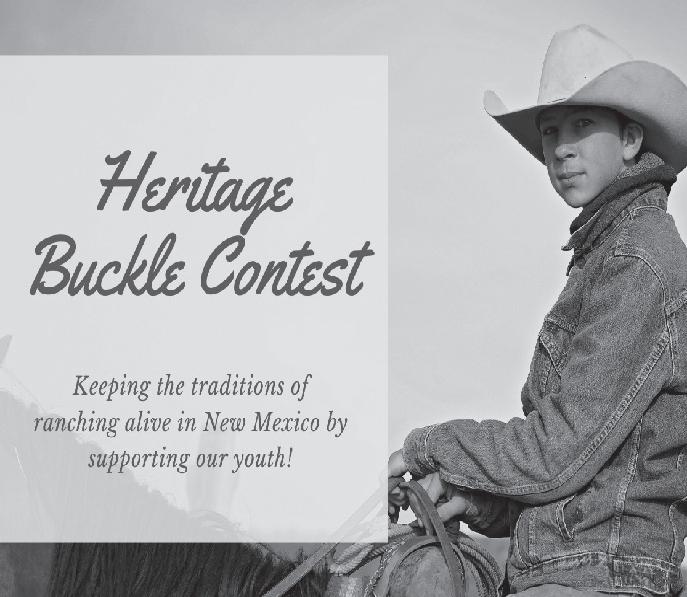
Heritage Buckle Contest
Applications are open!
Youth, ages 13 to 17 years, in all 33 counties of New Mexico are eligible to apply. Entries require a 350-to-500-word essay response to the prompt: How does your Heritage advance and promote New Mexico Cattle Growers’ Association?
Winners will receive a belt buckle and a one-year NMCGA junior membership. All regional winners will then be automatically advanced to the Statewide Heritage Contest, where their essay submissions could earn them a $1,000 scholarship funded through the NMCGA Promotions and Marketing Committee.
Otero County Sheriff Shot Down by Thieves
In early February 1923, two young thieves named William G. LaFavers (or LaFaver, LaFavors or LaFores), 19, and Charles Hollis Smelcer (or Buck Smitzer), 21, stole a saddle and other tack from a rancher in northern Lincoln County. Soon arrested for the crime, they were taken before a magistrate in the village of Corona and sentenced to jail at the county seat in Carrizozo. Lincoln County deputies A. S. McCamant and Graciano Yrait took custody of the two and started for Carrizozo.
McCamant rode in the back seat of the Ford touring car with LaFavers and Deputy Yrait drove. Some distance from town, on a rough road, LaFavers made a grab for the
pistol McCamant carried in his pocket. The two men struggled until McCamant kicked open the car door and both fell out onto the roadway as the car came to a stop. The deputy’s gun fell into the dirt and LaFavers was able to grab it.
Smelcer grappled with Yrait, too, but he was getting the worst of the fight until LaFavers took charge of the situation at gunpoint. The outlaws debated killing the deputies but finally forced the officers to walk away and they covered them with a rifle until they were out of sight.
LaFavers and Smelcer took the car and fled south toward Alamogordo.
The officers had to walk 12 miles to the closest telephone.
Otero County Sheriff Bill Rutherford returned to Alamogordo on the evening of February 13 from a trip to Santa Fe. At about 8:30 p.m. he received a phone call from Harry Straley, a Lincoln County deputy who told him about LaFavers and Smelcer, described them, and warned that they were armed and “desperate characters.”
A short time later, Sheriff Rutherford stepped out of the Warren Drug Store at the corner of 10th Street and New York Avenue and saw a car matching the description of the Lincoln County car pull to the curb. The
sheriff walked up to the car.
“If you have no objection, I would like to search this car,” a witness heard the sheriff say.
The car suddenly lurched backward, then sped ahead. Rutherford stepped up on the running board and reached inside. Witnesses believed that he tried to turn off the gas. A loud BANG filled the air and witnesses thought a tire had blown up but the sheriff fell away from the car and was left lying in the street as the Ford ran over a curb and sped away. A citizen named O. M. Smith soon knelt at the sheriff’s side, but there was nothing he could do. The bullet hit Rutherford in the neck, killing him almost instantly.
Witnesses were puzzled about what became of the sheriff’s hat. It was nowhere to be found and yet he’d been wearing it when he approached the Ford.
Word of the sheriff’s murder spread around Alamogordo quickly. A “fast car” occupied by former sheriff Howard Beacham and car dealer Shorty Miller headed south out of town on the Orogrande Road. A second car, occupied by Deputy Sheriff H. M. Denny and a citizen named Louis Wolfinger, headed southwest along the Las Cruces Road. District Attorney J. Benson Newell directed much of the search and sent out word to
authorities in all directions. Thirty minutes after the shooting, a tourist car arrived in Alamogordo from the south and the driver reported passing a south-bound Ford touring car driving at a high rate of speed, about probably 45 miles per hour.
All concerned believed it to be the fugitive car.
By midnight officers learned that Lincoln County sheriff’s Ford had been located abandoned near Orogrande. Bloodhounds were ordered and a large posse was on hand to follow the dogs, but they were unable to go beyond the railroad track, for some unknown reason. (Note: one source averred that the State Police used the dogs in the search. Not so. The New Mexico State Police was not created until 1935.)
A detachment of troops from Fort Bliss arrived at early morning and an airplane began a search of the area. A special train with a railroad carload of horse-mounted posse men also arrived from Alamogordo and a second train made up of an engine, boxcar and caboose stopped in Orogrande with deputies from Lincoln County.
As the day progressed, one posse searching south and east of Orogrande found a sheep-lined coat known to have been taken from one of the Lincoln County deputies.
The manhunt centered in that area and in the early afternoon posse man M. L. Bradford spotted the fugitives just as they saw him and opened fire. Bradford was hit in the leg and returned fire, emptying his pistol without hitting either of the wanted men. The killers retreated behind a small hill and soon saw two other mounted posse men riding in their direction, and a posse of men on foot approached. The killers raised a white cloth of surrender and put down their guns.
By 6:45 p.m. on February 14, LaFavers and Smelzer were locked away in the Otero County jail.
Smelzer was wearing Sheriff Rutherford’s hat when he was arrested.
A grand jury convened on February 26 and indicted the outlaws on charges of first-degree murder. The two were tried at Alamogordo on March 1, 1923, just 23 days after they killed the sheriff. The jury took 35 minutes to convict them of the crime. On March 3, LaFavers and Smelzer were sentenced to hang on April 6, the penalty to be executed in the Otero County jail yard.
Defense attorneys appealed the convictions but before a higher court could hear the case, Governor James Hinkle commuted Smelcer’s sentence to 40 to 50 years and
LaFavers’ to life imprisonment. Smelcer was paroled to Glendale, California on April 10, 1931 and Governor Arthur Seligman pardoned him on April 21, 1932. LaFavers was paroled to Amarillo, Texas, on December 23, 1936 and pardoned by Governor John E. Miles on April 13, 1939.
Bill Rutherford, 40, was a well-known and prominent stockman in southern New Mexico. His obituary read, in part: “He was one of the most popular men of Otero County and had probably the widest acquaintance in the Southwest of any man in the county. He had been a resident of the county for the past fifteen years, coming here from Marshall, Mo.”
A former state legislator, Rutherford had only served as sheriff for six weeks at the time of his death. ▫
Climate Policy Belongs to Congress— Not the EPA
by Ivan London, Senior Attorney at Mountain States Legal Foundation and Director of MSLF’s Center for American Prosperity & Energy (CAPE).
Just recently, the Environmental Protection Agency announced that it would rescind its 2009 “Endangerment Finding” — the legal cornerstone of more than a decade of federal climate regulation, including electric-vehicle mandates and sweeping carbon-dioxide regulations affecting major sectors of the American economy.
Predictably, the reaction has focused on climate science. Supporters of the Endangerment Finding argue that global warming is real and urgent. Critics dispute the severity of the threat.
But that debate, however important,
misses a more fundamental question: In America, who decides?
Even if one believes climate change poses serious risks, it does not follow that the unelected regulators at the EPA may reshape the American economy on their own. Ours is a constitutional republic. Major national policy decisions — especially those carrying vast economic and political consequences — belong to Congress.
The 2009 Endangerment Finding transformed the Clean Air Act, a statute designed to address localized air pollution like smog and particulates, into a vehicle for nationwide climate regulation. From that single administrative determination flowed mandates affecting automobiles, power plants, manufacturing, energy production and more.
One Supreme Court decision is often relied upon by proponents of sweeping agency regulation: the Court’s 2007 ruling in Massachusetts v. EPA. But that decision did not authorize an end-run around Congress. The Court held only that greenhouse gases could fit within the Act’s broad definition of “air pollutant” and that EPA had to give a reasoned explanation for whatever its decisions might be on that score. It did not order the agency to affirmatively find that
greenhouse gases endanger public health. And it certainly did not authorize the EPA to restructure the nation’s energy and transportation sectors.
Yet that is effectively what happened.
Over time, the Endangerment Finding became the predicate for sweeping regulatory programs that Congress itself had repeatedly declined to enact. Lawmakers debated cap-and-trade proposals and other comprehensive climate legislation — and chose not to enact them. Those legislative choices matter.
Under our constitutional structure, when Congress decides not to act, an agency may not step into the vacuum and act anyway.
More recent Supreme Court decisions have reinforced this principle. In West Virginia v. EPA , the Court explained that agencies cannot decide issues of “vast economic and political significance” without clear congressional authorization. And in Loper Bright Enterprises v. Raimondo, the Court rejected the judicial practice of reflexively deferring to agencies’ expansive interpretations of their own authority in the face of Congress’s silence or supposed ambiguity.
In plain terms: regulators do not get to discover sweeping new powers in decades-
laws.
That is why rescinding the Endangerment Finding is not an attack on science. It is a restoration of constitutional order.
Climate policy — like energy policy or health care policy — involves tradeoffs. It affects prices, jobs, consumer choice, and national competitiveness. Americans may reasonably disagree about how aggressively the country should seek to reduce greenhouse gas emissions. But those disagreements must be resolved through legislation, debate, and elections — not through administrative improvisation.
There is also a practical dimension. Regulations built on the Endangerment Finding have imposed substantial costs on manufacturers and consumers. Whether one supports or opposes those policies, decisions of that
magnitude should be made by elected representatives who answer to voters, not unelected bureaucrats.
If Congress wishes to enact a comprehensive climate regime, then that is a decision for Congress to make. It can draft precise standards, weigh economic consequences, and make explicit policy judgments. Agencies cannot treat Congress’s decision not to act as a blank check to act on their own.
The genius of the American system is not that it guarantees perfect policy outcomes. It is that it assigns responsibility clearly. Lawmaking power rests with Congress. Executive agencies execute the law as written. Regulators do not possess independent lawmaking power.
The 2009 Endangerment Finding blurred that line. Its rescission clarifies it. And if
Americans disagree with the direction of national climate policy, the Constitution makes clear where that debate belongs: in Congress. ▫
NMSU Experts
Team Up to Keep New Mexico Alert on New World Screwworm
When a once-eradicated parasitic fly reemerged in parts of Mexico and Panama three years ago and began infecting cattle and other animals with flesh-eating maggots, it set off alarm bells hundreds of miles away in the United States.
Caleb Hubbard, Ph.D., an assistant professor of urban entomology in New Mexico State University’s (NMSU) Department of Entomology, Plant Pathology and Weed Science, was among the many concerned as New World screwworm infections began spreading across Mexico.
With a deep blue to blue-green metallic color, the New World screwworm is about the size of a housefly, but it poses an outsized threat to animals and humans. Females lay hundreds of eggs in open wounds, and 12 to 24 hours later, maggots will hatch and begin to eat and burrow deeper into their host’s flesh, causing death if untreated. Livestock and wildlife are especially vulnerable.
“In 2022 and 2023, there were outbreaks
that started occurring in Panama that then slowly moved into Mexico,” Hubbard said. “We now have seen widespread numbers of cases.”
Aside from two contained cases, New World screwworm has not been detected in the U.S. But the number of reported cases across Mexico continues to balloon, reaching nearly 17,000 by the first week of March, according to the Mexican government. The pest has also been found in the state of Nuevo Leon, about 70 miles from the South Texas border.
The southern U.S. border remains closed to livestock trade, and the federal government is ramping up production of sterile males to help control the spread, among other actions.
At NMSU, Hubbard is part of a team working to coordinate a statewide response to the ongoing outbreak. A key component of the effort is raising public awareness and providing New Mexico communities with up-to-date, accurate and trusted information. The group includes staff and faculty from the Cooperative Extension Service, the Southwest Border Food Protection and Emergency Preparedness Center, the New Mexico Department of Agriculture and the New Mexico Livestock Board.
“My focus right now is working with ranchers, producers, hunters, and the general public to educate them on the threats of this
fly,” Hubbard said.
Since last fall, Hubbard has presented at multiple workshops to provide insights about the New World screwworm, working alongside Brandon Smythe, a research assistant professor and director of NMSU’s Veterinary Entomology Research Laboratory. Hubbard also recently appeared on the MeatEater podcast to discuss the outbreak.
Jason Banegas, an NMSU Extension economist, wrote a publication last year about the economic impacts of the New World screwworm.
He said New Mexico livestock producers should prepare for an outbreak in the state and consider their risk exposure and mitigation options. He also noted that the state’s beef cattle, dairy, small ruminant and other related sectors could be negatively impacted because of close business connections with and proximity to Mexico.
The border closure has resulted in trade disruptions, market volatility and increased operating costs. Banegas found that the number of cattle imports from Mexico in 2025 was 229,055 head versus 1,249,202 head in 2024, a decrease of about 82 percent year-over-year.
“In New Mexico, many producers depend on a steady inflow of Mexican cattle to meet demand and maintain throughput in operations,” he said. “When imports are disrupted, local markets experience logisti-
cal bottlenecks, while downstream buyers may face inventory shortages and rising procurement costs.”
Although it is difficult to estimate the pest’s potential cost to New Mexico producers should it arrive in the U.S., Banegas has reason to believe it would be costly.
He pointed to a USDA report that found that a New World screwworm outbreak on the scale of the 1976 outbreak could cost Texas producers $732 million per year and the Texas economy a loss of $1.8 billion. Using data from the USDA, Banegas estimated that an outbreak of comparable size could cost New Mexico producers $128 million, with an overall economic impact of about $316 million to the state.
Hubbard and others at NMSU remain hopeful that efforts underway to keep the fly out of the U.S. will remain successful. Still, as cases increase with warming temperatures, they want New Mexico residents to prepare as much as possible for any unwelcome arrivals.
Education is key, Hubbard said. That’s why he, Smythe and Madison Dyment, an assistant professor in NMSU’s Department of Agricultural and Extension Education, developed a survey to gather information from ranchers, producers, hunters, land stewards and community members.
“Stakeholder input will directly inform state-level communication and preparedness plans, and contribute to protecting livestock, wildlife and rural livelihoods across the state,” Smythe said.
To complete the 15-minute survey, visit https://nmsu.news/NWS-Survey.
NMDA has also increased statewide surveillance efforts, with support from the state Department of Game and Fish, Department of Health, New Mexico Livestock Board and the Cooperative Extension Service.
State officials say New Mexicans should regularly inspect animals, monitor open wounds that do not heal or worsen, and watch for other warning signs, such as animals exhibiting restlessness, licking or biting at a wound, or isolating themselves; visible maggots in wounds; and swelling,
discharge, foul smell or unusual tissue deterioration.
New Mexicans should consult a veterinarian for diagnosis and treatment options approved for use in New Mexico. All suspected New World screwworm cases should be reported immediately to the New Mexico Livestock Board by calling 505-841-6161or filling out a reporting form at https://nmsu. news/NWS-Reporting.
In addition to setting up tracking nets in vulnerable communities, NMDA also started a free testing program. Testing kits are available at all 33 county Extension
offices in New Mexico. Samples should only be submitted if New World screwworm is strongly suspected.
“We’re asking New Mexicans to stay alert, not alarmed,” New Mexico Agriculture Secretary Jeff Witte said. “Early detection and reporting are key to protecting our livestock, pets, wildlife and rural communities, and if you suspect New World screwworm, contact your veterinarian right away. Public awareness is one of our strongest tools to keep the New World screwworm out of New Mexico.” ▫
Morris, Chairman of the Board/EVP
Please call Colten Grau to arrange a visit. He’s working hard for our ag community and he’s eager to go to work for you!
Ihate George Eastman and his darned cameras. Although French scientist Joseph Nicéphore Niépce is credited with having invented the first camera in 1826, Eastman was the sicko who you could say “developed” the first commercially successful camera in 1888. Some people called his invention a “roll film box” but Eastman called it Number One Kodak and its successors have tormented me my entire life. In order to get photos from Eastman’s camera you had to send the camera containing the film to Rochester, New York, where the film was developed, prints made, the camera was loaded with new film and returned to you
along with your photos. So you can understand why the sighting of a camera back then was a rare occurrence. Fast forward to today and you can hardly turn around without having your picture taken. For an ugly guy like me who has always hated having his picture taken you can imagine why I spit on the grave of George Eastman.
The eyes are everywhere. Cameras take your picture if you run through an orange/ reddish light and the cops send you a ticket in the mail. A guy can’t even go into Victoria’s Secret to buy a birthday present for his wife without being watched by a camera. You can’t even run through your own house half naked after leaving your manure-stained clothes in the mud room as you head for the shower without someone taking your picture that will appear on some sicko’s You Tube page and get a million views. You’re not even safe from spying eyes out in the boonies as some animal rightists with a drone will take a photo of you castrating a bull or spurring your horse.
Sure, I know that all these cameras leering at us can be used for good. I know that Ring cameras have been used to track assassins and arsonists and you can see who is stealing your Amazon packages from miles away, but
Cattlemens Livestock
I’m not sure the benefits outweigh the loss of our freedom and privacy.
I’ve been in embarrassing predicaments before and I’m sure you have too where the last thing you wanted was to have someone catch a “Kodak Moment.” Like the time I got bucked off the kid’s horse. They even have cameras now in the halls of hospitals and I dread being photographed by some peeping Tom while I’m wearing one of those hospital gowns with the gaping hole in the back.
How many prints do you want of you having your arm fully inserted into a cow’s rectum? Or dragging a calf to the fire? Or trying to eat one of those six patty hamburgers? I was in the Farm Supply the other day trying to find a new jacket for my wife and I held a frilly one up to my chest to see how big it was and I’m quite confident someone snapped a photo of me trying on women’s wear that they’ll use to blackmail me.
The main thing I worry about is being caught on camera doing something that will land me in the hoosegow. I’m not talking about robbing a bank but what if I’m caught on film standing next to shady characters like my Congressman, banker or a cow buyer? Will the EPA fine me if some eye in the sky takes a photo of me accidentally spilling a thimble full of diesel on the ground or peeing on an endangered tree when I’m far from the nearest facilities? Will I be shunned if I’m caught eating chicken, putting recyclables in my regular trash or shooting pool when I should have been going to church?
The idea of cameras everywhere would be a lot more palatable to me if they were placed in the smoke filled backrooms catching Congresspersons being paid off by lobbyists or if cop cameras were attached to wolves so we’d have photos of them in the act of killing your lambs or munching on a baby calf.
I fear the day when I’m using the Porta Potty at a bull sale and one of my traitorous traveling comrades sees the opportunity for a photo op so he opens the door and catches me with my pants down around my ankles and he says, “Say Cheese.” And that photo will be on TMZ or all over the Internet by nightfall. ▫
Ranchers Ask Court to Vacate USDA Ear Tag Rule
by Tom Johnston, meatingplace.com
Acivil rights group representing ranchers has asked the U.S. District Court for the District of South Dakota to vacate USDA’s “unlawful rule” requiring electronic identification (EID) ear tags for certain cattle and bison transported over state lines instead of long-used visual tags.
The New Civil Liberties Alliance (NCLA) filed the motion in the ongoing R-CALF USA, et al. vs. USDA case against the rule USDA instituted in 2024.
“The court should end this unauthorized,
expensive mandate that USDA instituted in 2024 to replace an already efficient means of cattle identification without explaining why the expensive change is needed nor how it will help reduce animal disease,” NCLA said in announcing its motion.
NCLA contends USDA earlier agreed visual-only eartags were effective in tracing disease and allowed producers to choose between visual-only and EIDs but then imposed an EID mandate “without giving any reasoning or data to support the claim.”
Further, they argue, the current rule does not require producers to buy or use electronic eartag readers, so they use EIDs to track cattle the same way they used “far less expensive” visual-only tags.
“This means American ranchers are simply paying more to do what they have
done for decades to effectively track and prevent livestock disease,” NCLA said.
USDA’s rule states EID eartags are necessary to reduce transcription errors in livestock tracking records due to “human error,” but it also allows EID eartags to be used the same way visual-only tags are used.
“This sort of internal inconsistency is arbitrary and capricious,” said NCLA, which also argues that USDA’s lack of justification for the EID mandate and lack of consideration for requiring readability standards for visual-only tags instead violates the Administrative Procedure Act. ▫
43rdAnnual NMSU
Cattle Sale & Horse Expo & Sale
BULL
SALE: April 11, 2026
• We will be offering yearling Angus bulls that boast some of the lowest birth weight EPDs in the industry along with some of the highest $EN
• Cattle are available to view in the pens next to the Bull barn off Knox Street and Stewart Street
• See Department website for animal data and pictures as they become available
• Sale will be held at the Landmark Mercantile Livestock Auction, 12000 Stern Dr., Mesquite, NM
HORSE SALE and OPEN HOUSE: Tentatively May 9, 2026
• Open house starts at 9:00 a.m. NMSU Horse Center, 400 W. Union Mesilla Park, NM ~ Opportunity to visit with Equine program faculty and students and check out educational facilities, stallions, and learn more about our horse program
• Horse Sale preview 10:30 a.m. to 12:00 p.m
• Horse Sale will start at 1:00 p.m.
• Check out NMSU Horse Farm Facebook for updates
viewing: ejs@nmsu.edu Angus: Eric Scholljegerdes 575-646-1750 ejs@nmsu.edu
aces.nmsu.edu/academics/anrs FOR UPDATES
Pronghorn and Cattle: Biodiversity Match Made in Heaven?
by Owen Hablutzel for CPLA Backyard Biodiversity series
Driving around northern New Mexico (or elsewhere) it’s always exhilarating to happen upon a group of pronghorn (Antilocapra Americana) rambling in the open spaces. Not only are these our continents’ fastest mammal, but also the only remaining North American native megafauna (>100 lbs) species; lineages of all other megafauna still here today trace back to the Asian landmass.
The value of these true natives lies not only in enjoyable road trip experiences, but in adding biodiversity and economic activity (through wildlife viewing tourism and hunting) in our state: some reports suggesting wildlife values add as much as 2.5 times the economic value to a ranch as the cattle herd alone, for example.
Prime pronghorn habitat is mainly grasslands with some open shrubland, overlapping nearly 100 percent with excellent cattle country. Sharing territory is made easier because these different species eat mostly different plants. While pronghorn feed primarily on perennial forbs (70 percentincluding buckwheat, globe-mallow, locoweed ), these provide only 25 percent of cattle intake, on average. Browse (twigs, shoots and leaves of woody plants—sagebrush, rab-
LOCAL SOLUTIONS FOR DIVERSE COMMUNITIES
ichael knows that New Mexico’s landscape is incredibly diverse and so are its people and communities. From oilfields to farmland, desert to forest, and villages to cities, no one-size-fits-all solution will work. He is dedicated to listening to local voices and tailoring land policies to fit the unique needs of each town, tribe, and county.
• perry4nmland.com
bitbrush) makes up 26 percent of pronghorn diets, but only 13 percent of what cattle tend to eat.
Lastly, pronghorn barely feed on the favored feed of our bovines – grass – the split being four percent and 61 percent respectively. (Numbers averaged from several dietary studies, courtesy of Steve Nelle.) Also helpful: pronghorn frequently consume plants that can be toxic for cattle, including broom snakeweed, tarbush, goathead, paperflower, and groundsel. This may be a mutually beneficial case of having your cake (both species) and eating it (complementary income streams for land managers).
For cattle grazers who are in a position to leverage this potential match-made-inheaven, there are several grazing and other management tools that can improve pronghorn habitat, overall feed availability as well as both species’ success:
Ї Avoiding overgrazing will minimize any potential dietary overlap (overgrazing = grazing plants not yet fully recovered from the last grazing)
Ї Grazing heavy (while allowing a long, complete plant recovery after each grazing) stimulates perennial forbs, driving doe nutrition and fawn growth (while also improving perennial grass, win-win)
Ї Long plant recovery periods leaves taller grasses and forbs in the pasture, providing cover for greatest ‘antelope’ fawning success–also melts snow faster (deeper snow is a key negative factor for pronghorn winter survival in our region).
Ї Keep cattle out of best fawning areas during May and June (pronghorn
fawning time), reducing disturbance to increase fawning success.
Ї Fences–built or retro-fit with lowest wire smooth and 20 to 22 inches above the ground (even 16 to 18 inches can work) allowing free pronghorn movement–they’re not ‘sitting ducks’ for predators.
Ї Water developments ensure pronghorn need not travel more than two to three miles to drink (may improve cattle grazing access at the same time where water has been a limiting factor). Is all this worth some extra effort? What would be the lifetime value be–for an ‘average’ ranch or hunting property in northern New Mexico–of adding a single additional pronghorn to the local herd? Out of interest, I put the question separately
through two AIs.
Curiously, both returned nearly the same “conservative” estimates: adding a single female pronghorn should provide $20 to 25k net for an average ranch here over a 20-year period. At the same time $30 to 40 thousand dollars more should be injected into the local community economy, through multiplier effects (hunting, jobs, associated local spending). Next, there is added real-estate value to a property of around $28/acre for each new pronghorn (citing NM studies like Torrel et.al, 2005). Of course, two more pronghorn double all those numbers, and so on.
However, you might figure it, wildlife has long been recognized as the “silent profit center” here in northern New Mexico. Could less silence be in order? Greater awareness of the many cascading values these noble
creatures offer can benefit not only pronghorn populations and overall biodiversity, but also our local economies and communities, while accordingly bettering quality of life for us all.
Welcome to Backyard Biodiversity brought to you in partnership with ranchers, farmers, conservationists, scientists, biologists, and Chama Peak Land Alliance.
Owen Hablutzel consults & offers workshops for regenerative ranch/farm/property planning, design & management (LFMRANCHING.COM). He lives with his wife and 3 children in Ensenada, NM. ▫
Standing at NMSU
Spanky D Cat
AQHA Stallion sired by Palo Duro Cat (full brother to Sophisticated Cat), out of an own daughter of Docs Oak.
by Jerry Schickedanz
Heads Up
The views and opinions expressed do not represent those of the Regents of New Mexico State University
There have been some interesting happenings in the world surrounding resource management in the past few days. The first that caught my attention was a petition in Oregon. It is labeled as Oregon Initiative Petition 28 (IP 28) or the PEACE Act (“People for the Elimination of Animal Cruelty Exemption”), is a proposed 2026 ballot measure that would remove existing exemptions in Oregon’s animal cruelty laws so that intentionally injuring or killing animals in activities like hunting, fishing, trapping, pest control and most livestock practices would be treated as criminal animal abuse.
What IP 28 would do:
• Remove current exemptions in Oregon’s animal cruelty statutes (ORS 167.315-167.33) for hunting, fishing, trapping, wildlife management, pest control, and standard agricultural practices.
• Effectively criminalize licensed hunting and sport/commercial fishing, because intentionally injuring or killing an animal for these purposes would fall under animal abuse definitions.
• Criminalize many common livestock and ranching practices (e.g., dehorning, tail docking, castration/neutering of livestock, artificial insemination and raising animals for meat, dairy, eggs and fiber) by removing “good animal husbandry” exemptions and classifying some breeding practices as sexual assault.
• Extend criminalization to a wide range of animal uses, including some forms of scientific research, wildlife conflict control (e.g., lethal removal, certain hazing/relocation methods), and pest control.
As written, it does not clearly exempt treaty-protected tribal hunting and fishing rights.
This kind of thinking demonstrates to me just how far away from hunting and fishing and production agriculture that this nation we have come for this type of nonsense is proposed to be promulgated into law.
FIBERGLASS TANKS
Unbelievable.
Another major happening is when The Environmental Policy Agency (EPA) repealed the greenhouse gas “endangerment finding”. This means that the federal government is no longer legally obligated, under the Clean Air Act to regulate greenhouse gases as pollutants that endanger public health and welfare, which weakens the legal foundation of U.S. federal climate policy and shifts more responsibility and uncertainty to courts, states and businesses.
The 2009 endangerment finding said greenhouse gases from vehicles and other sources “cause or contribute” to air pollution that endangers health and welfare, triggering a legal duty for EPA to regulate those gases under the Clean Air Act. The 2026 repeal formally withdraws that finding and along with it the legal basis for federal green standards for cars, trucks, power plants and some industrial sources, though rules on traditional air pollutants (like ozone or particulates) remain.
The repeal is already being challenged in court by states and environmental and public-health groups, so its durability will depend on how appellate courts and likely the U.S. Supreme Court rule.
Lastly, Secretary of Interior Doug Burgum announced reforms to the National Environmental Policy Act procedures, which are intended to cut red tape, accelerate project approvals and restore NEPA to its intended role as a focused, efficient decision-making tool.
What does that mean to farmers and ranchers? Good news for the permitting process! Because NEPA is procedural, it requires that the federal agencies analyze environmental impacts of their actions (permits, funding, infrastructure) but does not ban projects itself. On the ground, the streamlined procedures and narrow definitions of “effects” mean shorter environmental assessments and impact statements for things like water projects, fences, roads and conservation structures on or serving farms and ranches. For federal grazing allotments, agencies can focus on local range conditions rather than modeling global methane effects from farting cows, which will simplify permit renewals.
Until next time, keep your eyes on the BLM and Public Lands Council MOU for cooperative rangeland monitoring. This could spread to permittees doing all the rangeland monitoring in place of the agency doing the work. It could turn into a twoedged sword which cuts both ways in ranch management.
Linebery Policy Center
RANCH FOOD & FODDER
by Deanna Dickinson McCall
Easy Easter Cheesecake
Easter and springtime. It is always such a pretty time, with tender green grass and spring flowers. If you’re lucky, daffodils and lilacs might be blooming. If you’re at the higher elevations, you can enjoy watching new lambs and calves instead of flowers. It is a sign daily feeding of the pasture critters may be nearing the end, too. It is always a time for rebirth and hope, a time to be so thankful for what we have been given, no matter your religious beliefs.
For many of us the old traditions of Easter have gone by the wayside. Women and girls in Easter dresses, shoes, gloves and hats to wear to church services Easter morning. Egg hunts after church and getting grass stains on those fancy clothes. My family always had a formal dinner, either a big bone-in ham or a roasted leg of lamb after church. It was when the good china and silverware was used, with a lace tablecloth. Lilacs, tulips, daffodils or other spring flowers graced the table. A dessert featuring coconut was usually an option, along with cheesecake, other pies and cakes.
Now, Easter dinners are usually far less formal, with afternoons of outside activities if weather allows after the egg hunt. For some folks softball games, or even a game of old-fashioned croquet on the grass may follow. We’ve been known to get a branding in while the help is available.
No matter what the main meal is, or how fancy the dinner is, everyone wants a good dessert. The recipe below is great and will serve a crowd. It does not require the usual water bath baking, or a springform pan, either. I love the fruit baked in the cheesecake! It is one of my “do the day before” dishes. It is fancy enough since it is a cheesecake, and a pretty one. But, it can also be served on a paper napkin and eaten sitting outside. It is kind of like having your cake and eating it, too, as the old saying goes.
I do serve it on occasions other than Easter and vary the fruit. I try to use raspberries for Easter, it makes a pretty, slightly more delicate dessert. Using shortbread or
wafer type cookies is also a good variation, you will still use the same amount of crumbs.
Blackberries are great with a chocolate cookie crust if you really want to mix it up. Fresh fruit is best, but gently thawed, frozen can be used.
EASY EASTER CHEESECAKE
Crust Ingredients:
2 cups of graham cracker or cookie crumbs
2 TBS sugar
1/2 tsp salt
6 TBS butter, melted
Filling Ingredients:
3 cups of blackberries, raspberries, blueberries or pitted cherries
1 TB lemon juice
4 packages of 8 oz cream cheese, softened to room temperature
4 eggs
1 cup sugar
Directions:
Heat oven to 325 degrees
Line a 13 inch by 9 inch pan with foil, extending it over the ends for handles
Combine the graham cracker or cookie crumbs, sugar and salt, then add melted butter. Evenly press into pan
Bake 10 minutes and remove from oven
Set aside ½ cup of the fruit
Using a mixer and large bowl beat the softened cream cheese, lemon juice, and sugar until blended well
Add the eggs one at a time, beating as little as possible to combine
Stir in remaining fruit gently
Pour into baked crust
Bake 35 to 45 minutes, until center is almost set
Cool completely, then refrigerate for at least 4 hours
Use foil handles to remove cheesecake to a cutting board
Sprinkle reserved fruit over the cheesecake and cut into bars
animal & range sCienCes
ANIMAL & RANGE SCIENCES
The Department of Animal & Range Sciences is part of the College of Agricultural, Consumer & Environmental Sciences
Department of Animal & Range Sciences is part of the College of Agricultural, Consumer & Environmental Sciences
Four on-campus animal facilities house: beeF CaTTle/horses/swine/sheep
Students can major in Animal or Rangeland Resources and are provided with the very best of “hands on” academic instruction by our faculty. Fully equipped labs allow students access to cutting-edge research in: LIVESTOCKNUTRITION / GENETICS / PHYSIOLOGY / ENDOCRINOLOGY / MEATSCIENCE / WOOL / TOXICOLOGY / WATERSHED & RANGELANDECOLOGY / WEED & BRUSHCONTROL / PLANTSYSTEMATICS / GRAZINGMANAGEMENT
The Department also offers pre-veterinary studies –our graduates have a high acceptance rate into veterinary medicine programs. We offer graduate degrees at the Master of Science and Doctor of Philosophy levels. The M.S. or Ph.D. in Animal Science can emphasize nutrition or physiology, and offers a Ph.D. in Range Science to study range management, range ecology and watershed management.
• The Chihuahuan Desert Rangeland Research Center (The College Ranch) –64,000 acre ranch just outside of Las Cruces
• The Corona Range & Livestock Research Center – 28,000 acre ranch & facilities in Corona, NM
• Student organizations, including a Block & Bridle Club, Pre-Vet Club, Range Club, Horsemen’s Association, Therapeutic Riding Club, & Judging Teams
• Clayton Research Center hosts research on shipping protocols, particularly evaluating the health and performance of newly received cattle, and nutrition and management from feedlot to slaughter
Dr. John Campbell –575/646-6180 / Dr. Dennis hallford –575-646-2515
http://aces.nmsu.edu/academics/anrs/
Cowboy Artists of America Moves Annual Exhibition to Denver for 60th Anniversary
National Western and the Cowboy Artists of America (CA) has announced a landmark partnership that will bring one of the nation’s most prestigious Western art exhibitions to Denver. Beginning October 2 and 3, 2026, the Cowboy Artists of America will host its annual exhibition and sale at The Legacy, kicking off a 5-year partnership with the National Western.
The move coincides with the 60th anniversary of the Cowboy Artists of America, founded in 1965 and widely recognized for preserving the culture and history of the American West through authentic Western fine art.
“Cowboy Artists of America has long been recognized as the preeminent organization preserving and elevating the artistic traditions of the American West,” said Wes Allison, President and CEO of National Western. “Its members represent the highest standards of authenticity, craftsmanship, and storytelling, values that align seamlessly with the mission and heritage of the National Western.”
“The Cowboy Artists of America are excited to begin this new chapter in Denver with National Western,” said Brandon Bailey, President of the Joe Beeler Foundation. “It’s a natural partnership rooted in a shared commitment to preserving the culture and traditions of the American West.”
The two-day exhibition will bring together leading collectors, artists, and Western art enthusiasts and will feature:
• 60th Anniversary Sale – A black-tie evening offering new works from some of the most respected Western artists working today.
• Artist Interaction – Opportunities to meet CA members and learn about the inspiration behind their work.
• Celebration of Heritage – Programming honoring six decades of influence in Western art.
Leadership in Quality Herefords
USDA Promotes New, Voluntary “Product of USA” Label
On National Agriculture Day, March 24, U.S. Secretary of Agriculture Brooke L. Rollins announced the launch of a national public awareness campaign to
“When we choose to purchase from American producers, we get a superior product while supporting the hardworking family farms who put it all on the line every day to feed, clothe, and fuel our nation,” said SBA Administrator Loeffler. “Amid President Trump’s work to end years of unfair competition and eliminate the massive red tape that has crushed domestic agriculture, Made in America is finally making a comeback. Today, on National Agriculture Day, I urge all Americans to join me in support of the hardworking farmers and ranchers who anchor the U.S. food supply chain that is so vital to keeping our nation strong, safe, and
“Our farmers and ranchers are essential to putting real food back at the center of the American plate and delivering on the Dietary Guidelines for Americans,” said HHS Secretary Kennedy. “‘Product of the USA’ labeling puts American producers first, gives families clear, honest information, and empowers them to choose food raised right here at
“America’s farmers and ranchers are key to our national security, sustaining rural communities and keeping our food supply resilient,” said EPA Administrator Zeldin. “The ‘Product of the USA’ label rewards American farmers and ranchers who grow, raise, and process their products in the U.S., while giving consumers confidence they are supporting American agriculture. Together with USDA, the Trump Administration is streamlining processes and delivering solutions that strengthen agricultural productivity, rural prosperity, and the health
Under this standard, the “Product of USA”
label is reserved exclusively for meat, poultry, and egg products from animals that were born, raised, harvested, and processed in the United States. The claim is voluntary, but companies using it must meet this transparent and verifiable requirement. This ends the prior practice which allowed imported products to carry the claim after minimal processing and strengthens consumer confidence by aligning with what Americans expect and demand.
Since 2017, the United States has lost over 17 percent of family farms, more than 100,000 operations over the last decade. The national herd is at a 75-year low while consumer demand for beef has grown nine percent over the past decade. In October 2025, Secretary Rollins released the USDA Plan to Fortify the American Beef Industry that focuses on rebuilding domestic capacity, improving transparency across the supply chain, and ensuring U.S. ranchers can compete on a level playing field.
The announcement on enforcement and promotion of the strengthened “Product of USA” label is a key deliverable under this initiative, advancing the Trump Administration’s priorities of fairness, competition, and consumer trust.
Learn more at productofusa.gov. ▫
THANK YOU to the generous donors, John and JoBeth Ladd from the Ladd Ranch and the Shores Family at Willcox Livestock Auction for another fantastic fundraiser for a cause that affects us all. — Final donation number will be updated in early April. The heifer was “rolled over” 17 times.
FOR SALE
Commercial & SAMM Cross Rams
Low Birth Weight Angus Bulls
VIEW FROM THE BACKSIDE
by Barry Denton
Farmers & Ranchers First
(The views expressed in this column are not necessarily those of the New Mexico Cattle Growers’ Association or this publication.)
We did get a breath of fresh air from Texas Agricultural Commissioner Sid Miller in talking about Al Gore’s
recent statements at the World Economic Conference in Switzerland on reducing farming.
Mr. Miller stated, “Farmers and ranchers are not the problem. They are the backbone of this nation. Texas producers already lead the world in conservation, efficiency, and innovation-doing more with less, without mandates, insults, or lectures from jet setting climate activists. What America needs is more crops, more cattle, more farmers, and more freedom – not less.”
Let’s stop and think about who this is coming from. Mr. Gore keeps making wildly wrong predictions about climate change. According to him the polar ice cap would be gone by 2007. The funny thing is that according to science it has not changed enough to even mention.
Why would anyone continue to believe this fool? He is actually brilliant in a sense that reminds me of Reverand Jesse Jackson’s extortion tactics. If you scare stupid people long enough, they will give you money.
Plan advertisingyourfor the coming year!
JANUARY — Wildlife; Gelbvieh; Joint Stockmen’s Convention Results
FEBRUARY — Hereford; Beefmasters; Texas Longhorns
MARCH — Limousin; Santa Gertrudis
APRIL — Dairy
If you would like to see your breed featured email caren@aaalivestock.com
To Reserve Advertising Space email chris@aaalivestock.com or call Chris at 505.243.9515, ext. 28
MAY — News of the Day JUNE — Sheepman of the Year
JULY — Directory of Agriculture
AUGUST — The Horse Industry
SEPTEMBER — Charolais; Fairs Across the Southwest
OCTOBER — Angus; Brangus; Red Angus; NM State Fair Results
NOVEMBER — Cattleman of the Year; Joint Stockmen’s Convention Preview
DECEMBER — Bull Buyers Guide
Nevertheless, individuals lacking familiarity with natural phenomena and the principles of intelligent design continue to generously fund Mr. Gore. He just raised $200 million for his Forest Restoration Initiative. The money came from the Royal Bank Of Canada, Achmea Investment Management, and the Environment Agency Pension Fund.
This is in addition to $175 million raised earlier in the year with Microsoft’s Climate Innovation Fund and your tax dollars from the California State Teachers’ Retirement System.
They say that Mr. Gore is worth about $300 million and now you can see why. Become vice president and the world is your oyster. I think it would be nice to try and do some good with all this money that Mr. Gore is good at raising.
He should not be attacking the very people that keep the world from being hungry. I would like to meet with the former vice president, not to compromise, but to convince him just how wrong he is. His zest for the absurd perplexes me. This poor soul needs some help. Give me a call, Al.
I attended our local Cattleman’s Weekend Bull Sale yesterday. Boy, that was an eye opener. Number one, this auction used to take most of the day to get the cattle sold. It took less than two hours this year. It was not because the auctioneer was more efficient. I would attribute it to a severe lack of cattle. The cattle they did have brought anywhere between $3 to $9 per pound. If people wonder, why beef is so high there is a prime example.
The other difference I observed is that the cattle buyers were outbidding the ranchers all day long. Normally cattle buyers buy large lots trying to get the best deals. This year I think they were just trying to get as many head of cattle as possible.
(575) 502-0013 SANTA TERESA, NM facebook.com/people/ Rafter-G-Ranch-SupplyLLC/100063622261519
The fact is that the average rancher could not pay those kinds of prices for the replacement heifers or bulls that they needed. While it is nice to have high cattle prices, outrageously high cattle prices destroy the small rancher. Pretty soon they are selling their tractor just to keep their herd up to par.
Let’s face it folks, without the small farmer and rancher the consumer will be more dependent on globalized agriculture. In other words, Big AG wants to control what you eat and how much. If they control food they control you. ▫
Ella Elizabeth (Betty) Hyatt, 96, a lifelong resident of Deming, NM passed away peacefully in Las Cruces. Betty was born in Deming on June 5, 1929 to Vaun K. Peck and Elizabeth White Peck. She graduated from Deming High School then attended and graduated from the privately owned Albuquerque Business College.
After graduation, she moved back to Deming and worked at Deming City Hall. While working at the city hall, she met Tom Hyatt. They were married January 21, 1950. The city girl moved to the ranch 17 miles north Deming. They lived in half of the hay barn with no electricity, only a wood stove and coal oil lamps. After several months they started building a small two bedroom house. She quickly learned the workings of ranch life, and loved it.
Betty was always active in many community organizations and events. She was a member of Chapter AT, P.E.O., and a founding member of Cancer Support of Deming & Luna County. She owned and operated Quest Realty in Deming for many years. Governor Bruce King appointed her to the New Mexico Environmental Improvement Board. She later served on the New Mexico State Fair Board, appointed by Governor Garrey Carruthers. She was active in People for the West, Luna County CowBelles, Deming Board of Realtors, Rotary and Silver Spikes.
Betty’s greatest joy was her family and the family ranching business.
She has lived on the Flying U Ranch since marrying Tom in 1950.
Betty was preceded in death by her parents, her husband Thomas Leedrue Hyatt, grandson Ryan Thomas Hyatt, great-granddaughter Jesi Hyatt and sister Carolyn Gross. She is survived by her daughter Nancy Brantley and husband George, Jim Hyatt and wife Faye, Leedrue Hyatt and wife Sandy; grandchildren: Benton Hyatt and wife Carli; Betsy Brantley Johnson; Seth Hyatt and wife Candace; Tom Brantley and wife Crystal; Brady Kuenstler and husband Bud; and Garrett Hyatt; and fifteen (15) great-grandchildren.
Her grandchildren affectionately call her Gam.
She is also survived by half-sisters: Alice Cothern, Velma Jean Boone, Cathy Philips-Olsen, Denise Beck, Debra Grand-
jean and Alma Franzoy-Capron; also, her loyal friend and companion, her shih-tzu, Collie.
The family appreciates the care Betty had at Solstice Senior Living and Wendy and staff at Help at Home in Las Cruces.
In lieu of flowers, the family invites you to contribute to your favorite charity or organization.
– Mathew 25:21 “Well done, good and faithful servant. Enter into the joy of your lord.”
The community of Springer, New Mexico, mourns the loss of Owen Burton, a beloved son of Albert and Monica Burton, and proud young cowboy whose presence brought light and strength to those around him. Though his life was brief, the legacy he leaves behind is lasting and profound. Owen was born in 2001 and passed away in 2026.
Owen was known for his grit, determination, and deep appreciation for the western lifestyle that shaped him. He valued hard
work and carried himself with quiet confidence and purpose. Whether helping on the ranch, supporting community traditions, or striving toward his goals, he did so with dedication and enthusiasm. His respect for heritage, willingness to learn, and natural leadership qualities marked him as a young man with a bright future.
At his core, Owen was defined by loyalty and love for his family. He shared strong bonds with those closest to him and was admired by friends for his authenticity, gentle heart, and sense of humor. The outdoors was where he felt most at home — among horses, open skies, and the culture he cherished deeply.
His sudden passing has left the Springer community heartbroken. As family and friends come together in grief, they ask for prayers and continued support. In honoring Owen’s memory, loved ones encourage others to live courageously, treasure family, and uphold the resilient spirit he carried
Thank you also to those who participated in our first annual silent auction to support our scholarship fund. A special thank you to Roswell Livestock and Farm Supply for their multiple donated items.
★ High Selling 2-Year-Old Bull was raised by Miller Angus, Floyd, NM
★ High Selling Yearling Bull was raised by Wheeler Angus Ranch, Lovington, NM
We hope to see you at next year’s sale in Dexter on March 6, 2027
every day.
Ride free, Owen — your memory will endure in the hearts of all who knew you.
Peggy Beth White Sultemeier, 97, was born November 3, 1928, to the home of Vista Jeffee Terry White and Robert James White in Wellington, Texas. She passed on December 12, 2025. She was the youngest of five children. Geneva Morris, Sam White, Robert (Bob) White and Joe (Putt) White, all of whom preceded her in death. She was preceded in death by two nieces, Shirley Morris Brock, Janet Morris; nephew Jimmy White and Granddaughter Jessica Sultemeier Womack (died 11/2025)
The family ranched near Roswell for about ten years before settling on a ranch south of Puerto de Luna in the late 1930s. Peggy graduated from Santa Rosa High School in 1946. She attended the University of New Mexico for a semester before finishing her education at Colorado Women’s College in Denver, CO.
She married Richard Simpson Sultemeier December 26, 1947 at the Santa Rosa Methodist Church.
She dedicated her life to her husband and raising their three sons, Don, Charles (Bud), and Jeffry (Joe) Sultemeier. They worked on
several ranches in the Santa Rosa area moving to the Sultemeier ranch at White Lakes in 1960. In 1975, the ranch sold and they returned to Santa Rosa.
She was a member of Sunshine Chapter #44, Order of the Eastern Star where she served as Worthy Matron several times, representing the state in other jurisdictions and was Grand Warde in 1989-99. She served as secretary of Sunshine Chapter for 25 years. She was a member for 79 years. She was active in New Mexico CowBelles holding many positions with the Roadrunner CowBelles and Powderhorn CowBelles. She served on numerous state committees and was the State President in 1979.
She was an active member of the Garden Club where she won many awards for her floral designs and served in many positions. She was an active member of the United Methodist Women’s organization helping serve multiple Thanksgiving dinners to the community for many years. She served the church for many years as secretary and historian. She lived a life of service.
She is survived by her three sons, Don and his wife Kathie, Bud and his wife Candice and Joe and his wife Karen; Granddaughters, Elisabeth (Estevan) Stowe, Elaina
(John) Gully, Emma (Stephen) Ross; Grandsons Melvin (Mary) Sultemeier and Jeffrey (Lydia) Sultemeier; Great-Grandchildren Ian, Annabelle, Grant and Hannah Gully, Shiloh and Samantha Stowe and many nieces and nephews.
Memorials may be made to the Santa Rosa Methodist Church.
Graveside Services will be held at Evergreen Cemetery on June 13th.
Editor’s Note: Email caren@aaalivestock.com. Memorial donations may be sent to the Cattlegrowers’ Foundation, a 501(c)3, tax deductable charitable foundation serving the rights of ranch families and educating citizens on governmental actions, policies and practices. Cattlegrowers Foundation, Inc., P.O. Box 7517, Albuquerque, NM 87194. The New Mexico Stockman runs memorials as a courtesy to its readers. If families & friends would like to see more detail, verbatim pieces must be emailed to us, & may be printed at 10¢ per word.
6666 Ranch Announces Leadership Transition
The 6666 Ranch announces that Joe Leathers, President of Operations, will transition to the 6666 Board of Directors and retire from the day-to-day operations of the ranch, marking a significant moment in the ranch’s history while ensuring continued leadership and stewardship at the highest level.
Joe will continue to represent the ranch on the state and national level through his tireless efforts on behalf of the ranching community, while also lending his decades of experience and stewardship to the 6666 Board of Directors.
A cowboy in every sense of the word, Joe Leathers’ career reflects a lifetime of grit, horsemanship, and service to the land, livestock, and people of the ranching industry. From his early days working cattle across the Texas Panhandle and beyond to leading the Four Sixes through some of its most defining moments, Joe’s legacy is deeply woven into the fabric of the ranch.
Under his leadership, the 6666 Ranch navigated historic challenges, including the devastating drought and wildfires of 2011 and the transition of ownership in 2020, moments that tested not only the resilience of the ranch but the resolve of those entrusted to protect it.
“Joe represents the very best of this industry,” said Taylor Sheridan, President of the 6666 Ranch. “His reputation nationwide as a cowboy, cattleman, and horseman is
without rival.”
Sheridan continued, “I can say with complete conviction that if Joe Leathers had not agreed to stay on as 6666 General Manager, I would not have bought the ranch.”
Throughout his tenure, Joe has been known not only for his skill, but for his leadership, mentoring cowboys, advocating for the cattle industry, and upholding a standard of integrity that defines the 6666 brand.
Joe’s impact extends far beyond the ranch gates. From advancing cattle and horse programs to contributing to industry-wide initiatives and policy, he has been a tireless advocate for ranching and those who live it
every day.
This transition ensures that Joe’s influence and guidance will remain deeply embedded in the future of the 6666 while honoring a career built on hard work, humility, and an unwavering commitment to doing things the right way.
The 6666 Ranch extends its deepest gratitude to Joe Leathers for his years of service and looks forward to his continued leadership in this next chapter.
Editor’s Note: Joe Leathers was inducted into the Texas Cowboy Hall of Fame on March 25, 2026 ▫
South Ranch: Hwy 104 - 14 miles East of Las Vegas, NM North Ranch: Hwy 434 - 7.5 miles North of Mora, NM
Joe Leathers
CreekRunningRanch
Terrell land & livesTock
UNDER CONTRACT RIVER ROAD FARM, GILA NM
100 acres w/85 acres irrigated in permanent pasture. Secure, grandfathered water rights. Fence and Crossed fenced. Price $1,720,000
THE COTTONWOOD RANCH
— West of Deming NM. 31,093 total acres consisting of 7529 deeded acres, 16,635 NM State Land lease acres, and 6929 BLM lease acres 480 head yearlong, great water and improvements
Price $5,300,000
I have many qualified Buyers looking for Ranches. Give me a call
If you are looking to Buy or Sell a Ranch or Farm in Southwestern
ANTELOPE RUN RANCH, ROSWELL, NM Discover the perfect blend of ranch life, recreation, and investment opportunity with this 737 acre property nestled in the heart of New Mexico ranch country. With 2,800 feet of Hwy 70 road frontage, rolling terrain, and breathtaking views of Capitan Mountain, this property is an ideal candidate for your dream retreat and outdoor living. Excellent new water well producing approximately 40 gallons per minute. New electric line ready for home build and development. Antelope Creek runs through the property enhancing both wildlife habitat and scenic value. Rolling hills and native grasses, perfect for grazing and outdoor recreation. Prime wildlife area, ideal for outdoor enthusiasts. Proudly Serving for 50
Years!
Contact Cherri Michelet Snyder – 575-626-1913 or Jan “JJ’’ Graham – 806-782-1986
Milky Ranch – Apache County, Arizona: 450 AU including 37,518 deeded acres with an additional 7,680 acres of Arizona State grazing lease located between Holbrook and Saint Johns, Arizona. The ranch is located directly off of US Highway 180 including seven miles of highway frontage. All access to the ranch is via private property and is contained behind locked gates and provides one-of-a-kind privacy with vast views of the National Park. Also included is an additional 7,270 deeded acres located outside the ranch fence. Price: $14,000,000 — Contact Traegen Knight.
Hay Hollow Property – Navajo County, Arizona: 19,458 deeded acres located between Holbrook and Snowflake, Arizona along the Little Colorado River. Stunning views of painted desert scenery accessible by County roads yet great privacy and the feeling of seclusion. This could be a great investment or development property for solar, wind or residential use. Price: $6,500,000 Contact Traegen Knight.
SOLD – Burro Springs Ranch – Grant County, New Mexico: 423 AU with 1,073 deeded acres, state and blm leases located north of Lordsburg. Abundant old feed as ranch has been rested for two years. Livestock water supplied by four wells serving over twelve miles of pipeline. Nice set of shipping corrals located just off the improved county road with great access.
MIAMI 80+/- ACRES, 3 bedroom, 2 bathroom home with water shares, roping arena, steel barn with shop. Other historic barns, Pipe corrals. Far enough off road to be private. Includes 80 shares of irrigation 2350 SHW 21, Miami NM 87729. $569,999
MIAMI PRIVATE 80, Located ¼ mile off blacktop with dedicated easement, 80 +/deeded acres, large barn, small sleep out, buried utilities, domestic water meter, 80 shares of irrigation and septic able to handle a 3 bedroom home. Some of the best views in Miami. 2050 HWY 21, Miami NM 87729.$559,000
BAR LAZY 7 RANCH, Colfax County, Moreno Valley 594.38 +/- deeded acres, accessed off blacktop between Eagle Nest and Angel Fire. Historic headquarters. Currently used as summer grazing, pond and trees accessed off county road on rear of property as well. Presented “ASIS” New Survey, $3,800,000 $3,629,000
JE Harris & Sons Ranch
San Juan County, NM
The JE Harris & Sons Ranch is a histrocial ranch located in premier wildlife habitat. The ranch lies in the Colorado Plateau, which encompasses rugged tableland topography. The ranch has grass, shrub, and woodland-covered benches rising from the La Plata River valley to the Ute Mountain Reservations.
Vacant Land For Sale:
APACHE MESA, HWY 84, LAS VEGAS, NM – 140 deeded acres has incredible rim rock views. Mesa top grassland parcel is partially fenced. Has a new private well, power, fiber optics and live-in sheds at a view campsite. Great private get away location & owner will finance. Price is $325,000
TIERRA DE DIOS, ROWE, NM – We have 1 parcel left for sale, 10 acre residential parcel w/electric meter loop on site, community line water stubbed out and ready to use. Fiber optics on the property line. Horses allowed... Priced at $124,900
COUNTY ROAD B29A, VILLANUEVA, NM – This 38 deeded acre parcel north of Villanueva is partially fenced and shares a 100 gpm and some nice views. No restrictions on a couple of great home sites and its ready for your mfg. home, horses, llamas, goats, cows or kids. County Road maintained access road year round! Asking $174,900
VILLANUEVA, NM – We have 8.82 acres ready to start farming. Plant alfalfa, sweet grass, punkins, beans, squash or okra! Whatever is your fancy, irrigation water rights come with the sale. Overhead power is on the property and community water on both sides. Asking $224,200
300 Paseo de Peralta, Suite 211, Santa Fe, NM 87501
KEN AHLER REAL ESTATE CO., INC.
www.scottlandcompany.com
Ben G. Scott – Broker
Krystal M. Nelson – NM QB
800-933-9698
5:00 a.m./10:00 p.m.
RANCH & FARM REAL ESTATE
We need listings on all types of ag properties large or small!
■ BACA COUNTY, CO 6,542.33 ac. +/- of well managed grassland with 5.2 miles +/- of Two Butte Creek through the ranch, the creek flows from time to time with several year-round live springs in the cottonwood lined creek which provides water for livestock and a haven for mule deer, antelope, quail, turkey, waterfowl and an occasional elk. Well fenced and watered by pipeline with six large drinkers located strategically throughout the ranch. Gramma and Buffalo grass provide excellent grazing for a cow/calf or yearling operation. GCRP contract on 2,832.45 ac. provides additional income.
■
2,550.65 ac. +/-, dryland farm, partially sowed in winter wheat, will sell the one separate section of the four sections separately. Wind/ solar lease in place on one of the sections, MP ins. in place for the 2026 wheat crop. Good access!
■ open freedom on the Old Route 66 Ranch
— 1,540 acres of rolling hills, native pastures, and rugged beauty nestled halfway between Santa Rosa and Tucumcari, New Mexico. minutes off I-40 near Newkirk, perfect for ranchers, hunters, and outdoor lovers alike, this Guadalupe County gem offers room to run cattle, space to roam, and unforgettable views in every direction. Sheltering terrain draws in wildlife, making this property the real deal for those who crave privacy, purpose and the outdoors.
skies — give us a call to walk the land and make it yours.
■ for rotational grazing of 1,822 ac. +/- enrolled in the new Grasslands Conservation Reserve Program & 120 ac. +/- of the property in the standard CRP program. GCRP can be grazed year-round each year. Excellent fencing, one mile of hwy. frontage together with all-weather roads on the remainder, equipped with almost new set of steel working pens with scale, a second set of almost new working pens, watered by subs on electricity with pipelines furnishing water for drinkers in each pasture. Gramma & buffalo grasses. Broker owned.
■ large feedyard w/four circles irrigated by ¼ mile sprinklers, five irr. wells, one domestic well for office & feedyard & just across the hwy. an 800 ac. grass lease.
■
–Tucumcari, NM in Quay County. A total of 112.3 ± acres irrigated, 107 ± acres of native grassland, and 40 ± acres of dry farmland is combined with a 20’ x 80’ shop with concrete flooring and electricity.
Riding for the brand... is our time-honored tradition.
REDUCED 160 +/- Acre, San Simon Pistachio Orchard
50 Acres of third leaf Pistachio trees and 110 acres of second leaf trees. Planted and developed with best farming practices. USDA compliant. Irrigation well capable of producing 1,000+ gpm. Well currently equipped with an 8” submersible producing 625 gpm from 350’. $2,295,000. Call Harry Owens.
SOLD Prime 39.81+/- Acre Parcel
In the rolling grasslands of Elgin, AZ, a celebrated wine-growing region. Mild year-round climate at an elevation of 4,800’ ideal for homesteading, winery, equestrian pursuits or the peace and quiet of country living. Just 30 minutes from major services. $378,195.00
REDUCED 8+/- Ac, Equestrian Estate, Sonoita, AZ
3,472+/- s.f. home, 5-BR, 3-BA, vaulted ceilings, 3 fireplaces, private office with custom cabinetry, 6-stall horse stable with tack and feed rooms, round pen, outdoor pens, turnout area, fully fenced, 2 pastures, arena panels ready to go, shop 36’ x 36’; totally solar powered, grid tied as backup.
$1,175,000. Owner/Broker.
Prime 275± Acre Investment Opportunity, McNeal, AZ
Positioned along the U.S.-Mexico border, the property benefits from proximity to a major $328 M expansion of the Douglas Commercial Port of Entry. Acreage is located on Hwy 191 directly across from the Bisbee–Douglas International Airport. $1,650,000
RECENTLY SOLD
Ranches/Farms
Hale Ranch, Patagonia, AZ
218+/- Acres and 60 Head USFS Grazing Allotment. Sold prior to auction.
Includes processing facilities, retail center, two homes, wells, and apple trees. Sold at auction.
305± Acres – Ash Creek, Pearce, AZ Organic potential, cleared of mesquites, FAA landing strip, two wells, fenced/cross-fenced.
Hilltop home with mountain views, stable, shop, orchard, water features. Sold at auction. Pearce, AZ – Four Offerings at the Foot of Dragoon Mountains Lot 1: 3BR/2BA custom territorial-style home on 5.5± acres. Lots 3 & 4: Three vacant 1± acre land parcels. Sold prior to auction.
Auctions are gaining momentum like never before—delivering faster results, competitive prices, and real-time excitement. We’re seeing more buyers, more sellers and more success with every auction! Feel free to call us if we can help you accelerate the selling process.
Nancy Belt, Broker 520-221-0807
Harry Owens 602-526-4965
Paul Ramirez 520-241-3333
Tentative schedule
MID-YEAR MEETING | JUNE 7-9 | RUIDOSO CONVENTION CENTER
SUNDAY, JUNE 7
NOON WELCOME RECEPTION
BUD EPPERS & LES DAVIS MEMORIAL GOLF TOURNAMENT
5:00PM
MONDAY, JUNE 8
8:00-11:45AM
8:00-11:45AM
9:00- NOON
9:00-NOON
9:00-NOON
9:00-11:45AM
OPENING GENERAL SESSION
NM COWBELLES BRD MEETING
CATTLEGROWERS FOUNDATION BRD MEETING
NM BEEF COUNCIL MEETING
NM LIVESTOCK BOARD MEETING
CATTLE KIDS CORRAL
JOINT LUNCHEON 11:45AM
1:30-3:30PM
1:30-3:30PM
POLICY GENERAL SESSION
CATTLE KIDS CORRAL
LINDA DAVIS YCLA SESSION 2:00PM
NM SHEEP AND GOAT COUNCIL MEETING 3:00PM
NMCGA COMMITTEE UPDATES 3:45-5:00PM TRADE SHOW AND NETWORKING 1:00-1:30PM Theft and Health, Wildlife
NMWGI MEMBERSHIP MEETING 4:00PM
NMCGA PAST PRESIDENTS MEETING 5:30PM
ATTITUDE ADJUSTMENT
6:00PM AWARDS DINNER AND DANCE 6:30PM
TUESDAY, JUNE 9
7:00AM
WORSHIP SERVICE
NATURAL RESOURCES GENERAL SESSION 8:00-NOON
ALLIED INDUSTRIES COMMITTEE MTG 8:30AM
TUCUMCARI BULL TEST MEETING 9:00-NOON
NMCGA COMMITTEE UPDATES 11:00-NOON Federal Lands, Private Property
JOINT LUNCHEON 12:00PM
NMCGA BOARD MEETING 12:45PM
Mid-Year REGISTRATIONMeetingFORM
Meetings Only
Individual Ticket Purchases
Golf Tournament Welcome Reception
Monday Luncheon
Awards Dinner and Dance
Tuesday Luncheon
$50/personx_____________
$50/memberx____________
$85/non-memberx_______
$40/personx_____________
$40/personx_____________
$60/personx_____________
$40/personx_____________
Children (ages 4-12)
Children’s Name(s)
Register Here!
$20/personx_____________
Please return registration by May 31, 2026 to NMCGA / PO Box 850 / Moriarty, NM 87035 or register online at https://www.nmagriculture.org/mid-year-meeting.html
Food, Ag’s Contribution to US Economic Output Rises
by Tom Johnston, meatingplace.com
Food and agriculture industries generate more than $10.4 trillion in US economic value, up from $894 billion year on year, and represent 20 percent of the nation’s economy, according to the 2026 Feeding the Economy report.
The report, released by the Meat Institute, National Pork Producers Council and 33 other food and ag groups, covers the farmto-fork agricultural supply chain in terms of direct and indirect economic contributions to US jobs, wages, economic output and taxes.
Growth in the sector comes amidst ongoing inflation pressures, a challenging farm economy and an uncertain global trade environment.
The sector supports 48.7 million jobs across the economy, including nearly 24.3 million direct jobs in farming, manufactur-
ing, processing, distribution, retail and foodservice. Direct employment has grown 6.5 percent over the past decade, but job growth slowed in the past year as parts of the sector faced economic pressures.
Additional highlights from the report include:
· Food and agriculture generate more than $3 trillion in wages for American workers, with wages rising four percent year over year and 13 percent over the past decade, generally outpacing inflation.
Ї Food manufacturing remains the largest manufacturing sector in the U.S., employing more than 2.28 million workers.
Ї U.S. food and agriculture exports totaled more than $177.3 billion, though exports declined by roughly $5.4 billion year over year, underscoring the importance of maintaining strong trade agreements and expanding market access for American producers.
Ї The food and agriculture sector generates $1.35 trillion in tax revenue for federal, state and local governments, a seven percent increase year over year. Despite the industry’s continued eco -
nomic impact, the report reveals several emerging challenges. Direct employment in production agriculture and food manufacturing remained largely flat year over year, reflecting pressures on farmers, producers and rural communities.
Export values have also declined in inflation-adjusted terms over the past decade, further demonstrating the importance of reliable international markets for U.S. agriculture. ▫
Wall Street Noticing Impact of Plant Closures on Beef Industry
by Frank Fuhrig, meatingplace.com
Cattle in rural New Mexico. (Photo by Mario Tama/ Getty Images)
The impact of Tyson Food’s (TSN) January capacity reductions in its beef segment is finally showing results, according to stock market watchers.
“It took an extra month, but TSN’s beef plant closure seems to have driven industry margins higher,” J.P. Morgan analysts Thomas Palmer and Elsa Evans wrote in a note on the company this week. “Beef margins were historically poor in February, which could result in weak fiscal 2Q26 segment results – but they have been notably strong in more recent weeks.”
The “delayed impact” of the company’s closure of its Lexington, Neb., slaughter plant and reduction of capacity in Amarillo, Texas — a combined daily capacity of around 7,900 head — may have been due to Tyson winding down its existing contracts for cattle.
The March turnaround in margins is “perhaps an indication that higher industry utilization rates are driving more favorable industry conditions,” the J.P. Morgan note said.
“On a more temporary basis, we also wonder to what extent beef margins could get an added boost from the recent work stoppage” at the JBS plant in Greeley, Colo., where daily harvest of about 5,500 head has been halted since March 16.
If cattle imports from Mexico resume at some point, the industry could get another three to four percent supply boost, which could aid margins.
The analysts continue to project a “more prolonged recovery” in cattle supplies, which remain at historic lows with an unusually tepid move toward rebuilding the herd.
HARTZOG BULLS
Check
✔
✔
✔
✔
✔
Old Cooperatives and New Farmers
by Phil Kenkel, Bill Fitzwater Cooperative Chair, Oklahoma State University
More than 23 percent of agricultural cooperatives are more than 100 years old and 77 percent are more than 50 years old. Part of the clientele for those cooperatives are young producers. Almost 300,000 farmers (9 percent of the total) are under 35 years of age. This small but growing segment of the farm population often has limited access to land and credit and has greater financial vulnerability. Old cooperatives and young farmers can clearly benefit from each other but there are challenges involved in successfully matching the two.
Most legacy U.S. agricultural cooperatives operate under the open membership model where members invest in the business by receiving a portion of profits as revolving
equity. That structure is young producer friendly in that it allows membership without a large up-front investment. On the other hand, the benefit stream from a cooperative is long-term in nature. Revolving equity patronage only turns into cash after a multiyear delay, and unlike corporate stock, cooperative equity is non-tradable and non-liquid. Agricultural cooperatives may have to re-think long revolving periods if they want to appeal to young producers.
Agricultural cooperatives are also user-controlled, and most cooperatives are eager to have young producers serve on their boards of directors. Unfortunately, young producers may be reluctant to join the board due to the competing use of their time from farm, family and off-farm work obligations. Agricultural cooperatives need new blood and new ideas. They may have to explore new, and less time-demanding, options to involve younger producers.
Despite these challenges, old cooperative and young producers can help each other. Agricultural cooperatives are constantly regenerating themselves and they need new members to create new equity. Young producers face operational and financial challenges. They need secure market access and improved profitability from supply
NORTH EASTERN NEW MEXICO CONSIGNMENT AUCTION
16 Airport Road, Springer NM - Colfax County Fairgrounds, May 2, 8:30am
— Live Webcast Auction — We are now taking consignments for Springer ONLINE MACHINE
Offsite Albuquerque NM (Location will be published closer to auction)
May 14, noon
Online only bidding
April 11, 2026
chain ownership. Agricultural cooperatives were formed to allow producers to collectively accomplish what they could not do on their own.
While it is true that young producers may desire a different set of products and services relative to their more experienced brethren, they still represent the future of agricultural cooperatives. For example, young producers may be more interested in input financing and less interested in pre-pay discounts. Their participation may represent new opportunities and new risks for cooperatives. Young producers also tend to be technology savvy. Cooperatives and young producers might make excellent partners in the journey to evaluate and adopt new technologies.
Established cooperatives can benefit from young producers, and young producers can benefit from established cooperatives. Perhaps both sides can explore these opportunities together!
Branding season is upon us, and all the hard work that comes along with it in order to care of our cattle. So I thought I would share some recipes with you that are easy to prepare and can be transported conveniently so you can feed your hungry helpers. Friends, family and neighbors who volunteer their time to help out and are a blessing to have your back!
1 package (16-17 ounces) refrigerated fully cooked boneless beef pot roast with gravy
1 package (8 ounces) refrigerated crescent rolls
3/4 cup shredded sharp Cheddar Cheese
• 1/3 cup finely chopped sweet onion (optional)
• 1/4 cup shredded sharp Cheddar Cheese
• 1/4 cup dairy
picture/recipe: beefitswhatsfordinner.com
Heat oven to 375 F. Remove pot roast from package, removing as much gravy as possible: reserve gravy for another use or use it as a hot dipping sauce for the beef pockets.
Cut pot roast into fine shreds.
Unroll crescent dough onto ungreased baking sheet. Separate into 4 rectangles; press diagonal seams to seal. Pull sides of rectangles slightly to enlarge.
Combine beef, 3/4 cup cheese and onion in large bowl. Divide beef mixture into fourths; press mixture to compact and place lengthwise in center of rectangles. Fold the long sides of each rectangle over filling pressing to seal. Press ends to seal. Sprinkle pockets evenly with 1/4 cup cheese.
Bake in 375oven 13-15 minutes or until golden brown. Serve with sour cream.
by Cheyenne Young, King Ranch Institute For Ranch Management Graduate Student
Abull breeding soundness exam (BSE) is an evaluation conducted by a veterinarian to determine if a bull is physically capable of breeding cows in the subsequent breeding season. A BSE is a vital element to a profitable cattle operation and all too often it is overlooked and underestimated.
Why should I conduct BSEs?
picture/recipe: beefitswhatsfordinner.com
Cook ground beef 8-10 minutes, breaking into small crumbles and stirring occasionally. Remove drippings. Stir in taco seasoning mix and water. Bring to a boil. Reduce heat; simmer, uncovered, 3 -5 minutes or until sauce thickens, stirring occasionally.
Cut chip bags open along one side, allowing enough of an opening to fill. Crush chips slightly. Fill bags evenly with beef mixture. Garnish with toppings.
T O P P I N G S
Shredded lettuce, diced tomatoes, salsa, sliced jalapenos, shredded Cheddar cheese, chopped avocado, sour cream, chopped green or white onion, chopped fresh cilantro.
Pa tty s Pointers
For a quick and easy dessert “Patty’s Parfait”
• 16 ounce tub of Cool Whip
• 24 ounce tub of honey flavored yogurt
• Crushed pistachio nuts
• 10 ounce bag of mini milk chocolate chips
BSEs are all about being proactive. Identifying bulls that are less likely to perform before the breeding season lowers risk and raises efficiency. Relying on untested sires can be an expensive gamble and can lead to lower conception rates, less uniform calves, and lighter weaning weights which leads to reduced profitably.
What does a BSE involve?
A BSE involves several stages, all of which are vital to ensure proper utilization of this tool. The first stage involves a physical exam for general body soundness, as well as, examining body condition score. Next, examination of the reproductive organs, both externally and internally, is conducted. This leads to an assessment of the animal’s semen to determine quality, motility and morphology.
When should I conduct a BSE?
BSEs should be utilized between 30 and 60 days before bull turn out for the breeding season. This allows enough time to secure any replacement bulls needed. Additionally, it lowers the potential for open cows due to unsound or infertile bulls.
• Whole strawberries Mix Cool Whip and yogurt together. Layer mixture while alternating nuts and chocolate chips. Top with sliced strawberries!
For more information: Patty Waid, patty@pattywaid.com , 505-250-4952 Happy cooking! See you all next month. Patty
BSE is a sound investment in your operation. It protects the genetic integrity of your herd and enables for a tighter calving window. Set your operation up for success and schedule a breeding soundness exam with your local vet. ▫
Rodeo Roundup
FROM THE ARENA
by Julie Carter
The rodeo was back in town (Socorro) in a big way March 20 through 23 and it seems the stars aligned for a great weekend with absolutely beautiful weather, great stock, abundant smiles, heartfelt laughs, loud cheers, plenty of encouragement and never-ending congratulations. The first rodeo back each season is truly a family reunion, rodeo style. As it should be.
The Four-Rodeo Mom’s Barrel Race and Calcutta was a super success, raised some money for the association and paid off a lucky buyer who bought Megan Burris. Valiant efforts noted by Lacie Cline, Brit Barba and Chancie Roberts. Thank you everyone who participated and came to watch.
After their NM Stockman article last month, a couple of rodeo judges were humbly riding out their new level of fame. Billy King and Jimmy Dearing will never tire of hearing “you’re famous now,” so don’t let up.
And what’s this I hear– the goat stock contractor for the goat tying has been named Darrell Many Goats? And what about one of our rodeo families getting kicked out of Texas on the way to the Fort Worth Junior Patriot? Apparently if you are from New Mexico, Texas wants you to get your hauling/ health papers in New Mexico, even if it’s a couple hours back the way you just came.
I captured only two junior high competitors for a social media video interview (Caris Grey from Claunch and Kade Rogers from Fort Sumner). I tell them I’m preparing them for the Cowboy Channel interviews they’ll undoubtedly have down the road.
Thank you to all the rodeo fans, parents, grandparents and more that came to sit in the stands and cheer the kids on through their weekend. The Cutters and Reiners as well as the Shooting sports don’t usually get much of a crowd due to their schedule and location, but it was noticed and appreciated in Socorro.
COMING UP:
Lovington April 10-12
Clovis April 17-19
Farmington May 1-3 State Finals May 21-24.
HS Girls All Around:
Caydence Roberts
JH Girls All Around:
Reagan Barba
HS Boys All Around:
Liam Powell
JH Boys All Around:
Oliver Chadwick
HS Light Rifle:
Addison Tixier
JH Light Rifle:
Jaret French
HS Trap:
Lane Helmer
HS Boys Cutting:
Bray Bennett
HS Girls Cutting:
Caydence Roberts
HS Reined Cow
Horse: Baylee Nunn
HS Bulls:
Noah Gonzales
JH Bulls:
Jace Wild Green
HS Saddle Bronc:
Daniel Jackson
JH Steer Saddle Bronc:
Brody Bisetti
JH Steer Bareback:
Jace Wild Green
HS Poles: Ruby Jacobs
JH Poles: Madalee Aragon
HS Barrels: Clair Biebelle
JH Barrels: Kenley Lewis
JH Boys Goat Tying:
Denton Triplett
HS Goat Tying:
Wacey Trujillo
JH Girls Goat Tying:
Kenley Lewis
HS Breakaway:
Caydence Roberts
JH Girls Breakaway:
Payzlee Ware
JH Boys Breakaway: Riley Caviness
JH Ribbon Roping: Jett Gonzales & Bonnie Montoya
HS Tie Down:
Reno Scribner
JH Tie Down: Bryce McCutcheon
JH Chute Dogging: Lane Peralta
HS Steer Wrestling: Pike Ketcham
HS Team Roping: Kyon Hatley & Joe Cortese
JH Team Roping: DaleLynn Romero
& Corbin Cass
Reno Scribner
Addison Tixier.
Ruby Jacobs
BULLS 13 Angus
Polled 1 Horned
Bray Bennett
Noah Gonzales
Corbin Cass
Brenden Morris
NM High School Rodeo Association
Cacie Sherburne
by Julie Carter
At 5-foot nothing this little redhead is as she’s sometimes called, everybody’s favorite leprechaun. But that doesn’t keep her from collecting titles, saddles and cashing checks. Cacie Sherburne will probably not hit your radar until you see her run the pole pattern on her self-trained horse Cutter, but then she will have your attention.
The Portales teen didn’t start rodeoing of any kind until 2020 when Covid shut down her favorite sport in the world, volleyball. With nothing else to do and some youth competitions happening around her part of the world, she and her brother Kayden started entering up. She got Cutter as a 4-year-old from her grandpa and they began learning pole bending together.
“He was ornery, bucking me off, bucking Kayden off, so we sent him off to someone to ride him for a while. He just needed some miles,” she said. “When we got him back on a Wednesday night, I went to a rodeo that weekend and won the pole bending. After that, there was no holding me back.”
Cacie, a senior, is turning 18 this summer. She has been high school rodeoing since 2023. Besides some Pole Bending checks she won in Fort Worth at the Hooey Jr. Patriot in 2024, she also won the New Mexico High School Rodeo Association (NMHSRA) Finals in Poles, qualifying her for Nationals. She won the Best of the Best that year in the same event.
Then 2025 got a little bumpy, she hit a pole to win Best of the Best and just barely missed qualifying for High School Nationals. This season of 2025-26 is looking better, as she is sitting 4th in the poles with the spring rodeos yet to add to the tally. She also runs barrels, some on Cutter and some on her little sister Timber’s horse. She’s taken up roping and will work that event after high school when the pole bending competitions are no longer an option.
Cacie and Cutter at the 2025 Junior NFR, Las Vegas
Cacie with Sting, Blue Jeans and Cutter
Cacie Sherburne and Cutter
College plans are to attend Clovis Community College and become a radiology technician. But until then, she has her attention on making the National Finals.
“Focus” is how Cacie functions through the things she needs to do. Before she competes, you’ll find her off by herself warming up her horse and visualizing her run. “I learned how to mentally silence the crowd and focus on myself and my horse. It’s how I need to do it,” she explained. She says music and chewing gum helps a little too.
Cacie is surrounded with plenty of family support and encouragement. Her dad Justen Sherburne is there for her whenever he can be. Her mom, Montana Levacy, is at every high school rodeo in support of Cacie and Kayden. “I want to thank my stepdad (Frank Levacy) for always pushing me to try harder, even when I didn’t want to. He pushed me to be the best version of myself that I can be,” said Cacie.
At the conclusion of her interview, when asked if there was anything Cacie wanted people to know about her, she easily and sincerely answered, “I truly believe that as long as you put God first in everything you do, you’ll be successful.” ▫
76th Annual Gallup Lions Club Rodeo
June 13
June 18
June 19
Cacie and Cutter doing their thing.
Cacie with Cutter their 2024 championship saddle
All photos by Julie Carter
A Lazy 6 Angus Ranch 51, 63
American Heritage Bank / Colten Grau . . . . . . . . . . . . 31
Thompson Ranch 50 Tom Robb & Sons . . . . . . . . . 49
2 Bar Angus 48
2026 AgriFuture Conference 13
United Fiberglass, Inc. 36
Custom Slaughtering &
Verde Real Estate 54
W&W Fiberglass Tank Co. 19
Walking Spear Land & Cattle . . 39
West Star Herefords 39, 51 Y Ranch 49 Zia Real Estate 54
Your Best Advertising value in the west and beyond
The Stockman covers some 37 states from Maine to Hawaii and Florida to Washington. The Stockman mails to nearly 6,000 households ... and we are told that many issues are passed on to others for a total readership of 24,000.
Our website is averaging nearly 6,000 unique views.
Our Facebook page is read by 10 countries around the world. Advertising rates from $50 an inch to $2000 for special placement.
IS YOUR CATTLE MINERAL PROGRAM WORKING?
We can show you. The Purina® Mineral Trial Program measures mineral intake and results, helping you fine-tune your nutrition program for better herd performance.