Saying things that need to be said.
The Grass Ceiling
BY LEE PITTS
“Women who seek to be equal to men lack ambition.”
— Timothy O’ Leary
A“glass ceiling” is a figure of speech that refers to a barrier that prevents women, minorities and some professions from rising beyond a certain level. Marilyn Loden is said to have first uttered the phrase during a speech in 1978.
time as a British colony called “Primogeniture.” It was, and still is in the United Kingdom, a system of inheritance where the firstborn legitimate son inherits all or most of their parent’s estate or titles. Bear in mind that it didn’t go the first born if it was a female. There was another demo-
So let it be known that we are the first to utter the phrase “The grass ceiling,” which refers to an artificial barrier that had been keeping women in the livestock industry down and “in their place.” Let it also be known that women have busted through that grass ceiling, have taken root, blossomed and have, in fact, taken over certain professions within the cattle industry.
Dancing Cowboys
As we observe the celebration of our nation’s 250th birthday there can be no debate that for much of that time it was a “man’s world.” Part of the reason for the grass ceiling was something left over from our
his arm to signify that he’d take the woman’s role. The distance between females in the west was often 50 miles or more and the very sight of a real woman was a treat indeed. Often the women in the west were there because they were trying to escape their past. They became “soiled doves” and made their living on their back. They were hardly the marrying kind.
Speak your mind, but ride a fast horse.
graphic fact that kept women of the west from acquiring land and entering the cattle business: they were vastly outnumbered.
In August 1849 when people from all over the world headed to San Francisco as their jumping off point to the gold fields, 87 women arrived in San Francisco compared to 3,806 men. Previous to that, women comprised just 2-4 percent of the population of San Francisco. At local dances cowboys danced with other cowboys, one wearing a bandana tied on
FDA Issues
Men got so desperate that Basques, Italians, Germans and others went back to the old country to find wives and brought them back with them. While others ordered up a wife like ordering from a mail order catalog and they married whatever got off the train. One cowpoke advertised in a popular newspaper of the day: “Looking for wife: anybody, Lord.”
It was said of the west that it was the, “Home of fast women and beautiful horses,” instead of the other way around.
The great state of Wyoming makes much of the fact that they were the first state to give women the right to vote but they weren’t just being altruistic. At the time the ratio of males to fe-
Use
Horses
To advance the Trump administration’s actions to safeguard American agriculture, the U.S. Food and Drug Administration today issued an Emergency Use Authorization (EUA) for Ivermectin Liquid for Horses (ivermectin oral solution) for the short-term prevention of New World screwworm (NWS) infestations (myiasis) in horses. The product is authorized for use when administered within 24 hours of birth or at the time of initial wound care. Ivermectin Liquid for Horses is not for use in species other than horses.
“The Trump administration will use every available tool to stop New World screwworm from threatening America’s horses and livestock,” said U.S. Health and Human Services Secretary Robert F. Kennedy, Jr. “This EUA expands our defenses, strengthens our preparedness, and helps protect the animals,
males in The Cowboy State was 10 to 1. Wyoming gave women the right to vote because they hoped it would attract more women to their state. And they weren’t the only western state that had that problem. In the 1800’s the only states in the nation that gave women the right to vote were Wyoming, Colorado, Idaho and Utah. You may have noticed, all of the states were in the west.
It was estimated that women owned 1 percent of the land and even well into the 1930’s, 26 of 48 states had laws prohibiting the employment of married women. It wasn’t until 1932 that we elected the first female Senator. For heaven’s sake, Roy Rogers’ horse Trigger got higher billing than his wife Dale Evans.
The State Of Women Consider that worldwide women make up over 40 percent of the global agricultural workforce. An average of 62 percent of active women work in agriculture across Africa, with figures reaching 90 percent in some countries. Sadly, those women often receive less than 40 percent of the income for agricultural activities for which they provide over 60 per-
Fire and Smoke
SOURCE: EPA
Wildfires can be dangerous and detrimental to public health due to the fire itself, and because the smoke emitted can travel long distances (i.e., hundreds to thousands of miles) and impact people near and far from the fire. Smoke is a complex mixture of air pollutants, of which fine particulate matter (PM2.5; particles with an aerodynamic diameter generally less than or equal to 2.5 µm) is the pollutant of greatest health concern.
Over the last few decades, a growing trend in the number of acres burned due to wildfire has resulted in a corresponding increase in smoke emitted and impacts on air quality. The increase in acres burned can be attributed to several factors including more than 100 years of wildfire suppression resulting in the build-up of fuel (e.g., bushes, shrubs), and hotter and drier meteorological conditions. In addition, an expansion of the wildland urban interface (WUI) is increasing the risk of a wildfire entering a community, and also the risk of human-caused wildfire.
Fire in neighboring countries can affect air quality in the U.S., as is evident by instances of smoke blanketing large portions of the U.S. from wildfires in Canada and Mexico. Additionally, large and often catastrophic wildfires in the wildland urban interface (such as Maui in 2023 and Los Angeles in 2025) are growing in
by LEE PITTS
Becoming Obsolete
Call me an old fuddy-duddy for saying this but I think the Internet is one of the worst things to ever happen to this country.
Just look at our kids today.... wait, you can’t because they’re locked in their rooms communicating with God knows who. The only friends they have are called Siri and Alexa, or they could be an Islamic terrorist trying to convert them or a dirty old man pretending to be a soul mate or a playmate. They sit on their butts for hours playing video war games online instead of playing ball outside. Shooting games are the most popular and then we are surprised when they buy real AR 15’s and kill their classmates.
I don’t care if you love or hate our President but you should be concerned that there have been three attempts on his life and all the would-be killers were influenced by social media. Do you think Charlie Kirk would be dead today, his wife a widow and his kids fatherless, if it wasn’t for the Internet? Both China and Russia have tried to influence our elections, spied on us and propagandized our children all using the Internet. A pro-Palestinian riot on a campus can be organized in mere hours in an online chat room.
Go to a restaurant and observe the patrons who aren’t talking to their tablemates but have their eyes glued to their smartphone. And I’m not referring just to kids, it’s the entire family. Even Grandma is staring at her I-phone surfing the Internet, texting or reading her emails which are 99 percent junk. We have killed off verbal communication and our spelling is atrocious because a computer program fixes our mistakes. A lady lawyer I know got scammed on an Internet deal that ended up costing her nearly half a million dollars.
Downtown used to be a bustling and joyful place where we all window shopped, bought our books, our clothes, kitchen goods and hardware. In a nearby town JCPenney, Sears, Bed Bath and Beyond and many others all closed their doors because we’re all shopping online, buying shoes and clothes that don’t fit because we couldn’t try them on. We
Volume 68 • No. 7
cent of the labor. It is estimated that two-thirds of the developing-world’s rural livestock keepers are women.
Lately, the status of ranch women in this country seems to be changing rapidly. Take New Mexico for example. According to the 2022 USDA Census of Agriculture, New Mexico is home to 37,023 agricultural producers (farm and ranch), including 15,014 women—representing nearly 40 percent of all producers in the state. Census data show that 31,470 producers in New Mexico take part in day-to-day farm decision-making, 24,192 are involved in livestock decisions, and 24,416 oversee record keeping and financial management.
Some of the women who had a big impact on ranching in New Mexico include ladies like Alice Moore in Colfax County whose Moore Ranch encompassed 40,000 acres. When her father called her home to continue the family ranching tradition she had little choice in the matter. She established her Quarter Horse operation as one of the best in the state and branded her last calf at age 90.
Gretchen Sammis was born in the same house on the ranch that had been acquired in 1867 by her great-grandparents, Manly and Theresa Chase. They had purchased the property, part of a 1.7-million-acre tract granted by the Mexican government to Charles Beaubien in 1843, from Beaubien’s son-in-law, Lucien Maxwell.
No list of great female New Mexico ranchers would be complete without the name Linda Davis. Davis was a 4th generation rancher who was inducted into the Hall of Great Westerners, along with her husband, Les, in 2000. Her father was Albert K. Mitchell and she and Les ran the CS Ranch in Cimarron, New Mexico, until his death in 2001. She was also New Mexico’s first represen-
tative on the Cattlemen’s Beef Board. Linda’s mother passed on early in her life. Linda learned to read riding the camp wagon from the early cowboy romance novels.
And there are so many others, like Yetta Bidegain and Felicia Thal that I remember having played a major role in New Mexico ranching.
Female Power
On a wider stage there have been other women who have inspired entire generations of young females to pursue livestock related careers. CJ Hadley who founded RANGE Magazine and ran it for over 30 years told our ranching story to an audience of city slickers. I’ve seen RANGE show up in very unfamiliar places for a ranch magazine, in dentist and doctor offices, real estate offices, feed stores and Congressional offices. CJ deserves special mention for all her efforts on our behalf. As does the owner of this newspaper and the New Mexico Stockman. Caren Cowan has lived and worked during a time when old men largely owned, operated and controlled the livestock press. She dreamed of one day publishing her own livestock publication at which she has excelled. Today if you examine the makeup of the Livestock Publications Council you will find the female imprint all over it.
Women are working in all phases of livestock production including as cowboys, brand inspectors, professors, drug company reps, working for cattlemen’s and breed associations and for the Cattleman’s Beef Board. The daughter of public land ranching hero Wayne Hage, Margaret Byfield, became actively involved in the property rights movement after her parents filed Hage v. United States in the Federal Court of Claims in 1991.She launched Stewards of the Range in 1992 to help landowners facing similar issues which merged into
Livestock Market Digest (1SSN 0024-5208) (USPS NO. 712320) is published monthly except semi-monthly in September in Albuquerque, N.M. 87104 by Livestock Market Digest, Inc. Periodicals Postage Paid at Albuquerque, N.M.
POSTMASTER-Send change of address to: Livestock Market Digest, P.O. Box 7458, Albuquerque, N.M. 87194
For advertising, subscription and editorial inquiries write or call:
Livestock Market Digest
P.O. Box 7458
Albuquerque, N.M. 87194
Telephone: 505-243-9515
www.aaalivestock.com
EDITORIAL and ADVERTISING STAFF
CAREN COWAN Publisher
LEE PITTS Executive Editor
CHUCK STOCKS Publisher Emeritus
RANDY SUMMERS .. Sales
FALL MARKETING EDITION AD SALES
RANDY SUMMERS, 505-850-8544 email: rjsauctioneer@aol.com
American Stewards of Liberty in 2009. She continues to serve as Executive Director. The organization has been front and center in some of the most successful property rights victories.
The surge of female power extends all the way to the top. In this reporter’s opinion, USDA Secretary Brooke Rollins is the best to have held that position during my lifetime. Her understanding of the cattle business and the numerous actions she has taken on our behalf is incomparable.
Speaking of leadership, if you don’t think women have made great strides consider this fact. From 1898 through 1985 (87 years) there were exactly ZERO female presidents of the old national cattlemen’s associations. Then in 1985 Jo Ann Smith became the first female to be President of the NCBA, followed in 2004 by Jan Lyons and in 2019 by Jennifer Houston.
While males may be dominant as auctioneers and ring men if you wander out back behind the sale barn in many cases you’ll find that it’s women on horseback penning back the cattle. Speaking of horses, it was only a matter of time until a racehorse owner would give a woman a chance to train his top prospects. Who didn’t get a smile on their face when Cherie DeVaux became the first female trainer in history to win the Kentucky Derby this year and then repeat the victory in the third leg of the Triple Crown? Turns out all women needed was to be given a chance.
A Lady of Many Firsts
Perhaps no woman in the last 100 years has had a bigger impact on the livestock business than Minnie Lou Bradley, matriarch of the Bradley 3 Ranch in the Texas Panhandle. She is only the second woman to be inducted into the Saddle & Sirloin Club Portrait Collection. A pioneer livestock breeder, Bradley was also the first woman president of the American Angus Association.
Minnie Lou was the first female student to enroll in animal husbandry at Oklahoma A&M and the first female member of the college’s legendary livestock judging team. She captured the attention of many in 1951, as the first woman to earn high individual in beef cattle at the American Royal, and then sur-
continued on page 3
They may have been the exception to the rule but there were a few females who made their fame and fortune in the cattle business in the nineteenth and early twentieth century. By 1870, the odds were getting better from a male’s perspective in the west; 172,000 women over the age of 20 lived out west compared to 385,000 men. By the time the Homestead Act came along, some women got 160-acre homesteads and had the spirit and the will to survive the challenging environment. These pioneer women rode horses, roped cattle, used firearms and stuck their thumb in the eye of the cultured elitists back east by riding astride instead of on a sidesaddle. (Although there was one lady who took her herd north in a trail drive and rode a sidesaddle 12 hours a day for the entire trip!) These new women of the west wore clothes never seen before on females like cowboy hats, wild rags, chaps, boots and split skirts.
SOME OF THESE EARLY PIONEERING WOMEN INCLUDED...
Lizzie Johnson Williams was called the Cattle Queen of Texas and there is some debate as to whether she was the first to accompany her cattle up the trail. No doubt she was the first woman to buy her own cattle, mark them with her own brand, drive them on the trail, and sell them at a distant cattle market. At the time of her death in 1924 she had amassed a fortune of over a quarter of a million dollars. A lot of money in those days!
Margaret Borland was the daughter of Irish immigrants and lived in Victoria, Texas, with her third husband, Alexander Borland. After his death from Yellow Fever, Maragaret was her own trail boss who drove 1,000 head of longhorn cattle up the Chisholm Trail to Kansas, fetching $24 per head instead of the $8 per head she would have gotten in Texas. And she went up the trail with three kids in tow! Her bravery and courage to be one of the first women to undertake this effort made her name well known in cow country. At her peak, Margaret acquired over 10,000 head of cattle.
Araminta (Minta) Corum Holmsley of Comanche, Texas, was the gal we referred to who rode her horse up the trail sidesaddle. She was the wife of Texas cattleman James Monroe Holmsley and she joined her husband on cattle drivesand even developed a medicine for treating poison oak on the trails.
Mary O. Taylor Bunton wrote of her experiences on the trail in her book titled A Bride on the Old Chisholm Trail. She worked the Bar S Ranch with her husband for many years and claimed in her book that she caused such a commotion by simply wearing breeches and sitting astride her saddle that the cattle stampeded.
Hattie Standifer Cluck gained notoriety after riding up the Chisholm trail while pregnant. Despite her delicate condition, Hattie was a strong woman; she even crossed the Red River on horseback in a flood.
Mary Ann Dyer Goodnight is an historic figure in her own right. Married to Charles Goodnight, the inventor of the chuckwagon and probably the most well-known cattleman of his time. Mary Ann eventually earned the reputation as the “Mother of the Panhandle” for her charitable works. Along with her husband, Molly drove a herd of cattle to the Palo Duro Canyon to help establish the now famous JA Ranch.
Maria Bentacourt is considered the founder of modern San Antonio, and she held large amounts of land and cattle in the 1700s.
Sally Skull was one of the first women in Texas to own her own ranch. In the 1840s she divorced her husband and ran a cattle operation on her own land, later becoming a horse trader and freighter by the 1850s. During the Civil War, she hauled goods in wagons from Texas to Mexico. She wasmarried five times and had many legal scuffles with the government.
Lucille Mulhall was tabbed ‘America’s First Cowgirl’ by none other than Teddy Roosevelt. She was born in 1885, in St. Louis, Missouri, and went on to become a champion steer roper, starred in several Wild West shows, and produced her own rodeo. She was married at one time to Tom Burnett, the son of Burk Burnett, who founded the Four Sixes Ranch. Mulhall was inducted into the Rodeo Hall of Fame in 1975, and the National Cowgirl Hall of Fame in 1977.
ADMINISTRATIVE and PRODUCTION STAFF
KRISTY HINDS Graphic Designer All subscriptions non-refundable.
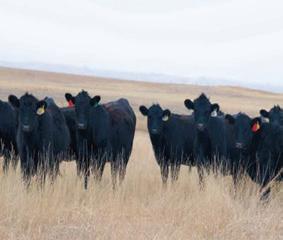
It is speculated that more than a few ladies went on early trail drives dressed as men and later in life they claimed it was one of the highest honors they’d achieved in life to be able to say, “I went up the trail.” Josephine Monaghan of Buffalo, New York, dressed as a man in the west right after the Civil War. Once she reached Idaho gold country, she continued passing as a man so she could stake a mining claim, vote before it was legal for women, and build a ranch. It was only after she died in 1904 that her true identity was discovered.
passed that achievement as the first woman named high individual overall at the Livestock Judging Contest in Chicago, which was the Super Bowl of all judging contests.
Minnie Lou Bradley’s beef packing plant was one of the first to market branded beef products, and her ranch had one of the first quality assurance programs in the U.S. She has been honored as a top leader in the industry twice by Beef Magazine, has been inducted into the National Cowgirl Hall of Fame and her accomplishments in the livestock industry are extraordinary, regardless of her gender.
Vengeful Domination
You only have to look at showrings across the country to see that young girls are beating the pants off their male competition. At this year’s Western National Angus Futurity show in Reno, Nevada, the top five heifers were all owned by young ladies. Sure, there might have been some male clipper jockeys in the background but it was young woman at the halter with their name listed as owner. These females are getting a taste of the cattle business and they will want more.
If you really want to see how females are dominating their male competitors look at the photos that appear in your weekly newspaper of FFA leadership teams. In most cases you’ll find four females or more of the six office holders from chapter officers all the way up to national officers. Or perhaps they’ll only be one token male. In judging contests it’s often a case where all team members are female. I used to take reasons for the FFA state livestock judging contest and the ones getting the top scores were female.
My how things have changed!
When I was State FFA President of California in 1970 it was the year following girls being al-
lowed to be FFA members. I remember being all for the change at the time but had I known how dominate they would eventually become, I might have thought otherwise.
It was one thing to blatantly keep women out of the FFA but some of the language emanating from national headquarters in the past was distasteful, such as this little missive: “That when officially found that any State Association in a Future Farmers of America has girl members on its rolls, such State Associations shall be denied participation in all national Future Farmer of America contests and national FFA awards. And no funds from the national treasury shall be available to such State Associations for the purpose of transporting delegates to the national conventions until such time as the names of the girl members are removed from the official rolls of the State Association and local chapters in accordance with the constitution.”
The issue of girls in the FFA received little attention until the 1964 National FFA Convention.
“During the 37th convention, according to the national office, “Paul Miller from Connecticut proposed an amendment to open national membership to women but the motion was defeated.” But things changed nationally in 1967 when the Affirmative Action Policy was expanded to cover discrimination based on gender. According to the National FFA, “The National FFA Organization sought legal counsel for the obligation to accept females as members on the national level. Despite receiving legal interpretation that declared excluding females from membership was discriminatory, amendments could not be made to the constitution that year. Instead, the delegates of the 40th National FFA Convention were informed of the legal ruling concerning female members, instructed to take the information back to the local level, explore the situation and
return to Kansas City in one year with the views of the members in order to provide appropriate discussion.
“At that time, approximately 3,300 females were enrolled in vocational agricultural classes nationwide and an increasing number of states accepted women as members. By many accounts, acceptance of female members was inevitable during the following convention.” One year later it was moved and seconded to strike the word male from the constitution. The motion passed by only a two-vote margin.
Since 1969, women have served as convention delegates and national officers. Nearly half of all FFA members are women. Karlene Lindow shattered another glass ceiling for women in FFA in 2002 when she was named the American Star Farmer and her jacket now hangs in the Smithsonian National Museum of American History. In 1982, Jan Eberly from California was elected to serve as the first female national FFA president.”
When I began my college career in 1970 at Cal Poly, San Luis Obispo, California, the animal science department was about 90 percent male and 10 percent females. Today it’s 85percent female and 15 percent male. It’s about the same percentage of females in vet schools nationwide. What does that tell you about the role women will assume in the livestock industry of the future? I just hope that the ladies will have mercy upon us men but knowing women as I do I fear they will seek justifiable vengeful domination.
purchase housewares and tools that don’t look a thing like the photos on Amazon. A good friend of mine was placed in a rest home for the last year of his life where he got bored and shopped for crap online totaling $70,000 before his family could legally get him stopped. Some days he’d get as many as ten packages from FedEx, UPS and the Post Office and because they were delivered to his home address he never even saw them, let alone used a single item he bought. When sold at a garage sale the stuff didn’t fetch $1,000! Because of the Internet we don’t even know fact from fiction. Information on the Internet is so unreliable as to be useless. “Influence peddlers” put up shocking totally false headlines called “clickbait” hoping to reel you in to their website so they can get paid or convert you to their cause. And, my friends, the worst is yet to come. Artificial Intelligence may be all the rage but it promises to make your brain a useless appendage, like your appendix, because you won’t have to use it anymore. Our cars will drive themselves, Chat GPT will write your kid’s essays and accelerated hacking will make your private personal information a commodity to be bartered and sold online. Terrorists will use AI to make the world a far more dangerous place.
To build the infrastructure for the AI revolution will demand huge amounts of electricity and turn nuclear energy into “Green Energy.” I remember when greenies marched in the streets in an effort to stop its proliferation.
How can people become so excited about something that will take their job? Recently a banker who laid off thousands of his employees made possible by AI called his former employees “lower value human capital.” At graduation ceremonies around the country this year titans of tech gave speeches about all the glorious things AI will do. Invariably they were practically booed off the stage any time they mentioned AI because Gen Z knows that in an already challenging job market, the career they have studied for will disappear. AI will make them obsolete. ▫
producers, and communities that drive American agriculture.”
“President Trump has directed his entire administration to do what it can to combat and stop the spread of New World screwworm. We at USDA have been working with our federal partners to prepare for any potential infestation of animals that may occur as a result of New World screwworm, and today’s announcement is another step in the right direction,” said U.S. Department of Agriculture Secretary Brooke L. Rollins. “HHS and FDA have stepped up to the plate and have moved at Trump speed to authorize as many treatments as needed to protect our livestock, wildlife, and companion animals. I am thankful to Secretary Kennedy for getting this authorization across the finish line and ensuring our horse population has access to preventative measures, should they need it.”
NWS is a parasitic fly whose larvae feed on the living tissue of warm-blooded animals. Newborn animals with healing umbilical wounds and animals with open wounds are particularly vulnerable to infestations, as NWS flies are attracted to these sites to lay their eggs. Left untreated, infestations can be severe and life-threatening.
Based on the totality of the scientific evidence available, the FDA has concluded it is reasonable to believe that Ivermectin Liquid for Horses may be effective in the short-term prevention of NWS myiasis in horses when used as authorized, and the known and potential benefits of the product outweigh its known and potential risks.
This EUA authorizes Ivermectin Liquid for Horses only for short-term prevention of NWS myiasis, not treatment. If a wound is already infested, or if an infestation develops after administering Ivermectin Liquid for Horses, contact a veterinarian to discuss treatment options.
Ivermectin Liquid for Horses is a clear, ready-to-use solution and can be administered as an oral drench or via a tube going from a horse’s nose to its stomach. This product is available only by prescription from a licensed veterinarian. Do not use this product in species other than horses.
Detailed product information about Ivermectin Liquid for Horses can be found in the Fact Sheet: Emergency Use Authorization of Ivermectin Liquid for Horses (ivermectin oral solution) for New World Screwworm (NWS)
This EUA will be effective until it is revoked or the HHS Secretary terminates the declaration that the potential public health emergency presented by NWS justifies the emergency use authorization of animal drugs for NWS.

frequency, resulting in new and challenging air quality issues.
The impacts of smoke, and corresponding increases in PM2.5, on air quality are not limited to wildfire, but also occur during prescribed fire, which is expanding in use to try to reduce the risk of catastrophic wildfire. However, the planned nature of prescribed fire and its occurrence on specific days and times provides an opportunity to prepare individuals and communities for smoke.
Health Effects of Smoke Exposure
Most healthy adults and children recover quickly from smoke exposure and will not suffer immediate serious or long-lasting health effects. However, some populations, including children, older adults, pregnant women, people with heart or lung disease and people with increased exposures such as outdoor workers, are at greater risk of experiencing health effects.
The understanding of the health effects of wildland fire smoke is rooted in the extensive evidence on short-term (or daily) exposures to PM2.5 that occurs on a typical day, not an extreme event like a wildfire. The health effects of shortterm smoke exposure can range from less to more serious and include:
Ranching Heritage Association Honors Two Working Cowboys
The Ranching Heritage Association will honor two working cowboys with this year’s annual RHA Working Cowboy Award. The eastern division recipient is Arlon Baize of Sagerton, Texas.
Cardiovascular effects
Eye irritation
■ Respiratory symptoms
■ Coughing
■ Increased phlegm
■ Wheezing
■ Difficulty breathing
Respiratory effects
■ Bronchitis
■ Reduced lung function
■ Asthma exacerbation and aggravation of other lung diseases
■ Emergency department visits and hospital admissions
caring for livestock and the land on a daily basis,” said Frank McLelland, rancher and president of the Ranching Heritage Association.
“Arlon Baize and Kyle Best represent the very best of the cowboy profession. Both men have dedicated their lives to livestock, horsemanship and stewardship. They’ve earned the respect of ranchers, cowboys and their communities through decades of hard work and service.”
Arlon Baize – Eastern Division Honoree
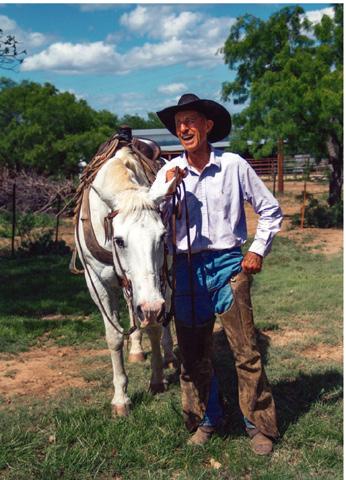
The western division recipient is Kyle Best of Amado, Arizona. The award will be presented during the annual National Golden Spur Award Honors on Saturday, Oct. 10, in Lubbock, Texas.
“The RHA Working Cowboy Award is designed to recognize outstanding individuals who make their living primarily on horseback,
For more than 50 years, Arlon Baize has made his living horseback, working cattle across the ranches of the Texas Big Country. Even in his early 80s, he continues today work on ranches throughout the Abilene, Albany, Baird and Haskell areas.
After graduating from Wylie High School near Abilene, Baize worked briefly in the lumber business before beginning a lifelong career as a cowboy. He spent years working for the historic Guitar Ranch while operating cattle with his brother near Baird, Texas. Throughout his career, he has worked for ranches, including Snyder, Hemphill, Montgomery, Elliott, Beckham, Windham, Pruet, Scott, Stasney and Akers, among many others.
Baize is known for his quiet demeanor and exceptional stockmanship. He is widely respected for his ability to handle cattle patiently and humanely. His fellow ranchers describe him as dependable, humble and highly skilled in every aspect of ranch work.
■ Heart failure exacerbation
■ Heart attack
■ Stroke
■ Emergency department visits and hospital admissions
Birth outcomes
■ Pre-term birth
■ Premature death
Less is known about the relationship between other durations of smoke exposure and health, but there is clear evidence that there is no PM2.5 concentration below which health effects have not been observed.
“Arlon Baize. There’s not a cowboy in the Abilene, Texas, area who doesn’t recognize that name. He is a legend and everybody loves him,” Craig Pruet, one of Baize’s nominators, said. “Arlon spent his life as a day working cowboy. He never worked full time for any one ranch. He helped them all on their hardest days.”
In 2020, Baize was recognized by the Texas Cowboy Reunion with its Working Ranch Cowboy Award.
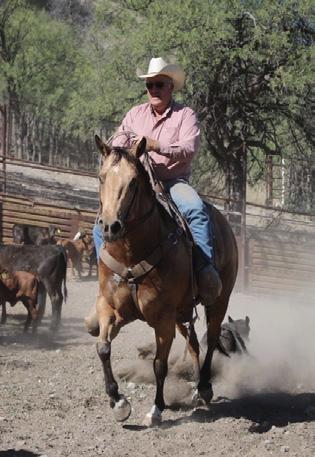
Kyle Best – Western D ivision Honoree
Kyle Best is an accomplished cowboy, cattleman and horseman whose career spans decades of ranch management and livestock production. Best is a native of New Mexico and longtime ranch manager for Marley Cattle Company in southern Arizona.
He began building his own cattle operation at a young age while working alongside his family. Over the years, he has managed cattle operations in New Mexico, Arizona and
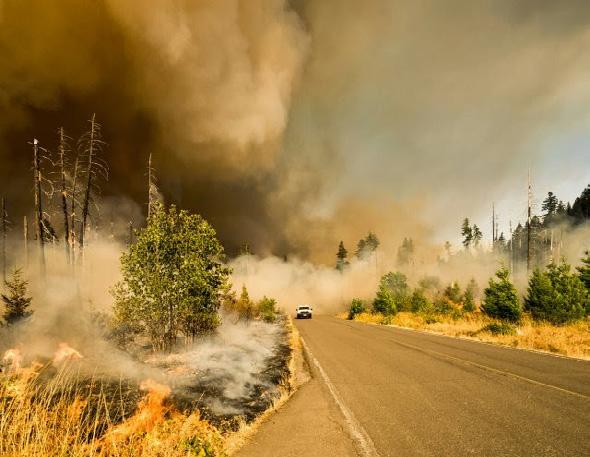
Truck leaving smoky road with fire on roadside
Ivermectin
The Perfect Pairing: Partnering With Veterinarians for Better Herd Nutrition
Apasture full of green grass can be a welcome sight for livestock owners, but what grows in the field does not always tell the full story of the nutrition available to animals.
Because pasture conditions change throughout the year, veterinarians can help producers assess forage quality, identify nutritional gaps, and determine when supplementation may be needed.
Dr. Kevin Washburn, a professor at the Texas A&M College of Veterinary Medicine & Biomedical Sciences, explains how veterinarians work with producers to build feeding plans that support herd health throughout the year.
Building a strong foundation
Every nutrition program starts with the basics: clean water, quality forage, and access to a balanced mineral mix.
For ruminants such as cattle, sheep, and goats, properly managed pasture can provide most of the nutrition they need without the need for supplements.
“A ruminant could go in
Oklahoma while also developing a respected ranch horse program, KT Cattle Inc.
Since 2002, Best has managed Marley Cattle Company near Amado, Arizona, where he oversees cattle across more than 178 sections of ranchland. Under his leadership, the ranch has improved cattle quality, increased production and successfully navigated droughts, border-related challenges and the day-to-day demands of a large ranching operation.
“Kyle Best is a true cowboy, cowman, and one of the hardest and smartest working men I know,” Kyle Lange, a Best nominator, said. “In my line of work, I meet all kinds. I have much respect for Kyle, and I am proud to call him friend.”
In addition to ranch management, Best is a bonded order buyer and a respected ranch horse breeder. Through KT Cattle Inc., he and his family have donated horses and cattle to support youth programs, ranching organizations and charitable causes throughout the Southwest.
In 2024, Best and his family were recognized as the American Quarter Horse Association Ranching Heritage Breeder of the Year. In March 2026, they were honored as an AQHA 50year cumulative breeder.
The RHA Working Cowboy Award was established in 2018 to recognize outstanding men and women who make their living in the saddle, taking care of livestock and the land on a daily basis.
This year’s awards are made possible because of our generous partners, Livestock Nutrition Center and Frank and Jenni McLelland.
a pasture with fresh water, grass, and shade and have everything that they need,” Washburn said. “They don’t need any extra concentrate because they can make their own protein, fats, glucose, B vitamins and vitamin K out of good quality forage by itself.”
However, maintaining a productive pasture requires careful management.
“If you have too many animals on a pasture, you’re never going to get any kind of pasture growth and you’re going to have to supplement them all the time because you’re not going to have grass,” Washburn said.
That’s where a veterinarian’s expertise can help producers make informed decisions for their animals.
Breaking down the details
A veterinarian can determine
whether a herd’s available nutrition is meeting their needs by looking at body condition, production goals, and overall health.
“Every species of livestock has what we call a body condition score,” Washburn said. “It’s on a scale — cattle are one to nine, dairy cattle one to five, and small ruminants one to five.”
During herd health visits, veterinarians can evaluate animals as a group and look for patterns that may point to larger concerns.
“On my visits, I see all of the animals,” Washburn said. “If I see that one or two of these are in a lower body condition score, that might be an individual animal issue such as a parasite problem.”
When changes are seen across the herd, the concern may indicate a problem that goes beyond an individual animal.
“When you see all 50 or 60 of them in a lower body condition score, then you start thinking there’s a nutritional issue,” Washburn said. “We should look at
what nutrients are available by testing the pasture, hay, and minerals.”
Through this process, veterinarians can help producers understand whether their nutrition program is meeting the herd’s needs.
“If all of your animals are doing great, they’re fat and slicked off in the summer, then you know you’re doing something right,” Washburn said. “But if most of them aren’t, then we need to figure out what’s going on.”
A taste of every season
Weather, rainfall, grazing pressure and plant growth all affect the nutrients available to livestock throughout the year; therefore, seasonal evaluations help producers and veterinarians understand how their pasture changes and whether adjustments are needed.
“If you’re working with your veterinarian on herd nutrition, twice a year is a good place to start,” Washburn said. “I would want to get those numbers in the spring and then again in the fall, right after summer, to
see where we are.”
Veterinarians also help producers identify potential risks associated with changing pasture conditions.
“We would think about: Do you have any grass left? What does it look like and what value does it still provide?” Washburn said. “Grass can still have value even when it is not as high in protein, so understanding what you have available helps you make better and more economical decisions about supplementation.
“For example, one thing we worry about with lush, rapidly growing spring grass is magnesium,” Washburn said. “Low magnesium levels can put lactating beef cattle at risk for grass tetany, a potentially fatal condition.”
Other pasture challenges can develop after drought conditions, rainfall events, or changes in plant growth.
Pasture Talk is a service of the College of Veterinary Medicine & Biomedical Sciences, Texas A&M University. Stories can be viewed on the web at vetmed.tamu.edu/news/tag/pasture-talk.

Sandlin Named CEO of the American Livestock Markets & Dealers Assoc.
The American Livestock Markets and Dealers Association (ALMDA) has named Dale Sandlin as its new Chief Executive Officer, effective July 6, 2026.
Sandlin succeeds Tim Niedecken, who has served as CEO for the past three years. During his tenure, Niedecken helped strengthen the association, expand member services, and increase ALMDA’s presence on legislative and regulatory issues affecting the livestock marketing industry. He will continue serving the association as a member of the ALMDA Board of Directors.
Bryan Forester, ALMDA President and owner of Emory Livestock Auction and Athens Commission, thanked Niedecken for his leadership and welcomed Sandlin to the organization.
“We greatly appreciate everything Tim has done to help move our association forward,”
Texas a&M
Forester said. “His leadership has strengthened the services we provide our members and expanded our advocacy efforts on behalf of the livestock marketing industry. We are excited to welcome Dale and look forward to the experience, relationships, and leadership he brings to our association.”
Sandlin brings extensive experience in agricultural association management and livestock industry advocacy. Most recently, he served six years as Executive Vice President of the Georgia Cattlemen’s Association after previously serving four years as Managing Director of the Hawaii Cattlemen’s Council.
Sandlin began his career with USDA Animal and Plant Health Inspection Service (USDA-APHIS), working on the Karnal Bunt Plant Protection and Quarantine program in Texas. He also served as an intern for Congressman Stevan Pearce (R-NM) on Capitol Hill
ForesT
service announces FirsT purchase oF dedicaTed wildland
Texas A&M Forest Service is building a state-managed fleet of wildland firefighting aircraft, beginning with the purchase of two SUBARU Bell 412EPX helicopters.
The first aircraft is expected to be delivered in December 2027, with the second anticipated to follow three to six months
later.
“Texas families and communities depend on strong protection from wildfires,” said Governor Greg Abbott. “This investment in a dedicated fleet of firefighting aircraft gives our responders faster response times and greater strength to contain fires. Texas can now better respond when disaster

in 2006. Before entering association management, Sandlin spent seven years as Director of Marketing for Oldham Goodwin Group’s commercial real estate portfolio in College Station, Texas.
A native of Olney, Texas, Sandlin now resides with his family on their farm near Forsyth, Georgia. He holds both bachelor’s and master’s degrees from Texas A&M University.
“I am excited for this opportunity and look forward to serving the livestock industry through one of its most essential segments: livestock markets and dealers,” Sandlin said. “Livestock markets and dealers provide a vital link between producers and the marketplace. I look forward to working alongside our members to address the challenges they face while continuing to strengthen the services they provide to livestock producers across the country.”
In addition to leading ALMDA, Sandlin will also serve as Executive Director of the Livestock Marketing Association of Texas (LMAT). He will assume both positions on July 6, 2026. ▫
strikes.”
The primary objective is simple: get aircraft on a fire sooner. The sooner firefighters can attack a wildfire from the air, the greater the opportunity to contain it before it grows into a larger, more destructive incident.
In 2025, Texas A&M Forest Service and local fire departments responded to 6,304 wildfires that burned 132,366 acres across the state. During those responses, wildfire suppression aircraft flew 1,589 hours and made 1,345 drops, delivering more than 1 million gallons of water and fire retardant.
“Preparing for the next wildfire season begins long before the first fire starts,” said Robert L. Albritton, chairman of The Texas A&M University System Board of Regents. “This investment gives Texas A&M Forest Service dedicated resources that will improve readiness, strengthen response capabilities and better protect Texans and their communities.”
For decades, Texas has relied on federal resource-sharing agreements and a partnership with the Texas Military Department for aerial wildfire suppression. Those partnerships will continue as Texas builds a dedicated, state-managed fleet that provides dependable aviation resources and greater operational flexibility during periods of high wildfire activity.
“Texas is growing, and so is the risk of catastrophic wildfire,” Chancellor Glenn Hegar said. “These aircraft will give Texas A&M Forest Service another critical tool to respond quickly, support firefighters on the ground and help protect lives, property and natural resources across our state. This investment strengthens Texas’ ability to respond when every minute counts.”
The new helicopters will provide firefighters with precision water drops, enhanced structure protection, improved access to rugged terrain and the ability to quickly return for additional water, allowing crews to remain engaged throughout suppression operations. The aircraft also establish the foundation of a permanent, state-managed aerial firefighting capability that
Jace Thompson Wins World Livestock Auctioneer Championship
When Jac e Thompson first began his auctioneering career, he quietly set a lofty goal. He didn’t publicize it, but he wanted to prove to himself that he could stick to something, refine his craft and ultimately become the best in the world.
By June 20, that silent ambition became a historic reality as the 23-year-old from Billings, Mont., was named the 2026 World Livestock Auctioneer Champion. With his victory, Jace and his father, Ty Thompson — the 2009 champion — became the first father-son duo to ever win the prestigious title.
A third-generation cattleman and auctioneer, Jace grew up completely immersed in the industry. His grandfather built a livestock marketing business from scratch in Wyoming, and his father later moved to Montana to do the same, also adding a couple of feedyards to the mix. Though Jace explored other interests after high school, including real estate, the pull of the family business was inevitable. Five years ago, he decided to take auctioneering seriously, selling six days a week across three states, adding 9,200 miles to the odometer each month as he honed his skills.
Now, as the reigning World Livestock Auctioneer Champion, Jace is prepared to put that dedication to work on an international scale. He will spend the next year driving the custom-wrapped World Livestock Auctioneer Championship pickup truck across the U.S. and Canada, serving as an advocate for the Livestock Marketing Association and the industry as a whole.
“I want to do my No. 1 job, which is be a spokesperson and be an ambassador for the auction method of selling livestock,” Thompson said, noting his excitement to also share
can be expanded as Texas’ needs continue to grow.
The 89th Texas Legislature appropriated $257 million to Texas A&M Forest Service for the purchase, operation and maintenance of wildfire suppression aircraft. The helicopter purchase represents the first phase of a planned expansion over the next two years that includes additional aircraft, including multimission fixed-wing aircraft and large airtankers.
“The Legislature made a commitment to strengthen Texas’ wildfire preparedness, and today’s announcement puts that investment to work,” said state Rep. Ken King. “These aircraft will help ensure firefighters have the resources they need to protect lives, property and our rural communities.”
Texas A&M Forest Service fire managers select aircraft based on each incident’s size, location, fuel conditions and potential threats to lives and property to ensure the most effective aviation resources are used for every wildfire.
The helicopter purchase followed the State of Texas procurement process administered by the Texas Comptroller’s Statewide Procurement Division. Texas A&M Forest Service consulted an Aviation Task
LMA’s resources and regulatory updates with market owners.
For aspiring auctioneers looking to achieve the same success, Thompson stresses the value of grit and someone to look up to.
“Find a proven mentor,” he said. “One who is successful and is willing to help, because it’s very hard to get good at this without a mentor.”
Thompson also noted the importance of treating every opportunity with equal respect, whether it is a major market or a local volunteer fire department pie auction.
“As long as you’re humble enough and willing enough to learn, you can grow more than you could ever imagine from every sale,” he added.
In addition to the one-year use of the world champion truck, Thompson took home $10,000 in cash, a Gist belt buckle, a hand-tooled leather briefcase, a bronze sculpture, a world champion ring, a custom-engraved Henry Original rifle, a golden gavel and a sterling silver money clip.
Joining him in the winner’s circle was Reserve Champion Troy Robinett, Decatur, Texas; and Runner Up Barrett Simon, Rosalia, Kansas; who was also recognized for achieving the highest score in the interview portion of the contest. Austin Schaben, Dunlap, Iowa, was named the Audrey K. Banks Rookie of the Year. Rounding out the top 10, in contest order, were: Ryan Konynenbelt, Fort MacLeod, Alberta; Josh Jasper, Nicholasville, Kentucky; Jerran Miller, Chouteau, OK; Leon Caselman, Long Lane, MO; Andrew Sylvester, Westmoreland, Kansas; and Garrett Nunn, Laramie, Wyoming.
Entry for the 2027 World Livestock Auctioneer Championship qualifying events is now open with events building up to the 2027 Championship to be held next June in South Lake Tahoe, NV, and Galt, CA. ▫
Force representing 12 partner organizations, issued a Request for Information to identify operational requirements, and later issued a Request for Proposals through the Electronic State Business Daily. Following evaluation of the submitted proposals, the contract was awarded to Bell Textron Inc.
“This is a force multiplier for our state’s wildfire preparedness,” said Texas A&M Forest Service Fire Chief Jared Karns. “Aviation resources provide tremendous support to firefighters on the ground, including lifeand property-saving intelligence for fire managers, access to otherwise inaccessible areas, the ability to deliver large volumes of water and fire retardant to slow the spread and reduce the intensity of wildfires, and rapid turnaround times that keep aircraft engaged in the fight.”
For

SOME OF OUR OFFERINGS
• Custom Home on 36+ acre estate in Dragoon Mountain Ranch
• 36+ acre homesites in St David, AZ
• 80 Acre Farm land with 16” Irrigation Well in Willcox, AZ
• Custom Home on 4+ acres in Cochise, AZ
• 40 acre off grid land in Portal, AZ


O’NEILL LAND, llc

P.O. Box 145, Cimarron, NM 87714 • 575-376-2341 • Fax: 575-376-2347 land@swranches.com • www.swranches.com
VERMEJO RIVER VIEW, 87.43 +/Deeded Acres. Small cabin, Conex Box, great views, just 3 miles east of Cold Beer, NM, in Colfax County. 913 SHY 505 Maxwell, NM 87728. $325,000
MIAMI PRIVATE 80, blacktop with dedicated easement, deeded acres, large barn, small sleep out, buried utilities, domestic water meter, 80 shares of irrigation and septic able to han dle a 3 bedroom home. Some of the best views in Miami. 2050 HWY 21, Miami, NM 87729. $559,000
BAR LAZY 7 RANCH, Moreno Valley 594.38 +/- deeded acres, accessed off blacktop between Eagle Nest and Angel Fire. Historic headquarters. Currently used as summer grazing, pond and trees accessed off county road on rear of property as well. Presented “AS IS” New Survey, $3,564,500 $3,500,000
REAL ESTATE GUIDE



MCNALLY www ranchesnm com 575/622-5867 575/420-1237
& Appraisals





near Newkirk, perfect for ranchers, hunters, and outdoor lovers alike, this Guadalupe County gem offers room to run cattle, space to roam, and unforgettable views in every direction. Sheltering terrain draws in wildlife, making this property the real deal for those who crave privacy, purpose and

Wildlife Services Issues New Evidence Standards for Determining Livestock Depredations by
— July 26
USDA APHIS Wildlife Services (WS) determination of depredation by Mexican wolves relies solely on the physical evidence available at the time of the investigation. WS documents the physical evidence in the investigative report. Timeliness of carcass discovery affects the quality and availability of physical evidence.
WS makes all reasonable efforts to timely investigate a report of suspected depredation. However, some situations will result in an unknown determination due to insufficient evidence.
Confirmation of Mexican wolf depredations by WS usually includes subcutaneous hemorrhage and underlying tissue damage be present on large carcasses. When wolves kill small livestock, however, they often consume much of the carcass, and therefore evidence of subcutaneous hemorrhage no longer exists. The standards below have taken these items into account.
Physical Evidence
Specific to Mexican Wolf Depredations
Subcutaneous hemorrhage is the best physical evidence available to field investigators to directly associate a depredation with a direct and lethal attack by a carnivore. It refers to heavy or uncontrolled bleeding from the blood vessels under the skin layer and/or in the muscle tissue.
Subcutaneous hemorrhaging is found only if the skin and tissue damage occurred while the animal was still alive. Animals that die from causes other than predation typically do not show external or subcutaneous bleeding.
Bite mark measurements, along with other physical evidence, can help distinguish Mexican wolves from other carnivores after a carcass is determined to have been a confirmed predation. Mexican wolf lower jaw canines generally measure from 28.1 to 43.7mm, while upper jaw canines measure from 31.4 to 49.8 mm. If livestock is killed by wolves, then investigators should be able to identify at least one set of canine-spread measurements consistent with wolves.
Additional observations that can help distinguish wolf predation from other carnivores include:
■ chewed and broken large bones,
■ tracks and scat,
■ ribs, hide, and muscle are eaten to some degree,
■ attacks on the hindquarters and flanks,
■ significant damage to underlying muscle,
■ crushed skulls, severed spines, and massive tissue damage, and
■ multiple kills in one event.
Modifications were made as a result of observations by investigators over the last year and in consultation with US Fish & Wildlife Service, the agency responsible for the Mexican Wolf Recovery Plan.
Determination Categories
Confirmed - physical evidence leaves little doubt that livestock was killed by Mexican wolves.
Ї In large livestock (adult cattle, horses, etc.), confirmation can be reached by observing and documenting subcutaneous hemorrhage, tissue damage and associated bite marks, indicating that livestock was attacked and bitten while it was alive. This hemorrhage and damage, along with bite marks, can be correlated with other evidence to determine that wolves, and not some other predator, killed the animal.
Other physical evidence that WS investigators may observe and should record in the depredation report may include punctures of appropriate tooth spacing for Mexican wolves, feeding patterns on the carcass align with established wolf patterns, wolf tracks that correlate to the time of death, wolf scat, blood stains, and damaged vegetation at the scene.
Mexican Wolves in Arizona & New Mexico
Ї In small livestock (calves, sheep, etc.), confirmation can be reached by documenting: 1) subcutaneous hemorrhage and tissue damage; or 2) comingled blood and wolf tracks indicating that the calf was alive when it was killed and moved by wolves. Other physical evidence WS investigators may observe and should record, may include bite marks or punctures of appropriate tooth spacing for Mexican wolves, feeding patterns on the carcass align with established wolf patterns, wolf tracks that correlate to the time of death, wolf scat, blood stains and damaged vegetation at the scene.
Ї For injured livestock, bite marks and/or rake marks with appropriate canine spacing for Mexican wolves, in conjunction with evidence that precludes domestic dogs and coyotes, will be adequate to confirm injuries caused by a Mexican wolf or wolves. A
confirmed determination of a wolf kill seeks to prove that the animal was attacked by wolves while alive and subsequently killed.
In this situation, the animal has not been killed, but bite marks and/or rake marks prove that the animal was attacked while alive.
Probable – physical evidence suggests that livestock was more likely than not killed by Mexican wolves, but adequate physical evidence is insufficient to support a confirmed determination. Physical evidence that supports a determination of probable may include limited subcutaneous hemorrhaging in mature livestock that does not show adequate evidence to confirm a Mexican wolf attack, bite marks of appropriate tooth spacing for Mexican wolves without the presence of subcutaneous hemorrhaging and tissue damage, attack locations, feeding patterns on the carcass align with established wolf patterns, wolf tracks that correlate
to the time of death, wolf scat, or wolf attack scenes with blood stains and damaged vegetation, or other physical evidence.
Unknown – physical evidence is inadequate to suggest Mexican wolf predation as more likely than not the cause of livestock death. Physical evidence of wolf presence may be found on or near the carcass; however, this evidence is inadequate to reach a probable determination. WS does not determine wolf depredation in the case of missing livestock without the presence of any other physical evidence.
Other – physical evidence suggests cause of death from something other than wolves. Examples include depredation from other species, lightning strike, stillbirth, complications from birthing, disease, starvation, dehydration, shooting, vehicle collision, fall from a cliff, etc. u