















































































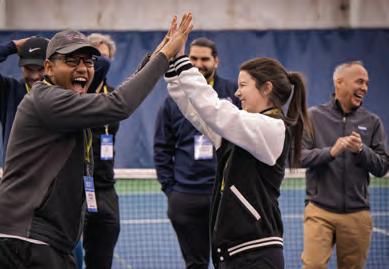
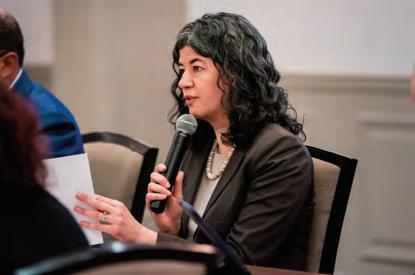
Eachyear, the USTA Eastern Section brings together the members and industry leaders from all of its regions for the Eastern Tennis Conference. It’s an all-encompassing weekend that features everything from workshops and clinics, to an awards dinner that honors those who made significant contributions to tennis in our Section.
“The overarching theme of every conference is collaboration,” said Amber Marino, who began her term as USTA Eastern’s Executive Director & CEO in January. “This is an opportunity for everyone in our tennis community to come together, share ideas and collectively celebrate our successes. I hope that
everyone who attended walked away energized and excited about what they can achieve in the year ahead.”
This year’s event was held at the Saw Mill Club in Mt. Kisco, and provided invaluable experiences for all who attended. A major theme at this year’s Conference was the emphasis on coaching and the development of new coaches and fresh strategies.
This included a presentation by USTA Coaching Managing Director and Head of Business Development and Operations Megan Rose, who served up all the latest on the USTA’s brand new coaching program that has been custom built for tennis providers who work with players
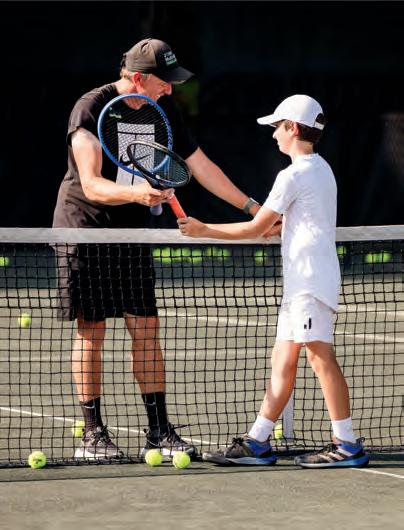
of all levels. In addition, USTA Eastern New Jersey Community Tennis Coordinator and teaching pro Andrés Sánchez taught fun drills and exercises specifically designed to instruct and accommodate multiple players at once.
“Almost every session at this year’s Conference focused on coaching strategy and development. We really wanted to emphasize that anybody can be a coach,” Marino added. “Parents, players and anyone with a passion for this sport can inspire others to pick up a racquet and progress in the game. As our President Ari Roberts noted in his opening night remarks, we could not do what we do to grow tennis without the efforts of all the
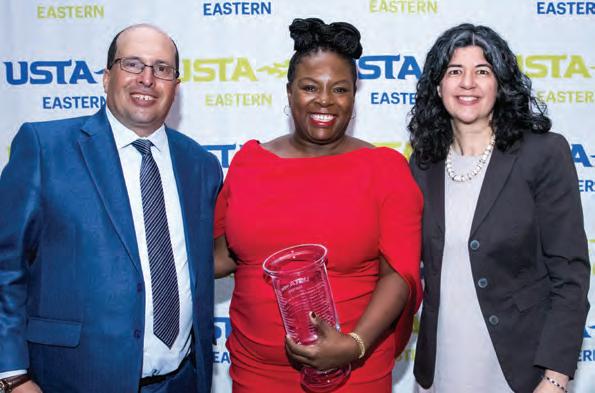
incredible coaches at clubs, NJTL’s, CTA’s parks and other facilities across the section. They are usually the very first people who ignite that spark and lifelong love for the sport.”
That is at the heart of USTA’s ’35 by 35’ campaign, to increase the amount of tennis players in the country to 35 million by the year 2035, and the USTA Eastern Conference made sure to highlight that notion as a theme.
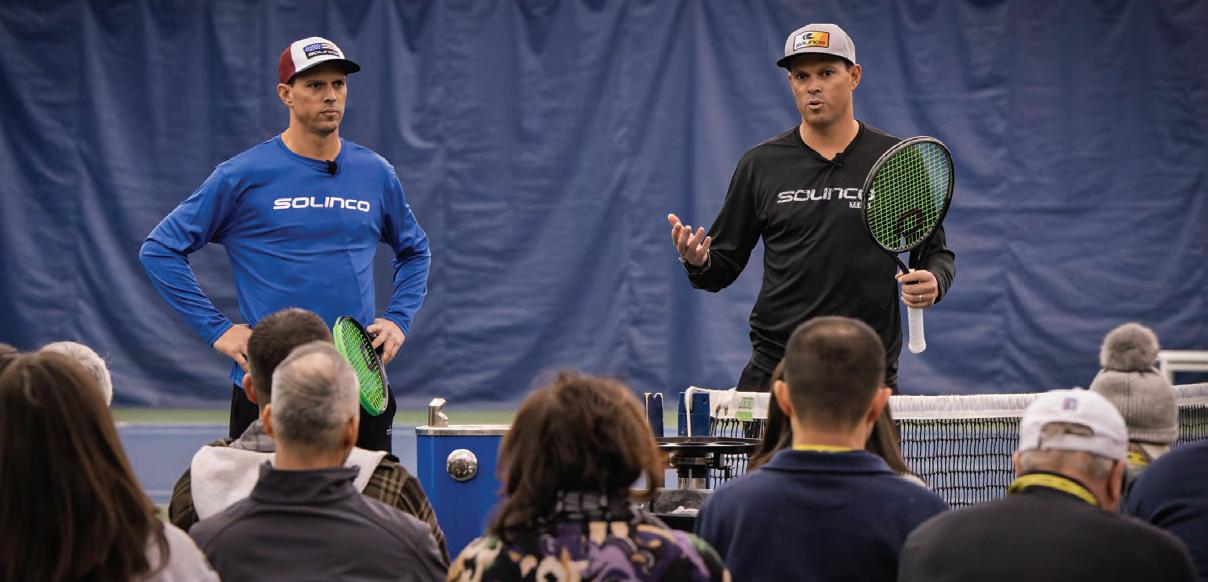
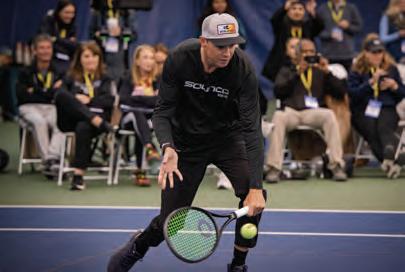
The Bryan Brothers headlined the event, leading two on-court clinics that focused on different aspects of coaching and player development, and also participated in a wide-ranging Q&A as they answered questions about their decorated tennis careers.
“I have to say it was pretty amazing
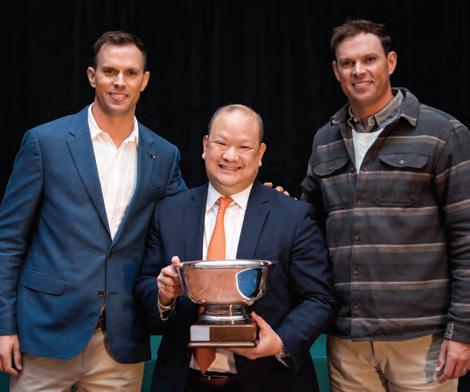
that my first conference featured the Bryan Brothers as headliners, that’s not something I’m going to forget any time soon!” Marino said. “They were a dream to work with. Very professional, and thoughtful about the sessions they were leading, and were up to do whatever we asked of them. They were a big hit with our attendees and we’re very thankful they were able to spend time with us, mere days before Bob coaches the U.S. Davis Cup team to a victory in Hungary, no less.”
The highlight of the weekend is the Awards Dinner on Friday night, where the best of the best from across the Section are honored for their impact on tennis. It’s a chance to recognize those who are at the heart of growing the
sport, and celebrate those achievements.
The 2026 USTA Eastern Tennis Conference sets the stage for what should be another positive year across the Section.
“In addition to enhancing our coaching initiatives, we will continue to develop more fun and innovative playing opportunities for our entire community,” Marino concluded. “We want more people to discover tennis and all it has to offer, and we want those who already love the sport to continue playing, and to also share that passion. The energy at the conference really excited us about what we can achieve, and how much we can grow in 2026.”

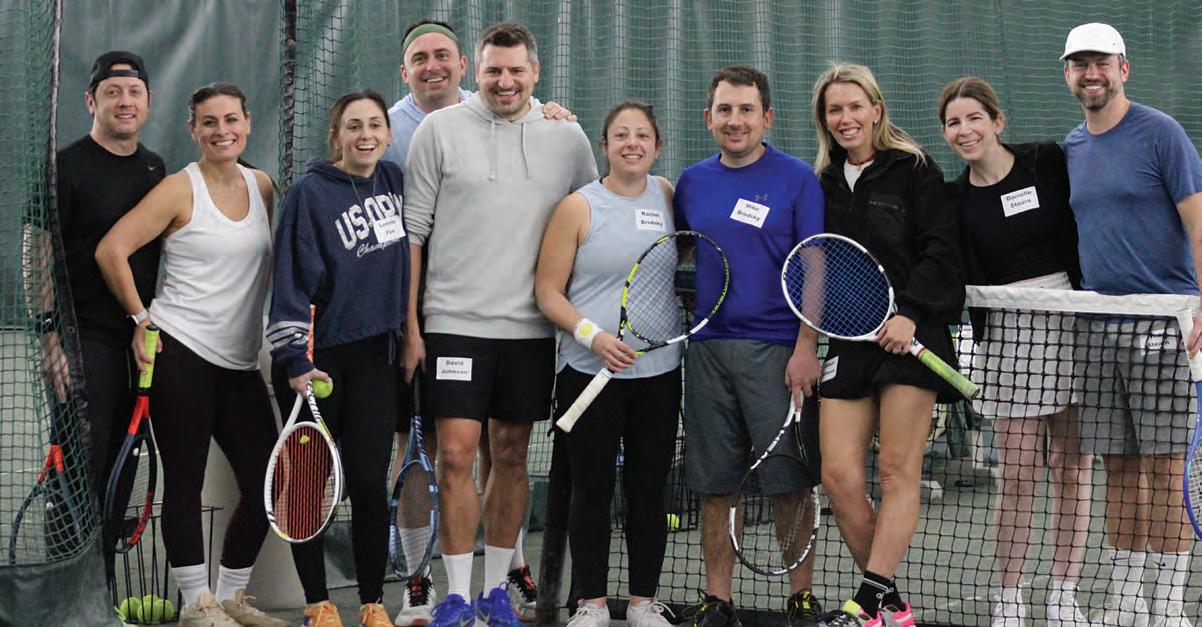
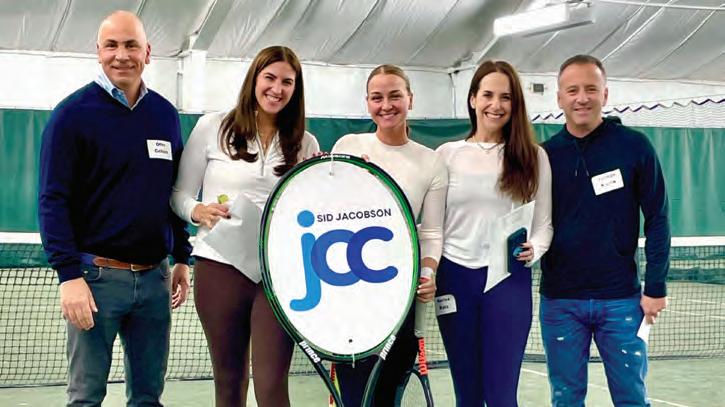
SidJacobson Jewish Community Center (SJJCC) held a special fundraiser at SPORTIME Roslyn. New Leaders’ Tennis, Tacos, and Tequila Night helped raise money for its organization while providing a great time for its members. The event was held in conjunction with Long Island Tennis Magazine, who modeled the event after its successful Courts & Cocktails event series.
SJJCC is the only full-service JCC on Long Island’s North Shore, providing a full range of cutting-edge recreational, health, fitness, educational, cultural arts and social

services programs to East Hills and the surrounding community.
“This event sells out every year, and the feedback is always the same,” said Blake Stier, a SJJCC New Leader. “Our attendees love the chance to play and socialize, but they also appreciate knowing that their time on the court is helping others off the court. It’s a chance to serve in more ways than one!”
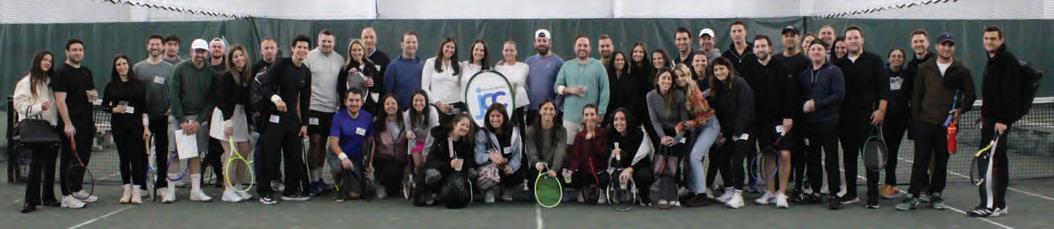
That goal of helping others was on display at the event as a sold-out crowd of young adults of varying tennis levels came out to support the event’s goals. Tennis professionals led
the players through a variety of drills and games on the courts, and throughout the evening, people mingled both on and off the court, while helping to raise awareness for SJJCC.
In the lobby, Dirty Taco catered the food and drink portion of the event, providing guests with a large spread of restaurant favorites including Beef & Chicken Tacos, Mexi Mac & Cheese, Fried Plantains, Brussel Sprouts and so much more, as well as an open bar where bartenders served up delicious drinks throughout the night.
“Events like Tennis, Tacos, and Tequila are vital to SJJCC’s mission because they turn connection into real impact,” said New Leader Marisa Katz. “In this case, every dollar raised supports our Nikki Schwartz Memorial Community Needs Bank, helping food-insecure families across Long Island and Queens access food and essential resources on a weekly basis”
David Sickmen, Publisher of Long Island Tennis Magazine, added:

“Our Courts & Cocktails event series has become a staple in the local tennis community and this event was a spinoff of that. We love helping to bring the community together for fun and unique Saturday night experiences while also raising money for worthy causes. We are appreciative of our partnership with

SJJCC and love all that they do. We wanted to help make sure the event was done professionally and that everyone had a great time. On this night, with a sold-out event, it was a perfect time for couples and friends to spend time together on and off the court, while raising money for a great cause. We are looking forward to continuing to partner with SJJCC in
the future.”
Tennis, Tacos and Tequila is one of many events that SJJCC holds throughout the year in order to further its mission, and was the ideal way to kick off its 2026 events.
“Sid Jacobson JCC is committed to enriching the lives of all individuals and families throughout our community. From fitness and wellness to arts, culture, and social services, we offer inclusive programs for people of all ages and abilities,” New Leader Lauren Singer. “Our signature event, Eat.Bid.Believe! on April 30, featuring worldrenowned mentalist Colin Cloud, supports essential social service programs, including Camp Kehilla, our innovative summer camp for neurodivergent individuals ages 521.”

































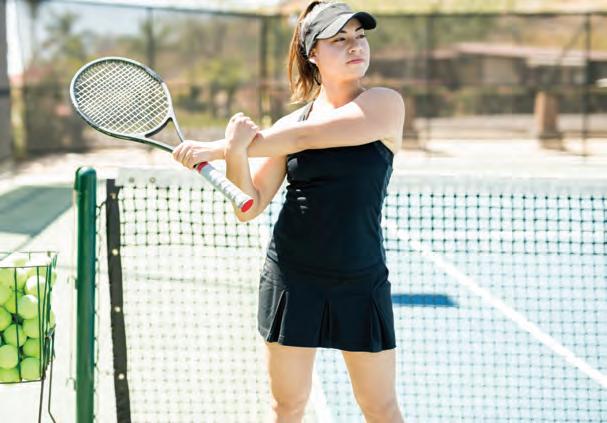
Asan orthopedic surgeon, I often see tennis players who are dealing with elbow or shoulder pain. They are the types of injuries that keep players off of the court and unable to play the sport they love. But while these are common injuries, they are also preventable.
Routine To Protect The Elbow
When it comes to preventing tennis elbow, a good warm-up can be a game-changer. Here’s a quick, specific routine you can follow:
• Wrist Circles and Elbow Rotations: Start by extending your arm in front of you and making gentle circles with your wrist, 10 times in each direction. Then do a few slow rotations of your forearm and elbow, like you’re turning a doorknob back and forth.
• Forearm Flexor and Extensor Stretches: Hold your arm out with your palm facing down. Use your other hand to gently press your hand down so your fingers point toward the ground, feeling a stretch in your forearm. Hold for about 15 seconds, then do the opposite by pulling your fingers up to stretch the top of your forearm.
• Light Resistance Exercises: Use a light resistance band or even a small dumbbell to do wrist curls. Rest your forearm on a table, let your hand hang off the edge, and slowly curl your wrist up and down. This strengthens the muscles that
By Dr. Eric Price

support your elbow.
• Dynamic Movements: Finish off with some gentle shadow swings, mimicking your tennis strokes without a ball, to get your entire arm and elbow used to the motion before you hit the court.
I often see players who lose internal rotation in their shoulder and then end up with significant shoulder and elbow pain. Here’s how you can maintain that internal rotation and keep your shoulder in top shape.
Internal rotation is your shoulder’s ability to rotate your arm inward toward your body. If you lose this range of motion, your shoulder mechanics get thrown off. This often forces you to drop your elbow slightly during strokes, which can lead to shoulder and elbow pain and
additional stress on your joints.
• Sleeper Stretch: Lie on your side with your arm extended in front of you and your elbow bent at 90 degrees. Use your other hand to gently press your forearm down toward the surface until you feel a stretch in the back of your shoulder.
• Cross-Body Stretch: Bring your arm across your chest and use your opposite hand to gently pull it closer, helping to maintain that crucial range of motion.
Incorporating these stretches into your routine can keep your shoulder mechanics smooth and preserve your shoulder and elbow. This motion loss usually occurs slowly over time, and most people don’t even notice it until it becomes significant. A little prevention now can make a big difference in your comfort and performance on the court.

Eric Price is an orthopedic surgeon with 20 years of experience treating athletes. He is passionate about making sure you can get back to the sports you love. He has extensive training and sports medicine in particular focuses on making sure that athletes have proper mechanics when they're playing so they can avoid and overcome injury. For appointments, visit www.northwell.edu/find-care/find-a-doctor/dr-eric-mitchell-price-md-1861491045 or call (516) 536-2800.

•We offer a full-range of junior and adult programs for recreational and tournament players in partnership with Gotham Tennis Academy, a leader in developing and operating tennis programs in New York City and the Hamptons.
•Our professional tennis staff has some of the most talented, personable and engaging tennis professionals in NYC. For more information about our pros, please visit www.stadiumtennisnyc.com
•Sign up now for our popular Junior Programs, Adult Clinics, Private Lessons, and Seasonal Courts.
•Sixteen US Open style deco turf tennis courts with spacious backcourts. Twelve courts are indoors from October through April.
•For the convenience of our regular players and their families, the Tennis Center offers complimentary on-site parking and Transportation referrals.
•An adjacent clubhouse features a pro shop, light snacks and beverages, complimentary Wi-Fi, and workspaces for schoolwork.
•Please see our Safe Play Procedures summarized at www.stadiumtennisnyc.com

The real estate market is an ever evolving one that can often be difficult to navigate, especially with the volatile nature of our economy. For racquet sport enthusiasts, there are often a lot of questions on what the effects are of having courts on their property, but it’s also important to know the state of the industry as a whole.
We sat down with Parsa Samii of Compass to learn more. Parsa was a high-level junior tennis player from Long Island who went on to play collegiate tennis at the University of Massachusetts-Amherst. He became a high-performance tennis coach before entering the real estate business, and is now a Licensed Real Estate Salesperson and a Member of the Compass Sports & Entertainment Division.
NYTM: How does having a court on the property affect the value, or the expansion of the property to accommodate them affect the tax burden?
Parsa: Adding any sport court to a property is viewed as a lifestyle differentiator that can significantly increase desirability, though it rarely offers a dollar for dollar return on investment like a kitchen or bathroom might. On Long Island, any permanent improvement such as paving a court or adding professional lighting and fencing will likely trigger a reassessment of the property value, leading to an increased tax burden. In Nassau and Suffolk Counties, where property taxes are already among the highest in the nation, homeowners should weigh the increased annual carrying costs against the recreational benefits. It is often wise to consult with a tax grievance professional before breaking ground to understand the potential long term impact on the home’s total cost of ownership.
NYTM: Are you seeing more homes being built with pickleball courts as opposed to tennis courts?
Parsa: The shift toward pickleball courts on Long Island is driven more by the spatial economy of the modern property than by a simple trend. A regulation tennis court requires a massive footprint which often
forces homeowners to choose between a court and a pool or a spacious yard. Because a pickleball court is significantly smaller, it functions as a versatile sport court that can be integrated into properties where a tennis court would be physically impossible. This allows homeowners to add a high value athletic amenity without sacrificing their entire outdoor living space, making it a much more accessible luxury for the average Long Island lot.
NYTM: What is the state of the real estate market in the beginning of 2026? Has it changed much from 2025? Why or why not?
Parsa: As we move through the first quarter of 2026, the Long Island real estate market is best described as an evolution of stability. While broad data points to a modest inventory increase of about 10 to 15 percent across the island, the truth is that the market remains hyper local. General statistics can be misleading because demand is concentrated in specific high performing school districts and villages. In a premier market like Garden City, the talk of months of supply simply does not apply. Inventory there is measured in mere days, with well priced homes often seeing multiple offers and entering contract within a week of hitting the market. This change from 2025 is driven by the lock in effect finally breaking, as homeowners who were clinging to three percent rates are finally moving due to life changes.
NYTM: Will 2026 mark a return to market equilibrium, and will high home prices finally stall or decline?
Parsa: The idea of market equilibrium in 2026 must be viewed through a hyper local lens. While some national experts suggest a return to balance, equilibrium is not a blanket state for all of Long Island. In mid island townships where inventory has grown, we are seeing a more balanced negotiation process. However, in sought after pockets, we are still seeing a significant supply and demand imbalance that keeps the leverage firmly with the seller. Prices are not declining but rather reaching a plateau in some areas while continuing to climb in others, which proves that your experience in this market depends entirely on the specific zip code you are targeting.
NYTM: As rent growth slows, is renting
becoming a more attractive, long term option than buying?
Parsa: The choice between renting and buying on Long Island has become increasingly complex because the traditional logic of timing the market has been upended by persistent inventory scarcity. While rent growth has slowed to roughly one-to-two percent, providing some short term relief, the reality is that waiting for a perfect dip in prices or a specific interest rate often leads to missed opportunities. In a market where inventory is measured in days rather than months, timing the market is a dangerous game. By the time a buyer identifies a trend, the available inventory in their desired neighborhood may have already vanished or moved to a new price floor. This makes the decision more about finding the right house when it actually appears rather than trying to outsmart an evolving economic cycle.
NYTM: Has the rise of AI reshaped the home searching and buying process?
Parsa: The rise of AI has fundamentally reshaped how buyers search for homes by moving away from simple keyword filters toward contextual discovery. AI tools now analyze a buyer's daily habits such as commute patterns and aesthetic preferences to curate a highly personalized shortlist of properties. This has shifted the role of the real estate agent from a gatekeeper of listings to a high level strategic advisor. There is no doubt that AI will continue to evolve and impact the markets by providing predictive insights that allow both buyers and professionals to see trends before they fully materialize. We are moving toward a future where AI does not just find homes that exist, but predicts which homeowners are likely to list next, effectively creating a more proactive and fluid marketplace.

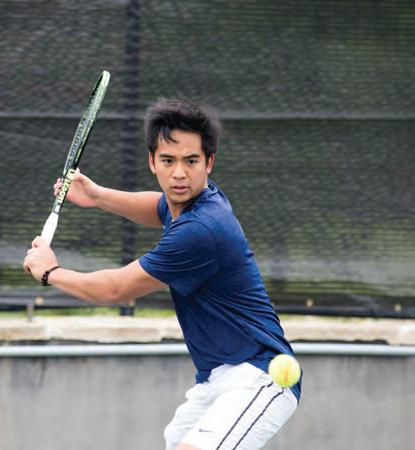

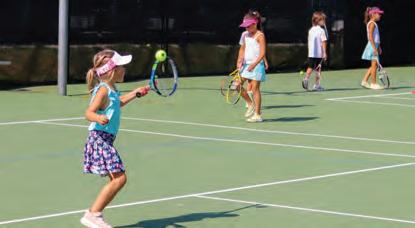
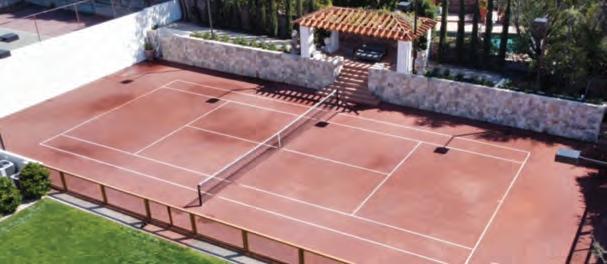
Fora lot of tennis enthusiasts, they enjoy the feel of the clay court underneath their feet when playing. The soft surface is great for the body and also creates a slower, higher bounce which gives players more time to get to a ball as well as slide into shots.
But for many club owners, or for those who own tennis courts, the clay often brings with it high costs of maintenance, both in terms of time and money. That is where CaliClay has the solution to fix all of the typical issues that arise from operating a clay court.
New York Tennis Magazine sat down with Steve Brillhart, Founder and Owner of CaliClay, to discuss the company’s origins, it’s benefits, and more.
NYTM: Can you tell me about your background and the origins of CaliClay?
Brillhart: I grew up playing competitive junior tennis in Santa Barbara, California. I didn’t play in college due to a back injury but would have enjoyed some D1 doubles if I didn’t burn out! After running some other businesses, I ended up taking a break from the grind and found myself teaching tennis in Los Cabos, Mexico in 2008. During that time I made a contact with a tennis court builder in Mexico City who in 2014 pitched me a clay overlay surface for a new court build I was asked to consult on.
It was going to be a temporary court— meaning it was to be there for a year or so and then demoed to make way for a building. As a development with the highest end clientele I didn’t want to put in something boring like a hard court. My Mexico City contact (and now partner Mauricio Hess) came out to the site and pitched me this clay overlay they’d developed over the past decade or so. My first thought was, “sounds like one of those awful fake grass courts I see all over Mexico and Australia… fast and slippery.” He showed me a few close up photos,

where the line system and clay surface were together and it just clicked. They found the right turf and clay combination and it looked just like a regular red clay court.
We installed it on an asphalt base, and it worked great. I taught on it daily for a few weeks in the high season, and took up Mauricio’s offer to get together and bring this beautiful surface to the States. I had spent those years in Cabo working on hard courts, and summers in the Hamptons mostly on HarTru courts. So I really got to know all the positives and negatives of those clay courts.
Before committing, I flew around Mexico and checked out a dozen or so of their existing courts in various climates—from dry to tropical—and found them all playing perfectly. That’s all I needed to convince me to join Mauricio and bring the surface to the US. We named it CaliClay to emphasize this is the only surface that can survive the dry California climate. Bonus is they work amazing in cold, wet, dry; any climate.
NYTM: What separates CaliClay from other clay court installations?
Brillhart: CaliClay has many advantages over other clay courts. It can be installed on any surface that is at least 95 percent compact or more. It is only watered before you play, so no wasting water while the court isn’t in use like other clay surfaces. It can be played on year round so there is no worrying about closing for winter. Maintenance exists but it’s simple and takes much less time than other clay surfaces. There’s no need to roll the court unless that’s something you
want to do.
The totally unique thing we can do that nothing else can: if a hard court below our surface has an issue, a root or crack or patch goes bad - we can cut our court open, repair the issue, and close it right up. The turf is buried below the clay material so the scar is not to be seen. We can also completely move our surface from one location to another. Our first court in Southampton was originally installed in Malibu as a show court in 2017, and moved to New York in 2018.
NYTM: Are you able to put a CaliClay surface over another existing surface?
Brillhart: Yes! We love converting hard courts—especially courts that are beyond repair should they want to keep them as hard courts. We’ve gone on top of existing HarTrus many times as well, indoor and outdoor. We can convert an existing hard court to CaliClay in about 3-4 days without using heavy machinery or moving fencing.
NYTM: How often do the CaliClay surfaces require maintenance?
Brillhart: Maintenance is easy, but there is some. With 15 tons of material blended into and topping our special turf, there is some basic maintenance: water before you play, brush and line when you finish up. You don’t need to winterize the court by taking up the lines; they will stay down as they are nailed down through the hard surface below. If it sits idle for some time, expect material to migrate down slope, so you’ll want to use lutes and drag brooms to redistribute the top layers of material. Add material as you would with any other clay court, between 20 and 40 bags annually depending on how much use and weather the court gets.
I can reopen a court in the spring by myself in an hour or so. Just sweep away the leaves, even up the top layer, and add material as needed!
After becoming the youngest male to win a career Grand Slam, Carlos Alcaraz is the king of tennis
By Brian Coleman
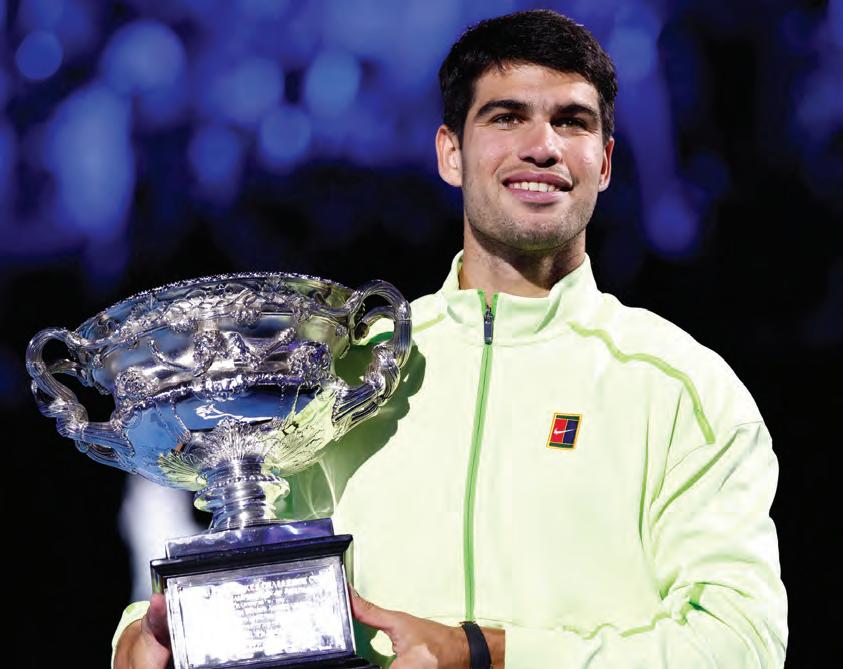
Therewas one notch missing from Carlos Alcaraz’s belt as he embarked on the 2026 season. The 22-year-old had achieved nearly all you could in the sport of professional tennis, multiple titles at the French Open, Wimbledon and the U.S. Open, as well as many weeks atop the world rankings, and a year-end number one-ranking.But he was still missing an Australian Open title, the only major absent from his resume, and the trophy holding him back from the career Grand Slam.
“As I said before, I think this [is] my main goal for this year. It’s the first tournament [and] the main goal,” Alcaraz said in his pre-tournament press conference. “So it’s going to be really interesting for me, how I prepared and I had a really good preseason just to be in good shape. I’m hungry for the title, hungry to [have] a really good result here. I’m just getting ready as much as I can. I’m really excited for the tournament to begin.”
continued on page 12
continued from page 11
It was a safe, carefully-worded answer, but the subtext of it was obvious: Alcaraz was focused on an Australian Open title, and becoming the youngest male player in the history of the sport to win a career Slam.
That offseason preparation he references was a different one that he had in years past. This time, it would not be under the tutelage of Juan Carlos Ferrero, with whom he worked with since 2019. Together, the two forged a nearly-perfect coach-player relationship, one that saw Alcaraz win 24 titles, and those six major titles.
The decision was met with a lot of surprise throughout the tennis community, but Alcaraz explained:
“I think [it is a] chapter of [my] life that has to end, we decided like this,” said Alcaraz. “I got to say that I’m really grateful for the seven years I’ve been with Juan Carlos. I learned a lot. Probably thanks to him I’m the player that I am right now. But internally we decided like this. We closed this chapter [mutually]. We are still friends, [with] a good relationship.”
That set the stage for one of the biggest tournaments of Alcaraz’s young career. How would he handle the
pressure of knowing this was the one major he hadn’t won yet? How would he respond to playing without his longtime coach? And he answered
He faced a familiar foe in the finals, the legendary Novak Djokovic, a 24the alcaraz era
those questions in a resounding fashion. Through the first five rounds, Alcaraz did not drop a single set. But he faced a substantial test in the semifinals against Alexander Zverev. After winning the opening two sets, Alcaraz saw Zverev dig his feet into the match, winning the third and fourth sets, all while the Spaniard was dealing with debilitating cramps.
“There are some moments that it seems like it’s okay to give up or not fight at all, which when I was younger, there were a lot of matches that I just didn’t want to fight anymore, or I just gave up,” he said after the match. “Then I just got mature, and I just hate the feeling.”
Hating that feeling, and leaning on a remarkable 14-1 record in five-set matches in his career, he won the fifth set and advanced to the first Australian Open final of his career.
time major champion and a 10-time Australian Open winner. In the final, Alcaraz’s abilities both physically and mentally were on full display and despite dropping the opening set, he dominated the ensuing three sets, winning 2-6, 6-2, 6-3, 75.
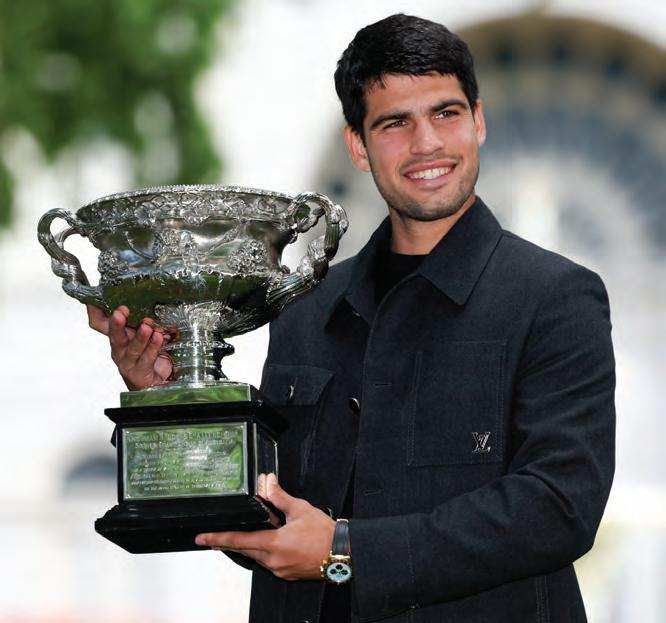
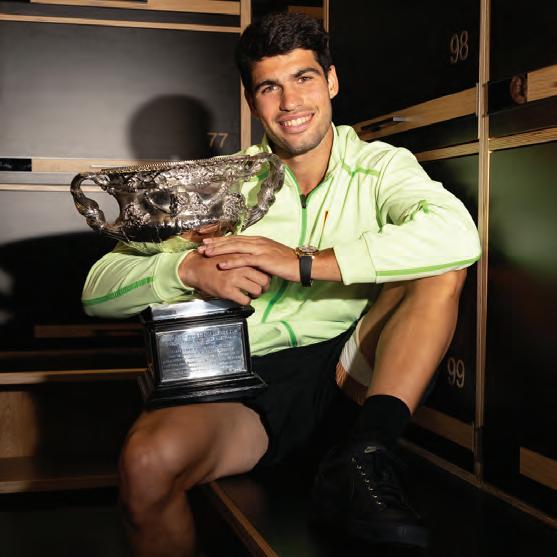
In doing so, he won his seventh career major, and the first one Down Under, becoming the youngest player to win all four majors.
“Every year that I come here to Australia, I was thinking about getting the trophy. [I] couldn’t go farther than the quarterfinals. Coming this year, hungry for more, ambitious for getting the trophy, and being strong mentally enough, and not hearing anything from the people [on the outside],” he said. “And then just playing good tennis in this tournament means a lot, it means the world to me, and it is a dream come true for me.”
Alcaraz
even admits that there are still things he can improve on to become an even greater player.
ready for that and see where my level is, where my tennis is. I have to try to put myself in their minds and think what they could do when playing against me. So that’s what I mean when I say I have to improve some things. You cannot be lagging, you just have to keep going.”
That is a scary proposition for the rest of the tour. On the heels of the Big Three era, Alcaraz and his contemporary Jannik Sinner have launched their own Big Two era. For the last year, however, it’s been Alcaraz on top, winning three of the last four majors.
At just 22-years-old, Alcaraz has established a tennis legacy that oftentimes takes a decades-long career to accomplish, and he still has many years remaining. He has a strong grip on the world number one spot and is a globally-recognized superstar that transcends the sport of tennis. However,
“Obviously I can see that [I have had] a lot of success so far, winning the biggest tournaments in the world. But I see myself with weaknesses,” he said. “A lot of players, I know they’re trying to catch up with me in terms of studying my game, how I play and trying to beat me, trying to challenge me. I have to be
He still has a long way to reach the mountaintop of the Big Three era, but at 22-years-old, Alcaraz is the face of the sport. As we move throughout 2026, we’ll see if Alcaraz can become the first male to win the Calendar Grand Slam since Rod Laver in 1969. But like all great athletes, Alcaraz doesn’t get too far ahead of himself. He is focused on the process.
“I know how difficult every match is,” he said. “So I’m thinking about one match at a time, and let’s see how far I can go.”

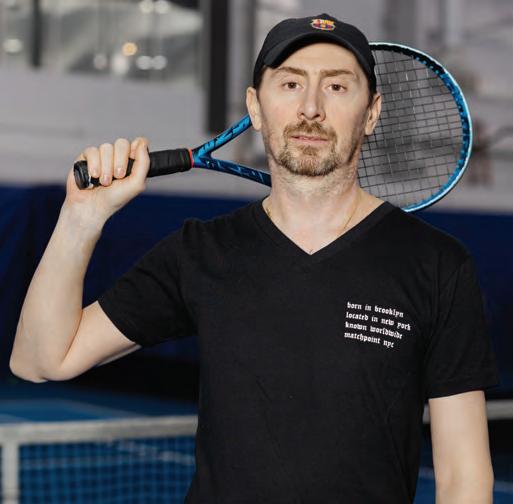
Pavlo Bednarzh steps onto the court, he can command attention from his players without saying much. He is someone who has lived and breathed tennis his entire life, speaking with the type of tone that can grab the attention of even the most relentless kids.
His passion for tennis dates back to his early days growing up in Lviv, Ukraine:
“I started when I was six,” Pavlo recalls. “There was a tennis club across from my kindergarten in Lviv. I just walked in one day, sat down, watched — and that was it. I was hooked. From that day, I spent every day on the court.”
Under the guidance of a former Soviet Union national player, Vera Ivanovna Yaremkevich, he realized that tennis was more than a sport about technique and proper groundstrokes, but instead about fight, endurance and perseverance. Through that upbringing, a foundation for what became his coaching philosophy was established.
As a player, Bednarzh would reach the Top 30 in the Soviet Union and graduated from the nation’s famed Sports Institute, but he knew his real calling was teaching. In Lviv, at the age of 20, is where he began his coaching career, before a stint in Poland where he worked as a personal coach for top players, and a trainer for the junior national team.
Then, about two decades ago, Bednarzh arrived in the United States,
and soon after, discovered MatchPoint NYC in Brooklyn. The place that would become his new home.
“I’ve been here since the beginning,” he recalls. “I saw the club grow–new courts, new kids, new faces. People came and went, but I stayed. And I don’t regret it.”
Bednarzh describes himself as an “old-school” coach, someone who is tough, but fair, with his players:
“Maybe I’m the strictest coach, but I’m also the most honest. I don’t promise miracles, I teach hard work.”
The trait he takes most pride in in his coaching isn’t forehands or serves, but rather, treating his players and their families with respect, and telling them how he feels.
“Honesty,” he says when asked about his approach. “People appreciate that I tell the truth. Talent is one in a hundred. Discipline and consistency–that’s what brings results. Even if you are not naturally gifted, if you show up every day, step by step, you’ll grow.”
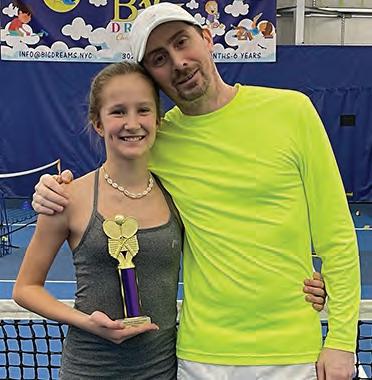
Two of his top students exemplify that approach to tennis, Thomas Walsh and Nika Matulska (pictured). Both of them
began at MatchPoint working with Bednarzh when they were four-years old, and it’s their stories that continue to inspire his desire to teach and help young people grow.
“We started from zero,” he recalls. “Thomas trained with me until he was fourteen — he reached the top 20 in the U.S. for his age group and won several L3 and L4 tournaments. Nika played in the U.S. Nationals under 12 and under 14, and she’s also in the top 20 now. I’m really proud of both of them.”
He pauses for a moment, his voice softening: “They’ve gone from their first steps on court to serious matches. For me, it’s not just about results — it’s proof that consistency and belief in a child truly pay off.”
player’s journey isn’t only benefitted by the coach-player relationship, but also having the support of a player’s family.
And Bednarzh understands that a
“Right after the coach, it’s the most important thing,” he says. “Both
emotionally and financially. Tennis isn’t cheap, but without parental support, it doesn’t work. Sometimes parents want their child to become a champion right away. I tell them, let the kid try. The key is to keep their interest alive. Encourage them, praise them, give them time.”
When on court, Bednarzh displays a tough exterior. But if you ask the players he works with and their families, he is a guiding light that helps young players grow, both on and off the court.
He’s a man of few words, and even fewer empty promises. His formula for success is clear: honesty, discipline, and love for what you do. On court, he’s strict, but behind that firmness lies a big heart. And when his students now step confidently onto the court as young athletes, he just smiles:
“That’s why I’m here,” he says quietly.





















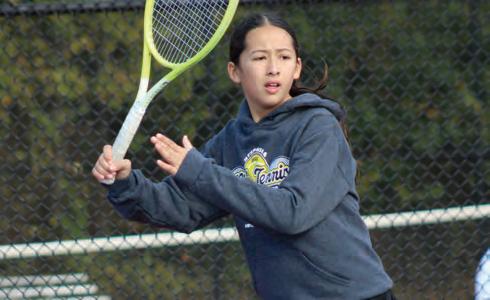
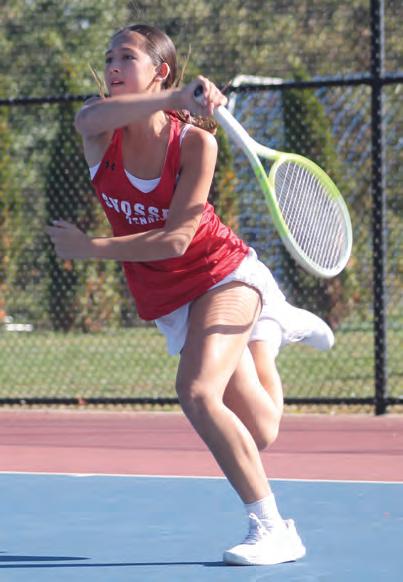
Lastseason, the Syosset girls’ tennis team put together the best season in program history, winning its third Long Island title in four seasons, and going one step further than it had in the past, capturing the New York State Public High School Athletic Association (NYSPHSAA) Team Championship.
A key factor in that success, and a major reason for the Braves getting over the hump, was the addition of Skyler Lin to the team. The eighthgrader joined an already formidable Syosset team, and she stepped right into a pivotal role in the lineup.
“It was very exciting to be part of winning a State Championship because I felt like we all contributed as a team and worked really hard to earn our success,” Lin recalls.
In the state championship against Horace Greeley, Lin defeated senior Sadie McFadzen in straight sets at second singles, a big win for the underclassman and her team.
By Brian Coleman
“When I walked onto the court to play in the finals, I was really nervous because during the Individual Championships, my partner and I lost to my opponent and her sister pretty badly, plus she was older than me and had a higher UTR,” Lin explains.
“Although I was very nervous, I wanted to put my best effort forward and try my hardest no matter what. I tried to keep my head up the whole match, and by the time my match was over there was a pretty large crowd around my court cheering after each point. I’m extremely grateful because they were truly a big part of my success, and our success.”
Syosset head coach Shai Fisher praised Lin for her composure, and her ability to consistently rise to the occasion.
“Not just today, but if you look at some of the biggest matches throughout the year, Skyler pulls through. The better competition, the better she plays,” he said. “She plays a great game and gets to every ball. There’s times where she just sacrifices her body and does splits on the court or runs into the curtains. But she’s a tremendous money player for us; when the pressure’s on, she plays even better.”
It was Lin’s first year competing in high school tennis, and while winning made the experience a fun one, it was more than that.
For a sport that is often hyperindividualized, and where some top junior players choose not to play high school tennis to instead prioritize more training and traveling, playing amongst a team can be an experience
unlike any other.
“I decided I wanted to play high school tennis because I believed that working as part of a team would be a great learning opportunity to teach me many important things,” Lin said. “I want to play college tennis one day, and I had hoped that I could learn what it’s like to be on a team.”
The Syosset team welcomed her with open arms, and she developed a camaraderie with her teammates early on.
“I enjoyed my first year a lot, mainly because I had a very supportive team who was there for me through every win and loss,” she added. “We all wanted to be helpful and supportive of each other, which made for such an enjoyable and uplifting environment to be in.”
Playing for her high school team did not negatively impact Lin’s tennis, in fact it helped it. As someone who has dreams of playing college tennis, learning how to play as part of a team is imperative, and she was still able to compete against high-level players.
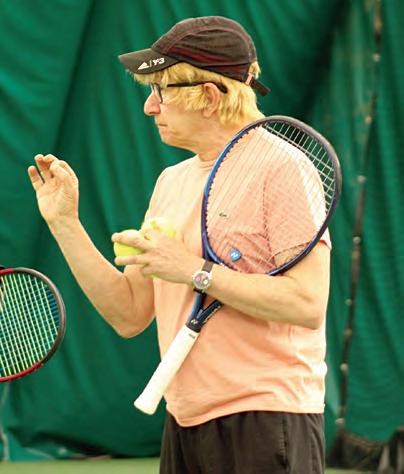
Lin trains with Steve Kaplan at the Bethpage Park Tennis Center, someone who has been a supporter of players competing for their high school team for decades. He runs a free workshop for high school tennis coaches on Long Island every year, and encourages his players to play for their teams.
“It saddens me that some private coaches discourage players from the high school tennis experience,” said Kaplan. “There was a time in my career that almost every top player participated, but not today with so many persuaded not to play with the thinking that, ‘I’m not going to play high school tennis because there isn’t enough competition.’ This idea has unfortunately
become a self-fulfilling prophecy.”
If more top players like Lin decide to play high school tennis, then the competition will improve. There still remains a high-level of tennis played at the high school level, and the pros of playing outweigh the cons.
“I think more top juniors should play high school tennis because it’s a different experience from junior tournaments. Those can be lonely, even with family, coaches and friends supporting you, and high school tennis is the chance to be a part of an organized team that practices and competes together, sharing successes and failures,” Lin said. “It teaches important lessons, and I think if more top junior athletes joined school tennis, the level would increase which would make it more competitive and challenging.”
Lin added:
“Learning to be a good teammate, and learning to be a part of something that represented my town, my school
and my team was an experience that I was grateful to be a part of, and I can not wait to do it again.”
The connection between the private tennis industry and high school tennis coaches is an extremely important one. It is something that Kaplan has spent his
career trying to embolden, which is why he runs a free annual High School Coaches Workshop. This year’s Workshop is scheduled for Sunday, April 19 at 5:00 p.m.
“High school tennis can work hand and hand with the private tennis community to grow and enhance the sport. The state of the industry is diminished by viewing participation as a zero sum game where school tennis thriving means that commercial tennis is diminished. This is unenlightened, short sighted and self serving,” Kaplan explained.
“High School tennis is an important part of bridging the gap between being a student and being an athlete. It's a school team experience that is vital for juniors aspiring to have a collegiate team experience . I started and continue to conduct my coaches workshop to show support and to help educate the many Long Island High School coaches who care passionately about improving the sport, their students and themselves.”
It’s that time of the year again, when we see the snow begin to melt (albeit slowly), and we start to thaw out from the winter cold. It means it’s time for another high school tennis season as the boys prepare to hit the courts this spring.
As we look ahead to the 2026 season, we examine some of the top players and teams to watch from both Nassau and Suffolk County.
*All players and dates are subject to change. Please visit LITennisMag.com for the latest information.
Lastseason, Friends Academy realized that the third time was the charm. After losing in the New York State Division 2 Championship in two consecutive seasons, the Quakers would not be denied in 2025.
Friends Academy won the program’s first State title, defeating Byram Hills 3-2.
“The seniors this year have been on the team for the two losses in the state championship, and so to have the support of past players, and the experience to finally win one was definitely a full circle moment,” junior Will Bohner said at the time. “It’s a big deal for the Friends Academy program and shows how consistent we have been.”
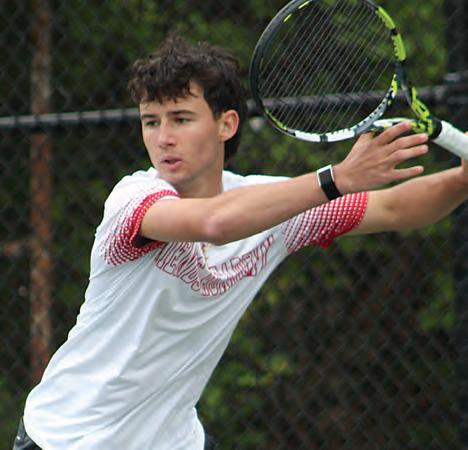
Now, as we prepare to begin another season of boys’ high school tennis on Long Island, Bohner is the senior on the team, and is excited for the opportunity to lead his team in its title defense.
“After winning States last season, we had a lot of people who have graduated, and changed roles on the
team that have given them a new challenge to rise to,” Bohner said. “I think by remaining as a tightly knit group with a common goal like we did last year, we will be able to make another big splash this season.”
On an individual level, Bohner is also excited for the opportunity to achieve more success in the county tournament, and the proceeding state tournament. In 2025, Bohner
finished in third place in singles at the Nassau County Individual Championships which qualified him for the New York State Individual Championships.
Bohner won his opening round match 6-0, 6-0, before falling to eventual champion Alexander Suhanitski of New Rochelle in the second round. It was a loss that motivates Bohner, and he is eager to see what he can do in the individual tournaments this spring.
However, his main priority remains representing his school in the right way, and bringing more titles home to Friends Academy.
“This being my senior season, I really want to leave my mark on high school tennis and the area I grew up in,” he explained. “Repeating as State Champions would be great, but maybe achieving some of those personal goals I never got, such as county champion and going on a deep run at States would be the perfect way to end my high school career.”
Syosset
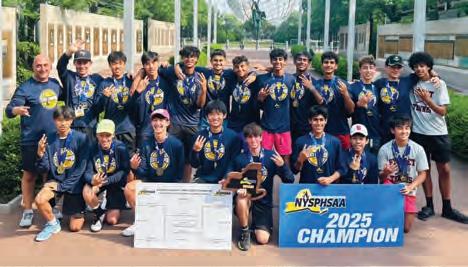
Thetitle of most dominant boys’ tennis program in New York belongs to Syosset. The Braves are the defending State Champions having won the last three New York State Public High School Athletic Association (NYSPHSAA) Division I championships, and will be out to make it four in a row this spring. Bolstering an already deep lineup will be the addition of senior Evan Lee, who didn’t compete in his sophomore and junior seasons, but will move into the top singles position to replace outgoing senior Devan Melandro. Nikhil Shah, Aayan Mehta and Grayson Prince will compete for those final two singles spots. Syosset’s strength will continue through the depth of its doubles teams which includes Loui Peredo, Leon Zhao, Anik Paul, Jacob Prince and more.
One team that could threaten Syosset’s stranglehold on the Nassau County title is the Jayhawks of Jericho. Featuring a potent singles lineup and experienced doubles players, Jericho is prepared to make noise this spring. Preston Wang, Nicholas Chin, Tiancheng Gong, Hiroto Honda and Michael Paik will lead the way for Jericho, and the lineup will be bolstered by Chase Rand, Charles Park, Armaan Dewal and Brian Kim.. Jericho has the top-end talent and corresponding depth to become a contender for the county title.
Academy
The Quakers enter 2026 as the
defending NYSPHSAA Division 2 Champions, and are eager to repeat. Seniors Will Bohner and Bryan Bin, two longtime varsity players, return for their final seasons with that goal in mind. The Quakers have made deep playoff runs the last three seasons and compete in Nassau’s Conference I, ensuring it will be battletested for the playoffs. Friends Academy also have Hudson Lee, Steven Seviroli, Blake Doan and Ryan Chang back to help round out a lineup that is capable of winning another state title.
Last season, Roslyn lost a heartbreaking Nassau County Large School final to
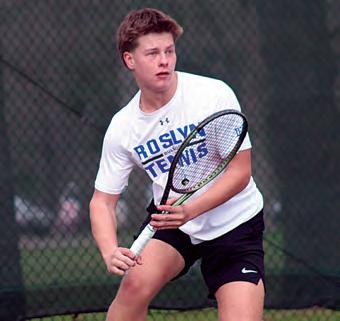
rival Syosset, and the Bulldogs will lean on that for motivation as it begins the 2026 campaign. Top singles player Ethan Solop has graduated, but Roslyn will make up for that loss with its immense depth, both at singles and doubles. Seniors Bartek Dziedziach and Brian Toh will lead the way atop a lineup that also features sophomore Aayan Merchant, juniors Ezra Benaharon, Darren Shen, and Tyler Sofer. In addition, Foti Fotinakopoulos, Jake Klein and Oliver Toh round out a lineup that has the goal of returning to the county championship and taking that next step.
The Vikings were semifinalists last season, and have its sights set on a trip to the county championship this year. Seniors Tyler Finkelstein, Bradley Grundfast and Ollie Navo will anchor a team rich in depth, and will use their varsity experience to lead a team with high expectations. Freshman Anthony Venters will play a vital role, as will juniors Jake Miller and Austin Lieberman, and sophomore Maximus Necakov. With talent throughout the lineup, the Vikings will be a threat to return to the county championship, a place it hasn’t been to since 2023.
• Christian Bravo, Garden City
• Ben Weise, Garden City
• Saje Menon, Wheatley
• Jason Chan, Manhasset
• Luke Lastique, Baldwin
• Liam Raykis, Lynbrook
• Aryan Gopal, Herricks
• Thursday, March 26: Regular Season Begins
• Saturday, May 9 - Sunday, May 10: Individual Championships
• Monday, May 11: Playoff Matches Begin
• Week of May 25: Division 1 & Division 2 Nassau County Championship
• Week of June 1: Division 1 & Division 2 Long Island Championship
• Friday, June 5- Sunday, June 7: NYSPHSAA Individual Championships
• Friday, June 12: NYSPHSAA Team Championships
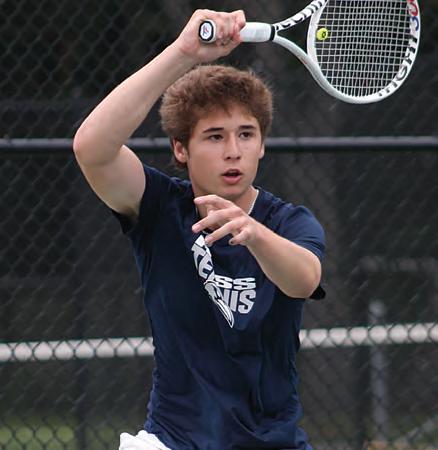
TheRavens of the Ross School have been close to reaching the NYSPHSAA Championships in recent seasons, falling just short in the Long Island Division 2 Championship twice in the last three years.
Because of that, the team is extremely motivated to return to that position. Leading the way will be Ignacio Pena Lopez, who played first singles a year ago, and will return to that spot in the lineup with his eyes set on a big season for his team.
“It was my first year on the team, so it felt really special to be part of something like that right away,” said Lopez. “Winning the Suffolk County championship was an amazing experience. Everyone was super happy and proud, because we worked really hard throughout the season. After we won, we all went out to dinner together to celebrate, and it was honestly one of the best moments of the year. It showed how close we were as a team, not just as players but as friends.”
can help create success on the court.
“We were really connected both on and off the court, and we always supported each other no matter what,” Lopez added. “Representing my school also meant a lot to me, and competing alongside my friends made every match way more exciting and meaningful.”
That is an important, but often overlooked, aspect of high school tennis. Throughout a season, a team develops camaraderie together, which
Lopez also found success at the individual level. He won the Suffolk County Division IV singles title, and would go on to finish in fourth place in the Sectional Individual Championships.
It was a great result for someone in their first year playing high school tennis, but as Lopez prepares for this season, he knows he can do more, both on an individual level, but also for his team.
“I want to stay more consistent during tough matches, and keep working on my focus under pressure,” he explains. “I also want to continue growing as a leader on the team, helping my teammates stay confident and connected. If I keep working hard and staying disciplined, I believe I can take the next step this year. Ross really emphasizes leadership and growth, and I want to reflect that both on the court and off the court in how I support my teammates every day.”
As we approach the new season, Lopez and his Ross teammates are determined to build off of the success of the 2025 season as it looks to reach the State Championships: “Our goal this season is to go even further and make it back to the Long Island Championship, and we all believe we can do it if we keep the same mindset and team energy.”

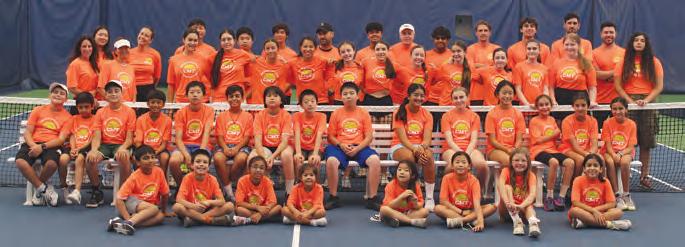

Christopher Morley Tennis offers year round Juniors and Adults tennis programs for all levels. Summer Camps, Holidays Mini-Camps and Tournaments, Fitness, Special events and more.
Ricardo Aguirre
raguirre@cmttennis.com
516-214-1921
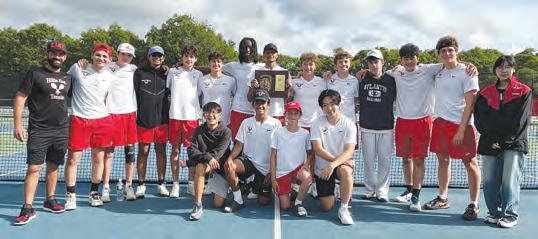
The Redhawks of Hills East are ready to defend its Suffolk County Large School title. A perennial contender, Hills East will be led by Tommy Walsh, a senior who last season reached the Round of 16 at the NYSPHSAA Championships in doubles alongside Sam Stein. While Stein has graduated, as has first singles player Lohit Modisetty, Walsh will lead a formidable lineup for the Redhawks. That includes Zachary Miller, Noah
Rabinowitz, Noah De Vera, Masood Khwaja, Max Greenfield and Luke Kerman. A team filled with championship experience, Hills East has its sights set on returning to the Long Island Championship and playing for a spot at States.
A year ago, Harborfields reached the semifinals of the Suffolk County Large School tournament. In 2026 they return many of their players. Leading the way will be Brody Surbeck who played first singles a year ago, and will anchor the lineup for the Tornadoes. Behind Surbeck
sits teammates Justin Lee, Boden Rudloff, Caiden Veitch, Caleb Cole Vegna, Joey Serventi and Gennaro Brickman. Harborfields looks to build on their strong 2025 season and take the next step this season.
Bayport-Blue Point was within one court of winning the Suffolk County Small School title and competing for a Long Island championship in 2025, and with a senior-led team returning, they are a motivated squad this season. At the top of the lineup will be Luke Jensen. Additionally the Phantoms have seniors Aidan Apicella, Joseph Damico, Nick Byman and Dominic Linzie to bolster the lineup. Declan Schug, Jefferson Swan, and Anthony Latino also return to give the lineup great depth. With an experienced team, Bayport-Blue Point
aims to avenge last year's county title loss and get to States.
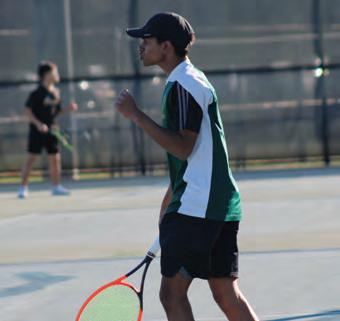
A year after reaching the semifinals of the Suffolk County Large School tournament, Ward Melville will be a contender again in 2026. Replacing former New York State Doubles Champion Shashank Pennabadi will not be easy, but the Patriots have a deep team to make up for that loss. Leading the way will be junior Aidan Thomas, who played second singles a year ago, and should be one of the top players in all of Suffolk County this season. Senior Josh Poppers will play a vital role
in bolstering the singles lineup, as will sophomore Leo Schoolman. The doubles lineup will include Eric Zhou, Tony Xu, Kevin Dong, Arnav Aggarwal and Jackson Proothi who along with others will form a team capable of competing with anyone in the county.
The defending Suffolk County Small School Champions are hoping to return to the Long Island Championship, and for the chance to advance to the NYSPHSAA Championships for the first time in program history. Ignacio Pena Lopez, who finished fourth in the Suffolk Individual Championships a year ago, will anchor the lineup that also features senior Jagger Cohen, an experienced varsity player. Peter Hackett, Walker Bohnsack and Robert Winter will play a big role in providing key lineup depth as the Ravens aim to return to the Long Island Championship, and advance at least one step further than it did last spring.

• Leonardo Villacreses, Sachem
• Ray Hidaka, Shoreham-Wading River
• Kai Hidaka, Shoreham-Wading River
• Alan Yu, Half Hollow Hills West
• Ishaanth Guduru, Smithtown West
• Austin Nam, Port Jefferson
• Vidal Macchia, William Floyd
• Monday, March 23: Regular Season Begins
• Monday, May 11: Playoff Matches Begin
• Saturday, May 9 - Tuesday, May 12: Sectional Individual Championships
• Friday, May 22: Division 2 Suffolk County Championship
• Wednesday, May 27: Division 1 Suffolk County Championship
• Week of June 1: Division 1 & Division 2 Long Island Championship
• Friday, June 5- Sunday, June 7: NYSPHSAA Individual Championships
• Friday, June 12: NYSPHSAA Team Championships



The new season of PSAL boys’ tennis is nearly upon us, and the top tennis talent from across New York City will be hitting the courts soon.
New York Tennis Magazine takes a look at some of the top teams and players to watch for this upcoming season.
*All players and dates are subject to change. Visit NYTennisMag.com for the latest information.
Thamke & Leif Emery are back to bolster a titleminded group.
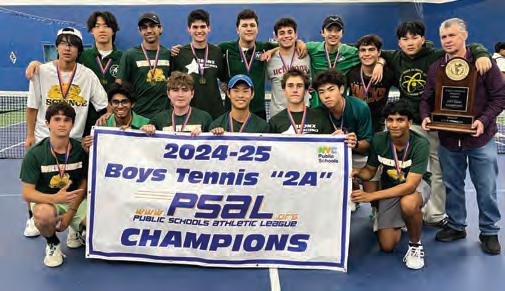
Bronx Science will be in search of a three-peat this spring as the Wolverines have captured each of the last two PSAL 2A Championships. Kevin Diao stepped into the first singles position as a sophomore last season, and will be leaned on to lead the way again this season. Ishaan Bhagat, who played second singles a year ago, is back, and both of them have significant championship experience that will guide their team. While third singles player Sungjin Yun has graduated, as did the first doubles tandem of Henry Bardey & Kenya Takuka, depth pieces such as Shaunak
The Engineers of Brooklyn Tech’s only defeat last season came in the semifinals a year ago, a heartbreaking 3-2 defeat to Stuyvesant. With that, however, Brooklyn Tech has high expectations for itself this season, and has the roster to go further this time around. It has graduated its top two singles players from a year ago, but will lean on senior Oliver Foronda to take the reins atop the singles lineup. Samuel Ginsburg & Lukasz Rossochacki, who won the PSAL Individual Doubles title in 2025, are back for their senior season and will be relied upon to deliver big wins.
Francis Lewis is one of the rare teams entering this spring that will return its
entire starting lineup from a season ago. The Patriots finished in second place in the Queens 1A division and earned them the ninth-seed, but a firstround exit left the team with a sour taste in its mouth. But that sets them up for a big spring in 2026. Alex Pierides led the way at first singles a year ago as a sophomore, and his running mates in the singles lineup, Nathan Yuen at second singles and Jared Wolfson at third singles, respectively, will create a formidable trio. Both doubles teams, the first doubles tandem of Jia Hao Mai & Jayden Liu, as well as the second doubles duo of Jayden Jimenez & Francis Shimunov, are both back. The Patriots are set to be one of the top teams in Queens, and aim for a deep playoff run.
As the fifth-seed a year ago, Cardozo came within one court of reaching the city finals, and with the majority of that starting lineup returning this spring, it has its sights set on making another deep playoff run. Vincent Chang, last season’s Individual Singles Champion, will return for his senior season and try
to lead his team to the championship match, and will be helped out by junior Aaron Tokarz, who played second singles a year ago. All four of its doubles starters, Kemoy Brooks, Ethaniel Li, Ryon Rampersaud and Jia Shui Xiong, are back, creating a deep lineup capable of competing with anyone in the city.
One of the youngest teams in the city last season, James Madison will be a team to reckon with this spring. They earned the sixth-seed in the 2A playoffs in 2025, but were upset in the opening round, something that will try to avoid this year with more experience under its belt. Juniors Eli Jakubowitz and Erick Tanskiy, who played first and second singles, respectively, last year, will lead the way and sophomore Edward Katsev,

create a strong singles lineup that will keep Madison in all of its matches. It graduated three of its four doubles starters, but if the Knights can get solid play out of its newcomers in doubles, the team will be a contender as we move later into the spring.
The team that upset James Madison last season? The Beacon Blue Demons. Once the most dominant program in all of New York City, Beacon aims to reclaim its place among the sport’s elite, and after a surprise run to the quarterfinals as the 11th seed last year, are poised to continue that ascent. At first singles, junior Kento Smith will lead the way, and while Sandro Buskhrikidze, who played second singles, has graduated, Calogero
Brice will look to step into a bigger singles role in his sophomore campaign. With Lucian Barnett, Daniel Hsu, Aiken Arleigh, Connor Stevens and more creating a load of doubles depth, the Blue Demons are aiming to go even deeper in this year’s playoffs.
• Johnson Chen, High School of Environmental Studies
• Steven Feldblyum, New Dorp
• Dennis Jeffrey II, Townsend Harris
• Gabriel Kalnitsky, New Dorp
• Nicholas Loci, Staten Island Tech
• Brandon Richman, Forest Hills


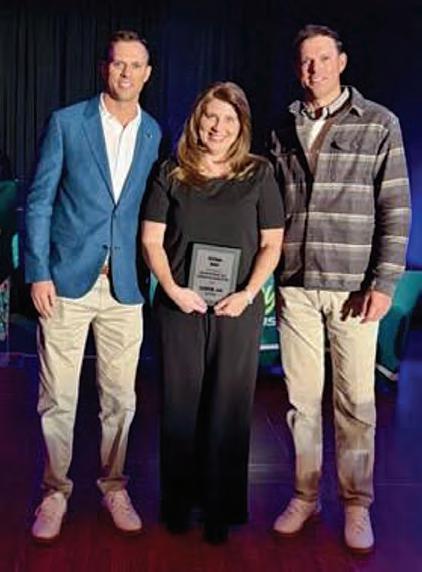
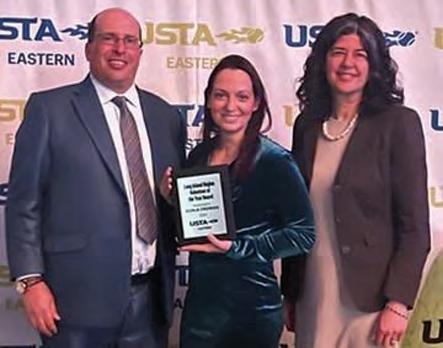
Froman (center) is
with Ari Roberts, president, USTA Eastern, and Amber Marino, USTA Eastern Executive Director & CEO
Eastern held its annual Eastern Tennis Conference and Awards program in January in Westchester. Long Island was thrilled to celebrate several of our own who were recognized for their achievements:
• 10 and Under Award: Advantage All Tennis Foundation
• Family of the Year Award: Perez Family
• Junior Team Tennis Award: Samantha Siegel (SPORTIME Syosset)
• Louise Cilla Award: Dorothy Wiggins
• Long Island Regional Volunteer of the Year: Dunja Froman
Tito, Pilar, Manuel, Sofia and Valentina—were named USTA Eastern’s Tennis Family of the Year for serving as passionate champions of the sport in their corner of the world. Tito is the general manager and director of tennis at Long Island Health and Racquet in Setauket. He and Pilar are long-time Long Island tennis volunteers, while all three children are competitive players who have competed in USTA junior tournaments and Junior Team Tennis (JTT).
Manuel, the eldest, plays for the men’s tennis team at Bentley University in Waltham, Mass. In addition to tennis competition, Manual has begun following in the footsteps of his father, channeling that intensity and his own knowledge of training into a budding instructional career.
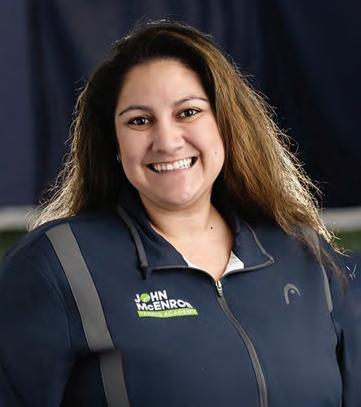
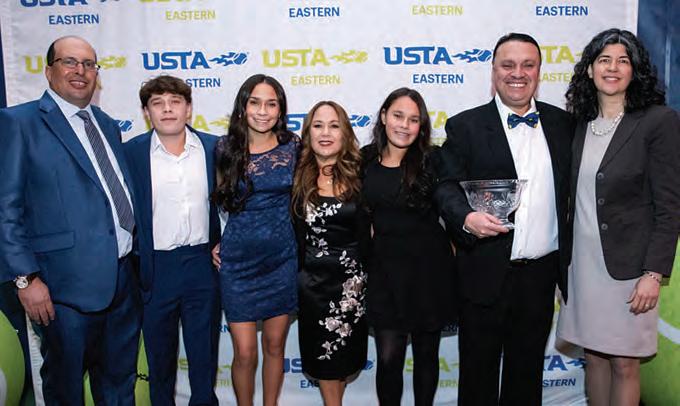
Middle child Sofia, who received a USTA Eastern Junior Sportsmanship Award in 2018, has been competing for years and is currently on her high school team. This past season, she came in sixth at the state championships.
Valentina is in the seventh grade and already on the varsity tennis team with her sister. She competed at the Suffolk County tournament this past season.
Tito grew up playing tennis in Bolivia, where he opened an academy at age 19. Over time the academy gained much renown, with many of the players who trained there going on to compete on the international circuit. Still, it was hard to make money as an academy owner in Bolivia, and after they married, Pilar pushed Tito to look for work in the United States. In 2007, Tito attended a PTR conference in South Carolina and within two weeks of landing in the U.S. received a job offer from what was
then called World Gym Setauket on Long Island. He accepted the position and has served as a staff member at the facility ever since.
Over the years Tito has been heavily involved with USTA Eastern programs and initiatives, even serving on the organization’s board of directors for two terms. He is particularly passionate about coaching juniors and has fielded JTT squads that advanced to the sectional tournament every year—and the national event twice.
Recently, the Perez-Lopez family created and organized USTA Eastern’s inaugural Hispanic Heritage Month Tennis Festival, which was held this past October at the USTA Billie Jean King National Tennis Center.
Additional photos from the USTA Eastern Conference and Awards evening can be found on Facebook at Play Tennis Long Island.
Mike Pavlides, Regional Director
Jonathan Klee, Past Regional Director
Sunny Fishkind
Tito Perez
Jason Wass
Randi Wilkins
Neil Thakur, Manager, Schools Tennis and Long Island CTC (thakur@eastern.usta.com)
Milly Keighery, Adult League Coordinator Long Island Region (Keighery@eastern.usta.com)
By Brian Coleman
WhenNew York Junior Tennis & Learning (NYJTL) was founded more than 50 years ago, the brainchild of Arthur Ashe and Skip Hartman, two pillars of the New York City tennis community, the goal was simple: develop the character of young people through tennis and education for a lifetime of success on and off the court.
Since its inception in 1971, NYJTL has been doing just that, using the sport of tennis as a vehicle for positive change in the lives of countless children across New York City. Many of these kids would have otherwise not been introduced to tennis.
“We reach communities that don’t have access to tennis, and that includes communities that don’t have any tennis courts. So for example, we are putting courts into schools where they have room in their gyms, cafeterias and schoolyards,” said NYJTL CEO Udai Tambar. “And that includes parks as well. Step one is to introduce tennis to these kids, and that’s the hook. If you can get people in, you can then engage with them through tennis. Once you have that, you can start doing other things.”
NYJTL has a full reach across the
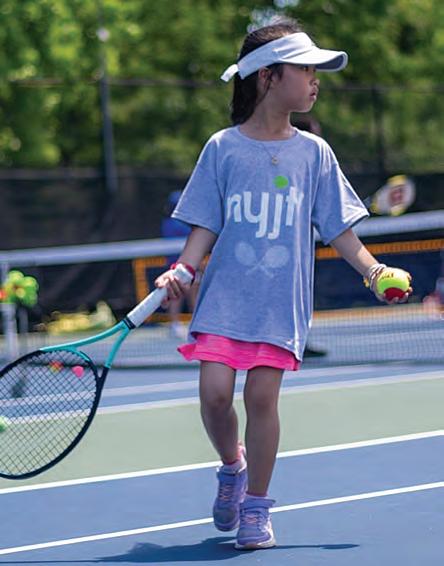
five boroughs of New York City, and is the largest youth tennis and education nonprofit in the country, serving nearly 90,000 kids annually. This comes at no cost to participants, and includes an array of programming that goes far beyond just teaching tennis. Some of the options incorporated are schoolbased afterschool programs, free grassroots tennis in parks, schoolyards and partner sites, training programs
for physical education teachers, and high-performance tennis programs at NYJTL’s Cary Leeds Center for Tennis & Learning.
The ethos of the entire organization is that tennis and education are catalysts for longterm achievement, and that is what continues to keep the staff there motivated.
“Tennis has opened so many doors for me, and it’s really come full circle for me to be able to be at an organization like NYJTL, and be able to help the next generation of players, and expose them to all the things that tennis has done for me,” Ahsha Rolle, who currently serves as the Executive Director of Tennis at NYJTL’s Cary Leeds Center for Tennis & Learning. “It’s been great. In addition to the coaching I do on court, I also train the coaches organization-wide, and being able to train hundreds of different coaches has been extremely rewarding.”
Located in the South Bronx, specifically Crotona Park, NYJTL’s Cary Leeds Center for Tennis & Learning (CLC) is the flagship home of the NYJTL. It opened more than a decade ago in 2015, and offers both commercial and free community
programs for juniors and adults, and serves as a multi-community hub. It is located in one of the nation’s poorest congressional districts, and in a borough that has the lowest graduation rate in New York City, but it is home for so many of the young people that walk through its doors.
“We have a really positive mission of empowering children through tennis and education, and knowing that every day you’ve got kids in the community who have this beacon in their neighborhood to be able to play tennis and basically have this opportunity to be exposed to this great sport,” said NYJTL’s CLC General Manager Steve O’Keefe. “Tennis is a unique sport in that you only need one other person, or even a wall, to get started. So to expose kids to a sport that they can play their entire life teaches so many life skills, and also helps them meet people they would never have met in their life without tennis.”
Jeremy Victoria is one of the many success stories to come out of NYJTL and specifically NYJTL’s Cary Leeds Center. A native of the Bronx, Victoria began playing in their ACES Afterschool Program, which offers a comprehensive, free educational experience to students including
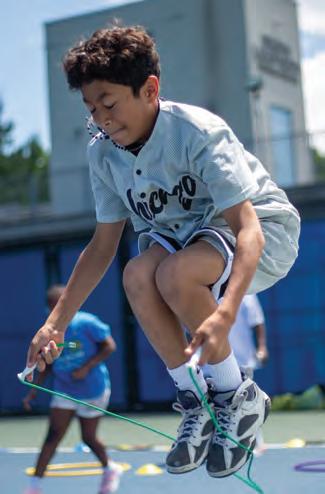
providing STEM instruction, literacy activities, tennis training, tutoring, wellness, nutrition and socialemotional learning.
As he got older, he was selected to join its Scholar Athlete Program which provides its participants with in-depth tennis and education instruction as well as college preparedness and will create the pathway to college that we believe can change the life trajectory for many NYC youth.
“It’s always been a home for me.,”

said Victoria, who now plays at Fordham University. “I’ve never taken it for granted. Sometimes I would go there just to study, or if I didn’t want to go home to my house. It’s a second resort and for a lot of people it’s a first resort. If you wanted to chill out after school, you could. We’ve been so fortunate to have this right here in the Bronx, because Crotona Park was known for a lot of gang activity and didn’t have a great reputation. I think about all the things that have happened in my life, and a lot of bad situations or mishaps that have happened, and what could have been had it not been for the Cary Leeds Center.”
NYJTL’s Cary Leeds Center for Tennis & Learning is the home of highperformance tennis for the larger NYJTL umbrella. Last year, it was named an official USTA Coaching Education Center as part of USTA’s strategy to increase the number of Americans playing tennis to 35 million by 2035, positioning CLC as a national center for coaching excellence and player development. And while the highperformance nature of tennis is important, and CLC continues to provide top-end coaching and produce top-end talent, it’s just one of the many offerings
continued on page 30

of NYJTL. The Cary Leeds Center was named as a coaching hub by the USTA in 2025, but NYJTL was also designated as one of 10 Community Impact Hubs nationwide, and the only CIH in the Northeast, and awarded $450,000 by the USTA Foundation to support its efforts to reach nearly 300,000 new young people and families by the end of 2027.
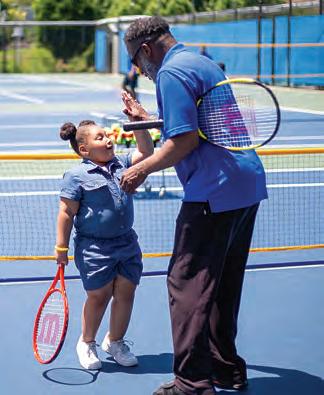
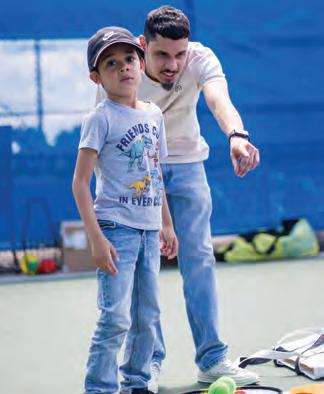
“Through this initiative, NYJTL will bring its programming to new schools and expand offerings at existing school sites throughout the city. It will also provide professional development training to more New York City public school physical education teachers, enabling them to teach the sport during their classes,” said Tambar. “Family engagement will be a key focus with regular events at afterschool programs and grassroots tennis sites so that parents, siblings and guardians can get on the court together. To ensure we have the
people to deliver these programs, we will train dozens of new coaches–including afterschool staff and grassroots program instructors–in a ‘mentorship first’ approach that supports youth development in the coming months.”
For the last 50 years, NYJTL has been at the forefront of providing invaluable community resources throughout the city, with tennis being the nucleus of all of that work. From beginner tennis through highperformance training, there is hardly any aspect of the tennis industry that the organization is not involved with, and it uses tennis to bridge the gaps



that often exist in communities.
Examples of this are plenty, and include the Department of Youth and Community Development (DYCD) Saturday Night Lights program, where middle-school and high-school aged youth from the Bronx come to CLC to play tennis, eat pizza and bond with NYPD officers. CLC also offers free tennis programming for the children of those who live in Samaritan Daytop Village, two transitional living facilities for families in the Bronx, which helps ease the pain felt by these families, even for just an hour on the tennis court.
It’s been a half-century of community involvement and community engagement for NYJTL, and as the Cary Leeds Center’s reach continues to expand, and more and more kids are able to grow through the sport of tennis, it remains a shining example of the power that tennis can have to lift up and create thriving communities.
By Brian Coleman
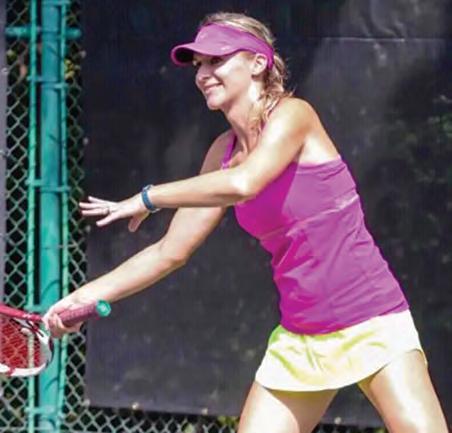
At last year’s USTA Eastern Long Island Region Awards Dinner, Anna Bielen-Zarska was honored with one of the organization’s top awards: Junior Tennis Professional of the Year. It was a proper recognition for someone who has dedicated her life to the sport, and helping young people reach their potential.
“I put in a lot of work, and I always try to do my best. It touches my heart to know that people see it, and recognize it,” she said. “Receiving that award was incredibly special. My players know that I teach lessons as early as 5:30 a.m. on some days, and stay late on other days. I always try to be the first one in, and the last one out.”
Bielen-Zarska is one of the top teaching professionals at Robbie Wagner’s Tournament Training Center, and she carries that mentality with her to every lesson she gives on court, and has been doing so since she joined the facility’s team two decades ago.
Poland, but loved being in the United States, and decided to give teaching tennis here a shot.
The best offer she received was from Robbie Wagner’s, and as she says:
“The rest is history.”
About 20 years ago, while visiting family in New York, she began receiving offers from multiple tennis clubs to coach here. BielenZarska was already an accomplished player and coach in
Bielen-Zarska’s tennis journey is a unique one. Growing up in the small Polish town of KedzierzynKozle, tennis was not a sport commonly played. Her father was an ice hockey player, and BielenZarska’s first foray into sports was figure skating.
However, her father learned how to play tennis and became a pioneer for the sport in their town, and put a racquet in his daughter’s
hands when she was sevenyears-old.
“He and his friends built the first tennis club there, and I remember winning the first local tournament when I was eight,” she recalls. “I beat a lot of older boys, and that was a really special moment for me. It was then I knew I loved tennis, and realized I could be good.”
Bielen-Zarska would go on to be the top-ranked junior player in Poland throughout her teenage years before turning pro. As a professional player, she climbed as high as 146th in singles and 176th in doubles on the WTA Tour, playing in all four majors and representing Poland in Fed Cup play on three occasions.
“My most memorable achievement was winning two pro titles back-toback in Poland,” she recalls. “It is always special to win big events in your home country.”
After a successful playing career, Bielen-Zarska knew she wanted to remain in the sport of tennis. She graduated with a masters degree from a top business school in Poland, but the tennis court continued to call her. Despite having other career pursuits, working with tennis players was where she wanted to be.
“I enjoy training competitive players. I feel that I have a lot to share and a lot to teach,” she explains. “I like traveling to tournaments and watching matches, but mostly I just enjoy being on the court and doing the ground work. No matter the time, no matter the day. Many people call tennis coaching a lifestyle and it certainly is. Tennis is my calling, and as challenging as it is, I enjoy every minute of it.”
And what has made that even more enjoyable is watching her son, Sebastian, grow into one of the top junior tennis players in the country. He has a UTR north of 12, has won three Gold Balls at USTA National Championships, and is set to join the Clemson Tigers when he begins his college career in the Fall of 2027.
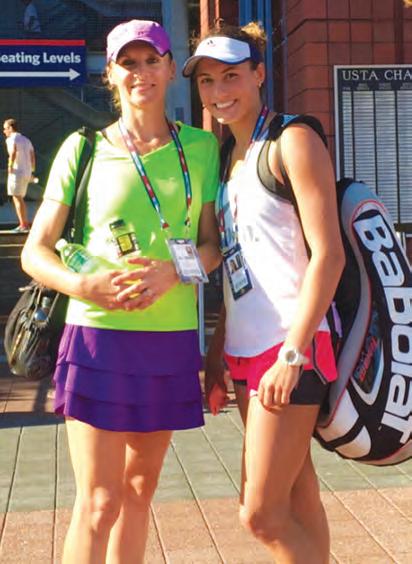
Despite tennis being her love, Bielen-Zarska made sure to put Sebastian into multiple sports when he was young so that it would be up to him if he wanted to continue playing tennis.
“My son started playing very early, pretty much as soon as he could walk,” she recalls. “I also introduced him to many other
sports, like soccer, basketball, badminton, pickleball, track & field and fencing. Among all of those, he decided tennis was his thing, and that’s what he loves the most. Tennis is an extremely difficult and demanding sport, but it teaches crucial life skills like discipline, resilience, perseverance and mental toughness. It has been an incredible journey to coach, and watch my
own son grow as a person and a tennis player. I am beyond proud of all of his accomplishments and hard work, and I truly believe the best is yet to come.”
For the last 20 years, BielenZarska has been helping mold a generation of top tennis players, which includes her son Sebastian, but also countless others. She is a USTA High Performance Coach and a Specialist in Competitive Player Development who also serves as the Chair on the USTA Junior Competition Committee. With all of those accolades and titles, witnessing the growth of the players she works with on court is still what keeps her motivated. Bielen-Zarska can be found on the courts of the Robbie Wagner’s Tournament Training Center, helping guide young players on their tennis journeys.
“We currently train several top ranked juniors nationally and internationally,” she said. “I think it is very motivating for the aspiring competitors to see other players from here do well, and we will continue to provide the best coaching and guidance that we can to all of our players.”




By Dejan Vukojicic

changes more than the temperature. It changes how your body performs.
When the weather drops, your muscles tighten faster. Your joints feel stiffer. Reaction time can slow slightly. Warm-up takes longer. Even your mood and energy shift because daylight decreases.
If you ignore these changes, you feel flat in practice: Heavy legs; slow first step; tight shoulders; lower focus. But if you understand what’s happening inside your body, winter becomes manageable instead of frustrating.
Even if you train indoors, your body is influenced by cold conditions.
1. Muscles contract more quickly
Cold reduces muscle elasticity. That means a higher risk of tight hamstrings, calves, lower back, and shoulder stiffness. As a result, explosive movements feel slower at the beginning of practice.
2. Slower nerve activation
Your nervous system needs more time to fully “wake up.” That’s why your first few sprints or reaction drills may feel delayed.
3. Reduced hydration awareness
In cold weather, you don’t feel as thirsty. But you are still losing fluids during intense sessions. Dehydration affects concentration and recovery.
4. Energy fluctuations
Shorter daylight hours can influence mood and energy levels. Less sunlight impacts sleep cycles and mental sharpness. But don’t worry, none of this means you are out of shape. It just means you need to prepare differently. So what are the steps you can take to beat off the winter tennis blues and still train effectively?
Warm-Up Is No Longer Optional
In winter, your warm-up becomes performance insurance. You should start with eight to 10 minutes of dynamic movement before you hit a single ball. Use games that warm up your body and your reactions, such as mirror tag, line tag, and cone escape. Don’t forget to use resistance tools like

At Gotham Tennis Academy, we're passionate about teaching tennis. From beginners to rising stars, Gotham's PTR certified pros are experienced in teaching the fundamentals while stressing sportsmanship, hard work, and fun. With our prime location at Stadium Tennis Center - NYC's newest and largest indoor/outdoor tennis center, we're only a short trip away from you. It's more convenient than ever to get your kids into the game. To enroll now and learn more, please visit www.stadiumtennisnyc.com or call 718-665-4684
shoulder bands.
Your goal is simple: break a light sweat before tennis starts.
If you begin hitting while your body is still cold, you increase injury risk and reduce the quality of your movement.
Think of your body like an engine. In summer, it turns on quickly. In winter, it needs time to reach operating temperature.
Layer Smart, Not Heavy
Many players overdress and feel restricted. Wear layers you can remove gradually. Start slightly warm. Once your body heats up, then you can adjust. Staying too cold increases stiffness but overheating drains energy. Help your body find a balance.
Fuel and Hydrate Like Its Summer
Hydration does not become less important because you see less sweat. Drink water before practice.
Sip during breaks. Rehydrate after. Nutrition should focus on stable energy:
• Protein for muscle repair
• Complex carbs for training fuel
• Healthy fats for sustained energy
Avoid heavy meals right before training. Cold weather already makes your body feel slower. Don’t add digestive stress.
Sleep becomes even more important when daylight drops. Aim for consistent bedtime. Limit screens late at night. Stretch lightly after sessions. Use light mobility work on off days to keep your body elastic. If you feel tight in trapezius, hips, or calves, don’t ignore it. Address it early.

Winter tightness accumulates quietly.
The Advantage Is Earned
Here is the truth most players miss: Everyone feels slower in winter. Everyone feels tighter at the start of practice. Everyone fights lower energy some days.
The player who understands their body and prepares properly gains an edge.
When spring arrives, you will not need three weeks to “feel ready.” You will already be ready.
Cold weather does not make you weaker. Poor preparation does. Respect the season. Adjust intelligently. Train deliberately. And let winter sharpen you instead of slowing you down.
Dejan Vukojicic, a Senior Associate Director at SPORTIME RI & JMTA, holds a bachelor’s degree in sport and coaching from the College of Sport, Nikola Tesla, Belgrade. He served as the Serbian Tennis Federation’s National Tennis Coach for U12 and Director of its Tennis Junior program. He has also served on the Serbian Tennis Federation’s Coaching Board and Development Committee before joining the SPORTIME/JMTA team in 2022

Eastern held its annual awards dinner on January 30 at the Saw Mill Club in Mount Kisco, N.Y.—and several members and facilities within the NYC tennis community were given top honors for their longstanding service to the sport. Longtime coach and former Eastern junior Simone Spigner—who serves as the
program director at the Harlem Junior Tennis & Education Program—was named Eastern’s Tennis Woman of the Year, while the Queens-based Cunningham Tennis facility was named the section’s Organization of the Year. Below, read more about why they were selected for their respective awards.
Junior Tennis & Education Program (HJTEP) Director Simone Spigner has been named USTA Eastern’s 2025 Tennis Woman of the Year for her passionate advocacy of the game, commitment to her community and nearly 20 years of service introducing the sport to juniors across New York City.
Spigner, who grew up in the Kensington neighborhood of Brooklyn, hails from a family of tennis enthusiasts. Indeed, Spigner can’t remember a time in her childhood when she wasn’t hanging out on a tennis court somewhere in the city.
“My father used to drive around with a net in his trunk,” Spigner recalls now with a laugh. “And if there were poles, he would put the net up and we would just practice anywhere. He could find courts in places where you never even knew they existed!”
Of course, given the fact that the sport was very much a parental pastime, Spigner herself didn’t necessarily enjoy picking up a racquet at all those makeshift venues. It wasn’t until she was around 11 years old and joined the Youth & Tennis group—a junior program based out of Liberty Park in Queens—that she realized how much she did, in fact, love to play.
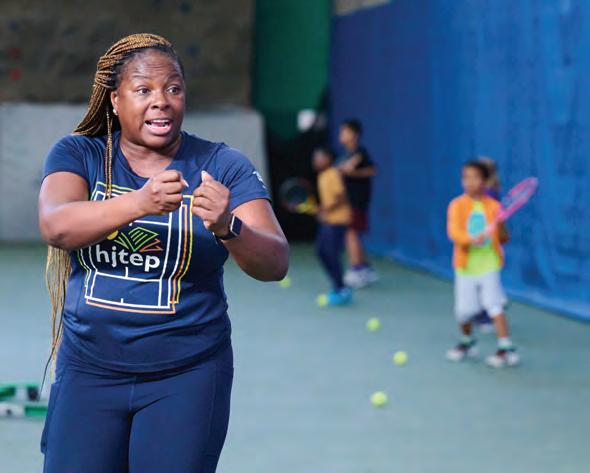
“I just really want to make a positive impact on every child I work with,” Spigner says
South Carolina State University, a culmination of years of commitment and focus—and familial support.
“I would be in that park from sun up to sundown,” she says. “It was there that I met some of my best friends. Being around them, joking with them…that’s when I really started loving tennis.”
In this environment, and under the tutelage of coach Bill Briggs, Spigner began to excel. She saw other junior players in close proximity obtain college scholarships, and she set that goal for herself, committing to practicing and playing as much as she could. She competed in USTA Eastern junior tournaments and went on to become a dominant force on the Lafayette High School girls tennis team, winning nearly every time she stepped onto a court. Her exemplary form ultimately earned her a scholarship to
After four standout years at South Carolina State, Spigner worked for a period for the New York City Board of Education. Still, she wanted to give back to the sport that had granted her so many gifts. She began coaching parttime for the New York Junior Tennis & Learning (NYJTL), a community-focused tennis program. A new mom, Spigner liked the flexibility coaching offered for her family and eventually accepted a fulltime position with the organization. A few years later she migrated over to HJTEP after the then-newly installed Executive Director (and future USTA President) Katrina Adams saw Spigner hitting on the courts at HJTEP’s location and inquired whether she might be interested in joining their staff. It was a homecoming of sorts for Spigner, who spent time refining her game in the
HJTEP program during her junior days.
“We would come from Brooklyn right after school and run laps upstairs,” Spigner recalls. “My parents used to play at the armory [on 143rd Street where the program was based]. I knew every nook and cranny of that building, even the places we weren't supposed to go!”

Back in that building as an adult, Spigner flourished. Owing to both her own past as a New York City junior, and the fact that she had two young children of her own at home, Spigner found herself uniquely qualified in both relating to her young students and getting them to find their best form.
“I want them to enjoy it,” she says of her instructional philosophy, which echoes what ultimately helped her progress in the sport as a young player. “I always tell them, ‘Tennis is a game. Have fun.’”
As Spigner has ascended to the role of program director at HJTEP—where she now oversees programming for the 165 kids enrolled in their classes—she has championed
collaboration with USTA Eastern, including organizing Junior Team Tennis for her students.
And her tennis-loving family continues to stand alongside her, figuratively—but also literally. Her brother Brian now coaches for HJTEP, while her mother and father serve as volunteers. Both of her children, Shayna and Donovan, developed their own games through the organization and—just like their mom—received college scholarships; Shayna played for Morgan State University, and Donovan is currently competing for Rome City Institute in Italy. Her nephews and niece are currently participants in the program, extending a Spigner legacy in the sport that began on local NYC courts all those years ago.
“We owe a lot to tennis, and to HJTEP,” Simone says. “My kids have gotten to go all over the world playing tennis. And to this day [staff from HJTEP] check in on them. Whenever they walk into the armory, they’re treated like superstars! So this is home. And it’s a great place to be.”
If you’re looking for an example of how tennis can bring people together, you need look no further than all the smiling faces in attendance at the AsianAmerican Native Hawaiian Pacific Islander (AANHPI) Tennis Festival that Cunningham Tennis hosts each May, in collaboration with USTA Eastern. The annual event can attract over 1,000 participants to the facility nestled inside Cunningham Park, in Fresh Meadows, Queens. Those who attend get to try a little tennis while enjoying Asian food, music
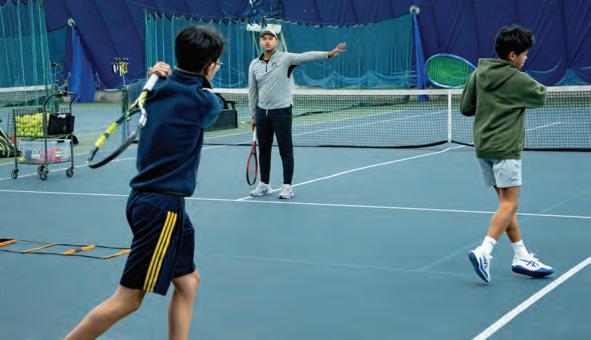
and culture—including dance performances and Shaolin kung fu demonstrations that briefly convert the tennis courts at Cunningham into a live theater experience.
Cunningham’s Director of Tennis Bill Racho enthusiastically champions the festival for several reasons. For one, a huge Asian population resides in Fresh Meadows; some census estimates suggest the group makes up about 50 percent of the neighborhood’s residents.
But the event also holds personal significance for Racho. It
harkens his earliest recollections of the facility he now coowns with former teaching pro Steve Newby.
“One of my first memories coming to Cunningham just as a young tennis player was that there was this very vibrant Filipino community that would play and kind of monopolize the courts all day long,” he recalls.
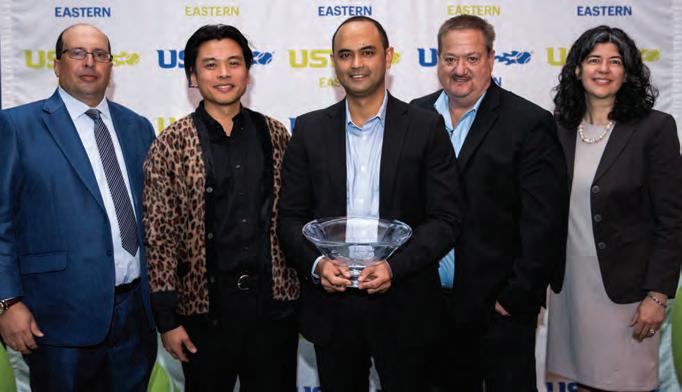
“They would be there in the morning until evening, and they’d even have dinner next to the court. To be honest, those days have faded because a lot of them have gotten older and moved to other areas. But hosting the AANHPI event brings back that culture, that connectivity of young and old centered around tennis that I experienced when I first came here. We're sharing food, we’re sharing our culture and we're sharing our love of the game.”
Sharing a love of the game—building a tennis community—is wholly embedded into the Cunningham ethos, beyond just the festival. Given their backgrounds as instructors, Racho and Newby aren’t so much fixated on day-to-day participation numbers as they are on building relationships with every single person who passes through their doors.
“We look at Cunningham as a community center first versus a tennis center,” Racho explains. “Steve and I are there everyday, and we’re very involved in a lot of our clients' lives. We've seen some of them grow up here. We know them by their first names, we know their kids. We meet and greet them. So it’s a real family atmosphere, and I think people gravitate towards that.”
They definitely do, if the numbers are any indication. Cunningham serves around 1,000 members; nearly 800 of those are enrolled in the 10-and-under, junior and adult programs the facility offers throughout the year. Racho notes the average time a junior will spend at Cunningham is eight years, often first setting foot on Cunningham courts when they are under 10 years old and continuing on through high school. Some will stay even longer; around 25% of the current staff— coaches, front desk attendees etc.—got their start as participants in Cunningham classes.
“That’s the proudest I feel, when we’ve been a part of someone’s life and they want to come back and work for us,”
Racho says. “That fullcircle moment, [the fact that] they want to give back and share what they've learned with the next wave of kids, that’s always been nice.”
Those full-circle moments are a testament to the personalized, nurturing style of coaching at Cunningham—one that has been refined by the organization’s passionate, and compassionate, leaders. Newby, a retired math teacher, amassed over 30 years of experience teaching the sport locally, while Racho came to Cunningham as a young coach and paid out of his own pocket to get a 10-and-under program off the ground on their premises. (That program, incidentally, started with four kids; today it numbers over 200, the largest of its kind in the area.)
Racho and Newby have never forgotten those origins. Today, every decision they make at Cunningham reflects a commitment to step up for that same community. To that end, Cunningham offers scholarships and financial support to families under their tent who might be struggling with membership dues for one reason or another. They also work with around 1,000 students a year through a “Taste of Tennis” field trip program, which invites NYC schools—many that don’t have a gym for P.E. classes—to come out to the Cunningham courts and try the sport.
“It’s always great to see that first ‘aha’ moment [someone has] hitting a tennis ball, just the look in their eyes,” Racho says. “And we get to see that all the time with our schools program. We offer discounts to the kids that come, if they want to join the program. [But] it's not about money. It's a passion project. It’s about just growing the game and introducing it to people and, again, bringing our community in.”
And that is exactly how Racho wants others to view Cunningham, whether someone steps onto the facility’s courts as an attendee at a tennis festival, as part of a field trip, or as a member enrolled in programming: A place that brings people together, with a little tennis on the side.
“Long after I’m gone, I want Cunningham to be ingrained in peoples’ brains as a place that’s fun and welcoming, and for the community,” he says.
By Salomon Levy Bromet
Tennis has always been described as a game of technique, fitness, and talent. But when you look closely at what separates the truly great players from everyone else, those factors tell only part of the story. At its core, tennis is a game of decisions and adjustments: a constant test of how well a player can think, adapt, and remain functional when comfort disappears.
Greatness cannot be judged only by what a player looks like when things are going well. Anyone can look confident inside their comfort zone. The real question is: how does a player survive outside of it?
Great players compete without safety nets. There are no guarantees, no shortcuts, and no certainty that confidence will be there when they need it. Confidence comes and goes — what remains is the ability to adjust. The greats always believe that, by the end, they will figure out the best solution. They understand that effort alone is not enough. Effort is totally different than effectiveness which is doing what is important at any given moment of the match. Tennis rewards those who can make the best decisions under pressure, those who manage their energy wisely, and avoid burning themselves out emotionally or physically.
What allows great players to endure is structure. They build systems that hold their game together over time. Many players possess powerful strokes and exciting games. Far fewer can maintain intensity when the match turns against them. When momentum shifts, the difference is
not how hard someone fights, but how smart that fight becomes.
The greats train, commit and accept discomfort. Winning in tennis is often about tolerance: how much uncertainty you can accept, how much pain you can manage without losing focus. Tennis does not reward comfort. It rewards those who remain focus when comfort is gone.
Great players rarely defeat themselves. They do not rely on improvisation alone; they trust preparation. When emotions run ahead of thinking, control is lost. The greats understand this and anchor themselves to their structure.
Many players reach a certain level and then try to protect it, avoiding risk, and holding on. Great players always look to add new dimensions to their games. At the highest level, tennis is not about repeating brilliance again and again; it is about managing risk over time.
The greats win by being reliable, present, and steady. When the game tightens, their level does not drop. Their strokes are clean, but more importantly, every decision carries a clear intention. Once a direction is chosen, they commit fully—no hesitation, no second guessing.
Speed, agility, power and athleticism matter, but what truly separates the greats from the rest is their mental toughness. Every match eventually makes you uncomfortable, Momentum disappears, The body stops cooperating, What remains is how a player thinks, how he/she reacts when things go wrong, and whether he/she can trust his game at that moment or rather choose the easiest way to escape a complex situation, get emotional.
The greatest players understand something essential: you do not win by proving how much you want it. You win by knowing what to do when wanting is no longer enough.
Real
of Tennis Tennis teaches restraint, patience, and respect for the process. The habits built under pressure stay with you. The ability to make clear decisions in uncertainty and the discipline to repeat what works even when no one is watching is imperative.
When everything feels unstable, it is the ability to stay focused, disciplined, and flexible, that separates the “Greats” from the “Rest”.





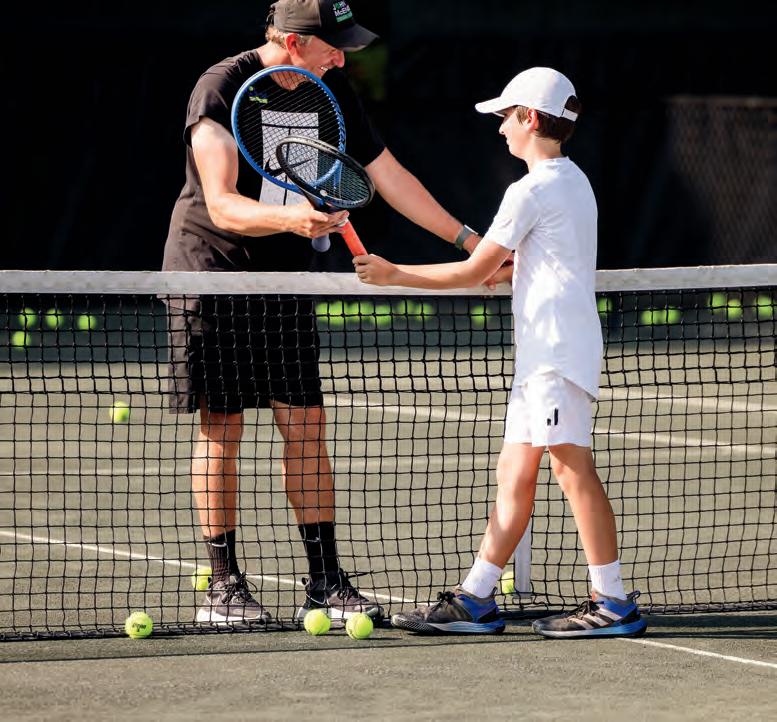

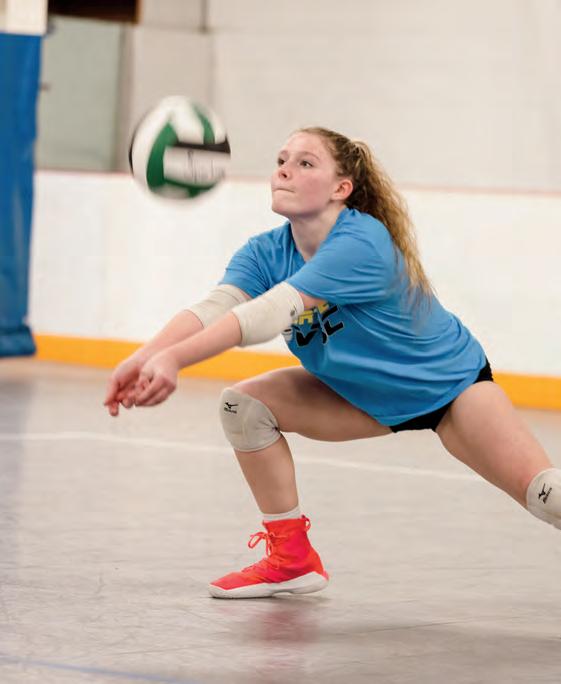





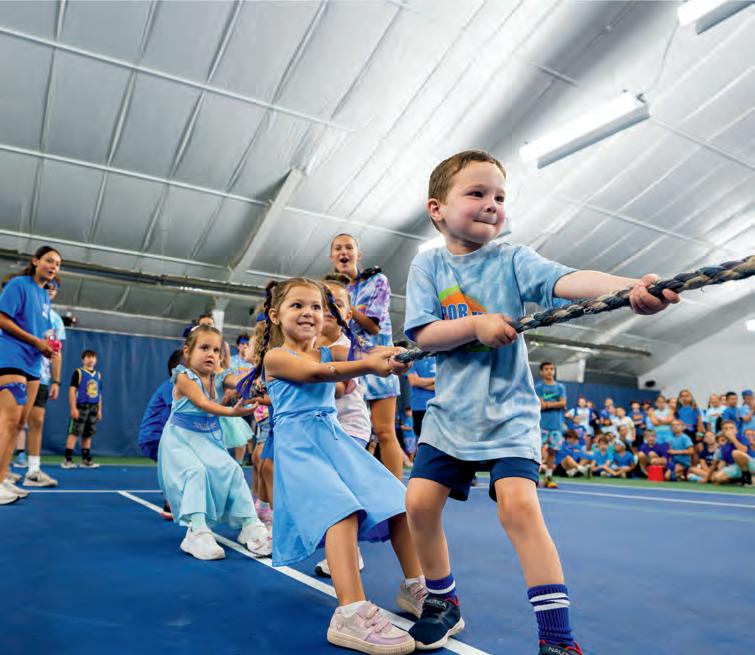











Bloomberg wins Advanced Intermediate, while BNP Paribas captures Intermediate division
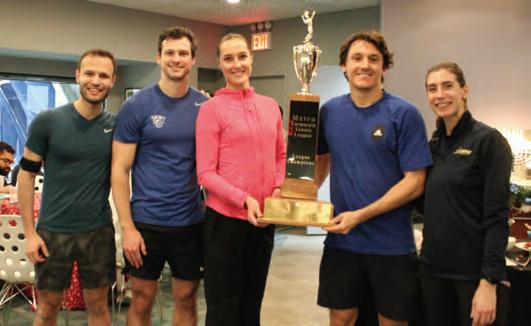
Atthe end of every season in the Metro Corporate League, players from all teams are invited to Roosevelt Island Racquet Club in Manhattan for the end-ofseason party and finals. Held over the course of two nights, the top two teams in each of the three competitive divisions battled it out for the league championships. Players from the other teams gather to watch, and enjoy delicious food and drinks, putting a perfect end to another league season.
The Metro Corporate League is comprised of four total divisions: Intermediate, Advanced Intermediate, Advanced and the Hi-Five. The latter is a fun division designed more for fun, recreational play, where the former three are more competitive-based.
“I think the competition is strong, it reminds me a lot of my college tennis days. It’s awesome to have a league where people in corporate jobs can
still play at a high level. I don’t think there’s anything else like it in the City, and it’s a great way for former college players to stay in the game,” said Diana Tkachenko.
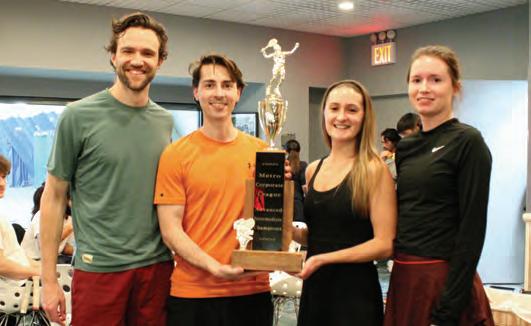
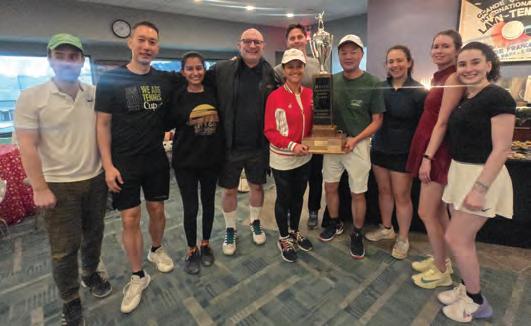
Tkachenko is the captain of the J.P. Morgan Chase team, and she led her team to the title in the Advanced Division championship. J.P. Morgan Chase defeated Credit Agricole in the finals, and as a result, the large league trophy will reside at the JP Morgan offices until the end of next season.
“Facing Credit Agricole in the finals was tough–they’d beaten us and we’d tied with them earlier in the season, so
I knew it would be a close match,” Tkachenko added. “I didn’t actually expect us to pull off the win, but everyone brought their best when it mattered most.”
The team matchups consist of six one-set flights (one women’s singles, one men’s singles, one women’s doubles, one men’s doubles and two

mixed doubles) with the winning team being determined by the total games won across all flights.
“Our success came down to having a solid group of players who always showed up ready to give it their all,” said Tkachenko. “Even in the finals, when we only had one regular team
member on the men’s side, and two players who stepped in at the very last minute without hesitation. Everyone gave it their best, and it really shows how committed people at JP Morgan Chase are, even outside of work.”
The team that will be moving up to the Advanced Division for the
Winter 2026 season is Bloomberg, who defeated J.P. Morgan to capture the Advanced Intermediate title. In the Intermediate Division, BNP Paribas secured the title with a victory over Bloomberg, and will move into the Advanced Intermediate Division this coming season.
The Winter 2026 season in the Metro Corporate League runs through May. Please visit Metrotennis.com to learn more, or contact Luis Espinoza at (347) 886-3117 or luis@metrotennis.com.
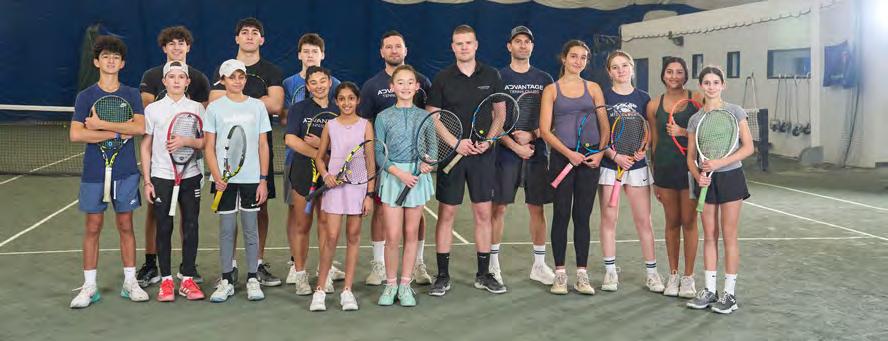
By Brian Coleman
Foras long as she can remember, tennis has been a part of Gabriela Finchelstein’s life. The NYC-born teenager, who goes by Gaby, began playing with oversized balloons substituting as tennis balls when she was fouryears-old, an early introduction to the sport that would become the focal part of her upbringing.
But her tennis origins date back even farther than that.
Finchelstein’s parents were huge tennis fans living in Argentina, and they shared a favorite player, Gabriela Sabatini, the Argentine tennis legend who won the 1990 U.S. Open, and compiled a decorated professional career. When they moved to the United States, the couple had a daughter and named her, appropriately, Gabriela.
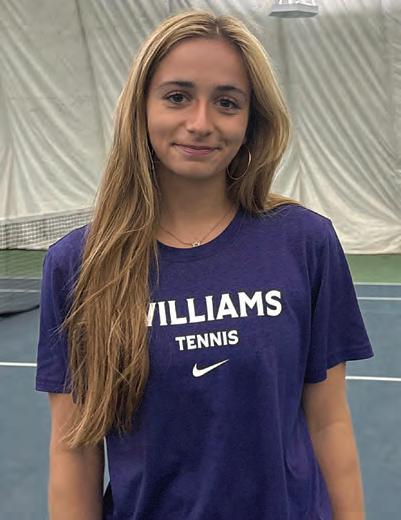
“They joked [before I was born], saying that our daughter is going to be named Gabriela and she is going to play tennis,” Finchelstein says. “They liked the name, but it’s also become this ongoing joke that I was destined to play tennis.”
But her parents never pushed her into tennis, she found her love for the sport organically. She loved tennis from the moment she first picked up a racquet, and always understood the value of it. The one rule her father established for her early on was that she could never throw a racket.
“It’s always been clear that playing tennis is a privilege, and it’s something amazing I get to have in my life,” she says. “The most important thing they taught me is having a positive attitude on court, and that has always been my mentality.”
She has taken that to heart. When she was eight-years-old, Finchelstein began playing at Gotham Tennis Academy at the Stadium Tennis Center in the Bronx. The place has become a home away from home for her, finding comfort on the tennis courts but also with the people who work there and who have fostered her tennis development.
“I remember playing in the programs there, and my little sister LuLu would be standing outside the curtains shadow swinging. She was trying to play also, she was only about four-years-old, and that’s one of my earliest memories there,” said Finchelstein.
The comfort and familiarity Finchelstein has felt at Gotham has gone a long way, and is a primary reason why she has remained at Gotham throughout the years.
“The atmosphere at Gotham is so great. The coaches are super uplifting, and you can tell that everyone there really cares about how I am doing, how I am playing, and about me,” she said. “Staying consistently at one place has really given me a lot of balance. I feel like in tennis, you’re always changing opponents, switching surfaces, or dealing with different weather. In New York there are a lot of indoor
tennis facilities, but staying at Gotham has given me stability.”
And it isn’t just stability, but the expertise and depth of coaching provided by the program’s directors, Chris DeStefano and Baloo Turcsik, as well as her primary coach, Fabio Minami, has been invaluable. Finchelstein says when DeStefano and Turcsik are on court with you, they provide incredible motivation, and are always there with answers to her questions. And with Minami, the two share a special bond and connection that has constantly helped her improve over the years.
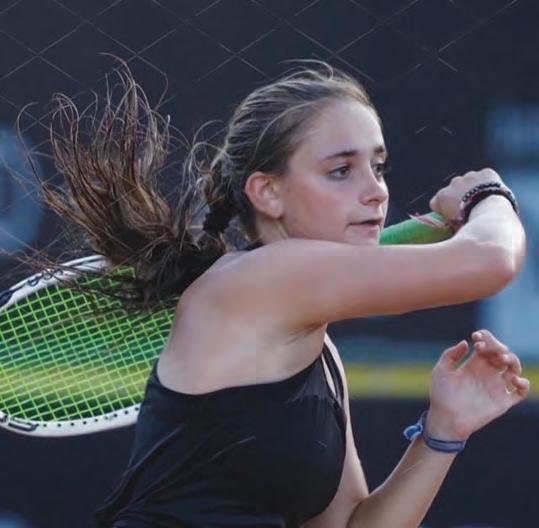
“I’ve never had someone be able to explain things to me like he does, and he has coached me for so long that he really understands me,” said Finchelstein. “In terms of explaining technique, he is able to do so clearly, even if it’s a complicated adjustment, he simplifies it so that I really understand it. Also, he knows how to adjust each training session. If on a certain day he sees that I have a lot of energy, and I’m feeling my best, he’ll push me. But on other days, if he sees that I am down or not in the best headspace, we’ll work on more technical things.
The whole team there has known me since I was a little girl, and they’ve basically seen me grow up. They know the best ways to get the most out of me.”
For the last year, Finchelstein has moved her education to online schooling through the Dwight Global Online School, which has allowed her to spend more time on court training, and increase her ability to travel not only to tournaments, but to different academies in the United States and abroad.
All of that has helped create a wellrounded tennis player, and attracted the interest of collegiate coaches. In her search for the right school and the best tennis fit for her, she wanted to find something similar to her tennis home in New York at Gotham.
“I wanted to be in an environment where the team got along well, and had a positive relationship with their coach,” she explains. “Also, both my parents are professors so school is a very important part of my life, so I was looking to go to a school that also pushes me academically.”
She found it in Williams College, a liberal arts college in Massachusetts. When Finchelstein met head coach Anik Cepeda, she knew she had found her home for the next chapter of her life.
“She was always so interested in not only my results, but also my development,” Finchelstein says. “One of the key aspects that I was looking for was somewhere where I could develop as a player, but also a person, so Williams was kind of the perfect fit.”
Until she arrives on campus later this fall, Finchelstein is excited to continue her development so she is
ready to compete at the college level. She wants to push herself as much as she can in her training, and continue to compete at a high-level.
“I’m always looking to grow as a player, and compete better. The most important thing is, win or lose, to compete well. That holds a lot of weight with me. I love to win, but the objective should be to give it your best on the court, and embrace looking for a solution and problem-solving.”
Tennis has been a core facet of Finchelstein’s life, since the day she was born. It has been something she shares not just with her younger sister LuLu, but also her extended family. She has family still in Argentina, and when she visits, her grandpa and cousins join her on court:
“That’s another beautiful thing about tennis to me. It’s been a way to connect with my family,” she said. “My sister and I play together all the time. She really encompasses the attitude our parents stressed to us, she just won the Sportsmanship Award from USTA Eastern, and she has a beautiful, composed game. We learn a lot from each other.”
The tennis court has always been a place of tranquility for Finchelstein. It has been that way for as long as she can remember, and will continue to be as she closes out her junior career and becomes a college athlete.
“I know it sounds simple, but I really enjoy my time on court. It’s usually the best part of my day,” she proclaims. “I really love being on the court, it just brings a smile out of me. I feel like when I am playing tennis, I’m really having fun, especially when I compete. What pushes me in practice is for me to be able to be good at doing what I love. I think there’s so much possibility in this sport, and I just want to be the best college player I can be. I want to continue playing tennis, because I love it, and it consistently pushes me to be better.”
Nearthe equator, the Earth rotates on its axis at over 1000 miles per hour, yet we don't need to anchor ourselves to the ground to avoid falling off into space. This is because the atmosphere moves with us at a constant acceleration. This is Newton's first Law of Motion as well as the Law of Universal Gravitation.
If the Earth stopped suddenly we wouldn’t need to actively dive off to be hurled with great velocity at a tangent to our rotation into the void. This is due to centrifugal acceleration.
Similarly, tennis strokes can also be identified by the direction and magnitude that our body and racket travels. Our stroke movement velocity path, however, does not tell
By Steve Kaplan
the entire story. We can also look to the origin of a movement path.
We live in a physical world in which physical forces influence movements. This is why some parts of a tennis movement are best performed actively, while other parts are best performed passively. One of the first steps to improving performance is understanding, and identifying, the difference between creating movement actions and transporting movement activity.
Let's take the slice backhand for example, which has been compared to a “triceps extension” While these movements may look similar in some aspects of their shape, the source of achieving their movement paths is vastly different. The best players create and benefit from centrifugal
acceleration to create a less effortful and more precise slice stroke.
If you watch carefully, you will notice that the premier players accelerate their body rapidly and then right before impact, come to a very sudden stop with the front hip. This is done with the front foot firmly planting to the ground in front of the bodies Center of Mass. This action stops forward movement and drives forces up to the next link or movement chain which is the torso. Interestingly, if the player has adequate core stability, the torso is not a rotational mover in a slice, it is a connector and stays fairly still before contact. Thus, the torso rotation before impact is sharply limited. So, in this kinetic chain

transfer, forces from the ground travel to the legs and hip. They bypass rotating the torso which is anti-rotational and travel with little loss of energy restitution to the shoulder joint.
With a loose arm as a conductor of energy, combined with the sudden deceleration of the body, the arm follows Newton's second law of motion and extends passively outward at a tangent to the halted body. Since the arm is relaxed it's not hard to imagine how the elbow might passively extend from this action which is why it can be confused as a triceps extension. A backhand slice and a triceps extension may superficially look similar but in a well-performed triceps extension, the goal is to isolate and actively extend the elbow using the triceps muscles without the aid of momentum. A player making an active extension of the elbow on the backhand slice or volley using the triceps actively
would be performing the proverbial and dreaded “muscling of the ball”. If we slow the movement down and actively move the hand and arm forward with effort, we are mistaking the "Cause" of the movement with the “Effect”. While we do see the torso move on a slice, it's after the contact which helps to reduce post contact forces and if timed adequately, is thus incidental to creating the resulting ball path.
There is a lengthy list of movements in tennis and all sports, notably throwing as well as body propulsion motions, which are best
performed by understanding where to exert effort, and where to relax: hold on for the ride and trust the laws of motion. Movements come in all shapes and sizes and a marker for a well performed movement is the use of physical forces whenever practical because this is where efficiently performed movements intersect with movement effectiveness.
The Bottom Line: When analyzing the shape of a movement, look beyond “what” happens and recognize and instruct “how” to best make it happen.

Steve Kaplan is the owner and managing director of Bethpage Park Tennis Center, as well as director emeritus of Lacoste Academy for New York City Parks Foundation, executive director and founder of Serve & Return Inc, and co-director of The City Classic Junior Tennis Academy. Steve has coached more than 1,100 nationally- ranked junior players, 16 New York State high school champions, two NCAA Division 1 Singles Champions, and numerous highly-ranked touring professionals. In 2017, Steve was awarded the Hy Zausner Lifetime Achievement Award by the USTA. He may be reached by e-mail at StevenJKaplan@aol.com

By Milly Keighery


TheUSTA Eastern Long Island Region has launched into the new year with tremendous momentum, proving once again that even freezing temperatures and winter winds can’t dampen the passion of our tennis community. From high-profile appearances to hard-fought sectional competition and the opening of Spring/Summer registration, 2026 is already shaping up to be an exciting year on the courts.
One of the most exciting earlyseason highlights was the annual Eastern Tennis Conference (ETC). The event brought together players, captains, coaches, officials, and volunteers from across the section, serving as both a celebration of our tennis community and a preview of the competitive season ahead.
This year’s conference featured a truly special appearance by legendary doubles team Bob Bryan and Mike
Bryan. The Bryan Brothers, whose accomplishments on the professional tour have cemented their legacy as one of the greatest doubles teams in tennis history, drew enthusiastic crowds and inspired players of all ages. Their presence created incredible energy throughout the event, offering Long Island league players the rare opportunity to engage with Hall of Fame talent up close.
Beyond the star power, the ETC continues to serve as an important early-season barometer for our region. It’s where ideas are exchanged, best practices are shared, and the foundation for the league year is strengthened. Most importantly, it was wonderful to see so many familiar Long Island tennis faces in attendance—volunteers, captains, coaches, committee members, and longtime players. Your dedication is the backbone of our programs, and
we are deeply grateful for all that you do to support and grow the game.
January’s MLK Weekend brought intense competition as Long Island teams competed in the Men’s and Women’s 4.5 Tri-Level Sectional Championships. These events consistently showcase some of the highest-level league tennis in the section, and this year was no exception. On the men’s side, Neil Hyman’s team proudly represented Long Island, battling through challenging matchups with determination and resilience. For the women, Atara Simpson’s squad brought focus, fight, and tremendous team spirit to every court.
While neither team advanced to Nationals, both represented Long Island with pride. The level of play was fierce, and the matches were tightly contested throughout the weekend.
Congratulations to every player who
competed and thank you for your commitment and hard work.
Long Island’s depth of talent extends well beyond the younger age divisions. Our 65+ players continue to demonstrate that competitive spirit and athletic excellence have no age limit. Mary Alice Ruppert led her talented group to represent Eastern in the 65+ 6.0 division at the National Invitationals, while Lydia Eitel is once again guiding her team in the 65+ 8.0 division. These prestigious invitationals bring together top-ranked teams from across the country, creating an elite and highly competitive environment within agespecific brackets.
We extend heartfelt congratulations to both teams for representing Eastern and Long Island so proudly.
Back on Long Island, the 18+ Mixed League season is reaching its dramatic conclusion. The standings across divisions have been incredibly tight, with multiple teams vying for top positions right up until the final



matches. The 6.0 and 7.0 divisions have already launched into playoffs, where every match carries heightened intensity. The 8.0 division continues to battle it out, with teams fighting for the opportunity to represent Long Island at Sectionals.
As the 18+ Mixed season winds down, attention quickly shifts to the start of the 40+ Mixed League. Good luck to all the teams competing.
And now for what many have been eagerly awaiting—Spring/Summer League registration is officially open!
Captains may begin registering teams and building rosters for what promises to be another outstanding season of league tennis. With offerings across Nassau and Suffolk Counties, both daytime and evening leagues provide flexibility for players balancing busy schedules. Whether you are a returning competitor or joining a league team for the first time, there is a place for you on the courts this season.
These leagues offer a wide range of

NTRP levels, ensuring competitive and enjoyable match play for all abilities.
• 18+ Leagues: 2.5, 3.0, 3.5, 4.0, 4.5, 5.0
• 40+ Leagues: 3.0, 3.5, 4.0, 4.5
• 55+ Leagues: 6.0, 7.0, 8.0, 9.0
• 65+ Leagues: 6.0, 7.0, 8.0
Captains are strongly encouraged to register early to secure their team’s place, coordinate rosters, and begin preparing for match play.
For registration details or questions, please contact Milly Keighery at keighery@eastern.usta.com.
As we look ahead, it’s clear that Long Island tennis continues to thrive at every level—from rising competitors to seasoned veterans, from local league play to Nationals. We can’t wait to see you on the courts this spring and summer for another season of competitive matches, team camaraderie, and unforgettable tennis moments.



















What does it mean to be elite?
Is it just the top 10 players in the world? What about Division 1 college stars like Michael Zheng (Columbia) and Nishesh Basavareddy (Stanford), who have reached top 600 ATP rankings while excelling as full-time student-athletes at Ivy League schools?
Are they not elite? And what about the local high school player who hasn’t lost a match in three years?
Every player experiences moments of excellence, but true elite status is reserved for those who consistently perform at extraordinary levels—those who deliver results frequently, not just sporadically.
The Myth of Potential
“This kid has the potential.”
How often have we heard this in tennis circles? Yet, many promising young players don’t reach the heights everyone expects. The reason is simple: at some point, every player faces hardships—whether personal, academic, or athletic—that can disrupt focus and discipline. Everyone has the capacity to be great, but only those who maintain consistency, focus, and discipline over time truly become elite.
Key Factors for Developing an Elite Tennis Player
1. Quality vs. Quantity in Training
Quality always comes first. When it comes to practice, quality should take precedence over quantity—until the
What It Takes to Develop an Elite Tennis Player—And Who Gets to Be Called “Elite”?
By Ankit Chopra
point where quality begins to decline. That’s when training should stop. Overtraining can lead to burnout, injury, and diminished returns.
Tennis is an individual, solitary sport. Players face intense pressure to perform and must make independent decisions during matches, with no coaching allowed at USTA, national, or ITF levels. This can be incredibly stressful. Mental support is crucial. A tennis psychologist can help players develop mental toughness, composure, and strategies to navigate adversity. Parents and coaches should provide emotional support and encouragement.
There’s no one-size-fits-all approach. Every athlete’s body is different. Understand your player’s food habits and provide the right nutrition at the right times to enhance performance and speed up recovery.
The most successful players are those who stay healthy. A solid injury prevention regime includes:
• A personalized fitness plan
• Proper warm-up and cool-down routines
• Use of correct technique to avoid injuries
• Adequate rest and recovery between training sessions
Becoming elite is about more than talent. It’s about consistency, discipline, mental strength, proper support, and smart training. Parents and coaches: focus on quality, provide mental and nutritional support, and prioritize injury prevention.
And remember: Elite status isn’t reserved only for the top 10 in the world—it’s about consistently pushing beyond ordinary performance, wherever your journey takes you.

Ankit Chopra is a resident at Centercourt Tennis Academy working with the club’s High Performance and Full-time players. He is a Grand Slam coach and his partnership with Jin Woodman took him to the 2025 US open Doubles Semifinals and Singles Quarterfinals in the Quad Wheelchair event. He played Number 1 Doubles in collegiate tennis at the University of Chattanooga and Chicago State University before turning pro and winning an ITF tournament in 2017. Chopra has combined playing and coaching experience of 21 years. He can be reached at ankitchopra2244@gmail.com.
By Magnus Gunnarson
The week before a tournament isn’t the time to change your game; it’s the time to sharpen it. If something feels slightly off, your backhand, your serve, your footwork, this is the week to clean it up with extra reps. But it’s not the moment to reinvent your game.
During tournament week, I like to mirror our junior practices to reflect real match-play scenarios. We’ll spend time rallying to lock in timing, but we’ll also play points. I want players working on serve-plus-one patterns, returning with purpose, and building points the way they actually want to construct them in competition. Movement is critical. We make sure to spend time focusing on footwork and recovery steps, especially transitioning from defense to offense.
Tactically, you should go into a tournament with a simple plan. How will you handle a pusher who makes a lot of balls? What’s your strategy against a big server? Where are you most comfortable finishing points: crosscourt or down the line? Going into a tournament with a clear plan makes a big difference.
One mistake I see often is overtraining. Players think they need to do more because a tournament is coming. In reality, you want to feel sharp, not tired. Make sure you’re resting well between practices and staying on top of hydration and nutrition.
The day before the event should feel calm and organized. Make sure your racquets are freshly strung, grips are ready, and your bag is packed. I encourage players to write down three to five simple focus points, something like:
“High first-serve percentage” “Move my feet at every point.”
Mental preparation is just as important. During the week, visualize different match situations. Picture yourself down a break. Picture yourself serving for a set. When those moments come, they won’t feel unfamiliar.
Once match time starts, preparation is done. Trust the work, stop thinking about technique, and focus on competing and making smart decisions. If the week was planned well, you’ll be ready physically and mentally to handle whatever comes your way.
For players: focus on what you can control this week, which is your
practice, your rest, your mindset. Everything else will sort itself out on match day.
For parents: trust the plan we’ve got. If your kid sticks to their normal routine, they’ll feel more confident and ready when it matters.
Over the years, I’ve seen a clear pattern: players who keep their usual practice rhythm before a tournament play more consistently.
Preparation doesn’t guarantee wins. But what matters most is what I tell my players before every single tournament:
“Try your best, practice good sportsmanship and have fun!”

Magnus Gunnarson is the Junior Program Director at Advantage Tennis Clubs. A former sixtime Davis Cup player for Team Iceland. After his playing career, Magnus became a full-time coach for both the junior and adult national teams of Iceland. Upon moving to the United States, he settled in Southern California, where he served as Head Coach at the Racquet Club of Irvine and Laguna Niguel Racquet Club, before joining the Advantage Tennis Clubs team.


June th – August th
Pick ANY 20 days from our full tennis summer camp schedule—attend full-day or half-day sessions at your convenience!
Long Island Health & Racquet Setauket
To register, text Tito Perez at (631)682-4079

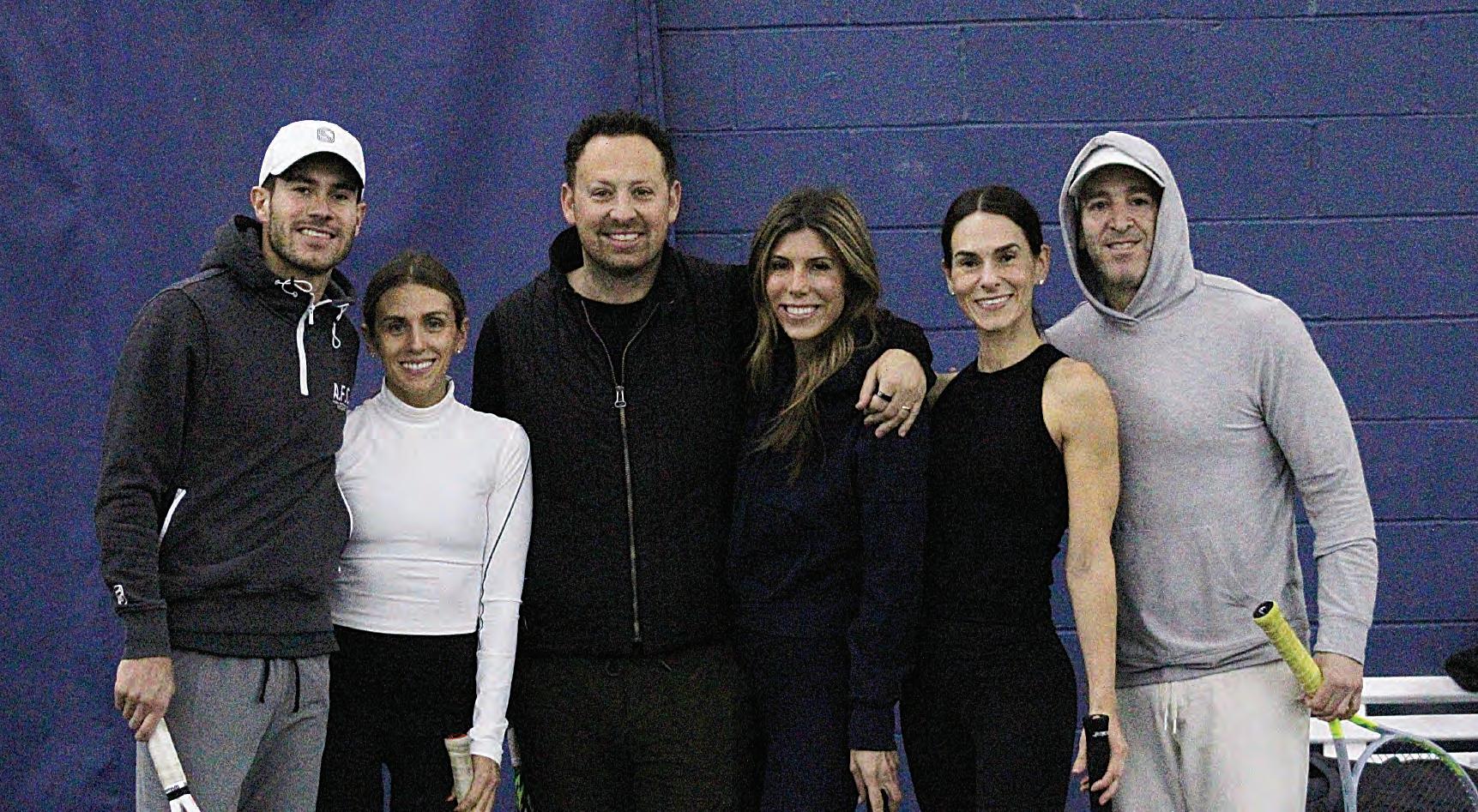
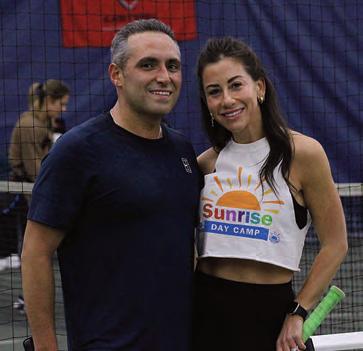
LongIsland Tennis Magazine partnered with Sunrise Day Camp to host the annual Play It Forward Tennis event, a fundraiser to support Sunrise’s mission. Held at Robbie Wagner’s Tournament Training Center in Glen Cove, participants came out to enjoy a night of tennis fun, great food/drinks and wonderful company, all in benefit of a great cause.
The night was filled with tennis games on the courts run by enthusiastic teaching pros and after all the fun oncourt concluded, there was an expansive catered food spread from Marinara Pizza, consisting of pizza, pasta, eggplant parmesan, salad,
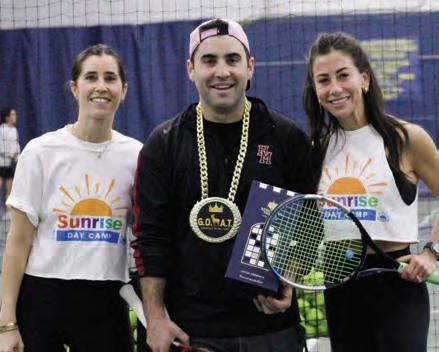
wings and much more. Everyone was able to mingle while enjoying food along with a wide selection of drinks served up by the event bartenders.
“The event had a really positive, highenergy feeling, which reminds me of Sunrise Day Camp!” said Gina Lauri,
Development Executive for the Sunrise Association, which brings the joys of childhood to children with cancer and their siblings worldwide, offering welcoming, inclusive day camps, yearround programs and in-hospital recreational activities, all completely free of charge. “It was well-organized thanks to Long Island Tennis Magazine, and I think everyone likes the idea of doing something they love to do, while giving back at the same time.”
This was the third consecutive year of the Play it Forward event, and each year the event continues to symbolize the mission of Sunrise: people coming together to help benefit those in need.
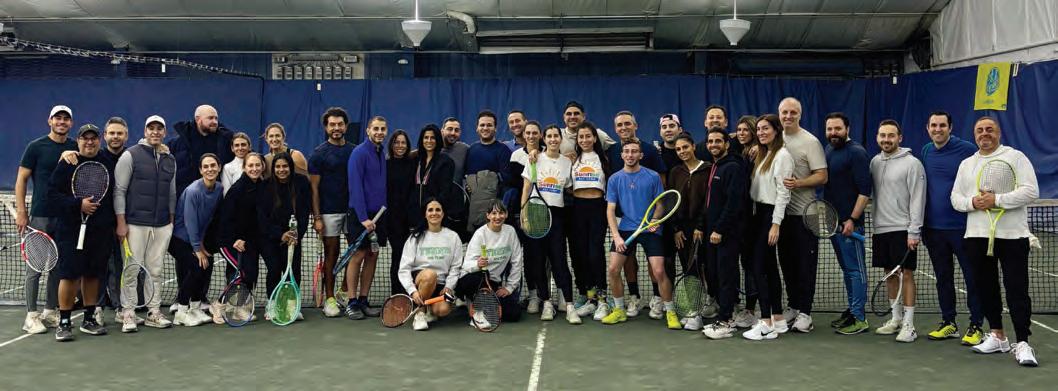
“Saturday night was a powerful reminder of what can happen when our community comes together with heart and purpose. Seeing everyone out on the courts, playing hard, laughing, connecting over great food and drinks, all in support of Sunrise Day Camp, made the evening truly special,” said Nikki Oheb, a Sunrise Day Camp cochair who helps organize this annual event. “There’s an incredible spirit that fills the air at this event. It’s more than just a tennis fundraiser; it’s a celebration of generosity, friendship, and shared commitment to an amazing cause. Every game played and every dollar raised helps create unforgettable
experiences for Sunrise campers and their families. We’re so grateful for the support and already looking forward to making next year’s event even bigger and better.”
In all, the event helped raise thousands of dollars which provides a major boost to Sunrise’s ability to provide free camp and year-round programs for children with cancer and their siblings.
“These funds help cover things like the rising cost of transportation, fun activities and support for families so that every child can experience a safe and joyful summer at Sunrise Day Camp, free of charge,” Lauri added.
OCTOBER 2025 - MAY 2026
David Sickmen, Publisher of Long Island Tennis Magazine, added:
“We were proud to partner with Sunrise Association and use our Courts & Cocktails event series to help those who are less fortunate. Everyone who participated had a great time and it was all for a very worthy cause. It was a special night and working with Nikki, Danielle, Gina and everyone from Sunrise was a pleasure. We look forward to our continued partnership with the Sunrise Association, and helping to support their important mission.”
To learn more about the Sunrise Association and its work, visit SunriseDayCamp.org.
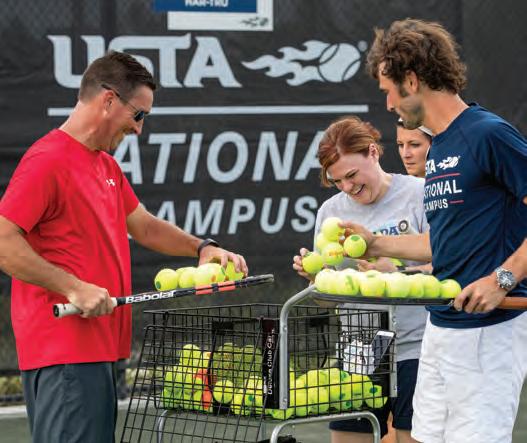
Advantage Junior Tennis Camp - Two Great Locations (Ages 8+)

Manhattan Plaza Racquet Club 450 West 43rd Street l New York, N.Y.
play@advantagetennisclubs.com l (718) 239-7917 l AdvantageTennisClubs.com
Roosevelt Island Racquet Club
281 Main Street l Roosevelt Island, N.Y.
play@advantagetennisclubs.com l (718) 239-7917 l AdvantageTennisClubs.com
With more than 50 years of experience teaching kids in our junior tennis programs, Advantage Tennis Camps are New York City’s oldest and among the best tennis learning programs available. Our summer tennis camp is perfect for both beginners and more experienced players, offering a fun and enriching environment.
Your child will not only learn to play their best tennis but also meet fellow campers who share their passion for the sport. These camps provide indoor, air-conditioned tennis instruction, including drills, games, and match play. In addition to tennis, our sports camps offer a variety of fun activities that encourage growth, skill development, and teamwork.
Whether they’re just starting out or already competing, your child will improve, compete, and experience the values of sportsmanship and fair play in one of the best summer camps for children and teens in the city. Spots are limited—secure your child’s place for the summer today.

Advantage Red Ball Tennis Camp - Three Great Locations (Ages 4-8)
Manhattan Plaza Racquet Club
450 West 43rd Street l New York, N.Y. play@advantagetennisclubs.com l (718) 239-7917 l AdvantageTennisClubs.com
Roosevelt Island Racquet Club 281 Main Street l Roosevelt Island, N.Y. play@advantagetennisclubs.com l (718) 239-7917 l AdvantageTennisClubs.com
Upper East Side: Wagner Middle School 220 East 76th Street l New York, N.Y. play@advantagetennisclubs.com l (718) 239-7917 l AdvantageTennisClubs.com
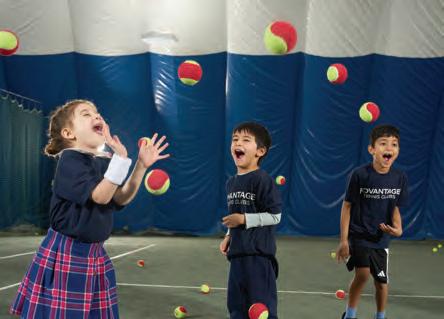
Advantage Red Ball Tennis Camp delivers a super summer for kids ages four through eight, with tennis customized for age and ability. Campers love playing with smaller racquets and slower-bouncing balls that make the game more accessible. Engaging drills and games mean there’s always something new to learn and enjoy.
Camp is led by an all-star team of tennis pros, all SafePlay certified. Your camper will enjoy 3 hours of Red Ball tennis fun before immersing themselves in a full day of our fantastic day camp*. Spaces fill quickly, so families are encouraged to reserve early. Sign up today!
*Manhattan Plaza offers a three hour, morning tennis camp.



Roosevelt Island Racquet Club
281 Main Street l Roosevelt Island, N.Y.
play@advantagetennisclubs.com l (718) 239-7917 l AdvantageTennisClubs.com
Upper East Side: Wagner Middle School
220 East 76th Street l New York, N.Y.
play@advantagetennisclubs.com l (718) 239-7917 l AdvantageTennisClubs.com
Advantage Day Camps are recognized as some of the best day camps in New York City. We strive for excellence and consistency across our teams and facilities. Our commitment to providing a safe and enriching environment ensures your child’s summer is filled with growth, skill-building, and, most of all, fun!
Join us for an unforgettable summer, where our dedicated staff and innovative programs set the standard for day camps in the heart of the city. Your child will enjoy a wide variety of activities, including tennis, robotics, STEAM programs, athletic sports, arts & crafts, chess, magicians, planetarium visits, nature activities, water play, and more. Registration is now open! Enroll your child today to lock in their spot for a summer they’ll love.
99 Quaker Meeting House Road, Building #4
Farmingdale, NY l (516) 777-1358 l BethpageParkTennis.com
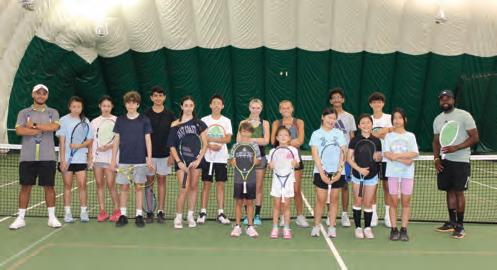
The 2026 Bethpage Park Tennis Center Summer Tennis camp begins Monday June 22, 2026 and runs through Friday August 21, 2026, with consecutive one-week sessions throughout the summer.
Camp begins each day at 10:00 a.m. with warm-up and fitness, and continues with instruction and drills with our top level staff. We take a break for lunch from 1:00 – 1:30 p.m, and camp resumes after break and continues until 4:00 p.m. We welcome campers to bring or order their own food and drinks.
The morning session is tennis-only and will run from 10:00 a.m. - 1:00 p.m., while the afternoon session will give campers the option of tennis or pickleball each day from 1:304:00 p.m.
We have four indoor, air conditioned hard courts, four indoor air conditioned red clay courts and two outdoor Har-Tru courts so that players can learn and train on a variety of surfaces and conditions, and play is guaranteed: Rain Or Shine.
For over 40 years, the summer program has provided the best learning and training environment to develop more top level Student-Athletes than any program on Long Island. Our record of development with our long time students include 20 players ranked #1 nationally by the USTA. Our record is unrivalled and unprecedented for a single facility that is not a massive academy. We know that summer plans of our students don't always fit perfectly into our camp schedule. We are flexible and we can adapt a program that fits tournament, vacation and the other activities that many of today's students engage in.
Contact us for an application form or call us at 516-777-1358 for more information and to reserve your spot today. Enrollment is limited so act soon!

Carefree Racquet Club
1414 Jerusalem Avenue
North Merrick, N.Y. l (516) 489-9005 l CarefreeTennis.com
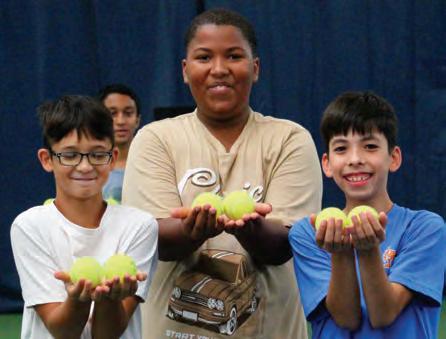
Where can you find a junior summer sports camp highlighting the excitement of competition, high energy, structured instruction and plenty of all around play time? At Carefree Racquet Club, complete with seven air conditioned indoor tennis courts, two half court basketball courts and four pickleball courts…..that’s where! At Carefree’s Summer Camp, the staff encourages the social and healthy aspect of loving sports just for the fun of it.
The junior camp, ages 5-18, runs Monday-Friday, June 29th –August 21st from 1-5pm.
In our Junior Camp, a typical day at camp consists of stretching and warm up to begin but thereafter we focus primarily on tennis. Our top notch instructors run our campers through drills and games, and oversee matchplay in the later part of the afternoon. We also give the option for pickleball play upon request! Additionally, There is a 30 minute break for lunch at 3pm.
The 10 and Under camp runs Monday/Wednesday/Friday, June 29th – August 21st from 9am-Noon, for kids aged 3-10.
A typical morning of our 10 & Under Camp program consists of both/either red and orange ball as well as pickleball instruction, and a multi-sport rotation on our half court basketball courts.
Contact CarefreeTennis@gmail.com, call us at 516-489-9005, or visit Carefreetennis.com for more information and to sign up!

1720 Crotona Avenue l Bronx, NY l (718) 247-7420 car yleedsinfo@nyjtl.org l caryleedstennis.org
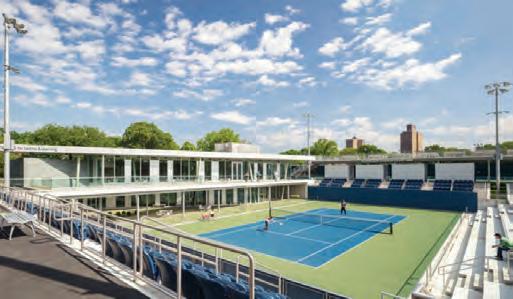
Summer Camp at the Car y Leeds
The Cary Leeds Center for Tennis & Learning offers Summer Camp, for juniors ages five to 18 years old. All levels are welcome from beginners in the development level program to advanced players in the high performance level program. Players will train to develop necessary tennis technique, improve consistency and create basic patterns of play for effective point construction. Included is a fitness component designed to improve players’ footwork, balance, speed and overall strength. Camp hours run from 10:00 am to 4:00 pm.
The Cary Leeds Center is the flagship home of New York Junior Tennis & Learning and offers free programming as a part of its commitment to the community. The summer Community Tennis Program is coming soon! NYJTL offers free programming throughout all five boroughs. Please check our website, nyjtl.org to find a location near you. NYJTL’s mission is to develop the character of young people through tennis and education for a lifetime of success on and off the court. All proceeds from the Cary Leeds Center fund its mission.

Centercourt Tennis Academy High-Performance Full-Time Academy & Elite Camps 52 Weeks Per Year. The Toughest Playground in the Northeast of the USA!
Chatham l Florham Park l Gillette l Drew University l Marlboro l Just 25 miles from Manhattan (862) 308-3029 l Centercourtcta.com l Conrad@Centercourtclub.com
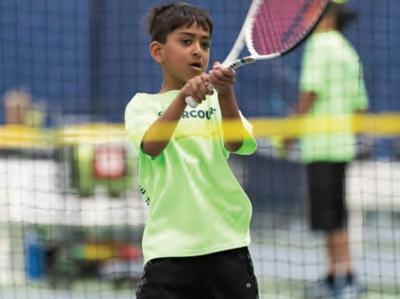
Centercourt Tennis Academy delivers world-class high-performance training across 8 premier New Jersey locations — Chatham, Florham Park, Gillette, Drew University, Marlboro & Fairleigh Dickinson University — all within one hour of Manhattan, Philadelphia & Connecticut.
Our player-first development model integrates:
l Elite Technical & Tactical Systems
l Strength & Conditioning Institutes
l Biomechanical Video Analysis
l Data-Driven Match Analytics
l Weekly USTA, UTR & WTN Competition
l Award-Winning Mentally Tough Tennis Program
Athletes train in small, ability-based groups with individualized fitness plans, supervised match play, and clear performance reporting. Academic pathways available through ICL & Dwight School partners. Homestay and transportation options upon request.
Summer & Year-Round Camps
l High-Performance Blocks, Fast-Track Development Camps & Day Camps offered 52 weeks per year.
l Summer 2026: June 8 – September 4.
Chris Lewit Tennis Academy
Manchester, Vermont l (914) 462-2912 l ChrisLewit.com l Chris@ChrisLewit.com
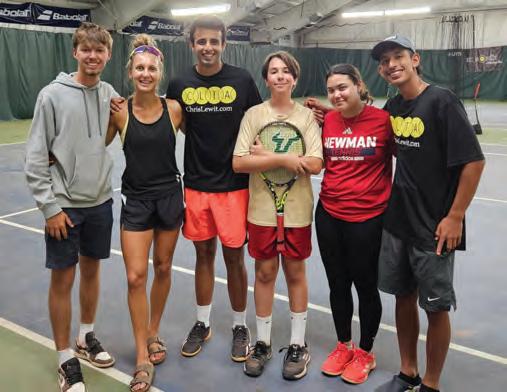
No Rainouts—Ever! Train seriously in the picturesque Green Mountains of Vermont with indoor courts on-site.
Join elite coach Chris Lewit at the Chris Lewit Tennis Academy (CLTA) Summer Camp, a high-performance sleepaway and day camp designed for serious players. Experience elite tennis training surrounded by Vermont’s stunning lakes, rivers, forests, and mountains. Train in a natural paradise while receiving world-class coaching in small groups—directly from Chris himself, on court every day. Unlike large academies where head coaches oversee from a distance, Chris personally works with all campers, making CLTA a uniquely hands-on training environment.
Chris has personally developed multiple juniors to #1 national rankings and has coached numerous Top 10 U.S. players, many now competing on the professional circuit. A leading expert in technique, biomechanics, and Spanish training methods, Chris is the author of Secrets of Spanish Tennis and Winning Pretty, and is currently pursuing a PhD in kinesiology and biomechanics.
Why Train at CLTA?
l Ages 8–18 | From serious beginners to nationally and ITF-ranked players
l Day camp or full boarding in a charming Vermont inn
l Exclusive use of CLTA Vermont—a private club nestled in nature featuring:
l Outdoor red clay courts
l Indoor hard courts (rain or shine!)
l Gym, yoga studio, and clubhouse
l Access to lakes, rivers, forests, hiking trails, and 50 acres of scenic wilderness
l Olympic-level fitness training integrated into daily programming
l Strength & conditioning led by an NSCA-certified, Olympic-level performance trainer from NYC
Chris has spent the past 20 years studying and training in Spain and Europe with legendary coaches. He is the only U.S. coach certified in three distinct Spanish training methods:
l Toni Nadal Method (Rafa Nadal’s uncle and longtime coach)
l Bruguera Method (Developed by Luis Bruguera, father of two-time Roland Garros champion Sergi Bruguera)
l William “Pato” Álvarez System (The foundation of Spanish high-performance training)
CLTA’s unique hybrid training system blends these Spanish influences with modern sports science, biomechanics, Olympic-level conditioning principles, and NSCA-based strength development—ensuring players receive cutting-edge instruction and elite athletic preparation.
l Character and mindset training inspired by Toni Nadal
l Daily yoga and mindfulness with a certified master instructor
l Comprehensive injury prevention program overseen by the NSCA-certified, Olympic-level trainer from NYC
l On-site UTR tournaments held every weekend for campers
In addition to our summer camp, CLTA offers:
l Holiday and school break camps throughout the year
l Year-round training with boarding, available for both short-term and long-term stays
Train with one of America’s leading coaches in an elite, small-group setting—while immersed in the lakes, rivers, forests, and fresh mountain air of Vermont—and take your game to the next level.
















Christopher Morley Junior Tennis Camp 2026
500 Searingtown Road l Roslyn, N.Y. l CMTTennis.com
(516) 214-1900 l June 29-August 28
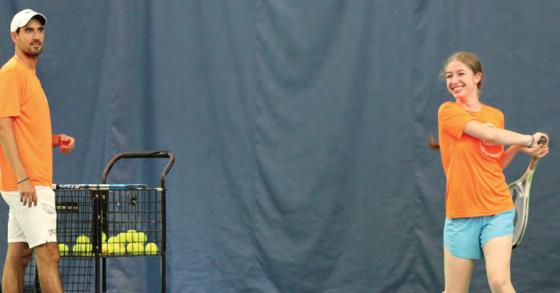
The Christopher Morley Junior Tennis Camp delivers more than tennis instruction — it delivers a summer experience built on fun, fundamentals, and personal growth. Designed for players of all levels, the program blends high-quality coaching with athletic development to help every child thrive on and off the court.
“When kids are having fun, real learning happens.”
Fun First. Always. At the core of the camp is an engaging, energetic approach that keeps kids motivated and smiling. Sessions are interactive, age-appropriate, and designed to create a positive environment where confidence grows naturally.
No two campers are alike, and the instruction reflects that. Coaches tailor feedback to each player’s strengths and learning style, helping beginners feel comfortable and experienced players continue to improve.
“Every child has potential — our job is to help them unlock it.”
Footwork, hand-eye coordination, and proper racquet technique form the backbone of daily training. By emphasizing fundamentals, campers build a foundation that supports long-term development.
Tennis is used as a teaching tool for life skills like perseverance, teamwork, and sportsmanship — values that last long after summer ends.
“We’re not just developing tennis players—we’re developing human beings.”
Campers also participate in a dynamic multi-sport program featuring basketball, soccer, volleyball, kickball, ultimate frisbee, and more. These team games boost athleticism, encourage social connection, and help campers form friendships beyond the tennis courts.




A high-energy conditioning program develops speed, agility, strength, and flexibility — essential tools for tennis success. Led by expert trainers, workouts leave campers stronger, faster, and more confident.
With weekly enrollment options and full-time on-site supervision by Tennis Directors Ricardo and Salomon, families can count on a safe, professional, and unforgettable summer experience.
Milstein Family Tennis Center
603 W. 218th Street l New York, N.Y. 10034 l www.columbiasummertenniscamp.com th3158@columbia.edu l 917-689-2944

The Columbia Summer Tennis Camp is located at the Milstein Family Tennis Center (MFTC), home of the nationally renowned Columbia men’s and women’s tennis programs.
The camp is designed to correlate with the commitment and excellence that are the essence of the Columbia men’s and women’s Division 1 tennis programs. The camp offers its expertise to all players, regardless of level, who want to improve their tennis in a serious and professional environment at New York’s premier tennis facility. The camp has a strict four kids per court guideline.
The MFTC has indoor and outdoor courts, so there will be no rainouts. The camp coaches are renowned industry professionals and led by Keith Kambourian, Patric Westoo, and Doug Saputo. The camp offers complimentary lunches, and there is a round-trip shuttle available from 117th & Amsterdam. The Columbia Summer Tennis Camp is an invigorating, boutique tennis camp that offers hands-on coaching to players of all levels.
Please visit www.columbiasummertenniscamp.com for more information or contact Tim Heath at th3158@columbia.edu or 917-689-2944.

(home of the High Performance program)
156 West Main Street l Bogota, N.J. l (201) 366-2898
CourtSense at Tenafly Racquet Club (Home of the Performance program)
195 County Rd. l Tenafly, N.J. l (201) 254-5836
Cour tSense.com l Info@CourtSense.com
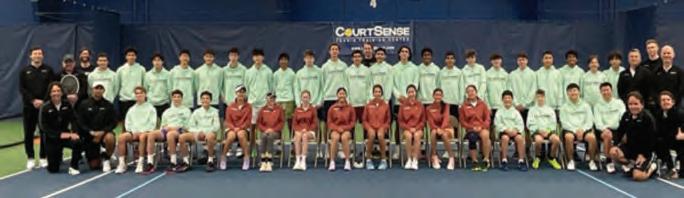
With CourtSense, you’ll achieve your personal best, because our training is of the highest professional caliber and easily tailored to suit your age and skill level. We use tennis as a vehicle to teach life lessons by tapping into the spirit of every player, with lots of passion, expertise and character. Students have access to 17 outdoor and 16 indoor tennis courts, so regardless of the weather conditions the players are guaranteed their practice sessions..
High Performance Summer Tennis Camp at Bogota Racquet Club. This camp is geared towards High Performance Tournament and high-level High School players for UTR level 4 and above and age group 11 and older. CourtSense has trained and is currently training players who have become ATP- and WTA-ranked players, U.S. Olympians, as well as many college scholarship athletes. CourtSense’s International High-Performance Coaches, in collaboration with the fitness staff and a sports psychologist, have developed a program that maximizes all athletes’ strengths, both on and off court.
l Full Day High Performance Tennis Camp at Bogota Racquet Club runs from Monday-Friday, June 29-Aug. 28 (nine weeks), featuring 10 hours of tennis training; 5 hours of fitness and 8 hours of match/point play) for players ages 11 and older, and UTR level 4.00 and above. Campers will have access to outdoor and indoor hard and clay
courts, with a 3:1 student-to-coach ratio. Weekly dual matches with other academies, and mental toughness training are also included, along with daily/weekly journaling of activities. Evaluation is required prior to enrollment. Transportation service between locations is provided.
l Full Day Performance Tennis Camp at Tenafly Racquet Club runs from Monday-Friday, June 29-Aug. 28 (nine weeks), featuring 8 hours of tennis training; 4 hours of fitness and 6-8 hours of match/point play) for players ages 8-12, and UTR level under 4.00. Campers will have access to a premier and very unique facility where they will be able to experience playing on all grand slam surfaces (European red clay, grass, hard court), with a 3:1 student-to-coach ratio. Mental toughness training is also included. Evaluation is required prior to enrollment.

Multiple locations across Long Island EasternAthleticClubs.com l EACTennis@yahoo.com l EACJrTennis@gmail.com
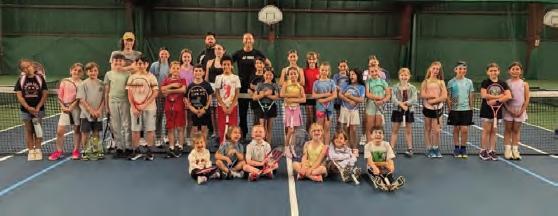
Eastern Athletic is family-owned and is one of the New York’s original and finest indoor tennis and fitness facilities, offering tennis camps during July and August. With two locations in Suffolk County to accommodate the ever changing needs of our clientele, Eastern Athletic has 12 Nova Ultra cushion indoor tennis courts, seven racquetball courts, and much more.
Eastern Athletic’s Camps are directed by Laurie Tenney Fehrs at Dix Hills and Gary Gaudio at Blue Point and the very talented tennis staff that are committed to helping their students behappy and successful in all aspects of their lives. Eastern Athletic Tennis Camps integrate strength and agility training, drill sessions, group lessons and match play. Eastern Athletic offers camp from two hours up to five hours per day, for one day up to eight weeks.
In addition, Eastern Athletic has one of the best performance training programs, integrating tennis with athletic performance programs. All of their programs are offered year-round in a climate-controlled tennis facility. Eastern Athletic has produced some of the top tennis players on Long Island under the direction and supervision of Laurie Tenney Fehrs, Gary Gaudio and their renowned tennis staff. Eastern Athletic has programs for juniors and adults of all ages and level of play, and is confident they have something for you.

To find out all about what Eastern Athletic has to offer, visit EasternAthleticClubs.com. For more information and to join the growing family, e-mail EACTennis@yahoo.com, EACJrTennis @gmail.com or visit one of Eastern Athletic’s locations:
l EAC in Blue Point, 9A Montauk Highway, Blue Point, N.Y. (631) 3632882
l EAC in Dix Hills, 854 East Jericho Turnpike, Dix Hills, N.Y. (631) 2716616

Ed Krass' 38th Annual College Tennis Exposure Camp® &
(813) 684-9031 l CollegeTennis.com

Coach Ed Krass’ 38th Annual College Tennis Exposure Camp & Clinics, for ages 14-18, are taught exclusively by head college coaches who will work with you oncourt to improve your singles and doubles match play strategies and provide college recruiting advice. Instructional drills and match play competitions will be conducted in the same style and intensity as a college team practice. Coach Krass’ camps are still the world’s only tennis camps taught exclusively by all head college coaches!
The two-day College Tennis Exposure Camp will be offered at the USTA National Campus in Lake Nona, Fla., Saturday-Sunday, May 30 – May 31; Massachusetts Institute of Technology, Cambridge, M.A., Saturday-Sunday, June 27 - 28; Lehigh University, Bethlehem, Pa., Saturday-Saturday, July 11 - 12; Brown University, Providence, Ri., Saturday-Sunday, August 1 – August 2.
Coach Ed Krass, Founder and Director of College Tennis Exposure Camp & Clinics, has coached varsity tennis teams at Harvard University, Clemson University and the University of Central Florida prior to founding the College Tennis Academy.
For more information, call Coach Krass at (813) 684-9031 or visit CollegeTennis.com. Look for more camp locations at CollegeTennis.com.
l May 30 – May 31: The USTA National Campus, Lake Nona, Fl.
l June 27 – 28: Massachusetts Institute of Technology (MIT), Cambridge, Ma.
l July 11 – 12: Lehigh University, Bethlehem, Pa.
l August 1 – 2: Brown University, Providence, Ri.
Tennis Academy
10334 Diego Drive South l Boca Raton, Fla. l (561) 488-2001 Ever tAcademy.com l Evert@EvertAcademy.com


The Evert Tennis Academy is located in sunny Boca Raton, Fla., and is considered by many as one of the best tennis camps in the country. John and Chrissie Evert set out to continue their father’s legacy 22 years ago by installing core values: Excellence, Resilience, Integrity and Leadership. “Our core values are the roadmap to coaching every student-athlete towards reaching their full potential.”–John Evert
Evert Tennis Academy clinics will focus on technical development, tactical training and competitive settings. Players will experience a typical Evert program that includes tennis lessons, strength and fitness conditioning, mental conditioning and competitive match play against players from all over the world. Players will get a coach’s evaluation during their stay here to review at home.
Top four reasons why to attend this summer (Monday-Sunday, May 26-Aug. 17): Coaches/program: Our coaching staff continues to put a program together that is second to none. Each program is designed so that each player will get the personalized attention needed to improve his or her game while having fun. Whether you are an intermediate player looking to fine tune your game or a high-level nationally ranked player we have the program for you.
Facility/boarding: Evert Tennis Academy is one of the only academies to provide boarding services for any student wishing to stay only steps away from the courts. Its eight-acre facility provides a safe environment nestled in the beautiful and secure Mission Bay residential neighborhood, surrounded by lakes, manicured lawns and lush Floridian foliage.
Competition: The Evert Tennis Academy provides match play for each student every day and all levels are welcome. Although the tournament schedule is not yet confirmed, we normally host three UTR tournaments throughout the summer for any player looking to get match play prior to the Clay Court & Hard Court Nationals, Zonals or just get access to players of equal playing level.
Family Oriented and Personal: The Evert Tennis Academy is known worldwide for a family oriented atmosphere and a place where players enjoy both on-court training and off-court activities. Students that choose the Developmental Program will receive a tailor made personalized program that is second to none in the industry.
Location: Located in the beautiful town of Boca Raton, Fla., the Evert Tennis Academy is located only a few minutes away from the beach and only 30 minutes away from the Fort Lauderdale and West Palm Beach airports making it an easy trip from the northeast.
384 Mark Tree Rd. l East Setauket, N.Y. 11733 l vtapr@hotmail.com (631) 682-4079 l lihrsetauket.com
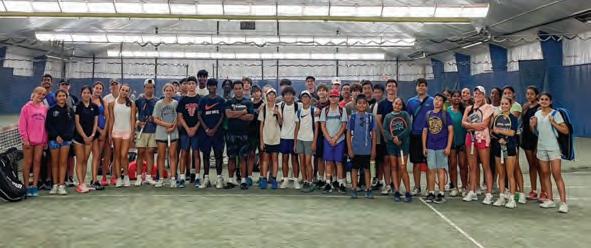

The 2026 Game Set Match Tennis Summer Camp provides a unique tennis training opportunity for youth at Long Island Health & Racquet Setauket. Running from June 29th to August 28th, the camp features full-day sessions from 9 AM to 3:30 PM and half-day options until 12 PM. A unique Split Camp format is also available, combining morning tennis drills with an afternoon filled with diverse recreational activities.
The camp caters to a range of skill levels with specialized programs for Kids 10 & Under, Middle School, JV, Varsity, and High Performance players. Each program is designed to enhance technical and tactical skills tailored to the specific needs and potential of different age groups.
Training is led by a distinguished team of bilingual coaches (fluent in English and Spanish), including former ATP and Davis Cup players who bring a global perspective and a wealth of professional experience to the academy. These coaches are adept at working with young players to refine their skills, fostering an environment of excellence and growth.
Facilities at the camp are extensive and adaptable to all weather conditions, featuring 9 indoor air-conditioned Har-Tru tennis courts, 7 outdoor tennis courts, and 7 air-conditioned indoor pickleball courts. High-performance athletes benefit from training on both Har-Tru and hard court surfaces, ensuring a well-rounded development and readiness for various competitive scenarios.
Participants are encouraged to bring their own food and drinks, allowing for personal dietary preferences to be easily accommodated during the camp sessions. This flexibility contributes to a comfortable and personalized camp experience for all attendees.
Game Set Match Tennis Academy is not just about tennis; it's a community where campers are considered family. It is the best place to have fun, improve tennis skills, and build long-lasting friendships. The track record of the camp speaks volumes, having guided numerous young players from introductory levels to becoming Division I, NCAA college athletes, and NY state champions. This legacy of success underscores the camp's commitment to not just training but truly transforming young athletes into formidable players on and off the court.
For those looking to maximize their summer with high-quality tennis training and engaging activities, Game Set Match Tennis Summer Camp at Long Island Health & Racquet is the destination of choice. Detailed information and registration options can be obtained by contacting Tito Perez, Tennis Director, at (631) 682–4079.

91 South Fulton Drive l Montauk, NY 11954 l (631) 267-8525
GothamTennis.com l Info@GothamTennis.com
Gotham Tennis Academy’s newest location in the Hamptons, Gotham Montauk, is on a beautiful nature preserve just minutes from the center of Montauk, its famous beaches, parks, restaurants and other attractions.
Gotham Tennis Academy is now taking bookings for its popular spring and summer offerings in the Hamptons, including:
l Gotham Montauk Sports and Tennis Camp
l Home lesson packages throughout the Hamptons
l Private tennis parties
l Lesson packages, leagues, clinics and court rentals
To enroll now or for more information, please call (631) 267-8525 or send an e-mail to Info@GothamTennis.com. Ask about multi-week and early-bird packages!
At Gotham Tennis Academy, we are passionate about teaching tennis. From beginners to rising stars, Gotham’s PTR-certified pros are experienced in teaching the fundamentals, while stressing sportsmanship, hard work and fun.
Minutes From Manhattan Next to Yankee Stadium (718) 665-4684 l www.StadiumTennisNYC.com l Reservations@StadiumTennisNYC.com
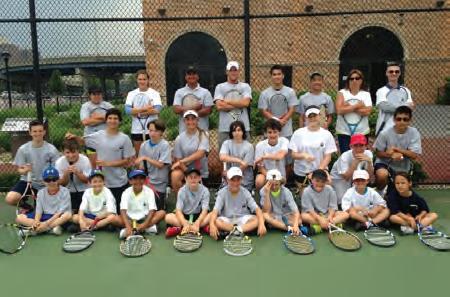
Stadium Tennis Center offers a unique array of summer camp programs designed for tennis players of all levels to experience. Through our partnership with Gotham Tennis Academy, a leading operator of innovative tennis programs and camps in NYC and the Hamptons, some of the most talented and engaging tennis pros in New York City have been assembled. Our pros share a passion to work closely with players of all levels and ages to help them develop to their fullest potential.
l Gotham Stadium Red and Orange Ball Junior Summer Tennis Development Program (Ages 5-10):
Designed for beginner, intermediate and advanced players. A great way to keep your child active and improve his or her tennis in a fun and supportive environment. The camp is designed to take your child to the next level towards tennis proficiency in our fun and supportive environment. Certified tennis instructors with international backgrounds excel at teaching junior players at this formative stage of development. Your child will not only have lots of fun, but also gain confidence, learn appropriate tennis fundamentals and make new friends.
l Gotham Stadium Summer Elite Yellow Ball High Performance Tennis Academy (Ages 7-15):
Designed for those juniors who aspire to become more competitive tournament players and prepare them for more competition and advanced play. On-court drills, match play, conditioning and mental toughness training fitness will prepare your child for the next level of advanced play. If your child is ready to reach for new heights on the tennis court, then you owe it to yourself to experience high performance summer training at the Stadium Tennis Center. Your child will learn proper stroke production fundamentals, strategy, match play, conditioning and footwork.
We have a flexible enrollment policy with full and half day options all summer long. Round-trip door-to-door transportation from points in New York City, Westchester and New Jersey may be arranged.

Locations on Long Island including the Hamptons, in Manhattan and Westchester:
JMTA New York City l SPORTIME Randall’s Island l (212) 915-9330
JMTA Long Island l SPORTIME Syosset l (516) 464-0357
JMTA Long Island l SPORTIME Port Washington l (516) 853-7519
JMTA Hamptons l SPORTIME Amagansett l (631) 759-5275
JMTA Westchester l SPORTIME Lake Isle l (914) 517-3190 Camps@Spor timeNY.com l SportimeCamps.com/JMTA
No one knows junior tennis training better than SPORTIME! And with multiple tennis camp locations across Long Island, including in the Hamptons, and in New York City and Westchester, aspiring tennis players can enjoy John McEnroe Tennis Academy and SPORTIME tennis training programs throughout the region, this summer.
SPORTIME’s and JMTA’s innovative tennis training approach is rooted in competitive games, underpinned by technical development and tennis-focused athletic training. We present tennis so that players quickly develop an understanding of winning tactics and learn skills that help them achieve their goals, all in age and level- based groups.
Our more advanced juniors receive enhanced training to prepare them for the physical, mental and emotional demands of match and tournament play. SPORTIME’s international coaching staff is dedicated to turning weaknesses into strengths and strengths into winning games.
Our younger players work through clearly defined stages of development that make it possible for kids to start to construct points and play tennis from early in their tennis journeys. With our unique “gamification” approach, junior players don’t just take lessons—they go on missions, acquire skills, collect points and achieve milestones. Campers also enjoy instruction and competition in a variety of team sports activities that help to enhance their coordination and athletic skills.
Visit SportimeCamps.com to find the SPORTIME EXCEL or JMTA Summer Tennis Training Camp nearest you, or e-mail Camps@SportimeNY.com to find out more. Programs vary by location.
131 Brookville Road l Brookville, NY 11545 l LuHi.com

LuHi Summer Programs offers a premier tennis experience for players of all levels, but also so much more! Located on a scenic 32-acre campus in the heart of Long Island's North Shore, LuHi Summer Programs has been the home and camp choice for thousands of Long Island children for 60 years. We provide a funfilled learning experience in a variety of sports, educational, and recreational programs to bring out the best in each of our campers. With over 20 diverse programs to choose from, campers from all across Long Island and NYC find their home here at LuHi Summer Programs.
Foster personal growth, team spirit, and perseverance in one of our varied Athletics programs designed to challenge and motivate athletes to be their best. Inspire curiosity, spontaneity, and independence in our diverse Arts programs designed to nurture creativity and expression. Spark new passions, hobbies, and friendships with well-rounded Recreation options to suit all learning styles and interests. Galvanize tomorrow’s makers, creators, and innovators with science and technology options in our STEM division that drive experimentation and investigation.
If all four of these programming areas sound right for your child or they just want to try them all, they may yet find their home in LuHi Country Day, where action, adventure, and discovery await them! A culmination of LuHi’s culture, LuHi Country Day offers a safe & structured environment where campers are encouraged to engage in new experiences, form friendships, and most importantly, have fun!
With so many offerings, families have the opportunity to customize their summer based on their schedule and child's varying interests. The day-camp format also allows children to experience all of the best parts of camp during the day and spend time with their families during the evenings and weekends. Professionals in their specific field direct each LuHi program, providing experiences that educate, enrich, and inspire each child. We hope to welcome you to the LuHi Family for Summer 2026!
Two Brooklyn Locations
2781 Shell Road l Brooklyn, NY 11223 l (718) 769-0001
9000 Bay Pkwy l Brooklyn, NY 11214 l (718) 866-1031
matchpoint.nyc/summer-camp
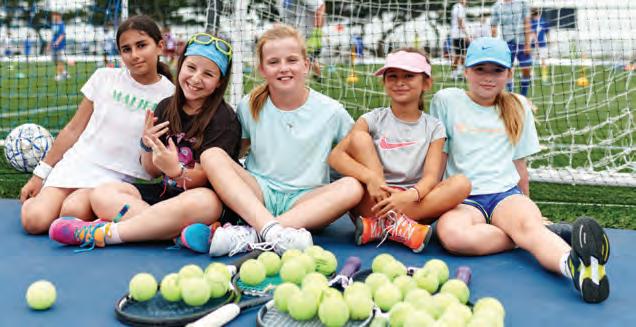

The most immersive, joyful, and thrilling Summer sports experience in Brooklyn is back this summer at MatchPoint NYC! We are excited to make our club your child’s second home this summer, as well as to help them make new friends & develop long-lasting friendships with other participants.
Our Tennis, Swimming, & Rhythmic Gymnastics Full-Day Programs help young athletes learn, excel, and master the sports they’re devoted to. For those who are not devoted to a single sport, we offer a Multi-Sport Full-Day Program, that introduces kids to a wide range of sports, including tennis, soccer, basketball, boxing, swimming, and more!
Each Full-Day Summer Program is run & coordinated by professional, certified coaches who are devoted to the safety and athletic development of each participant. Each program includes drills, match play, and fitness sessions, along with healthy lunches served each day. Snacks & plenty of water are also provided keep our athletes energized to play their favorite sports.
MatchPoint NYC is the sports and fitness destination for the entire family. It is located in Brooklyn – just 20 minutes away from downtown Manhattan. Spread across 120,000-square feet, MatchPoint NYC’s premier health and fitness complex features a cutting-edge tennis facility that includes eight gorgeous indoor tennis courts.
Additional features include full-sized gyms for weight lifting, cardio, and CrossFit training, three group fitness studios, a Junior Olympic pool, a rhythmic gymnastics center, yoga studio, and a variety of youth & adult competitive & recreational training programs.
For more information about MatchPoint NYC and its Full-Day Summer Programs, visit matchpoint.nyc/summer-camp or call (718) 769-0001.
Let us help you find your game. Sign up today!

60 Sea Cliff Ave l Glen Cove, NY 11542 l (516) 759-0505
r wtennis@hotmail.com l www.rwtt.com
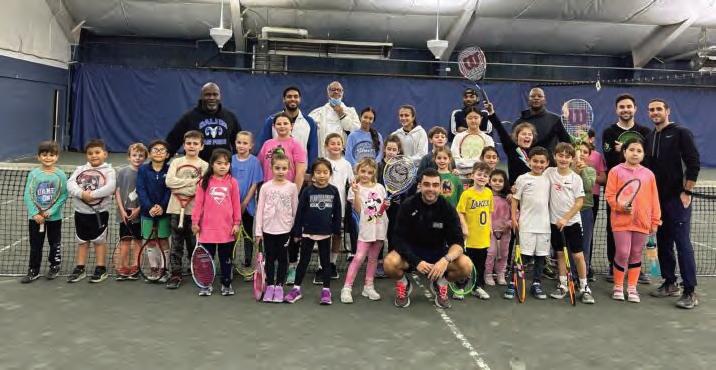
Whether you're starting out as a beginner eager to grasp the fundamentals or an experienced player seeking to elevate your skills, RWTT Summer Tennis Camp promises an enriching experience. From expert coaching to fun drills and matches, it's a great way to spend your summer honing your tennis abilities while enjoying the outdoors and meeting new friends who share your passion for the sport. Plus, the summer camp environment often fosters camaraderie and sportsmanship, creating lasting memories and friendships.
Why choose RWTT Summer Camp?
For the past 25 years, RWTT has organized highly successful summer camps. We provide exceptional instruction led by expert coaches, ensuring a perfect blend of learning and play in a supportive atmosphere that fosters both growth and enjoyment.
Whether your aspirations lean towards college competition, securing a spot on your varsity team, or benefiting from top-tier coaching, RWTT tennis camps cater to youth players with diverse goals.
The Daily Program Includes:
l Dynamic warm-up exercises
l Drills emphasizing shot/stroke refinement, tactical decision-making, and movement
l Competitive play
l Strength and conditioning sessions
We offer both High Performance and 10 & Under Tennis Camps, granting campers access to cutting-edge indoor and outdoor tennis facilities.
The high-performance camp is tailored for individuals aiming to excel in National and International Tournaments. It's also ideal for those looking to participate in middle school, high school, college tennis, and beyond.
Additionally, it welcomes players of all levels who are committed to reaching their maximum potential on the court.
The 10 and Under tennis camp is designed specifically for young players who are starting their tennis journey. It focuses on age-appropriate techniques, skills, and drills to help children develop a strong foundation in tennis while having fun. The camp provides a supportive and engaging environment where kids can learn the basics of the game, improve their coordination, and foster a love for tennis from an early age.
Join us for an unforgettable summer filled with teamwork, competition, and unforgettable fun!
Camp options: Full day & Half-day, Weekly & Daily. Lunch is provided at an additional cost.
For further inquiries, please contact the club at rwtennis@hotmail.com or call 516-759-0505. For online registration, visit https://blumecustomer.com/cmportal/rwtt/login.

20 Goodfriend Drive l East Hampton, NY l 631-907-5162
ross.org/tennis l tenniscenter@ross.org
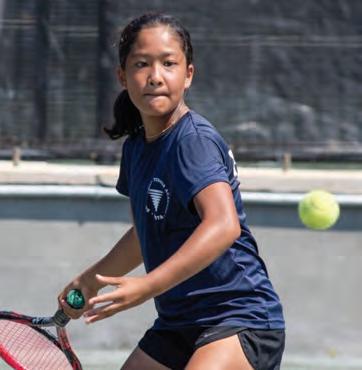
Ross School Tennis Center (RSTC) is a state-of-the-art tennis facility in the Hamptons that is open to the public and located on the Ross Upper School campus in East Hampton, NY. The tennis center features six Har-Tru courts that are enclosed by a bubble from mid-fall through mid-spring, allowing for yearround play. There are also two hard courts for junior tournament training. The courts are directly adjacent to a fully-equipped Field House, featuring amenities such as locker rooms, a lounge, and ping-pong tables. The staff here provides a fun and supportive atmosphere that allows for the greatest amount of success.
Monday–Friday, June 22–August 14: From specialized U10 programs designed for developing competitive tennis players to our high-performance training with live ball drills and match play series, this 8-week all-encompassing summer program is our most intense and complete junior tennis education offered.
Players considering this program should be serious about their commitment to tennis, consistently practicing at least two days per week year-round. All training in each age and development level includes daily fitness and match play components. Players can sign up for this program weekly, but space is limited. Player placement is based on performance. Videos are accepted for analysis. Visit ross.org/summer for more information.
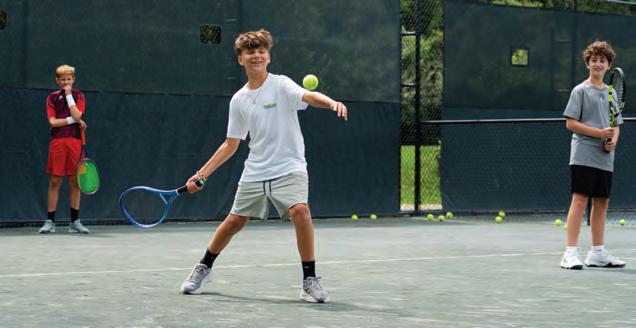
Locations across Long Island, in Manhattan and Westchester and in Schenectady:
SPORTIME Amagansett/JMTA Hamptons l (631) 759-5275
SPORTIME Bethpage l (516) 464-0216
SPORTIME Hempstead Lake l (516) 282-7222
SPORTIME Kings Park l (631) 759-4178
SPORTIME Lake Isle/JMTA Westchester l (914) 517-3190
SPORTIME Lynbrook l (516) 464-0265
SPORTIME Por t Washington/JMTA Long Island l (516) 853-7519
SPORTIME Quogue l (631) 861-3110
SPORTIME Randall’s Island/JMTA New York City l (212) 915-933
SPORTIME Roslyn l (516) 464-0306
SPORTIME Capital Region l (518) 535-9180
SPORTIME Syosset/JMTA Long Island l (516) 464-0357
SPORTIME Harbor Island Westchester l (914) 468-4470
EHSC@SPORTIME Amagansett l (631) 267-2267
SPORTIME Volleyball Camps l (516) 464-0175
“Last year, I had the best summer ever!” Who said that? Every kid who attended a SPORTIME Summer Camp last summer! That’s because at SPORTIME summer camps, our staff of teachers, coaches and counselors makes sure that every camper has a positive and memorable experience. SPORTIME knows how to make camp fun and safe!
How does SPORTIME do it? Our experienced, enthusiastic and caring staff members are skilled at providing camp programming that is challenging, innovative and educational, all at facilities that are state-of-the-art, safe, and easily accessible.
From preschoolers to pre-teens, kids who enjoy tennis, sports, friendship and fun love coming to SPORTIME summer camps. With camp programs tailored to every age group, at locations across Long Island, including in the Hamptons, and in New York City and Westchester, we’ve got your summer covered!
Go to SportimeCamps.com to find the perfect camp for your child, or e-mail us at Camps@SportimeNY.com for personal assistance. We are here to help! Programs and facilities vary by location.
Flushing Meadow-Corona Park l Flushing, N.Y. l (718) 760-6200 l
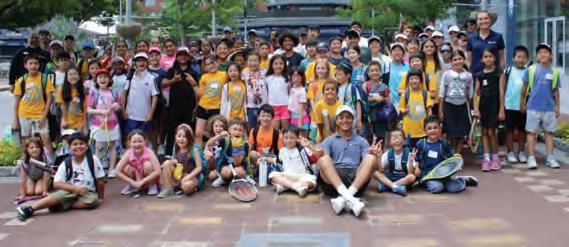

The USTA Billie Jean National Tennis Center will once again offer fun-in-the-sun tennis day camps starting in June. Enrollment will soon be available online for the weekly programs:
Please note that the camp will be held both indoors and outdoors this summer.
June 2025 - August 2025
We offer summer camps for all ages and levels from 10 and under tennis to recreational juniors to high-performance players. Space may be limited so register early.
The weekly full-day program runs Mondays through Fridays, 8:30 a.m.-4:00 p.m., with a one-hour lunch break or a twilight session from 4:30 p.m.-7:00 p.m. Campers work on the development of tennis techniques, tactics, sports conditioning, multisports, and strategy geared toward maximizing the learning experience in a fun presentation.
As the juniors develop, they are advanced to more challenging groups. Tennis activities include Stroke of the Day, team games, and competitive match play.
The camp also offers cross-training activities, such as soccer, softball, and basketball and other multisport training activities. Along with many fun activities on the grounds of the USTA Billie Jean King National Tennis Center, we also offer on site spirit days, talent contests and other on site activities designed for camper involvement and team building. The program accepts junior players, ages four- through 10-years-old for the 10 & Under programs.
Recreational players 11-years-old and up are enrolled in the Junior Camps (8:30 a.m.-4:00 p.m. or 4:30 p.m.-7:00 p.m.).
Advanced High-Performance Tournament training campers will also be invited to participate in an intensive Tennis Academy training program.
The National Tennis Center has 18 outdoor courts, 12 indoor courts, and four stadium courts. Also on-site are ping-pong tables, ball machines, a fitness center, and other age-appropriate fun activities like arts, multisports, arts and crafts, and other engaging sporting events. The primary focus will be on developing tennis skills while offering other activities to enhance the learning and summer camp experience. Also offered are junior evening and weekend programs, as well as adult daytime, weekday evening, and weekend camps. Subject to change.

Whether it’s pickleball or tennis, SassyLI has a bag for you
Bornand raised in New York, Lisa Fuchs’ tennis journey would classify her as a late bloomer.
From an early age, she was involved with dance and fitness, and that would later evolve into spin, and she eventually opened up her own Spin Studio.
But after discovering tennis later in her life, Fuchs was hooked. She immediately fell in love with the sport, and as she says: “I now live and breathe tennis, tennis and tennis!”
Fuchs had spent her professional career working in sales with some of the top fashion companies in the world, and through these client relationships she formed, she developed a real sense of fashion and style. But even more important, was recognizing and appreciating the secret of these organizations was that they were able to make women feel as good as they looked. So with that in mind, she decided to combine her business acumen with her passion for tennis to launch her own tennis bag brand, and SassyLI was born. The first bags were purchased right here on Long Island by Advantage Tennis in Westbury, and have become popular ever since.
The Sassy Li Royal Blue Bag is a lightweight tennis bag that offers a good amount of space for players on the go. Featuring high-tech features and boasting a fresh perspective on style, this bag is built for durability and premium functionality. You can easily organize your belongings with the backpack, which has room for two racquets, a zipper pocket to store cell phones, two side pockets to keep
water bottles or tennis balls, and changeable velcro straps. With ultrapadded adjustable straps and a cool modern look, you’ll be traveling comfortably as well as in style!
Built from the highest-quality materials, the Ultimate White Bag is a modern solution for players seeking years of durability, all-day capacity, and keen pocket organization. The bag is well customized to store two tennis racquets or your laptop when not in use on the court.

The additional storage compartment includes a zipper pocket to store cell phones, two side pockets to keep water bottles or tennis balls, and changeable Velcro straps.
The SassyLI Ultimate White Bag is made from 100 percent down quilted polyester that will persevere through years of training and tournament travel.
The Pickleball Sling Bag is large

enough to carry six pickleball paddles, and is made of a special light weight and durable material. The main compartment offers more than enough space for pickleballs, golf shoes, tennis shoes, etc.
Built in pockets for keys, cell phones, and the side bottle holder. The adjustable strap allows you to wear the bag tight or loose.
Peace, Love Pickleball.
For more information and to see more bags, visit SassyLi.com, or contact lili@SassyLI.com or 516-2865211.
By Chris Lewit
Asan expert on Spanish tennis, many people ask me, both personally and professionally, on podcasts and in interviews, whether Spanish tennis is in decline. The short answer is no—but the role of Spain in the global tennis ecosystem has changed. Spain is no longer defined solely by how many Spanishborn players appear in the later rounds of Grand Slams or at the top of the rankings. Instead, it has evolved from being primarily a producer of elite domestic champions into the world’s most influential training hub, shaping players, coaches, and development systems far beyond its own borders.
Rafael Nadal and the End of an Era
For nearly two decades, Rafael Nadal defined Spanish tennis and, in many ways, global men’s tennis itself. His relentless competitiveness, extraordinary physical resilience, and historic dominance at Roland Garros shaped how Spanish players were trained, perceived, and evaluated. Nadal did not simply win titles; he created an identity built on intensity, humility, discipline, and an unmatched willingness to suffer. As his career wound down and injuries limited his final seasons, concerns grew about whether Spain could remain relevant without its most iconic figure. By 2026, it is clear that Spanish tennis has not declined so much as it has evolved.
As of early 2026, Spain remains well represented at the top of the professional game, with seven Spanish men inside the ATP Top 100 — Carlos Alcaraz, Alejandro Davidovich Fokina, Jaume Munar, Pablo Carreño Busta, Roberto Bautista
Agut, Carlos Taberner, and Pedro Martínez Portero, reflecting sustained depth despite the post-Nadal transition. Martín Landaluce and Rafa Jódar, two rising Spanish talents, sit just outside the Top 100 with rankings around the mid-100s, and Landaluce has already achieved a career-high of No. 110. These figures underscore that Spanish tennis continues to generate world-class competitors even as the game globalizes and competition widens.
A broader comparison with American men’s tennis is helpful. As of early 2026, the United States (a much larger country by population than Spain) has fifteen players inside the ATP Top 100: Ben Shelton, Taylor Fritz, Tommy Paul, Learner Tien, Brandon Nakashima, Frances Tiafoe, Alex Michelsen, Jenson Brooksby, Marcos Giron, Sebastian Korda, Aleksandar Kovacevic, Reilly Opelka, Ethan Quinn, Eliot Spizzirri, and Emilio Nava. This represents a remarkable improvement in depth and competitive presence for U.S. men’s tennis, when just years ago many were criticizing the USTA and American player development in general. It is also worth remembering that this progress came after a period of severe criticism directed at the USTA, particularly during the player development overhaul led by Patrick McEnroe and Spanish coach José Higueras, whose leadership and longterm vision have since been vindicated by results. Both the US and Spain also function as global development ecosystems whose influence extends well beyond their own player counts through coaching networks, academies, and a long-term international training pipeline.
Italy offers another revealing point of comparison. As of early 2026, Italy has eight men inside the ATP Top 80:
Jannik Sinner, Lorenzo Musetti, Flavio Cobolli, Luciano Darderi, Lorenzo Sonego, Matteo Berrettini, Matteo Arnaldi, and Mattia Bellucci. This depth reflects the success of Italy’s modernized development system, which blends strong federation support with technical and philosophical principles heavily influenced by Spanish training methodology. Italy’s rise has been driven not only by elite individual talents such as Sinner and Musetti, but also by a broad base of competitive professionals, illustrating how adaptations of the Spanish model—particularly in movement, rally tolerance, and competitive resilience—can produce sustainable success at scale.
The contrast is even more striking on the women’s side, where the United States has achieved remarkable depth at the highest level. As of early 2026, the U.S. has sixteen women inside the WTA Top 100: Coco Gauff, Amanda Anisimova, Jessica Pegula, Madison Keys, Emma Navarro, Iva Jovic, Sofia Kenin, McCartney Kessler, Ann Li, Ashlyn Krueger, Danielle Collins, Peyton Stearns, Hailey Baptiste, Caty McNally, Katie Volynets, and Alycia Parks. This breadth of elite performance solidifies the United States as one of the world’s leading developers of top-level women’s players, producing both Grand Slam contenders and a deep competitive middle tier largely through domestic pathways. By comparison, Spain currently has three women inside the WTA Top 100, while Italy has two, underscoring a fundamental difference in success in the women’s game.
At the center of Spain’s modern tennis identity stands Carlos Alcaraz. By 2026, Alcaraz has already captured six Grand Slam singles titles and established himself as one of the most

dynamic and impactful players of his generation. His game represents a clear evolution of Spanish tennis, blending traditional defensive resilience with explosive offense, creativity, and speed. Unlike earlier generations that leaned heavily on clay-court dominance, Alcaraz has proven elite across all surfaces, particularly on hard courts, where his athleticism and improvisational instincts thrive.
Culturally, Alcaraz reflects a shift as well. He competes with joy and emotional openness while maintaining the competitive fire long associated with Spanish champions. As he enters a new phase of his career following his separation from longtime coach Juan Carlos Ferrero, he remains the unquestioned leader of Spanish tennis and the primary reference point for the next generation.
Rafa Jódar and the Modern Transition Path
One of the most revealing
developments in Spanish tennis in the mid-2020s has been the rise of Rafa Jódar. After excelling at the junior level, Jódar chose a hybrid development route by enrolling at the University of Virginia, reflecting a growing trend in which elite European juniors use college tennis as a transitional stage rather than a longterm endpoint.
In late 2025, Jódar officially turned professional, leaving UVA to pursue the ATP Tour full-time. Soon after, he qualified for the Australian Open, a significant milestone that confirmed his readiness for the professional stage. His qualifications demonstrated that he had adapted effectively to a higher pace, greater physicality, and greater competitive pressure. By 2026, Jódar had established himself inside the ATP Top 150, with an aggressive baseline game, strong physical base, and competitive instincts well-suited to the modern tour. His path illustrates how Spanish development has become more
flexible while remaining grounded in its core principles.
Martín Landaluce and Steady Professional Growth
Martín Landaluce represents another important pillar of Spain’s next generation. Following early junior success, his transition to the professional ranks has been deliberate rather than rushed. By 2026, Landaluce has also positioned himself within the ATP Top 150, continuing to refine the physical strength, serve development, and hardcourt adaptability necessary to compete at the highest level. His progression reflects a Spanish system increasingly focused on long-term sustainability, patience, and durability rather than early peak performance.
Any serious evaluation of Spanish tennis in 2026 must extend beyond nationality
continued on page 74






fun, co-ed team tennis






a changing of the guard
continued from page 73
complemented his natural power.
physical attributes.
Andrey Rublev is a clear example. As a junior and young professional, Rublev spent extensive time training in Spain, where he was exposed to highvolume training, relentless point construction, and an emphasis on physical and mental endurance. The Spanish training culture helped sharpen his forehand-heavy aggression within a more disciplined tactical framework. His ability to sustain pace deep into rallies and compete physically over long matches reflects the Spanish influence that
Karen Khachanov’s development followed a similar pattern. Although Russian by nationality, Khachanov trained for extended periods in Spain during the formative stages of his career. Spanish coaches and practice environments helped him improve movement efficiency, defensive competence, and rally tolerance, areas that became critical as he transitioned from a raw power player into a consistent top-level professional. His success at major tournaments owes as much to those developmental foundations as to his

Chris hosts The Prodigy Maker Tennis Show, runs a Vermont academy and online school, and is recognized worldwide for his technical expertise and inspiring coaching. Read more at substack.com/@chrislewit lists. Spanish training environments deeply shaped a substantial number of elite players competing under other flags during critical developmental years. Spain’s influence is no longer confined to Spanish passports; it is embedded in the playing styles, habits, and competitive identities of players across the global tour.
Alex de Minaur’s case is perhaps even more emblematic of Spain’s global reach. Though representing Australia, de Minaur grew up largely in Spain and trained there from a young age. His speed, counterpunching ability, court coverage, and competitive grit are quintessentially Spanish in nature. De Minaur’s game reflects Spain’s emphasis on movement, anticipation, and relentless pressure, adapted to the faster surfaces of the modern game. From a developmental standpoint, he is as much a product of Spanish tennis culture as any domestic player.
Chris Lewit is one of America’s leading high-performance tennis coaches and a global authority on Spanish training methods. Known as The Prodigy Maker, he has developed numerous elite juniors, including many #1 players in the nation. A former #1 at Cornell and pro tour competitor, Chris is the author of The Secrets of Spanish Tennis and Winning Pretty. He studied literature at Cornell, Harvard, and Columbia and is pursuing a PhD in kinesiology.
Vlada Hranchar, "Little Mo" National Champion and "Little Mo" Slam Champion

CUSTOM FULL-TIME COACHING FOR HOMESCHOOL PLAYERS
PRIVATE COACHING, HIGH PERFORMANCE CAMPS, AND GROUPS FOR ALL LEVELS HIGH PERFORMANCE SUMMER CAMP IN VERMONT TRAIN WITH THE BEST— CHRIS HAS RECENTLY COACHED SEVERAL #1 PLAYERS IN THE US!
CHRISLEWIT.COM
914.462.2912
CHRIS@CHRISLEWIT.COM
By Ricky Becker
Every few years I revisit national junior rankings to see which states are trending up or down in player development. After doing this for over a decade other than Georgia being fifth strongest, Missouri slowly climbing up the rankings or Puerto Rico holding it’s own the results have been remarkably consistent.
Better (and presumably more players) come from states with warm weather, money and population. In fact these rankings look like a blended national ranking of those three factors.
The chance of growing into a top national player is greater in these states. But whether a child becomes one of these top-players comes down to their heart, talent and finding the right developmental program. The rankings explain where opportunity lives but not who ultimately capitalizes on it!
The adjacent list was compiled by taking the top-150 kids in the Tennisrecruiting.com national junior rankings for both genders in all four high school grades and assigning a point value for each child. The state where the number one player in the country lives got 150 points, number two-player 149-points, etc.

Ricky Becker is The Director of Tennis at Glen Oaks Club. Ricky also coaches high-performance juniors throughout the year and has been the Director of Tennis at three of Long Island’s biggest junior programs. As a player, Becker was the Most Valuable Player for the 1996 NCAA Championship Stanford Tennis team, four-time MVP for Roslyn High School and ranked in the top-five nationally as a junior. He can be reached at rbecker06@yahoo.com or 516-359-4843.


Wehave all heard the aphorism that winning is all about what takes place in the six inches between your ears. To win, one must know how to manage the mind but the real question is how this is done. Most athletes turn to the latest tips on coping skills like deep breathing, positive self talk, goal setting or mindfulness meditation. They acquire this knowledge via YouTube, a podcast or sport psychology workshops.
The dirty little secret in sports is that though these tips may work for a day or so, the athletes’ anxiety, slump, lack of focus and patterns of self-defeat return with vengeance at the first sign of pressure. The simple truth is that selfhelp mantras, goal-setting and meditation sessions cannot penetrate the athlete’s unconscious.
Every athlete faces two adversaries. The first one is visible. They are the ones they see across the net, or next to them on the starting line. The other opponent is invisible, silent and far more powerful. That’s the athlete’s internal foe or what we call their unconscious. And whether your sport is tennis, taekwondo or track, unless you know how to defeat both your external and your internal foe, you will never reach your full potential and you will forever be prone to self-defeat. If your opponent doesn’t get you, your mind will.
So if an athlete is prone to anxiety, the yips, slumps, overthinking, has lost confidence or worries too much about failure, what can the sport psychologist
By Dr.Tom Ferraro
do to help? Most sport psychologists are trained in cognitive behavioral therapy which often amounts to little more than telling the athlete, “Don’t worry, be happy.”
Thankfully, there is a form of treatment for the athlete that actually works and is not a gimmick. This treatment takes the athletes career seriously enough to provide them with time and a sophisticated process which explores the athletes unconscious reasons for self-defeat and excessive anxiety.
This process is currently referred to as “depth sport psychology”, and it consists of the following procedures.
The Seven Tools of Depth Sport Psychology
1.Intake: The intake process carefully reviews the athletes past including family dynamics, the character traits of the parents, sibling relations and birth order, early childhood loss due to divorce, frequent moves or death or a parent or sibling, traumas such as sexual or physical abuse, educational history, dating history and sports history.
2. Establishing the working alliance: The working alliance may be the most important tool in sport psychology. The therapeutic or working alliance is defined as the creation of a friendly relationship through the therapist’s empathy, lighthearted humor,
positive regard and non-judgmental attitude toward the athlete. This allows for a bond to form and enables the athlete to become less defensive.
3. Free association: One of the central tenets of depth sport psychology is to help the athlete to “free associate”, or to say whatever comes to mind without hesitation or guardedness. This is why therapy is called “the talking cure” and it’s an extremely difficult thing to learn because shame, guilt and lack of trust must be overcome. But as the athlete is encouraged to say whatever they want, thoughts, feelings and memories from the past slowly begin to emerge and therefore can be worked on.
4. Resistance analysis: All athletes resist change, growth and healing. They demonstrate resistance by talking about superficial things, becoming silent, having nothing to say, missing appointments or showing up late. The unconscious causes of resistance include a fear of facing pain or shame, chronic distortion of perceptions, a compulsive need to repeat the past, the guilty need for punishment, the desire to obtain sympathy or the need to avoid the pressure inherent in success. Resistance is seen in every session and it is remarkable that standard sport psychology has nothing to
say about this ever present problem.
5. Defense analysis: Defenses are compromise positions athletes use to manage conflicts about aggression or winning. Primitive defenses include repression, regression, dissociation, somatization, injury and denial. The neurotic defenses include overcompensation, displacement, and intellectualization. The mature defenses include selfobservation, anticipation, planning ahead, asceticism, sublimation, assertiveness, affiliation and humor. Depth sport psychology explores how and why athletes use their defenses, and in so doing they resolve conflicts about aggression and winning which enables the athlete to be far more effective and consistent on the playing field.
6. Transference analysis:
Transference in athletes occurs when they exaggerate the power of their opponents due to early life experiences with their mother, their father, their siblings or a harsh coach. This common problem produces undo anxiety and feelings of weakness in the athlete. Transference is a deeply rooted perceptual state and even though an athlete may be quite talented and well trained transference distortions will always compromise performance. Depth sport psychology addresses transference issues by focusing on these distortions and connecting them to the athlete’s past.
7.Dream analysis: The athlete’s dreams are important and reveal

their deepest worries, anguish and hopes. They are usually triggered by the previous days occurrences called day residue but the dreams invariably symbolize the athlete’s most chronic and intractable problems. Depth sport psychology teaches the athlete how to keep track of their dreams and their dreams are analyzed in sessions.
In this article I have tried to demonstrate how depth sport psychology differs from that of standard cognitive behavioral mental skills training. Depth sport psychology takes the athlete on an amazing, helpful and interesting journey within and the outcome is a healthier, happier and more powerful athlete, both on the field and off.
Dr. Tom Ferraro is a pioneer in the field of depth sport psychology and his work has been featured in The New York Times, The Wall Street Journal and The London Times. He has appeared on all the major television networks and his books, are published by Routledge and can be found through Amazon and a variety of other major book distributors. He can be reached at drtferraro@aol.com.

By Eldad Campbell
Asingleday in junior tennis explains much of what we misinterpret about development—though not all of it.
They wake somewhere between 5:30 a.m. and 7:30 a.m. The variation seems minor; the accumulation does not: Seven hours of academics, social herarchies, subtle comparison and small emotional negotiations that rarely register but never disappear.
By 3 p.m., school ends. Effort does not.
They eat. They decompress; or attempt to. Then they come to tennis. One hour on court. Drills. Instruction. Repetition. Then homework. Study. Sleep. Two or three times a week. Eight to ten hours total.
Now consider the coach. Thirty to forty hours a week on court. Adult sessions in the morning. Juniors in the afternoon. A constant recalibration of tone, patience, and expectation.
And the parent: Logistics. Financing. Scheduling. Car rides thick with silence or instruction. The invisible management of everything
outside the lines.
Three people. One shared ambition: the child’s success. In theory, the alignment of preparation and demand should produce results. But development does not always obey theory.
Most players who invest eight to ten hours per week expect something measurable in return: a varsity spot, tournament wins, or college tennis.
The equation appears simple:
• Show up
• Work hard
• Improve
• Win The parent expects growth. The coach expects discipline. The player expects progress.
Per formance is often evaluated at the wrong point in the chain, and we prefer to measure what is visible. We focus on the hour on court—the drills, the correction, the repetition—and overlook what precedes it.
Development follows a quieter sequence: Action 1... Action 2... Outcome
• Action 1: ever ything that precedes the first ball struck: sleep, nutrition, emotional residue from the school day, the coach’s sixth consecutive lesson, the parent’s workday.
• Action 2: the visible hour: drill, correction, repetition.
• Outcome: the perceived results of that visible effor t.
Misunderstanding often begins here. We adjust what is visible (Action 2) while assuming the conditions beneath it (Action 1) are neutral.

A coach increases corrections and drills, perplexed when improvement does not follow. Parents emphasize focus and attitude during repetitions. Yet when preconditions and performance demands remain misaligned for months or years, visible intervention alone rarely resolves the problem.
The reflex becomes optimization of the visible hour: more drills, more volume, more repetition. Rarely do we pause to examine what precedes performance: sleep patterns, emotional climate and the transition between school and the tennis court.
What is often viewed as optimization is often displacement—effort applied in the wrong place. The more disciplined intervention is redesign—not of effort, but of the environment before, during, and after practice. This restores alignment between preparation and demand, so performance can emerge with less distortion.
It is tempting to believe that Action 1 determines the output of Action 2. Often it does, but not always. Preparation influences probability; it does not command outcome. Probability is not evenly distributed. Some athletes begin
with physiological advantages that training refines but did not create. Some begin with financial and emotional stability that allows volume without collapse. Others begin closer to exhaustion, economically, psychologically and physically.
Alignment can increase odds. It cannot equalize origins. Some athletes arrive depleted and sharpen under stress; some arrive rested and fragment. Some coaches are flat in their second hour and precise in their ninth.
Yet we still obsess over Action 2 because it is measurable. Action 1 is architectural—and architecture is easier to ignore than visible performance.
The illusion deepens when preparation and outcome coincide. We mistake correlation for proof that Action 2 caused the visible ascent, when often it is convergence—timing, temperament, support, and accumulated preparation aligning at once.
Success rarely rests on a single variable. It emerges in that convergence.
This misreading of convergence can be costly. Viewed from the outside, ascent appears causal — and so imitation follows. We treat others’ preparation as a blueprint: the travel schedule, the extra sessions, the
From that imitation, expansion begins: another lesson, another tournament, additional training layered onto already full schedules— attempting to reproduce an outcome that may have depended on more than volume.
What remains unseen is that the player who rises quickly may also carry quieter advantages: lighter academic strain, steadier emotional support, years of gradual build, a temperament suited to sustained load. The visible structure rests on invisible architecture—the daily conditions that make strain sustainable.
When visible effort expands without strengthening that foundation, strain replaces progress and imitation is understandable. Sustainability is harder.
Beneath this sits an unspoken assumption: if we sacrifice enough, excellence will appear. Parents give time and money. Coaches divide attention across dozens of bodies. Children surrender rest and ease.
But excellence has never been proportionally distributed. Some sacrifice less and rise faster. Some sacrifice everything and stall.
When excellence does not arrive on schedule, we search for a controllable
explanation. We question the child: lazy, unfocused, not committed enough.
What we often diagnose as character weakness may instead be cumulative depletion, or misaligned aspiration, where preparation does not match the demands placed upon it. The contract was never guaranteed. It was assumed.
Optimization of conditions can increase probability. But no design eliminates variance. Even optimization carries its own illusion: the more carefully we engineer invisible architecture, the more we begin to believe outcomes are owed.
Development resists that certainty.
Progress may lag despite alignment. Victory may reveal new fragilities. Effort may produce resilience instead of ranking.
The court does not simply reveal who wanted it most. It reveals whatever the day, and the years, have quietly arranged.
Performance is accumulation. But accumulation does not promise outcome. It promises clarity.
Clarity (what is effective, what is misaligned, and where adjustment belongs) and not ranking, is what these hours, and years, ultimately offer.


By Lindsay Baum
Atthe National Tennis Center during the U.S. Open, the spotlight shines on the professionals who rigorously fight for every match on our screens and are put into an environment that is not only physically demanding, but the effortless ability to bounce back from adversity.
The true training ground for this resilience dates back to the junior circuits and intermediate levels within each USTA section. This period tests the physical and mental toughness and proves ground for ambitious athletes that will challenge their limits and spirit in the competitive nature.
Below is an effective pathway to establishing the habits of a young, aspiring tennis player, both on and off the court:
Every competitive player creates a winner, an error, a strategic decision, a ritual, a game plan - the stress for it all to work out in their favor is carried on the backs of these individuals. The isolation that these players are feeling come from these stable blocks:
responsibility + accountability = mental toughness.
Coaches support and assist in developmental stages, as well as regulate emotions and professionalism on the court. Not only are they responsible for progression of strokes, but teaching how to have a positive mindset in the face of defeat. These players start to develop defense mechanisms in close matches, for example coming from behind wins, and heartbreaking losses. The lessons that create these future competitive scenarios is where we channel the emotional database: “Lock in” to that trigger, and respond in real time.
How do coaches determine the improvements to be made on court?
Simple: “open, close, open” method. On the front end, our junior programs at the National Tennis Center support analyzing player needs in an open play-based environment via matchplay analysis. The
middle phase uses hard practice drills and scenarios when they are young to help cultivate a mentally tough player. This represents the closed environment which builds junior confidence and competitive familiarity for all levels. On the backend, staff should work to help juniors solve these questions and guide them back into competitive play, including:
• Are you running down every ball?
• How resilient are you in every drill?
• How frustrated do you get if you miss 9/10 shots? Or do you get right back to it fast?
• How fast do you put the ball back in play after the last shot ended?
• And many more depending on player levels
As parents, you may recognize the behaviors as spectators at tournaments. You may not see the drills being done behind the scenes so it’s a challenge trying to manage their kids emotions when really you can't control them once they are competing on that tennis stage.
Scenario Training: Coaches simulate real time challenges by preparing the players with high pressure situational points
Mindful and Visuals: Techniques to combat stress, maintain focus levels, and manage the voice in your head to rehearse positive and successful outcomes
Goal Setting: Players are encouraged to set goals that are realistic and achievable
Self Reflection: Visualizing their performance mentally and learning from both the victories and losses
Effort & Attitude: Sliding the focus from winning to all the effort utilized and the attitude shown on display
Roger Federer once said. “As a tennis player, you have to get used to losing each week. Unless you win the tournament, you always go home a
loser. But you have to take the positive out of a defeat and go back to work. Improve to fail better.”
Let’s break that down into segments. On a macro scale, losing each week means you are playing loads of practice sets and maybe a tournament or two which can be up to three matches a day. No matter what format the players are competing in, there is a win/loss metric to account for. But the micro aspect, each match consists of points per game.
There are many factors in junior tennis that could affect how long the rallies are, how long a match could go for, never ending super tiebreakers, etc. There is no time limit for these matches; it is not like a basketball game when the buzzer calls for time. These players have to be ready for battle, the highs and lows, and the rollercoaster of physical demands as well as emotional distraught. Imagine being really happy about winning a point, then the next point completely hitting the ball straight into the net. To endure such happy/relief moments to then turn into a frustrating defeatist space, competitive players will have to learn how to level out all these emotions as well as stay on track.
Tennis is an entertaining sport and job. The pros: You get to do what you love and the attention is the spotlight. The cons: the physical and mental labor given in each shot wears you down. The best fix is to get used to losing more than half the points you play. It’s how fast you bounce back, it’s how you carry yourself, and most importantly how you portray yourself after the match regardless of your match results. A sport of highs and lows: tough losses, but having a resilient gene; is a very crucial skill in life that many tennis players will learn to develop in each stage.
Lindsay Baum is the Head Tennis Professional for Junior Development at the USTA Billie Jean King National Tennis Center. With over a decade of coaching experience, she holds a professional teaching certification with RSPA and is a USTA Eastern Certified Tournament Director, and specializes in junior development for 10 & Under programs and High Performance training. She can be reached at NTCPros@usta.com.