

New Mexico Philharmonic Foundation Inc.
New Mexico Philharmonic Foundation Inc.
There are many ways to support the New Mexico Philharmonic and the New Mexico Philharmonic Foundation. We thank our members, donors, volunteers, sponsors, and advertisers for their loyalty and enthusiasm and their help in ensuring the future of symphonic music in New Mexico for years to come.
LOOKING TO MAKE SMART DONATIONS? Based on presentations by professional financial advisors, here are some strategies for giving wisely, following recent changes in the tax law. The advisors identified five strategies that make great sense. Here they are in brief:
GIVE CASH: Whether you itemize deductions or not, it still works well.
GIVE APPRECIATED ASSETS: This helps you avoid capital gains taxes, will give you a potentially more significant deduction if you itemize, and can reduce concentrated positions in a single company.
BUNCH GIVING: Give double your normal amount every other year to maximize deductions.
QUALIFIED CHARITABLE DISTRIBUTION/REQUIRED MINIMUM DISTRIBUTION: If you are required to take an IRA distribution, don’t need the cash, and don’t want the increased taxes, have the distribution sent directly to a qualified charity.
HIGH-INCOME YEARS: If you are going to have highincome years (for any number of reasons), accelerate your deductions, avoid capital gains, and spread out gifts through a Donor-Advised Fund.
BE PROACTIVE: Consult your own financial advisor to help you implement any of these. Please consider applying one or more of these strategies for your extra giving to the NMPhil.

Dear Friends,
I cannot believe it is already February 2026! I wish you and your loved ones health and happiness in the year ahead, and I hope you had a wonderful holiday season.
The New Mexico Philharmonic’s 15th-anniversary season began the new year with a spectacular Afternoon Classics concert at the National Hispanic Cultural Center, featuring our outstanding horn players in Schumann’s Konzertstück. This was followed by our Symphonic Dances concert at Popejoy Hall, showcasing the remarkable pianist Roman Rabinovich in Prokofiev’s dynamic and captivating Piano Concerto No. 3, alongside music by beloved New Mexican composer Nicolás Lell Benavides and Rachmaninoff’s Symphonic Dances. I hope you were able to join us for these exciting performances.
In addition to the excellent concerts featured in this program book, I am especially looking forward to Aladdin and the Magic Lamp, our ballet collaboration with the New Mexico Ballet Company. This performance is sure to be a memorable experience for the entire family, for the story is timeless—as is the classical music to which it is set. I also cannot wait for April when we’ll present our Three Sopranos concert, featuring breathtaking arias from some of opera’s most beloved works and showcasing the amazing sopranos Catalina Cuervo, Amy Owens, and Olga Perez Flora.
As you know, we are now more than halfway through our Mahler Cycle, and we will conclude the season with one of Mahler’s most celebrated masterpieces, Symphony No. 5.
I look forward to seeing all of you at these extraordinary concerts, created for you, our extraordinary audience. Thank you for being part of the New Mexico Philharmonic family and for celebrating our 15th-anniversary season with us.
Sincerely,
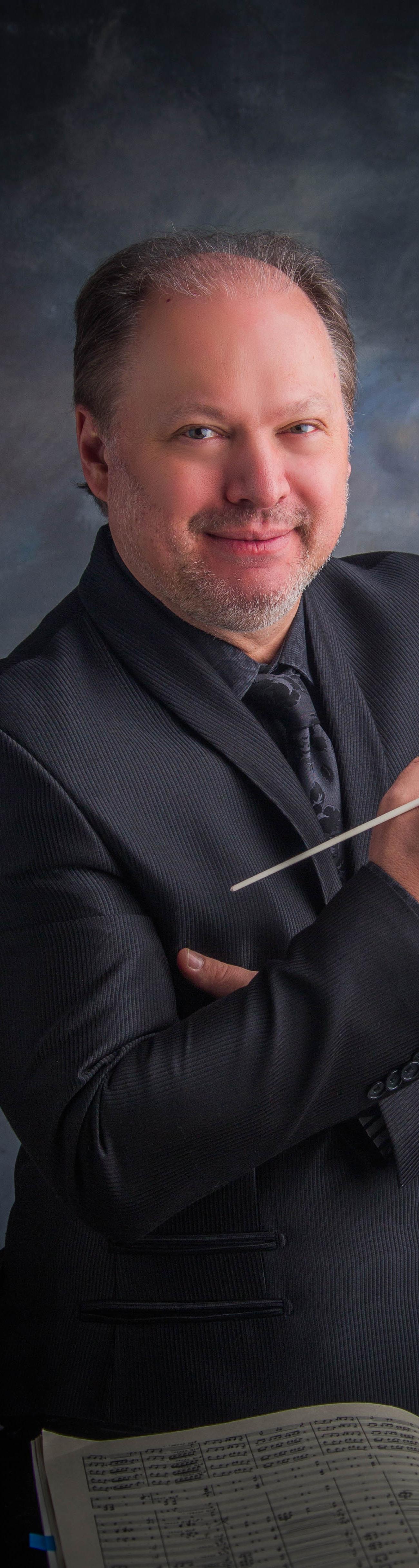
Roberto Minczuk Music
Director
In 2017, GRAMMY® Award-winning conductor Roberto Minczuk was appointed Music Director of the New Mexico Philharmonic and of the Theatro Municipal Orchestra of São Paulo. He is also Music Director Laureate of the Calgary Philharmonic Orchestra (Canada) and Conductor Emeritus of the Orquestra Sinfônica Brasileira (Rio de Janeiro). ● read full bio on page 10

ADVERTISE
POPEJOY ROCK & POPS:
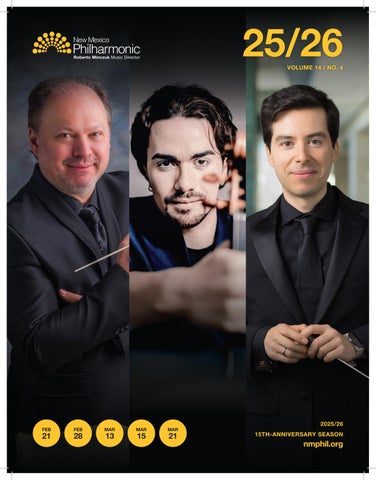
Saturday, February 21, 2026, 6 p.m.
Kǎrin Hendrickson conductor
Alex Getlin vocalist
Campbell Walker Fields vocalist
John Fischer piano
You are invited to a thrilling musical celebration of three of Britain’s legendary songwriters!
Sir Andrew Lloyd Webber, Sir Elton John, and Sir Paul McCartney are not only knights—they also happen to be three of the most successful songwriters of all time with careers that span decades. Presented by Spot-On Entertainment, Music of the Knights® honors their lasting musical influence.
MAKING A DIFFERENCE
This performance is made possible by: The Albuquerque Community Foundation


POPEJOY CLASSICS:
Saturday, February 28, 2026, 6 p.m.
Alejandro Gómez Guillén conductor
Christopher Creviston saxophone
Overture to Der Freischütz, J. 277, Op. 77
Escapades Concerto for Soprano Saxophone and Orchestra
Carl Maria von Weber (1786–1826)
John Anthony Lennon
i. on the square (b. 1950)
ii. quiet streets
iii. city lights
“Portrait of a Peaceful Scene”
Christopher Creviston saxophone
Christopher Creviston saxophone
Strum
MAKING A DIFFERENCE
This performance is made possible by: Computing Center Inc.
ADDITIONAL SUPPORT
Southwest Gastroenterology Associates
Michael “Mickey” Tucker (b. 1941)
Jessie Montgomery (b. 1981)
Pictures at an Exhibition
Modest Mussorgsky
I. Promenade (1839–1881)
II. Gnomus arr. Ravel
III. Promenade
IV. Il vecchio castello (The Old Castle)
V. Promenade
VI. Tuileries (Dispute d’enfants après jeux)
VII. Bydło
VIII. Promenade
IX. Ballet des poussins dans leurs coques (Ballet of the Chicks in Their Shells)
X. Samuel Goldenberg and “Schmuÿle”
XI. Promenade
XII. Limoges: Le marché (The Market)
XIII. Catacombae (Sepulcrum romanum)
XIV. Cum mortuis in lingua mortua
XV. La cabane sur des pattes de poule (Baba-Yaga)
XVI. La grande porte de Kiev (The Great Gate of Kiev)
CONCERT PROGRAM
COFFEE CONCERT:
Friday, March 13, 2026, 10:45 a.m.
Roberto Minczuk Music Director
Luke Gullickson piano
Judith Gordon piano
Concerto for Two Keyboards in C Major, BWV 1061
Johann Sebastian Bach
I. Allegro (1685–1750)
II. Adagio ovvero Largo
III. Fuga
Luke Gullickson piano
Judith Gordon piano
Ballet Suite from Le Triomphe de l’Amour
Jean-Baptiste Lully
I. Overture (1632–1687)
II. Menuet I & II
III. Bourrée
IV. Air
V. Entrées de Apollon
VI. Pan
INTERMISSION
The Carnival of the Animals
Camille Saint-Saëns
I. Introduction et marche royale du lion (1835–1921)
II. Poules et coqs
III. Hémiones (animaux véloces)
IV. Tortues
V. L’Éléphant
VI. Kangourous
VII. Aquarium
VIII. Personnages à longues oreilles
IX. Le Coucou au fond des bois
X. Volière
XI. Pianistes
XII. Fossiles
XIII. Le Cygne
XIV. Final
MAR 13
First Presbyterian Church
MAKING A DIFFERENCE
This performance is made possible by: The New Mexico Philharmonic Foundation
Sunday, March 15, 2026, 3 p.m.
Roberto Minczuk Music Director
Luke Gullickson piano
Judith Gordon piano MAR 15
Selections from:
Concerto for Two Keyboards in C Major, BWV 1061
Luke Gullickson piano
Judith Gordon piano
Ballet Suite from Le Triomphe de l’Amour
The Carnival of the Animals
Johann Sebastian Bach (1685–1750)
Jean-Baptiste Lully (1632–1687)
Camille Saint-Saëns (1835–1921)
Immanuel Presbyterian Church
MAKING A DIFFERENCE
This performance is made possible by: Bernalillo County
• Commission Chair Barbara Baca, District 1
• Commissioner
Frank Baca, District 2
• Commissioner
Walt Benson, District 4
Albuquerque City Council
• Councilor
Dan Champine
• Councilor
Tammy Fiebelkorn
• Councilor
Dan Lewis
• Councilor
Renee Grout
• Councilor
Brook Bassan
POPEJOY CLASSICS:
Saturday, March 21, 2026, 6 p.m.
Roberto Minczuk Music Director Giuseppe Gibboni violin
Romanian Rhapsody No. 1 in A Major, Op. 11
Violin Concerto No. 2 in b minor, Op. 7.
MAR 21
George Enescu (1881–1955)
Niccolò Paganini
I. Allegro maestoso (1782–1840)
II. Adagio
III. Rondo à la clochette
Giuseppe Gibboni violin
INTERMISSION
La mer, Three Symphonic Sketches for Orchestra, L. 109, CD. 111
Claude Debussy
I. De l’aube à midi sur la mer (1862–1918)
II. Jeux de vagues
III. Dialogue du vent et de la mer
La valse Maurice Ravel (1875–1937)
MAKING A DIFFERENCE
This performance is made possible by: The Albuquerque Community Foundation
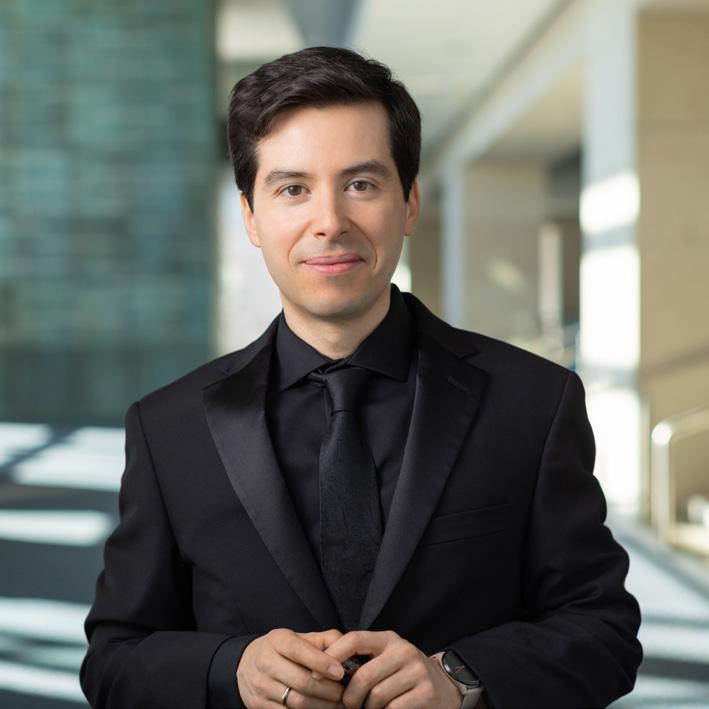
Alejandro Gómez Guillén conductor
Conductor and violinist Alejandro Gómez Guillén approaches music as a space for discovery, collaboration, and storytelling. As Director of Orchestras at Arizona State University—home to one of the nation’s leading orchestral programs and the largest public university in the United States—he guides a vibrant community of emerging artists and educators. Alejandro also serves as Music Director of Sphere Ensemble, a string collective known for its adventurous programming and genre-crossing commissions, including a recent world premiere by GRAMMY®-nominated composer Carter Pann.
Previously, Alejandro spent two seasons as Assistant Conductor of the Omaha Symphony, participating in the Grammy-nominated premiere of Andy Akiho’s Sculptures, and seven seasons as Artistic Director of the Bloomington Symphony Orchestra, where he conducted the Indiana premiere of Florence Price’s Fourth Symphony and the world premiere of Mickey Tucker’s Spiritual Collage During his tenure as Associate Conductor of the Fort Worth Symphony, he led community, pops, educational, and bilingual programs, collaborating with artists such as Time for Three and mezzo-soprano Cecilia Duarte.
As a guest conductor, Alejandro has worked with orchestras across the U.S. and abroad, with upcoming engagements including the Orlando Philharmonic, Virginia Symphony, West Texas Symphony, Tulsa’s Signature Symphony, and Orquesta Filarmónica de Bogotá. Highlights include performances at the Oregon Bach Festival, in works like the Mass in b minor and St. John Passion, and
collaborations with renowned conductors such as Ankush Kumar Bahl, Tito Muñoz, Eric Jacobsen, Robert Spano, and Ruth Reinhardt. Alejandro combines artistry with education, having led the Omaha Symphony’s acclaimed community and education programs, reaching 25,000 students annually. He was previously Assistant Professor of Music at Colorado Mesa University, where he taught violin, viola, and conducting while leading the university’s orchestras. Additional roles include Music Director of the Colorado Youth Philharmonia, conducting youth and collegiate orchestras, and leading historical performance projects as a violinist and conductor.
As a violinist, Alejandro has served as concertmaster with the Grand Junction Symphony and Junges Stuttgarter Bach Ensemble, performing across Europe at venues like the Rheingau Music Festival and Berlin Philharmonie. He was a returning member of the Oregon Bach Festival’s Berwick Academy for Historical Performance and plays in Duo Anthracite and Chaski Quartet with his wife, Dr. Sarah Elizabeth Cranor.
Born in Colombia and a proud U.S. citizen, Alejandro holds a Bachelor’s degree in violin performance from Texas Christian University and Master’s and Doctoral degrees in conducting and violin from the University of Colorado at Boulder. His research includes a critical edition of Jorge Pinzón’s Violin Concerto and a guide to using Bach’s orchestral dances for modern developing orchestras. His mentors include Gary Lewis, Helmuth Rilling, Mei-Ann Chen, and Matthew Halls.
When away from the stage, Alejandro can be found trail running, singing, or reveling in a Bach fugue—often with his family and a soundtrack by Ella, Nils Frahm, or Punch Brothers. ●
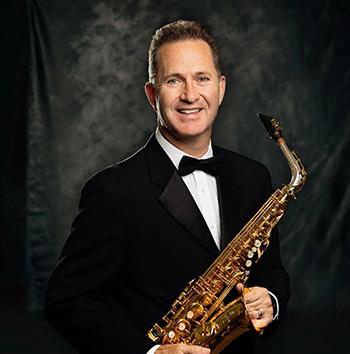
Christopher Creviston saxophone
Hailed as “one of the world’s top saxophone artists” (Audiophile Audition) with “the personality and fingers of a first-rate soloist” (American Record Guide), and “subtle, perceptive phrasing, and flawless control of vibrato” (Fanfare Magazine), Christopher Creviston has been featured in venues ranging from Carnegie Hall to Paisley Park and the Apollo Theater. As a soloist and with the Capitol Quartet, Creviston has been showcased with world-class ensembles, including the National Symphony Orchestra, Baltimore Symphony Orchestra, Indianapolis Symphony Orchestra, and many others. As a recitalist and clinician, he tours internationally with the Capitol Quartet, and in the Creviston Duo with pianist Hannah Creviston.
Creviston’s recent commercial releases include premiere recordings of the Concerto for Soprano Saxophone and Band by Pulitzer Prize winner William Bolcom and the Soprano Saxophone Concerto by Pulitzer Prize finalist Carter Pann. In summer 2025, he recorded the Concerto for Alto Saxophone by Jaromír Weinberger with the Czech National Symphony Orchestra, and in the 2025/2026 season, he is slated to premiere new concerti by Robert Paterson and Mischa Zupko.
The Creviston Duo’s commercial releases include the CDs Phoenix Rising and Breaking, presenting works commissioned by the duo from recognized composers Stacy Garrop, Carter Pann, John Anthony Lennon, Mark Lanz Weiser, Katherine Hoover, John Fitz Rogers, and Eric Mandat. These and several other recordings featuring Christopher can be found on your favorite streaming media.
Now Professor at Arizona State University, Creviston previously held faculty positions at the Crane School of Music, the Greenwich House of Arts, the University of Windsor, and the University of Michigan. He serves on the faculty of the Great Plains Saxophone Workshop. His students have garnered top prizes at some of the world’s most prestigious competitions, including the Fischoff Chamber Music Competition, the Plowman Chamber Music Competition, the Coltman Chamber Music Competition, the MTNA National Competitions, the American Prize and many others. Creviston is a Yamaha Performing Artist and is former president of the North American Saxophone Alliance. ●
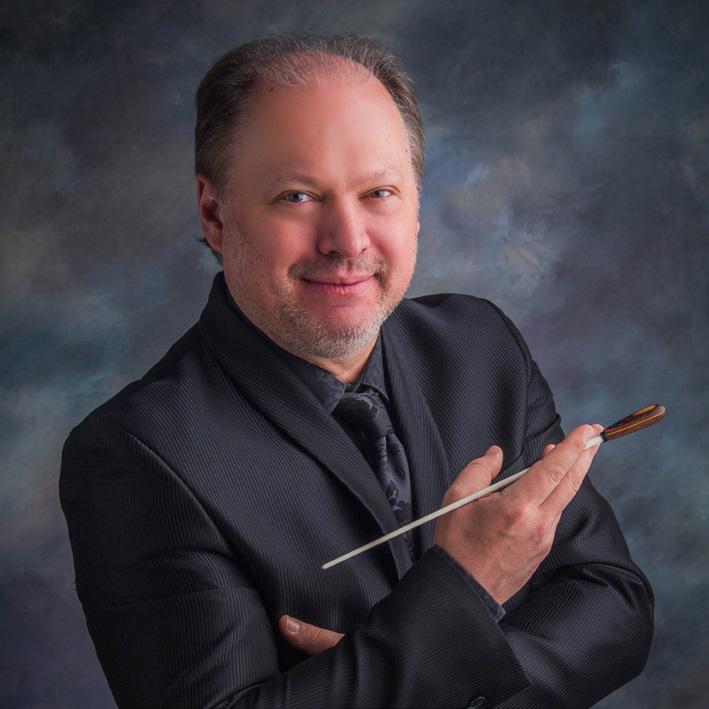
Roberto Minczuk Music Director
In 2017, GRAMMY® Award-winning conductor Roberto Minczuk was appointed Music Director of the New Mexico Philharmonic and of the Theatro Municipal Orchestra of São Paulo. He is also Music Director Laureate of the Calgary Philharmonic Orchestra (Canada) and Conductor Emeritus of the Orquestra Sinfônica Brasileira (Rio de Janeiro). In Calgary, he recently completed a 10-year tenure as Music Director, becoming the longest-running Music Director in the orchestra’s history.
Highlights of Minczuk’s recent seasons include the complete Mahler Symphony Cycle with the Calgary Philharmonic Orchestra; Bach’s St. John Passion, Bruckner’s Symphony No. 7, Beethoven’s Fidelio, Berlioz’s The Damnation of Faust, Mozart’s The Magic Flute, Verdi’s La traviata, Bernstein’s Mass, and Strauss’s Der Rosenkavalier with the Theatro Municipal Orchestra of São Paulo; debuts with the
Cincinnati Opera (Mozart’s Don Giovanni), the Tokyo Metropolitan Symphony Orchestra, and Daejeon Philharmonic in South Korea; and return engagements with the Orchestre National de Lille and the New York City Ballet. In the 2016/2017 season, he made return visits to the Israel Symphony Orchestra, as well as the Teatro Colón Philharmonic and Orchestra Estable of Buenos Aires.
A protégé and close colleague of the late Kurt Masur, Minczuk debuted with the New York Philharmonic in 1998, and by 2002 was Associate Conductor, having worked closely with both Kurt Masur and Lorin Maazel. He has since conducted more than 100 orchestras worldwide, including the New York, Los Angeles, Israel, London, Tokyo, Oslo, and Helsinki Philharmonic Orchestras; the London, San Francisco, Dallas, and Atlanta Symphony Orchestras; and the National Radio (France), Philadelphia, and Cleveland Orchestras, among many others. In March 2006, he led the London Philharmonic Orchestra’s U.S. tour, winning accolades for his leadership of the orchestra in New York, Los Angeles, and San Francisco.
Until 2010, Minczuk held the post of Music Director and Artistic Director of the Opera and Orchestra of the Theatro Municipal Rio de Janeiro, and, until 2005, he served as Principal Guest Conductor of the São Paulo State Symphony Orchestra, where he previously held the position of Co-Artistic Director. Other previous posts include Artistic Director and Principal Conductor of the Ribeirão Preto Symphony, Principal Conductor of the Brasília University Symphony, and a six-year tenure as Artistic Director of the Campos do Jordão International Winter Festival.
Minczuk’s recording of the complete Bachianas Brasileiras of Hector Villa-Lobos with the São Paulo State Symphony Orchestra (BIS label) won the Gramophone Award of Excellence in 2012 for best recording of this repertoire. His other recordings include Danzas Brasileiras, which features rare works by Brazilian composers of the 20th century, and the Complete Symphonic Works of Antonio Carlos Jobim, which won a Latin GRAMMY in 2004 and was nominated for an American GRAMMY in 2006. His three recordings with the Calgary Philharmonic Orchestra include Rhapsody in Blue: The Best of George Gershwin and Beethoven Symphonies 1, 3, 5, and 8. Other recordings
include works by Ravel, Piazzolla, Martin, and Tomasi with the London Philharmonic (released by Naxos), and four recordings with the Academic Orchestra of the Campos do Jordão International Winter Festival, including works by Dvořák, Mussorgsky, and Tchaikovsky. Other projects include a 2010 DVD recording with the Chamber Orchestra of Philadelphia, featuring the premiere of Hope: An Oratorio, composed by Jonathan Leshnoff; a 2011 recording with the Odense Symphony of Poul Ruders’s Symphony No. 4, which was featured as a Gramophone Choice in March 2012; and a recording of Tchaikovsky’s Italian Capriccio with the BBC National Orchestra of Wales, which accompanied the June 2010 edition of BBC Music Magazine. The Academic Orchestra of the Campos do Jordão Festival was the Carlos Gomes prizewinner for its recording from the 2005 Festival, which also garnered the TIM Award for best classical album.
Roberto Minczuk has received numerous awards, including a 2004 Emmy for the program New York City Ballet—Lincoln Center Celebrates Balanchine 100; a 2001 Martin E. Segal Award that recognizes Lincoln Center’s most promising young artists; and several honors in his native country of Brazil, including two best conductor awards from the São Paulo Association of Art Critics and the coveted title of Cultural Personality of the Year. In 2009, he was awarded the Medal Pedro Ernesto, the highest commendation of the City of Rio de Janeiro, and in 2010, he received the Order of the Ipiranga State Government of São Paulo. In 2017, Minczuk received the Medal of Commander of Arts and Culture from the Brazilian government.
A child prodigy, Minczuk was a professional musician by the age of 13. He was admitted into the prestigious Juilliard School at 14 and by the age of 16, he had joined the Orchestra Municipal de São Paulo as solo horn. During his Juilliard years, he appeared as soloist with the New York Youth Symphony at Carnegie Hall and the New York Philharmonic Young People’s Concerts series. Upon his graduation in 1987, he became a member of the Leipzig Gewandhaus Orchestra at the invitation of Kurt Masur. Returning to Brazil in 1989, he studied conducting with Eleazar de Carvalho and John Neschling. He won several awards as a young horn player, including the Mill Santista Youth Award in 1991 and I Eldorado Music. ●
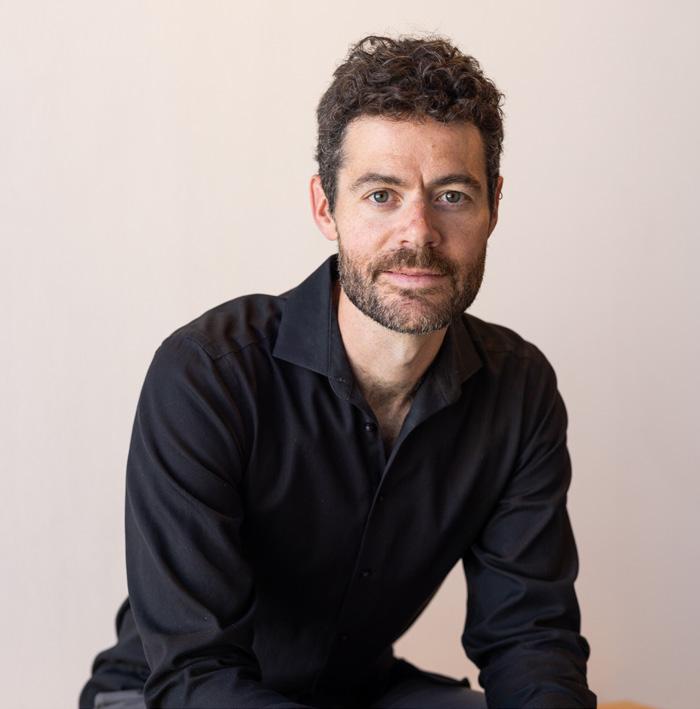
Luke Gullickson piano
“Pianist and composer Luke Gullickson is part of a new breed of new-music figures who make the boundaries between once-disparate stylistic approaches as porous as they want. Not only does he ignore the traditional wall between serious composer and performer, his wide-open ears allow all sorts of unique approaches to mingle with his fluid writing.”
— Chicago Reader
Pianist/composer Luke Gullickson (b. 1985) is a rangy interpreter of music new and old, a virtuosic collaborator bridging disciplines, and an intrepid explorer of the unmapped space between styles and genres. He is Company Manager and a core performer with New Mexico’s innovative Chatter ensemble, which presents 120+ concerts annually. As a member of the mercurial Grant Wallace Band (“spidery original bluegrass” — The New York Times), he has worked with the Houston Grand Opera, Ensemble Dal Niente, and Chicago Composers Orchestra, and performed in art spaces, jazz clubs, and barns across the country. Luke has recorded extensively as a singer-songwriter (“charmingly mysterious” — Bandcamp Daily) and bandleader. Many of his releases have appeared on the shadowy imprint Two Labyrinths Records, commencing with 2014’s Open, which the Chicago Reader hailed as a “minimalist gem.” Luke holds degrees in composition (University of Texas at Austin) and piano (University of New Mexico), and has been awarded artist residencies at the Banff Centre, PLAYA, High Concept Labs, Brush Creek Arts, the Ucross Foundation, Virginia Center for the Creative Arts, and Joshua Tree National Park. He is a frequent performer with the New Mexico Philharmonic and Santa Fe Symphony. ●
The New Mexico Philharmonic

Judith Gordon piano
Pianist Judith Gordon explores diverse repertoire as both soloist and in collaboration with a wide range of instrumentalists and singers. Heard at festivals and on series including Albuquerque Chamber Soloists, Apple Hill, Charlottesville, Music Mountain, Santa Fe, Spoleto, Tanglewood, Taos, Music from Salem, and most often as a featured player for Chatter, she has also appeared with the Boston Pops, Boston Modern Orchestra Project, the Saint Paul Chamber Orchestra, and was a member of the percussionbased ensemble Essential Music. A Boston Globe “Musician of the Year,” Gordon was an associate professor of music at Smith College from 2006–2020, and is now based in New Mexico. ●
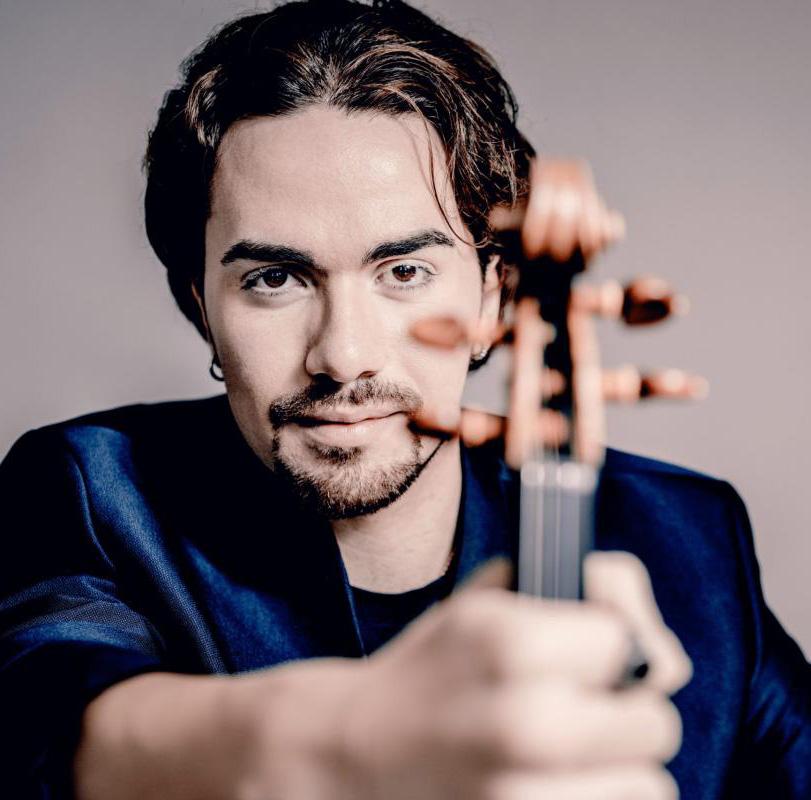
Gibboni violin
Giuseppe Gibboni, regarded as one of the most extraordinary talents of his generation, is renowned for his prodigious technique, expressive depth, and remarkable interpretative maturity. In October 2021, he
captured international attention by winning First Prize at the 56th “Premio Paganini” International Violin Competition in Genoa— earning, in addition to the audience award, two special prizes for the best interpretations of Paganini’s Caprices and Concerto. He was the first Italian violinist in 24 years to win this prestigious competition.
Born into a family of musicians, he began studying the violin at a very young age under the guidance of his father, Daniele Gibboni. He graduated with top honors from the “Giuseppe Martucci” Conservatory in Salerno under the mentorship of Maestro Maurizio Aiello, quickly standing out for his natural virtuosity. At the age of 14, he was admitted to the Stauffer Academy in Cremona, where he studied with Salvatore Accardo, and later continued his training at the Chigiana Academy in Siena, where he received the Diploma of Honor. He also completed advanced studies at the Perosi Academy in Biella with Pavel Berman and at the Mozarteum University in Salzburg with Pierre Amoyal.
His victory at the Paganini Competition launched a career that rapidly took on an international dimension. He has collaborated with some of the world’s most prestigious orchestras, including the Orchestra of the Accademia Nazionale di Santa Cecilia conducted by Lorenzo Viotti, the Detroit Symphony Orchestra with Jader Bignamini, the Maggio Musicale Fiorentino Orchestra with Zubin Mehta, and the RAI National Symphony Orchestra. With the latter, he gave the Italian premiere of Wynton Marsalis’s Violin Concerto, working closely with the composer under the baton of John Axelrod. His repertoire spans the great Romantic concertos as well as contemporary works, showcasing both his exceptional versatility and deep artistic curiosity. In the current season, he made his debut under the baton of Maestro Riccardo Muti at the opening concert of the Ravenna Festival. Other major engagements include debuts with the Atlanta Symphony Orchestra, the Filarmonica della Scala under Michele Mariotti, the Tokyo Philharmonic in Dubai, the Beijing Symphony Orchestra, and the Seoul Arts Center. He performed Busoni’s Violin Concerto in Trieste in celebration of the centenary of the composer’s death and toured the United States with the Teatro Carlo Felice of Genoa, performing Paganini’s Violin
Concerto No. 1 under the direction of Donato Renzetti, with whom he also performed Tchaikovsky’s Violin Concerto in Milan with the “Pomeriggi Musicali” Orchestra.
A featured artist supported by the Nippon Foundation, Giuseppe Gibboni performs on the 1722 Stradivari “Jupiter,” on loan from the foundation, the 1734 Stradivari “Lam – Ex Scotland University,” kindly provided by the CCI Foundation of New York, and a modern instrument by Luiz Amorim, a copy of the famed 1734 Guarneri del Gesù “Stauffer.” ●

Kǎ
Kǎrin Hendrickson is a conductor equally at home with opera and orchestra. Engagements have included the London Symphony Orchestra, BBC Scottish Symphony Orchestra, BBC Concert Orchestra, the Orchestre national d’Ile de France, National Orchestra of Wales, Belgian National Symphony, BBC Philharmonic, BBC Symphony Orchestra, the Pittsburgh Symphony Orchestra, and the Nashville Symphony Orchestra, among others. Opera credits include Music Director for the premiere and tour of Opera for the Unknown Woman (Melanie Wilson/Fuel Opera), Music Director for Bloomsbury Opera, and Chorus Master for The Royal Opera House, Covent Garden, and Longborough Festival Opera.
Kǎrin prepared The Gulbenkian Orchestra’s semi-staged production of Eugene Onegin for Lorenzo Viotti, and served as Music Director for Opera Holland Park’s production of Hänsel and Gretel
Kǎrin maintains an international profile as an exceptional orchestra and opera pedagogue. She has prepared projects for multiple international concert houses, including Concertgebouworkest Young; the
Royal Conservatoire of Scotland; the Royal Conservatoire of Music, Ghent; the National Youth Orchestra of Scotland; the National Youth Orchestra of Great Britain; the Royal Welsh College of Music and Drama; return appearances with the London Symphony Orchestra/Guildhall School Orchestra Artistry candidates (including preparation of their side-by-side for Michael Tilson-Thomas); the Gulbenkian Orchestra (Portugal) for Mahler Symphony No. 3; preparation of young players for Gustavo Dudamel with the Barbican Centre (London) collaboration between the London Symphony Orchestra and the Los Angeles Philharmonic youth orchestras; visiting conductor for the Royal Academy of Music Symphony Orchestra and Marin Alsop on Britten’s War Requiem for the Southbank Centre at Royal Festival Hall (Royal Philharmonic Society Award for Learning and Participation); and three guest artist appointments to lead the orchestra at North Carolina School of the Arts in performances including Bernstein’s Mass, the complete Nutcracker ballet, and a recorded film version of The Nutcracker ballet during COVID-19 that aired on PBS. In 2025, Kǎrin accepted the position of Director of Orchestras and Director of Graduate Orchestral Conducting at the University of New Mexico—a deliberate investment into the next generation of orchestral musicians and conductors. Her work at UNM runs parallel to her continued professional engagements.
Kǎrin has won numerous awards including the prestigious European Network of Opera Academies Young Conductor Residency— from a pool of nominated candidates across institutions including the Dutch National Opera (Netherlands]), Snape Maltings (England), Helsinki Festival (Finland), and Opera Narodowa (Poland). She was one of five conductors invited to the Dallas Opera’s Hart Institute of Conductors and one of three conductors invited as the Atelier des Créatrices d’Opéra at the Festival Aix-enProvence (Academie), France. While at the Royal Academy of Music (London), she received two Gordon Foundation awards and the Fred Southall Memorial Prize in her final year. Other formative recognition includes nomination for the Nestlé-Salzburg Festival Young Conductors award, training at the Mozarteum under Siemens Prizewinner
Peter Gülke, talent grants from The Peabody Conservatory, and an award through Marin Alsop’s Taki-Alsop Fellowship. ●
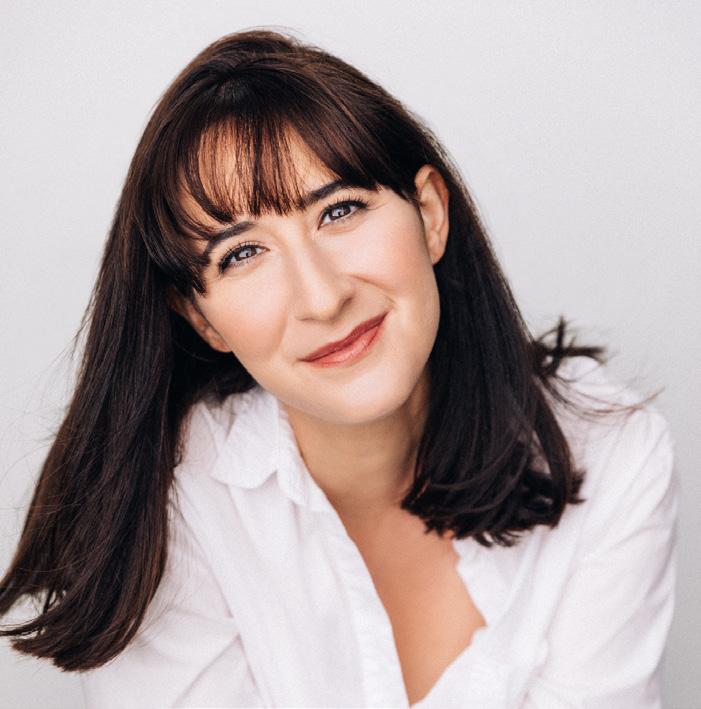
Alex Getlin vocalist
Alex Getlin is a Manhattan-based singer and actress whose voice can “melt stone” (Ben Brantley, The New York Times). A native New Yorker, she made her professional debut at 17 in a solo cabaret show at The Regency Hotel in New York, presented by Michael Feinstein. Broadway World reported that her performance marked the emergence of “a new and rare talent on the entertainment scene.” A graduate of Northwestern University, she was most recently seen in Berkshire Theatre Group’s nationally acclaimed production of Godspell. She has appeared Off-Broadway in the company and original cast recording of Anything Can Happen in the Theater—The Songs of Maury Yeston, after being handpicked by the Tony® Award-winning composer himself to interpret his music. Getlin, who has been hailed by The New York Times as “a confident, engaging young singer with a big voice,” made her symphonic debut with the Pasadena Pops under the baton of Michael Feinstein in Broadway: The Golden Age, starring alongside Liza Minnelli and Joel Grey. She has been a featured soloist at Carnegie Hall and currently performs with symphony orchestras throughout the country with SpotOn Entertainment. Television credits include NBC’s The Blacklist, CBS’s Shades of Blue and Netflix’s The Break With Michele Wolf. ●

Campbell Walker Fields vocalist
Campbell Walker Fields is a versatile singer and keyboardist with equal comfort on concert, musical theatre, and arena stages. His professional career began when he was cast at the age of 9 as the Artful Dodger in Lyric Theatre of Oklahoma’s 2011 production of Oliver! Soon after, he played JoJo in Seussical the Musical at the University of Oklahoma, and Foo (Lost Boy) in the world premiere, sevenweek run of the musical Fly at Dallas Theatre Center. Other Lyric credits include Slim in Oklahoma! and productions of Big Fish, Mary Poppins, and Les Misérables. Favorite student roles have included Jean Valjean in Les Mis, Tom Collins in Rent, Joseph in Joseph and the Amazing Technicolor Dreamcoat, Seaweed in Hairspray, Jack in Into the Woods, and Rum Tug Tugger in Cats. In summer 2016, he was seen competing in the 11th season of NBC’s America’s Got Talent, making it to the middle of the Judges’ Cuts round. He has performed as soloist with symphony orchestras including the Jacksonville Symphony, Tulsa Signature Symphony, Abilene Philharmonic, Dearborn Symphony, Gainesville Orchestra, Western Piedmont Symphony, Camerata Mazatlán, the Pocono Pops, as well as multiple appearances with the Oklahoma City Philharmonic. He has performed at Cast Party at Birdland in NYC, and his commercial work includes the feature film Home Run and print and TV ads for SandRidge Energy. Since summer 2018, he has been part of the all-star faculty of the Pocono Mountains Performing Arts Camp. ●
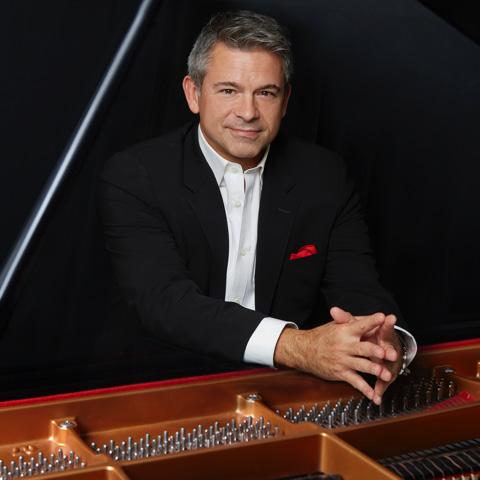
John Fischer piano
John Fischer is a music director, pianist, vocal coach, and teacher with decades of experience working with top Broadway and cabaret artists, including Tony Award® winners Ali Stroker and Alice Ripley, Tony Award® nominee Emily Skinner, and many more. He music-directed Broadway’s Rising Stars at The Town Hall for 14 seasons, where he also worked on numerous Broadway Originals concerts. He spent seven seasons as music director for the highly acclaimed musical theatre program at Jacob’s Pillow Dance Festival in the Berkshires, and his last season saw him working hand in hand with Stephen Schwartz and Chet Walker on the creation of a new ballet, The Boy on the Roof. In recent years, John has joined the symphony world as a guest artist, debuting a new Bacharach show with the Plymouth Symphony, Blockbuster Broadway for the Omaha Symphony, a Bernstein/Robbins celebration with the Signature Symphony, and Music of the Knights with the Santa Ana Symphony Orchestra. In NYC, he is a regular fixture at 54 Below, music-directing everything from Sinatra to Streisand, and is the MD for the long-running series Sondheim Unplugged. Recent highlights include Ali Stroker’s sold-out American Songbook concert at Lincoln Center, Alice Ripley & Emily Skinner’s Unattached! at 54 Below, and the 25th-anniversary concert of Joseph and the Amazing Technicolor Dreamcoat, part of the award-winning 54 Sings series for which he also music-directed Applause, Mack & Mabel, and Kiss of the Spiderwoman. He currently teaches at Singnasium, ApplauseNY, and also does private coaching. He has been on staff
at AMDA, HB Studios, The New School, The Lee Strasberg Theatre & Film Institute, and the Growing Studio. ●

Spot-On Entertainment
Scott Coulter’s Spot-On Entertainment is a concert production/booking company based in New York City. Owner and founder Scott Coulter is a multi-award-winning performer, director, musical arranger, and producer whose creations for theaters, performing arts centers, and symphonies include Music of the Knights, Bette, Babs, & Beyond, The Wonderful Music of OZ, You’ve Got a Friend, and Blockbuster Broadway! Special composer tribute shows include Defying Gravity: Stephen Schwartz & Friends and Jerry Herman: The Broadway Legacy Concert (which is co-produced by Spot-On and The ASCAP Foundation). Spot-On concerts often feature an educational component that results in local artists appearing on stage with members of the Spot-On family. It is our goal to inspire and pass the torch to the next generation. ●
BY DAVID B. LEVY
Carl Maria von Weber was born in Eutin, Germany, presumably on November 18, 1786, and died in London on June 5, 1826. Best known today for his groundbreaking Romantic opera Der Freischütz (1821), he also wrote other operas, significant choral music, and instrumental works. His overtures were especially influential in the development of the concert overture and symphonic poem. Although opus numbers exist for some of Weber’s compositions, scholars use “J” numbers that refer to the 1871 chronological thematic catalogue of his works prepared by Friedrich Wilhelm Jähns. This catalogue may be compared to the catalogue of Mozart’s compositions by Ludwig von Köchel (the source of “K” numbers for that composer). Weber’s Overture to Der Freischütz is scored for 2 piccolos, 2 flutes, 2 oboes, 2 clarinets, 2 bassoons, 4 horns, 2 trumpets, 3 trombones, timpani, percussion, and strings. Approximately 9 minutes.
Weber’s 1821 opera Der Freischütz quickly became the standard that defined German Romantic opera. Supernatural events, a rural landscape (the forest), religiosity, an alienated hero, and, above all, redemptive love are its primary ingredients. It is safe to say that without Weber’s model, the operatic achievements of Richard Wagner later in the nineteenth century would have been unthinkable. Beloved by the German people—but not to the exclusion of other nationalities—Der Freischütz is a work whose plot (based on Germanic folklore) and musical attributes were admired by not only Wagner, but also by the Frenchman Hector Berlioz and many others.
The title of the opera defies precise translation, having been called at times The Free Shooter or The Magic Bullet. The libretto by Friedrich Kind tells the story of the unlucky Max, a hunter whose skill
Weber’s 1821 opera Der Freischütz quickly became the standard that defined German Romantic opera.
as a marksman has abandoned him at a critical moment. If he is to win the hand of his beloved Agathe, he must succeed in the shooting contest at the local hunting lodge. He turns in desperation to black magic, abetted by his companion Caspar. This brooding friend had at some time before the story began sold his soul to Samiel, a werewolf agent of Satan, also known as the “Black Hunter.” Envious of Max, Caspar hopes to offer his companion’s soul to Samiel as a substitute for his own. Against all better judgment, Max agrees to meet Caspar at midnight in the dreaded Wolf’s Glen, where seven magic bullets will be cast that cannot fail to hit their mark.
The gloomy music for the finale of Act II, the “Wolf’s Glen” scene, provides much of the material heard in the Overture to Der Freischütz. After an opening gesture in the unison strings, a hymnal melody for four horns (the German name for this instrument, appropriately enough, is Waldhorn [forest horn]) dominates the slow introduction. The serenity is interrupted by an ominous chord, played by tremolo strings and punctuated by the kettledrum. This chord is heard throughout the opera whenever Samiel is present. An agitated theme with syncopated accompaniment provides the first theme for the Overture’s main section, which is cast in sonata form. This dark melody is derived from Max’s aria in Act I, “Doch mich umgarnen finstre Mächte” (“Thus sinister powers ensnare me”). An explosive loud theme represents the thunderstorm that erupts at the climax of the “Wolf’s Glen” scene, at the casting of the fatal seventh bullet, which belongs to Samiel and will hit the target of his choosing. Another theme, played by the clarinet (one of Weber’s favorite instruments), is also taken from the “Wolf’s Glen” scene. A lyrical second
theme played by the violins is derived from Agathe’s aria, “All’ meine Pulse schlagen” (“All my pulses are beating”). The triumph of Agathe’s redemptive love is reflected in the coda of the Overture, where a dramatic pause is followed by a joyful reprise of her melody. Listeners familiar with the Overture to The Flying Dutchman will recognize just how indebted Wagner was to Weber’s superb model. ●
______________________________________
NOTES BY JOHN ANTHONY LENNON Escapades
During the times of Covid when the world seemed to be closed and there was scarce live music to hear, I escaped by composing Escapades for Soprano Saxophone and Orchestra. Between mid2020 and early-2021, three movements emerged as scenes of life through this unusual time. The first movement, “On the Town,” depicts a festive public life with its energy and lyricism. The mood of the music changes abruptly with “Quiet Streets,” a lamentation that lingers in the music space. “City Lights” brings back a sense of joy and elation as the concerto concludes with a spirit of reckless abandon.
Throughout the piece, the unique and alluring sound of the soprano saxophone weaves its way through and above the colors of the orchestral tapestry. I composed the concerto for Christopher Creviston, one of the premiere saxophone artists of our time, with gratitude that he includes this piece among the many concertos written for him. Escapades is dedicated to his daughter, Ziva Creviston. ●
NOTES
BY
MARIAN TANAU
“Portrait
Michael “Mickey” Tucker (C. 1978)
Born in Durham, North Carolina, in 1941, jazz musician, composer, and educator Michael “Mickey” Tucker began studying piano at an early age and was performing publicly while still a teenager, including in a trio with drummer Grady Tate. After moving to New York City in the mid-1960s, he worked with a wide range of artists across jazz and popular music, including Rahsaan Roland Kirk, the Thad Jones/ Mel Lewis Orchestra, Art Blakey, and the Jazz Messengers, and later appeared on recordings by Phil Woods, Art Farmer, and Benny Golson. His “Portrait of a Peaceful Scene” is from the 1978 album Sweet Lotus Lips and is approximately 3 minutes long.
Originally recorded by the Mickey Tucker Trio, “Portrait of a Peaceful Scene” reflects the intimate scale of its jazz-album origins. The original recording features piano, bass, and drums, and unfolds as a restrained, lyrical meditation rather than a programmatic narrative. Its character is shaped by melodic simplicity and a calm, reflective atmosphere. ●
NOTES
BY
DAVID B. LEVY
Strum
Jessie Montgomery (2006)
Born in New York City in 1981, African American composer, musician, and educator Jessie Montgomery is one of the most vital voices of her generation. Her studies began at Manhattan’s Third Street Music School Settlement. She later went on to receive a degree in violin performance at Juilliard and a Master’s degree in Composition for Film and Multimedia at New York University (2012). She has been actively involved with
the Detroit-based Sphinx Organization in supporting and encouraging young African American and Latinx string instrumentalists. Her works have been performed by many significant arts institutions (Orpheus Chamber Orchestra, American Composers Orchestra, Atlanta Symphony, to name but a few). She also has worked collaboratively with numerous colleagues in both music and dance. Strum began its life as a string quintet in 2006. Montgomery later made a string quartet version (2008) and revised the piece again in 2012 in connection with the 15th annual Sphinx Competition. Scored for string orchestra. Approximately 7 minutes.
In her own program notes for Strum, Jessie Montgomery wrote: “Originally conceived for the formation of a cello quintet, the voicing is often spread wide over the ensemble, giving the music an expansive quality of sound. Within Strum, I utilized texture motives, layers of rhythmic or harmonic ostinati that string together to form a bed of sound for melodies to weave in and out. The strumming pizzicato serves as a texture motive and the primary driving rhythmic underpinning of the piece. Drawing on American folk idioms and the spirit of dance and movement, the piece has a kind of narrative that begins with fleeting nostalgia and transforms into ecstatic celebration.”
Living up to its title, the work uses extensive pizzicato (plucking) effects, evoking the idea of a banjo, over which evocative musical fragments are played (arco) with the bow. In kaleidoscope fashion, the music shifts from idea to idea, keeping the listeners on their toes from start to finish. The work, in its string quartet version, has been recorded by the Catalyst Quartet as part of the album Strum: Music for Strings (2015) on the Azica label ●
Modest Petrovich Mussorgsky was born on March 21, 1839, in Karevo, Russia, and died on March 28, 1881, in Saint Petersburg. A leading figure in Russian nationalism of the second half of the nineteenth century, many of his pieces, most notably his suite for piano Pictures at an Exhibition, the tone poem Night on Bald Mountain, and the epic opera Boris Godunov, have caught the imagination of audiences throughout the world. Maurice Ravel’s 1922 arrangement and brilliant orchestration of Pictures at an Exhibition received its first performance on May 3, 1923, in Paris under the direction of Serge Koussevitzky. Ravel’s orchestration calls for piccolo, 3 flutes, 3 oboes, English horn, 2 clarinets, bass clarinet, 2 bassoons, contrabassoon, alto saxophone, 4 horns, 3 trumpets, 3 trombones, tuba, large percussion section (including rattle, snare drum, bass drum, cymbals, whip, triangle, xylophone, glockenspiel, bells, celesta, and gong), timpani, 2 harps, piano, and strings. Approximately 33 minutes.
Mussorgsky composed Pictures at an Exhibition in 1874 as a memorial to his deceased friend, the painter and architect Victor Hartmann. The two men shared an interest in creating a distinctly “Russian” mode of artistic creation. A posthumous exhibition of Hartmann’s work was arranged by Vladimir Stasov, and this proved to be the catalyst for both the format and content of Mussorgsky’s suite of musical miniatures for piano solo. The popular orchestration of Pictures at an Exhibition by Maurice Ravel was made in 1922 under a commission from the conductor Serge Koussevitzky. Ravel was not the only individual to orchestrate this work, but his transcription has proved to be the most enduring and popular.
A bold solo trumpet announces the beginning of the “Promenade,” a theme that serves as a cipher for the visitor to
the gallery. This theme, altered each time according to the mood created by each painting, recurs throughout the work as a unifying device (Ravel chose to omit one of these). The “Promenade” theme bears Russian folk-like characteristics—most notably an irregular meter reflective of the rhythm of the Russian language. The first picture, titled “Gnomus,” is a grotesque nutcracker in the shape of a gnome. A brief “Promenade” leads to the second picture, “Il vecchio castello.” Here the saxophone sings a melancholy aubade, depicting a troubadour singing outside the wall of a medieval castle.
A shorter “Promenade” leads us to the Parisian garden of “Tuileries,” where we encounter the universal phenomenon of children who quarrel and tease each other during their play. The next picture, “Bydło,” presents a striking change of mood, as we can hear the passing of a rough Polish oxcart. A heavy ostinato figure accompanies the solo tuba. The “Promenade” returns to ease the transition to “The Ballet of the Chicks in their Shells.” Here, the woodwinds dominate in a comical scherzo. “Samuel Goldenberg and ‘Schmuÿle’” (“Two Polish Jews, One Rich, One Poor”) is a caricature of ghetto life, with the unison strings representing the wealthy and pompous Goldenberg. The plaintive sound of Schmuÿle may be heard in the muted trumpet. Musicologist and Mussorgsky expert Richard Taruskin, in recent writings on the subject, has suggested that a darker anti-Semitic subtext underlies this movement. The title of the movement puts “Schmuÿle” in quotation marks, implying that the two characters are, in fact, one and the same individual.
The bustle of “The Marketplace, Limoges” interrupts with the most sudden shift of mood in the entire piece. But as the busy market approaches its climax, our attention is jerked by the rough lower brass to the next picture, “Catacombs: Sepulchrum Romanum.” These coarse harmonies provide an apt symbolization of this deathly scene. The “Promenade” that follows without break is marked “Con Mortuis in Lingua Mortua” (“With
The climax of the procession comes in the final transformation of the now-familiar “Promenade” theme— here offered as a kind of apotheosis of Hartmann’s career.
the Dead in the Language of the Dead”). This is a critical dramatic moment in the piece, as Mussorgsky surely reflects in an intensely personal sense on the death of his artist friend. No relief is offered in the terrifying portraiture of “The Hut on Fowl’s Legs (Baba-Yaga).” Legend has it that the witch Baba-Yaga dwells in a hut mounted on chicken’s feet, where she uses mortar and pestle to grind the bones of humans. The nightmare of this witches’ Sabbath is broken by the ecclesiastical sounds of “The Great Gate of Kiev.” Visitors to the Ukrainian capital city will seek this monument in vain, however, as it existed only in the imagination of Hartmann and Mussorgsky. But music and visual imagery take us along on the grand processional, accompanied by chanting priests, and noble bells and cymbals. The climax of the procession comes in the final transformation of the now-familiar “Promenade” theme—here offered as a kind of apotheosis of Hartmann’s career. ●
Johann Sebastian Bach (1732–1733)
Johann Sebastian Bach was born in Eisenach, Germany, on March 21, 1685, and died in Leipzig on July 28, 1750. He looms as one of history’s pivotal figures whose music is venerated and admired by many composers who followed him, from Haydn to Bartók and beyond. During his own lifetime, Bach was more revered as an organist and keyboard virtuoso than as
a composer. His enormous output covers virtually every genre of the Baroque era, except for opera. But even here, the drama found in much of his sacred choral music (church cantatas, Passions, oratorios, the Magnificat, and Mass in b minor) and other works showed considerable dramatic flair. In addition to his seven concertos for solo harpsichord (BWV 1052–1058), or claviers, to use the generic term for keyboard instruments other than the organ, we may add three concertos for two harpsichords (BWV 1060–1062), two concertos for three harpsichords (BWV 1063 and 1064), and one concerto for four harpsichords (BWV 1065). We should also add the Brandenburg Concerto No. 5 in D Major (BWV 1050), although it is technically a concerto grosso due to its extensive passagework for the keyboard. According to Martin Pearlman, the concerto on this program is thought to be the only harpsichord concerto of Bach that is original and not a transcription of a piece for some other instrument. It is scored for solo keyboards and string orchestra. Approximately 17 minutes.
We know that Bach wrote many instrumental works during his period in Cöthen, where his duties did not call for the composition of sacred music for the church. We know that the popular Six Brandenburg Concertos belong to this period, three of which (Nos. 2, 4, and 5) fall into the category of “concerto grosso,” i.e., concertos for two or more solo instruments. We also know that Bach remained active in his composition of secular music, including concertos, when he took up his final position as Kantor for two Lutheran (Evangelical) churches in Leipzig, as well as his directorship of
Leipzig’s Collegium Musicum.
The inspiration for nearly all of Bach’s concertos came from the Venetian master Antonio Vivaldi, himself the composer of nearly six hundred (!) concertos. Bach’s admiration for Vivaldi presents itself in his transcriptions of the Italian’s violin concertos into works for solo organ, as well as for harpsichord (in one case, Vivaldi’s Concerto in b minor for Four Violins, was transcribed for four harpsichords). Following Vivaldi’s model, Bach’s solo concertos comprise three movements. The first movements typically are cast in ritornello form, whereby the (string) orchestra makes an initial statement (ritornello), followed by a passage where the soloist steps into the foreground, lightly accompanied by the orchestral “ripieno” group. Shortened versions of the opening ritornello are interspersed with additional solo episodes, with the movement ending with a final ritornello. The second movements are slower in tempo than the first and last ones.
Although the instrument that Bach had in mind when composing his keyboard concertos was the harpsichord, the piano was already in its earliest stages of development during the latter years of his life; pianists have embraced his compositions for keyboard (clavier) as an important part of the pianist’s repertory. The Concerto No. 2, BWV 1061, on this program is a brilliant work dating from the 1730s. Unlike his other two concertos for two keyboards that were transcriptions from pre-existent works involving violins (or violin and oboe), BWV 1061 was conceived with keyboard instruments in mind. Unusual for Bach’s concertos, the role of “ripieno” (full) strings is quite
minimal, and indeed the strings are entirely absent in the second movement, leading scholars to theorize that they may have been added at a later date. ●
The Italian-born master of the French Baroque began his life in Florence as Giovanni Battista Lulli on November 29, 1632. He died in Paris on March 22, 1687, the results of gangrene that set in after he accidentally stabbed his toe with a conducting staff. His name is synonymous with the development of various forms of French opera and ballets under the patronage of the Sun King, Louis XIV, who reigned from 1643–1715. As le Roi Soleil loved dancing, opera in France often featured extensive scenes and divertissements that included dance. Lully was so favored by the king, he was promoted to head his highness’s private orchestra, Les Petits Violons du Roi, as well as the larger ensemble, Les Vingtquatre violons. Lully often worked with librettists Quinault and Molière. The ballet Le Triomphe de l’Amour, a work that blends ballet with elements of opera, was composed to celebrate the marriage of the Dauphin to Marie Anne Christine de Bavière and was first performed at SaintGermain-en-Laye on January 21, 1681, where it received multiple subsequent performances. In May of the same year, it was performed at the Académie Royale de Musique. The Suite heard on this concert is derived from the much longer ballet. It
The inspiration for nearly all of Bach’s concertos came from the Venetian master Antonio Vivaldi, himself the composer of nearly six hundred (!) concertos.
is written for string orchestra, although there is historical evidence that wind instruments were also used at its premiere.
According to musicologist Rebecca Harris-Warrick, Le Triomphe de l’Amour was a landmark in the history of ballet “as the first work in which professional women dancers appeared on the stage of the Académie Royale de Musique.” (Dance and Drama in French Baroque Opera, Cambridge UP, 2016). Although the bulk of the work featured dance numbers, each section of the work also included singing. Each of the scenes involves the effects of love on various mythological figures and gods, culminating with the appearance of Apollo. In earlier works by Lully, Louis XIV himself portrayed, and was likened to the Sun God, Apollo himself. According to Harris-Warrick:
“Louis XIV, who had been an enthusiastic participant in many court ballets up until 1669, appears symbolically in the role of Apollon, in section IX. Not only was the sun the emblem most strongly associated with the king, Apollon had been one of Louis’s signature roles during his ballet-dancing days. Lully made the connection explicit in his dedication to the score”:
I concluded that I needed powerful help and I decided to follow the example of the Muses, who, notwithstanding all their knowledge in the beautiful art of harmony, had recourse to a god who enlightened them and who presided over their concerts. But I recognized from my youngest years that the Apollo who would inspire the songs I intended to compose was neither in my birthplace [Florence] nor on the summits of Parnassus. I thought I could find him in the most flourishing empire on earth and I easily recognized him as soon as I was fortunate enough to lay eyes on Your Majesty.
The Ballet Suite heard on this program comprises an Overture, Menuet I & II, Bourrée, Air, Entrées de Apollon, and Pan.
●
Camille Saint-Saëns (1886)
Charles Camille Saint-Saëns was born in Paris on October 9, 1835, and died in Algiers on December 16, 1921. His long career embraced the roles of composer, pianist, organist, and author. His prolific output of compositions is valued highly for its craftsmanship and wide variety of genres. In addition to The Carnival of the Animals, he is best known for his “Organ” Symphony, the opera Samson et Delilah, his concertos for piano and orchestra, and the Violin Concerto No. 3. He was one of the leaders of the French musical renaissance of the 1870s. Saint-Saëns’s suite of fourteen orchestral miniatures, The Carnival of the Animals (Le Carnaval des animaux), was composed in February 1886 during his stopover in Austria after an unsuccessful tour of Germany. Ostensibly it was written as an amusement for his students at the École Niedermeyer de Paris. The first performance of a chamber version of the work, however, took place at a private concert on March 3, 1886, given by the cellist Charles Lebouc. Surely Lebouc was delighted by the wonderful cello solo in the movement designated “The Swan.” The first public performance by full orchestra took place posthumously on February 25, 1922, in Paris with Gabriel Pierné leading the Concerts Colonne. The work is scored for 2 pianos, flute (and piccolo), clarinet, glass harmonica, xylophone, and strings. Approximately 25 minutes.
Saint-Saëns was keenly aware that had he allowed The Carnival of the Animals to go public, critics and audiences might no longer take him seriously as a composer of any consequence. This is in no way meant to indicate that he undervalued the work. But as he wrote to his publisher in Paris, the work was “si amusant” (such fun). Except for the movement titled “The Swan,” the composer placed in his will the desire that publication of The Carnival of the Animals be suppressed until after his
death. Its first public performance elicited the following enthusiastic review in Le Figaro:
We cannot describe the cries of admiring joy let loose by an enthusiastic public. In the immense oeuvre of Camille Saint-Saëns, The Carnival of the Animals is certainly one of his magnificent masterpieces. From the first note to the last, it is an uninterrupted outpouring of a spirit of the highest and noblest comedy. In every bar, at every point, there are unexpected and irresistible finds. Themes, whimsical ideas, instrumentation compete with buffoonery, grace, and science . . . When he likes to joke, the master never forgets that he is the master.
The composer certainly must have had fun working in sly parodies of preexisting music, such as a slow version of Offenbach’s Can-Can from Orpheus in the Underworld in “The Tortoises,” tunes by Mendelssohn and Berlioz in “The Elephant,” and other quotations in “The Fossils.” Like others in my generation, the author of these notes was introduced to the work via a wonderful recording by Andre Kostelanetz and his Orchestra featuring clever verses by Ogden Nash recited by Noël Coward. Although some of these poems are dated, such as the references to the Andrews Sisters in “The Birds,” and Harry Truman’s daughter’s skills as a pianist in “The Pianists,” these poems continue to delight audiences. In Nash’s own words, “In outdoing Barnum and Bailey and Ringling, Saint-Saëns has done a miraculous thingling.” ●
George Enescu was born in Liveni Vîrnav, near Dorohoi, Romania, on August 19, 1881, and died in Paris, France, on May 4, 1955. He is one of Romania’s best-known composers, and he was also an outstanding violinist, conductor, and educator. He was known in France and elsewhere by the Westernized name Georges Enesco. His two Romanian Rhapsodies date from 1901 and received their first performances on March 8, 1903, at the Romanian Athenaeum in Bucharest, conducted by Eduard Wachmann. Interestingly, Enescu preferred performing the Rhapsodies in reverse order, perhaps recognizing that Rhapsody No. 1 would outshine its twin. He was correct, and the piece has remained a popular part of the orchestral repertoire. The work was dedicated to Bernard Crocé-Spinelli, a colleague of Enescu from his days as a student at the Conservatory in Vienna. The scoring calls for 3 flutes (the third doubling piccolo), 2 oboes, English horn, 2 clarinets, 2 bassoons, 4 French horns, 4 trumpets, 3 trombones, timpani, percussion (triangle, snare drum, cymbals), 2 harps, and strings. Approximately 12 minutes.
Enescu’s First Romanian Rhapsody is a delightful panorama of the nation’s folk music dressed up in colorful orchestral garb. It begins by quoting the folk song “Am un leu şi vreau să-l beau” (often translated as “I want to spend my money on drink” or “I have a coin, and I want a drink”), which is played by oboes and clarinets. Enescu was probably introduced
Enescu’s First Romanian Rhapsody is a delightful panorama of the nation’s folk music dressed up in colorful orchestral garb.
to the tune by the Romani violinist Lae Chioru (Nicolae Filip), from whom the composer took his first violin lessons as a young lad. This tune gives way to a dance-like tune akin to a hora (circle dance), introduced in the violins. As the work progresses, this tune grows faster and livelier and gives way to a thrilling, and at times riotous, folk dance. Evidently, that coin bought the fellow more than one drink! In a song called “Romania, Romania,” popularized in the 1960s by the folk trio The Limelighters, we hear the words “In Romania, we drink wine and eat mamaliga (a cornmeal porridge my grandmother used to make), and whoever kisses his own wife must be crazy!” Such is the spirit of Enescu’s music. ●
Italian violin virtuoso and composer Niccolò Paganini was born in Genoa on October 27, 1782, and died in Nice on May 27, 1840. During his lifetime and beyond, his name has become synonymous with musical virtuosity. His earliest musical education was at the hands of his father, Antonio, an amateur musician who taught his son to play the mandolin and violin. The precocious son later also picked up the guitar, an instrument for which he composed chamber music. He continued his education in composition and violin with local professional musicians. Among his many diverse compositions, he is best known for his five concertos for violin and his Twenty-Four Caprices for Solo Violin. His Violin Concerto No. 2 is scored for 2 flutes, 2 oboes, 2 clarinets, 2 bassoons, 2 horns, 2 trumpets, 3 trombones, serpent (or tuba), timpani, bass drum, bell (campanella) in F♯, and strings. Approximately 30 minutes.
A wonderful portrait of Paganini painted in 1832 by Eugène Delacroix beautifully captures the mystique that surrounded this wizard of the violin. Tall and lanky in stature, Paganini’s pyrotechnics on the
A wonderful portrait of Paganini painted in 1832 by Eugène Delacroix beautifully captures the mystique that surrounded this wizard of the violin.
violin led to flights of imagination that suggested that the man must surely have sold his soul to Satan in order to gain his exceptional skill. The portrait is quite dark, except for the area around the violinist’s face, left hand, and cravat. If one looks closely enough at the brightest part of the canvas, one might be able to identify another face—perhaps that of the Devil himself. The idea that virtuosos such as Paganini, and subsequently pianists such as Franz Liszt, sold their souls in order to master their instrument, worked its way into the public imagination. Closer to our own time, think of Stravinsky’s 1918 theater piece A Soldier’s Tale (L’Histoire du soldat), or even closer to our own time, the Charlie Daniels Band 1979 hit song “The Devil Went Down to Georgia.”
A more plausible theory, proposed in an article published by a contributor to the Journal of the American Medical Association (JAMA), suggested that Paganini’s “supernatural” flexibility could have been the side effect of a disease known as Marfan syndrome, which usually affects people who are tall and thin with unusually long arms, legs, fingers, and toes. Regardless of legend or scientific speculation, there is no doubt that the kind of virtuosity exhibited by Paganini and Liszt, to name the most famous names, had its roots in the kind of technically dazzling vocalism associated with early19th-century Italian bel canto opera as found in the operas of Rossini, Bellini, and Donizetti. Paganini’s Violin Concerto No. 2 derives its fame from the rondo finale called “La Clochette” (La Campanella), a reference to the little bell that presages the rondo tune. Liszt, one of Paganini’s greatest admirers, borrowed the ideas
from the concerto’s finale in 1851 as the basis for the third of his Grandes études de Paganini in g-sharp minor, S. 141. ●
(1903–1905)
(Achille-)Claude Debussy was born August 22, 1862, in Saint-Germainen-Laye (near Paris) and died in Paris on March 25, 1918. His magnificent seascape, La mer, was composed between 1903–1905. Its first performance took place in Paris at the Concerts Lamoureux on October 15, 1905, under the direction of Camille Chevillard. The work is scored for piccolo, 2 flutes, 2 oboes, English horn, 2 clarinets, 3 bassoons, contrabassoon, 4 horns, 3 trumpets, 3 trombones, tuba, timpani, percussion (bass drum, cymbals, triangle, tam-tam, and glockenspiel), 2 harps, and strings. Approximately 24 minutes. As is the case with his Nocturnes (1893–1899), La mer is a triptych. Unlike the former work, however, La mer’s three movements must be performed together in order to retain their unity (Nuages, Fêtes, and Sirènes, the movements that comprise Nocturnes, could be—and often are— performed separately). La mer represents Debussy at his symphonic best, a fact that garnered criticism from both his friends and enemies. Debussy’s supporters sensed that he was moving too far from the abstract qualities of symbolism, such as is found in his Prelude to the Afternoon continued on 20
of a Faun of 1894, in favor of a too “traditional” approach to composition. His detractors, on the other hand, argued that he did not go far enough, wishing La mer to be a full-fledged symphony. While some of the criticism toward La mer may have been driven by animosities deriving from scandals surrounding Debussy’s personal life (he had left his wife, Lily, for Emma Bardac, the wife of a prominent Parisian banker), the work obviously has triumphed over the objections of its earliest critics.
Debussy’s love of the sea was deeply felt, and in a letter to his publisher Jacques Durand, he reveals that under other circumstances he might have pursued a maritime career. In another letter, he identifies the sea as “the thing in nature which best puts you in your place.”
The original titles for the first and third sketches were, respectively, “Mer belle aux iles sanguinaires” and “Le vent fait danser la mer” (“The Beautiful Sea With Happy Islands” and “The Wind Makes the Sea Dance”). The second sketch, “Jeux des vagues” (“Games of the Waves”), retained its original title in the final draft of the piece.
I. De l’aube à midi sur la mer (From Dawn to Noon on the Sea). The immense power of the sea, yet to be unleashed, is portrayed in a slow introduction. The first important theme is played by English horn and trumpet. As dawn rises, the movement of the sea becomes more active, as one feels (and sees in the bow movements of the violins) an undulating, rocking motion. Divided cellos announce the fully wakened forces of nature at work. The end of the sketch is marked by a majestic theme in the horns—the “chorale of the depths.”
II. Jeux des vagues (Games of the Waves). Debussy’s superb skills as an orchestrator come to the fore in this scherzo filled with brilliant effects and delicacy. The “games” range from the teasing to the powerfully rough-andtumble variety.
III. Dialogue du vent et de la mer (Dialogue of the Wind and the Sea). At first, it seems as though the winds adumbrate an approaching storm. A transformation of a figure from the first movement, a short note followed by a longer one, takes on a
As is the case with his Nocturnes (1893–1899), La mer is a triptych. Unlike the former work, however, La mer’s three movements must be performed together in order to retain their unity (Nuages, Fêtes, and Sirènes, the movements that comprise Nocturnes, could be—and often are— performed separately).
plaintive air described by some as akin to a siren’s song. This figure dominates the mood of the entire movement. Cellos and bassoons give an animated statement of the first theme from the opening sketch, which now grows more vehement. This yields eventually to a subtle invocation of the “chorale,” but the plaintive wail of the siren’s song returns in colorful guise, framed by a wonderful high note (harmonic) in the violins. A majestic sounding of the “chorale” in the full brass denotes the powerful coda—a peroration in praise of the sea, which, as Debussy says, has shown us “all her moods.” ●
Maurice Ravel was born on March 7, 1875, in Ciboure, France, and died on December 28, 1937, in Paris, France. La valse is scored for 3 flutes (the third doubling piccolo), 2 oboes, English horn, 2 clarinets, bass clarinet, 2 bassoons, contrabassoon, 4 horns, 3 trumpets, 3 trombones, tuba, timpani, percussion, 2 harps, and strings. Approximately 13 minutes.
Maurice Ravel was one of the most significant and influential composers of the early 20th century, and was one of the most meticulous craftsmen there has ever been in the music world. He was also one of the great masters of
the orchestra, a position that will never be challenged. In 1906, he began to sketch a symphonic poem as a tribute to Johann Strauss Jr., who had died just seven years earlier. It was tentatively to be called Wien, the German name for Vienna. At that time, he wrote to a friend: “You know of my deep sympathy for these wonderful rhythms, and that I value the joie de vivre expressed by the dance …” This would eventually become La valse some 14 years later, and a number of things brought about this delay. Sergei Diaghilev, the brilliant impresario of the celebrated Ballets Russes, commissioned a full-length ballet from Ravel in 1909, but because of a number of unexpected production problems, the new ballet, which was Daphnis et Chloé, was not given its premiere until 1912. Then came World War I. Ravel wanted desperately to enlist in the army but was turned down for physical reasons and became a military truck and ambulance driver. He was horrified by what he witnessed on the front lines, and even though he began to think about composing again in 1916, a severe bout with dysentery, which required surgery to correct, sent him into a long convalescence, and this was aggravated not only by the depression that overtook him because of what he had witnessed, along with the loss of several close friends in the conflict, but also by the death of his mother in 1917.
After the end of the war, Diaghilev again approached Ravel with a commission for a new ballet. He decided to revise the Wien
After the end of the war, Diaghilev again approached Ravel with a commission for a new ballet.
project into Diaghilev’s new concept but found that he had to make major changes to his original ideas due to the fact that his thinking and life in general in Europe had been radically changed. He completed what is now called La valse in 1920, and in a version for two pianos received its first hearing in a private home in Paris in October of that year. In the audience on that occasion were Diaghilev, Igor Stravinsky, Francis Poulenc, and dancerchoreographer Leonid Massine. Following the performance, Diaghilev proclaimed the work a masterpiece, but said it was unsuitable for staging because, in his words, “… it’s not a ballet. It’s a portrait of a ballet—a painting of a ballet,” and so he refused to produce it. Ravel, thinking that his refusal was a criticism of the music (which it was not), angrily picked up his manuscript and stormed out of the home. Ravel never forgave Diaghilev for
this incident, and when they met again in Monte Carlo five years later, Ravel refused to shake the impresario’s hand, whereupon Diaghilev challenged him to a duel! Fortunately, some friends intervened, and the duel never took place, but in any case the two men never again met.
La valse was one of the few works that Ravel conceived in entirely orchestral terms right from its first inspiration as Wien. Along with the two-piano version, he also prepared one for solo piano, but because of the extreme difficulty of these keyboard versions, they are rarely performed. In the original orchestral score, Ravel wrote an explanatory note. It can be translated in slightly different ways, and one version might read like this: “Through whirling clouds, waltzing couples may be faintly distinguished. The clouds gradually disperse, and we see an immense hall filled with a whirling crowd.
As the rhythm becomes clearer, the scene takes on greater illumination until the light of the chandeliers bursts forth. An imperial court about 1855.” He later spoke of the work as “… a kind of apotheosis of the Viennese waltz, with which is mingled in my mind the fantastic and fatal whirl of destiny.” In its orchestral garb, La valse was first heard in the concert hall in 1920. Its first performance as a ballet was choreographed at the Paris Opera in 1929 by the celebrated dancer Ida Rubinstein, who had premiered Bolero the previous year. The work, with its extraordinary combination of suspense and tension, has been variously viewed as portraying the collapse of Viennese society, the general breakdown of European culture following World War I, a biting satire on the Viennese waltz, and a premonition of even greater horrors to come. One of the most fascinating ideas is that there is a connection between Ravel and Edgar Allan Poe, who had a great influence on French literature toward the end of the 19th century, and that Ravel’s “fantastic whirling” bears a resemblance to “… a masked ball of the most unusual magnificence … [that] went whirlingly on” in Poe’s classic short story of 1842 called The Masque of the Red Death. ●
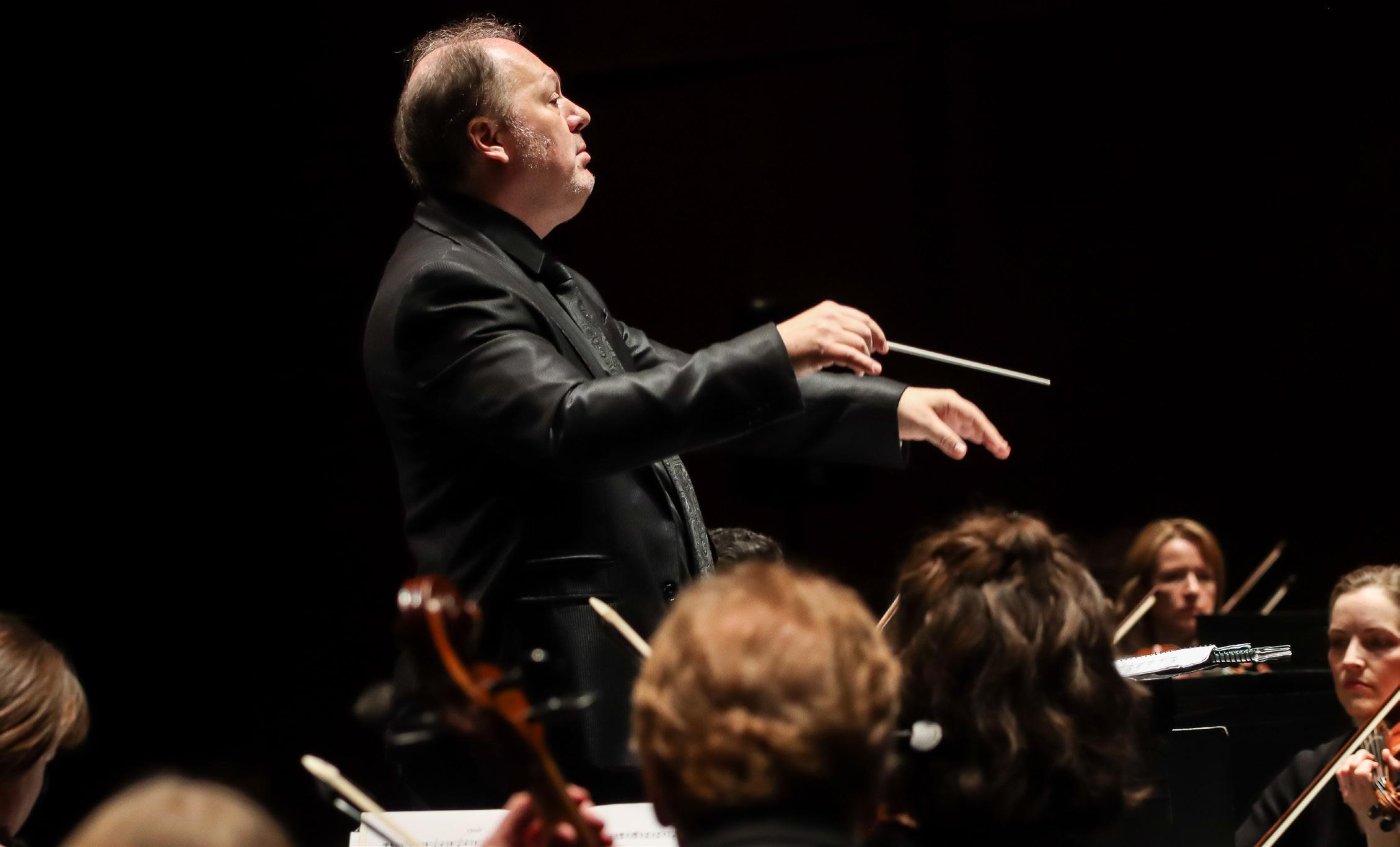
Nusenda Credit Union is happy to support The New Mexico Philharmonic in its mission to embrace diversity and enrich lives through music, community engagement, and educational opportunities. Together, we can set the stage for positive change in our communities.
Find a nearby branch, services, and more at nusenda.org
@NusendaCU |
|
Steinway Society
Piano Fund
Steinway Society members make dedicated donations for current and future purchases and maintenance of our Steinway & Sons Grand Piano Model D. Please consider joining the Steinway Society at the donor level that is best for you and be part of your New Mexico Philharmonic by helping us to produce excellence through our music. View benefits online at nmphil.org/steinway-society.
HOROWITZ LEVEL
Donation of $20,000–$50,000
Cliff & Nancy Blaugrund
Lee Blaugrund
Charles & Eugenia Eberle
Roland Gerencer, MD
Dal & Pat Jensen
WHITE KEYS LEVEL
Donation of $6000–$19,999
David Gay
Michael & Roberta Lavin
Diane & William Wiley
Dr. Dean Yannias
BLACK KEYS LEVEL
Donation of $2000–$5999
Meg Aldridge
Carl & Linda Alongi
Joel & Sandra Baca
Stephen & Maureen Baca
William & Paula Bradley
Clark & Mary Cagle
Phillip & Christine Custer
Art Gardenswartz & Sonya
Priestly
Robert & Jean Gough
Helen Grevey
Bill & Carolyn Hallett
Stephen & Aida Heath
Christine Kilroy
Edward J. Kowalczyk
Dwayne & Marj
Longenbaugh
Mary E. Mills
Jan Elizabeth Mitchell
Jacquelyn Robins
Jay Rodman & Wendy Wilkins
Albert Seargeant III, in memory of Ann Seargeant
Terrence Sloan, MD
PEDAL LEVEL
Donation of $500–$1999
Ron Bronitsky, MD
Michael & Cheryl
Bustamante, in memory of Cheryl B. Hall
Daniel & Brigid Conklin, in memory of Marina
Oborotova
Richard & Peg Cronin
Mr. & Mrs. Robert Duff
Custer
Leonard & Patricia Duda
David Foster
Peter Gould
Elene & Robert Gusch
Jonathan & Ellin Hewes
Robert & Toni Kingsley
Dr. Herb & Shelley Koffler
Tyler M. Mason
Thomas & Edel Mayer
Jon McCorkell & Dianne Cress
Bob & Susan McGuire
David & Audrey Northrop
James P. O’Neill & Ellen Bayard
Gary & Carol Overturf
Ruth Ronan
Edward Rose, MD
Marian & Howard Schreyer
Bruce & Sandra Seligman
Frederick & Susan Sherman
David & Heather Spader
Al & Melissa Stotts
Charles & Marcia Wood
PIANO FRIENDS LEVEL
Donation of $50–$499
Wanda Adlesperger
Fran A’Hern-Smith
Joe Alcorn & Sylvia Wittels
Dennis Alexander
Anonymous
Elizabeth Bayne
Judy Bearden-Love
Karen Bielinski-Richardson
Sheila Bogost
Robert Bower & Kathryn
Fry
Stephen & Heidi Brittenham
Dante & Judie Cantrill
Camille Carstens
Olinda Chavez
Beth L. Clark
Henry & Ettajane Conant
John & Katie Cunningham
Marjorie Cypress & Philip
Jameson
Thomas & Martha Domme
Martin J. Doviak
Robert B. Engstrom
Jackie Ericksen
Elle J. Fenoglio
David Fillmore
Blake & Liz Forbes
George Gibbs
Ginger Grossetete
Kerry L. Harmon
Jo Ellen Head
Heidi Hilland
Glenn & Susan Hinchcliffe
Bryan “Lance” & Debrah
Hurt
Nancy Joste
Julia Kavet
M.J. Kircher
Ralph & Heather Kiuttu
Larry W. Langford
Susan Lentz
Claire Lissance
Morgan MacFadden
James & Marilyn Mallinson
Nicholle Maniaci & John
Witiuk
Tom & Constance
Matteson
Jane McGuigan
Martha Ann Miller & Henry Pocock
Robert & Phyllis Moore
Cary & Evelyn Morrow
Katarina Nagy
Edward & Nancy Naimark
Geri Newton
Bob & Bonnie Paine
James Porcher
Dan & Billie Pyzel
Mary Raje
Ray A. Reeder
Karl Ricker
Judith Roderick
Dick & Mary Ruddy
John Sale & Deborah
Dobransky
Katherine Saltzstein
Peggy Schey
Jane Nicholson Scott &
Robert Scott
Laurel Sharp & David
Smukler
Catherine Smith-Hartwig
Cynthia Sontag
Frances Steinbach
Luis & Patricia Stelzner
Linda Trowbridge
Kevin & Laurel Welch
Jeffrey West
Charles & Linda White
Roland & Wendy Wiele
Diane Zavitz, in memory of Pat & Ray Harwick
Linda R. Zipp, MD
01/27/2026
saturday, March 14, 2026 5:30pm - 10:00pm
BALLROOM AT National Hispanic Cultural Center
’50s- and ’60s-era attire, or business casual)
CRESCENDO CIRCLE
$1,000,000 + The McKinnon Family Foundation
MAESTRO’S CIRCLE
$200,000–$999,999
Lee Blaugrund
Robert J. & Greta L. Dean
Charles, Trustee, & Eugenia Eberle
BRAVO BENEFACTORS
$100,000–$199,999
Frances Fosnaugh
Thomas Martin, Trustee, & Cynthia Phillips
PHILHARMONIC SOCIETY
$50,000–$99,999
Stephen, Trustee, & Maureen Baca
Christine Kilroy
Margorie & Irvin Dwayne Longenbaugh
Barbara Rivers, Trustee
HARMONY CIRCLE
$20,000–$49,999
William & Carla Cates
Estate of Marian Ausherman Chavez
SONATA SUPPORTERS
$10,000–$19,999
Ann & Robert Boland
Pat & Dal Jensen
Robert Milne
Dr. Gary & Carol Overturf
Dr. Dean Yannias
RESONANCE GUILD
$6000–$9999
Mary Baca (aka Betty)
Jerald & Cindi Parker
Susan Spaven
Richard Zabell & Teresa Apple
PUEBLO PATRONS
$3000–$5999
Dale W. Botts
Daniel & Brigid Conklin
David Gay
Keith Gilbert
Margaret Harvey & Mark Kilburn
Tyler M. Mason
Thomas & Edel Mayer
David Northrop
Jill & David Patterson
John & Karen Schlue
George Thomas
Richard VanDongen
Mary Sue Warner
THE OVERTURE CIRCLE
$1000–$2999
Fay Abrams
Joel & Sandra Baca
Dorothy M. Barbo
Nancy Berg
Henry & Jennifer Bohnhoff
Henry Botts
Paula Bradley
Clarke & Mary Cagle
Kenneth Conwell II
Krys & Phil Custer
David Espey
Denise Fligner & Terry Edwards
Howard & Debra Friedman
Roland Gerencer, MD
Charles & Judith Gibbon
Marcia Gordon
Robert & Jean Gough
Justin Griffin
Mike & Blanche Griffin
Dr. Lauro G. Guaderrama
Mary Herring
Jonathan Hewes
Sue Johnson & Jim Zabilski
David Kauffman
Thomas & Greta Keleher
Elisa Kephart
Alan & Kathleen Lebeck
Judith Levey
Sonnet & Ian McKinnon
Ina Miller
Claudia Moraga
Letitia Morris
Scott Obenshain
James O’Neill
W. Pierce & Joyce Ostrander
Clifford Richardson III
Jacquelyn Robins
Jay Rodman & Wendy Wilkins
John Rogers
Christine Sauer
Scott & Carol Schaffer
Heinz & Barbara Schmitt
Richard C. & Eileen J. Simpson
Michael & Janet Sjulin
Terry Sloan
Sydney (Al) & Melissa Stotts
Marian & Jennifer Tanau
Tony & Ann Saiz Trujillo
Rita Villa
Michael Wallace
Peter & Judy Weinreb
Joyce & Alan Weitzel
William Wiley
Alice J. Wolfsberg
Thomas & Ann Wood
Linda R. Zipp, MD
VISTA VISIONARIES
up to $999
505 Southwest Auto
Ninon Adams
Jeffrey G. Allen
Arthur Alpert
Judith Anderson
Lawrence & Katherine Anderson
William Anderson
Anonymous
Leonard & Stephanie Armstrong
Julie Atkinson
Paul Babb
David Baca
Thomas J. & Helen K. Baca Family
Fund
Douglas & Dianne Bailey
Fred & Jan Bales
Sarah Barlow
Rom Barnes
Dave Barney
Edie Beck
David & Betty Begeal
Christopher Behl
Mark & Beth Berger
Barry Berkson
Melbourn & Dorothy Bernstein
Stan & Gay Betzer
Charleen Bishop
Lawrence & Deborah Blank
David & Erin Bouquin
Robert Bower & Kathryn Fry
John Bowers & B.J. Fisher
Marilyn Bowman
Theodore & Sue Bradigan-Trujillo
James & Ann Breeson
W. John Brennan
Jeffrey Bridges
Eric R. Brock & Mae S. Yee
Douglas Brosveen
Susanne Brown
Christopher Calder & Betsey Swan
Dante & Judie Cantrill
A.J. Carson
Ann Carson
Camille Carstens
Robert Case
Joseph Cella
Margaret Chaffey, MD, & John Linder
Robert Chamberlin
Kyle Champion, in honor of Roscoe & Barbara Champion
Roscoe Champion
Dennis Chavez Development Corp.
Olinda Chavez
Douglas Cheney
Helene Chenier
Edith Cherry & Jim See
Stephen & Judy Chreist, in memory of Judith Chant
Judith & Thomas Christopher
Hugh & Kathleen Church
James Cole
Joan Cole
Kenneth & Jane Cole
Randall & Valerie Cole
Mary Compton
Henry & Ettajane Conant
Marcia Congdon
Mark & Susan Conradi
Martha Corley
Bob Crain
Diane Cress
Mark Curtis
Henry Daise
Barbara L. Daniels
Genevieve Davidge
Sally Davis
Drina Denham
Ronald & Faye Detry
Winnie Devore
Michael Dexter
Jerry & Susan Dickinson
Robert & Carol Diggelman
Fran DiMarco
Thomas & Elizabeth Dodson
Thomas M. Domme
Stephen Donaldson
Garrett & Alma Donovan
Leonard Duda
Jeff & Karen Duray
Justin Durfee
Edward & Carol Ann Dzienis
Martha Egan
Mary Elrick
Jackie Ericksen
Vicky Estrada-Bustillo
Harry & June Ettinger
Howard Fegan
Elen A. Feinberg
Helen Feinberg
Rosario Fiallos
Stephen & Merilyn Fish
Diane Linda Fleming
Arthur Flicker
Guy Frederick & Michelle Morton
Martin & Ursula Frick
Ronald & Sara Friederich
Marie Fritz
John & Nancy Garth
Rod & Maria Geer
Allison Gentile
George Gibbs
Bill & Susan Gloyd
Lorraine B. Gordon
Andrea Granger
Alfred & Patricia Green
Peter Gregory
Carl Glenn Guist
Herman Haase
Fletcher & Laura Hahn
Karen Halderson
Samuel & Laila Hall
Fred & Joan Hart
Edgarton (E.R.) Haskin Jr.
Jo Ellen Head
Nancy Hill
Ursula Hill
Kiernan Holliday
Theresa Homisak
John Homko
Stanley & Helen Hordes
Ralph & Gay Nell Huybrechts
Paul Isaacson
Michael & Sandra Jerome
Lori Johnson
Lawrence & Anne Jones
Robert H. & Mary D. Julyan
John & Julie Kallenbach
Paul Karavas
Stephanie Kauffman
Julia Kavet
Carl & Jeannette Keim
Henry Kelly
Andrea Kilbury
Barbara Killian
Robert & Toni Kingsley
Marlin E. Kipp
Walter & Allene Kleweno, in memory of Pegg Macy
Gerald Knorovsky
Frances Koenig
Herbert & Michele Koffler
Basil Korin
Hareendra & Sanjani Kulasinghe
Karen Lanin
Rita Leard
Mary E. Lebeck
Margaret Lieberman
Robert & Judy Lindeman
L.D. & Karen Linford
Csaba Linszky
William Lock
Betty Max Logan
Joel Lorimer
Richard & Mary Loyd
Robert Lynn & Janet Braziel
Douglas Madison
Bruce Malott
Robert & Linda Malseed
Frederic & Joan March
Elizabeth Davis Marra
Salvatore Martino
Janet Matwiyoff
Gary Mazaroff
Joseph McCanna
Andrew McDowell & Natalie Adolphi
David C. McGuire Jr.
Peter McKenna
Charlotte McLeod
Linda McNiel
Donald McQuarie
Eric & Carolyn Metzler
Bruce Miller
Martha A. Miller
Philip Mitchell
Michael Moch
Dr. William Moffatt
Catherine Montgomery
Robert & Phyllis Moore
Claude Morelli
James B. & Mary Ann Moreno
Cary & Evelyn Morrow
Karen Mosier
Sharon Moynahan & Gerald Moore
Michael & Judy Muldawer
Shanna Narath
David & Cynthia Nartonis
Geri Newton
Betsy Nichols
David & Marilyn Novat
Richard & Marian Nygren
Maureen Oakes
Rebecca Okun
Richard & Dolly O’Leary
Daniel T. O’Shea
Peter Pabish
Eric P. Parker
Robert & Rebecca Parker
Deborah Peacock & Nathan Korn
Cristina Pereyra
Elizabeth Perkett
David Peterson
Michael Pierson & Jane Ferris
Karla Puariea
Noel Pugach
Luana Ramsey
John Rask
Russell & Elizabeth Raskob
Ray Reeder
Ken & Diane Reese
Bonnie Renfro
Lee Reynis
Kay F. Richards
George & Sheila Richmond
Margaret E. Roberts
Matthew Roberts
Shelley Roberts
Thomas Roberts & Leah Albers
Judith Roderick
Catalin Roman
Jeff Romero
Edward Rose, MD
Gerhard Salinger
J. Sapon & Allison Gentile
Warren & Rosemary Saur
Nancy Scheer
Michael & Lisa Scherlacher
Stephen Schoderbek
Marian Schreyer
John & Sherry Schwitz
James Scott & Heidi Fleischmann
Jane Scott
Justine Scott
Gretchen Seelinger
Drs. M. Steven Shackley & Kathleen
L. Butler
Barbara & Daniel Shapiro
James Sharp & Janice Bandrofchak
Arthur & Colleen Sheinberg
Joseph Shepherd & Julie Dunleavy
Frederick & Susan Sherman
Beverly Simmons
Rae Lee Siporin
Linda A. Smith
MaryEllen Smith
Linda Smoker
Charles & Ruth Snell
Lillian Snyder
Julianne Stangel
Alexandra Steen
Patricia & Luis Stelzner
Elizabeth Stevens
Maria Stevens
Sigurd Stocking
John & Patricia Stover
Kathleen Stratmoen
Lawrence & Mari Straus
Walka & Jonathan Sutin
Donald & Carol Tallman
Peter & Mary Tannen
Ingeborg Taylor, in honor of Julie
Kaved
Ronald & Karen Taylor
Marta Terlecki
Dolores Teubner
Gary & Nina Thayer
Bruce Thompson & Phyllis Taylor
Betty Tichich
Marvin & Patricia Tillery
Robert Tillotson
Craig Timm & James Wilterding
Dean Tooley
Ronald & Patricia Trellue
Sally Trigg
Jorge Tristani, President, Dennis
Chavez Development Corp.
Neda Turner
Harold & Darlene Van Winkle
John Vittal
Volti Subito Productions, Robin Rupe
Lana Wagner
William & Cynthia Warren
Dale Webster
Kevin & Laurel Welch
Jeffrey West
Charles & Linda White
Liza White
The Wiberg Family, in memory of
Florence Hendrickson
Tami Kay Wiggins, in memory of
Joy Eaton
Kathryn Wissel
Marc & Valerie Woodward
Kenneth Wright
Paula Wynnyckyj
Natalie Yang
Kenneth & Barbara Zaslow
Diana Zavitz
Andrew & Lisa Zawadzki
Michael & Jeanine Zenge
Peter & Ann Ziegler
Mary J. Zimmerman
Alvin Zuckert
01/27/2026 ●

Free introductory classes starting Dec.1st on Sundays (3pm) & Mondays (6pm) Casual and 2 left feet welcome. No partner needed, just you.
We are a fun & non-judgemental community here in Albuquerque at Las Puertas 1500 1st st. NW

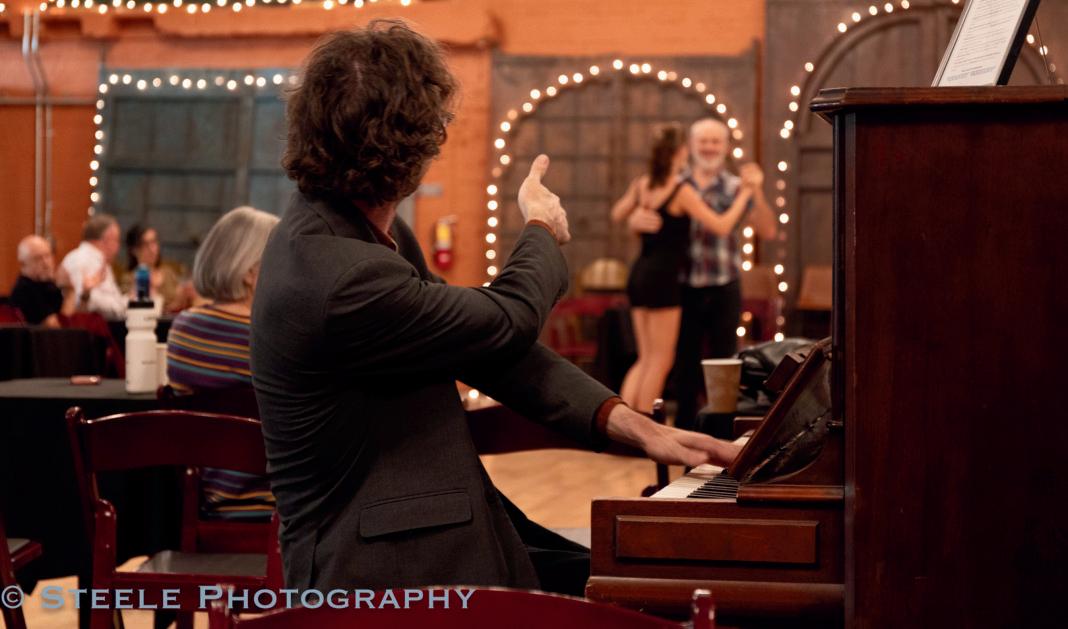
THANK YOU FOR JOINING A CIRCLE
Donation of $50,000 +
Albuquerque Community Foundation
Meg Aldridge Anonymous
Lee Blaugrund
City of Albuquerque
Anna M. Cory Estate
New Mexico Philharmonic Foundation
Donation of $25,000–$49,999
Bernalillo County Commission
Computing Center Inc., Maureen & Stephen Baca
Bob & Greta Dean
Eugenia & Charles Eberle
The Meredith Foundation
Clara M. Young
Donation of $10,000–$24,999
Albuquerque Community Foundation—Barbara F FUNd
Anonymous Anonymous
Ron Bronitsky, MD, in honor of Olga Kern
Howard & Debra Friedman
Frontier Restaurant/Golden Pride Chicken
Art Gardenswartz & Sonya Priestly
Keith Gilbert
Helen Grevey
Madeleine Grigg-Damberger & Stan Damberger
Mary Herring
Jonathan & Ellin Hewes
Peter Hyde
Dal & Pat Jensen
Thomas & Greta Keleher
Christine Kilroy
Dwayne & Marjorie Longenbaugh
Terri L. Moll, in honor of Mark Moll
Karl & Marion Mueller
Music Guild of New Mexico & Jackie McGehee Young Artists’ Competition for Piano & Strings
New Mexico Oncology Hematology Consultants & New Mexico Health Specialists, practicing at New Mexico Cancer Center
Optum
Cynthia Phillips & Thomas Martin
Sandia Foundation, Hugh & Helen Woodward Fund
Terrence Sloan, MD
Joseph & Carol Stehling
Dr. Dean Yannias
BRAHMS CIRCLE
Donation of $5000–$9999
Carl & Linda Alongi
Anonymous
Anonymous
Margaret Ann Augustine & A.
Elizabeth Gordon
Mary “Betty” Baca
Ann Boland
Botts Irrevocable Trust
The Cates-Romero Team/RBC
Wealth Management
Richard & Margaret Cronin
Fritz Eberle & Lynn Johnson
ECMC Foundation
Fran Fosnaugh
David Gay
Hancock Family Foundation
Margaret Harvey & Mark Kilburn
The Hubbard Broadcasting Foundation
Chris & Karen Jones
Harry & Betsey Linneman
Myra & Richard Lynch
Bob & Susan McGuire
Menicucci Insurance Agency
Ed & Nancy Naimark
New Mexico Arts
David & Audrey Northrop
George & Mary Novotny
S. Scott Obenshain
Bob & Bonnie Paine
David & Jill Patterson
Melissa & Al Stotts
John Wronosky & Lynn Asbury
CHOPIN
Donation of $3500–$4999
Albuquerque Community Foundation, NDB & CEB Fund
Brian & Laura Bloomquist
D’Addario Foundation
David & Ellen Evans
Hal Hudson
Kattenhorn-Mayo Team /RBC
Wealth Management
Hank & Bonnie Kelly
Patricia “Pat” Kneen
Jan Elizabeth Mitchell
Laura Sanchez & Kenny Lipe
Southwest Gastroenterology
Associates
Marian & Jennifer Tanau
Michael Wallace & Carey Salaz
GRACE THOMPSON CIRCLE
Donation of $1933–$3499
Albuquerque Community Foundation, The Bright Futures Fund
Albuquerque Community Foundation, The Ties Fund
AmFund
Anonymous Anonymous
Anonymous
Thomas Bird & Brooke Tully
Henry & Jennifer Bohnhoff
Bright Ideas/Frank Rowan
Butterfield’s Jewelers
David & Shelly Campbell
Margaret Casbourne
Edwin Case
Century Bank
Daniel & Brigid Conklin
Marjorie Cypress & Philip Jameson
Leonard & Patricia Duda
Richard & Virginia Feddersen
Firestone Family Foundation
Frank & Christine Fredenburgh
George F. Gibbs
Yvonne Gorbett
Maria Griego-Raby & Randy
Royster
Deborah Hanna
Rosalyn Hurley
The Immaculata Fund
Allene Kleweno
KOAT News
Edward J. Kowalczyk
Judith Levey
Tyler M. Mason
Thomas & Edel Mayer
Mary E. Mills
Robert Milne & Ann DeHart
Mark Moll
Claudia Moraga
Diane M. Mueller
Ruth & Charles Needham
Noel Company/Phillip Noel
James O’Neill & Ellen Bayard
Jerald & Cindi Parker
Stuart & Janice Paster
Dick & Marythelma Ransom
Robertson & Sons Violin Shop
Jacquelyn Robins
Jay Rodman & Wendy Wilkins
Edward Rose
Vernon & Susannah Smith
Susan Spaven
Phyllis Taylor & Bruce Thomson
Betty & Luke Vortman Endowment
William Wiley & Diane Chalmers
Wiley
Donation of $1000–$1932
Annie & Phil Adams, AAP Giving Fund
Perri & Neil Altomare
Andrew Family Foundation, Cheryl
Andrew
Anonymous
Anonymous
Anonymous
Joel & Sandra Baca
Nancy M. Berg
Lawrence & Deborah Blank
Nancy & Cliff Blaugrund
Robert Bower & Kathryn Fry
Sandy Buffett
Michael Bustamante
Kathleen Butler & Steven Shackley
Brian & Aleli Colón
Philip Custer
Jeff & Ashlee Dauenhauer
Jerry & Susan Dickinson
Cynthia Fry & Daymon Ely
Charles & Judith Gibbon
Robert Godshall
Marcia Gordon
Jean & Bob Gough
Jean & Bob Gough, in memory of
Joy Eaton
Nancy Elizabeth Guist
David Hardy & David Martin
David & Judith Harris
James Harvey
Mary Hoffman & Keith Paulsen
JKW Lawyers
Sue Johnson & Jim Zabilski
Stephanie & David Kauffman
Noel & Meredith Kopald
Kathy & John Matter
Roberto Minczuk
David & Alice Monet
Ed Muller
Betsy Nichols
Tom & Gretchen Obenauf
Janice Parker, in memory of Judge
James A. Parker
John Piccolini
Mary Raje
Sandra P. & AFLt/Col (r.) Clifford E. Richardson III
Karl Ricker
Aaron & Elizabeth Robertson
Joseph Roesch
Ruth Ronan
Jasmine Sanchez & Avery Johnson, in honor of their nuptials
Howard & Marian Schreyer
Barbara Servis
Richard & Janet Shagam
Frederick & Susan Sherman
Mark & Maria Stevens
Jane & Doug Swift Fund for Art & Education
George Thomas
Rogan & Laurie Thompson
Rita Villa
Kathleen Waymire
Judy Basen Weinreb
Jeffrey West
David & Evy Worledge
Diana Zavitz
Donation of $500–$999
Fay Abrams
Albuquerque Community Foundation, Lee Blaugrund Endowment Fund
Albuquerque Community Foundation, Maisel/Goodman
Charitable Endowment Fund
Lawrence & Katherine Anderson
Anonymous
Michael & Leanore Baca
Tonianne Baca-Green
Daniel & Barbara Balik
William Ballard
Elizabeth Bayne & John Rich
Susan Beard
Richard & Maria Berry
Stan Betzer
Ross Blankinship
Rod & Genelia Boenig
Paula Bradley
Carolyn R. Brown & William Ranken
Charles & Aziza Chavez
Douglas Cheney
Paul Clem
Raye Cohen
Marcia Congdon
James Connell
Bob Crain
John Crawford & Carolyn Quinn
Stephen & Stefani Czuchlewski
Michael Dexter
Michael & Laurel Edenburn
James & Teresa Edens
Roberta Favis
Heidi Fleischmann & James Scott
Diane Fleming
Denise Fligner & Terry Edwards
Joseph Freedman & Susan
Timmons
Reese Gateley
Roland Gerencer, MD
Dennis & Opal Lee Gill
Howard & Janis Gogel
Laurence Golden
Drs. Robert & Maria Goldstein
Berto & Barbara Gorham
Thomas & Linda Grace
Justin M. & Blanche G. Griffin
Harris Hartz
Harris Jewelers
Stephen & Aida Ramos Heath
Donna Hill
Pamelia Hilty (Snow Blossom Gift Fund)
John Homko
Betty Humphrey
Tatiana Hunter
Patrick & Elois Hurley
Stephen Ingram & Amparo Maria
Garcia Ingram
Edwin & Nikolene Isely
Jerry & Diane Janicke
Barbara Johnson
Harrison & Patricia Jones
Marlin Kipp
Richard Kozoll & Sally Davis
Stephanie & Kenneth Kuzio
Nick & Susan Landers
Alan & Kathleen Lebeck
Thomas Lenzer
Joe & Pam Limke
Robert Lindeman & Judith Brown
Lindeman
Thomas & Donna Lockner
Dr. Ronald & Ellen Loehman
Marcia & Suzanne Lubar
Bruce F. Malott
Roger & Kathleen McClellan
Jon McCorkell & Dianne Cress
Linda McNiel
Richard & Melissa Meth
Ross & Mary Miesem
Christine & Russell Mink
Napoli Coffee
Mark Napolin
Joyce & Pierce Ostrander
Richard & Susan Perry
Mike Provine
Dr. Barry & Roberta Ramo
Barbara Rivers
Justin Robertson
Robin Jackson Photography
John & Faye Rogers
Catalin Roman & Sarita Cargas
Christine Sauer
Sally Schwartz
Jane & Robert Scott
Albert Seargeant
Gretchen Seelinger
Sandy Seligman
Dorothy Stermer & Stacy Sacco
David Stryker
Tamara Tomasson
Total Wine & More
Arthur Vall-Spinosa & Sandra
Louise Nunn
James Vaughn
Margaret Vining
Lauren Wilber
Janice & Harvey Yates
PRINCIPALS CIRCLE
Donation of $125–$499
Dr. Fran A’Hern-Smith
Lisa Aimone, in memory of Pauline
Jones
Leah Albers & Thomas Roberts
Albuquerque Little Theatre
Gerald Alldredge
William Anderson & Paula Baxter
Anonymous
Anonymous
Anonymous
Leonard & Stephanie Armstrong
Sally Bachofer
Douglas Bailey & Kathleen Burke
Ken Bailey
Jan Bandrofchak & Cleveland
Sharp
Aimee Barabe
William Barber
Harold & Patricia Baskin
Edie Beck
Michael Bencoe
David & Judith Bennahum
Mark & Beth Berger
Beso Jewels
Gregg & Amy Bogost, in memory of
Sheila Bogost
Walter & Celia Bolic
Terry Brownell & Alpha Russell
Jonathan & Caroline Bull
Carol Callaway
Luana Carey
Casa Verde Spa
Dan & Tina Chan
Robert & Olinda Chavez
Beth Clark
Jeff Collins
Mark Compton
Amy Couch
Elizabeth Davis-Marra
Mary Ann & Michael Delleney
Raymond & Anne Doberneck
Thomas & Martha Domme
Carl & Joanne Donsbach
Martin J. Doviak
Jeff & Karen Duray
William & Lydia Earnhart
Reverend Suzanne & Bill Ebel
Gary Echert & Nancy Stratton
Enchanted Mesa
Robert & Dolores Engstrom
Jackie Ericksen
David & Frankie Ewing
Mary Filosi
Jean Gabriel
Ralph Garza & Kris Williams
Mary Day Gauer
Rod & Maria Geer
Alfred & Patricia Green
Paul & Marcia Greenbaum
Mina Jane Grothey
Jim & Renee Grout
Regina Guest
J. Michele Guttmann
Lee & Thais Haines
Diana Hardy, in memory of Helen Feinberg
Matt Tyler Hart
John & Diane Hawley
Robert & Angela Hawthorne
Darren Hayden
Toppin & Robert Hodge
Bernhard E. Holzapfel
Hughes Homestead Designs
Paul Isaacson
Gwenellen Janov
Robert & Mary Julyan
Norty & Summers Kalishman
Sheila Keller
Ann King
Phil Krehbiel
Jennifer C. Kruger
Elizabeth Kubie
Erik Kuhlmann
Karen Kupper
Stephanie Kuzio, in honor of
Richard White
Janice Langdale
Michael & Roberta Lavin
Jeffery & Jane Lawrence
Honorable Idalia Lechuga-Tena & Marco Gonzales
Jae-Won & Juliane Lee
Linda Lockett
Betty Logan
Daniel Lopez & Linda Vigil Lopez
Ruth Luckasson & Dr. Larry Davis
Robert Lynn & Janet Braziel
Gloria Mallory
Robert & Linda Malseed
The Man’s Hat Shop
Jeffrey Marr
Janet Matwiyoff
Marcia McCleary
Jane McGuigan
Don McGuire
Chena Mesling
Bruce Miller
Jim Mills & Peggy Sanchez Mills
Ben Mitchell
Louis & Deborah Moench
Danny & Kristin Montes
Robert & Phyllis Moore
Jim & Penny Morris
Shirley Morrison
Cary & Eve Morrow
Ted & Mary Morse
Karen Mosier & Phillip Freeman
Mr. Tux
Sharon Mullis
Kindred & Michael Murillo
Nambé
Shanna Narath
NMPhil Audience $5 to Thrive
Janeth Nunez del Prado
Rebecca Okun
Del Packwood & Barbara Reeback
Kyle & Letita Peterson
Lang Ha Pham & Hy Tran
Judi Pitch
Placitas Artists Series
Popejoy Presents
Dan & Billie Pyzel
Robert Reinke
Timothy Renk
Lawrence & Joyce Reszka
Kathryn & Chris Rhoads
Jeff Romero
Charles Rumbaugh
Katherine Saltzstein
Donald & Loraine Sanchez
Patrycia Sanchez
Christy Sanford & Michael Shaw
Sarafian’s Oriental Rugs
Brigitte Schimek & Marc
Scudamore
John & Karen Schlue
Laura Scholfield
Daniel & Barbara Shapiro
Dean Sherer
Rich Signe
Beverly Simmons
R.J. & Katherine Simonson
Ann Singer
Rae Siporin
George & Vivian Skadron
Thomas Sloan
Steven & Keri Sobolik
Jennifer Starr
Luis & Patricia Stelzner
John & Patricia Stover
Marty Surface & Deborah Goldstein
Larry & Susan Tackman
William Tallman
Tea’ze A More Gourmet Teas
Kenneth & Annie Tekin
Richard & Dolores Teubner, in memory of Helen Feinberg
Gary & Nina Thayer
Laurence Titman
Dr. Steven Tolber & Louise
Campbell-Tolber
Sally Trigg
Frank & Claire Trujillo
Jay Ven Eman
Tatiana Vetrinskaya
Dale A. Webster
Lawrence Wells
Bronwyn Willis
Linda Wolcott
Uwe Wrede & Michelle Michael
Brian Young & Jennifer Perret
Kari Young
Teresa & Gregory Zanetti
Alvin Zuckert & Louise Martin, in memory of Sam & Mimi Zuckert
FRIENDS OF THE PHILHARMONIC
Donation of $25–$124
Harro & Nancy Ackermann
David & Elizabeth Adams
Natalie Adolphi & Andrew
McDowell
Albuquerque Auto Outlet, Paul Cervantes
Jeffrey Allen
Jo Anne Altrichter & Robin Tawney
Roger & Deborah Ames
Judith Anderson
Anonymous
David Baca
Jackie Baca & Ken Genco
Jennifer Bachus
Charlene Baker
Bark Box
Graham Bartlett
Marc & Lorraine Batt, in memory of Helen Feinberg
Kenneth Beebe
David & Betty Begeal
Laura Bemis
Kirk & Debra Benton
Laura Bernay
Melbourne Bernstein
Marianne Berwick
Betty’s Bath & Day Spa
Jocelyn Black, in memory of Helen Feinberg
Thomas & Suzanne Blazier
Dusty & Gay Blech
Paula Boggs
Henry Botts
Maxine Breland, in memory of
Helen Feinberg
Robert & Marylyn Burridge
California Pizza Kitchen
Camille Carstens
Joseph Cella
Cindy Chapman & Bill Harris
Cheesecake Factory
Barry Clark
Amanda Cohen-Bandy & Matthew
Bandy, in memory of Helen Feinberg
Lisa Collins
Lawrence & Mary Compton
Kathy Conforti, in memory of Helen Feinberg
Martha Corley
Edward Curtis & Alfred Papillon
Mark A. Curtis
Cara & Chad Curtiss
Daily Grind/Caruso’s
Hubert Davis
Monica Delgado Vargas
Darryl Domonkos
Lisa Donald
Michael & Jana Druxman
D. Reed Eckhardt
Lester & Eleanor Einhorn
Bradley Ellingboe
Matthew Estlack
Vicky Estrada-Bustillo & Juan Bustillo
Peter & Janet Fagan
Farm & Table
Howard Fegan
Elen Feinberg
Jon & Laura Ferrier
Patrick & Elizabeth Finley
Daniel & Marissa Finnegan
Susan Fitch
Jane & Michael Flax, in memory of
Joy Eaton
Rabbi Arthur Flicker
Karin Frings
James & Cynthia Frost
Greg & Jeanne Frye-Mason
Eric & Cristi Furman
Debra Jane Garrett
Lawrence Jay Gibel, MD
Cassy & Andy Goehner, in memory of Juliet Huff
Candace Gordon
Great Harvest Bakery
Matthew & Amy Greer
Stanley & Sara Griffith
Kevin Grunewald, in memory of
Quay Ann Benton
Kenneth Guthrie & Doni Lazar
Richard Haber
Ronald Halbgewachs
Leila Hall
Nancy Hamilton
Frank & Sue Hardesty
Michael & Marylyn Harris
Michael Harrison
Gloria B. Hawk Revocable Trust
Rosa Herst, in memory of Helen Feinberg
Nancy Hill
Ursula Hill
Heidi Hilland, in memory of Dave Hilland
Fred Hindel
Kristin Hogge
Kendell Holmes
Steven Homer
Julia Huff
Christopher Isham
Larry James
Peter Jandula-Hudson
Lori Johnson
Ruth Johnson
Barbara Jones
Lawrence & Anne Jones
Brenda Jozwiak
Joel & Debbie Karasik
Ty Kattenhorn
Kelly Jo Designs by Wine
Barbara Kleinfeld
Margaret Knapp
Gerald & Margery Knorovsky
Katherine Kraus
John & Gretchen Kryda
Hareendra & Sanjani Kulasinghe
Dana Lambe
Larry W. Langford
Molly “Mary” Lannon
Lorin Larson
Paul & Julie Laybourne
Rita Leard
Daniel Levy
Edwin Light
Claire Lissance
Joan M. Lucas & David Meyerhofer
Sam Lucero & Ron Lahti
Douglas Majewski & Marilyn Gruen
Susie Marbury, in memory of
Florence Hendrickson
Joan A. March
Martha Marchand
Elliot S. Marcus, MD
Carolyn Martinez
Robert & Anne Martinez
Denis & Sallie McCarthy
David & Jane McGuire
Thomas Merlan & Frances Levine
Mark Michel
Moses Michelsohn
George Mikkelsen
Kathleen Miller
Martha Miller
Rachel & John Miller
Robert F. Miller
Mister Car Wash
Bryant & Carole Mitchell
Michael Moch
Dr. William Moffatt
Annette Montoya
Letitia Morris
Baker H. Morrow & Joann
Strathman
John & Patsy Mosman
Sharon Moynahan
Brian Mulrey
Alice Myers
Bette Myerson
New Mexico Museum of Natural History & Science
Jennifer Newton & Aaron Chacon
NM Escape Room
Lenny & Nancy Noice, in honor of
James Whiton
Ruth O’Keefe
Katherine Ott-Warner
Peter Pabisch
Eric Parker
Robert Parker
Kelly Parkhill
Janet Patterson
Howard Paul
David & Martha Peercy
Barbara Pierce
Veronica Potts
Daniel Puccetti
Ray Reeder
Mark Regazzi
Reincarnation INC
Carol Renfro
Kerry Renshaw
Donna Rigano
Margaret Roberts
Gerald & Gloria Robinson
Gwenn Robinson, MD, & Dwight
Burney III, MD
Susan Rogowski
Glenn & Amy Rosenbaum
Michelle Rossbach
Michael & Joan Rueckhaus
Shannon Runyon
Patricia Ryan
Peter & Susan Scala
Screen Images, Inc., Maria
Cordova-Barber
Robert & Joy Semrad
Sheehan Winery
Arthur & Colleen Sheinberg
Joe Shepherd
Rebecca Shores
Deborah & Kim Shoup
Glen & Barbara Smerage
Carl & Marilyn Smith
Stephen Smith
Catherine Smith-Hartwig
Smith’s Community Rewards
Jan & Teresa Sole
Allen & Jean Ann Spalt
James Spigel
Laurel Srite
Stan & Marilyn Stark, in memory of Holly Hodgin
Charlie & Alexandra Steen
Theodore & Imogen Stein
Brent & Maria Stevens
Elizabeth Stevens & Michael
Gallagher
Carmen & Lawrence Straus
Robert & Jacqueline Sutton
Rosalie Swanson
Michael Thompson
Craig Timm & James Wilterding
Valerie Tomberlin
Top Golf
John & Karen Trever
Jorge Tristani
Tom Vosburgh & Jeannie Forrester
John & Karin Waldrop
Weem’s Gallery & Framing
V. Gregory Weirs
Kathy Wharton, in memory of Helen Feinberg
Charles & Linda White
Marybeth White
Bill & Janislee Wiese
Robert & Amy Wilkins
Kathryn Wissel
Daniel & Jenny Worledge, in honor of David Worledge
Kenneth Wright
Bontina
Bright Ideas
The Noel Company
Senspex Incorporated
01/27/2026
●
Your continued support makes this possible. The Legacy Society represents people who have provided long-lasting support to the New Mexico Philharmonic through wills, retirement plans, estates, and life income plans. If you included the NMPhil in your planned giving and your name is not listed, please contact (505) 323-4343 to let us know to include you.
Jo Anne Altrichter & Robin Tawney
Maureen & Stephen Baca
Evelyn Patricia Barbier
Edie Beck
Nancy Berg
Sally A. Berg
Thomas C. Bird & Brooke E. Tully
Edison & Ruth Bitsui
Eugenia & Charles Eberle
Bob & Jean Gough
Peter Gregory
Ruth B. Haas
Howard A. Jenkins
Joyce Kaser
Walter & Allene Kleweno
Ron Lahti
Louise Laval
Julianne Louise Lockwood
Dr. & Mrs. Larry Lubar
Sam Lucero
Joann & Scott MacKenzie
Margaret Macy
Thomas J. Mahler
Gerald McBride
Shirley Morrison
Betsy Nichols
Cynthia Phillips & Thomas Martin
George Richmond
E.M. Rinchik
Barbara Rivers
Gary and Kathy Singer
Terrence Sloan, MD
Jeanne & Sid Steinberg
Charles Stillwell
William Sullivan
Dean Tooley
Betty Vortman
Maryann Wasiolek
William A. Wiley
Charles E. Wood
Dot & Don Wortman
01/27/2026
●
The New Mexico Philharmonic would like to thank the following people for their support and in-kind donations of volunteer time, expertise, services, product, and equipment.
CITY & COUNTY APPRECIATION
Mayor Tim Keller & the City of Albuquerque
Trudy E. Jones & the Albuquerque City Council
The Bernalillo County Board of Commissioners
Dr. Shelle Sanchez & the Albuquerque Cultural Services Department
Amanda Colburn & the Bernalillo County Special Projects
Councilor Brook Bassan
Councilor Tammy Fiebelkorn
Councilor Renee Grout
Councilor Dan Lewis
BUSINESS & ORGANIZATION APPRECIATION
The New Mexico Philharmonic Foundation
The Albuquerque Community Foundation
INDIVIDUAL APPRECIATION
Lee Blaugrund & Tanager Properties Management
Ian McKinnon & The McKinnon Family Foundation
Billy Brown
Alexis Corbin
Anne Eisfeller
Chris Kershner
Jackie McGehee
Brad Richards
Barbara Rivers
Emily Steinbach
Brent Stevens
VOLUNTEERS HOSTING VISITING MUSICIANS
Don and Cheryl Barker
Ron Bronitsky, MD, & Jim Porcher
Chris and Tom Brown
Isabel Bucher & Graham Bartlett
Mike & Blanche Griffith
Emily Cornelius
Amy Huzjak
Rita Leard
Nicolle Maniaci
Sarah Manthey
Ron & Mary Moya
Steve & Michele Sandager
01/27/2026
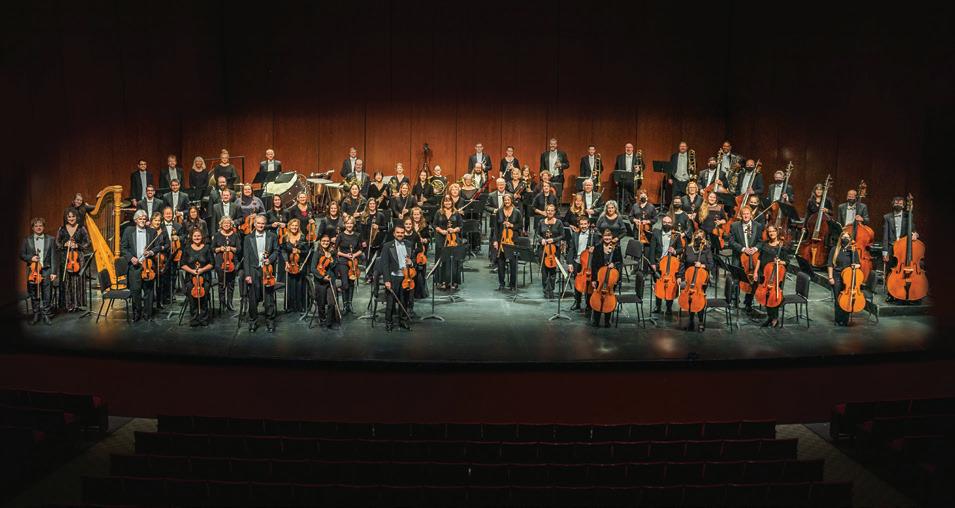
We invite you to engage more deeply with the orchestra and its musicians. This program comes with wonderful benefits that give you a chance to develop a personal relationship with one of our stellar musicians. Please call to find out the benefits and cost of sponsorship.
SPONSOR TODAY (505) 323-4343
DWAYNE & MARJORIE LONGENBAUGH
Principal Viola Sponsorship: LAURA CHANG
Sound Applause

Albuquerque Community Foundation albuquerquefoundation.org
The concerts of the New Mexico Philharmonic are supported in part by the City of Albuquerque Department of Cultural Services, the Bernalillo County, and the Albuquerque Community Foundation.

Bernalillo County bernco.gov

Computing Center Inc. cciofabq.com
REALTY
Gardenswartz Realty

Music Guild of New Mexico musicguildofnewmexico.org
D’Addario Foundation foundation.daddario.com


David S. Campbell, Attorney davidscampbell.com

koat.com Menicucci Insurance Agency mianm.com



Olga Kern International Piano Competition olgakerncompetition.org









Foundation Inc. nmphilfoundation.org

The Musicians
FIRST VIOLIN
Cármelo de los Santos •
Karen McKinnon Concertmaster Chair
Elizabeth Young •• Associate Concertmaster
Sarah Tasker ••• Assistant Concertmaster
Heidi Deifel
Olivia de Souza Maia
Lorenzo Gallegos
Juliana Huestis
Barbara Rivers
Nicolle Maniaci
Barbara Scalf Morris
SECOND VIOLIN
Carol Swift •••
Julanie Lee
Lidija Peno-Kelly
Cleveland Chandler
Liana Austin
Nicolas Armer
Andre Silva
Sheila McLay
Jessica Retana
Jocelyn Kirsch
Brad Richards
VIOLA
Laura Chang •
Kimberly Fredenburgh •••
Allegra Askew
Christine Rancier
Laura Steiner
Michael Anderson
Lisa DiCarlo
Joan Hinterbichler
Laura Campbell
Principal •
Associate Principal ••
Assistant Principal •••
Assistant ••••
Leave +
One-year position ++
Half-year position +++
Marian Tanau President & CEO
Roberto Minczuk
Music Director
Christine Rancier
Vice President of Business
Skye Stone Personnel Manager
CELLO
Amy Huzjak •
Amy Delevoryas •••
Carla Lehmeier-Tatum
Ian Mayne-Brody
Dana Winograd
David Schepps
Lisa Collins
Felix Wurman Chair
Elizabeth Purvis
BASS
Joe Weldon Ferris •
Mark Tatum •••
Katherine Olszowka
Terry Pruitt
Marco Retana
Frank Murry
FLUTE
Valerie Potter •
Esther Fredrickson
Noah Livingston ••
PICCOLO
Esther Fredrickson
OBOE
Kevin Vigneau •
Robert J. & Greta L. Dean Chair
Amanda Talley
ENGLISH HORN
Melissa Peña ••
CLARINET
Marianne Shifrin •
Lori Lovato •••
Jeffrey Brooks
E-FLAT CLARINET
Lori Lovato
BASS CLARINET
Jeffrey Brooks
BASSOON
Stefanie Przybylska •
Denise Turner
HORN
Peter Erb •
Allison Tutton
Maria Long ••
Andrew Meyers
TRUMPET
John Marchiando •
Brynn Marchiando
Sam Oatts ••
TROMBONE
Aaron Zalkind •
Byron Herrington
BASS TROMBONE
David Tall
TUBA
Richard White •
TIMPANI
Tyler Brown •
PERCUSSION
Jeff Cornelius •
Kenneth Dean
Emily Cornelius
HARP
Carla Fabris •
BOARD OF DIRECTORS
Maureen Baca
Chair
Al Stotts Vice Chair
Lauren R. Wilber
Secretary
Fritz Eberle
Treasurer
Meg Aldridge
Joel Baca
Ron Bronitsky, MD
Robert Gough
Idalia Lechuga-Tena
Robert McGuire
Roberto Minczuk
Jeffrey Romero
Terrence Sloan, MD
Marian Tanau
Michael Wallace
ADVISORY BOARD
Thomas C. Bird
Lee Blaugrund
Clarke Cagle
Kory Hoggan
William Wiley
Julian Kley Production Manager
Genevieve Harris Principal Librarian
Nancy Naimark Director of Community Relations & Development Officer
Crystal Reiter Office Manager
Laurieanne Lopez Young Musician Initiative Program Manager
Mary Montaño Grants Manager
Lori Newman Editor


- Thomas Bohlman, Managing Partner