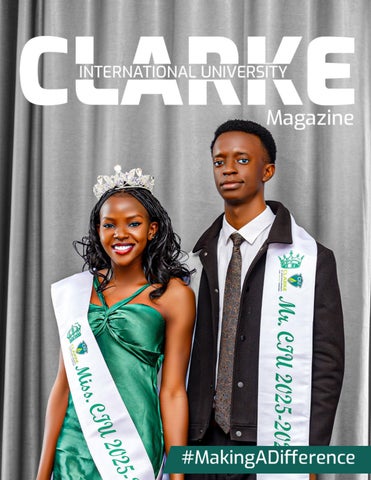
CLARKE INTERNATIONAL UNIVERSITY DECEMBER MAGAZINE
Page 1
TABLE OF
CONTENT NECESSITY OF CHANGE IN HIGHER EDUCATION INSTITUTIONS: IMPLICAITIONS FOR CIU ..................................04 CHARTERED AND CHARGED: CIU’S MILESTONE YEAR OF TRANSFORMATIONITIONS FOR CIU ..........................08 CROWNING A LEGACY: CIU FOUNDER HONOURED AT STATE HOUSE .........................................................................10 CIU’S PLATINUM WIN: A MILESTONE IN MEDICAL EDUCATION AND RESEARCH ......................................................12 CIU TAKES THE LEAD IN THE FIGHT AGAINST CANCER ...................................................................................................15 EMPOWERING UGANDA AGAINST BREAST CANCER: INSIGHTS FROM CIU SYMPOSIUM .......................................16 PARTNERING FOR A POLIO-FREE UGANDA: CIU AT THE FORE FRONT .........................................................................18 CIU’S FIRST CHARTERED FRESHERS’ BALL: A NIGHT THAT REDEFINED ARRIVAL ..............................................22 CIU LIBRARY WEEK SPOTLIGHT: ADVANCING HEALTHCARE WITH PROF. GALUKANDE ........................................24 LIT SERIES SEASON II AT CIU .................................................................................................................................................26 BUILDING BONDS AND BEAUTIFYING KATONGOLE MARKET ..............................................................................28 HIGHLIGHTS FROM THE SGSRI .............................................................................................................................................30 EMPOWERING OLDER PERSONS A COLLABORATIVE HEALTH INITIATIVE .................................................................32 CIU AND UNION PARTNERSHIP ............................................................................................................................................32 THE ENEMY IS TIME: WHY UGANDA MUST TRAIN ITS PEOPLE, NOT JUST BUY AMBULANCES .............................34 INTRODUCING THE FOUNDRY: FORGING THE FUTURE AT CLARKE INTERNATIONAL UNIVERSITY ......................36 INTRODUCING CLARKE SENIOR SCHOOL: OPENING FEBRUARY 2026 .......................................................................38
CLARKE INTERNATIONAL UNIVERSITY DECEMBER MAGAZINE
Page 2
EDITORIAL As this wondrous year draws its curtain at Clarke International University, we pause to behold the tapestry we have woven one rich with growth, resilience, and noble purpose. In this season of reflection, we rejoice in the triumphs that have crowned our journey, chief among them the long-awaited Charter, a milestone worthy of our collective labour and steadfast spirit. I beseech thee, good reader, to wander through these pages and behold the breadth of CIU’s impact, and the many honours and awards that have graced us in these latter months.
Arnold Nabimanya
May thy holidays be blessed, thy Christmas merry, and the dawning year abundant with fruit and favour. Cheers, and blessings upon thee.
CLARKE INTERNATIONAL UNIVERSITY DECEMBER MAGAZINE
Page 3
THE NECESSITY OF CHANGE IN HIGHER EDUCATION INSTITUTIONS: IMPLICATIONS FOR CIU ... ... ... ... ... ... ... ... ... ... ... ... ... ... ... ... ... ... ... ... ... ... ... ... ... ... ... ... ... ... .
Yesterday, during our monthly VC-Connect Leadership session, the Chair of the University Council, Bishop (Dr) Zac Niringiye, reminded us that a healthy university is one where ideas continually develop and thrive. When the well of ideas runs dry, so does our relevance and influence. He asked three crucial questions: What kind of future are we heading toward? What is our destination? What are the signals and signposts? For me, the main takeaway was that the Charter, as important a milestone as it is, is not our final destination. Treating it as such risks giving a false sense of “arrival.”
Our past accomplishments undoubtedly form part of our proud legacy. However, we must continue to demonstrate our relevance in a world driven by artificial intelligence (AI), digital transformation, evolving learner needs, and societal expectations. The world is changing rapidly, and as a university, we cannot afford to stand still. The challenge now is to adapt to change at a pace that aligns with these developments. In his article, Driving Academic Innovation: Can we apply business school changemanagement models to the academy, Mintz (2021) argues that higher education struggles with change partly because of cultures that prioritize tradition over innovation, and he calls on academic leaders to establish “a climate of change that values innovation and improvement regardless of tradition.” For our community, this is a crucial call to action. From a change management perspective, our key milestones should act as launching pads for the next phase of the CIU transformation. Therefore, our leadership efforts must turn milestones into a sense of urgency, shortterm wins into more substantial system change, and achievements into institutionalized practices and new
norms (Mintz, 2021). What we know for sure is that meaningful change is necessary and a responsibility we all share. Students Must Change Given the evolution of work and learning, students cannot rely on traditional, exam-centered mindsets. Data from the World Economic Forum shows that employers expect significant shifts in the skills they require, including increased emphasis on analytical thinking, technological literacy, and self-management (WEF, 2025). One key area of adaptation for students is adopting a competency mindset. Students should focus less on accumulating credits and more on demonstrable capabilities, clinical skills, data literacy, teamwork, problem-solving, ethical reasoning, and leadership. In other words, shift focus from what you know to what you can do with what you know. The university constantly balances the written curriculum with additional learning opportunities to ensure that our students are developing across all necessary domains. Secondly, students must not only talk about lifelong learning but also actively participate in it. Lifelong, stackable learning is like building your education with Lego blocks, one skill at a time. The shift from “degree then career” to “career with ongoing learning” means students should anticipate engaging with micro-credentials, short courses, and continuous upskilling. Students must also develop the discipline to be active, selfdirected learners. Competency-based and blended approaches require taking responsibility for their own pacing, setting clear learning goals, and using feedback to improve. Simply receiving information in lectures is no longer adequate. Finally, students need to develop transversal skills by prioritizing leadership and other essential soft skills (communication, adaptability, and collaboration across contexts).
CLARKE INTERNATIONAL UNIVERSITY DECEMBER MAGAZINE
Page 4
Dr. Rose Clarke Nanyonga Vice Chancellor, Clarke International University
These are core outcomes, not “extras”. (Moldoveanu & Narayandas, 2019). I encourage students to reprioritize what and how they learn. Faculty Must Change Our faculty and staff must also pursue change. We recently received the Minimum Standards for Competency-Based Education (CBE) from the National Council of Higher Education (NCHE). CBE is not new at CIU, but new policies underscore the need to reevaluate current practices. CBE fundamentally alters academic work. Lieberman (2019) reports
... ... ... ... ... ... ... ... ... ..
that in CBE formats, instructors shift from primarily delivering content to more frequent interaction with students, clarifying learning outcomes, and providing individualized feedback and guidance. Implications for faculty include a deliberate shift from content coverage to learning design. Teaching faculty need to design clear competencies, performance criteria, and authentic assessments (e.g., OSCEs, portfolios, simulations) aligned with real-world practice. A greater emphasis on feedback and mentoring is expected in CBE formats. This moves faculty roles closer to coaching and mentoring, not just lecturing.
CLARKE INTERNATIONAL UNIVERSITY DECEMBER MAGAZINE
Page 5
There is also a greater need for working in instructional teams: The “unbundled faculty” model, where different specialists handle course design, content, facilitation, and assessment, is increasingly associated with CBE implementations (Lieberman, 2019b). This challenges traditional expectations of the solitary lecturer but can improve quality and scalability. Crucially, faculty must engage in continuous professional development with ongoing development in pedagogy, educational technology, and learning analytics (the practice of using data to understand how students learn and to make better decisions that support their success). Moldoveanu & Narayandas’s (2019) work on leadership development notes that effective professional learning is increasingly tailored, practice-based, and continuous rather than episodic. Notably, faculty can no longer depend on past knowledge to prepare future learners. The rapid changes in science, technology, health, and the workforce demand ongoing updates to content, teaching strategies, and assessment methods. This reality has become a key driver of change in higher education. Without this continuous evolution, institutions (including CIU) risk graduating students whose skills do not align with societal and labor-market needs. This is why we have prioritized teaching, learning, assessment, and faculty development reforms as part of our Goal One, year one in the Thrive Strategic Plan 20252029/30. Administrators and Academic Leaders Must Change During our VC-Connect leadership discussion, we examined the idea of becoming the university of the future, as well as signals and signposts. Bishop Zac emphasized that leaders must adopt and operate within a new paradigm that acknowledges technological change, encourages systems thinking, and draws on multiple perspectives. Leadership behavior is a key factor in whether institutions can adapt. Eckel (2023) argues that effective leaders must (a) create time and space for strategic change, (b) rethink existing commitments, and (c) align processes and structures with new priorities. In this new season, the call to action for leaders cannot be overstated: CIU leaders must signal that innovation, experimentation, and evidence-based improvement
... ... ... ... ... ... ... ... ... ... ... ... ... ... ... ... ... ... ... ... ... ... ... .. ... ... ... ... ... ... ... ... ... ... ...
are not only expected but also fully endorsed. Establishing and maintaining a climate of change and innovation must remain central to “what and how we do things at CIU.” The goals of our Thrive Strategic Plan 2025-2029/30 (T: Excellence in Teaching and Learning; H: Holistic research, innovation, and dissemination; R: Robust partnerships and collaboration; I: Institutional strengthening and sustainability; VE: Visionary expansion and diversification) should become practical realities rather than just aspirational documents. More importantly, leaders must confront inertia (the tendency of an object, system, person, or institution to resist change) and consistently work to change mindsets to steer the university toward a desired future. In their article “The power to change”, Michaels & Murphy (2020) posit that changeability is the “new normal” and that organizations must learn to weather change, adapt to current crises, and contemplate future waves of uncertainty. CIU leaders need to continue to lead change through purpose, connection, and clear direction. These intentional steps are key to disrupting old patterns and embracing change as an opportunity. Given the importance of this topic, I find myself reflecting on how far we have come and how courageously we must keep moving forward. Moreover, I know that change requires, among other things, courage. My challenge to you is this: How has your story helped shape our community over the past five years? If your story at CIU has remained unchanged during that time, perhaps this is the moment for honest self-assessment. As we look to the future, what will you commit to changing this year, and how will that change move our university forward? This is my invitation for our community to keep growing, challenge boundaries, re-imagine what excellence means in the chartered CIU of tomorrow, and rewrite our story. Meaningful change is not just a responsibility we share; it demands your deliberate commitment. Roger Federer, one of the greatest tennis players, once said: ” When you are playing a point, it has to be the
CLARKE INTERNATIONAL UNIVERSITY DECEMBER MAGAZINE
Page 6
most important thing, and it is. But when it is behind you, it is behind you. This mindset is really crucial, because it frees you to fully commit to the next point… and the next point after that with intensity, clarity, and focus.”
References 1. Eckel, P. (2023). Making time for change. Inside Higher Ed. Retrieved from https://www.insidehighered.com/opinion/careeradvice/2023/09/14/how-college-leaders-can-make-time-strategicchange-opinion 2. Lieberman, M. (2019). Helping Students Develop Competencies, Teachers Hone Their Own. Inside Higher Ed. Retrieved from https://www. insidehighered.com/digital-learning/article/2019/02/06/competencybased-education-requires-instructors-alter-teaching 3. Lieberman, M. (2019b). Team Players in Teaching. Inside Higher Ed. Retrieved from https://www.insidehighered.com/digital-learning/ article/2019/04/24/instructional-teams-challenge-tradition-dividingteaching-roles 4. Michaels, D., & Murphy, K. (2022). The power to change. Bain & Company. Retrieved from https://www.bain.com/insights/the-powerto-change/ 5. Mintz, S. (2021) Driving Academic Innovation: Can we apply business school change-management models to the academy? Inside Higher Ed. Retrieved from https://www.insidehighered.com/blogs/ higher-ed-gamma/driving-academic-innovation-0 6. Moldoveanu, M., & Narayandas, D. (2019). The Future of Leadership Development: Gaps in traditional executive education are creating room for approaches that are more tailored and democratic. Harvard Business Review. Retrieved from https://hbr.org/2019/03/thefuture-of-leadership-development 7. World Economic Forum (2025). Future of Jobs Report 2025: The jobs of the future – and the skills you need to get them. Retrieved from https://www.weforum.org/stories/2025/01/future-of-jobs-report-2025jobs-of-the-future-and-the-skills-you-need-to-get-them/
CLARKE INTERNATIONAL UNIVERSITY DECEMBER MAGAZINE
#LEAD
# ChangeWeMust
Page 7
CHARTERED AND CHARGED: CIU’S MILESTONE YEAR OF TRANSFORMATION ... ... ... ... ... .. ... ... ... ... ... By Nicholas Isabirye ... ... ... ... ... ... ... ... .. ... ... ... ... ... ... ... ...
institutional vision, urging staff to embrace excellence by deepening their ownership of their roles, intentionally strengthening the CIU brand, and working together beyond departmental boundaries. She reported that at the last session of the University Council, in July, the university’s mission was officially refined to: “Prepare students for global leadership and generate knowledge for social transformation.” This bold mission now guides the CIU Thrive Strategy 2025–2029/30, focusing on five strategic priorities: enhancing excellence in teaching and learning (T); advancing holistic research, innovation, and dissemination (H); Robust strategic partnerships and collaboration (R); ensuring institutional strengthening and sustainability (I); and Visionary expansion and diversification of program (VE).
Business Development Manager
Clarke International University (CIU) began a new chapter in August 2025, marking the start of its Charter Academic Year, a milestone following the official granting of a university charter by the President of Uganda, H.E. Yoweri Kaguta Museveni, on July 3, 2025. This historic achievement reaffirmed the university’s credibility, resilience, and strong commitment to academic quality, establishing CIU as a fully independent institution of higher learning. Speaking at a staff meeting held in August, ViceChancellor Prof. Rose Clarke Nanyonga reflected on the journey to the charter, describing it as a shared triumph shaped by years of dedication, persistence, sacrifice, and the collective spirit of the entire CIU community. She referred to the milestone as both a “crown and a contract” that honors the university’s foundation while challenging every member of the institution to uphold and advance a legacy of excellence. During this meeting, Prof. Nanyonga shared a renewed
CIU also made significant progress in institutional transformation throughout the year. The Simulation Laboratory was upgraded with advanced, high-fidelity equipment, including modern mannequins and patient monitors, greatly enhancing experiential learning for students in the Health Sciences. The university further improved internal efficiency by successfully installing the
CLARKE INTERNATIONAL UNIVERSITY DECEMBER MAGAZINE
Page 8
Human Resource Information Management Module (HRIS), completing the final phase of CIU’s Student Information System digitalization. Beyond internal progress, CIU continued expanding its presence throughout the region and the continent. In August, the university announced new strategic partnerships, including one with Kenyan Nurse Consultants LTD to host the ReMar NCLEX Training Site, as well as an engagement with The Education Collaborative, a pan-African network dedicated to promoting student-centered education across Africa. With the introduction of the TVET Law 2025, the Vice-Chancellor emphasized the urgent need for a paradigm shift in academic delivery and focus. CIU has since begun a deliberate transition away from traditional lecture-based instruction toward active, experiential learning and competency-based assessments. Key cross-cutting themes, including entrepreneurship, innovation, climate resilience, and health systems thinking, are now being embedded across disciplines, ensuring that CIU remains relevant, dynamic, and responsive to the demands of the modern world. As 2025 comes to a close, this reflection highlights not only a monumental achievement but also a promise, one that positions CIU at the forefront of transformation in higher education across East Africa. Through lifelong learning pathways, micro-credentials, and market-aligned curricula, CIU is gradually evolving into a knowledge ecosystem that enables alumni to return to reskill, reconnect, and continue their professional development. With its eyes firmly fixed on the future, the university is creating a legacy meant to endure through generations. The Chartered Academic Year is more than just a moment in history; it’s a new standard, a renewed purpose, and a collective call to action that CIU confidently advances into 2026 and beyond. Happy New Year
CLARKE INTERNATIONAL UNIVERSITY DECEMBER MAGAZINE
Page 9
CROWNING A LEGACY:CIU FOUNDER HONOURED AT STATE HOUSE
The Clarke International University (CIU) community is brimming with pride as it extends its warmest congratulations to its Founder and Proprietor, Dr. Ian Clarke, who was recently conferred with a distinguished national honour by His Excellency the President of Uganda at a ceremony held at State House, Entebbe. This prestigious award is a testament to a lifetime of unwavering dedication, visionary leadership, and profound service to the nation of Uganda. For CIU’s staff, students, and alumni, it is a proud moment to see the architect of their institution recognised at the highest national level for his remarkable contributions spanning decades. Dr. Clarke’s legacy in Uganda is a rich tapestry defined by transformative impact in two vital spheres: healthcare and public service. His
... ... ... .. ... ... ... ... ... ... ... ... ... ... ..
journey began with a pioneering spirit in medicine, culminating in the establishment of the International Hospital Kampala (IHK). The hospital revolutionised private healthcare in the country, providing accessible, quality medical services and setting new standards for healthcare delivery. From this strong foundation of care and healing, his mission grew even deeper into the heart of community development. As Mayor of Makindye Division, Dr. Clarke transitioned from healing individuals to nurturing entire communities. His committed service in local government demonstrated a hands-on approach to leadership and a genuine desire to improve lives from the ground up. His vision was not limited to policy, but evident in action community-driven, empathetic, and rooted in service. This same visionary ethos an intentional blend of
CLARKE INTERNATIONAL UNIVERSITY DECEMBER MAGAZINE
Page 10
innovative thinking and transformative action led to the founding of Clarke International University, an institution born from his belief in the power of education to mould future leaders. Today, CIU stands as a living monument to that belief. The university’s core pillars Lead, Innovate, Transform mirror Dr. Clarke’s own life’s mission: bold vision, purposeful innovation, and fearless execution that drives societal impact. “We are incredibly proud that the visionary leader who laid our university’s foundation has been acknowledged at the highest national level,” a statement from CIU read. “His legacy lives not only in the institutions he built, but in the minds he continues to shape and the communities he has uplifted. This honour inspires us to keep striving for excellence and to serve our society meaningfully.”
Dr. Clarke’s national recognition reminds us all that true impact is not accidental it is built on intentional service, deep passion, and selfless leadership. As CIU celebrates this milestone, it likewise recommits itself to embodying the values of its Founder: pushing boundaries, inspiring innovation, and transforming Uganda one graduate at a time.
By Nicholas Isabirye Business Development Manager
CLARKE INTERNATIONAL UNIVERSITY DECEMBER MAGAZINE
Page 11
CIU’S TRIPLE TRIUMPH: A LEGACY OF EXCELLENCE SHINES AT THE HEROES IN HEALTH AWARDS (HIHA)
Clarke International University (CIU) is celebrating an extraordinary season of achievement following a trio of prestigious recognitions at the Heroes in Health Awards (HIHA). These accolades spanning visionary leadership, groundbreaking contributions to healthcare, and exceptional frontline service affirm CIU’s enduring commitment to nurturing ethical, impactful, and transformational health leaders in Uganda. The highlight of the evening was the conferral of the Lifetime Achievement Award at the 16th Edition of HIHA upon CIU’s esteemed Founder and Promoter, Dr. Ian Clarke. The award stands as a profound testament to Dr. Clarke’s decades-long dedication to transforming healthcare delivery and medical education in Uganda. From establishing Kiwoko Hospital to founding the International Medical Group (IMG) and later Clarke International University, Dr. Clarke has built institutions that uphold quality, ethical healthcare. His work has strengthened local capacity, empowered communities, and shaped Uganda’s health landscape. This honour celebrates not only his achievements, but also the spirit of service and
... ... ... ... ... ... ... ... ... ... ... ... ... ... ... ... ... ... ... ... ...
philanthropy that continues to inspire the entire CIU community. Adding to the university’s pride, CIU’s distinguished Chancellor, Prof. Galukande Moses, received the Ministers’ Special Award of the Year at the 16th Edition of HIHA. This prestigious recognition reflects his unwavering commitment to excellence, his transformative leadership, and his ongoing contributions toward advancing Uganda’s health sector. Prof. Galukande’s work continues to energize CIU’s mission, inspiring students and faculty alike to pursue innovation, impact, and uncompromising quality. The celebrations continued with a powerful testament to CIU’s influence on frontline healthcare leadership. Rosemary Abalo, a proud alumna and current Postgraduate Diploma in Medical Education student, was named Nurse of the Year at the 6th Edition of HIHA an honour presented under the stewardship of the Ministry of Health. Rosemary’s recognition reflects her exceptional dedication to patient welfare, her steadfast commitment to non-discriminatory, ethical care, and
CLARKE INTERNATIONAL UNIVERSITY DECEMBER MAGAZINE
Page 12
her refusal to compromise integrity through corruption. She exemplifies nursing as a calling one rooted in compassion, service, and professionalism. Having completed her Bachelor of Nursing Science (Top-Up) at CIU, Rosemary stands as an inspiring role model whose achievements embody the values and excellence the university strives to instill in all its learners. Together, these three prestigious recognitions honouring Dr. Ian Clarke, Prof. Galukande Moses, and Rosemary Abalo underscore the expansive impact of the CIU community. From foundational health systems development and high-level policy leadership to compassionate, patientcentred care on the frontlines, CIU continues to shape the future of healthcare in Uganda. This remarkable triple triumph at the Heroes in Health Awards reaffirms CIU’s identity as a university that Leads, Innovates, and Transforms for the betterment of society. It is a celebration of legacy, vision, and excellence a reflection of a community united in its mission to transform lives through quality healthcare education and leadership.
CLARKE INTERNATIONAL UNIVERSITY DECEMBER MAGAZINE
Page 13
CIU’S PLATINUM WIN: A MILESTONE IN MEDICAL EDUCATION AND RESEARCH Clarke International University (CIU) has once again proven its excellence on the regional stage by clinching the Platinum Award for the Best Private Innovative Medical University in East Africa at the East Africa Brand Quality Awards, held on Friday, October 17th, 2025, at the Golf Course Hotel, Kampala. This prestigious award recognizes CIU’s unwavering commitment to innovation, quality education, and groundbreaking research that continues to redefine the future of healthcare and medical training across the region. Receiving the Platinum Award underscores the university’s leadership in leveraging technology, community engagement, and academic excellence to address real-world health challenges. From fostering student-led research to promoting digital health solutions and public health innovation, CIU continues to embody its vision of transforming healthcare in Africa through education, research, and service. “We are incredibly honoured by this recognition,” said a CIU representative. “It reflects the hard work, creativity, and dedication of our students, faculty, and partners who are all passionate about shaping a healthier future for East Africa.” A heartfelt appreciation goes out to the entire CIU community students, staff, alumni, and partners whose shared commitment to excellence and innovation makes achievements like this possible. As CIU celebrates this milestone, it reaffirms its promise to remain at the forefront of medical education, nurturing the next generation of healthcare leaders and innovators. The future of healthcare starts here at Clarke International University.
CLARKE INTERNATIONAL UNIVERSITY DECEMBER MAGAZINE
Page 14
CIU TAKES THE LEAD IN THE FIGHT AGAINST CANCER On 31st August 2025, Clarke International University (CIU) proudly participated in the Rotary Cancer Run, an annual event that unites tens of thousands of Ugandans and global partners in the fight against cancer. This year’s edition, held at Kololo Airstrip and across several districts nationwide, brought together over 50,000 participants, driven by a shared message of hope, care, and action. CIU’s involvement was marked by an impressive turnout of students, staff, and University Council members, all of whom laced up their shoes to run for a cause that continues to impact countless families and communities. The strong representation echoed the university’s dedication to social responsibility, underscoring its values of community engagement, service, and purposeful action beyond the classroom. A particularly inspiring highlight was the active involvement of CIU’s nursing students, who served in the medical camps alongside the run. Their role in providing first aid, health support, and participant care demonstrated not only their growing professional competence but also their compassion and commitment to humanity, qualities that reflect the heart of their calling and training at CIU. For the university, the day was more than a race. It was a powerful symbol of unity, service, and collective resolve in the national fight against cancer. As we conclude the year, CIU’s contribution to the Rotary Cancer Run serves as a reminder that meaningful impact is achieved when knowledge meets compassion and individuals unite for the greater good.
By Nicholas Isabirye Business Development Manager
CLARKE INTERNATIONAL UNIVERSITY DECEMBER MAGAZINE
Page 15
EMPOWERING UGANDA AGAINST BREAST CANCER: INSIGHTS FROM CIU SYMPOSIUM
Clarke International University hosted a crucial Breast Cancer Symposium on Friday, September 30th, 2025, gathering institutional leadership and medical experts to address the rising incidence of cancer in Uganda. The event saw participation from high-level CIU management, including Vice Chancellor Prof. Rose Clarke Nanyonga and Deputy Vice Chancellor Dr. Mika Singh, along with the student body, headed by Guild President Mr. Okello Robert. Key presentations were delivered by Dr. Mugisha Noleb Mugume, M., Chair of the National Cancer Control Secretariat and Community Oncology Fellow at the Uganda Cancer Institute (UCI), and Adong Linda Lutanda, CT, MPH, a Cytologist from the UCI Department of Pathology and Laboratory Medicine. Margaret Nanteza Okello, CEO and Cofounder of the Cancer Aid Organization, also contributed to the critical discussions. The experts emphasized the significant global and local cancer burden, noting that cancer is one of the leading causes of death worldwide, particularly in developing countries like Uganda. According to the World Health Organization
... ... ... ... ... ... ... ... ... ... ... ... ... ... ... ... ... ... ... ...
(WHO), breast cancer is the most common cancer among women globally. In Uganda, presentations confirmed that breast cancer is the second leading cause of cancer death among women, following cervical cancer. Dr. Mugisha Noleb M.’s data revealed that breast cancer accounted for 2,639 new cases among Ugandan women in 2020, representing 13.5% of female cancer diagnoses. They further clarified that cancer development is multifactorial, resulting from a combination of different factors, and although rare, men account for an estimated 1 in every 100 breast cancer diagnoses worldwide. The symposium detailed both modifiable and non-modifiable risk factors associated with the disease. Non-modifiable factors include sex (breast cancer is 100 times more prevalent in women), age (two-thirds of
CLARKE INTERNATIONAL UNIVERSITY DECEMBER MAGAZINE
Page 16
diagnosed women are over 55 years), and family history involving genetic mutations like BRCA1 and BRCA2. However, speakers underscored avoidable lifestyle risks such as lack of adequate physical activity, an unhealthy diet high in saturated fats (like red meat), being overweight or obese, and the use of alcohol and tobacco. Attendees were urged to look for primary signs including a hard lump in the breast or armpit (typically painless), changes in breast size or shape, or dramatic skin changes such as hardening, dimpling, or an orange peel-like appearance. A
crucial
message
delivered
by
Adong
Linda Lutanda and Dr. Mugume centered on prevention, stressing that early detection and proper treatment can prevent most cancer deaths. Presenters outlined essential screening protocols: monthly Self-Breast Examination
... ... ... ... ... ... ... ... ... ... ... ... ... ... ... ... ... ...
for BIRADS 4-6) is necessary for definitive diagnosis, though they noted that about 80% of lumps are non-cancerous. To combat the growing cancer burden, Dr. Mugisha Noleb M. outlined several ways the Clarke International University community can formally partner with UCI, reinforcing the message that action begins with you. He called for engagement in research and innovation to contribute to the knowledge pool on cancer and develop diagnostic tools, as well as collaboration on community outreach and health education to provide cancer screening services. Students of Clarke International University were specifically encouraged to organise peer education and awareness talks and use digital platforms for social media advocacy to debunk cancer myths. This joint strategy, formalised through student internships and clerkships, mentorship programs, and joint screening programs, emphasizes the necessity of coordinated action in the fight against cancer.
(BSE), ideally performed seven days after the end of the monthly period; the Clinical Breast Exam (CE), which should be done yearly by a trained health worker; and mammography (breast X-ray). They specifically recommended mammograms for every woman 40 years of age and above, while also advising men over 40 with suspicious lumps to undergo the procedure. If a lump is found, immediate evaluation via a breast biopsy (such as Fine Needle Aspirate Cytology for BIRADS 2/3 or Core Needle Biopsy
CLARKE INTERNATIONAL UNIVERSITY DECEMBER MAGAZINE
Page 17
PARTNERING FOR A POLIO-FREE UGANDA: CIU AT THE FOREFRONT public health advocacy. Students Take the Lead in Community Health Action
By Garvin Oparo Outreach Manager Clarke International University (CIU) proudly joined the global community in commemorating World Polio Day 2025 under the theme “One Day. One Focus: Ending Polio.” The event, held on October 24th, 2025, at Speke Resort Munyonyo, was organized by Rotary Districts 9213 and 9214, bringing together key partners including UNICEF, the Ministry of Health, WHO, PATH, National Medical Stores, UNEPI, C-Care, and CIU. CIU as a Key Partner in the Fight Against Polio As a dedicated partner, Clarke International University contributed both technical and human resource support to ensure the success of the day’s activities. The university’s involvement reflects its commitment to advancing community health and supporting national immunization efforts. Through its Faculty of Health Sciences, CIU continues to build a generation of health professionals passionate about disease prevention and
... ... ... ... ... ... ... ... ... ... ... ... ... ... ... ... ... .
A team of CIU students from the School of Nursing and Midwifery and the School of Allied Health actively participated in the medical outreach at Nsambya Hospital Ggaba Branch, one of the central activities of the day. The outreach provided Oral Polio Vaccine (OPV) to under-five children, alongside catch-up doses for other antigens and essential child health supplements. In total, 390 children were immunized, with CIU students supporting registration, data management, crowd control, and community mobilization. The students also engaged in health education sessions, sensitizing caregivers on the importance of routine immunization and polio prevention. Learning Through Service For CIU students, participation in national health campaigns like this reinforces the university’s experiential learning approach where classroom knowledge meets community service. Many described the experience as both educational and inspiring, deepening their understanding of Uganda’s public health system and the importance of intersectoral collaboration in disease eradication. Collaboration for a Polio-Free Uganda The event also featured a public awareness march in Munyonyo, a keynote address by Dr. Robin Nandy, UNICEF Uganda Country Representative, and a highlevel panel discussion involving the Ministry of Health, WHO, and Rotary leaders. CIU’s visibility among key national and international health stakeholders underscored the university’s growing role in shaping Uganda’s healthcare future.
CLARKE INTERNATIONAL UNIVERSITY DECEMBER MAGAZINE
Page 18
A Shared Vision CIU remains steadfast in its vision of “Making a Difference in Africa’s Health Systems” through active community engagement, academic excellence, and partnerships that promote sustainable health outcomes. By standing alongside partners in the fight to end polio, CIU continues to contribute meaningfully to Uganda’s goal of a poliofree future.
CLARKE INTERNATIONAL UNIVERSITY DECEMBER MAGAZINE
Page 19
FRESHERS BALL IN PICTURES
CLARKE INTERNATIONAL UNIVERSITY DECEMBER MAGAZINE
Page 20
CLARKE INTERNATIONAL UNIVERSITY DECEMBER MAGAZINE
Page 21
CIU’S FIRST CHARTERED FRESHERS’ BALL: A NIGHT THAT REDEFINED ARRIVAL ... ... ... ... ... ... ... ... ... ... ... ... ... ... ... ... ... ... ... ... ... ... ... ... ... ... ... ... ... ... ..
CIU’s deepening commitment to sustainability, growth, and community impact—values embedded in the university’s mission and demonstrated consistently throughout the year. Festivities officially kicked off at noon and continued late into the evening, featuring a dynamic mix of entertainment, including live music performances, fashion showcases, and the highly anticipated Mr. and Miss CIU competition. Eleven outstanding contestants from different academic faculties captivated the audience with their confidence, creativity, intellect, and poise. The contestants included: Naomi Agum, Nyamiei Catherine, Namagembe Isabella Christine, Ekram John, Angel Haru, Roshna Sumaya Ali, Nakimbuwe Sandrah, Halia Abdallatif, Martin Marvel Chok, Arinanye Samuel, and Manzi Severe.
Clarke International University (CIU) was abuzz with excitement as students, staff, and partners gathered for the 2025 Freshers’ Ball—an electrifying celebration that marked the university’s first-ever Chartered Freshers’ event. Organised by the Office of the Student Guild, the event transformed the Rock Arena on campus into a vibrant showcase of fashion, music, and culture, embodying the bold, energetic spirit of the CIU community. The celebrations began earlier in the day with a treeplanting ceremony, led by the Vice-Chancellor, the Deputy Vice-Chancellor, and the Guest of Honour from Centenary Bank. This symbolic activity highlighted
After a competitive and spirited showcase, Nyamiei Catherine (BBA) was crowned Miss CIU 2025, while Arinanye Samuel (BBA) claimed the title of Mr. CIU 2025, both receiving their crowns amid thunderous applause and celebration. Their victory marked one of the night’s most memorable highlights, embodying the university’s growing culture of bold leadership. The atmosphere remained electric with performances that reflected the best of CIU’s talent and creative energy. Dax Vibes, the night’s headlining artist, delivered a sensational performance that ignited the crowd. Alongside captivating dance showcases and original student performances, his presence amplified the night’s celebration, spotlighting the university’s rising influence in culture, expression, and student engagement. Adding to the experience, the ball also featured a mini-exhibition and vendor showcase, offering local businesses a platform to display products ranging from fashion, food, and beauty items to tech accessories. This created space for networking, collaboration, and
CLARKE INTERNATIONAL UNIVERSITY DECEMBER MAGAZINE
Page 22
real-world entrepreneurial support, enriching the student experience beyond the stage. The event was made possible by the generous support of university sponsors, including Centenary Bank, KCB Bank, SafeBoda, and the National Council for Student Affairs (NCSA) all of whom were recognised and appreciated for championing student-led initiatives and CIU’s broader community engagement mandate. As we close the year, the CIU Chartered Freshers’ Ball 2025 stands as a celebration of leadership, partnership, sustainability, and innovation. It was more than a night of glamour it was CIU’s declaration of arrival into a new academic and community-driven era, one that the university proudly carries into 2026.
# T R A N S F O R M CLARKE INTERNATIONAL UNIVERSITY DECEMBER MAGAZINE
Page 23
CIU LIBRARY WEEK SPOTLIGHT: ADVANCING HEALTHCARE WITH PROF. GALUKANDE
During the August Intake Library Week, the CIU academic community was invited into a richer appreciation of the work of one of the region’s most influential health advocates. Prof. Moses Galukande Chancellor of CIU and an accomplished surgeonscientist delivered a compelling presentation that not only showcased the breadth of his scholarship but also illuminated the deeper purpose behind it. His extensive body of work, grounded in surgical epidemiology, medical education, and a sustained focus on breast cancer, reflects a career devoted to strengthening health systems and confronting complex medical challenges in low-resource settings. Through disciplined research and relentless inquiry, he continues to build an essential evidence base that informs clinical practice, shapes national policy, and advances the quality of healthcare across subSaharan Africa. A central pillar of Prof. Galukande’s research is
... ... ... ... ... ... ... ... ... ... ... ... ... ... ... ... ... ..
his long-standing investigation into the breast cancer crisis—particularly
the
aggressive
triple-negative
subtype that disproportionately affects women in the region. His work has been critical in documenting the unique clinical and molecular profile of breast cancer in Uganda, where survival rates remain unacceptably low. Yet his contributions move far beyond description. He has meticulously examined the systemic and patientlevel delays that lead to late-stage diagnosis and illuminated the human cost of these failures, including the rising burden of maternally orphaned children. Through this evidence, breast cancer has shifted from a largely overlooked condition to a recognised public health priority in Uganda. The depth of Prof. Galukande’s influence reflected in more than 180 publications and over 5,800 citationsextends far beyond a single disease. His presentation outlined four interconnected research pillars that together offer a comprehensive model for health system strengthening.
CLARKE INTERNATIONAL UNIVERSITY DECEMBER MAGAZINE
Page 24
These include population-level surgical research to map Uganda’s burden of surgical disease, rigorous analyses of procedure safety such as voluntary medical male circumcision, and a dedicated commitment to improving the quality of medical education and professional conduct. This multi-layered approach ensures that his work speaks simultaneously to patient realities, clinical practice, and systemic transformation. The impact of this scholarship is evident in several landmark publications. A widely cited 2012 study assessing surgical capacity in Uganda’s public hospitals provided foundational data that has shaped national strategy. A pivotal 2017 investigation into the drivers of late-stage breast cancer diagnosis offered a blueprint for early-detection interventions. Similarly, a 2020 programmatic review on preventing tetanus following medical procedures demonstrated his ongoing commitment to patient safety. Each study stands as a critical piece of evidence guiding policy, improving clinical standards, and inspiring further inquiry. Looking ahead, Prof. Galukande concluded by pointing to the emerging frontier of medical research. He underscored the transformative potential
of
artificial
intelligence,
machine
learning, and predictive modeling in strengthening health systems and generating new insights into disease patterns. By linking his foundational work in epidemiology and clinical systems with the possibilities offered by advancing technologies, he charts a forward-looking pathway for research that is not only innovative but deeply responsive to the needs of the most vulnerable communities. ⸻
CLARKE INTERNATIONAL UNIVERSITY DECEMBER MAGAZINE
Page 25
LIT SERIES SEASON II AT CIU As Clarke International University closes another year of biological reset through which the brain processes growth, dialogue, and discovery, the LIT Series stands out information, strengthens memory, and clears emotional as one of the most transformative platforms of 2025. Over and cognitive clutter. The body uses this time to repair cells, the past three months, three powerful conversations on regulate hormones, rebuild muscles, and fortify immunity. Artificial Intelligence, sleep, and nutritional epigenetics invited the CIU community to rethink what it means to Her warning was simple but profound: learn, to lead, and to thrive in a rapidly changing world. The body always sends the bill for insufficient rest. Even a single night of poor sleep affects concentration, Though the themes varied widely, a deeper thread emotional balance, and decision-making. Long-term connected them all: the future will belong to those deprivation increases the risk of illnesses that silently erode who think intentionally, live consciously, and lead with human potential. Her practical guidance on “sleeping wisdom. smarter” offered the CIU community healthier pathways to success reminding us that true productivity begins with 1. When Intelligence Can Be Automated, Thinking honoring the body. Becomes Our Greatest Responsibility In September, the LIT Series turned its focus to Artificial 3. The Food We Eat Is Already Teaching Our Bodies Long Intelligence, led by Dr. Jolly David Muganzi, Head of the Before We Enter a Classroom CIU Foundry. The discussion challenged the community In November, CIU hosted Dr. Renee Dufault for a thoughtto adopt a more mature, thoughtful approach to provoking discussion titled “Feed Your Genes.” A pioneer technology. AI, he emphasized, is not a replacement for in nutritional epigenetics and former FDA toxicologist, human intelligence but a partner to it. Tools like ChatGPT Dr. Dufault explored how food systems, environmental and Gemini can enhance learning and simplify daily exposures, and everyday dietary choices shape human tasks, but their true value depends on how deliberately development and learning outcomes. we use them. Overreliance on AI risks what scholars call a “deep brain drain” a gradual weakening of creativity, Her work shows that heavy metals, pesticide residues, curiosity, and critical thinking. The message was clear: and ultra-processed foods can impair brain development, Learning is not what AI does for you; learning is what you behaviour, and cognitive performance. Poor diet weakens still choose to do with AI. the body’s ability to eliminate toxins, creating oxidative Students were encouraged to strengthen their study stress and long-term learning challenges. habits, improve digital competencies, and uphold academic integrity in an age where information is easily For Uganda and many African nations her message generated but not always authentically earned. The carried urgent relevance as processed food consumption future of education, we were reminded, will be won by continues to rise. Prevention, she argued, should begin thinkers, not tools. early: through improved food literacy, reduced exposure to harmful chemicals, and conscious dietary choices that 2. Rest Is Not a Pause From Productivity It Is the nourish rather than harm. Foundation of It Her insight left us with a powerful understanding: October’s session shifted the spotlight to a deeply human Education does not begin in the classroom; it begins in the subject: sleep. Uganda’s first certified sleep coach, body. Carolyn Busingye, delivered an illuminating conversation A Shared Truth: Shaping a Future That Requires Both on why sleep must be treated as a deliberate, non- Knowledge and Wisdom negotiable part of high performance. Busingye reframed sleep as Active Restoration a
CLARKE INTERNATIONAL UNIVERSITY DECEMBER MAGAZINE
Page 26
Across all three sessions, a unifying truth emerged: • We must think more intentionally in a world of accelerating technology. • We must rest more deliberately in a culture that glorifies exhaustion. • We must eat more consciously in systems where convenience often replaces care. These conversations reminded us that excellence is not achieved through innovation alone, nor through hard work alone, nor through knowledge alone. Instead, it emerges when we integrate technology with wisdom, productivity with well-being, and science with self-awareness. As we step into a new year, the LIT Series leaves us with a timeless question one that will shape our learners, teachers, and leaders for generations: In an age where intelligence can be automated, what will we do to cultivate the wisdom that cannot?
PICTURES FROM THE LIT SERIES CONVERSATIONS
CLARKE INTERNATIONAL UNIVERSITY DECEMBER MAGAZINE
Page 27
BUILDING BONDS AND BEAUTIFYING KATONGOLE MARKET ... ... ... ... ... ... ... ... ... ... ... ... ... ... ... ... ... ... ... ... .. ... ... ... ... ... ... ... ... ... .. On Saturday, September 12th, 2025, a vibrant wave
exercise: “As Rotaractors, we are committed to ‘Service
of community service swept through Katongole
Above Self!’ This clean-up was a perfect embodiment
Market in Bukasa, as the CIU Rotaract Club, in
of our values. Not only have we helped improve the
powerful collaboration with the CIU Guild Office,
sanitary conditions of Katongole Market, but we
organised a major cleaning exercise. The initiative
have also fostered a wonderful sense of camaraderie
successfully combined environmental stewardship
and community spirit. It’s about making a tangible
with community engagement, leaving the market
difference, one project at a time.”
visibly cleaner and uplifting the spirits of vendors and residents alike.
The activity was met with heartfelt gratitude from
market vendors and local leaders. Many residents
The event, which saw a strong turnout of enthusiastic
joined in the effort, creating a collaborative atmosphere
student volunteers, was driven by a shared mission:
that bridged the gap between the university and its
to give back to the community and promote the
neighbouring community.
importance of a clean and healthy environment.
Armed with brooms, rakes, gloves, and garbage
“This is a wonderful surprise and a great help to us,”
bags, the CIU team set to work tackling accumulated
commented one longtime vendor. “Seeing these young
waste, clearing drainage channels, and ensuring
students dedicate their time to clean our market is very
every corner of the market was attended to.
encouraging. It shows they care, and it motivates us all to do better in keeping our environment clean.”
The partnership between the Rotaract Club a
community-focused arm of Rotary International and
The successful clean-up at Katongole Market stands as
the University’s Guild Office underscored a deep
a shining example of youth-led initiatives driving positive
commitment to practical service and leadership
change. The collaboration between the CIU Rotaract
beyond the classroom.
Club and the CIU Guild Office not only beautified a
“The partnership between the Rotaract Club and
shared space but also strengthened community bonds
the Guild Office is a testament to what we can
and set a powerful precedent for future outreach
achieve when we unite for a common cause,” said
programs.
the CIU Guild President. “This past Saturday was not
just about cleaning; it was about connecting with
This initiative proves that when hands join together, even
the community we are a part of and demonstrating
the biggest tasks become achievable paving the way
responsible citizenship. We are thrilled with the
for a cleaner, healthier, and more united community.
energy and dedication our students showed.”
Echoing this sentiment, the President of the CIU
Rotaract Club highlighted the dual impact of the
CLARKE INTERNATIONAL UNIVERSITY DECEMBER MAGAZINE
Page 28
CLARKE INTERNATIONAL UNIVERSITY DECEMBER MAGAZINE
Page 29
HIGHLIGHTS FROM THE SCHOOL OF GRADUATE STUDIES, RESEARCH AND INNOVATIONS ... ... ... ... ... ... ... ... ... ... ... ... ... ... ... ... ... .. ... ... ... ... ... ... ... ... ... ... ... .. Grants administration and Management Workshop
Clarke International University (CIU) was ably represented at the E-SMAC Grants administration and Management Workshop which was conducted between 14-17th July 2025 organised by Makerere University School of Public Health. The workshop was organised as part of the Expanded Strengthening of Makerere University’s Research Administration Capacity (E-SMAC) Program supported by the National Institute of Allergy and Infectious Diseases (NIAID) and aimed at strengthening grants administration and research management capacities across partner institutions. The training equipped participants with knowledge in grant writing and administration, grant writing pre- and post-award processes, and budgeting. CIU was presented by a team that included Ms. Florence Githinji, Dr. Allan Komaketch, Dr. Samuel Mugambe, Ms. Ndagire Regina, Dr. Atim Fiona and Mr. Hassan Kasujja who were grateful for the opportunity.
The 12th Annual National Research Ethics Conference (ANREC) This is an annual event organized by The Uganda National Council for Science and Technology (UNCST). This year the conference was held from 21st – 22nd October 2025 at Hotel Africana, Kampala, Uganda. ANREC is a platform for engagement and interaction among the various actors involved with human research participants and animal research subjects. Researchers, regulators, policy makers, members of research ethics committees, civil society groups and research communities, come together to share experiences and discuss contemporary issues affecting the conduct of research in Uganda and the region. The theme for the 12th ANREC Event was Communities as Partners: Strengthening Community Engagement in Research”. Conference participants shared ideas and experiences on how to engage communities effectively in a research process and what it means for research to be responsive to the needs of the communities. The conference also examined issues related to post research responsibilities (PRR), obligations and posttrial Access (PTA) particularly the unsettled areas and controversies, which include but not limited to; Who should provide PTA/PRR? What counts as a reasonable plan or effort? What is the appropriate duration of provision? The role of the key stakeholders. Issues related to the ethics of Animal research, Establishment and functions of Institutional Animal care and Use committee (IACUC), the roles and responsibilities of key stakeholders and effective community engagement in research involving animals as research subjects were also looked into. The conference served as an opportunity to examine the recently developed National Guidelines for Community Engagement in Research and National Guidelines for Joint scientific and ethical review of research, and their
CLARKE INTERNATIONAL UNIVERSITY DECEMBER MAGAZINE
Page 30
implications on research ethics in Uganda and the region. Clarke international University was represented by Ass. Prof. Samuel Kabwigu, the Chair of CIU-REC, together with Dean John Alege, a member of the REC and Ms. Chloe P. Nampiima, the REC administrator. Important to mention, the Chair shared the proceedings of the conference with the CIU community during our newly revamped monthly research colloquiums.
CIU Hosted the President of Phages for Global Health Clarke International University was privileged to be one of the few selected academic institutions in Uganda that hosted the Founder and President of Phages for Global Health, Dr. Tobi Nagel. Phages for Global Health is an NGO that focuses on promoting alternative treatments to antibiotics that are made from bacterial phages. This was a paramount opportunity for our community to show case our research prospects in this research area and to leverage on this potential future collaboration. Dr. Tobi Nagel visited CIU on 12th Sept. 2025 and gave a guest lecture on bacterial phage research to students and staff. This was an interesting discussion as phages research offers an alternative to antibiotics for which resistance has developed over time due to various reasons including misuse. Deaths due to antimicrobial resistance are anticipated to go upto 10 million annually by 2050 and advancement in phages research may be one way to slow this rate down.
CLARKE INTERNATIONAL UNIVERSITY DECEMBER MAGAZINE
Page 31
EMPOWERING OLDER PERSONS A COLLABORATIVE HEALTH INITIATIVE ... ... ... ... ... ... ... ... ... ... ... ... ... ... ... ... ... ... ... ... ... . CIU AND UNION PARTNERSHIP ... ... ... ... ... ... ... .. The National Celebrations for the International Day of Older Persons were held at St. John Secondary
School, Wakitaka Grounds in Jinja City, under the theme “Enhanced Household Income: A Key to Dignity and Respect of Older Persons.” The Vice President of
the Republic of Uganda graced the occasion as the chief guest. The event featured a range of impactful
activities, including National ID renewal and registration, commissioning ceremonies, distribution of SAGE funds, and the gifting of mattresses and other essential items to older persons.
A standout highlight was the medical camp, organised by
key stakeholders such as the Ministry of Gender and Social
Development, Health Nest Uganda, Clarke International University (CIU), Uganda Reach the Aged Association, Palliative Care Uganda, and the Home of Older Persons
Kawempe. CIU delivered exceptional health education on healthy aging, personal hygiene, and self-care,
while also offering screening services for hypertension,
diabetes, nutritional assessments, and treatment for older persons—making a significant contribution to the wellbeing of the elderly community.
On 27th November, Clarke International University marked a defining moment in its story one rooted in relevance, compassion, and the courage to widen opportunity. Together with our founder, Dr. Ian Clarke, CIU announced 100 scholarships for members of the Union of Uganda, an association representing boda boda riders, taxi drivers, and bus drivers across the country. Their visit to the CIU campus, followed by a heartfelt press conference, was much more than a ceremonial gesture. It was a reminder of what it means for a university to stay
connected to its people to remain community-driven, future-focused, and deeply human at its core. As the corridors filled with riders and drivers men and women who spend long days on the road supporting families the power of education became unmistakably clear. Their gratitude was profound, but even more striking were their reflections on what these scholarships mean for their homes and communities. For them, a scholarship is not merely a
CLARKE INTERNATIONAL UNIVERSITY DECEMBER MAGAZINE
Page 32
chance to study; it is a doorway to stability, dignity, and economic uplift. This initiative also raises a bigger question for CIU: What kind of future are we shaping? And how must we continue to evolve if we are to remain meaningful in a nation undergoing rapid social, technological, and economic change? The scholarship announcement is not an ending it is a signpost. It reminds us that our mission stretches beyond classrooms and academic records. It calls us to meet real needs, practice compassion, and ensure that Ugandans from every walk of life can access pathways to growth. In a world where education must constantly adapt, partnerships like this one are a living example of true relevance. The stories of Union members invite deeper reflection. Many have spent years working tirelessly without the chance to return to school. Now, they step into the possibility of becoming health workers, community leaders, digital specialists, or entrepreneurs. Their transformation will ripple outward touching families, neighborhoods, and generations.
Dr. Ian Clarke emphasized that CIU’s commitment rests on a simple but profound belief: when you educate one person, you uplift an entire community. These scholarships challenge us to keep widening the circle of who can access higher learning, and to continue building a university that grows with society not behind it.
... ... ... ... ... ... ... ... ... ... ... ... .. ... ... ... ... ... ... ... ... ... ...
As we look to the future, the task is clear. Acts of generosity must become catalysts for deeper progress. Partnerships must mature into long-term pathways of empowerment. And milestones like these 100 scholarships must inspire us to reimagine how CIU can amplify its impact in Uganda and beyond. For our community, the question becomes: How will this chapter inspire us to grow, adapt, and remain committed to meaningful change? For the Union of Uganda members, this moment signals a new beginning. For CIU, it is yet another reminder that transforming society requires continuous action, courage, and the willingness to redefine what is possible. As we celebrate this milestone, we look ahead with anticipation. The story does not end here. It is simply the next point, the next step, the next commitment toward shaping a future where education truly belongs to everyone.
CLARKE INTERNATIONAL UNIVERSITY DECEMBER MAGAZINE
Page 33
THE ENEMY IS TIME: WHY UGANDA MUST TRAIN ITS PEOPLE, NOT JUST BUY AMBULANCES
By Dr. Umal Ssenkubuge EMS SCHOLAR & EMERGENCY MEDICAL SERVICES CLINICIAN, CIU ALUMNUS
World over, nations did not build emergency medical systems out of comfort; they built them out of catastrophe. The origins of modern EMS trace back to the Napoleonic era (1790s), when battlefield surgeons realised that soldiers were dying not mainly from their wounds but from the time spent waiting for help. These lessons were sharpened through the U.S. Civil War, formalised during World War I and II, and exploded into mainstream civilian practice in 1966 when America’s landmark paper “Accidental Death and Disability: The Neglected Disease of Modern Society” gave birth to modern EMS. Europe refined these lessons through its own grief, the 1954 London smog disaster, Germany’s trauma system reforms of the 1970s, and post-earthquake prehospital innovations in Turkey and Japan, all of which demonstrate that medical emergencies are part of everyday life and the role systems play in
... ... ... ... ... ... ... ... ... ... ... ... ... ... ... ... ... ... ... ... ... ... ... ... ... ... ... ... .
response times. These tragedies stopped being merely tragic; they became architectural blueprints for the systems we admire today. They were built on one profound principle: The dead must teach the living how to live better and smarter. Yet in Uganda, for decades, we have reduced emergency medical response to merely “ambulances,” as though wheels and sirens alone equate to survival. Policymakers purchased vehicles and called that “a system.” Yet an ambulance is merely transportation, often the last and weakest link in out-of-hospital or prehospital care, and expensive to maintain and scale. Every great EMS system derives its strength not from ambulances but from its human resources and capacity building, well-trained first responders, coordinated scene management, dispatch intelligence, community readiness, and disciplined referral pathways. This is why the UK invested in more than 12,000 community responders, embedded in neighbourhoods where ambulances cannot outrun geography. This is also why Germany built layered rescue brigades and civilian-trained trauma units. And it is why the United States maintains hundreds of volunteer EMS stations: normal people save rural people, and hospitals cannot be everywhere. Our engagements with boda unions across districts and local community groups revealed the same consistent truth: people do not die because hospitals fail; they die because no one at the scene knows what to do in the first ten minutes. Those minutes are what we describe as the golden hour. We began looking at things differently and set out to build an EMS system from the ground up rather than
CLARKE INTERNATIONAL UNIVERSITY DECEMBER MAGAZINE
Page 34
top-down. Think about it, is there anything a boda rider cannot deliver? They reach corners policymakers cannot even map, they understand their communities intimately, and they are almost always first at the scene. The only missing link was training, and our model deliberately starts there, skilling everyday people to be community first responders. Uganda’s tragedies have spoken loudly enough. In just the last 60 days, we have mourned the UCU student fatalities, Gulu highway collisions, daily boda crashes, market stampedes, and countless unreported incidents. Imagine what a difference community first responders would have made in these tragedies instead of waiting for Ambulances that never show up? The world’s best EMS systems evolved when ordinary people learned extraordinary skills: bleeding control, airway management, scene triage, communication, and transport activation. These reforms reduced preventable deaths, disability, treatment costs, and national shock. This is where Clarke University becomes indispensable. Together with CIU, we recognise that true emergency systems must be domesticated, contextual, socially rooted, and academically anchored. Unlike top-down models, this approach acknowledges that Uganda’s informal workforce is not a nuisance; it is the operating system of society, and we are glad to be pioneering it. Clarke International University brings three things Uganda has historically lacked: 1. 2. 3.
An intellectual backbone, A public health philosophy, A belief that communities are not only beneficiaries but are the front line of out-of-hospital medical emergencies. Our partnership trains first responders where it matters most, at boda stages, in trading centres, on campuses, in churches, along commuter routes. These responders learn to identify emergencies early, stabilise victims, and serve as the bridge between chaos and hospital care, strengthening the chain of survival
... ... ... ... ... ... ... ... ... ... ... ... ... ... ... ... ... ... ... ... ... ... ... ... .. ... ... ... ... ... ... ... ... ... ...
and ensuring that not every emergency occurring outside a hospital becomes a death sentence. From every engagement we have led, the lesson is universal: people want to help they just don’t know how, and existing training pathways are too formal and too costly. That is why we designed a short, threemonth programme that equips everyday individuals with practical lifesaving skills. Boda riders, once blamed as the problem, have become our most compelling starting point, transforming into custodians of solutions. I have worked on many health projects, but this one grips differently because it sits at the intersection of my trauma story, just like many Ugandans who carry a moment where they wished systems worked and outcomes were different. Africa cannot outsource its future emergency response. We are rewriting the first ten minutes of emergencies in Uganda, and anyone who understands trauma knows: rewrite those ten minutes, and you rewrite survival, disability, cost, and national destiny. I am glad that, as Ugandans, we have finally learnt what history has always taught the world, that no ambulance comes fast enough. Therefore, the people closest to the emergency scene must become the core of our Medical Emergency response system. We are excited to scale this model into other communities and are even more grateful that it is being pioneered here at CIU, a place I call home.
CLARKE INTERNATIONAL UNIVERSITY DECEMBER MAGAZINE
Page 35
INTRODUCING THE FOUNDRY: FORGING THE FUTURE AT CLARKE INTERNATIONAL UNIVERSITY
Dr David Muganzi DIRECTOR OF THE FOUNDRY AT CLARKE INTERNATIONAL UNIVERSITY
As Clarke International University celebrates its milestone year as a Chartered University, we are entering a defining chapter of our history. The world around us is shifting rapidly; the engines of progress are no longer found solely in factories, but in the fertile minds of innovators and entrepreneurs. To thrive in this new era where global challenges demand bold solutions, education must do more than impart knowledge; it must build the capacity to think critically, adapt creatively, and act entrepreneurially. CIU is stepping up to empower the next generation of innovators. It is with great pride that I introduce The Foundry, our innovation hub designed to transform ideas, problems, and knowledge into scalable ventures that drive real-world impact. Born from CIU’s commitment to fostering entrepreneurship and aligning with our 2025-2029 THRIVE strategic plan, The Foundry is a launchpad for creativity, resilience,
... ... ... ... ... ... ... ... ... ... ... ... ... ... ... ... .. ... ... ... ... ... ... ... ... ... ... ... .. ..
and purposeful action. At its core, The Foundry embodies a powerful vision: to be a premier launchpad for forging ideas, problems, and knowledge into scalable ventures that advance humanity’s well-being. This isn’t just about dreaming big; it’s about crafting solutions with intention. Ideas will spark the ”what ifs,” problems will provide the ”why” through real-world challenges, and knowledge will offer the ”how” via rigorous research and expertise. Together, these elements will produce ventures that address pressing issues in health, agriculture, finance, education and beyond, not only for Uganda but with global potential. Our mission is clear: to accelerate the translation of research and ideas into tangible impact by inspiring and equipping students, faculty, and the broader community to build and launch sustainable businesses. To bridge the gap between academic excellence and entrepreneurial success, The Foundry’s mandate is built on three interconnected pillars: Fostering a University-Wide Innovation Culture: Innovation thrives on mindset. We are cultivating an environment that encourages creativity, calculated risk-taking, and adaptability. By keeping our community updated on emerging technologies like AI, biotechnology, quantum computing, and more, we aim to empower everyone to become active shapers of the future. Providing Structured Support for product development: We are creating a clear pipeline to develop market-ready, viable products. This includes market validation to confirm real needs, mentorship from experts, and seed funding to de-risk ideas early.
CLARKE INTERNATIONAL UNIVERSITY DECEMBER MAGAZINE
Page 36
Additionally, we offer training in essential skills for innovators, including ideation and design thinking, business modelling and pitching, prototyping with tools such as 3D printing and leveraging technologies like AI, biotechnology, and virtual reality. The Foundry is focused on more than just building prototypes or publishing papers; our mandate is to support you in bringing ideas to life to create actual impact in the real world. Bridging Ideas to Sustainable Businesses: Beyond developing products, the Foundry is committed to supporting innovations to build thriving enterprises. Through collaborations with industry, community stakeholders, and investors, we’ll guide innovators from ideation to commercialisation, ensuring solutions are relevant, scalable, and impactful. Get involved and spark your innovation journey with us. The Foundry is designed for everyone, students from the School of Nursing to the School of Business and Applied Technology, as well as our dedicated faculty and staff. Even beyond the university, there’s room for the larger community to collaborate with us. You do not need to be a tech expert to be an innovator; you simply need the curiosity to solve problems. The Foundry has an exciting lineup of activities. We have rolled out Spark Sessions, hybrid gatherings featuring guest speakers like startup founders, technology AI experts, industry leaders, etc. As the entry point into the Foundry, these sessions cover foundational topics such as biodesign, market validation, and emerging technologies, complete with pitch segments for instant feedback. In the first quarter of next year, we shall initiate our Bridge Workshops, which will connect sparked innovators with industry leaders to identify problems, validate ideas, and initiate collaborations. We shall also hold Innovation Skills Workshops to build practical essential competencies. This journey will lead to our Annual Hackathon. Here, innovators who have leveraged our resources will showcase their ventures in the presence of industry leaders and investors to secure further resources for their development journey.
... ... ... ... ... ... ... ... ... ... ... ... ... ... ... ... ... ... ... ... THE FOUNDRY ... FORGE THE FUTURE ... ... ... ... ... ... ... ... ... ... ... ... ... ..
The Foundry is your space to dream, iterate, and build. Whether you have a fully formed business concept, a nagging question about a community problem, or simply an interest in exploring new possibilities, our doors are open. Look out for The Foundry’s weekly emails, which contain links to our community platform and updates on opportunities to leverage. Let us work together to translate our research and ideas into real-world impact. Join us, and let us forge the future together. Reach out to me via dmuganzi@ciu.ac.ug.
CLARKE INTERNATIONAL UNIVERSITY DECEMBER MAGAZINE
Page 37
INTRODUCING CLARKE SENIOR SCHOOL: OPENING FEBRUARY 2026 We are thrilled to announce the upcoming launch of Clarke Senior School (CSS), a new and exciting addition to the Clarke Schools family, with classes commencing in February 2026! Located adjacent to Clarke Junior School (CJS) in Muyenga -Bukasa on the picturesque shores of Lake Victoria, CSS is set to provide an exceptional secondary education experience in a beautiful, inspiring setting. Our unique approach is to provide international standards of education at exceptional value, applying the new UNEB competency based curriculum with the expertise that comes from staff and teachers with global experience, and supporting them with continuous professional development. Open Day Success: A Glimpse of the CSS Experience Our inaugural Open Day on November 15th was a resounding success, offering prospective families a fantastic preview of the vibrant life awaiting students at CSS. The event was buzzing with energy and fun activities, including: • A lively drum circle session. • Engaging robotics workshops run by our partners, ’Young Engineers’. • A wonderful performance by a student singing group. • An energetic basketball workshop. • Tours of the new school facilities and dormitories. • Delicious snacks and drinks enjoyed by all. We were especially happy to welcome a strong CIU contingent who visited the site and learned more about the new school.
Meet Our New Head Teacher: Mr. Rafiki
We are delighted to introduce Mr. Rafiki, the enthusiastic and experienced founding Head Teacher of Clarke Senior School. Mr. Rafiki is an active, bright, and enthusiastic leader who brings a wealth of knowledge to CSS. His extensive experience includes working as a secondary teacher in Uganda and gaining valuable teaching experience in New Zealand. He is committed to fostering a dynamic and supportive learning environment for all students. Our Core Values: Shaping Future Leaders At the heart of the Clarke Senior School experience are our foundational values, which guide our community and shape the character of our students: • Integrity: We strive for honesty and strong moral principles in all actions. • Respect: We value and honor the rights, beliefs, and differences of others. • Empathy: We encourage understanding and sharing the feelings of others. • vvCompassion: We promote kindness, caring, and a desire to help others. • Resilience: We teach the ability to recover quickly from difficulties and persevere through challenges. Day and Boarding Options Available Clarke Senior School will offer both day school and boarding options. We encourage interested families to note that boarding places are limited, so early applications are highly recommended.
CLARKE INTERNATIONAL UNIVERSITY DECEMBER MAGAZINE
Page 38
Tours and Admission Assessments Ready to see the campus for yourself? • Tours of the new school can be arranged during the week. • Admission assessments are currently being held each Wednesday during the school holidays. To book an assessment appointment or to arrange a tour, please call the school number as soon as possible. Special Tuition Fee Discounts We are pleased to offer attractive tuition fee discounts for the upcoming academic year:
Call or WhatsApp us to ask us any questions, arrange a visit, and book an admissions assessment on 0781906603.
CLARKE INTERNATIONAL UNIVERSITY DECEMBER MAGAZINE
Page 39
CLARKE INTERNATIONAL UNIVERSITY DECEMBER MAGAZINE
Page 40