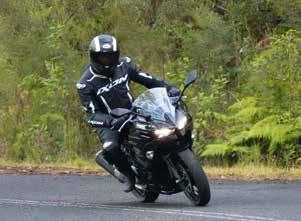
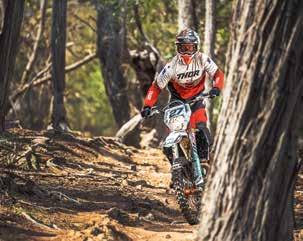
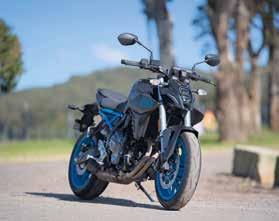
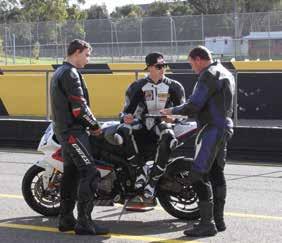
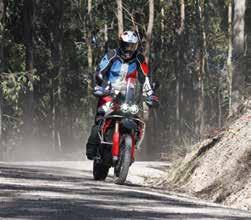
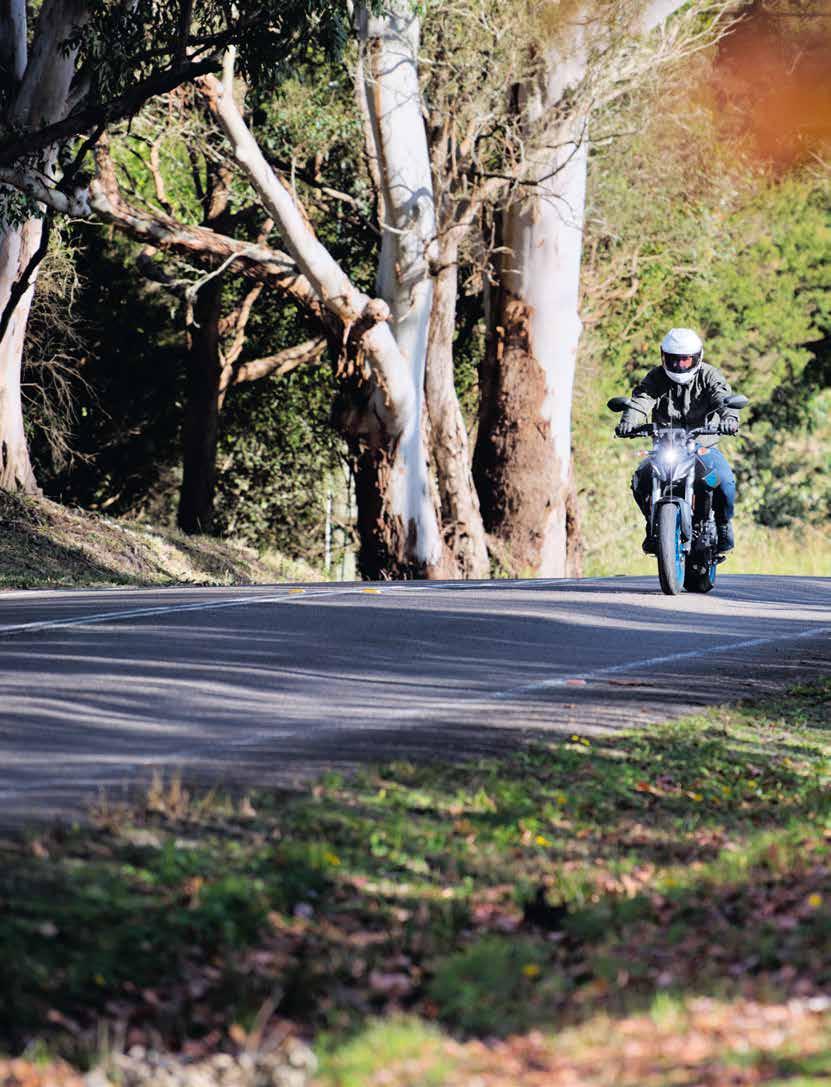
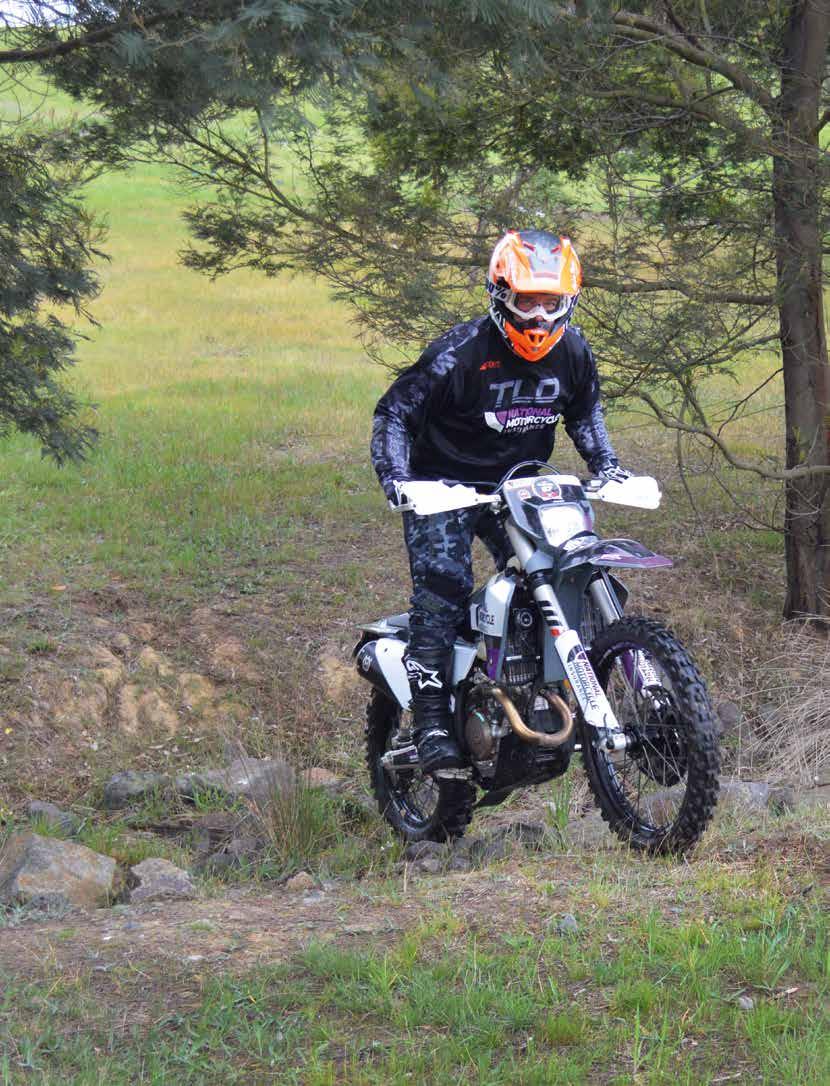
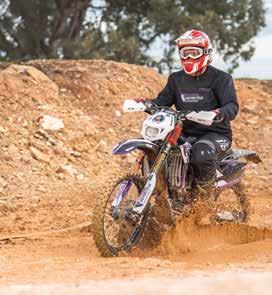
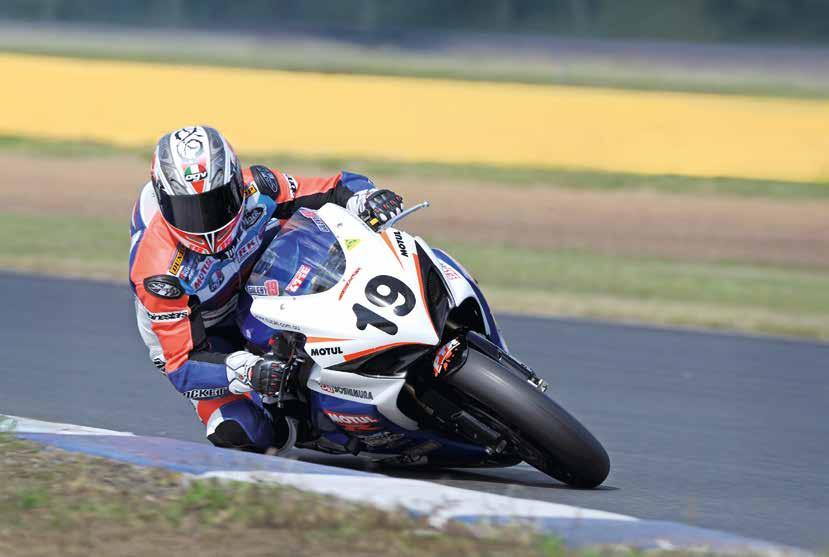
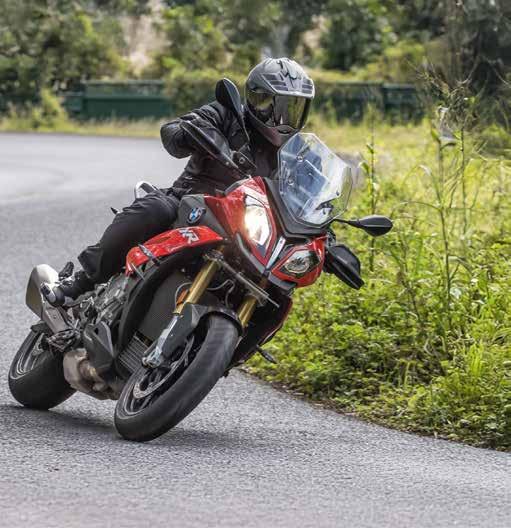
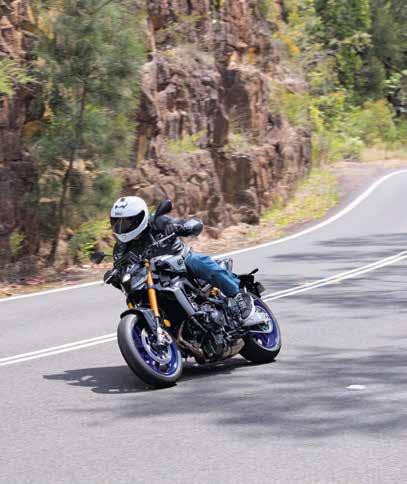
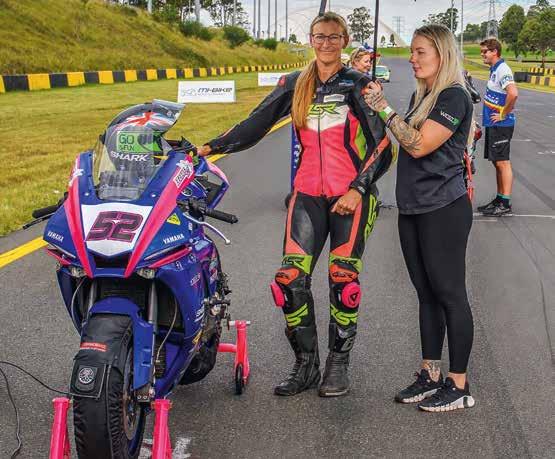
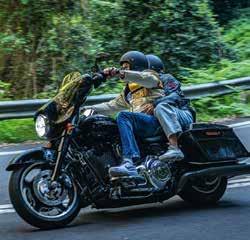
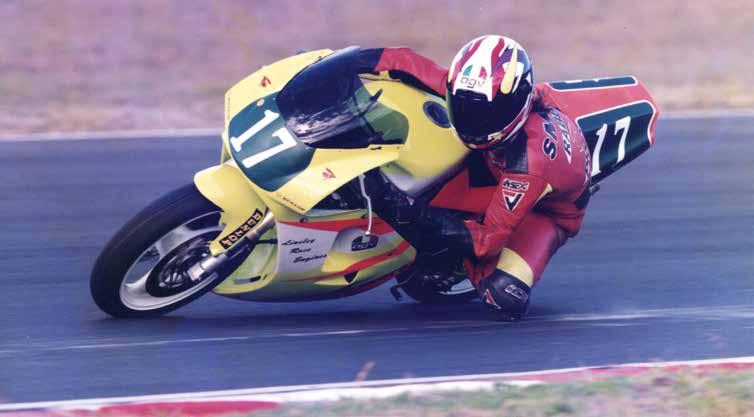
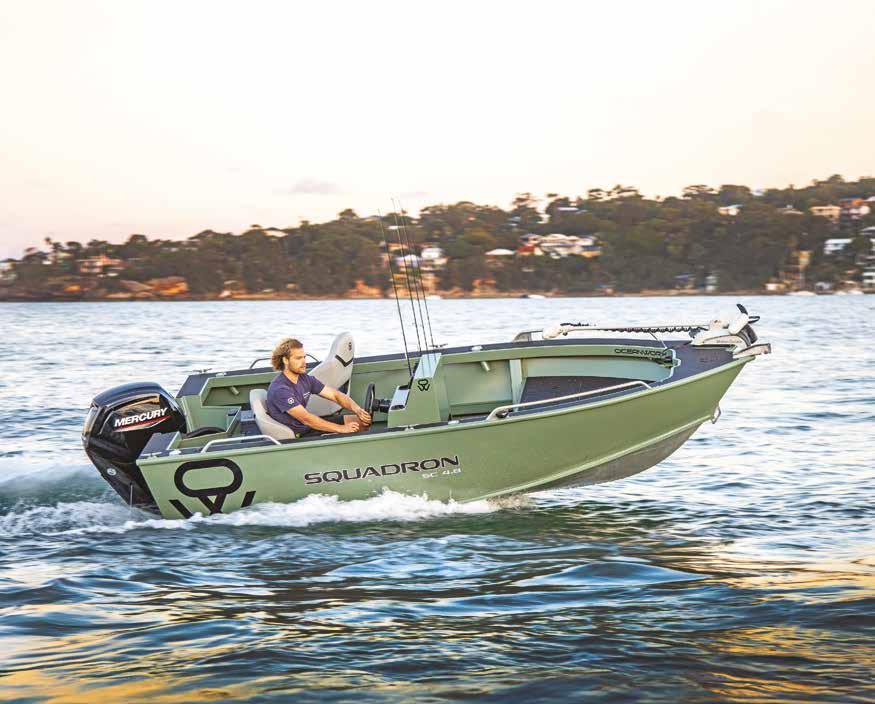
We ride the nakedbike that does weekends and weekdays.
Chrome Dreams
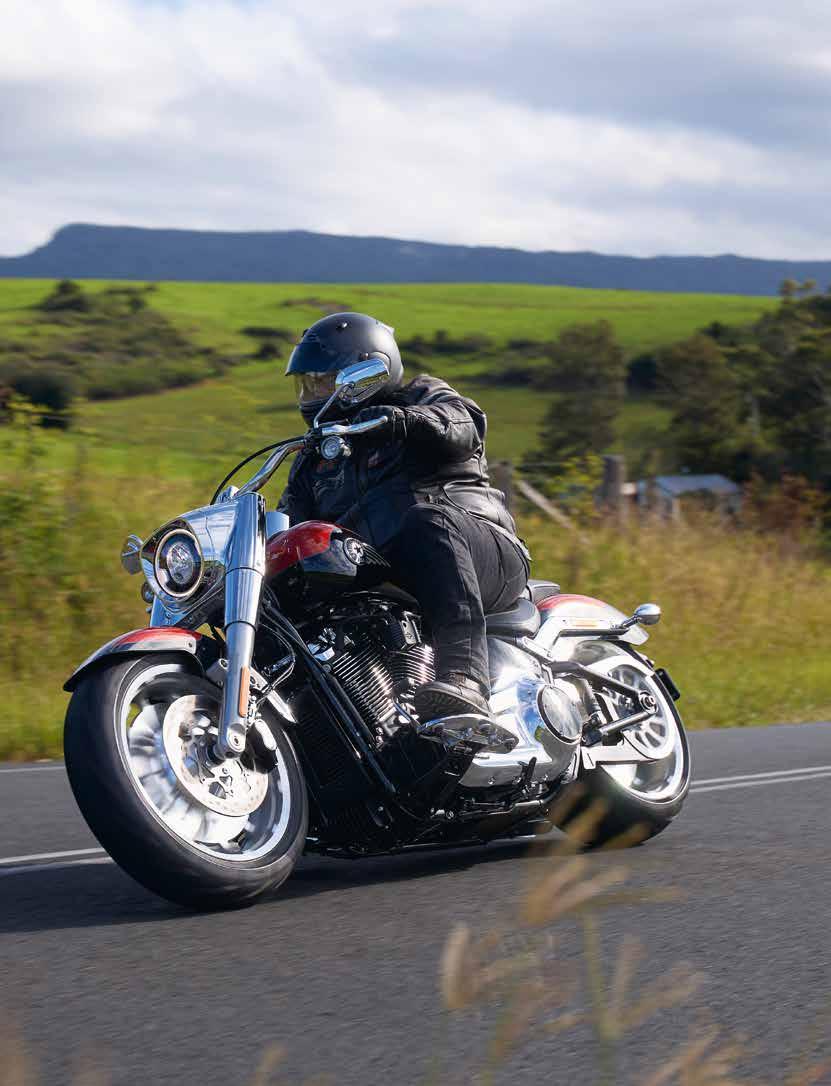
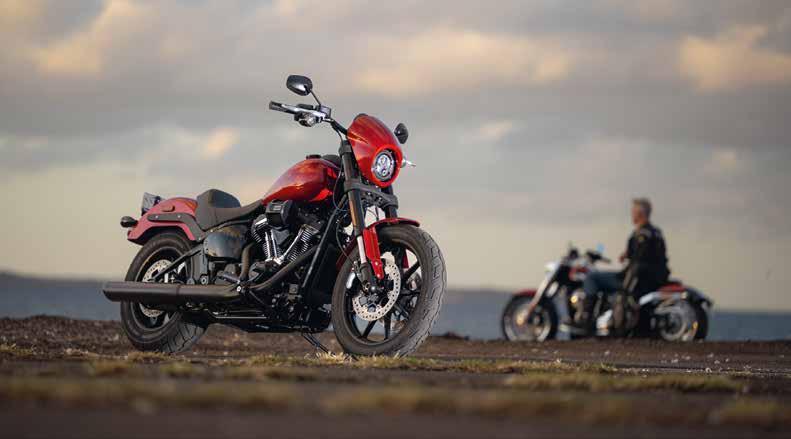
Adam tests the entire H-D Softail range on the South Coast, NSW.
Enduro Proven
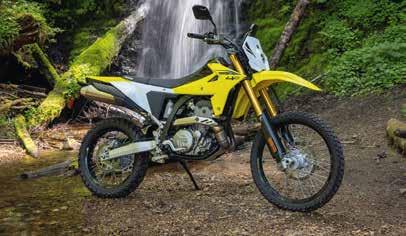
Dan puts the Triumph TF450-E to the ultimate off-road test.
Rally Ready
Nick takes the Dakar Dream
Ducati on and off-road.
Transmoto Through the Lens
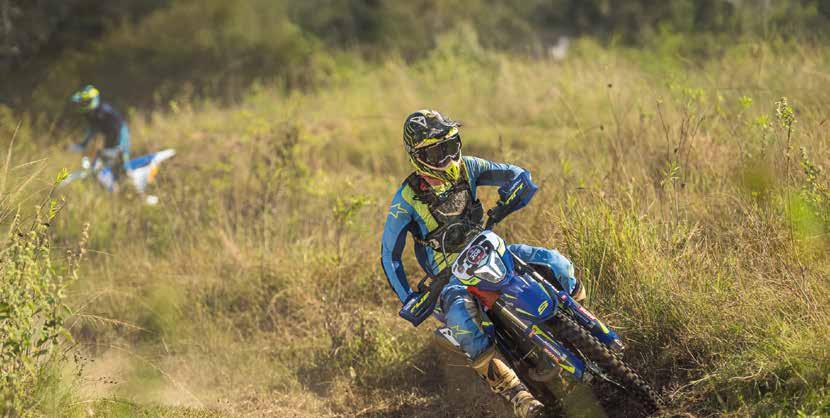
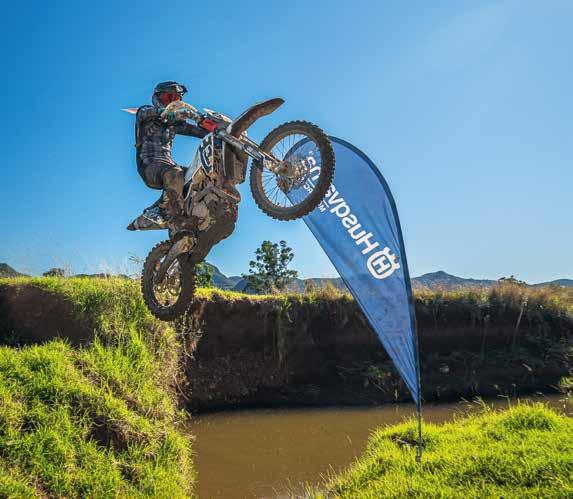
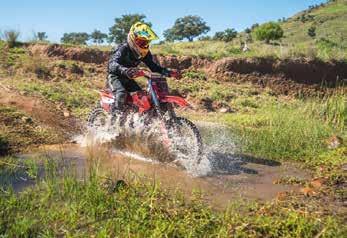
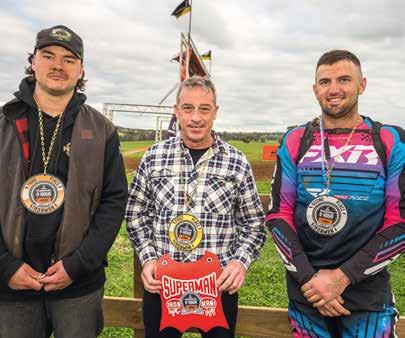
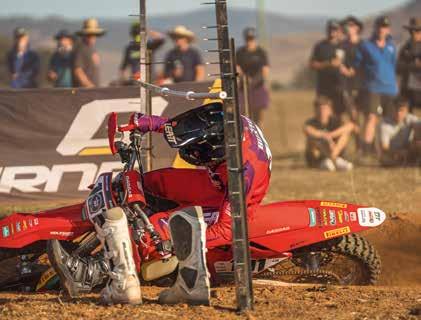
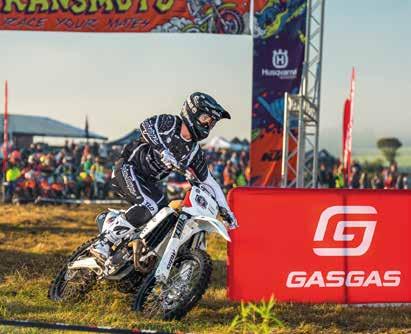
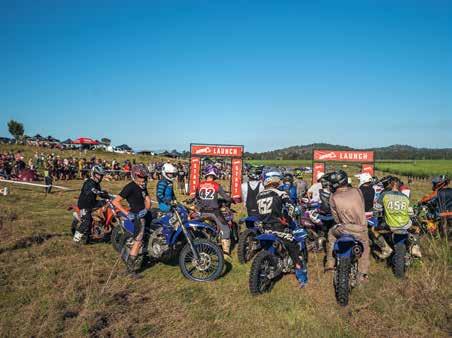
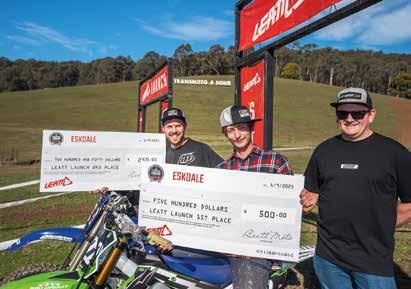
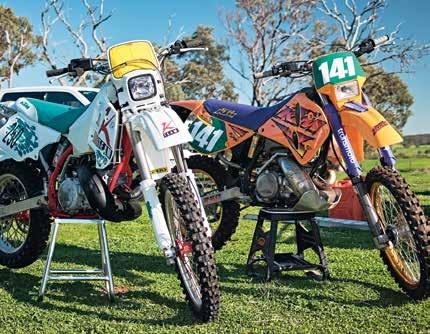
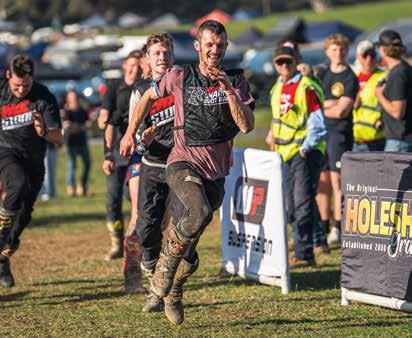
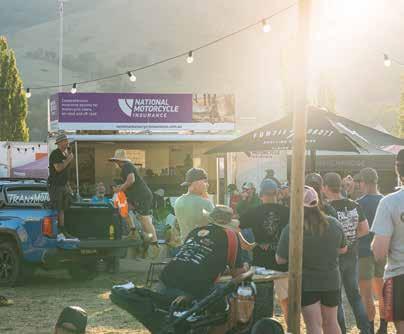
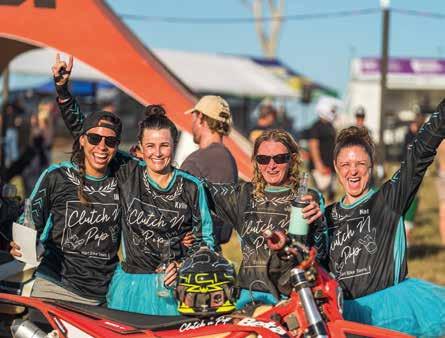
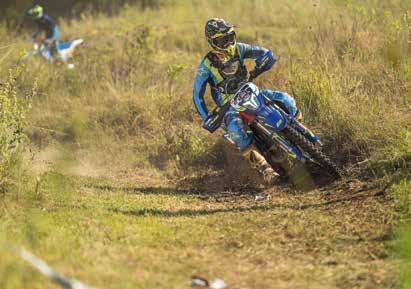
Dirt, noise, speed, mates, camping and great times.
EXPERT ADVICE
Staying In Control
Bernie Hatton kicks off our regular series on rider education.
Target Denied
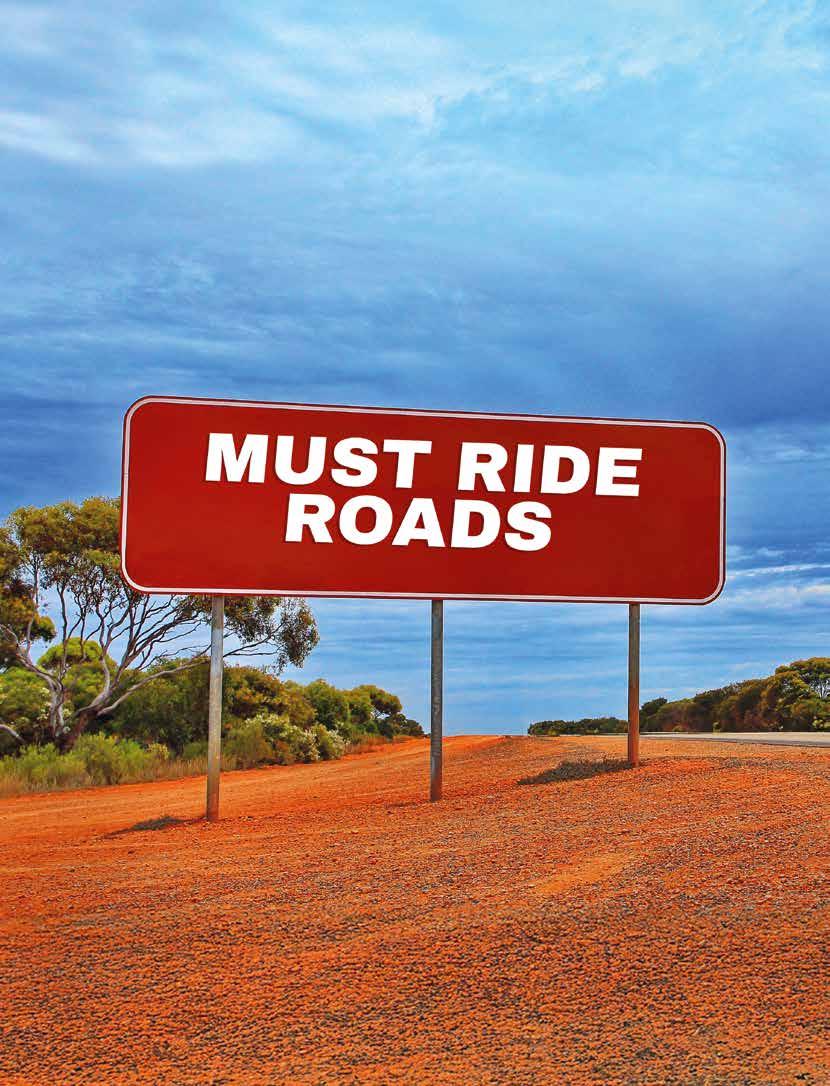
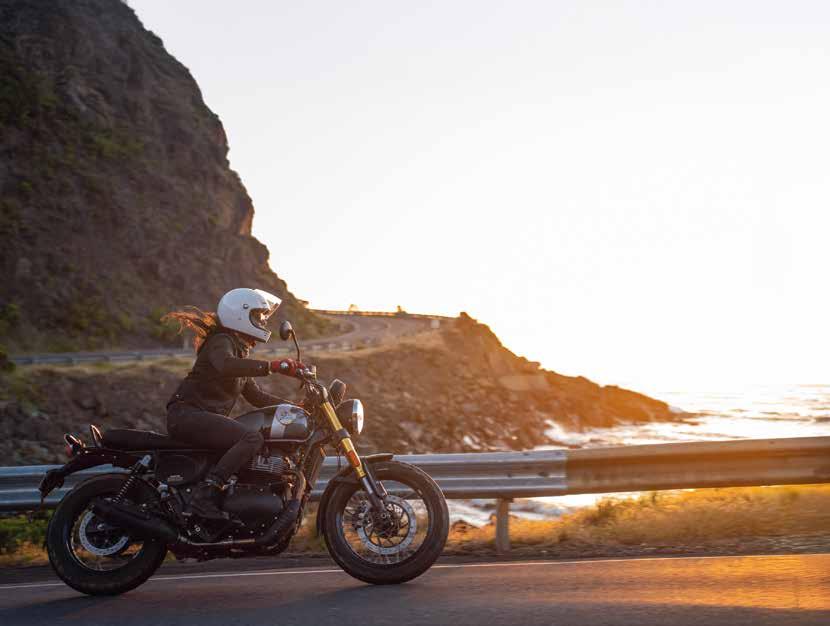
Must Ride Roads
Kellie takes us on a trip to the best bike roads in Australia.
My Shop – Joe Rascal
A fresh start for a H-D icon, we head to Joe Rascal Ringwood.
Flat Chat – Chris Schultz
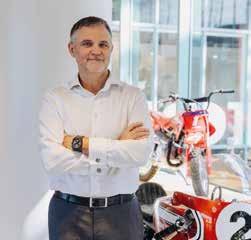
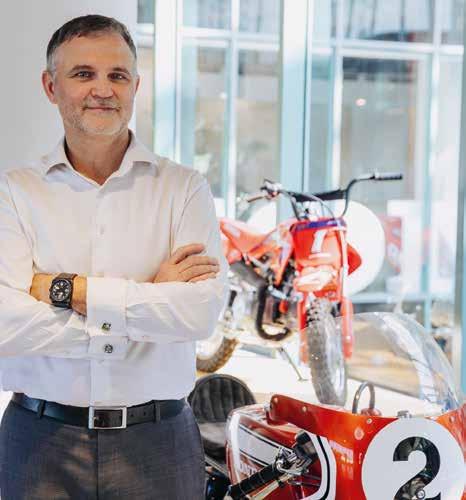
Honda’s new boss, the plans ahead, and why he loves bikes.
No rider wants to lose a bike to thieves. Here are our tips.
Street Tyre Check
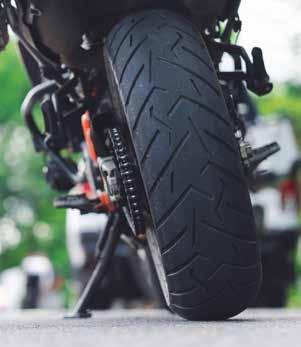
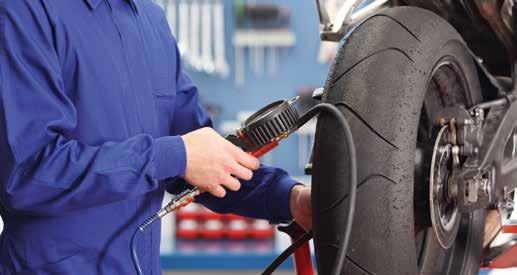
Staying safe, Jeff gives you some basic tips on tyre care.
PUBLISHER’S NOTE
Welcome to the first issue of National Motorcycle Magazine, a new quarterly publication celebrating the motorcycling lifestyle, brought to you by the National Motorcycle Insurance team.
National Motorcycle Insurance has been on the journey with dirt and road bike owners since 2014, and we’re proud to protect the pride and joy of thousands of riders across Australia and New Zealand.
Our team of insurance experts live and breathe motorcycles. We have passionate riders on our team who really understand the needs of bike owners like you.
The intent behind National Motorcycle Magazine is simple: to create an authentic magazine that speaks to both dirt and road bike enthusiasts and inspires you to get out there and enjoy the lifestyle you love with confidence and skill.
LAUNCH ISSUE
We’re lucky to have well-respected motorcycle journalist Jeff Ware on board as Editor of National Motorcycle Magazine. Jeff has assembled a stellar line-up of contributors to bring this magazine to life, including his wife, acclaimed bike photographer Heather Ware and trusted motorcycle journalist and editor Kellie Buckley. Together with his editorial team, Jeff has crafted a launch issue packed full of great articles and reviews.
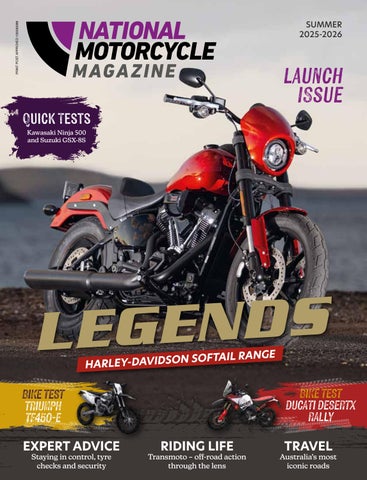
Our line-up of bike reviews in this issue includes the Triumph TF 450-E (page 26), Ducati DesertX Rally (page 32) and our cover story on the HarleyDavidson Softail range (page 20). We also feature quick tests of the Suzuki GSX-8S (page 14) and Kawasaki Ninja 500 (page 10).
We profile champion racer Shawn Giles (page 46), road racer Leanne Smith (page 68), Honda’s General Manager of Power Sports and Products
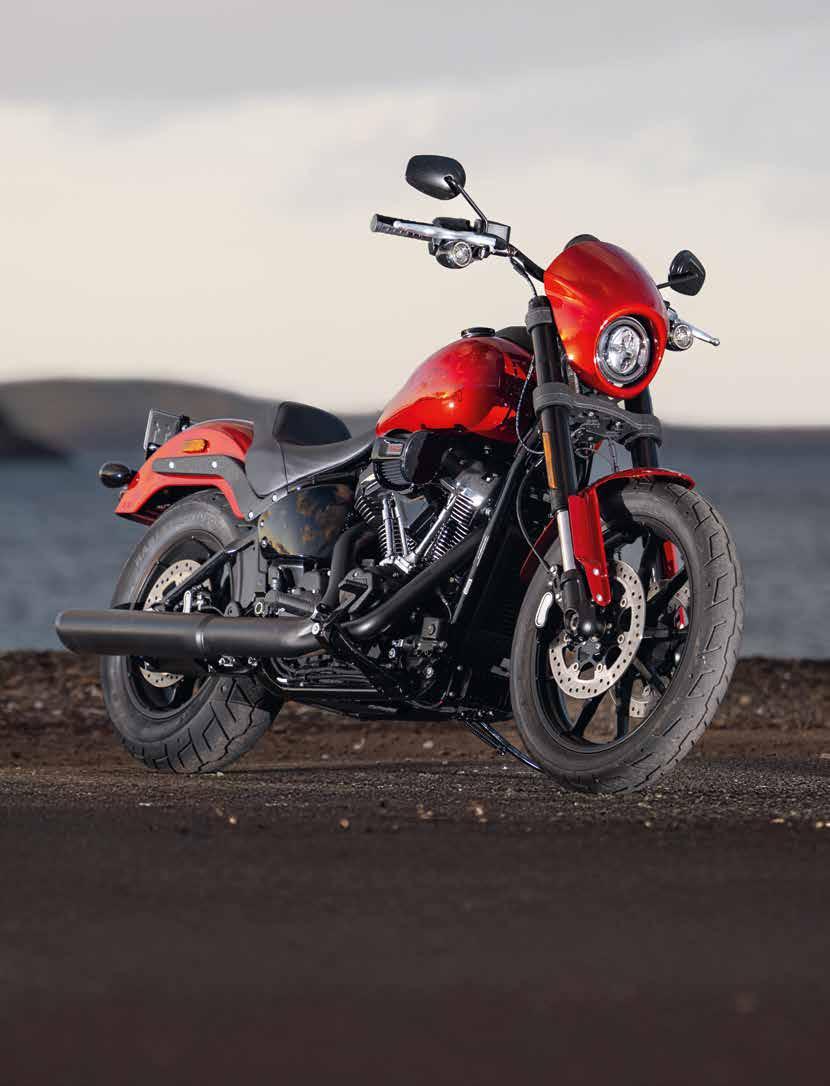
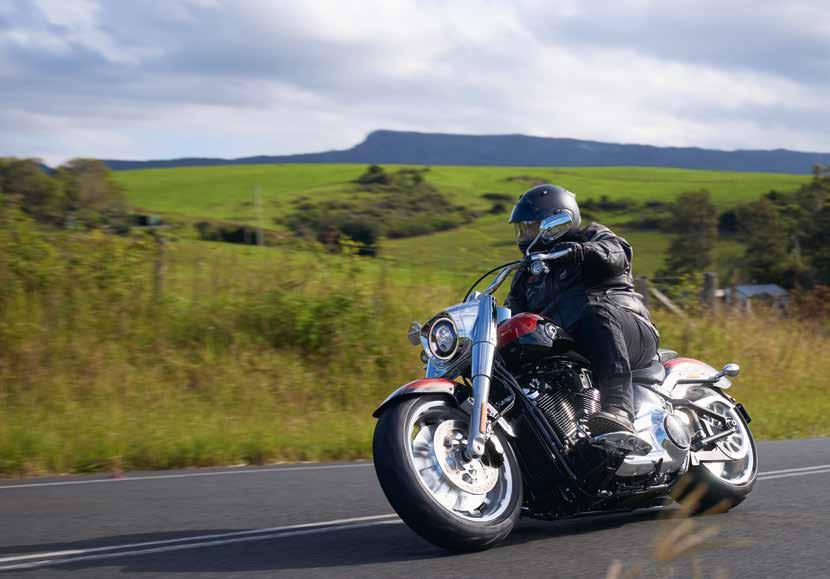
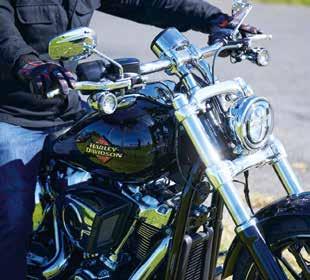
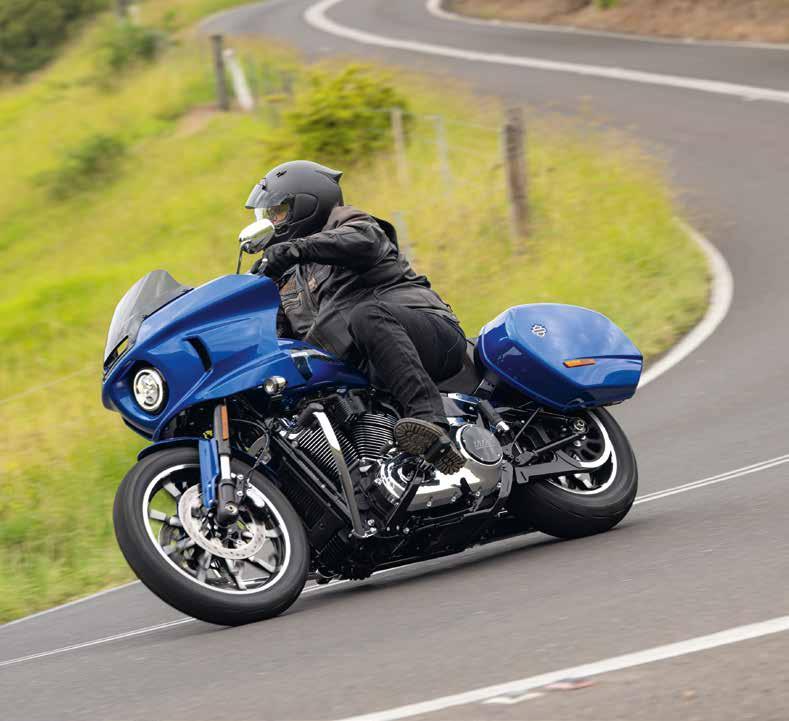
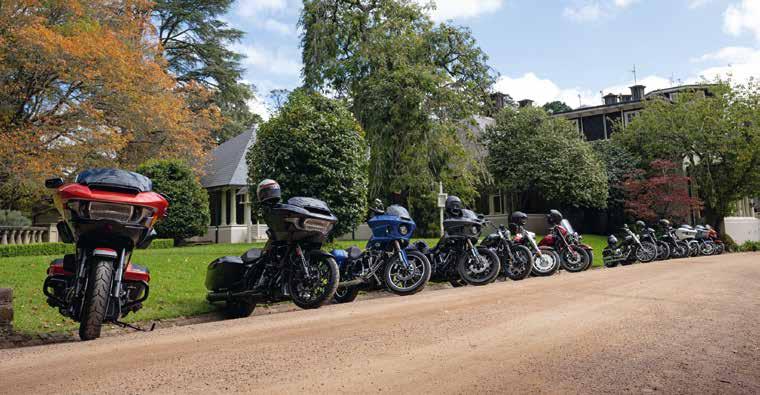
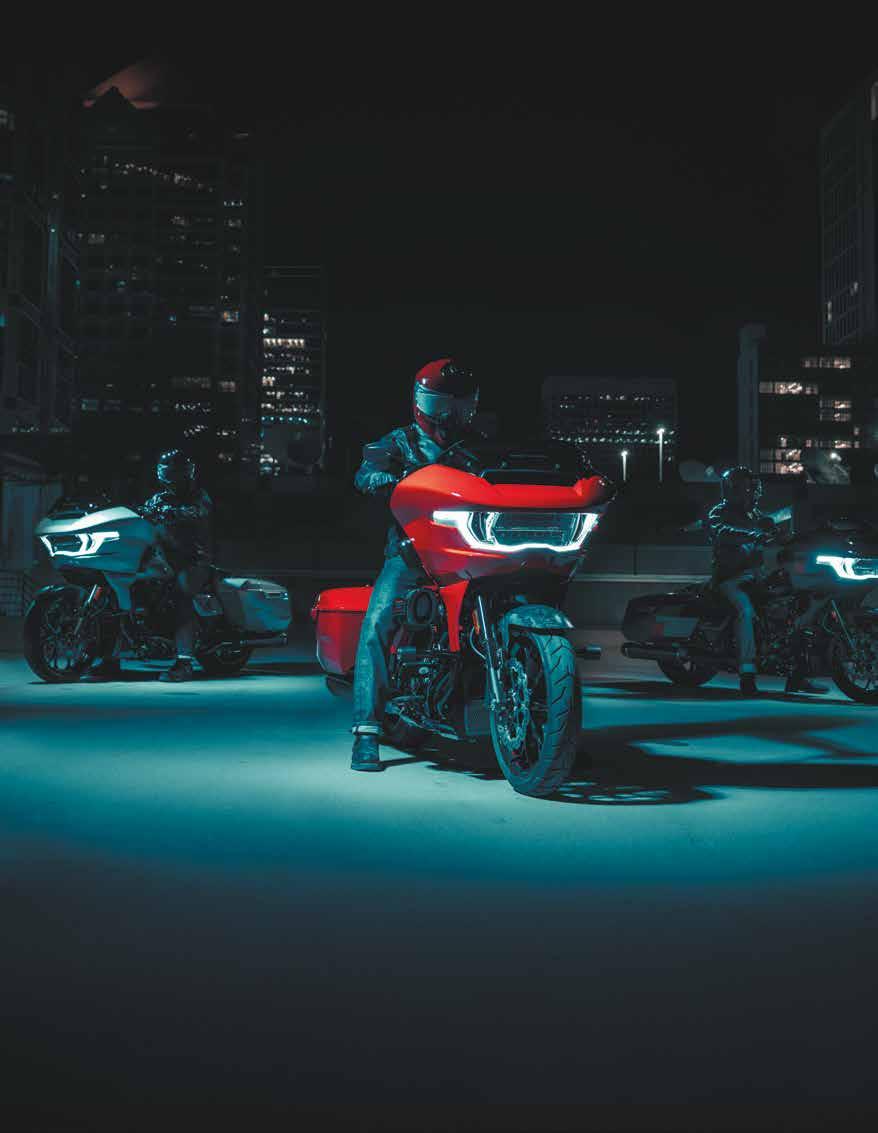
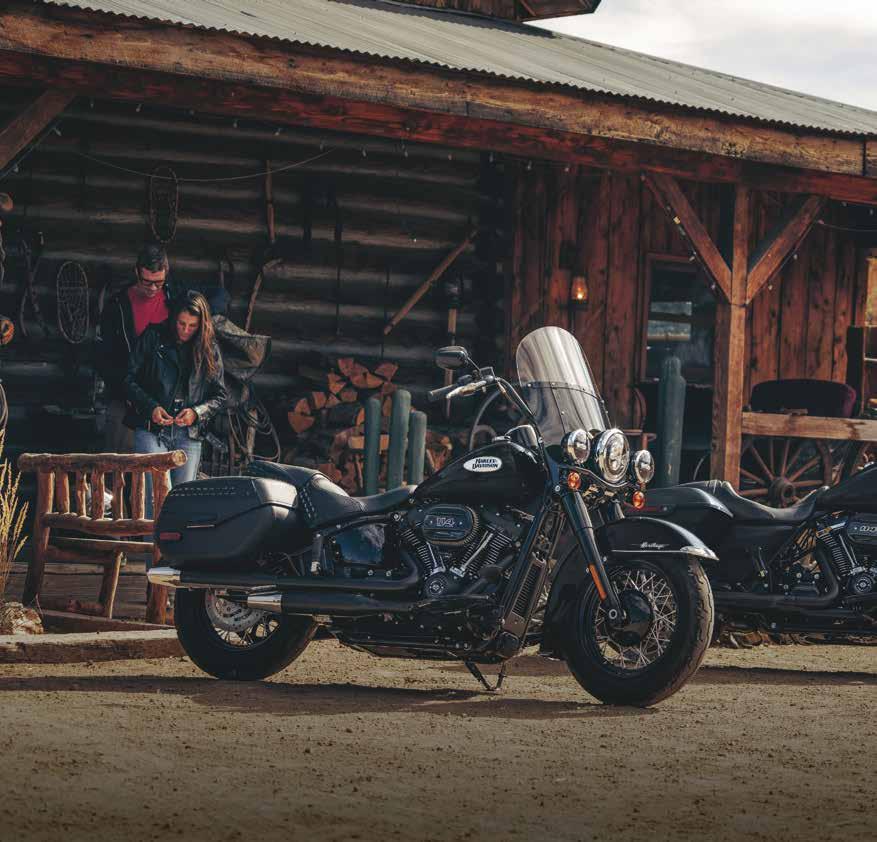
COVER: Harley-Davidson Low Rider S.
Chris Schultz (page 72); and Dealer Principal of Joe Rascal Harley-Davidson Ringwood Steve Myles (page 54). You will also meet National Motorcycle Insurance team member Tim Baker who has passed his passion for dirt bikes onto his kids (page 44).
There’s a strong line-up of technical content, including articles on theft prevention (page 64), tyre maintenance (page 66) and an in-depth feature on bike control written by experienced riding coach Bernie Hatton (page 58). Other highlights of this issue include a travel feature on must-ride roads (page 48) and a gallery of photos from the Transmoto Enduro Events series, which National Motorcycle Insurance is proud to support (page 38).
We would love to hear your feedback, so feel free to get in touch with us and share your thoughts on the issue.
LYNDON TURNER CEO & PUBLISHER
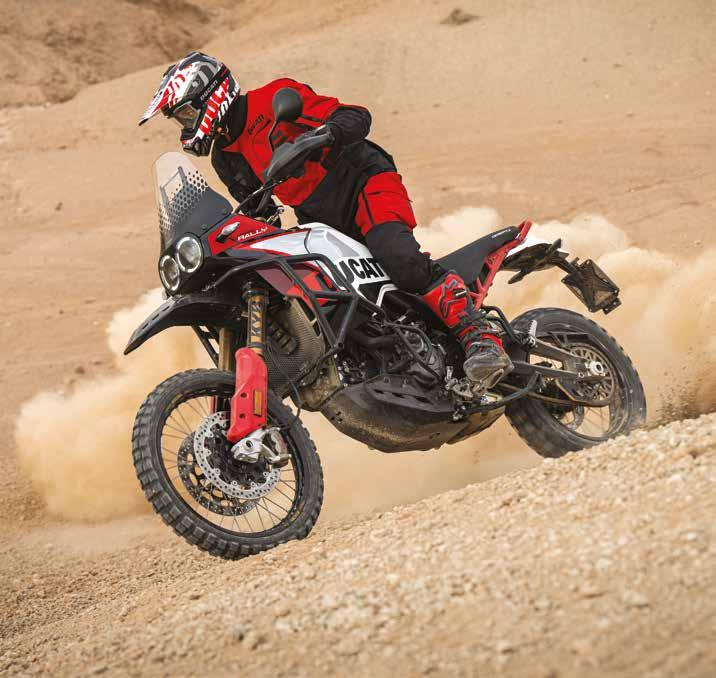
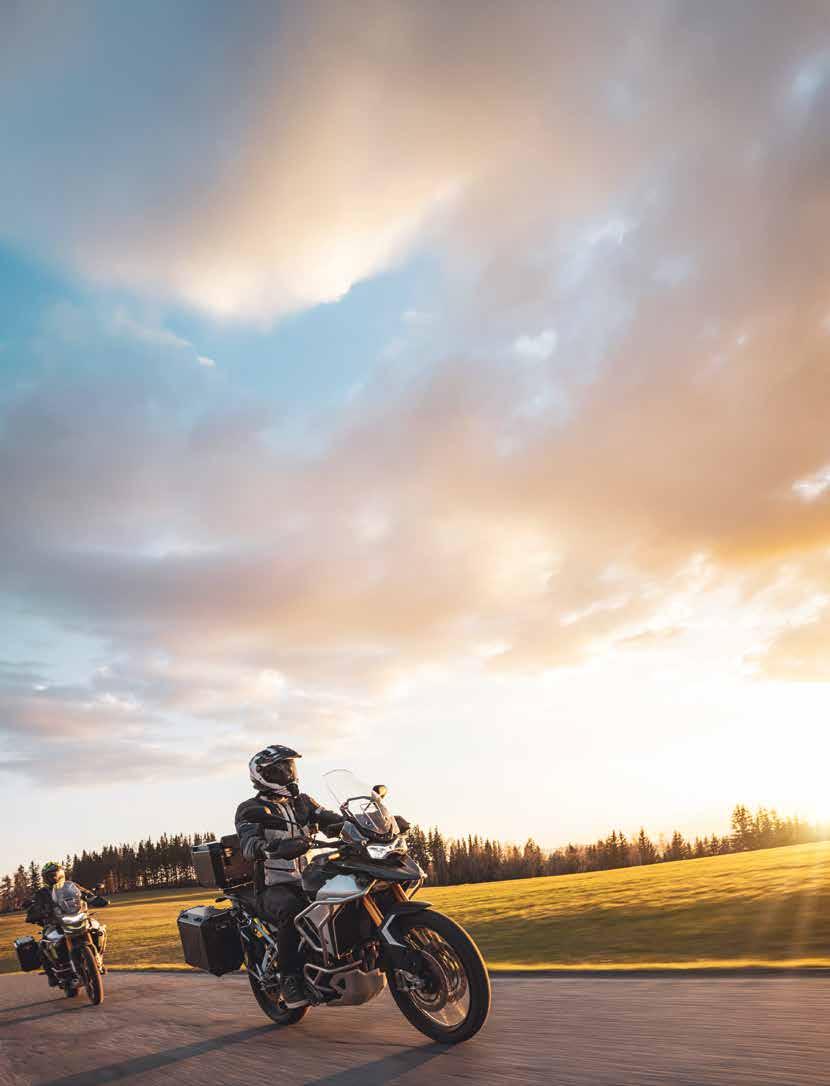
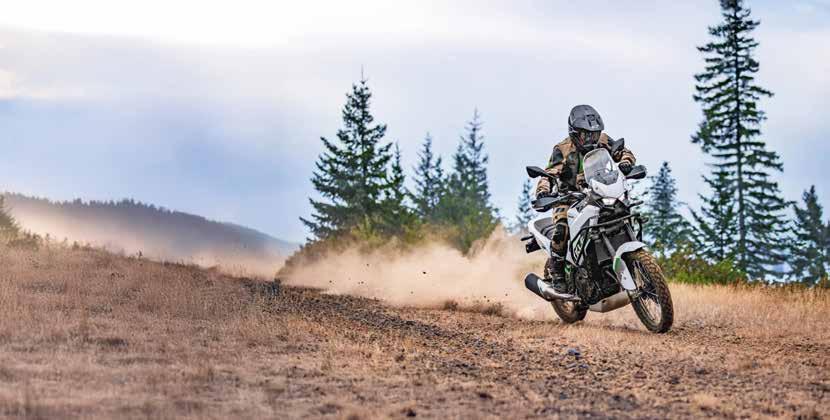
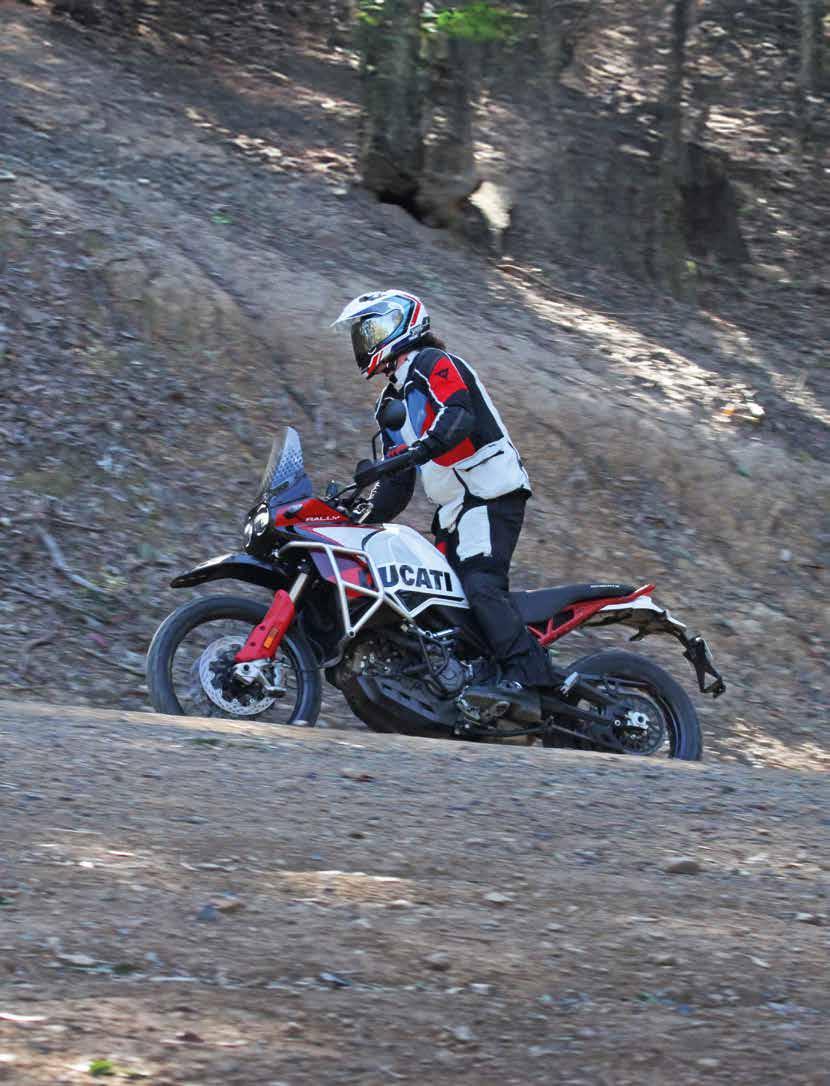
Ducati DesertX Rally
Race Wilder
The DesertX Rally is a motorcycle dedicated to the sportiest and most intrepid off-road enthusiasts, designed for adventure and equipped with the very best race-derived components.
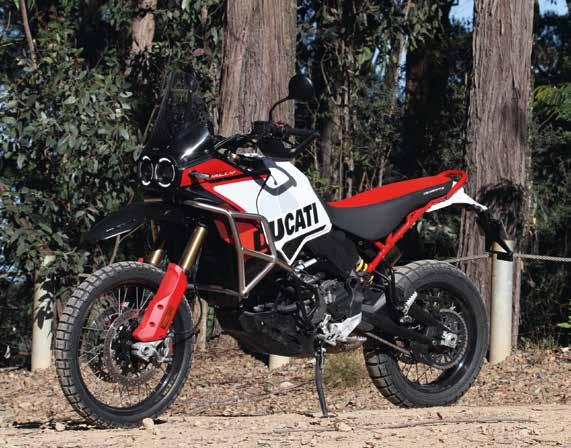
Developed and tested at the racetracks, the DesertX Rally is ready to accompany you on your most extreme adventures with its 48mm KYB suspension with increased travel and closed cartridge fork, increased ground clearance, and professional-level technical equipment. The carbon steel central spoked wheels and lighter componentry will help you tackle any obstacle with unparalleled performance and precision. The livery, inspired by the DesertX that Antoine Méo powered to victory at the Erzbergrodeo Prologue, enhances its off-road nature with a unique and distinctive style.
Whether you’re looking for off-road adventures or a rally-raid, the DesertX Rally is ready to help you overcome the most difficult challenges and propel your dreams beyond every limit.
DesertX Rally. Race Wilder.
BEHIND THE ’B ARS
BERNIE HATTON
Bernie ‘Hatto’ Hatton is one of the most experienced and respected motorcycle riding coach in Australia. With four decades of coaching, racing, testing and writing under his race suit, Bernie is a veteran of the industry. He ran over 50 riding schools across Australia and is racing coach and mentor to many of our top international professional riders. This issue, we welcome him with his first part in a series on motorcycle control… “You just don’t learn control overnight,” says Hatto.
KELLIE BUCKLEY
Kellie ‘Kel’ Buckley has filled roles from staff journo to news editor, road tester and then made her way to editor for over a decade. With 20 years’ experience testing motorcycles and motorcycle products, there are very few riders on the planet with Kel’s experience and knowledge of all things on two wheels. This issue Kel brings us some great industry insight features, Flat Chat and My Shop, plus the best Aussie roads… “As close to motorcycling nirvana as you can get,” says Kel.
TONY WILDING
Tony ‘Pommie’ Wilding has been a motorcycle journalist for 20 years. He is a long-time contributor to multiple publications and is known for his need and knowledge for all-things performance, with a soft spot for high performance nakedbikes. Pommie is a talented bike customiser and has many projects that are well known. This issue he steps onto something smaller for a change, the little Ninja 500… “On twisty roads the Ninja really shines,” says Tony.
CEO & PUBLISHER: Lyndon Turner
EDITOR: Jeff Ware
HEAD OF CUSTOMER EXPERIENCE / ADVERTISING:
Andrew Mulholland +61 482 854 066
CONTENT & PR DIRECTOR: Sarah Ranawake
ADVERTISING:
Todd Anderson +61 409 630 733
ART DIRECTOR: Kim Gierdien
CONTRIBUTORS:
Kellie Buckley, Tony Wilding, Graeme Bain, Nick Ware, ShotbyRoth, Adam Cranstone, Dan Thomerson, Bernie Hatton, Leanne Smith, Heather Ware HMC Photography, editorial production by JPMedia Services P/L.
HEAD OF COMMERCIAL: Glen Schembri
HEAD OF BRAND: Neha Taskar
HEAD OF DEVELOPMENT –MAJOR ALLIANCE PARTNERS:
Tim Baker
Copyright 2025, NM Insurance Pty Ltd ( NM Insurance). National Motorcycle Magazine (the Magazine) is published by NM Insurance ABN 34 100 633 038 of Level 7, 99 Walker Street, North Sydney NSW 2060, Australia. National Motorcycle Insurance is a business name of NM Insurance and its New Zealand subsidiary, Nautilus Marine Underwriting Agency Ltd. All rights reserved. No part of the Magazine or its content may be reproduced in whole or in part without the written permission of NM Insurance. NM Insurance makes no representation or warranties with respect to the Magazine including, without limitation, material communicated by third parties. Information in the Magazine is for information purposes only and is not legal, financial or financial product advice. NM Insurance does not warrant that the information in the Magazine is accurate, complete or current. Opinions expressed are those of the respective authors and not necessarily those of NM Insurance.
All care has been taken to ensure that information in the Magazine is accurate, but NM Insurance does not accept any responsibility for errors or omissions which might occur. Information is subject to change without notice. Neither NM Insurance nor any persons involved in the preparation and publication of the Magazine will be liable for any loss or damage as a result of use or reliance upon any information, representation, statement, opinion or conclusion contained or expressed in it. This disclaimer applies to both printed and electronic versions of the Magazine. For permissions or inquiries, please contact marketing@nminsurance.com.au
YOUR TICKET TO TRUE AUSTRALIAN ADVENTURE
Middle Ninja
TEST: TONY WILDING | PHOTOGRAPHY: GRAEME BAINES
QUICK TEST
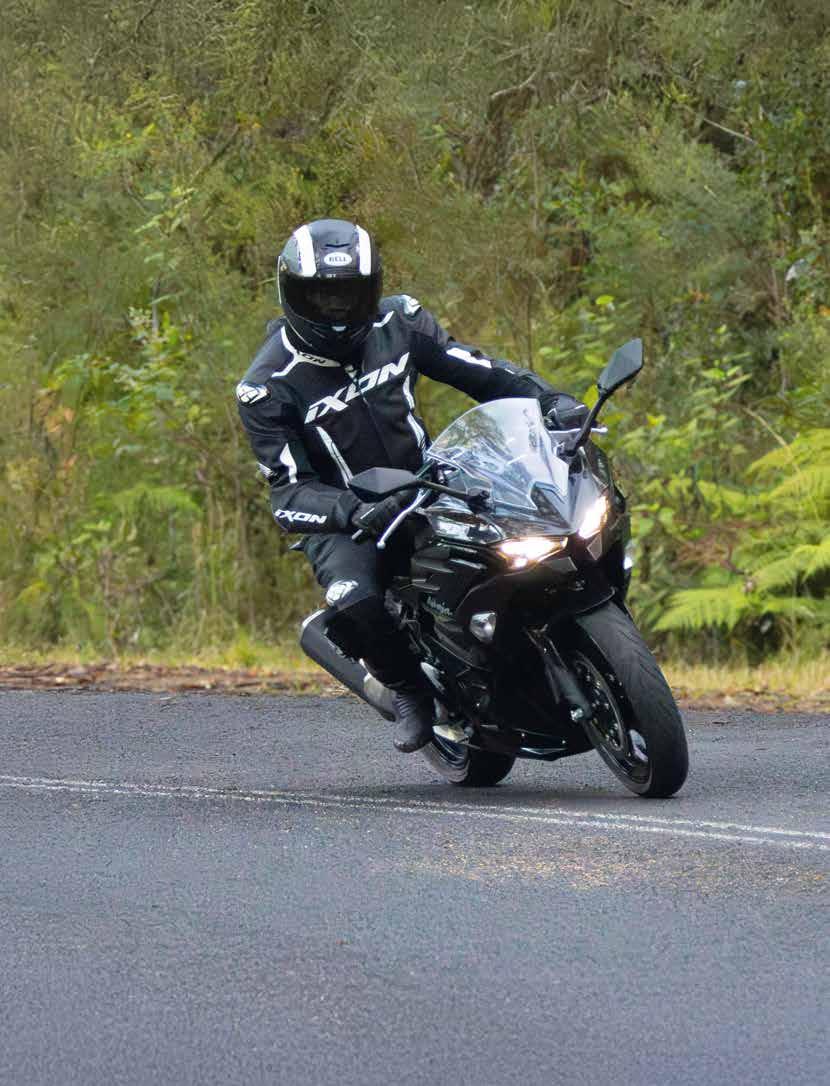
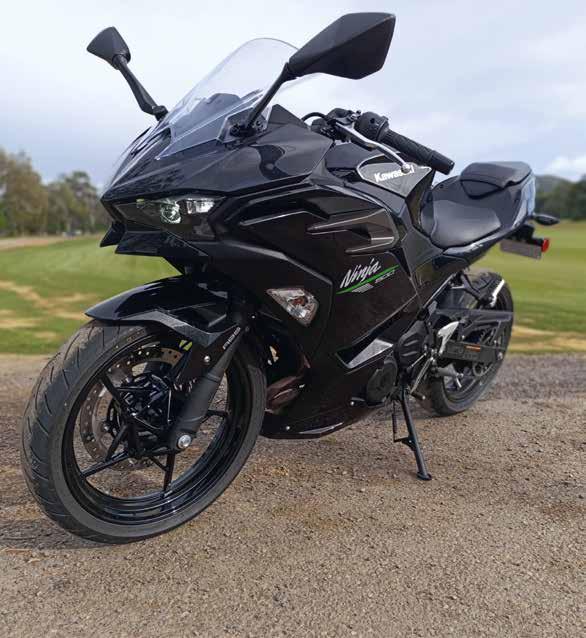
Kawasaki’s Ninja 500 blends sharp styling, a lively twin-cylinder and agile handling into a fun LAMS package…
The Kawasaki Ninja 500’s asking price is just over nine grand ride away, offered in Metallic Spark Black/Metallic Flat Raw Greystone or Metallic Matte Whitish Silver/Metallic Moondust Grey. Priced at $9,078 ride away in Sydney for the standard model, it’s a genuine bargain.
For those wanting more, the Special Edition (SE) adds a TFT dash, KIPASS keyless start, USB-C outlet, taller screen, LED indicators, frame sliders, pillion seat cover, tank and knee pads, radiator screen and a racy 40th Anniversary livery. At $10,314 it’s still excellent value, I reckon.
To keep the price down, Kawasaki has kept things simple. There are non-adjustable levers, basic forks, only preload at the rear and minimal electronics. But that doesn’t spoil the ride the Ninja offers.
The Ninja 500 looks the part with sharp, modern fairings and aggressive bodywork. At 785mm the seat is low and easy to access. At 180cm I could flat-foot it with bent knees, but smaller riders will be equally comfortable. The cockpit is roomy, the riding position sporty but not extreme thanks to higher-set handlebars.
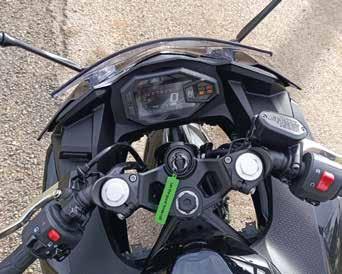
The clear LCD dash is simple but effective. No riding modes or fancy electronics, but you do get ABS and an assist-and-slipper clutch.
Fire the twin into life and it idles quietly, hinting how good it would sound with an aftermarket pipe. At just 171kg, the Ninja feels featherlight, the clutch is easy and the gearbox slick.
This engine is happiest short-shifted, where torque sits between 4500–7500rpm, but it pulls cleanly from low down and will rev out to 11,000rpm if asked. On the freeway it sits happily at 6000rpm at 110km/h, with plenty left in reserve. Wide mirrors give good rear vision, and despite sticking out past the handlebars, the Ninja is slim enough for lane-splitting if you are legally allowed.
Fuel economy is decent. I managed 268km before filling up, with 58km still showing on the range indicator. The fairing gives decent wind protection and the LED headlights make night riding safer.
On twisty roads the Ninja really shines. Kawasaki has nailed the suspension balance, firm and sporty without being harsh, yet still compliant on bumps. Footpeg clearance is generous, letting you carry speed without drama. Light wheels and narrow tyres (110/70 front, 150/60 rear) make direction changes quick and agile, though rough surfaces mid-corner can unsettle the bike slightly.
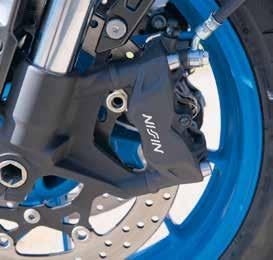
Braking comes via a single 310mm disc with twin-piston Nissin caliper up front and a 220mm disc at the rear. They offer solid power and feel without the ABS being intrusive.
Ultimately, this bike isn’t about horsepower. It’s about fun. On a twisty road, the Ninja 500 proves you don’t need a litre bike to grin from ear to ear. It’s light, torquey, agile and affordable. As a commuter, learner or weekend toy, it ticks every box.
If you’ve never tried a small, light bike like this, take one for a spin, you’ll be surprised how much fun it is. For a LAMS bike, it’s more than enough, and in the right hands it’ll keep bigger bikes honest. Kawasaki has built a budget-friendly gem that delivers far more than we expected.
“On twisty roads the Ninja really shines. Kawasaki has nailed the suspension balance…”
Instruments: LCD display with smartphone connectivity, ABS.
H2R big bike looks and aero. RIGHT: Stylish LED taillight and indicators, multi-function LCD display dash, intuitive switchgear, alloy triple-clamp.
TORQUE TWIN
TEST: NICK WARE | PHOTOGRAPHY: SHOTBYROTH
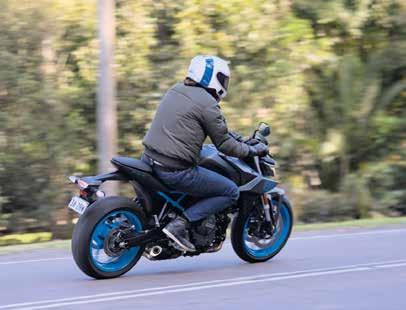
SUZUKI’S GSX-8S BLENDS SMOOTH POWER, SHARP HANDLING AND EVERYDAY PRACTICALITY, MAKING IT A STANDOUT MIDDLEWEIGHT NAKED…
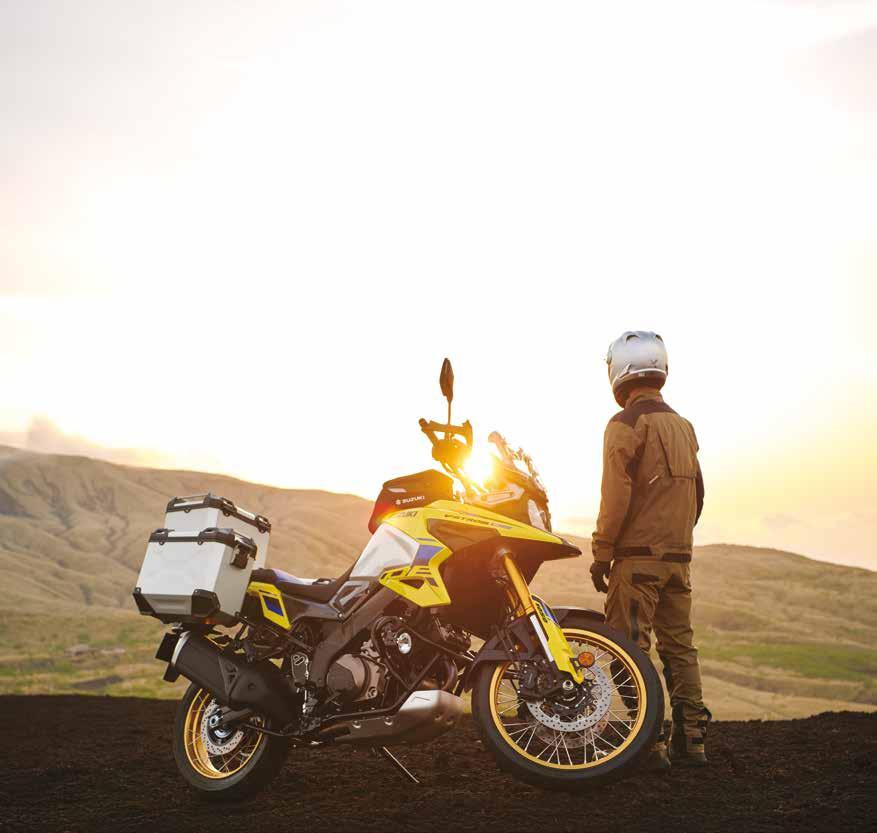
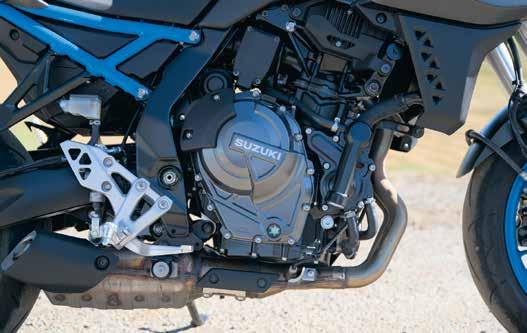
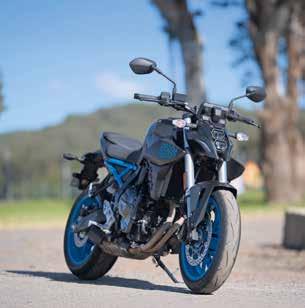
This is one of our favourite classes of bike and, after logging some serious kilometres, I was reluctant to hand back the key. At $12,990 ride away (Q4 2025), Suzuki’s naked twin cylinder is a bargain. At the heart is the familiar 776cc parallel twin, also seen in the V-Strom 800DE and GSX-8R. It’s a supersmooth engine with barely any vibration, making 61kW at 8,500rpm and 78Nm at 6,800rpm. The delivery is silky across the rev range and a joy around town. Suzuki’s SCAS slipper clutch is paired with one of the better bidirectional quick-shifters I’ve used – crisp, seamless and effective even at low throttle openings. Combined with the torquey 270-degree twin, it makes commuting or lane filtering effortless, with plenty of low-end shove.
The exhaust is neatly tucked under the swingarm and has a decent note, though most owners will no doubt reach for a performance muffler to unlock more sound. Suspension is serviceable but basic: KYB 130mm USD forks up front and a rear monoshock that feels a touch stiff on rougher roads. Perfectly fine for short, sporty rides, but over longer sessions the firmness is noticeable, particularly for heavier riders.
At 810mm, the seat height is approachable, and the ‘bar position suits an upright naked stance. Taller riders like me (194cm) might find the legroom slightly cramped after an hour, but the seat itself is more comfortable than it looks, only fatiguing after a few hours. Tipping the scales at 202kg, it’s no lightweight on paper, yet once rolling it feels nimble and light.
Braking is handled by Nissin: 310mm dual discs with four-piston radial calipers up front and a single 240mm disc at the rear. While not flashy, the system delivers confident, strong stopping power, even under a heavier rider.
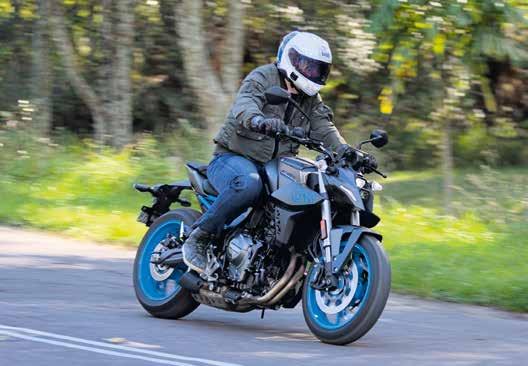
BELOW: Nick found the GSX-8S a comfy all-rounder.
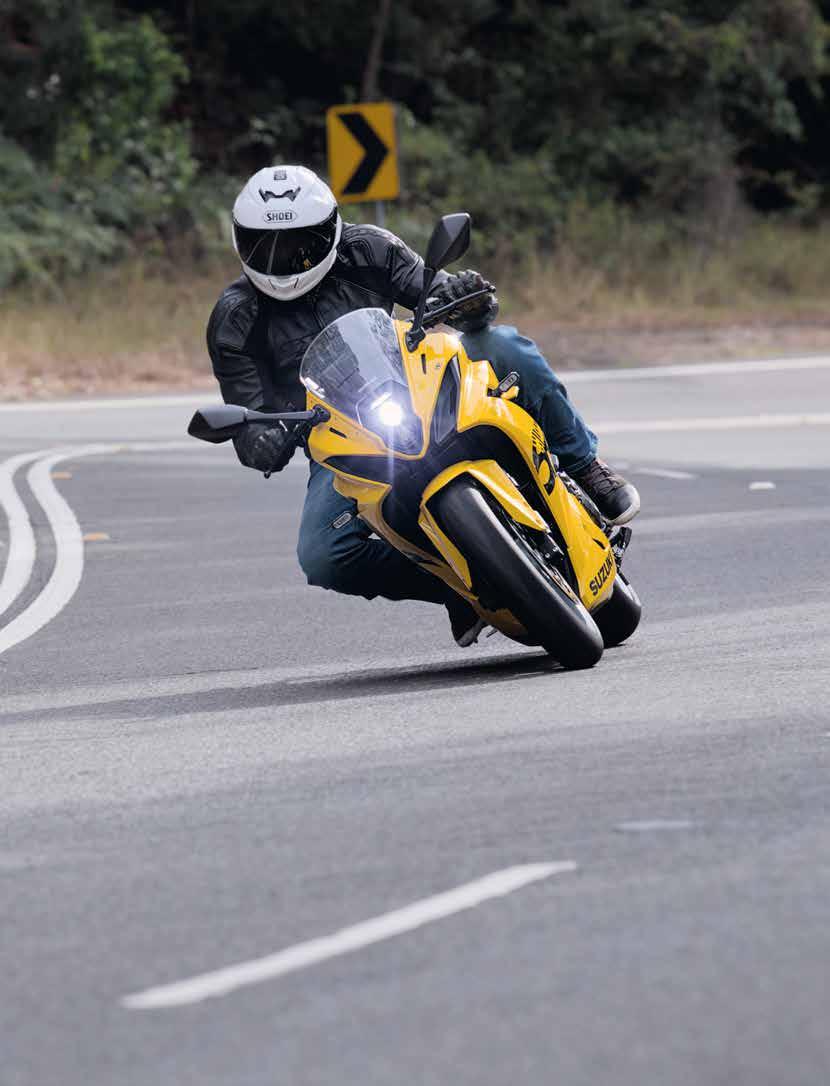
Commuting and freeway stints are dispatched without fuss, but it’s on backroads where the bike comes alive. I had one of my most enjoyable Putty Road loops aboard this bike – over 450km of spirited riding returned 5.1L/100km against Suzuki’s 4.2L claim. The chassis is stable in fast sweepers, yet flicks side-to-side quickly, with the Dunlop Roadsport 2s proving more than capable.
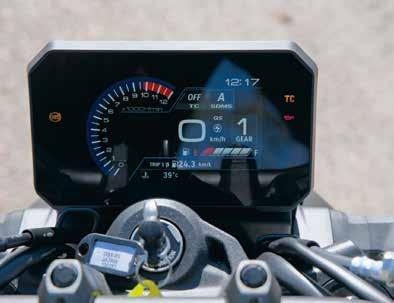
Styling is sharp, with an aggressive front and a neat matte-black finish. The bright-blue wheels divide opinion and a tail tidy would clean up the rear. Other colour options include Pearl Cosmic Blue and Glass Matt Mechanical Grey. Tech is simple but effective: a 5-inch TFT dash, three riding modes, traction control and Suzuki’s low-RPM assist.
All up, Suzuki has nailed the brief. The GSX-8S offers strong performance, solid handling, enough tech and a grin-inducing ride at a sharp price. A little more suspension plushness and cruise control would be nice, but at this money it’s hard to argue. This is one of the best bang-for-buck nakeds on sale.
BELOW LEFT: Radial-mount Nissins.
BELOW RIGHT: Excellent TFT dash.
QUICK FACTS
SUZUKI GSX-8S
PRICE: From $12,990 ride away (Q4 2025).
WARRANTY: Two-year, unlimited kilometres.
COLOURS: Metallic Matt Black No.2 (tested), Cosmic Blue and Glass Matt, Mechanical Grey.
POWER: 62kW @ 8,500rpm.
TORQUE: 78Nm @ 6,800rpm.
CURB WEIGHT: 202kg.
FUEL CAPACITY: 14L.
MEASURED ECONOMY: 5.1L/100km (measured).
ENGINE: Liquid-cooled, parallel twin, DOHC, 8-valve, 776cc (84.0 mm × 70.0 mm bore × stroke), 12.8:1 compression, two-into-one exhaust.
INSTRUMENTS: Full-colour 5-inch TFT dash, Suzuki Intelligent Ride System (S.I.R.S.), LED lighting all round.
FRONT END
WDW 2026, 100 YEARS
Ducati has confirmed that World Ducati Week 2026 will be held over July 3-5 at Italy’s Misano World Circuit Marco Simoncelli, marking the brand’s 100th anniversary. The centenary event will celebrate a century of passion, racing success and community, uniting fans from around the world. Highlights include appearances by Ducati’s MotoGP and WorldSBK stars, special exhibitions and a packed three-day program of entertainment and rides across the Romagna Riviera.
KAWASAKI KLE500 IS BACK
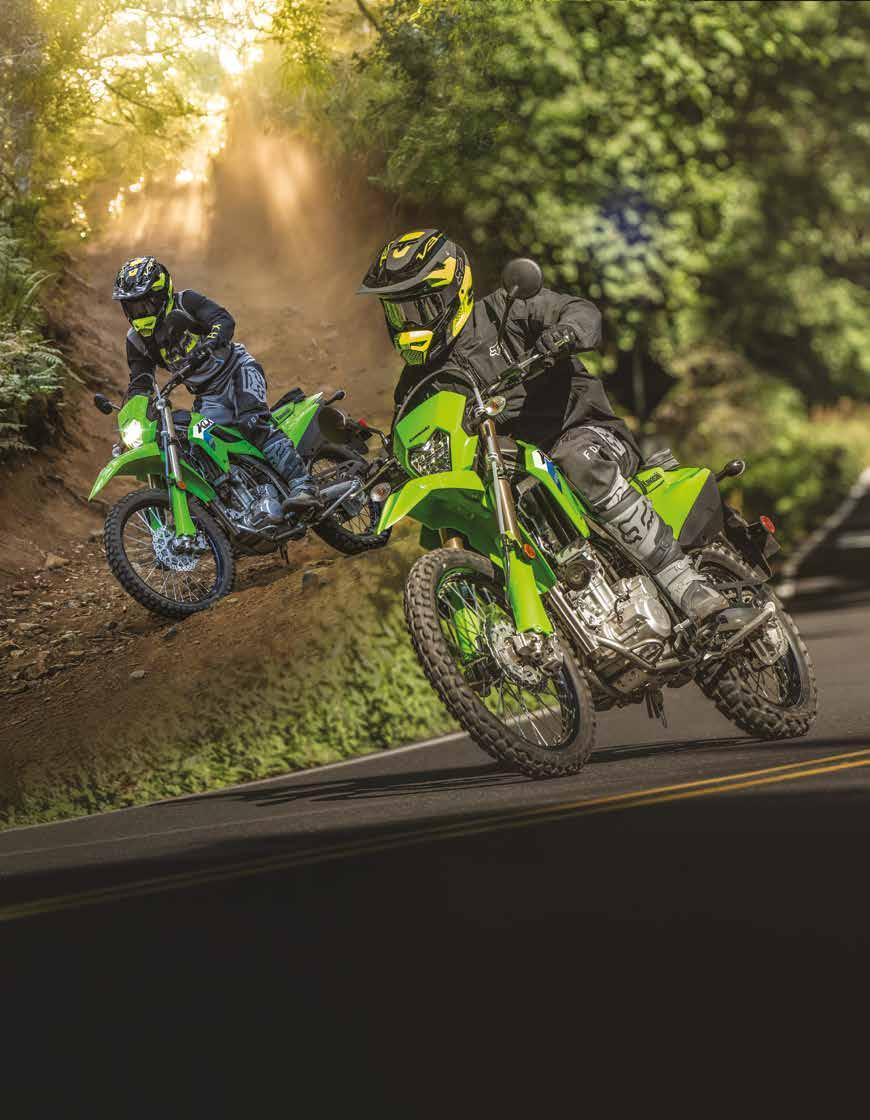
Kawasaki has announced the return of the iconic KLE500 for 2026 and here at NMM, we are excited! A rally-styled, LAMS-approved adventure bike designed for riders of all experience levels and powered by a liquidcooled parallel twin with an assist-and-slipper clutch, the new KLE500 should blend everyday versatility with genuine off-road capability. Featuring a lightweight trellis frame, 21/17-inch wheels, IRC GP-410 tyres and KYB suspension, it promises confidence on both dirt and tarmac. The SE model adds LED indicators, TFT display, hand guards, a taller screen and smartphone connectivity via Rideology The App.
Available in Metallic Carbon Gray or Metallic Bluish Green (SE), the new KLE500 arrives mid-2026, with pricing and final specifications to be confirmed closer to release.
LEGEND REVIVED
Honda has unveiled the all-new CB1000F, a retro-inspired nakedbike that blends 1980s musclebike heritage with modern technology. Drawing cues from the CB750F and CB900F, it’s powered by a retuned Firebladederived 999cc inline-four producing 91kW and 103Nm, tuned for strong mid-range punch. The steel frame, SHOWA suspension and Nissin brakes should ensure handling precision, while a 5-inch TFT, IMU-based rider aids and smart key tech bring it into the digital age. Australian release and pricing are yet to be confirmed, but with the retro naked trend in full swing, it should hit local roads for sure... Stay tuned!
H-D BAGGER CUP JOINS MOTOGP
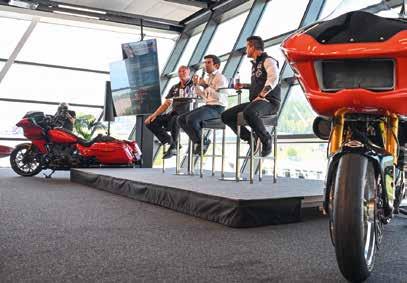
Harley-Davidson and MotoGP have unveiled the HarleyDavidson Bagger World Cup, the world’s first international bagger racing championship. The six-round 2026 series will see race-prepared Harley touring machines thunder around some of MotoGP’s most iconic circuits. The season kicks off at COTA in the USA (March 27–29) before heading to Mugello, Assen, Silverstone and Aragón, before concluding at Austria’s Red Bull Ring (September 18–20).
Former Harley-Davidson CEO Jochen Zeitz called it a “bold new era” for the brand, while MotoGP’s Carlos Ezpeleta said it connects “new audiences with MotoGP’s racing passion.”
DR-Z4S & DR-Z4SM DETAILS
Suzuki Australia has confirmed pricing for the allnew DR-Z4S and DR-Z4SM. The DR-Z4S will retail for $14,490 ride away, while the DR-Z4SM comes in at $14,990 ride away. Both models will be offered in two colour options, and a full range of genuine accessories will be available, including knuckle guards, skid plates and luggage racks. More details at suzukimotorcycles.com.au
WHITES TAKES ON PRO ACC
It’s official! Whites Powersports Australia has completed its acquisition of Pro Accessories Australia’s key assets, taking over distribution of iconic brands including Avon Tyres, KOVIX Security, NitroMousse, Tubliss, Rocky Creek Designs, BOLT Hardware and ACE Bikes to name a few.
The deal marks a new chapter for both companies. Whites CEO Kyne Larkin said the move “felt like the perfect fit,” while Pro Accessories’ Greg Parker praised Whites as “the right team to carry the brands forward”. Whites will officially distribute the product range from its Brisbane, Melbourne and Perth hubs, continuing a proud legacy built over decades.
TEAMMOTO GOLD COAST AWARD
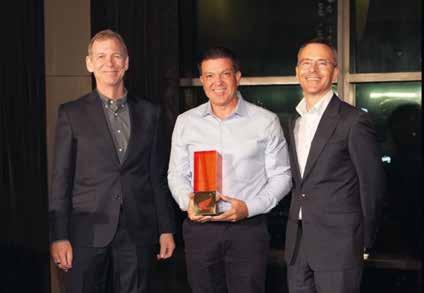
Honda Australia has named TeamMoto Gold Coast its National Motorcycle Dealer of the Year, recognising outstanding performance across sales, service and customer satisfaction. Announced at Honda’s Dealer of the Year Awards in Melbourne, the accolade celebrates excellence within the brand’s nationwide network.
Honda Vice President Peter Singleton praised the winning team, saying Honda’s success “depends on the strength and dedication of our dealer network.” Finalists were evaluated over 12 months on dealership management, sales growth, parts performance and adherence to brand standards, with TeamMoto Gold Coast emerging as the standout performer.
HARLEY-DAVIDSON SOFTAIL RANGE
green hills spill down to the sea, the breeze carries the salt of the Pacific and the streets are just wide enough for a line of Milwaukee iron to make a statement. This year isn’t about revolution but refinement.
THE BREAKOUT
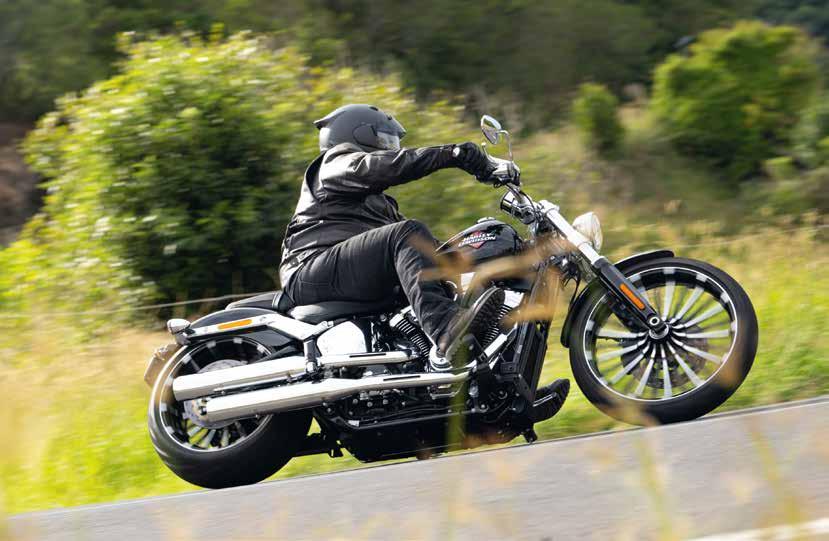
We kicked off with the Breakout, the long, low, muscle-bound cruiser that’s been Harley’s head-turner for years. The stretched front-end, drag ’bars and fat 240mm rear hoop make no attempt at subtlety, it’s built to dominate the boulevard.
The big change sits between your legs: the Milwaukee-Eight 117 Custom. Output is now 104hp and 126lb-ft of torque, an 11 per cent lift in power and six per cent more twist over last year’s
the forward controls stretch you into a comfortable position, and the seat puts you ‘in’ the bike rather than on it. But once the road started to curl around Kiama’s escarpment, the reality of its ground clearance made itself known. Scraping ’pegs and pipes became part of the soundtrack. The Breakout doesn’t want to be hustled it wants to be admired, flexed and shown off. For the straight and narrow, it nails its brief. For backroad carving, less so.
STREET BOB
Jumping off the Breakout and onto the Street Bob was like switching from a heavyweight boxer to a street fighter. Narrow ’bars, mid-mounted controls
Classic tune in the Bob is set up for a flatter torque curve – 98hp and 120ft-lbs – delivered smoothly through a 2-into-1 system. On the road it’s responsive, punchy and makes commuting or weekend scratching a blast.
The only downside was ergonomics. At six-foot plus, I felt cramped, with a pinch in the hip setting in quickly. Smaller riders will love the compact triangle, but taller ones might look at forward controls or taller ’bars. Still, the grin factor was undeniable, it’s the sort of Harley you throw around without worrying about scraping chrome.
KIAMA’S COAST AND CURVES SET THE STAGE FOR HARLEY’S LATEST SOFTAIL LINEUP, BLENDING HERITAGE, MUSCLE
ABOVE: The iconic Harley-Davidson Fat Boy.
FAT BOY
Then came the Fat Boy. Few bikes in Harley’s lineup carry as much cultural weight – think Arnie in Terminator 2: Judgment Day, think the poster that hung in a million garages. Throwing a leg over one is always a moment.
For 2025 it gets the same Milwaukee-Eight 117 Custom as the Breakout, delivering that fat, muscular wall of torque: 104hp and 126ft-lbs. The sound is tuned deeper, richer and unmistakably Harley. Thumb the starter and it pulses with attitude.
The footboards give it a laid-back, comfortable stance, though I found myself wishing the seat pushed me back just an inch further. Steering is heavier than the other models. It’s not built for speed or agility; it’s built to cruise with authority. And with its bold paint and chromed muscle, it does exactly that.
LOW RIDER ST
The Low Rider ST couldn’t be more different. With its frame-mounted mini-fairing, bags and High Output 117, it’s Harley’s performance cruiser and arguably the star of the show.
In Sport mode, the throttle response is razor sharp. The revised motor pumps out 114hp and 120ft-lbs, with a torque curve that surges all the way to 5,000rpm. It feels faster than the numbers suggest, thanks to the
aggressive mapping and heavy-breather intake. Even the stock exhaust has a snarl that sounds aftermarket-ready.
The ST’s handling surprised everyone. Ground clearance is generous, suspension is firm but composed, and you can really lean into corners with confidence. My only nitpick was the high footpegs, which made longer stints feel perched rather than planted. But as a performance cruiser, this thing is an animal, equal parts hooligan and long-distance hunter.
HERITAGE CLASSIC
By mid-morning, after hours of bike swaps and photo passes, the Heritage Classic felt like an oasis. Upright ergos, wide ’bars, a natural seat, everything just clicked. If I had to pick one bike for a 500-kilometre day, this would be it.
The 117 Classic motor is tuned for smooth, predictable delivery, plenty of shove without being aggressive. Straight-rate springs front and rear soaked up bumps beautifully, especially on rougher country roads. The windshield provided decent protection, though I copped a bit of buffeting at highway speeds – two more inches of screen would’ve solved it.
This bike is built for comfort and touring, and it shows. If Harley dropped the High Output motor in here, I’d be sold in an instant.
LOW RIDER S
Rain mode softens everything, cutting torque and calming the throttle for slippery conditions. Road mode balances power and comfort for everyday use. But Sport mode is where the S shines, it becomes sharp, aggressive and alive.
With the 117 High Output motor snarling beneath you, it feels like Harley built a musclebike dressed in cruiser clothes. Handling is sharp, suspension is taut and the riding experience lands right between raw fun and long-haul practicality.
For the first time, every Softail now comes with the full tech suite: ride modes, safety enhancements, LED lighting, USB-C ports and updated instrumentation. It’s Harley doing what it has always done, listening to riders and evolving without losing its soul.
MAIN: Harley’s Low Rider S. INSET: The H-D Breakout.
“REVISED
ABOVE: Harley’s Low Rider ST.
ABOVE: There’s something for everyone in the 2025 Softail lineup.
THE TECHNICAL TALK
The beating heart of the Softails is the Milwaukee-Eight 117, now standard across the board. It comes in three tunes:
Custom (Fat Boy, Breakout): 104hp, 126ft-lbs. Tuned for muscle, with a deeper exhaust note.
High Output (Low Rider S, ST): 114hp, 128ft-lbs. Sharper mapping, higher redline and more urgency.
All benefit from four-valve heads, oval intake ports and a new aluminium manifold adapted from Harley’s Touring and CVO models. Revised oil cooling keeps temperatures down, especially in traffic.
Suspension upgrades are significant too. The move to straight-rate springs delivers immediate improvements: less dive under braking, better mid-corner stability and more predictable damping.
Instrumentation also takes a leap forward. The Heritage and Fat Boy get a 5-inch analogue/LCD combo, while the sportier models use a 4-inch
digital pod. Both setups now display ride modes, gear position, and tyre pressure monitoring. And you can add LED lighting, tactile switchgear, cruise control and a USB-C port to the list, too.
The Breakout is your street-presence king, the Street Bob your urban scrapper. The Fat Boy carries the torch of Harley heritage, while the Heritage Classic offers genuine all-day comfort. For raw attitude, the Low Rider S is irresistible, but for outright thrills, the Low Rider ST is the benchmark.
For me, the Heritage Classic and Low Rider ST were the standouts.
HARLEY-DAVIDSON SOFTAIL RANGE SPECS
ABOVE: The Breakout has been a huge sales success.
PRICE: From $29,995 ride away (Q4 2025 model dependent).
WARRANTY:
Two-year, unlimited-kilometre.
COLOURS:
Multiple options across six models (Breakout, Street Bob, Fat Boy, Low Rider S, Low Rider ST, Heritage Classic).
POWER: 98–114hp @4,750rpm (Classic / Custom / High Output tunes).
TORQUE: 120-128ft-lbs@3500rpm.
CURB WEIGHT: 296–332kg (model dependent).
FUEL CAPACITY: Model dependent.
ECONOMY: ~5.6L/100km (claimed improvements for 2025).
5-inch analogue/LCD combo (Heritage, Fat Boy) or 4-inch digital display (Breakout, Street Bob, Low Rider S/ST). Ride modes, TPMS, gear indicator and USB-C port.
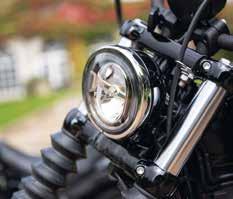
MAIN: The Heritage Classic was Adam’s pick. BELOW LEFT TO RIGHT: Minimalist cockpit; The Heavy Breather intake; The Street Bob’s fork gaiters and circular headlight.
enduro proven
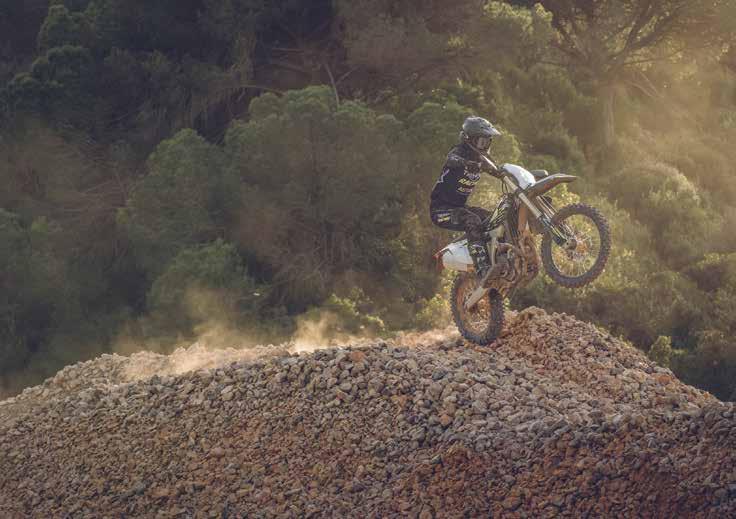
RAIN-SOAKED HILLS, GREASY CLIMBS AND DEEP RUTS TESTING TRIUMPH’S NEW TF 450-E. THE BRITISH BRAND’S FIRST ENDURO BIG-BORE HAD NOWHERE TO HIDE…
TEST: DAN THOMERSON | PHOTOGRAPHY: DEAN WALTERS
“WHERE SOME RIVALS DELIVER AN AGGRESSIVE HIT, THE TRIUMPH FOCUSES ON SMOOTHNESS AND TRACTABILITY…”
When Triumph announced its return to dirt competition, first with motocross and now enduro, the industry expected big things. The British brand has a long heritage on and off road, but an all-new enduro 450 is another level entirely. The TF 450-E is that statement bike: purpose-built from the ground up, carrying Triumph’s engineering DNA and a clear ambition to take on the best in the world of enduro racing globally, not just in the UK.
Our test was staged at Star Glen Lodge in Bonnie Doon, Victoria, surrounded by rugged hills, grass tracks and a single trail carved through the bush. It was a fitting proving ground. After a night of heavy rain, the test loop was churned into greasy clay and slippery ruts. Conditions that make bikes misbehave. Conditions where you can’t fake performance.
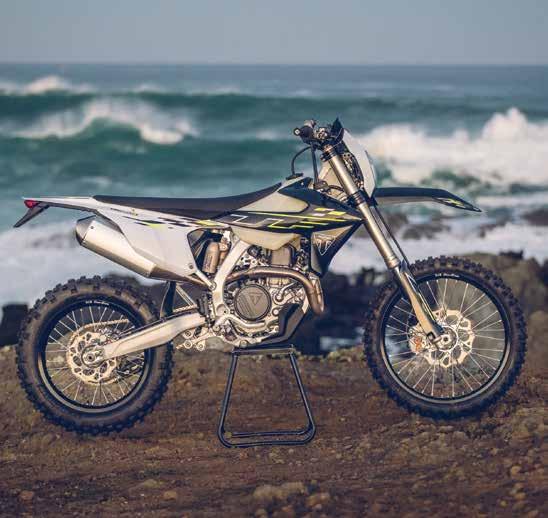
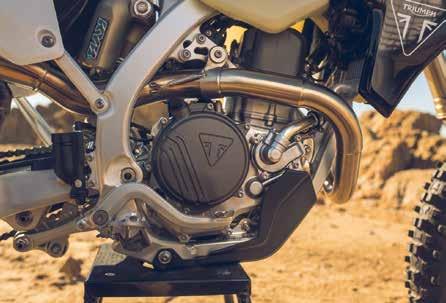
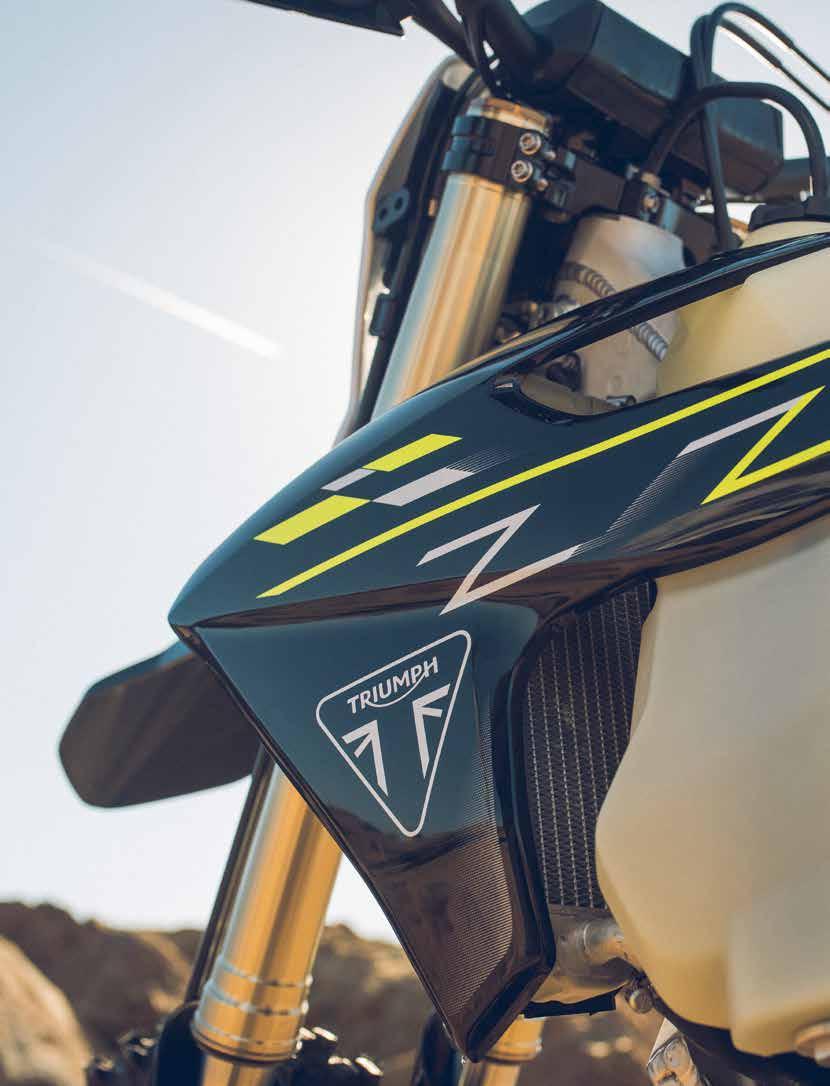
In the flesh, the TF 450-E looks like a factory racer. The aggressive plastics and razor-edged bodywork are slim and minimal. The magnesium engine covers and black anodised D.I.D DirtStar rims add a premium feel. Triumph has clearly sweated the small details, every
weld, every fastener, every surface looks finished.
At 117.5kg wet, with an 8.3-litre tank and ADR compliance, the TF 450-E sits right in the sweet spot for serious enduro machines. Ergonomics are slim and neutral, giving you room to move forward for technical climbs or shift rearward for descents. The Pro Taper EVO ‘bars and ODI grips feel natural from the moment you climb aboard.
Fire the engine, and the note is deep and purposeful. Triumph fitted a sideresonator in the silencer to tame volume without neutering the character. It has that classic 450 thump, but delivered with a refined tone.
The Bonnie Doon course was a brutal mix of freshly cut grass track, creek crossings, slick clay climbs and a tight single trail. It was the kind of loop that forces you to use every aspect of a bike’s performance. From the first sighting lap, the 450-E showed its intent.
The motor is the star. Triumph deliberately gave the enduro version more flywheel inertia than the motocross TF 450-RC, broadening the torque curve and calming delivery.
Instead of a light-switch hit, you get a long, tractable surge of torque that digs in from down low and keeps pulling. It’s smooth, predictable and confidence-inspiring.
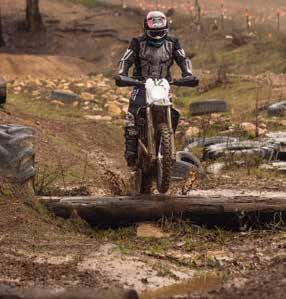
On steep climbs, the TF 450-E made me look like a better rider than I am. The torque simply carried me up and over, even when traction was patchy. On descents, engine braking and progressive Brembo stoppers gave me full control, letting me pick my line rather than wrestle the bike. Through tight bush singletrack, the throttle’s precision meant I could creep over wet logs or loft the front on command without drama.
The electronic suite is one of the most impressive in the class. Two engine maps are standard: Map 1 gives full performance, while Map 2 softens response for technical conditions. On the day, Map 1 paired with traction control gave the perfect balance of drive and control. Map 2 was a welcome safety net in the trickiest off-camber ruts.
The traction control system is particularly well tuned. Rather than cutting power abruptly, it modulates just enough to keep the wheel hooking up.
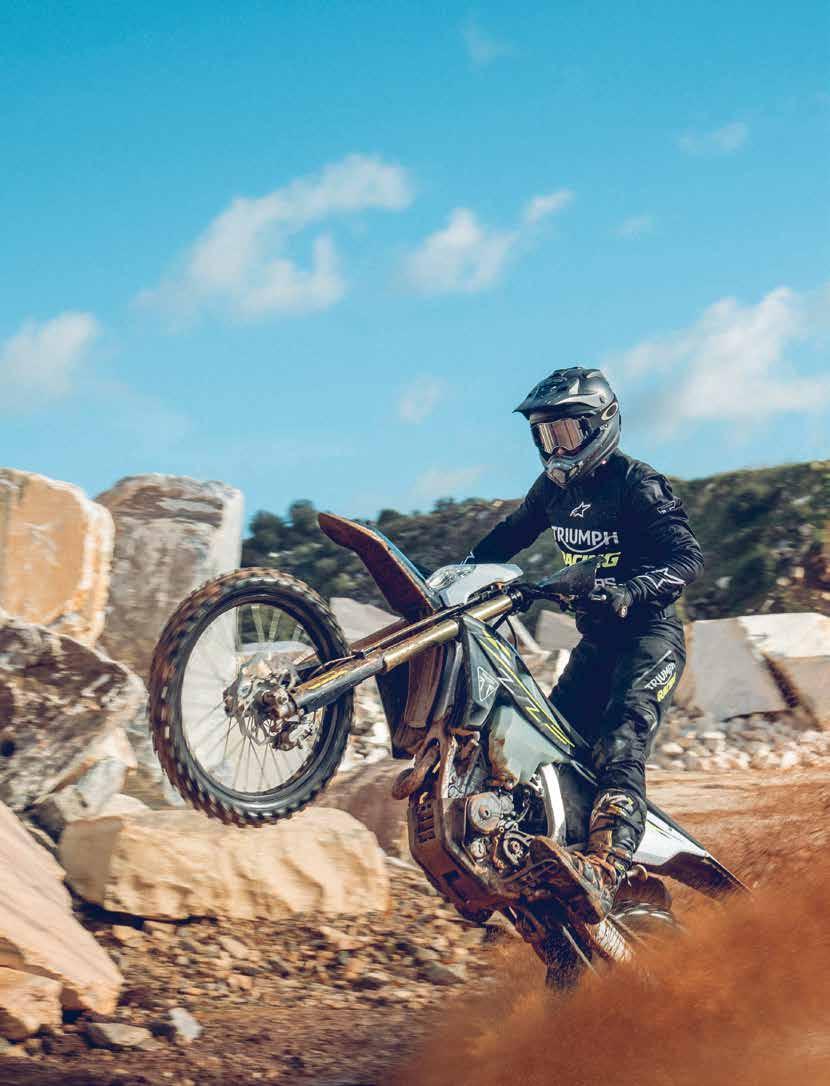
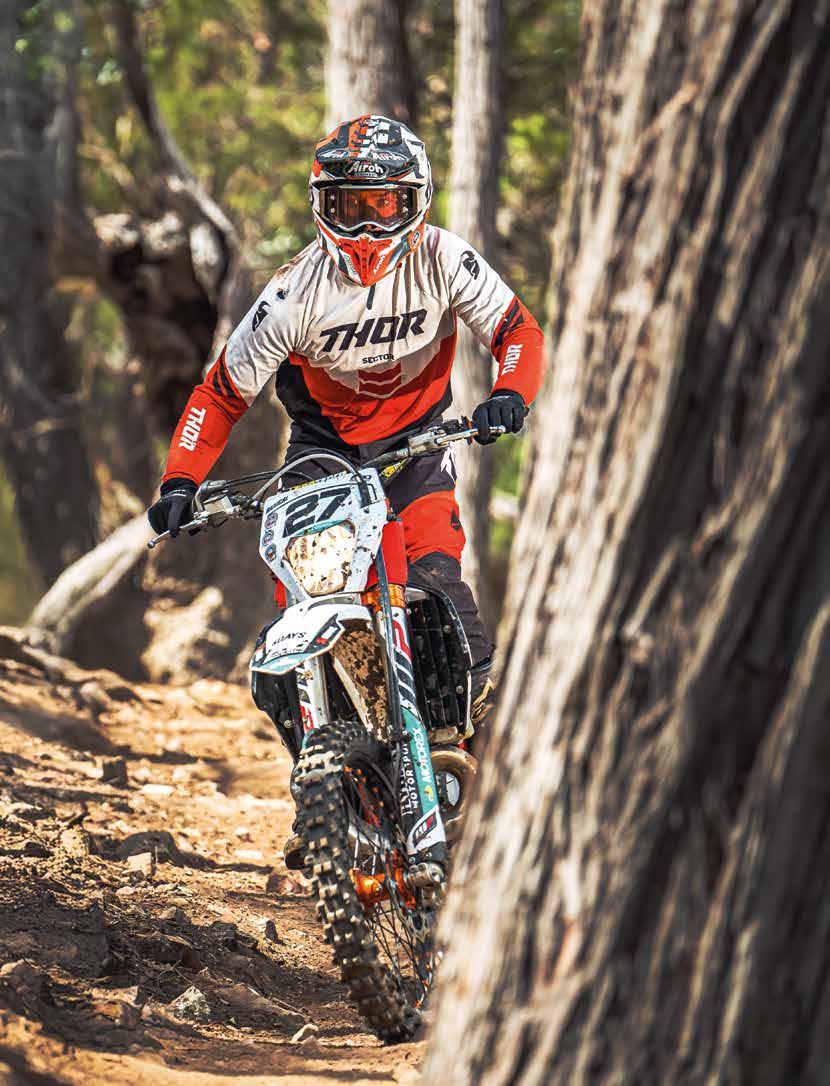
OPENER: Triumph has come out punching with its off-road range. ABOVE: We tested in conditions where you can’t fake performance.
On wet grass and clay, that meant the difference between spinning out and carrying momentum. The quick-shifter is another game-changer. Being able to shift clutchless without rolling off the throttle kept the bike driving forward on climbs and technical sections, where any loss of momentum can mean stalling or dabbing.
Launch control rounds out the package, less useful on our test loop, but undeniably valuable in competition settings. For riders wanting even more fine-tuning, Triumph offers the MX Tune Pro app with six additional maps via an optional WiFi module. It’s a system that gives everyday riders plug-and-play simplicity while still offering adjustability for racers.
The KYB suspension package is a standout. With 300mm of fully adjustable travel up front and 313mm out back, the fork and piggyback shock are tuned specifically for enduro. On the Bonnie Doon loop, they delivered both plush comfort and firm control. Rocks, roots and ruts were soaked up without harshness, while faster hits on the grass track saw the chassis remain composed.
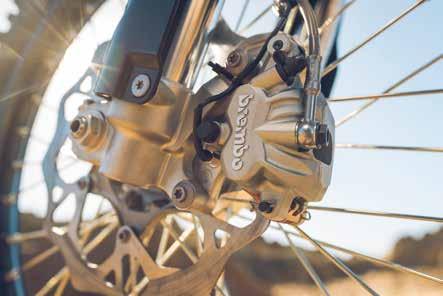
The Brembo brakes paired with Galfer discs were equally confidenceinspiring. The 260mm front offered strong bite with excellent modulation, and the 220mm rear allowed precise control on steep downhills. Even in the muddiest conditions, feel remained consistent.
From the rider’s seat, the TF 450E feels slim and manageable. The Pyramid gripper seat locks you in without being harsh, crucial when you’re wrestling slick conditions. Standing position is natural, with the cockpit encouraging aggressive riding without fatigue. The Michelin Enduro 2 tyres impressed in the wet, digging in on climbs and finding grip on surfaces where you’d expect wheelspin.
Triumph’s aluminium spine frame and twin cradle design delivers excellent stability at speed while keeping agility intact. Through the fast grass track, the 450-E tracked straight and felt rocksolid, yet in the trees it was happy to flick side to side.
In a category dominated by the likes of KTM, Husqvarna and Beta, Triumph could have played it safe with a derivative package. Instead, they’ve delivered something polished
and competitive on first release. The TF 450-E feels as refined as bikes that have evolved over decades. The blend of torque-rich power, premium suspension, high-spec brakes and genuinely useful electronics makes it immediately competitive.
The big difference is in the feel. Where some rivals deliver an aggressive hit, the Triumph focuses on smoothness and tractability. It’s less about shock and awe, more about getting you further into the ride with confidence. For long-distance enduro or technical trail riding, that’s exactly what you want.
By the end of the day, plastered in mud and rain-soaked, I didn’t want to hand the key back. The TF 450-E had proven itself more than capable in some of the toughest conditions a test could throw at it.
This is not just a motocross bike with a headlight. It’s a fully developed enduro machine with a strong, tractable engine, supple suspension, world-class brakes, clever electronics and quality finishing touches throughout. It’s ready for competition, yet friendly enough for riders tackling weekend enduro loops.
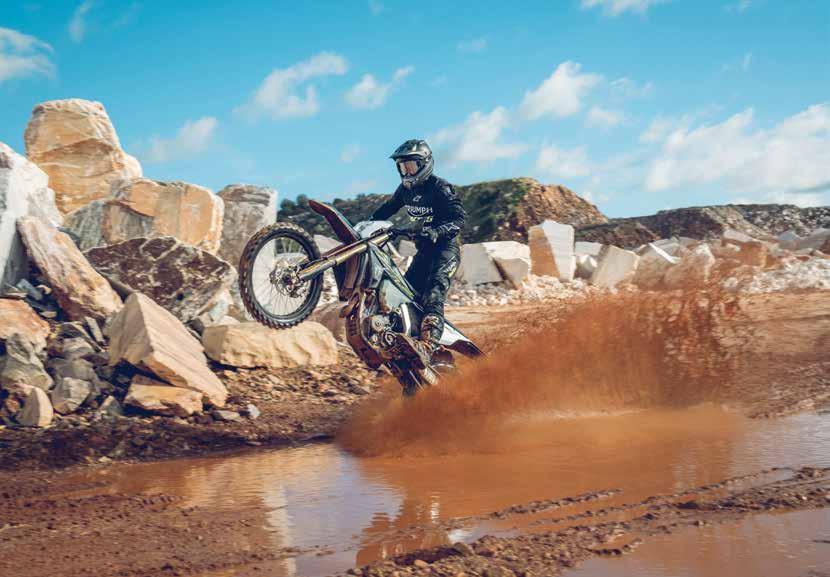
RIGHT: Dan lofts the wheel over a log, easily. MX-like handling, Enduro tune, a wicked combo.
TRIUMPH TF 450-E
PRICE:
From $18,990 ride away (Q4 2025).
WARRANTY:
Two years.
COLOURS:
Triumph Racing Yellow/Black/White.
POWER:
43kW [57hp] @ 9,750rpm.
TORQUE:
49Nm @ 7,000rpm.
CURB WEIGHT:
116.7kg.
FUEL CAPACITY:
8.3L.
MEASURED ECONOMY: N/A.
ENGINE:
Liquid-cooled, four-stroke, DOHC single, fourvalve, 449.9cc, 95 x 63.4mm bore x stroke, 12.8:1 compression, Dell’Orto 44mm EFI, electric start, six-speed gearbox with quickshifter, wet multi-plate Belleville spring clutch, 13/51 final drive.
TEST: NICK WARE | PHOTOGRAPHY: HEATHER WARE HMC PHOTOGRAPHY
DUCATI’S DESERTX RALLY BLENDS DAKAR STYLING WITH CUTTING-EDGE TECH AND KYB SUSPENSION, DELIVERING A SERIOUS OFF-ROAD WEAPON THAT’S STILL THRILLING ON TARMAC…
“ RALLY MODE IS WHERE THE BIKE REALLY COMES ALIVE…”
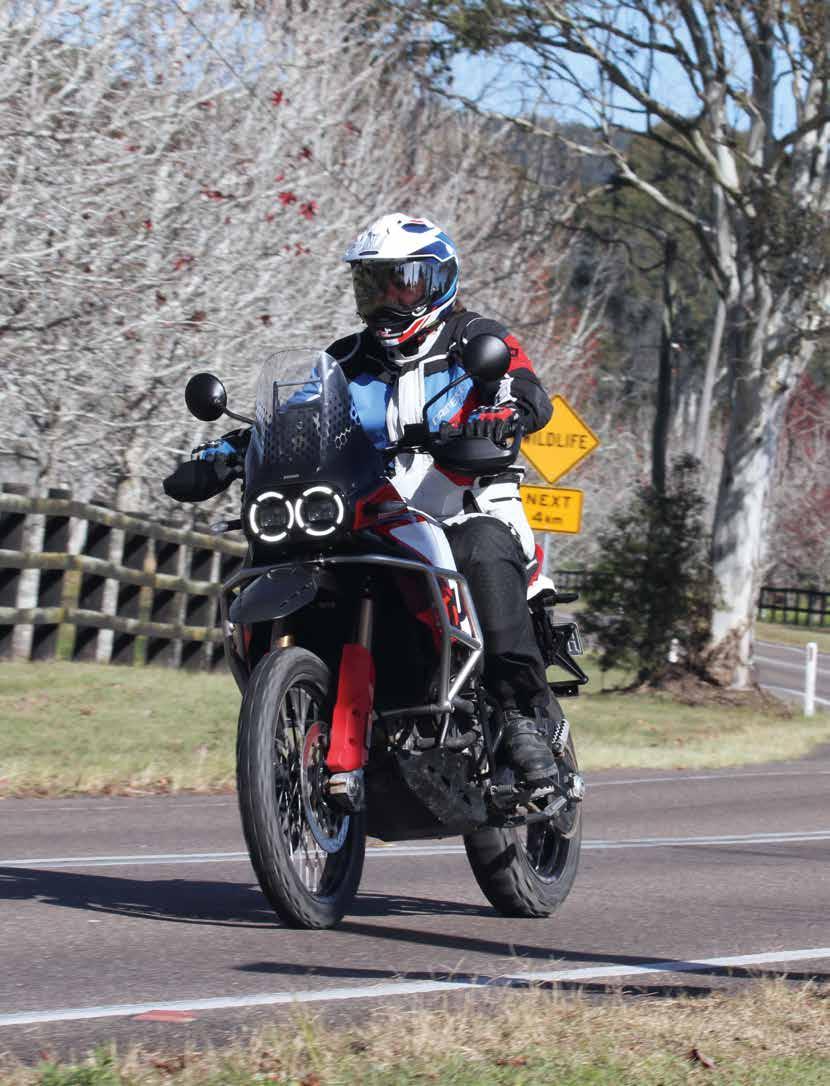
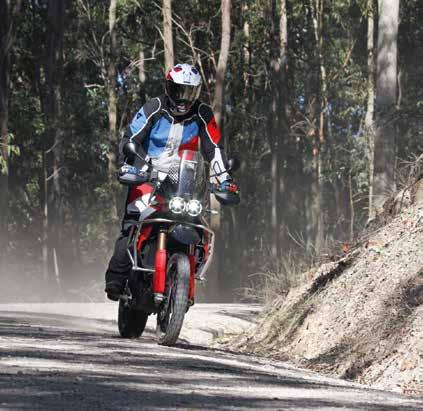
Ducati’s flagship off-road adventurer was parked at NMM HQ for a few weeks, and I was lucky enough to get the call to put it through its paces. The DesertX Rally is a serious bit of kit, bristling with the sort of componentry that makes it a legitimate dirt-capable machine while still being a blast on the tarmac.
Normally, I’m the first to roll my eyes at a premium price tag, but in this rare case I can honestly see where the money goes. This thing is more than just an adventure bike, it’s a Dakarinspired weapon.
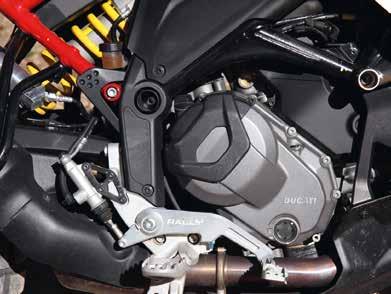
At the heart of it is Ducati’s familiar 937cc desmodromic Testastretta L-twin, the same basic powerplant we’ve seen in the Monster, Multistrada V2 and Supersport, though here it’s wrapped in a completely different shell. Output figures read 81kW at 9,250rpm and 92Nm at 6,500rpm. On paper, those numbers don’t leap off the page, but out on the dirt this is essentially a 100-horsepower enduro bike, and that changes everything.
On the road, there’s enough torque to loft the front in second gear without too much provocation, while on gravel fire trails and bush tracks the power delivery is beautifully manageable. For my skill level, it’s right in the sweet spot; usable, predictable and easy to modulate without ever feeling overwhelming.
Power gets to the ground through a hydraulically actuated clutch that deserves a mention of its own. It’s seriously light – single-finger light – which makes a big difference on tight, technical single-track. The sixspeed gearbox comes with Ducati’s up-and-down quick-shifter. At low rpm, especially when cold, shifts can feel a bit clunky, but as the kilometres roll on it beds in nicely. Some riders reckon the stock gearing is a touch tall and I’d be inclined to agree. Dropping a tooth on the front sprocket could make low-speed trail riding even more user-friendly.
The real star of the Rally package, though, is the suspension. Ducati has gone all-in with a long-travel KYB setup that gives the bike serious off-road
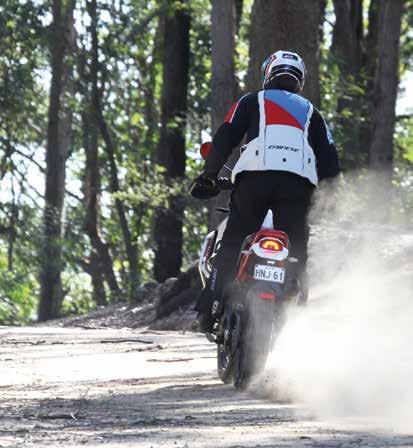
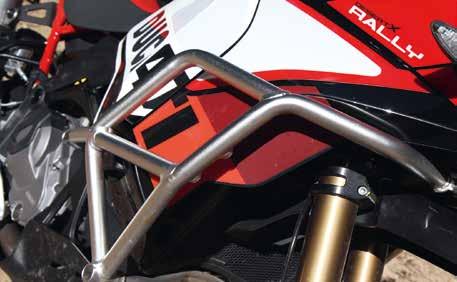
chops. Up front, fully adjustable 48mm inverted forks deliver 250mm of travel. Out back, the fully adjustable KYB monoshock offers 240mm of movement with remote preload adjustment. In practice, it’s sensational. I hammered the DesertX Rally, over roots, rocks and ruts, and it never felt fazed. The suspension soaked up square-edge hits without kicking back, and the big factory bash plate took care of the rest. I know there are riders out there with far more ability who could test its limits, but for me it always felt like it had plenty more in reserve.
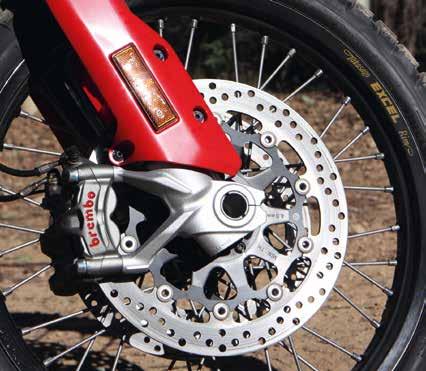
Braking is handled by Brembo, naturally. Dual 320mm discs up front are grabbed by monobloc fourpiston calipers, while a single 265mm disc at the rear takes care of balance. Bosch cornering ABS keeps everything controlled, with different levels of intervention depending on the riding mode.
Stopping power is excellent, with good feel at the lever and no hint of fade. Add in an Öhlins steering damper and high-speed stability is rock solid,
whether you’re braking hard on the road or smashing across a fast, loose fire trail.
Size, though, is the one thing you can’t ignore. In photos the DesertX Rally looks tall and slim, but in the flesh it’s an imposing motorcycle. At 910mm, the rally-style bench seat puts you way up in the air. At 196cm, I found the riding position spot-on both seated and standing, but shorter riders will want to look at the optional low seat that drops height by 30mm.
Once you’re moving, the weight disappears, but in traffic or on tricky single-track it can feel like a lot of motorcycle to wrangle. On longer road stretches, the seat comfort is definitely more motocross than touring. If your plan is to cover 1,000 kilometres of bitumen in a day, an aftermarket upgrade might be worth considering.
The wheelset is classic dirt bike spec: a 21-inch front and 18-inch rear, both rims with billet hubs. That big front hoop gives plenty of ground clearance and stability off-road but does add some lean requirement on the tarmac. On tighter bends you have to muscle it over, but once committed it handles with surprising agility. In many ways it feels more dirt bike than adventure tourer, which is exactly what Ducati set out to achieve.
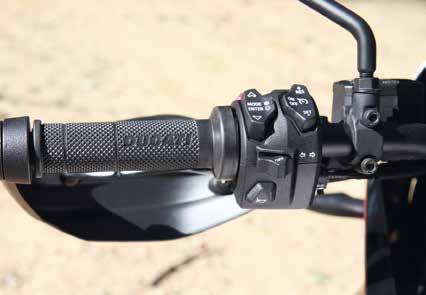
Electronics are predictably comprehensive. Six riding modes; Sport, Touring, Urban, Wet, Enduro and Rally adjust power delivery, ABS, traction control and more. Switching modes on the fly is simple enough once you’re familiar with the handlebar switchgear, and the vertically oriented TFT dash presents information clearly, even if it isn’t a design standout. Rally mode, with reduced traction control and more direct throttle response, is where the bike really comes alive off-road.
Like all Ducati’s, the Rally comes with a catalogue of official accessories longer than your arm ranging from Akrapovič race pipes to billet aluminium guards and luggage systems. The downside? None of it is cheap.
With a starting price nudging $38,000 ride away, the DesertX Rally already sits in rarefied company. Spec it up with extras and you’re looking at car-money territory.
Styling is one area Ducati has absolutely nailed. The DesertX Rally looks like it’s rolled straight out of the Paris–Dakar, with squared-off twin headlights, a tall front end and bold graphics. Unlike sticker kits, the colours are moulded into the plastic itself, so scuffs and drops out on the trail won’t ruin the finish.
The lighting is seriously bright too, bright enough to draw complaints from
the attendant at my local servo. It’s a head-turner, no question.
So where does all of this leave the DesertX Rally? For me, it sits firmly at the aggressive off-road end of the adventure spectrum. It’s not a touring bike, nor does it pretend to be. Yes, you can cruise the highway comfortably enough, but that’s not where this Ducati shines. Its natural habitat is rough ground, long climbs, sandy tracks and rocky descents, the places where its suspension, wheels and geometry make sense. For pure dirt expeditions with the occasional road stint, it’s close to ideal.
Is it worth the money? That depends entirely on what you want from your adventure bike. If you’re a rider with the skills to push it, the Ducati DesertX Rally is arguably one of the most capable production bikes on the market. If, like me, your dirt skills are decent but not pro-level, you’ll still get a huge thrill out of it but you may find yourself questioning whether a less-expensive, simpler machine might deliver 80 per cent of the fun for half the price.
What can’t be denied is that Ducati has built something special here. The Rally isn’t just a Monster engine in a tall frame, it’s a purpose-built off-road adventurer with real Dakar DNA, highend components and a level of finish that feels premium in every detail.
“ THIS IS ESSENTIALLY A 100-HORSEPOWER ENDURO BIKE…”
Instruments: 5-inch TFT colour display. Scan to find out more or visit ducati.com/au
TOP: High-spec Brembos MIDDLE: Full Ducati electronics suite. BOTTOM: The awesome Testastretta 11º.
transmoto
ENDURO EVENTS THROUGH THE LENS
WORDS: JEFF WARE | PHOTOGRAPHY: C/O TRANSMOTO
DUST, MATESHIP AND PURE OFF-ROAD FUN. GRAB YOUR MATES, LOAD YOUR BIKE AND JOIN THE ADVENTURE...
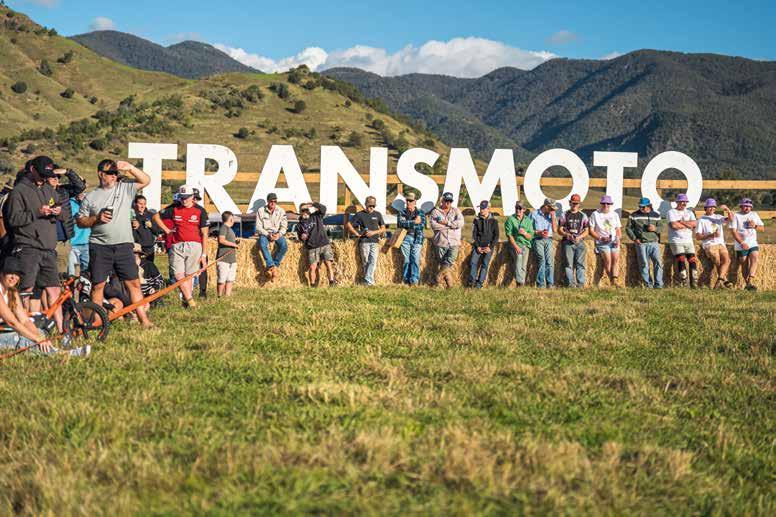
ABOVE: Transmoto is all about riding, then relaxing and having a good time.
If you’ve ever dreamed of hitting the trails with your mates, camping under the stars, and pushing yourself on a bike in a fun, festivalstyle atmosphere, Transmoto 8-Hour events are the place to do it.
Born from a passion for grassroots off-road riding, Transmoto events are as much about community as they are about competition. Think of it as part enduro, part camping trip, part mates’ weekend away and you’ll be pretty close to what they are.
So, how does it all work? It’s simple, really. Riders from all walks of life –be it first-timers, weekend warriors or seasoned trail veterans – come together at one of Transmoto’s carefully chosen locations across NSW, Vic and Qld. Riders form teams of three or four, although there are Ironman and Pairs classes for those keen to go it alone or as a duo. No motorcycle licence is required, but you’ll need to be at least 16 years old and have a registered or permitted off-road bike, no exceptions.
The action kicks off on Saturday with rider registration, scrutineering and
the chance to set up your campsite. Many make it a social occasion, with barbecues, tunes and campfire stories flowing late into the night.
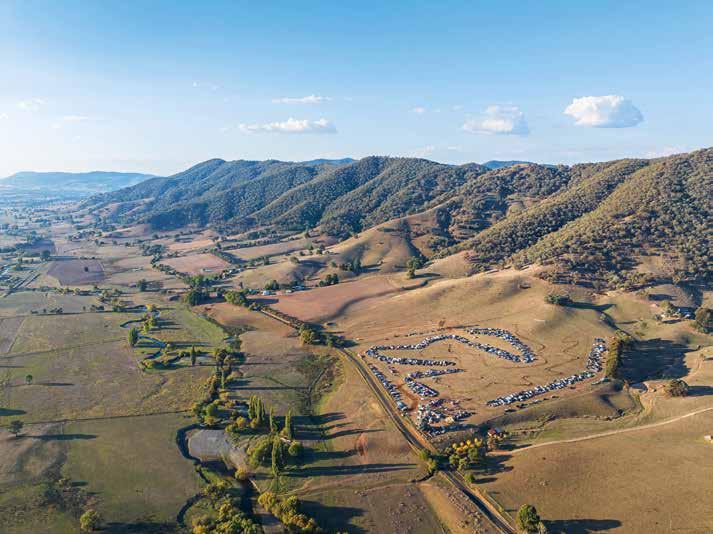
Sunday is when the riding begins, with competitors taking on a flowing 15–18km 20 to 30-minute loop of mixed terrain; think fast fire trails, single track, climbs, descents and open paddocks. The format is designed to be achievable, not intimidating, with timed laps tallying up across the day.
Transmoto also runs a dedicated Ladies Loop and the National Motorcycle Insurance Junior Loop (ages 9-15, 6 to 8km), ensuring the fun is open to everyone. The whole idea is to ride as much or as little as you like, swap with your teammates when you’re ready and soak up the atmosphere.
Mechanical prep, fuel management and pit stops become part of the adventure, adding a taste of real enduro racing without the pressure of chasing a championship.
Joining in couldn’t be easier. You register online, grab some mates, load up the trailer and bring along your
camping gear. Don’t stress if you’re not a hardcore racer, Transmoto is about participation, laughs and memories as much as lap times. The pits are buzzing, the trails are epic and the sense of camaraderie is something special.
National Motorcycle Insurance is proud to be the Official Insurance Partner of Transmoto Enduro Events, supporting grassroots riding and celebrating the unique culture that makes off-road motorcycling so addictive to many of us. As riders ourselves, we know it’s about more than just bikes.
Here at National Motorcycle Magazine, we’ll be bringing you a full Transmoto Enduro Events 2025 season wrap-up in our next issue, including stories from the riders and behind-thescenes insights. We’ll also share the 2026 events schedule and plenty of tips for those who are keen to sign up next season. But for now, enjoy our gallery of photos capturing some of the incredible action so far.
GALLERY FROM FLYING ROOST TO MUDDY SMILES, THIS IS WHAT TRANSMOTO IS ALL ABOUT. GOOD TIMES, ADRENALINE AND A GREAT DAY OF RIDING...
tim baker
WITH 40 YEARS OF RIDING UNDER HIS HELMET, NATIONAL MOTORCYCLE INSURANCE’S TIM BAKER IS A DEDICATED LIFETIME TWOWHEELER WHO HAS PASSED HIS PASSION ONTO HIS KIDS...
Name: Tim Baker.
Hometown: Hidden Valley, Wallan, Vic.
Age: 47.
Occupation: I’m the Head of Development – Major Alliance Partners for National Motorcycle Insurance.
I’m around bikes most days at work, supporting our motorcycle dealerships and manufacturer partners at a national level, with the support of a team who are based around the country and share the same passion for motorcycles.
First bike ridden? Yamaha YZ50.
How old were you? Seven.
First bike owned? Honda TRX70.
Current bike? 2024 Husqvarna FE350 Pro, 2013 Yamaha YZ250F.
Hobbies and interests? Motorcycle riding (including racing Transmoto Enduro Events), golf (handicap of two), mountain-bike riding, caravanning trips, collecting Lego sets and vintage video games.
Motorcycling ambitions, goals and dreams? I’m too old for dreams nowadays. I had an ambition of being able to race with my son Zac one day, which I was able to achieve back in 2023 when he was 19. One goal would be to keep riding at a decent level for another 10 years.
Who inspires you? My two uncles. Both either side of 80 years old now, they have a strong work ethic and passion for what they do in life. Both my parents
have passed away and my uncles have been the ones I have looked up to for inspiration.
What makes you happy? Racing Transmoto Enduro Events with family and friends.
What would you never do again on a bike? Run out of fuel deep in the forests out of Bright, Vic, late in the day. The group I was riding with combined their fuel to send two riders in, however they ran out short of town as well.
Motorcycling highlight so far?
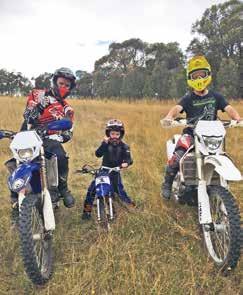
My youngest son has special needs and is developmentally delayed. It was never expected that he would be able to ride a pushbike let alone a motorbike. Teaching him to ride a motorbike on the family’s property and being able to ride alongside him out there is my greatest highlight.
Favourite racer? Valentino Rossi in his day. Billy Bolt currently.
Favorite music? Late ’80s early ’90s rock.
Best bike you have ever ridden?
I have ridden a lot of motorcycles, both road and dirt, working in this industry for the time I have. I don’t know if this would be the best bike, but my favourite bike I have ridden is the Honda VTR1000 SP1.
Who couldn’t you do it without?
My wife Melissa. She has never had an issue with my numerous trips away riding.
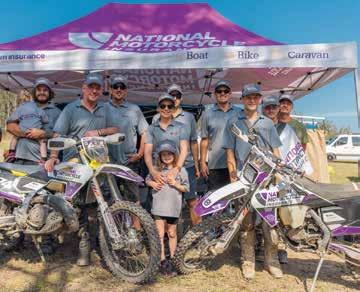
ABOVE: Tim Baker. TOP RIGHT: Tim with family, friends and colleagues.
ShawnGiles
MR SUPERBIKE, SUZUKI AMBASSADOR, THE LEGEND, GILESEY...
Race number: #19, after Freddie Spencer.
Years active: 1989 to 2015 road racing, still doing dirt track.
Hometown: Central Tablelands, NSW.
Age: 55.
First bike? Honda MR50, still got it!
How old were you? Just turned four and I rode it up the street!
Why did you start racing? My parents owned a bike shop, I grew up around bikes, so it was just natural for me to start.
When did you turn professional? I turned professional in around 1991, after I came second in the Suzuka 200 race in Japan.
Hobbies and interests outside of racing? I have built a few nice cars and utes, and owned some nice HSVs, etc.
Racing achievements? Hundreds of races. Suzuka 8 Hour results and three back-to-back Australian Superbike titles.
Racing highlight? Aside from the three Superbike Championships, it has to be
the Hayabusa I raced in the Suzuka 8 Hour. Even Valentino Rossi said, “What is that bike? I can’t pass it!” It was so incredibly fast. Awesome.
Biggest racing challenge? Barbagello, a broken pelvis, broken toes and blood clots. One at Queensland Raceway resulted in brain bleeds, that was a hard one to come back from.
Retired because? I’d had enough. I was 40. I stayed with the team to mentor the new riders until Suzuki stopped racing.
Favourite racers? Toprak, Mal Campbell, AJ, all the legends from when I grew up. Rossi, MM, too many.
Current bike? The three title-winning GSX-R superbikes, a V-STROM DE 800, and lots of projects like DR Big.
Future motorcycling plans? Touring, cruising, trail riding with my son, riding with family to the Cape, over-45s Dirt Track racing.
Are you a motorcyclist or a sports person at heart? If it has wheels and handlebars, I will ride it, I just love motorcycles.
AUSTRALIA’S RIDING SPANS EVERYTHING FROM TIGHT MOUNTAIN CLIMBS TO VAST OUTBACK HIGHWAYS, EACH OFFERING ITS OWN KIND OF UNFORGETTABLE EXPERIENCE...
Australia’s scale guarantees variety, and with it comes some of the best motorcycle rides you’ll find anywhere. One day you’re carving through snow gums on a twisting alpine road, the next you’re tucked in across an outback straight that never seems to end.
Not every highlight is the obvious one. A stretch of perfect camber will stay with you, but so will the unplanned detour down a forgotten backroad. These are the rides that get retold, shared and sought out, eventually earning their place as true icons of Australian motorcycling.
Great Ocean Road, VIC
When it comes to legendary Australian rides, the Great Ocean Road is usually the first name that comes up. Winding 243 kilometres along Victoria’s southern coastline between Torquay and Allansford, it was carved into the cliffs by returned soldiers after World War I. The road was both a memorial to their fallen comrades and a way to rebuild lives in the war’s aftermath, which adds another layer of significance each time you ride it.
For motorcyclists, it’s the way those corners string together that keeps it high on the list. Fast sweepers blend into cliff-hugging bends, with the ocean never far from view. On some sections you’ll find yourself riding right above the crashing surf, on others the road cuts back inland through sleepy coastal towns and stands of forest. The trick is timing. Get it on a weekday, when the coaches and campervans are thin on the ground, and it becomes a road you’ll want to ride again and again.
ROUTE: TORQUAY TO ALLANSFORD, 238KM. RIDING STYLE: COASTAL SWEEPERS WITH MEDIUM-PACE CORNERS. FUN FACTOR: HISTORIC, SCENIC AND ENDLESSLY REPEATABLE. WATCH OUT FOR: TOURIST TRAFFIC, HIRE CARS AND CAMPERVANS.
Putty Road, NSW
The Putty Road north of Sydney is a favourite among the city’s riders. Linking Windsor to Singleton through the thick bush of Wollemi National Park, it’s been a key escape route out of the big smoke for more than two centuries. First cleared as a stock route in the early 1800s, it now serves weekend motorcyclists as faithfully as it once served bullock teams.
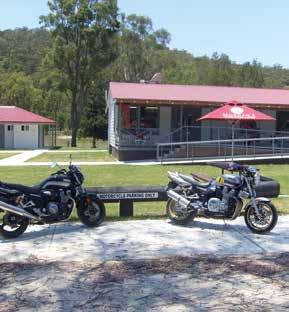
The appeal lies in its variety. Within the 175-kilometre stretch you’ll find fast, open corners, long wooded straights and tighter technical bends. The 16km section known as the ‘Ten Mile’ is the stretch most riders rave about, but the lead-in and follow-up sections both carry their own rewards. Fuel is available at Colo, about 40 kilometres north of Windsor, and the Grey Gum Café another 50 kilometres up the road has become a destination in itself.
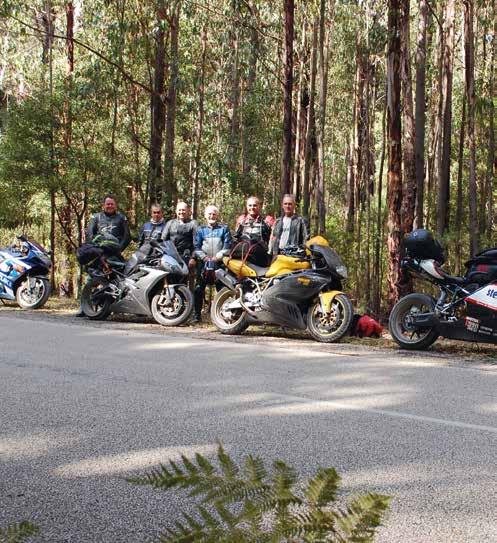
Like any popular backroad, there’s things to look out for. Logging trucks, wildlife, tired shift workers and ambitious overtakers are some, and shaded patches can hide damp spots even on bright days. Ride it with patience and you’ll understand why it remains one of New South Wales’ much-loved rides.
ROUTE: WINDSOR TO SINGLETON VIA PUTTY ROAD, 175KM. RIDING STYLE: A MIX OF OPEN SWEEPERS AND TIGHTER TWISTIES. FUN FACTOR: WEEKEND WARRIOR STATUS. WATCH OUT FOR: BLIND CORNERS, DAMP SHADED AREAS, TIRED DRIVERS.
ABOVE: Jacinta Siracusa on the Great Ocean Road.
ABOVE: The Grey Gum Café on the Putty Road.
Oxley Highway, NSW
Ask any rider to name a road that defines motorcycling bliss and NSW’s Oxley Highway will be near the top of the list. Running from Wauchope on the coast to Walcha on the tablelands, it throws corner after corner at you in quick succession, with more than 300 bends packed into the 45-kilometre stretch that’s earned it cult status. Hairpins lead into flowing sweepers,
which in turn open into fast, linking transitions. The forest is thick and green at the start, but as the elevation builds, the eucalyptus gives way to the open, drier country of the New England region. By the time you roll into Walcha – one of the state’s earliest inland settlements – you’ll have experienced the full shift from coastal forest to open tablelands.
Halfway through, Gingers Creek Café has long been the place to stop, swap
stories and give the bike a breather. The Oxley began life as a rough stock route carrying supplies and livestock between the coast and the tablelands, but today it’s a pilgrimage for riders. Other than the ever-decreasing speed limits, the only thing that may take the shine off is the weather. Flooding and landslips have led to sections being closed or under repair, so checking ahead is always part of the preparation.
Oxley Highway, Walcha.
ROUTE: WAUCHOPE TO WALCHA, 163KM. RIDING STYLE: CORNER-HEAVY, TIGHT AND TECHNICAL. FUN FACTOR: FAMOUS FOR ITS ENDLESS BENDS. WATCH OUT FOR: LEAF LITTER, GRAVEL ON EXITS, EARLY-MORNING FOG.
Great Alpine Road, VIC
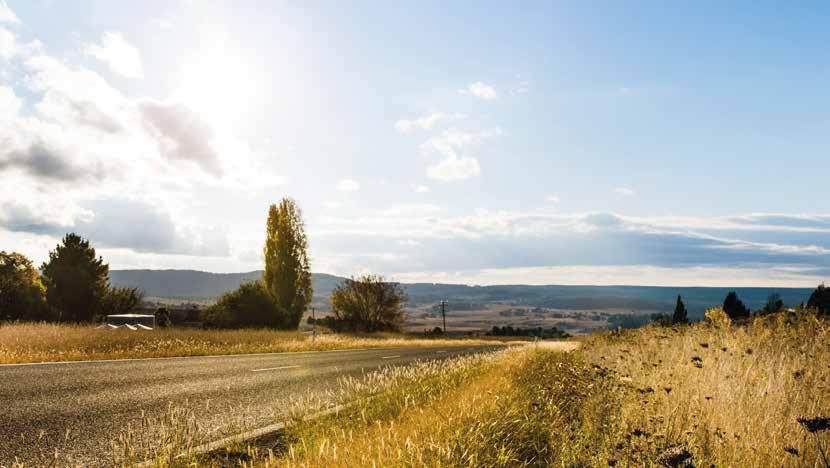
While the Great Ocean Road gets the postcards, Victoria’s Great Alpine Road is a better ride for those wanting tight bends and mountain scenery. Stretching 310 kilometres from Wangaratta to Bairnsdale, it climbs through Bright and Mount Hotham before dropping back down into the rolling hills of Gippsland. Much of its path follows old coach and stock routes, though it wasn’t until late in the 20th century that the section over Mount Hotham was sealed, finally making it passable year-round. At 1840m above sea level, it holds the title of the country’s highest accessible sealed road. Depending on the season, you can be riding under clear skies one minute, and into fog, frost or even snow the next. What makes it so memorable is the mix. Tight, cambered corners cut through snow gums, before opening into high, exposed stretches that put you right out in the elements – on a clear day the views stretch for miles. But treat it with respect: caravans grind slowly up the inclines, black ice can form and the weather has a habit of changing without warning. But time it right, and it’s one of Victoria’s finest.
Great Alpine Road.
ROUTE: WANGARATTA TO BAIRNSDALE VIA MOUNT HOTHAM, 310KM. RIDING STYLE: HIGH-ALTITUDE TOURING WITH TIGHT ALPINE CORNERS. FUN FACTOR: VARIETY, SCENERY AND SERIOUS RIDING REWARD. WATCH OUT FOR: CARAVANS, BLACK ICE AND SUDDEN WEATHER CHANGES.
ABOVE:
ABOVE:
Tasmania’s West Coast
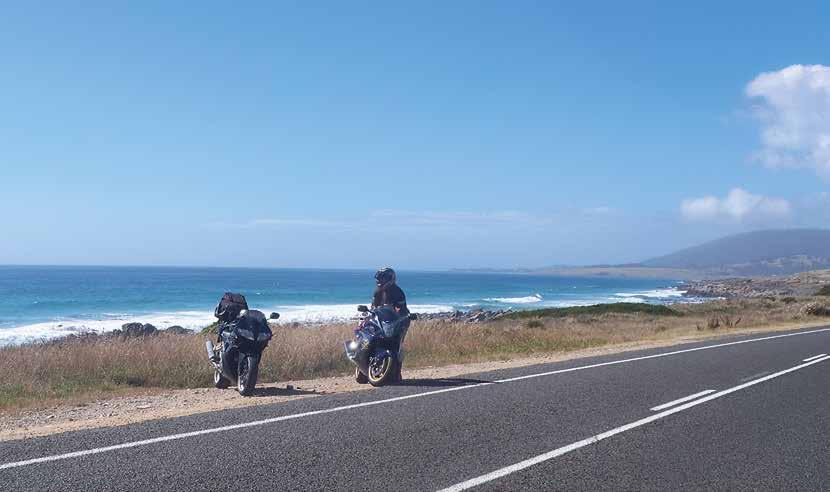
There’s a rawness to Tasmania’s West Coast that makes it unforgettable on a bike. The Lyell Highway between Queenstown and Derwent Bridge is the obvious highlight, but in truth, almost any road that feeds into Strahan or the surrounding wilderness is worth a run. It’s one of those rare places where
traffic is light, scenery is jaw-dropping and the surface grippy and mostly predictable.
What makes it special is the contrasts. One moment you’re threading through dense forest, damp and mossy with blind corners that rise and fall without warning. The next you’re climbing through Queenstown’s copper-
stained hills, a stark landscape stripped bare by more than a century of mining. The road twists, rolls and dips in a way that’s hugely engaging.
Fuel is scarce, towns are few and phone reception is patchy, but that only adds to the sense of adventure. For anyone planning a trip to Tasmania, the West Coast is non-negotiable.
ROUTE: QUEENSTOWN TO DERWENT BRIDGE VIA LYELL HIGHWAY, 86KM. RIDING STYLE: TIGHT, TECHNICAL AND OFTEN WET. FUN FACTOR: RUGGED, REMOTE AND FULL OF CHARACTER. WATCH OUT FOR: MOSSY VERGES, GRAVEL ON APEXES, LIMITED FUEL.
Lions Road, QLD/NSW
From Rathdowney in Queensland to Kyogle in New South Wales, the Lions Road follows creeks, climbs through rainforest and crosses a series of old rail bridges that give it a distinct sense of place.
It exists thanks to the persistence of the Kyogle Lions Club who, in the late 1960s, raised the money and did the hard work after both state governments dismissed the project as unrealistic. When it finally opened in 1970, it stood as a rare example of a community creating its own piece of infrastructure, and the local motorcyclists have been grateful ever since.
On the bike, the appeal is obvious. The road is narrow and technical, with dips and rises that can catch you out if you’re not paying attention. Some stretches carve through farmland, others disappear under a canopy of rainforest, and while the scenery is worth the trip on its own, the riding is what keeps people coming back. But plan for a lack of facilities; there’s no fuel between Rathdowney and Kyogle, and mobile coverage is unreliable at best.
ROUTE: RATHDOWNEY (QLD) TO KYOGLE (NSW), 91KM. RIDING STYLE: NARROW, TECHNICAL AND SCENIC. FUN FACTOR: HISTORIC BACKROAD WITH HEAPS OF CHARACTER. WATCH OUT FOR: ROUGH EDGES, POSTRAIN DEBRIS, RAIL BRIDGES.
ABOVE: Tasmania’s West Coast.
BELOW: Lions Road.
Nullarbor Plain, SA/WA
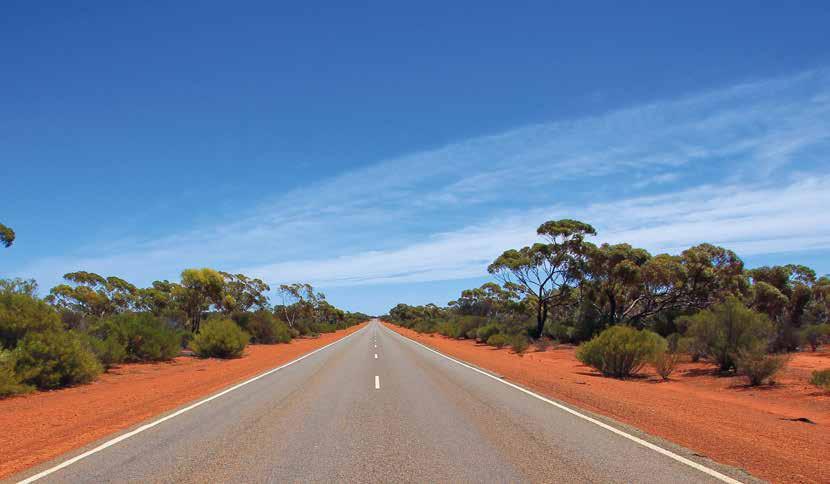
Few rides capture the scale of Australia quite like the Nullarbor. Stretching more than 1200 kilometres between Ceduna in South Australia and Norseman in Western Australia, it challenges riders with distance, endurance and the stark emptiness of the outback. The name itself comes
from the Latin nullus arbor, meaning ‘no trees’, and that starkness is exactly what defines the road.
Most of the journey follows the Eyre Highway, including the country’s longest straight section of tarmac; 146.6 kilometres between Balladonia and Caiguna. It’s a stretch where the horizon barely shifts, the road runs dead straight
through flat country and your main task is managing fatigue and focus. Fuel is available but expensive and distances between roadhouses can catch out the unprepared. Phone coverage is unreliable and wildlife is an ever-present hazard, especially at dusk.
ROUTE: CEDUNA (SA) TO NORSEMAN (WA), 1201 KM. RIDING STYLE: STRAIGHT-LINE ENDURANCE. FUN FACTOR: A TRUE TEST OF PATIENCE AND PREPARATION. WATCH OUT FOR: FATIGUE, WILDLIFE AND PUNISHING CROSSWINDS.
Old Pacific Highway, Sydney
NSW’s Old Pacific Highway, or simply ‘The Old Road’, remains one of Sydney’s best-known motorcycle stretches. Running from Berowra to Somersby, it’s the unofficial training ground for generations of riders looking to sharpen their cornering skills or just escape the city grind for a few hours. The real drawcard is its endless series of curves – tight corners, fast sweepers, offcamber surprises and everything in between. Riders head here early to enjoy a clear run, while mid-morning fills the carparks of Pie in the Sky at Cowan and Road Warriors Café at Mount White with machines of every type. From L-platers to seasoned racers, everyone’s there for the same thing – good roads, good coffee and bike banter. Originally the main highway north before the M1 was built, the Old Road became a rider’s playground almost overnight. But with its popularity came attention from authorities. Police patrols are common, with radar set-ups on straights and unmarked cars blending into traffic. Riders pushing too hard through blind corners or overtaking recklessly have contributed to its reputation as both a legendary ride and a risky one. While the speed limits have dropped over the years to 60–80km/h in most sections, the fun remains. Just watch out for damp patches, leaf litter, wildlife, cyclists and cars crossing lines. Sundays are the busiest, so if you want an uninterrupted run, a cheeky midweek RDO is your best bet.
ROUTE: BEROWRA TO SOMERSBY VIA OLD PACIFIC HIGHWAY, 40KM. RIDING STYLE: CONTINUOUS TWISTIES WITH SHORT STRAIGHTS. FUN FACTOR: GREAT CORNERS, SOCIAL STOPS AND RIDER CAMARADERIE. WATCH OUT FOR: LEAF LITTER, BLIND CORNERS, HEAVY SUNDAY TRAFFIC.
ABOVE: Eyre Highway.
ABOVE: Old Pacific Highway.
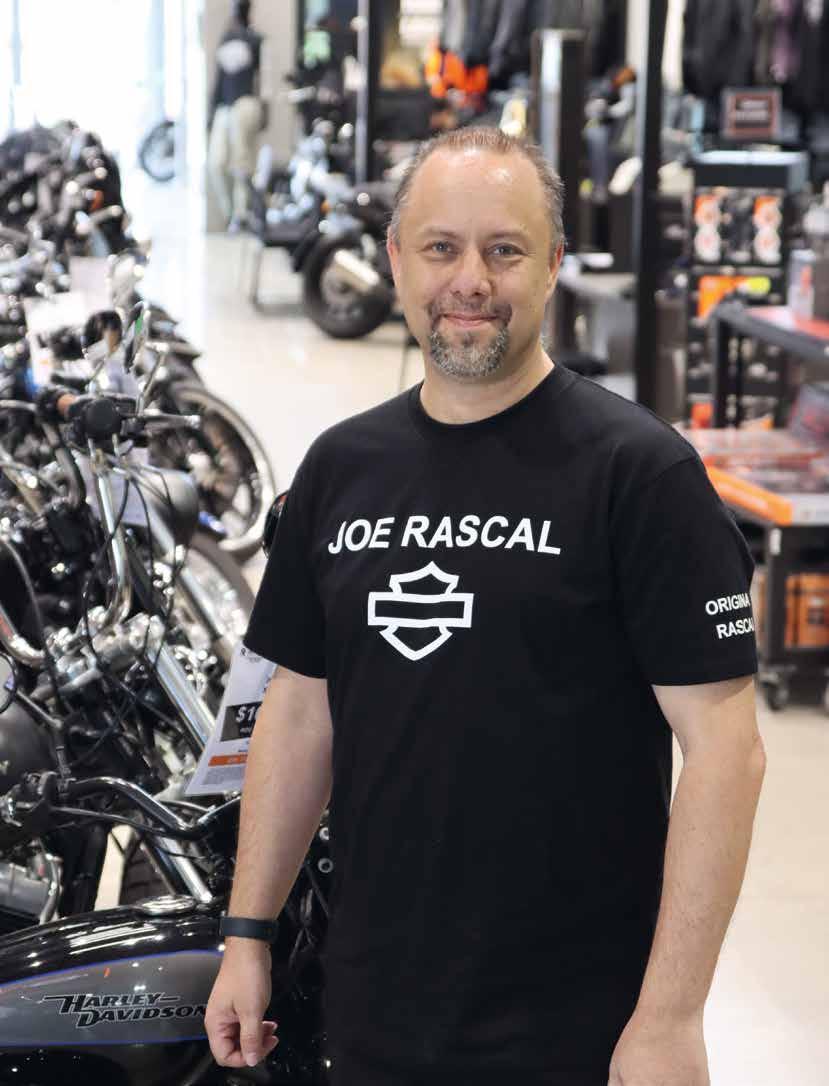
ABOVE: Steve Myles.
JOE
HARLEY-DAVIDSON, RINGWOOD RASCAL
INTERVIEW AND PHOTOGRAPHY: KELLIE BUCKLEY
AFTER TWO DECADES IN THE TRADE, DEALER
PRINCIPAL
STEVE MYLES IS LEADING JOE RASCAL HARLEY-DAVIDSON RINGWOOD INTO A BOLD NEW ERA…
When the Peter Stevens retail group changed ownership back in mid-2025, the HarleyHeaven stores were at a crossroads. The newly formed Joe Rascal Group stepped in and secured four Melbournebased dealerships under independent ownership. With entrepreneur James Tonna at the helm, the business set out to build a strong connection between Harley-Davidson riders and the dealership experience.
For long-time industry figure Steve Myles, the move to Dealer Principal offered a rare chance to rebuild a team and reshape what a local Harley store could mean to its community.
How long have you been into motorcycles and what is your background?
Twenty years – actually 20 years and two weeks. I started in 2005 in accessories at Harley-Heaven and Peter Stevens. I really liked it – the customer interaction, helping people find better safety gear and that sort of thing.
Then one day Jason [McKenzie, formerly Harley-Heaven, now Joe Rascal General Manager] said to me, “you should try bike sales – you’ve got confidence in the way you talk.” I was nervous, but I gave it a go and sold five bikes on my first day. I didn’t know how to do any of the paperwork properly, but I interacted well and people seemed to like my personality.
After a couple of years as a salesman I became sales manager, then ran my first store in 2012 – the Peter Stevens Ferntree Gully store selling Kawasaki, Seadoo and Yamaha. I came to Harley-Heaven Ringwood for the grand opening, merged Ferntree Gully into here, then became Dealer Principal at Harley-Heaven Dandenong. I later took on a group role overseeing used bikes across the country –training, stock buying, importing from the US and Japan. I had buyers working for me all around the country.
After seven years of that, the company changed direction and James from Joe Rascal approached me. Now I’m Dealer Principal again –and loving it.
What do you ride and how often do you get out?
I’ve just sold my bike, but my last one was a Suzuki GSX-R600. I mostly rode H-D Street Glides – that was my go-to. Over the years I’ve ridden an enormous number of bikes, and I’ve had the luxury of being able to take one home whenever I wanted, so I didn’t need to own one all the time.
Tell us about your role in the business.
I’m the Dealer Principal here. We’ve got about 12-13 staff and we are still growing as the company rebuilds. We have two sales guys, a pack person, an accessory person, two spareparts people, a service advisor, three technicians (two of them master techs) and our pre-delivery department. We’ll be here until early 2026 while plans for the new shop come together.
Tell us about the history of the shop.
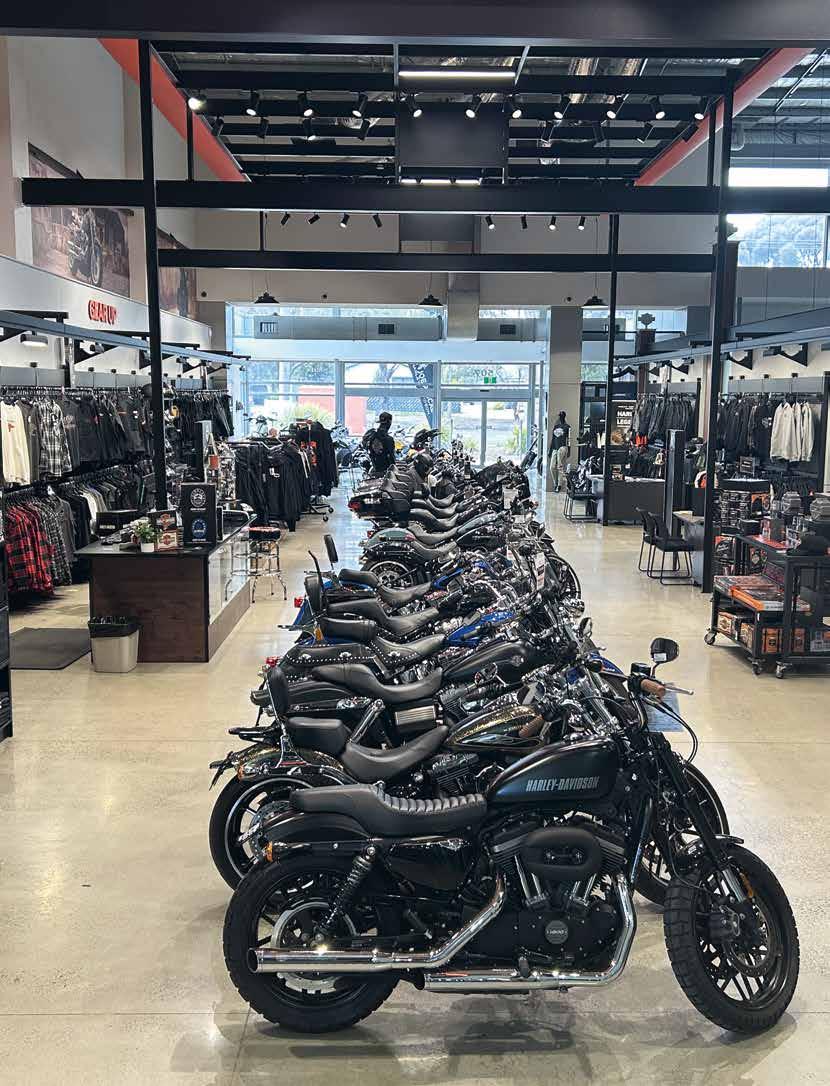
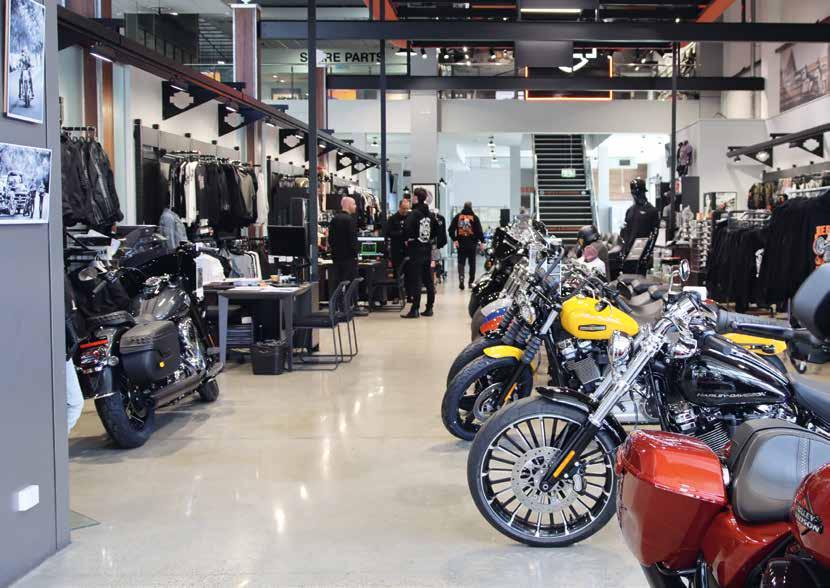
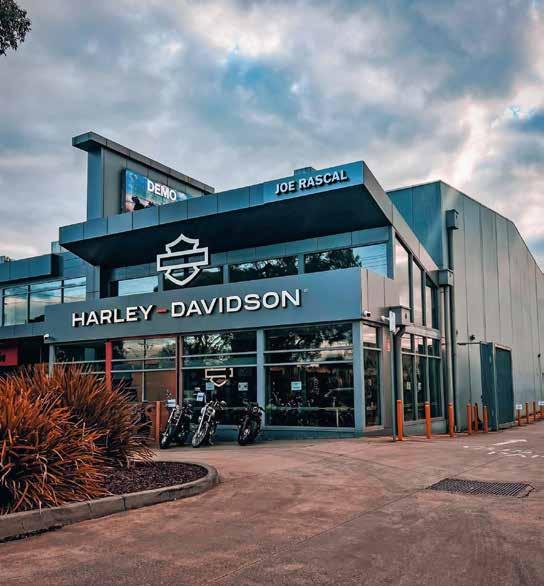
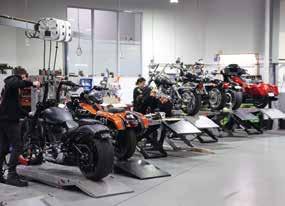
The shop is about 10 years old and was purpose-built as a Harley-Davidson store. It was designed and built by Vince Chiodo – this was his legacy building. It was his passion to create a dedicated dealership that could have all of the brands like an expo-type scenario. And it was beautiful.
What motorcycle brands do you focus on?
Purely Harley-Davidson now. We’ve also been signed off for Harley’s Fuel certification, meaning we’re a certified premium dealer – Harley-Davidson calls it Fuel certification. It’s important for Harley worldwide to have a certain look and feel so customers know they’re in a genuine dealership.
What services do you offer here?
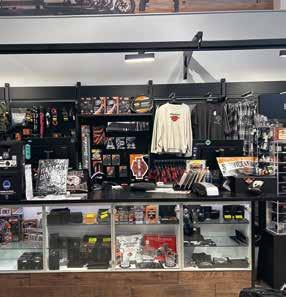
Apart from selling bikes, we handle accessories and clothing, parts fitment and we have dyno facilities at our locations. We also do finance and insurance in-house to make it easy for customers.
Do
you host any customer events?
We’ve always been big on shop rides and we’re heading into summer now, so we’ll start up monthly rides again. We’ve had hundreds of people turn up to those.
We also run a huge Bike Night, around 500 bikes or more turn up, and sometimes as many as 3000 people come through. It’s a massive party with food trucks, a show-and-shine, door prizes – the lot. There are bikes and
ABOVE: The shop has been specifically designed as a Harley-Davidson store.
people everywhere. People look forward to it and we’ll be running another one very soon.
Tell us what is unique about this motorcycle shop.
James wants us to go further – more social events, more engagement and a bigger focus on performance and customisation. It’s also great to see how many female riders are coming through now – our Yarra Valley H.O.G. chapter has 71 female members and we’ve got a huge range of women’s gear in store. Ten years ago you never would have seen that. Now it’s for everyone.
Any future plans in the works?
Yes – we’ve got another location earmarked and it looks fantastic. It’ll be a stand-alone Harley-only store with lounges, barbecue areas and a space for people to hang out. Harley would love every dealer to be solely focused on their brand and that’s where we’re heading. It’s exciting for the staff too – a fresh start and a chance to show customers we’re different.
Anything you’d like to add?
Just that we’re really looking forward to what’s ahead with Joe Rascal. It’s a family-style company, customer-driven and committed to keeping that Harley community alive and thriving.
stay I ng I n control
PART 1
BERNIE HATTON SPENT NEARLY FOUR DECADES TRAINING RIDERS ACROSS AUSTRALIA AND ASIA. IN THIS REGULAR SERIES, HE’LL SHARE SOME OF THE LESSONS, GAPS AND HARD TRUTHS…
WORDS: BERNIE HATTON | PHOTOGRAPHY: JPMEDIA/HEATHER WARE HMC
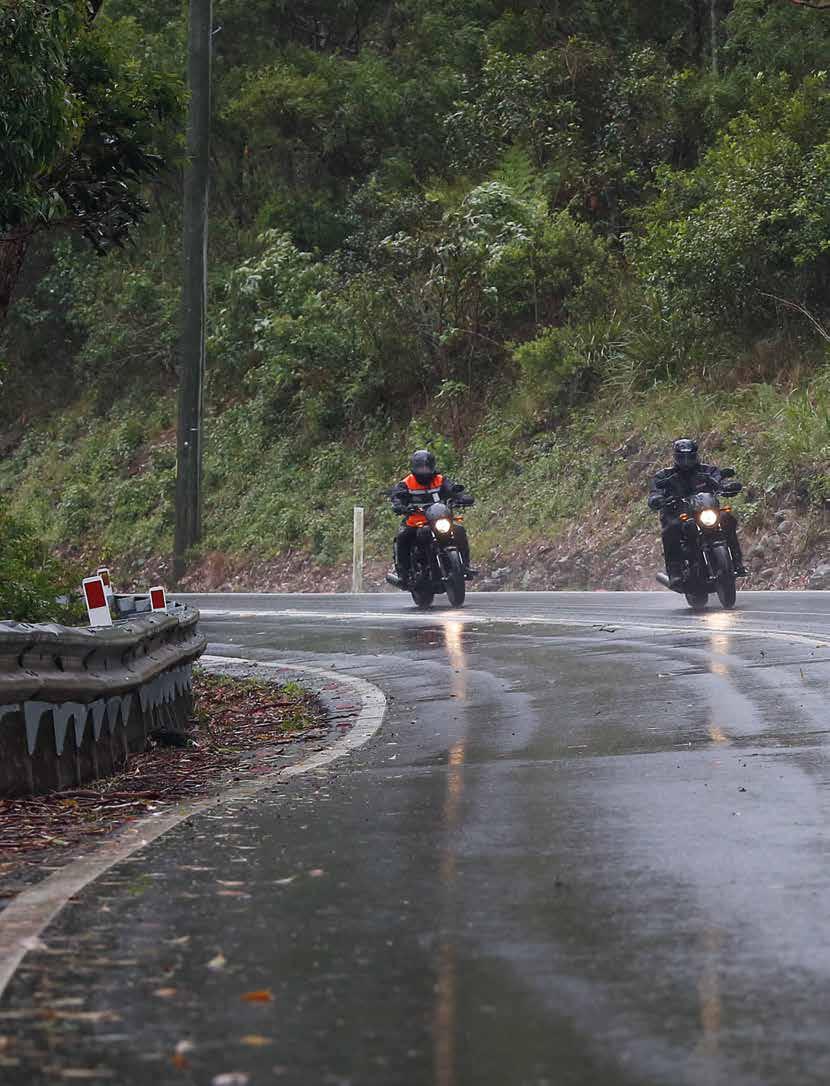
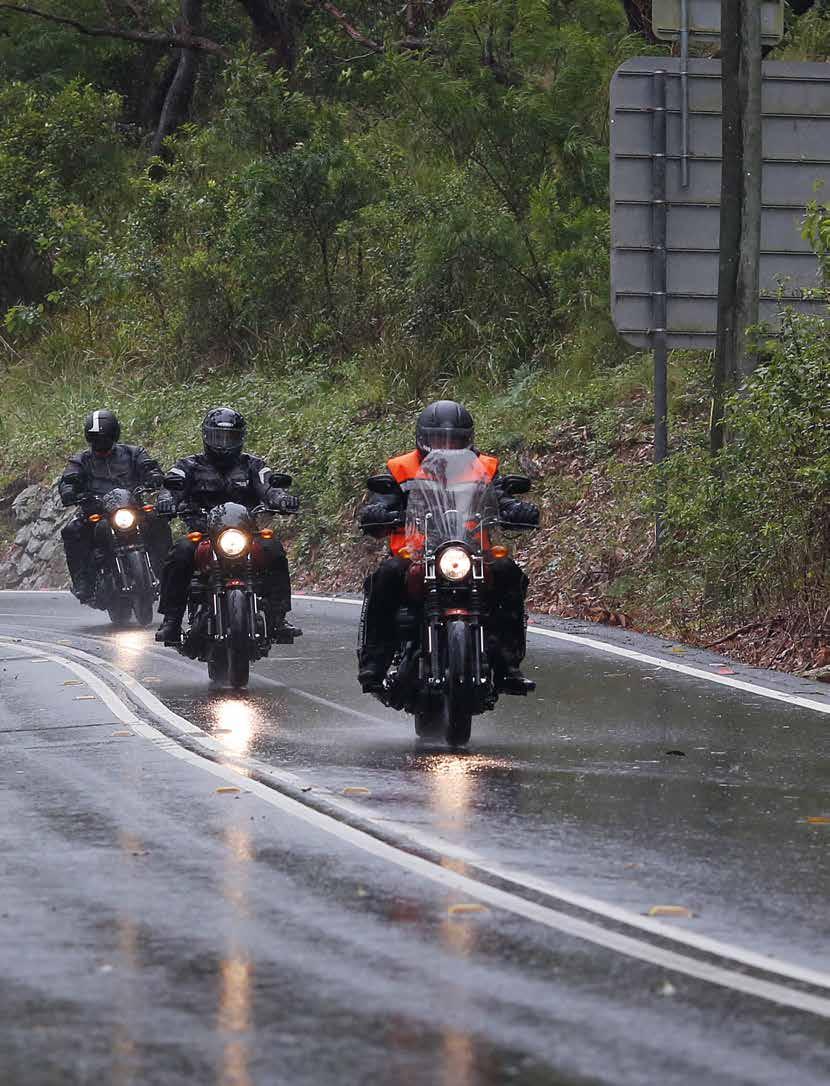
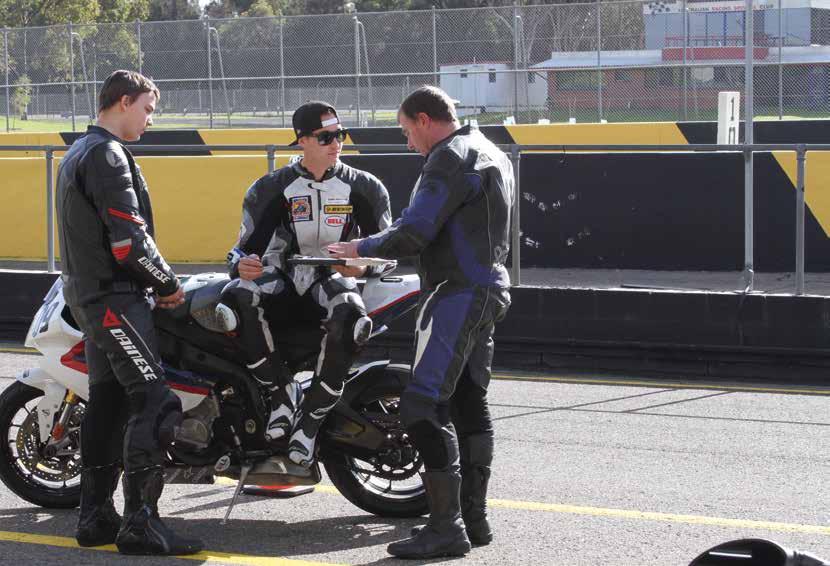
ABOVE: Rain riding in a group takes time and experience.
Itrust that riders new and old, novice through to elite, will get something out of this education feature series. My hope is that every article gives you at least one idea you can carry into your own riding. As well as being a learning tool for those starting out, this series can also benefit experienced riders who are helping to guide a beginner.
I may no longer be teaching full-time, but I honestly miss the work as an educator, trainer and mentor. That’s why I’m excited about this chance to keep sharing what I know. For those who already know me, you’ll understand my passion and commitment to the cause. For those who don’t, you’ll soon find out!
Building control
The first skill I want to address is a vital one: control. You need to become the controller of your bike, not the other way around. Control isn’t something you pick up overnight, it has to be built step-by-step and it’s the foundation for everything else you do on two wheels.
The truth is, most crashes come back to a loss of control. And I say most, because the only ones out of your control are an act of God, those freak situations no amount of skill could prevent. When control disappears, the consequences are immediate: your confidence, your wallet and, in the end, your love for motorcycling all take a hit. And that’s why it matters more than anything else.
Control has to be built, and it’s built on a foundation of essentials. Over the years I’ve come to call them my top 10 musts: preparation, knowledge, attitude, patience, education, mechanical awareness, handling skills, roadcraft in both city and country, ongoing selfdevelopment and a mentor who knows
both dirt and tar. Each one of these adds a unit of competence and together they give you control.
I’ll admit I’m a control freak on a motorcycle. By that I mean I take ownership of everything that happens to me on the road. That’s the attitude every rider needs to carry.
I’ve cursed other drivers, riders, mechanics and authorities plenty of times over the years, and at the time it felt justified. But looking back, that anger never made me a better rider. What did was learning that there’s only one person who will put me first, and that’s me. I’m responsible for everything that happens on my motorcycle, good or bad.
That kind of honesty and discipline doesn’t come easy. It’s human nature to point the finger, especially when you’re in pain because of someone else’s mistake. But if you want to keep improving, you’ve got to reflect on your own performance and own it. Taking responsibility is the first real lesson in motorcycling.
Beyond the basics
For most newcomers, the big milestone is getting that licence. But here’s the reality: the licence only gives you the basics. It gets you and the motorcycle moving, nothing more. Too many riders treat it as the finish line when really it’s the start of a long road.
A proper riding life is a progressive pathway. At the start it’s about simple balance and throttle control, then it’s braking, cornering, slow-speed manoeuvres, wet riding, group riding and eventually higher-speed or longdistance work. Each step builds on the one before it, and if you try to skip stages you end up with holes in your skills that will catch you out when it matters most.
Real development takes years, not weeks. If you rush in with a “got to have it now” attitude and spend as little as possible on proper training, it’s going to cost you more in the long run. A good program can lift your skills quickly, but that progress has to be guided. That’s where a mentor comes in. And believe me, there are no shortcuts.
“THE MOST VITAL SKILL FOR RIDING A MOTORCYCLE IS GRIP; THE FEEL OF TRACTION, KNOWING WHEN IT’S THERE, WHEN IT’S GONE AND HOW TO RESPOND…”
BELOW: Winston Taylor, our track day and education contributor, at California Superbike School.
There’s one vital skill that almost never gets taught: grip. The feel of traction – knowing when you’ve got it, when you’ve lost it and what to do about it – is the foundation of control, but I am not aware of many places that teach it fully. What that means is that riders never get shown how to respond when traction breaks away. The ability to release a brake at the right moment, to roll on the throttle smoothly, to carry momentum through a slide – these are the moments that decide whether you stay upright or hit the deck.
Every rider on the road will lose traction at some point. It might be due to the environmental conditions – wet roads, gravel, oil or diesel – or the way a rider reacts to an emergency. Wet riding is the most common test of grip and it’s where I’ve seen the biggest difference between riders who’ve been shown what to do and those who haven’t. When learners were shown the physics and given the chance to practice, they quickly gained the confidence to handle it. Without that guidance, most panic – and the control is lost. The skill
isn’t complicated, but the difference between knowing and not knowing is massive.
The most vital skill for riding a motorcycle is grip; the feel of grip, knowing when it’s there, when it’s gone and how to respond. Without it, all the other pieces fall apart. And until we fix that gap, riders will keep paying the price.
Education, training and mentoring will cost you money, but the bigger cost is your time. It means time taken from other commitments and that’s where many riders fall short. If you’re not disciplined, or not willing to invest in a proper training pathway, the cost will be even greater later on. That’s why patience needs to be built into every part of your motorcycling – without it you won’t find success.
Think about it this way: would you climb into a plane or a helicopter and just have a go without any training or a mentor alongside you? Of course not. Yet too many newcomers do exactly that with a motorcycle, relying only on mates, social media,
“TAKING RESPONSIBILITY IS THE FIRST REAL LESSON IN MOTORCYCLING…”
salespeople or basic licensing programs to show them the way. That blind trust scares me, because it leads straight to poor outcomes.
One of the biggest challenges we face in this country is driver culture. Attitudes toward motorcyclists in Australia are poor and I’ve never taken that for granted. At times I’d say it feels safer riding in parts of Asia than it does here.
That’s why developing roadcraft is so important. City and country riding are completely different worlds and you need to build the skills for both. If you’re on two wheels in Australia you need to be prepared. Two wheels still aren’t accepted here the way they should be and it’s up to us as riders to adapt.
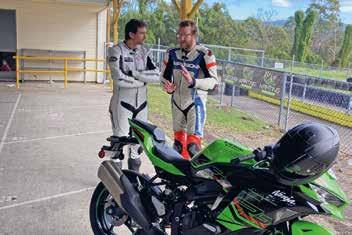
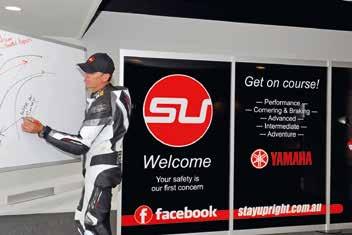
ABOVE CLOCKWISE: Jeff chatting with supermotard coach and racer Jean Gabriel Laine at a training day. Stay Upright, the oldest established school. Jeff testing. At SMSP Ride Days.
Lifetime of lessons
I was lucky. From an early age I had a mentor who shaped everything I became on two wheels. As well as being a brilliant rider, he was a mechanic, a competitor and one of Australia’s motorcycle sports legends, Tony Hatton. His knowledge came from his own father, who had passed it down before him. That made me the third generation in my family to ride and now my son makes it four. The lessons I learnt in those early years – what to ride, how to ride and where to ride –shaped the path I’ve been on ever since.
Two wheels have always done it for me. I travelled, I competed, I pushed myself in every condition I could find. But it was the gaps in training and licensing that stood out. They weren’t giving riders what they needed and that drove me to create one of Australia’s leading motorcycle schools. I spent 37 years building it into a program that went far beyond the basics, and in that time we trained more than half a million riders across Australia and Asia.
The program never stood still. We kept reviewing it, adjusting it to suit new bikes, new riders and new challenges
– and I used the same program for learner, intermediate, advanced and elite riders.
I learnt that there were more than 100 common mistakes made by motorcycle riders. In the end, it was easier to fix those gaps directly with the students than to try to influence bureaucrats who didn’t understand motorcycling in the first place.
What kept me going was watching the progress. With the right plan, I saw complete novices turn into capable riders. Then I saw those same riders pass their skills on to partners, friends and their kids.
So what causes the biggest loss of control? It’s not always the bike or the road – it’s the human. Riders struggle most with the simple stuff: being transparent, being honest, taking time to reflect, staying flexible and having the discipline to keep at it. Without those traits, all the training in the world won’t stick.
Looking ahead
My goal here is to give every rider the chance to build those qualities alongside their skills. Progress is
possible for all of us if we’re willing to put in the work.
Whether you’re a parent, a partner, part of the motorcycle industry or just starting out on your own, trust that what I write here comes from experience, passion and a commitment to making motorcycling safer and stronger. Development takes time, and I won’t leave a stone unturned in showing you what I’ve learnt.
My promise is to keep it simple and to pass on the lessons that matter most. I’m looking forward to working alongside you all.
“TRAINING IS AN INVESTMENT THAT PAYS OFF EVERY TIME YOU RIDE…”
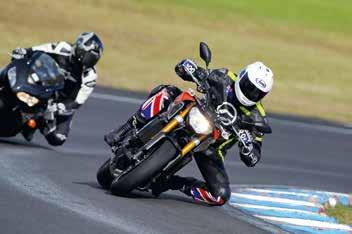
ABOVE: Wet weather commuting is a skill we all need to develop in the real world. TOP RIGHT: Defensive Rider Training. BOTTOM RIGHT: Bernie delivering a lesson in class.
REDUCING RISK MEANS
BEING DISCREET AND CONSISTENT…
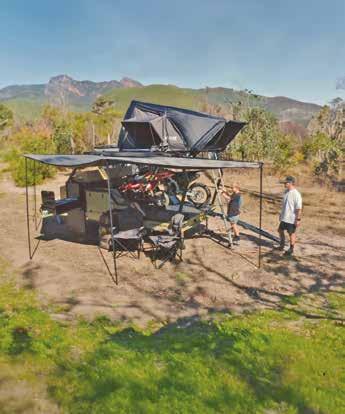
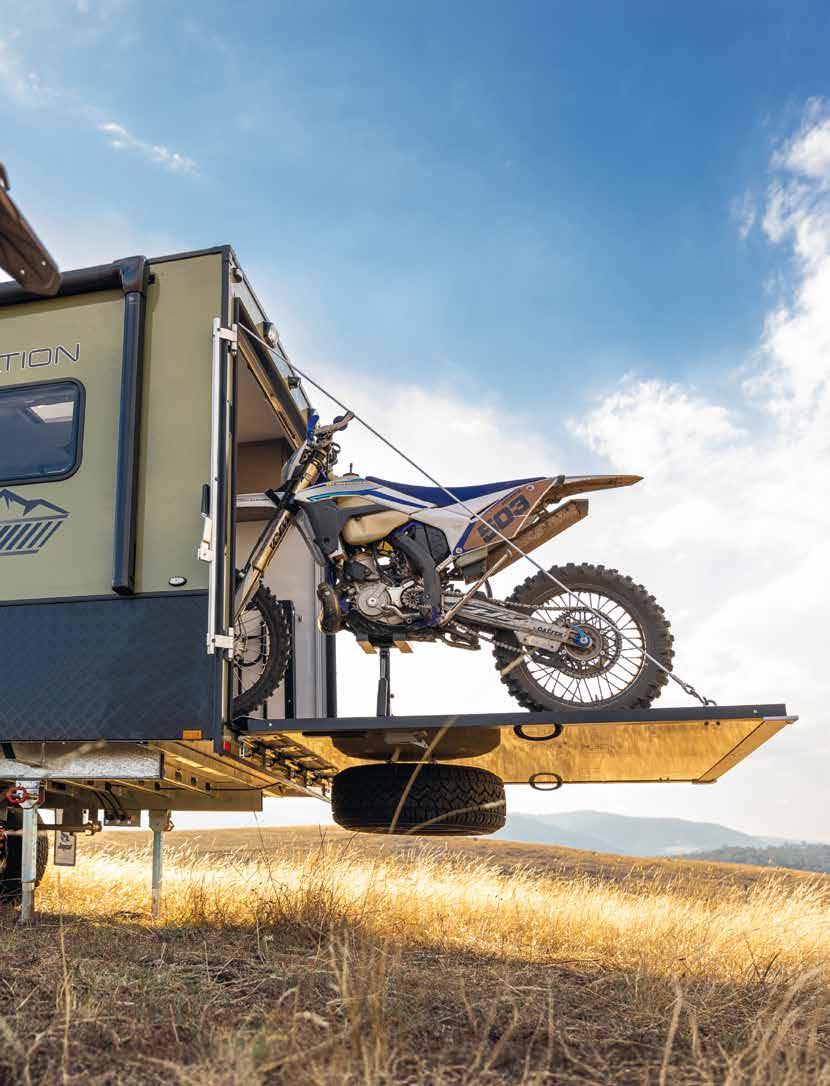
MAIN: Jayco Basestation.
TARGET
WORDS: JEFF WARE
THIEVES ARE CLEVER, BUT WITH THE RIGHT PRECAUTIONS, YOU CAN STOP THEM COLD…
Motorcycle theft is an evergrowing problem across Australia. Whether you ride a dirt bike, road bike, tourer, cruiser or learner machine, your pride and joy is always a vulnerable target.
Easy to roll away and often worth thousands in parts alone, motorcycles remain an easy score for thieves. Unlike modern cars, many bikes lack factory immobilisers or alarms, and even with chains or locks, a determined crew can lift one into a van in no time. Once stolen, recovery rates are low, especially for competition bikes with no registration, which makes prevention essential on your part.
BE ALERT
Thieves strike in many ways. Bikes vanish from trailers and utes parked in driveways or hotel carparks, from sheds and garages without heavy-duty locks, or from roadside stops on trips. Social media posts that reveal your suburb or garage photos can set you up as a target, and fake buyers posing as customers often scope out homes before returning later to steal. Some riders have even been followed home from a ride and hit overnight.
In most cases, theft is not random, it is planned, and the thief
has already seen your bike. The golden rule of motorcycle security is simple: be vigilant, all of the time.
Reducing risk means being discreet and consistent. Do not wash, tune or leave your bike where it is visible from the street, and keep garage doors closed. Avoid leaving trailers out front, and if you think you are being followed, circle the block before pulling in.
STAY VIGILANT
Think twice before posting, because criminals scroll the same feeds you do, and do not share images that reveal number plates, houses or driveways. When selling, always meet buyers in public and avoid giving out your home address. Teach kids not to talk about your bikes at school and remind friends to be careful with what they share online as well.
A barking dog is still one of the best deterrents, and proper locks are essential. Anchor your bike inside the shed with a heavy-duty chain, add a disc lock or alarmed padlock, and secure trailers at the drawbar and wheels. Never leave a bike on an open trailer overnight. Enclosed trailers are safer, but even then, park the door against walls or poles and use multiple locks.
TRUST TECHNOLOGY
Technology is also useful, from GPS trackers and motion alarms to dummy cameras or warning signs. Microdot systems such as DataDot can improve the odds of recovery. Keep clear photos of your bike, VIN and engine numbers, and store receipts and paperwork safely. If locks or latches show signs of tampering, treat it as a warning, not an accident. Get onto it.
BE SMART
Every motorcycle is a potential target, from minibikes to milliondollar classics. Some bikes are harder to trace than others and stolen machines are quickly stripped, hidden interstate or moved overseas – once gone, the chance of recovery is slim. That is why vigilance matters. Be private, be smart and be cautious because someone is always looking for an easy target.
WORDS: JEFF
THE SINGLE MOST IMPORTANT COMPONENTS ON ANY MOTORCYCLE ARE ITS TYRES AND YOU SHOULD ALWAYS KNOW THEIR CONDITION...
EXPERT ADVICE
Tyres are your motorcycle’s only link to the ground, so their condition is critical to your safety and the performance of the bike. Worn centres, squared profiles or feathered edges dramatically reduce grip and make the bike feel vague or unsettled on the road.
Always check pressures before every ride and stick to the manufacturer’s recommended figures, cold, as the pressure rises when the tyres, and air in them, warms up. Only race tyres need to be set when the tyres are warm.
Correct pressures improve grip, feedback and tyre life, while running too low or too high can make even a good tyre behave badly, an over inflated tyre will overheat on the surface and lose grip, and offer a
harsh, chattery ride that can cause a crash, particularly at the front. Even a few PSI over is too much. Tyre pressures are critical and must be spot on, every ride.
An under-inflated tyre will drift at lean and feel unstable under brakes, upsetting tip-in and steering. It can also run wide through corners and, in the wet, lose grip as the grooves close.
Before every ride, at least glance over your tyres and give both a kick and push, you will be familiar eventually with how they should feel. This is just a basic check to make sure you haven’t picked up a flat, and that there is no fluid on the tyres.
Once a week, whether I am riding or not, I check and set the pressures on all my bikes. I have a cordless pump with a built-in gauge, but any pump will do, and a good quality pressure
gauge. Every few weeks I move the bikes I don’t ride often to stop the tyres from developing flat spots. The ones I use daily get a closer look; I check for nails or screws, make sure the bead is seated evenly against the rim, inspect the tread for wear or damage and confirm the valve and cap are in good shape. It’s also worth glancing at the wheel weights to be sure they’re still in place and secure, because if they’re not, the balance will be out and you may feel vibrations through the ’bars.
It’s not a big job, but it should be an important part of your maintenance routine. Tyres keep you alive, so they’re worth keeping an eye on and looking after. Correct pressures help your bike handle as it should, give you even wear, better longevity and, most importantly, a safer ride.
Leanne Smith
MOTORCYCLE ROAD RACER
WORDS: LEANNE SMITH PHOTOGRAPHY: SDPICS, KEITH MUIR, KEOGHS VISION
FROM THE PILLION SEAT TO A RACING CAREER, AND BACK TO THE PILLION SEAT. LEANNE SMITH HAS GONE FULL CIRCLE…
I’m Leanne Smith, a 53-year-old born and bred in Wollongong, NSW, where the ocean meets the escarpment and the roads beg to be explored. Born in 1972, my life has been full of grit, adventure and a love for the open road.
For 19 years I served as a detective senior constable, a career that demanded resilience until I left the force in 2021. Now I enjoy golf, the beach and life with my fiancé, who I met less than a year ago. But the constant through it all has been motorcycling. From the moment I first twisted the throttle, I knew two wheels would define my story.
It started at 18, aboard a 1972 Suzuki GT250. The hum of the engine, wind
rushing past and sheer independence of the road were intoxicating. Growing up in Wollongong, riding felt like pure freedom. Back then, bikes weren’t seen as “a woman’s thing.” I heard it all; too dangerous for girls, bikes are for men.
Those words didn’t stop me; they lit a fire. If someone told me I couldn’t do something, I proved them wrong. So, I rode, carving my own path through scepticism and stereotypes and found joy that was mine alone.
At 22, I took it further – racing. My first race bike, an RGV250M, matched my hunger for speed. The racetrack was raw and unforgiving, demanding focus and courage. The first time I leaned into a corner flat-out, heart pounding, I was hooked. Racing was
MAIN: Lapping SMSP in the 1:34s. RIGHT: A familiar face for fans, Leanne is one of the most experienced racers in the paddock, seen here on the grid at SMSP with the Yamaha Superbike.
adrenaline and precision combined. I competed for four years, chasing faster lap times and the thrill of limits. Those years taught me resilience, calm under pressure and a refusal to back down.
“THE TRACK DOESN’T NOTICE GENDER, IT NOTICES SKILL AND HEART…”
Life pulled me away for a time as my detective career took over. But the call of the track never faded. In 2013, at 41, I made a comeback on a Kawasaki ZX-6R and later a 125cc GP bike. The sport had changed, and so had I, but the feeling of visor down, ready to race, was just as exhilarating. I raced another four years, relishing the camaraderie and joy of competition. With tracks like Eastern Creek nearby, I threw myself back in wholeheartedly.
After three years off, I returned in 2020 with a 2011 Kawasaki ZX-10R, though I only raced it twice. The itch for more saw me upgrade to a 2021 ZX-10R, which reignited my passion. But it was my Yamaha YZF-R1 Superbike that truly stole my heart. I raced it through to the end of 2024, closing my career on a high. The standout was
the last 18 months in the St George Motorcycle Club night series. Racing under floodlights, track lit, air cool and competition fierce, I pushed harder than ever, cutting my Eastern Creek [SMSP] lap times into the 1:34s. That’s something I’m proud of, especially as a 51-year-old woman in a sport dominated by younger riders.
Motorcycling has always been about more than speed. It’s about freedom, breaking from expectations and mastering machine, track and fear. I never felt weighed down by being a woman in a male-dominated sport. I was often one of the few women on the grid, but I was too focused on my own goals to care. The track doesn’t notice gender, it notices skill and heart.
I can’t call out many lows. Across my 10 or 11 years racing, every crash, failure and tough race was part of the journey. They made me sharper and stronger. Motorcycling gave me purpose, focus and even the love of my life. Less than a year ago, I met my fiancé, whose passion for bikes rivals mine. Decades on two wheels brought me not just thrills, but a partner to share the road with.
These days, my riding is different. I’ve swapped the rider’s seat for the pillion seat on my fiancé’s Harley. At first it felt strange after a lifetime of control, handing it over was unnatural. But he’s no ordinary rider. He’s one of Australia’s most successful racers and I trust his skill completely. So, I tried it, and to my
surprise, I love it. There’s a different freedom in being a passenger: soaking up the scenery, feeling the rhythm of the bike and sharing it all. Most weekends we cruise the winding Wollongong roads, ocean on one side, mountains on the other. It’s a new chapter, every bit as thrilling.
To any woman thinking about motorcycling, whether road, dirt or racetrack, my advice is simple: don’t let anyone tell you it’s not for you. The road doesn’t discriminate, and neither should you. It doesn’t matter if you’re 18 or 53, riding a beat-up Suzuki or a Yamaha R1. What matters is the spark when you twist the throttle, the way the world falls away when it’s just you and the bike. Motorcycling has given me freedom, confidence, love and a lifetime of stories. At 53, I’m still riding, still smiling, still proving two wheels can take you anywhere you dare to dream. So go on, get out there. The road is waiting.
RIGHT: Leanne in her early 20s on her RGV250 in her well-known Rabbit Photos sponsored colours in the mid 1990s.
CHRIS SCHULTZ HAS RETURNED TO HONDA AFTER MORE THAN A DECADE, STEPPING INTO THE ROLE OF GENERAL MANAGER OF POWER SPORTS AND PRODUCTS AS THE COMPANY ENTERS A NEW ERA OF CHANGE...
chris schultz
INTERVIEW: KELLIE BUCKLEY | PHOTOGRAPHY: CHRIS SCHULTZ/HONDA MPE
Honda’s recently appointed general manager Chris Schultz still remembers the day he turned up at home with a brand-new GSX-R. He was 18 years old and determined, and his mother had already told him he wasn’t allowed to have a motorcycle. He went out and bought one anyway.
“And rode it home even though my mum had said no,” he laughs. “Let’s just say it was a short conversation.”
That headstrong streak, mixed with a lifelong affection for motorcycles, has carried Schultz through a career that’s taken him out of the industry and now brought him back again. After starting at Honda in 2008, he cut his teeth in the marine and power equipment division. Motorcycles weren’t technically his remit, but they were always his first love.
“Whilst I’ve been in motorcycles since I was about 18, I joined Honda in the marine manager role and then power equipment… I still got quite involved with some of the motorcycle events and things, just because it was a passion,” he says.
Five years later he departed for Nissan Australia, where he would spend more than a decade in senior positions across sales, product planning, marketing and after-sales roles. The stint broadened his commercial experience, but Schultz admits cars never stirred him in quite the same way as bikes did.
“What I like about this industry is it’s more about passion than automobiles… there is a passion involved [with cars] – and I’ve got an old car as well – but the products that we make in this area of the business, whether it’s outboard motors or power equipment or motorcycles, the people that use those have a passion for the brand. So it’s actually quite nice to be back in this area of the business.”
In early 2025, Schultz returned to Honda Australia as General Manager of Power Sports and Products. His appointment coincided with a period of significant change for the company’s local arm. Long-time industry figure Tony Hinton stepped aside after more than two decades and Schultz was asked to take the reins across both motorcycles and power equipment. It’s a position that blends his previous Honda experience with his own passion for bikes, and it places him at the centre of one of the most important transitions in the brand’s recent history.
As well as the departure of Honda stalwart Hinton, his appointment coincides with a broader shift at Honda. Former American Honda Vice President Jay Joseph was appointed CEO and Director of Honda Australia, replacing Yoshitaka Okamoto, who returned to Japan to take on a senior motorsport role. Joseph brings with him more than 27 years of experience with the brand.
Carolyn McMahon, previously Vice President and Director at Honda Australia, took up the role of Managing Director at Honda New Zealand, becoming the first woman to hold the top job at Honda NZ, following a career that included leading the unification of Honda Australia’s automotive and motorcycle operations.
While Nobuya Sonoda, who had served as Managing Director of Honda New Zealand since 2014, moved across to Honda Australia as Director of Business Services and New Business Program. Sonoda, who joined Honda NZ in 2002, is now supporting Honda Australia’s broader electrification strategy and futurefacing initiatives.
“Now we’ve got Jay, and Carolyn gone to lead Honda New Zealand, Nobu Sonoda’s moved across to Australia – it’s more or less a brand-new board,” he explains. That sense of newness is not limited to the local operation. Globally, too, Honda is loosening its once-conservative leadership structure.
“Jay and Carolyn are two of the first presidents that are non-Japanese, globally,” Schultz says. “Honda is moving a little more in that direction.”
For Schultz, the appointment of Joseph, the first American to lead Honda Australia, signals a change in style and philosophy. “There’s a bit more of a licence to test and learn, to step outside the comfort zone,” he says. “Jay brings a different style; he’s really engaged, has strong product experience and he’s doing a lot of dealer visits, which I think says a lot.”
Schultz admits that having so many new faces around the board table at the same time as his own appointment has made the transition easier. “It’s probably a little easier, doing it together,” he says. “We’re all still coming up to speed, but there’s energy in that. It feels like we’ve got permission to think differently.”
But while Honda’s leadership is turning a page, Schultz is also mindful of the man whose shoes he now fills.
Tony Hinton was a towering figure in the industry, his name synonymous with Honda Motorcycles in Australia for more than two decades. Schultz is acutely aware of the inevitable comparison.
“It’s always a little daunting following someone that has quite a legacy in the industry,” he says. “Tony’s got a long legacy and his family have always been involved in racing. That’s something I’m probably never going to have.”
Instead, he is intent on building his own reputation on different terms.
“At Honda, firstly I’d like my legacy to be that I was a nice guy to work with, to start with,” Schultz says. “I think you can have lots of goals, but actually having respect amongst the team and working with the team is one of the key things.”
The industry itself, however, presents challenges that extend well beyond the Honda boardroom. In his first meeting with the Federal Chamber of Automotive Industries (FCAI), Schultz was struck by how under-represented motorcycling still is in Australia’s transport discussions.
“I think we’ve got a huge opportunity with scooters,” he says. “I think as an industry, we are not strong enough in our voice with the government that we’re a solution to congestion problems, and the government doesn’t really know.”
As both a motorcyclist and a daily cyclist, Schultz has seen firsthand the inconsistencies in current regulations.
“What I see is the amount of people riding bicycles with throttles that are faster than most of our scooters,” he says. “We’ve got a legislation problem, and I think as an industry, that’s a huge opportunity.”
From scooters, Schultz sees momentum extending into the broader commuter and learner-approved segments. Demand, he says, is being driven not only by changing demographics but also by technology.
“At the moment, the demand on that bike is huge,” he says of Honda’s middleweight CB650 range, which is available in two guises; one with a conventional clutch and one with Honda’s innovative E-Clutch. “We’ve gone from having a split on that where we were bringing 80 per cent ‘normal’ bike and 20 per cent E-Clutch to actually having all the demand for the E-Clutch.”
For riders new to motorcycling, the attraction is simple. “We’ve got so many new LAMS riders and new riders coming through,” he says. “We always… most of us go, actually, I don’t want you to take my clutch, but once you realise it’s basically an up-anddown quickshifter, [you think] this is quite cool.”
BELOW & RIGHT: The new Honda boss has a passion for bikes, cars and family.
“IT FEELS LIKE WE’VE GOT PERMISSION TO THINK DIFFERENTLY...”
That focus on making motorcycling more approachable extends into the question of electric bikes. Schultz is cautiously optimistic, though he frames the issue squarely in terms of consumer priorities.
“If we bought one in and it was a similar price as a petrol one, would it sell? Maybe,” he muses. “I think for commuters it could make sense. I do very few day rides. But what I do is every couple of months is a weekend [away] and do 1400 kilometres over two days. So for me, I can’t see it fitting, [but] maybe for commuting.”
Schultz’s focus at the time of answering that question was on commuters and LAMS bikes, although Honda’s global strategy has since taken another step with the recent announcement of the WN7 electric motorcycle – the company’s first full-sized production EV, which is due in Australia in 2026.
For now, he points to the ways Honda’s existing expertise could carry across divisions. “In Japan they have the Benly scooter,” he says. “It’s a swap-and-go style battery, and that will fit into other power equipment ones. So there is certainly that thought of how do you have a similar ecosystem, just because it makes sense.”
Even so, Schultz acknowledges that the road to electrification is still winding. “Globally there’s going to be some challenges,” he says.
Those challenges don’t appear to have dimmed his personal enthusiasm for riding. Away from Honda’s boardroom and dealer visits, Schultz still makes time to get out on two wheels. “My riding nowadays, because I’ve got two young kids, is weekends away,” he says.
That appetite for adventure extends beyond motorcycling. He learned of his new role with Honda just before
heading overseas with his family for a long-planned trip. “Actually I found out about the job two days before we flew out,” he says. “We planned, we took long service leave. So my son started in high school this year and we wanted to take long service leave and take them overseas.”
The destination was Patagonia, a part of the world as rugged as it is beautiful. “And I saw some Australian guys doing a tour on motorbikes and thought, oh, I’ve got to come back and do that,” Schultz says.
For Honda’s new General Manager, it was a fitting reminder that passion for motorcycles – the same passion that gave him the courage to go against his mother’s wishes – still shapes the road ahead.
THE GEAR
Co-developed with Interphone, the Airoh AWC-4 is a sleek, helmet-integrated Bluetooth 5.1 intercom designed for seamless communication without affecting fit or aerodynamics. It connects up to four riders with HD audio, offers 15 hours of talk time via a separate battery, and features IP67 waterproofing, glove-friendly controls, and crystal-clear sound for calls, GPS navigation and music. Perfect for commuting, touring or weekend rides. Available from your nearest shop via Moto National Accessories. (motonational.com.au)
Falco Terrex Boots – $549.95RRP
Engineered for serious off-road and enduro riding, the Falco Terrex boot pairs a tough Micro-Synth upper with a waterproof High-Tex liner for all-weather confidence. Featuring Eso-Motion 2 articulation, D3O ankle protection, aluminium buckles and a highgrip rubber sole, it delivers exceptional support, comfort and CEcertified protection across any terrain. Available from your nearest shop via Moto National Accessories. (motonational.com.au)
Kawasaki MXGP Cap – $48.95RRP
Fly the green flag in style with Kawasaki’s official MXGP flat-peak cap. Crafted from 100 per cent cotton, it features bold embroidered Kawasaki Racing and KX logos, six-panel construction with embroidered air vents and an adjustable snap-button closure for a perfect fit. Comfortable, durable and unmistakably Kawasaki, it’s the ideal accessory for track days or casual wear. Available now from Kawasaki dealerships.
ACE Bikes U-Turn Motorcycle Mover – from $525RRP
Make tight garage spaces easy to handle with the ACE U-Turn Motorcycle Mover. This lightweight, adjustable dolly lets you lift and effortlessly pivot bikes with wheelbases between 1300–1525mm and weighing up to 275kg. Featuring smooth 75mm swivel wheels, toolfree adjustment and foldable storage, it’s ideal for small workshops. An XL version suits larger bikes weighing up to 450kg. Available now from your local bike shop via Whites Powersports. (whitespowersports.com)
Ducati Corse Sleepsuit & Logo Sweatshirt
Start them young with Ducati style. The Ducati Corse Sleepsuit is made from hypoallergenic, breathable materials with non-toxic prints, nickel-free buttons and bold MotoGP 2022-inspired colours, perfect for little Ducatistas. Match it with the red Logo Hoodie, featuring a kangaroo pocket, jacquard label and signature front logo. Both pieces capture true Ducati passion for fans of all ages.
Harley-Davidson Washed Colorblock Fitted 39THIRTY Cap
Classic style meets everyday comfort with this trucker-style HarleyDavidson cap featuring bold embroidered bar-and-shield logos front, back and sides. The pre-faded cotton front and polyester/spandex rear deliver a worn-in look with a flexible stretch fit. Finished with the official 39THIRTY sticker, it’s a perfect blend of style and authenticity for any rider.
Available from Joe Rascal Harley-Davidson stores.
Available now through authorised Ducati dealers and the official Ducati online store (ducati.com)
Women’s Bar & Shield Short Sleeve Tee
NEW PRODUCTS
This midweight, ring-spun cotton and polyester T-shirt features Harley-Davidson’s most iconic bar-and-shield logo in a soft-hand print. A rib-knit neckline keeps its shape, while the blend offers comfort and durability. Simple, timeless and unmistakably Harley, it’s a wardrobe essential for any fan of the American legend. Available from Joe Rascal Harley-Davidson stores.
Suzuki 3Q Tee & Mug Collection
Show your Suzuki spirit with the soft, premium 3Q Tee, crafted from an 85 per cent cotton and 15 per cent viscose blend for everyday comfort and style, available in sizes S2XL. Enjoy your morning coffee in the 300ml Classic Mug or the sleek 330ml Black stoneware version, both ideal for fans of the brand. These are just a few of the many cool Suzuki accessories available now at shop.suzuki.com.au
Pro Honda Oils & Chemicals
Honda Australia has unveiled its bold new Pro Honda Oils & Chemicals range, complete with refreshed packaging and an expanded line of cleaning products. Designed by Honda for Hondas, these professionalgrade oils and maintenance fluids deliver supreme lubrication, corrosion protection, and improved fuel efficiency across all Honda motorcycles and power products. The new cleaning range removes heavy dirt and restores shine, while updated packaging makes selecting the right product effortless. Available now from Honda dealers or prohondaoils.com.au
PRODUCT REVIEW
BEELINE MOTO II BLACK – NEVER LOST AGAIN
After a solid month using the Beeline Moto II Black, I can honestly say I haven’t been lost once, and for anyone who knows me, that’s nothing short of a miracle! In fact, my wife Heather has made it a rule that I fit the Beeline to every bike I ride, and it’s easy to see why. It’s compact, clean-looking and dead simple to use, whether I’m swapping between test bikes or heading out on my RideWave e-Bike for a long adventure ride.
Designed as a sleek, minimalist navigation solution, it doesn’t clutter the cockpit or distract from the ride. The ultra-bright IPS TFT display is crisp and clear in any light, and even in harsh Aussie sun or a downpour, the antireflective, hydrophobic coatings keep everything visible. Two large, glove-friendly RockerTop 2 buttons make operation straightforward on the move, no fiddling required.
Built tough, it’s both IP67 waterproof and shockproof, with a 14-hour battery life that easily handles a full day’s ride. Charging is via USB-C, or you can use pogo-pin mounts for a powered setup. Navigation comes in two main flavours: traditional turn-by-turn guidance with ETA and speed info, or Compass Mode for those who prefer to just aim for the horizon and make their own path.
It even throws in handy extras like speed-limit alerts, speed-camera notifications (where available) and fullride logging. The Beeline app connects seamlessly, letting you plan routes, import or export GPX files and relive your adventures later. The whole package feels well thought out, minimal, intuitive and tailored for real riders rather than gadget geeks.
At $379.99RRP, it’s great value for the quality and capability you get. The Beeline Moto II Black does exactly what the box says: keeps you on track, wherever you’re headed. Compact, rugged and stylish, it’s the perfect travel companion for any motorcycle or e-Bike. Available now from your local bike shop via Whites Powersports (beelinemoto.com.au)
Honestly, I won’t ride without it now. 10/10 – Jeff.