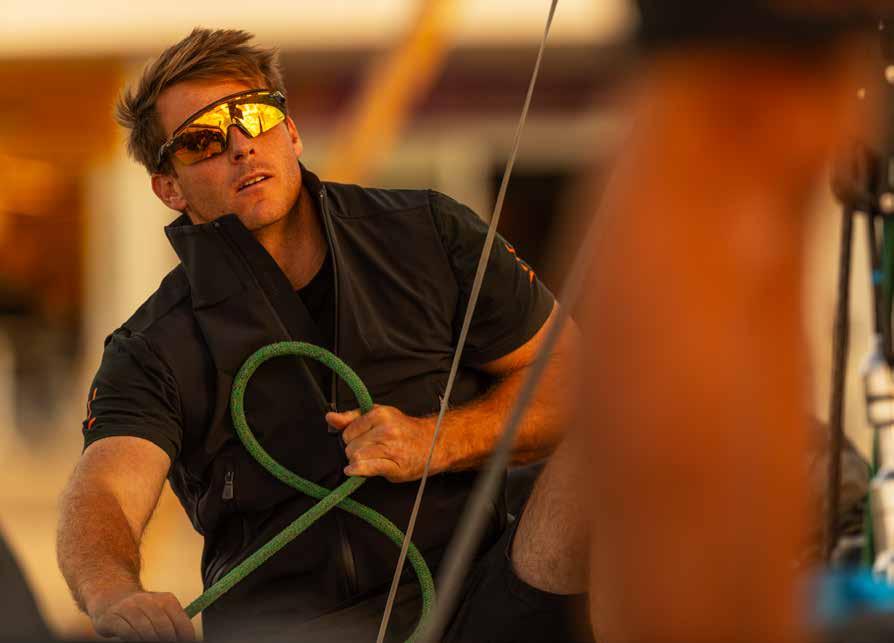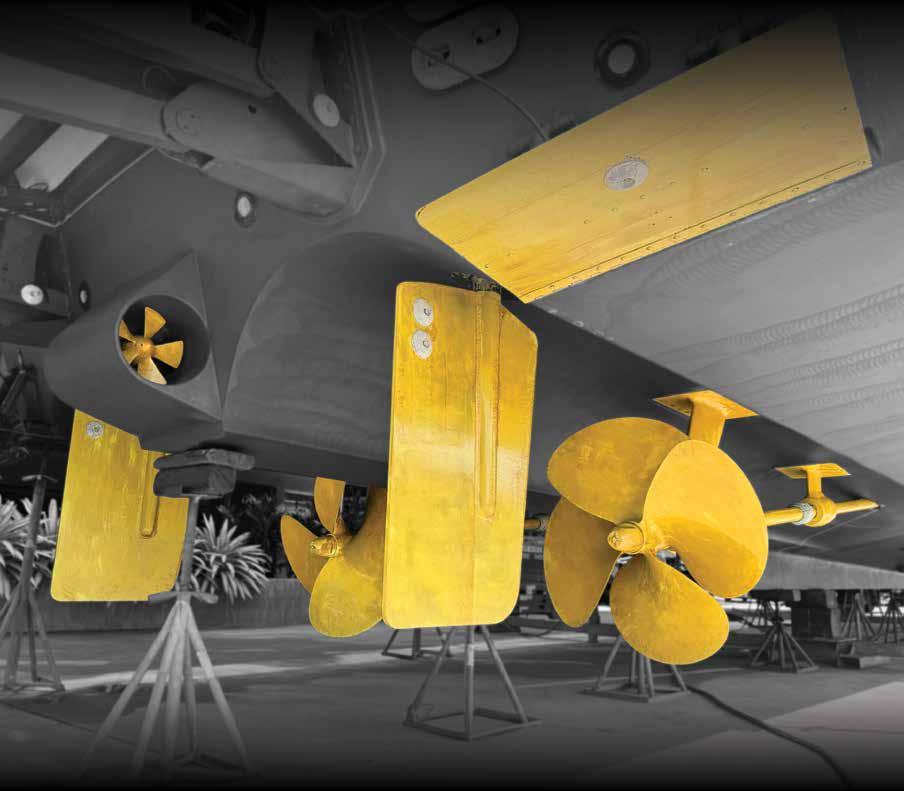



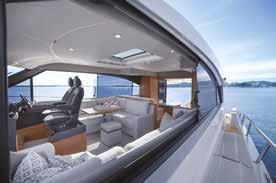
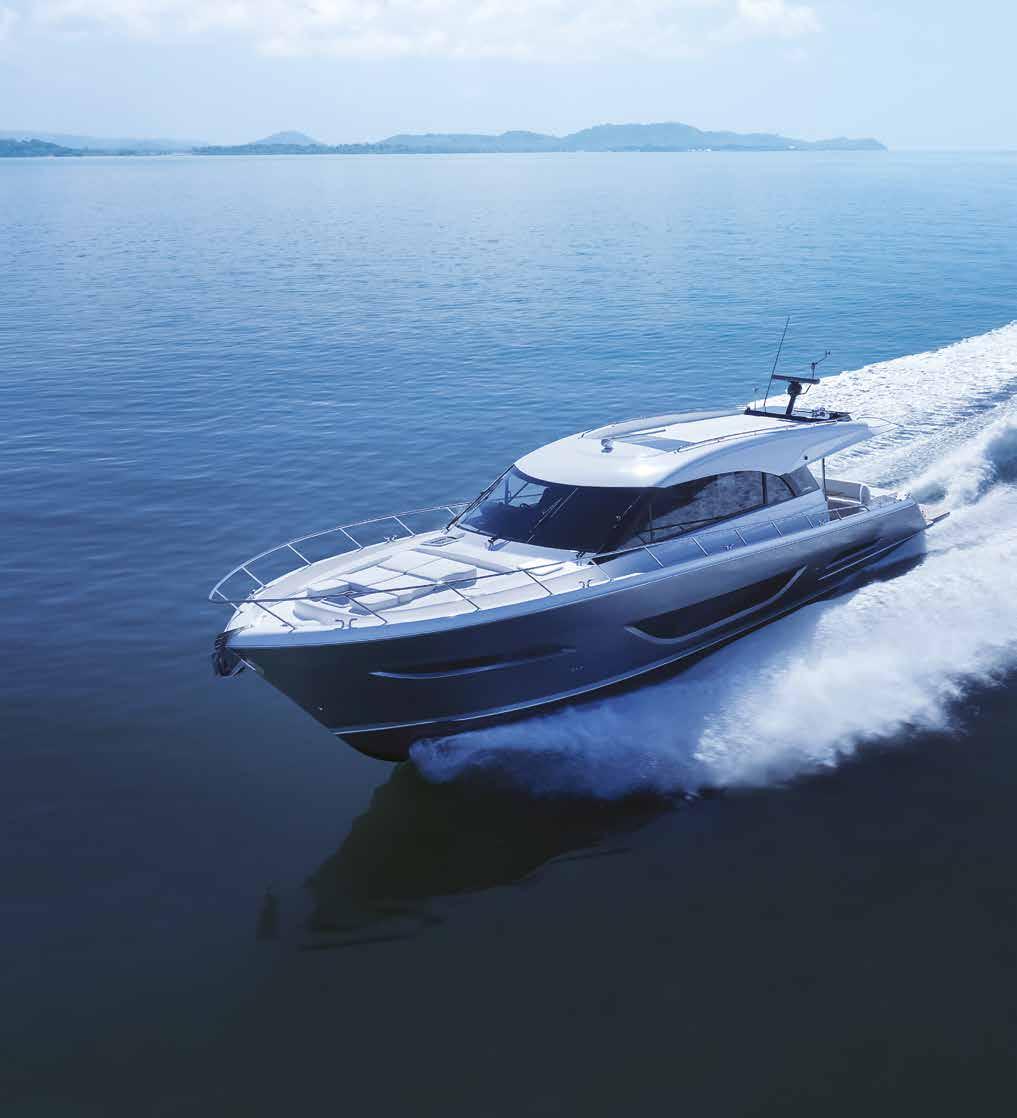
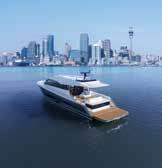
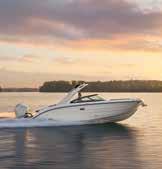
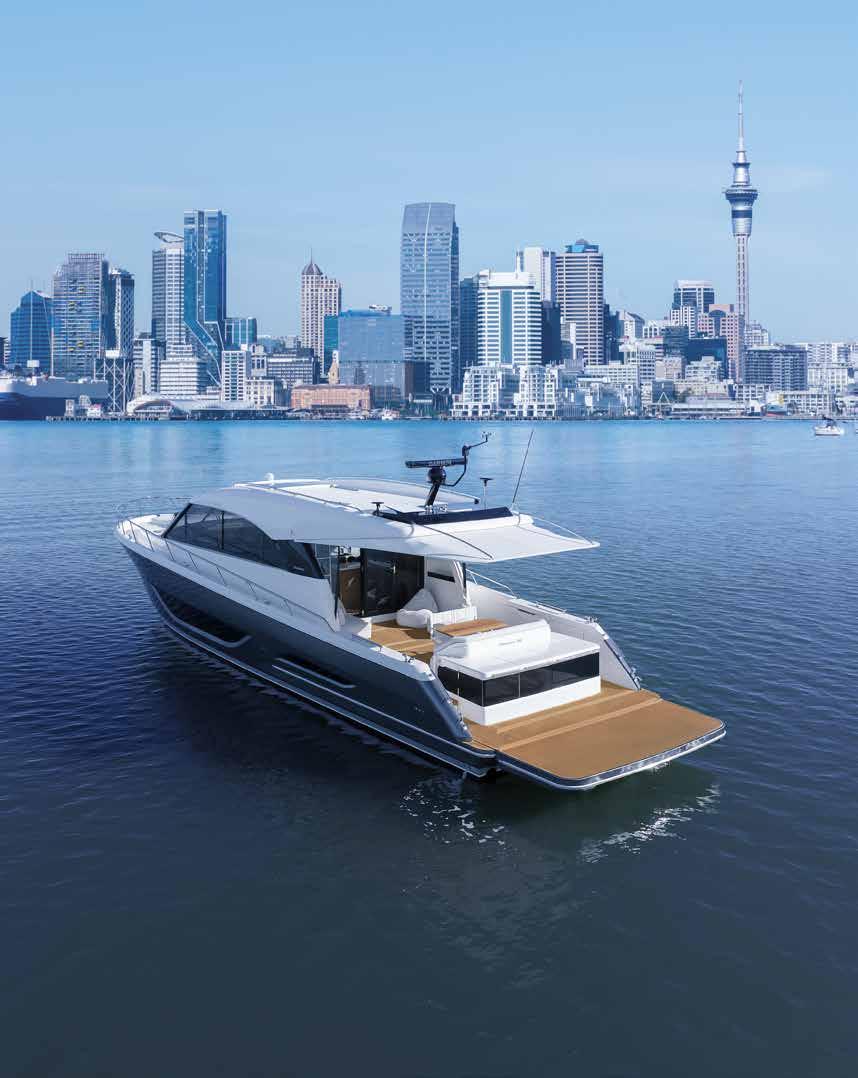
The all new S60 sedan motor yacht combines a stunningly balanced exterior profile, with an immensity of deck and interior spaces to cater for a vast range of entertaining, relaxation, or adventuring activities. Australian built, its powerful exterior form and reimagined entertainment areas reset the international standard for cruising sedan motor yachts. maritimo.com.au

The
Maritimo
The Dufour 44 will be showcased at Race
The d'Albora team share some insights about cruising Australia’s East Coast.
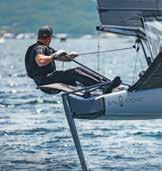


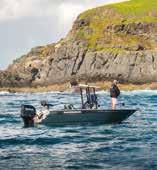
64 ASK THE EXPERTS OFFSHORE SAFETY
Must-read safety advice.
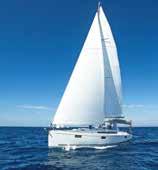
68 EXPERT’S GUIDE TO MAINTAINING YOUR SAILS
Advice to help keep your sails in top condition.
70 LEARN FROM THE BEST
On the water with Australian Boating College Sydney.
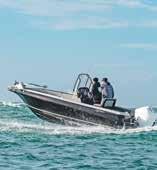
74 THE SHALLOWS
Shallow water fishing.
80 MAC ATTACK
A guide to catching mackerel.
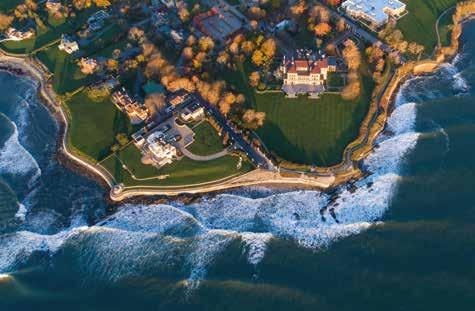
84
Exploring Newport, Rhode Island.

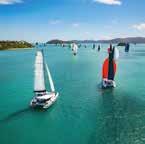
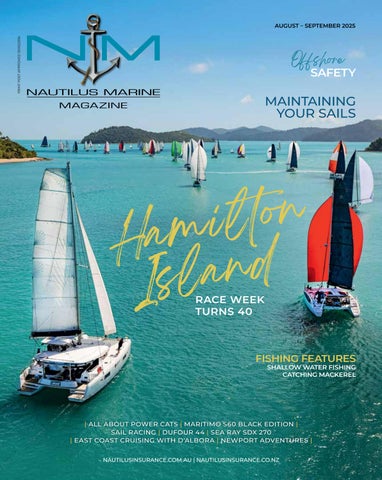
Welcome to the August-September issue of Nautilus Marine Magazine Hamilton Island Race Week is a highlight of Australia’s sailing calendar, and Nautilus Marine Insurance is delighted to be continuing our support of this iconic regatta, which is celebrating 40 years this August. Set to take place from 16-23 August, Hamilton Island Race Week is a perfect reflection of what makes Australia’s boating community so special with camaraderie, competition, and a shared love of the water. It is an honour to be part of this landmark 40th edition of Race Week, and the team and I are looking forward to heading up to Hamilton Island again to engage with yacht owners and crews and be immersed in all the exciting activities both on and off the water. You can read more about Hamilton Island Race Week in our cover story (page 22).
Within this issue we profile a range of models for those in the market for a new vessel, whether your passion is power or sail. We profile the Dufour 44, an impressive yacht equally suited to racing and cruising which will be showcased at Race Week (page 34). We also step aboard the glamorous Maritimo S60 Black Edition Sedan Motor Yacht (page 28), check out the Sea Ray SDX 270 Outboard via Chapman Marine Group (page 40), and look at a range of trailer power cats for our category feature (page 46).
Our ‘Ask the Experts’ boating safety panel share some key risk mitigation advice to help keep you safe when heading offshore (page 64) and Mark Hunter, owner of Vacuwash Australia, offers some expert advice about maintaining and cleaning your sails (page 68). Other highlights of this issue include our profile of high-performance apparel brand Sail Racing (page 58), our feature about cruising Australia’s East Coast with insights from the d'Albora team (page 52), and our interview with GCCM’s Stephanie Trounce who won the Industry Woman of the Year Award at the Nautilus Marine Insurance Marina of the Year Awards (page 98). Fishing enthusiasts will also want to check out the mackerel species guide (page 80) and the article about shallow water fishing (page 74).
Within our travel and dining pages, we head to the US to explore Newport, Rhode Island which has a storied sailing history (page 84), check out some sailing destinations closer to home (page 93) and profile OTTO Ristorante which is celebrating 25 years at Woolloomooloo’s Finger Wharf (page 94).
As always, we love hearing your feedback. So, feel free to get in touch with us and share your thoughts on this issue.
Happy and safe boating!
LYNDON TURNER CEO & PUBLISHER
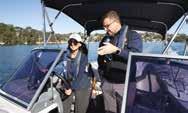





As the owner of the Australian Boating College Sydney, Adam leverages over 30 years of boating experience to give his students confidence and competence to embark on their boating adventures. Adam is also the President of the Boating Industry Association (BIA) and a regular contributor to our panel of boating safety experts. For this issue, Adam shares some offshore safety advice and discusses the benefits of improving your boating skills with professional guidance.

Mark is the owner of Vacuwash Australia, a specialist cleaning service for yacht sails based in Sydney’s Northern Beaches. Mark began his sailing journey at a young age and moved into offshore racing at just 16. He’s since completed the Rolex Sydney Hobart Yacht Race 12 times, and competed extensively across the UK and in the Mediterranean, racing everything from 5.5m yachts to maxis. Within this issue, Mark offers some expert advice about cleaning and maintaining your sails.

Richard is the Head Chef at OTTO Ristorante and creates modern Italian fare that Sydneysiders love to eat, at one of the city’s most famous locations, the Finger Wharf at Woolloomooloo. Richard joined OTTO in 2004, and took over the helm in 2009, having previously worked with some of Europe’s great chefs in Berlin, Switzerland and his native Prague. Within this issue, Richard shares some of his best advice about oysters and reflects on OTTO’s 25th anniversary. “On the plate, it is all about simplicity and elegance,” he says.
CEO & PUBLISHER: Lyndon Turner – lyndon.turner@nminsurance.com.au
HEAD OF CUSTOMER EXPERIENCE / ADVERTISING: Andrew Mulholland +61 482 854 066 / andrewm@nminsurance.com.au
EDITOR / CONTENT & PR DIRECTOR: Sarah Ranawake – sarahr@nminsurance.com.au
ADVERTISING/COMMERCIAL DEVELOPMENT MANAGER: Robert McWaters – robertmc@nminsurance.com.au
ADVERTISING: Todd Anderson +61 409 630 733
ART DIRECTOR: Kim Gierdien
SUB-EDITORS: Helen Hayes and Josie Gagliano
HEAD OF COMMERCIAL: Glen Schembri – glens@nminsurance.com.au
HEAD OF BRAND: Neha Taskar – nehat@nminsurance.com.au
HEAD OF DEVELOPMENT – MAJOR ALLIANCE PARTNERS: Tim Baker – timb@nminsurance.com.au

Nautilus Marine Magazine is published by NM Insurance Pty Ltd ABN 34 100 633 038 t/as Nautilus Marine Insurance, Level 7, 99 Walker Street, North Sydney NSW 2060 & Nautilus Marine Underwriting Agency Ltd (New Zealand) Co # 3032800.
material communicated by third parties. Information in the Magazine is for information purposes only and is not legal, financial or financial product advice. NM Insurance does not warrant that the information in the Magazine is accurate, complete or current. Opinions expressed are those of the respective authors and not necessarily those of NM Insurance.
any information, representation, statement, opinion or conclusion contained or expressed in it.


UPDATES AND EVENTS YOU NEED TO KNOW ABOUT.

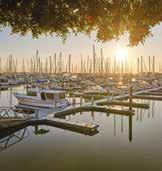
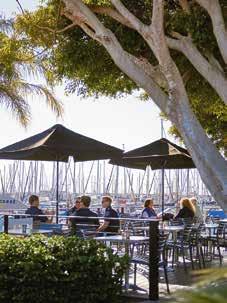
Hamilton Island Race Week is approaching, and it is worth extending your schedule to soak up more of The Whitsundays. If you are participating in Hamilton Island Race Week or SeaLink Magnetic Island Race Week – both proudly supported by Nautilus Marine Insurance – d'Albora Port of Airlie Marina is an excellent short-term berthing choice, pre- or post-racing. It has 156 wet berths, catering for vessels up to 50m. Yachties can also enjoy dockmaster assistance and
access to d'Albora’s member and guest services team seven days a week, and the marina also offers waterfront dining. There are also plenty of accommodation options nearby if you want to leave the yacht in racing mode. So consider scheduling some island cruising around The Whitsundays and booking your boat into d'Albora Port of Airlie Marina.
Visit dalbora.com.au

This year is a big one for the Stessl family, owners of aluminium boat brands Makocraft and Sea-Trex, with Makocraft celebrating its 20th year. Family patriarch and legendary boat builder Alf Stessl, who has enjoyed a 50-year career in boat manufacturing, is also officially retiring this year. Alf’s son Tim will take the helm of Sea-Trex, and the Sea-Trex range will now be manufactured at their new production facility in Ashmore on the Gold Coast.
“2025 is a really special year for us,” says Tim. “With Dad retiring and handing over the Sea-Trex brand, it feels momentous. We have big plans for Sea-Trex, which will be produced at our Gold Coast facility and run alongside Makocraft, appealing to a whole new sector of the boating market.” The Makocraft range comprises 44 models from 3 to 7.3m, with 15 lines across the range. Around 80 per cent of their market are anglers with families, and about 20 per cent are families seeking time together on the water.
Visit makocraft.com.au
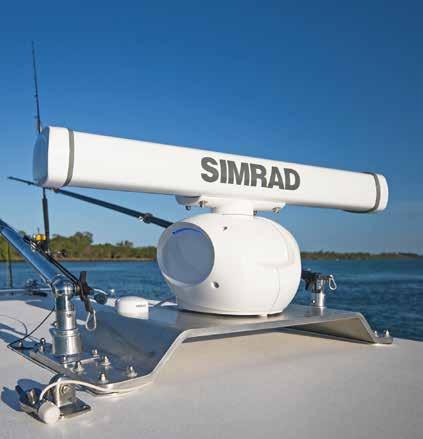
Simrad Yachting, a leader in marine electronics and navigation, has introduced the new AutoTrack feature for its HALO 2000 and HALO 3000 Radars. The new feature brings automated tracking to the world’s most intuitive and easy-touse radar system. AutoTrack automatically detects, tracks, and prioritises moving vessels and other targets, enhancing situational awareness and improving on-water safety.
“Simrad Yachting is renowned for its high-performance, reliable marine electronics that elevate on-water experiences to the next level,” says Kevin Steinbraker, VP and General Manager, Digital Systems for Navico Group. “The new AutoTrack feature was developed with this legacy in mind, ensuring we continue to deliver the market’s best products. AutoTrack represents a significant leap towards smarter vessel awareness, giving boaters superior information effortlessly, and elevating the entire Simrad experience. With enhanced situational awareness, AutoTrack operates seamlessly in the background, adding an extra layer of safety without complicating the user experience. Whether navigating busy waterways or cruising offshore, it keeps you informed, aware, and in control at all times.”
Visit simrad-yachting.com


4.
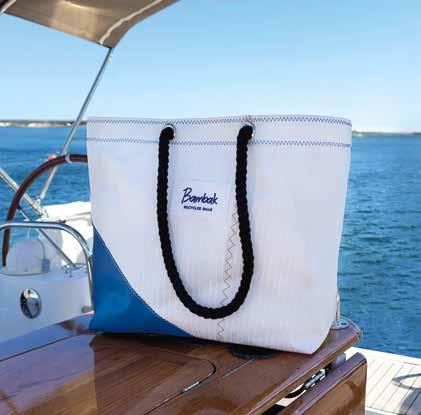
In Sydney’s Northern Beaches, sailor and designer Leon Wilson noticed that around 80 per cent of sails that are ‘retired’ each year in Australia end up in landfill. That led him to create Bambak –a sustainable brand turning old sails into stylish, durable bags and accessories. Each Bambak product – manufactured in Vanuatu –carries a story from the sea, transformed into a range of bags from weekend duffels to everyday totes. Every item is a one-of-a-kind piece of nautical history, steeped in character. But Bambak didn’t stop at bags. “We’ve also repurposed sails to build shelters in Vanuatu, where the local communities face extreme weather,” says Wilson. “It’s sustainability with a real-world impact.”
Visit bambak.co
New Zealand brand Rayglass Boats has unveiled their new Protector R Edition range, marking a bold evolution of its iconic high-performance RIBs. Engineered to deliver next-level performance, styling, and innovation, these exclusive models are impressive. Leading the lineup is the 330 Targa R Edition, the first vessel in New Zealand to be powered by Mercury Racing’s new 400R V10 outboard engines. With a top speed exceeding 60 knots, this 10m boat is one of the
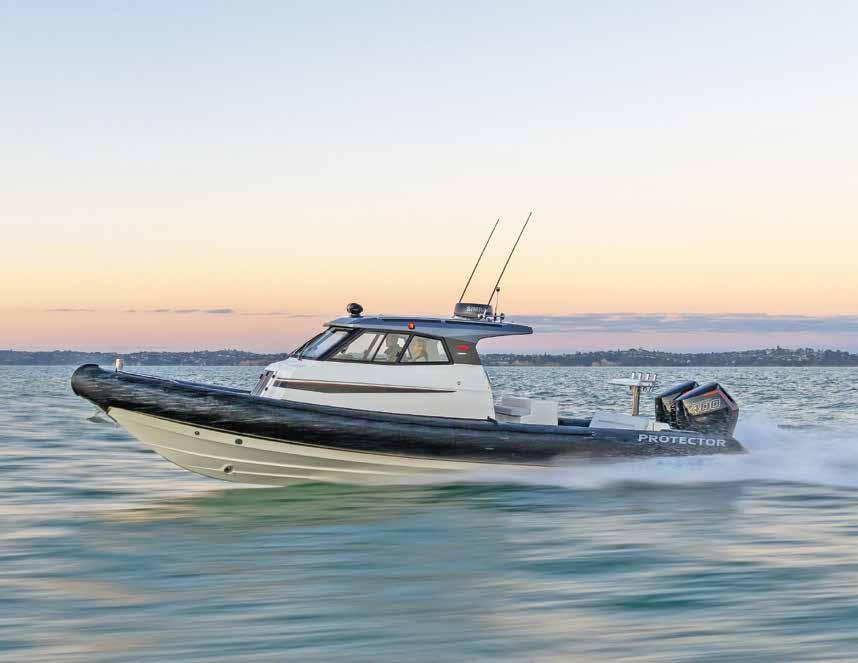
fastest production cabin RIBs in New Zealand. “This is a boat built for discerning buyers looking for something truly unique,” says Dean Harris, President of Rayglass. “We’re seeing big growth in demand for superyacht tenders and commuters. We see these boats slotting right into that market. They feature the same utilitarian capability that Protectors are famous for, but with unmatched performance and exclusive features.”
Visit rayglass.co.nz



6.
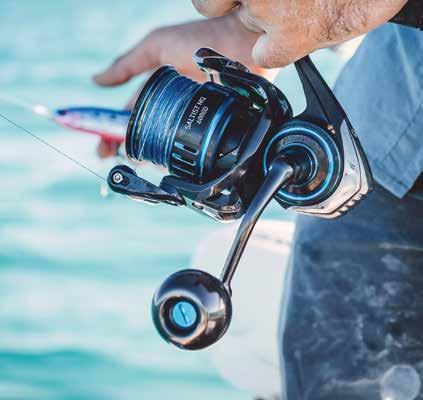
Daiwa has some excellent products to add to your ever growing fishing tackle box. The Tatula family has two new reel models for 2025 – the 25 Tatula TW 150 and TW 200 – which both now feature Hyperdrive Design, Daiwa’s newest and most advanced baitcaster design concept. The Infeet Metal Vibe has been developed by the Daiwa Australia team, and has several unique designs that make it stand out in the metal vibe lure category, and allow ultimate flexibility. It’s available in 3.5, 5 and 7g weights to perfectly cater to a wide array of fishing and species, and is available in a host of fish catching colours.
Another great product is the Saltist MQ, the perfect reel for saltwater fishing. It’s designed to perform and built to last, thanks to its single piece aluminium Monocoque (MQ) body. One of Daiwa’s most famous features, ‘Mag Seal’, combines with the MQ body to make Saltist MQ one of the best protected reels from the harsh marine environment.
Visit daiwafishing.com.au
8.
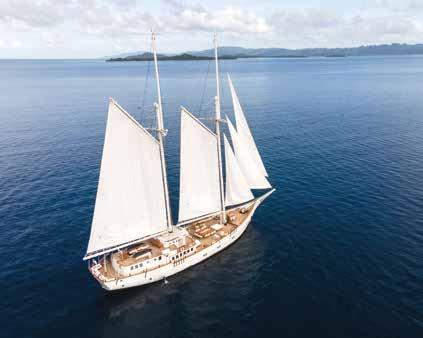
Discover the idyllic waterways of the Komodo Islands, on a seven-day itinerary on board the Mutiara Laut, a luxurious two-masted schooner. This gorgeous hand-built vessel pays homage to Indonesia’s maritime history, while delivering a five-star yachting experience through the Komodo Islands, one of Indonesia’s most beautiful and culturally rich destinations.
Highlights of the week will include coming face to face with the legendary Komodo dragons in their natural habitat on Komodo and Rinca Islands, enjoying world-class diving, snorkelling in crystal-clear waters on coral reefs, climbing Padar Island for the exquisite views from the top, and marvelling at the pink sand beaches. The Mutiara Laut has seven spacious ensuite cabins, with delicious meals, artisanal teas, and sunset cocktails helping create unforgettable moments at sea.
Visit mutiaralaut.com
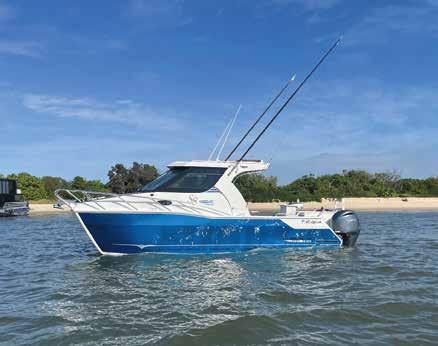
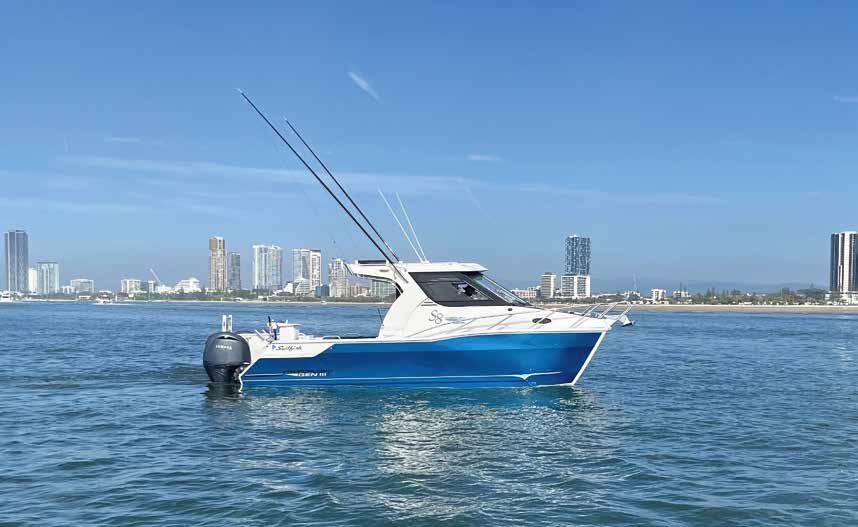
The S8, Sailfish Catamarans’ top-selling catamaran showed off its redesign with its global launch at Sanctuary Cove International Boat Show (SCIBS). The 2025 Sailfish S8 Catamaran sets a new benchmark in serious offshore performance, combining next-generation hull technology with premium comfort and versatility. Built for those who demand capability, confidence, and control in any conditions, the S8 features Sailfish’s award-winning Hydroflow GEN 3 hull, delivering unmatched stability, faster planing, and improved fuel efficiency. At 8.2m long and fully trailerable with a 2.45m beam, the S8 blends offshore power with practical, go-anywhere convenience. Purpose-built in Australia for Australian conditions, the S8 delivers on expectations, with greater cabin space, double-berth sleeping quarters, 25 per cent more horsepower, and 15 per cent greater fuel capacity.
Visit sailfish.com.au

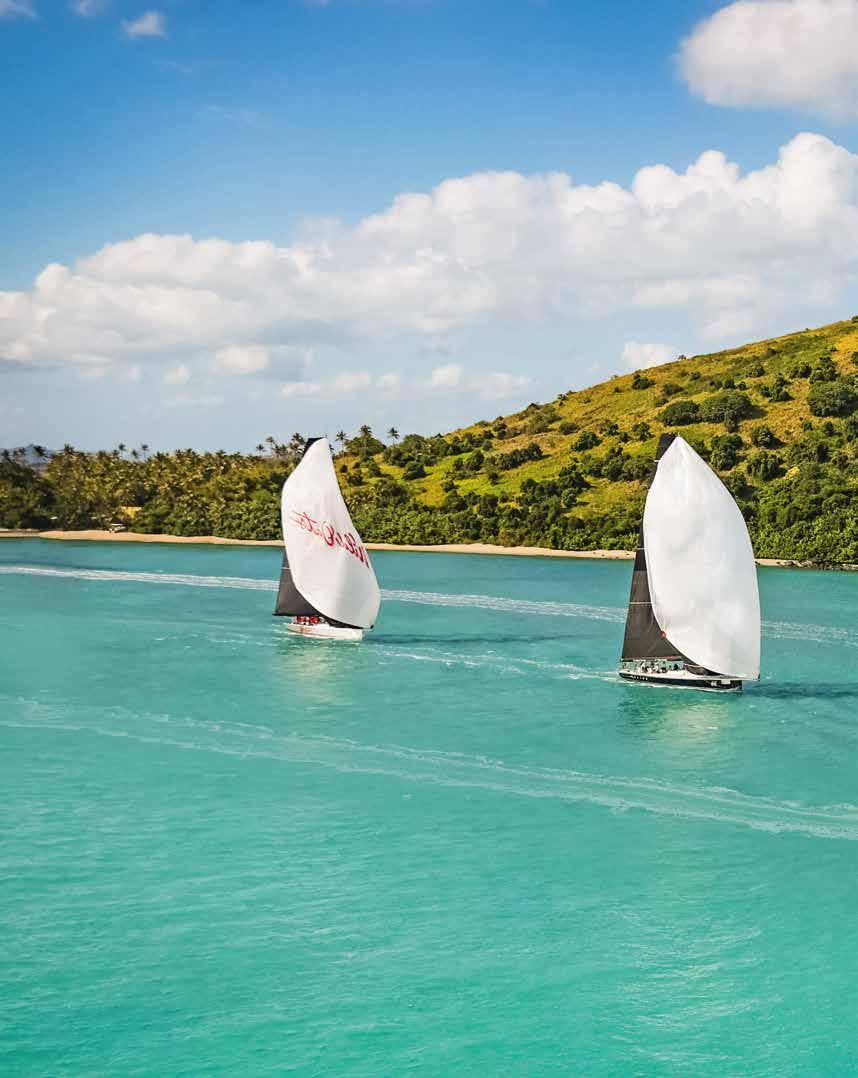
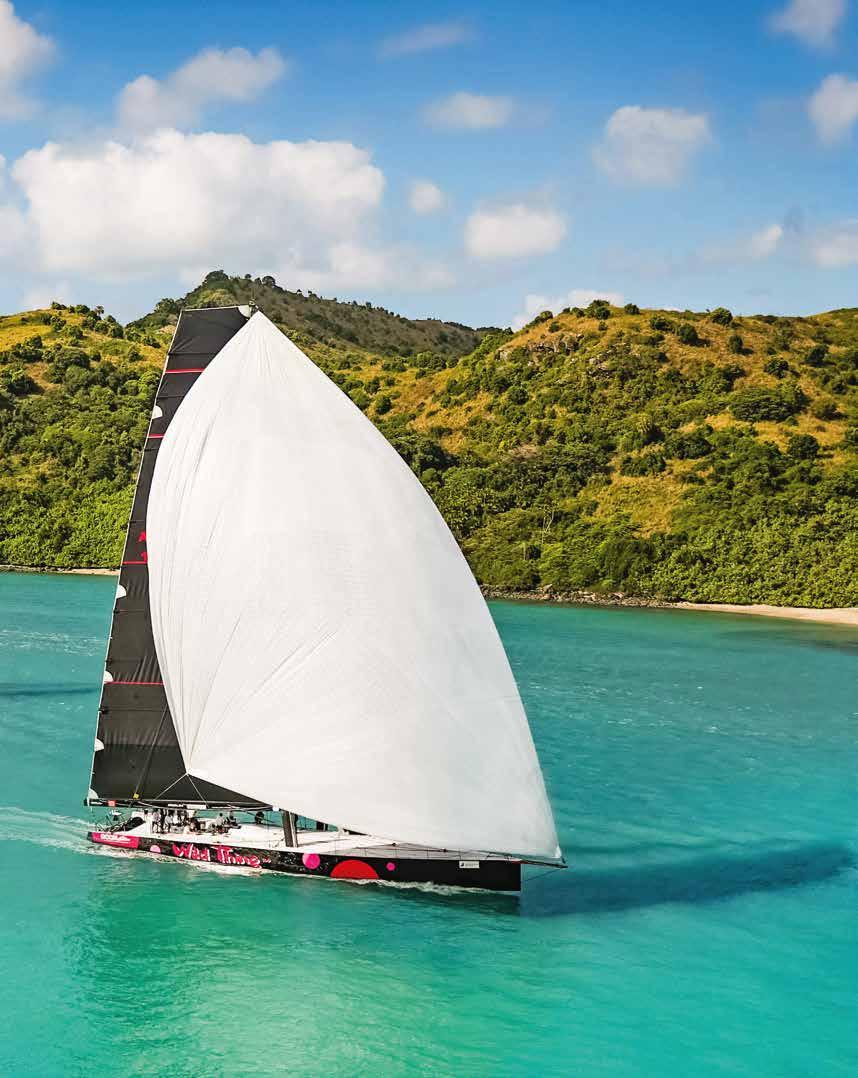
NAUTILUS MARINE INSURANCE WILL BE ON THE START LINE FOR THE 40TH HAMILTON ISLAND RACE WEEK.
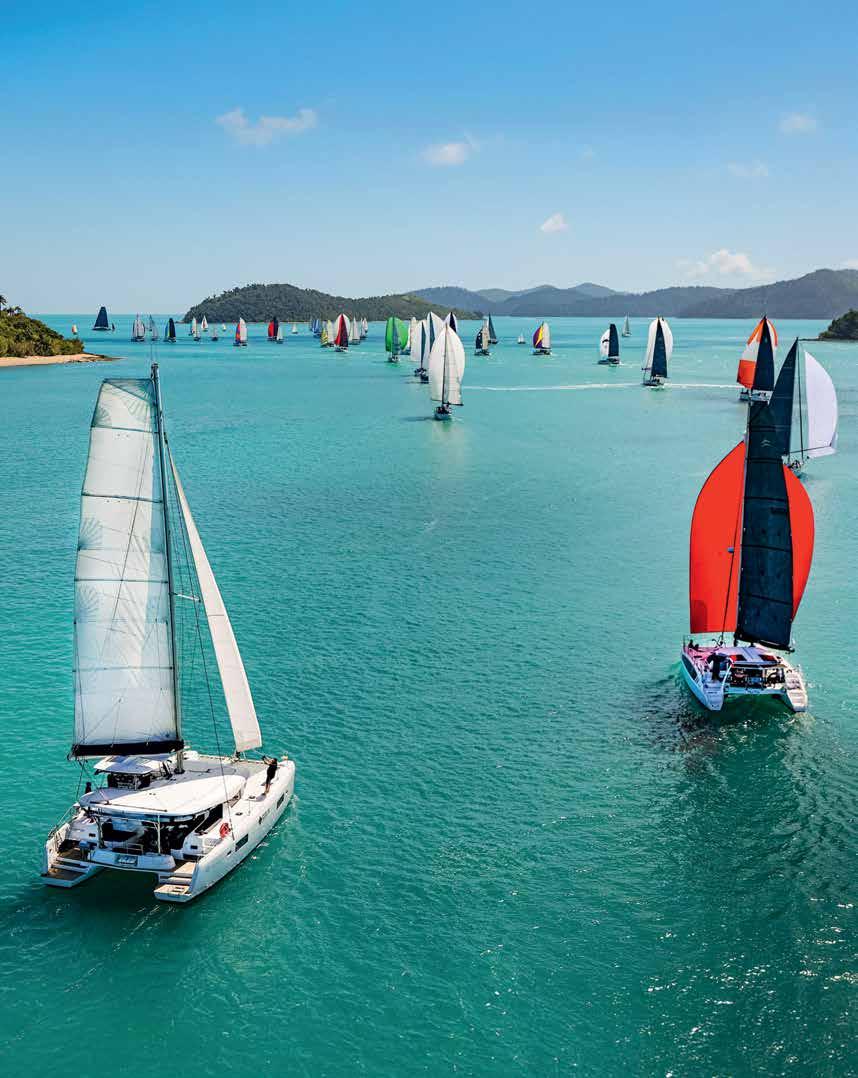
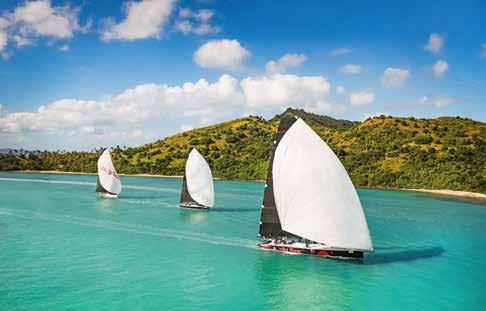
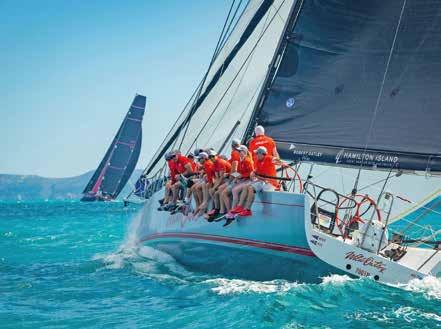
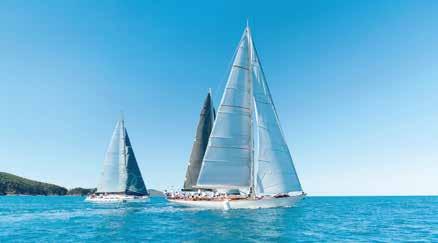
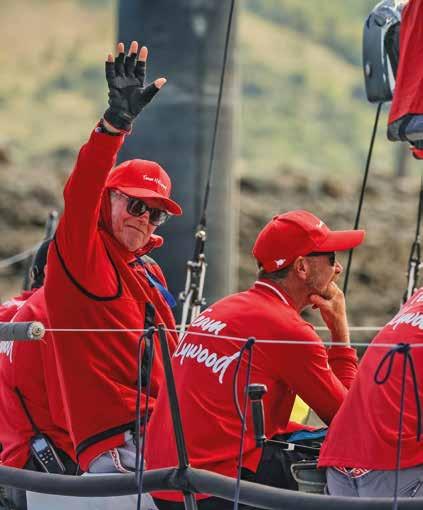
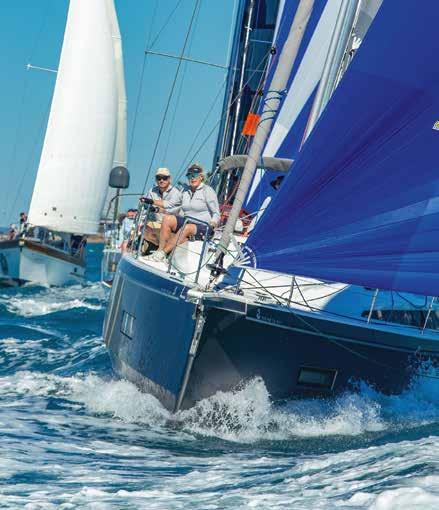
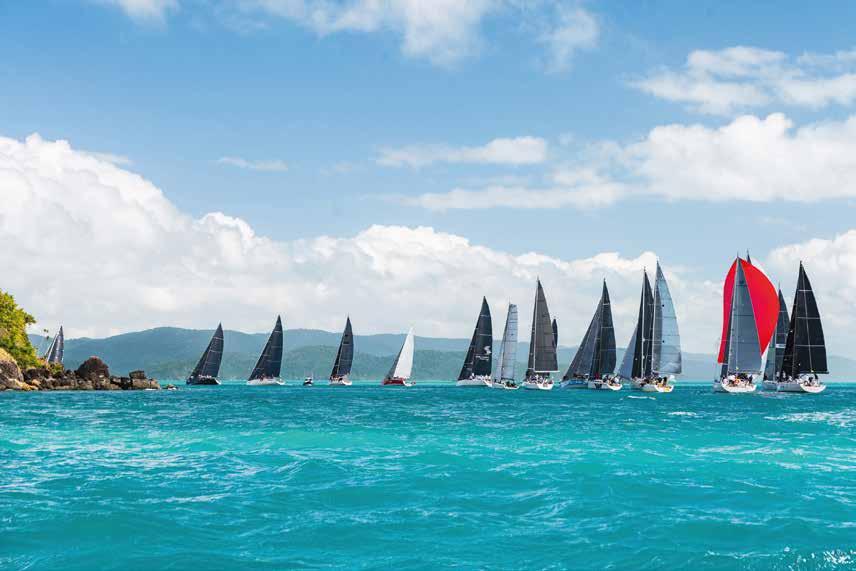
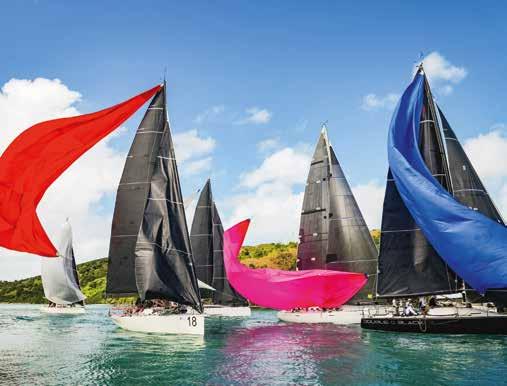
Acclaimed for being Australia’s largest offshore sailing regatta, Hamilton Island Race Week is set to celebrate four decades of world-class sailing and onshore festivities this August. Taking place from 16-23 August, Race Week will bring together cruising and racing yachts, sailors, and families alike for a week of racing and tropical relaxation. Nautilus Marine Insurance is proud to be continuing our support of this iconic event,
with 2025 marking two milestones: both the 40th edition of Race Week and Nautilus Marine Insurance’s 20-year anniversary. “Hamilton Island Race Week is a perfect reflection of what makes Australia’s boating community so special with camaraderie, competition, and a shared love of the water,” says Lyndon Turner, CEO of Nautilus Marine Insurance. “It is an honour to be part of this landmark 40th edition of Race Week.”
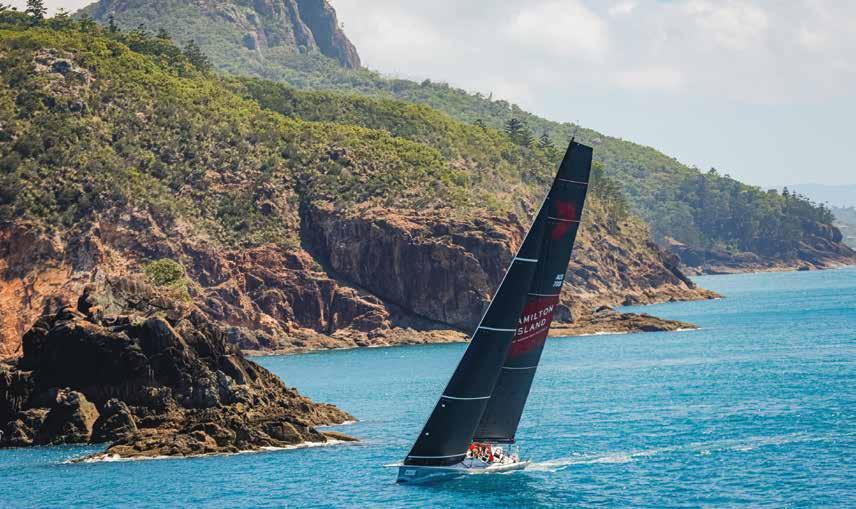
Nautilus Marine Insurance has been a proud partner of Hamilton Island Race Week since 2022, helping to promote safe, enjoyable boating and being present onsite each year with team activations, giveaways, and one-on-one conversations with yacht owners and crews.
“For 20 years we have supported the people who make up Australia’s boating community,” says Turner. “We understand what matters most to them and are passionate about sharing our insurance expertise to match their yachting expertise. We’re on the ground at events like Race Week to listen and stay in touch with the community.”
Hamilton Island Race Week began in 1984 and has grown into one of the most prestigious regattas in the Southern Hemisphere. Known as much for its on-water excellence as for its vibrant onshore atmosphere, the event offers a rare combination of competitive spirit and tropical relaxation.
“Race Week’s 40th anniversary is a landmark moment,” says Nick Dowling, CEO of Hamilton Island. “What began as a simple sailing competition has become a spectacle of sail racing, culinary excellence, and island fun. It’s not just about sailing the most picturesque course in the world – it’s about celebrating everything that makes Hamilton Island so special. To be sharing this milestone with Nautilus Marine Insurance as they mark their own 20th anniversary makes it even more meaningful. Nautilus Marine Insurance has been a steadfast supporter of the boating community and a valued partner of Race Week. Their support continues to enhance the experience for competitors, spectators and sailing enthusiasts alike. We are delighted to have them by our side for this historic year, as we honour the past and set our sights on the future of this remarkable event.”
BY
THIS SPREAD: RACE WEEK CELEBRATES 40 YEARS IN AUGUST.
Scan to find out more about Race Week.

Hamilton Island Race Week has been a highlight of the Australian sailing calendar for four decades. The late Bob Oatley, an avid sailor, famously purchased Hamilton Island after competing in the regatta more than 20 years ago. Today, the Oatley family continues to uphold Bob’s legacy.
Beginning as a niche offshore sailing regatta in 1984, Race Week has evolved into a weeklong festival of sport, style and island culture - attracting crews, spectators and chefs from around Australia and abroad. This year, Race Week is also introducing Olympic class match racing as an exhibition series, with the Australian and New Zealand men’s 49er and women’s 49erFX teams competing in a Trans-Tasman clash that has affectionately been dubbed the ‘Wetisloe Cup’.
matter what side of the boating spectrum you sit on, power or sail, Nautilus Marine Magazine is a great read.



THE NEW MARITIMO S60 BLACK EDITION SEDAN MOTOR YACHT OFFERS AN IMPRESSIVE ON-WATER LIFESTYLE AND BLUE-WATER CRUISING CREDENTIALS.
Leading Australian luxury motor yacht brand Maritimo showcased the first S60 Black Edition Sedan Motor Yacht at Sanctuary Cove International Boat Show in May, and the glamorous single-level vessel is set to be revealed to the US market at Fort Lauderdale International Boat Show in October.
The balance of the motor yacht’s overall form is one of the first things that strikes you about the S60 Black Edition. Her long roof line has an impressive overhang which adds both cover and sleekness, and there’s an abundance of interior volume and generous interconnected spaces out the back which lead all the way to the water. The S60 Black Edition offers owners an enticing mix of on-water entertainment,
relaxation and blue-water performance, with many covetable Black Edition elements incorporated throughout.
“Maritimo owners have spoken, and the results are all about the time enjoyed when anchored up,” says Maritimo Marketing Manager, Simon Stewart of the S60 Black Edition. “The protection from the elements, yet connection with the environment is what they really want. So, on the foredeck there is the new, sculptured sun bed with folding backrest and cover, with optional demountable shade as well. Yet it is out back where the careful enhancements and modifications deliver extra style and practicality.” Let’s take a closer look at some of the S60 Black Edition’s most appealing features.

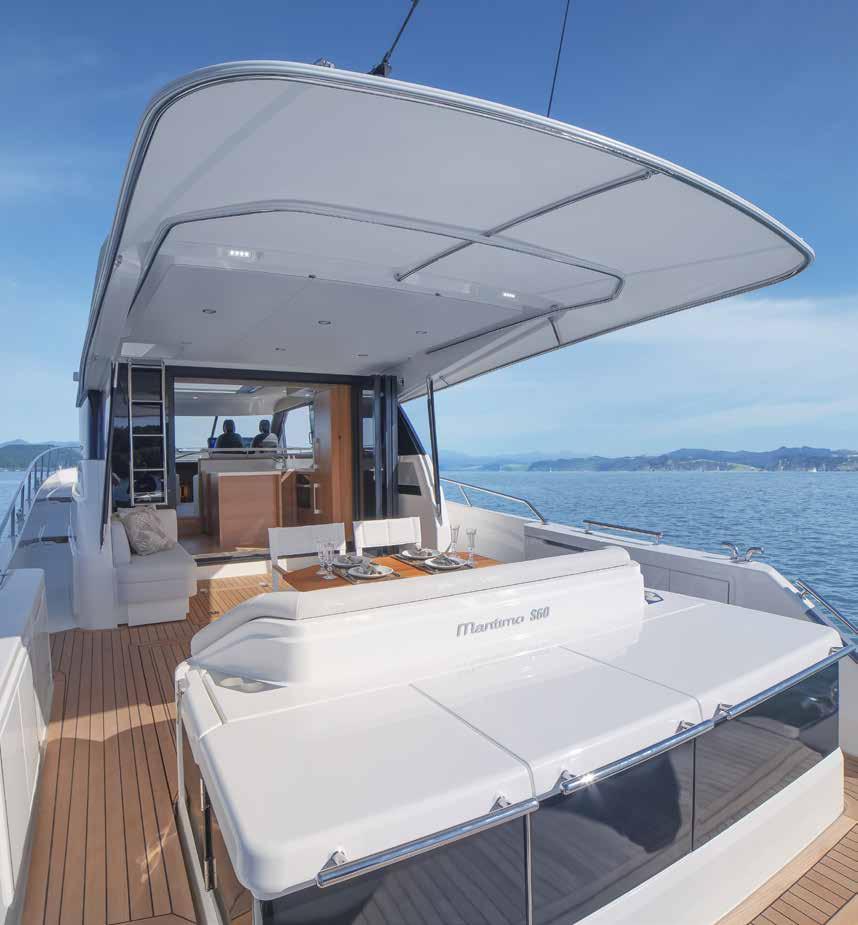
The Maritimo S60 Black Edition is designed with a strong emphasis on outdoor enjoyment, offering a seamless blend of luxury and functionality. The expansive Adventure Deck, positioned just above water level, serves as a versatile platform for tenders, water toys, or shaded lounging with umbrellas.
A standout feature is the enlarged cockpit boot module, which integrates an epicurean’s dream BBQ, fridge and work space area. It also provides access to an expansive lazarette for storing everything from fenders to diving gear. Fold-away transom gates and cleverly angled rope lockers enhance both aesthetics and practicality, ensuring smooth access when moored side-to. The Utility Deck atop the roof, complete with a 250kg davit, allows for easy storage and deployment of SUPs, kayaks, and tenders, making the S60 Black Edition a true entertainer’s dream.
Inside, the S60 Black Edition offers a refined and intelligently designed living space that balances elegance with usability. The saloon is bathed in natural light thanks to expansive, opening side windows and an optional sunroof, creating a bright and airy ambiance. Maritimo’s signature aft galley also offers seamless interaction between indoor and outdoor spaces. “Maritimo pioneered the aft galley over 20 years ago, and this latest iteration has both unparalleled access either side of the central island bench, and increased natural light from the side windows,” says Maritimo’s Operations Manager, Phil Candler.
The innovative ‘floating dash’ at the helm provides intuitive access to navigation and monitoring systems, including engine room and aft-facing cameras, reinforcing the yacht’s focus on safety and control. This thoughtful layout ensures that every moment onboard – whether cruising or entertaining – is both comfortable and connected.
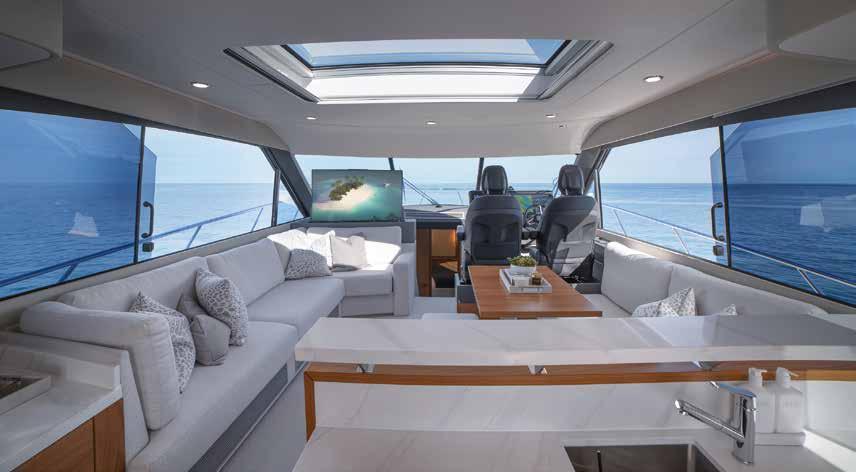
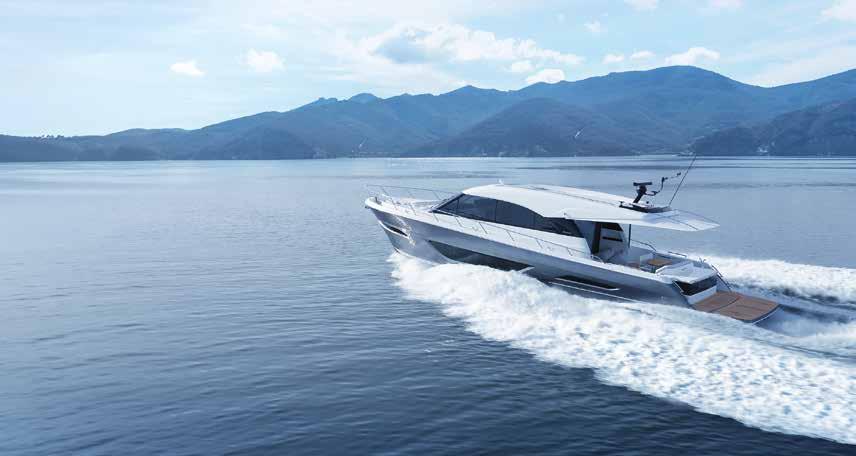
Designed for extended adventures, the S60 Black Edition boasts impressive longrange cruising credentials. With a fuel capacity of 4,550l distributed across a gravity fed, three-tank system, the yacht can be refuelled from either side and offers exceptional range. At displacement speed, it can travel up to 2,200 nautical miles, while still achieving over 350 nautical miles at 25 knots, depending on conditions and load.
This capability allows owners to explore remote destinations with confidence, staying away from port for longer periods. The strategic placement of fuel tanks under the Master Stateroom bed also contributes to the yacht’s low centre of gravity, enhancing stability and ride quality.
Beneath its sleek exterior, the S60 Black Edition is engineered for exceptional offshore performance and handling. Powered by twin Volvo Penta D13 – 800mhp engines as standard (900mhp engines pictured), the motor yacht delivers a smooth and responsive ride. Its 8-degree shaft angle contributes to a shallow draft of just 1.35m, allowing for closein anchoring at secluded beaches.
The combination of five-bladed skew propellers, a sharp entry hull, deep keel, and flat planing section ensures superior grip, stability, and ride comfort in a variety of sea conditions. These features make the S60 Black Edition not only a pleasure to pilot but also a reliable vessel for long-distance cruising.
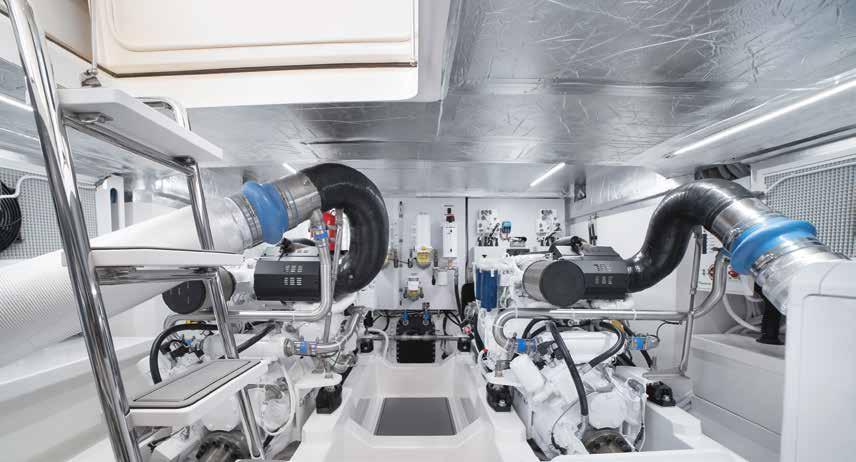
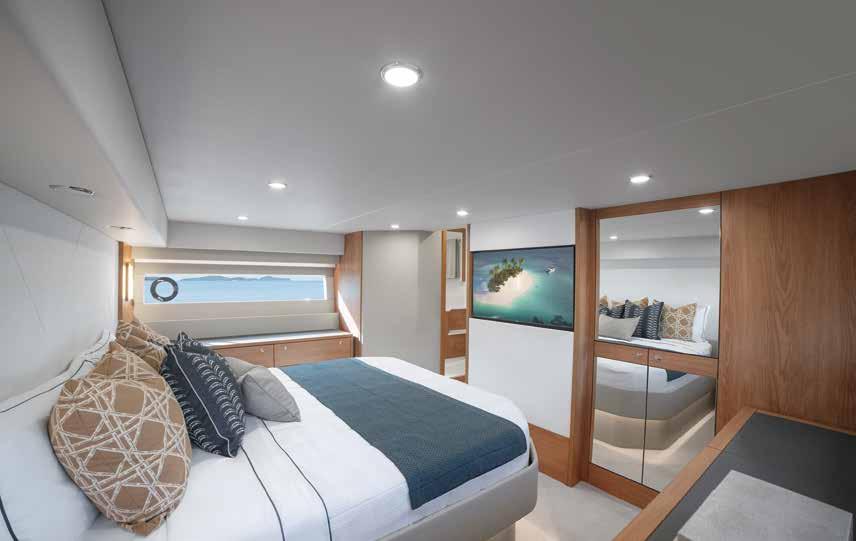
The S60 Black Edition’s accommodation is a masterclass in luxury and spatial efficiency. The full-beam Master Stateroom spans an impressive 5.2m and features a centrally positioned king bed, a private bathroom, ample storage, and a cozy day bed for reading or relaxing. Panoramic through-hull windows with opening portholes offer stunning views and natural ventilation.
The VIP Stateroom is equally wellappointed, with an angled bed for easy access, smart under-bed storage, and elegant Black Edition cabinetry. A flexible third cabin can be converted from twin to double at the push of a button, making it ideal for guests or family. Every cabin maintains a common level floor to eliminate trip hazards, underscoring Maritimo’s commitment to comfort and safety
Scan to find out more about the S60 Black Edition.
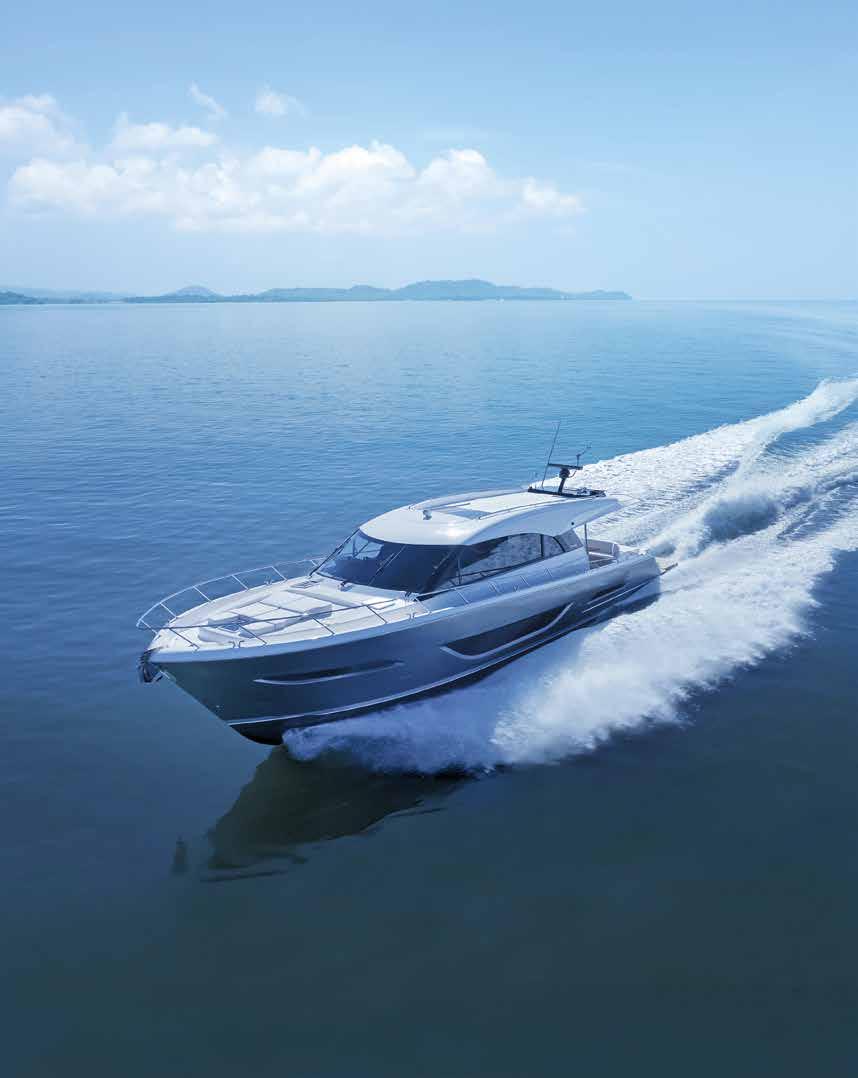
MARITIMO S60 BLACK EDITION
Length Overall: 18.89m/61.97ft
Hull Length: 18.34m/60.4ft
Beam: 5.23m/17.2ft
Draft: 1.52m/5ft
Cabins: 3 (standard)
Dry Weight: 31,850kg
Fuel capacity: 4,550l
Water capacity: 700l
Engines: Volvo Penta D13 – 800mph (standard)
Generator: 17.5kW/50Hz
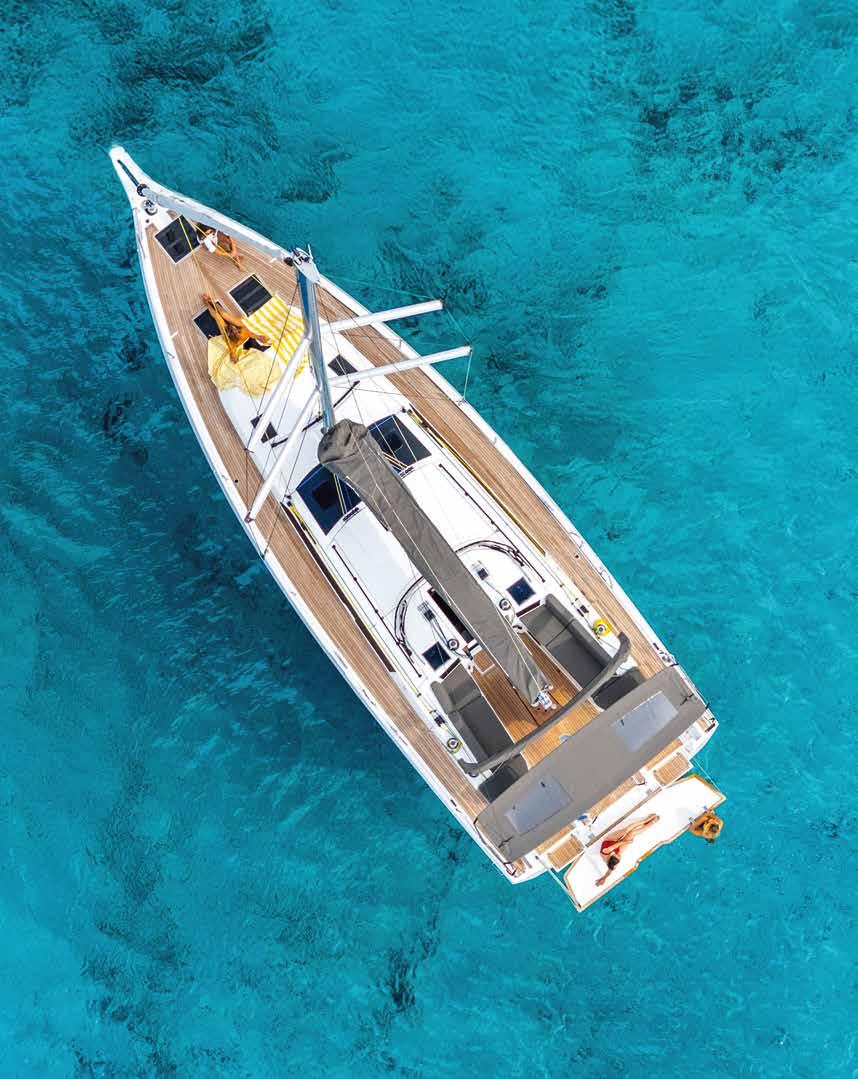

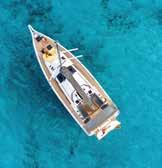
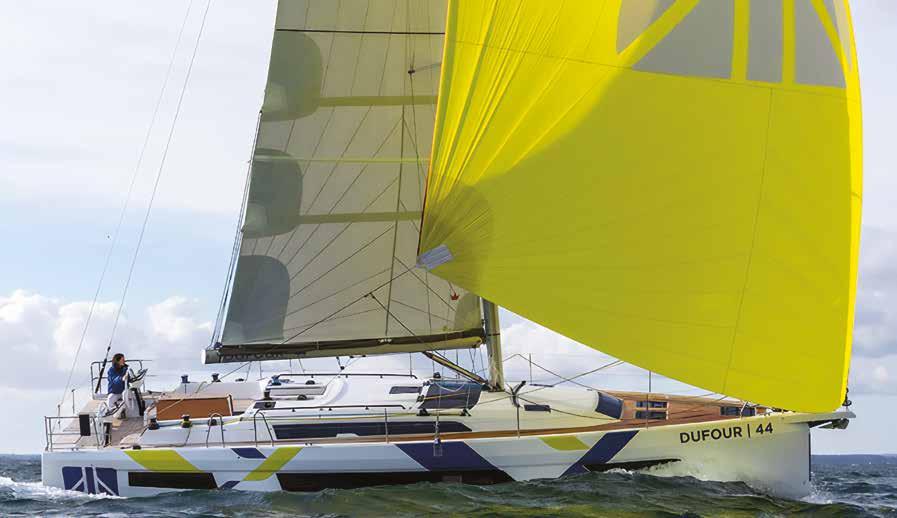
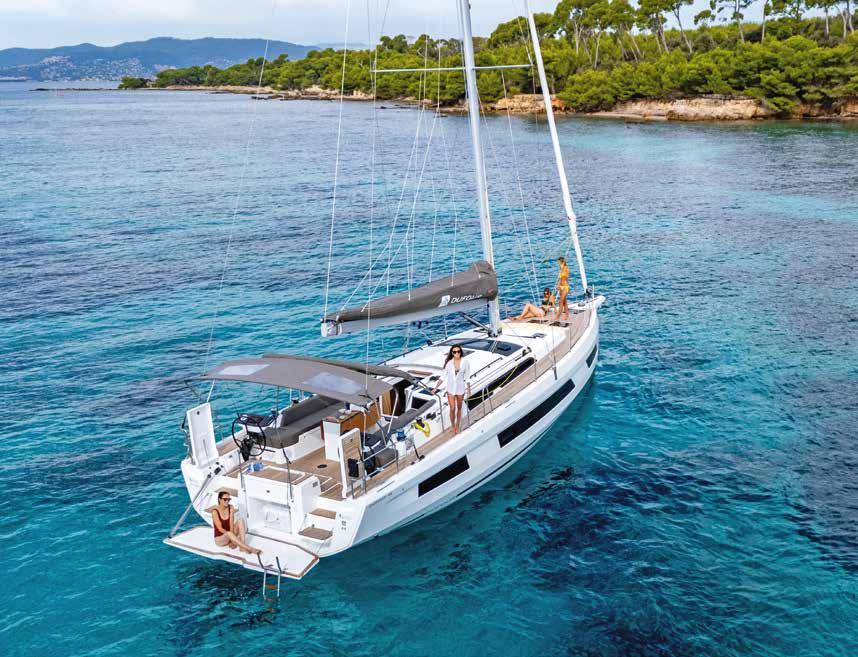
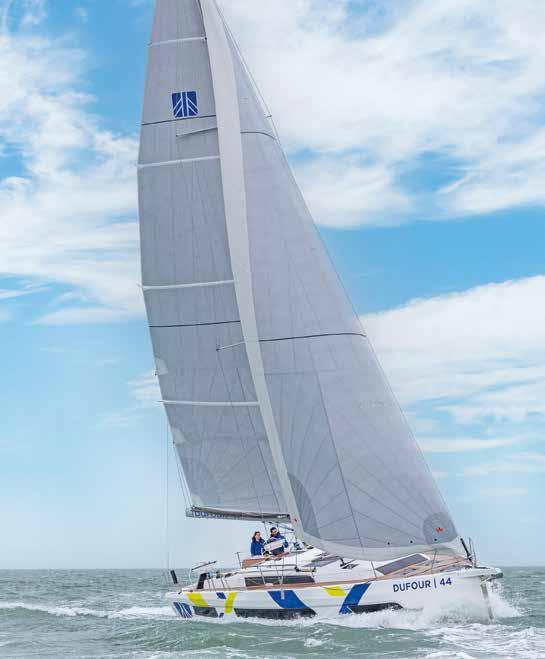
COMBINING RACING PERFORMANCE WITH STYLISH LUXURY, THE DUFOUR 44 IS SET TO BE SHOWCASED AT HAMILTON ISLAND RACE WEEK.
“The Dufour 44 is a standout in the performance cruiser category,” says Mark Elkington, CEO, The Yacht Sales Co. who are the exclusive distributors of Dufour Yachts across Australia and New Zealand. “Bold yet refined, the Dufour 44 balances race-ready agility with liveaboard luxury.” The Dufour 44 is set to be showcased against the spectacular backdrop of The Whitsundays, as part of Dufour Yachts’ partnership with Hamilton Island Race Week. We caught up with Elkington ahead of Race Week to find out more about this impressive yacht.
Many of our readers will be familiar with Dufour Yachts. However, for those who aren’t, can you share some brand background and company history?
Established in 1964 by Michael Dufour in La Rochelle on the Atlantic Coast in France, Dufour Yachts quickly earned a reputation as a pioneer in the field. Its philosophy of innovation and absolute quality has seen the company grow to become an industry leader, and is now one of the world’s largest shipyards, building more than 400 yachts each year with a team of more than 420 full-time employees.
How would you sum up the Dufour Yachts brand?
Dufour Yachts represents the perfect blend of innovation, tradition and precision. It’s a brand that speaks to buyers who are passionate about the art of sailing but don’t want to compromise on comfort or aesthetics. Each model features sleek and fast hulls, smart
layouts, robust construction and clever use of space. Distinguished by their timeless elegance and fine French craftsmanship, the yachts have been constructed to be as thrilling under sail as they are comfortable at anchor. Now also available in electric hybrid versions, the models are not just outstanding performance cruisers but eco-conscious for more sustainable yachting.
Is there such a thing as a typical Dufour Yachts owner?
Dufour owners are typically sailors who value both the thrill of sailing and the joy of casual cruising with family and friends. Dufour Yachts appeals to those who want a premium yacht that delivers on every front – responsive handling, impressive performance, absolute comfort and timeless style. Our Dufour owners are seasoned racers, coastal cruisers, world adventurers, and locals who want to just enjoy their yacht for weekly twilights and weekend getaways.
Tell us about the Dufour Yachts design and build teams.
Since 2002, Dufour Yachts has worked closely with the legendary designer Umberto Felci, whose name is inextricably wrapped up with race-winning cruising yachts. Under his direction, the Dufour range is distinguished by virtue of their unmistakable chines, narrow waterline beam, elegant integrated bowsprit, and low-profile coachroof, all united with minimal, harmonious lines.
The interiors are bright and spacious, and the designers have perfected the art of creating minimalist classic joinery that delivers unparalleled comfort and style. Made entirely in France, all Dufour Yachts models are conceived, designed and produced at the company’s headquarters in La Rochelle. Dufour Yachts controls the whole supply and production chain, from the project development to molds, craftsmanship, finishes and launch.
Let’s talk about the Dufour 44. How would you describe the yacht and where does it sit within the Dufour Yachts range?
Sitting between the Dufour 41 and the new Dufour 48, the Dufour 44 is easily sailed single-handedly, yet also has all the space to entertain friends and family in comfort. It really is the kind of yacht that delivers scintillating thrills on a race circuit yet makes you feel entirely at home the moment you drop anchor.
The performance cruiser category is highly competitive – what makes the Dufour 44 stand out from her competition?
Where the Dufour 44 truly excels is in its dual personality: it sails fast and handles beautifully, yet every element of its design has been considered for comfort. Each Dufour Yachts model, including the Dufour 44, is available with three rig and deck plan
options, to appeal to every cruising plan. For competitive sailors, the Dufour 44 is available in a PERFORMANCE option, including a taller mast and bigger sail area, with the sheeting point for the main at the end of the boom. There’s also premium deck gear and the option of a deeper keel, to deliver even more impressive responsiveness and speed.
Tell us about Dufour Yachts’ partnership with Hamilton Island Race Week.
Hamilton Island Race Week is more than a regatta – it’s an iconic celebration of sailing culture. The Dufour 44 is made for this kind of stage: where beauty, performance and camaraderie come together. The partnership reflects shared values of Dufour and Hamilton Island Race Week – absolute quality, community and a love for the sea.
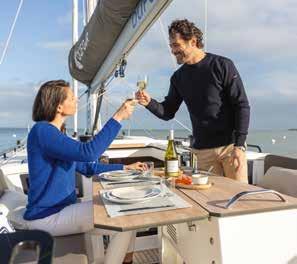
“We will be showcasing the Dufour 44 on F-Arm throughout Hamilton Island Race Week,” says Mark Elkington, CEO, The Yacht Sales Co. “We invite anyone interested in experiencing the Dufour 44 first-hand to register their interest via the Hamilton Island Race Week event page on The Yacht Sales Co. website or call our team.”

You’ll be showcasing the Dufour 44 on the island during Race Week. What do you have planned?
The Yacht Sales Co. will be showcasing the Dufour 44 on F-Arm throughout the week and visitors can experience inspections of the yacht and sea trials by appointment. We are also offering exclusive opportunities to join The Yacht Sales Co. crew onboard as they race the Dufour 44 throughout the regatta. Guests are invited to register their interest on The Yacht Sales Co. website.
What are the top five features of the Dufour 44?
1. High-performance hull by Felci Design –sleek, responsive, and fast.
2. Spacious, modular cockpit courtesy of its wide beam – ideal for both racing and entertaining.
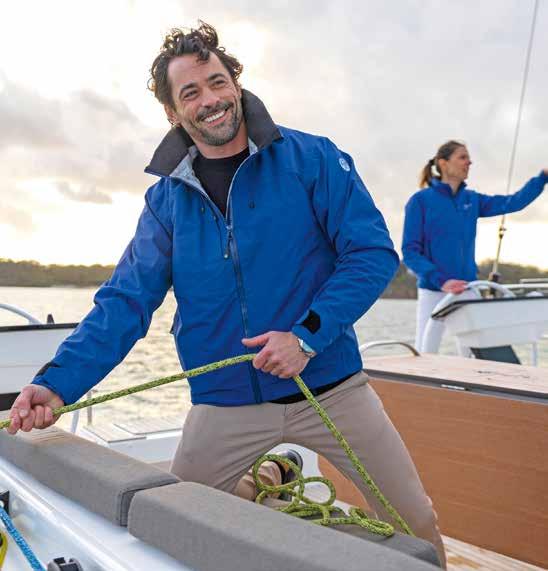
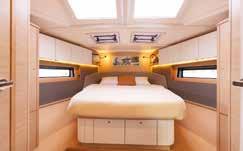
3. Light-filled interiors with panoramic views and custom wood tones.
4. Signature integrated outdoor galley with BBQ and sink, plus expansive swim platform with dual access to the cockpit.
5. Versatile layout options to suit racers, cruisers and liveaboards.
What feedback have you had from customers about the Dufour 44?
The Dufour 44 has won over everyone who has inspected her. The most passionate sailors appreciate her classically sleek lines and responsiveness at the helm; racers have been impressed by her powerful performance in all conditions, and casual cruisers just love the light and living space, as well as all the extra features, including the convertible sunpads, ample storage and seamless deck flow. The Dufour 44 leaves a lasting impression on everyone who steps aboard.
How do you imagine people using this yacht?
The Dufour 44 is a boat for sailors who want it all. She is right at home in all environments – winning the weekly twilight races and challenging the field in offshore regattas, then taking the family away to drop anchor at an idyllic island or embarking on a circumnavigation for the ultimate adventure.
Talk to us about the living spaces. What makes it a great yacht for entertaining family and friends?
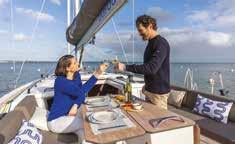
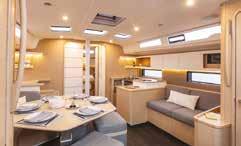
The Dufour 44 has achieved the perfect combination of performance and liveability. The yacht has been thoughtfully designed to make life below deck just as enjoyable, with a bright and welcoming saloon that features generous headroom, and beautiful natural light and ventilation. The galley is practical yet social, and the hexagonal dining table makes clever use of the space to comfortably


accommodate up to 10 guests for social gatherings.
She features a true Owner’s suite with an island bed and ensuite that surpass all expectations, and the yacht has been designed with an emphasis on detail, atmosphere and premium choice of materials. The result is a warm, light-filled atmosphere with excellent privacy yet plenty of room for everyone to share. The spacious cockpit invites long, lazy afternoons, and there is a sense of openness throughout that makes time aboard feel like a holiday – whether you’re anchored off a beach or moored in a marina. The Dufour 44 is available in four different layouts, including three or four cabin options.
Please share some of the key performance features of the vessel. Under sail, the Dufour 44 is acclaimed for its liveliness and responsive handling. The well-balanced helm and sleek lines provide
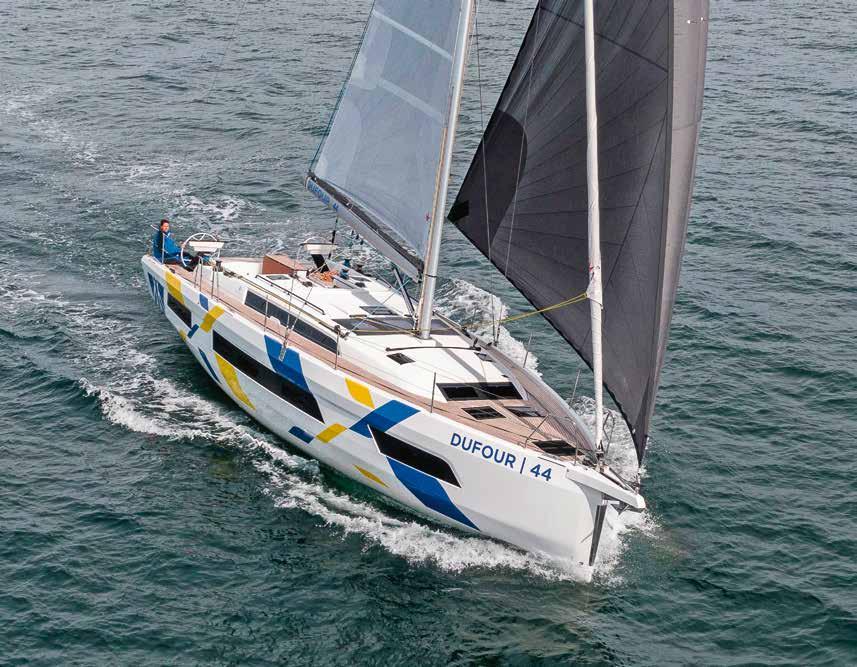
excellent stability and speed, while twin rudders deliver precise control, especially when heeled. The rigging setup is efficient and adaptable – perfect for both cruising and racing. She features 45hp for when power is required.
How would you describe the design details and finishes?
The Dufour 44 is modern but not minimalist. Her exterior lines are sleek and assertive, while the interiors offer a choice of wood tones –from light oak to rich, contemporary finishes. Quality upholstery and soft lighting create a warm, upscale feel. It’s a yacht with style –subtle, refined and unmistakably European.
What are some of the key optional upgrades and customisations that you anticipate buyers fitting to their yacht?
The Dufour 44 base model is already well optioned, but clients can also choose from
a selection of rig and deck plans to suit their sail programs. The EASY option includes a self-tacking jib, optional German mainsheet system, and has all winches and clutches positioned on the coaming. The OCEAN option offers more trimming possibilities, with key controls on the coachroof and within reach of the helms. The PERFORMANCE option includes a taller mast and a bigger sail area, with the sheeting point for the main at the end of the boom, plus premium deck gear and option of a deeper keel.
You’ll love this yacht if...you want a yacht that’s as exhilarating under sail as it is inviting at anchor – a boat that turns heads on the water and feels like home on board.
DUFOUR 44
LOA: 13.91m/45ft
Hull Length: 13.1m/43ft
Waterline Length: 12.23m/40.2ft
Beam: 4.45m/14.6ft
Draft: 2.2m/7.2ft
Keel Weight: 2850kg
Fuel tank capacity: 250l
Water tank capacity: 250l + 180 (option)
Engine power: 45hp

Scan to find out more about the Dufour 44 or visit yachtsalesco.com
THE SEA RAY SDX 270 OUTBOARD CATERS TO FAMILIES, WEEKEND THRILL-SEEKERS, AND BOATIES WHO WANT TO ENTERTAIN WITH EASE.
“Sea Ray SDX 270 Outboard is a premium sport boat that’s been purpose-built for day cruising, entertaining, and family water adventures,” says Mark Chapman, Managing Director, Chapman Marine Group who is the exclusive NSW distributor of Sea Ray. “Whether you’re pulling into your
favourite anchorage or towing wakeboarders, this boat offers the freedom to enjoy it all in style.” With the SDX 270 Outboard currently available for test rides via Chapman Marine Group in Sydney, let’s take a look at some of its standout features.

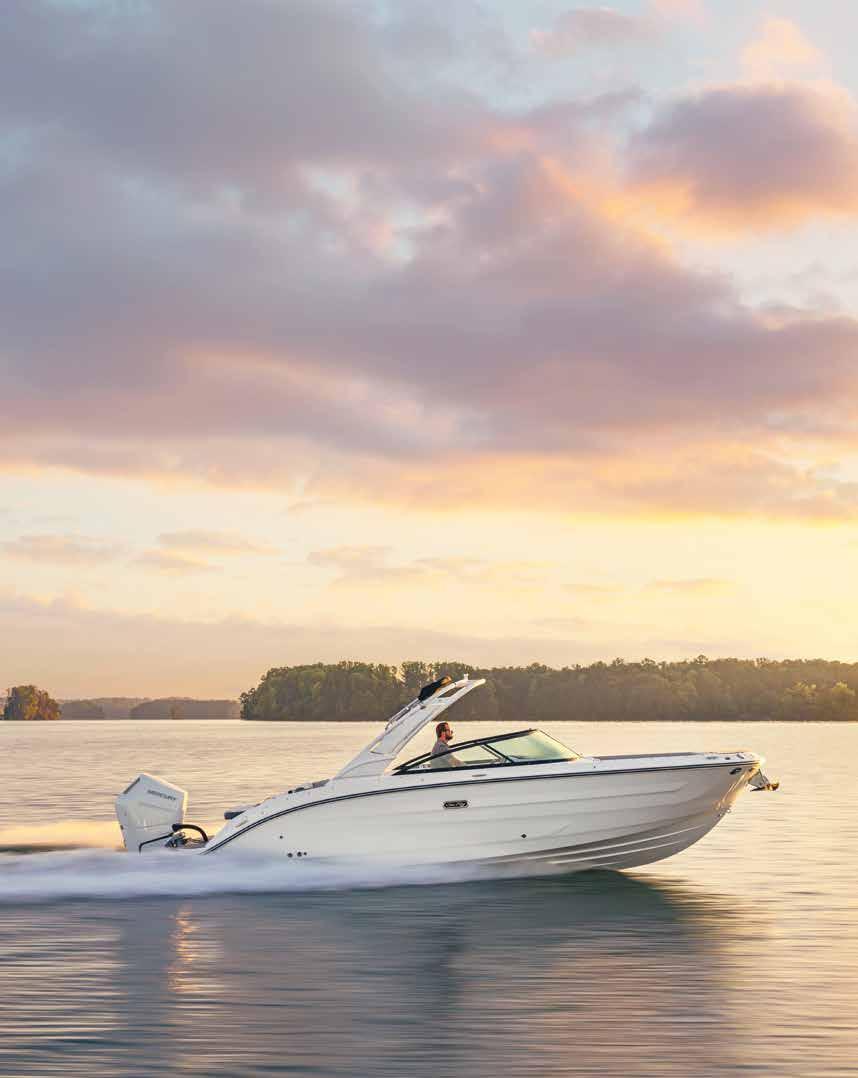
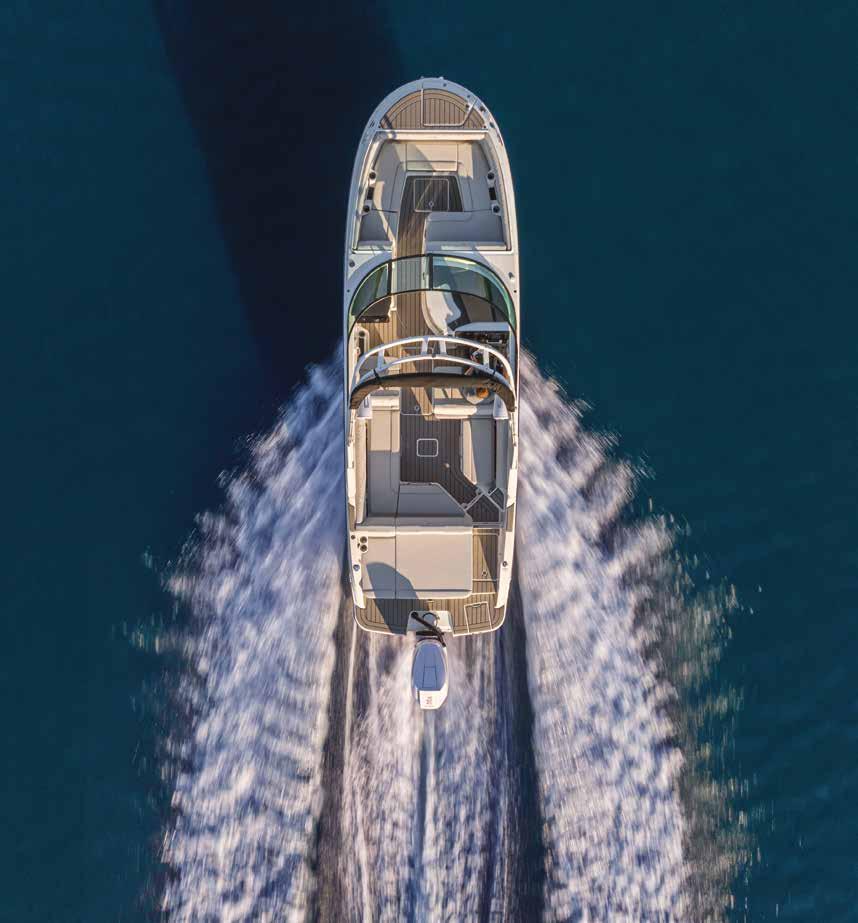
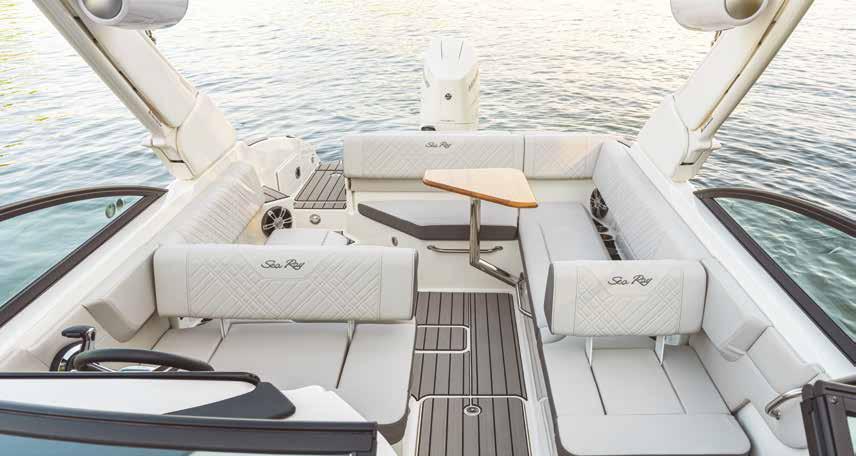
The SDX 270 Outboard is over 29ft in length and packed with clever design features, offering versatility, comfort, and exceptional use of space. Up front, the SDX 270 delivers an expansive bow lounge ideal for socialising and relaxing, with generous seating that wraps around the space, an integrated cooler and optional teak table.
Skippers will appreciate the SDX 270’s cleverly designed Digital Dash, anchored by a Simrad NSX 9” touchscreen display. Integrated with Mercury SmartCraft Connect and Active Trim, the helm delivers fingertip control, GPS, real-time engine data, and intuitive navigation.

The open cockpit is made for entertaining with an integrated cooler, optional teak table, and multiple seating configurations. Choose to add the optional ‘Entertainment Bundle’ for wireless charging stations and an audio upgrade. Integrated storage has also been incorporated throughout the boat to optimise space.
4. Convertible sunpad
The aft sunpad transforms with ease thanks to a convertible backrest that allows forward- or rear-facing lounging. Whether you’re watching the kids swim or soaking in the sunshine the flexible layout brings resort-style comfort to the water. It’s also the perfect place to reboard after a swim.

5. Powerful propulsion
Sporty and agile, the SDX 270 Outboard delivers a confident ride and is powered by a Mercury V8 Verado 300hp as standard, with the option to upgrade to the Mercury V10 Verado 400hp (as pictured).

LOOKING FOR A VERSATILE TRAILER BOAT THAT PERFORMS WELL IN MANY CONDITIONS? LOOK NO FURTHER THAN A POWER CATAMARAN, WRITES SCOTT THOMAS.
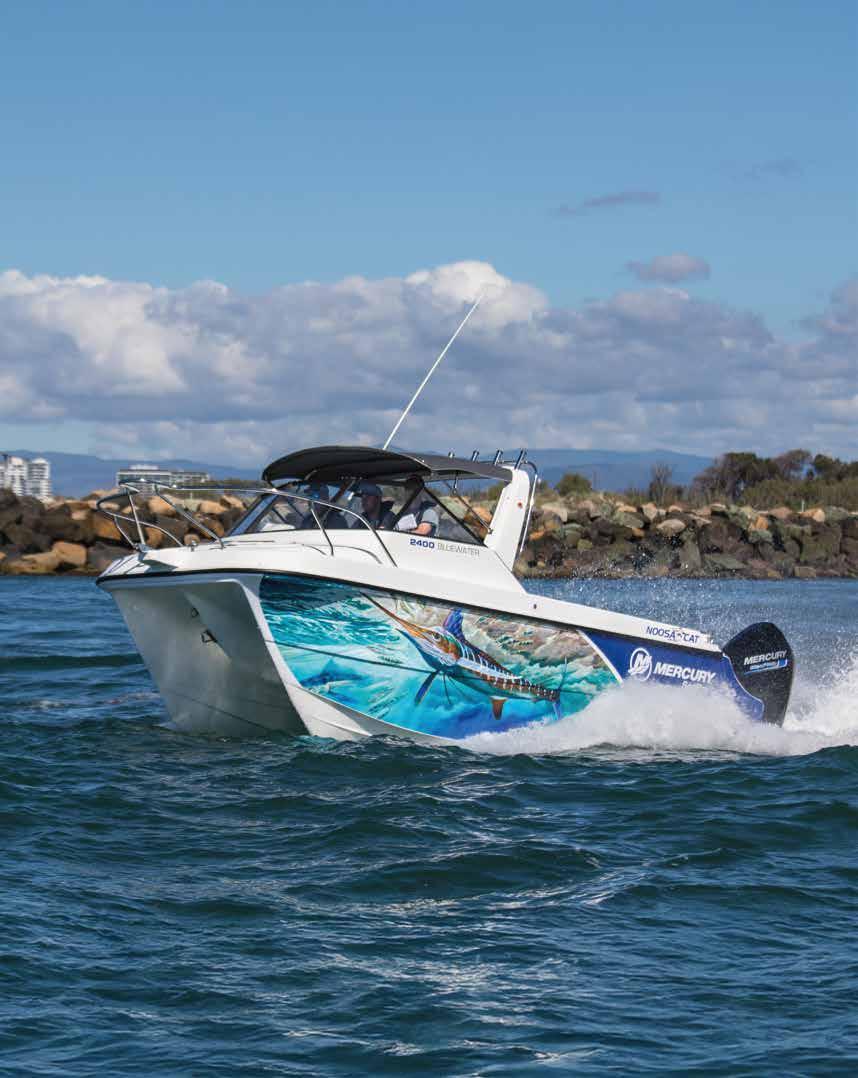
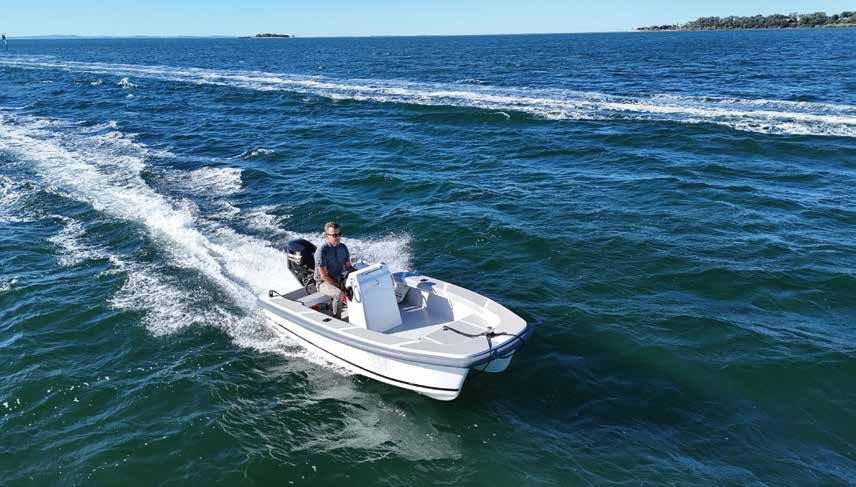
Catamarans are an incredibly versatile style of boat that lend themselves to fishing and leisurely days on the water with family and friends. Over the next few pages, let’s take a closer look at twin-hull trailer boats of various shapes, sizes and materials.
What is a catamaran?
All boats have hulls and most have single hulls, which is the traditional boat design. Over time, the single hull has changed and there are an endless number of variations that affect the ride and performance of each boat. Examples include flare hull boats, variable deadrise hulls, tunnel hulls, flat bottom punts and much more.
Then there are multihull boats. These are more commonly catamarans (twin hull), but are sometimes tri-hull. For the purpose of this article, we’re focusing only on trailerable twin hull power boats. My family’s boat when I was a kid was a small catamaran, an Australian built Markham Whaler. It was a great boat that really punched above its weight when it came to performance and comfort. Let’s delve into some of the advantages of power catamarans
Pros and cons
Power cats offer so many advantages and most of these hold true across the various sizes. Catamarans are available in all sizes, from tiny tenders to giant ferries and everything in between. It goes to show the versatility and usefulness of this hull design.
The first thing you notice when jumping onboard a cat is its generous space. That’s because cats are rectangular in shape, whereas single hulls taper towards the front due to their hull design. Cats, however, given their twin-hull design, offer the same amount of space at the bow as at the transom. This is what makes them such a good option for fishing and cruising. The generous space also makes them great value for their length. It’s incredible just how large a comparable size catamaran feels when you jump onboard.
Cats also offer impressive performance and a soft ride in bumpy conditions. To understand how this works, let’s go back to the single hull. The performance of a single hull is largely dependent on the degree of its deadrise. The deadrise is the angle of the hull. A sharper deadrise cuts through water like a knife cutting through butter. On the flipside, a shallow deadrise is flatter and doesn’t glide
through the water as efficiently. With single hulls, there’s a compromise. The flatter hulls, while not as smooth across choppy water, are far more stable at rest. Meanwhile, the sharper deadrise hulls are typically very ‘tippy ’ at rest but offer superior perfor mance at speed.
This is where the catamaran solves some of these problems and removes the compromise between hull shapes. Once you add another hull it becomes more stable. You will find the sharp deadrise on most cats slice through the water and eliminates any ‘banging ’, yet, the combination of the twin hull maintains its stability.
It’s one of the reasons many high -speed ferries feature multihull designs. Likewise, many of the high performing sailing boats are multihulls . I’ve spent time on larger catamarans that have been fitted out for fishing and accommodate multiple passengers for extended stays. There are many big catamarans operating on the Great Barrier Reef and Cape York. They make great platforms for accommodation because they’re stable at rest, soft riding and very spacious. They can typically accommodate more people than a similar size single hull. Another great
advantage, especially in the northern parts of Australia, is the cat will remain upright if stranded on sand during low tide. It’s not unusual in these parts to spend low tide on the sand and having full function of an upright boat is a big advantage.
As you can see, there are so many advantages to power catamarans . But are there any disadvantages? One small problem in trailer boat cats is they tend to catch the wind due to their higher, flat sides. It can make manoeuvring more difficult. It’s not a major problem, just something to be aware of and adapt to when you drive on and off the trailer or handle the boat at a fishing spot.
Another small difference you will note is the way it drives. It’s not a disadvantage, but you will need to change the way you drive at speed. The boats tend to remain more upright or even feel like they’re leaning away when you corner. Don’t expect to zip around doing tight turns like you would on a sharper entry single hull.
Smaller cats can also be more wet in windy conditions when water sprays directly over the front rather than deflecting off to the side. In many cases , the boats feature a windscreen
or cabin and it’s no problem. Finally, depending on the power cat’s make and model, many have twin engines and that can push the price up. That said, each engine is usually less powerful than a comparable single engine It’s a pro and con; you will have the added cost of servicing, yet the reliability of two engines. Let’s look at some popular power catamaran brands on the market.
I’ve reviewed quite a few Sailfish boats over the past 20 years and I’m always impressed with their versatility and long list of features. Sailfish has been making aluminium catamarans since 1993 in Australia and offer a range of models with various cabin layouts, clever fishing features and quality performance and construction.
Sailfish take advantage of a cat’s ‘boxy’ shape to create a truly spacious and versatile trailer boat. You can fish off the back, lounge around under some shade, cook a meal, and spend a night on the reef in a comfy bed. All this in a boat that offers so much for its length.
The latest release from Sailish is the S8. The S8 features Sailfish’s Hydroflow GEN 3.
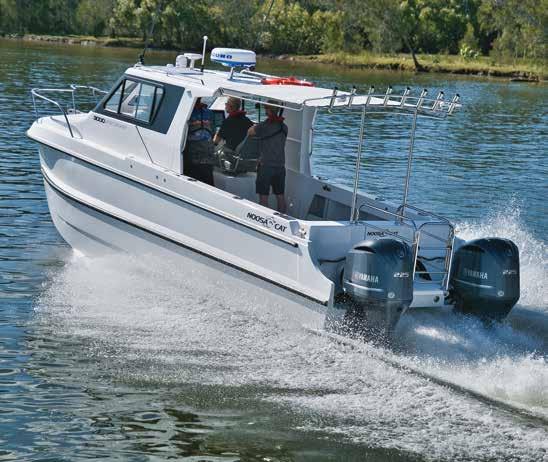
This e xtends the waterline hull length by 150mm compared to its GEN 2 hull. As a result, you have increased stability in the stern and faster hole shot performance. Sailfish has also redesigned the chine section allowing increased hull lift and delivering improved fuel economy and performance. The wider running planks on the sponsons also allow it to run at lower RPM and increase planing time.
Noosa Cat is an Aussie-built cat manufacturer from Queensland. The brand has been around since the 1970s and has a solid reputation for building quality fibreglass power catamarans. Noosa Cat build commercial vessels for various state bodies such as NSW Maritime, Coastguard and Maritime Safety Queensland. That’s always a good endorsement for a quality - built boat that is designed to perform well and outlast its competition.
Some of the models are trailerable (check your state’s rules and regs). The smallest model in the range is the 2400. The 2400 Series, according to Noosa Cat, raises the benchmark of the 6 to 7m range
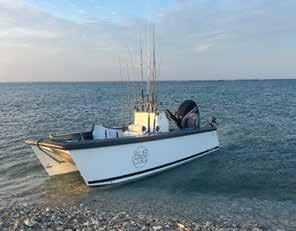
in performance, handling and ride comfort. Noosa Cat has built it to handle well in following seas, while its excellent buoyancy provides a higher level of tunnel clearance. It features the multiple hull subdivision, self draining cockpit and all fibreglass underfloor structure along with 316 grade stainless steel fuel tanks. With a length of 6.7m and a beam of 2.5m, the 2400 is a solid performer offshore and can be fitted with a maximum of twin 200hp outboards. If you’re looking for something larger and more spacious, the Noosa Cat 3000 offers many of the same features in a longer profile. It would make a fantas tic boat for when conditions turn ugly offshore.
Scimitar is another Queensland catamaran brand. Scimitar is known for its larger cruising models, the type of boats you could spend weeks on exploring the Barrier Reef or lounging around the harbours and rivers around Australia.
However, for the purpose of this article, Scimitar also makes four well-designed Minitar power cat ‘tenders’ which in my opinion could also make great standalone trailerable fishing boats. These include the 300 Minitar, 375 Minitar, 425 Minitar and the 450 Minitar Dory. The 300, 375 and 425 Minitar models range in size from 3m to 4.25m and are all made from vacuum-infused fibreglass. They are built tough and would make good fishing boats for one or two people for rivers and estuaries. The 450 Dory would be better suited to open water and would allow an extra passenger to fish comfortably. The 450 Dory is a customisable build with an aluminium hull and composite deck. It has a maximum horsepower of 70 and can be designed to fit your preferences.
Established in 2017 in Abu Dhabi, UAE, Blue Cat is a catamaran manufacturer whose solid line-up of impressive cats is making waves in the Australian market. Blue Cat says it specialises in crafting offshore marine vessels
that leverage advanced design software and sustainable materials.
The Blue Cat line-up includes a 17, 21, 30 and 43 Pilot House. While the mid-size 21 model is coming soon, the Blue Cat 17 is a solid trailerable fishing boat. At 5.19m long with a 2.1m beam, the Blue Cat 17 offers ample space for several occupants. Its twin-hull design offers great stability and performance in rough water. This combination makes for a versatile boat, allowing anglers access to rivers, estuaries and offshore waters in safety and comfort.
Hopefully this article has piqued your interest in power catamarans. As a trailerable boat, they tick so many boxes. Not only do they make fantastic fishing boats, their design and shape allows for comfortable sleeping quarters, kitchens and features that owners of many single hull boats can only dream about.

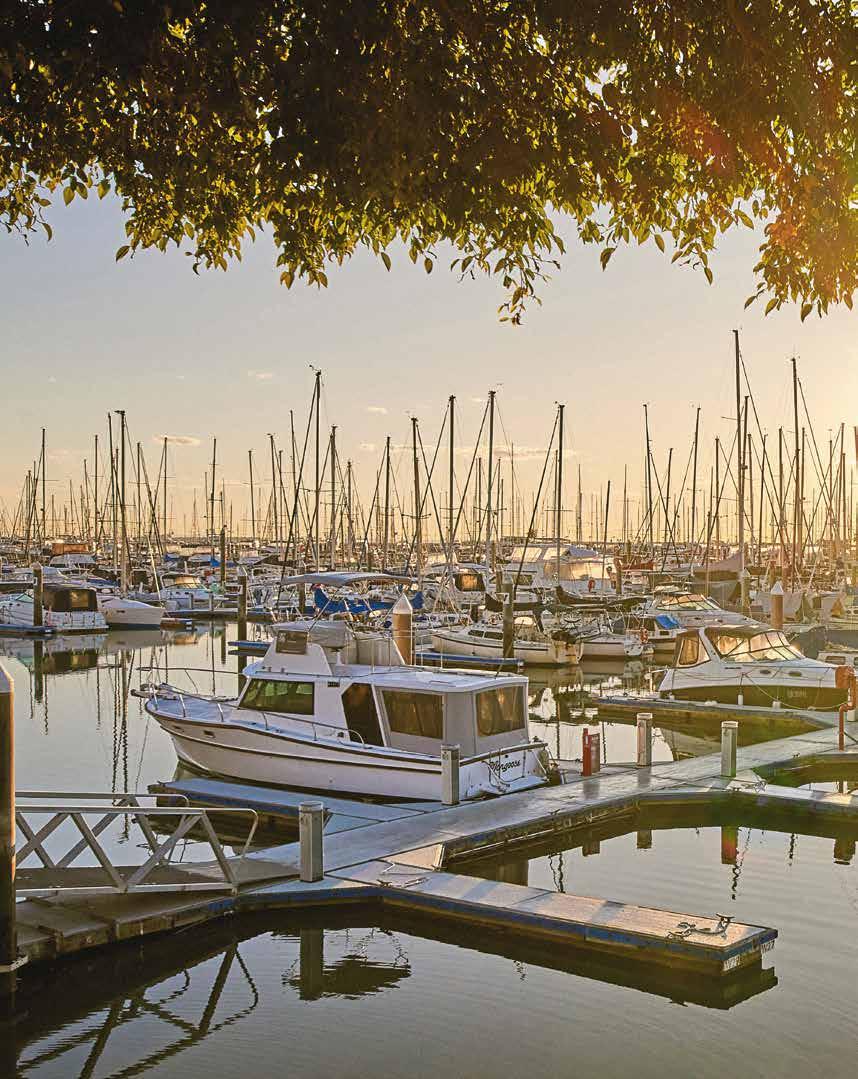
THE D'ALBORA TEAM SHARE SOME INSIGHTS ABOUT CRUISING AUSTRALIA’S EAST COAST AND WHAT MAKES SOUTHEAST QUEENSLAND A FANTASTIC STOPOVER DESTINATION.
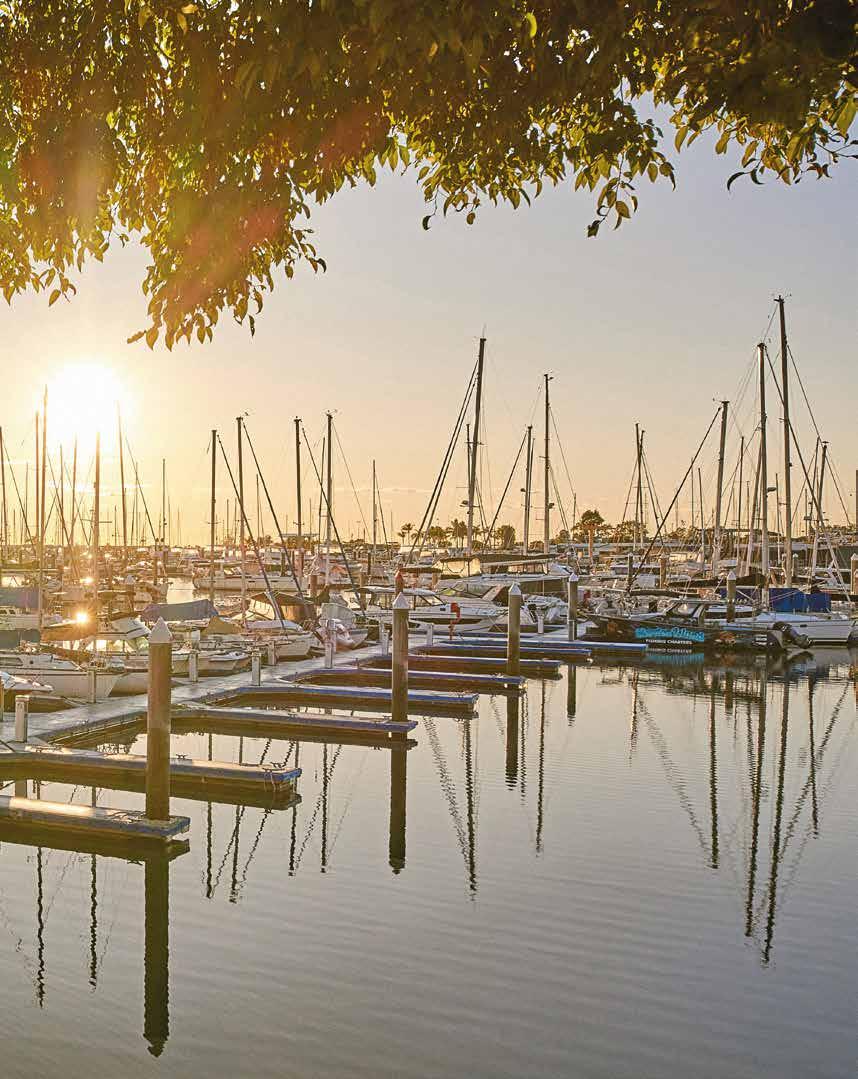
It’s a popular time of year for cruising Australia’s East Coast, with interstate journeys appealing to both power boat owners seeking warmer weather and yachties heading north for Queensland’s regatta season. “We have definitely seen an increased interest in casual berthing and seasonal cruising across our network over the last few years,” confirms David Joyce, Head of Marketing, d'Albora. “The trend towards larger vessels with enhanced capabilities means people are using their vessels to their full potential and travelling further and cruising for longer periods. Overall, there’s now an ease of travel with interstate cruising and desire from boat owners to make their vessels part of their travel experiences.”
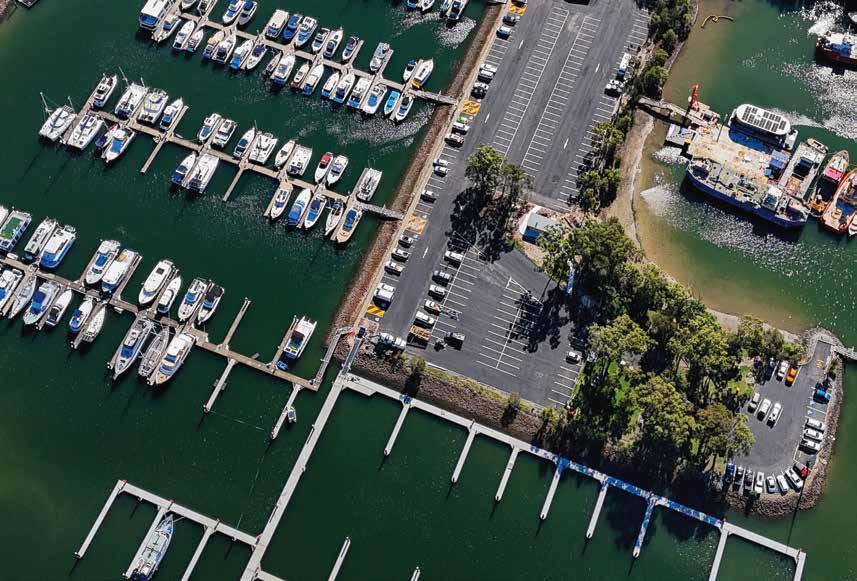
With d'Albora’s network spanning Australia’s East Coast, their marinas are ideally placed to cater for casual berthing, with Joyce highlighting the Southeast Queensland (SEQ) region as a particularly appealing stopover destination. We asked Joyce to share some
more insights about interstate cruising and their two full-service marinas in SEQ: d'Albora Pacific Point Marina & Boatyard and d'Albora East Coast Marina.
Why is SEQ a great stopover location for boaters?
SEQ’s accessibility, year-round warm weather and lifestyle offerings both on and off-water, make it such an attractive location offering for cruising, berthing and boatyard maintenance. It also offers boaters an abundance of natural beauty with long sandy beaches, crystal clear waters, reefs and many islands providing shelter and anchorages.
Please give us an overview of d'Albora Pacific Point Marina & Boatyard and d'Albora East Coast Marina and how they cater for casual berthing.
d'Albora Pacific Point has an especially large marine precinct with full-service boatyard facilities and marine services and trades so
we see a lot of casual berthing vessels coming in here for annual maintenance or travelling maintenance opportunities.
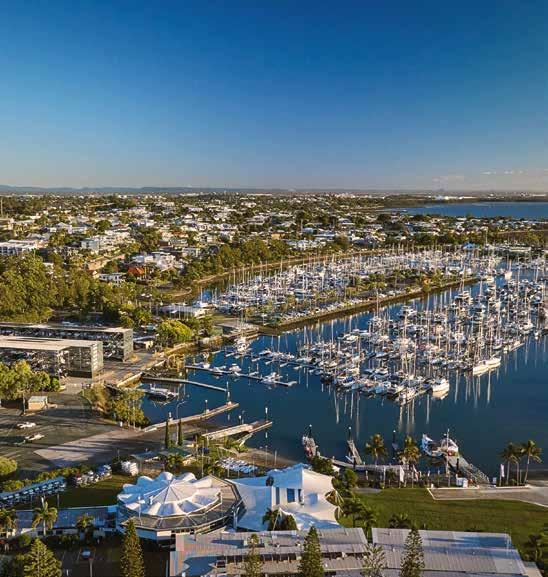
d'Albora East Coast Marina’s location is centralised to Moreton Bay and North Stradbroke Island, providing instant access to fantastic cruising, sailing and fishing locations. A lot of our casual transiting customer base are either moving north or south and d'Albora East Coast Marina as a casual base, being located only 20 minutes from both Brisbane Airport and Brisbane’s CBD, provides great access.
We offer very flexible berthing solutions, which can be tailored to your individual needs and boating requirements. Sometimes vessels may require additional maintenance while cruising, due to general use or unexpected circumstances, and need to access boatyard facilities. Or you may be enjoying a certain stopover destination more than anticipated and want to extend your stay – we can easily cater for this need too.
Reciprocal berthing rights is a key benefit for annual d'Albora members. Is this a popular time of year for your members to take advantage of this benefit?
Being Australia’s largest marina group, one of d'Albora’s greatest strengths lies in our network of 15 locations across the East Coast. Our reciprocal berthing program gives our annual members reciprocal berthing rights for up to 30 nights each year at any d'Albora marina. This allows our annual members to travel to different locations in their own vessels without having to pay additionally for the experience. Many of our annual members take advantage of our reciprocal berthing during this busy period, with the SEQ region being especially popular as boaters head north to follow the warm weather.
All interstate cruisers should have contingencies, including alternative stopover locations. How has d'Albora made late notice bookings easier through your Book a Berth online portal?
We see a lot of cruising customers needing to make unplanned stops due to factors out of their control. Our Book a Berth system works 24/7 and many boaters now have access to high-speed internet services like Starlink aboard their vessel, allowing them to make booking requests in real-time. Our team is also very flexible and accommodating, we understand that plans can change and work with boaters the best we can. Bookings are of course subject to availability, however if we are full, we will always try our best to assist customers with alternative solutions.

• Begin by deciding when you would ideally like to reach your destination. You can then reverse engineer your trip planning from this point and consider stopover locations.
• Factor in fuel locations and travel distances your vessel can achieve in any conditions.
• Consider alternative stopover options in case you need to make a late change to your plans.
• Know where boatyard facilities are located along the journey should unexpected maintenance issues arise.
• Before leaving, run through your vessel departure checklist, inspect your safety gear and check provisions.
HUGO LITTLEJOHN, GENERAL MANAGER, D'ALBORA PACIFIC POINT MARINA & BOATYARD.
Talk us through d'Albora Pacific Point’s location and how you cater for casual berthing.
We’re conveniently located between the Gold Coast Broadwater and Moreton Bay. There’s so much to explore and enjoy for the whole family in this area. It’s only 20min from the Jumpinpin Bar, which offers pristine
water, sandy beaches, camping, and great recreational fishing, crabbing and prawning through the connecting network. Plus, it’s just a picturesque 12-minute drive through the sugar cane fields from the M1 via Pimpama, making d'Albora Pacific Point very convenient for dry storage and trailer boat launching.
d'Albora Pacific Point Marina & Boatyard can accommodate both mono and multihull casual berthing for vessels up to 85ft plus. Casual berthing bookings can be made online 24/7 via d'Albora’s Book a Berth portal. Casual visitors have access to 24-hr fuel, pump out facilities, laundry, ice, essentials chandlery, and The Anchorage Café.
Tell us about the trades and services you have on-site.
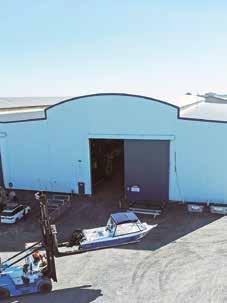
d'Albora Pacific Point Marina & Boatyard is home to 18 independent marine trades, including boat builders, mechanics, electricians, anti-fouling, trimming, stainless
• Conveniently located just 45 minutes from Brisbane and the Gold Coast.
• 554 wet berths for vessels up to 30m.
• 334 vessel dry storage capacity.
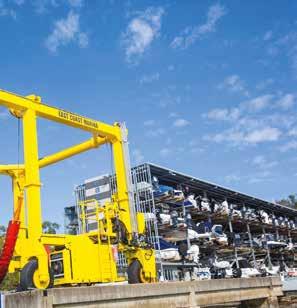
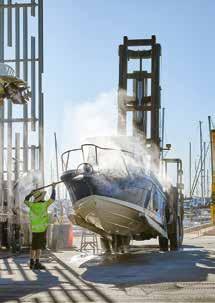
• Full-service boatyard – 70t travelift, including detailing, repairs, maintenance and chandlery.
• Dockmaster assistance seven days a week.
• 24/7 premium fuel.
• 24/7 security with swipe-card access.
• Waterfront dining at The Anchorage Café.
• Public boat ramp access. The site also offers a four-lane boat ramp with courtesy
and aluminium welding. Most of these businesses have been at d'Albora Pacific Point for over 20 years and attract many repeat customers due to their high-quality workmanship and service.
d'Albora Pacific Point underwent a significant expansion recently. Tell us more about these facility upgrades.
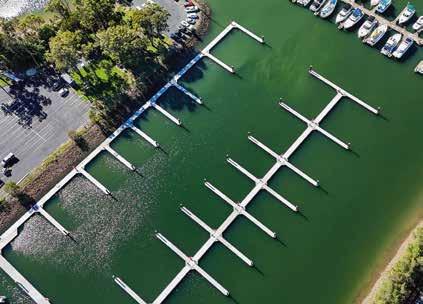
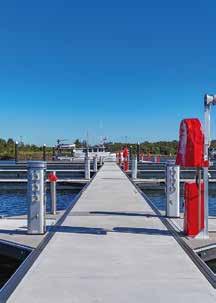
A few months ago, we added 54 new berths with state-of-the-art pontoon and associated services. Designed to accommodate both monohulls and catamarans between 16m to 20m, these new berths greatly expanded our capacity for multihull vessels in particular. We also added two new premium amenity blocks, redeveloped our commercial waterfront precinct, and resurfaced our car parks.
pontoons for easy access (digital payment onsite at ramp).
• Recently renovated amenities block including new shower and bathroom suite. Convenient laundry facilities.
• Secure parking.
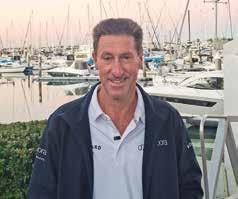
JOHN MCFADYEN, OPERATIONS MANAGER, D'ALBORA EAST COAST MARINA.
Talk us through some of the lifestyle factors that make d'Albora East Coast Marina a great casual berthing option for cruising boat owners.
East Coast Marina offers a relaxed lifestyle by the bay, away from the hustle and bustle of the city. The 10km esplanade is popular
for walkers, joggers and bike riders alike and Manly Harbour Village has a range of shops for provisions and is just a short walk away from the marina. Cafe La Mer is located at the marina and offers wonderful waterfront dining and there are also various hotels and restaurants within walking distance. The Manly Creative Market and Jan Powers Farmers Markets are both held regularly on weekends and are also just a short stroll away. Onsite trades and services at the marina include a marine mechanics, electrics and trimmers, antifouling, detailing and Propspeed application.
d'Albora East Coast Marina offers direct access to Moreton Bay Marine Park. Tell us more about your local cruising grounds.
A cruise around Moreton Bay and nearby islands St Helena Island and Green Island, offers great fishing and there are plenty of
• Conveniently located in Manly Boat Harbour.
• Direct access to Moreton Bay Marine Park and surrounding locations.
• 295 wet berths for vessels up to 18m.
• 240 vessel capacity dry storage stacker racks.
• 20mins from Brisbane CBD and Brisbane Airport.
• Full-service boatyard, with 25t travel lift and hardstand.
• Annual or casual berthing solutions.
• Waterfront dining at Cafe La Mer.

lovely locations to just anchor up for the day. Horseshoe Bay at Peel Island is also a highlight and Moreton Island is great for snorkelling around the wrecks at Tangalooma. You may even spot a whale or two in the bay when in season.
Tell us more about d'Albora East Coast Marina’s convenient location. East Coast Marina is situated just 20 minutes’ drive from both Brisbane Airport and the Brisbane CBD via Uber or taxi. Our location offers a high level of convenience for visiting interstate boat owners and gives them the option to leave their vessel at East Coast and fly in and out. East Coast Marina is also well connected to public transport, with train and bus services to the Brisbane CBD or Gold Coast also within a short distance of the marina.
• Members lounge.
• Dockmaster assistance.
• Open seven days a week. 24/7 security.
• Secure parking (member-only overnight access).
• Easy walk to nearby local shops and eateries.
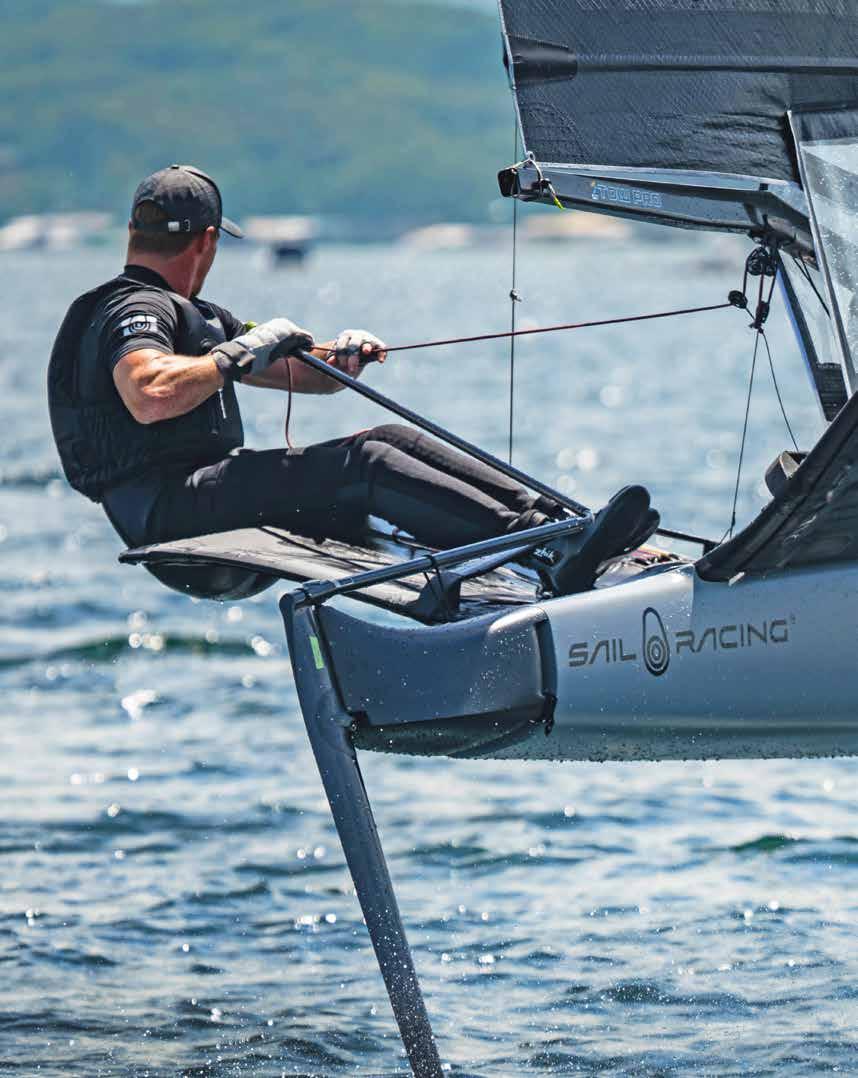
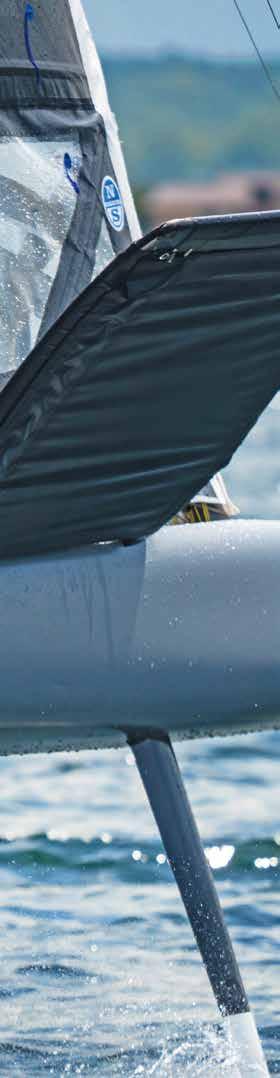
HIGH PERFORMANCE APPAREL BRAND SAIL RACING IS GEARING UP FOR HAMILTON ISLAND RACE WEEK.
“At its core, Sail Racing is driven by performance through innovation,” says Rob Crawford, Sales Manager, Sail Racing. “We’re constantly pushing the boundaries of what technical clothing gear can be, with garments designed to stand up to the most demanding conditions. Sail Racing creates technical gear that’s built for purpose, but always with a modern aesthetic that transitions well from deck to dock.” With the Sail Racing team gearing up to return to The Whitsundays as a proud partner of Hamilton Island Race Week, we chatted with Crawford about their collections, recent technical innovations, and plans for Race Week.
Please share some background about Sail Racing.
Sail Racing was founded in Sweden back in 1977 and has built a solid reputation as one of the world’s top technical sailing brands. From day one, the focus has been on performance
gear designed for the most demanding sailing conditions. We are always working closely with elite sailors to refine and evolve our gear. Sail Racing was relaunched into Australia and New Zealand in 2019 and we’ve seen incredible growth here – thanks to a combination of innovation, premium quality, and that unmistakable Sail Racing style.
What sets Sail Racing apart from your competitors in the market?
What makes Sail Racing unique is the focus on high-performance sailing apparel and how this strengthens the rest of the products in the range. Every product is tested by professional athletes and everyday sailors alike, with direct feedback driving constant refinement, ensuring the gear meets real-world demands. We also blend innovation with style, so our gear is as functional offshore as it is wearable onshore. The brand prides itself on its quality and not cutting corners.
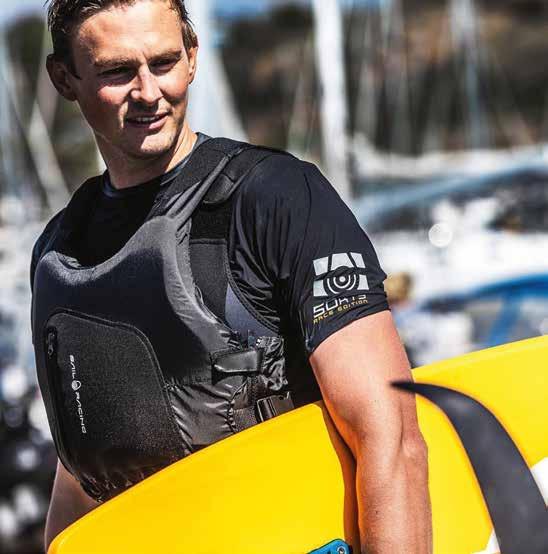
Talk us through Sail Racing’s range and how the different collections cater to the needs of sailors.
Sail Racing has three key collections, each designed to meet the specific demands of different environments and customers’ needs:
• Reference & Orca Series – These are our top-tier collections, developed for offshore and high-intensity conditions. They feature advanced waterproof and breathable fabrics, powered by cutting-edge Gore-Tex technologies, delivering maximum protection without compromising comfort.
• Spray Series – Designed for versatility and performance, this range is ideal for both competitive racing and recreational sailing. It’s technical enough for serious sailors, but with the flexibility to suit a wide variety of conditions.
• Bow Series – This is our core line, offering lightweight, functional gear for everyday use. It also includes a strong lifestyle and teamwear offering, making it perfect for crew uniforms or sailors looking for performance with casual style.
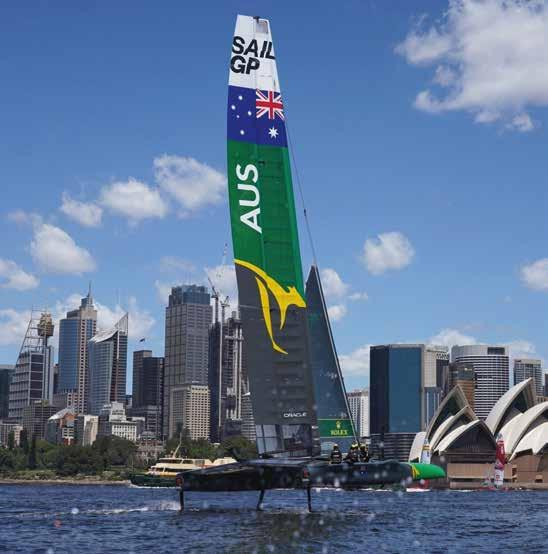
Sail Racing kits out several SailGP Teams including Australia. Tell us more about Sail Racing’s relationship with SailGP.
Sail Racing has been a proud partner of SailGP since the league’s inception in 2019. We supply technical gear to several teams including Australia, Italy, Switzerland and Denmark, working closely with the athletes to refine garments for performance, comfort, and durability.
We have just launched the new Australia range for supporters with their new branding as the Bonds Flying Roos. Sail Racing has also collaborated with several America’s Cup teams over the years, most recently working with


the Alinghi Red Bull Racing team. That partnership gave us unique insights – not just from top-level sailors, but also from elite athletes across Red Bull’s global network. It was a real eye-opener, helping push our innovation even further.
Sail Racing has a reputation for technical innovations. How do the learnings from the highperformance arena translate into the gear you create for weekend yachties?
Our close relationship with these top sailors and teams allows us to continuously test and refine our products. The materials, construction methods, and design solutions we develop for SailGP and offshore crews eventually filter down into our more accessible lines. Whether it’s improved breathability, faster drying fabrics, or ergonomic fits, all sailors and customers benefit directly from this top-down innovation process.
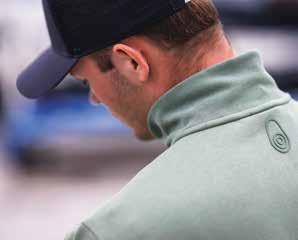
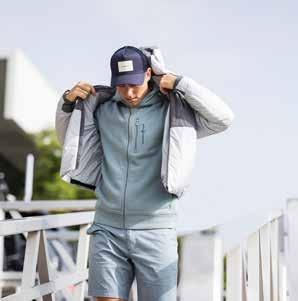
Are there any recent technical innovations, in terms of fabrication or design, that our readers should be aware of?
Yes! We have recently introduced new four-way stretch softshell fabrics across our Spray range, offering greater mobility without sacrificing durability. Our Gore-Tex Pro garments have also been updated with more sustainable, solution-dyed fabrics that maintain performance while reducing environmental impact. We’re also experimenting with bonded seams and laser-cut ventilation in select pieces for enhanced function and comfort.
Some sailing gear also translates well to power boating. Does Sail Racing also cater for power boat owners?
Absolutely. Many of our products – particularly from the Spray and Bow Series – have become favourites among the power boating community and outdoor enthusiasts alike. These ranges offer the perfect balance of
performance, comfort, and style, making them just as suited to the deck of a motor yacht as they are to a coastal adventure. We have seen people really appreciate the quality, fit, and modern aesthetic of Sail Racing gear, which has helped the brand grow well beyond the racing circuit and into the broader marine lifestyle market.
Tell us about Sail Racing’s partnership with Hamilton Island Race Week.
Hamilton Island Race Week is one of the premier regattas in the Southern Hemisphere, blending competitive sailing with a strong lifestyle element, which aligns perfectly with Sail Racing. We have a longstanding relationship with the event and Wild Oats XI, supplying crew gear and supporting their campaigns. Race Week gives us a great platform to connect with both professional and amateur sailors in what we believe is one of the greatest social and competitive environments.
This year, Sail Racing will be based at Hamilton Island Yacht Club with a dedicated pop-up space, sharing the area with the America’s Cup simulator – giving sailors a hands-on experience of high-speed racing.
Our pop-up store will feature a full range of technical and lifestyle gear, including exclusive Hamilton Island Race Week gear. There will also be onsite branding available to show what we can offer crews and companies. We’ll also be launching the Hamilton Island Race Week’s 40Year Collection to celebrate Race Week’s 40th year, which will be available for purchase at the Hamilton Island Designs store on Front Street. It’s shaping up to be another exciting week on the island, and we can’t wait to be part of the action!

The Ocean Hood Jacket is a premium, highperformance waterproof shell engineered for serious weather protection. Constructed from recycled polyester in a durable three-layer build, it features a 20,000 WP/20,000 MVP rating for exceptional waterproofing and breathability. With fully taped seams, water-resistant zippers, Lycra sleeve cuffs, and an adjustable hood with welded brim, it’s built to withstand rain, wind, and snow. Ideal for both offshore sailing and rugged onshore conditions. Available in both male and female cuts.
The Spray and Bow Technical Polos are designed for performance and comfort on and off the water. Made from a lightweight, quick-dry fabric with moisturewicking properties, they will keep you cool and dry in active conditions. The polos feature a classic fit with a modern edge, subtle Sail Racing branding, and UV protection – making them ideal for both competitive sailing and everyday wear in warm climates. They are stylish, functional, and built to perform. Available in long and short sleeve, and both male and female cuts.

The ultimate, all-round everyday shorts! The Spray T8 Shorts are built for versatility, comfort, and durability both on and off the water. Crafted from a quick-dry, stretch fabric with reinforced seam panels, they’re perfect for high-mobility sailing and active outdoor use. Designed with functionality in mind, they feature practical pockets, a modern fit, and subtle technical detailing – making them a go-to short for racers and recreational sailors alike. Available in both male and female cuts.

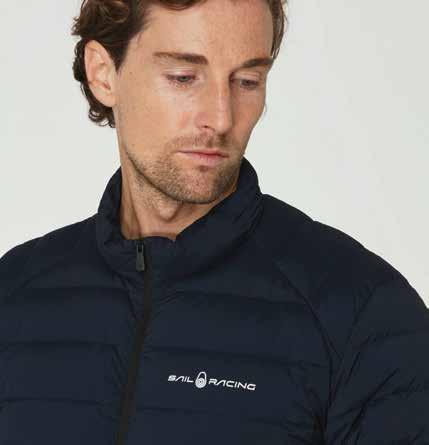
The Spray Down Jacket combines lightweight warmth with technical performance. Insulated with premium 90/10 down and a durable waterrepellent outer shell, it delivers exceptional comfort in cold conditions without adding bulk. Designed for both on-deck use and everyday wear, it features a clean, modern silhouette, articulated sleeves for freedom of movement, and functional pockets – making it a versatile essential for sailors and outdoor adventurers. Available in both male and female cuts.
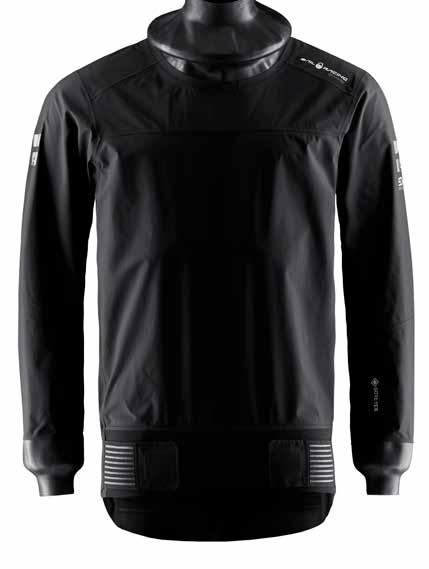
New for this season, the Orca Paclite Spraytop has been engineered for high-performance sailing. Made with lightweight and breathable Gore-Tex Paclite fabric, it provides exceptional waterproof protection with fully sealed neck and cuffs – perfect for bow crew and anyone facing heavy spray. Designed for maximum mobility and durability, it’s a trusted choice among professional sailors tackling the harshest conditions. This is one of those products you really need to touch and feel to fully appreciate the fabric’s lightness and advanced technology.
THREE BOATING SAFETY EXPERTS SHARE SOME KEY ADVICE TO HELP YOU STAY SAFE WHEN YOU’RE HEADING OFFSHORE.
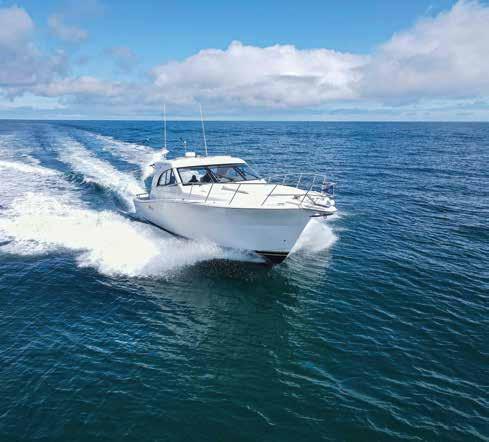
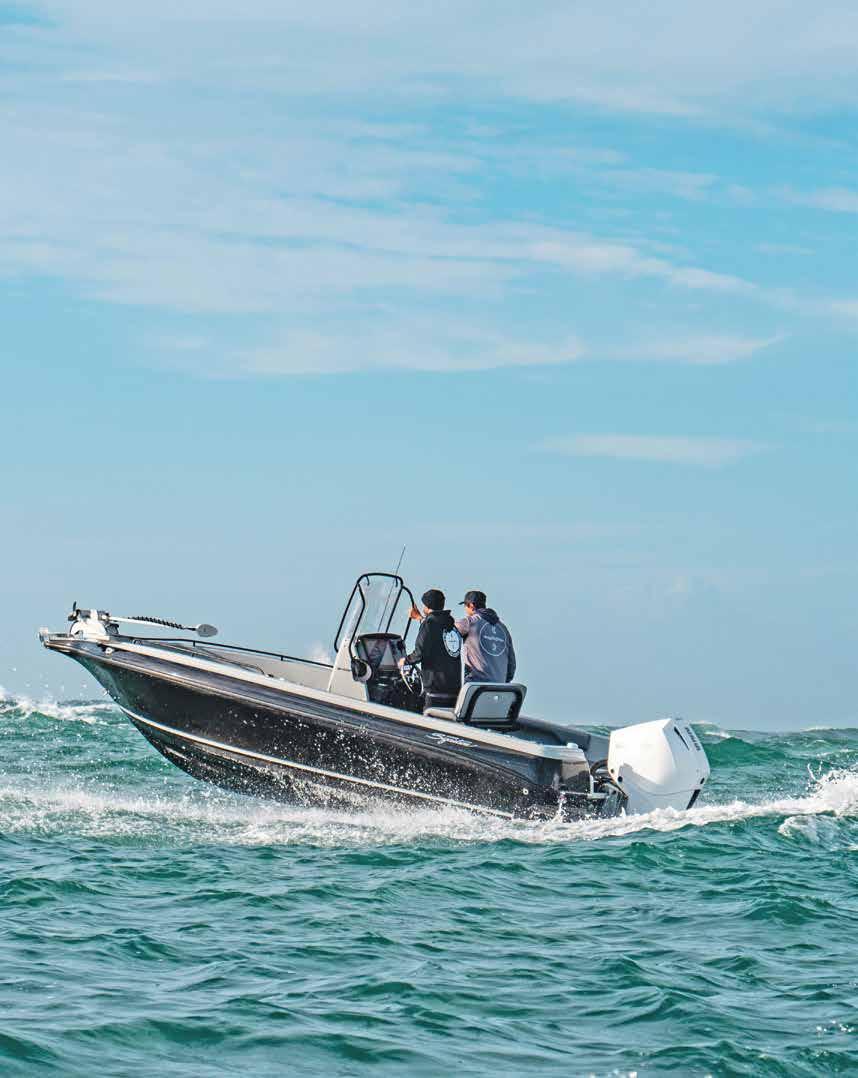
Offshore boating is incredibly rewarding, whether you’re chasing big game fish or simply enjoying the vastness of the ocean. But being far from shore also means being far from help. Preparation and caution are essential as the ocean doesn’t forgive complacency. With the right preparation, equipment and mindset, you can enjoy the rewards of offshore boating safely. Never underestimate how quickly conditions can change – and never assume help is just around the corner.
• Prepare thoroughly before you go. Before heading offshore, ensure both your boat and your plan are in order. Fuel is critical – always carry enough for the return trip, plus at least a 30 per cent safety margin. Check that your engine, batteries, and electrical systems are in good condition. Don’t overlook your bilge pump, steering, or fuel filters. Plot your course and note safe anchorages or alternate routes in case you need to return quickly. Most importantly, tell someone onshore your trip plan – where you’re going, who is on board, vessel details, and when you expect to return. If you get into trouble out of phone or VHF range, having someone who
knows your plan could mean the difference between rescue and disaster.
• Conditions offshore can be very different from what you see at the ramp. With no shelter nearby, even a modest change in weather can become hazardous. Check forecasts from multiple reliable sources in the lead-up to your trip, and don’t just look at wind speed – consider swell height and direction, wave period, tides, and currents. Pay attention to weather warnings and changing patterns. Remember, the further offshore you go, the fewer your options if the weather turns. If the forecast raises any doubts, reconsider your plans.
• Offshore, you need to be self-sufficient. The further out you go, the more safety equipment you should carry. Pack a grab bag with flares, a torch, an EPIRB and a VHF radio, and always wear your life jacket. Bring extra food, water, a first aid kit and dry clothing in case the worst happens. If you have an auxiliary motor, make sure it can get you home – a set of paddles won’t help when you are miles offshore. Emergencies don’t wait for calm seas, so

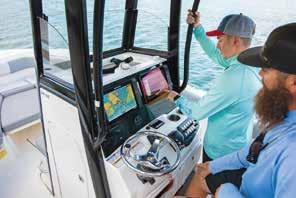
pack as if you may need to survive until help arrives.
• With no landmarks offshore, you rely entirely on your navigation equipment and your skills. Ensure your GPS and chart plotter are working and that your electronic charts are up to date. If visibility drops due to fog or adverse weather conditions, knowing your last logged position and how to track back is crucial. Record your location regularly and know how to navigate using a compass in case your electronics fail.
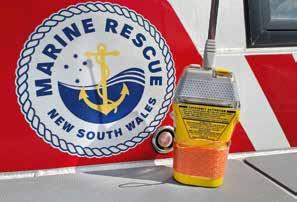
• Logging on with your local marine rescue, coastguard or volunteer radio station is a simple but effective safety step. Use your VHF radio to inform them of your destination, vessel details, the number of people on board, and your expected return time. They’ll keep a record of your trip and, if you fail to log off, will attempt to contact you and notify emergency services if needed. It’s free, quick, and adds an extra layer of safety – and it confirms your radio is working before you need it in an emergency.

• Before heading out to sea, brief your guests on the trip’s destination, duration, and expectations. Ensure guests know where safety equipment is stored, what assistance you may need, and emergency procedures. It’s wise to have someone aboard who can take charge if you’re incapacitated, including stopping the vessel and calling for help. Keep instructions or a checklist accessible and inform your guests of their location.
• Know your boat and how it will handle the conditions. Understand that seaworthiness isn’t just down to length, width or weight of your vessel, but a combination of these factors and more. Use Deckee’s AI-powered estimator of your vessel’s suitability for the forecast conditions.
• Safety equipment laws may require you to carry sufficient drinking water for you and your guests. However, where possible, provision over the minimum requirements, and include some shelf-stable food with your water provisioning.
• When you’re out on your boat offshore, and even in enclosed waters, you’re a lot further away from medical help than you typically are on land. Being prepared for any medical events or emergencies on board is essential. State laws may not include a requirement to carry a first aid kit, or have
any first aid training, but they will both provide peace of mind and confidence to deal with a medical situation on board. An AED (Automated External Defibrillator) may also be a great idea.
• Know your options for safe ports to shelter from conditions if the weather becomes worse than forecast. Understand that while one port may be closer, it may require you to travel further into poor conditions. It may be safer, or easier to turn around and head back the way you came to a safe port, running with the wind and waves, even if that port is further away.
• You may not be required to carry paper charts for offshore navigation by law in some jurisdictions, but they can be invaluable if you lose power or lose your electronic navigation equipment. As a precaution, regularly mark your position on the paper charts, in case you need to summon assistance, and you’ve lost your electronic navigation systems. If you prefer to keep it simple, you can use the What3Words app system to note your location. Most Marine Rescue organisations and emergency operators can decode your location from your What3Words information.
Visit abcboating.net.au and bia.org.au
Did you know?
Three of the most common claims events for Nautilus Marine Insurance customers during August and September over the past five years have been collisions, hitting submerged objects and accidental damage.
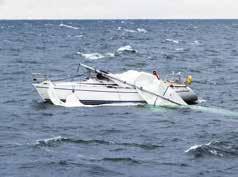

Heading offshore is a ‘rite of passage’ for most boaters, but it does come with increased and inherent risks.
• To have a fun and enjoyable trip, it is vitally important that you are well prepared before heading offshore. The key elements of offshore preparation outlined in this article are simple but can also be easily forgotten.
• Although each state and territory has its own regulations on what safety equipment must be carried, there are key items that are essential when heading offshore. Firstly, a suitable lifejacket – recommended to be worn at all times in open waters – flares, a V-sheet, at least two forms of communication (such as a VHF radio and a mobile phone), a first aid kit, and an EPIRB. There are plenty of other important items to carry, including a fire extinguisher and fresh water, so make sure you follow all local safety equipment requirements.
• In the unfortunate event that you find yourself in trouble offshore, don’t let that be the first time you think about what to do. Have a clear understanding of how you will respond when things don’t go to plan.
Know your risks and ask yourself: who will I call, where is the nearest safe haven, wharf or boat ramp, how long will it take to get back, do I know how to use my first aid kit, how do I notify emergency services?
• Around 60 per cent of incidents that Marine Rescue NSW volunteers respond to are related to engine, battery or fuel issues –all of which are preventable with proper maintenance and planning. If you do find yourself in need of assistance, whether urgent or not, be sure you know how to ‘sound the alarm’.
• If you are offshore and have engine trouble, but the situation is calm, everyone on board is okay, and there is no immediate risk or urgency, your local Volunteer Marine Rescue unit should be contacted via VHF Channel 16 or directly by phone (if you don’t have this number, find it and save it). Make this call as soon as possible, as assistance may take time to arrive.
• If the situation is more serious – for example, if you require medical attention or have broken down and are drifting towards the shore or rocks – a Pan Pan call over VHF Channel 16 may be required.
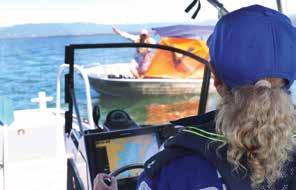
• If it is an emergency and your vessel or people on board are in grave and imminent danger and require immediate assistance, a Mayday call on VHF Channel 16 should be made. If making a Mayday call, you should also consider activating your Emergency Position-Indicating Radio Beacon (EPIRB) and preparing other vital emergency equipment: get flares ready, display the V-sheet, and most importantly, ensure everyone on board is wearing a lifejacket. Don’t forget, if within range, you can also call Triple Zero (000) in Australia or 111 in New Zealand from your mobile phone.
• A Mayday or Pan Pan call over marine VHF radio is an international signal for immediate or urgent assistance. Broadcasting these calls over VHF Channel 16 ensures that all vessels monitoring the channel can hear your distress call and may be in a position to assist while emergency services respond.
• In NSW, logging on and logging off with Marine Rescue NSW – either via the Marine Rescue app or VHF Channel 16 – is free and could one day save your life. Visit marinerescuensw.com.au
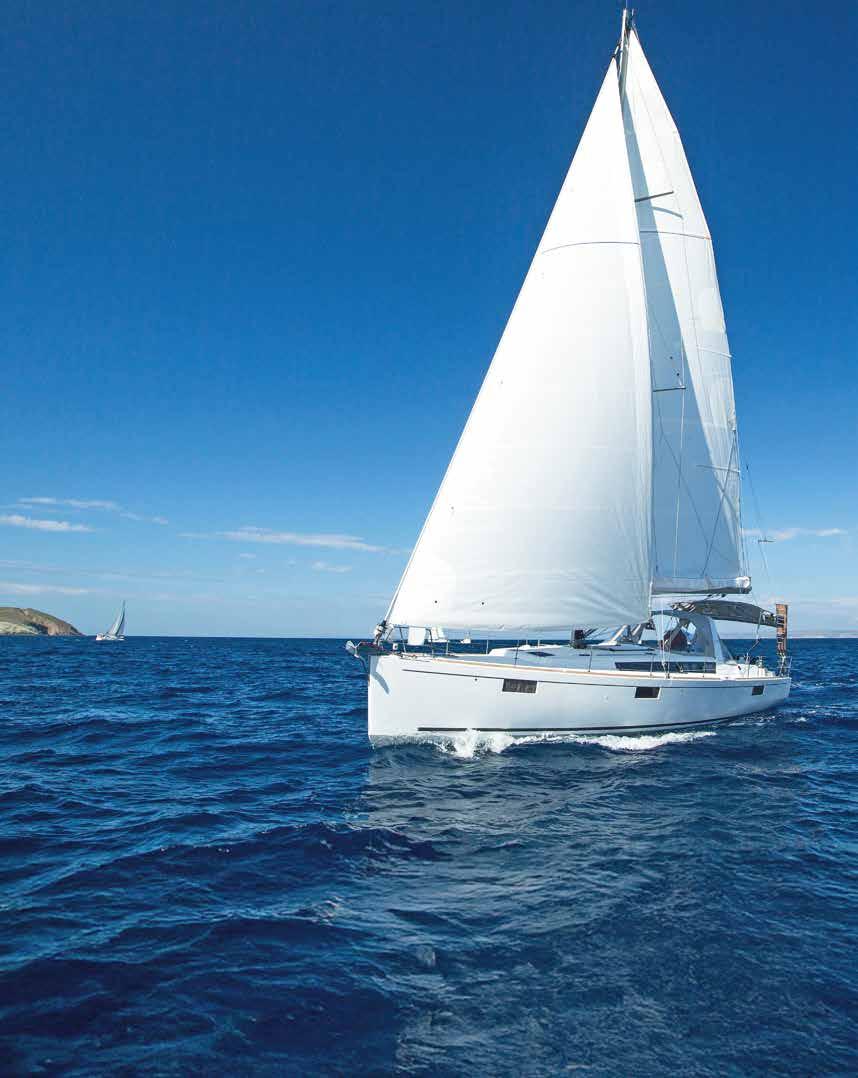
MARK HUNTER, OWNER OF SAIL CLEANING SERVICE VACUWASH AUSTRALIA, SHARES SOME ADVICE TO HELP KEEP YOUR SAILS IN TOP CONDITION.
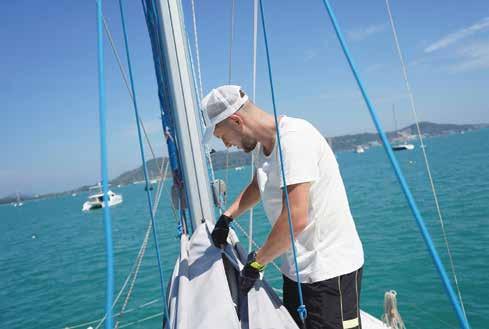
When it comes to looking after your sails, a little care goes a long way. “The best practice is to pack sails into their bags and store them in a dry, wellventilated space,” says Mark Hunter, owner of Vacuwash Australia, a specialist cleaning service for yacht sails, marine canvas, tents, and outdoor fabrics based on Sydney’s Northern Beaches. However, as yachts grow larger, this becomes more difficult with removing, folding, and stowing sails often requiring a lot of extra hands.
“While it is possible to clean sails yourself, it’s not usually recommended,” says Hunter. “Giving your spinnaker a rinse after it’s been doused in salt water is fine so long as you have space to dry it properly. Spot cleaning usually results in spotty sails. The entire sail really needs cleaning for best results. Sail fabrics vary widely, as do the types of dirt and mould they attract. Cleaning them correctly takes time, space, and experience.” We asked Hunter to share some key advice to help you maintain your sails.
Why is it important for yacht and sailing catamaran owners to wash their sails?
Every major sailmaker recommends annual sail cleaning to remove salt, dirt, and mould. Just like the rest of your boat, sails need regular maintenance. Beyond being unsightly and smelly, trapped grime can degrade the materials and shorten their lifespan costing you more in the long run.
Is it safe to clean sails?
Absolutely. The cleaning process we use at Vacuwash is gentle and proven and has been used to clean thousands of sails and all types of canvas with no damage. There is no harsh scrubbing, agitation, heat, or pressure-washing involved.
Will it weaken the stitching?
No, the cleaning process does not harm stitching. What really breaks down thread is UV exposure. UV strips on sails, as well as dodgers, biminis and other canvas items, will deteriorate over time whether cleaned or not. That’s why it is recommended to re-stitch canvas items while they’re off the boat for cleaning.
Wouldn’t it be better to just buy new sails?
Not necessarily. A well-made sail should last over 10 years depending on use, and Vacuwash has successfully cleaned sails over 40 years old that still have life left in them. If your sails spend most of their time on the rig exposed to the elements, cleaning is an essential step in extending their usable life. Typically, the cost of cleaning will be around 10 per cent of the replacement cost to purchase new sails. Given that sail and canvas fabric prices vary widely, cleaning is always the more cost-effective option.
Will cleaning my sails make my boat faster?
Clean sails are easier to trim and perform better. And just like when you polish your boat and admire the shine, you’ll be more likely to pay attention to your sails, trim them more often, and sail faster.
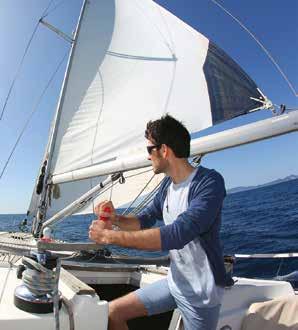
FURLING HEADSAILS: These should be aired regularly, ideally by going sailing. After rain, a furled sail traps moisture, and when the sun returns, vertical green mould often follows. Treating your furling sail with a product such as McLube Sailkote Plus when it’s new or near-new can significantly reduce this problem.
MAINSAILS ON THE BOOM: If your mainsail is flaked on the boom, it needs a proper boom cover, not one that’s torn or worn through. Water will find its way in and pool between the folds, encouraging mildew. Make sure the clew end is enclosed to prevent birds from nesting. Standard boom bag zips tend to leak, so opt for a drop-over bag that clips underneath the boom. You can still use lazy jacks, best to just pull them forward to the mast before fitting the cover. Never leave the sail head exposed with the halyard attached as UV and water damage will destroy it faster than you can save up for a replacement.
SPINNAKERS: Spinnakers and furled asymmetrical sails should always be stored dry and salt-free. These sails are not designed to live on the rig.
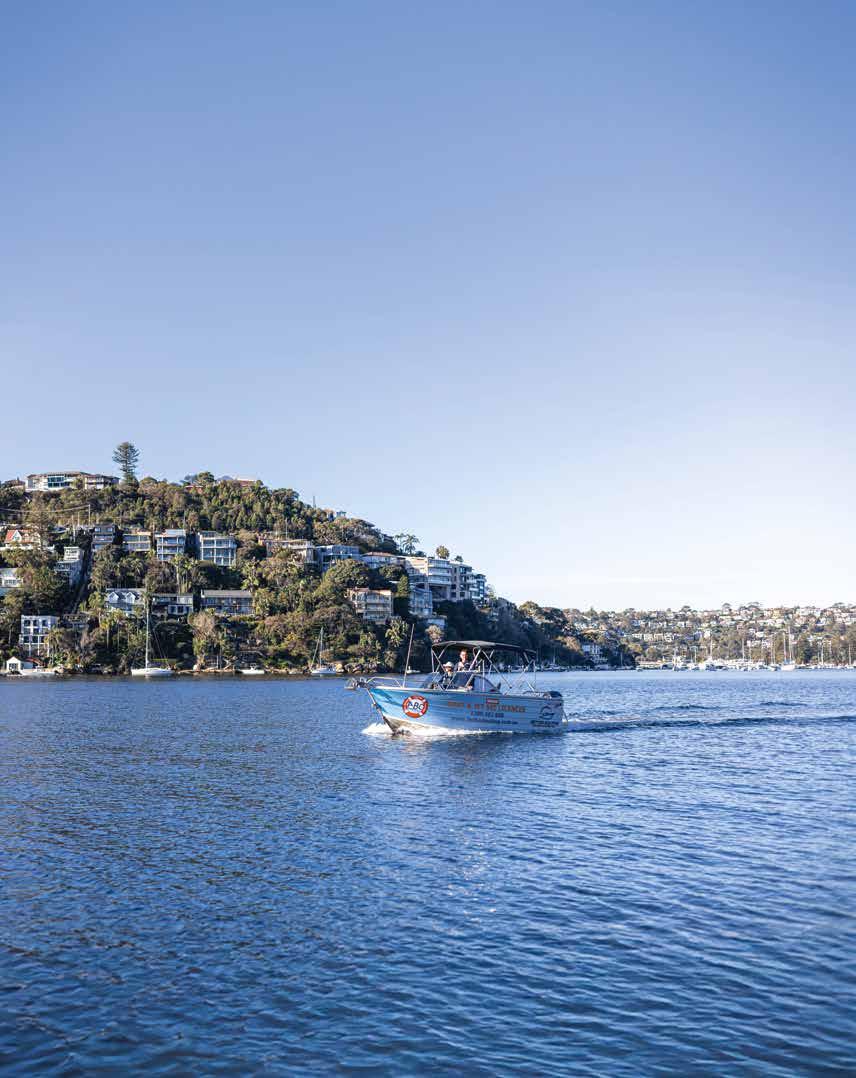
THE ABC SYDNEY TEAM SHARE SOME OF THE BOATING COURSES AND QUALIFICATIONS AVAILABLE FOR BOTH BEGINNERS AND SEASONED BOATIES. BY SARAH RANAWAKE.
It ’s a sunny afternoon in Sydney’s Northbridge and we’re heading out in the direction of Middle Harbour. I’m on the water with Adam Smith, owner of Australian Boating College Sydney, and I’m at the helm for the first time in my life. I have just spent the morning with Adam and Phil Dunn, another expert trainer on the ABC Sydney team, completing the classroom theory component of my NSW boat licence course. Having passed the boating knowledge test, Adam is now literally showing me the ropes (and the steering) on the water. As an Authorised Training Provider, ABC Sydney has successfully trained over 50,000 boaties (and aspiring boaties) over the last two decades. Adam is also the President of the Boating Industry Association, so to say I’m in good hands as he takes me through my on-water practical competencies is something of an understatement.
The benefit of both Adam and Phil’s expertise and passion for boating education, was evident throughout the full day course. In the classroom session, Phil delivered all the theory in a way that was easy to understand and then absorb, and on water Adam showed me many helpful tips and techniques, beyond just covering the core competencies required to obtain your boat licence. One such example is a skill Adam calls “steer before gear”. This simple yet clever steering technique allows you to turn the vessel around quickly and efficiently when coming out of neutral and is an especially useful skill when close to the shoreline or near rocks. Overall, covering both theory and practical in one day with two expert trainers provided an immersive and
enjoyable learning experience, and left me feeling confident in the skills I’d learned and excited to hit the water again.
Later, with my boat licence paperwork proudly obtained, I sat down with Adam to discuss the many benefits of working with an Authorised Training Provider. From beginners looking to obtain their boat licence, to boat owners needing customised driving lessons on their own vessel, and seasoned boaties seeking to level up their skills with advanced qualifications, there are training options to suit many boating needs.
Tell us about the types of students you see at ABC Sydney.
Many of our students come along because they’re trying to solve a problem. They have bought a boat, and subsequently, they need a licence. For others, attending a boat licence course will be the first step on their boating journey. Boating is something they’ve decided they want to get into and explore further, so obtaining their licence is the first thing they do. They may not even have plans to buy their own boat yet; they may have intentions to hire a boat. We also give course attendees information about other boating options in the market like boat club memberships or boat shares.
We then have a cohort of students who are the second generation of a boating family. The parents may have owned a boat for many years and now their children are getting old enough to drive the boat themselves. We also get spouses coming along whose partner holds a boat licence and has been trying to teach them to drive their boat for years, but the couple
eventually decide the best thing to do is to outsource the training to a third party.
What are the benefits of doing a boat licence course with an authorised trainer?
There are various pathways to obtaining a boat licence, and each state also has different levels of licencing requirements. When you do a boat licence course with an Authorised Training Provider there’s a set structure to the learning. Regulators engage with the training providers around requirements for the training and the assessment process. The training and onwater assessment is based around core skills all boaters should know, with an emphasis on skills relating to common boating incidents, injuries and fatalities. Doing a boat licence course with an authorised trainer gives you the benefit of their years of experience and skills. They also know how to adapt the learning experience to best suit the student. When you learn with a relative or friend, there’s also the risk they may pass on incorrect boating habits and practices, or gloss over important skills they’re not as comfortable with themselves. Or if the person teaching you obtained their licence many years ago, they may not be familiar with more recent changes to rules and regulations. So, currency of training is another important factor when engaging an Authorised Training Provider. Outsourcing the training to a professional is also a great way to maintain family harmony and not have lessons by parents or a partner end with arguments and tears!
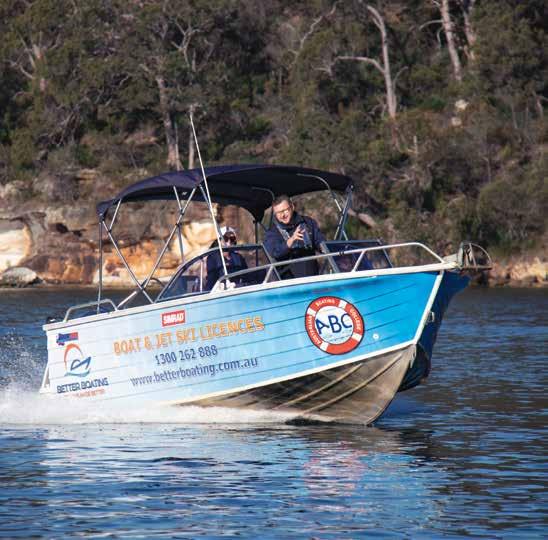
Can you still help me if I already have my boat licence?
Yes, there’s the scenario where someone may have obtained a boat licence by doing a basic knowledge test decades ago and let it lapse. Or their boat licence may still be valid, but they haven’t been at the helm for years and a change in life circumstances such as retirement is now allowing them the time to get back into boating. ‘You don’t know what you don’t know’ is something I often say, and working with an expert can be a great way to identify gaps in your boating knowledge and refresh your knowledge and skills.
A different but similar scenario is where people have just bought a larger boat or are stepping into a new boat that’s different to the type of boat they have been used to. In those cases, we’ll often chat to them about doing some advanced training with customised boat driving lessons on their own vessel. Competence equals confidence and by working with an expert you can feel
comfortable knowing you are adhering to best practices.
Why would someone with a boat licence want to take boat driving lessons?
A common area of improvement for almost everyone is close quarters manoeuvring to improve their docking and berthing skills. Another area of focus is anchoring; knowing how to calculate the right amount of scope and having confidence that the boat is anchored properly.
Navigation electronics can vary greatly between different boats, so a lot of people who’ve just bought a new boat want to learn how to use their navigation equipment properly. Refuelling procedures is another common area people want to focus on in customised lessons. They may not have the confidence to fuel the boat on their own, so we’ll walk through the refuelling process and go through how to pump-out the blackwater if they haven’t done that either.
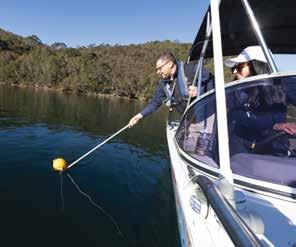
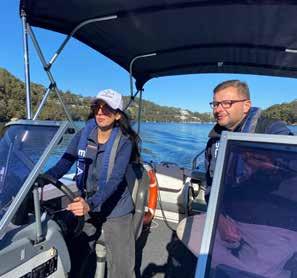
Tell us more about the Coxswain Grade 3 qualification and how it translates to recreational boaties.
Although the focus of the Coxswain Grade 3 Near Coastal is entry level commercial seamanship, it has many of the components you would consider including if you wanted to design an advanced general boating course. There’s more content around rope work, onboard safety, identifying hazards on the boat and going through checklists.
It also covers more complicated manoeuvring techniques and procedures, including what to do in an emergency if there’s a problem with the steering or another element of failure. Really, the Coxswain Grade 3 is all about obtaining that next level of advanced boating skills, and gaining a better understanding of risks and your responsibilities as the master of the vessel.
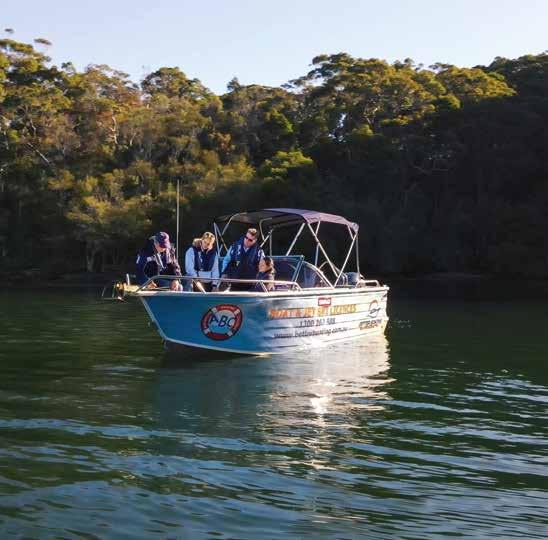
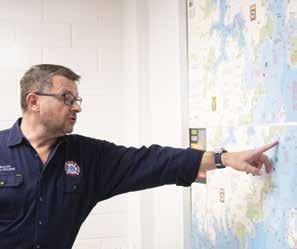
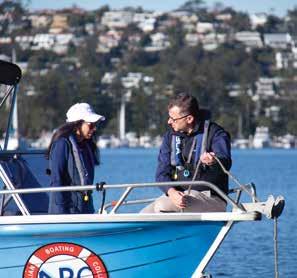
Some of the boating courses and qualification options available through Authorised Training Providers.
Boat licence course and boat/PWC licence course: These one-day courses are designed for total beginners seeking to obtain their licence to drive a boat or PWC. Combining a classroom theory session and boating knowledge test with on-water competencies, these all-inclusive training options offer a comprehensive shortcut to getting out on the water. Logbooks aren’t required and working with an Authorised Training Provider also offers the assurance you’re learning best boating practices.
Customised boat driving lessons: As the name suggests, customised boat driving lessons are personalised to you and your requirements. Sessions are usually conducted on your own vessel and focus on the specific
skills and competencies you are looking to improve upon. A great option for those who hold a boat licence but need to refresh their skills, or boat owners who’ve just purchased a new vessel they’re unfamiliar with.
Coxswain Grade 3 Near Coastal: A good entry point for pursuing a career within boating, the Coxswain Grade 3 Near Coastal is a nationally certified qualification. Focussed on entry level commercial seamanship and risk management practices, Coxswain Grade 3 Near Coastal allows you to command a commercial vessel less than 12 metres long, with up to six people onboard during daylight. This course is also a great option for recreational boaties looking to master advanced boating skills.
Marine radio licence course: A marine radio licence is a must for anyone who owns a boat fitted with a radio and ensures you can safely operate the radio in case of an emergency. There are two types of Marine Radio Certificates of Proficiency: the Short Range Operator Certificate of Proficiency (SROCP) and the Long Range Operator Certificate of Proficiency (LROCP). Once obtained, both the SROCP and LROCP never expire (they don’t need renewal) and are recognised internationally.
Scan to find out more about ABC Sydney Courses.
SHALLOW WATER FISHING IS A VISUALLY EXCITING WAY OF TARGETING FISH. SCOTT THOMAS REPORTS.
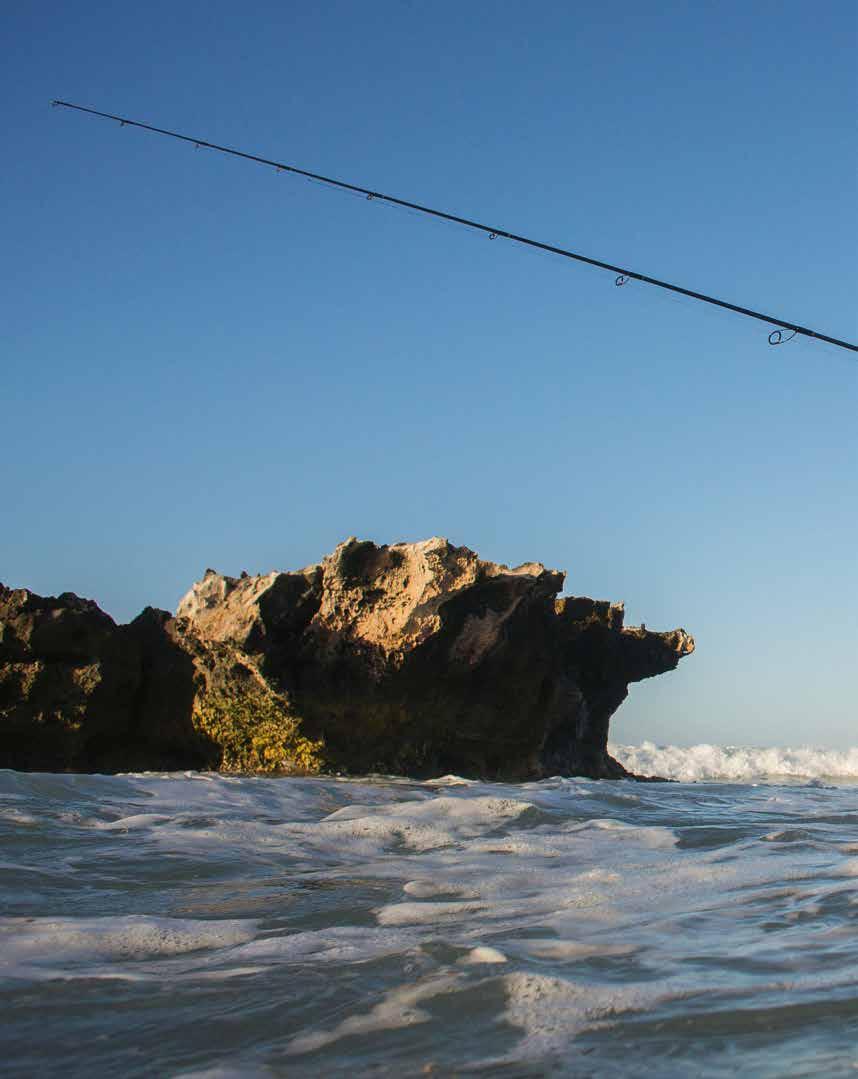
WADING FOR BIG TAILOR IN THE ABROLHOS ISLANDS.

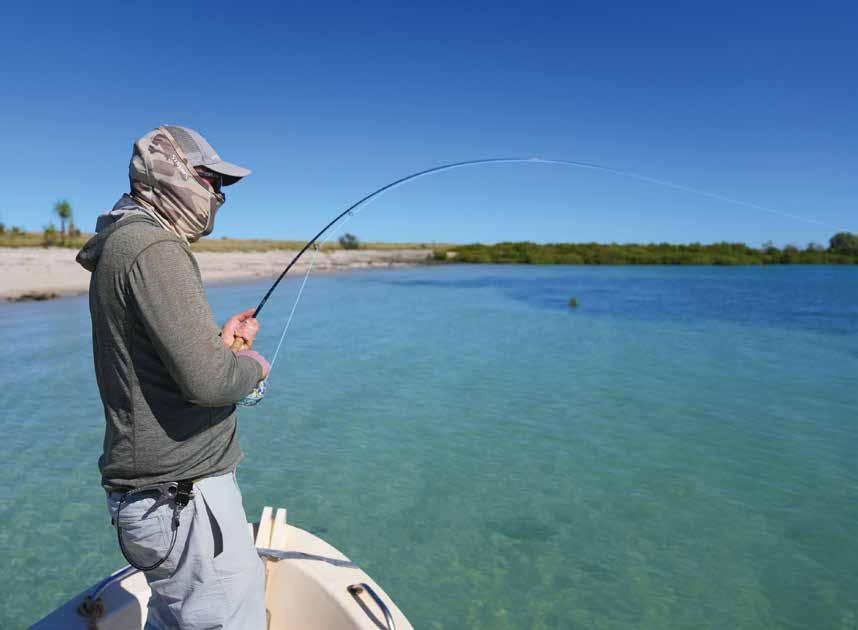
SEEING FISH BEFORE YOU CAST IS A FUN METHOD OF FISHING!
There’s a phenomenon that all fishos experience. We stand on the bank and cast our baits or lures as far as possible into deep water. Meanwhile, a boat comes along and the occupant throws their lure in shallow water back towards you. It doesn’t make sense. But then again, there’s a lot we don’t know about fish (and angler!) behaviour.
One thing we do know about fish –although it’s easy to forget – is that they live and feed in a variety of water depths. The obvious choice when fishing is to find deep water. Take that further and most of us look for fish on the bottom. However, the reality is fish move around and certain species will live in deep water while others will inhabit the shallows. Some species can be found in both at different tide cycles or seasons. Over the next few pages, let’s explore the shallows and why fishing ‘skinny’ water is so exciting and highly productive.
Fishing shallow water is a well-known method for catching fish. In the past there was even an American fishing magazine dedicated entirely to fishing shallow water or ‘skinny’ water fishing. I’ve fished ‘the flats’ in Florida where this type of shallow-water fishing was established. Over there you will find miles upon miles of knee deep water rich with fish life. Closer to home in Australia and New Zealand we have an equal number of shallow water locations to fish and a vast assortment of species to target.
Why do we fish the shallow water? Simply put, it is fun! It’s a visual experience like no other. It’s often ‘sight fishing’, meaning you spot the fish before making a cast. Then, when the fish takes your lure or fly, you see all the action unfold before your eyes. Once a fish is hooked, it doesn’t have the option of swimming down deep, only across the shallow water where it typically makes
the reel’s drag scream! It makes for memorable fishing
Where?
Almost all estuaries in the southern part of Australia feature shallow sand flats. Most of them are tide dependent and they all change over the years. Over in New Zealand, where estuaries are less common, there are some incredible shallow water kingfish and even snapper to be caught off the beaches and shallow bays. Several guides on the North and top part of the South Island operate fly fishing tours in this unique fishery. Meanwhile, in the northern part of Australia you will find extensive sand flats. Many of these are found offshore around coral reefs and islands.
The easiest way to find shallow water fishing locations is Google Earth. Choose an area you wish to fish and you will soon find shallow water. How shallow it is can be difficult to gauge from Google Earth, but it’s a good start before doing some further
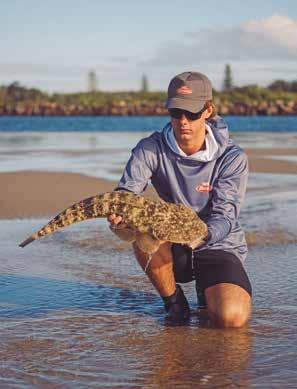
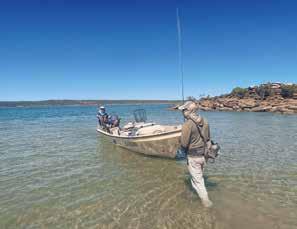
research. It’s worth noting, the shallow flats in the tropical parts of Australia are also shared by crocodiles. I wouldn’t recommend leaving the safety of your boat unless you’re with an experienced local guide. The coral flats are definitely safer when it comes to crocodiles, but even that isn’t guaranteed.
In the southern parts of Australia inside estuaries, you will find flathead, whiting and bream across the shallow flats. These are all common shallow-water species. I’ve also caught all sorts of fish in shallow water, including luderick, kingfish, Australian salmon, estuary perch, and more.
In the northern part of Australia, the number of species multiply. There are literally dozens of fish you can sight across the shallow sand flats. Some of these include barramundi, trevally, permit, blue bastards (yes that’s a fish), queenfish and more. There’s even places to the north of Hervey Bay where
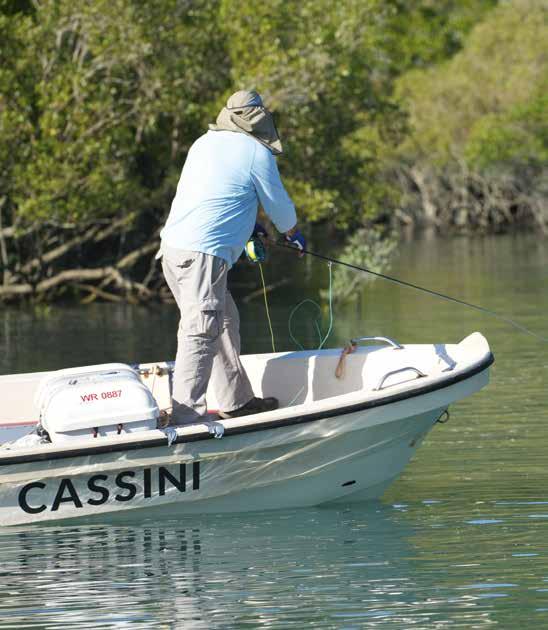
anglers can find small black marlin on the shallow-water flats each year.
The first step is choosing your target species. This goes for all fishing, especially shallow-water fishing. Try and understand why these fish would venture into the shallows. Are they resident fish in the shallows or do they only move onto the sand flats to feed at high tide? What are they feeding on? There are so many questions to ask and answering these will help you catch fish on the sand flats.
An example could be flathead. They live in all sorts of water depths in the estuaries around Australia. They move onto the flats to feed as the tide rises. They’re a predatory fish and will bury themselves in the sand waiting for prey to pass overhead. Sometimes this prey is small baitfish or even larger whiting. Size doesn’t seem to matter, as long as it’s an easy meal.
As the tide recedes and the sand flat empties, the flathead moves off into deeper water. Often this will be a ‘top off’ adjacent to the shallow water where they will sit and wait for bait leaving the flat before ambushing it. If you walk across a sand flat at low tide, you’ll often find flathead ‘lies’ where a fish has been sitting during high tide. Look at where these lies are and it will give you an idea of where to focus your efforts when the tide changes and the flats are covered with water. As you can see from this scenario, you will need to have an understanding of each fish and why and when they inhabit the shallow water.
Another fish is a permit. These are an iconic fly fishing target around the world and can be found in the shallow flats in northern Australia. There’s no doubt these fish, at certain times, live in deeper water, however they’re almost always caught on the shallow flats.


Again, it’s an understanding of their movements and feeding habits that will bring success. Permit love eating shrimps and crabs and fly fishos imitate these crustaceans. Sighting these fish first is essential. You will need to place your fly directly in front of a feeding fish. If you can’t spot a fish, the chances of spooking a permit and having it reject your fly is likely. Once you spot a fish, cast ahead and let your fly sink. Once the fish approaches, it may pick up subtle movements and eat. If not, a small twitch may be necessary to trigger a bite.
Given that sighting fish is so important for so many species on the flats, it’s worth looking at how the fish gain entry to the shallows. There is often a small and subtle channel that feeds water to a flat. It can be a dark patch or slightly darker line that runs alongside the flat. Most people will miss it. This is often a foot or so deeper than the rest of the flat and it’s usually where fish will travel on and off the flat as the tide rises and falls.
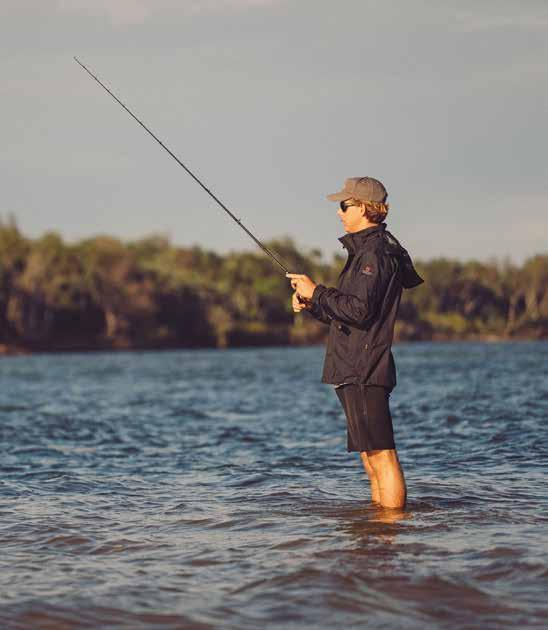
Another point worth noting is the importance of stealth. It’s shallow water and that means the fish can see you. Stay low and make long casts. Don’t drive your boat over the shallow water. This could put you at risk of grounding your vessel or damaging your motor. Churning up the sand will also scare the fish away. This bring us to the next part... boat choice.
There are many local and overseas boat companies that specialise in ‘flats boats’. These are specialised fishing boats designed to operate in shallow water, both while driving and at rest while fishing. They float in mere inches of water. They’re incredible boats, but they’re not as versatile as some. The good news is many other boats will work well on the flats. The humble tinny makes a great shallow-water boat. They don’t draw much water and are stable to stand and spot fish across the flats. They’re also versatile for
many other types of fishing. It’s best to avoid large, deeper V boats for flats fishing. They draw too much water and can get blown around easily by the wind.
It’s also worth mentioning that shallow water can present dangers for boaters and potential damage for boats. Always slow your speed and make sure you follow channel markers when in areas of shallow water. Take note of charts and don’t take any risks.
Once you’re in the shallow water, you could deploy an electric trolling motor. Some boats even have jack plates installed for operating the main outboard safely in shallow water. These jack plates lift the engine without trimming, meaning you can run your boat in shallow water without damaging your prop or outboard. Again, it’s a specialist product, just like the flats boat, and only worth considering if you plan on spending a lot of time around shallow water.
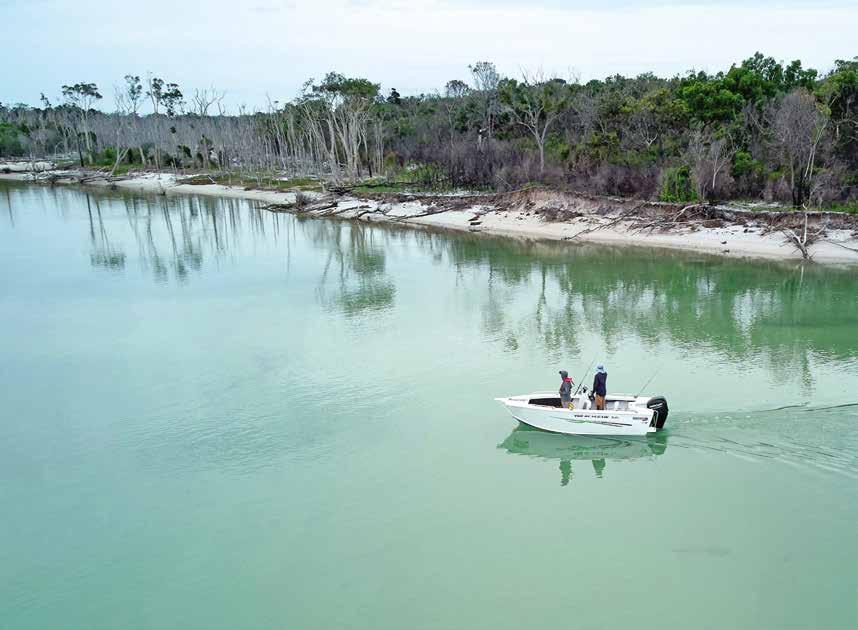
BOATS AROUND THIS SIZE ALLOW YOU TO REACH SHALLOW WATER IN SAFETY.
The good news is tackle choice doesn’t vary much. However, I would just suggest using a longer rod for more control and longer casts. Another good option is to use lighter leader to avoid spooking fish in clear shallow water. You may also want to consider choosing lures that mimic the baitfish or crustaceans that you find in the shallows. When you’re sight fishing, you won’t want your lure or fly to land too heavily and spook the fish.
Sight fishing for fish across shallow sand flats is a thrilling experience. The fish fight harder in the shallow water and stalking a fish and presenting a fly or lure is always fun. Find your nearest sand flat and work out what species live there and you’re guaranteed a great experience.
Understanding tidal influence is an important part of all fishing, but it’s particularly important when fishing the flats. Tidal influence will determine when fish move onto the flats, when they feed, and importantly, when you can access the shallow water with a boat.
Tides vary greatly in different parts of the country. If you’re fishing in the tropics, the tides are bigger and you can find yourself stranded in shallow water in a very short time. Tide charts are available online and it pays to observe the tides and spend some time on the water working out how tidal influence affects your chosen shallow water fishing spot.
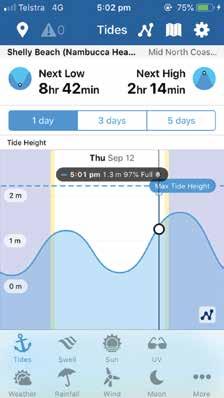
SCOTT THOMAS.
Mackerel are a much sought-after sportfish with an appetite for lures, fly and baits. The name ‘mackerel’ is given to several species of fish. For example, the small baitfish ‘slimy mackerel’, or internationally, there are several species of small mackerel. Most of these make excellent bait and are also gaining a strong following among seafood lovers for their oily flavour and cooking qualities. But they’re not much of a sportfish and are typically caught on small-bait jigs. For the purpose of this article, and in general terms, mackerel is the name given to a variety of fast and voracious fish that inhabit the tropical and sub-tropical waters of Australia along with many other countries.
Spanish mackerel (Scomberomorus commerson) are easily the most soughtafter species of mackerel. They’re also called narrow-barred Spanish mackerel. These fish are very similar to the king mackerel found off the US and parts of Central and South America.
Spanish mackerel are found in Australia and across the Pacific and parts of South East Asia, the Middle East and even the East Coast of Africa. In Australia, they’re considered a tropical species, although their range typically dips below many other tropical species and it’s not unheard of to find mackerel in unusually southern locations.
For the most part, however, Spanish mackerel are found from around the Mid North Coast of NSW all around the top of Australia and down into Western Australia as far south as Perth. Spanish mackerel grow to about 50kg, although are more commonly caught between 5 and 20kg. Spanish mackerel or ‘Spaniards’, are a fast and aggressive fish that responds well to trolled and cast lures, live baits and even flies. More on tactics later.
Another popular mackerel variety is the spotted mackerel (Scomberomorus munroi). ‘Spotties’ are found in Australia in roughly the same area, though they tend to not venture as far south as Spaniards. Spotties are smaller and only grow to about 10kg and more commonly caught up to 4 or 5kg. They
act similar to their larger cousins and take a variety of lures, baits and flies. They’re also renowned as a fantastic eating fish, hence their popularity with fishos despite their smaller size.
The se two mackerel are easily the most popular and common types found in Australia. However, there are more. These include the grey mackerel, shark mackerel and school mackerel. These are all quite similar in shape to the Spanish mackerel, although they typically don’t grow as large. They’re usually defined by their different colours. For example, the Spanish mackerel has chrome sides with stripes, whereas the shark mackerel has a green colour and the grey mackerel has less chrome and a duller grey colour. They’re known for not tasting as good as the Spanish and spotted mackerel.
Where
Mackerel are typically found in the tropical and sub-tropical areas around Australia. More specifically, they’re found anywhere from rocky headlands and even some estuaries and extend to outer reefs and deeper water.
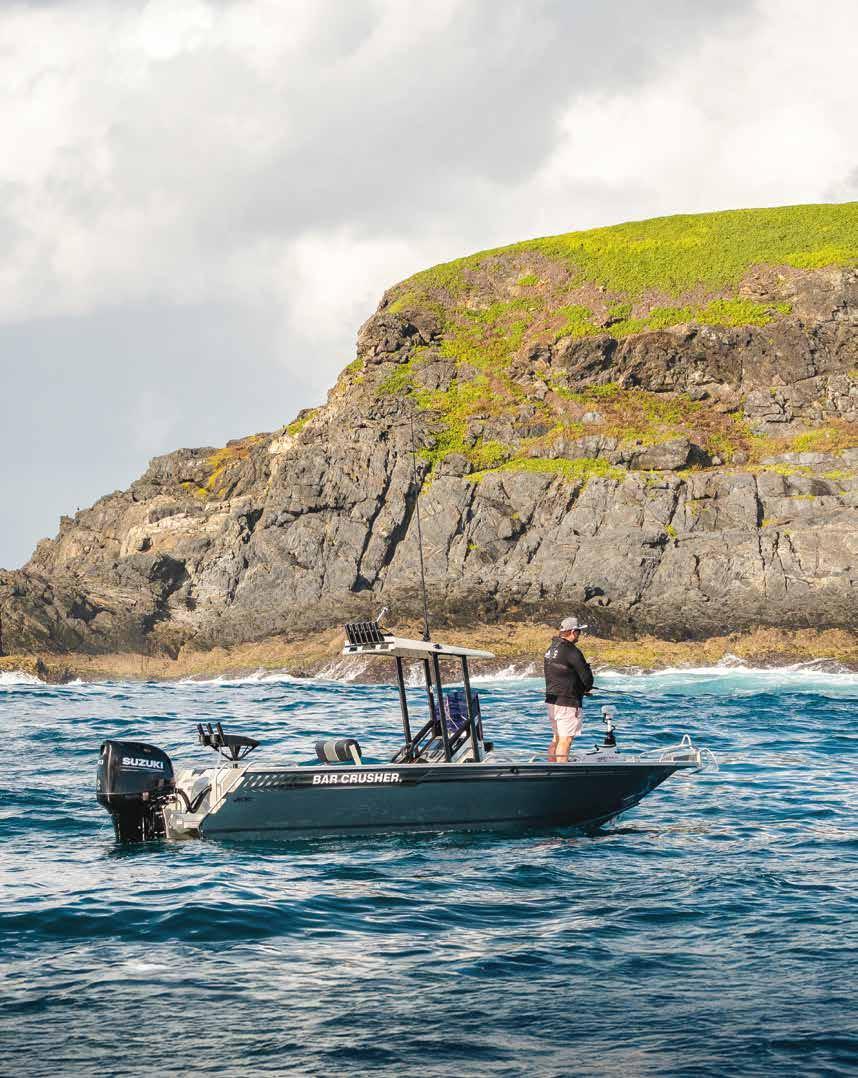
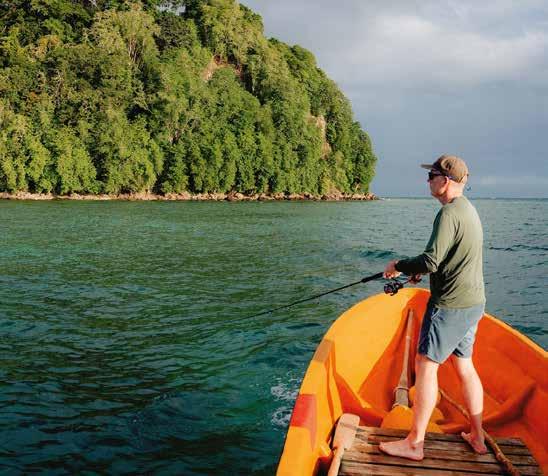
You don’t need to venture far offshore for mackerel. They can be found close to shore and most of your efforts will be in shallow water up until about 50 metres deep. It makes them a great species for targeting in smaller boats or for larger boats when the weather doesn’t permit longer trips offshore. In NSW, mackerel travel south with warm currents and are usually caught between Christmas and May each year. Further north in the tropics, they’re more of a year-round prospect, although that depends on specific locations and currents.
Another important consideration is seasonal closures. Queensland introduced a short, closed season a couple of years back to help stocks of these popular fish bounce back. Check the Queensland Fisheries website for up-to-date information on closed seasons. On that note, regardless of state, it’s best to check your local rules and regulations for bag limits and possible seasonal closures. Given their aggressive behaviour, it’s possible to catch a number of fish in a small timeframe, so it could be easy to go beyond your bag limit.
Mackerel are voracious feeders. If you put a lure, fly or bait in front of a mackerel it will often eat it first and ask questions later. Trolling for mackerel is a favourite tactic. In basic terms, this involves towing a lure at a reasonable speed behind the boat. In the case of mackerel, it can be anywhere from around 8 to over 15 knots. The mackerel won’t have a problem eating a lure at this pace. The only consideration is whether your lure will still work at a faster speed. Some of the better trolling lures such as the Halco Laser Pro and Halco MAX will work at a fast speed and mackerel love them! Trolling is so effective simply because you’re covering so much water and the lure is consistently in front of fish.
That said, casting can still catch fish and throwing popper and sticksbaits across reef edges or at schools of mackerel is effective and visually very exciting. Spanish mackerel have a habit of launching themselves vertically from the water with your lure in their mouth. Unfortunately, they often drop their lure on their way back drown. It’s spectacular
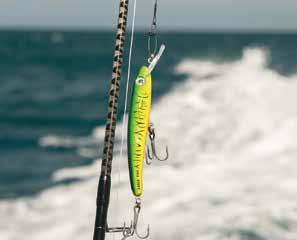
to watch! They also ‘free jump’, meaning they jump randomly when not hooked and there are reports of boaters being hit by jumping mackerel. Tragically a boater died a few years ago off Darwin when a mackerel randomly jumped into his boat at speed. It was a freak accident and very uncommon. But it goes to show the behaviour of these fish.
On that note, mackerel also have razorsharp teeth! Do not underestimate how sharp and dangerous these teeth are. I know fishos who have received serious lacerations from mackerel. Never hold them head down above bare feet and always make sure they’re under control once onboard your boat. And never put your fingers near their mouth.
Mackerel also love bait, especially live bait. If you make the effort to get up early and catch live bait, it will increase your chances of success, especially when the mackerel are being fussier. Live baits such as slimy mackerel and yakka or yellowtail work well. Ask your local tackle shop for advice on rigging baits and ask whether they have any prepackaged rigs with wire attached. These are made specifically for chasing mackerel.
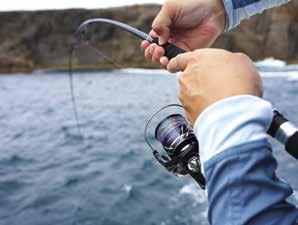
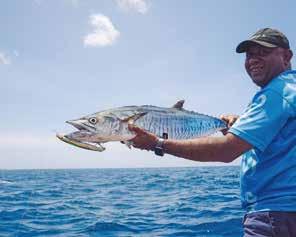
Many people prefer using wire and there’s no doubt the success rate after capture increases. Everyone who fishes in the tropics has experienced being ‘snipped off ’ by a mackerel. If you use a monofilament or flurocarbon leader, you will often get more bites because the leader is less visible, but once hooked you have a greater chance of break off.
Fly fishing is another less common method. I would suggest using big ‘Deceiver-style’ flies and throwing them around schools of smaller Spaniards or spotties. It’s great fun! Your local tackle store will also give you advice on the overall best gear to use for mackerel. What mackerel species you’re chasing and whether you prefer lure, bait or fly will dictate what you use. Typically for lures and bait, a medium to heavy spin outfit with 50lb braid will work well.
One of the reasons these fish are so popular, and also the reason spotties and Spaniards are more popular than other varieties, is their eating qualities. Mackerel has a beautiful white flesh. Each fish has plenty of
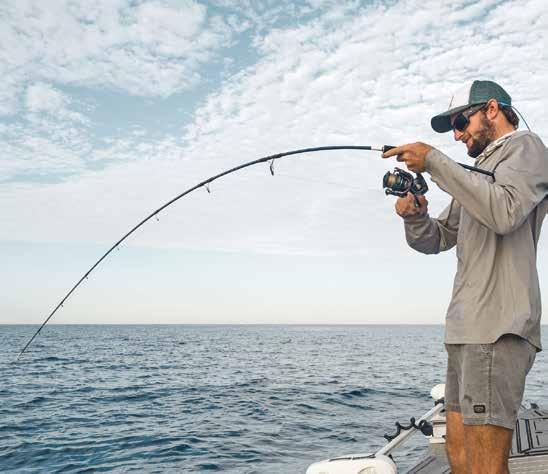
HOLD ON! MACKEREL CAN FIGHT HARD.
meat and they’re easy to clean. Simply take a fillet off each side or cut into steak s across the bone. It’s simple to cook, or in some cases, not cook at all. It tastes great raw and even smoked or cured in lime juice.
One word of warning, some of the bigger mackerel carry ciguatera. This is a toxin that’s in some reef species and often found in larger fish that have accumulated it over the years while eating smaller fish. It can cause serious food poisoning and should be avoided at all costs. Personally, I avoid it by releasing the really big fish and just taking the small to medium fish home for a meal. Ciguatera is also found in fish such as coral trout, red bass and other tropical species.
Mac attack
Mackerel are relatively common in the tropics and a real prize for fishos at the southernmost extremes of their geographic range. They’re an inshore species and accessible for those with smaller boats around shallower water, headlands and tropical estuaries. They fight hard, love lures and taste great. Little wonder they’re such a popular sport fish!
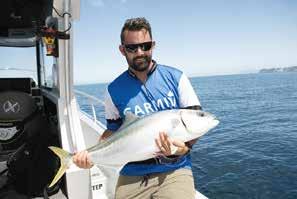
Mackerel aren’t so common in New Zealand. There are reports of the odd Spaniard and spotted mackerel being caught, but consistent catches are unlikely. Not to worry! New Zealand is probably the best place on Earth to catch yellowtail kingfish and the tactics you use are all pretty similar. Kingfish are probably more structure orientated and can be found further offshore. Otherwise, if you enjoy catching mackerel, you will also enjoy catching kings! Kingfish also taste great on the plate
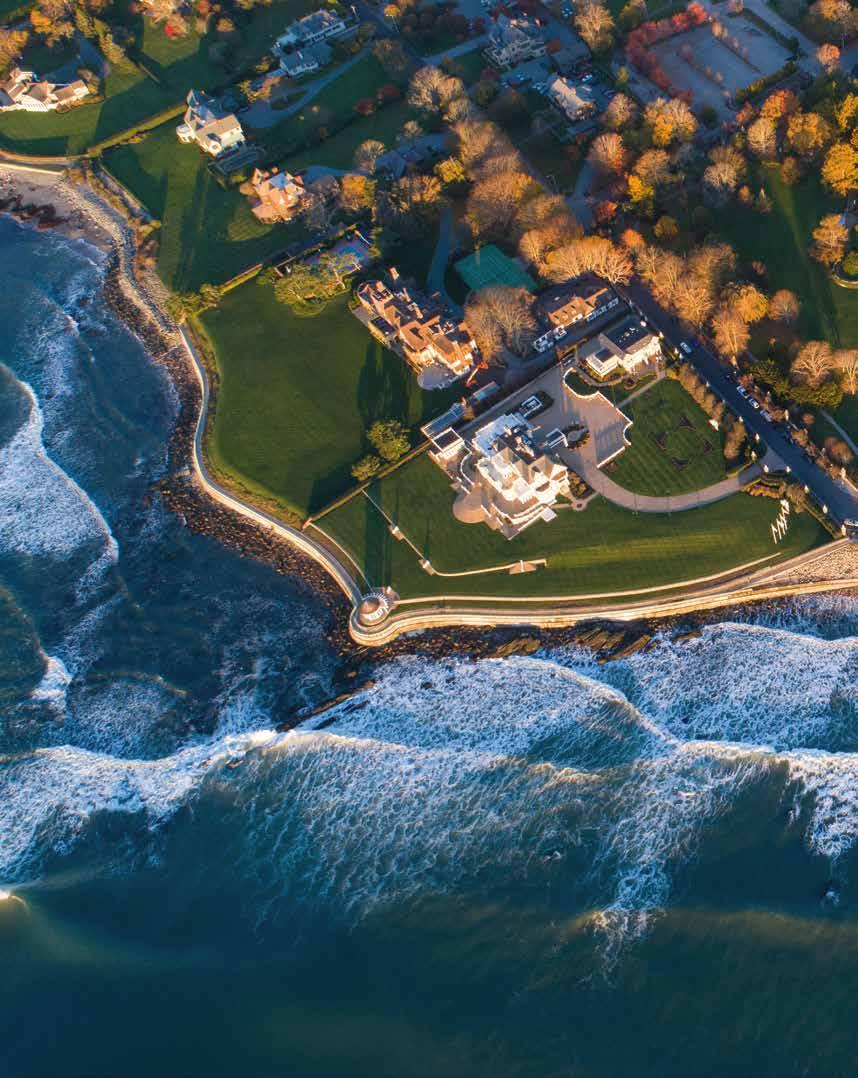
FOR LOVERS OF SAILING, NEWPORT, RHODE ISLAND HAS IT ALL, AND THEN SOME, SAYS HELEN HAYES.
The sunset is glorious as we reach across Newport’s Narraganset Bay aboard the good ship Madeleine, a sleek two-masted schooner. I am amazed by how many boats there are in this legendary New England sailing town, docked at various wharves, in marinas and resting on moorings like a flock of migratory birds. They range from massive superyachts to small fishing boats, with many elegant vessels from days gone by, and yachts and cruisers of all shapes and sizes. It is no surprise, as Newport is known as the ‘sailing capital of the world’, and is awash with
sailing legends from Captain William Kidd to Dennis Conner, our own John Bertrand, and Joshua Slocum, who sailed into Newport Harbor in 1898 becoming the first man to sail single-handedly around the world. A fun fact – we named our son Josh after him.
We board the Madeleine at Bowen’s Wharf, one of many vibrant wharves off America’s Cup Avenue, complete with a fleet of nautical boutiques, bars and restaurants. We sail out past the stunning New York Yacht Club, past Goat Island, before cruising past Fort Adams State Park – named after President John Adams – the
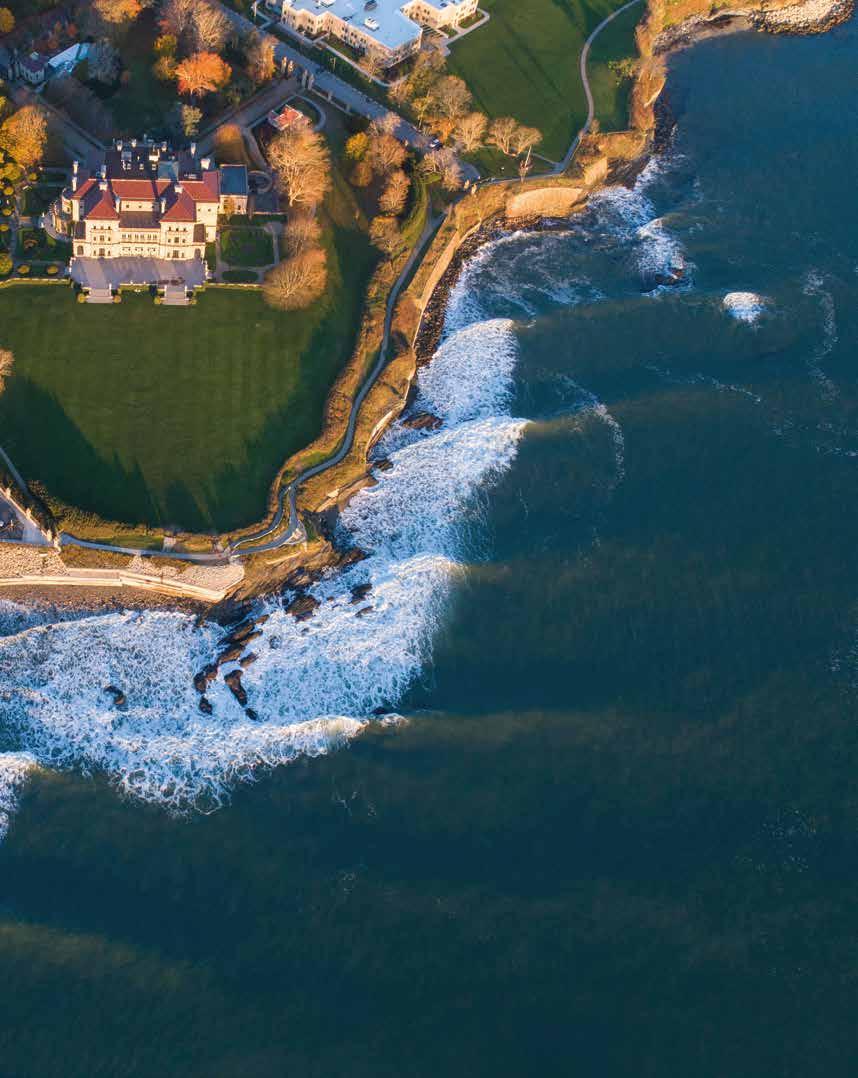
largest coastal fortification in the United States. Eisenhower House is in the grounds, where President Dwight D Eisenhower spent summers in the ‘50s. We sail past Hammersmith Farm – the childhood summer home of Jacqueline Bouvier, and where she married John Fitzgerald Kennedy (JFK). We sail along the coastline of Jamestown and spot Clingstone House, a house that sits on a tiny rocky island, and marvel at Newport Pell Bridge and the nearby Rose Island Lighthouse. Afterwards, we dine at 22 Bowen’s, an excellent steakhouse on the wharf.
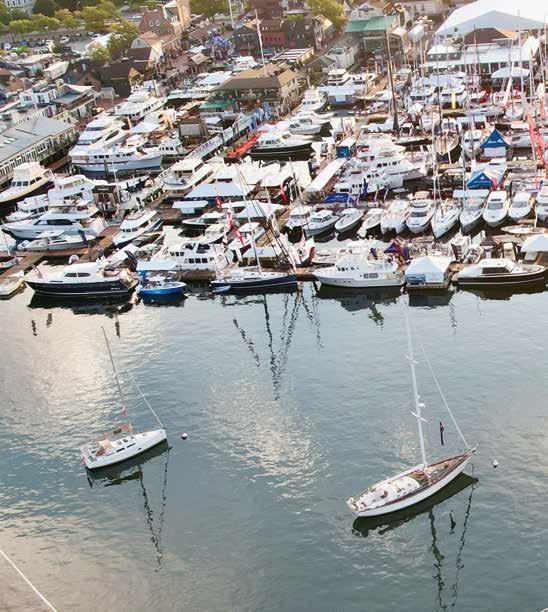
Newport, established in 1639, is in Rhode Island, the smallest state in the USA, being 77kms wide and 60kms long. It is known as the ‘Ocean State’, with more than 36,000 recreational boats registered. To give you an idea how much sailing is revered here, locals are taxed for toilet paper, but not for boats. Apart from Madeleine, there are many options to go for a sail, including on some historic America’s Cup winners and contenders.
Newport was home to the America’s Cup between 1930 and 1983, when the New York Yacht Club’s 132-year reign came to an end at the hands of John Bertrand, Ben Lexcen and Alan Bond. Who will ever forget those crazy scenes? It still gives me tingles. You can organise a charter on Intrepid, which won the Cup in 1967 and 1970, defeating Australian yachts Dame Pattie and Gretel II. You can also go out on 1962 winner Weatherly, one of only three surviving wooden America’s Cup defenders in the world. Newport maintains a
strong connection to sailing and racing, with numerous sailing events and regattas still held there. You can do a tour of the mansion-like New York Yacht Club – just check the website (nyyc.org/harbour-court).
You can learn more about the America’s Cup and America’s sailing history with a visit to the Newport Sailing Museum and National Hall of Fame. Located in the historic Armory building, built in 1894, it was also the America’s Cup press office. The Museum tells of the indomitable spirit of sailors who shaped America’s maritime past. In the foyer, a plaque reads “Believe me, my young friend, there is nothing – absolutely nothing – half so much worth doing as simply messing about in boats.” This famous quote from Kenneth Grahame’s Wind in the Willows, says it all.
There is an America’s Cup Hall of Fame inside, and you will see some familiar faces among the Legends of Sailing display, including Sir James Hardy, John Bertrand
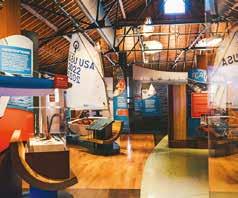
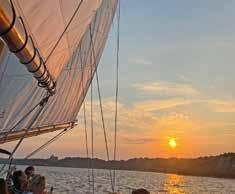
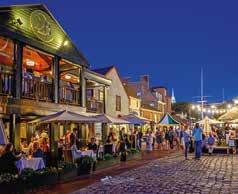
and Alan Bond. What I love about the museum is that is appeals to everyone from grassroots sailors to old salts, inspiring kids and educators to grow the sport of sailing. When you enter, you’re given a bracelet that lets you participate in all kinds of high-tech exhibits. You can measure your grinding strength, design a boat, try steering with both tiller and wheel, work with other visitors to ‘sail’ a boat, and even design a burgee you can take home.
If you’re in Newport from 11-14 September, you’ll find the Newport International Boat Show (newportboatshow.com) along the waterfront. It is the 54th year of the show, and will feature hundreds of exhibitors, dealers, and manufacturers, showcasing a vast array of powerboats and sailboats ranging from 15 to 90 feet, alongside a comprehensive selection of marine equipment for boaties.
SAILING 12M’S.
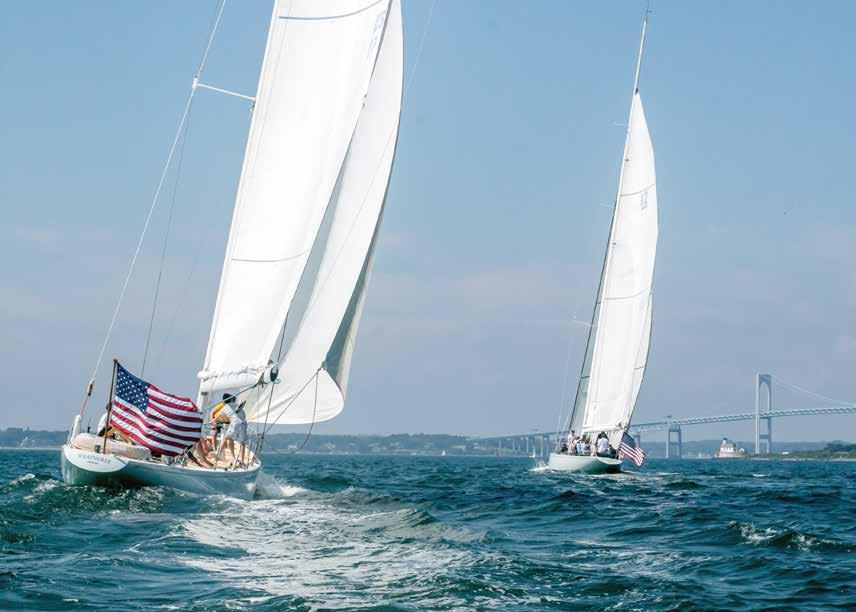
Famous Australian yacht racing champion Mark Richards is making waves in the US in his role as CEO and Chief Designer of Grand Banks and Palm Beach Motor Yachts. The company has just purchased Casey’s Marina at Spring Wharf in the heart of Newport, Rhode Island. Renamed as the Grand Banks and Palm Beach Motor Yachts Marina, the property will offer reserved berths, haul-out capabilities, a private lounge with boutique guest amenities, and on-site service capabilities delivered with the same craftsmanship and attention to detail that defines every Grand Banks and Palm Beach Motor Yacht.
“My ocean-racing experience has shaped this company’s direction, bringing true innovation and technology to a classic form,” says Richards. “This isn’t just a marina, it’s a place that brings our vision to life.” The purchase also includes Waites Wharf, which is adjacent. With nearly a century of combined boatbuilding heritage and a legacy steeped in ocean-racing performance and long-range cruising, Grand Banks and Palm Beach Motor Yachts will reveal the full marina vision, along with additional exciting announcements, at the Newport International Boat Show this September.
Visit grandbanks.com; palmbeachmotoryachts.com
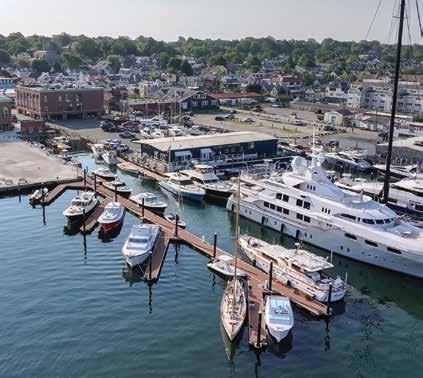
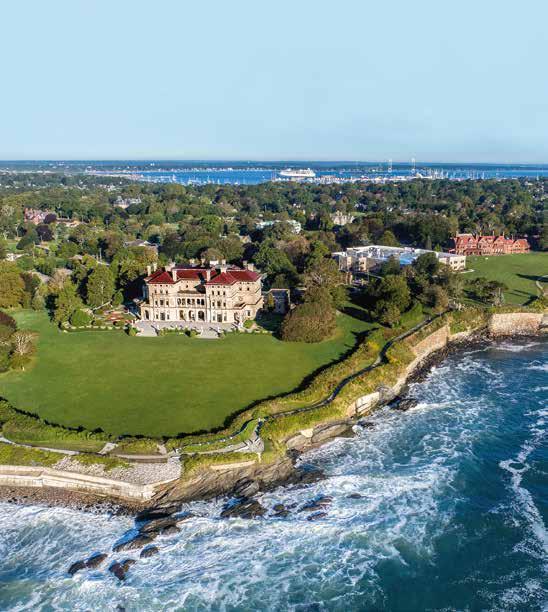
There is plenty to do off the water in Newport. An absolute must is to visit some of the ‘Gilded Age’ mansions, many of which have featured in The Gilded Age HBO series. The Gilded Age refers to the period from the end of the Civil War to WW1. It was a time of tremendous growth, when the elite of New York built what they called ‘cottages’, in which they spent their summers. Several of these mansions are available to visit through Newport Mansions, including The Breakers, which is perhaps the best known.
We sign up for a private tour of The Breakers, and our guide Maria D’Amario has our heads spinning with the sheer decadence of the property, and the story of the Vanderbilt family. The Breakers was built by America’s pre-eminent architect for Cornelius Vanderbilt II and his wife Alice – one of the richest families in the world. Work took 28 months, with the property unveiled in 1895. It has prime position on the coast, and has 70 rooms, including 48 bedrooms for family and staff. There are 27
fireplaces, and the house had electricity and gas for lighting. Back in the day, you would arrive by horse and carriage, be announced, and then move into the Gentlemen’s or Ladies’ reception room. The mansion is styled like an Italian palazzo, which is evident when you step into The Great Room with its 50ft high ceilings. It is one jaw-dropping room after another.
The Formal Dining Room with its Baccarat crystal chandelier and 34-seat dinner table, the Billiard Room with its exquisite tile mosaics, the Music Room, the Library, the kitchen, which had a safe that held 1000 pieces of Tiffany silverware in the Vanderbilt pattern, and then there are the bedrooms. Alice had four closets, as she would sometimes change four times a day depending on the social engagements. There are 20 bathrooms, with baths boasting hot, cold and salt water. Some of the bathrooms had ‘sit spas’, which apparently are great if you have had a long day in the saddle. I’ll take their word for it.


There is so much else to do around Newport. You can stroll past The Breakers and some of the other mansions on the famous Cliff Walk, or choose to go for a walk around Fort Adams State Park, where locals might be fishing. Tennis fans will want to visit the recently renovated International Tennis Hall of Fame, while seafood lovers will be in fish heaven with dreamy meals of clam chowder, lobster rolls, clam cakes and oysters. There are beaches, wineries, historic sites and scenery that will take your breath away.
In fact, everything about Newport, and Rhode Island, is surprising. It is spectacularly beautiful, has a rich history – it was the first colony to be granted religious freedom back in 1663 – has a vibrant culinary scene, many wineries, and a host of significant buildings. With so much to offer, Newport is perhaps undergoing a new Gilded Age, one that is tied in with the extravagant beauty of the sea and the wondrous coastline.

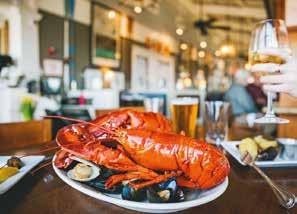
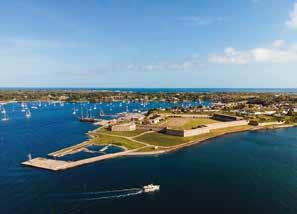
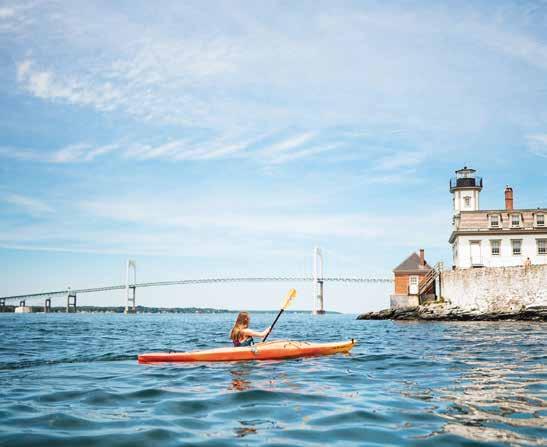
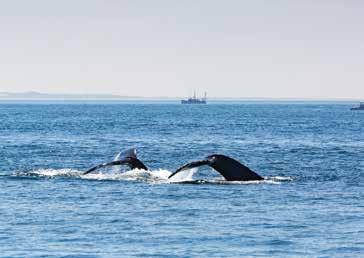
We join Boston Harbor City Cruises for a whale watching cruise to Stellwagen Bank Marine Sanctuary, which is home to humpbacks, finbacks, and minke whales. Naturalists from New England Aquarium share their knowledge and tell us all about the area and the sea life, and we are lucky, spotting a humpback who puts on a bit of a show for us.
Visit cityexperiences.com/boston; meetboston.com
This is like going back in time. It’s a recreated 19th century seafaring village using actual historic buildings. There are many priceless vessels, including the Charles W. Morgan, built in 1841. It is the last wooden whaleship in the world and when we go aboard, it is quite astonishing to hear and see what it would have been like. Those aboard would be away up to 11 years. The Museum keeps the historic trades needed to restore old ships, with blacksmiths, coopers, printers, and shipwrights working on site.
Visit mysticseaport.org; ctvisit.com
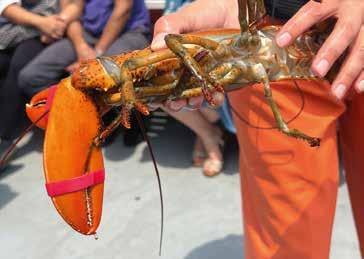
We head out from a marina in Kennebunkport on a Ragusa Lobster Tour. New England is prime lobster territory and we learn all about them on this hands-on tour. Each lobsterman has his own vibrantly coloured lobster pots, so you can easily tell which ones are yours. We pull in a few lobsters, learning all about them from the knowledgeable guide on board. We also get to see some of the famous beaches, coastal mansions and the Bush Compound.
Visit rugosalobstertours.com; visitmaine.com
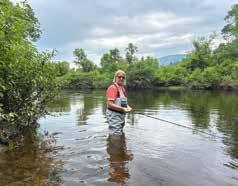
We stayed at the luscious Hill Farm Inn, and one of the activities you can do is fly fishing on the Battenkill River. Local guide Brew Moscarello from Trico Unlimited taught us to cast in Hill Farm’s pond before we follow a deer and bear trail to the river where brown and brook trout reside. This river is known to be challenging with its currents, so that is my excuse as to why I didn’t catch anything besides a branch. It was so relaxing, and Brew really knows his stuff.
Visit hillfarminn.com; vermontvacation.com
ON LAKE WINNIPESAUKEE IN WEIRS
This 2.5hr cruise on ‘Lake Winni’ on the historic M/S Mount Washington shows off the beauty of some of the lake’s 265 islands. It is the largest lake in New Hampshire and is strikingly beautiful with its wooded foreshores, clear water and charming lakeside towns. The M/S Mount Washington has been taking people cruising here since 1872. We have a fantastic lunch on the ship as we hear about the islands we are passing. Horse Island, Three Mile, Birch, Five Mile, Steamboat, Long Island and Sandy Camp are just some of them.
Visit cruisenh.com; visitnh.gov
The Brenton Hotel is the newest luxury boutique hotel in Newport, with 57 beautifully appointed rooms and suites. Everything has a nautical feel, but it is done in an elegant way. My room is stunning in blue and sand hues, and I have a little verandah with views over the harbour and Long Wharf. The hotel has many lovely touches, including free ice cream, a rooftop bar and friendly staff.
Visit brentonhotel.com

Fly in and out of Boston for your Newport trip, it’s just over an hour’s drive away. The Liberty Hotel is the place to stay in Boston as it has wow factor in spades. Once the Charles Street Jail, the building has been painstakingly renovated to maintain the landmark building while curating a world-class hotel. It is so beautiful you won’t want to break out. My room has views over the Charles River, with a fleet of red-sailed boats buzzing about. Do have a drink in Alibi Bar and dine in Clink Restaurant, with their original jail cell doors, and admire the original walls of the transformed lobby.
Visit libertyhotel.com



SHORT BREAKS CLOSER TO HOME.
Dunedin, New Zealand is a wonderland for fishos, surfers and sailors. Go kayaking and paddleboarding on tranquil Otago Harbour, go for a surf at St Clair Beach, go fishing, or take to the water to spot fur seals, sea lions and Northern Royal albatrosses on a Monarch Wildlife Cruise.
Visit dunedinnz.com
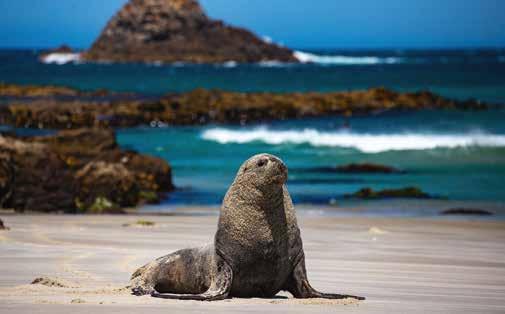
Fremantle, Western Australia played host to the America’s Cup in 1987, after Australia 11’s heroics in 1983 in Newport. The sailing grounds are excellent, with a cruise out to Rottnest Island a must, to see the gorgeous beaches and the disarmingly cute quokkas. Visit the Maritime Museum in Fremantle to see Australia 11 and her winged keel.
Visit visitfremantle.com.au
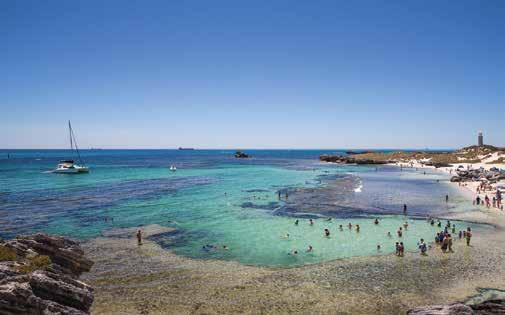
The Whitsundays, Queensland is one of the world’s most idyllic cruising grounds with 74 islands dotting the blue waters of the Coral Sea and the delights of the Great Barrier Reef. Charter a yacht and island hop, or stay on Hamilton Island for the best of both worlds.
Visit tourismwhitsundays.com.au
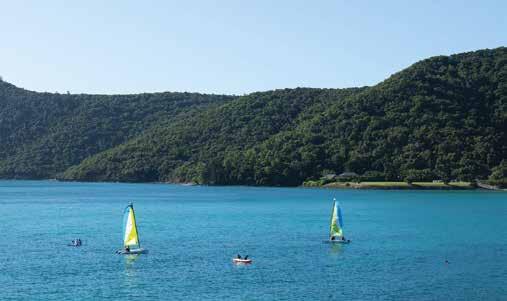
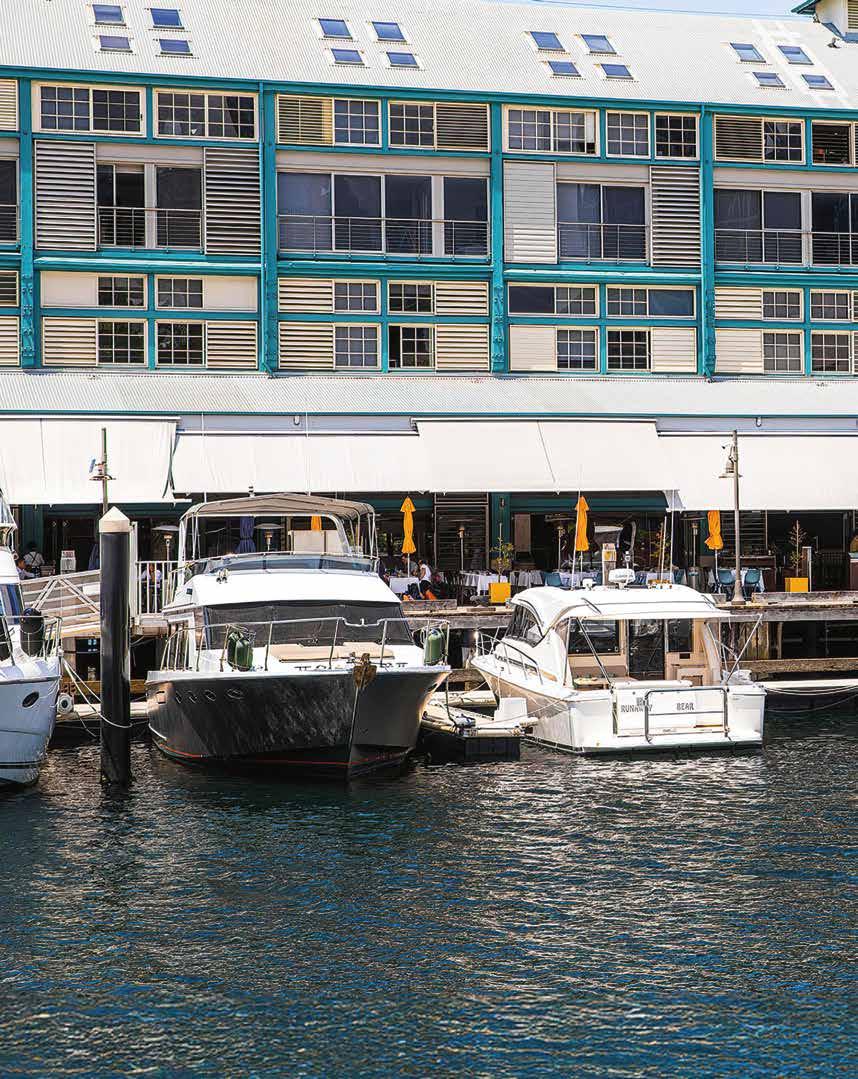
OTTO RISTORANTE IS CELEBRATING 25 YEARS AT WOOLLOOMOOLOO’S FINGER WHARF IN SYDNEY – AND THE FUTURE IS JUST AS BRIGHT AS ITS PAST.
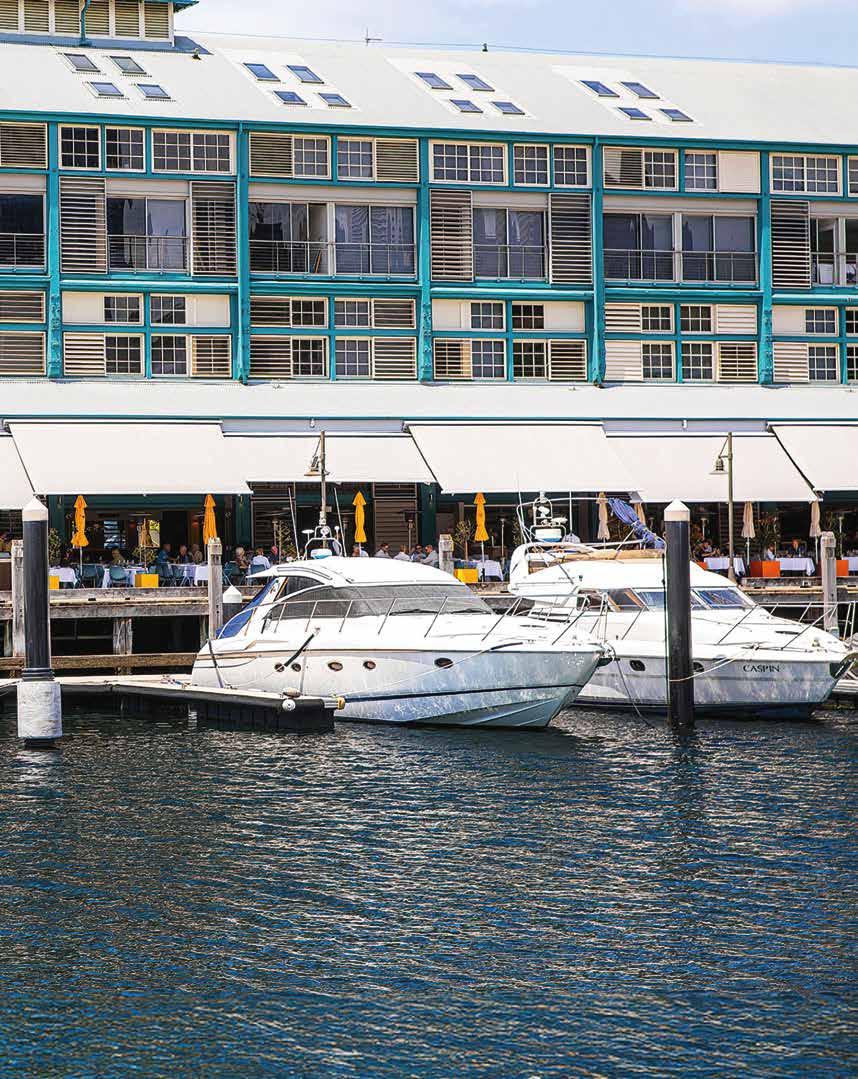
Many divine evenings have been spent over dinner and drinks at Sydney ’s OTTO Ristorante. It is legendary – and is also the go-to for those who love a long lunch. Sitting on the Finger Wharf at Woolloomooloo, Sydney Harbour lapping underneath its historic floorboards, and a sunset giving everything a golden glow, it is hard to top.
Francesco Bondi, the Restaurant Manager at OTTO, says that Woolloomooloo’s Finger Wharf is one of those rare Sydney locations where history and natural beauty meet. “It stretches out into the harbour, so you’re
surrounded by water on both sides, with views across to the city skyline and the Royal Botanic Garden Sydney. It has this cinematic quality, superyachts bobbing in the marina, people strolling along the boardwalk, sea breeze in the air. There’s a real buzz to it, but it’s also peaceful. Being here feels like you’re part of the fabric of Sydney: past and present.”
Head Chef Richard Ptacnik says diners can expect “modern, elegant Italian cuisine with a menu that blends traditional Italian flavours, with contemporary techniques with a focus on fresh, high-quality ingredients, from local suppliers and many of which are imported
HEAD CHEF RICHARD PTACNIK SHARES SOME TOP ADVICE ABOUT OYSTERS.
• Look for oysters with tightly closed and undamaged shells –never eat an oyster that arrives open. Heavier oysters tend to be full of liquid, a good sign of freshness and plumpness.
• Always buy from a reputable fishmonger or directly from the farm, and ask them about the origin and harvest date. Ideally, oysters should be eaten within five days of harvesting to ensure peak freshness, within 24 hours, for the very best flavour and texture. Fresh oysters should smell clean and briny like the ocean, rather than fishy.
• Think safety first – oysters demand respect, and a slip can cause serious injury. Always use a towel or glove to protect your hand, and a short, blunt oyster knife designed for prying, not slicing.
• Rinse the oyster under cold water and scrub the shell to remove debris. Place it flat side up on a towel, hinge exposed. Firmly grip the oyster with your non-dominant hand, insert the knife tip into the hinge, and wiggle it gently while applying steady pressure and a slight twist until it pops open. Don’t force or jab.
• Slide the knife along the top shell’s inside, to cut the adductor muscle, then remove the top shell. Carefully detach the oyster from the bottom shell without spilling its natural briny juice (the best part!).
• Remove any shell fragments, and serve on crushed ice with lemon wedges, or dress them up with a Venetian Chardonnay vinaigrette, as we do at OTTO.
• Our Venetian chardonnay vinaigrette starts with finely dicing (or brunoising) cucumber. Add salmon roe, a splash of chardonnay vinegar, chopped chives, and sugar syrup. Gently combine, then spoon over freshly shucked oysters just before serving. It’s a bright, elegant dressing that enhances the natural sweetness of the oysters without overpowering them.
directly from Italy.” Reflecting on this year’s 25th anniversary Bondi says the milestone has been “incredibly meaningful for the entire OTTO team. It’s a milestone that speaks to our commitment to consistency, quality, and creating memorable experiences for our guests. For us, it’s not just about longevity, it’s about evolution. We’ve grown with our guests, with the local community, and with the Sydney dining scene. It’s a chance to reflect with pride, but also to celebrate the people; our team, our loyal diners, and our producers, who have made OTTO what it is today.”
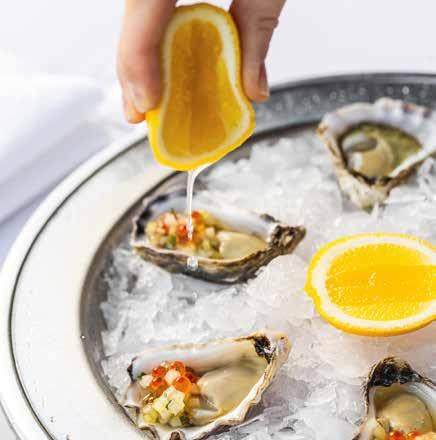

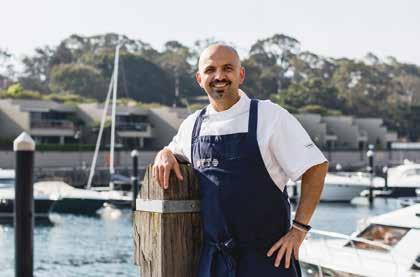
HEAD CHEF RICHARD PTACNIK SHARES HIS CULINARY APPROACH AND CONNECTION TO THE WATER.
How would you describe your food philosophy at OTTO Ristorante?
The food philosophy can be described in three guiding principles. First, simplicity and letting the ingredients speak. Secondly, seasonality and deep connection to the rhythm of the seasons, meaning the menu is in a constant state of evolution, changing to reflect what’s best at local markets and from trusted suppliers. Lastly, this is all celebrated in harmony with Italian tradition and integrity, and with respect for origin and technique.
What is your approach to produce and local ingredients, especially seafood?
My approach is deeply rooted in respecting freshness and simplicity. Local, seasonal, sustainable – working closely with local Australian producers, farmers, and fishmongers to source the freshest seasonal ingredients. On the plate, it is all about simplicity and elegance.
Sydney’s dining scene can be fickle. What factors do you attribute OTTO’s longevity to?
Consistency and authenticity are everything. OTTO has never chased trends, it’s always been about warm hospitality, classic yet elevated Italian food, and a beautiful setting that invites you to slow down and enjoy the moment. We’ve built strong relationships with producers, many of whom we’ve worked with for years, and we invest in our team, ensuring the service is knowledgeable, genuine, and welcoming.
Do you enjoy spending time on the water?
Yes, I do. I’m a mad surf ski kayaker, kayaking five times a week all year around at 5.30am at Sydney Harbour Surf Club in Mosman.


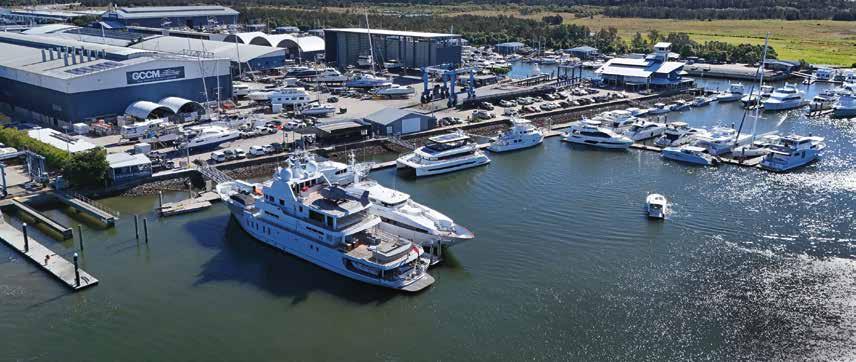
THE WHS PROPERTY AND COMPLIANCE MANAGER AT GCCM TALKS ABOUT MARINE SAFETY AND HER WIN AT THE NAUTILUS MARINE INSURANCE MARINA OF THE YEAR AWARDS.

Please share a snapshot of your career history. I’m a Work Health and Safety professional with 18 years of experience across high-risk industries. Since 2022, I’ve served as the WHS Property and Compliance Manager at Gold Coast City Marina & Shipyard (GCCM). I aim to positively influence the safety culture of over 90 marine-based businesses and thousands of visiting contractors.
What led you to follow this professional path and how has your career evolved?
Growing up as the only girl among five brothers, I became comfortable navigating malecentric environments from a young age. That early experience gave me the confidence to step into high-risk industries like mining and construction as a university graduate where I built a strong foundation in resilience. While I’m still relatively new to the marine industry, I’ve embraced the challenge of applying my safety expertise in this dynamic environment. My role has allowed me to evolve not just professionally but personally, broadening my understanding of marine operations while continuing to champion a culture of safety.
What do you find most rewarding about your role at GCCM? Every day at GCCM is dynamic and multi-faceted, which is what makes my
role so interesting. I wear many hats balancing safety leadership with responsibilities across environmental compliance, facilities and infrastructure management, property management, security and aspects of human resources. The most rewarding part of my role is knowing that the work I do directly contributes to protecting both people, the environment and property. I get to make a real impact, whether it’s supporting a business through compliance challenges or improving systems to protect our people. Why are safety considerations so important to boating? Safety and compliance are not the most glamorous parts of boating, but they are the foundation of a successful and stress-free experience on the water. At GCCM, we understand that for boat owners, a vessel is more than just a possession, it’s a passion, an investment and often a second home. From lifting and storing to servicing, we follow strict procedures, train our team thoroughly and use systems designed to protect your boat and everyone around it. Boaties choose GCCM because they trust everything is going to be done right, not just for compliance but because we genuinely care.
What drives you and the team at GCCM?
What drives us is knowing that every vessel we care for represents a significant financial and emotional investment for its owner. Whether it’s a family cruiser, a luxury yacht, or a working vessel, we’re passionate about creating an environment where those investments are protected through high safety standards, reliable systems and a culture of care.
My role is not only to help protect the vessels but more importantly, to protect the
people who work on them. These are skilled professionals entrusted with maintaining and caring for our customers’ valued assets and they deserve to work in an environment where their wellbeing is never compromised.
You won the first Industry Woman of the Year Award at this year’s Nautilus Marine Insurance Marina of the Year Awards. What did the win mean to yourself and the whole GCCM team? Winning was such a proud moment for me and I was so excited to tell my five-year-old daughter. The award is more than just personal recognition; it is a sign that the industry is committed to raising the bar with safety and environmental standards. That shift is something both the GCCM team and I have worked hard to be a part of, and it was incredibly validating to see it acknowledged. Is giving back to the next generation of women in the marine industry something you are passionate about? It’s incredibly encouraging to see more women stepping into non-traditional roles, particularly in the marine industry. If I can help pave the way for even one woman to feel more confident pursuing a career in this field, then that’s something truly worth getting behind.
Would we find you on the water in your spare time? Coming from a family of boaties I’m lucky enough to spend sunny Gold Coast days on the Broadwater or hitting the local beaches.