Denotes properties still actively managed by MacNaughton
hazel by the galleria Dallas, Texas
university villag e * Seattle, Washington
elm row Portland, Oregon
ellinor ballard Seattle, Washington
2848 on date Honolulu, O‘ahu
1818 anapuni Honolulu, O‘ahu
kapiolani village apartments Honolulu, O‘ahu
hale kalele residences Honolulu, O‘ahu
multi-family living
regal kapolei 12 theater
Kapolei, O‘ahu
kapolei commons
Kapolei, O‘ahu
kona commons
Kailua-Kona, Hawai‘i
moanalua shopping center Honolulu, O‘ahu
hokua commercial Honolulu, O‘ahu
stadium marketplace Honolulu, O‘ahu
pearlridge uptown ii Honolulu, O‘ahu
kapolei parkway shops
Kapolei, O‘ahu
henry street shops
Kona, Hawai‘i
kukui grove center
Lihue, Kaua‘i
kapahulu marketplace Honolulu, O‘ahu
kailua village shops
Kailua, Hawai‘i
maui marketplace
Kahului, Maui
kukui marketplace
Līhu‘e, Kaua‘i
waikele shopping center Honolulu, O‘ahu
retail development
kapi‘olani medical center for women and children Honolulu, O‘ahu
zephyr insurance Honolulu, O‘ahu
pu‘u wai Honolulu, O‘ahu
navy service center Honolulu, O‘ahu
fileminders Honolulu, O‘ahu
ka‘anapali royal Ka‘anapali, Maui
pali momi medical center Honolulu, O‘ahu
ainamalu Honolulu, O‘ahu
1010 wilder Honolulu, O‘ahu
other projects
ulta beauty
foods petco office max pier 1 imports
borders bookstore
jamba juice
p.f. chang’s hawaii
sports authority starbucks blockbuster
costco kmart
retail franchises & leasing
As real estate developers, we naturally consider “gathering” in terms of physical space—the places where people come together to find belonging.
In this second edition of Moment, we pause to reflect on the special activities that are made possible in these spaces, and that are oftentimes shaped or heightened by the design of those spaces, such as acts of ritual, craftsmanship, and celebrating traditions upheld across generations. It is true that what we build shapes how we gather. That has been a focus of all of MacNaughton’s developments.
Our feature on Punahou School’s Thurston Memorial Chapel, designed by Vladimir Ossipoff as a place for refuge and reflection, reveals the potential for design itself to bridge the built environment, the natural world, and beyond. This article is particularly meaningful given the connection that generations of the MacNaughton family and many of our employees have to Punahou School—as students, parents, grandparents, and trustees.
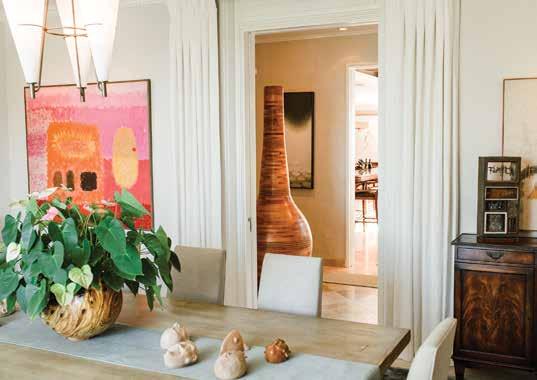
We also explore the art collection of Park Lane Ala Moana, MacNaughton’s most luxurious condominium development to date. It houses one of the state’s largest private art collections, which we curated during the period of development, then gifted to the homeowners association for the benefit of future residents.
We offer a glimpse into the remarkable art collection of Herb and Nancy Conley, comprised of works by artists who flourished in the islands. This sense of stewardship also animates the creative practices of Michael and Pele Bennett, anchored, as they are, in fostering community and championing culture and identity.
At the Hawai‘i State Archives, scholars safeguard records of Hawaiian history, gathering the knowledge and wisdom of those who came before us. Musician Kit Ebersbach’s field recordings, collected from Hawai‘i’s wild expanses, invites us into landscapes many of us have never heard so intimately.
The act of gathering is equally powerful in the hands of cultural practitioners. Lauhala weavers bind leaves of the hala tree into forms that carry both artistry and ancestry. Lei makers gather blossoms—each style holding its own meaning—to express aloha in ways words cannot.
At MacNaughton’s Arden Waikiki restaurant in the Lotus Honolulu at Diamond Head hotel, locally bornand-raised chef de cuisine Jasmyne Wood deftly gathers influences from beyond the islands, as well as her multi-ethnic upbringing in Hawai‘i, to offer bold and unexpected interpretations of multiple flavors intertwined. Elsewhere on the island, chef and forager Yuda Abitbol honors the intimate relationship between place and palate.
Families gather around mochi at the start of a new year, and fishing communities across the islands work together to protect our most endangered shorelines. It is through these generationsspanning traditions that our gatherings take on special meaning and shared purpose.
In offering these stories, we remind ourselves and our readers why we love what we do: to create spaces that enhance connections and encourage the practice and sharing of our most treasured activities, traditions, and values.
Explore. Relax. Repeat.
Duncan MacNaughton
Ian MacNaughton
Moment is published exclusively for MacNaughton
“Continue forward on your path, and lei will surely follow, expressing and enhancing emotions we can’t always say in words.”
on the cover
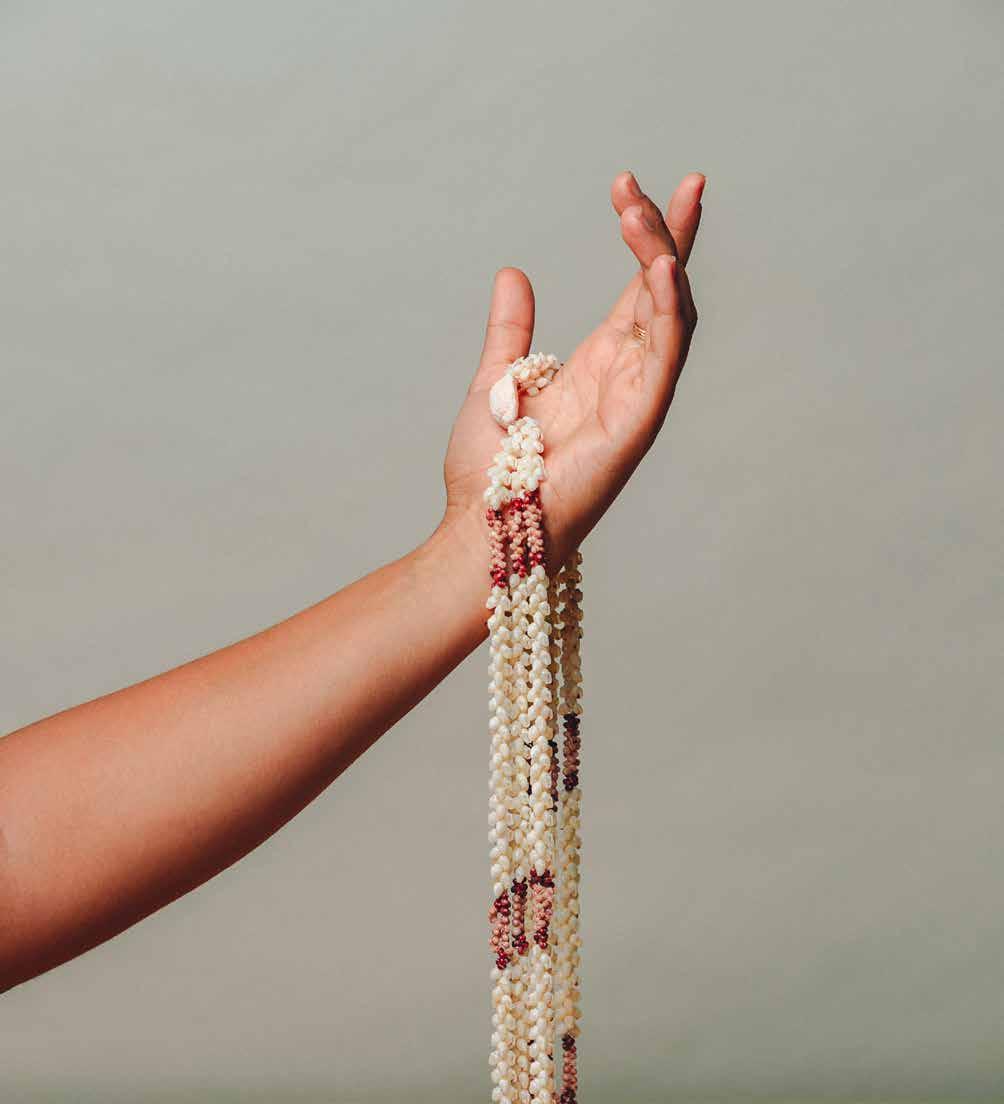
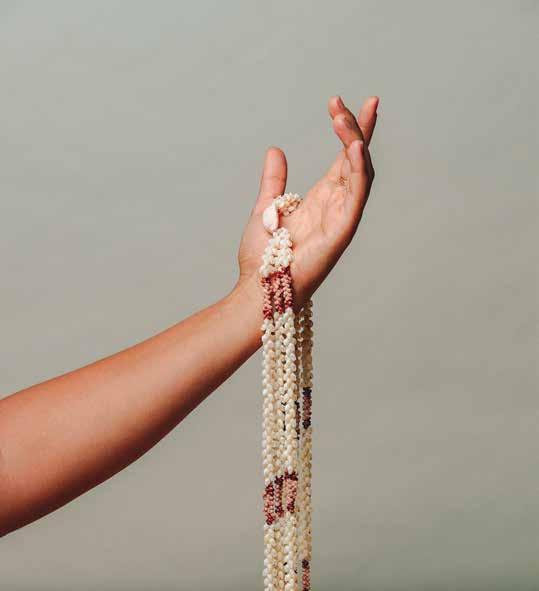
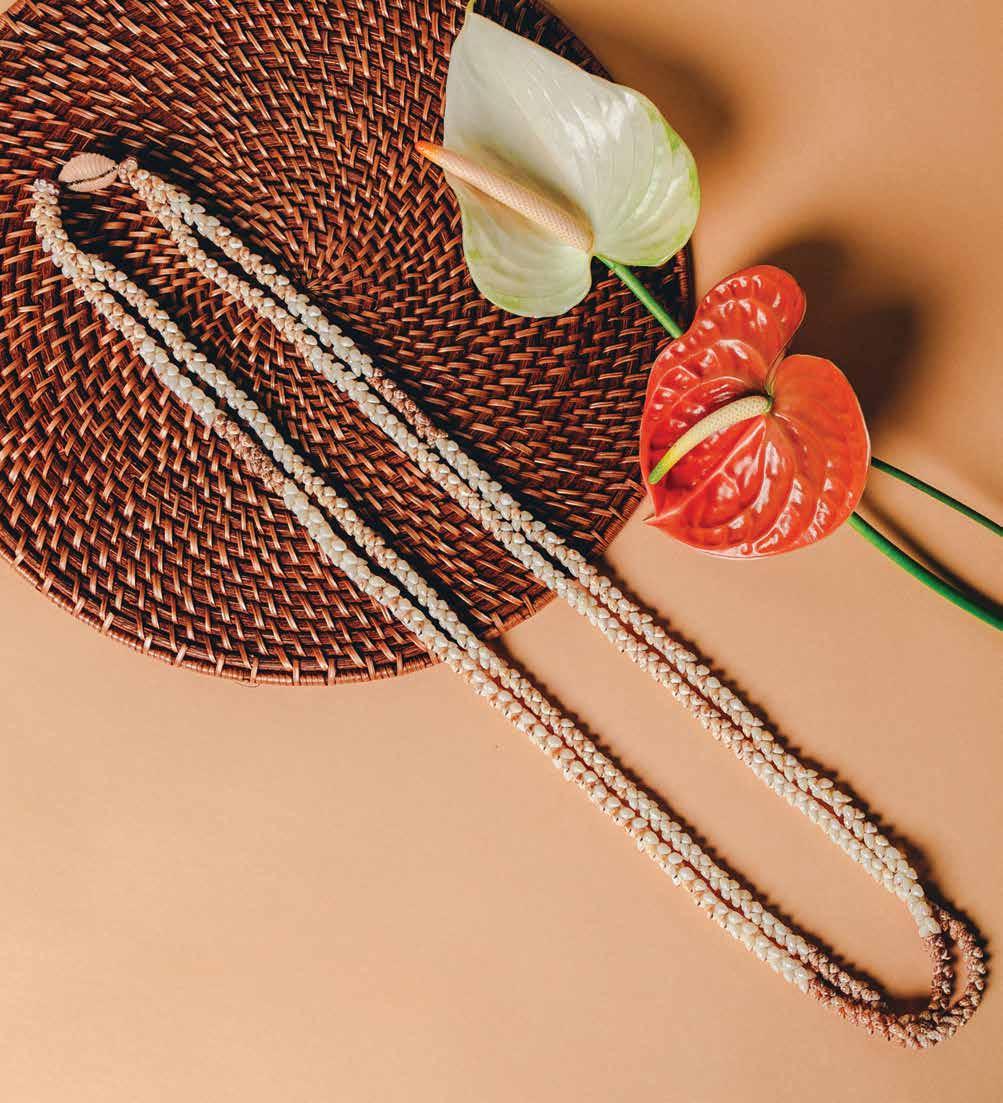
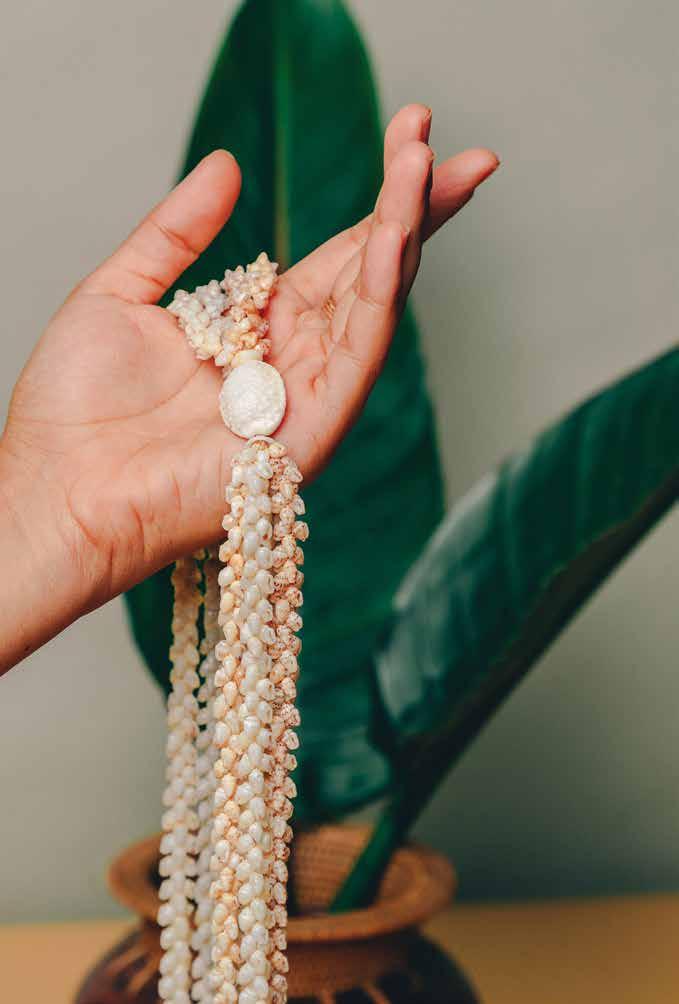
The only lei that can be insured like diamonds, Ni‘ihau shell lei are the most luxurious garlands in the Hawaiian Islands.
Photo by: Andrew Tran
ceo & publisher
Jason Cutinella
partner & gm, hawai‘i Joe Bock
editorial director Lauren McNally
managing designer Taylor Niimoto
executive editor Matthew Dekneef
managing editor Eunica Escalante
senior photographer John Hook
designer Eleazar Herradura
vp film Gerard Elmore
studio director/producer Kaitlyn Ledzian
digital production designer Arriana Veloso
accounts payable Gary Payne
operations director Sabrine Rivera
traffic manager Sheri Salmon
operations coordinator Jessica Lunasco
vp sales
Mike Wiley
advertising director
Simone Perez
account executive
Rachel Lee
operations & sales assistant
Kylie Wong
From “The Language of Lei,” page 74.
16
Herb and Nancy Conley’s vast collection of art gathers hundreds of works by world-class artists either born or active in the islands.
28 Michael and Pele Bennett foster gathering spaces that strengthen community connections through furniture, architecture, and events.
42 A physical and spiritual shelter for students to gather, Punahou School’s Thurston Memorial Chapel is a confluence of the built and the natural.
54 A scholar visits the Hawai‘i State Archives and reflects on the importance of gathering these priceless records of Hawaiian history and knowledge.
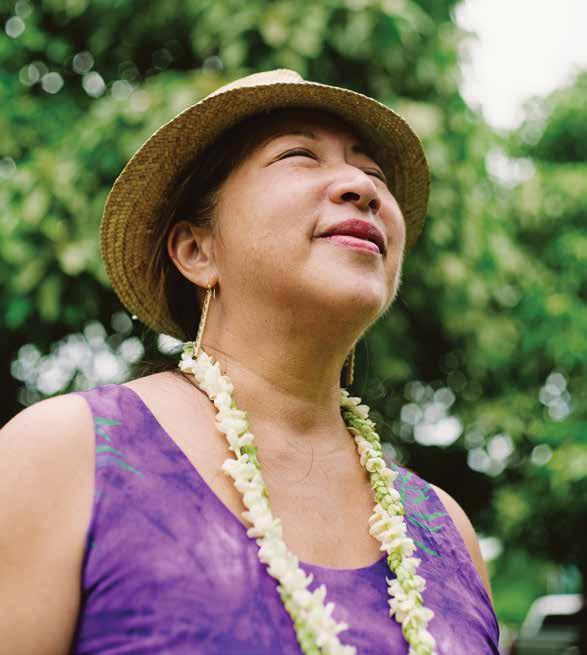
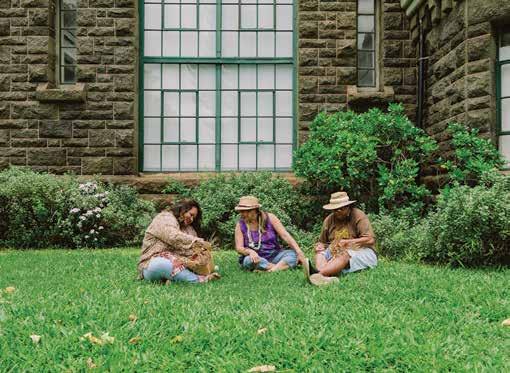
60 The art of ulana lau hala lives on in the hands of groups who perpetuate the craft of gathering and weaving lau hala leaves into woven objects.
74 Discover the meaning behind some of Hawai‘i’s many styles of lei, gathered and woven into expressions of aloha, love, and tradition.
90 Mochi binds local families together at the start of a new year. Gathering around its chewy goodness is a beloved tradition for many in the islands.
98 Gathering elevated flavors of Hawai‘i with island insouciance, Arden Waikiki conjures up culinary chemistry.
106 For chef Yuda Abitbol, whose inventive dinners reflect a reverence for the land and sea, it’s not only important how food is prepared, but how it is gathered
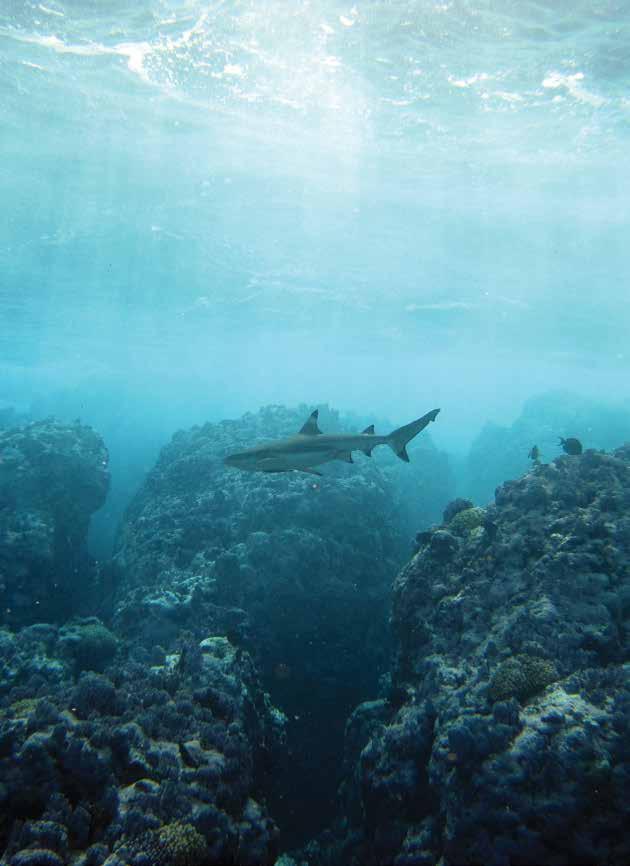
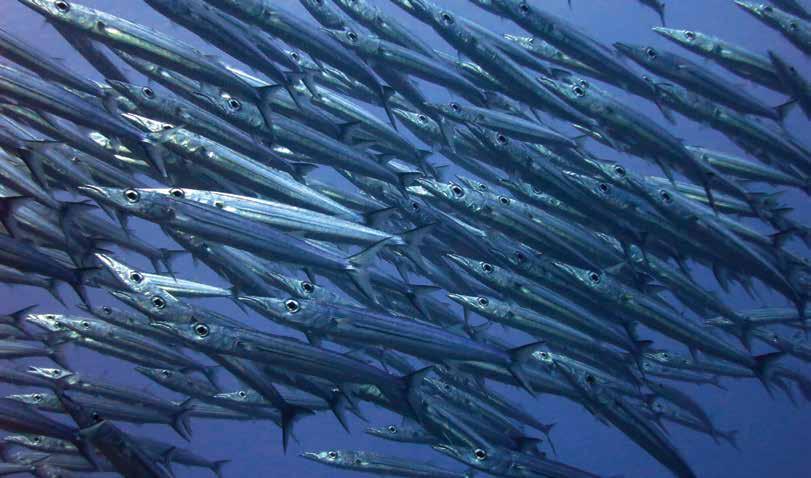
116 Fishers and cultural practitioners gather their collective knowledge to protect the islands’ most vulnerable shorelines.
126 Combining field recordings gathered across the islands, musician Kit Ebersbach offers a new way to explore Hawai‘i’s wild interiors.
Visit Gunstock Ranch on O‘ahu, where an initiative is underway to turn 500 acres of non-native growth and former pastureland into a thriving native forest, an effort launched in 2018 in partnership with the nonprofit Hawaiian Legacy Reforestation Initiative.
CREATION OF KAPA
Before its practices were revitalized in the 1970s during the Hawaiian Renaissance, kapa was considered a lost art. With no direct lineal descendants of kapa artisans left in Hawai‘i to draw on for direct knowledge, modern-day makers reclaim the nearly forgotten craft through deep research and a passion for the practice.
STAY BLESSED
With the arrival of Asian immigrants in the late 1800s, Buddhism took root in Hawai‘i, shaping spiritual life in the islands in enduring ways. At Mu-Ryang-Sa, Byodo-In, and Daijingu, three distinct temples on O‘ahu, faith is expressed through architecture, ritual, and daily acts of devotion.
ANALOG TIMES
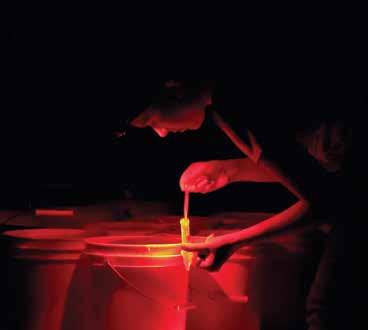
Through his mastery of wet-plate photography, a laborious technique invented in England in the mid-1800s, artist Kenyatta Kelechi memorializes modern-day Hawai‘i, utilizing the medium of his artistic predecessors as a pathway to understanding his own Hawaiian identity.
HOUSE ON A HILL
Bob Liljestrand, the late founding president of the Liljestrand Foundation, reflects on the legacy of the mid-century modern home his parents built in collaboration with renowned architect Vladimir Ossipoff. Perched above Honolulu, the Liljestrand House is today considered the pinnacle of Ossipoff’s work.
SUPER CORALS
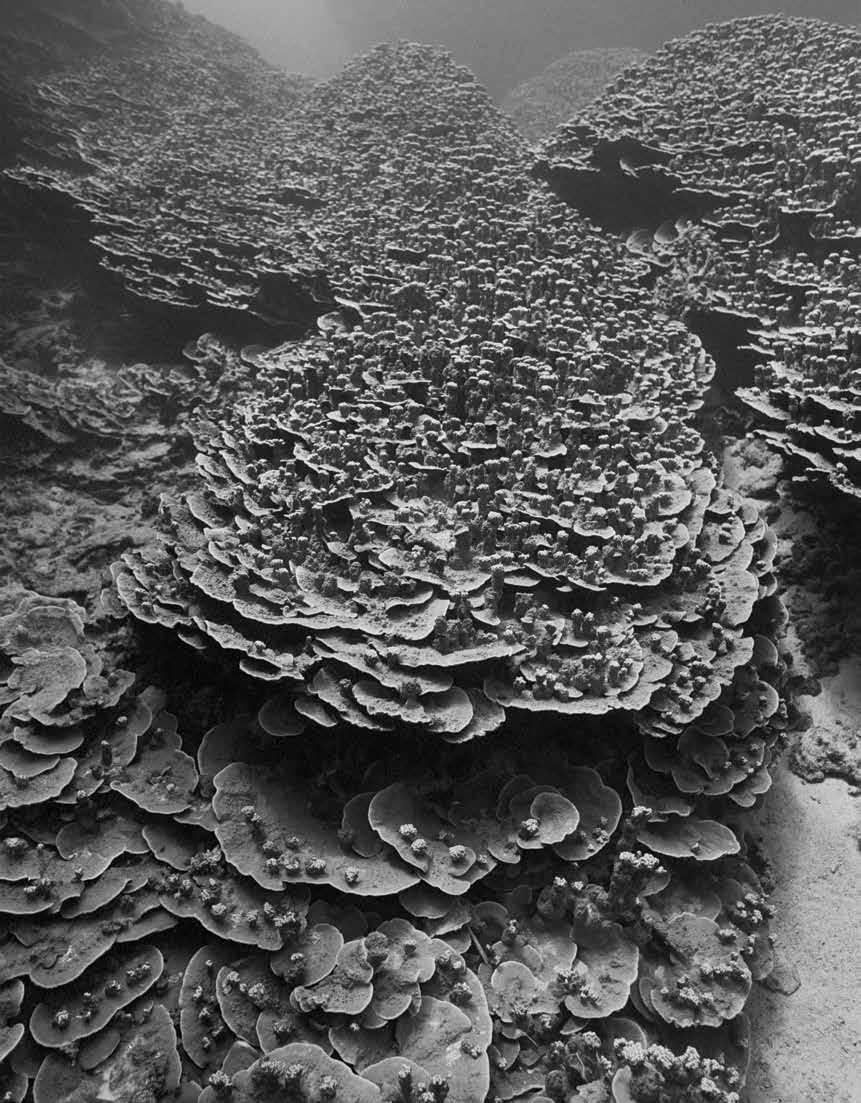
Scientists predict that only 10 percent of the planet’s corals will live past the year 2050. Dive into the Gates Coral Lab at the Hawai‘i Institute of Marine Biology, where a research team is making strides to fight climate change by developing resilient coral reefs.
Upholding
text by Lisa Yamada-Son images by John Hook translation by Yuzuwords
The
Arts
Private collections help to prop up society’s most imaginative individuals.
プライベートコレクションは、社会で最も想像力豊かな人々を支える一助 となっています。
Out of the half-dozen pieces loaned to the Honolulu Museum of Art for its groundbreaking 2017 exhibition Abstract Expressionism: Looking East from the Far West, Nancy Conley missed “Winter Mist” the most. The soft-hued oil-on-canvas, painted by Ralph Iwamoto in 1958, serves as the nexus of the art collection she owns with her husband, Herb. It is also an exemplary representation of the group of a dozen or so Hawai‘i-born, Asian American artists who traveled to New York in the 1950s and pioneered the abstract expressionist movement in the islands. “‘Winter Mist’ incorporates so many elements of the group,” Nancy says. The spiky branches allude to sculptures by Satoru Abe. The paint drippings are reminiscent of creations by Tetsuo Ochikubo. The feathered blue strokes mimicking lapping water are a constant feature in Tadashi Sato’s paintings.
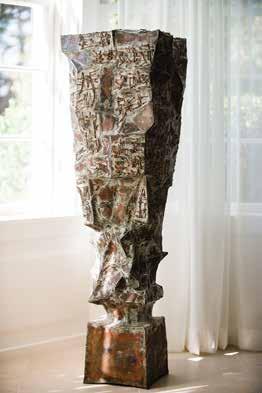
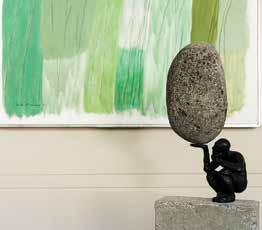
All of these artists are featured in the art collection of the Conleys. Comprised of more than 300 works by 59 artists who were either born in Hawai‘i or completed their works here, it is one of the islands’ most substantial. Private collections like this are important because they support the work of society’s most imaginative individuals, and, Herb says, the relationship between artists and collectors is a symbiotic one. “Artists are the changemakers,” Herb says. “If accountants like me ruled the world, everything would be gray and blue, and nothing would change. … Collectors have, in a sense, replaced the benefactors of the old days, because if an artist knows that they have people who will buy their work every year, that gives them a base, and a freedom.”
The Conleys’ collection documents Hawai‘i’s rich history in contemporary art, starting with a piece by Isami Doi, who studied art at Columbia University in the 1920s and
served as a mentor both artistically and philosophically to the likes of Abe and Sato. It was at a retrospective of Sato’s work in 2002 at the Honolulu Museum of Art’s Spalding House, known then as The Contemporary Museum, where Nancy worked as a librarian, that the Conleys were charmed by Sato himself. Afterward, the Conleys decided to acquire one painting by each of the handful of locally born Asian American abstract expressionist artists working in New York in the 1950s. “You’d meet one guy, and he’d say, ‘Well, have you seen these three people’s works?’” Nancy recalls. “Then we’d go off in that direction.” Pretty soon, their collection grew to include the work of Hawai‘i-based contemporary artists such as John Koga (a mentee of Satoru Abe), Deborah Nehmad, Sanit Khewhok, and a number of up-andcoming artists of the following generation. “I love passion in any form,” says Herb, who notes that his desire to collect art was jumpstarted after discovering the fervent perseverance with which the Hawai‘i-born artists in the 1950s approached their work.
“If you think about what their parents did to come here so their kids could have a better life, I would bet that ‘artist’ was not in the top hundred professions of what they would want their children to do,” he explains. “Here they are, firstborn, mostly sons of Asian parents in Hawai‘i, willing to be disowned to follow their passion. So now they go to New York and learn to paint, and son of a gun, there’s this little movement called ‘Ab Ex’ that’s catching everyone’s attention. So then, when they come home and talk to their parents, not only are they not painting palm trees and beach scenes, they’re artists painting lines and squiggles. Now you get disowned twice!”
The artists that make up the foundation of the Conleys’ collection—including Harry Tsuchidana, Jerry Okimoto, Robert Kobayashi, and Toshiko Takaezu—were caught up in the abstract expressionist movement that was made famous by the New York School of artists that included such notable painters as Willem de Kooning, Jackson Pollack, and Mark Rothko. “And yet they wanted to do their own version with what was going on at the time,” Herb says. “They were not followers, they were leaders, and that may have been why they have not got the national recognition.”
“Art is the creative juice of society. It gets us thinking, and it keeps us focused on always evolving.”
Herb Conley, art collector
Despite this lack of recognition, their art has earned its place in the backdrop of the abstract expressionist movement. Hanging alongside creations by blue-chip contemporaries like Robert Motherwell and de Kooning at the Abstract Expressionism exhibition at the Honolulu Museum of Art, work by these Asian American artists showed how they impacted that of their famed counterparts. Clearly apparent, Herb says, was how the New York School was influenced by the abstract nature of the Asian artists, most notably through Japanese calligraphy. (Note the fluid strokes of work by Robert Motherwell.)
As it has since then, the work of artists in Hawai‘i remains on par with that of the global art elite. “Good art is good art,” says Kelly Sueda, who curated the more than 500 original creations that comprise the collection of art at Honolulu’s prestigious Park Lane residences. “Whenever I put together a collection, I always try to mix blue-chip, internationally famous artists with the best regional art that I can get.”
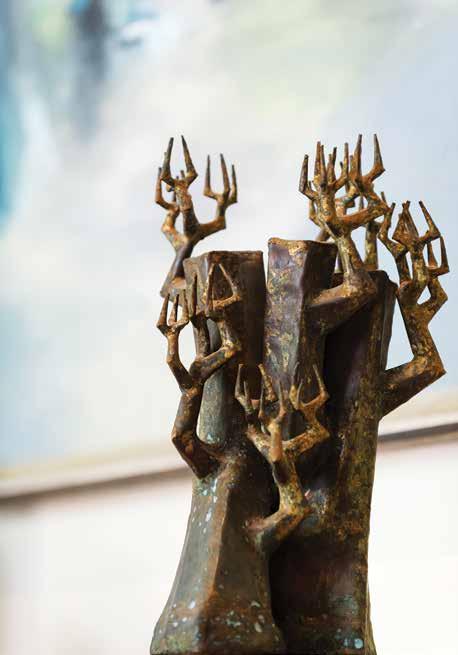
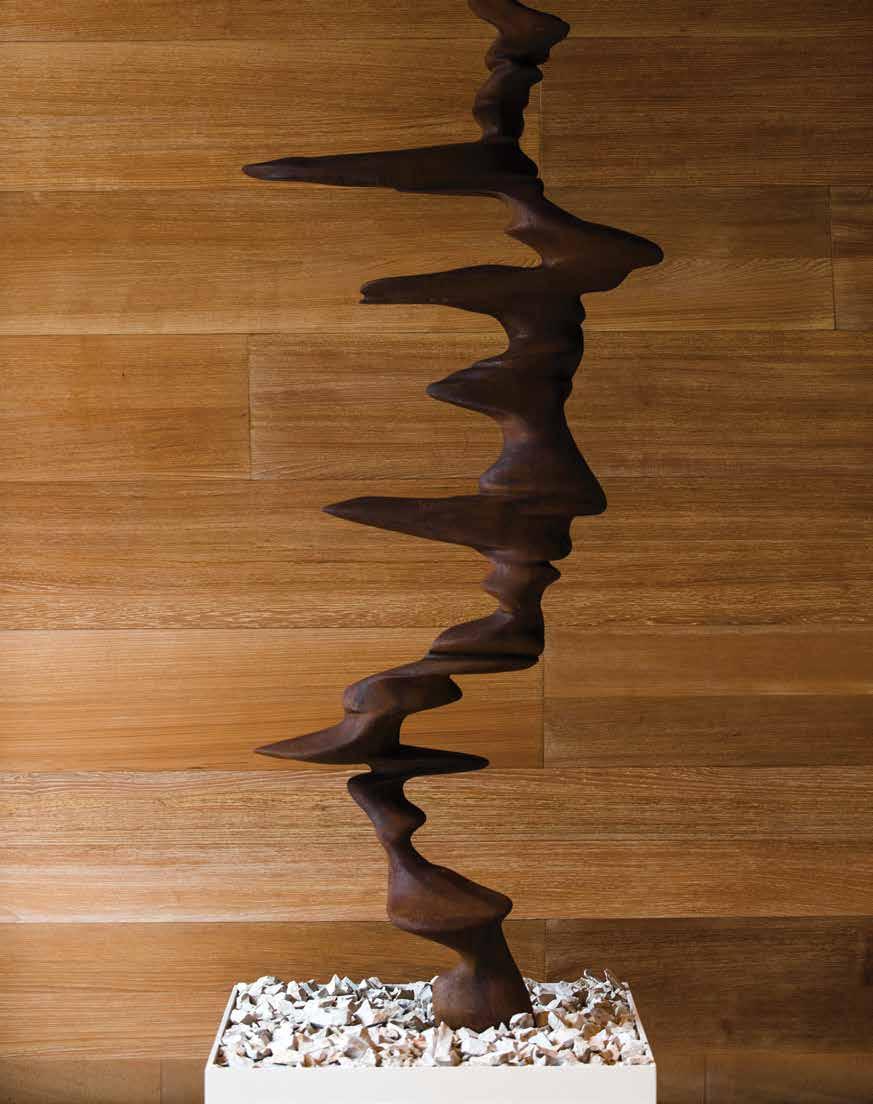
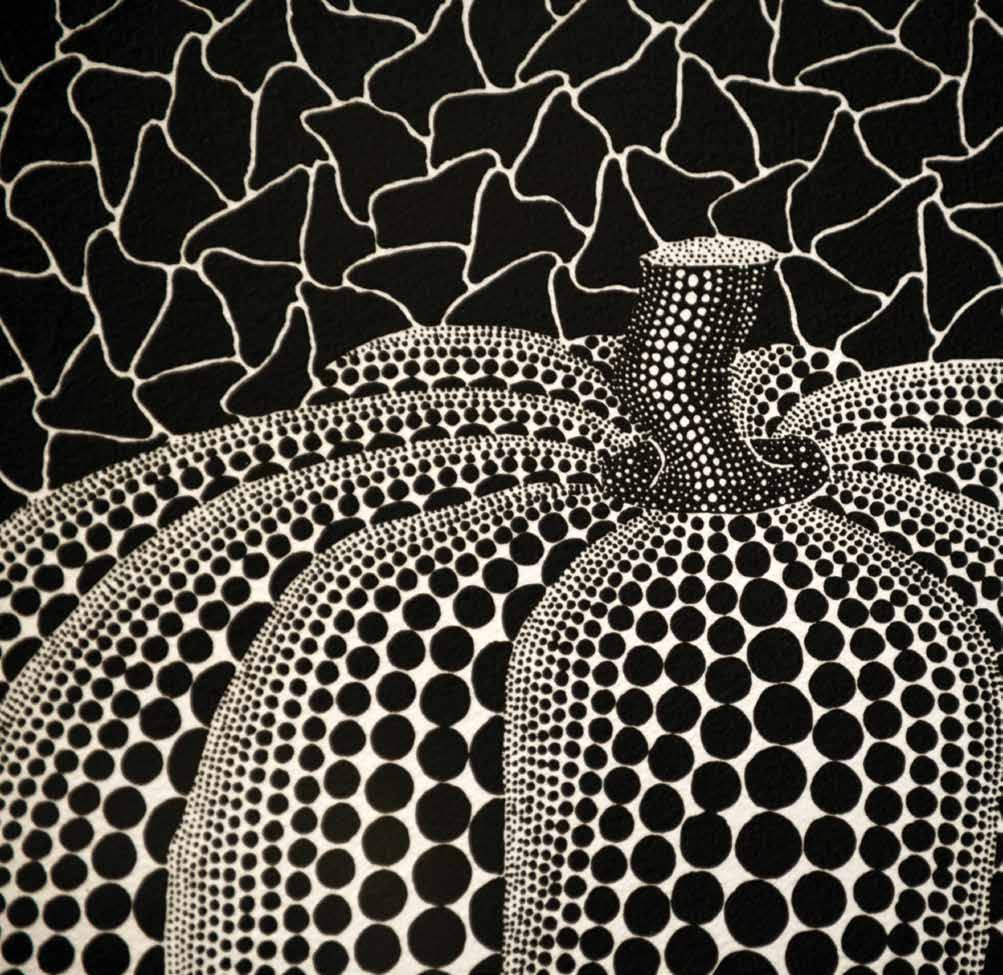
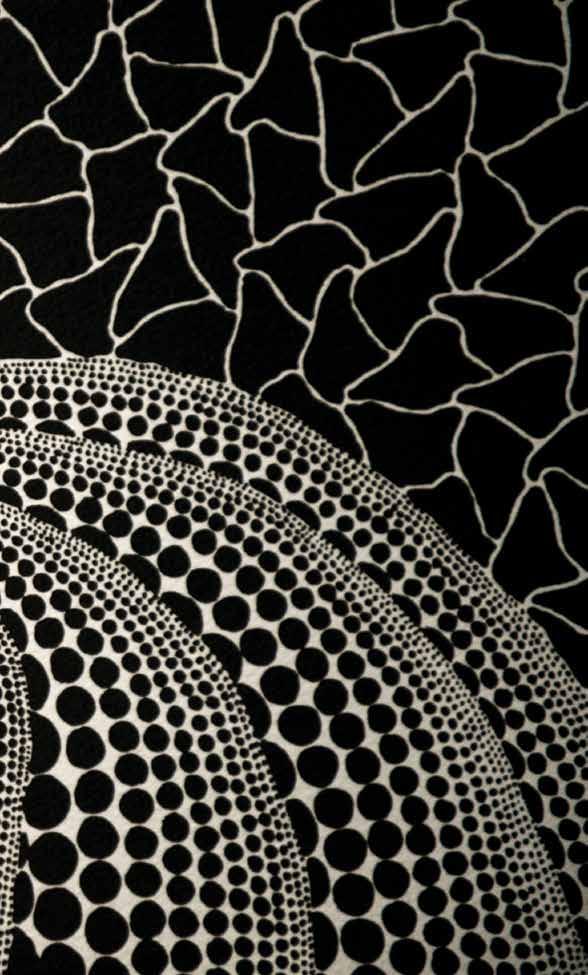
The collection at Park Lane is one of the largest, if not the largest, assemblages of art in the state outside of a museum. It includes work by local artists such as painter Peter Cole, glass artist Jonathan Swanz, and photographer Wayne Levin, intermingled with sculptures by Tony Cragg, Jaume Plensa, and Tom Otterness and prints by Andy Warhol, Jasper Johns, and Yayoi Kusama. “It shows the caliber of artwork that is coming out locally can stand up next to a world-class piece of art,” Sueda says.
Support of the local art market is important to Herb as well. “Art is the creative juice of society,” he says. “It gets us thinking, and it keeps us focused on always evolving.”
Recall a moment when your creative practice reached beyond you, gathering others in its orbit.
文
写真
ミシェル・ミシナ
翻訳
外山恵理
Designed to Gather
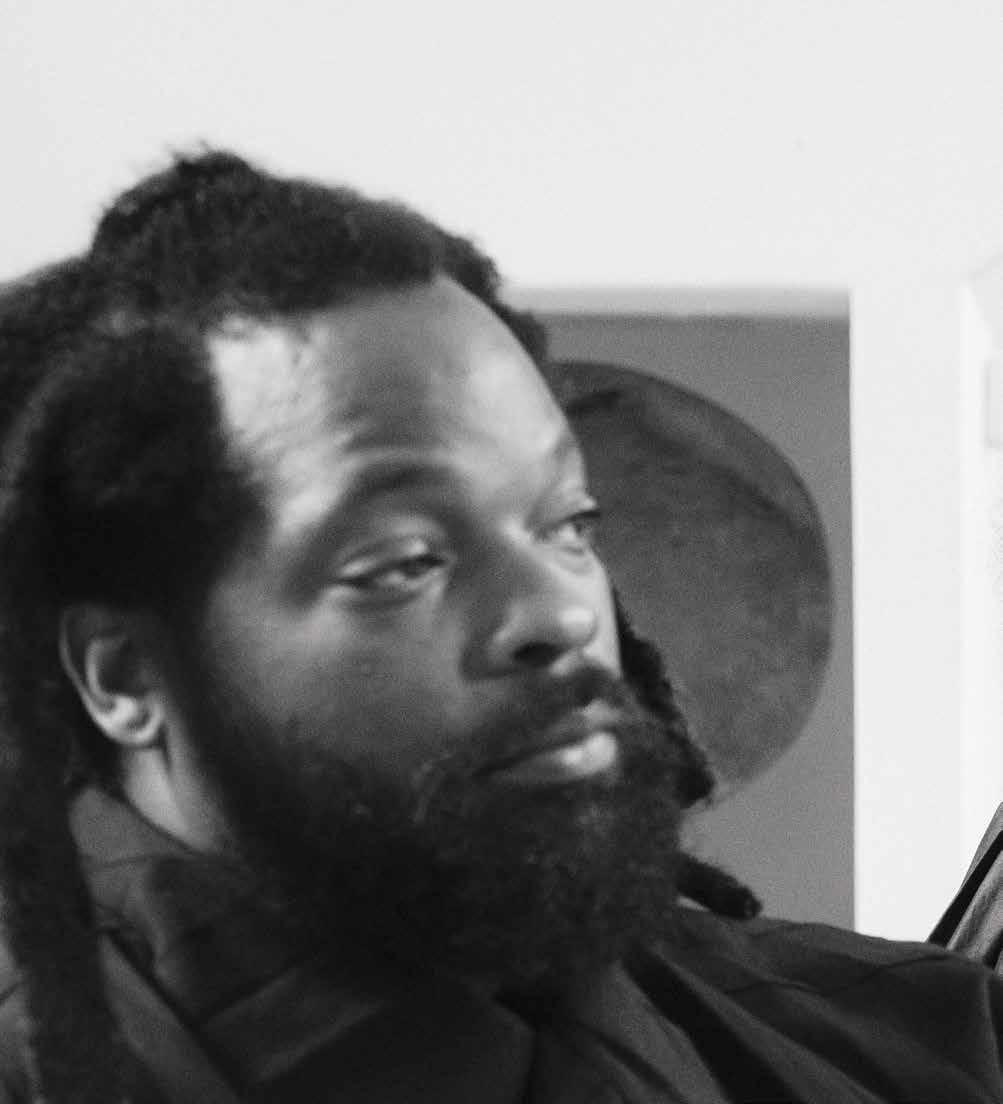
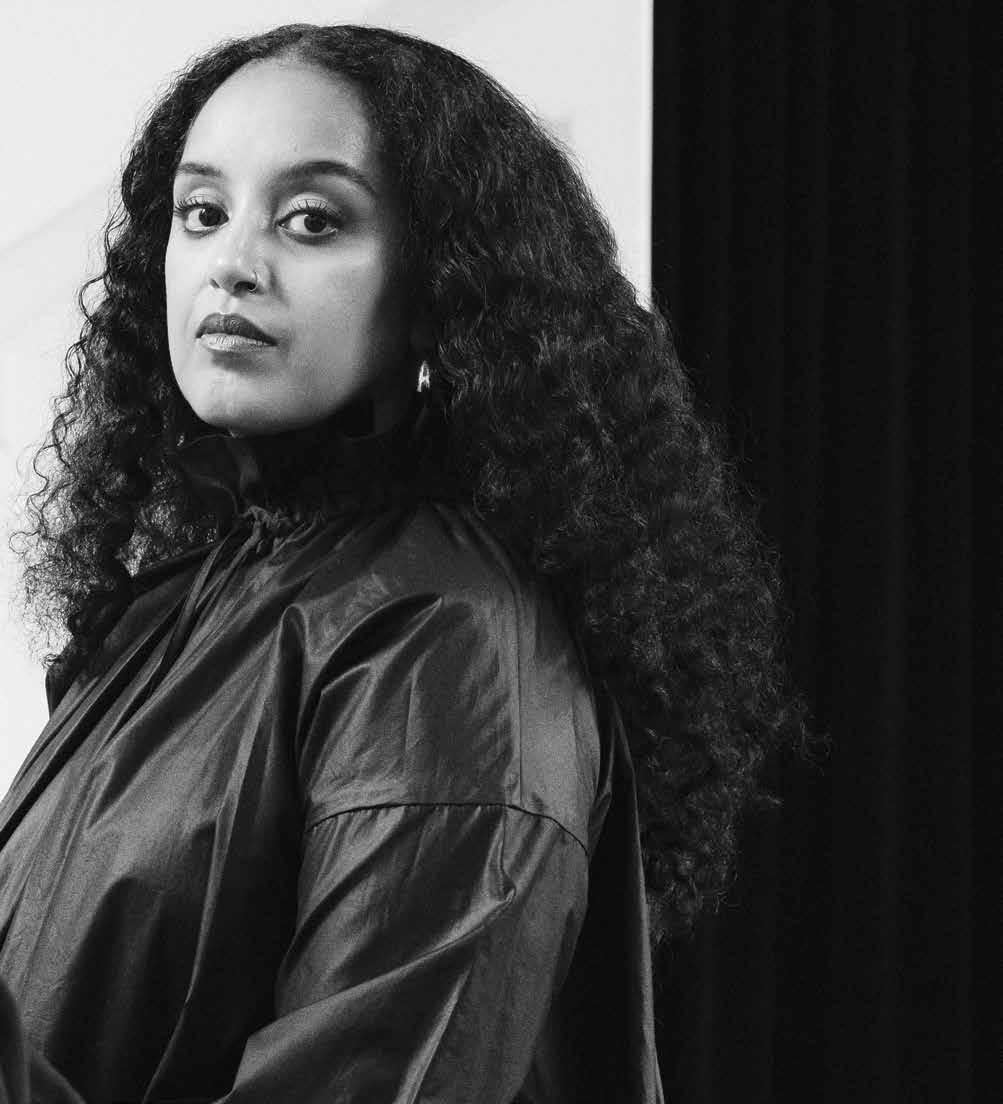
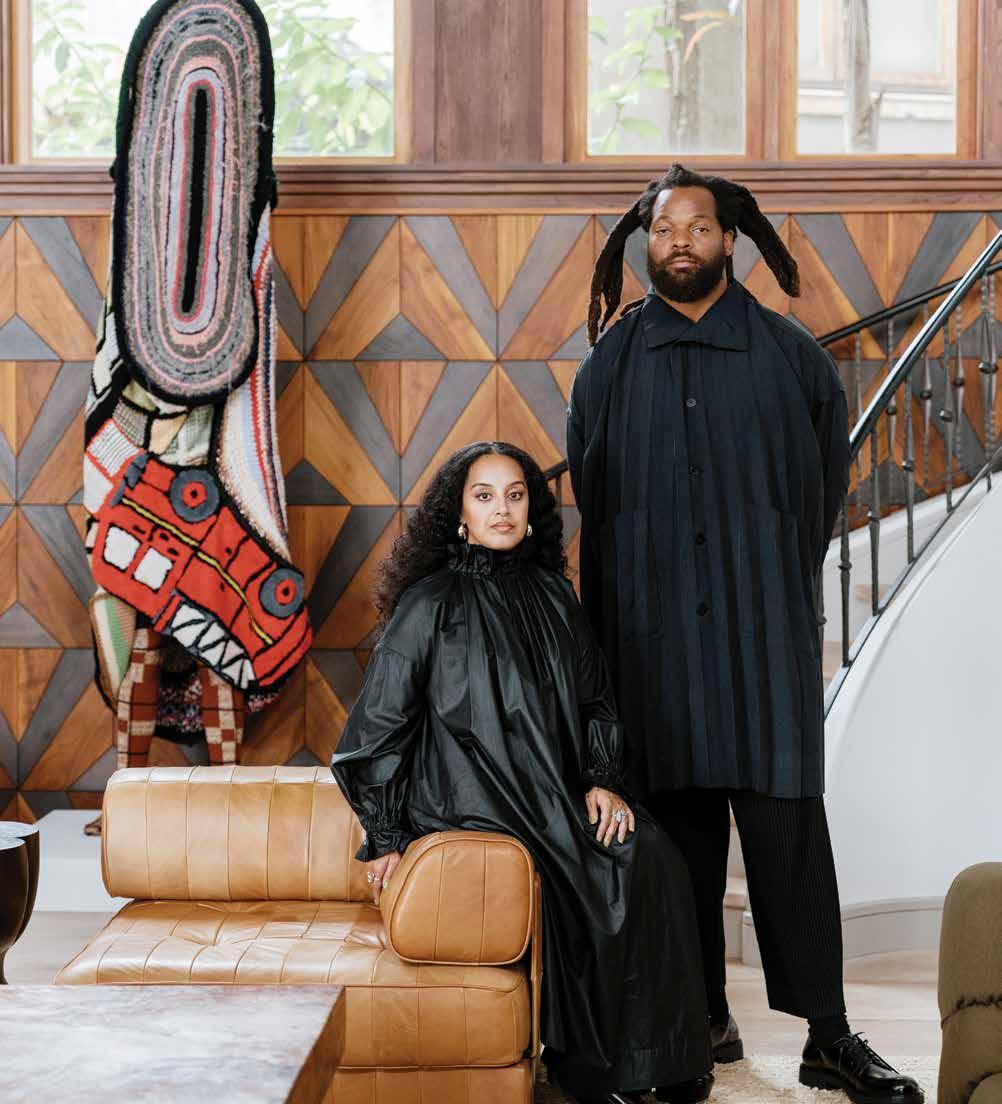
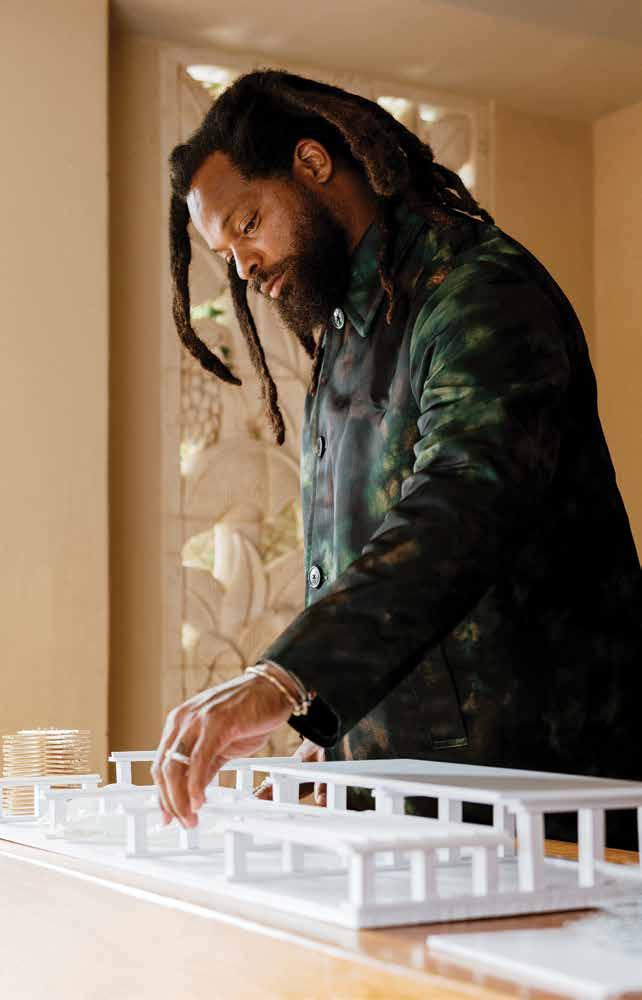
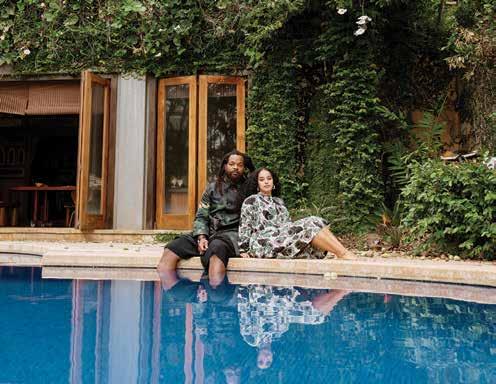
Inside the creative practices of spatial designer Michael Bennett and artist Pele Bennett. Together, they strive to foster spaces that strengthen community connections through furniture, architecture, and event series.
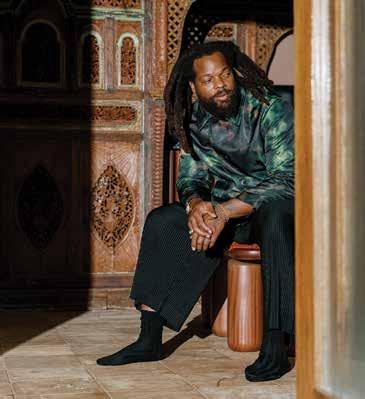
Sitting across from Michael Bennett, NFL Super Bowl champion and three-time Pro Bowler turned furniture and architecture designer, it’s easy to assume that shifting from the gridiron to the art world would be a seismic leap. One might imagine a wide gulf between a world of brute strength and bodies colliding, and that of design, aesthetics, and curated gallery spaces.
But Bennett sets me straight, knowing what bush I was beginning to beat around by suggesting his entrance into the design world could seem, on the surface, like a completely new chapter of his life after retiring from football in 2020.
“I feel like sports is art,” he says. “I think, in being a defensive end, there’s a lot of art in there. There’s abstraction in it. There’s movement. There’s spatial hierarchy. There’s everything: rhythm, skill, form.”
Football, he insists, involves profound mental agility, an aspect often sidelined by spectators who tend to focus on the overt strength displayed by its players. Being able to judge a play, break it down, and move in a certain way using another man’s body
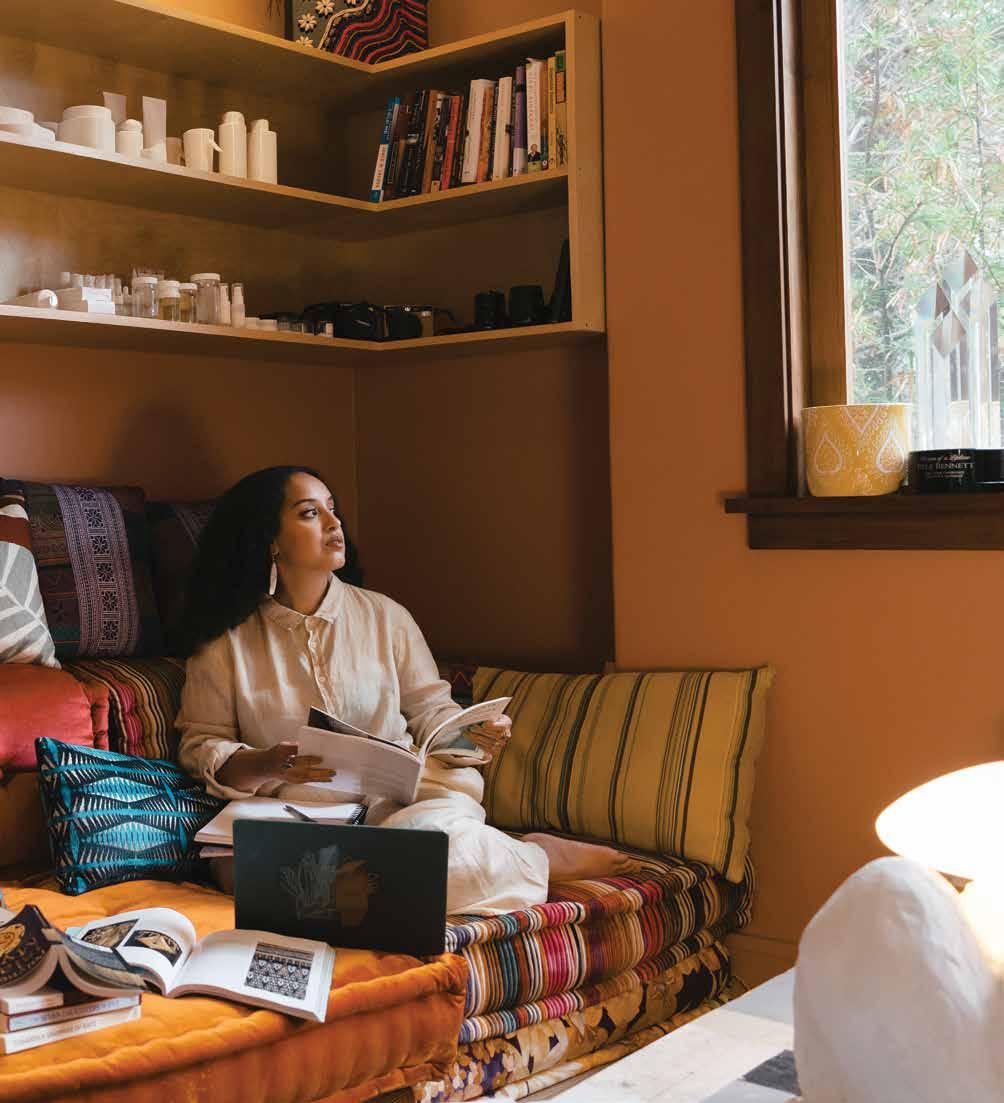
Previous Spread Michael and Pele Bennett stand in the living room of their Honolulu home.
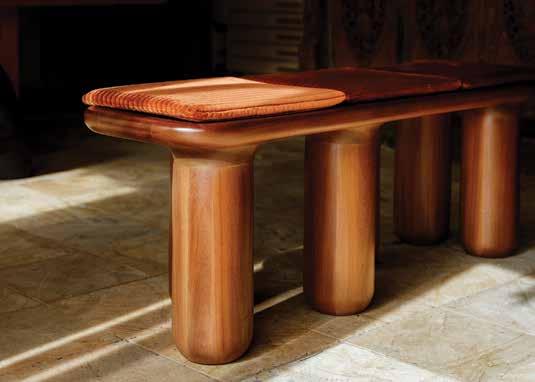
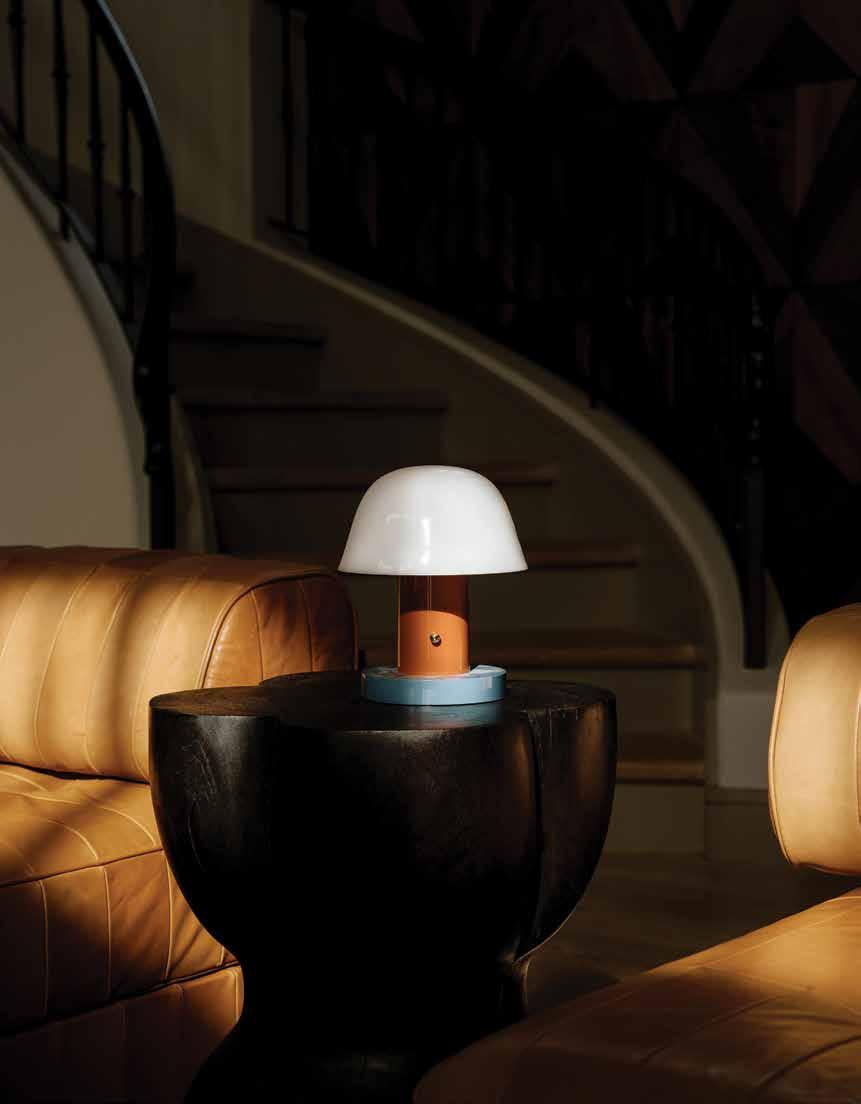
This Page “Cape Mantle” bench in African Sapele. Opposite Page Bennett’s design practice includes sculptural lamps.
前ページ見開き
ホノルルにある自邸のリビングルームに立つ ベネット夫妻
上
アフリカサペレ材を用いた《ケイプ・マントル》 ベンチ
右ページ ベネットさんが彫刻を手がけたランプ
in order to navigate the field theorizes that football is less about being strong than it is about setting up and negotiating movement in space. “I’ve always been an artist in that way,” he says.
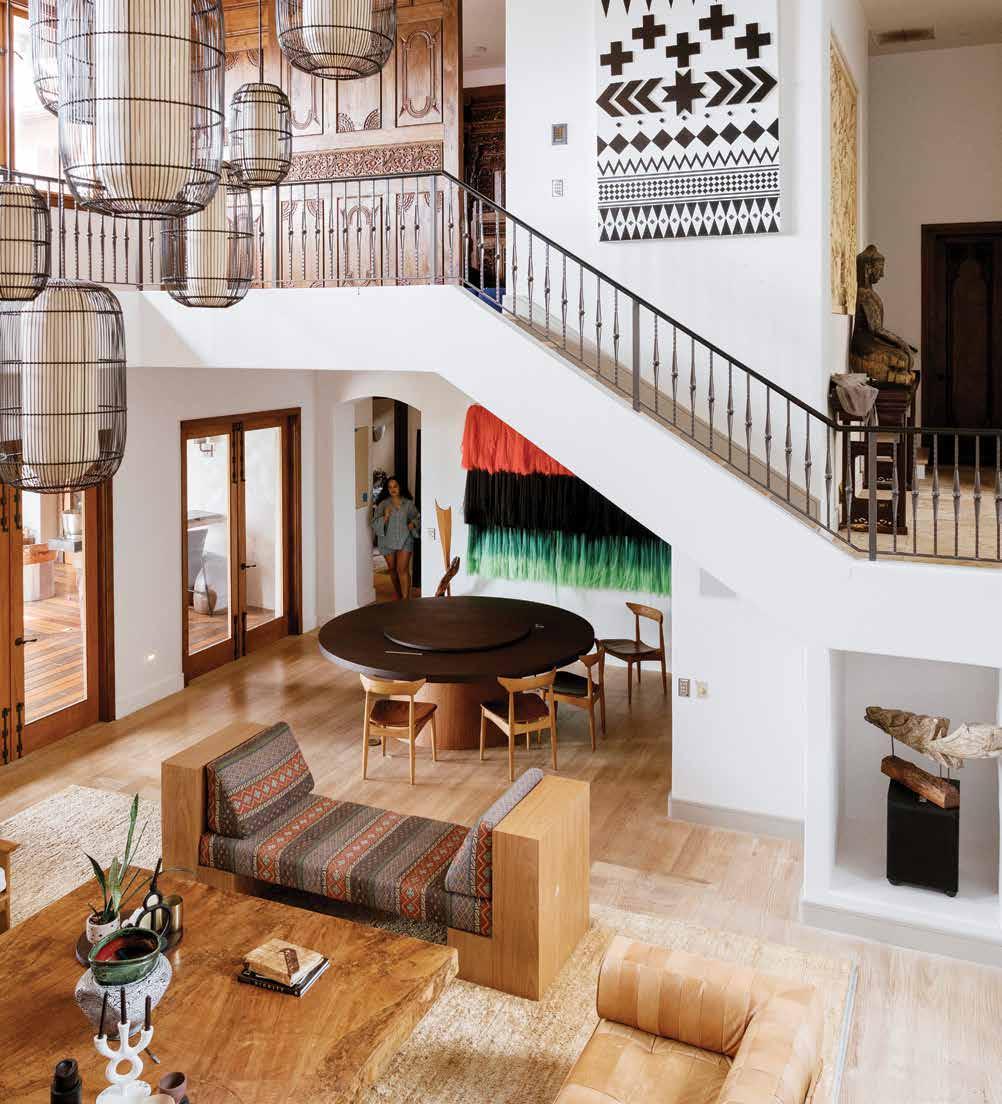
We are sitting at the end of a long communal table in the lānai of his home, with a sweeping view of the eastern O‘ahu shoreline in one direction and the Honolulu cityscape in the other. A cool trade wind blows through the space, and the fibrous material of a mixed media piece by Lauren Halsey, one of the many African American artworks on the walls, dances subtly. The sound of his daughters’ laughter bounces playfully off the walls somewhere within the large home.
Bennett seems relaxed in this familial space, but every word he utters is assured and deliberate. One gets a swift sense that he is an incredibly introspective person, even if, throughout his 11-year NFL career, he has been known for comical game-day antics like when he “borrowed” a police officer’s bike for a victory lap around the stadium field after
like sports is art ... There’s abstraction in it. There’s movement. There’s spatial hierarchy. There’s everything: rhythm, skill, form.”
Michael Bennett, designer
his Seahawks beat the Packers in an NFC Championship game.
Concurrently, Bennett is also known for his ongoing social activism. A generous humanitarian who has supported multiple organizations such as #iamtheCODE, which has sponsored more than 100 Senegalese girls into STEAMED education programs. He is also a published author (Things That Make White People Uncomfortable, co-written with Dave Zirin) and an advocate for women’s rights. The Bennett Foundation, which he founded with his wife, artist Pele Bennett, supports underserved children around the United States and Africa.
But when it comes to pursuing his design practice and touring art exhibitions around the country, this wasn’t some post-football whim he just fell into after a prosperous athletic career. For Bennett, the discipline and intention behind an athlete’s craft are often underestimated, and he draws clear parallels between the focused mindset required in sports and the one that drives his approach to art and design.
“There are so many parts working, trying to make one goal, to make one play, and most people don’t see the process of what it takes to get to that moment—the amount of work you have to do in the body,” he explains. “And the body is similar to architecture, right? For instance, when I think about my own body, and I think about architecture and the connection there, both are places that hold memories.”
Never one to shy away from hard work, Bennett’s second act has been nothing short of remarkable. After studying design at Seattle’s Heritage School of Design, he enrolled in the architecture school at the University of Hawai‘i at Mānoa, all while exhibiting work across the
country. In 2023, he presented Urban Decay, a sculptural installation at Honolulu’s Hawai‘i Walls public arts festival, and Public Display, a cross-laminated timber gathering space at the NYCxDesign Festival. His 2024 exhibit, We Gotta Get Back to the Crib, at Rebuild Foundation’s 6-Flat gallery in Chicago, featured sculptural furniture works inspired by his family’s roots in the Deep South.
In 2020, Bennett founded Studio Kër, a design studio that explores African diasporic forms and languages through storytelling, architecture, and design. Through these engagements, his design practice strives to uplift Black agency and autonomy through community engagement and accessibility, and to be, as he describes it: “A well-rounded forum that has multiple outlets and mediums to express important narratives of Black identities and cultures.”
When Bennett refers to rethinking spaces, one area where he’d like them redesigned is within Black communities. In his eyes, there are plenty of areas that foster physical competition, but rarely any that cultivate a different type of inward wellbeing, a balance he’d like to see restored. Bennett points to countries like Japan, where there are a lot of public spaces that encourage an experience of serenity. “There are a lot of places where you can have a moment to connect to nature and get back into the senses,” he says. “I feel like nature and light is what fills us with joy and pushes us forward.”
Creating spaces where people can gather undergirds Bennett’s design practice. “Which is something I’m learning from her,” he says, gesturing to his wife, Pele, as she floats by the lānai. Raised in Houston, the Bennetts met in high school and have been together ever since, now raising three daughters. Pele’s family, who have Samoan and Tokelauan roots, is from Hawai‘i, hence the couple’s home on O‘ahu and the connection her husband has developed with this land.
Spending much of her childhood performing in her family’s traveling Polynesian dance production, Pele has been in the performing arts since she was 5 years old. She got into photography and painting over
Bennett founded Studio Kër to explore African diasporic stories through art and architecture.
Below, Right
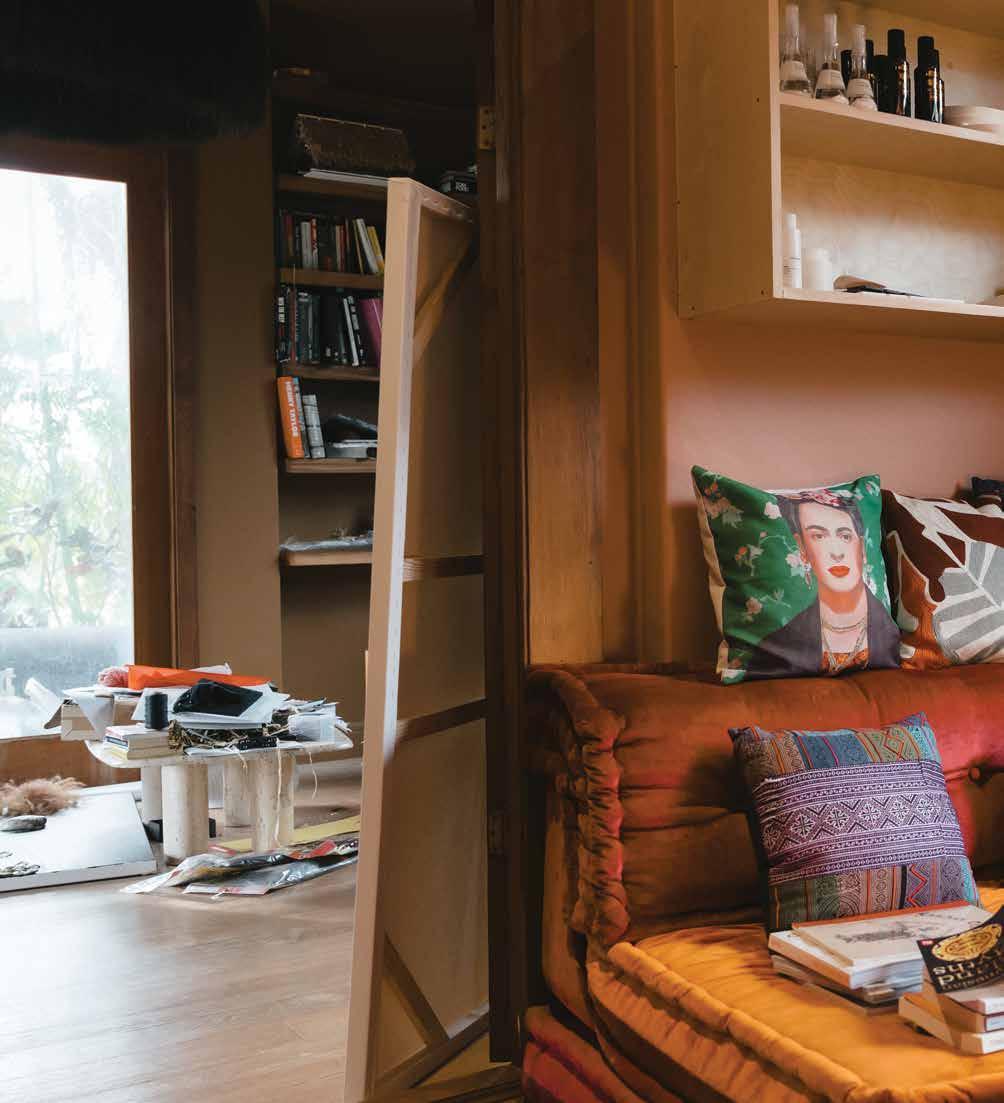
The Bennett family’s home blends heritage, creativity, and everyday family life.
左下
ベネットさんが創設したスタジオ・ケールはアー トや建築を通して離散したアフリカの物語を探 究する
右下
ベネットさんの自宅では、伝統とクリエイティビテ ィが家族の日常に織り込まれている
the years, as well as costume assemblage that draws on traditional Polynesian attire.
Currently, the two projects that she’s most consumed by are the launch of her new Polynesian hair care line, Vave’ao, and an event series called In the Vā, which she hosts for entrepreneurs and innovators— often centering women creatives—at their home. A Samoan term, also common in other Polynesian languages, vā is a concept of “the space in between,” Pele explains to me. “The In the Vā events we host are a place for people that might not live in the categories that people want to assign them. This is their space to form relationships and connections.”
Earlier, Bennett had told me that the word “communion” kept running through his mind when he was making the transition from pro athlete to designer, and it appears that he, as well as his wife Pele, strives to gather people through the communal spaces they design.
His furniture pieces featured in We Gotta Get Back to the Crib, for instance, reimagine
seating used to congregate—from the churchinspired Pew couch to the Gumbo lounge chair—while Pele’s In the Vā events gather an array of voices and professionals, providing them space to form community.
“Sometimes design can feel like a group of people in a space, drinking fine wine, talking about design, but they’re not in touch with the common person,” Bennett says. “And the people who are a part of the community can feel that. A lot of people feel like, ‘This design wasn’t made for me.’ I want to make something that, when a kid sees it, they want to make that. They want to change the sidewalk. If they’re tired of having no grocery stores in their community, I want them to stop waiting and know they can make one.”
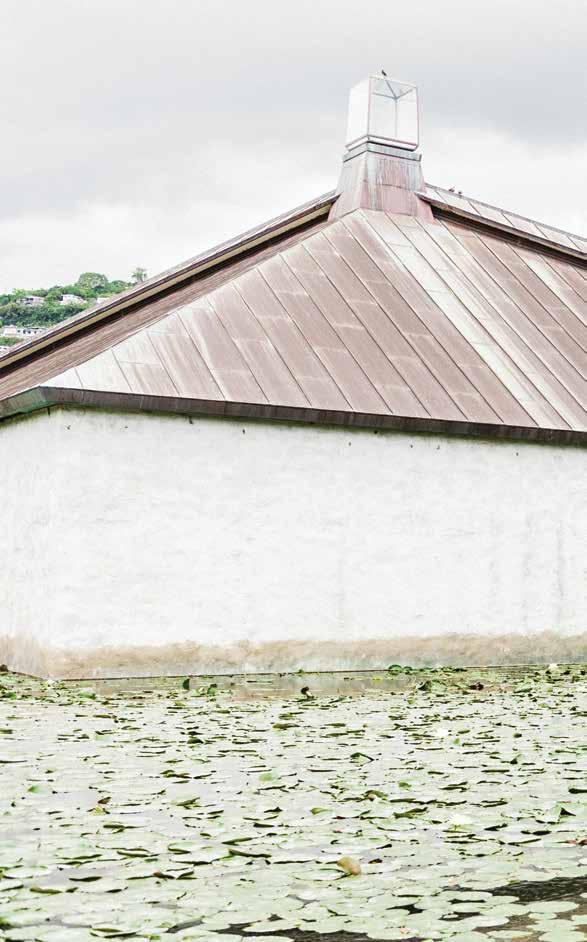
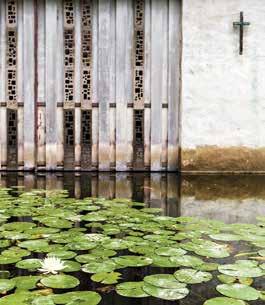
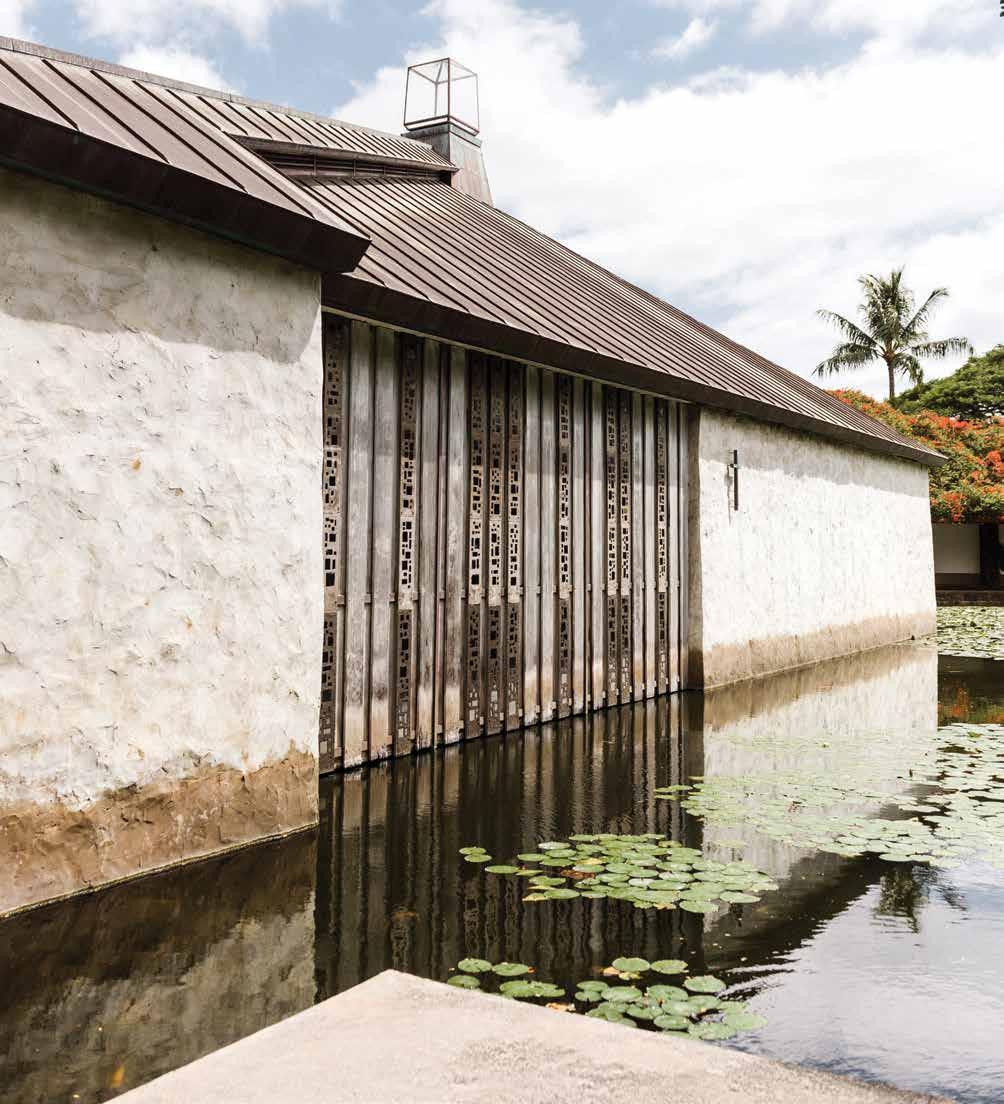
The copper-roofed Thurston Memorial Chapel stands at the heart of Punahou’s campus.
Opposite Page
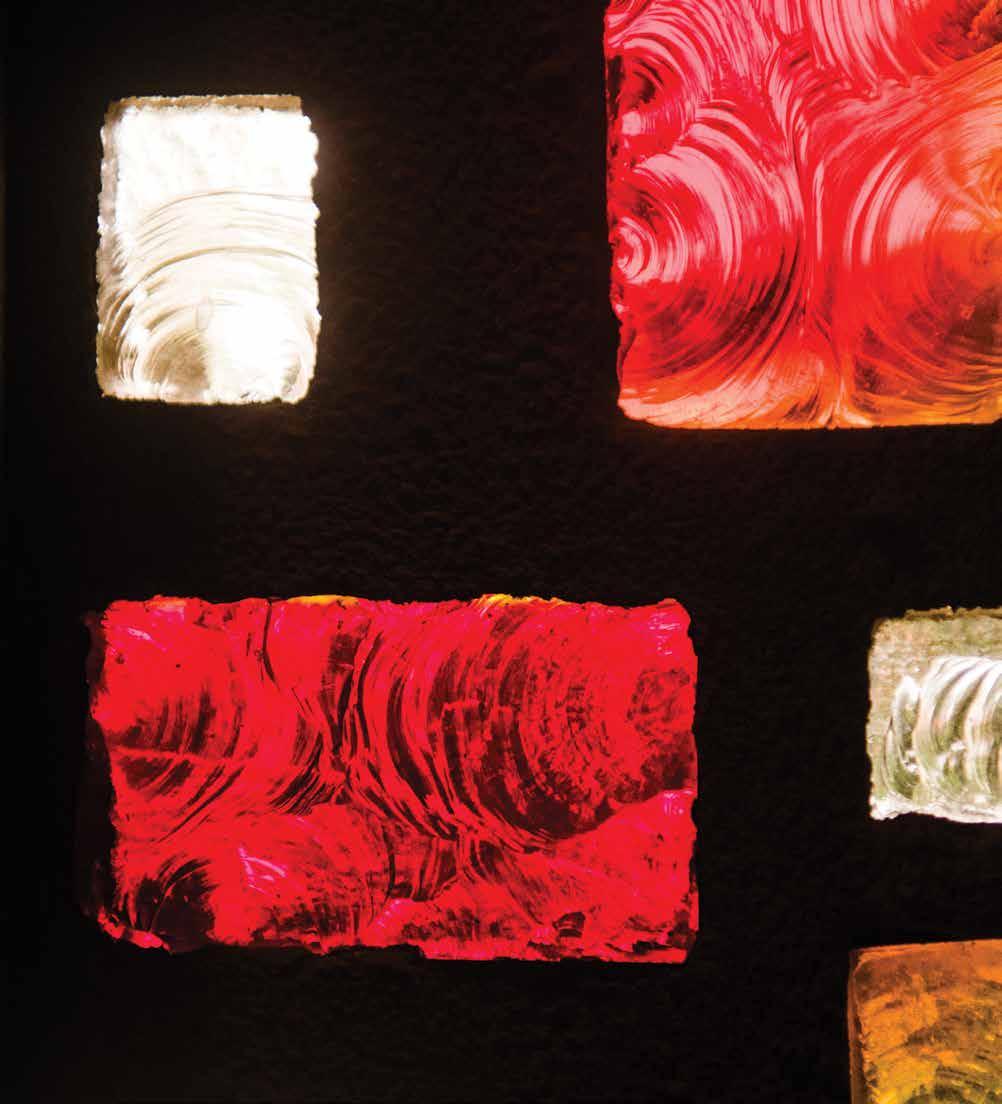
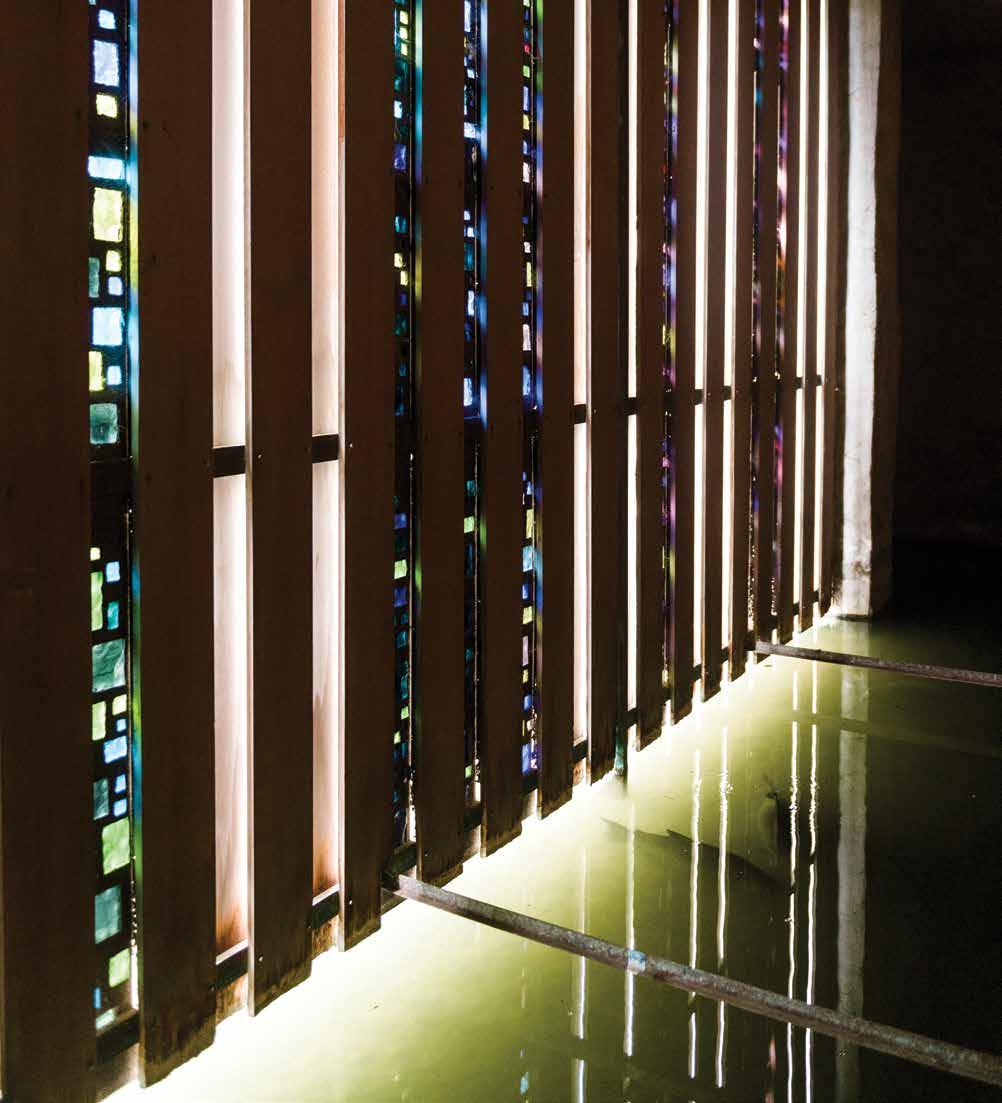
Stained glass windows glow filling the chapel with quiet color.
Below
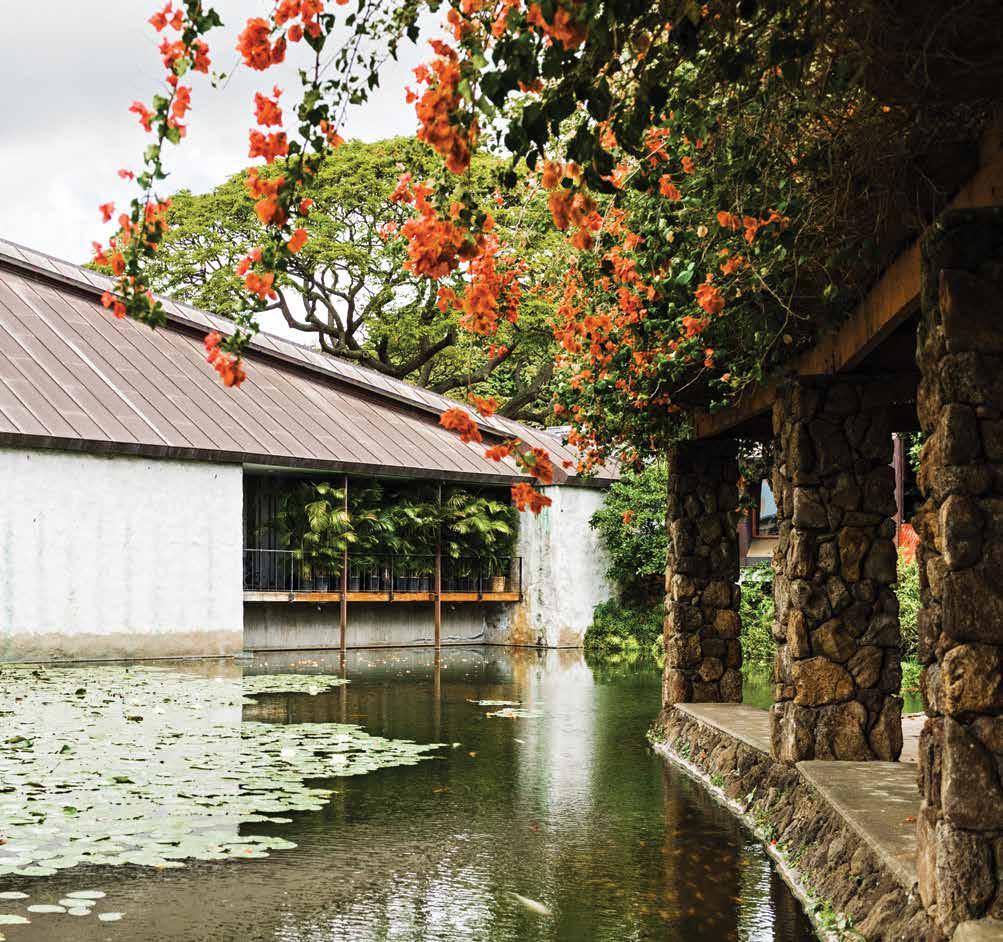
The pond, called Kapunahou, is said to have sprung from an old hala tree in a time of drought.
前ページ見開き
銅葺き屋根のサーストン記念礼拝堂は、プナ ホウ校のキャンパスの中心にある
左ページ ステンドグラスの窓の輝きが、礼拝堂を静か な色彩で満たす
下
カプナホウと呼ばれるこの池は、干ばつのと きにハラの古木から湧き出したと伝えられて いる
“Architecture is a visual art, and the buildings speak for themselves,” the pioneering architect Julia Morgan once said. Which is true, but buildings can be lost in translation, too, becoming as unintelligible as an ancient dialect. Thurston Memorial Chapel, which sits at the center of the Punahou School campus in Honolulu, speaks as fluently—and as radically—as it did 50 years ago.
On a recent Monday morning, I found myself in the darkened chapel, its constellations of stained glass glowing in the early morning sun. I had seen the building before, but this time, I noticed details I had missed. The chapel itself—small, square, copper-roofed, visible from across a large, grassy expanse—is striking in its simplicity: white plaster walls adorned with a few bands of stained glass and a small copper cross. At the chapel’s base, a lily pond wraps around the corner of the building like a truncated moat, its dark green color echoing the roof’s patina. Passing under a wooden trellis covered in bougainvillea, I emerge in a quiet courtyard ringed by ferns and shaded by a giant monkeypod tree.
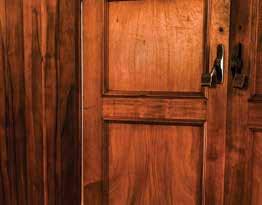
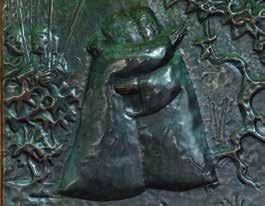
Suddenly, the chapel is different. This side of the roof is clad in brown ceramic tile. Heavy koa wood doors leading inside are inlaid with copper repoussé panels that depict the life of Jesus Christ. The materials are warmer and more inviting. The rest of the campus feels far away.
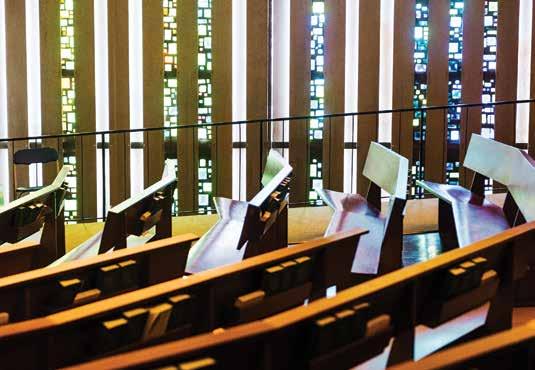
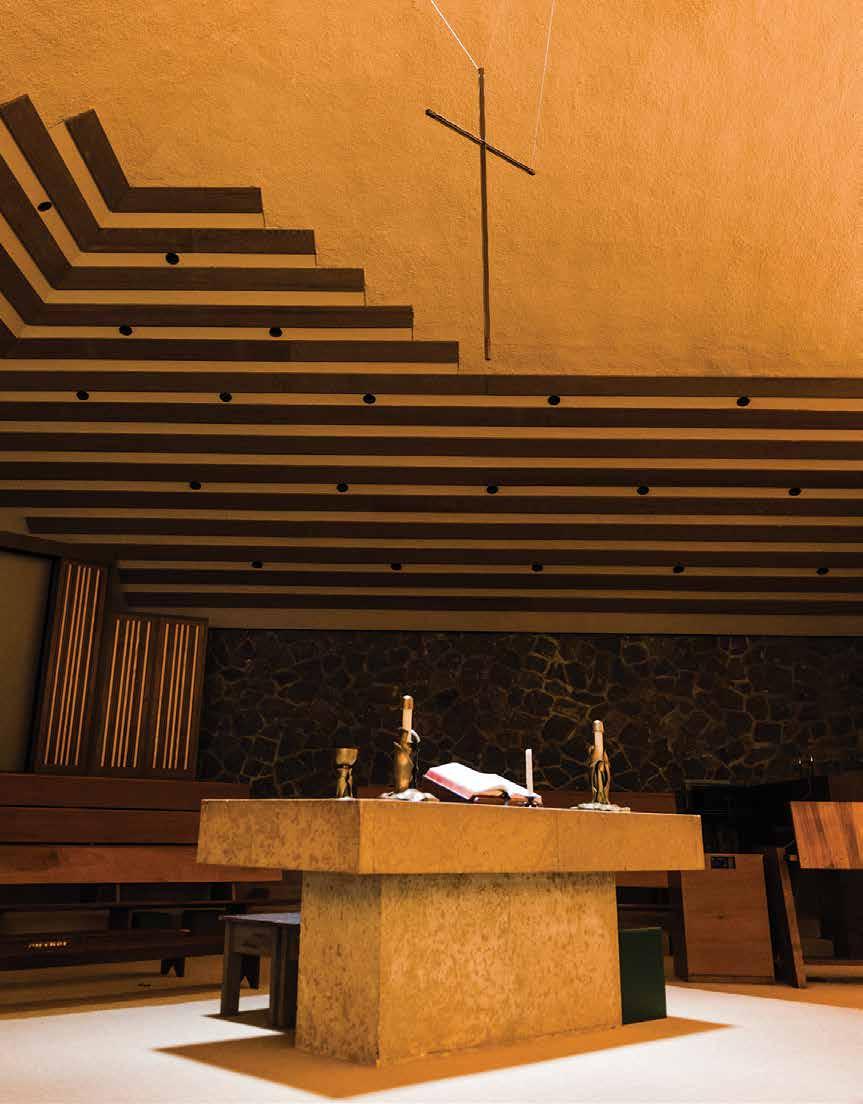
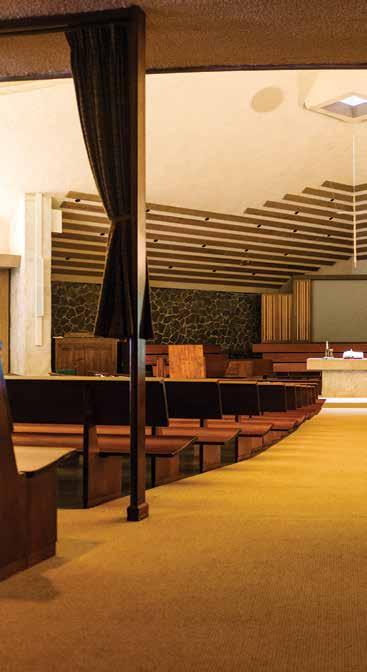
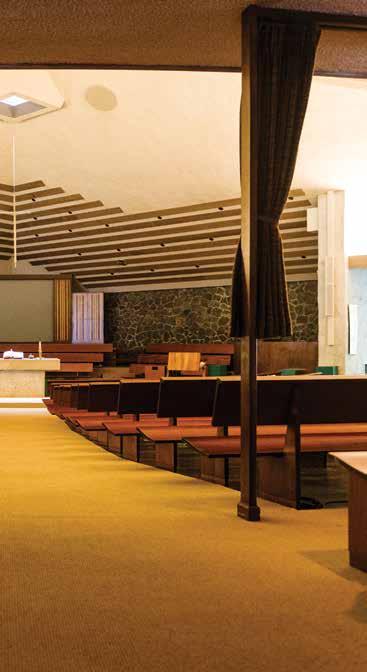
This arrival sequence is part of the architectural design, carefully choreographed to create a sense of intimacy and quiet. Inside the chapel is the same hushed reverence, despite the myriad fourth and fifth graders that fill the pews, which are arranged in a semicircle around a coral altar. (Founded by missionaries in 1841, Punahou still requires
The space welcomes all, just as architect Vladimir Ossipoff intended.
Opposite Page
Inside, warm koa wood and coral stone create a space for reflection, where students gather in calm reverence.
右
建築家ウラジミール・オシッポフの意図した とおり、万人を温かく迎え入れる空間
右ページ
内部にはぬくもりを感じるコア材と珊瑚石が 使われ、そこに集う学生たちはおごそかに思 索にふける
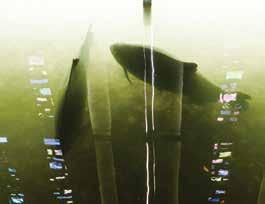
students to attend chapel.) Above the altar hangs a thin, wooden cross, illuminated by a sculptural skylight. Remarkably, there is water inside, too. And fish. The lily pond flows into the chapel beneath a shortened section of the exterior wall.
The service commences like any other: Somber organ music, the lighting of candles. But then, the kids burst into “Hawai‘i Aloha.” Led by a jubilant chaplain with an acoustic guitar, they sing “E hau‘oli e nā ‘ōpio o Hawai‘i nei / ‘Oli ē! ‘Oli ē!” There is a prayer peppered with Hawaiian and several Hawaiian chants, including one that is dedicated to Pele, the fire goddess. It feels somewhat surreal, listening to students sing to a Hawaiian deity in a Christian chapel beneath a cross. After all, not so long ago, missionaries in the islands banned hula and the Hawaiian language.
After the service, the chaplains tell me they want all students, regardless of their religious backgrounds, to feel welcome in Thurston Chapel. As it happens, this was also the intent of its architect: Vladimir Ossipoff. At its dedication in 1967, he said that he hoped students in need of “physical and spiritual
“Ossipoff forged a new relationship between the school and spring, marrying the built and natural.”
shelter will naturally gravitate here, and that having come here, they will find the comforting solace they seek.”
The Russian architect had designed other buildings on the Punahou campus, and he knew that the fan-shaped lily pond near the campus’ center was a place of deep significance. Lined with small stones, the pond is fed by a freshwater spring, which has several legends associated with it. In the most well known, an elderly couple who live beneath an old hala tree find the area plagued by severe famine and drought. In separate
dreams, the man and the woman are told to uproot the tree. They do so, and freshwater gushes forth. They call it Kapunahou, or “the new spring.”
When Ossipoff presented his design for the chapel in 1964, it was at once thoughtful and lunatic: The building would sit not just near the lily pond—it would sit in it. “That had to be one of the gutsiest architectural moves,” architect and Punahou graduate Nate Smith tells me. To the school’s trustees, Ossipoff proposed the structure be nestled into the northeast portion of the pond, like a sheer-
faced peninsula, the water lapping at its plaster walls like the ocean against chalky white sea cliffs. Inside, the floor would slope down to the altar, bringing students and teachers as close to the spring as possible. The water would even flow directly into the building.
Ossipoff assured the school it could be done. A retaining wall was built across a corner of the pond and the water pumped out. The foundation was carefully sited, so as not to damage the spring. By 1967, the chapel was finished, constructed almost exactly the way Ossipoff had designed it. Fifty years later,
Thurston Chapel is still regarded as one of the architect’s best works. But what is perhaps most interesting is that the building, in a way, saved the lily pond.
Despite irrevocably altering its shape, Thurston Chapel actually reinforced the import of the spring, the water of which, by the 20th century, was being diverted for fountains, irrigation systems, and the school’s first swimming pool. Among the earliest traditions associated with the pond was a “dunking ceremony,” a sort of freshman hazing ritual involving costumes and a parade. And in a
1917 master plan for Punahou, drawings show the lily pond ringed by an imposing stone colonnade, which would have relegated the pond to being a passive feature of the landscape.
Instead, Ossipoff forged a new, more active relationship between the school and the spring, marrying the built and the natural. The chapel building is completely “inextricable from its site and the legend that resides there,” Dean Sakamoto, a Hawai‘i-born architect, wrote in Hawaiian Modern: The Architecture of Vladimir Ossipoff. “It is at once Hawaiian, modern, and timeless.”
Timeless, but also boundless, rooted in something bigger than any one religion. That visitors descend into the chapel, and that the altar sits at the lowest point in the building, make it an anomaly among places of worship. To enter any other church or temple, a person almost always ascends a set of steps. This is practical, in part, but it is also symbolic, distinguishing between the mundane and the sacred, and, in certain faiths, bringing congregants physically closer to God. At Kapunahou, Ossipoff brings occupants closer to the ground. God, he seems to suggest, resides not just in the heavens, but also on the earth.
Previous Spread Builders carefully protected the freshwater spring while laying the chapel’s foundation in 1964.
Opposite Page
A lily pond guides visitors toward the peaceful structure. Today, the chapel and pond remain deeply connected as a lasting symbol of renewal and care.
portraits by Michael Vossen images from Hawai‘i State Archives translation by Eri Toyama
文
In 1862, prolific Hawaiian writer Joseph Ho‘ona‘auao Kānepuʻu saw a fragmentation of a chant in the moʻolelo of Hiʻiakaikapoliopele published in Ka Hoku o ka Pakipika. Concerned, he wrote in to Kapihenui, the newspaper’s editor, on the October 30 issue: “E makemake ana ka hanauna Hawaii o na la A.D. 1870, a me A.D. 1880, a me A.D. 1890, a me A.D. 1990.” (Translation: “Generations of Hawaiians in 1870, 1880, 1890, and 1990 are going to want [these moʻolelo and mele].”) This excerpt, dusted off and translated by Noenoe K. Silva in her book The Power of the Steel-tipped Pen, reminds us that our kūpuna chanted in the rising sun with the same fervor that their voices reverberate in our archival materials, ensuring that if the sun rises, our people will too.
As the sun’s rays warm ʻIolani Palace from behind Mānoa, a few of us are nestling into the cold of the Hawaiʻi State Archives,
翻訳
外山恵理
1862年、ハワイの多作な作家、ジョセフ・ホオナア ウアオ・カアネプウは、『カ・ホク・オ・カ・パキピカ (太平洋の星)』紙に掲載されたヒイアカイカポリオ ペレ(ハワイ神話に登場する女神)のモオレロ(物語) のなかに、チャント(詠唱)の断片を見つけた。カアネ プウは消えゆくハワイ文化の未来を憂い、同年10月 30日号で同紙のカピヘヌイという編集者宛てにこう書 き送っている。“E makemake ana ka hanauna
Hawaii o nā lā A.D. 1870, a me A.D. 1880, a me A.D. 1890, a me A.D. 1990.(訳:1870 年、1880年、1890年、そして1990年のハワイの民 はきっと、こうしたモオレロやメレ(歌)を求めるだろ う)”。この一節は、ノエノエ・K・シルヴァが著書『鋼の ペン先の力』のなかで取り上げ、翻訳したものだ。ぼく たちのクウプナ(先人)は、昇る朝日を浴びながら熱烈 にチャントを唱えた。その声は公文書として残された資 料のなかに今もこだまし、日が昇る限り、ハワイの民も きっとまた立ち上がると確信させてくれる。
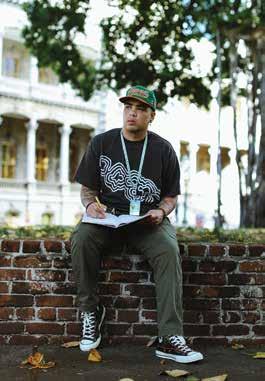
jacketed and warming ourselves and spirits for the day ahead with coffee, māmaki tea, and laughter. Then we part ways, heading toward our isolated rooms. Some of the archivists go upstairs to search for records, some prepare the digitization station, and a few of us head to our translation spaces. As a graduate research assistant for the archives and “honorary archivist,” a title appointed to me by the Hawaiʻi State Archives, I tirelessly bounce between all of these capacities.
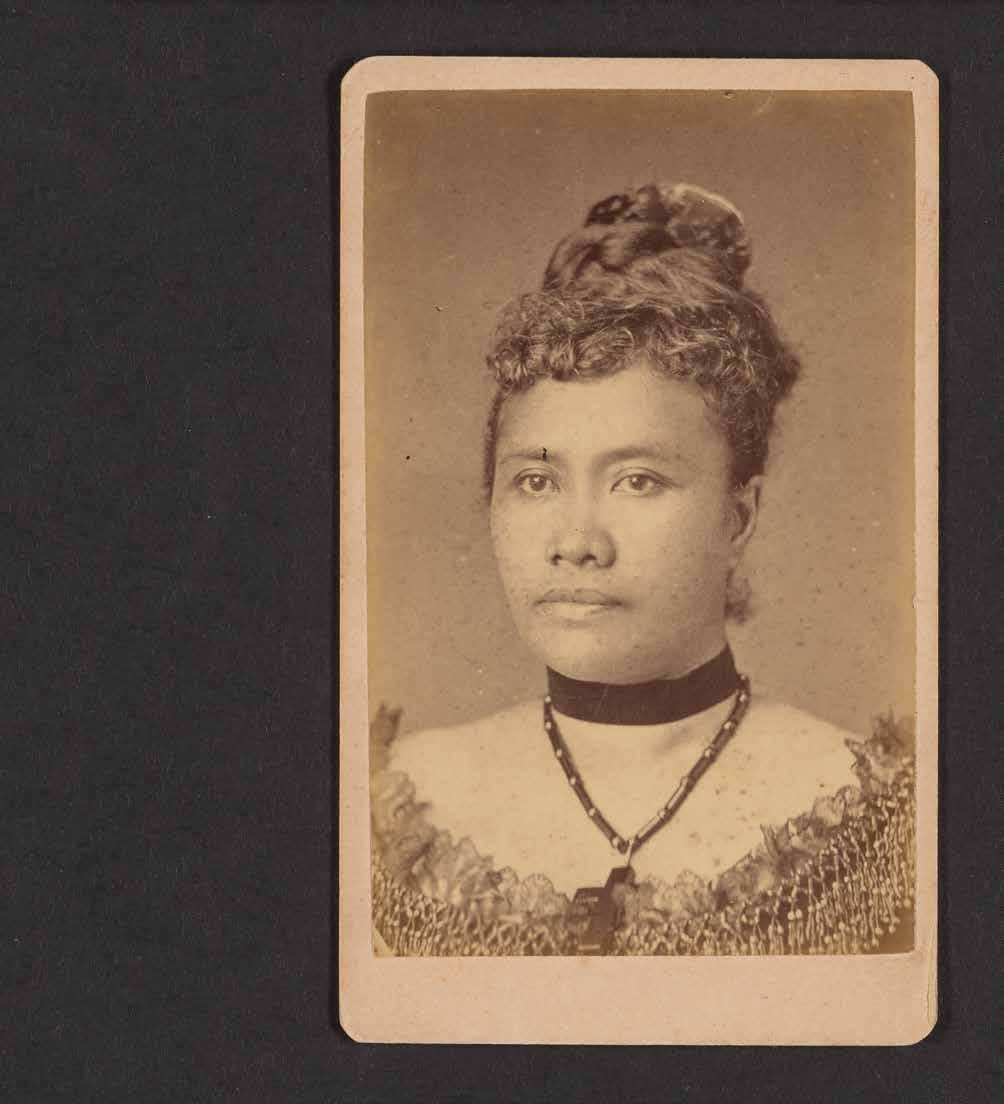
About a decade ago, I was a troubled undergraduate student at the University of Hawaiʻi at Mānoa when activist and professor Lilikalā Kameʻeleihiwa tasked me and better-prepared scholars in her Hawaiian Genealogies class with visiting archives. On the 20-minute ride from UH to the State Archives aboard the A bus, I prepared myself with paʻi ʻai, ʻawa candy, pule, and bumping Aquemini by Outkast. When I arrived, a small crowd of students were already slowly finding their ways inside. I followed them into a hidden elevator and headed upstairs to see a daguerreotype of Lydia Pākī who later becomes Liliʻuokalani and we stepped into the mana of our intellectual cosmogony.
There exists a dichotomy of jovial and tragic moments in Hawaiʻi, and at the Hawaiʻi State Archives, there are 400,000 such moments intimately documented and crying out to be dusted off at the Hawaiʻi State Archives. These documents—material ancestors in a multiplicity of languages— are elders holding knowledge like tattoos across wrinkled, dainty bodies. Through the archives’ sterile walls wafts a fragrance of an ancestral past, inundating a revolution of consciousness, enticing us. Our ancestors carry this fragrance like rustling leaves whose veins are inked with cursive, wanting to hold, caress, pray for, and provide refuge for us all.
Such ancestors are accessible to the public by way of short encounters with rascals behind the archives’ counters who enjoy baked manapua, poi malasadas, and deep talks about spirituality. Occasionally I will hear researchers crying with joy after seeing a photographic emulsion of their ancestor for the first time or holding a document that an ancestor signed. If you are here long enough, you’ll likely also hear
D. Kauwila Mahi, a graduate research assistant at the Hawai‘i State Archives, in front of ‘Iolani Palace. “Archives, like trees, store information and communicate through root systems across generations,” he writes.
“Occasionally I will hear researchers crying with joy after seeing a photographic emulsion of their ancestor for the first time or holding a document that an ancestor signed,” Mahi writes.
grunting and grumbling about the people who conspired to overthrow Mōʻī Liliʻuokalani on January 17, 1893.
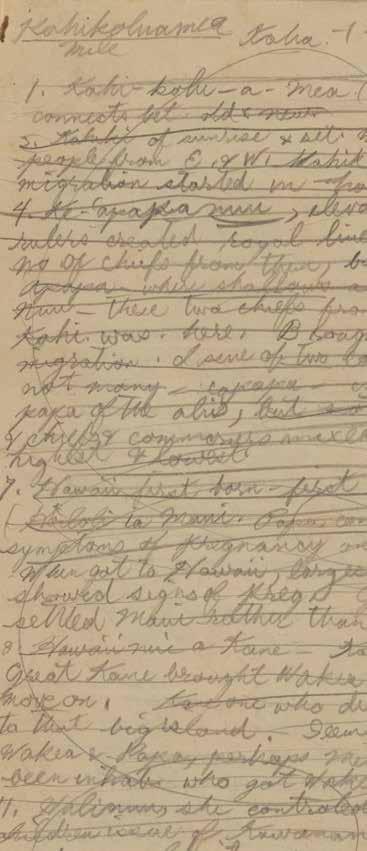
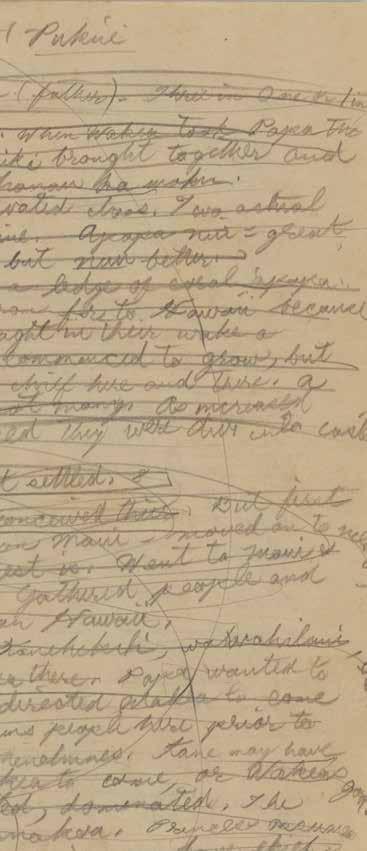
You have probably asked, though, what is archival research good for? Archives, like trees, store information and communicate through root systems across generations. The Hawaiʻi State Archives houses the minutiae of ancestral pasts and futures, the good and bad, at moments which needed instantaneous documentation. There are various types of materials and collections. My personal favorites are the manuscript collections, which provide running dictionaries of chanters, different versions of moʻolelo, recipes for ‘ōkolehao, drafts of mele, personal newspaper clippings, and photographs. There are photographic collections of glass-plate negatives that remember ancestors both human and non. The Governmental Collections house petitions, the draftings of funeral processions for various aliʻi, menus for evening parties of our reigning monarchs, an account of the 400 pounds of poi per week that was consumed within the Palace walls, the nightly watch minutes for ʻIolani Palace, and the amount of coffee the night watchmen drank on a typical evening. There are even maps colored by place names and names dusted away in chants.
Archives help us remember the songs composed for the Wilcox Rebellion which recollected the way the land protected the restorationists-turned-political prisoners. They help us recollect that while some brilliant men attempted to create the first draft of the Kūʻē Petitions against annexation, it was the more
Archives ensure our relationships outlive us and ardently make refuge for the future. The Hawai‘i State Archives house collections of manuscripts, photographs, and petitions.
brilliant women who revised, crossed off, and corrected the petitions, then organized to get more than 20,000 signatures from children, women, and men from all across Hawaiʻi to sign. We now know, because of archived letters sent home from her Royal Majesty the Queen Liliʻuokalani while seeking restoration abroad in Washington D.C. in the tumultuous aftermath of the Overthrow, that she provided money to ensure that the children of multiple schools across Hawaiʻi were well fed. Archives ensure our relationships outlive us and ardently make refuge for the future. As the Holoʻuhā breezes across the knees of Kaʻau Crater and Pālolo, it becomes a memory of keiki sitting on their parents’ lap during late evenings games played by Aʻa Mākālei, the Hawaiian Language Softball Team, in the 1990s. The Ua Līlīlehua drifting softly down the cheeks of the valley reminds me of Uncle Keala Kawaahau, who taught me how to write my first rap in ʻōlelo Hawaiʻi as a student at Ke Kula Kaiapuni ʻo Ānuenue. Here, the Pāʻūpili rain glides off rooftops with the warmth of an aunty whose dress, stained by sour poi and warm squid lūʻau, does as she glides across a room. This crater, where we mix ʻawa for our lāhui at Da Muliwai on Māhealani moons, is simultaneously old and new. These moments reactivate moʻolelo to remind us that archival research weaponizes our stories with knowledge of our past for a better future. To know, diligently, that prior to American Occupation, life in Hawaiʻi was superior. It is no longer an abstract thought— there is documented proof. Archives free us from the shackles of a colonized mind.
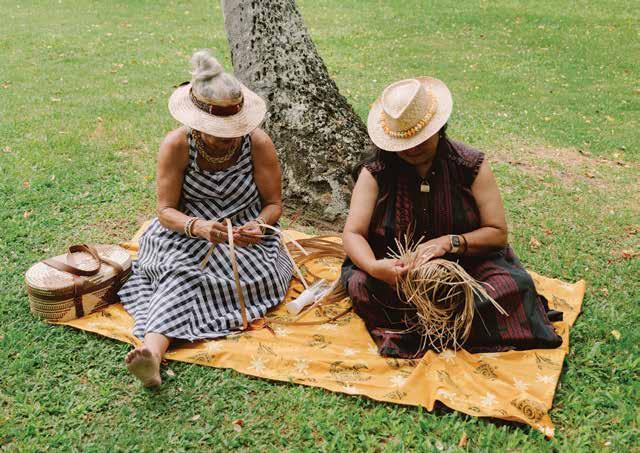
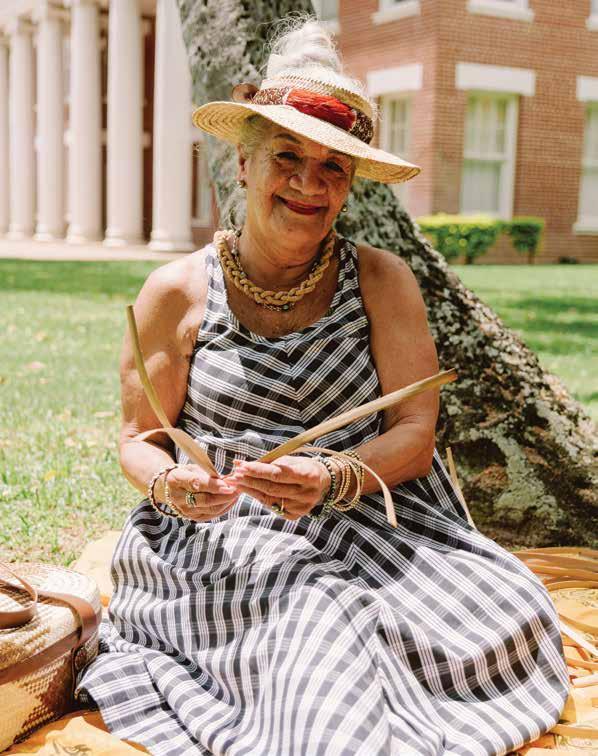
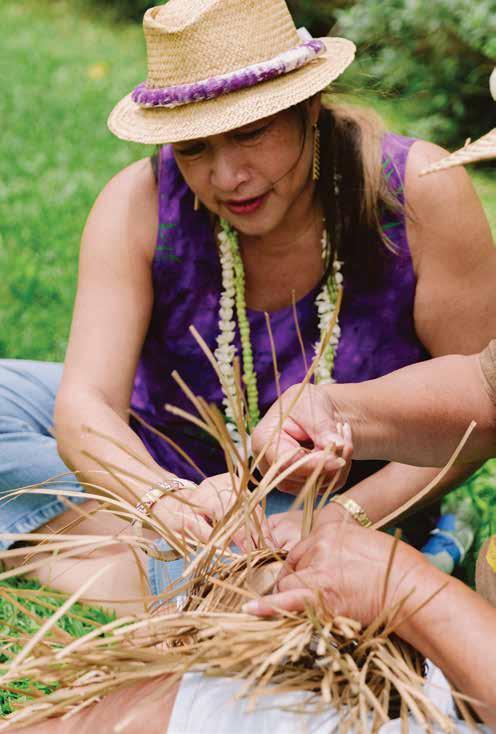
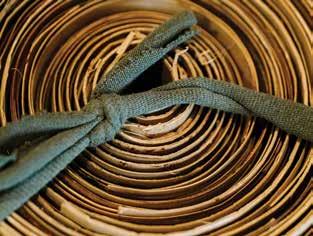
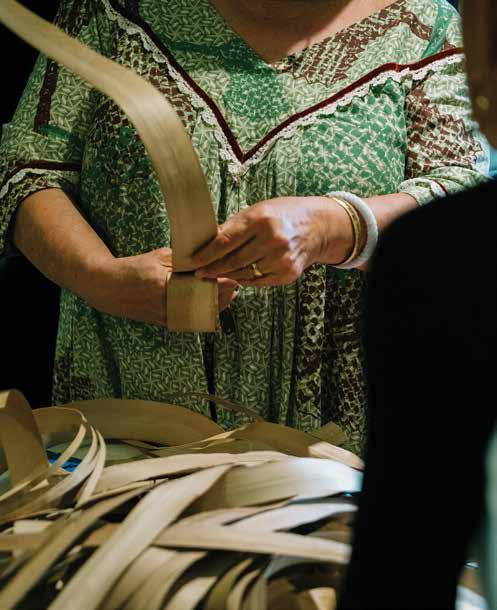
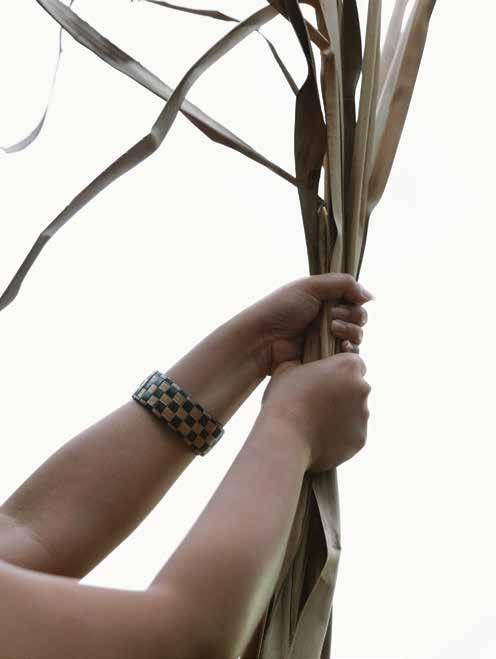
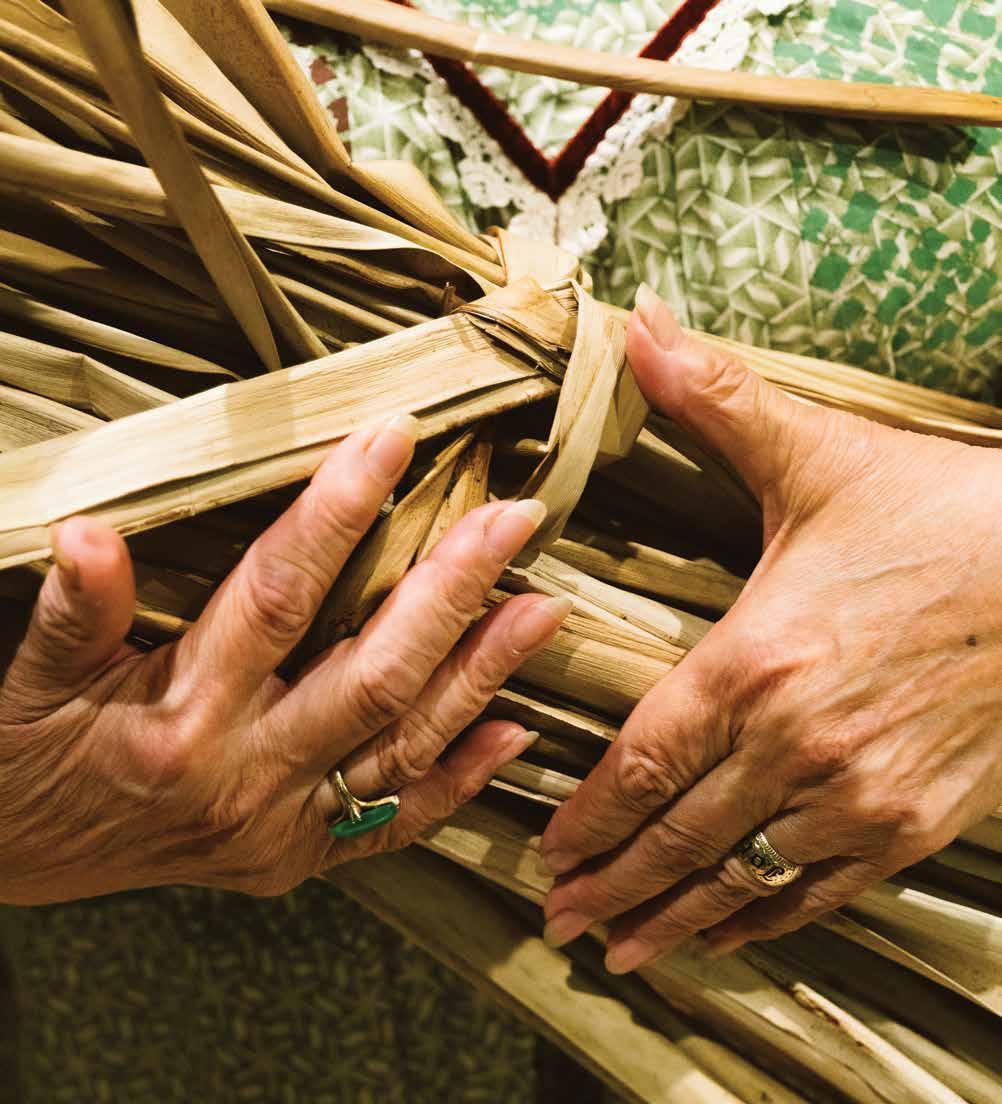
The art of lau hala lives on in the hands of multigenerational weaving groups around the islands.
text by Eunica Escalante
images by Josiah Patterson
translation by
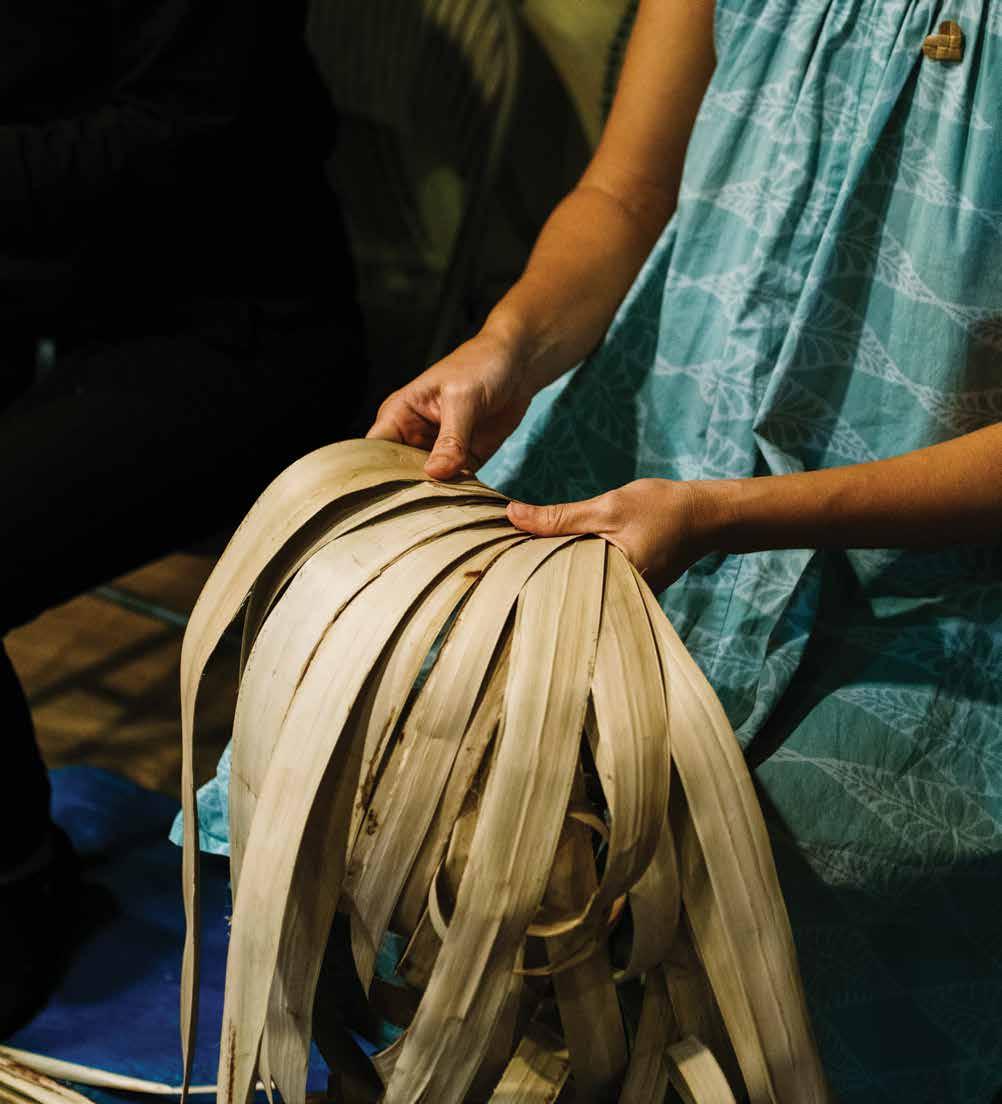
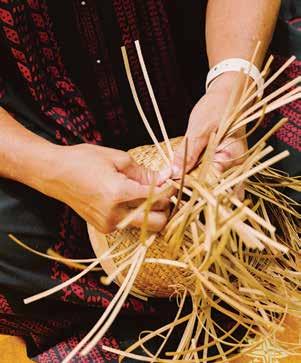
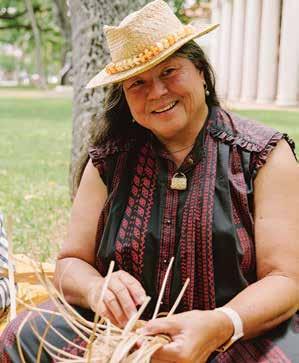
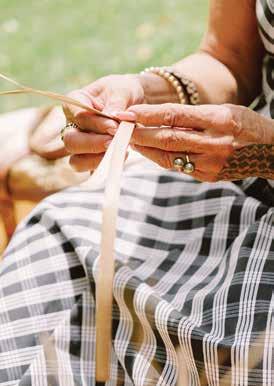
Their fingers move nimbly as they weave, making swift work of the thin, dry leaves gathered in each hand. Through their expert movements, the bundle of foliage will transform into simple bracelets, two-toned hats, and sprawling woven mats. Occasionally, a member of the weaving group will ask a question, to which their kumu (teacher) will respond with patient advice.
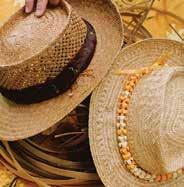
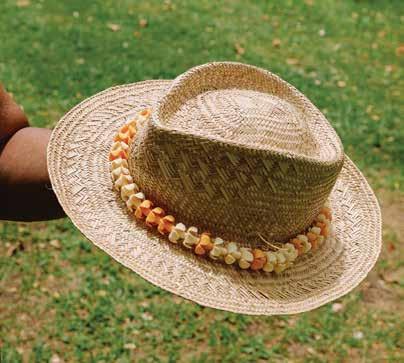
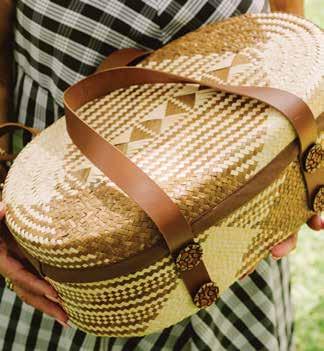
In old Hawaiʻi, mea ulana (woven objects) were a ubiquitous feature of daily life: as sails of voyaging canoes, in homes as baskets and floor mats. With Western influence came the rise of pāpale (woven hats), but as manufactured items became readily available in the islands, mea ulana were in decline—and with them, the art of weaving lau hala, or the leaves of the hala tree.
By the late 20th century, only a few weavers remained. It wasn’t just the craft of weaving, with its intricate pattern work and precise steps, that needed saving. It was everything that made weaving possible: the knowledge and skill to tend to a hala tree, harvest its leaves, and transform them from tough stalks to malleable fronds.
In effort to perpetuate ulana lau hala (lau hala weaving), skilled practitioners formed weaving groups, often led by kumu whose mastery was gained over generations. Kumu would pass on the practice to their haumana (student), who would go on to become kumu themselves. New generations of weavers blossomed, nurtured by groups that made the art more accessible. Today, they remain vital gathering places for the craft, weaving together the work of many hands.
In 1997, master weavers Frank Masagatani and Aunty Gladys Grace founded Ulana Me Ka Lokomaikaʻi to perpetuate the art of lau hala, specifically pāpale. Together with other kumu, they committed to sharing the craft, a knowledge that, back then, was only passed on from one family member to another. Today, their weaving group is among the largest on Oʻahu, nurturing many kumu who went on to form their own groups.
ウラナ・メ・カ・ロコマイカイ
1997年、織りの名手フランク・マサガタニとアンティ・ グラディス・グレースは、ラウ・ハラ、特にパルパレの技術 を永続させるためにUlana Me Ka Lokomaikaʻiを設 立した。当時は家族間でしか受け継がれていなかったこ の技術を、他のクムたちとともに分かち合うことを約束 したのだ。今日、彼らの織物グループはオアフ島で最大 規模を誇り、多くのクムたちを育て、その後それぞれの グループを結成した。
“Over 40 years later, I still get that same electric feeling as when I started. Looking back, I’m so glad I paid attention to that feeling. I could have missed my calling in life.”
“You have to own this responsibility—this kuleana—to share what you’ve learned from your kumu, to preserve and perpetuate Hawaiian lau hala hat weaving by helping and teaching others in the same spirit. The hook goes in easy, then catches.”
“If you can’t do it this way, try another way. Never give up—that’s number one. Another value is that you must pass it on. It’s not yours to keep. I truly believe you don’t choose lau hala. It chooses you.”
“As kumu, we have the responsibility to pass on that ʻike (knowledge). And we, as haumana, are responsible to adhere to those teachings. It took me a while to find a student who fit into that category, who would continue to keep alive those traditions of my kumu.”
Nā Lālā O Ka Pūhala was founded by Gwen Kamisugi, a haumana of Aunty Gladys Grace. The group’s name translates to “the branches of the pūhala tree,” a reference to the many kumu and weaving groups that Aunty Gladys nurtured through her teachings. Today, the group continues under Stacie Segovia, herself a student of Kamisugi. Nā Lālā O Ka Pūhala is committed to presenting lau hala in an approachable way and ensuring the craft is accessible to anyone willing to learn.
ナー・ラーラー・オ・カ・プハラ
Nā Lālā O Ka Pūhalaはアンティ・グラディスのハウマナ であるグエン・カミスギによって設立された。グループ名 は「プウハラの木の枝」と訳され、アンティ・グラディスの 教えによって育まれた多くのクムや織物のグループにち なんでいる。現在、このグループはカミスギの教え子で あるステイシー・セゴビアのもとで続けられている。Nā
Lālā O Ka Pūhalaは、ラウ・ハラを親しみやすい方法で 紹介し、学ぼうとする誰もがラウ・ハラに親しめるように 努めている。
“It was an instant love, you could say. I got so excited that I got my own leaves and just started weaving. But that was when I learned to take a step back. It was like hula in that way. You have to have patience. You have to wait for your kumu to show you how before you can move on to the next thing.”
“I love the idea of sharing lau hala and making sure that Hawaiians today have the same access to their heritage and their art that their kūpuna (elders) did.”
In 1997, master weavers Frank Masagatani and Aunty Gladys Grace founded Ulana Me Ka Lokomaikaʻi to perpetuate the art of lau hala, specifically pāpale. Together with other kumu, they committed to sharing the craft, a knowledge that, back then, was only passed on from one family member to another. Today, their weaving group is among the largest on Oʻahu, nurturing many kumu who went on to form their own groups.
“Aunty Gladys would start off a class by saying, ʻWe’re not only going to learn how to weave, we’re going to learn how to weave our past with our present, which is even more important.’ It’s like that old adage: You have to know where you’ve come from to know where you’re going, and to know who you are.”
“We have leads who include practitioners with a deep and wide knowledge from experience and time spent in their practices, as well as young people whose excellence is acknowledged by all. Those leads include Aunty Lorna Pacheco, Lise Michelle Suguitan Childers, and Sarah Kamakawiwoʻole, to name a few. I am a witness to this process. It’s the Hawaiian way, weaving pilina (connection) through time spent with kumu pū hala, the hala tree.”
—Maile Meyer, founder of Nā Mea Hawaiʻi
“The name Keanahala speaks to a hala cave, which was where we would have gathered to weave and prep lau, and to be in community with one another. And although we’re not prepping in caves anymore, it harkens back to that idea of how we gather and can continue to gather, even inside Ward Village.”
In traditional Hawaiian society, lei were offered to powerful akua, or gods, and used to show respect to ali‘i, the chiefs. They were also, in a practice that continues to survive today, gifted to honor loved ones and to mark special celebrations. Alongside native plants, a bounty of introduced species have been adopted by lei makers and incorporated into the traditional practice of stringing or weaving flowers into adornments. Beyond the sometimes simple, oftentimes intricate designs of leaves and petals, the underlying beauty of lei is how they’re entwined into nearly every stage of contemporary living: first birthday lū‘au, college graduations, weddings, promotions, retirements, funerals, arrivals in and departures from Hawai‘i. Continue forward on your path, and lei will surely follow, expressing and enhancing emotions we can’t always say in words. Let the lei speak then.
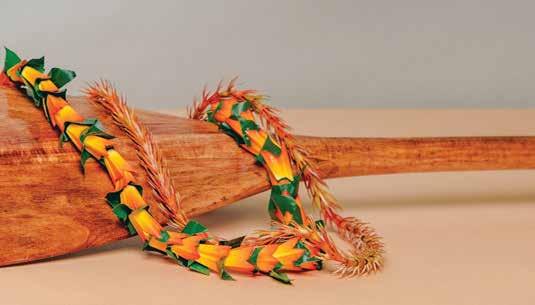
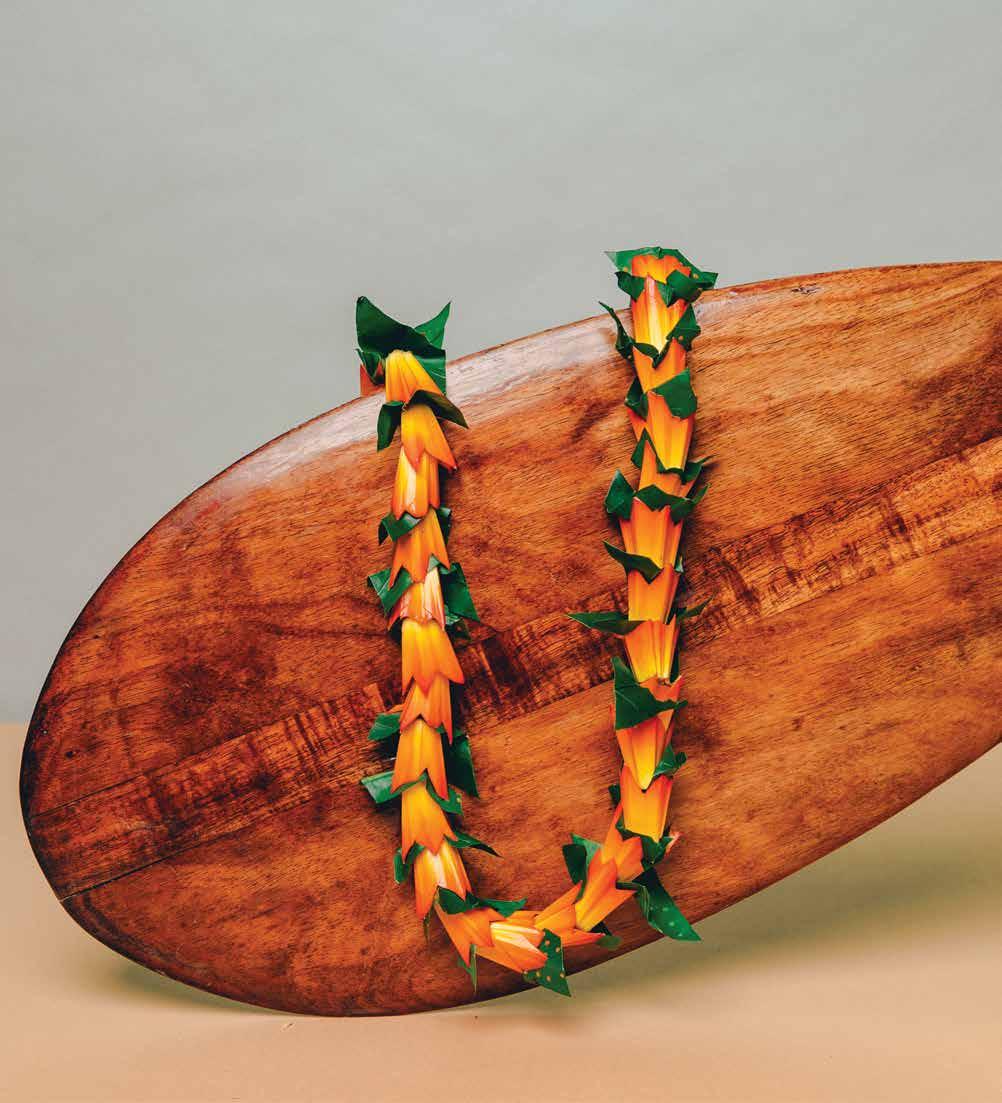
Woven from the native hala tree, this lei carries meanings of passage and renewal, gifting luck from one season to the next.
Opposite Page
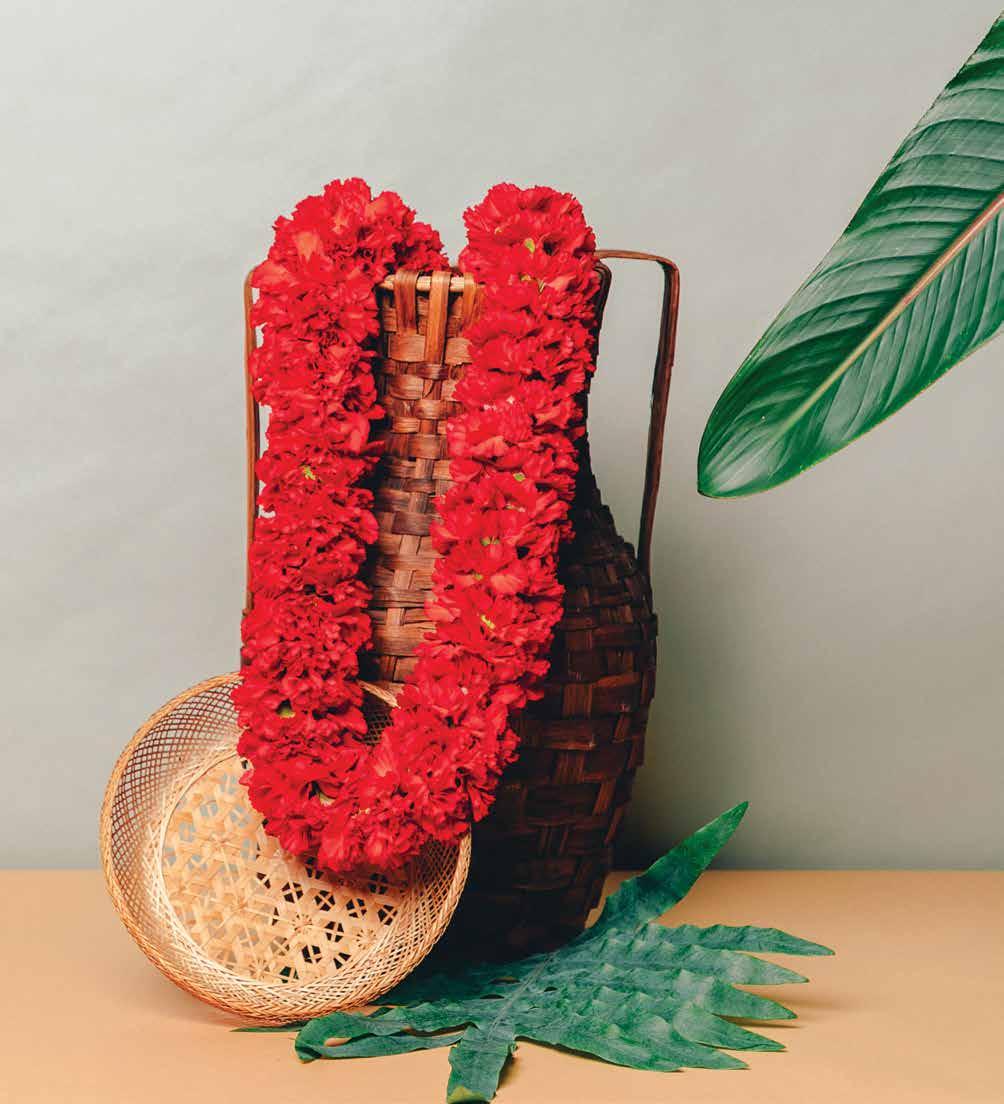
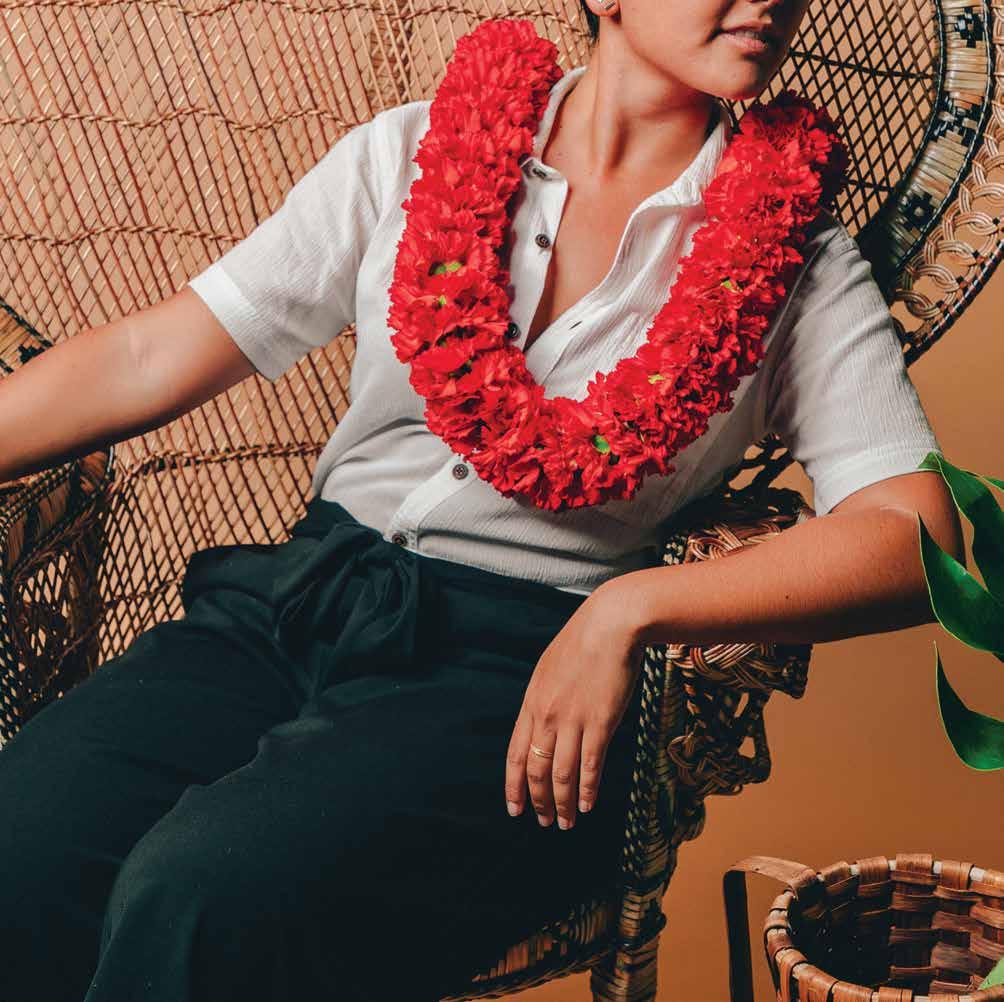
A jubilant symbol of celebration and affection, the double carnation lei bursts with color and regality.
下 ハワイ原産のハラをつないだこのレイは通過 と再生を象徴し、季節を越えた幸運を祈って 贈られる
右ページ
鮮やかな色彩と気品に満ちたダブル・カー ネーションのレイは、祝福と愛情の象徴
Vol. 2
Carnation
Merry and bold, this symbol of exultant adoration can’t be missed when the occasion’s honoree is bedecked in it. Joyous events like university graduations call for the very full double carnation lei. A fashionable favorite found on prominent Hawaiian musicians and local politicians, this vintage classic, which takes about 100 blossoms to finish, seems to make a comeback every few decades.
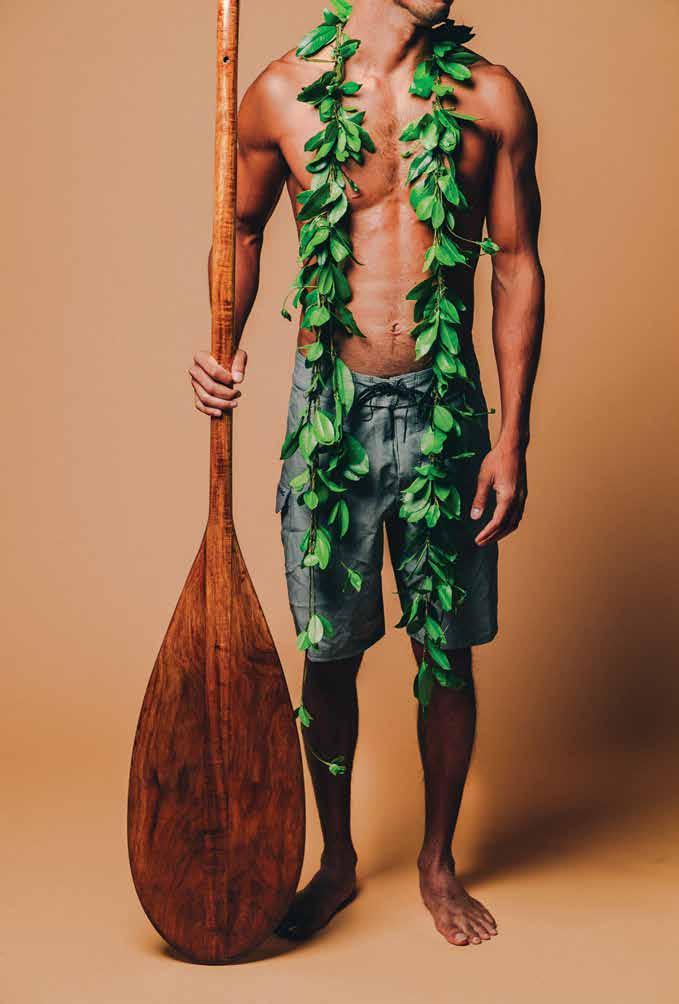
One of the oldest and most prized lei used by early Hawaiians in the islands, the leathery foliage of this endemic plant, often seen as a twining vine, is traditionally preferred by men. Although legends recount women adorned in maile, in precontact Hawai‘i, men wore maile almost daily. Sacred to Laka, the goddess of hula, the maile lei has also been noted to be a peace offering on the battlefield. Today, weddings customarily call for grooms to be gifted with the fragrant, open-ended strands.
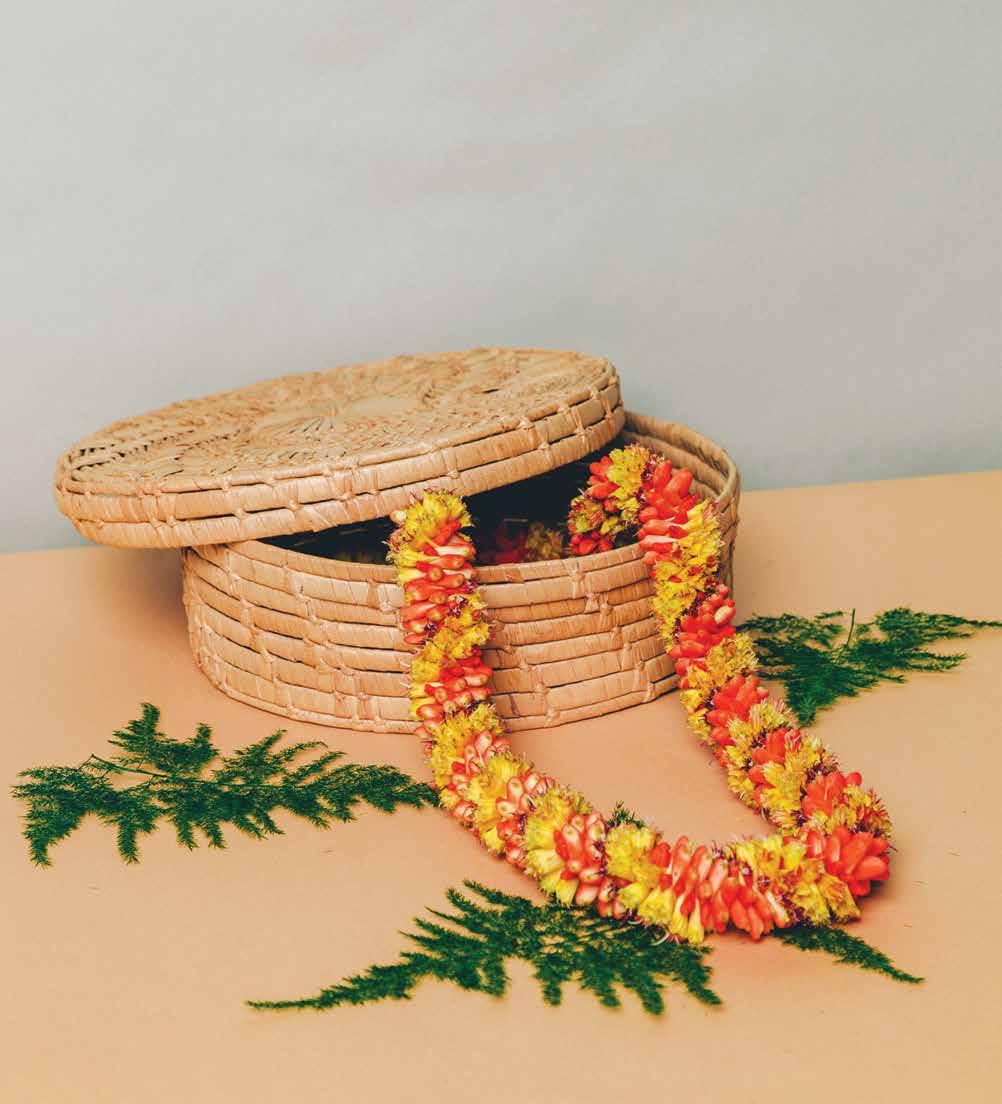
A lowland native tree with numerous uses in Hawaiian culture, hala bears spherical fruit with colored segments that are valued material for lei. The plant’s name means “fault, error, to pass by or away,” which makes hala an appropriate funeral lei. However, it also represents good luck when worn during the makahiki season or the Hawaiian new year. This tradition of offering good fortune continues at business and sporting events, as when, for instance, the coach of an outrigger canoe crew or a colleague celebrating the anniversary of a new venture is adorned with a hala lei.
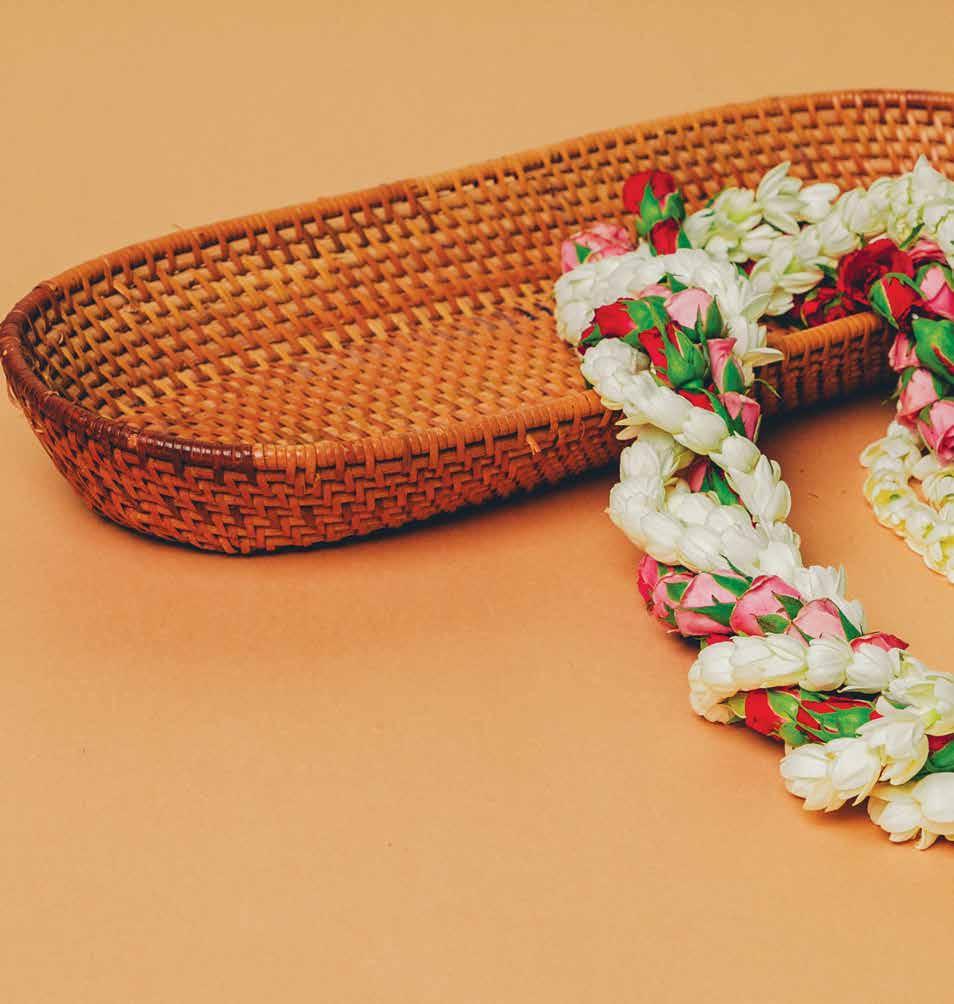
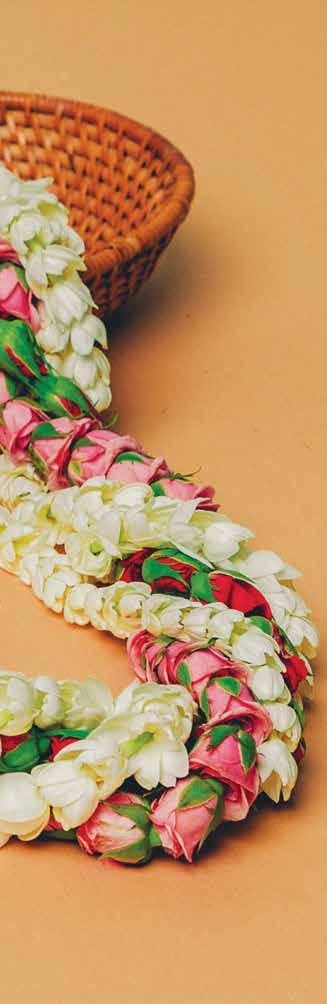
A fragile and exquisite lei, strands of lokelani and pīkake are a lovely choice for a female guest of honor. Pīkake, an Arabian jasmine from India believed to have been introduced to Hawai‘i by the Chinese, serves as an accent to the roses displayed here, but is elegant all on its own. The pīkake was favored by Princess Ka‘iulani, who nicknamed the blooms after one of her most prized possessions: peacocks that wandered her personal gardens.
This handsome affair is a popular choice today for Father’s Day, a birthday, or any event that celebrates a male figure. Since the tiny flowers are only about three-fourths of an inch, nearly 2,000 are needed to construct a hefty strand. Ultimately, the multi-colored and skillful assemblage resembles a lit cigar, hence its colloquial name, “cigar lei.” (The Hawaiian word for cigar, kīkā, is a borrowed version of the English word.) But don’t let the name fool you: This lei is odorless.
The only lei that can be insured like diamonds, these shell lei are the most luxurious garlands in the Hawaiian Islands and can sell for anywhere from $15,000 to $30,000. Sourced from Ni‘ihau’s unspoiled shores, the shells are highly sought after for their illustrious shine and precise grade. Within the exclusive community of artisans who craft these pieces, a unifying set of terms exists to distinguish what types of shells are used: kahelelani, momi, laiki, and kāmoa, followed by qualifying descriptors like color or pattern. The most rare is the kahelelani shell in hot pink or black; outfitted together, they make a lei with a dazzling contrast of color unlike anything in the world.
Mochi binds families together at the start of a new year. Gathering around its chewy goodness, whether to make it or to eat it, is a tradition for many in the islands.
家族の絆を深める正月の餅つきや餅を 食べる習慣は、ハワイのローカルの家 庭で伝統となっています。
幸運を呼ぶ餅
images by John Hook
translation by Akiko Shima
Just after 6 a.m. on a chilly December morning in Wahiawā, a rural community in the middle of O‘ahu that was once the pineapple capital of the world, a few older men dressed in short-sleeved happi coats and hachimaki (Japanese headbands) steam sweet mochi rice in bamboo boxes over propane stoves in a backyard. Others set up the tables in the garage. In a few hours, dozens of members of the local Uesugi family will gather to shape the cooked and pounded rice, or mochi, into balls of various sizes, filling them with tsubushian (azuki bean paste), chocolate-hazelnut spread, and even cookie butter.
Making mochi, by hand and at home, is a New Year’s tradition that goes back generations in Hawai‘i, though very few families still prepare mochi this way. Older folks in the Uesugi family remember pounding hot glutinous rice using kine (wooden mallets) in an old stone usu (large mortar), but the usu has long been missing. Today, young boys pound the freshly steamed rice with kine as it enters a stainless-steel machine that churns and massages it until it’s a soft and pliable paste. When this process is complete, the rest of the family takes the mochi and shapes
it into smooth discs. These will be used as offerings or put into ozoni, a soup full of ingredients that have significance in Japanese culture like konbu (seaweed) for long life and mochi for good fortune and strength.
“My family has been doing this for as long as I can remember,” says Shawn Uesugi Nakamoto. Her two sons have pounded mochi every new year since they were teenagers. “It’s just always been our family tradition that nobody wants to let go of. It’s a fun time for our kids. We all really look forward to it.”
In Hawai‘i, mochi is as much a part of New Year’s celebrations as fireworks and champagne toasts. The food comes from Japan, where it has been made for at least 13 centuries. Once eaten exclusively by emperors and nobles, mochi came to be used in religious offerings at Shinto rituals and, during the Japanese New Year season, took on the symbol of long life and wellbeing.
Today, no matter the time of year, mochi is dropped in soups, dusted in kinako (soybean flour), grilled and dressed in a sugary shoyu sauce, or stuffed with a variety of fillings ranging from lima bean paste to peanut
butter to whole strawberries. In Hawai‘i, mochi is also consumed year-round, found on shelves in convenience stores and atop bowls of shave ice.
But the mochi made for New Year’s celebrations is special: It is always left white, the color of the rice, and shaped into discs. Often, two large ones are stacked and then topped with a mikan (Japanese orange) with its leaf attached. This is kagami mochi (mirror mochi), an offering to the gods, which is placed on the family altar or somewhere in the home to bring good fortune in the coming year.
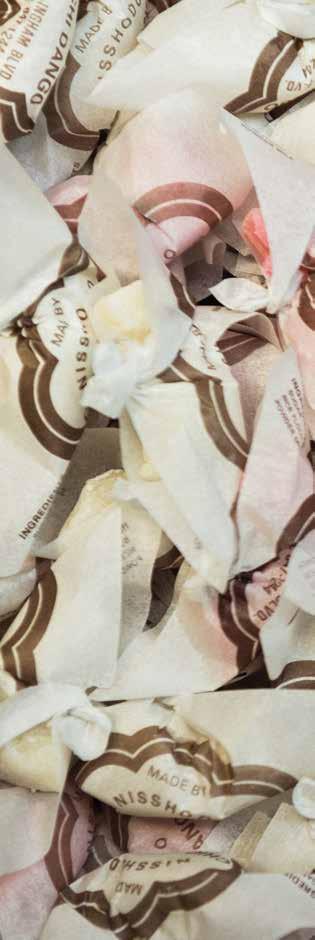
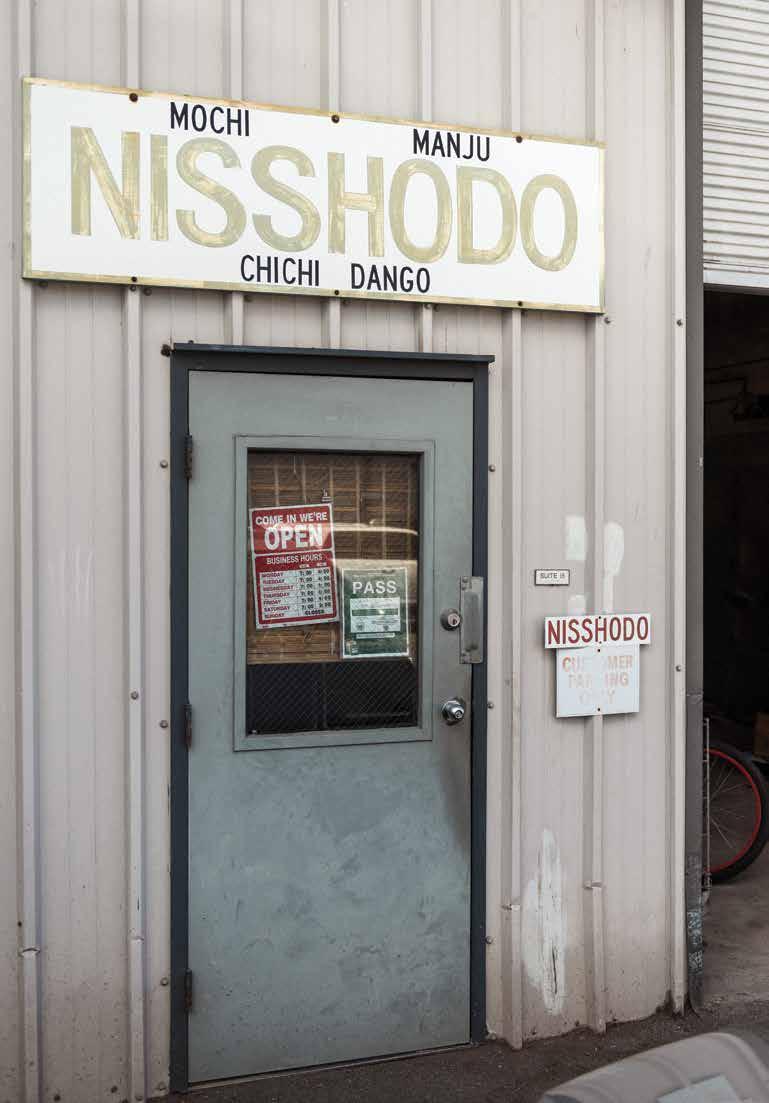
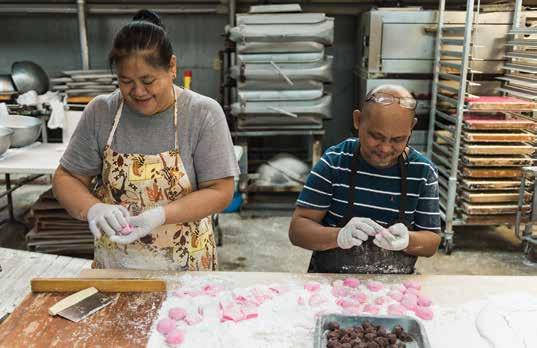
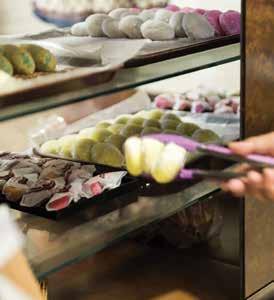
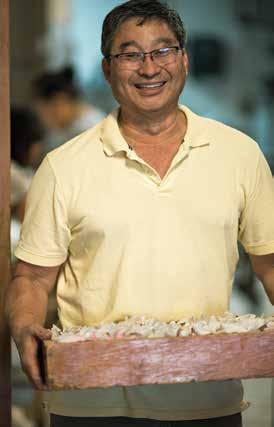
Traditional daifuku mochi (mochi stuffed with sweet filling), which is too difficult for most people to make at home the way the Uesugis do, is what people clamor for at the 97-year-old Nisshodo Candy Store housed in an unassuming warehouse in Kalihi. Each year, it churns out thousands of pieces of fresh mochi for New Year’s alone, going through more than 500 pounds of mochi rice during the holiday. At the peak of the season, its workers clock in at 5 a.m. to try to meet everyone’s needs. Even this is sometimes not enough. “The line goes out the door and there’s a lot of complaining,” says Mike Hirao, 68, a retired banker and third-generation owner of the family-run store. “But cannot help.”
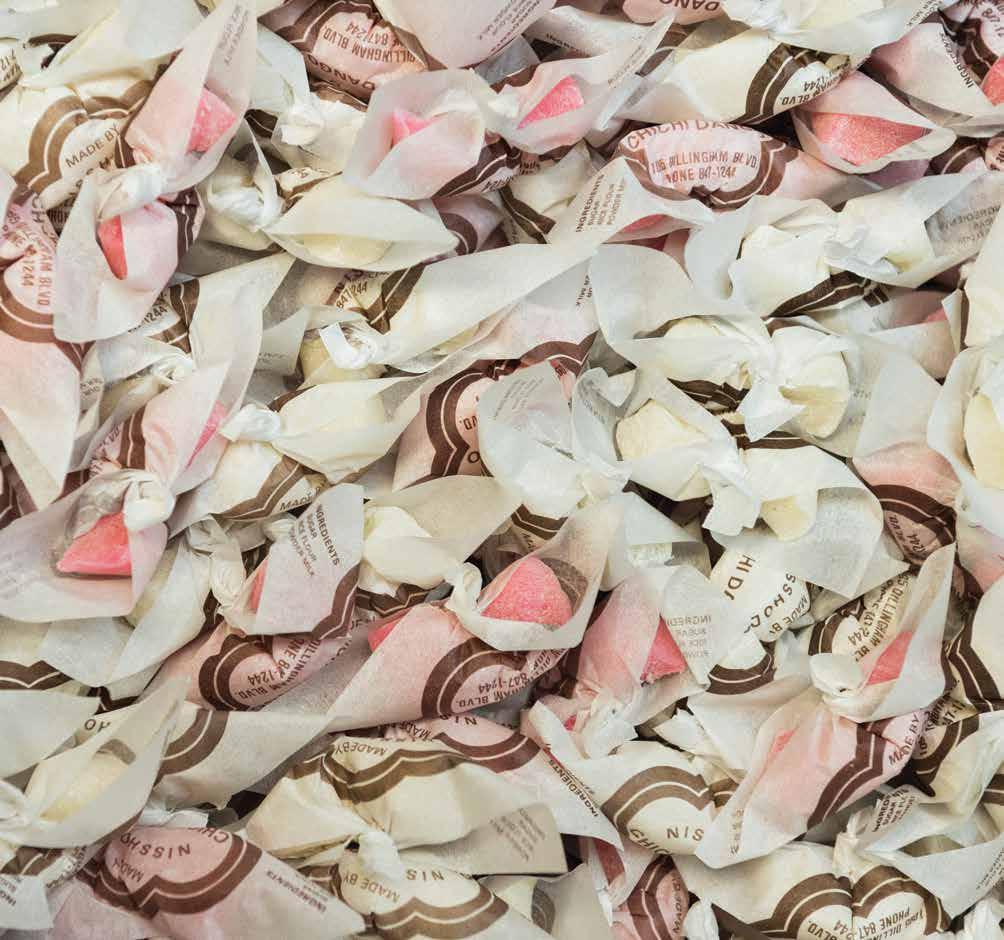
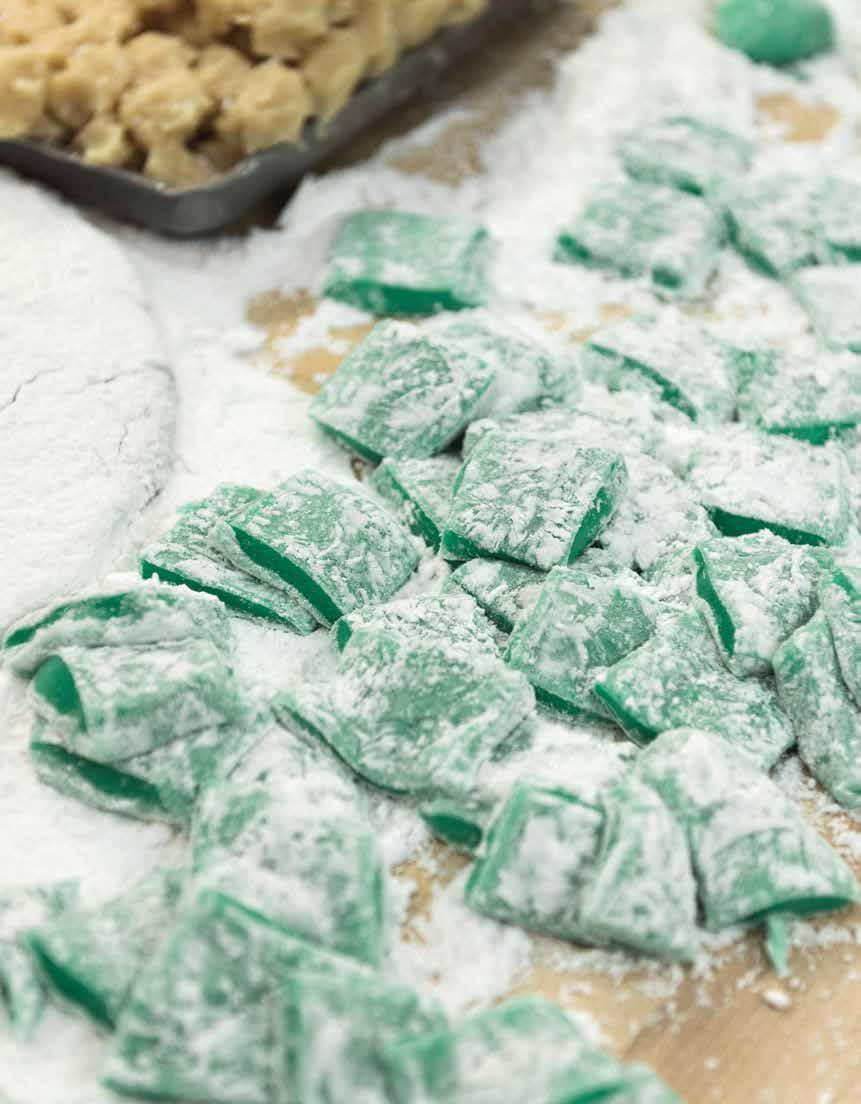
Though the shop is busiest on the days leading up to New Year’s, its best-selling mochi is chichi dango, a soft, sweet confection made fresh daily onsite. The shop sells around 40,000 pieces of the pink and white mochi—made from scratch and mostly by hand—every week. The shop is also one of the few on O‘ahu that makes the specialty hishi mochi, a three-layer, diamond-shaped mochi dessert, for Girl’s Day, or Hinamatsuri, in March.
Still, the busiest holiday for Nisshodo Candy Store is New Year’s. Hirao understands the sentiment. He grew up placing mochi on family altars and eating it in soup on New Year’s Day. Though he doesn’t have an altar in his own home, he still honors the custom, placing the kagami mochi on the stove in his kitchen. “This is how we grew up, it’s what we do,” he says. “And to this day, we still do that. It’s tradition.”
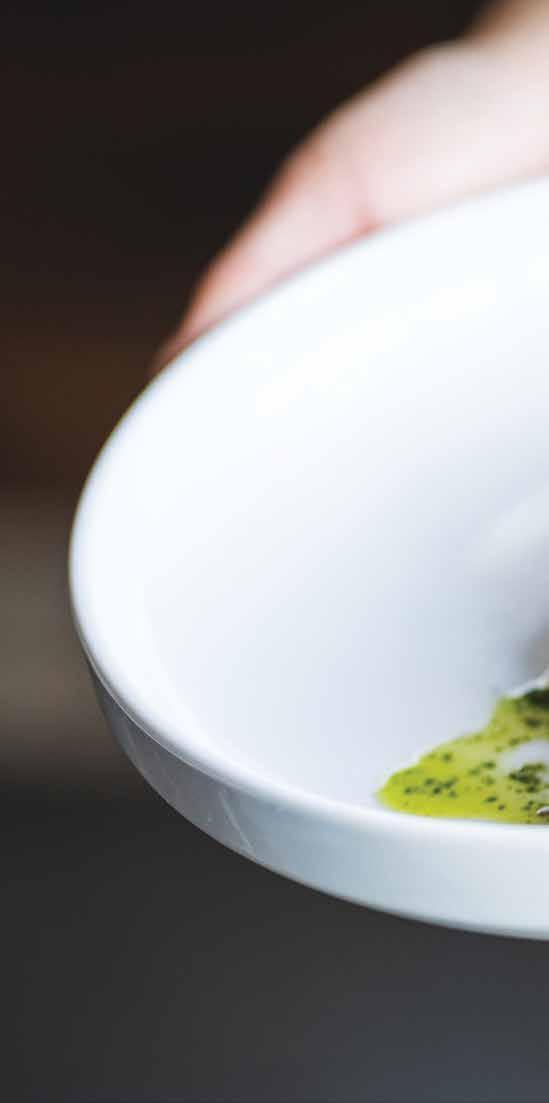
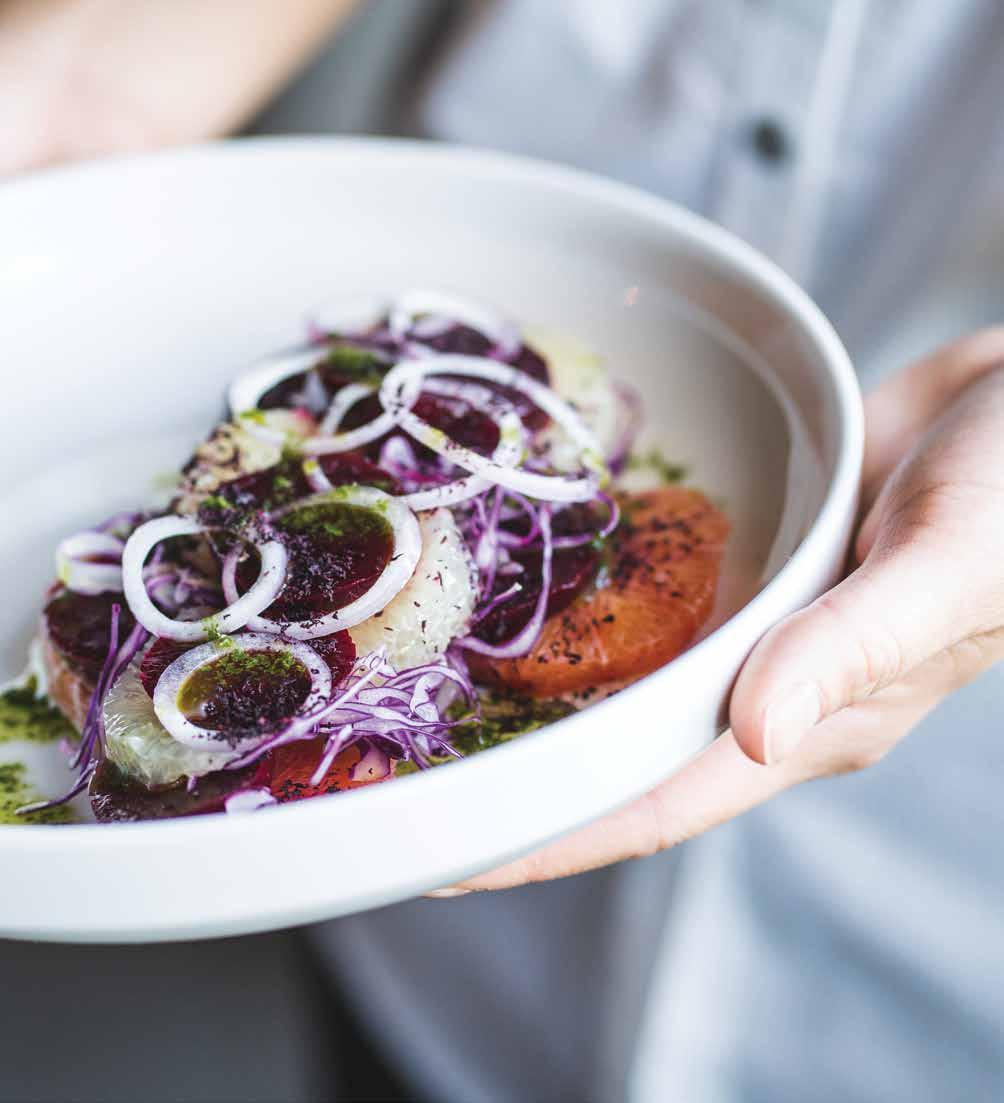
Named for a Shakespearean allusion that evokes the wild beauty and solace of a forest, Arden Waikiki is an enchanting eatery where guests are invited to come as they are to savor a symphony of locally inspired flavors. As the signature restaurant of boutique hotel Lotus Honolulu at Diamond Head, Arden distinguishes itself from upscale contemporaries by curating a rich multisensory dining experience set in a charming, unpretentious backdrop. Here for dinner or drinks, a special celebration or a spontaneous bite, the destination offers an evening of elegance steeped in exquisite taste and exceptional service, without the ostentation. While some kitchens favor complexity, Arden takes an elemental approach to the art of cooking. For the restaurant’s opening in October of 2023, co-executive chefs Makoto Ono and Amanda Cheng designed a vibrant menu around Hawaiʻi’s natural bounty of produce, meats, and aquaculture, folding in French and Japanese influences with finesse. Though the original chef team has since moved on, their founding “field-to-fork” style and flair for incorporating ingredients in unexpected ways has helped Arden become a celebrated standout among food critics. In addition to appearing on a variety of local “Best Restaurant” lists, Arden achieved several honors at the 2025 Hale ʻAina Awards, Hawaiʻi’s longest-running and most prestigious industry awards program, winning Gold in Best Service, Bronze in Best Desserts, and Silver in Best Cocktail Program.
In Good Taste
Gathering elevated flavors of Hawai‘i with island insouciance, Arden Waikiki conjures up culinary chemistry.
text by Lindsey Vandal
images courtesy of Arden
ARDEN WAIKIKI
Above, Top From 5 p.m. to 6 p.m. daily, Arden hosts a happy hour offering 25 percent off its lounge menu and all beverages.
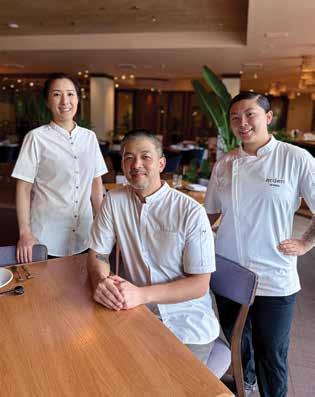
Above, Bottom Chef de cuisine Jasmyne Wood, right, leads Arden’s team of culinary talents.
Opposite Page
Along with bar and restaurant seating, Arden Waikiki can accommodate large parties with a private dining room or full-restaurant buyout option.
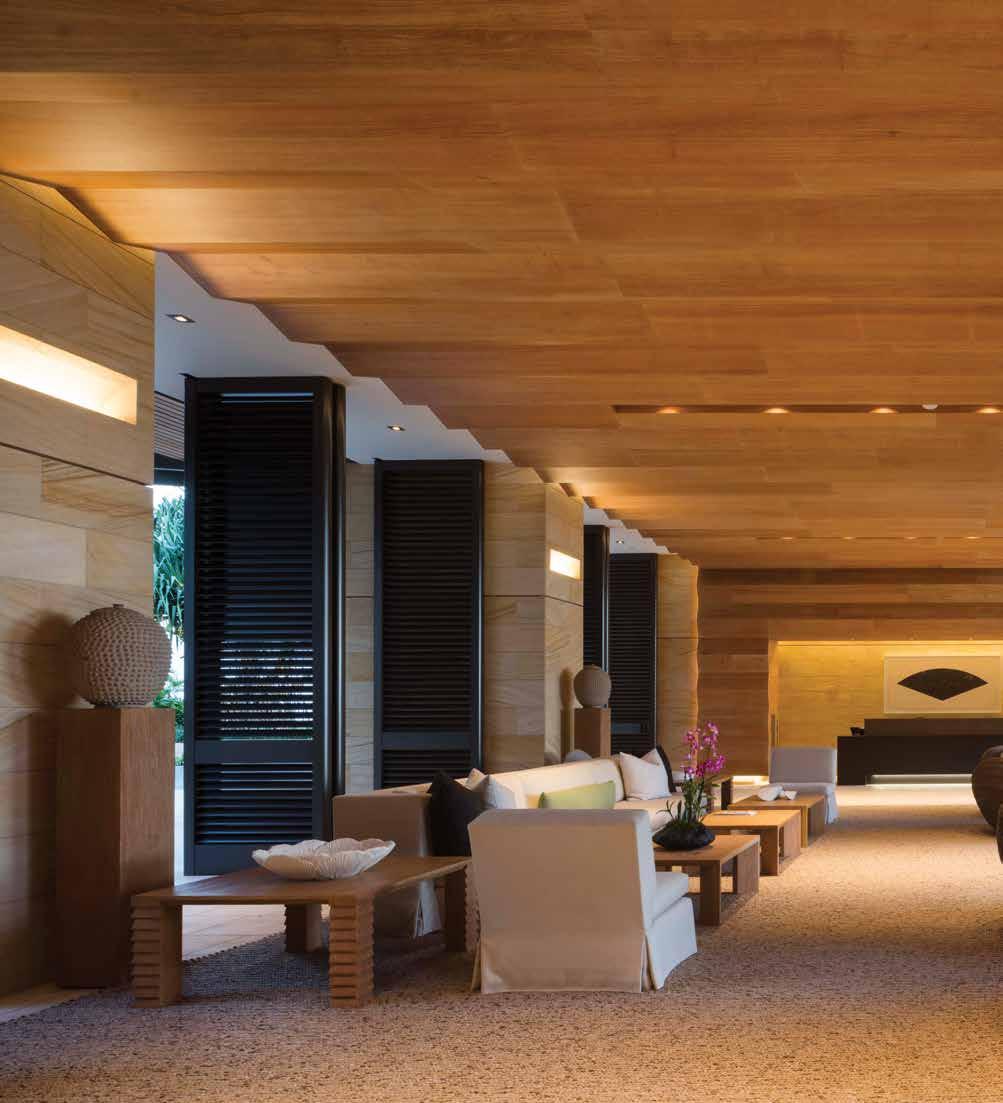
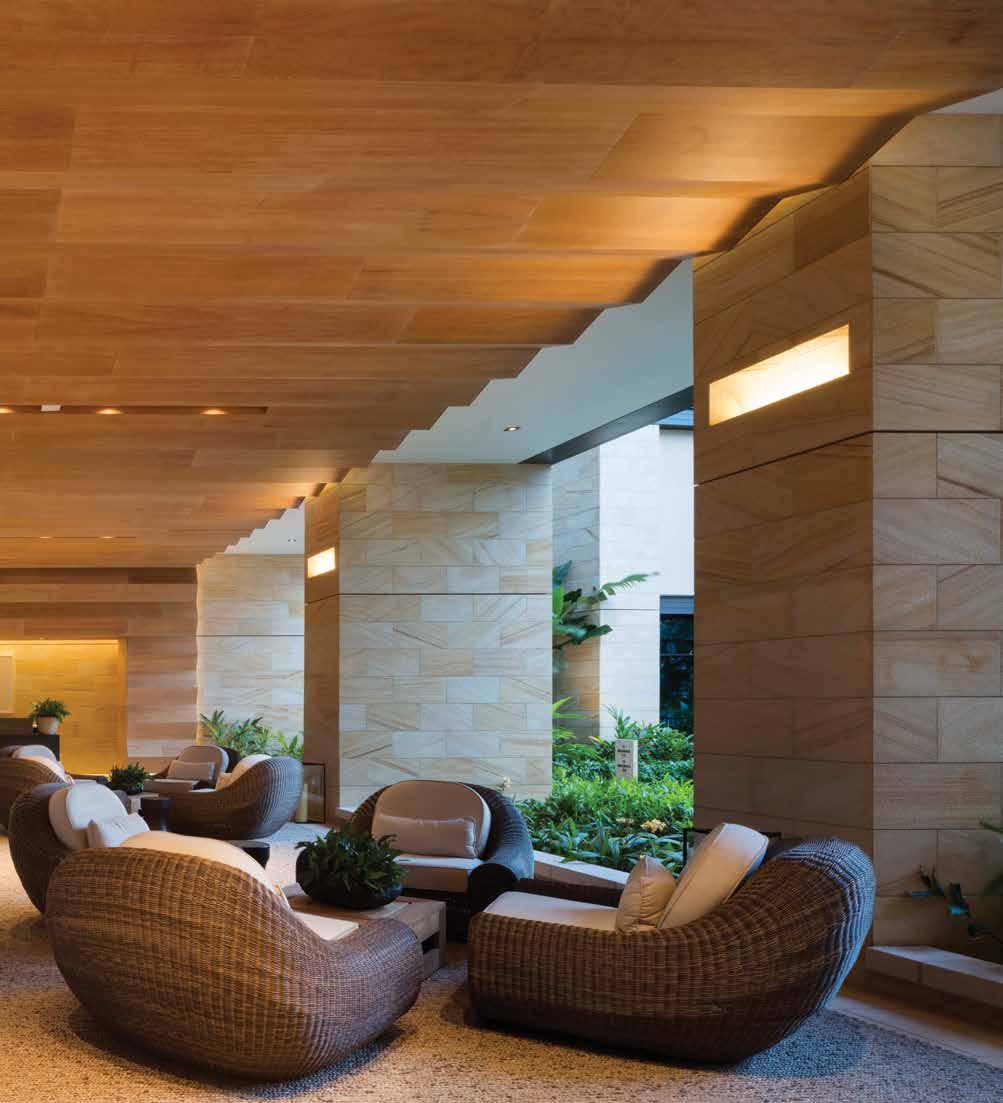
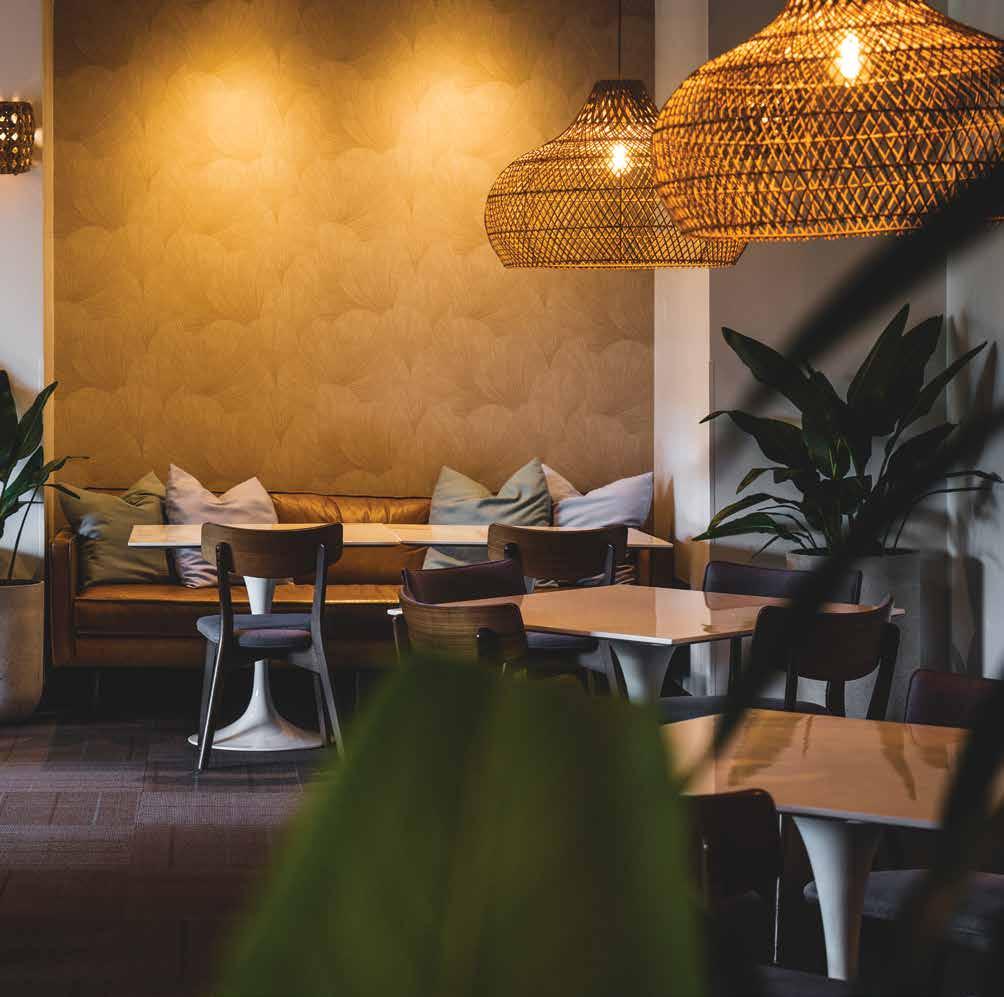
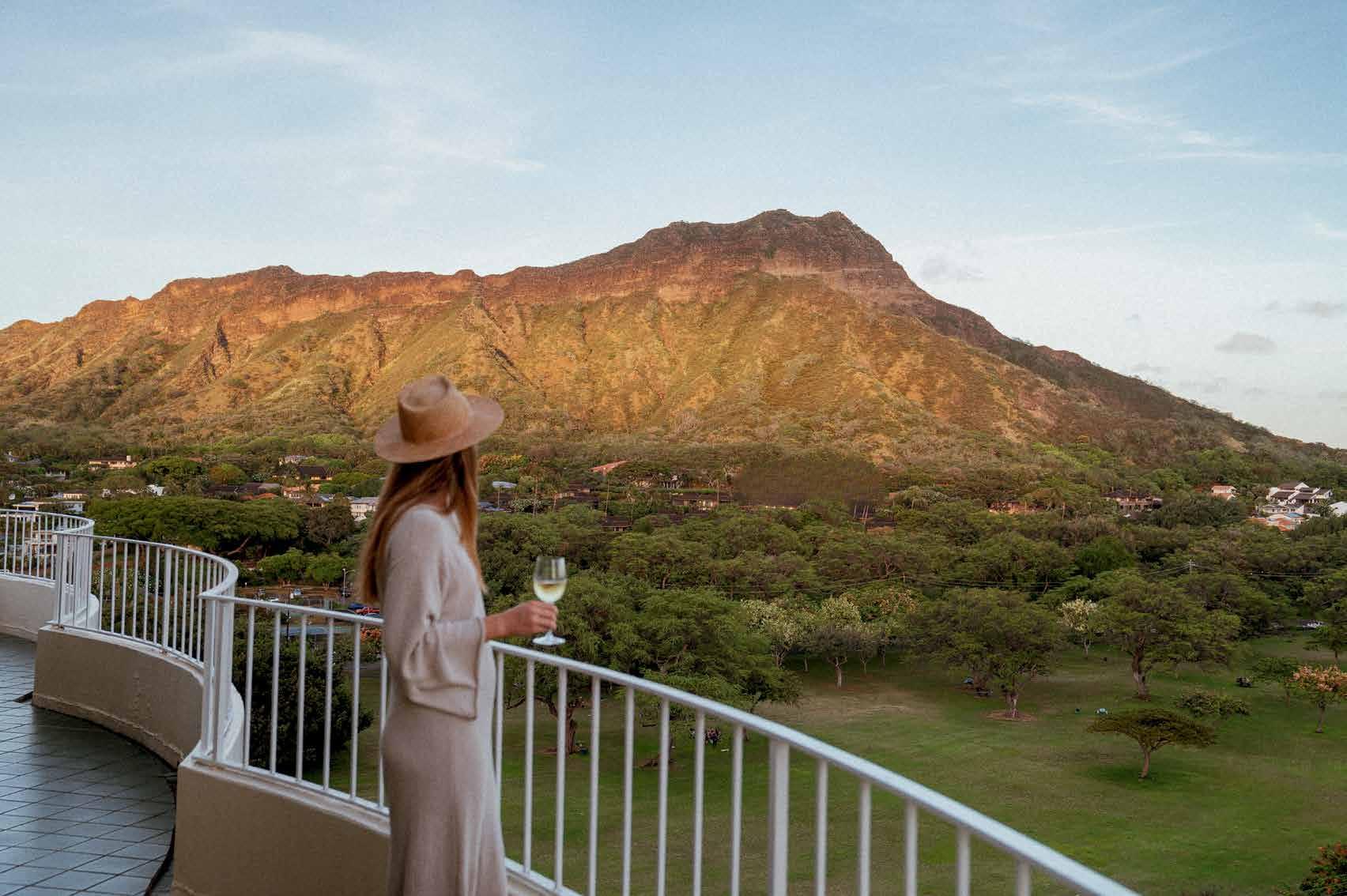
Like its boutique hotel home, Arden embodies the measured expertise of owner/ operator MacNaughton Hospitality, known throughout Hawaiʻi for transforming hosting into an artisanship and building welcoming spaces that are authentic and immersive. By design, the restaurant’s second-floor setting evokes a distinctive island contemporary air that feels refined yet relaxed, comprising a minimalist-modern dining room, open kitchen, and lounge-style seating. True to its name, Arden appears intertwined with the verdant Oʻahu landscape through warm teak accents, woven fixtures, lush plantings, and striking picture-window views of Diamond Head Crater.
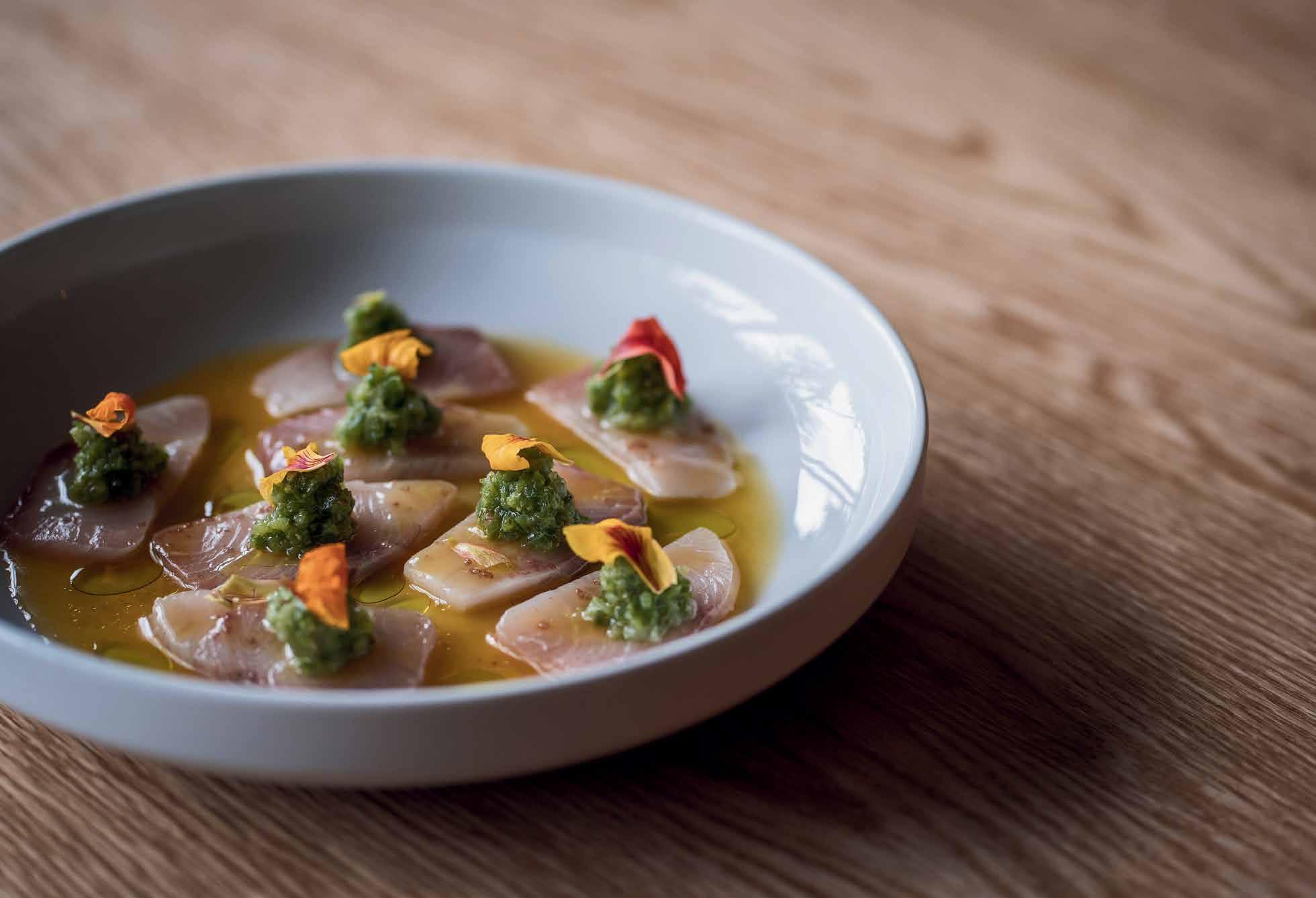
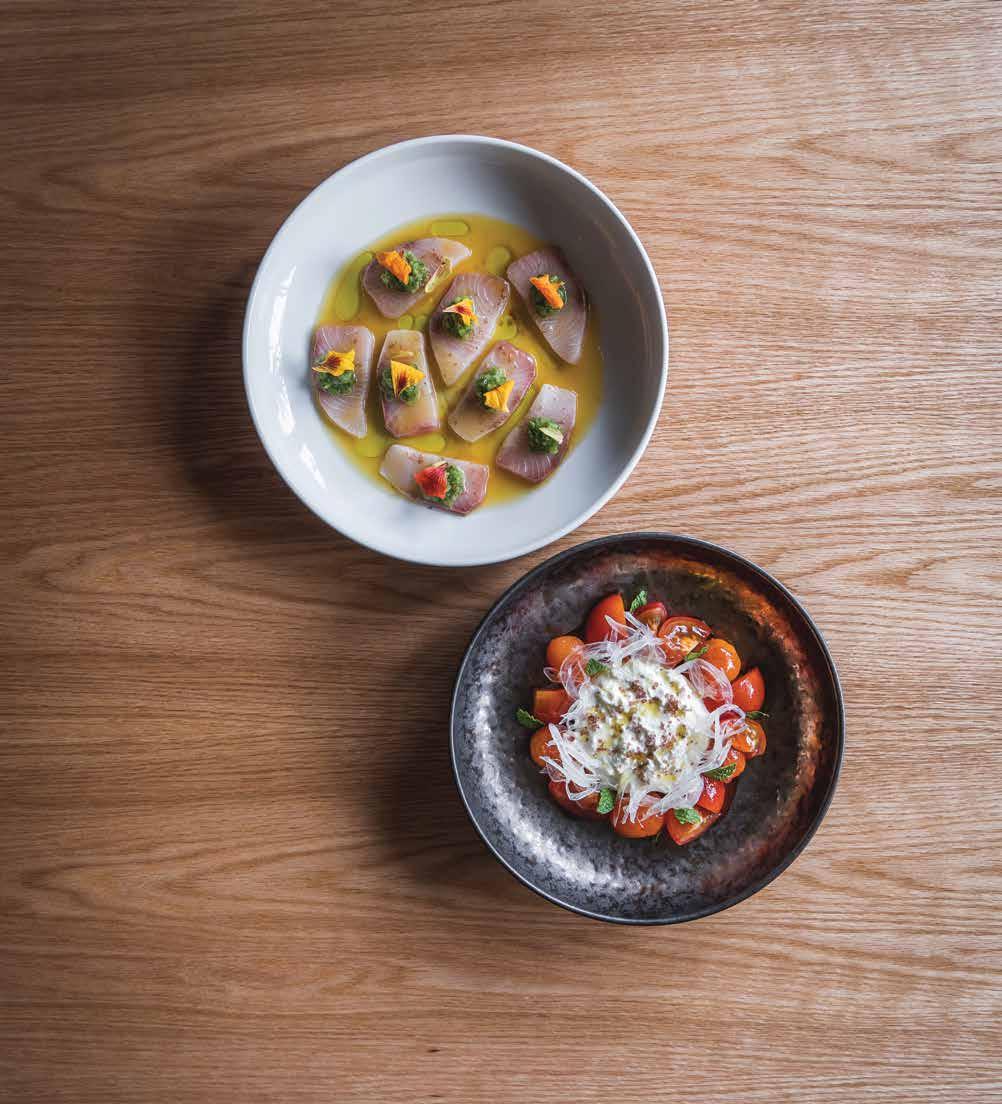
Arden’s culinary creativity encompasses a pastiche of global flavors served family style to foster a spirit of connection and sharing. The menu compositions reflect joyful interpretations of Hawaiian, Asian, and European flavors and techniques, ranging from classic entrées such as Braised Oxtail and Butter Poached Lobster Tails, to remarkably inventive preparations like Venison Tartare, pairing Maui venison with a creamy bonito aioli. In specialty fresh catch selections such as Smoked Ahi Poke, Steamed Kona Kanpachi with coconut curry, and Hamachi Sashimi with lilikoi ponzu and jalapeño salsa, simple ingredients from land and sea unite in ecstatic ways.
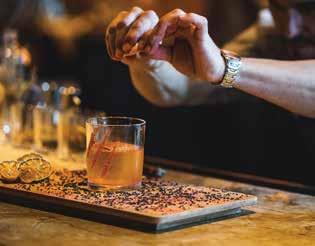
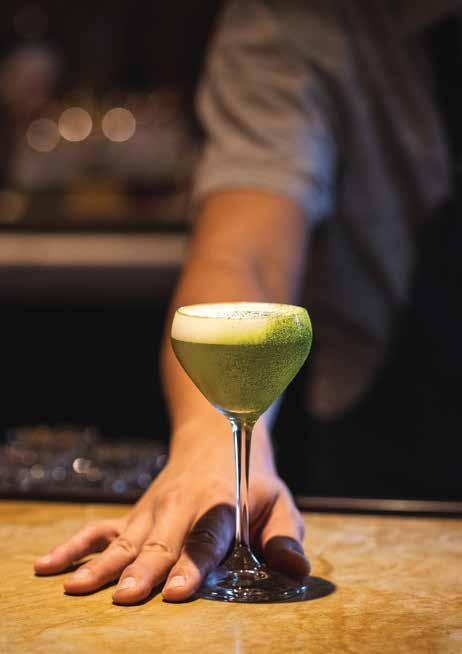
In the cherished fixture Loaded Ulu, a playful spin on mashed potatoes, locally sourced ‘ulu (breadfruit) is stacked with cheese, sour cream, chives, and SPAM. Other perennial favorites include the Foie Gras Terrine with onion jam and plum wine jelly on pillow toast, Roasted Cauliflower with jalpenoulu hummus, and Tomato Salad with li hing mui vinaigrette, featuring goat milk feta and Japanese cucumbers from Oʻahu farms. The shifting assortment of side dishes are equally extraordinary—Furikake Fries with spicy mayo, Brussel Sprouts with chili-pineapple sauce, Buttered Sweet Corn with chili-garlic crunch. Arden’s distinguished line-up of libations showcases original cocktails such as Negroni Shave Ice with Campari, along with a spectrum
of sublime single-origin estate bottlings that run from easy-drinking wines to the obscure, well-aged varietals. Thanks to the addition of a Coravin pourer, all of the in-house wines can be enjoyed by the glass. Guests can also choose from a zero-proof beverage menu that includes bottled selections and imaginative concoctions like Pitaya the Fool—a mix of dragon fruit syrup, pineapple-starfruit sauce, lime juice, and a coconut foam topper.
In December of 2025, Arden Waikiki ushered in a new culinary talent—chef de cuisine Jasmyne Wood, who previously served in the role of sous chef. Bringing a diverse background that includes restaurant management experience and key mentorships with Makoto Ono and James Beard finalist Ricky Goings, Wood is hitting her stride as Arden’s head chef with a focus on authenticity: “Watching the way Makoto blends very different flavors together has been a game changer, and Ricky taught me the importance of being unapologetically yourself,” she reflects. “As a chef, it’s so important to stay true to your identity and create something that is yours, rather than straying too far to please the masses.”
A Native Hawaiian who was born and raised on Oʻahu, Wood is embracing the opportunity to incorporate more traditional Hawaiian ingredients and concepts, and to expand her culinary expression of Hawaiʻi’s culture to build awareness and a sense of community. “The way Hawaiʻi does Chinese, Japanese, Filipino food—it’s all very unique here,” she mentions.
“Arden is a place where local people can share a meal that reminds them of the foods they enjoyed growing up, but a little more refined,” she adds. “And for the folks who may be visiting Hawaiʻi or just never tried local style before, I want to show them what we can do.”
A Walk on the Wild Side
Name a recent moment when you ventured off the beaten path. What did you gather from the experience?
文 サラ・バーチャード
写真 ジョン・フック
翻訳
外山恵理
He Who Follows the Wai
ワイ(水)の流れに従う人
A local O‘ahu chef turns his gastronomical journal into a wildly self-sustaining lifestyle.
美食を探求するうちに、自給自足をき わめたライフスタイルにたどり着いたオ アフ島のシェフの物語。
text by Sarah Burchard
images by John Hook
translation by Eri Toyama
The first time Yuda Abitbol went foraging in Hawaiʻi, he almost died. He was 19 years old, living a fast life in Waikīkī, when he met a girl who invited him to go on a hunt for angel trumpet flowers. A stranger on the beach had told her the flowers could produce psychedelic effects similar to mushrooms, and Abitbol was game to try.
After all, he was accustomed to ingesting mind-altering plants. His mom was from Chihuahua, Mexico, where peyote natively grows. In her indigenous culture, the plant was used as medicine. She had taken it her whole life, even after she moved to Oʻahu while pregnant with Abitbol, who was born in Kahaluʻu in 1992. When his parents divorced five years later, he moved to California with his mom, who sold shawls at powwows. On the weekends, they would join tribal members on the La Jolla reservation to forage berries and miner’s lettuce and catch crawfish in creeks and ponds. Abitbol inherited a calabash grandfather who was an Arapaho medicine man from Wyoming, and his family was invited to attend tribal rituals, staying up all night listening to mythical stories. He said he was five the first time he took peyote at one of the ceremonies.
But the angel trumpet tea put Abitbol in a coma for five days. “The best way to describe it is you take 20 tabs of acid and get bit by a rattlesnake and you just begin to die while you’re tripping out,” Abitbol said. “That girl sent me down to hell. In Native American myths, that plant is used to wipe away your spirit. It’s like hitting a refresh button—if you make it out.”
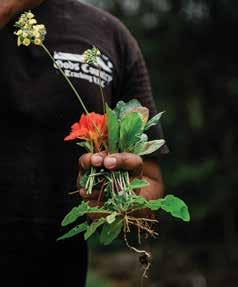
When Abitbol awoke, all he could think about were plants: How they functioned in the wild, how they were related to each other, how they are used, where he could find them
Previous Spread Every harvest begins with respect by asking permission from the land and its guardians.
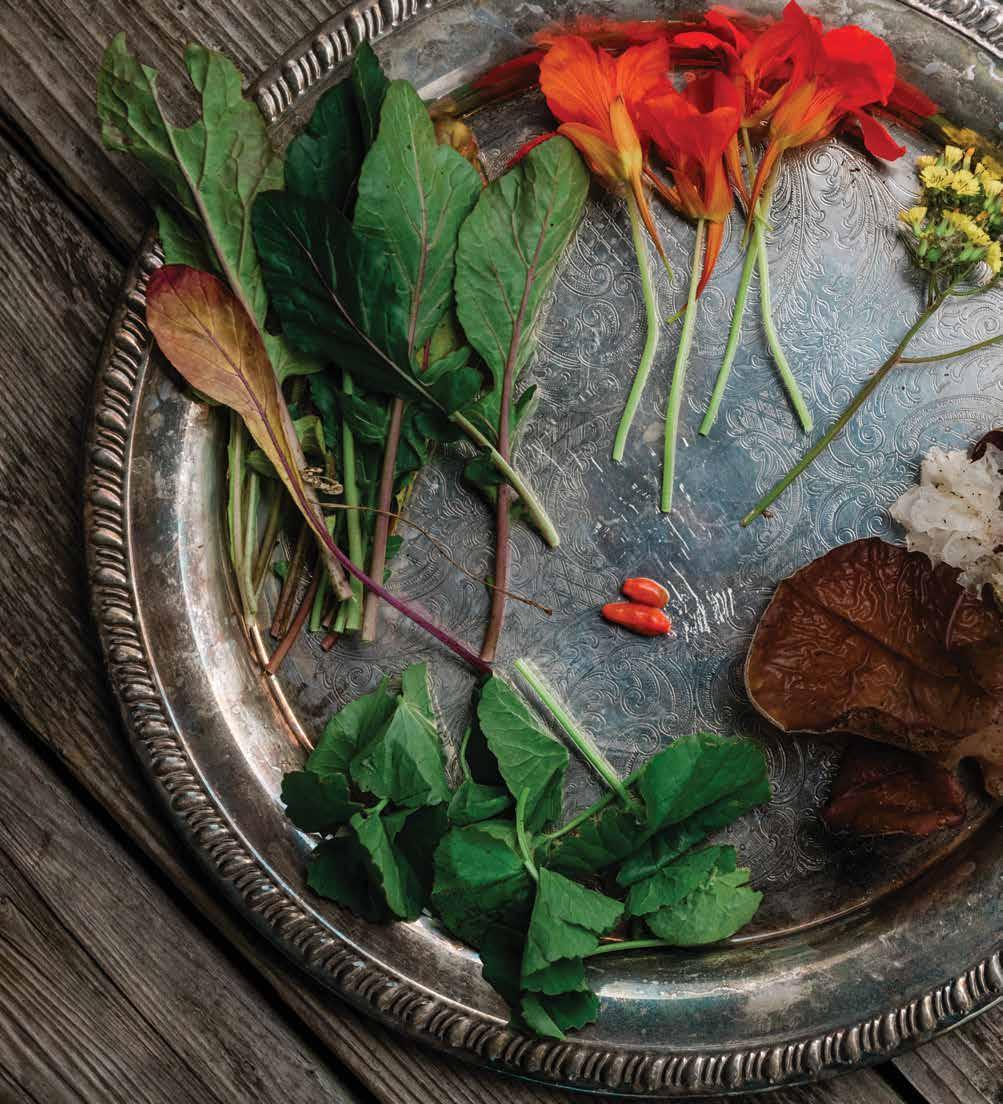
Opposite Page Wild herbs fill a plate after a bountiful morning in the valley.
At Right Research in the library comes first; the hunt in the wild comes last.
前ページ見開き
収穫はいつも、大地とその守り神の承諾を乞 うことからはじまる
左ページ
豊かな朝の収穫のあと。谷で採れた野生のハ ーブで満たされた皿
右 まずは図書館での調査から。野外での収集は 最後の作業だ
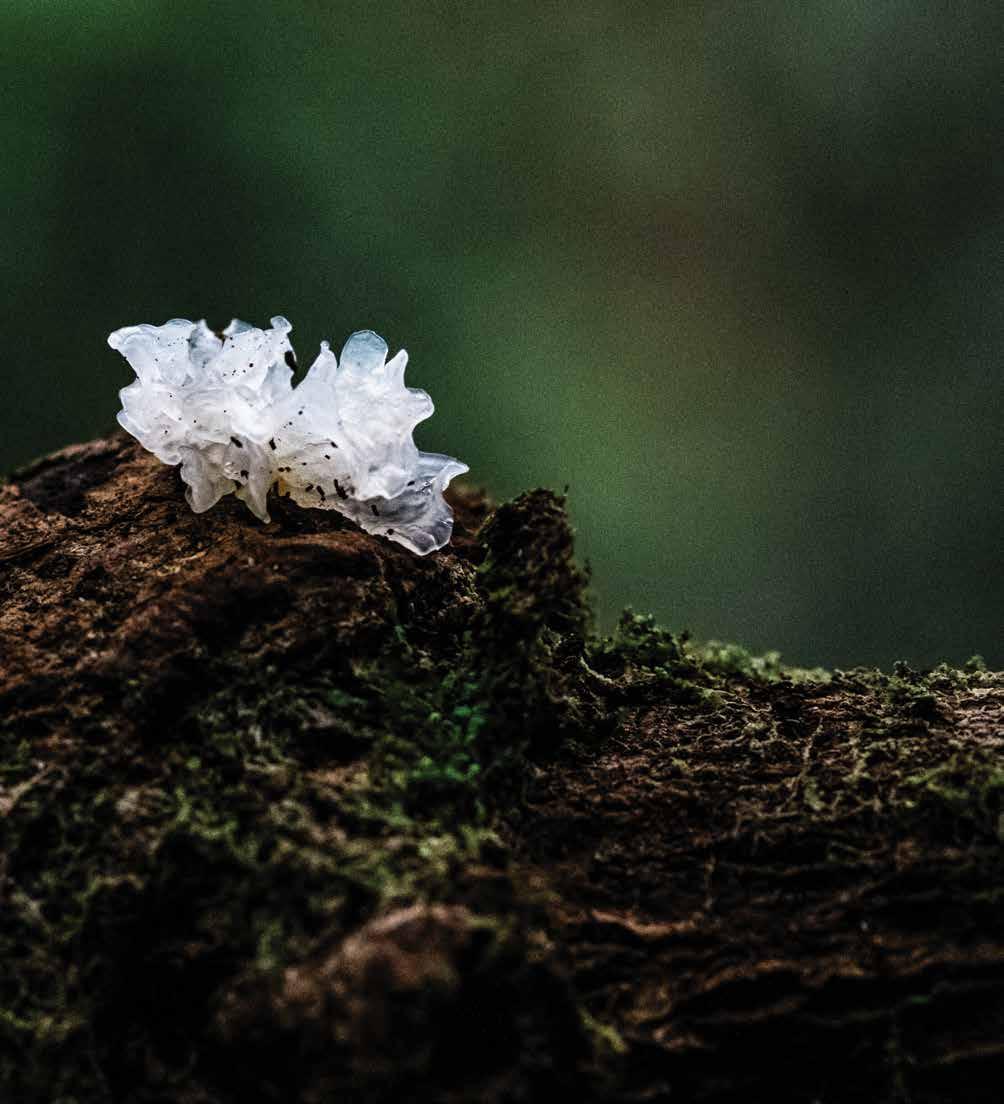
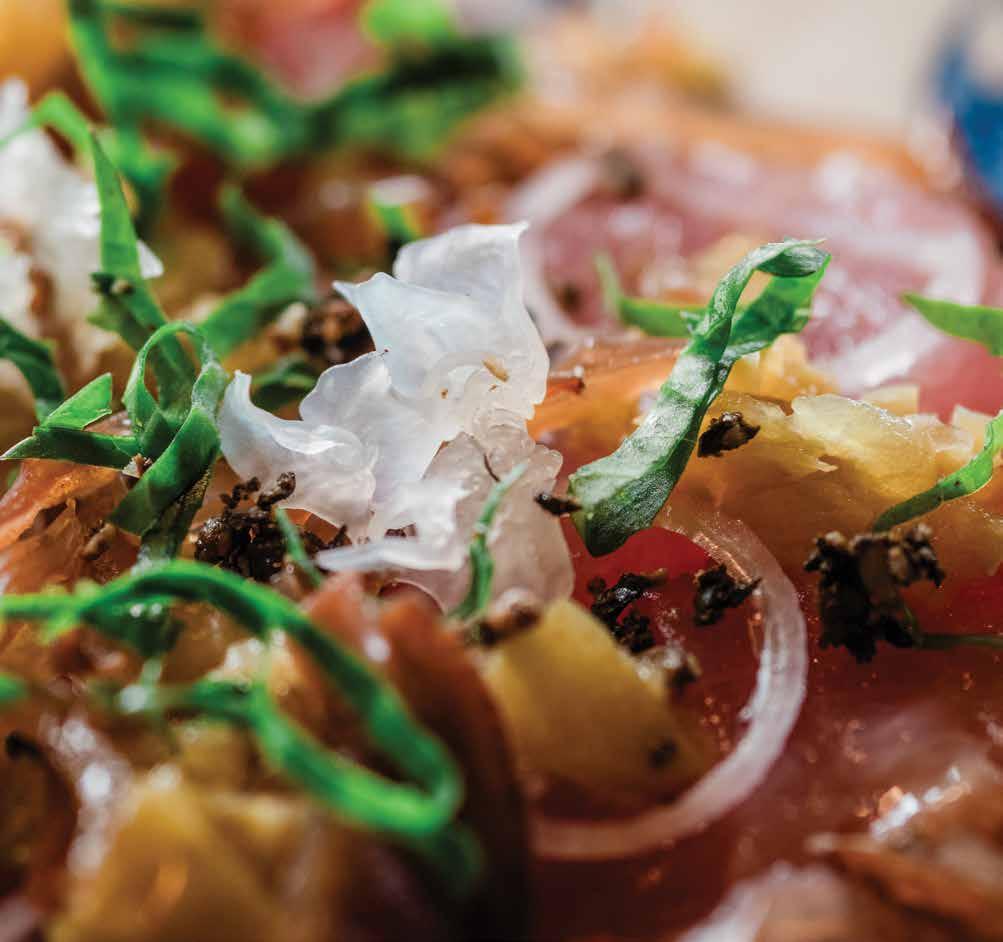
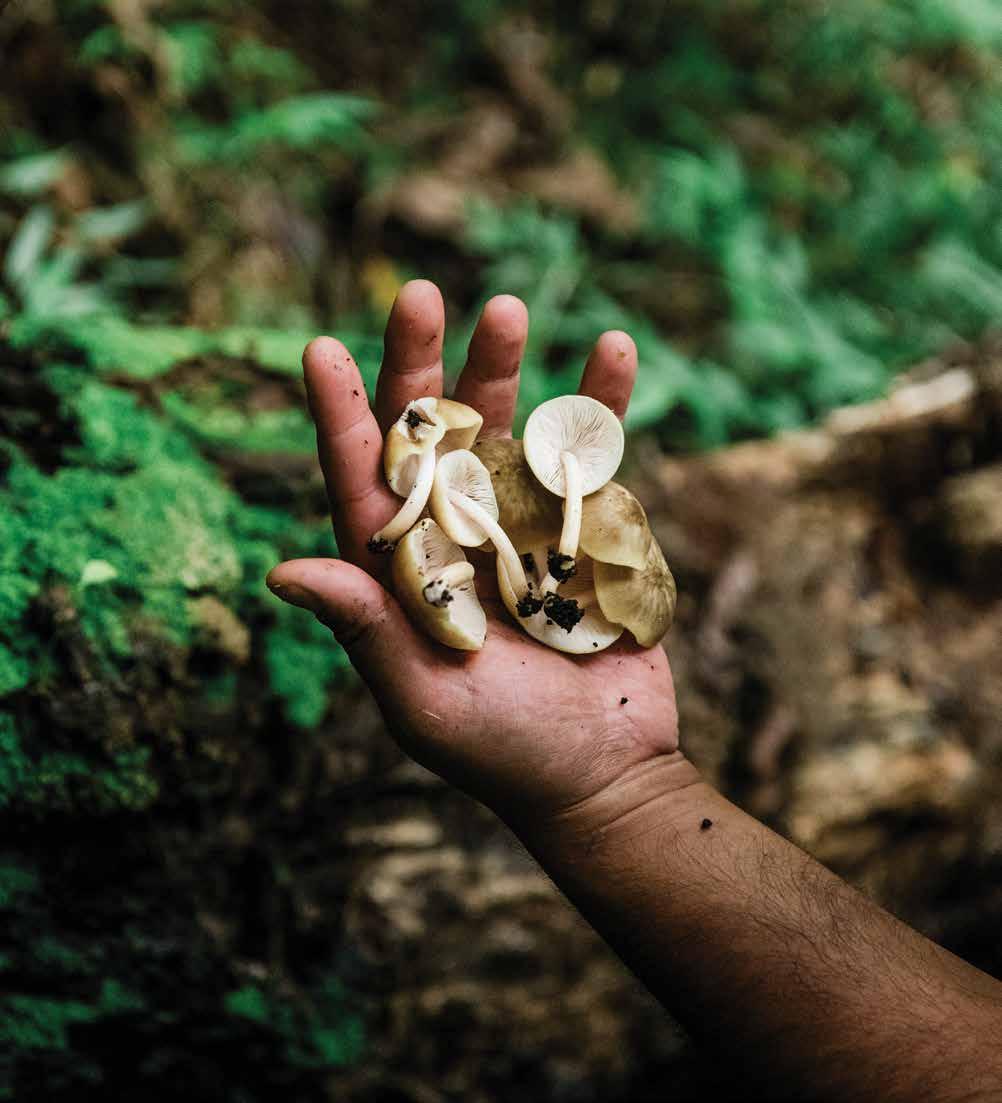
limu; a fresh pasta showered with bottarga he makes with ‘ōmilu (bluefin trevally) he spearfished, or a salad made of crunchy hōʻiʻo ferns with wild chestnuts and snow fungus. You might sit at a table covered in live moss and fresh flowers alongside oyster shells filled with Norfolk pine sap for candles. At the end of the meal, you may inhale the smoke of petrified sandalwood to evoke the forest where most of your meal came from.
The sensory and decorative touches are inspired by time Abitbol spent in France. When he was 14, he moved back to Hawaiʻi to live with his French-Moroccan dad and the pair took regular trips to his Parisian birthplace. What impressed Abitbol most about the French was their attention to detail when setting a table. There were elaborate centerpieces and particular silverware and glassware for each dish. “[Eating is] like a little ritual to them,” he said. “In France they cherish their table. I try to instill that into my dinners.”
For the chef, everything starts with salt and pepper. Once he has harvested those, it’s about what he can gather that won’t put too much strain on the species. He has protocols,
like asking the gods for permission to enter new spaces, leaving offerings, and bringing gifts to fellow foragers. “I don’t just get off the airplane and help myself to this and that,” he said. “I have a friend in the zone I’m going to, and I always bring gifts for them like salt, pepper, cinnamon, so there’s an exchange.”
The first intention he had when he started foraging was not to over-harvest. A perfect example is his ‘opihi pasta. He’ll turn the blackfoot limpet into a compound butter to toss the noodles in instead of giving each guest their own ‘opihi, so he can stretch what he has and harvest less.
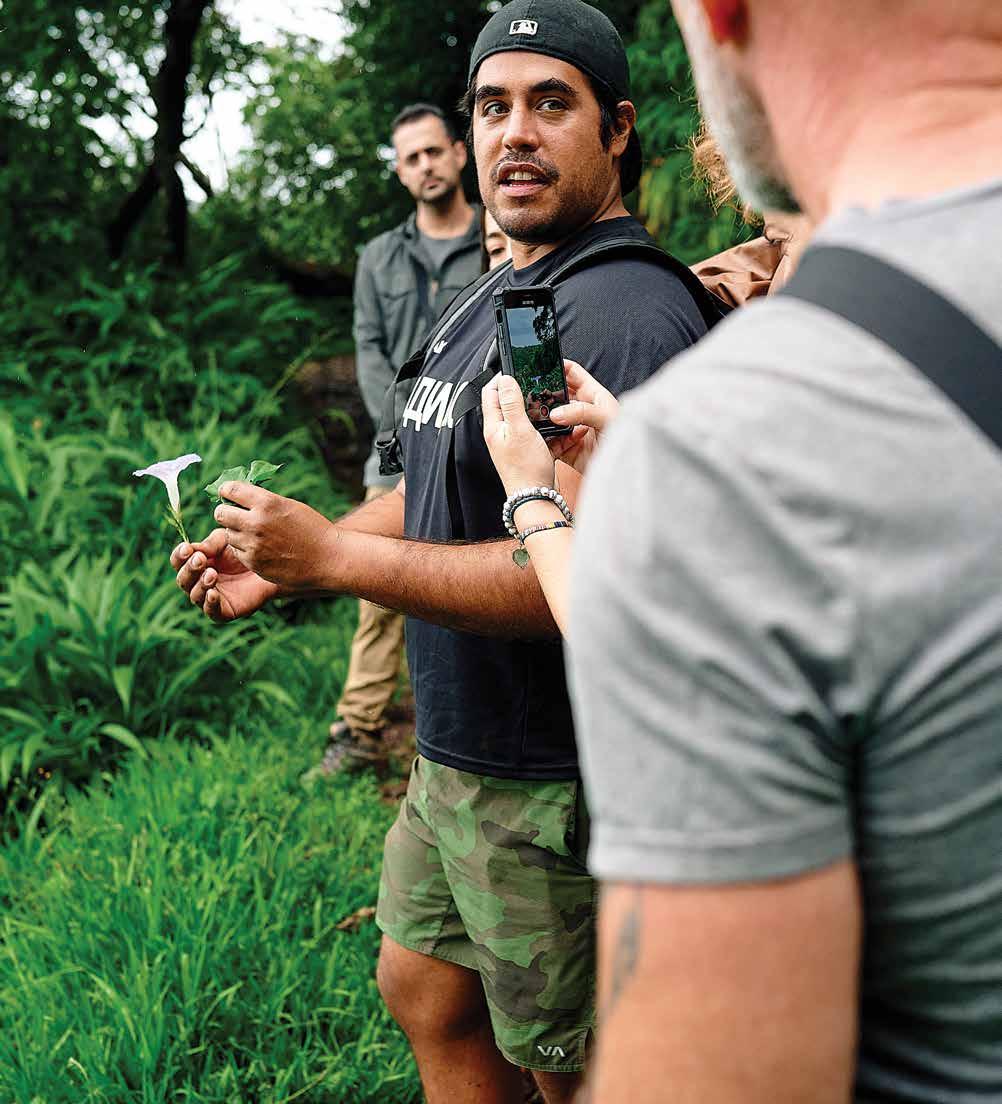
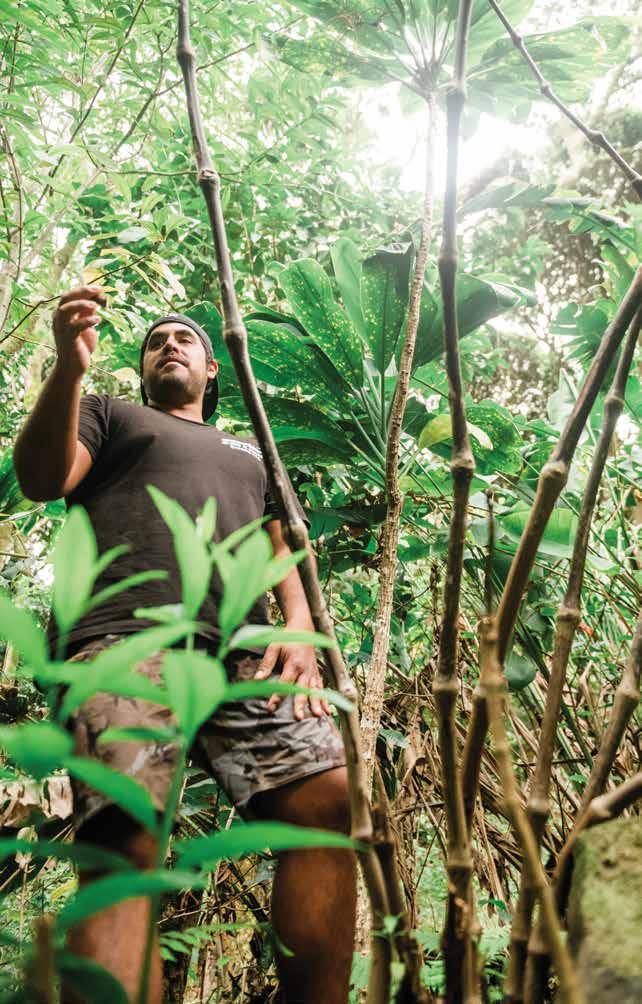
In 2023, Abitbol also began offering foraging classes. He developed his expertise by following tips about wild foods often shared by local kūpuna or kids. From there, he goes hunting for information in the library. Only after he has learned everything he needs to know about the ingredient, including what kind of environment they thrive in and how and when they came to Hawaiʻi, does he go looking for it in nature.
But he never goes searching for only one thing. “If I do, I never find it,” he said. Once, he was foraging for Slippery Jack mushrooms and came upon ʻākala berry, which he’d been hunting for three years. The brave and curious can learn about Abitbol on his Instagram account called @followsthewai, a gastronomic journal of his discoveries, dinners, and off-grid excursions over the years. But don’t think finding foraging information will be easy. Abitbol purposely leaves his posts uncategorized and slightly vague. “If you want to learn about something, you have to look through the journal to find it,” he said. “You have to put in some groundwork, the same way I did.”
The same goes for booking a dinner. “I want to know who wants the dinner and why,” Abitbol said. “I’m pretty picky with people.” A banquet for 40 people would be out of Abitbol’s scope, but an intimate dinner for six hunters would be on the mark. “The center focus is foraging, the ingredients, and storytelling,” he said.
When Hawai‘i’s fish need nurseries, the state looks to traditional local communities to serves as cribs.
Kīpuka
text by Al Town images by Mike Coots, Wayne Levin, and courtesy of NOAA Fisheries
translation by Yuzuwords
文
アル·タウン
写真
マイク·クーツ、ウェイン·レヴィン、米国海洋大気庁
(NOAA)水産局提供
翻訳
ユズワーズ
文化のキイプカ
伝統漁法を継承する地元のコミュニティに、ハワイの漁業 資源回復の希望が託されています。
Alan Friedlander’s eyes do wild things to the light that hits them. His irises look like deep layers of shattered glass, and a tiny fleck extends over the aperture of the left pupil—something difficult to ignore when speaking to him. The more than 10,000 hours he has spent underwater all over the world, subject to pressure changes and saltwater, may account for these anomalies. The ocean has changed him.
In the fall of 2017, when he was serving as the chief scientist of the National Geographic Pristine Seas Project and director of the Fisheries Ecology Research Lab at the University of Hawai‘i at Mānoa, Friedlander released a groundbreaking study that sought to explain declining populations of edible reef fish such as ulua (giant trevally), manini (convict tang), and uku (grey snapper) across the main Hawaiian Islands. By aggregating more than 25,000 studies conducted since 2000—the largest collection of data ever compiled in Hawai‘i—he identified overfishing as the primary cause of decline, which sent commercial fishers clambering to defend themselves. The silver lining: Friedlander
discovered that in communities where fishing is done by traditional methods, with harvesters respecting catch limits and spawn cycles, edible reef fish populations are flourishing. These customary methods are not only admirable, they are instructive. With the help of state support and high-technology monitoring by scientists like Friedlander, communities proposing these traditions as new laws are leading the way to an ocean revival.
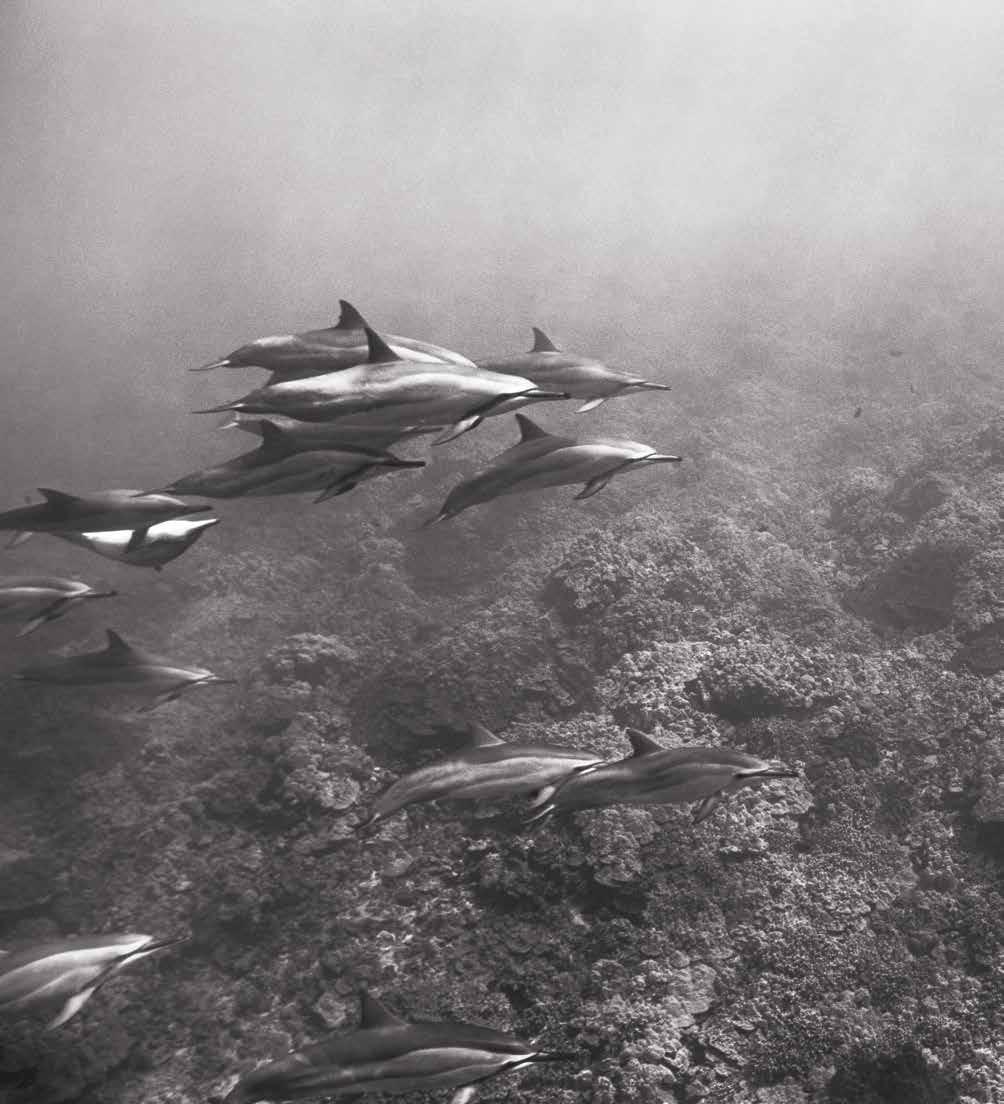
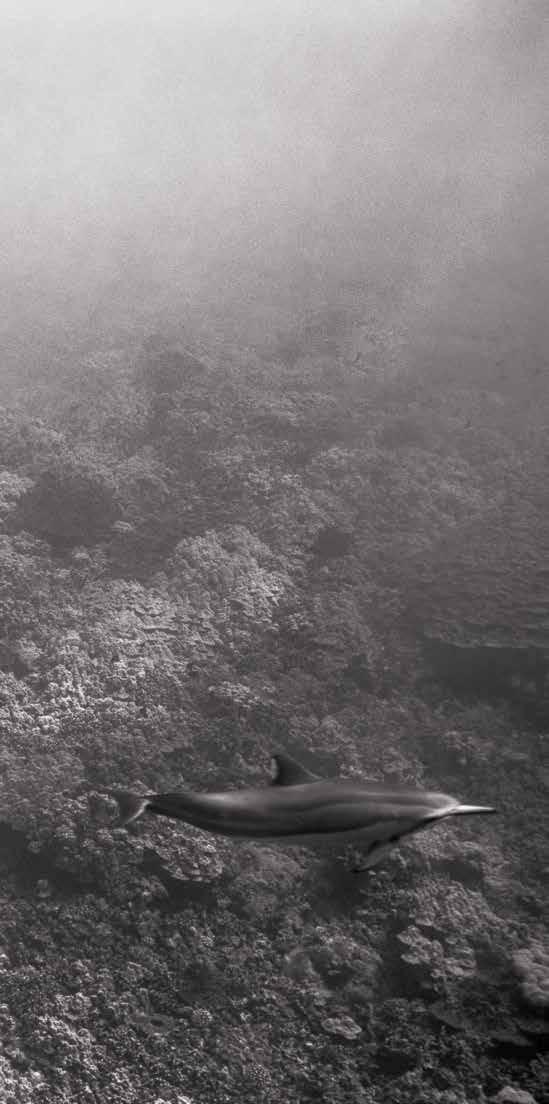
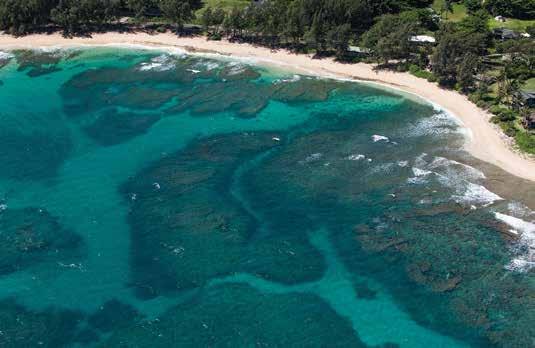
In places with small populations, like the Hāmākua coast on Hawai‘i Island, Kīpahulu on Maui, and the island of Ni‘ihau, the reefs are nearly pristine. “We still have some great places left,” Friedlander says. “Kaho‘olawe looks more like the northwest Hawaiian Islands than it does the rest of the state.” And these fish havens are not just healthy in their little bubbles. They act as fisheries, promoting the spawning that helps restore the surrounding areas. Following the moon cycle, fishermen in these parts know which fish to avoid at certain times, and to leave the biggest ones to lay the most eggs. In such areas, including the Hawai‘i Island community of Miloli‘i, fishers refer to the ocean by the
same name as another food source that needs constant replenishment: the icebox.
In 2015, Hā‘ena on Kaua‘i’s north shore became the state’s first Community-Based Subsistence Fishing Area (CBSFA). Decades in the making, the landmark approval reaffirmed traditional Hawaiian fishing practices by creating a protected fishing area, setting bag limits on catches, and prohibiting practices including fish feeding, the use of spear guns and lay nets, and spearfishing at night. The result is a community empowered to protect its resources by educating and monitoring those who wish to use them.
Hā‘ena is now one of three CBSFAs in the state, and many other communities are interested in the designation. One of these initiatives, to protect the 27-mile stretch of coastline on Moloka‘i known as the Mo‘omomi fishery, is inching closer to approval. This effort dates back to 1993, when University of Hawai‘i ethnic studies professor Davianna Pōmaika‘i McGregor was asked by the Hawai‘i Department of Land and Natural Resources to work with the Moloka‘i community on a subsistence study. She and local group Hui
Mālama o Mo‘omomi proposed that the fishery become a protected fishing area. But when working with the state proved to involve too many procedural and legal hurdles and conflicting commercial interests, they decided to continue on their own.
Mac Poepoe, the Hui Mālama o Mo‘omomi’s co-founder and a master fisherman, led the grassroots effort with McGregor’s help. “They were all about pono practices, proper times of fishing and farming so as not to disrupt natural processes,” Friedlander says. “They were the first to really institute the Hawaiian moon calendar, in the sense that they made a physical copy of it and started disseminating it as an education tool.”
Seeing Hā‘ena’s success and that its kūpuna are aging, Hui Mālama o Mo‘omomi has again been pushing for a state-sanctioned Community-Based Subsistence Fishing Area on Moloka‘i. “Mostly because the next generation doesn’t have the respect and authority that the kūpuna do,” McGregor explains, “they’ll need the backing of something like rules to help them take on that kuleana (responsibility) of managing the resources.”
In her book Nā Kua‘āina: Living Hawaiian Culture, McGregor writes of cultural kīpuka. In nature, kīpuka are areas of land that are spared by lava flows that act as oases of growth and habitat. Native Hawaiian communities, providing their extant knowledge and customary practices, mimic this phenomenon. They are cultural kīpuka. There are few with the understanding possessed by fishers like Poepoe, his arcana gained through years of experience with earlier practitioners. But as more traditional fishing centers are given state distinction with the help of those like him, the avenues to learn such practices will become faster, spawning newly devised ways of bringing urban centers up to speed with tradition.
As Mo‘omomi to continues to pursue designation as a Community-Based
Subsistence Fishing Area, Poepoe has supported the Hawai‘i Island community of Miloli‘i in securing that status. Kīpahulu in the Hāna district of Maui became Hawai‘i’s third CBSFA in 2024. “Hopefully, people have just lost the knowledge,” McGregor says from her home a few miles from Mo‘omomi, “and these community-based subsistence areas can popularize the knowledge.”
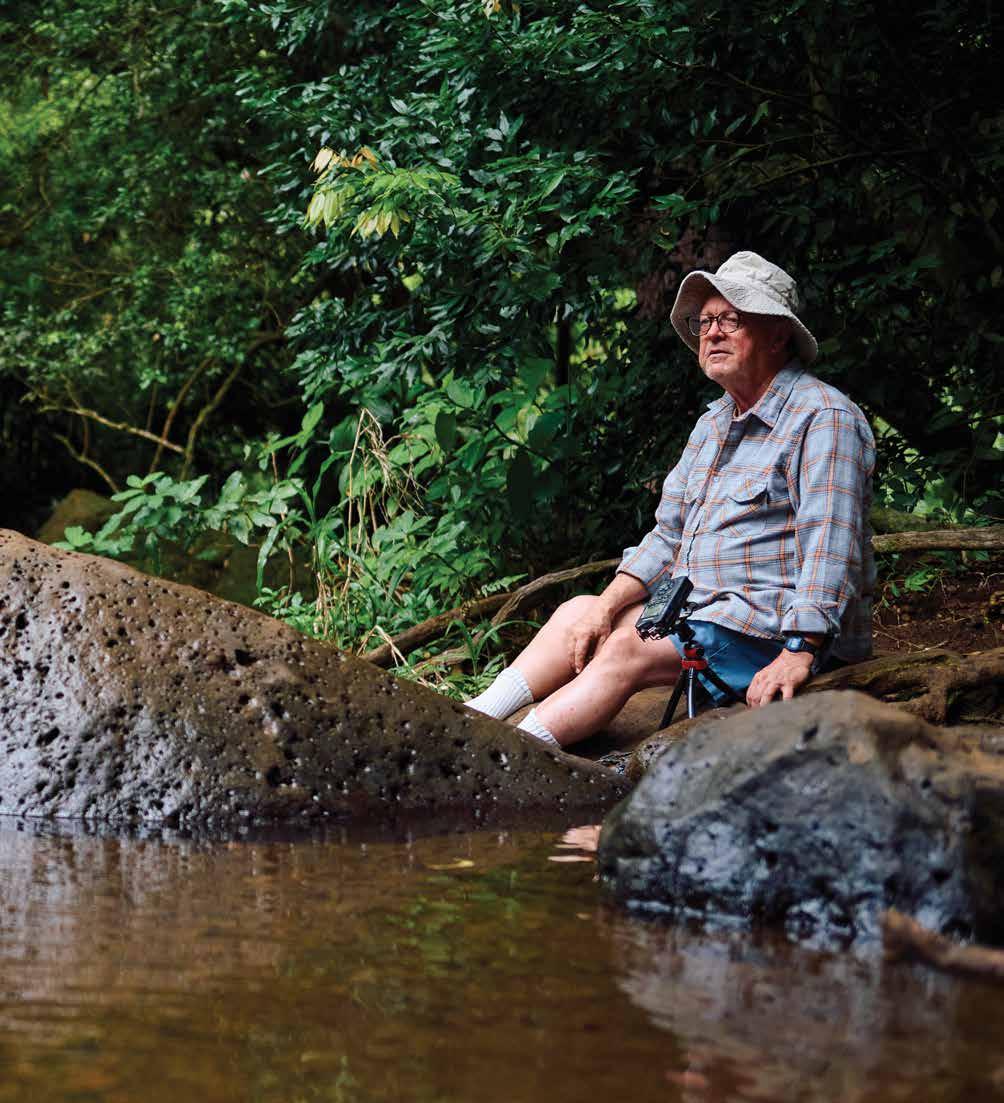
Of all his far-flung forays into experimental sound over the last five decades, Kit Ebersbach believes “the biggest impact I’ve had on this world,” as he puts it, is Aloha ‘Āina: his 12-volume collection of field recordings that finds music in idyllic, undisturbed natural settings across Hawaiʻi.
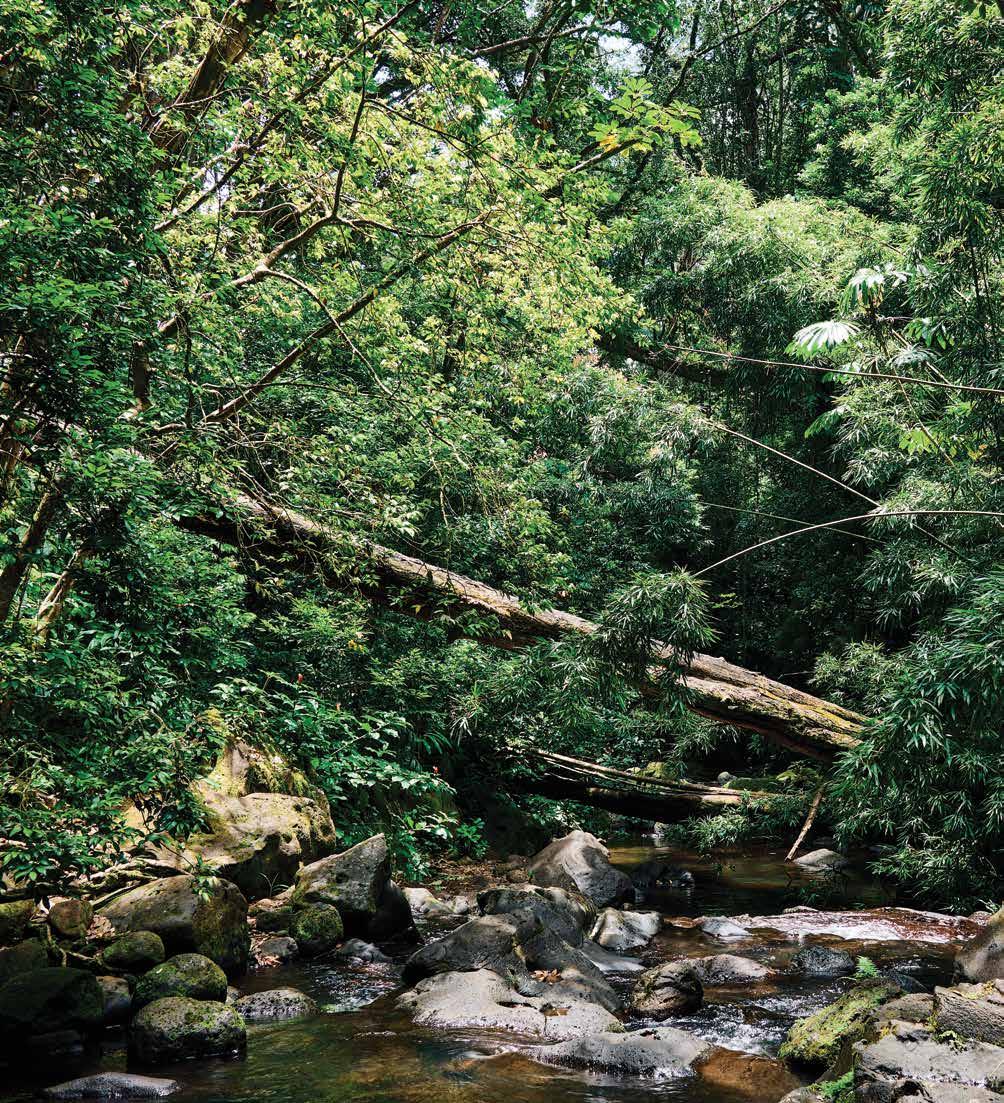
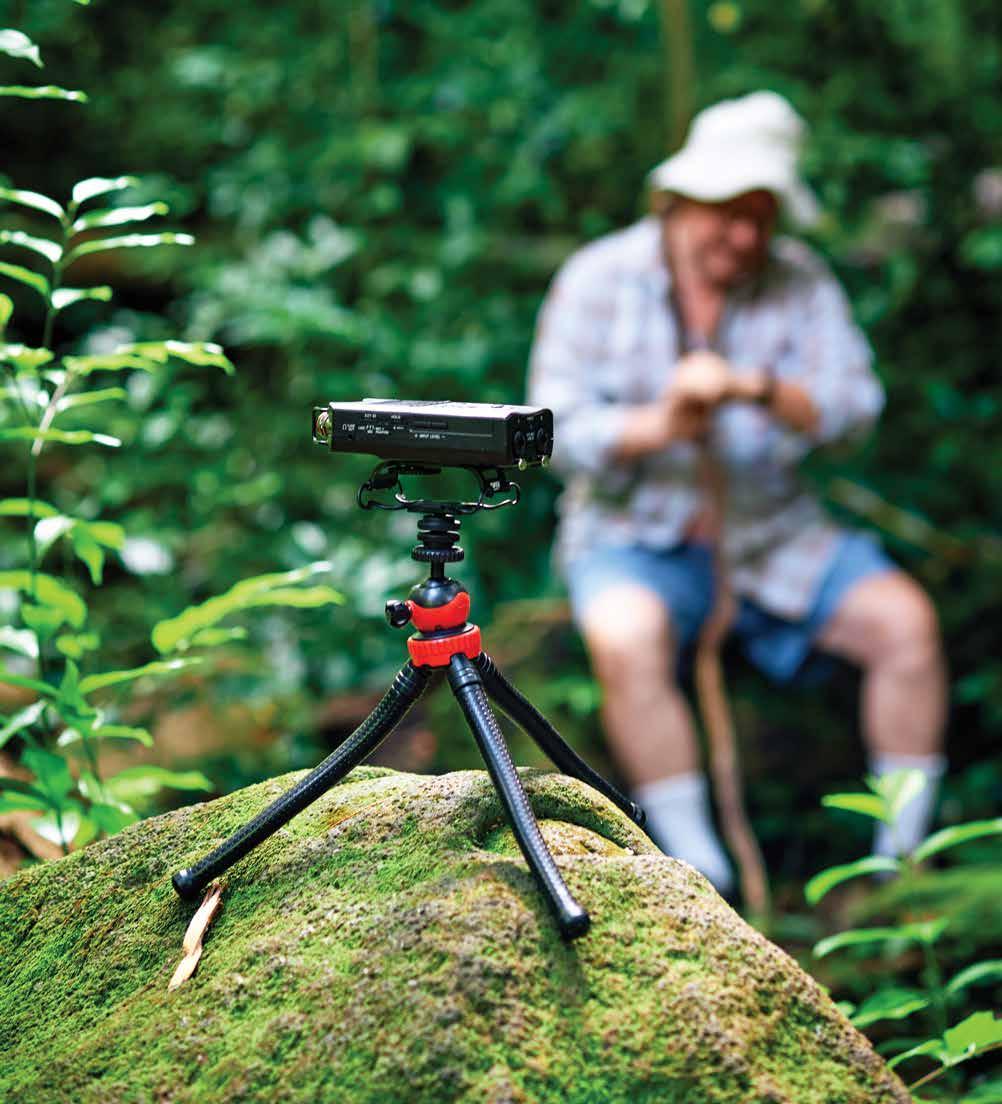
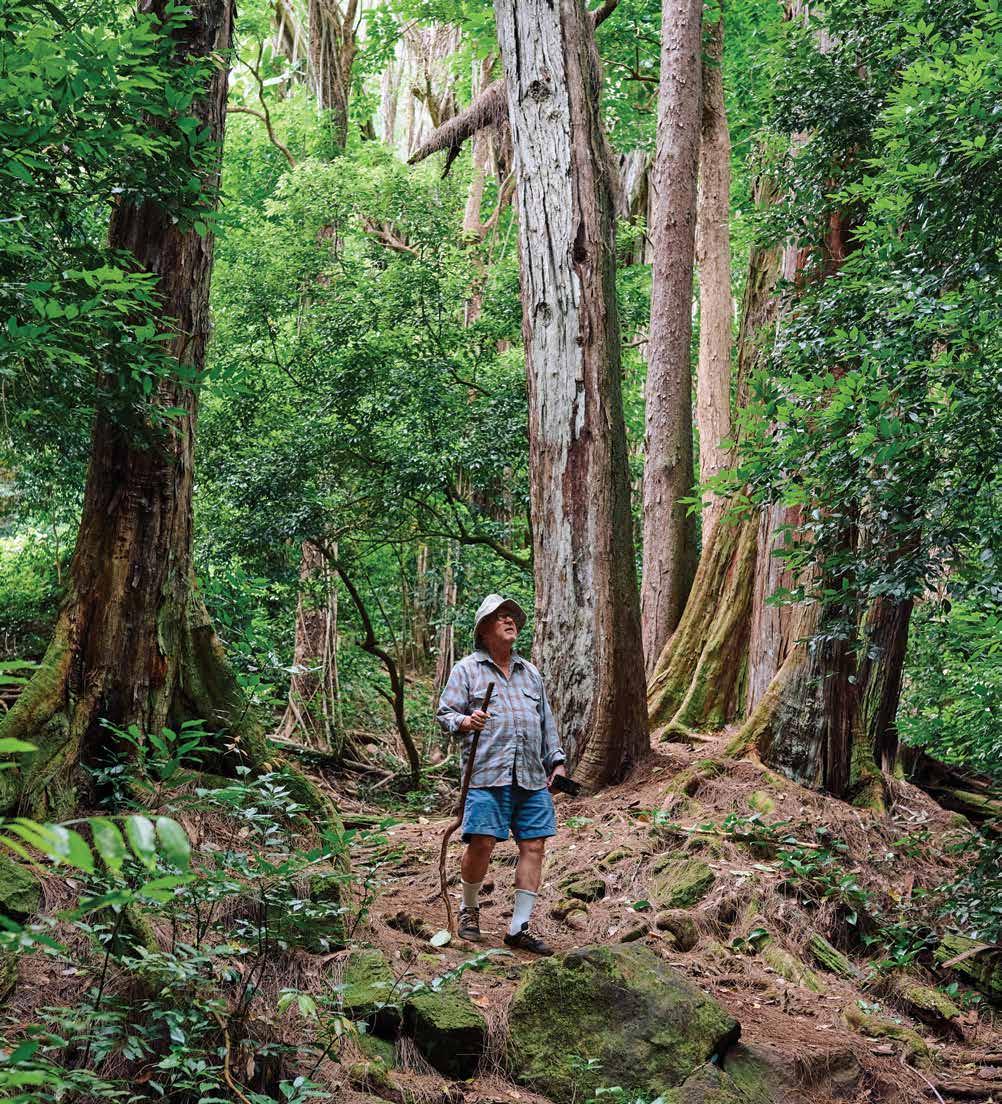
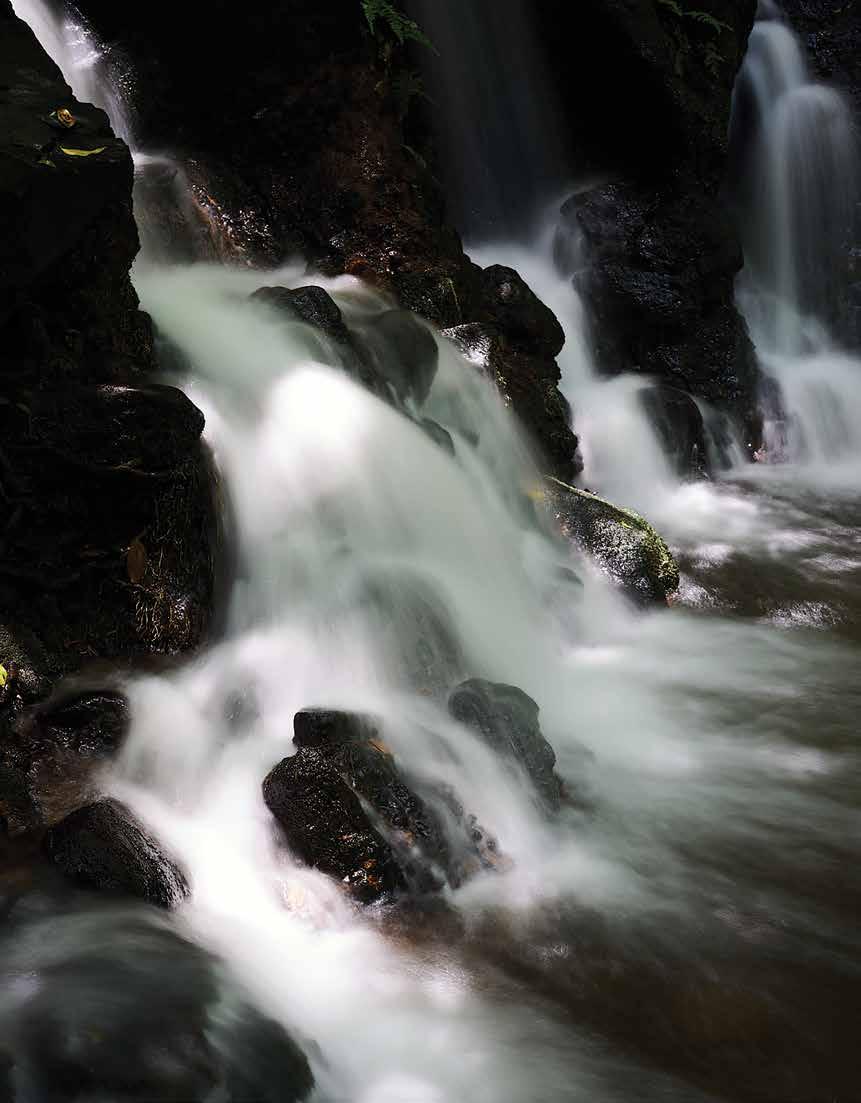
Since the ’90s, armed with his Tascam recorder and his ears as guides, Ebersbach has been venturing into the wilderness and capturing the diverse sounds of Hawaiʻi’s land and waters. On one track, coqui frogs sing an eerie, extraterrestrial chorus in Hilo; on another, falling cave water drip-drops in a syncopated beat on Oʻahu’s Waimalu Trail. Spanning six islands and three decades, Aloha ‘Āina’s 106 recordings form a kind of travelogue and time capsule, with Ebersbach playing the role of sonic naturalist. Not that the 78-year-old sound engineer thinks of himself or his project that way. “I don’t think much when I’m on a trail,” he says. “I just enjoy being on the trail, listening.”
Ebersbach started hiking on Oʻahu in the late ’60s, shortly after graduating from Yale University and moving to the island to pursue a master’s degree in linguistics from the University of Hawaiʻi at Mānoa. Having grown up in New Jersey, where the freewheeling world of New York City’s jazz scene was just a train ride away, he initially felt “limited” on O‘ahu, alienated from the landscape of adventure and discovery he once knew. Until he started hiking.
“I never got really comfortable here until then,” says Ebersbach, who works out of his recording studio, Pacific Music Productions, in Honolulu’s Chinatown. “And then I realized how big the island is.” He was amazed at how vast the trails were, splintering off into hidden pathways that revealed microclimates and, within those subtle shifts, entirely new sounds.
He dropped out of school after a semester and grew out his hair, devoting his days and nights to playing the keyboard in different lounge acts throughout Waikīkī, then an openair fantasia for live music. Though he initially set out to be a jazz musician, the exploratory energy fueling then ’70s expanded the scope of Ebersbach’s interests. “It made me curious about everything,” he says.
With curiosity leading the way, Ebersbach hopscotched through a kaleidoscope of sounds throughout the decades, from his jazz-funk lounge act, US, in the ’70s to the neo-exotica of Don Tiki, an ensemble group he fronted in the ’90s. Threading it all together was a kind of Buddhist pursuit: finding the music in everything. “I would buy a [John] Cage record or something, just whatever’s the weirdest record that’s there,” he says, “and I would try to find out what it is that makes it music.”
He started the new wave band The Tourists and Hawai‘i’s first post-punk outfit, The Squids, in the ’70s precisely because of each genre’s “irritating” sound. In the ’80s, he spearheaded the avant-garde performance art group Gain Dangerous Visions, which he describes as “a bunch of kids who weren’t necessarily musicians, but they all wanted to do things.”
That ethos animates Aloha ‘Āina, presenting nature as a kind of ever-evolving symphony. Each of the 12 volumes runs an hour long, with tracks ranging from a little over a minute (“Palms, Kamoamoa, Hawai‘i Island’’) to nearly 16 minutes (“Near the Mauka Junction of Pauoa Loop Trail, O‘ahu”) depending on how long the subject matter sustained Ebersbach’s interest. “After eight minutes of a rushing stream,” he says, “it gets to be like, OK, that’s nice, now let’s get on to the birds or something.” (Bird song dominates the collection.)
He makes every effort to avoid noise pollution—an ambitious feat on Oʻahu’s crowded trails and beaches—preferring to present a romanticized version of Hawaiʻi instead. This often means venturing off the beaten path and stepping away from the recorder to avoid attracting flies or capturing the sound of his own breathing.
Part of Aloha ‘Āina’s impact has to do with the timing of its launch in 2020. Roger Bong, owner of the Honolulu-based record label Aloha Got Soul, approached Ebersbach about his field recordings just as COVID-19 lockdowns were underway. “We have this treasure trove of what could potentially be very healing, therapeutic, inspiring sounds for people, from a place that’s very special,”
“I don’t think much when I’m on a trail. I just enjoy being on the trail, listening.” Kit Ebersbach, musician
Hawai‘i’s true melodies are revealed when one ventures beyond the urban landscape.
ハワイの真のメロディーは、都会の風景を飛 び越えることで見えてくる
Bong reasoned. “And it could reach people around the world in a time when everyone’s stuck at home.”
Bong first encountered Ebersbach’s field recordings years earlier on a flight operated by Hawaiian Airlines, where Ebersbach has been curating the in-flight radio channels for over a decade. A selection of Ebersbach’s recordings live on an ambient channel called Environmental Journey. “I would fall asleep to the channel, wake up to sounds of the bubbling stream, and then fall back asleep,” Bong says. “Yeah, I was a fan.”
Though Ebersbach and Bong have achieved their goal of releasing 12 volumes of Aloha ‘Āina, Ebersbach still heads into the trails and takes field recordings when he can, finding solace in Hawai‘i’s great expanses and in the sense of connection that once eluded him. “My friend’s father, who’s an evangelical Hawaiian minister, says, ‘The trails are your church,’” Ebersbach says. “And yes, it was true.”