
Davide Barnes
General Manager
Hawai‘i is a place where art, culture, and community are woven into the fabric of everyday life—a living dialogue between tradition and innovation. In this edition, we celebrate that spirit through stories that honor heritage while embracing fresh perspectives.
We begin with the Hawaiian Mural Arts Guild, a visionary collective whose work nearly a century ago helped shape an island aesthetic that continues to inspire. From these early modernists to contemporary initiatives like Wahi Pana, we explore how art reflects the sense of place that makes Hawai‘i so unique.
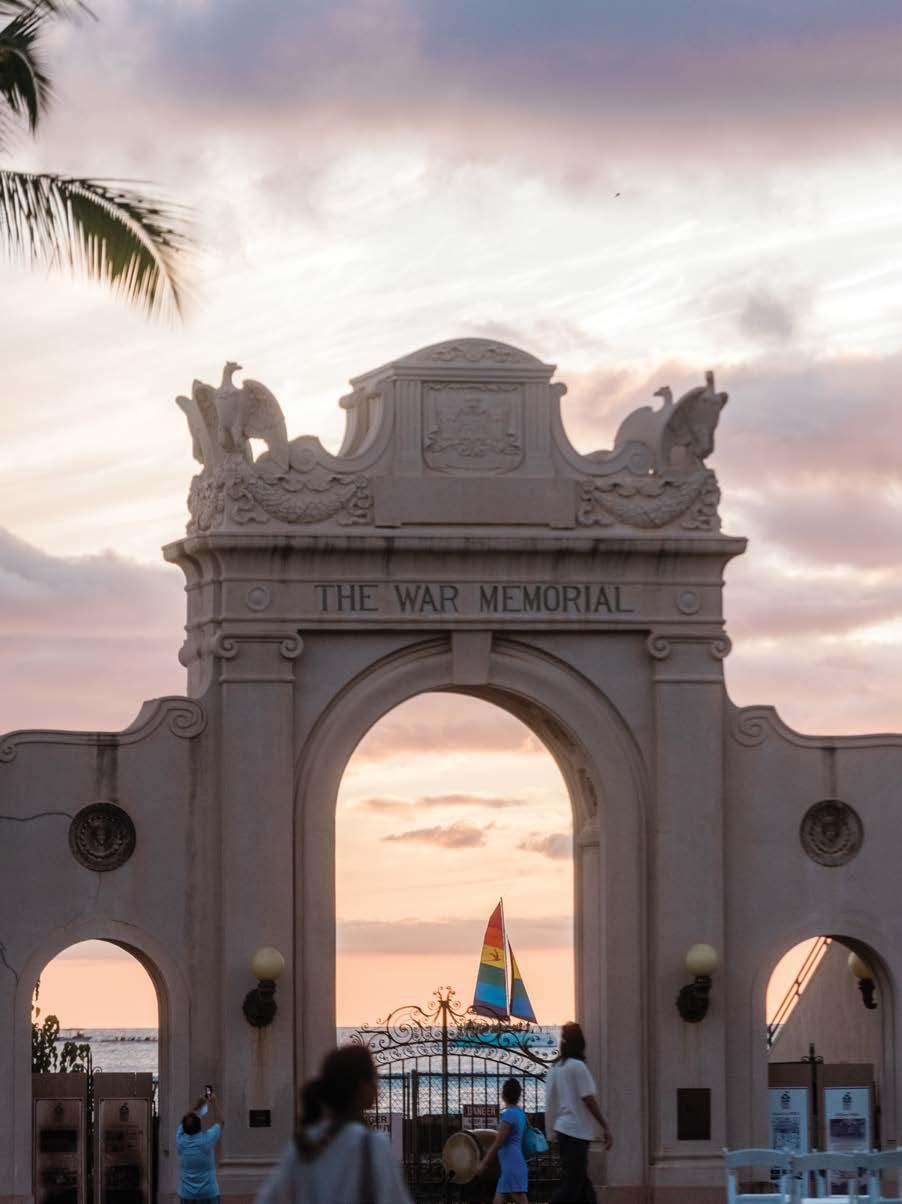
Our cultural lens widens with the Renkon Project, which introduced the avant-garde dance form of butoh to Waikīkī’s War Memorial Natatorium in observance of the 80th anniversary of Hiroshima and Nagasaki—a poignant reminder of Hawai‘i’s enduring ties to Japan.
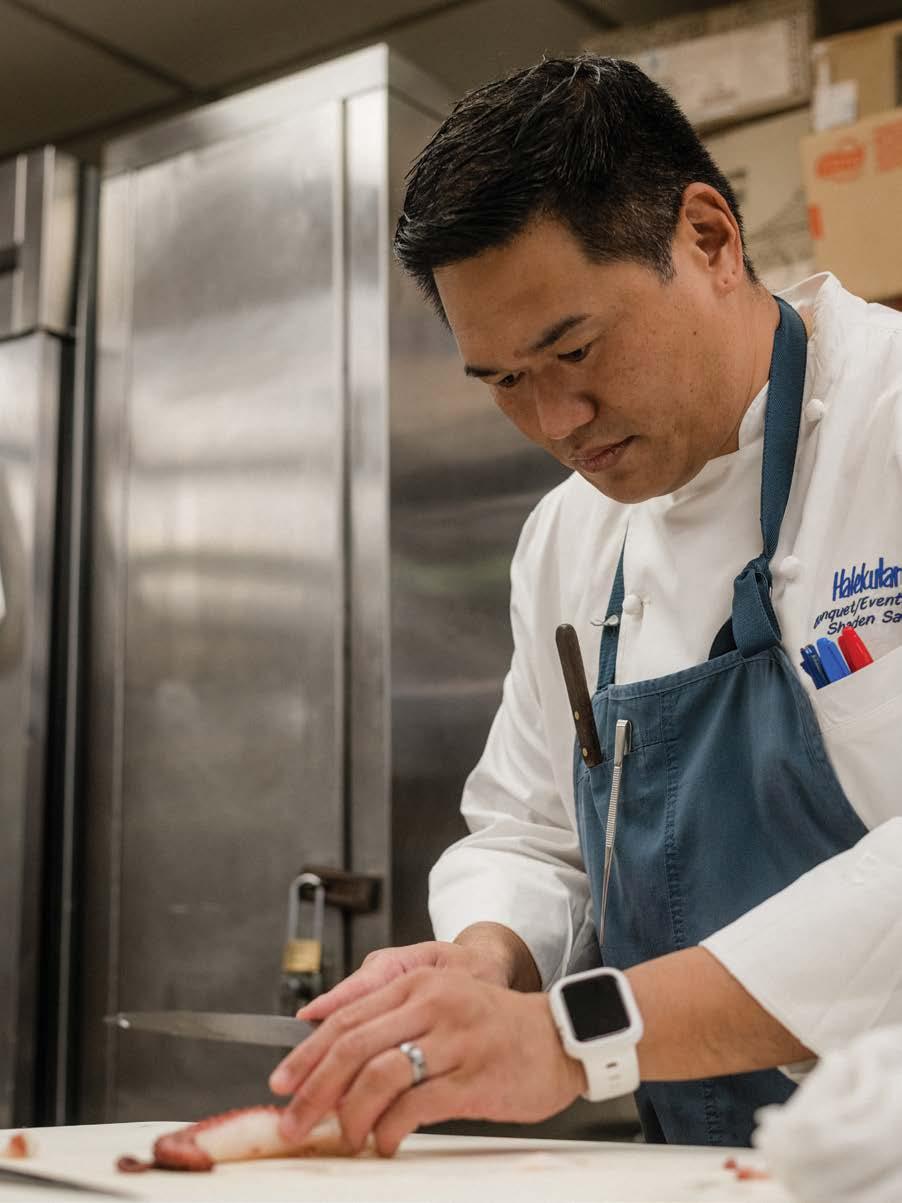
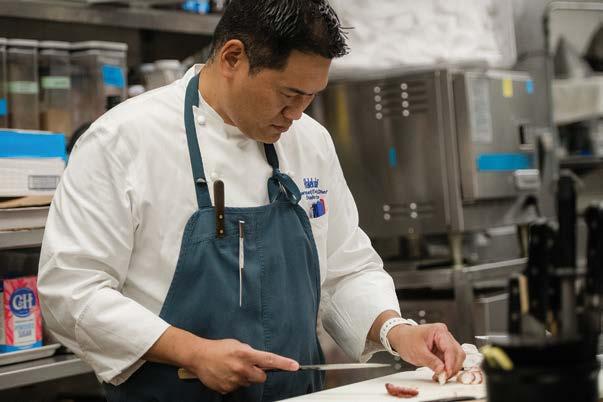
From fragrant wedding lei to the craft of vinegar making, from mid-century-modern furniture to Hawai‘i’s growing cacao industry, these pages invite you to discover the creativity and care shaping life in the islands today. You’ll also meet Halekulani’s banquet and special event chef, Shaden Sato, whose culinary journey reflects our commitment to mentorship and community.
As always, we are honored to share these stories with you and to welcome you to Halekulani, where the art of hospitality remains our most cherished tradition.
Warmly,
Davide Barnes General Manager Halekulani
ハワイでは、芸術や文化、コミュニティが日々の暮らしの中に溶け込 み、伝統と革新が対話するように息づいています。今号では、その精 神を映し出す物語を通して受け継がれる知恵と視点の出会いをお届 けします。
まずご紹介するのは、100年ほど前に活動を始め、ハワイ独自の 美意識を形づくり、今も影響を与え続ける先駆的なアーティスト集団 「ハワイアン ミューラル アーツ ギルド」です。彼らに代表される初期 モダニズムの流れから、ワヒ パナのような現代のプロジェクトに至る まで、アートを通じてハワイという土地の個性や風土が、どのように表 現されてきたかをご紹介します。
レンコン プロジェクトは、広島と長崎への原爆投下から80年と いう節目に合わせ、前衛舞踏で人々の文化的な視野をさらに広げてく れました。ワイキキの戦争記念ナタトリウムでの舞踏は、静かにそして 力強く、日本とハワイの長く深いつながりをあらためて心に刻む機会と なったのです。
香り高い結婚式のレイから、酢作りという手仕事の世界へ。ミッ ドセンチェリーモダンの家具から、成長を続けるハワイのカカオ産業 まで。本号では、今のハワイの暮らしを形づくる創造性と丁寧に向き合 う心に触れていただきます。バンケット/スペシャルイベントシェフの シェイデン・サトウの料理人としての歩みには、人を育て、コミュニティ を大切にするという私どもの想いが重なっています。 これまでも、そしてこれからも、こうした物語をご紹介できますこ とを嬉しく思っております。おもてなしを何よりも大切な伝統として受 け継ぐハレクラニで、みなさまをお迎えできましたことに、心より感謝 申し上げます。
心を込めて ハレクラニ 総支配人 デイビット バーンズ



HALEKULANI CORPORATION
CHIEF OPERATING OFFICER
PETER SHAINDLIN
CHIEF EXECUTIVE ADVISOR
PATRICIA TAM
GENERAL MANAGER, HALEKULANI
DAVIDE BARNES
HALEKULANI.COM
1-808-923-2311
2199 KALIA RD. HONOLULU, HI 96815
CHIEF EXECUTIVE OFFICER
JASON CUTINELLA
GENERAL MANAGER, HAWAI‘I
JOE V. BOCK
JOE@NMGNETWORK.COM
EDITORIAL DIRECTOR
LAUREN MCNALLY
MANAGING DESIGNER
TAYLOR NIIMOTO
PUBLISHED BY
NMG NETWORK
41 N. HOTEL ST. HONOLULU, HI 96817
NMGNETWORK.COM
SALES@NMGNETWORK.COM
© 2026 by NMG Network, LLC. All rights reserved. No part of this publication may be reprinted without the written consent of the publisher. Opinions are solely those of the contributors and are not necessarily endorsed by NMG Network.
Volume 18.1 Spring / Summer 2026


The Renkon Project shared the art of butoh at a memorial on O‘ahu.
レンコン プロジェクトは
オアフ島の慰霊の場で 舞踏芸術を披露した。
ARTS 22
Dance of Darkness 34
Gold, Iron, Marble, Stone
CULTURE 52
Garlands of Meaning
DESIGN 68
Piece of Mind
CUISINE 80
Where Time Stands Still 90
A Passion Fermenting
WELLNESS 98
The Sweet Spot
EXPLORE 110
From Tide to Table
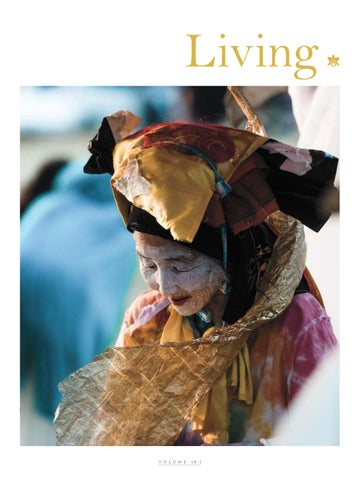
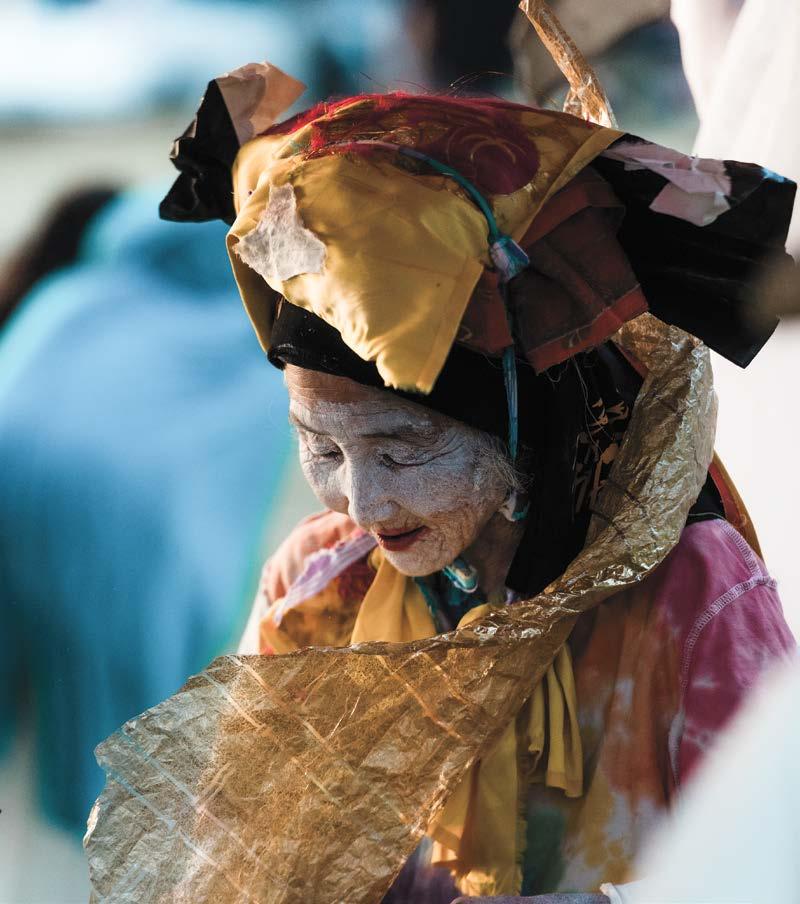
ABOUT THE COVER:
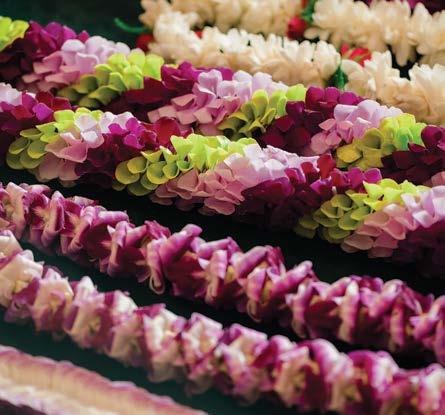
Brides in Hawai‘i are often bedecked in multiple thick strands of lei pīkake.
ハワイの結婚式では ピカケのレイを幾重にも纏った 花嫁の姿をよく目にする。
Butoh master Hiroko Tamano was photographed by John Hook at the Waikīkī War Memorial Natatorium, where the Renkon Project organized a memorial for the 80th anniversary of the atomic bombings on Hiroshima and Nagasaki. Learn more about the art of butoh on page 22 and in the accompanying video on Living TV.

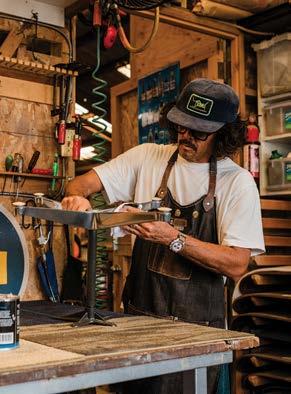
John Reyno is an authority on vintage furniture from the mid-20th century.
ジョン・レイノ氏は 20世紀半ばのヴィンテージ 家具の第一人者である。
ARTS 22
TABLE OF CONTENTS
目次
闇の舞踏 34
金、鉄、大理石、 石に刻まれた芸術 CULTURE 52
想いを宿すレイ DESIGN 68
心のかけら CUISINE 80
時がゆるやかに流れる場所 90
醗酵する情熱
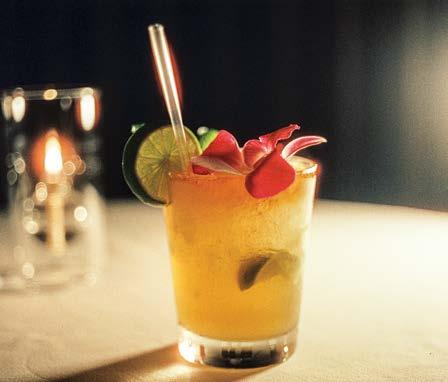
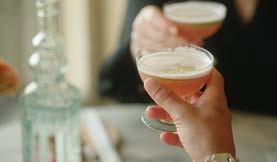
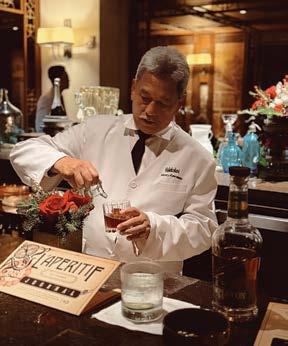
The mai tai at L’Aperitif remains faithful to the original recipe by tiki pioneer Trader Vic’s.
ラペリティフのマイタイは、 ティキ文化の草分けである トレーダー ヴィックスの オリジナルレシピを受け継 いでいる。
WELLNESS 98
甘さの極み EXPLORE 110
潮だまりからテーブルへ
ABOUT THE COVER:
表紙について:
舞踏の名手、玉野弘子。ワイキキの戦争記念ナタトリウムでレンコン・プロジェクトによる広島と長崎への原爆投 下80年の追悼式典が開催された。舞踏という芸術については、22ページおよびLiving TVの関連映像で詳しく 紹介している。(撮影:ジョン・フック)

NEW SUN RISES IN HAWAI’I
A new dawn of live entertainment rises in Cirque du Soleil ‘Auana— a Hawai‘i-inspired production featuring a cast of powerful acrobats, talented musicians and singers, and profound hula dancers. is unparalleled ensemble brings together international and local talents to shine a fresh light on the spirit of Hawai‘i. Only at the OUTRIGGER Waikīkī Beachcomber Hotel.
Living TV is designed to complement the understated elegance enjoyed by Halekulani guests, with programming focused on the art of living well. Featuring cinematic imagery and a luxurious look and feel, Living TV connects guests with the arts, style, and people of Hawai‘i. To watch all programs, tune into channel 2 or online at living.halekulani.com.
客室内でご視聴いただけるリビング TVは、ハレクラニならではの上質な寛 ぎのひとときをお過ごしいただくため、 豊かで健康的なライフスタイルをテー マにしたオリジナル番組をお届けして います。臨場感溢れる映像で芸術やフ ァッション、食文化、ハワイの人々につ いてのストーリーをお楽しみください。 すべての番組は、2チャンネルまたは living.halekulani.com からご視聴 いただけます。
GOLD, IRON, MARBLE, STONE
金、鉄、大理石、石に刻まれた芸術
With their evolving stories of place, works of public art endure in the collective consciousness.
移りゆく場所の物語を宿し、人々の意識に生き続けるパブリッ クアート。
DANCE OF DARKNESS
闇の舞踏
Through the avant-garde performance art of butoh, the body speaks what words cannot.
前衛的パフォーマンスアート「舞踏」を通して、身体は言葉では 語れないものを語りはじめる。
A PASSION FERMENTING
In Wahiawā, local food waste is transformed into something worth savoring.
醗酵する情熱 ワヒアワでは地域のフードロスが風味豊かな逸品へと生まれ 変わる。
watch online at: living.halekulani.com
WHERE TIME STANDS STILL
時がゆるやかに流れる場所 40年以上にわたり、ラペリティフでおもてなしの心を体現し 続けるバーテンダー、ヘンリー・カヴァイアエア。
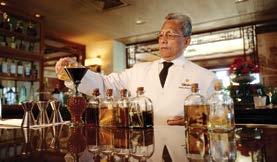
For more than 40 years, bartender Henry Kawaiaea has kept the spirit of hospitality alive at L’Aperitif.
THE SWEET SPOT
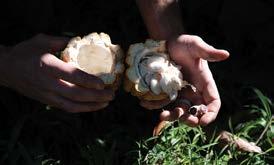
On Hawai‘i Island, regeneratively farmed cacao is crafted into chocolate shaped by time and terroir.
甘さの極み ハワイ島で再生型農法によって育てられたカカオが、時と大地の 恵みによってチョコレートへと丁寧に仕立てられていく。
TEXT BY EUNICA ESCALANTE
IMAGES BY JOHN HOOK
DANCE OF DARKNESS
闇の舞踏
文=ユニカ・エスカランテ
写真=ジョン・フック
TRANSLATION BY MAHORO ROTH ARTS
訳=ロス・まほろ
Through the avant-garde performance art of butoh, the body speaks what words cannot.
前衛的パフォーマンスアート「舞踏」を通して、身体は言葉では語れないものを語りはじめる
I am a seed buried deep in the loam. Darkness, peatrich and sodden, cradles me. I do not know how long I have been here, nor how much longer I will remain. Has it been a hundred years, a thousand, or two? Time slips by with no consequence. This dirt is all I have ever known.
Suddenly, I feel a drop of water. Then, a downpour. It conjures a metamorphosis. The hard shell of my exterior ruptures as I swell with moisture. When the deluge yields, it’s replaced by a warmth that beckons me from the soil. The first expressions of my roots and leaves unfurl in the sun’s heat. Wonder consumes me. I realize, for the first time, that I am a flower.
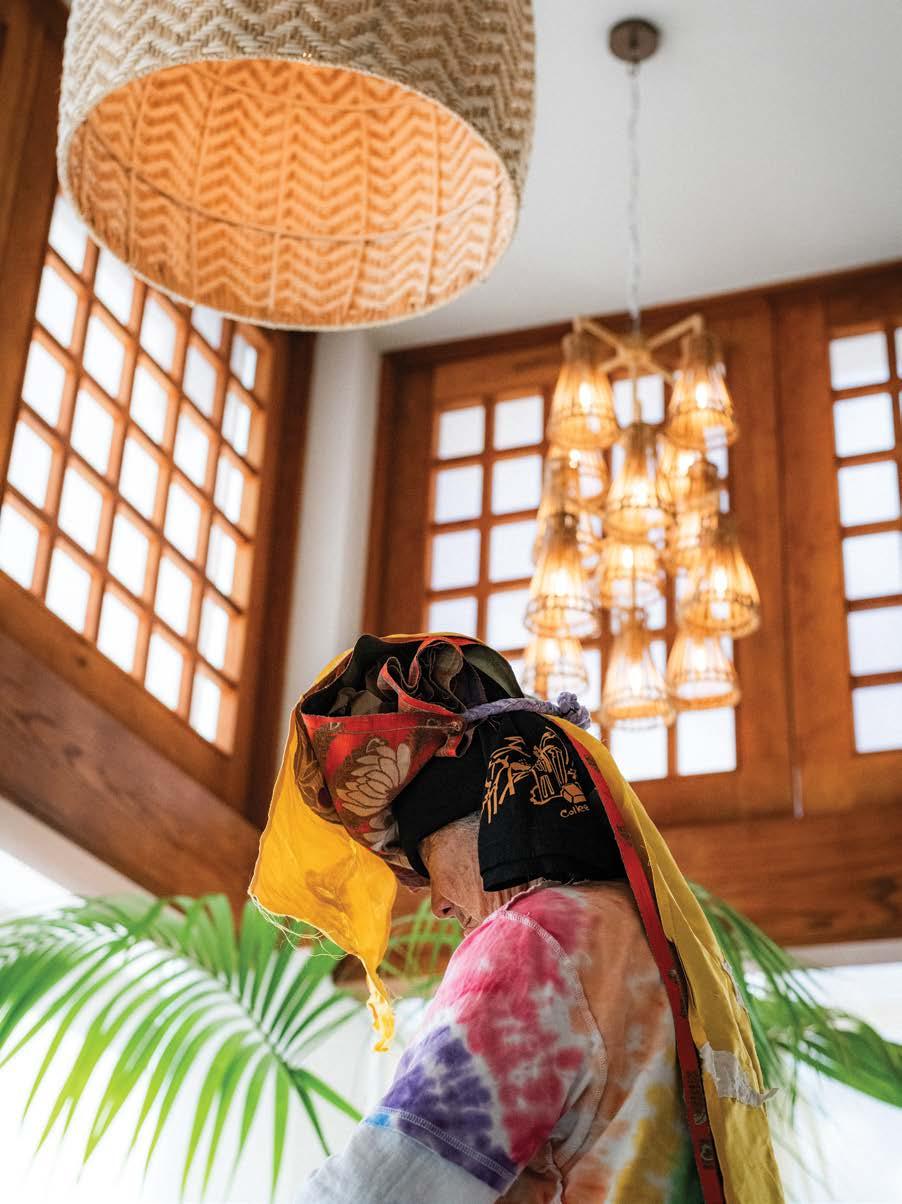
A single, sharp clap breaks the reverie. I’m no longer a flower—just someone in a high school gymnasium. Others around me, some two dozen or so, emerge from their own trance. At the front of the gym stands Hiroko Tamano, her petite frame clad in bright pink tights and a wagara-print top. A bandana holds her gray bob back from a weathered face. Despite her age, the 73-year-old butoh master still carries an undeniable presence, and the whole room hangs on her every movement.
For three days on O‘ahu, Tamano will provide instruction in butoh, a contemporary dance form to which she has given the better part of her life. The class is comprised of curious neophytes and seasoned performers, some of whom followed Tamano here from Berkeley, California, where she and her late husband, Koichi, built one of the country’s first butoh communities.
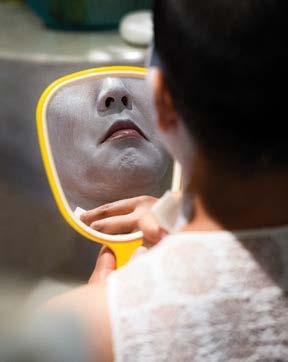
The couple studied under butoh pioneer Tatsumi Hijikata, who developed the dance form with Kazuo Ohno in ’50s-era Japan. Butoh began as an artistic experiment, a means of reckoning with the aftermath of the atomic bombings of Hiroshima and Nagasaki. Hijikata and Ohno cast off classical Japanese and Western traditions—Kabuki, Noh, and ballet alike—in pursuit of a radically new form. What emerged was ankoku butoh, a “dance of darkness” in both name and spirit.
私は腐葉土の奥深くに埋もれた一粒の種である。泥炭を含んでで 湿った暗闇が私を包み込む。どれほどの間ここにいるのか、あとどれほ どここに留まるのか、私には分からない。百年だろうか、千年だろうか、 それとも二千年か。時の流れは何の意味も持たず、ただ過ぎていく。 この土こそが、私が知る全てである。
突然感じる、一粒の雫。そして、土砂降りの雨。そこから変容が始 まる。水分を吸って私は膨らみ、ついに外殻が破れる。やがて豪雨が止 むと、土から私を誘い出すような暖かい温もりが訪れる。根と葉が、初 めて芽吹く。太陽の熱が土に染み込み、私をほどいていく。驚きが私を 満たす。そして初めて気づく、自分が一輪の花であることに。 乾いた、鋭い手拍子がひとつ。私は現実に引き戻される。私 はもはや花ではない。高校の体育館にいるひとりの人間に戻ってい た。20名あまりの周りの人々も、それぞれの恍惚状態から目を覚ます。 体育館の前方には玉野弘子が立っている。鮮やかなピンクのタイツ と和柄のシャツを纏った小柄な身体。バンダナが白髪混じりのボブヘ アーを抑えて、年輪を刻んだ顔立ちを際立たせている。73歳の舞踏の 巨匠は、年齢を超えてなお、紛れもない存在感を放つ。部屋全体が彼 女の一挙手一投足に吸い寄せられていく。
玉野は3日間、オアフ島で暗黒舞踏の指導を行う。舞踏とは、彼 女が人生の大半を捧げてきた日本発の前衛芸術である。クラスには好 奇心に駆られた初心者もいれば、舞台経験を積んだ表現者もいる。中 には玉野を追ってカリフォルニア州バークレーからここまで来た者も いる。バークレーは彼女と亡き夫・黄市が、アメリカで最初の舞踏コミ ュニティを築いた場所である。
夫妻は舞踏の創始者、土方巽に師事した。土方は1950年代の 日本で大野一雄とともにこの舞踊を生み出す。舞踏は、人々が原爆が もたらした傷と向き合うための芸術的な実験として始まった。土方と 大野は、古典的な日本と西洋の伝統である歌舞伎、能、バレエ等、既存 の型を全て捨て去り、根本的に新しい形を追求した。そこから生まれ たのが「暗黒舞踏」。その名の通り、そしてその本質においても、闇の舞 だった。
白塗りの身体、時に剃髪の舞踏家たちは、ほとんど静止して見え るほど遅い速度で舞う。振り付けは即興で、内面から湧き上がるもの が所作になる。顔は感情に引き裂かれるように歪み、痛みに歯を食い
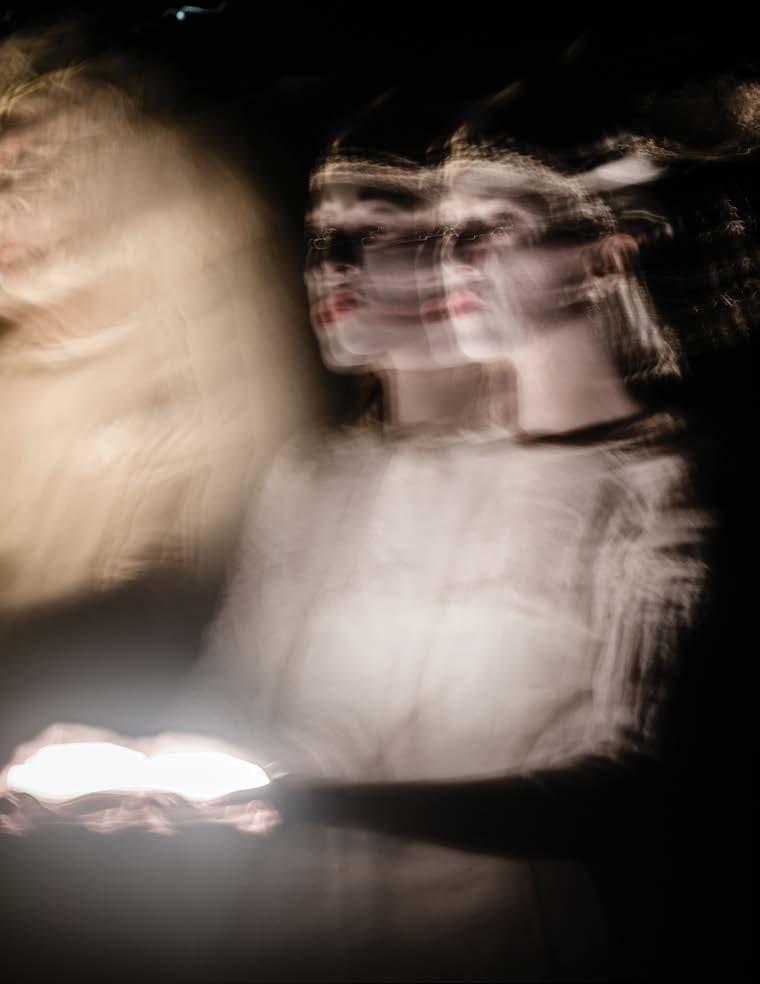
An experimental form of dance theater developed in postwar Japan, butoh created a language for the unspeakable trauma of the atomic bombings of Hiroshima and Nagasaki.
戦後日本で生まれた実験的な前衛芸術「舞踏」は、広島、長崎の被爆 という、言葉では表しきれないトラウマに向き合うための身体の言語 である。
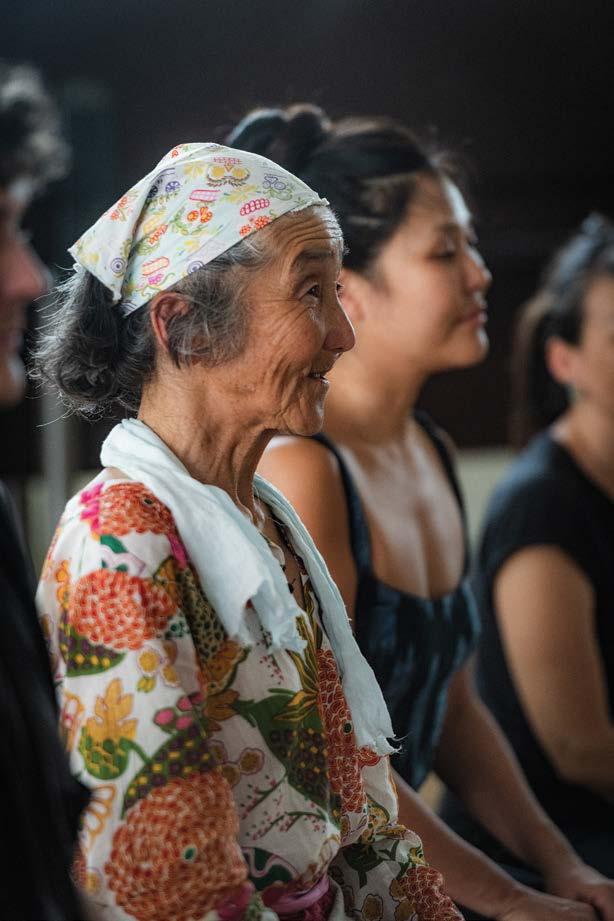
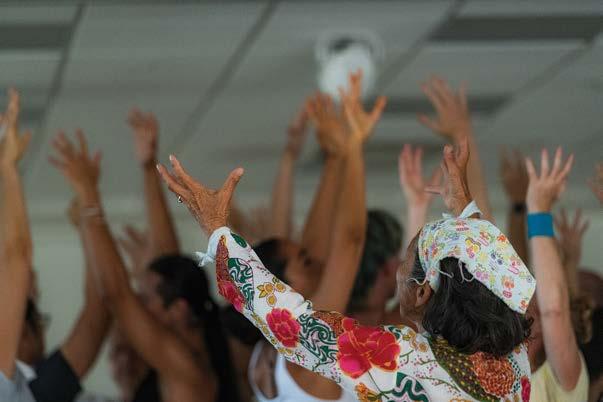
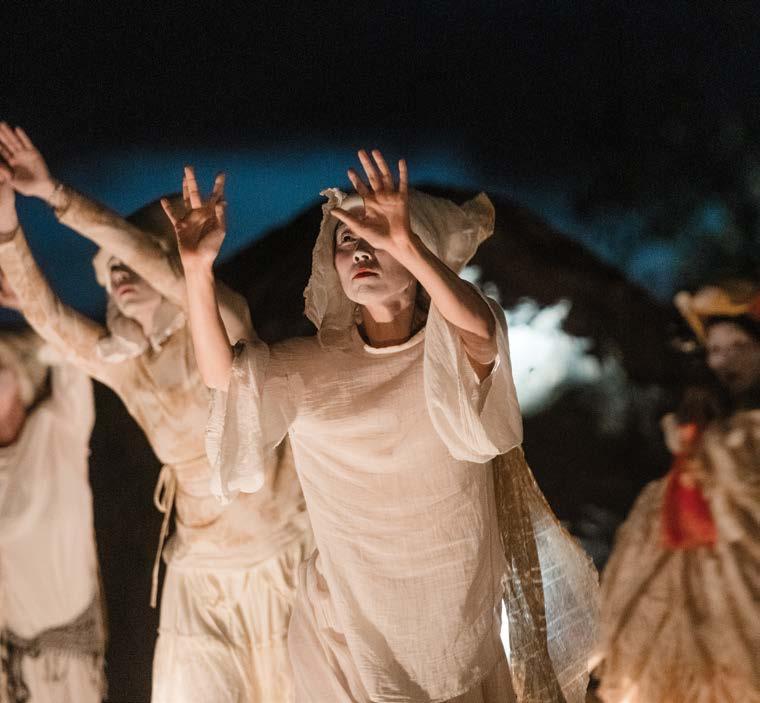
Caked in white body paint, often with shaven heads, dancers move at a glacial pace. Choreography gives way to improvisation, with gestures arising from one’s interior state. Faces contort into baroque expressions of human emotion. Teeth gnash in pain; mouths gape in a silent wail. Limbs twist then unspool, the body conveying states that verge on the metaphysical: a memory long buried, an emotion too raw to speak of.
Wars have been fought since time immemorial. A country ravaged is nothing new. The atomic bombings of Hiroshima and Nagasaki, however, brought new scale to human devastation. No existing art form could hold such tragedy. Butoh gave the body a new language. Trauma and grief can move through the flesh, raw and unvarnished,
しばり、声なき叫びに口が開く。四肢はねじれ、そしてほどけ、身体は言 葉にならない内なる状態を伝えていく。長く埋もれていた記憶、言葉に するには生々しすぎる感情を。
戦争は太古の昔から繰り広げられてきた。荒廃した国も、目新し いものではない。しかし、広島と長崎への原爆投下は、人間が人間に 与えうる破壊の意味を、根底から書き換えた。既存のどの芸術も、その 悲劇は表現しきれなかった。だが、舞踏が身体に新たな言語を与えた。 トラウマと悲嘆は、肉体を通じて現れる。生のまま、剥き出しのまま、美 しさで覆い隠されることなく。そこで繰り広げられるのは、見せ物とし ての舞台ではなく、身体による過去との対峙である。身体は導管とな り、内なる世界を立ち上げていく。
ハワイのクリエイター、メレ・ハマサキとダニエル・クロワ は、2022年にロサンゼルスを訪れた際、玉野の舞踏ワークショップ
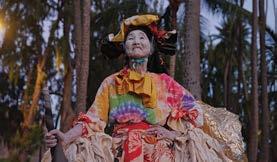
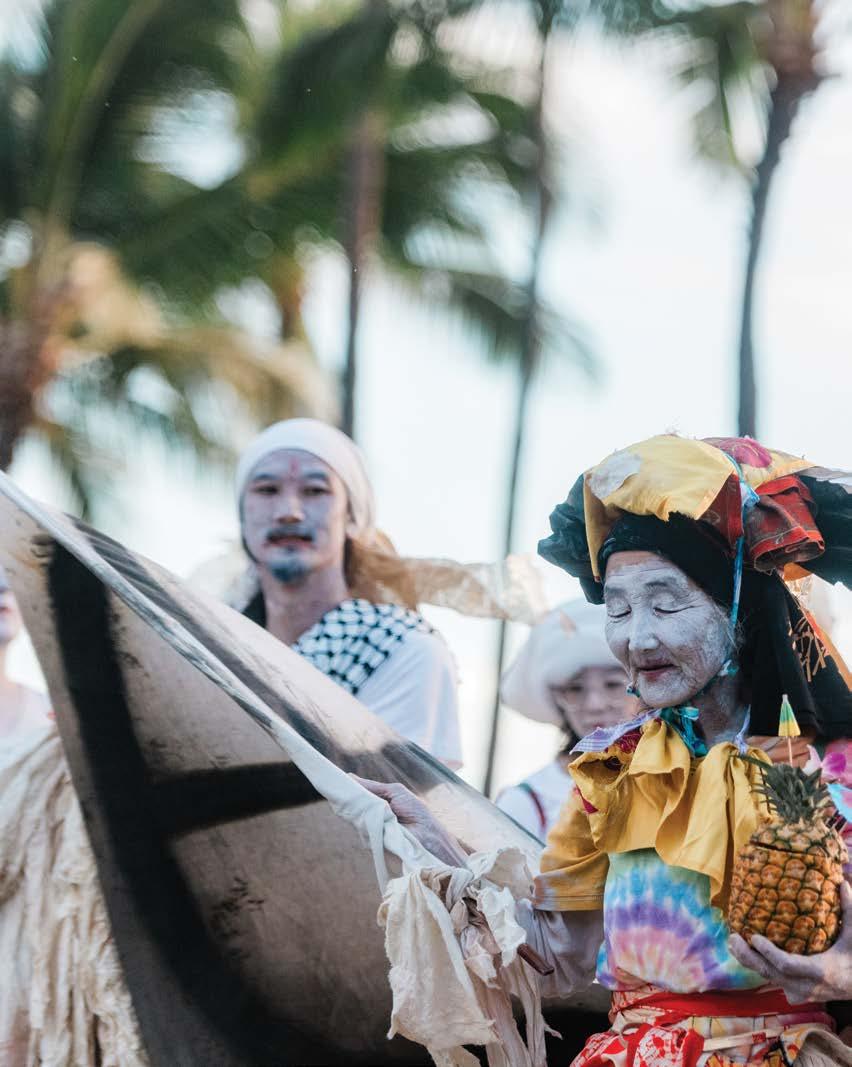
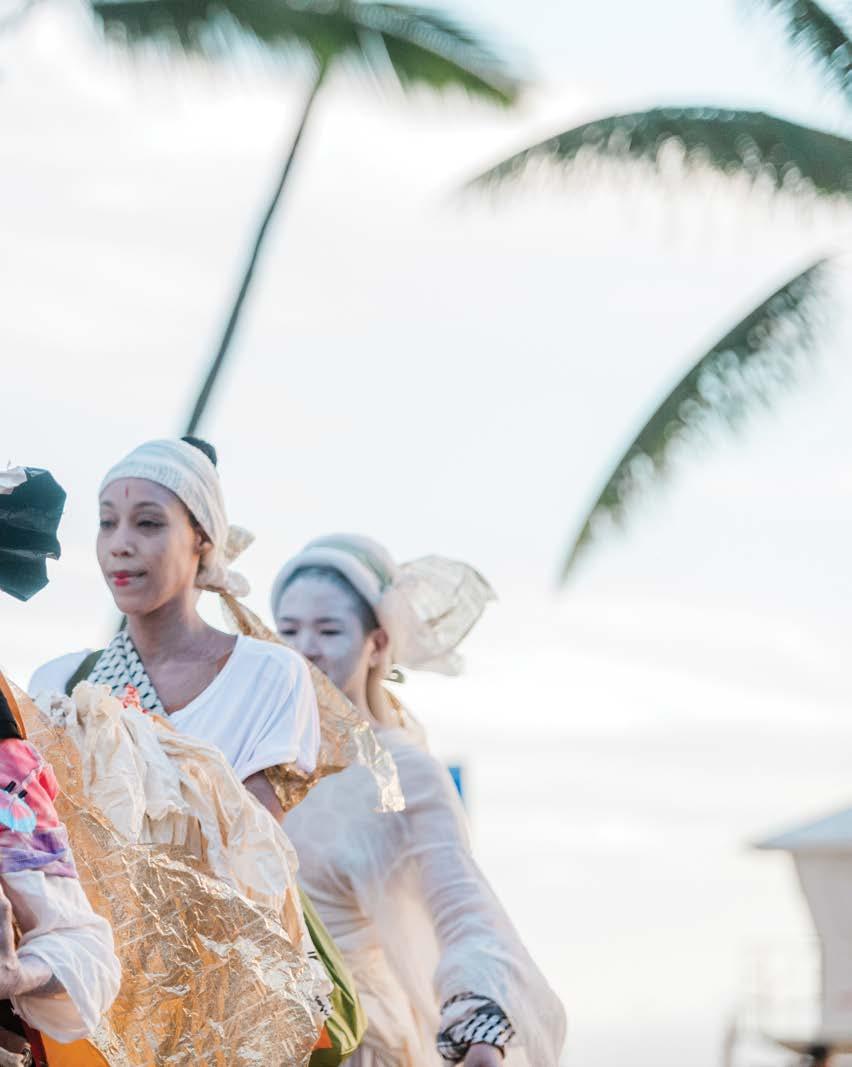
The Renkon Project brought in Hiroko Tamano to lead a butoh workshop and performance on O‘ahu.
レンコン プロジェクトは、 玉野弘子をオアフ島に招 き、舞踏のワークショップ とパフォーマンスを実施 した。
In butoh, the body is an outlet for expressing the profound depths of one’s inner world.
舞踏において身体は、 内なる深淵を外に表す器 となる。
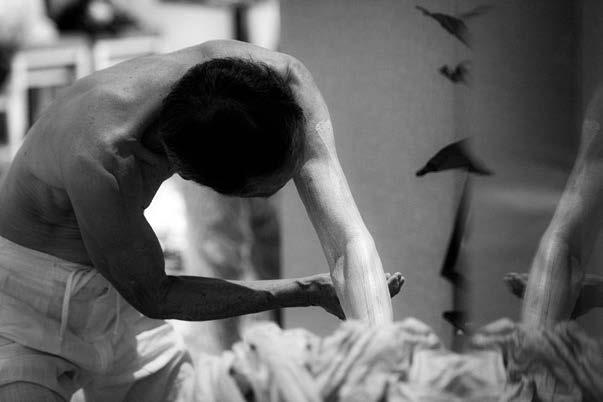
free of aesthetic polish. What unfolds, then, is less a performance than a somatic reckoning, the body a conduit for one’s inner world.
Local creatives Mele Hamasaki and Daniel Croix attended one of Tamano’s butoh workshops in 2022 during a trip to Los Angeles. When they joined arts reporter Noe Tanigawa in organizing the Renkon Project, a Honolulu memorial commemorating the 80th anniversary of the atomic bombings, it felt essential from the outset to include butoh in its programming.
And so, the three days with Tamano unfolded as a kind of vigil. We taught our bodies to emote without judgement. There were no classical techniques to master, merely states to inhabit: a whale cresting and diving; a seed coming to bloom. The workshop would
に参加した。やがて彼らはアート記者ノエ・タニガワと共に、原爆投下 から80年の節目に、ホノルルの追悼イベント「レンコン プロジェクト」 を立ち上げる。企画当初から、この追悼は舞踏なくして成り立たない、 そう直感していた。
玉野と過ごした3日間は、静かな追悼の儀式のようだった。私た ちは、評価や善悪の判断をいったん脇に置き、身体に感情を語らせる ことを学ぶ。習得すべき古典的技法はない。潮を割って現れ、また潜る クジラ。芽吹き、花開く一粒の種。求められるのは、ただその状態を身 体で生きることだった。ワークショップは2日後に迫ったパフォーマン スへとつながっていく。私たちの身体そのものが、鎮魂の歌を運ぶ器と なる。
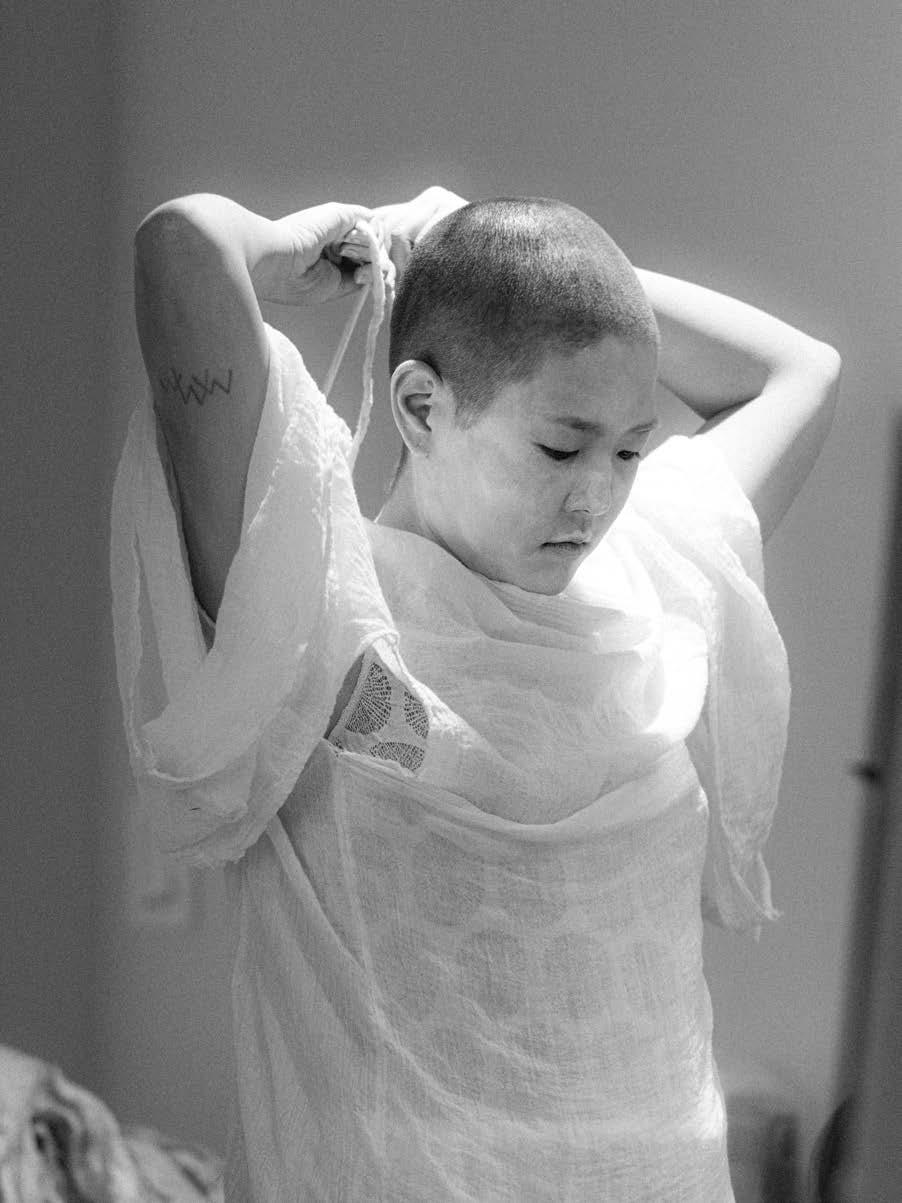
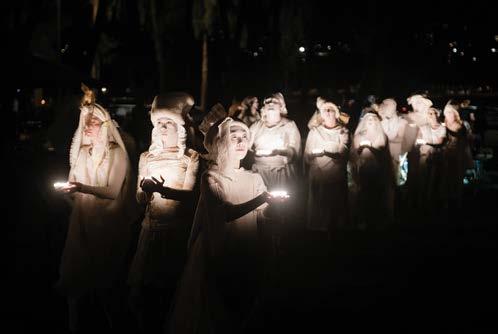
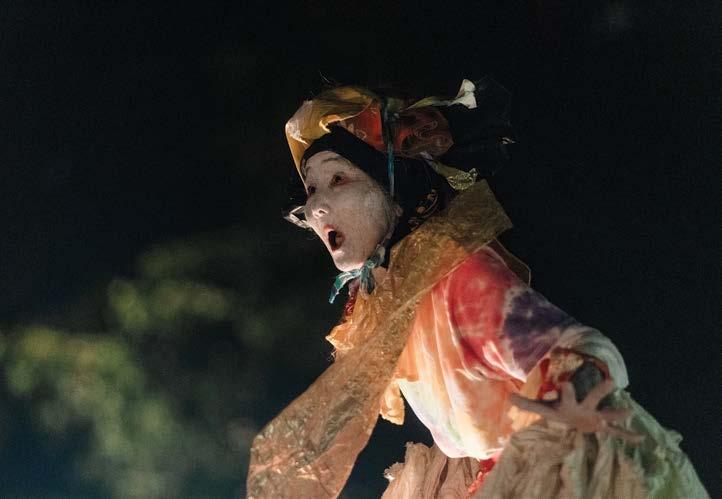
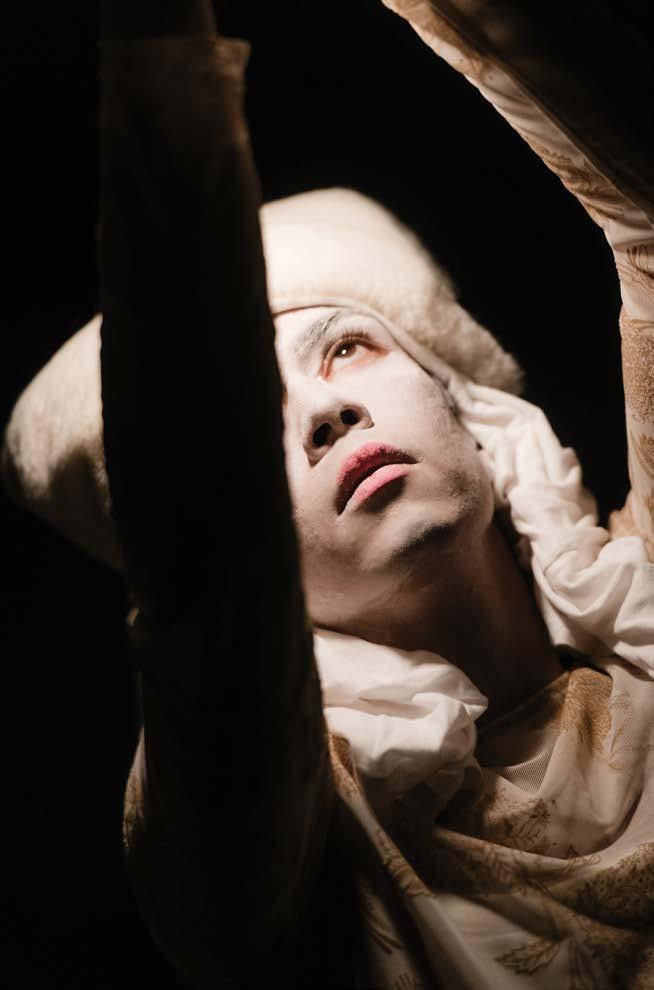
The performance was part of a multimedia activation of the Waikīkī War Memorial Natatorium.
このパフォーマンスは、
ワイキキ戦没者慰霊ナタト リウムを舞台としたマルチ
メディア企画の一環として 行われた。
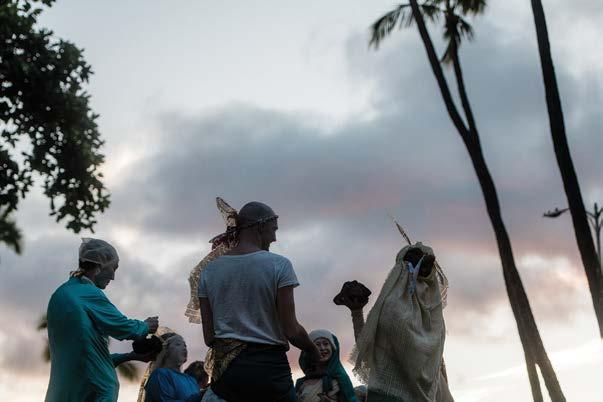
culminate in a performance in two days’ time, an elegy carried by our bodies.
In a field along Kaimana Beach, figures draped in white glide through the expectant crowd. As dusk falls, the darkness presses in, save for the candlelight illuminating the dancers’ faces. A taiko drummer metes out a beat, growing frenetic as the dancers’ movements intensify. The performance, like much of butoh, resists easy description. All I can offer is the feeling it left behind: sorrow, awe, solemnity.
What is there to say about the atomic bombings that has not already been said? The world remains, still, in their long shadow. Hundreds of thousands perished, and an untold more suffered in its wake. Perhaps language is insufficient. Perhaps only the body knows how to speak what words cannot.
カイマナ・ビーチ沿いの草地。白をまとった複数の人影が、期待 に満ちた観衆の間を滑るように進む。夕暮れが訪れ、闇が押し寄せ、 舞踏家たちの顔を照らすのはろうそくの光だけ。太鼓が拍を刻み、踊り が激しさを帯びるにつれて狂乱さも増していく。多くの舞踏がそうであ るように、目の前のこの舞いも、言葉では言い表せない。私が伝えられ るのは、それが残した感覚だけ。悲嘆、畏怖の念、そして厳粛さ。 原爆について、何を言葉にできるというのだろう。世界は今もな お、その長く暗い影のなかにある。何十万人もの尊い命が失われ、その 後に続く苦しみは計り知れない。おそらく言葉では不十分なのだ。おそ らく、言葉では語れないものを語る術を知るのは、ただ、この身体だけ なのだ。
TEXT BY NATALIE SCHACK
IMAGES BY JOHN HOOK AND CHRIS ROHRER
文=ナタリー・シャック
写真=ジョン・フック、クリス・
ローラー
GOLD, IRON, MARBLE, STONE
金、鉄、大理石、石に刻まれた芸術
TRANSLATION BY AKIKO SHIMA
訳=島有希子
With their evolving stories of place, works of public art endure in the collective consciousness.
移りゆく場所の物語を宿し、人々の意識に生き続けるパブリックアート
The Hawaiian Mural Arts Guild brought art into public spaces throughout Honolulu.
ハワイアン・ミューラル・
アーツ・ギルドは、ホノルル
各地の公共空間をアート で彩った。
When I think of home, I sometimes think of Mauiborn artist Hon-Chew Hee’s sculptural mural The Golden Days of Hawai‘i. Carved in deep green marble and accented by rich, earthy red-browns, its strikingly stylized patterns and abstractions depict scenes of labor, learning, and life in ancient Hawai‘i.
To me, the piece is deeply formative, if only because it was part of my childhood growing up in Mililani. My father used to load my sister and me onto his bike and tote us to Mililani Public Library, where Hee’s mural spans an exterior wall. A small, unremarkable suburban neighborhood in central O‘ahu, Mililani is as far from the beach as you can get, and further still from the island’s urban core, but it was the place that made me. The mural recalls a version of myself that existed before selfconsciousness, before I had language for identity or ambition.
Libraries in Hawai‘i are often overlooked troves of public art. But pay attention and you’ll find art demurely woven into the fabric of daily life everywhere you look: At Kawānanakoa Playground
「故郷」という言葉を思い浮かべるとき、私の脳裏に浮かぶのは、マウ イ島出身のアーティスト、ホン・チュー・ヒー氏による彫刻壁画「ザ ゴー ルデン デイズ オブ ハワイ(ハワイの黄金時代)」だ。深いグリーンの大 理石に、赤土を思わせる豊かな赤褐色が配され、目を奪うほどに様式 化された文様と抽象的な造形の中に、古代ハワイの労働、学び、そして 日々の営みが刻み込まれている。
私にとってこの作品は、ミリラニで過ごした幼少期の記憶と 結びついた、きわめて原体験的な存在だ。父はよく、妹と私を自転車に 乗せ、ミリラニ公共図書館まで連れて行ってくれた。その建物の 外壁一面に、ヒー氏の壁画は広がっている。オアフ島中部に位置する ミリラニは、海からも都市の中心からも離れた、ごくありふれた郊外 の住宅地だ。それでも、私自身の原点は確かにここにあった。この壁画 は、自意識が芽生える以前、アイデンティティや野心という言葉をまだ 知らなかった幼い私の記憶を、静かに呼び覚ましてくれる。
ハワイの図書館は、実はパブリックアートの宝庫でありながら、 見過ごされがちな存在でもある。しかし、少し意識して周囲を見渡せ ば、芸術は日常の風景の中にさりげなく織り込まれていることに気づ くだろう。プリンス デイヴィッド カヴァナナコア中学校近くの
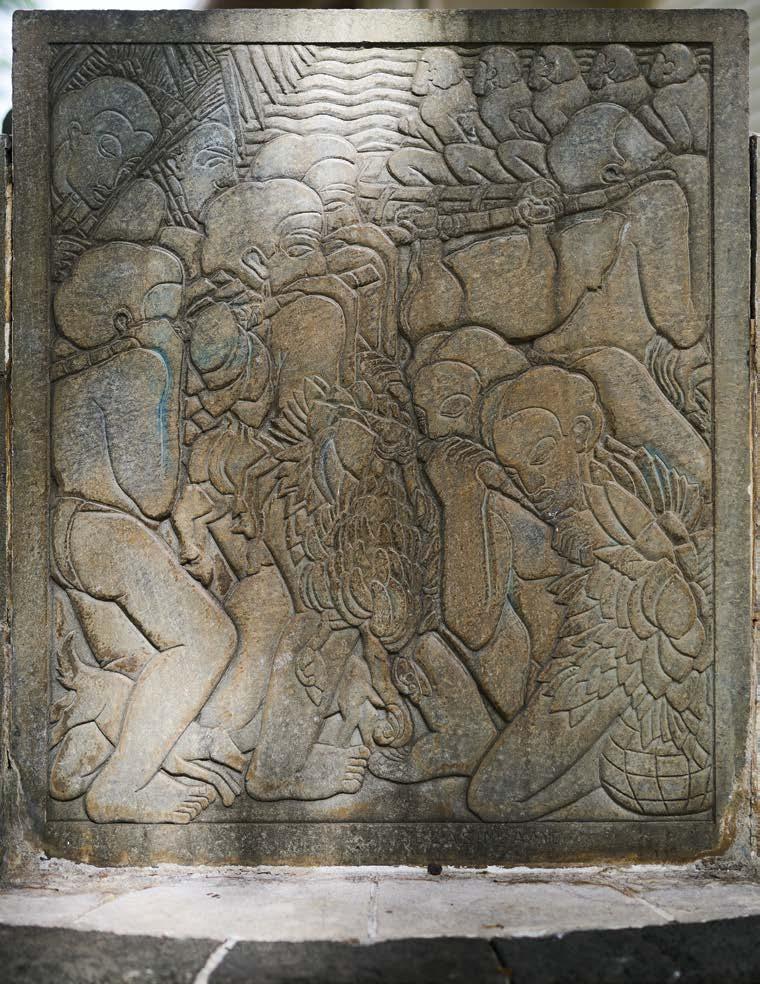
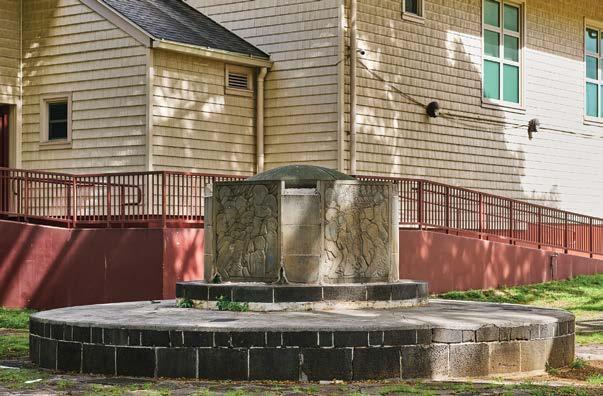
Marguerite Blasingame’s bas-reliefs at Kawānanakoa Playground, pictured above and on the opposite page, depict scenes of labor, learning, and life in ancient Hawai‘i.
上の写真と反対ページにある、マルグリット・ブレイジンゲイム氏に よるカヴァナナコア遊園地の彫刻には、古代ハワイの労働や学び、 日常生活の情景が描かれている。
near Prince David Kawānanakoa Middle School, Native Hawaiian cultural practices are rendered in bas-relief on a decagonal fountain by artist Marguerite Blasingame. Perhaps the imagery will embed itself in the memories of the children who play there, as Hee’s mural did in mine—a narrative absorbed before it was ever understood.
In the 1930s and ’40s, Blasingame left her mark on infrastructure throughout Honolulu, adorning the city’s public spaces as a founding member of the Hawaiian Mural Arts Guild established in 1934 with artists Isami Doi, Madge Tennent, and others. Her murals and bas-reliefs—among the longest-standing works associated with the Guild—were not framed or elevated within the walls of an institution. They were carved into the stone and concrete of parks and civic buildings, meant to be encountered up close, leaned on, and worn down by time.
One of Blasingame’s most prominent commissions, Ka Wai a ke Akua (The Water of the Gods) at the entrance of the Board of Water Supply building in downtown Honolulu, tells the story of the gods Kāne and Kanaloa, water-finders who opened springs across the islands. This is not art without use or function. It is art that endeavors to explain a Hawaiian worldview. At its most enduring, this is what public art does: It creates a collective sense of who we are and where we are, often before we have the words for it.
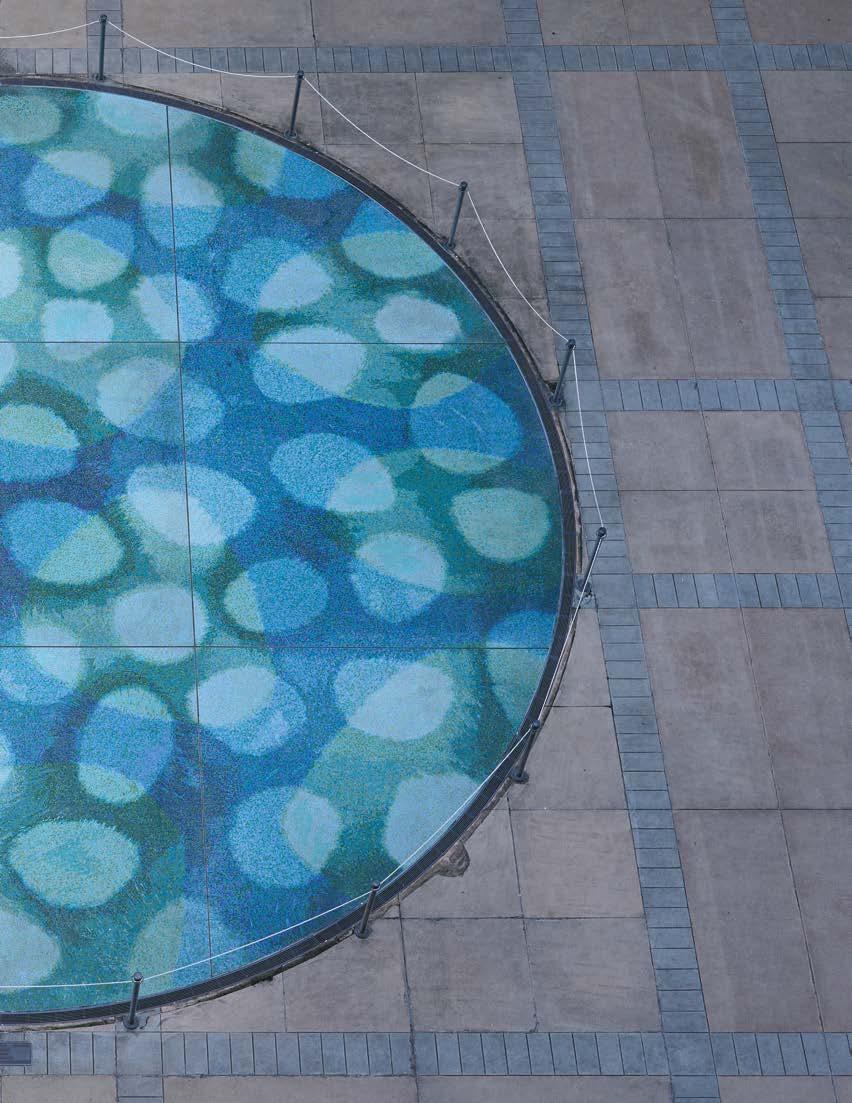
For some of Hawai‘i’s most significant artists, it was often in the public sphere that their visual language resonated the loudest. Satoru Abe and Tadashi Sato, central figures in Hawai‘i’s modernist art movement, both found a mentor in Guild cofounder Isami Doi and left behind iconic public works such as The Seed, Abe’s fantastical, sinuous forest of gold and iron that rises haunting and hopeful in front of Farrington High School, and Aquarius, Sato’s serene mosaic at the Hawai‘i State Capitol, which conjures submerged rocks in the cerulean waters around Hawai‘i and is arguably his most well-known work.
Today, artists in Hawai‘i uphold this legacy of making their stories of place visible, even as their forms and concerns evolve. Their work looks different
カヴァナナコア遊園地では、彫刻家マルグリット・ブレイジンゲイム氏 による十角形の噴水に、ハワイ先住民の文化的営みがレリーフとして 刻まれている。ここで遊ぶ子どもたちの記憶にも、かつて私の中に焼き ついたヒー氏の壁画のように、意味として理解されるよりも先に、物語 としてこのイメージが刻まれていくのかもしれない。
ブレイジンゲイム氏は、1930年代から40年代にかけてホノルル の公共インフラにその足跡を残したアーティストだ。1934年にイサミ・ ドイ氏、マッジ・テネント氏らとともに設立したハワイアンミューラル ア ーツ ギルドの創設メンバーとして、市内の公共空間を彩った。ギルドに 関わる彼女の作品の中でも、とりわけ長く残り続けている壁画や彫刻 は、美術館の壁に額装されたものではない。公園や公共施設の石やコ ンクリートに直接刻まれ、人々が間近で出会い、寄りかかり、そして時 を経て少しずつ磨耗していくことを前提に生み出された作品である。 ブレイジンゲイム氏の代表作のひとつ、ホノルルのダウンタウン にある水道局ビルの入口を飾る「カ ワイ ア ケ アクア(神々の水)」は、 水の神カネとカナロアの物語を描いた作品だ。二神は、ハワイ諸島各 地に泉をもたらした「水を探す神々」として知られている。これは単なる 装飾や実用のためのアートではなく、ハワイの世界観そのものを伝え ようとするアートである。パブリックアートが最も力を発揮するのは、ま さにこの点にある。言葉を持つ以前に、私たちが誰であり、どこにいる のかという共有の意識を生み出すことだ。 ハワイの重要なアーティストの多くにとって、その表現が最も力 強く響いた場は、しばしば公共の空間だった。ハワイのモダニズム美術 を代表するサトル・アベ氏とタダシ・サトウ氏は、ともにギルド共同創設 者のイサミ・ドイ氏に師事している。二人は、それぞれに象徴的なパブ リックアートを数多く残している。サトル・アベ氏による「ザ シード」は、 ファーリントン高校前に堂々とそびえ、幻想的でしなやかなゴールドと 鉄の森が見る者に不思議な感覚と希望を同時に与える作品である。 一方、「アクエリアス」は、ハワイ州議会議事堂に設置されたタダシ・サ トウ氏によるモザイクで、ハワイの碧い海に沈む岩礁を思わせる静謐 な佇まいを持ち、彼の代表作のひとつとされている。
今日、ハワイのアーティストたちは、表現の形やテーマが進化し 続ける中でも、場所に根差した物語を人々の目に届けるという伝統を 受け継いでいる。彼らの作品が以前とは異なって見えるのも、ある意 味当然のことだ。時間や状況、喪失と再生、行き交う世代によって、こ の場所そのものが変わり続けてきたのだから。表現のかたちは変われ ど、公の場で、人々のために、そして人々と共に何かを分かち合おうと する思いは変わらない。
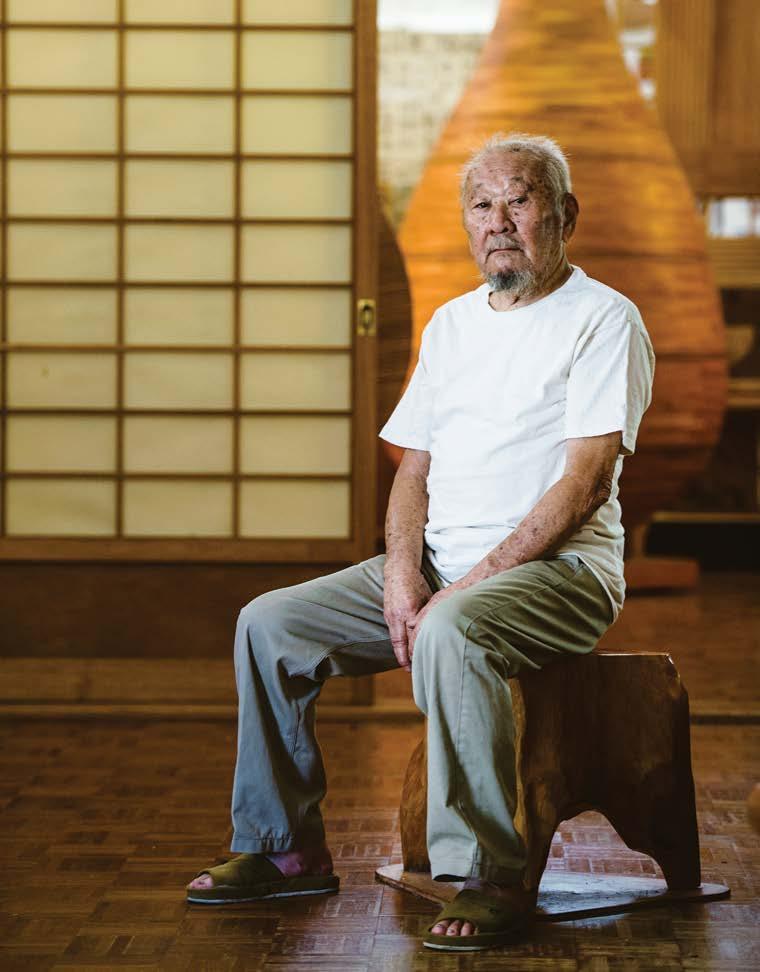
Satoru Abe, above, and Tadashi Sato, whose Aquarius mosaic is pictured on the next spread, are cornerstones of the Halekulani Fine Art Collection and enduring figures in Hawai‘i’s public art landscape.
サトル・アベ氏(上の写真)と、次ページにある「アクエリアス」のモザイクを手 がけたタダシ・サトウ氏は、ハレクラニ美術コレクションの中核を成す存在で あり、ハワイのパブリックアート界でも長く重要な役割を果たしている。
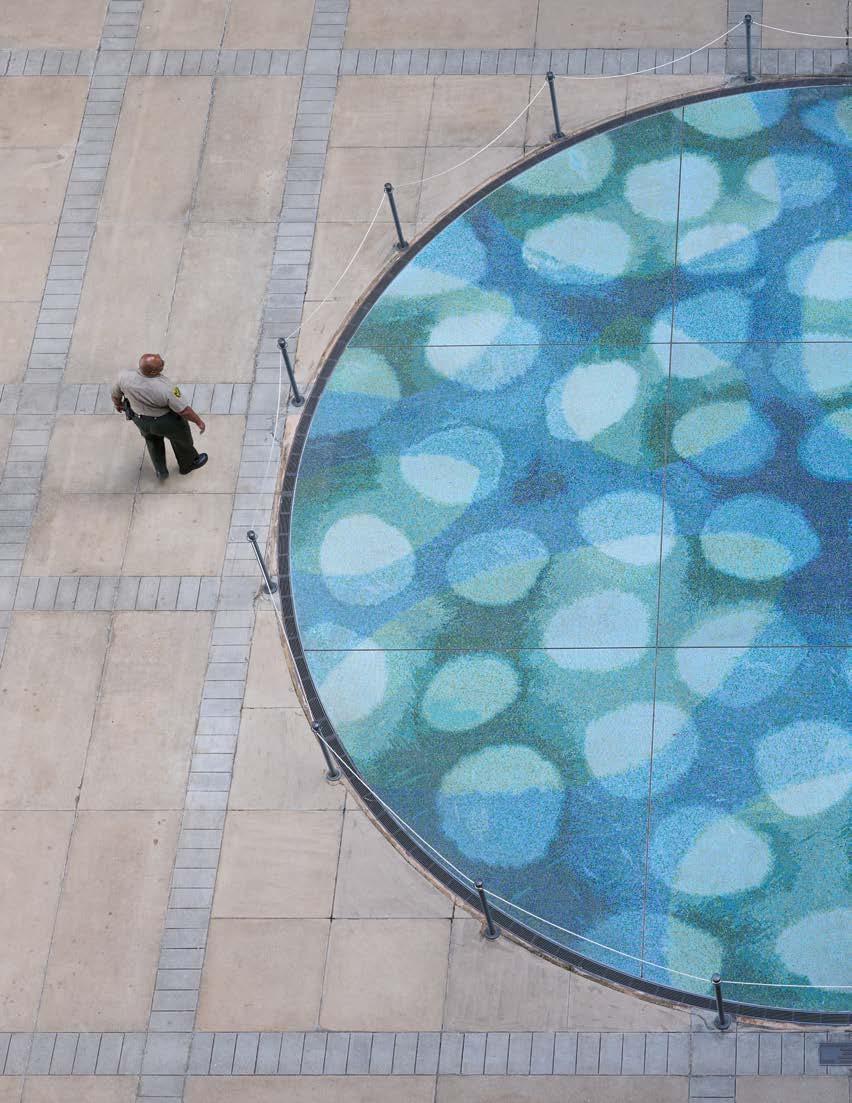
The Hawai‘i State Foundation on Culture and the Arts (SFCA) has supported a vibrant constellation of public art initiatives across the islands.
ハワイ州文化芸術財団(SFCA)は、州内各地で展開される多彩な パブリックアートの取り組みを長年にわたり支えてきた。
because, after all, this place is different, shaped by time and circumstance, by loss and renewal, by generations coming and going. They bare themselves differently, yet the impulse to offer something of oneself not in private, but for and with others, remains the same.
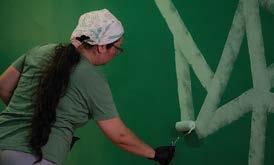
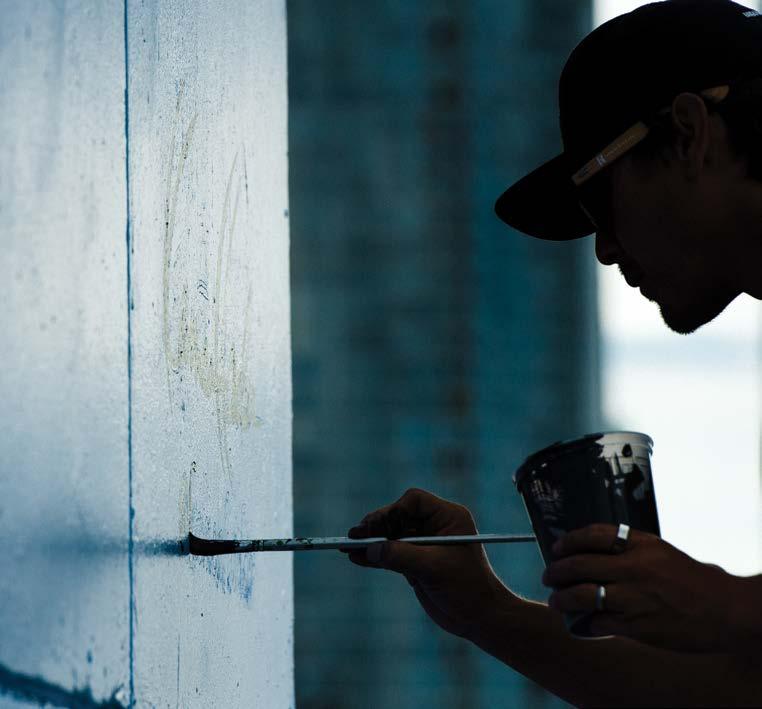
Honolulu is a living canvas in the hands of Kamea Hadar, artist and former director of the public arts organization now known as Worldwide Walls. There’s アーティストであり、現在「ワールドワイド ウォールズ」として知 られるパブリックアート団体の元ディレクターでもあるカメア・ハダー 氏の手にかかれば、ホノルルの街は生きるキャンバスとなる。2025年 に完成したアイエアの低所得者向け住宅プロジェクト、ナウル タワー の25階建ての外壁に大きく羽ばたくイワ鳥の巨大な壁画や、2020年 夏季オリンピックでカリッサ・ムーア選手がサーフィン競技の初代金メ ダルを獲得した翌年に描かれた、若き日のデューク・カハナモク氏と並
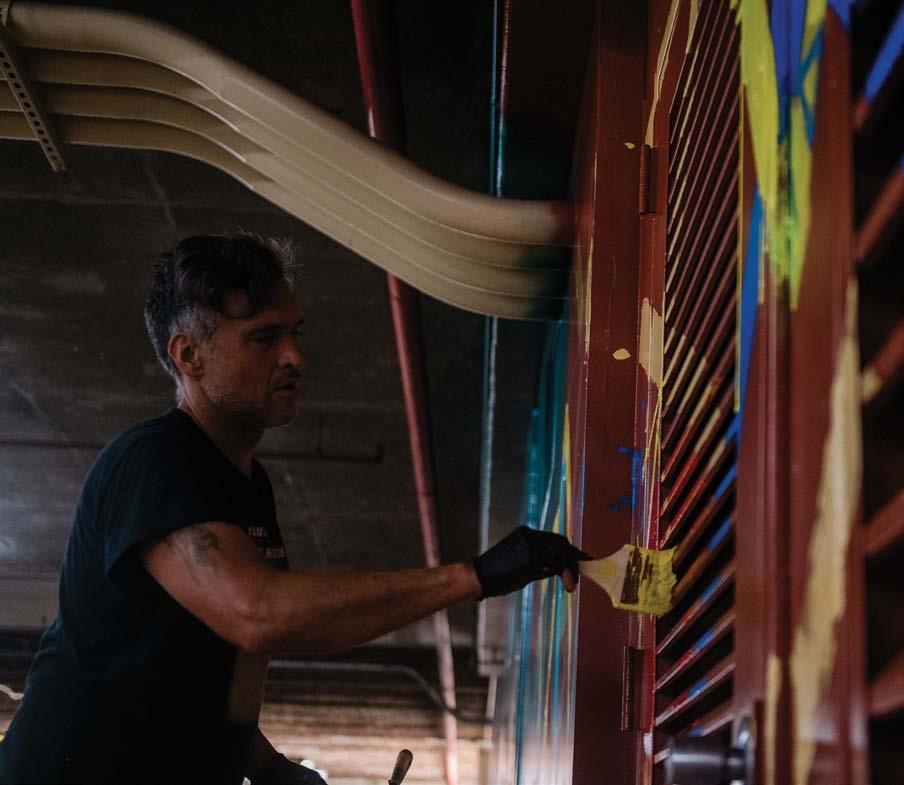
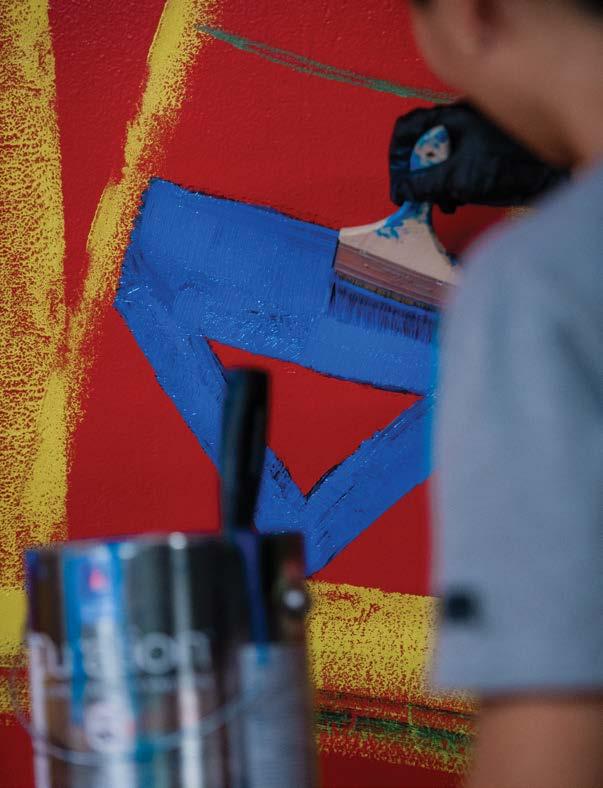
Solomon Enos led a community mural project at a government building in November 2025 as SFCA’s artist in residence.
ソロモン・エノス氏は、2025 年11月、SFCAのアーティス ト・イン・レジデンスとして、政 府施設でのコミュニティ壁画 プロジェクトを主導した。
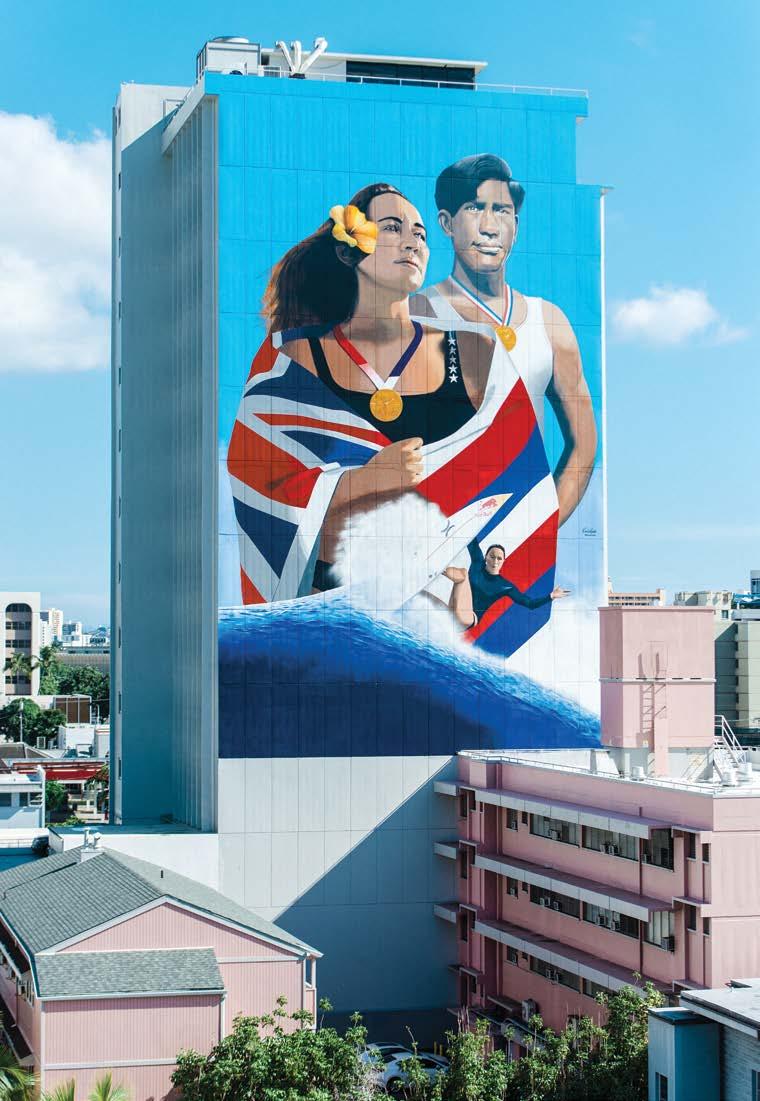
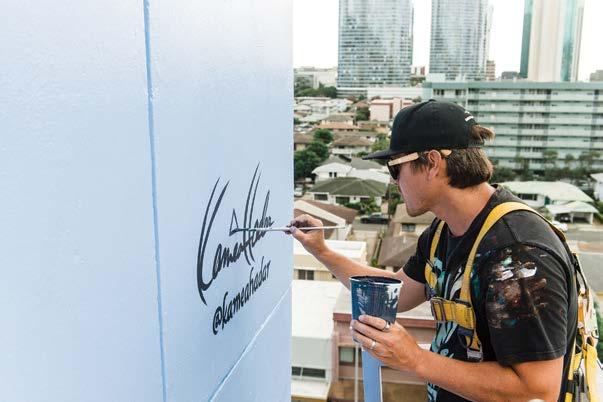
his enormous mural of an ‘iwa bird soaring along the 25-story facade of Nāulu Tower, an affordable housing project completed in ‘Aiea in 2025, or his monumental portrait of surfer Carissa Moore pictured alongside a young Duke Kahanamoku, painted the year after Moore claimed the sport’s inaugural gold medal at the 2020 Summer Olympics. Hadar’s murals tell a story of the city as it unfolds, filling its streets with not just color, but identity.
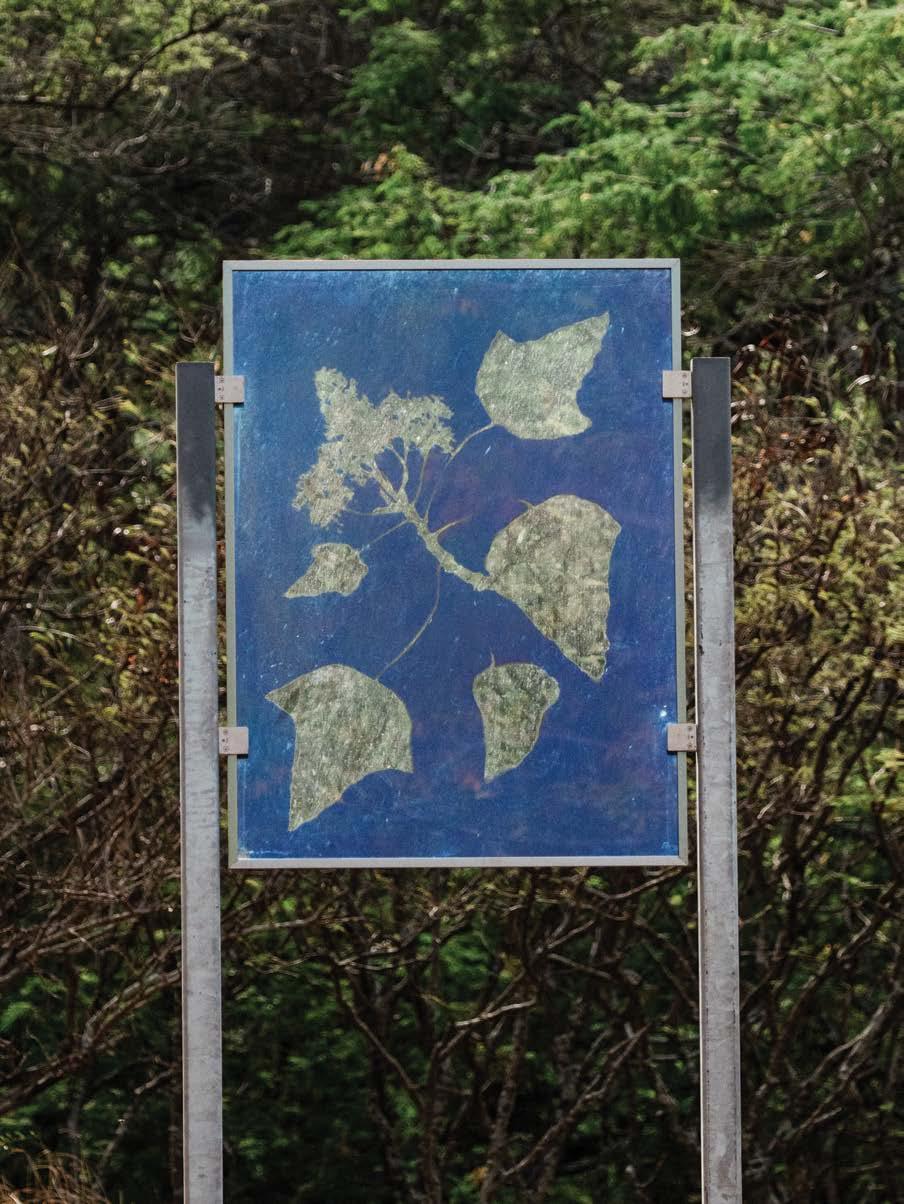
Building on this momentum is Wahi Pana: Storied Places, a three-year public art project launched in 2025 that situates site-specific installations throughout O‘ahu. Bringing together Native Hawaiian and Hawai‘i-based artists, storytellers, and community members, the initiative honors the complex histories of each site, using diverse media to create a dialogue between place and people. In Ka Pā‘ū Ehuehu o Hi‘iaka (The Animated Skirt of Hi‘iaka), artist Cory Kamehanaokalā Holt Taum transforms three city buses into moving works of art, wrapping their exteriors in flowing
ぶムーア選手の巨大な肖像画も手がけている。ハダー氏の壁画は、 この街で展開される物語を映し出し、街並みに色だけでなく、確かな アイデンティティを与えている。
こうした流れの先にあるのが、2025年に始まった三年間のパブ リックアートプロジェクト「ワヒ パナ:物語ある場所」である。オアフ島 各地に、場所に根差した作品を設置していく試みだ。ネイティブハワイ アンやハワイ在住のアーティスト、語り手、地域コミュニティが一堂に 会するこのプロジェクトは、土地に刻まれた複雑な歴史に敬意を払い ながら、多様な表現を通して場所と人との対話を生み出している。コリ ー・カメハナオカラ・ホルト・タウム氏の「カ パウ エフエフ オ ヒイアカ (ヒイアカの舞うスカート)」では、3台の市営バスが動くアート作品へ と変貌する。バスの外装には流れるようなパウの模様が描かれ、イン タラクティブなQRコードを通じて、乗客はヒイアカイカポリオペレの 伝説に触れることができる。また、ココ クレーター植物園に設置された ウアラニ・デイヴィス氏のサイアノタイプ作品は、庭園を抵抗と再生の 場として捉え直し、パオアカラニやウルハイマラマにあったリリウオカ ラニ女王の庭園の精神を呼び起こす。
Kamea Hadar’s mural of surfing legends Carissa Moore and Duke Kahanamoku commands attention from a building on South King Street.
カメア・ハダー氏による、 サーフィン界のレジェンド、 カリッサ・ムーア氏とデューク・ カハナモク氏を描いた壁画 は、サウス キング ストリート 沿いの建物から強い存在感を 放っている。
Artist Amber Khan prepared this scale model for her Wahi Pana installation at Hale‘iwa Beach Park in 2026.
アーティストのアンバー・
カーン氏は、2026年に
ハレイワ・ビーチ・パークで
展示予定の「ワヒ・パナ」の ために、この縮尺モデルを 制作した。
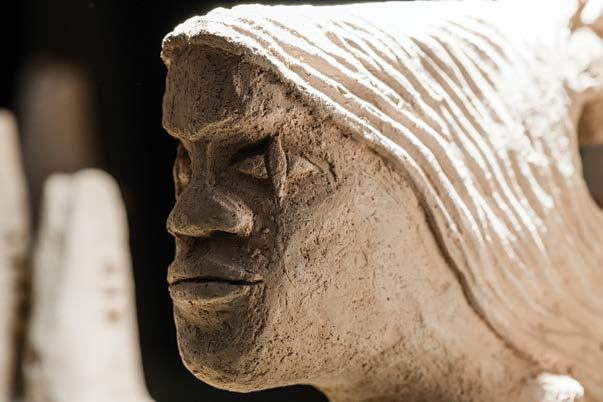
pā‘ū patterns and interactive QR codes that connect bus riders with the legend of Hi‘iakaikapoliopele.
Ualani Davis’s cyanotype installation at Koko Crater Botanical Garden reimagines the garden as a site of resistance and reclamation, evoking the spirit of Queen Lili‘uokalani’s gardens at Paoakalani and Uluhaimalama.
All art involves risk; public art makes that risk visible to the world. To create it is to risk being seen too clearly, to subject oneself to whatever might be revealed if every corner of us were held up to the light. It invites a collective gaze that refuses to look away. It insists on connection, not despite discomfort or imperfection, but because of it.
There is courage in that insistence, and in believing in the beauty of such exposure. There is faith in imagining that a community might recognize itself in stone, pigment, or concrete. There is resolve in staying visible even when what is revealed is complicated or uncertain. Yes, public art is confronting, but its bold conviction lives on in marble and wood, in iron and gold, in memory.
すべての芸術にはリスクが伴う。公共の場に置かれる芸術は、そ のリスクを隠すことなく世界にさらす。創作するとは、自らを余すところ なくさらすことであり、あらゆる角度から照らされる自分自身を引き受 ける覚悟を持つことでもある。それは、目を背けることのない人々の視 線を招き入れ、違和感や不完全さを抱えたまま、人と人とのつながり を生み出していく行為なのだ。
そんな覚悟を持ち、自らをさらすことの中に美しさを見いだそう とすること自体が、ひとつの勇気である。コミュニティが、石や顔料、コ ンクリートの中に自らの姿を見つけるかもしれないと想像すること。そ こには確信がある。たとえそこに現れるものが複雑で曖昧であったと しても、なお見られる存在であり続けようとする。その姿勢には、揺る ぎない意志が宿る。パブリックアートは時に人を戸惑わせる。しかしそ の大胆な確信は、大理石や木、鉄や金に刻まれ、人々の記憶の中で生 き続けていく。
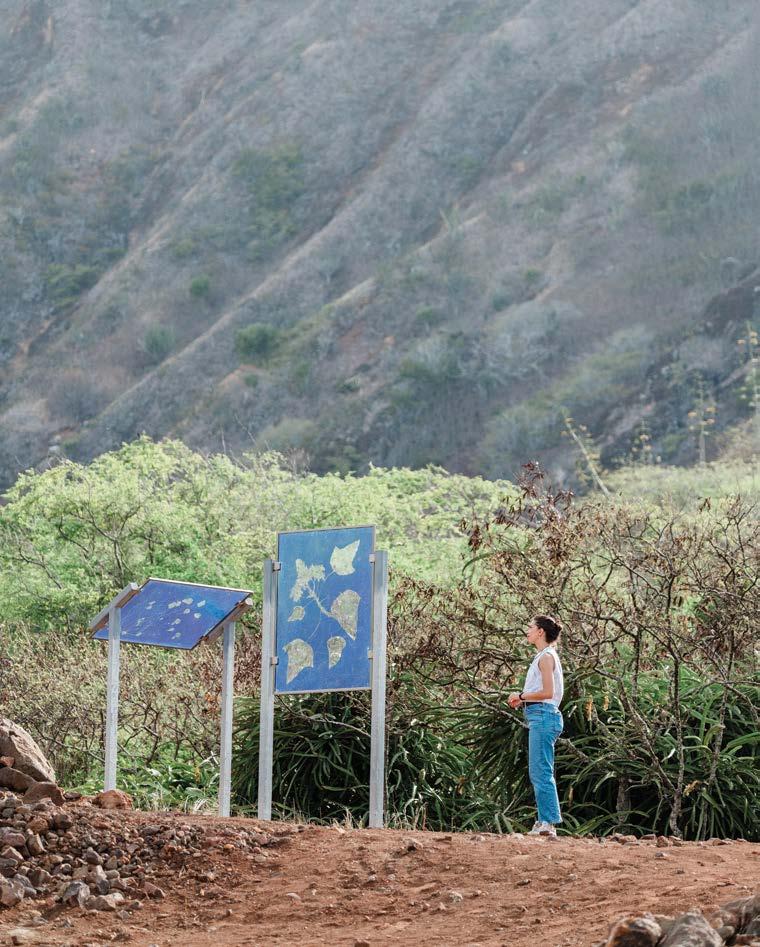
Ualani Davis’s installation at Koko Crater Botanical Garden commemorates three historic days of Hawaiian protest and celebration: Lā Ho‘iho‘i Ea (Sovereignty Restoration Day), Lā Kū‘oko‘a (Hawaiian Independence Day), and the ‘Onipa‘a Peace March.
ココ クレーター植物園に展開されたウアラニ·デイヴィス氏の インスタレーションは、ハワイの歴史に刻まれた三つの重要な日を 記念する作品である。主権回復の日「ラ ホイホイ エア」、ハワイ 独立記念日の「ラ クウオコア」、そして「オニパア平和行進」だ。
It Begins with an Elegant Home
Feel at home among grand views of ocean and mountain, in a residence where every detail has been thoughtfully considered.
素晴らしい海と山の眺望に包まれながら、ディテールにまで作り込まれたこの レジデンスは、あなたにくつろぎの時間をもたらす。
Studio, One, Two, and Three Bedroom Honolulu Residences ホノルルのスタジオ、1ベッドルーム、2ベッドルーム、3ベッドルームレジデンス
INQUIRE
thelauniuwardvillageliving.com | 808 470 6740 Offered by Ward Village Properties, LLC RB-21701
THE PROJECT IS LOCATED IN WARD VILLAGE, A MASTER PLANNED DEVELOPMENT IN HONOLULU, HAWAII, WHICH IS STILL BEING CONSTRUCTED. ANY VISUAL REPRESENTATIONS OF WARD VILLAGE, INCLUDING WITHOUT LIMITATION, RETAIL ESTABLISHMENTS, PARKS, AMENITIES, OTHER FACILITIES AND THE CONDOMINIUM PROJECTS THEREIN, INCLUDING THEIR LOCATION, UNITS, VIEWS, FURNISHINGS, DESIGN, COMMON ELEMENTS AND AMENITIES, DO NOT ACCURATELY PORTRAY THE CONDOMINIUM PROJECTS OR THE MASTER PLANNED DEVELOPMENT. ALL VISUAL DEPICTIONS AND DESCRIPTIONS IN THIS ADVERTISEMENT ARE FOR ILLUSTRATIVE PURPOSES ONLY. THE DEVELOPER MAKES NO GUARANTEE, REPRESENTATION OR WARRANTY WHATSOEVER THAT THE DEVELOPMENTS, FACILITIES OR IMPROVEMENTS OR FURNISHINGS AND APPLIANCES DEPICTED WILL ULTIMATELY APPEAR AS SHOWN OR EVEN BE INCLUDED AS A PART OF WARD VILLAGE OR ANY CONDOMINIUM PROJECT THEREIN. EXCLUSIVE PROJECT BROKER WARD VILLAGE PROPERTIES, LLC, RB-21701. COPYRIGHT ©2026. EQUAL HOUSING OPPORTUNITY.
WARNING: THE CALIFORNIA DEPARTMENT OF REAL ESTATE HAS NOT INSPECTED, EXAMINED OR QUALIFIED
TEXT BY SERENE GUNNISON
IMAGES BY JOHN HOOK AND TARA ROCK COURTESY OF TEN SPEED PRESS
文=セリーン・ガンニソン
写真=ジョン·フック、タラ·ロック
(テン スピード プレス)
GARLANDS OF MEANING
想いを宿すレイ
CULTURE
TRANSLATION BY MUTSUMI MATSUNOBU
訳=松延むつみ
Selected for their seasonality and symbolism, lei are a fragrant fixture in island weddings.
季節感や象徴性をもとに選ばれる香り高いレイは、ハワイの婚礼に欠かせない存在
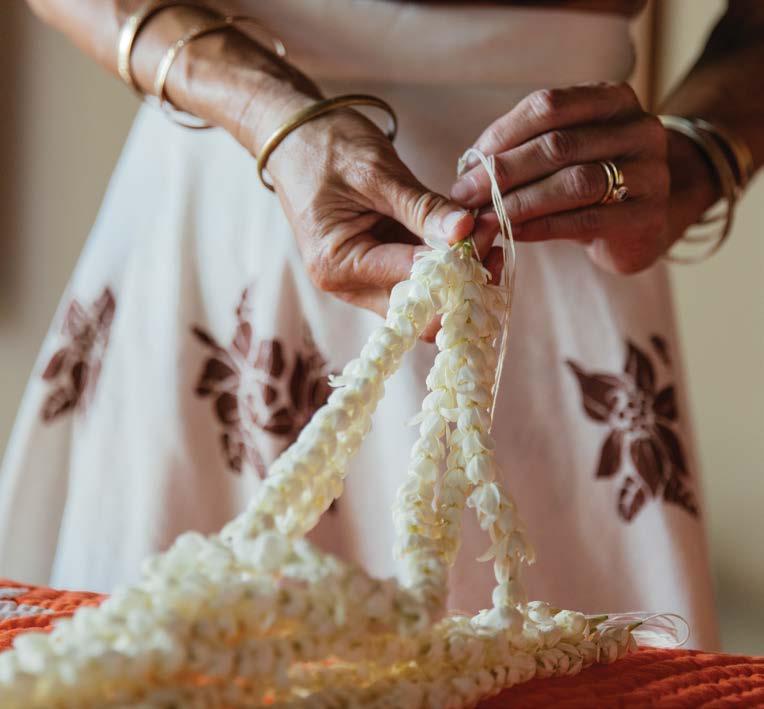
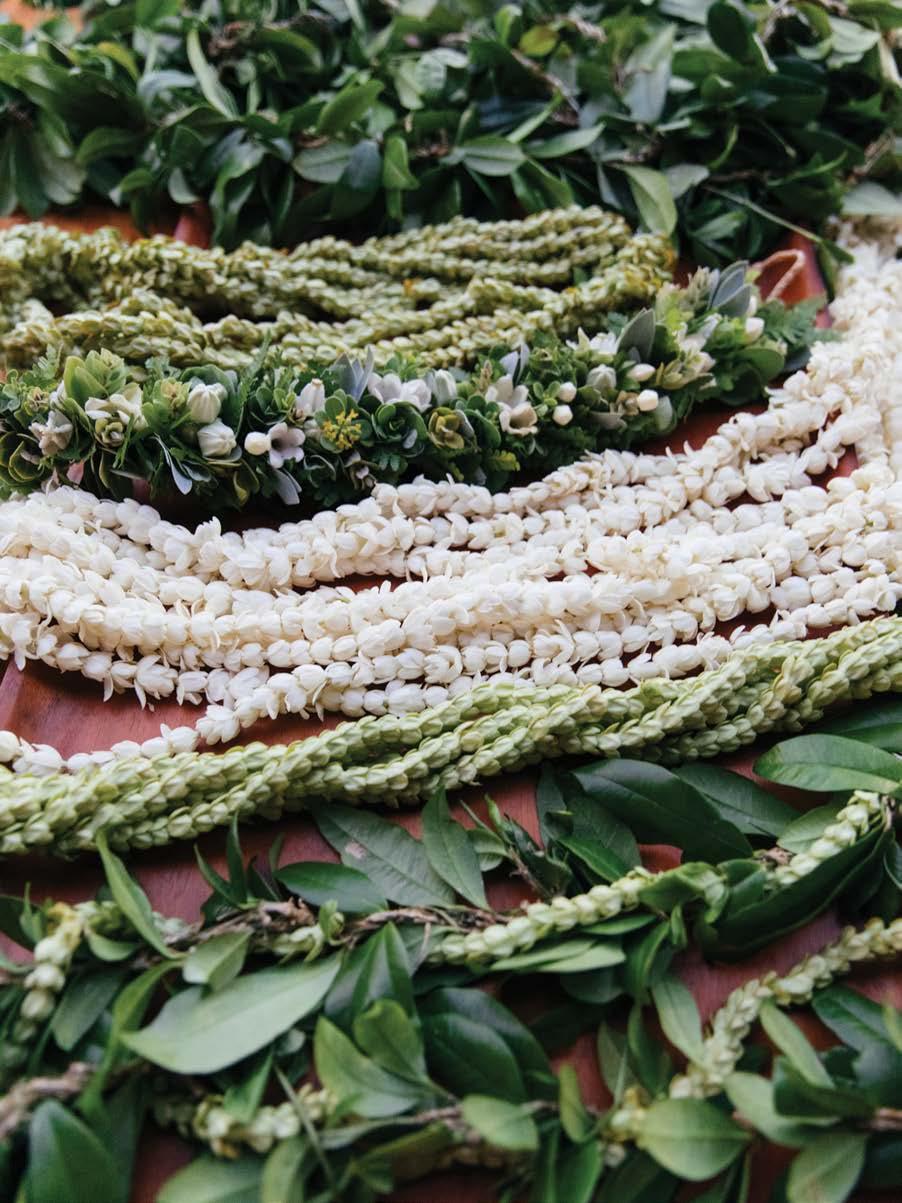
Lei-making is a time-honored tradition in Hawai‘i, brought to the islands over a thousand years ago by Polynesian voyagers. Today, these fragrant floral garlands are synonymous with the islands. Many visitors associate lei with their first moments in Hawai‘i—being draped in plumeria strands after stepping off the plane, receiving a purple orchid lei at their hotel. Yet lei symbolize far more than a warm welcome. In her book, Lei Aloha: Celebrating the Vibrant Flowers and Lei of Hawai‘i, lei maker Meleana Estes writes, “Here in Hawai‘i, lei are more than a gift, a cultural practice, or the flowers: they bring people together, they hold relationships, community, gratitude, and protection.” Lei mark life’s milestones—birthdays, retirements, graduations—and are given in abundance during celebrations or to acknowledge accomplishments.
古くから受け継がれてきたハワイの伝統であるレイ作りは、1000年以 上も前にポリネシアの航海者たちによってもたらされた。今日、香り高 い花々で編まれたレイは、ハワイ諸島を象徴する存在として広く知ら れている。飛行機を降りた際にプルメリアの花を連ねたレイを首にか けてもらったり、宿泊先のホテルで紫色の蘭のレイを受け取ったりと、 ハワイでの最初の思い出がレイと結びついているという旅行者も多 い。だが、レイが象徴するのは温かい歓迎の気持ちだけではない。レイ 制作者のメレアナ・エステスさんは、著書『Lei Aloha: Celebrating the Vibrant Flowers and Lei of Hawai‘i(レイ アロハ:ハワイの 鮮やかな花とレイへの賞賛)』のなかで、「ここハワイでは、レイは単な る贈り物や文化的習慣、あるいは花そのもの以上の存在です。レイは 人と人を結びつけ、人間関係、地域社会、感謝の気持ち、そして守護を 宿しているのです」と述べている。ハワイでは、レイは誕生日、退職、卒 業といった人生の節目を彩り、慶事や功績を称える際に惜しみなく贈 られてきた。
Couples turn to the skilled florists at Halekulani’s flower shop for guidance in selecting their wedding lei.
ハレクラニの花屋には 婚礼用レイ選びの アドバイスを求めて 多くのカップルが訪れる。
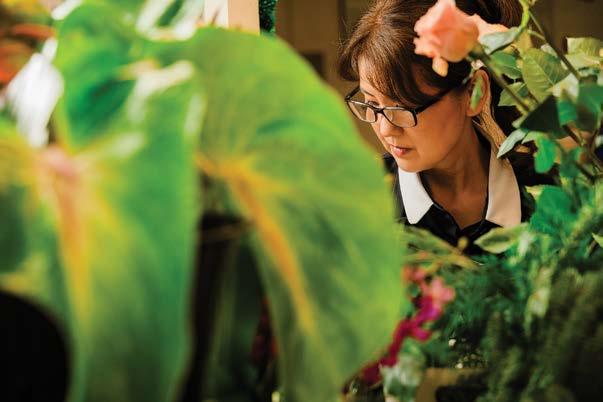
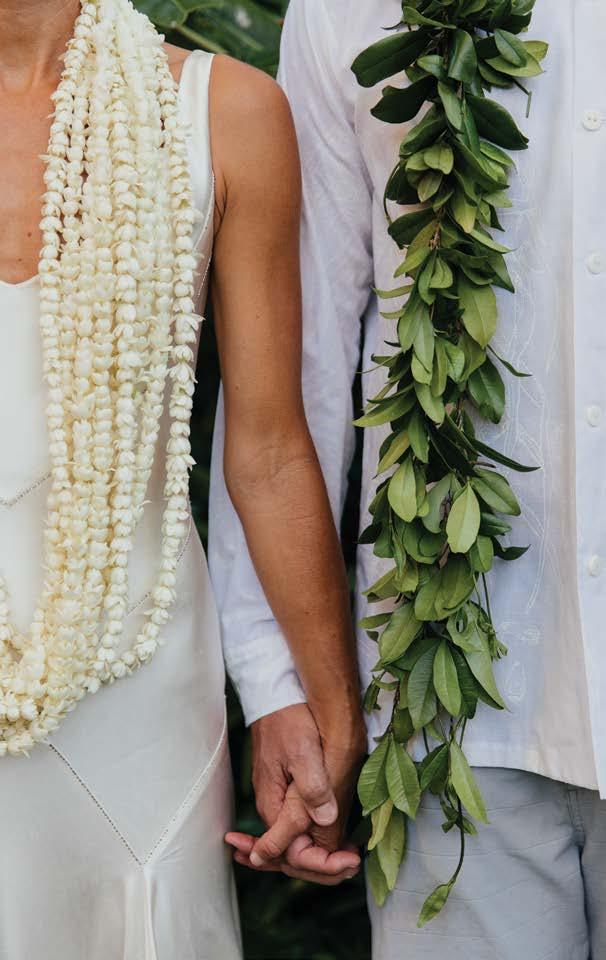
Weddings, in particular, call for a lei chosen with intention and care. During marriage ceremonies in Hawai‘i, couples wear and exchange artfully crafted lei made from prized materials. This practice is not restricted to kama‘āina (locals), and many malihini (visitors) adopt the tradition when getting married in the islands. According to Joseph Reyes, head florist at Halekulani’s on-site flower shop, lei are a part of nearly every wedding at the resort. Couples unfamiliar with the tradition often turn to the shop for guidance in choosing their wedding lei, where recommendations are based on seasonality and aesthetics. While there are no bounds to what defines a wedding lei, texture and fragrance are carefully considered. The most popular choices—maile for grooms and pīkake, pakalana, or ‘ilima for brides—are elegant and aromatic, with roots in both ancient and contemporary Hawaiian tradition. Ahead, a closer look at common wedding lei examines the cultural context that shapes their role in weddings today.
結婚式では、とりわけ想いと心配りを込めて選ばれたレイが欠かせな い。ハワイの婚礼では、カップルは貴重な素材で丁寧に作り上げられ たレイを身に着け、互いに贈り合う慣わしがある。この慣習はカマアイ ナ(地元民)だけのものでなく、ハワイで結婚式を挙げる多くのマリヒニ (訪問者)にも広く親しまれている。ハレクラニ館内のフラワーショッ プで、主任フローリストを務めるジョセフ・レイエスは、ハレクラニで行 われるほぼすべての結婚式でレイが使われると言う。この伝統に馴染 みのないカップルが結婚式用のレイを選ぶ際、季節感や色合いの美し さについてのアドバイスを求める。婚礼用のレイに決まった定義はな いが、質感や香りは大切な要素だ。新郎にはマイレ、新婦にはピカケ、 パカラナ、イリマなどの人気が高い。いずれも上品で芳しい香りが特徴 で、古代から現代に至るハワイの伝統に根ざしている。ここでは、一般 的な婚礼用のレイを取り上げながら、今日の結婚式におけるレイの役 割と文化的背景をひも解いていく。
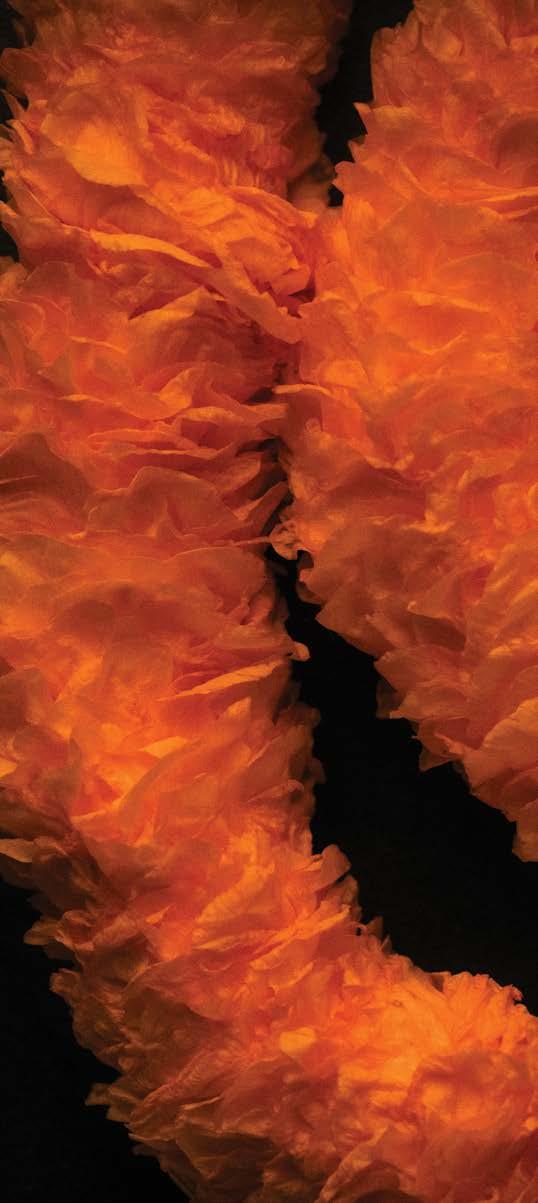
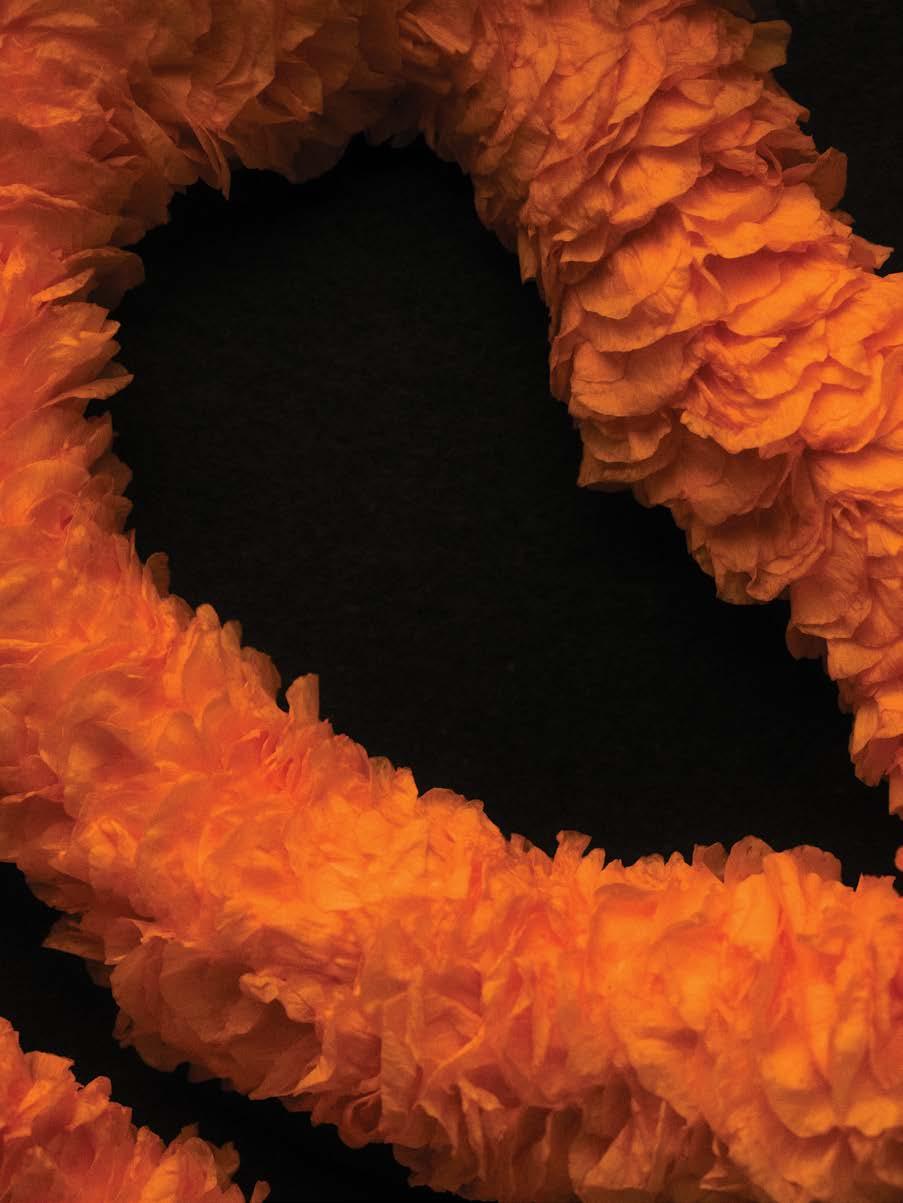
Delicate and paper-thin, ‘ilima flowers range in color from soft gold to deep orange. A single strand can require 500 to 1,000 tissuelike blossoms, making each lei a painstaking labor of love. Once among the most abundant lei flowers and possibly the only flower used for lei-making in pre-contact Hawai‘i, ‘ilima are now a rarer sight than more readily available lei flowers such as pīkake and plumeria. Closely associated with royalty, ‘ilima was often worn in multiple feathery strands by Queen Emma, who favored the flower for its grace and striking colors.
イリマ
繊細で紙のように薄いイリマは、淡い金色から深み のあるオレンジ色まで、さまざまな色合いがある花 だ。1本のレイを作るのに500輪から1000輪もの花を 要するイリマレイは、丹精込めて作られた愛情の結晶 といえる。かつてはレイに使われた最も一般的な花の 一つであり、西洋文化が伝わる以前のハワイでレイ作 りに使われていた唯一の花だったかもしれないといわ れているが、現在ではピカケやプルメリアといった、よ り入手しやすいレイ用の花に比べると、希少な存在と なっている。イリマは王族とのゆかりも深く、その優雅 さと鮮やかな色合いを愛したエマ女王が、羽のように ふんわりとしたレイを幾重にも重ねてよく身につけて いたことで知られている。
Maile
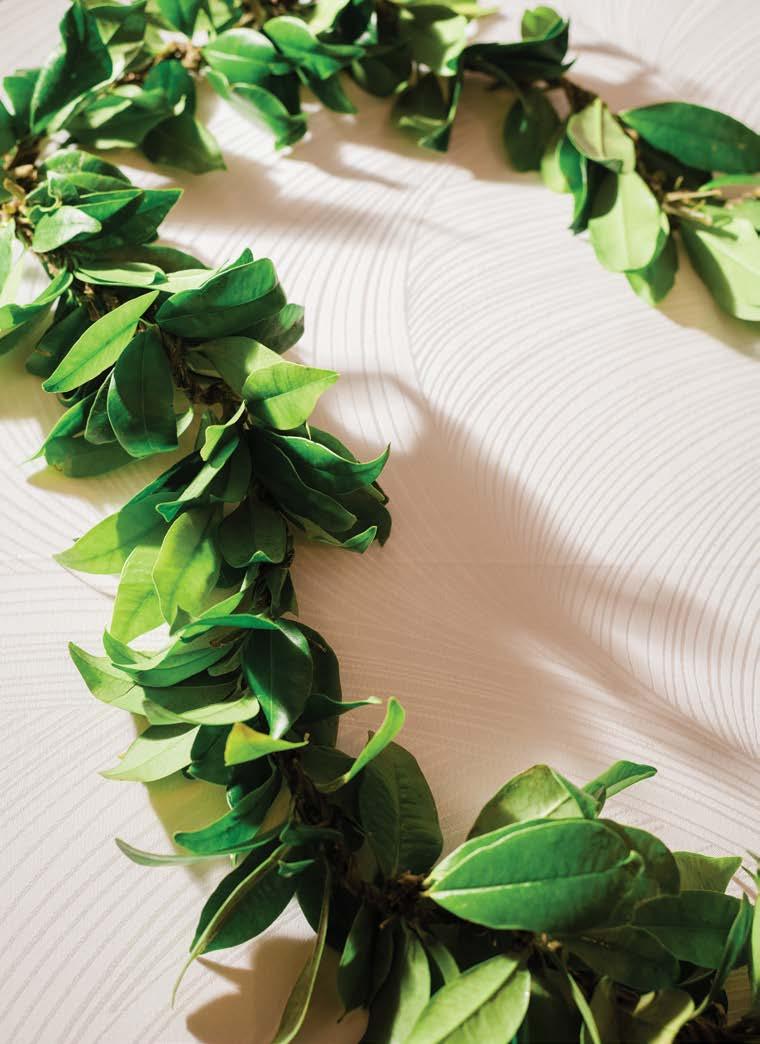
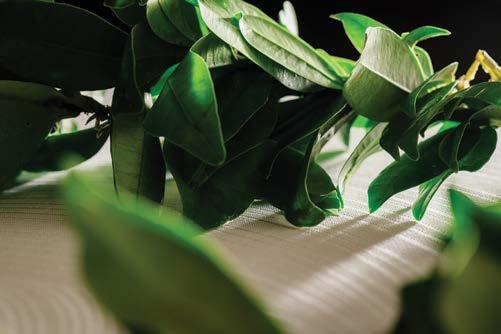
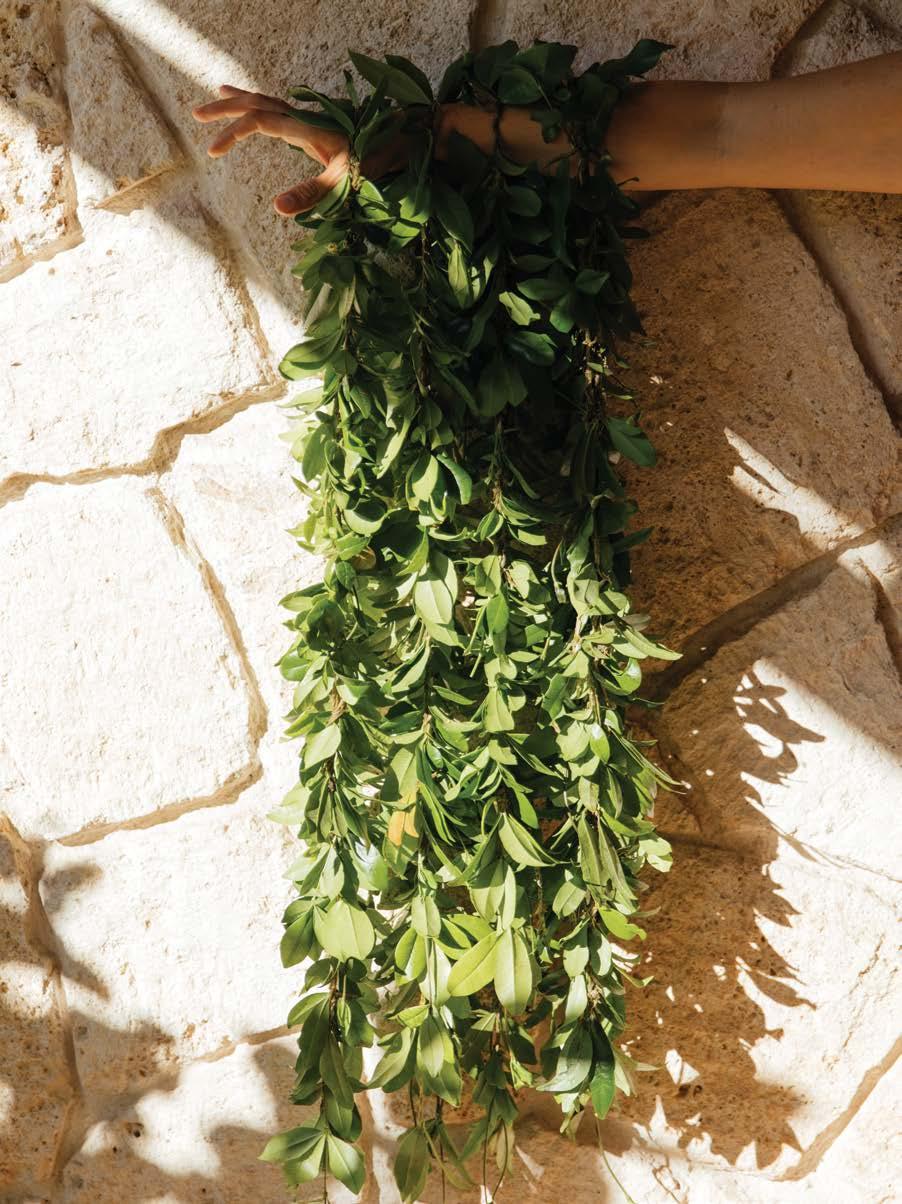
Among the most favored wedding lei for grooms, lei maile is made from fragrant maile vines, twisted together to form a long, regal garland. Prized for its leaf luster and gentle, vanilla-like fragrance, maile has been revered in Hawaiian culture for centuries. Oli (chants) and mele (songs) praise maile for its beauty, and warring chiefs exchanged maile as a peace offering. One of the five kino lau (physical manifestations) of Laka, the goddess of forests and hula, maile carries ceremonial significance. Worn open rather than bound, the lei reflects respect and unity, making maile especially meaningful in weddings.
マイレ
新郎にはマイレのレイの人気が高い。それは、香り高い蔓 を撚り合わせ、長く作った格式ある伝統的なレイだ。艶の ある葉と優しいバニラのような香りで珍重されるマイレ は、ハワイ文化のなかで何世紀ものあいだ尊ばれてきた。 マイレは、オリ(詠唱)やメレ(歌)のなかでもその美しさが 称えられ、争いあう首長たちが平和の証としてマイレを交 換したという。森とフラの女神であるラカの5つのキノラウ (化身)の一つとされるマイレは、ハワイの儀式に欠かせ ない。結んで輪にするのではなく、両端を開いた状態で身 につけるこのレイは、敬意と結びつきを象徴することから、 結婚式において特に重要な意味を持つとされる。
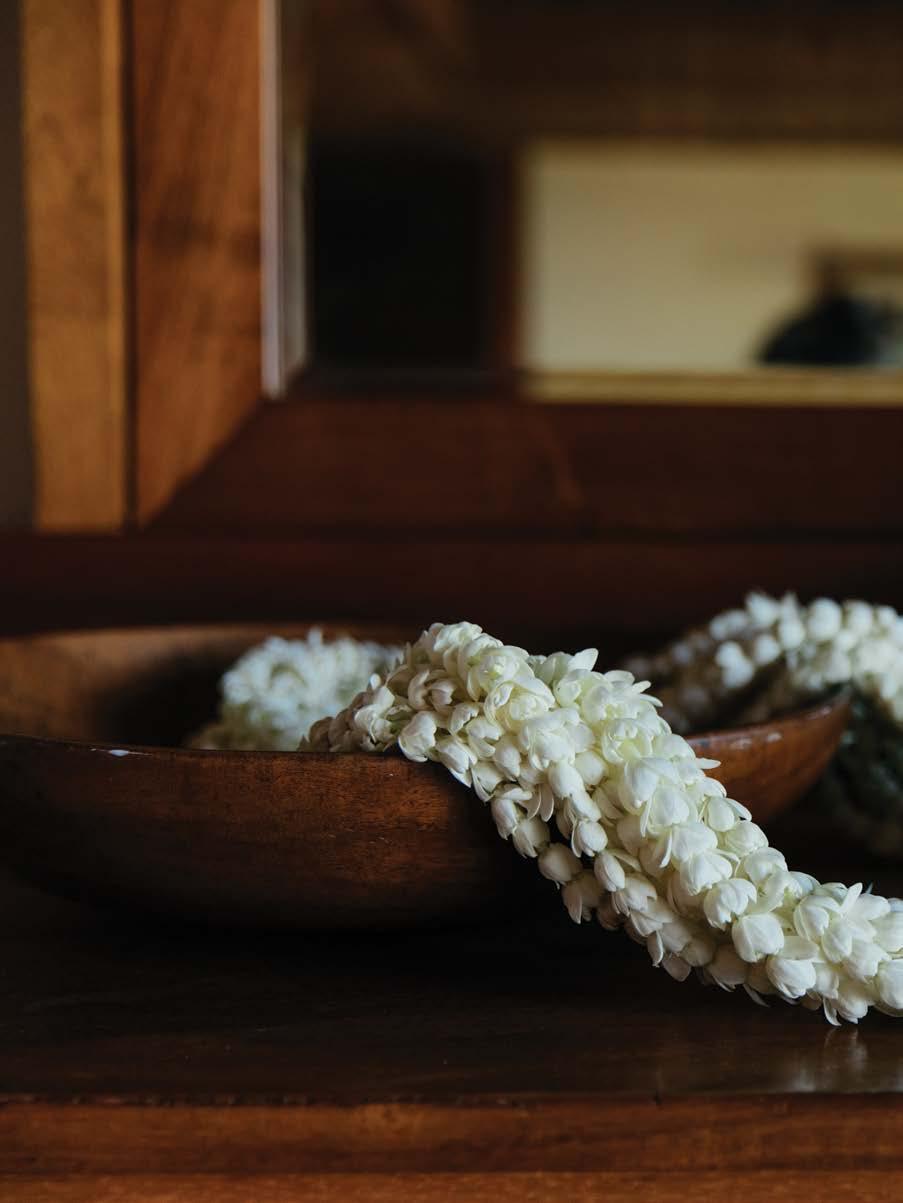
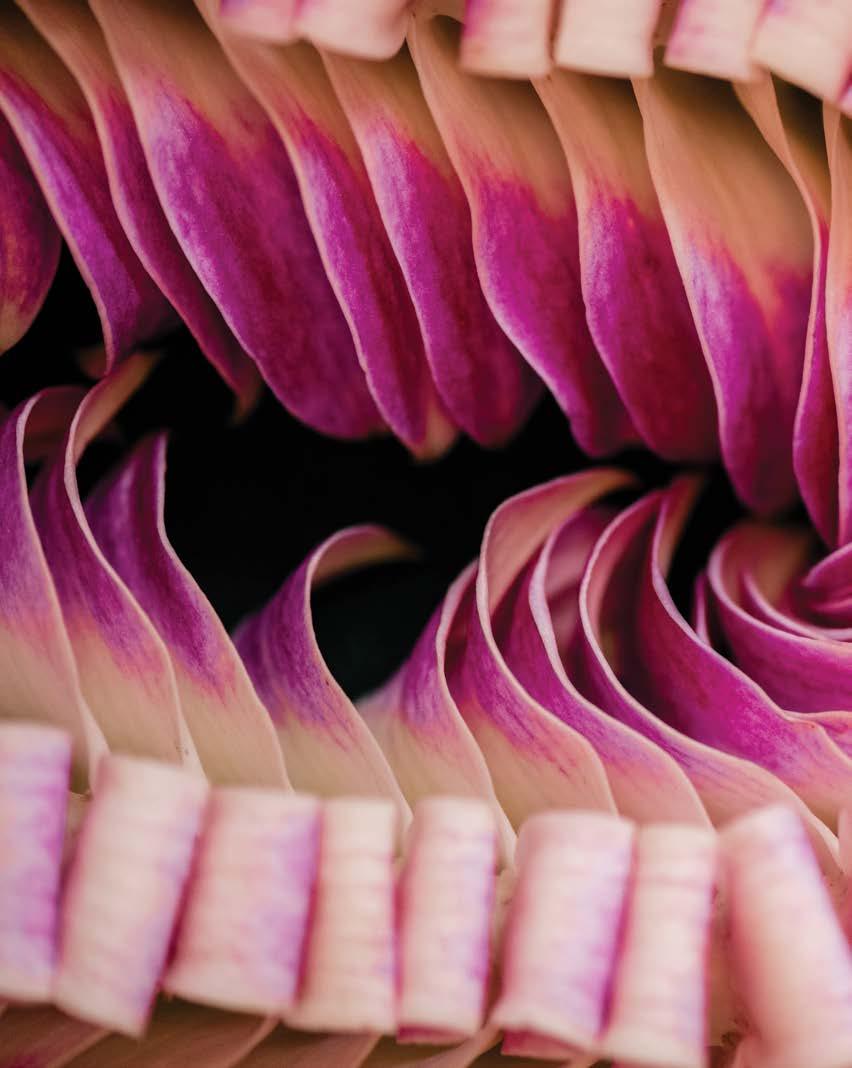
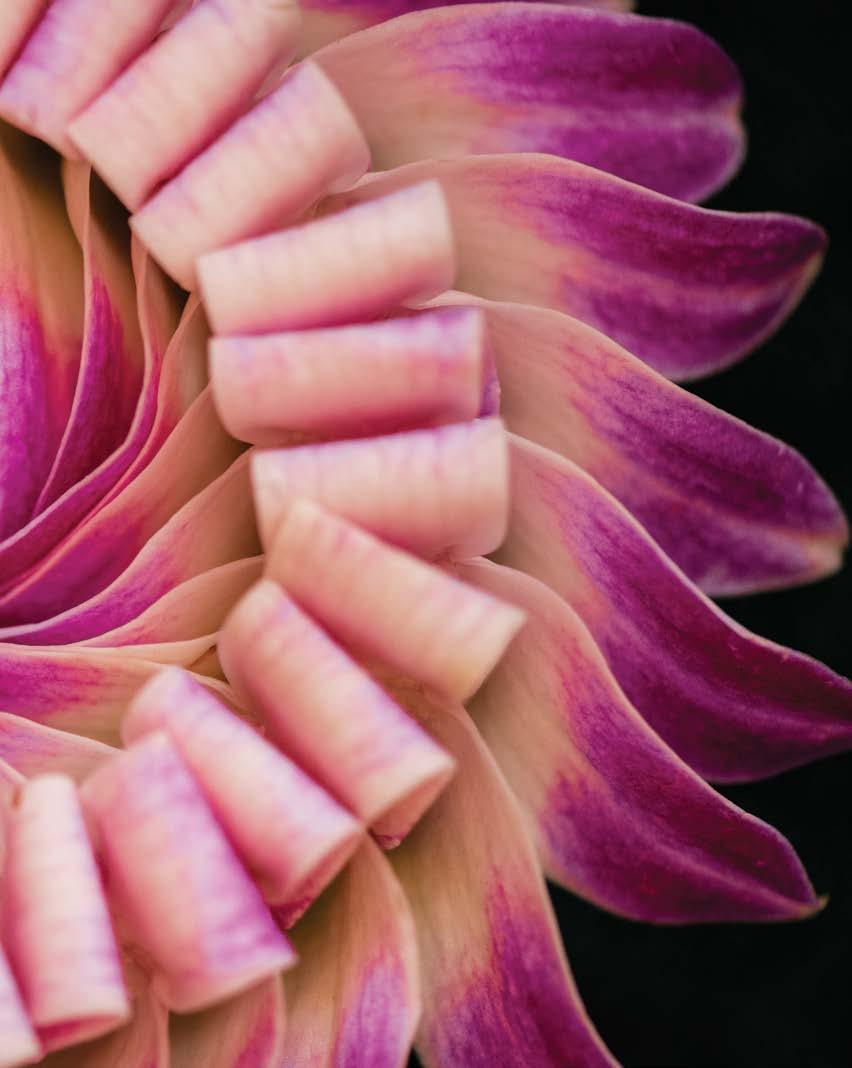
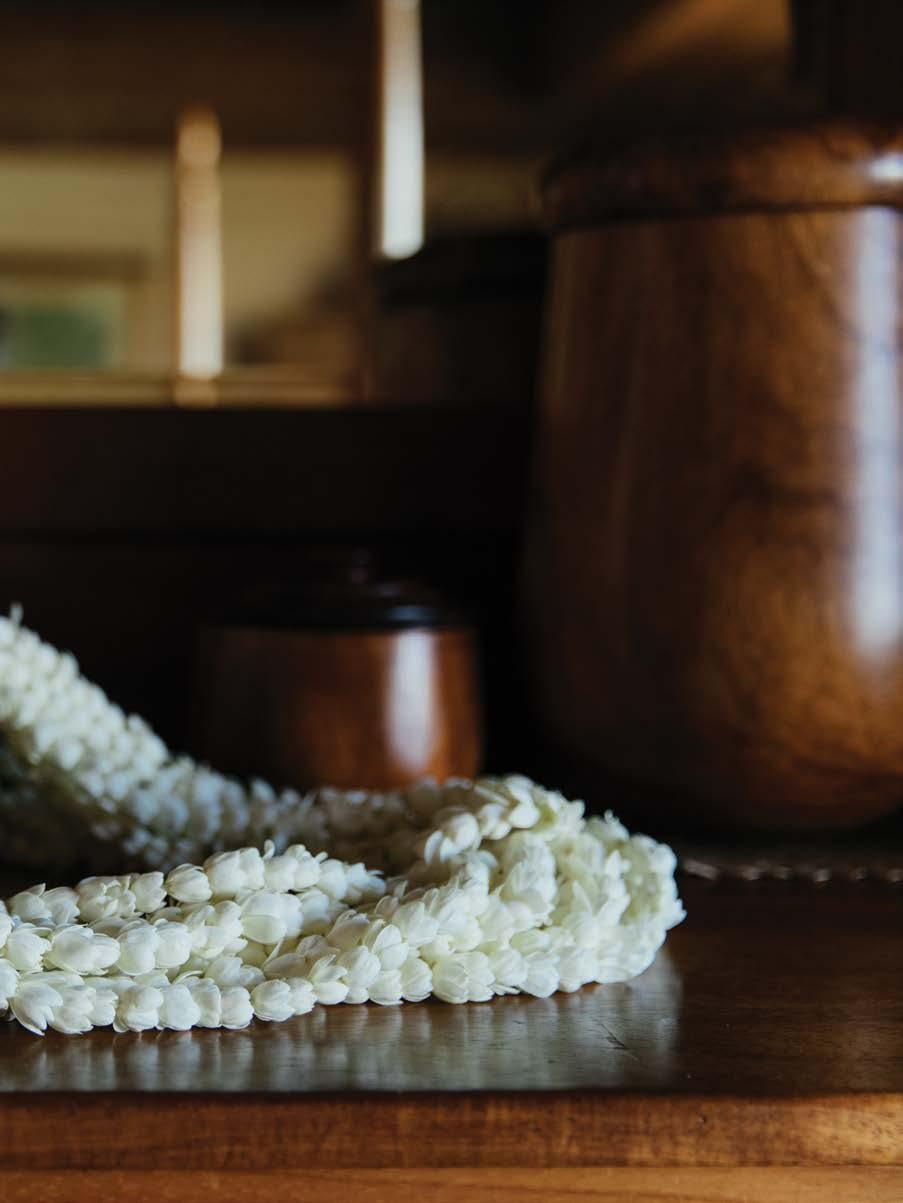
Pearly white pīkake buds are among the most treasured flowers for a wedding lei due to their lovely fragrance. A jasmine variety native to India and not originally from the islands, pīkake still has deep roots in Hawai‘i, introduced by foreign tradesmen in the 1860s. Princess Ka‘iulani became enamored with the fragrant buds and planted them throughout her Waikīkī estate. Her beloved peacocks would lounge in the shade cast by the bushes, and eventually the flower came to be known as pīkake, named after the birds. At weddings, brides are often bedecked in multiple thick strands of lei pīkake.
ピカケ
真珠のように白いピカケのつぼみは、その上品な芳香 から、婚礼用のレイに使われる花の中でも特に貴重な ものとされている。もともとはインド原産のジャスミンの 一種で、ハワイ固有の植物ではないものの、1860年代 に外国の貿易商人によってもたらされて以来、ハワイに 深く根付いてきた。優美な香りのつぼみに魅了されたカ イウラニ王女は、ワイキキの邸宅に何本もの木を植えた と伝えられている。王女の愛する孔雀たちがその茂みの 木陰で羽を休める姿にちなんで、やがてこの花は「ピカケ (ハワイ語で孔雀の意)」と呼ばれるようになった。ハワ イの結婚式では、花嫁は幾重にも重ねたピカケのレイ を身につける。
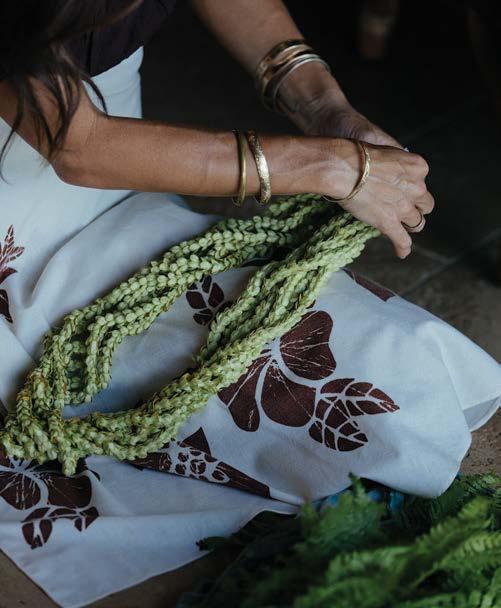
Pakalana
Pakalana’s yellow-green blossoms are prized for their heady, citrusy scent. Like pīkake, pakalana was introduced to the islands from Asia and, over time, became integrated in Hawaiian lei culture. These small, elegant flowers can be strung into multiple strands and twisted together to form a fuller lei. Pakalana blooms seasonally, typically available from April through September. In contemporary Hawai‘i, pakalana is commonly reserved for weddings and other special occasions that emphasize fragrance and sophistication.
パカラナ
黄緑色のパカラナの花は、柑橘を思わせる芳醇な香りで 珍重されている。ピカケと同様、アジアからハワイに持ち込 まれ、時を経てハワイのレイ文化の中に溶け込んだ。小さ く優美なパカラナの花は、いくつもの連に編み上げ、それ らを撚り合わせることで、より存在感のあるレイに仕上げ ることができる。パカラナの開花時期は限られていて、通 常4月から9月にかけて出回る。現代のハワイでは、パカラ ナは香りや洗練さが重視される結婚式や特別な場におい て用いられることが多い。
TEXT BY LINDSEY VANDAL
IMAGES BY JOHN HOOK
文=リンジー・ヴァンダル
写真=ジョン・フック
PIECE
心のかけら
OF MIND
TRANSLATION BY MUTSUMI MATSUNOBU
A welder forges a second career out of his passion for mid-centurymodern furniture.
ミッドセンチュリーモダン家具への情熱から、元溶接工が見つけた第二のキャリア
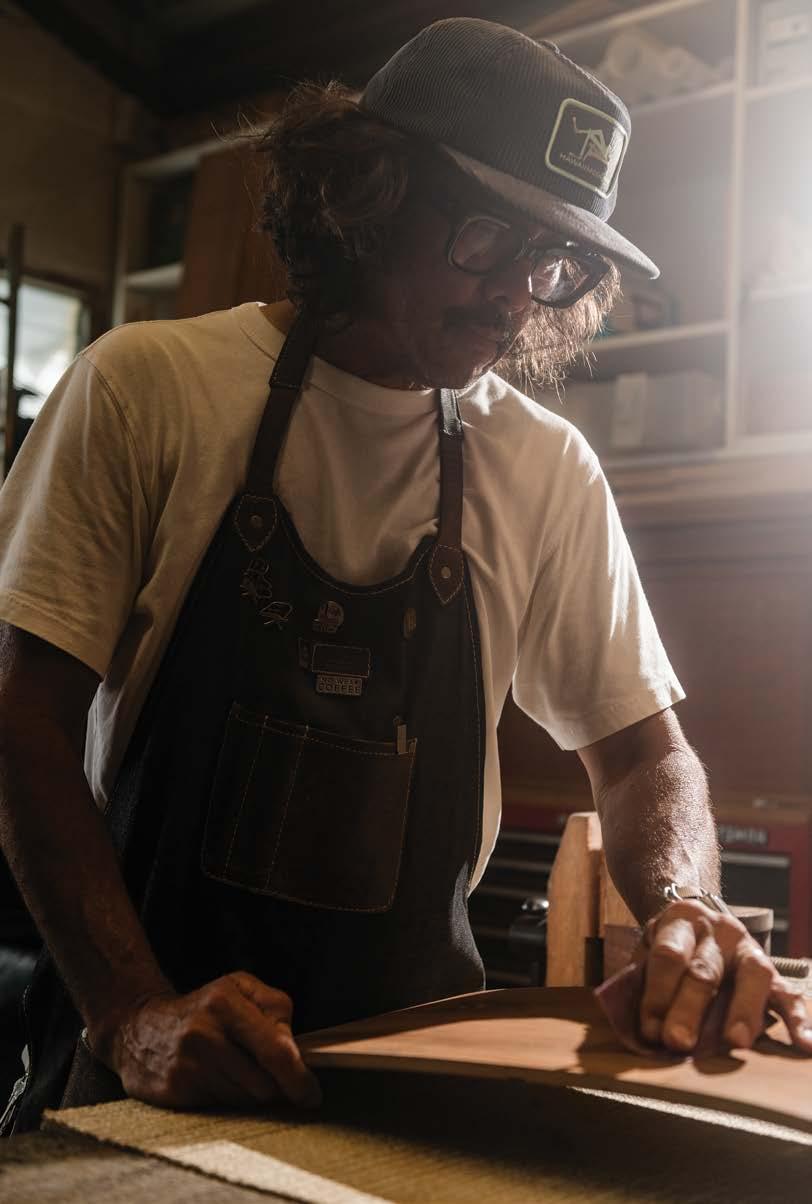
Growing up in Los Angeles in survival mode, without a real sense of stability, John Reyno developed a habit of extreme resourcefulness. He took easily to tools, and he enjoyed breaking down and rebuilding things to figure out how they worked. Steadfast self-reliance and a love of good design, whether in the form of a well-made pair of pants or elegant architecture, would come to shape his destiny as a curator of mid20th-century furniture.
In high school, Reyno favored metal shop and started working for a welding company his senior year. He took two days off after graduation—“the shortest summer break in history,” he laments— before committing the next 23 years, six days a week, to a full-time welding career. Reyno and his twin brother, Jeffrey, had been running Hitch Crafters in Orange County, a successful business designing custom trailer hitches, for more than a decade when he made the decision to hang up his torch in 2006, at age 40. “I was totally burned out,” he recalls. “I had seen a photo of this gorgeous Hawai‘i beach in a kitesurfing magazine years ago, and that was always in the back of my mind.” Reyno packed a shipping container full of household items and his burgeoning collection of mid-century-modern furniture and moved into a house near Kailua Beach on O‘ahu—the same stretch of coast from the picture.
Newly retired, Reyno devoted his time to kitesurfing and went full throttle on his hobby of tracking down mid-century-modern furniture, art, and decor. Finding a surprising number of pieces around the island, he quickly realized he had landed in a hotspot for his passion project. “Hawai‘i grew up in the ’50s and ’60s, when the airlines were bringing in all these jet-setters who moved here and happened to bring their furniture along,” he
ロサンゼルスで安定した生活とはほど遠い過酷な環境で育ったジョ ン・レイノ氏は、何ごとにも極端なまでに工夫を凝らす習慣を身につけ ていた。道具の扱いに長けていた氏は、物を分解して組み立て直して は、その仕組みを理解するのが楽しくてしかたなかった。それが仕立て の良いズボンであろうと、優雅な建築物であろうと、氏のたぐいまれな 自立心と良質なデザインへの愛は、やがて氏をミッドセンチュリー家 具のキュレーターという運命へと導いていった。
高校時代のレイノ氏は金属加工の授業が好きで、高校生活最後 の年になると溶接会社で働き始めた。卒業式のあと、たった2日間だけ 休みを取った。「史上最短の夏休みだったよ」と苦笑する氏は、そこか ら23年間、フルタイムの溶接工として週6日働き続けた。レイノ氏と双 子の兄弟のジェフリー氏は、カスタム製のトレーラー牽引装置を手が ける事業「ヒッチクラフターズ」を、オレンジ郡で10年以上も切り盛り し、成功していた。だがレイノ氏は40歳の節目となる2006年に、この 事業から身を引いた。「本当に疲れ果てていたんだよ」と彼は振り返る。 「何年も前に、カイトサーフィンの雑誌でハワイのとても美しいビーチ の写真を見て、それがずっと頭の片隅にあったんだ」。生活用品と少し ずつ集めたミッドセンチュリーモダンの家具をコンテナにぎっしり詰 めると、レイノ氏はオアフ島のカイルアビーチ近くの家に引っ越した。 それは雑誌で見たあのビーチと同じ海岸沿いの場所だった。 引退したばかりのレイノ氏は、カイトサーフィンに打ち込むかた わら、ミッドセンチュリーモダンの家具や美術品、インテリア雑貨の収 集に没頭した。島内のあちこちで思いがけずたくさんの逸品を見つけ たレイノ氏は、すぐにここハワイが、自分の情熱を注ぐ趣味を極めるた めに絶好の場所だと悟る。「ハワイは1950〜1960年代に発展を遂 げました。当時、飛行機でやってきた多くのジェット族がハワイに引っ 越してきて、一緒に家具も持ち込んだのです」と氏は説明する。
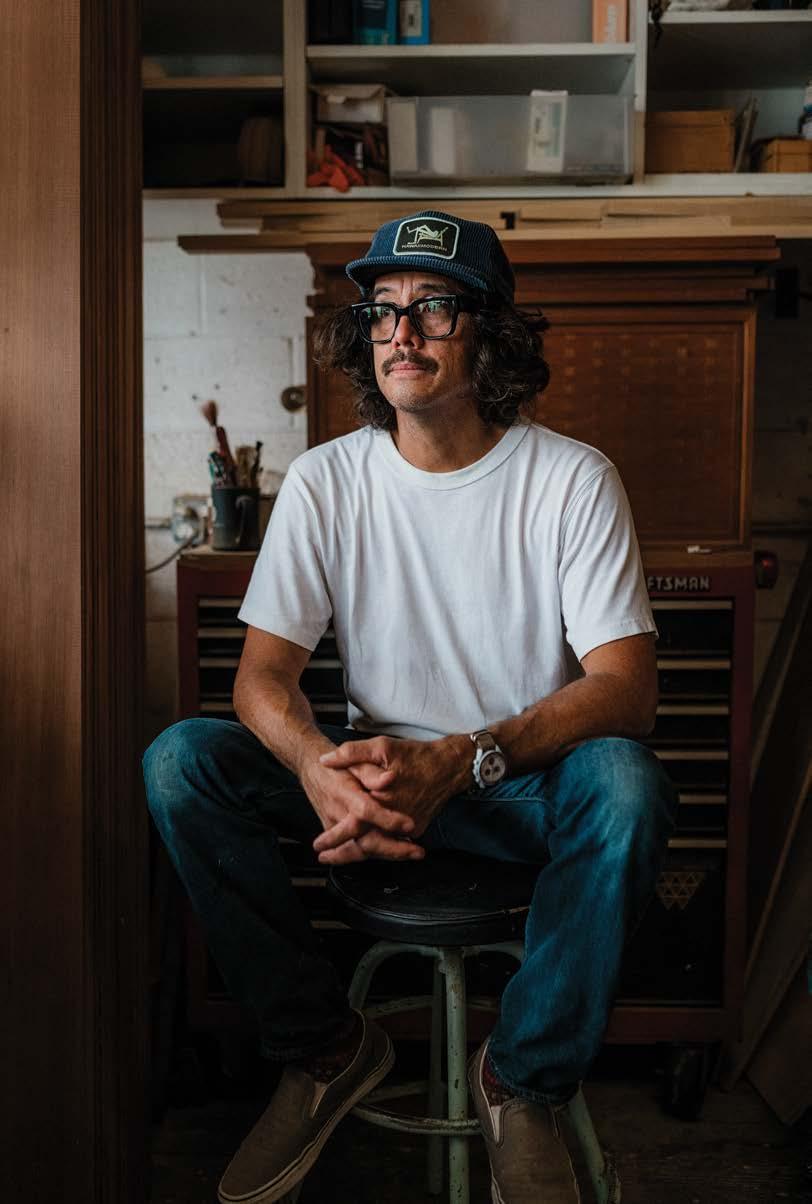
Reyno works out of a shop in Kaka‘ako (pictured here) and a showroom in Kailua.
カカアコの工房(写真)とカイル
アのショールームがレイノ氏の 活動拠点。
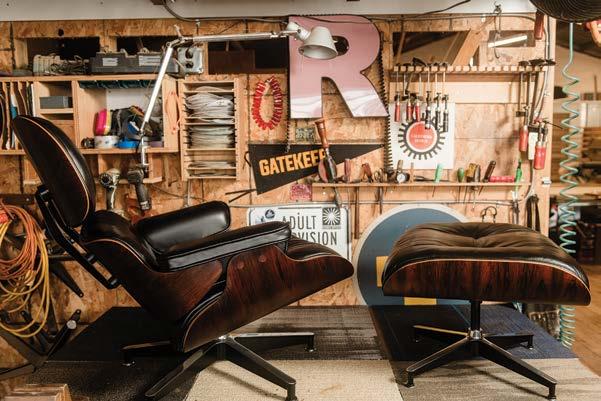
remarks. The distinctive style, with its shapely lines and minimalist forms, established a new paradigm of intelligent, efficient design. Produced from the 1940s through the late 1960s, the sleek, often playful pieces of the time reflected an industry shift toward human-centered design. As mid-century architects crossed over into furniture design, artful interiors that celebrated both form and function became emblematic of the era.
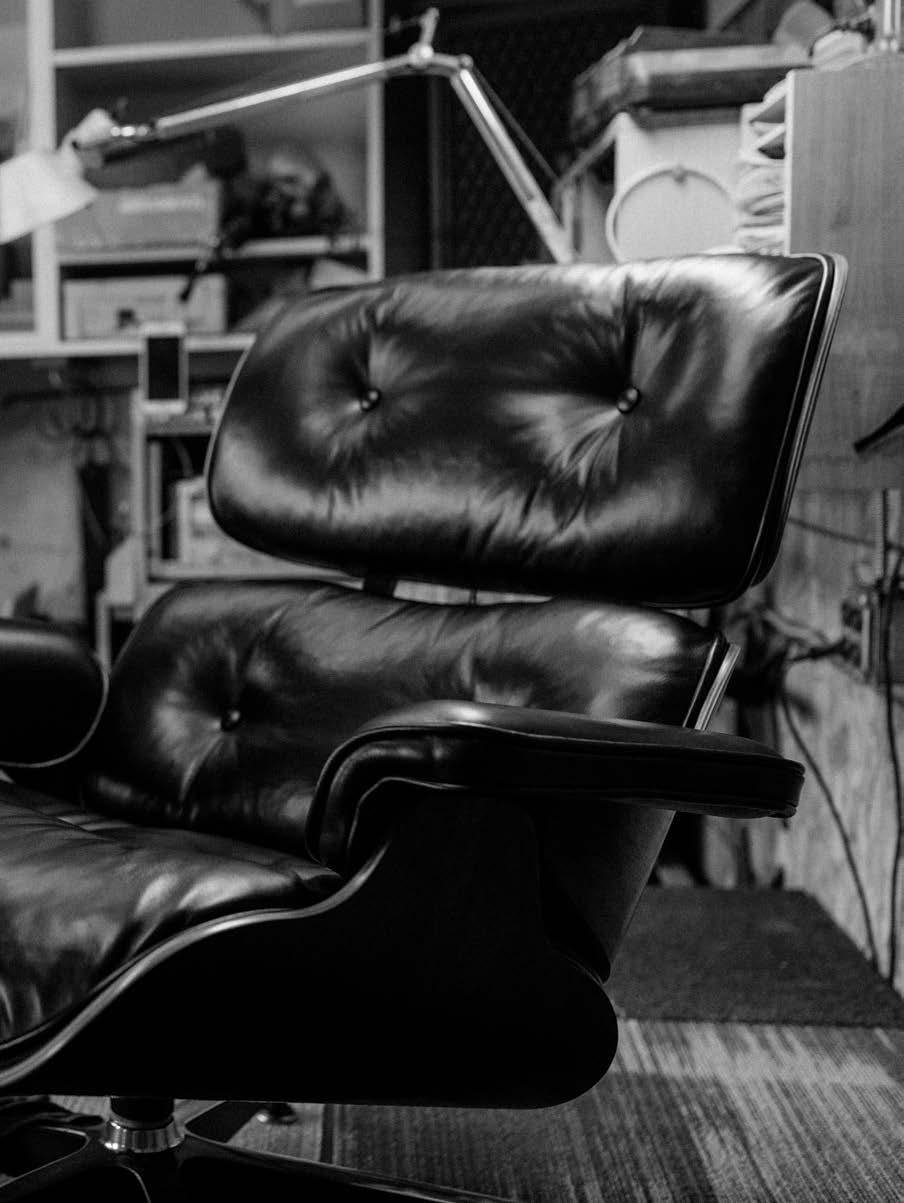
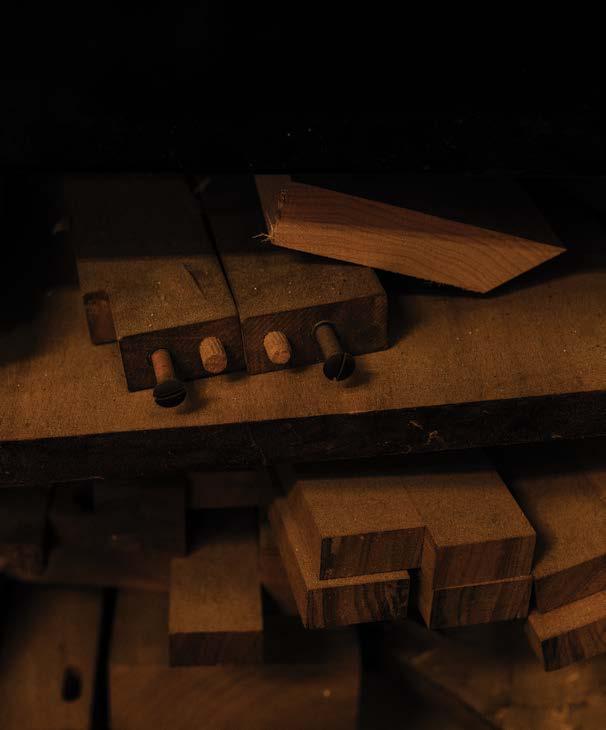
Reyno was drawn to designs from Danish craftsman Niels Otto Møller, architect-designer couple Charles and Ray Eames (best known for their iconic Eames chairs), and architect Walter Lamb, famous for his outdoor furniture line that incorporated metal alloy salvaged from sunken U.S. Navy ships at Pearl Harbor. Decades of exposure to the island’s tropical elements meant most of his finds needed major overhauls, but such specialized repair work was hard to come by. So Reyno began
優美な曲線と無駄のないフォルムが特徴的なデザインは、知的で機能 美を兼ね備えた新しい美意識を生み出した。1940〜1960年代後半 にかけて製造され、洗練された、ときに遊び心のある家具は、人間を主 軸とするデザインへと向かっていた時代の流れを映し出している。ミッ ドセンチュリー期の建築家たちが家具デザインにも携わるようになる と、フォルムと機能性を兼ね備えた芸術的な室内空間が、この時代の 象徴となったのである。
レイノ氏は、デンマークの家具職人ニルス・オットー・モラー、有 名なイームズチェアで知られる建築家兼デザイナーのチャールズ&レ イ・イームズ夫妻、そして真珠湾に沈んだ米海軍の軍艦から回収され た金属合金を取り入れた屋外用家具シリーズで名高い建築家ウォル ター・ラムのデザインに魅了された。何年にもわたって島の強い日差し や湿気にさらされていたため、彼が見つけた家具はどれも大がかりな 修復が必要だった。しかし、専門的な修理作業を依頼できるところは ほとんど見つからなかった。そこで、レイノ氏は、自宅ガレージで修復 作業に取り組み、一部を自分用に保管すると、残りは二束三文で売却 していったという。
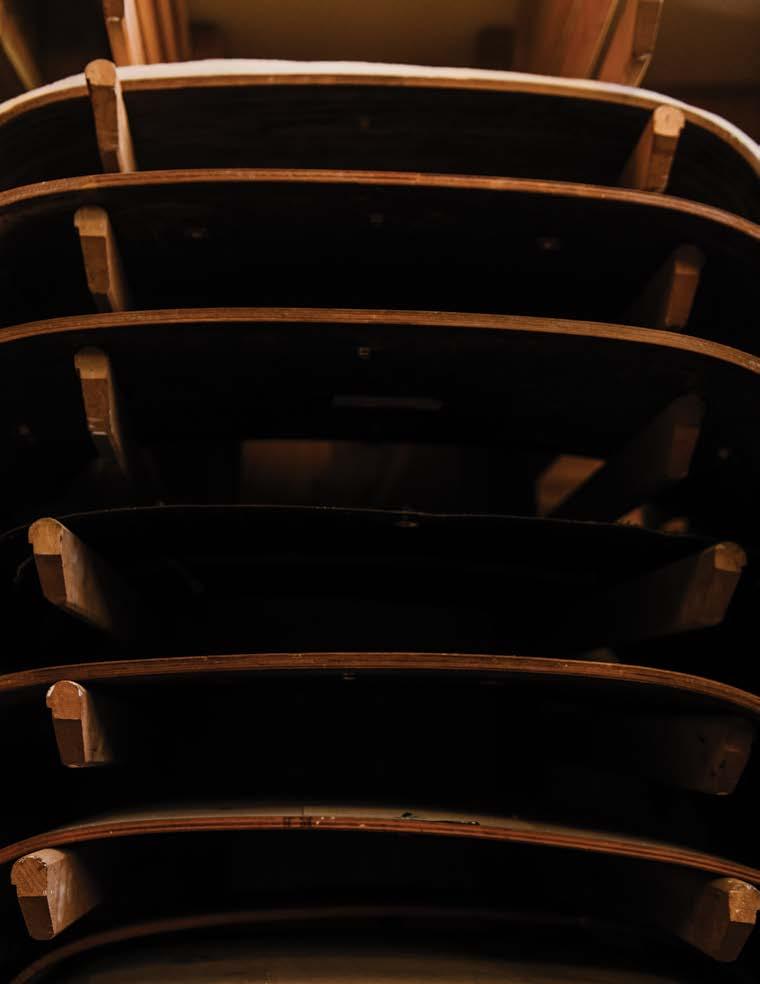
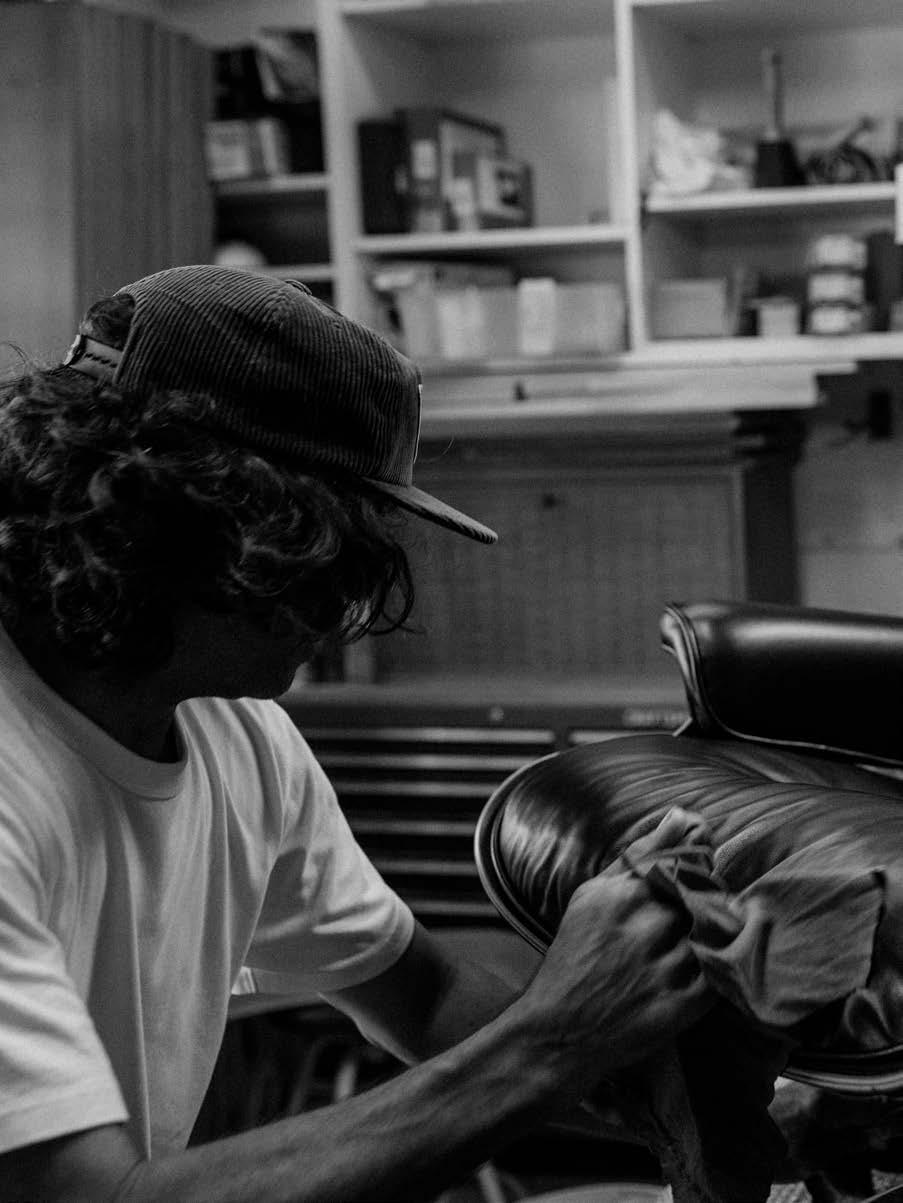
When his vintage finds required specialized repair, Reyno learned to restore them on his own.
“Once you start putting those little feathers in your cap, they start to multiply, until you have a whole quiver of tools.”
—John Reyno, craftsman 「小さな羽根をひとつ帽子に差すと、それがいつの間にかどんどん増えて、気づけば道具でいっぱいの 矢筒になっているんだよ」– ジョン·レイノ氏、職人
tackling restoration projects in his garage—keeping some for himself and selling the rest for pennies on the dollar.
With no playbook to follow, each weathered object presented a peculiar puzzle, an invitation for Reyno to apply the dogged trial-and-error problem-solving of his welding days. He might be elbow-deep in metalwork one day and sanding and stripping wood the next, or collaborating with other craftsmen in efforts to preserve original veneer. For especially tricky tasks, he’d call upon experts in leatherwork, stained glass, or upholstery, peering over their shoulders to expand his skillset. “Once you start putting those little feathers in your cap, they start to multiply, until you have a whole quiver of tools,” he adds.
As his painstaking efforts drew interest from fellow enthusiasts of mid-century-modern design, Reyno’s hobby quickly morphed into a legitimate buy, restore, and sell operation. Following a series of successful pop-up shops, Reyno registered the business as Hawaii Modern in 2017. Today, he works out of a shop in the Kaka‘ako area of Honolulu and showcases his treasures in the Kailua showroom he shares with his wife, Kristen, the designer behind local art and accessory brand Lola Pilar Hawai‘i.
On Reyno’s Instagram, @hawaii_modern, followers can view time-lapse videos of items in various stages of restoration and glean insights into his technical and creative process. In one post, Reyno is shown demolishing the warped Honduran mahogany top of a 1940s Walter Lamb bronze table, explaining that using woodworking joints known as tenons—never glue—on the newly fabricated teak top allows the table to be easily disassembled for future refinishing. Sometimes he uses the platform to divulge bits of history behind certain acquisitions—like the set of 1967 candy-shaped Pastil chairs from Finnish designer Eero Aarnio that “lived their life on a covered lanai overlooking the Pacific,” or the 1955 cushioned Walter Lamb lounge chair that once graced the Honolulu airport.
手本となる説明書もなく、風雨にさらされた家具は、ひとつひと つがまるで違ったパズルのようだった。レイノ氏にとっては、溶接工時 代に培った、試行錯誤しながら粘り強く問題を解決していく能力を発 揮する良い機会となった。ある日は金属加工に、また別の日は木材の 研磨や塗装剥がしに没頭したかと思えば、オリジナルの化粧板を生か すために他の職人と協力することもあった。特に難しい作業に直面し たときは、皮革加工やステンドグラス、椅子張りなどの専門家に頼ん で、彼らの作業を間近で見ながら自分の技術を磨いていった。「小さな 成功を積み重ねていくうちに、それらがどんどん蓄積されていって、や がて必要な技術をひととおり身につけることができたんですよ」と氏は 付け加える。
骨身を惜しまない氏の努力の結晶がミッドセンチュリーモダン デザインの愛好家たちの注目を集めるにつれ、レイノ氏の趣味はやが て、買い付け、修復、販売という本格的な事業へと急速に発展していっ た。期間限定ショップでの成功を重ねたレイノ氏は、2017年には「ハ ワイ モダン」として正式に事業を立ち上げた。いまでは、氏はホノルル のカカアコ地区に工房を構え、地元のアートとアクセサリーのブランド 「ローラ ピラー ハワイ」のデザイナーである妻のクリステン氏と共同 経営するカイルアのショールームで、収集した家具の数々を展示販売 している。
レイノ氏のインスタグラムアカウント(@hawaii_modern)で は、修復作業の様子を低速度撮影したタイムラプス動画で紹介してお り、氏の技術的かつ創造的なプロセスについての洞察を垣間見ること ができる。ある投稿では、氏がウォルター・ラムの1940年代のブロン ズ製テーブルから、歪んだホンジュラス産マホガニーの天板を取り外 す様子が映し出されている。新しく製作したチーク材の天板は、将来い つか再仕上げをする際に簡単に分解できるように接着剤ではなく、ほ ぞ継ぎと呼ばれる木工接合技術を使ったと説明する。ほかにも、氏は 収集品にまつわる歴史の一端を投稿で共有することがある。たとえば、 フィンランド人デザイナー、エーロ・アールニオの1967年製のキャン ディ型パステルチェアのセットは、「かつて太平洋を見渡す屋根付きの ラナイで使われていた」もの。1955年製のクッション付きウォルター・ ラムのラウンジチェアは、ホノルル空港で使われていたという。
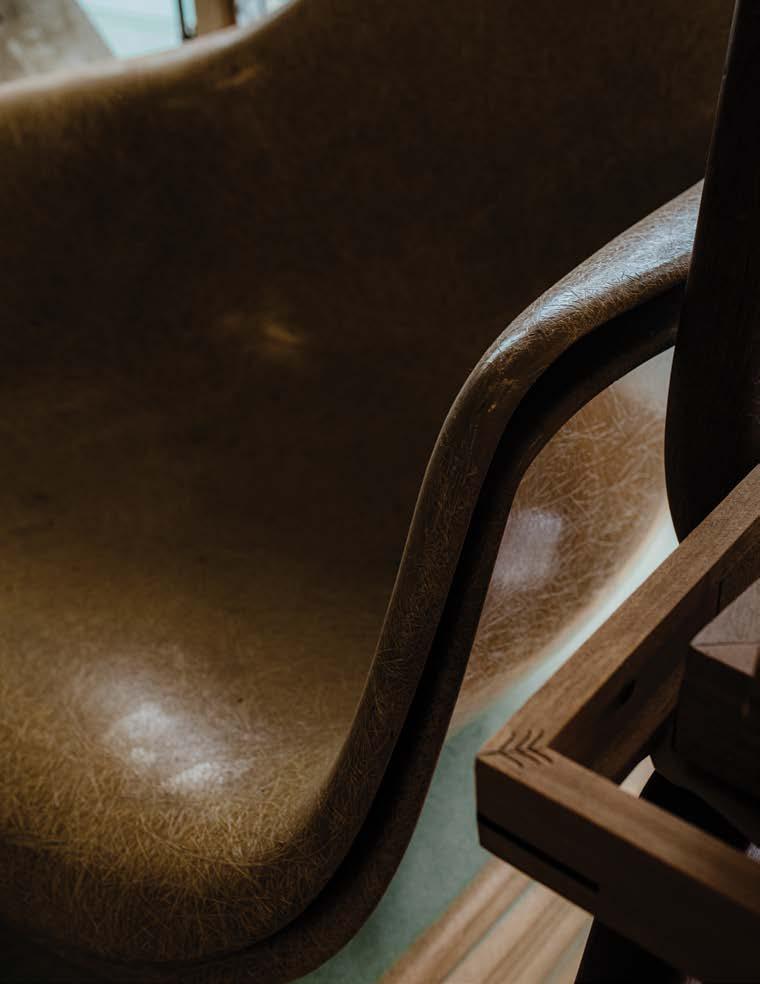
Simplicity and functionality are distinctive characteristics of mid-century-modern design.
Reyno’s Instagram account, @hawaii_modern, offers a glimpse into his process.
レイノ氏のインスタグラムアカ ウント(@hawaii_modern)
では氏の制作過程を垣間見 ることができる。
In an Instagram post from July 2025, Reyno can be seen weaving the paper-cord seat of a Niels Møller Model 78 dining chair as he recalls the time the designer’s granddaughter, Kirsten Møller, asked him to do a live weaving demonstration and address the crowd at a 2008 family birthday party. Apropos of his all-in attitude, the caption reads, “Whenever I say yes to the things that make my stomach turn and keep me up at night, I end up having the best memories and learn so much.”
2025年7月のインスタグラムの投稿では、レイノ氏がニルス・モ ラーのモデル78ダイニングチェアの紙紐製座面を編む様子が紹介さ れている。その投稿の中で氏は、デザイナーの孫娘であるキルステン・ モラーが、2008年の家族の誕生日パーティーで氏に編み方を実演で 披露し、集まった人々に説明をしてほしいと頼んできたことを回想して いる。何事にも全力で取り組む氏らしく、そのキャプションには「胃が痛 くなったり、夜も眠れなくなったりするようなことでも、『イエス』と答え るたびに、最高の思い出ができ、たくさんのことを学ぶことができるの です」と書かれている。
TEXT BY LAUREN MCNALLY
IMAGES BY LORENA GHEORGHE AND COURTESY OF HALEKULANI
文=ローレン・マクナリー
写真=ロレーナ・ゲオルゲ、 ハレクラニ提供
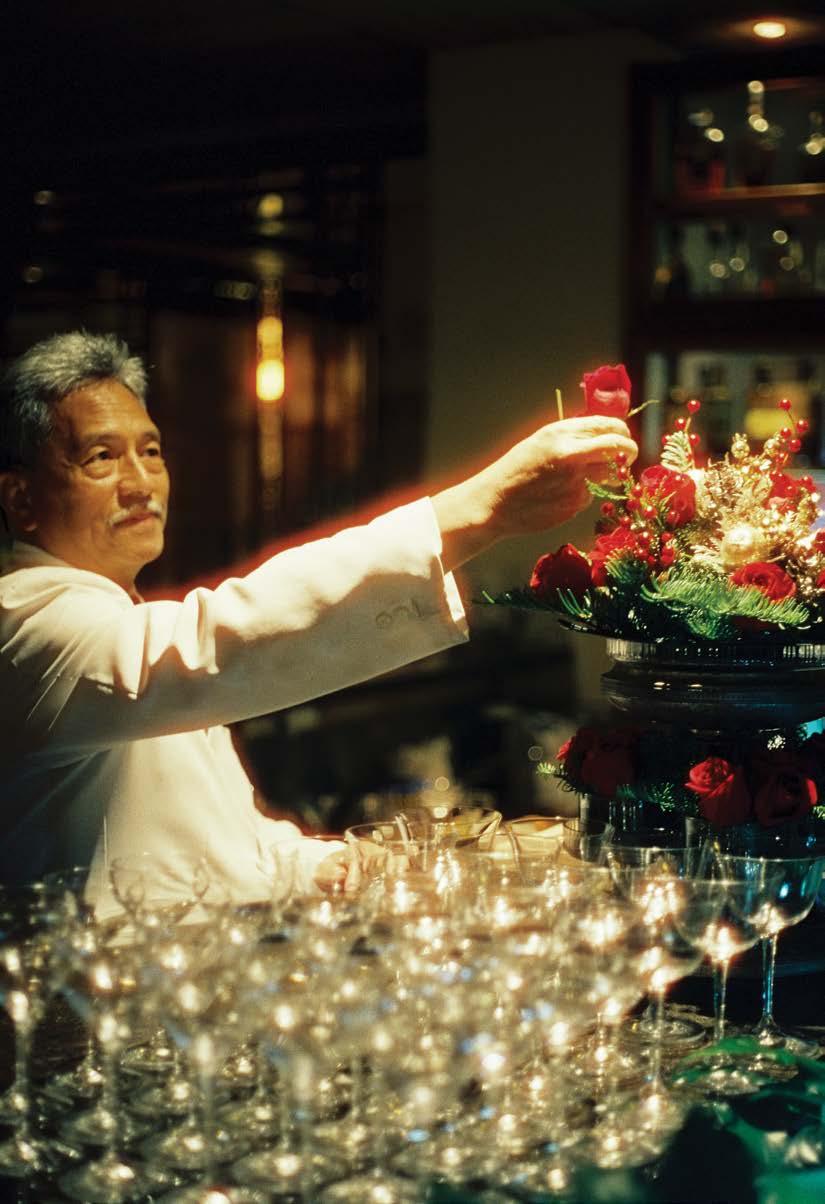
L’Aperitif’s head bartender has been with Halekulani since its reopening more than 40 years ago.
ラペリティフのヘッドバーテン ダーは、ホテル再オープン以 来、40年以上にわたりハレク
ラニの一員として歩みを重ね てきた。
WHERE TIME STANDS STILL
TRANSLATION BY AKIKO SHIMA
時がゆるやかに流れる場所 訳=島有希子
At L’Aperitif, the prelude to dinner is a destination all its own.
ラペリティフ─食前に始まる、もうひとつの旅
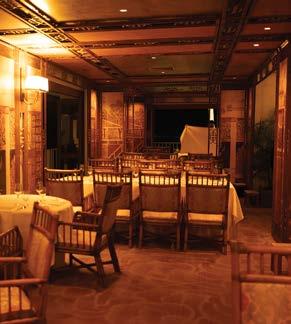
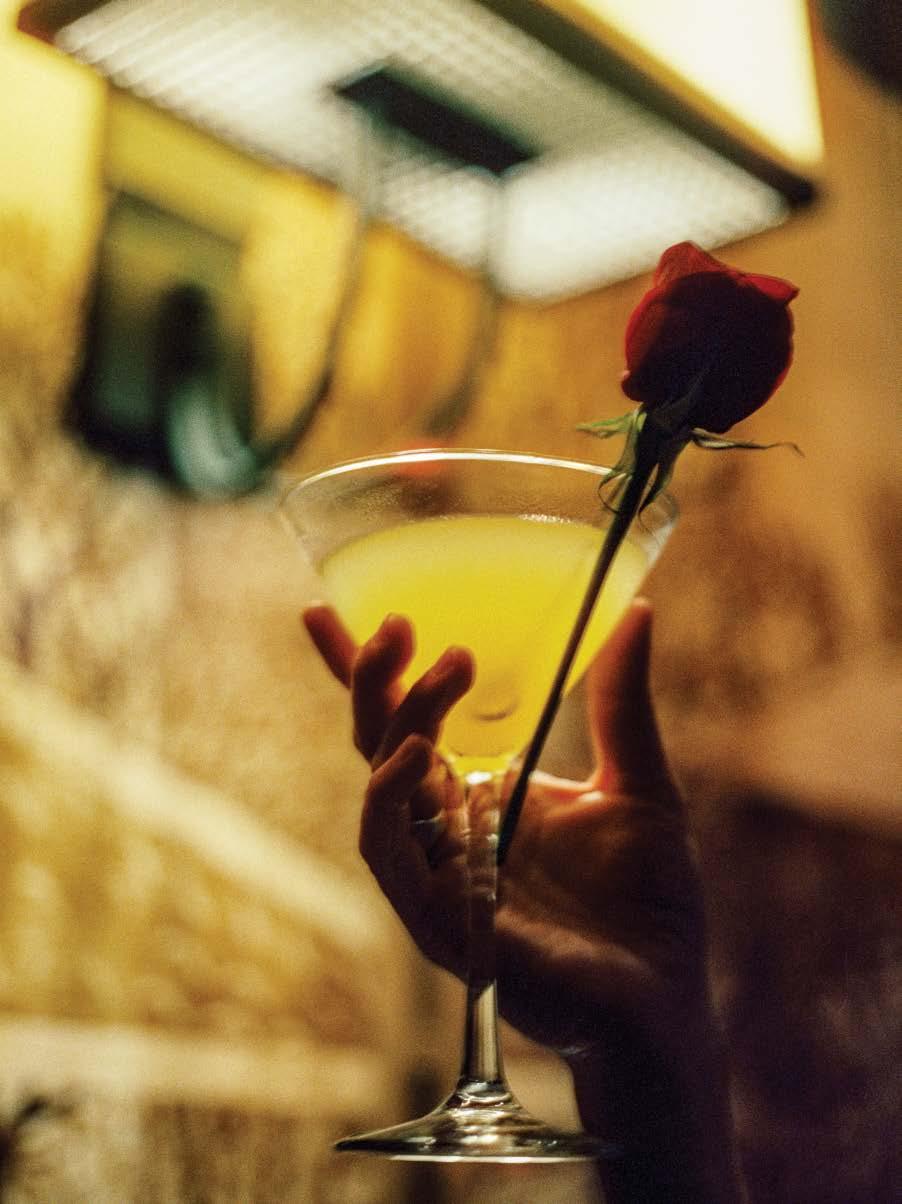
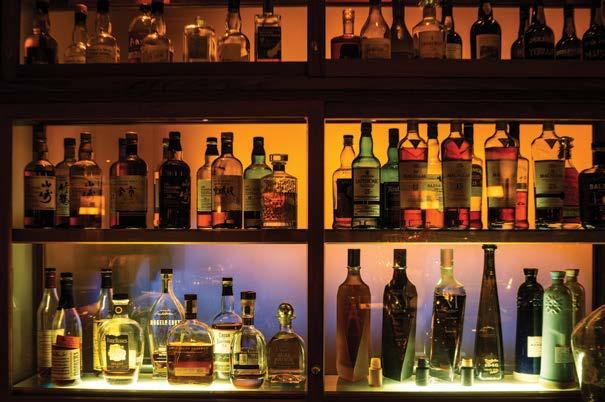
Tucked inside the acclaimed French restaurant La Mer, L’Aperitif invites a certain joie de vivre that keeps people lingering. Though it’s named for the light, often bittersweet drink served before a meal, the elegantly appointed bar feels less like a prelude to dinner than a destination in itself.
Guests come for L’Aperitif’s carefully curated selection of French spirits and craft cocktails, but many return for Henry Kawaiaea. A fixture behind the bar for going on 42 years, Kawaiaea has a way of ensuring every moment makes the most of L’Aperitif’s storied setting. Pull up a seat and he’ll tell you about his encounters with famous patrons such as Elizabeth Taylor and Lionel Richie, or Waikīkī’s evolution from sprawling marshland to a haven for the jet set during Hawai‘i’s golden age of travel.
ハレクラニを代表するフレンチレストラン「ラ メール」の一角に佇む 「L’Aperitif(ラペリティフ)」は、“生きる歓び”を湛え、人を自然と長 居させる空間である。その名は、食事前に供される軽やかで時にほろ 苦い一杯に由来する。しかし、この洗練されたバーは、ディナーの序章 というより、単独で訪れたくなる目的地のような場所だ。 ゲストは、厳選されたフランス産スピリッツやクラフトカクテルを 求めてラペリティフを訪れるが、42年にわたりカウンターに立ち続け るヘンリー・カヴァイアエアの存在に惹かれ、再び足を運ぶ人も少なく ない。黄昏の黄金色のひとときから夜の親密な灯りに移ろうまで、彼は この由緒あるバーの舞台を最大限に生かし、すべての瞬間を特別なも のにしてきた。カウンターに腰を下ろせば、エリザベス・テイラーやライ オネル・リッチーといった著名人との思い出話や、ワイキキが広大な湿 地帯から世界のジェット族が集う街へと変貌していったハワイの旅行 黄金時代の歴史を、彼は静かに語ってくれる。
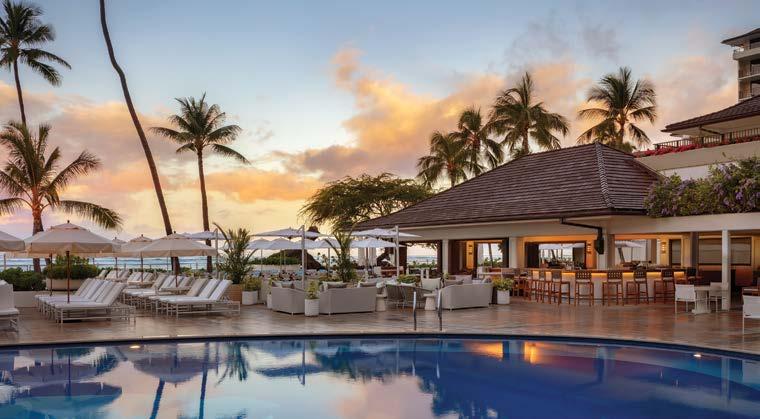
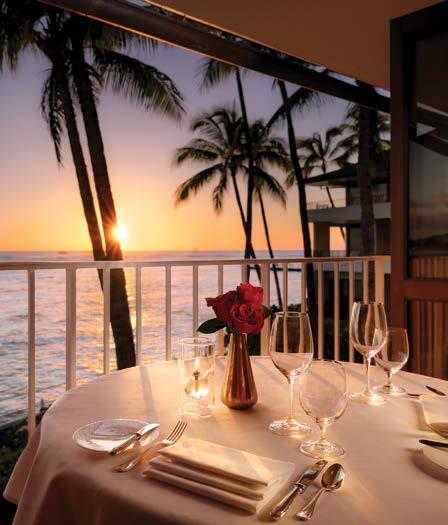
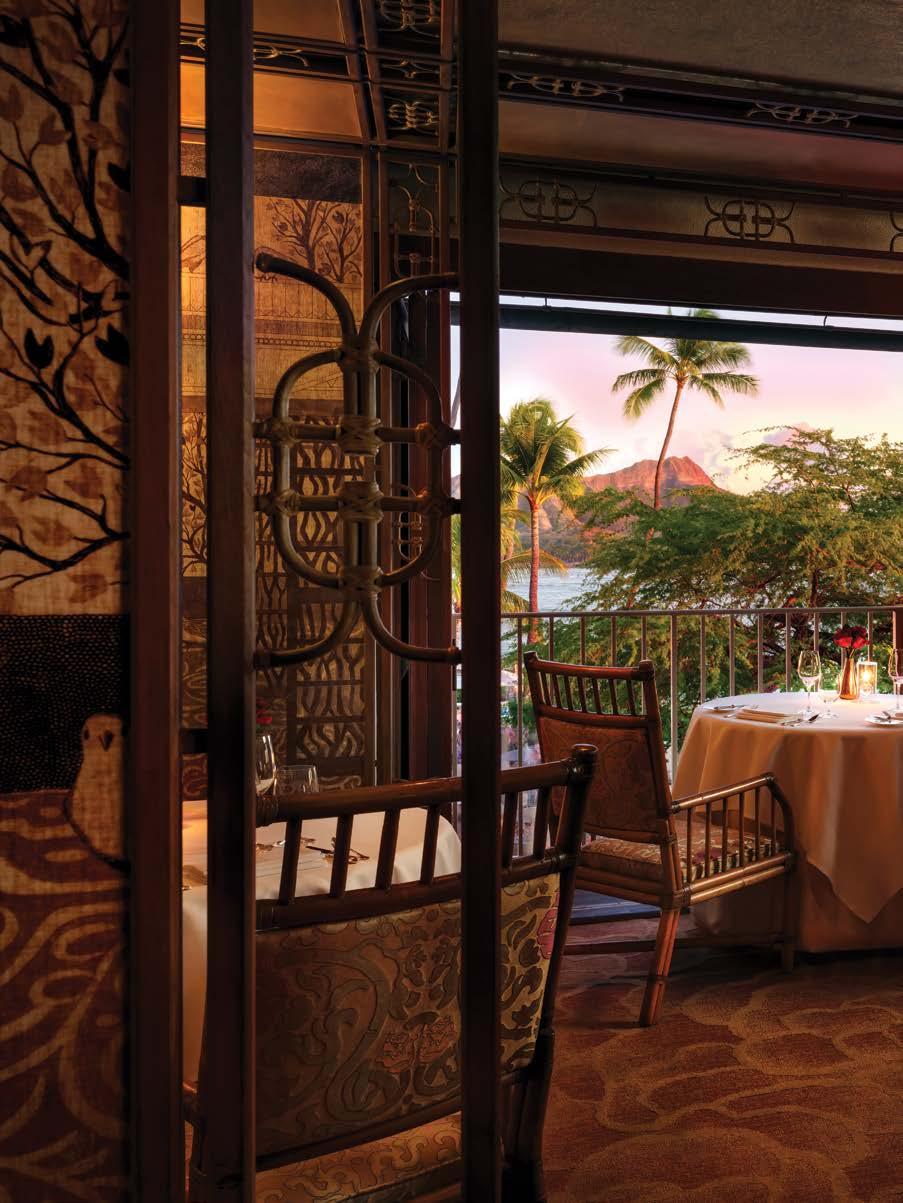
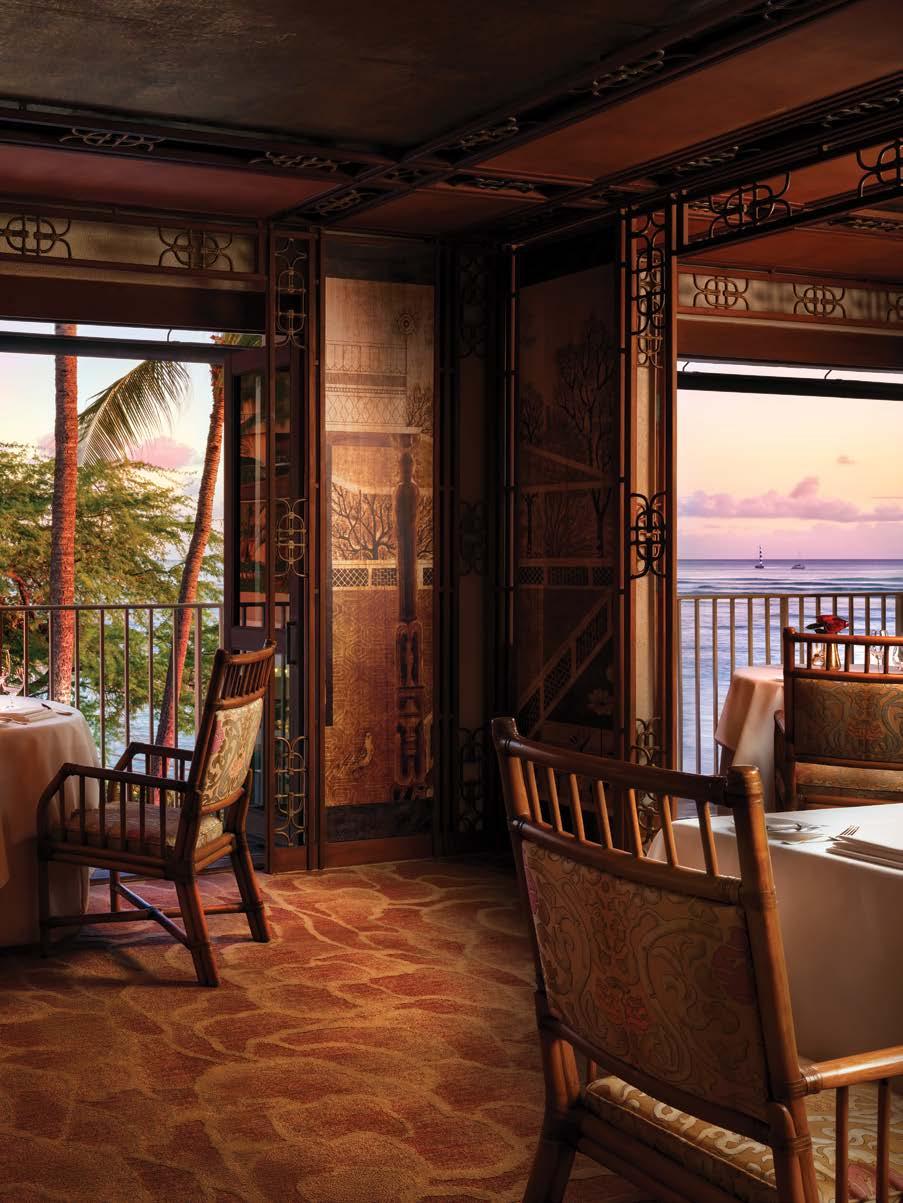
L’Aperitif shares all the romance, elegance, and oceanfront views of La Mer.
ラペリティフでは、ラ メール が誇るロマンと優雅さ、そ してオーシャンフロントの 眺めを存分に味わえる。
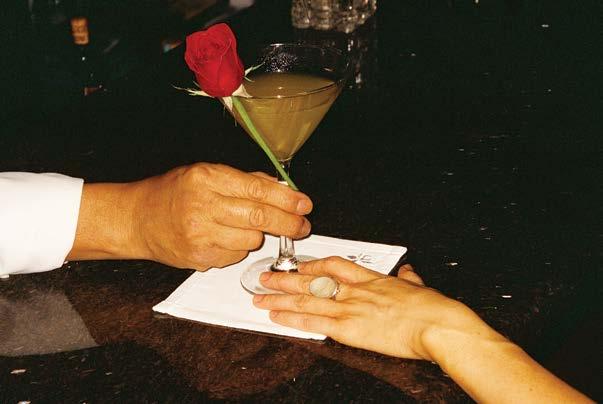
Stay awhile and Kawaiaea might share the legend of Nae‘ole, a Hawaiian chief and skilled runner who served as kahu (caretaker) of the future ruler of the Kingdom of Hawai‘i, braving a treacherous journey across the Kohala Coast of Hawai‘i Island to carry the infant who would become Kamehameha the Great to safety. Kawaiaea might then recall nights fishing with his father and brother at Ka Lae, the southernmost point of the Hawaiian archipelago, the Milky Way bright overhead and the landscape as wild and untamed as it was when Polynesian voyagers first arrived there by canoe a thousand years ago.
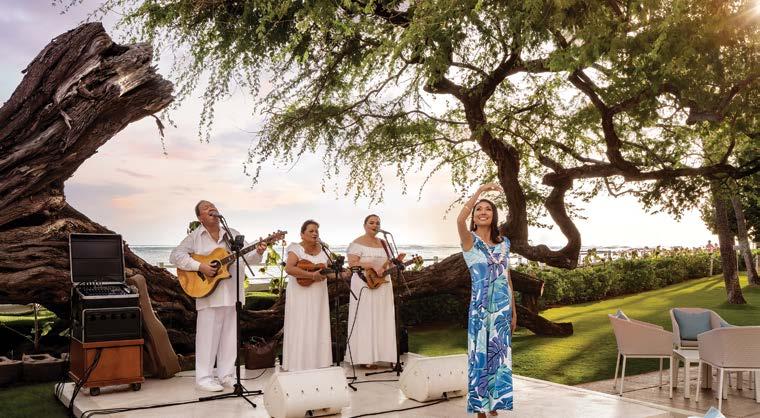
One story drifts into the next, flowing with the warm breeze and fluid melodies of the live Hawaiian band playing on the lawn outside. It’s this unhurried, distinctive sense of place that has kept Kawaiaea and so many of Halekulani’s staff here for decades. Amid the din of modern life, L’Aperitif offers a rare chance to pause and savor the moment, the past settling in beside you like an old friend.
しばらくすると、カヴァイアエアはハワイの酋長であり健脚の走 者でもあったナエオレの伝説も聞かせてくれるかもしれない。ナエオ レは、後にハワイ王国を統一することになるカメハメハ大王の守役(カ フ)として、幼い王子を抱え、ハワイ島コハラ海岸の険しい道を越えて 安全な地へ導いたという。さらに、父や兄とともにハワイ諸島最南端の カ ラエで夜釣りをした思い出も語る。頭上には天の川が輝き、大地は 千年前、ポリネシアの航海者が上陸した当時と変わらぬ、荒々しくも美 しい自然のままだった。
物語は次々と自然に紡がれ、店内に吹き込む柔らかな風や、 芝生の向こうから流れてくる生演奏のハワイアンミュージックに寄り 添うかのように流れていく。このゆったりとした独特の空気感こそ、 カヴァイアエアをはじめ、多くのハレクラニのスタッフが何十年にもわ たりここに留まり続ける理由だ。ラペリティフは、慌ただしい現代の 日常の中で立ち止まり、今この瞬間を味わう貴重な機会を与えて くれる。過去が、まるで旧知の友人のようにそっと隣に腰を下ろす、 そんな場所である。
ON THE IMPORTANCE OF THE DIGESTIF
“People ask what time this bar stays open, and I tell them that as long as there are guests in the restaurant, I’m open. When you come to La Mer for a nice dinner, you should have the whole experience, including the opportunity to enjoy a digestif—an after-dinner drink—after your meal.”
ON THE HOTEL’S SIGNATURE MAI TAI
“Ours is close to the original Trader Vic’s recipe, so it’s one of the most famous mai tais you can get. It’s what we’re known for, and I think we make the best one. First, we start with a squeeze of lime and a shot of mai tai mix, which we make with simple syrup, not the rock candy syrup that some bars use. Next, we add one shot of lemon juice, three-quarters of an ounce of Bacardi Gold, and three-quarters of an ounce of Bacardi Black. Then we fill the glass with crushed ice, float Lemon Hart 151 rum on top, and garnish with mint, an orchid, and a lime wheel.”
ON LONGTIME STAFF AND GUESTS
“I’m proud that the waiters here have been so consistent. There are still about 40 of us who have been here since the beginning. After 42 years, you pick up a lot of regular guests. Even though I haven’t seen them for years, I remember their faces. A lot of them ask me, ‘You’re not going to retire, are you? If you retire, we’re not going to come here.’ So I say, ‘OK, I’ll stay.’”
ON BARTENDERS AS CONFIDANTS
“In the old days, your bartender was like your therapist. You could unload all your problems and tell them whatever’s bothering you. It’s my job to help people relax and forget their worries. That’s why I haven’t retired yet. I feel like I can still do that here.”
ディナーを締めくくる食後酒
「『バーは何時まで開いているのですか?』とよく聞かれますが、私は 『レストランにお客様がいる限り開けていますよ』と答えます。ラ メー ルで素敵なディナーを楽しむなら、食後酒を味わう時間も含めて、ぜ ひ丸ごと体験してほしいですね。」
ハレクラニのシグネチャー マイタイ
「当ホテルのマイタイは、世界に名高いトレーダー ヴィックスのオリ ジナルレシピに忠実に作られた、特別な一杯です。自慢の一杯であり、 個人的には最高のマイタイだと思っています。まずライムをひと絞り し、一部のバーで用いられるロックキャンディシロップではなく、シンプ ルなシロップで作った自家製マイタイミックスを加えます。次にレモン ジュースを約30ml、バカルディゴールドとバカルディブラックをそれ ぞれ約22ml注ぎます。グラスをクラッシュアイスで満たしたら、仕上げ に「レモンハート151」ラムをフロートし、ミント、オーキッド、ライムで 華やかに飾ります。」
長年のスタッフと常連のお客様 「ここで働くウェイターたちが長年にわたり安定していることも、誇り に思っています。開業当初から働き続けているのは、今も約40名ほど います。42年の歳月の中で、多くの常連のお客様とも親しくなりまし た。何年もお会いしていなくても、顔はしっかり覚えています。常連の方 々の多くに、『引退しないですよね?引退したら来ませんから』と冗談交 じりに言われることがあります。すると私は、『わかりました、まだまだ 続けます』と答えるんです。」
バーテンダーという存在 「昔は、バーテンダーはセラピストのような存在でした。悩みを打ち明 け、心を軽くする場所。私の役目は、来店された方々がリラックスし、日 常の不安を忘れられるようにすることです。だからこそ、まだ引退して いません。ここでその役目を果たせると感じているからです。」
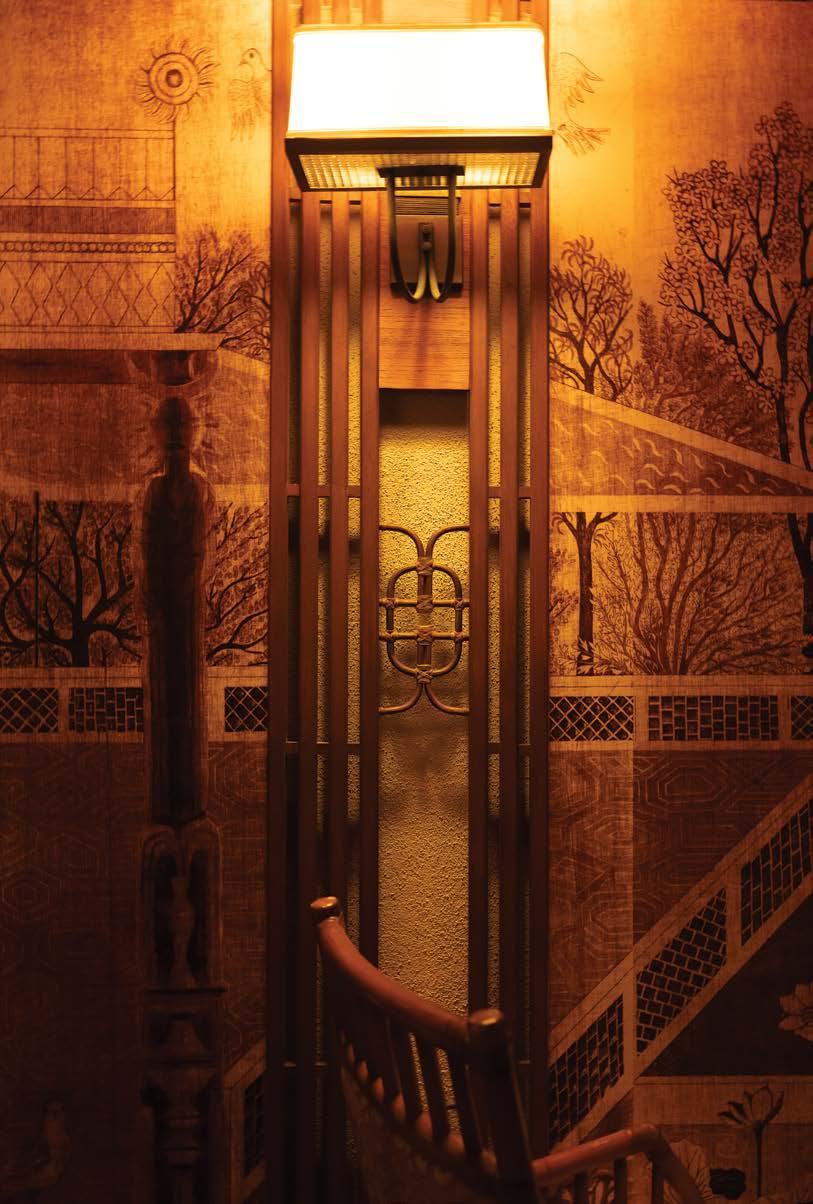
L’Aperitif is sumptuously adorned with objets d’art from France’s Belle Époque.
ラペリティフは、ベルエポッ
ク期フランスの美術工芸品 で華やかに彩られた空間。
ON THE WAIKĪKĪ OF OLD
“I think of myself as a connection to the past, a bridge between old Hawai‘i and new Hawai‘i. I tell guests about the early days of the restaurant and the hotel, some of the history of the islands, and try to give them an experience of Hawai‘i they probably won’t get elsewhere. I describe what Waikīkī was like before all these tall buildings started blocking the view. You get a taste of that here: a nice cocktail, the view of Diamond Head, the breeze coming in, Hawaiian music playing. It’s like stepping back in time.”
かつてのワイキキを思う
「私は、古きハワイと新しいハワイをつなぐ架け橋のような存在だと 思っています。ゲストには、レストランやホテルの黎明期、島々の歴史を 語り、他では味わえないハワイを体験してもらいたいのです。高層ビル が景色を遮る前のワイキキがどんな場所だったかも。ここではその面 影を感じられます。美しいカクテル、ダイヤモンドヘッドの眺め、吹き抜 ける風、流れるハワイアンミュージック。それはまるで時を遡ったかの ようなひとときです。」
TEXT BY SARAH BURCHARD
IMAGES BY JOHN HOOK
文=サラ・バーチャード
写真=ジョン・フック
A PASSION FERMENTING
醗酵する情熱
TRANSLATIONS BY YUMI OZAKI CUISINE
訳=小嵜有美