lɪb.ri.əm] a state of in which opposing forces or influence are balanced
TABLE OF CONTENTS
TO WHAT EXTENT DOES THE EMERGENCE OF A MULTIPOLAR WORLD UNDERMINE US HEGEMONY?
Teddy Shin
01
02 TO WHAT EXTENT DOES CRYPTOCURRENCY REDISTRIBUTE POWER BETWEEN PEOPLE AND INSTITUTIONS?
Gabriella Shin
WILL TRUMP'S SECOND PRESIDENCY BRING ABOUT CONFLICT BETWEEN CHINA AND THE US?
Leo Li
TO WHAT EXTENT HAVE U.S FINANCIAL INSTITUTIONS BECOME MORE POWERFUL THAN THE GOVERNMENT THEMSELVES?
Raphaella Shin
WILL EMERGING ALIGNMENTS AMONG CHINA, RUSSIA, AND NORTH KOREA LEAD TO CONFLICT?
Hyoryn Park
SHANGHAI: AN EMBODIMENT OF CHINA’S METEORIC DEVELOPMENT
Lysander Chun
03 04 05 06
01Geopolitics
TeddyShin
multipolarworldundermineUS hegemony?
Teddy Shin
The end of the Cold War created what scholars called the “unipolar moment,” when the United States became an uncontested global hegemon The fall of the Soviet Union meant that the US now exercised hegemonic power in military alliances, international institutions, and the global economy In the 21st century, new great powers like China, Russia, and India emerged, creating a future of increasing multipolarity The issue of whether multipolarity should be seen as defeating US hegemony, or if the United States possesses certain structural advantages that would allow it to maintain hegemony, becomes central to the debate This essay argues that while US influence is now in a contested position, the United States still has a strong economic, military, and soft power position Thus, multipolarity limits US hegemony without breaking it
Hegemony is the dominating position of a given power under a regional or global environment or a set of conditions of influence at both local and global levels, based on economic, military, and ideological resources It is defining rules and institutions to uphold individual imperatives to which others come to rely Multipolarity is a phenomenon in which many states have huge capabilities together, creating a lot of competition and fragmentation Realists, particularly Mearsheimer, believe that multipolarity is a signal of US decline in dominance because rising powers naturally want to challenge the hegemon They point to China’s economic rise and Russia’s military-oriented foreign policy as evidence that the US doesn’t wield unchallenged power anymore The liberal institutionalists oppose this position, maintaining that the international order, and the rules the US created largely through new institutions established after 1945, are still based on American-constructed regulations While states are still intertwined in US-led institutions and financial arrangements, US hegemony can still exist alongside multipolarity
Economically, a genuine erosion of US hegemony would demand that rivals erode the dollar’s dominance or supplant US institutions of hegemony China’s fast-growing success has enabled it to expand its international reach with initiatives like the Belt and Road Initiative and the Asian Infrastructure Investment Bank
Such projects offer new financial options to the developing countries However, they will never supplant the US-dominated global system The dollar still accounts for about 60% of global reserves (APS Bank, 2025), and about 54% of international invoicing happens in dollars (Bipartisan Policy Center, 2025) This reflects the sophistication, stability, and robustness of US financial markets In addition, the United States also remains a dominant force in world economic governance Its voting share in the IMF of about 17% (IMF, 2025) gives it a de facto veto power, and the World Bank remains in American hands US sanctions are another demonstration of the US’s leverage, one that shows the US has even more leverage than the world over, given the dollar’s centrality Multipolarity has created new pathways for an economy, diminished unilateral United States control to a point, but it didn’t strip away the structure of the international economic system to a minimum
Military power is further testament to how US hegemony remains intact as far as the rule of the United States goes In order for a rival state to really challenge the United States, it would have to match that powerful, global military presence, or in other words, undermine the very alliances behind US influence China has quickly ramped up its defence spending and increased its military maritime and missile strength Russia still exerts force that is most obvious in its invasion of Ukraine However, both powers are still largely regional actors The United States still spends approximately 37% to 40% of global defence spending (SIPRI, 2023) and has over 750 military bases in more than 80 countries (Al Jazeera, 2021) No other state is as adept at projecting military power across different continents More importantly, US alliance networks have not disintegrated much; they have strengthened Finland and Sweden joined NATO, and in Asia, Japan and South Korea have become closer allies, and wartime operational control in South Korea continues within US lines Recent collaborations, for example, AUKUS, show continued confidence in the US security leadership And despite the fact that multipolarity has sharpened geopolitical competition, it has not created a military system that could compete with American supremacy
Soft power further solidifies the durability of US hegemony
To genuinely decline, US soft power would need to show itself as diminishing global influence of American culture, technology and education But the United States still reigns supreme in these areas Hollywood movies still rule the world of entertainment while US-based online services like Netflix and Disney+ are driving cultural consumption globally American music, sports and fashion have their place in popular culture The US still hosts many of the world’s top universities, with an estimated 1 2 million international students in the 2024/25 academic year (IIE Open Doors report, 2025) US research findings, innovation and academic excellence are second to none Granted, South Korea and China have acquired cultural and educational influence, but American soft power is embedded in global society This kind of influence is more difficult for would-be powers to copy or dislodge and so offers the United States a long-term position of strength
In conclusion, the emergence of multipolarity undoubtedly confronts the United States and makes world politics highly competitive, while constraining Washington’s ability to act unilaterally China’s big economic responsibilities, Russia’s belligerence and the rise of regional powers have created a more complicated world order But these circumstances do not seem to result in the end of US hegemony The United States remains at the heart of the world economy and also retains strong economic primacy and influence, unmatched military and nonmilitary dominance, and world historywide educational achievement and cultural influence
Multipolarity has limited American leadership, but it is not the absence of it The modern world is one of contested multipolarity, where rising powers can only challenge but not fully substitute for US influence For these reasons, this essay argues that the United States remains the most powerful global actor, despite the increasing disparity in power
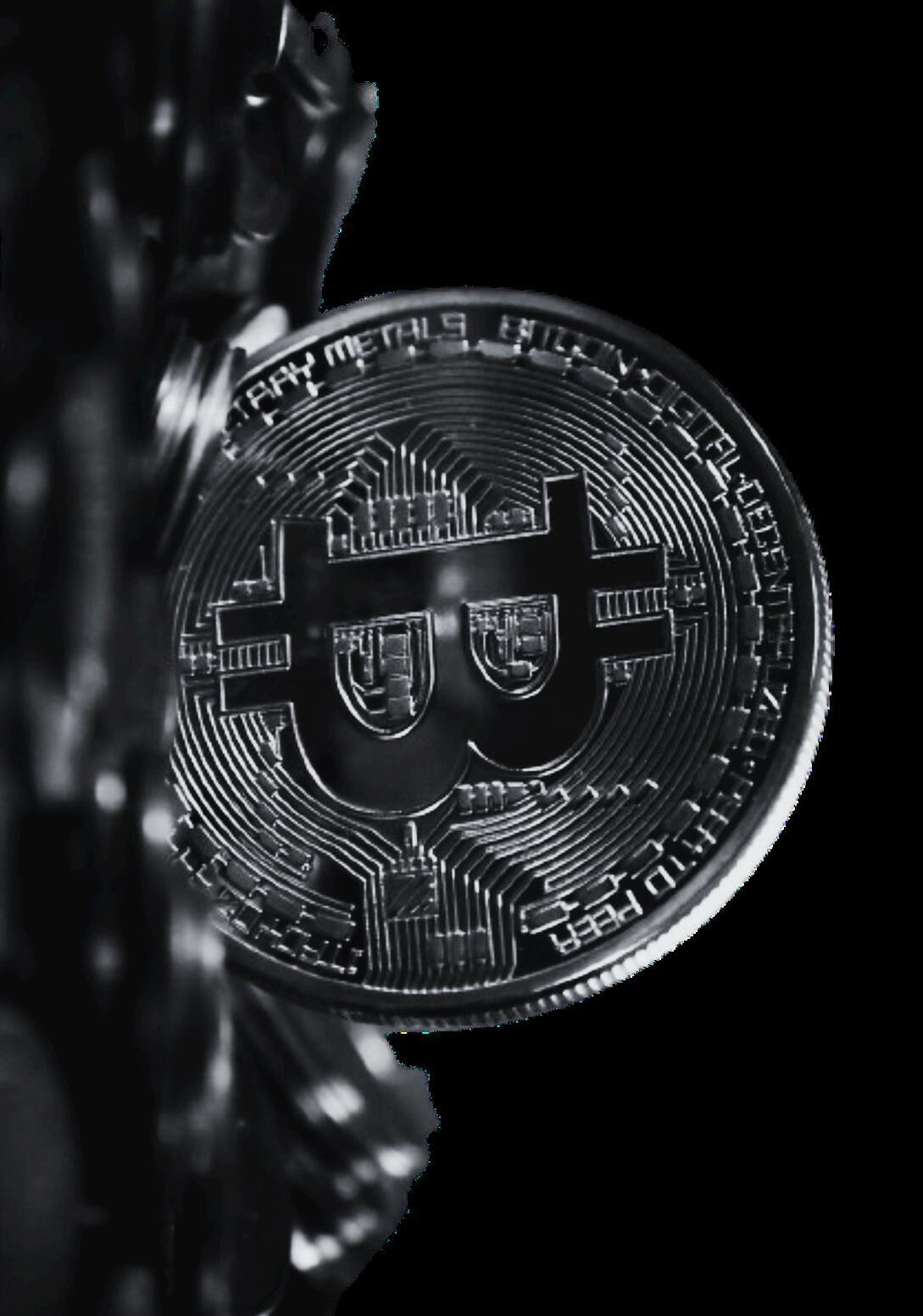
To what extent does cryptocurrency redistribute power between people and institutions?
Gabriella Shin
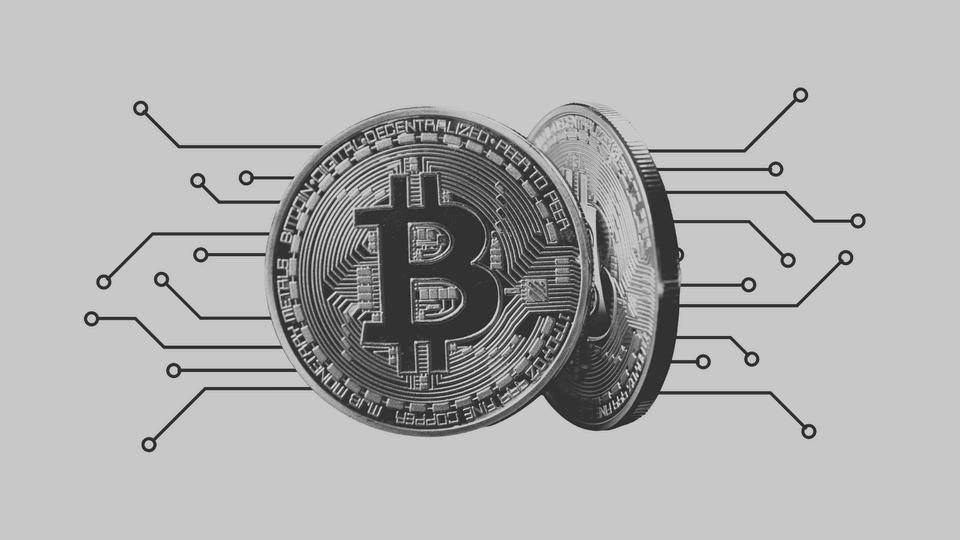
Amidst the dominance of technology, cryptocurrency emerged as an alternative to traditional financial payment systems In response to the global financial crisis of 2008, a deep recession settled in the financial market and triggered a credit freeze, job losses, and a stock market crash Bitcoin, introduced in 2009 by Satoshi Nakamoto, marked the start of digital currency which was designed to challenge the risk of monopoly of institutions such as centralised banks and commercial intermediaries and to transfer power back to individuals over their own properties Yet, the extent to which this redistribution of power has succeeded remains highly contested Even as cryptocurrency weakens traditional hierarchies by enabling decentralisation and individual autonomy, it simultaneously produces new concentrations of power within digital elites and centralised exchanges
Cryptocurrency revolutionises the way transactions are conducted by eliminating the need for financial intermediaries Historically, people relied on banks to manage increasing amounts of money and were always required to have banks in between the transactions During this process, banks serve as a gatekeeper to control the flow of money and authorise who can send or receive As all of the transaction records and bank balances remain within a centralised system, users eventually become highly dependent on institutions that can turn fallible at any time The vulnerability could easily be witnessed during times of crisis For instance, as soon as the original banking routes were disrupted during the 2022 Russian invasion of Ukraine, the Ukrainian government received over $100 million dollars in cryptocurrency donations Through the use of cryptocurrency, global supporters were able to circumvent institutional barriers and send funds This case serves as a typical example of demonstrating the shift in financial power toward individuals by digital currency even when centralised power is weakened In addition, cryptocurrency’s blockchain technology provides flexible, peer-to-peer transactions without requiring institutional approval
Conventional bank databases containing personal details are only allowed to be viewed by a certain group of people, while blockchain enables anyone on the network to access everyone else’s entries, making it impossible for one central entity to gain control
Simultaneously, to keep high-level security, data within each block cannot be altered, but only new information can be added under the name of anonymity The decentralisation-based mechanism not only prevents manipulation but also redistributes authority away from traditional institutions toward users
Scarcity of cryptocurrency, especially bitcoin, derives power redistribution as control over the value of one ’ s assets returns to the individual When bitcoin was first introduced in the market, the creator set limited issuance for this cryptocurrency to 21 million coins, meaning no matter how demanding this product becomes, nobody can alter the supply of it Since bitcoin is not run by a single entity, it requires miners around the world to participate in validating transactions and securing the network In return, miners are awarded with bitcoin for every block which is what transactions are grouped into and added to the blockchain However, to prevent bitcoin being overly abundant, the code is set to cut rewards in half for every 4 years Based on the basic principles of supply and demand, bitcoin halving tends to result in increased bitcoin prices if demand increases or remains constant This is due to the reduction of the amount of new bitcoin entering the market, making it a scarce and thus valuable asset as the demand continues to increase Eventually, each user is provided with unprecedented financial sovereignty, fully independent from inflation-prone fiat currencies managed by central banks As banks can print more or less physical money in response to the economic pressures, the value of physical money may easily be hindered and diminished during inflation, while bitcoin will never become inflated from an overabundance For example, in Venezuela, where inflation crossed into 1 million percent in 2018, citizens used bitcoin and stablecoins to protect their earnings from declining value In this context, cryptocurrency operates as a safer choice than national currency and helps avoid government mismanagement This view of cryptocurrency as a safe asset allows individuals to protect their wealth independently from institutions, reinforcing the redistribution of financial power
On the other hand, the decentralised nature of cryptocurrency exposes the limits of state control, challenging the traditional regulatory authority As the power that used to be held by the institutions distributed into individuals by the use of cryptocurrency, many governments struggle to maintain financial control From the government’s perspective, despite the rapid growth of the cryptocurrency industry, it is difficult to support due its high volatility Unlike investments in firms or real estate, crypto investments do not create real-world value such as employment or infrastructure Moreover, blockchainbased transactions cannot easily be traced down because of their pseudonymous nature, making it difficult to impose any anti-money laundering policies or to monitor cross-border capital movement However, since most governments cannot systematically regulate these decentralised cryptocurrencies, a number of them have opted to take measures against centralised crypto exchanges-intermediaries between fiat and cryptocurrency assets In return, the authorities seek to introduce some supervision by demanding that firms conduct KYC verification, report on suspicious transactions, and pay taxes This is a partial re-assertion of institutional power, but in a limited and reactive form Another alternative the government is considering is the issuance of Central Bank Digital Currencies (CBDC) or stablecoins
Compared to most traditional assets, legal guarantees such as a right of reimbursement or protection backed by governments do not cover most cryptocurrencies, making them inherently riskier In contrast CBDCs and regulated stablecoins provide users with a legal claim against the issuer; a factor that allows governments to keep monetary policy control while still participating in the digital economy These tools allow authorities to reassert financial oversight without fully suppressing technological innovation and keep a balance between decentralisation and institutional control
Ultimately, cryptocurrency has clearly shown dual aspects regarding redistribution of power between individuals and institutions: it not only weakens the power of traditional financial institutions but also returns the autonomy over one ’ s assets back to individuals However, some argue it poses a threat to government authority To a considerable extent, cryptocurrency does redistribute power by restoring individual financial agency, yet the shift remains incomplete, as the roles of institutions evolve rather than disappear To move forward, the global community has to seek the way for the delicate balance in which technological innovation coexists with regulatory systems that ensure economic stability
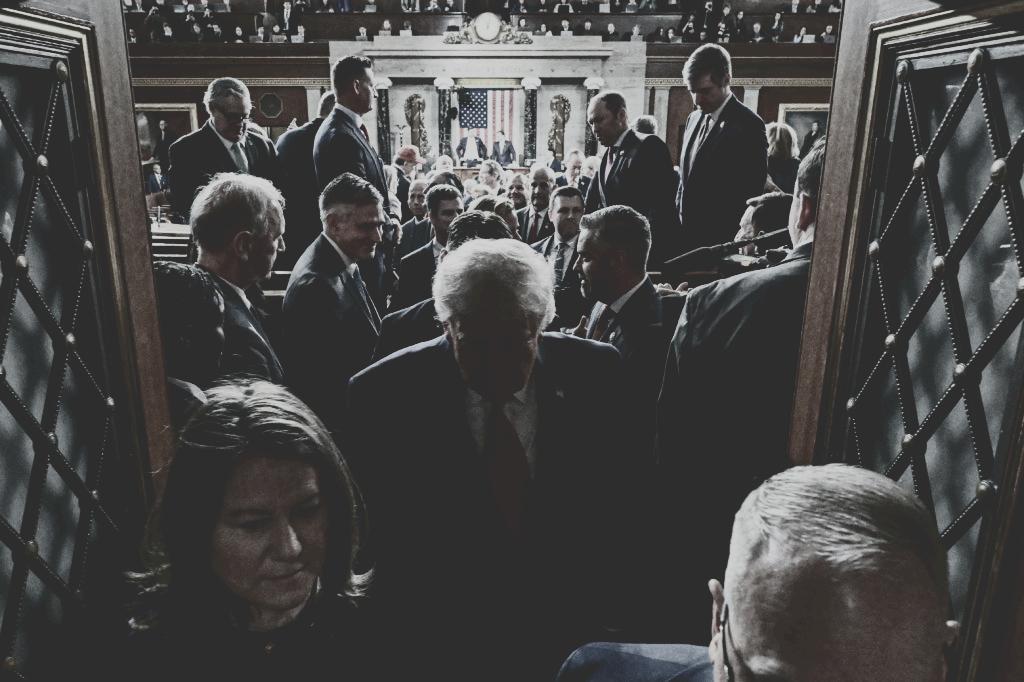
Will Trump's Second Presidency Bring About Conflict Between China and the US?
Leo Li
The re-entry of Donald Trump into the White House has presented a critical juncture in one of the most pivotal international relationships in the twenty-first century The first presidential term from 2017-2021 saw a radical reformation in the United States’ relationship with China, unleashing brutal trade wars, adopting radical technological bans, and using strongly anti-China rhetoric Today, Trump and China are on the cusp of their next presidential term, it seems like although a hot conflict is unlikely, an economic trade war whch Trump has ignited in his first term, will persist throughout his second presidency
The Legacy of Trump's First Presidency
The China policy initiated by Trump was the sharpest divergence in the strategy adopted over the decades The pivotal part was the trade war initiated in 2018, imposing tariffs amounting to three hundred and fifty billion dollars on Chinese goods, accompanied by an equivalent retaliation of a hundred billion dollars by China The conflict, initiated over the theft of intellectual property, escalated into an overall economic conflict, labeled a failure by the media in the United States
Besides trade, the pace of technological decoupling was quickened under the Trump administration The export controls on semiconductors and high-tech items were intended to stop China from obtaining the foundation on which advanced military power could be built Huawei and other entities were placed on an exclusion list from the U S supply chain In the maritime sphere, the Pacific Fleet under Trump carried out at least nine freedom-of-navigation operations in the South China Sea in the first two years alone, confronting Chinese territorial claims head-on However, it was clear in early 2017 that the Trump administration first suspended these operations in the hope that China could help force North Korean compliance
Theoretical Perspectives on Sino-US Strategic Thinking
The liberal outlook findsTrump's policies deeply disturbing Liberals claim that the destruction of the institutions of multilateralism, the withdrawal from the Trans-Pacific Partnership, and the disdain for the alliance system began byTrump dismantle the architecture that has, since 1945, avoided great power conflict Based on the liberal perspective, the conflict-blocking cost structures and interdependence engendered by interdependence are weakened byTrump's protectionism The neglect of NATO and the disregard for the alliance system, where the alliance system is characterized by protection rackets, makeTrump's actions probabilistic in causing miscalculation The withdrawal from the WTO and the Paris Climate Accord has placed the leadership claim in China's hands, weakening the position in America Defensive Realists, on the other hand, paint an entirely different picture They claim that the measures taken by President Trump could be leading the world back on the path of restored balance, since the latter decades have seen the overreach of the USA and China’s freeriding In other words, the measures taken by President Trump, concerning trade and restrictions on technology, make China pay the price for its development, rather than enjoying the asymmetry resulting in the over-access they enjoyed in the USA
These contrasting visions inform the most basic questions about the extent to which Trump's policies are conflict- rather than conflictprevention measures Liberals perceive the destruction of interdependence and institutions wrought by Trump as the lifting of constraints on conflict Defensive realists perceive the use of rebalancing power by Trump as the establishment of stable competition
What this could mean in the Future
The course that Sino-US relations will take during the second term of the Trump presidency and beyond could deeply impact the world order over the coming decades Should the economic struggle remain somewhat containable and the military issue stay out of the equation, there may emerge a different type of bipolar world order in which the US and China compete heavily, yet remain dependently interconnected in such a manner as to preclude the likelihood of war On the other hand, further regression could mean complete decoupling, resulting in the fragmentation of the world economy into rival blocs, where other countries are forced to take sides, and the Cold War model of alliances would re-emerge in a much costlier manner The technology industry would fragment into competing ecosystems
The solution would depend on what Trump chooses to do, and on the ways in which the Chinese government and regional partners in the area play their respective roles in the situation, and on whether the structural forces driving the process toward interdependence are able to resist the political pressures and achieve their aims As things stand in late 2025, the course the situation takes appears far from clear, and strong forces in all directions This much, however, can be said with certainty, and that the path forward over the next few generations would depend on actions in Washington and Beijing under the leadership of President Trump
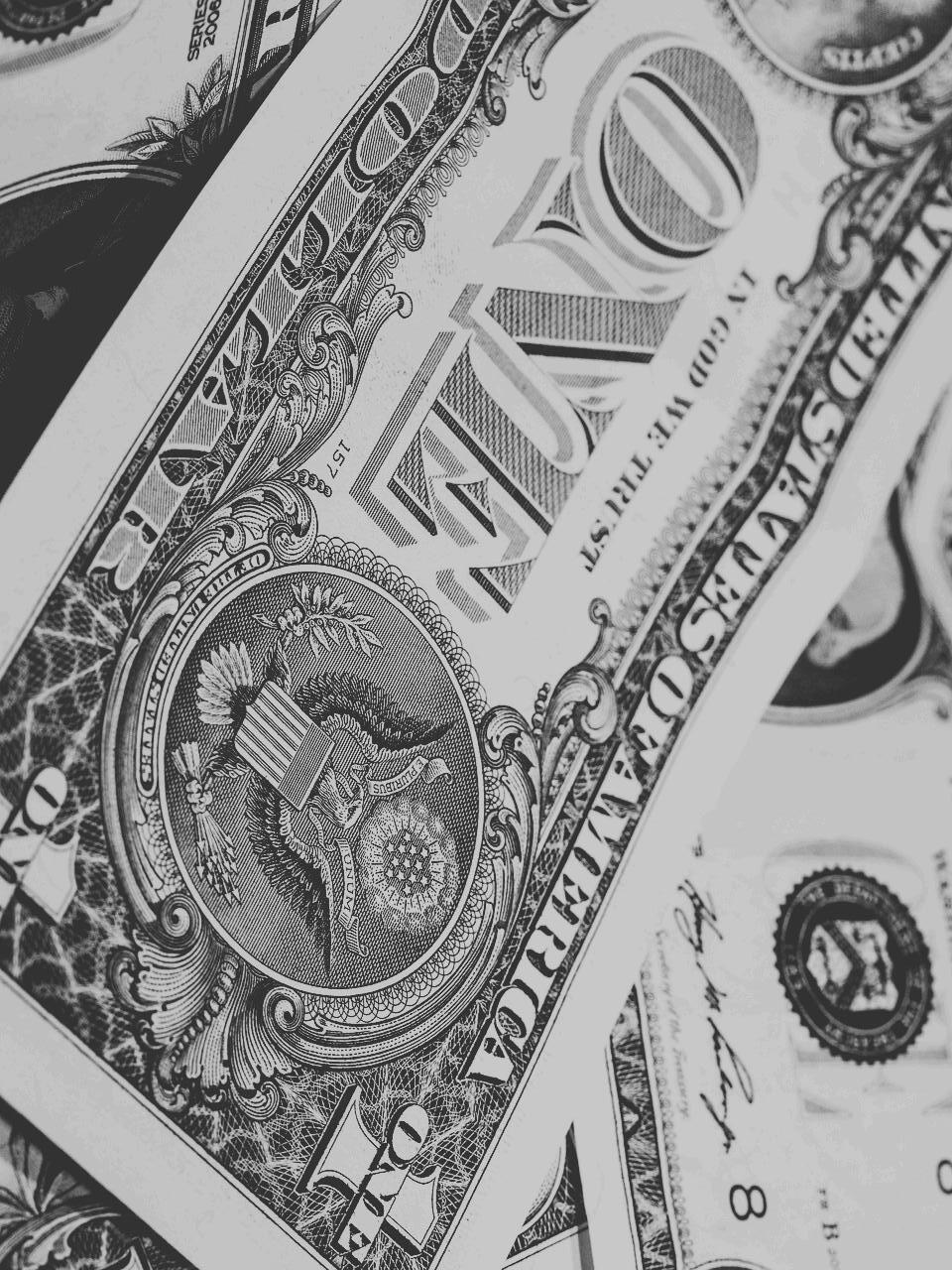
To what extent have U.S financial institutions become more powerful than the government themselves?
Raphaella Shin
<The Rising Power of American Financial Institutions>
Over the past few decades, U S financial institutions such as J P Morgan, Bank of America, and Citigroup have become global giants, terrifically impacting the economy As economic partners, they provided a lending system not just for business but individuals, facilitated investments, minimized harm for the stable economy, supported the government to fund necessary infrastructure projects, and enabled the creation of new products in corporations As a result, the assets of those top American banks become enormous J P Morgan, one of the notable banks, has $3 64 trillion, Bank of America $2 62 trillion, and Citigroup $1 76 trillion Through these final assets, it is easy for the banks to use hard power, as the government and many corporations often rely on access to the capital To be specific, financial institutions’ power to control trillions of dollars in assets implicates economic decisions on corporations and the government through lending conditions For instance, in a situation where the government relies on borrowing to fund infrastructure or to manage public debts, banks can raise the interest rates, refuse loans or introduce strict financial conditions This results in economic pressure, which coerces governments and corporations to adjust their decisions Hence, whilst they are well-known as a symbol of ‘hard power ’ internationally and consequently growing trillions of assets, many now doubt whether they remain as the useful tools that enhance the state power, or are beginning to expand their power, trying to erode the state’s sovereignty
The scale of their influence will be able to be comprehended by first exploring the reason why they have been so central to modern life Today, American banks provide access to capital The first part here is the banks, especially retail banks, commercial banks, credit unions, and Internet banks These banks offer lending and deposit systems, as well as investing products to individuals and businesses The investment banks, which play different roles from those banks, effectively support companies and facilitate the issuance of government securities They help to connect the investors to purchase securities, manage their financial assets, trade securities, and provide financial advice to them Another part of the financial institutions is brokerage firms, which enable the purchase and sale of securities between the investors and the stock market
Due to this, they earn a commission when each transaction is finalized Additionally, the insurance companies provide policies that both protect individuals and businesses from unpredictable financial loss from illnesses, accidents, or natural disasters Along with this, the mortgage company gives loans to individuals so they can purchase the shelters or other real estate properties, which are a prominent part of their lives This was significant to recover through the COVID-19 pandemic in every part of the U S economy, as they had a fundamental role in savings, investments, as well as the job creation, according to Securities Industry and Financial Markets Furthermore, during the creation of PPP(Paycheck Protection Program), the U S financial institutions were responsible for distributing funds to businesses, but also giving documentation for loan forgiveness, helping the government to implement the PPP successfully. According to the National Bureau of Economic Research, PPP eventually secured about $800 billion in low-interest loans by American banks, to businesses with 500 employees, forgiving the loans the borrowers lent if they maintained employment, playing a crucial role in stabilizing the economy
U S financial institutions continue to give far-reaching repercussions even now, especially working under Donald Trump’s administration In April of 2025, Trump introduced tariffs on products from countries around the world, claiming that tariffs effectively encourage customers to buy American products and develop the U S economy rapidly This led the world into a state of confusion, as they now have burdens to deal with higher costs In response to this, J P Morgan, Goldman Sachs, Citigroup, Wells Fargo and other financial institutions have written articles about rising concerns in the economy According to Goldman Sachs’ Global Macro Research, Alec Philips, the GS Chief US Political Economist, commented that tariffs on imported goods would slow U S economic growth while also increasing the PCE inflation approximately by 0 4pp This not only causes problems between countries but also poses many internal risks, slowing down the economy In fact, Trump’s tariff announcements caused a significant drop in U S bank stocks due to fear and hesitation to borrow and invest money from banks
Moreover, the economic uncertainty caused the consumers ’ fear and hesitation to borrow and invest money from banks American banks also confronted increased credit risk due to higher loan defaults As a consequence, such actions by financial institutions were their attempt to help the administration reconsider the policies made Even though the problems were not solved, these actions demonstrate how financial institutions act as an economic partner, playing to the government the role of bringing out potential risks to help the government make better policies and follow the right path In fact, when the U S government imposed the Troubled Asset Relief Program(TARP) during the 2008 financial crisis, it invested about $245 billion in banks in order to stabilise the financial system and restore confidence in credit markets Thus, the financial institutions are significant in helping the government to take major economic actions
At the same time, many question the possibilities that financial institutions often try to undermine state power, as they often go against the government’s actions One of the most significant sources of power for American banks is structural power, meaning that the government cannot simply ignore financial institutions because the economy depends on their lending, investment, and other financial services In fact, during the Basel III Endgame, when the regulators proposed higher capital requirements for large American banks, J P Morgan’s CEO Jamie Dimon and other bank leaders publicly condemned that it would horrifically reduce lending Due to this, the regulators cut back the proposal in 2024, which led to an increase in capital requirements from about 19% to 9% Such proposed policies are often changed as the financial institutions pressure the political leaders to reconsider their actions Although the financial institutions can raise such concerns for maintaining economic stability, this also shows that they are using political influence, since they shape public expectations and gather market reactions in order to challenge the government As a consequence, political leaders are often pressured to withdraw policies, showing that financial institutions intend to weaken the authority of the state
However, the government doesn't always follow what the financial institutions recommend According to the Council on Foreign Relations, after the 2008 financial crisis, the U S government passed the Dodd-Frank Wall Street Reform and Consumer Protect Act in 2010, which was introduced to protect the financial system and prevent another crisis
Furthermore, this legislation strictly regulated large banks, so that they were required to hold more capital The U S government aimed to improve monitoring systemic risk Many financial institutions refused to agree on these reforms as stricter regulation can reduce lending and slow economic growth Despite this, these governments prioritised public confidence in the banking system, demonstrating that the government retains the authority to regulate financial institutions when needed
To sum up, financial institutions provide access to capital, which has different systems helping individuals and businesses Furthermore, they give support to the government to stabilize the economy even nowadays However, there are opposing arguments saying that the financial institutions use political power and often put pressure on the government to change policies While financial institutions challenge the government and put pressure on the political leaders, all these help the economy to remain stable In the future, as the financial markets are getting more interconnected around the world, financial institutions will be necessary for the government, making cooperation necessary to develop the economy
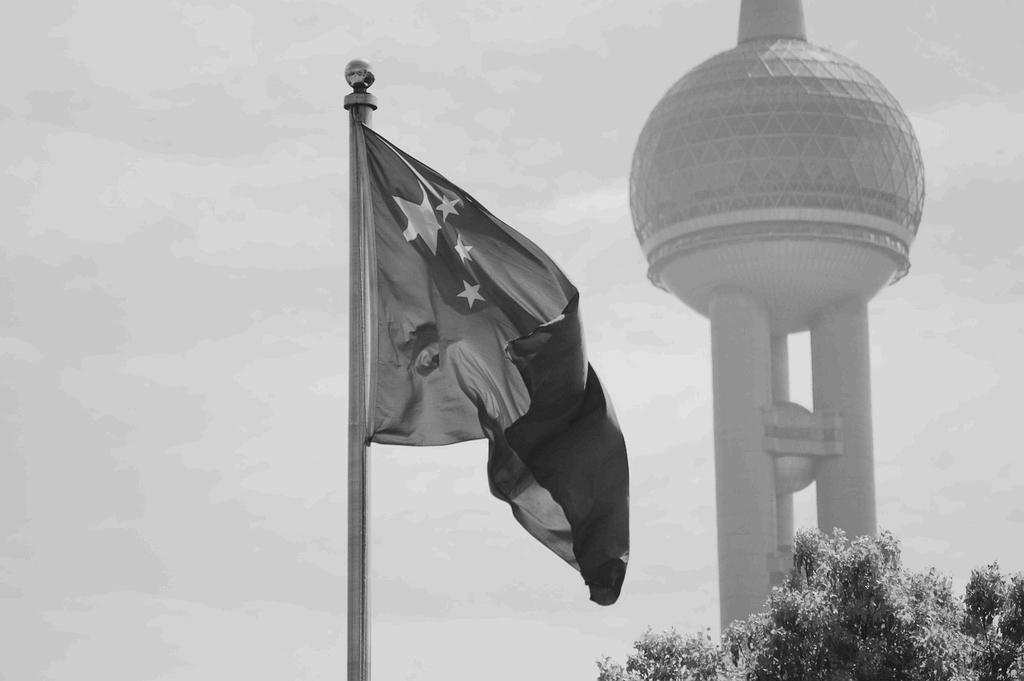
WILL EMERGING ALIGNMENTS AMONG CHINA,
RUSSIA, AND NORTH KOREA LEAD TO CONFLICT?
Hyoryn Park
The global balance of power is in a transformation as the previously unipolar world dominated by the United States gives way to an increasingly multipolar order In this world, China, Russia, and North Korea are becoming closer in strategic, economic, and ideological terms These growing connections are evident in recent developments: the joint appearance of Xi Jinping, Vladimir Putin, and Kim Jong Un at the 2025 Beijing military parade, the 2024 Comprehensive Strategic Partnership treaty between Russia and North Korea, and China’s Global Governance Initiative, which are the main examples that reform the Western-dominated international system However, the implications of these are debated in international relations theory From a realist perspective, it could be argued that states seeking power and security are more likely to lead to conflict Accordingly, the cooperation of China, Russia, and North Korea may try to balance against U S hegemony
On the other hand, liberal theorists argue that economic interdependence and international institutions will prevent war They may view these partnerships as strategic trade alliances, rather than military alliances This essay will discuss how this alignment poses challenges to the international order by challenging Western norms, strengthening military cooperation, and promoting alternative governance models
From a realist perspective, the main motivations of states are survival and power in an anarchic international system The alignment among China, Russia, and North Korea is an effort to challenge U S hegemony and rebalance global power Realists argue that when states perceive the existing order as threatening, they engage in counter balancing and revisionist behaviour through such an alliance Hence, for example, the 2024 Russia-North Korea Comprehensive Strategic Partnership Treaty showed this balancing behaviour By making a relationship, Moscow and Pyongyang showed their shared intention to resist Western pressure and counterweight U S -led alliances This alignment also undermines the Western alliances, particularly NATO and the U S -JapanSouth Korea partnership As the newly emerging powers grow, it becomes difficult for Western alliances to deter actions For example, Russia’s invasion of Ukraine, China’s claim of the South China Sea and Taiwan, and North Korea’s nuclear missile development challenge the capacity of the U S and its allies These actions undermine the global deterrence mechanisms and policies It further increases the risk of miscalculation and instability Additionally, the cooperation, such as the joint appearance of Xi Jinping, Vladimir Putin, and Kim Jong Un at the 2025 Beijing military parade, portrays how each country is unified in ideology and confronts that they reject Western liberal norms These states promote an alternative governance based on authoritarianism and sovereignty This alignment amplifies confidence and encourages more military spending, which may lead to an arms race Therefore, in realist terms, the growing collaboration between these states leads to countering the U S liberal order through power balancing and coercive diplomacy, which increases the possibility of conflicts
While realism predicts strategic war, from a liberal perspective, they argue that there will be another outcome Liberal theorists argue that economic interdependence and diplomacy reduce the incentives and motivation for military confrontation Even if these three states are challenging U S dominance, they are linked in the global trade network, financial markets The benefits and harms that may come from this make war costly and undesirable For instance, China’s reliance on global supply chains and export markets, particularly its trade relationships with the United States, European Union, and Southeast Asina nations; Russia’s dependence on energy revenues from Europe and Asia alongside its need for sanctions relief; and North Korea’s need from China and Russia for economic assistance lead to large-scale conflict being avoided This is to say that the strategic rivalry between these revisionist states and the U S -led order will end only in proxy conflicts or localised crises, such as tensions on the Korean Peninsula, rather than systemic war
Furthermore, the structure of the international system shapes the outcomes Since the status quo is more focused on complex multipolarity, the system itself increases competition but does not guarantee a major war This is because states balance themselves in many factors, such as diplomacy and selective cooperation At the same time, revisionist multilateralism(i e Expansion of BRICS+) allows non-Western states to make policies and reduce dependence on the Western order These allies and groupings allow China, Russia, and North Korea to challenge Western dominance. However, since this multilateral cooperation is effective only when they remain united in purpose, making a stable bloc may be limited As a result, the world will be more likely to have stronger rivalry or fragmented regional crises, rather than full-scale military conflicts
Despite the coordination among China, Russia, and North Korea, many factors limit the likelihood of this alignment developing into a military bloc capable of major conflict From a liberal perspective, global interdependence, economic incentives, and institutional norms stabilise the forces that constrain aggressive behaviour Most importantly, the three states do not share the same strategic priorities China has a strong interest in maintaining economic stability If they escalate to full-scale conflict (involving Taiwan, where semiconductor supply chains from TSMC are concentrated), it would risk China's economic downfall Russia focuses on sanctions relief and sustaining its war in Ukraine North Korea looks for regime survival, rather than ideological solidarity These motivations that are spread divergently make it harder to form stable alliances and increase the probability of military action Moreover, the economic interdependence, especially China’s integration into institutions such as the WTO, AIIB, and so on, creates incentives to avoid actions that might lead to sanctions or trade disruptions Even authoritarian regimes calculate costs For China in particular, the CCP rests on economic growth, where war may jeopardise this As a result, Beijing adopts strategic ambiguity Thus, although the China, Russia, and North Korea partnership challenges the norms, the constraints and conflicts of national interests make military conflict far less likely than heightened competition
In conclusion, the alignment among China, Russia, and North Korea represents a shift in a multipolar international system, which raises concerns about global stability Their growing military cooperation and the strong opposition to U S dominance challenge the liberal order and bring out new risks However, there are backflows to this: economic interdependence, reliance on global markets, pressures, and divergent interests of the three states that will limit the largescale war More plausibly, the world will experience more competition, cold wars, localised wars, and Western influence being gradually eroded Therefore, while the China-RussiaNorth Korea triangle complicates the international order, its long-term cohesion and the impact it will have on our countries remain uncertain
Shanghai:An Embodimentof China’sMeteoric Development
Shanghai: An Embodiment of China’s Meteoric Development
Lysander Chun
Shanghai – a modern metropolis home to both glistening skyscrapers and a plethora of historic sites – is more than just “significant” when looking into China’s history “The Pearl of the Orient”, “Paris of the East”, and “The Gateway to China” - the city’s countless nicknames showcase the pivotal cultural and historical roles Shanghai has had and continues to have. From a rural fishing village to one of the most iconic skylines in the world, a revolutionary development took place, proportional to the nation’s steep economic growth curve Like the Chinese saying, “Jade must be carved to become a gem”, the hardships and challenges the city faced during its transformation are crucial in understanding the country’s history
Until the 18th century, Shanghai existed as a rather meagre town, perched on the Chang Jiang River (or the Yangtze River) delta region, with most of its population working in the fishing industry It was the 1842 Nanjing Treaty that altered the village’s fate, when British, French, and American concessions were established on the west bank of the Huangpu River. (The river that meanders through nowadays Shanghai) Foreign capital and diplomats rushed into the small riverside foundation of Puxi where multi-storeyed buildings flaunted their glamourous façades and western culture first stepped into Chinese territory By the early 20th century, Shanghai had become indispensable: in 1933 it produced nearly 40 percent of China’s manufacturing output and half of the nation’s electricity These figures placed themselves closer to those of already industrialised cities, comparable to Manchester and Glasgow rather than other Chinese cities This spillover of industrial and financial capability led to the birth of “Little Shanghai” cities, including Wuxi The westernisation boom of Shanghai only deepened when locals started to wear Europeanstyle clothing, speak in English and French, therefore absorbing western customs Shanghainese people became the first ones to have a taste of what it is like to be a “civilised person” (WenMingRen) referring to themselves as “Modern Miss” or “Modern Mister”
However, after reaching the pinnacle of luxury and modernisation – The Shanghainese Renaissance - in the Republican era, a gloomy future followed the Communist victory in 1949 The cosmopolis’ position as a melting pot where the east meets the west was no longer appreciated The city’s trade heavy economy drastically shifted to an industrial one, businesses and buildings were nationalised, and former elites including the bourgeois-class were sent to re-education camps.
Shanghai was also the centre point of Mao Zedong’s Cultural Revolution (1966-1976) – a political campaign which left centuries of tradition erased in a decade Churches were burnt with their priests imprisoned, university professors denounced or beaten to death, and wealthy people’s houses were looted. As massive state-owned factories for textiles and steel dominated newly developed neighbourhoods, the city received a new persona: a smoke-veiled city of iron and labour Death, however, wasn’t the only characteristic that defined China’s communist regime Within the misery bloomed possibilities and equal rights for women, achieved through the implementation of the Marriage Law of the People’s Republic of China in 1950 Ahead of its Western counterparts by at least two decades, the statute challenged traditional gender hierarchies, empowering women in divorce proceedings and recognising no-fault divorce as a legitimate means of terminating a marriage Women played a prominent role in the workplace, and even after marriage, around 90% of Shanghai’s wives participated in various industries.. Modernism in Shanghai was thus redefined not by opulence and allure, but by productivity, discipline, and the utilitarian spirit of the new socialist order
40% 50% 90% manufacturing output 1933 of national electricity 1933 of married women worked 1950s
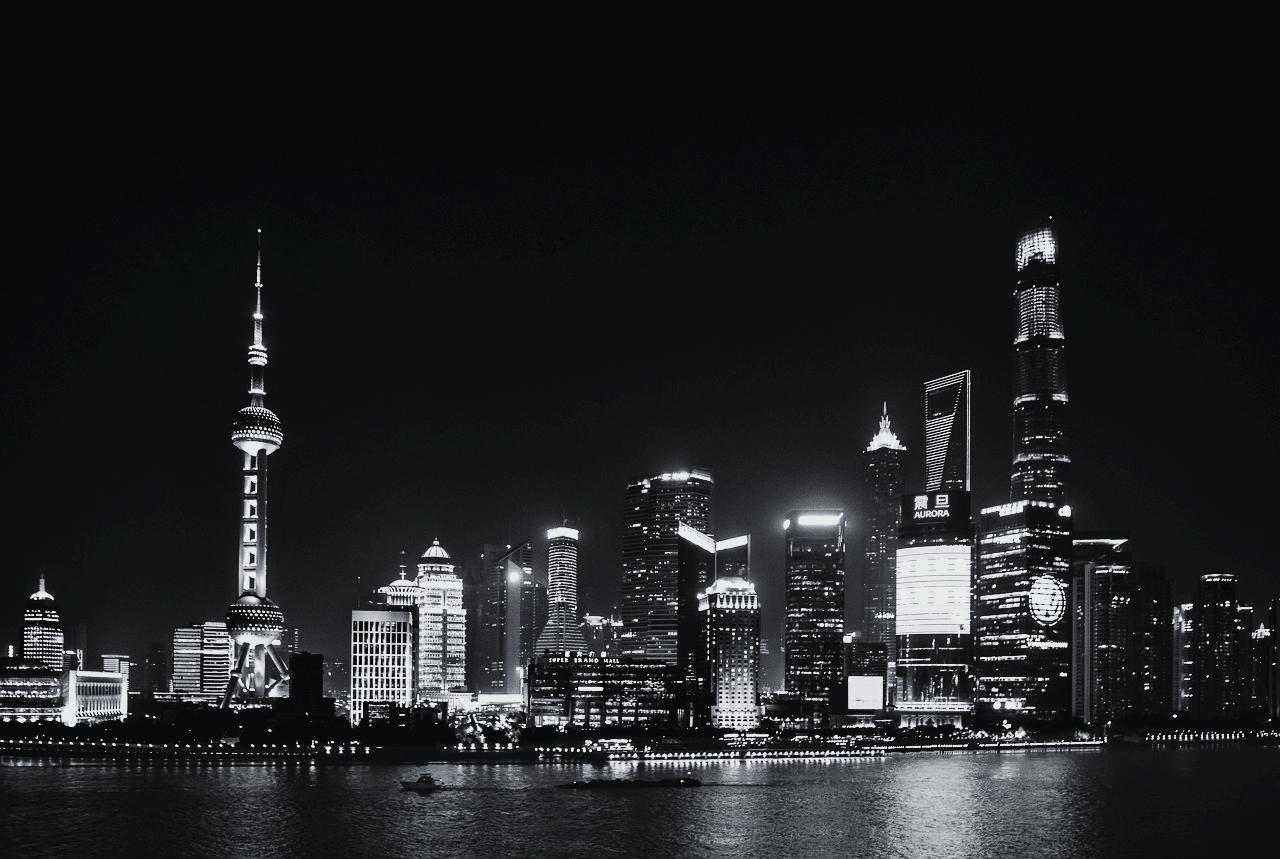
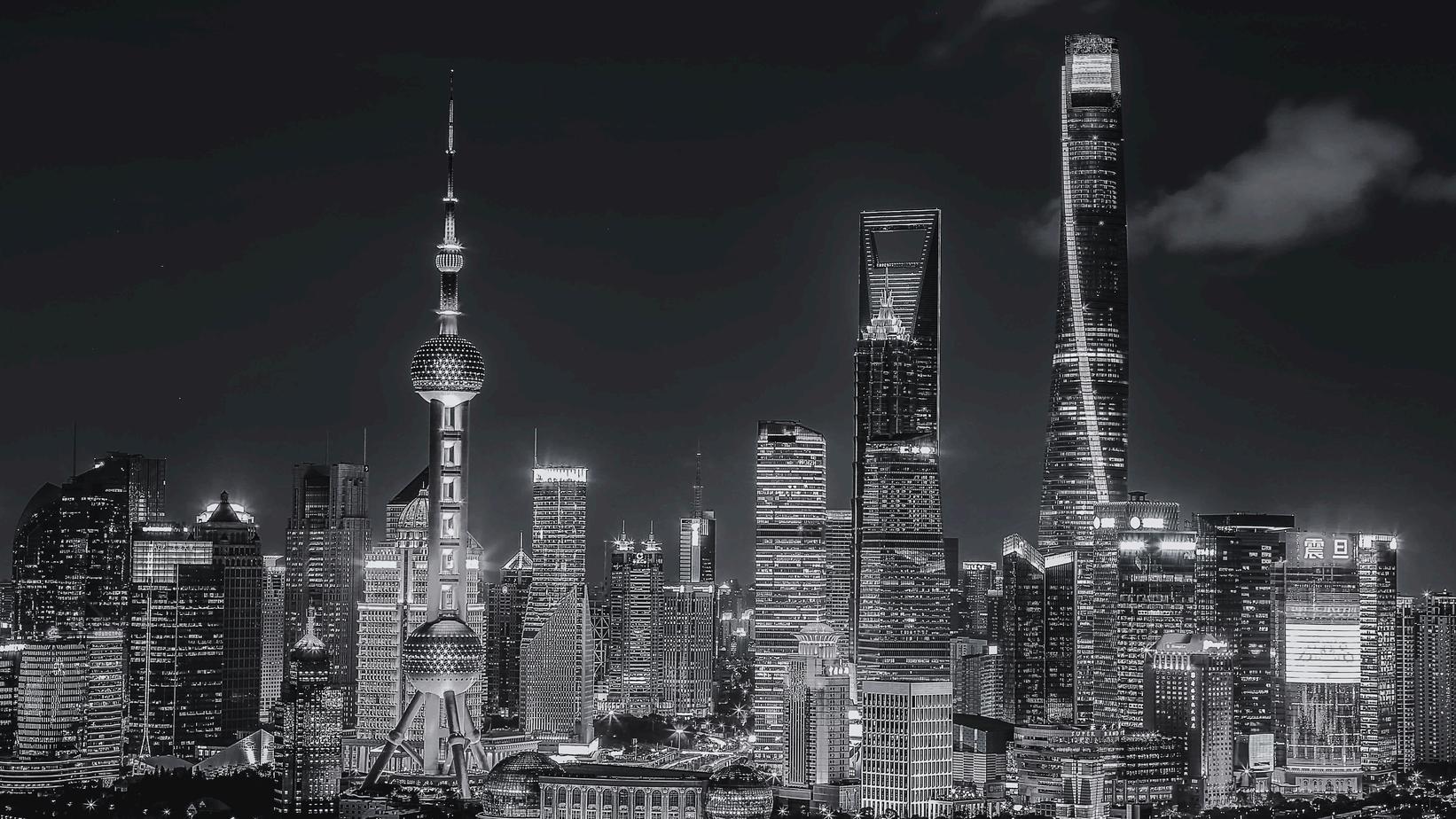
, g p ( ) cities of Shenzhen, Guangzhou, and Shanghai Signalling the comeback of Shanghai to the global stage was Pudong’s urbanisation – conquering both sides of the Huangpu – where glinting, cloud-kissing skyscrapers started soaring, as if taking turns Icons such as the Oriental Pearl Tower and the Jinmao Tower embodied the reorientation of the nation’s economic standing, from being conservative and isolated to removing barriers for international engagement This period also marked the reemergence of foreign investment, thanks to the government encouraging private entrepreneurship and giving tax incentives The concrete foundations of Shanghai’s society allowed the city to flourish at an unimaginable speed Rooted in the egalitarian principle that By the end of the 1990s, (when the Pudong development was at its peak) China had emerged as a crucial driver of the world economy, transforming as a hub of manufacturing, trade, and investment
"As wealth poured in and the skyline shimmered brighter each year, Shanghai became the face of China's 21st-century economic dream."
5th paragraph of “Shanghai: An Embodiment of China’s Meteoric Development”
economically, mirroring Chinas growing influence on the global stage Pudong, once farmland, now dazzled with structures such as the Shanghai World Financial Centre and the Shanghai Tower, rising skyward one by one like declarations of ambition Hosting the 2010 World Expo solidified the city’s status as an international metropolis – a space where tradition danced with modernity Foreign enterprises flooded in, innovation parks multiplied, and the service economy flourished Shanghai was no longer just participating in China’s growth - it was leading it Elevated highways, a sprawling underground network, and glittering business districts painted the portrait of a metropolis redefined As wealth poured in and the skyline shimmered brighter each year, Shanghai became the face of China’s 21stcentury economic dream – confident, connected, and unstoppable
As seen above, Shanghai has risen from a once-neglected fishing village to every modern city’s aspiration The secret behind this transformation lies in the courage and pioneering spirit the city has embodied – always choosing to lead In truth, Shanghai had no choice but to be first: the first to confront Western powers, the first to reopen to the world, the first to shine as a beacon of China’s revival Time and again, circumstances compelled Shanghai to set an example for the rest of the nation – and “The Pearl” answered to that call To say that Shanghai reflects the rise of China would be an understatement China awakened from centuries of slumber She rose with purpose, and the world watched her transformation, thanks to the significant role Shanghai has played