
Privacy-First Marketing Building Customer Trust in a Data-Driven World
Understanding how businesses can market effectively while respecting user privacy — and why it matters more than ever.

DIGITAL MARKETING INSTITUTE IN I NDIA


What is Privacy-First Marketing?
Privacy-first marketing is a strategy that prioritises protecting customer data while delivering personalised and meaningful marketing experiences. It focuses on transparency, user consent, and responsible data collection.

Respect Privacy
Honour customer data rights at every touchpoint.

Obtain Consent
Collect data only with clear, informed user permission.

Stay Transparent
Be open about how data is used and shared.

Protect Information
Safeguard personal data with robust security measures.

Build Long-Term Trust
Foster stronger, lasting relationships with your audiences.
Why Privacy-First Marketing is Important
Consumers are becoming more aware of how their personal information is collected and used. Companies that prioritise privacy are more likely to earn customer confidence.

Builds Customer Trust

Transparent practices earn lasting confidence.
Enhances Brand Reputation
Privacy leadership differentiates your brand.
Improves Customer Loyalty
Respected customers return and advocate.
Reduces Legal Risks
Compliance minimises penalties and exposure.
Encourages Ethical Marketing
Responsible practices build sustainable growth.
Increases Retention
Trust drives long-term customer retention.
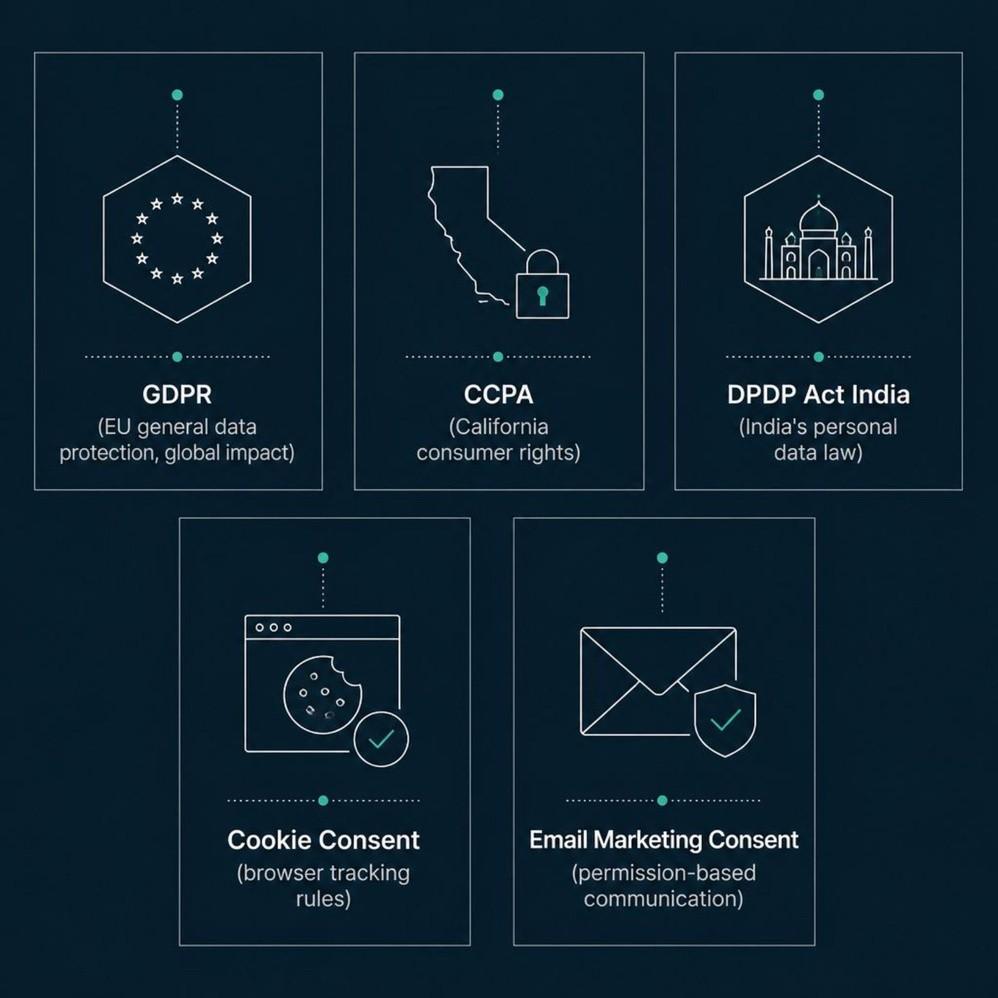
Key Privacy Regulations
Businesses must comply with data protection laws when collecting customer information. Following these regulations helps avoid penalties and maintain customer trust.
Why Compliance Matters
Regulatory frameworks are expanding globally. India's DPDP Act, alongside GDPR and CCPA, sets clear expectations for how customer data must be handled.
Non-compliance can result in significant fines and lasting reputational damage.
First-Party Data vs Third-Party Data
Modern marketers are shifting towards first-party data as third-party cookies become less effective and privacy regulations tighten.
Dimension
First-Party Data
Third-Party Data
Source Collected directly from customers Purchased or collected from external sources
Accuracy Higher accuracy and relevance Lower reliability
Consent User consent is obtained Limited transparency
Privacy Privacy-friendly Increasingly restricted

First-party data is the foundation of a sustainable, privacy-compliant marketing strategy.
Best Practices for Privacy-First Marketing
To build trust while achieving marketing goals, ethical data handling is essential.

Obtain Clear User Consent
Use plain language and avoid pre-ticked boxes.
Use Secure Data Storage
Encrypt and protect customer data at every stage.
Collect Only What's Necessary
Gather minimum data required for your purpose.
Be Transparent About Privacy Policies
Make policies easy to find and understand.
Give Users Control Over Their Data
Allow access, correction, and deletion requests.
Use First-Party Data Strategies
Build direct relationships to collect owned data.
Regularly Review Compliance Practices
Audit processes as regulations evolve.
Challenges in Privacy-First Marketing
Businesses may face several challenges as they adopt privacy-focused strategies. Despite these obstacles, privacy-first approaches create sustainable marketing success.


Reduced Third-Party Data Access
Cookies and tracking are being phased out by major browsers.


Personalisation vs Privacy
Delivering relevant experiences without intrusive data collection.

Evolving Regulations
Laws are changing rapidly across global markets. Maintaining Customer Insights
Accurate audience understanding requires new methodologies.
Future Trends in Privacy-First Marketing
Businesses that embrace these trends will remain competitive and trustworthy.

Cookieless Advertising
Identity-free targeting replacing third-party cookies.

AI-Powered Privacy Solutions Machine learning enabling personalisation without raw data exposure.

Secure Customer Identity

Greater Transparency
Privacy-enhancing technologies for safe identity management.
Clearer communication about data collection and usage.

Contextual Advertising
Placing ads based on content, not user tracking.
Career Opportunities in Privacy-First Marketing
As organisations prioritise ethical marketing and data protection, demand is growing for professionals with privacy-aware marketing skills.
Why This Matters for Your Career
Digital Marketing Specialist
Marketing Automation
Executive
CRM Manager
Data Privacy Analyst
Students at a Digital Marketing Institute in India gain practical knowledge of privacy-first marketing, data protection principles, customer relationship management, and ethical digital marketing practices — preparing them for future-ready careers.

Privacy-compliant skills are among the most soughtafter in today's digital marketing landscape.
Compliance Officer
Customer Experience Manager
Marketing Consultant
Key Takeaways
1 Privacy is a competitive advantage Businesses that respect user data build stronger trust and loyalty.
2 First-party data is the future Invest in direct customer relationships and owned data strategies.
3 Compliance is non-negotiable GDPR, CCPA, and India's DPDP Act set the baseline for responsible marketing.
4 Stay ahead of the curve
Embrace cookieless advertising, AI privacy tools, and contextual strategies now.
Privacy-first marketing is not a constraint — it is an opportunity to build more meaningful, sustainable connections with your audience.