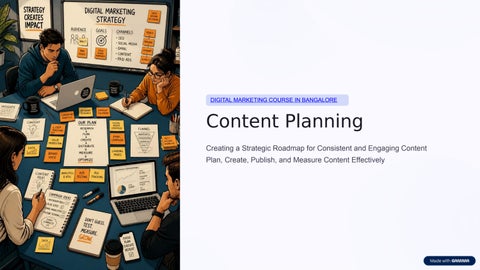

Content Planning
Creating a Strategic Roadmap for Consistent and Engaging Content
Plan, Create, Publish, and Measure Content Effectively


What is Content Planning?

Content planning is the process of organising, scheduling, and managing content to achieve specific marketing goals. A well-planned strategy helps businesses publish relevant and valuable content consistently across multiple digital channels.
Why Content Planning Matters
A structured plan consistently outperforms ad-hoc content creation. Here's why it's essential:

Consistent Publishing
Maintains a regular schedule, keeping your audience engaged and returning.

SEO Performance
Supports search rankings through keyword-aligned, quality content.

Saves Time & Resources
Eliminates last-minute scrambling with advance planning and clear ownership.

Builds Audience Trust
Consistent, valuable content aligns with business objectives and earns loyalty.

Steps in Content Planning
Types of Content
Using multiple formats keeps your content fresh and appeals to different audience preferences.

Written Content
Blog posts, e-books, case studies, and email newsletters that educate and inform.

Visual & Video Videos, infographics, Instagram Reels, and YouTube Shorts for high engagement.

Audio & Live Podcasts, webinars, and live sessions that build community and authority.

Social & Testimonials
Social media posts and customer testimonials that drive trust and shares.
Creating a Content Calendar


Content Topic & Target
Keyword
Campaign Objective
Publishing Date & Platform
Content Format
A content calendar is the backbone of any successful strategy. It organises publishing activities, assigns ownership, and ensures nothing falls through the cracks.
Responsible Team Member
Best Practices for Content Planning

Understand Your Audience
Research their needs, pain points, and content preferences before creating anything.
Focus on Original, Valuable Content
Prioritise quality and relevance over quantity to build lasting authority.
Apply SEO Best Practices
Use keyword research, meta tags, and internal linking to boost discoverability.
Maintain a Consistent Brand Voice
Ensure all content reflects your brand's tone, values, and messaging.
Repurpose & Update Content
Refresh older content and adapt high-performers into new formats for extended reach.
Include Clear CTAs
Guide your audience with purposeful Calls-to-Action in every piece of content.
Measuring Content Performance
Tracking the right metrics helps you understand what's working and refine your strategy for better results.
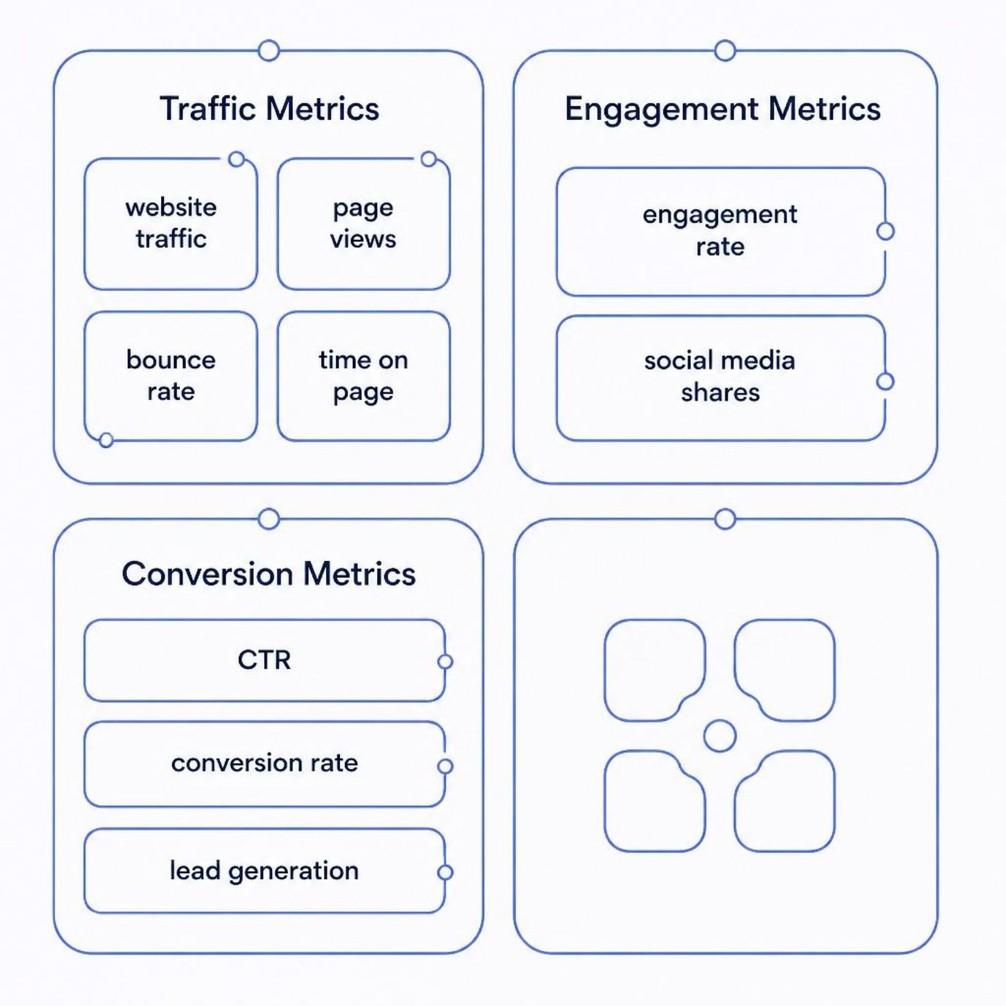
Why Metrics Matter
Data-driven insights allow you to:
• Identify your highest-performing content
• Spot gaps and opportunities in your strategy
• Justify marketing investment to stakeholders
• Continuously improve future content planning
Regular performance reviews should inform every new content cycle.
Content Planning for a Digital Marketing Course in Bangalore
A well-planned content strategy helps attract prospective students, improve search visibility, and establish authority in the education sector.

SEO Blog Articles
Keyword-focused posts on digital marketing careers and skills.

Educational Videos
Tutorials, Reels, and YouTube Shorts showcasing course value.

Student Success Stories
Real outcomes that build credibility and trust with prospects.

Email Campaigns & Webinars
Nurture leads with targeted emails and live sessions.

FAQs & Career Guides
Answer common questions about digital marketing careers.
Conclusion
Content planning is a critical component of digital marketing success. By setting clear goals, understanding your audience, using a content calendar, and measuring performance, businesses can improve their online presence and achieve sustainable growth.
Plan Strategically
Define goals, audience, and keywords before creating content.
Stay Consistent
Use a calendar to maintain regular, high-quality publishing.
Measure & Optimise
Track metrics and refine your approach for continuous improvement.
For institutions offering a Digital Marketing Course In Bangalore, a strong content strategy can attract more students, enhance brand credibility, and support long-term business growth.