In today’s digital era, Artificial Intelligence (AI) plays a vital role in shaping the modern cyber world. From protecting sensitive data to detecting threats in real time, AI has become the new front line of digital defense. This magazine explores how AI is being used to prevent and handle cyberattacks, as well as its growing impact on cybersecurity in Malaysia and beyond. I hope all readers enjoy this magazine and gain a lot of information about the power of AI in keeping our digital world safe.
INTRODUCTION &
EDITOR’S LETTER
“Just like Artificial Intelligence, don’t learn only to collect information learn to understand patterns, to think critically, and to improve with every mistake”
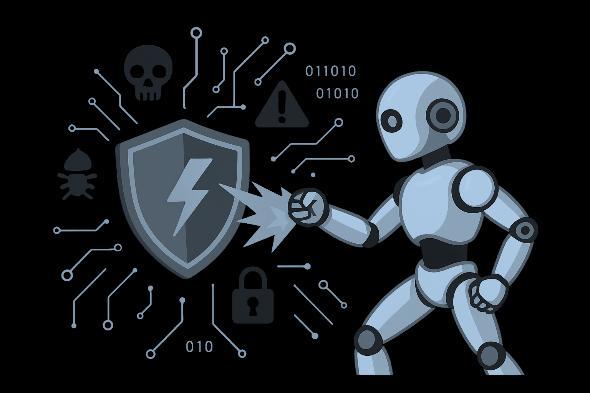
AIin cybersecurity refers to the use of smart computer systems that can think, learn, and make decisions to protect digital information. Instead of waiting for humans to detect problems, AI can automatically find and stop cyber threats in real time.
AI helps cybersecurity systems to analyze data, detect unusual patterns, and predict possible attacks before they happen. For example, if a hacker tries to access a company’s data, the AI system can recognize the suspicious activity, block it, and alert security teams immediately.
Unlike traditional antivirus software that only detects known viruses, AI can identify new and unknown threats by learning how normal systems behave. When something unusual happens, it quickly takes action to prevent damage.
In short, AI in cybersecurity acts like a digital guard that never sleeps. It continuously monitors networks, learns from past attacks, and improves itself to keep data safe from hackers.
How AI fight cyber threats
Every day, millions of cyber threats attack computers, phones, and networks all around the world. Hackers create smarter viruses, fake emails, and even deepfakes to steal data. Luckily, Artificial Intelligence (AI) has become a powerful defender against these modern dangers.
AI doesn’t just wait for an attack to happen, it predicts and prevents it. By studying data from past attacks,AI learns how hackers operate and uses that knowledge to stop future ones. Here are some ways how AI fight cyber threats
Enhanced Threat Detection
AI systems establish a baseline of normal network and user behavior by analyzing vast amounts of data. Any deviation from this norm such as unusual login attempts, large data transfers at odd hours, or abnormal file modifications is immediately flagged as a potential threat, including zero-day attacks that traditional signaturebased systems might miss
Phishing and Spam Detection
AI-driven tools analyze the content, context, sender information, and metadata of emails to identify and block sophisticated phishing attempts and spam. Natural Language Processing (NLP) helps systems recognize the subtle signs of social engineering, such as urgent tone or unusual wording.
Threat Intelligence and Prediction
AI processes and interprets massive volumes of data from global threat reports, security blogs, and malware databases to identify trends and forecast future attack scenarios. This allows organizations to move from a reactive to a proactive defense strategy
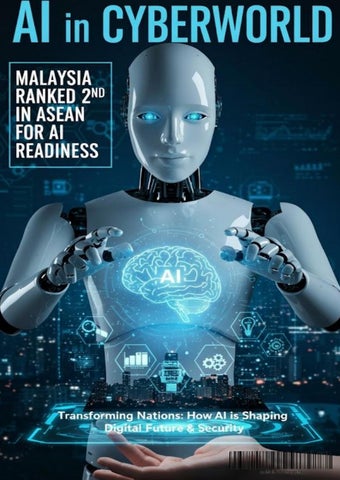
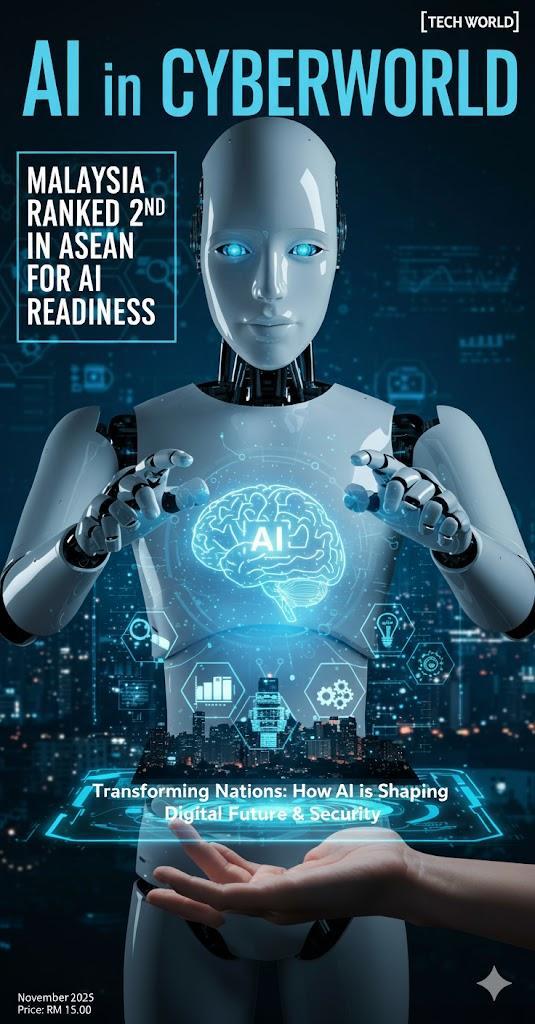
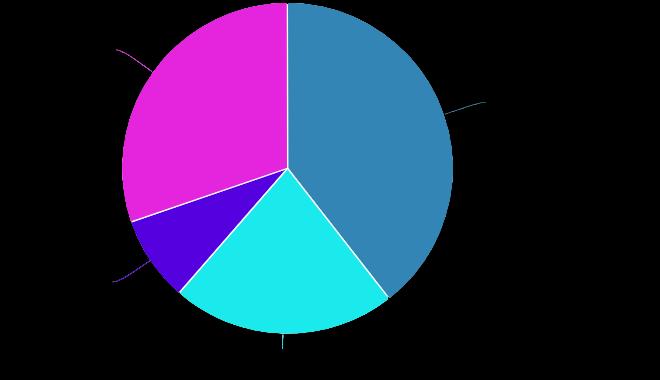
MALAYSIA RANKED
2ND IN ASEAN FOR AI READINESS
Top Uses Ai in cybersecurity
“In dealing with terrorism, we cannot work alone. If Malaysia refuses to share intelligence, we will lose sight of activities from abroad, including Al-Qaeda elements or foreign terrorists entering the country.
“PDRM enters new phase using AI to tackle online terror threats”
The Royal Malaysia Police (PDRM) is entering a new phase in its efforts to combat terrorism by leveraging on artificial intelligence (AI) technology to strengthen investigations, rehabilitation, and monitoring of extremist activities in cyberspace.
Deputy Inspector-General of Police Tan Sri Ayob Khan Mydin Pitchay said the use of AI is seen as a strategic step in facing terrorist threats, which are now increasingly shifting to online platforms.
“We have taken the initial steps to utilise AI for the benefit of the country in the context of investigations, detecting terrorist elements, and intercepting ideologies that are now spreading via social media,” he said.
“The Home Affairs Ministry (KDN) and PDRM have entered a new phase in exploiting AI to address terrorism issues,” he told reporters after attending a closed discussion on the publication of a special book regarding counterterrorism here last night.
“Many more departments within the Royal Malaysian Police will transition to using AI to assist with investigations, recovery and monitoring in cyberspace.”
He said this when asked to comment on the proactive approach of the security forces in curbing the spread of extremist ideology in the new era.
REFERENCES
1. What is AI for cybersecurity? | Microsoft Security. (n.d.). https://www.microsoft.com/enus/security/business/security-101/what-is-ai-for-cybersecurity
2. Artificial intelligence (AI) in cybersecurity: The future of threat defense. (n.d.). Fortinet. https://www.fortinet.com/resources/cyberglossary/artificial-intelligence-in-cybersecurity
3. https://www.cybersecurity.my/
4. Mail, M. (2025, October 28). Ayob Khan: PDRM enters new phase using AI to tackle online terror threats. Malay Mail. https://www.malaymail.com/news/malaysia/2025/10/28/ayobkhan-pdrm-enters-new-phase-using-ai-to-tackle-online-terrorthreats/196249?utm_source=chatgpt.com#google_vignette