RAPID TOURER
BMW’s latest R 1300 RT blends long-haul comfort with sharper handling, refined electronics and a torquey Boxer twin. We put it through its paces two-up across Europe to see how it stacks up.
WORDS NIGEL PATERSON PHOTOS KIRRILY VINE
The new R 1300 RT is the latest in a long line of BMW touring motorcycles, stretching back to the mid-70s… so a lot longer than I’ve been riding. For my entire adult life they have pretty well always been there, an option for the well-heeled to own a motorcycle built to carry two people in comfort with huge load capacity and legendary — although some might argue mythical — reliability.
The new R 1300 RT is simply the latest version of that ethos, and it carries with it a five-year warranty, the best in the
motorcycling world and one which does go some way to skewer the idea that BMWs are less reliable than they once were or haven’t kept pace with the competition.
In five years you could do an awful lot of miles on an R 1300 RT — it’s the sort of bike where 1000km days aren’t as onerous as they might be, a bike where weather conditions don’t hamper safety and enjoyment as much as they can, and where adding a passenger means you can have all this fun with a friend, without the compromises that often come with a warm body on the back seat.
THE CHANGES
BMW focused on making the R 1300 RT a better touring bike with things like adjustable weather protection, convenient luggage integration, passenger suitability and ergonomics. At the same time, BMW also endeavoured to make the bike quicker and better handling, with a new chassis, upgraded suspension, lighter wheels and loads of tech.
The engine produces about 9hp more than the old 1250, now 107kW (145hp) at 7750rpm and maximum torque of 149Nm at 6500rpm, which means there’s plenty of grunt available both for relaxed two-up freeway travel and spirited solo runs on winding roads with the revs close to redline.
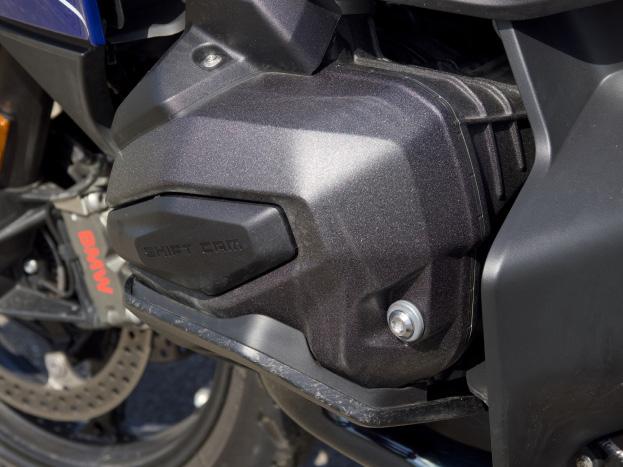
The ShiftCam technology we saw in the 1250 is retained and refined in the R 1300 RT’s engine, varying valve timing and lift for superior performance and smoothness, while also improving fuel consumption and reducing emissions through more complete combustion. The new engine also features increased compression (13.3:1 compared to the R 1250 RT’s 12.5:1) and larger valve diameters (44mm intake, 35.6mm outlet).
On the downside, the bike isn’t significantly lighter than its predecessor, is even more complex, and still doesn’t have Apple CarPlay or Android Auto.
THE MODELS
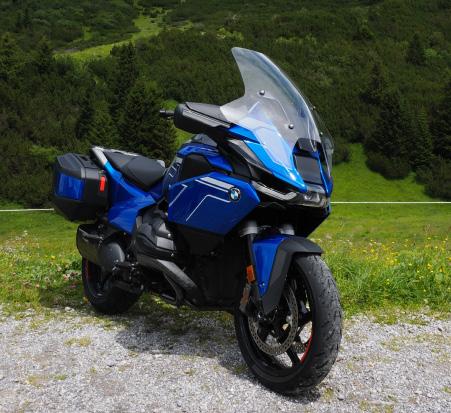
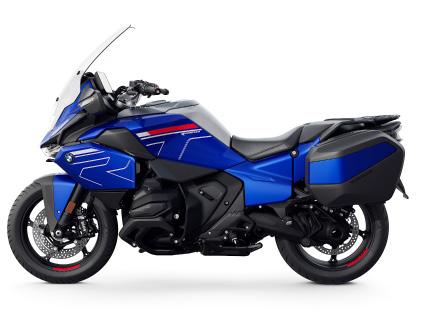
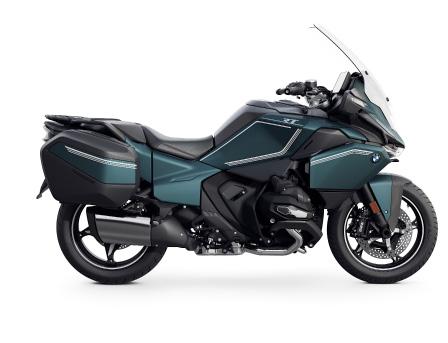
For the 2026 model year, there are four models to choose from, each only available in a single colour with relatively minor differences — usually in the materials used for the muffler, screen height, or standard versus comfort seat options.
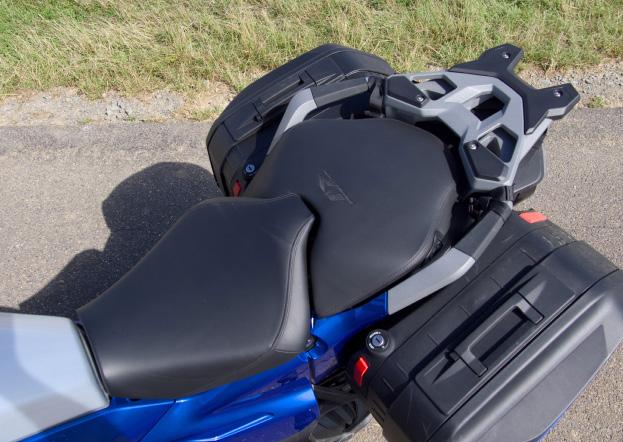
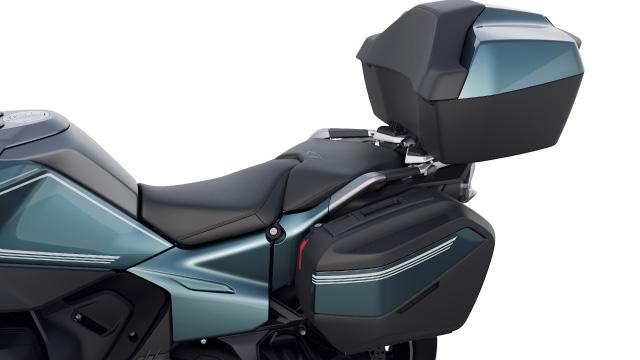
The top-of-the-line Option 719 Edition has the Passenger Comfort Package as standard
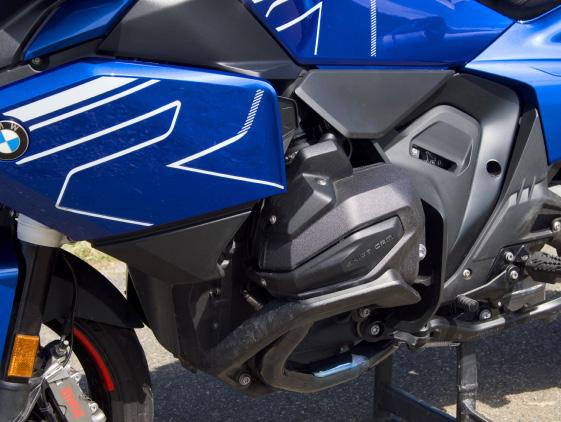
The boxer twin makes a claimed 107kW and 149Nm
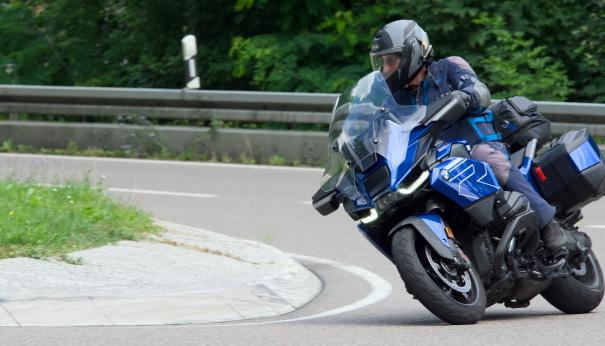
There’s no doubt its an imposing beast… but it’s really easy to ride
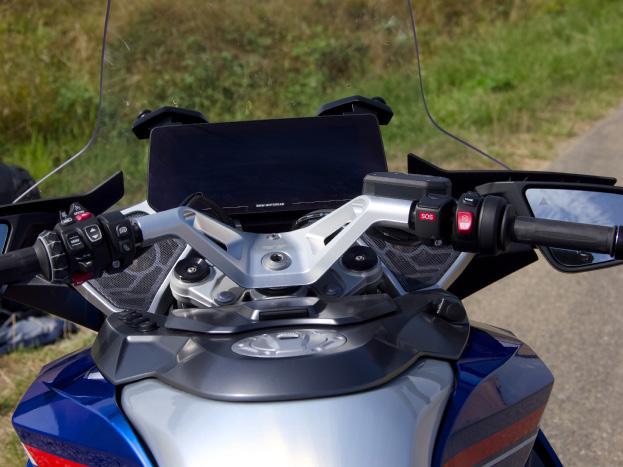
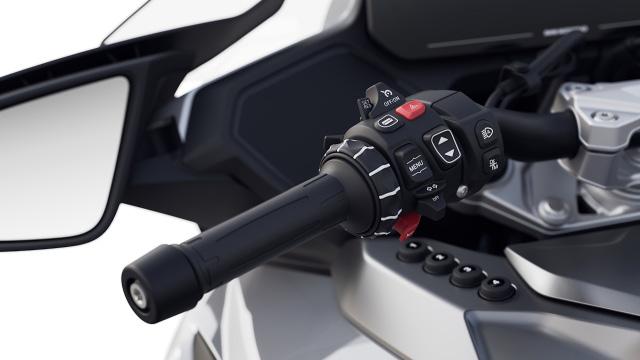
Several controls can be tailored to user preferences

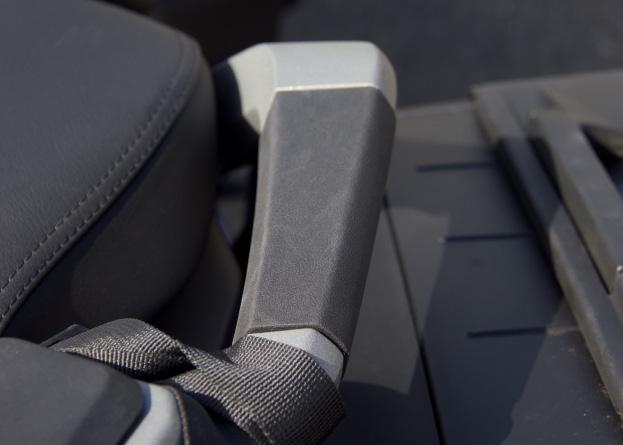
(a $2380 option for other models), which includes a top case with heated backrest, rack for the top case with heated passenger grab rail, comfort seats for both rider and passenger, plus comfort footrests for the passenger.
Ride-away pricing starts with the base model in Alpine White at around $43,000, stepping up through the Impulse at $44,000 and Triple Black at $46,000, to the Option 719 Edition at around $48,000. I’ve used approximate prices because on-road costs vary state-by-state — check the BMW website for exact pricing based on where you live.
All Australian-spec bikes are essentially fully optioned up, except for two things — the top case (only available as part of the Passenger Comfort Package) and the Automated Shift Assistant, aka the auto transmission — a $1380 add-on for all models.
ERGOS, COMFORT AND A HEATED GRAB RAIL
Yep, you read that right — the passenger grab rail on our test bike was heated, though we didn’t have the top case with heated backrest as one wasn’t available at the time of testing. Kirrily loved the heated seat and grips, but found the seat heating switch awkward to reach with the heated rail in place. Overall passenger comfort didn’t quite match the K 1600 GTL, but she still rates the RT as a great bike for two-up riding.
For the rider, there are two seat height positions and three seat options — low, standard and tall. I would have loved the taller seat, as I found the seat-to-footpeg distance tight even in the high position, but this is a minor quibble. I’d opt for the tall comfort seat if buying one, and also prefer a slightly higher handlebar for touring comfort. Commendably, BMW offers a kit to fit a standard tubular handlebar (standard on the Triple Black variant), and aftermarket companies are already offering riser kits for the stock ’bar.
ON THE ROAD
If your perception of a BMW RT is one of a long, heavy, slow-steering and ponderous twin that tries to twist itself in knots if you blip the throttle at traffic lights, maybe it’s time to take something built in the last decade or so for a test ride — they aren’t like that anymore.
Recent generations of Boxer-powered RTs have been getting more and more capable of sportier riding, without bothering with a sports riding position or being built to chase modern high performance — it’s more about getting
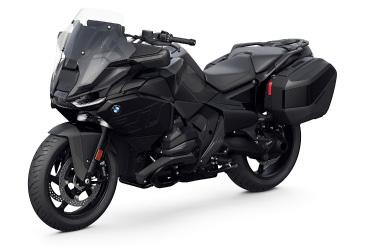
Triple Black model is one up from base spec
Supremely comfortable solo and two-up
the best they can out of a bike that is primarily built for comfortable touring.
BMW’s engineers have taken it to a new level with the 1300 RT. A new sheet steel main frame that’s more compact and stiffer than the 1250’s chassis, combined with a tubular aluminium lattice rear subframe and more compact shaft drive unit, helps improve mass centralisation. Those changes, plus lighter wheels and upgraded suspension, mean the new bike not only gets from corner to corner quicker, but also lets you go around those corners faster, if that’s what you want.
Dynamic ESA is standard, and all Aussie models have Dynamic Chassis Adaptation (DCA) electronic suspension. This system allows for two rider-selectable ride height positions, providing maximum spread between ride comfort and dynamic handling, along with dynamic adjustment of damping, spring rate and load equalisation.
SPORTY TECH
Switch your R 1300 RT riding mode to Dynamic or Dynamic Pro and the suspension stiffens up, raising the ride height at the rear by 30mm and the front by 8mm — which in turn reduces rake and makes the steering quicker. This is Dynamic Chassis Adaptation, an electronic system designed to offer a sportier ride when you want it without forcing it on you all the time.
It adjusts damping, spring rate and load equalisation. In Road, Rain and Eco modes you’ve got a bike that prioritises stability and smoothness; in Dynamic and Dynamic Pro there’s firmer damping and a higher spring rate, resulting in more cornering clearance, sharper steering and a sportier ride. It also automatically lengthens and shortens the suspension as you pass through 20km/h, so it’s not extended, making getting your feet on the ground easier when you stop.
I liked the Dynamic modes when riding solo and having some fun, but not so much two-up, where I found Road mode gave me a great balance of comfort, speed and handling.
BMW’S ENGINEERS HAVE TAKEN IT TO A NEW LEVEL WITH THE 1300 RT… THE NEW BIKE NOT ONLY GETS FROM CORNER TO CORNER QUICKER, BUT ALSO LETS YOU GO AROUND THOSE CORNERS FASTER
NO CLUTCH LEVER HERE!
The test bike was equipped with BMW’s Automated Shift Assistant (ASA), which is essentially an automated system to engage the clutch and shift gears — it’s not an automatic gearbox like you’d find in most cars.
There’s no clutch lever, but there is a conventional foot lever. In operation, the rider selects auto or manual and the bike takes over shifting either completely or you choose the gear, but without needing to operate a clutch. I believe this is the future, but I have some caveats. Almost no luxury cars are sold with manual transmissions these days; they have auto transmissions with paddle-shift manual override.
The auto setting worked well plodding through German towns and was surprisingly effective when chasing other riders on unfamiliar winding roads. However, I wasn’t as keen on it in two-up touring mode. At cruising speeds on country roads, the auto seemed to lug the engine more than I liked, running the revs down to the point where the bike would
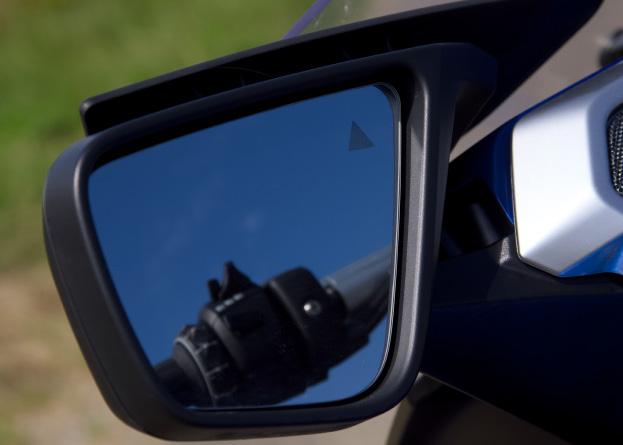
The heated grips get bonus points from pillions Integrated mirrors provide a good view to the rear
The Impulse spec gets the dark chrome treatment
THE COMPETITION
Yamaha FJR1300AE
Price: $34,949 ride away
Engine type: 1298cc liquidcooled, 4-stroke, DOHC, forward-inclined inline
4-cylinder Power: 105kW (141hp)
at 8000rpm
Torque: 134Nm at 7000rpm
Transmission: 6-speed, assist & slipper clutch, shaft final drive
Fuel capacity: 25L
Wet weight: 292kg
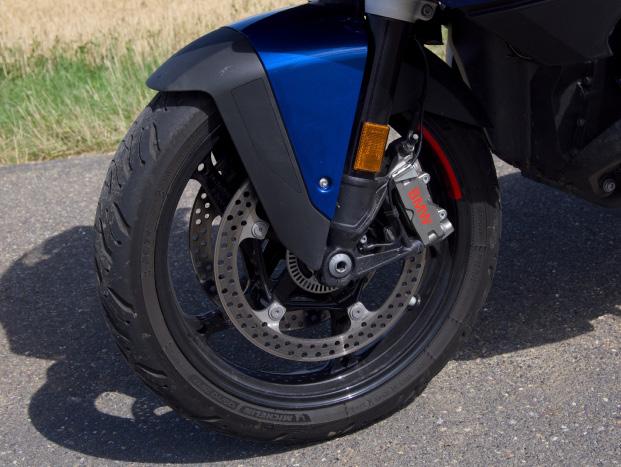
Front-end feel is great thanks in part to EVO-Telever

With ASA you can leave the gear lever alone in Auto mode
Heated seats and heated grab rails – nice
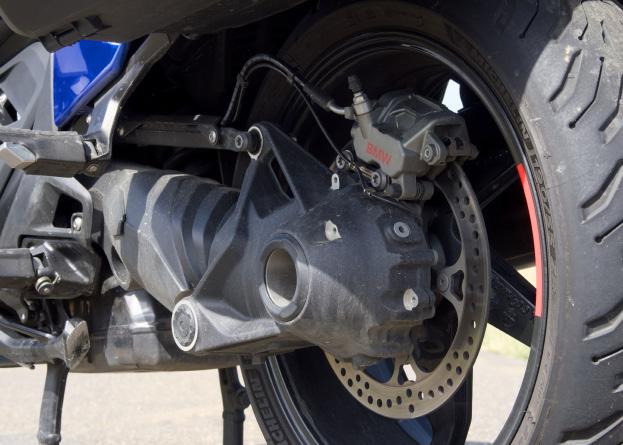
Shaft drive means no messy chain oil
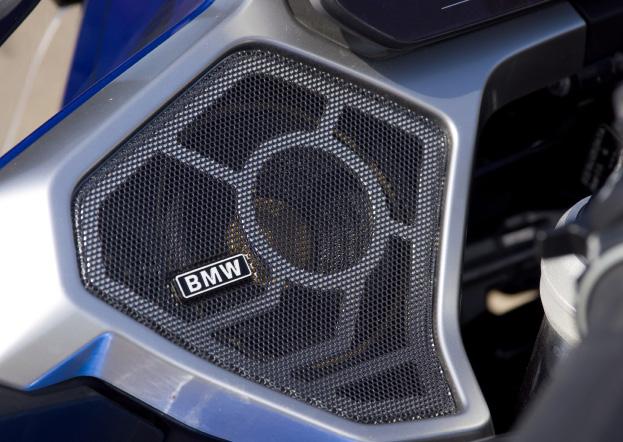
There are two powerful speakers up front
shake and feel breathless if the throttle was gently cracked open. A gear lower would pull cleanly without the annoying vibration.
I got into the habit of simply pushing the lever down once before trying to accelerate, just to get the revs into the midrange. Later I discovered this isn’t the same issue when riding solo, because the reduced load meant cleaner roll-on acceleration. I’m calling this a firstgeneration issue, something that will improve with future iterations of the technology.
TWO-UP TOURING
In addition to those sporty solo rides, our test of the R 1300 RT involved extensive two-up travel — chasing fast locals through the Austrian Alps who knew the roads well, getting stuck in European summer traffic, enjoying the lack of speed limits on some German autobahns, staying chilled while being careful on wet cobblestones through ancient towns, but mostly just loving the smooth roads, long days and pleasant weather Central Europe offers at the right
time of year. For this sort of riding, I can’t think of a bike I’d have preferred over an RT.
The bike is well suited to fast touring on all sorts of roads. It’s comfortable on freeways — we had a fast run back to Munich on the autobahn trying to outrun a weather front, and succeeded thanks to the lack of speed limits on many stretches and the bike being very comfortable and safe at 160-170km/h.
The new RT is fitted with Dynamic Cruise Control (DCC) with braking function — it will actually apply the brakes if the bike exceeds the set speed by too much when going downhill. All Australian models have Active Cruise Control too; the radar unit at the front monitors the speed of vehicles ahead and maintains distance, plus provides emergency stopping if required — which may not prevent a crash, but it’ll likely reduce its severity. As part of the package, there’s also Front Collision Warning (FCW), Lane Change Warning (SWW), and Rear End Collision Warning (RECW).
Most of the time we went looking for winding roads though, with the Austrian mountains
now a favourite riding area. Less well known than the Swiss Alps or Italian Dolomites, these roads were surfaced like race tracks, offered great visibility through corners and usually had good overtaking opportunities — but don’t go during European holiday season when they get choked up with campervans. Go shoulder season and risk a bit of wetter, cooler weather.
The latest Boxer engine is a tiny bit lacking off the bottom — I suspect for emissions reasons — but has a strong midrange where you’ll spend most of your time. The top-end is good too, but doesn’t offer the rush of, say, a Ducati twin’s top-end… but this is a touring bike. There’s heaps of torque available, and with the quality suspension, this machine can be hustled along a lot faster than most people expect, and way faster than even most of the relatively generous European speed limits. I find it rather funny that so many Australians think of RTs as slow touring bikes, associating them more with American Grand Tourers, but the reality is that recent models, and especially the new 1300, are really comfortable sports-tourers. The RT has similar power and more torque than an FJR1300; it’s not that far behind the Suzuki GSX-S1000GT, and if you were going to compare it to any Harley, it should be the new 17-inch-wheel Pan America, which isn’t that far away in power, torque or weight — but doesn’t have the weather protection or luggage which come standard on the other machines.
WHATEVER THE WEATHER
The new RT not only has an electric screen, it’s also got innovative fairing panels that can be pulled upwards (via a tab on the edge) to provide more leg and knee protection when
Plenty of stopping power
The ShiftCam engine is strong across the rev range
Top of the range Option 719
BMW’S R 1300 RT IS BIG, CAPABLE, EXPENSIVE AND NOT FOR EVERYONE — BUT IT IS CLOSER TO BEING WHAT A LOT MORE RIDERS NEED THAN I THINK THEY REALISE
the weather gets cool or wet. It’s a fabulous idea, especially for Australia, where bikes like the RT are often uncomfortably hot to ride in summer. Being able to manage the protection offered by your bodywork will one day be standard on all touring bikes, and this model might then be considered ground-breaking.
Add in heated grips and heated seats for both rider and pillion, and this is a bike which extends the riding season way beyond the norm, giving you more opportunities to ride and a better chance of staying comfortable if the weather turns against you without warning.
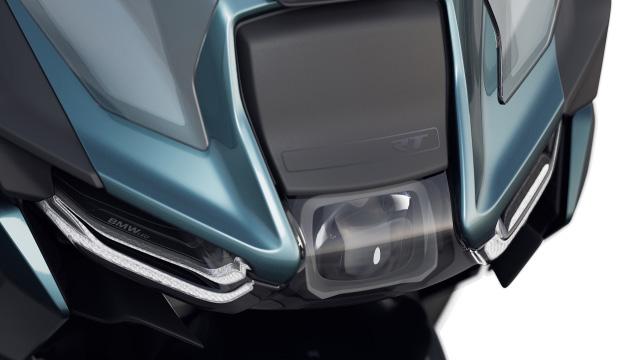
Built into the new fairing is a new LED headlight that adapts for corners and changes in fore/aft pitch.
LOAD HER UP…
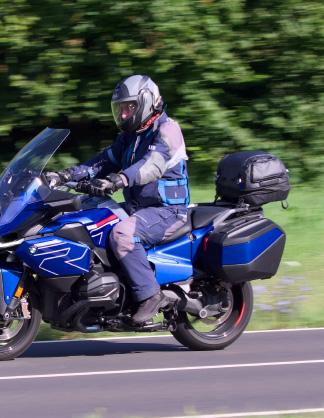
This is the first RT with standard powered Vario panniers; each box is easily switched from 27 to 33 litres capacity via a mechanical knob on the inside — the outer edge of the box simply slides out over the inner section to expand the box. We loved this — each time we had a few days in a location, we’d wind the boxes in because it looks neater and reduces the (already low) risk of clipping a pannier while filtering or parking. For getting from city to city, the boxes were fully expanded with the coffee machine, drone, hair straightener…
The convenience of central locking (hence the power, and there’s a power outlet in the left pannier) was fabulous, making the bike easy to lock up and leave or unlock and access our stuff.
We also had a BMW Black Collection Rear Bag (large), which was awesome — it expanded to 60L, was lighter than a top case, and was easily removed. I reckon we packed more for less weight than with a top case… but yes, it leaked a little when the weather turned on us.
On the tank is a compartment for your phone. You’ll need a short USB-C cable for power, and there’s a fan inside to keep it cool. I’m not sure if there are tank bags available which would let you access the phone compartment…
CONNECTIVITY AND NAVIGATION
BMW still doesn’t offer Apple CarPlay or Android Auto, pushing us toward its Connected Ride App — a frustrating, annoying
and dated system. It’s part of the reason for the rise of so many accessory CarPlay devices entering the market, with BMW owners in particular buying devices that slot into the BMW Navigation mount (an accessory for the RT) designed for the rather expensive BMW Navigators which run Garmin technology.
The Connected Ride App is okay for getting from point A to point B, and you can even choose a winding route. But planning a route… that’s frustrating as hell, when it’s even possible. Once configured, you then need to have it all running on your phone, get the bike connected, allow Wi-Fi and Bluetooth connections to your phone, and have a headset connected… it’s a pain in the arse. I think most owners will seek other solutions if on-bike navigation is required more than occasionally, and I think they should.
What is nice is the widescreen 10.25-inch TFT display, although learning how to operate it takes a little while. Once you know how, you can get loads of information about the bike (fuel level, range, consumption, tyre pressures, next service due etc), control your media (there are speakers in the fairing, or you can connect your headset), navigate with the help of your smartphone, and more.
This system debuted some years ago, and I think it’s time BMW upgraded… it all felt a little dated. Small things like not being able to control the volume through my headset because I was using a Sena rather than a
BMW unit, not being able to switch from a podcast to music, not being able to choose a new playlist… these are no deal breakers here, folks, just annoyances.
CONCLUSION
BMW’s R 1300 RT is big, capable, expensive and not for everyone — but it is closer to being what a lot more riders need than I think they realise. It’s far more capable in a sport riding guise than most are aware, while offering fabulous weather protection, great two-up capability, and options for seat heights from quite low to quite high.
If you don’t plan on doing dirt roads, an RT makes a wonderful bike for exploring Australia — it’s plenty fast enough for the long distances the country is famous for and has the capability to take one or two people in comfort on those journeys.
In many ways, I think its biggest competitor, at least in Australia, is its stablemate, the R 1300 GS. BMW’s iconic adventure bike is better in the heat and vastly better on loose surfaces, and probably better on the potholeridden back roads of Australia, too.
As an FJR1300 owner, I was impressed that BMW has managed to achieve similar performance from a Boxer twin to what Yamaha extracts from four cylinders at much higher revs — but the BMW is more relaxing thanks to fewer high-frequency vibrations, has better suspension, luggage and weather protection, and goes around corners more quickly, too.
Like most RTs before it, many will look at the price and turn away, but for those who do the miles, it offers value. It’s a great bike that not enough people will ever have the chance to discover. ARR
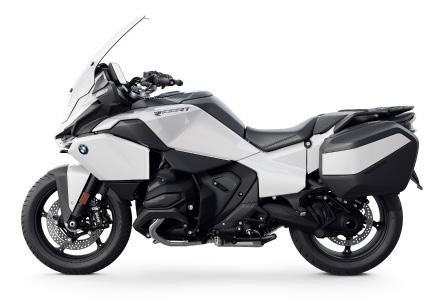
The base-spec model is still very well equipped
SPECIFICATIONS
ENGINE
Type: Air/liquid-cooled flat-twin (boxer) with BMW ShiftCam
Capacity: 1300cc
Compression ratio: 13.3:1
Fuel system: Electronic intake pipe injection / digital engine management with ride-by-wire throttle
PERFORMANCE
Maximum power: 107kW (145hp) @ 7750rpm
Maximum torque: 149Nm (110lb-ft) @ 6500rpm
TRANSMISSION
Type: 6-speed with optional Automated Shift Assistant (ASA)
Final drive: Shaft
Clutch: Wet multiplate, antihopping, hydraulically operated
CHASSIS
Frame type: Two-part frame with steel main frame and aluminium rear frame; engine as a stressed member
Front suspension: BMW
Motorrad EVO-Telelever with central shock absorber
Rear suspension: BMW
Motorrad EVO-Paralever with single-sided swingarm
Front brakes: Dual 310mm discs, 4-piston radial calipers, Full Integral ABS Pro
Rear brake: Single 285mm disc, 2-piston floating caliper

Front tyre: 120/70-ZR17
Rear tyre: 190/55-ZR17
Wheels: Cast aluminium
DIMENSIONS & WEIGHT
Wheelbase: 1500mm
Rake/Trail: 25.8° / 121.5mm
Seat height: 820-840mm (standard seat; optional seats available)
Wet weight: 281kg
Fuel capacity: 24L
ELECTRONICS & EQUIPMENT
Display: 10.25-inch full-colour TFT
Riding modes: Rain, Road, Eco, Dynamic, Dynamic Pro Suspension: Dynamic ESA (Electronic Suspension Adjustment), Dynamic Chassis Adaptation (DCA)
Cruise control: Dynamic Cruise Control (DCC) and Active Cruise Control (ACC)
Other features: Keyless Ride, Headlight Pro, heated grips, heated rider and passenger seats, full LED lighting, ASA Automated Shift Assistant
PRICE: From $39,990 + ORC
WARRANTY: 5 years, unlimited km
COLOURS: Alpine White, Triple Black, Impulse Blue, Option 719 Camargue
WEBSITE: https://www.bmwmotorrad.com.au/en/models/ tour/r1300rt.html
https://www.bmwmotorrad.com.au/en/ models/tour/r1300rt.html
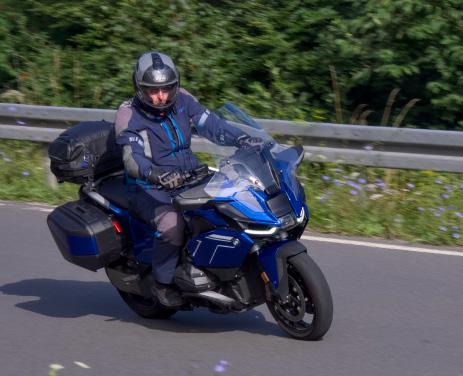
Loads of space for two and their luggage
handles