



High-sensitivity troponin testing has revolutionised our approach to diagnosing acute myocardial infarction in the Emergency Department (ED).
However, laboratory-based testing is currently failing to reduce length of stay (read the latest research here).
We now have lab quality high-sensitivity troponin tests available at the point of care (POC). These return results in less than 20 minutes.
The challenge for EDs is to use this technology to safely reduce waiting times and length of stay.





In February 2026, the NIHR HealthTech Research Centre for Emergency and Acute Care hosted an event to explore how we can best achieve this.
The event started with a pub quiz-inspired informal chat with clinicians, nurses, experts in laboratory medicine and industry partners.

We asked participants to describe their ideal POC troponin test in one word:

Burnley Urgent Care Centre has been using point of care troponin testing for 10 years, and staff would not go back.
You need a strong system to ensure quality control and calibration.
The key is to carefully define the patient pathway.

All of the delegates would consider adopting POC high-sensitivity troponin tests in the next 6 months.

Multiple stakeholders need to be involved: ED, cardiology, lab medicine, POC testing teams, specialist nurses.
The next day, we welcomed emergency clinicians, specialist nurses, cardiologists, experts in laboratory medicine, industry partners, and patient and public representatives to an event at CityLabs, Manchester.
Those attending had a chance to interact with POC testing devices, hear from experts in the field, and share their thoughts about the best possible care pathways to support point of care high-sensitivity troponin testing.

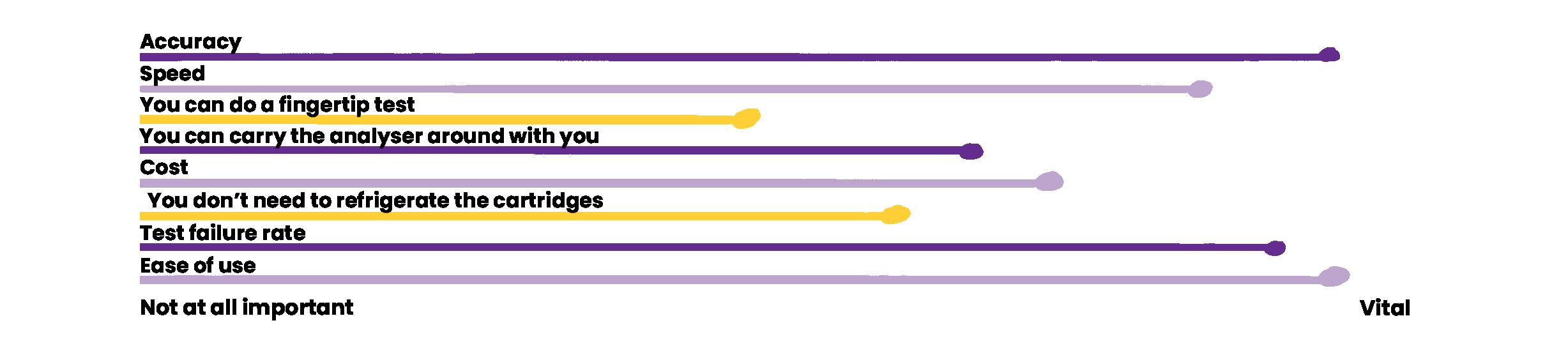
Delegates told us about the important features of a POC test.
We listened to patients and the public, they told us:
“Information is power”
Explain the results in plain English.
“If I presented with aortic aneurysm the test wouldn’t pick me up”
Pathways must be designed to ensure that other diagnoses are still considered. Staff must consider what did cause the symptoms, not just ‘heart attack ruled out’.
“A real challenge is how long it takes to get through into ED”
For example parking. EDs need to think about how to streamline the journey from a patient’s perspective, not just the ED’s perspective.
Where to put the tests. Top choices - Triage and ambulances.

Professional stakeholders told us:
Who should do the tests. Top choices - Clinical support worker or triage nurse.
Who should act on the tests. Top choices - Rapid assessment clinician or Emergency Physician in Charge.
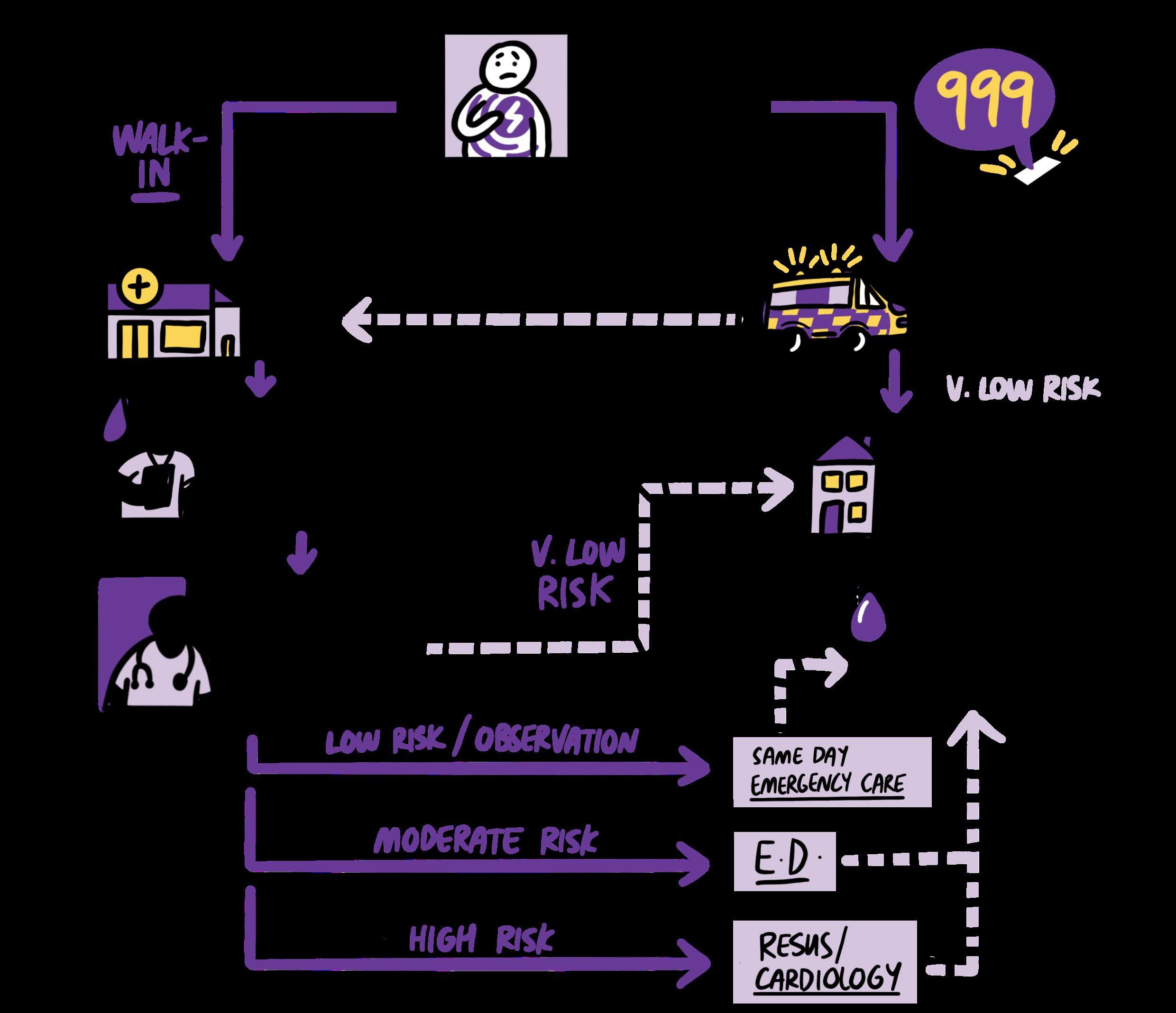

One size doesn’t fit all. Emergency departments across the UK serve differing populations. Budget restrictions exist and workforce challenges can restrict options.
NHS Trusts must consider how best to implement a new pathway within their local ecosystem.
Consultation is vital. Talk to Emergency Department staff, paramedics, Cardiology, lab operators, managers, and don’t forget patients and carers.
POC high-sensitivity troponin testing has great potential. It can improve efficiency and reduce ED crowding. But it will only work with careful pathway re-design.
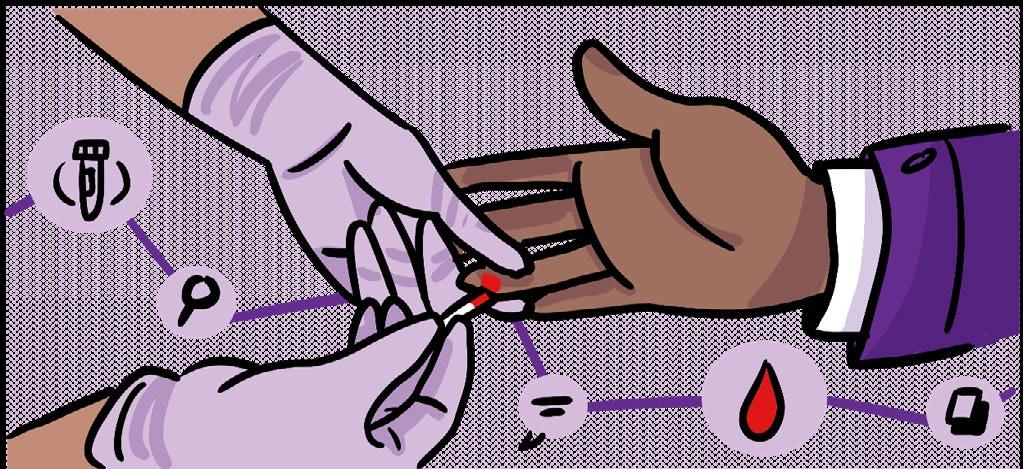
Shape the future of point of care troponin testing in your ED. You could consider:
Who will run the tests, and where? Who will act on the results?
How will you provide information to patients?
How will you ensure results are acted on immediately?
How will you make the link between POC tests and lab tests for patients who need to stay in hospital?