EDUCATOR’S GUIDE

INCLUDES PRE-READING ACTIVITIES, DISCUSSION QUESTIONS, ENRICHMENT AND EXTENSION ACTIVITIES, AND AN EXCLUSIVE AUTHOR LETTER

INCLUDES PRE-READING ACTIVITIES, DISCUSSION QUESTIONS, ENRICHMENT AND EXTENSION ACTIVITIES, AND AN EXCLUSIVE AUTHOR LETTER

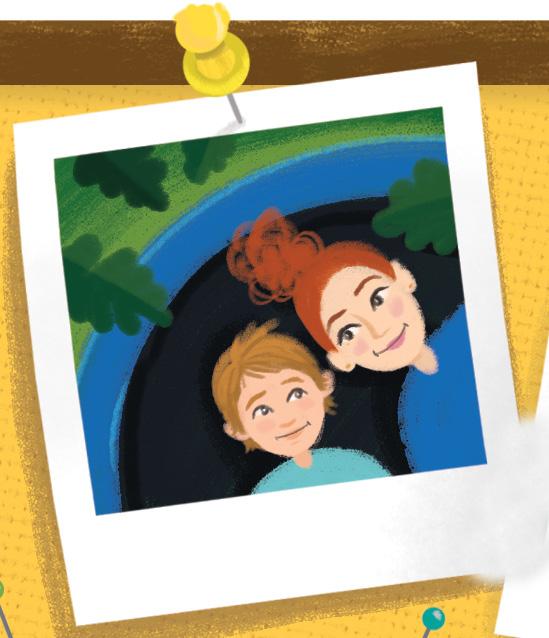
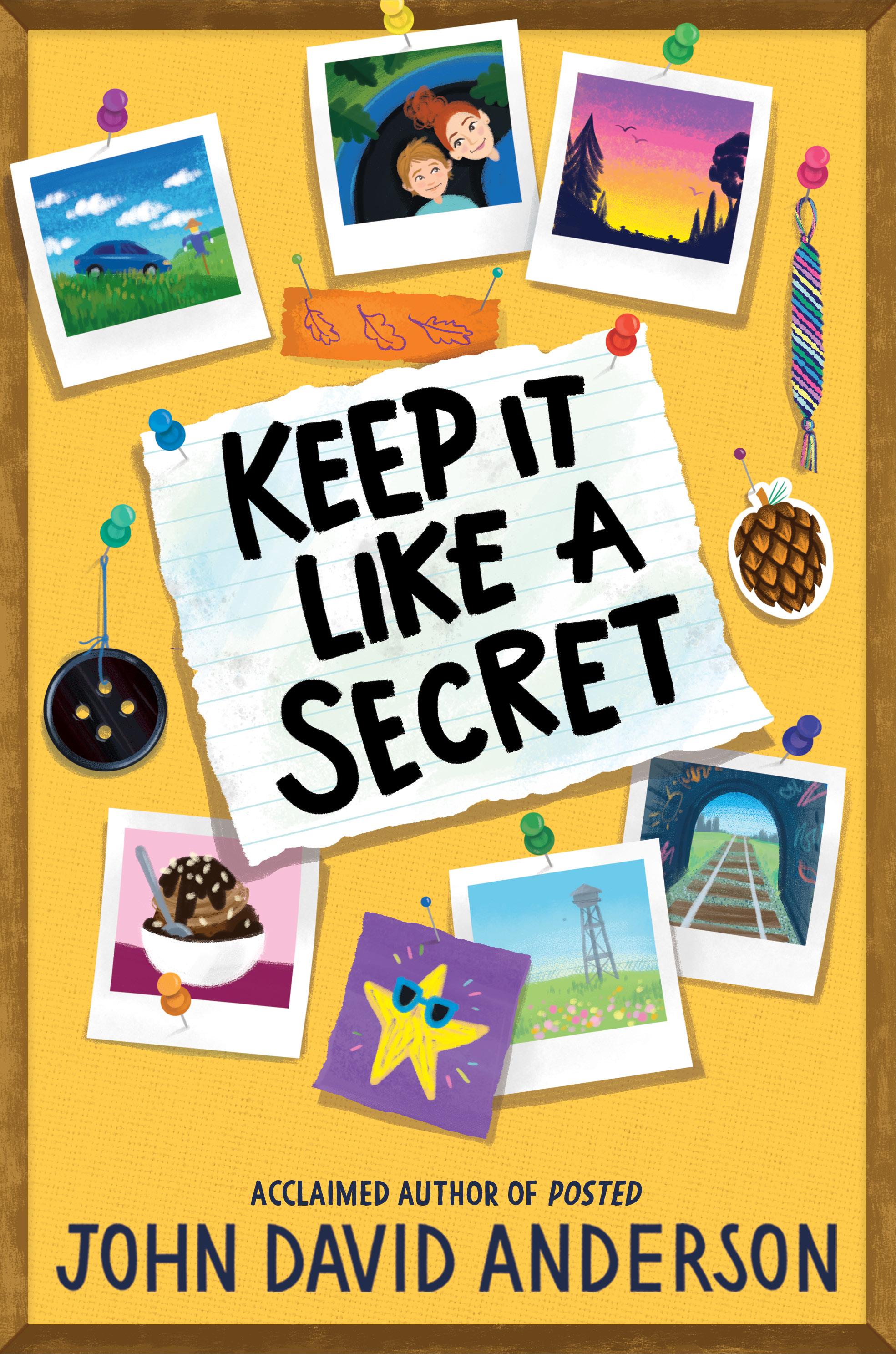
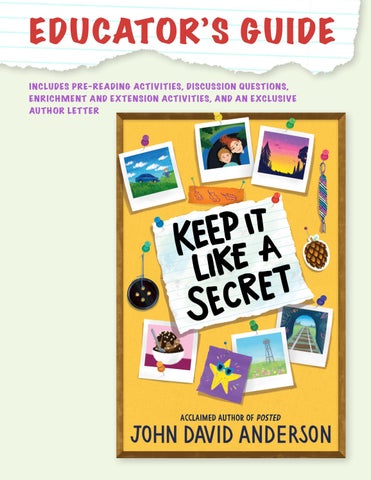
From the first moment Morgan can remember, Claire has always been there. Big sister and little brother. Cat and Mouse. They’ve always understood each other, saved each other, seen each other. And they stuck to their own personal code, unwritten but understood, that siblings were inseparable, that they had each other’s backs, no matter what.
At least, they used to.
Somewhere along the line, things between them shifted. Claire started fighting more with Mom, storming out of the house, spending more and more time away, and Morgan felt his sister and best friend slipping away. Now he spends nearly every night sitting awake in his room, waiting for the sound of her key in the lock.
It’s a sound he hasn’t heard in nearly a week, ever since her and Mom’s worst fight ever. So when Claire finally calls and tells Morgan she wants to spend the day together, just the two of them, he knows this might be his only chance — not just to convince her to come home, but to remind her how good things used to be, and could be again.
But Claire has her own plan for the day. One that will mean that, no matter what happens, things between them are going to change forever.
John David Anderson is the best-selling author of several critically-acclaimed novels for young people, including Posted , Granted , and Ms. Bixby’s Last Day His books have garnered several awards, been translated into multiple languages, and frequently appear as honorees on state reading lists. Before becoming a middle-grade novelist, Dave (as he prefers to be called) taught at the University of Illinois. Before that he yearned to be Indiana Jones, but his parents wouldn’t buy him a whip. Dave lives with his everpatient wife and two ornery cats, MJ and Parker,
in Indianapolis, Indiana, right next to a state park and a Walmart, in a house that is steadily filling with Lego. His favorite color is gray, and he does not wear ties if he can possibly help it.
If you are interested in having Dave come visit your school or library, you can find him online at www.johndavidanderson.org . He would love to come celebrate the power of books and storytelling with your community of young readers. So long as there’s chocolate.
I grew up in an uncertain household. Money was tight, my parent’s marriage hung on a thread, and my older sister was a loose cannon always willing to stir things up. As a child of the eighties I was vaguely aware of the threats of nuclear war, drugs, and freaky, anthropomorphized singing raisins. In short, I was an anxious kid, always afraid that the fragile world I lived in might crack and crumble at any minute.
Like the zillions of coming-of-age stories that have come before it, this book is about change and the uncertainty that accompanies it. On the surface, it’s simply about a brother and a sister who have felt themselves growing apart, but rooted in that are our fears of instability and ambiguity. What happens when the people you look up to, the ones you trust most, the ones you count on, aren’t there any longer? What do you do when the rules and codes you thought governed your relationship shift? When the few things you thought you knew about the world turn out to be tenuous or not true at all?
These are the questions Morgan grapples with as he attempts to reconnect with his sister and best friend. They are questions Claire has already been tussling with for a while. And they are questions that young readers are increasingly dealing with in a tumultuous, post-pandemic, hard-to-navigate (but thankfully musically raisin-less) world. In difficult times, we tend to turn to the one person we’ve always been able to count on to teach us, comfort us, and tell us the truth. So what happens when your person is M.I.A.? I think these are important questions for young readers, whether they have siblings or not (and if they do have siblings, then hopefully there’s much they can relate to in this novel).
I also think there are some answers here, embedded in Morgan and Claire’s mission to spend the day together. The need for honest and open communication, the importance of passing on what we’ve learned, the desire to see and be seen, and most significantly, the recognition that change does not automatically have to be a negative, that it is an opportunity to grow, to evolve, and to appreciate what came before. And with that, of course, comes hope — enough hope to fill a little metal lockbox at least.
Have fun teaching Keep It Like a Secret, and thank you for all the great work that you do.
 JOHN DAVID ANDERSON

Have students respond to the following prompt: what does it mean to “be there” for another person? Is there anyone in our lives that we are required to be there for (family, friends, teammates, significant others, members of our community, etc.)? Why or why not? How is being there for another person different than being there for ourselves?
1. Discuss this book’s opening. How are we introduced to each of the characters, including the narrator, Morgan? What expectations does the opening set up for you as a reader?
2. Consider Morgan’s forgetfulness about breathing and why it matters. What does Morgan’s assertion that it “can’t hurt to hold a few [breaths]” [PAGE 14] tell you about him as a character? Why is it significant to the story and your understanding of Morgan that Claire reminds him to breathe anyway?
3. Morgan’s observations of Claire’s troubled relationship with their mother are often very insightful. Morgan holds Claire and her temper partly responsible. What are some healthier ways that Claire and their mom could navigate their relationship?
4. Stories often include symbolic details or moments that offer insight beyond their literal meaning. Consider the early scene when Claire smashes her mother’s dolls during their fight. What do you think the dolls represent for Claire and for her mother? What meaning can you as a reader take from Claire smashing the dolls, or later, Morgan facing the broken pieces in the trash?
5. The story is told exclusively from Morgan’s perspective, which means that what we know as readers is limited to what Morgan knows (or thinks he knows). What makes Morgan a reliable or unreliable narrator? Are there times during the story when you lose trust for Morgan’s perspective or interpretation — where you feel like you know or understand something he doesn’t? When and why?
6. What does Starboy represent for Morgan? For Claire? What connections can you make between the siblings’ Starboy spray paint artwork on the underpass and their comic book issues that always end with “to be continued”? [PAGE 80]
7. Several times during the novel, Morgan expresses guilt for the ongoing rift between Claire and their mother. Find some examples in the text. In what situations does he seem to feel this guilt? Why do you think he feels responsible for fixing problems in his family that he didn’t create? Can you think of some instances when you felt you needed to “keep the peace” in your family or among your friends?
8. During a post-shopping philosophical discussion, Claire offers Neil Gaiman as a possible author of the universe’s fate. What do you think of her repeatedly invoking an author as a stand-in for destiny? If you’re not familiar with Neil Gaiman’s books, take a moment to look at the kind of stories and characters he creates. What does Claire’s choice of this particular author tell you about her?

9. When Claire finally tells Morgan why she quit track, she speaks about perceiving herself as “not being enough” in a manner similar to Morgan’s description of his role in Claire’s life. What do you make of this? What does inadequacy (or the fear of it) mean for each of them and how does it relate to their Sibling Code?
10. What is the conflict in this story? Is there more than one, and if so, is Morgan aware of them all? How does tension and conflict move Morgan’s story forward?
11. Morgan is a little hurt to learn how much Claire has kept from him, like the waterfall and the underpass. He also knows that, had he found them first, he would have never gone to those places without her. What does this tell you about Morgan and Claire’s relationship? They share a Code, but how does the support they each need from the other differ?
12. Morgan considers Claire to be his friend — perhaps his best friend, though she likely doesn’t feel the same. Probably the difference in their ages, and the fact that Claire is starting out in a new stage of her life may account for the difference between how she feels about Morgan and how he feels about her. Do siblings make good friends? How does being someone’s brother or sister complicate that friendship?
13. We learn a lot about Claire’s struggles at school and at home. Morgan, with excellent grades and no shouting matches with his mom, doesn’t seem to struggle in the same ways. So, what are Morgan’s struggles? What do readers see him struggling with that he doesn’t seem to see himself?
14. Several of the characters in this story are flawed or even contradictory in different ways. In fact, character flaws play a significant role in telling a story. What roles do Morgan and Claire’s flaws play in the story? How do their flaws create conflict or shape your understanding as a reader?
15. In her attempts to spend one terrific day with Morgan, Claire engages in some technically illegal and potentially dangerous activities. Why do you think she does this? Is there something she is trying to teach Morgan by doing these things?
16. Discuss the book’s alternating timelines. How is the story from the past (12-yearold Claire running away with 6-year-old Morgan) different from the story Morgan is telling us in the present? What do you think the author’s
purpose is in interrupting the present with a story from the past? What effect does the inclusion of past incidents have on your understanding of Claire, Morgan, and their story in the present? What might the significance be of Claire’s age in the past timeline being the same as Morgan’s age in the present timeline?
17. Consider the pre-reading activity and your definition of “being there” for someone. In what ways is Claire there for Morgan, despite being physically absent recently? In what ways is Morgan there for Claire? How do you see Claire’s efforts to do what’s best for herself as influencing Morgan’s “being there” for himself?

Morgan may still be at home, but that doesn’t mean he can’t share in Claire’s adventures — especially if he plans some for her. Have students take on Morgan’s role, creating a travel plan of at least three destinations that Morgan would like Claire to visit. Students should research each destination and include relevant attractions in their travel plan — keeping in mind that “tourist attractions” and “attractions Morgan and Claire would enjoy” may not be exactly the same.
Morgan and Claire create a Sibling Code together, though they don’t always follow it. At what points in the novel does one of them break the code? Is it justified? What codes do you follow? Are there times when it is okay to break them?
RELATED ACTIVITY: Develop a Friendship Code with one of your friends. Write the rules down, then decide which rules are potentially breakable and which are steadfast.

In small groups, have students design a sibling for Starboy and write a brief adventure starring the two of them. Have each group write up a character description that includes facts such as: whether the sibling is older/younger/a twin; the sibling’s dynamic with Starboy (sidekick, nemesis, partner, non-super babysitter, etc.); and some kind of catchphrase. Groups can decide how to share their adventures with the class (drawing comics, writing stories to read aloud, making videos, creating scripts to perform, etc.).
In pairs or small groups, ask students to make a list of at least five questions they have about the story. These might be questions about: off-thepage details (such as, why does Morgan and Claire’s dad seem so miserable and tuned out?); story elements they find intriguing (such as, why does Claire know so many book and media quotes?); character choices or responses (such as, why give a eulogy for a scarecrow?); or something else. Groups can exchange their lists of questions and choose at least three to answer. Answers should include details from the text that support their thinking.
Morgan has some revelations regarding his favorite person’s favorite people, including himself. First, have students make a list of their own favorite people (set a limit of four and be clear whether fictional people are allowed or not). Next, ask students to add their favorite people’s favorite people (no more than three) and create a representation of their entire list. Some may want to use their peoples’ names/images to make a second or third visual, like a branching tree or intersecting web. Others may want to represent the people on their list more abstractly (e.g. each person is a different color or dance move) and see what happens when the representations are linked together (e.g. a yarn project that follows the “favorites” color pattern or a performance of the “favorites” choreography).
At the end of the book, Morgan receives a box to keep mementos and souvenirs of his experiences in. If you had such a box, what would you put it in it and why?
This guide was prepared by Anastasia Collins, MA, MLIS, librarian, youth literature scholar, anti-oppression educator. Follow them at @DarkLiterata.
Additional content created by John David Anderson.

Keep It
Like a Secret by John David Anderson. 978-0063279315 Published by Walden Pond Press, an Imprint of HarperCollins Publishers. Jacket illustration by Julie McLaughlin. Educator’s Guide © 2024 by Walden Media, LLC.